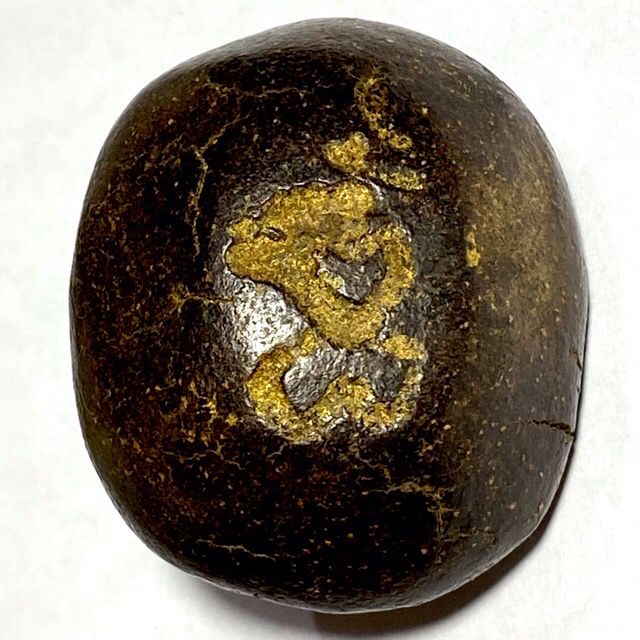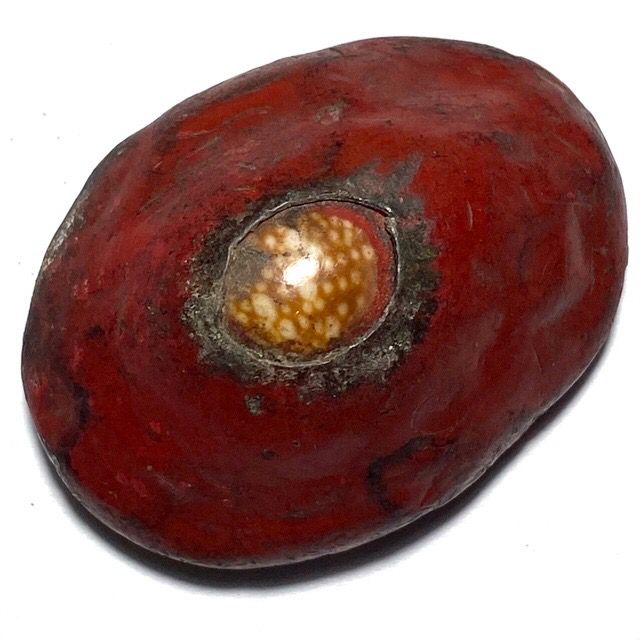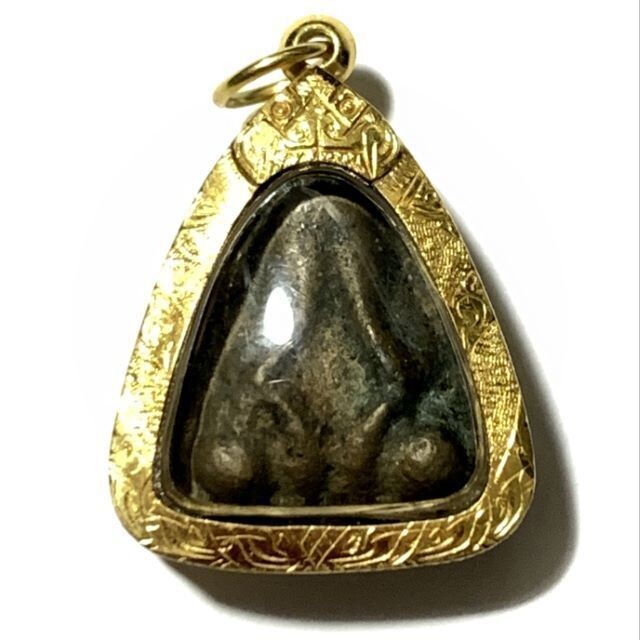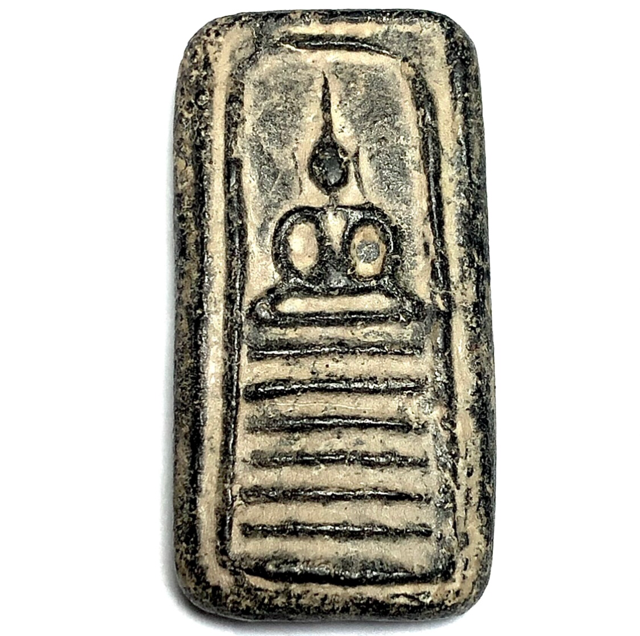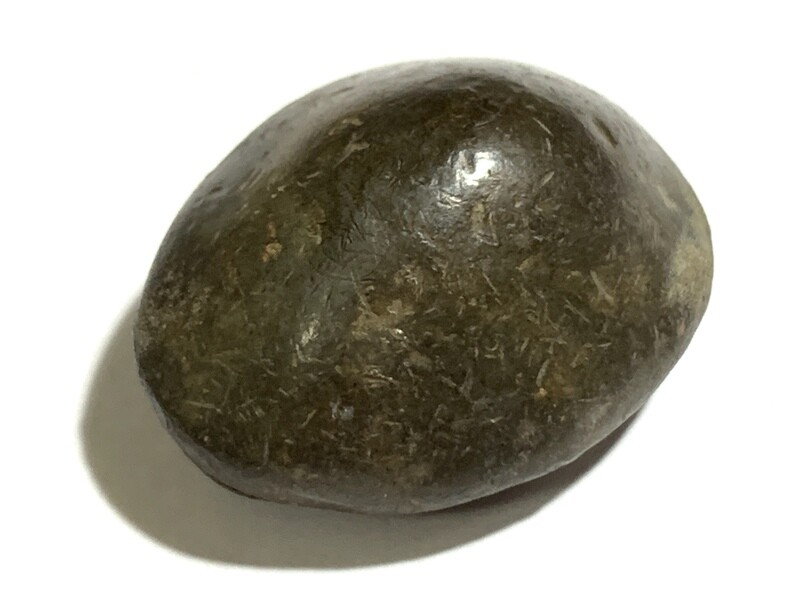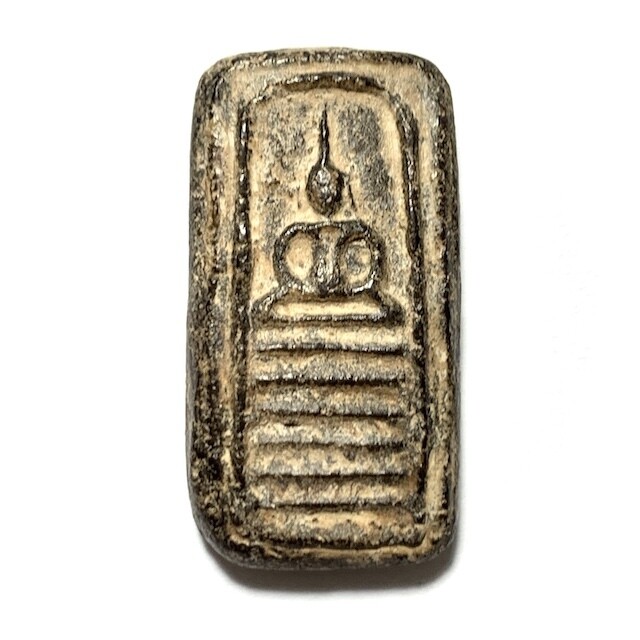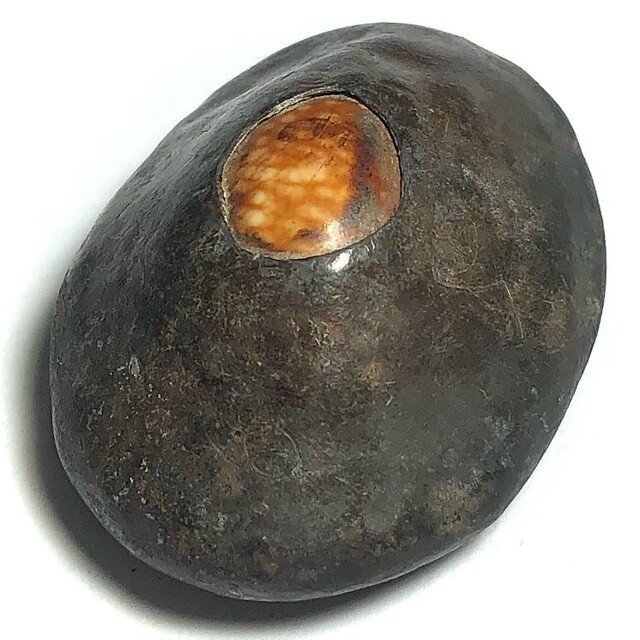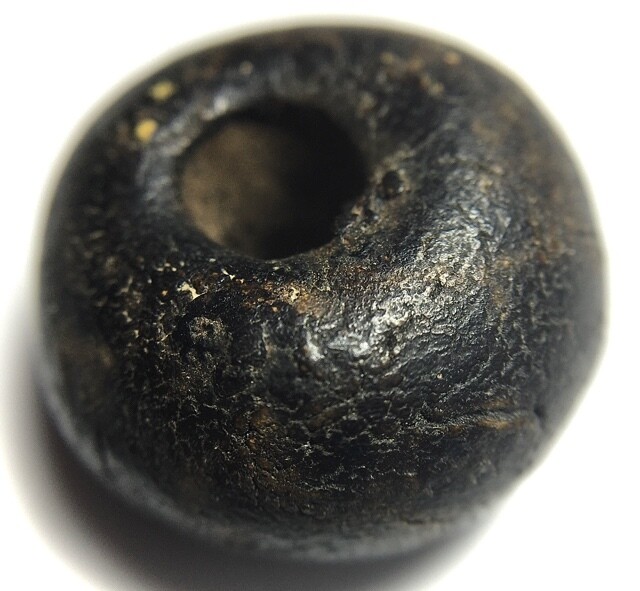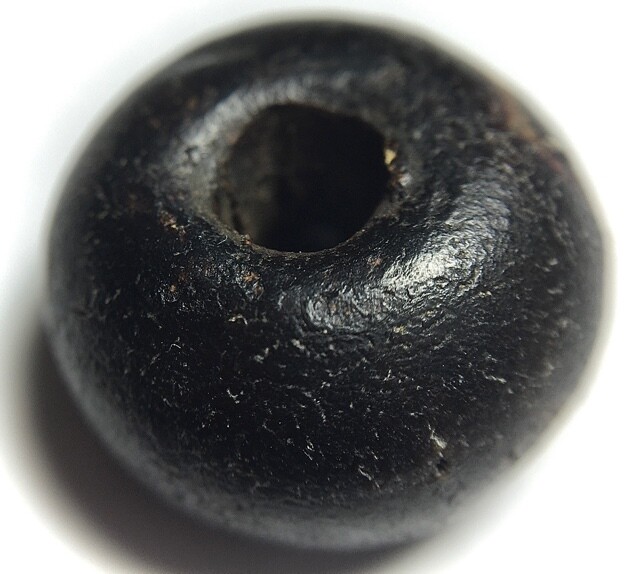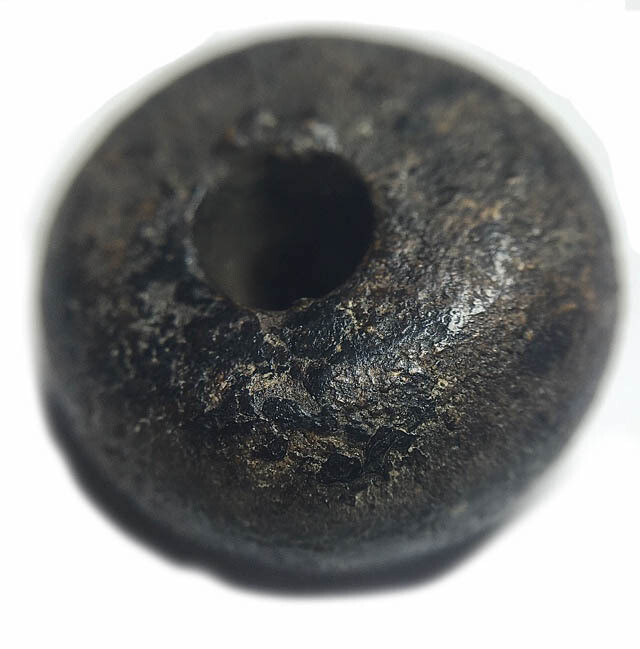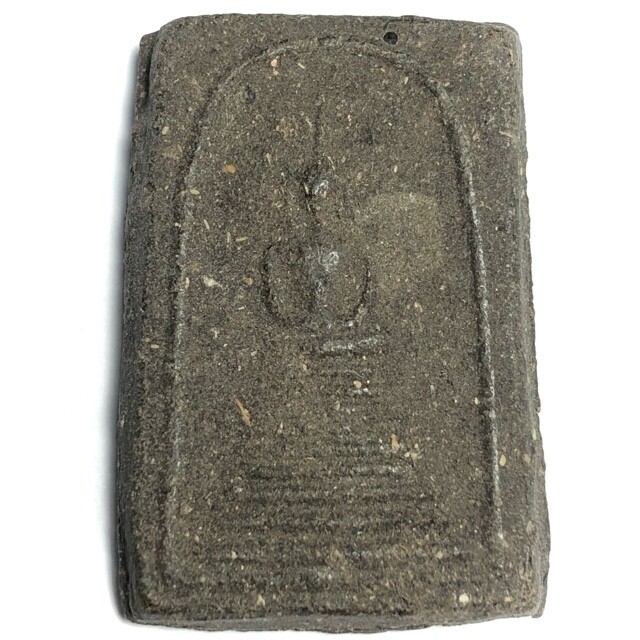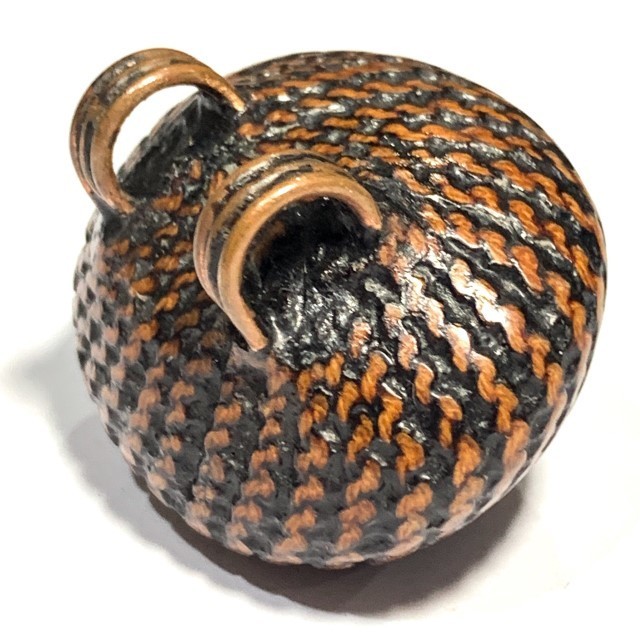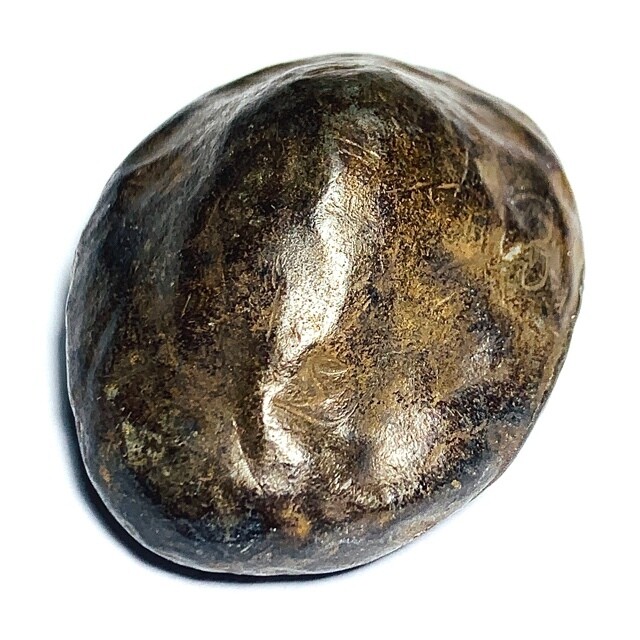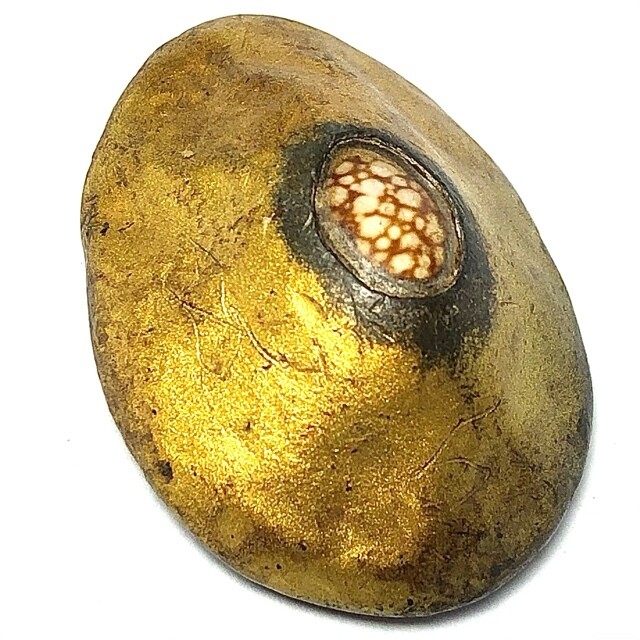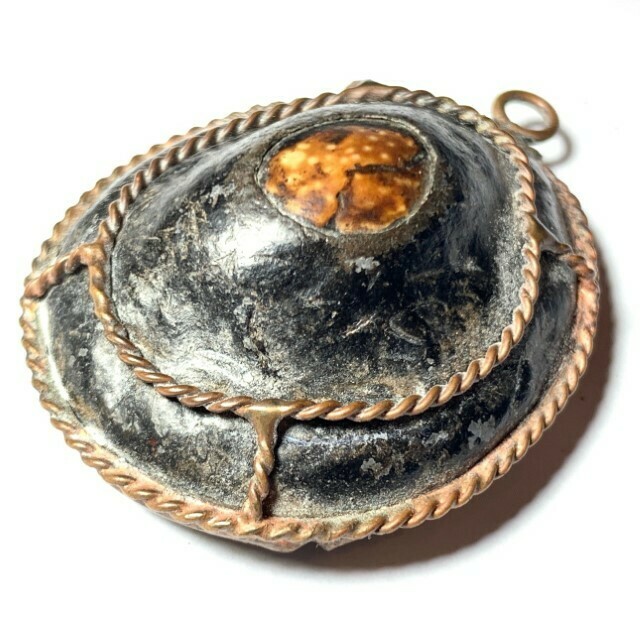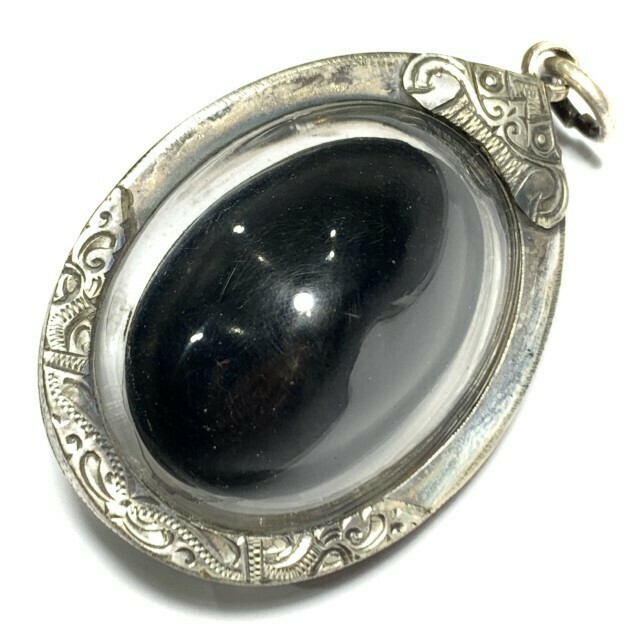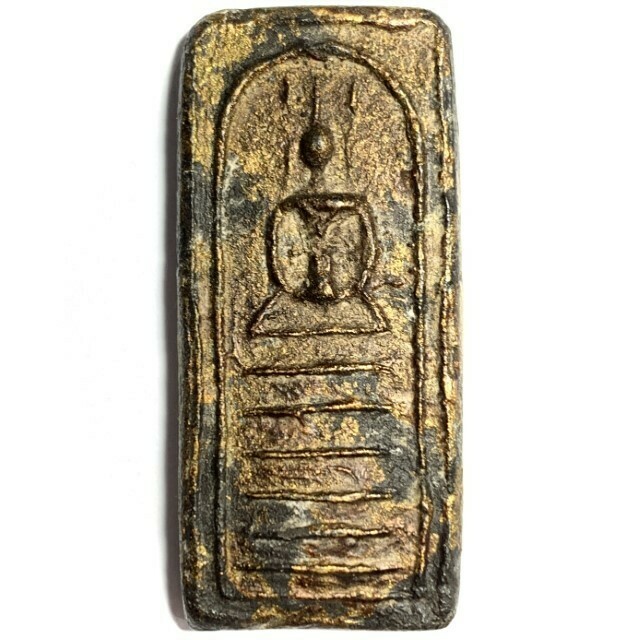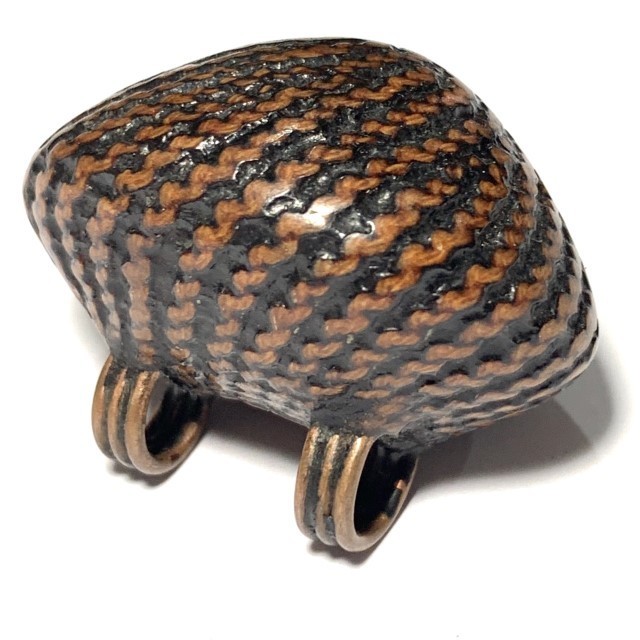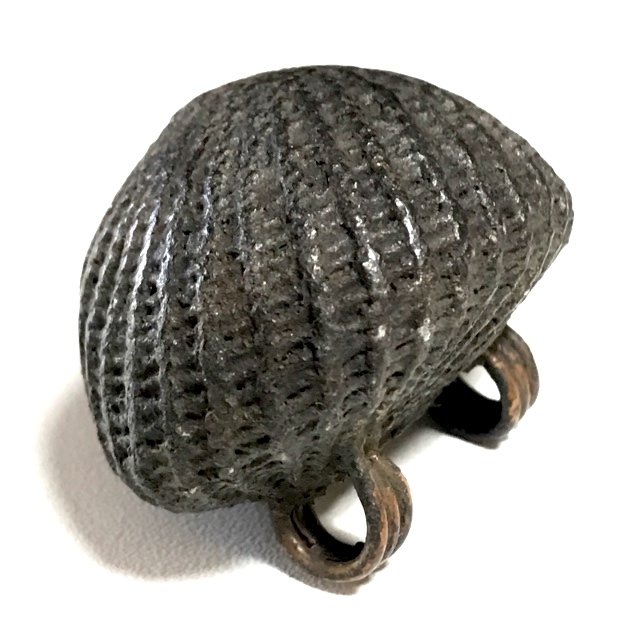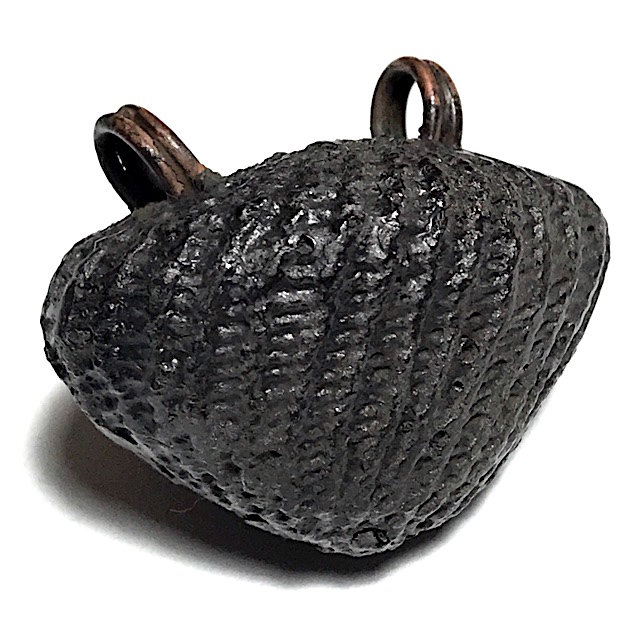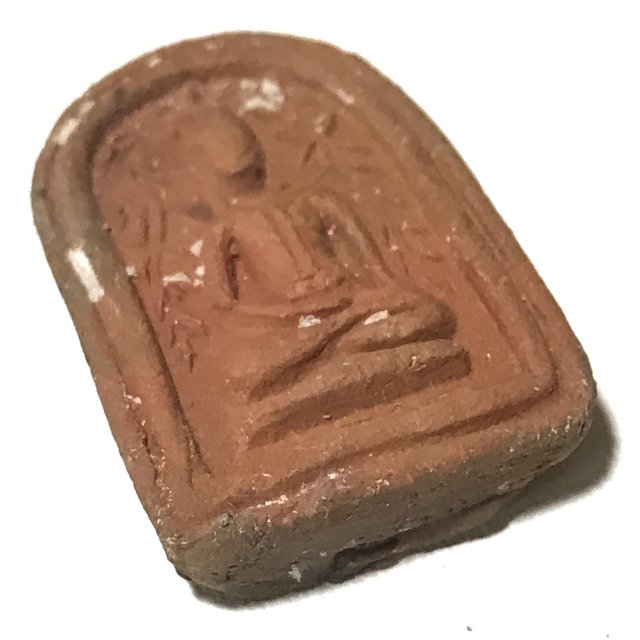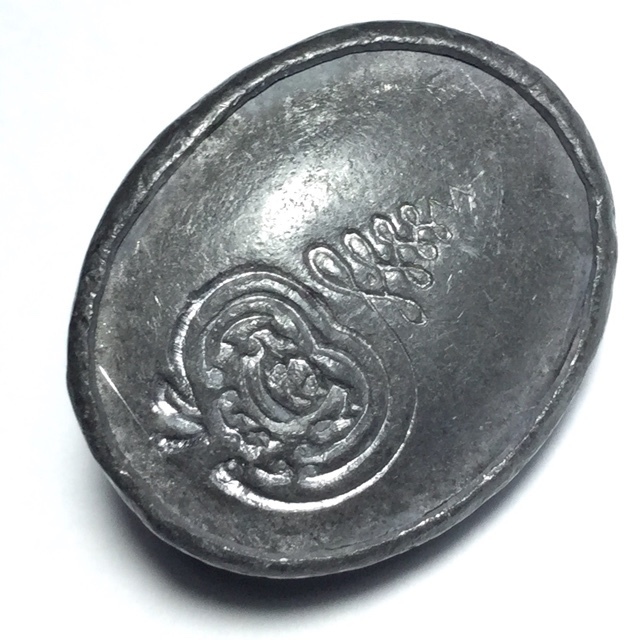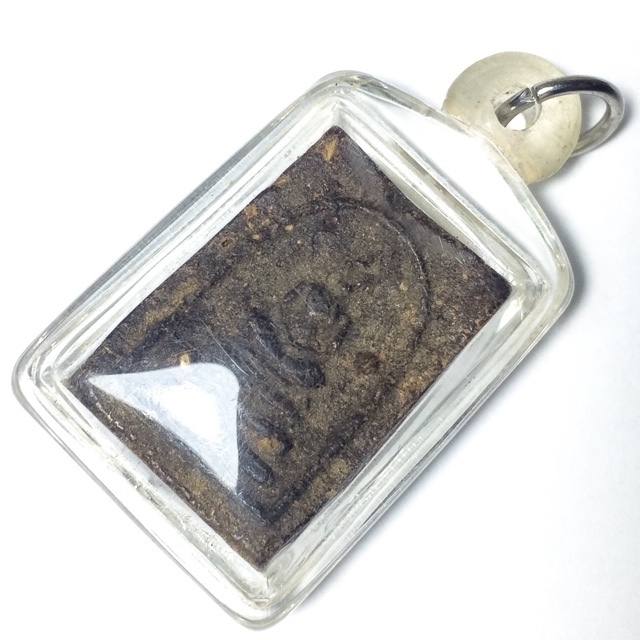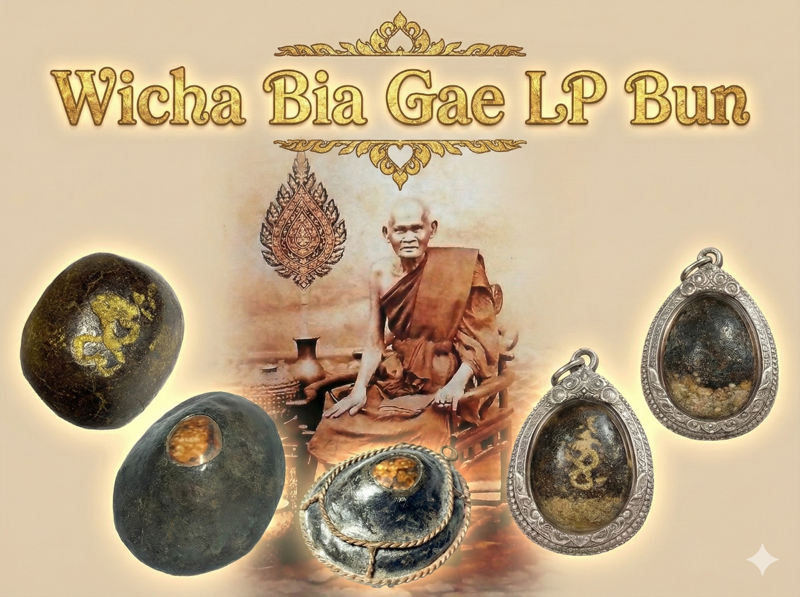
The Bia Gae from the Luang Pu Bun lineage of Wat Klang Bang Gaew is regarded as one of the most eminent protective talismans in the Thai amulet tradition, with a long-standing history and deeply rooted faith extending from the past to the present. Its associated virtues are said to encompass the neutralization of misfortune, avoidance of danger, invulnerability, metta maha niyom (benevolent attraction), and protection against black magic, spirits, and malevolent entities.
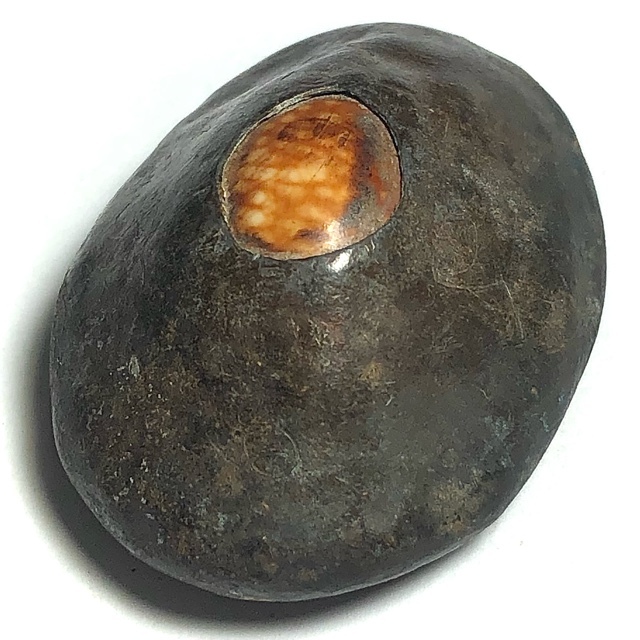
For generations, devotees have carried Bia Gae as a personal protective charm. Among all variations, those coated with herbal sacred powders and the essence known as phaya mai phu (rotting sacred wood) are considered the rarest and most distinctive, and are especially revered by collectors nationwide. This example is a significant piece directly originating from the era in which Luang Pu Bun himself created and consecrated such amulets.
Lineage and Transmission of the Knowledge
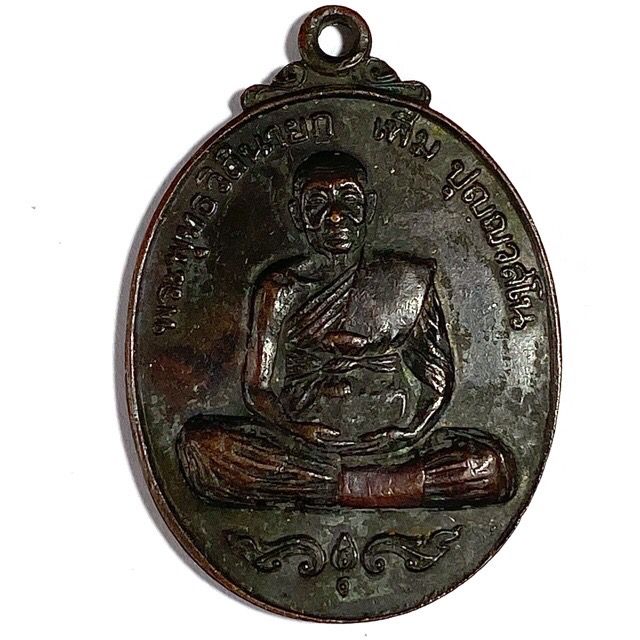
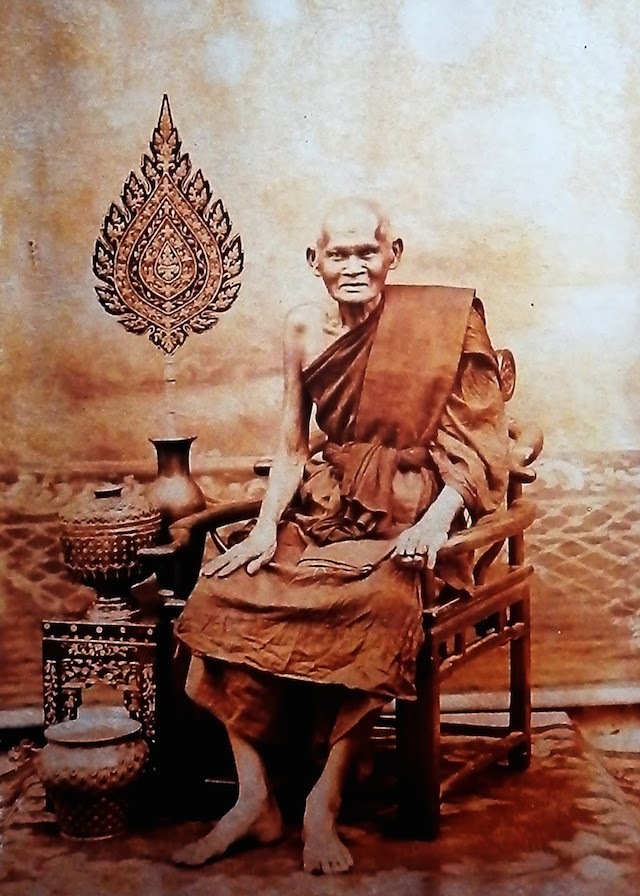
Luang Pu Bun Kandhajoti (Pra Phuttha Withi Nayok), former abbot of Wat Klang Bang Gaew in Nakhon Pathom Province, was the pioneer who established and transmitted the complete knowledge of crafting Bia Gae until it became renowned throughout the Thai amulet world. His period of activity is generally placed between approximately 1897 and 1935. He learned the core method from Pra Ajarn Thong, and subsequently refined it into the distinctive Wat Klang Bang Gaew tradition. This lineage was later passed on to Luang Pu Perm, Luang Pu Juea, and other senior monks of later generations, continuing uninterrupted to the present day.

Physical Characteristics and Method of Construction
A Bia Gae coated with phaya mai phu powder is distinguished by several defining features. A natural cowrie shell is selected according to strict traditional criteria and used as the sacred vessel for containing consecrated substances. Inside, mercury is placed together with powdered phaya mai phu and carefully selected herbal powders, intended to enhance qualities of protection, metta maha niyom, danger avoidance, and defense against harmful forces. The exterior is sealed using traditional techniques involving the application of sacred powders and black lacquer, which both preserve the materials and reinforce the spiritual potency. Some examples bear yantra inscriptions or contain small takrut amulets to further augment their power, depending on the period and the individual hand of the master. The finished Bia Gae is typically bound with cord or encased using authentic materials, making it durable and suitable for being worn or carried on the person.
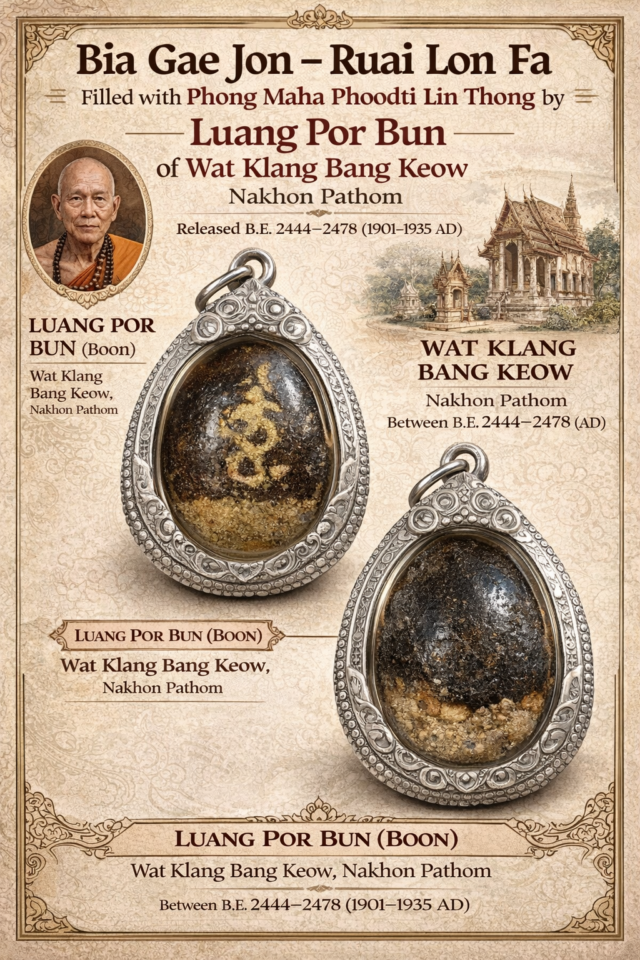
The ritual process for creating this group of Bia Gae strictly follows the traditional Wat Klang Bang Gaew formula. It begins with the careful selection of the shell, the ritual veneration and preparation of mercury, the inscription of yantra, and the coating with herbal and phaya mai phu powders. The amulets are then consecrated with sacred incantations to imbue them with both moral-spiritual power and esoteric force, in accordance with the ancient teachings handed down by generations of masters.

Attributed Virtues and Devotional Belief
Bia Gae from the era of Luang Pu Bun are considered among the highest forms of protective talismans for neutralizing misfortune and guarding against harm. Their attributed qualities include the removal of bad luck, the dispelling of black magic and inauspicious influences, and the transformation of adverse conditions into favorable ones. They are believed to confer invulnerability, protection from physical danger, spirits, and dark sorcery, while also promoting metta maha niyom and stabilizing one’s destiny. Devotees may carry the amulet on their person or enshrine it for ritual use, seeking protection, safety, and the enhancement of fortune.
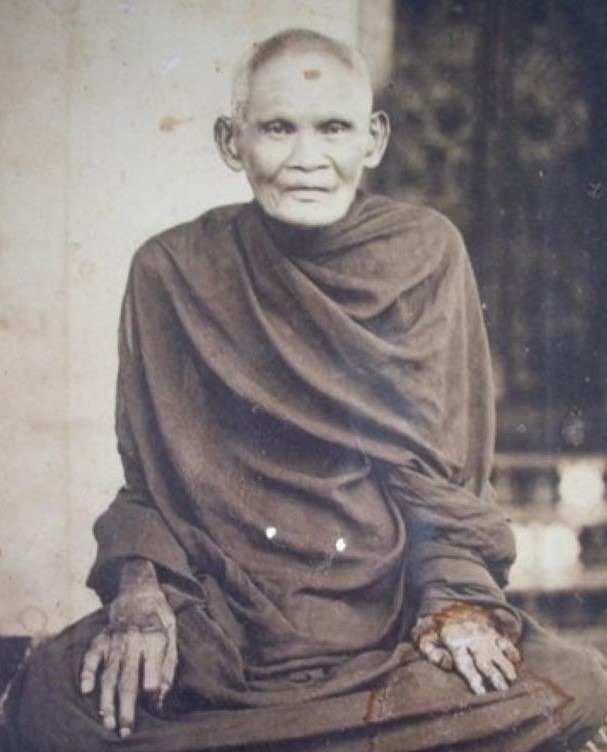
Luang Phu Bun of Wat Klang Bang Gaew
Due to the continuity of faith across generations, examples created directly by Luang Pu Bun are regarded as possessing exceptional historical significance and very high collector value.

Importance and Collectible Value
The Bia Gae coated with phaya mai phu powder attributed to Luang Pu Bun holds importance in both devotional practice and the Thai amulet market. It is among the oldest known Bia Gae of the Wat Klang Bang Gaew lineage, produced during an early and now-rare period with substantial historical value. Many experienced and specialized collectors recognize this type as a legendary-class Bia Gae within the Thai amulet tradition.
Wat Klang Bang Gaew
Wat Klang Bang Gaew famous mainly with the Public for its great Master Luang Phu Bun, is an Ancient Temple in Nakorn Pathom. It is home to a Lineage History of 4 great Ordained Masters, 3 who have Passed On (Luang Phu Bun, Luang Por Perm & Luang Phu Juea), and the Current Master, Luang Por Kong (Sanya). Luang Por Sanya is proving to continue in the same Trajectory as his Predecessors, and has created a long History of Deeds and released a large Pantheon of Amulets in the Lineage tradition of his Mentors, Luang Phu Bun, Luang Por Perm and Luang Phu Juea.
The Wat Klang Bang Gaew Master Lineage is a fantastic choice for Hunters & Collectors of Fine Master Class Amulets. This is because the Amulets of this Temple, and its Masters, range from the present Day master Luang Por Kong (Sanya), back through Luang Phu Juea, Luang Por Perm, and on, to the Great Luang Phu Bun.
A powerful continued Lineage of Masters have brought Wat Klang Bang Gaew to the Forefront of both the Ancient and the Modern Amulet Scenes, stretching back to the times of Luang Phu Bun, through the Era of Luang Por Perm, and the Great Luang Phu Juea Bpiyasilo, to its present Abbot, Luang Phu Sanya (Kong).