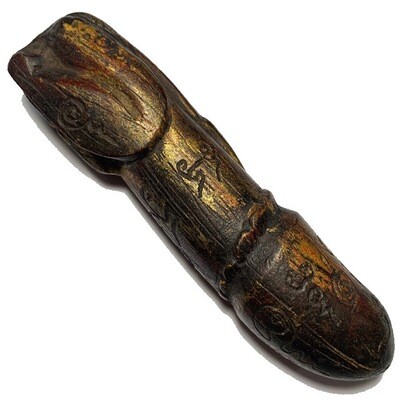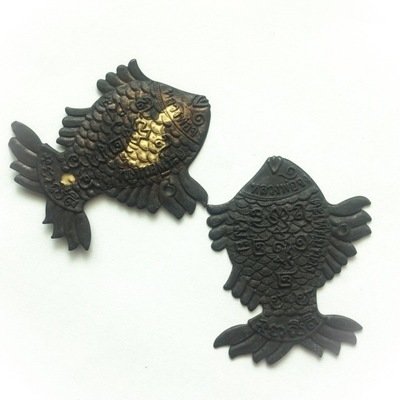
The Legend of Bia Gae, Pong Ya Wasana Jindamanee, & Other Amulets, & the Lineage of Wat Klang Bang Kaew Amulets
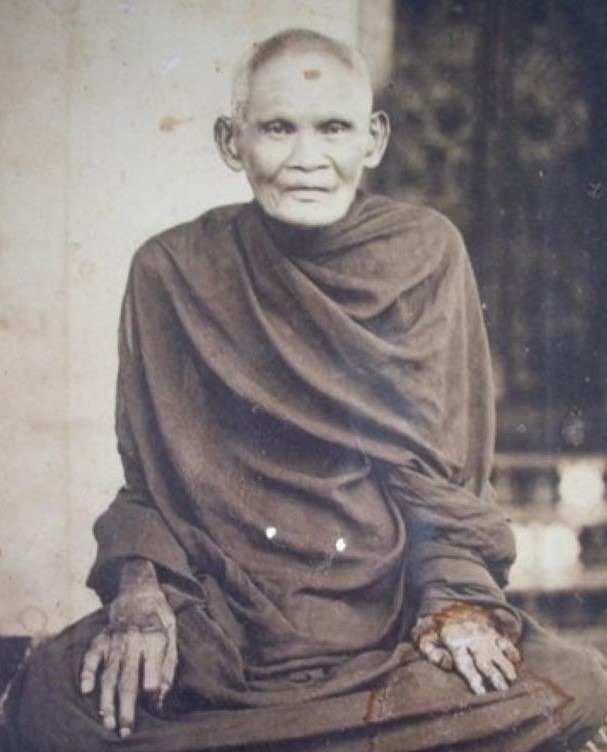
Luang Phu Bun of Wat Klang Bang Gaew
From Past to Present; Luang Pu Bun, Luang Por Perm, Pra Ajarn Bai, Luang Por Kong (Sanya)
Wat Klang Bang Kaew – A Legacy of Dhamma, and Powerful Sacred Amulets
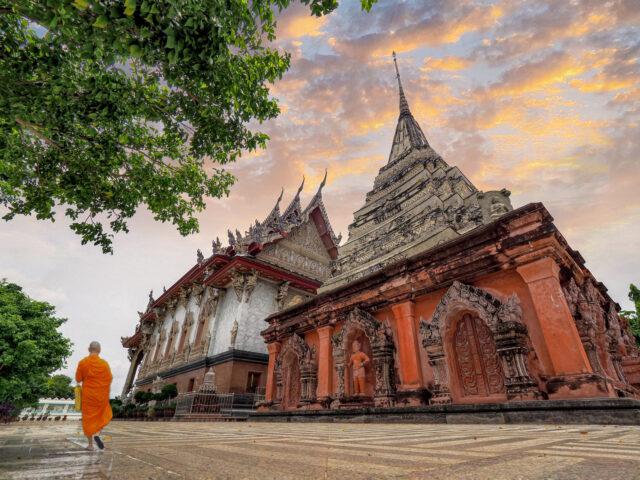
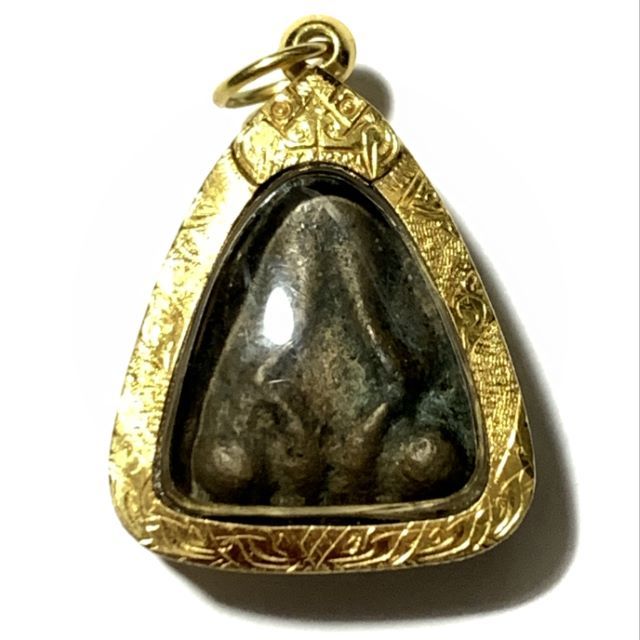 Wat Klang Bang Kaew, located in Nakhon Chai Si District, Nakhon Pathom Province, is an ancient temple deeply rooted in Thai history, dating back to the Ayutthaya period. It is estimated to have been established in the late Uthong era. The temple’s antiquity is evident through the meticulously preserved and seemingly new renovations of its Vihara, Ubosot, and Sema stones, enduring through centuries. Currently, Wat Klang Bang Kaew is not merely a local Buddhist center but is widely recognized as the origin and repository of nationally renowned sacred amulets and charms, particularly “Bia Gae” and “Pong Ya Wasana Jindamanee” sacred powder amulets, which are extensively known and revered by collectors and devotees alike.
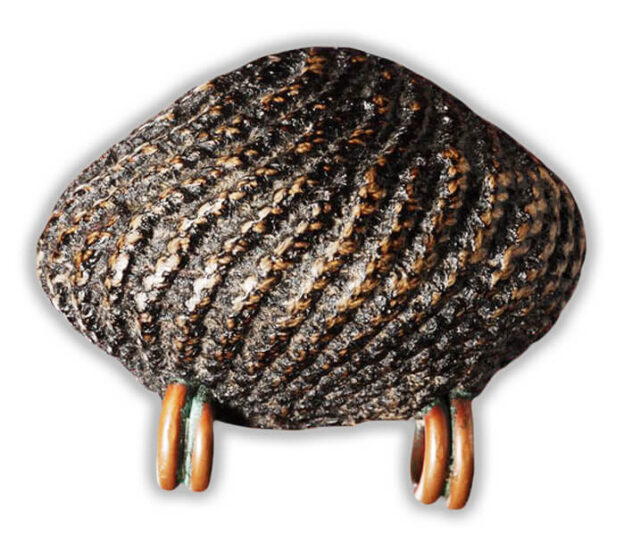
Wat Klang Bang Kaew functions akin to a university of sacred knowledge, where ancient texts and esoteric arts have been continuously passed down from masters to disciples over many generations. Each highly virtuous master (Gaeji Ajarn) has their own pantheon of mystical spiritually empowered and consecrated amulet,s imbued with tangible Buddhist virtues.
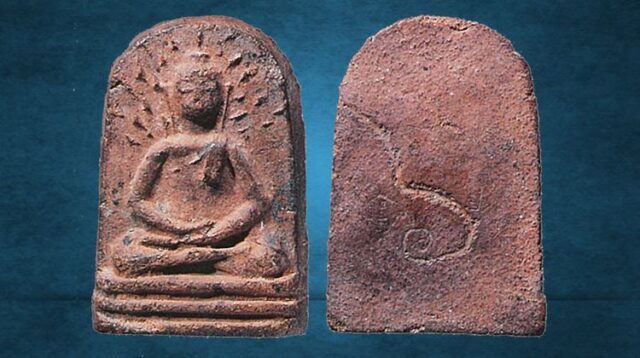
The primary amulets that have brought fame and uniqueness to this temple include Bia Gae, Phra Ya Wasana Jindamanee, and various Buddha images (Phra Phim) such as Rian Chao Sua and Phra Chaiwat, all of which have bestowed miraculous experiences upon countless devotees.
The fact that Wat Klang Bang Kaew boasts a history spanning centuries, traceable back to the Ayutthaya period, serves as a robust foundation for the continuous development and transmission of esoteric and Buddhist knowledge. The temple’s ancient lineage is not just a matter of time but a testament to the reliability and profound spiritual power of the inherited lineage of wisdom.
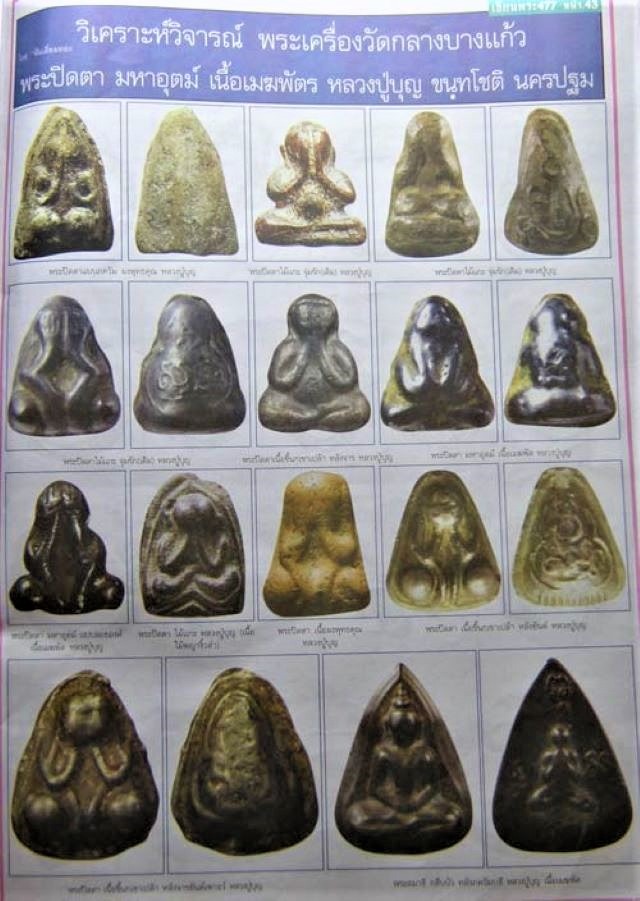
Such a long history indicates that the “Wicha” (sacred knowledge) passed down is not a mere modern invention but a wisdom that has been tested and refined over hundreds of years, a crucial factor in building faith among those who seek amulets imbued with pure and ancient power.
We shall now look deeply into the legend and the lineage of amulet creation at Wat Klang Bang Kaew, focusing primarily on “Bia Gae” and “Phra Ya Wasana Jindamanee,” as well as other related “Phra Phim” (Buddha images) and “Krueang Rang” (charms). This study will encompass the biographies and relationships of the Gaeji Ajarn within this lineage, starting from Phra Palad Pan of Wat Tukata, the progenitor, followed by Luang Pu Boon Khanthachoto, Luang Pu Perm Punyawasano, Luang Pu Juea Piyasiloe, and continuing to the present-day with Phra Ajarn Sanya (Kong) Kammasuttho. The narrative will strictly adhere to the authenticity of ancient texts and the established catalog of amulets recognized by national-level amulet connoisseurs.
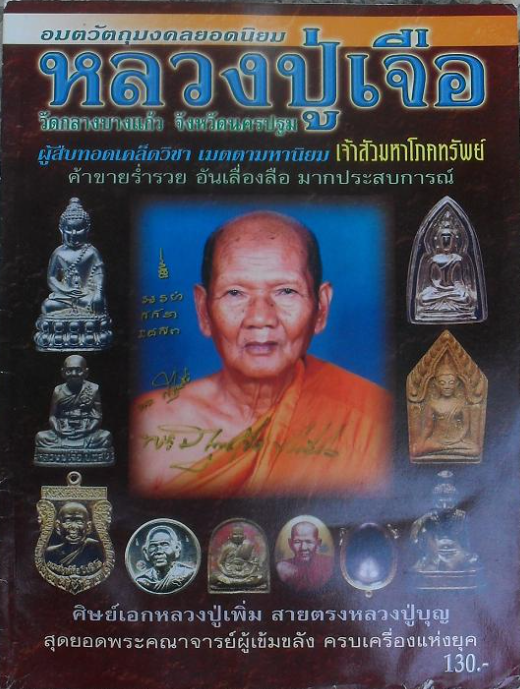
The Genesis of the Lineage: Phra Palad Pan of Wat Tukata, the Grand Master of Transmission
Phra Palad Pan of Wat Tukata, officially known as Wat Phithai Tharam, is revered as the “Grand Master” of Luang Pu Boon of Wat Klang Bang Kaew. He was one of the renowned “Jatu-Ajarn” (four great masters) and was celebrated for his immense metta mahaniyom (charm and popularity), believed to be infused through the chanting of the Phra Jindamanee spell.
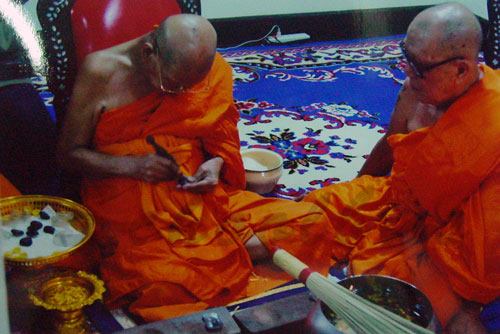
Phra Palad Pan’s most significant role was serving as the preceptor (Phra Upatcha) for Luang Pu Boon when the latter was ordained as a monk in B.E. 2412 (1869 CE). Although detailed biographical information about Phra Palad Pan is scarce in the available documents, his pivotal role in transmitting the sacred knowledge to Luang Pu Boon is widely acknowledged and respected.
Luang Pu Boon received his fundamental Dhamma teachings and various esoteric arts, especially the Wicha Bia Gae, directly from Phra Palad Pan, the abbot of Wat Tukata. This transmission formed a stable foundation, enabling Luang Pu Boon to continue, develop, and create the potent amulets of Wat Klang Bang Kaew, ensuring their continued prosperity.
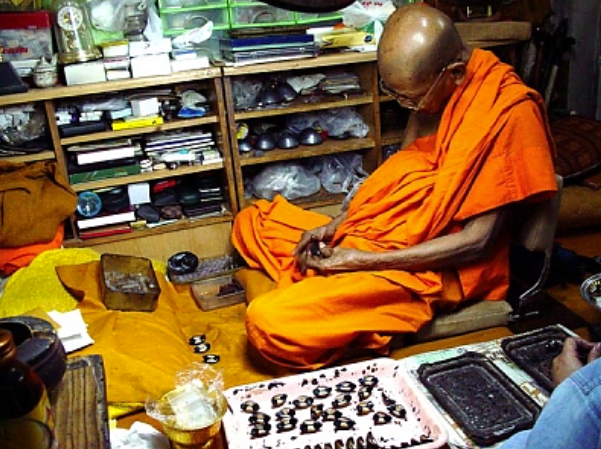
The distinctive Wicha Bia Gae of Wat Klang Bang Kaew, inherited by Luang Pu Boon, has deep origins linked to ancient lineages. It is hypothesized that the Wicha Bia Gae of Luang Pu Boon and Luang Pu Rod of Wat Nai Rong might share a common source: the Wicha Bia Gae lineage of Somdet Phra Wanrat of Wat Pa Kaew, which inherited its Buddhist esoteric knowledge from the Wat Pradu Nai Song Tham school dating back to the Ayutthaya period. Phra Palad Pan is also known as the “foremost master of Luk Om (sacred pills) in the amulet circle,” further solidifying his mastery of esoteric arts.
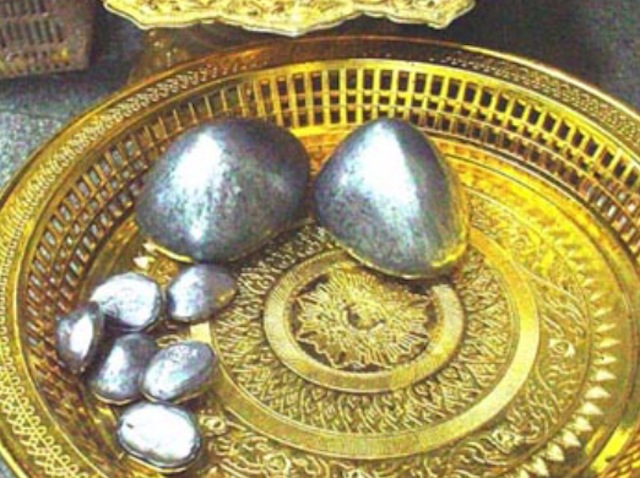
The fact that Phra Palad Pan is referred to as the “Grand Master” of Luang Pu Boon demonstrates his exalted status and profound expertise in esoteric arts. Luang Pu Boon’s direct reception of “Dhamma foundations and esoteric knowledge” from Phra Palad Pan was not merely a transfer of general knowledge but a crucial spiritual and esoteric foundational laying. Furthermore, the likelihood that the Wicha Bia Gae of Wat Klang Bang Kaew (via Luang Pu Boon) originated from the “Wicha Bia Gae lineage of Somdet Phra Wanrat of Wat Pa Kaew, which inherited its Buddhist esoteric knowledge from the Wat Pradu Nai Song Tham school during the Ayutthaya period,” expands the scope of this lineage far beyond initial perceptions.
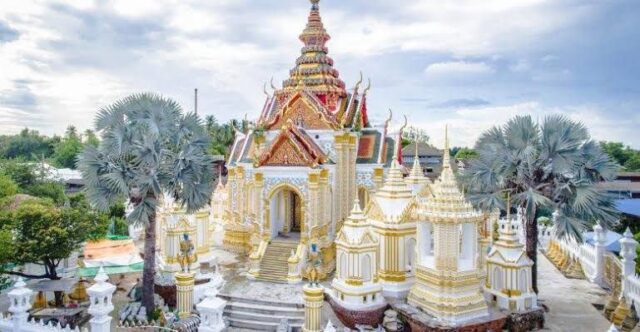
This connection reveals a profound truth about ancient Thai esoteric arts: these sciences did not arise in isolation but are part of a vast and interconnected spiritual network. Phra Palad Pan’s veneration as a “Grand Master” signifies not just an ordinary teacher but the source of sacred teachings held in the highest esteem. The clear links to “Wat Pa Kaew” and “Wat Pradu Nai Song Tham,” both significant academies since the Ayutthaya era, elevate the Wat Klang Bang Kaew lineage beyond the traditions of any single temple. Instead, it integrates with the ancient Buddhist esoteric heritage and wisdom of the nation, passed down through centuries. This deep historical and inter-temple connection enhances the authenticity, power, and sanctity of the amulets, making them highly sought after by collectors who value uninterrupted lineages and ancient foundations.
Luang Pu Boon Khanthachoto: The Great Master and Creator of Legends
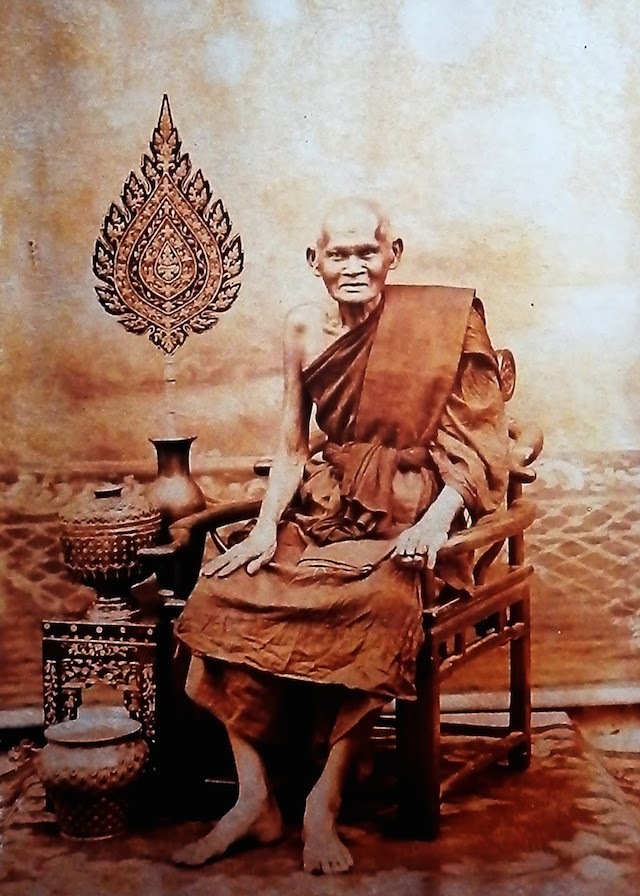
Luang Pu Boon Khanthachoto, also known by his ecclesiastical title “Phra Phutthawithi Nayok,” was originally named Boon. He was born on July 3, B.E. 2391 (1848 CE), during the late reign of King Rama III, in Tha Mai sub-district, Krathum Baen District, Samut Sakhon Province. He was ordained as a novice (samanera) in B.E. 2406 (1863 CE) and as a monk (bhikkhu) on June 21, B.E. 2412 (1869 CE), with Phra Palad Pan of Wat Tukata, his grand master, serving as his preceptor.
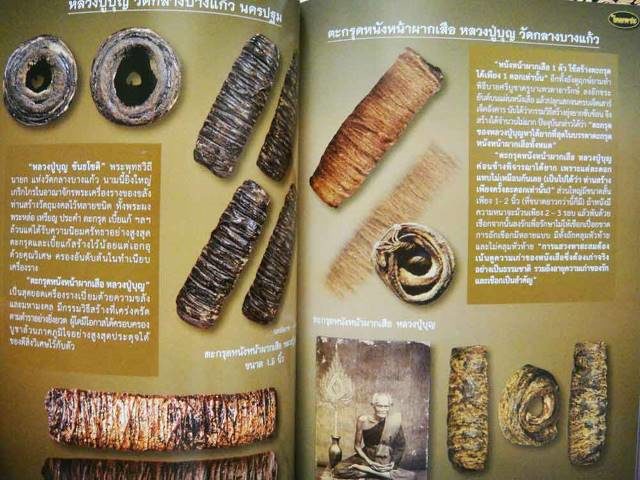
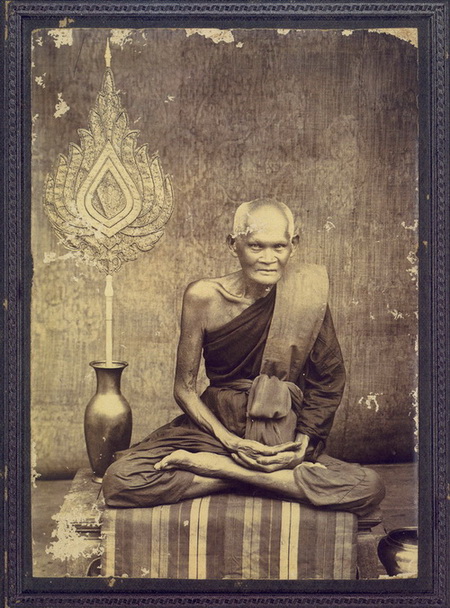
Luang Pu Boon became the abbot of Wat Klang Bang Kaew in B.E. 2429 (1886 CE) and began creating amulets thereafter. He passed away on April 4, B.E. 2478 (1935 CE), during the reign of King Rama VIII, at the age of 86 years and 275 days, having served 66 monastic years. Throughout his life, Luang Pu Boon selflessly helped those in distress with boundless compassion, offering auspicious timings, fortune-telling, performing ceremonies to ward off bad luck, blessing with holy water, and providing medicinal remedies. His profound compassion and high virtues were widely recognized, attracting countless disciples who sought his blessings daily.
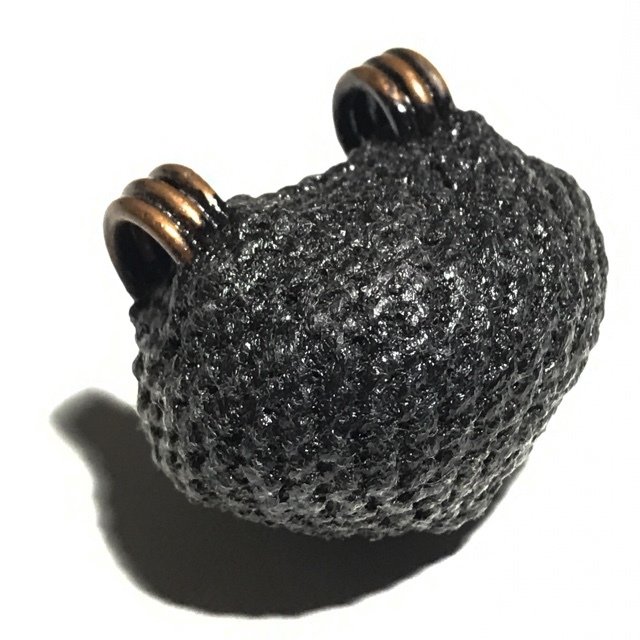
Luang Pu Boon’s Bia Gae
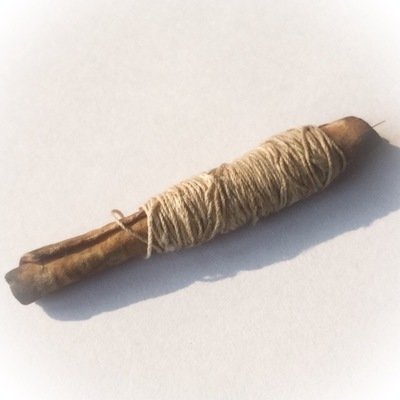
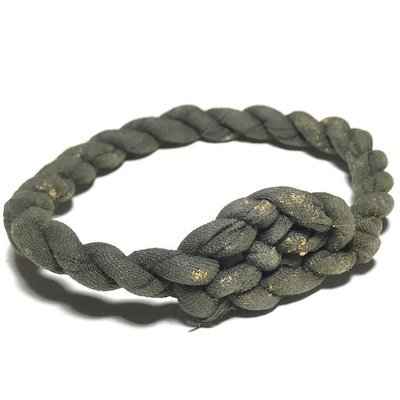
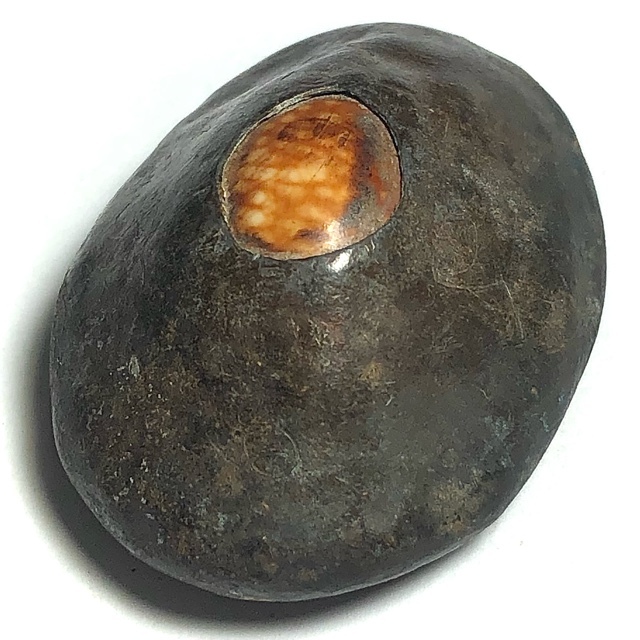
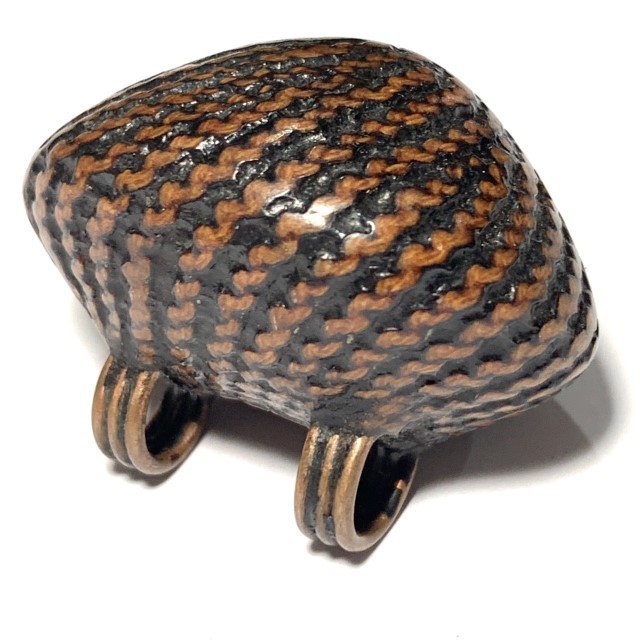
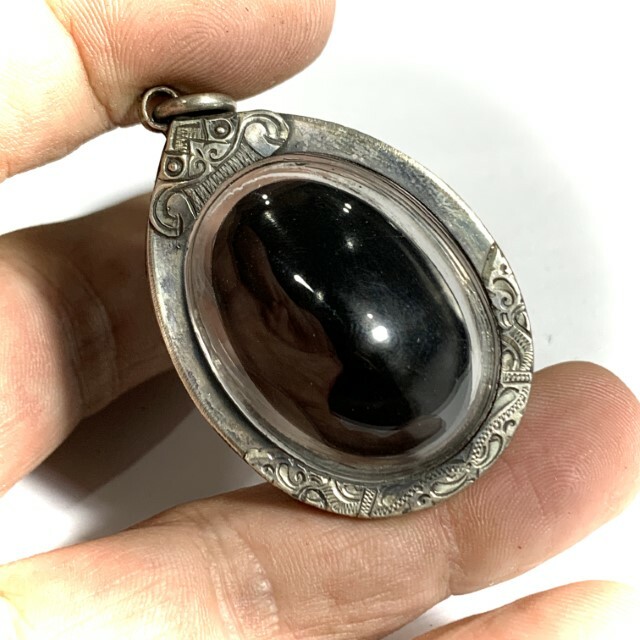
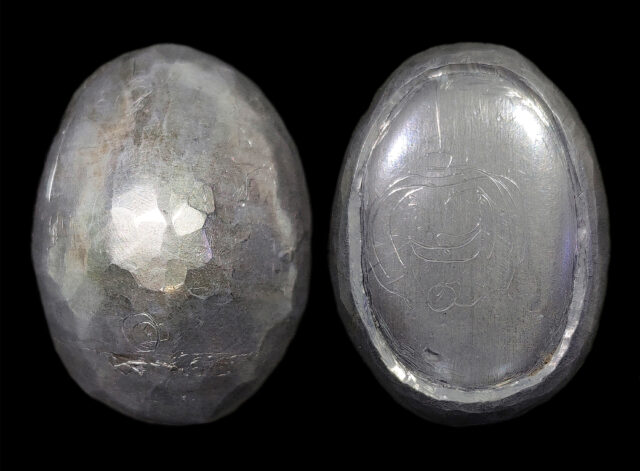
Bia Gae is considered Luang Pu Boon’s most renowned and iconic amulet. According to ancient texts, the creation of Bia Gae begins with selecting perfect “Bia Gae shells.” Mercury, weighing 1 baht, is then placed inside, believed to be a living substance with powers second only to Lek Lai (a mystical metallic substance). After filling with mercury, the shell’s opening is sealed with “Chan Rong Tai Din” (underground propolis), a naturally mystical substance known for its power to deflect weapons (maha ut), resist fire, and counter black magic.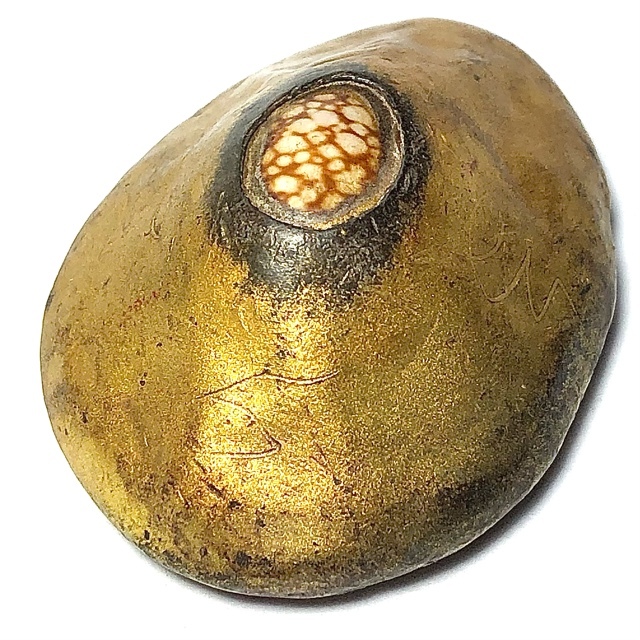
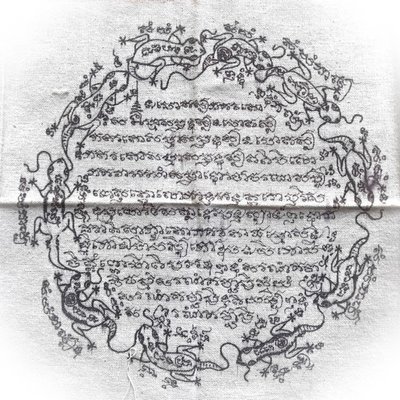
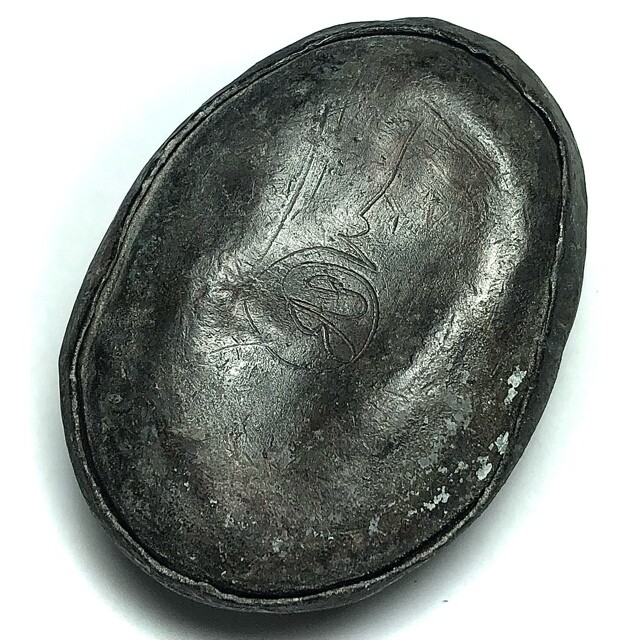
Next, the shell is encased in “lead sheets,” believed to be sacred and to provide invincibility. The masters would flatten the lead into a shell shape, carefully wrapping it tightly and inscribing sacred Yantra characters to enhance its power. The final step involves wrapping it with string and applying “Nam Rak Si Dam” (black lacquer) or ‘Yang Makhwit’ (a type of tree resin), playing on the Thai word “Rak” (love) to imbue it with charm and popularity. The entire process is a delicate ritual that must follow precise ancient steps, including consecration with sacred incantations.
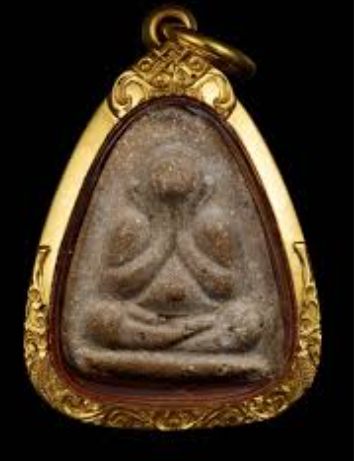
There are numerous accounts and records of Luang Pu Boon’s miraculous abilities, such as consecrating Bia Gae until they could “crawl” and chanting incantations that caused the mercury to move into the Bia Gae on its own, without manual intervention. When shaking his Bia Gae, a distinctive “khluk-khluk” sound of the mercury can be heard. The phenomenon of “mercury running” or the movement of mercury within the Bia Gae is not merely a physical property but a testament to the profound psychic power and Buddhist esoteric knowledge of the master.
In the intricate world of amulets, phenomena visible to the naked eye, or even perceptible through the meditative mind of the worshipper, elevate these amulets from ordinary objects to sacred items imbued with life. This “living” quality, where the mercury responds to the master’s incantations or even to the steadfast mind of the devotee, creates an unparalleled sense of connection and profoundly reinforces belief in the protective and miraculous power of Bia Gae. For serious collectors, this phenomenon is direct confirmation of unseen spiritual energy, making these Bia Gae highly desirable and valuable.
Luang Pu Boon’s Bia Gae possesses extraordinary, all-encompassing virtues, including healing various ailments, bestowing metta mahaniyom (charm and popularity), and transforming misfortune into good fortune. They are potent in preventing and counteracting black magic, evil spells, curses, and all forms of malevolent influences, including negative energies, poison, and venomous animal bites.
Furthermore, they bring auspiciousness to the wearer, provide invincibility, and enhance charm, popularity, and good fortune. His Bia Gae has no prohibitions regarding carrying; they are like gold, remaining gold no matter where they are. Luang Pu Boon’s Bia Gae are extremely popular within the Wat Klang Bang Kaew lineage and come in various forms, such as Bia Gae wrapped in string with embedded takrut and “running mercury.”
Ya Wasana Jindamanee Sacred Muan Sarn Powders
“Phra Ya Wasana Jindamanee” is another type of amulet that brought immense renown to Luang Pu Boon. It is an ancient herbal remedy described extensively in ancient texts as “Jindamanee Osot An Philat,” meaning a miraculous medicine composed of various herbs. The main ingredients, according to ancient scriptures, include “Dok Khlat,” “Dok Chan,” “Kaysorn Butsaban,” “Prao Horm,” “Kamyan,” “Kod Sor Kod Khema,” “Thong Nam Prasarn,” “Pleuak Kum Chonlatan,” and “Krung Khema,” all in equal proportions.
The process of creating Phra Ya Wasana Jindamanee powder is difficult and complex according to ancient texts. Luang Pu Boon created it only twice due to its arduous nature. The crucial step is to gather all the necessary herbs, some of which are extremely rare; if even one ingredient is missing, the process cannot proceed. Once all ingredients are collected, an auspicious “reuk yam” (auspicious time) is determined, usually performed on the full moon night of the twelfth lunar month.
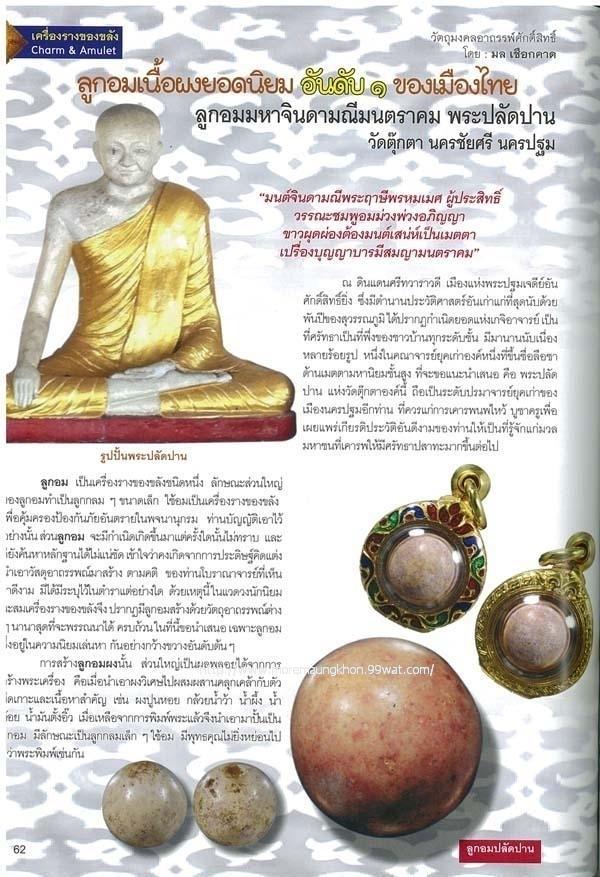
Luang Pu Boon would conduct the ceremony in the Ubosot and personally oversee the grinding and mixing of the herbs. He would also inscribe sacred Yantra characters on both the grinding stone and the mortar. After grinding the various ingredients, Luang Pu Boon would personally mix the special herbal formula. Then, monks, novices, or lay practitioners observing the eight precepts would assist in shaping the medicine, chanting incantations continuously throughout the process. Once the medicine was properly dried, it would be presented to Luang Pu for consecration over “7 Saturdays and 7 Tuesdays” to complete the ancient ritual.
Phra Ya Wasana Jindamanee powder possesses supreme virtues. Anyone who consumes or applies it will experience prosperity and growth, fulfilling their desires, accumulating wealth, having a bright countenance, and a pure heart. It has the power to prevent and cure various illnesses, even severe or life-threatening ones, which can be alleviated or cured. It bestows high metta mahaniyom, making one beloved by all. If carried into the forest, it helps protect against black magic, wild animals, and malevolent spirits.
The consistent mention of “Phra Ya Wasana Jindamanee” as a “medicine” with properties to heal various ailments, including severe conditions, and simultaneously being crafted into “amulets” or “Buddha images” such as Phra Chao Sua and other Buddha images possessing protective, auspicious, and metta mahaniyom virtues, demonstrates the interconnected functionality of these items. This dual function highlights a profound and integrated perspective in ancient Thai healing, where physical health is inextricably linked to spiritual balance and protection from unseen forces.
This concept suggests that illnesses may not stem solely from physical causes but could also originate from karma, black magic, or malevolent spirits. By creating both “medicine” and “amulets” simultaneously, Luang Pu Boon offered a holistic approach that addressed both tangible symptoms and the spiritual roots of suffering. This approach solidified his reputation as a compassionate and knowledgeable grand master, showcasing his deep expertise in both herbal medicine and esoteric incantations, thereby making his amulets uniquely powerful and revered.
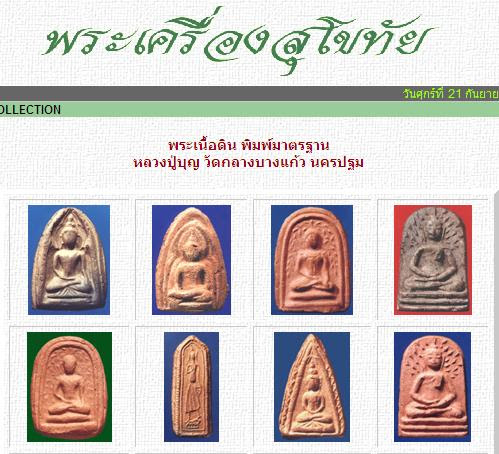
Various Buddha Images (Phra Phim) and Other Amulets of Luang Pu Boon
Key amulets created from Luang Pu Boon’s Phra Ya Wasana Jindamanee powder include the Phra Phim Sian Lon Prok Pho Sadung Glub (bald-headed Buddha under Bodhi tree with reversal power) in Jindamanee powder, and the Phra Phim Ratsamee (radiant Buddha image) in Jindamanee powder. Additionally, there are the Phra Phim Samathi Sum Waew – Lang Phra Pidta (meditating Buddha with hollow arch and covered-face Buddha back) in Jindamanee powder, and the Phra Phong Ya Wasana Jindamanee Phim Leb Mue Sadung Glub (fingernail-shaped Buddha image with reversal power), believed to possess the virtue of “turning bad into good.”
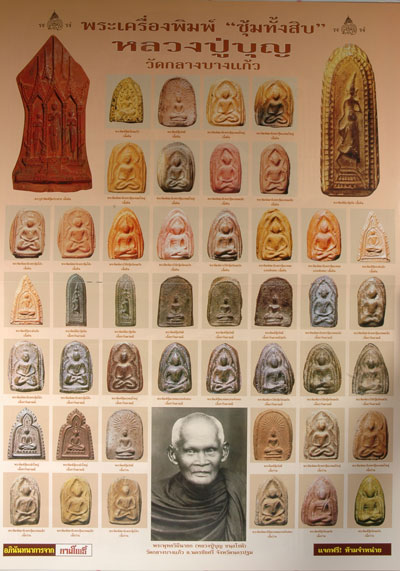
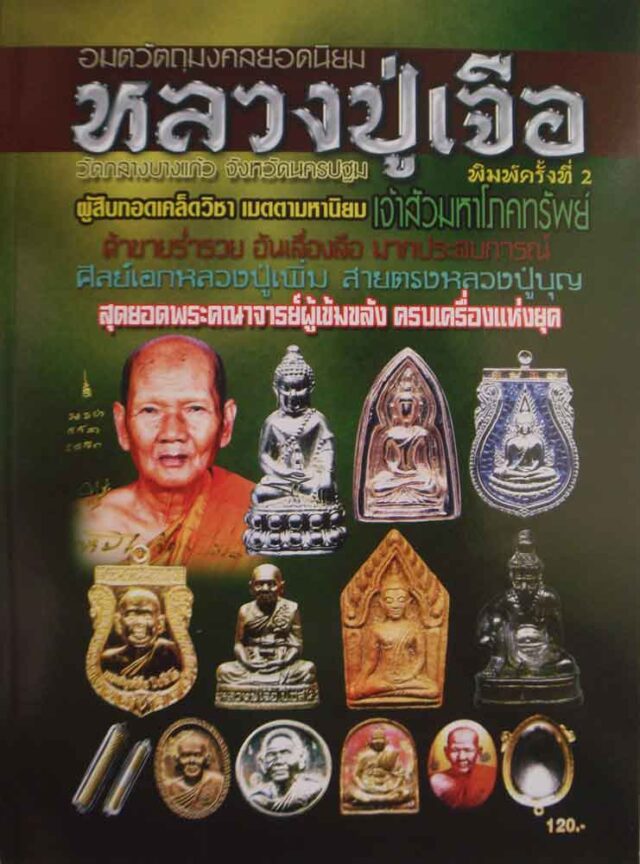
The Phra Chao Sua (Lord of Wealth) Amulet, Jindamanee Powder Edition (small print) from B.E. 2559 (2016 CE), created according to Luang Pu Boon’s tradition, is renowned for its virtues in wealth, trade, and protection from danger. Luang Pu Boon’s amulet catalog also includes Rian Pum Phra Phutthachinnarat (stamped Buddha Chinnarat coin), Rian Chao Sua (Lord of Wealth coin), and Jindamanee medicinal pellets.
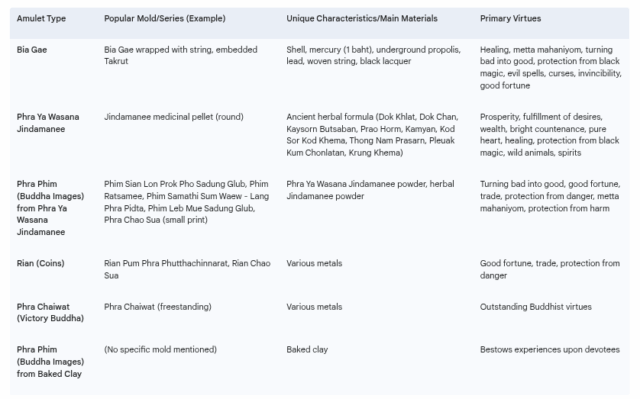
Table 1: Key Amulets of Luang Pu Boon, Wat Klang Bang Kaew
| Amulet Type | Popular Mold/Series (Example) | Unique Characteristics/Main Materials | Primary Virtues |
|---|---|---|---|
| Bia Gae | Bia Gae wrapped with string, embedded Takrut | Shell, mercury (1 baht), underground propolis, lead, woven string, black lacquer | Healing, metta mahaniyom, turning bad into good, protection from black magic, evil spells, curses, invincibility, good fortune |
| Phra Ya Wasana Jindamanee | Jindamanee medicinal pellet (round) | Ancient herbal formula (Dok Khlat, Dok Chan, Kaysorn Butsaban, Prao Horm, Kamyan, Kod Sor Kod Khema, Thong Nam Prasarn, Pleuak Kum Chonlatan, Krung Khema) | Prosperity, fulfillment of desires, wealth, bright countenance, pure heart, healing, protection from black magic, wild animals, spirits |
| Phra Phim (Buddha Images) from Phra Ya Wasana Jindamanee | Phim Sian Lon Prok Pho Sadung Glub, Phim Ratsamee, Phim Samathi Sum Waew – Lang Phra Pidta, Phim Leb Mue Sadung Glub, Phra Chao Sua (small print) | Phra Ya Wasana Jindamanee powder, herbal Jindamanee powder | Turning bad into good, good fortune, trade, protection from danger, metta mahaniyom, protection from harm |
| Rian (Coins) | Rian Pum Phra Phutthachinnarat, Rian Chao Sua | Various metals | Good fortune, trade, protection from danger |
| Phra Chaiwat (Victory Buddha) | Phra Chaiwat (freestanding) | Various metals | Outstanding Buddhist virtues |
| Phra Phim (Buddha Images) from Baked Clay | (No specific mold mentioned) | Baked clay | Bestows experiences upon devotees |
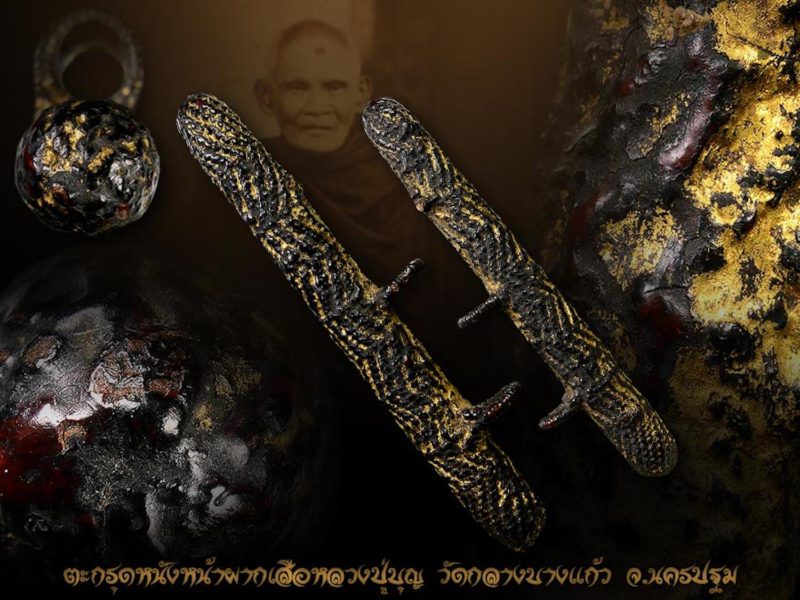
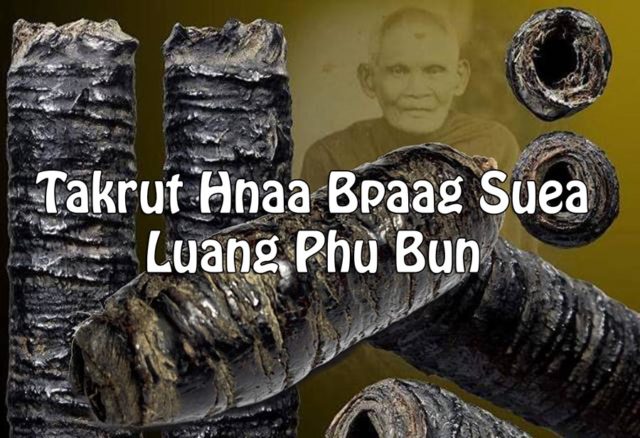
Other significant amulets by Luang Pu Boon include the Rian Chao Sua, an amulet that has long brought him fame. Phra Chaiwat is another prominent amulet, second to none. And baked clay Buddha images are highly sought after by collectors. Regarding “Takrut Na Phak Suea” (tiger forehead takrut), information indicates that an unknown number of pieces exist, but that they are very few in numbers. However, detailed information about the creation process or specific virtues of Takrut Na Phak Suea created by Luang Pu Boon is not clearly stated in the provided documents.
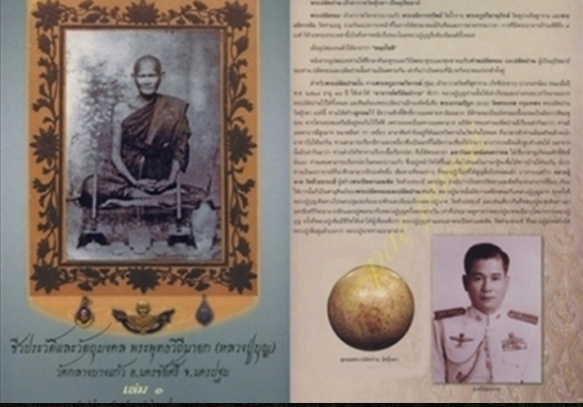
Luang Pu Perm Punyawasano: The Successor and Preserver of the Legend
Luang Pu Perm Punyawasano, also known as “Phra Phutthawithi Nayok,” was originally named Perm. He was born on January 28, B.E. 2430 (1887 CE), during the reign of King Chulalongkorn (Rama V). He was ordained as a novice in B.E. 2437 (1894 CE) at the age of 8 and as a monk on July 12, B.E. 2450 (1907 CE), at the ordination hall of Wat Klang Bang Kaew. Luang Pu Perm was a “senior disciple” of Luang Pu Boon of Wat Klang Bang Kaew and was appointed as the abbot of Wat Klang Bang Kaew on February 5, B.E. 2481 (1938 CE). He passed away on January 6, B.E. 2526 (1983 CE), at the age of 97 and 77 monastic years.
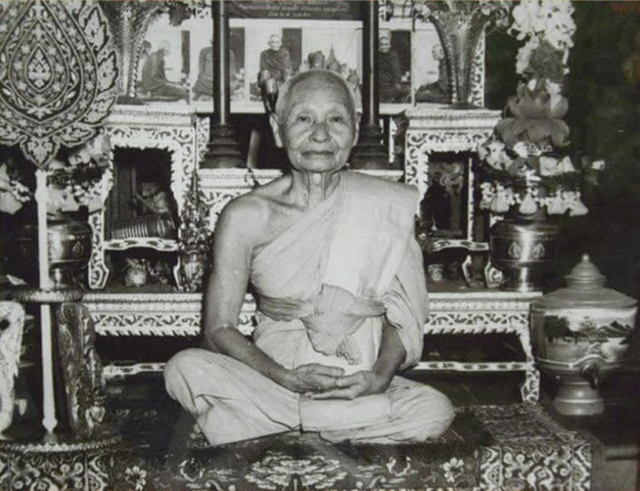
As a senior disciple, Luang Pu Perm directly inherited various esoteric knowledge and ancient texts from Luang Pu Boon. He created “Bia Gae” according to Luang Pu Boon’s tradition, which continued to possess extraordinary virtues, making them ultimate protective charms in all aspects, especially in warding off black magic.
In his later years, Luang Pu Perm showed concern for the preservation of the sacred lineage. He summoned “Phra Ajarn Bai” (Phra Palad Bai Khun Weero) and “Luang Pu Juea,” who came with flowers, incense, and candles, to transmit the Wicha Bia Gae and certain other knowledge to both disciples. He clearly stated, “If I am no longer here, the Wicha Bia Gae must not vanish from Wat Klang Bang Kaew,” and emphasized, “Let Bai do it first,” indicating the order of succession he had designated. Phra Ajarn Bai (Phra Palad Bai Khun Weero) served as the acting abbot of Wat Klang Bang Kaew from B.E. 2526-2527 (1983-1984 CE) and was the preceptor for the ordination of Phra Khru Srirot Suwannarak at Wat Klang Bang Kaew.
After Luang Pu Perm’s passing, Phra Ajarn Bai created Bia Gae for approximately one year before he also passed away. Then “Ajarn Seng” continued making Bia Gae for a short period before his passing. It was then Luang Pu Juea’s turn to take over the succession of the Wicha Bia Gae.
Luang Pu Perm’s act of specifically summoning two disciples, Phra Ajarn Bai and Luang Pu Juea, to transmit the Wicha Bia Gae was not merely a casual transfer of knowledge but a deliberate and formal act. He explicitly stated his intention that “If I am no longer here, the Wicha Bia Gae must not vanish from Wat Klang Bang Kaew,” which underscores his profound concern for the preservation of this sacred tradition. Furthermore, the specific instruction “Let Bai do it first,” and the historical progression of events (Phra Ajarn Bai creating Bia Gae, followed by Ajarn Seng, and finally Luang Pu Juea), indicate a systematically planned and perhaps even prescient management of the succession.
This operation reveals a deep and meticulous approach to safeguarding and maintaining sacred knowledge within the monastic tradition. It demonstrates that the transmission of “Wicha” is not a haphazard or purely spiritual process but a deliberate and systematic plan to ensure its continuity even after the passing of each grand master. The precise instruction “Let Bai do it first” and the disclosure of the succession order (Phra Ajarn Bai -> Ajarn Seng -> Luang Pu Juea) indicate a profound understanding of each disciple’s capabilities, spiritual readiness, and perhaps their destined roles. This meticulous planning and prescience of Luang Pu Perm are crucial factors that have allowed the Wat Klang Bang Kaew lineage to continue unbroken and to be highly esteemed by amulet collectors and scholars.
Luang Pu Juea Piyasiloe: The Propagator of Sacred Knowledge to the Public
Luang Pu Juea Piyasiloe, originally named Juea Netprapai, was born on May 14, B.E. 2468 (1925 CE – Year of the Ox) in Ban Tai Khung, Thai Yawad sub-district, Nakhon Chai Si District, Nakhon Pathom Province. He was ordained as a monk in B.E. 2494 (1951 CE) at the age of 26 at Wat Klang Bang Kaew, with Phra Phutthawithi Nayok (Luang Pu Perm Punyawasano) as his preceptor. Luang Pu Juea was a direct and close disciple of Luang Pu Perm. He passed the highest level of Dhamma studies (Nak Tham Ek) in B.E. 2499 (1956 CE) and received the appointment of Phra Samuh Juea, an ecclesiastical title under Luang Pu Perm, in B.E. 2504 (1961 CE).
Although he was invited to become the abbot in B.E. 2544 (2001 CE), he declined due to his advanced age, requesting instead to merely support the work of the Wat Klang Bang Kaew monastic community to the best of his ability. Luang Pu Juea passed away on May 14, B.E. 2552 (2009 CE), at the age of 84, having served 58 monastic years.
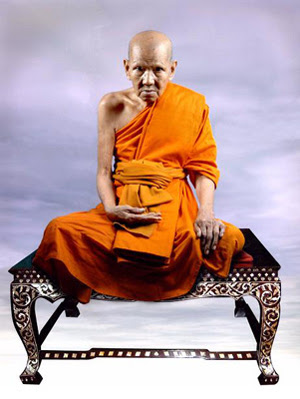
Luang Pu Juea inherited all the esoteric knowledge and ancient texts from Luang Pu Perm, including the creation of Phra Ya Wasana Jindamanee powder, Bia Gae, Takrut, and various other charms. He played a crucial role in creating Bia Gae according to Luang Pu Perm’s instructions, performing the rituals from filling with mercury, encasing the shell with lead, inscribing Yantra characters, and hand-weaving the string cover for the shells. After Phra Ajarn Bai and Ajarn Seng passed away, Luang Pu Juea continued the creation of Bia Gae in the order designated by Luang Pu Perm.
Catalog of Luang Pu Juea’s Amulets
- Bia Gae: Luang Pu Juea created an immense number of Bia Gae, more than all other masters at Wat Klang Bang Kaew combined. He made at least 50 pieces per day, or over 18,000 per year, and continued this practice from B.E. 2532 (1989 CE) to B.E. 2550 (2007 CE), totaling no less than 300,000 pieces. The unique characteristic of Luang Pu Juea’s Bia Gae is their various forms of string wrapping and lacquer coating. During his 80th birthday merit-making celebration and throughout the following year, codes were stamped on both loops of the Bia Gae: “Na Khuen Yod” (Na ascending to the peak) and “Jor Jan Khuen Yod” (Jor Jan ascending to the peak) as specific identifiers.
His Bia Gae have widely recounted experiences across all directions, including protection from danger, metta mahaniyom, and warding off black magic. Many people sought Bia Gae from him, leading to the main raw material, Bia Gae shells, being sourced from the Andaman Sea region. Disciples would collectively purchase sacks of them, with some remarking that they “almost depleted the Andaman Sea.” Luang Pu Juea would sit making Bia Gae from dusk until nearly dawn before resting. Some days, people would chat with him until late, forcing him to make Bia Gae late into the night, often finishing only at sunrise, because in the morning, local disciples would be waiting to receive the Bia Gae he had filled for them to string-wrap, attach loops, and lacquer.
The labor cost for wrapping each Bia Gae was 50 baht, providing income for villagers, with some earning 500 baht a day by wrapping 10 pieces. The Bia Gae he offered for merit-making cost 400 baht, leaving almost no profit, as there were costs for mercury, shells, loops, and wrapping; sometimes, he even incurred losses. Yet, he gave them with compassion, never complaining or losing his temper. Many disciples thus called him “the Bodhisattva of Wat Klang Bang Kaew.”
- Phra Ya Wasana Jindamanee: Luang Pu Juea created “Phra Ya Wasana Jindamanee” in the form of actual amulets for the first time when Her Royal Highness Princess Bajrakitiyabha Narendira Debyavati, the Princess Rajasarinisiribajra Maha Vajra Rajadhida, presided over the mixing and shaping ceremony on Sunday, November 26, B.E. 2549 (2006 CE).
This first edition of Phra Ya Wasana Jindamanee comprised 14 molds: Phim Chao Sua, Phim Nang Phaya Sadung Glub (Queen reversal), Phim Sian Lon Sadung Glub (bald-headed reversal), Phim Prok Pho Yai (large Bodhi tree), Phim Sum Laem Yai (large pointed arch), Phim Phra Chaiwat Phim Tor (small freestanding Victory Buddha), Phim Nang Phaya Kha Toe (Queen with table legs), Phim Leela Maha Setthi (Dancing Millionaire, miniature shadow puppet style), Phim Pai Tong Hu Kratai (miniature rabbit ear playing card), Phim Luang Por Tor, Phim Luang Pu Juea Krob Kaew (Luang Pu Juea with glass cover), Phra Pidta Phim Ngoen Lai Nong Thong (covered-face Buddha for flowing wealth), Phra Pidta Phim Metta Mahaniyom (covered-face Buddha for great charm), and Phim Pidta Metta Mahalarp (covered-face Buddha for great charm and fortune). Some batches of Luang Pu Juea’s Phra Ya Wasana Jindamanee amulets in B.E. 2550 (2007 CE) contained a mixture of Luang Pu Boon’s powder blended with plaster from the restoration of Luang Por Tor Buddha image, further enhancing their sacredness.
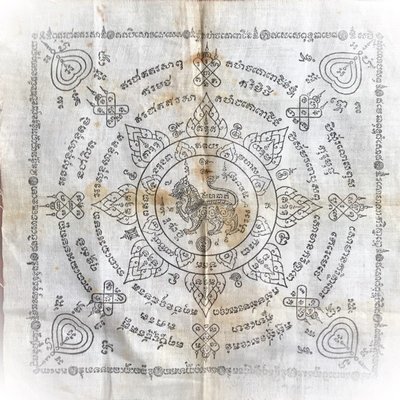
- Other Amulets: Luang Pu Juea also created many other amulets, including Rian Sema Luang Pu Juea (sema-shaped coin) 1st Edition B.E. 2534 (1991 CE) (silver, gold-plated), freestanding Buddha images, worship statues, Phra Pikanet (Ganesha) worship statues (cast from mixed metals including remnants of Luang Pu Boon’s Phra Chaw Wat cluster), Phra Kring Naresuan Trueng Traiphop, Phra Phim Prok Pho (Bodhi tree Buddha image) in powder, Phra Nang Phaya Sadung Glub (Queen reversal) (consecrated turmeric powder, baked clay), Phra Phim Sian Lon (bald-headed Buddha image), Phra Phim Sum Laem (pointed arch Buddha image), Phra Khun Phaen Khleub (glazed Khun Phaen), and cast metal Rian Luang Pu Juea. Additionally, there are Takrut Phra Phutthaha Mahabarami (4 types: copper, Thong Thip, lead, silver), Phra Yan (sacred cloths, 4 main types), photographs, Thao Wessuwan (King of Ghosts), lockets, ritual knives (Meed Mor), and carved wooden Buddha images. Regarding “Takrut Na Phak Suea,” although there is information about their sale in online markets, there is no direct evidence linking Luang Pu Juea to the creation of Takrut Na Phak Suea specifically from Wat Klang Bang Kaew. Most available information attributes them to other masters, such as Luang Por Jong of Wat Na Tang Nok.
Luang Por Sanya (Kong) Kammasuttho: The Current Successor
In the lineage of Buddhist esoteric knowledge at Wat Klang Bang Kaew, besides Luang Pu Boon, Luang Pu Perm, and Luang Pu Juea, there is another revered monk who plays a crucial role in preserving the temple’s knowledge and amulets: Phra Khru Sangkharak Sanya Kammasuttho, also known as “Luang Por Sanya (Kong).” He is a direct disciple of Luang Pu Perm and is described as a virtuous and compassionate monk, humble and possessing a spirit no different from Luang Pu Perm and Luang Pu Juea.
Luang Por Sanya (Kong) continues to reside as one of the monks at Wat Klang Bang Kaew. He possesses profound expertise in compounding Phra Ya Wasana Jindamanee powder, having assisted Luang Pu Juea in creating amulets in the modern era. Furthermore, he is a direct inheritor of the Wicha Bia Gae from Luang Pu Perm.
His continued dedication to preserving the Wicha and assisting in amulet creation reflects his commitment to ensuring the legacy of Wat Klang Bang Kaew’s Dhamma endures. Although the current abbot of Wat Klang Bang Kaew is Phra Khru Pathom Wachirakom (Pira Apiwatthanu), Luang Por Sanya (Kong) remains a vital force in continuing and transmitting various branches of Wat Klang Bang Kaew’s Wicha to future generations, revered by his disciples and the general public alike.
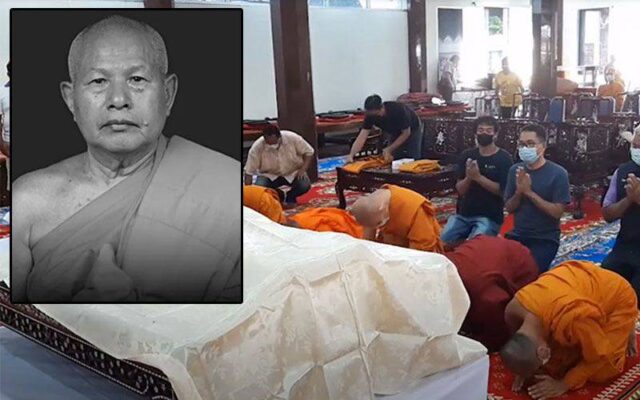
The Legacy of Dhamma and Buddhist Esoteric Knowledge at Wat Klang Bang Kaew
Wat Klang Bang Kaew is a center of sacred Buddhist esoteric knowledge and sciences that has been continuously passed down for centuries. From the genesis of the Wicha Bia Gae transmitted by Phra Palad Pan of Wat Tukata to Luang Pu Boon Khanthachoto, the great master and creator of renowned amulets such as Bia Gae and Phra Ya Wasana Jindamanee, Luang Pu Boon laid a strong foundation and crafted amulets with all-encompassing Buddhist virtues, including metta mahaniyom, invincibility, protection from danger, and healing.
The transmission of this sacred knowledge has continued seamlessly through Luang Pu Perm Punyawasano, the senior disciple who preserved the legend and systematically planned the transmission of the Wicha. He passed it on to Phra Ajarn Bai, Ajarn Seng, and ultimately to Luang Pu Juea Piyasiloe. Luang Pu Juea dedicated his body and mind to creating a vast number of Bia Gae and Phra Ya Wasana Jindamanee amulets, disseminating their potent Buddhist virtues to the public with boundless compassion. To this day, the lineage and legend of Wat Klang Bang Kaew continue to be upheld and preserved by Phra Ajarn Sanya (Kong) Kammasuttho, a direct disciple of Luang Pu Perm.
The legacy of Wat Klang Bang Kaew is therefore not merely tangible amulets but a continuous stream of wisdom, Buddhist esoteric knowledge, and compassion passed from masters to disciples across generations. Every amulet created at this temple is imbued with the power of faith and long-proven experiences, ensuring that Wat Klang Bang Kaew remains a spiritual sanctuary and a source of sacred amulets, nationally recognized and highly sought after by collectors and devotees alike.
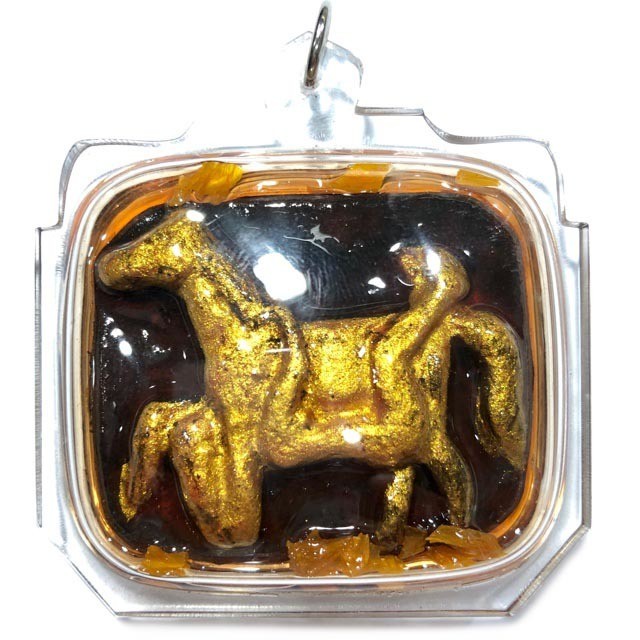
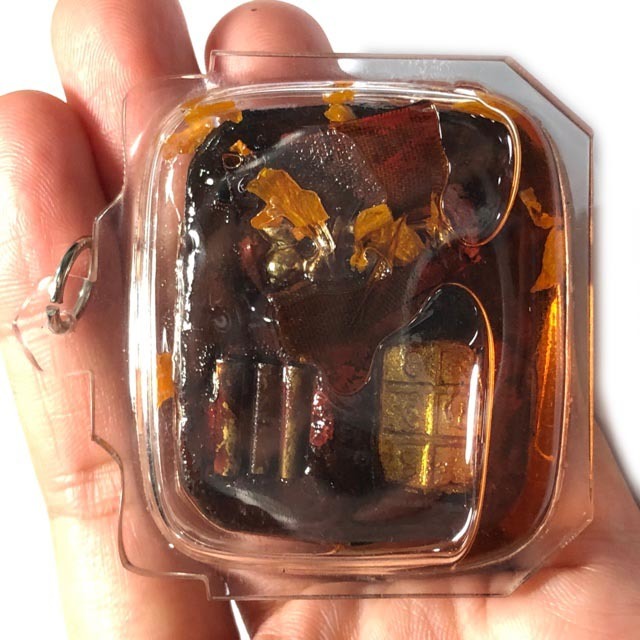
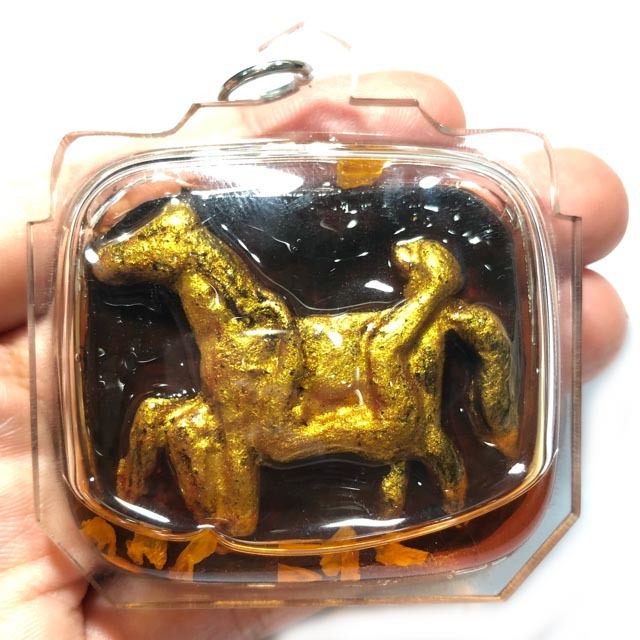
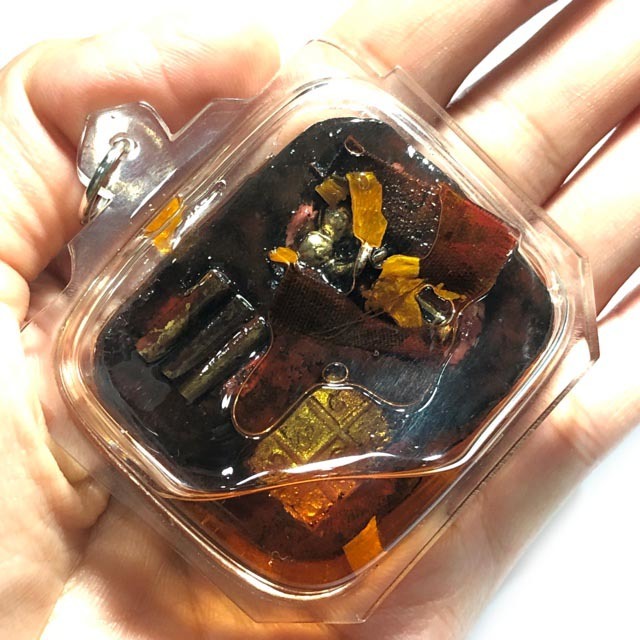
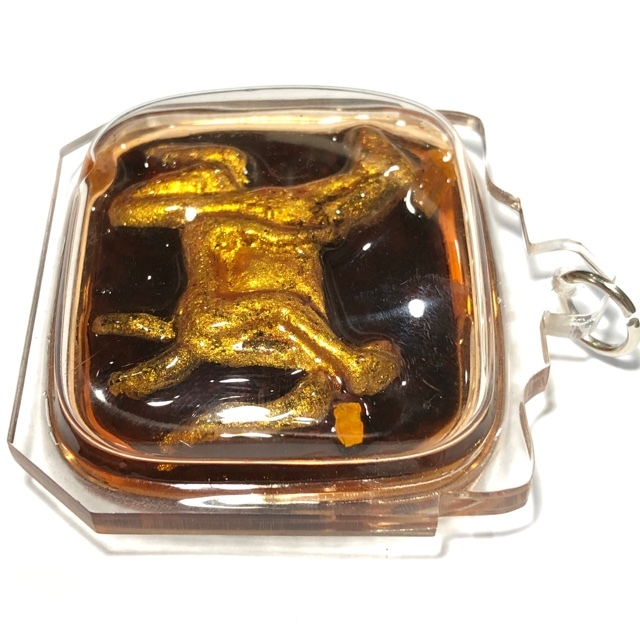
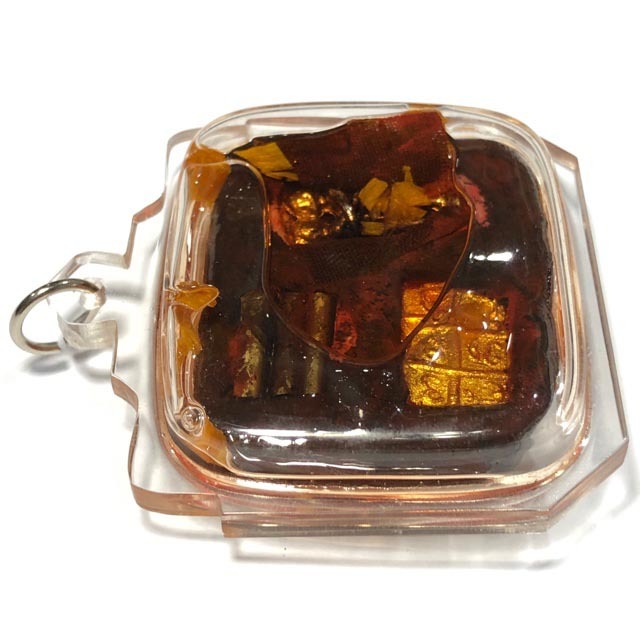
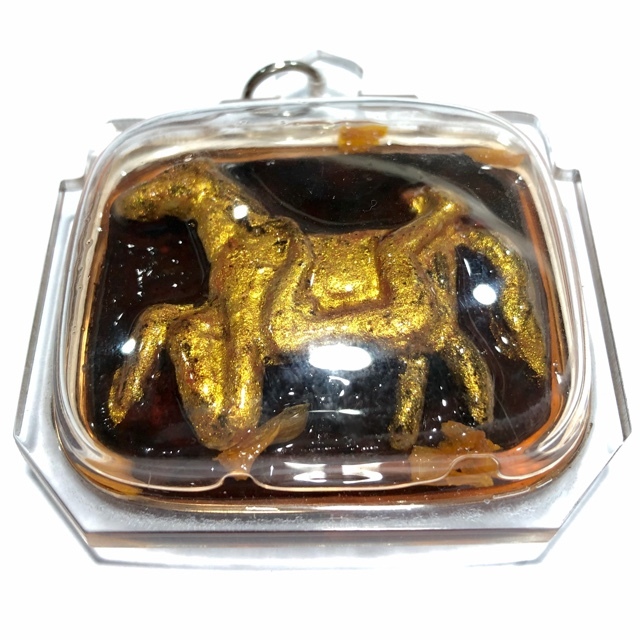
Ongk Kroo Version of the famously powerful In Ma Saep Nang with In Koo, Jivara Robe, and 3 Takrut, immersed in Nam Man Prai oil, from Kroo Ba Wang, Rich in Muan Sarn from the visibly ancient aspects of the Muan Sarn clay, which reveals us to be beholding an Extremely Rare Masterpiece Ongk Kroo Prai Oil Immersed version of the In Ma Saep Nang of Kroo Ba Wang (Wat Ban Den)
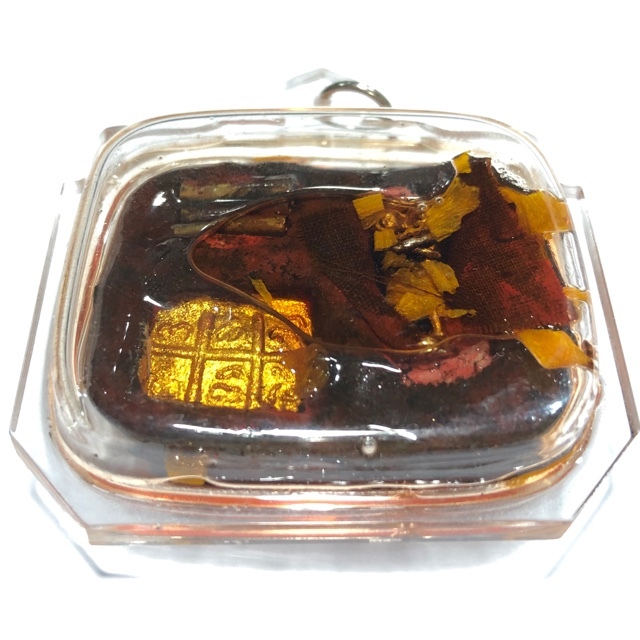
This model is rectangular shape large Pim Yai, Lady-Horse Prai Deity,with hand inscribed Agkhara Spells made from Kroo Ba Wangs famous powders. The rear face has an In Koo statuette, a piece of Jivara Monk Robe, and 3 Takrut inserted into the Prai Oil Consecrated votive tablet, which has flakes of Paya Wan Dork Tong Golden Flower Forest herb visible within the oil.
Empowered with the Ancient Northern Lanna Tradition Wicha, and Magical Incantations inscribed upon the surface. A truly rare and world-famous classic amulet, from Olden Days Master Kroo Ba Wang, of Wat Ban Den.
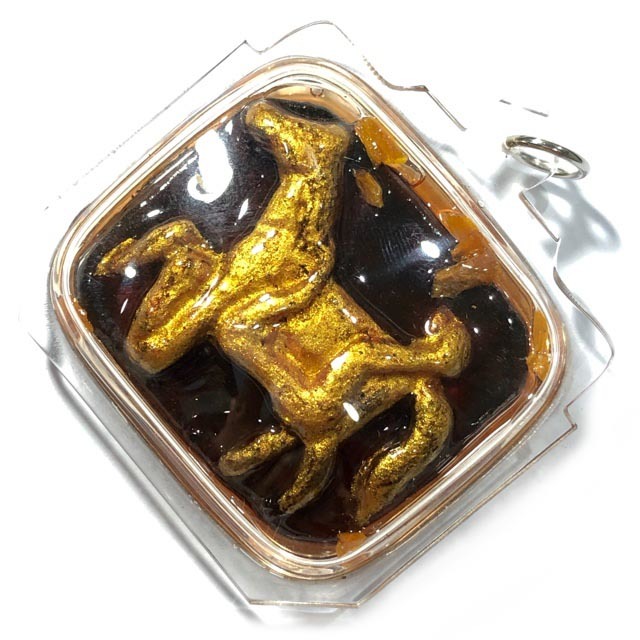

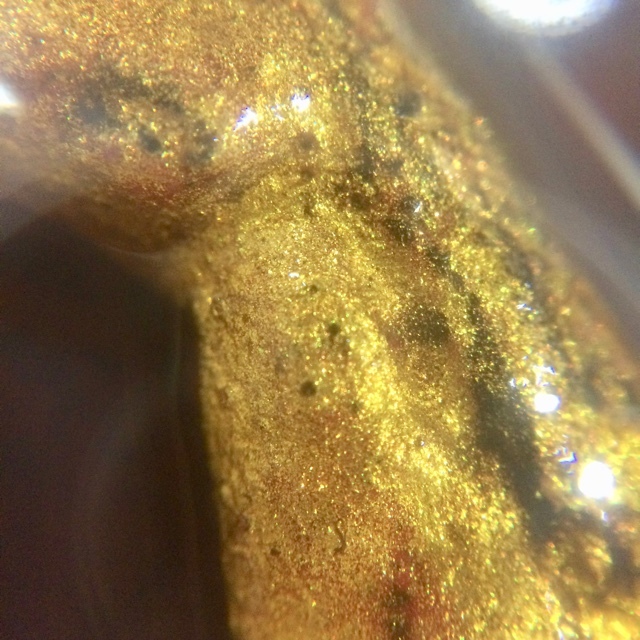
Free registered air parcel shipping worldwide is offered included with this amulet. The Ma Saep Nang measures 6 x 6 Cm, and is made from Black Sacred Muan Sarn Sacred Powders, with red lacquer and a gold covered surface, and golden painted on the Mae Saep Nang on the front face. Empowered with the invocation of the Prai Ma Saep Nang Deva and is imbued with Lanna Maha Sanaeh magic for Seductive Influence, Metta Maha Niyom Mercy Charm and Maha Lap Wealth Increase (through attracting admirers, good customers, and, promotion from bosses, and helpful friends).
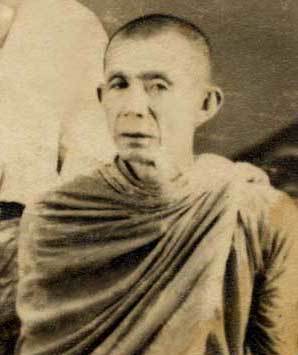
Luang Phu Kroo Ba Wang is Legendary for his Maha Sanaeh Magic, was one of the most famous of the Northern Lanna Guru Masters of the Olden Days. Highly preferred for his In Koo and In Ma Saep Nang amulets, as well as his famous Takrut scroll, Pra Rahu, and Pha Yant Sacred Geometry Yantra Cloth Spells. Of the Pha Yant he was especially renowned for his Pha Yant Ma Saep Nang Lady-Horse images.
Luang Phu was born in 2434 BE, in the country into a family of farmers and market traders, In those days, the only way to get any schooling in the countryside was to stay in a temple and learn with the Monks. And so, at the age of nearly 9 years old, his father took him to live at the nearby temple, to learn to read and write. After about 3 years. Luang Phu could read and write fluently enough, and so he was able to ordain into the Sangha as a Samanera Novice Monk.
Luang Phu was born in 2434 BE, in the country into a family of farmers and market traders, In those days, the only way to get any schooling in the countryside was to stay in a temple and learn with the Monks, and so, at the age of nearly 9 years old, his father took him to live at the nearby temple, to learn to read and write. After about 3 years. Luang Phu could read and write fluently enough, and so he was able to ordain into the Sangha as a Samanera Novice Monk in the year 2445 BE. Luang Phu then began to practice Khom Sanskrit Agkhara and Wicha, and within a very short period of time became so adept that he could chant every single line of Agkhara from memory with great aptitude.
Pra Kroo Gantiya was his Upachaya Ordaining Officer, and Pra Ajarn Bpan was his Pra Gammawājājarn (Prompter). Pra Atigarn Bpum was his Pra Anusawanājarn (Witness). Luang Phu was given the Chāyā (official Monks Name) of Prohma Sēno. Luang Phu Kroo Ba Wang then stayed on at Wat Ban Baen in Lampoon for a period of 2 years more.
After this Luang Phu Kroo Ba Wang then moved to stay at Wat Ban Hmueang Jee, which was in his home area where he was born. Luang Phu then continued to study and practice Wicha Akom and Khom Agkhara for a further three years, until he became inspired to take up the practice of Tudong Solitary Forest wandering.
Luang Phu then travelled through the thick forest area of Pha Teub, on is way towards Chiang Saen, and stopped in the forest to practice for 6 months. Once he reached Chiang Saen, he stayed around the area practicing for some years, until he decided to travel towards Prae Province, where he finally arrived and stayed at the temple of Wat Den Chai. He stayed at this temple to master the various Sorcery Methods of the Region, so that he would be able to perform Powerful Incantations enabling him to cast spells and blessings to offer protection, happiness and prosperirty to the fold, and to send metta and merits to the Nature Spirits of the Nether Worlds, with Compassionate Mercy Magic.
Once he had mastered this Wicha, he then set forth once more, and practiced Tudong, until he came to rest at a very peaceful place in the forest called 'Pha Den Gradtay', which was very auspicious in energy. There was a small village nearby which was impoverished, and Luang Phu then decided to build a temple with the help of the locals. But Luang Phu was first called back by locals of the temple at Wat Dton Tong, so he agreed and went backl to assist the with their needs.
After one year helping them, he was able to return to Pha Den Gradtay, and built three Kuti Huts and invited some other monks to come and stay, and assist in developing the temple.
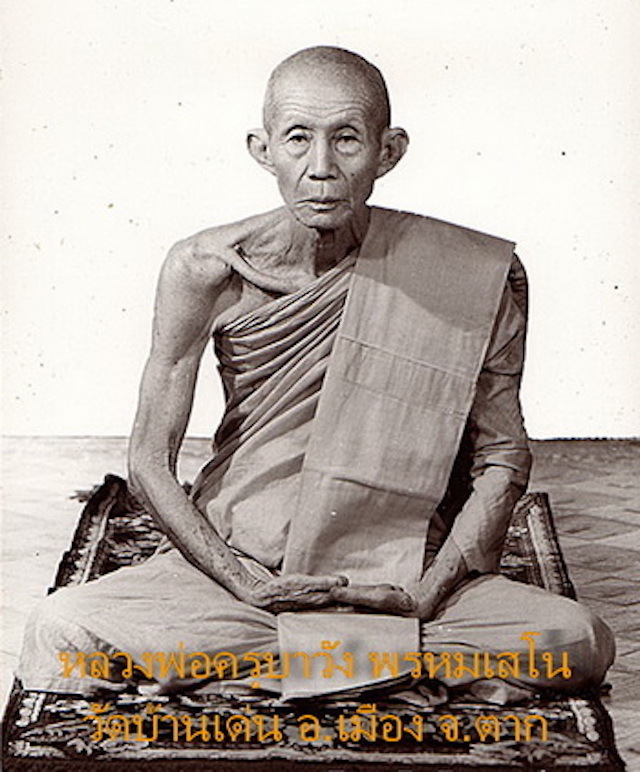
Then in the yeat 2508 Luang Phu Kroo Ba Wang began to build the Uposadha Shrine Room and the locals of the surrounding areas began to hear of his merits, and flock to the temple to make donations and assist.
The Uposadha was then finished in the the year 2510 BE. Luang Phu became famous for both is great ability to finish the temple of Wat ban den in Miraclulously short timespan, and also for his many Wicha, including Horasart (Astrology), Amulet making, Maha Sanaeh and Metta Maha Niyom Maha Lap Magic, and his ability to use Candle Magic to eliminate Bad Karma.
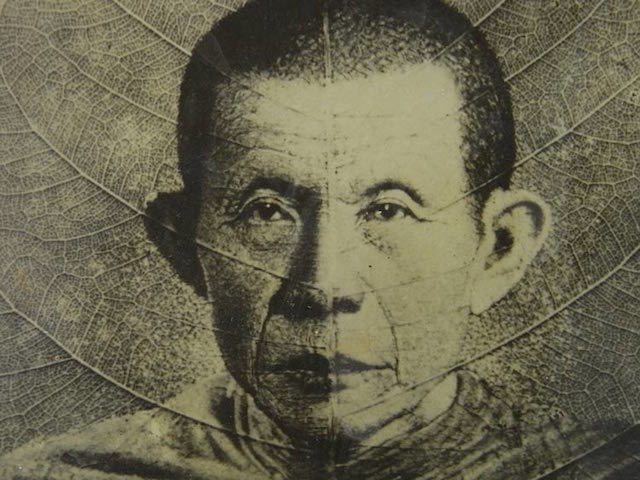
In the year 2513, time caught up with Luang Phu and he became ill, and began to weaken with age, and became unable to travel, and stayed for the rest of his life performing meritorious acts for the temple and the devotees, until his final passing at Wat Ban Den, in the year 2516 BE.
About In Ma Saep Nang Deva
There is a Fable that there was once a family who had a very beautiful daughter. This family reared horses for a living, and their horses were famous for their incredible beauty. The daughter took care of the horses every day until one day she felt intense desire for the horse she had become attached to, and consummated her desires with the horse (had sex with it). When the family found out about the event, they were incredibly offended and angry, and they killed the horse which the daughter had been caring for and had sex with. The daughter heard of this, and became so sad, that she died of a broken heart, from sorrow for loss of her horse and lover.
The ancient Kroo Ba Ajarns of Old believed that this particular horse had an incredible power of Maha Sanaeh (charm and attraction). So strong indeed, that even a Human Woman could fall in love with it and allow it to have sexual contact.
For this reason the In Ma Saep Nang is an extremely powerful love charm, and that whoever carries it will certainly have the charming effect on others around him or her.
Kata In Ma Yern Saep Nang
Na Mo Puttaaya Na Ma Pa Ta Ma A U Idtipiso Pakawaa Arahang Samma Samputto Na Mo Puttaaya Na Cha Na Ka (3 times)
Dtae Dtii Dtu Dta Nia Mia Pia Tia