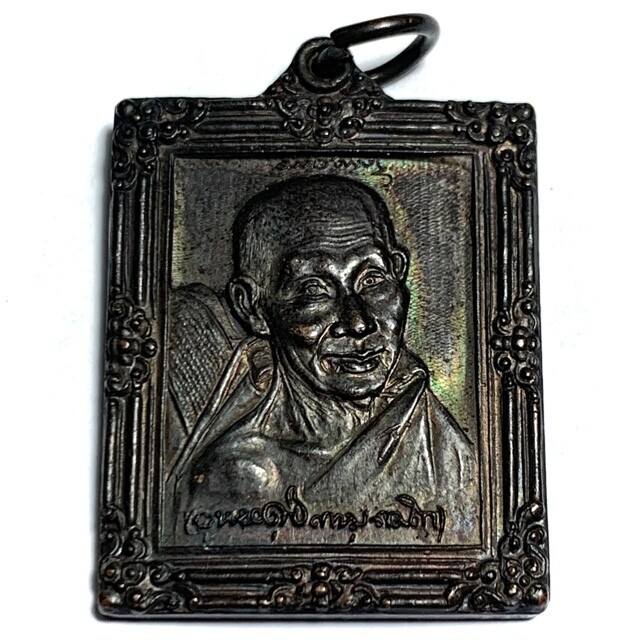
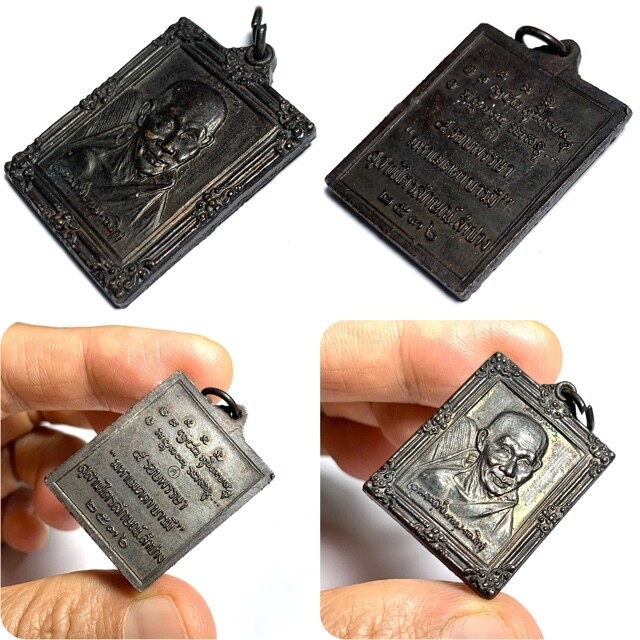
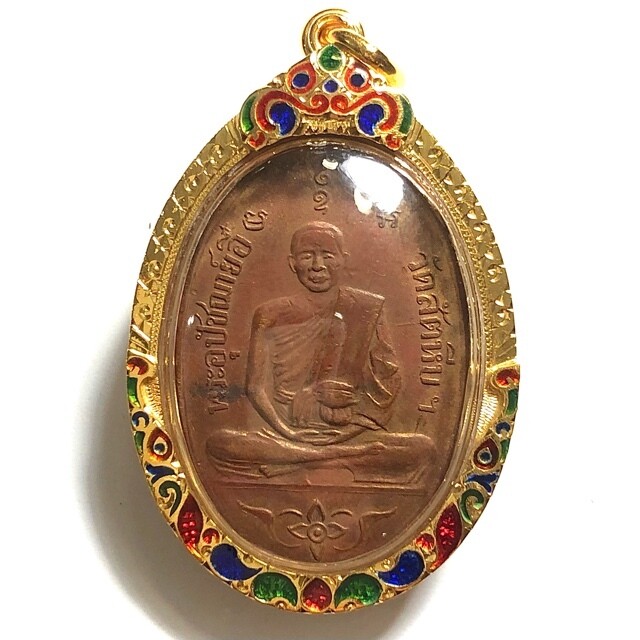
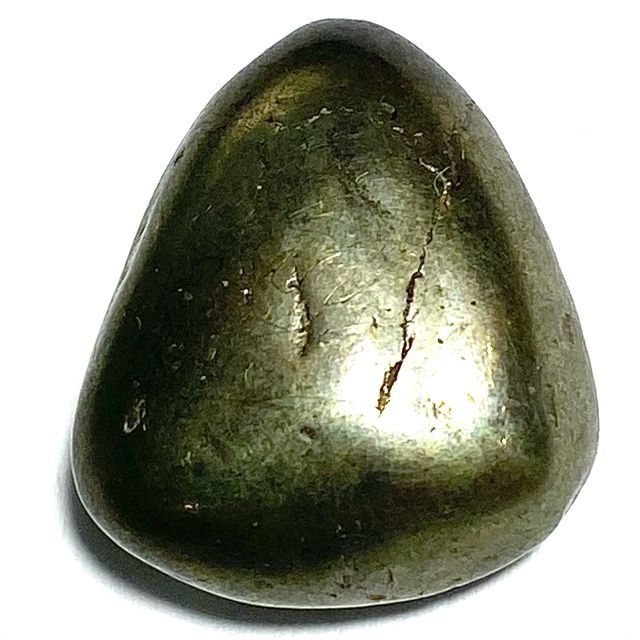
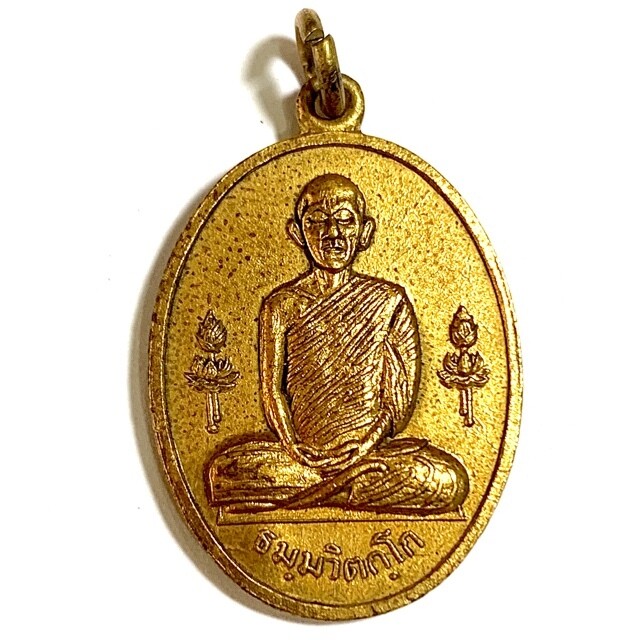
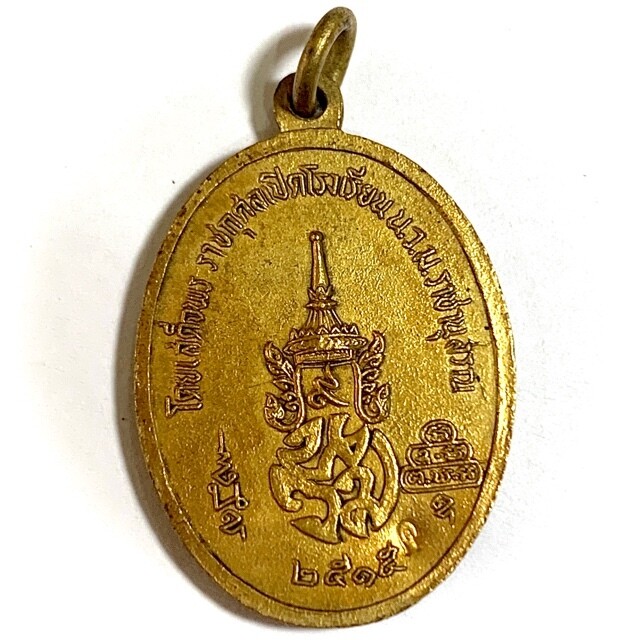
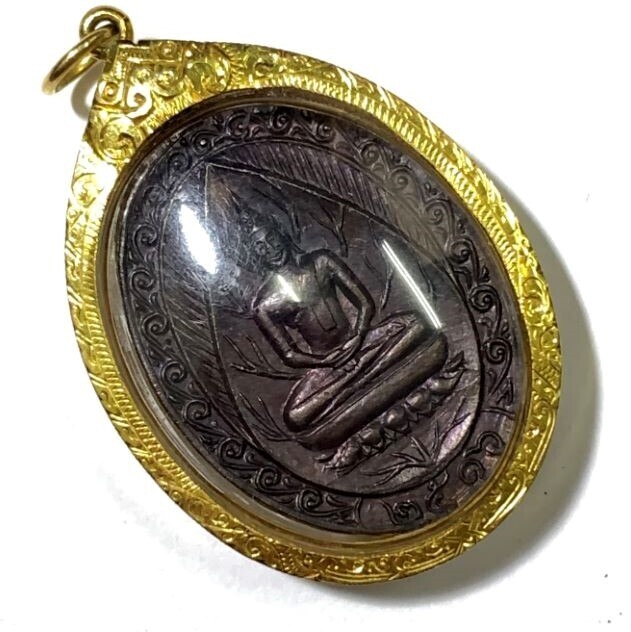
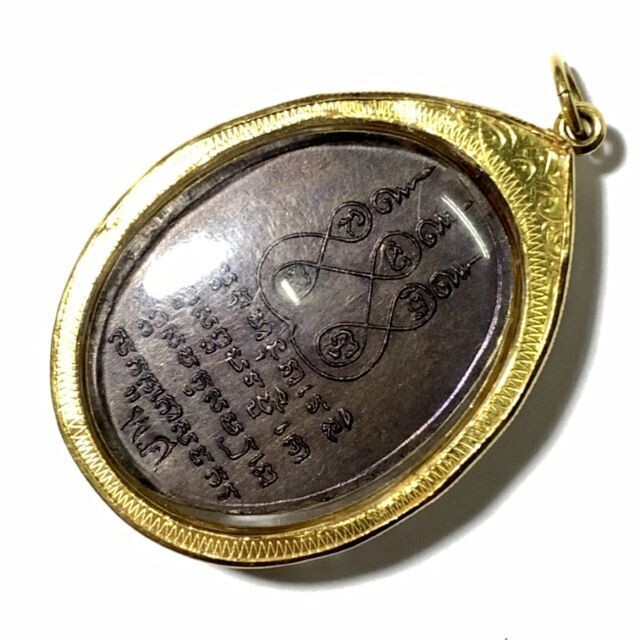
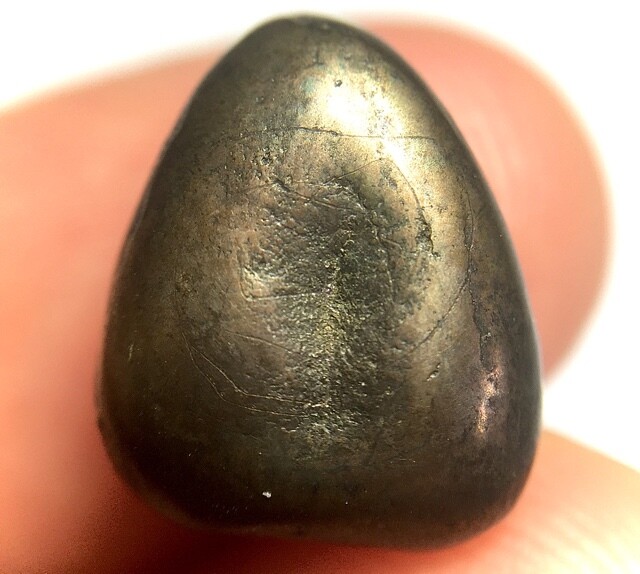
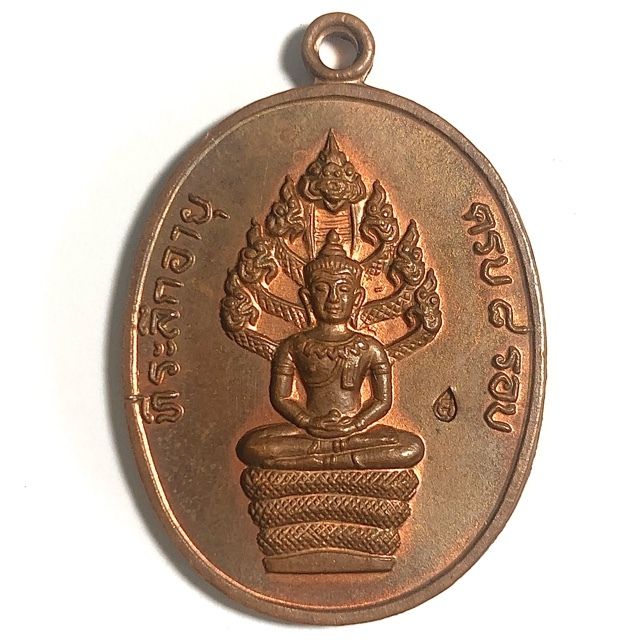
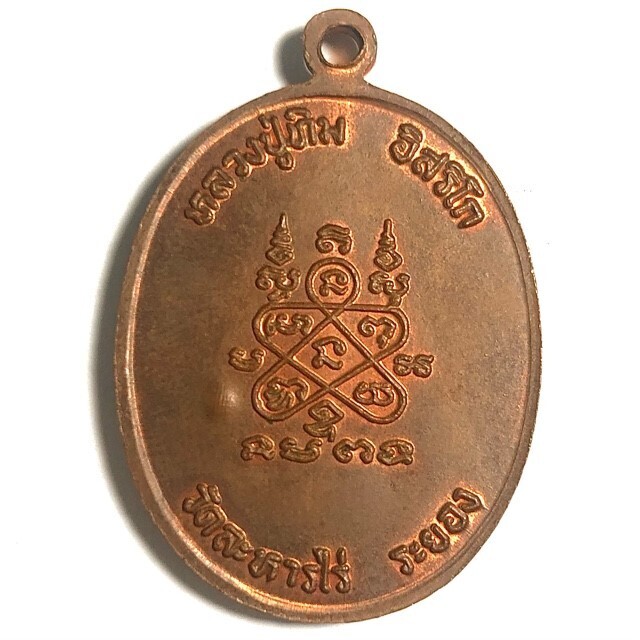
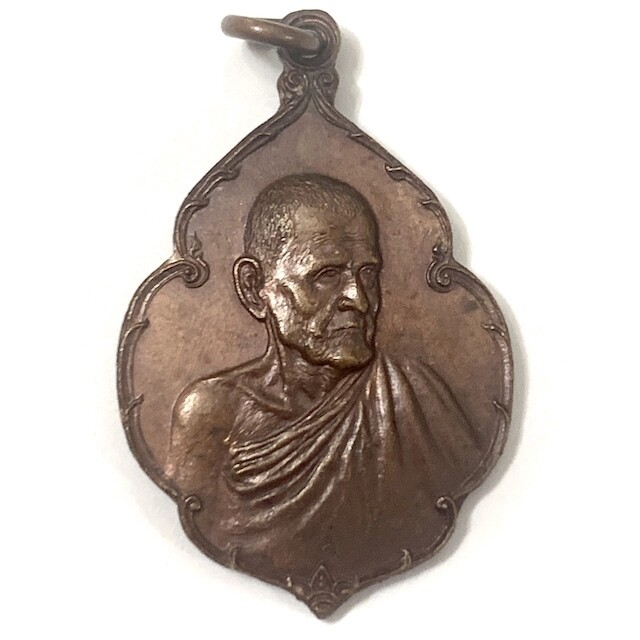
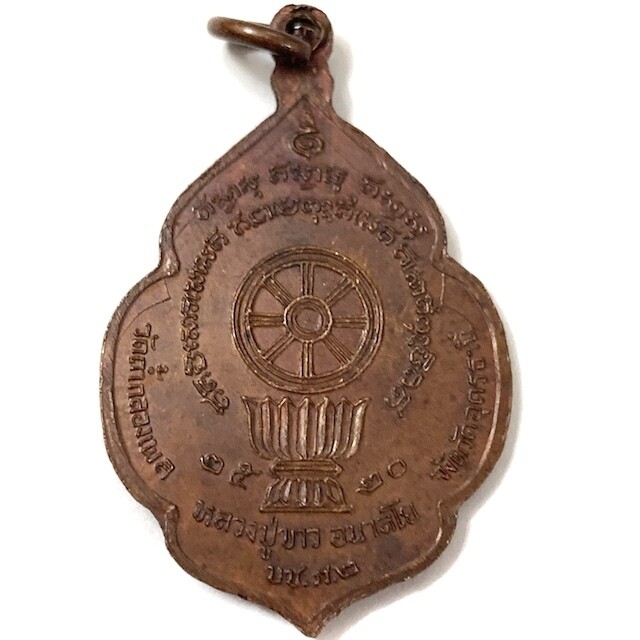
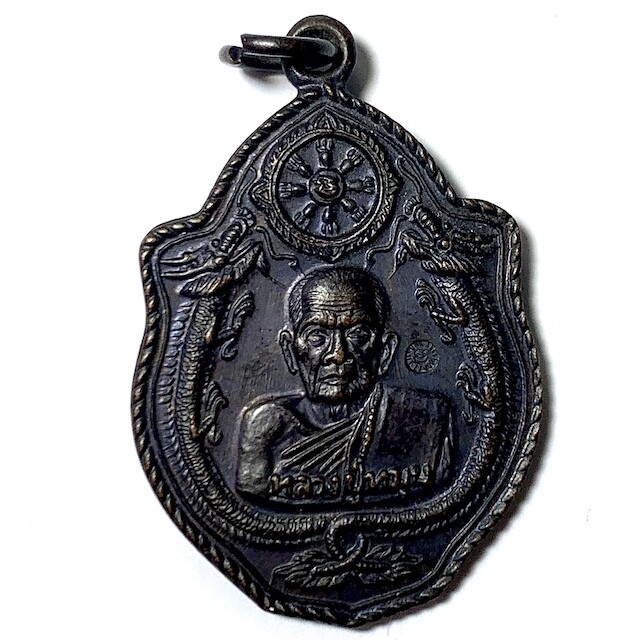
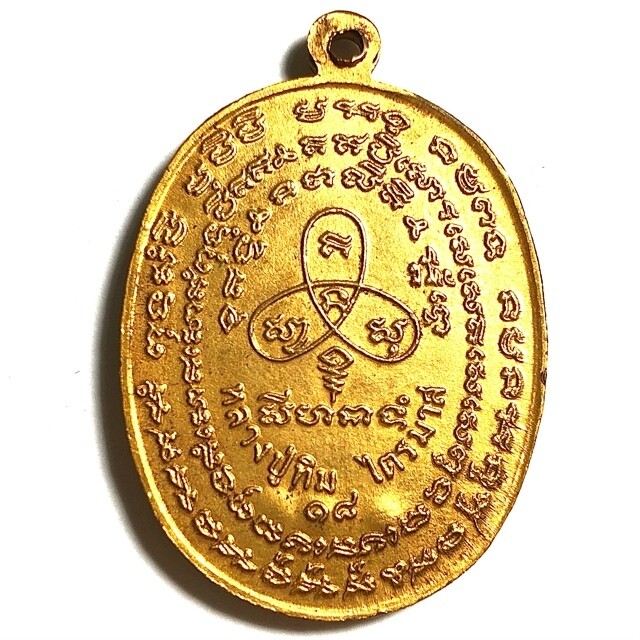
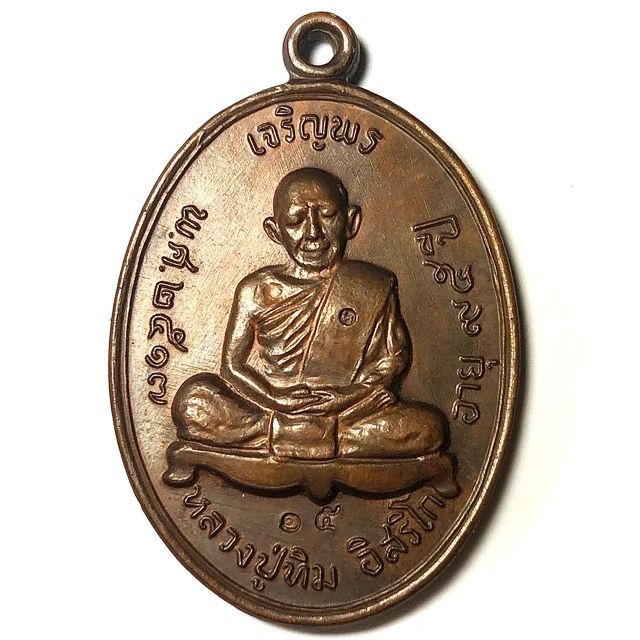
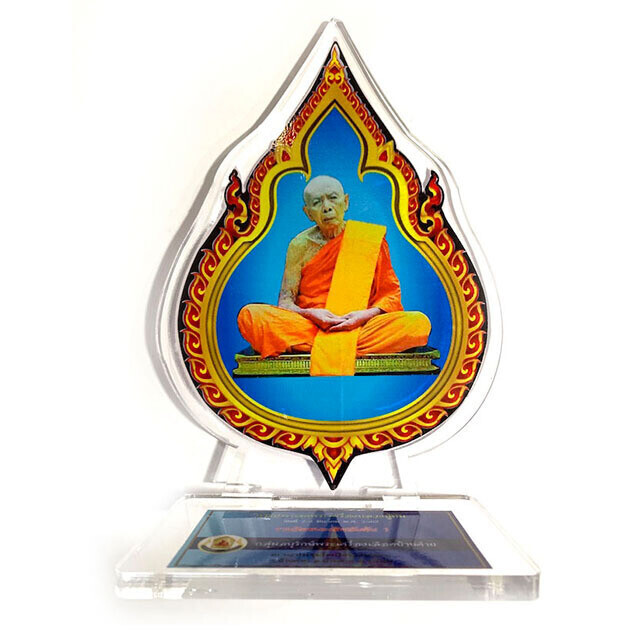
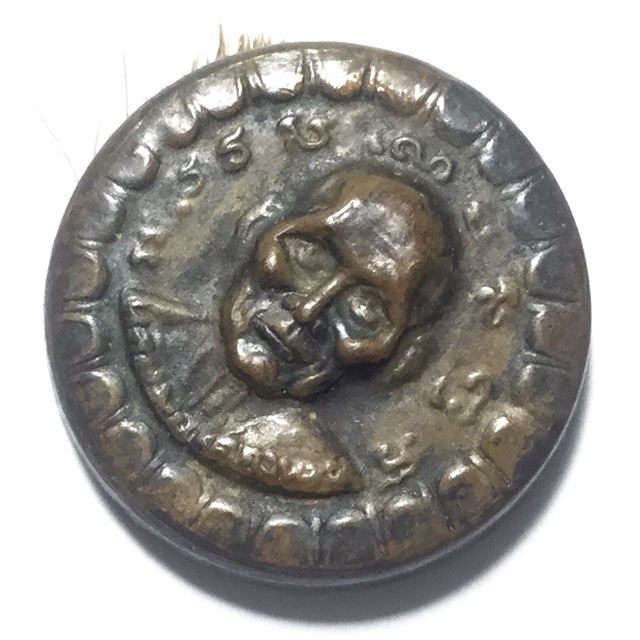
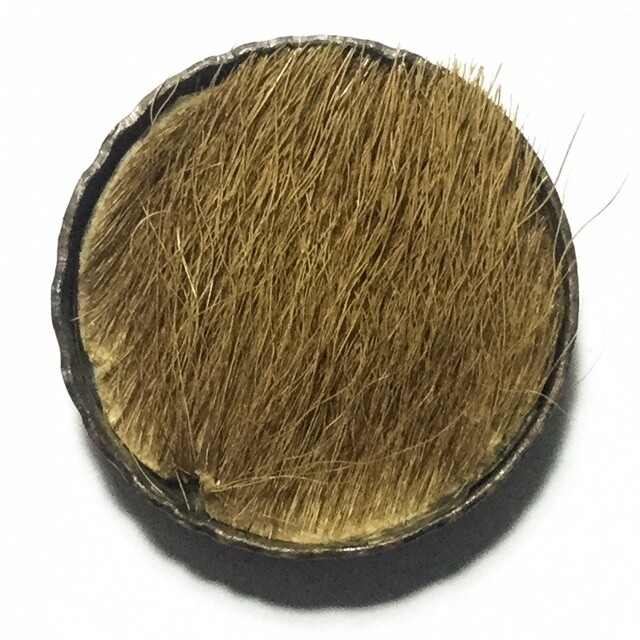
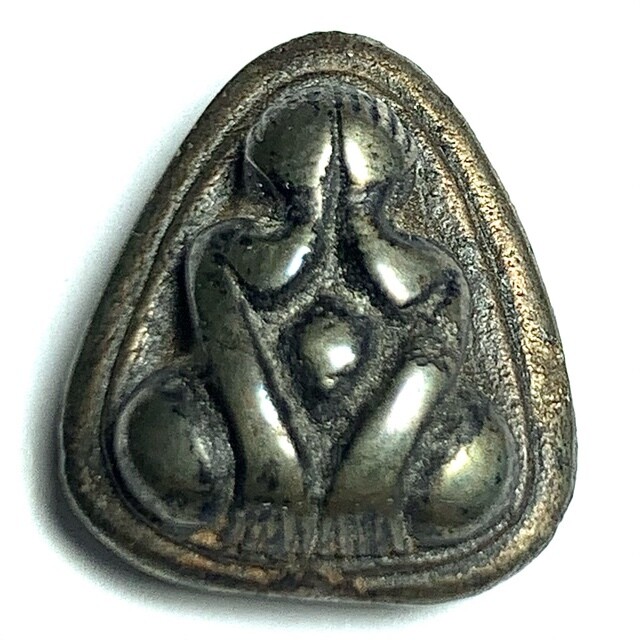
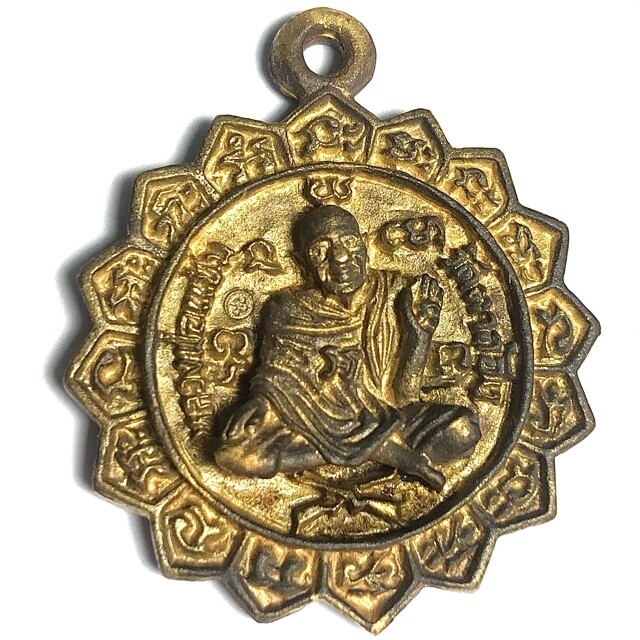
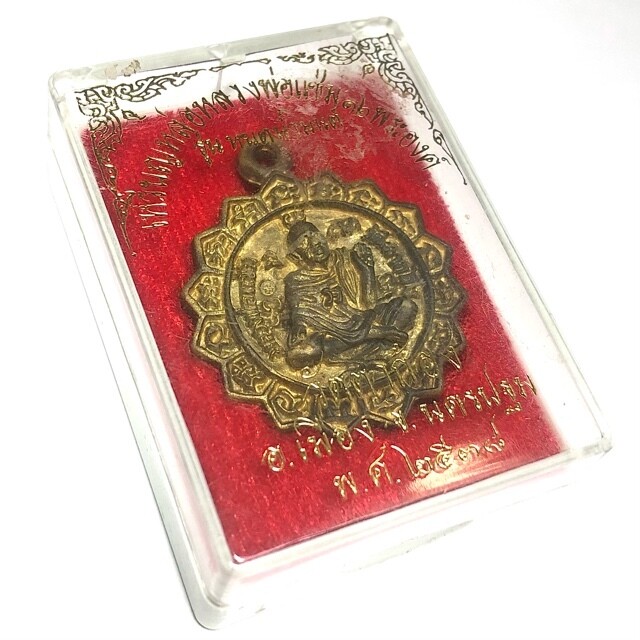
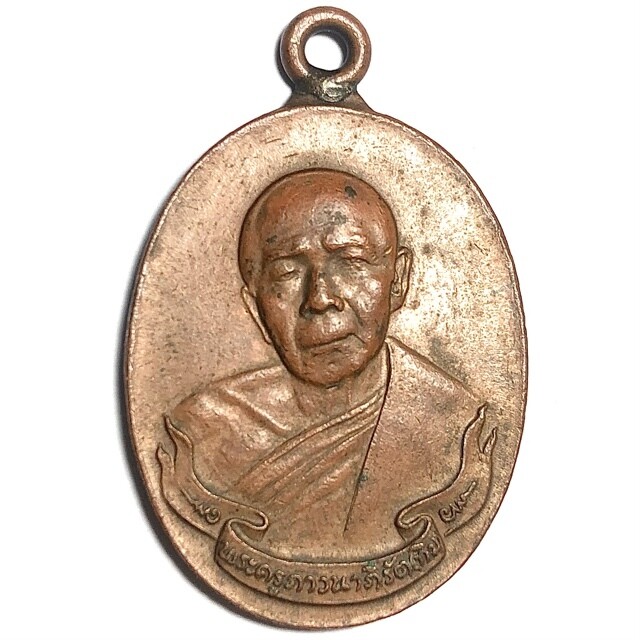
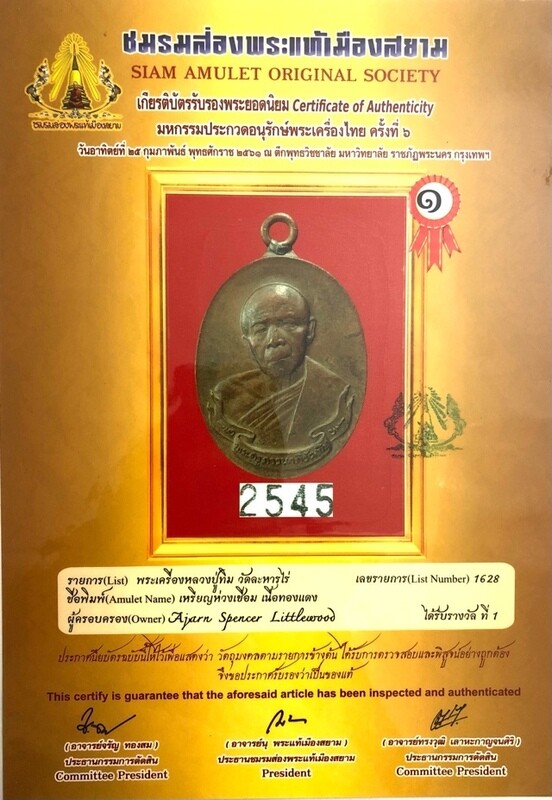
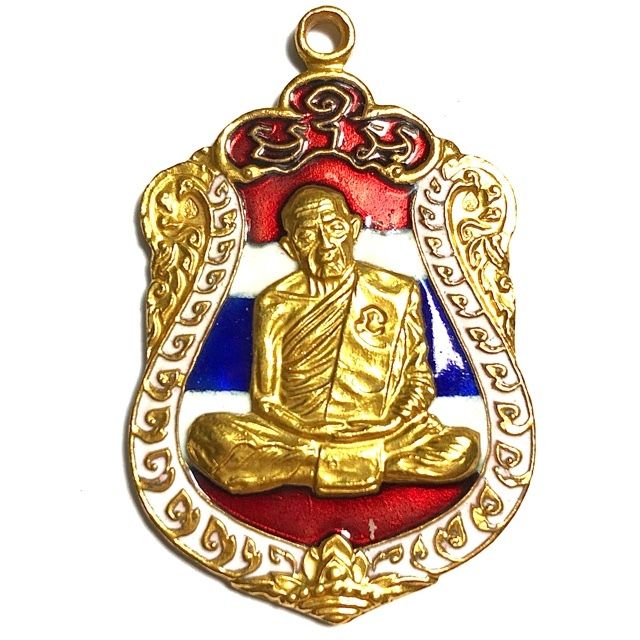
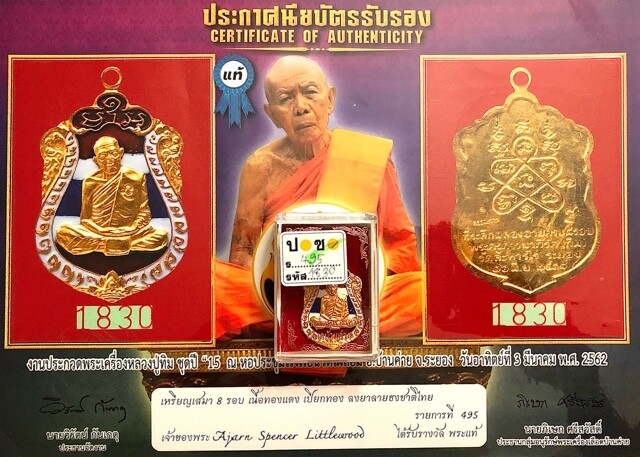
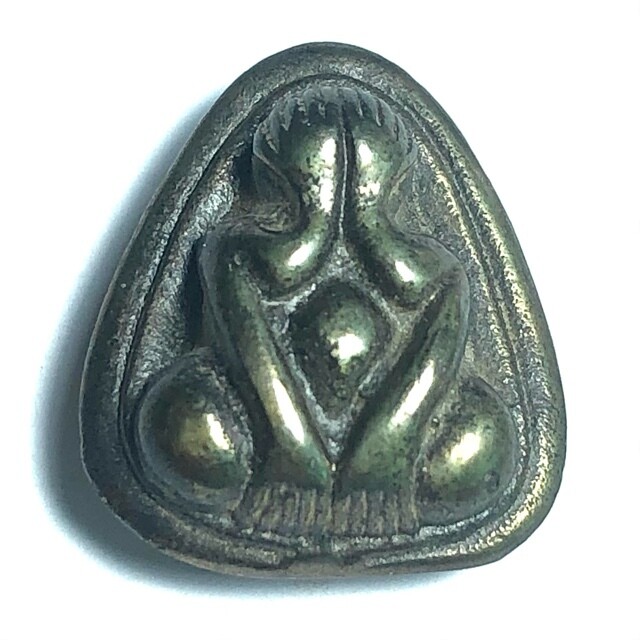
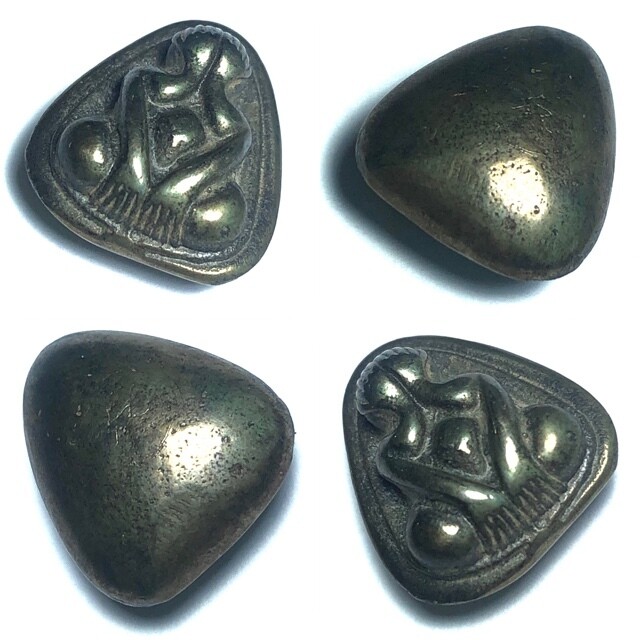
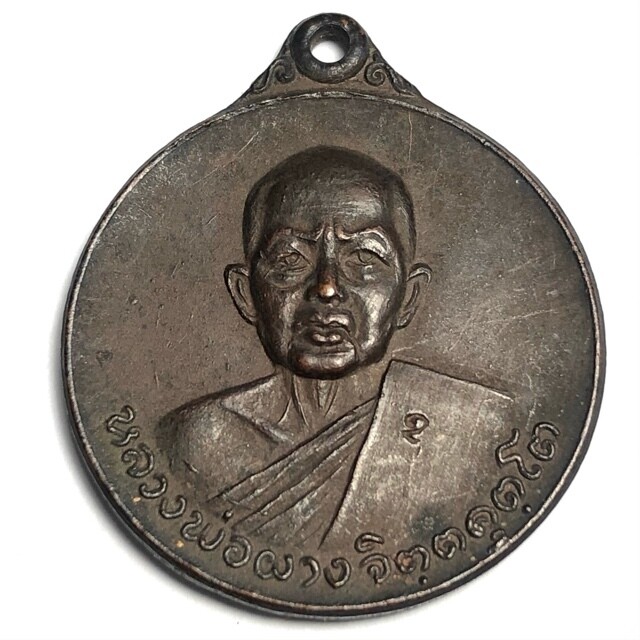
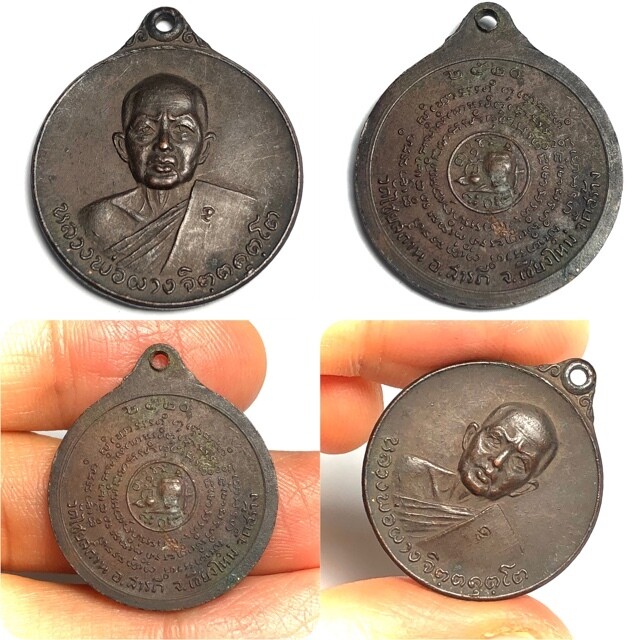
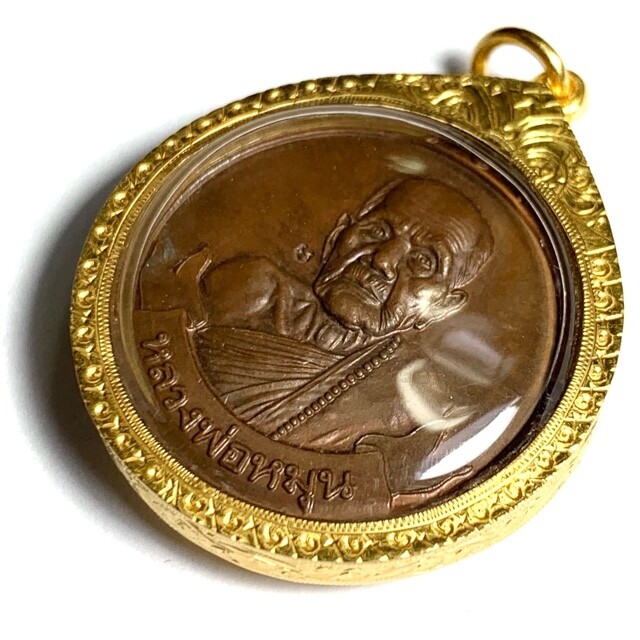
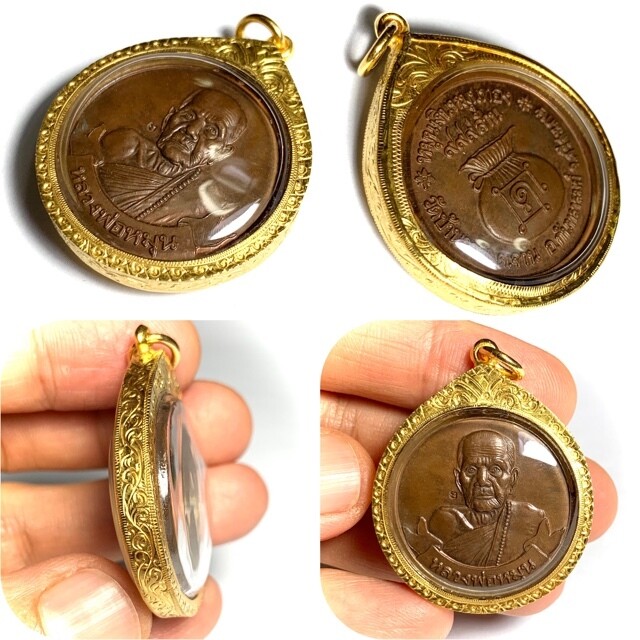
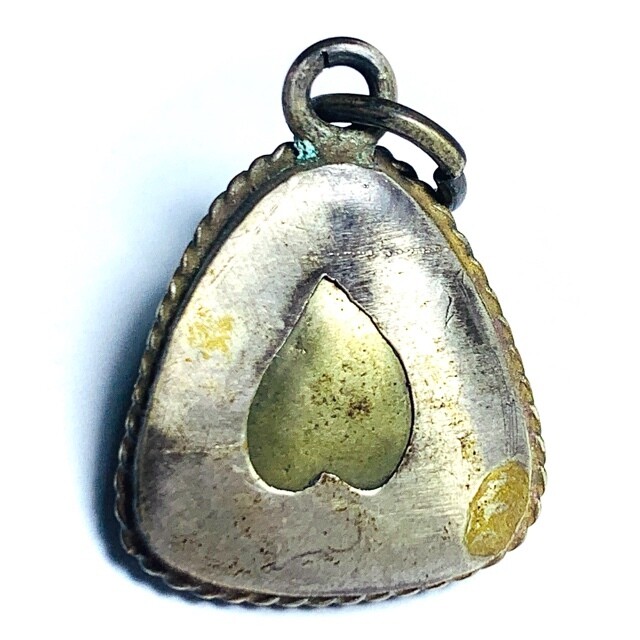
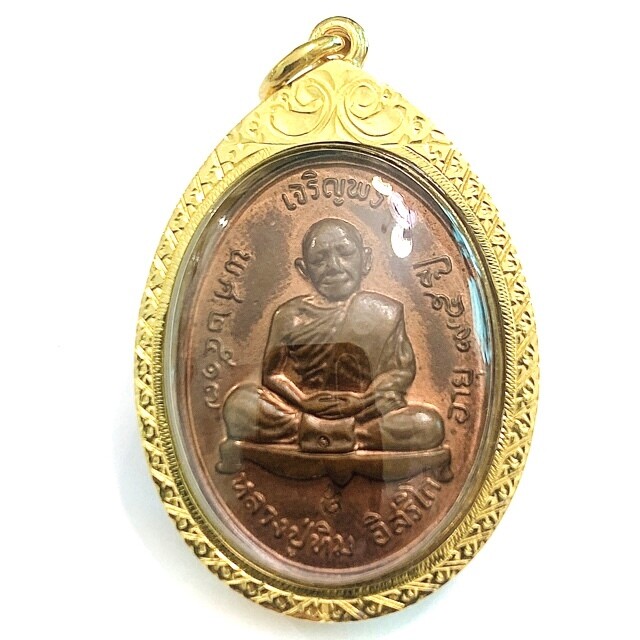
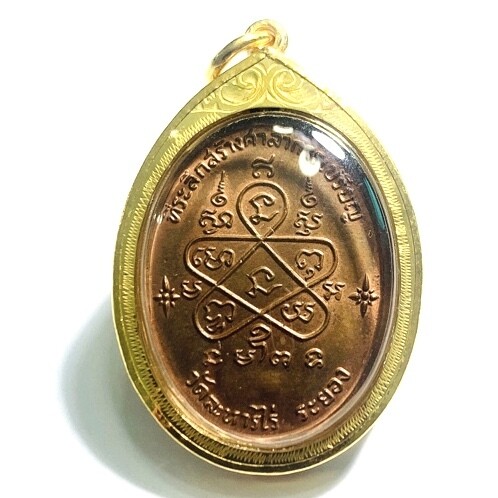
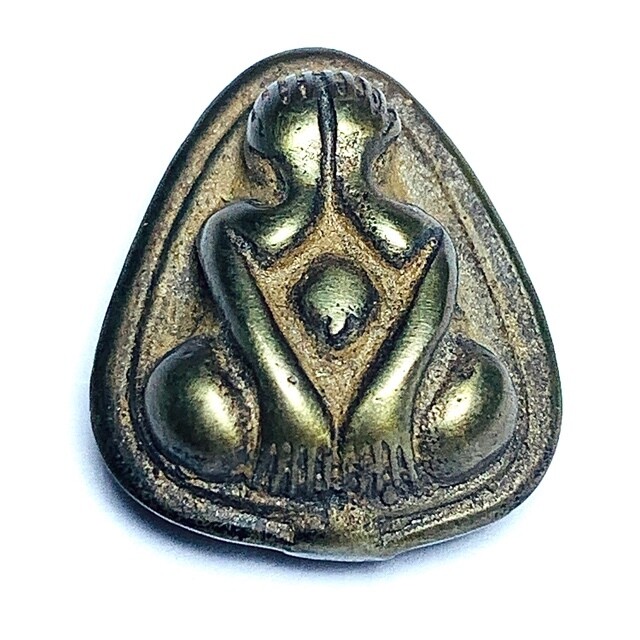
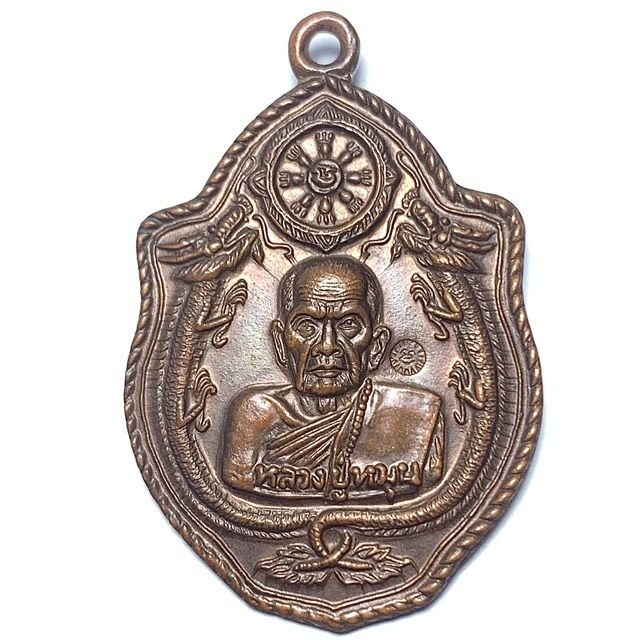
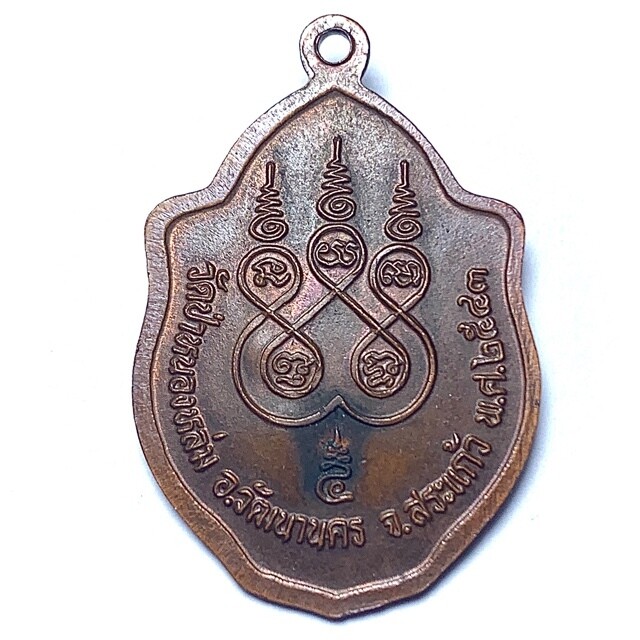
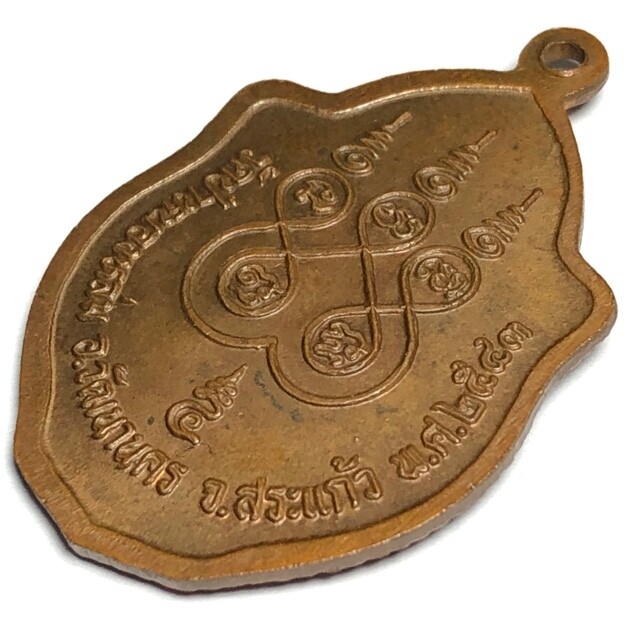
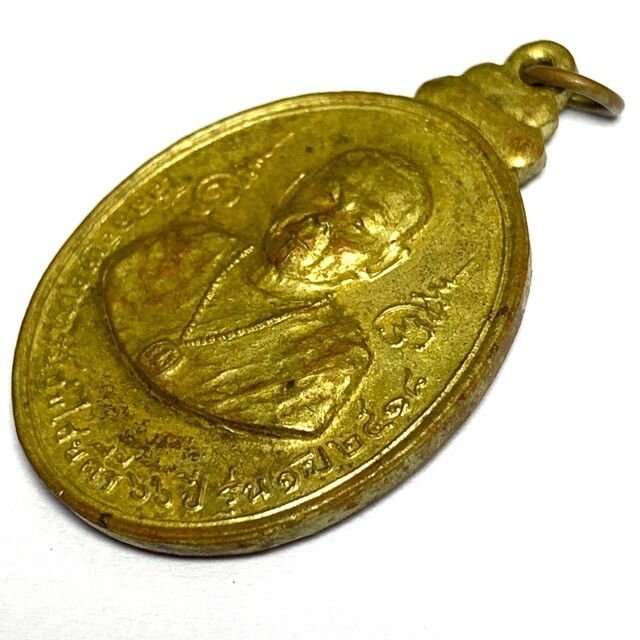
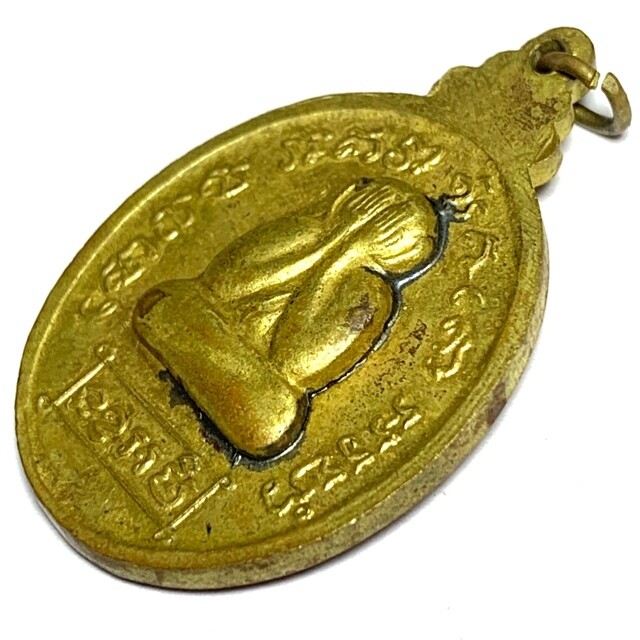
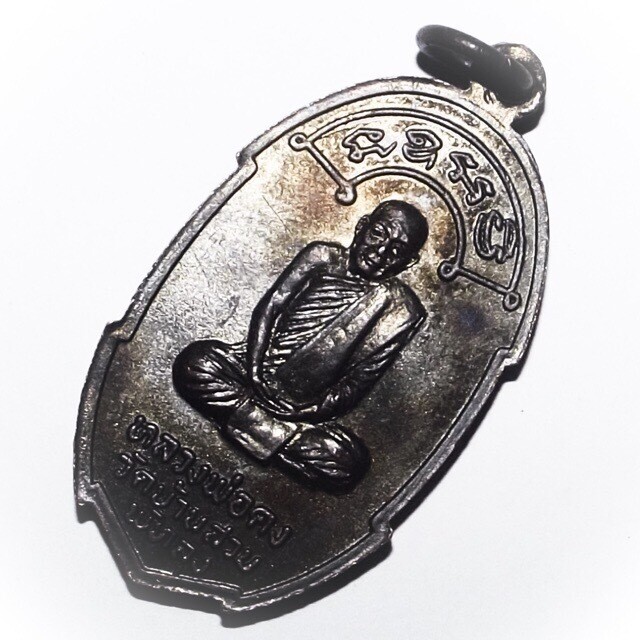
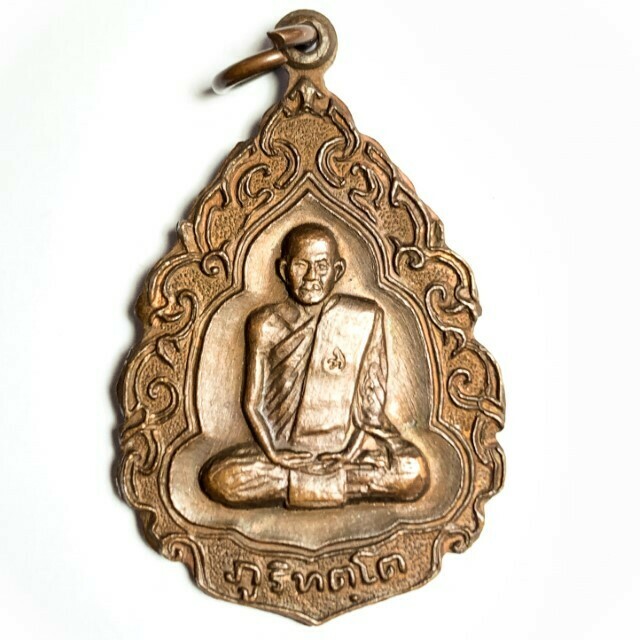
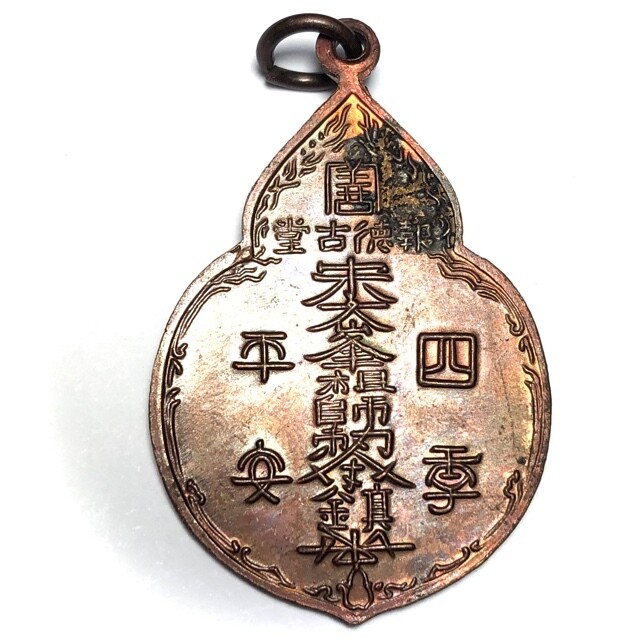
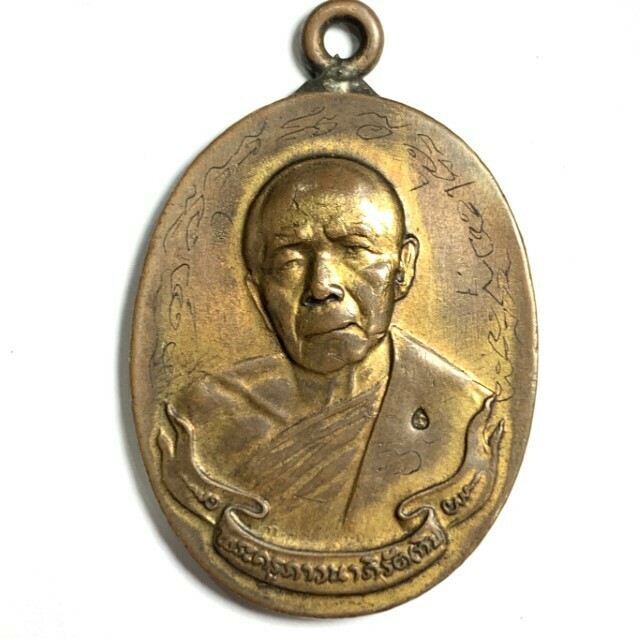
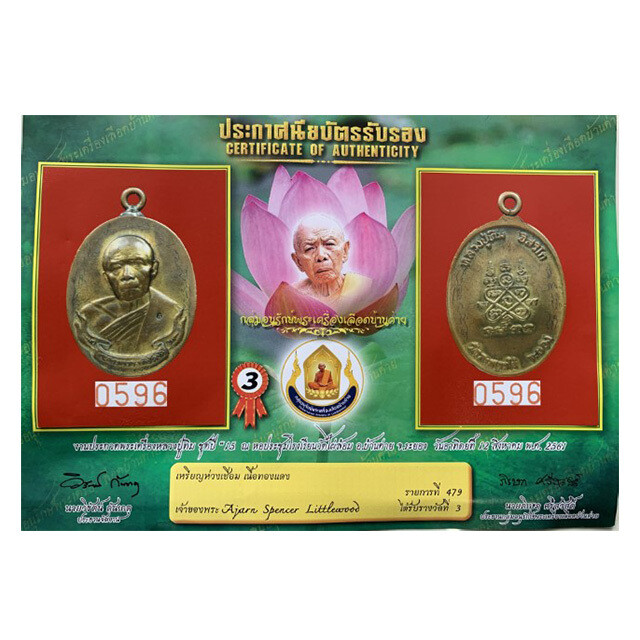
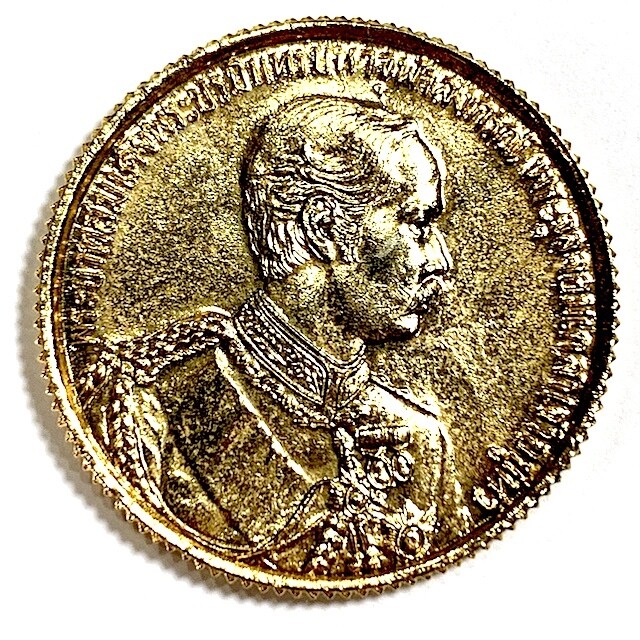
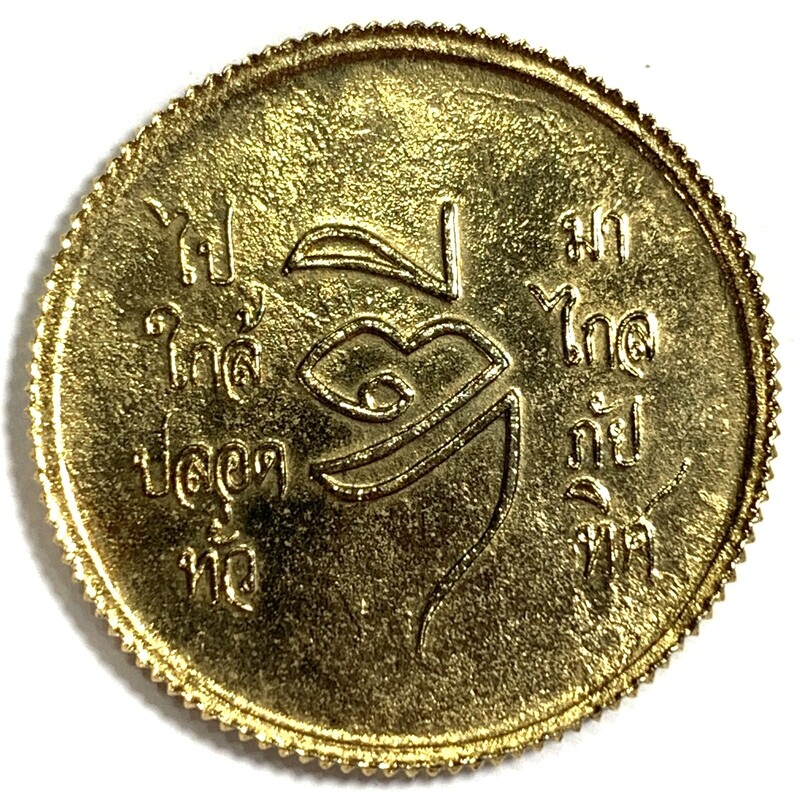
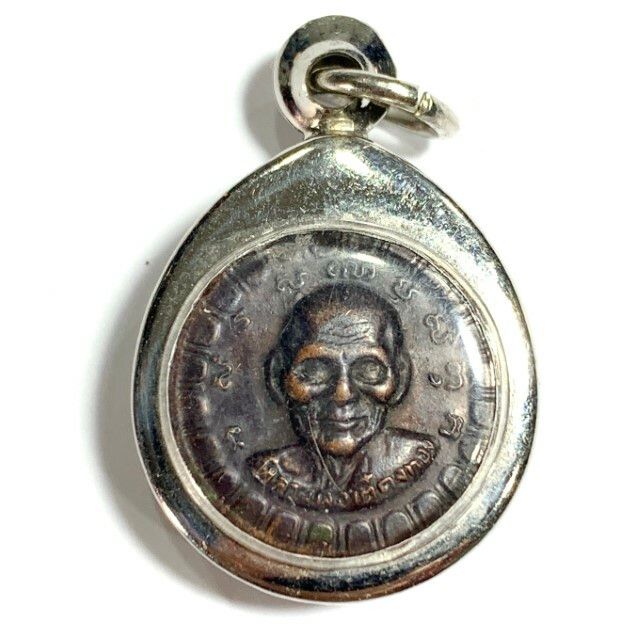
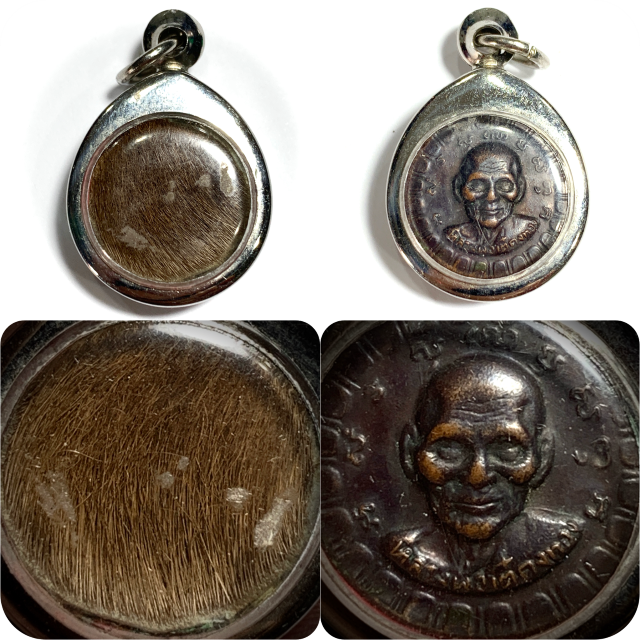
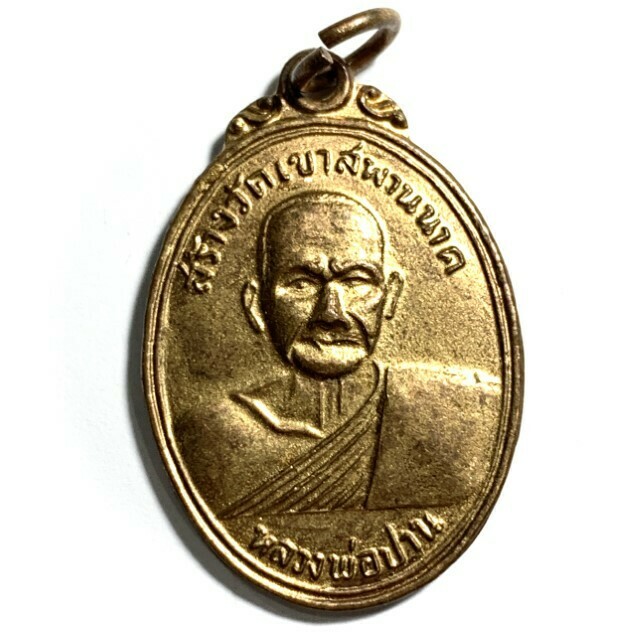
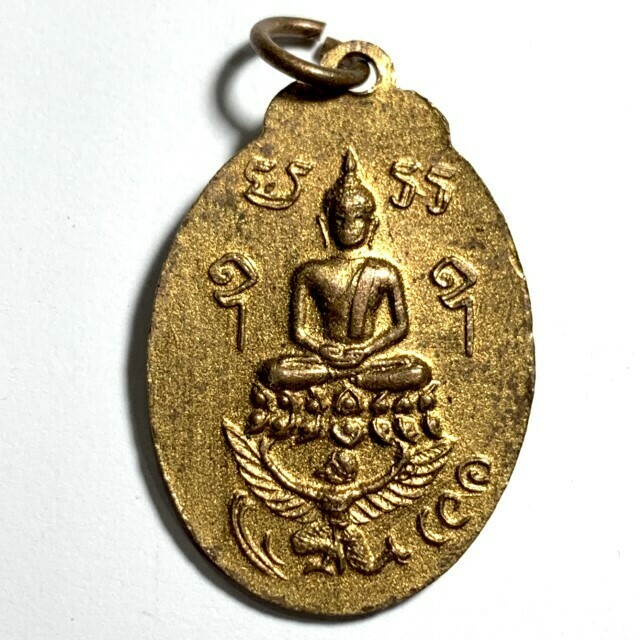
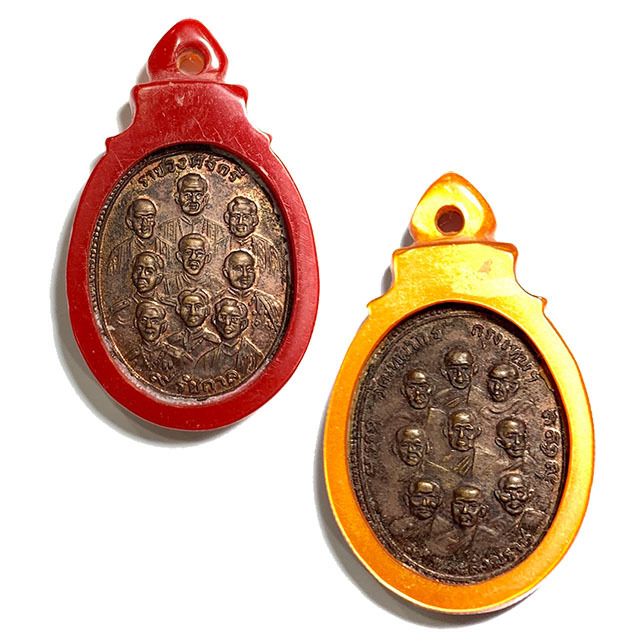
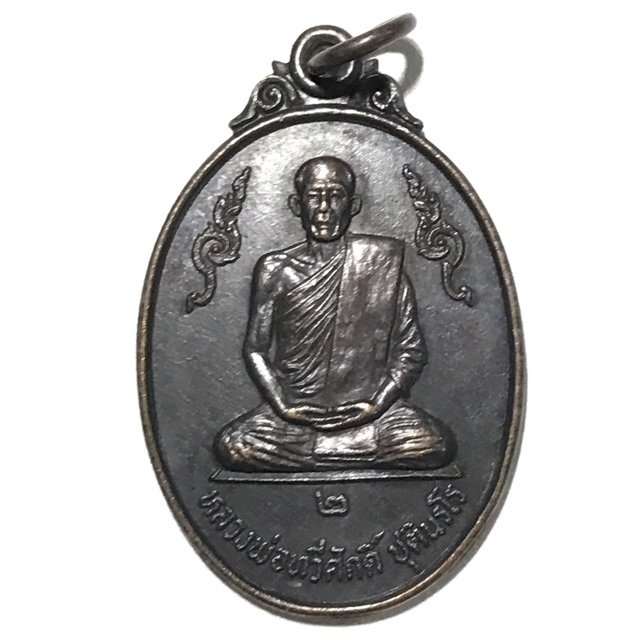
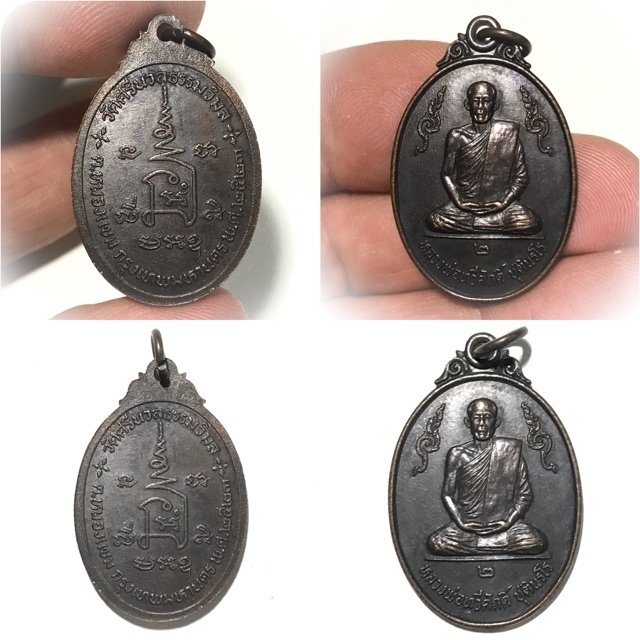
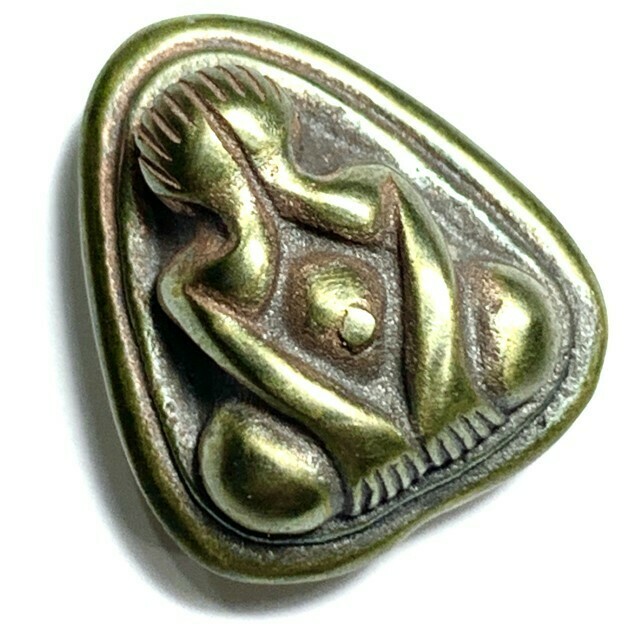
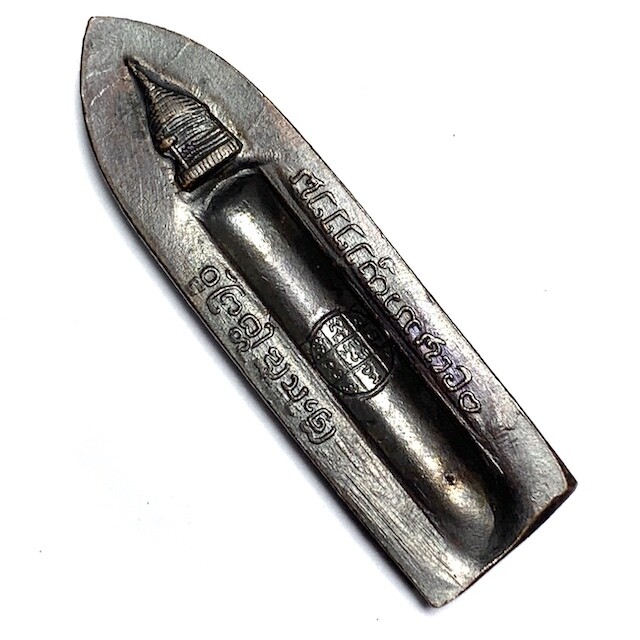
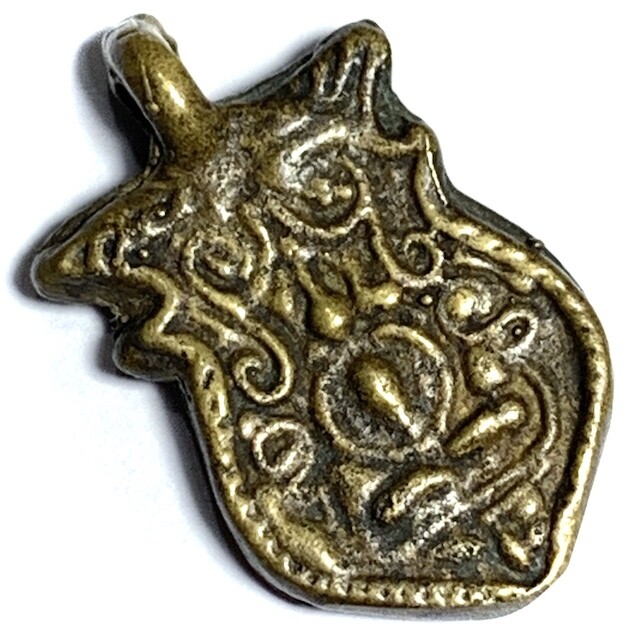
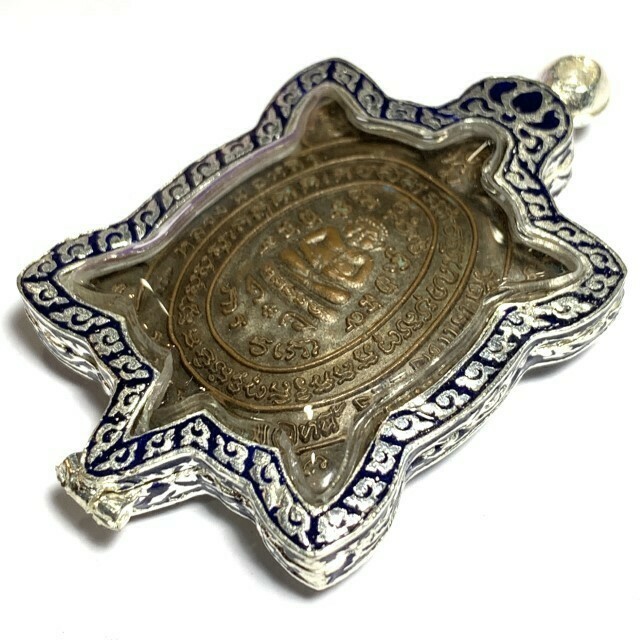
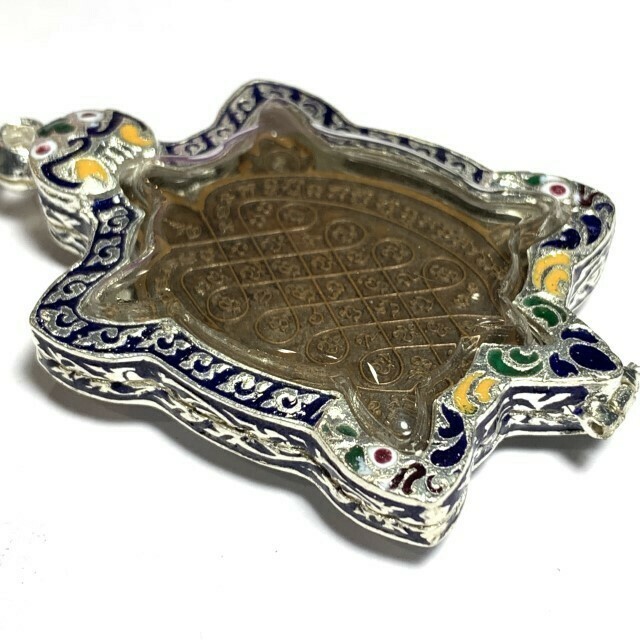
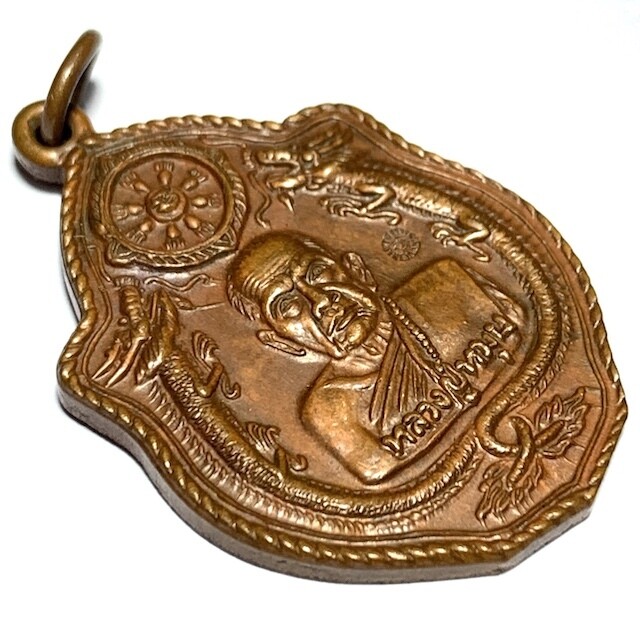
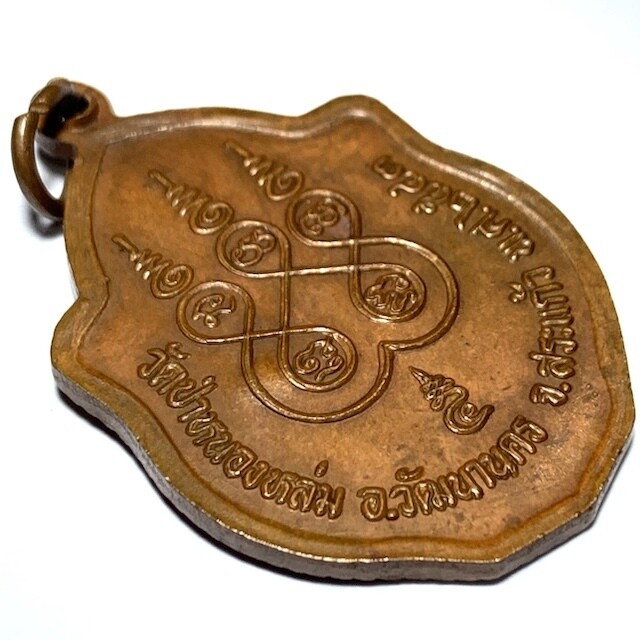
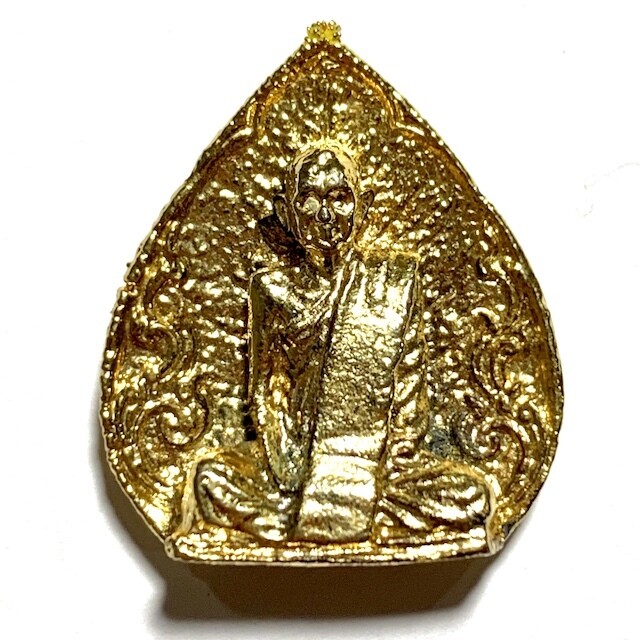
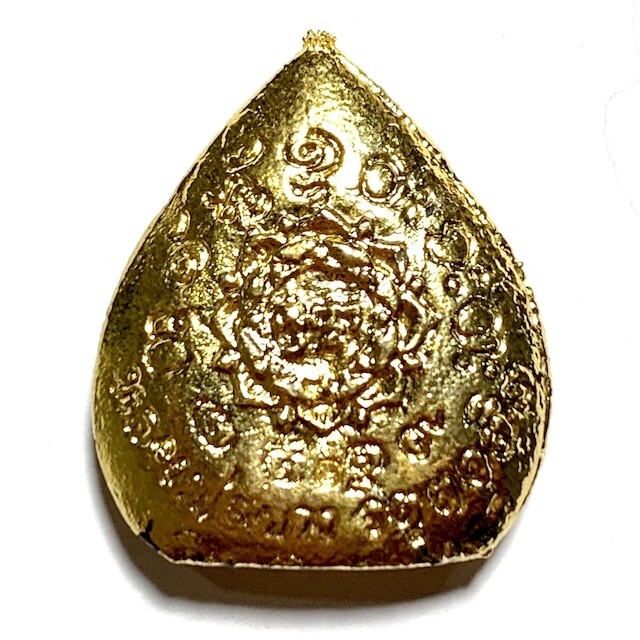
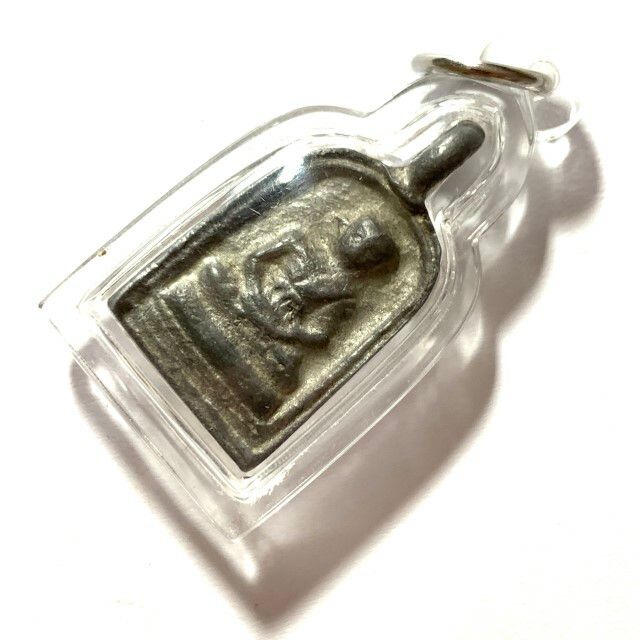
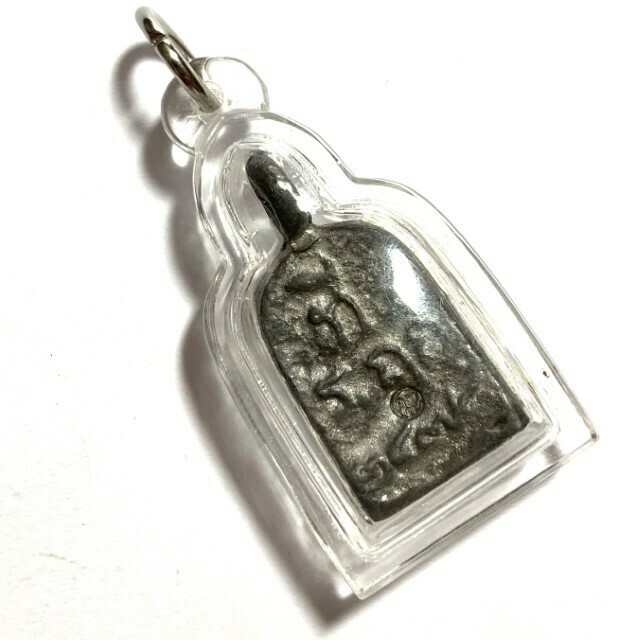
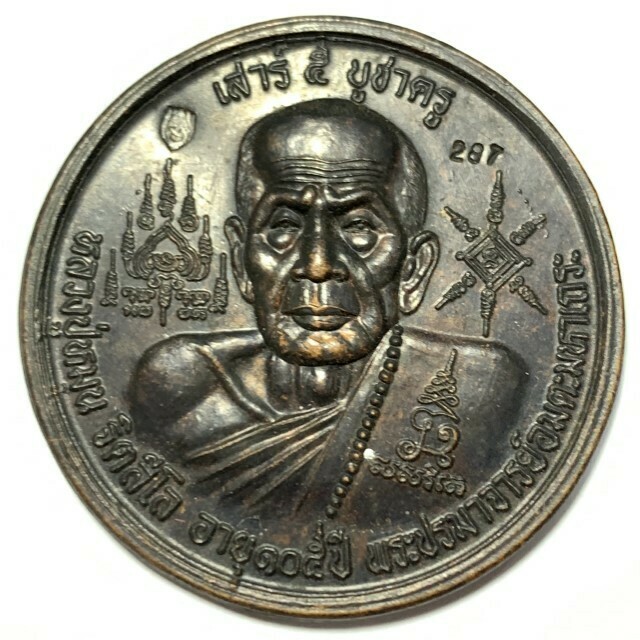
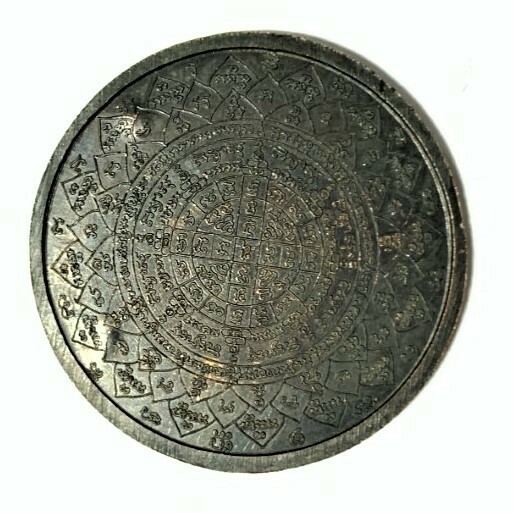
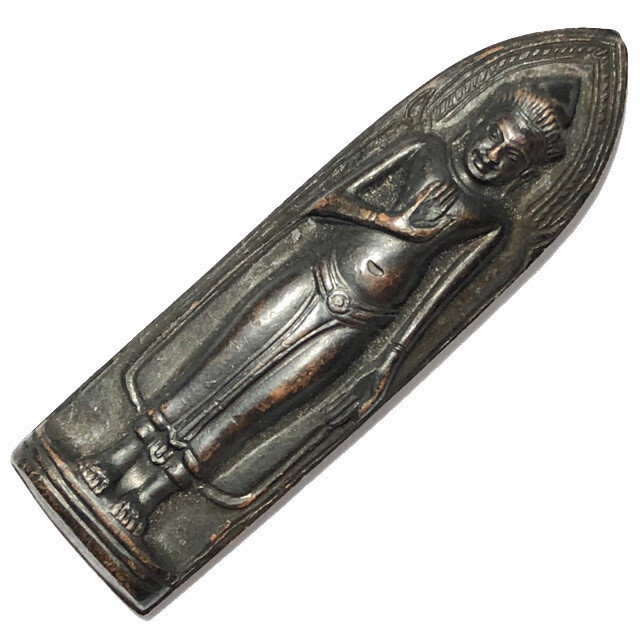
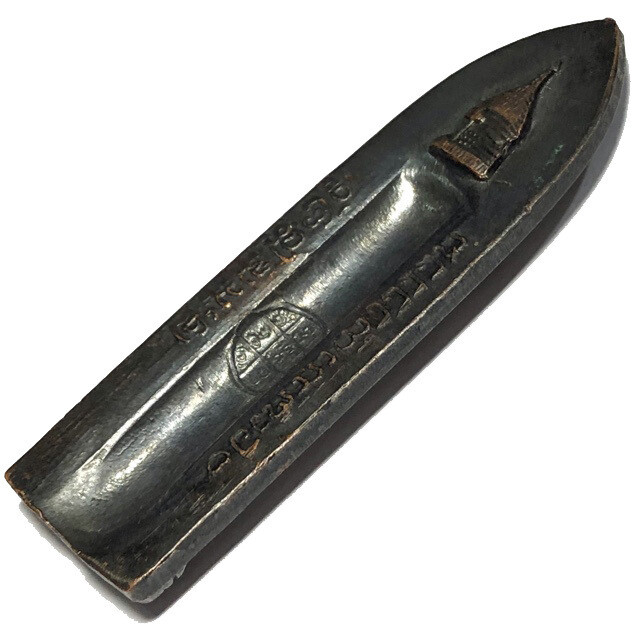
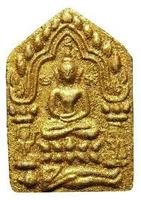
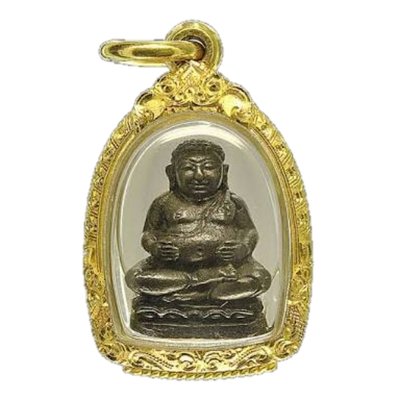
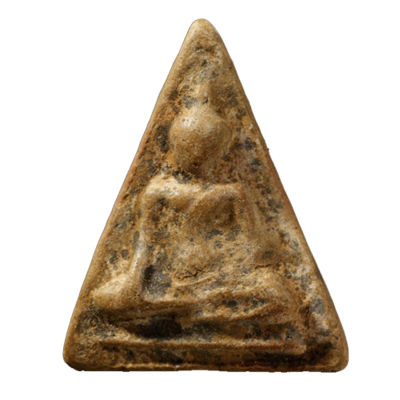
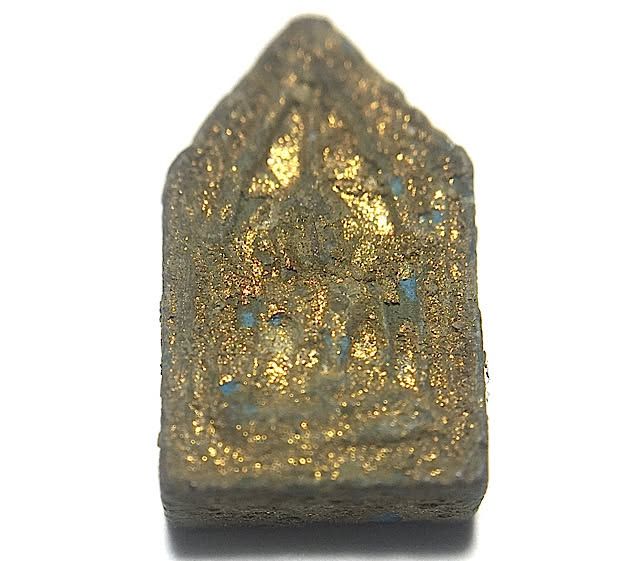
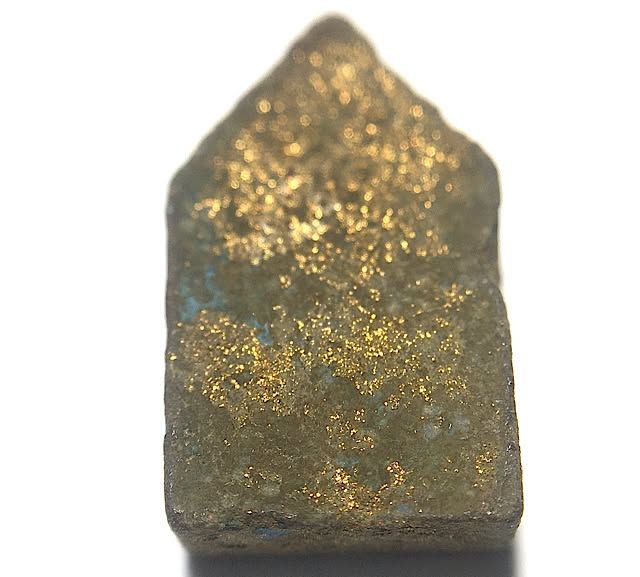
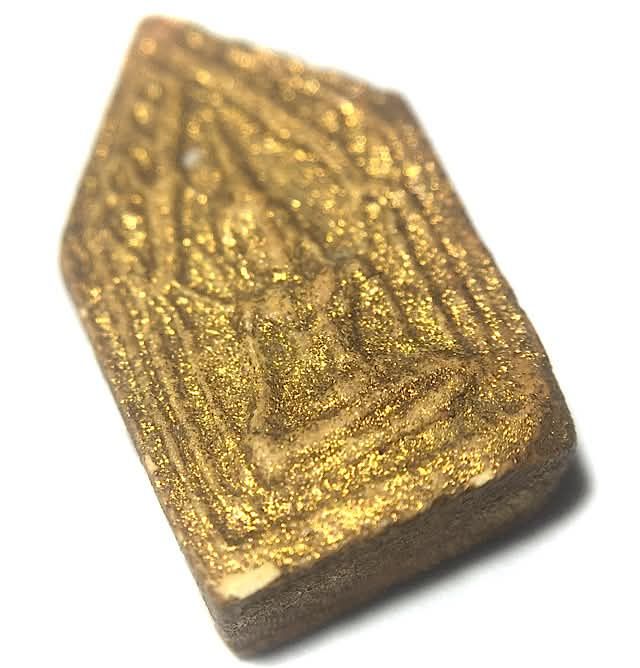
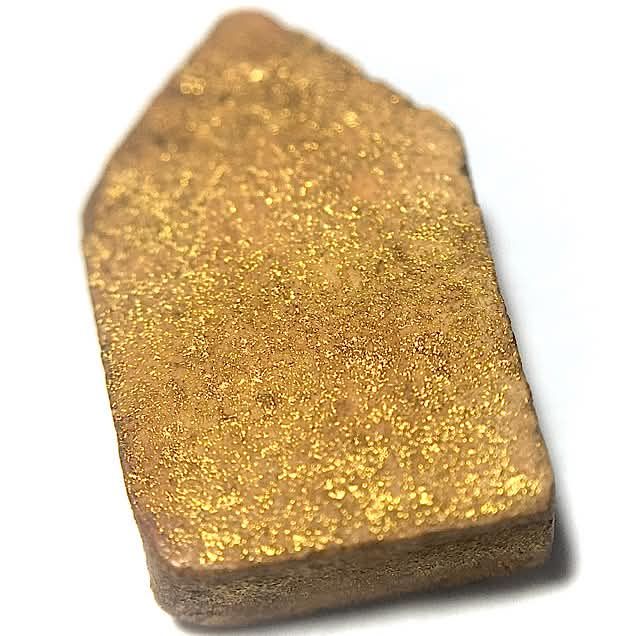
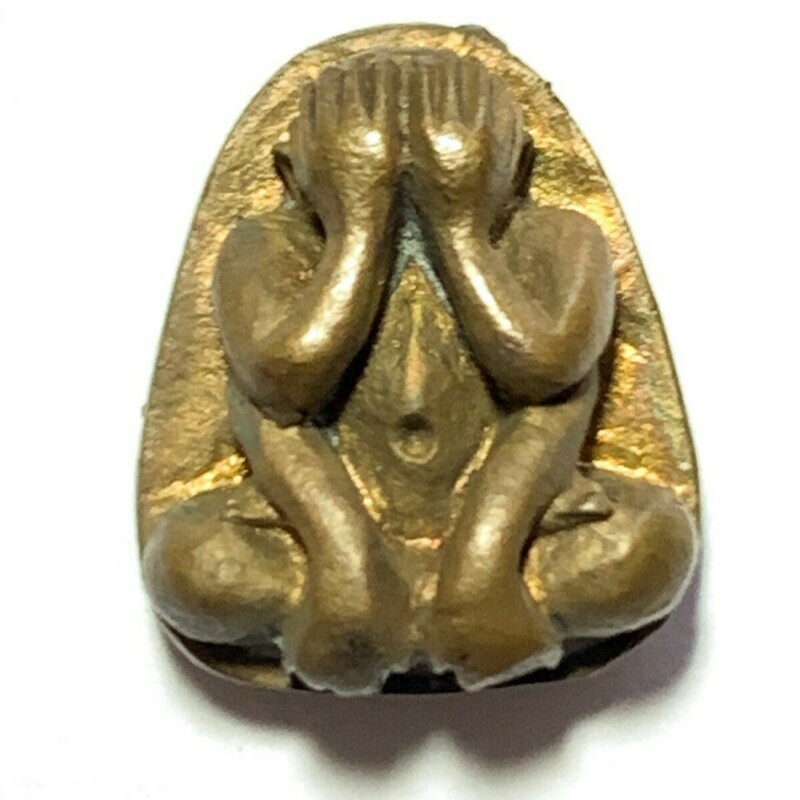
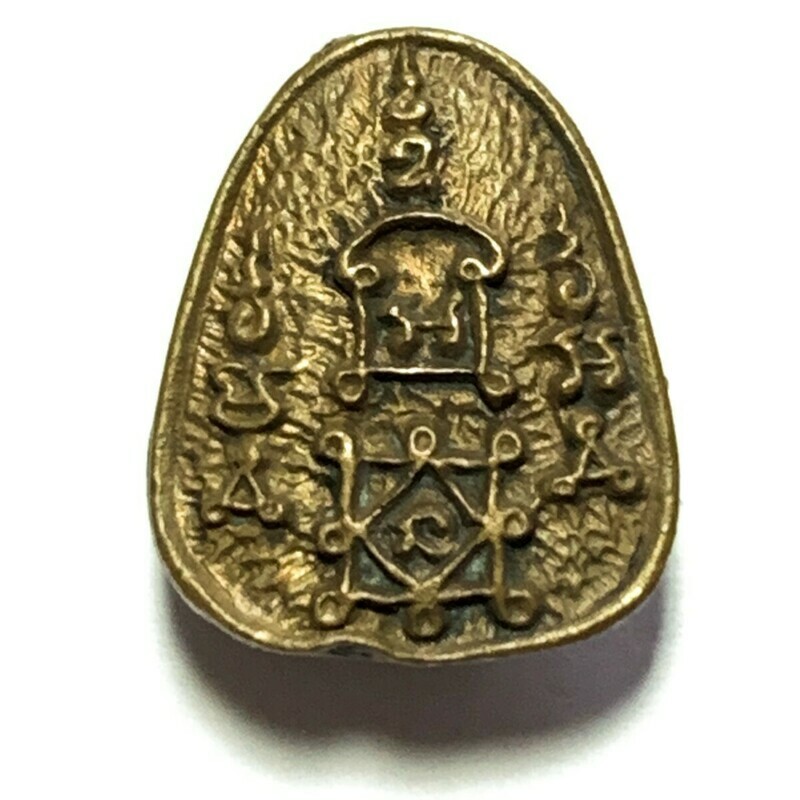
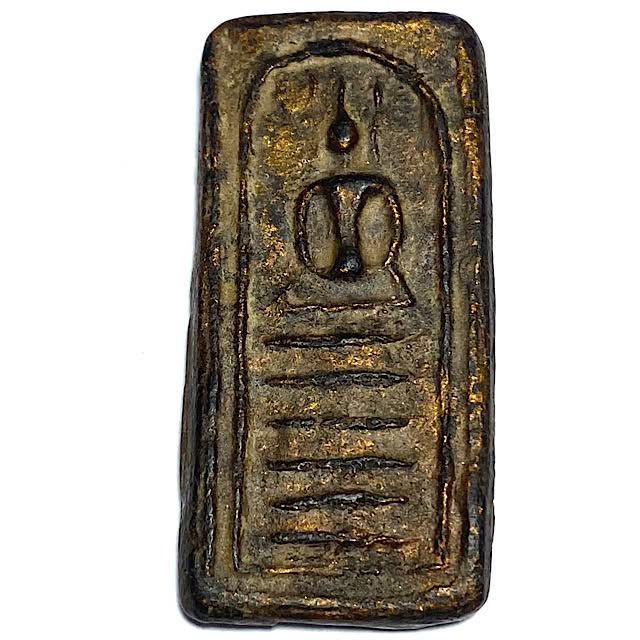
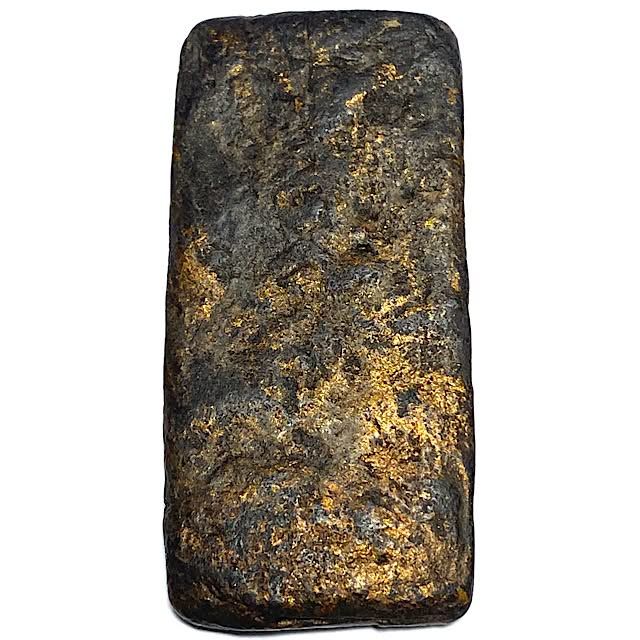
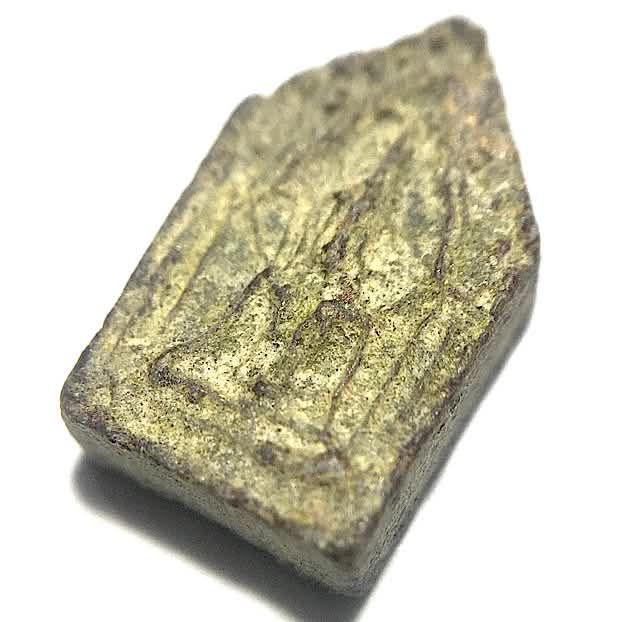
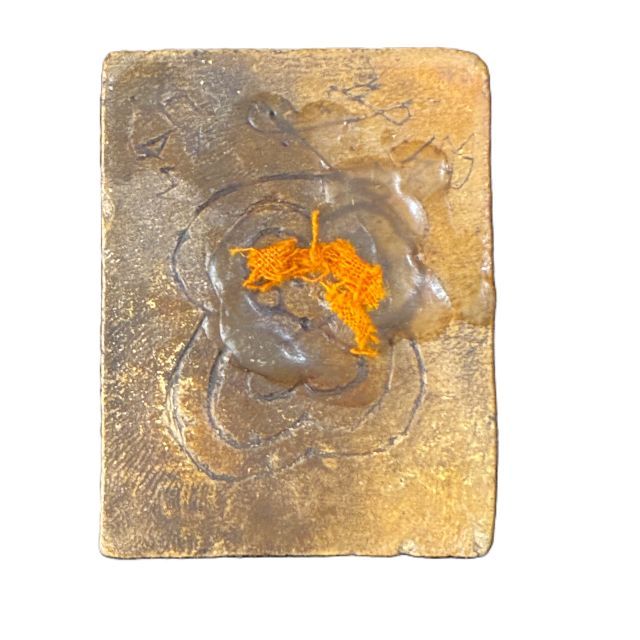
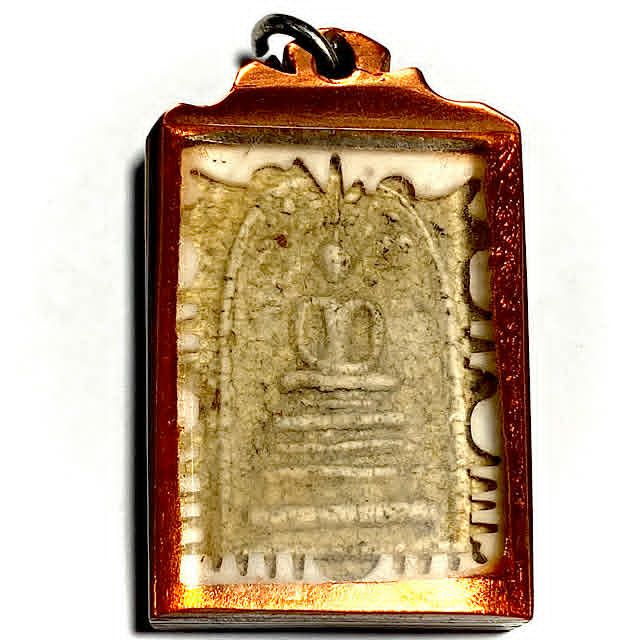
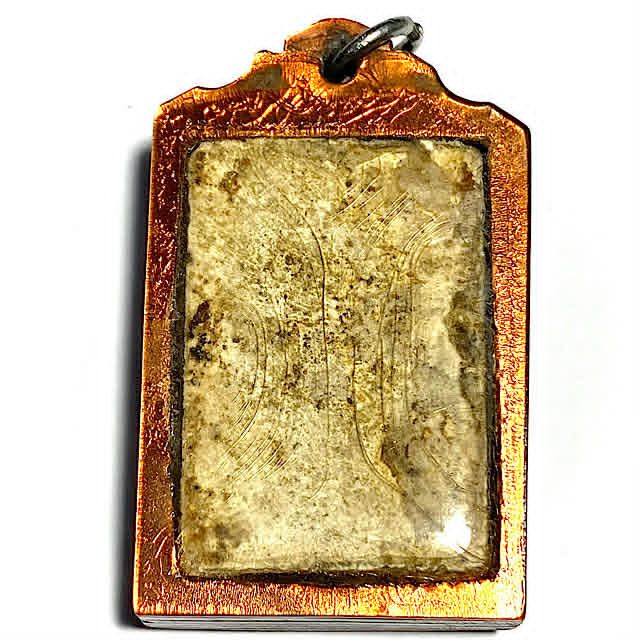
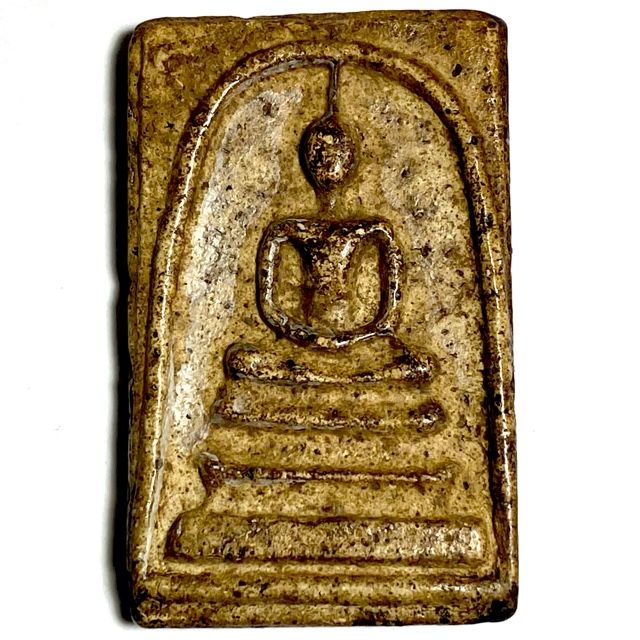
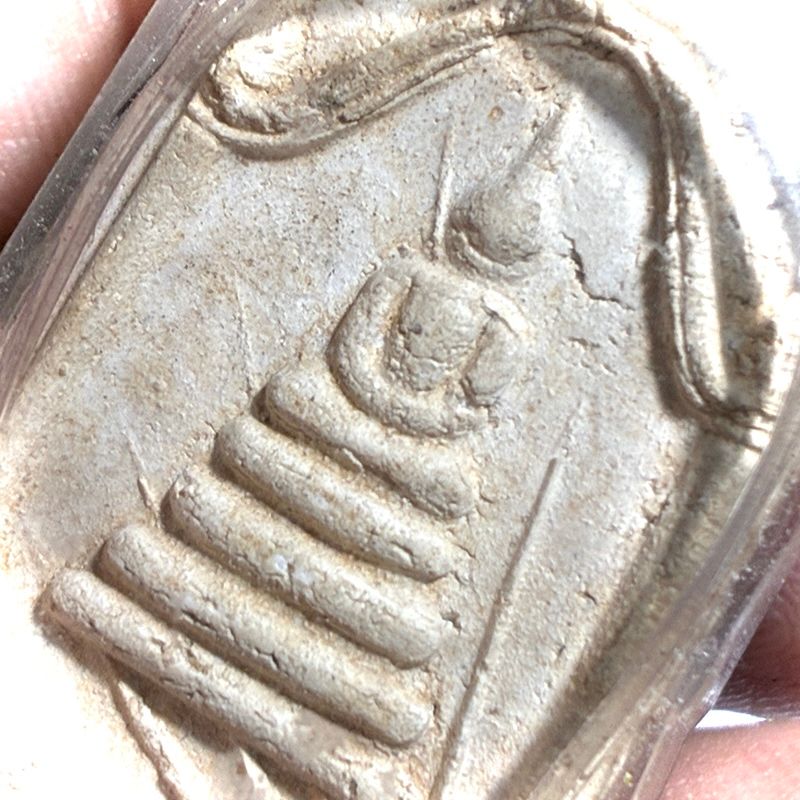
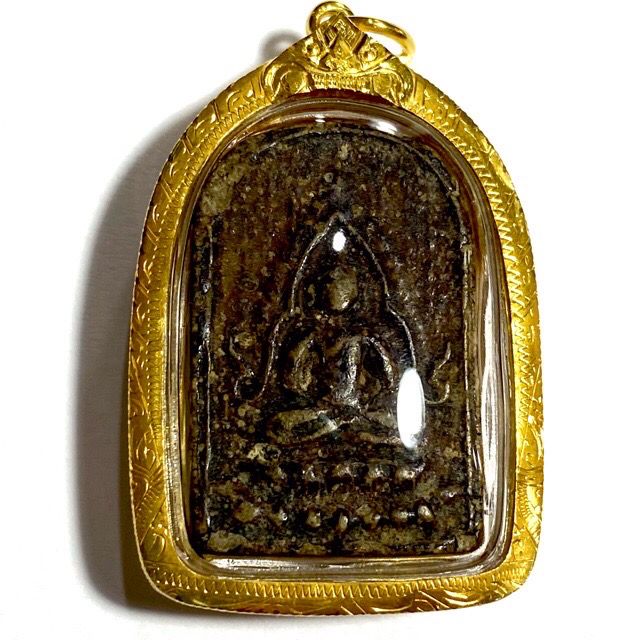
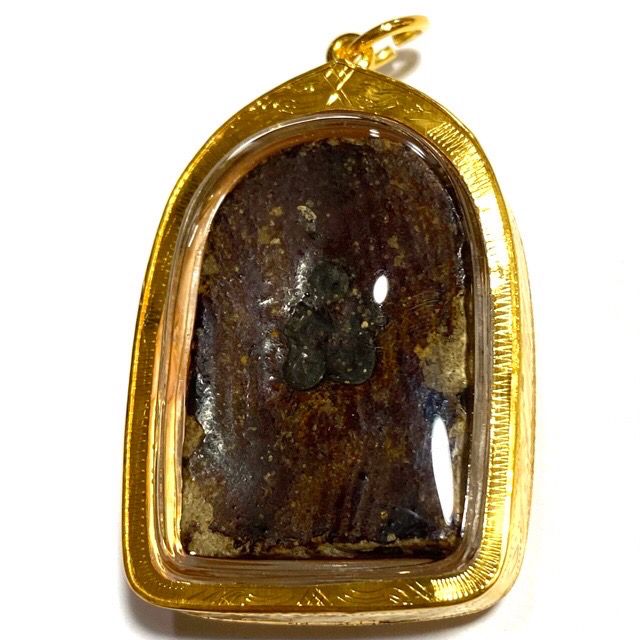
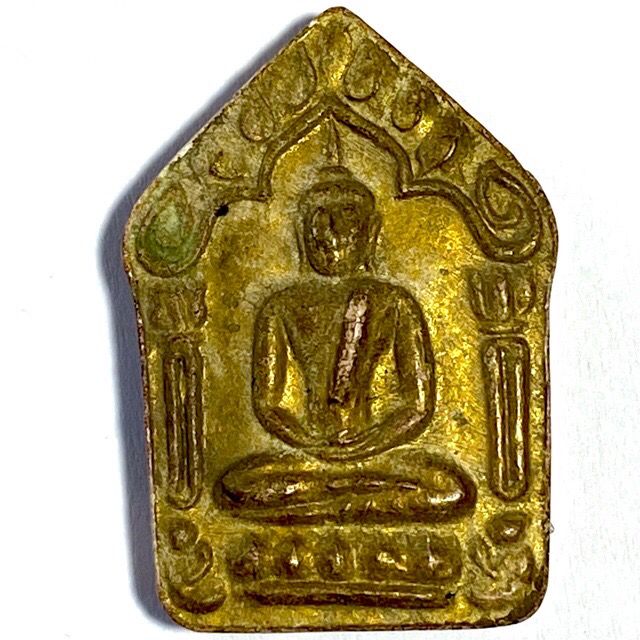
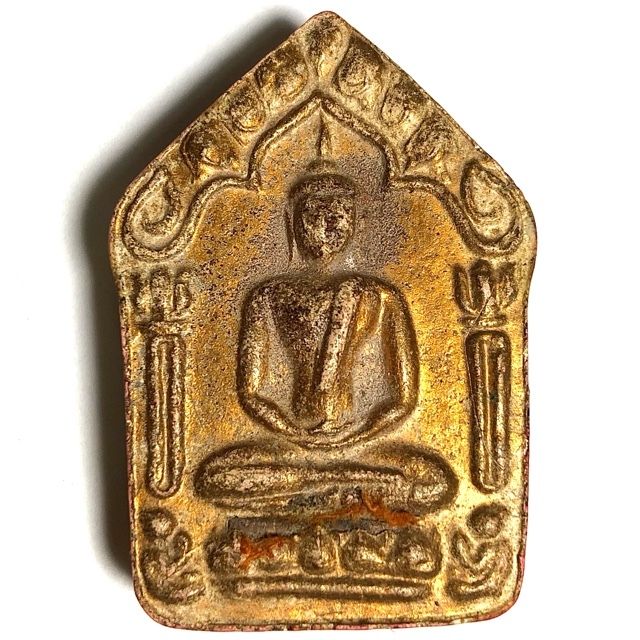
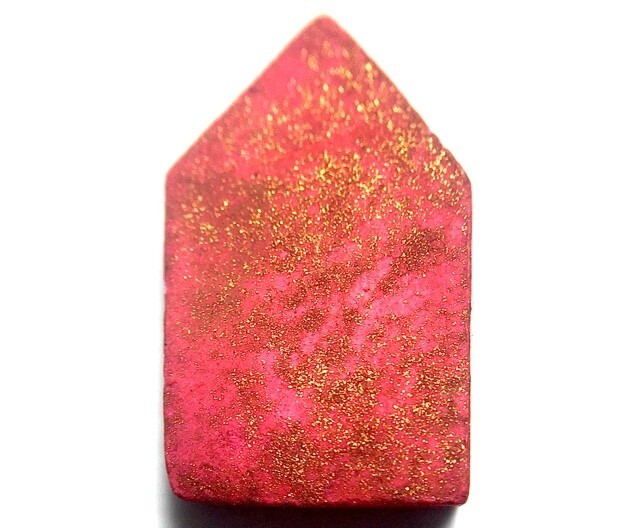
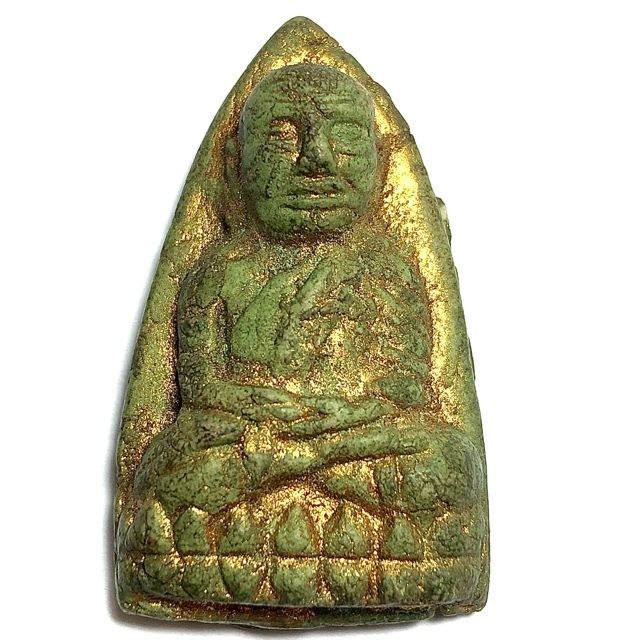
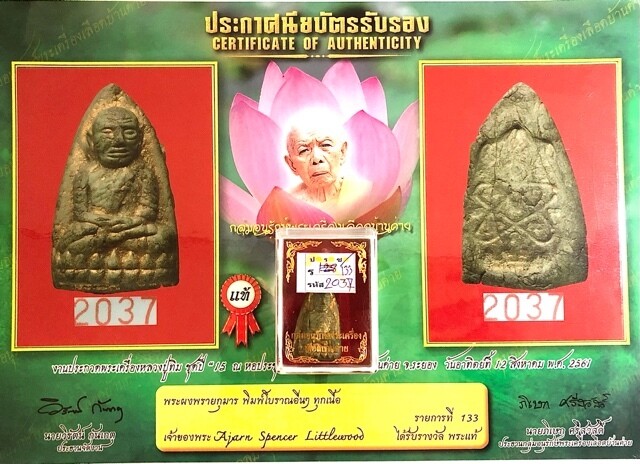
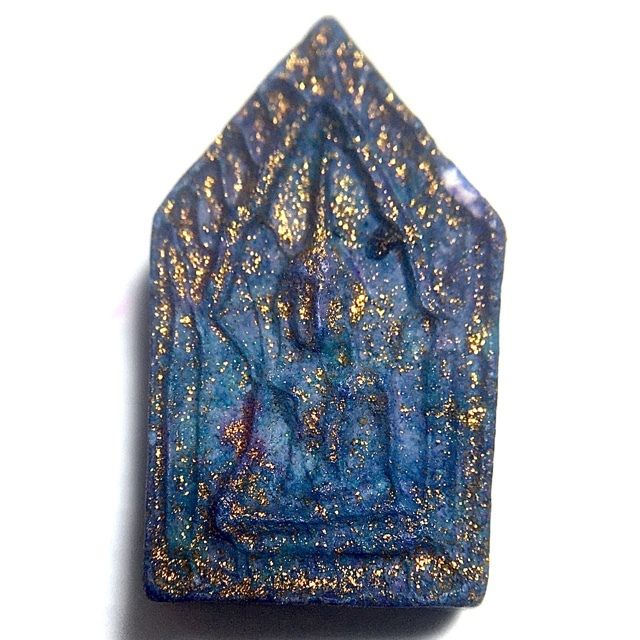
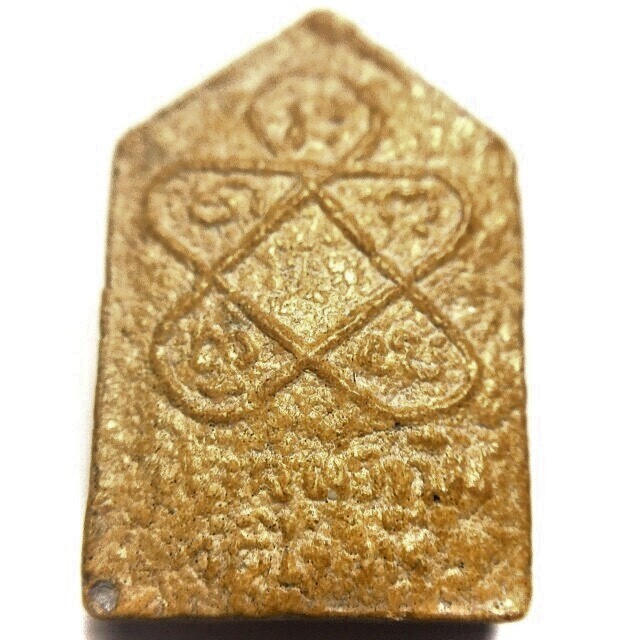
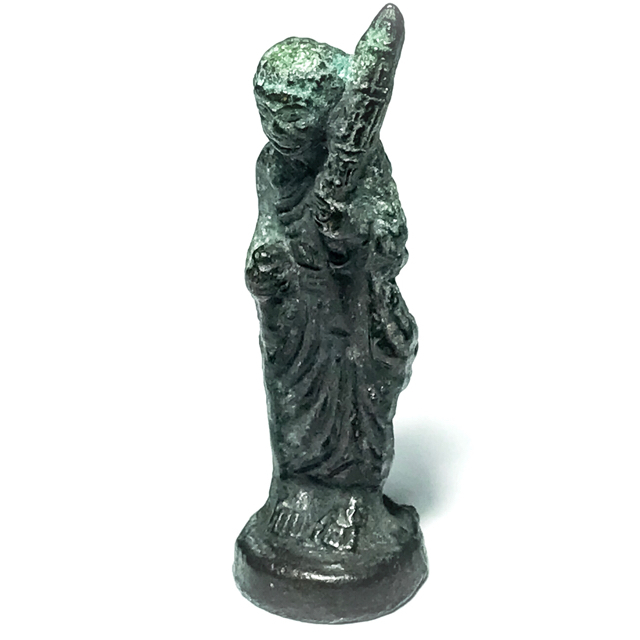
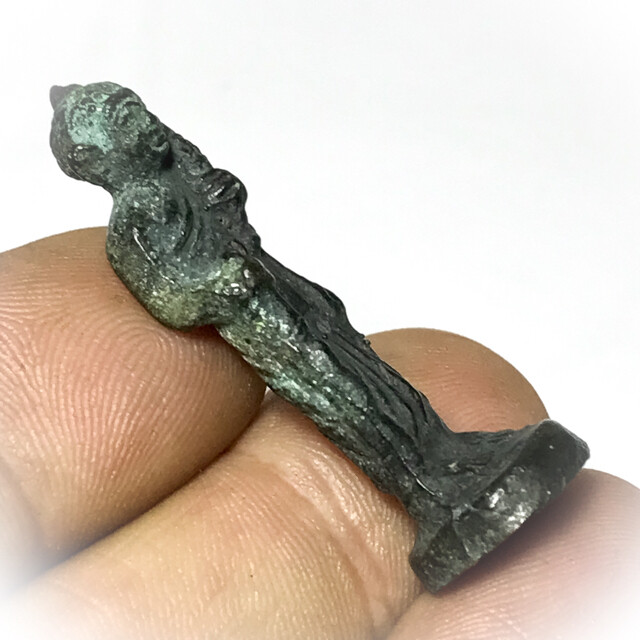
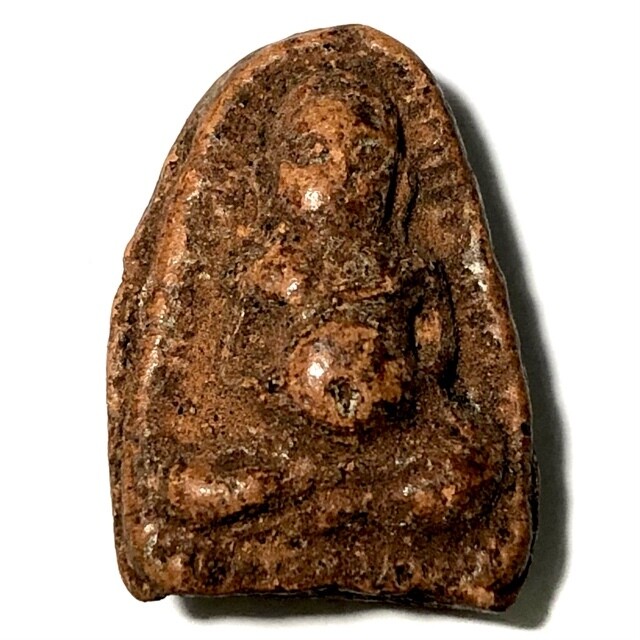
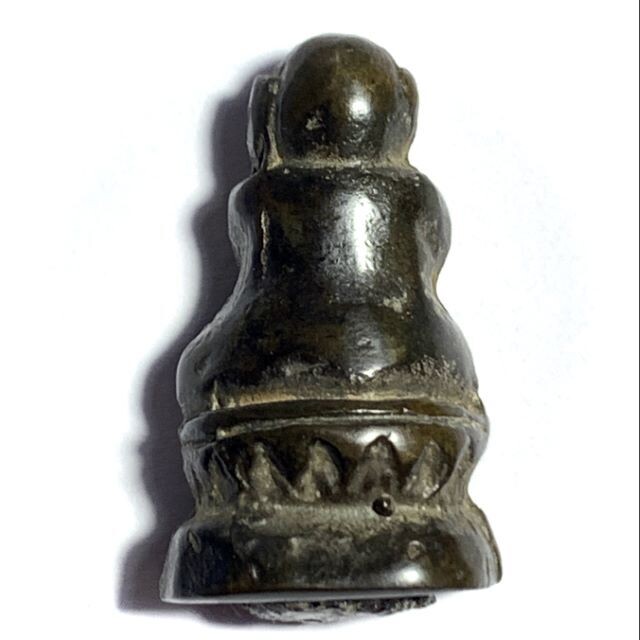
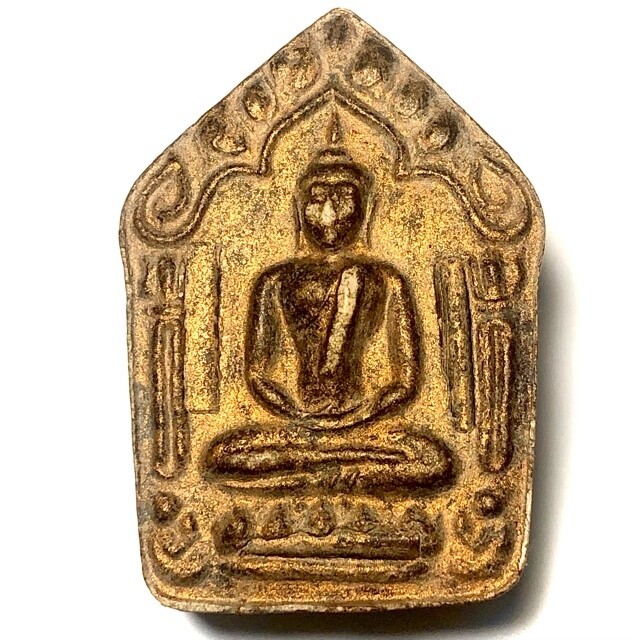
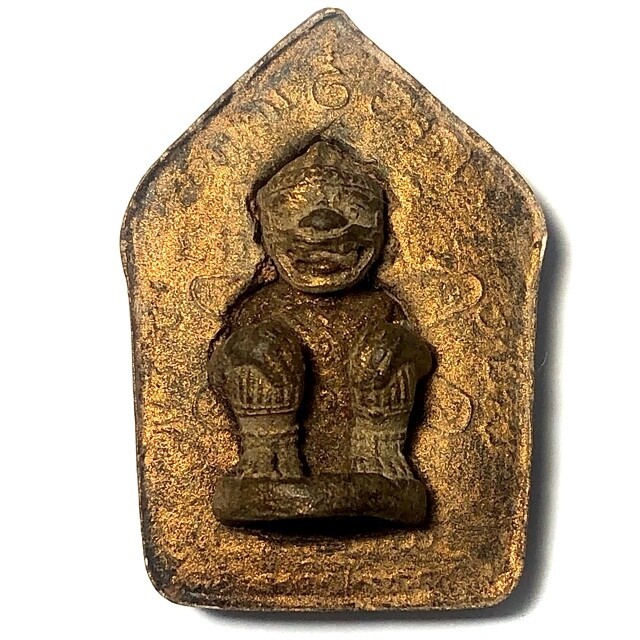
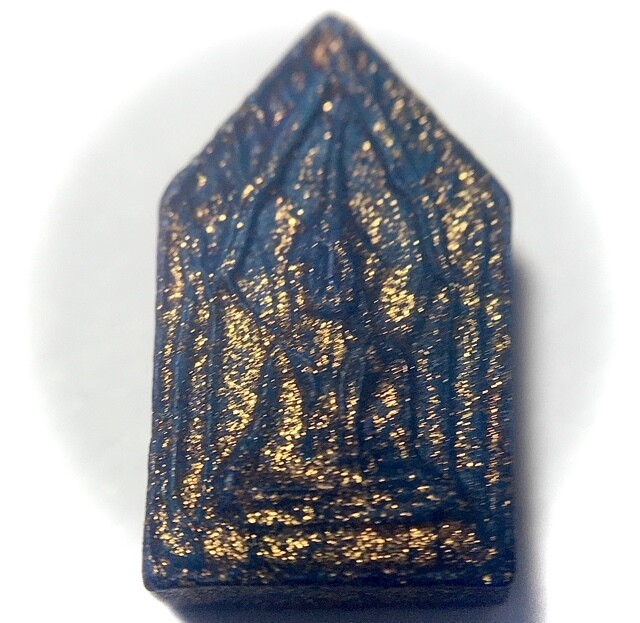
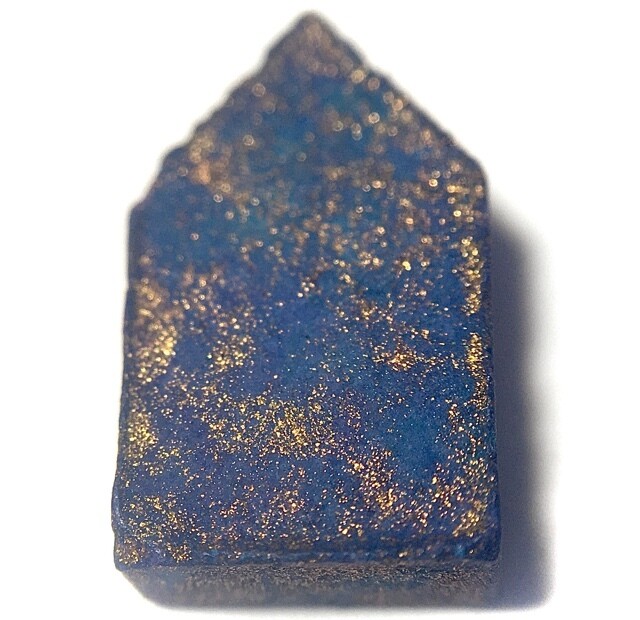
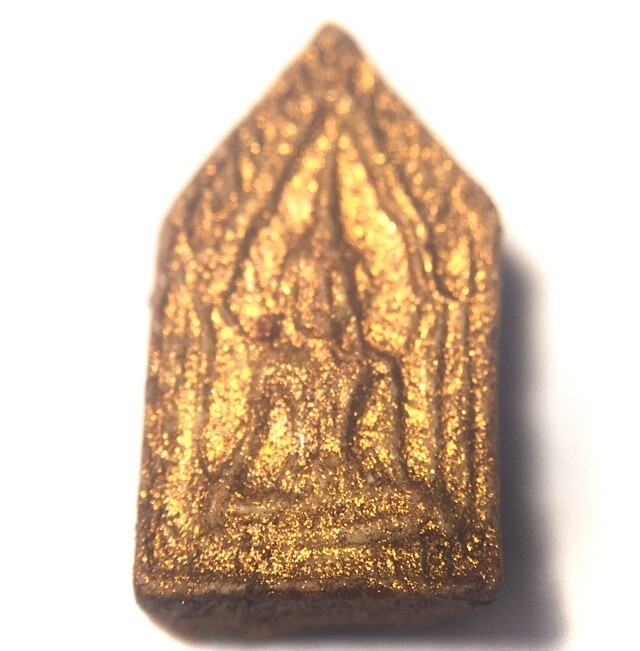
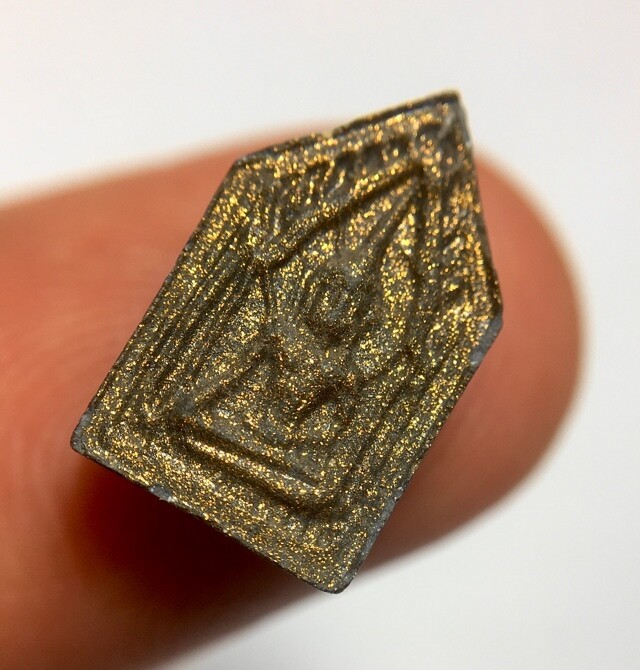
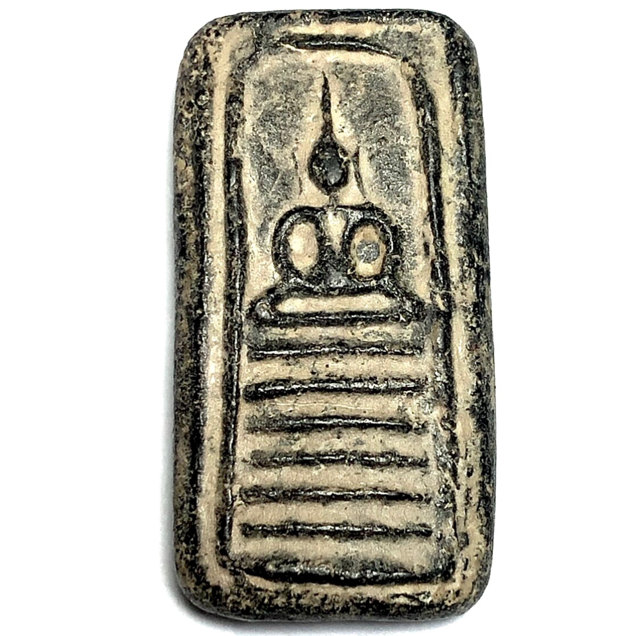
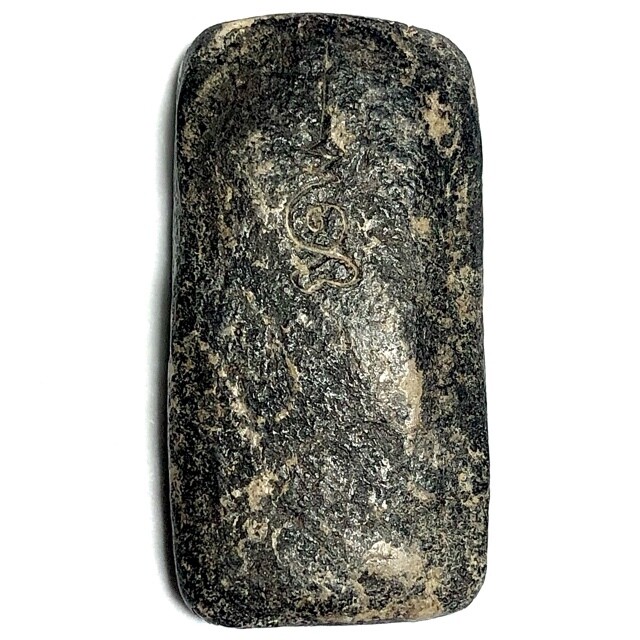
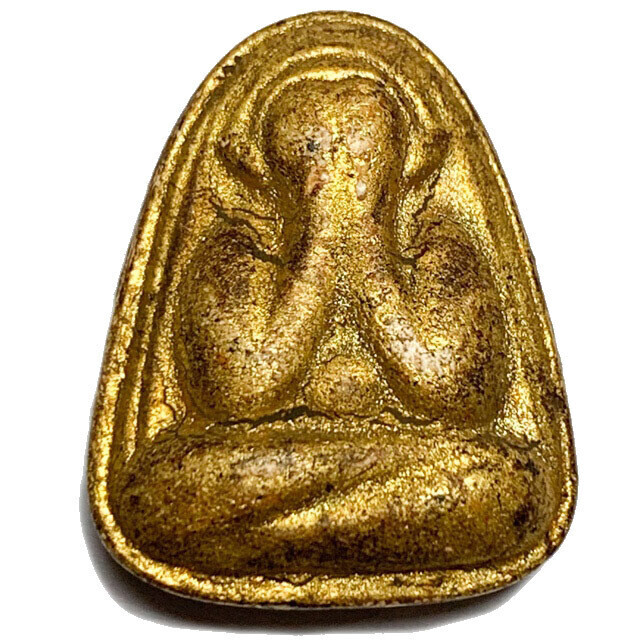
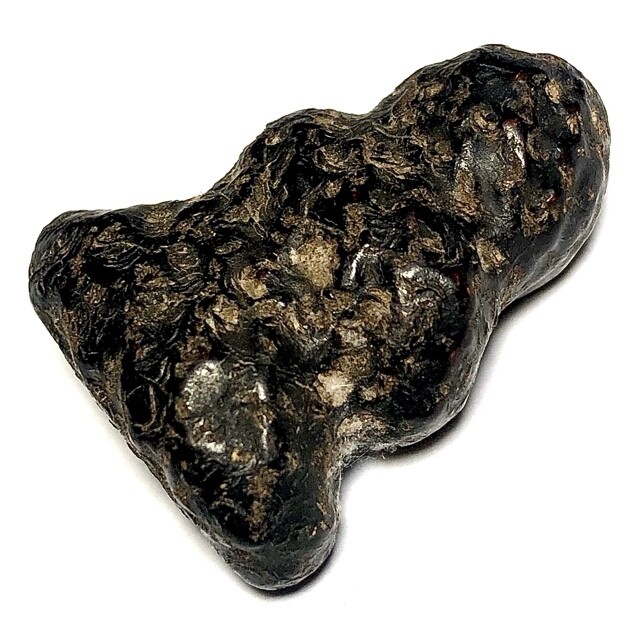
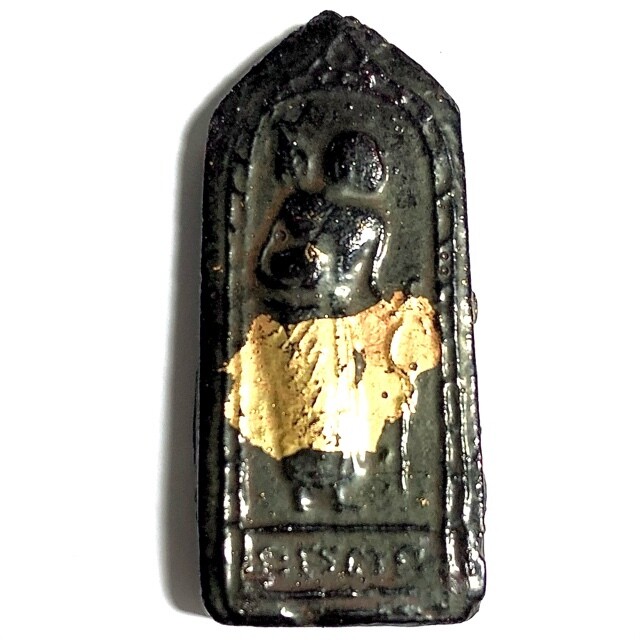
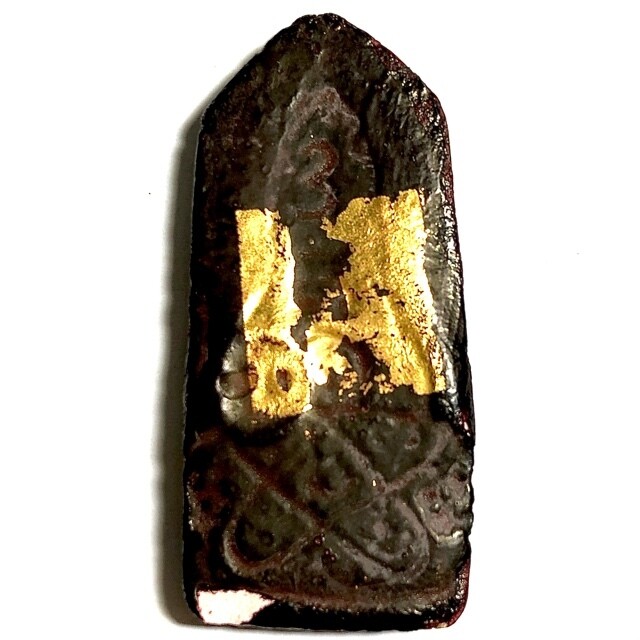
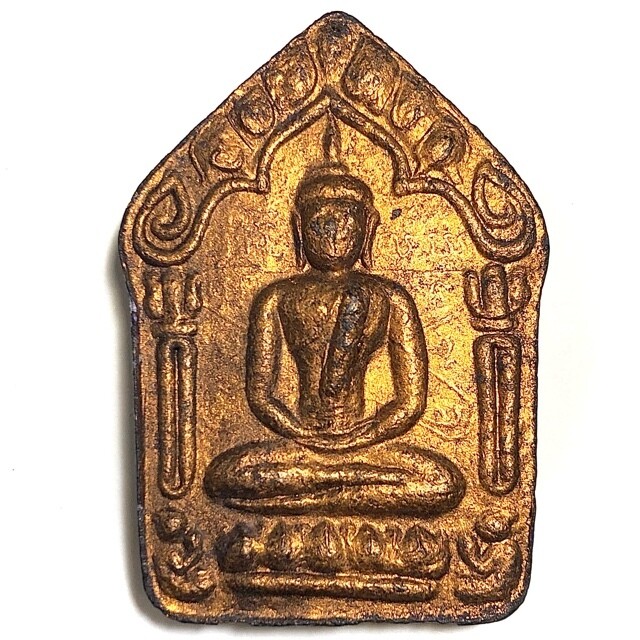
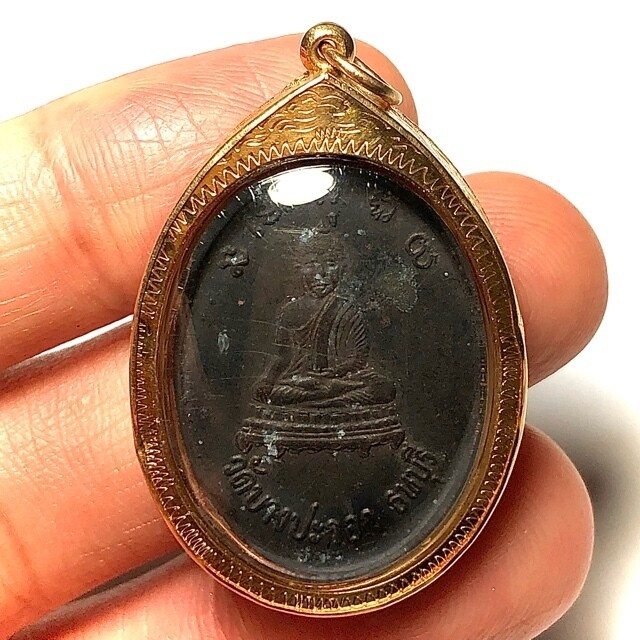
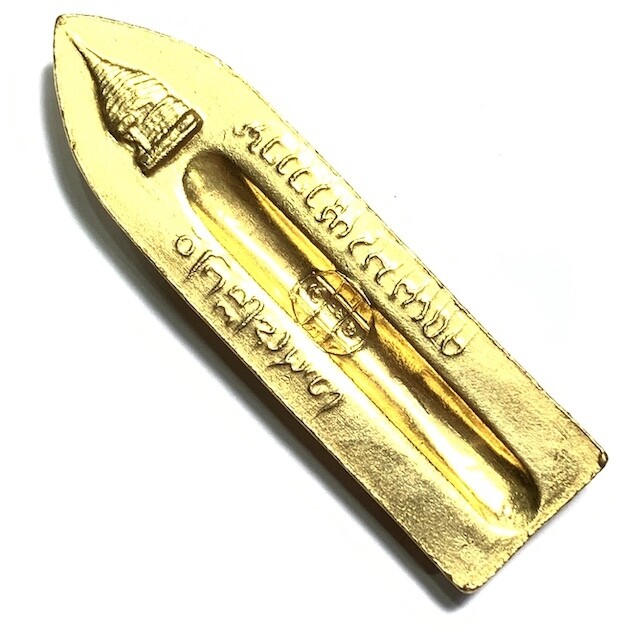
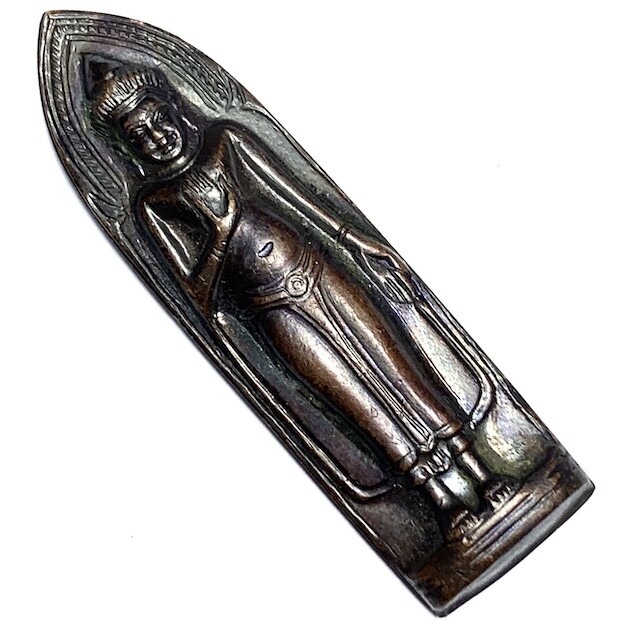
One of the Preferred Class of Pra Niyom amulets of the ‘Rian Kanajarn’ Guru Monk Coin amulet category, is of course the Rian Roop Muean Lor Gleep Bua 2519 BE, in Nuea Galai Tong sacred alloy, with Gold galvanised coated surface, from Isan Master Monk, Luang Por Phang Jidtakudto, of Wat Kongka Kirikhaet Temple, in Khon Kaen.

Rian Lor Bai Po Sum Payanak 2519 BE Nuea Galai Tong Banja Kiree Blessing Ceremony Luang Por Phang Jidtakudto

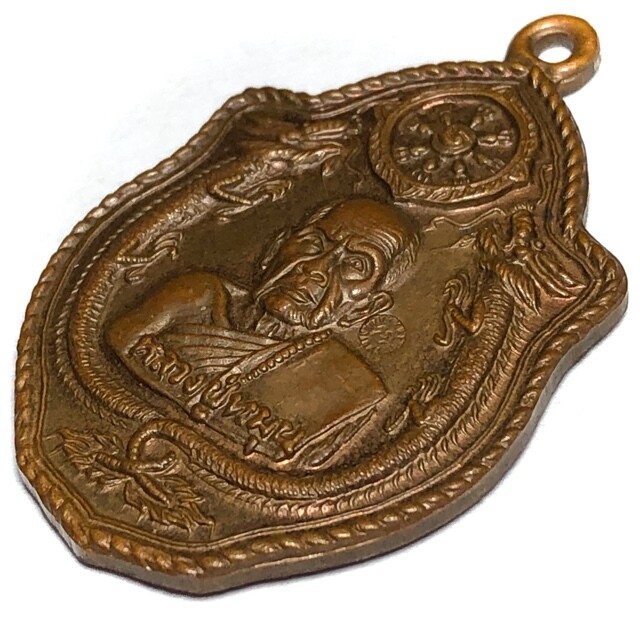
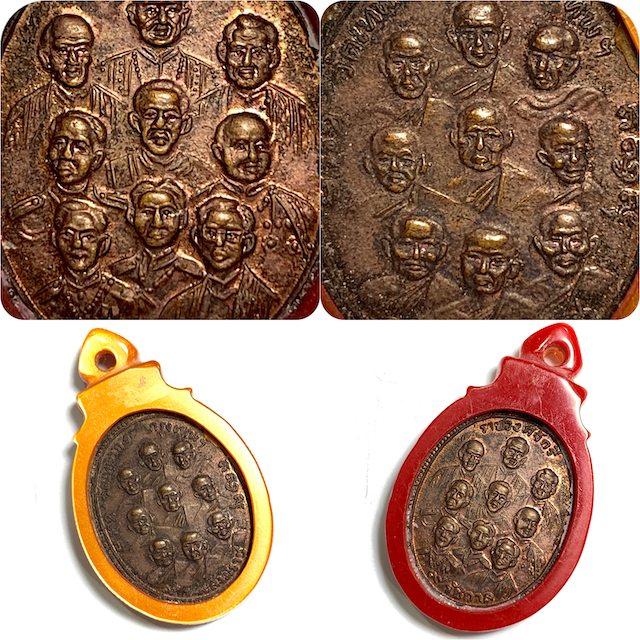
The coin is cast with the image of Luang Por Phang Jidtakudto, of Wat Kongka Kirikhaet, seated within a curved arch formed by Naga Serpents. This edition was sponsored by the Thai Royal Metropolitan Police Force, in reverence to Luang Por Phang, and released in Buddha Abhiseka Ceremony of the Banja Kiree Pra Kring (most preferred amulet of Luang Por Phang, renowned for Miraculous Powers), in which it is said 9 Arahant Monks were present to empower during the ceremony.

Rian Lor Bai Po Sum Payanak 2519 BE Nuea Galai Tong Banja Kiree Blessing Ceremony Luang Por Phang Jidtakudto

The amulets were released after the ceremony, and distributed to devotees from 2519 BE onwards. This is a Pra Niyom amulet of the Tamniab Wadthumongkol (official pantheon), and is a highly desirable acquisition for serious collectors and devotees of Luang Por Phang amulets, and for collectors of competition class category Guru Monk Coins.

Rian Lor Bai Po Sum Payanak 2519 BE Nuea Galai Tong Banja Kiree Blessing Ceremony Luang Por Phang Jidtakudto

The amulet is made from smelted ancient artefacts, such as Buddha and Deity statues and amulets, and ingots smelted from Yantra foils with the spell inscriptions of Great Sorceror Monks. The metals are smelted into one sacred Alloy with ritual incantations. The amulet was then coated in solid gold through the ancient ‘Galai Tong’ application method.

Rian Lor Bai Po Sum Payanak 2519 BE Nuea Galai Tong Banja Kiree Blessing Ceremony Luang Por Phang Jidtakudto

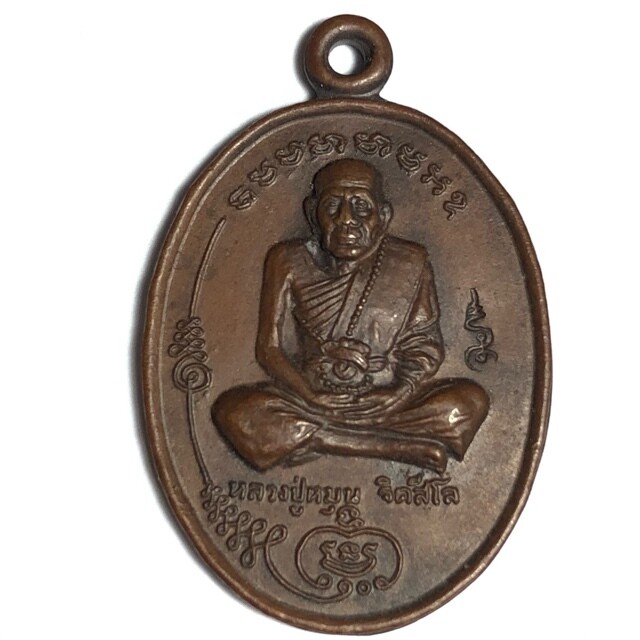
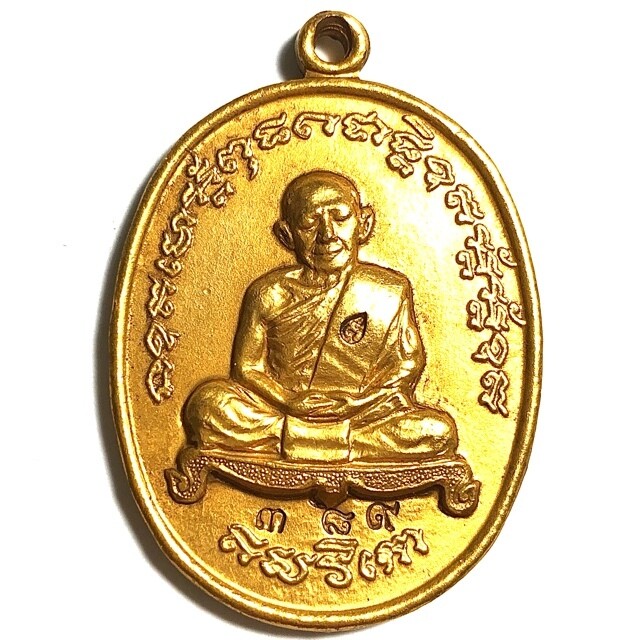
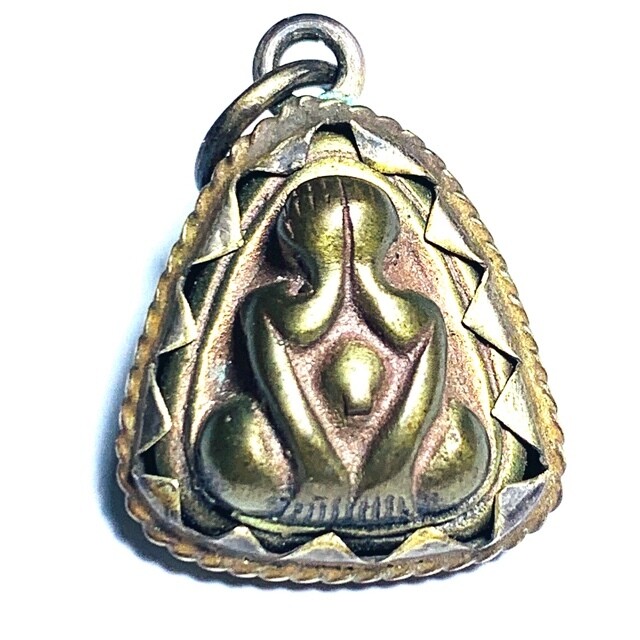
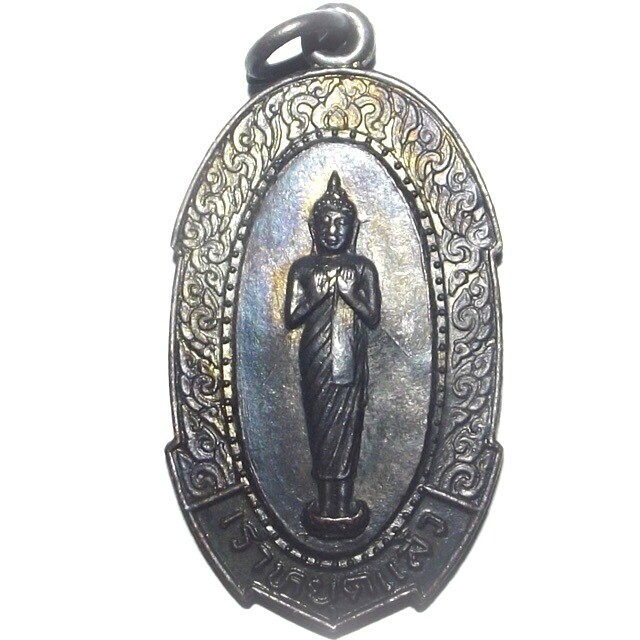
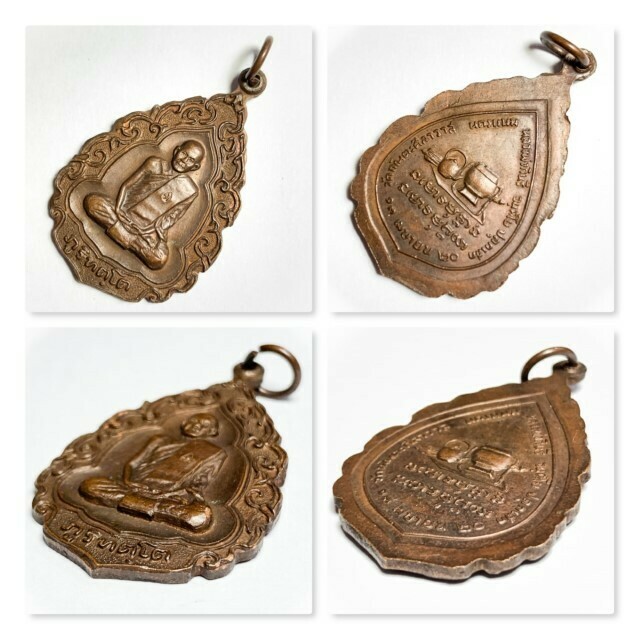
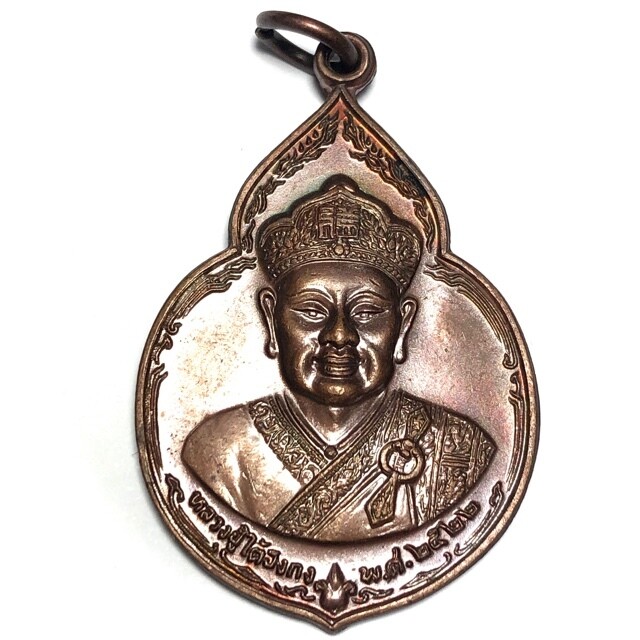
Below; some of the other 2519 BE amulet editions of Luang Por Phang

Rian Lor Bai Po Sum Payanak 2519 BE Nuea Galai Tong Banja Kiree Blessing Ceremony Luang Por Phang Jidtakudto

Rian Lor Bai Po Sum Payanak 2519 BE Nuea Galai Tong Banja Kiree Blessing Ceremony Luang Por Phang Jidtakudto

Rian Lor Bai Po Sum Payanak 2519 BE Nuea Galai Tong Banja Kiree Blessing Ceremony Luang Por Phang Jidtakudto

Rian Lor Bai Po Sum Payanak 2519 BE Nuea Galai Tong Banja Kiree Blessing Ceremony Luang Por Phang Jidtakudto

The year of 2519 BE saw Luang Por Phang release a large pantheon of amulets, many of which are now extreme rarities and highly valued in the collector scene, but are very hard to come across due to the fact that Luang Por Phang’s devotees are never prone to letting go of their amulets. The reluctance of devotees to sell has made Luang Por Phang’s amulets one of the more difficult pantheons to collect.

Rian Lor Bai Po Sum Payanak 2519 BE Nuea Galai Tong Banja Kiree Blessing Ceremony Luang Por Phang Jidtakudto

Rian Lor Bai Po Sum Payanak 2519 BE Nuea Galai Tong Banja Kiree Blessing Ceremony Luang Por Phang Jidtakudto


Luang Por Phang Jidtakudto was born under the name of ‘Phang Krong Yudti’ on Tuesday 2445 BE in Ban Gudtakasian, in Tambon Khuean, Amper Khuang Nai in Ubon Rachathani. He had two siblings
The young Phang was Ordained into the Sangha at the age of 20 years old in 2465 into the Maha Nikaya sect, and Wat Khueang Klang, Ubon Rachathani.

Rian Lor Bai Po Sum Payanak 2519 BE Nuea Galai Tong Banja Kiree Blessing Ceremony Luang Por Phang Jidtakudto

His Upachaya was Pra Kroo Luang Por Duan, Pra Ajarn Dee was his Gammawājājarn. After his Ordination, Luang Por Phang then studied Dhamma Vinaya with Luang Por Somkuan, . After one year of Ordination, Luang Por Disrobed, and at the age of 23, he married with Miss Jan dee Say Sema, a girl from Ban Daeng Mor, Ubon Rachathani. They remained married for a period of 23 Years, but never had any children, except for taking care of an orphan whose parents had passed away.

Rian Lor Bai Po Sum Payanak 2519 BE Nuea Galai Tong Banja Kiree Blessing Ceremony Luang Por Phang Jidtakudto

As Luang Por Phang reached the age of 43, both Luang Por Phang, and his Wife, ordained, Luang Por Phang becoming a Bhikkhu, and his wife went to Ordain as a Buddhist Nun (Mae Chee).
They gave all of their possessions to their adopted child Miss Noo Pan, who was married with family already.
Luang Por Phang was reordained back into the Maha Nikaya lineage sect, this time at Wat Koo Khad, in Ban Sri Sukh township, in Ubon Rachathani.

Rian Lor Bai Po Sum Payanak 2519 BE Nuea Galai Tong Banja Kiree Blessing Ceremony Luang Por Phang Jidtakudto

This time Pra Kroo Sri Sydtaporn (Luang Por Dter) was his Upachaya. His Pra Gammawājājarn’s name is undocumented. Luang Por stayed officially at Wat Koo Khad, but in fact also learned to practice Kammathāna Vipassana at Wat Pha Warin Chamrab, with Pra Ajarn Singh and Pra Ajarn Maha Bpin.

When Luang Por Phang reached the age of 47 however, he changed sect lineages to enter into the Tammayut Forest Monk Lineage and was Ordained as a Tammayut Monk at Wat Ban None (also known as Wat Tung) with Pra Maha Orn as his Upachaya and Pra Maha Sai as his Pra Gammawājājārn, and Pra Maha Luang Por Jantr as his Pra Anusāwanājārn.

His Ordination as a Tammayut Monk took place on Wednesday the 23rd of May 2491 BE, marking his third and final Ordination.
Luang Por Phang then continued to practice the Kamathāna Vipassana method with Pra Ajarn Singh, for some years, and finally set out in solitary to practice Tudong (Tudhanka) Forest wandering on his own, to develop in his skills and powers.

Rian Lor Bai Po Sum Payanak 2519 BE Nuea Galai Tong Banja Kiree Blessing Ceremony Luang Por Phang Jidtakudto

It was then that he was able to find and learn to practice under the tutelage of the Great Pra Ajarn Mun Puritadto, the founder of the Thai Kamathāna Forest Tradition lineage at Wat Ban Namon in Sakon Nakorn. After receiving tutelage from Ajarn Mun, he continued with his solitary Tudong Forest wandering. During his forest
wanderings, he came to stay at Wat Pha Ballanksilatip in Ban Taen, Khon Kaen, and stopped to stay there for one year. Once the rainy season retreat was over, Luang Por Phang then wandered out again and came past the municipality of Manja Kiri in Ban Soke Nam Khun.

Rian Lor Bai Po Sum Payanak 2519 BE Nuea Galai Tong Banja Kiree Blessing Ceremony Luang Por Phang Jidtakudto

The local devotees of the area saw Luang Por Phang was staying in the forest, and beseeched him to stay for a while, asking him to stay and practice at the foot of the Pu Pa Daeng mountain. This place was considered very sacred to the local folk, and there was a water spring where water flowed out all the year round.

Rian Lor Bai Po Sum Payanak 2519 BE Nuea Galai Tong Banja Kiree Blessing Ceremony Luang Por Phang Jidtakudto

Luang Por Phang saw the place, and was astounded to see that it was the place he had been having visions of in meditation for many years already, and so decided it was destined for him to stay there. Until Luang Por Phang’s appearance, no monk had ever been able to stay iin this place, for its powerful local spirits and magic present, but Luang Por Phang was able to remain there quite easily.

Rian Lor Bai Po Sum Payanak 2519 BE Nuea Galai Tong Banja Kiree Blessing Ceremony Luang Por Phang Jidtakudto

Luang Por Phang then invited the local devotees to help him to build a temple there. The locals of this area used to call this sacred mountain water source ‘Doon’, and so in those days as the temple was rising up into existence, they called it ‘Wat Doon. Luang Por Phang stayed on building the temple of Wat Doon, occasionally traveling out into the forest on Tudong, and had various miraculous adventures during those journeys he made in solitary into the deep forests, and mastered his Wicha.

He remained faithful to the simple ways of a Bhikkhu and endured the hardships of a Tudong Monk, and was thus a well attained ‘Pra Subattibanno’ (Good Bhikkhu of High Endurance, Renunciation and Purity). The temple of Wat Doon was given the official name as we know it today of Wat Udom Kongka Kirikhaet.

Rian Lor Bai Po Sum Payanak 2519 BE Nuea Galai Tong Banja Kiree Blessing Ceremony Luang Por Phang Jidtakudto

Other Meritorious Deeds of Luang Por Phang;

In the year 2505 BE Luang Por Phang constructed yet another temple in Ban Jaeng Tab Ma, in Manja Kiri Municipality, Khon Kaen, a small distance away from Wat Udom Kongka Kirikhaet, about 4 Kilometers to the east. This temple was given the name ‘Wat Pha Pattana Kiri’, or commonly known by the local devotees as ‘Wat Ban Jaeng’

Rian Lor Bai Po Sum Payanak 2519 BE Nuea Galai Tong Banja Kiree Blessing Ceremony Luang Por Phang Jidtakudto

Another great Meritorious deed of Luang Por Phang, was that he built a road (widening of the road) which was too thin and impossible for the local farmers and other traffic to navigate along without difficulty, withough any need of government funding, and presided over the whole construction process, to lessen the problems of locals of the area, and solve the problem of lack of funds of the local provincial government.

Luang Por Phang also pestered the local Government in the department of public highways to build another road widening and lengthening to bring devotees to the temple (for there was no real road to speak of for devotees to come to the temple), which took him constant efforts writing to the government offices, between the years 2507 BE, and 2523 BE. Finally, the Government assisted to build the road in the year 2523 BE, after his letters to them and requests were finally heard. His patience and persistence won out in the end, to give the locals a road to be able to use for their needs, and to reach the temple without having to cross wild territory

Rian Lor Bai Po Sum Payanak 2519 BE Nuea Galai Tong Banja Kiree Blessing Ceremony Luang Por Phang Jidtakudto

In the year 2523 BE, Luang Por Phang sponsored the building of the Pratat Kham Kaen Sirodom Relic Stupa Shrine which stands before the Central Municipal Building of Khon Kaen City, with the assistance and donations of the local devotees, to celebrate two hundred years of the Ratanakosin Era. On the 31st march 2525, Somdej Pra Sangkarach Sakol Maha Sangka Barinayok (Somdej Prayan Sangworn Pra Sangkaracha Royal Head Monk, came to perform the Inauguration of the Pratat relic Shrine for the Local Buddhist Folk to be able to perform Bucha and Revere the shrine.

Rian Lor Bai Po Sum Payanak 2519 BE Nuea Galai Tong Banja Kiree Blessing Ceremony Luang Por Phang Jidtakudto


On the 28th of November, Luang Por Phang was admitted to Hospital and was found to have Cancer of the Gall Bladder. On the 23rd of February 2525, Luang Por was readmitted to the Paet Banya hospital because he felt rather weak, and was suffering internal bleeding, and his heart muscles were having problems pumping his heart.

Rian Lor Bai Po Sum Payanak 2519 BE Nuea Galai Tong Banja Kiree Blessing Ceremony Luang Por Phang Jidtakudto

On 16th March 2525 Luang Por felt a bit better, and the Comittee of Devotees of Luang Por Phang came to take Luang Por Phang back to the temple, but after a few days of having returned to his temple, he felt ill again, and was unable to eat or drink, or pass water. Then, on the 24th of March 2525, at 16:45 PM, Luang Por Phang finally passed away peacefully, at the age of 80 years Old, which was a very sad occasion for the devotees of this highly beloved Monk, who never sought recognition and always worked hard for the welfare of the devotees and his temple, and to spread the Buddha Dhamma.

Rian Lor Bai Po Sum Payanak 2519 BE Nuea Galai Tong Banja Kiree Blessing Ceremony Luang Por Phang Jidtakudto

He was known for having always said “I don’t want my name to be known famously’ ‘I don’t want to receive honors or status’ ‘I don’t wish people to speak highly of me’ – But these wishes seem to have been in vain, for indeed, Luang Por Phang, is one of the ost highly revered Monks of Udorn Rachathani, and his Goodness and Generosity, and Tireless Work to help his People, is Legendary, even now long after his passing.

Rian Lor Bai Po Sum Payanak 2519 BE Nuea Galai Tong Banja Kiree Blessing Ceremony Luang Por Phang Jidtakudto

The final cremation ceremony to bid farewell to Luang Por Phang was held on Tuesday 24th March 2528 at 16:00 PM with thousands of devoptees from around the counrty who came to attend and pay their last respects to Luang Por Phang Jidtakudto
Satu! May Luang Por Phang and his great Merits, remain in our memory forever, and may his great blessings remain with us, through the Buddhanussati of keeping his memory and reverence to Luang Por Phang in our hearts, with the amulets in his image which we wear and revere, in ‘Putta Bucha’!

Rian Lor Bai Po Sum Payanak 2519 BE Nuea Galai Tong Banja Kiree Blessing Ceremony Luang Por Phang Jidtakudto

Rian (Metal Coins)

Sacred Coins and Medallions
Filters

Filters
1 - 60 of 120 items
How to Pray to Thai Amulets

Ajarn Spencer Littlewood & Agent Gemini Unleashed for ancientamulet.com
All rights reserved.


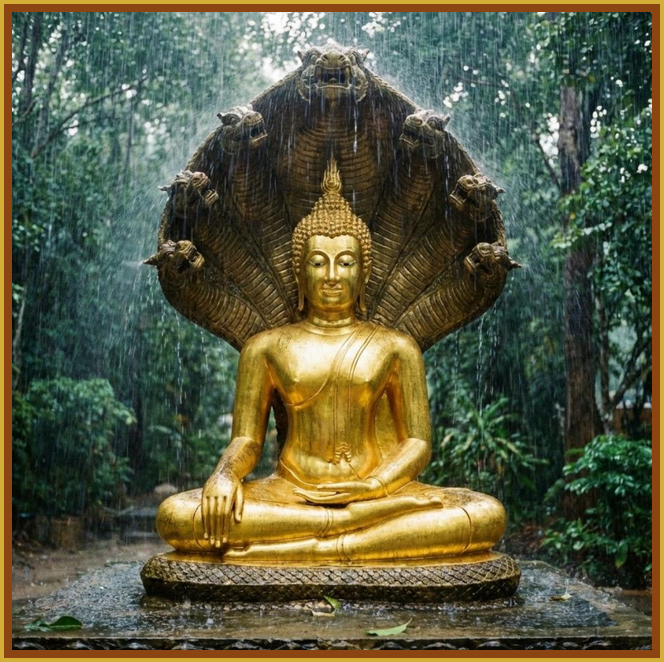
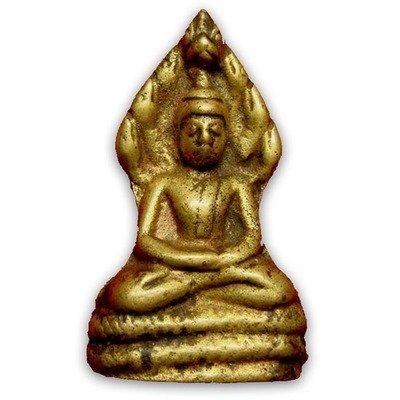
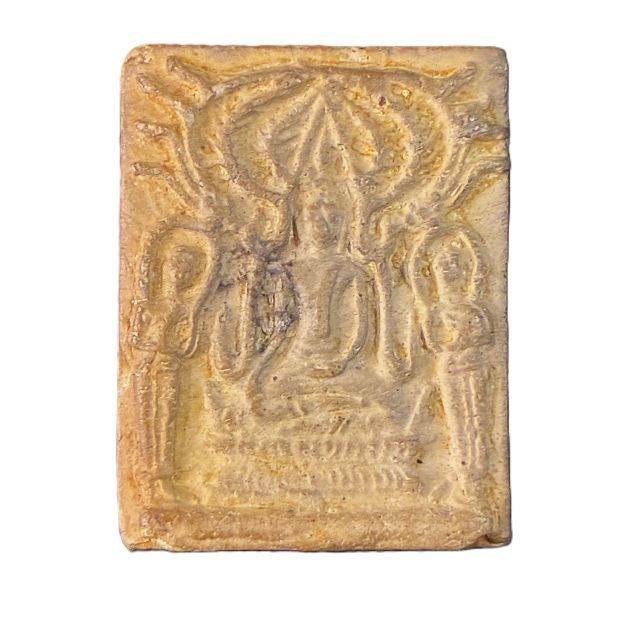
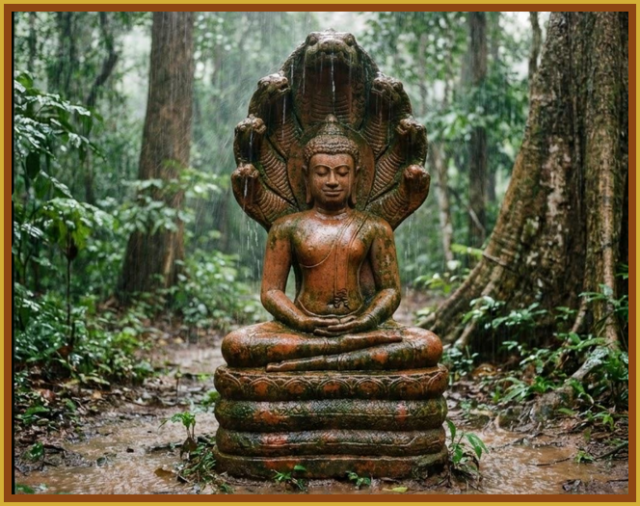
After his Enlightenment, the Buddha went to meditate under the Mucalinda tree (a jackfruit tree) during the sixth week of his ascetic practice. During this period, a heavy storm raged continuously for seven days. The Nāga king Muchalin emerged from the underground, coiling its body seven times around the Buddha. It then spread out its seven-headed hood over him, forming an umbrella that protected him from both the rain and malevolent creatures, according to Buddhist tradition.

Pra Nakprok Buddha

The Pali Tipiṭaka records that one week after his Enlightenment, the Buddha sat in meditation beneath the Mucalinda (jackfruit) tree at Prachin (or the Bodhgaya area), when a heavy rain fell. The nāga king named Muchalin emerged from the underworld, coiling its body into seven coils to support the Buddha’s seat, and then spread out its seven-headed hood to shelter the Buddha from the rain and demonic disturbances. When the rain stopped, the nāga transformed into a young Brahmin, bowed before the Buddha, and asked to give up his mortal life. The English Pali text (Udāna) describes this event clearly: “Muchalin, the nāga-king, left his dwelling place…encircled the Lord’s body seven times…and stood with his great hood over the Lord’s head…in order to prevent wind and rain from harming the Lord.”. Similarly, in the Vinaya (monastic code) there is evidence that Muchalin also revealed his Brahmin form at the end of the episode. Later Buddhist commentaries explain that the nāga’s act symbolizes the merit of steadfast faith: “Those who are full of unshakable truth, if they honor these deities, they will bring protection to us” (Udāna Commentary). Ancient Chinese and Sanskrit Buddhist texts (e.g. the Mahāvastu and the Mahāyāna Lalitavistara) contain similar stories, noting that the nāga-king Muchalin was a great nāga who revered the Buddha and once used his nāga-parasol to shield the Buddha from a great storm during meditation (Lalitavistara 19.15). The notion of the “Nākatanāmāna Muchalin” (the nāga-King Muchalin) even appears in Emperor Ashoka’s inscriptions, corroborating this episode.

Classification of Nagas and Mythical Beings in Tradition

Nagas (nāga; Thai naak) in original Indian belief are serpent-like semi-divine beings associated with water, treasures, and fertility. In the Buddhist cosmos, they are regarded as second-tier deities (a class of subterranean gods) inhabiting the “Naga realm.” Some dwell in rivers, streams, or the ocean (water is the element of the Nāga); others live in underground cave chambers. Nagas are attendants of Viroopaksha (the guardian of the West) and have the role of protecting Mount Meru from assaults by asuras. In Indian cosmology there are also asuras, an ancient tribe of powerful deities often said to dwell in the lower worlds; they are depicted as fierce and hostile toward Brahma and Indra. Likewise there are yakṣas, spirit beings of forests, rivers, and gold; originally sometimes malicious ghosts, in Buddhism they were elevated into guardian deities of wealth, sacred objects, and protection for local people.

Group/Rank Role/Characteristics Habitat/Origin
Nak (Nāga) Semi-divine, serpent-like beings dwelling in water and floods; revered as protective deities (guardians of the Buddha, preservers of sacred relics) Inhabit the Naga-world (caves, rivers, ocean); retinue of Viroopaksha (guardian of the West)
Yak (Yakṣa) Nature spirits of forests and treasures; often guardians of land and wealth (legends sometimes portray them as malign, but Buddhist tradition envisions them as Dharma-protectors) Found everywhere (forests, lakes, mountains); normally attendants of Kubera (Vishnu), the north-direction deity
Gandharva Semi-divine celestial musicians (males sing or play the lute, females are dancers) Inhabit Indra’s heaven (Trāyastriṃśa, often as celestial guests of the gods); serve Indra (providing musical ambience)
Asura (Asura) Powerful and mighty deities; in some legends of the same lineage as the gods but are aggressive and resentful toward the higher deities Cast down into the lower worlds (hellish realms); sometimes described as descendants of Avīci or the 33rd hell (in opposition to higher gods like Indra)

Origins of Pra Nakprok Iconography

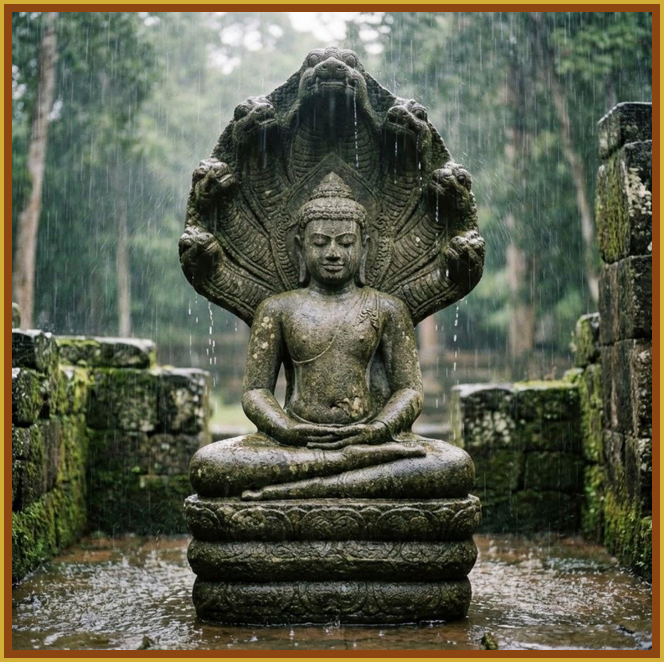
Belief in the Pra Nakprok is attested in Buddhist art as early as India’s Gupta period. It appears as low-relief stucco decorations on temple spires and gateways. Later, free-standing Buddha statues in the Pra Nakprok posture are found: beginning around the late 2nd century CE in southern India (in regions such as Champa and Nalanda), and by the 11th–12th Buddhist centuries in Sri Lanka (Anuradhapura period). In Southeast Asia, Pra Nakprok reliefs and statues appear in the Dvaravati civilization (Central Thailand) during the 12th–15th Buddhist centuries, and in ancient Khmer art of the 16th–19th Buddhist centuries (e.g. Bayon temple at Angkor).
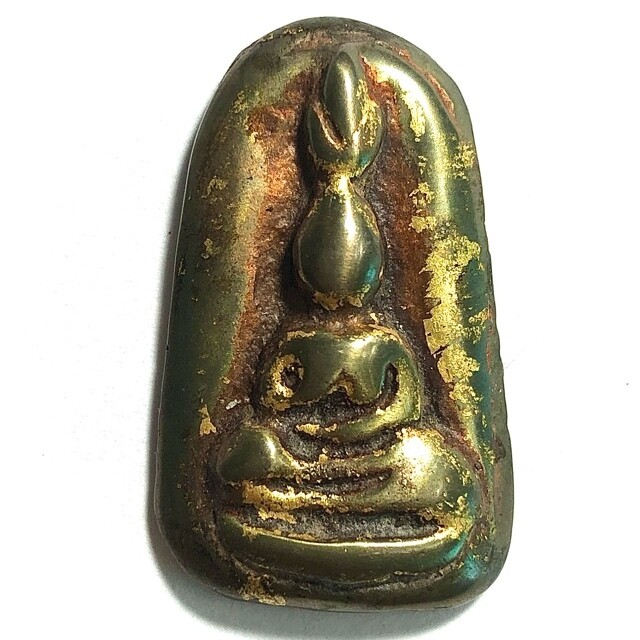
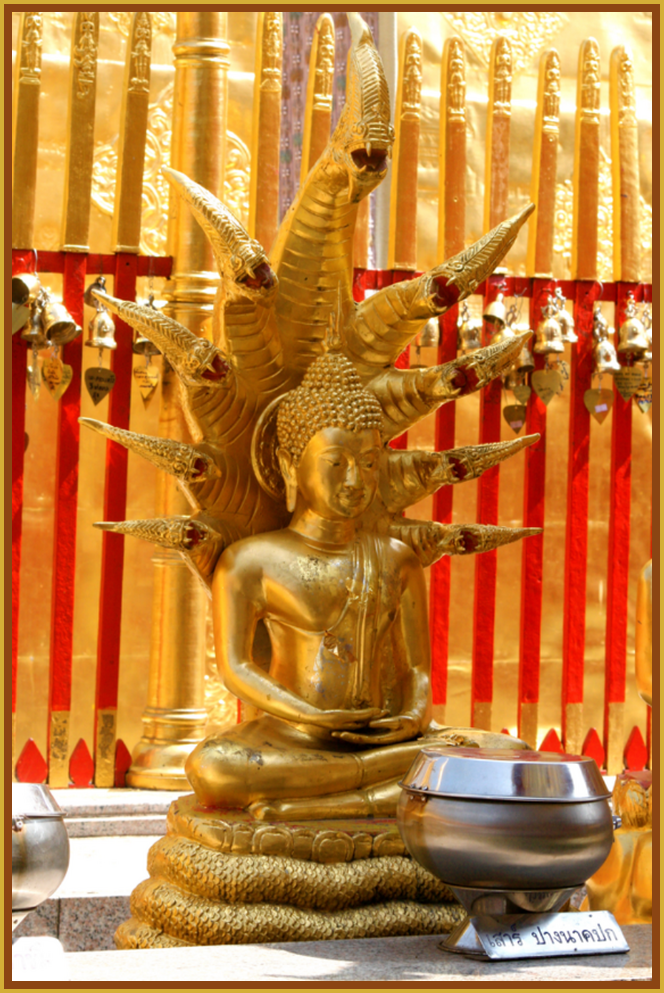
Golden Pra Nakprok Buddha Sukhothai Era

Above; Statue of the golden Pra Nakprok Buddha at Wat Phra That Doi Suthep, Chiang Mai (an eight-headed Naga canopy covering the Buddha’s head).

Development of Pra Nakprok Veneration in Thailand

In Thailand, veneration of the Pra Nakprok Buddha has a long history. It began with constructing large Pra Nakprok Buddha images enshrined in temples. For example, traces of a Dvaravati-period Pra Nakprok (found at Suphanburi) have been discovered. In the Sukhothai–Ayutthaya period, Khmer- and Lopburi-style Pra Nakprok statues were produced; for instance, a Pra Nakprok Buddha was found at Wat Mahathat, Ayutthaya (dating to the Lopburi period, around the 20th Buddhist century). In the late Ayutthaya and Thonburi eras, many Pra Nakprok amulets were buried in the ground for protection. Entering the Rattanakosin era, early Rattanakosin craftsmen made small terracotta and metal Pra Nakprok figures (for household worship), while in the later Rattanakosin period several major temples cast large principal Buddha images in the Pra Nakprok pose.

For example, the principal statue at Wat Benchamabophit in Bangkok (an 8-headed Pra Nakprok image, cast in 1973 CE). Regarding amulets, the Pra Nakprok design became extremely popular.

Beyond antique sets, many Pra Nakprok amulets were created by famous monks, such as Luang Pu Suk of Wat Pak Khlong Makham Thao (a Pra Nakprok image with decorative regalia) and Luang Pu Toh of Wat Pradoochimplee (1980 CE).

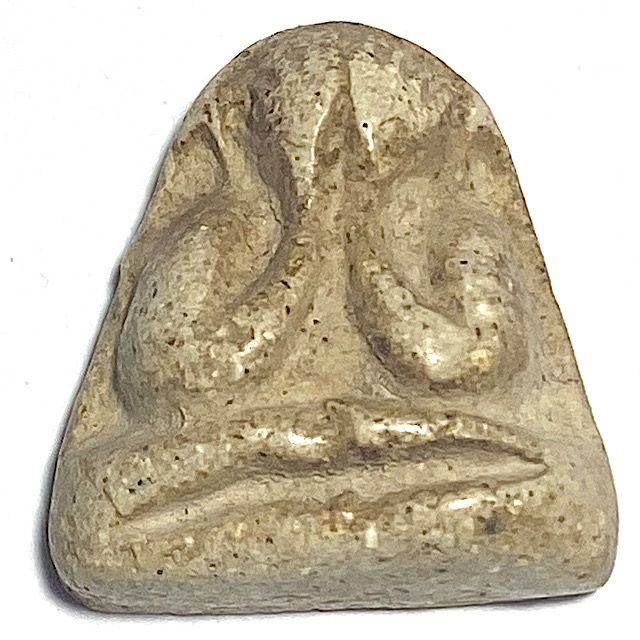
Types of Pra Nakprok amulets include yantra-inscribed coins, small metal plates, and tiny cast Buddha images. It is said in Thai astrology that the Pra Nakprok is the personal Buddha image of those born on Saturday, so Saturday-born devotees receive special auspicious protection from it.

Example Pra Nakprok Amulets / Characteristics Period/Origin Material/Style Powers & Inscriptions
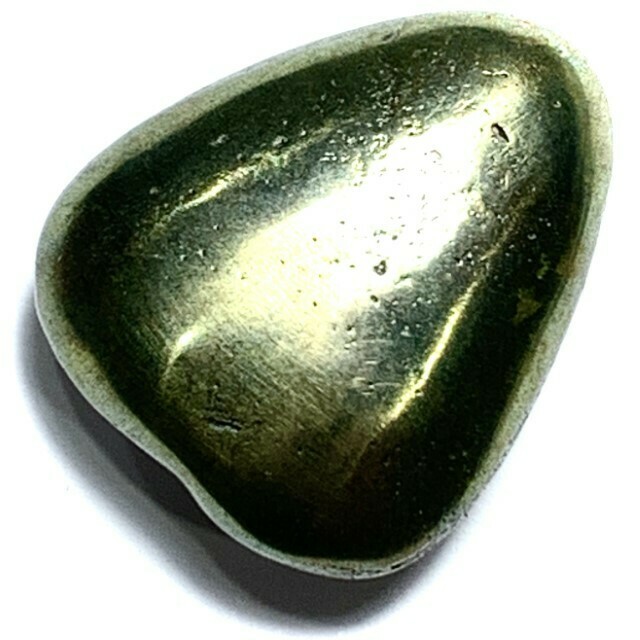
Pra Nakprok of Wat Nuwa (Ayutthaya) Late Sukhothai – Early Ayutthaya (recast during Thonburi) Silver/china-metal with light gold leaf; leaf-shaped form Great invulnerability (ancient accounts say it was especially effective for Saturday-born people)
Mango Leaf Pra Nakprok (Luang Pu Suk) Rattanakosin (Dvaravati Revival) Dark bronze or gold-plated; special thin patina Wealth, great charm; commonly used for protection
Pra Nakprok (Luang Pu Toh, 1980) Rattanakosin (1980) Mixed alloy, lacquered and partly blackened finish Augments prestige and invulnerability (large cast for temple veneration)
General Pra Nakprok Amulets Rattanakosin Powdered clay or small metal casts (neck pendants) Protection from harm; auspicious for Saturdays (most have no inscriptions)

Symbolism and Powers of the Pra Nakprok Image

In Thai belief, the Pra Nakprok is a symbol of protection and inner peace. It represents the Buddha calmly meditating amid crisis, since he is sheltered by the Naga from wind and rain. Thus it is believed to help ward off disasters, accidents, and evil magic, and to strengthen the stability of the devotee (both in destiny and mind). The sacred power of the Pra Nakprok image is thought to emphasize invulnerability (especially against black magic) and great popularity; in particular, people born on Saturday receive special blessings from it (since it is the Buddha image for Saturday). Historical chronicles note that the Pra Nakprok amulet of Wat Mahathat “has no mercury plating” (the highest standard among Ayutthaya amulets) because it provides the utmost protection.

Pra Nakprok Buddha Rupa Lopburi Style

Rituals of Chanting and Offerings

Thai tradition often honors the Pra Nakprok Buddha with special mantras, especially by those born on Saturday, accompanied by devotional offerings of flowers, incense, candles, and clean water. A commonly chanted Pali invocation for the Pra Nakprok is:
“… Yato haṃ thakini ariya sattha, yo nāpichā nāmaṃ sanjijjhati pāṇāṃ cittā, voraṃ petā tena satthī, sotaṭhī kopā vora (sic)….”.

Traditional masters say this has protective power, and Thai astrologers often advise reciting it ten times during meditation or before sleep to enhance auspiciousness. Other chants include “Nakaporokkā parittaṃ mahātejaṃ…” or the protective verses of Angulimala (chanted for safe childbirth). Offerings to a Pra Nakprok statue follow standard Buddhist custom: lotus flowers, jasmine garlands, three incense sticks, two candles, and pure water, in remembrance of the Buddha’s serenity and to beseech the removal of obstacles as per the legend.

Scholarly Analysis

Scholars suggest that the Pra Nakprok legend reflects a blending of folk beliefs with Buddhism. In ancient homiletics, the powerful Nāga was symbolized as a guardian of the Buddha, similar to how a divine prince governs the earthly realm (as in Jambudvīpa mythology). This led even some Mahayana (and Tibetan) traditions to venerate the “Naga” as a star or serpent deity, aligning with the doctrine of shared merit (e.g. the Mahākathina pañcaviha records).
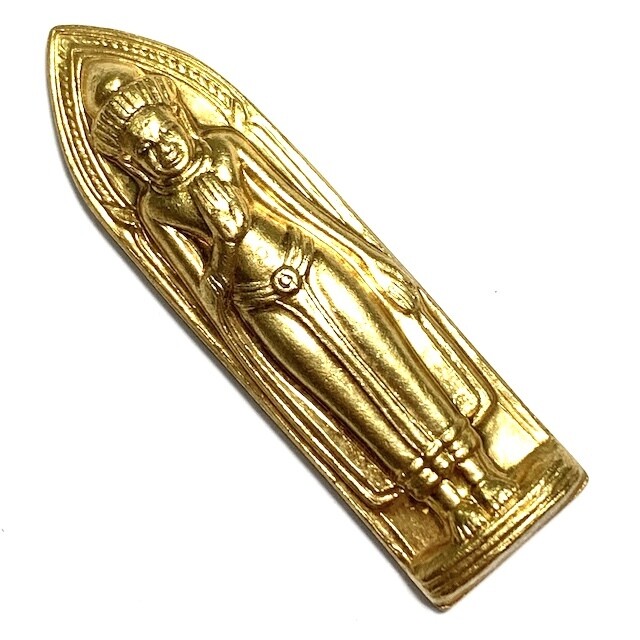
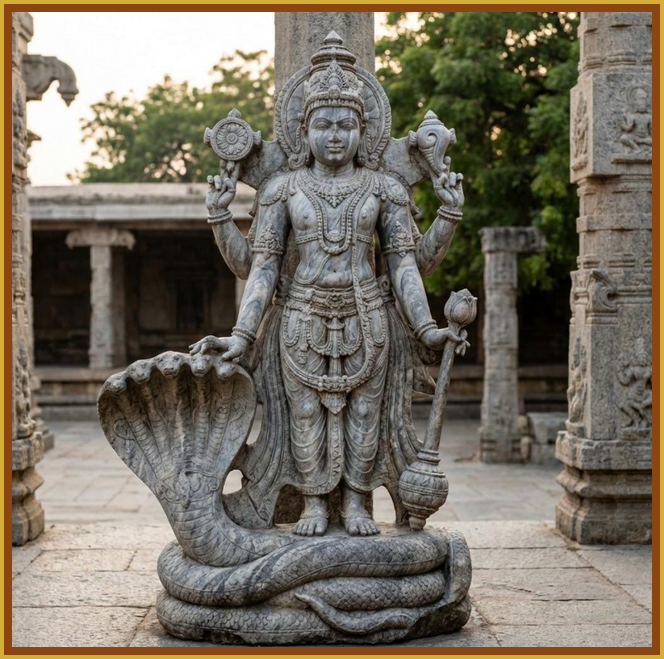
However, art historians debate whether some Sukhothai – Ayutthaya Pra Nakprok images (13th–14th centuries) were influenced by Brahmanical iconography (e.g. Vishnu standing on a nāga) or Hindu Naga motifs.
This confusion caused earlier observers to misinterpret certain figures: for example, a figure seated on a seven-headed nāga might actually represent Indra or a local spirit rather than the Buddhist Pra Nakprok.

Vishnu Standing on Naga Serpents

Some scholars note that belief in the supernatural power of Pra Nakprok amulets grew with popular faith, but archaeological or textual evidence confirming their alleged powers is lacking.

Such beliefs may instead stem from Brahmanical traditions relating to water and agricultural fertility combined with people’s desire for protection. In summary, the Pra Nakprok legend is a syncretic symbol merging Buddhist and Brahmanical elements, grounded in scripture and folk tales.

Today, Pra Nakprok amulets in Thailand have become media of contemporary protective rituals. Academics view this belief as a social phenomenon, studied in the context of cultural disaster management and popular faith.

Ajarn Spencer Littlewood & Sovereign Amulet Agent (SAA) for ancientamulet.com
All rights reserved.
Buddha Amulets (all types)

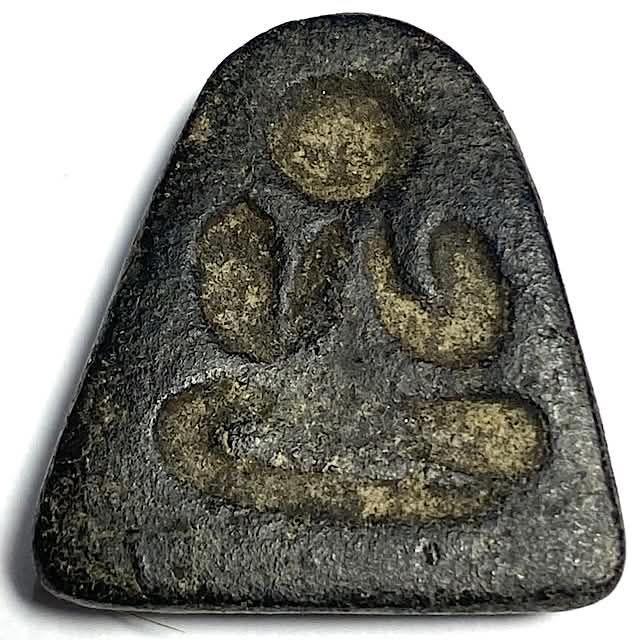
Pra Nakprok, Pra Sum Gor, Pra Pong Supan, Pra Sangkajjai, Pra Lila, Pra Nang Paya, Pra Somdej, Pra Yord Khun Pol, Pra Pruhnang, Pra Prok Po, Pra Saiyasana, Pra Putta Chinnarat, Pra Navagote, Pra Upakut, Pra Sivali, and many others Buddha Amulets.
Filters

Filters
1 - 60 of 618 items