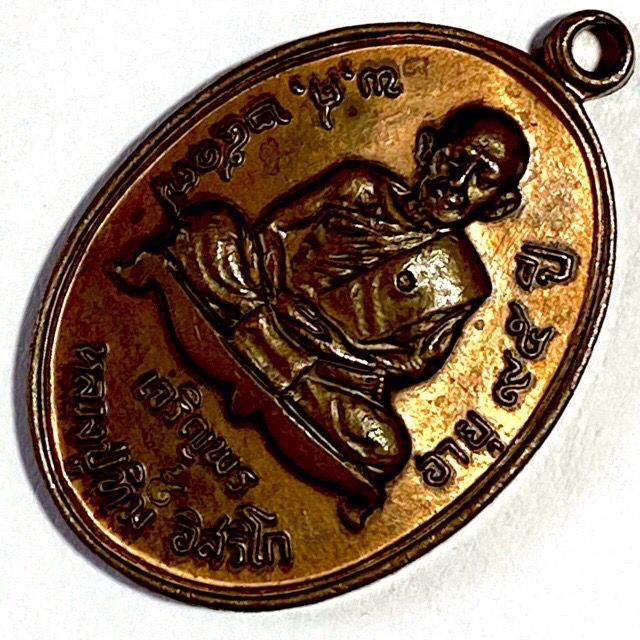
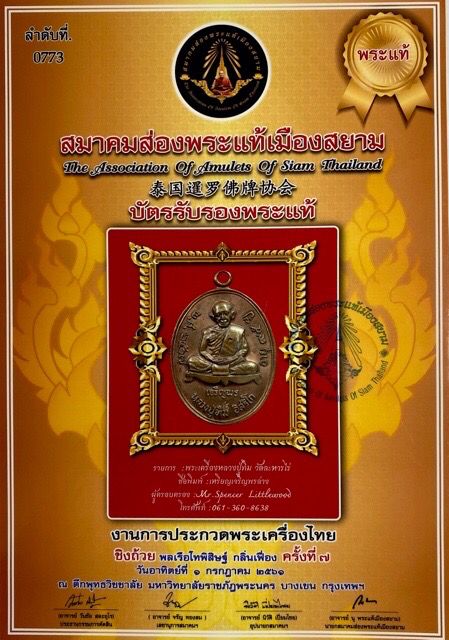
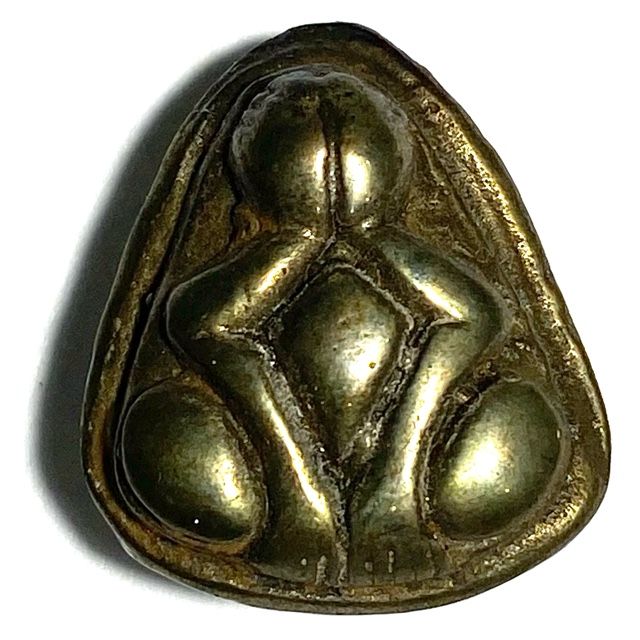
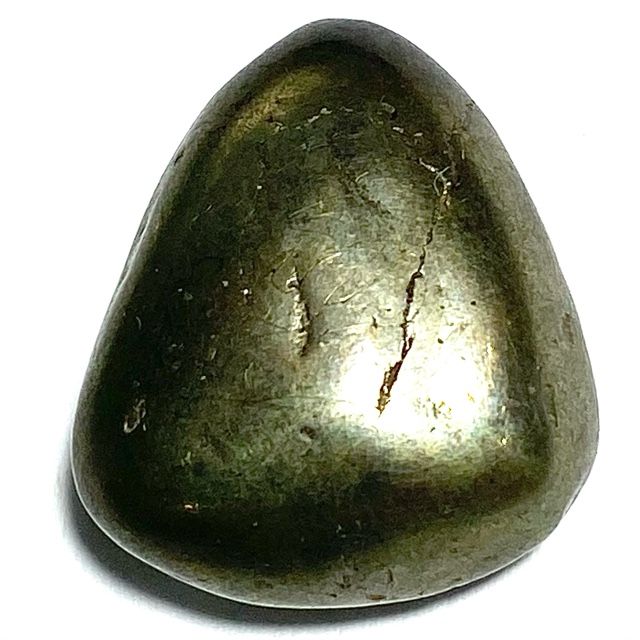
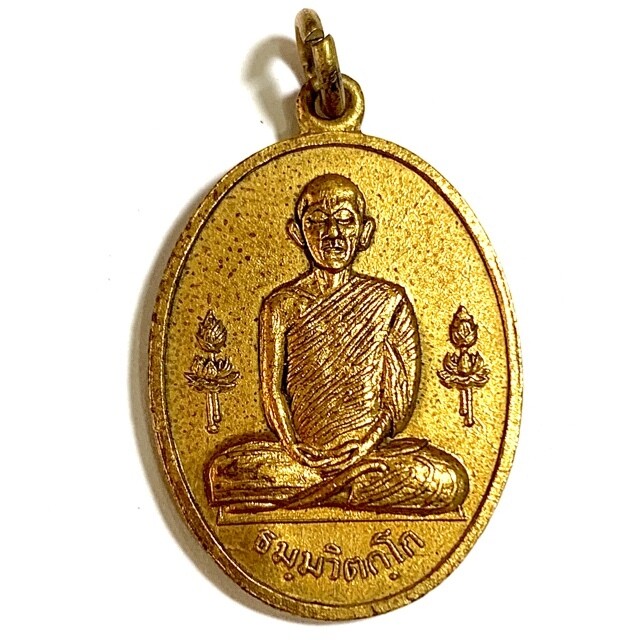
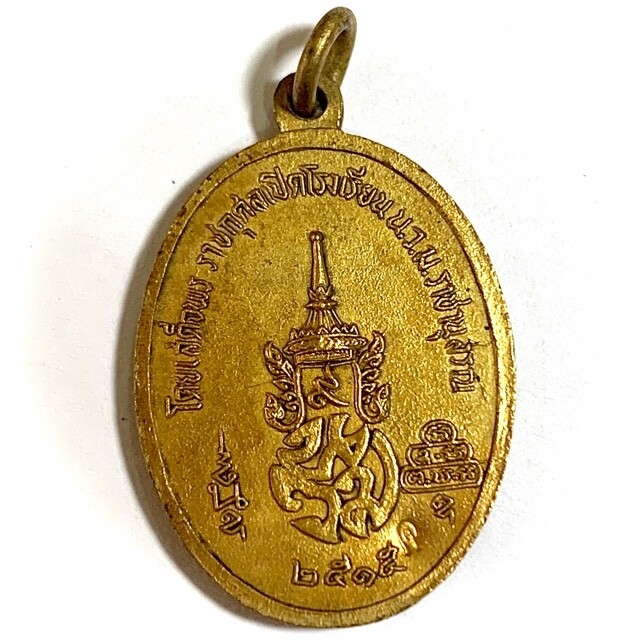
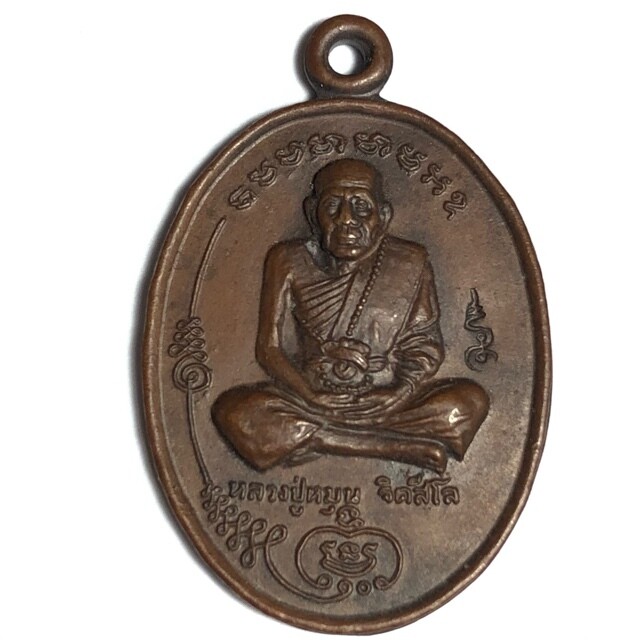
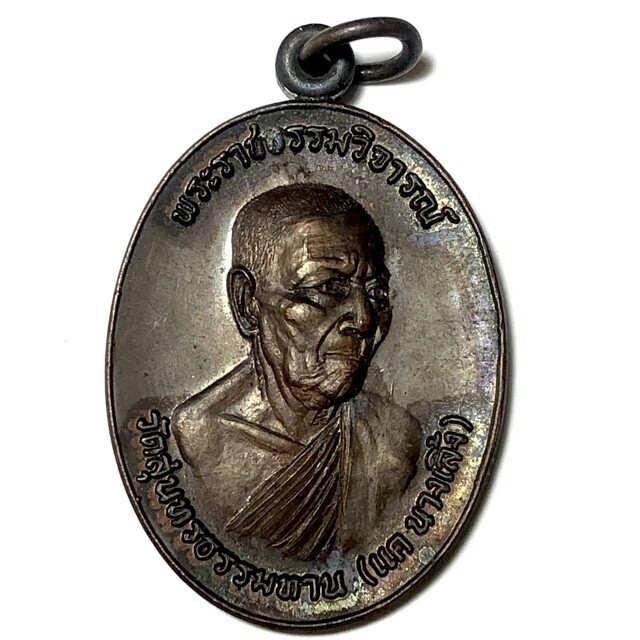
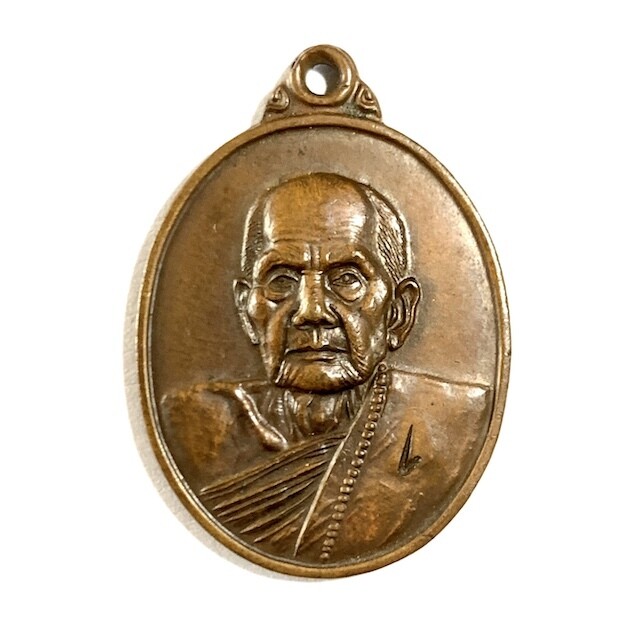
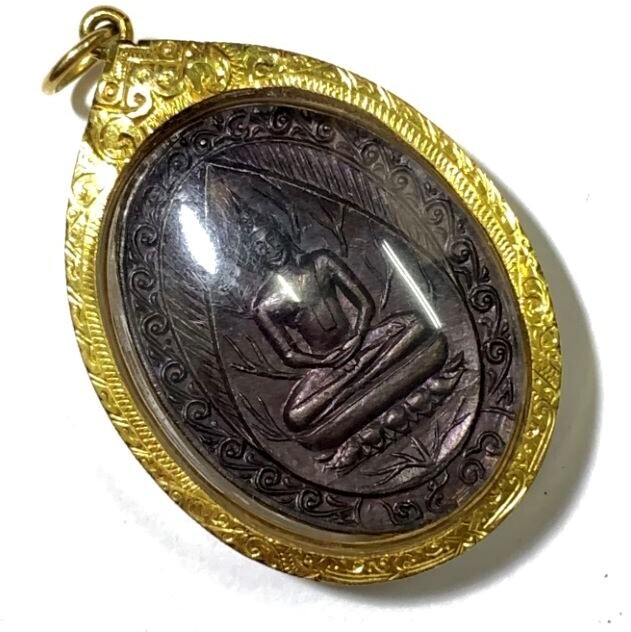
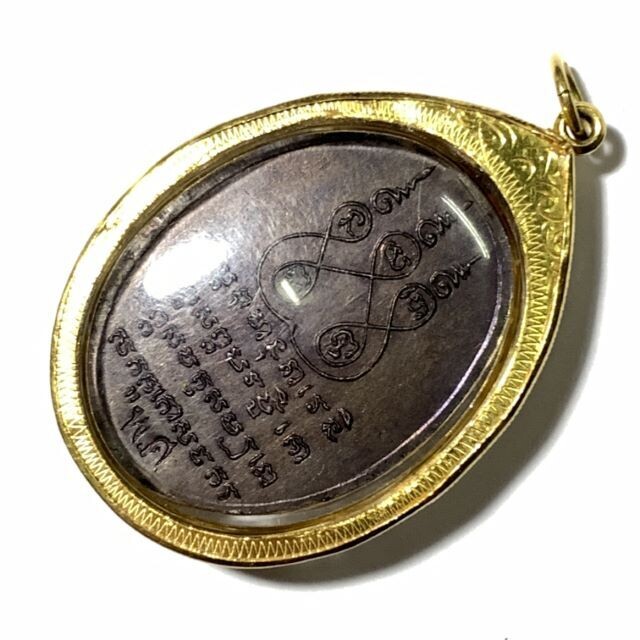
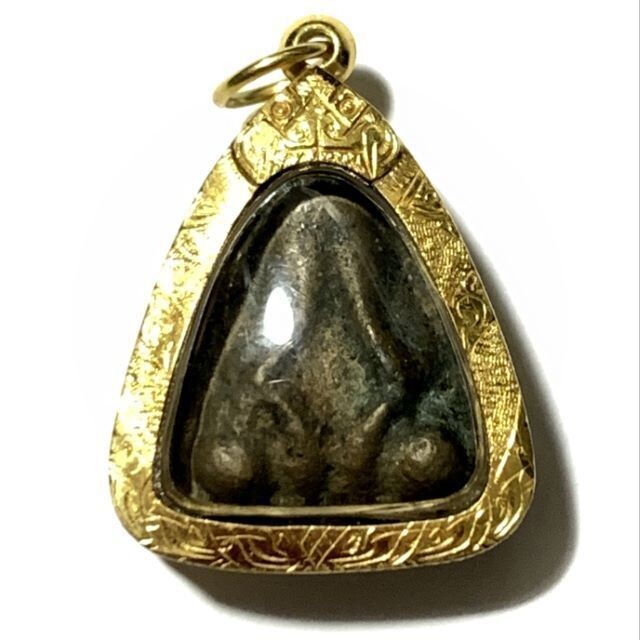
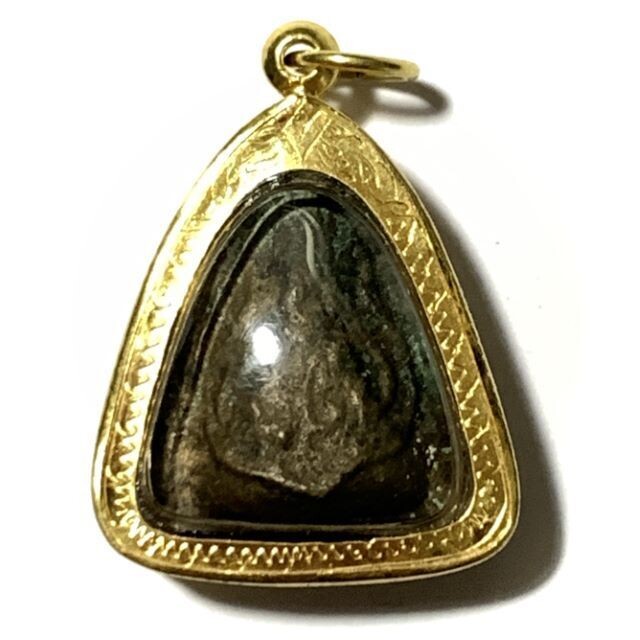
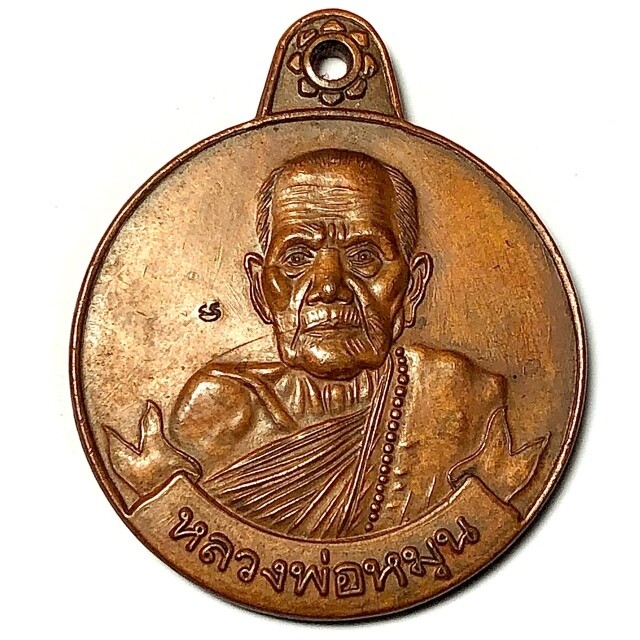
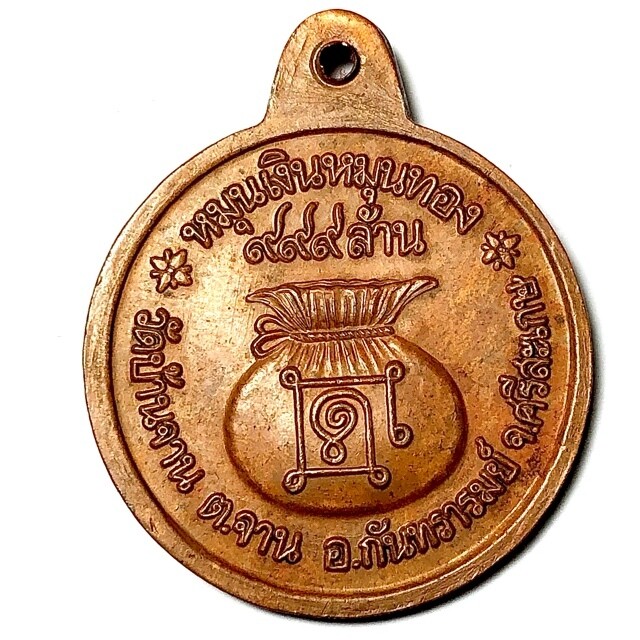
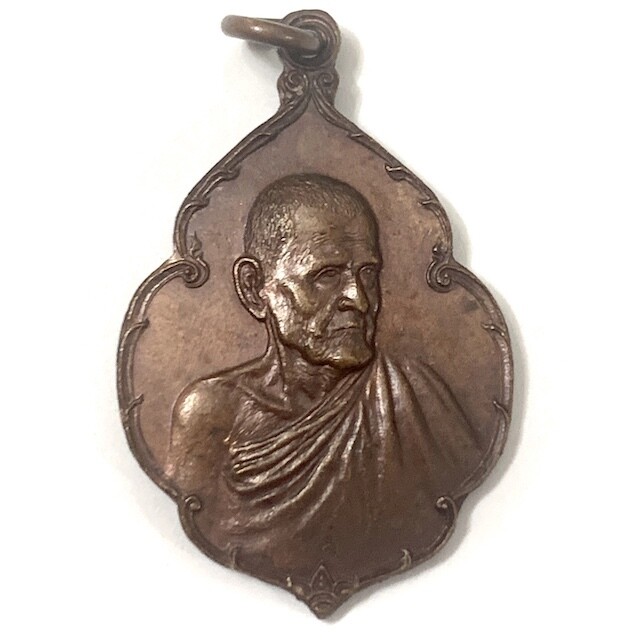
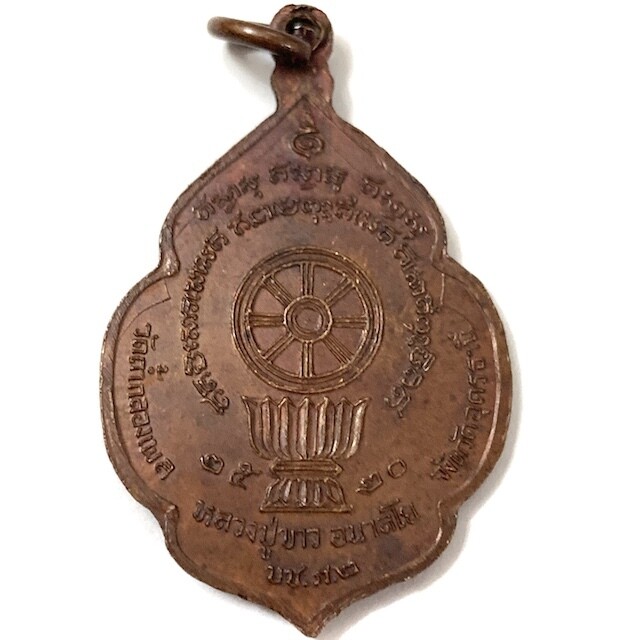
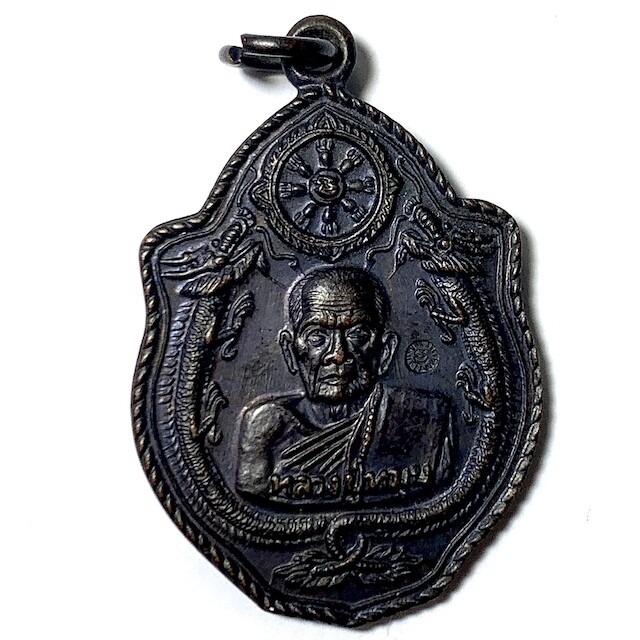
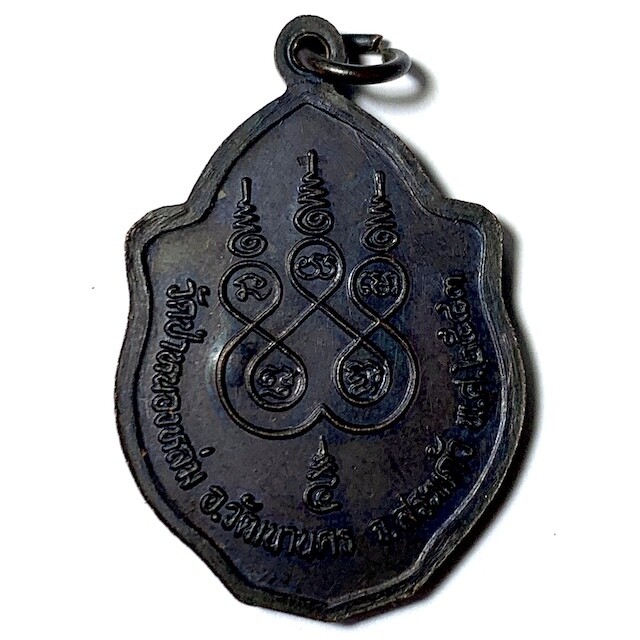
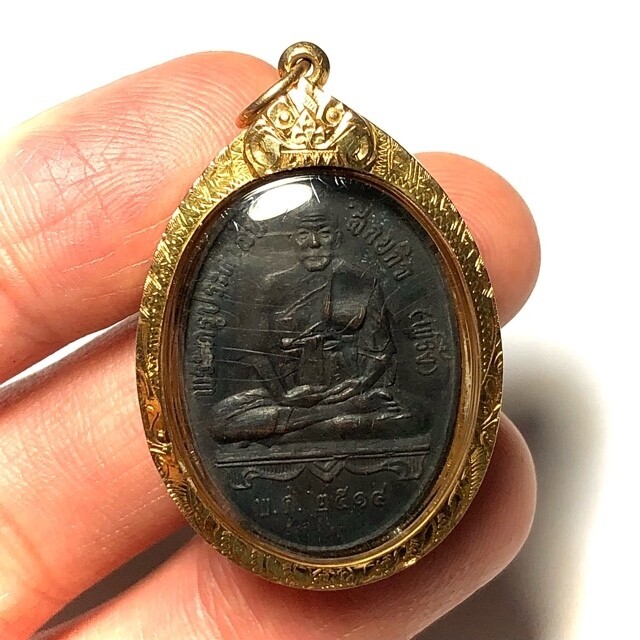
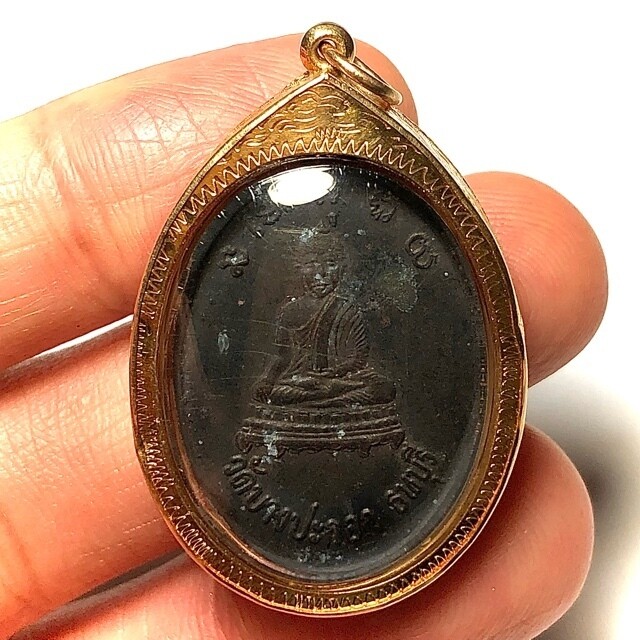
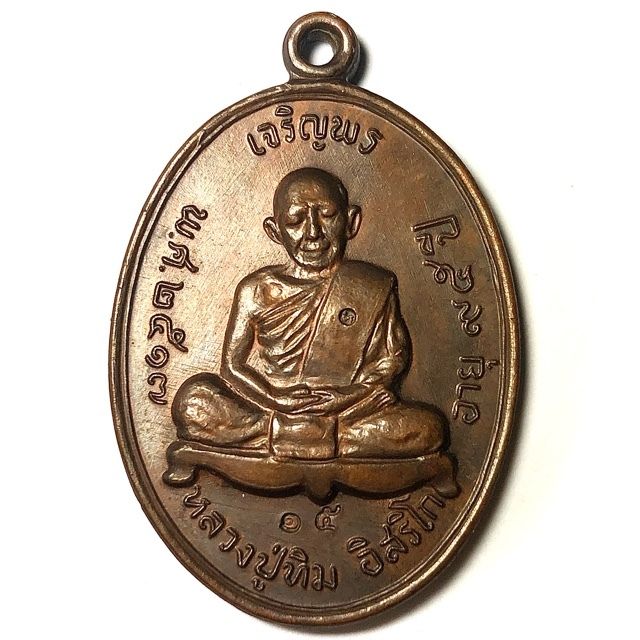
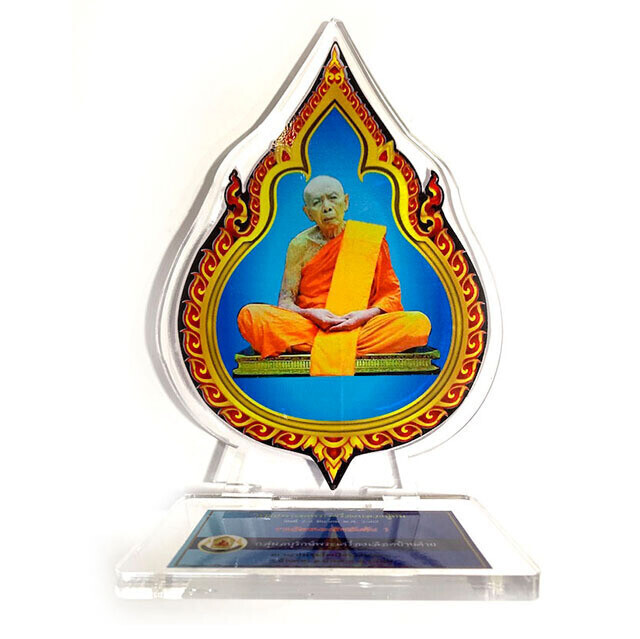
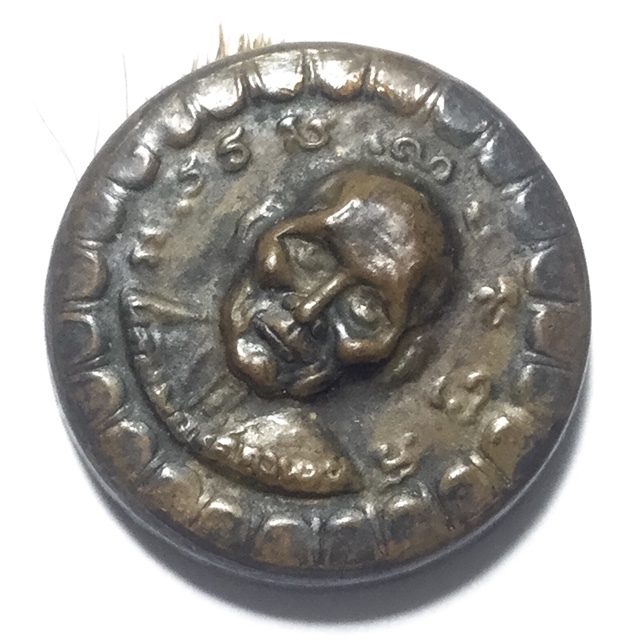
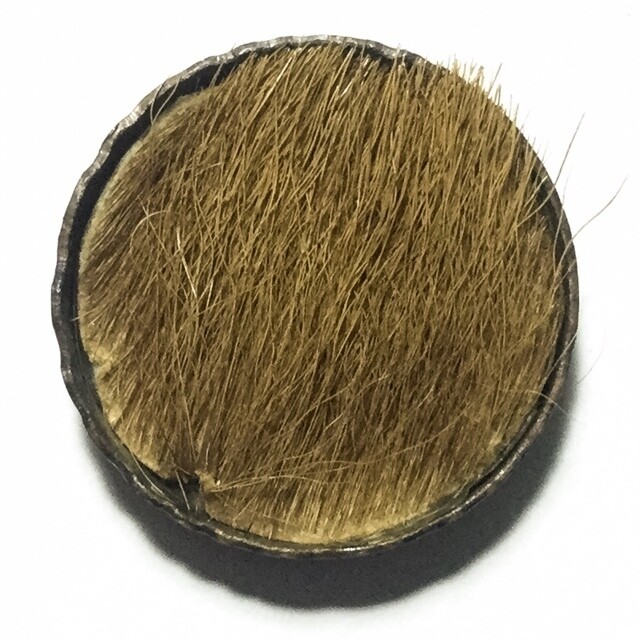
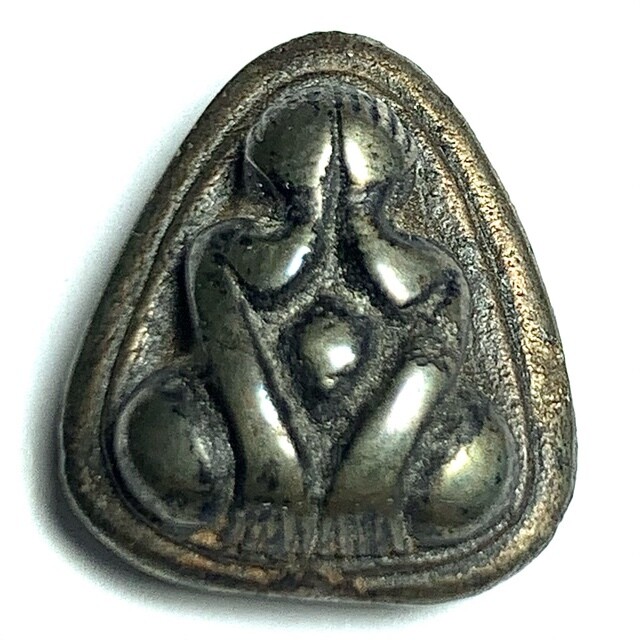
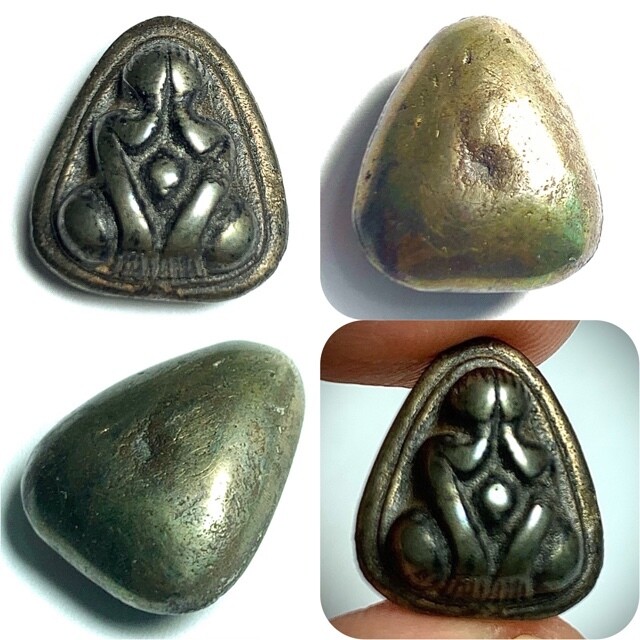
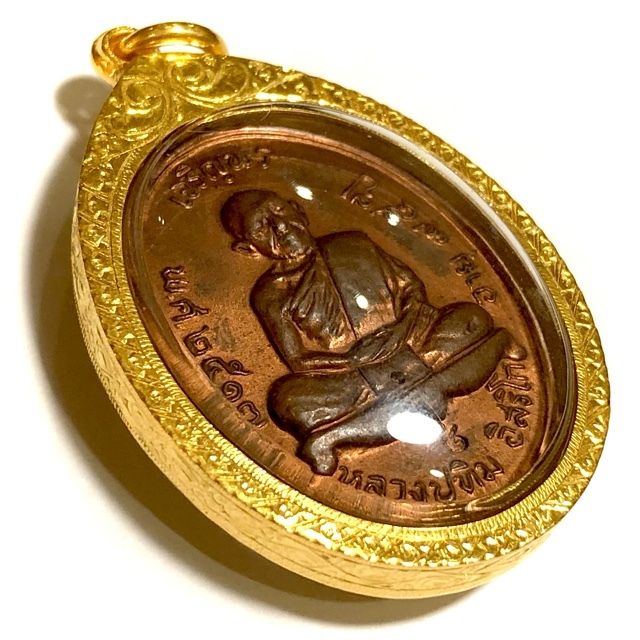
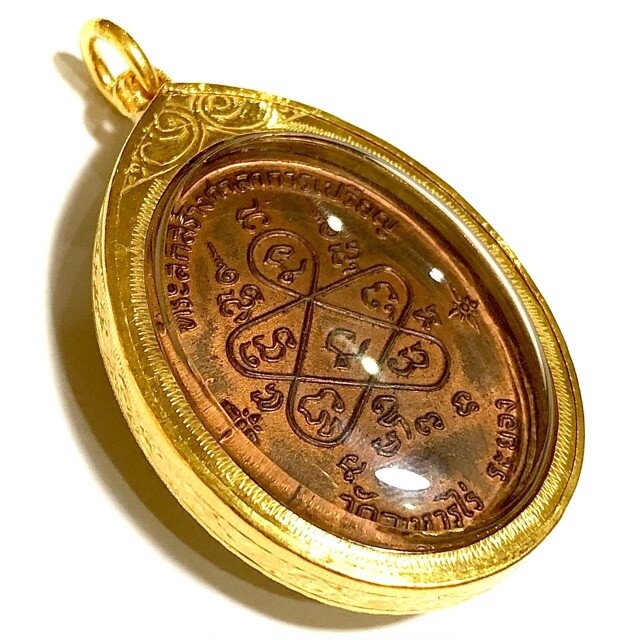
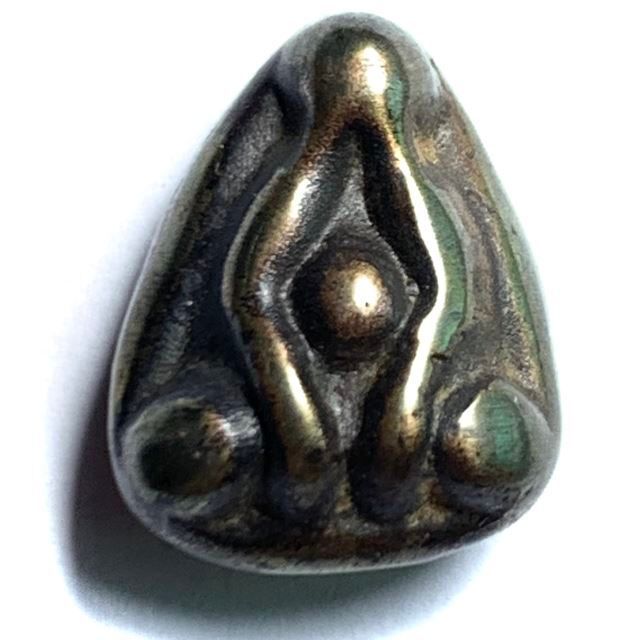
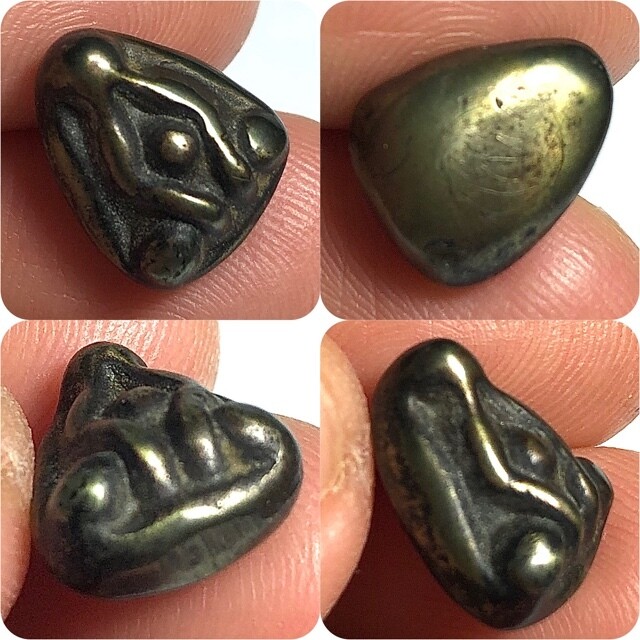
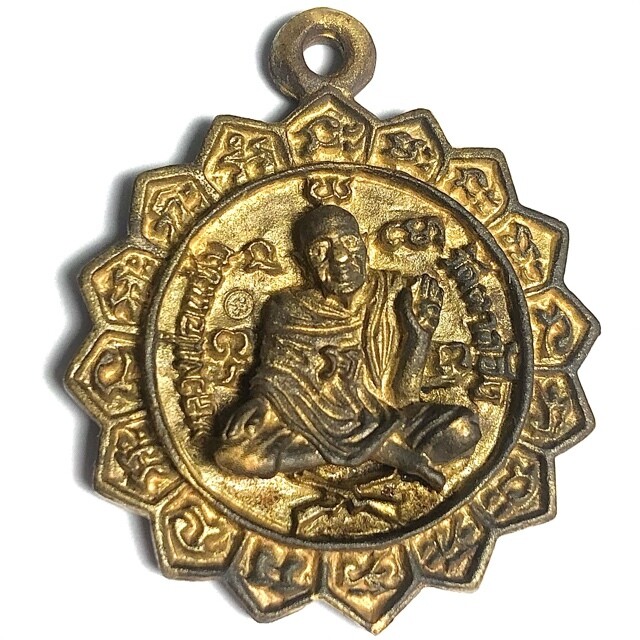
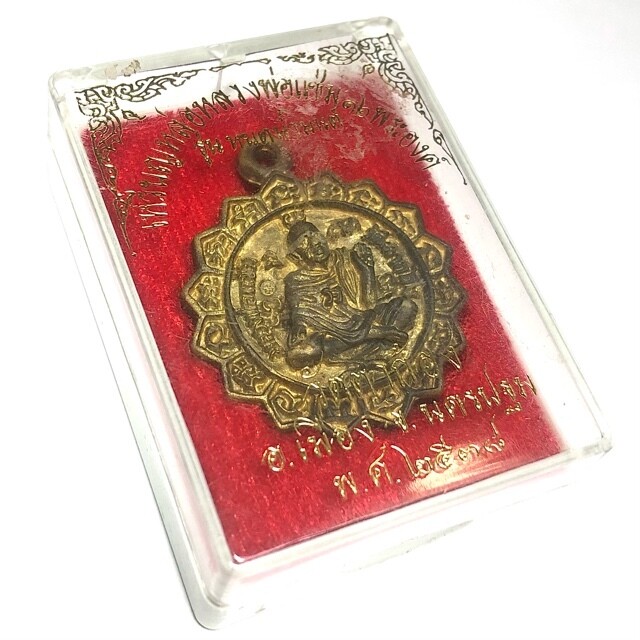
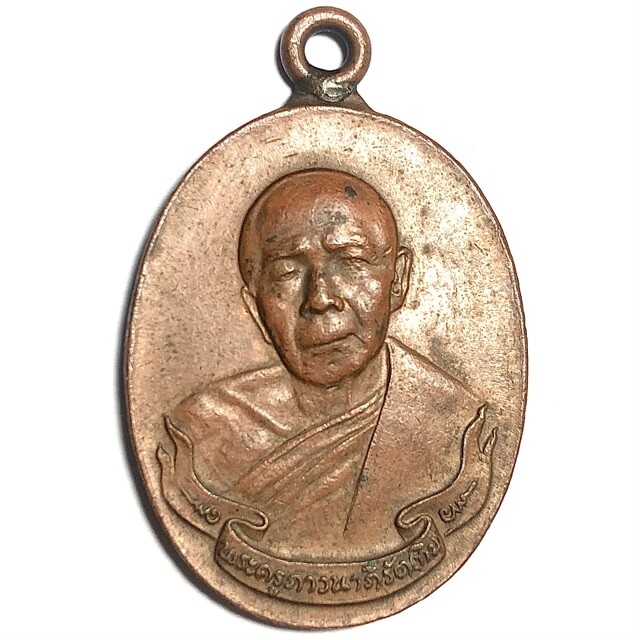
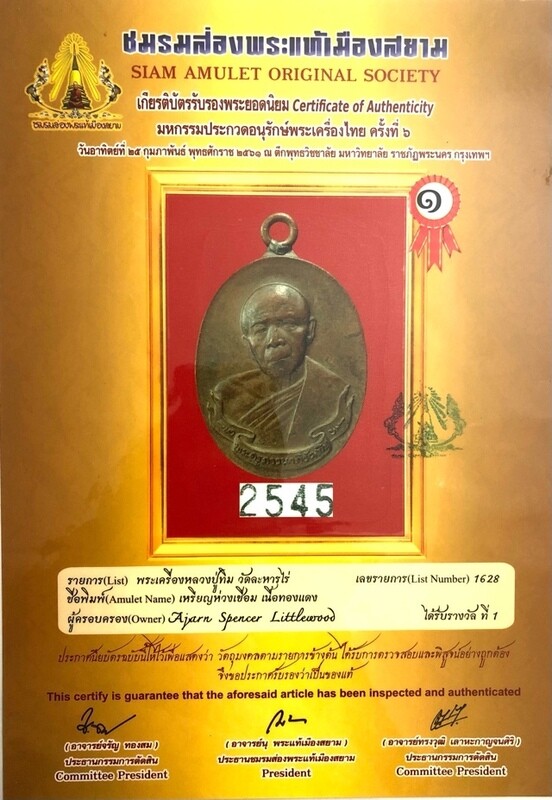
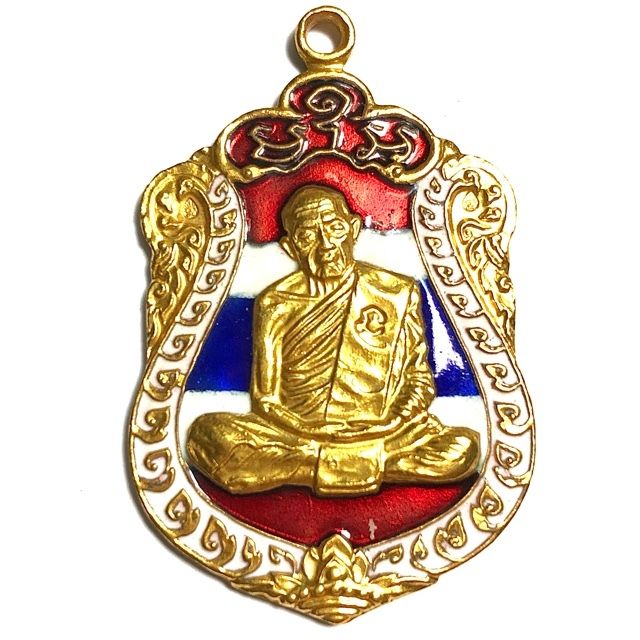
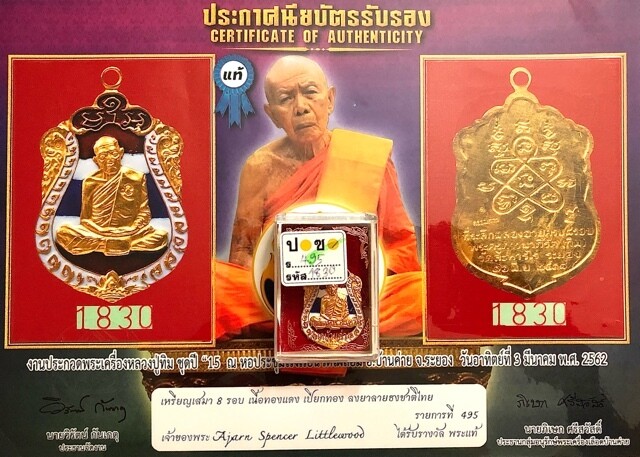
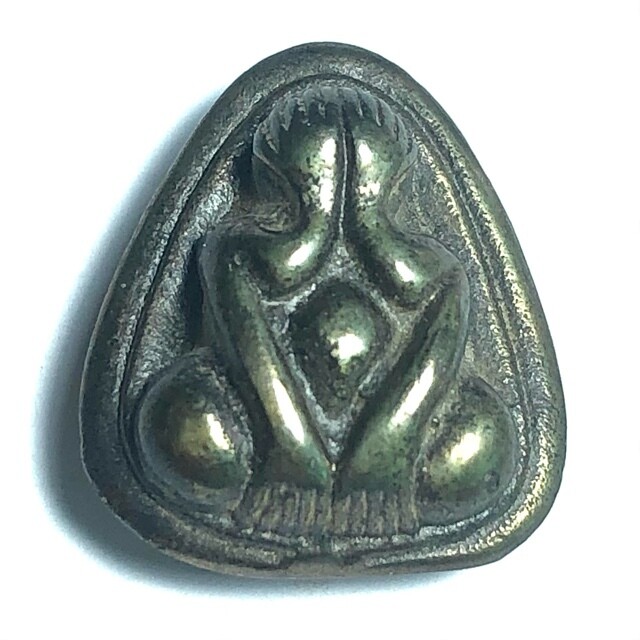
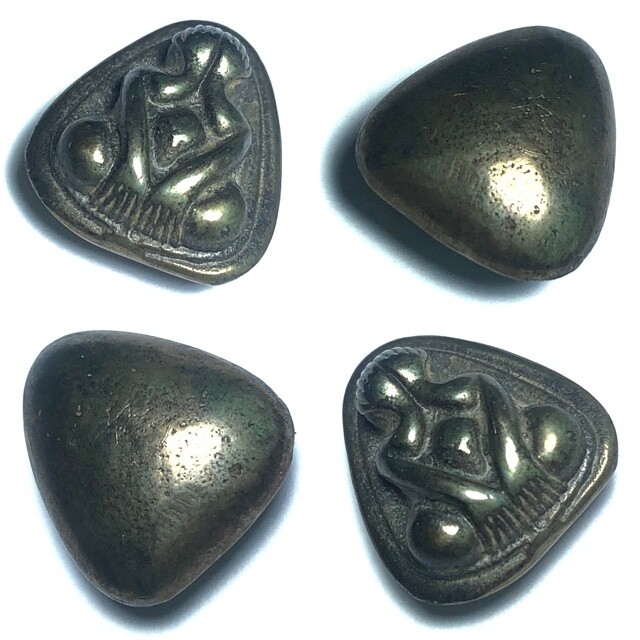
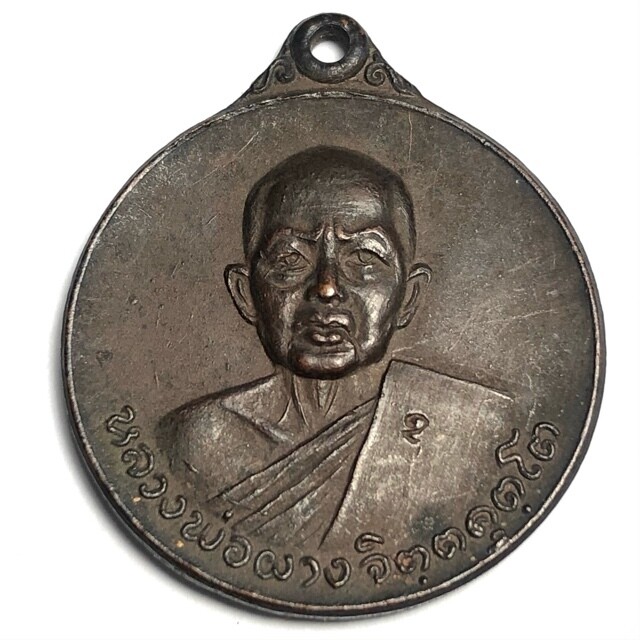
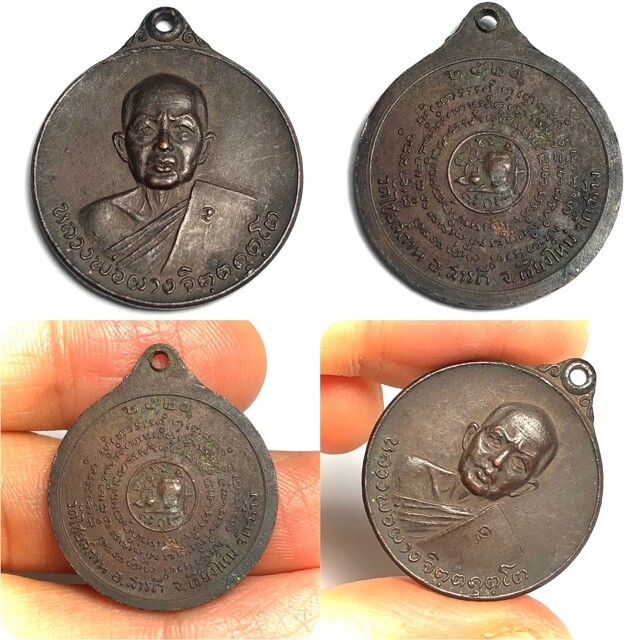
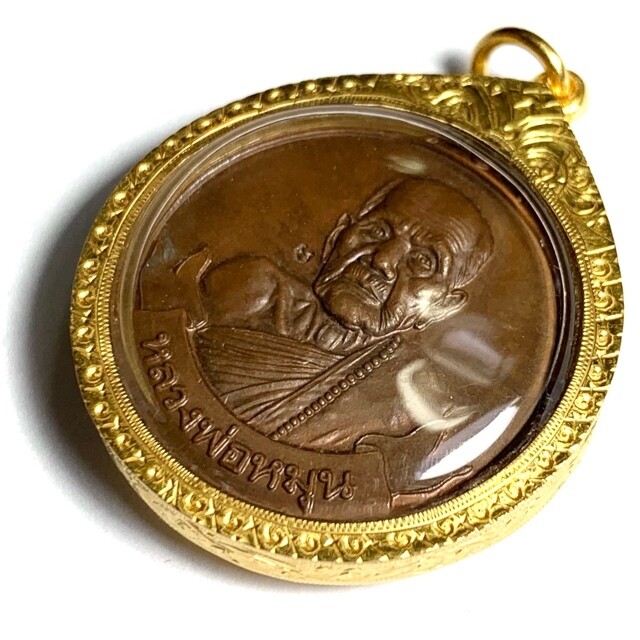
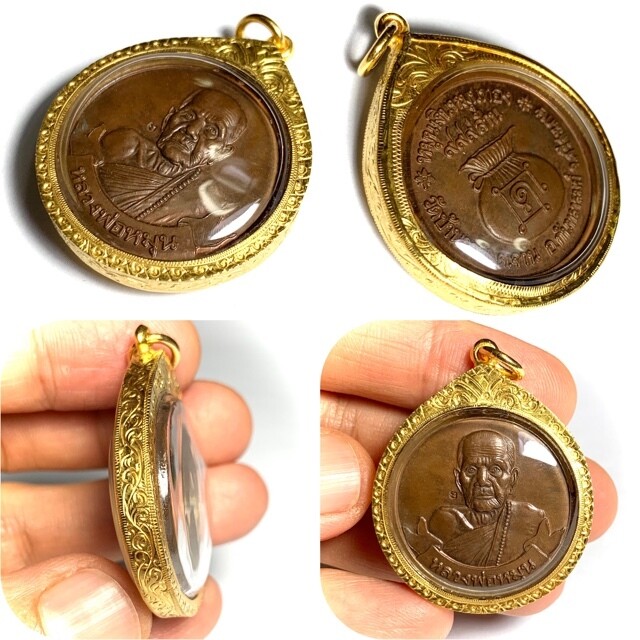
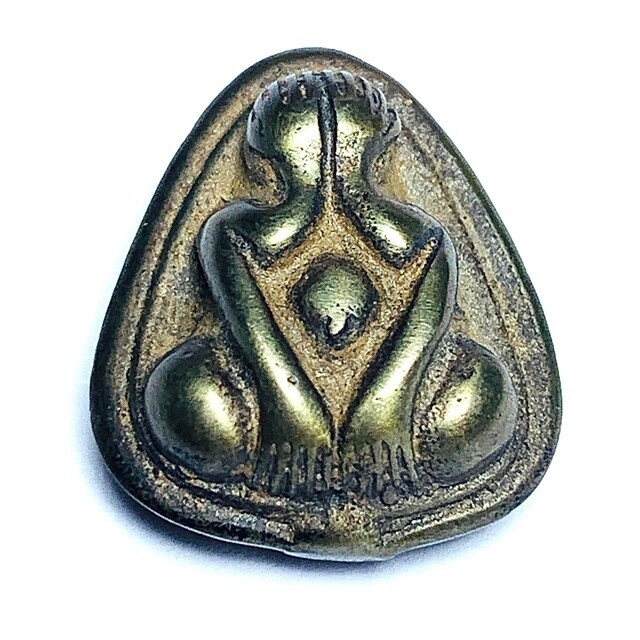
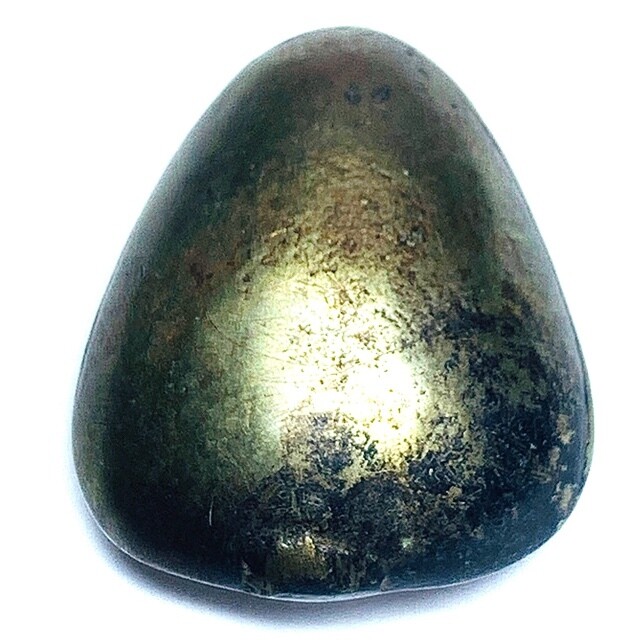
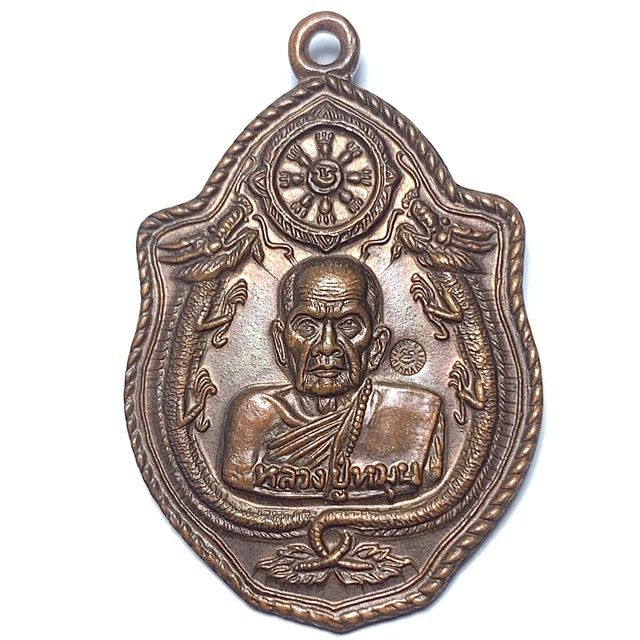
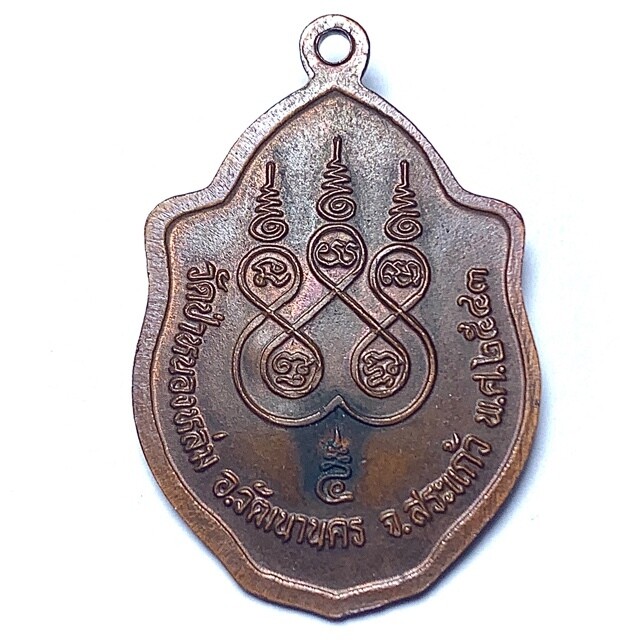
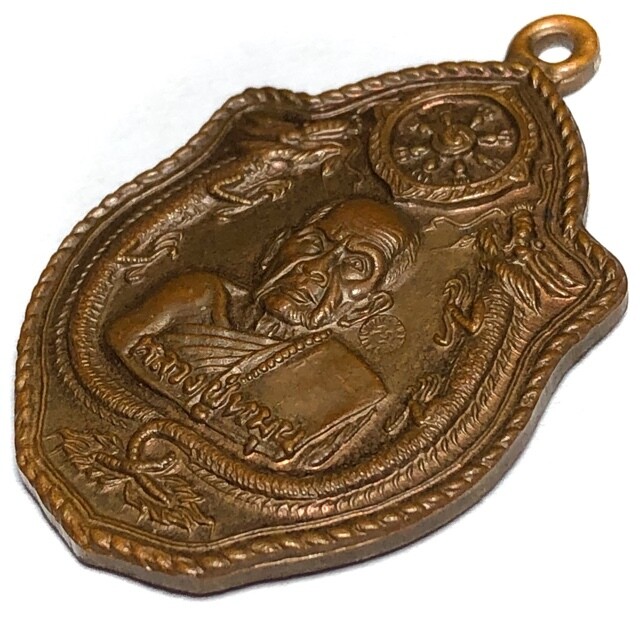
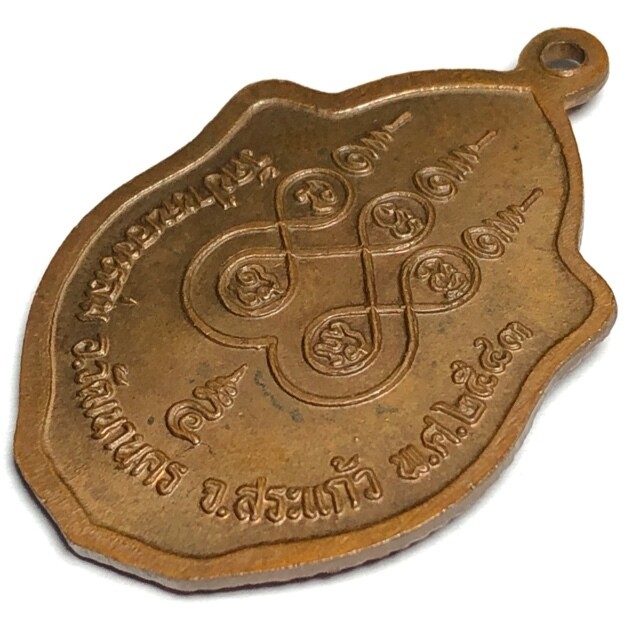
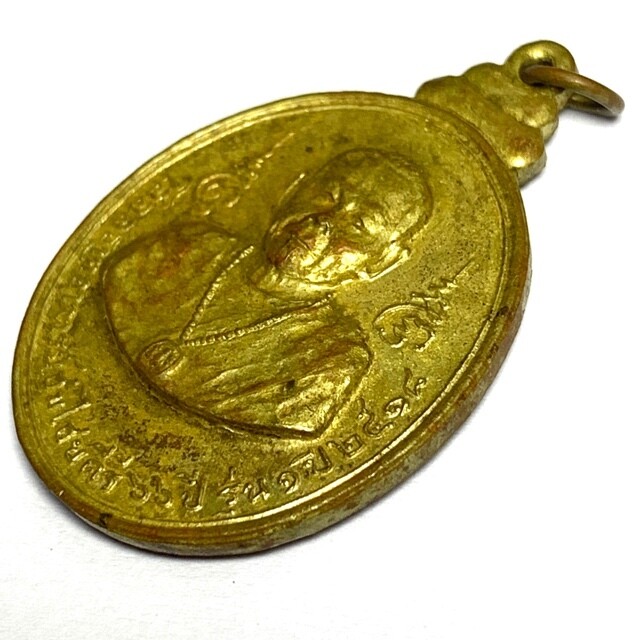
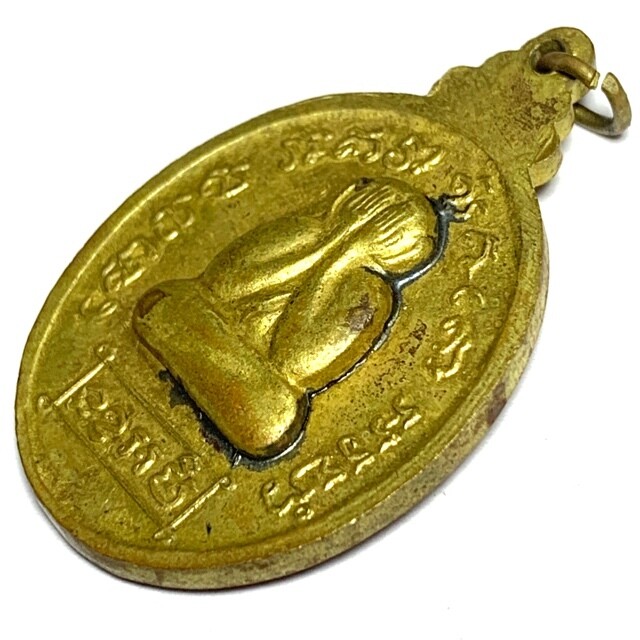
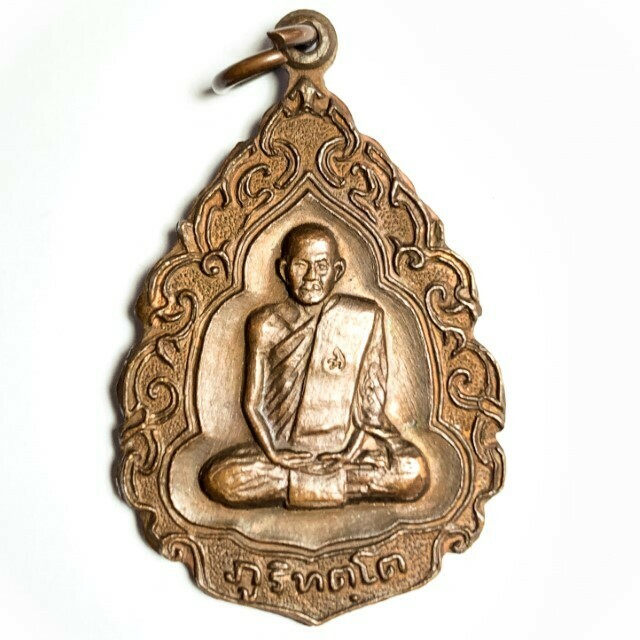
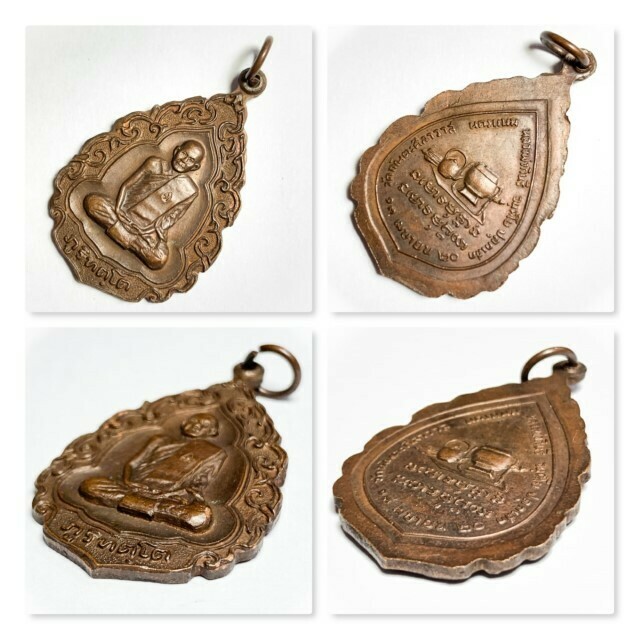
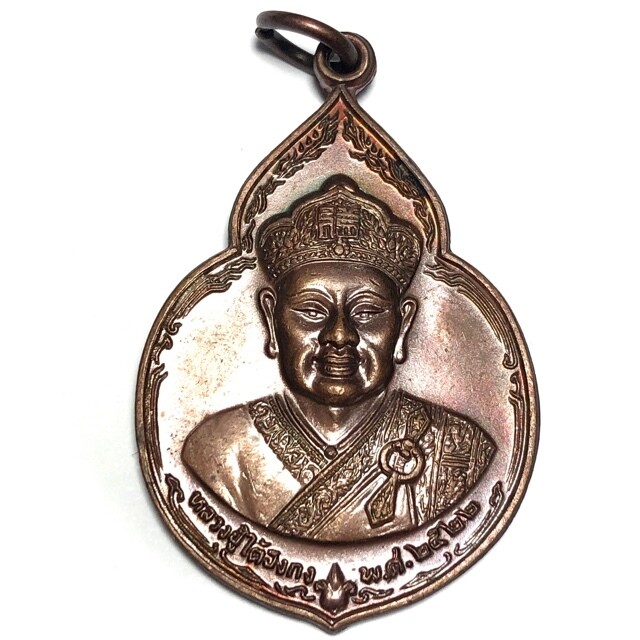
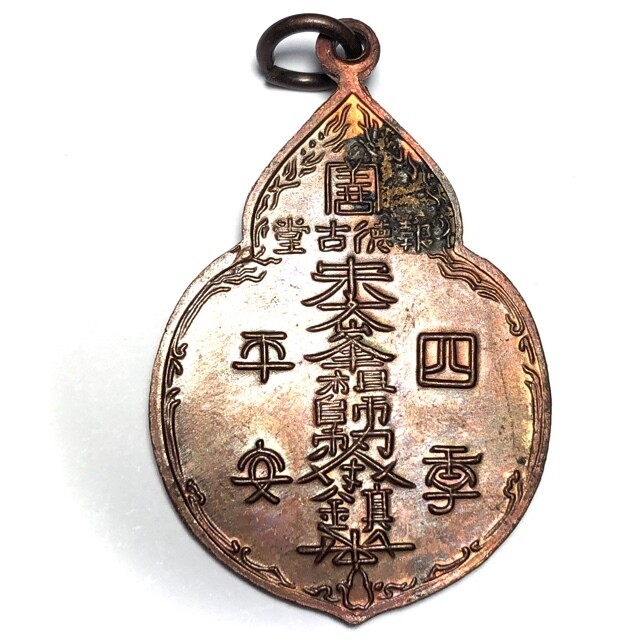
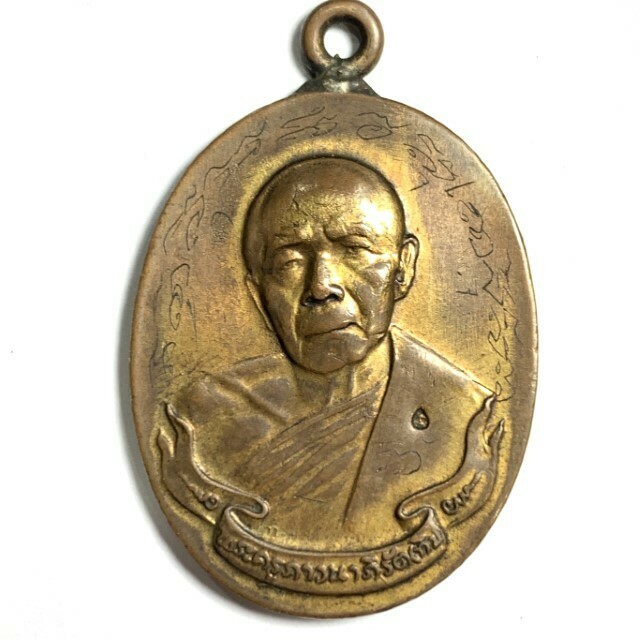
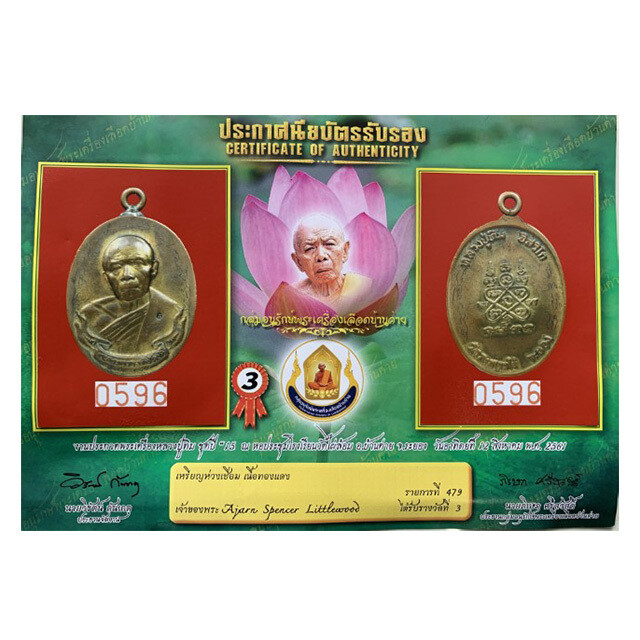
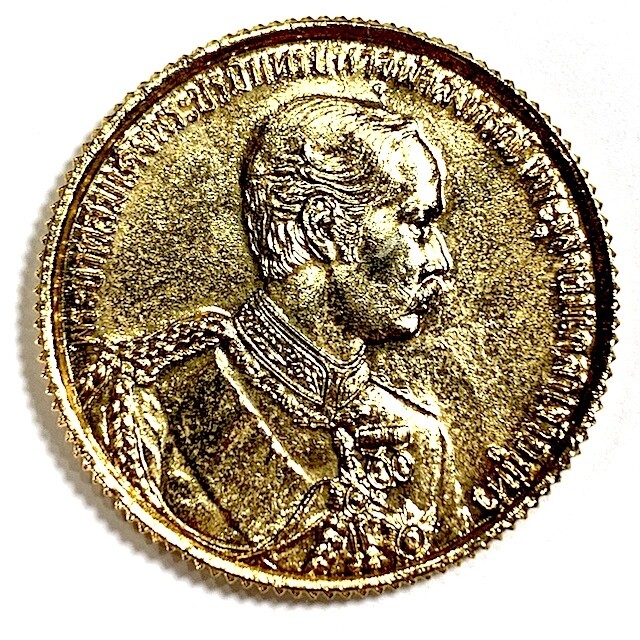
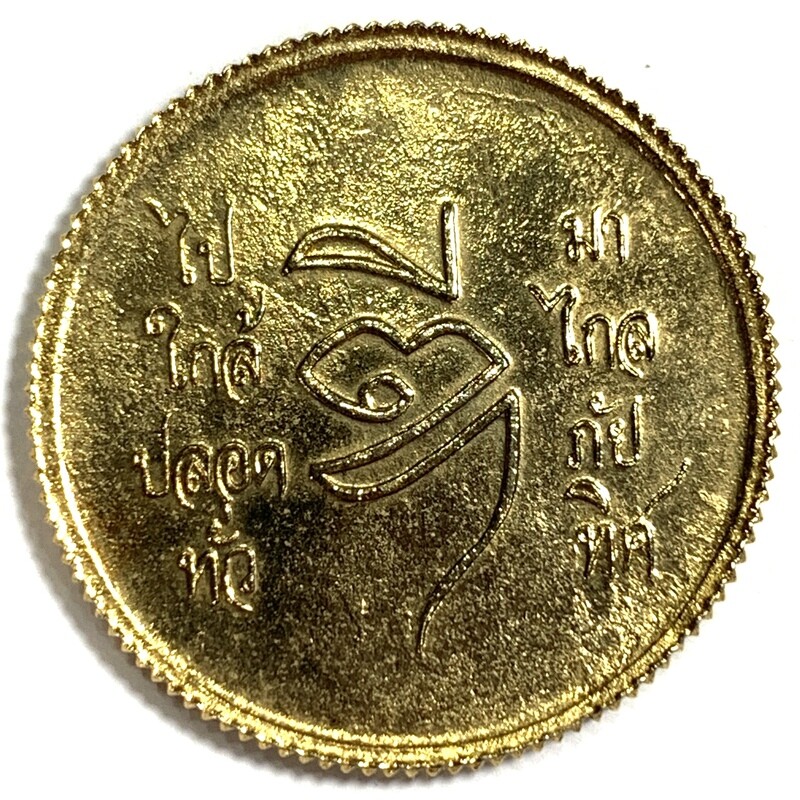
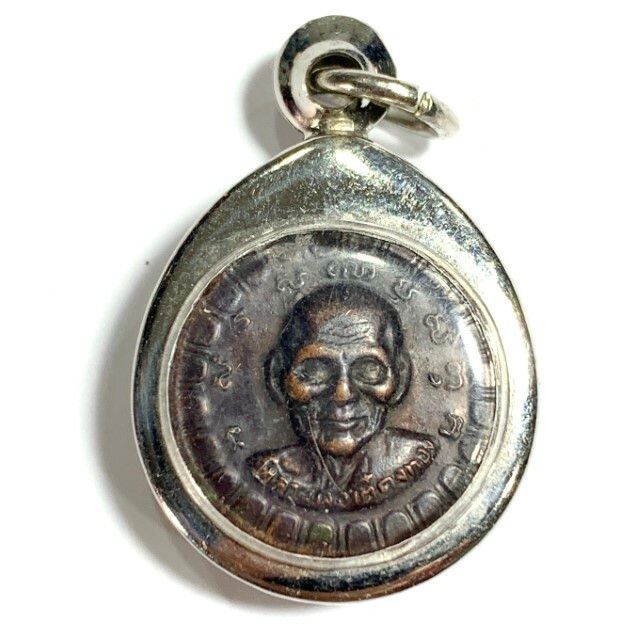
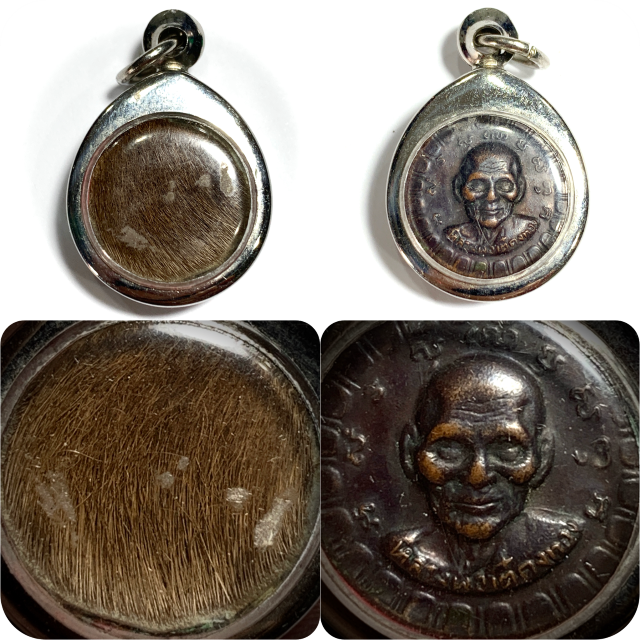
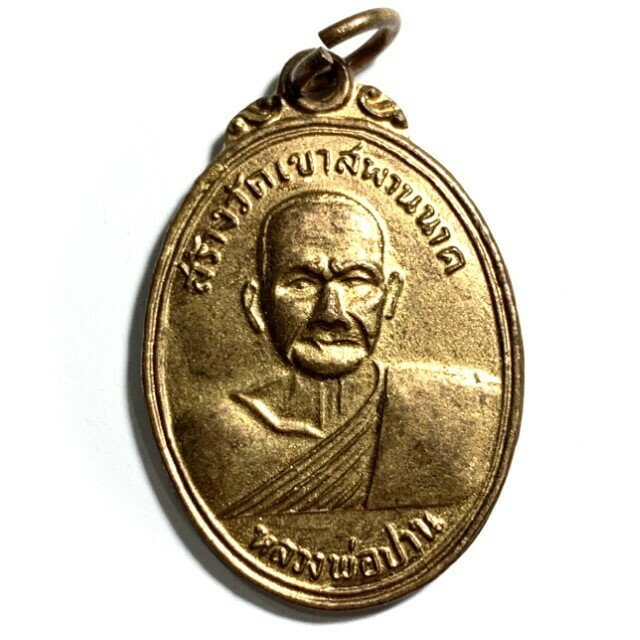
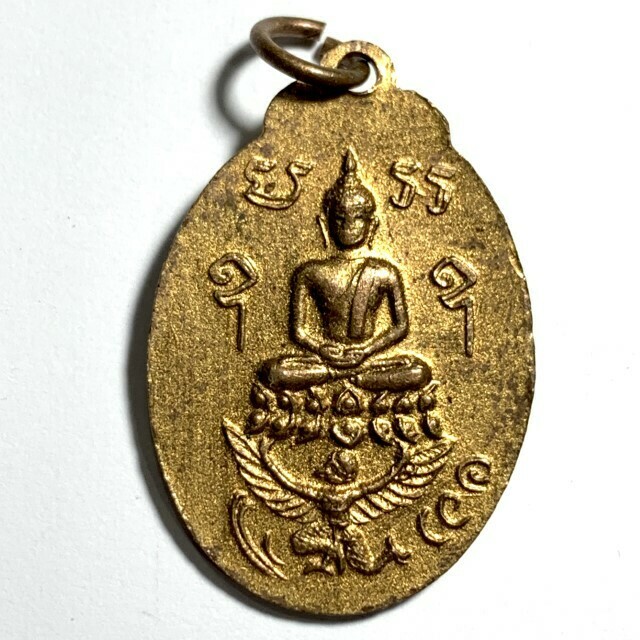
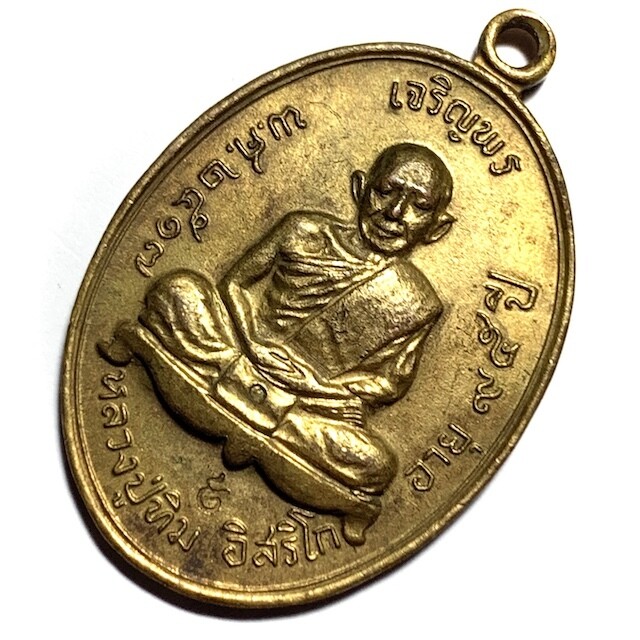
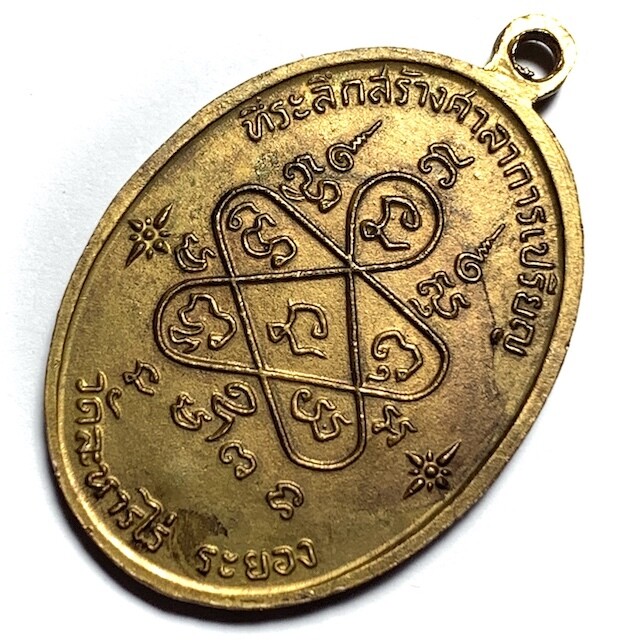
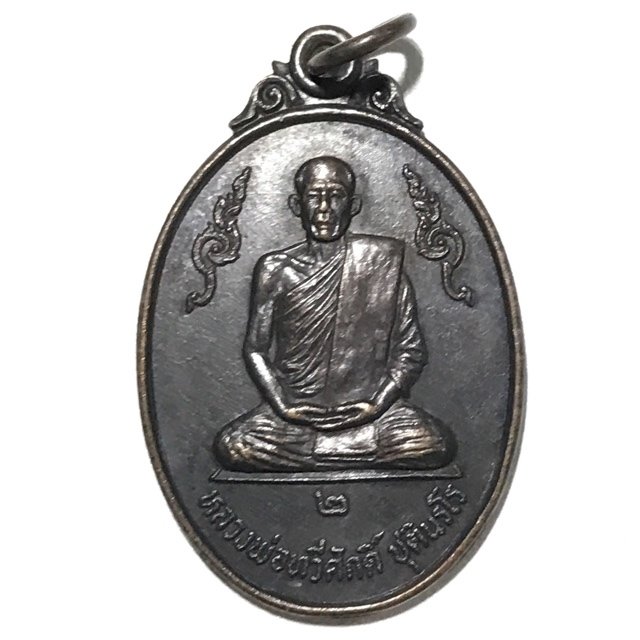
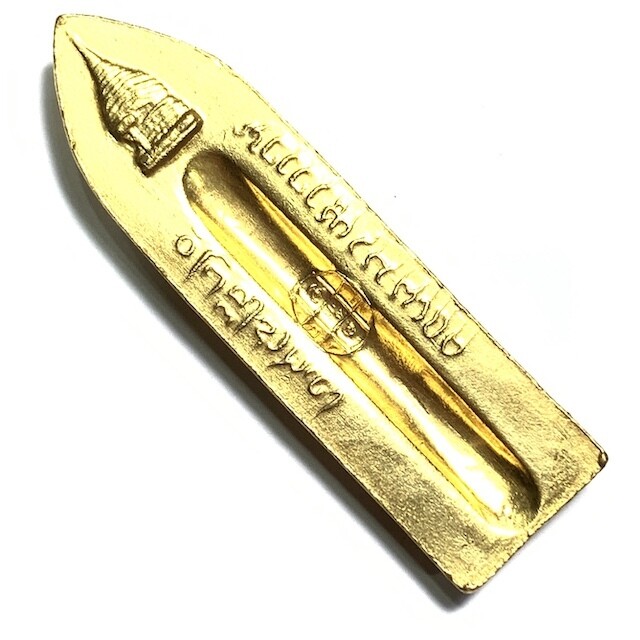
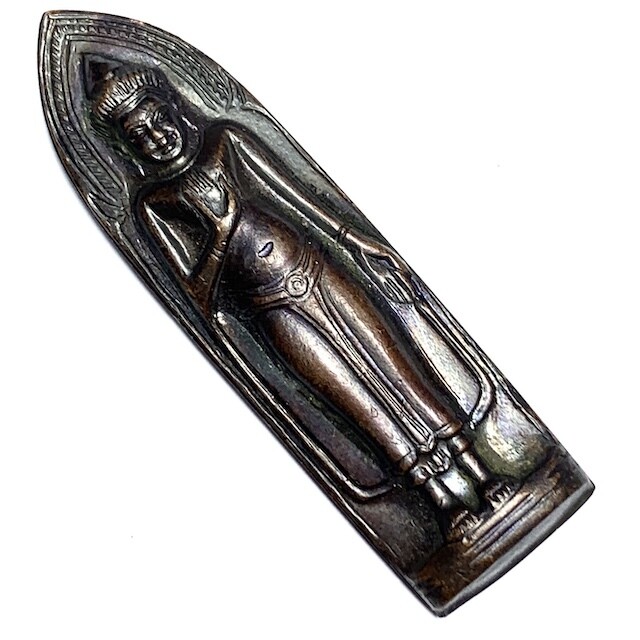
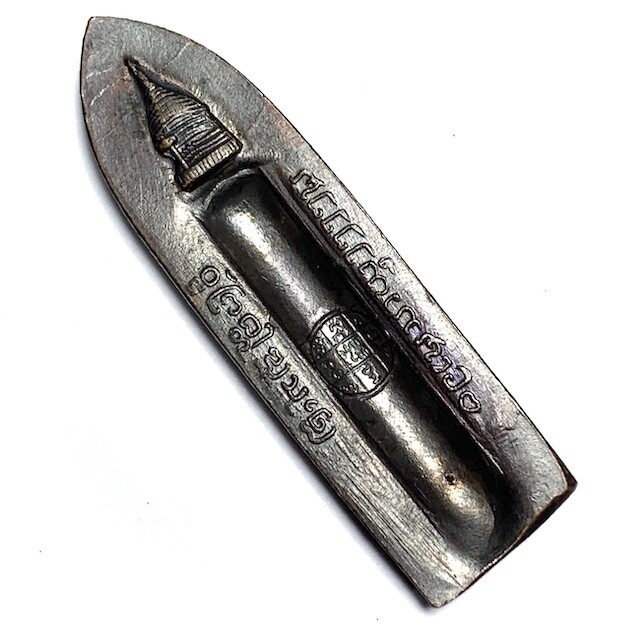
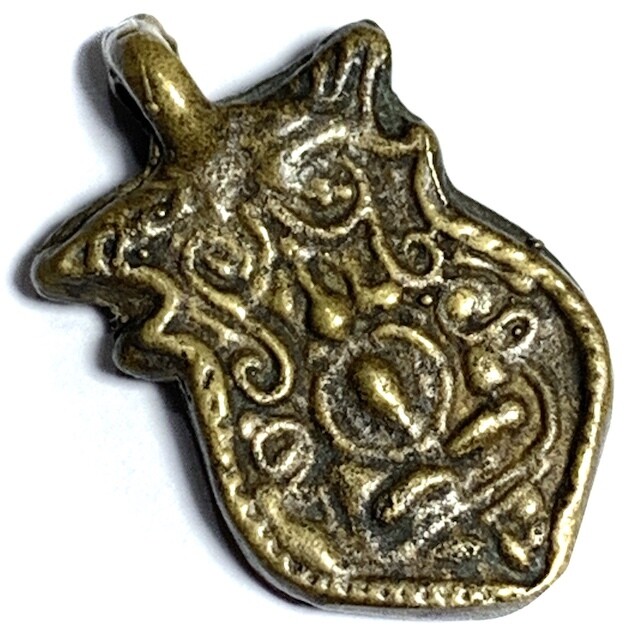
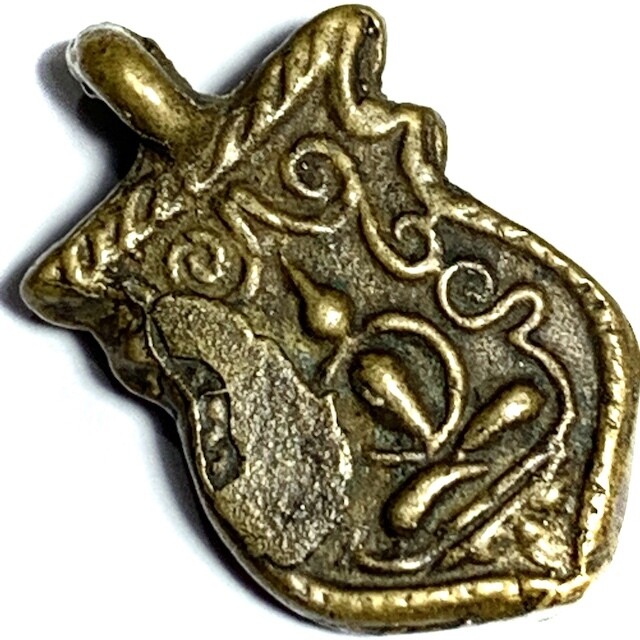
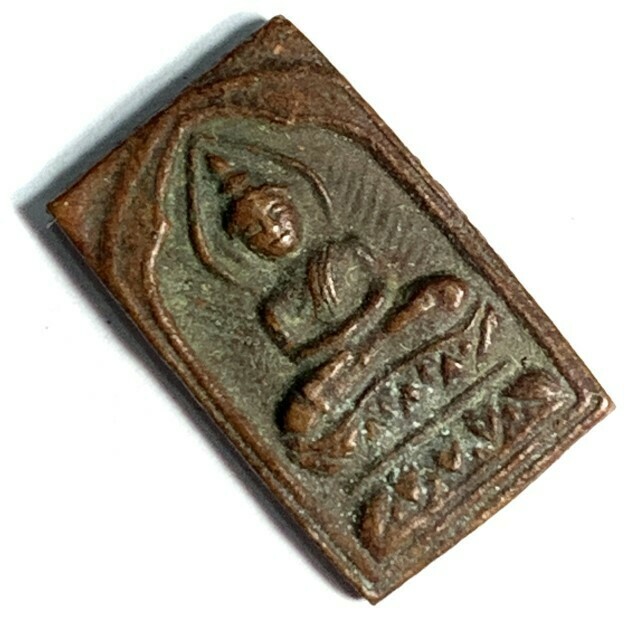
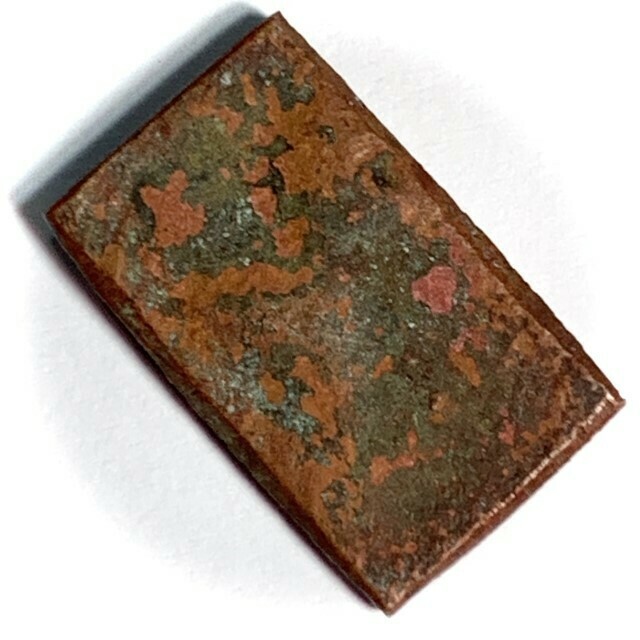
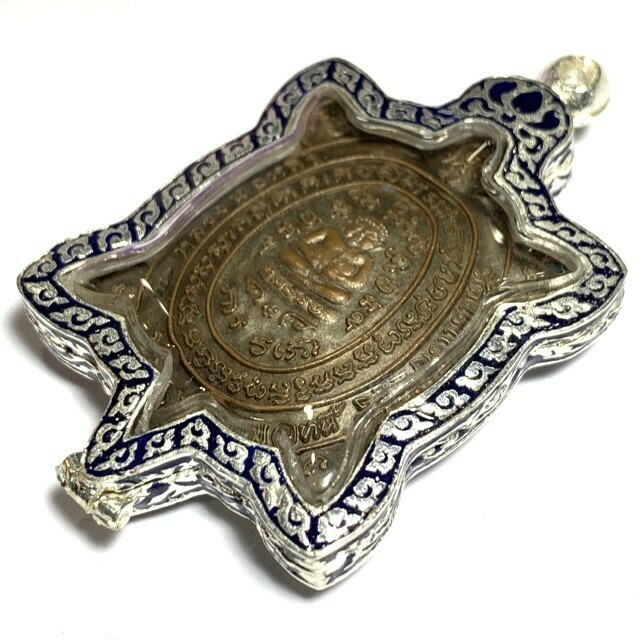
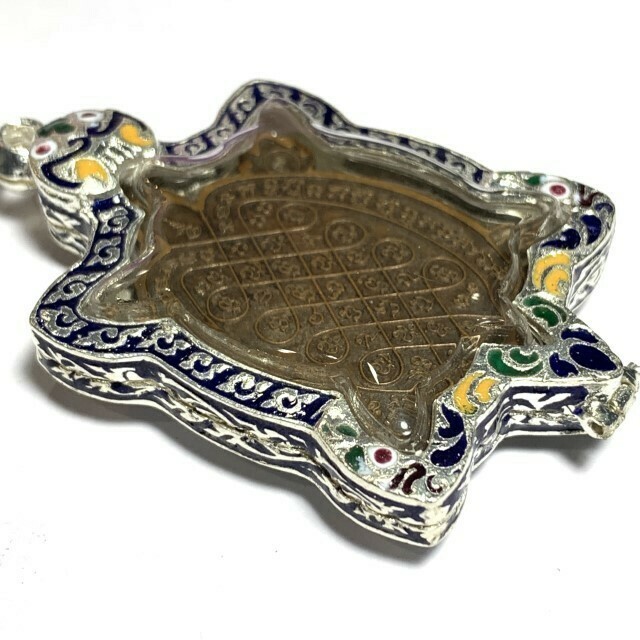
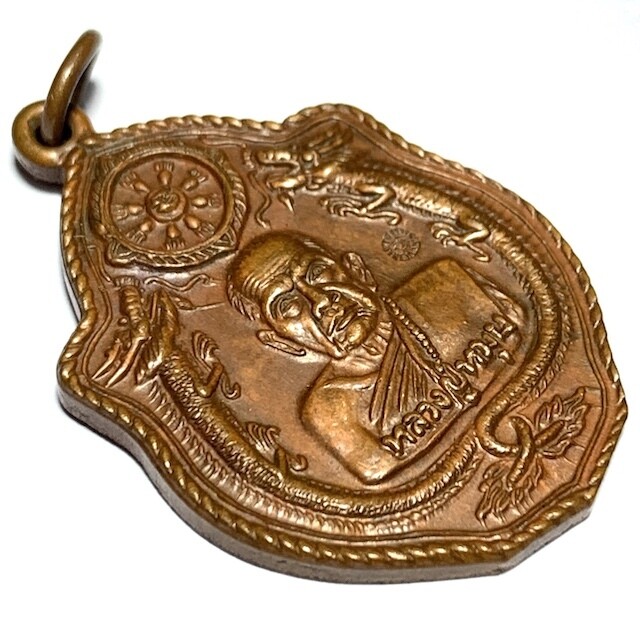
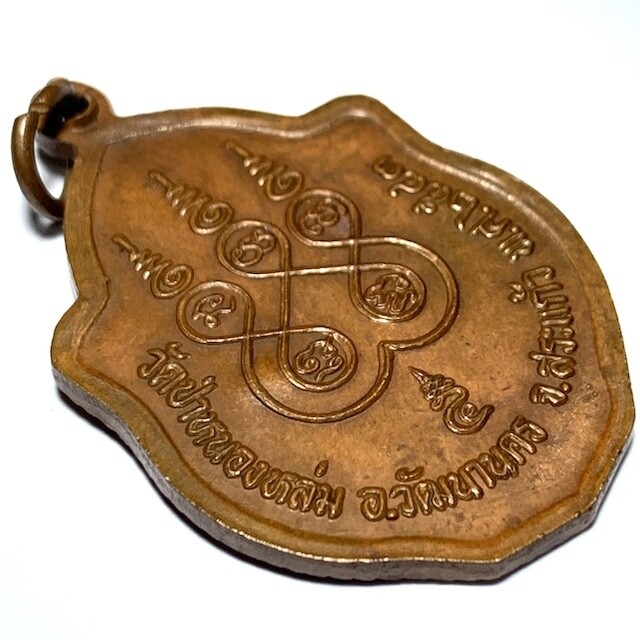
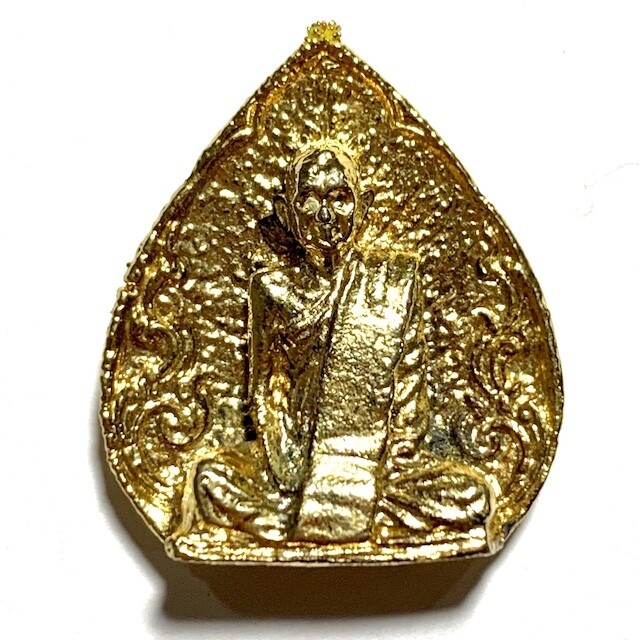
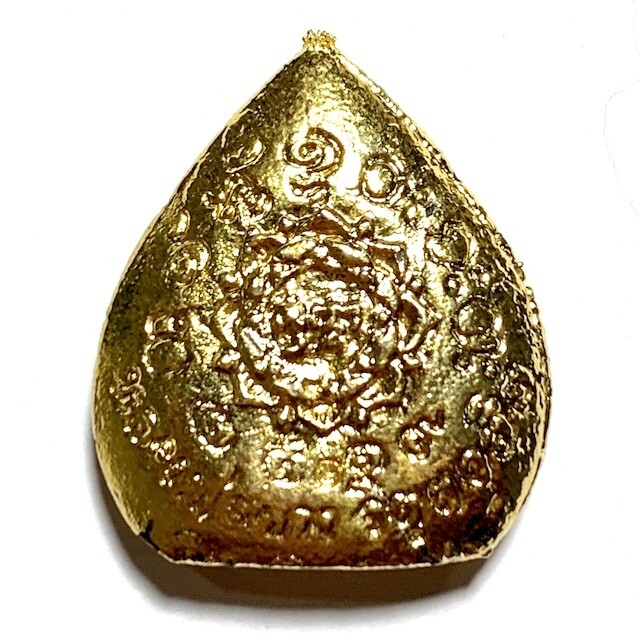
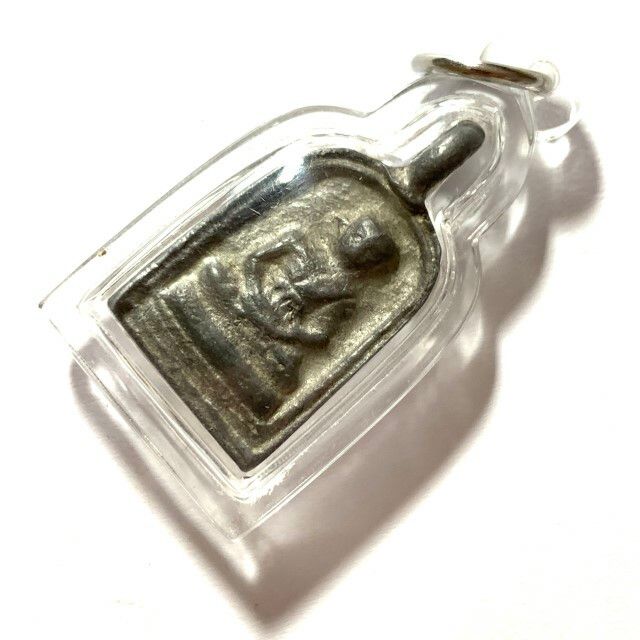
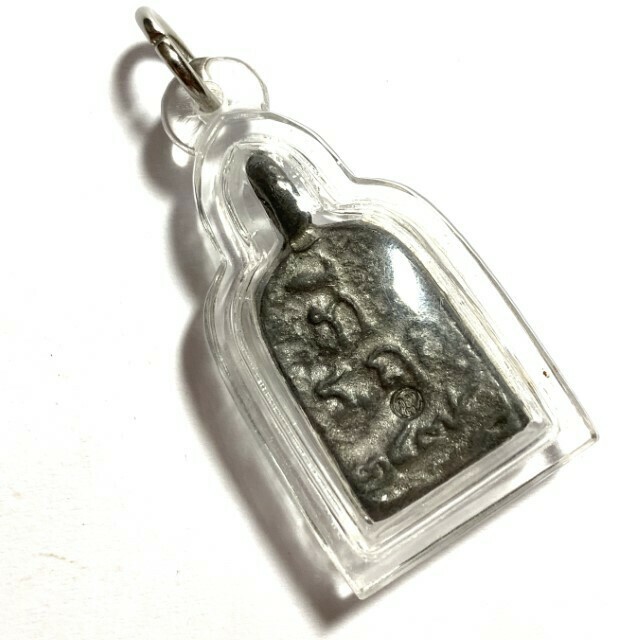
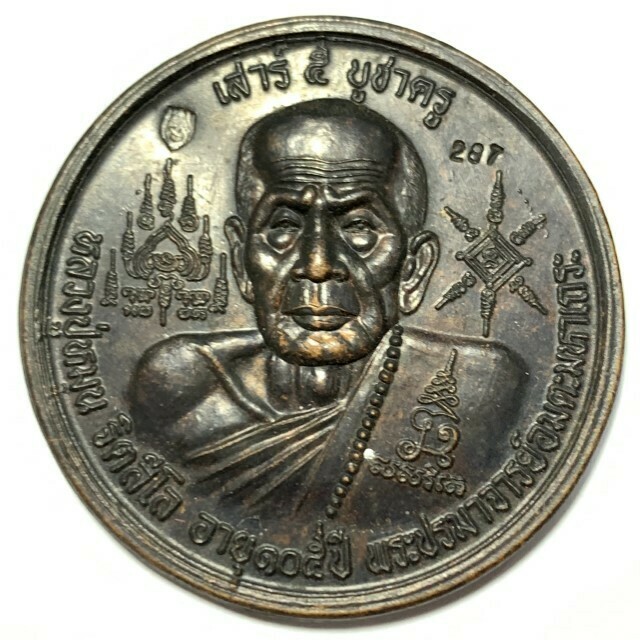
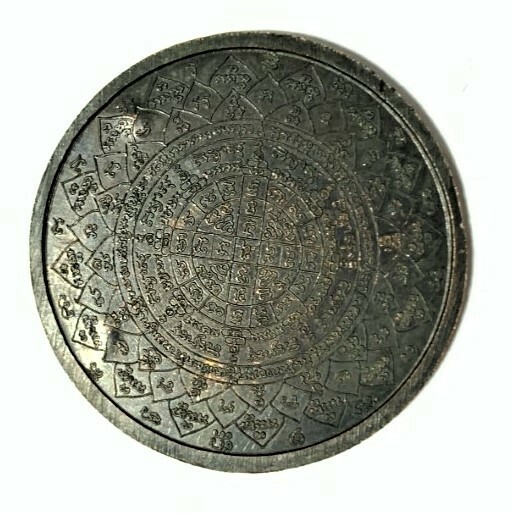
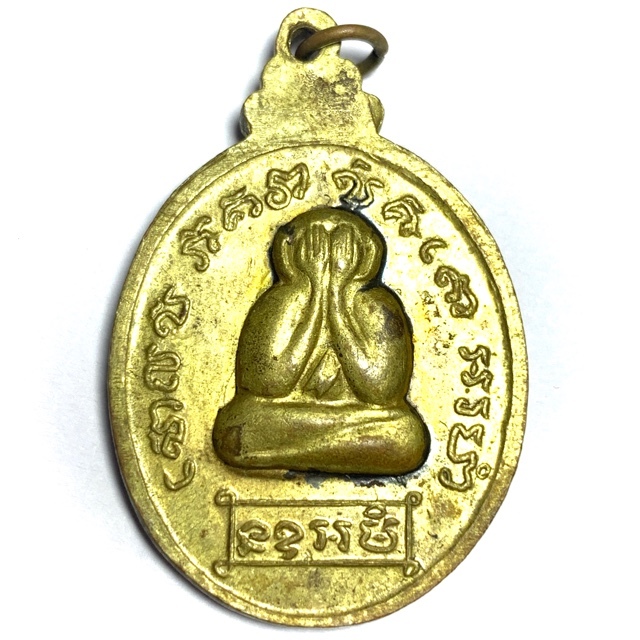
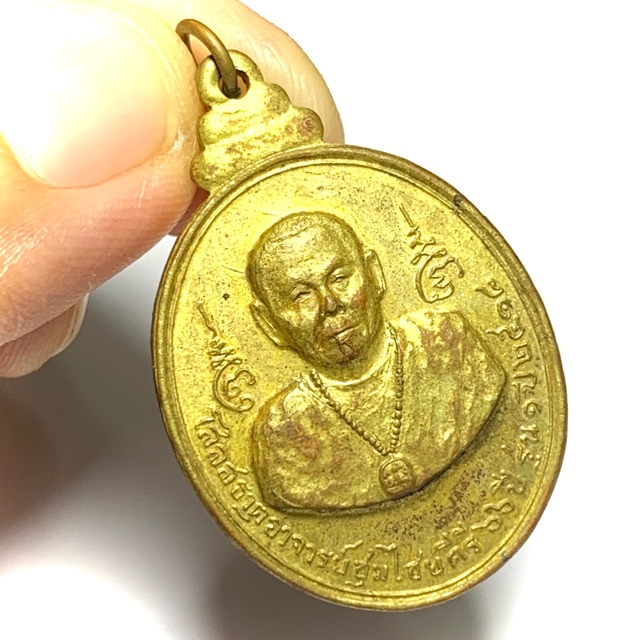
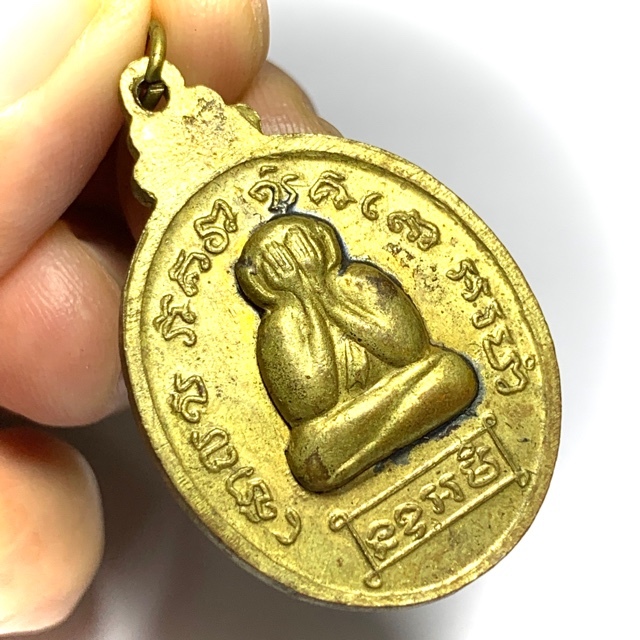
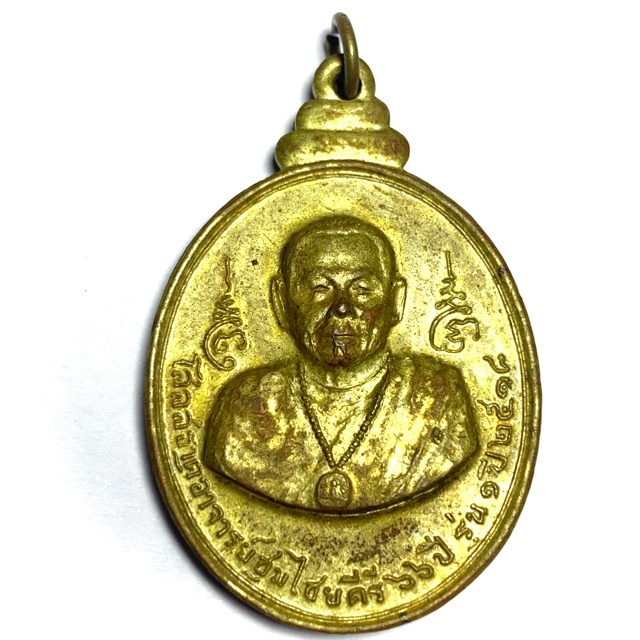
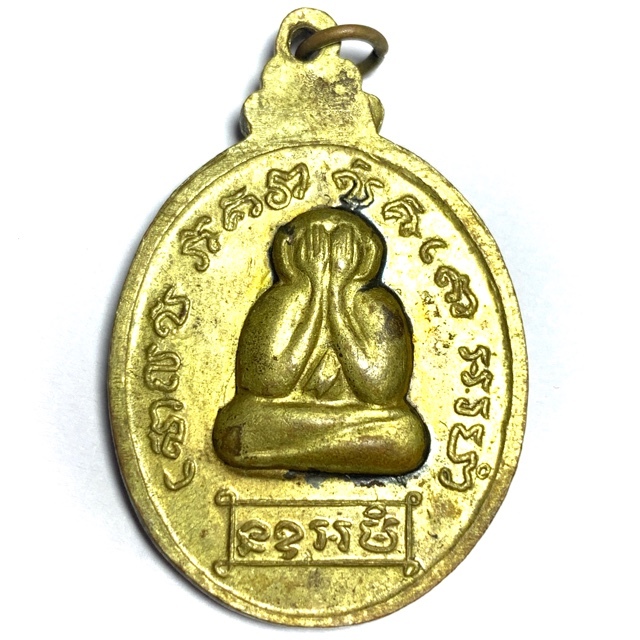
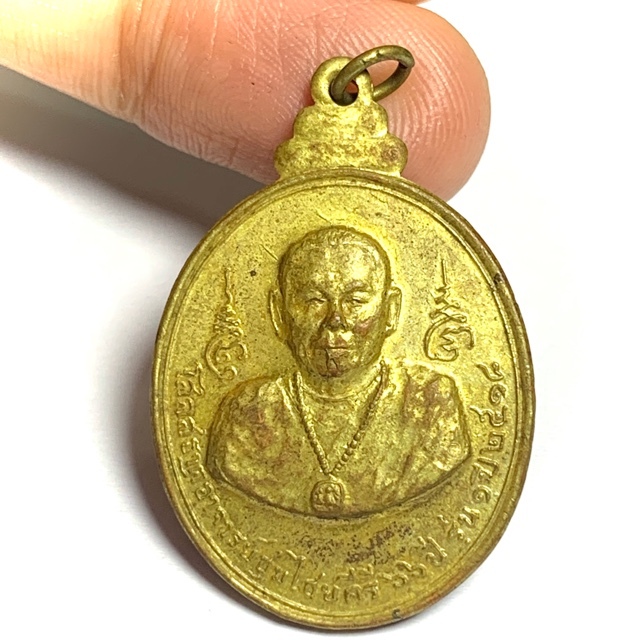
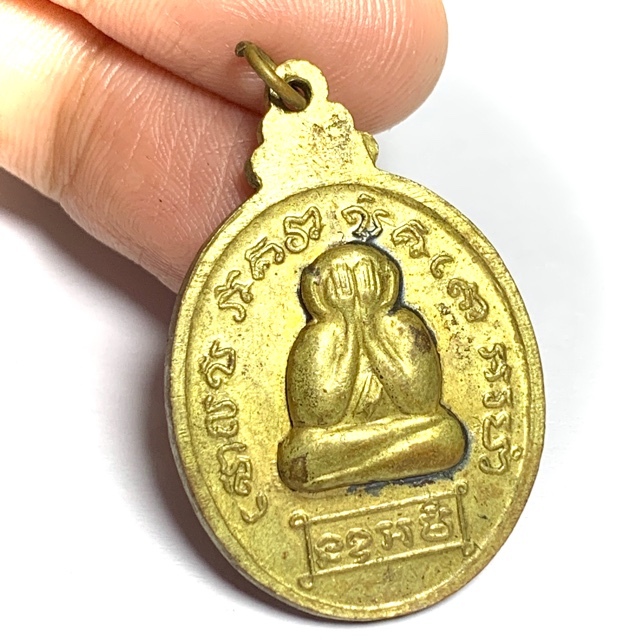
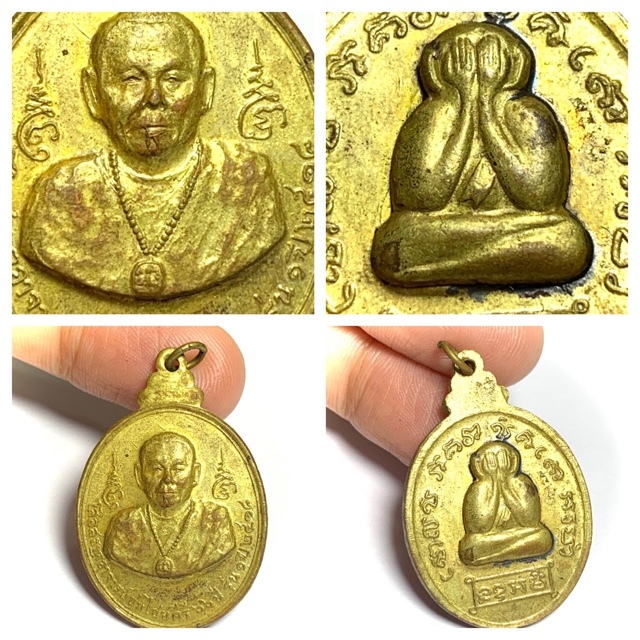
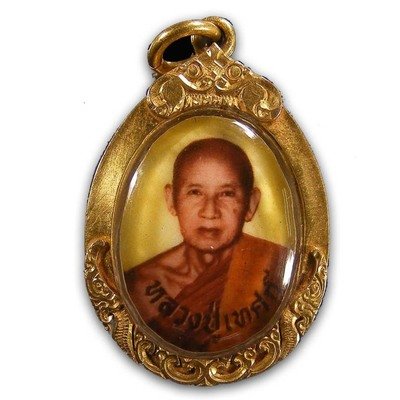
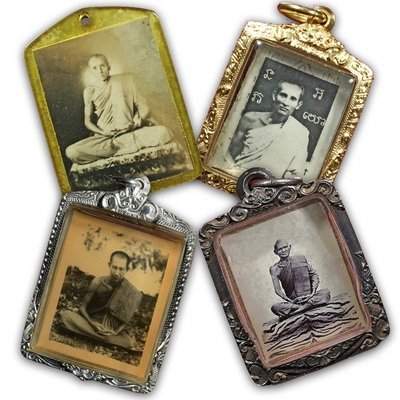
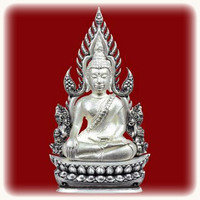
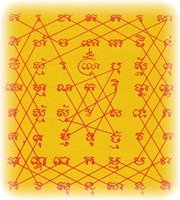
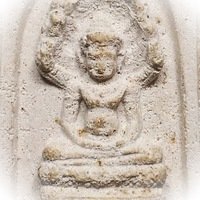
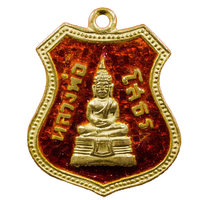
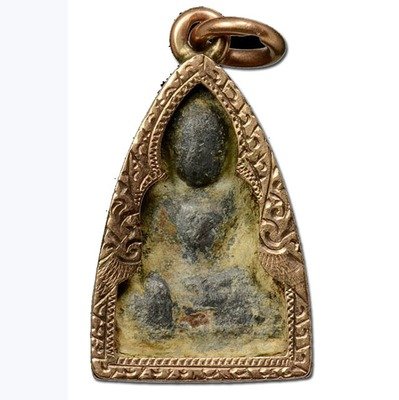
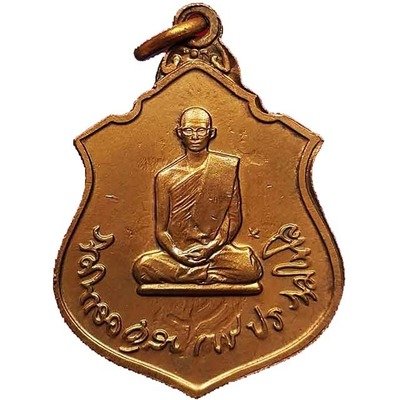
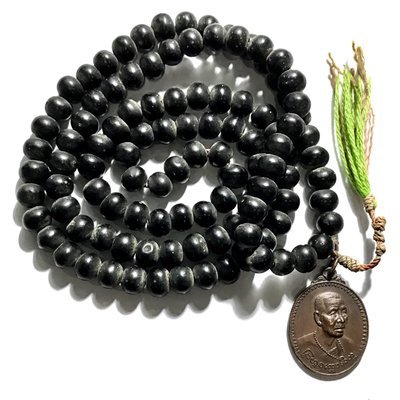
A very rare and Highly Preferred Pra Niyom class Rian Rian Glom Roop Muean 2520 BE Nuea Tong Daeng Dtok Code U, from Isan Master Monk, Luang Por Phang Jidtakudto, of Wat Kongka Kirikhaet Temple, in Khon Kaen.

The coin is cast with the cameo image of Luang Por Phang Jidtakudto, of Wat Kongka Kirikhaet, seated within a round frame. This edition released and blessed at the temple of Wat Chaiyasathan, in Chiang Mai, to assist in funding the restorations and improvements of the temple.

Rian Glom Roop Muean 2520 BE Nuea Tong Daeng Dtok Code U Luang Por Phang Jidtakudto

The amulets were released after the ceremony, and distributed to devotees from 2520 BE onwards. This is a Pra Niyom amulet of the Tamniab Wadthumongkol (official pantheon), and is a highly desirable acquisition for serious collectors and devotees of Luang Por Phang amulets, and for collectors of Guru Monk Coins.

Rian Glom Roop Muean 2520 BE Nuea Tong Daeng Dtok Code U Luang Por Phang Jidtakudto

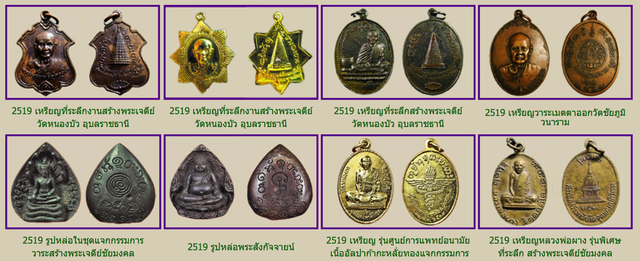
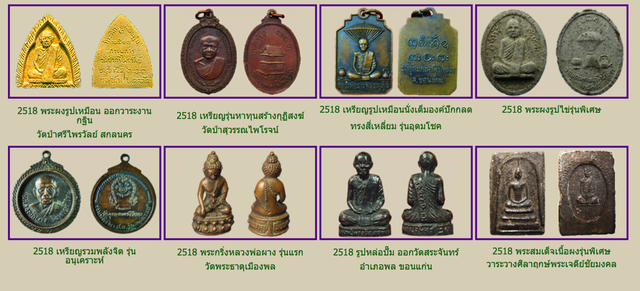
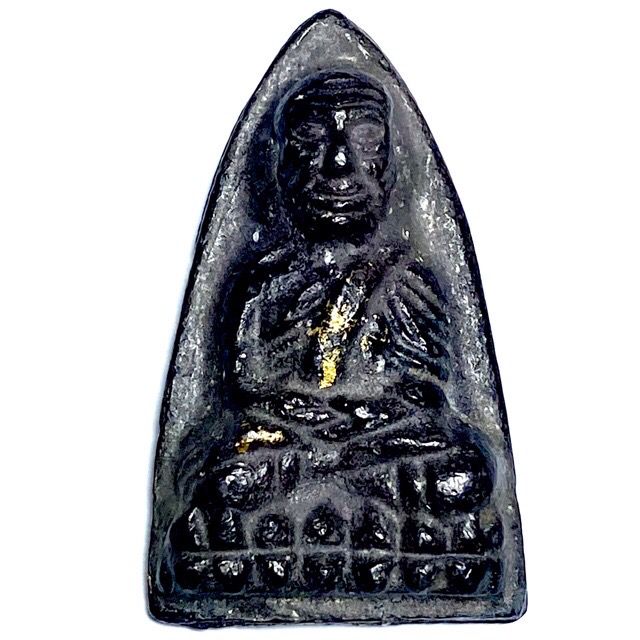
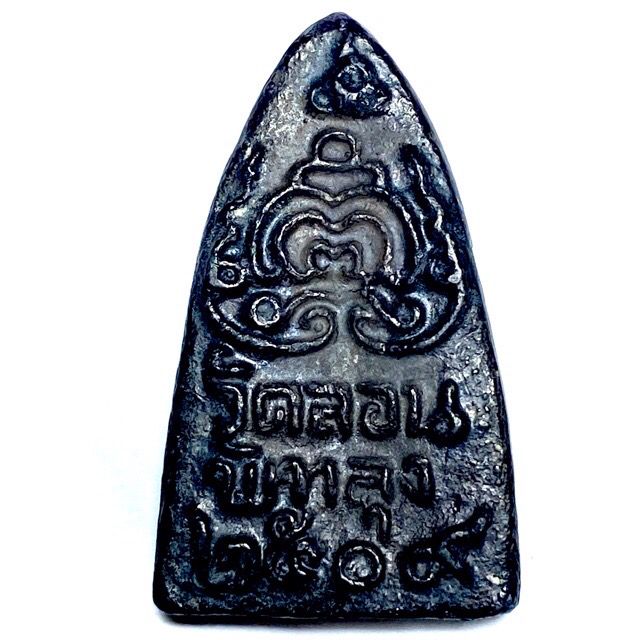
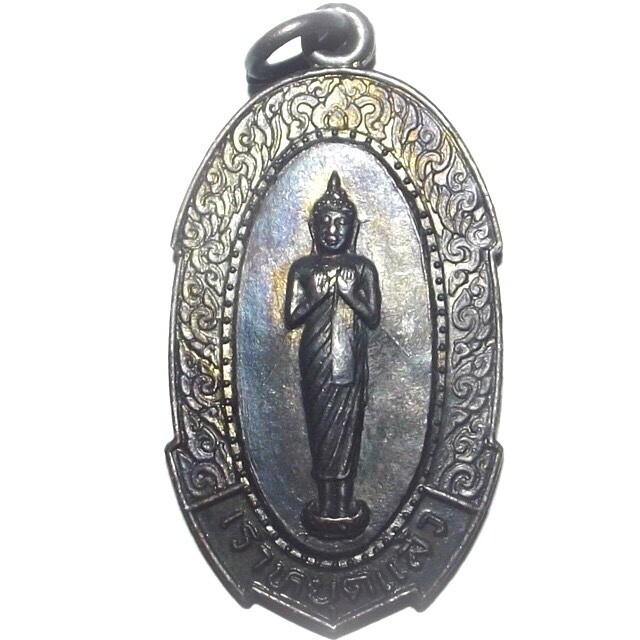
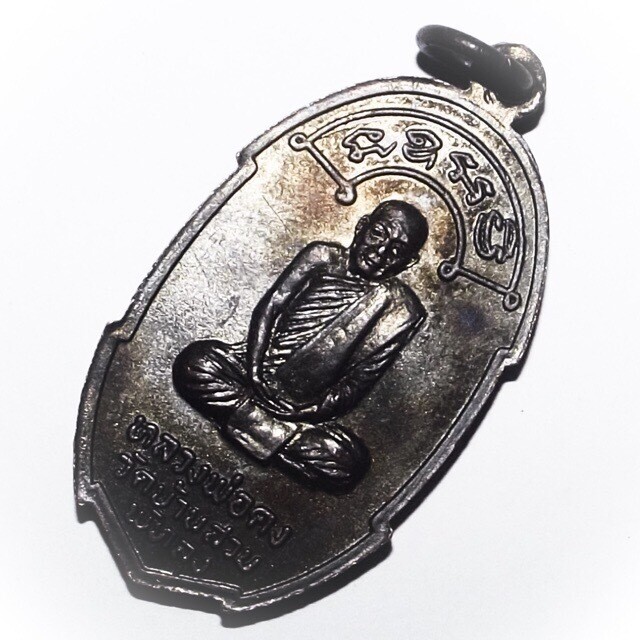
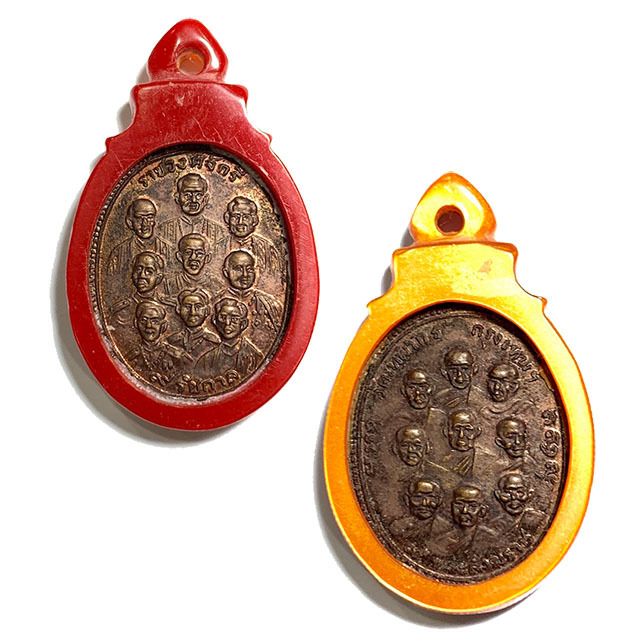
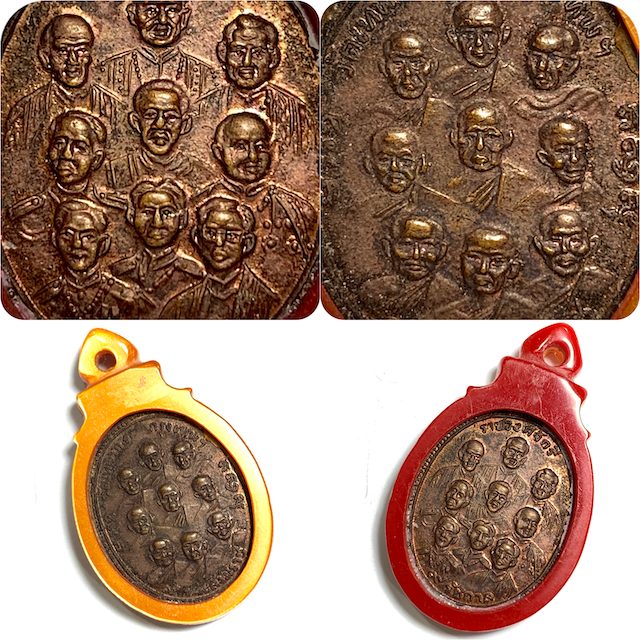
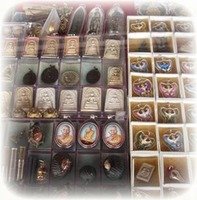
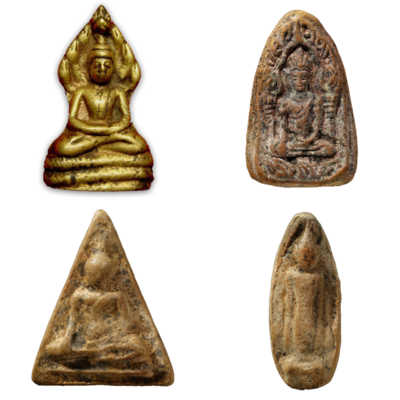
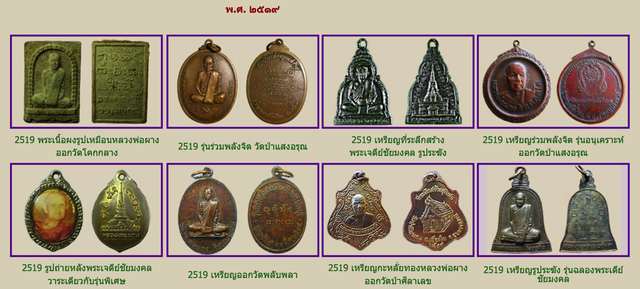
Below; some of the other amulets of Luang Por Phang
Rian Glom Roop Muean 2520 BE Nuea Tong Daeng Dtok Code U Luang Por Phang Jidtakudto

Rian Glom Roop Muean 2520 BE Nuea Tong Daeng Dtok Code U Luang Por Phang Jidtakudto

Rian Glom Roop Muean 2520 BE Nuea Tong Daeng Dtok Code U Luang Por Phang Jidtakudto

The year of 2519 BE saw Luang Por Phang release a large pantheon of amulets, many of which are now extreme rarities and highly valued in the collector scene, but are very hard to come across due to the fact that Luang Por Phang’s devotees are never prone to letting go of their amulets. The reluctance of devotees to sell has made Luang Por Phang’s amulets one of the more difficult pantheons to collect.
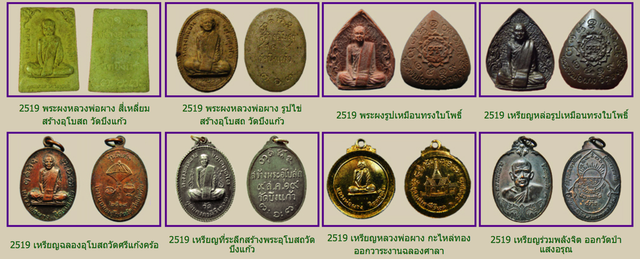
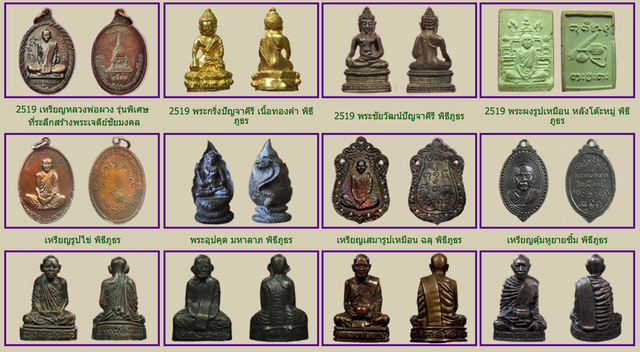
Rian Glom Roop Muean 2520 BE Nuea Tong Daeng Dtok Code U Luang Por Phang Jidtakudto

Rian Glom Roop Muean 2520 BE Nuea Tong Daeng Dtok Code U Luang Por Phang Jidtakudto


Luang Por Phang Jidtakudto was born under the name of ‘Phang Krong Yudti’ on Tuesday 2445 BE in Ban Gudtakasian, in Tambon Khuean, Amper Khuang Nai in Ubon Rachathani. He had two siblings
The young Phang was Ordained into the Sangha at the age of 20 years old in 2465 into the Maha Nikaya sect, and Wat Khueang Klang, Ubon Rachathani.

Rian Glom Roop Muean 2520 BE Nuea Tong Daeng Dtok Code U Luang Por Phang Jidtakudto

His Upachaya was Pra Kroo Luang Por Duan, Pra Ajarn dee was his Gammawājājarn. After his Ordination, Luang Por Phang then studied Dhamma Vinaya with Luang Por Somkuan, . After one year of Ordination, Luang Por Disrobed, and at the age of 23, he married with Miss Jan dee Say Sema, a girl from Ban Daeng Mor, Ubon Rachathani. They remained married for a period of 23 Years, but never had any children, except for taking care of an orphan whose parents had passed away.

As Luang Por Phang reached the age of 43, both Luang Por Phang, and his Wife, ordained, Luang Por Phang becoming a Bhikkhu, and his wife went to Ordain as a Buddhist Nun (Mae Chee).
They gave all of their possessions to their adopted child Miss Noo Pan, who was married with family already.
Luang Por Phang was reordained back into the Maha Nikaya lineage sect, this time at Wat Koo Khad, in Ban Sri Sukh township, in Ubon Rachathani.

Rian Glom Roop Muean 2520 BE Nuea Tong Daeng Dtok Code U Luang Por Phang Jidtakudto

This time Pra Kroo Sri Sydtaporn (Luang Por Dter) was his Upachaya. His Pra Gammawājājarn’s name is undocumented. Luang Por stayed officially at Wat Koo Khad, but in fact also learned to practice Kammathāna Vipassana at Wat Pha Warin Chamrab, with Pra Ajarn Singh and Pra Ajarn Maha Bpin.

When Luang Por Phang reached the age of 47 however, he changed sect lineages to enter into the Tammayut Forest Monk Lineage and was Ordained as a Tammayut Monk at Wat Ban None (also known as Wat Tung) with Pra Maha Orn as his Upachaya and Pra Maha Sai as his Pra Gammawājājārn, and Pra Maha Luang Por Jantr as his Pra Anusāwanājārn.

His Ordination as a Tammayut Monk took place on Wednesday the 23rd of May 2491 BE, marking his third and final Ordination.
Luang Por Phang then continued to practice the Kamathāna Vipassana method with Pra Ajarn Singh, for some years, and finally set out in solitary to practice Tudong (Tudhanka) Forest wandering on his own, to develop in his skills and powers.

Rian Glom Roop Muean 2520 BE Nuea Tong Daeng Dtok Code U Luang Por Phang Jidtakudto

It was then that he was able to find and learn to practice under the tutelage of the Great Pra Ajarn Mun Puritadto, the founder of the Thai Kamathāna Forest Tradition lineage at Wat Ban Namon in Sakon Nakorn. After receiving tutelage from Ajarn Mun, he continued with his solitary Tudong Forest wandering. During his forest
wanderings, he came to stay at Wat Pha Ballanksilatip in Ban Taen, Khon Kaen, and stopped to stay there for one year. Once the rainy season retreat was over, Luang Por Phang then wandered out again and came past the municipality of Manja Kiri in Ban Soke Nam Khun.

The local devotees of the area saw Luang Por Phang was staying in the forest, and beseeched him to stay for a while, asking him to stay and practice at the foot of the Pu Pa Daeng mountain. This place was considered very sacred to the local folk, and there was a water spring where water flowed out all the year round.

Rian Glom Roop Muean 2520 BE Nuea Tong Daeng Dtok Code U Luang Por Phang Jidtakudto

Luang Por Phang saw the place, and was astounded to see that it was the place he had been having visions of in meditation for many years already, and so decided it was destined for him to stay there. Until Luang Por Phang’s appearance, no monk had ever been able to stay iin this place, for its powerful local spirits and magic present, but Luang Por Phang was able to remain there quite easily.

Rian Glom Roop Muean 2520 BE Nuea Tong Daeng Dtok Code U Luang Por Phang Jidtakudto

Luang Por Phang then invited the local devotees to help him to build a temple there. The locals of this area used to call this sacred mountain water source ‘Doon’, and so in those days as the temple was rising up into existence, they called it ‘Wat Doon. Luang Por Phang stayed on building the temple of Wat Doon, occasionally traveling out into the forest on Tudong, and had various miraculous adventures during those journeys he made in solitary into the deep forests, and mastered his Wicha.

He remained faithful to the simple ways of a Bhikkhu and endured the hardships of a Tudong Monk, and was thus a well attained ‘Pra Subattibanno’ (Good Bhikkhu of High Endurance, Renunciation and Purity). The temple of Wat Doon was given the official name as we know it today of Wat Udom Kongka Kirikhaet.

Rian Glom Roop Muean 2520 BE Nuea Tong Daeng Dtok Code U Luang Por Phang Jidtakudto

Other Meritorious Deeds of Luang Por Phang;

In the year 2505 BE Luang Por Phang constructed yet another temple in Ban Jaeng Tab Ma, in Manja Kiri Municipality, Khon Kaen, a small distance away from Wat Udom Kongka Kirikhaet, about 4 Kilometers to the east. This temple was given the name ‘Wat Pha Pattana Kiri’, or commonly known by the local devotees as ‘Wat Ban Jaeng’

Rian Glom Roop Muean 2520 BE Nuea Tong Daeng Dtok Code U Luang Por Phang Jidtakudto

Another great Meritorious deed of Luang Por Phang, was that he built a road (widening of the road) which was too thin and impossible for the local farmers and other traffic to navigate along without difficulty, withough any need of government funding, and presided over the whole construction process, to lessen the problems of locals of the area, and solve the problem of lack of funds of the local provincial government.

Luang Por Phang also pestered the local Government in the department of public highways to build another road widening and lengthening to bring devotees to the temple (for there was no real road to speak of for devotees to come to the temple), which took him constant efforts writing to the government offices, between the years 2507 BE, and 2523 BE. Finally, the Government assisted to build the road in the year 2523 BE, after his letters to them and requests were finally heard. His patience and persistence won out in the end, to give the locals a road to be able to use for their needs, and to reach the temple without having to cross wild territory

Rian Glom Roop Muean 2520 BE Nuea Tong Daeng Dtok Code U Luang Por Phang Jidtakudto

In the year 2523 BE, Luang Por Phang sponsored the building of the Pratat Kham Kaen Sirodom Relic Stupa Shrine which stands before the Central Municipal Building of Khon Kaen City, with the assistance and donations of the local devotees, to celebrate two hundred years of the Ratanakosin Era. On the 31st march 2525, Somdej Pra Sangkarach Sakol Maha Sangka Barinayok (Somdej Prayan Sangworn Pra Sangkaracha Royal Head Monk, came to perform the Inauguration of the Pratat relic Shrine for the Local Buddhist Folk to be able to perform Bucha and Revere the shrine.

Rian Glom Roop Muean 2520 BE Nuea Tong Daeng Dtok Code U Luang Por Phang Jidtakudto


On the 28th of November, Luang Por Phang was admitted to Hospital and was found to have Cancer of the Gall Bladder. On the 23rd of February 2525, Luang Por was readmitted to the Paet Banya hospital because he felt rather weak, and was suffering internal bleeding, and his heart muscles were having problems pumping his heart.

Rian Glom Roop Muean 2520 BE Nuea Tong Daeng Dtok Code U Luang Por Phang Jidtakudto

On 16th March 2525 Luang Por felt a bit better, and the Comittee of Devotees of Luang Por Phang came to take Luang Por Phang back to the temple, but after a few days of having returned to his temple, he felt ill again, and was unable to eat or drink, or pass water. Then, on the 24th of March 2525, at 16:45 PM, Luang Por Phang finally passed away peacefully, at the age of 80 years Old, which was a very sad occasion for the devotees of this highly beloved Monk, who never sought recognition and always worked hard for the welfare of the devotees and his temple, and to spread the Buddha Dhamma.

Rian Glom Roop Muean 2520 BE Nuea Tong Daeng Dtok Code U Luang Por Phang Jidtakudto

He was known for having always said “I don’t want my name to be known famously’ ‘I don’t want to receive honors or status’ ‘I don’t wish people to speak highly of me’ – But these wishes seem to have been in vain, for indeed, Luang Por Phang, is one of the ost highly revered Monks of Udorn Rachathani, and his Goodness and Generosity, and Tireless Work to help his People, is Legendary, even now long after his passing.

Rian Glom Roop Muean 2520 BE Nuea Tong Daeng Dtok Code U Luang Por Phang Jidtakudto

The final cremation ceremony to bid farewell to Luang Por Phang was held on Tuesday 24th March 2528 at 16:00 PM with thousands of devoptees from around the counrty who came to attend and pay their last respects to Luang Por Phang Jidtakudto
Satu! May Luang Por Phang and his great Merits, remain in our memory forever, and may his great blessings remain with us, through the Buddhanussati of keeping his memory and reverence to Luang Por Phang in our hearts, with the amulets in his image which we wear and revere, in ‘Putta Bucha’!

Rian Glom Roop Muean 2520 BE Nuea Tong Daeng Dtok Code U Luang Por Phang Jidtakudto

Rian (Metal Coins)

Sacred Coins and Medallions
Filters

Filters
1 - 60 of 120 items
How to Pray to Thai Amulets

Ajarn Spencer Littlewood & Agent Gemini Unleashed for ancientamulet.com
All rights reserved.


Rian Kring Solos Tat Nuea Solos 16 - 66th Birthday 1st Edition Amulet 2518 BE Ajarn Chum Chai Kiree

A Scholarly Monograph on the Rian Kring Solos Tat Nuea Solos 16 – 66th Birthday 1st Edition Amulet 2518 BE by Ajarn Chum Chai Kiree

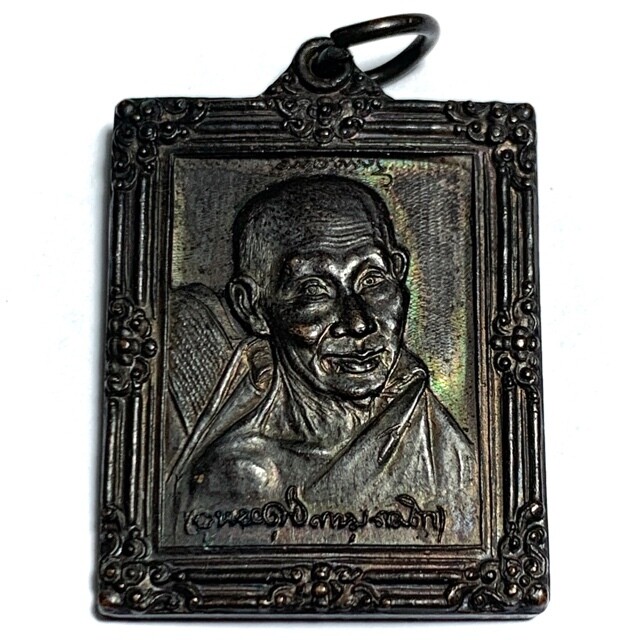
The Rian Kring Solos Tat Nuea Solos 16 amulet, released in 2518 BE to commemorate Ajarn Chum Chai Kiree’s 66th birthday, represents a significant artifact within the extensive pantheon of Thai Buddhist occultism and Theravada devotional practice. This specific edition, designated as the ‘1st Edition Amulet 2518 BE’, holds particular distinction due to its intricate alchemical composition, rigorous consecration rituals, and the profound spiritual legacy of its creator, Ajarn Chum Chai Kiree, a preeminent lay master from the Dtamnak Dtak Sila Khao Or Southern Academy of Sorcery. The nomenclature ‘Rian Kring’ refers to its coin-like form and the internal ‘kring’ bead, a rattling element integral to its esoteric function, while ‘Solos Tat’ signifies its composition from sixteen sacred elemental substances, a number steeped in cosmological and alchemical significance within various Indic traditions adapted into Thai magical arts.

The theological importance of the Rian Kring Solos Tat extends beyond its physical attributes, encapsulating core tenets of Theravada Buddhism blended with indigenous animistic and Brahmanical beliefs that characterize Thai popular religiosity. Amulets, in the Thai context, are not mere objects of superstition but tangible receptacles of blessings, merit (Bucha), and protective energies derived from the spiritual attainments of their creators and the efficacy of the consecration rites. The presence of Pra Pakawambodee, often depicted as Pra Pid Ta Nirodha Buddha, on the reverse face, imbued with a Kring bead containing Solos Tat Elemental relics, further amplifies its spiritual potency. Pra Pid Ta, the ‘closed eyes’ Buddha, symbolizes profound meditative absorption, freedom from worldly distractions, and often confers invulnerability (Kong Grapan Chadtri) and protection against harm (Klaew Klaad), aligning with the broader objectives of Ajarn Chum’s magical practice. The integration of this ancient iconography with Ajarn Chum’s own effigy signifies a synergistic convergence of venerated Buddhist ideals and the living spiritual authority of the master.

The ‘Solos Tat’ (Sixteen Sacred Elements) composition is not merely a material attribute but a theological statement. In many esoteric traditions, the number sixteen is associated with completeness, perfection, or a full cycle of manifestation. The meticulous selection and amalgamation of these specific minerals and artifacts, as detailed in Chapter 3, transforms the amulet from a mere metallic object into a charged repository of diverse elemental energies, harmonized and activated through specialized Wicha. This alchemical synthesis, known as ‘Nuea Solasa Loha Galai Tong’ (Gold Galvanized over 16 kinds of Sacred Artifact Alloy), is a testament to the sophisticated understanding of material science and spiritual metallurgy practiced within the Khao Or tradition. The inimitable surface sheen mentioned as a primary authentication criterion underscores the intrinsic spiritual and material integrity of the original creation, rendering it inimitable by lesser forgers.

As an ‘Ongk Kroo’ (master piece or reference model), this amulet serves a didactic purpose, allowing devotees and connoisseurs to study the authentic characteristics of Ajarn Chum’s work. Its theological importance is thus dual: it functions as a potent devotional object for personal protection and fortune, and simultaneously as an educational artifact for understanding the complex interplay of art, alchemy, and esoteric Buddhism in Thailand. The narratives surrounding Ajarn Chum’s miraculous abilities, from childhood feats of Kong Grapan to demonstrations of Metta Mahaniyom, imbue this amulet with a perceived efficacy directly linked to his undisputed spiritual authority. The Rian Kring Solos Tat 2518 BE is not merely a commemorative coin; it is a profound expression of faith, a medium for spiritual protection, and a tangible link to a powerful tradition of Thai Buddhist magic.

Front View of Rian Kring Solos Tat Ajarn Chum Amulet

The Master and Lineage

Ajarn Chum Chai Kiree (พ.ศ. 2450-2525 BE) stands as an unparalleled figure in the annals of Thai Buddhist occultism, widely acknowledged as the greatest lay master in the living history of Thai Buddha Magic. Born in Pattalung, a province renowned as a cradle of esoteric knowledge and the home of the Khao Or tradition, Ajarn Chum’s life unfolded as a continuous testament to profound spiritual attainment and extraordinary magical prowess. His lineage traces directly to the esteemed Dtamnak Dtak Sila Khao Or Southern Academy of Sorcery, an ancient and highly revered institution that has preserved and transmitted specialized Wicha (magical sciences) for centuries. His mentors included some of the most respected masters of his era, notably Ajarn Iad of Wat Don Sala, who served as his guide in the intricate pathways of magical sorcery after his disrobing from the Sangha.

Ajarn Chum’s innate abilities manifested from a remarkably young age. At just seven years old, he exhibited signs of preternatural power, as evidenced by a widely recounted incident where he disarmed a rifle merely by chanting an eleven-syllable Kata. This act resulted in the weapon exploding and breaking upon its subsequent discharge, profoundly impressing and instilling faith in his budding powers among the local villagers. Such miraculous events, documented and passed down through oral tradition and biographical accounts, laid the foundation for his lifelong reputation as a formidable practitioner of Kong Grapan (invulnerability) and other protective Wicha.

His formal spiritual training commenced with ordination as a Bhikkhu, under the tutelage of Pra Ajarn Kong, at Wat Chai Mongkol. This period of fifteen years within the Sangha provided Ajarn Chum with an intensive foundation in Buddhist scripture (Dhamma), meditation (Bhavana), and monastic discipline (Vinaya). This comprehensive monastic education, combined with his inherent spiritual gifts, equipped him with a deep understanding of the underlying principles that govern the creation and empowerment of sacred objects. During his time as a monk at Wat Chai Mongkol, he was notably present and actively participated in the extensive 16-day and 16-night empowerment ceremony for the world-famous Pra Pid Ta Hlaem Sai 2481 BE first edition amulet. This experience proved pivotal, as he judiciously retained a quantity of the sacred Chanuan Alchemical metals from that seminal smelting ceremony, metals that would later become crucial components of the 2518 BE Rian Kring Solos Tat coins.

Upon disrobing, Ajarn Chum transitioned from an ordained monk to a dedicated lay practitioner, further intensifying his study of the Buddha-Dhamma and advancing his mastery of occult sciences. He relocated to Pattalung, immersing himself fully in the Dtamnak Dtak Sila Khao Or tradition under the direct mentorship of Ajarn Iad. This phase of his life solidified his status as a legendary master of Khao Or Sorcery. His ability to decipher complex magical methods and his attunement to mysterious forces were exceptional, allowing him to innovate and perfect various Wicha, earning him widespread veneration.

Ajarn Chum’s legacy is replete with public demonstrations of miraculous magic, which captivated a generation of devotees and cemented his position as a Grand Master. One of his most iconic displays involved the “Noo Kin Nom Maew Metta Oil” (Mice Drinking Cat’s Milk Metta Oil). This demonstration, where baby mice and a lactating cat, smeared with the oil, peacefully coexisted and the cat nursed the mice, unequivocally showcased his mastery of Metta Mahaniyom (loving-kindness and popular charm) Wicha. He was also known for his “Nam Man Solos Mongkol” oil, which he applied to devotees’ heads before performing Kong Grapan Magic, further attesting to his systematic and ritualistic approach to magical practice. The consistent and undeniable real effects experienced by those who revered his amulets and sought his blessings have ensured that Ajarn Chum Chai Kiree’s reputation for potent magical power remains unrivaled, securing his permanent place as an occult legend within Thai history.

Reverse View of Rian Kring Solos Tat with Pra Pid Ta

Alchemical Composition and Sacred Powders

The Rian Kring Solos Tat amulet of 2518 BE is distinguished by its exceptionally complex and esoteric alchemical composition, known as ‘Nuea Solasa Loha Galai Tong’. This term denotes an alloy formed from sixteen distinct kinds of sacred artifacts and elemental metals, subsequently finished with a gold galvanization. The concept of ‘Solos Tat’ (Sixteen Elements) is central to its magical efficacy, representing a synthesis of diverse cosmic energies and protective properties believed to be inherent within these rare materials. The meticulous selection and blending of these elements reflect an advanced understanding of traditional Thai metallurgy, geomancy, and occult science, characteristic of the Dtamnak Dtak Sila Khao Or tradition.

The sixteen sacred elements comprising the Chanuan metal for this amulet are enumerated as follows, each possessing unique spiritual attributes:

  1. Lek Lai: A revered ‘flowing metal’ or ‘adamantine substance’ believed to possess its own Deva, granting immense protective powers, often associated with invulnerability and warding off evil.
  2. Jao Nam Ngern: A blue-hued mineral, often found in sacred caves, valued for its protective and auspicious qualities.
  3. Gold: Symbolizing purity, wealth, and spiritual illumination, it is a universal element of auspiciousness.
  4. Silver: Represents lunar energy, purity, and spiritual refinement, offering protection and enhancing spiritual insight.
  5. Bronze: An alloy historically used for Buddha statues, signifying spiritual longevity, strength, and merit.
  6. Copper: Associated with healing, energy conduction, and protective properties, widely used in sacred metallurgy.
  7. Brass: Valued for its durability and acoustic properties, often imbued with general protective blessings.
  8. Leaden Mineral (Takua Nam Nom, etc.): Different types of lead possess varying esoteric properties, often used for Kong Grapan (invulnerability) and Maha Ud (bullet-proofing).
  9. Wolfram Mineral: A rare and hard metallic element, likely chosen for its inherent strength and perceived ability to withstand negative forces.
  10. Rae Jakr Narai (Vishnu’s Chakra Mineral): Minerals associated with Vishnu’s divine discus, symbolizing supreme protection, power, and the ability to overcome obstacles.
  11. Rae Sangkwanorn (Ayuttaya temple roof leaden nails): Historic leaden nails from ancient temple roofs, imbued with centuries of prayers and blessings from the Sangha and devotees, carrying potent protective energies.
  12. Rae Chin (Ancient Silvery Leaden Artifacts): Ancient lead artifacts, possibly from old Buddha images or sacred implements, holding historical and spiritual accumulation of blessings.
  13. Rae Dtakua Dam (Black Lead Mineral): A specific type of lead known for its dense protective qualities, especially against black magic and physical harm.
  14. Rae Dtakua Thuean (Wild Leaden Mineral): Raw, unrefined leaden minerals, believed to retain potent, untamed natural protective energies.
  15. Rae Lek Nam Pi: Iron ore from Nam Pi, a legendary source in Uttaradit province, famous for yielding steel of exceptional strength and spiritual power, used historically for royal swords and potent amulets.
  16. Rae Yord Pra Prang (metal from the top of the old temple Chedi Stupa): Metal fragments from the apex of ancient stupas, symbolizing enlightenment, connection to the divine, and imbued with profound sacredness from countless venerations.

The amalgamation of these materials created a ‘Chanuan Metal’ of unparalleled potency. This base alloy was then treated with ‘Galai Tong’, a gold galvanization process, which not only conferred a distinct and recognizable aesthetic sheen but also enhanced its spiritual properties, linking it to the auspiciousness of gold. The inimitable quality of this surface sheen is a critical authentication criterion, a feature that counterfeit editions have notoriously failed to replicate accurately.

Within the reverse face, specifically within the Pra Pakawambodee (Pra Pid Ta) effigy, a ‘Kring bead’ is embedded. This bead contains ‘Solos Tat Elemental relics’, which are pieces of the sacred Chanuan metal. The ‘kring’ (rattling) sound it produces when shaken is not merely an auditory feature; it is considered to be the voice of the Buddha or Devas, announcing their presence and spreading blessings. The material for this internal kring bead is particularly significant, as it was directly sourced from the sacred Chanuan Alchemical metals conserved by Ajarn Chum from the seminal Pra Pid Ta Hlaem Sai 2481 BE ceremony at Wat Chai Mongkol in Songkhla. This direct material link to an earlier, highly revered empowerment ceremony imbues the 2518 BE Rian Kring Solos Tat with a historical and spiritual continuity, amplifying its perceived power and lineage.

The intricate composition of these sacred materials, guided by the principles of Wicha Solos and the expertise of Ajarn Chum, signifies a profound alchemical act. It transforms inert matter into a living repository of potent magical energy, designed not only for physical protection but also for spiritual elevation and auspicious fortune, solidifying the amulet’s status as a pinnacle of Thai sacred metallurgy.

Close-up of Ajarn Chum's Effigy on Rian Kring Solos Tat

Sacred Empowerment and Wicha

The consecration of the Rian Kring Solos Tat Nuea Solos 16 amulet was an extraordinarily rigorous and protracted process, deeply rooted in the ancient Wicha Solos tradition and overseen by Ajarn Chum Chai Kiree. This elaborate empowerment ritual is a cornerstone of the amulet’s perceived potency, reflecting a meticulous adherence to esoteric protocols designed to imbue the sacred objects with profound spiritual energy and protective powers. The blessing ceremony for these amulets was conducted in a manner consistent with the revered Pid Ta Hlaem Sai of 2481 BE ceremony, a testament to the continuity and authenticity of the Wicha employed.

The initial phase of empowerment commenced at the Samnak of Ajarn Chum, a site imbued with the master’s spiritual presence. Here, Ajarn Chum engaged in the arduous practice of ‘single individual empowerment’ for each coin, one by one. This labor-intensive method, characteristic of the Wicha Solos, required immense concentration and spiritual fortitude. The empowerment proceeded continuously for a full sixteen days and sixteen nights. During this marathon period, Ajarn Chum invoked and beseeched various powerful Devas and venerated masters to manifest and assist in the consecration. Among those summoned were Luang Por Tuad, a legendary and highly revered monk known for his miraculous powers; Luang Por Kong, Ajarn Chum’s own venerable monastic mentor; Khun Phaen, the legendary warrior hero renowned for his charisma and protective magic; and Pra Pikanes (Ganesha), the Hindu deity of wisdom, remover of obstacles, and patron of arts and sciences, whose inclusion highlights the syncretic nature of Thai occultism.

Following this extensive period of personal empowerment at his Samnak, the amulets were then transported to the venerable Wat Traimit Voraram in Bangkok. Here, the consecration process continued within the Uposadha (ordination hall) Shrineroom of the temple for an additional seven days and seven nights. The Uposadha, as the most sacred space within a Buddhist temple, is traditionally utilized for high-level blessings, benefiting from the accumulated spiritual energy and merit of countless generations of monastic practice and Dhamma recitation. This dual-location empowerment, combining the intimate power of the lay master’s Samnak with the institutional spiritual authority of a major temple, signifies a comprehensive and multifaceted approach to consecration.

The final phase of empowerment culminated on Thursday, 8th May 2518 BE, a date coinciding with the annual Wai Kroo (Homage to Teachers) ceremony of Ajarn Chum. This auspicious day, dedicated to honoring one’s gurus and continuing their lineage, served as the perfect occasion for the amulets to receive their ultimate blessing before being distributed to devotees. The coordination of the release with his 66th Birthday Edition further imbued the amulets with his personal spiritual milestone and accumulated merit. This elaborate ritual regimen, incorporating prolonged meditative absorption, invocation of powerful spiritual entities, and blessings within highly sacred spaces, underscores the profound Wicha and unwavering dedication invested by Ajarn Chum in the creation of these Rian Kring Solos Tat amulets.

It is a little-known fact that an initial edition of the Rian Kring Solos Tat was actually produced in 2517 BE, with the year embossed accordingly. However, Ajarn Chum deemed the image on these amulets to too closely resemble an ordained monk, a representation he considered disrespectful to the Sangha. Consequently, he forbade their release. In response to the earnest beseeching of his devotees, a revised edition was commissioned and subsequently released in 2518 BE, featuring a newly designed image and the updated date. This detail highlights Ajarn Chum’s profound respect for monastic protocols and his commitment to producing amulets that were both spiritually potent and aesthetically appropriate, further solidifying the 2518 BE edition’s status as the definitive and intended release.

Angled View of Rian Kring Solos Tat with Kring Bead Rattle

Iconographical and Aesthetic Appreciation

The Rian Kring Solos Tat Nuea Solos 16 of 2518 BE presents a sophisticated iconographical program and distinctive aesthetic qualities that are crucial for its appreciation and authentication. As a ‘Rian’ (coin amulet), its design integrates portraiture, sacred geometry, and symbolic Buddhist figures within a metallic medium. The dual-sided nature of this amulet provides a rich narrative, depicting the revered master Ajarn Chum Chai Kiree on the obverse and the potent Pra Pakawambodee (Pra Pid Ta) on the reverse, each contributing to its overall spiritual efficacy and artistic merit.

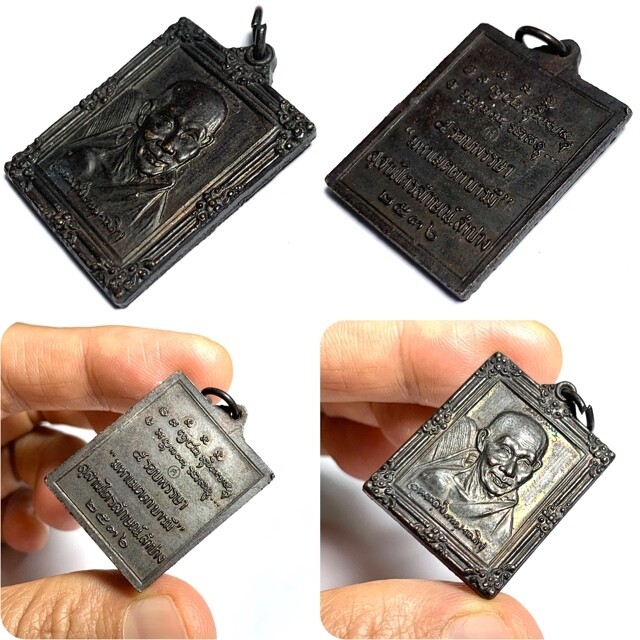
The front face of the amulet features a ‘Kreung Ongk’ (Half Torso Cameo Bust) image of Ajarn Chum Chai Kiree. This depiction captures the likeness of the master, rendered with a respectful formality that conveys his spiritual authority and wisdom. Surrounding his effigy, the words ‘Solos Tat Ajarn Chum Chai Kiree 66 Pi Run 1 2518’ are embossed along the edge. This inscription explicitly states the amulet’s identity, its creator, the occasion of its release (Ajarn Chum’s 66th Birthday), its designation as the ‘Run 1’ (First Edition) for that year, and the Buddhist Era date of 2518. Flanking Ajarn Chum’s head are the Khom Agkhara (ancient Khmer script) characters ‘Put’ and ‘To’. These two syllables are profoundly significant in Thai Buddhism, representing parts of the Buddha’s name and often used in meditative recitations (Buddhānussati) for protection and concentration. Their placement signifies the master’s adherence to Buddhist principles and his capacity to channel the Buddha’s blessings through his Wicha.

The reverse face is particularly noteworthy, featuring a Pra Pakawambodee (Pra Pid Ta) amulet ‘heat fixed’ onto the surface of the coin. Pra Pid Ta, or the ‘concealed eyes’ Buddha, is an iconic figure in Thai Buddhist art, symbolizing deep meditative absorption, non-attachment to worldly phenomena, and protection from all harms and evils. This particular Pra Pid Ta image is not merely a relief carving; it is a distinct, smaller amulet that has been integrated onto the main coin. Crucially, this Pra Pid Ta amulet contains a Kring bead of Sacred Elemental Substance (Tat) inserted within. The material for this Kring bead is historically significant, having been sourced from the renowned Pra Pid Ta Hlaem Sai 2481 BE first edition amulet ceremony at Wat Chai Mongkol in Songkhla. This direct material link to an earlier, celebrated amulet bestows additional layers of authenticity and spiritual potency upon the 2518 BE Rian Kring Solos Tat. The Kring bead, emitting a subtle rattle when shaken, is believed to signify the awakening of blessings and the presence of divine protection.

Aesthetically, the Rian Kring Solos Tat is characterized by its ‘Nuea Solasa Loha Galai Tong’ composition. The gold-galvanized surface over the sixteen kinds of sacred artifact alloy imparts an inimitable sheen and color, which serves as a primary criterion for authentication by experts. The consistent failure of counterfeit editions to replicate this unique surface quality underscores the complexity of its original fabrication process and the authenticity of the master’s technique. The precision of the casting, the clarity of the embossed text, and the distinct features of both Ajarn Chum and the Pra Pid Ta iconography are all critical points of aesthetic and metallurgical scrutiny. The overall presentation reflects a blend of traditional artistic conventions and esoteric symbolism, resulting in an amulet that is both visually striking and replete with spiritual meaning.

Detailed Front View of Rian Kring Solos Tat Ajarn Chum Coin

Ritual Practice and Worship

The veneration and ritual practice associated with the Rian Kring Solos Tat Nuea Solos 16 amulet extend beyond mere possession; they involve specific protocols and devotional acts designed to activate and maintain the amulet’s spiritual efficacy. These practices, known as Bucha, are integral to Thai Buddhist and occult traditions, forming a reciprocal relationship between the devotee and the sacred object and its creator. The proper engagement with such an amulet involves specific Kata (sacred incantations) and adherence to certain rules of conduct, which are understood to align the devotee’s intentions with the protective and benevolent forces embodied within the amulet.

The recommended Kata Bucha for Pra Krueang of Ajarn Chum Chai Kiree begins with an initial invocation, followed by a standard Buddhist reverence. The specific Kata provided for this amulet is:

Na Rong Hai – Na Maa Khao Haa – Na Jidtang Maa Ni Maa Maa – Jidtang Maa Ni Maa Maa (Recite 3 Times)

This initial Kata is typically chanted with focused intention, often related to attracting Metta Mahaniyom (loving-kindness, popular charm) and financial prosperity, drawing others towards the devotee. It is a formula intended to create an aura of appeal and positive influence.

Following this, the devotee proceeds with the traditional Buddhist homage:

Na Mo Tassa Pakawadto Arahadto Sammaa Samputtassa (Recite 3 Times)

This chant, venerating the Blessed, Noble, and Perfectly Enlightened Buddha, is a foundational practice in Theravada Buddhism, establishing a connection to the Triple Gem (Buddha, Dhamma, Sangha) and purifying the mind before further spiritual engagement.

The final specific Kata for empowerment is:

I Sawaasu Susawaa I – A Sang Wi Su Lo Bu Sa Pu Pa (Recite 3 Times)

This sequence of Khom Agkhara syllables constitutes a potent Wicha Kata, likely carrying layers of meaning related to protective spells, invulnerability, and auspicious blessings. Such Kata are often condensed forms of longer incantations, where each syllable represents a specific mantra or cosmic principle, activated through focused recitation. The repetition of these Kata is intended to awaken the latent powers within the amulet, resonating with the energies imbued by Ajarn Chum during its consecration.

Beyond these specific chants, devotees are expected to uphold general Buddhist ethical precepts, such as the Five Precepts (Panca Sila), to maintain a pure mind and body, which is believed to enhance the efficacy of any sacred object. Respectful handling of the amulet, placing it in a high and clean location when not worn, and avoiding morally reprehensible actions are considered essential. Regular offerings of flowers, incense, and candles (Bucha Phra) may also accompany the chanting, symbolizing devotion and respect for the Buddha, Dhamma, Sangha, and the lineage of masters like Ajarn Chum.

The rattling of the Kring bead within the amulet is not just a sound; it is interpreted as a manifestation of divine presence or the awakening of spiritual energy. Some practitioners may gently shake the amulet before chanting or making wishes, believing the sound clarifies intentions and signals the Devas. The act of wearing the amulet is itself a form of continuous Bucha, keeping the blessings in close proximity to the devotee. The Rian Kring Solos Tat amulet, therefore, functions as a powerful tool within a holistic spiritual practice, where the devotee’s faith, ethical conduct, and ritual engagement synergistically amplify the inherent protective and auspicious powers consecrated by Ajarn Chum Chai Kiree.

Another View of Rian Kring Solos Tat with Pra Pid Ta on Rear
Angled View of Rian Kring Solos Tat Showing Both Faces
Rian Kring Solos Tat Amulet Displayed

How to Pray to Thai Amulets

Ancient Amulet - Thai Buddhist Pra Niyom Category Amulets

Ancient Amulet. Thai Buddhist Pra Niyom ('Pra Niyom'; meaning 'High End Preferred Class Antique amulets'). Fine Authentic Amulets from the Great Thai Buddhist Sorcerer Monks, Lersi Ascetics, and Lay Masters of Olden Days

SIGN IN OR CREATE ACCOUNT


Filters

Filters
Pra Somdej Pim Gaes Jarot Sum Pim Gaes Iang Niyom Long Rak Chart Somodej Dto Wat Rakang KositaramPra Somdej Pim Gaes Jarot Sum Pim Gaes Iang Niyom Long Rak Chart Somodej Dto Wat Rakang Kositaram
Pra Somdej Pim Gaes Jarot Sum Pim Gaes Iang Niyom Long Rak Chart Somodej Dto Wat Rakang Kositaram
Free Shipping Worldwide (we do not state or declare true price to counter tarrifs tax on customers), & Offer of Free Solid Silver Casing Included
SKU 04783
$1,699


Luang Phu Khaw Analayo 2520 BE Rian Roop Muean

Rian Roop Muean L.P. Khaw Anālayō, in Nuea Tong Daeng 2520, a Classic and rare sacred Guru Monk Amulet from one of the Great Arya Sangha Tudong Forest Monks of the Eastern Province of Udorn Thani. Released in the year 2520 BE. The front face of the amulet features the image of Luang Phu Khaw of Wat Tham Gong Plae, in ‘Kreung Ongk’ Half Torso Cameo form.

Luang Phu Khaw Analayo 2520 BE Rian Roop Muean

The rear face of the amulet has the Sacred Khom Agkhara Kata ‘Isawāsu Isawāsu Isawāsu – Idtipisō Wi Sē Sē I – I Mē Nang Puttadtang Sē I – I Sō Dtang Putta Bpi Dti I’, with the Dharma Chakra Wheel, with a Chalice beneath, with the name of the temple of Wat Tham Gong Plae, the Name of Luang Phu Khaw Anālayo, the Year ‘2520’ and the name of the Province of Udorn Thani embossed on the lower section of the amulet.

Luang Phu Khaw Analayo 2520 BE Rian Roop Muean

Luang Phu Khaw Analayo of Wat Tham Glong Plae, in Nong Bua Lampoo, was a Gaeji Ajarn Master Monk of the Dhammayut Lineage of Ajarn Mun Puratto, who was highly revered and known for his Adept Mastery of Vipassana Kammathana Mindfulness Practice.

Luang Phu Khaw Analayo 2520 BE Rian Roop Muean

He was a Master of the same Generation as the Great Luang Phu Waen Sujjino, and the Inimitable Luang Phu Doon. He is said to be an Arya Sangha who reached a High Stage of Enlightenment.He is known to have been highly acclaimed and respected by the Great Luang Por Ajarn Maha Bua.

Luang Phu Khaw Analayo 2520 BE Rian Roop Muean

Luang Phu Khaw’s mortal remains turned into crystallised relics, which is considered to be a sign of having become Enlightened Being. Luang Phu Khaw Analayo was born on the 28th December in the Year 2431 B.E. in Ban Bor Khaneng, in Tambon Nong Gaew, in Ampher Amnaj Jaroen, in Udorn Thani Province. He was Ordained on the 2nd of May 2462 BE at Wat Po Sri, in Ban Bor Khaneng.

Luang Phu Khaw Analayo 2520 BE Rian Roop Muean

His Upachaya (Ordaining Officer) was Pra Kroo Puttisak, the Bishop of Amnaj Jaroen, and Pra Ajarn Bun Jantr was his Pra Gammawājājarn (Prompting Officer). Luang Phu Khaw remained thereafter at Wat Po Sri for a further 6 Years, after which he left to travel on Tudong Solitary Forest Wandering.

Luang Phu Khaw Analayo 2520 BE Rian Roop Muean

It was here that Luang Phu Khaw met and asked to study and practice under the Great Arahant Luang Phu Mun Puratto. Luang Phu Khawwas always intensely attracted to the practice of Vipassana Kammathana, and due to this interest, he also travelled onwards to Thonburi to the temple of Wat Plab, which was famous for its Advanced methods of Kammathana Vipassana.

Luang Phu Khaw Analayo 2520 BE Rian Roop Muean

It was here that Luang Phu Khaw got the chance to learn Wicha with the Great Pra Sangkawara Luang Por Chum, maker of the famous Nam Tao Gan Fai Magic Gourd (known for its ability to prevent fires). The temple of Wat Plab has records in its written history annals of Luang Phu Khaw appearing to practice there, which confirms the truth of this.

Luang Phu Khaw Analayo 2520 BE Rian Roop Muean

Luang Phu Khaw was also one of the few great Monks who was revered and often visited by His Majesty the King. Luang Phu Khaw passed away on Monday the 16th May 2526 BE at Wat Tham Gong Plae at the age of 94 Years, 4 Months and 18 Days Old in his 57th Year of Ordained life.

Luang Phu Khaw Analayo 2520 BE Rian Roop Muean

How to Pray to Thai Amulets

Luang Phu Khaw Analayo 2520 BE Rian Roop Muean

Luang Phu Khaw Analayo 2520 BE Rian Roop Muean

Luang Phu Khaw Analayo 2520 BE Rian Roop Muean

Luang Phu Khaw Analayo 2520 BE Rian Roop Muean

Luang Phu Khaw Analayo 2520 BE Rian Roop Muean


Ajarn Spencer Littlewood & Agent Gemini Unleashed for ancientamulet.com
All rights reserved.

Rian (Metal Coins)

Sacred Coins and Medallions
Filters

Filters
1 - 60 of 120 items


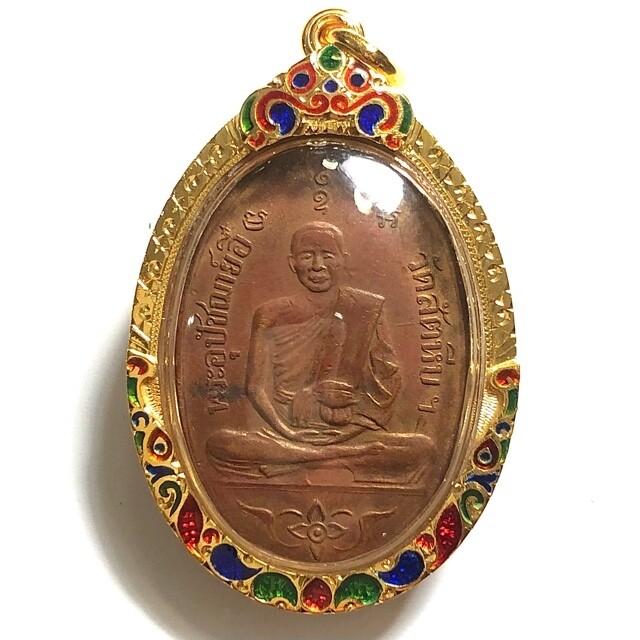
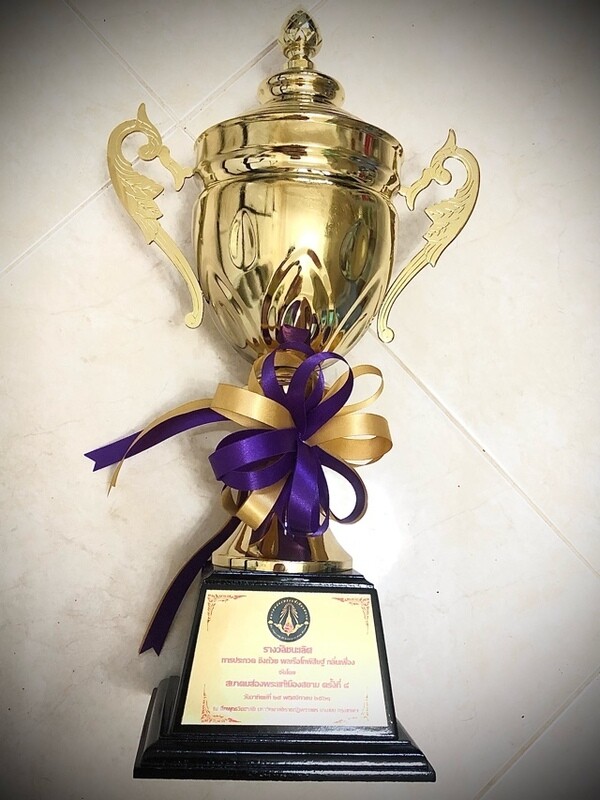
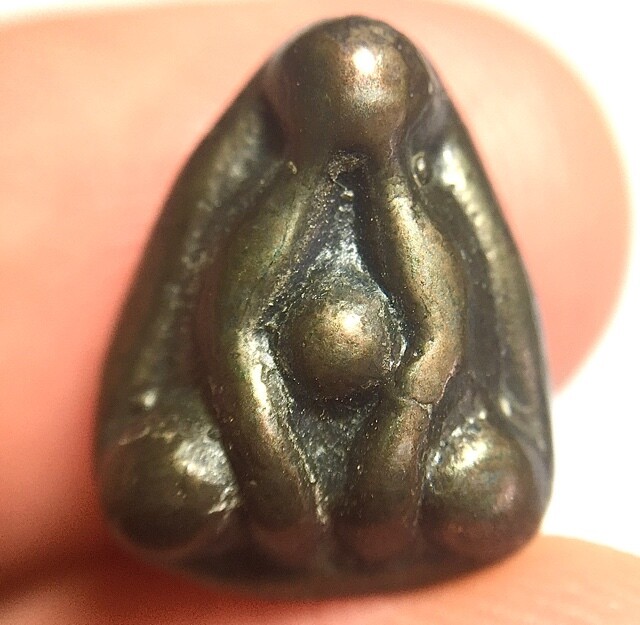
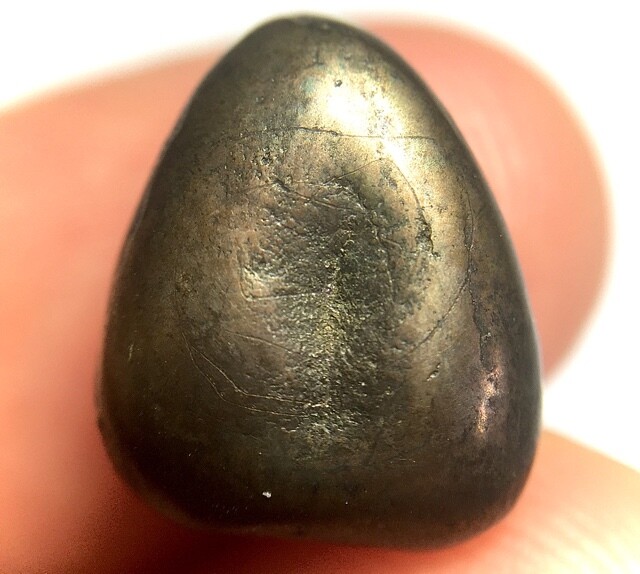
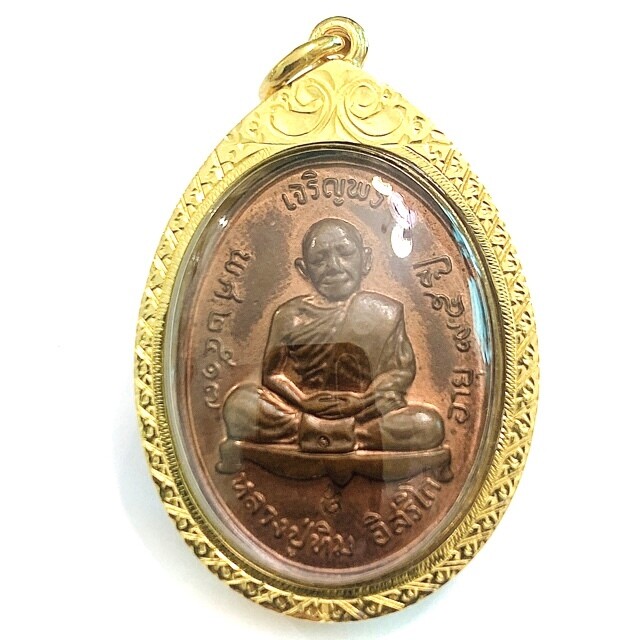
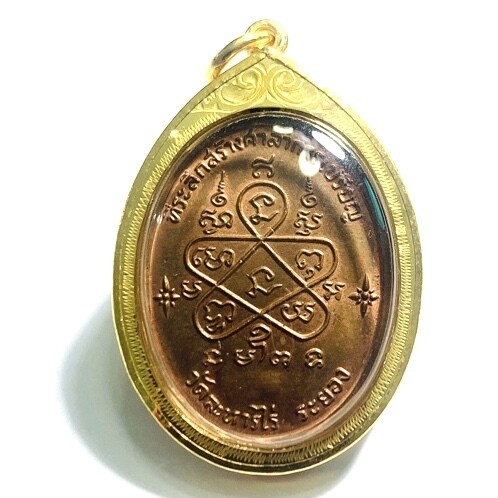
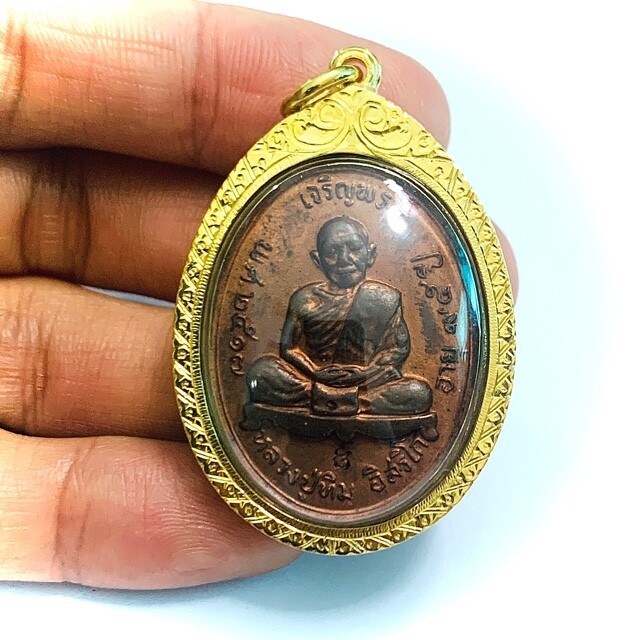
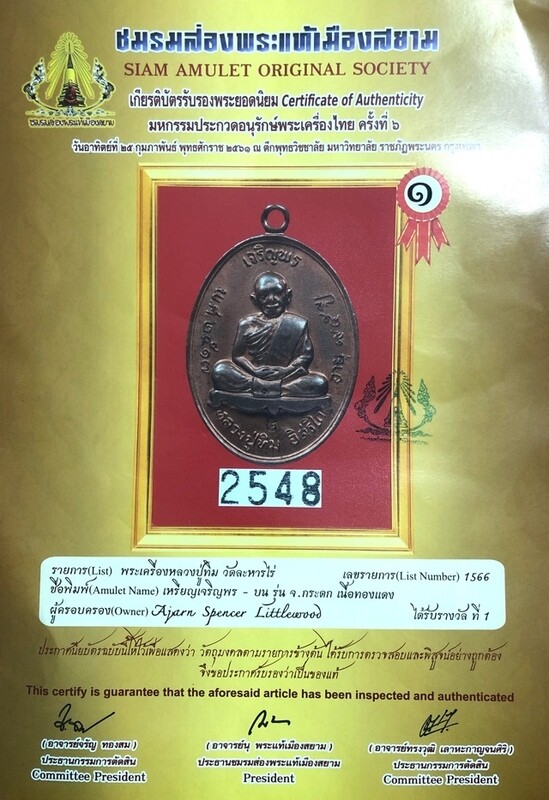
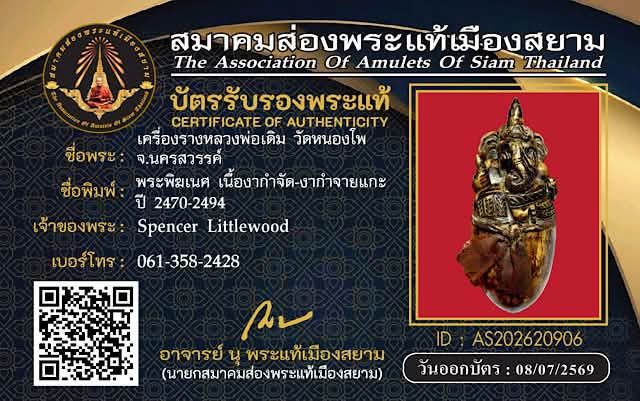
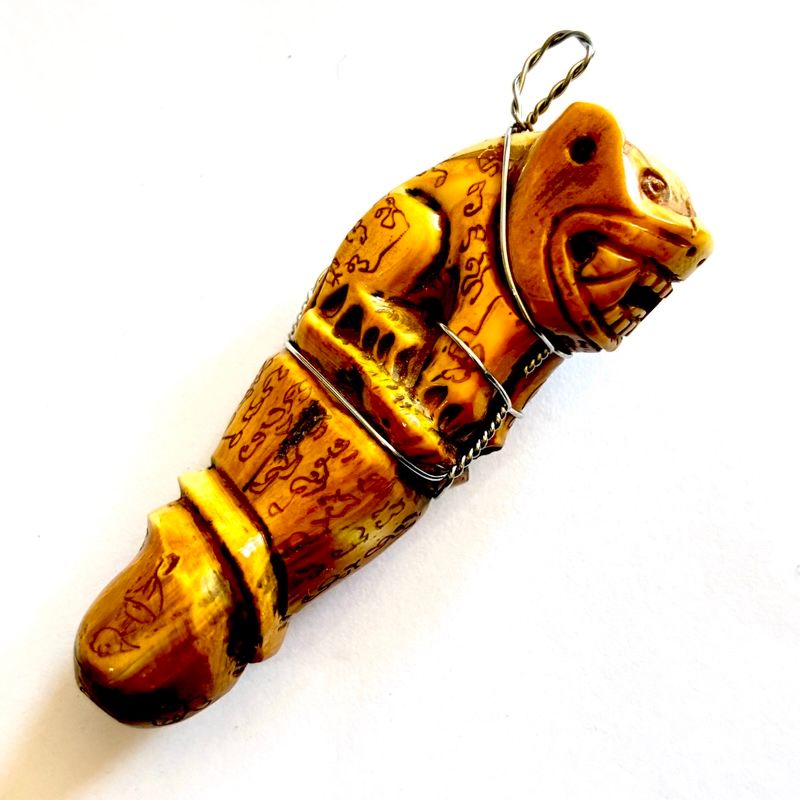
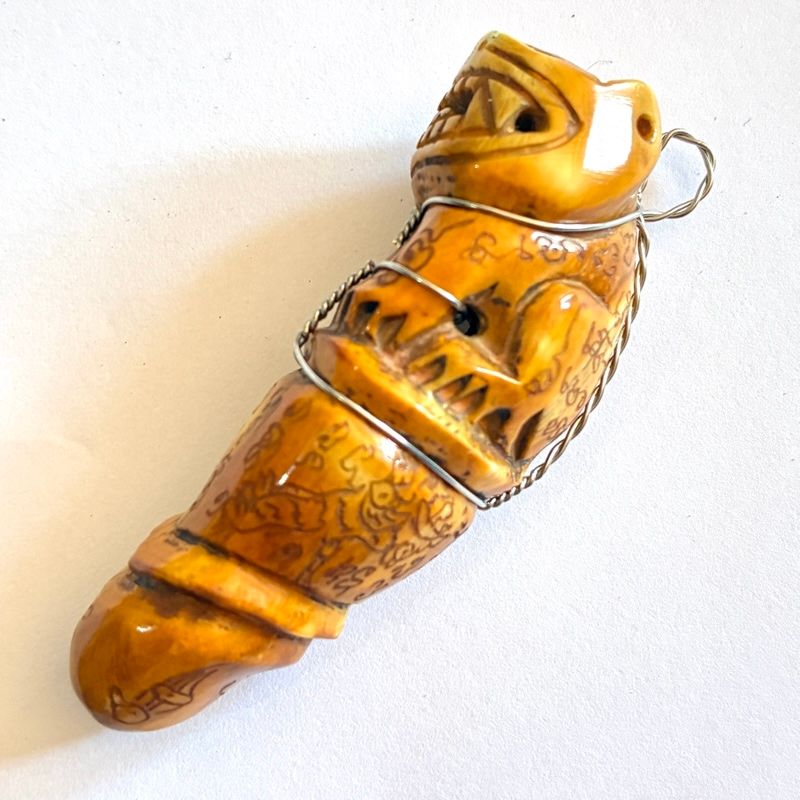
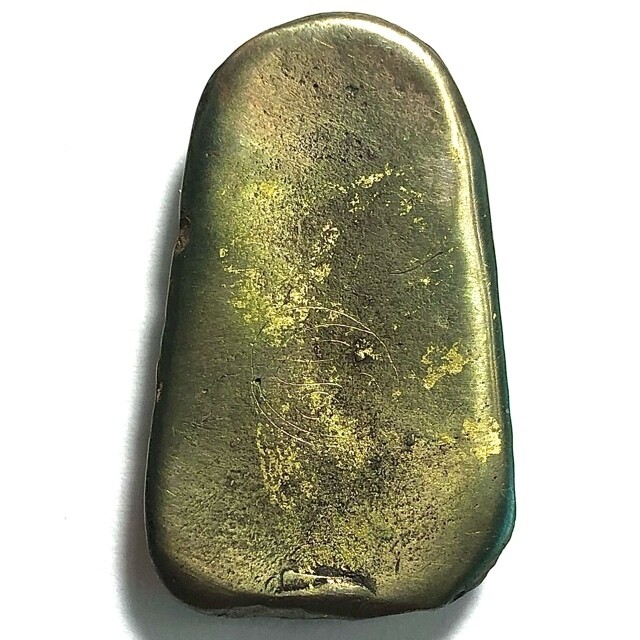
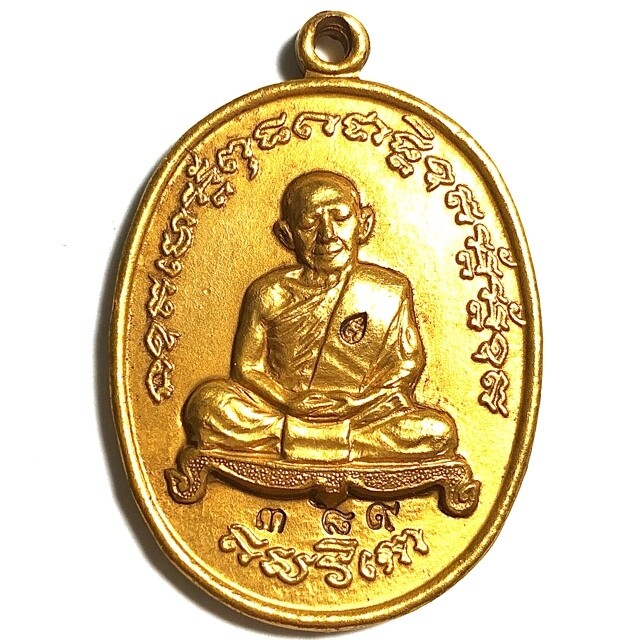
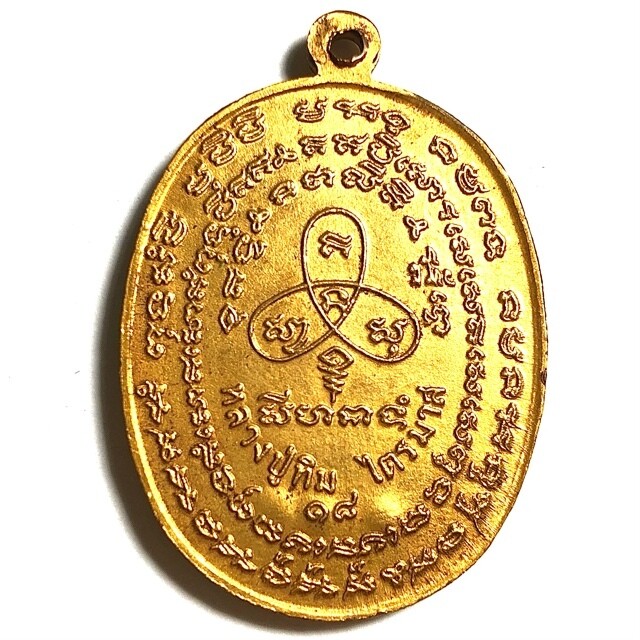
An ultra-rare, and, the most highly sought after amulet of all of this Great Master, and a most eminent and beautiful exhibit, of the top Preferred Masterclass amulet; The Rian Roop Khai Dtem Ongk, Pim Khor Bet Niyom (fish hook block press). with first prize trophy competition winning status, and certificate of authenticity, from the great Luang Por Ee, of Wat Sattaheeb.

Free Shpping EMS / FED-EX / DHL with this amulet. The amulets of Luang Por Ee are now almost impossible to find. Luang Por Ee is known of worldwide for his Palad Khik, but with serious students and aficionados, and Thai Devotees of this Guru, most famous for this First Edition Rian Roop Khai of 2473 BE (Most Highly Valued and sought after above all his other amulets, along with his Famous Palad Khik Charms, and Met Prik Chili Pepper amulets), as well as the later releases of 2485, 2504, 2511, and 2515 BE Monk Coins, his Palad Khik amulets, Hmak Tui, Takrut and Pid Tawarn amulets.

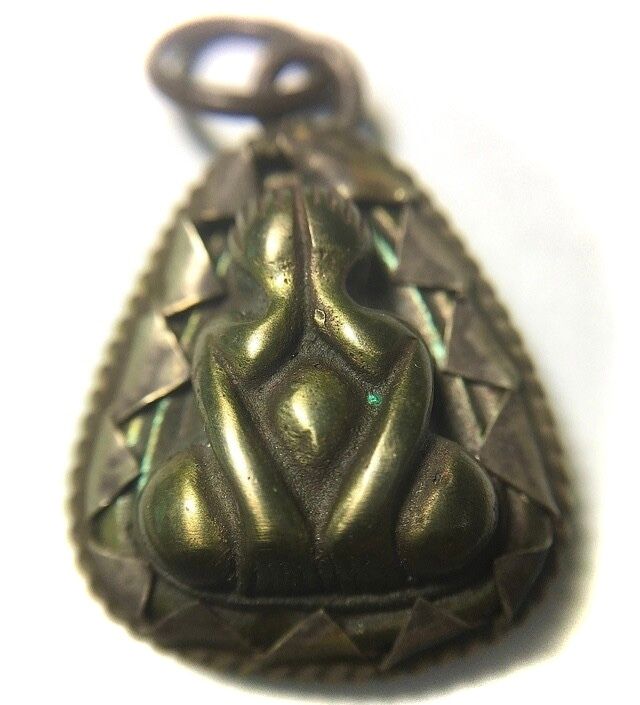
His Palad Khik and Pid Ta, and Wicha for making carved wooden, and other natural substance based amulets, and his Alchemical metal amulets, are believed to be among the most powerful of all Palad Khik. The Met Prik Chilli Pepper amulet is also one of his most highly soufght after and rarest Talismanic Charms, and is found in Pure Metal, and in Galabangha Dam Black Coral, and is a most inimitable, and finely crafted amulet of Pure Eminence.

This amulet won first prize trophy in Association of Amulets of Siam on 15th November 2561 BE, which was a competition that left Ancient Amulet triumphant with two exhibits of this most rare Master-Class amulet, which were entered into competition by Ajarn Spencer, this one winning first prize trophy, and one other we had collected over the years, which won second prize.

The Rian Run Raek Pim Roop Khai LP Ee of 2473 BE, is a top Pim Niyom Master Class amulet of Ultra Rarity, and Immense Spiritual Value, Magical Power, and a beautiful Antique Historical Buddhist amulet, as remembrance of the Guru, from one of the Greatest Masters in Thai Amulet History, that can only be considered an Ultra-Rarity, and highly desirable item for the devotee of LP Ee. The Rian Run Raek, is of course the most costly amulet in the Pantheon of amulets of Luang Por Ee, as well as the most highly regarded and revered, posessing World Class Status in the Amulet World.

The amulet is the first ever edition of Rian kanajarn Monk Coins which Luang Por Ee made in his long trajectory, The amulet comes with free  express  Shipping, & First Prizewinner Trophy, and certificate of 1st prize status and authenticity included, as well as custom made waterproofed solid gold casing in heavy gauge.

The special Custom Made Solid Gold Encasement was made by our best (and most costly) artisan, for only the best casing is fitting for this World Class Status 1st Prizewinning Coin of Ultimate Rarity and Sacred Value.

Luang Por Ee was one of the Great Olden Days Masters of Thai Buddhist History, and one of the Top 5 Gaeji Ajarn Guru Monks of the Chonburi Region. His amulets are as rare as they are popular with Thai Buddhist people, especially in Central Thailand. His amulets are highly recommended for their Sacred Value and High End Status, for they are as highly regarded and powerful as many amulets of other Masters of the same Era, and are known for their Powerful Metta Mahaniyom Klaew Klaad Maha Lap and Kong Grapan Chadtri Power.

Luang Por Ee Wat Sataheeb

The power of Luang Por Ee’s amulets goes unquestioned in the world of Thai Amulets, and the Amulet appreciation societies all acknowledge Luang Por Ee, fas a Grand Master of all time for the Wicha Pid Ta, and Wicha Palad Khik.

Many devotees over the years have reported immense successes after revering his Palad Khik, and it is said that the Palad Khik of Luang Por Ee are extremely powerful In those days, Luang Por Ee would allow his Looksit to carve Palad Khik and taught them to inscribe them with their own hand, before giving them to Luang Por Ee for empowerment and blessing.

However, the Met Prik Yoni amulets were made in much less numbers, black coral being rare to find and always only available in small amounts, and were carved in various shapes depending on each piece of coral, ranging from chili pepper shape, bullet shape, and three sided triangular shape.

The Palad Khik of Luang Por Ee are also categorised differently by their inscriptions;
1. Luang Por Ee’s own hand 2. Luang Por Lang’s Inscriptions 3. Luang Ta Pan’s Inscriptions (Luang Por Ee’s Nephew) 4. Ajarn Hngun’s Inscriptions 5. Ajarn Naen’s Inscriptions 6. Kroo Sukh’s Inscriptions – these were the most similar Inscriptions to those of Luang Por Ee.
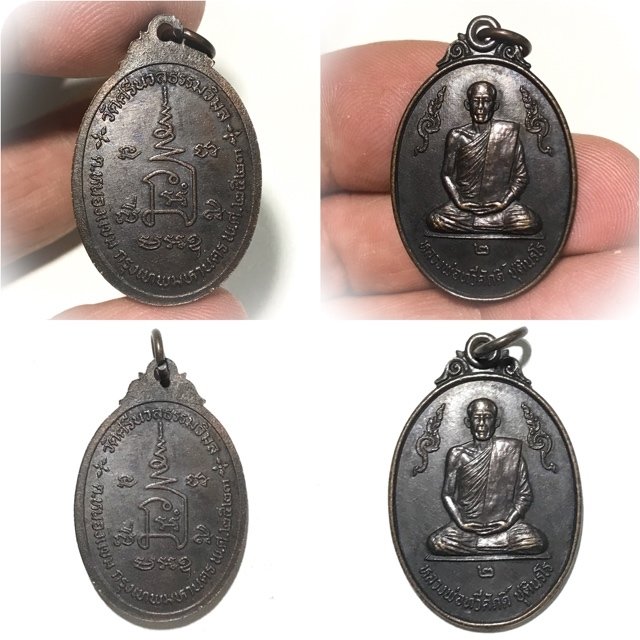
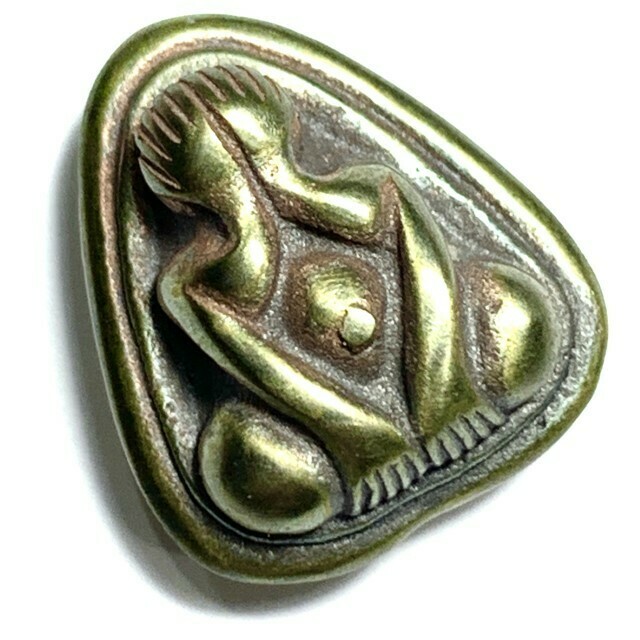
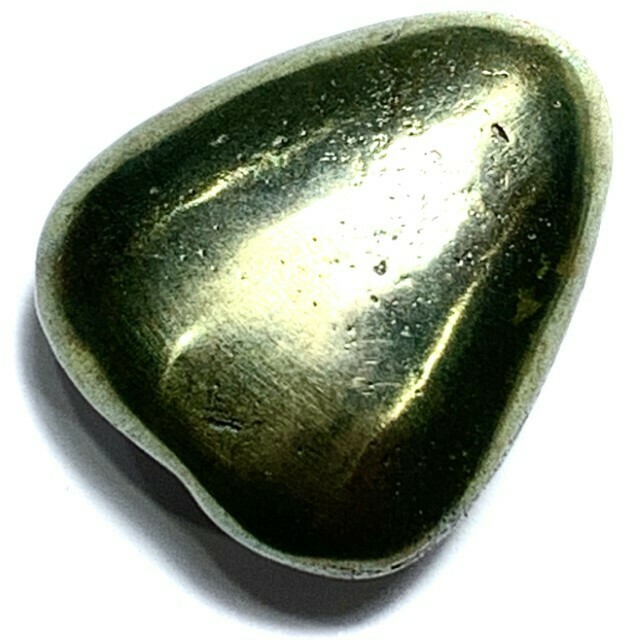
Kroo Sukh was a teacher of the temple orphans and local poor children, who then ordained and apprenticed under Luang Por Ee, becoming a very close companion.
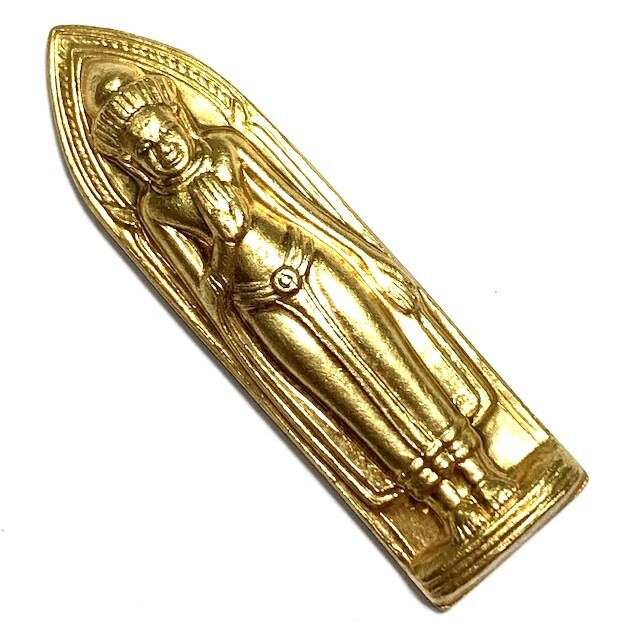
Pra Kroo Wora Waet Muni, or as popularly known by Thai Buddhist Folk, ‘Luang Por Ee’, is a name that is never confused identity, because Luang Por Ee was the first monk on historical record to go under this name. And so any mention of the name Luang Por Ee, can only be referring to the ‘One and Only’
Pra Kroo Wora Waet Muni.

Why did LP Ee make the Chili Pepper Amulet?

Many people have asked in the past ‘Why did Luang Por Ee make a chili pepper amulet?”. The truth is, that the name ‘Met Prik’ is a polite name for what the amulet truly represents. Luang Por Ee made the Palad Khik to represent the Shiva Lingam Male sexual organ, and the Met Prik, was made to represent the Yoni Vulva of Kali/Parvati.

Biography of Luang Por Ee

Luang Por Ee, was born to parents whose names were Mr. Kham, and Mrs. Iang Tong Kham, on Sunday the first October 2408 BE, which was the 11th Lunar Phase of the Year of the Ox. When he reached the age of 25 years old, he was ordained into the Sangha at Wat Ang Sila Nork, which is in the present day now incorporated with Wat Ang Sila Nai, into one temple called ‘Wat Ang Sila’.

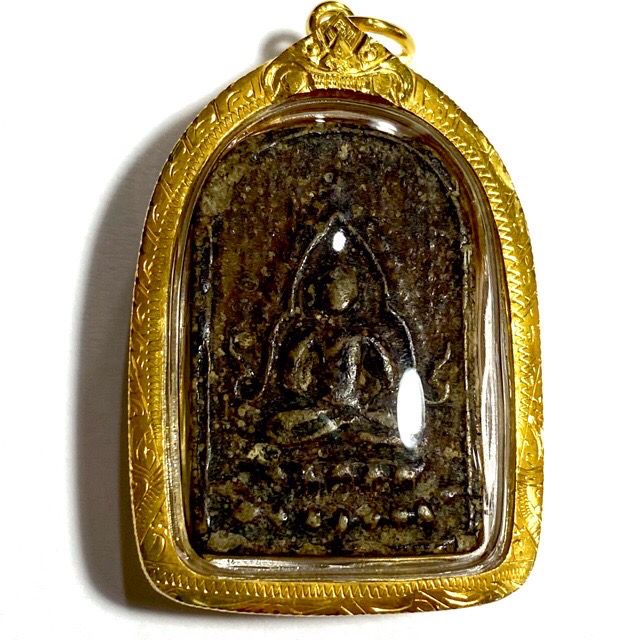
Below; the famous Pra Pid Tawarn Yant Won Nuea Maekasit of Luang Por Ee – renowned for its Maha Ud and Maha Pokasap Power

Luang Por Pra Ajarn Jan Jantasō was His Upachaya Ordaining Officer. His Pra Gammawajajarn Prompting Officer was Pra Ajarn Tim. His Pra Anusawanajarn Witness was Pra Ajarn Daeng. His Upachaya Ordained him with the ‘Chāyā’ Monks Name of ‘Puttasārō’. In that very same time, Luang Por Ee submitted himself for service and apprenticeship in Wicha to the Great Luang Por Parn, or Wat Bang Hia, the Great Master of Wicha Suea (Tiger Magic). He also received apprenticeship to the two great olden days Master Monks Luang Por Daeng and Luang Por Hmuean.

Wat Sattaheeb is the temple which Luang Por Ee constructed with his own merits in the year 2442 BE, now well over a Century ago, and Luang Por Ee was of course the very first Abbot of the temple when it was built. Luang Por Ee was reputably able in Samatha meditation and Vipassana mindfulness practices. He was adept at entering, remaining in, and departing from the Kasina and Jhanic mindstates at will, and change his inner state of consciousness to dwell in whichever state was appropriate to the practice.

He stood out for his adepthood, which was noticeably superior to that of his peers in the Sangha, for his behaviour was impeccable. This was because of his ability to raise his mind above the powers of the vedhana (emotions), and not let them flood his mind with anger, sadness, stress, suspicions, and all the other manifestations of emotional and mental impediments and hindrances which arise within the psyche of a common unpracticed human being.

He was able to extinguish the negative emotions or afflictive emotions which arise from suffering the cold, the heat, hunger, thirst, aches and pains, and self created mental worries. Luang Por Ee is known to have never complained about anything, or say that he was suffering or displeased about anything. Even if he was ill, he never complained or moaned and groaned, or even told anybody about it. he would always remain in the same peaceful state, with full equilibrium. Luang Por Ee placed great importance on the value of a good education, and built the Rong Rian Ban Na Sattaheeb public school for the local folk of Sattaheeb.

Luang Por Ee created many different amulets and occult talismanic charms during his trajectory, including of course his legendary Palad Khik, which is considered co-leader of the status of top Palad Khik of all time, along with the Palad Khik of Luang Por Hluea. His Takrut are amongst the rarest and most highly favoured talismans, along with his Suea Yant (Yantra Shirts), Rian Kanajarn Monk Coins, Pra Pid Ta, ‘Pra Sam’ (Pra Tri Gaay), and ‘Pra Prohm See Hnaa’ (4 Buddhas in one votive tablet).

In the years 2483 – 2486 BE, Luang Por Ee released many powerful amulets during the Indo-China Wartime Era. He and his amulets received great acclaim for their powers, and attained equal fame with that of Luang Por Jad of Wat Bang Grabao, and Luang Por Jong (Wat Na Tang Nork). His Pra Sam and Pra See three and four sided Buddha amulets in maekapat Alchemical Lek Lai based magical alloy because very famous during the wartime era for Kong Grapan Chadtri Klaew Klaad protective/evasive powers.

In the latter years of his life, Luang Por Ee became afflicted with a large boil infection on his throat. This became noticeable in the year 2489 BE, but Luang Por Ee did not pay much attention to it. He once said in conversation when asked, that the boil had come to take his life. The boil became worse and worse until he was unable to leave the temple.

One day the boil spread to other boils and the sickness began to spread, and the devotees took Luang Por Ee to the hospital to operate. But Luang Por Ee said to his devotees ‘Never mind do not worry, it is my old Karma from the Deer of Hnong Gai Dtia, in a Previous Lifetime i killed a deer by shooting it in its throat. It is now catching up on me as Karma, and it is essential to work it off, and let it run its course’.

He had once told a close devotee that in a previous life, he had hunted deer in Hnong Gai Dtia forests, and shot an arrow into its neck in the spot where Luang Por Ee’s boils were forming. This was the reason Luang Por Ee gave for the boil on his neck, and the reason he accepted it as ‘deserved payback’.

Luang Por Ee believed this to be his Karma, and wished to end it by letting it run its course, and so ignored the idea of medical treatment in hospital. As time passed the ailment became very large, and Luang Por Ee was also weak from old age. Then, on the 20th September 2489 BE, Luang Por Ee called some monks to help him sit up, and then forbade anybody to touch him further. He entered the meditation posture, and began to meditate. And then something surprising happened; a Blackboard used by Luang Por Ee to make inscriptions which had been affixed to the walls of the Kuti and been hanging there for a long time without use, suddenly fell to the floor with a crash, and a mirror also fell at the same moment some meters distant from the Mai Gradan blackboard, and smashed into pieces.

As soon as the monks attending in Luang Por Ee’s Kuti Hut got over the shock, they noticed that Luang Por Ee, had stopped breathing and passed away in meditation at the very moment. The time was 21:05 Pm. The news of his death spread fast, that Luang Por Ee had passed away at the age of 82 years old, and the devotees rushed to the temple to attend and pay final reverences.

Below; Luang Por Ee

Even though Luang Por Ee is long since passed away, his fame remains for his great merits in building the temple of Wat Sattaheeb, and the Ban Na Public School, and his many other charitable deeds both for the Sangha, Buddhism and for the Local Folk, and his Devotees. His deeds are visible as the edifices he built in Sattaheeb, and in the amulets seen worn by his devotees, and those which stand in elevated positions within the great amulet showrooms, competitions, encyclopaedic works and and auction places


Ajarn Spencer Littlewood & Sovereign Amulet Agent (SAA) for ancientamulet.com
All rights reserved.

Ancient Amulet - Thai Buddhist Pra Niyom Category Amulets

Ancient Amulet. Thai Buddhist Pra Niyom ('Pra Niyom'; meaning 'High End Preferred Class Antique amulets'). Fine Authentic Amulets from the Great Thai Buddhist Sorcerer Monks, Lersi Ascetics, and Lay Masters of Olden Days

SIGN IN OR CREATE ACCOUNT


Filters

Filters
Pra Somdej Pim Gaes Jarot Sum Pim Gaes Iang Niyom Long Rak Chart Somodej Dto Wat Rakang KositaramPra Somdej Pim Gaes Jarot Sum Pim Gaes Iang Niyom Long Rak Chart Somodej Dto Wat Rakang Kositaram
Pra Somdej Pim Gaes Jarot Sum Pim Gaes Iang Niyom Long Rak Chart Somodej Dto Wat Rakang Kositaram
Free Shipping Worldwide (we do not state or declare true price to counter tarrifs tax on customers), & Offer of Free Solid Silver Casing Included
SKU 04783
$1,699