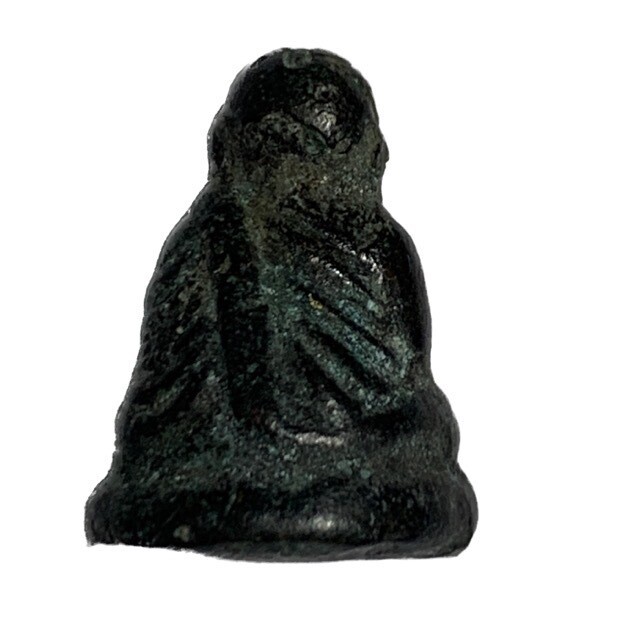
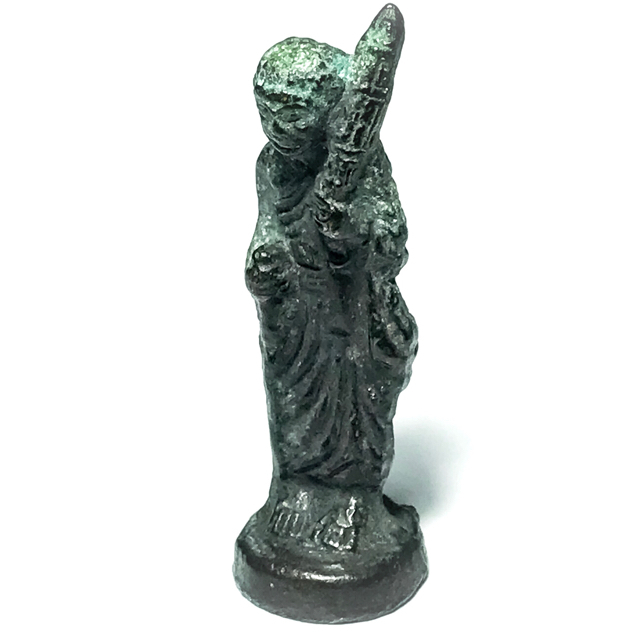
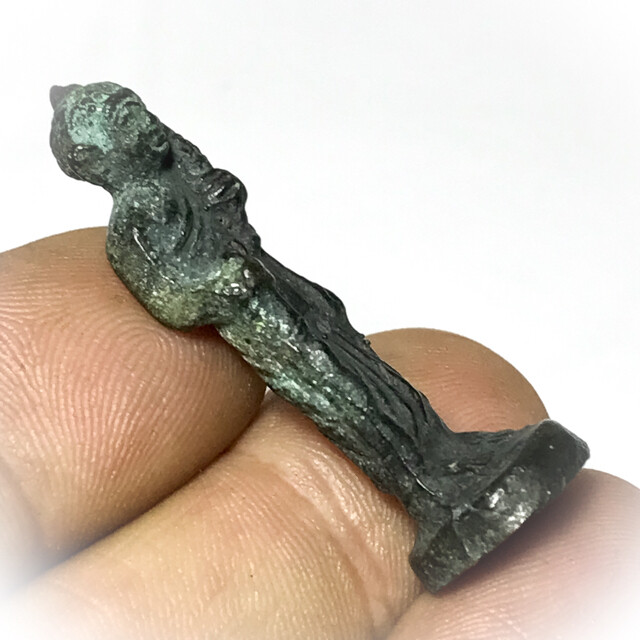
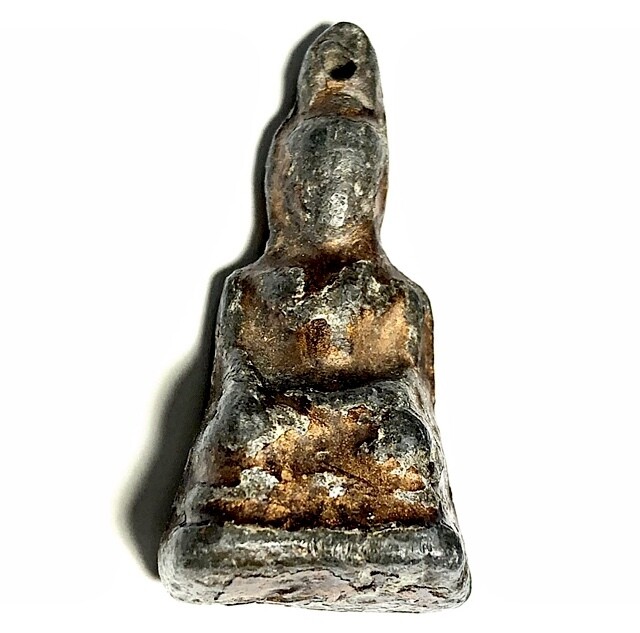
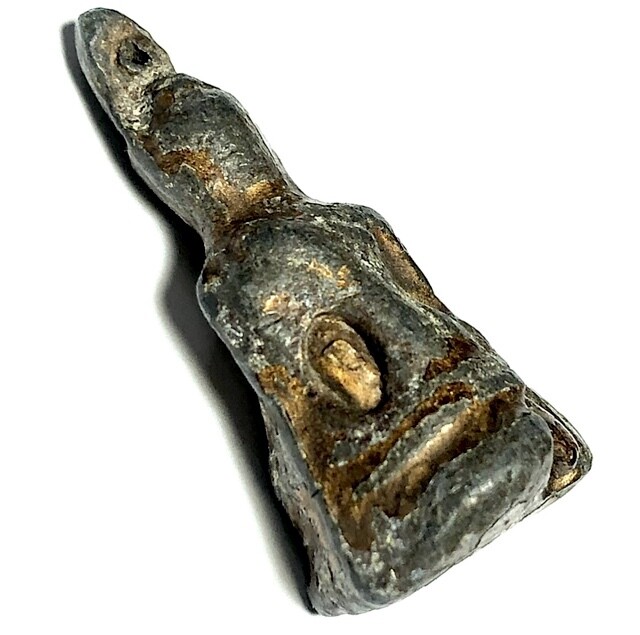
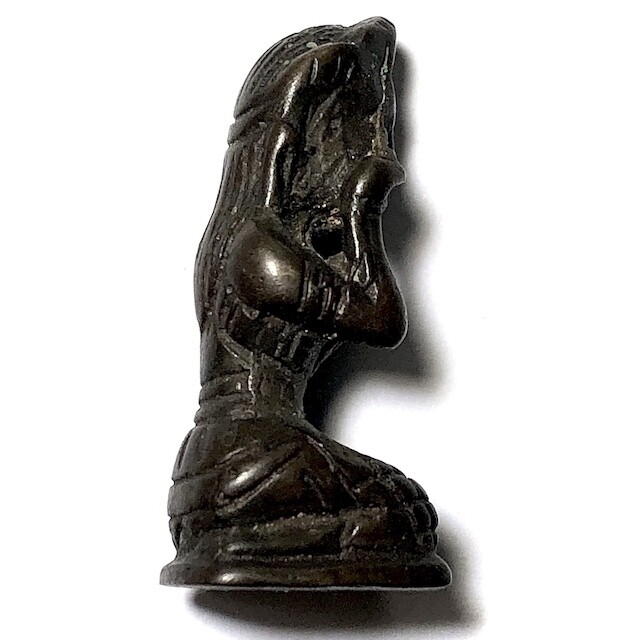
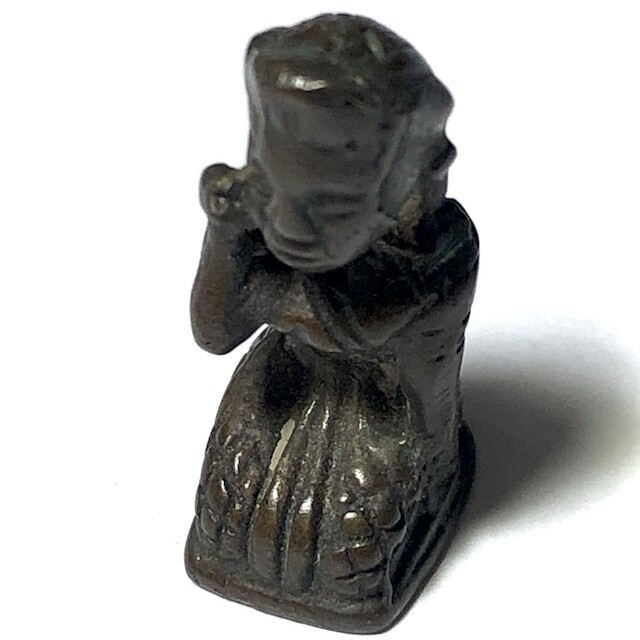
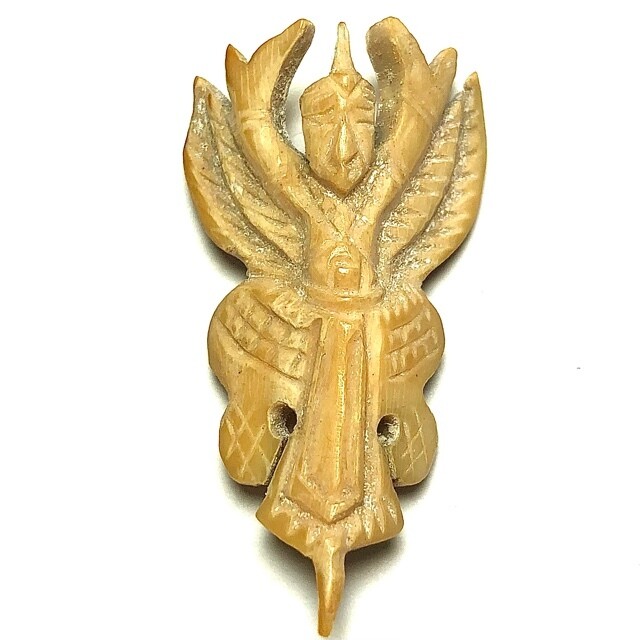
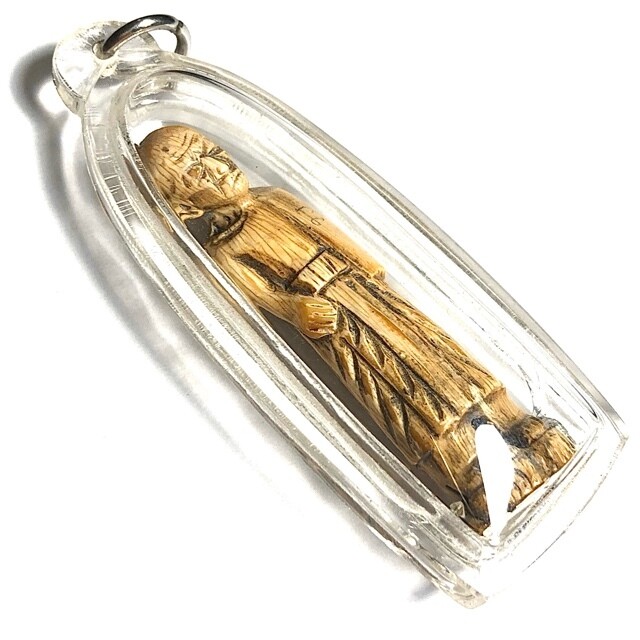
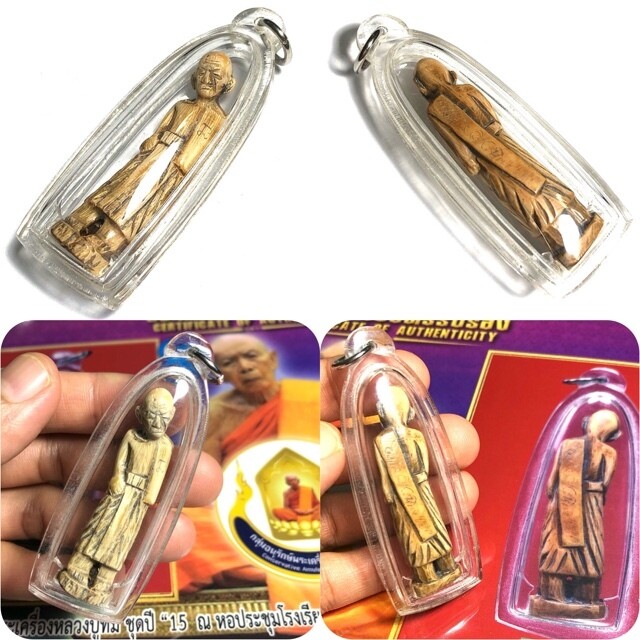
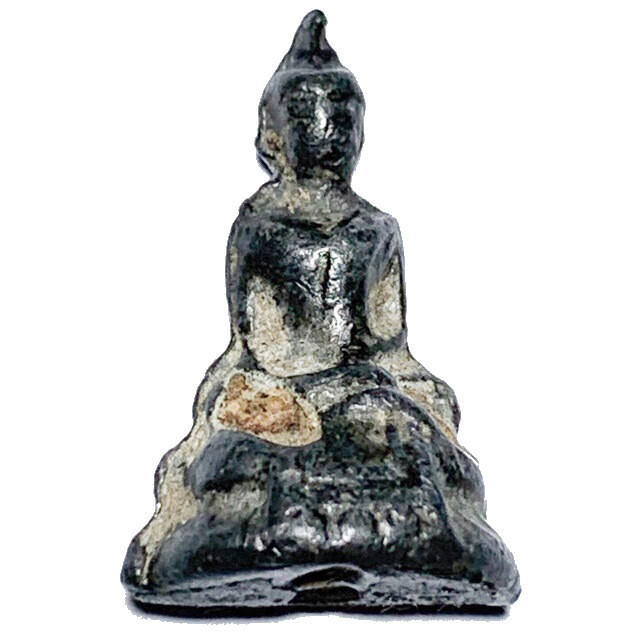
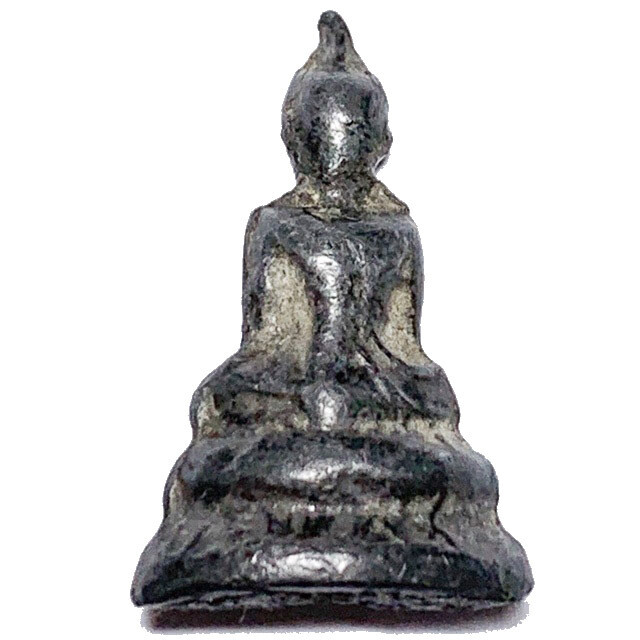
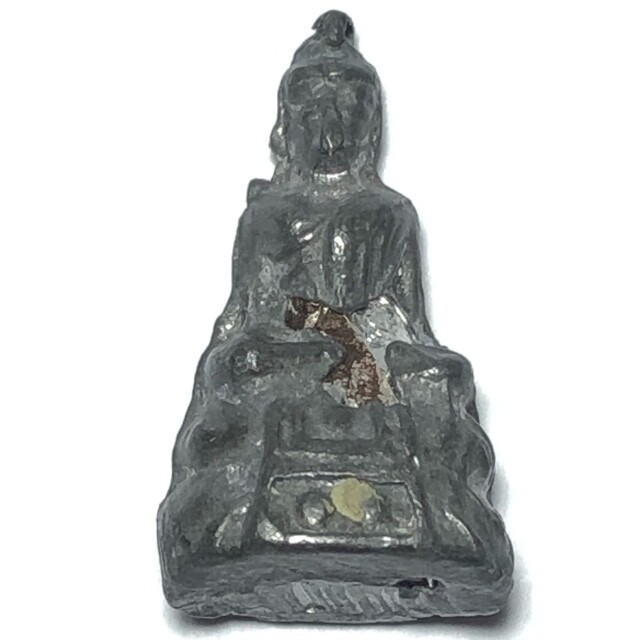
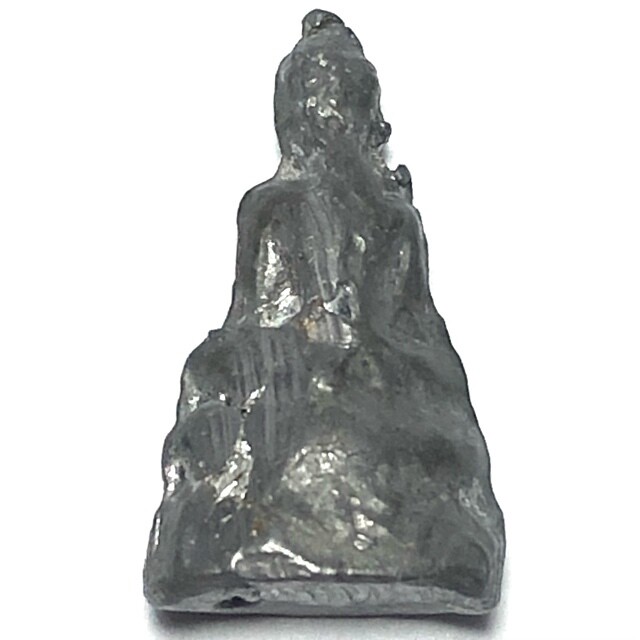
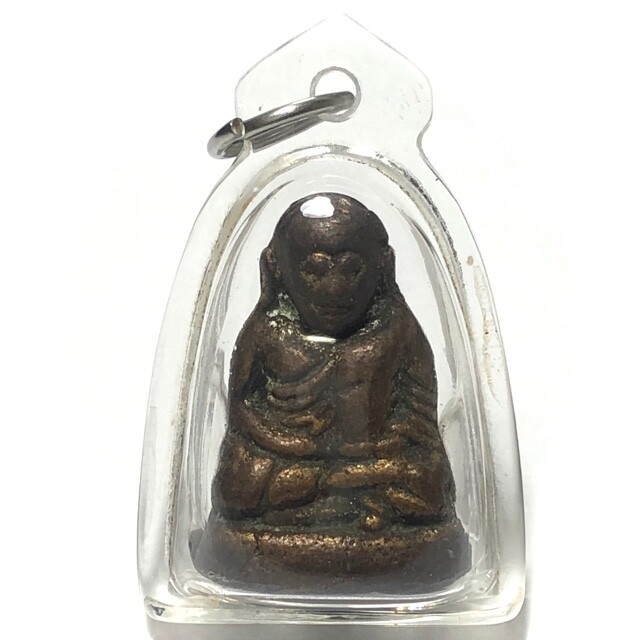
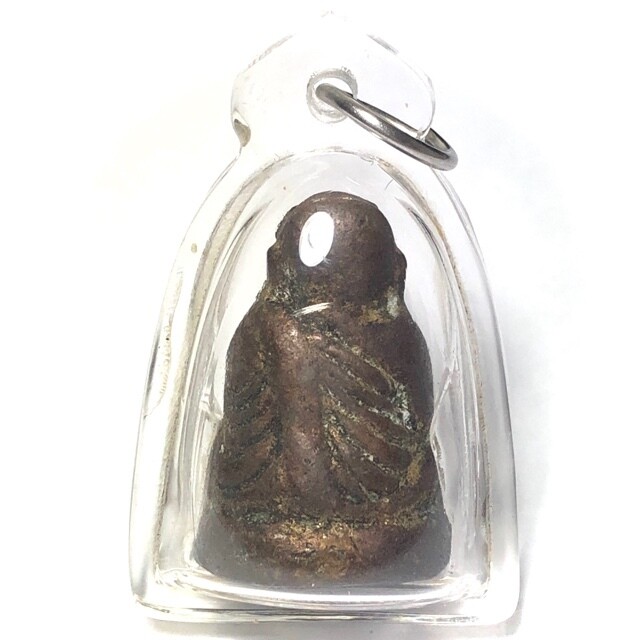
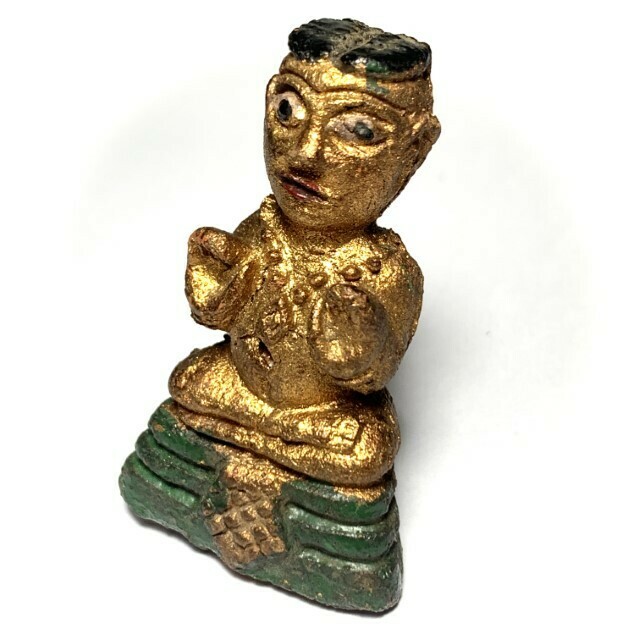
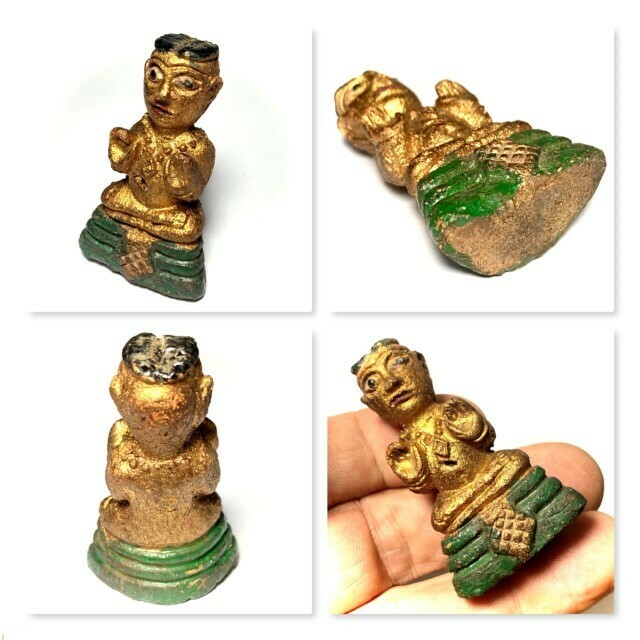
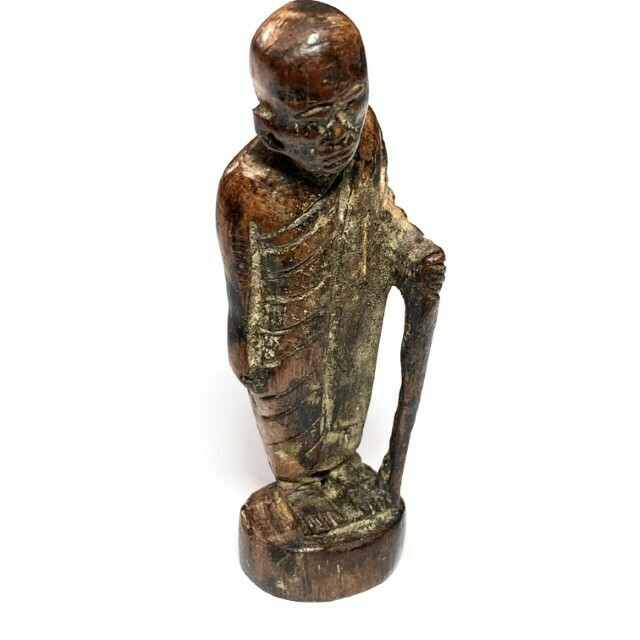
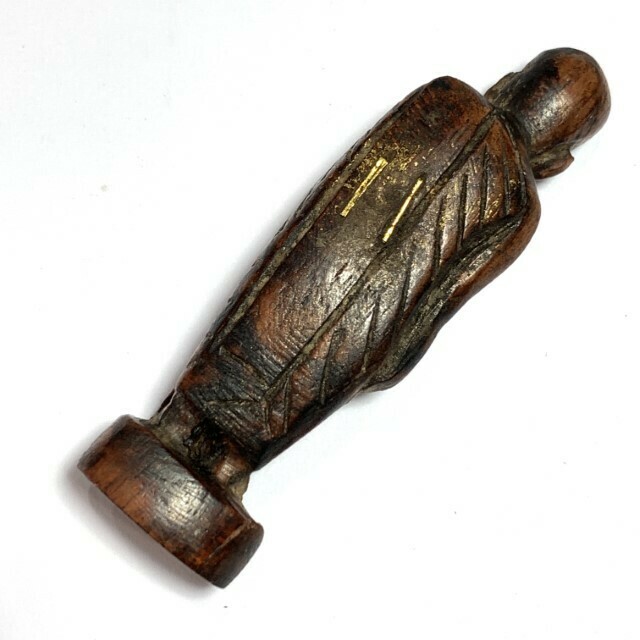
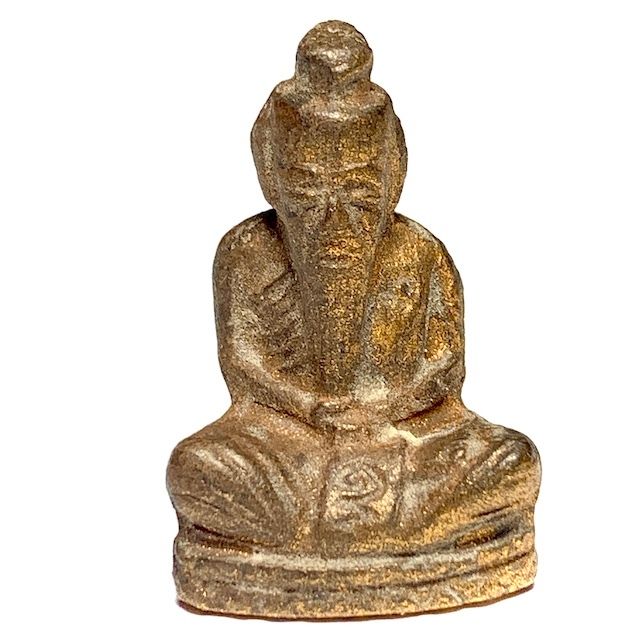
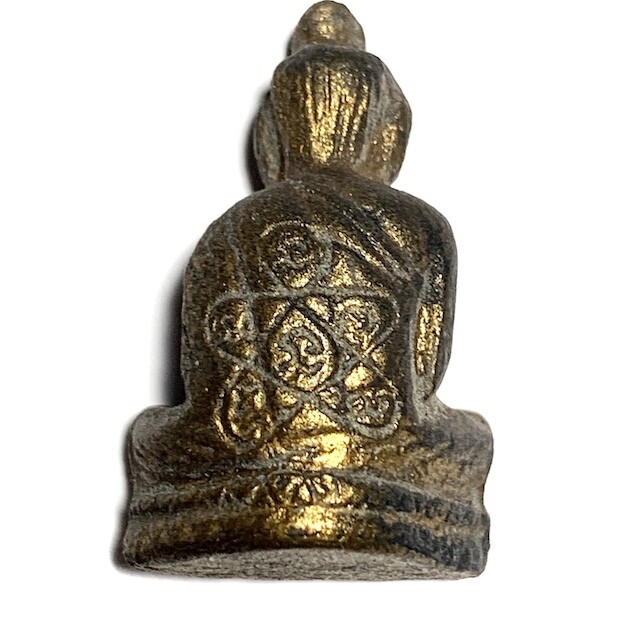
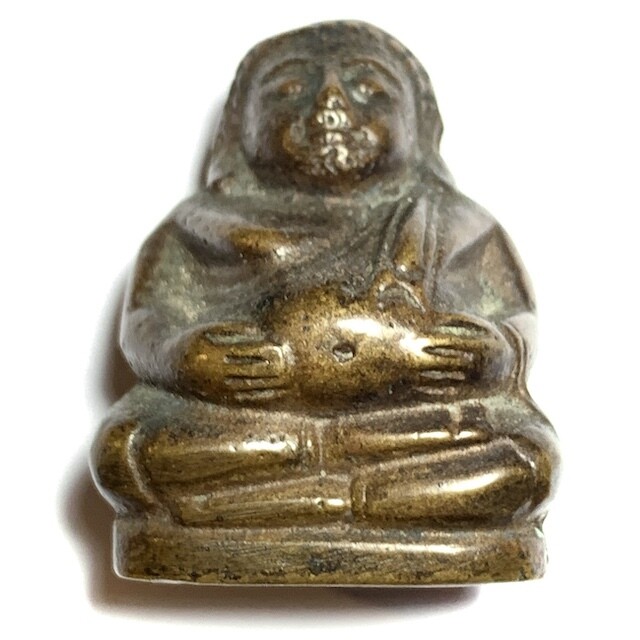
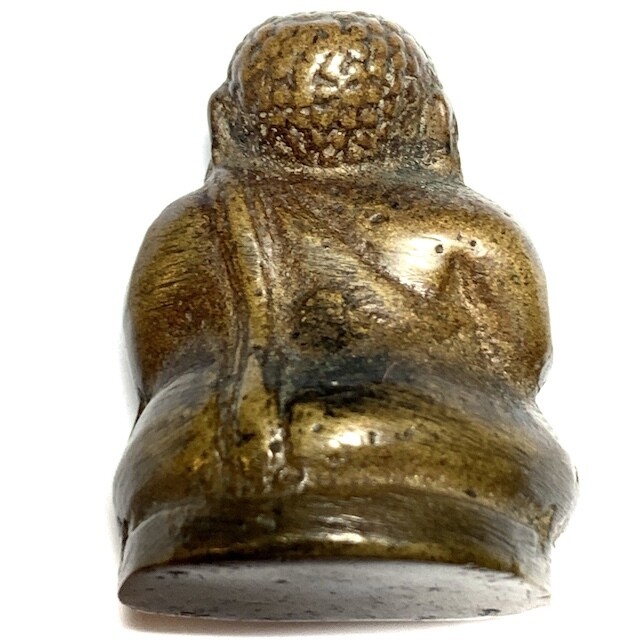
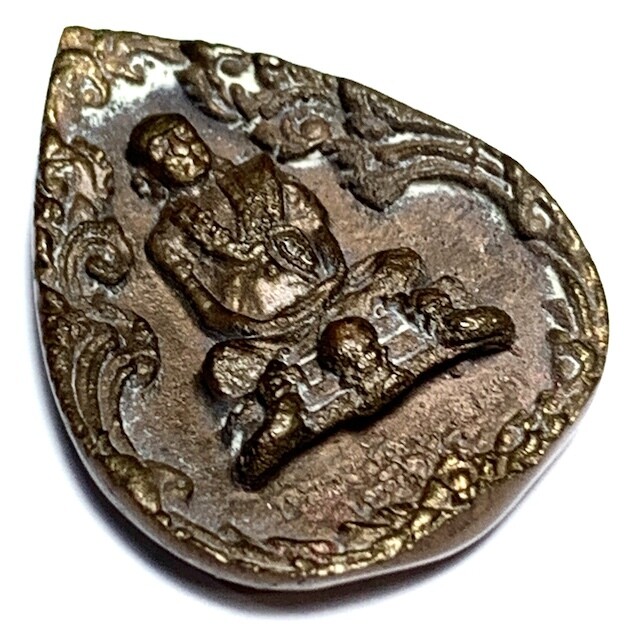
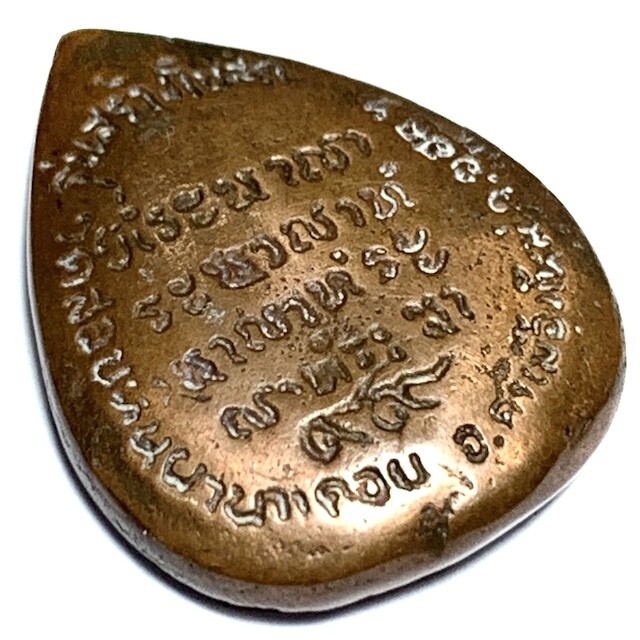
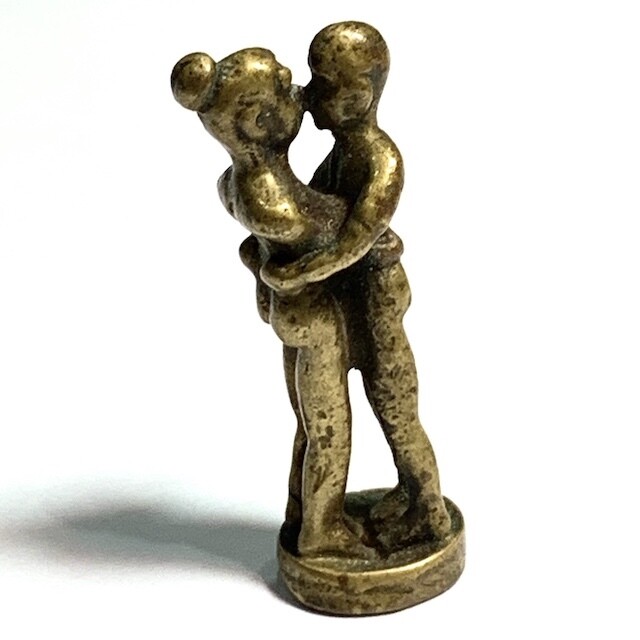
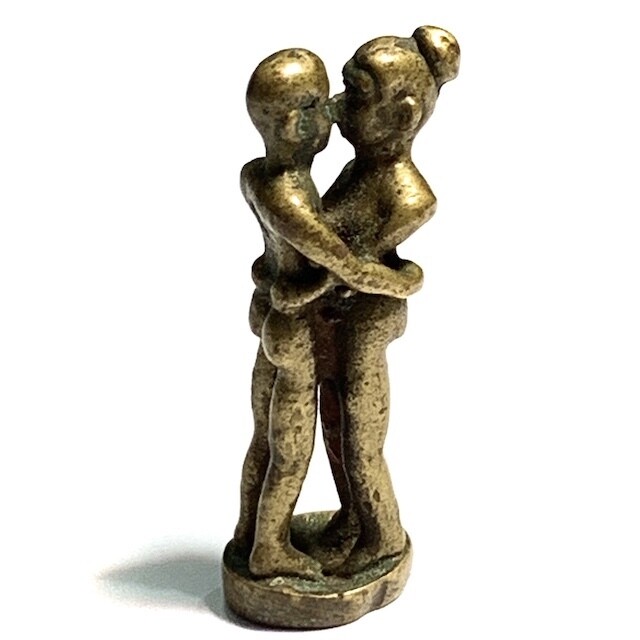
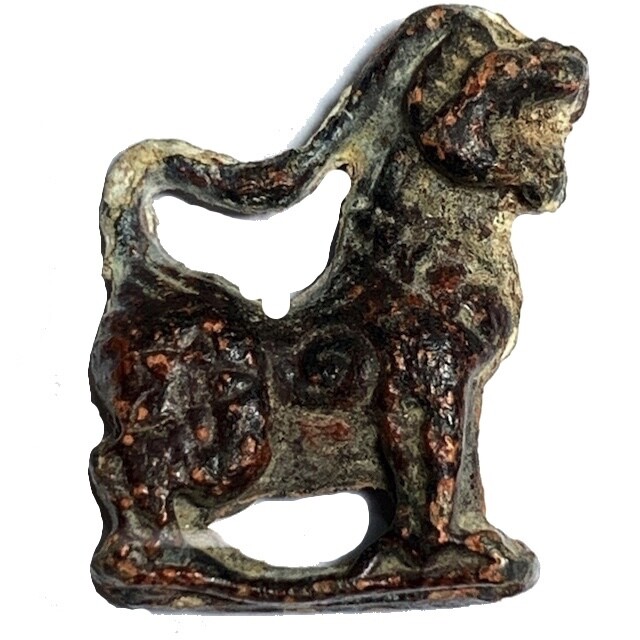
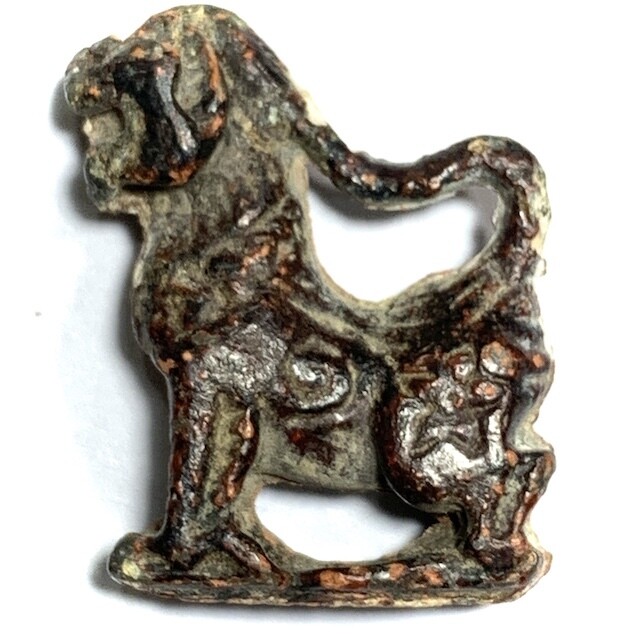
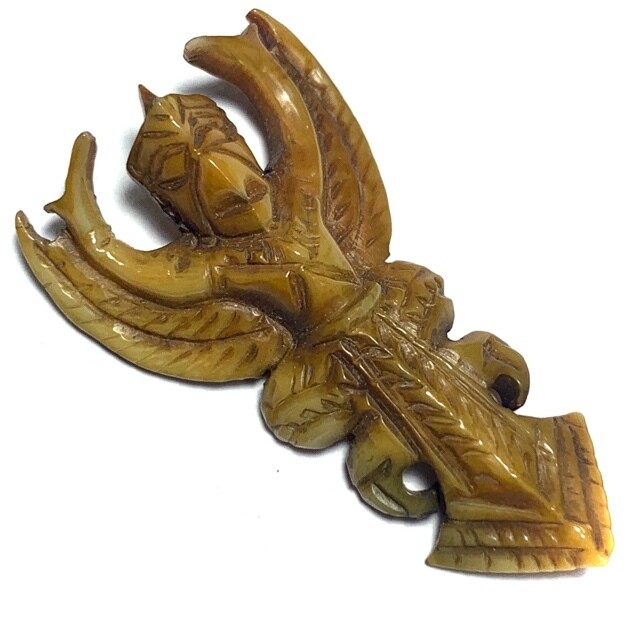
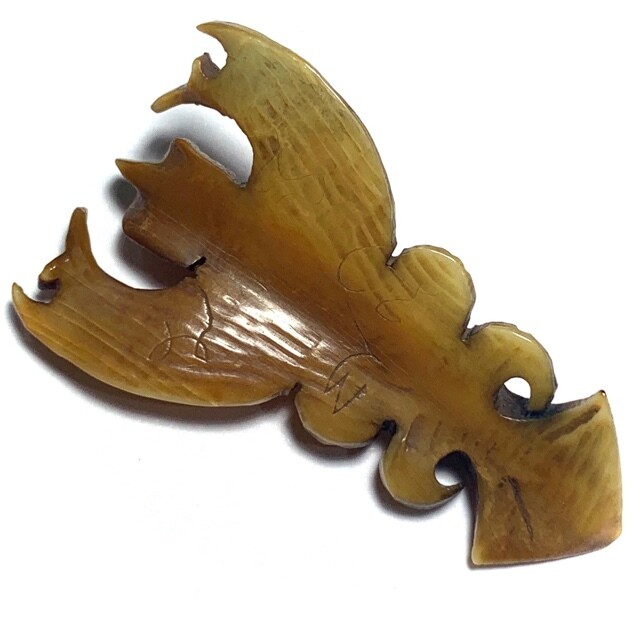
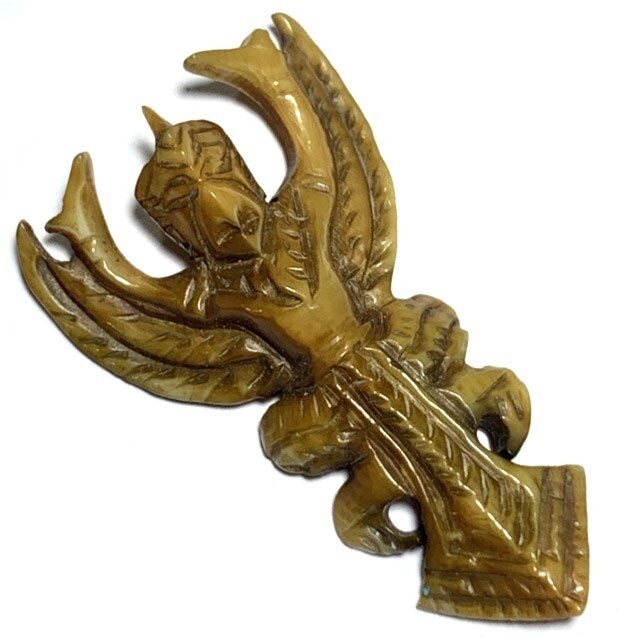
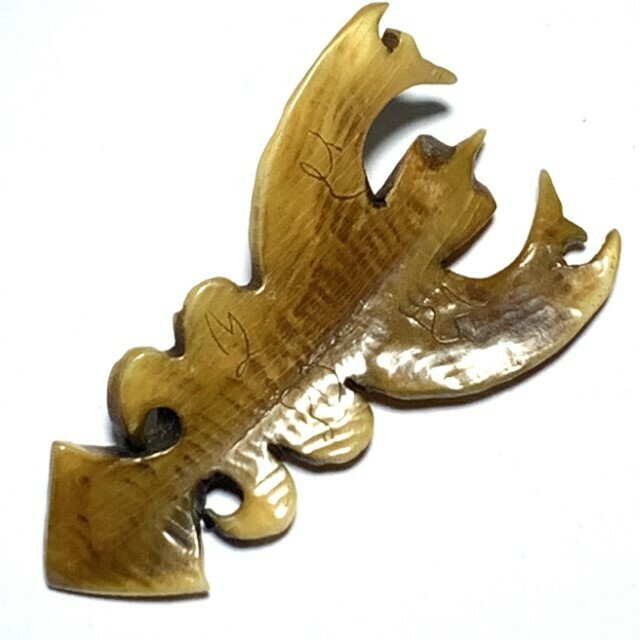
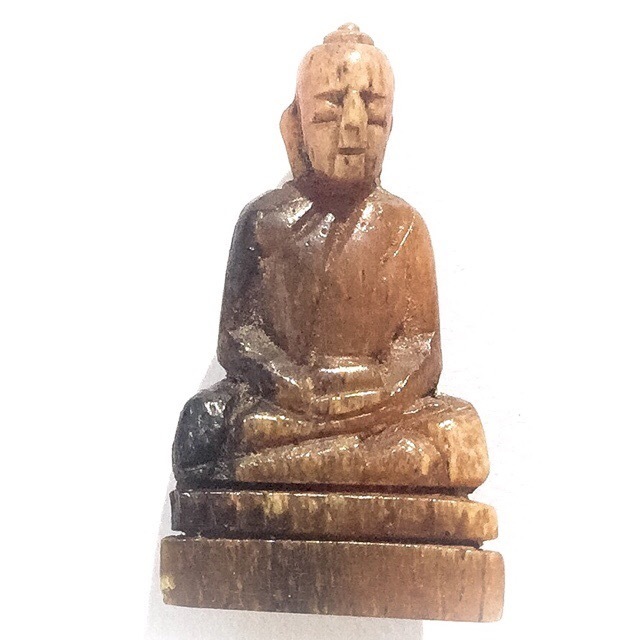
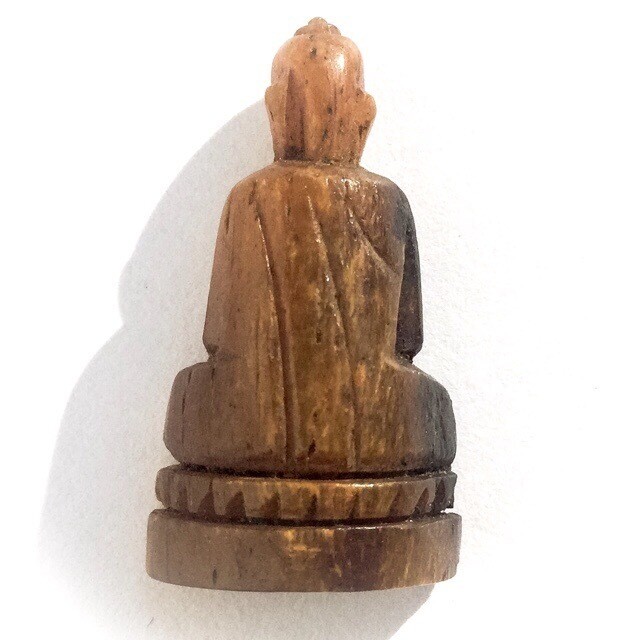
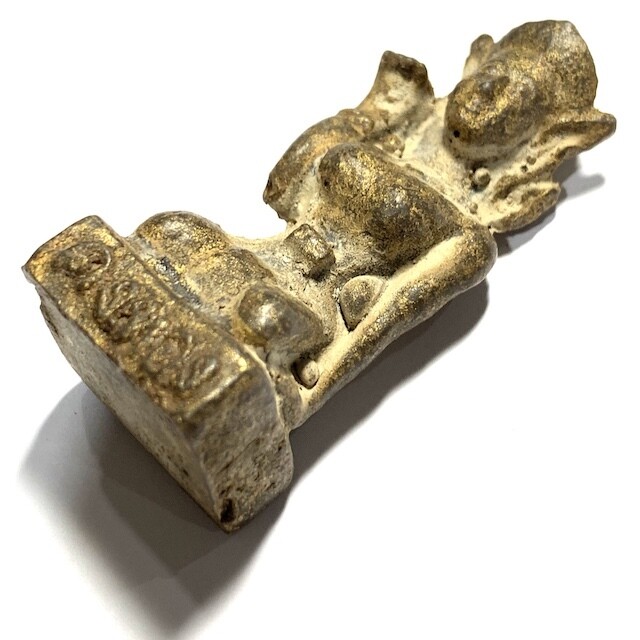
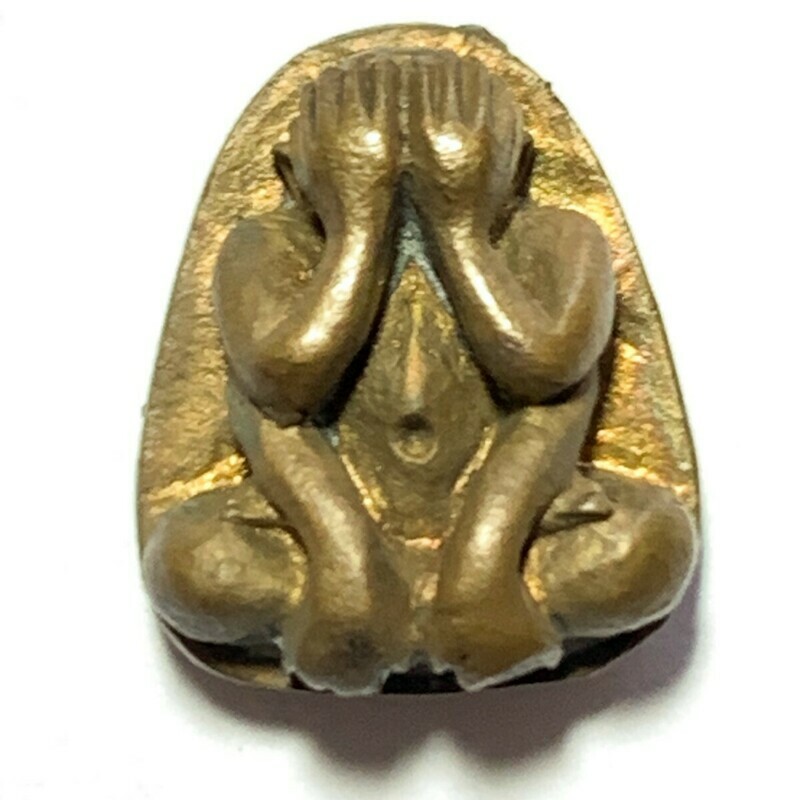
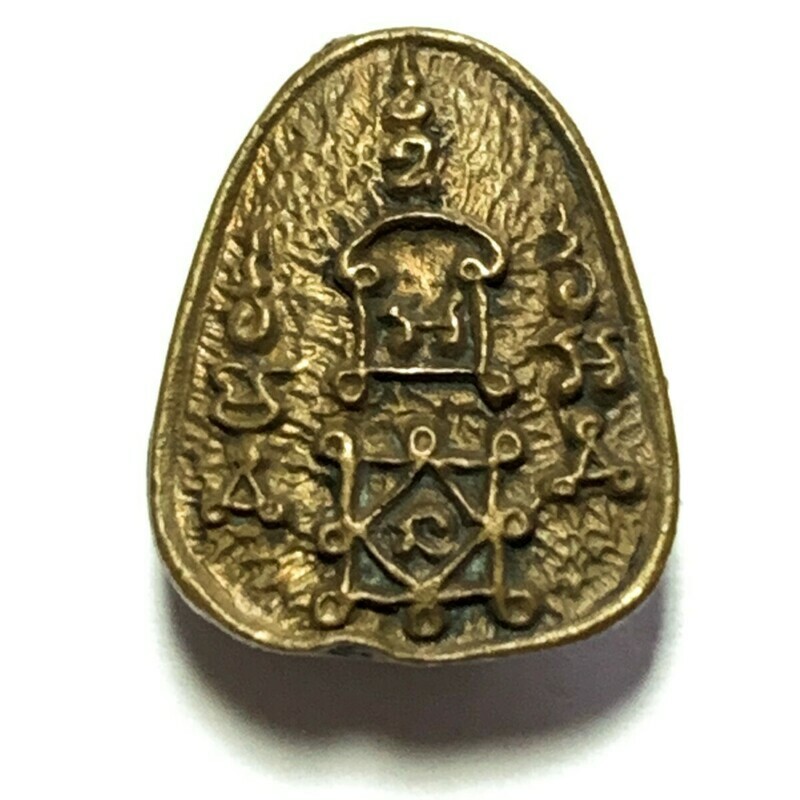
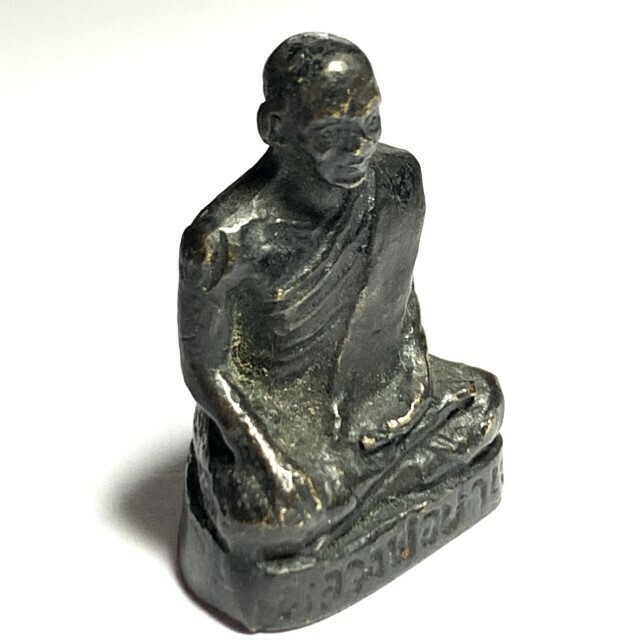
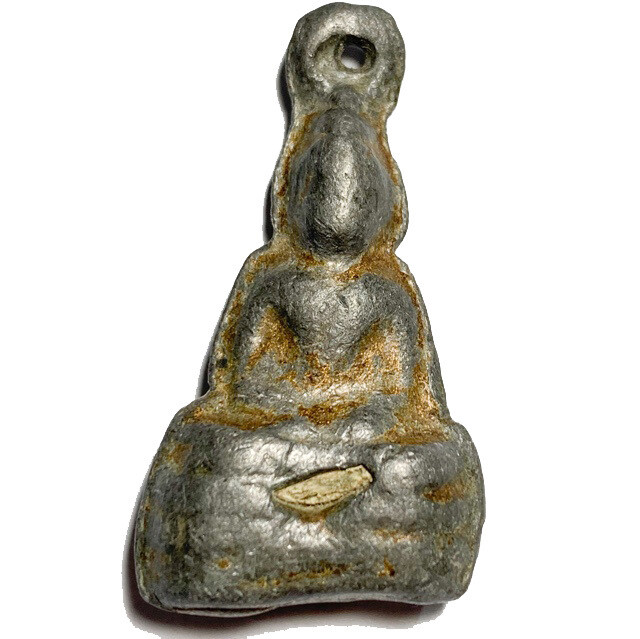
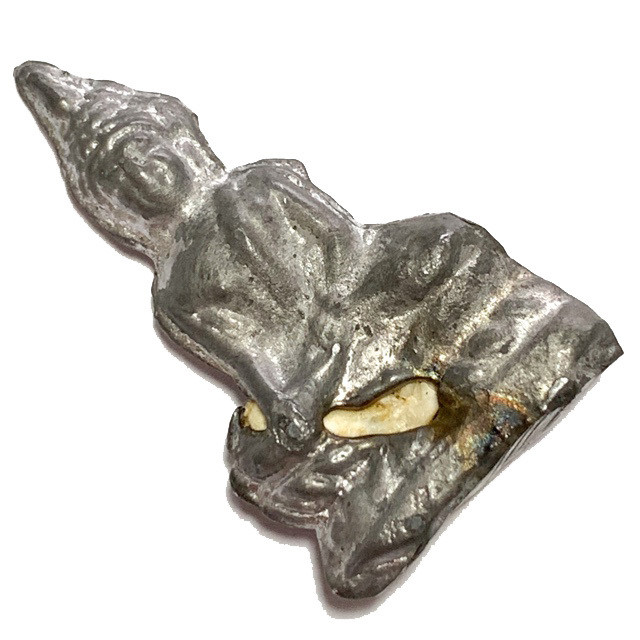
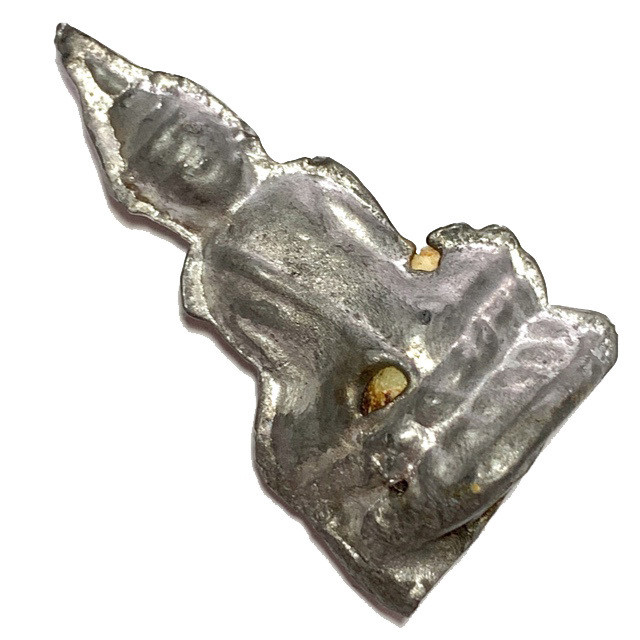
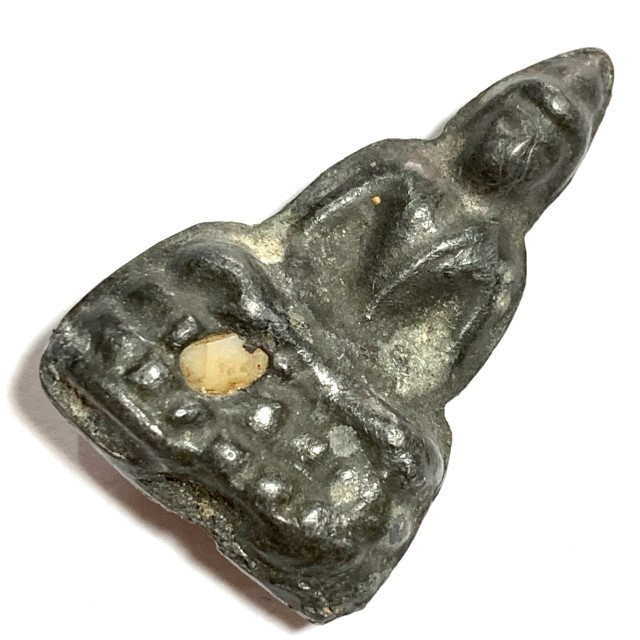
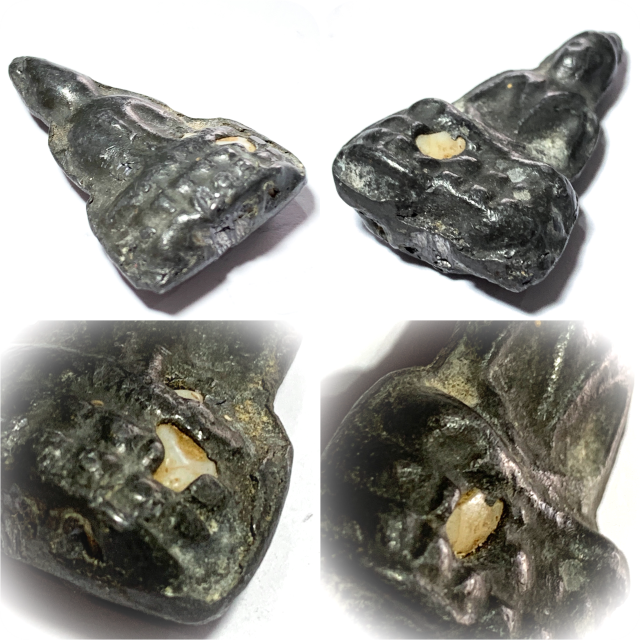
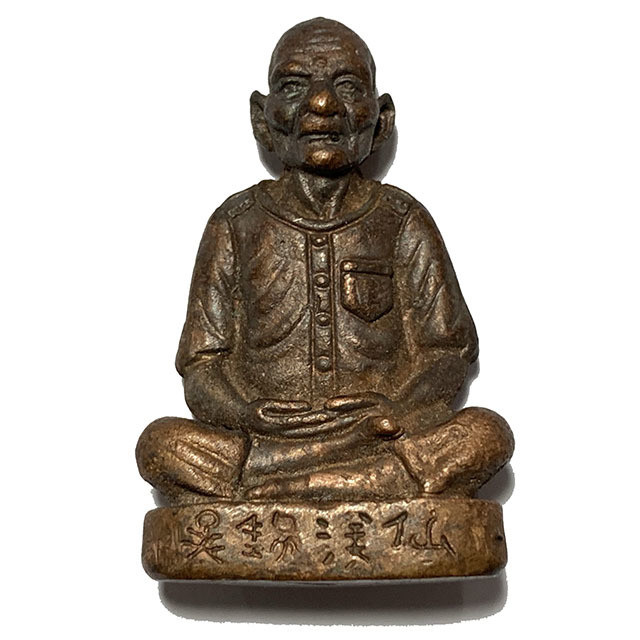
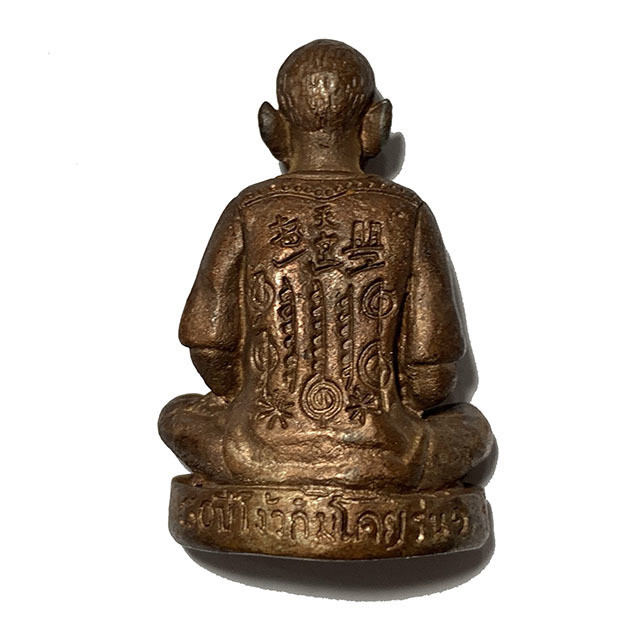
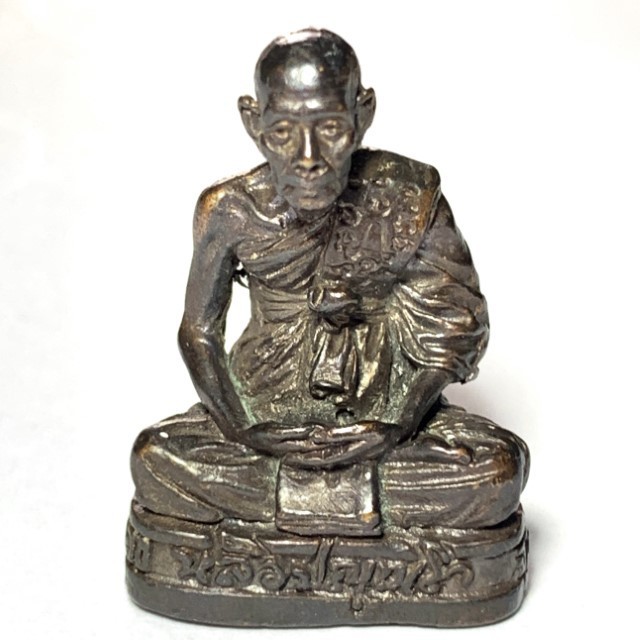
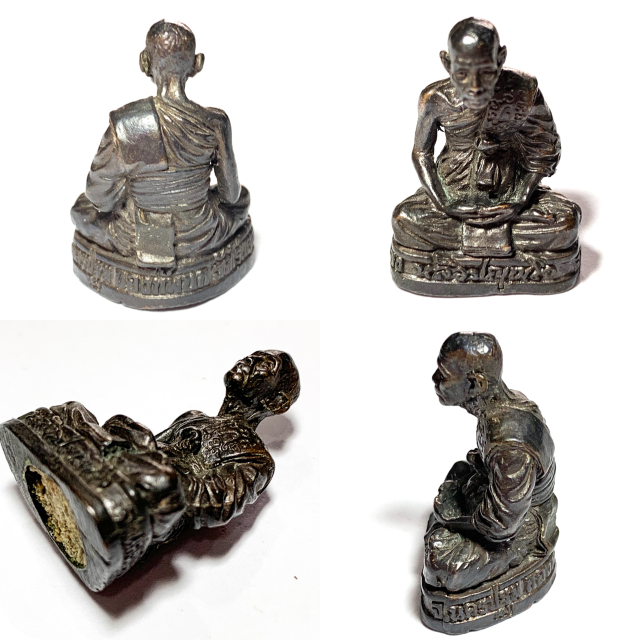
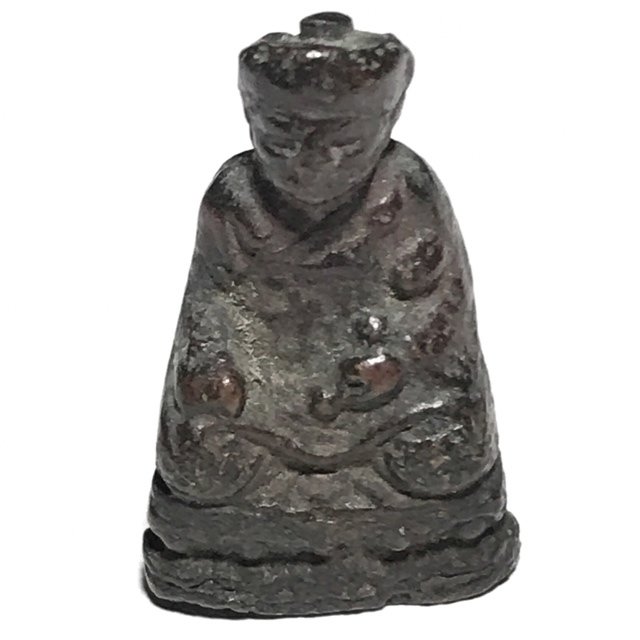
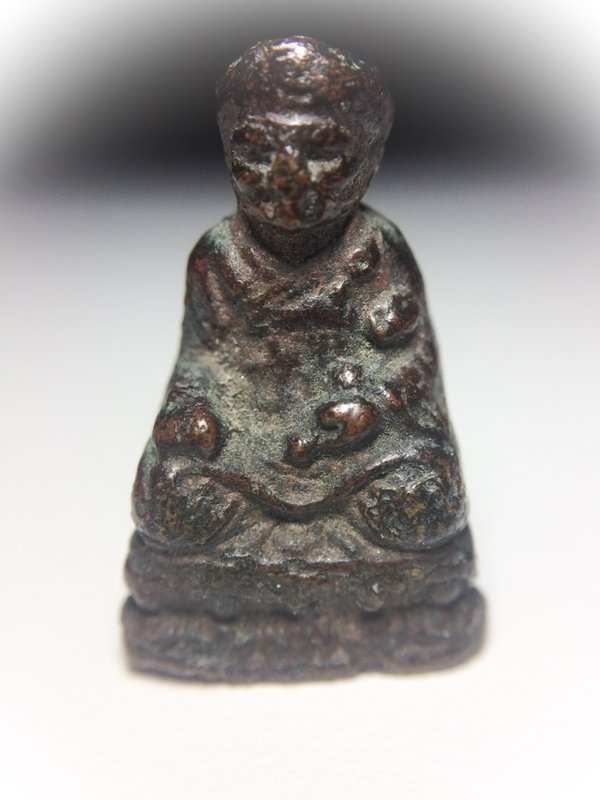
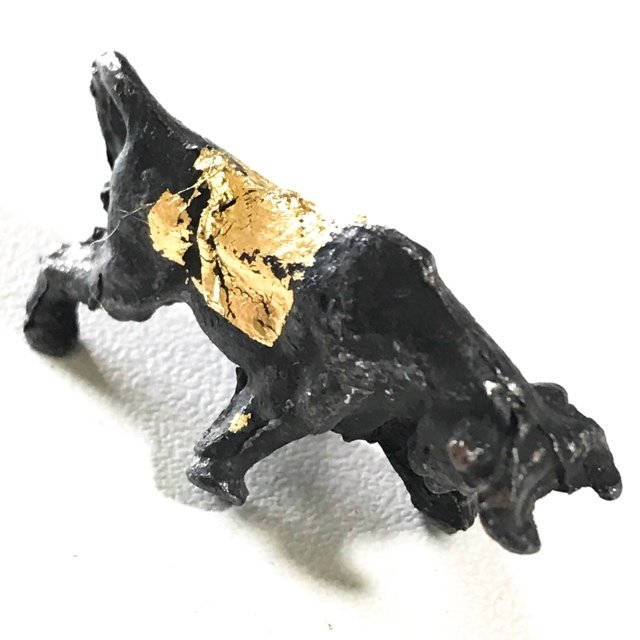
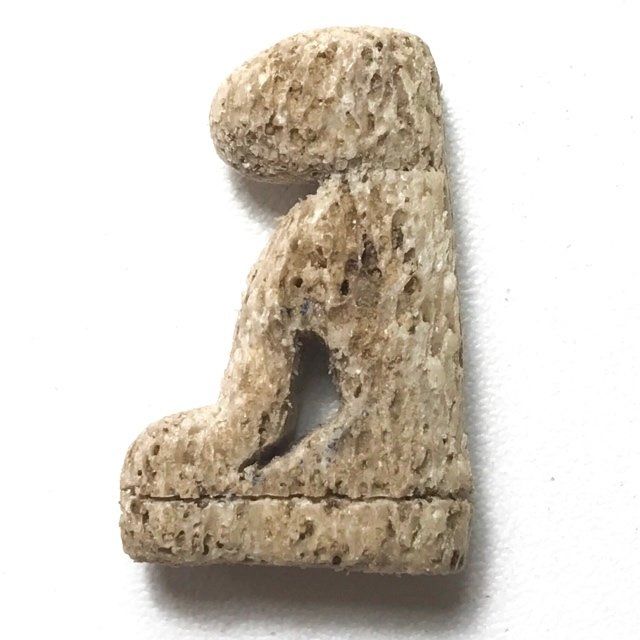
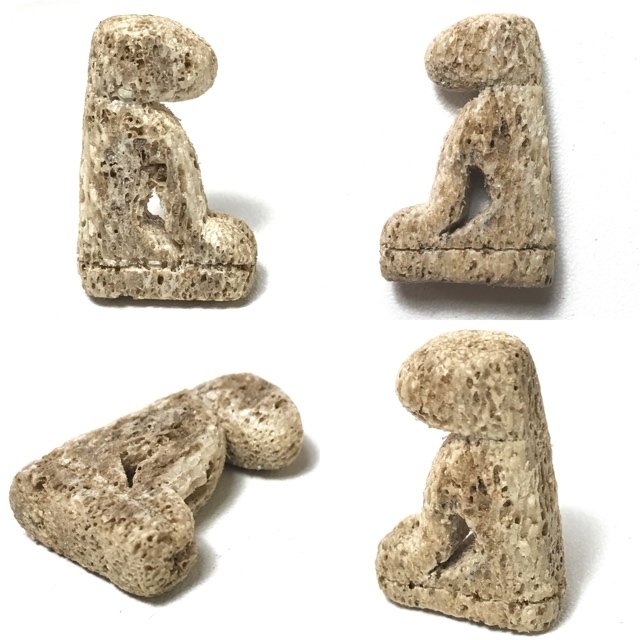
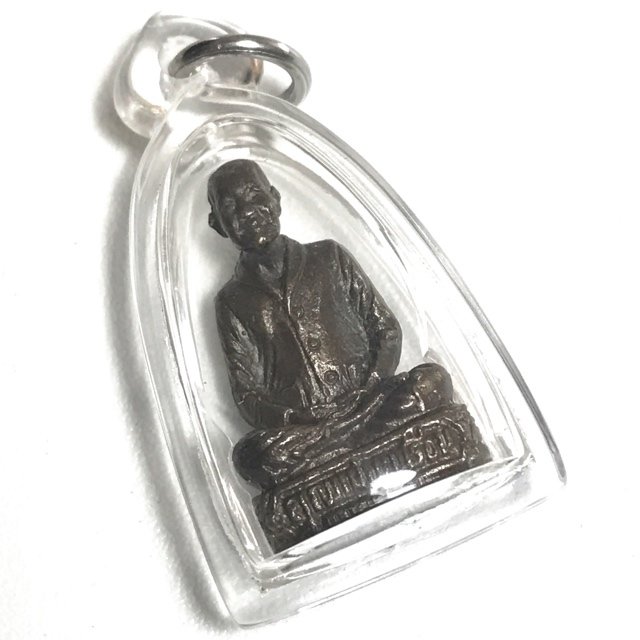
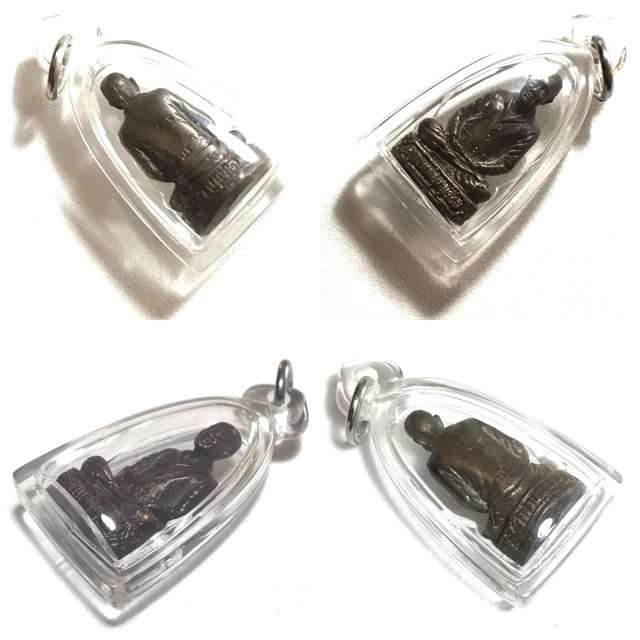
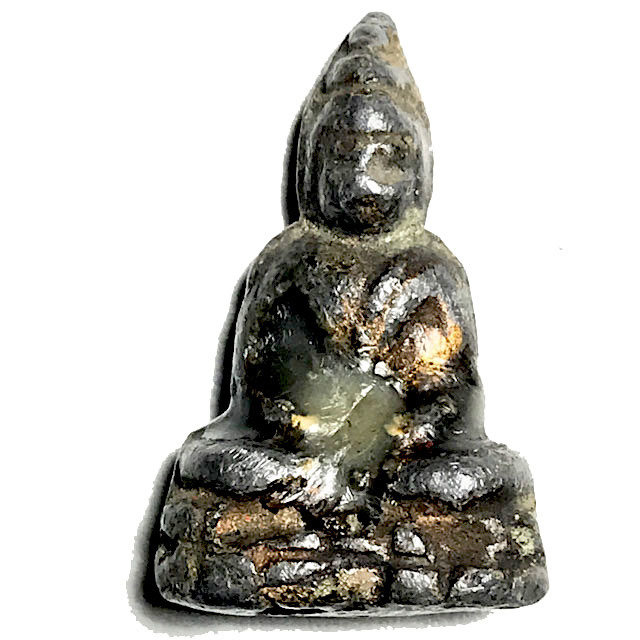
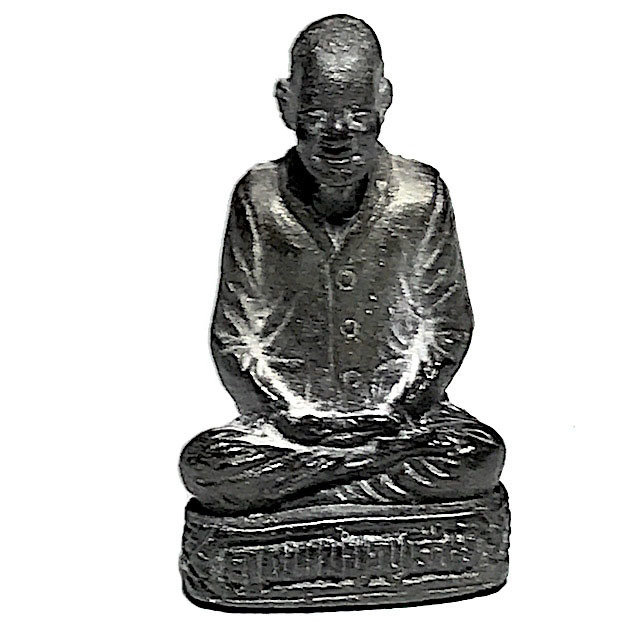
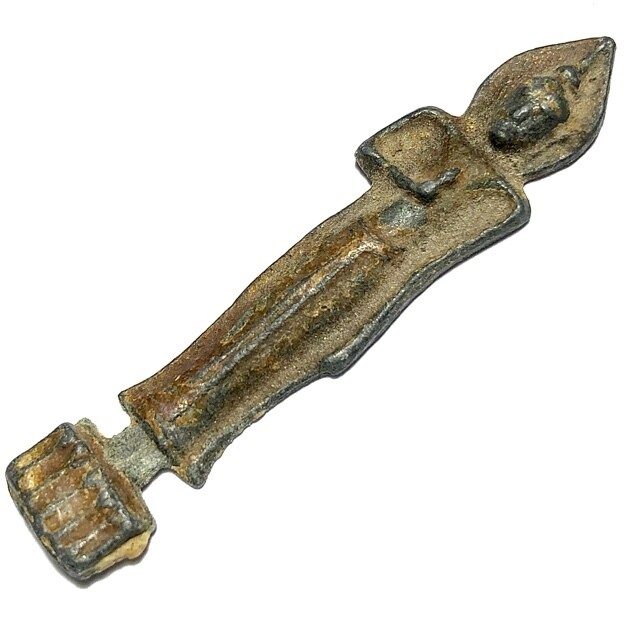
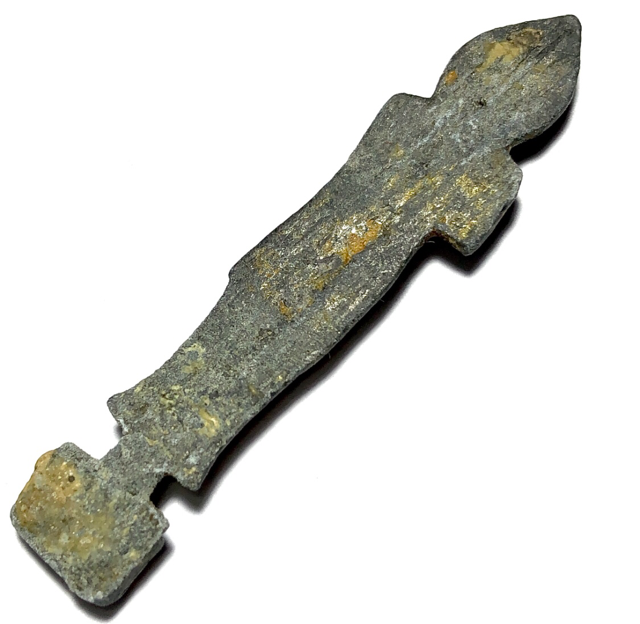
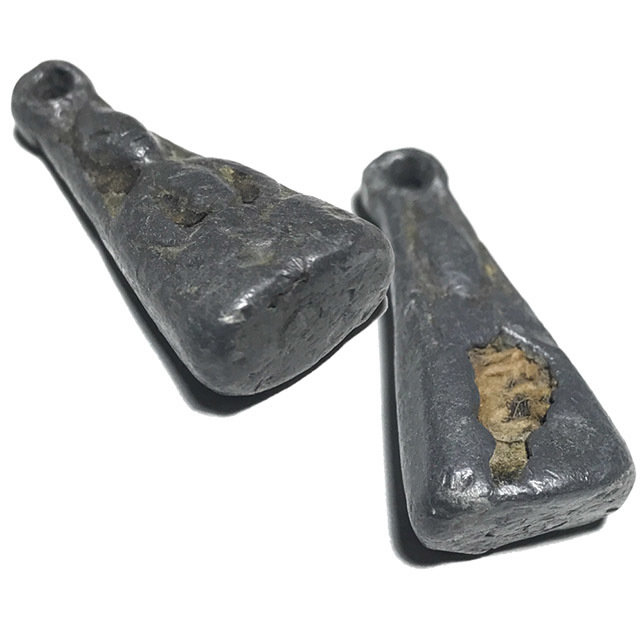
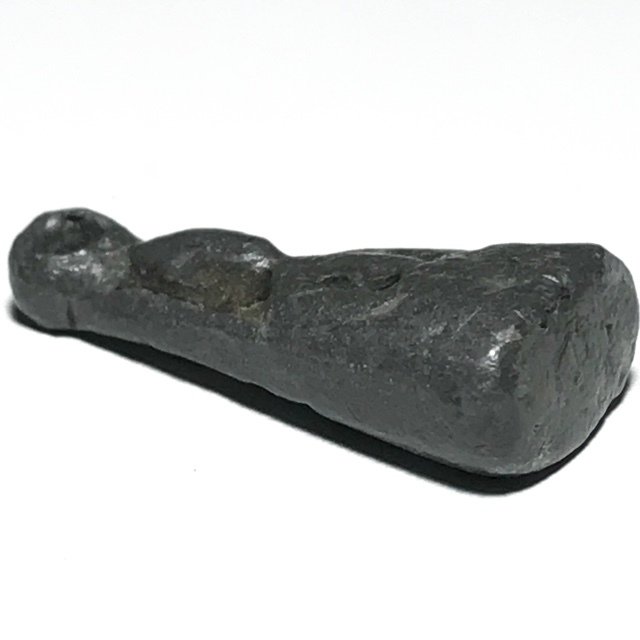
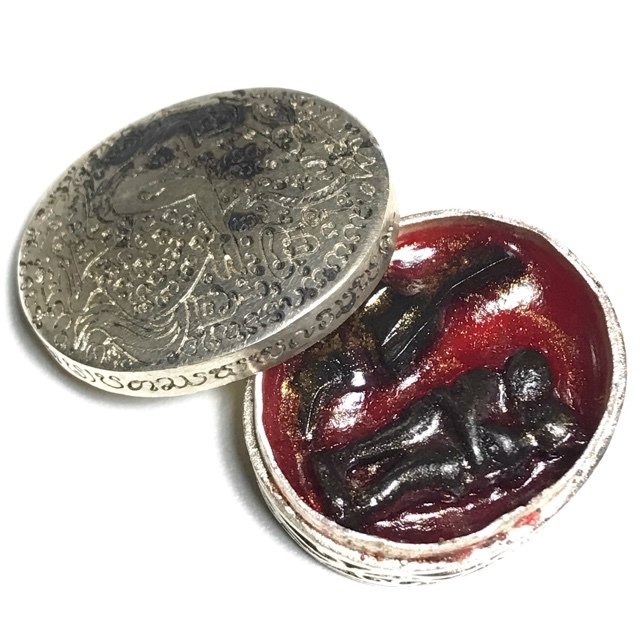
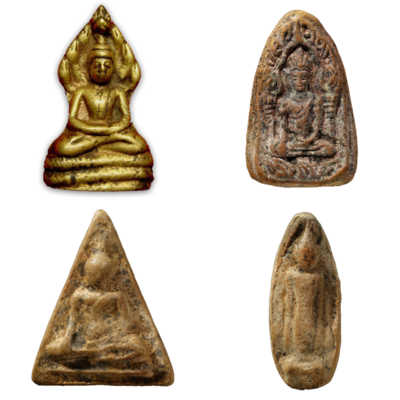
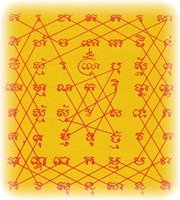
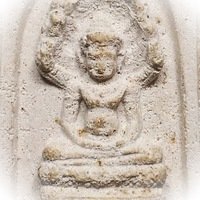
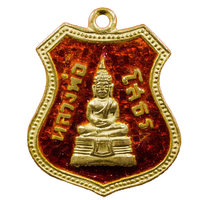
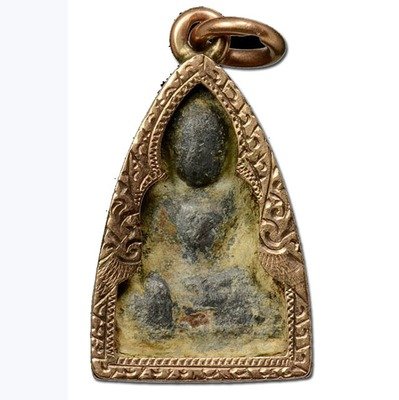
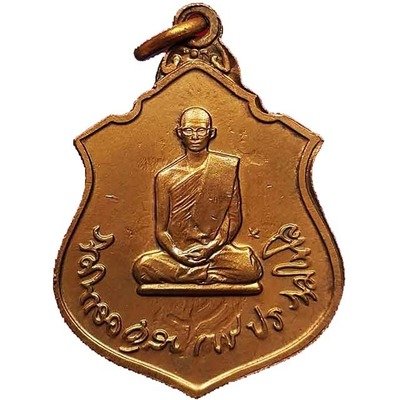
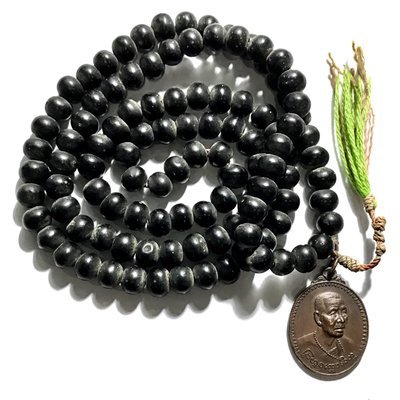
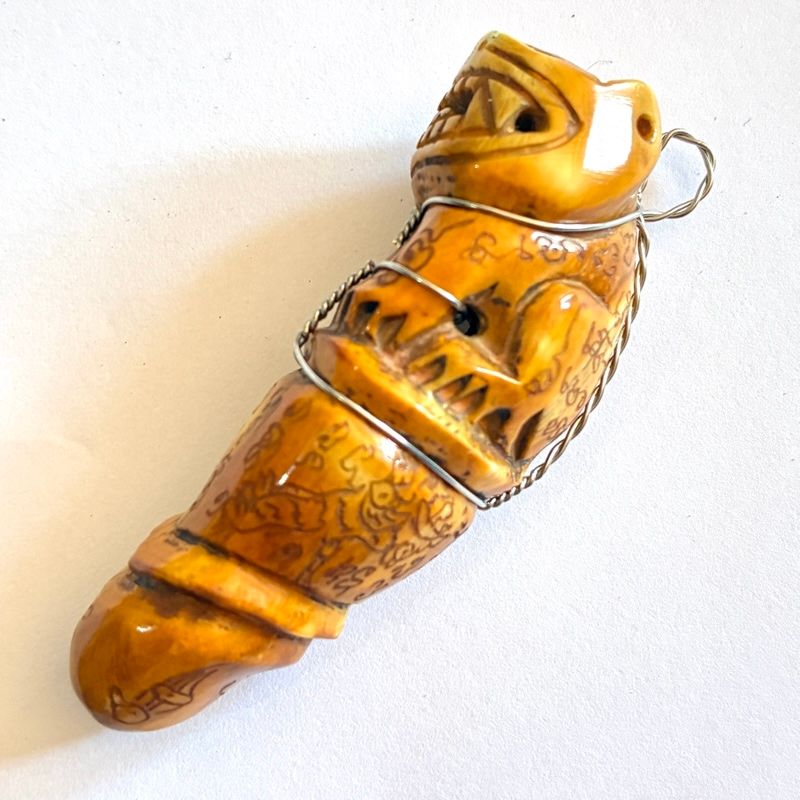
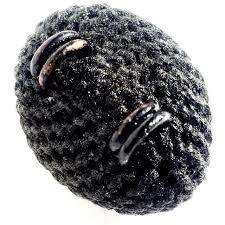
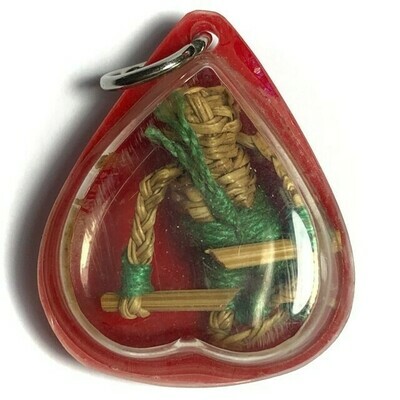
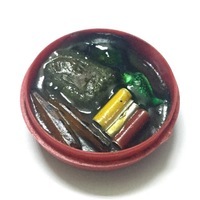
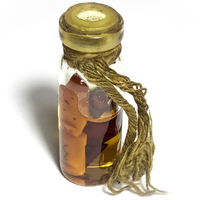
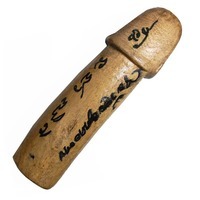
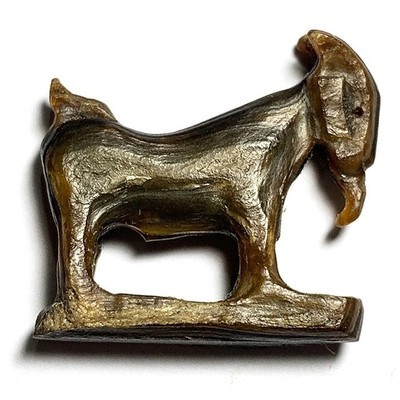
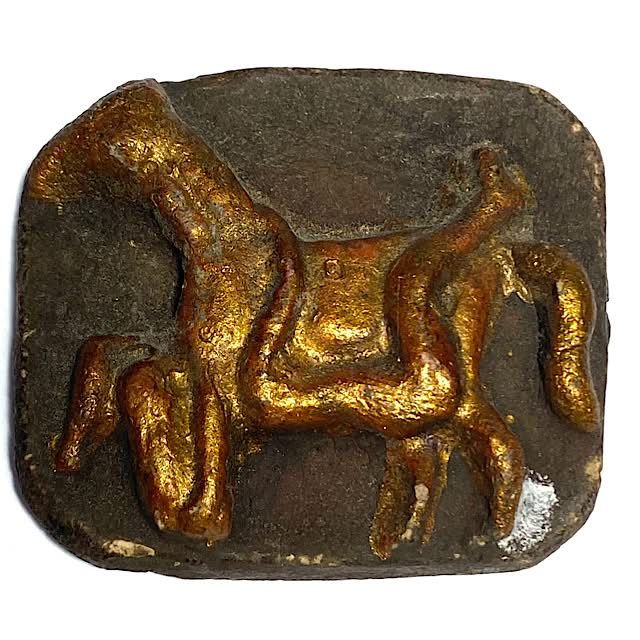
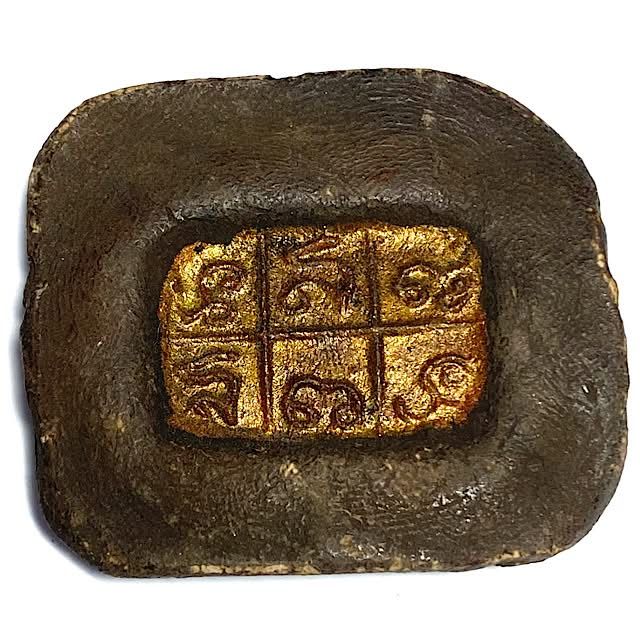
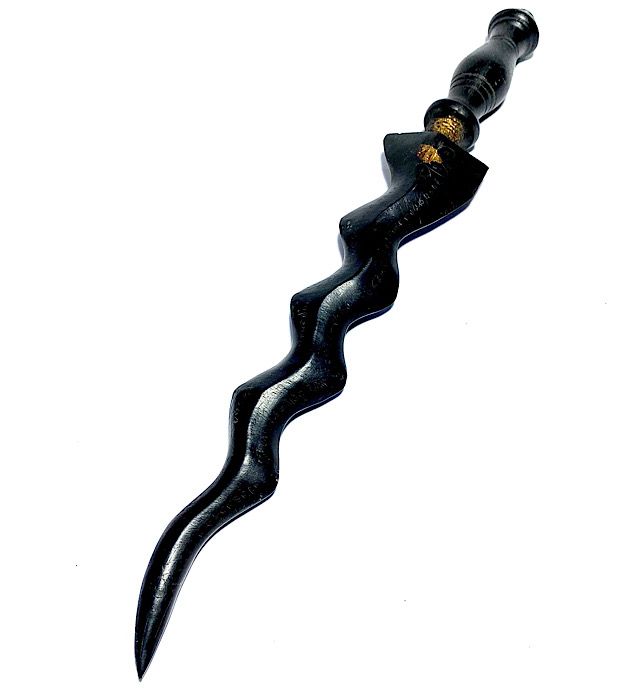
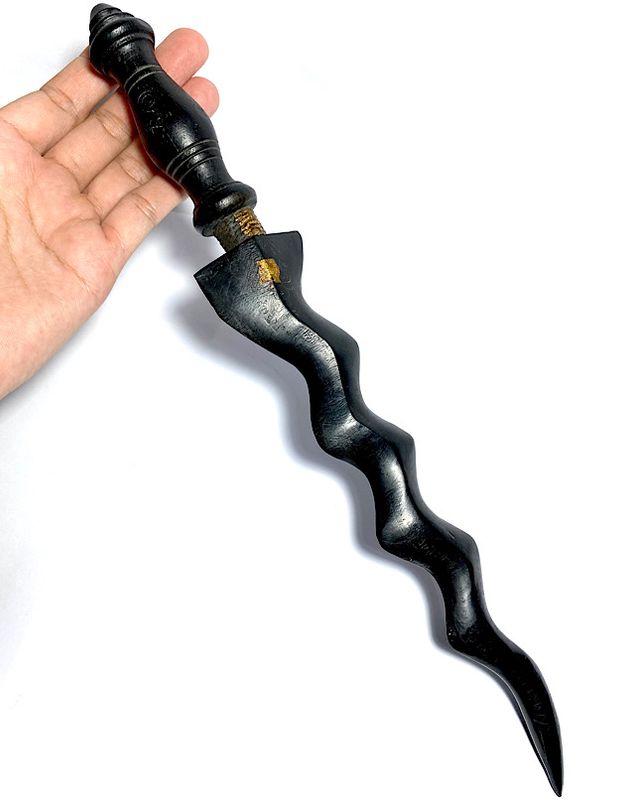
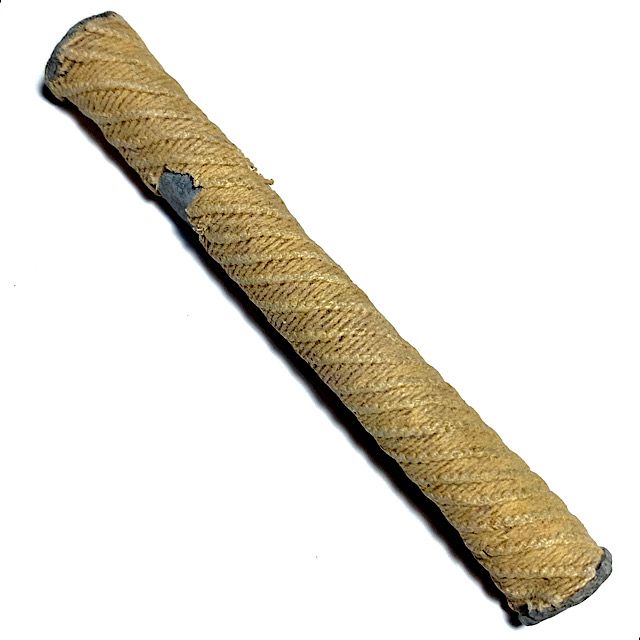
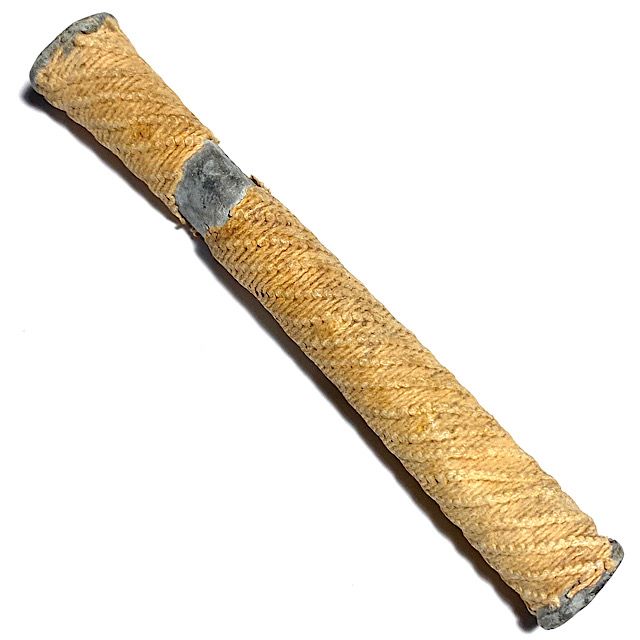
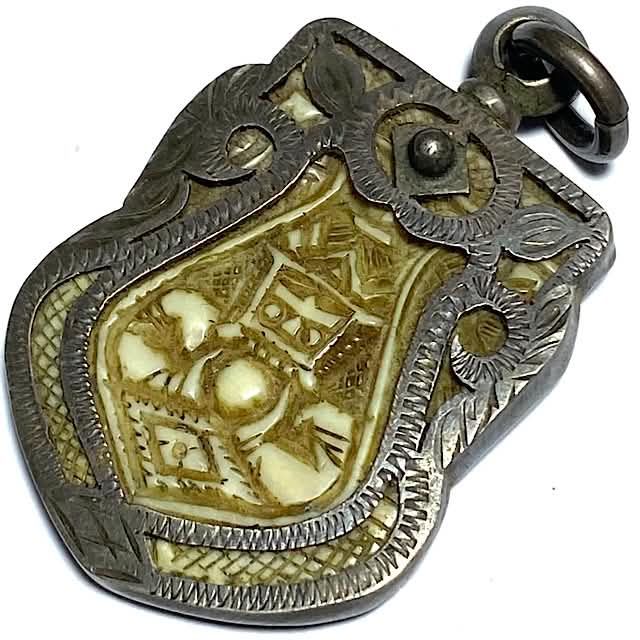
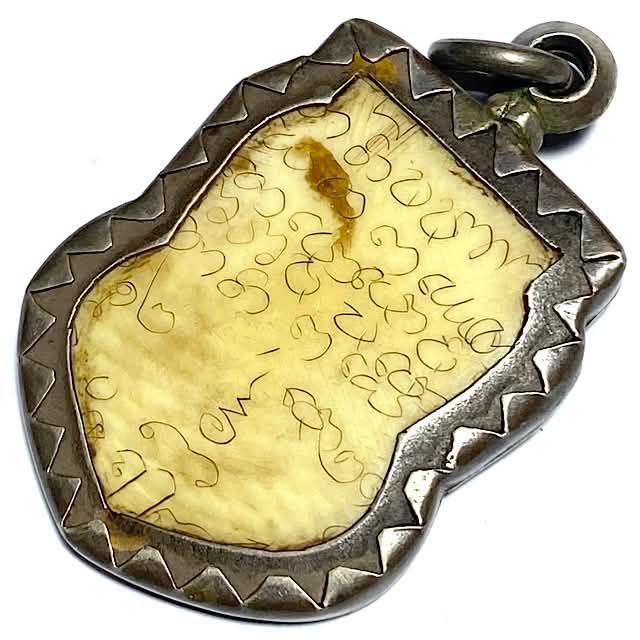
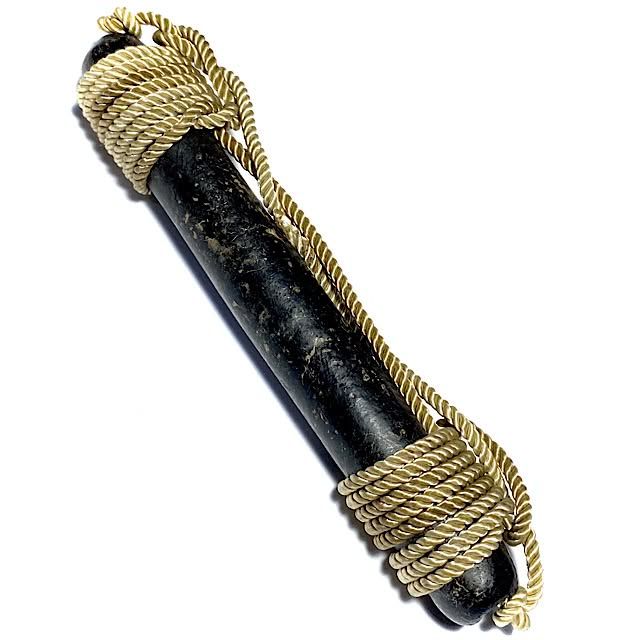
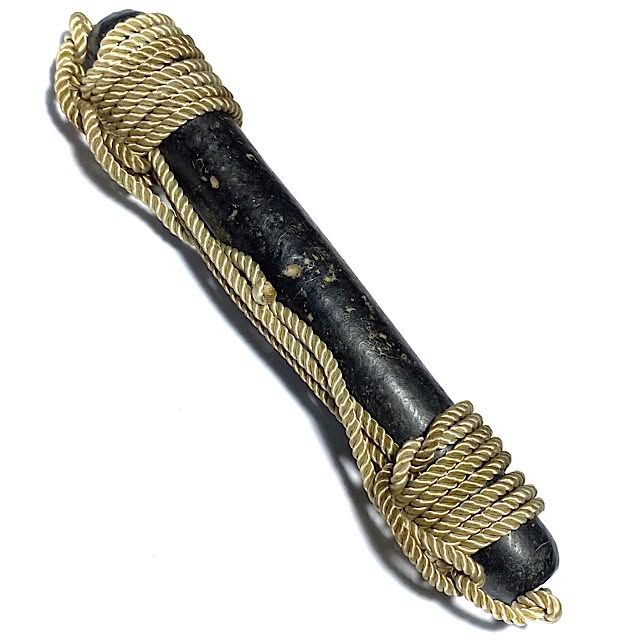
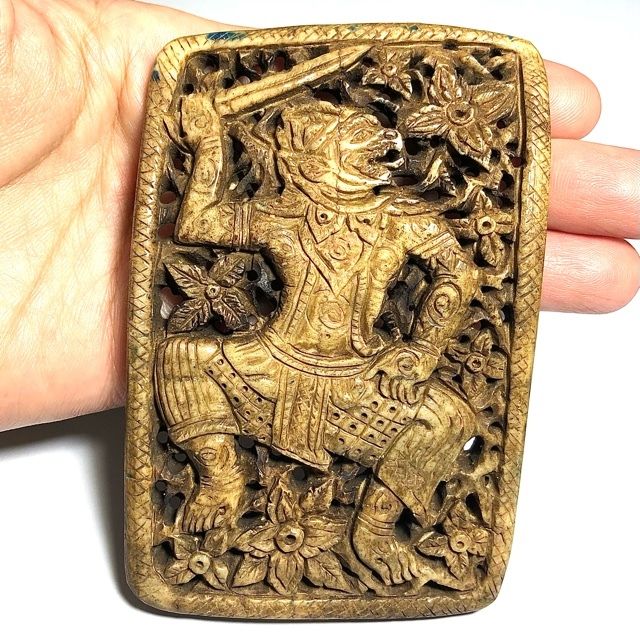
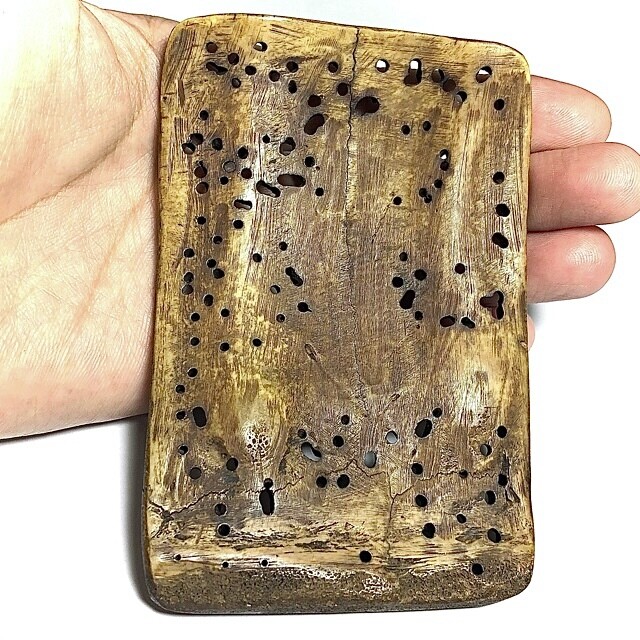
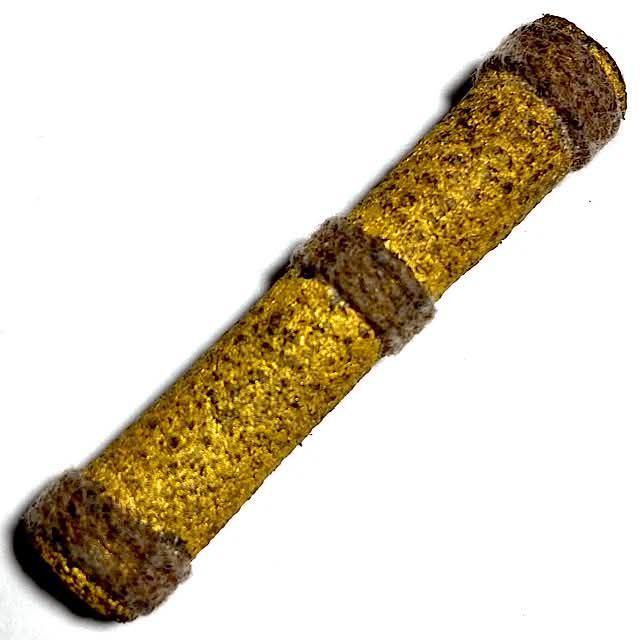
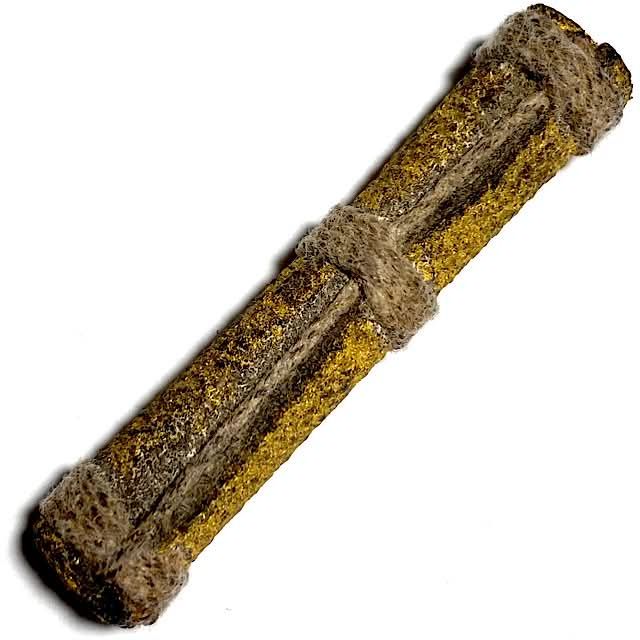
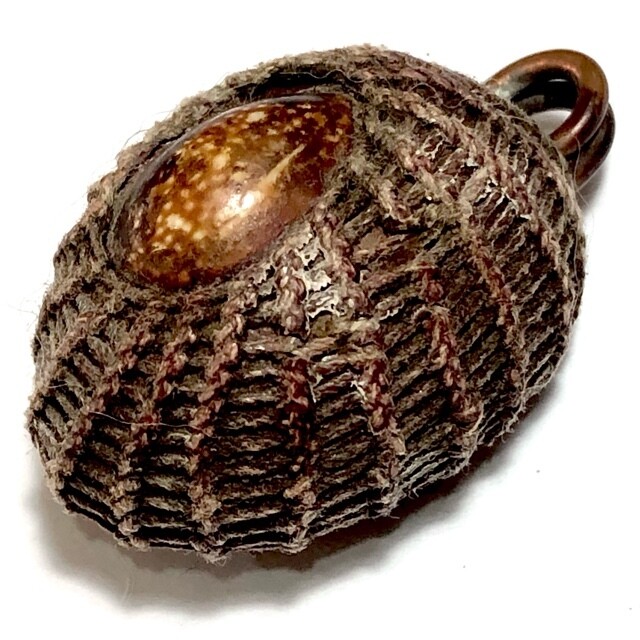
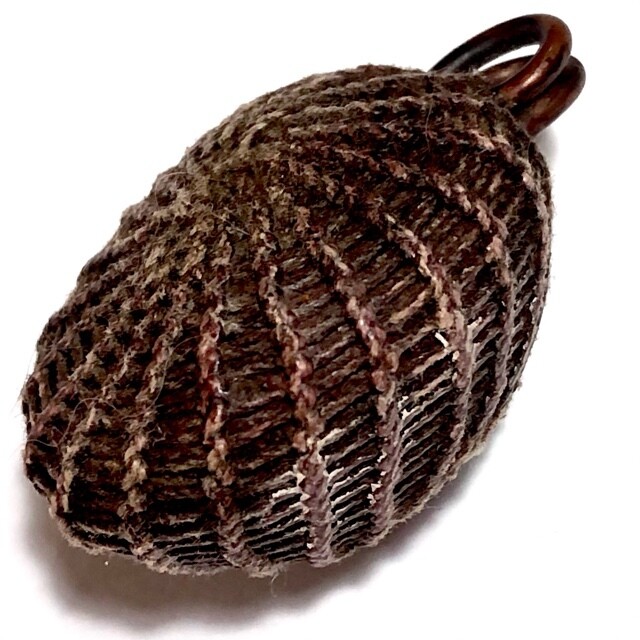
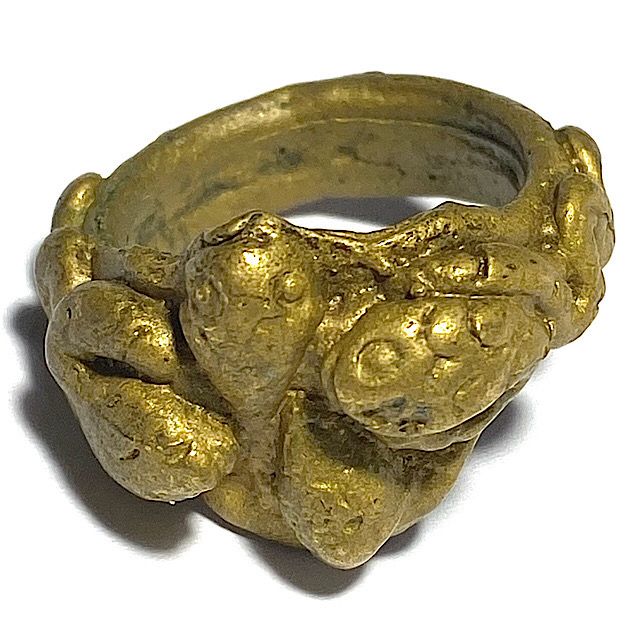
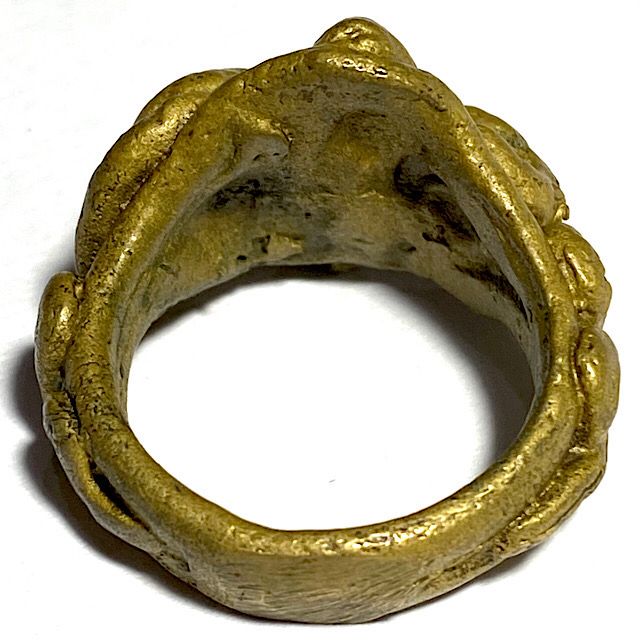
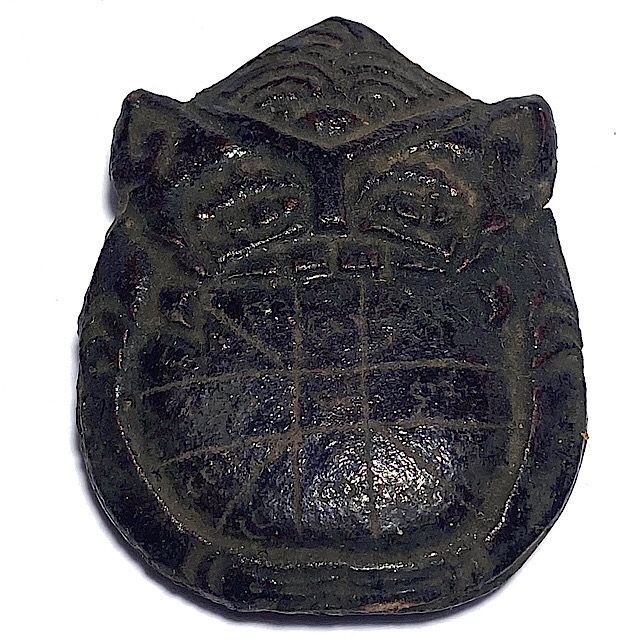
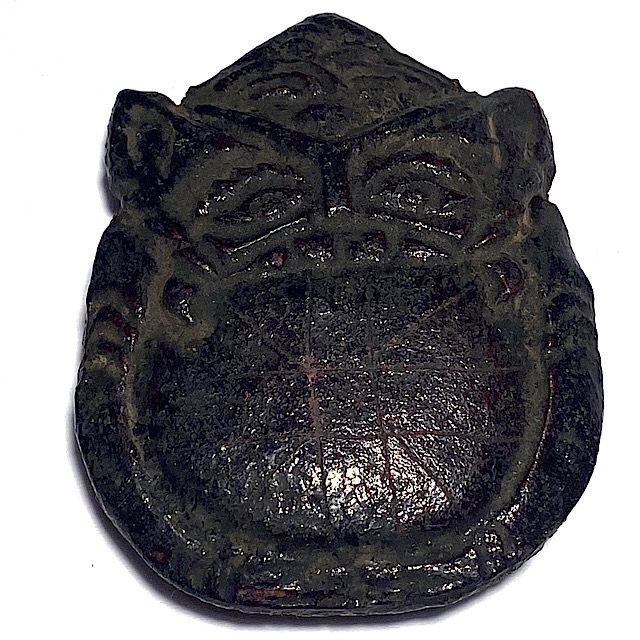
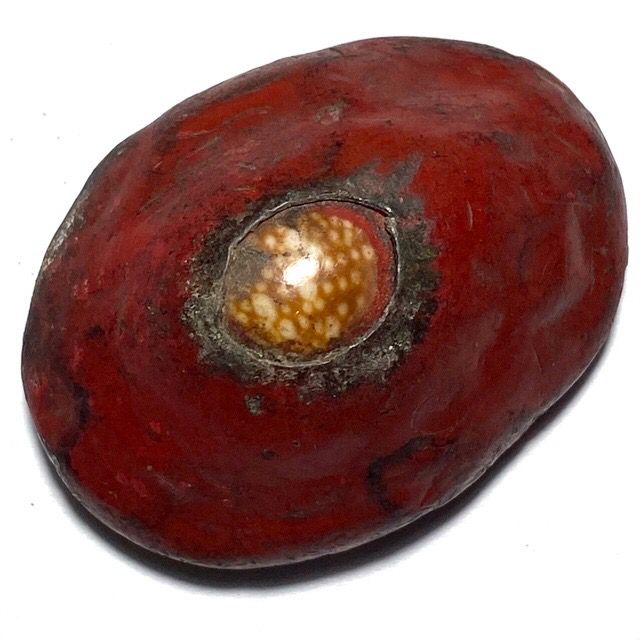
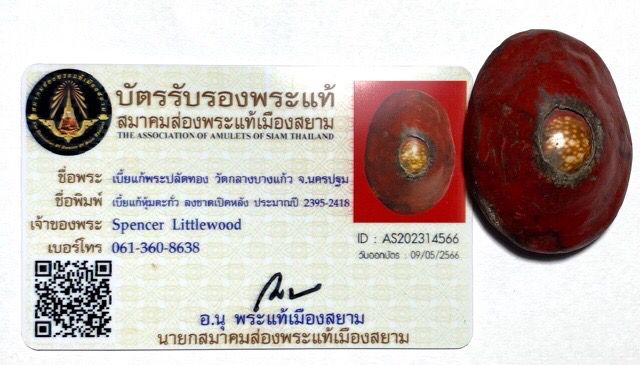
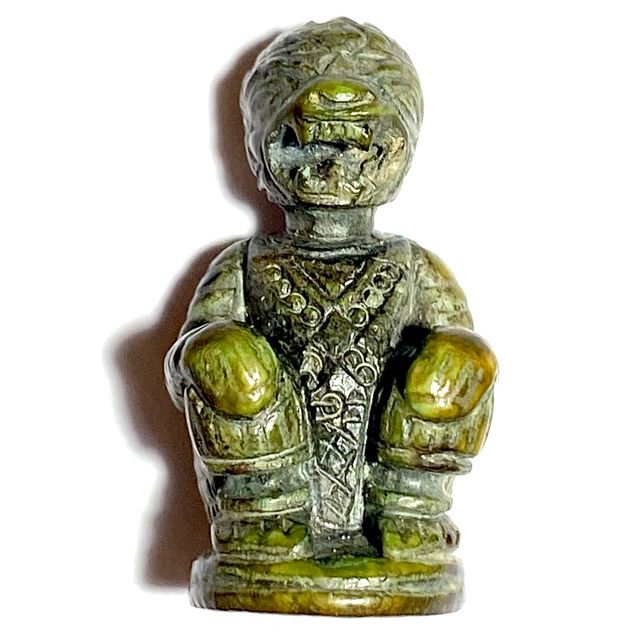
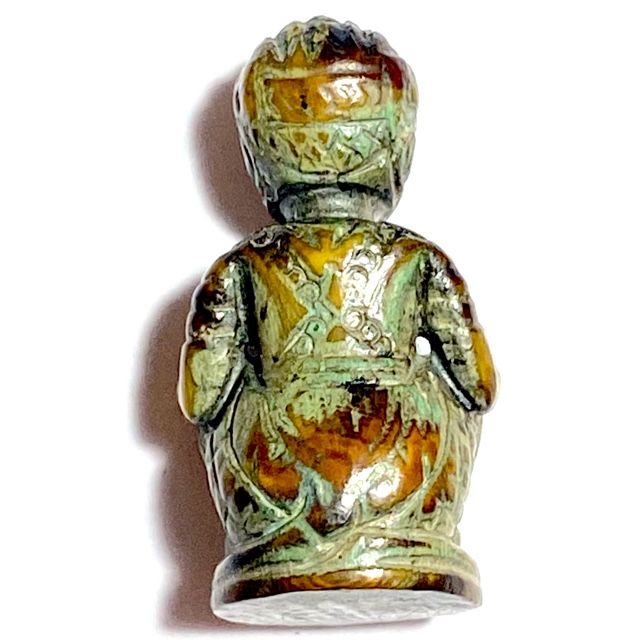
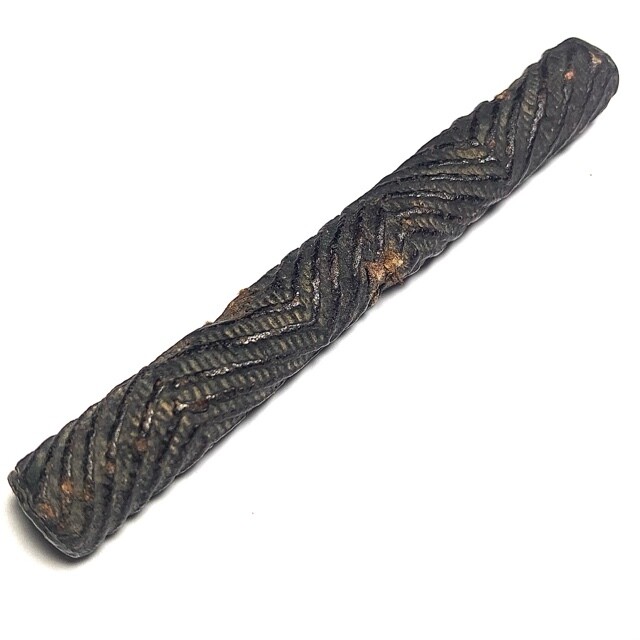
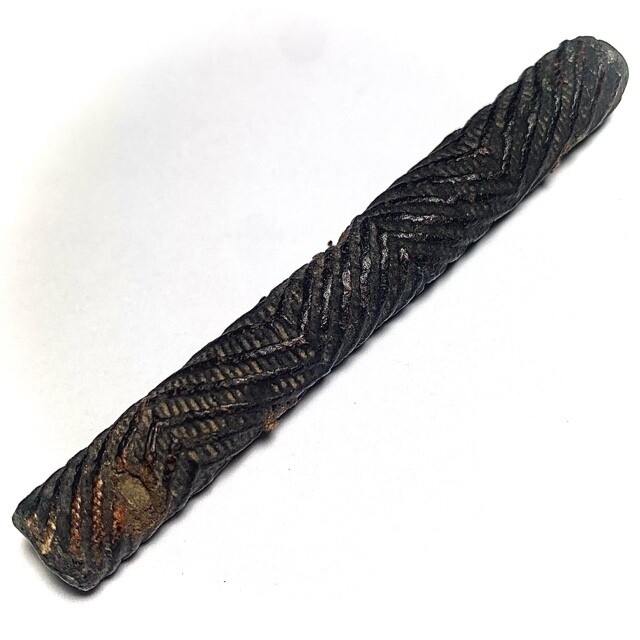
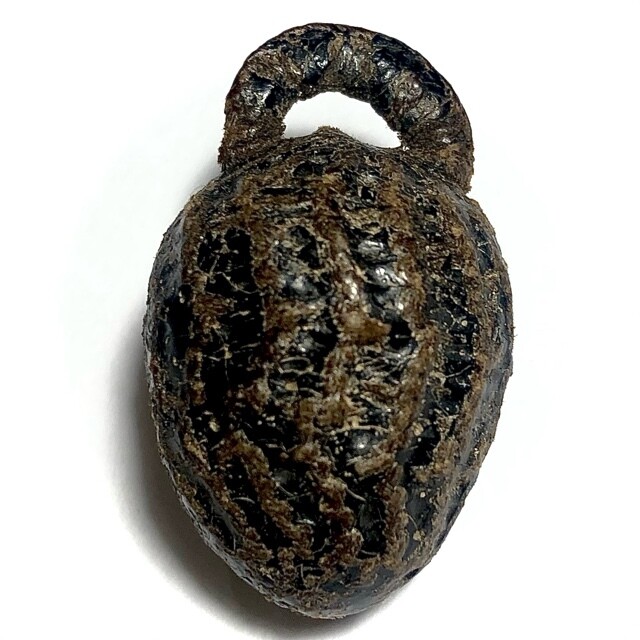
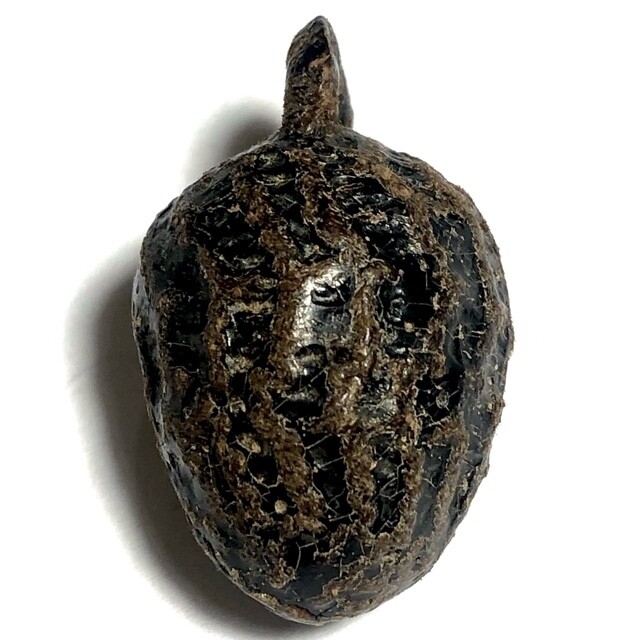
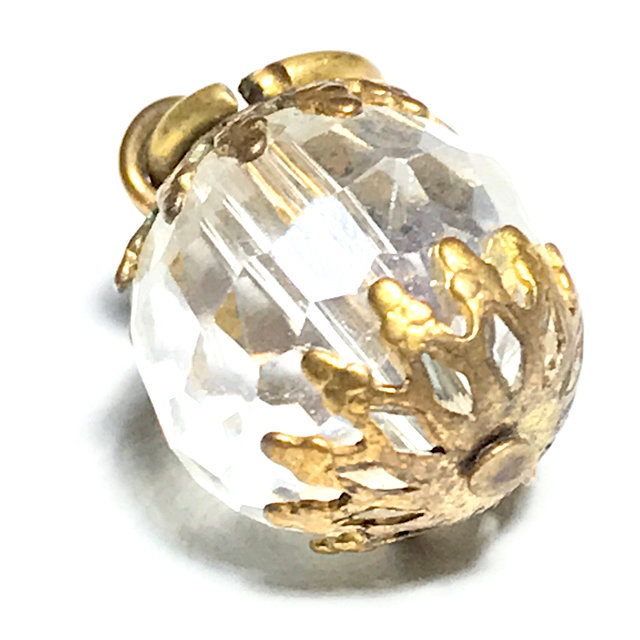
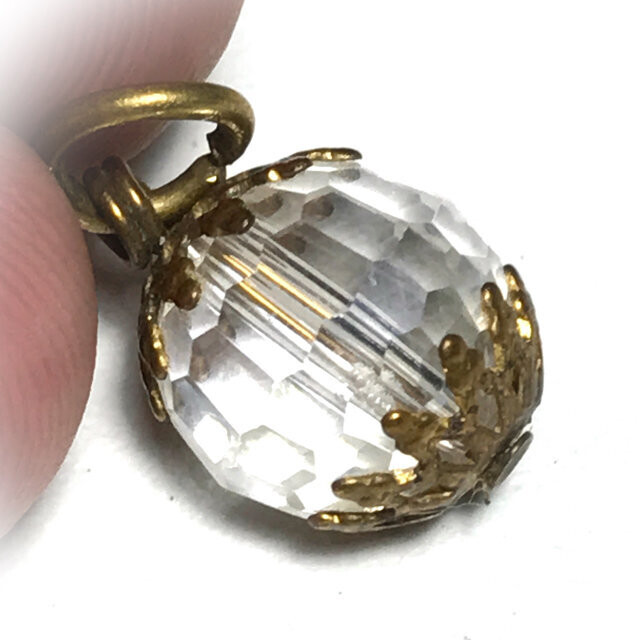
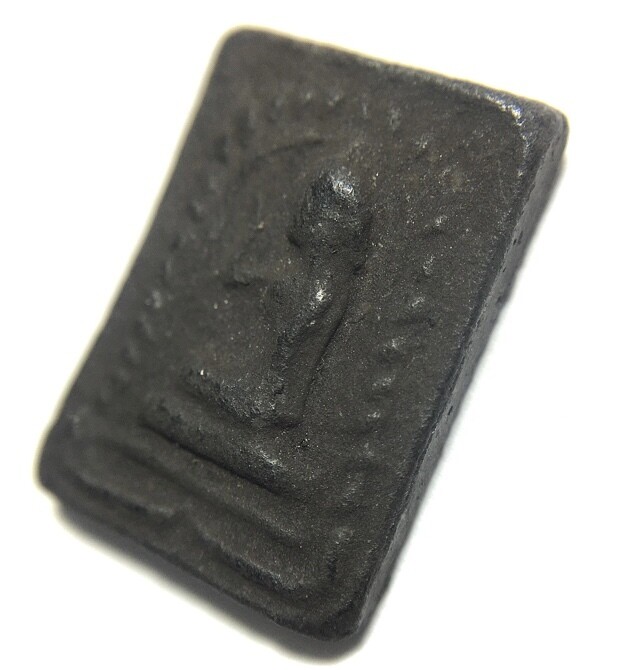
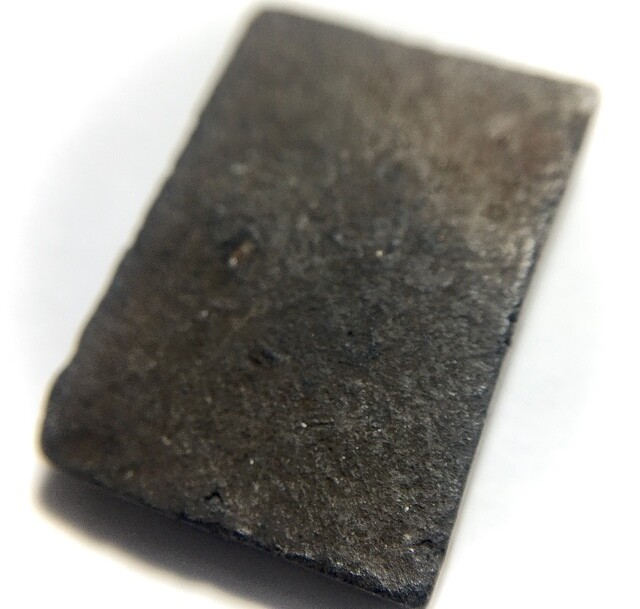
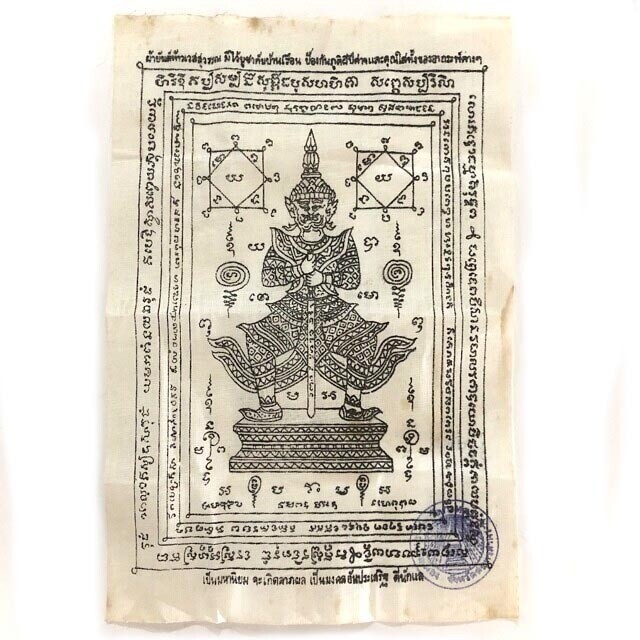
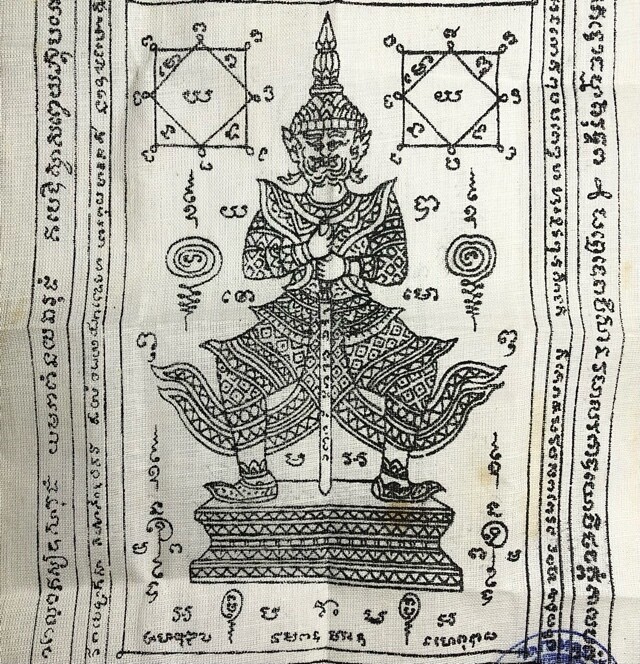
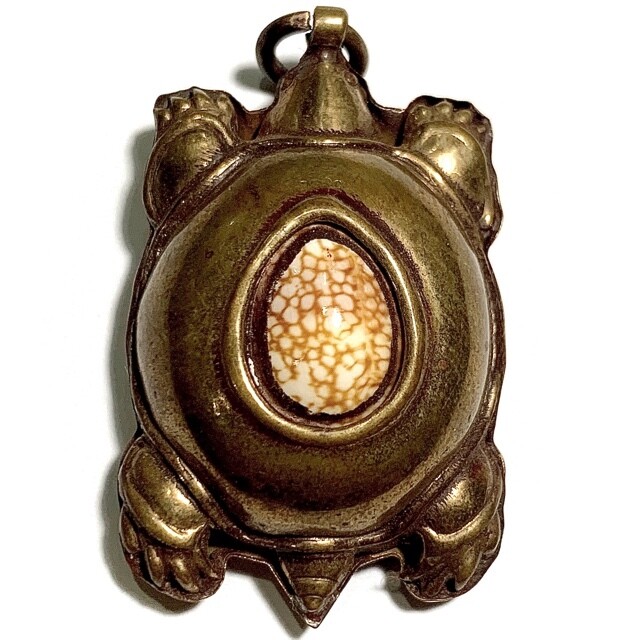
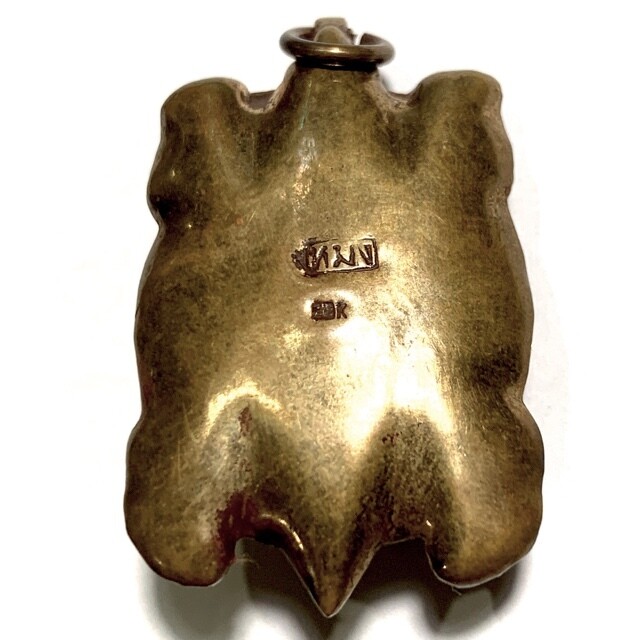
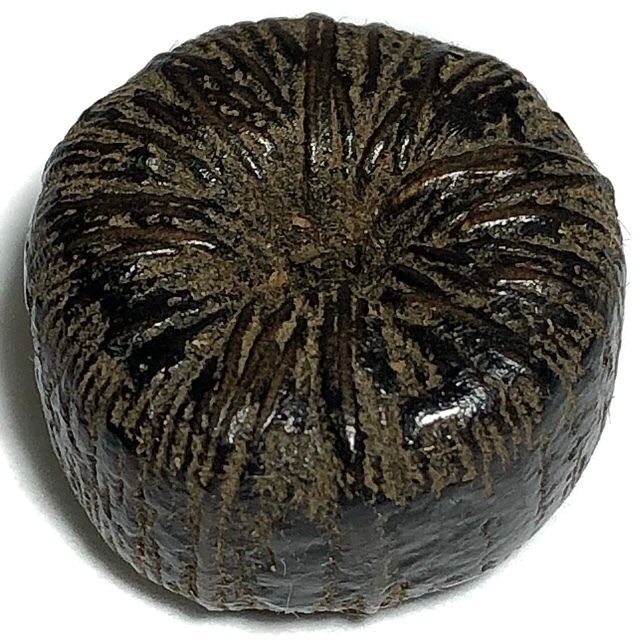
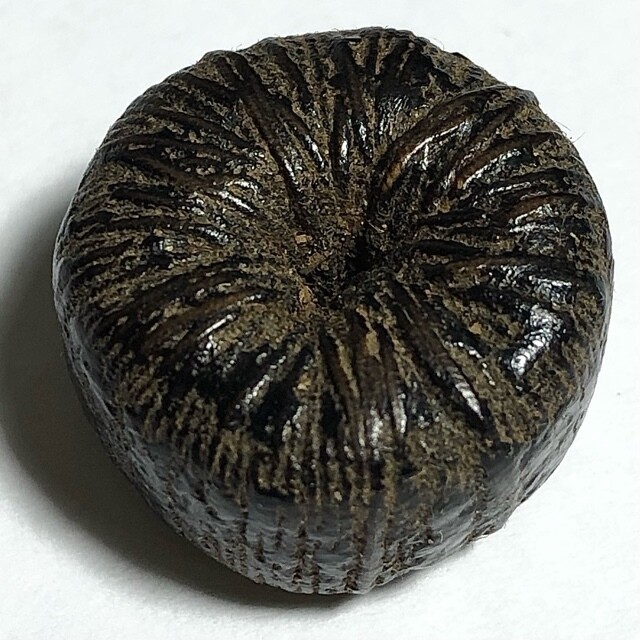
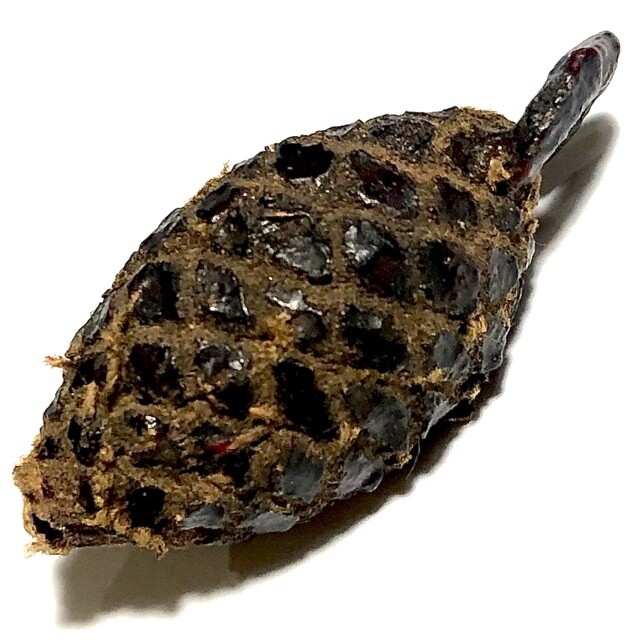
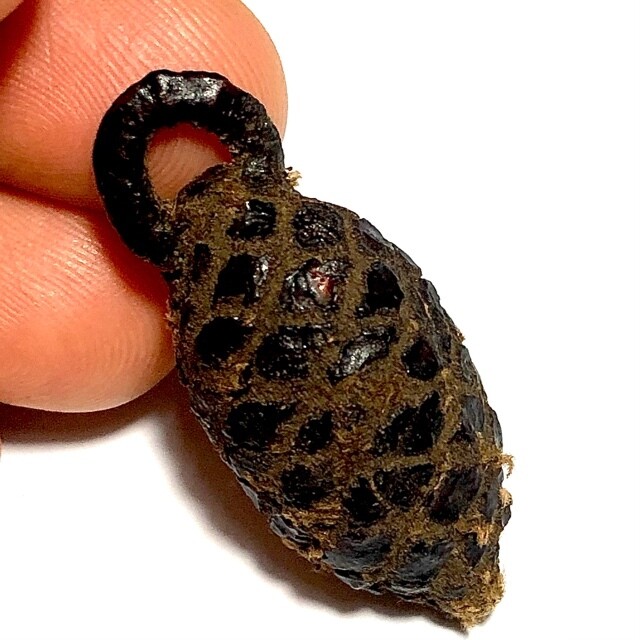
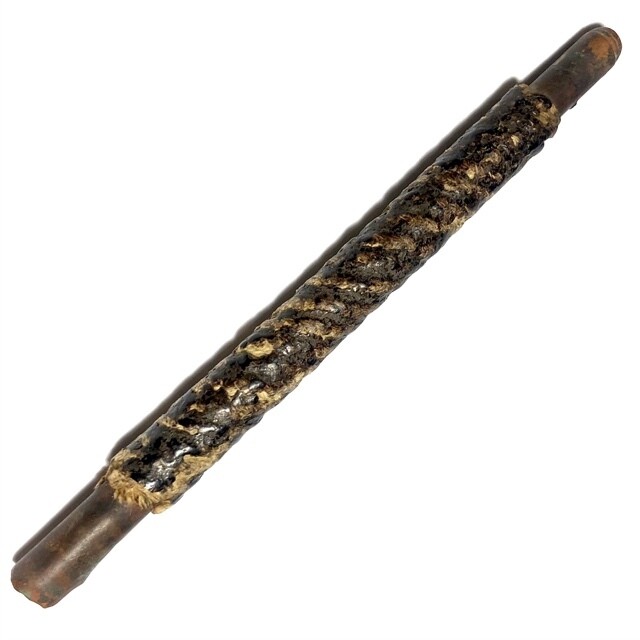
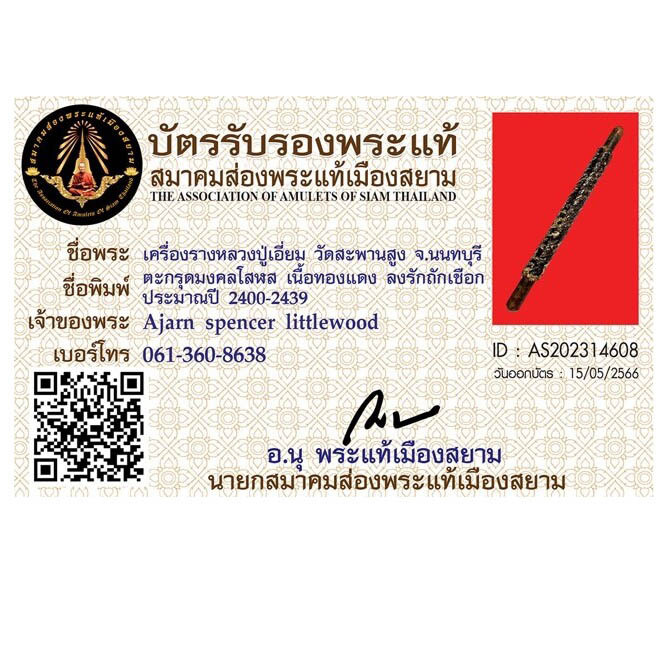
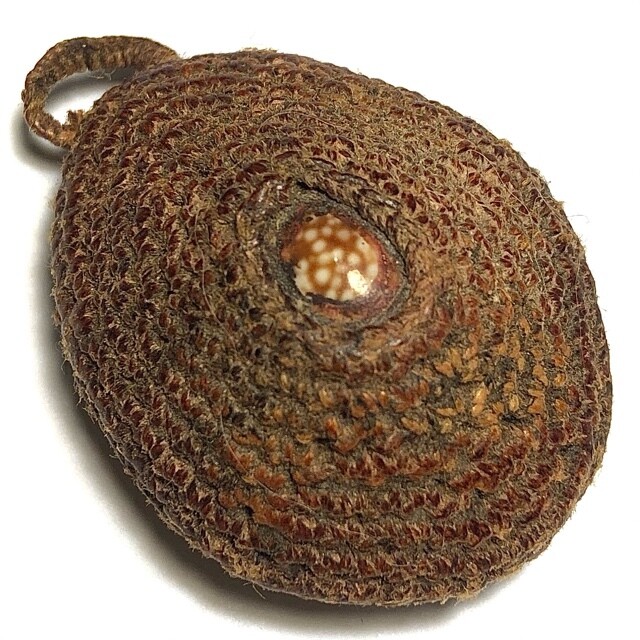
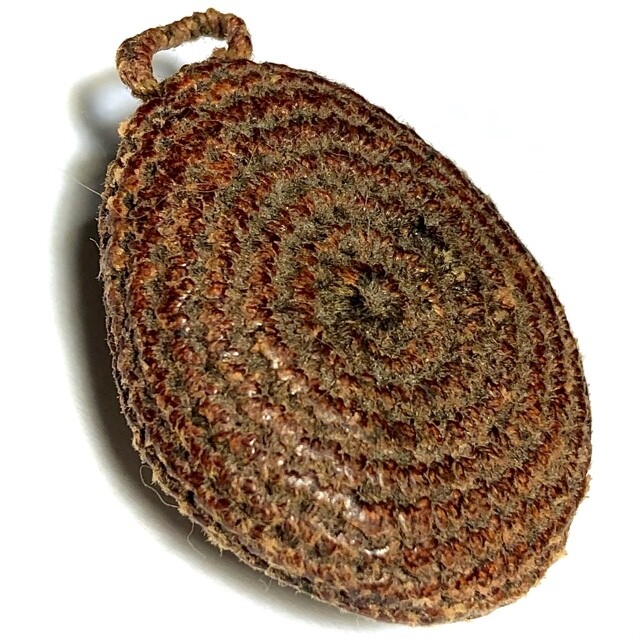
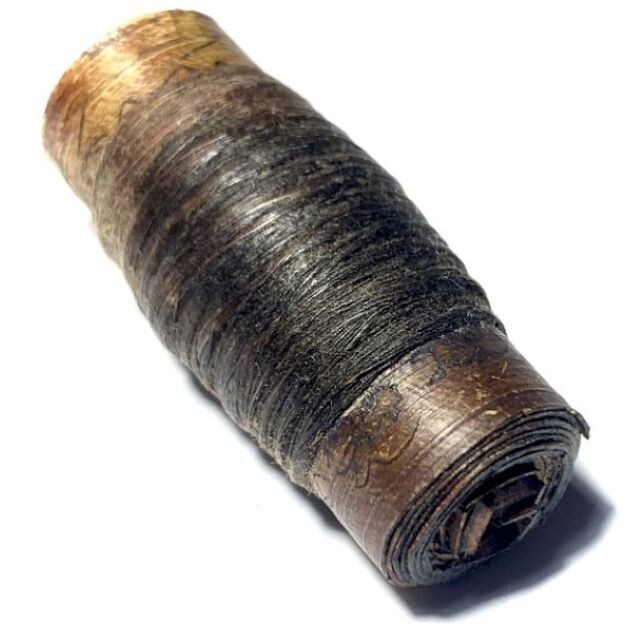
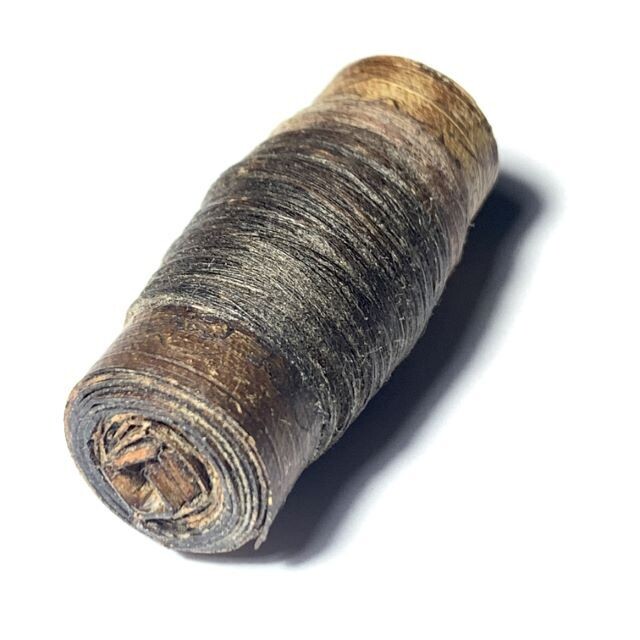
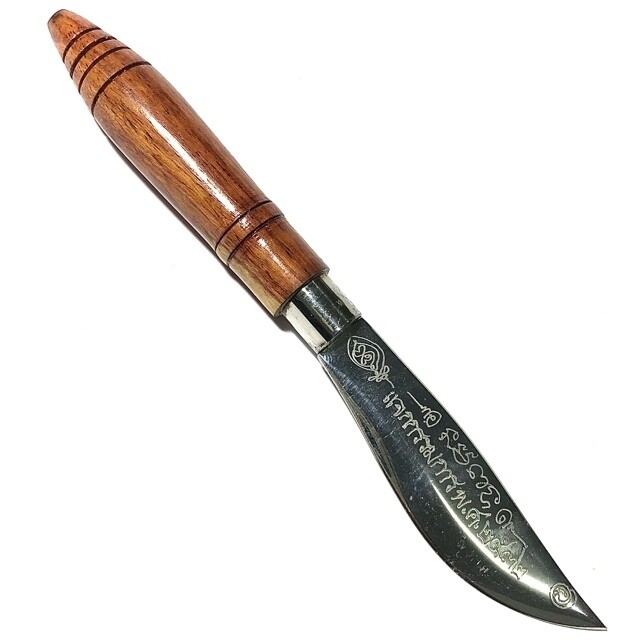
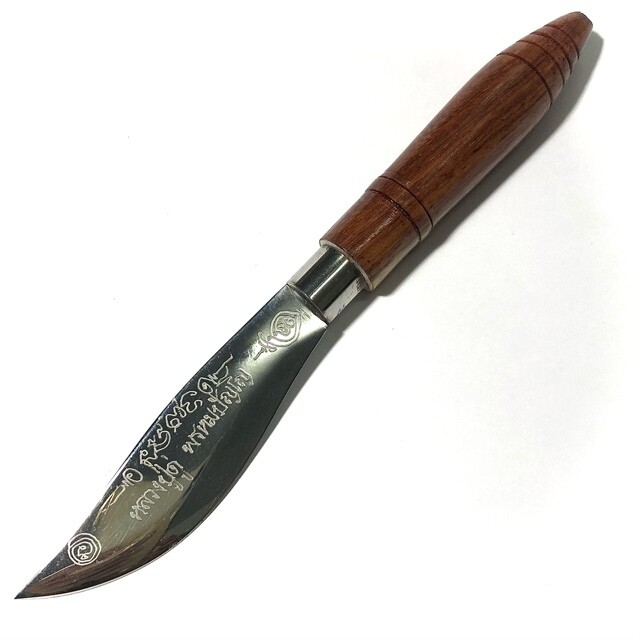
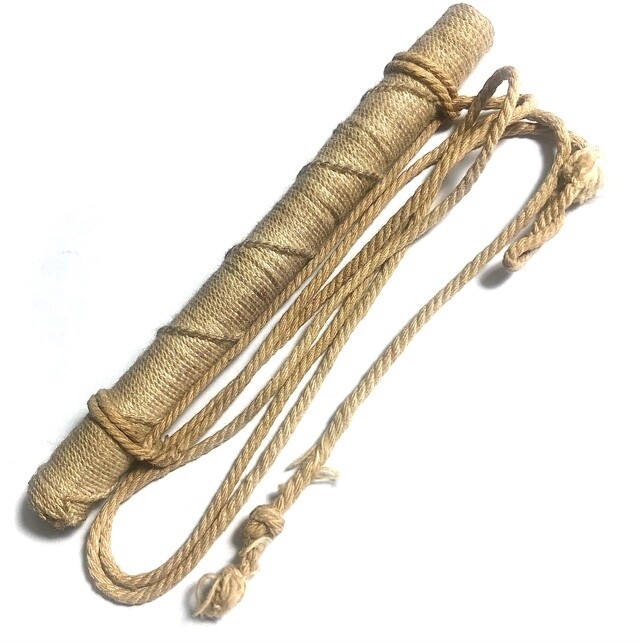
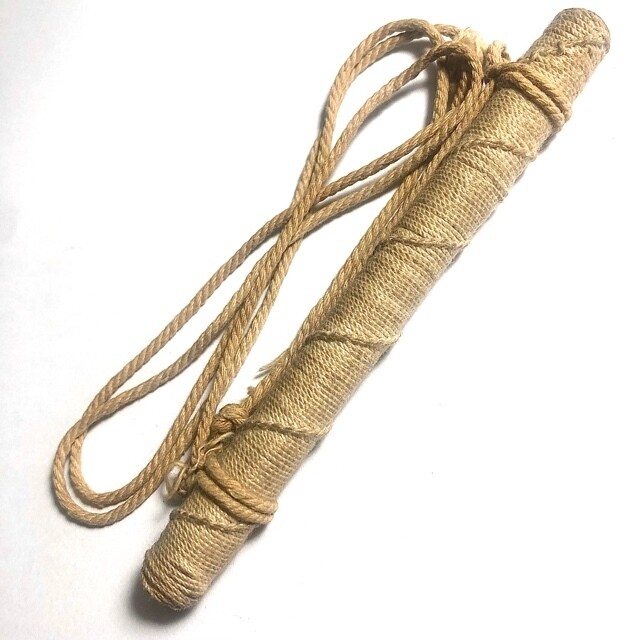
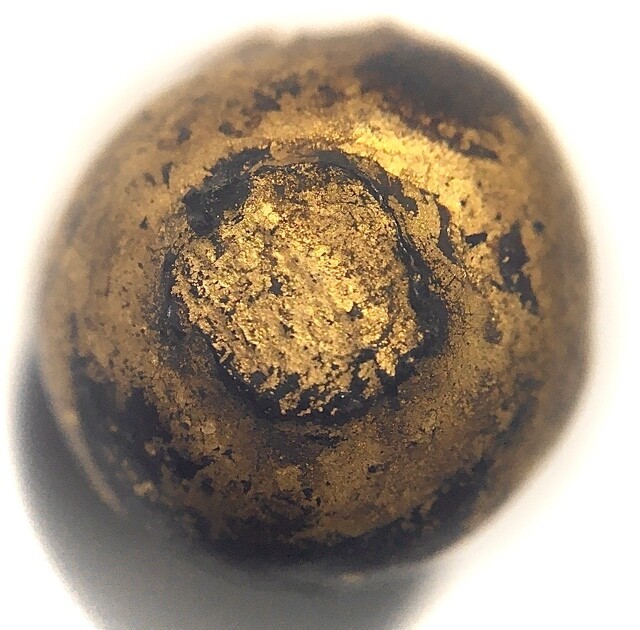
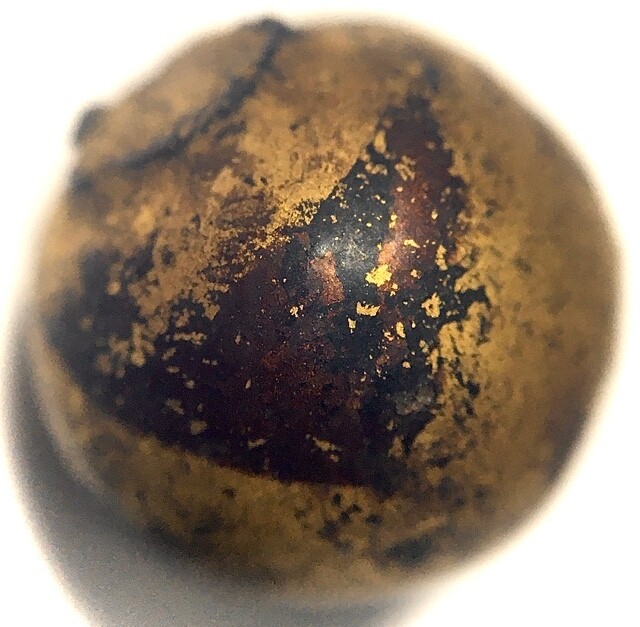
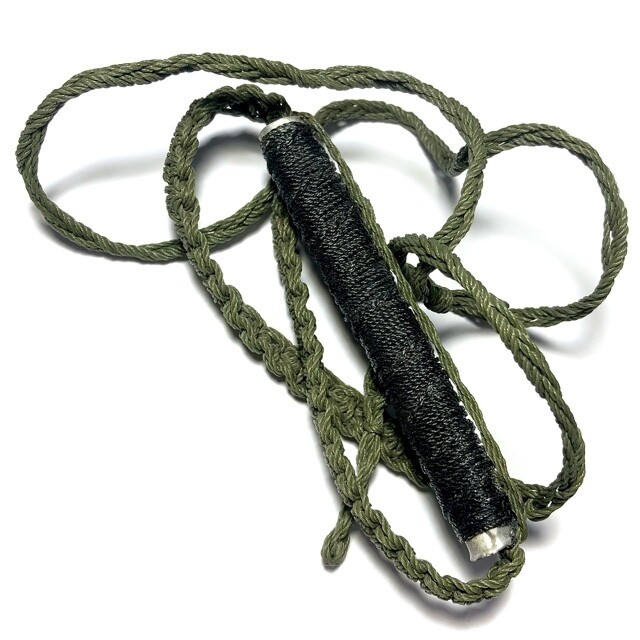
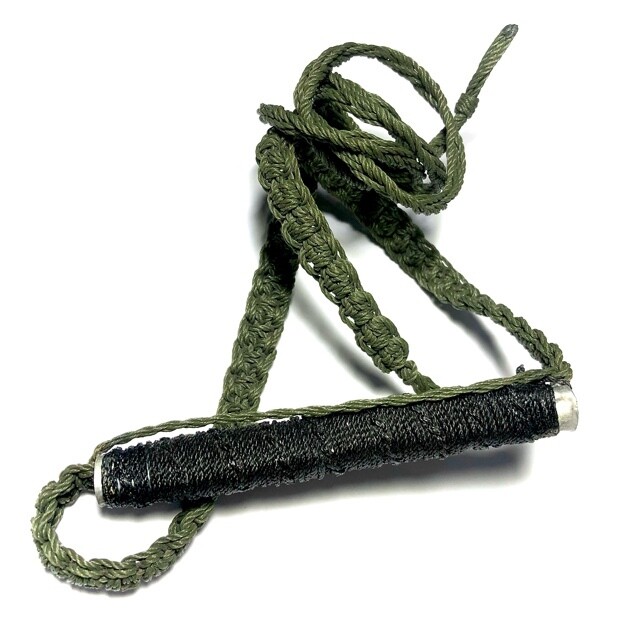
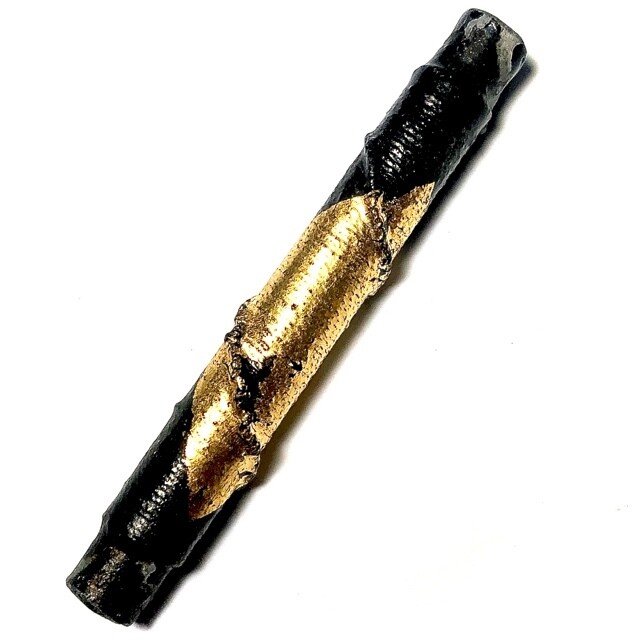
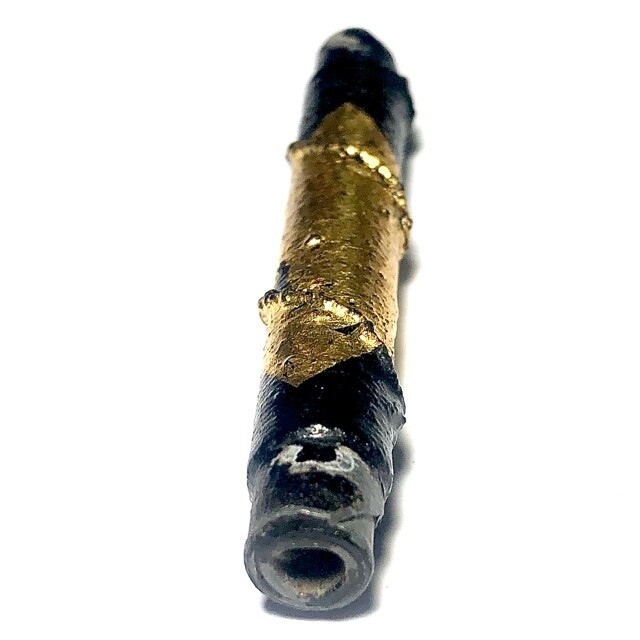
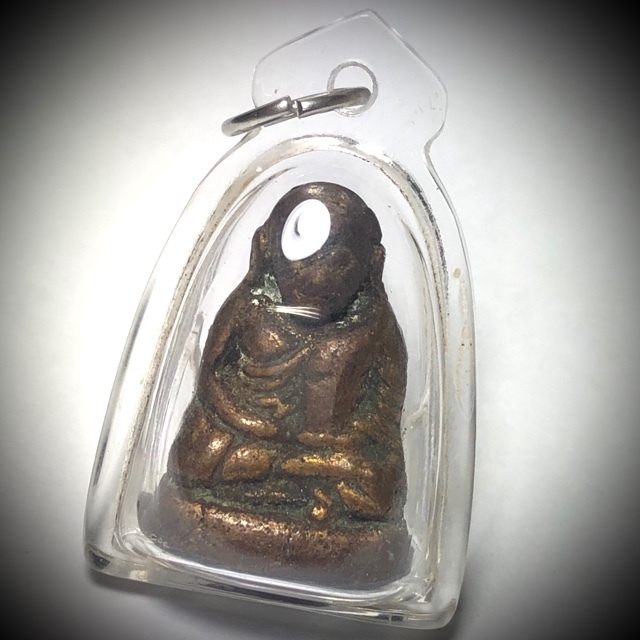
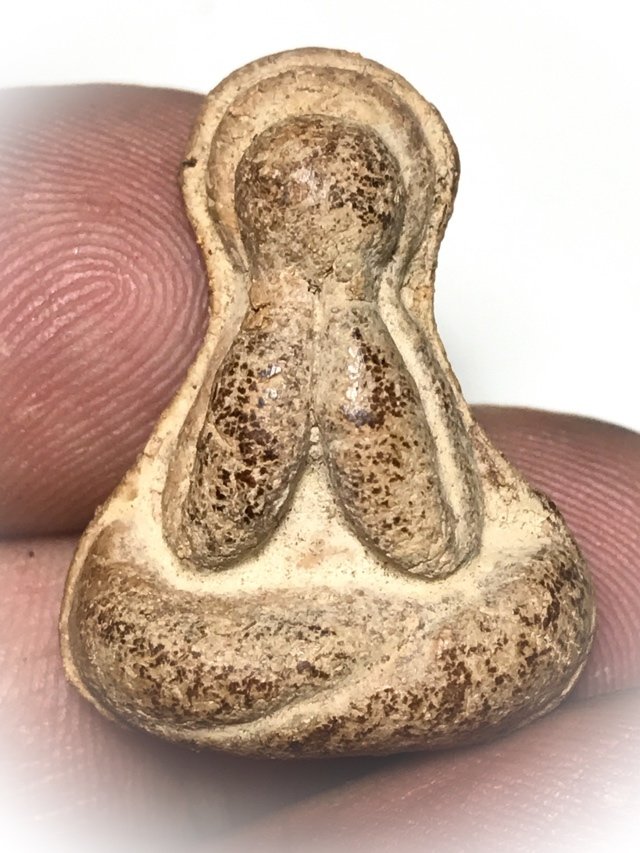
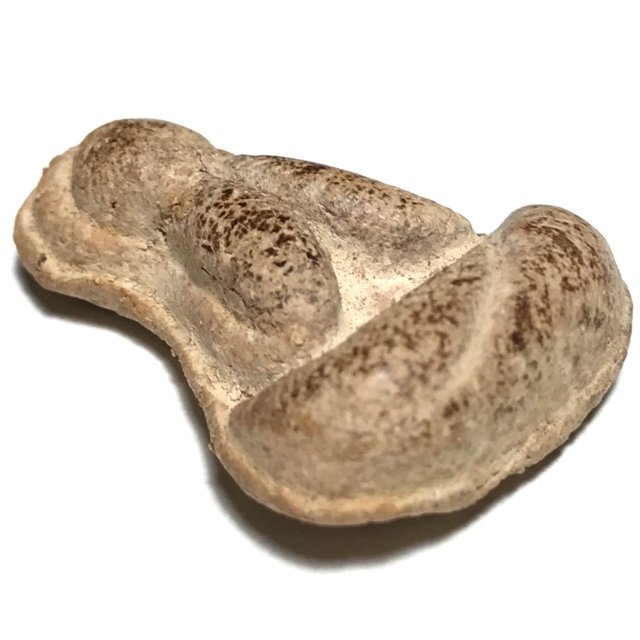
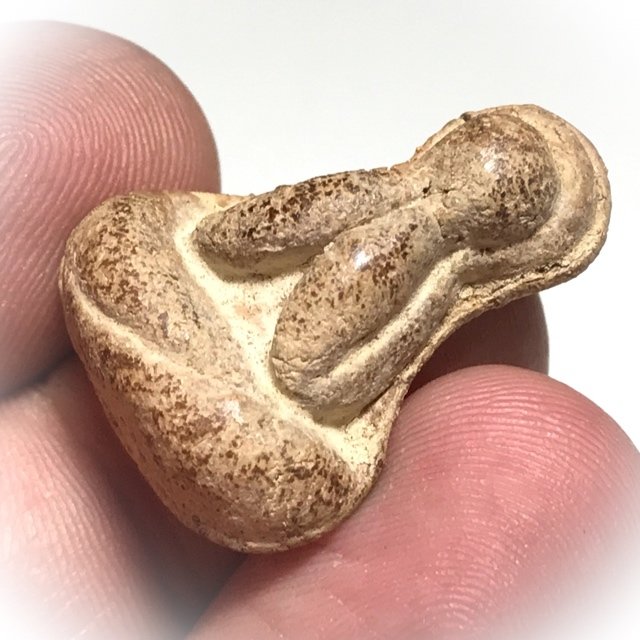
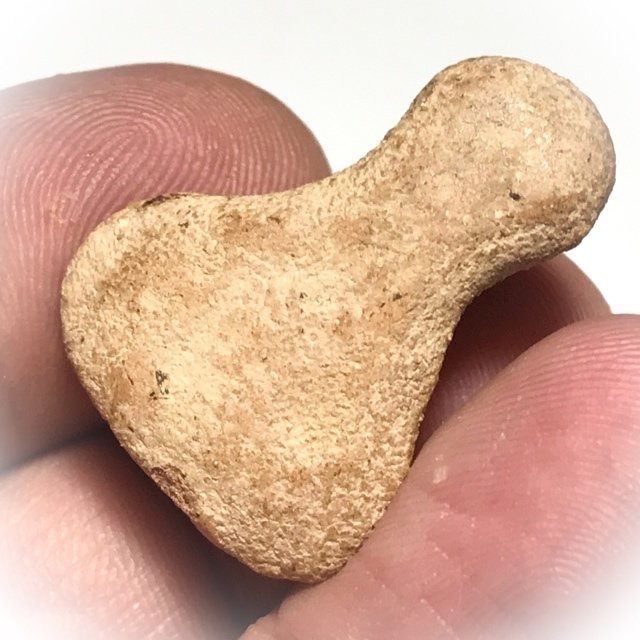
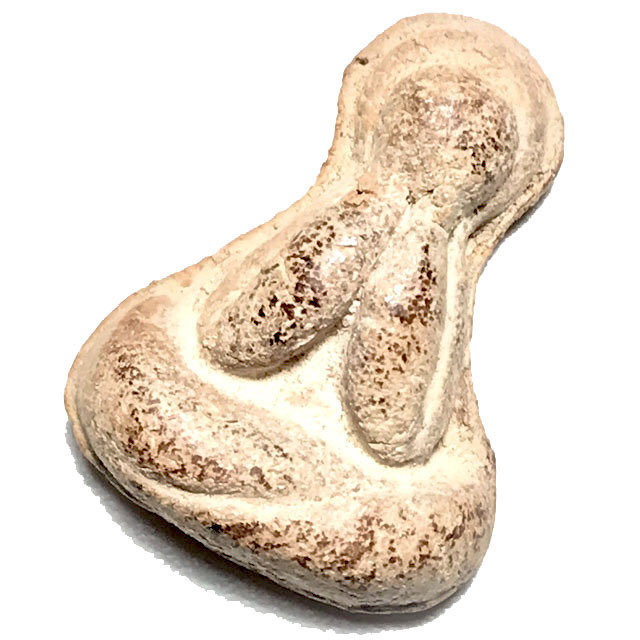
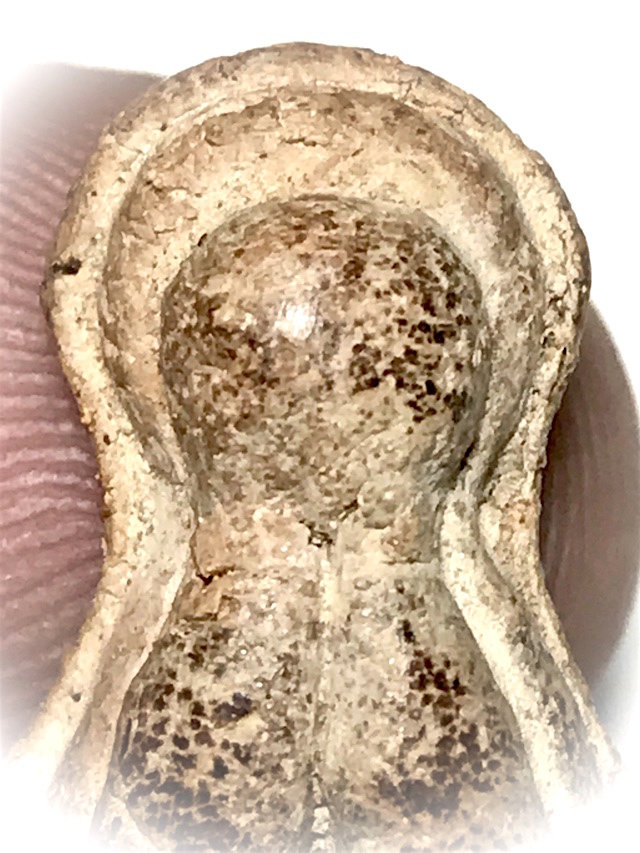
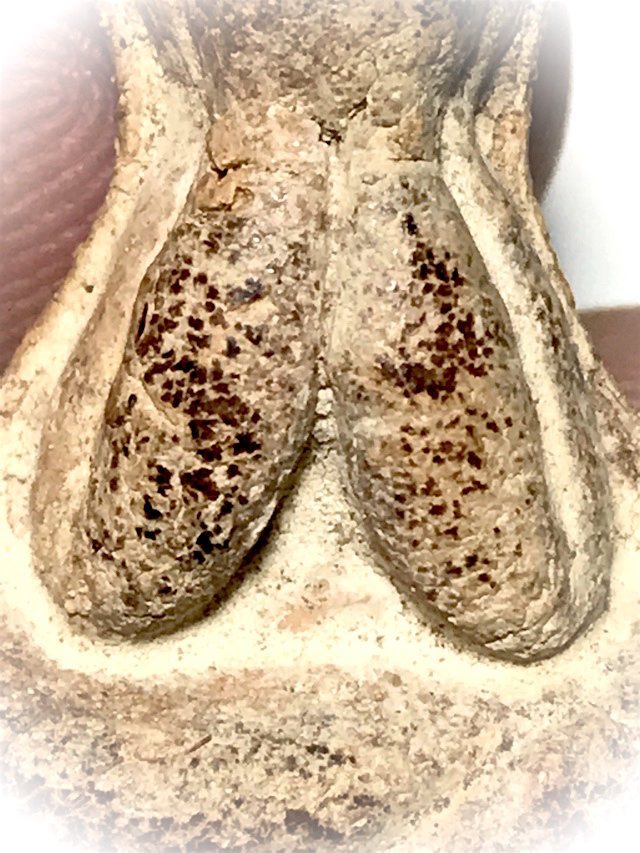
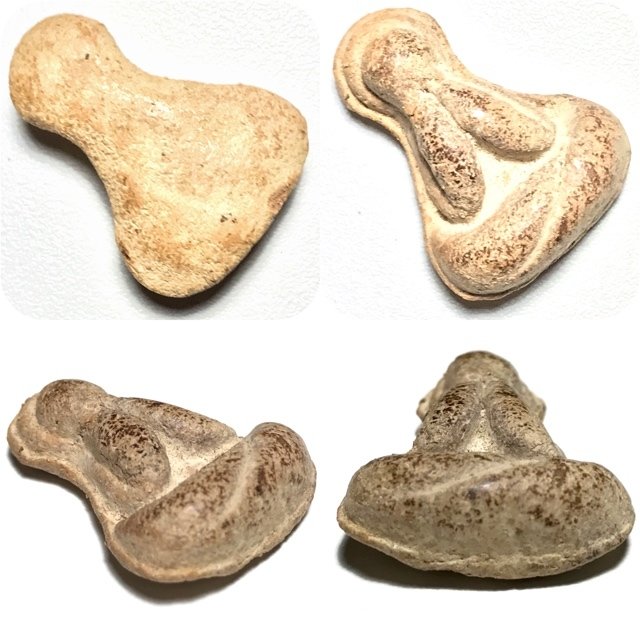
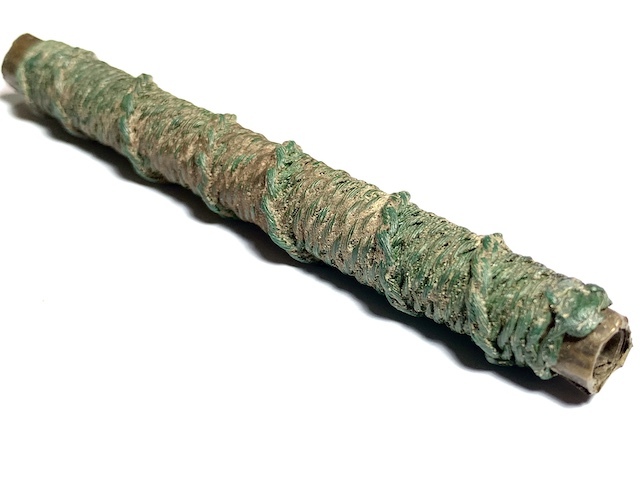
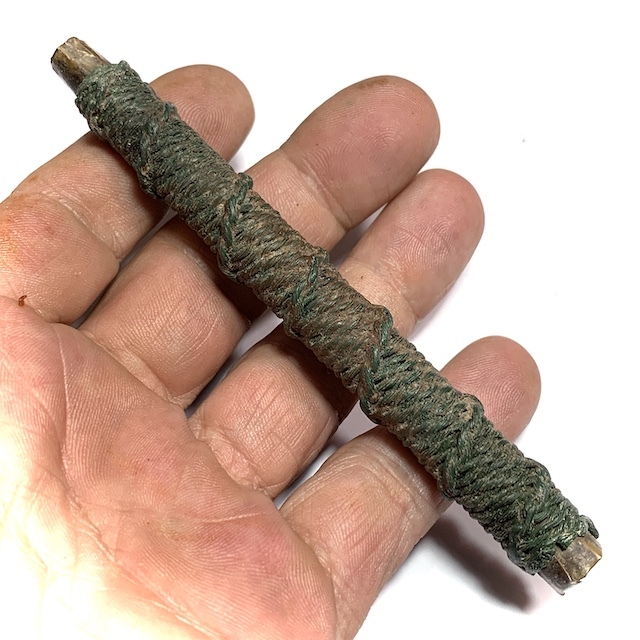
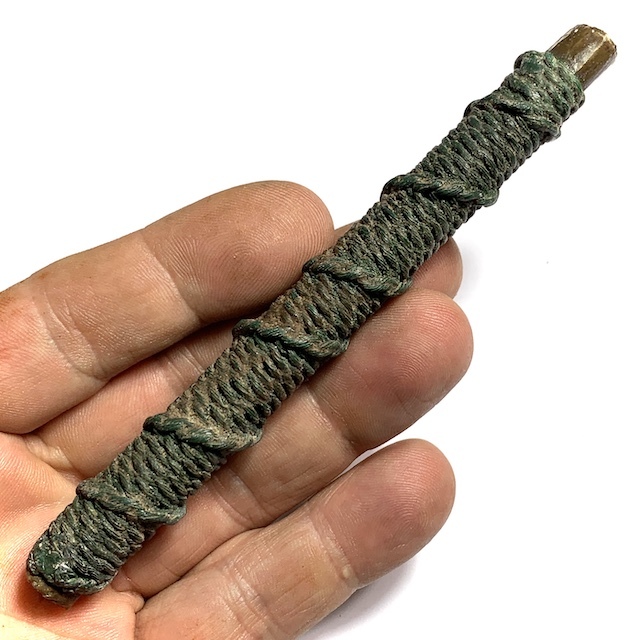
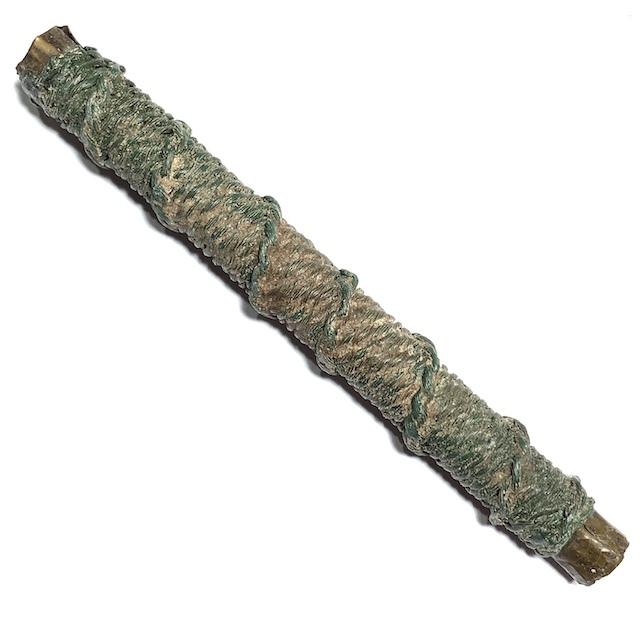
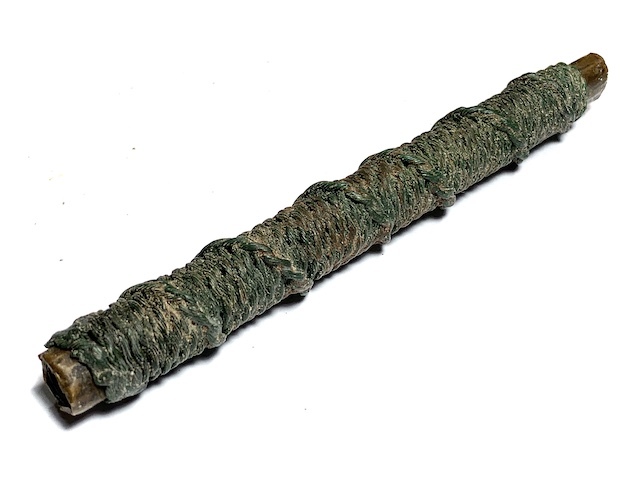
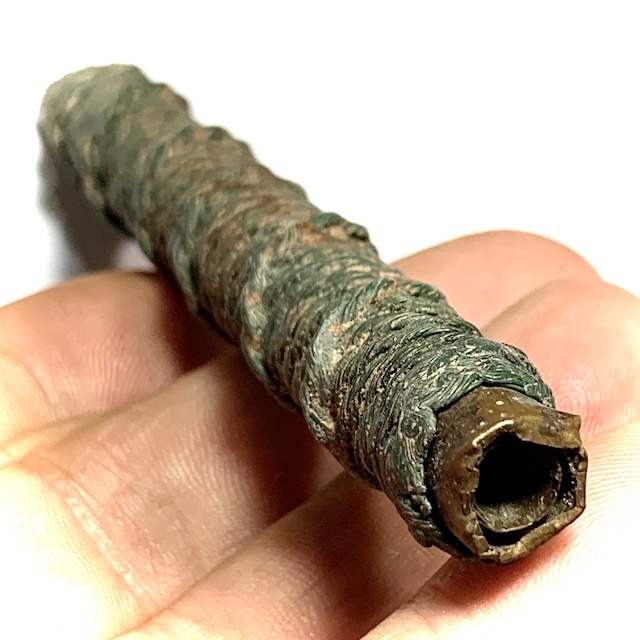
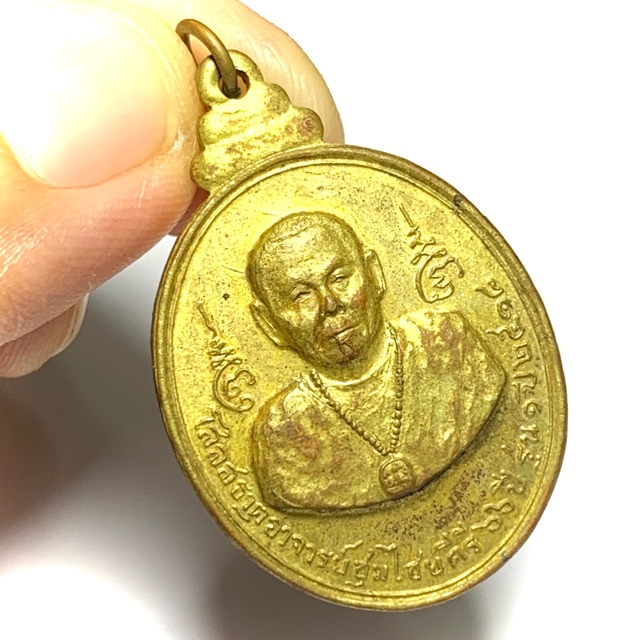
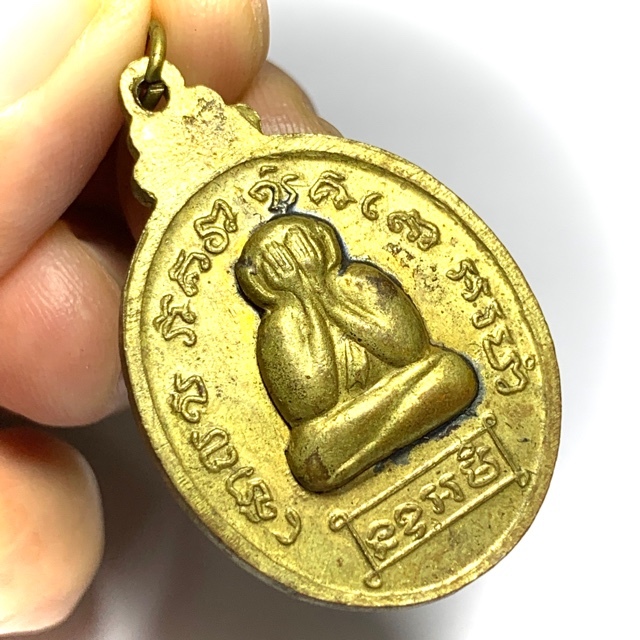
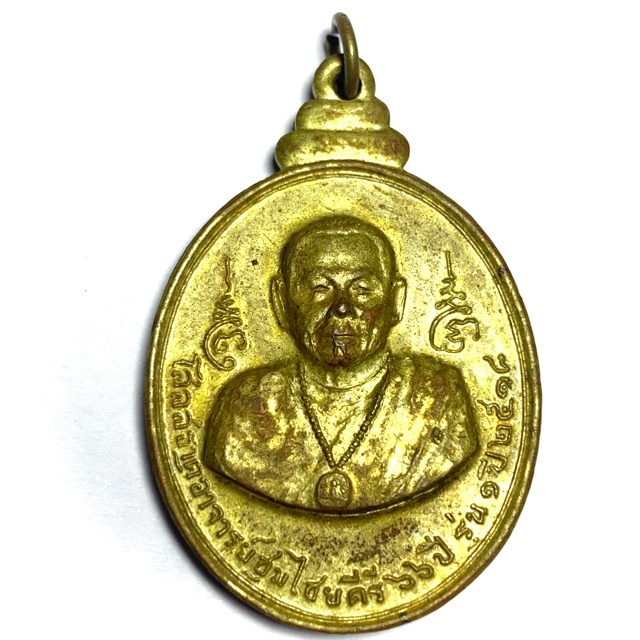
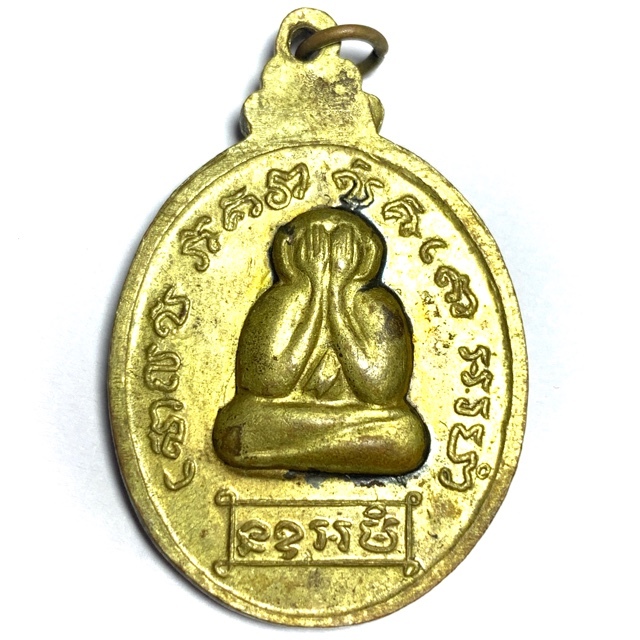
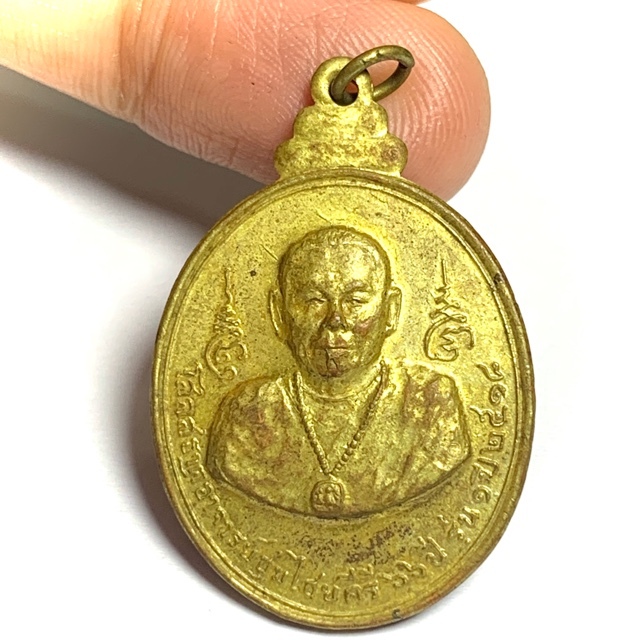
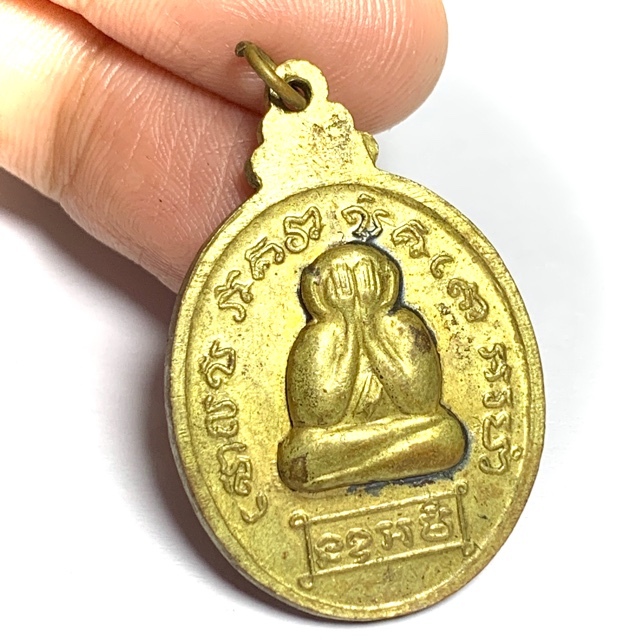
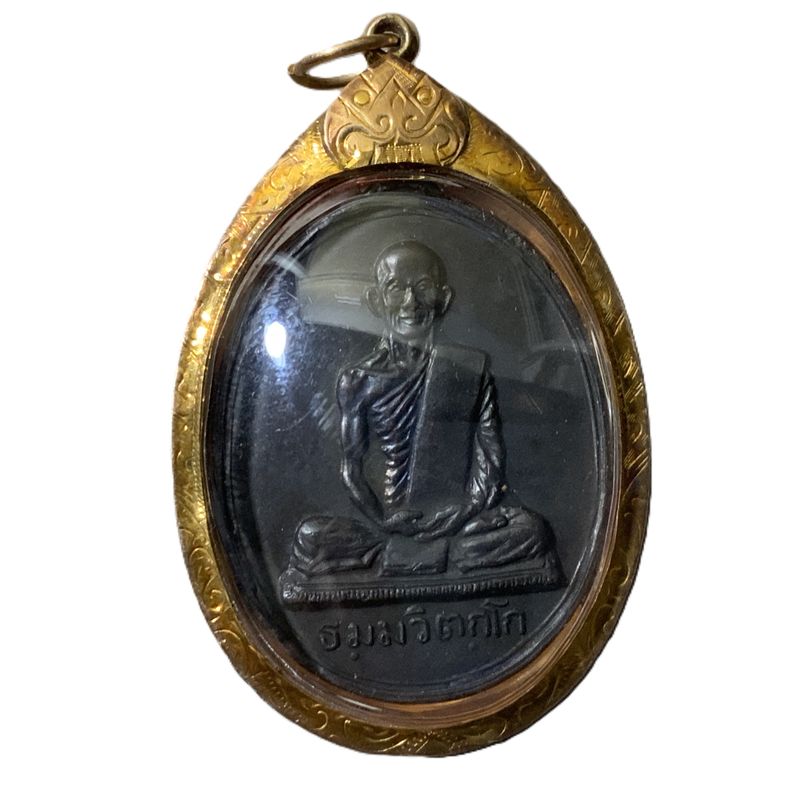
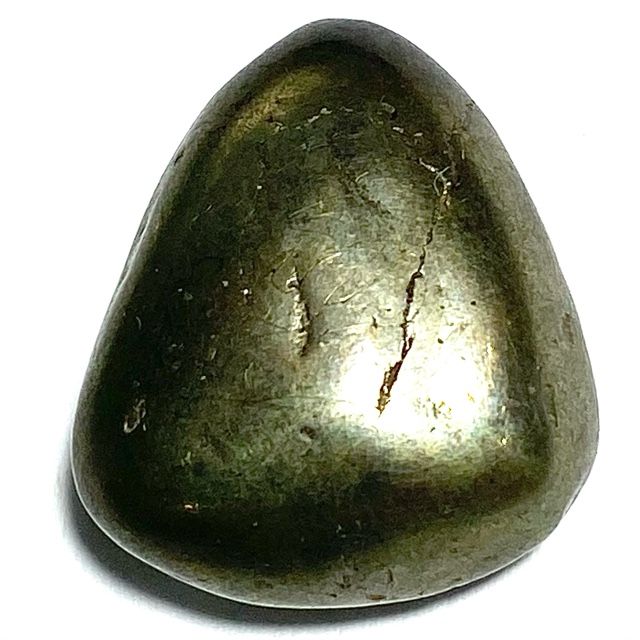
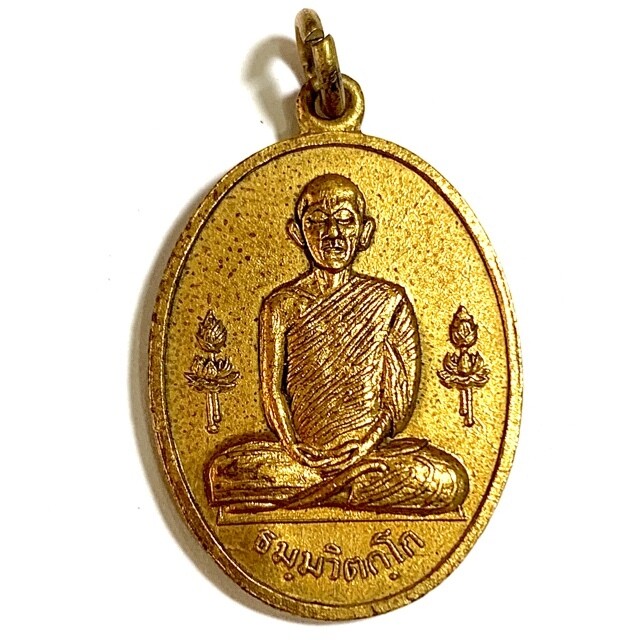
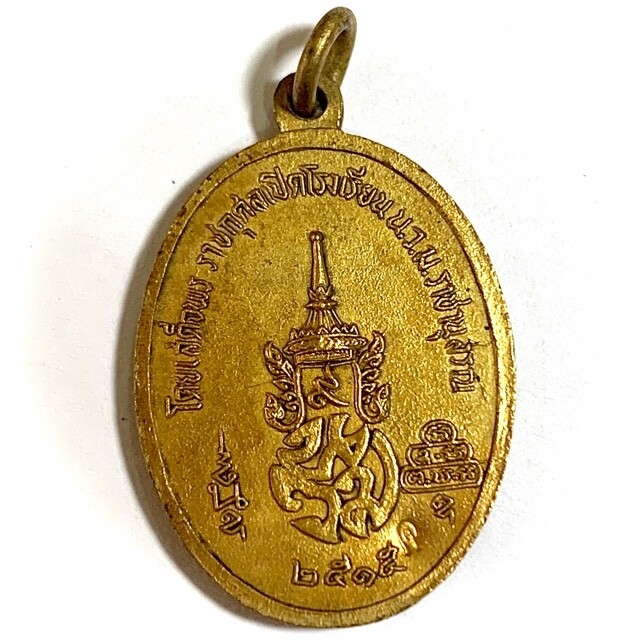
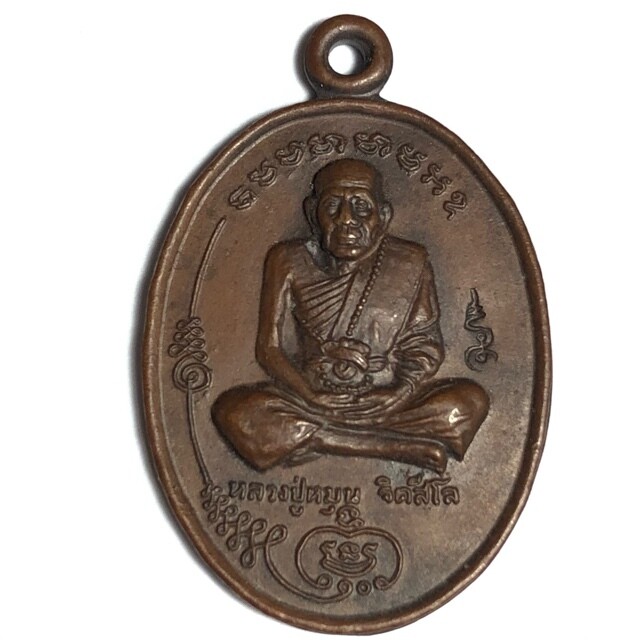
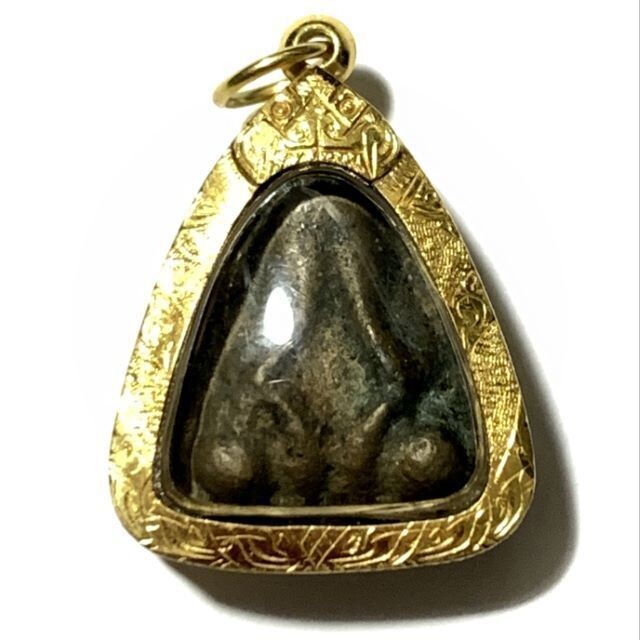
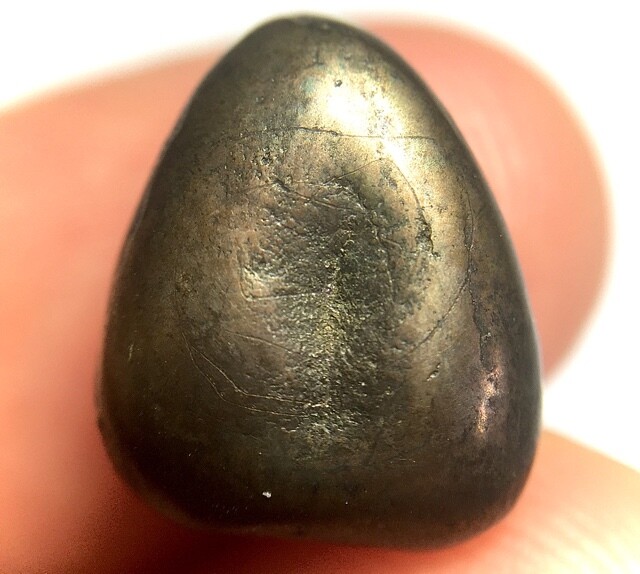
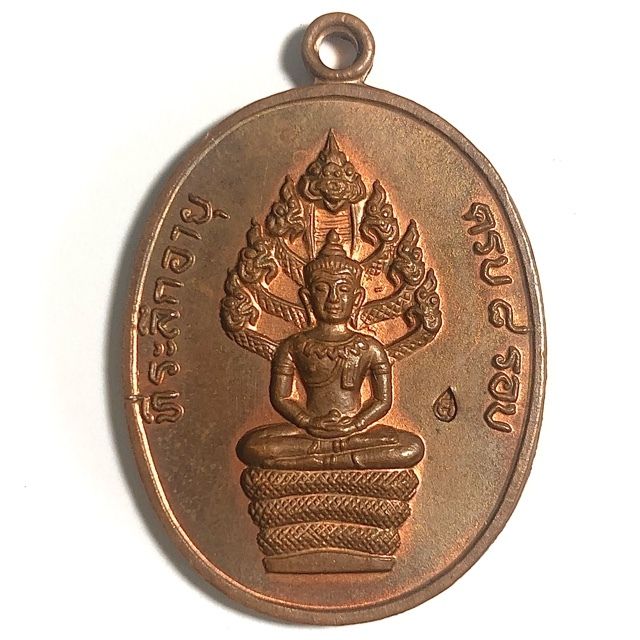
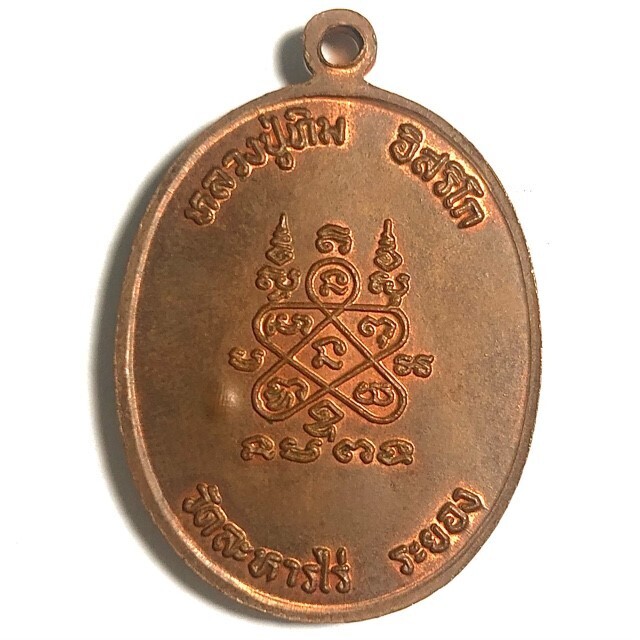
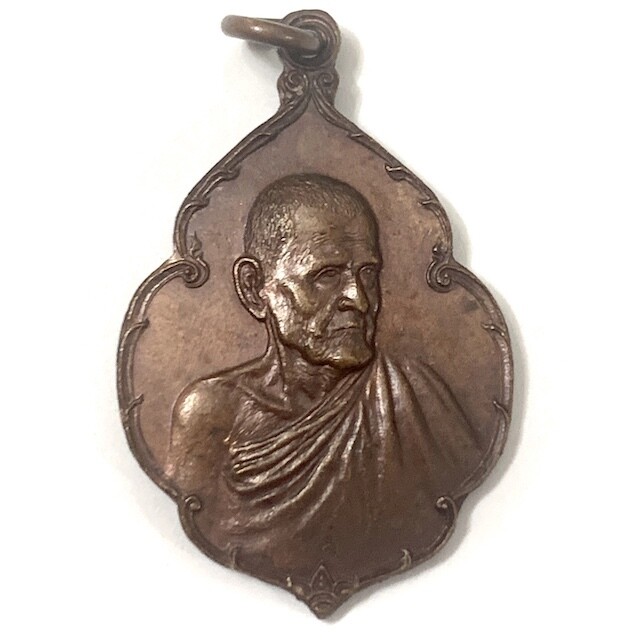
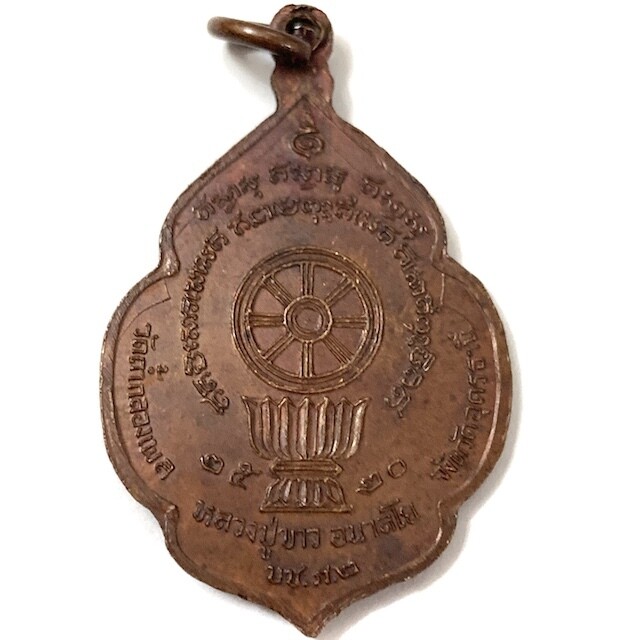
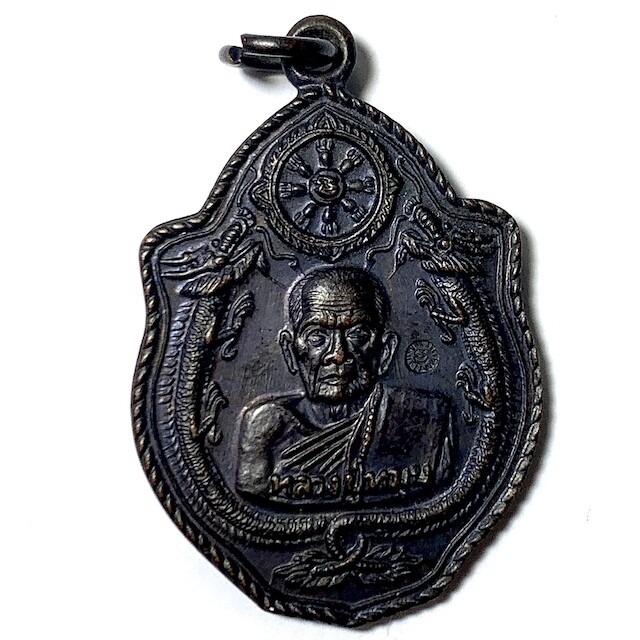
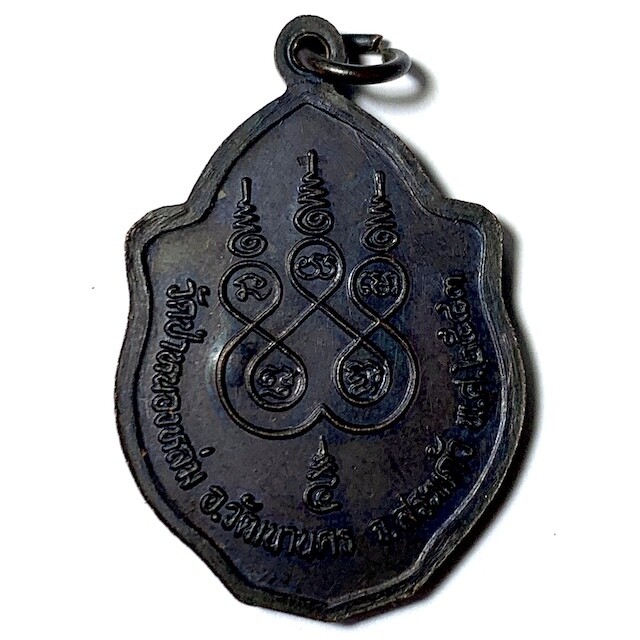
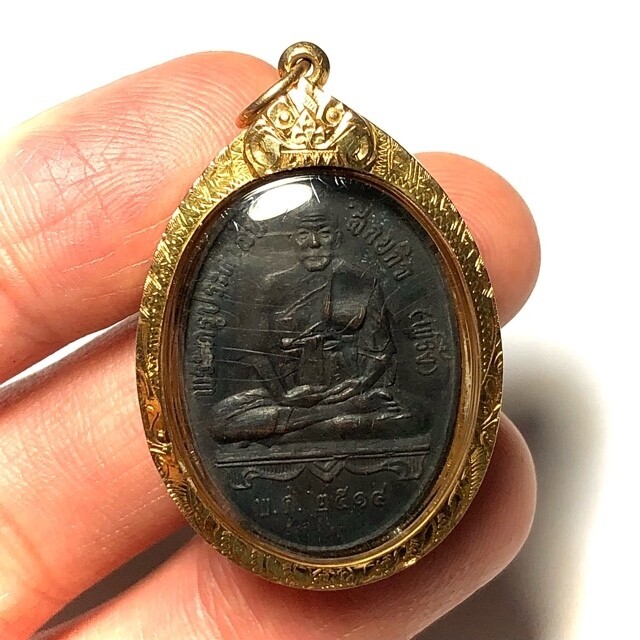
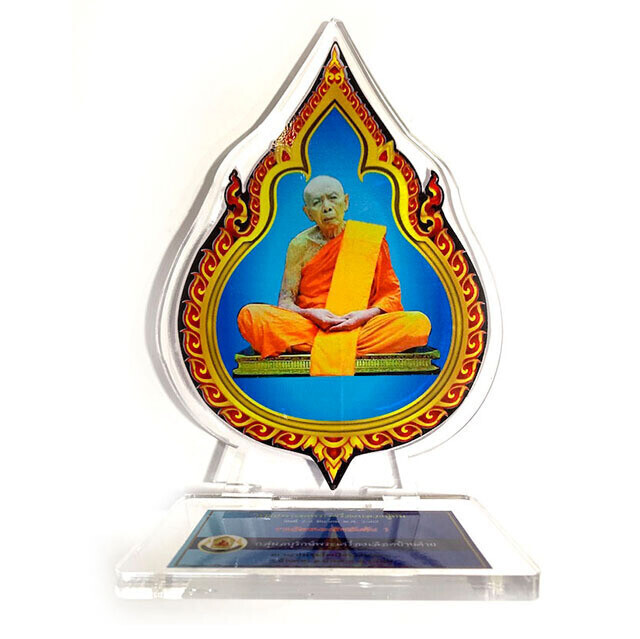
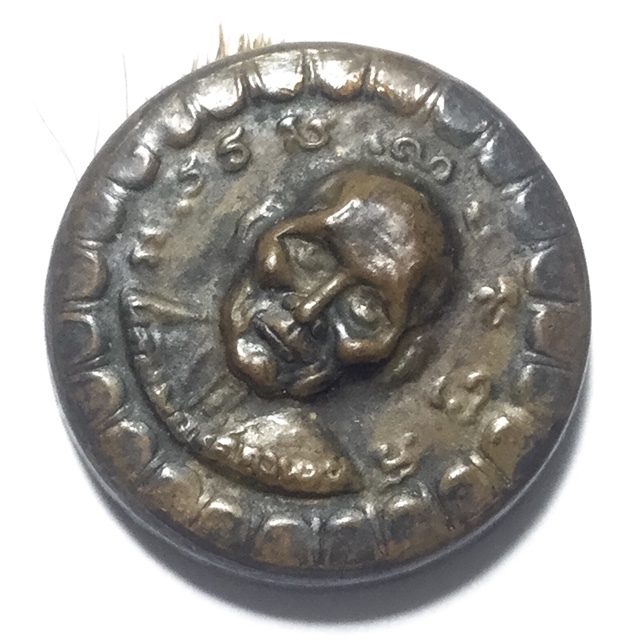
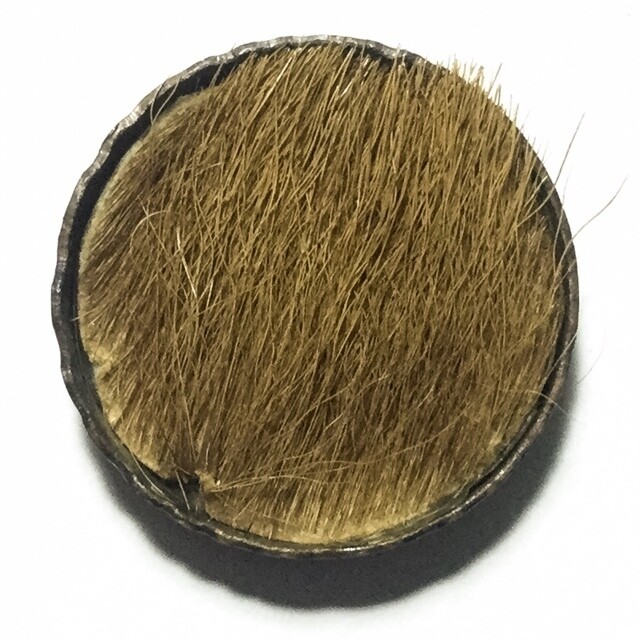
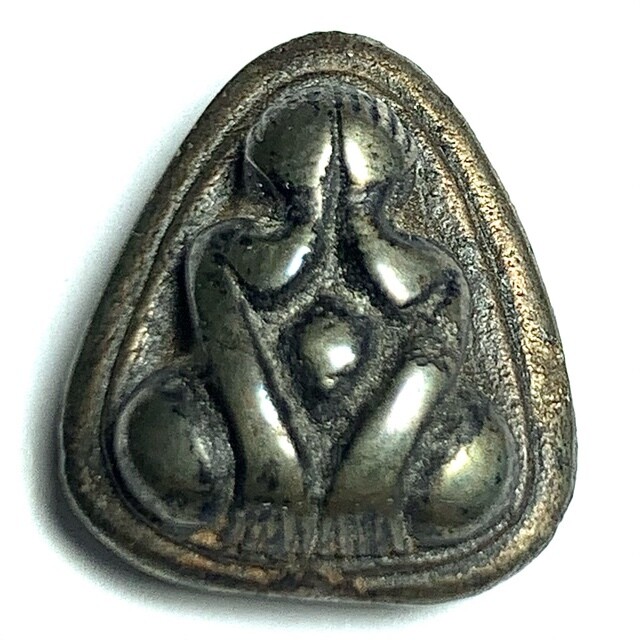
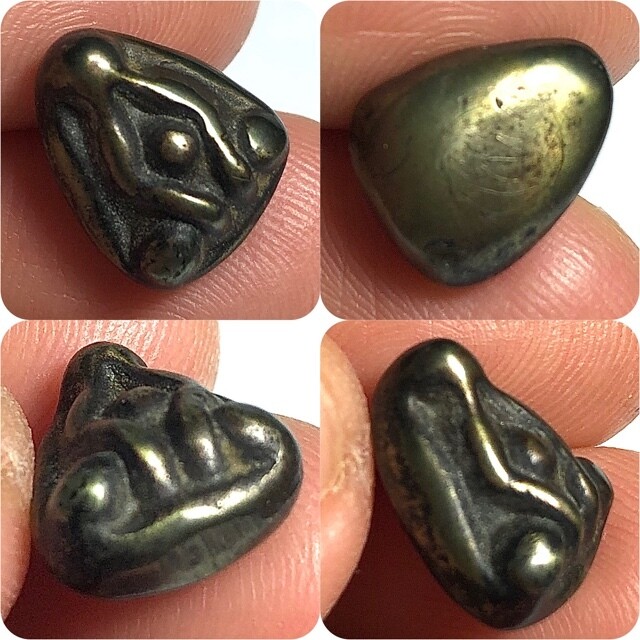
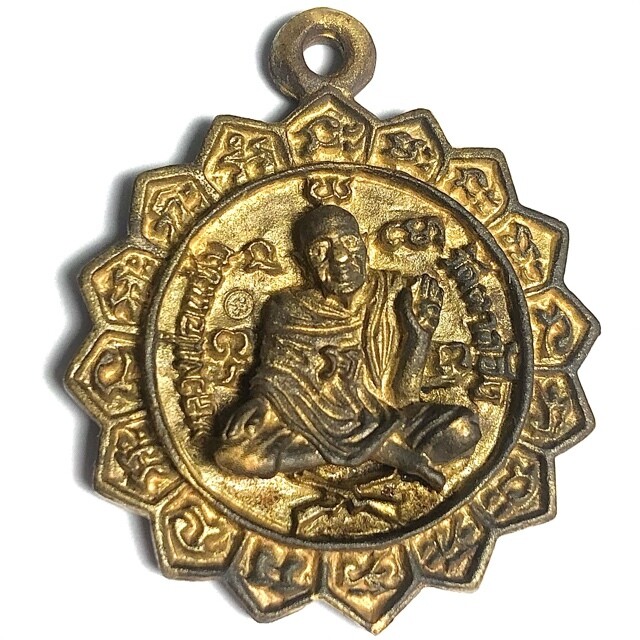
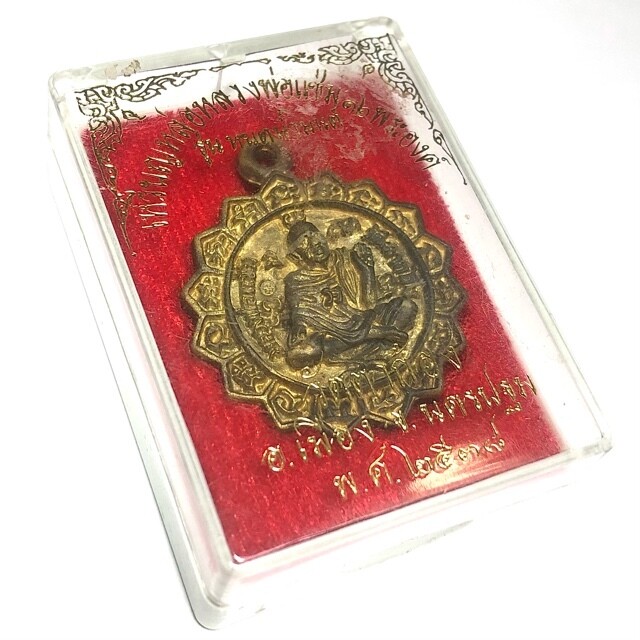
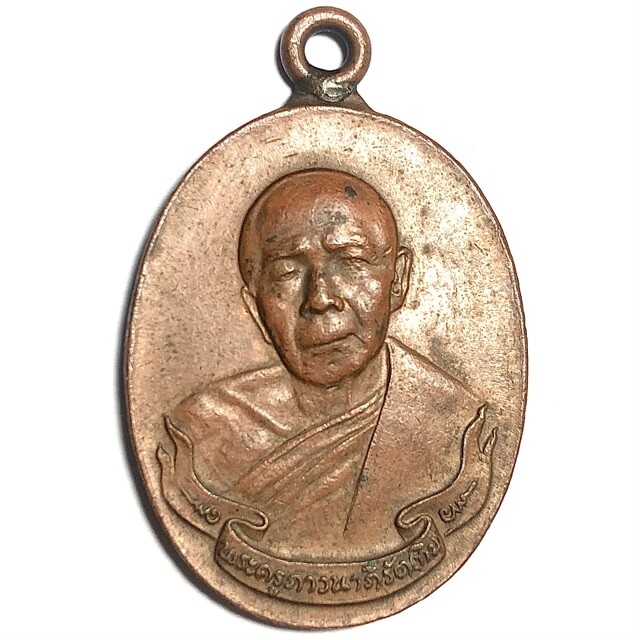
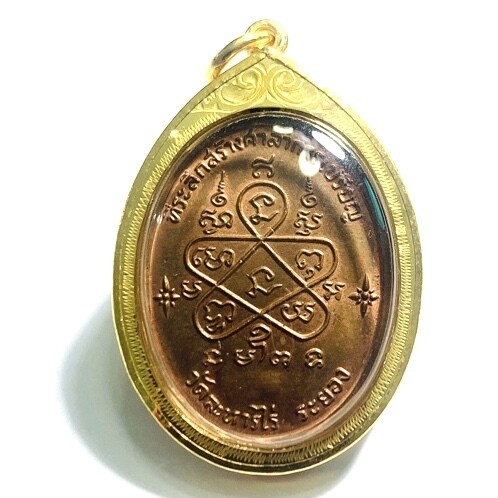
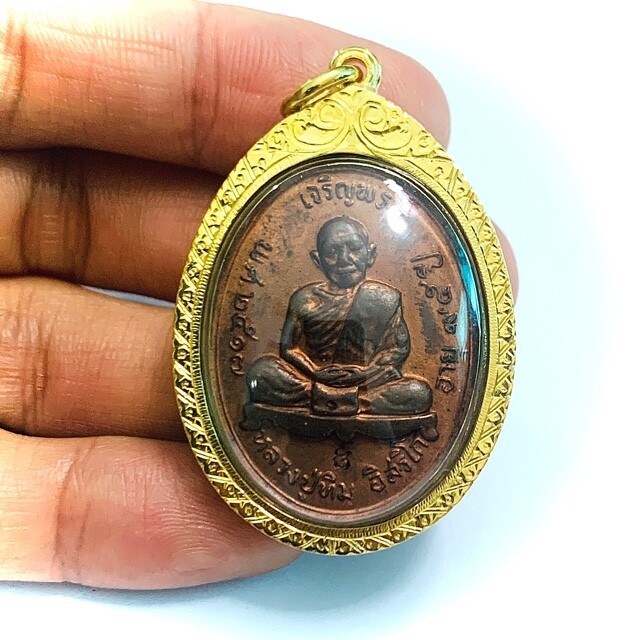
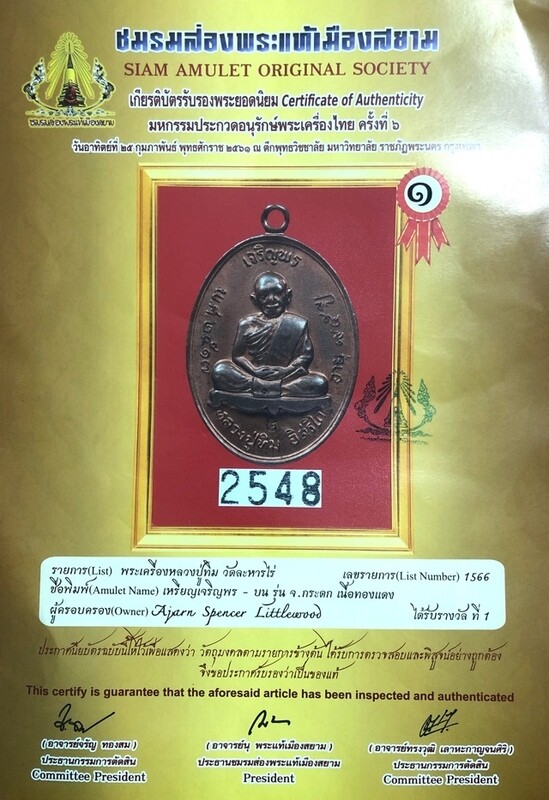
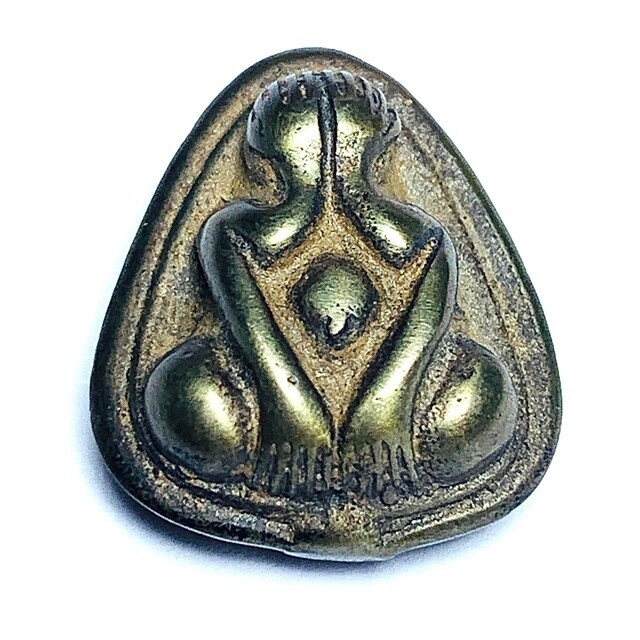
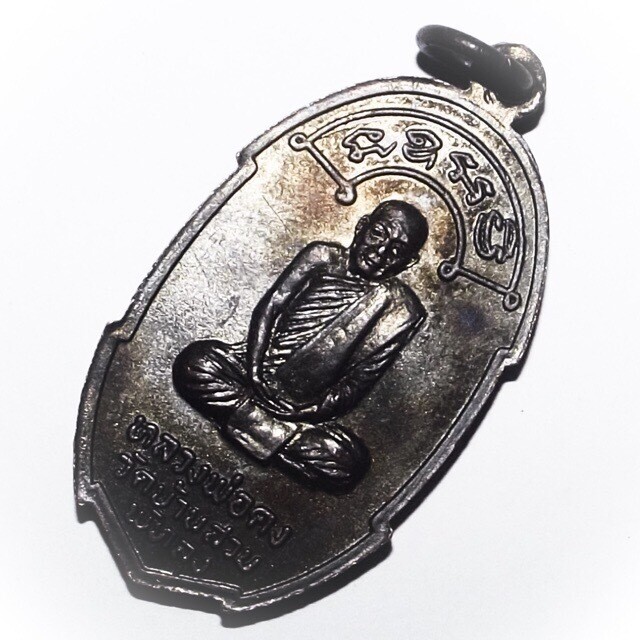
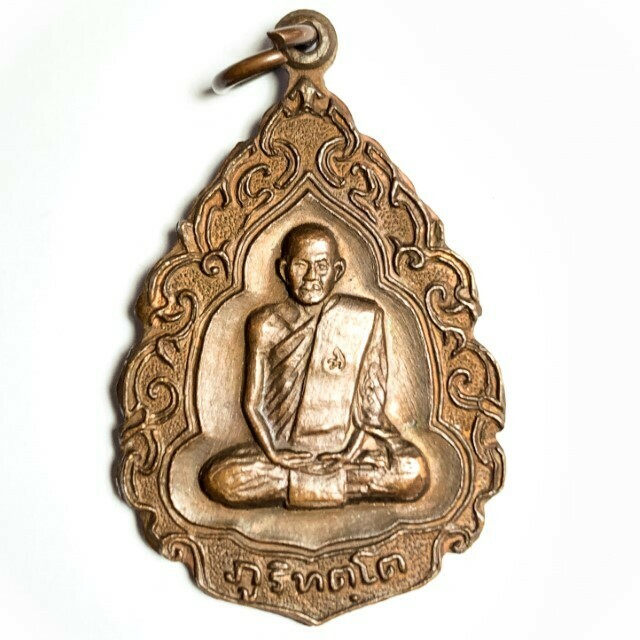
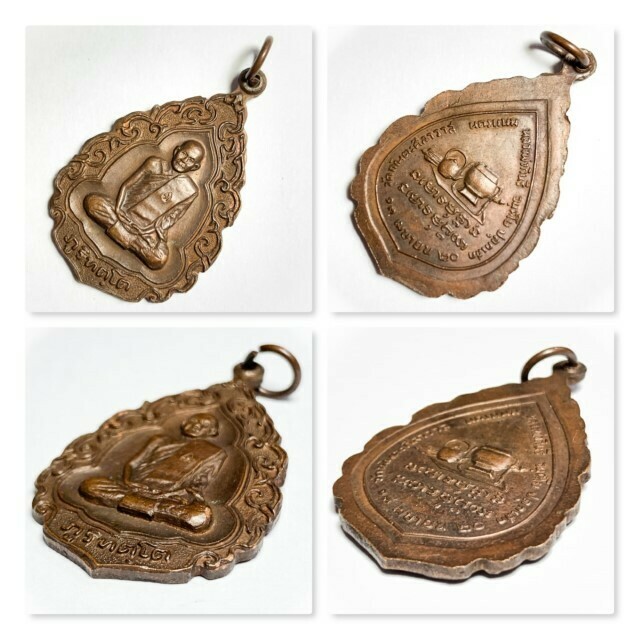
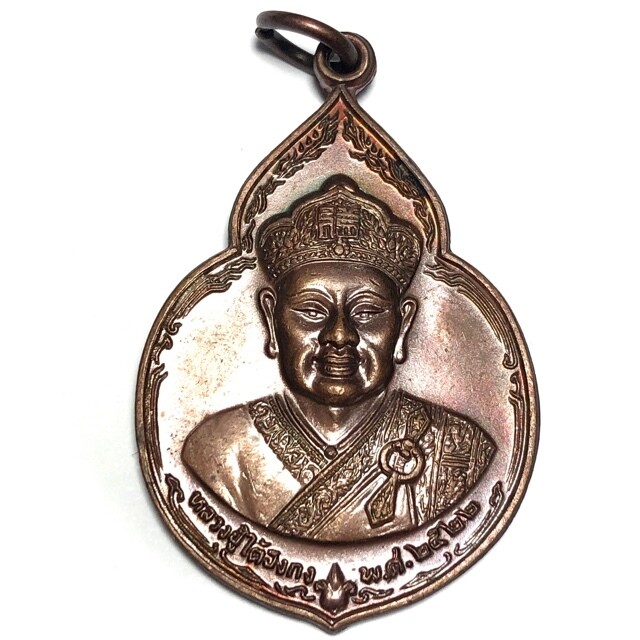
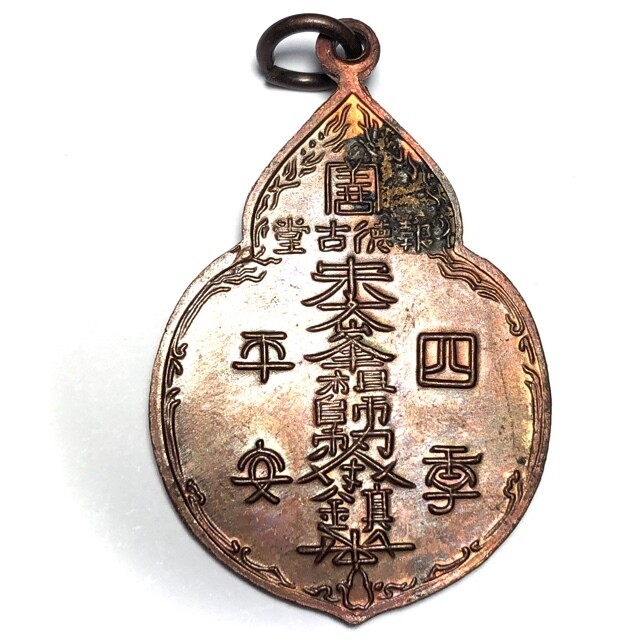
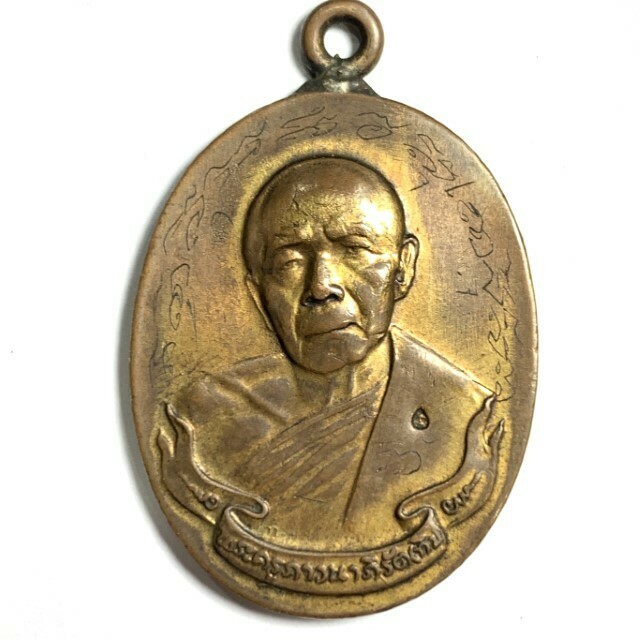
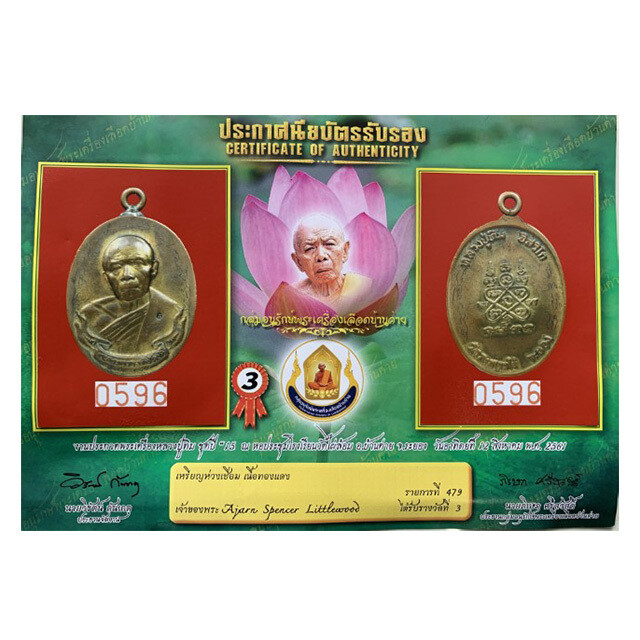
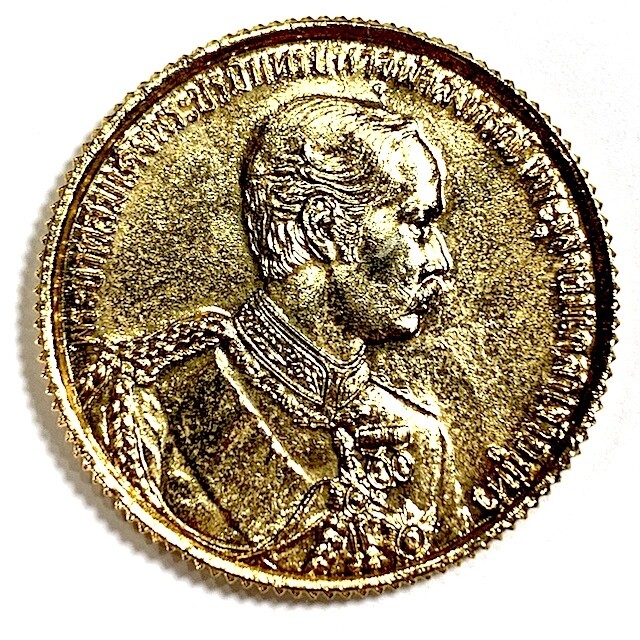
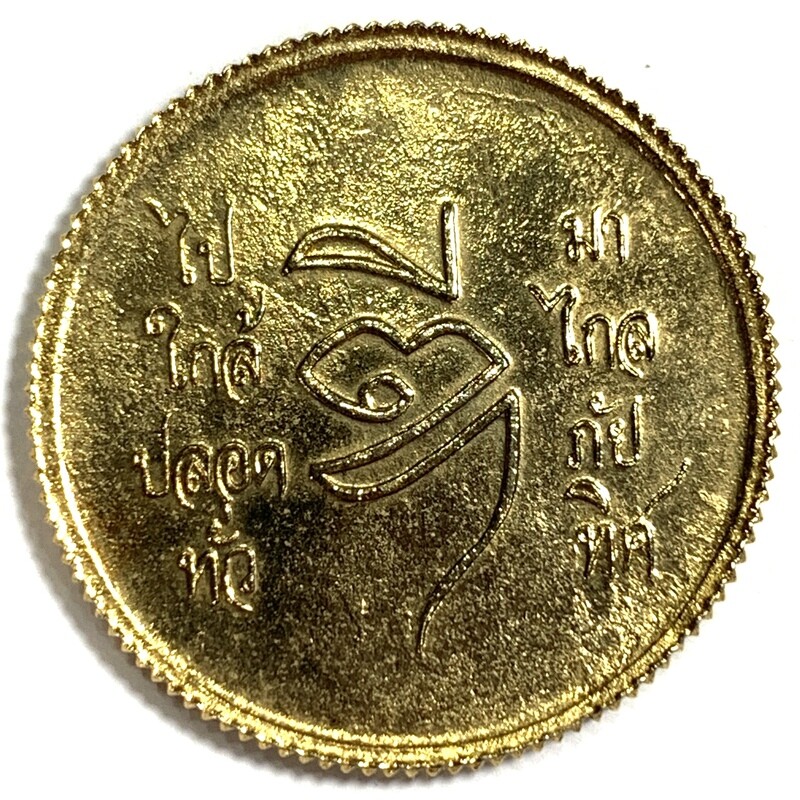
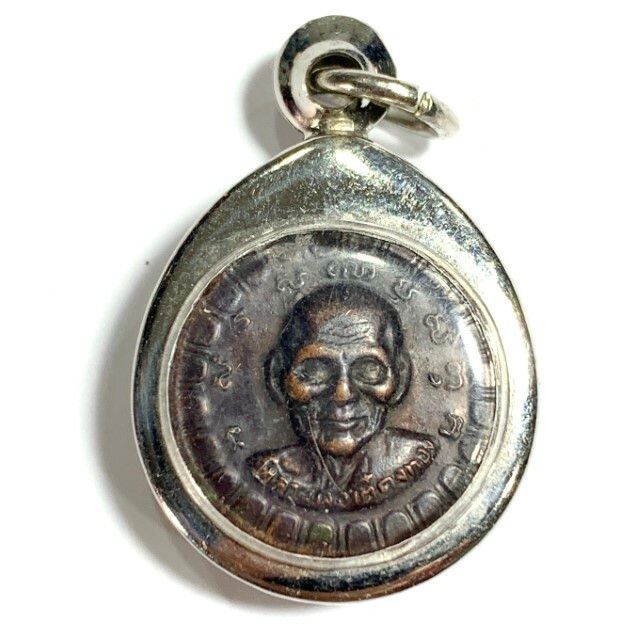
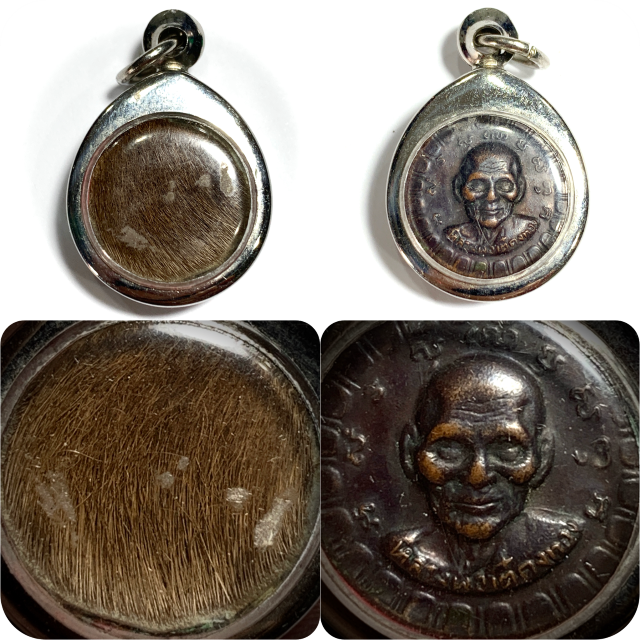
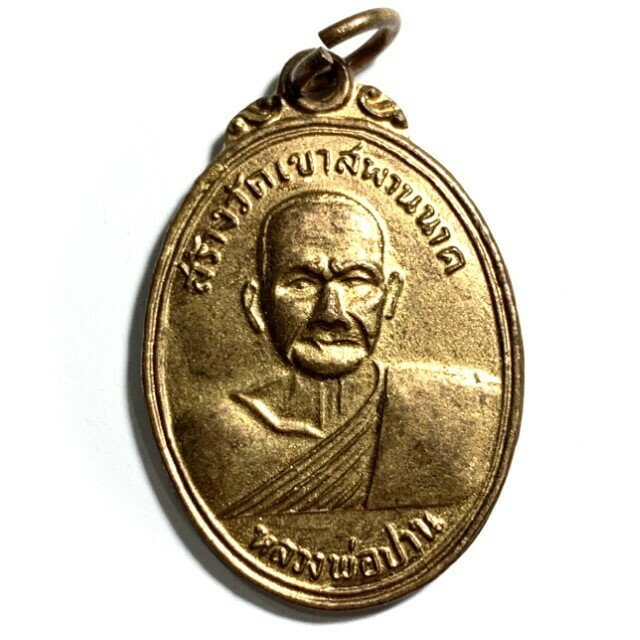
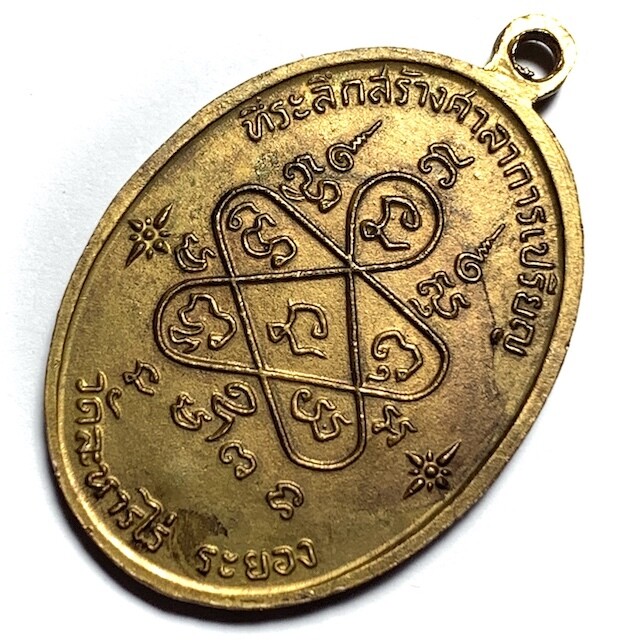
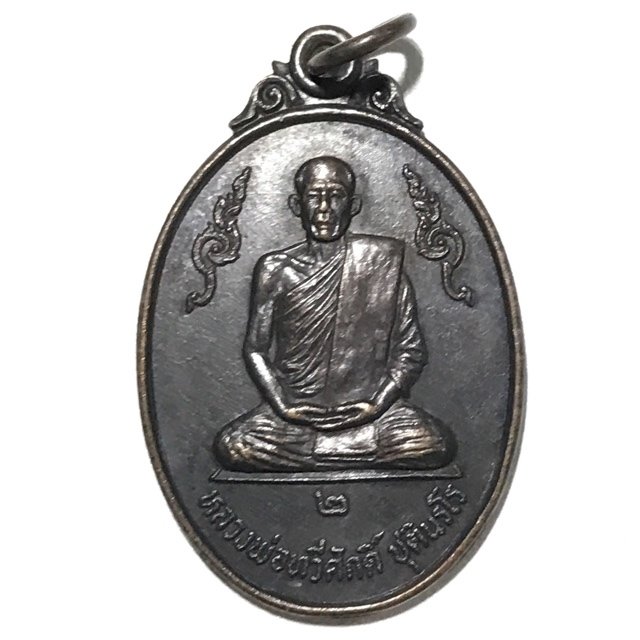
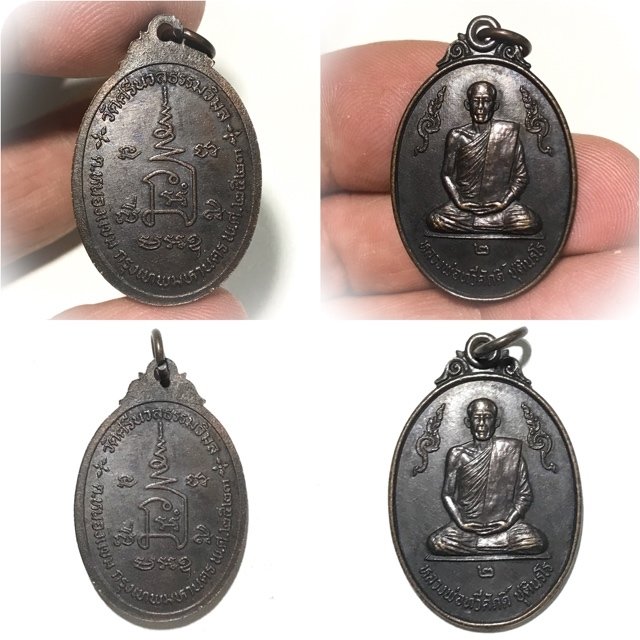
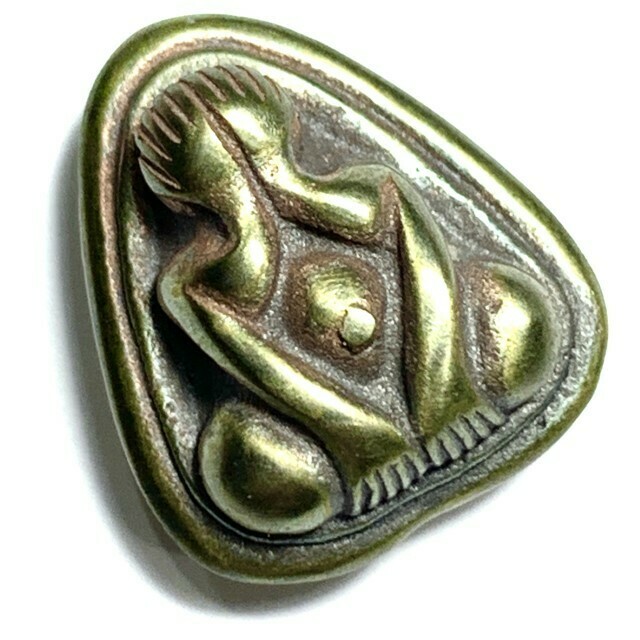
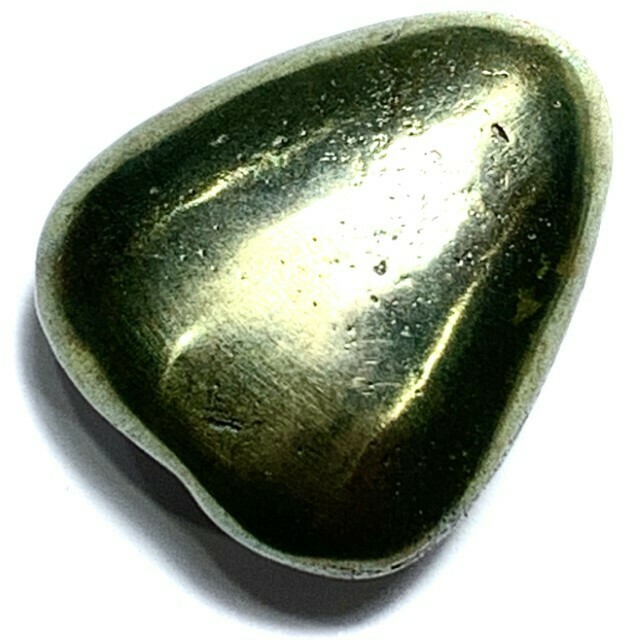
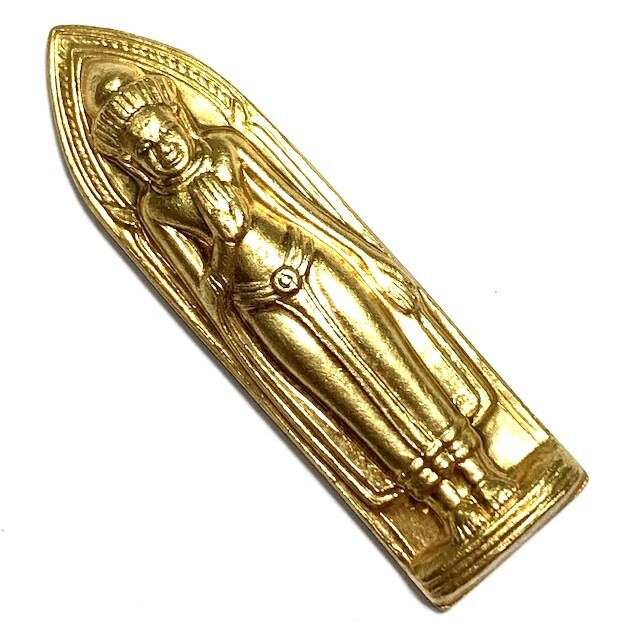
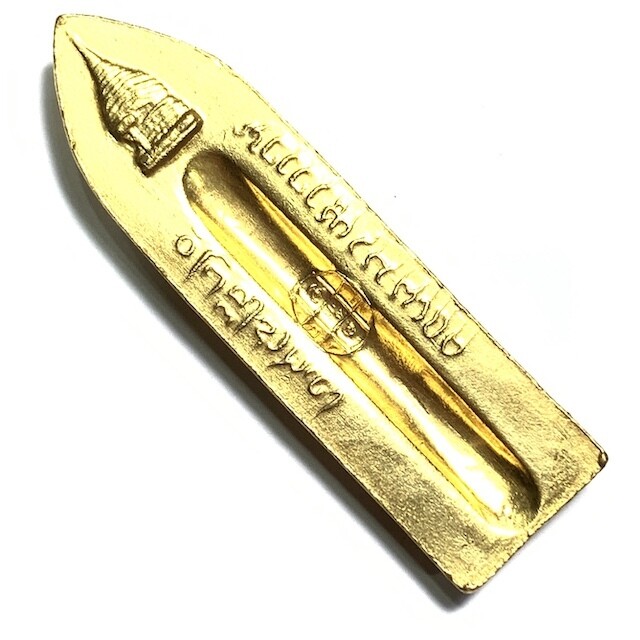
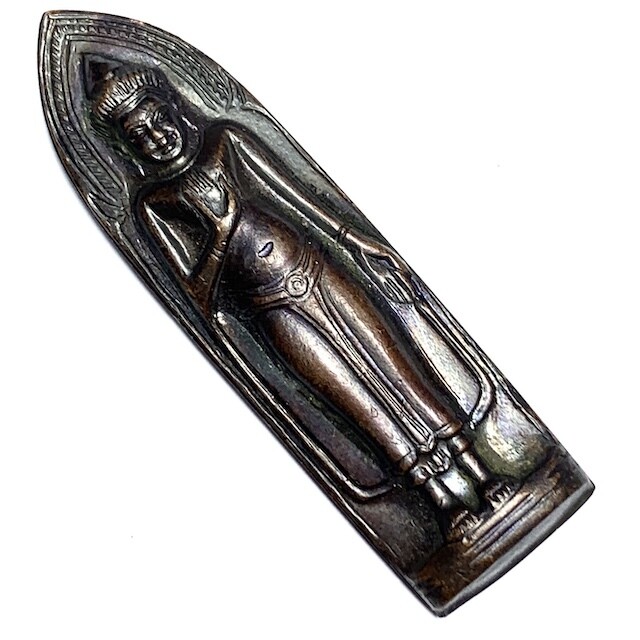
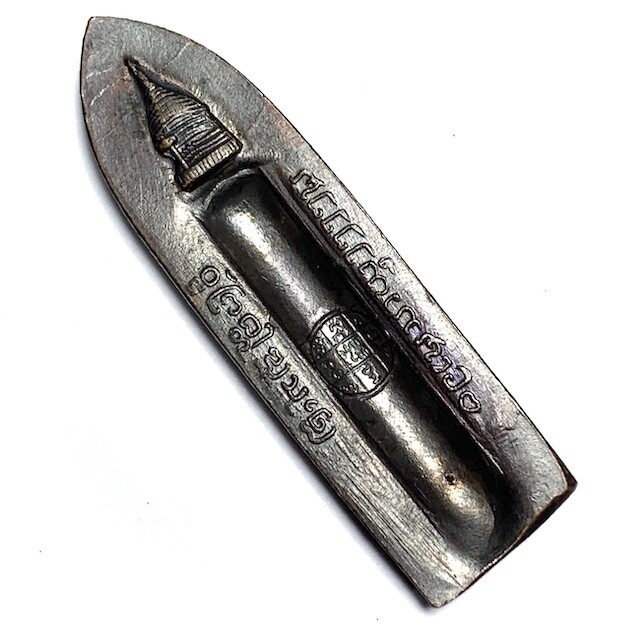
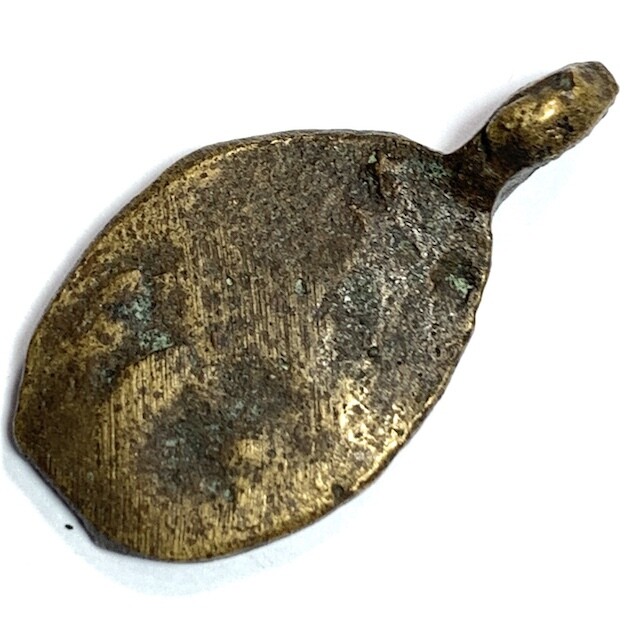
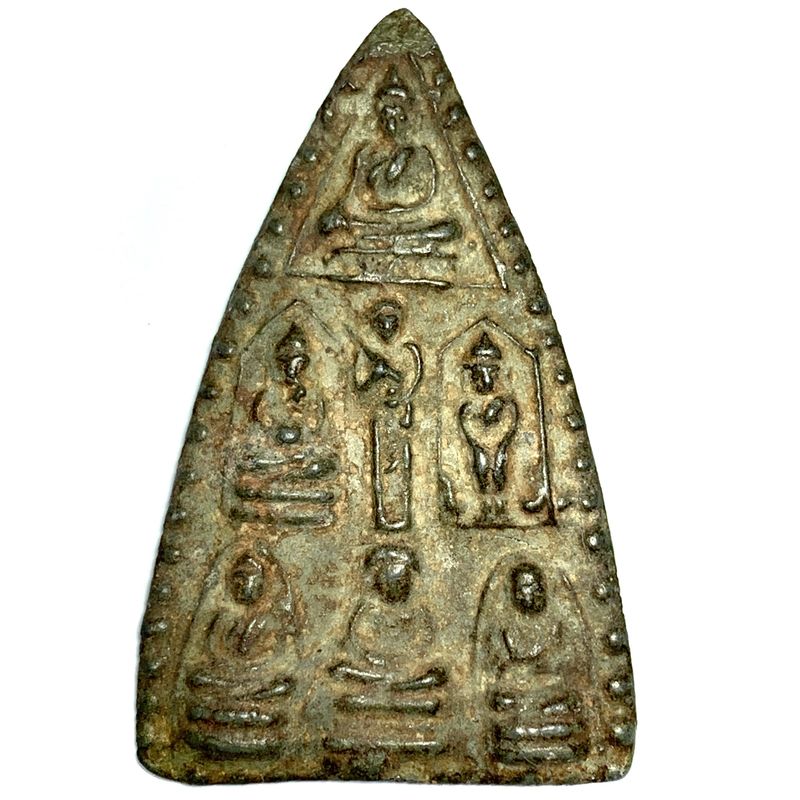
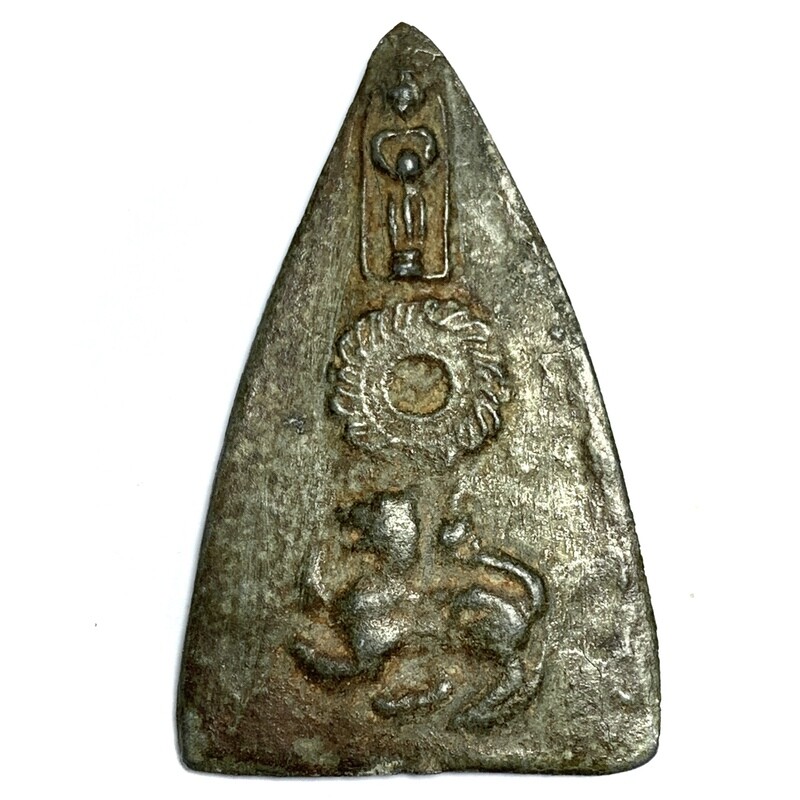
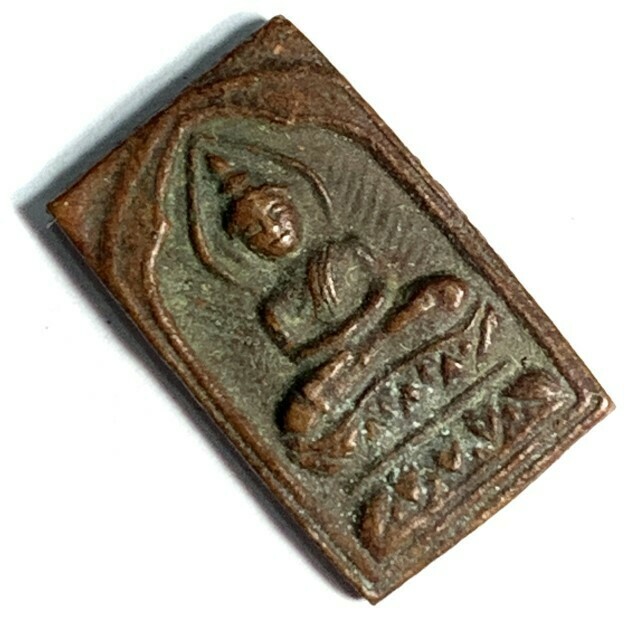
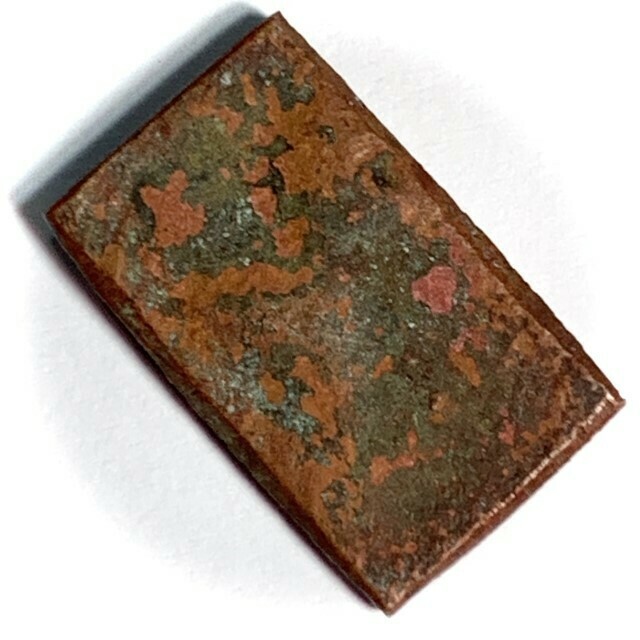
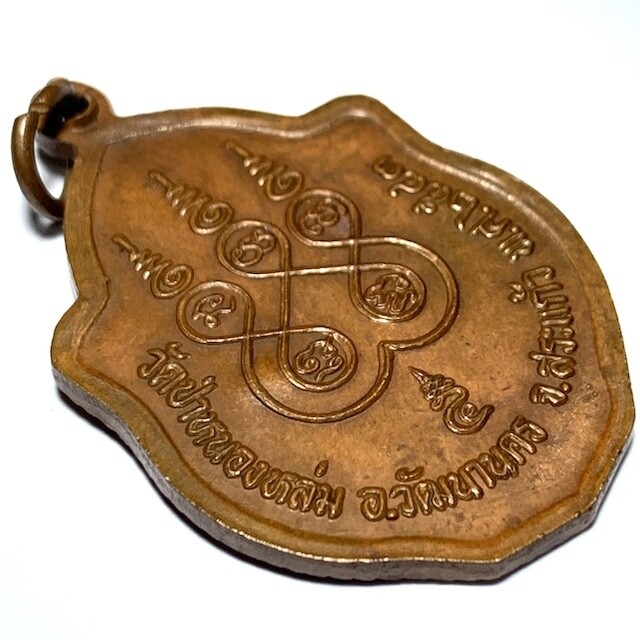
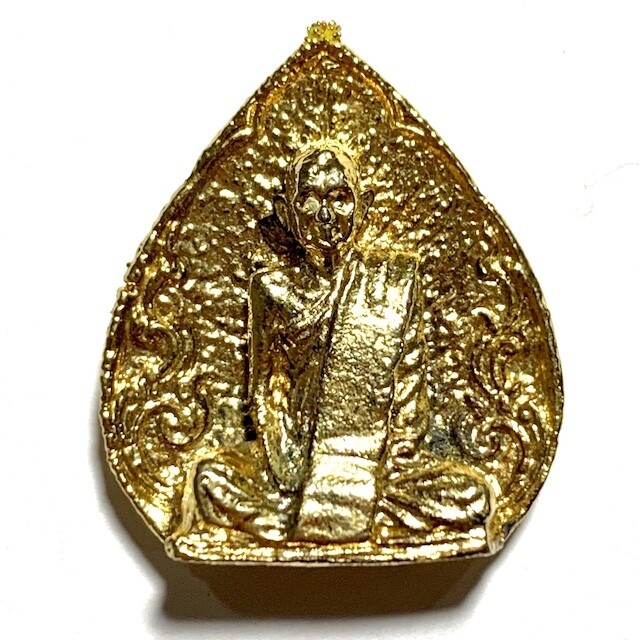
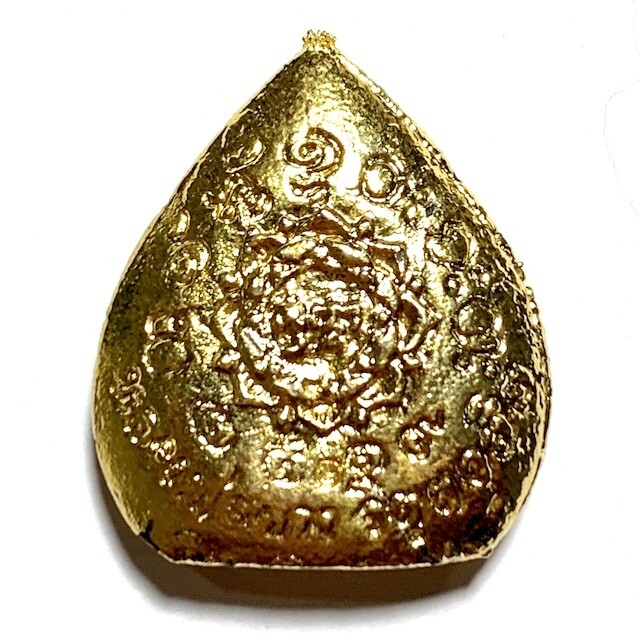
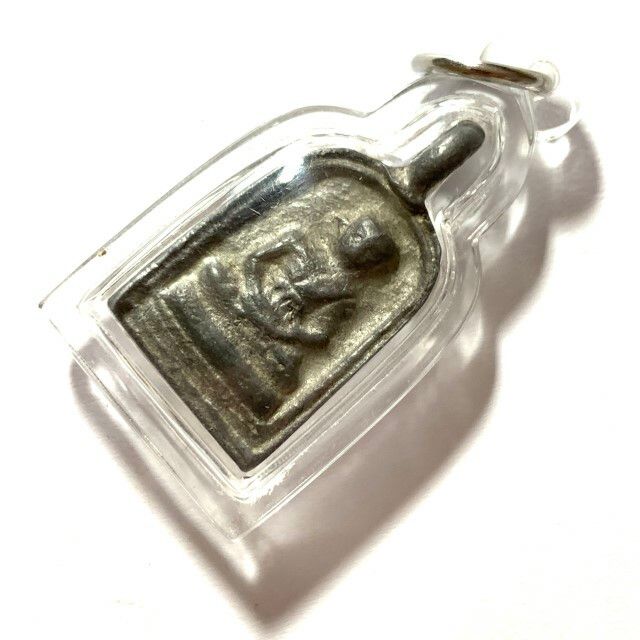
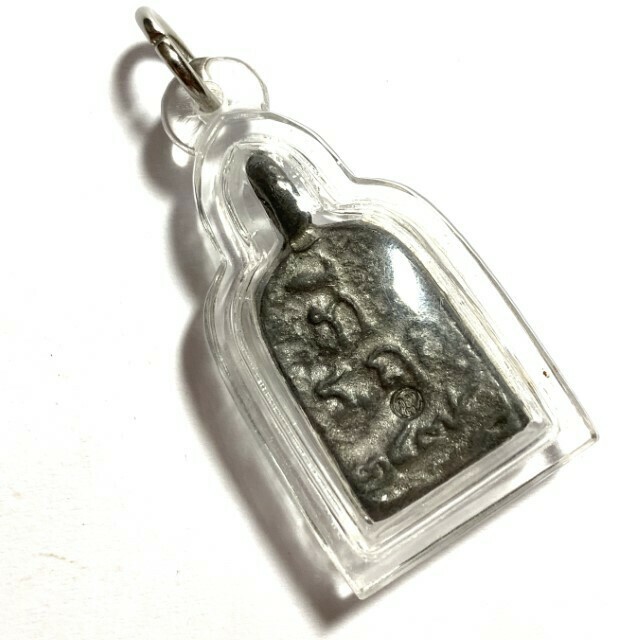
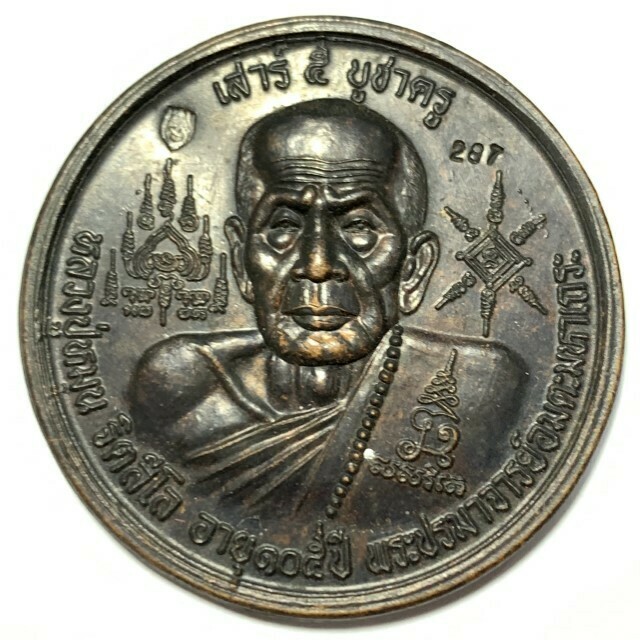
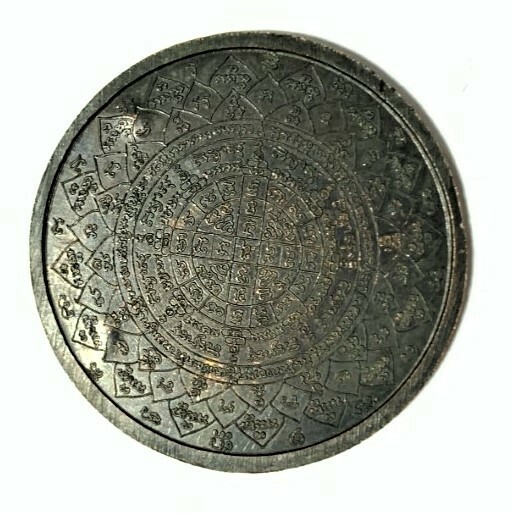
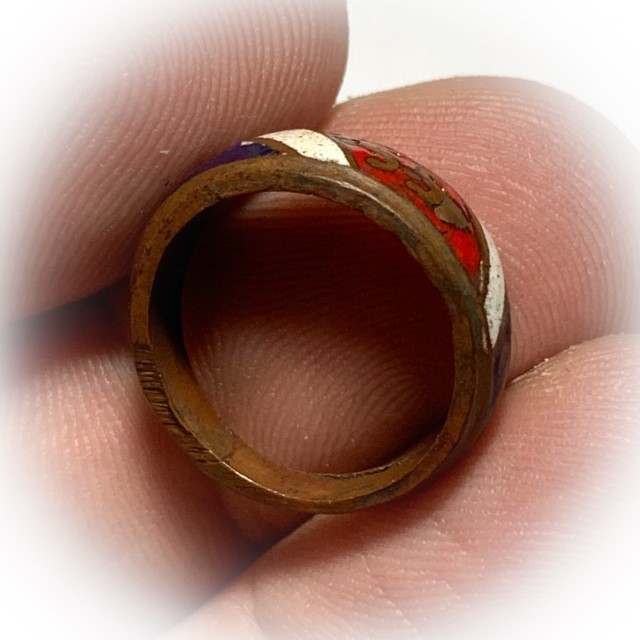
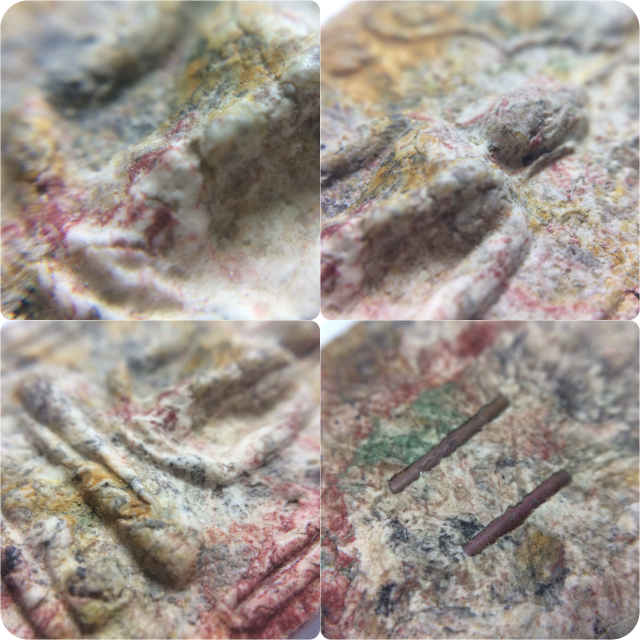
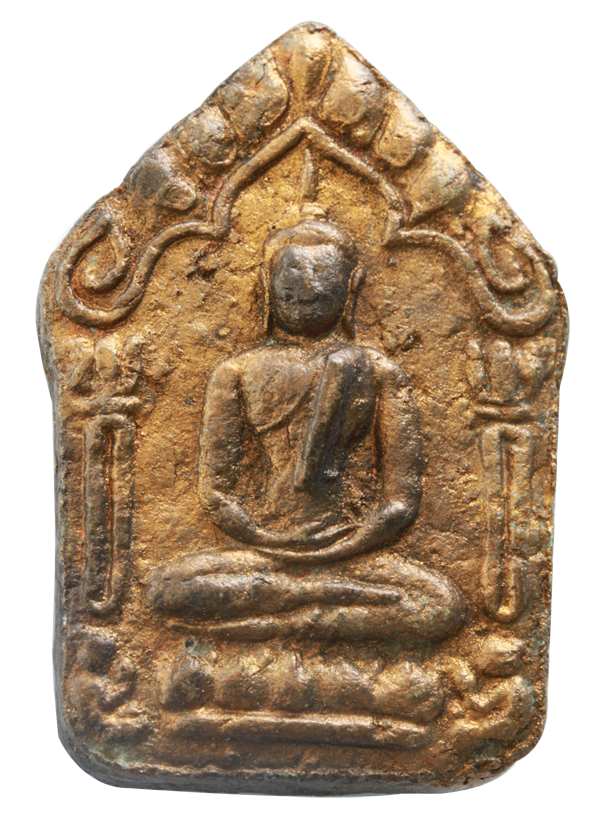
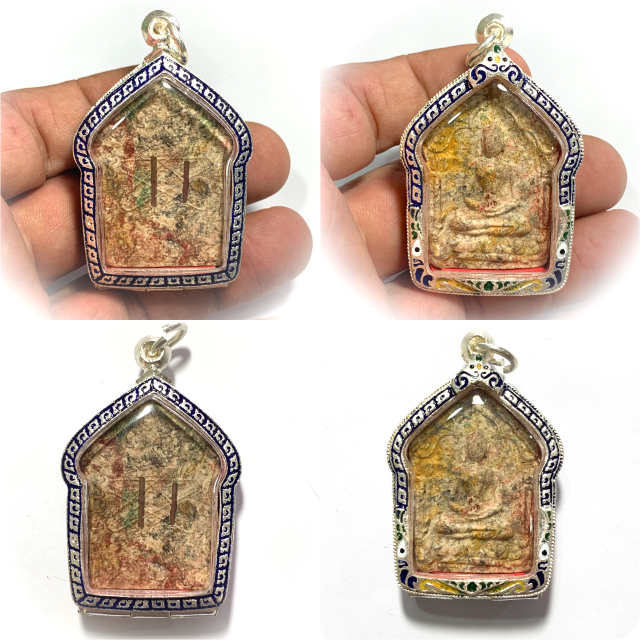
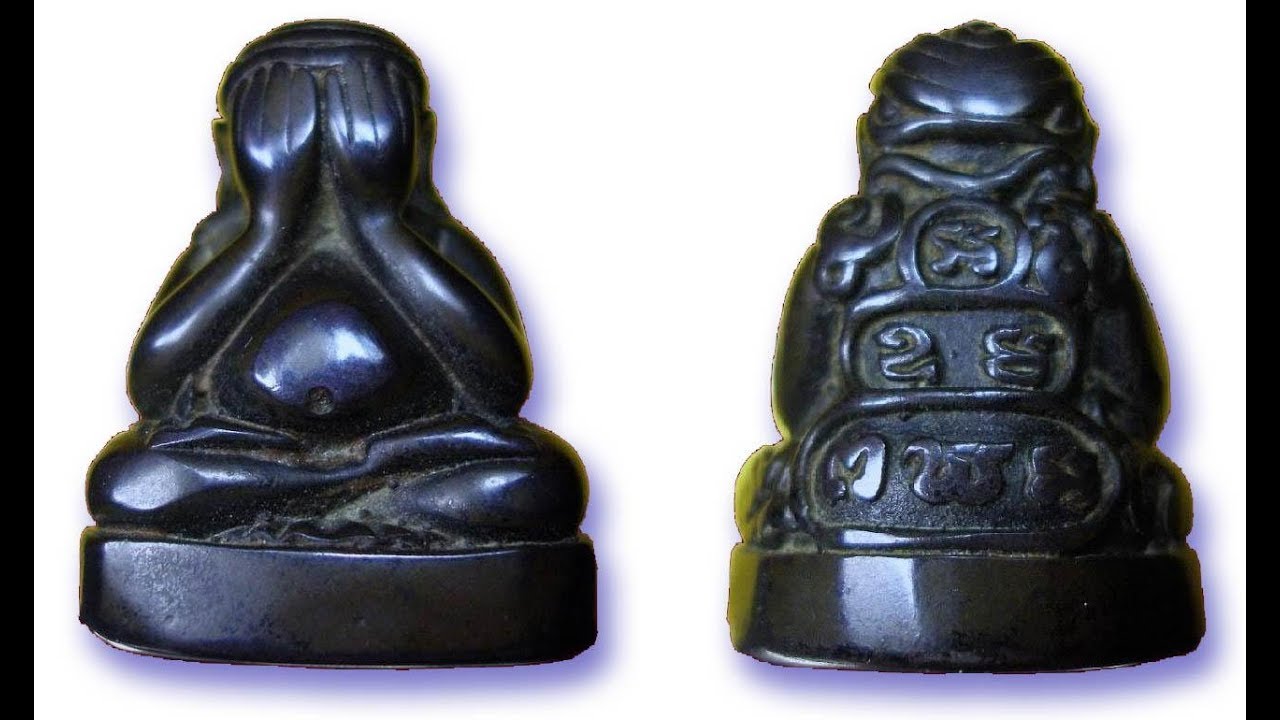
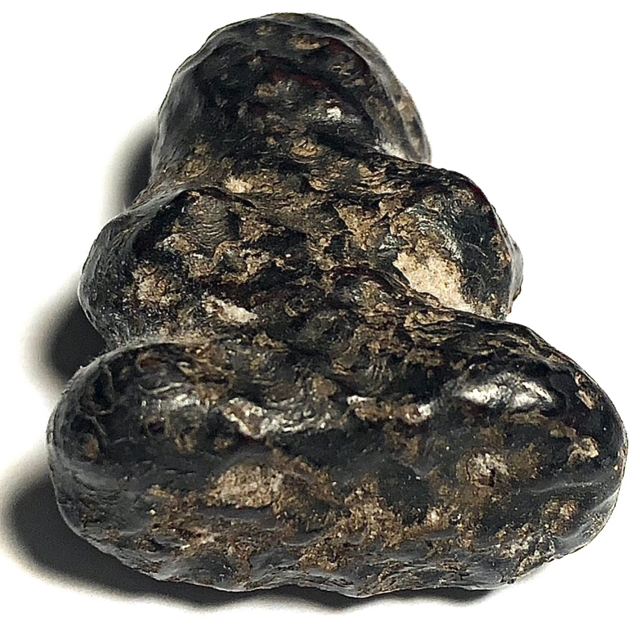
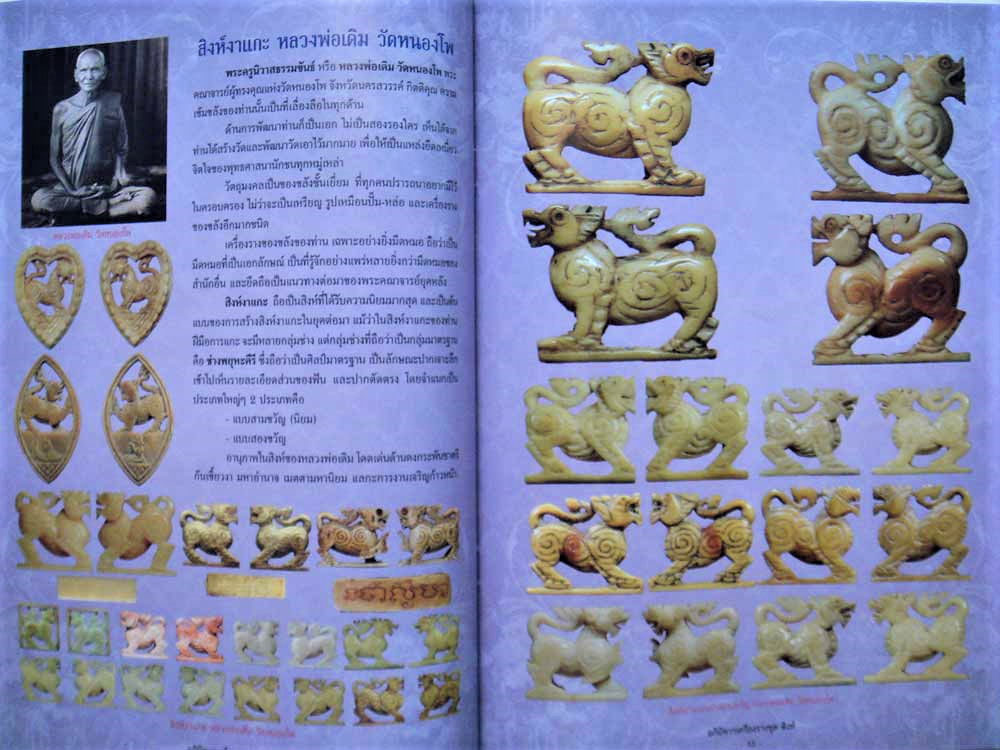
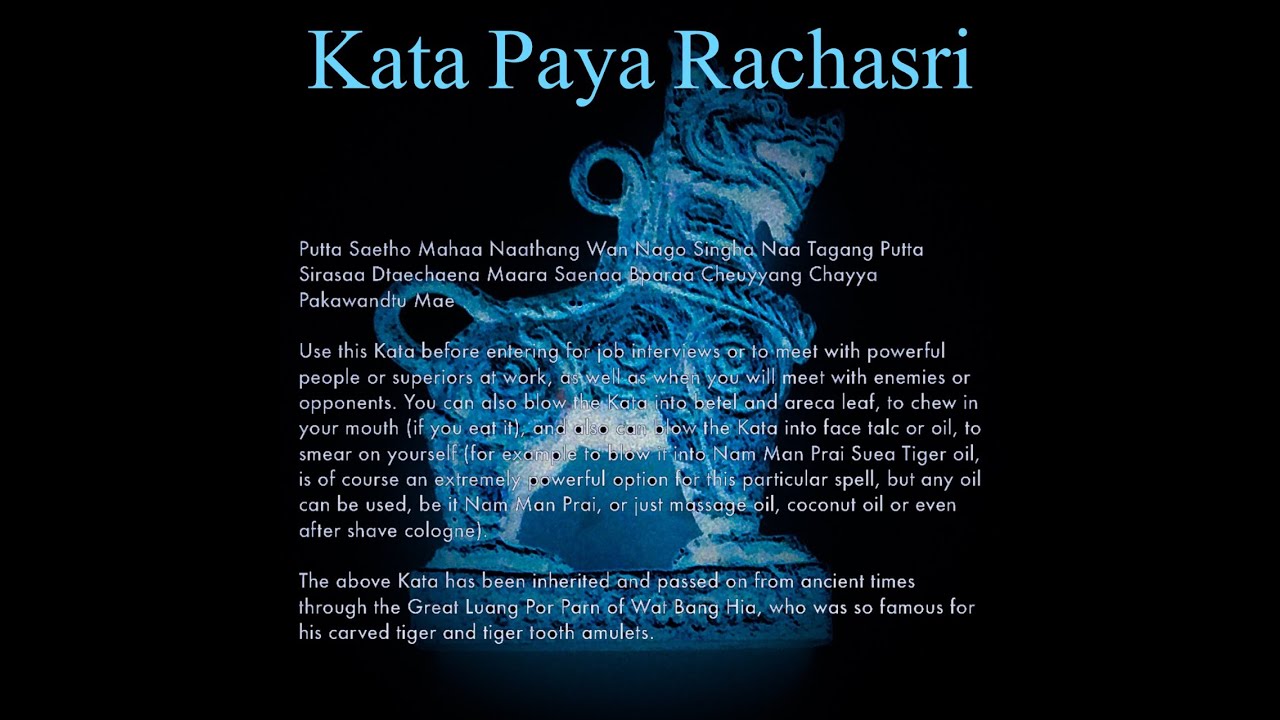
Takrut Tong Daeng Kong Grapan Thak Chueak Khiaw 2500 BE Copper Yantra Scroll Green Cord 5 Inches Luang Por Mum Wat Prasat Yer

The Takrut Tong Daeng Kong Grapan Thak Chueak Khiaw 2500 BE: A Monograph on the Sacred Amulets of Luang Por Mum Intabanyo Wat Prasat Yer

This monograph presents a rigorous academic examination of the Takrut Tong Daeng Kong Grapan Thak Chueak Khiaw, identified by SKU 04219, an artifact of profound spiritual and cultural significance from the esteemed master, Luang Por Mum Intabanyo of Wat Prasat Yer. Dated to approximately 2500 BE (1957 CE), this specific Takrut exemplifies the intricate interplay between Theravada Buddhist esotericism, indigenous Thai animism, and the potent alchemical traditions prevalent in the Mekong region of Southeast Asia. The focus here is on its historical genesis, the biographical trajectory of its creator, the material composition, the methodologies of its sacred empowerment, its iconographical implications, and the prescribed devotional practices associated with its veneration.

Takrut Tone Thak Chueak Khiaw Luang Por Mum Wat Prasat Yer

The Takrut, a cylindrical scroll amulet, stands as a quintessential manifestation of Thai Buddhist occultism, embodying a lineage of mystical knowledge passed through generations of monastic masters. Fundamentally, a Takrut serves as a repository for sacred inscriptions, known as Yantras (or Yant in Thai), imbued with specific magical properties through ritualistic empowerment. The Takrut Tong Daeng Kong Grapan Thak Chueak Khiaw, specifically a “Takrut Tone” measuring five inches in length, represents a powerful class of these amulets, meticulously crafted from copper/bronze Yantra foil. Its designation as “Tong Daeng” refers to this copper composition, historically valued for its conductive properties in magical rites and its association with celestial bodies.

The theological importance of this Takrut is predicated upon the efficacy of its enshrined Wicha (magical knowledge) to confer multifaceted protections and boons upon the wearer. The primary attributes inscribed within this amulet are Kong Grapan Chadtri, Klaew Klaad, Maha Ud, and Gae Pit Aathan. Kong Grapan Chadtri denotes invincibility, specifically the ability to repel physical harm, rendering the wearer impervious to blades, bullets, and other forms of weaponry. Klaew Klaad signifies evasive capabilities, ensuring the wearer’s escape from dangerous situations, accidents, and unforeseen perils. Maha Ud pertains to gun-stopping magic, preventing firearms from discharging or causing harm, a critical protective aspect in regions historically prone to conflict. Gae Pit Aathan is the power to counteract and neutralize black magic, curses, and malevolent spiritual influences, offering a comprehensive shield against occult attacks. Beyond these core protective functions, the Takrut is also imbued with properties of Serm Duang (enhancement of fate or destiny), Metta Mahaniyom (compassion and popularity, leading to favorable social interactions), and Maha Lap Kaa Khaay (great fortune and success in business and trade). These attributes collectively position the Takrut not merely as a defensive talisman but as a comprehensive tool for enhancing overall well-being, status, and prosperity in the devotee’s life.

The temporal context of “2500 BE” (1957 CE) for this Takrut positions it within the nascent period of Luang Por Mum’s prolific output of “Krueang Rang” (talismanic occult charms). While his more formally documented editions of amulets, such as the Rian Kanajarn Monk Coins, emerged predominantly between 2507 BE and 2520 BE, the presence of specific Takrut types is noted earlier, with the “1st edition Takrut” officially documented in 2509 BE. This suggests that the “2500 BE” designation for this particular Takrut likely refers to an earlier, less formally documented production period, characteristic of his individual, hand-made Krueang Rang. Such earlier creations often predated mass-produced editions and were crafted one by one, reflecting a more direct engagement of the master’s personal Wicha Akom (sorcery knowledge) and meditative energies during the initial phase of his spiritual and magical development. The cultural milieu of this era, marked by the geopolitical tensions of the Indo-China and Vietnam War, further amplified the demand for powerful protective amulets, elevating the significance of masters like Luang Por Mum who were renowned for their efficacious Wicha.

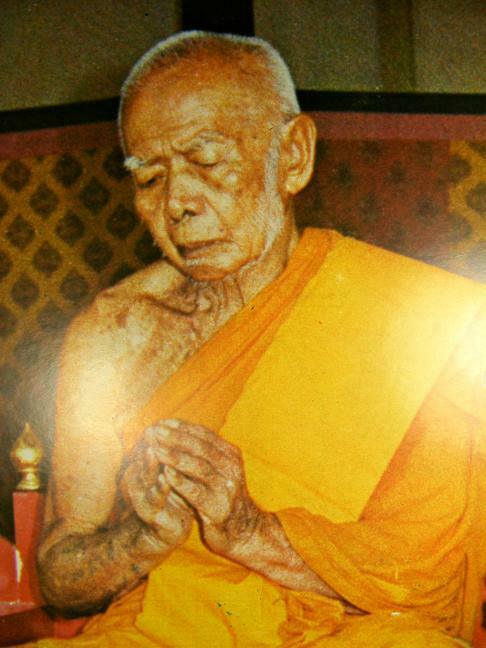
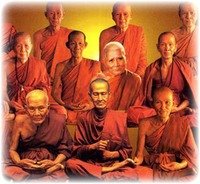
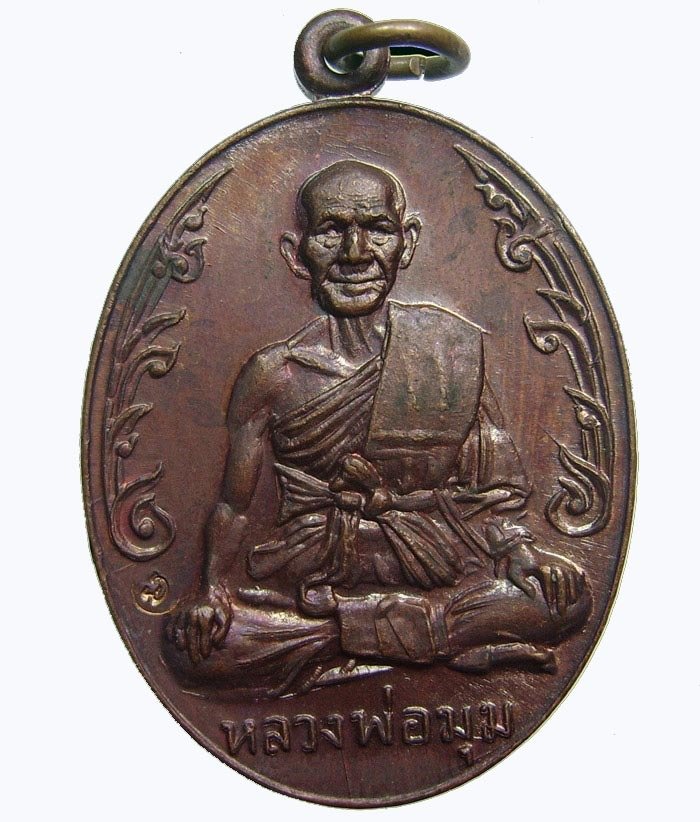
Pra Kroo Prasat Khantakun, reverently known as Luang Por Mum Intabanyo, was a preeminent figure in Thai Buddhism and occult arts, serving as the esteemed abbot of Wat Prasat Yer Temple in Sri Saket province. His biography spans a significant period of Thai history, from 2429 BE (1886 CE) to 2522 BE (1979 CE), covering nearly a century of profound spiritual development and dedication. Luang Por Mum’s monastic journey commenced at the tender age of 12, when he ordained as a Samanera (novice monk). His commitment to the Dhamma was unwavering, as he maintained the purity of his Bhikkhu (monk) vows until his passing at the advanced age of 93, a testament to his profound spiritual discipline and unwavering adherence to the Vinaya.

Luang Por Mum’s spiritual formation was significantly shaped by his extensive Tudong (ascetic forest wandering) practices. He spent numerous years traversing the arduous and often perilous mountainous jungles of the Thai-Khmer border regions. This period of intense solitary practice was instrumental in his mastery of Kammathana Mindfulness, a meditative technique focused on developing deep insight and concentration, and in refining his Wicha Akom sorcery. Tudong masters are revered for their profound connection to nature, their ability to withstand harsh conditions, and their development of potent spiritual and magical abilities through rigorous self-discipline and communion with the natural world. This ascetic training formed the bedrock of his spiritual authority and the efficacy of his amulets.

The lineage of Luang Por Mum is further distinguished by his association with Luang Phu Bun Ma, who served as one of his esteemed Kroo Ba Ajarn (teacher monks). This connection underscores the importance of traditional teacher-disciple relationships in the transmission of Wicha. The explicit mention of amulets like the Rian Luang Por Bun Ma coin, created in 2509 BE in reverence for his guru, and the Rian Sorng Ajarn (Two Masters Coin) of 2510 BE, which featured both Luang Phu Bun Ma and Luang Por Mum, highlight the continuity of this spiritual lineage and the deep respect accorded to his mentors. Luang Por Mum’s reputation as a Tudong master from the Isan Country further solidified his status, as this region is renowned for producing monks with formidable Wicha and deep ascetic roots.

Takrut Tone Thak Chueak Khiaw Luang Por Mum Wat Prasat Yer

A defining characteristic of Luang Por Mum’s amulet creation was his insistence on personal empowerment (Plook Sek). Unlike some masters who might delegate aspects of blessing to disciples, Luang Por Mum personally performed the incantations and consecrations for all his amulets. This direct engagement of his meditative energies and Wicha was a primary factor contributing to the immense popularity and legendary efficacy of his creations among devotees. This dedication to personal empowerment elevated his amulets, granting them a “cult status” among collectors, particularly his Rian Kanajarn Monk Coins, which were released between 2507 BE and 2520 BE, with all editions subsequently achieving Pra Niyom category status as highly preferred and sought-after amulets.

The Tamniap Wadthumongkol Luang Por Mum Intabanyo, a comprehensive catalogue of his amulets, provides invaluable insight into his prolific output. While the 2500 BE date for this specific Takrut might indicate an earlier, uncatalogued period of production, the documented history of his amulets commenced with the 2507 BE ‘Rian Run raek’ (first edition coin), issued in two models: ‘Pim Sor Hang San’ (short-tailed Thai letter ส) and ‘Pim Sor Hang Yaw’ (long-tailed Thai letter ส). This year also saw the release of first edition Hwaen Luang Por Mum Guru Monk rings, crafted from sacred chanuan metals such as Nuea Nak (an alchemical alloy, often gold-infused) and Nuea Albaca (a silver-colored alloy).

The year 2508 BE marked the release of the Riang Glom Luang Por Mum coin, distributed to devotees who visited the temple for prayer, Dhamma practice, and merit-making. A significant year for his early output was 2509 BE, when a series of amulets were released, sponsored by his devotee committee. While not all items from this edition were fully documented, known artifacts include the Pra Kring Sor Gor, additional first edition finger rings, Roop Tai (photos of Luang Por Mum), Roop Lor Boran Loi Ongk Statuettes depicting his image, and importantly, the “1st edition Takrut.” This inaugural Takrut, along with the Rian Luang Por Bun Ma coin, received a large Buddha Abhiseka ceremony, attended by many great master monks of that era for blessings and empowerment.

In 2510 BE, the Rian Sorng Ajarn monk coin, featuring Luang Phu Bun Ma and Luang Por Mum, was released alongside Pha Yant (Yantra cloths), various Takrut, and Muan Sarn Sacred Powder amulets. The year 2512 BE saw the Pra Chaiyawat Luang Por Mum, considered the second edition Pra Kring, following the Pra Kring Gor Sor. This edition also included the Rian Roop Arm coin and the third edition Finger Ring. The period of 2514-2515 BE was particularly prolific, witnessing the release of the Rian Tao reed, the Rian Por Bor Ror coin, and his renowned ‘Pra Somdej Lai Suea’ (tiger-stripes pattern) Muan Sarn Sacred Powder Votive Tablet Buddha amulet, famed for its legendary powers and aesthetic appeal. Other releases from this period included the Rian Tee Tam Ngaan Sor Por Or Mueang coin, the Rian Arm Hlang Por-Bor-Ror coin, the Rian Sala Garn Bprian (‘Rian Hnaa Ban’), the Rian Glom Run Pised special release round monk coin, and the Hwaen Por-Bor-Ror Royal Insignia finger ring, among a vast pantheon of other amulets.

Takrut Tone Thak Chueak Khiaw Luang Por Mum Wat Prasat Yer

The year 2516 BE is notable for a large pantheon of Muan Sarn Sacred Powder amulets released at Wat Prasat Yer Nuea, Wat Maha Puttaram, and Wat Pra Dto. These included models such as Pra Somdej Hlang Roop Muean Luang Por Mum, Pra Somdej Hlang Luang Por Mum Han Khang, Pra Somdej Jumbo, Pra Somdej Pim Pratan Porn, and Roop Muean Nuea Wan Herbal powder Cameo amulets. This year is also famous for the extraordinary account involving a regiment of U.S. G.I.s stationed in Udorn Thani during the Vietnam War. These soldiers, initially skeptical, attempted to test the magic of Luang Por Mum’s amulets by shooting at them, only to discover their firearms would miraculously not discharge. This astonishing event led to profound faith, prompting the G.I.s to sponsor the creation of the celebrated Rian Papa Mum coin, alongside Pra Somdej and Pim Jantr Loi Muan Sarn Sacred Powder amulets, all featuring English inscriptions, specifically for protection during the conflict.

Takrut Tone Thak Chueak Khiaw Luang Por Mum Wat Prasat Yer

In 2517 BE, a collaboration between Pra Ajarn Fern of Wat Intrawiharn (Bang Khun Prohm) in Bangkok and the Munlaniti Prasat Khantakun Foundation of Luang Por Mum led to a significant edition. Amulets were blessed by Luang Por Mum at Wat Prasat Yer Nuea and then taken to Wat Intr for further empowerment and distribution. Funds from these donations supported the construction of a wall around the Uposatha shrineroom of Wat Samakee Patanaram temple and restorations at Wat Prasat Yer. This edition featured the ‘Rian Nak Glaam’ (‘Muscleman’) coin amulet, produced with two distinct block press molds (one from Wat Intrawiharn, one from Wat Prasat Yer), the ‘Rian Chang Sam Siarn’ (3-headed Erawan elephant God coin), Pra Pong Roop Muean Pasom Sen Gesa (powder cameo amulets of Luang Por Mum infused with monk hairs), Pra Pidta Nuea Wan 108, Roop Lor Loi Ongk Statuettes, Lockets, Takrut Tone Nuea Ngern (silver Yantra scroll), Pha Yant, Hwaen magic rings, and See Pheung Nam Man Prai Metta Balm. The year 2519 BE marked Luang Por Mum’s 90th birthday, celebrated with the Rian Cheed Sum Ganok (in two models: ‘Baeb Mee Hoo’ with a pendant hole, and ‘Baeb Mai Mee Hoo’ without), the Hwaen Tor Bor Kor finger ring, Roop Lor Loi Ongk Statuettes, Takrut amulets, and various other talismanic charms. Finally, in 2520 BE, the Bangkok Bank sponsored the creation of the Rian Dork Bua Lotus coin amulet (in ‘Pim Hnaa’ – thick, and ‘Pim Bang’ – thin models), featuring the bank’s lotus logo. This edition also included Pra Nakprok powder amulets, Roop Lor Loi Ongk Statuettes, Bucha statues, Takrut, and Pha Yant.

Alchemical Composition and Sacred Geometry

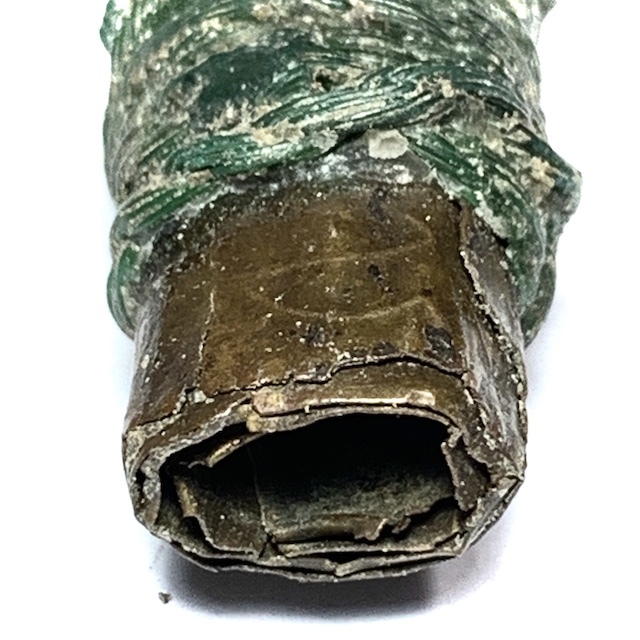
The Takrut Tong Daeng Kong Grapan Thak Chueak Khiaw is an exemplary specimen of Thai sacred craftsmanship, its material composition intrinsically linked to its intended magical function. The primary component is “Tong Daeng,” or copper, utilized as the medium for the Yantra foil. Copper has a long history of application in sacred arts across diverse cultures due to its perceived energetic conductivity and alchemical properties. In Thai occultism, copper is often chosen for its capacity to hold and transmit magical energies, making it an ideal substrate for the inscribed Yantras. The foil is meticulously inscribed with specific sacred geometry and Kata (mantras), then tightly rolled into a cylindrical scroll, forming the core of the Takrut. The designation “Takrut Tone” indicates a singular, often larger, amulet, distinguishing it from smaller, bundled Takrut sets.

Takrut Tone Thak Chueak Khiaw Luang Por Mum Wat Prasat Yer

The Yantra inscriptions on the copper foil are not merely decorative but constitute a complex system of sacred geometry, abbreviated Pali and Sanskrit script, and numerical sequences. These specific inscriptions are designed to invoke the powers of Maha Ud, Klaew Klaad, Kong Grapan, and Gae Pit Aathan. Maha Ud Yantras typically involve symbols or Kata that “seal” or “block” energies, preventing harmful forces (such as projectiles) from penetrating. Klaew Klaad Yantras incorporate designs that promote evasion and ward off misfortune. Kong Grapan Yantras are characterized by intricate grids and protective Kata aimed at rendering the body invulnerable. Gae Pit Aathan Yantras are formulated to dissipate and neutralize negative magical influences. The precision of these inscriptions and their specific arrangement are paramount, as any deviation can compromise the amulet’s efficacy. Luang Por Mum’s mastery of Wicha Akom ensures the correct application of these intricate designs.

Takrut Tone Thak Chueak Khiaw Luang Por Mum Wat Prasat Yer

The copper Yantra foil is subsequently wrapped with a green spellbound cord. This cord serves a dual purpose: practical and esoteric. Practically, the cord wrapping provides a protective layer against environmental degradation, safeguarding the copper from corrosion caused by rain and moisture, especially when the amulet is worn around the waist, a common practice among devotees for maximum protective coverage. Esoterically, the cord itself is “spellbound,” meaning it has been ritually consecrated and infused with protective energies through specific Kata and incantations. The choice of green color may hold additional symbolic significance, often associated with nature, growth, and equilibrium in various spiritual traditions, subtly enhancing the amulet’s protective and life-affirming properties. This intricate layering of material, inscription, and external binding exemplifies the holistic approach to sacred object creation in Thai occultism, where every component contributes to the overall potency and protective qualities of the talisman.

Takrut Tone Thak Chueak Khiaw Luang Por Mum Wat Prasat Yer

Beyond the primary copper and cord, Luang Por Mum’s other amulets showcase a broader use of sacred materials, collectively termed “Muan Sarn.” These often include chanuan metals (sacred alloys), such as Nuea Nak (an alchemical alloy frequently incorporating gold, prized for its spiritual potency and value) and Nuea Albaca (a silver-white alloy). His Pra Pong Roop Muean Pasom Sen Gesa (powder cameo amulets) incorporated the revered monk hairs (Sen Gesa) of Luang Por Mum himself, lending a direct spiritual connection to the master. Pra Pidta Nuea Wan 108 utilized 108 types of sacred herbal powders (Wan), each with its own specific magical attributes. These diverse material compositions underscore the alchemical and naturalistic foundations of his Wicha, where specific elements are carefully selected and combined to amplify desired magical effects.

Takrut Tone Thak Chueak Khiaw Luang Por Mum Wat Prasat Yer

 Sacred Empowerment and Wicha

The essence of a potent Thai Buddhist amulet lies not merely in its material composition or inscribed Yantras but profoundly in the process of its sacred empowerment, known as “Plook Sek” or “Pluk Saek.” Luang Por Mum Intabanyo was renowned for his exceptional mastery of Wicha Akom sorcery, a complex system of magical knowledge encompassing Kata (mantras), incantations, meditations, and ritual practices designed to imbue objects with spiritual energy and specific magical properties. His Tudong journey in the Thai-Khmer border regions was crucial for cultivating and refining this Wicha, connecting him with ancient esoteric traditions of the region.

Takrut Tone Thak Chueak Khiaw Luang Por Mum Wat Prasat Yer

The empowerment process for the Takrut Tong Daeng would have involved several critical stages. Initially, the Yantra foil, already inscribed with the sacred geometry and Kata for Kong Grapan Chadtri, Klaew Klaad, Maha Ud, and Gae Pit Aathan, would be subject to Luang Por Mum’s personal incantations. This involved prolonged meditative chanting, where the master would focus his mind and spiritual energy to invoke the intended powers into the material. This personal touch was a hallmark of his practice, distinguishing his amulets and contributing to their perceived superiority. The vibratory energy of the Kata, coupled with the focused intent of the meditating master, is believed to awaken and activate the latent magical forces within the Yantra.

Takrut Tone Thak Chueak Khiaw Luang Por Mum Wat Prasat Yer

Beyond individual consecration, significant editions of Luang Por Mum’s amulets, such as the 2509 BE 1st edition Takrut, underwent extensive Buddha Abhiseka ceremonies. These grand blessing rites involve multiple venerable monks congregating to collectively chant and meditate, pooling their spiritual merits and Wicha to further empower the amulets. Such ceremonies amplify the inherent potency of the talismans, ensuring a high degree of efficacy for the entire batch. The rigorous adherence to traditional Wicha and the deep meditative states achieved by Luang Por Mum were central to transferring the spiritual energy that confers protection, status, and invincibility.

Takrut Tone Thak Chueak Khiaw Luang Por Mum Wat Prasat Yer

The miraculous efficacy of Luang Por Mum’s amulets is well-documented through numerous anecdotal accounts, particularly those originating from the Indo-China and Vietnam Wartimes. The story of the American G.I.s in 2516 BE stands as a paradigmatic example. These soldiers, initially doubting the power of Thai amulets, conducted a direct test by attempting to fire their weapons at amulets created by Luang Por Mum. The reported inability of their guns to discharge, despite repeated attempts, constituted a profound validation of the amulets’ Kong Grapan Chadtri and Maha Ud powers. This incident galvanized the G.I.s’ faith, leading them to sponsor the renowned Papa Mum coin for protection, further solidifying the legend of Luang Por Mum’s powerful Wicha. Such events transformed his amulets from mere religious artifacts into objects of immense protective and spiritual power.

Rian Run PAPAMUM 2516 BE Coin by Luang Por Mum

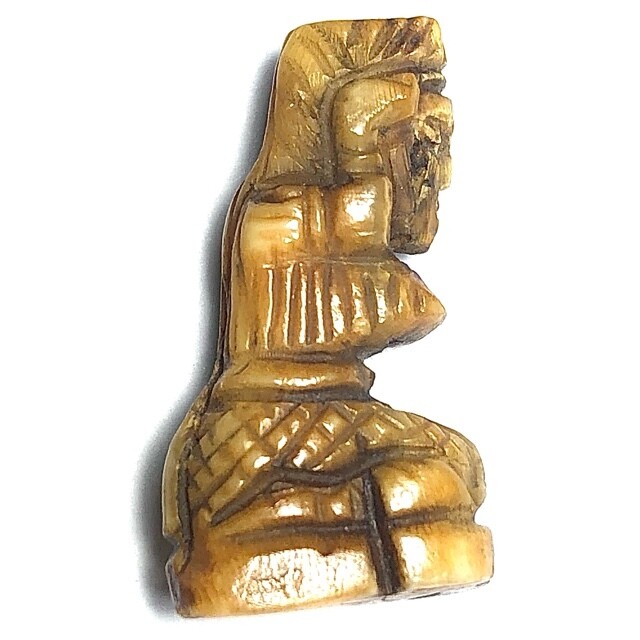
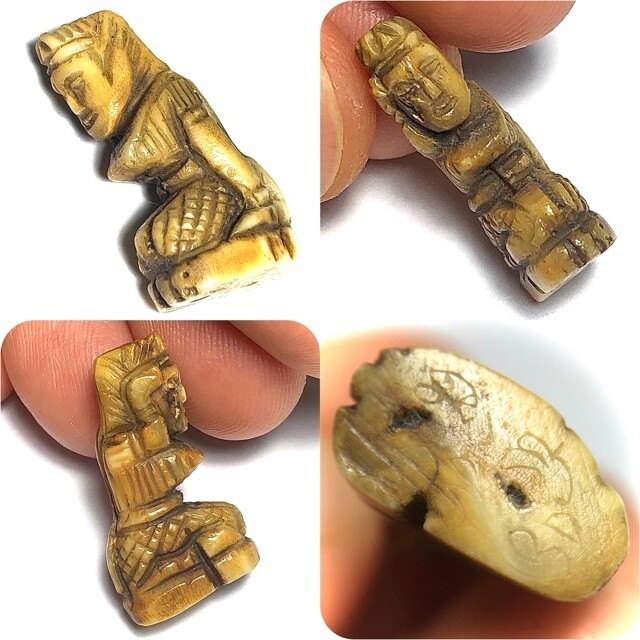
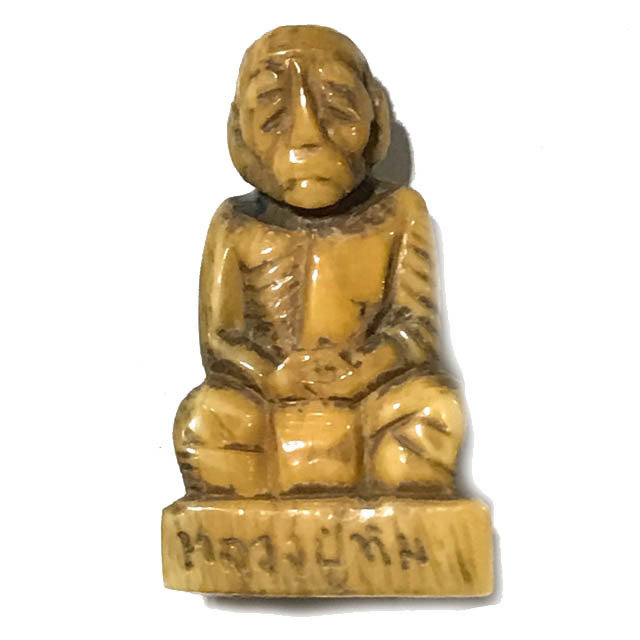
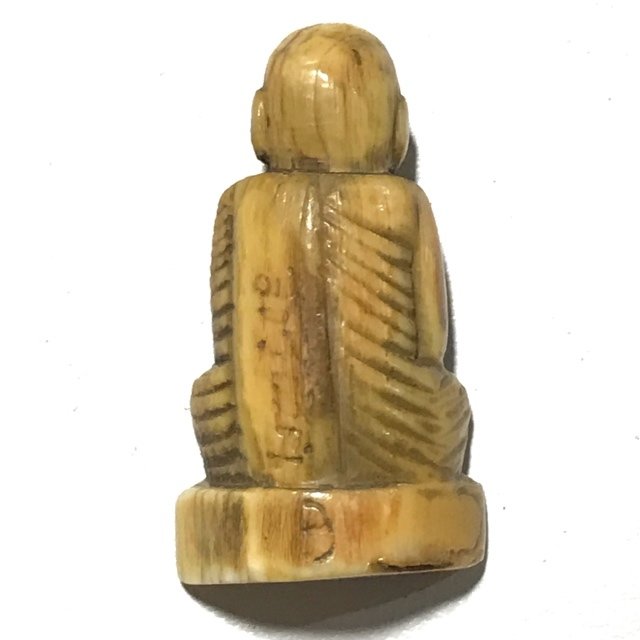
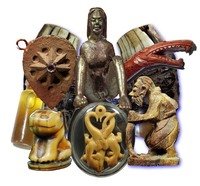
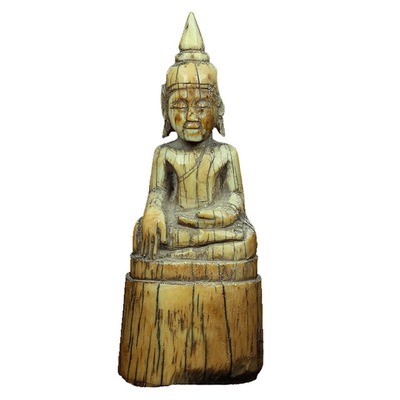
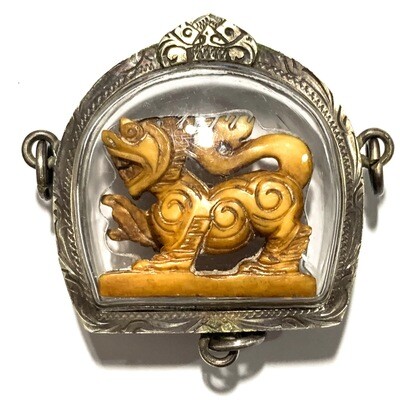
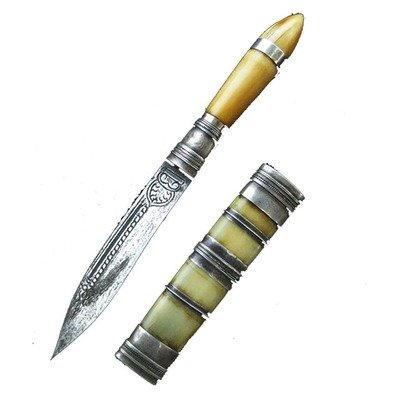
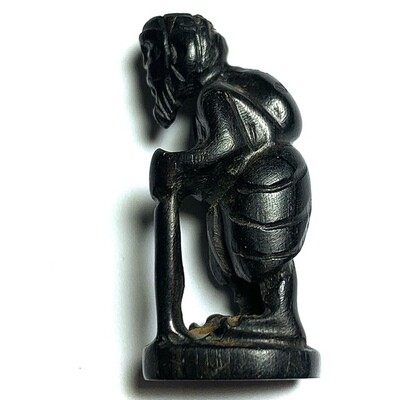
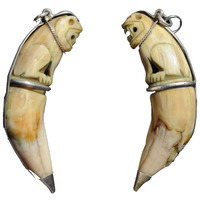
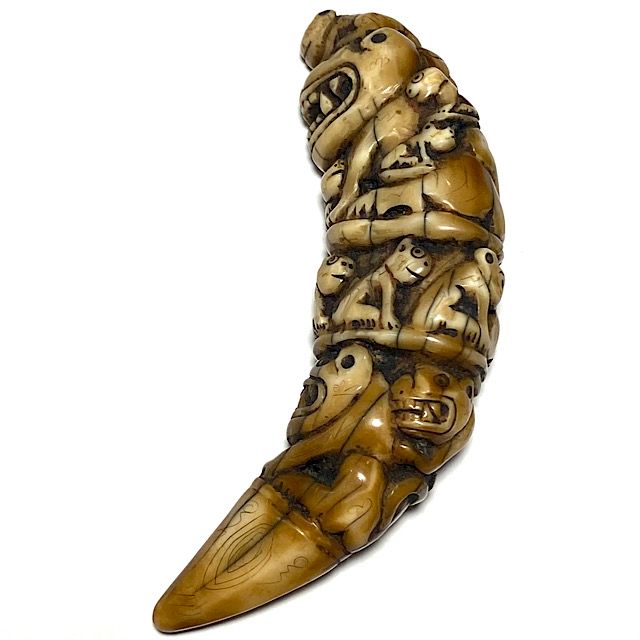
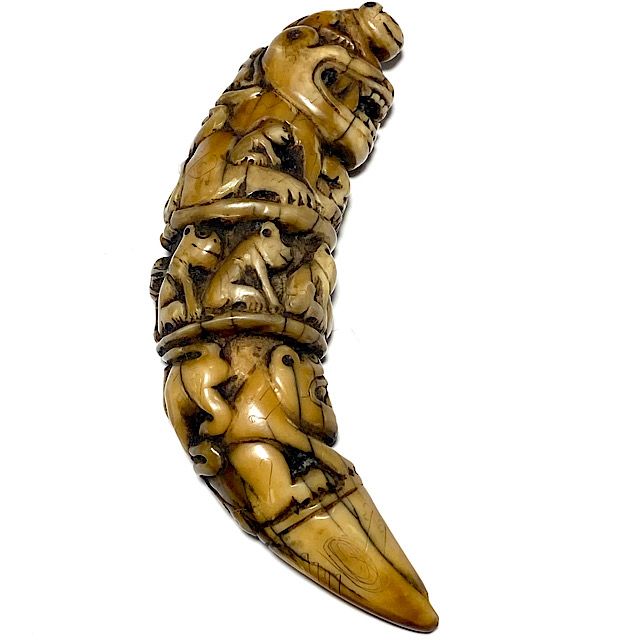
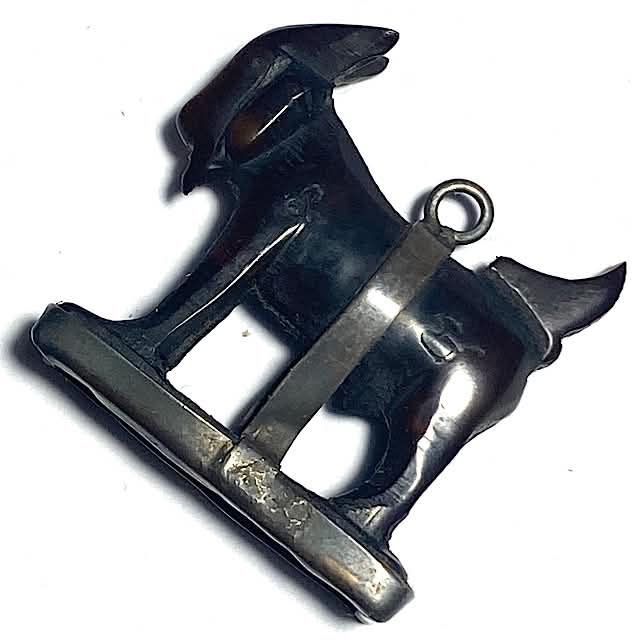
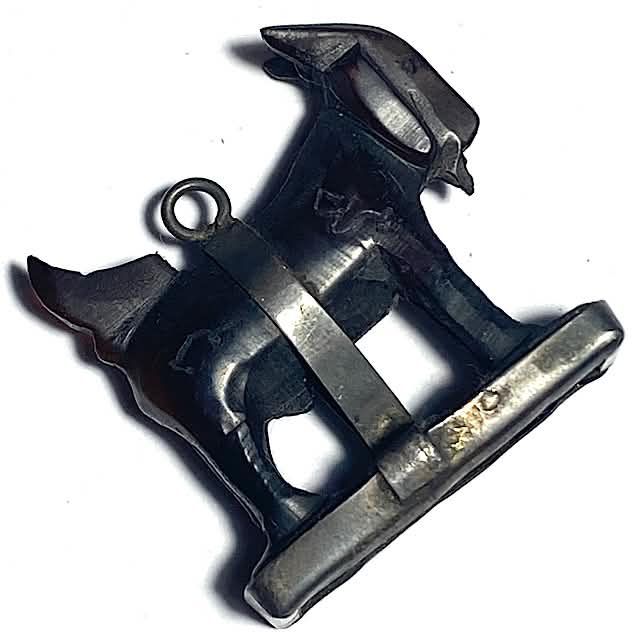
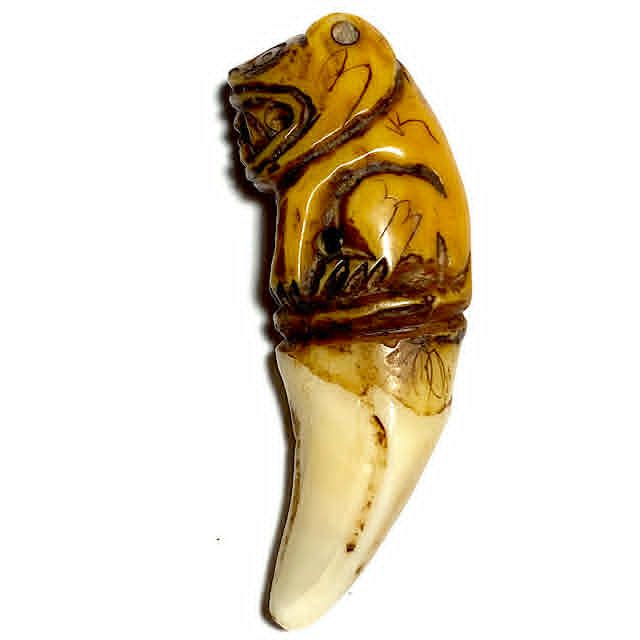
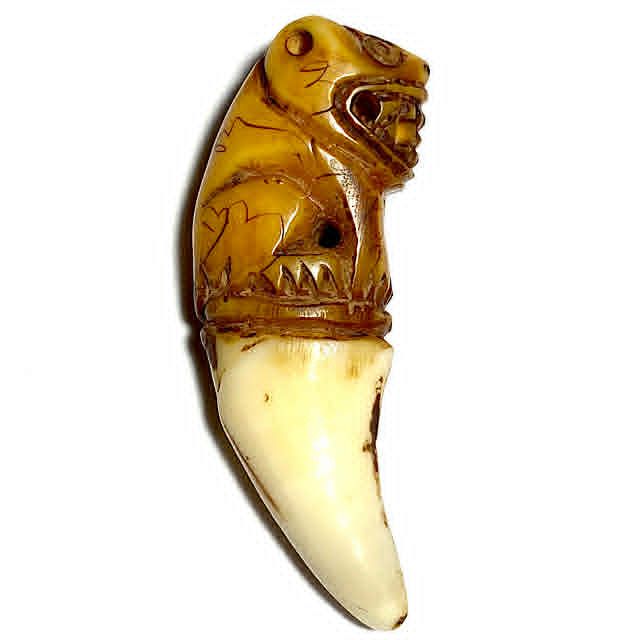
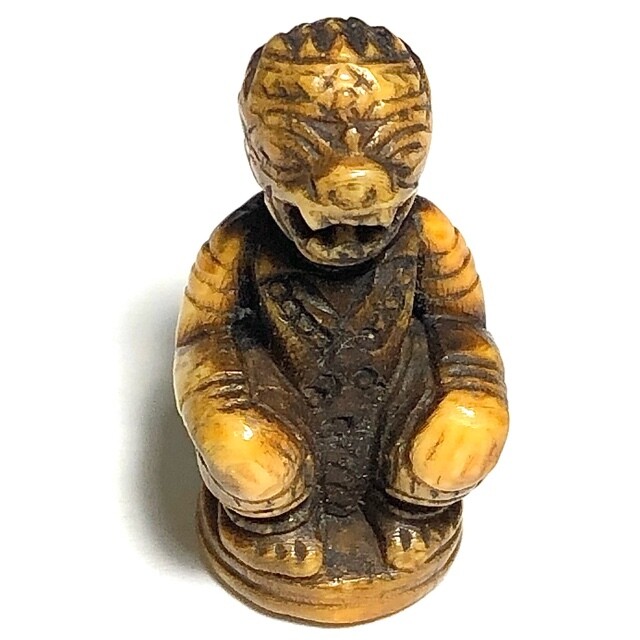
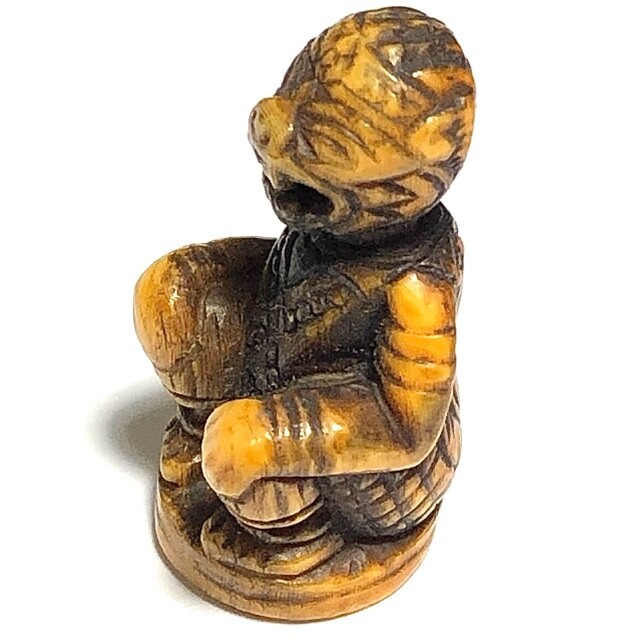
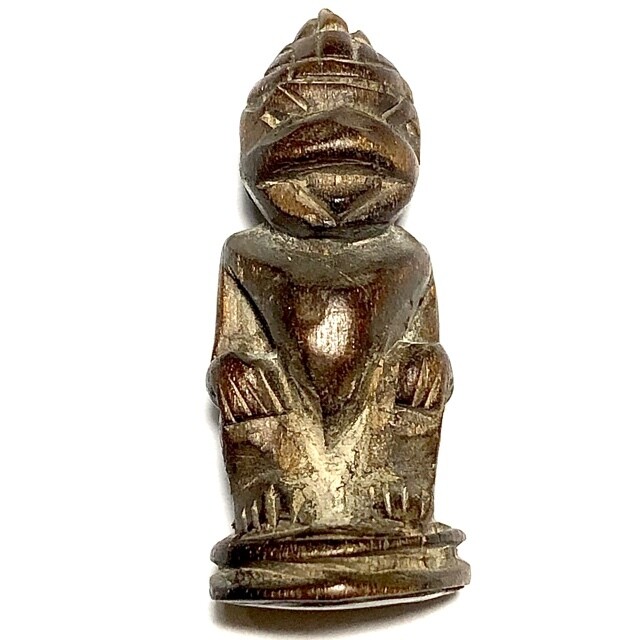
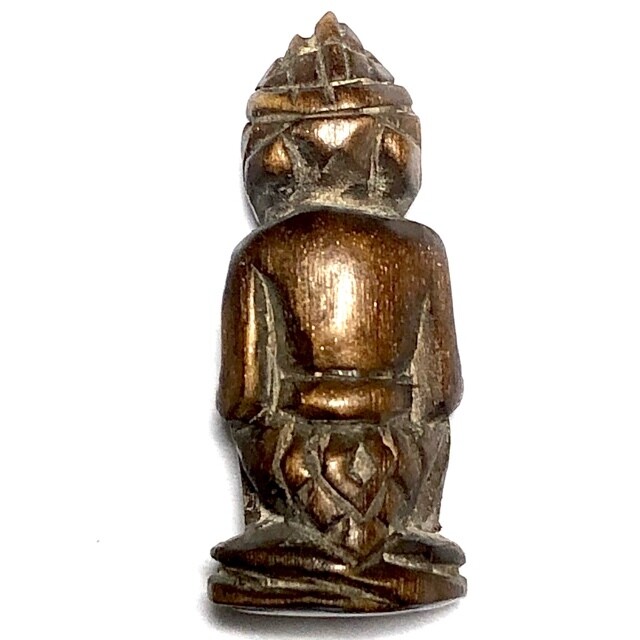
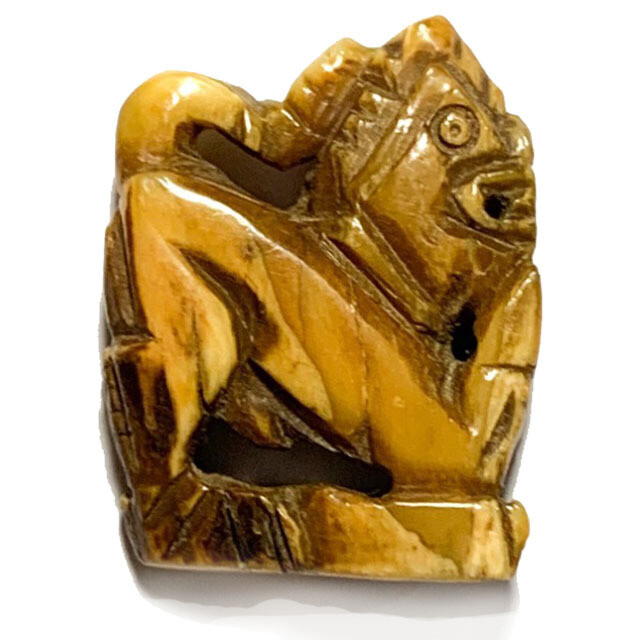
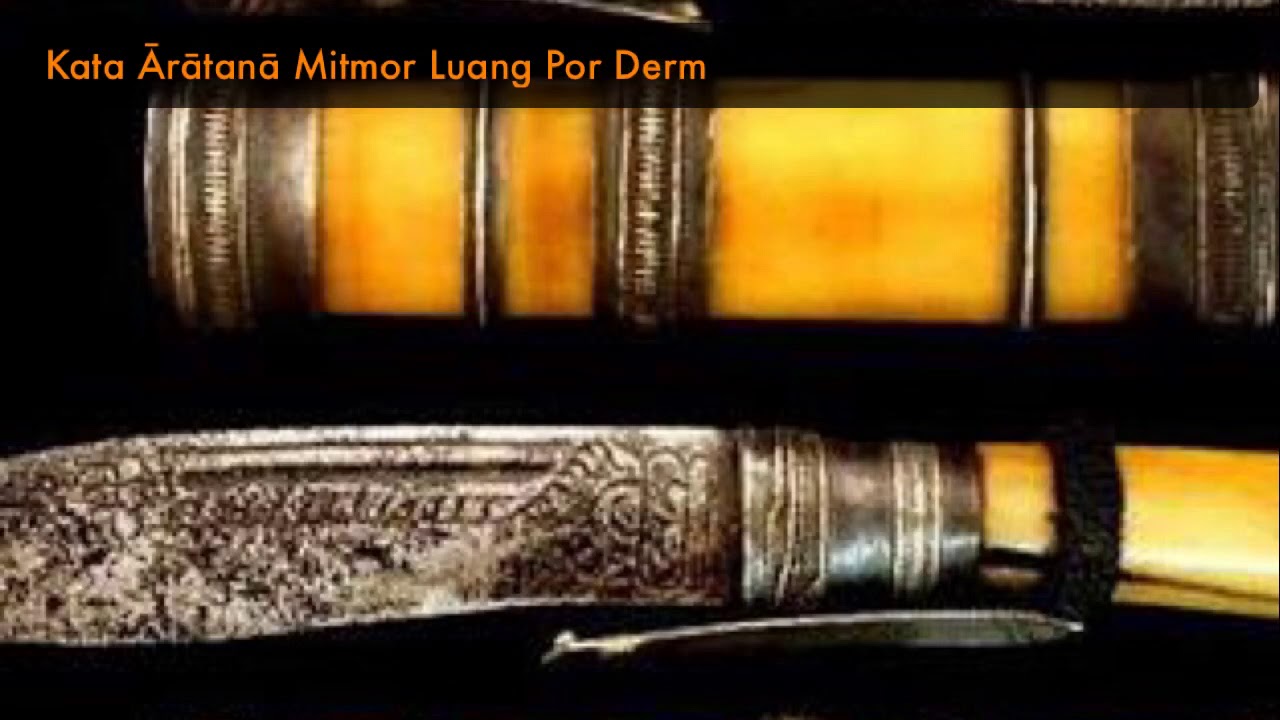
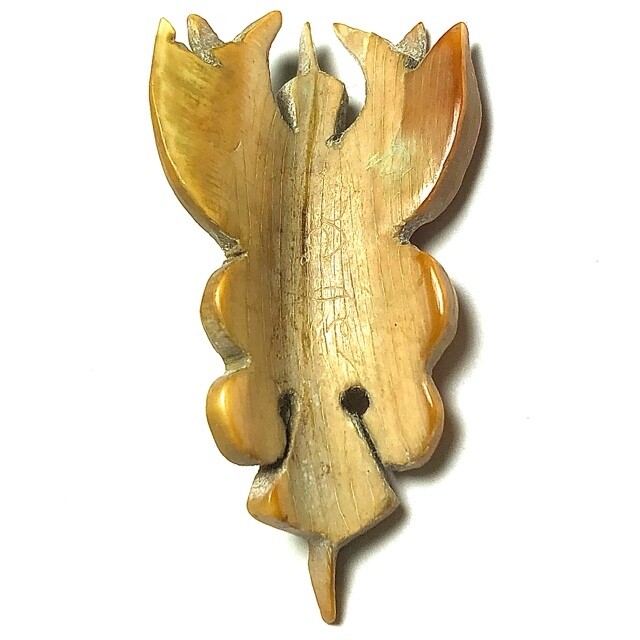
Luang Por Mum’s “Krueang Rang” (talismanic occult charms) were diverse and often unique, reflecting the direct application of his Wicha rather than mass-production uniformity. These included ‘Hwaay Look Nimit’ (rattan Arahant Balls), See Pheung (metta balm), Pha Yant (Yantra cloths), Rian R.5 (King Rama V coins), Roop Tai (monk photos), Mai Phai Dtan (magic bamboo), Mitmor (ritual knives), and various forms of Takrut, ranging from large to small, as well as carved Animist Charms in materials like ivory, wood, bone, and tooth. This array of hand-made, individual talismans further demonstrates the depth and breadth of his Wicha, extending beyond standard amulet forms to encompass a wide spectrum of traditional Thai occult practices.

Rian Nak Glaam Muscleman Amulet by Luang Por Mum

Iconographical and Aesthetic Appreciation

The Takrut Tong Daeng Kong Grapan Thak Chueak Khiaw, at 5 inches in length, represents a “Tone” class Takrut, typically signifying a single, potent scroll. Its aesthetic is characterized by a minimalist yet profoundly functional design, typical of many powerful Krueang Rang. The primary visual elements are the copper/bronze Yantra foil, which forms the inner core, and the exterior green spellbound cord wrapping. Unlike figural amulets such as monk coins (Rian) or Buddha images (Pra Somdej), the Takrut’s iconography is primarily internal—the sacred Yantras inscribed on the metal sheet. These Yantras are not pictorial in the conventional sense but consist of highly stylized geometric patterns, numerical grids, and abbreviated Pali/Khmer script, each element precisely positioned to create a microcosm of protective energy.

Takrut Tone Thak Chueak Khiaw Luang Por Mum Wat Prasat Yer

The copper/bronze material, when newly crafted, possesses a distinct metallic luster that, over time and through handling, develops a rich patina. This natural aging process is often valued by collectors, as it indicates authenticity and the amulet’s journey through time. The green cord wrapping is both a protective sheath and an integral aesthetic component. Its texture and color provide a tactile and visual contrast to the underlying metal, while its utility in shielding the foil from environmental damage underscores the amulet’s practical application in the devotee’s daily life. The hand-wrapping of the cord, a characteristic of Luang Por Mum’s individualized Krueang Rang, imbues each Takrut with a unique, artisanal quality, reflecting the direct touch of the master.

Takrut Tone Thak Chueak Khiaw Luang Por Mum Wat Prasat Yer

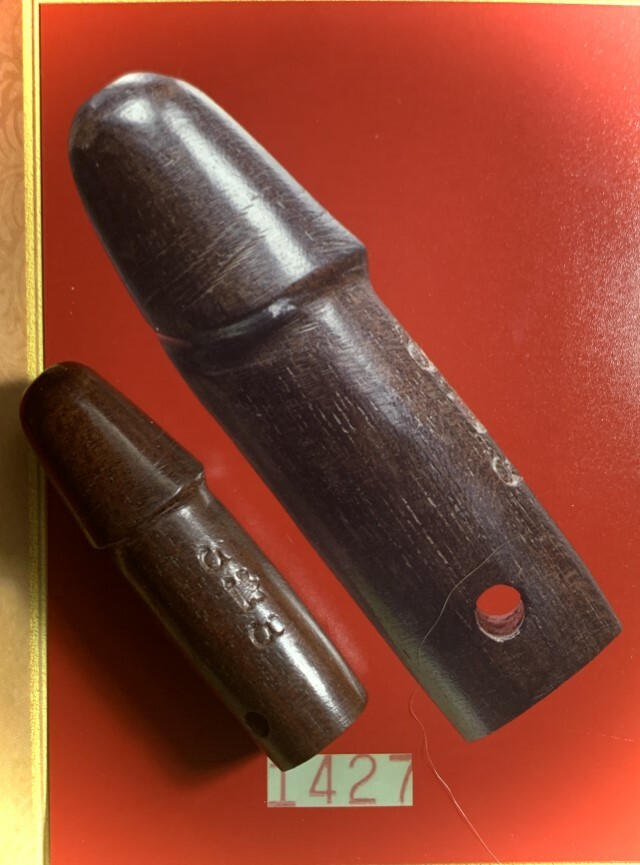
While this specific Takrut does not feature a stamped code or carving, many of Luang Por Mum’s other talismanic charms often exhibited individualistic designs, sculpted by hand from various natural materials. His diverse output, including ‘Hwaay Look Nimit’, Mitmor, and carved Animist Charms in ivory, wood, bone, and tooth, highlights a flexible and adaptive approach to amulet creation, where the form is dictated by the Wicha and available sacred materials. The absence of mass-produced uniformity in his Krueang Rang items is a testament to their direct spiritual origin and the master’s personal involvement in their fabrication and empowerment. This aesthetic philosophy distinguishes his early and individual Takrut from later, more formalized editions of coins or Buddha tablets, which often featured specific iconography, such as his own image (Roop Muean) or that of the Buddha.

Takrut Tone Thak Chueak Khiaw Luang Por Mum Wat Prasat Yer

Ritual Practice and Worship

The proper veneration and utilization of the Takrut Tong Daeng Kong Grapan Thak Chueak Khiaw, like all sacred amulets in the Theravada Buddhist tradition, necessitates adherence to specific ritual practices, known as Bucha. These practices are not merely superstitious gestures but are deeply rooted in the principles of Buddhism, fostering mindfulness, respect for the Triple Gem, and connecting the devotee’s intent with the amulet’s inherent powers. The recommended approach involves a sequence of chants designed to establish a reverent disposition and to invite the protective and beneficial energies of the amulet.

Takrut Tone Thak Chueak Khiaw Luang Por Mum Wat Prasat Yer

The Traditional Thai Buddhist Method for Bucha commences with the chanting of Maha Namasakara, the Homage to the Triple Gem, repeated three times. This foundational chant expresses profound reverence for the Buddha, Dhamma (Buddhist teachings), and Sangha (monastic community). Its repetition serves to purify the mind, cultivate humility, and align the devotee with the core tenets of Buddhism, thereby creating a conducive spiritual environment for engaging with the amulet. The text of Maha Namasakara is: “Namo Dtat-Sa Pakawa-Dto Araha-Dto Sam-Maa Sam-Put-Dtat-Sa.”

Following this, the Trai Soranakom, or Taking Refuge in the Triple Gem, is recited three times. This chant formally declares one’s commitment to the Buddha as the enlightened teacher, the Dhamma as the path to liberation, and the Sangha as the exemplary community. By taking refuge, the devotee strengthens their Buddhist faith and establishes a firm spiritual foundation for their practice. The Trai Soranakom comprises: “Puttang Cheewidtang Yaawa Nipaanang Saranang Kajchaami, Tammang Cheewidtang Yaawa Nipaanang Saranang Kajchaami, Sangkang Cheewidtang Yaawa Nipaanang Saranang Kajchaami. Tudtiyambpi Puttang Cheewidtang Yaawa Nipaanang Saranang Kajchaami, Tudtiyambpi Tammang Cheewidtang Yaawa Nipaanang Saranang Kajchaami, Tudtiyambpi Sangkang Cheewidtang Yaawa Nipaanang Saranang Kajchaami. Dtadtiyambpi Puttang Cheewidtang Yaawa Nipaanang Saranang Kajchaami, Dtadtiyambpi Tammang Cheewidtang Yaawa Nipaanang Saranang Kajchaami, Dtadtiyambpi Sangkang Cheewidtang Yaawa Nipaanang Saranang Kajchaami.”

The concluding invocation is the Kata Aaraatanaa Pra Krueang, the Invitation of the Amulet, also chanted three times. This specific Kata acts as a formal request to the amulet, inviting its protective and beneficial powers to manifest and integrate with the wearer’s life. It is through this direct address that the devotee establishes a conscious connection with the talisman and its spiritual guardian, activating its potential. The Kata Aaraatanaa Pra Krueang consists of: “Puttang Aaraatanaanang, Tammang Aaraatanaanang, Sangkang Aaraatanaanang. Puttang Prasittimae, Tammang Prasittimae, Sangkang Prasittimae.”

Takrut Tone Thak Chueak Khiaw Luang Por Mum Wat Prasat Yer

Beyond these chants, ethical conduct is paramount. Devotees are expected to observe the Five Precepts, lead a moral life, and cultivate metta (loving-kindness) and compassion. The amulet is not a substitute for ethical action but rather an enhancement, providing support and protection to those who live righteously. Respect for the amulet also implies careful handling and placement in elevated, clean locations when not worn. The Takrut Tong Daeng Kong Grapan Thak Chueak Khiaw, imbued with Klaew Klaad, Serm Duang, Metta Mahaniyom, and Maha Lap Kaa Khaay, thus serves as a powerful instrument for both spiritual and temporal benefit, a testament to the enduring legacy and profound Wicha of Luang Por Mum, one of the great Olden Days Masters of Thailand.
Takrut Tone Thak Chueak Khiaw Luang Por Mum Wat Prasat Yer

How to Pray to Thai Amulets

Filters

Filters
Sold out
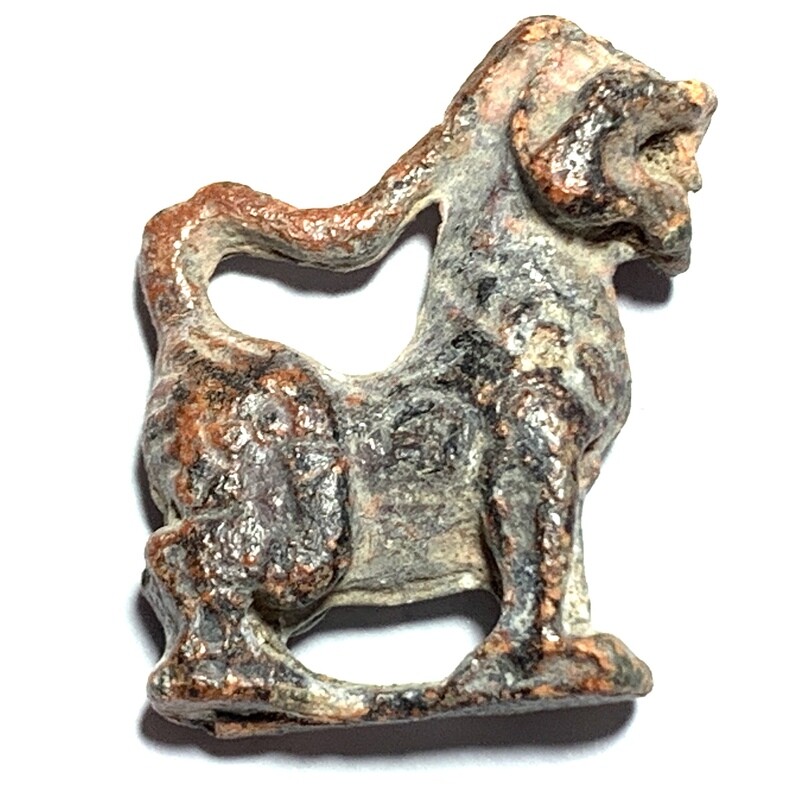
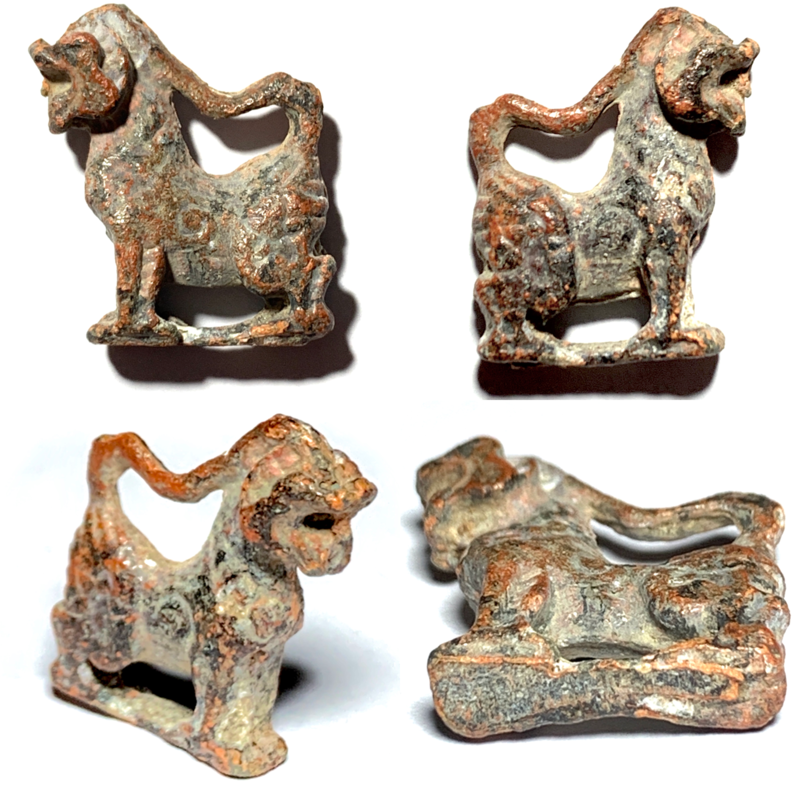
Takrut Tone Ying Mai Ork Pork Nuea Krang 2 x 1.2 Cm Luang Por Tong Sukh 2470 BETakrut Tone Ying Mai Ork Pork Nuea Krang 2 x 1.2 Cm Luang Por Tong Sukh 2470 BE
Takrut Tone Ying Mai Ork Pork Nuea Krang 2 x 1.2 Cm Luang Por Tong Sukh 2470 BE
Small Version of Luang Por Tong Sukh's Legendary Takrut Pork Krang Amulet, that is extremely rare to find in this size.
SKU 04228
$135
Out of stock
1 - 60 of 208 items


Rian Kring Solos Tat Nuea Solos 16 - 66th Birthday 1st Edition Amulet 2518 BE Ajarn Chum Chai Kiree

A Scholarly Monograph on the Rian Kring Solos Tat Nuea Solos 16 – 66th Birthday 1st Edition Amulet 2518 BE by Ajarn Chum Chai Kiree

The Rian Kring Solos Tat Nuea Solos 16 amulet, released in 2518 BE to commemorate Ajarn Chum Chai Kiree’s 66th birthday, represents a significant artifact within the extensive pantheon of Thai Buddhist occultism and Theravada devotional practice. This specific edition, designated as the ‘1st Edition Amulet 2518 BE’, holds particular distinction due to its intricate alchemical composition, rigorous consecration rituals, and the profound spiritual legacy of its creator, Ajarn Chum Chai Kiree, a preeminent lay master from the Dtamnak Dtak Sila Khao Or Southern Academy of Sorcery. The nomenclature ‘Rian Kring’ refers to its coin-like form and the internal ‘kring’ bead, a rattling element integral to its esoteric function, while ‘Solos Tat’ signifies its composition from sixteen sacred elemental substances, a number steeped in cosmological and alchemical significance within various Indic traditions adapted into Thai magical arts.

The theological importance of the Rian Kring Solos Tat extends beyond its physical attributes, encapsulating core tenets of Theravada Buddhism blended with indigenous animistic and Brahmanical beliefs that characterize Thai popular religiosity. Amulets, in the Thai context, are not mere objects of superstition but tangible receptacles of blessings, merit (Bucha), and protective energies derived from the spiritual attainments of their creators and the efficacy of the consecration rites. The presence of Pra Pakawambodee, often depicted as Pra Pid Ta Nirodha Buddha, on the reverse face, imbued with a Kring bead containing Solos Tat Elemental relics, further amplifies its spiritual potency. Pra Pid Ta, the ‘closed eyes’ Buddha, symbolizes profound meditative absorption, freedom from worldly distractions, and often confers invulnerability (Kong Grapan Chadtri) and protection against harm (Klaew Klaad), aligning with the broader objectives of Ajarn Chum’s magical practice. The integration of this ancient iconography with Ajarn Chum’s own effigy signifies a synergistic convergence of venerated Buddhist ideals and the living spiritual authority of the master.

The ‘Solos Tat’ (Sixteen Sacred Elements) composition is not merely a material attribute but a theological statement. In many esoteric traditions, the number sixteen is associated with completeness, perfection, or a full cycle of manifestation. The meticulous selection and amalgamation of these specific minerals and artifacts, as detailed in Chapter 3, transforms the amulet from a mere metallic object into a charged repository of diverse elemental energies, harmonized and activated through specialized Wicha. This alchemical synthesis, known as ‘Nuea Solasa Loha Galai Tong’ (Gold Galvanized over 16 kinds of Sacred Artifact Alloy), is a testament to the sophisticated understanding of material science and spiritual metallurgy practiced within the Khao Or tradition. The inimitable surface sheen mentioned as a primary authentication criterion underscores the intrinsic spiritual and material integrity of the original creation, rendering it inimitable by lesser forgers.

As an ‘Ongk Kroo’ (master piece or reference model), this amulet serves a didactic purpose, allowing devotees and connoisseurs to study the authentic characteristics of Ajarn Chum’s work. Its theological importance is thus dual: it functions as a potent devotional object for personal protection and fortune, and simultaneously as an educational artifact for understanding the complex interplay of art, alchemy, and esoteric Buddhism in Thailand. The narratives surrounding Ajarn Chum’s miraculous abilities, from childhood feats of Kong Grapan to demonstrations of Metta Mahaniyom, imbue this amulet with a perceived efficacy directly linked to his undisputed spiritual authority. The Rian Kring Solos Tat 2518 BE is not merely a commemorative coin; it is a profound expression of faith, a medium for spiritual protection, and a tangible link to a powerful tradition of Thai Buddhist magic.

Front View of Rian Kring Solos Tat Ajarn Chum Amulet

The Master and Lineage

Ajarn Chum Chai Kiree (พ.ศ. 2450-2525 BE) stands as an unparalleled figure in the annals of Thai Buddhist occultism, widely acknowledged as the greatest lay master in the living history of Thai Buddha Magic. Born in Pattalung, a province renowned as a cradle of esoteric knowledge and the home of the Khao Or tradition, Ajarn Chum’s life unfolded as a continuous testament to profound spiritual attainment and extraordinary magical prowess. His lineage traces directly to the esteemed Dtamnak Dtak Sila Khao Or Southern Academy of Sorcery, an ancient and highly revered institution that has preserved and transmitted specialized Wicha (magical sciences) for centuries. His mentors included some of the most respected masters of his era, notably Ajarn Iad of Wat Don Sala, who served as his guide in the intricate pathways of magical sorcery after his disrobing from the Sangha.

Ajarn Chum’s innate abilities manifested from a remarkably young age. At just seven years old, he exhibited signs of preternatural power, as evidenced by a widely recounted incident where he disarmed a rifle merely by chanting an eleven-syllable Kata. This act resulted in the weapon exploding and breaking upon its subsequent discharge, profoundly impressing and instilling faith in his budding powers among the local villagers. Such miraculous events, documented and passed down through oral tradition and biographical accounts, laid the foundation for his lifelong reputation as a formidable practitioner of Kong Grapan (invulnerability) and other protective Wicha.

His formal spiritual training commenced with ordination as a Bhikkhu, under the tutelage of Pra Ajarn Kong, at Wat Chai Mongkol. This period of fifteen years within the Sangha provided Ajarn Chum with an intensive foundation in Buddhist scripture (Dhamma), meditation (Bhavana), and monastic discipline (Vinaya). This comprehensive monastic education, combined with his inherent spiritual gifts, equipped him with a deep understanding of the underlying principles that govern the creation and empowerment of sacred objects. During his time as a monk at Wat Chai Mongkol, he was notably present and actively participated in the extensive 16-day and 16-night empowerment ceremony for the world-famous Pra Pid Ta Hlaem Sai 2481 BE first edition amulet. This experience proved pivotal, as he judiciously retained a quantity of the sacred Chanuan Alchemical metals from that seminal smelting ceremony, metals that would later become crucial components of the 2518 BE Rian Kring Solos Tat coins.

Upon disrobing, Ajarn Chum transitioned from an ordained monk to a dedicated lay practitioner, further intensifying his study of the Buddha-Dhamma and advancing his mastery of occult sciences. He relocated to Pattalung, immersing himself fully in the Dtamnak Dtak Sila Khao Or tradition under the direct mentorship of Ajarn Iad. This phase of his life solidified his status as a legendary master of Khao Or Sorcery. His ability to decipher complex magical methods and his attunement to mysterious forces were exceptional, allowing him to innovate and perfect various Wicha, earning him widespread veneration.

Ajarn Chum’s legacy is replete with public demonstrations of miraculous magic, which captivated a generation of devotees and cemented his position as a Grand Master. One of his most iconic displays involved the “Noo Kin Nom Maew Metta Oil” (Mice Drinking Cat’s Milk Metta Oil). This demonstration, where baby mice and a lactating cat, smeared with the oil, peacefully coexisted and the cat nursed the mice, unequivocally showcased his mastery of Metta Mahaniyom (loving-kindness and popular charm) Wicha. He was also known for his “Nam Man Solos Mongkol” oil, which he applied to devotees’ heads before performing Kong Grapan Magic, further attesting to his systematic and ritualistic approach to magical practice. The consistent and undeniable real effects experienced by those who revered his amulets and sought his blessings have ensured that Ajarn Chum Chai Kiree’s reputation for potent magical power remains unrivaled, securing his permanent place as an occult legend within Thai history.

Reverse View of Rian Kring Solos Tat with Pra Pid Ta

Alchemical Composition and Sacred Powders

The Rian Kring Solos Tat amulet of 2518 BE is distinguished by its exceptionally complex and esoteric alchemical composition, known as ‘Nuea Solasa Loha Galai Tong’. This term denotes an alloy formed from sixteen distinct kinds of sacred artifacts and elemental metals, subsequently finished with a gold galvanization. The concept of ‘Solos Tat’ (Sixteen Elements) is central to its magical efficacy, representing a synthesis of diverse cosmic energies and protective properties believed to be inherent within these rare materials. The meticulous selection and blending of these elements reflect an advanced understanding of traditional Thai metallurgy, geomancy, and occult science, characteristic of the Dtamnak Dtak Sila Khao Or tradition.

The sixteen sacred elements comprising the Chanuan metal for this amulet are enumerated as follows, each possessing unique spiritual attributes:

  1. Lek Lai: A revered ‘flowing metal’ or ‘adamantine substance’ believed to possess its own Deva, granting immense protective powers, often associated with invulnerability and warding off evil.
  2. Jao Nam Ngern: A blue-hued mineral, often found in sacred caves, valued for its protective and auspicious qualities.
  3. Gold: Symbolizing purity, wealth, and spiritual illumination, it is a universal element of auspiciousness.
  4. Silver: Represents lunar energy, purity, and spiritual refinement, offering protection and enhancing spiritual insight.
  5. Bronze: An alloy historically used for Buddha statues, signifying spiritual longevity, strength, and merit.
  6. Copper: Associated with healing, energy conduction, and protective properties, widely used in sacred metallurgy.
  7. Brass: Valued for its durability and acoustic properties, often imbued with general protective blessings.
  8. Leaden Mineral (Takua Nam Nom, etc.): Different types of lead possess varying esoteric properties, often used for Kong Grapan (invulnerability) and Maha Ud (bullet-proofing).
  9. Wolfram Mineral: A rare and hard metallic element, likely chosen for its inherent strength and perceived ability to withstand negative forces.
  10. Rae Jakr Narai (Vishnu’s Chakra Mineral): Minerals associated with Vishnu’s divine discus, symbolizing supreme protection, power, and the ability to overcome obstacles.
  11. Rae Sangkwanorn (Ayuttaya temple roof leaden nails): Historic leaden nails from ancient temple roofs, imbued with centuries of prayers and blessings from the Sangha and devotees, carrying potent protective energies.
  12. Rae Chin (Ancient Silvery Leaden Artifacts): Ancient lead artifacts, possibly from old Buddha images or sacred implements, holding historical and spiritual accumulation of blessings.
  13. Rae Dtakua Dam (Black Lead Mineral): A specific type of lead known for its dense protective qualities, especially against black magic and physical harm.
  14. Rae Dtakua Thuean (Wild Leaden Mineral): Raw, unrefined leaden minerals, believed to retain potent, untamed natural protective energies.
  15. Rae Lek Nam Pi: Iron ore from Nam Pi, a legendary source in Uttaradit province, famous for yielding steel of exceptional strength and spiritual power, used historically for royal swords and potent amulets.
  16. Rae Yord Pra Prang (metal from the top of the old temple Chedi Stupa): Metal fragments from the apex of ancient stupas, symbolizing enlightenment, connection to the divine, and imbued with profound sacredness from countless venerations.

The amalgamation of these materials created a ‘Chanuan Metal’ of unparalleled potency. This base alloy was then treated with ‘Galai Tong’, a gold galvanization process, which not only conferred a distinct and recognizable aesthetic sheen but also enhanced its spiritual properties, linking it to the auspiciousness of gold. The inimitable quality of this surface sheen is a critical authentication criterion, a feature that counterfeit editions have notoriously failed to replicate accurately.

Within the reverse face, specifically within the Pra Pakawambodee (Pra Pid Ta) effigy, a ‘Kring bead’ is embedded. This bead contains ‘Solos Tat Elemental relics’, which are pieces of the sacred Chanuan metal. The ‘kring’ (rattling) sound it produces when shaken is not merely an auditory feature; it is considered to be the voice of the Buddha or Devas, announcing their presence and spreading blessings. The material for this internal kring bead is particularly significant, as it was directly sourced from the sacred Chanuan Alchemical metals conserved by Ajarn Chum from the seminal Pra Pid Ta Hlaem Sai 2481 BE ceremony at Wat Chai Mongkol in Songkhla. This direct material link to an earlier, highly revered empowerment ceremony imbues the 2518 BE Rian Kring Solos Tat with a historical and spiritual continuity, amplifying its perceived power and lineage.

The intricate composition of these sacred materials, guided by the principles of Wicha Solos and the expertise of Ajarn Chum, signifies a profound alchemical act. It transforms inert matter into a living repository of potent magical energy, designed not only for physical protection but also for spiritual elevation and auspicious fortune, solidifying the amulet’s status as a pinnacle of Thai sacred metallurgy.

Close-up of Ajarn Chum's Effigy on Rian Kring Solos Tat

Sacred Empowerment and Wicha

The consecration of the Rian Kring Solos Tat Nuea Solos 16 amulet was an extraordinarily rigorous and protracted process, deeply rooted in the ancient Wicha Solos tradition and overseen by Ajarn Chum Chai Kiree. This elaborate empowerment ritual is a cornerstone of the amulet’s perceived potency, reflecting a meticulous adherence to esoteric protocols designed to imbue the sacred objects with profound spiritual energy and protective powers. The blessing ceremony for these amulets was conducted in a manner consistent with the revered Pid Ta Hlaem Sai of 2481 BE ceremony, a testament to the continuity and authenticity of the Wicha employed.

The initial phase of empowerment commenced at the Samnak of Ajarn Chum, a site imbued with the master’s spiritual presence. Here, Ajarn Chum engaged in the arduous practice of ‘single individual empowerment’ for each coin, one by one. This labor-intensive method, characteristic of the Wicha Solos, required immense concentration and spiritual fortitude. The empowerment proceeded continuously for a full sixteen days and sixteen nights. During this marathon period, Ajarn Chum invoked and beseeched various powerful Devas and venerated masters to manifest and assist in the consecration. Among those summoned were Luang Por Tuad, a legendary and highly revered monk known for his miraculous powers; Luang Por Kong, Ajarn Chum’s own venerable monastic mentor; Khun Phaen, the legendary warrior hero renowned for his charisma and protective magic; and Pra Pikanes (Ganesha), the Hindu deity of wisdom, remover of obstacles, and patron of arts and sciences, whose inclusion highlights the syncretic nature of Thai occultism.

Following this extensive period of personal empowerment at his Samnak, the amulets were then transported to the venerable Wat Traimit Voraram in Bangkok. Here, the consecration process continued within the Uposadha (ordination hall) Shrineroom of the temple for an additional seven days and seven nights. The Uposadha, as the most sacred space within a Buddhist temple, is traditionally utilized for high-level blessings, benefiting from the accumulated spiritual energy and merit of countless generations of monastic practice and Dhamma recitation. This dual-location empowerment, combining the intimate power of the lay master’s Samnak with the institutional spiritual authority of a major temple, signifies a comprehensive and multifaceted approach to consecration.

The final phase of empowerment culminated on Thursday, 8th May 2518 BE, a date coinciding with the annual Wai Kroo (Homage to Teachers) ceremony of Ajarn Chum. This auspicious day, dedicated to honoring one’s gurus and continuing their lineage, served as the perfect occasion for the amulets to receive their ultimate blessing before being distributed to devotees. The coordination of the release with his 66th Birthday Edition further imbued the amulets with his personal spiritual milestone and accumulated merit. This elaborate ritual regimen, incorporating prolonged meditative absorption, invocation of powerful spiritual entities, and blessings within highly sacred spaces, underscores the profound Wicha and unwavering dedication invested by Ajarn Chum in the creation of these Rian Kring Solos Tat amulets.

It is a little-known fact that an initial edition of the Rian Kring Solos Tat was actually produced in 2517 BE, with the year embossed accordingly. However, Ajarn Chum deemed the image on these amulets to too closely resemble an ordained monk, a representation he considered disrespectful to the Sangha. Consequently, he forbade their release. In response to the earnest beseeching of his devotees, a revised edition was commissioned and subsequently released in 2518 BE, featuring a newly designed image and the updated date. This detail highlights Ajarn Chum’s profound respect for monastic protocols and his commitment to producing amulets that were both spiritually potent and aesthetically appropriate, further solidifying the 2518 BE edition’s status as the definitive and intended release.

Angled View of Rian Kring Solos Tat with Kring Bead Rattle

Iconographical and Aesthetic Appreciation

The Rian Kring Solos Tat Nuea Solos 16 of 2518 BE presents a sophisticated iconographical program and distinctive aesthetic qualities that are crucial for its appreciation and authentication. As a ‘Rian’ (coin amulet), its design integrates portraiture, sacred geometry, and symbolic Buddhist figures within a metallic medium. The dual-sided nature of this amulet provides a rich narrative, depicting the revered master Ajarn Chum Chai Kiree on the obverse and the potent Pra Pakawambodee (Pra Pid Ta) on the reverse, each contributing to its overall spiritual efficacy and artistic merit.

The front face of the amulet features a ‘Kreung Ongk’ (Half Torso Cameo Bust) image of Ajarn Chum Chai Kiree. This depiction captures the likeness of the master, rendered with a respectful formality that conveys his spiritual authority and wisdom. Surrounding his effigy, the words ‘Solos Tat Ajarn Chum Chai Kiree 66 Pi Run 1 2518’ are embossed along the edge. This inscription explicitly states the amulet’s identity, its creator, the occasion of its release (Ajarn Chum’s 66th Birthday), its designation as the ‘Run 1’ (First Edition) for that year, and the Buddhist Era date of 2518. Flanking Ajarn Chum’s head are the Khom Agkhara (ancient Khmer script) characters ‘Put’ and ‘To’. These two syllables are profoundly significant in Thai Buddhism, representing parts of the Buddha’s name and often used in meditative recitations (Buddhānussati) for protection and concentration. Their placement signifies the master’s adherence to Buddhist principles and his capacity to channel the Buddha’s blessings through his Wicha.

The reverse face is particularly noteworthy, featuring a Pra Pakawambodee (Pra Pid Ta) amulet ‘heat fixed’ onto the surface of the coin. Pra Pid Ta, or the ‘concealed eyes’ Buddha, is an iconic figure in Thai Buddhist art, symbolizing deep meditative absorption, non-attachment to worldly phenomena, and protection from all harms and evils. This particular Pra Pid Ta image is not merely a relief carving; it is a distinct, smaller amulet that has been integrated onto the main coin. Crucially, this Pra Pid Ta amulet contains a Kring bead of Sacred Elemental Substance (Tat) inserted within. The material for this Kring bead is historically significant, having been sourced from the renowned Pra Pid Ta Hlaem Sai 2481 BE first edition amulet ceremony at Wat Chai Mongkol in Songkhla. This direct material link to an earlier, celebrated amulet bestows additional layers of authenticity and spiritual potency upon the 2518 BE Rian Kring Solos Tat. The Kring bead, emitting a subtle rattle when shaken, is believed to signify the awakening of blessings and the presence of divine protection.

Aesthetically, the Rian Kring Solos Tat is characterized by its ‘Nuea Solasa Loha Galai Tong’ composition. The gold-galvanized surface over the sixteen kinds of sacred artifact alloy imparts an inimitable sheen and color, which serves as a primary criterion for authentication by experts. The consistent failure of counterfeit editions to replicate this unique surface quality underscores the complexity of its original fabrication process and the authenticity of the master’s technique. The precision of the casting, the clarity of the embossed text, and the distinct features of both Ajarn Chum and the Pra Pid Ta iconography are all critical points of aesthetic and metallurgical scrutiny. The overall presentation reflects a blend of traditional artistic conventions and esoteric symbolism, resulting in an amulet that is both visually striking and replete with spiritual meaning.

Detailed Front View of Rian Kring Solos Tat Ajarn Chum Coin

Ritual Practice and Worship

The veneration and ritual practice associated with the Rian Kring Solos Tat Nuea Solos 16 amulet extend beyond mere possession; they involve specific protocols and devotional acts designed to activate and maintain the amulet’s spiritual efficacy. These practices, known as Bucha, are integral to Thai Buddhist and occult traditions, forming a reciprocal relationship between the devotee and the sacred object and its creator. The proper engagement with such an amulet involves specific Kata (sacred incantations) and adherence to certain rules of conduct, which are understood to align the devotee’s intentions with the protective and benevolent forces embodied within the amulet.

The recommended Kata Bucha for Pra Krueang of Ajarn Chum Chai Kiree begins with an initial invocation, followed by a standard Buddhist reverence. The specific Kata provided for this amulet is:

Na Rong Hai – Na Maa Khao Haa – Na Jidtang Maa Ni Maa Maa – Jidtang Maa Ni Maa Maa (Recite 3 Times)

This initial Kata is typically chanted with focused intention, often related to attracting Metta Mahaniyom (loving-kindness, popular charm) and financial prosperity, drawing others towards the devotee. It is a formula intended to create an aura of appeal and positive influence.

Following this, the devotee proceeds with the traditional Buddhist homage:

Na Mo Tassa Pakawadto Arahadto Sammaa Samputtassa (Recite 3 Times)

This chant, venerating the Blessed, Noble, and Perfectly Enlightened Buddha, is a foundational practice in Theravada Buddhism, establishing a connection to the Triple Gem (Buddha, Dhamma, Sangha) and purifying the mind before further spiritual engagement.

The final specific Kata for empowerment is:

I Sawaasu Susawaa I – A Sang Wi Su Lo Bu Sa Pu Pa (Recite 3 Times)

This sequence of Khom Agkhara syllables constitutes a potent Wicha Kata, likely carrying layers of meaning related to protective spells, invulnerability, and auspicious blessings. Such Kata are often condensed forms of longer incantations, where each syllable represents a specific mantra or cosmic principle, activated through focused recitation. The repetition of these Kata is intended to awaken the latent powers within the amulet, resonating with the energies imbued by Ajarn Chum during its consecration.

Beyond these specific chants, devotees are expected to uphold general Buddhist ethical precepts, such as the Five Precepts (Panca Sila), to maintain a pure mind and body, which is believed to enhance the efficacy of any sacred object. Respectful handling of the amulet, placing it in a high and clean location when not worn, and avoiding morally reprehensible actions are considered essential. Regular offerings of flowers, incense, and candles (Bucha Phra) may also accompany the chanting, symbolizing devotion and respect for the Buddha, Dhamma, Sangha, and the lineage of masters like Ajarn Chum.

The rattling of the Kring bead within the amulet is not just a sound; it is interpreted as a manifestation of divine presence or the awakening of spiritual energy. Some practitioners may gently shake the amulet before chanting or making wishes, believing the sound clarifies intentions and signals the Devas. The act of wearing the amulet is itself a form of continuous Bucha, keeping the blessings in close proximity to the devotee. The Rian Kring Solos Tat amulet, therefore, functions as a powerful tool within a holistic spiritual practice, where the devotee’s faith, ethical conduct, and ritual engagement synergistically amplify the inherent protective and auspicious powers consecrated by Ajarn Chum Chai Kiree.

Another View of Rian Kring Solos Tat with Pra Pid Ta on Rear
Angled View of Rian Kring Solos Tat Showing Both Faces
Rian Kring Solos Tat Amulet Displayed

How to Pray to Thai Amulets

Rian (Metal Coins)

Sacred Coins and Medallions

Filters

Filters
1 - 60 of 120 items


Hwaen Arahang Nuea Tong Daeng Long Ya Tong Chart 2495 BE 1.7 Cm Ring of Protection Luang Por Jong Wat Na Tang Nork

Hwaen Arahang Nuea Tong Daeng Long Ya Tong Chart 2495 BE by Luang Por Jong Puttasaro of Wat Na Tang Nork

The study of sacred amulets within Theravada Buddhism, particularly in Thailand, constitutes a complex intersection of art history, religious practice, folk belief, and the occult sciences. These artifacts, far from being mere decorative items, serve as tangible conduits of spiritual power, imbued with blessings and protective energies by revered monastic masters. This monograph presents a detailed examination of a particularly significant artifact: the Hwaen Arahang Nuea Tong Daeng Long Ya Tong Chart, consecrated in 2495 BE by the esteemed Luang Por Jong Puttasaro of Wat Na Tang Nork. This small, alchemical copper alloy ring, distinguished by its Ra Rachawadee Trairongs tricolored enamels and the inscribed Khom Letter ‘A’, epitomizes the profound craftsmanship and spiritual potency characteristic of amulets from the pre-commercial era. Its creation reflects a period when master monks meticulously crafted each piece, imbuing it with layers of protective and auspicious wicha, making it a rarity highly sought after by devotees seeking authentic protective magick.

Hwaen Arahang Long Ya Tong Chart Amulet Front View

1. Introduction and Theological Importance

The Hwaen Arahang, or ‘Arahang Ring,’ derives its theological significance directly from the Sanskrit term ‘Arahant’ (Pāli: Arahang), which denotes one who is worthy of veneration and has attained enlightenment by eradicating all defilements. In Theravada Buddhist cosmology, the ‘Arahang’ epithet is primarily reserved for the Buddha himself, signifying the highest state of spiritual purity and liberation. The inscription of the Khom Letter ‘A’ on this amulet, therefore, is not a mere symbolic gesture but a direct invocation of the Buddha’s supreme qualities. This letter, drawn from the ancient Khom (Khmer) script historically used for sacred texts and yantra designs in Thailand, represents the primal sound and essence of the ‘Arahang’ quality, serving as a mnemonic for the practitioner to recall the Buddha’s perfect virtues.

The theological importance of such an amulet rests on the Theravada principle of ‘Buddhanussati,’ or recollection of the Buddha. By wearing an object imbued with the essence of the Buddha’s enlightenment, devotees seek to internalize these qualities, drawing upon the protective and auspicious energies generated by such profound spiritual association. The amulet is understood to radiate a field of metta (loving-kindness) and karuna (compassion), while simultaneously providing strong defensive attributes against malevolent forces and physical dangers. This ring is thus not merely a charm but a spiritual implement intended to foster a continuous connection with the Dhamma and Sangha, thereby fortifying the practitioner’s spiritual journey. The integration of traditional Buddhist epithets with master-blessed amulets illustrates a practical application of Buddhist philosophy within daily life, emphasizing protection and well-being as foundational elements for spiritual cultivation.

Furthermore, the protective efficacy of the Hwaen Arahang is rooted in its association with ancient Thai Buddhist occultism, specifically the tradition of Kong Grapan Chadtri and Klaew Klaad magic. Kong Grapan Chadtri refers to invulnerability against weapons and physical harm, while Klaew Klaad denotes evasion of danger and accidents. These protective wicha are not merely superstitious beliefs but are understood within the framework of traditional Thai Buddhist practice as extensions of the spiritual power accumulated by enlightened masters through rigorous meditation and adherence to the Vinaya. The ‘Arahang’ inscription, acting as a powerful mantra, is believed to align the wearer with the unshakeable nature of the Buddha’s enlightenment, thereby manifesting these protective qualities. The choice of a ring format further symbolizes a perpetual circle of protection, encompassing the wearer in a continuous aura of safety and spiritual well-being.

Hwaen Arahang Long Ya Tong Chart Amulet Side View

The Master and Lineage

Luang Por Jong Puttasaro (2415 BE – 2508 BE) stands as a monumental figure in the pantheon of Thai monastic masters, particularly revered for his contributions to the spiritual and protective well-being of the Thai people during a tumultuous period. Born ‘Jong’ into a farming family in Na Mai, Bang Sai Municipality, Ayuttaya Province, his early life, though lacking precise birth documentation, is calculated to have commenced on the 6th of March 2415 BE, a Thursday in the year of the monkey, during the reign of King Rama 5. His parents were named Mr. Yord and Mrs. Khlip, and he had two younger siblings, Nil and Bplik. From an early age, Luang Por Jong exhibited a distinct predisposition for solitude, often distancing himself from crowds, even at communal events such as local Lige theatre shows. This early inclination towards quiet introspection foreshadowed his later profound spiritual journey and mastery.

Luang Por Jong’s monastic life began with his ordination in 2435 BE at Wat Na Tang Nork temple in Ayuttaya. Upon ordination, he received the monastic name Jong Puttasaro. His Pra Anusawanajarn, the venerable Abbot of Wat Na Tang Nork, Luang Por Po, quickly recognized Luang Por Jong’s extraordinary intellectual and spiritual faculties. Despite a physical constitution described as weak and prone to illness, Luang Por Jong displayed an exceptional mental acuity, mastering the intricate Khom Agkhara Sanskrit script with remarkable speed. This rapid acquisition of an ancient and complex script, crucial for traditional Thai Buddhist esotericism (Wicha Akom Sorcery), indicated a spiritual aptitude far beyond his chronological age. Luang Por Po, discerning Luang Por Jong’s innate wisdom and potential, diligently imparted every facet of his personal Wicha to his prodigious student.

Portrait of Luang Por Jong of Wat Na Tang Nork

Luang Por Jong’s trajectory following this tutelage was one of continuous spiritual advancement. He evolved into a Master Sorceror in his own right, simultaneously becoming a revered Dhamma Practitioner and a compassionate teacher to the local populace. His fame extended across Thailand and beyond, solidifying his reputation as one of the greatest Sorceror Monks of his era until his passing in 2508 BE. His profound wisdom and potent spiritual abilities placed him in the esteemed lineage of great Ayuttaya Province gurus, alongside figures like Luang Por Parn of Wat Bang Nom Kho. This association underscores his standing within a tradition of highly attained masters renowned for their mastery of sacred sciences and compassionate service.

A significant aspect of Luang Por Jong’s legacy is his pivotal role during the Indochina Wars. He actively assisted the Thai Military by consecrating and distributing powerful amulets, specifically designed to confer Kong Grapan Chadtri (invulnerability) and Klaew Klaad (evasion of danger) upon soldiers facing combat. His Takrut (scroll amulets) and Suea Yant (Yantra shirts) became legendary for their efficacy in protecting combatants, cementing his status as a national protector. Beyond these protective charms, Luang Por Jong was also widely celebrated for his Pla Tapian Maha Lap Kaa Khaay amulets, crafted in the form of gold-silver fish. These artifacts were renowned globally for their ability to instigate good commerce, prolific sales quotas, and general prosperity (Maha Pokasap). His comprehensive mastery encompassed not only defensive magic but also Metta Maha Niyom (loving-kindness and charm) and Maha Lap (great fortune), making his amulets versatile tools for well-being in all aspects of life.

Luang Por Jong’s attainments spanned both worldly deeds of goodness and self-renunciation, alongside deep understanding and practice of the Dhamma Path. His fame and honorable status have endured for more than half a century, remembering him as one of the greatest masters of his time and a paramount figure in the Ayuttaya lineage. His dedication to crafting each amulet by hand, a practice from an era before the commercialization of Buddhist artifacts, underscores his profound commitment to quality and spiritual integrity. His amulets, including the Hwaen Arahang, Pra Somdej, other Sacred Powder Votive Tablets, and Powerful Takrut, remain rare and highly valued treasures for devotees seeking genuine protective and auspicious blessings from an olden-days master.

Luang Por Jong Empowering Amulets ImageAlchemical Composition and Sacred Powders

The Hwaen Arahang Nuea Tong Daeng Long Ya Tong Chart is characterized by its material composition: a sacred alchemical copper alloy, known in Thai as ‘Nuea Tong Daeng.’ The term ‘alchemical’ is crucial, as it signifies more than mere metallurgy. In traditional Thai amulet creation, the base metals are often combined with various potent substances—known collectively as ‘muan sarn’—and consecrated through specific alchemical processes, which are themselves forms of Wicha Akom. While the raw description specifically mentions ‘Sacred Alchemical Copper alloy,’ implying a refined and spiritually charged metal, the practice of combining metals with powders and other sacred elements is deeply embedded in the tradition.

Copper (ทองแดง, *tong daeng*) holds significant symbolic and energetic value within Thai occult traditions. It is often associated with the planet Mars and is believed to possess inherent properties conducive to protection, strength, and vitality. When transmuted through alchemical processes (*len rae pleng yaa*), which may involve ritual heating, cooling, and the incorporation of various mineral or botanical additives, the copper alloy is thought to acquire enhanced spiritual properties, making it a more potent vessel for the master’s blessings. The exact composition of Luang Por Jong’s alchemical copper alloy for the Hwaen Arahang would have been a closely guarded secret, passed down through his lineage, potentially involving specific metal ratios, lead-tin alloys, or even fragments of older, consecrated amulets to imbue the new material with residual power.

Hwaen Arahang Long Ya Tong Chart Amulet Detailed Surface

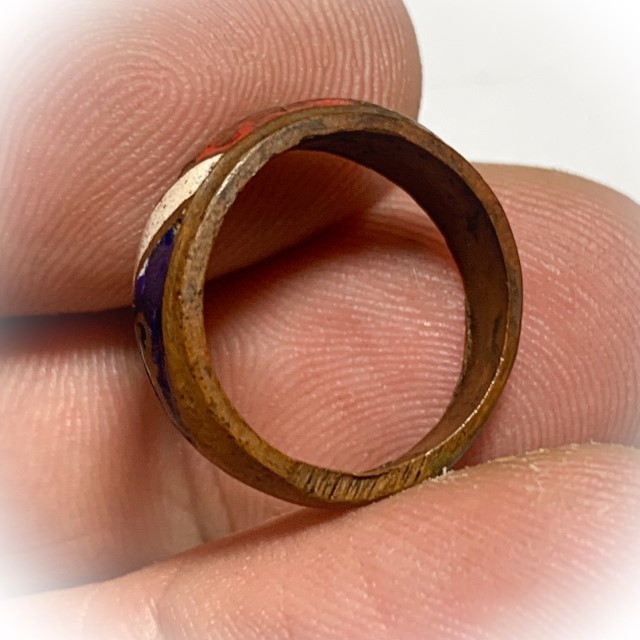
The decorative aspect of the ring, the ‘Long Ya Tong Chart,’ refers to the Ra Rachawadee Trairongs Tricolored enamels. ‘Long Ya’ (ลงยา) is the traditional Thai term for enamel work. ‘Tong Chart’ (ธงชาติ) directly translates to ‘national flag,’ referencing the patriotic red, white, and blue colors of the Thai flag. These colors are not arbitrary; they symbolize Nation (red), Religion (white), and Monarchy (blue) – the three pillars of Thai identity. The application of these specific colors onto the amulet, particularly during an era that encompassed the Indochina Wars, implicitly links the spiritual protection of the amulet to the safeguarding of the nation and its core institutions. This aesthetic choice transforms the amulet from a personal protective charm into a miniature emblem of national and religious unity, resonating with collective cultural and spiritual values.

While specific sacred powders (*muan sarn*) are not explicitly detailed for this particular ring, it is important to understand the general context of such materials in amulets by masters like Luang Por Jong. Typically, amulet rings and votive tablets of this period would incorporate sacred earths from auspicious sites, powdered incense from venerated Buddha images, herbal remedies, and even residual ash from burnt sacred scriptures. These components are painstakingly collected, consecrated, and often ground with specific invocations (Kata) to infuse them with spiritual energy. Although the Hwaen Arahang is a metal ring, the concept of ‘sacred alchemical copper alloy’ suggests that the metal itself underwent a transformation akin to the preparation of muan sarn, absorbing spiritual potency through ritualistic manipulation. The inherent hardness and durability of metal also contribute to the symbolic permanence of its protective power, making it a robust vessel for spiritual blessings.

Sacred Empowerment and Wicha

The empowerment of the Hwaen Arahang ring by Luang Por Jong Puttasaro in 2495 BE stems from his profound mastery of ‘Wicha Akom Sorcery,’ a complex system of sacred knowledge, magical formulas, and meditative practices integral to traditional Thai Buddhist esotericism. Luang Por Jong inherited this comprehensive Wicha from his guru, Luang Por Po of Wat Na Tang Nork, demonstrating exceptional aptitude in a discipline that demands rigorous mental discipline, spiritual purity, and extensive scriptural knowledge, particularly of the Khom Agkhara Sanskrit script.

The core of the Hwaen Arahang’s empowerment lies in the Khom Letter ‘A’ (อ), representing ‘Arahang.’ This single letter functions as a powerful *mantra* (Kata) and *buddha-nidana* (a foundational principle or essence of the Buddha). Reciting or meditating upon ‘Arahang’ invokes the ultimate purity and liberation of the Buddha, creating a resonant field of spiritual energy. Luang Por Jong, through his meditative attainments, would have imbued each ring with this profound spiritual vibration, linking the physical object to the metaphysical essence of Buddhahood. This process, often involving deep jhanic states, concentrates spiritual power into the amulet, activating its latent protective and auspicious properties.

Hwaen Arahang Long Ya Tong Chart Amulet Close Up of Khom Letter A

The Wicha employed by Luang Por Jong encompassed a range of magical formulas, primarily focused on Kong Grapan Chadtri (invulnerability and steadfastness) and Klaew Klaad (evasion of danger). These wicha are not merely chants but involve complex visualizations, breath control techniques, and specific consecration rituals performed over extended periods. For the Hwaen Arahang, the intention would have been to create a portable shield of spiritual protection. The master would have meticulously etched or inscribed sacred Yantra (geometric designs and scriptural verses) onto the base metal, possibly on the interior or exterior surfaces before enameling, further reinforcing the amulet’s protective matrix. Each stroke of the inscription and each chant during the blessing ceremony would have contributed to building this energetic shield.

Beyond defensive magic, Luang Por Jong was also highly proficient in Maha Lap (great fortune), Kaa Khaay (good business), and Metta Maha Niyom (loving-kindness and charm) magic. While the Hwaen Arahang is primarily a protective ring, the comprehensive nature of Luang Por Jong’s Wicha suggests that elements of these auspicious blessings would also be present. A master of his caliber would typically empower his creations with a holistic array of positive energies, ensuring not only safety but also general well-being and prosperity for the wearer. The use of specific Kata, tailored for different magical effects, would have been integrated into the final blessing ceremonies, ensuring the ring’s multifaceted efficacy. The continuous presence of the master’s meditative energy and purity of intention throughout the creation and blessing process is considered paramount in generating the amulet’s potency, distinguishing genuinely powerful amulets from mere commercial productions.

The ‘Olden days Masters’ distinction highlights a critical aspect of this amulet’s spiritual integrity. In Luang Por Jong’s era, the creation of amulets was a direct extension of a monk’s ascetic practice and spiritual attainments. Each piece was often handmade, imbued with individual blessings through prolonged meditation and ritual, contrasting sharply with later, more industrialized production methods. This dedication ensures that the Hwaen Arahang is not merely a product, but a sacred artifact carrying the direct spiritual imprint of a highly attained master, making its power genuinely potent and enduring.

How to Pray to Thai Amulets

Iconographical and Aesthetic Appreciation

The Hwaen Arahang Nuea Tong Daeng Long Ya Tong Chart, consecrated by Luang Por Jong in 2495 BE, presents a nuanced blend of functional design, symbolic iconography, and traditional aesthetic values. Its physical attributes reflect the practical needs of its intended wearers, primarily children or individuals with small fingers, indicated by its diminutive size, measuring approximately 1.7 Cm (or reportedly 2 Cm) in inner diameter. This small scale does not diminish its spiritual significance but rather highlights its role as a personal, unobtrusive protective talisman, designed for continuous wear.

The primary iconographical feature of the ring is the Khom Letter ‘A’ (อ) inscribed upon its surface. This script, deeply rooted in Southeast Asian Buddhist and Hindu traditions, serves as a powerful yantra. The ‘A’ represents ‘Arahang,’ symbolizing the Buddha’s supreme state of enlightenment and purity. The simplicity of this single letter belies its profound spiritual weight, acting as a concise visual mantra that encapsulates the essence of the Buddha’s virtues. Its clear depiction on the copper alloy, possibly engraved or stamped before the enamel application, ensures its legibility and central focus within the ring’s design. The use of Khom script further links the amulet to ancient esoteric traditions, suggesting a lineage of knowledge and power that predates modern influences.

Hwaen Arahang Long Ya Tong Chart Amulet Angled View

Aesthetically, the ring is distinguished by its ‘Ra Rachawadee Trairongs Tricolored enamels.’ ‘Rachawadee’ refers to a royal or exquisite style of ornamentation, often associated with fine craftsmanship. The ‘Trairongs’ (three colors) are specifically red, white, and blue, corresponding to the colors of the Thai national flag. This tri-colored enamel provides a vibrant contrast to the underlying copper alloy, enhancing the visual appeal of the ring while subtly embedding nationalistic symbolism. The deliberate choice of these colors for an amulet created during the Indochina Wars reinforces the notion of protective blessings extended not only to the individual but also to the nation, its religion, and its monarchy. The application of enamel, a technique requiring considerable skill, indicates a dedication to aesthetic quality alongside spiritual potency. The enameling process protects the underlying metal and inscription, ensuring the longevity and continued legibility of the sacred Khom ‘A’.

The alchemical copper alloy (Nuea Tong Daeng) itself contributes to the ring’s aesthetic. Copper, when exposed to the elements over time, develops a distinctive patination, ranging from deep reddish-brown to greenish hues. This natural aging process adds a layer of character and authenticity to the amulet, signaling its antiquity and long-term spiritual use. The texture and weight of the copper alloy, combined with the smooth, glossy surface of the enamel, create a tactile and visual experience that is both substantial and refined. The rings of this era, being largely handmade, often exhibit minor variations in form and finish, which are prized by collectors as marks of individual craftsmanship rather than imperfections. These slight irregularities speak to the artisanal nature of their creation, further distinguishing them from mass-produced items.

Hwaen Arahang Long Ya Tong Chart Amulet Profile

Ritual Practice and Worship

The ritual practice and worship associated with the Hwaen Arahang Nuea Tong Daeng Long Ya Tong Chart are deeply rooted in Theravada Buddhist traditions, yet they also incorporate elements of folk belief and specific instructions often provided by the consecrating master. For an amulet such as this, imbued with the protective and auspicious Wicha of Luang Por Jong, a devotee’s interaction typically begins with a posture of respect and reverence, known as ‘Bucha’ (บูชา). This involves acknowledging the spiritual power residing within the amulet and expressing gratitude to the Triple Gem (Buddha, Dhamma, Sangha) and to the master who consecrated it.

Standard Bucha practices for amulets often involve placing the ring on a higher altar or shrine when not worn, ensuring it is treated with utmost respect. It should never be placed in low or impure locations. When wearing the ring, devotees traditionally ensure it is worn on the finger in a manner that faces outward, symbolically projecting its protective energy. The small size of the Hwaen Arahang, suitable for children or a lady’s small finger, implies its role as a continuous, personal talisman, intended to be worn daily rather than intermittently.

Hwaen Arahang Long Ya Tong Chart Amulet Detail

Chanting Kata, or sacred incantations, is a fundamental aspect of activating and maintaining the amulet’s power. While specific Kata for the Hwaen Arahang itself might be transmitted orally or through written instructions by Luang Por Jong’s lineage, general protective Kata are commonly employed. The most direct invocation for this amulet would involve the repetition of ‘Arahang’ or the full ‘Namo Tassa Bhagavato Arahato Sammā Sambuddhassa’ (Homage to the Exalted One, the Worthy One, the Perfectly Self-Enlightened One). Regular chanting reinforces the spiritual connection between the devotee, the amulet, and the Buddha’s virtues, thereby strengthening the protective field. Devotees may also recite the ‘Phra Kata Chinabanchorn,’ a powerful all-purpose protective mantra widely used in Thailand, or specific Kata for Kong Grapan Chadtri and Klaew Klaad, to align with the ring’s primary protective attributes.

Rules of conduct for devotees owning such an amulet emphasize ethical living and adherence to Buddhist precepts. This includes maintaining the Five Precepts (Pancha Sila) – abstaining from killing, stealing, sexual misconduct, false speech, and intoxicants – as these moral foundations are believed to preserve and enhance the amulet’s spiritual efficacy. The purity of the wearer’s mind and actions is considered crucial, as incongruence between behavior and the amulet’s sacred nature can diminish its power. Devotees are also typically advised to avoid wearing amulets during acts considered impure or disrespectful, although practical considerations for daily wear often mean such rings are worn continuously, with the understanding that reverence is primarily a state of mind and intention.

Ultimately, the Hwaen Arahang functions as a constant reminder of the Dhamma and the virtues of the Buddha, fostering a mindful approach to life. It serves not only as a source of external protection but also as an internal catalyst for developing positive qualities. The belief is that true protection originates from one’s own virtuous actions and merits, with the amulet serving as a supportive aid and a beacon of spiritual presence. The ongoing veneration of Luang Por Jong and the enduring power of his amulets attest to the deep cultural and spiritual value placed on such artifacts within Thai society, preserving a tangible link to a rich tradition of monastic mastery and sacred art.

Hwaen Arahang Long Ya Tong Chart Amulet Top View

Charms & Talismans

Thai Buddhist, Animist, and Occult Charms and Talismans, authentically blessed by the great Monks and Lay Masters of Old, and Present Day

Filters

Filters
1 - 60 of 800 items


Pra Yord Khun Pol Pim Klang Hlang Yant Pu Dhavaradi 2510 BE  - Buddha Amulet for Protection and Status - Por Tan Nam Wat Don Sala


Pra Yord Khun Pol Pim klang Nuea Wan Hlang Yant Yant Pu Dhavaradi (Chedi Stupa on rear face) Sacred Powder Buddha Amulet in Large size model. The amulet is the medium model measuring

This is Ancient Classic of Por Tan Nam, and Immense Rarity from the Great Olden Days Khao Or Master Monk of Wat Don Sala, in Pattalung. and is a standard bearer amulet seen to be made by almost all Khao or Masters, which can be most famously denoted by the Pra Yord Khun Pol amulet of the Great Ajarn Chum Chai Kiree of the Dtamnak Dtak Sila Khao Or Southern Academy of Sorcery.
Pra Yord Khun Pol Pim Klang Hlang Yant Pu Dhavaradi 2510 BE - Buddha Amulet for Protection and Status - Por Tan Nam Wat Don Sala Detail 1

Free Registered Air Parcel Worldwide Shipping

 The amulet is empowered with the Wicha Pra Yord Khun Pol, containing Invocations to summon the power of Kong Grapan Chadtri, Klaew Klaad, Maha Amnaj (commanding power and influence) and Serm Yos Status Promotion Magic. The front face of the amulet bears the Image of a Buddha setead in Mara Vichai Posture. The two Savaka, Maugdalyayana and Saributra are standing either side, one holding a ‘Chadtr’ Parasol to shade the Buddha.

Pra Yord Khun Pol Pim Klang Hlang Yant Pu Dhavaradi 2510 BE - Buddha Amulet for Protection and Status - Por Tan Nam Wat Don Sala Detail 2

2510 BE saw this Amulet released in various different ‘Pim’ (models);

1. Hlang Yant Pu Dharavadi (Stupas Yantra – 1, 2 or 3 Stupas), 2. Hlang Yant Bai Po. 3. Oblong shaped Pra Yord Khun Pol ‘Pim Badtiharn’ (Miracle Pim) Hlang Yant Pu Dhavaradi, and 4. Pra Luang Por Tuad Pim Hlang Bai Po Amulet also released in the same edition, along with 5. Pra Pid Ta Nuea Takua Long Thom, leaden Nirodha Buddha amulet, which is also so Rare and famous, from Por Tan Nam.

Pra Yord Khun Pol Pim Klang Hlang Yant Pu Dhavaradi 2510 BE - Buddha Amulet for Protection and Status - Por Tan Nam Wat Don Sala Detail 3

This Edition was one of Por Tan Nams Early Era Amulets, and a highly preferred Pra Niyom Classic. of national and International Historical Fame and Prestige. Powerful Kong Grapan Chadtri Klaew Klaad Protection and Evasion, Serm Yos Status Increaser Amulet of Legendary Proportion.

This is a most classic Benjapakee type amulet, and a large one indeed at that, which any true lover or collector of Thai Buddhist amulets would wish to have in their collection and of course to wear around their neck

Pra Yord Khun Pol Pim Klang Hlang Yant Pu Dhavaradi 2510 BE - Buddha Amulet for Protection and Status - Por Tan Nam Wat Don Sala Detail 4

Por Tan Nam of Wat Don Sala (Pattalung), was one of the Great protagonists of the Samnak Dtak Sila Khao Or School of Sorcery, and one of the Greatest Guru Masters of the Southern Thai Provinces of all History. His amulets, and Amulets made in his Image are considered to be Most Sacred with Thai people of the South.

His Role in the History and Legends of the Khao Or Magical tradition, and collaboration with the making of Amulets with this Grand and Large family of Sorceror Monks, who stem from a number of Famous temples within the Khao Or Tradition. His amulets are as sacred and rare as they are priceless, and are amongst the most esteemed and collected amulets of the High End ‘Pra Niyom’ Collector Category.

Pra Yord Khun Pol Pim Klang Hlang Yant Pu Dhavaradi 2510 BE - Buddha Amulet for Protection and Status - Por Tan Nam Wat Don Sala Detail 5


These amulets are part of the famous Pantheon of ‘Maha Wan’ Herbal Powder base amulets, made by Por Tan Nam between 2510 and 2512 BE which are amongst the most highly regarded and revered amulets of the Historical Pantheon of Wat Don Sala. In those days, Pra Ajarn Nam and the great Ajarn Chum of the Dtamnak Dtak Sila would still use Sacred Powders from Luang Por King (Wat Ban Suan).

Pra Yord Khun Pol Pim Klang Hlang Yant Pu Dhavaradi 2510 BE - Buddha Amulet for Protection and Status - Por Tan Nam Wat Don Sala Detail 6

The amulets of the 2510 – 2512 BE Era were made after Por Tan Nam’s second and final Ordination, and are famous for their content of Ancient Sacred Earthen and Powder Amulets of many Great Olden Days Masters, and the Maha Wan Herbal Powders of Pra Ajarn Nam mixed with his Pong Tang Ha Samrej 5 Sacred Yantra Powders. In these times, Por Tan Nam still mixed bis own powders and made his own Yantra Inscriptions.
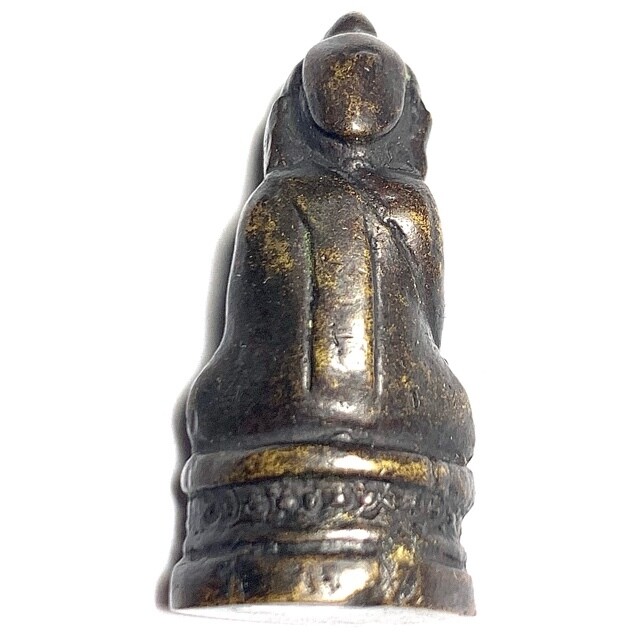
Pra Yord Khun Pol Pim Klang Hlang Yant Pu Dhavaradi 2510 BE - Buddha Amulet for Protection and Status - Por Tan Nam Wat Don Sala Detail 7

Pra Yord Khun Pol – A Benjapakee Story

Pra Yord Khun Pol is one of the Classic Historc Periodic Amulets which has its own ‘Benjapakee’ five regions set of ‘Pra Niyom’ preferred amulets, and is famed for its Serm Yos (Increase Status), Kong Grapan Chadtri, Klaew Klaad, and Maha Pokasap – Maha Lap powers. There are various forms seen in various regions who made the Yord Khun Pol amulet, with five of them becoming the most preferred, hence they also carry the name, ‘Benja’ (meaning 5) and ‘Pakee’ (Benjapakee).

Pra Yord Khun Pol Pim Klang Hlang Yant Pu Dhavaradi 2510 BE - Buddha Amulet for Protection and Status - Por Tan Nam Wat Don Sala Detail 8

The five kinds of Yord Khun Pol amulet within the five top Benjapakee of the Yord Khun Pol Niche, are;

Pra Ruang Rang Pern – Wat Pra Sri Radtana Maha Tat (Sukhothai Province), Pra Huu Yaan – from the Kru Burial Chamber find at Wat Pra Sri Radtana Maha Tat in Lopburi, Pra Chinarat Bai Sema, from the Kru Burial find at Wat Pra Sri Radtana Maha Tat, in Pitsanuloke, Pra Mahesworn, from the Kru burial archeological find at Wat Pra Sri Radtana Maha Tat, in Supanburi, and the Pra Ta Gradan, from the famous Kru Burial find at Sri Sawad, considered to be an amulet that is over 500 years since its making.


Pra Yord Khun Pol Pim Klang Hlang Yant Pu Dhavaradi 2510 BE - Buddha Amulet for Protection and Status - Por Tan Nam Wat Don Sala Detail 9

Use the Maha Namasakara (Namo Dtassa x 3), and Kata Aaaratana Pra Krueang to Bucha and beseech wish fulfilment from the Prakam Dee Kwai Yord Khun Pol.

Maha Namasakara Kata

Namo Dtassa Pakawadto Arahadto Sammaa Samputtassa

Namo Dtassa Pakawadto Arahadto Sammaa Samputtassa

Namo Dtassa Pakawadto Arahadto Sammaa Samputtassa

You can practice the Kata Aaraatanaa Pra Krueang, by using the tutorial in the below youtube video.

Kata Aaraatanaa Pra Krueang

Kata Aaraatanaa Pra Krueang

Puttang Aaraatanaanang, Tammang Aaraatanaanang, Sangkang Aaraatanaanang

(Pray for your wishes)

Puttang Bprasittimae, Tammang Bprasittimae, Sangkang Bprasittimae


Pra Yord Khun Pol Pim Klang Hlang Yant Pu Dhavaradi 2510 BE - Buddha Amulet for Protection and Status - Por Tan Nam Wat Don Sala Detail 10

Kata Bucha Pra Yord Khun Pol

Arahang Sukhadto Pakawaa

Kata Bucha Pra Yord Khun Pol (Version 2)

Chant Maha Namasakara (Namo Tassa) Three times first, as usual before chanting to amulets.

Na Mo Puttaaya Na Ma Pa Ta Ja Pa Ga Sa Na Ma A U Putto Arahang


Chant once in the mornings for Metta and Choke Lap.


Chant once in the evenings for protection from danger and evil energies.

Pra Yord Khun Pol Pim Klang Hlang Yant Pu Dhavaradi 2510 BE - Buddha Amulet for Protection and Status - Por Tan Nam Wat Don Sala Detail 11

Buddha Amulets (all types)

Pra Nakprok, Pra Sum Gor, Pra Pong Supan, Pra Sangkajjai, Pra Lila, Pra Nang Paya, Pra Somdej, Pra Yord Khun Pol, Pra Pruhnang, Pra Prok Po, Pra Saiyasana, Pra Putta Chinnarat, Pra Navagote, Pra Upakut, Pra Sivali, and many others Buddha Amulets.

Filters

Filters
Pra Somdej Pim Gaes Jarot Sum Pim Gaes Iang Niyom Long Rak Chart Somodej Dto Wat Rakang KositaramPra Somdej Pim Gaes Jarot Sum Pim Gaes Iang Niyom Long Rak Chart Somodej Dto Wat Rakang Kositaram
Pra Somdej Pim Gaes Jarot Sum Pim Gaes Iang Niyom Long Rak Chart Somodej Dto Wat Rakang Kositaram
Free Shipping Worldwide (we do not state or declare true price to counter tarrifs tax on customers), & Offer of Free Solid Silver Casing Included
SKU 04783
$1,699
1 - 60 of 622 items

Ajarn Spencer Littlewood & Agent Gemini Unleashed for ancientamulet.com
All rights reserved.


Ban Neng Pra Rahu Hand Carved Necromantic Skullbone Eclipse God Hand Spell Inscriptions Ajarn Heng Praiwan

Ban Neng Pra Rahu; A one off original necromantic skullbone carving, in the image of Pra Rahu Om Jantr Asura Deva Eclipse God, with hand made Khom Agkhara spell inscriptions recognizably from the Great Ajarn Heng. An immensely protagonistic amulet, that stands out from the crowd with its powerful dark arts power. This large and highly detailed Necromantic Skull Carving, is a most imposing amulet for wear, or ritual Bucha object for the altar, and an immensely rare world class hand made ancient amulet of the Great Ayuttaya Lay Master; Ajarn Heng Praiwan, This exhibit is especially attractive visually, with a dark patina and very deep relief carvings, of a master artisan. Empowered with the Wicha Pra Rahu and the Famously Powerful Necromantic Invocations ubiquitous to Ban Neng bone carvings.

Ban Neng Pra Rahu Hand Carved Necromantic Skullbone Eclipse God Hand Spell Inscriptions Ajarn Heng Praiwan Detail 1

This skull bone carving, is in tapered oval shape, and is an immensely filigrain, and finely detailed master class carving from a top artisan, with an ancient and exquisitely finely carved details of a doubled image of the Pra Rahu Jantruparaka/Suriyuparaka Asura Deva Eclipse God of Good Horoscope, swallowing the moon/sun. The Borders and surrounding area around the image of the deity, is delicately carved with decorative Lai Thai embellishments. This carving is so visibly, finely carved with immense details, that it can only have been made by a Master Artisan, with the highest level of prowess. specializing in the Lai Thai traditonal Buddhist Line-Art.

Ban Neng Pra Rahu Hand Carved Necromantic Skullbone Eclipse God Hand Spell Inscriptions Ajarn Heng Praiwan Detail 2

Free Registered Air Parcel Worldwide Shipping

Free EMS / DHL / FedEx Express Shipping and the option of free solid silver Waterproof Casing is included with this item. An extremely rare, and exquisitely beautiful carving that is among the finest one could encounter by Olden days Lay Master Ajarn Heng Praiwan. Carvings of this level of fine detail, adherent to the ancient rules of Lai Thai fine line art traditional design, are in them-self, even when not powerfully blessed by great Monks, a piece of historical and cultural religious art that is of the museum curation level.

Ban Neng Pra Rahu Hand Carved Necromantic Skullbone Eclipse God Hand Spell Inscriptions Ajarn Heng Praiwan Detail 3

This particular Ban Neng in fact, is beyond any kind of true price estimation (Hence ‘Priceless’), for its beauty, spiritual and cultural value, and the level of artistic prowess of the design carving, makes it a piece of fine art in itself, in a collector niche, and an attractive talismanic powerful Necromancy fpr those adherent to the immensely powerful fast-acting effects of he Ban Neng. Definitely an item that would be fitting for ‘The Man who has everything’, as we bet, he does not have this yet 🙂

Below : Hand made spell inscriptions in Khom Agkhara (Khmer Sanskrit), are visible on the rear face (inner side of skullbone), of the Ban Neng Carving.

Ban Neng Pra Rahu Hand Carved Necromantic Skullbone Eclipse God Hand Spell Inscriptions Ajarn Heng Praiwan Detail 4

If you feel that your Fate and Horoscope is not Auspicious, then it could be that Pra Rahu is interfering. You can solve this problem by making Bucha offerings to Pra Rahu every Wednesday;

Light 10 black incense sticks (‘Toop’ in Thai), and five types of black offerings (e.g. black sticky rice, black jelly grass drink, black semolina or sago pudding and the like).

Ban Neng Pra Rahu Hand Carved Necromantic Skullbone Eclipse God Hand Spell Inscriptions Ajarn Heng Praiwan Detail 5

Ban Neng Pra Rahu Hand Carved Necromantic Skullbone Eclipse God Hand Spell Inscriptions Ajarn Heng Praiwan Detail 6

12 repetitions of the Kata Bucha Pra Rahu are to be Chanted;

Idtipiso Pakawaa Pra Rahuu Sataewaa Samaa Winyaana Idtipiso Pakawaa Putta Sangmi

Kata Chanting to Bucha Pra Rahu Thai amulets and Bucha statues (4 different Versions)

Kata Surya Buppaa (to be chanted in the daylight)

Gusaedto Ma Ma Gusaedto-dto Laalaa Ma Ma Dtolaamo Tolaamo Ma Ma Tolaamo Ma Ma Tolaamodtang Haegudti Ma Ma Haegudti

Ban Neng Pra Rahu Hand Carved Necromantic Skullbone Eclipse God Hand Spell Inscriptions Ajarn Heng Praiwan Detail 7

Kata Jantra Bupaa (to be chanted in the night time)

Yadt-thadtang Ma Ma Dtangthaya Dtawadtang Mamadtang Wadtidtang Saegaa Ma Ma Gaasaegang Gaadtiyang Ma Ma.Gaadtiyang Ma Ma Yadtigaa

When you begin to Bucha Rahu Deity, you should make the first ever session in the evening of a Wednesday (any time from 7 pm onwards). After you have done this once, you can make Bucha in the daytime if you wish, but the first time you must include the food offerings of black foods as well as the black incense. The second time onwards, only the incense is necessary in the daytime, if it is a lot of trouble to get the food offerings.

Ban Neng Pra Rahu Hand Carved Necromantic Skullbone Eclipse God Hand Spell Inscriptions Ajarn Heng Praiwan Detail 8

Ajarn Heng Praiwan was a great Lay Master and Adept Necromancer of olden days, of the Ayuttaya Province. Ajarn Heng was born in the year 2428 BE, and was ordained as a Buddhist Monk when he came of age, at Wat Suwan in Ayuttaya. During his ordained years, he studied many ancient magical Wicha of the grimoires of Wat Pradoo Rong Tam, which was a great library of ancient magical grimoires, perhaps the largest in the country. He became extremely able in the inscription of Khom Agkhara Sanskrit Spells, Kata Incantations, and Sacred Yant, and became very well known as a great Master of Sak Yant Thai Temple Tattoos.

Ban Neng Pra Rahu Hand Carved Necromantic Skullbone Eclipse God Hand Spell Inscriptions Ajarn Heng Praiwan Detail 9

Ajarn Heng Praiwan, studied the Wicha Grimoire of the Dtamra Radtana Mala, until attaining full Adept Mastery, after which he disrobed for a time, to help his parents. After which, he ordained again once more, at Wat Prayatigaram in Ayuttaya, with the Great LP Glan Tammachodti, Abbot of Wat Prayat, as his Upachaya Ordaining Monk. He spent a long period of time learning and mastering the full Dtamra of the Wicha of Luang Por Glan, after which he disrobed again, and became a lay-sorcerer until the end of his days, when he passed away at the age of 75, in the year 2502 BE.

Ban Neng Pra Rahu Hand Carved Necromantic Skullbone Eclipse God Hand Spell Inscriptions Ajarn Heng Praiwan Detail 10

It is said that Ajarn Heng’s father, was either a police officer, or a prison officer, and sent Ajarn Heng to Penang, and Singapore, to be educated. But Ajarn Heng did not finish his schooling, and left, because of his immense fascination and interest in the study of Saiyasart, & the Dtamra Saiyawaet Grimoires, of Thai Buddhist, Animist, and Necromantic Occult Practices. He even traveled to the South of Thailand to learn the most ancient Magical Practices of the Southern Khao or Sorcery Lineages.

Ban Neng Pra Rahu Hand Carved Necromantic Skullbone Eclipse God Hand Spell Inscriptions Ajarn Heng Praiwan Detail 11

After his time practicing and mastering the Southern Lineage Magical Practices, Ajarn Heng returned to his home Province of Ayuttaya, in Central Thailand. Ajarn Heng was now a Master of the Wicha of Luang Por Glan, and the Southern Wicha of Sorcery which dates back to the Sri Vichai Era of Siam. The Wicha Mastered in Entirety of Wat Pradoo, which Ajarn heng has undertook, came from the time when King Naresuan Maharach, ordered the Wicha Saiyasart Grimoire texts to be inscribed and stored at Wat Pradoo Roeng Tam.

Ban Neng Pra Rahu Hand Carved Necromantic Skullbone Eclipse God Hand Spell Inscriptions Ajarn Heng Praiwan Detail 12

The inscriptions were begin and finished between the years 2133 – 2148 BE. It was King Pra Mahesuan Maharach, who united the city Kingdoms of Siam and Unified the country into one Land, namely ‘Siam’, or ‘Thailand’, and made the city of Ayuttaya the first capital of the Kingdom (Later to be moved to Bangkok, for logistical and geo-political reasons).

Ban Neng Pra Rahu Hand Carved Necromantic Skullbone Eclipse God Hand Spell Inscriptions Ajarn Heng Praiwan Detail 13

Ajarn Heng began to serve the public and accept devotees, at first by only performing Sak Yant Tattoos, and became known as one of the Top Sak yant Masters in the Country of his Time. Another later Kroo Ba Ajarn and Friend in Dhamma, Luang Phu Si, of Wat Sakae in Ayuttaya (Temple of LP Doo), once told that during the time of King Rama the 3rd, during a time of military dispute, around the year 2475 BE, many regiments of Thai soldiers, of both high and lower standing went to Ajarn Heng for his protective Yant, due to the miraculous powers attributed to them, all one the same day.

Ban Neng Pra Rahu Hand Carved Necromantic Skullbone Eclipse God Hand Spell Inscriptions Ajarn Heng Praiwan Detail 14

On this occasion, Ajarn Heng constructed the ritual place at Wat Hantra Temple. Ajarn Heng invited a host of powerful Monks with Psychic Powers to assist in the ceremony of Blessings. In this occasion (around 2476 BE),Ajarn Heng had to work very hard to gather a large number of Master Monks to come and perform the Suad Nam Puttamont Chanting Ritual, and this was a very had task in those days in Ayuttaya, to travel around and fine enough top masters who knew the chanting of the Nam Pra Puttamont and the Putta Pisek (Buddha Abhiseka) ceremonie. He was assisted in this task, by the great Luang Phu See of Wat Sakae. But on this occasion, Luang Phu Si could not attend as well, because he was busy with Dhamma Duties at Wat Liab. But, after this Ceremony, Ajarn Heng would always invite Luang Phu Si to attend all of his subsequent Blessing Ceremonies, and assist with empowerment.

Ban Neng Pra Rahu Hand Carved Necromantic Skullbone Eclipse God Hand Spell Inscriptions Ajarn Heng Praiwan Detail 15

Ajarn Heng was a relatively wealth person with two houses and land stakes, one in the countryside in Tung Hantra, and one in Bangkok. And so, he would have devotees seek him out in Bangkok and in Hantra, for Sak Yant Tattoos, and his powerful Takrut amulets. It became popular to get high class artisans to carve his amulets, as well as village people would carve animist charms from ivory, wood, and sometimes, necromantic Ban Neng skullbones, which are of course, along with his famous metallic, and inimitably designed Takrut Maha Jakkapat Metallic Scroll Spells, the most highly valued, rare, and sought after by devotees of the great anbcient Ayuttaya Lay Sorcerer. Finally, Ajarn Heng moved to stay in Suan Malee, until the Wars in Asia Broke Out, whereupon he left the Capital, and returned to his home Province of Ayuttaya.

Ban Neng Pra Rahu Hand Carved Necromantic Skullbone Eclipse God Hand Spell Inscriptions Ajarn Heng Praiwan Detail 16

During this time, there were many Gangsters and Highwaymen, and a lot of need for Sak Yant Tattoos for Kong Grapan Chadtri and Klaew Klaad protective Magic, and Ajarn Heng became a highly acclaimed master, renowned for his Yant Gao Yord (A Wicha Obtained from the Great LP Hrun). Ajarn Heng was able to receive additional Wicha from the famous temple of study of Sorcery, Wat Sam Jeen, as well as receiving Wicha from the great Luang Phu Tong, of Wat Rat Ayotaya, and Luang Phu Kam Wibun.

Ban Neng Pra Rahu Hand Carved Necromantic Skullbone Eclipse God Hand Spell Inscriptions Ajarn Heng Praiwan Detail 17

Ban Neng Pra Rahu Hand Carved Necromantic Skullbone Eclipse God Hand Spell Inscriptions Ajarn Heng Praiwan Detail 18

Ajarn Heng’s Kong Grapan magic was so famous, that it became popular for police and military to get his tattoos, but also that they did not like the fact that so many Gangsters had them too, and were impossible to shoot dead. His Takrut Jappapattirach was also both infamous, and those who wore one were feared to be invincible. There was once a time when Ajarn Heng was parked in a boat on the banks of the river at Wat Cherng Lane Temple, where the Police came, and had to forbid Ajarn Heng from tattooing more, because the area was overflowing with Gangs of Highwaymen, and his tattoos were making it impossible for the police to catch them.

Ban Neng Pra Rahu Hand Carved Necromantic Skullbone Eclipse God Hand Spell Inscriptions Ajarn Heng Praiwan Detail 19

Ban Neng Pra Rahu Hand Carved Necromantic Skullbone Eclipse God Hand Spell Inscriptions Ajarn Heng Praiwan Detail 20

Charms & Talismans

Thai Buddhist, Animist, and Occult Charms and Talismans, authentically blessed by the great Monks and Lay Masters of Old, and Present Day

Filters

Filters
1 - 60 of 800 items

Ajarn Spencer Littlewood for ancientamulet.com
All rights reserved.


Palad Khik Nga Gae Ling Jab Hlak 2480 BE Carved Ivory Lingam with Hanuman - Luang Por Ding Wat Bang Wua

With immense luck and diligent searching, we present the second, and last of two exhibits we found, of the Immortal Ling Jab Hlak Hanuman of Luang Por Ding, carved into the shape of a Vanora Monkey holding onto a Lingam (‘Ling Wanorn’ in Thai one of the the Humanoid Simian Denizens of the Himapant Celestial realm, and minions of the God Hanuman). An immensely rare and ancient amulet from the Olden Days Abbot of of Wat Bang Wua. Luang Por Ding was highly renowned in his day, for his Palad Khik Ling Jab Hlak Vanora Monkey animist charms, considered to be among the most powerful Vanora amulets of all time. Luang Por Ding was also extremely revered, for his Sacred Powder Look Om wishing balls, made from his legendary Pong Ya Jet Paya Chang Sarn substance.
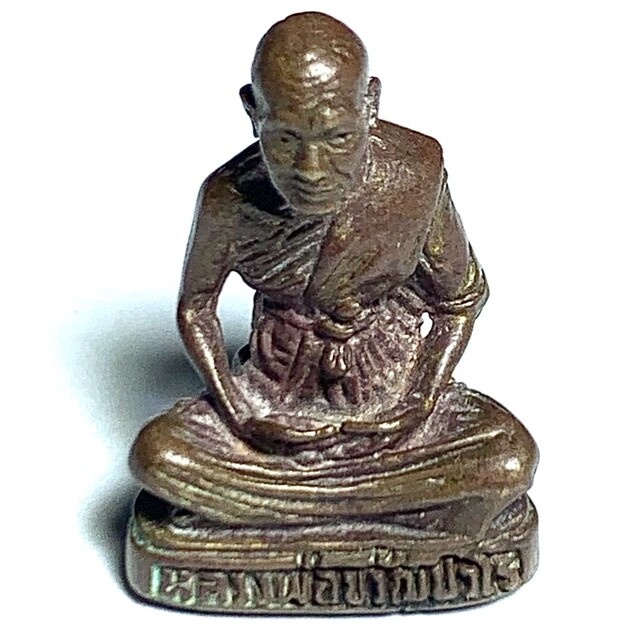
Palad Khik Ling Jab Hlak Hanuman Luang Por Ding Detail 1

Free Registered Air Parcel Worldwide Shipping

Free Registered Airmail Shipping Worldwide is Included. NOTE; At time of posting, despite the recent removal pf Paypal, until mid February 2022, you can still pay per paypal if you prefer it to Western Union, on https://www.paypal.me/amulets (we know it is easier and apologize that we are losing this payment method due to new Thailand rules), you can use this link to pay with (after ordering, and state so in order comments so we can check paypal and send your order).

The Palad Khik is carved from extremely ancient ivory, and is instantly recognizable as authentic ancient ivory, even with the naked eye, for the parallel rifts and crevices which travel along the shaft of the Palad Khik. The Palad Khik is most beautifully carved by one of Luang Por Ding’s Master Artisans, and is a very rare item to find in ivory from this master, who would usually make them from mostly from sacred wood, due to the rarity of ivory. Luang Por Ding, was a Master of the Wicha Wanorn Hanuman Vanora Monkey God Invocation, and his Hanuman amulets are among the most highly sought after of all Hanuman amulets, along with those of the Great Luang Por Sun, of Wat Sala Gun.

Palad Khik Ling Jab Hlak Hanuman Luang Por Ding Detail 2

The Thai Palad Khik an Animistic Phallic amulet, carved in the form of a Male sexual organ. Palad Khik are made in all sizes, ranging from miniature ones the size of your little finger, right up to ones which are higher than a human. Palad Khik are extremely popular with Thai people, worn as amulets tied to a cord around their waist.

The belief in the Shiva Lingam, or ‘Leungk’ (Thai pronunciation) phallic energy of the Palad Khik, is derived from the Brahman influence which has been inflected on Thai Theravada Buddhism, since both belief systems came to Siam more than one or two thousand years ago.

Palad Khik Ling Jab Hlak Hanuman Luang Por Ding Detail 3

It is believed that the Palad Khik Lingam energy is the source of all life forms in the Universe. This is the root of the act of reverence (Bucha/Poojah) to the Palad Khik as a Shiva Lingam, which honors Shiva as the Lord of the World.
In India, not only is the Shiva Lingam worshiped, bit there exists also a cult which reveres the female sex organ, which is called the ‘Yoni’ (Vulva, female counterpart). The same thought is applied as that used too revere the Palad Khik Shiva Lingam, that is to say, that all created things must spring out of the Yoni instead of the Lingam.

Palad Khik Ling Jab Hlak Hanuman Luang Por Ding Detail 4

Below : Over 20 Minutes of Narrative explanation from Ajarn Spencer Littlewood about the Thai Palad Khik Amulet, and how to Pray to them

How to Bucha Palad Khik Amulets

The practice of making Palad Khik as a portable amulet, for ‘Bucha Siwalingk’ (praying to Shiva Lingam phallic Deity), entered Siam with the influence of the Khom race, whose language and alphabet the Thais absorbed and adapted into their own personalised fashion. Some have said that the integration of Pre-Buddhist beliefs and traditions, into the Thai Theravada Buddhist practice of the common Folk, such as worshiping amulets like the Palad Khik, is not in contradiction to the practice of Buddhism and presents no obstacles.

Palad Khik Ling Jab Hlak Hanuman Luang Por Ding Detail 5

In fact, it is believed, that since Buddhism sprang out of the roots of Brahman Cosmology, and that the people of Siam adopted Pre-Buddhist Brahman traditions and incorporated them, that this is even a benefit to the preservation of ancient knowledge, and of Thai history and tradition. Most of these ceremonies do not come into any kind of dispute with Buddhist thought. In fact, Buddhist Thought bases itself on many concepts found in Hinduism, and in Thailand, the two Belief Systems can hardly be separated.

Palad Khik Ling Jab Hlak Hanuman Luang Por Ding Detail 6

The word ‘Palad’, means ‘vice’ (as in ‘vice President, vice Mayor, etc). This has caused the Palad Khik to make some people t exclaim jokingly “why don’t you call it ‘Vice Mayor Khig’?. In fact, the word ‘Palad’ is derived from the Sanskrit ‘Bprasawa’, which translates as “he who stands by the side of’. This was adapted into the Thai language as Sanskrit and Buddhism entered and flourished in Siam. This is why in Thailand, an assistant to the Mayor (Nay Ampher), is called ‘Palad Ampher’.

Palad Khik Ling Jab Hlak Hanuman Luang Por Ding Detail 7

But the real reason this word (Palad) is used for the Shiva Lingam amulet, is that it is worn as a companion to remain by the side of the wearer (‘he who stands by the side of’). Devotees of the Palad Khik tend to wear it outside of their clothes, around the neck, waist or sometimes hanging inside the trousers, against their loins. The word Palad Khik (“ปลัดขิก” -low sound) was originally pronounced ‘Palad Kik’ (“ปลัดคิก” – rising sound) in ancient times. Many ancient Thai masters and amulet makers were inclined to making Palad Khik amulets, which were extremely popular with the Folk.

Palad Khik Ling Jab Hlak Hanuman Luang Por Ding Detail 8

Some had Khom Agkhara lettering, such as ‘U A Ma’ or ‘Om’, which are psalms to Brahma, Shiva and Vishnu. Some Ajarn would inscribe Sanskrit Agkhara instead, in Brahman tradition. Even though today’s age of technology has brought many things to distract us from magic, the Palad Khik is still an extremely widespread belief and is worn by Thai people in all provinces. Hang around any Samnak sak or Samnak Ruesi for a while and you will most definitely see someone wearing a Palad Khik amulet.

Palad Khik Ling Jab Hlak Hanuman Luang Por Ding Detail 9

In the Isan country, Palad Khik is sometimes also called ‘Bak Ben’, or ‘Khun Phet’. Palad Khik has been used by Isan people to ward off dark magic, for example in a case about 2548, the Folk of Roi Et were afraid of ‘Phii Mae Hmaay’ ( a female ghost who hunts men), so they erected a massive totem pole in the shape of a penis, with the initials (S and Y) of the man they believed to be the target of the ghost. They placed the giant Palad Khik in front of the mans house.

Kata Bucha Palad Khik

Over the years, many rumours and legends of Palad Khik of LP Ding performing miracles of Kong Grapan Klaew Klaad magic and other protective spells, caused the popularity and demand for such talismanic charms to increase, to the point where locals would flock to Luang Por Ding from around the country, to receive an amulet from him. The Palad Khik began to be used as a portable amulet through being carved from wood which was from the Cassiafistula Linn variety of tree, which has medicinal or healing properties.

Palad Khik Ling Jab Hlak Hanuman Luang Por Ding Detail 10

Ancient Folk would then use this when traveling cross country; If they had to drink water from a stream, or other natural source which may have bacteria or dangerous amoebas, they would take the Palad Khik and use it to stir the water before drinking it, to remove any danger of illness.

Kata Chants for Praying to Hanuman

Palad Khik is not only applied for preventing dangers and illness, but is seen to possess all other kinds of magical properties, such as Metta Mahaniyom (preference and popularity, friendliness and love, compassion,receiving generosity and mercy), Choke Laap (luck and fortune), good salesmanship, Love charm, and the like.

Palad Khik Ling Jab Hlak Hanuman Luang Por Ding Detail 11

Luang Por Ding would release amulets to his devotees during temple ceremonies, and on his birthday celebrations. Luang Por Ding was extremely famopus for his Look Om Jet Paya Chang Sarn wishing ball amulets. The Look Om Jet Paya Chang Sarn is spoken of in the Legend of the Great ‘Suea Khaw’ Invincible Gangster, who was a Looksit of Luang Por Ding.

Suea Khaw maintained that he survived throughout the years of his gunmanship because of the Look Om Paya Jet Chang Sarn, which stopped many bullets from piercing his skin and killing him over the years. It is said to have given Suea Khaw the strength and imposing aura of invincibility, to overcome all his enemies.

Palad Khik Ling Jab Hlak Hanuman Luang Por Ding Detail 12

The Look Om gained the name of ‘Jet Paya Chang Sarn’, because of its legendary power to increase the stamina and strength of the devotee over his or her adversaries. It is said that the wearer of the Look Om Jet Paya Chang Sarn is endowed with the strength of the Paya Chang Sarn Battle Elephant. The Look Om was said to both Protect against all Dangers, and Endow the wearer with Commanding Power and Strength. Suea Khaw was a Gangster who was reputed to have defeated and killed over 100 of his competitors, and who had a reputation for his bravery and strength.

Palad Khik Ling Jab Hlak Hanuman Luang Por Ding Detail 13

Because his sole chosen amulet of protection and power was the Look Om Jet Paya Chang sarn, and the fact that nobody cold defeat him or kill him, was the reason for Luang Por Ding’s Look Om Jet Paya Chang Sarn becoming so Legendary.

Palad Khik Ling Jab Hlak Hanuman Luang Por Ding Detail 14

But one day, Luang Por Ding told Suea Khaw that he was too violent and that if he did not give up being a gangster, then he would surely encounter a violent and premature death. Suea Khaw had become very overconfident because no knives were able to penetrate his skin, and guns would not fire when aimed at him. Because of the invincibility which Suea Khaw had been enjoying, Suea Khaw did not listen to Luang Por Ding’s warnings.

Palad Khik Ling Jab Hlak Hanuman Luang Por Ding Detail 15

One day the Police Force special missions unit came to Wat Bang Wua to ask Luang Por Ding if it was true that Suea Khaw possessed ‘Hnang Hniaw (‘sticky skin’. a term meaning a person with Kong Grapan Chadtri Magic). Luang Por Ding admitted that it was true that Suea Khaw possessed Protective Magic, and that he was not able to be killed with knives or guns. But Luang Por Ding added that Suea Khaw would fall prey to his own Karma without need of guns or knives, because he refused to listen and change his ways. Luang Por Ding added “I cannot tell you though, by which way the gangster Suea Khaw can be killed, for it would break my Precepts”

But at this moment, one of the Samanera Novice Monks was listening and butted in to say to the Police “If you want to kill Suea Khaw, you have to use a bullet that has the head of the bullet cast from metal taken from the blade of a Mitmor spirit knife from Luang Por Soke (Wat Pak Klong)”.

Palad Khik Ling Jab Hlak Hanuman Luang Por Ding Detail 16

Luang Por Soke was a colleague of Luang Por Ding and holder of the same Lineage Wicha, and would inscribe the Wicha of Luang Por Ding onto the Blades of his Mitmor. Some time later the Police caught Suea Khaw and he was sentenced to death, and was executed by Government Executioner, using Bullets cast from the blade of a Mitmor of Luang Por Soke (who was also a great master of Palad Khik).

Palad Khik Ling Jab Hlak Hanuman Luang Por Ding Detail 17

Luang Por Ding, was a Great Master of the Wicha Hanuman, and all Vanora Monkey Deities, for which he was extremely famous. He blessed many inimitable hand carved talismanic amulets (Krueang Rang), made from artisans of varied levels of skill, with of course the most masterfully carved attaining the highest level of preference. He is also associated with the symbol of the Cow (Wua), which comes from the name of the Temple (Wat Bang Wua). His Look Om Jet Paya Chang Sarn is one of the top Look Om of all Time and is also a high ranking amulet in the annals for Kong Grapan Chadtri Maha Ud Klaew Klaad Power.

Palad Khik Ling Jab Hlak Hanuman Luang Por Ding Detail 18

Charms & Talismans

Thai Buddhist, Animist, and Occult Charms and Talismans, authentically blessed by the great Monks and Lay Masters of Old, and Present Day

Filters

Filters
1 - 60 of 800 items

Ajarn Spencer Littlewood & Agent Gemini Unleashed for ancientamulet.com
All rights reserved.


Kwai Tanu Pim Yai Early Era - Por Tan Jantr (Wat Tung Puea)

Pim Yai large model Early Era Kwai Tanu, measuring 4 x 2 Cm, in visibly aged Nuea Din Kakyayaks Pasom Prai, Hlang Riab, a rare and oerhaos the most famous amulet, from the Great Olden Days Monk of the Khao or Southern Sorcery tradition, Por Tan Jantr. of Wat Tung Puea, in Nakorn Sri Tammarat. The amulet is in Nuea Din Kakyayaks, Sacred Peat Marsh Earths, from the Holy Marsh of Luang Por Tuad, and ‘Pong Phuudt Prai’ Ground Necromantic Bones, and ‘Pong Lob’ Yantra Powders.
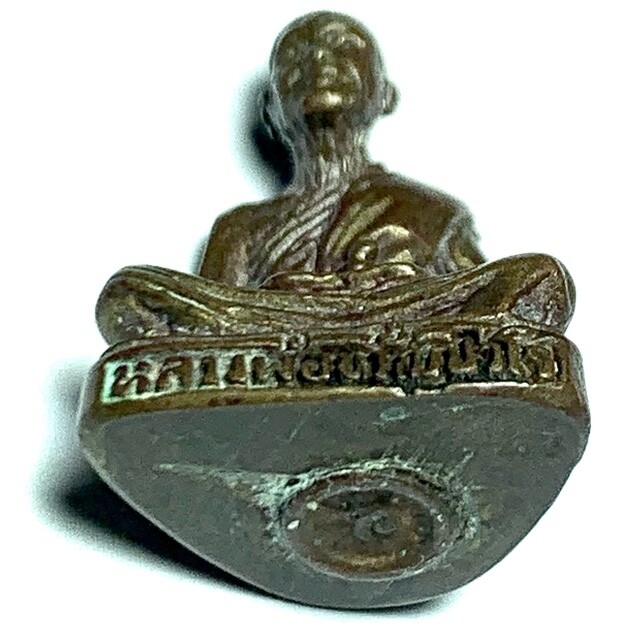
Kwai Tanu Pim Yai Early Era - Por Tan Jantr - Wat Tung Puea - Image 1

Kwai Tanu Pim Yai Early Era Por Tan Jantr Wat Tung Puea – detail view 1

This exhibit is in Pim Yai measuring 4 x 2 Cm. Por Tan Jantr of Wat Tung Puea, was an Olden Days Master Gaeji Ajarn Sorcerer-Monk of Immense Repute, highly famed for his powerful Wua Tanu and Kwai Tanu Sacred Arrow-Bull and Arrow Buffalo Amulets.
Kwai Tanu Pim Yai Early Era - Por Tan Jantr - Wat Tung Puea - Image 2

Kwai Tanu Pim Yai Early Era Por Tan Jantr Wat Tung Puea – detail view 2

The Kwai Tanu (and Wua Tanu) is one of the most highly reputed animist charms for protection, anti black magick, and calling lucky wealthy fortunes, as well as protecting one’s accumulated assets. It is said that Central Thailand’s Greatest Masters were Luang Por Noi of Wat Sri Sa Tong and his Looksit Luang Por Jerd of Wat Suan Badibat Tam Po Sethee in Nakorn Pathom.

Kwai Tanu Pim Yai Early Era - Por Tan Jantr - Wat Tung Puea - Image 3

Kwai Tanu Pim Yai Early Era Por Tan Jantr Wat Tung Puea – detail view 3

Free Registered Air Parcel Worldwide ShippingFree Registered Air Parcel Worldwide Shipping is included with this amulet as is the case with all amulets in ancient amulet store

But despite the mighty fame and powerful Kwai Tanu magic of Luang Por Noi, still, for the Southern Magical tradition, there is no name that comes to mind faster than that of Luang Phu Por Tan Jantr for Wicha Wua Tanu. Luang Phu Jantr made various editions of Wua Tanu, and Kwai Tanu over the decades, and in various sizes and types of Pong Prai Powders.

Kwai Tanu Pim Yai Early Era - Por Tan Jantr - Wat Tung Puea - Image 5

Kwai Tanu Pim Yai Early Era Por Tan Jantr Wat Tung Puea – detail view 5

Luang Phu Por Tan Jantr of Wat Tung Puea

Luang Phu Por Tan Jantr of Wat Tung Puea

Kwai Tanu Pim Yai Early Era - Por Tan Jantr - Wat Tung Puea - Image 7

Kwai Tanu Pim Yai Early Era Por Tan Jantr Wat Tung Puea – detail view 7

Each edition he ever released, received the same level of appreciation and number of tales of miraculous events, and are equally revered, regardless of which era of his trajectory they came from. It is said that the power of his Wua Tanu is enough to even cause robbers and burglars to die from the magical protective powers of the Wua Tanu of Luang Phu Jantr. All his sacred powders would receive constant empowerment throughout his trajectory.

Kwai Tanu Pim Yai Early Era - Por Tan Jantr - Wat Tung Puea - Image 8

Kwai Tanu Pim Yai Early Era Por Tan Jantr Wat Tung Puea – detail view 8

Each edition of amulets would receive a whole trimester of solo nightly empowerment from Luang Phu Jantr in his Kuti Hut, to Imbue the amulets with the fullest concentration of magickal power possible. His Wua Tanu are known to Instill Fear in the Hearts of all Ghosts and Demons, Phuudt Phii Prai and other types of Ghosts and Spirit Entities, and suck all of their energies out, leaving them powerless to act.

Kwai Tanu Pim Yai Early Era - Por Tan Jantr - Wat Tung Puea - Image 9

Kwai Tanu Pim Yai Early Era Por Tan Jantr Wat Tung Puea – detail view 9

The Wua Tanu have a special ingredient which is unheard of in other Wicha Wua Tanu of other Masters, namely Khee Khorb Mook Jorakhae (Mildews from around the nasal area of a Crocodile), and in the rare darker colored versions, Din Kakyayaks from the Sacred Peat Marsh of Luang Phu Tuad, Din Jet Pha Cha (earths from 7 haunted cemeteries), and Sacred Powders from the repositories of the Samnak Dtak Sila at Wat Khao Or, the headquarters of the Khao Or Southern Sorcery tradition.

Kwai Tanu Pim Yai Early Era - Por Tan Jantr - Wat Tung Puea - Image 10

Kwai Tanu Pim Yai Early Era Por Tan Jantr Wat Tung Puea – detail view 10

Each Wua Tanu was hand made and pressed indfividually by Luang Phu Jantr, unlike modern amulets which are made in mass pressings using modern methods, and are therefore among the most powerful and individually blessed Wua Tanu amulets to be found.

Mummified body of Por Tan Jantr at Wat Tung Puea

The mummified body of Por Tan Jantr, preserved in a glass coffin at Wat Tung Puea

Kwai Tanu Pim Yai Early Era - Por Tan Jantr - Wat Tung Puea - Image 12

Kwai Tanu Pim Yai Early Era Por Tan Jantr Wat Tung Puea – 4 sides detail view

Kwai Tanu Pim Yai Early Era - Por Tan Jantr - Wat Tung Puea - Image 13

Kwai Tanu Pim Yai Early Era Por Tan Jantr Wat Tung Puea


Explore Kwai Tanu Amulets

Charms & Talismans

Thai Buddhist, Animist, and Occult Charms and Talismans, authentically blessed by the great Monks and Lay Masters of Old, and Present Day

Filters

Filters
1 - 60 of 800 items

Ajarn Spencer Littlewood for ancientamulet.com
All rights reserved.


Khun Phaen Prai Kumarn 2515 Nuea Gon Krok Takrut Sariga Koo & Authenticity Certificate Luang Phu Tim Free Express Shipping

A certificated authentic Pra Khun Phaen Pong Prai Kumarn LP Tim, in a very rare multi-colored type of muan sarn sacred clay; ‘Nuea Tone Gon Krok’ (‘Broken Mortar’ colored powders with Pong Prai Kumarn), a most pristine and well preserved, and highly attractive Pra Khun Phaen 15 Pong Prai Kumarn Pim Yai, from the Block Tong Hlueang Second Block Press. This is an extremely rare model to encounter, and much rarer than most other types of Muan Sarn found in the Khun Phaen 15 series.

Khun Phaen Prai Kumarn 2515 Detail 1

The amulet also possesses a certain quantity of Grayasart. Grayasart is a Muan Sarn which was made from a batch of offerings given to Luang Phu of Grayasart Puffed Ricecake as alms, which he used some to bless and mix into the Muan Sarn with Pong Prai Kumarn and various other powders, such as Wan Dork Tong Golden Flower Herb, and Wan Sabu Luead Bloodsoap Herb powders,resulting in the multicolored effect.

Khun Phaen Prai Kumarn 2515 Detail 2

The term ‘Gon Krok’, refers to the multicolored fragments of different Muan Sarn within the Pong Prai Kumarn bone powders. On the rear face, a pair of twin Takrut Sariga spells are inserted into the Yant Grabong Khwai in rear face.

Below; Authenticity Certificate issued by the Glum Anuraks Luead Ban Kaay Luang Phu Tim Amulet Association during the March 2019 meeting.

Khun Phaen Prai Kumarn 2515 Detail 3

Khun Phaen Prai Kumarn 2515 Detail 4


Free EMS Registered Express Airmail Shipping Worldwide is included with this Amulet, with Free Silver Casing for the Khun Phaen, with he additional option of Solid Gold casing added if preferred (at extra cost). The below image shows some macro 12x close ups revealing the beauty of the rich muan sarn sacred clay, with a plethora of effects and color tones, and the presence of Grayasart and Khaw Hniaw Sukh, and Pong Prai Kumarn.

Khun Phaen Prai Kumarn 2515 Detail 6

The Khun Phaen 15 is now an immortal and world famous Master Class amulet from the year 2515 BE, by Luang Phu Tim Issarigo, of Wat Laharn Rai. This amulet comes with the offer of free solid silver frame casing included if you wish.

Khun Phaen Prai Kumarn 2515 Detail 7

Khun Phaen Prai Kumarn 2515 Detail 8

Free EMS shipping worldwide Included

This Pra Khun Phaen has been authenticated and certificated as verified. Free EMS Shipping is also Included with this amulet, along with the offer of free silver casing, stainless steel, or waterproof casing according to your preference. Solid Gold Casing is offered as an option at extra cost. The amulet has been examined and confirmed both by Ajarn Spencer, and Ajarn Pisek’s Glum Anuraks Luead Ban Kaay LP Tim amulet association.

Khun Phaen Prai Kumarn 2515 Detail 9

The amulet has been authenticated and certificated, by taking to examine to Ajarn Phisek, president of the Luead Ban Kaay LP Tim Amulet association competition meeting of March 2019.

Khun Phaen Prai Kumarn 2515 Detail 10


A most beautiful and rare Gon Krok mortarbowl base earthen powders version, and very rare master class exhibit so difficult to find in these types of sacred powders. The amulet is rendered with extremy clear details, and highly attractive well preserved design features. This amulet comes with free offer options of Solid Silver, Waterproof, or Stainless Steel casing included with the amulet

Khun Phaen Prai Kumarn 2515 Detail 11

This particular exhibit has pristine features and is ‘Ongk Kroo Doo
Ngaay
‘ – easily identifiable for its classic appearance, with no visual
discrepancies, and the evident presence of authentic Pong Prai Kumarn
Luang Phu Tim and PKhaw Hniaw Sukh, and the clsssic but rare ‘Gon Krok’,
multicoloured earthen powder fragmented clay, which must be one of th
rarest materials to find in the Pantheon Khun Phaen of LP Tim

Below; The rear face has two Takrut Sariga Koo inserted into the Yant Ongk Pra (Yant Grabong Khwai)

Khun Phaen Prai Kumarn 2515 Detail 12

Khun Phaen Prai Kumarn 2515 Detail 13This amulet will be sent to the owner with Free EMS Shipping Worldwide included in the price. Ancient Amulet also always gives free gifts with all orders, so you can expect to receive an amulet of high esteem as a gift included in the parcel too. After purchase, the downloads section of your account will have the Kata Bucha Luang Phu Tim Wat Laharn Rai (Chanting Tutorial) as an mp4 file for you to download and practice. For this reason we recommend you make an account with us before buying, so you can access your extra downloads from your store account when you buy things.

Khun Phaen Prai Kumarn 2515 Detail 14

The amulet has been examined and confirmed authentic by Dr. Ajarn Phisek of the Glum Anuraks Pra Krueang Luead Ban Kaay Luang Phu Tim Original Amulet Society amulet association.

Khun Phaen Prai Kumarn 2515 Detail 15

This amulet is a Pristinely kept exhibit of an all time Pra Niyom Master Class Amulet of the High End Category, the Pra Khun Phaen Pong Prai Kumarn Pim Yai amulet of Luang Phu Tim, of Wat Laharn Rai. This specific model is a Pra Khun Phaen Pong Prai Kumarn 2515 BE – Pim Yai Niyom Nuea Gon Krok Pasom Pong Prai Kumarn Fang Takrut Maha Sariga from the Block Tong Lueang Block Press.

Khun Phaen Prai Kumarn 2515 Detail 16

This exhibit is in pristine condition and flawless, with highly refined details and features, extremely worthy of show, as is already confirmed in person to Ajarn Spencer, by Ajarn Phisek, president of the Luead Ban Kaay Luang Phu Tim Association, and issued with certificate of authenticity.

Khun Phaen Prai Kumarn 2515 Detail 17

Below; Macro close up of the Muan Sarn Sacred Powders of upper front face

Khun Phaen Prai Kumarn 2515 Detail 18

The all-time classic Original Wat Laharn Rai Release of the Sacred Pra Khun Phaen Pong Prai Kumarn of the Great Luang Phu Tim of Wat Laharn Rai is one of the most famous amulets of all time, and highly renowned for its true power to bring prosperity and good business, power of attraction and mercy charm to the wearer. We guarantee authenticity with this item, as we do with all amulets in our showroom.

Khun Phaen Prai Kumarn 2515 Detail 19

This amulet was taken to the Luead Ban Kaay Luang Phu Tim Association along with our other amulets of Luang Phu Tim in December 2018 by Ajarn Spencer Littlewood, to receive confirmation of authenticity, and was confirmed and categorized as authentic, by Dr. Ajarn Phisek who looked at it and confirmed its authenticity.

Khun Phaen Prai Kumarn 2515 Detail 20

Not than Ajarn Spencer needs a second opinion, but the respect Ajarn Phisek has for the Khun Phaen 15 is second to none, and worth getting – however, Ajarn Spencer himself is fully capable of authenticating Pra Phun Phaen 15 amulets, and is fully and deeply experienced in their many aspects, being owner of over 350 authentic and many trophy winning exhibits, and using them for study.

Khun Phaen Prai Kumarn 2515 Detail 21

Below; Macro close up of the Muan Sarn Sacred Powders of the lower section of front face

The reason this amulet became so world famous and popular, even in the time when Luang PhuTim was still alive, is because everybody who owned one, recounted that business and personal success and prosperity had increased constantly and steadily since wearing the amulet.

The Block Tong Hlueang mold was created after the previous block press mold broke, the ‘Block Hin Meed Gone‘, which was carved from the sharpening stones used by monks to sharpen their razor blades to shave their heads. Block Tong Hlueang is preferred over the Block Hin Meed Gone, and carries a slightly higher price-tag and eminent status to the Block Hin Meed Gone with the Wongarn Pra Niyom Collector Circles

Khun Phaen Prai Kumarn 2515 Detail 22

Below you can listen to a podcast from Ajarn Spencer Littlewood revealing the revolutionary change in the mainstream acceptance of the Pra Khun Phaen Pong Prai Kumarn 2515 BE of Luang Phu Tim, and the fall of the odl school monopolists

Amulet News - Pra Khun Phaen 15 Luang Phu Tim

Since recent years, some of the aged looksit of Luang Phu Tim have revealed many unheard of facts about the Pra Khun Phaen Pong Prai Kumarn of Luang Phu Tim, making public knowledge of the many different Pim and Block presses more widespread, and breaking the tight grip monopoly of the ‘Sian Pra Niyom’ Experts, and opening up the truth which has been deliberatly hidden by a few powerful monopolists who have controlled the information available about all the many models which were actually made by Luang Phu Tim.

This amulet (Official registry number #0319) comes with A4 size certificate of authenticity from the Amulet competition of the Glum Anuraks Luead Ban Kaay appreciation association, and complimentary box, which we will send with the amulet for you to keep and frame. We also plasticize the certificates in sealed transparent plastic for you, to avoid wear and tear and protect from moisture.

Khun Phaen Prai Kumarn 2515 Detail 23


Below; Front face features of a Pra Khun Phaen Pong Prai Kumarn Pim Sum Khad (Variation of Khun Phaen Block Tong Hlueang/Block 2)

Khun Phaen Prai Kumarn 2515 Detail 24

The Block Tong Hlueang was used to press Pra Khun Phaen Pong Prai Kumarn before the block press was given fine tuning, and then also again after having been filed down and carved to a more detailed and subtly styled detail, with the first pressings being known as ‘Long Pim Blockj Tong Hlueang Gon Dtok Dtaeng’. The Block Tong Hlueang press is also known by local devotees of the Era in subdivisions, as ‘Pim Sum Khad’, or ‘Pim Sao Khad’, and also other names. All of the different names refer to the very same Pim.

Below; Macro Close Up details of rear face for examination of Muan Sarn content

Khun Phaen Prai Kumarn 2515 Detail 25

Below, rear face features of a Pra Khun Phaen Pong Prai Kumarn Pim Sum Khad (Variation of Khun Phaen Block Tong Hlueang/Block 2)

Khun Phaen Prai Kumarn 2515 Detail 26


Below. examples of Pra Khun Phaen Pong Prai Kumarn from the previous ‘Hin Meed Gone’ razor sharpening stone block press, which after breaking, was superceded by the Block Tong Hlueang Brass Block Press.

Khun Phaen Prai Kumarn 2515 Detail 27

Khun Phaen Prai Kumarn 2515 Detail 28

Khun Phaen Prai Kumarn 2515 Detail 29

Khun Phaen Prai Kumarn 2515 Detail 30

Below is an example of a Block 2 Pim Yai from a famous Amulet Auctioneer Magazine in Nuea Chompoo from some years ago now, which auctioned for 65,000 Thai baht (Roughly 1950$ US)

Khun Phaen Prai Kumarn 2515 Detail 31

Khun Phaen Prai Kumarn 2515 Detail 32

Below; some more examples of the Pra Khun Phaen Pong Prai Kumarn – these belonging to the Block Hin Meed Gone amulet, in a Samakom Pra amulet appreciation society encyclopedia.

Khun Phaen Prai Kumarn 2515 Detail 33

The Muan Sarn Sacred Powders of the Khun Phaen Pong Prai Kumarn Luang Phu Tim, are renowned for their power, made from the skullbone of a Hoeng Prai.

Khun Phaen Prai Kumarn 2515 Detail 34

Luang Phu Tim’s Pra Khun Phaen Pong Prai Kumarn, Pim Yai, and Pim Lek amulets are amongst the rarest and most highly sought after amulets in Thailand, and are very difficult to encounter, due to having been made in small number editions, which is nowhere near enough to provide for the masses of devotees around the world who seek such an amulet as the Pra Khun Phaen Pong Prai Kumarn of Luang Phu.

Khun Phaen Prai Kumarn 2515 Detail 35

Khun Phaen Prai Kumarn 2515 Detail 36

One can see a very dry and textured appearance to the surface of the amulet, in reaction with the Muan Sarn Sacred Powders. It is a part of the amulet appreciation society expert’s method of authentication to examine and study the appearance of how each kind of Muan Sarn Sacred Powder mixture develops in surface texture, tonality and porosity of the surface, as well as the appearance of Luang Phu Tim’s famous Pong Prai Kumarn which rises up and through the surface.

Khun Phaen Prai Kumarn 2515 Detail 37

We ourselves feel that all of Luang Phu Tim’s amulets are equally Sacred and Powerful in their own way, regardless of which edition or which temple he blessed them at, but we do, as do all Amulet Appreciation Fanatics, recognise the categories of preference within the heirarchies of different editions, which is for us one of the more subtle and fascinating parts of the study of high end amulets within the collector scene, and part of the fine art of learning how to recognise and value Sacred Amulets of High Preference and Rarity.

The Pra Khun Phaen Pong Prai Kumarn Luang Phu Tim amulet, has has been one of the most popular amulets in the whole Pantheon of Thai Buddhist Amulets of the last century, and of all time, and is now almost impossible to encounter commonly anywhere in any amulet emporium, except for the most elite showrooms, and at elevated prices.

Khun Phaen Prai Kumarn 2515 Detail 38

The Sacredness of the Pra Khun Phaen Pong Prai Kumarn is legendary and unquestioned in Thailand, and its magical power is commonly accepted by all. The Muan Sarn Sacred Powders of the Pra Khun Phaen Pong Prai Kumarn are considered to be amongst the most powerful powders to empower amulets in existence.


This amulet is a wonderful opportunity for devotees who seek the true power of a world class amulet from a world class edition, and also a wonderful Ongk Kroo reference study exhibit to peruse under the eye loupe.

Khun Phaen Prai Kumarn 2515 Detail 39

The amulet is a perfect and authentic study material, to train the eyes as to the appearance of the Muan Sarn and Surface textures of the Classic amulets of Luang Phu Tim Hence, the amulet is also a perfect ‘Ongk Kroo’ reference study material for students of the Pantheon, and will increase your chances of spotting an essential rarity at the right price, and without danger of risking a fakery.

Khun Phaen Prai Kumarn 2515 Detail 40


We highly recommend this amulet as a sound investment and an extremely rare opportunity to obtain and be the proud owner of an authentic Wat Laharn Rai release model of the Eternal Classic Pra Khun Phaen Pong Prai Kumarn 2515 BE, of Luang Phu Tim.

A highly attractive and rare Sacred Amulet, that is truly Powerful and stands as the Master Class Amulet of its Category, and is considered a Most Highly Prized addition to any Master Class Collector’s Showcase, and more importantly, is a most powerful amulet to possess for Bucha, and receive its Blessings, which History has proved time and time again to be one of the most powerful and famous amulets in Thai Amulet History.

Khun Phaen Prai Kumarn 2515 Detail 41

The making of the Muan Sarn Sacred Pong Prai Kumarn powders Luang Phu Tim, came from the Wicha which Luang Phu had inherited through apprenticeship form one of his high Kroo Ba Ajarn, Kroo Ba Sangkh Tao, who was also his true Uncle. Part of the formula included Pong Prai Maha Phuudt, which was made from the Skull of a male Kumarn who died in the Womb, and who died on a Saturday and was cremated on a Tuesday. This is part of the ancient Khmer Necromantic Formula for Authentic Powerful Prai Occult Magic, as practiced in Ancient Times. It is said that Pra Kroo Sangkh Tao’s Wicha Akom was so powerful that when he spat on the floor, the floor would crack where his spit would fall.

Khun Phaen Prai Kumarn 2515 Detail 42

Due to the fact that Monks are not allowed to seek and find this Sacred and Extremely Powerful Necromantic Substance, Luang Phu would perform Korb Kroo Initiation for protection against Black Magic and the Phuudtaa Spirit Phantoms, so they could go forth to seek and find the substances to donate to him for the making of the Pong Prai Kumarn.

Khun Phaen Prai Kumarn 2515 Detail 43

The Initiated Lay Devotees and Apprentices to his sorcery, would then wait for the news of the right circumstances of death of Kumarn Ghosts, and go out to collect the substances and prepare them as instructed with the Wicha. They would seek the permission of the relatives of the dead, to obtain the substances to enable the ghosts of the deceased to receive merits to free them from their Karmic residues by donation of their mortal remains to be made into amulets.

Khun Phaen Prai Kumarn 2515 Detail 44


Below; A Pra Khun Phaen Pong Prai Kumarn Luang Phu Tim Pim Yai Niyom Block Raek 1st Block Press Model in Nuea Khaw Hniaw Sukh Ta Bronze

Khun Phaen Prai Kumarn 2515 Detail 45

They would receive the ceremonial ritual liberation of their souls from Luang Phu Tim, who would speak with the spirits of the dead to receive their acknowledgement for the process of transformation through the Nibbana Sutra, and the Muan Sarn would then be prepared according to the Dtamra Saiyasart of Necromancy, to make the Pong Prai Kumarn.

Amulet Talk Pro Podcast Series 01 Khun Phaen 15 LP Tim

Luang Phu instructed his apprentices and the relatives of the Funerals to take care not to incinerate the whole skeleton, but to keep the skulls to bring to Luang Phu to use them for the making of the Pong Prai Kumarn. This is one of the reasons why his Pong Prai Kumarn is so powerful, because it does not contain the skeleton bone powders, rather, only those of the skulls.

Khun Phaen Prai Kumarn 2515 Detail 46


As a result, Luang Phu Tim’s Pong Prai Kumarn has been recorded by experience of devotees to posses the highest Maha Pokasap Power of all Pong Prai Kumarn ever made, with Immense Metta Maha Niyom and Klaew Klaad Power, to induce Mercy Charm, Attract Lucky Fortunes (e.g. Lottery Winnings), and to Protect from Deadly Accidents and Disasters.

Khun Phaen Prai Kumarn 2515 Detail 47

Below; The 12X Macro closeup shows the truly rich Muan Sarn ingredients of this exhibit, and the indistinguishable presence of Pong Pra Kumarn and Khaw Hhiaw Sukh.


Khun Phaen Prai Kumarn 2515 Detail 48

The Pra Khun Phaen Pong Prai Kumarn is a preferred choice of both the wise investor and devotee, as well as the perfect choice for those Devotees who seek the immense power of Luang Phu Tim’s Legendary Pra Khun Phaen Pong Prai Kumarn


Below; Another example of a Pra Khun Phaen 15 in Gammagarn Gao version with white Prai Kumarn Powders and Nine x Code 9 stamps

Khun Phaen 15 Pong Prai Kuman LP Tim White Powders Gammagarn 9

Khun Phaen Prai Kumarn 2515 Detail 49

Luang Phu Tim Isarago, is of course not only one of the most highly acclaimed and sought after Guru Monks for his amulets, he is the holder of the highest esteem in Thai Buddhist amulet history for Pong Prai Kumarn powders. Luang Phu Tim, is Internationally Acclaimed, for his famous Pra Khun Phaen Pong Prai Kumarn, and Look Om powder balls.

Khun Phaen Prai Kumarn 2515 Detail 50

His world famous Pra Kring Chinabanchorn is amongst the top 5 Pra Kring of all time and is one of the most highly priced amulets of his pantheon. As to the classic ‘Rian’ type coin image amulets which have become all time favourites, and eternally, world famous classic amulets of the high end variety. His Rian Jaroen Porn, Rian Huang Chueam, Hyod Nam,and Rian Nakprok Paed Rorp are amongst the most highly sought after coin amulets of all, with other editions such as the Rian Mae Nam Koo becoming equally rare, popularly revered in recent years.

Khun Phaen Prai Kumarn 2515 Detail 51

Kata Luang Phu Tim  Wat Laharn Rai

Kata Pra Khun Phaen Prai Kumarn Luang Por Tim

Puttang Ārātanānang Tammang Ārātanānang Sangkang Ārātanānang

Na Maedtaa Ja Mahaa Raachaa Taewiraacha Budtra Dtraa Budtra Dtrii Sa Ma Na Praahm Chiitaasaa Taasii Grasadtrii Paab Raacha Idthii Naarii Sappa Aehi Much-Chi Sappang Sappa Grotang Winaasandti Bpiyo Taewa Manussaanang Bpiyo Prahmma Namudt-dtamo Bpiyo Naaka Subannaanang Bpinintriyang Namaa Mihang Wikring Karae


Khun Phaen Prai Kumarn 2515 Detail 57

Khun Phaen Prai Kumarn 2515 Detail 58


How to Pray to Thai Amulets (Chanting Kata);

How to Pray to Thai Amulets

All Tiger Image or Tiger Related Amulets - Khiaw Suea, Takrut Hnang Suea, Nam Man Suea, Tiger Face Lersi...

Filters

Filters
1 - 60 of 90 items


Pra Pid Ta Pim Chalud Nuea Pong Thak Chueak Jum Rak Jeen Boran Luang Phu Iam Wat Sapan Sung

A most ancient, rare, and preferred version of the Immortal Classic, an Ultra Rare Pra Pid Ta Thak Chueak Long Rak Jeen Boran cord-bound lacquered amulet, of the Great Kroo Ba Ajarn of Wat Sapan Sung of Ancient Times, Luang Phu Iam. Luang Phu Iam was the Originator of the Dtamra Pra Pid Ta of Wat Sapan Sung, which was continued forward after him, by Ajarn Chuea, Luang Phu Glin, Luang Por Tong Sukh, and Luang Por Waas.

Pra Pid Ta Pim Chalud Nuea Detail 1

This Pra Pid Ta of Luang Phu Iam, is a cord wrapped large size seated Buddha, with hands covering the eyes, and has the perfect features and aspects of the Pim Chalud Niyom Class Model amulet. The amulet is made from Sacred Powders with Sinjana cord wrap, and Rak Chart Jeen Ancient Red Chinese Lacquer dip coating. The cord wrap is in the style known as ‘Ta Khai Paeth’ meaning ‘diamond net’ which refers to the God Indra, and his Diamond Net (Indra’s Net), which is of course, a cosmological reference to the god spreading the stars out into space, in Vedic Legend.

Pra Pid Ta Pim Chalud Nuea Detail 2

The Pra Pid Ta Wat of Sapan Sung Temple, is a Dtamra (legendary series) that spans over various generations of abbots, all of whom have managed to gain equal fame and high repute, for their Pra Pid Ta amulets, all of which preserve the style and methods of the original Wicha made so famous by Luang Phu Iam. All editions of Pra Pid Ta Wat Sapan Sung are highly sought after. and seen as preferred Master Class category amulets (Pra Niyom), regardless from which Master they came from.

Pra Pid Ta Pim Chalud Nuea Detail 3

The Pra Pid Ta of Wat Sapan Sung is known in two major Pim (models), namely the Pim Chalud (Blind Man model), and the Pim Dtapap (Terrapin model). Mostly the amulets would be covered in Lacquer, with some very few exhibits in pure powders, and a very few pim Yai large models wgich were bound with sinjana cords, and most often lacquered.

Pra Pid Ta Pim Chalud Nuea Detail 4

Others can be found to have had the lacquer cleaned off them by devotees in later years. It is known that Luang Phu Glin, one of the Great Apprentices of LP Iam, and Masters of the Wicha Pra Pid Ta Wat Sapan Sung, was allergic to Lacquer, and so his versions never had lacqer on them and were pure powders. Luang Por Tong Sukh and Luang Phu Iam however, would more often than not dip the Pra Pid Ta in lacquer as a protective layer.

Pra Pid Ta Pim Chalud Nuea Detail 5

All masters have followed the same design and method of lacquering, resulting in the amulets of each master being very similar in design, and mostly can only be differentiated by estimation of the age of the lacquer and Muan Sarn Sacred Powders in order to determine which Generation of Master the amulet came from.

Pra Pid Ta Pim Chalud Nuea Detail 6

The design is inimitably recognizable as a Pim Chalud (sloping curved legs) model, with plump belly, and details that are seductive to the eye, and have become to be known as the style of Pid Ta Wat Sapan Sung, which has been continued by those Masters who followed him, & for which all Pra Pid Ta of Wat Sapan Sung have come to be recognized for

Luang Phu Iam Pathomanam, was born in 2359 BE, and ordained at age 22 in 2381 BE, and passed away in 2439 BE after 59 Years of Ordained Life. He is considered the greatest Kroo Ba Ajarn of the Magical Lineage of Wat Sapan Sung Temple, who created the world famous Pra Pid Ta of Immortal Legend we know to this very day. The Pra Pid Ta Luang Phu Iam is one of the Eminent Members of the Benjapakee of Pra Pid Ta (Top Five Pra Pid Ta Amulets) of all time. The Pra Pid Ta Luang Phu Iam Wat Sapan Sung is considered to be a ‘diamond in the world of Pra Pid Ta’, and is the fervently sought after amulet of the serious devotee and collector.

Pra Pid Ta Pim Chalud Nuea Detail 7

Luang Phu Iam, was the original root Guru (Kroo Ba Ajarn Yai) of the great Luang Phu Glin of Wat Sapan Sung, and of the Highly revered Luang Por Tong Sukh (Wat Sapan Sung), who learned, mastered, inherited, and continued his lineage Wicha. Luang Phu Glin and Luang Por Tong Sukh carried the Wicha Pra Pid Ta Wat Sapan Sung further, taking it beyond the lifetime of one single Master, and maintaining the Power and Popularity which Luang Phu Iam had brought to the Pra Pid Ta Wat Sapan Sung. The Dtamra has now been continued by Luang Phu Waas, who inherited the Wicha further into the present day.

Pra Pid Ta Pim Chalud Nuea Detail 8

The Temple of Wat Sapan Sung in Nontaburi, is a temple with 4 generations of famous master monks of Pra Pid Ta amulets (written in 2018), all of whom have become extremely revered each in their own time, for the continuance of the Wicha of Pra Pid Ta, Takrut, Rian, and other amulets of this Magical Temple Lineage.

Wat Sapan Sung, and the Pid Ta amulets for which the temple is world famous for, began its rise to fame with the appearance of the great Luang Phu Iam, and was passed down to Luang Por Glin, who passed it to Luang Por Tong Sukh, and now onwards to the current abbot Luang Phu Waas.

Pra Pid Ta Pim Chalud Nuea Detail 9

The Muan Sarn Sacred Powders of the Pra Pid Ta were made from Sacred Powders collected by Luang Phu Iam during his time traveling on Tudong in the forests, of the rarests and most magical herbs, flowers, pollens roots and vines. The most important ingredient which makes the Pra Pid Ta Wat Sapan Sung so powerful is of course his addition of the Pong Yant Maha Solos Mongkol Yantra Powders, and the Pong Yant Trai Saranakom Triple Gem Yantra Powders. This Yantra was a special spell which Luang Phu iam would embed within the powders and within his Takrut, and is said to have incomparably powerful powers of protection and of lucky fortunes attraction.

Pra Pid Ta Pim Chalud Nuea Detail 10

The Pra Pid Ta Wat of Sapan Sung Temple, is a Dtamra (legendary series) that spans over various generations of abbots, all of whom have managed to gain equal fame and high repute for their Pra Pid Ta amulets, all of which preserve the style and methods of the original Wicha made so famous by Luang Phu Iam. All editions of Pra Pid Ta Wat Sapan Sung are highly sought after. and seen as preferred Master Class category amulets (Pra Niyom), regardless from which Master they came from.

Luang Phu Iam’s amulets are many-fold, ranging from his famous Pra Pid Ta, Rian Kanajarn Monk Coins, and many talismanic charms such as Takrut, Look Om, Hmak Tuy. Amongst his most preferred amulets are of course the Pra Pid Ta, and the Roop Lor Luang Phu Iam. Other preferred amulets are the Rian Sema Block Ueam, and Rian Khaw Hlam Dtad, as well as various other Rian Sema type coins. Some of his amulets can fetch thousands and even tens of thousands of dollars for rare preferred block presses.

Pra Pid Ta Pim Chalud Nuea Detail 11

It is said that the Pra Pid Ta of of all 5 Wat Sapan Sung Masters (Iam, Chern, Glin, Sukh, Waas) are collected with equal fervency and preference by devotees, the only difference between the amulets of these three masters being the age and the price. All of the Masters who followed Luang Phu Iam, would use old powders which were passed down from Luang Phu Iam through one generation to the next.

His guidance to the younger Samanera novice monks was excellent, which led to the temple having only well practiced Monks residing, which brought even more reverence from the local community of devotees, for the temple was seen as a true place of practice, with only pure monks residing.

Pra Pid Ta Pim Chalud Nuea Detail 12


It is said that Luang Phu Iam made amulets in the Pim Chalud (small and large sizes), and the Pim Tapap models are very highly revered and sought after, with his most preferred and rarest models being the Pim Sader Jun, Sader Bum, Sader Jun, and the Pim Sorng Sader (2 belly buttons), and the Pim Tapap (Terrapin Model). The Pra Pid Ta Wat Sapan Sung are highly renowned for their powers of Maha Pokasap Metta Maha Niyom Klaew Klaad Kong Grapan Chadtri, to bring great wealth and protection to the wearer.

Pra Pid Ta Pim Chalud Nuea Detail 13

Below : close up Macro image of the aged Rak Chart Jeen Boran acient Chinese Lacquer, revealing the natural ageing characteristics of a true Pid Ta Luang Por Iam

Pra Pid Ta Pim Chalud Nuea Detail 14

Pra Pid Ta Pim Chalud Nuea Detail 15


The Pra Pid Ta of Wat Sapan Sung is a very preferred and popular amulet, for its undisputed powers, which have been repeatedly confirmed over the years with so many stories in the newspapers about miraculous events happening to devotees who wore the Pra Pid Ta Wat Sapan Sung of LP Iam.

Below: Luang Phu Iam, of Wat Sapan Sung

Pra Pid Ta Pim Chalud Nuea Detail 16


Below: Luang Phu Glin, of Wat Sapan Sung

Pra Pid Ta Pim Chalud Nuea Detail 17

Pra Pid Ta Pim Chalud Nuea Detail 18

It is said that the Pra Pid Ta of all Msters, Luang Por Tong Sukh, Chern, Glin, and Waas, are just as powerful as each other, and can be used instead of Pra Pid Ta Luang Phu Iam, which are of course, coming from the originator, much more highly priced, and in the domain of the wealthier devotee. The amulets of all three Masters are collected with great fervency and preference, by devotees, the only difference between the amulets of all these masters being the age and the price, ant prestige. Luang Por Tong Sukh would for example, use old powders which were passed down from Luang Phu Gling, which Luang Phu Glin in turn had received from Luang Phu Iam.

Below LP Tong Sukh

Pra Pid Ta Pim Chalud Nuea Detail 19

It is said that Luang Phu Iam made amulets both the Pim Chalud and the Pim Tapap models are very highly revered and sought after, with his most preferred and rarest models being the Pim Sader Jun, Sader Bum,, and the Pim Sorng Sader (2 belly buttons), and the Pim Tapap (Terrapin Model).

Pra Pid Ta Pim Chalud Nuea Detail 20

Pra Pid Ta Pim Chalud Nuea Detail 21


The Pra Pid Ta Wat Sapan Sung are highly renowned for their powers of Maha Pokasap Metta Maha Niyom Klaew Klaad Kong Grapan Chadtri, to bring great wealth and protection to the wearer.

How to Chant Kata Pra Pid Ta

Kata Pra Kawambadee

(This kata is for increasing ones wealth and belongings and good fortune);

Namo Puttassa Kawambadtissa

Namo Tammassa Kawambadtissa

Namo Sangkassa Kawambadtissa

Sukha Sukha Warang Na Mo Puttaaya Ma A U

Tugkhang Anijjang Anatta Jewa Segkhaa Tammaa Yataa Put Mo Na


Kata Bucha Pra Pakawambodee Pid Ta Sangkajjai

Pra Pid Ta Pim Chalud Nuea Detail 22


How to Pray to Thai Amulets (Chanting Kata);

How to Pray to Thai Amulets

The Pra Pid Ta is one of the Great All Time Classics of Thai Amulets. Signifying the Buddha Entering Nirodha, this douses out all Sufferings. Some Pidta are for Maha Lap (Riches and Luck) and some are to remove debt (Plod Nee) and some are for Protection (Kong Grapan/Klaew Klaad, Maha Ud). Some people believe the Pid ta to be e bringer of 'Blind Luck' and Gambling Fortunes.

Filters

Filters
1 - 60 of 92 items


Singh Sam Khwan Nga Gae Pim Lek Carved Ivory Lion 2460 BE 2nd Prize Winner & Certificate Luang Por Derm

A Certificated Authentic 2nd Prize Winner amulet, in Competition of  The Amulet Society of Siam Thailand 2018 Competition Meeting, and a Pristinely well kept exhibit of an Ancient Classic of the Great LP Derm, the ‘Singh Sam Khwan Pim Lek’ (small size) Hand Carved Ivory Amulet with Singha Himapant Lion . This exhibit was most clearly carved for triple gift blessings empowerment by one of LP Derm’s artisans, in early era, for blessing by the Great Olden Days Master of World Class Legendary Status; Luang Por Derm Puttasaro, of Wat Nong Po.
Singh Sam Khwan Nga Gae Pim Detail 1

Estimated made around 2460 BE, this immensely detailed and decoratively carved amulet, is both imbued with the natural Power of Maha Amnaj instilled by mother nature believed to dwell within all Teeth and Tusks, of Tigers and Wild Boars and Jungle Predators, as well as within all the bones of such creatures, as well as being empowered with the Wicha Singh and Wicha Rachasri of Luang Por Derm. Considered a very powerful protection and power amulet.

Singh Sam Khwan Nga Gae Pim Detail 2

Singh Sam Khwan Nga Gae Pim Detail 3

Comes with free Express Air shipping included. The classic Singh Sam Khwan of Luang Por Derm is an immensely rare amulet to find, especially in such pristine condition as this exhibit, preserved within waterproof casing which we have already provided included in the price with this item, as it compliments and increases the beauty, and is of course the relevant kind of casing for an amulet of this calibre, price range and beauty. The amulet should never be worn below the waist line.

This item is a Master Class amulet that is not only revered and sought after for its Magical powers, but also for its immense beauty and status as a work of Minature Buddhist Antique Arts. This exhibit is a well known accepted preferred ‘Niyom’ class model, and stands out from others for its incredibly beautiful artisanry and design, and detail in the carved relief, as well as for its character and ease of recognition through the visibly natural aging process which has given the amulet its beautiful Patina.

Below; TSecond Prize Winning A4 Certificate, and complimentary box with series number and third prize ribbon sticker from the Association of Amulets of Siam Thailand, which comes with 2nd Prize Status and amulet Certificate No. 2576.

Singh Sam Khwan Nga Gae Pim Detail 4

Luang Por Derm was famous for many amulets, but the Singh, and Rachasri Lion amulets, along with his Nang Kwak, Roop Lor statuettes, and Mitmor knives, has become synonimous with his name. Luang Por made carved Singha Lions in various forms, and many other kinds of carved amulets, as well as a host of other types of blessed items be they Pha Yant, Hand carved Loi Ongk mini statuettes, Photographs, Takrut, and sacred powder amulets.

Singh Sam Khwan Nga Gae Pim Detail 5

A most original miniature hand carved ivory amulet of the finest artisanry, with truly exquisitely fashioned decorative embellishments, that is an immense Rarity to come across, from the early times where Devotees would flock to the temple of Wat Nong Po, to beseech Luang Por Derm to bless amulets.

Singh Sam Khwan Nga Gae Pim Detail 6

Below; some examples of the various carved Singha amulets found within the official pantheon of LP Derm, which makes this a definite preferred item for devotees and collectors of the carved ivory and other amulets of LP Derm.

Singh Sam Khwan Nga Gae Pim Detail 7

The Pantheon of amulets of Luang Por Derm can be placed into two main categories, namely those which were made as official edition at the temple, and those which were made by artisan devotees, who brought them to Luang Por Derm to bless. For this reason, we see so many hand carved pieces of fine miniature Buddhist imagery within the grand pantheon of amulets of Luang Por Derm, made from various sacred substances, ranging from Ivory, Metal, Bone, and Carved Sacred Wood.

Singh Sam Khwan Nga Gae Pim Detail 8

Luang Por Derm was Born on Wednesday 6 February 2403 BE and Died on Tuesday 22 June 2494 BE. He was one of the Greatest Masters of Thai Buddhist History, whose amulets, and famous ‘Mitmor’ ritual spirit knives are legendary around the whole wide world, for their authentic power, and Master Class Status.

Singh Sam Khwan Nga Gae Pim Detail 9

Luang Por Derm’s Carved Ivory, Boar Tusk and TigerTeeth amulets are amongst the most highly desired and collected items. The Wicha of Luang Por Derm is continued to this day through his Looksit of the various Master Lineages. His carved ivory, and wooden amulets are vary rare items, and highly individual in appearance, for they were made by individual Artisans who were Initiated and had received the Wicha, and ‘Korb Kroo’ Ritual Empowerment as permission from Luang Por Derm himself.

Only such Lineage Master Initiates were allowed to perform carving or knife forging for Luang Por Derm, and even to this day after his passing, all the Posthumous Editions of amulets which derive from Masters who are Initiates of Luang Por Derm, must use only amulets and Artisanry which has been made by an Initiated Artisan.

Singh Sam Khwan Nga Gae Pim Detail 10

This great Master and Abbot of Wat Nong Po, is believed to have been chosen to be born on Earth in the village of Nong Po, to lighten the sufferings of Buddhist People, and to bestow them with Blessings to lead them on their way towards Happiness, and Alleviate their Sufferings, and Poverty. Legend tells that Luang Por Derm is believed to have been born once before with the same parents in Nong Po Village, but he died at an early age. The mother and father were so sad, and at the burial, it is said that they took a ritual knife, and made some marks on the feet of the corpse of the child.

They prayed for the child to be reborn with them, and that if this miracle would truly happen, that the newborn return of the child, would be marked on the feet with these marks. It is said that when Luang Por Derm was born, that he had the very same lines marking his feet, exactly where his parents had made marks on the feet of their deceased son. It is hence believed that this was the first Miracle of Luang Por Derm.

Singh Sam Khwan Nga Gae Pim Detail 11

Luang Por Derm did not study much at school during his childhood, but after he ordained into the Sangha as a Buddhist Monk, he gave intense efforts and great interest to learn Bariyatti Dhamma (Theoretical Dhamma) with Luang Por Chom the then Abbot of Wat Nong Po at that time. He never stopped practicing and studying the various aspects of Dhamma Practice, Vinaya, Wicha Akom (Sorcery) and Lekh Yant Agkhara Khom, which He studied with Nai Pan Choo Pan, who was an Adept Sorceror who was resident within the enclave of Wat Nong Po Temple.

Nai Pan was a direct looksit of Luang Por Tao of Wat Nong Po who was an ancient Master Sorceror and Abbot of Wat Nong Po. He studied for seven years with this Master Sorceror, until his passing, and recorded the facts for posterity.

Singh Sam Khwan Nga Gae Pim Detail 12

When his teacher Nai Pan passed away, Luang Por Derm then continued to practice and study Wicha with Luang Por Mee, at Wat Bang Bon, another temple of the district in Nakorn Sawan, where he remained for a period of 2 Years. He also learned Tripitaka with Luang Por Num of Wat Khao Tong.

He also learned with Ajarn Yaem (a Lay Master who was Genius at both Dhamma Sermon Giving, and Wicha Akom). Luang Por Derm learned how to Preach Dharma, until he became an expert Preacher of Dhamma, and became recognised for his Immense Ability to interpret the difficult Dhamma Lessons and simplify them to explain to the Local Folk. Devotees would beseech him from all around the Province to come and Preach Dhamma to them.

Singh Sam Khwan Nga Gae Pim Detail 13

Luang Por spent many years performing Preachings. until one day he stopped, and said that every time he wold go to tell others how to practice, and they wold give donations, that he thought it would be better to stop, and focus on teaching himself. he would send his apprentices who had learned well from him in his stead, and retired from this practice sometime around his eleventh year of ordination.

Singh Sam Khwan Nga Gae Pim Detail 14

He then focused on developing Vipassana Kammathana methods of self transformation, and dedicated himself extrememly diligently to develop the causes of enlightenment (Arahantship). He became famous for his ability to sit erect for many many hours, beyond the ability of other Masters. It was here that Luang Por’s ability in Wicha Akom began to ascend to a very high level, and his magical abilities began to take form and become extremely powerful.The fruits of his practice and studies which began with Nai Pan, and the many Kroo Ba Ajarn who had passed Wicha on to him flourished.

Luang Por still continued throughout this time to study with many other Masters, most of whose names are not known, for Luang Por Derm never really told others about his secret Masters, nor did he brag about the things he had learned and the places he went too learn them. It is however known that Luang Por did learn intensive Wicha Akom Saiyawaet with Luang Por Saban and Luang Por Taes of Wat Sap Tale, and Luang Por Wat Khao Nor.

Singh Sam Khwan Nga Gae Pim Detail 15

The amulets of Luang Por Derm are far and few between to be found. For indeed the many devotees of Luang Por Derm, are never prone to part with their amulets, which are highly revered as Buddhanussati Remembrance of the Great Master, and considered irreplaceable for their Great Magical Power to Protect from Danger, Evade Hardships, and Nurture Success in Life’s Undertakings. An item such as this is something that is not seen very often in the present era. It is the hope and dream of all true devotees of LP Derm, to possess a carved Ivory Singha such as this, of the Great Master LP Derm, for its immense fame and popularity for Maha Amnaj Kong Grapan, Klaew Klaad and Serm Yos Power.

Singh Sam Khwan Nga Gae Pim Detail 16

Singh Sam Khwan Nga Gae Pim Detail 17

Kata Pluk Suea

Kata Suea - Invocation of Tiger Spirit

Kata Suea & Kata Rachasri – Invocation of Tiger/Lion Spirit (Chanting Tutorials) is included as an mp4 for download after purchase of this amulet.

Kata Paya Rachasri (Use for all kinds of Himapant Lion Deities)

Kata Paya Rachasri Chanting Tutorial

Singh Sam Khwan Nga Gae Pim Detail 18

Kata Ārātanā Mitmor Luang Por Derm Wat Nong Po

Singh Sam Khwan Nga Gae Pim Detail 19


All Tiger Image or Tiger Related Amulets - Khiaw Suea, Takrut Hnang Suea, Nam Man Suea, Tiger Face Lersi...

Filters

Filters
1 - 60 of 90 items


Daw Aathan Mae Nuea Horm Lucky Star Pentacle & Lunar Crescent Amulet 4 Gems Hand Inscriptions Luang Por Pina FREE EMS

Luang Por Pina’s most Sacred and Powerful Daw Aathan Mae Nuea Horm Attraction and Karma Improving Lucky Star, also known in this version as ‘Daw Aathan Mae Nuea Horm’, the preferred ‘Niyom’ class amulet of the pantheon. This is the one sided 5 point Pentacle version, with Crescent Moon, in Sacred Pong Asupa Powders wth Ploi Sek Maha Pokasap Gem inserts.

Daw Aathan Mae Nuea Horm Detail 1

Daw Aathan Mae Nuea Horm Detail 2

Free Express Airmail Shipping Worldwide is included with this amulet. The Daw Aathan Mae Nuea Horm was known to be made in two main versions, one as a 5 pointed star similar to the Military Star, and one in 8 pointed Pentacle similar to the Police Force star.

This amulet is commonly know for its Wealth Increasing Maha Lap Magick, but in truth, the amulet possesses an massive repository of attributed Buddhist Blessings of very sacred and Auspicious Influences on the Forces of Karma.

Daw Aathan Mae Nuea Horm Detail 3

When understood, the meanings within the sacred Lucky Star Pentacle amulets of Luang Por Pina, are very extensive and comprehensive, and aligned to the focal points of Advanced Buddhist Vipassana Kammathana Practices, with the accompanyiing Miraculous Power of transformation that comes with the 40 Kammathanas.

Luang Por Pina is the deceased Abbot of Wat Sanom Lao in Sra Buri and was said to have possessed Abhinya Powers, and to have Mastered the 10 Kasina Powers of Elemental Magical Dominion.

Daw Aathan Mae Nuea Horm Detail 4

It is said that he was able to read the minds and intentions of other Humans, and bring amulets to life with is Empowerment Methods, and that his amulets were able to give signs and also can be beseeched and prayed to for wish fulfilment (Sarapat Neuk). There are many stories of Miraculous Events occurring through his amulets.

Daw Aathan Mae Nuea Horm Detail 5

The Daw Aathan Lucky Star is made from a mixture of Highly Sorcerous Ingredients, Herbal and Prai Necromantic Powders, which are both incredibly difficult to find and obtain, and also very easy to recognise their presence within the sacred Muan Sarn Powder mixture. Those who have had an authentic Daw Aathan before their eyes, will be able to see instantly that this amulet is a very recognisable and distinguished exhibit with the clear to see presence of Luang Por Pina’s Sorcerous Muan Sarn Powders.

Daw Aathan Mae Nuea Horm Detail 6

Embedded with sacred Ploi Sek Maha Pokasap Gems, each empowered with the corresponding Buddhist Kammathana Iinvocations aligned to their sequence of attributed meanings and powers of transformation.

This particular exhibit is also one of the highly Preferred ‘Pim Niyom’ Master Models and can be considered ‘Ongk Kroo’ (Teacher Reference Model) for a perfect reference comparison of authenticating other less recognisable Star amulets of lesser preference.

Daw Aathan Mae Nuea Horm Detail 7

This is for its easily recognisable features and Muan Sarn Powders allow one to easily distinguish the authenticity of any other exhibit when held side by side for comparison, making it a Master Key for teaching the eyes to recognise Luang Por’s famous Sacred Powders, as well as the effects of aging over the years, as to how discoloration and surface mildews should appear in a true authentic example of the Daw Aathan Hnun Duang.

Luang Por Pina is known to have performed strange Magical feats in front of the eyes of his disciples many times, especially when devotees would ask him for an amulet. He would ask the devotee to lay down and open their eyes, and would take a handful of sand and pour it over their face, as they would hold the amulet in the hand. But the sand would bounce back before it hit their eyes, and no matter how much was poured on the face, not a single grain of sand would be able to enter the eyes of the devotee, becoming repelled as if by a force field before it touched the eyes.

Daw Aathan Mae Nuea Horm Detail 8

If you listen to the three quarter of an hour talk and explanation of the Sacred Daw Aathan along with a short Biography of Luang Por Pina, recounted and narrated by Amulet Expert Ajarn Spencer Littlewood in the below Podcast.

In the podcast, You will be amazed to learn about the very deep meanings contained within the Daw Aathan Hnun Duang Lucky Star amulets of Luang Por Pina, and for those of you who are devoted Buddhists and Practitioners of Dhamma, you will feel incredibly inspired to own and apply the meanings found in the amulet to your Buddhist practice of Dhamma, Meditation and Vipassana.

Daw Aathan Mae Nuea Horm Detail 9

For indeed, in its highest level of Bucha, this amulet is a powerful tool not only to increase your Fortunes and Improve your karma in a worldly sense, but can be used as a contemplative focal point of self transformation and empowerment of manifest Buddhist Kammathana Meditative Practice. It points to the path towards enlightenment, and can assist you in walking the path, if this is your intention, and leads far above and beyond simple worldly desires.

Daw Aathan Mae Nuea Horm Detail 10

Kata Luang Por Pina

Light 5 sticks of Incense, and chant the Maha Namasakara 3 times before chanting the special Kata for Luang Por Pina Bpiyataro

Namo Dtassa Pakawadto Arahadto Sammaa Samputtassa

Namo Dtassa Pakawadto Arahadto Sammaa Samputtassa

Namo Dtassa Pakawadto Arahadto Sammaa Samputtassa

Daw Aathan Mae Nuea Horm Detail 11

Then chant the Kata for Luang Por Pina (3 times);

Ahang Sukhadto Pina Bpiyataro Naamadtae Aajaariyo Ma Pandtae Hohi

Kata Pluk Khong (Call the power within the amulet)

Puttang Gandtang Saranang Haa

Puttang Gandtang Saranang Hae

Puttaaa Namo Ya

Daw Aathan Mae Nuea Horm Detail 12

Kata Pra Som Hwang (Fulfilment of Wishes)

Chant the following for as many repetitions as your age (for example, if you are 35 years old, then chant the Kata, repeatedly for 35 times)

Nadtae Sudtae

The last repetition, change the words to

Mahaa Sudtae Nachaa

Daw Aathan Mae Nuea Horm Detail 13

As an example, let us pretend a four year old were to recite the mantra, which would result in four lines like this;

Nadtae Sudtae, Nadtae Sudtae, Nadtae Sudtae, Mahaa Sudtae Nachaa

Below; The remains of Luang Por Pina in the Sussaan Pina, as he requested to be unpreserved Unmummified, and left to rot naturally according to the laws of Nature, without a grand funeral ceremony or chanting, and forbidden to be cremated.

Daw Aathan Mae Nuea Horm Detail 14

Daw Aathan Mae Nuea Horm Detail 15


All Tiger Image or Tiger Related Amulets - Khiaw Suea, Takrut Hnang Suea, Nam Man Suea, Tiger Face Lersi...

Filters

Filters
1 - 60 of 90 items


Locket Ud Muan Sarn Hlang Roop Tai Fang Chanuan & 5 Code Sala 2515 BE & Authenticity Certificate Luang Phu Tim Wat Laharn Rai

Pim Yai large size Photographic Guru Monk Locket, encased in a Tao Ruean Turtle shaped frame, in the image of Luang Phu Tim with A4 size Certificate of Authenticity, filled with Pong Prai Kumarn Muan Sarn Powders, with 2 Met Chanuan beads, 1 Met Khaw Sarn sacred Rice Grain, 4 Code Sala stamps, and a miniature Roop Tai photograph of Luang Phu Tim (hand inscribed).

Locket Ud Muan Sarn Hlang Detail 1

Free Express Airmail Shipping Worldwide is Included. The Lockets were released in varous forms around 2515 BE, in the now famous and most preferred and accepted ‘Chud Pi 15’ series, 2 years before the monopolist financed 2517 BE series of amulets, which are now of much less popularity than the Chud Pi 15 series, due to new information resurging over the years between 2558 BE and 2560 BE, which revealed the true history of the amulets of Luang Phu Tim, dating from around 2495 BE to 2515, and opened up the doorway to the documentation of almost the full pantheon of amulets of Luang Phu Tim.

Locket Ud Muan Sarn Hlang Detail 3

The rear face of the Locket is full of Pong Prai Kumarn with Yantra Powders. The Sacred Pra Pong Prai Kumarn of the Great Luang Phu Tim of Wat Laharn Rai is one of the most famous amulets of all time, and highly renowned for its true power to bring prosperity and good business, power of attraction and mercy charm to the wearer.

Locket Ud Muan Sarn Hlang Detail 4

Locket Ud Muan Sarn Hlang Detail 5

The Sacredness of the Pra Pong Prai Kumarn is legendary and unquestioned in Thailand, and its magical power is commonly accepted by all, and are considered to be amongst the most powerful powders in existence. Luang Phu Tim, is Internationally Acclaimed, for his famous Pra Kring Chinabanchorn, his Pra Khun Phaen Pong Prai Kumarn, and Look Om powder balls. As to the classic ‘Rian’ Monk coin Image amulets which have become all time favorites, and eternally, world famous classic amulets of the high end variety.

Locket Ud Muan Sarn Hlang Detail 6

Luang Phu Tim Issarigo, is of course not only one of the most highly acclaimed and sought after Guru Monks for his amulets, he is the holder of the highest esteem in Thai Buddhist amulet history for Pong Prai Kumarn powders.

Locket Ud Muan Sarn Hlang Detail 7

Locket Ud Muan Sarn Hlang Detail 8

We of course guarantee authenticity with this item, as we do with all amulets in our showroom. Luang Phu Tim Issarigo, is of course not only one of the most highly acclaimed and sought after Guru Monks for his amulets, he is the holder of the highest esteem in Thai Buddhist amulet history for Pong Prai Kumarn powders.


The reason the Pong Prai Kumarn amulets of Luang Phu Tim became so world famous and popular, even in the time when Luang Phu Tim was still alive, is because everybody who owned one, recounted that business and personal success and prosperity had increased constantly and steadily since wearing the amulet.

Locket Ud Muan Sarn Hlang Detail 9

This amulet comes with official
authenticity certificate made in the month of August of the 2562 BE Samakom Glum Anuraks Luead Ban Kaay Luang Phu Tim Amulet Preservation Society meeting, with signature of confirmation from its president Ajarn Dr. Phisek. Luang Phu Tim, is Internationally Acclaimed, for his famous Pra Kring Chinabanchorn, his Pra Khun Phaen Pong Prai Kumarn, and Look Om powder balls. As to the classic ‘Rian’ Monk coin Image amulets which have become all time favorites, and eternally, world famous classic amulets of the high end variety.

Locket Ud Muan Sarn Hlang Detail 10

His Rian Jaroen Porn, and Rian Nakprok Paed Rorp, Rian Huang Chueam, Rian Mae Nam Koo, and Rian Sema are among the most highly sought after coin amulets of all. The Pra Kring Chinabanchorn amulet of Luang Phu Tim is one of his most expensive of all amulets, and extremely rare to find. He has various direct lineage apprentices, Who are continuing to progress and spread his most powerful and world-famous Wicha. Of all of these masters, perhaps the most famous, preferred, is Luang Por Sakorn, of Wat Nong Grub (also now deceased.

Locket Ud Muan Sarn Hlang Detail 11

The next order of preference, one could possibly estimate the great Luang Phu Sinof Wat Laharn Yai, and equally so Luang Por Rat of Wat Pha Hwaay (Now taking first preference in place of Luang Por Sin, for his adherence to lower prices, and his large repository of Pong Prai Kumarn and See Pheung Khiaw LP Tarb, which is the largest remaining repository of Muan Sarn of all afilliated temples), Luang Por Rat (Wat Pha Hwaay), and Pra Ajarn Somkid, of Wat Beung Tata (Rayong).

Locket Ud Muan Sarn Hlang Detail 12

KATA LUANG PHU TIM

Kata Luang Phu Tim  Wat Laharn Rai

Below Pic; The rear face of the locket is filled with Sacred Powders, including a large dose of LP Tim’s Pong Prai Kumarn, 2 Chanuan Metallic Blessed Beads, 5 Code Sala stamps with purple ink, met khaw sarn sacred rice grain, and a miniature Blessed photograph of Luang Phu Tim.

Locket Ud Muan Sarn Hlang Detail 13

Luang Phu Tim made many famous amulets of immense esteem, such as the Pra Kring Chinabanchorn, Rian Semam Rian Jaroen Porn, Pra Sivali, Siarn Dto and Siarn Lek, Carved Krueang Rang (Talismans), Takrut, and other amulets, but was most famous of all for his Pra Khun Phaen Pong Prai Kumarn amulets.

Locket Ud Muan Sarn Hlang Detail 14


The Lockets were released in the same series as the Khun Phaen 2515 BE edition. The Khun Phaen Luang Phu Tim has been one of the most popular amulets in the whole Pantheon of Thai Buddhist Amulets of the last century, and of all time. The amulets of Luang Phu Tim, are now almost impossible to encounter commonly anywhere in any amulet emporium, except for the most elite showrooms, and at elevated prices.

Locket Ud Muan Sarn Hlang Detail 15


Below : the rear face of the Locket reveals ftwo Chanuan beads, 5 Code Sala stamps, Met Khaw Sarn, and a small Locket Roop Khai with image of Luang Phu Tim, embedded into the Muan Sarn Sacred Clay.

Locket Ud Muan Sarn Hlang Detail 16

Below; Met Khaw Sarn Sacred Rice Grain inserted nto the Muan Sarn Sacred Powders

Locket Ud Muan Sarn Hlang Detail 17

Below; Code Sala Ink Stamp, and Met Chanuan bead inserted nto the Muan Sarn Sacred Powders

Locket Ud Muan Sarn Hlang Detail 18

Below; A Podcast from the ‘Amulet Talk’ Series, talking about the later, highly discussed and now top hit 2515 BE Edition Block 2 Pra Khun Phaen Pong Prai Kumarn of Luang Phu Tim, another top preferred and now number one amulet of the Muan Sarn Sacred Powders type amulets of Luang Phu Tim, since the “Block 2” 2515 BE series overtook the popularity of the ‘Block Raek’ 2517 BE series

Amulet Talk Pro Podcast Series 01 Khun Phaen 15 LP Tim

Locket Ud Muan Sarn Hlang Detail 19

Kata Bucha Luang Phu Tim

Chant to the Triple Gem first (Namo Tassa Bhagavato Arahato Sammaa Sambuddhassa) 3 times before Chanting specific Kata to Buddhist Amulets.

Then Chant :

Arahang Samma Samputto Nachaa Lidti – Anadtaa Agusalaa Tammaa Namoputtaaya Idti Sukadto Arahang Putto Namo Puttaaya – Ma A U Tugkhang Anijjang Anadtaa Putto Putto
(3 times)

Locket Ud Muan Sarn Hlang Detail 20

Kata Luang Phu Tim, for calling Khun Phaen, Prai Diaw, Prai Koo, and other Prai deities (such as Kuman Tong)

(chant the Refuge to the Triple Gem first (Namo Tassa) 3 times)

Puttang Aaraatanaanang, Tammang Aaraatanaanang, Sangkang Aaraatanaanang


Locket Ud Muan Sarn Hlang Detail 21

Then Chant :

Na Maedtaa Ja Mahaa Raachaa Taewiraacha Budtraa Budtree


Samana Prahmchee Taasaa Taasee Gasadtree


Paab Raach-Cha Idthee Naaree


Sappa Aehimuchisappang


Sappa Grotang Winaassandti


Bpiyo Taewamanussaanang


Bpiyo Prahmmaa Namudt-Dtamo


Bpiyo Naaka Subannaanang


Bpinintriyang Namaamihang


(the word ‘Bpinintriyang, is pronounced ‘Bpininsiyang’, because ‘tr’ in Thai becomes an ‘S’)

Be it his Roop Muean, Look Om Pong Prai Kumarn, Pra Khun Phaen, or the many models of Pra Pong Prai Kumarn Pim Boran, the Muan Sarn Sacred Powders of Luang Phu Tim and his empowerments are among the most highly regarded of all.

Locket Ud Muan Sarn Hlang Detail 22

Locket Ud Muan Sarn Hlang Detail 23


How to Pray to Thai Amulets (Chanting Kata);

How to Pray to Thai Amulets

Filters

Filters
1 - 60 of 235 items


See Pheung Fang Singh Sam Khwan Carved Ivory Singha Himapant Lion 1 Takrut & Pla Tapian Luang Por Derm

A Rare talismanic See Pheung Potion, composed of See Pheung Nam Man Prai, with a ‘Singh Sam Khwan’ (triple gift blessings) Hand Carved Ivory Amulet with Singha Himapant Lion one Takrut Tong Daeng, and a Pla Tapian Lucky Barbfish inserted into the See Pheung Potion. A Pristinely well kept exhibit of an Ancient Classic of the Great LP Derm, this see pheung was found to be made from various Masters of the time, and various examples can be found with carved ivory Himapant Lions, such as from LP Heng, LP Derm, and other Great Masters such as Luang Por Parn (Wat Bang Hia).

See Pheung Fang Singh Sam Detail 1

The carved ivory Singh Sam Khwan within this See Pheung, is so well carved, that it was most clearly created for empowerment by one of LP Derm’s most preferred top artisans, for blessing by the Great Olden Days Master of World Class Legendary Status, Luang Por Derm Puttasaro, of Wat Nong Po. Estimated made around 2460 B.E.
When speaking of the Singha Lion immersed within the see pheung, one can say that this particular exhibit is a very finely detailed, and decoratively carved amulet. The Singha within the See Pheung, is both imbued with the natural Power of Maha Amnaj instilled by mother nature believed to dwell within all Teeth and Tusks, of Tigers and Wild Boars and Jungle Predators, as well as within all the bones of such creatures, as well as being empowered with the Wicha Singh and Wicha Rachasri of Luang Por Derm.

The Singh Sam Khwan is Considered a very powerful protection amulet, but in this form immersed in See Phueng, with Pla Tapian barbfish, and Takrut, contains a Vast compendium of Magical Qualities to improve life in all areas, and a power of attraction that brings success and status increase in business, love and social affairs.

See Pheung Fang Singh Sam Detail 2

The see pheung itself is a highly powerful admixture, composed from Muan Sarn of many Great Masters of the time for the making of see pheung with inserted Singha Lions, which was given to a number of the top Masters of Wicha Singh and Wicha Suea carved ivory amulets. The Takrut and Pla Tapian provide Metta Maha Lap, the See Pheung brings Maha Sanaeh, and the Singh Sam Khwan brings its famous triple blessings of Maha Amnaj, Serm Yos, and Klaew Klaad/Kong Grapan.

See Pheung Fang Singh Sam Detail 3

Comes with free EMS shipping included. The See Pheung Singh Sam Khwan of Luang Por Derm is an immensely rare amulet to find, especially in such pristine condition as this exhibit, preserved within solid gold waterproof casing which we have already provided included in the price with this item, as it compliments and increases the beauty, and is of course the relevant kind of casing for an amulet of this calibre, price range and beauty. The amulet should never be worn below the waist line.

See Pheung Fang Singh Sam Detail 4

The Singh Sam Khwan Himapant Lion, is a Master Class Talismanic amulet that is not only revered and sought after for its Magical powers, but also for its immense beauty and status as a work of Miniature Buddhist Antique Arts. This exhibit is easily recognizable for its character and ease of viewing through the visibly natural aging process which has given the amulet its beautiful Patina.

Luang Por Derm was famous for many amulets, but the Singh, and Rachasri Lion amulets, along with his Nang Kwak, Roop Lor statuettes, and Mitmor knives, has become synonymous with his name. Luang Por made carved Singha Lions in various forms, and many other kinds of carved amulets, as well as a host of other types of blessed items be they Pha Yant, Hand carved Loi Ongk mini statuettes, Photographs, Takrut, and sacred powder amulets.

See Pheung Fang Singh Sam Detail 5

A most rare compendium of Takrut, Pla Tapian and the miniature hand carved ivory Singh Sam Khwan amulet, of the finest artisanry with truly exquisitely fashioned decorative embellishments, that is an immense Rarity to come across, from the early times where Devotees would flock to the temple of Wat Nong Po, to beseech Luang Por Derm to bless amulets. Below; some examples of the various carved Singha amulets found within the official pantheon of LP Derm, which makes this a definite preferred item for devotees and collectors of the carved ivory and other amulets of LP Derm.

See Pheung Fang Singh Sam Detail 6

The Pantheon of amulets of Luang Por Derm can be placed into two main categories, namely those which were made as official edition at the temple, and those which were made by artisan devotees, who brought them to Luang Por Derm to bless. For this reason, we see so many hand carved pieces of fine miniature Buddhist imagery within the grand pantheon of amulets of Luang Por Derm, made from various sacred substances, ranging from Ivory, Metal, Bone, and Carved Sacred Wood.

Luang Por Derm was Born on Wednesday 6 February 2403 BE and Died on Tuesday 22 June 2494 BE. He was one of the Greatest Masters of Thai Buddhist History, whose amulets, and famous ‘Mitmor’ ritual spirit knives are legendary around the whole wide world, for their authentic power, and Master Class Status.

See Pheung Fang Singh Sam Detail 7

Luang Por Derm’s Carved Ivory, Boar Tusk and TigerTeeth amulets are among the most highly desired and collected items. The Wicha of Luang Por Derm is continued to this day through his Looksit of the various Master Lineages. His carved ivory, and wooden amulets are vary rare items, and highly individual in appearance, for they were made by individual Artisans who were Initiated and had received the Wicha, and ‘Korb Kroo’ Ritual Empowerment as permission from Luang Por Derm himself.

See Pheung Fang Singh Sam Detail 8

Only such Lineage Master Initiates were allowed to perform carving or knife forging for Luang Por Derm, and even to this day after his passing, all the Posthumous Editions of amulets which derive from Masters who are Initiates of Luang Por Derm, must use only amulets and Artisanry which has been made by an Initiated Artisan.


This great Master and Abbot of Wat Nong Po, is believed to have been chosen to be born on Earth in the village of Nong Po, to lighten the sufferings of Buddhist People, and to bestow them with Blessings to lead them on their way towards Happiness, and Alleviate their Sufferings, and Poverty. Legend tells that Luang Por Derm is believed to have been born once before with the same parents in Nong Po Village, but he died at an early age. The mother and father were so sad, and at the burial, it is said that they took a ritual knife, and made some marks on the feet of the corpse of the child.

See Pheung Fang Singh Sam Detail 9

They prayed for the child to be reborn with them, and that if this miracle would truly happen, that the newborn return of the child, would be marked on the feet with these marks. It is said that when Luang Por Derm was born, that he had the very same lines marking his feet, exactly where his parents had made marks on the feet of their deceased son. It is hence believed that this was the first Miracle of Luang Por Derm. Luang Por Derm did not study much at school during his childhood, but after he ordained into the Sangha as a Buddhist Monk, he gave intense efforts and great interest to learn Bariyatti Dhamma (Theoretical Dhamma) with Luang Por Chom the then Abbot of Wat Nong Po at that time.

He never stopped practicing and studying the various aspects of Dhamma Practice, Vinaya, Wicha Akom (Sorcery) and Lekh Yant Agkhara Khom, which He studied with Nai Pan Choo Pan, who was an Adept Sorceror who was resident within the enclave of Wat Nong Po Temple.

See Pheung Fang Singh Sam Detail 10

Nai Pan was a direct looksit of Luang Por Tao of Wat Nong Po who was an ancient Master Sorceror and Abbot of Wat Nong Po. He studied for seven years with this Master Sorceror, until his passing, and recorded the facts for posterity.

See Pheung Fang Singh Sam Detail 11

When his teacher Nai Pan passed away, Luang Por Derm then continued to practice and study Wicha with Luang Por Mee, at Wat Bang Bon, another temple of the district in Nakorn Sawan, where he remained for a period of 2 Years. He also learned Tripitaka with Luang Por Num of Wat Khao Tong.

He also learned with Ajarn Yaem (a Lay Master who was Genius at both Dhamma Sermon Giving, and Wicha Akom). Luang Por Derm learned how to Preach Dharma, until he became an expert Preacher of Dhamma, and became recognised for his Immense Ability to interpret the difficult Dhamma Lessons and simplify them to explain to the Local Folk. Devotees would beseech him from all around the Province to come and Preach Dhamma to them.

Luang Por spent many years performing Preachings. until one day he stopped, and said that every time he wold go to tell others how to practice, and they wold give donations, that he thought it would be better to stop, and focus on teaching himself. he would send his apprentices who had learned well from him in his stead, and retired from this practice sometime around his eleventh year of ordination.

See Pheung Fang Singh Sam Detail 12

He then focused on developing Vipassana Kammathana methods of self transformation, and dedicated himself extrememly diligently to develop the causes of enlightenment (Arahantship). He became famous for his ability to sit erect for many many hours, beyond the ability of other Masters.

It was here that Luang Por’s ability in Wicha Akom began to ascend to a very high level, and his magical abilities began to take form and become extremely powerful.The fruits of his practice and studies which began with Nai Pan, and the many Kroo Ba Ajarn who had passed Wicha on to him flourished.


Luang Por still continued throughout this time to study with many other Masters, most of whose names are not known, for Luang Por Derm never really told others about his secret Masters, nor did he brag about the things he had learned and the places he went too learn them.

See Pheung Fang Singh Sam Detail 13

It is however known that Luang Por did learn intensive Wicha Akom Saiyawaet with Luang Por Saban and Luang Por Taes of Wat Sap Tale, and Luang Por Wat Khao Nor
The amulets of Luang Por Derm are far and few between to be found.


For indeed the many devotees of Luang Por Derm, are never prone to part with their amulets, which are highly revered as Buddhanussati Remembrance of the Great Master, and considered irreplaceable for their Great Magical Power to Protect from Danger, Evade Hardships, and Nurture Success in Life’s Undertakings. An item such as this is something that is not seen very often in the present era. It is the hope and dream of all true devotees of LP Derm, to possess a carved Ivory Singha such as this, of the Great Master LP Derm, for its immense fame and popularity for Maha Amnaj Kong Grapan, Klaew Klaad and Serm Yos Power.

See Pheung Fang Singh Sam Detail 14

Kata Paya Rachasri (Use for all kinds of Himapant Lion Deities)

Kata Paya Rachasri Chanting Tutorial
Kata Ārātanā Mitmor Luang Por Derm Wat Nong Po

See Pheung Fang Singh Sam Detail 15


All Tiger Image or Tiger Related Amulets - Khiaw Suea, Takrut Hnang Suea, Nam Man Suea, Tiger Face Lersi...

Filters

Filters
1 - 60 of 90 items


Roop Lor Nga Gae Jarn Mer Early Era Hand Carved Ivory Inscriptions & Authenticity Certificate Luang Phu Tim Wat Laharn Rai

Sacred Carved statuette with hand made inscriptions, from the early era (Pre 2515 BE), in carved ancient ivory from the great Luang Phu Tim Issarigo of Wat Laharn Rai, with certificate of authenticity included, issued from the Samakom Luead Ban Kaay LP Tim amulet association. This exhibit is a full standing model, measuring 7.5 Cm high x 3 Cm wide, with a depth of circa 2 Cm. The hand inscriptions of Luang Phu Tim are highly visible on the survace of the ivory image.

Roop Lor Nga Gae Jarn Mer Detail 1

The Roop Lor Nga Gae of Luang Phu Tim Issarigo, of Wat Laharn Rai is one of the rare handmade special amulets of the pantheon, highly revered by devotees of this Great Deceased Guru Monk of the Chonburi Province, and of course by collectors of talismanic carved amulets made from ivory, wood, tooth and other such sacred materials. The amulet was released to devotees during the time around the 2510 BE – 2515 BE period, from the Great Luang Phu Tim Issarigo, of Wat Laharn Rai, with certificate of Authenticity from the Luead Ban Kaay Luang Phu Tim amulet association, signed by its President Dr. Ajarn Pisek.

Roop Lor Nga Gae Jarn Mer Detail 2

This amulet is a wonderful opportunity for devotees who seek the true power of a world class amulet from a world class edition, and also a wonderful Ongk Kroo reference study exhibit to peruse under the eye loupe. The amulet is a perfect and authentic study material, to train the eyes as to the appearance of the Ivory and Surface textures of this Classic amulet of Luang Phu Tim Hence, the amulet is also a perfect ‘Ongk Kroo’ reference study material for students of the Pantheon, and will increase your chances of spotting an essential rarity, without danger of risking a fakery.

Below; Encyclopaedic Work of Luang Phu Tim Issarigo and his Amulets

Roop Lor Nga Gae Jarn Mer Detail 3

It is Said that he who has faith in and prays to Luang Phu Tim, is bound to experience success and advancement in wealth, professional status and increase happiness in life. This legend has come from the vast number of devotees, who almost all say that since they owned an amulet of Luang Phu Tim, their lives changed for the better in rapid fashion, and then continued to improve on a constant basis.This has been the case since the days of Luang Phu Tim to the present day, that owners of his amulets tend to experience noticeable improvements in all areas of life, almost without exception.
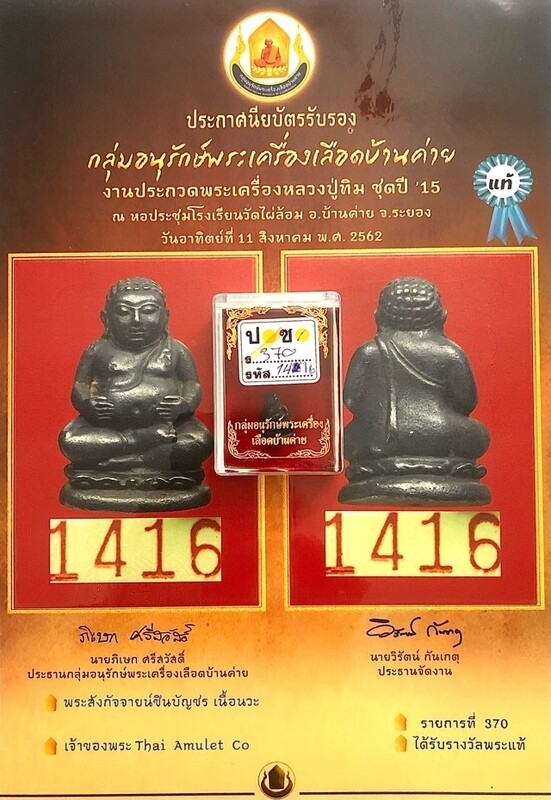
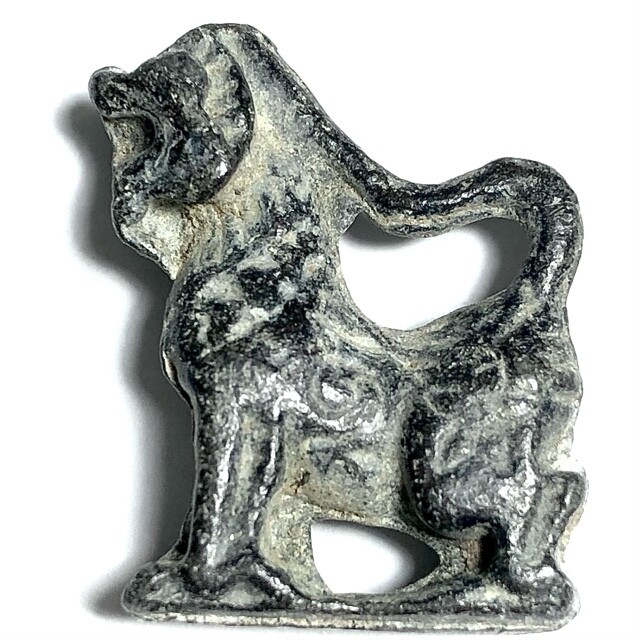
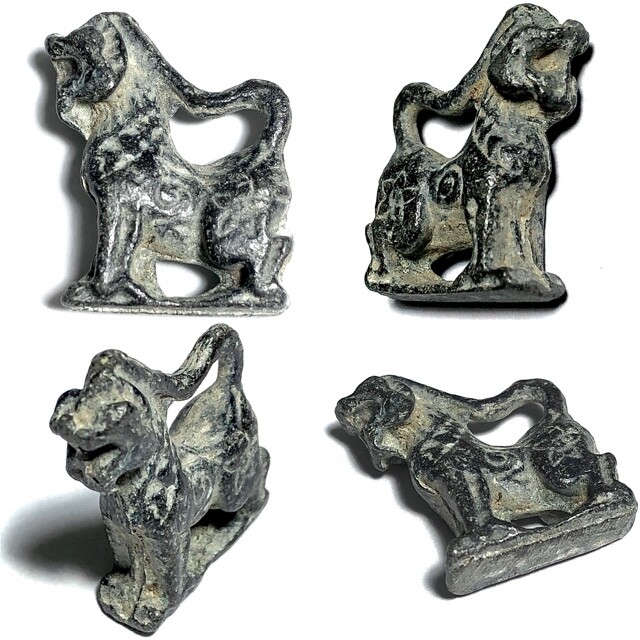
Roop Lor Nga Gae Jarn Mer Detail 4

Roop Lor Nga Gae Jarn Mer Detail 5

The amulet comes with Free Express Shipping included, & with A4 plastified photograph certificate of authenticity. Luang Phu Tim Issarigo, was of course not only one of the most highly acclaimed and sought after Guru Monks for his amulets, he holds a title of the highest esteem in Thai Buddhist amulet history for his Pong Prai Kumarn powders, whose legendary power has become a worldwide phenomenon with devotees around the planet, who have experienced miraculous effects with the amulets of Luang Phu.

Roop Lor Nga Gae Jarn Mer Detail 6

Luang Phu Tim, was and remains posthumously Internationally Acclaimed, for his famous Pra Kring Chinabanchorn, his Pra Khun Phaen Pong Prai Kumarn, and Look Om powder balls. As to the classic ‘Rian’ Monk coin Image amulets which have become all time favourites, and eternally, world famous classic amulets of the high end variety. His Rian Jaroen Porn, and Rian Nakprok Paed Rorp, Rian Huang Chueam, Rian Mae Nam Koo, and Rian Sema are amongst the most highly sought after coin amulets of all.

Roop Lor Nga Gae Jarn Mer Detail 7

His Choo Chok Carved amulets and Pae Maha Lap Lucky Goats, and other animist Charms such as the Hanuman statuette and Sacred Powder Hanuman, various kinds of Takrut, Prakhan Sceptre Knives, Mitmor Knives, Pra Somdej in a variety of forms, Pra Pid Ta in many forms, Pra Nakprok Bai Makham Miniature Naga Buddhas,, Pra Sivali, Bucha Statues, Blessed Photos, Pha Yant, Palad Khik and Luang Phu’s Pong Roop Muean Sacred Powder Monk Image in Loi Ongk statuette form.

Roop Lor Nga Gae Jarn Mer Detail 8

Roop Lor Nga Gae Jarn Mer Detail 9

Other lesser known Sacred powder and hand carved amulets of LP Tim, include Ruesi (lersi), Suea (tigers), made from Walrus Tusk and Bone, Wood or Ivory, or Tooth, and Ling Gae carved Vanora Monkeys. The Pra Kring Chinabanchorn amulet of Luang Phu Tim is one of his most expensive of all amulets, and extremely rare to find.

Roop Lor Nga Gae Jarn Mer Detail 10

He has various direct lineage apprentices, Who are continuing to progress and spread his most powerful and world-famous Wicha. Of all of these masters, perhaps the most famous, preferred, is Luang Por Sakorn, of Wat Nong Grub (also now deceased).

Roop Lor Nga Gae Jarn Mer Detail 11

Ancient Classic Amulets of Luang Phu Tim (Part One)

(chant to the Triple Gem first (Namo Tassa Pakawadto Arahadto Sammaa Samputtassa) 3 times), then chant;

Idti Sukadto Arahang Putto Namo Puttaaya — Ma A U Tugkhang Anijjang Anadtaa Putto Putto

Luang Phu Tim is perhaps most famous for his Khun Phaen Prai Kumarn Amulets, which are currently experiencing a massive resurgence in popularity worldwide after recent news and discoveries, uncovering new truths which were previously hidden from the public, and are revealed in the below video wigh english subtitles..

Khun Phaen 15 Ajarn Piarn Wit Interview Part 1 Krit Confirms

Roop Lor Nga Gae Jarn Mer Detail 13


How to Pray to Thai Amulets (Chanting Kata);

How to Pray to Thai Amulets

Filters

Filters
1 - 60 of 235 items


Takrut Mai Kroo Maha Ud Yut Majurach Thak Chueak Lai Jorakhae Long Rak 2460 BE Luang Por Ta Wat Paniang Dtaek

Large version ( 5 Cm Long x 3 Cm Diameter) Takrut Mai Kroo, Drum Shaped Talismanic Charm, with ‘Thak Lai Jorakhae‘ (crocodile markings) cord wrap and lacquered surface, from the Great Olden days Master of Kong Grapan Chadtri Magic, Luang Por Ta, of Wat Paniang Dtaek. The Takrut Luang Por Ta has a piece of sacred twisted bamboo within, with three lines of spells written in Khom Sanskrit Agkhara script and Gradat Sa Takrut inserted within the Bamboo, inscribed with a pantheon of spells.

Takrut Mai Kroo Maha Ud Yut Detail 1

Luang Por Ta’s Khom is known to be beautiful, which is of course not visible in the cord lacquered covered Takrut. The laquer has the classic look of ancient red chinese lacquer (Rak Chart Jeen Boran), that has blackened, and is consistent with the look of lacquer that has had a century of time to endure.

Takrut Mai Kroo Maha Ud Yut Detail 2

Takrut Mai Kroo Maha Ud Yut Detail 3

Free Express Shipping Worldwide is included with this amulet. Luang Por Ta was a Nakorn Pathom Province Master, at his height of fame during the years 2430 to 2460 BE, and was known to be so powerful in character that even the biggest Gangsters were too fearful to disrespect him, for fear of his powerful magic cursing them, and knowledge that it was not possible to harm him with weapons, for his Psychic Powers and Kong Grapan Magic were too Great.

Takrut Mai Kroo Maha Ud Yut Detail 4

Takrut Mai Kroo Maha Ud Yut Detail 5

Takrut Mai Kroo Maha Ud Yut Detail 6

For the same reason however, they sought his amulets, as invincibility and evasion Magic to protect their lives. In Thailand, Gangsters and Gunmen, are known as ’Suea’ (Tigers), for their fearlessness. Luang Por Ta was known to Gangsters as ‘Luang Por Suea’ for his powerful and commanding enigmatic personality. Some would also call him ‘Por Suea Graben Yord Duan’, because he liked to make and was a master of Wicha Hang Graben Stingray Skin and Sting Talisman Making.

Takrut Mai Kroo Maha Ud Yut Detail 7

Luang Por Ta’s Kong Grapan Invincibility Magic was highly renowned with Military, and the Gangster Scene, who used his amulets as gunstoppers and evasive magical talismans to avoid bullets and blades. Luang Por Ta of Wat Paniang Dtaek was born in 2397 BE, and passed away in the year 2493 BE.

Takrut Mai Kroo Maha Ud Yut Detail 8

He ordained at the age of 15 years, and studied Buddha Magic with the Great Luang Por Daeng of Wat Tung Kork, Luang Por Chaem of Wat Ta Gong, Luang Por Tiang, of Wat Muang Chum, and Luang Por Wongs of Wat Phak Goot. He was famed for his Rian Lor Coins, Takrut, Look Sakot, and Pra Pid Ta Yant Yung amulets. The Takrut Mai Kroo Maha Yut Majurach is one of the highly revered and sought after items. He made many amulets between the years 2430 to 2480 BE, and continued making at a lesser pace thereafter until his passing in 2493 BE

Kata Bucha for Luang Por Ta Wat Paniang Dtaek

Filters

Filters
Sold out
Takrut Tone Ying Mai Ork Pork Nuea Krang 2 x 1.2 Cm Luang Por Tong Sukh 2470 BETakrut Tone Ying Mai Ork Pork Nuea Krang 2 x 1.2 Cm Luang Por Tong Sukh 2470 BE
Takrut Tone Ying Mai Ork Pork Nuea Krang 2 x 1.2 Cm Luang Por Tong Sukh 2470 BE
Small Version of Luang Por Tong Sukh's Legendary Takrut Pork Krang Amulet, that is extremely rare to find in this size.
SKU 04228
$135
Out of stock
1 - 60 of 208 items


Pra Pim Pra Put Son Ha Pim Gaes 3 Plaay Nuea Maekasit See Tong Pla Hlai 2460 BE Luang Por Tap Wat Anong

One of the rarest models of this great olden days master of alchemical metallurgy, hand inscribed, and a Pristine condition Centenarian Amulet of immense rarity, and a very ancient and sacred Wicha, the Pra Put Pim Son Ha Gaes Sam Plaay, in Nuea Maekasit See Tong Pla Hlai Golden Alchemical Brazen Mercurial-Metal amulet of LP Tap (2.5 x 1.5 Cm). This exhibit is in in the extremely rare and beautiful See Tong Pla Hlai Golden Rainbow Flamed color, and a highly preferred Master-Class Pra Niyom amulet from the great Luang Por Tap of Wat Anongkaram (commonly known as ‘Wat Anong’). The rear face has received hand made Khom Agkhara spell inscriptions from the hand of Luang Por Tap

Pra Pim Pra Put Son Ha Pim Detail 6

Pra Pim Pra Put Son Ha Pim Detail 2
Free registered air parcel shipping worldwide is included with this item. The Pra Put Pim Son Ha Nuea Maekasit, along with the Look Om Maekasit, & Pra Pid Ta, are the most famous and outstanding amulets of the Pantheon of Luang Por Tap, as well as his ultra rare oblong shaped Pim Luang Phu Sukh. Both the Pra Put Pim Son Ha and Pid Ta Maekasit was made in multiple design variations, some of which were made in Pim Lek, Klang and Yai (small, medium and large).

Below; various models of Buddha images from the pantheon of Luang Por Tap

Pra Pim Pra Put Son Ha Pim Detail 3

Pra Pim Pra Put Son Ha Pim Detail 4Pra Pim Pra Put Son Ha Pim Detail 5
Pra Pim Pra Put Son Ha Pim Detail 1

Pra Pim Pra Put Son Ha Pim Detail 7

Pra Pim Pra Put Son Ha Pim Detail 8

Pra Pim Pra Put Son Ha Pim Detail 9

Pra Pim Pra Put Son Ha Pim Detail 10

Luang Por Tap was an Olden Days Master Monk of the previous Buddhist Century, who was highly renowned for his Mastery of Alchemy, and Kata Akom Spellcasting Methods.
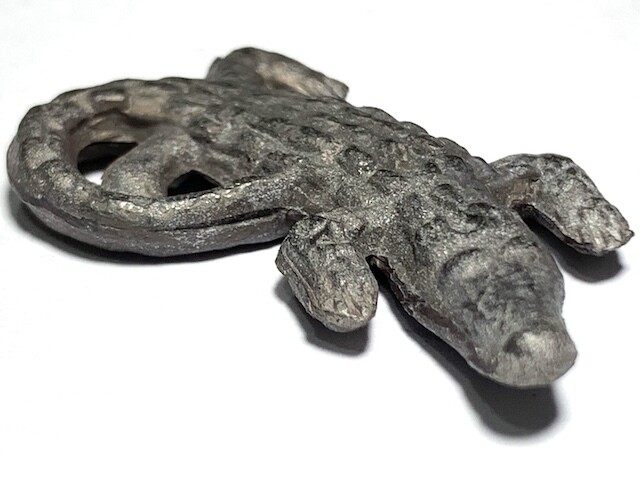
Pra Pim Pra Put Son Ha Pim Detail 11

Below: all of the best known accepted major models of Pid Ta Maekasit Luang Por Tap

Pra Pim Pra Put Son Ha Pim Detail 12

At that time, Somdej Pra Puttajarn Nuam was the abbot of Wat Anongkaram, and Luang Por Tap was a ‘Look Wat’ (one of the temple monks), but in truth, Luang Por Tap was much an elder monk to the abbot himself, and much more advanced in his practices. Luang Por Tap became immersed in the Wicha Len Prae Taat (Alchemical Metallurgy), and Mastered it until he could produce the legendary substance known as ‘Maekasit’ metallic alchemical alloy.

The Wicha Maekasit of Luang Por Tap was so famously powerful, that even the great Luang Phu Sukh of Wat Pak Klong Makham Tao in Chainat came, to exchange sorcery methods with Luang Por Tap, in order to obtain the Wicha Maekasit. This is perhaps how and why Luang Por Tap was able to also make Luang Phu Sukh’s famous Pra Pim Prapa MOndon R$asamee amulets so similarly to Luang Phu Sukh himself.

Pra Pim Pra Put Son Ha Pim Detail 13

Luang Phu Sukh then took this Wicha back to Wat Pak Klong Makham Tao, and made many famous amulets of his pantheon using the Wicha Maekasit of Luang Por Tap, such as the oblong shaped Pra Somdej Prapa Mondon Sum Rasamee.

Pra Pim Pra Put Son Ha Pim Detail 14

The Maekasit amulets of Luang Por Tap, are known to have different tones of color which shimmer through the metallic surface, tanging from silvery, to some most highly preferred exhibits with blackish, blue-green, golden (see tong pla hlai), or greenish metallic sheen, similar to the Bluebottle-Green-Purple metallic color of Lek Lai See Peek Malaeng Tap. There are a number of Great Master-Class amulets of Luang Por Tap, such as the Pra Pid Ta Maekasit, Look Om, and Prort Gror metallic Arahant Ball. Only very few Loom Prort Gror Were made, as they were used to place under the Uposatha Shrinerooms of Temples, and only handed out by Luang Por Tap on rare occasions. The most highly prized, rare and sought-after amulets of Luang Por Tap, were made during the time when both Luang Por Tap and the then abbot, Luang Por Nuam Puttasārō were both alive, and collaborating with amulets. Luang Por Tap’s amulet pantheon is one of the most fervently sought and collected in the high end amulet collector community, and are considered to be among the most powerful alchemical amulets of all Masters. Luang Por Tap made many models of amulets in Nuea Maekasit and Parort alchemical metals, some of the most well known being the Pra Pid Ta Maekasit, Pra Pim Pang Son Ha, Look Om Maekasit, the Look Prort Gror, and Pra Chayawat.

Pra Pim Pra Put Son Ha Pim Detail 15


Luang Por Tap also inherited the Wicha Hung Nam Man Montra Saksit, for making Sacred Consecration Oil, from his Kroo Ba Ajarn Luang Por Nuam (6th abbot of Wat Anongkaram). Luang Por Nuam’s amulets are even rarer to find than those of Luang Por tap himself, but it is Luang Por Tap who gained more National and International Attention. The first edition Rian Run Raek of Luang Por Nuam is especially sought after and carries an immensely high market value in the present era. However, only a few were ever made, and so they are very rarely seen.

Luang Por Tap was also known to have been a close accomplice to Pra Sangkarach Pae of Wat Sutat, and Luang Phu Sukh ( Wat Pak Klong Makham Tao). it went on record many times that every time that Somdej Pra Sangkarach (Pae), would make an edition of the world famous Master Class Pra Kring and Pra Chayawat Wat Sutat, he would always invite Luang Por Tab to come and assist in the Buddha Abhiseka, and Nang Prok Empowerment Ceremonies, as a monk of Adept Sorcery.
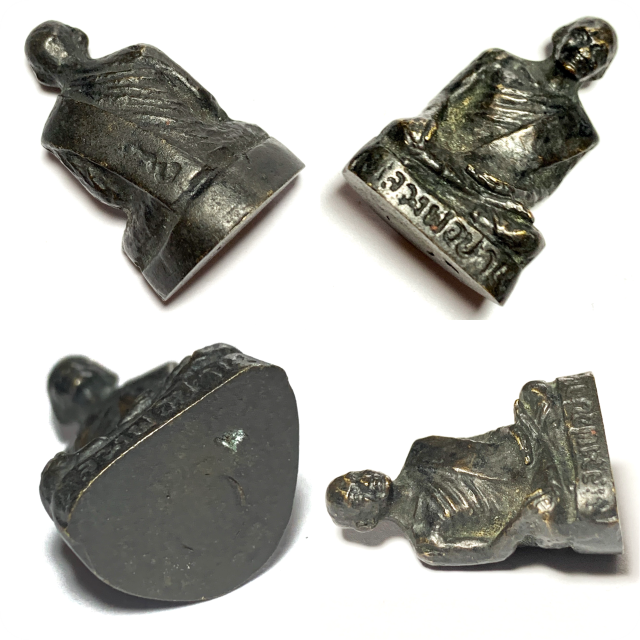
Pra Pim Pra Put Son Ha Pim Detail 16

As to Luang Por Tap’s friendship with Luang Phu Sukh of Wat Pak Klong Makham Tao, it is said they were extremely intimate friends, as they were both from Chainat Province. Luang Por Tap was born in 2374 BE, amd was ordained at a young age as a Samanera Novice Monk, and then disrobed to help his family, and later ordained a second time as a fully fledged Bhikkhu, in the year 2413 BE.

Kata Bucha  Luang Por Tap Wat Anong

At first, he resided at the temple of Wat Raman, for the first year, and then he moved to stay at Wat Anongkaram. Every time the rainy season retreat was over, Luang Por Tap would leave the temple, and wander the forests on Tudong, practicing Vipassana Kammathana Mindfulness and Jhanic Meditation, every year for 40 years, developing immensely advanced self control and self mastery, which caused Powerful Wicha to arise within his mind.

Pra Pim Pra Put Son Ha Pim Detail 17

After 40 years of Tudong Practice, he became too old to continue, and stayed permanently at the temple of Wat Anong from 2457 BE onwards. It was in this time, that Luang Por Tap began to apply his Wicha, and make amulets with Maekasit Metallurgy, using Alchemical Parort Mercury, Silver, Gold, Lek Lai, and sacred Iron Alloys. Most of his amulets would be versions of Pra Pid Ta Nuea Maekasit, with a range of other amulets and talismanic charms, which are however found in much lesser numbers, and are extremely rare, such as the Pra Pim Son Ha, Pim Prapa Mondon Sum Rasamee, Pra Pim Nakprok, Look Om, Takrut, and Look Prort Gror.

Pra Pim Pra Put Son Ha Pim Detail 18

Luang Por Tap’s famous Pra Pid Ta amulets are found in Pim Chalud, and Pim Tammada models, both of which were made in Pim Lek, Klang and Yai (small, medium and large), Pim Dtaeng and Pim Mai Dtaeng (refined, or not refined with filing). A very few amulets are sometimes found with a Yant, or Khom Inscription on the rear face, which are among the rarest of all his amulets, and considered to be World-Class Pim Niyom Masterpieces.

Pra Pim Pra Put Son Ha Pim Detail 19

Luang Por Tap made his powerful Maekasit amulets up to his passing in the year 2480 BE, making his pantheon now a centenarian collection from over a Century ago. The Amulets of Luang Por Tap, are highly revered for Kong Grapan Chadtri Klaew Klaad Maha Lap Metta Mahaniyom Maha Ud power.


How to Pray to Thai Amulets (Chanting Kata);

How to Pray to Thai Amulets

Filters

Filters
Pra Somdej Pim Gaes Jarot Sum Pim Gaes Iang Niyom Long Rak Chart Somodej Dto Wat Rakang KositaramPra Somdej Pim Gaes Jarot Sum Pim Gaes Iang Niyom Long Rak Chart Somodej Dto Wat Rakang Kositaram
Pra Somdej Pim Gaes Jarot Sum Pim Gaes Iang Niyom Long Rak Chart Somodej Dto Wat Rakang Kositaram
Free Shipping Worldwide (we do not state or declare true price to counter tarrifs tax on customers), & Offer of Free Solid Silver Casing Included
SKU 04783
$1,699
1 - 60 of 217 items


Hwaen Pirod Long Rak Chart Lacquer Coated Yant Cloth & Corpse Cord Warrior Ring of Fire Luang Por Muang Wat Ban Tuan

An early era and extremely beautiful Hwaen Pirod Long Rak Chart thick laquer coated Yantra Cloth and Corpse Cord Warrior Ring of Protection from the Great Luang Por Muang Pf Wat Ban Tuan. The Hwaen Pirod of LP Muang is a world famous Hwaen Pirod Ancient Warriors Ring of ancient lore, made from Corpse Cloth Yantra Sinjana Cords with Lacquer Ancient Amulet. An immensely rare and sought after amulet of Luang Por Muang, of Wat Ban Tuan.

Hwaen Pirod Long Rak Chart Detail 1

Hwaen Pirod Long Rak Chart Detail 2Free EMS Registered Airmail Worldwide is included with this amulet. Estimated Circa 2450 BE or earlier. Luang Por Muang Jantasaro of Wat Ban Tuan, Amper Ban Tuan, Kanjanaburi Province, is an Old Gaeji Ajarn Guru Monk of Great Fame who was in his Heyday during the First World War. He was around in the same era as the Great Luang Por Ngern of Wat Bang Klan, and was a very famous and revered Master during those days.

Hwaen Pirod Long Rak Chart Detail 3

His most famous and sought after ancient amulets were and are now more than ever, his Rian Pum Luang Por Muang (differing faces Hnaa Hnum and Hnaa gae/Young Old Face) of 2460 and also his Waen Pirod Warrior Rings of Protection, which are even more extremely rare to find these days. Even during the time he was still alive, is Waen Pirod were a most sought after item, and anybody who owned one would be unable to convince to part with it.

Hwaen Pirod Long Rak Chart Detail 4

Nowadays, his Waen Pirod are amongst some of the rarest items to be found in Thai Amulet collectorship, in the ‘Krueang Rang’ (Occult Talismans) Category of Amulets. Serious Collectors and Devotees of Essentially Rare amulets and Talismans in the Thai Collector scene are known to be very fervent about wanting to own a Waen Pirod of Luang Por Muang, which are so difficult to find, as to make them the dream of many a collector.

Hwaen Pirod Long Rak Chart Detail 5

Most ‘Sian Pra’ (expert collectors and traders) will not sell their Waen Pirod, but will only place it in competition or on show for admiration, but hardly ever are prepared to part with them for any price.

Hwaen Pirod Long Rak Chart Detail 6

This is because those in the know, are aware that Luang Por Muang did not make so many of these rings, for the fact that his method of making them adhered to the Ancient Wicha and that this meant, that the extremely complex methods used limited the amount he was able to make. So he never made that many, and would also not hand them out easily to just anybody, because he never made them in any mass quantities

Hwaen Pirod Long Rak Chart Detail 7

In those days, Guru masters would not allow their devotees to assist in making mass productions, and so each amulet would pass only through the hands of the master and be self made and self empowered (this rule of course, does not apply to the case of smelted coins of course, and is specifically true for talismans, Takrut and similar hand made amulets). Luang Por did not make them for fundraising or other reasons, and would only make them for special reasons in special circumstances, for specific persons or reasons.

Hwaen Pirod Long Rak Chart Detail 8

Their magic power is also unquestioned, for the way that Luang Por Muang would perform his Ritual Method of creating and empowering these rings of power in the ancient traditional method of applied Wicha (Sorcery).

Hwaen Pirod Long Rak Chart Detail 9

He would use ‘Pha Hor Sop Dtaay Hoeng’ (cloth used to wrap Hoeng Prai corpses who died in sudden circumstances – a prerequisite for Prai Necromantic Sorcery power to be at its most powerful) cloth for their making. He use the full and complete ‘Dtamra’ (formula of legend) of the Wicha used during the Ancient Ayuttaya period, which he had received passed down to him from his lineage Masters, which was used by the first Kings of Thailand (Pra Naresuan Maharaj).

Hwaen Pirod Long Rak Chart Detail 10

Once he has made and bound the rings into their shape and form, he would then perform Invocations, and Ritual Methods of Empowerment, and then throw the rings into the blazing ritual fire. If the ring would burn, then he would destroy it and not use it, for this would mean that not enough Samadhi Meditative Concentration had been applied, and would begin again and make a new ring. Only the rings which did not burn in the fire, would be used. Those rings which proved through the fire test that they possessed true power, would be taken and covered in herbal lacquer to make them last for centuries (Pirod means burning flame, hence ‘Waen Pirod’ means Flaming Ring – and is fireproof).

Hwaen Pirod Long Rak Chart Detail 11

Hwaen Pirod Long Rak Chart Detail 12

Luang Por would use a reddish lacquer similar to Chinese lacquer which was used in those days, but which turns black in time. He would dip the rings many times to get a thick coating, but this kind of lacquer would slowly crack and form small openings as the years passed by, which is part of the immense beauty and attraction of the Waen Pirod of Luang Por Muang.

Hwaen Pirod Long Rak Chart Detail 13

Hwaen Pirod Long Rak Chart Detail 14

Hwaen Pirod Long Rak Chart Detail 15

To authenticate and know what a real Hwaen Pirod (for indeed such a sought after item has many forgeries around) one should know to examinig the lacquer and see the slight cracks and the beige brownish sinjana cord and corpse cloth within that is visible through the cracks of the lacquer. One should also notice small areas of reddish tints where the original red lacquer color still resonates through the darkened lacquer surface.

Kata Pra Pirod for wearing and removal of the Magic Warrior Ring of  Protection and Power

Kata Waen Pirod

Om Pra Pirod Khord Pra Pinai

(Chant 9 Times when placing the ring on or hanging it on your neckchain for wearing)

Om Pra Pinai Klaay Pra Pirod

(Chant 9 times when removing the ring, or taking of your neck-chain or pendant holder)

Hwaen Pirod Long Rak Chart Detail 16

Luang Por Muang’s famous Waen Pirod is reputed to have many magical powers, among them are said to be invincibility and safety in dangerous situations, as well as in the olden days, as people would have to enter the deep jungle, that the ring will protect against all sorts of dangerous animals, ghosts and demons, and poisonous beats such as cobras, scorpions and hunting animals such as the tiger.

Hwaen Pirod Long Rak Chart Detail 17

Demons and Prai Hian Ghosts will not dare to approach. Maha Ud (Gun-Stopper), and protection agains all sorts of weaponry. This is a truly ancient amulet, and is is roughty one century old.

Hwaen Pirod Long Rak Chart Detail 18

Hwaen Pirod Long Rak Chart Detail 19


Charms & Talismans

Thai Buddhist, Animist, and Occult Charms and Talismans, authentically blessed by the great Monks and Lay Masters of Old, and Present Day

Filters

Filters
1 - 60 of 800 items


Palad Khik Hua Manus Met Prakam 8 Cm Nuea Mai Gae Fang Ploi With Takrut Luang Por Pina

Palade Khik Hua Manus Human Lingam with Met Prakam Bead and Takrut on spellbound cord, with gemstone and met galam inserts, from the Great Luang Por Pina. This model is a form of Paetch Payatorn Deva. The Palad Khik of LP Pina are among the Most Famous Palad Khik amulets of all time, and one of the rarest and most sought after.

The Palad Khik Mai Gae carved wooden Palad Khik of Luang Por Pina (Wat Sanom Lao), is found in a multitude of forms, and are recognisable for his saecret Sacred na inscription, and the hand inscriptions of the Sacred Yant Na Ok Dtaek, and the invocation of the four elements.

Palad Khik Hua Manus Met Detail 1


These amulets are highly regarded for their power to invoke the power to attract others, treasured possessions, and ward off black magick. They are also full of Metta Mahaniyom, Maha Lap Klaew Klaad and Maha Pokasap Powers as well as the obvious Power of Serm Duang ability to improve fate and destiny.

Palad Khik Hua Manus Met Detail 2

Palad Khik Hua Manus Met Detail 3Free EMS Registered Airmail Worldwide is included with this amulet The Palad Khik is in truth symbolic of the Shiva Lingam; The belief in the Shiva Lingam, or ‘Leungk’ (Thai pronunciation) phallic energy of the Palad Khik, is derived from the Brahman influence which has been inflected on Thai Theravada Buddhism, since both belief systems came to Siam more than one or two thousand years ago. It is believed that the Palad Khik Lingam energy is the source of all life forms in the Universe. This is the root of the act of reverence (Bucha/Poojah) to the Palad Khik as a Shiva Lingam, which honors Shiva as the Lord of the World.

Palad Khik Hua Manus Met Detail 4

In India, not only is the Shiva Lingam worshiped, bit there exists also a
cult which reveres the female sex organ, which is called the ‘Yoni’(Vulva, female counterpart). The same thought is applied as that used to revere the Palad Khik Shiva Lingam, that is to say, that all created things must spring out of the Yoni instead of the Lingam. Luang Por Pina made both Palad Khik Lingams and Yoni Vulvas, as well as Shiva Eye amulets.

Palad Khik Hua Manus Met Detail 5

The practice of making Palad Khik as a portable amulet, for ‘Bucha Siwalingk’ (praying to Shiva Lingam phallic Deity), entered Siam with the influence of the Khom race, whose language and alphabet the Thais absorbed and adapted into their own personalized fashion.

Some have said that the integration of Pre-Buddhist beliefs and traditions, into the Thai Theravada Buddhist practice of the common Folk, such as worshiping amulets like the Palad Khik, is not in contradiction to the practice of Buddhism and presents no obstacles.

Palad Khik Hua Manus Met Detail 6

In fact it is believed that since Buddhism sprang out of the roots of
Brahman Cosmology, and that the people of Siam adopted Pre-Buddhist
Brahman traditions and incorporated them, that this is even a benefit to
the preservation of ancient knowledge, and of Thai history and
tradition. Most of these ceremonies do not come into any kind of dispute
with Buddhist thought. In fact, Buddhist Thought bases itself on many
concepts found in Hinduism, and in Thailand, the two Beleif Systems can
hardly be separated.

Palad Khik Hua Manus Met Detail 7

This amulet is ‘Doo Ngaay’ (easy to see it is real), for its clearly recognisable from its inscriptions and appearance. It is hence considered Ongk Kroo (usable as a teacher), as a reference model for further study to increase the powers of recognition of authenticity of the top preferred Palad Khik amulets of Luang Por Pina. However, the Pantheon of amulets of LP Pina is one of the more difficult genres to study, for many were hand made, each individual, and only a small percentage of all the amulets he made has been officially documented to date.

Palad Khik Hua Manus Met Detail 8

This is for its easily recognisable features, which allow one to easily distinguish the authenticity of any other exhibit when held side by side for comparison, making it a Master Key for teaching the eyes to recognize Luang Por’s famous amulets, as well as the effects of aging over the years (especially important with Sacred Powder amulets).

Palad Khik Hua Manus Met Detail 9

Luang Por Pina is the deceased Abbot of Wat Sanom Lao in Sra Buri and was said to have possessed Abhinya Powers, and to have Mastered the 10 Kasina Powers of Elemental Magical Dominion. Below you can see another Sacred Amulet from this Master, the Famous Pra Pim Tao Wua Luang Por Pina.

It is said that Luang Por Pina was able to read the minds and intentions of other Humans, and bring amulets to life with is Empowerment Methods, and that his amulets were able to give signs, and also can be beseeched and prayed to, for wish fulfillment (Sarapat Neuk). There are many stories of Miraculous Events occurring through his amulets, which have been recounted around the country over the years, which have also brought his name to the ears of people around the world.

Palad Khik Hua Manus Met Detail 10

Luang Por Pina is known to have performed strange Magical feats in front of the eyes of his disciples many times, especially when devotees would ask him for an amulet. He would ask the devotee to lay down and open their eyes, and would take a handful of sand and pour it over their face, as they would hold the amulet in the hand.

But the sand would bounce back before it hit their eyes, and no matter how much was poured on the face, not a single grain of sand would be able to enter the eyes of the devotee, becoming repelled as if by a force field before it touched the eyes.

Palad Khik Hua Manus Met Detail 11

Above Pic; The corpse of Luang Por Pina which was found in meditation posture, dead since over 12 Hours, but was still warm, and not stiff, to the immense surprise of those who found him. The surprise was because a corpse that is dead for over 12 hours, should be stiff as a board and cold.. his body was not mummified or given any special treatment according to his wishes and placed in his mausoleum.

Palad Khik Hua Manus Met Detail 12

How to Bucha Palad Khik

Below; Silver Takrut spell as tongue of the Chamot Civet Cat, and reat teeth tips are visibly inserted into the mouth of the Palad Khik Hua Chamot of Luang Por Pina, revealing an attention to detail and adherence to the Ancient Wicha of Empowerment of the Palad Khik Hua Chamot, that is both impressive, and faith instilling in its certain magical power.

Kata Luang Por Pina

Light 5 sticks of Incense, and chant the Maha Namasakara 3 times before chanting the special Kata for Luang Por Pina Bpiyataro

Namo Dtassa Pakawadto Arahadto Sammaa Samputtassa

Namo Dtassa Pakawadto Arahadto Sammaa Samputtassa

Namo Dtassa Pakawadto Arahadto Sammaa Samputtassa

Below; the Sacred Yant Hua Jai Na Ok Dtaek Heartbreaker spell inscribed on the Palad Khik, which is an essential aspect of the true Wicha Palad Khik of the Dtamra Saiyasart Thai Grimoires of Sorcery

Palad Khik Hua Manus Met Detail 13

Then chant the Kata for Luang Por Pina (3 times);

Ahang Sukhadto Pina Bpiyataro Naamadtae Aajaariyo Ma Pandtae Hohi

Kata Pluk Khong (Call the power within the amulet)

Puttang Gandtang Saranang Haa

Puttang Gandtang Saranang Hae

Puttaaa Namo Ya

Palad Khik Hua Manus Met Detail 14

Kata Pra Som Hwang (Fulfilment of Wishes)

Chant the following for as many repetitions as your age (for example, if you are 35 years old, then chant the Kata, repeatedly for 35 times)

Nadtae Sudtae

The last repetition, change the words to

Mahaa Sudtae Nachaa

Palad Khik Hua Manus Met Detail 15

As an example, let us pretend a four year old were to recite the mantra, which would result in four lines like this;

Nadtae Sudtae, Nadtae Sudtae, Nadtae Sudtae, Mahaa Sudtae Nachaa

If you wish to know more about another famous amulet of Luang Por Pina, then you can listen to the three quarter of an hour talk and explanation of the Sacred Daw Aathan along with a short Biography of Luang Por Pina, recounted and narrated by Amulet Expert Ajarn Spencer Littlewood in the below Podcast. In the podcast, You will be amazed to learn about the very deep meanings contained within the Daw Aathan Hnun Duang Lucky Star amulets of Luang Por Pina.

Palad Khik Hua Manus Met Detail 16

Please Enjoy the Biography, and Explanation of another very famous Amulet of Luang Por Pina, revealed; Perd Dtamnan Daw Athan Hnun Duang, and increase your knowledge of the amulets of Luang Por Pina.

Buddha Magic - Secrets of Luang Por Pina's Lucky Star Amulets

How to Bucha Palad Khik Amulets

Kata Paetch Payatorn LP Moon

Palad Khik Hua Manus Met Detail 17

Kata Bucha Palad Paetch Payatorn Tewada Hlong Hong

Palad Khik Hua Manus Met Detail 18

Analysis of Khom Agkhara in Yant Paetch Payatorn

Filters

Filters