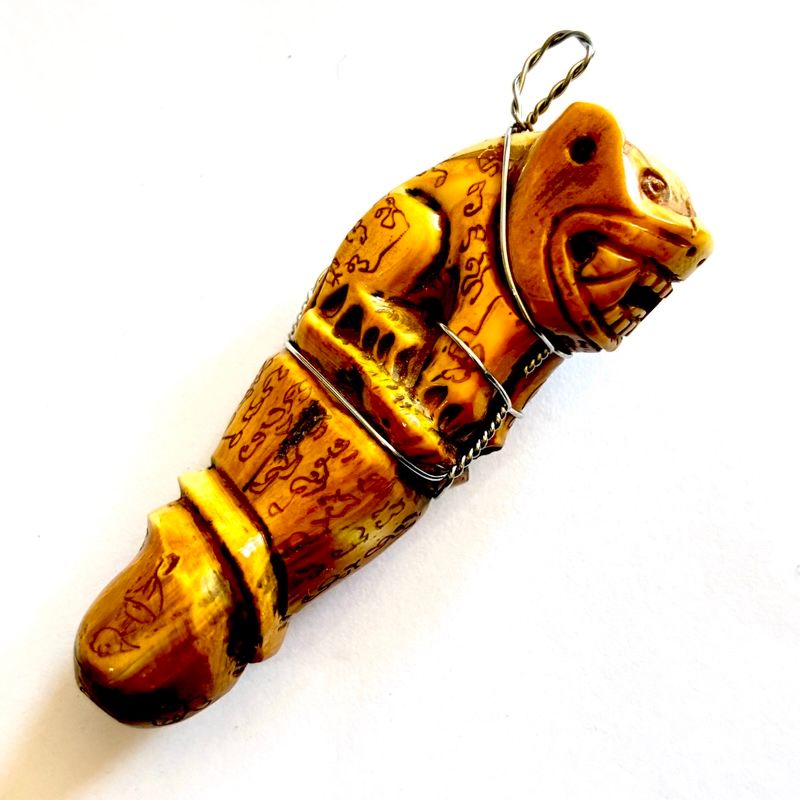
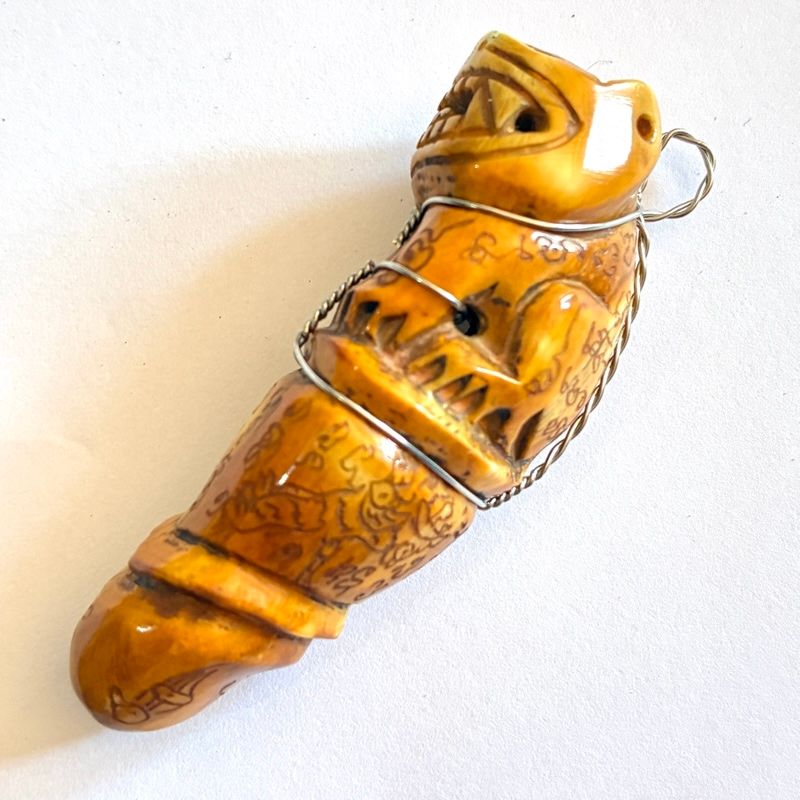
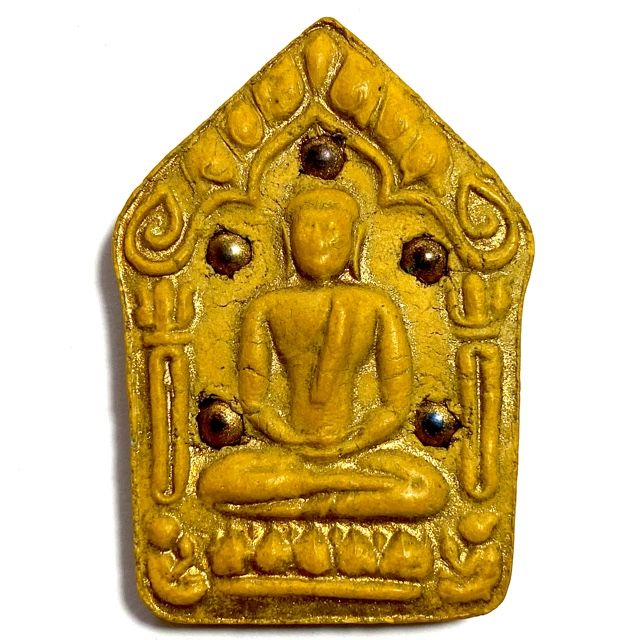
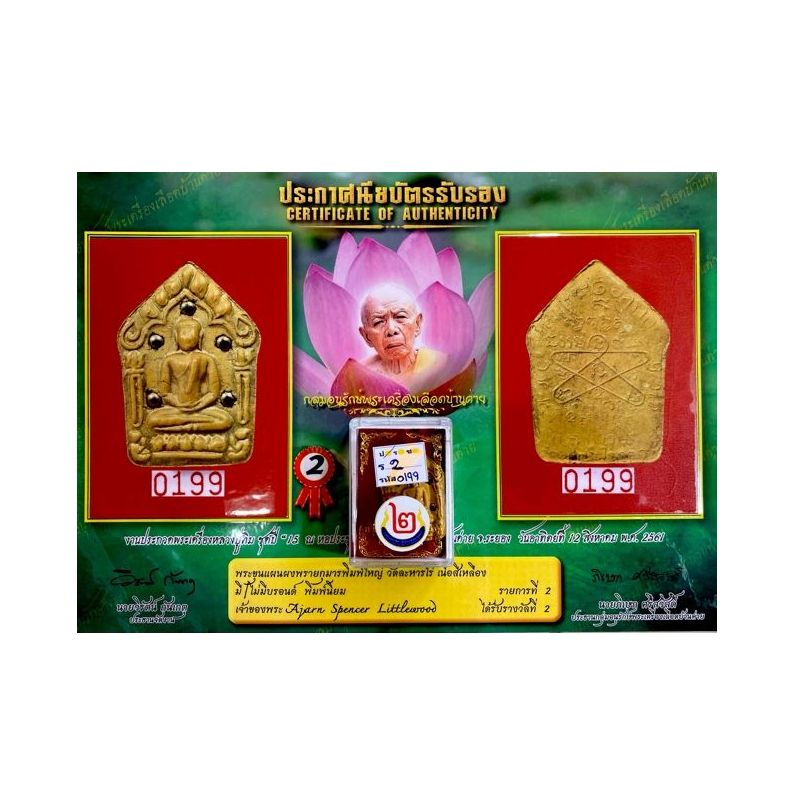
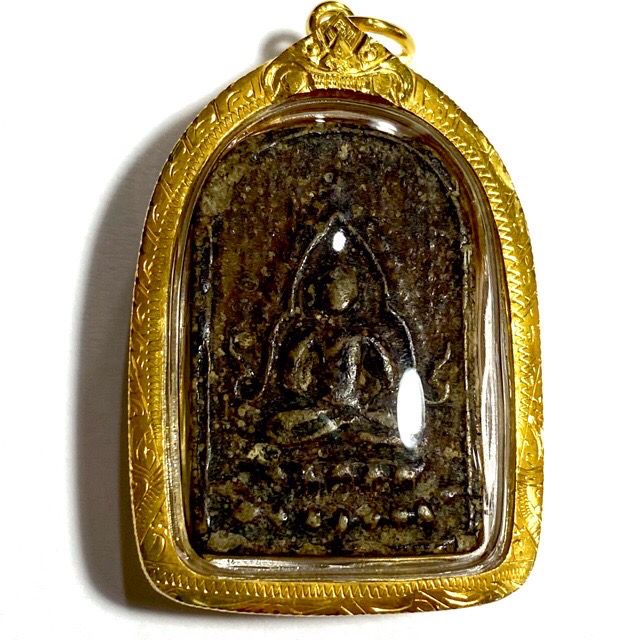
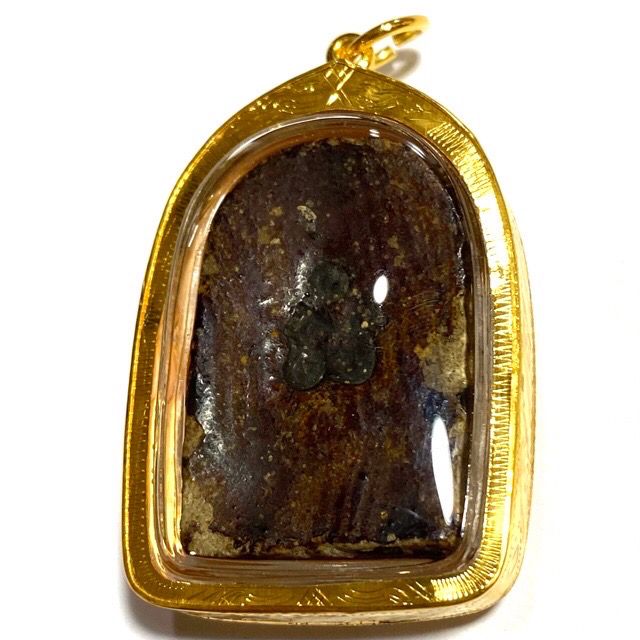
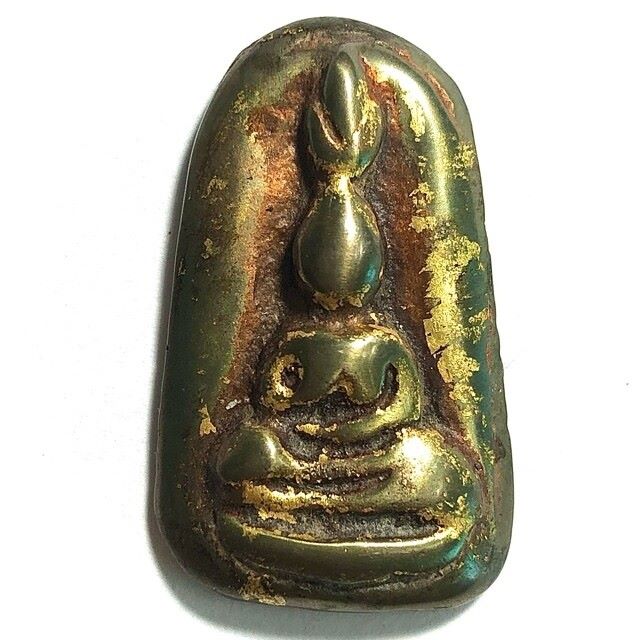
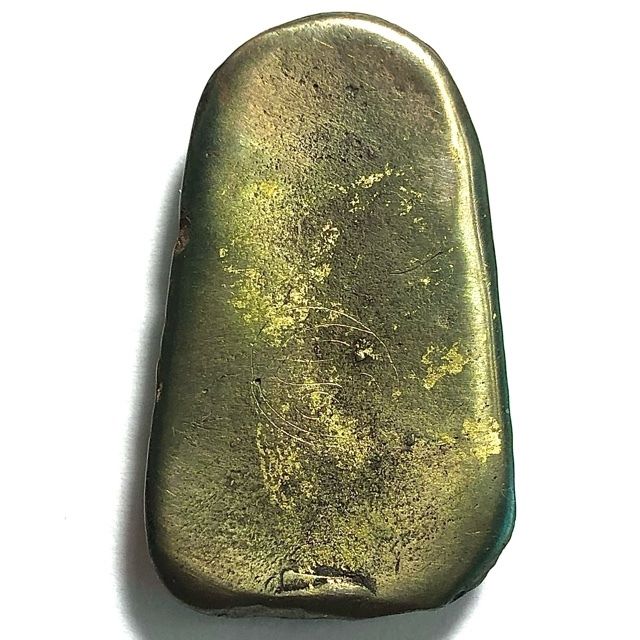
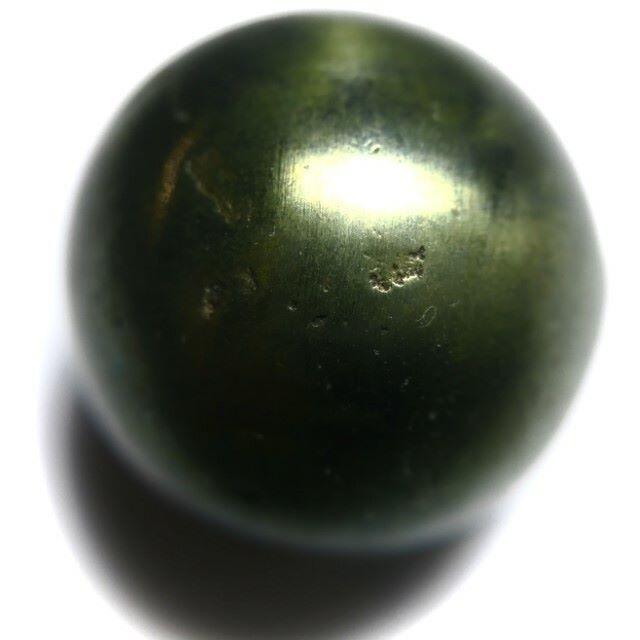
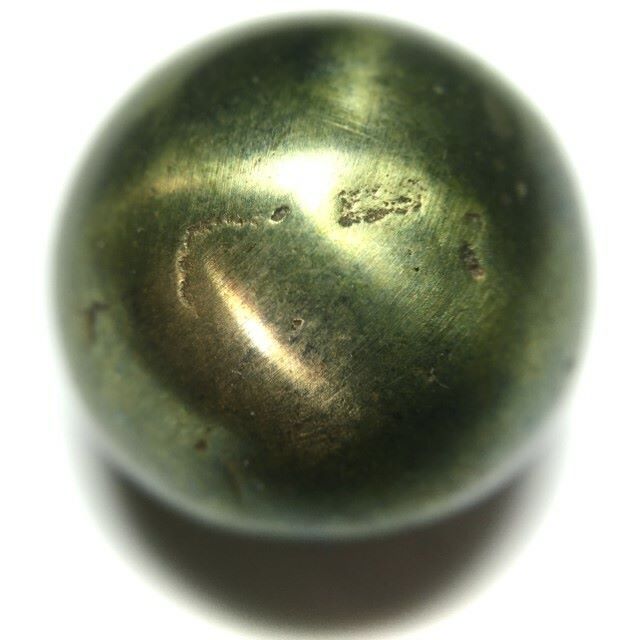
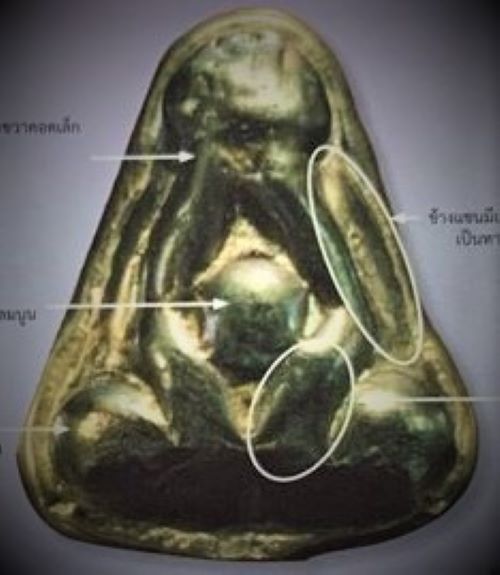
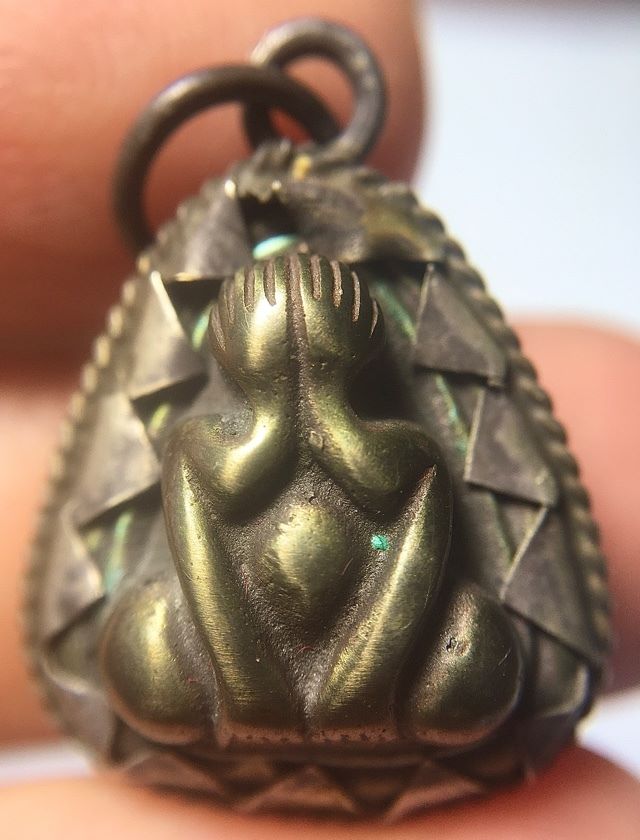
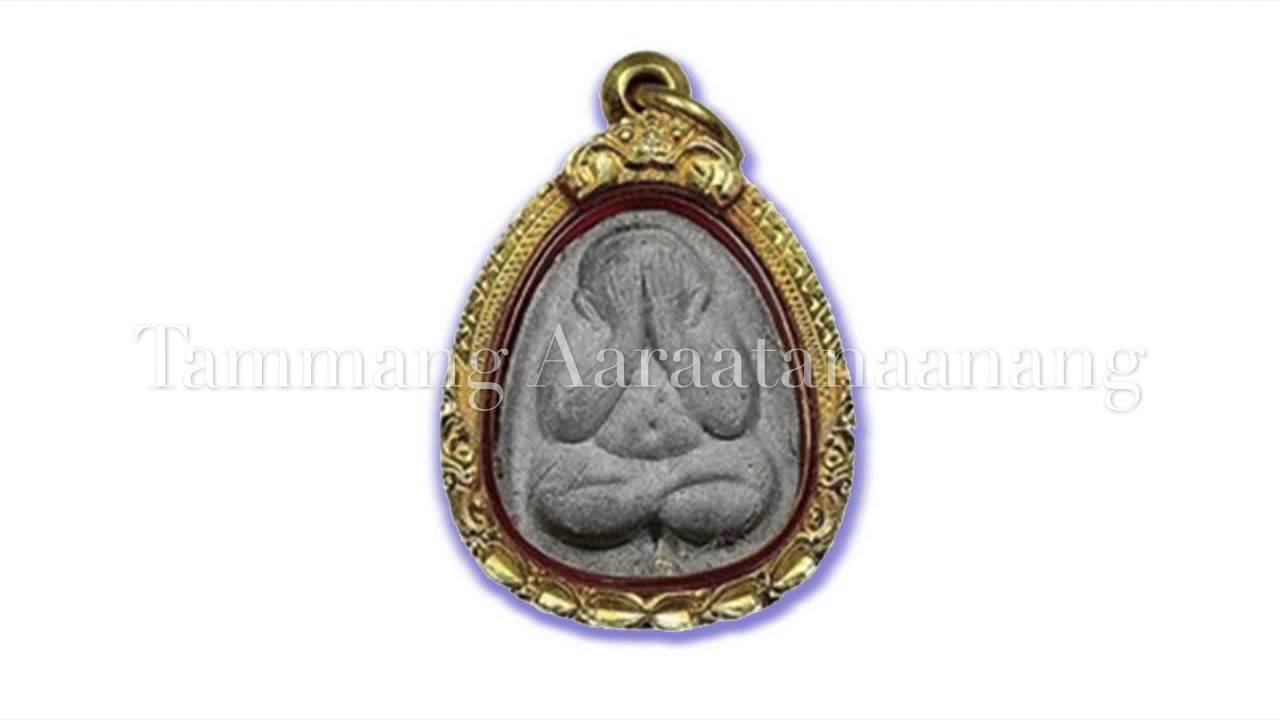
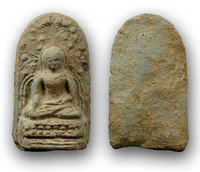
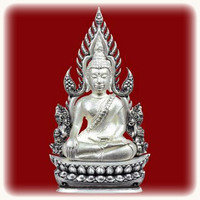
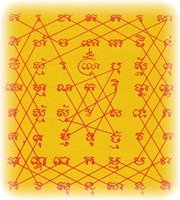
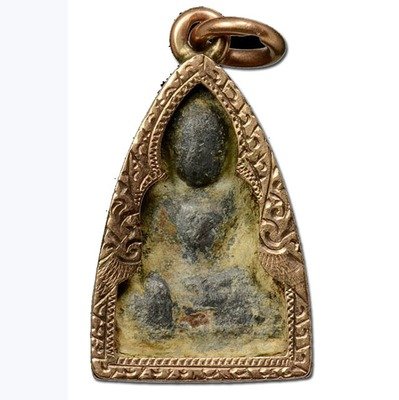
One of the rarest models of this great olden days master of alchemical metallurgy, hand inscribed, and a Pristine condition Centenarian Amulet of immense rarity, and a very ancient and sacred Wicha, the Pra Put Pim Son Ha Gaes Sam Plaay, in Nuea Maekasit See Tong Pla Hlai Golden Alchemical Brazen Mercurial-Metal amulet of LP Tap (2.5 x 1.5 Cm). This exhibit is in in the extremely rare and beautiful See Tong Pla Hlai Golden Rainbow Flamed color, and a highly preferred Master-Class Pra Niyom amulet from the great Luang Por Tap of Wat Anongkaram (commonly known as ‘Wat Anong’). The rear face has received hand made Khom Agkhara spell inscriptions from the hand of Luang Por Tap


Free registered air parcel shipping worldwide is included with this item. The Pra Put Pim Son Ha Nuea Maekasit, along with the Look Om Maekasit, & Pra Pid Ta, are the most famous and outstanding amulets of the Pantheon of Luang Por Tap, as well as his ultra rare oblong shaped Pim Luang Phu Sukh. Both the Pra Put Pim Son Ha and Pid Ta Maekasit was made in multiple design variations, some of which were made in Pim Lek, Klang and Yai (small, medium and large).
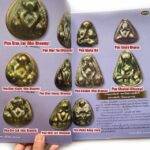
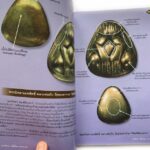
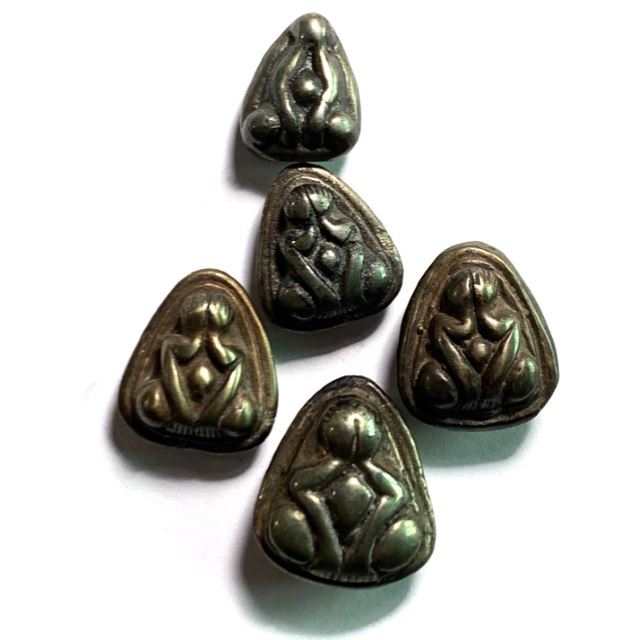
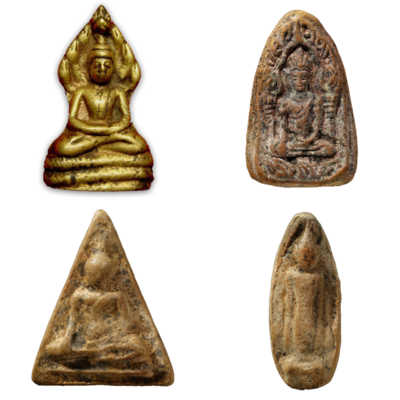
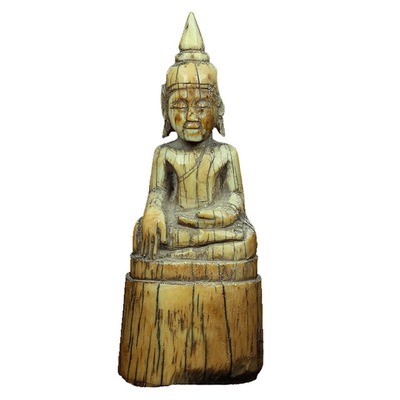
Below; various models of Buddha images from the pantheon of Luang Por Tap


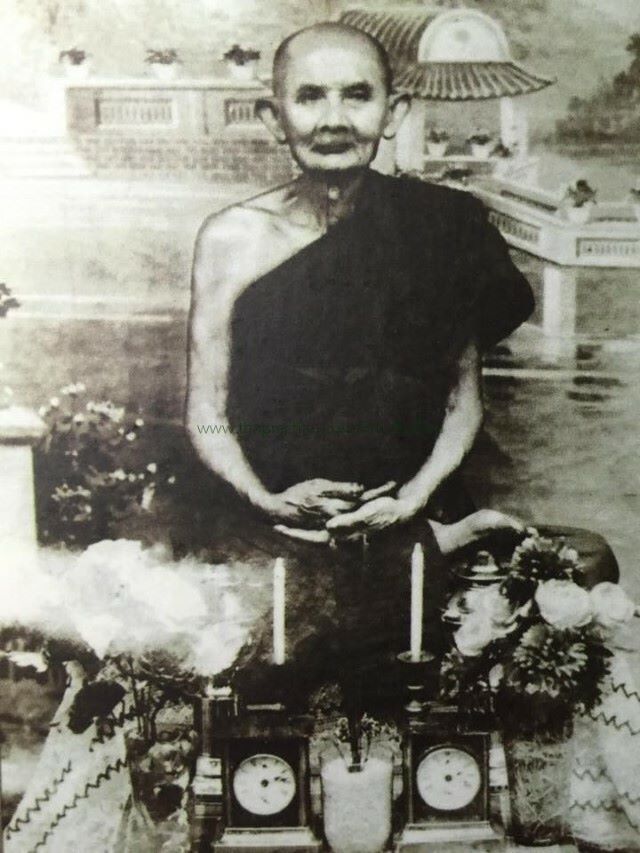
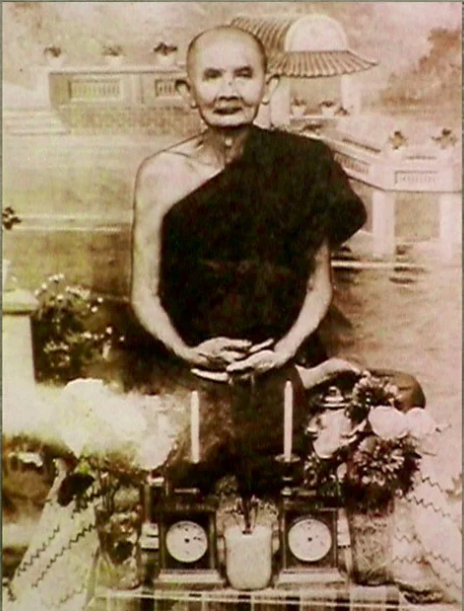
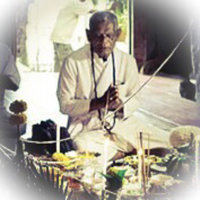
Luang Por Tap was an Olden Days Master Monk of the previous Buddhist Century, who was highly renowned for his Mastery of Alchemy, and Kata Akom Spellcasting Methods.
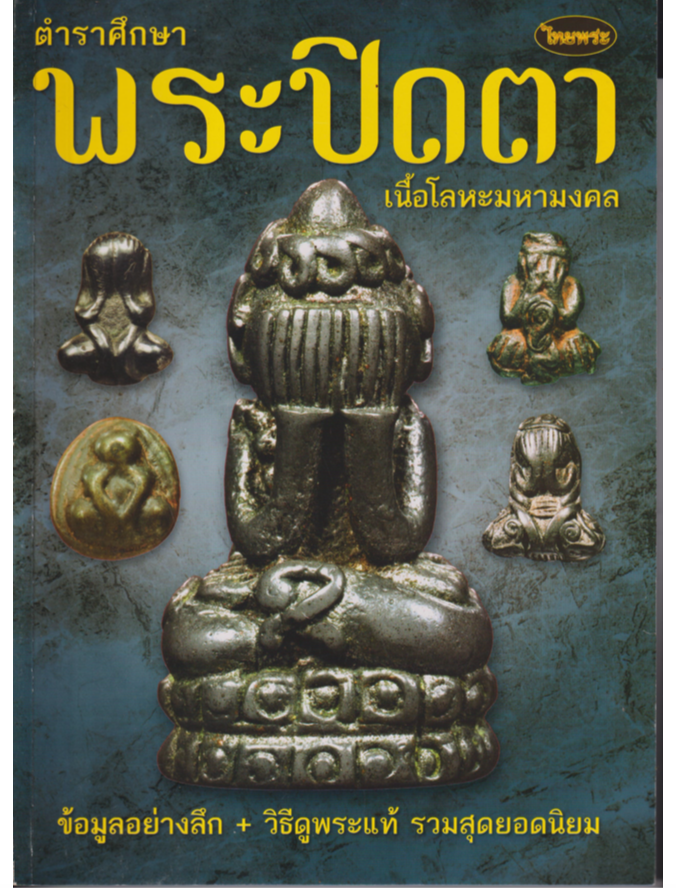
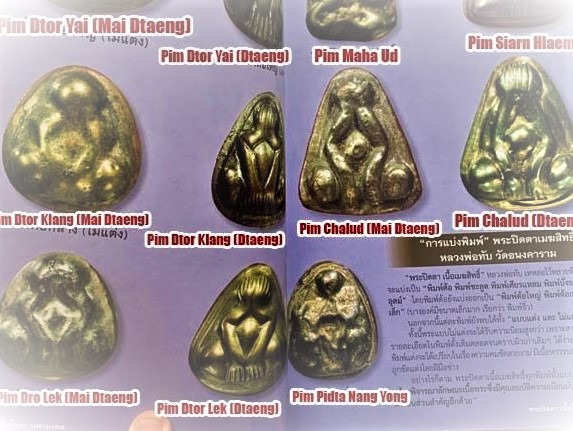
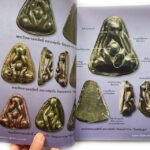
Below: all of the best known accepted major models of Pid Ta Maekasit Luang Por Tap

At that time, Somdej Pra Puttajarn Nuam was the abbot of Wat Anongkaram, and Luang Por Tap was a ‘Look Wat’ (one of the temple monks), but in truth, Luang Por Tap was much an elder monk to the abbot himself, and much more advanced in his practices. Luang Por Tap became immersed in the Wicha Len Prae Taat (Alchemical Metallurgy), and Mastered it until he could produce the legendary substance known as ‘Maekasit’ metallic alchemical alloy.
The Wicha Maekasit of Luang Por Tap was so famously powerful, that even the great Luang Phu Sukh of Wat Pak Klong Makham Tao in Chainat came, to exchange sorcery methods with Luang Por Tap, in order to obtain the Wicha Maekasit. This is perhaps how and why Luang Por Tap was able to also make Luang Phu Sukh’s famous Pra Pim Prapa MOndon R$asamee amulets so similarly to Luang Phu Sukh himself.

Luang Phu Sukh then took this Wicha back to Wat Pak Klong Makham Tao, and made many famous amulets of his pantheon using the Wicha Maekasit of Luang Por Tap, such as the oblong shaped Pra Somdej Prapa Mondon Sum Rasamee.

The Maekasit amulets of Luang Por Tap, are known to have different tones of color which shimmer through the metallic surface, tanging from silvery, to some most highly preferred exhibits with blackish, blue-green, golden (see tong pla hlai), or greenish metallic sheen, similar to the Bluebottle-Green-Purple metallic color of Lek Lai See Peek Malaeng Tap. There are a number of Great Master-Class amulets of Luang Por Tap, such as the Pra Pid Ta Maekasit, Look Om, and Prort Gror metallic Arahant Ball. Only very few Loom Prort Gror Were made, as they were used to place under the Uposatha Shrinerooms of Temples, and only handed out by Luang Por Tap on rare occasions. The most highly prized, rare and sought-after amulets of Luang Por Tap, were made during the time when both Luang Por Tap and the then abbot, Luang Por Nuam Puttasārō were both alive, and collaborating with amulets. Luang Por Tap’s amulet pantheon is one of the most fervently sought and collected in the high end amulet collector community, and are considered to be among the most powerful alchemical amulets of all Masters. Luang Por Tap made many models of amulets in Nuea Maekasit and Parort alchemical metals, some of the most well known being the Pra Pid Ta Maekasit, Pra Pim Pang Son Ha, Look Om Maekasit, the Look Prort Gror, and Pra Chayawat.

Luang Por Tap also inherited the Wicha Hung Nam Man Montra Saksit, for making Sacred Consecration Oil, from his Kroo Ba Ajarn Luang Por Nuam (6th abbot of Wat Anongkaram). Luang Por Nuam’s amulets are even rarer to find than those of Luang Por tap himself, but it is Luang Por Tap who gained more National and International Attention. The first edition Rian Run Raek of Luang Por Nuam is especially sought after and carries an immensely high market value in the present era. However, only a few were ever made, and so they are very rarely seen.
Luang Por Tap was also known to have been a close accomplice to Pra Sangkarach Pae of Wat Sutat, and Luang Phu Sukh ( Wat Pak Klong Makham Tao). it went on record many times that every time that Somdej Pra Sangkarach (Pae), would make an edition of the world famous Master Class Pra Kring and Pra Chayawat Wat Sutat, he would always invite Luang Por Tab to come and assist in the Buddha Abhiseka, and Nang Prok Empowerment Ceremonies, as a monk of Adept Sorcery.

As to Luang Por Tap’s friendship with Luang Phu Sukh of Wat Pak Klong Makham Tao, it is said they were extremely intimate friends, as they were both from Chainat Province. Luang Por Tap was born in 2374 BE, amd was ordained at a young age as a Samanera Novice Monk, and then disrobed to help his family, and later ordained a second time as a fully fledged Bhikkhu, in the year 2413 BE.

At first, he resided at the temple of Wat Raman, for the first year, and then he moved to stay at Wat Anongkaram. Every time the rainy season retreat was over, Luang Por Tap would leave the temple, and wander the forests on Tudong, practicing Vipassana Kammathana Mindfulness and Jhanic Meditation, every year for 40 years, developing immensely advanced self control and self mastery, which caused Powerful Wicha to arise within his mind.

After 40 years of Tudong Practice, he became too old to continue, and stayed permanently at the temple of Wat Anong from 2457 BE onwards. It was in this time, that Luang Por Tap began to apply his Wicha, and make amulets with Maekasit Metallurgy, using Alchemical Parort Mercury, Silver, Gold, Lek Lai, and sacred Iron Alloys. Most of his amulets would be versions of Pra Pid Ta Nuea Maekasit, with a range of other amulets and talismanic charms, which are however found in much lesser numbers, and are extremely rare, such as the Pra Pim Son Ha, Pim Prapa Mondon Sum Rasamee, Pra Pim Nakprok, Look Om, Takrut, and Look Prort Gror.

Luang Por Tap’s famous Pra Pid Ta amulets are found in Pim Chalud, and Pim Tammada models, both of which were made in Pim Lek, Klang and Yai (small, medium and large), Pim Dtaeng and Pim Mai Dtaeng (refined, or not refined with filing). A very few amulets are sometimes found with a Yant, or Khom Inscription on the rear face, which are among the rarest of all his amulets, and considered to be World-Class Pim Niyom Masterpieces.

Luang Por Tap made his powerful Maekasit amulets up to his passing in the year 2480 BE, making his pantheon now a centenarian collection from over a Century ago. The Amulets of Luang Por Tap, are highly revered for Kong Grapan Chadtri Klaew Klaad Maha Lap Metta Mahaniyom Maha Ud power.
How to Pray to Thai Amulets (Chanting Kata);
Ancient Amulet - Thai Buddhist Pra Niyom Category Amulets
Ancient Amulet. Thai Buddhist Pra Niyom ('Pra Niyom'; meaning 'High End Preferred Class Antique amulets'). Fine Authentic Amulets from the Great Thai Buddhist Sorcerer Monks, Lersi Ascetics, and Lay Masters of Olden Days
SIGN IN OR CREATE ACCOUNT

Featured Products