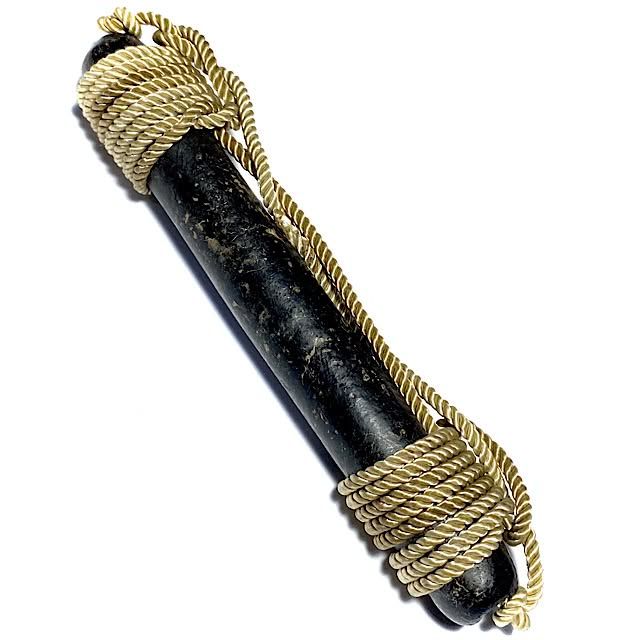
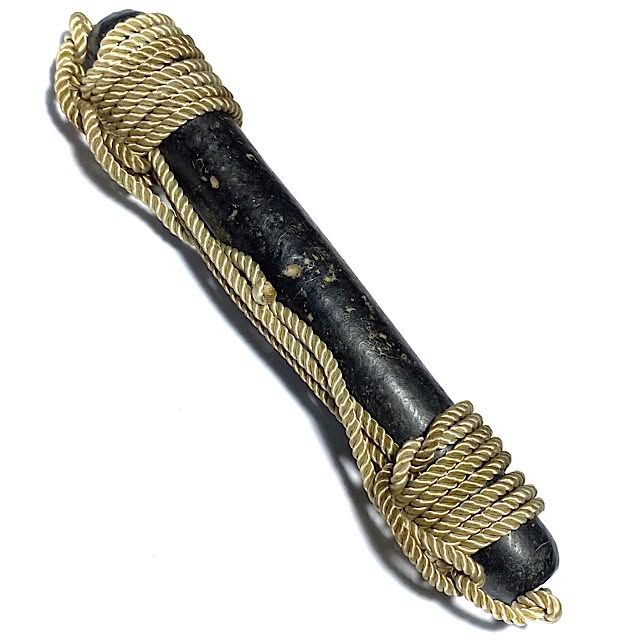
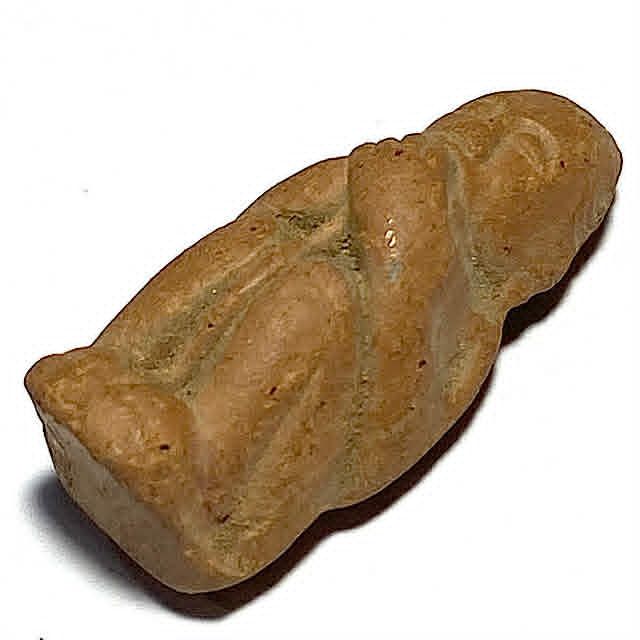
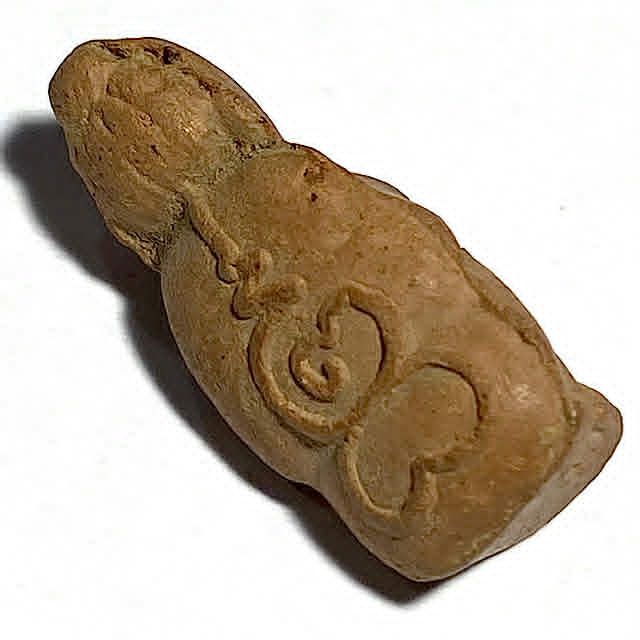
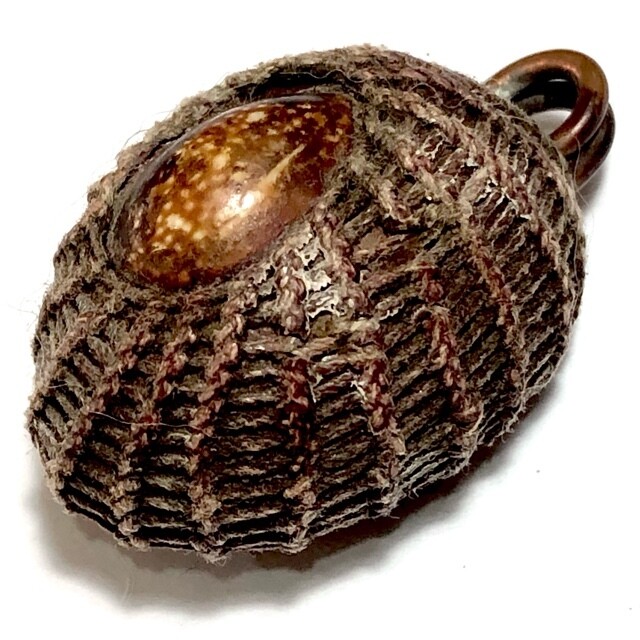
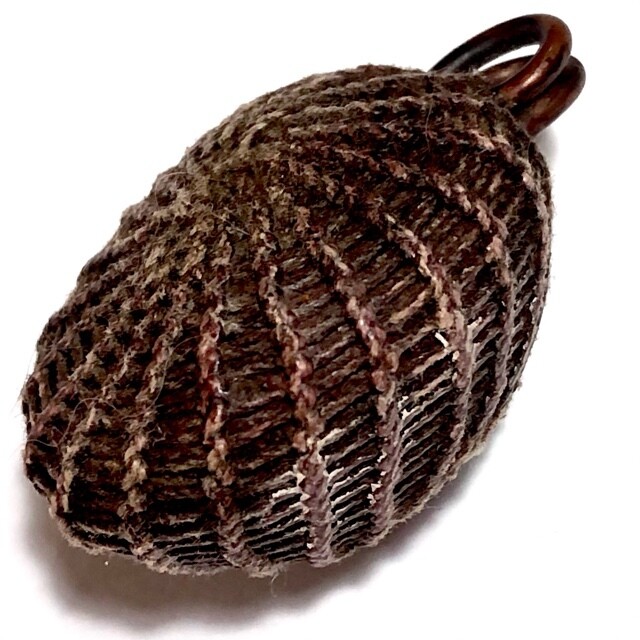
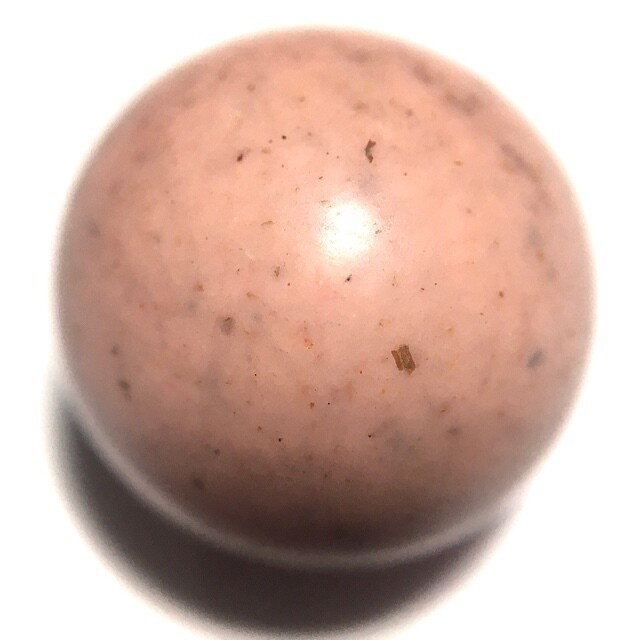
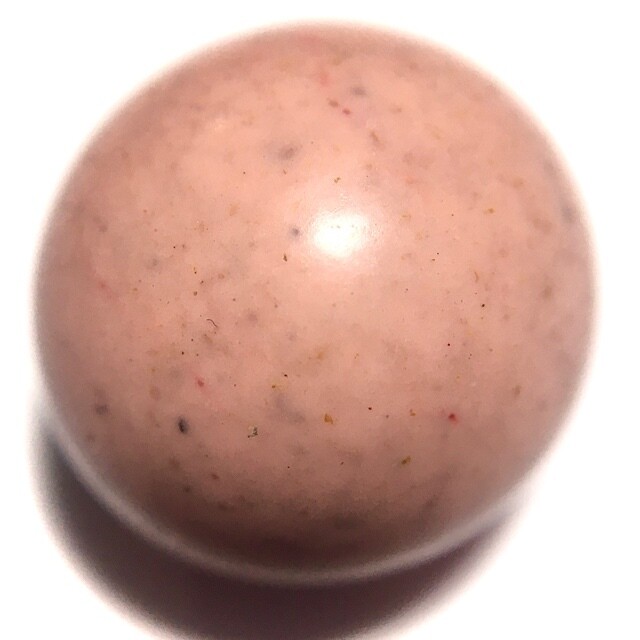
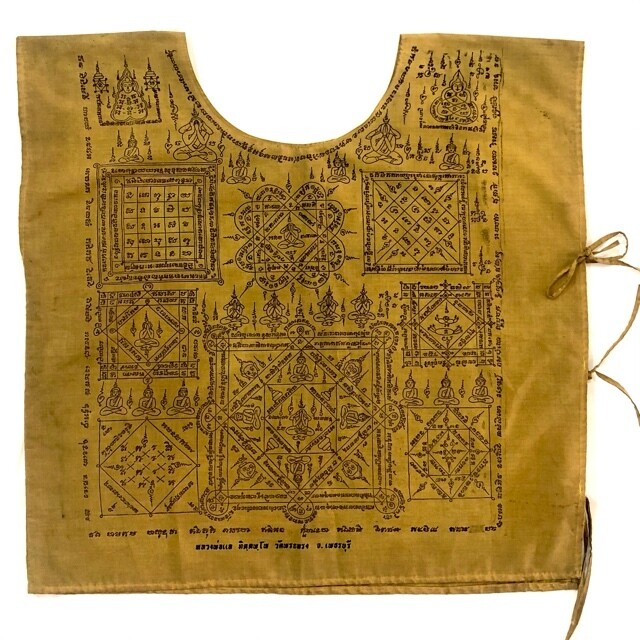
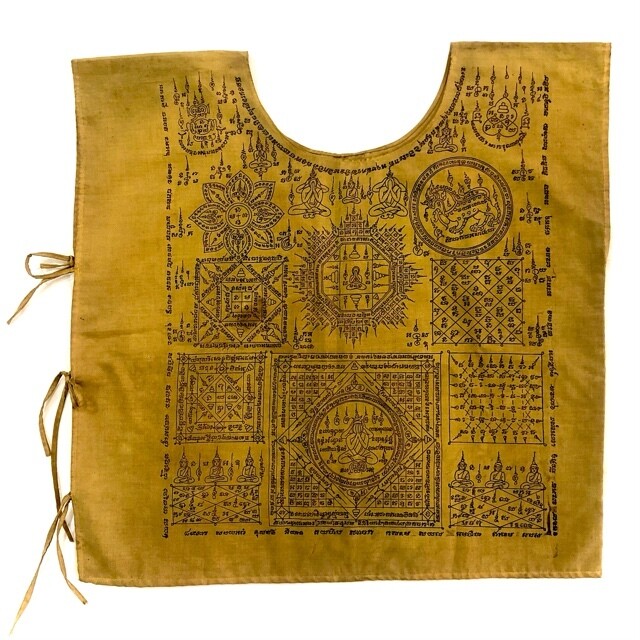
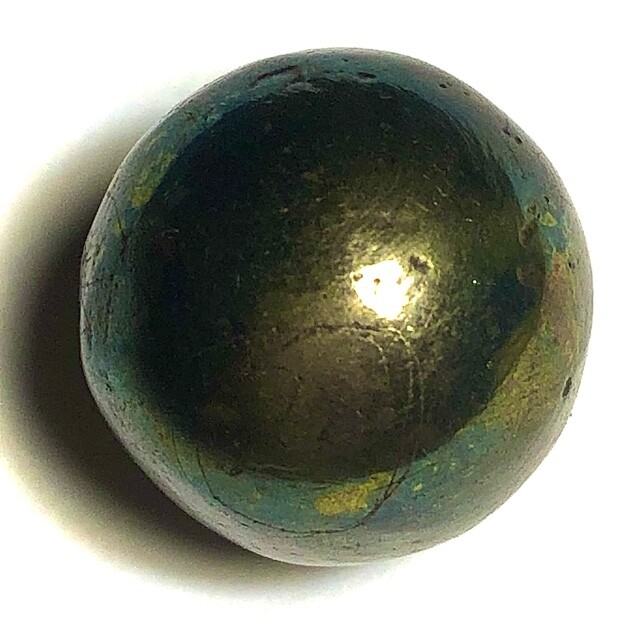
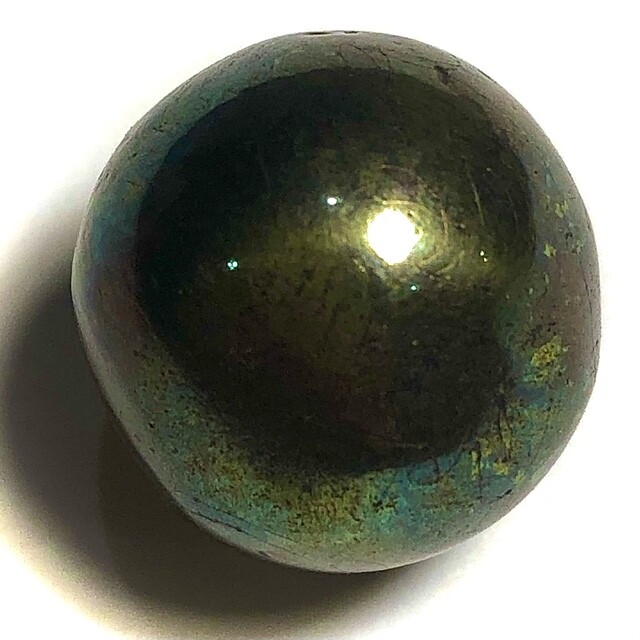
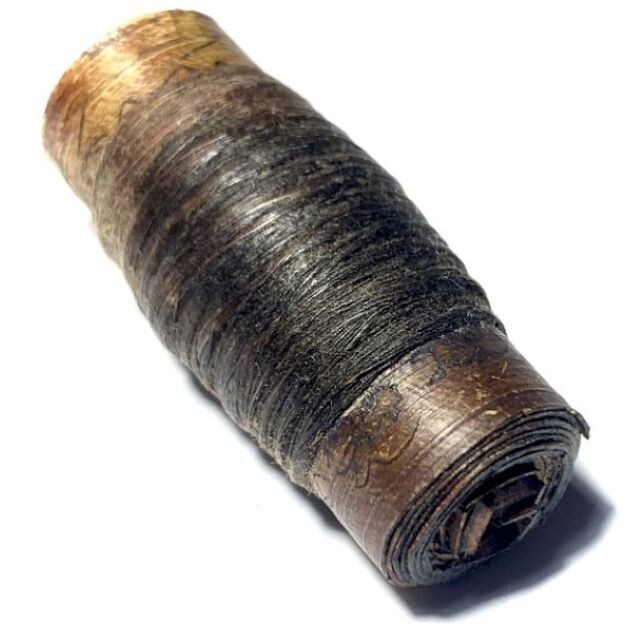
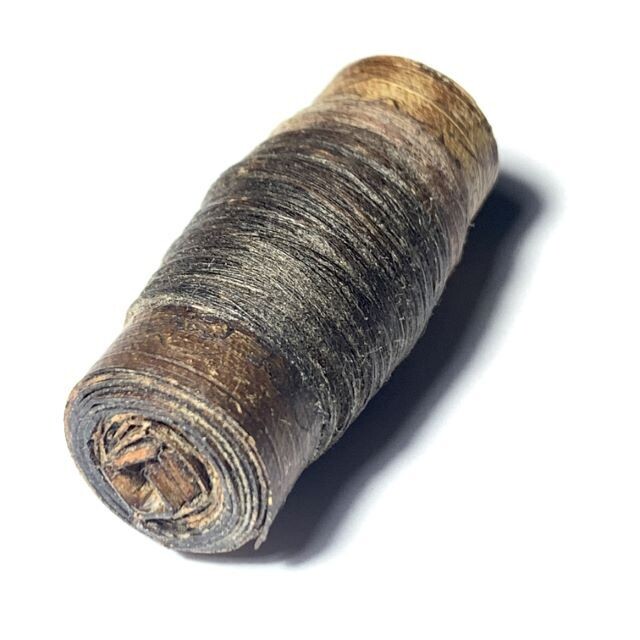
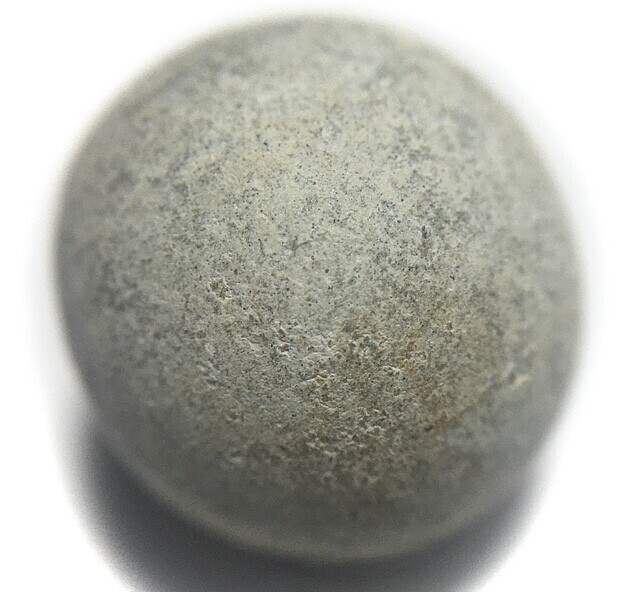
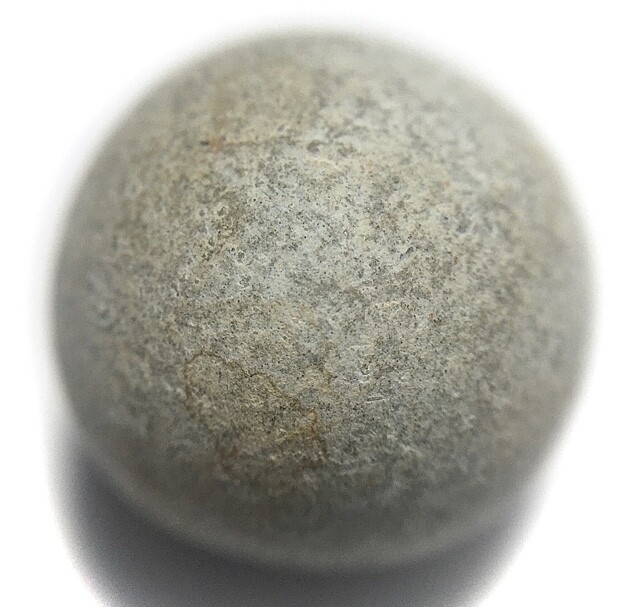
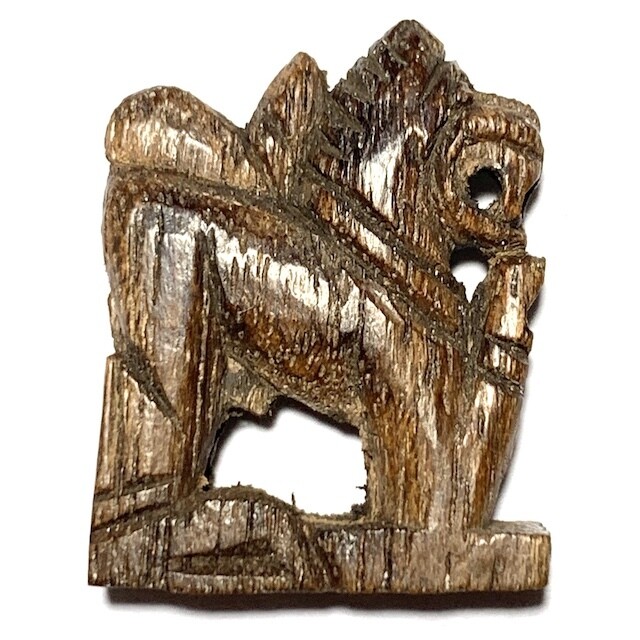
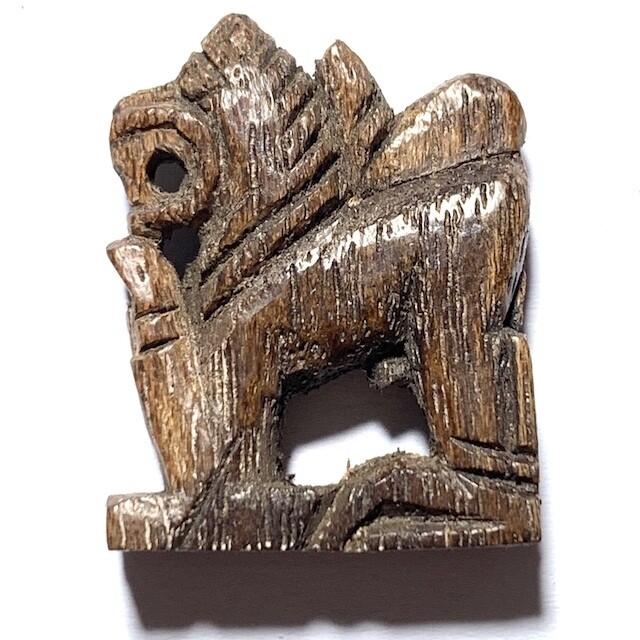
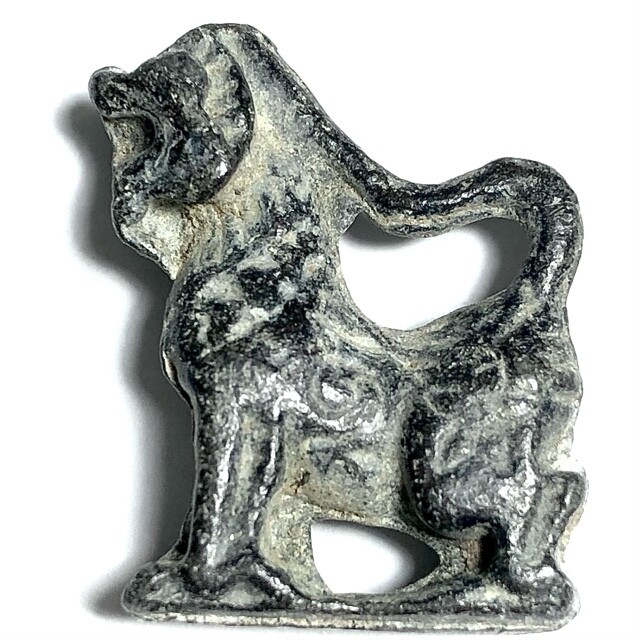
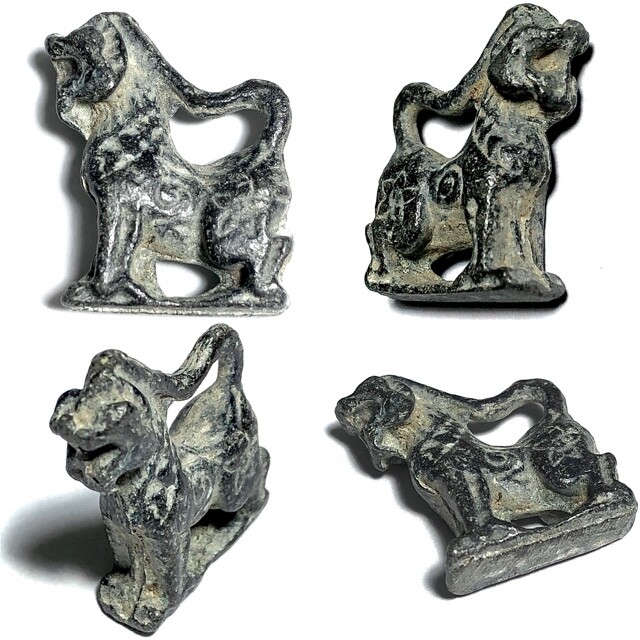
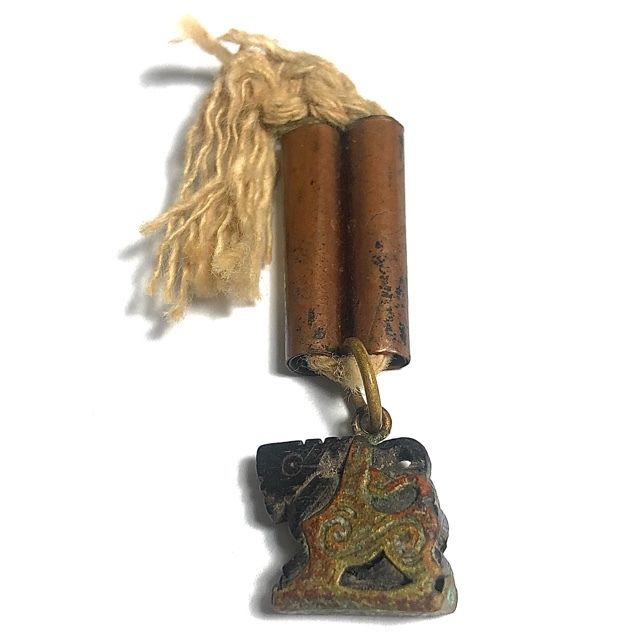
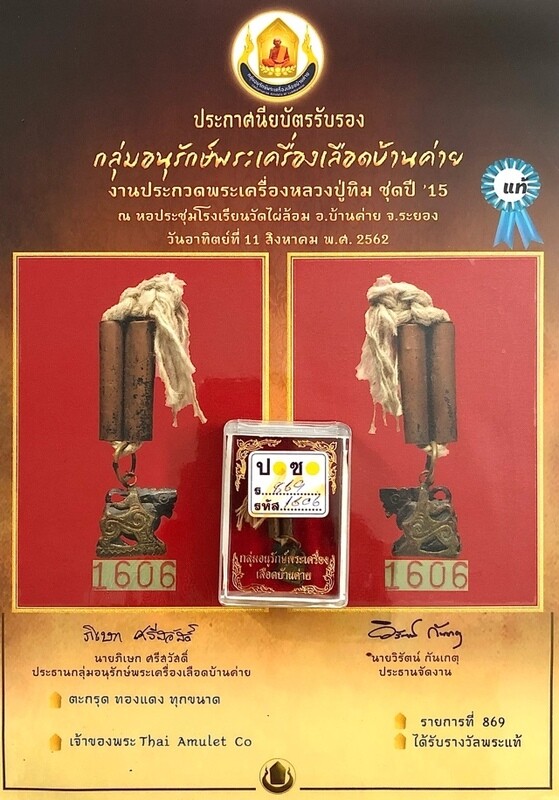
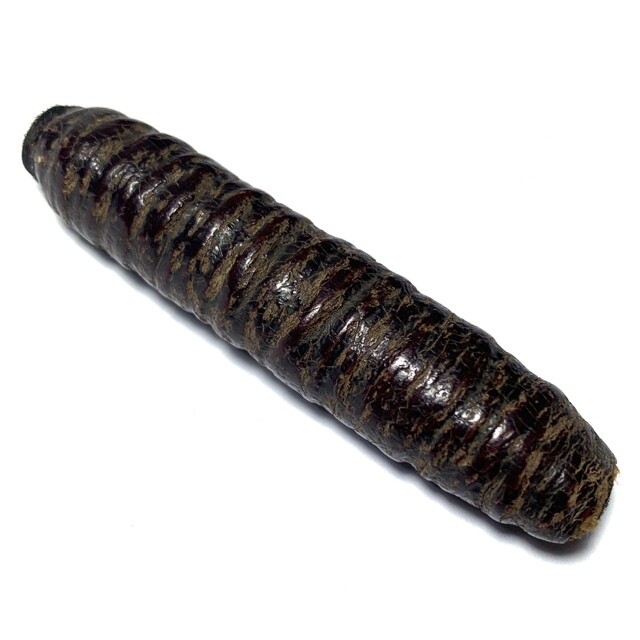
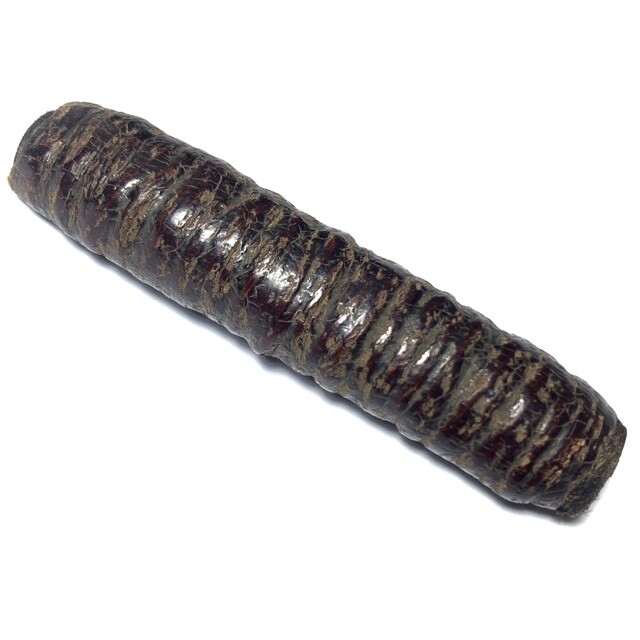
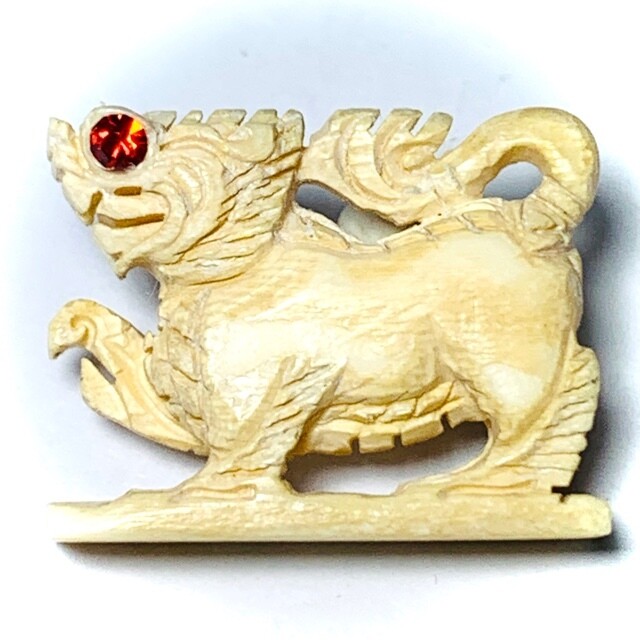
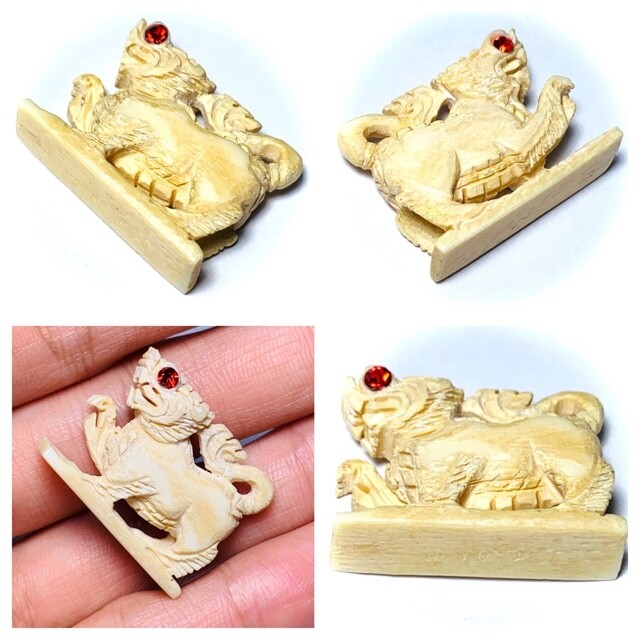
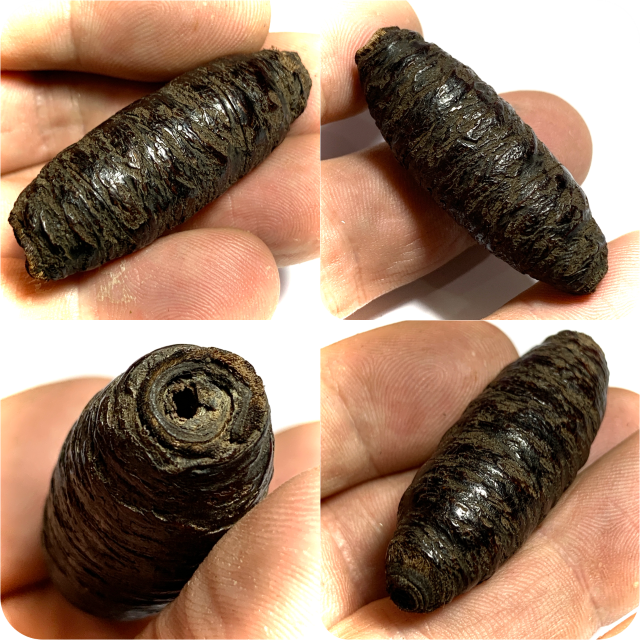
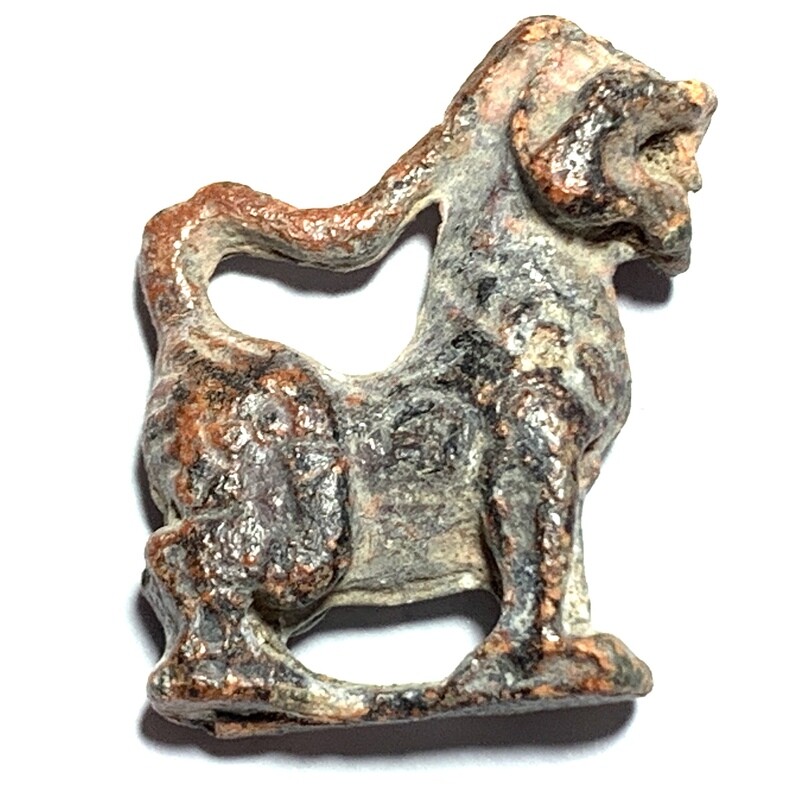
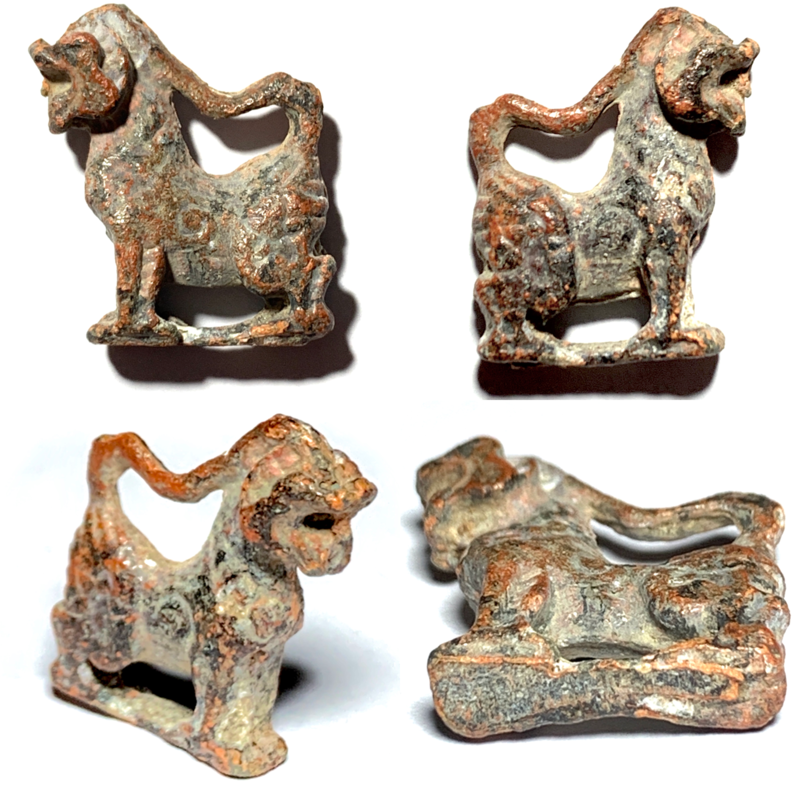
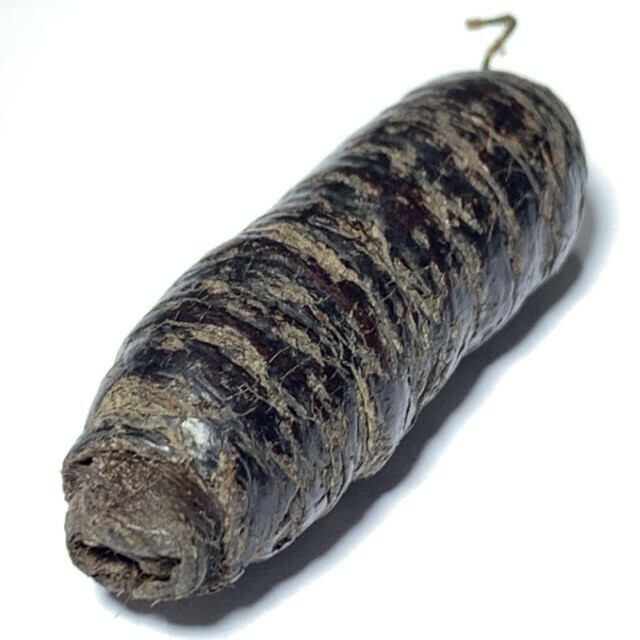
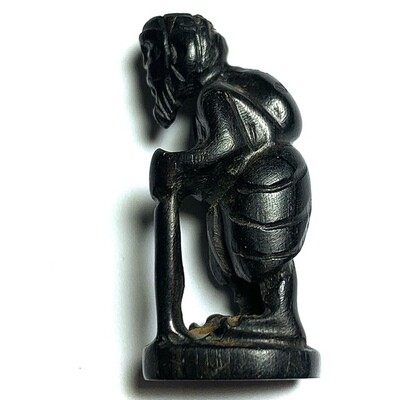
Ban Neng Pra Rahu Hand Carved Necromantic Skullbone Eclipse God Hand Spell Inscriptions Ajarn Heng Praiwan

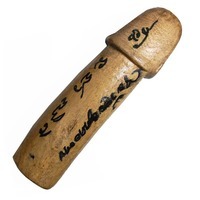
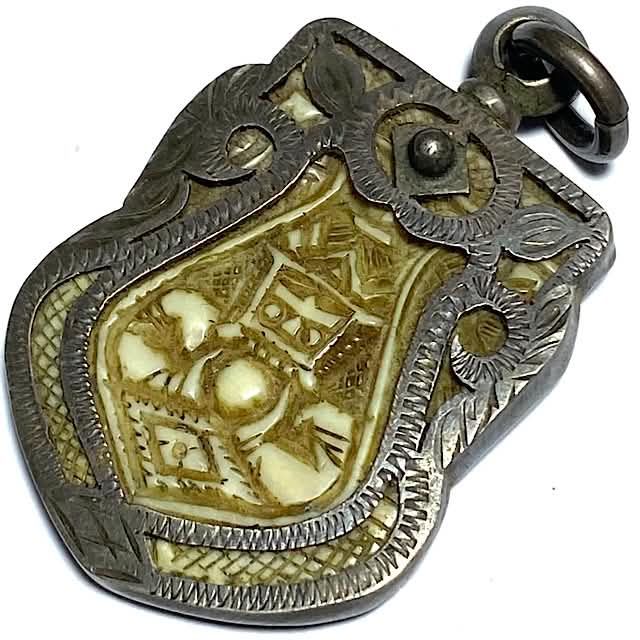
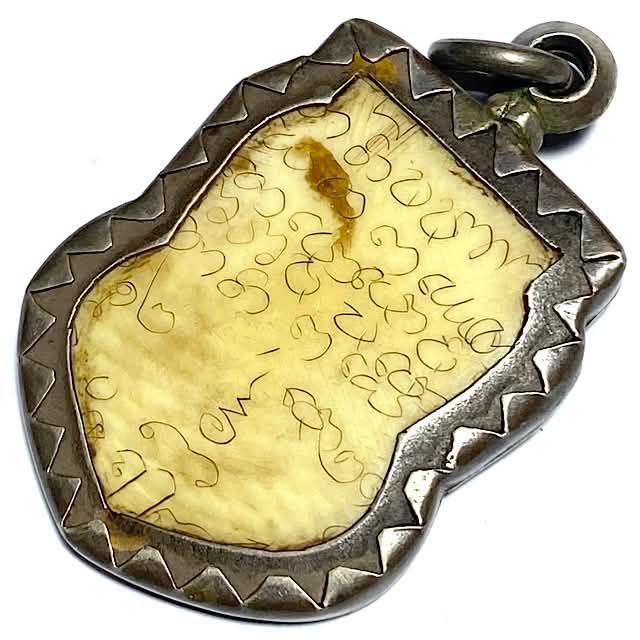
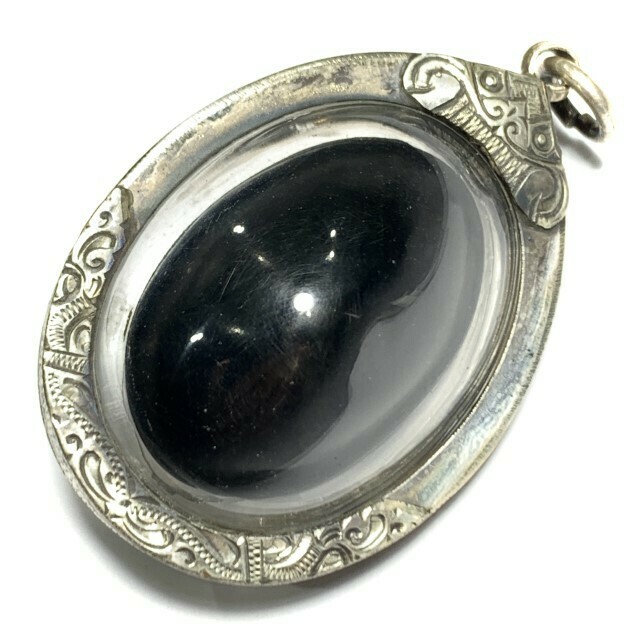
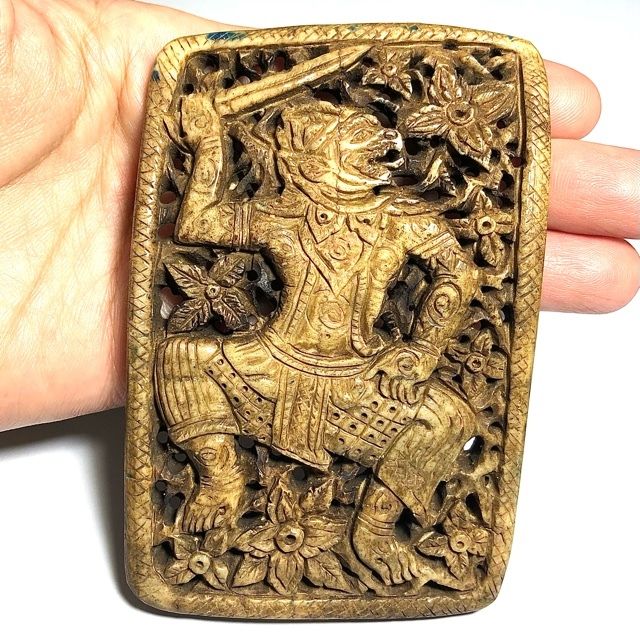
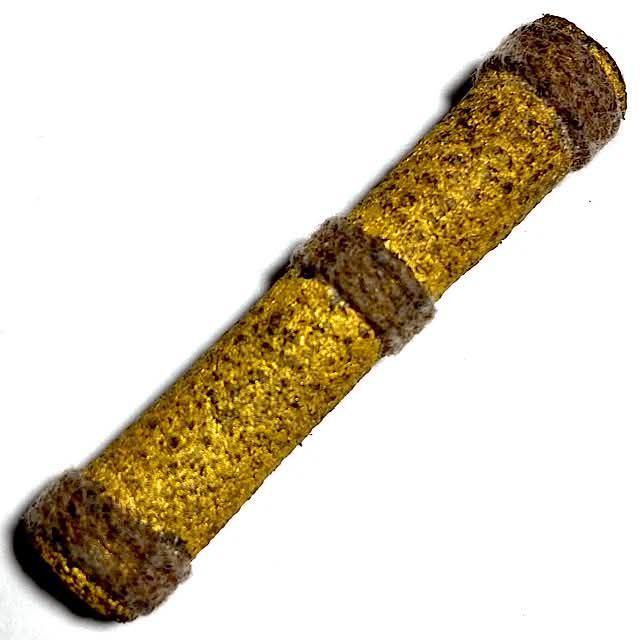
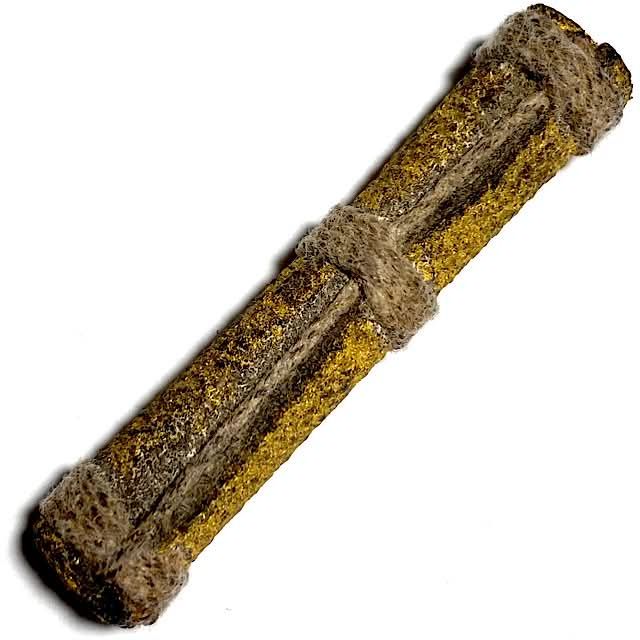
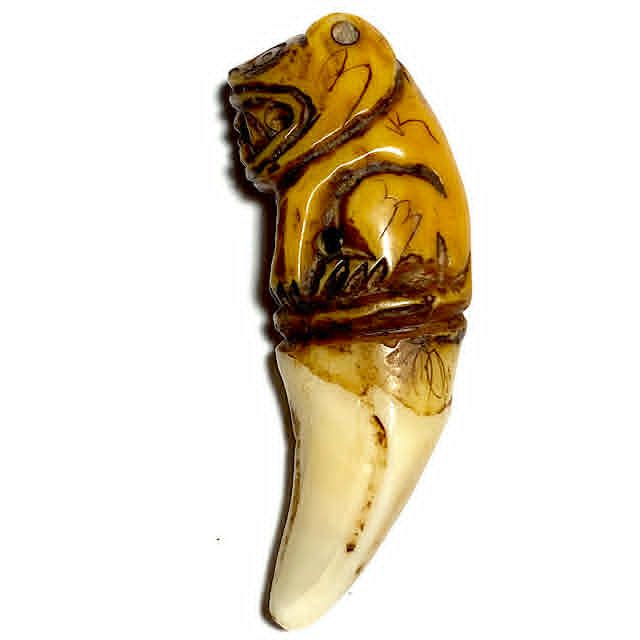
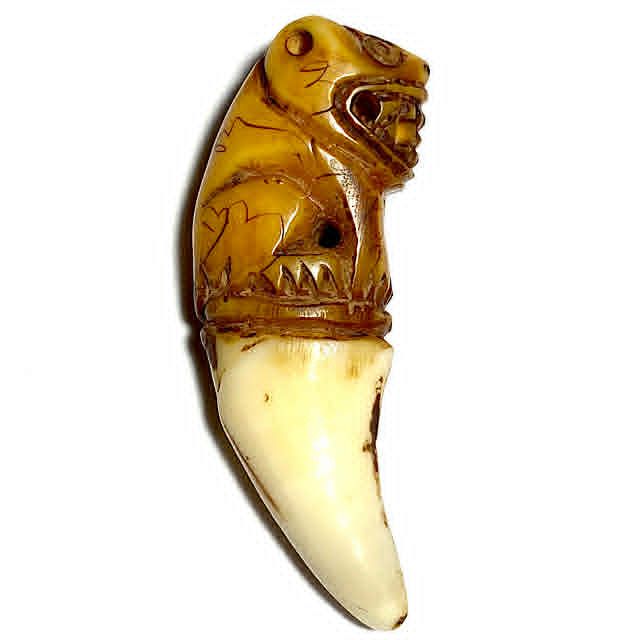
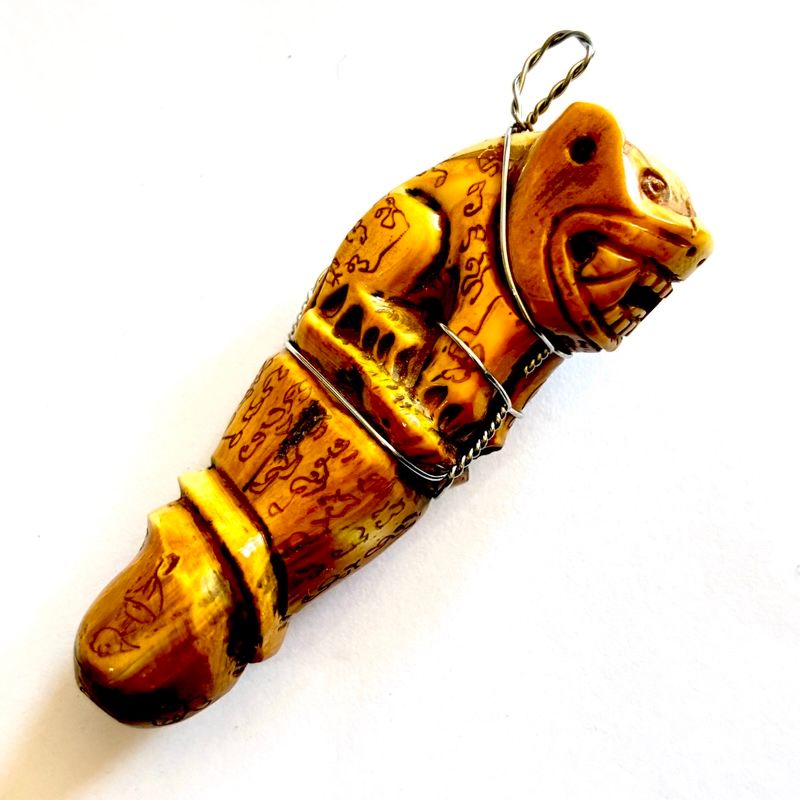
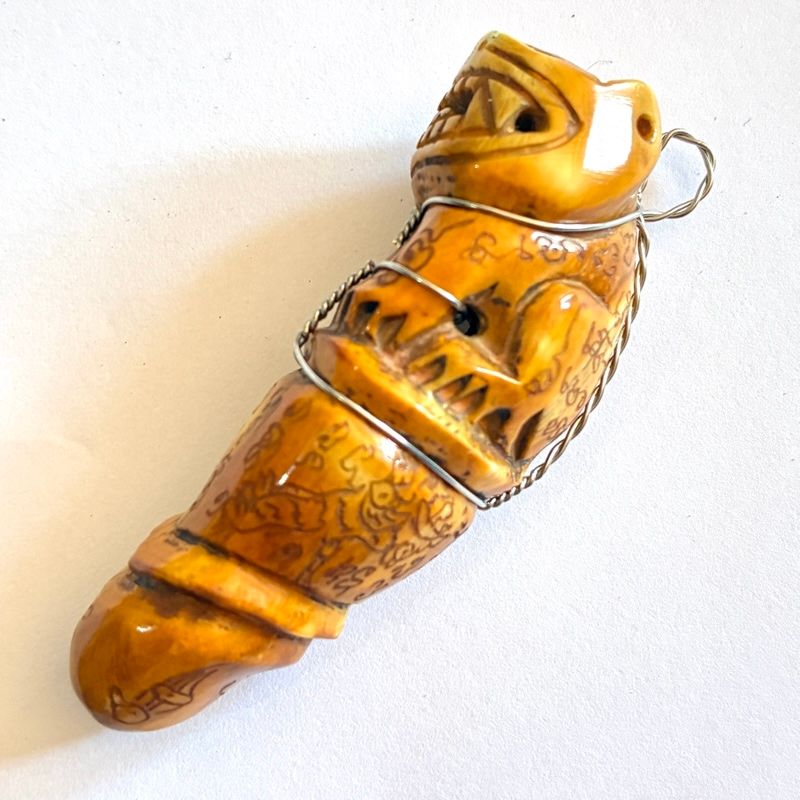
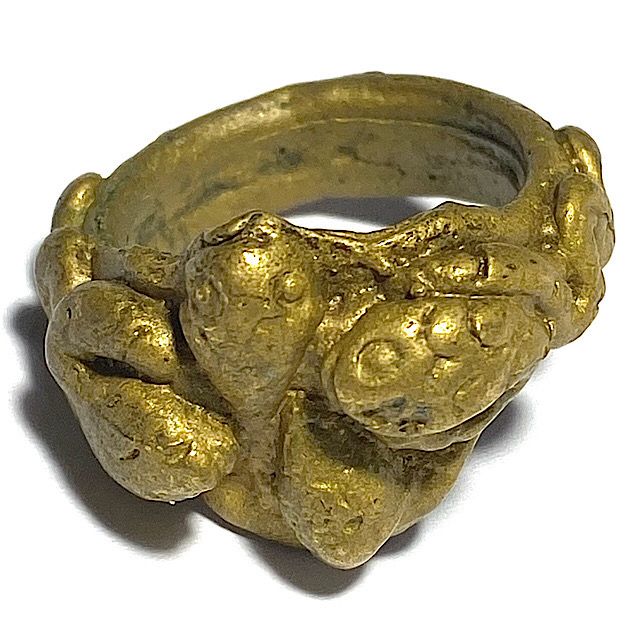
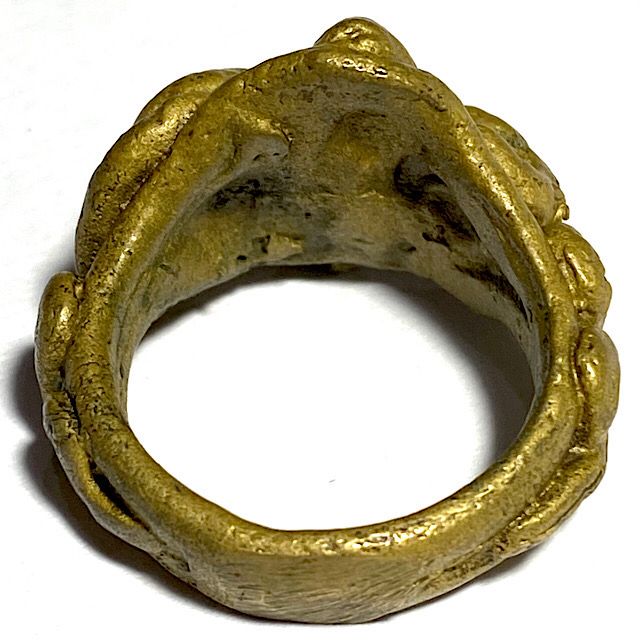
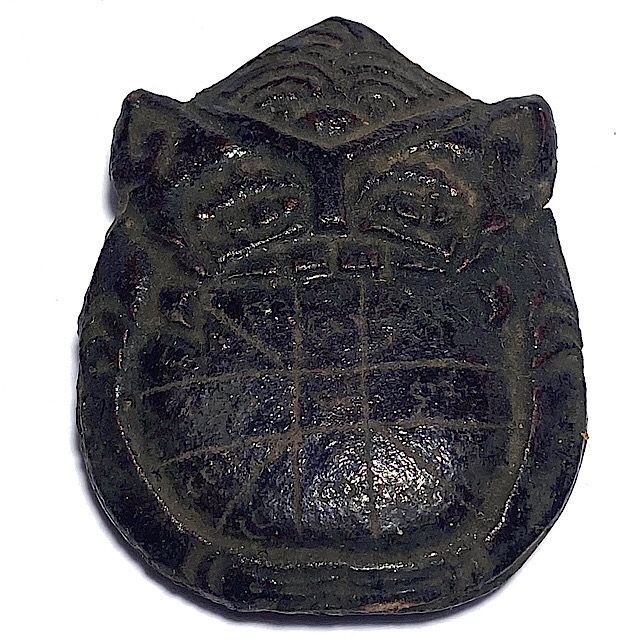
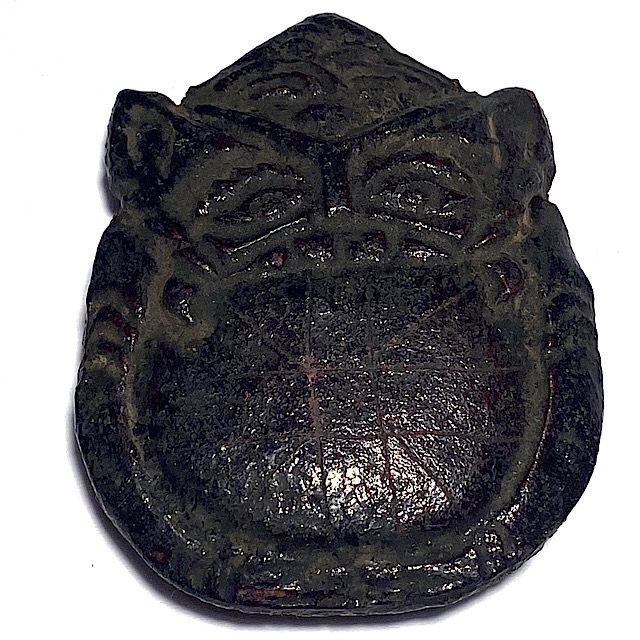
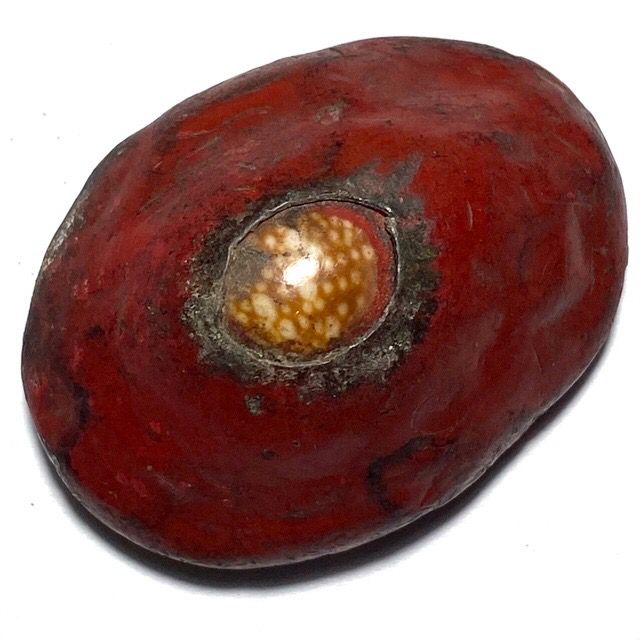
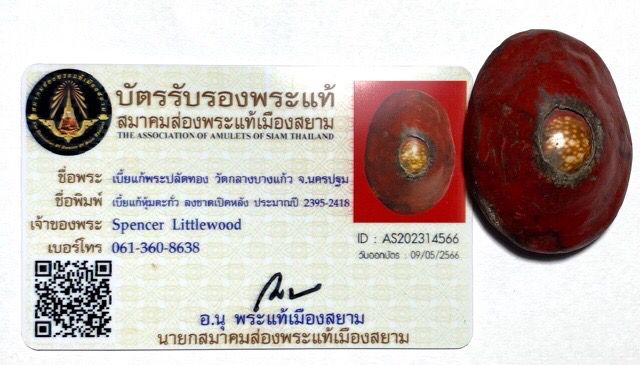
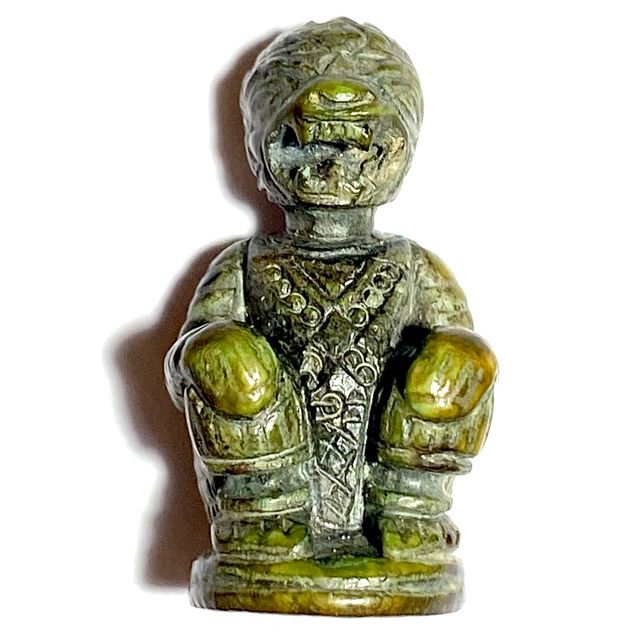
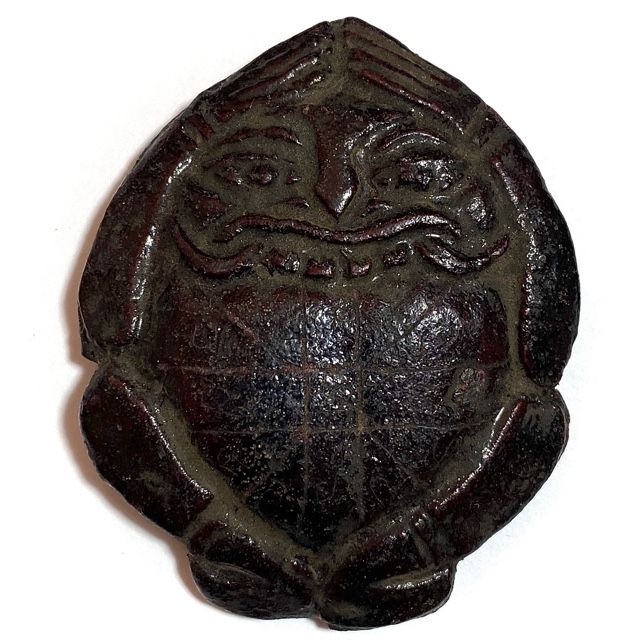
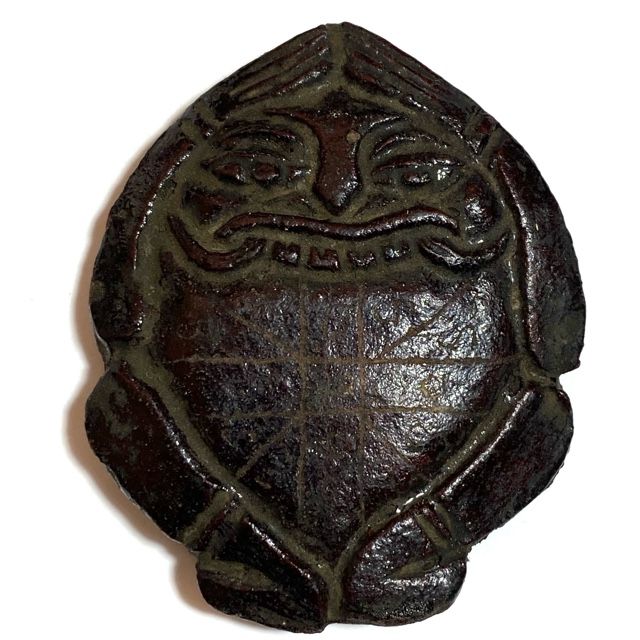
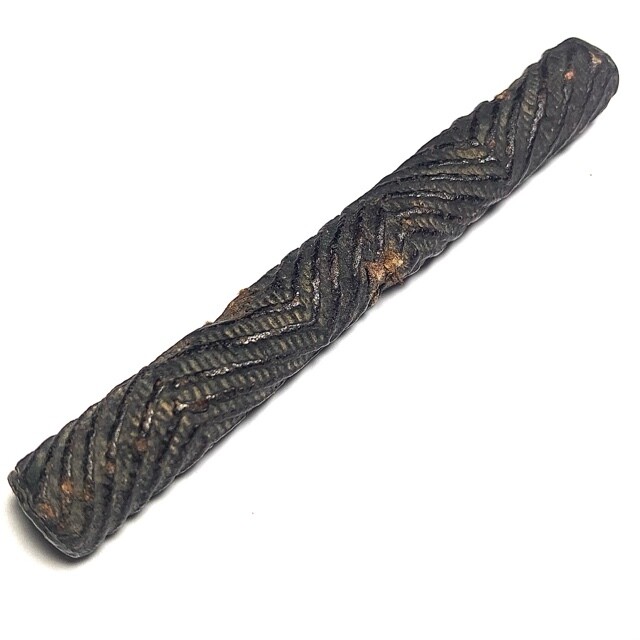
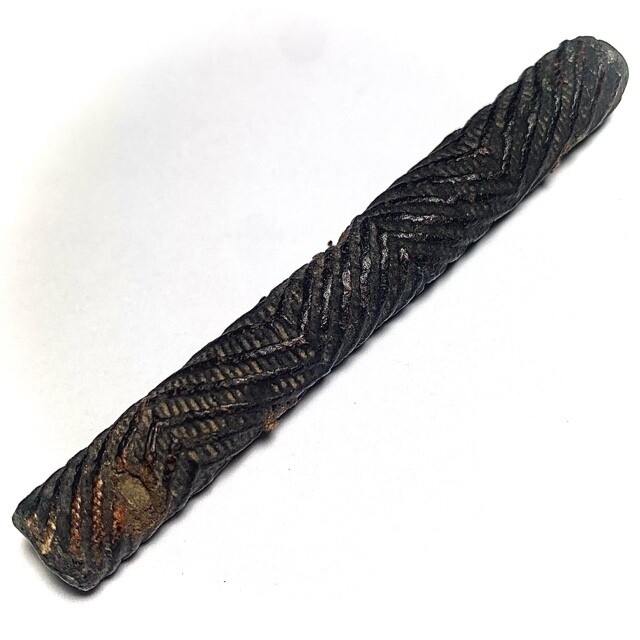
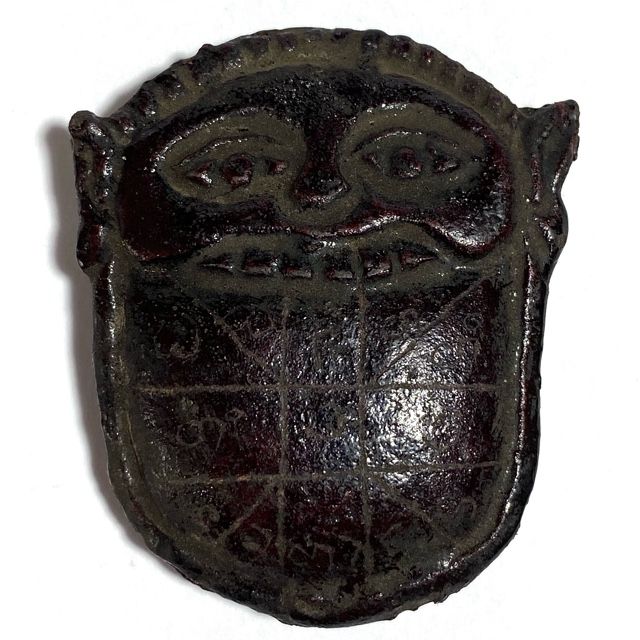
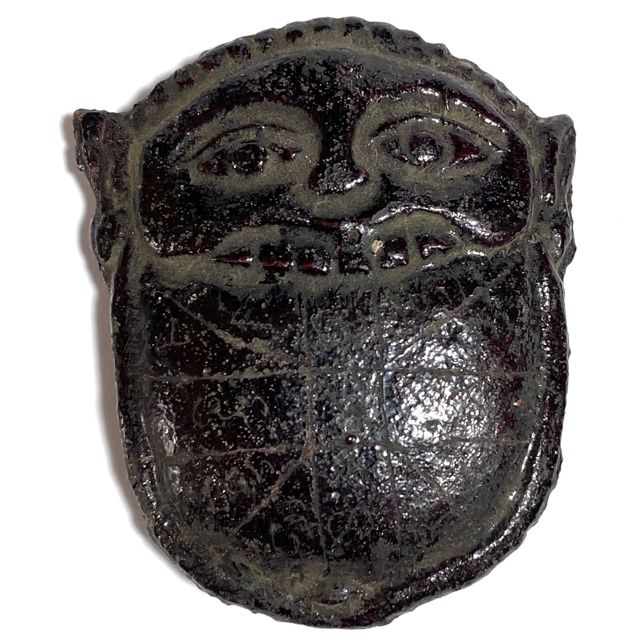
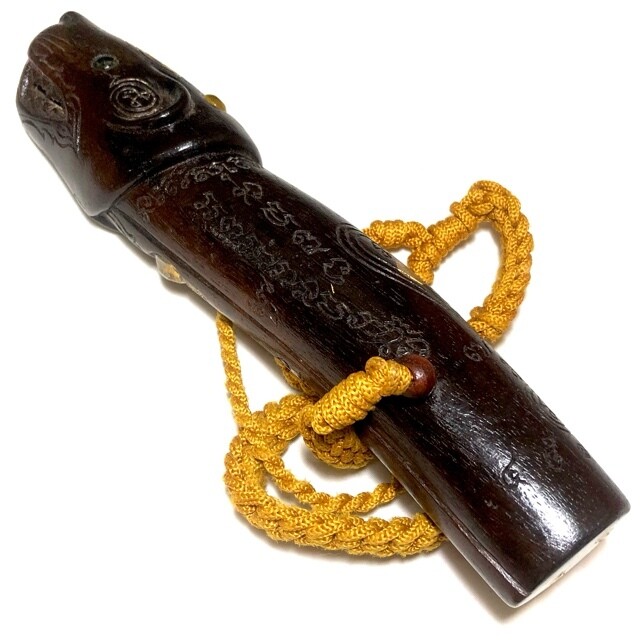
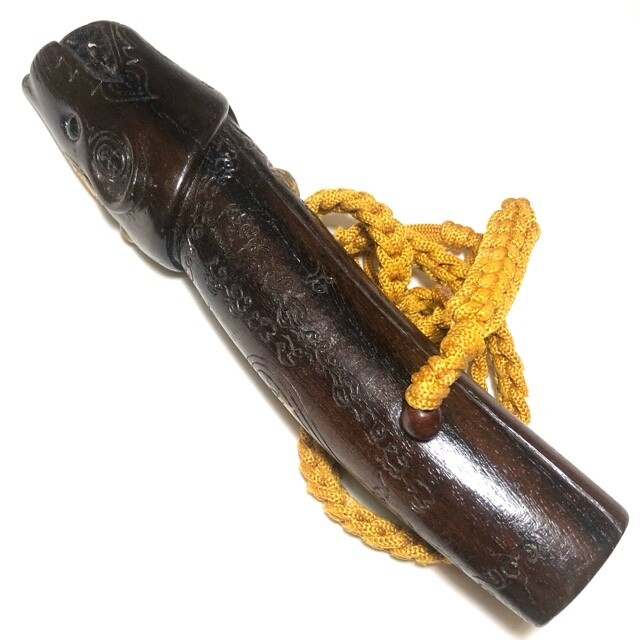
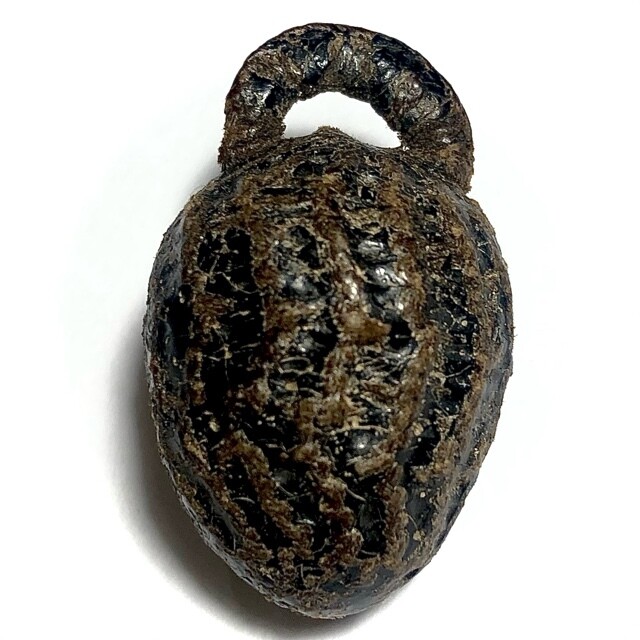
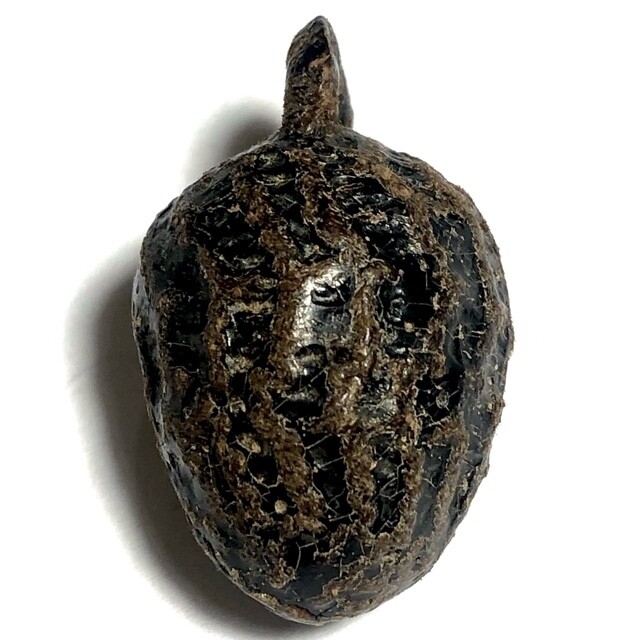
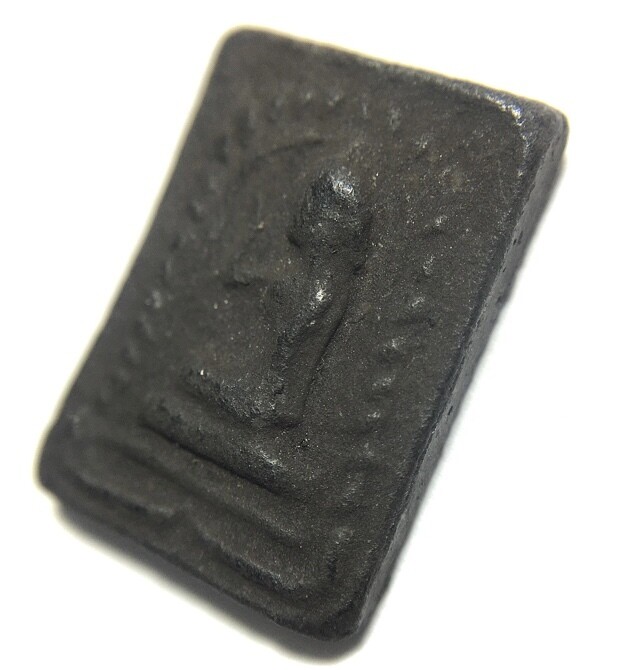
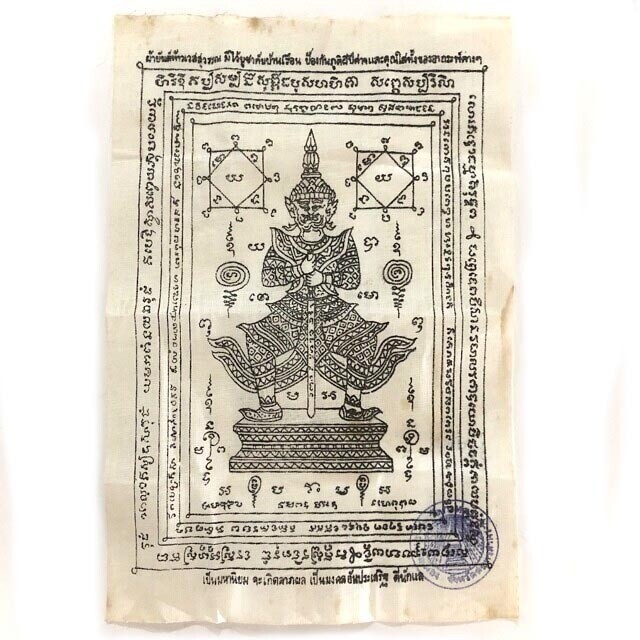
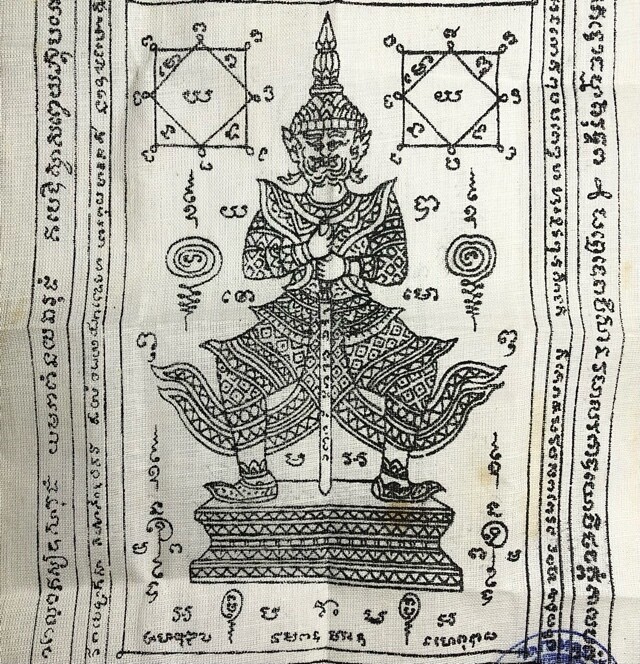
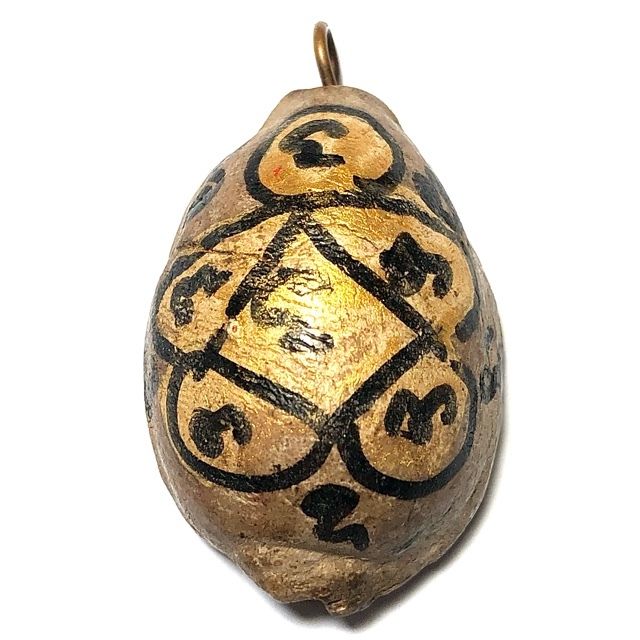
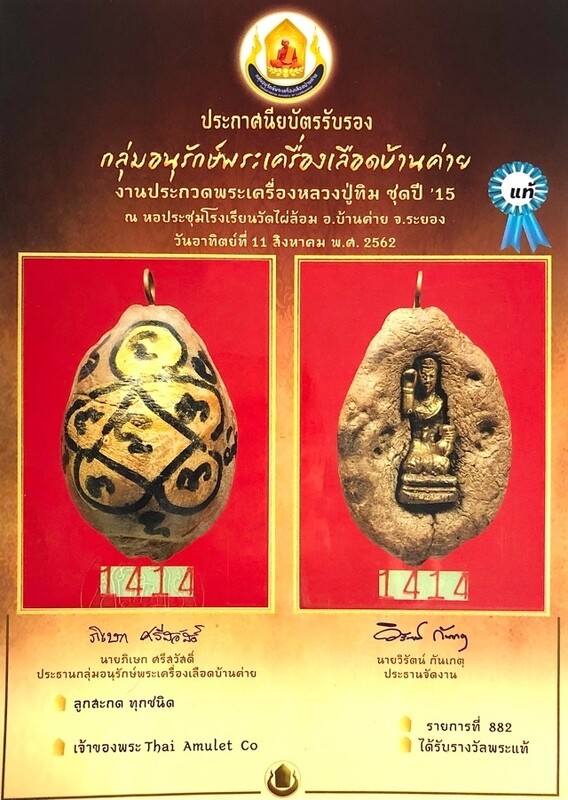
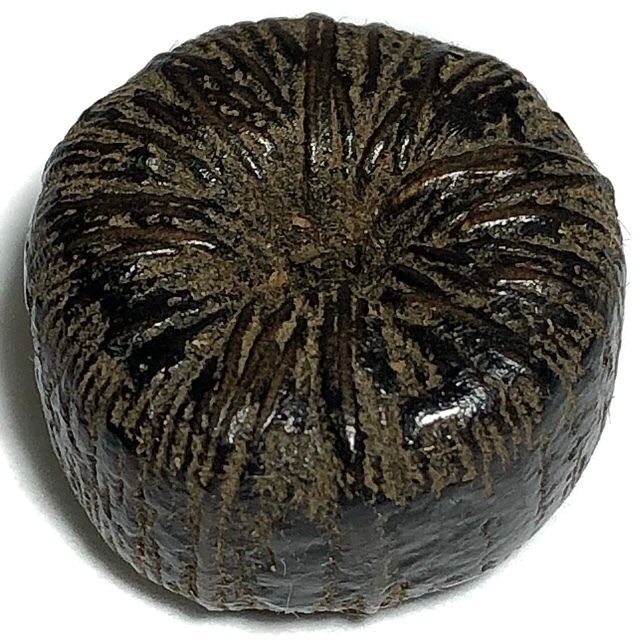
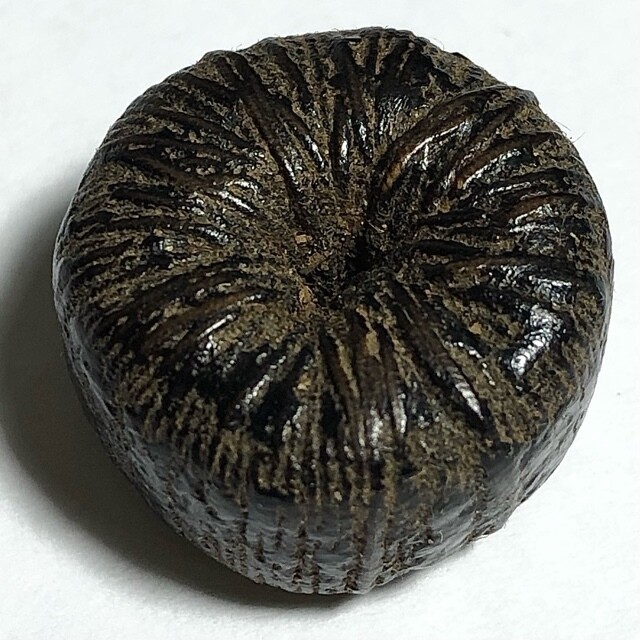
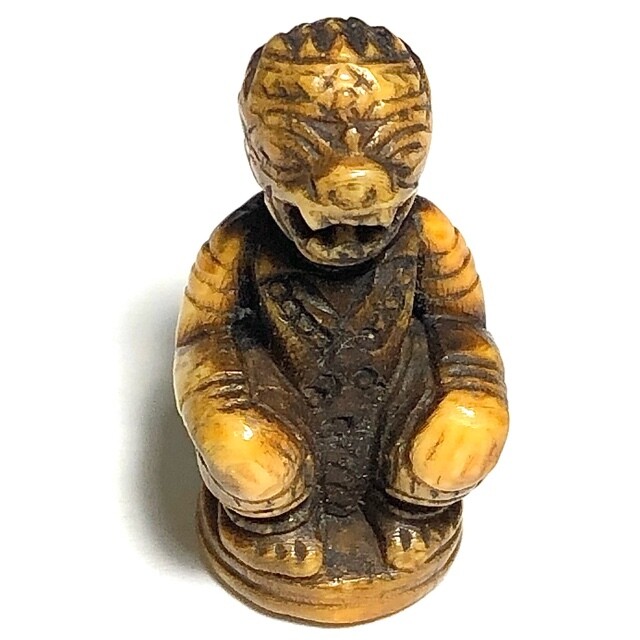
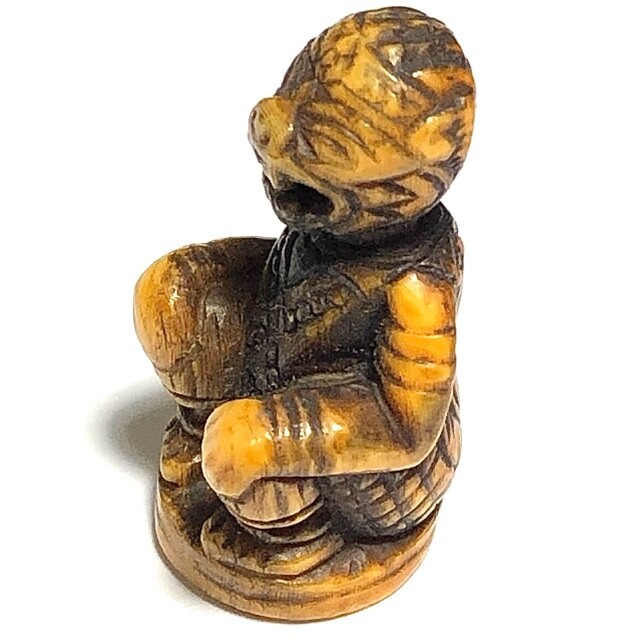
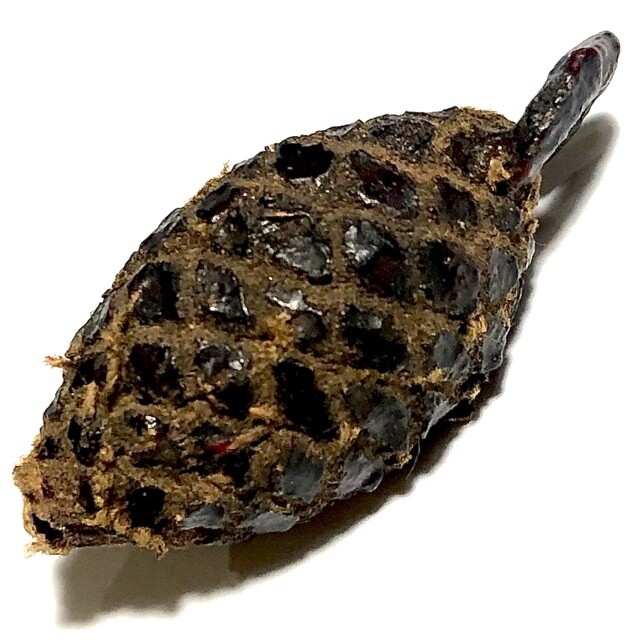
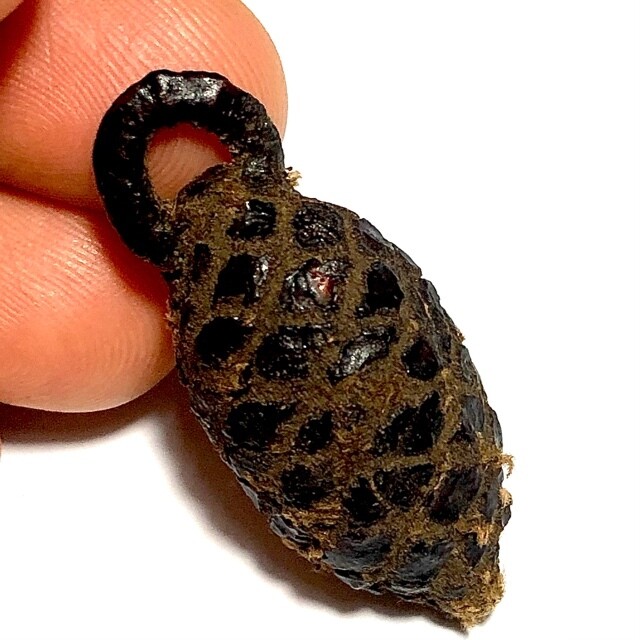
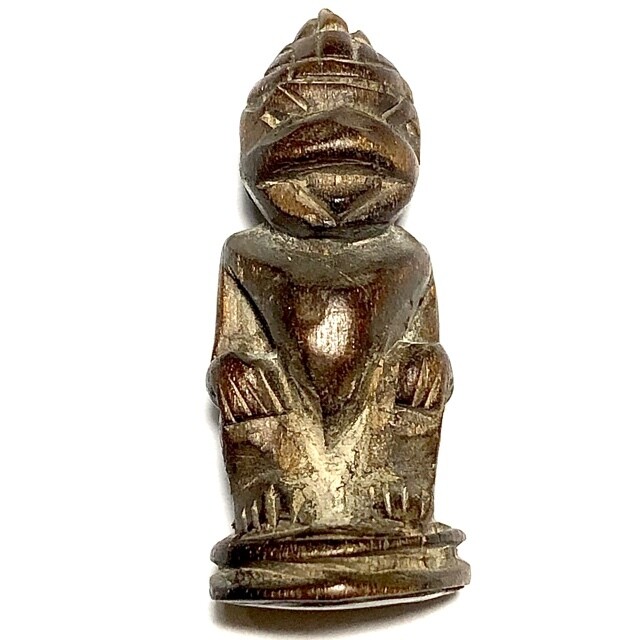
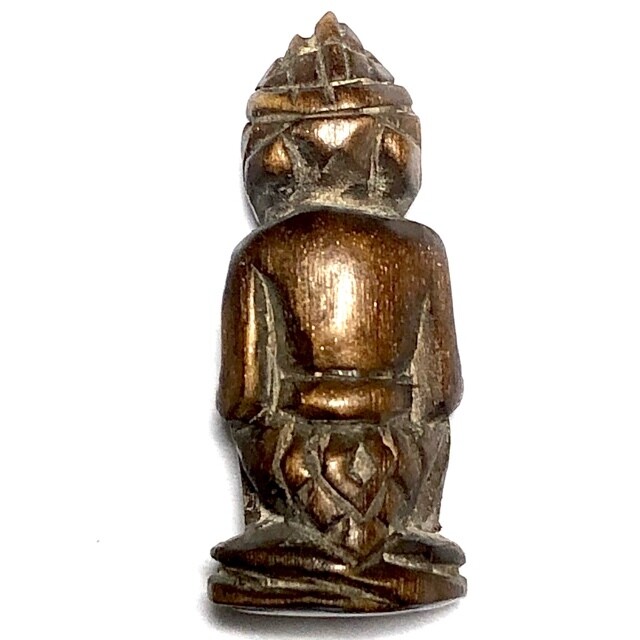
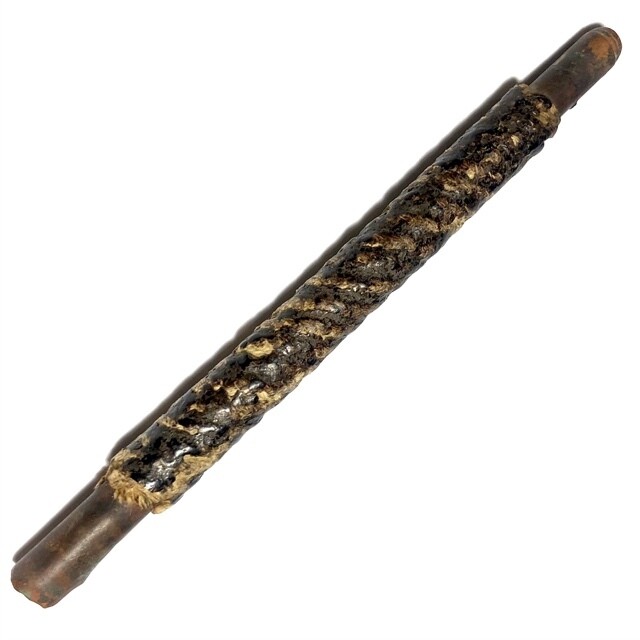
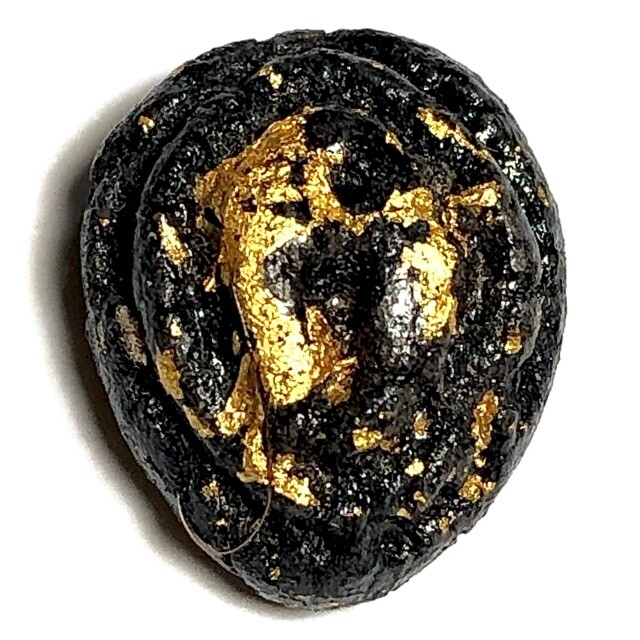
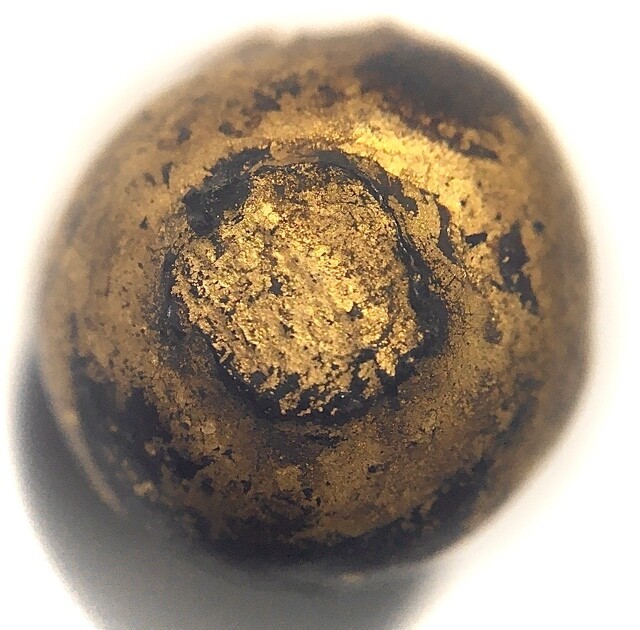
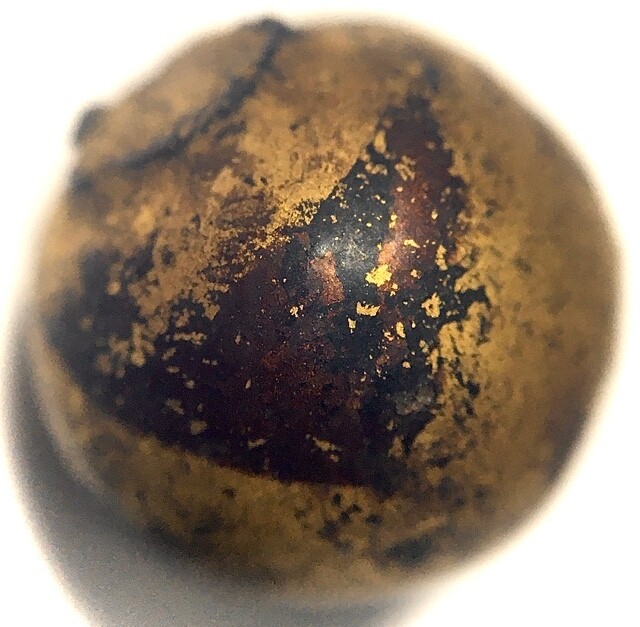
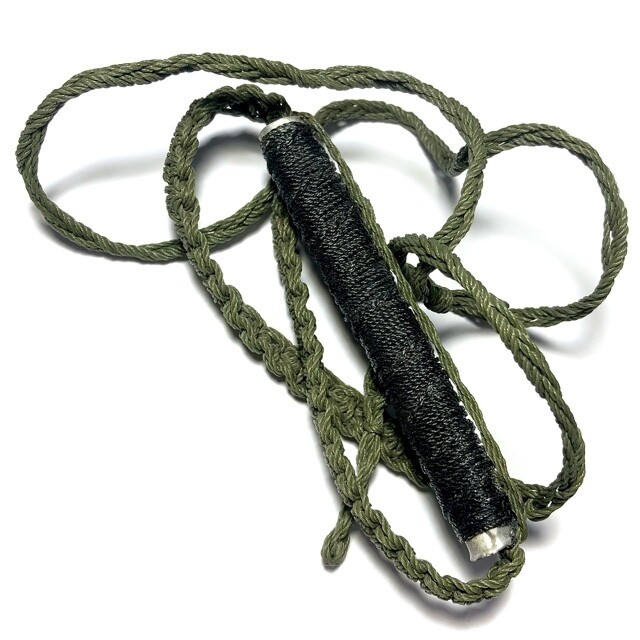
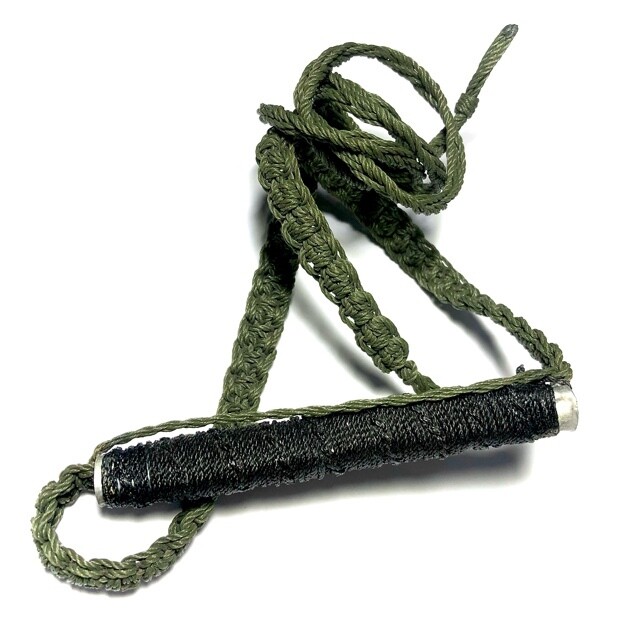
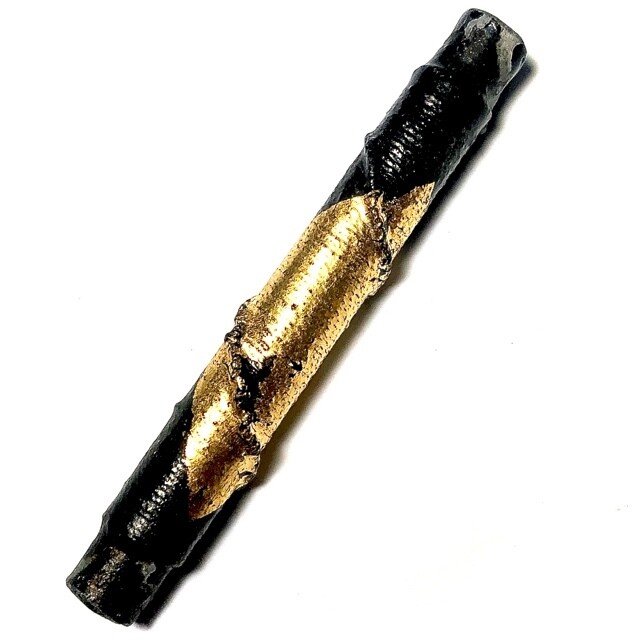
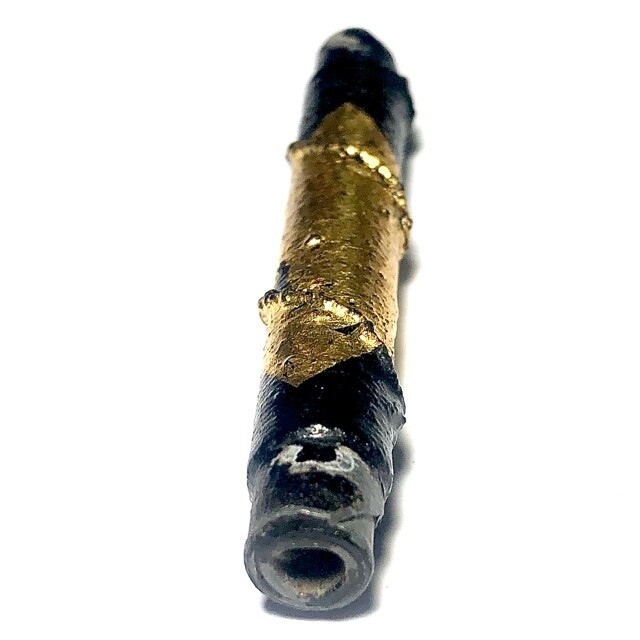
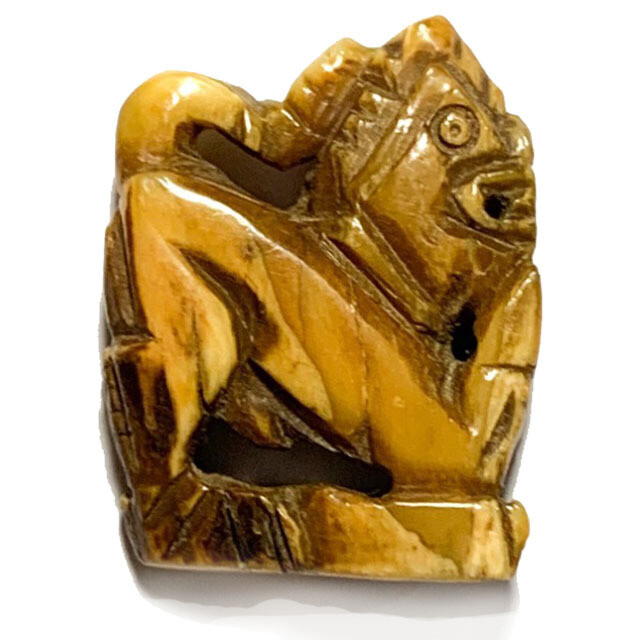
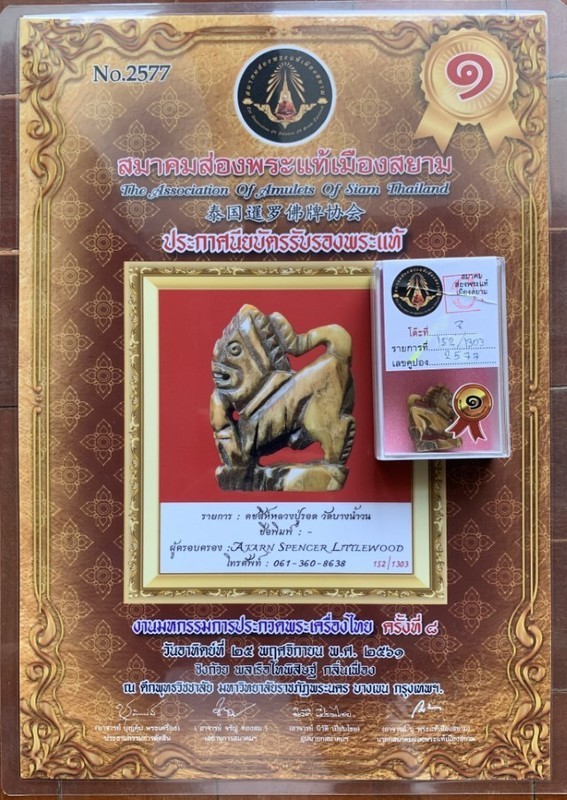
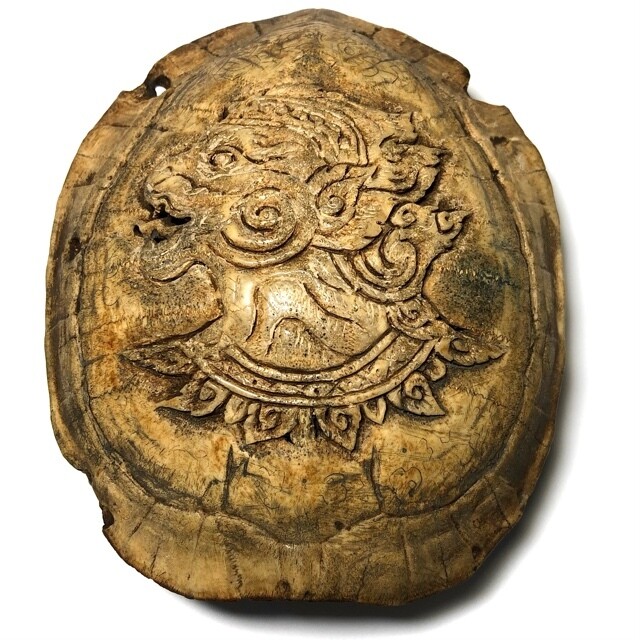
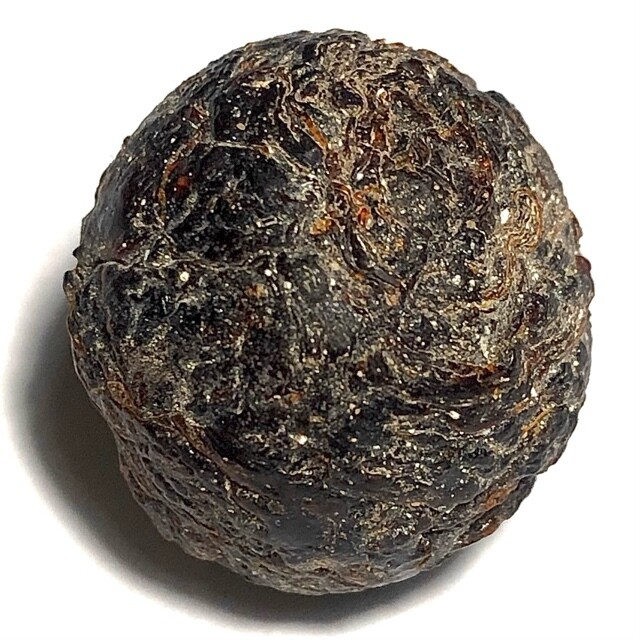
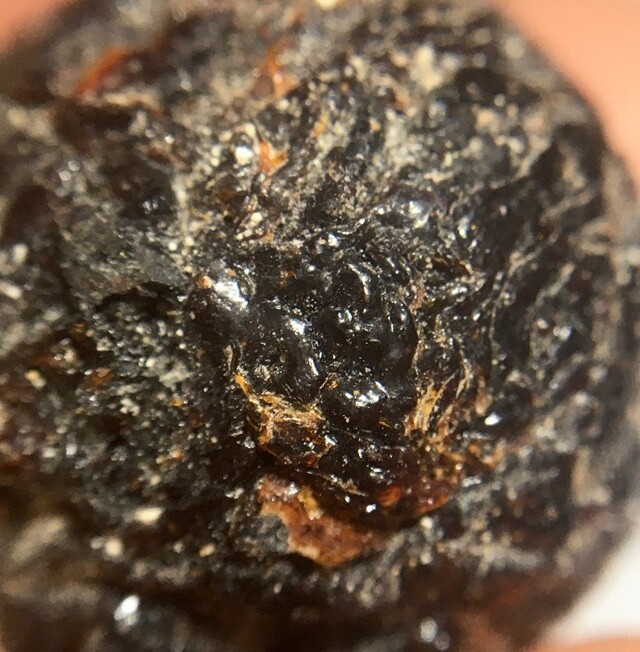
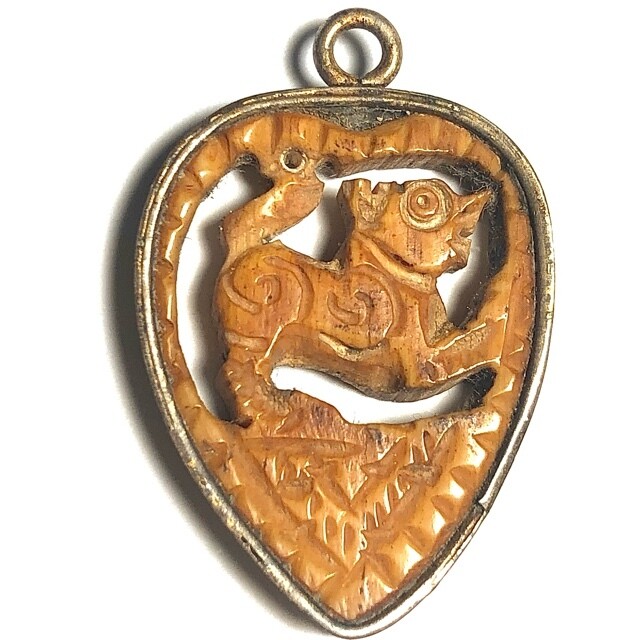
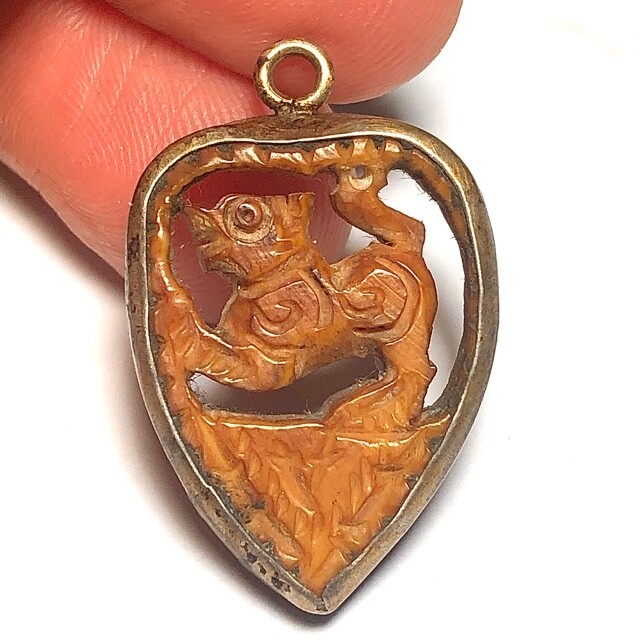
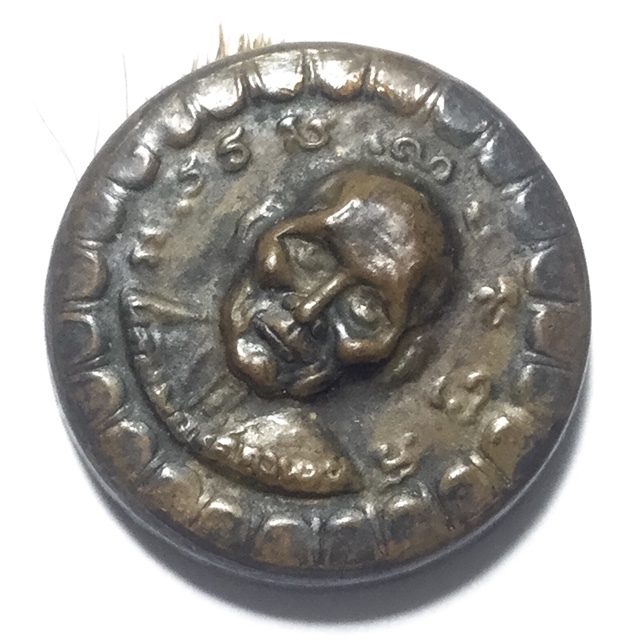
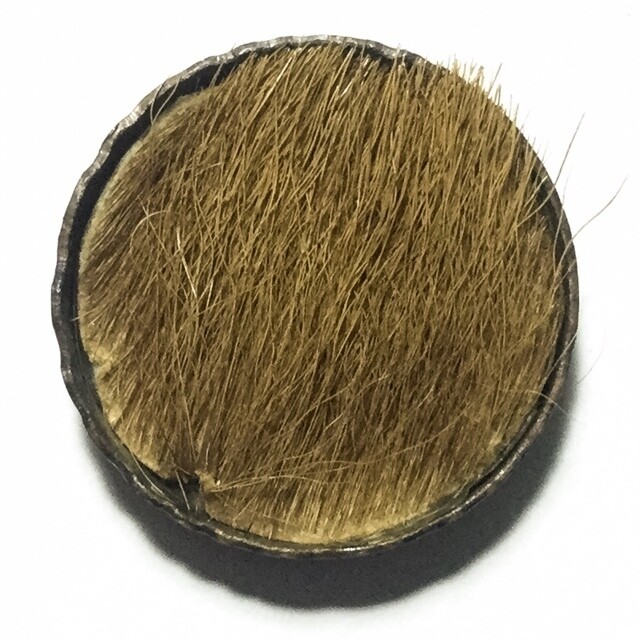
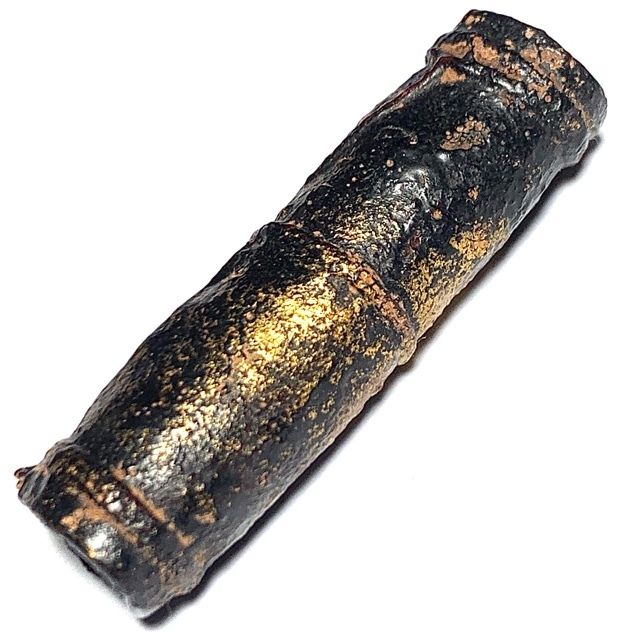
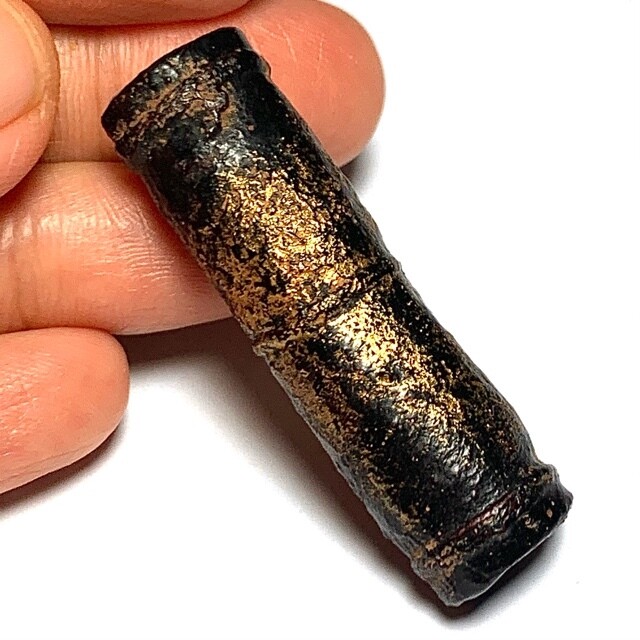
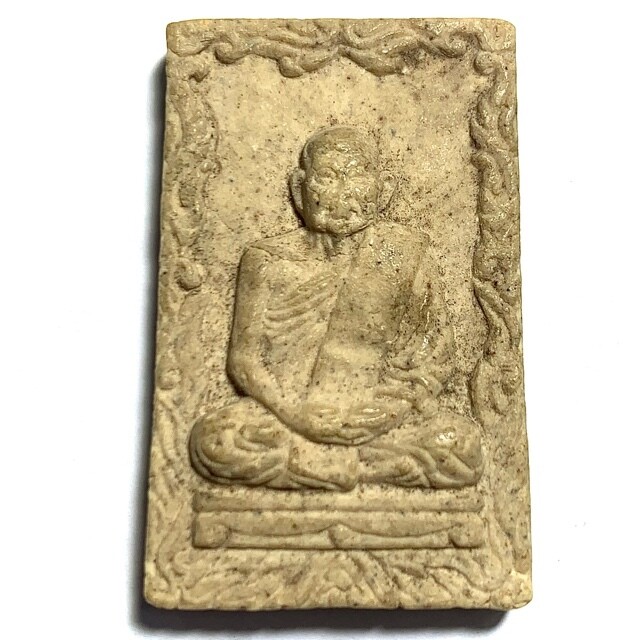
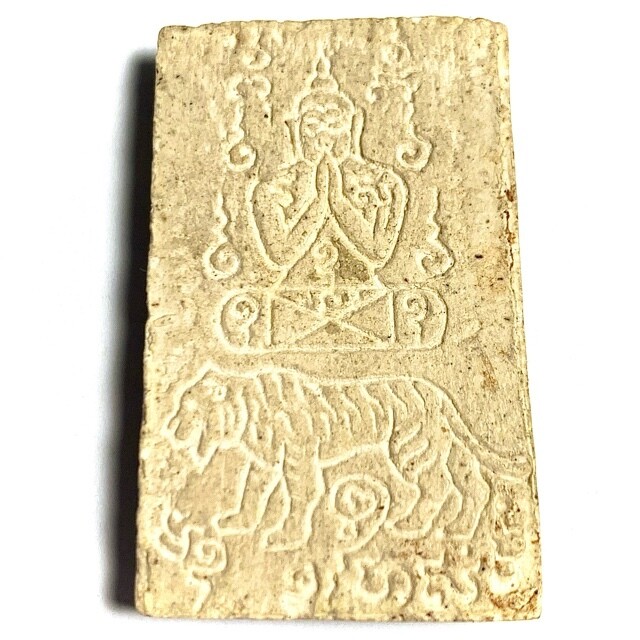
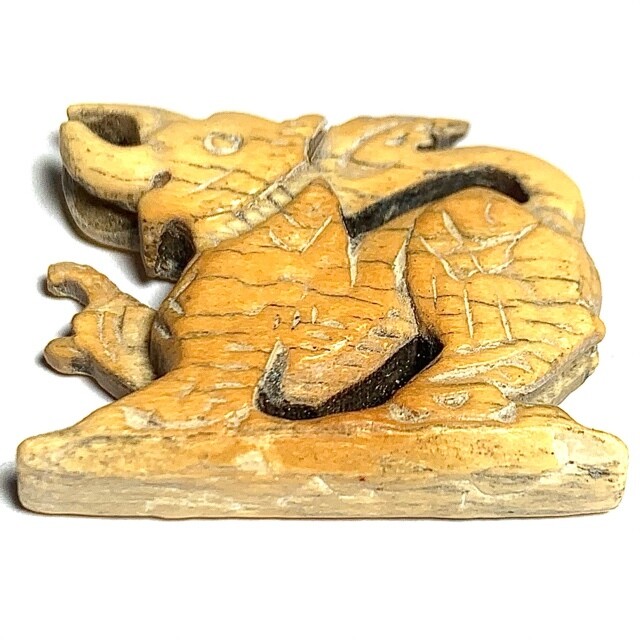
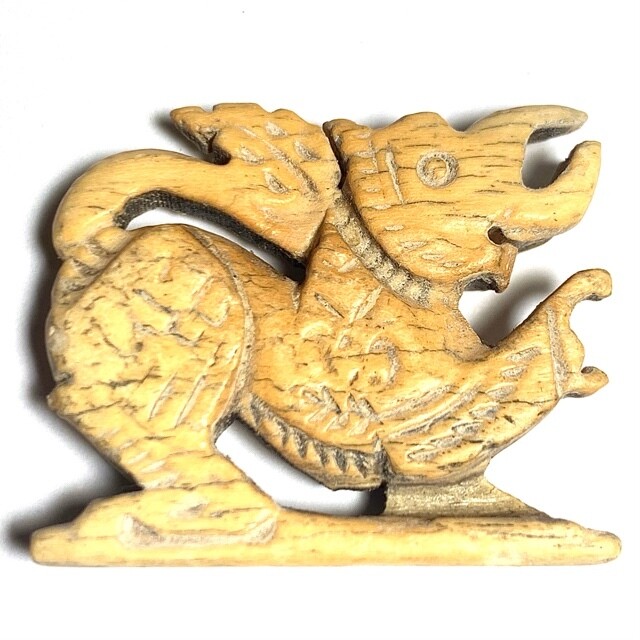
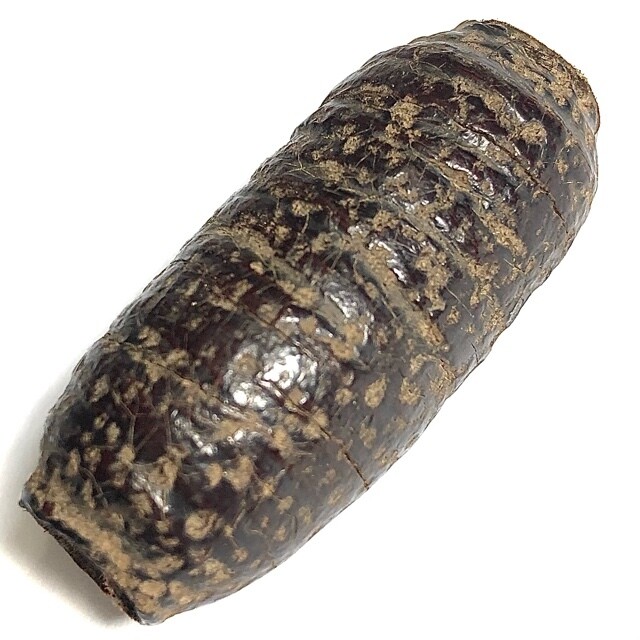
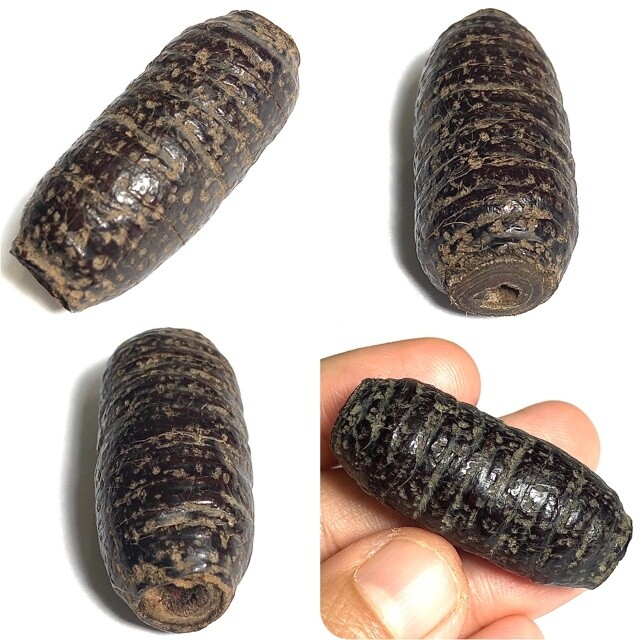
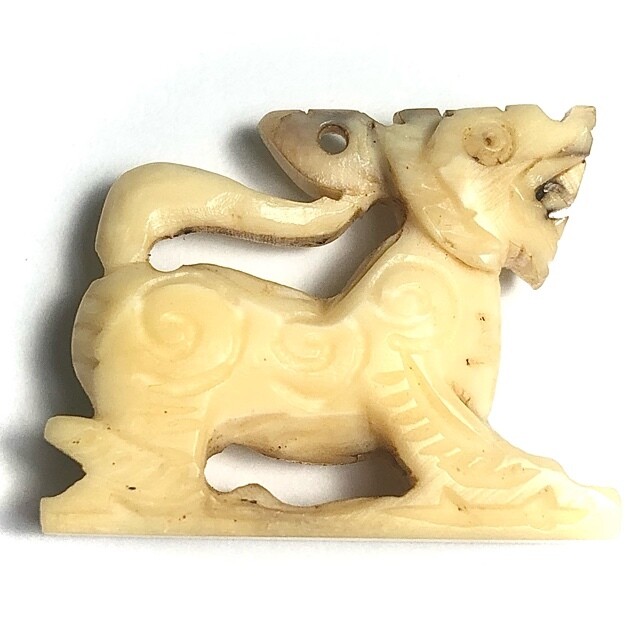
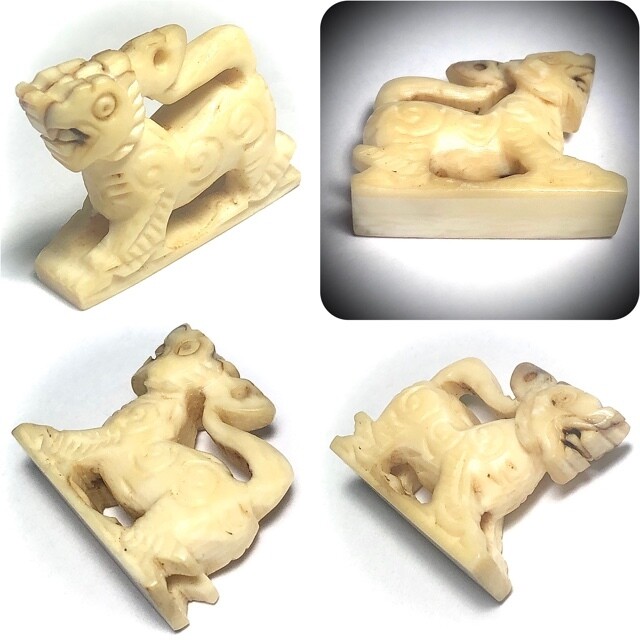
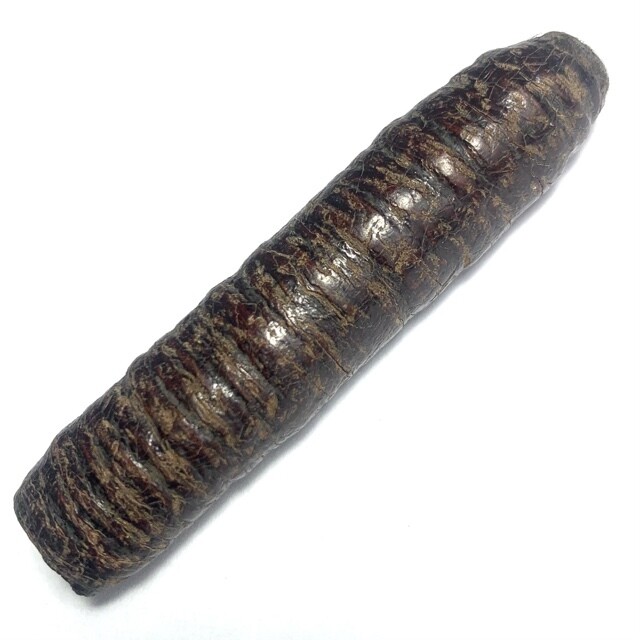
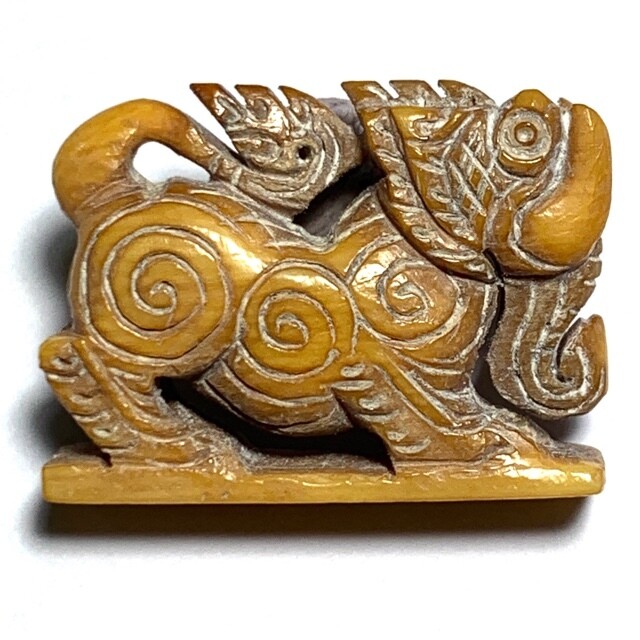
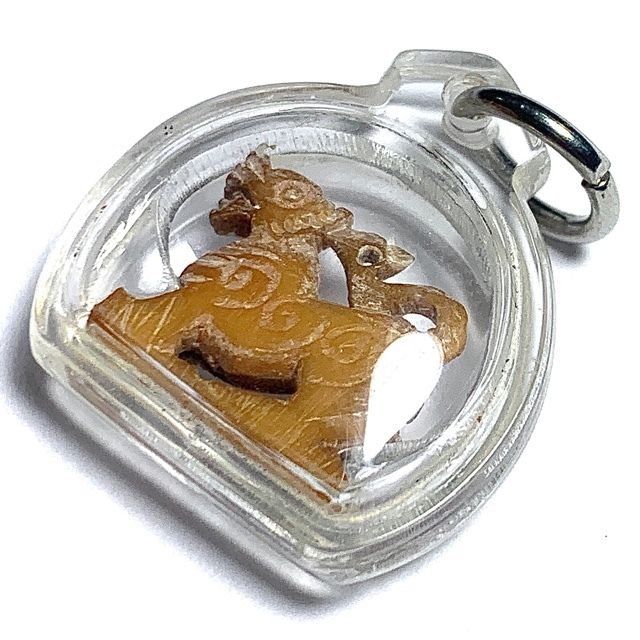
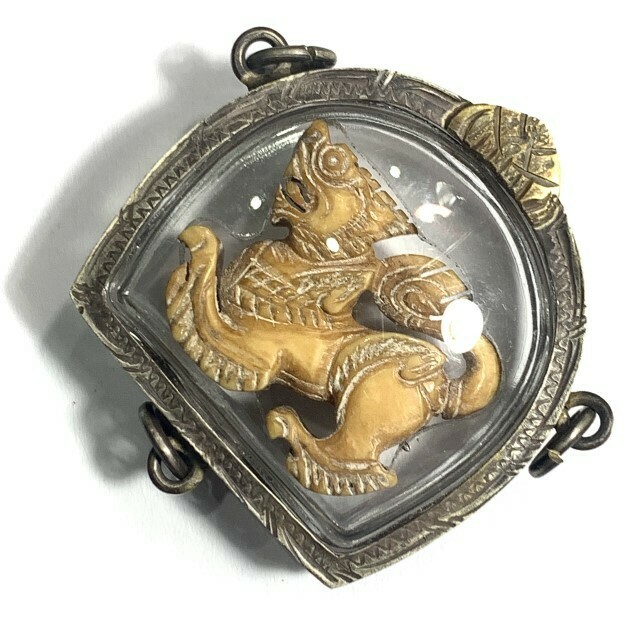
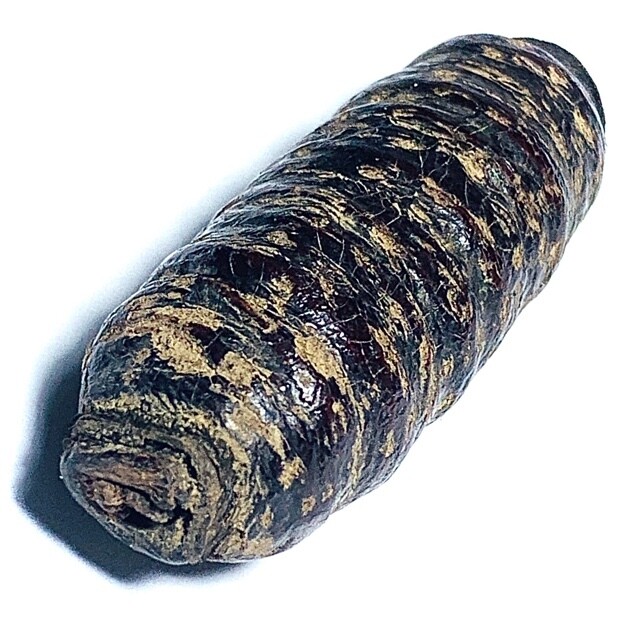
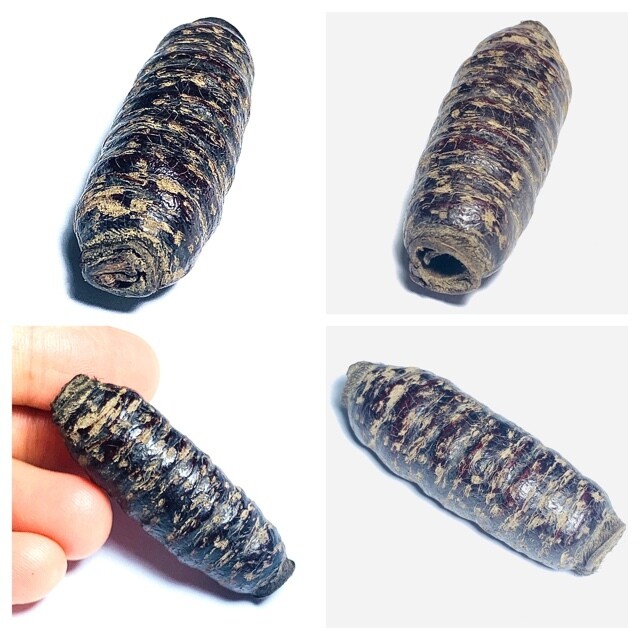
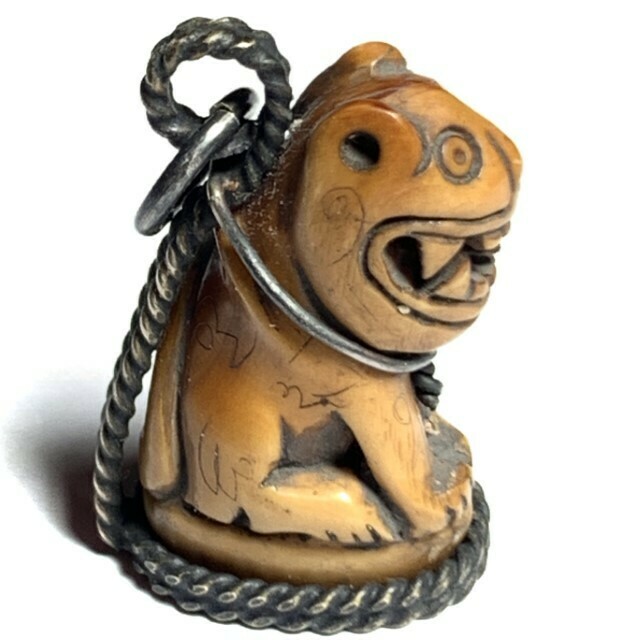
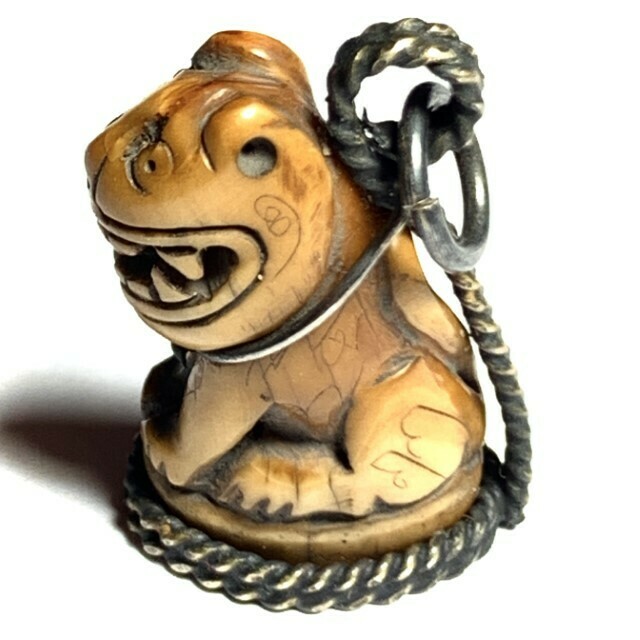
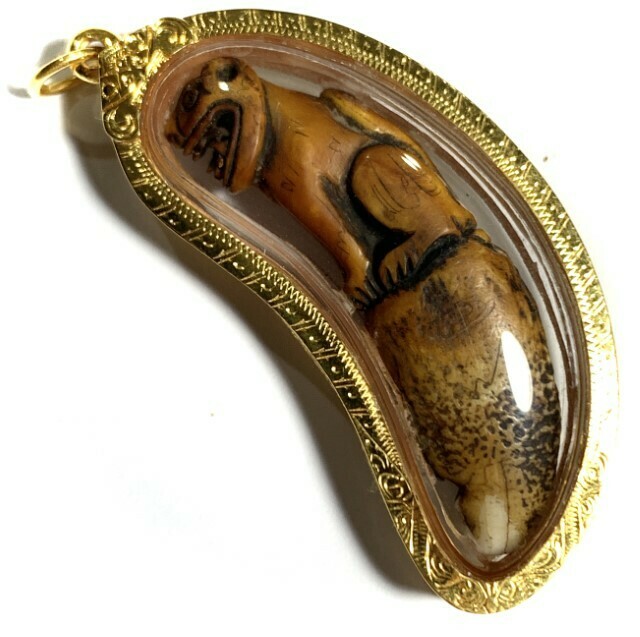
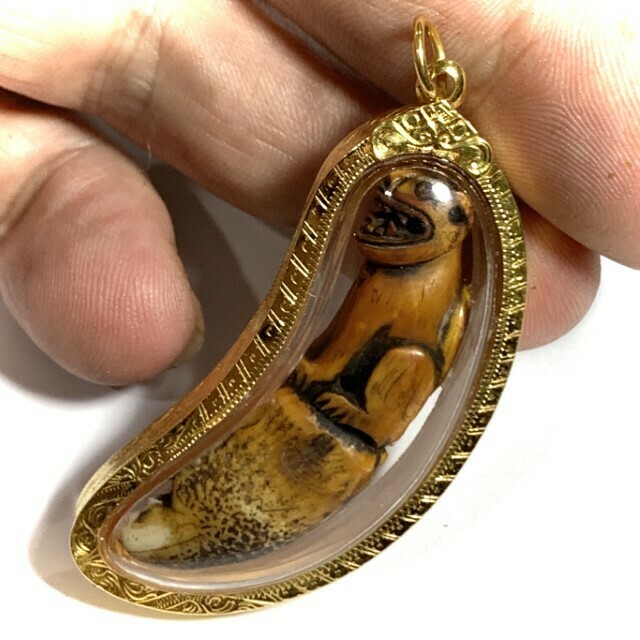
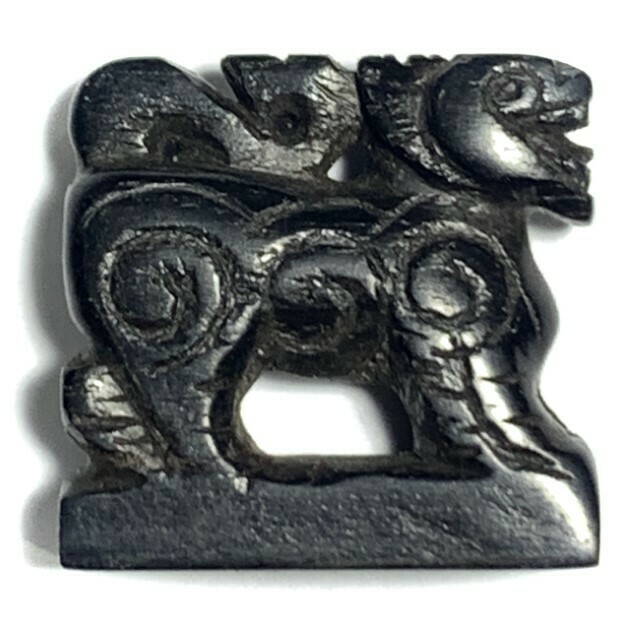
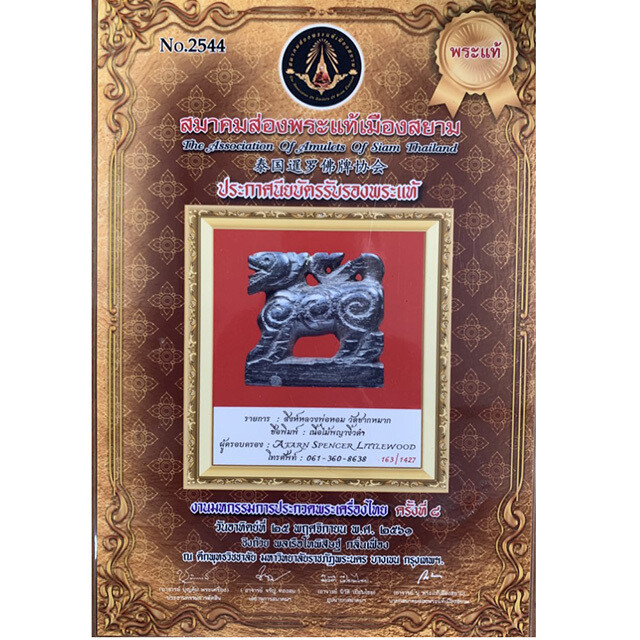
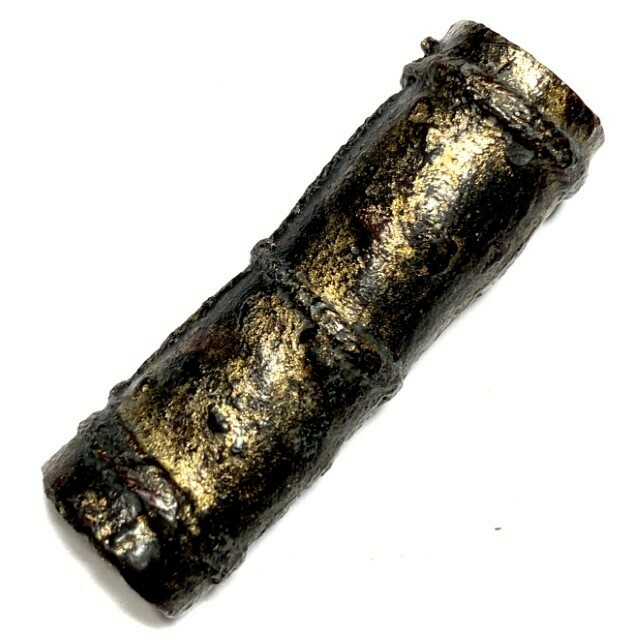
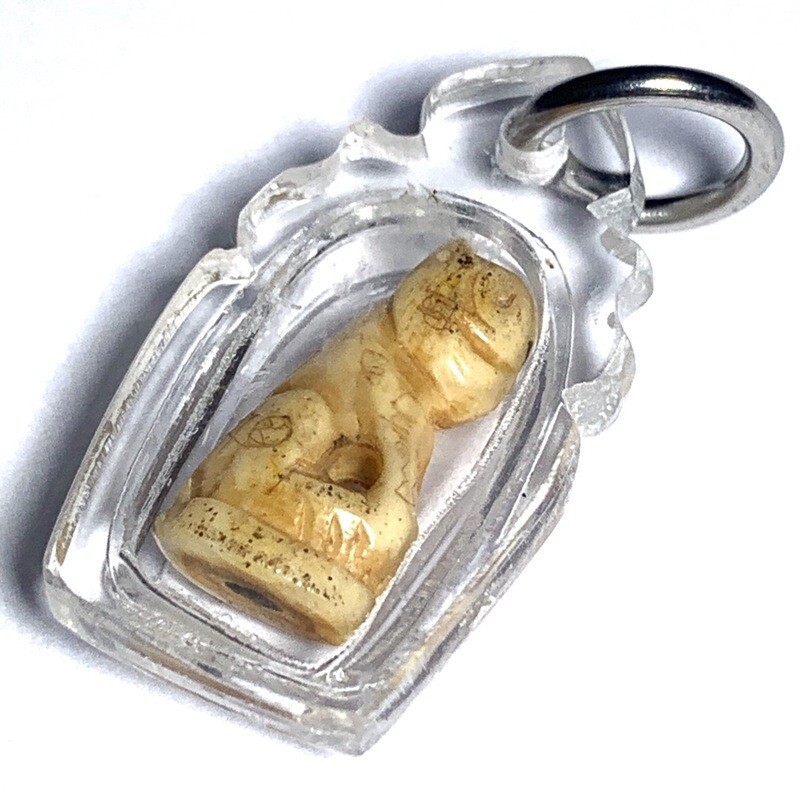
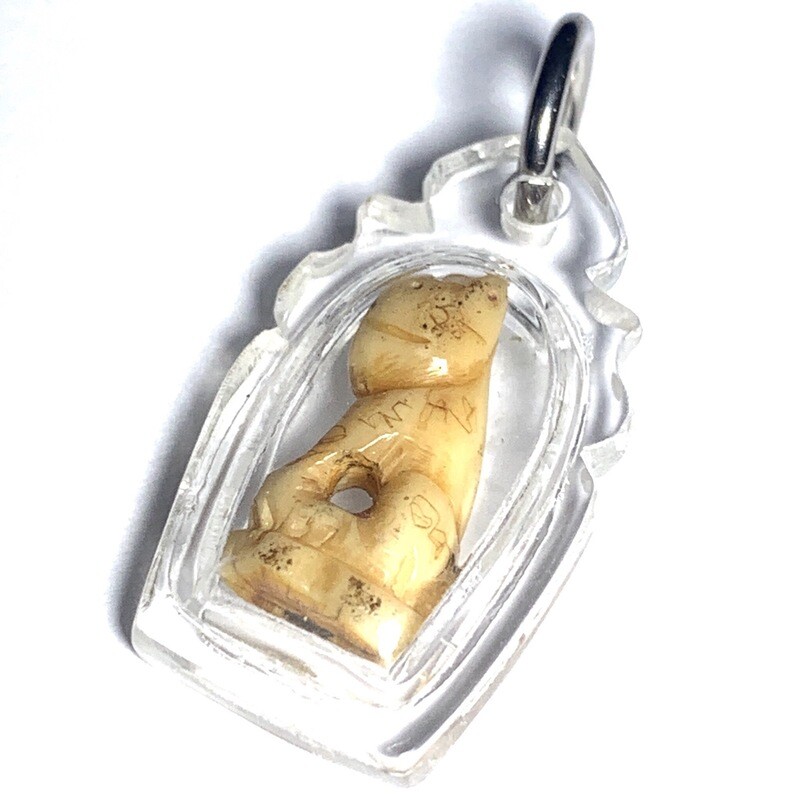
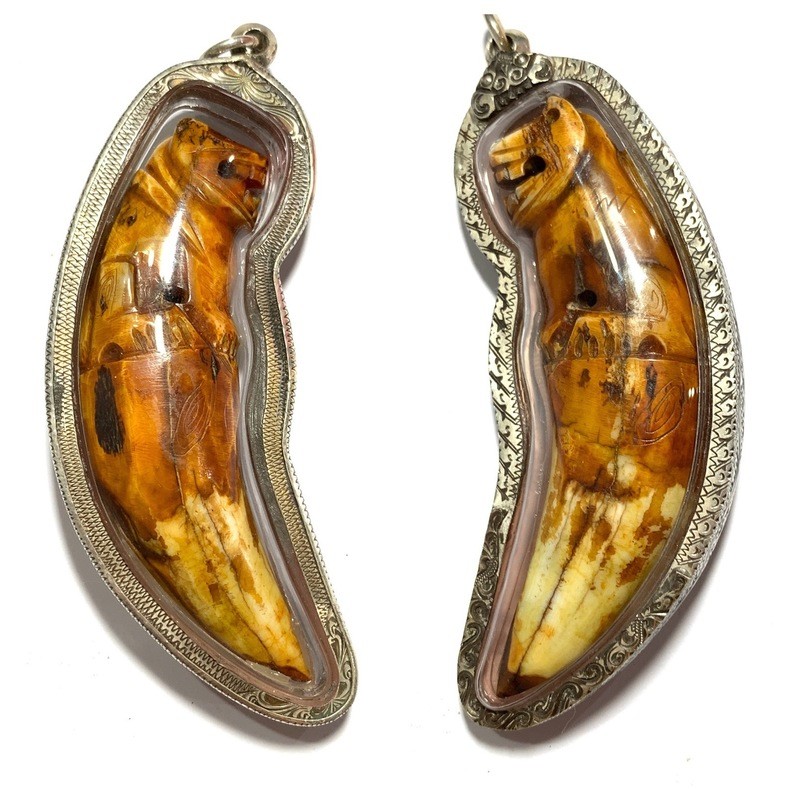
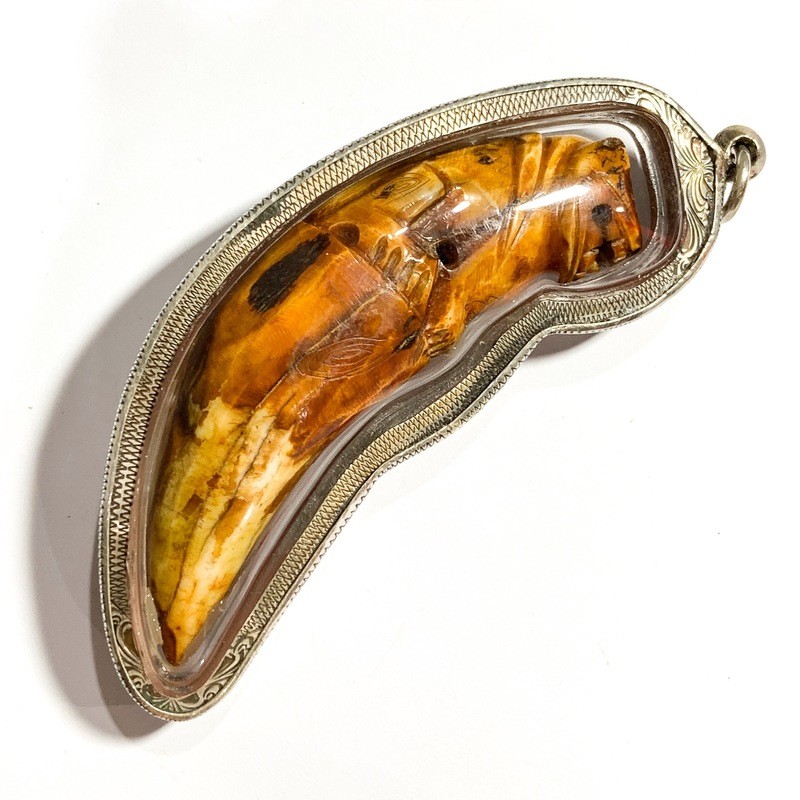
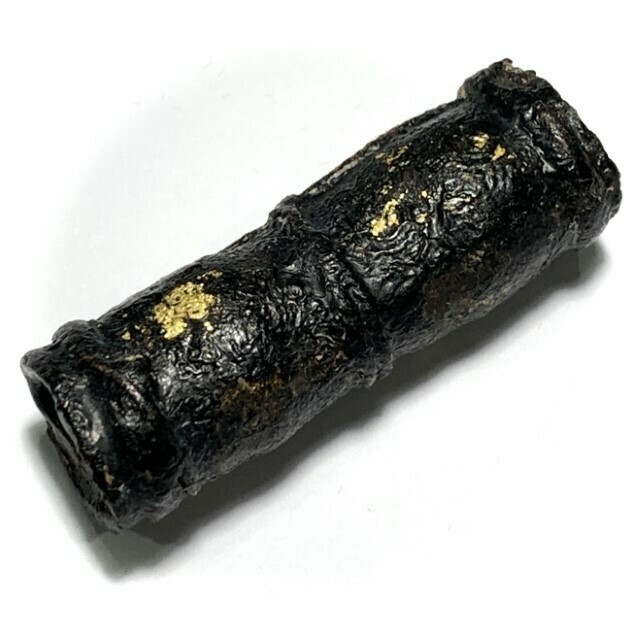
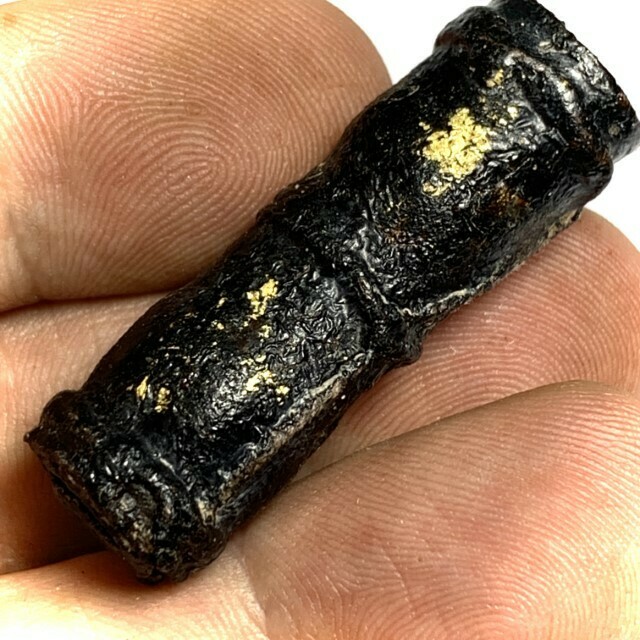
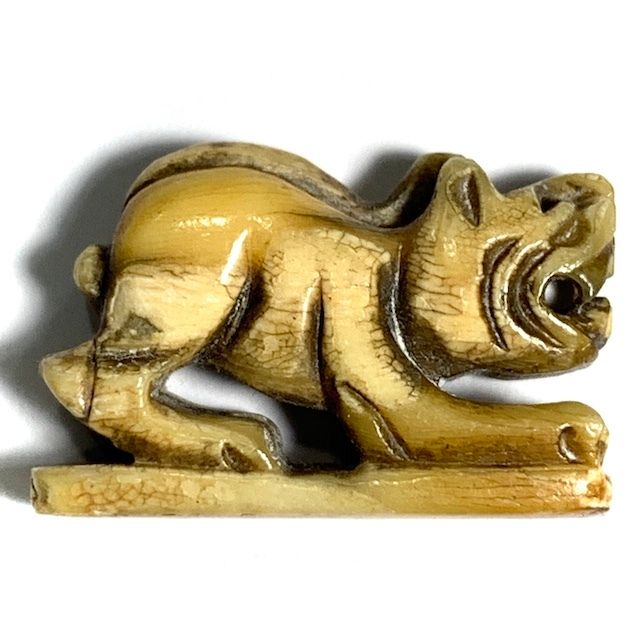
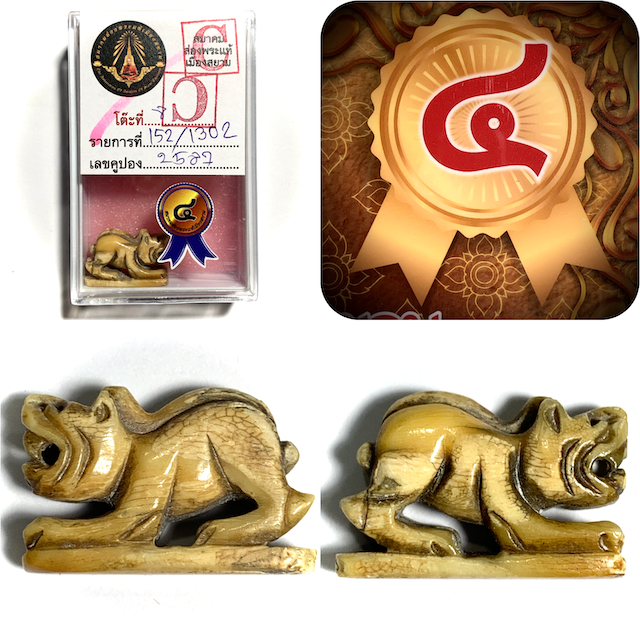
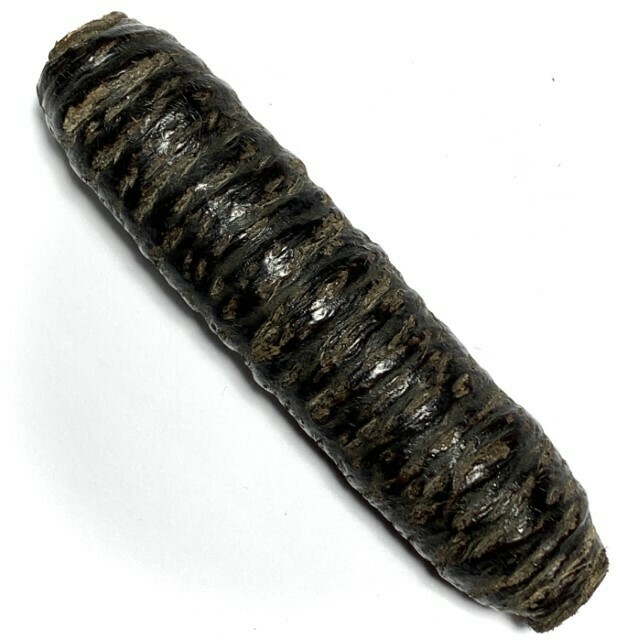
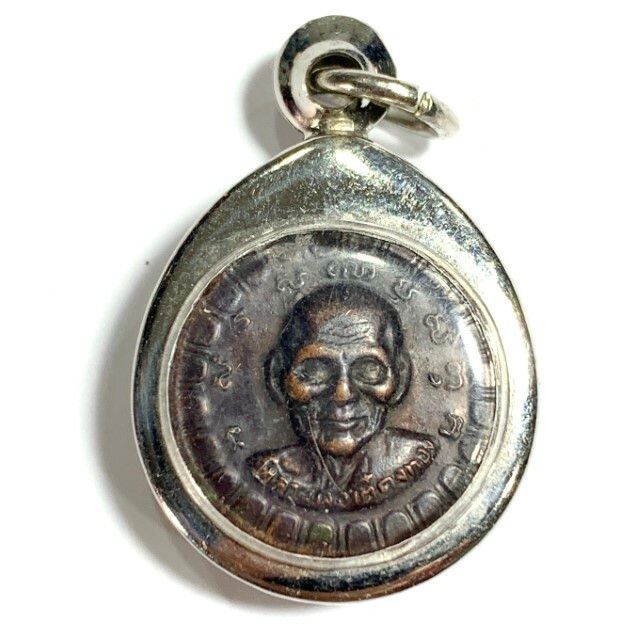
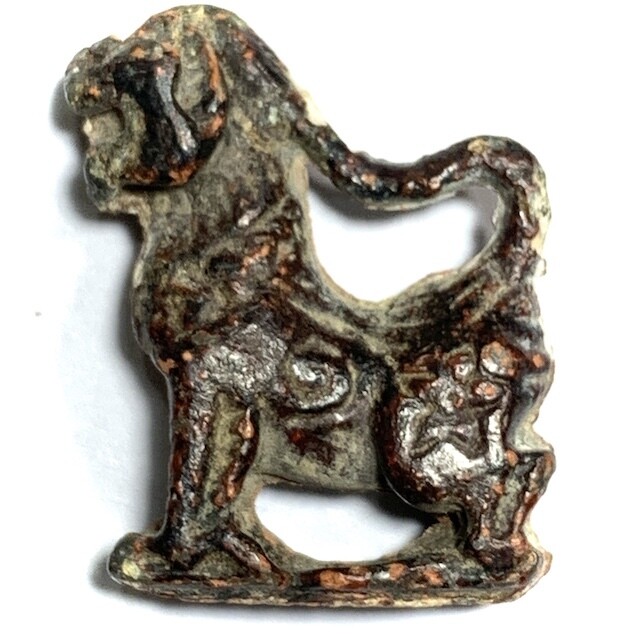
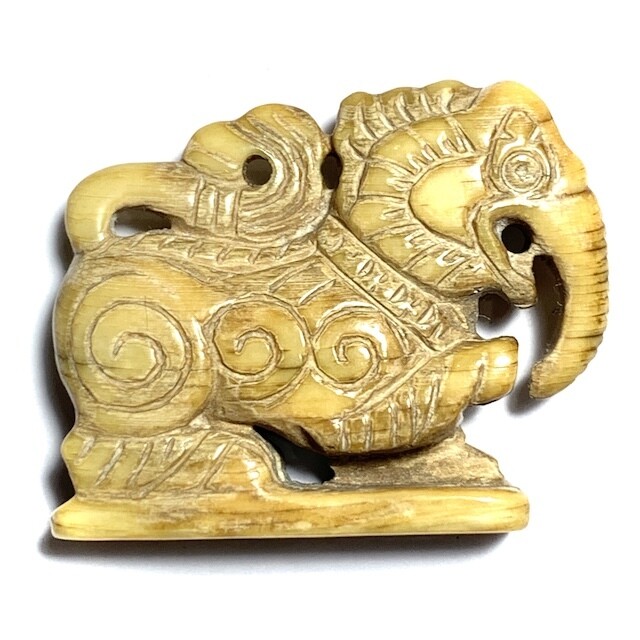
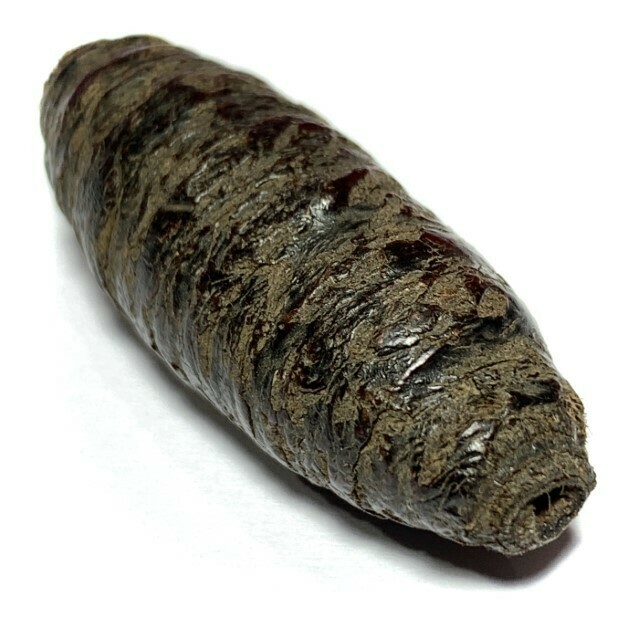
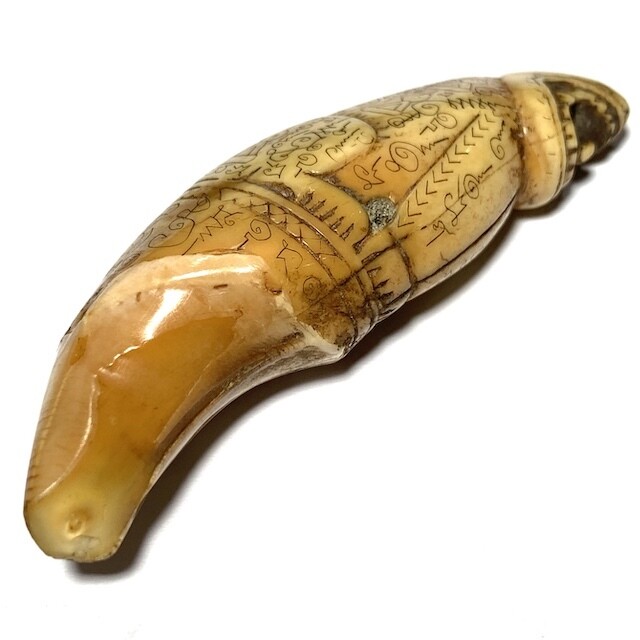
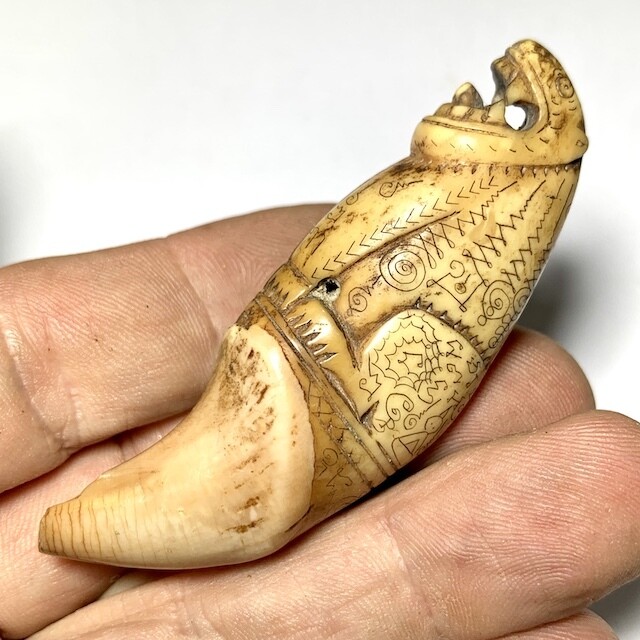
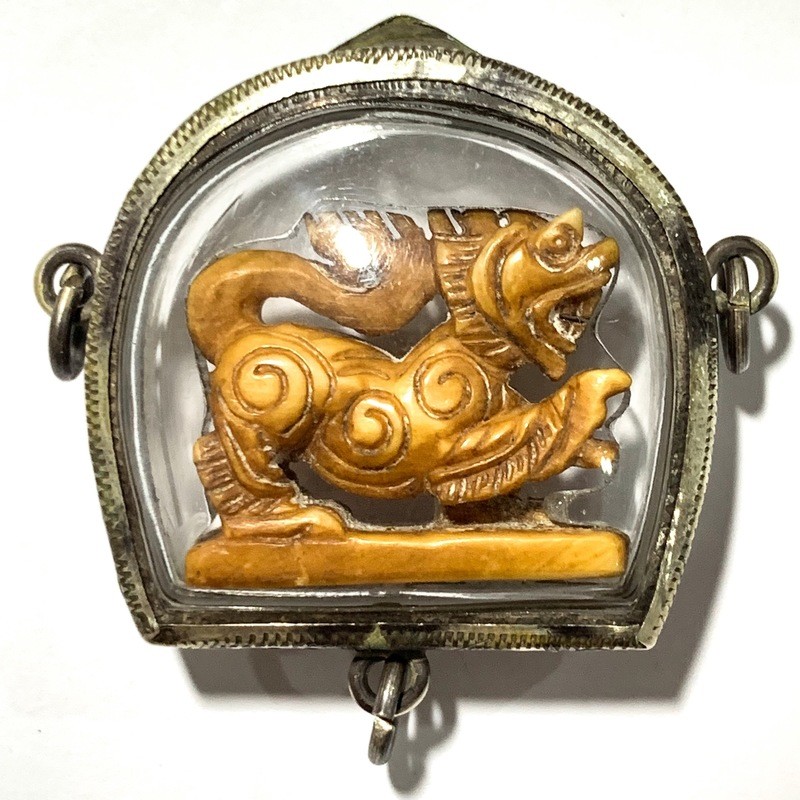
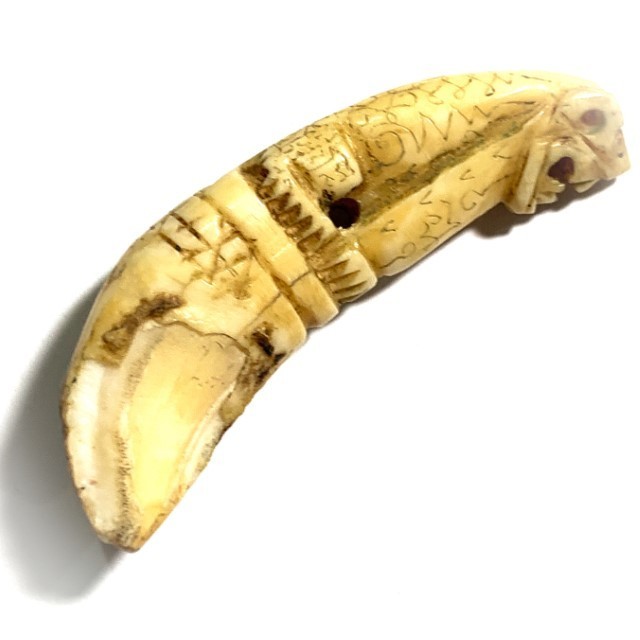
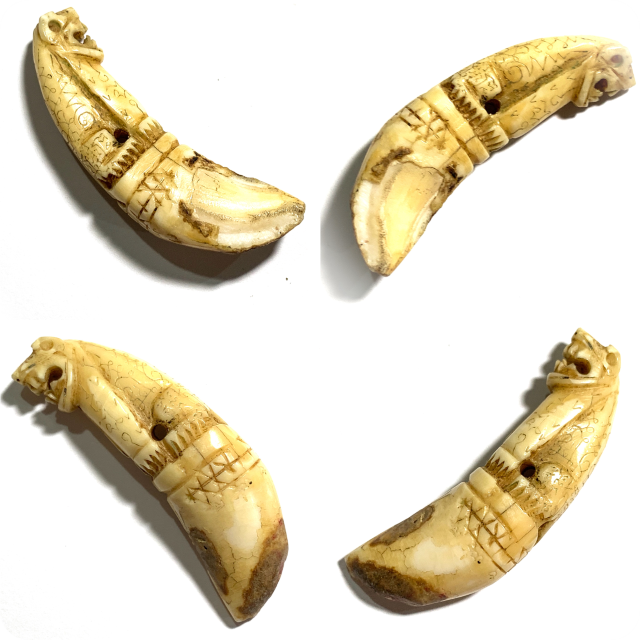
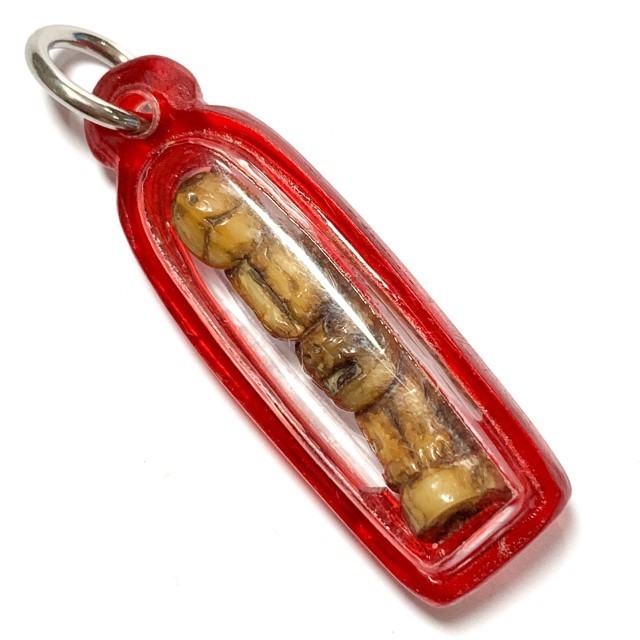
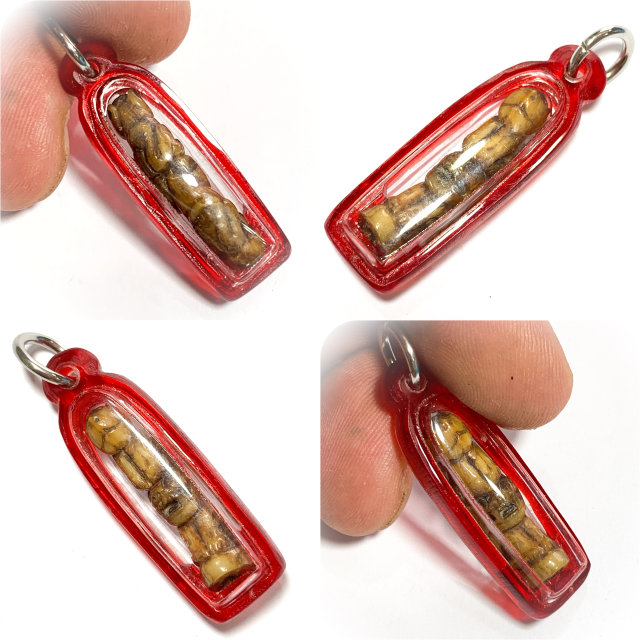
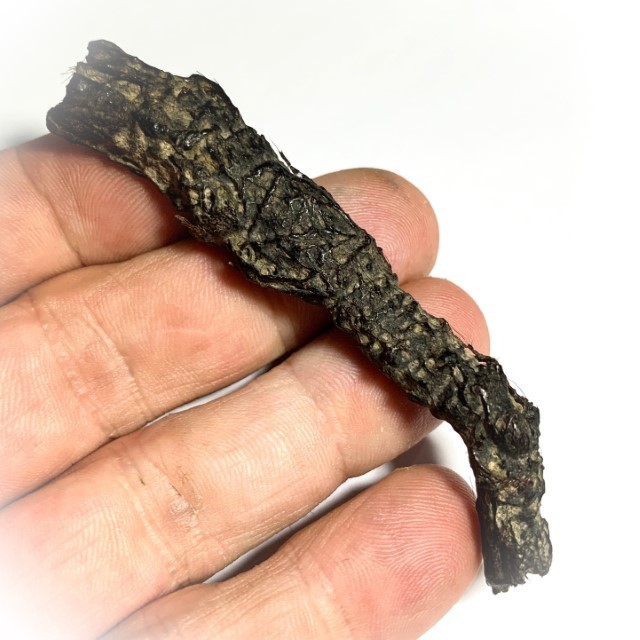
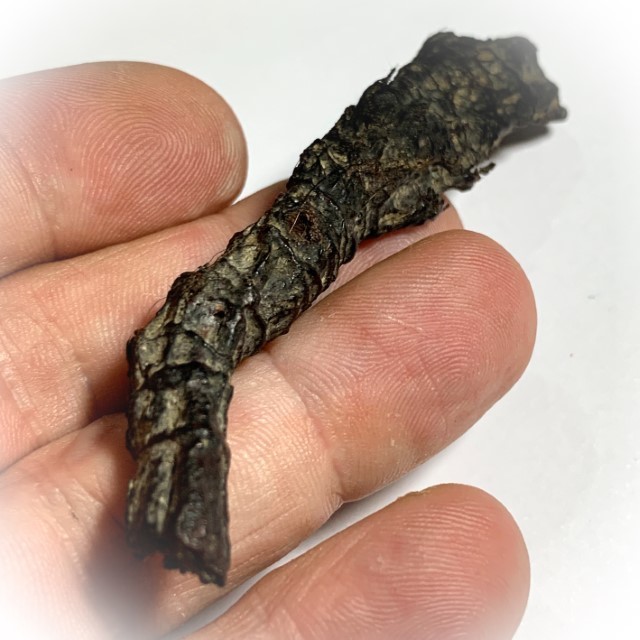
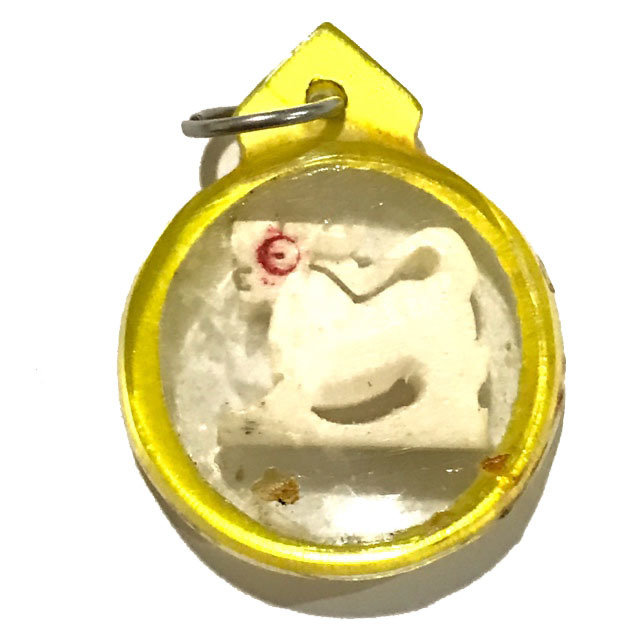
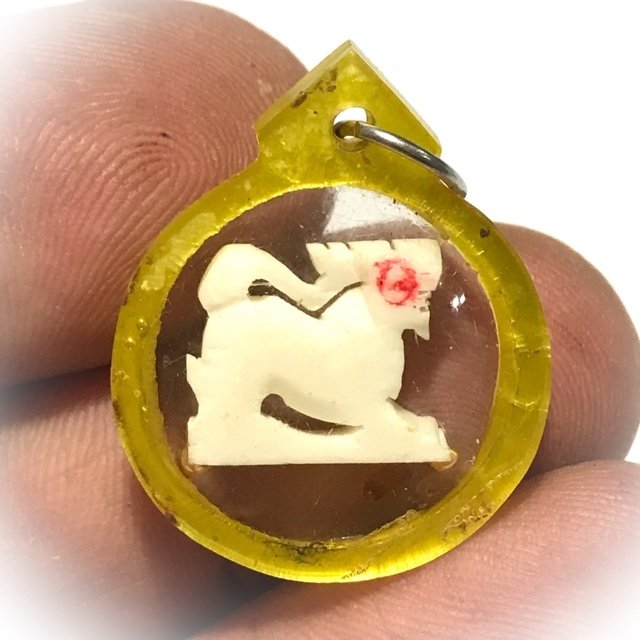
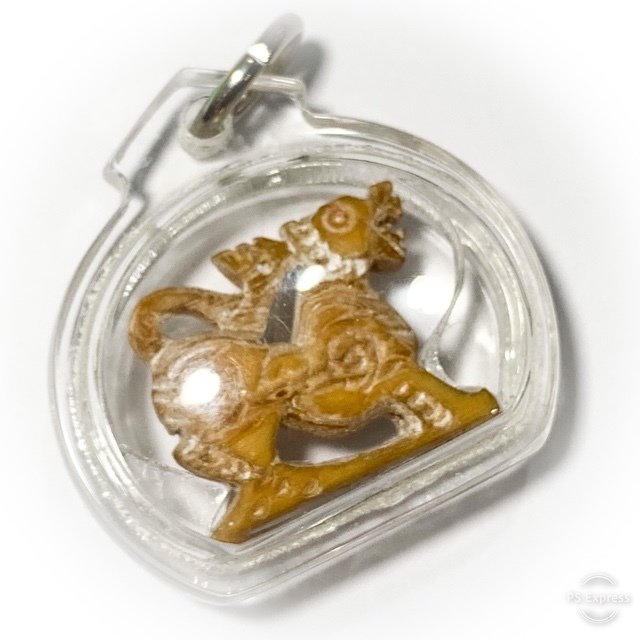
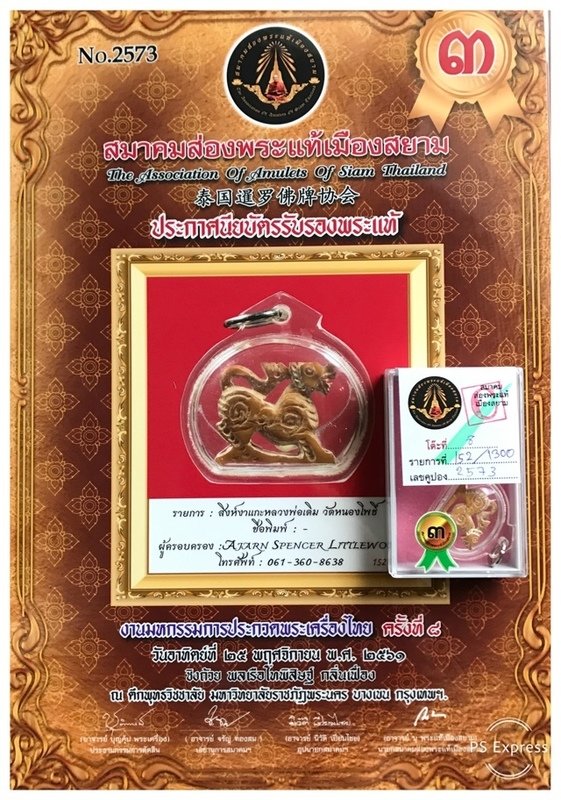
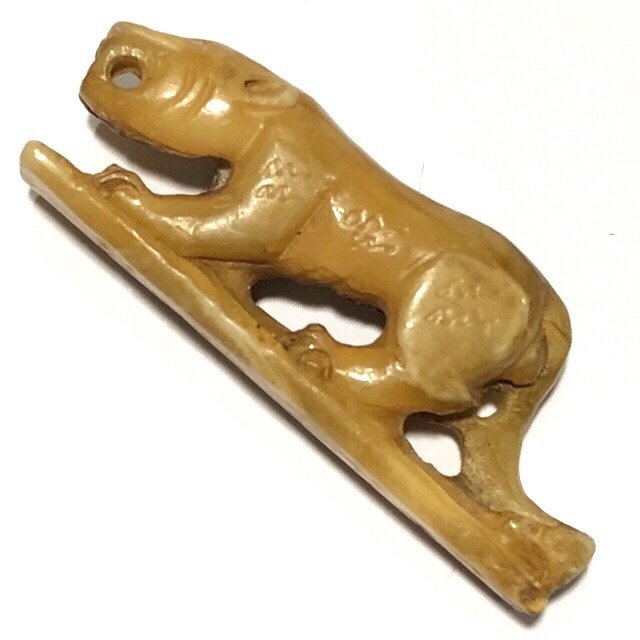
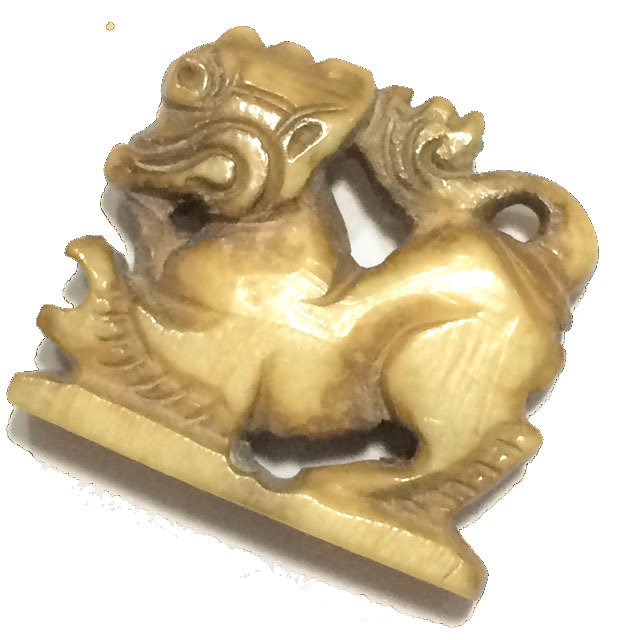
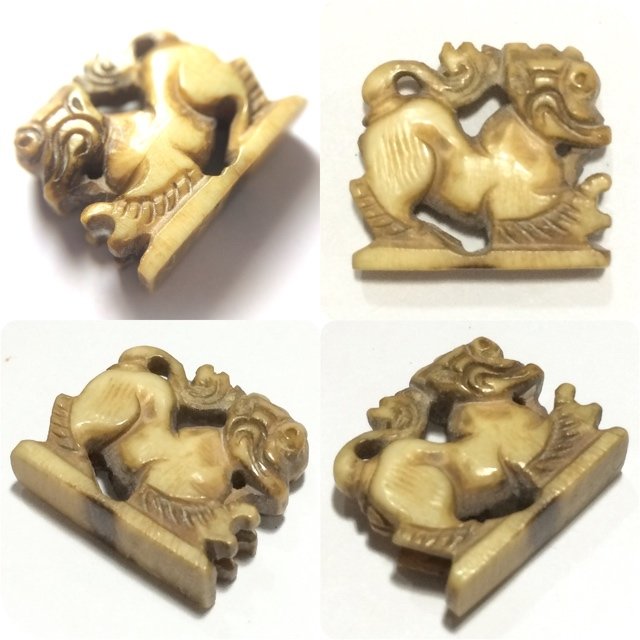
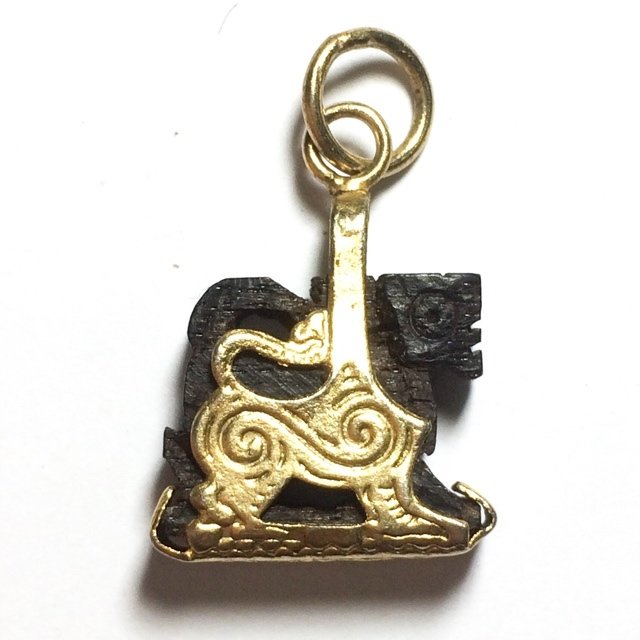
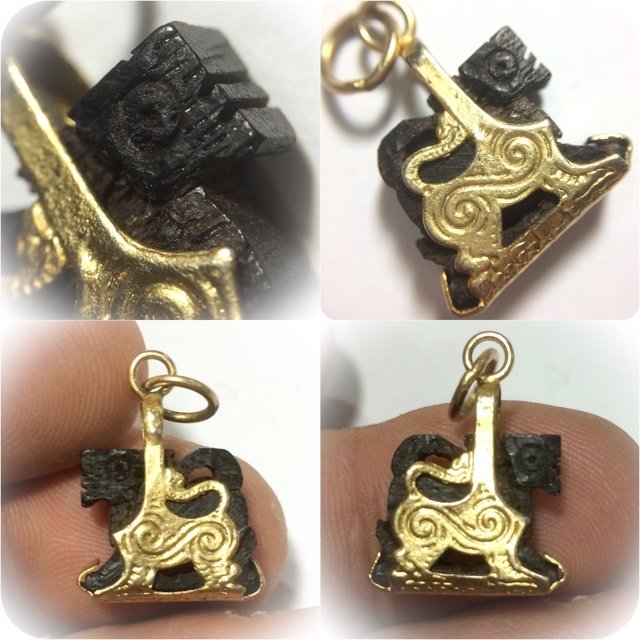
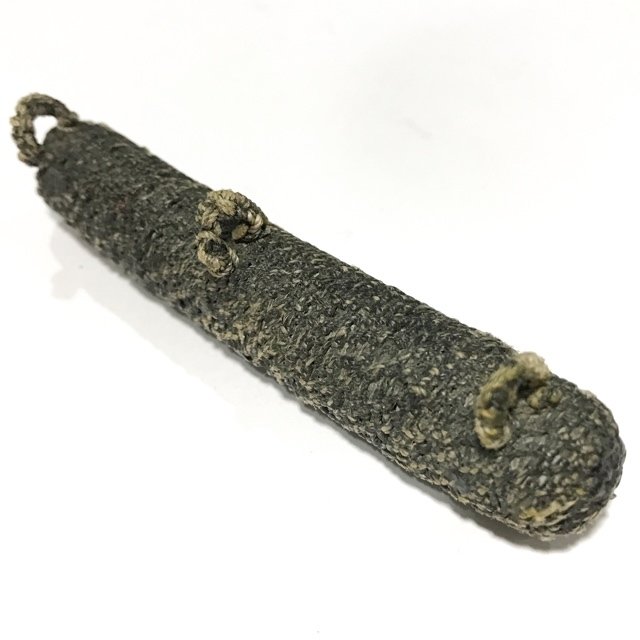
Ban Neng Pra Rahu; A one off original necromantic skullbone carving, in the image of Pra Rahu Om Jantr Asura Deva Eclipse God, with hand made Khom Agkhara spell inscriptions recognizably from the Great Ajarn Heng. An immensely protagonistic amulet, that stands out from the crowd with its powerful dark arts power. This large and highly detailed Necromantic Skull Carving, is a most imposing amulet for wear, or ritual Bucha object for the altar, and an immensely rare world class hand made ancient amulet of the Great Ayuttaya Lay Master; Ajarn Heng Praiwan, This exhibit is especially attractive visually, with a dark patina and very deep relief carvings, of a master artisan. Empowered with the Wicha Pra Rahu and the Famously Powerful Necromantic Invocations ubiquitous to Ban Neng bone carvings.

Ban Neng Pra Rahu Hand Carved Necromantic Skullbone Eclipse God Hand Spell Inscriptions Ajarn Heng Praiwan Detail 1

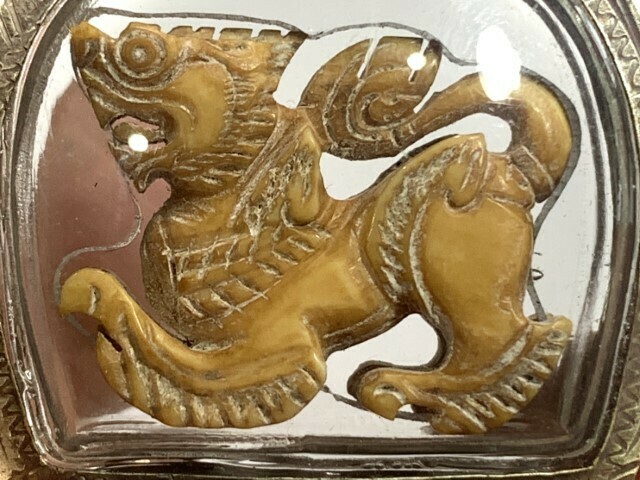
This skull bone carving, is in tapered oval shape, and is an immensely filigrain, and finely detailed master class carving from a top artisan, with an ancient and exquisitely finely carved details of a doubled image of the Pra Rahu Jantruparaka/Suriyuparaka Asura Deva Eclipse God of Good Horoscope, swallowing the moon/sun. The Borders and surrounding area around the image of the deity, is delicately carved with decorative Lai Thai embellishments. This carving is so visibly, finely carved with immense details, that it can only have been made by a Master Artisan, with the highest level of prowess. specializing in the Lai Thai traditonal Buddhist Line-Art.

Ban Neng Pra Rahu Hand Carved Necromantic Skullbone Eclipse God Hand Spell Inscriptions Ajarn Heng Praiwan Detail 2

Free Registered Air Parcel Worldwide Shipping

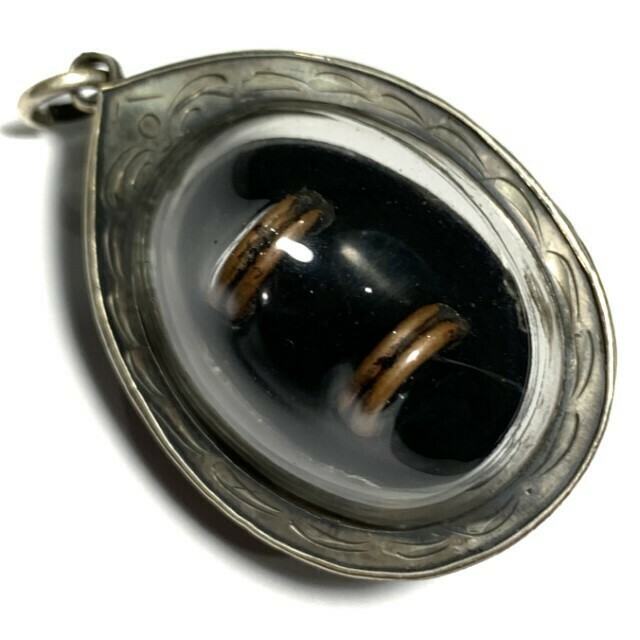
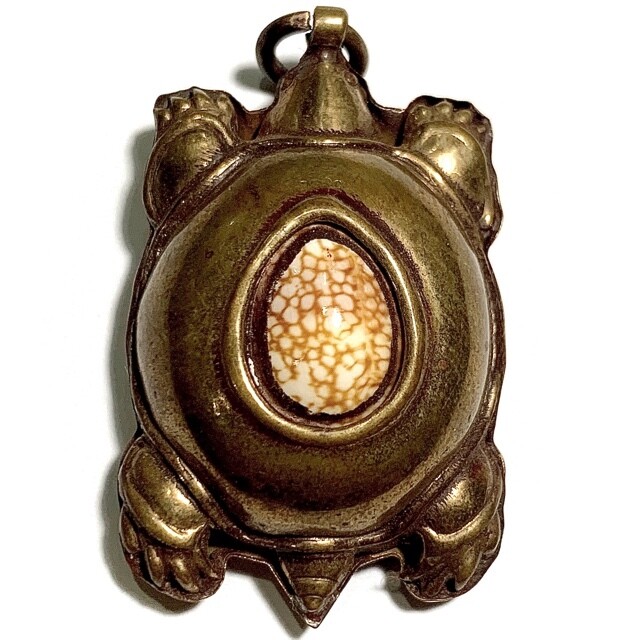
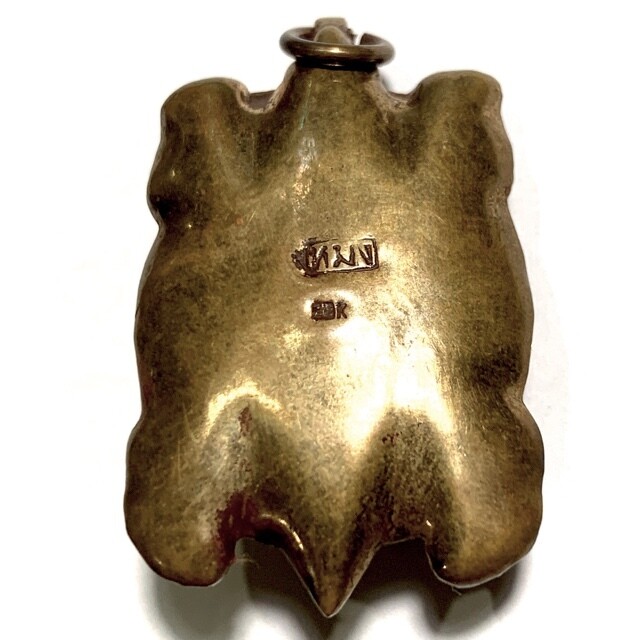
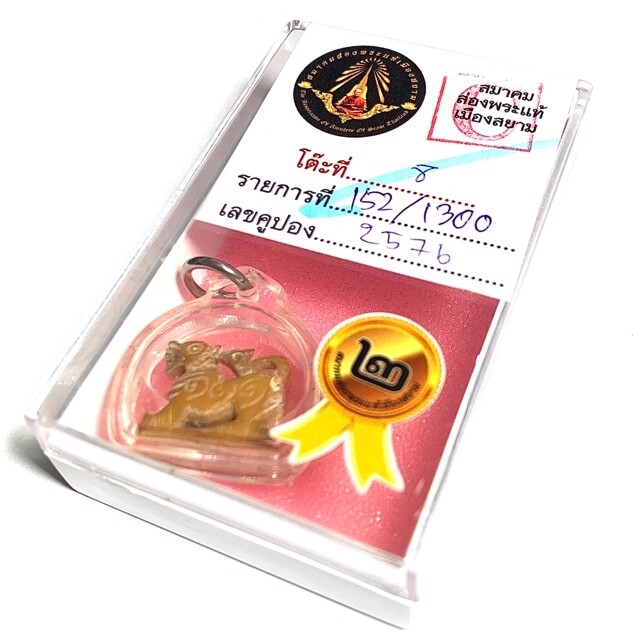
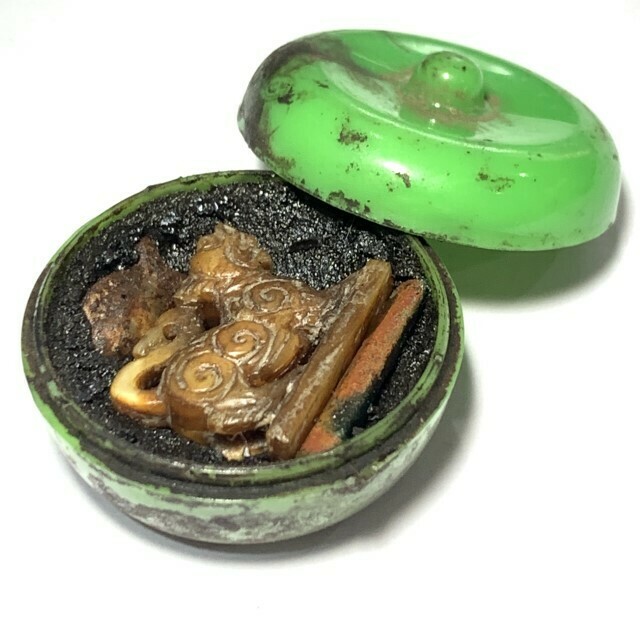
Free EMS / DHL / FedEx Express Shipping and the option of free solid silver Waterproof Casing is included with this item. An extremely rare, and exquisitely beautiful carving that is among the finest one could encounter by Olden days Lay Master Ajarn Heng Praiwan. Carvings of this level of fine detail, adherent to the ancient rules of Lai Thai fine line art traditional design, are in them-self, even when not powerfully blessed by great Monks, a piece of historical and cultural religious art that is of the museum curation level.

Ban Neng Pra Rahu Hand Carved Necromantic Skullbone Eclipse God Hand Spell Inscriptions Ajarn Heng Praiwan Detail 3

This particular Ban Neng in fact, is beyond any kind of true price estimation (Hence ‘Priceless’), for its beauty, spiritual and cultural value, and the level of artistic prowess of the design carving, makes it a piece of fine art in itself, in a collector niche, and an attractive talismanic powerful Necromancy fpr those adherent to the immensely powerful fast-acting effects of he Ban Neng. Definitely an item that would be fitting for ‘The Man who has everything’, as we bet, he does not have this yet 🙂

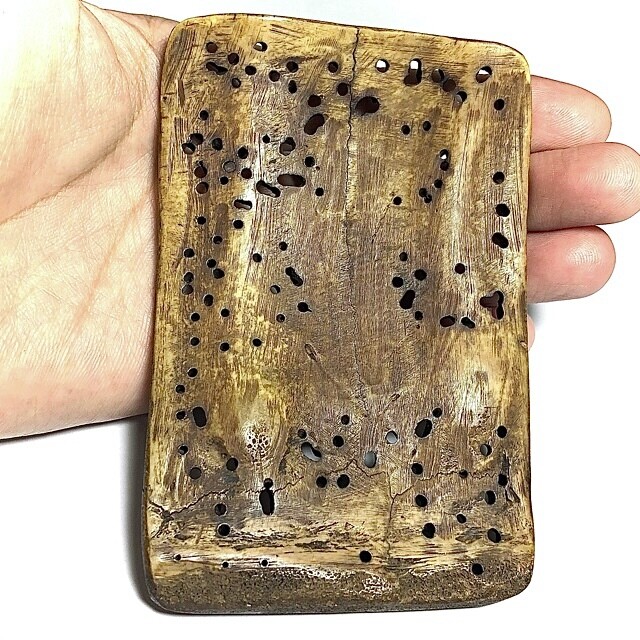
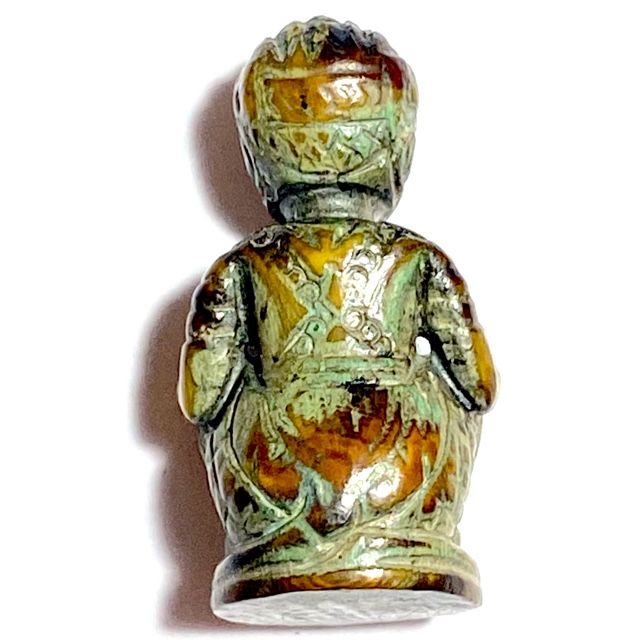
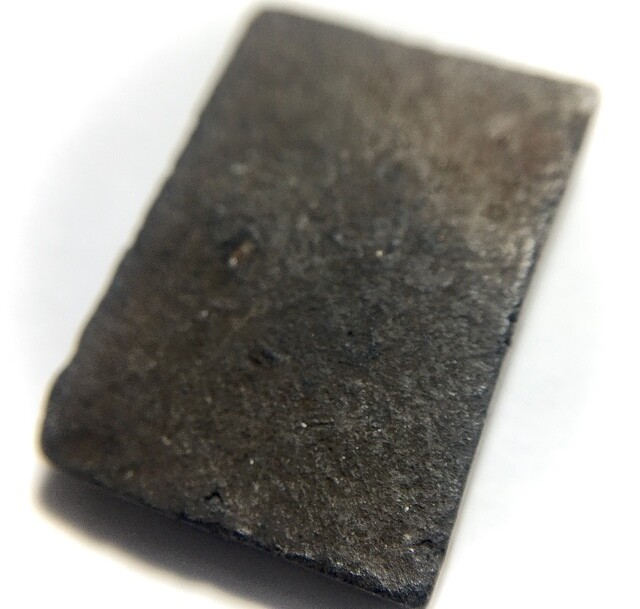
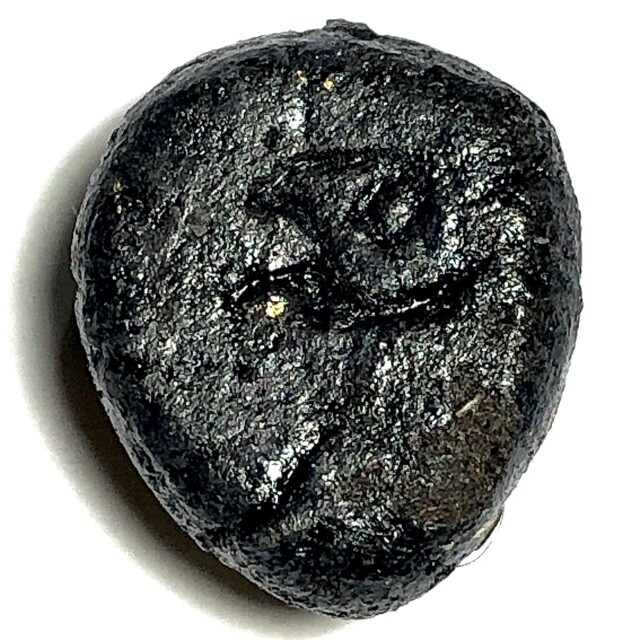
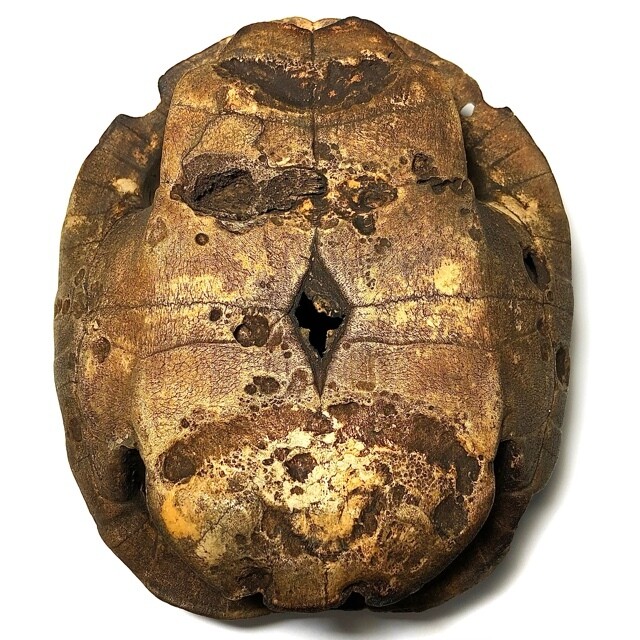
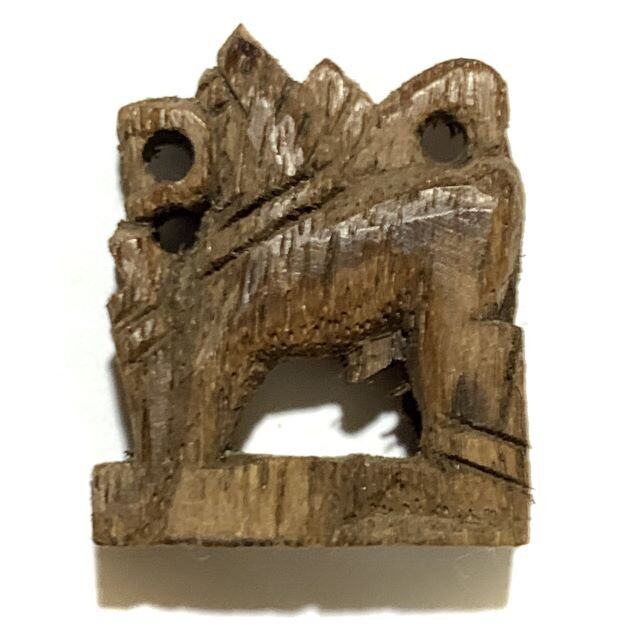
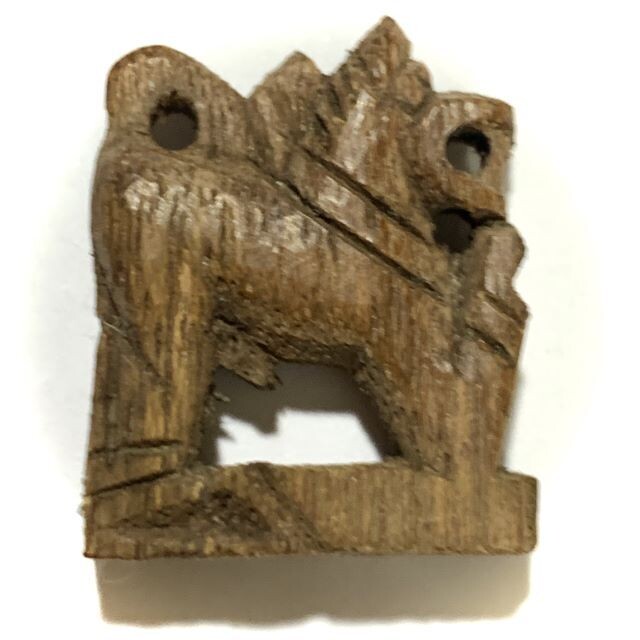
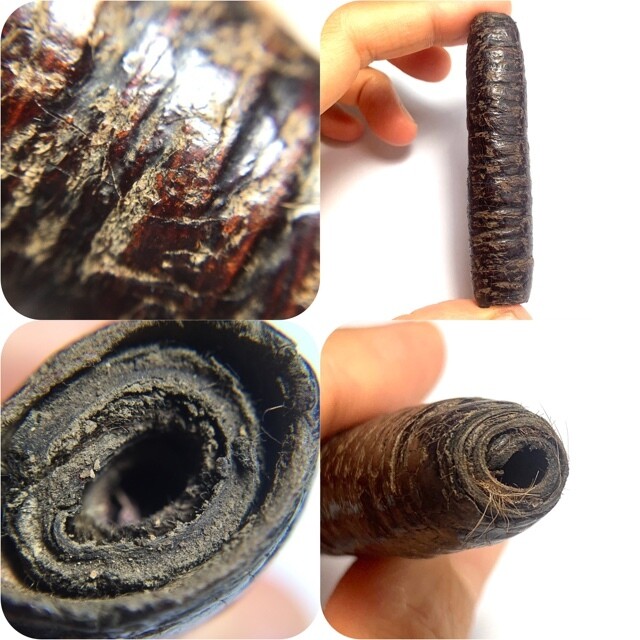
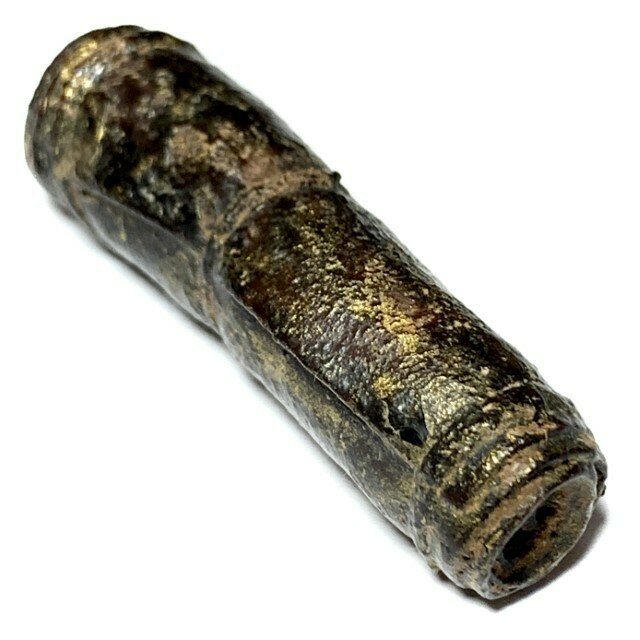
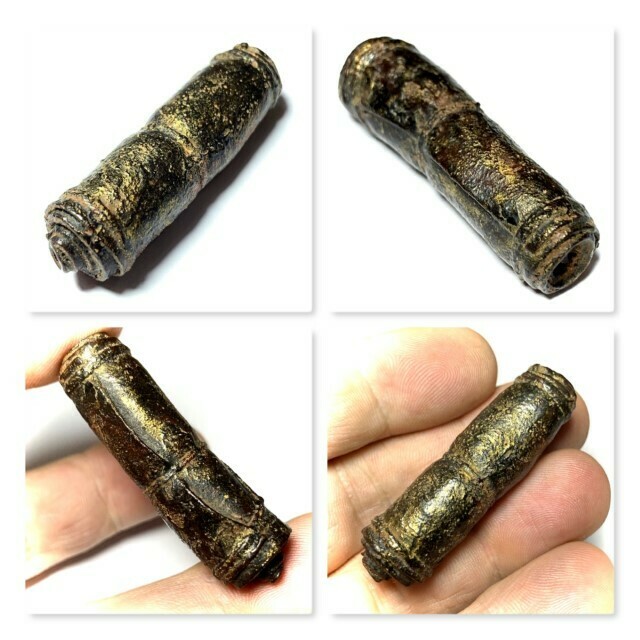
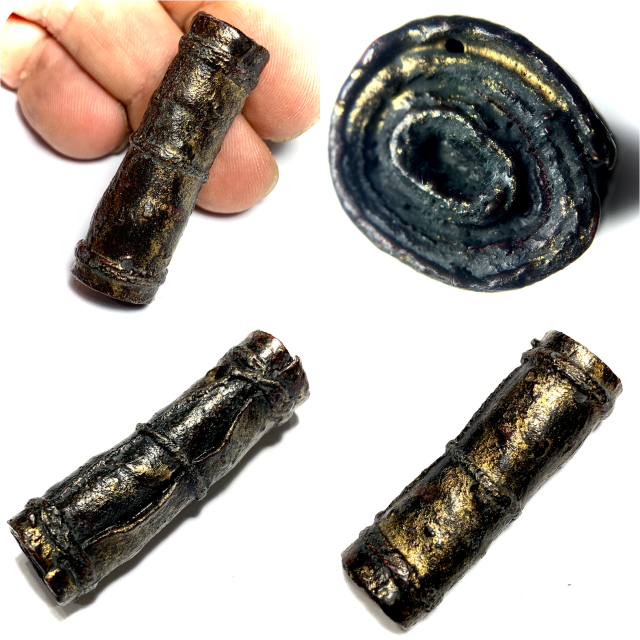
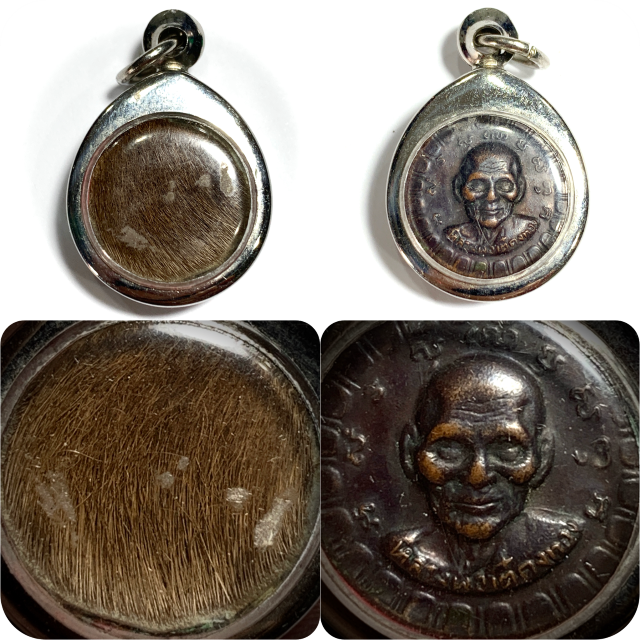
Below : Hand made spell inscriptions in Khom Agkhara (Khmer Sanskrit), are visible on the rear face (inner side of skullbone), of the Ban Neng Carving.

Ban Neng Pra Rahu Hand Carved Necromantic Skullbone Eclipse God Hand Spell Inscriptions Ajarn Heng Praiwan Detail 4

If you feel that your Fate and Horoscope is not Auspicious, then it could be that Pra Rahu is interfering. You can solve this problem by making Bucha offerings to Pra Rahu every Wednesday;

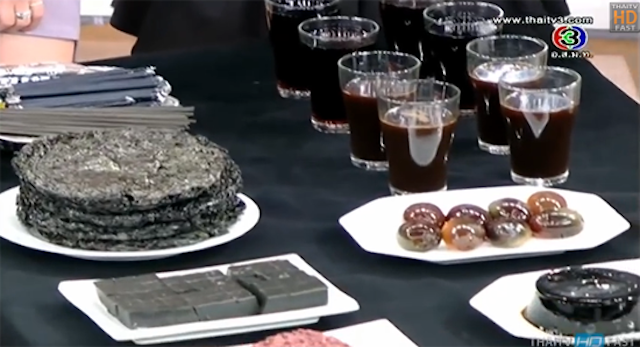
Light 10 black incense sticks (‘Toop’ in Thai), and five types of black offerings (e.g. black sticky rice, black jelly grass drink, black semolina or sago pudding and the like).

Ban Neng Pra Rahu Hand Carved Necromantic Skullbone Eclipse God Hand Spell Inscriptions Ajarn Heng Praiwan Detail 5

Ban Neng Pra Rahu Hand Carved Necromantic Skullbone Eclipse God Hand Spell Inscriptions Ajarn Heng Praiwan Detail 6

12 repetitions of the Kata Bucha Pra Rahu are to be Chanted;

Idtipiso Pakawaa Pra Rahuu Sataewaa Samaa Winyaana Idtipiso Pakawaa Putta Sangmi

Kata Chanting to Bucha Pra Rahu Thai amulets and Bucha statues (4 different Versions)

Kata Surya Buppaa (to be chanted in the daylight)

Gusaedto Ma Ma Gusaedto-dto Laalaa Ma Ma Dtolaamo Tolaamo Ma Ma Tolaamo Ma Ma Tolaamodtang Haegudti Ma Ma Haegudti

Ban Neng Pra Rahu Hand Carved Necromantic Skullbone Eclipse God Hand Spell Inscriptions Ajarn Heng Praiwan Detail 7

Kata Jantra Bupaa (to be chanted in the night time)

Yadt-thadtang Ma Ma Dtangthaya Dtawadtang Mamadtang Wadtidtang Saegaa Ma Ma Gaasaegang Gaadtiyang Ma Ma.Gaadtiyang Ma Ma Yadtigaa

When you begin to Bucha Rahu Deity, you should make the first ever session in the evening of a Wednesday (any time from 7 pm onwards). After you have done this once, you can make Bucha in the daytime if you wish, but the first time you must include the food offerings of black foods as well as the black incense. The second time onwards, only the incense is necessary in the daytime, if it is a lot of trouble to get the food offerings.

Ban Neng Pra Rahu Hand Carved Necromantic Skullbone Eclipse God Hand Spell Inscriptions Ajarn Heng Praiwan Detail 8

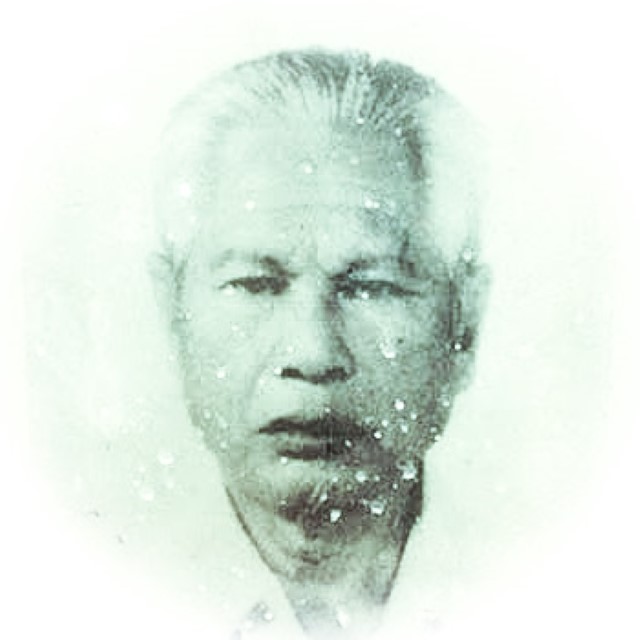
Ajarn Heng Praiwan was a great Lay Master and Adept Necromancer of olden days, of the Ayuttaya Province. Ajarn Heng was born in the year 2428 BE, and was ordained as a Buddhist Monk when he came of age, at Wat Suwan in Ayuttaya. During his ordained years, he studied many ancient magical Wicha of the grimoires of Wat Pradoo Rong Tam, which was a great library of ancient magical grimoires, perhaps the largest in the country. He became extremely able in the inscription of Khom Agkhara Sanskrit Spells, Kata Incantations, and Sacred Yant, and became very well known as a great Master of Sak Yant Thai Temple Tattoos.

Ban Neng Pra Rahu Hand Carved Necromantic Skullbone Eclipse God Hand Spell Inscriptions Ajarn Heng Praiwan Detail 9

Ajarn Heng Praiwan, studied the Wicha Grimoire of the Dtamra Radtana Mala, until attaining full Adept Mastery, after which he disrobed for a time, to help his parents. After which, he ordained again once more, at Wat Prayatigaram in Ayuttaya, with the Great LP Glan Tammachodti, Abbot of Wat Prayat, as his Upachaya Ordaining Monk. He spent a long period of time learning and mastering the full Dtamra of the Wicha of Luang Por Glan, after which he disrobed again, and became a lay-sorcerer until the end of his days, when he passed away at the age of 75, in the year 2502 BE.

Ban Neng Pra Rahu Hand Carved Necromantic Skullbone Eclipse God Hand Spell Inscriptions Ajarn Heng Praiwan Detail 10

It is said that Ajarn Heng’s father, was either a police officer, or a prison officer, and sent Ajarn Heng to Penang, and Singapore, to be educated. But Ajarn Heng did not finish his schooling, and left, because of his immense fascination and interest in the study of Saiyasart, & the Dtamra Saiyawaet Grimoires, of Thai Buddhist, Animist, and Necromantic Occult Practices. He even traveled to the South of Thailand to learn the most ancient Magical Practices of the Southern Khao or Sorcery Lineages.

Ban Neng Pra Rahu Hand Carved Necromantic Skullbone Eclipse God Hand Spell Inscriptions Ajarn Heng Praiwan Detail 11

After his time practicing and mastering the Southern Lineage Magical Practices, Ajarn Heng returned to his home Province of Ayuttaya, in Central Thailand. Ajarn Heng was now a Master of the Wicha of Luang Por Glan, and the Southern Wicha of Sorcery which dates back to the Sri Vichai Era of Siam. The Wicha Mastered in Entirety of Wat Pradoo, which Ajarn heng has undertook, came from the time when King Naresuan Maharach, ordered the Wicha Saiyasart Grimoire texts to be inscribed and stored at Wat Pradoo Roeng Tam.

Ban Neng Pra Rahu Hand Carved Necromantic Skullbone Eclipse God Hand Spell Inscriptions Ajarn Heng Praiwan Detail 12

The inscriptions were begin and finished between the years 2133 – 2148 BE. It was King Pra Mahesuan Maharach, who united the city Kingdoms of Siam and Unified the country into one Land, namely ‘Siam’, or ‘Thailand’, and made the city of Ayuttaya the first capital of the Kingdom (Later to be moved to Bangkok, for logistical and geo-political reasons).

Ban Neng Pra Rahu Hand Carved Necromantic Skullbone Eclipse God Hand Spell Inscriptions Ajarn Heng Praiwan Detail 13

Ajarn Heng began to serve the public and accept devotees, at first by only performing Sak Yant Tattoos, and became known as one of the Top Sak yant Masters in the Country of his Time. Another later Kroo Ba Ajarn and Friend in Dhamma, Luang Phu Si, of Wat Sakae in Ayuttaya (Temple of LP Doo), once told that during the time of King Rama the 3rd, during a time of military dispute, around the year 2475 BE, many regiments of Thai soldiers, of both high and lower standing went to Ajarn Heng for his protective Yant, due to the miraculous powers attributed to them, all one the same day.

Ban Neng Pra Rahu Hand Carved Necromantic Skullbone Eclipse God Hand Spell Inscriptions Ajarn Heng Praiwan Detail 14

On this occasion, Ajarn Heng constructed the ritual place at Wat Hantra Temple. Ajarn Heng invited a host of powerful Monks with Psychic Powers to assist in the ceremony of Blessings. In this occasion (around 2476 BE),Ajarn Heng had to work very hard to gather a large number of Master Monks to come and perform the Suad Nam Puttamont Chanting Ritual, and this was a very had task in those days in Ayuttaya, to travel around and fine enough top masters who knew the chanting of the Nam Pra Puttamont and the Putta Pisek (Buddha Abhiseka) ceremonie. He was assisted in this task, by the great Luang Phu See of Wat Sakae. But on this occasion, Luang Phu Si could not attend as well, because he was busy with Dhamma Duties at Wat Liab. But, after this Ceremony, Ajarn Heng would always invite Luang Phu Si to attend all of his subsequent Blessing Ceremonies, and assist with empowerment.

Ban Neng Pra Rahu Hand Carved Necromantic Skullbone Eclipse God Hand Spell Inscriptions Ajarn Heng Praiwan Detail 15

Ajarn Heng was a relatively wealth person with two houses and land stakes, one in the countryside in Tung Hantra, and one in Bangkok. And so, he would have devotees seek him out in Bangkok and in Hantra, for Sak Yant Tattoos, and his powerful Takrut amulets. It became popular to get high class artisans to carve his amulets, as well as village people would carve animist charms from ivory, wood, and sometimes, necromantic Ban Neng skullbones, which are of course, along with his famous metallic, and inimitably designed Takrut Maha Jakkapat Metallic Scroll Spells, the most highly valued, rare, and sought after by devotees of the great anbcient Ayuttaya Lay Sorcerer. Finally, Ajarn Heng moved to stay in Suan Malee, until the Wars in Asia Broke Out, whereupon he left the Capital, and returned to his home Province of Ayuttaya.

Ban Neng Pra Rahu Hand Carved Necromantic Skullbone Eclipse God Hand Spell Inscriptions Ajarn Heng Praiwan Detail 16

During this time, there were many Gangsters and Highwaymen, and a lot of need for Sak Yant Tattoos for Kong Grapan Chadtri and Klaew Klaad protective Magic, and Ajarn Heng became a highly acclaimed master, renowned for his Yant Gao Yord (A Wicha Obtained from the Great LP Hrun). Ajarn Heng was able to receive additional Wicha from the famous temple of study of Sorcery, Wat Sam Jeen, as well as receiving Wicha from the great Luang Phu Tong, of Wat Rat Ayotaya, and Luang Phu Kam Wibun.

Ban Neng Pra Rahu Hand Carved Necromantic Skullbone Eclipse God Hand Spell Inscriptions Ajarn Heng Praiwan Detail 17

Ban Neng Pra Rahu Hand Carved Necromantic Skullbone Eclipse God Hand Spell Inscriptions Ajarn Heng Praiwan Detail 18

Ajarn Heng’s Kong Grapan magic was so famous, that it became popular for police and military to get his tattoos, but also that they did not like the fact that so many Gangsters had them too, and were impossible to shoot dead. His Takrut Jappapattirach was also both infamous, and those who wore one were feared to be invincible. There was once a time when Ajarn Heng was parked in a boat on the banks of the river at Wat Cherng Lane Temple, where the Police came, and had to forbid Ajarn Heng from tattooing more, because the area was overflowing with Gangs of Highwaymen, and his tattoos were making it impossible for the police to catch them.

Ban Neng Pra Rahu Hand Carved Necromantic Skullbone Eclipse God Hand Spell Inscriptions Ajarn Heng Praiwan Detail 19

Ban Neng Pra Rahu Hand Carved Necromantic Skullbone Eclipse God Hand Spell Inscriptions Ajarn Heng Praiwan Detail 20

Charms & Talismans

Thai Buddhist, Animist, and Occult Charms and Talismans, authentically blessed by the great Monks and Lay Masters of Old, and Present Day
Filters

Filters
1 - 60 of 801 items

Ajarn Spencer Littlewood for ancientamulet.com
All rights reserved.


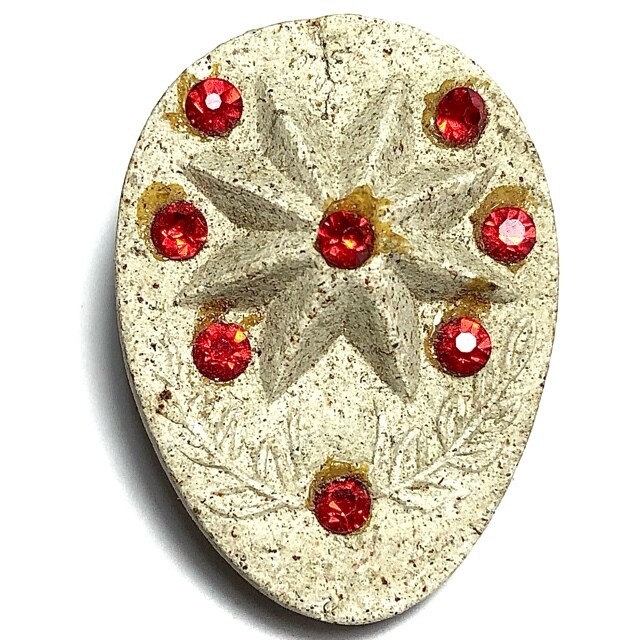
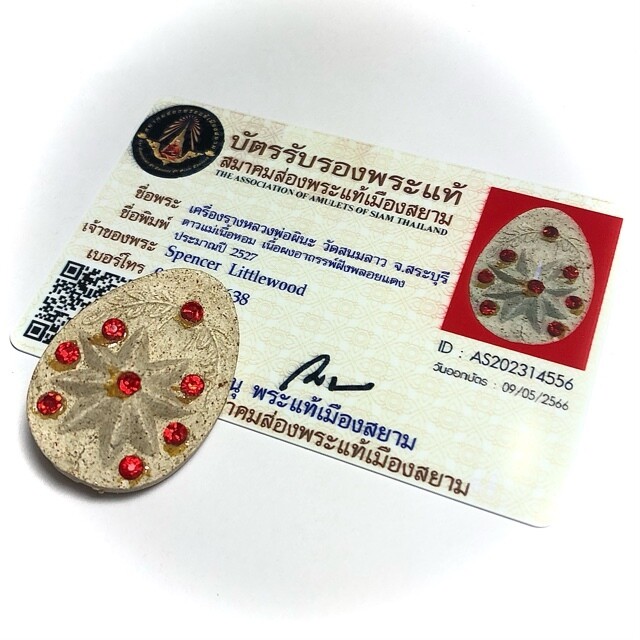
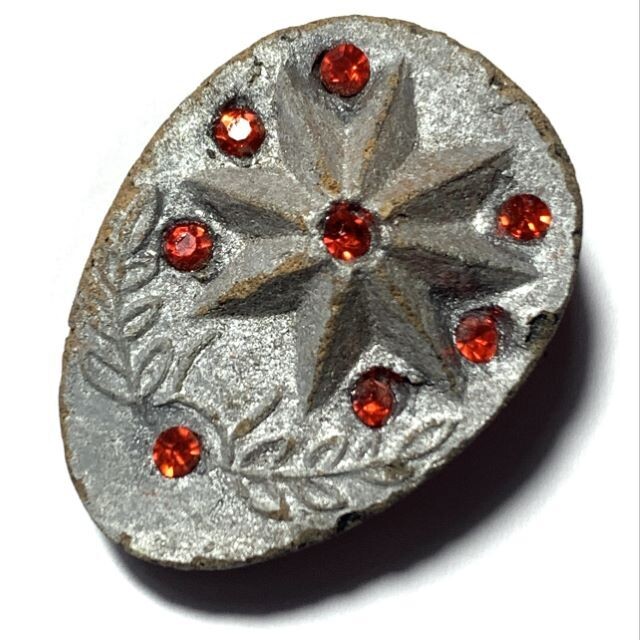
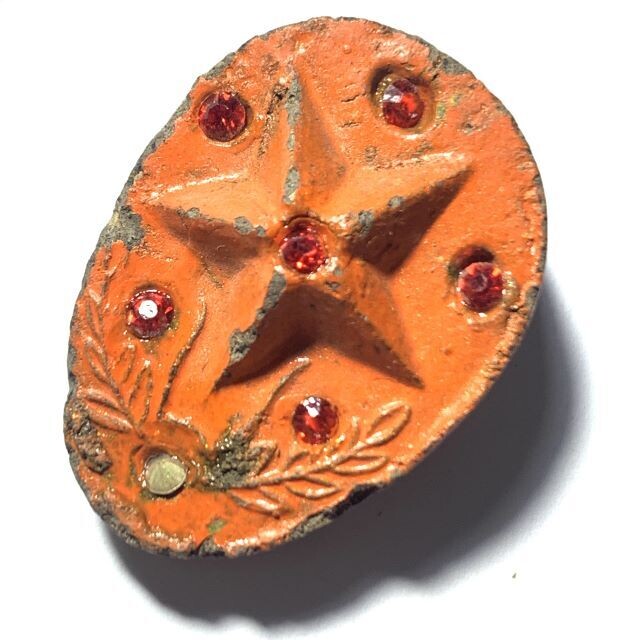
Daw Aathan Mae Nuea Horm Lucky Star Pentacle & Lunar Crescent Amulet 4 Gems Hand Inscriptions Luang Por Pina FREE EMS

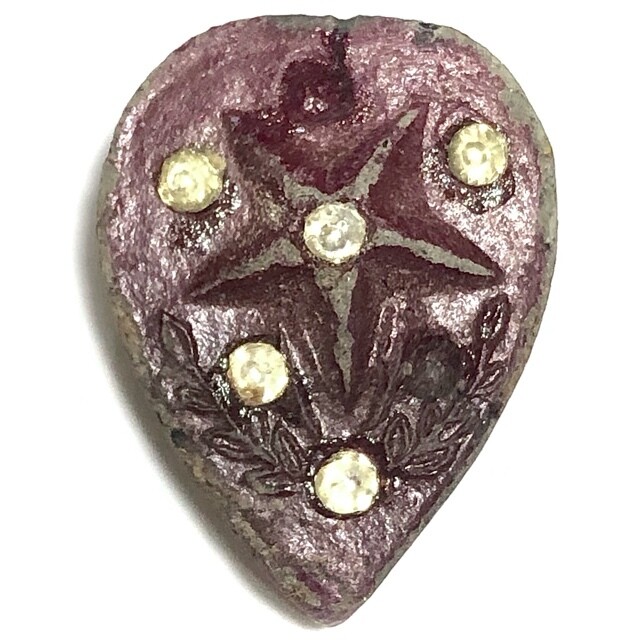
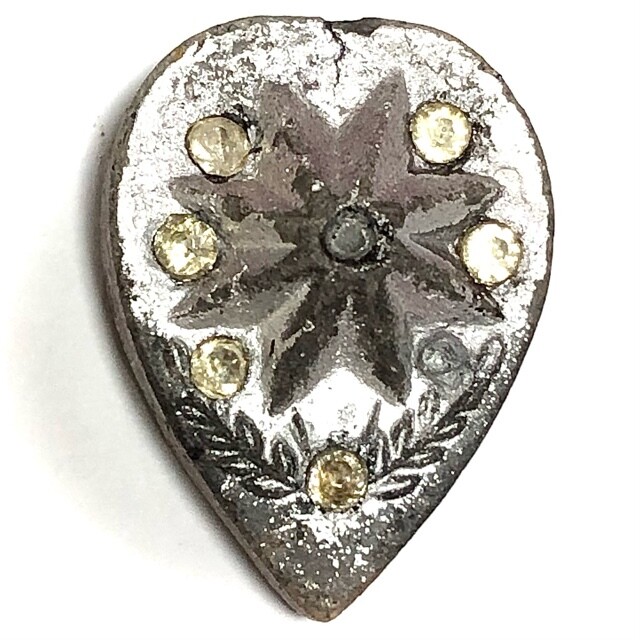
Luang Por Pina’s most Sacred and Powerful Daw Aathan Mae Nuea Horm Attraction and Karma Improving Lucky Star, also known in this version as ‘Daw Aathan Mae Nuea Horm’, the preferred ‘Niyom’ class amulet of the pantheon. This is the one sided 5 point Pentacle version, with Crescent Moon, in Sacred Pong Asupa Powders wth Ploi Sek Maha Pokasap Gem inserts.

Daw Aathan Mae Nuea Horm Detail 1

Daw Aathan Mae Nuea Horm Detail 2

Free Express Airmail Shipping Worldwide is included with this amulet. The Daw Aathan Mae Nuea Horm was known to be made in two main versions, one as a 5 pointed star similar to the Military Star, and one in 8 pointed Pentacle similar to the Police Force star.

This amulet is commonly know for its Wealth Increasing Maha Lap Magick, but in truth, the amulet possesses an massive repository of attributed Buddhist Blessings of very sacred and Auspicious Influences on the Forces of Karma.

Daw Aathan Mae Nuea Horm Detail 3

When understood, the meanings within the sacred Lucky Star Pentacle amulets of Luang Por Pina, are very extensive and comprehensive, and aligned to the focal points of Advanced Buddhist Vipassana Kammathana Practices, with the accompanyiing Miraculous Power of transformation that comes with the 40 Kammathanas.

Luang Por Pina is the deceased Abbot of Wat Sanom Lao in Sra Buri and was said to have possessed Abhinya Powers, and to have Mastered the 10 Kasina Powers of Elemental Magical Dominion.

Daw Aathan Mae Nuea Horm Detail 4

It is said that he was able to read the minds and intentions of other Humans, and bring amulets to life with is Empowerment Methods, and that his amulets were able to give signs and also can be beseeched and prayed to for wish fulfilment (Sarapat Neuk). There are many stories of Miraculous Events occurring through his amulets.

Daw Aathan Mae Nuea Horm Detail 5

The Daw Aathan Lucky Star is made from a mixture of Highly Sorcerous Ingredients, Herbal and Prai Necromantic Powders, which are both incredibly difficult to find and obtain, and also very easy to recognise their presence within the sacred Muan Sarn Powder mixture. Those who have had an authentic Daw Aathan before their eyes, will be able to see instantly that this amulet is a very recognisable and distinguished exhibit with the clear to see presence of Luang Por Pina’s Sorcerous Muan Sarn Powders.

Daw Aathan Mae Nuea Horm Detail 6

Embedded with sacred Ploi Sek Maha Pokasap Gems, each empowered with the corresponding Buddhist Kammathana Iinvocations aligned to their sequence of attributed meanings and powers of transformation.

This particular exhibit is also one of the highly Preferred ‘Pim Niyom’ Master Models and can be considered ‘Ongk Kroo’ (Teacher Reference Model) for a perfect reference comparison of authenticating other less recognisable Star amulets of lesser preference.

Daw Aathan Mae Nuea Horm Detail 7

This is for its easily recognisable features and Muan Sarn Powders allow one to easily distinguish the authenticity of any other exhibit when held side by side for comparison, making it a Master Key for teaching the eyes to recognise Luang Por’s famous Sacred Powders, as well as the effects of aging over the years, as to how discoloration and surface mildews should appear in a true authentic example of the Daw Aathan Hnun Duang.

Luang Por Pina is known to have performed strange Magical feats in front of the eyes of his disciples many times, especially when devotees would ask him for an amulet. He would ask the devotee to lay down and open their eyes, and would take a handful of sand and pour it over their face, as they would hold the amulet in the hand. But the sand would bounce back before it hit their eyes, and no matter how much was poured on the face, not a single grain of sand would be able to enter the eyes of the devotee, becoming repelled as if by a force field before it touched the eyes.

Daw Aathan Mae Nuea Horm Detail 8

If you listen to the three quarter of an hour talk and explanation of the Sacred Daw Aathan along with a short Biography of Luang Por Pina, recounted and narrated by Amulet Expert Ajarn Spencer Littlewood in the below Podcast.

In the podcast, You will be amazed to learn about the very deep meanings contained within the Daw Aathan Hnun Duang Lucky Star amulets of Luang Por Pina, and for those of you who are devoted Buddhists and Practitioners of Dhamma, you will feel incredibly inspired to own and apply the meanings found in the amulet to your Buddhist practice of Dhamma, Meditation and Vipassana.

Daw Aathan Mae Nuea Horm Detail 9

For indeed, in its highest level of Bucha, this amulet is a powerful tool not only to increase your Fortunes and Improve your karma in a worldly sense, but can be used as a contemplative focal point of self transformation and empowerment of manifest Buddhist Kammathana Meditative Practice. It points to the path towards enlightenment, and can assist you in walking the path, if this is your intention, and leads far above and beyond simple worldly desires.

Daw Aathan Mae Nuea Horm Detail 10

Kata Luang Por Pina

Light 5 sticks of Incense, and chant the Maha Namasakara 3 times before chanting the special Kata for Luang Por Pina Bpiyataro

Namo Dtassa Pakawadto Arahadto Sammaa Samputtassa

Namo Dtassa Pakawadto Arahadto Sammaa Samputtassa

Namo Dtassa Pakawadto Arahadto Sammaa Samputtassa

Daw Aathan Mae Nuea Horm Detail 11

Then chant the Kata for Luang Por Pina (3 times);

Ahang Sukhadto Pina Bpiyataro Naamadtae Aajaariyo Ma Pandtae Hohi

Kata Pluk Khong (Call the power within the amulet)

Puttang Gandtang Saranang Haa

Puttang Gandtang Saranang Hae

Puttaaa Namo Ya

Daw Aathan Mae Nuea Horm Detail 12

Kata Pra Som Hwang (Fulfilment of Wishes)

Chant the following for as many repetitions as your age (for example, if you are 35 years old, then chant the Kata, repeatedly for 35 times)

Nadtae Sudtae

The last repetition, change the words to

Mahaa Sudtae Nachaa

Daw Aathan Mae Nuea Horm Detail 13

As an example, let us pretend a four year old were to recite the mantra, which would result in four lines like this;

Nadtae Sudtae, Nadtae Sudtae, Nadtae Sudtae, Mahaa Sudtae Nachaa

Below; The remains of Luang Por Pina in the Sussaan Pina, as he requested to be unpreserved Unmummified, and left to rot naturally according to the laws of Nature, without a grand funeral ceremony or chanting, and forbidden to be cremated.

Daw Aathan Mae Nuea Horm Detail 14

Daw Aathan Mae Nuea Horm Detail 15


All Tiger Image or Tiger Related Amulets - Khiaw Suea, Takrut Hnang Suea, Nam Man Suea, Tiger Face Lersi...

Filters

Filters
1 - 60 of 91 items


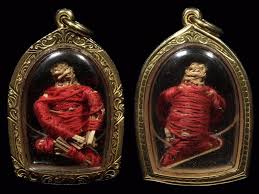
Hun Payont Dtamrap Ajarn Loi Hyaa San Mad Daay Khiaw Akom Ajarn Bee Saman Jaeng Jaroen Featured

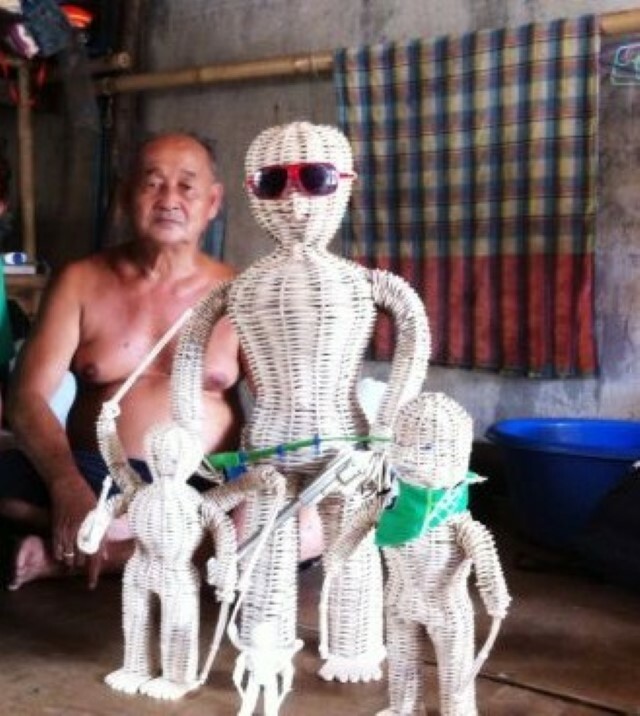
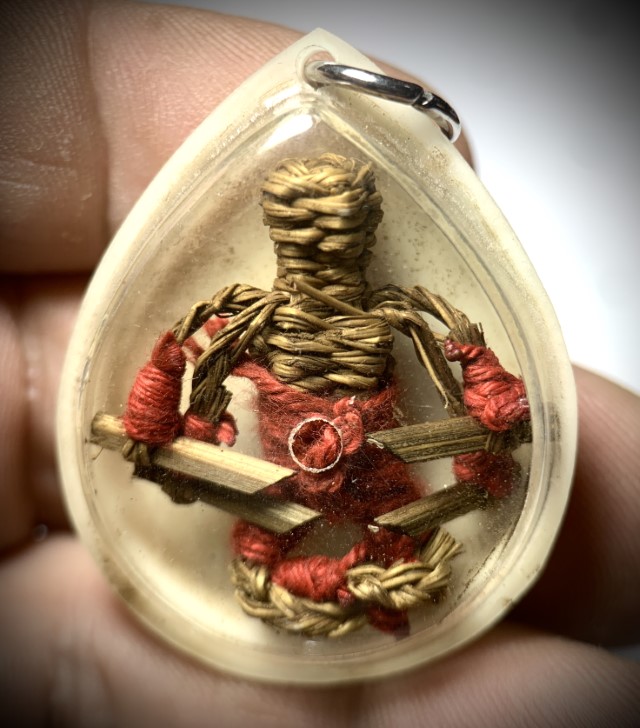
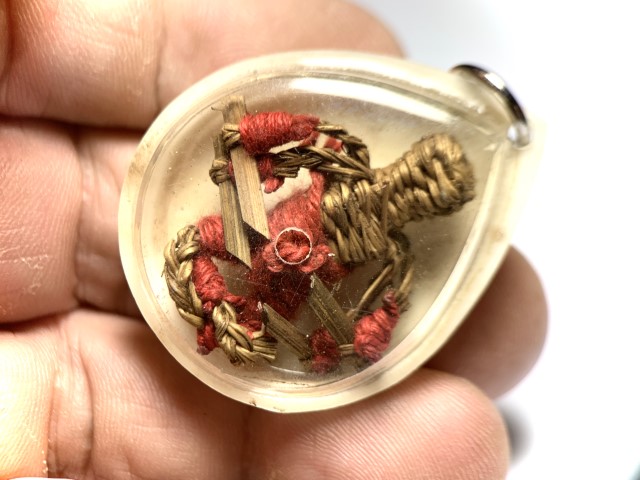
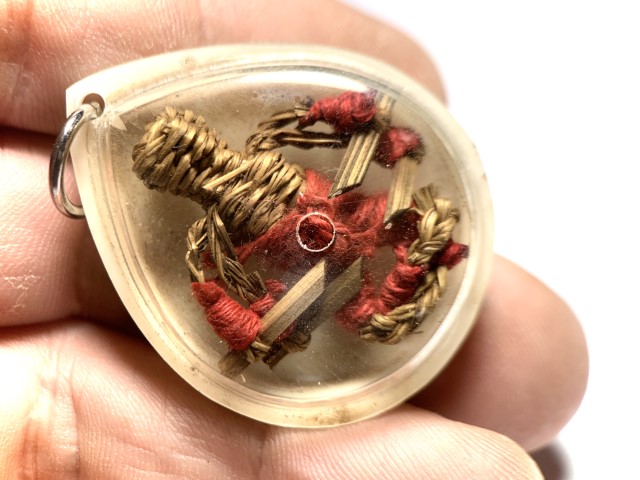
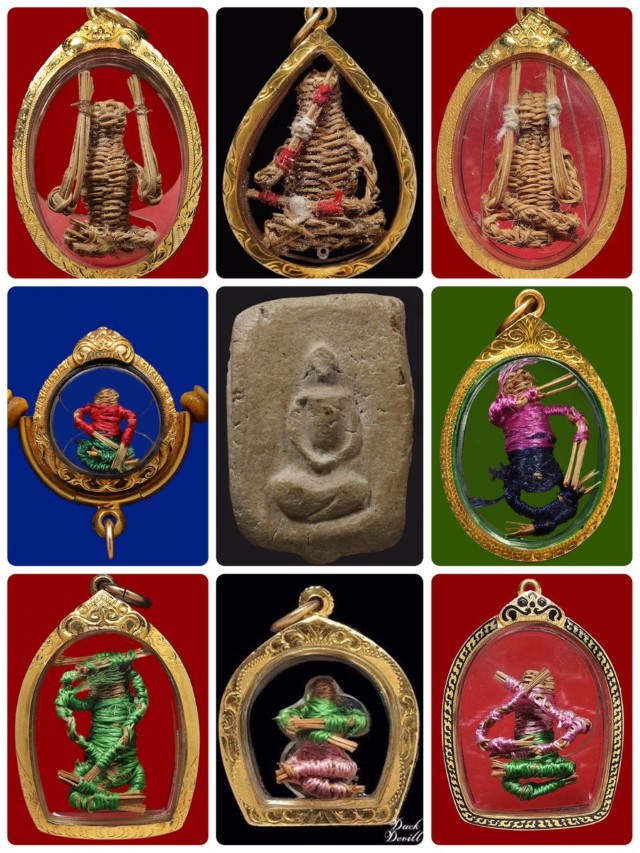
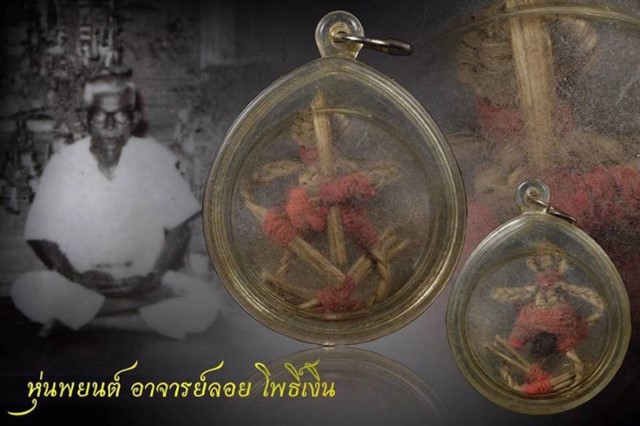
A classic Necromantic Golem Ghost Soldier of the Lay Sorceror Ajarn Bee, The Hun Payong Sacred Whickerman Goilem Ghost, spellbound in sitting position, casting spells in meditation. This is an amulet that is immensely rare, and is an immortally famous Animist Spirit Charm amulet; The World Famous Hun Payont Hyaa San Mad Daay Daeng Akom Dtua Nang Raay Mont (Spellcasting Meditating Version) of Ajarn Bee, the first prime apprentice in Wicha Hun Payont to the great Ajarn Loi Po Ngern, the legendary Ayuttaya Lay Master and direct lineage continuance of the Wicha of Luang Por Glan of Wat Prayatigaram (Ayuttaya).

Ajarn Bee (or also known as Ajarn Bee Saman Jaeng Jaroen), was the closest and top apprentice in magical wicha to Ajarn Loi, who was and is considered the number one Master of Hun Payont Magic, and whose amulets reach into the thousands of dollars these days for large versions (both Ajarn Loi and Ajarn Bee are known to have made giant versions as house guardians).Ajarn Bee was born a local of Ayuttaya, and was the son of farmers.

His father was a close acquaintaance and friend of Ajarn Loi Po Ngern, annd through this, Ajarn Bee was able to be accepted as an apprentice in Magic to Ajarn Loi, through the great friendship he had with Ajarn Bee’s father.
Ajarn Bee was left to stay with and study under Ajarn Loi, and he spent the time learning Wicha, and when not, helping to watch and guard over Ajarn Loi’s boat. The boat was parked on the riverside next to Wat Panan Cherng Temple (Wat Jeen).

Because Ajarn Bee had great curiosity and interest if magic was real or not, he would secretly hide and listen to Ajarn Loi performing invocations and incantations, and watch his perform rituals and the making of Hun Payon. He kept observing and learning and absorbing the methods for a good ten years or so.

Ajarn Bee Mastered many ways of making different Hun Payont with different forms of magical powers, such as Hun Payont Raksa Roke for healing illnesses, removing black maguic and demonic possessions, Hun Payont Wicha Maha Sanaeh for Power of Attraction, and for Kong Grapan Maha Ud Klaew Klaad, Kaa Khaay Business Sales, Siang Choke Gambling Luck, and Metta Mercy Charm.

Ajarn Bee once hid and spied on Ajarn Loi in his evening practices, and saw him perform a ritual by casting spells into a piece of Pha Khaw Ma cloth, to enchant it into becoming a snake, which slithered off. He watched and learned the Wicha Sek Nam Mont Klord Look Ngaay Sacred Water Blessing for easy giving of birth.

Ajarn Loi’s Wicha Nam Mont Klord Lok Ngaay became famous when an older lady who went by the name of Yaay, who was pregnant and afraid of problematic birth, came to ask for a holy water blessing for this purpose. Ajarn Loi was playing chess at the time, so he got up and took the drinking water jug from beside where he was playing, performed incantations and blew into the jug, and gave it to the lady. The lady took the jug and left thinking “this cannot be sacred water, he was using it for drinking at the chess game”, and she upturned the jug to pour the water out onto the floor.

To her surprise and amazement, the water did not come out of the upturned jug, defying the laws of gravity. Mrs. Yaay then ran back to Ajarn Loi and got on her knees to beg forgiveness for her lack of faith. This then increased the legend of the magic of Ajarn Loi and his lineage apprentices, for this powerful Wicha that could empower any inanimate object, be it seen as sacred, or ordinary. Only a truly powerful Mage can achieve this kind of spellcasting, which is the mark of the Adept Sorceror.

Ajarn Bee was initiated with the Korn Kroo Ritual by Ajarn Loi Himself directly one on one (making Ajarn Bee a Looksit Aek first/prime apprentice).He is in the present day (written in 2020), the most popular living Laymaster for Hun Payont.

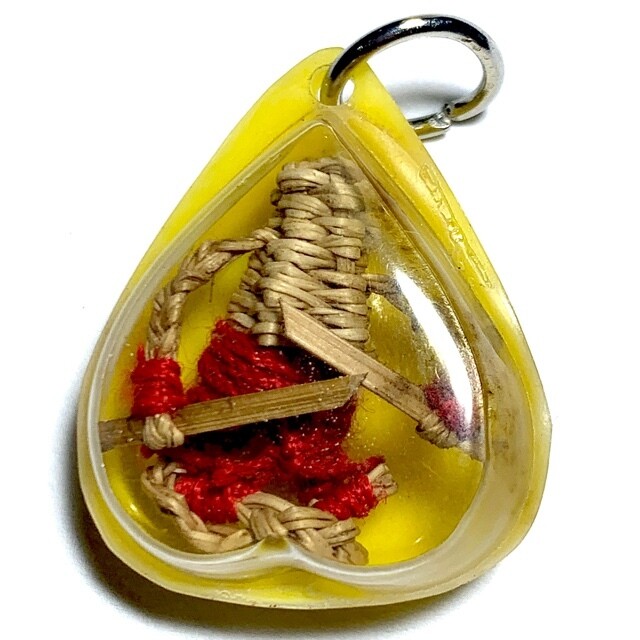
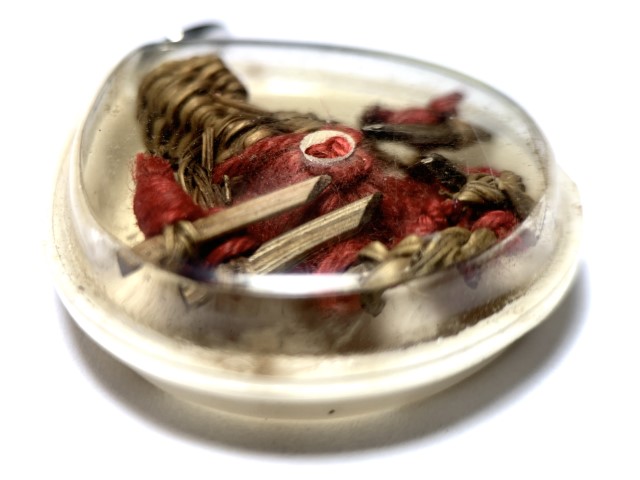
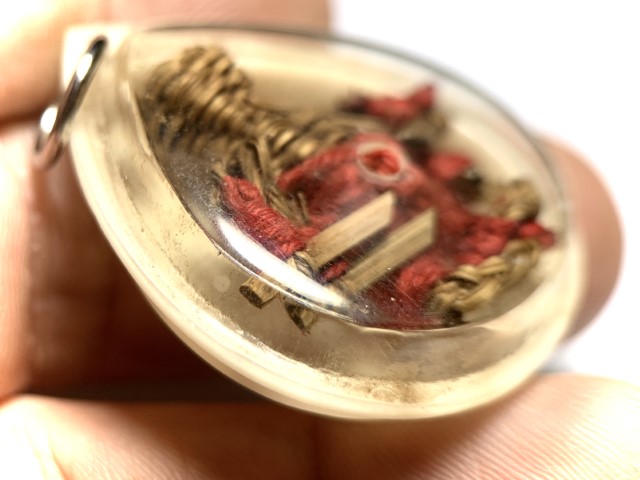
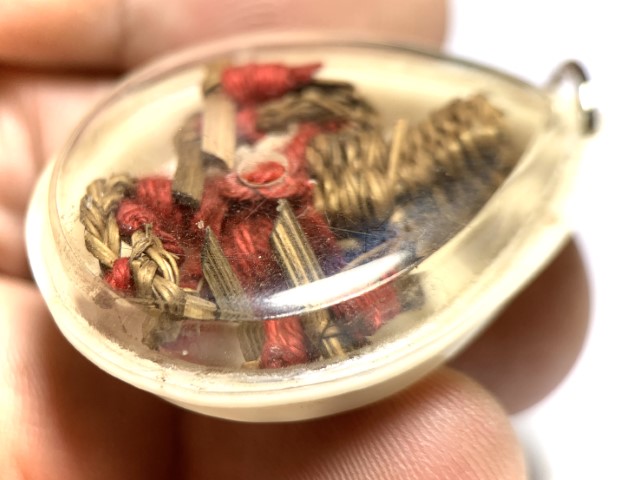
This version is medium size, measuring 3 x 2.5 Cm in casing, and is in pristine condition. The Hun Payont of Ajarn Bee are highly preferred, and considered the perfect affordable alternative to the Hun Payont of his predecessor, the Great Ajarn Loi Po Ngern (lovingly known as ‘Mor Loi’).Ajarn Bee immerses his Hun Payont in Nam Man Nga Sek and Nam Man Prai for extra empowerment imbued within the amulets, as part of the empowerment.

The Hun Payont Ajarn Bee (or also known as Ajarn Bee Saman Jaeng Jaroen), was the closest and top apprentice in magical wicha to Ajarn Loi, who was and is considered the number one Master of Hun Payont Magic, and whose amulets reach into the thousands of dollars these days for large versions (both Ajarn Loi and Ajarn Bee are known to have made giant versions as house guardians).Ajarn Bee was born a local of Ayuttaya, and was the son of farmers.His father was a close acquaintaance and friend of Ajarn Loi Po Ngern, annd through this, Ajarn Bee was able to be accepted as an apprentice in Magic to Ajarn Loi, through the great friendship he had with Ahjarn Bee’s father.

Ajarn Bee was left to stay with and study under Ajarn Loi, and he spent the time learning Wicha, and when not, helping to watch and guard over Ajarn Loi’s boat. The boat was parked on the riverside next to Wat Panan Cherng Temple (Wat Jeen).

Because Ajarn Bee had great curiosity and interest if magic was real or not, he would secretly hide and listen to Ajarn Loi performing invocations and incantations, and watch his perform rituals and the making of Hun Payon. He kept observing and learning and absorbing the methods for a good ten years or so.

Ajarn Bee Mastered many ways of making different Hun Payont with different forms of magical powers, such as Hun Payont Raksa Roke for healing illnesses, removing black magic and demonic possessions, Hun Payont Wicha Maha Sanaeh for Power of Attraction, and for Kong Grapan Maha Ud Klaew Klaad, Kaa Khaay Business Sales, Siang Choke Gambling Luck, and Metta Mercy Charm.

Below Pic; Ajarn Bee cutting herbs from his garden which are used for Healing Ailments, and for making Hun Payont, and Sacred Oils

Ajarn Bee once hid and spied on Ajarn Loi in his evening practices, and saw him perform a ritual by casting spells into a piece of Pha Khaw Ma cloth, to enchant it into becoming a snake, which slithered off. He watched and learned the Wicha Sek Nam Mont Klord Look Ngaay Sacred Water Blessing for easy giving of birth.

Below : 10 armed version of one of Ajarn Bee’s Hun Payont amulets. 12 armed versions were also made.

Ajarn Loi’s Wicha Nam Mont Klord Lok Ngaay became famous when an older lady who went by the name of Yaay, who was pregnant and afraid of problematic birth, came to ask for a holy water blessing for this purpose. Ajarn Loi was playing chess at the time, so he got up and took the drinking water jug frombeside where he was playing, performed incantations and blew into the jug, and gave it to the lady. The lady took the jug and left thinking “this cannot be sacred water, he was using it for drinking at the chess game”, and she upturned the jug to pour the water out onto the floor.

To her surprise and amazement, the water did not come out of the upturned jug, defying the laws of gravity. Mrs. Yaay then ran back to Ajarn Loi and got on her knees to beg forgiveness for her lack of faith. This then increased the legend of the magic of Ajarn Loi and his lineage apprentices, for this powerful Wicha that could empower any inanimate object, be it seen as sacred, or ordinary. Only a truly powerful Mage can achieve this kind of spellcasting, which is the mark of the Adept Sorceror.

Ajarn Bee was initiated with the Korn Kroo Ritual by Ajarn Loi Himself directly one on one (making Ajarn Bee a Looksit Aek first/prime apprentice).He is in the present day (written in 2020), the most popular living Laymaster for Hun Payont.

The Hun Payont of both Ajarn Loi and Ajarn Bee, are said to be the top Hun Payont amulets of all time, and are the most sought after and desired items by devotees of this kind of amulet.
and Indeed the Khun Phaen and other amulets of these masters are also in extreme demand and highly popular with South East Asians around the Subcontinent.

The Hun Payont of Ajarn Bee’s Master, Ajarn Loi, afe almost impossible to find in the present day, and can cost thousands of dollars. Unfortunately, the amulets of this great olden days Master, inheritor of the Wicha of Luang Por Glan Wat Prayat, and Luang Por Bpaen of Wat Sao Tong Mai, are so very hard to find in the present era because of their great popularity even during the time he was alive. Ajarn Loi made Hun Payont before the year 2500 BE, after which his apprentice, Ajarn Bee continued the tradition.

Bucha by offering a glass of liquor to empower with extra psychic strength, or to smear a small drop of consecrated oils once in a while for Bucha, and strengthening the power of the Hun Payont, and its emanating magic.

Bio : Ajarn Loi Po Ngern

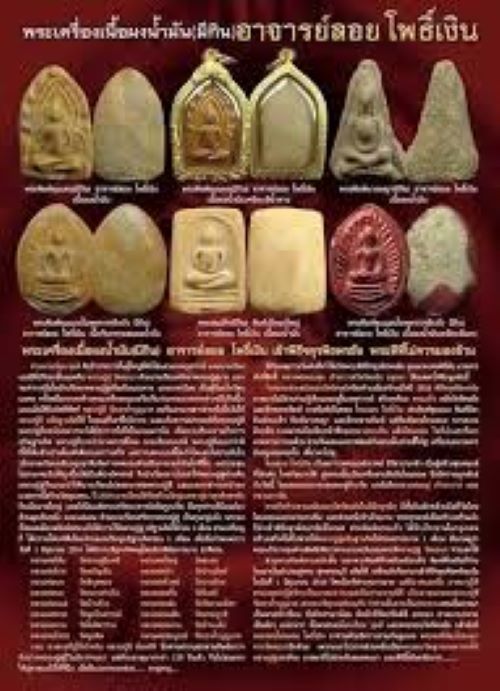
Ajarn Loi was born in the month of February 2454 BE, in Nakorn Sawan, but later moved to live in Bang Prahan in Ayuttaya. He became a Novice Monk when he came of age, and the apprentice of Luang Por Glan of Wat Prayat. After the passing of LP Glan, Ajarn Loi continued his practice of Magic with Luang Por Bpaen of Wat Sao Tong Mai in Ayuttaya. Ajarn Loi learned many Wicha with Luang Por Bpaen, who was not only well versed in Wicha Saiyasart, but was also Adept in Artisanry of the Chang Sip Moo Fine Arts level of prowess. He thus taught Ajarn Loi all of his Wicha, and methods of weaving the spellbound Hun Payont, Takrut and other amulets in the finest fashion.


One must say that Ajarn Loi’s Hun Payont, and other amulets all attract the eye with their fine artisanry and filigrain attention to detail and ritual accuracy. LP Bpaen was alsop the Kroo Ba Ajarn of Luang Por Suang of Wat Chee Ba Khaw, who was also a close friend of Ajarn Loi. After the passing of LP Bpaen, Pra Ajarn Loi moved to stay at Wat Panan Cherng. Ajarn Loi knew many methods of Astrological Foretelling, Spiritual healing, and Powerful Amulets and Spells.

Below, an early era Hun Payont of Ajarn Loi – very old estimated circa 2480 BE

Because of this, he soon became the object of jealousy from the other monks, which he could sense strongly that he was making them feel inferior. So he moved away to not cause any inauspiciousness, and disrobed to become a Lay Master, and moved to stay at Wat Jeen temple. He later moved to Wat Suwandaoraram, where he remained practicing his path, and serving his devotees up to the day of his passing.

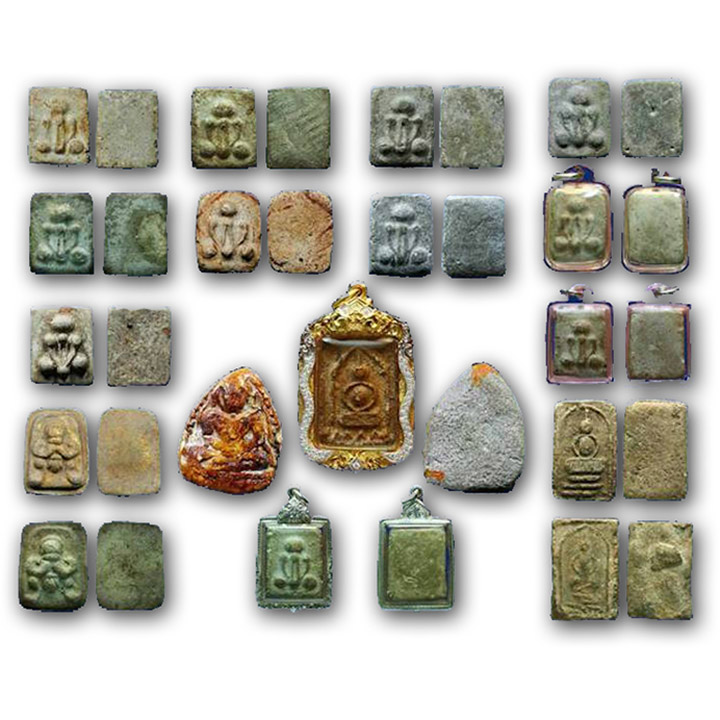
Below; amulets of Ajarn Loi

The Hun Payont (or ‘Hun Payont’), is an ancient reanimated Golem effigy, with far back reaching roots. Its name comes from the word ‘Payont’ which means an effigy that has been brought to life by Sorcerous Magick. Hun Payont may be made in various forms, such as the form of a Human, or some other Magickal creature, or animal, depending on the needs of the user and intended uses of the Adept who makes them.


Hun Payont are made from various substances, such as the Hun Hyaa Saan (Hay/Straw), Hun Gan Bai Mai an (leaves), Hun Thao Wan (magical vines), Mai Phai (bamboo), Hun Dtakua (mercurial lead), Hun Khee Pheung (wax), Bai Mai Ta (leaves), Hun Gae Salak (carved wood), Hun Daay (cord wrap), Hun Pha (cloth bound), Hun Din (molded clay), Hun Din Phao (baked clay), Hun Hin (carved stone), Hun Krabueang (ceramic), Hun Poon (cement), Hun Ngern/Tong (silver or gold), Hun Loha (metallic), Hun Mai (wood), Hun Hin (stone), Hun Nga Gae (Ivory), Graduk (bone), and so on.

The Hun Payont, is an amulet that is found to date back to the times of the Kassapa Buddha. The Kassapa Buddha, is said to have made a Payont effigy, to protect his Relics, before he himself passed into Nibbana. 200 Years Later, King Asoka opened a shrine, to remove and preserve the relics, but the shrine was inhabited by a Hun Payont. King Asoka was forced to invoke and summon the God Indra, who manifested as a Brahman, and performed Incantations, enabling King Asoka to enter and remove the Saririkadhatu Relics.

In the world of Sorcery, all lineages believe in the existence of different kinds of spirits, which can imbued within effigies or controlled, or beseeched to perform a multitude of tasks. There are many Animist and Necromantic amulets which use different types of spirits which are Hoeng Prai Ghosts, Devas, Bhuta, Kumarn Tong, Rak Yom, In Jantr, Phu Some, In Gaew, Mae Takian, Ma Hoeng Prai, and many others such as Yaksa Monsters, to inhabit an effigy. Great Adepts are the only ones able to create Hun Payont Golem Effigies, which are then brought to life with Necromancy and imbued with any of a number of kinds of spirits, depending on the nature and needs of the devotee, or the intentions of the master.


All Hun Payont Golems, must be empowered by an Adept, who has Mastered the Wicha Akarn Sam Sip Sorng; 32 invocations of the 32 elements within a living being, to make the effigy able to displace itself (move around), and to emit Magical powers, protecting wealth and possessions within its enclave. If intruders enter, the Hun Payont will create illusions that drive the thieves away, and will also scare away all kinds of demons and ghosts that enter the household to cause any havoc. Hun Payont are very protective of the belonging within the home and for this reason excellent guards.


The Hun Payont is used by those who believe, in the household, place of business, and even carried as an amulet or placed in one’s vehicle, to keep away alll dangers and inauspicious events and malicious entities. Hun Payont should be rewarded or appeased through Bucha with the Piti Gruad Nam Water Pouring Ceremony, in the same way as seen by Thai Buddhists after giving alms to the Monks, except that it is you who makes the prayer.


Alternatively, one can also use sacred or aromatic oils for consecration, or even liquor if wish to use for powerful Magic for Gambling and other matters of high risk. This is done, by laying down the amulet flat, and putting a few small drops of liquor or Prai/Aromatic Oil through the small hole drilled into the center of the window of the front of the casing, to fall onto the Hun Payont.

Kata Riak Hun Payont (Summoning Spell)

Om Na Ma Pa Ta Jaedta Phuudto Maha Phuudtang Hun Payondtang Nimidtang Gang Ruubpang Bpiyang Ma Ma Aehi Aehi Na Mo Put Taa Ya (chant 7 Times)

Kata Pluk Huan Payont (Invoke)

So Sa A Ni So Sa A Ni Sa A Ni So A So A So Ni Ni Sa A So Ni So A So A Ni Yo Sa A A Ni So Sa Sa Ma Su


Kata Khor Porn Hun Payont (ask for blessings)

Bprasitti Kātā Sitti Gammang Sitti Garisang

Kata Hun Payont Ajarn Loi

Om Pluk Mahaa Pluk Guu Ja Pluk Por Hun Payont Duay Ahang Tugang Na Ma Pa Ta

Charms & Talismans

Thai Buddhist, Animist, and Occult Charms and Talismans, authentically blessed by the great Monks and Lay Masters of Old, and Present Day
Filters

Filters
1 - 60 of 801 items


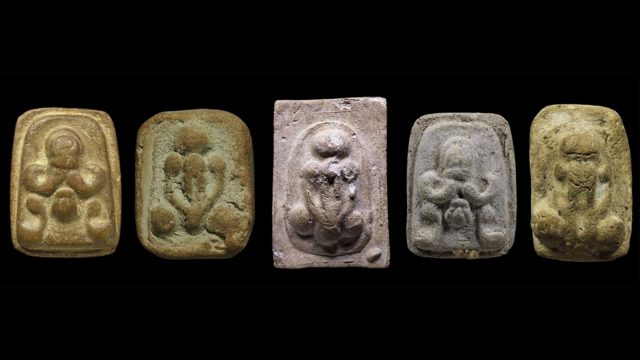
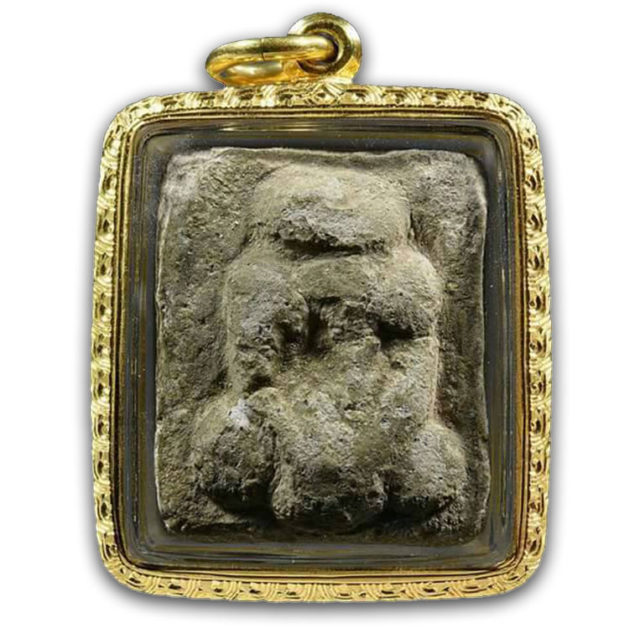
The World Famous Hun Payont amulet, of Ajarn Loi Po Ngern, Great Ayuttaya Master and direct lineage continuance of the Wicha of Luang Por Glan of Wat Prayatigaram. The Hun Payont of Ajarn Loi, are said to be the number one Hun Payont amulets of all time, and are the most sought after and desired items by devotees of this kind of amulet. Unfortunately, the amulets of this great olden days Master. Perhaps the number one Hun Payont in Historical Documentation, ancient and highly reputed for its power, the Hun Payont of the Great Ajarn Loi Po Ngern, Great Olden  Days Lay Master of the Ayuttaya Province.
Ajarn Loi was born in the month of February 2454 in Nakorn Sawan, but later moved to live in Bang Prahan in Ayuttaya. He became the apprentice of Luang Por Glan of Wat Prayat. After the passing of LP Glan, Ajarn Loi continued his practice of Magic with Luang Por Bpaen of Wat Sao Tong Mai in Ayuttaya.
Ajarn Loi learned many Wicha with Luang Por Bpaen of Wat Sao Tong Mai, who was well versed in Wicha Saiyasart, but Ajarn Loi himself was also Adept in Artisanry of the Chang Sip Moo Fine Arts level of prowess. He thus taught Ajarn Loi all of his Wicha, and methods of weaving the spellbound Hun Payont, Takrut and other amulets, and Ajarn Loi would make them in the finest fashion. Ajarn Loi was a fine artisan of the Chang Sip Moo group, and received Wicha from Luang Por Bpaen, Luang Por Glan, and other masters, but was the most Adept of all at weaving the Hun Payont Golems with his Artistic ability to make the effigies in all sorts of postures, and dress them with all kinds of regalia.


The Hun Payont comes from the word ‘Payont’ which means an effigy that has been brought to life by Sorcerous Magick. Hun Payont may be made in various forms, such as the form of a Human, or some other Magickal creature, or animal, depending on the needs of the user and intended uses of the Adept who makes them. Hun Payont are made from various substances, such as the Hun Hyaa Saan (Hay/Straw), Hun Gan Bai Mai San (leaves), Hun Thao Wan (magical vines), Hun Dtakua (mercurial lead), Hun Khee Pheung (wax), Bai Mai Ta (leaves), Hun Gae Salak (carved wood), Hun Daay (cord wrap), Hun Pha (cloth bound), Hun Din (molded claay), Hun Din Phao (baked clay), Hun Hin (carved stone), Hun Krabueang (ceramic), Hun Poon (cement), Hun Ngern/Tong (silver or gold), Hun Loha (Iron)
The Hun Payont, is an amulet that is found to date back to the times of the Kassapa Buddha. The Kassapa Buddha, is said to have made a Payont effigy, to protect his Relics, before he himself passed into Nibbana.

200 Years Later, King Asoka opened a shrine, to remove and preserve the relics, but the shrine was inhabited by a Hun Payont. King Asoka was forced to invoke and summon the God Indra, who manifested as a Brahman, and performed Incantations, enabling King Asoka to enter and remove the Saririkadhatu Relics.

In the world of Sorcery, all lineages believe in the existence of different kinds of spirits, which can be imbued within effigies or controlled, or beseeched to perform a multitude of tasks.

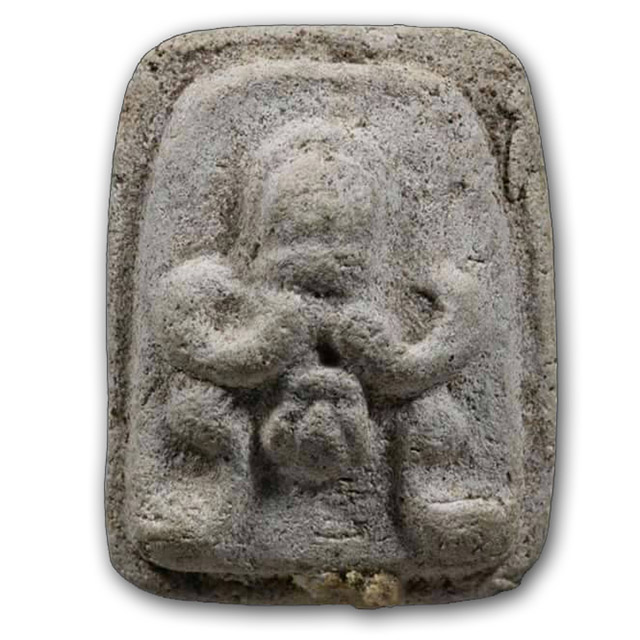
Hun Payont Ya San Mad Daay Daeng Akom Ajarn Loi

There are many Animist and Necromantic amulets which use different types of spirits which are Hoeng Prai Ghosts, Devas, Bhuta, Kumarn Tong, Rak Yom, In Jantr, Phu Some, In Gaew, Mae Takian, Ma Hoeng Prai, and many others such asYaksa Monsters, to inhabit an effigy.
Great Adepts are the only ones able to create Hun Payont Golem Effigies, which are then brought to life with Necromancy and imbued with any of a number of kinds of spirits.  All Hun Payont must be empowered by a Master who has Mastered the Wicha Akarn Sam Sip Sorng 32 invocationss of the 32 elements within a living being, to make the effigy able to displace itself (move around), and to emit magickal Miracles to protect wealth and possessions within its enclave. If intruders enter, the Hun Payont will create illusions that drive the thieves away, and will also scare away all kinds of demons and ghosts that enter the household to cause any havoc. Hun Payont are very protective of the belonging within the home and for this reason excellent guards.


Hun Payont differ from Kumarn Tong, in the sense that the Kroo Ba Ajarn would give life to the Hun Payont himself without necessity to call upon an existing spirit, whereas a Kumarn Tong is reanimated by calling a Bhuta, a Deva or Child Ghost to inhabit the effigy, to help humans, in exchange for an auspicious rebirth in the heavens after its lifetime within the Kumarn.

Ajarn Loi with his Hun Payont

The Hun Payont is also renowned to be able to bring wealth and attract good business, and is open to being asked for favors and to perform missions, such as chasing away your enemies. It is also believed to possess Metta Mahaniyom ‘Great Preference’ Magick, which we know in English, as ‘Mercy Charm’, as it is reputed to attract the compassion and favor, of those who approach and interact with you.

According to the ancient tradition, a Hun Payont should be rewarded and appeased through the Gruad Nam water pouring ceremony when performing prayers and Bucha.


Pra Pid Ta Pong Graduk Phii Pra Ajarn Hnoo

Pra Pid Ta Pong Athi (Pra Pid Ta Graduk Phii) – Pra Ajarn Hnoo, Wat Po Ta Dtian (Wat Chetupon)

The legendary Pra Pong Athi (Graduk Phii) amulet of Pra Ajarn Hnoo Wat Po Ta Dtian became famous during the second world wartime as a powerful protector against deadly dangers, and has remained famous to this day. It was during the second world war and Indo-Chiina wartime era that many powerful sorceror monks in Thailand began to come out and create amulets to distribute to soldiers and the common folk, to protect them against the deadly dangers of wartime. In that time, the Japanese were occupying Thailand as ‘forced allies’, and so Thailand was being bombed by the allied nations, who were attacking the Japanese military installations. Very often bombs would miss the Japanese target, and hit a local village instead,n and innocent Thai people were killed. And so it was in this era than we came to see amulets like the Pra Pid Ta Pong Graduk Phii come into existence.
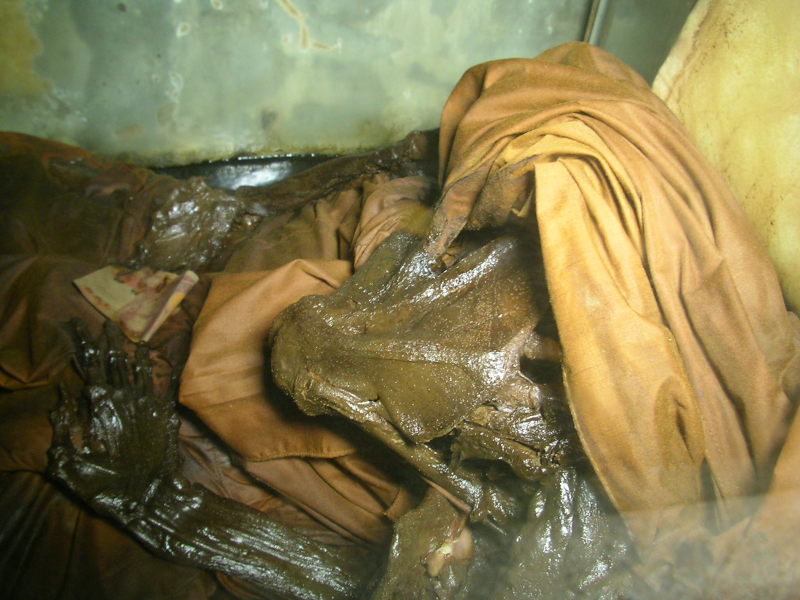
Pra Ajarn Hnoo of Wat Po Ta Dtian (Wat Chetupon)

Pra Ajarn Hnoo was a Master Gaeji Ajarn who was known for his intensive practice and mastery of Vipassana Kammathana, and Khmer Sorcery. he would not socialise with other monks, and only his most fearless and devote initiates would dare to enter his Kuti Hut, for it was known that he would ‘Liang Phii’ (take care of Ghosts in his hut).  In the year 2485 BE, Pra Ajarn Hnoo, of Wat Po Ta Dtian (or, ‘Wat Pra Chetupon Wimon Mangkalaram’), created a powerful amulet, in secret, and with his own hands, to help people survive the war and prosper in life. This amulet was to become a legend that has maintained its status into the modern era, and is even the subject of a documentary.

Pra Pid Ta Pong Athi (Pong Graduk Phii) - Pra Ajarn Hnoo (Wat Po)

Pra Pid Ta Pong Athi (Pong Graduk Phii) – Pra Ajarn Hnoo (Wat Po)


This amulet is of course the Pra Pid Ta Nuea Pong Athi (or better known as ‘Pra Pid Ta Pong Graduk Phii’ amulet. Pra Ajarn Hnoo was a Gaeji Ajarn of Khmer Origins, who possessed powerful Necromantic Wicha. He was not very old at the time, but already had a large following of respectful Devotees, who revered him for his powerful Magic. Pra Ajarn Hnoo liked to grow magical herbs around his Kuti Hut at the temple to use for making amulets and potions, holy water and bestowing blessings. Pra Ajarn Hnoo was often visited by devotees to perform spiritual healings with his holy water and herbal potions, and people would ask him for amulets and blessings. Pra Ajarn Hnoo hence began making amulets, in a very unusual manner compared to the usual Thai Buddhist Traditional methods, bringing in his Khmer Sorcery to add to the magical power of the amulet. He used ashes from the bones of cremated corpses, mixed with Puttakun Powders and Ittijae Powders, and Pong Wan Aathan (a mixture of powdered magical herbs and pollens)

The use of the ashes of cremated bones in the amulets came from Pra Ajarn Hnoo’s Khmer Necromantic Sorcery training, which holds to the premise that the ashes or bone powders, funereal earths and corpse oils of the dead, possess immensely powerful magic.

The ashes of Phii Dtaay Hoeng were used, according to the Dtamra Saiasart Khmer Grimoires of Necromantic Sorcery, which specifies that only the ashes of a Hoeng Prai Ghost can be used if the Wicha is to be powerful. A Hoeng Prai is often known as a ‘screaming ghost’ because the word means a person who died in an accident prematurely, or through unforeseen circumstances. So often this will mean a person who died screaming. Hoeng Prai spirits are in Limbo and often angry, possessing immensely powerful psychic energy. The sorceror appeases the spirit in Limbo by agreeing to a collaborative effort, where the ghost of the spirit in Limbo agrees to use its psychic powers to aid the human who owns the amulet made from its ashes, and accumulate good Karma to achieve eventual release from Limbo.

Pra Pid Ta Pong Graduk Phii

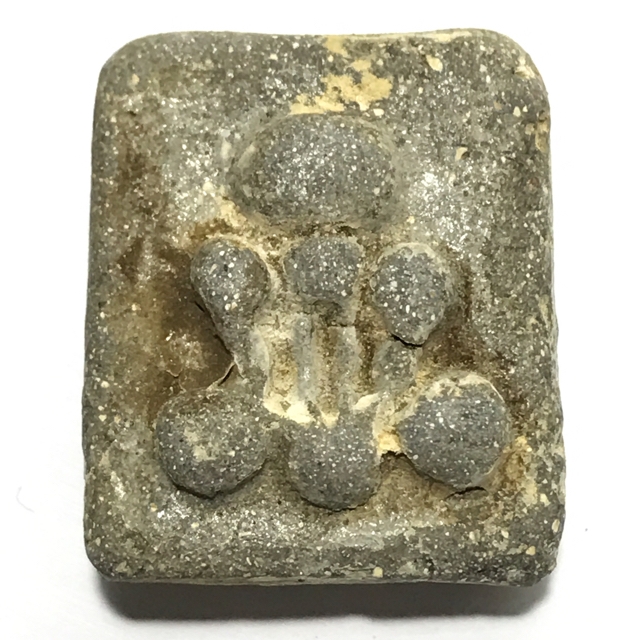
One of the many Pim Song models of the famous Pra Pong Athi Pra Pid Ta Graduk Phii

In addition, astrological Necromancy states that a Hoeng Prai Ghost must die on a Saturday and be cremated on a Tuesday, for the full formula of Lucky Fortunes Magic to come into effect.

Pra Ajarn Hnoo saw to it that he fulfilled al of these Ritual requirements, and gathered the sacred ashes until he had enough to press amulets with them, and mixed them with his other prepared Muan Sarn Sacred Powder ingredients, the Pong Puttakun, Pong Ittijae, and Wan Aathan. In addition, Pra Ajarn Hnoo then added his special ingredient, ‘Wan Pong’, or more commonly known as ‘Wan Graser’. Wan Graser is a very rare herbal plant found in the deep rainforests, and is said in Folk Legends to be a bloodsucking ‘Vampire’ plant. If an animal gets entangled in it, it is said the plant can slowly suck the blood out of the animal until it dies. This herb is a very difficult herb to cultivate, as its true habitat is in the deepest rain forests, but Pra Ajarn Hnoo had managed to cultivate some around his hut at the temple, and he used them for the making of the Pra Pid Ta Pong Graduk Phi.

Pra Ajarn Hnoo made various different amulets from the Graduk Phii Hoeng Prai Ashes, including Pra Somdej, and Pra Pid Ta amulets.

Tamniab Wadthumongkol Pra Pong Graduk Phii

Tamniab Wadthumongkol Pra Pong Graduk Phii – Pantheon of Amulets in the series

In any case, despite the Muan Sarn Sacred Powders used by Pra Ajarn Hnoo to make the Pra Pid Ta Pong Athi amulets seeming very scary in their natural origins, Pra Ajarn Hnoo performed appeasement rituals and purification ceremonies over all the individual ingredients of the Muan Sarn Sacred Powders before the amulets were made, and removed any black magick or negative karmic influences and energies from them beforehand, leaving only the pure unstained magical power and energy remaining, to be re-empowered with its new purpose.

The power extracted through Necromancy was then imbued within the form of the Pra Pid Ta amulets, and blessed with Buddhist Blessings of the Buddha Abhiseka (Dhamma Chakra opening of the eyes of the Buddha), empowering the extremely powerful energies within the Muan Sarn Sacred Powders to be able to bring auspicious blessings and strong protective power to keep the wearer from harm, and lead to prosperity and happiness.

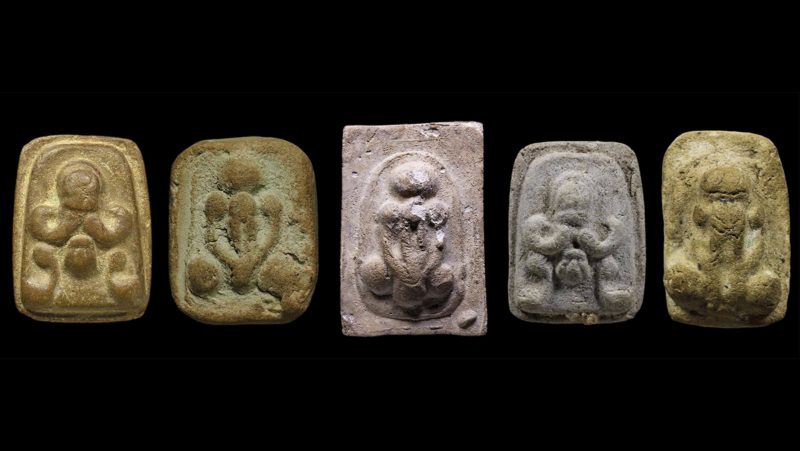
Pra Pid Ta Athi Nuea Pong Graduk Phii Pra Ajarn Hnoo

Pra Pid Ta Athi Nuea Pong Graduk Phii Exhibit B Pra Ajarn Hnoo – Wat Po

It is said of the Pra Pid Ta Pong Graduk Phii amulet, that its protective powers are incomparable, and that the traveller who wears one will pass through all his journeys safely. Another strange aspect of the magic of the Pra Pid Ta Pong Graduk Phii, is that people noticed not only that one remained safe whilst traveling, but that when the traveler wearing a Pra Pid Ta Pong Graduk Phii gets off the vehicle alone, people would ask the traveler ‘and aren’t the others going? coming with you?’ (as if they couldn’t imagine the wearer being alone). This shows powerful Metta Maha Niyom Mercy Charm present within the amulet too.’

Pra Pid Ta Athi Pong Graduk Phii Exhibit C

Pra Pong Graduk Phii Exhibit C – Pra Ajarn Hnoo – Wat Po

Many gamblers have found the Pra Pid Ta Pong Graduk Phii to be an exellent Luckbringer to turn the tables and odds in their favour, and to ‘whisper’ in the ear of the gambler to hint as to what bets should be placed. This is known as ‘Prai Grasip’ Ghost Whisperer Magick. Pra Ajarn gave a rule to gamblers however for this amuletl That ‘If your winnings are within reason, you should not push your luck too far’.
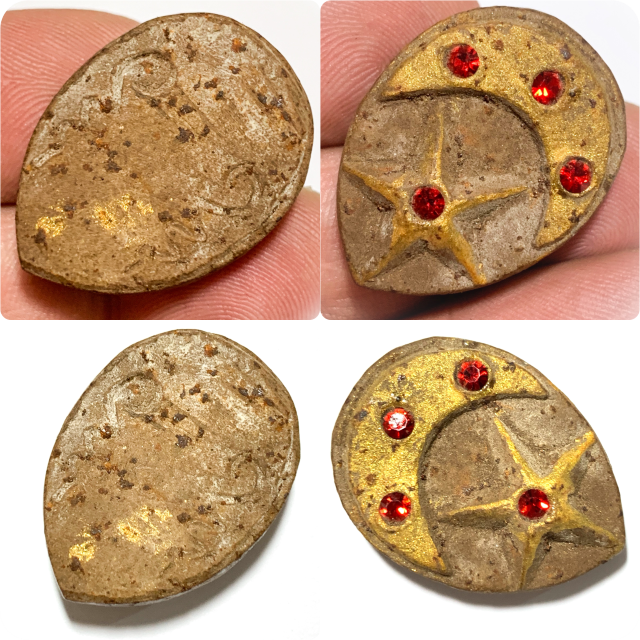
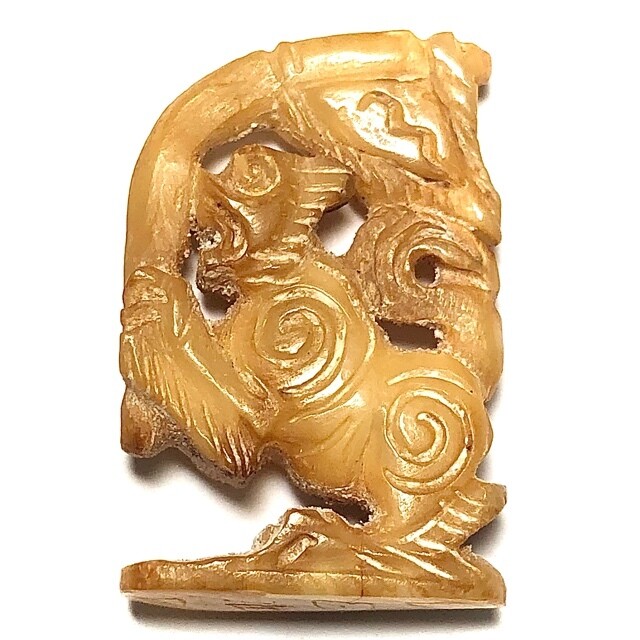
A highly preferred amulet with those devotees who prefer less subtlety for a fast acting amulet that emanates Magickal Power without restraints, the Pra Pid Ta Pong Graduk Phii is a recommendable amulet, for protection, gambling and general prosperity. The Pra Pid Ta Pong Graduk Phii is by no means an easy amulet to find these days, and is a very powerful magickal amulet of great fame and renown in Thailand.
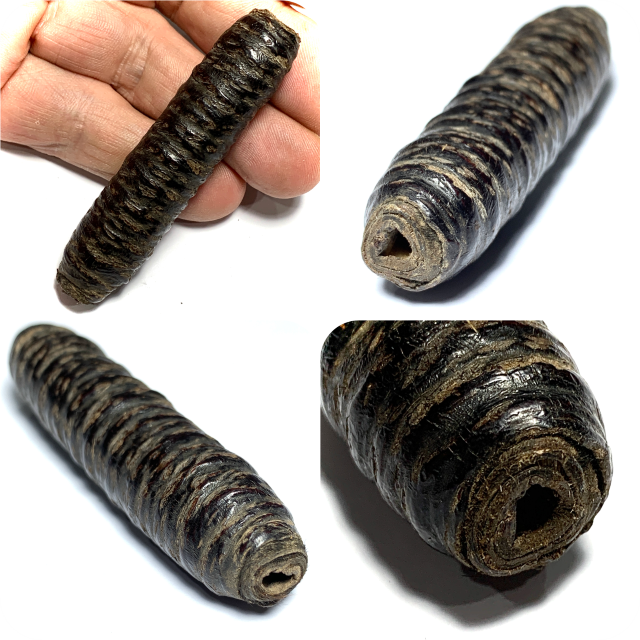
Pra Pid Ta Pong Graduk Phii Pra Ajarn Hnoo

Pra Pid Ta Pong Graduk Phii Pra Ajarn Hnoo

Kata Bucha Pra Pid Ta