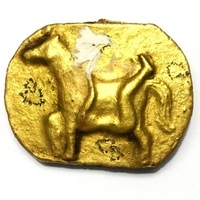
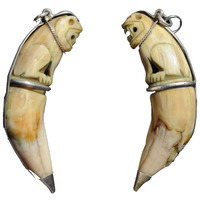
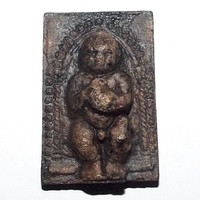
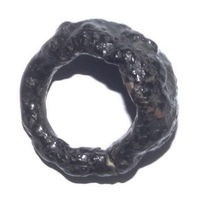
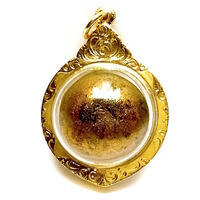
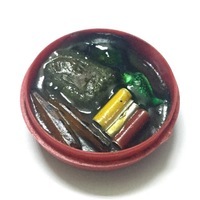
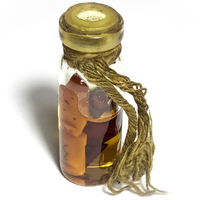
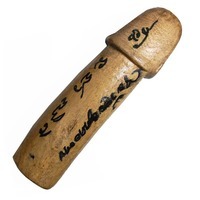
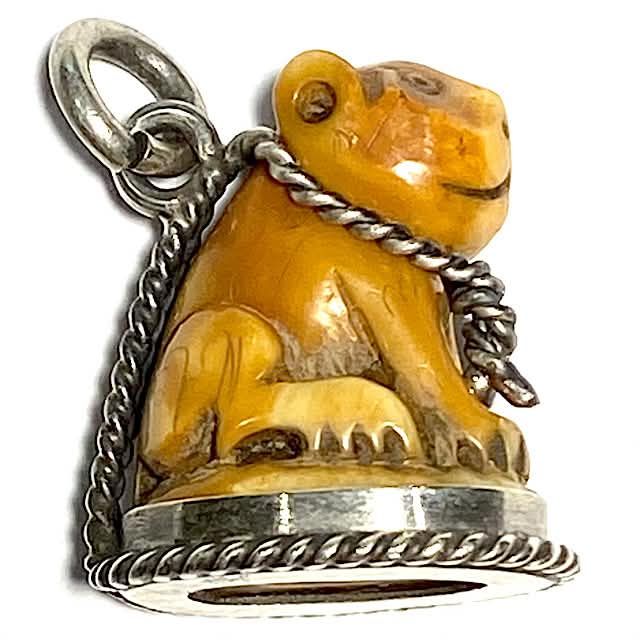
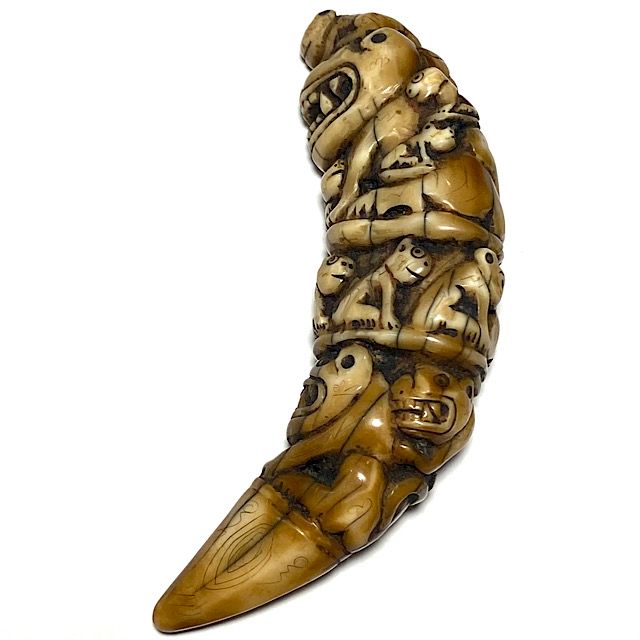
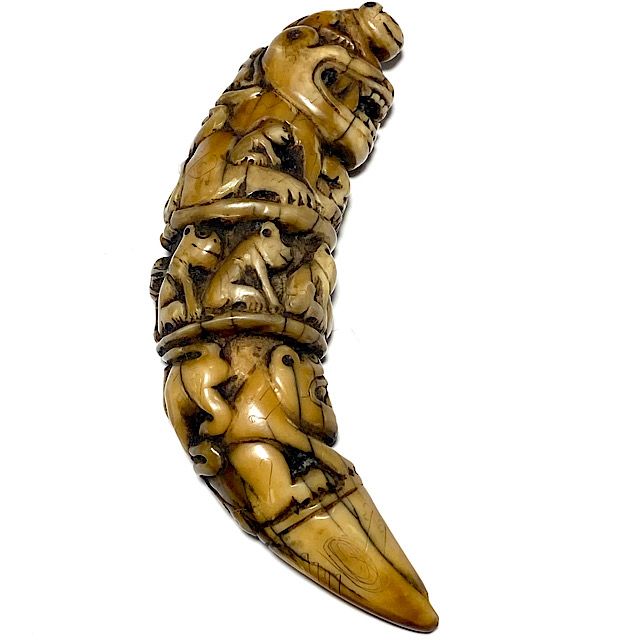
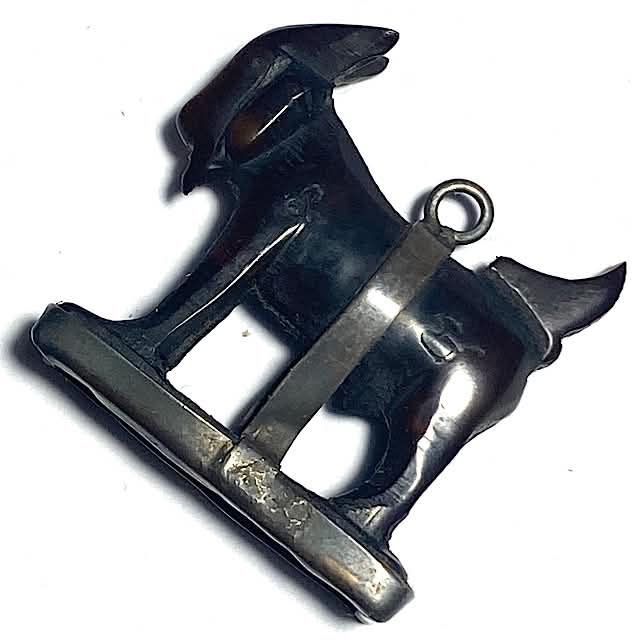
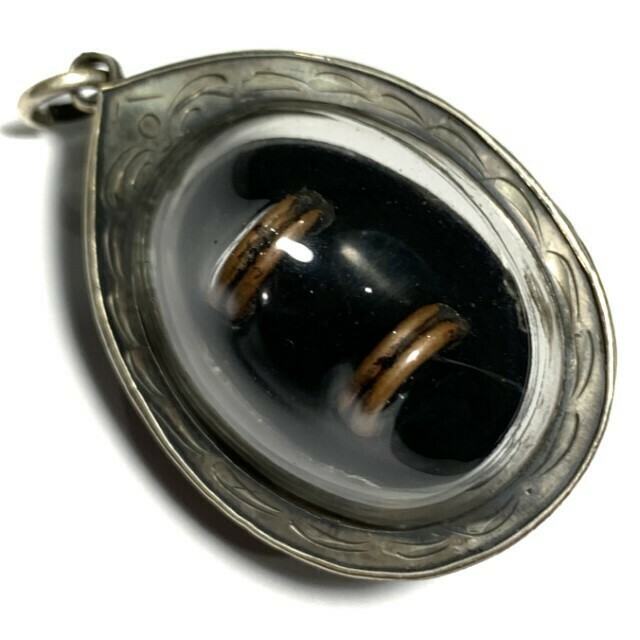
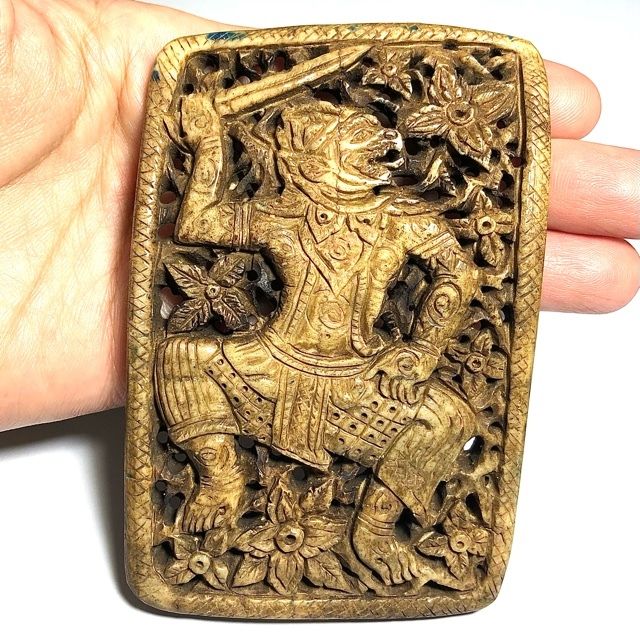
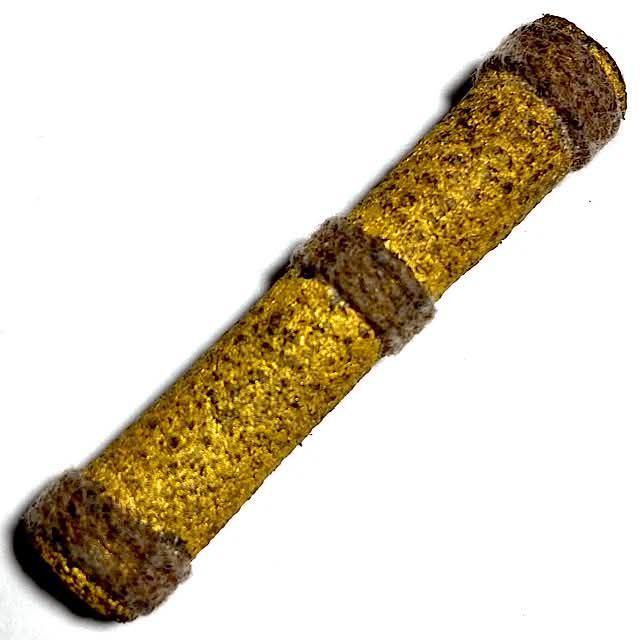
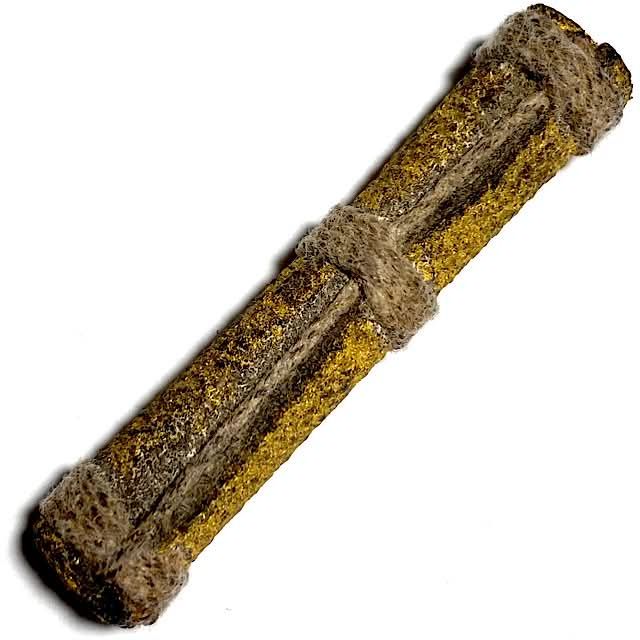
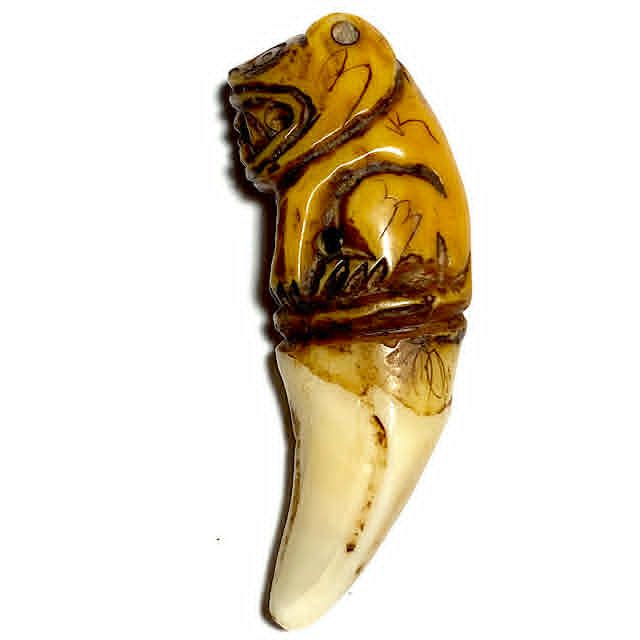
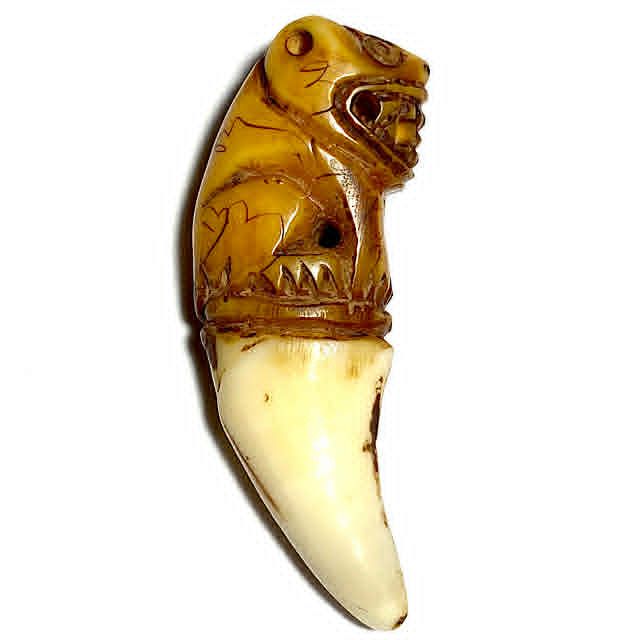
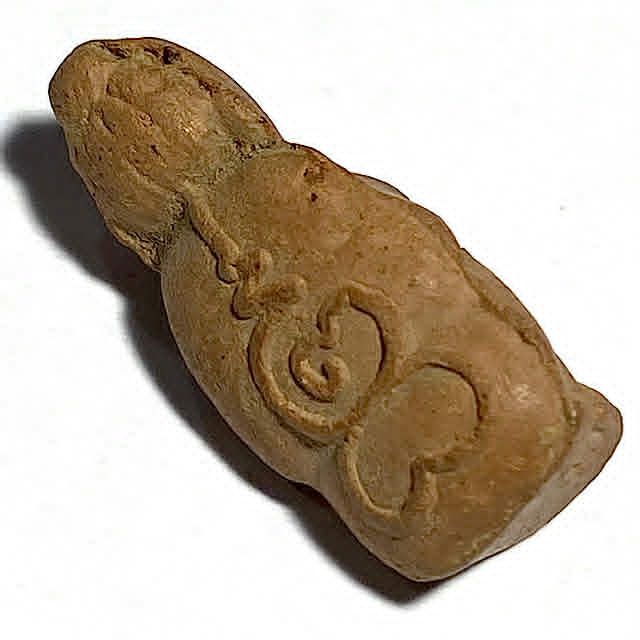
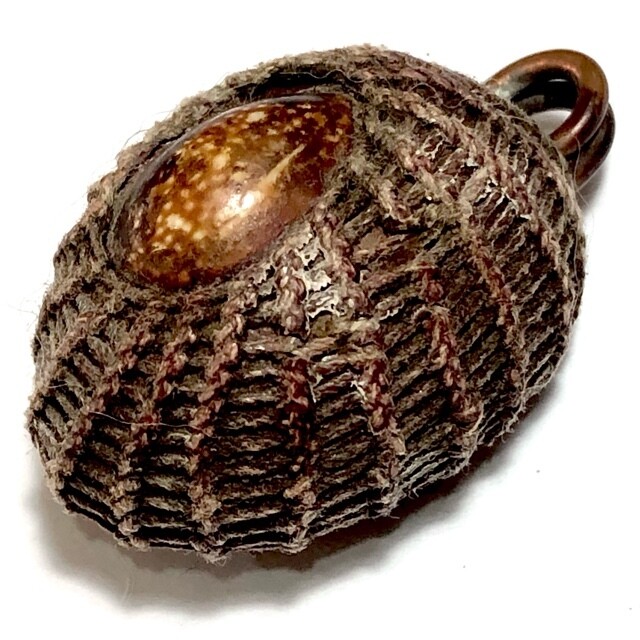
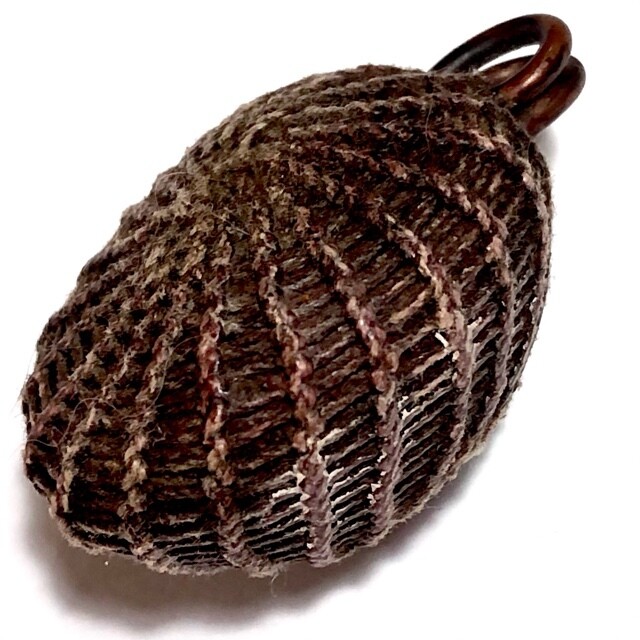
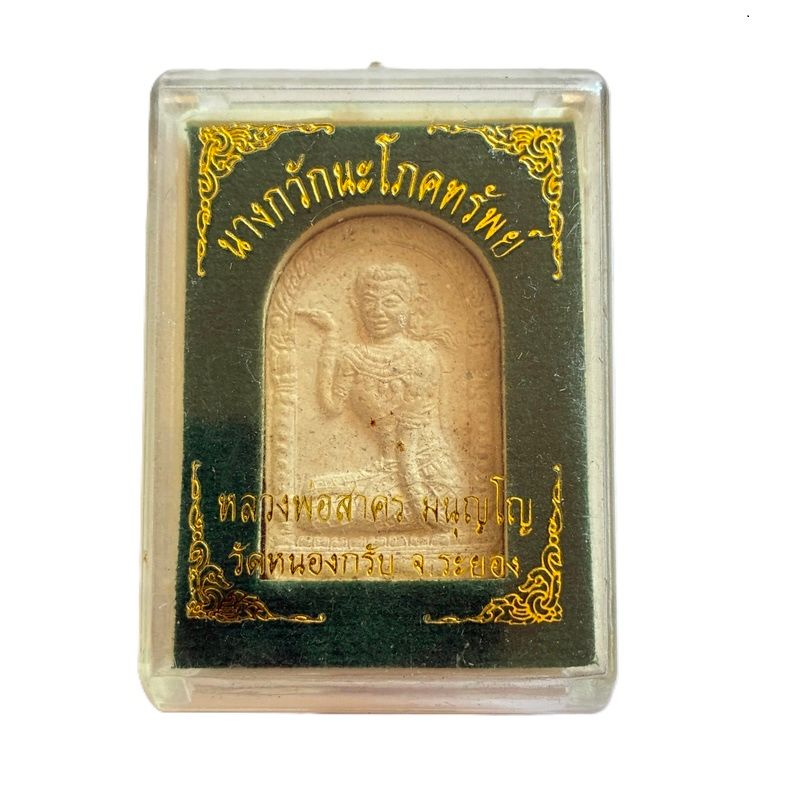
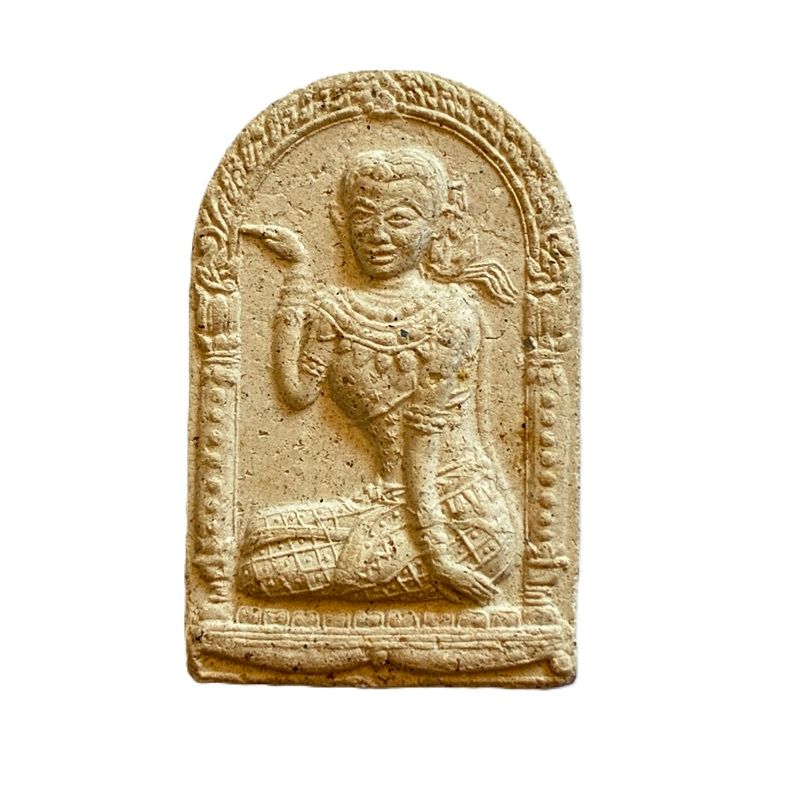
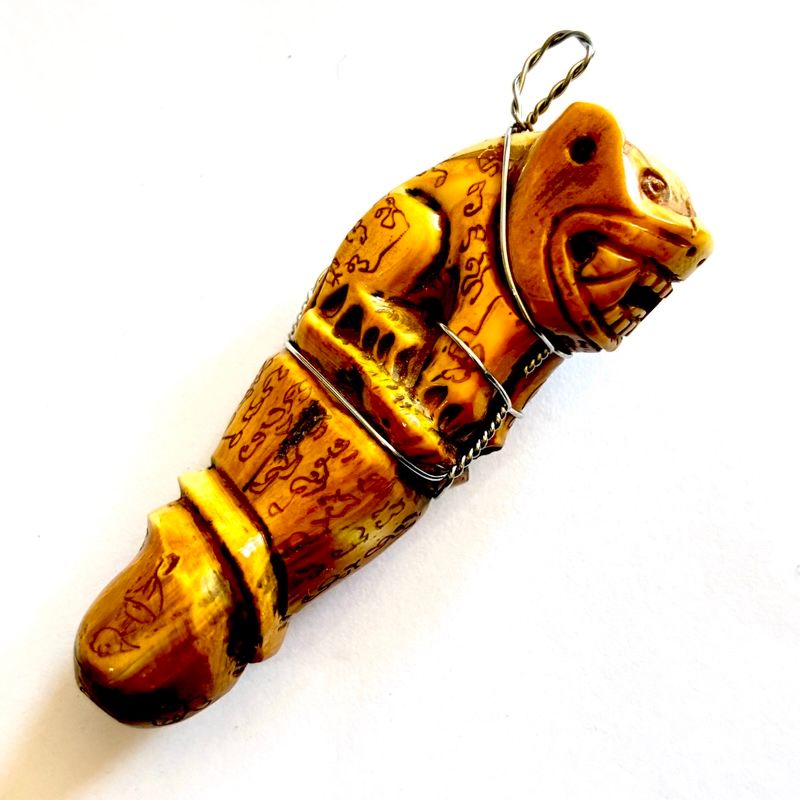
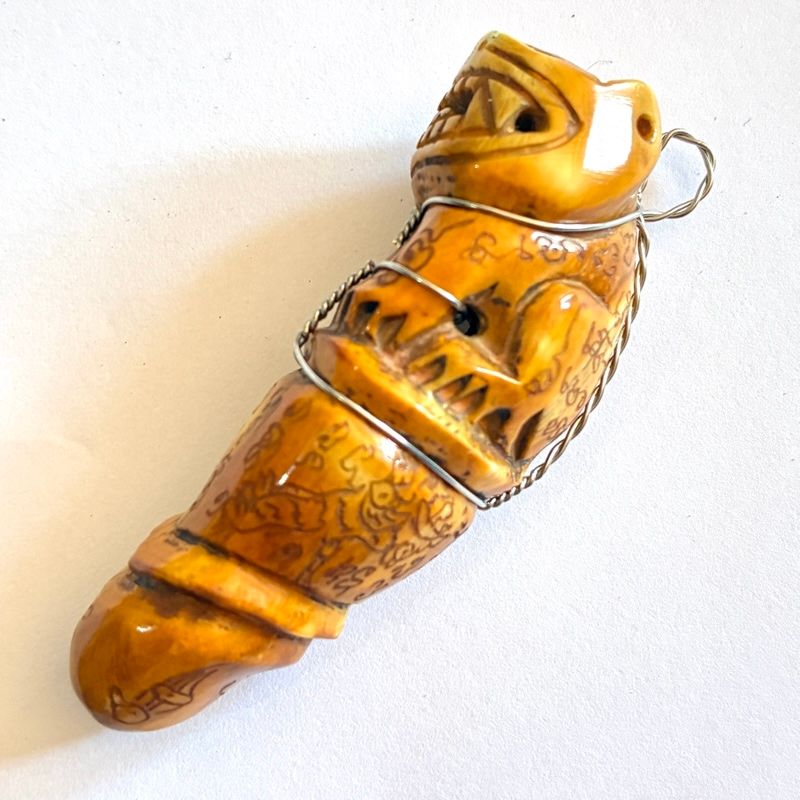
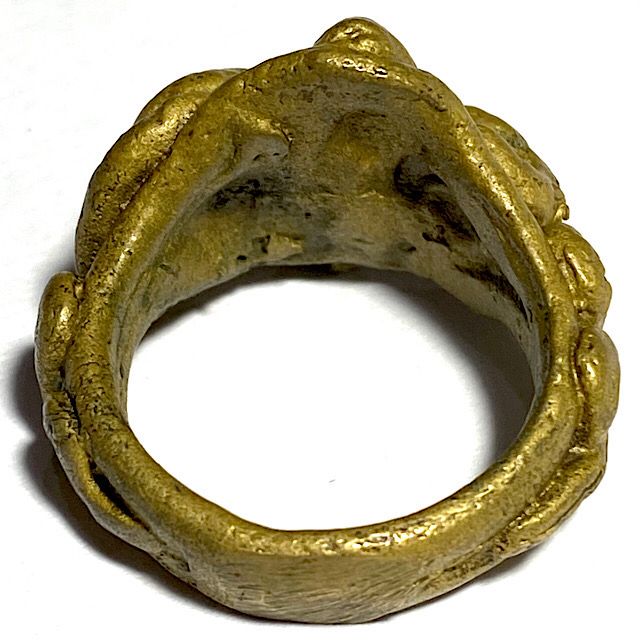
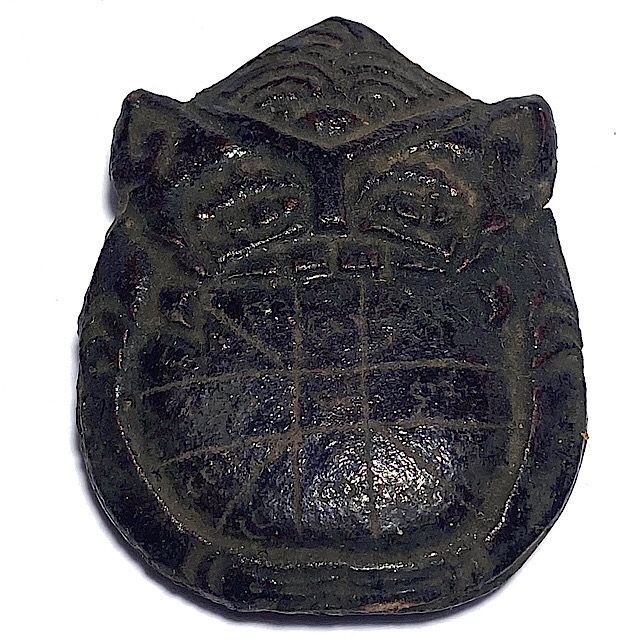
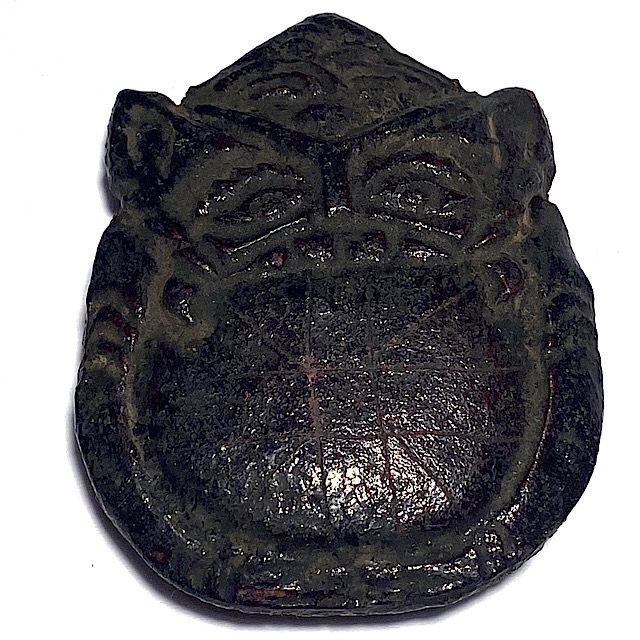
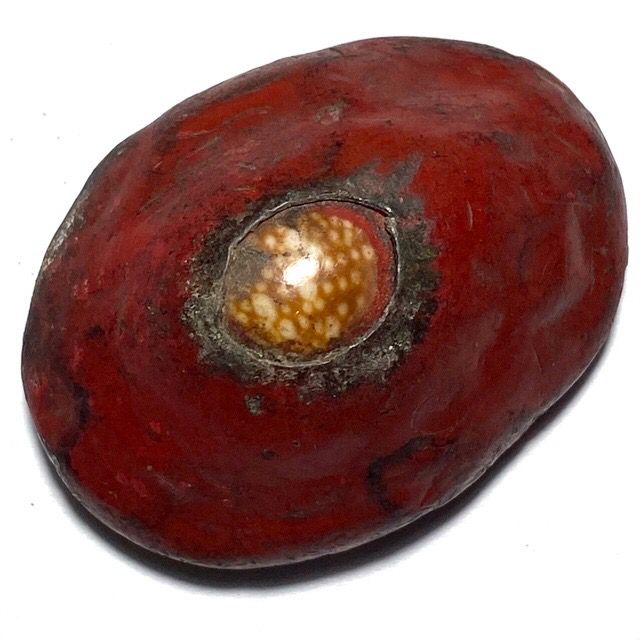
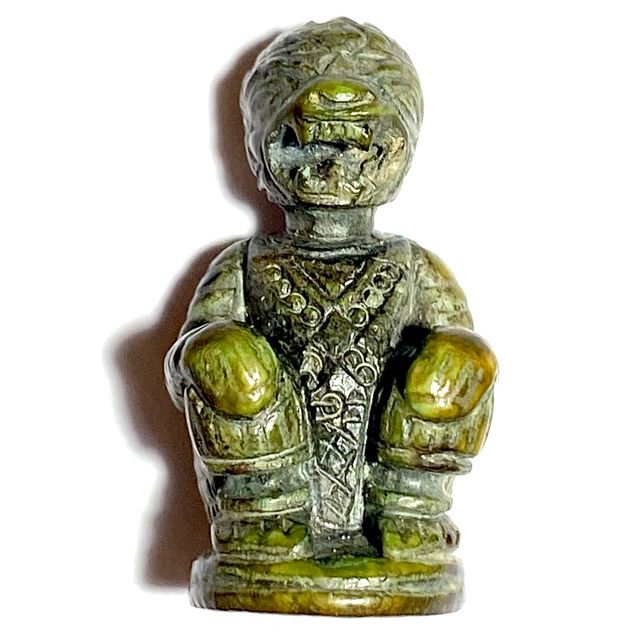
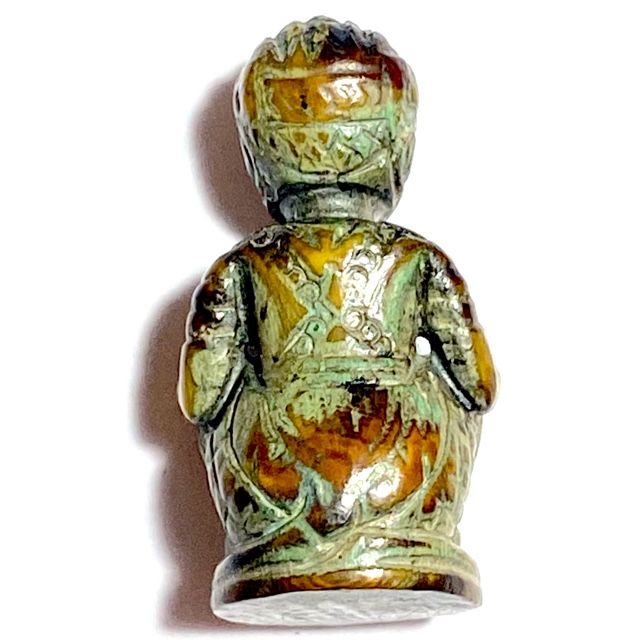
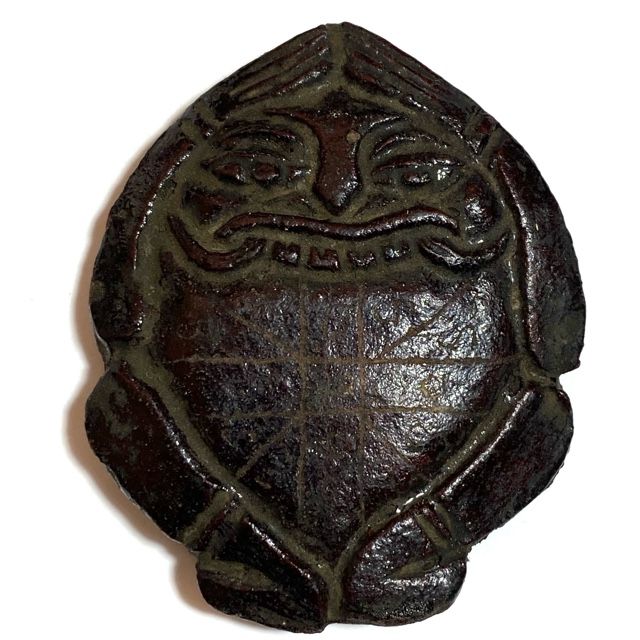
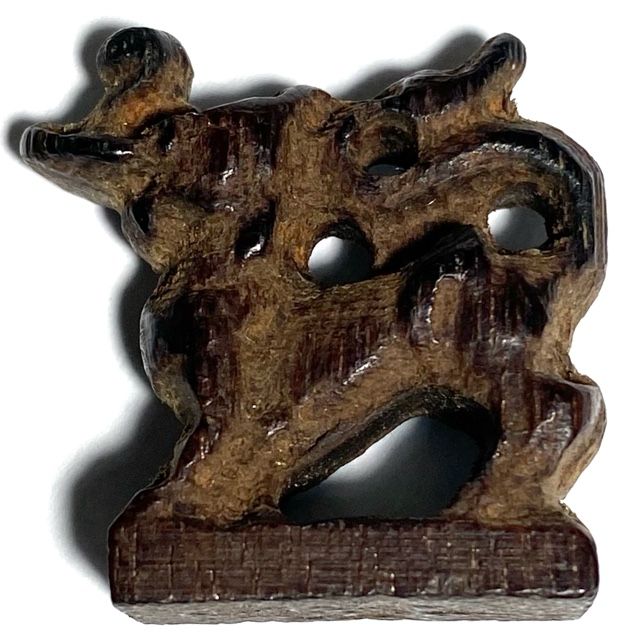
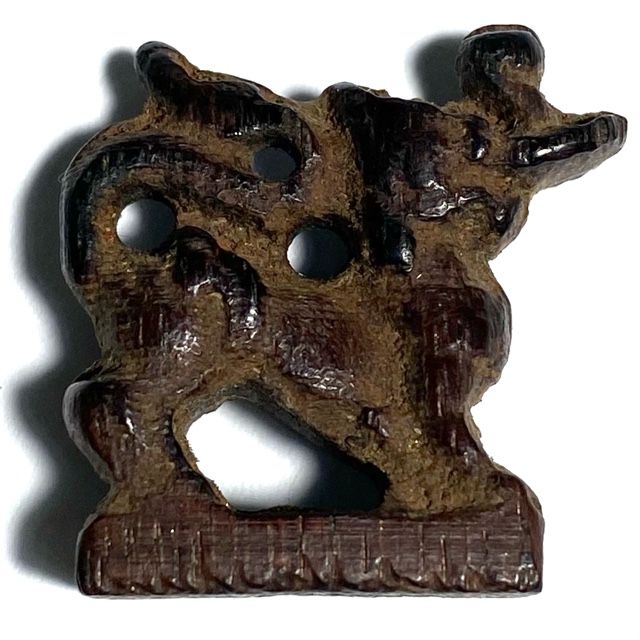
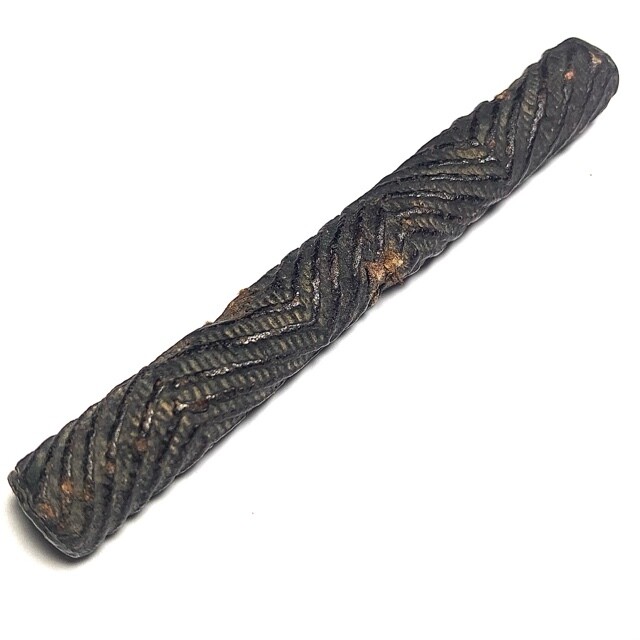
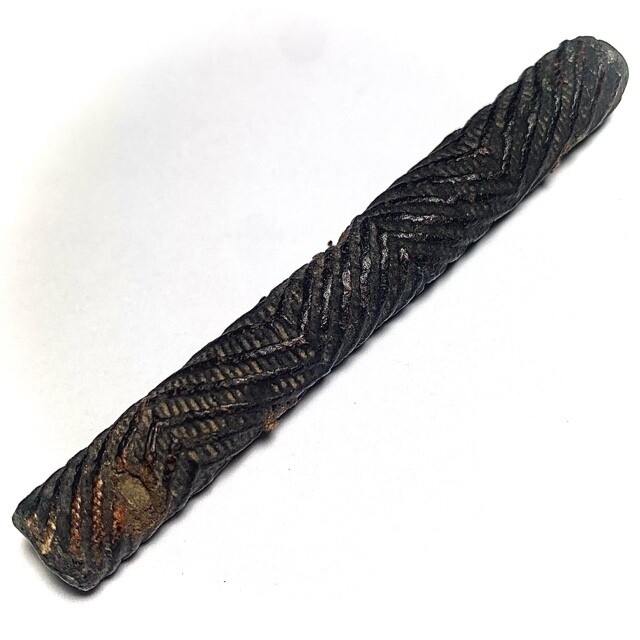
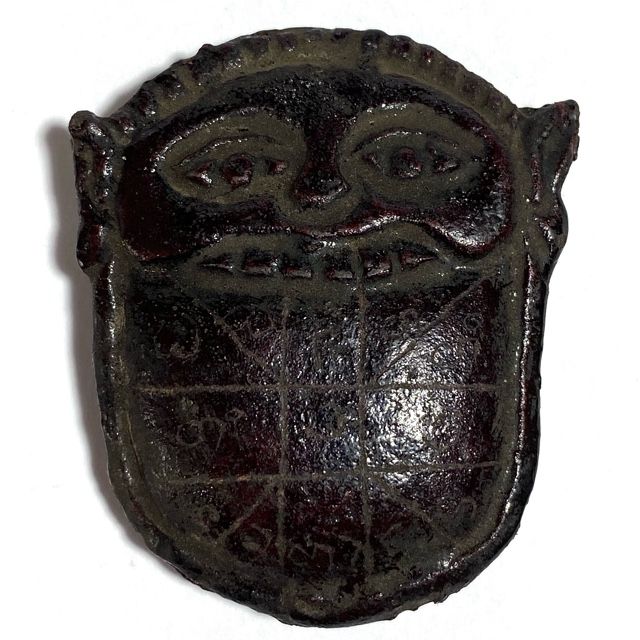
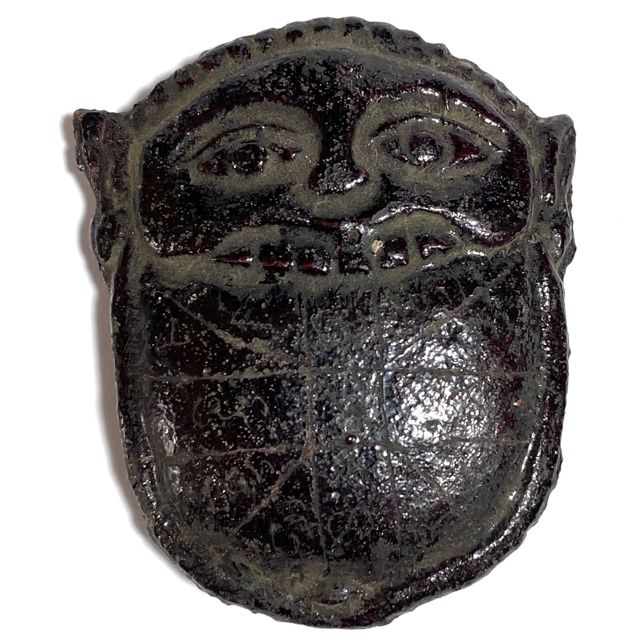
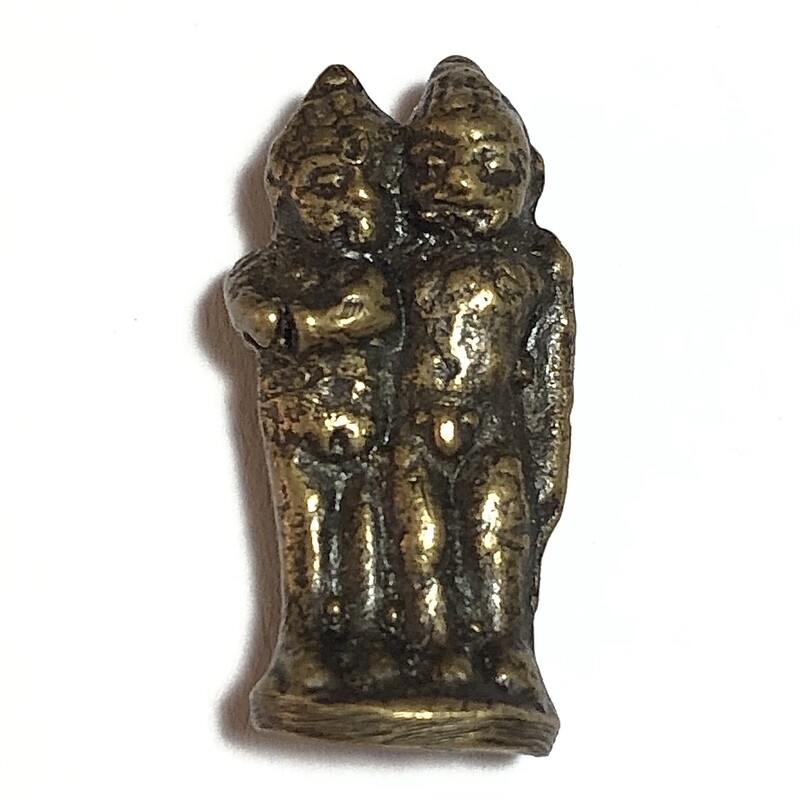
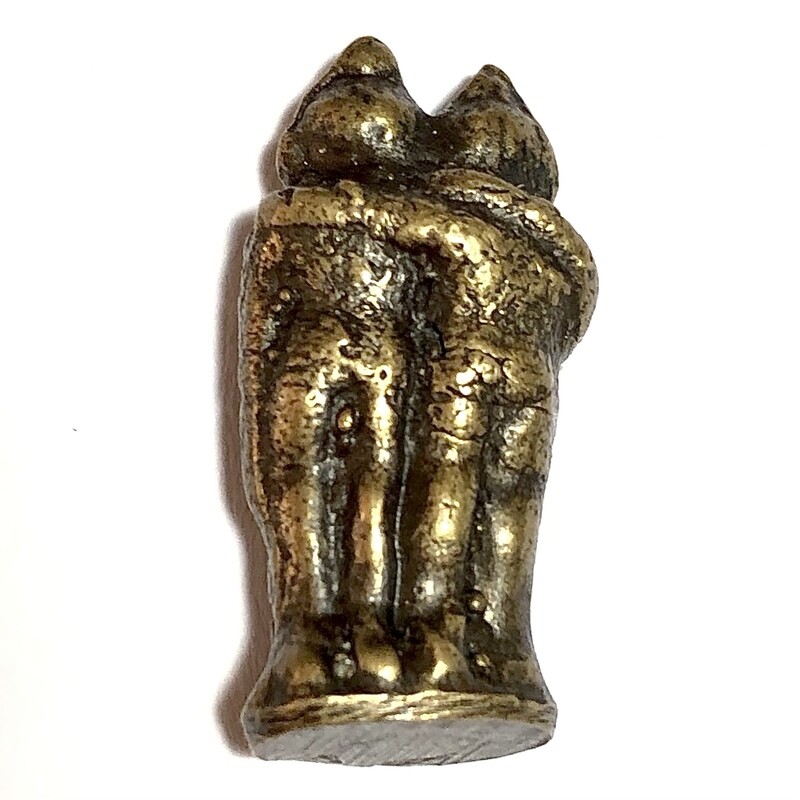
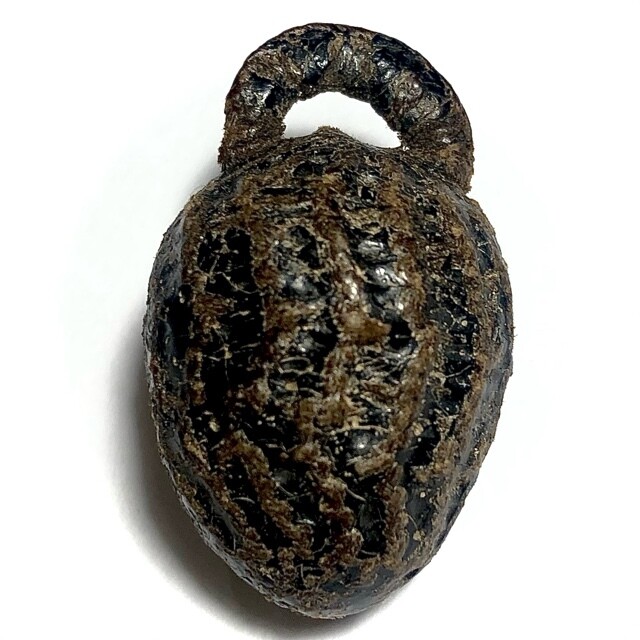
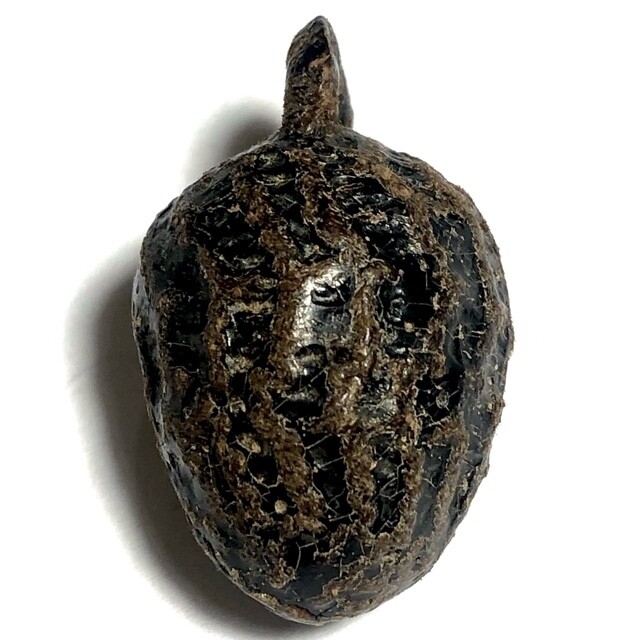
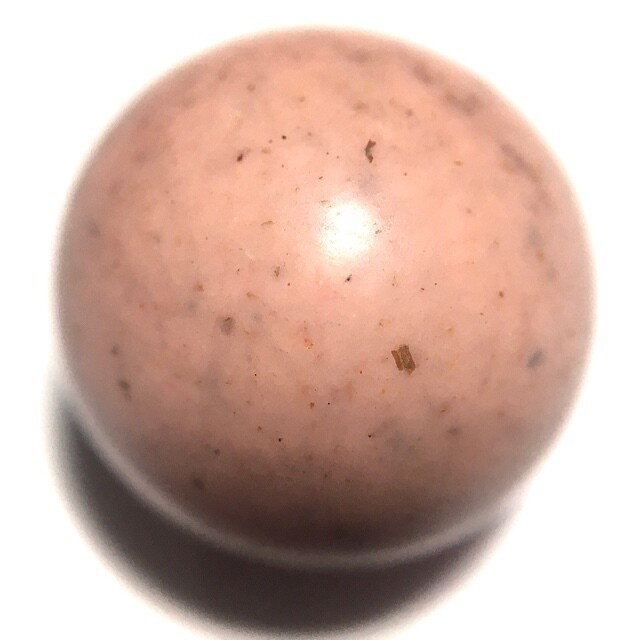
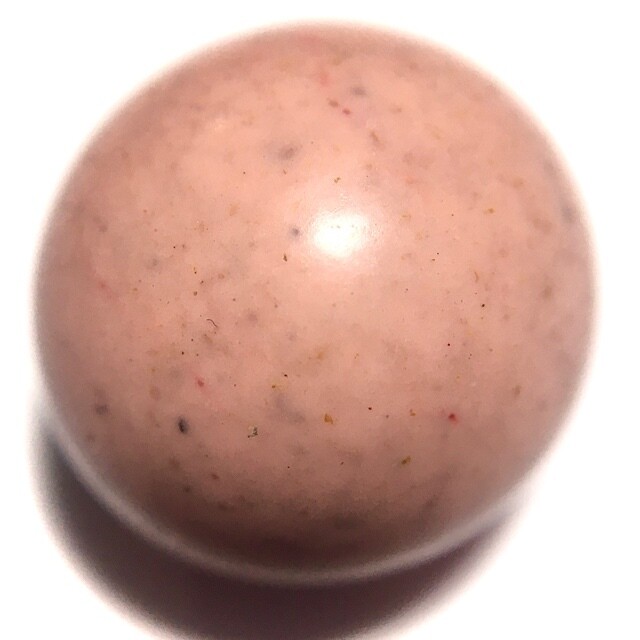
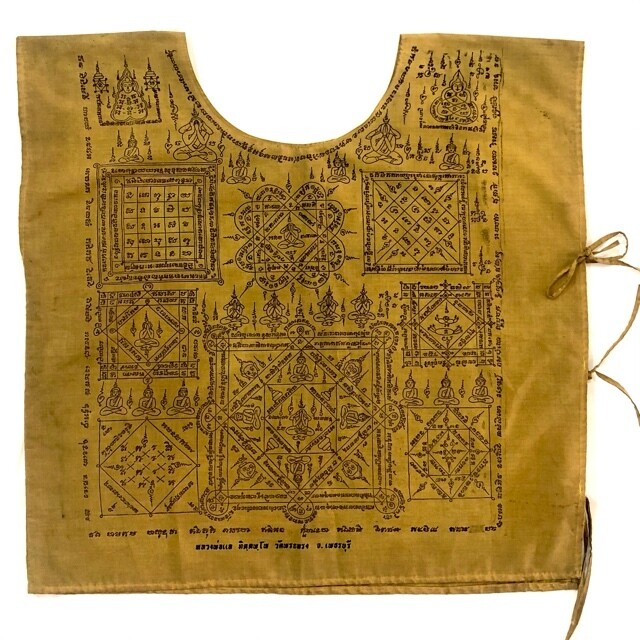
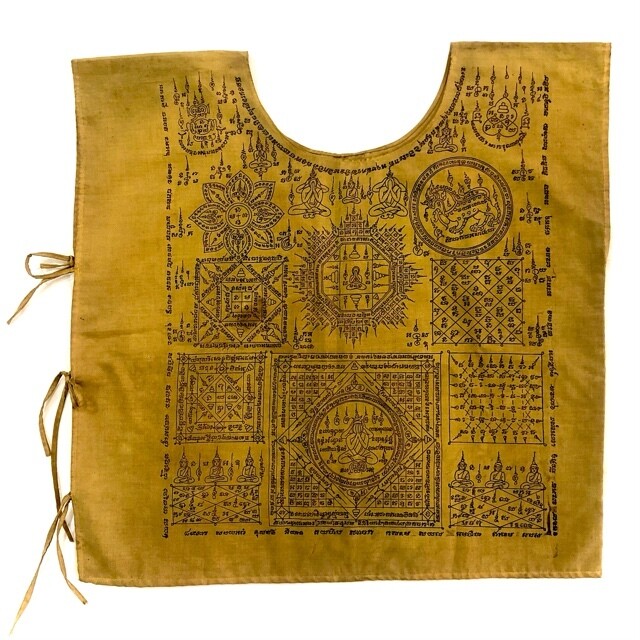
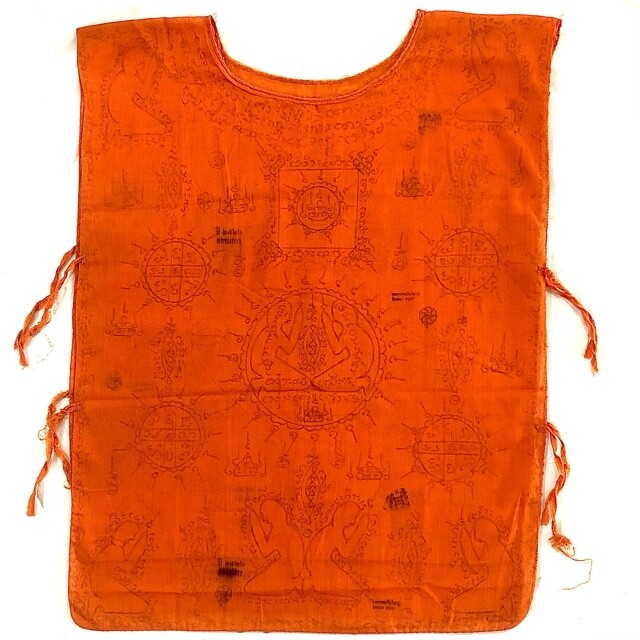
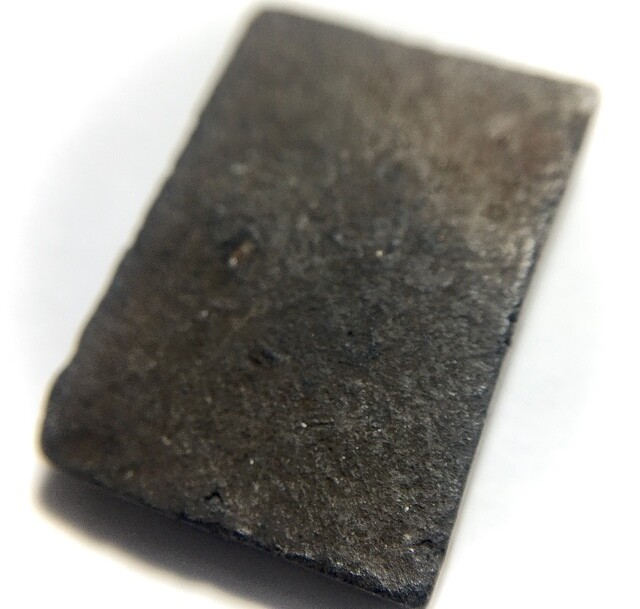
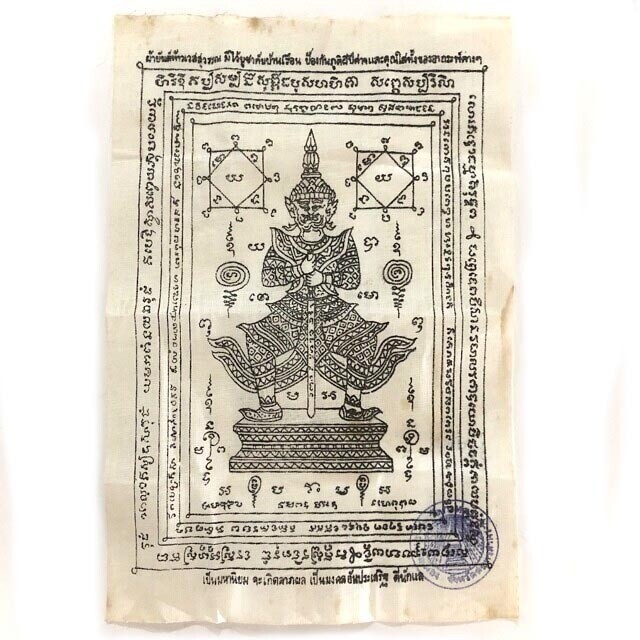
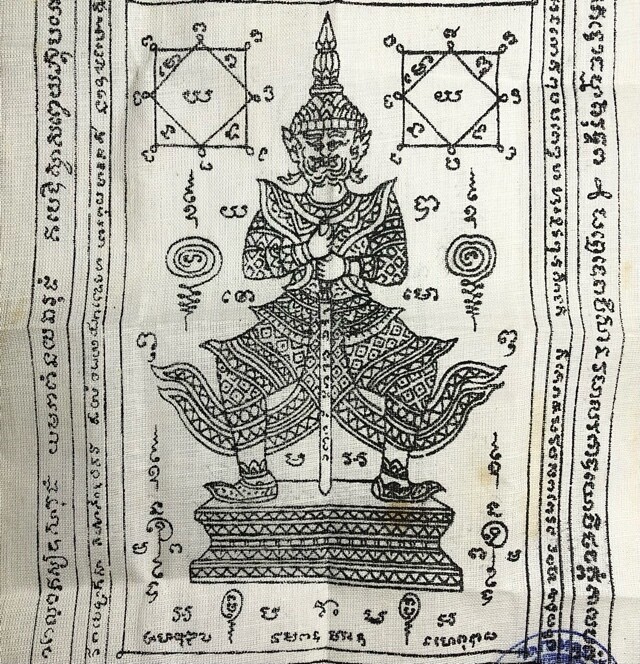
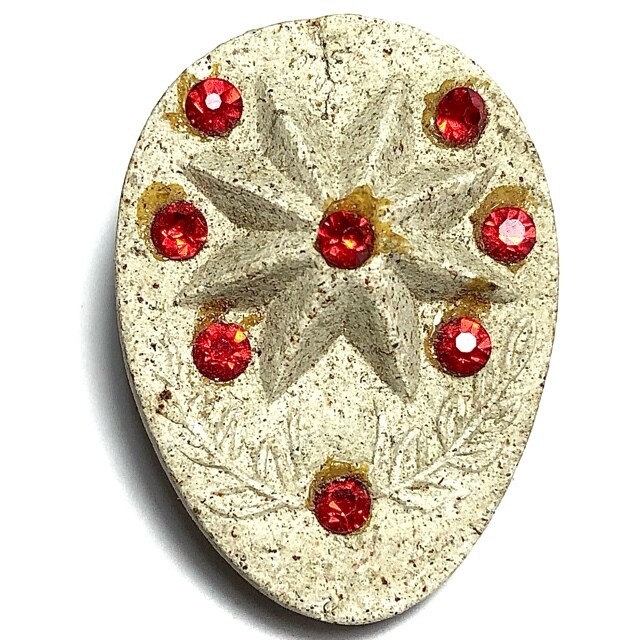
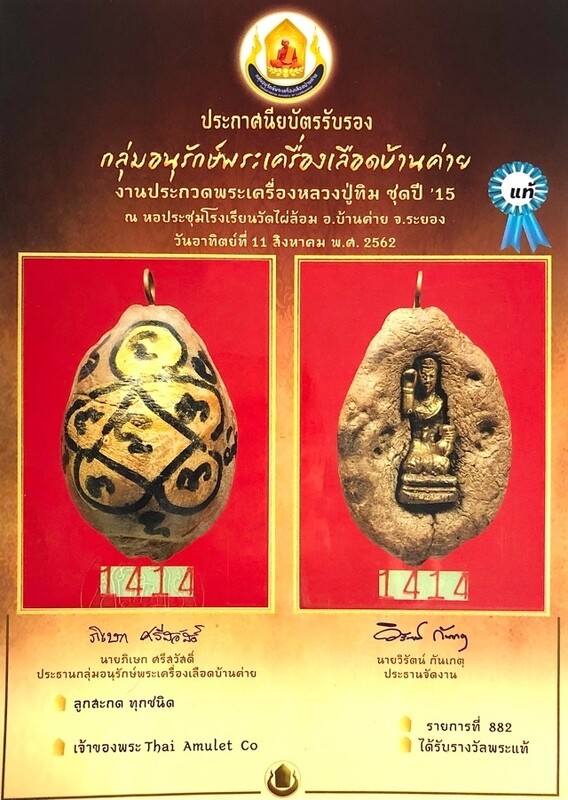
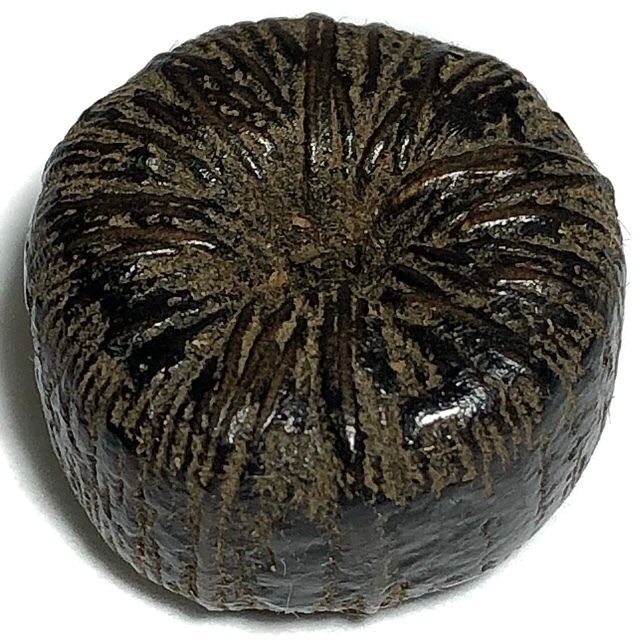
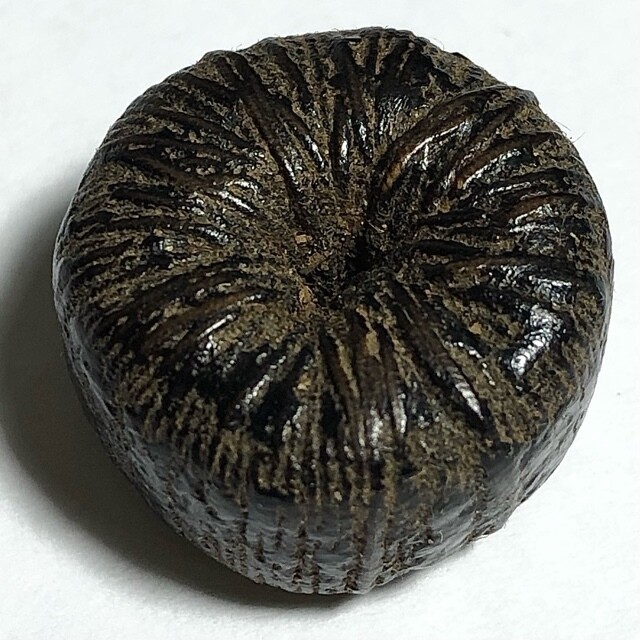
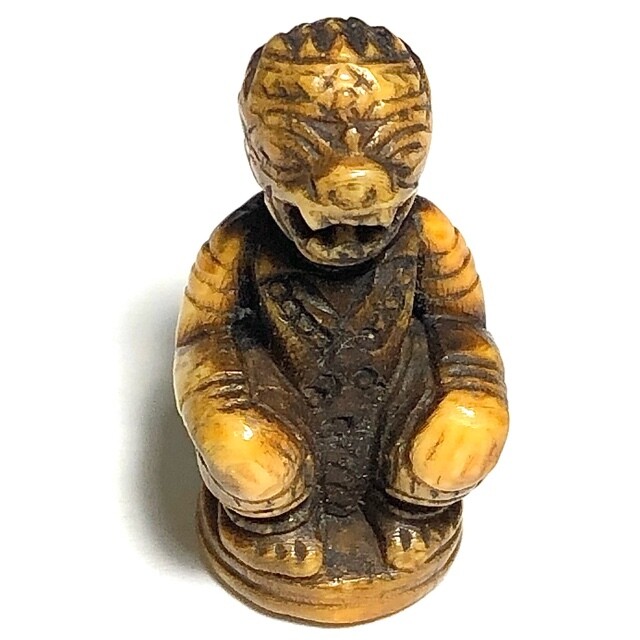
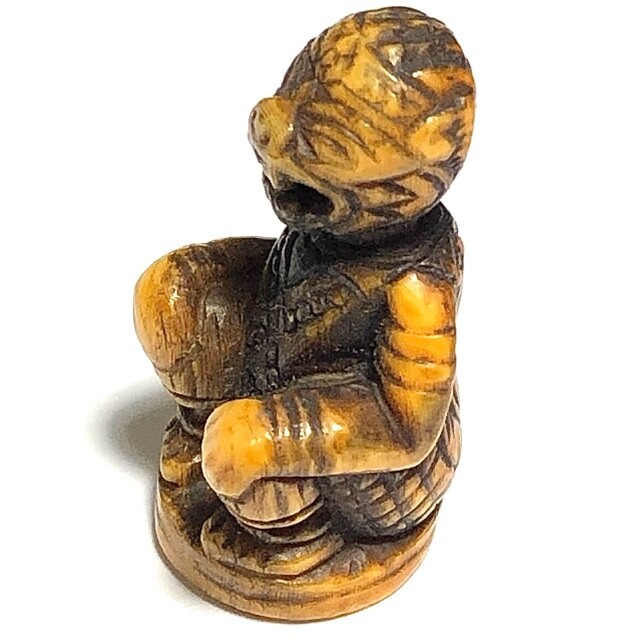
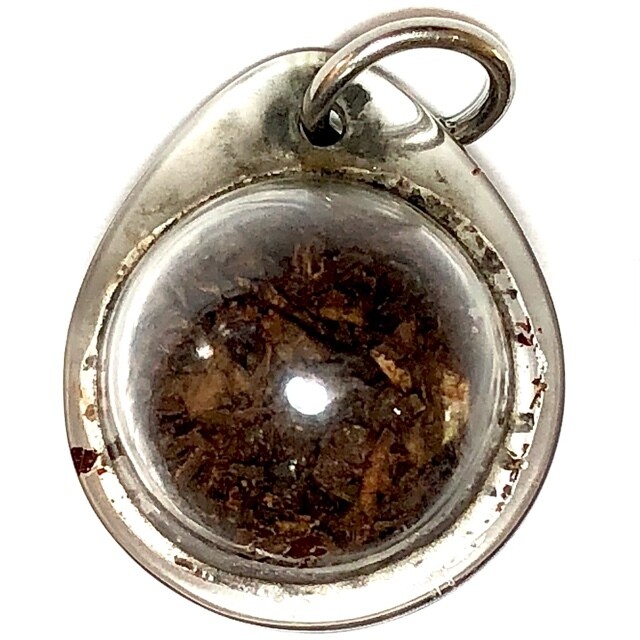
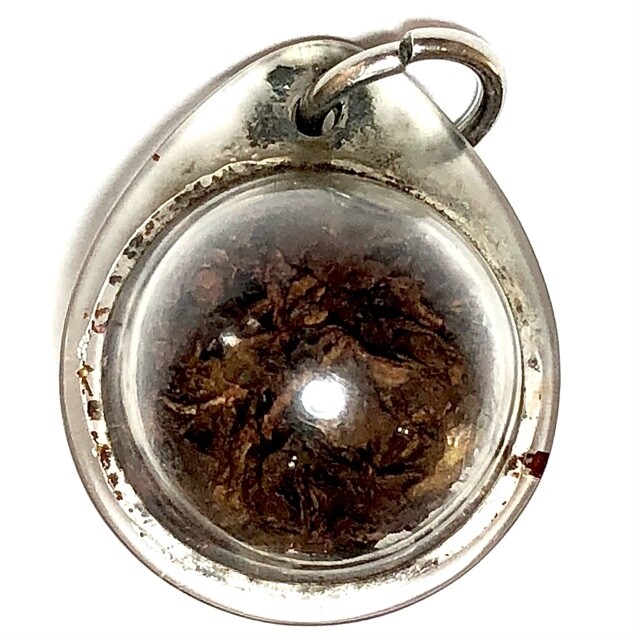
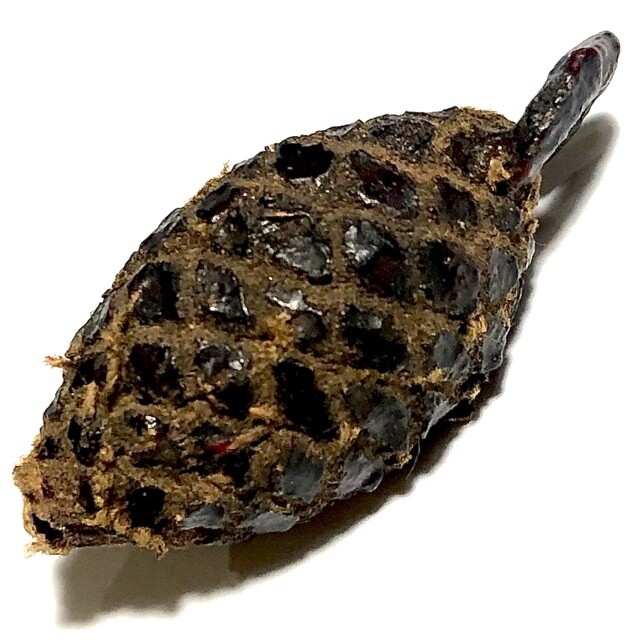
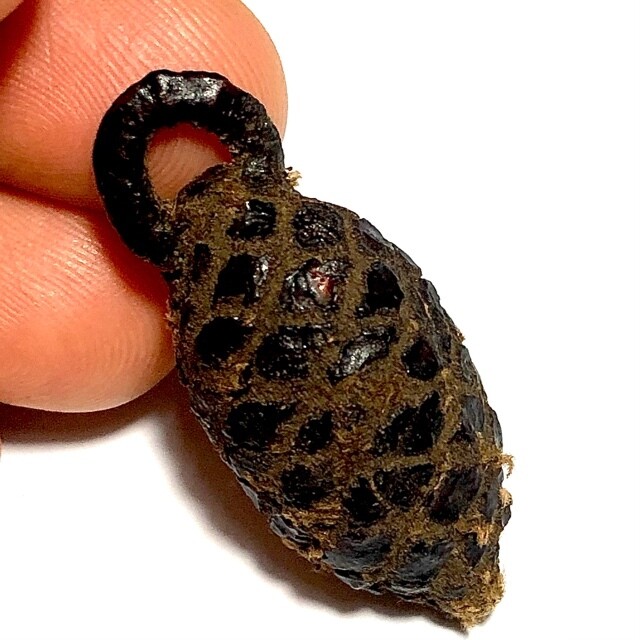
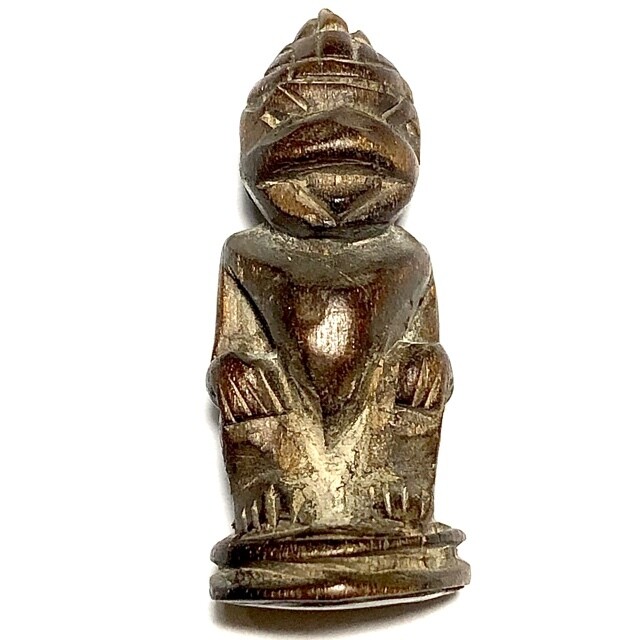
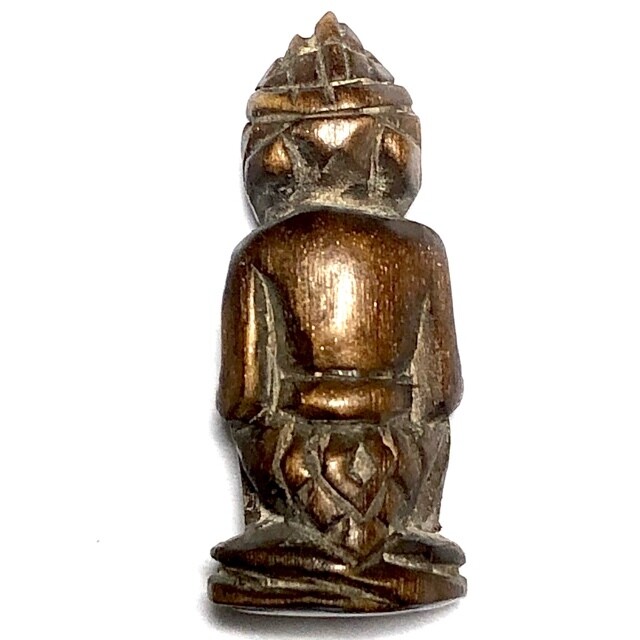
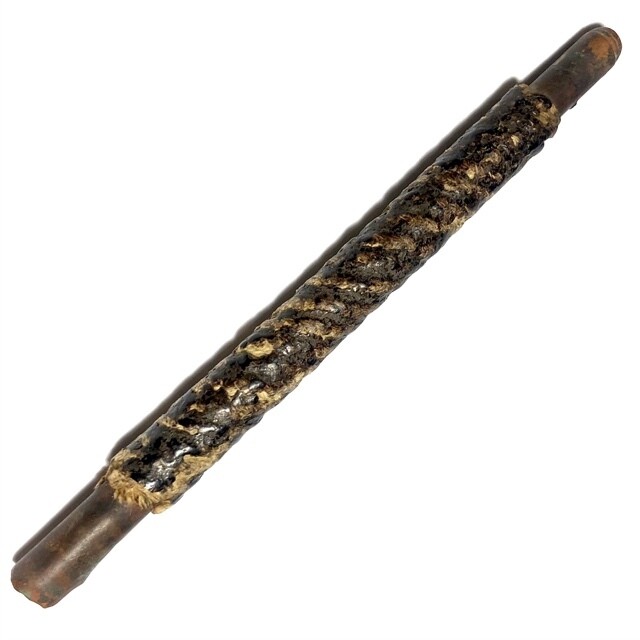
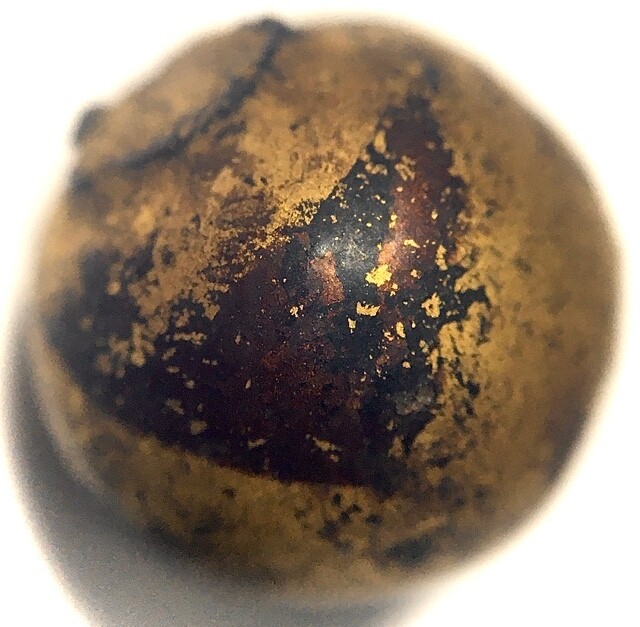
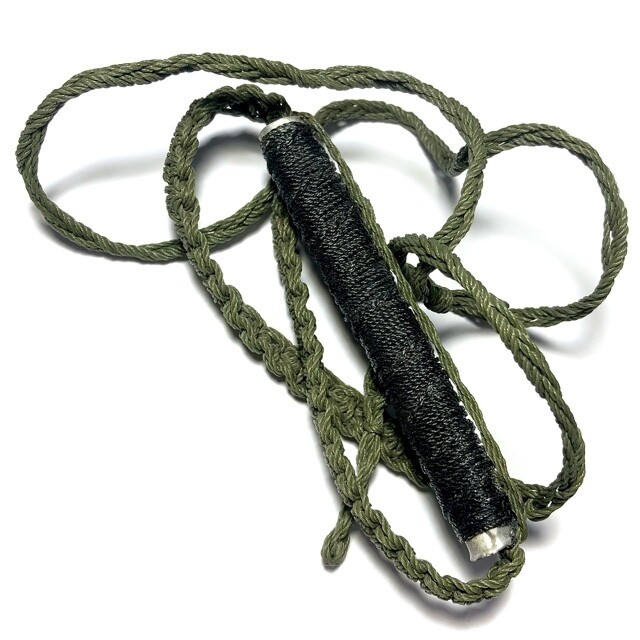
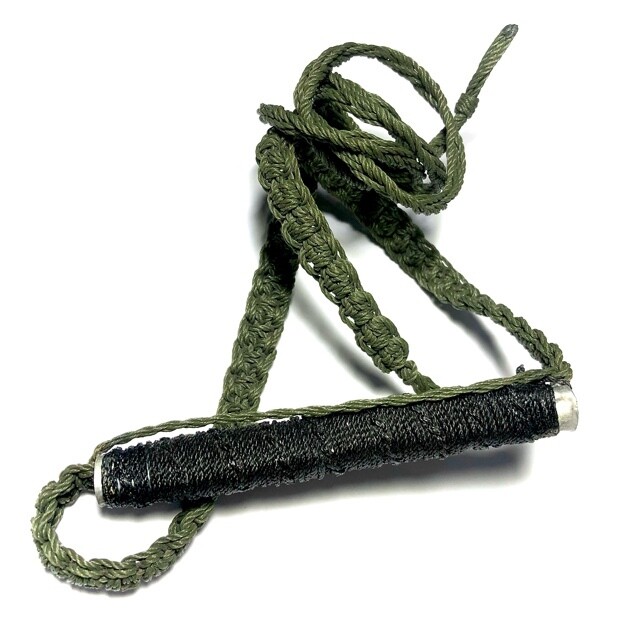
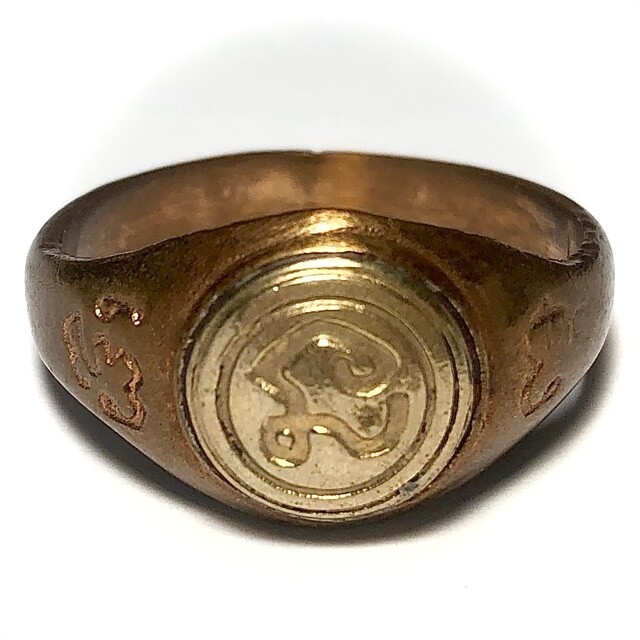
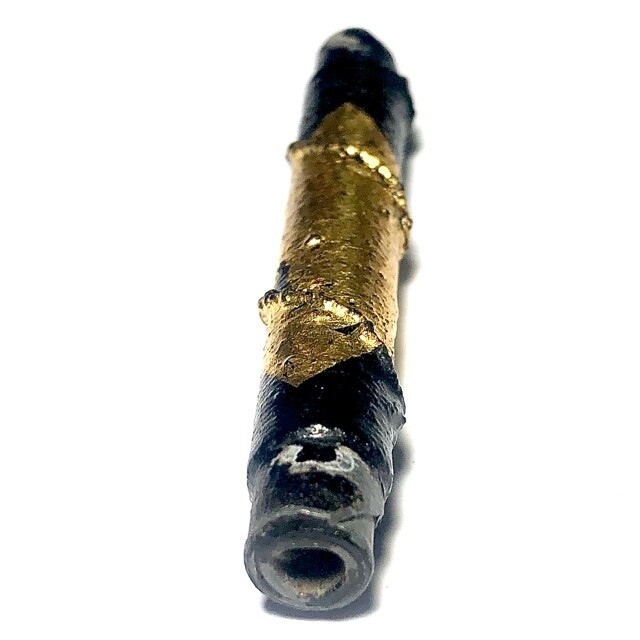
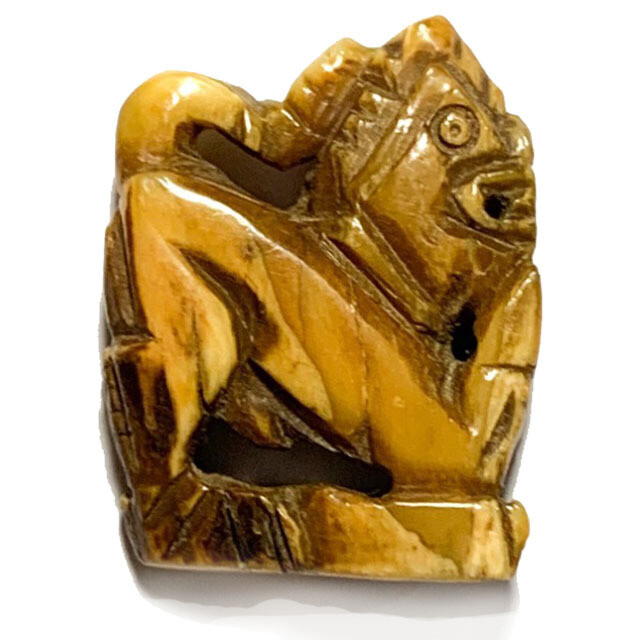
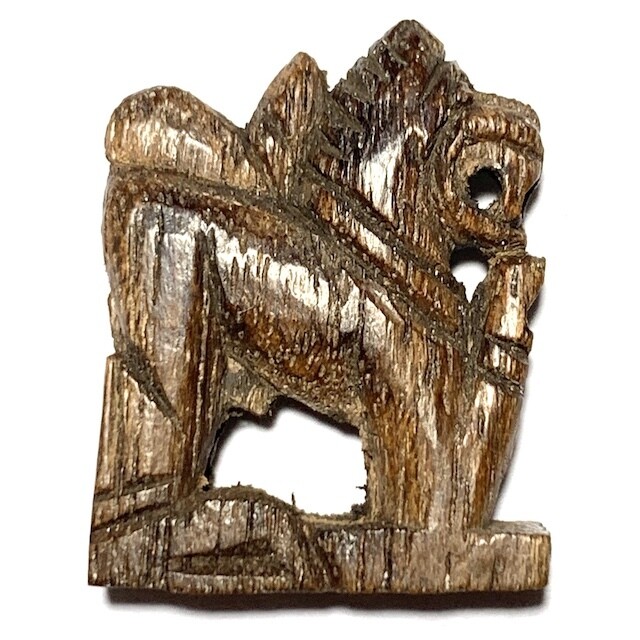
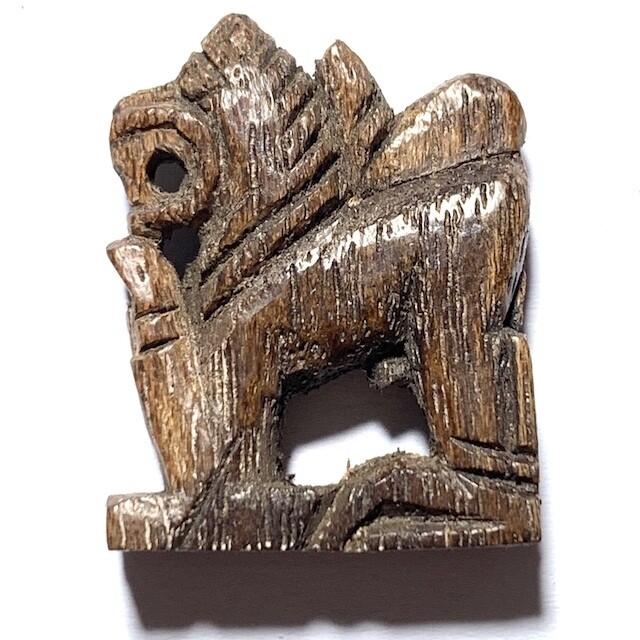
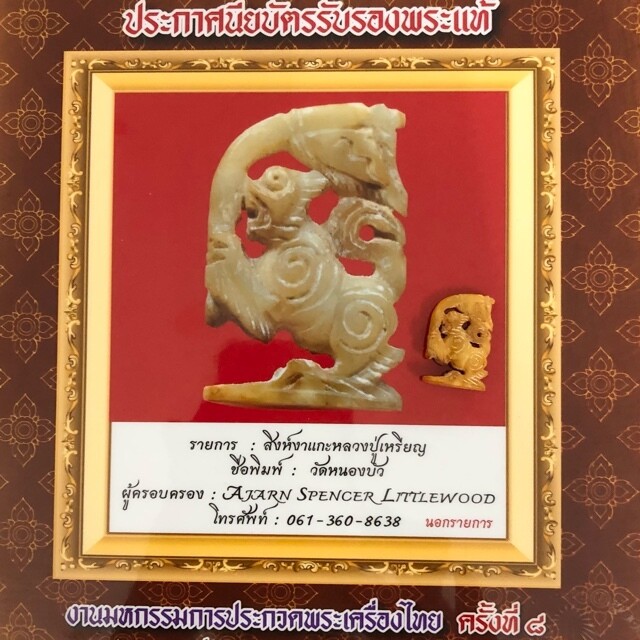
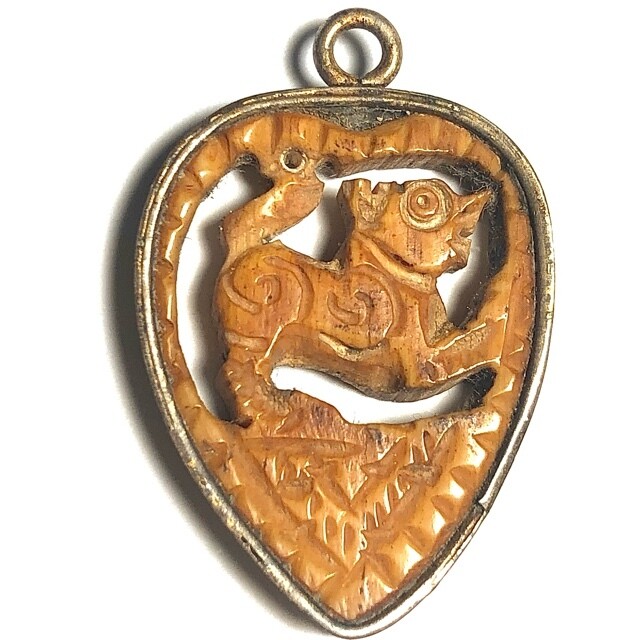
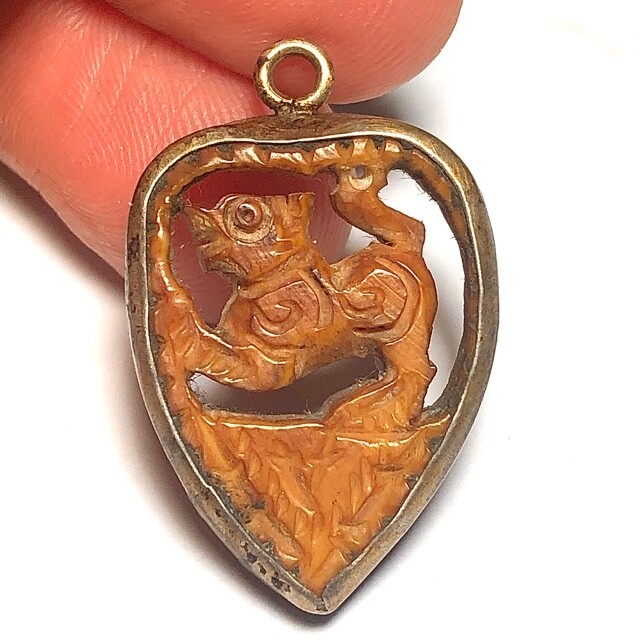
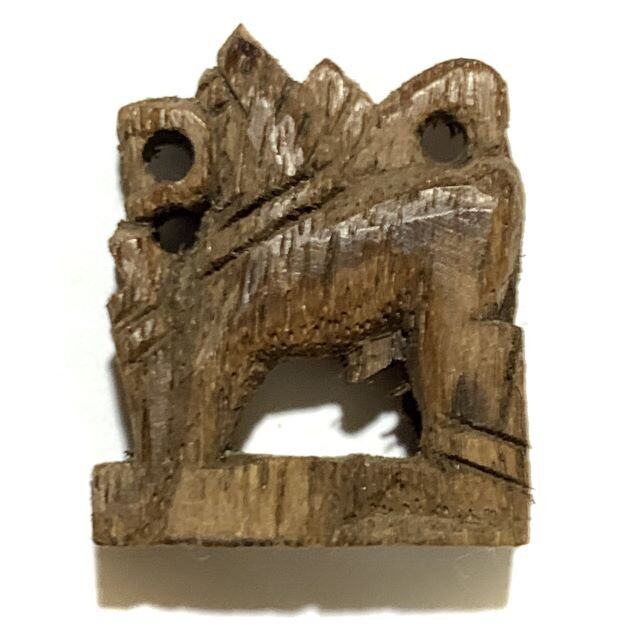
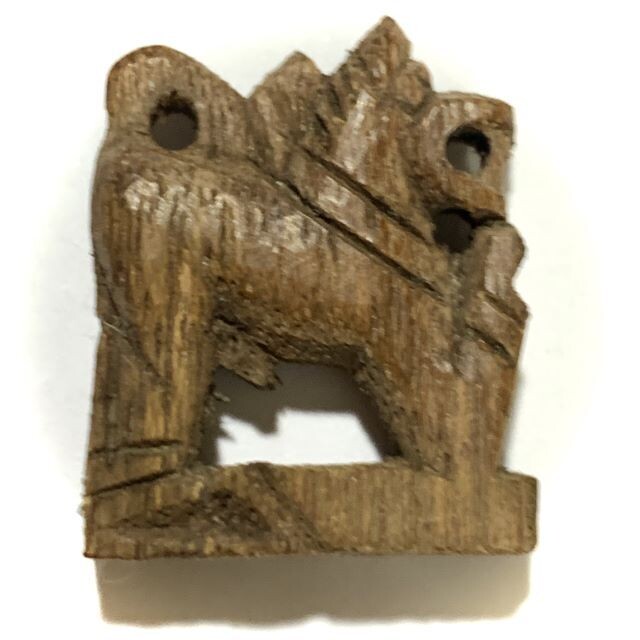
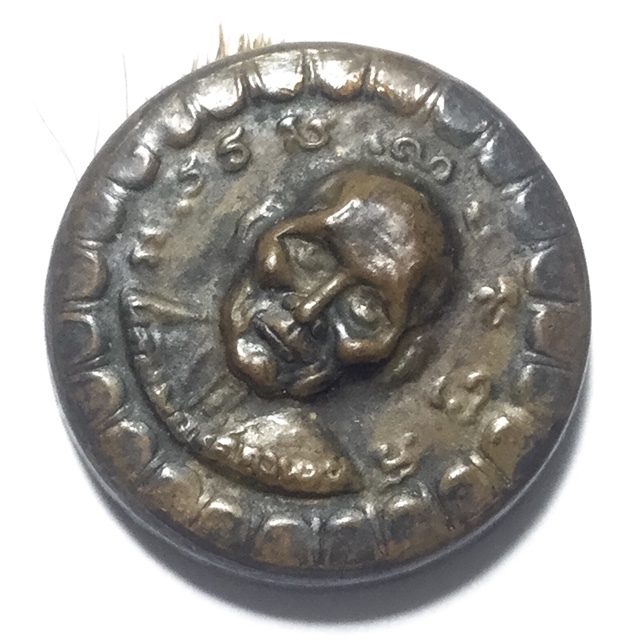
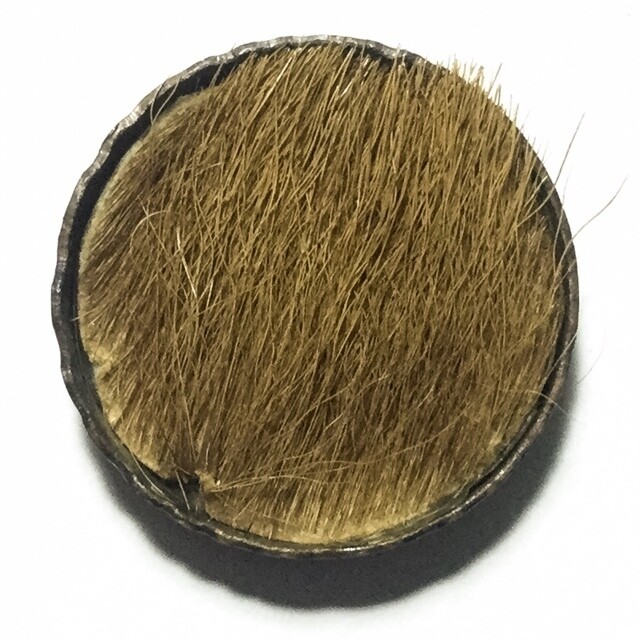
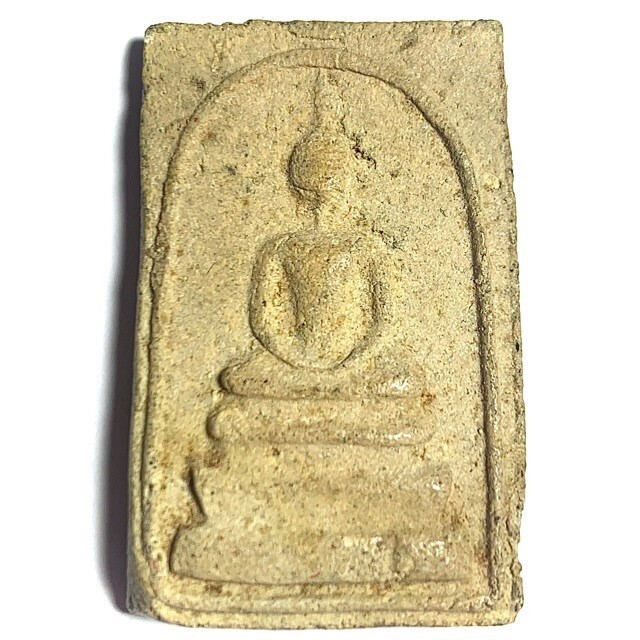
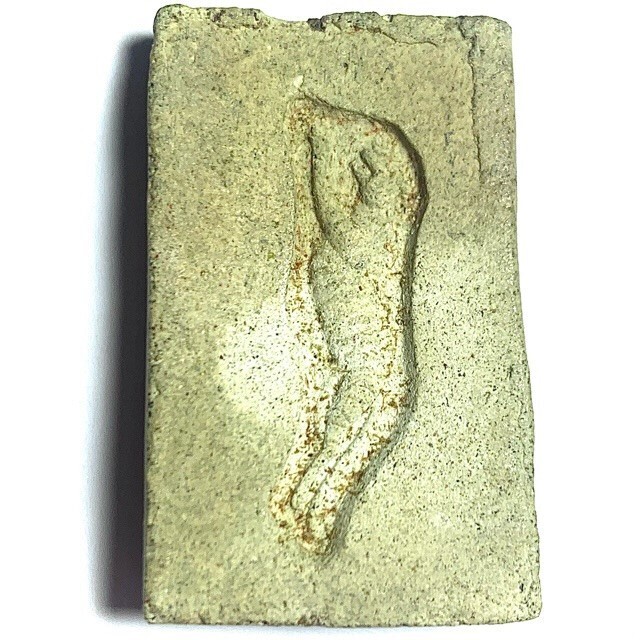
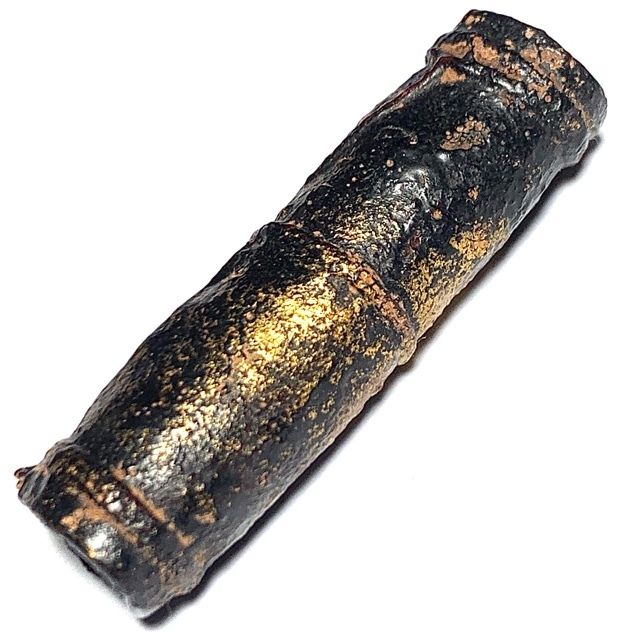
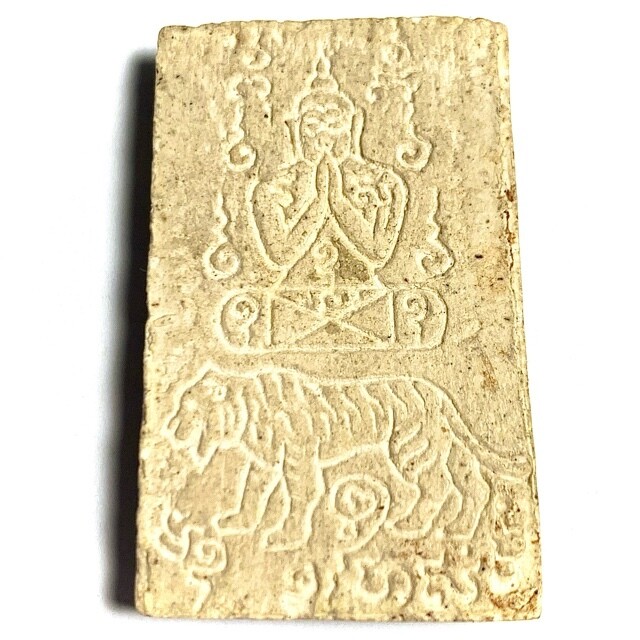
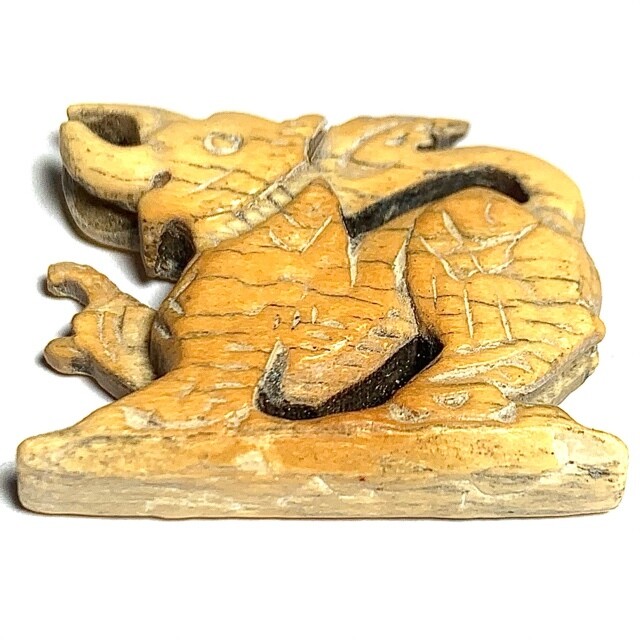
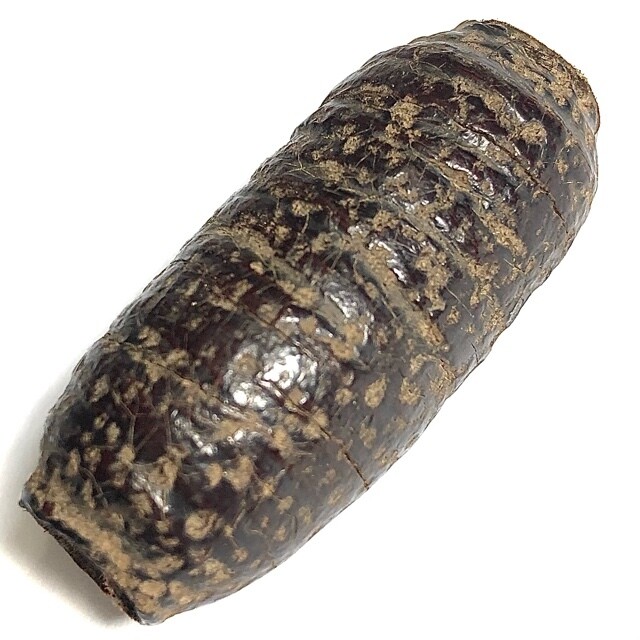
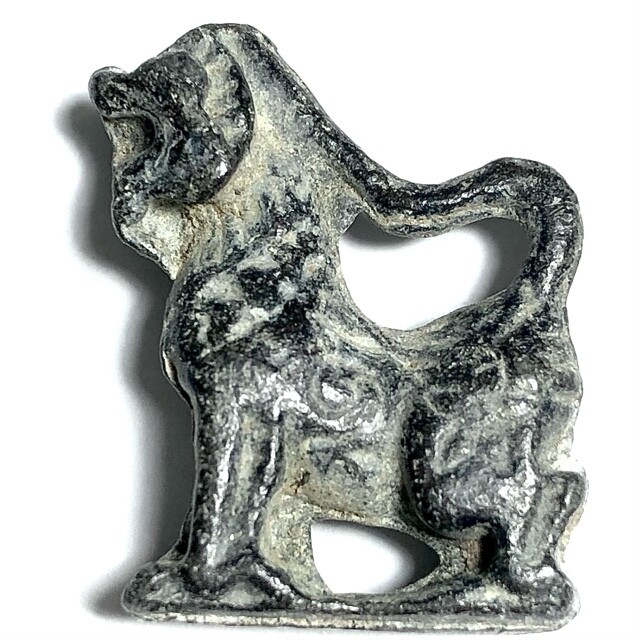
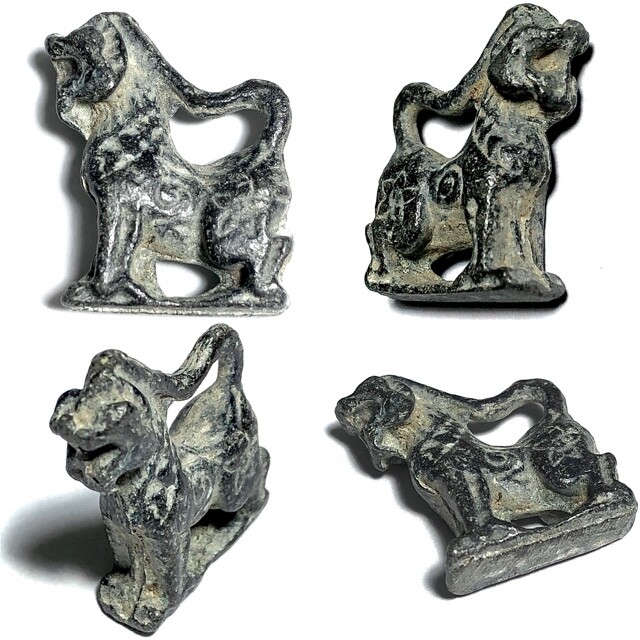
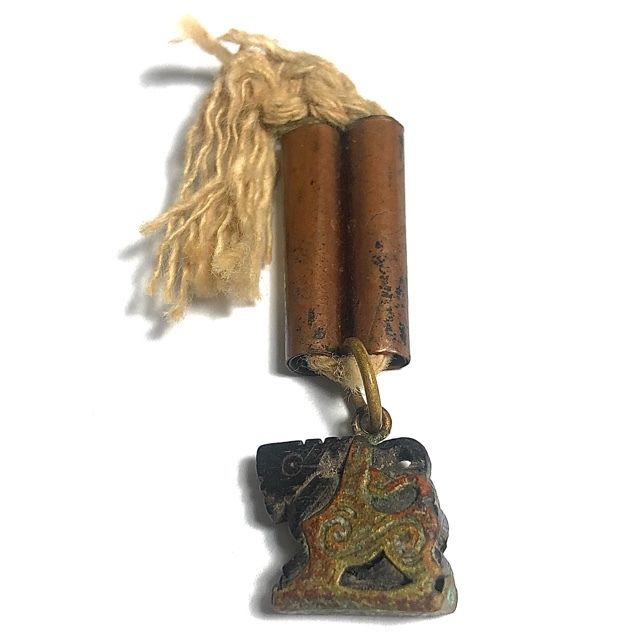
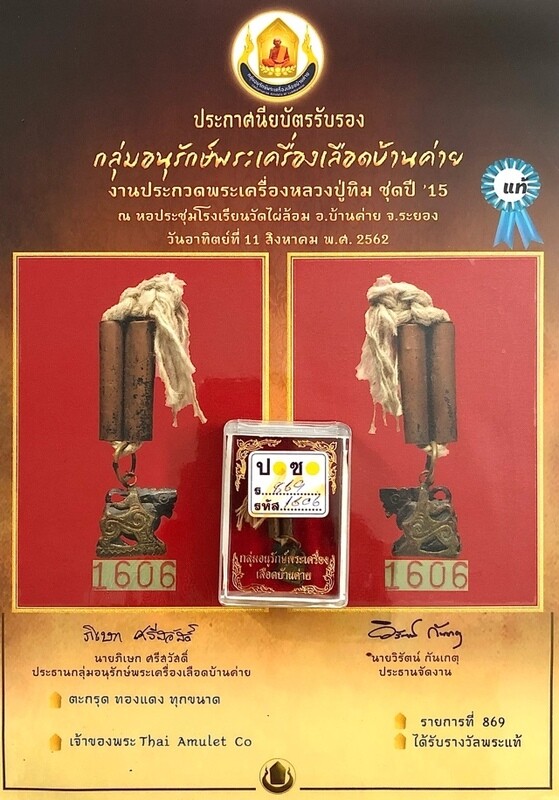
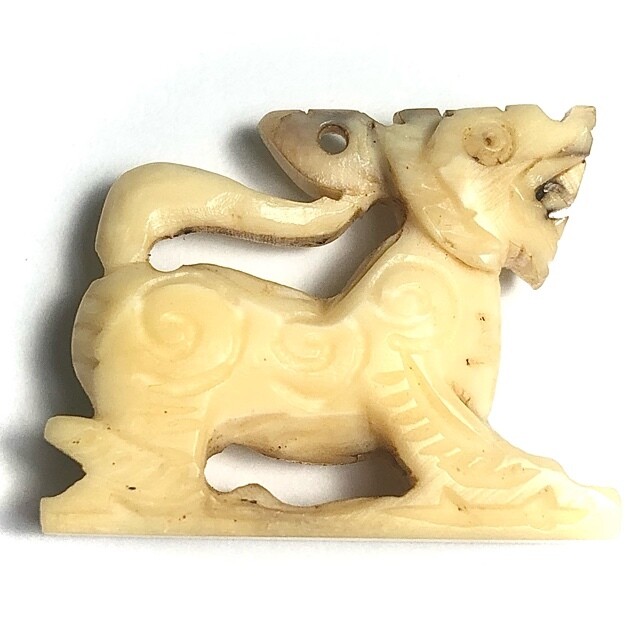
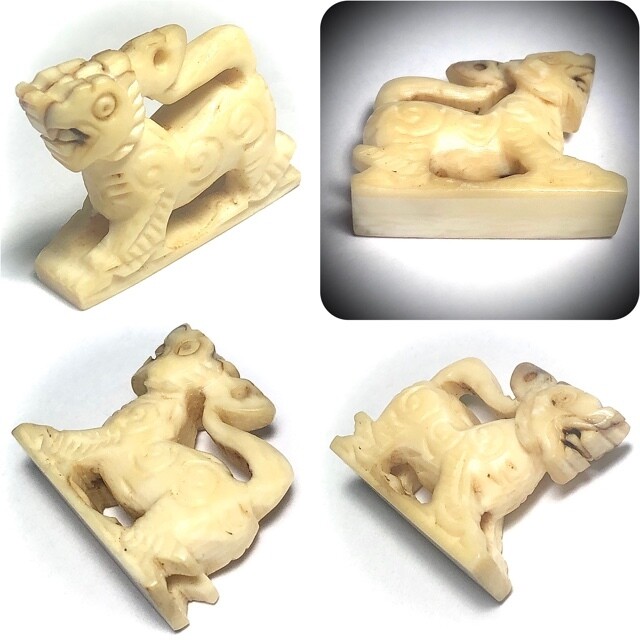
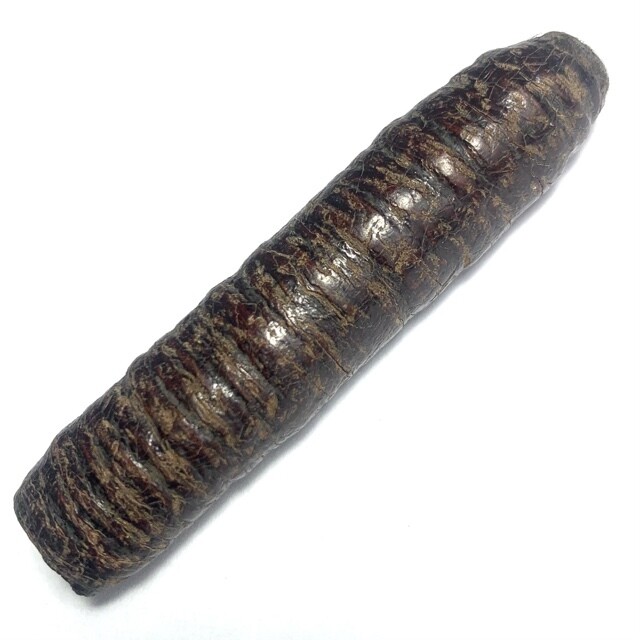
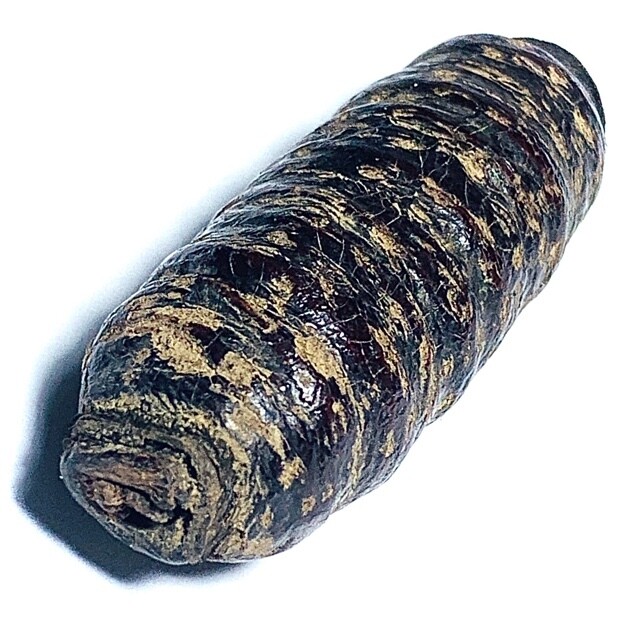
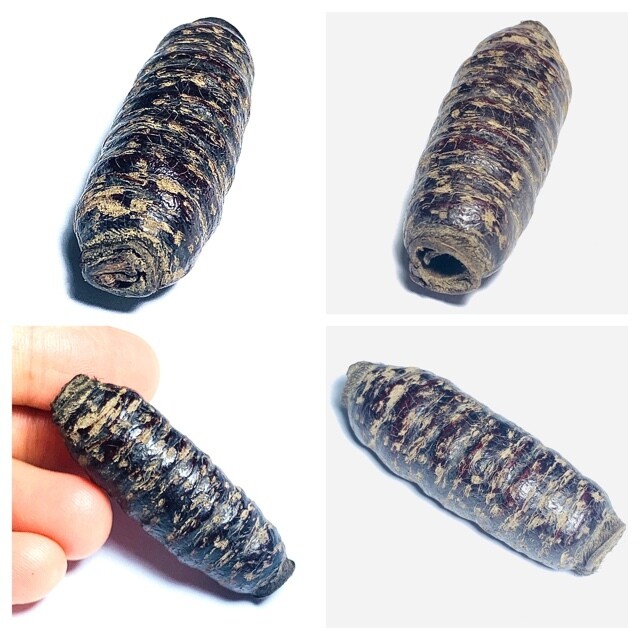
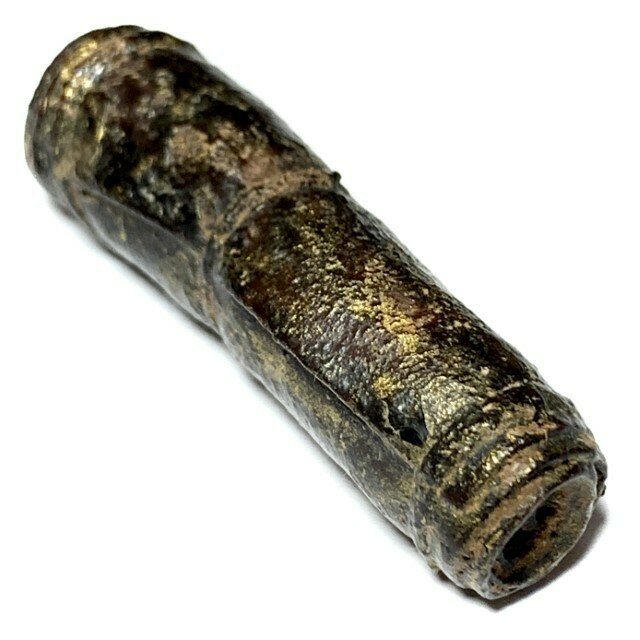
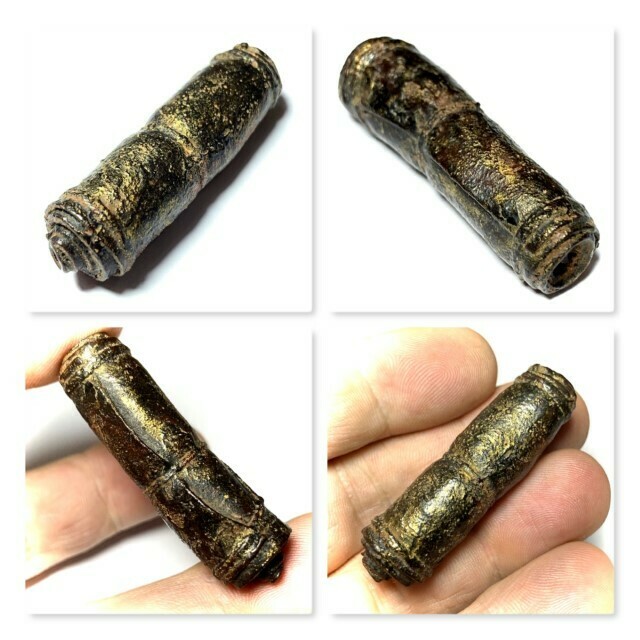
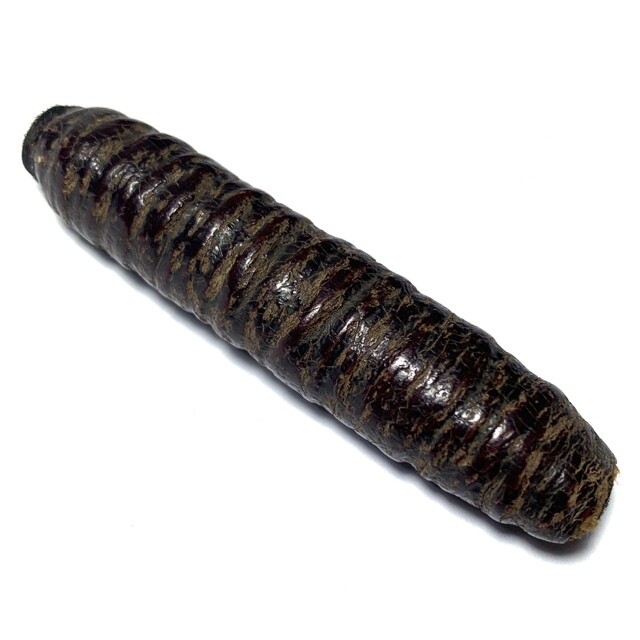
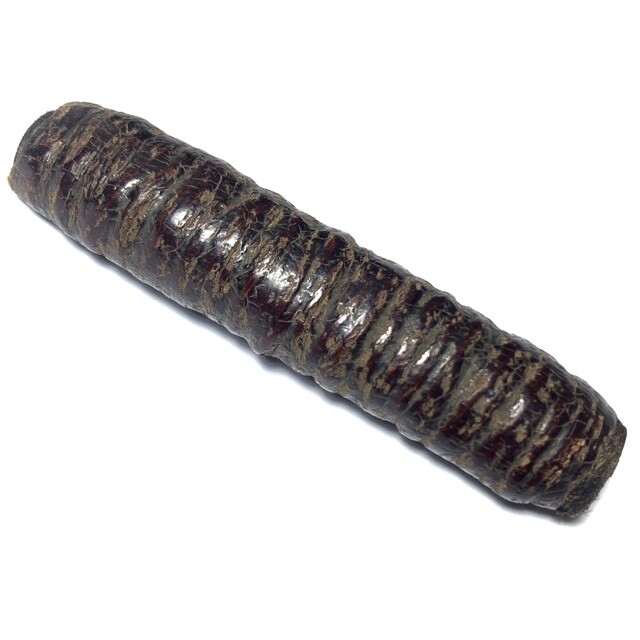
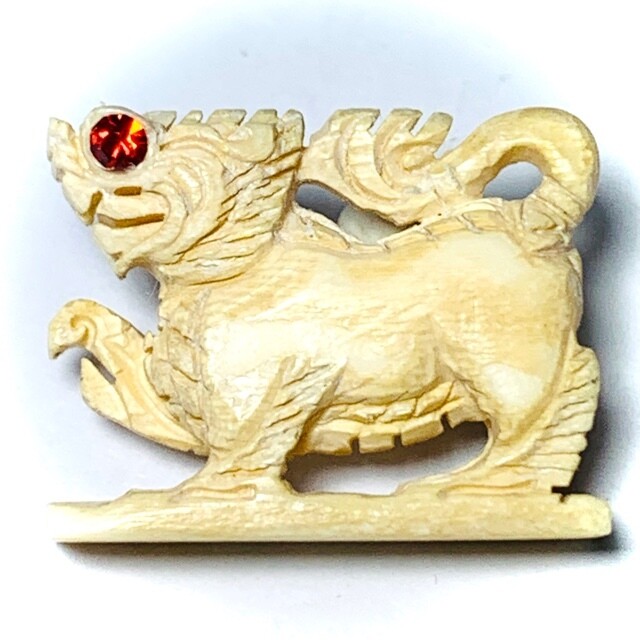
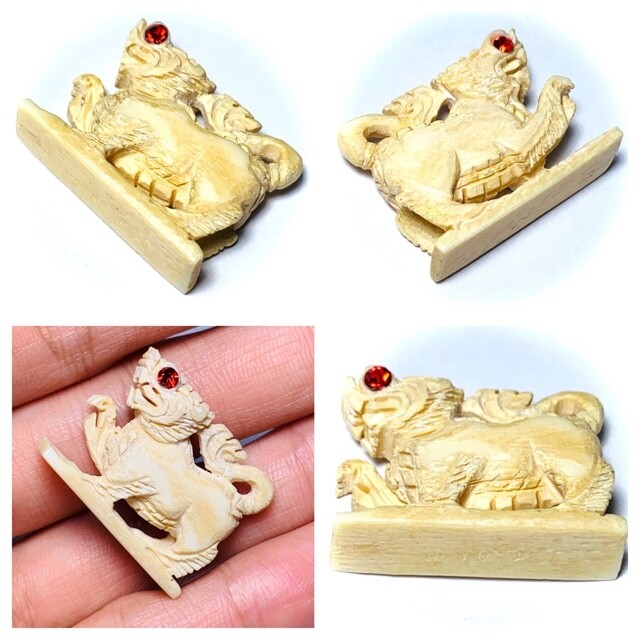
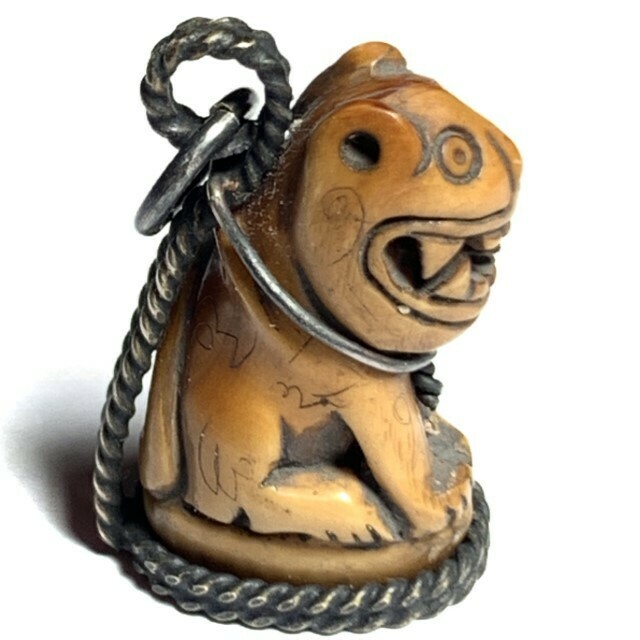
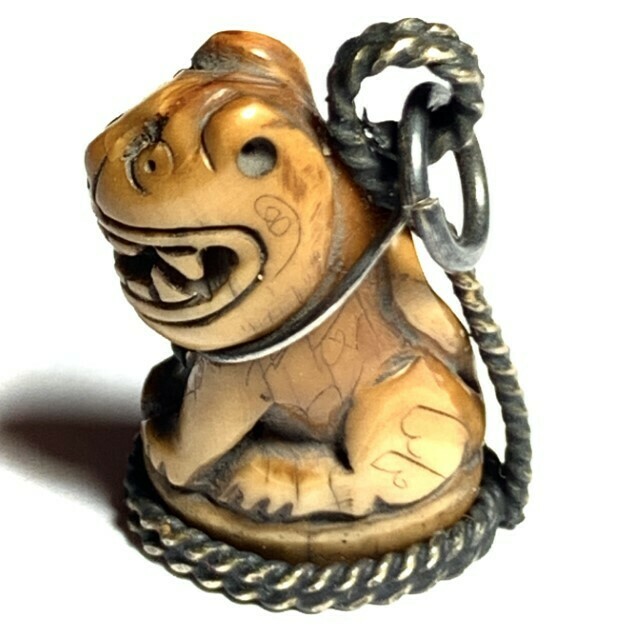
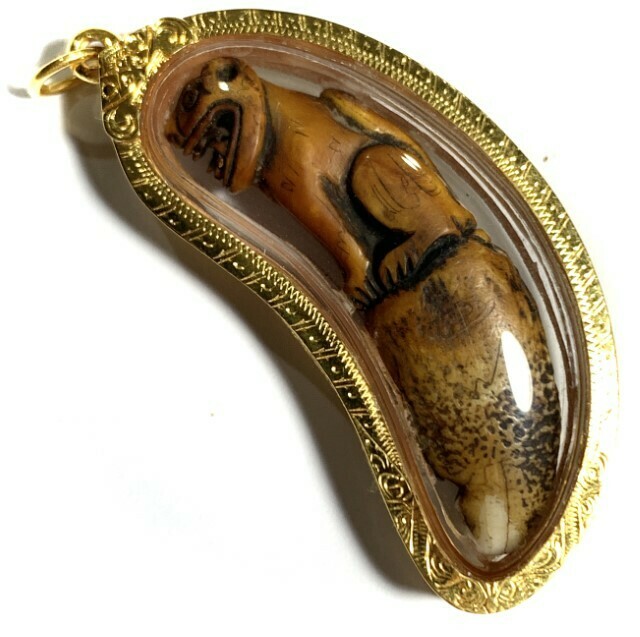
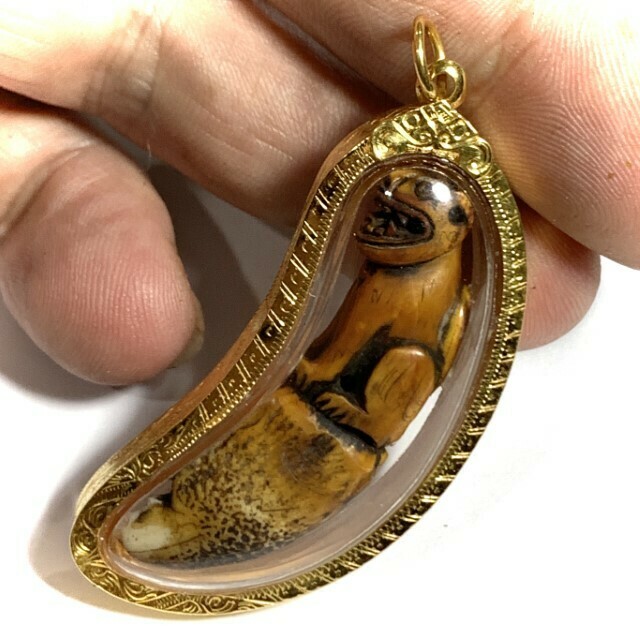
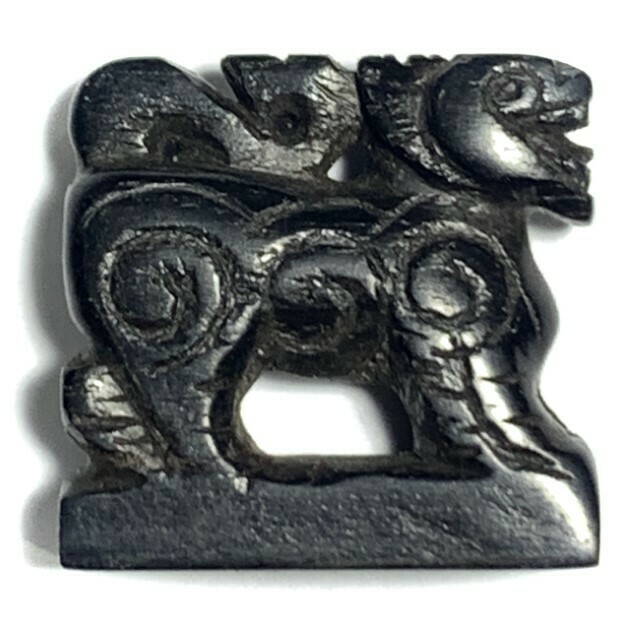
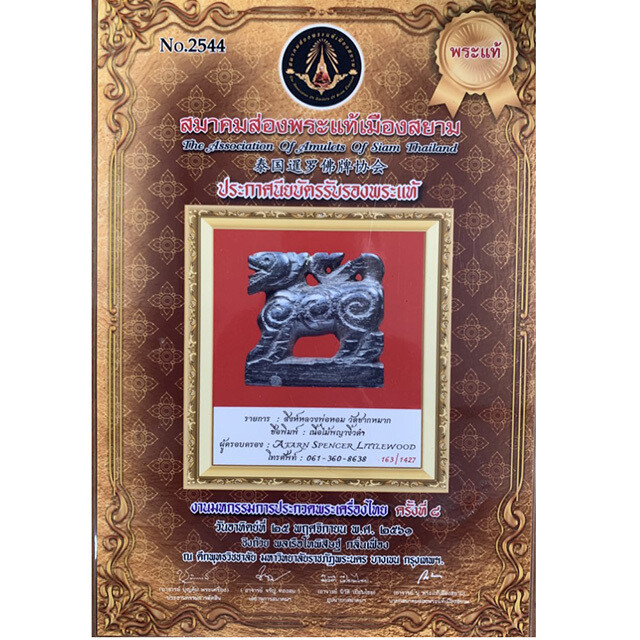
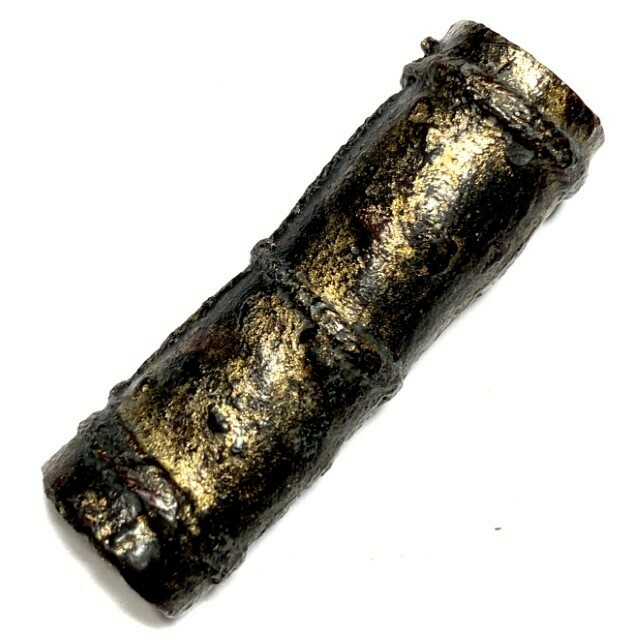
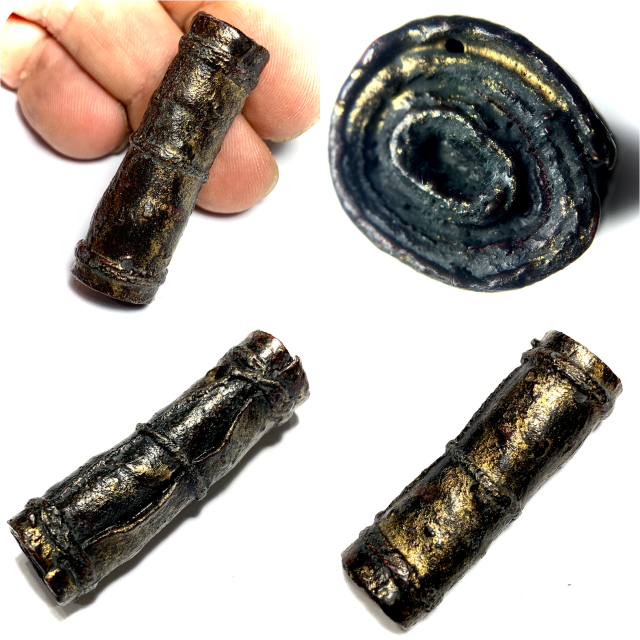
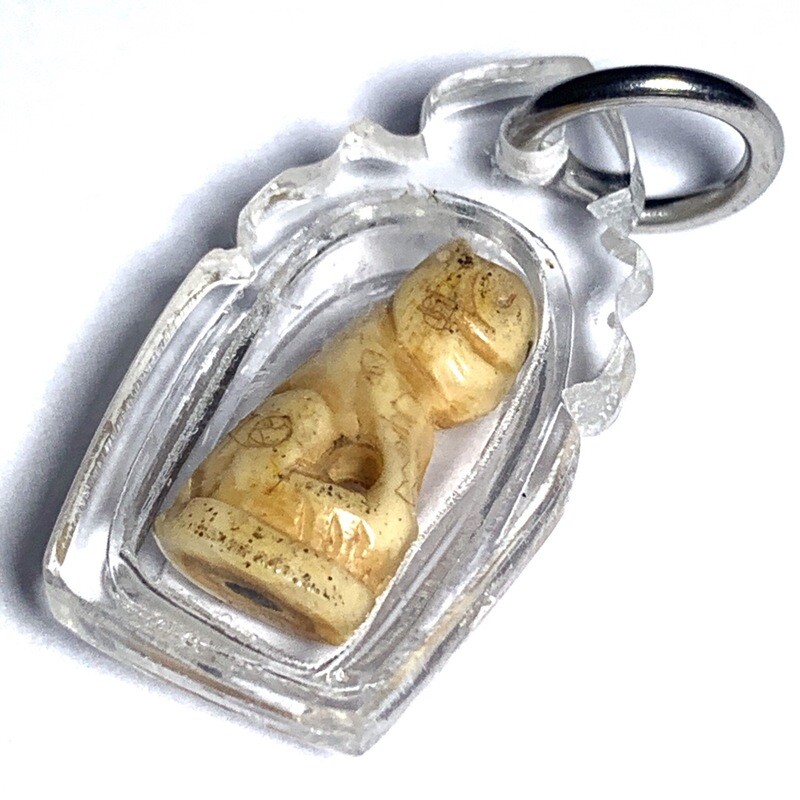
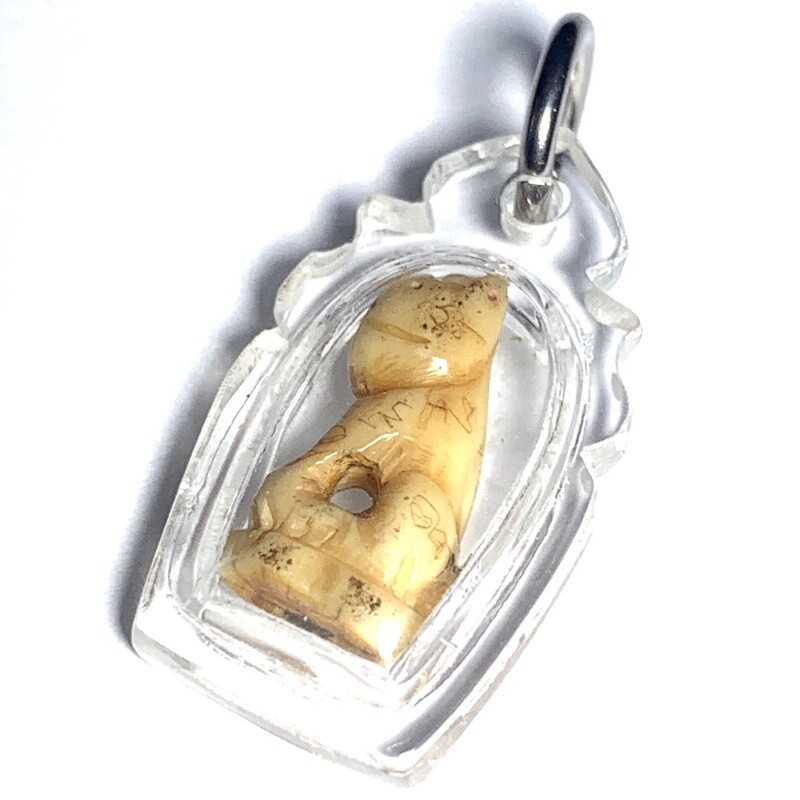
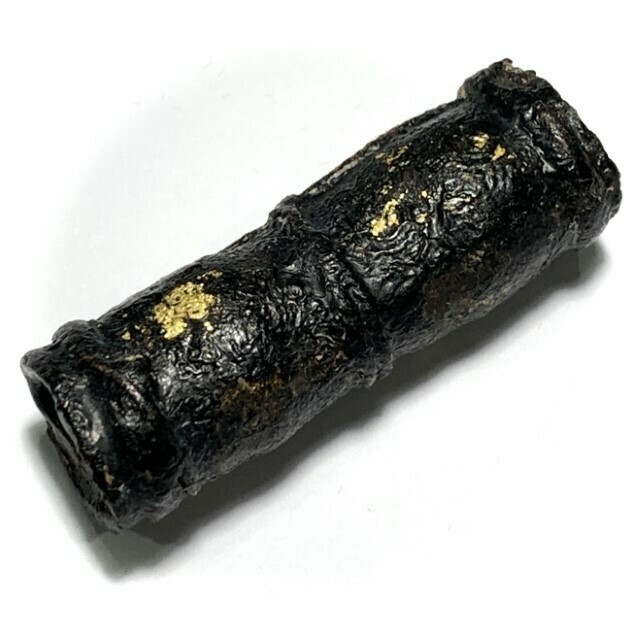
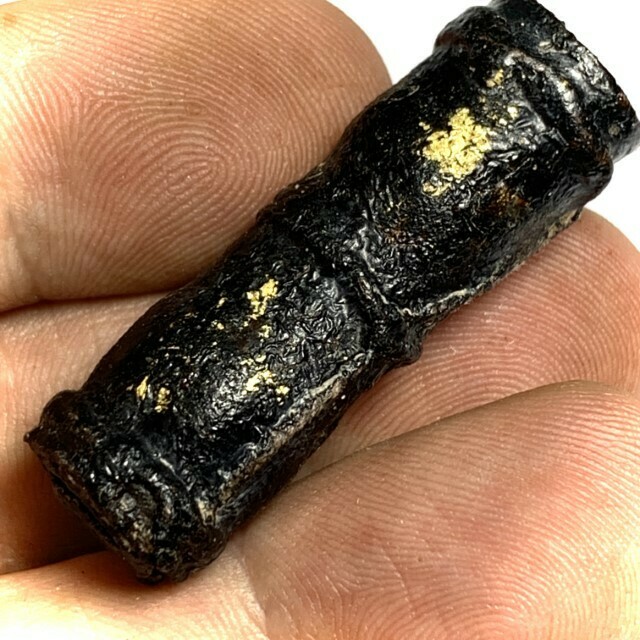
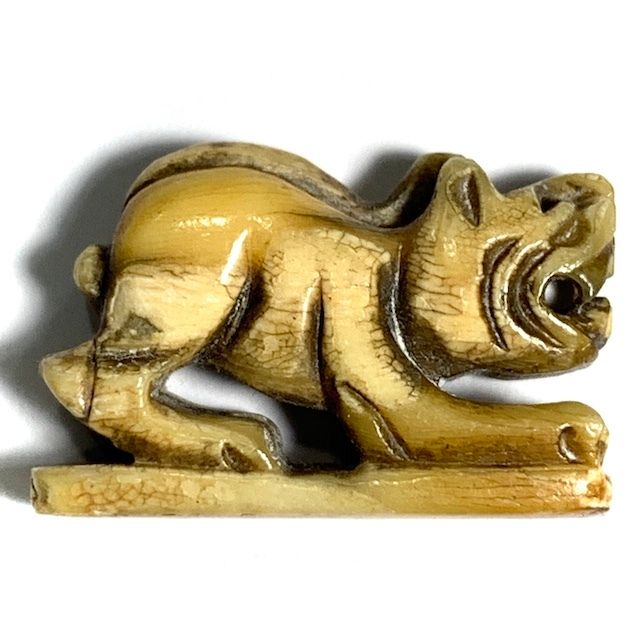
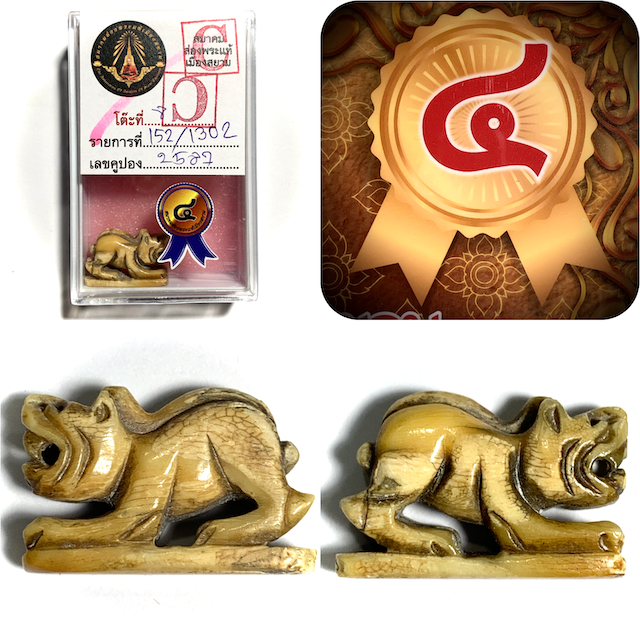
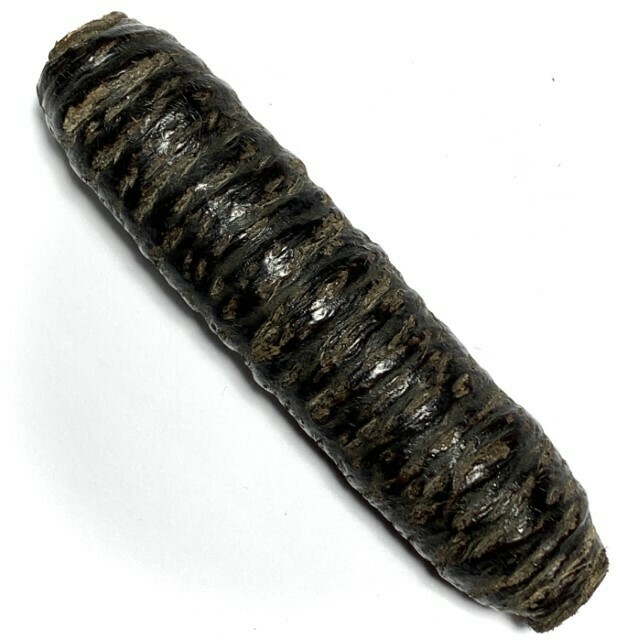
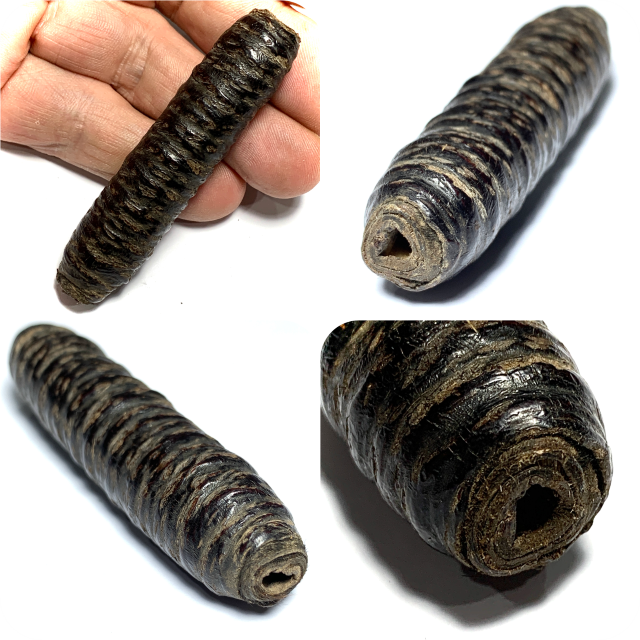
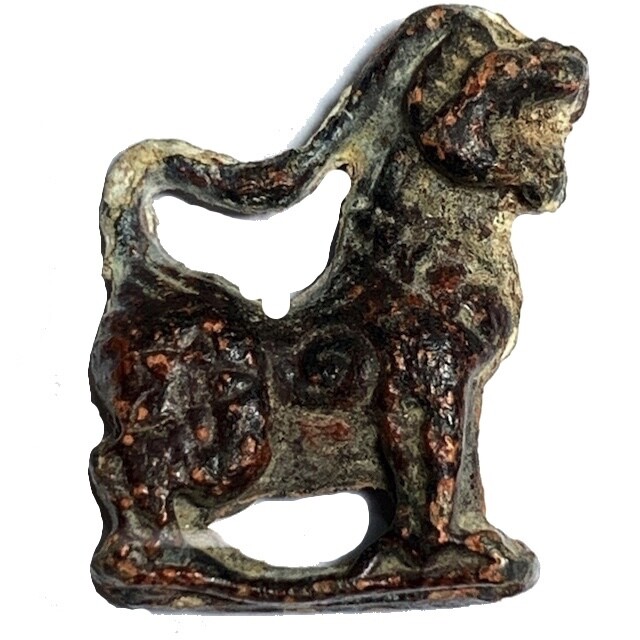
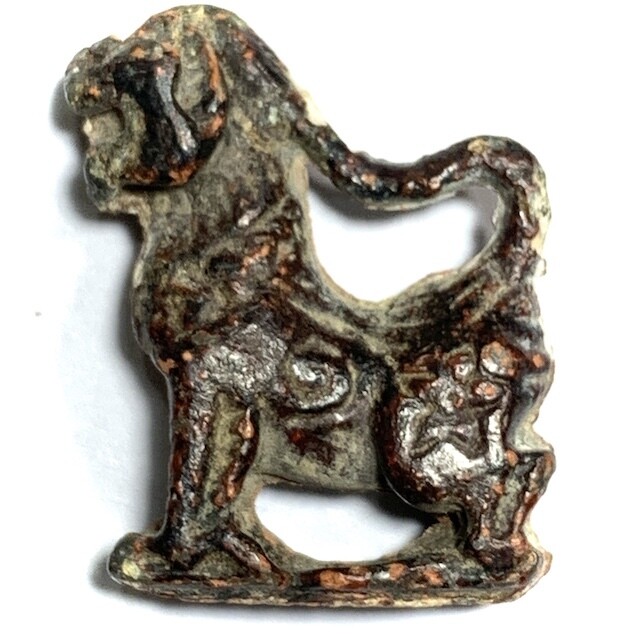
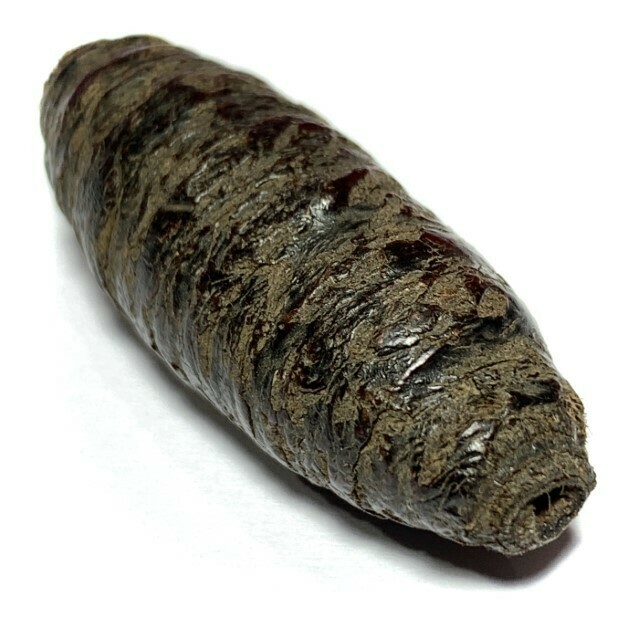
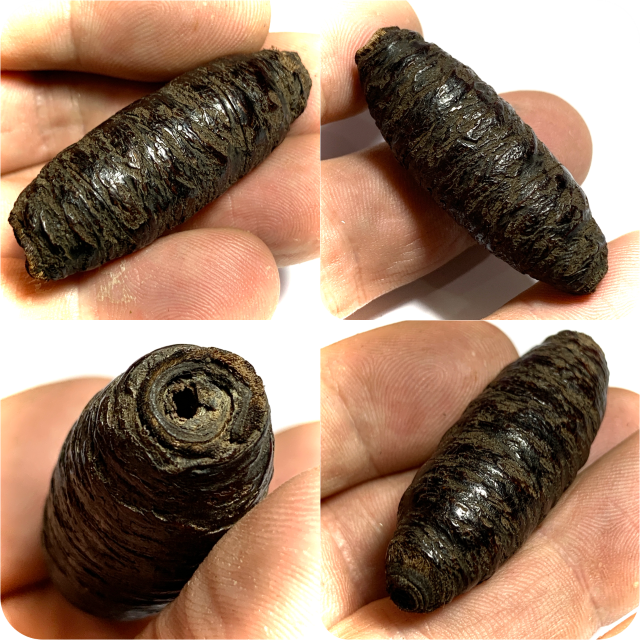
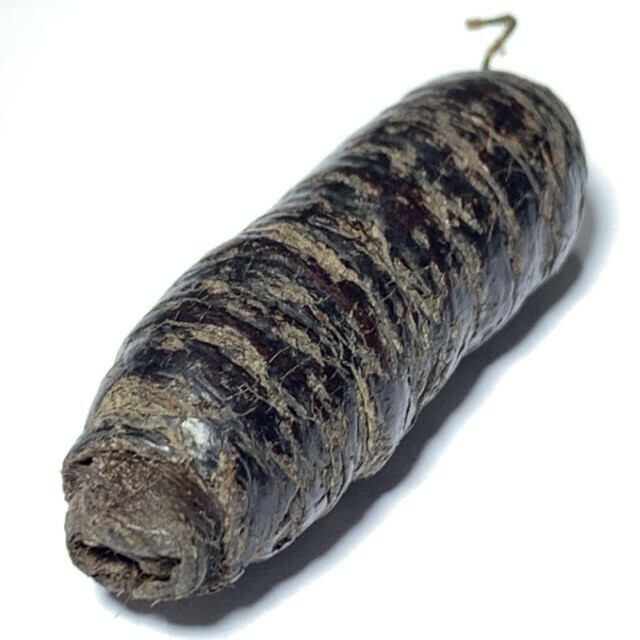
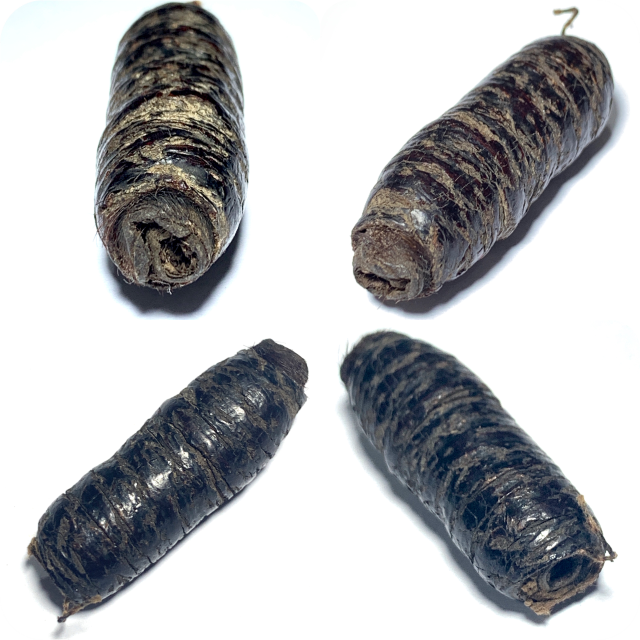
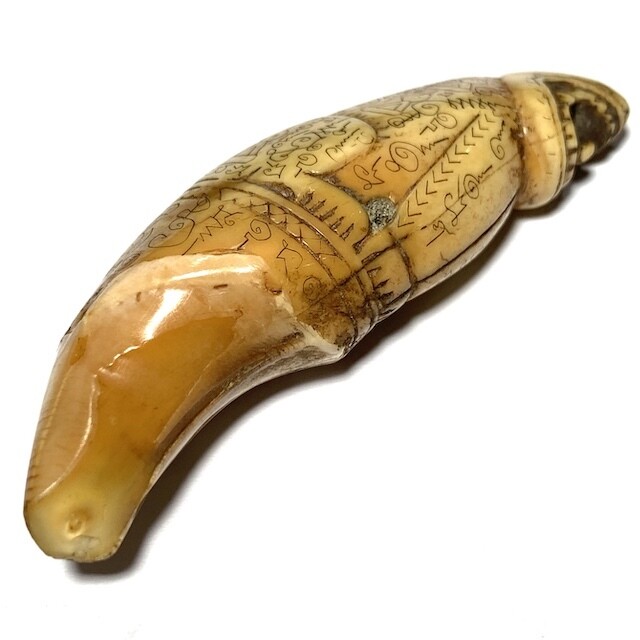
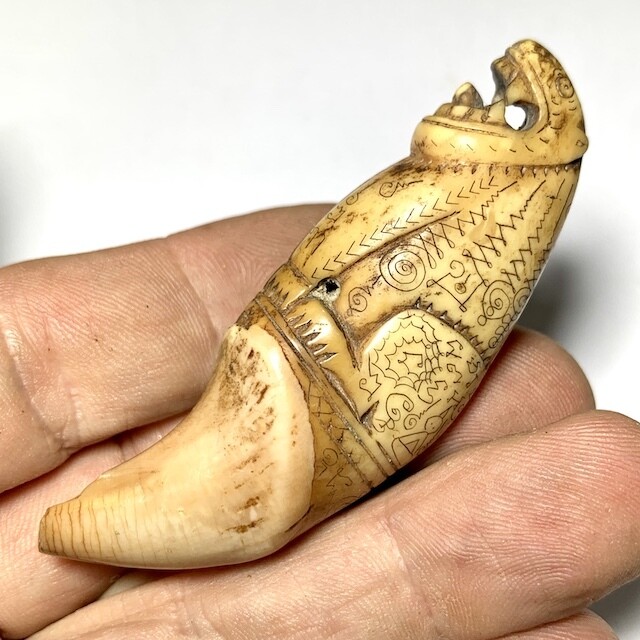
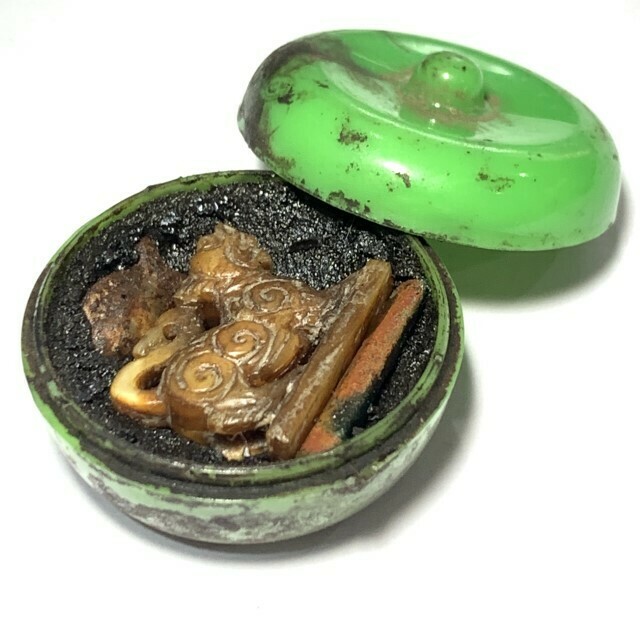
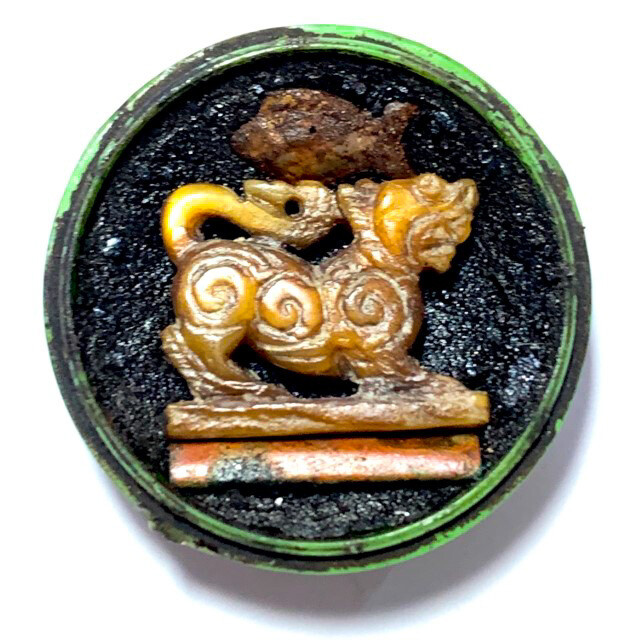
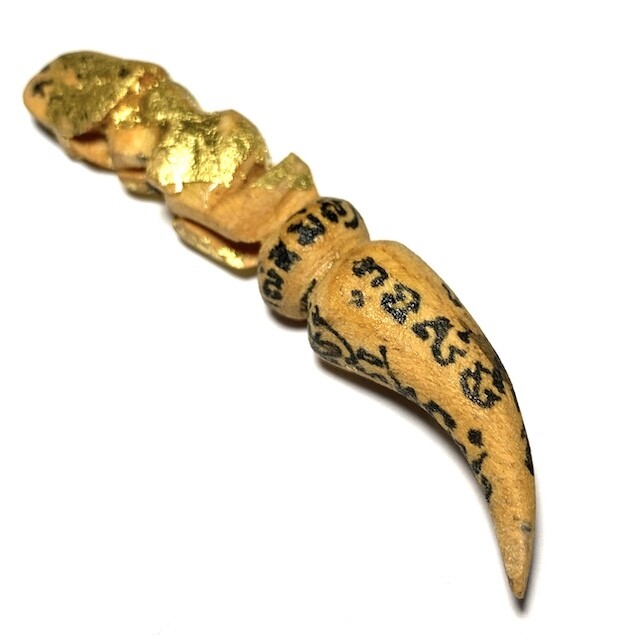
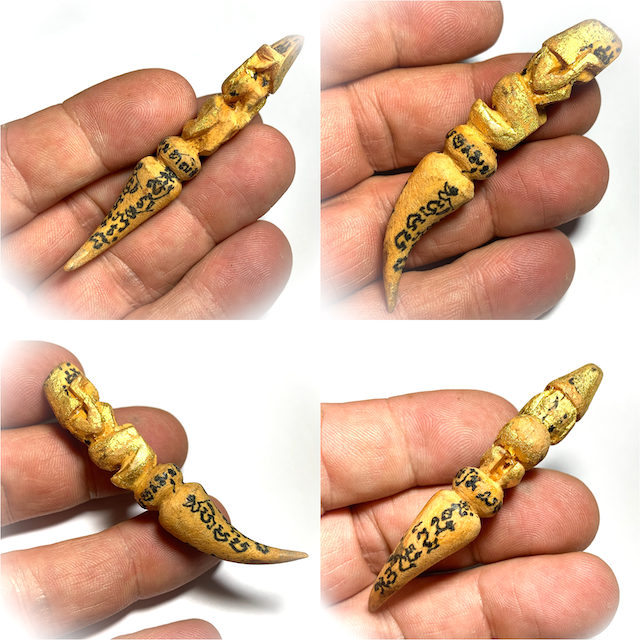
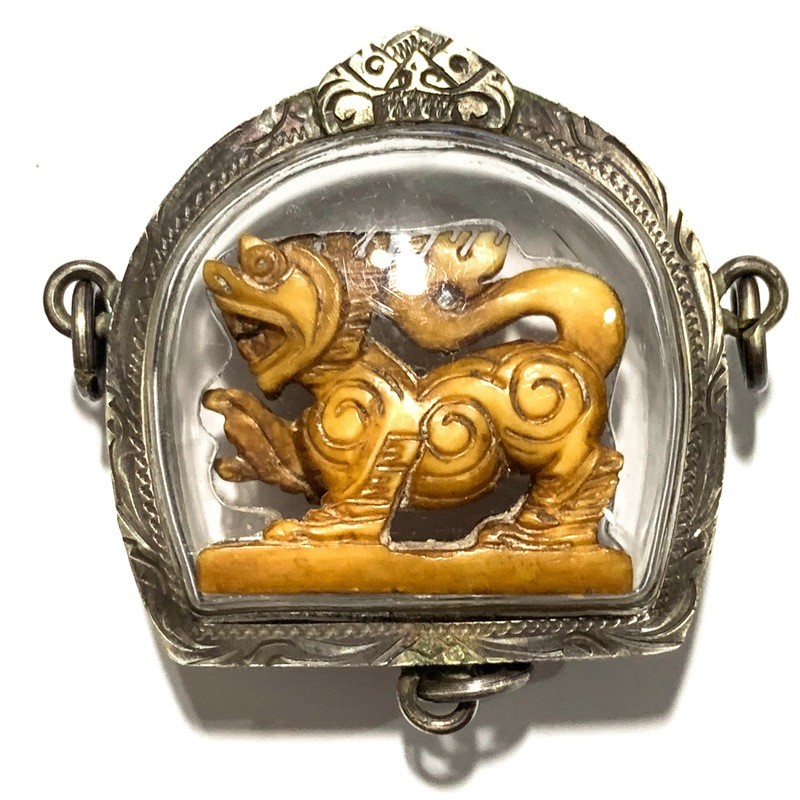
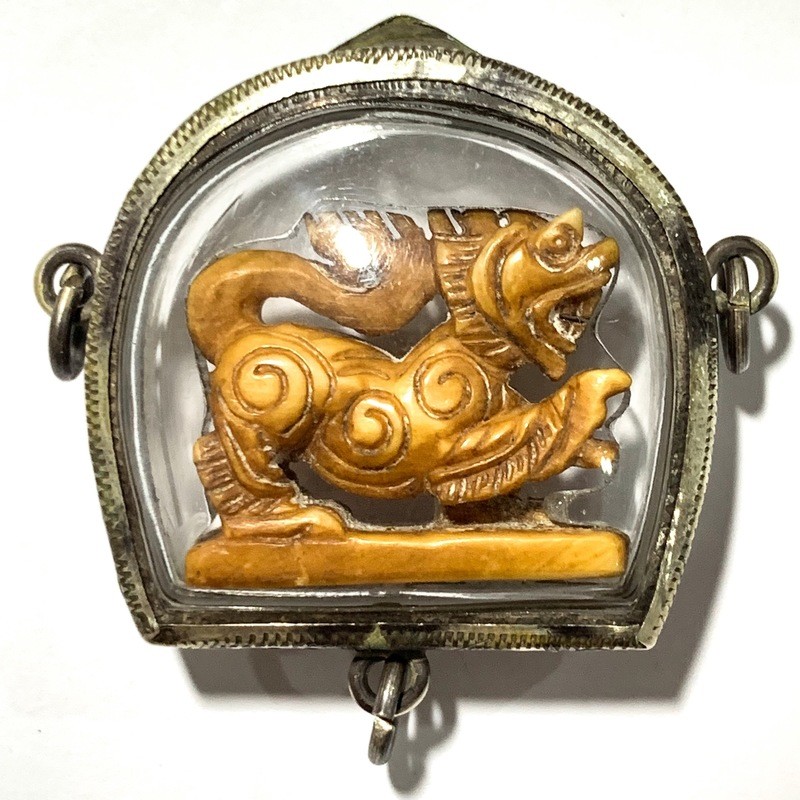
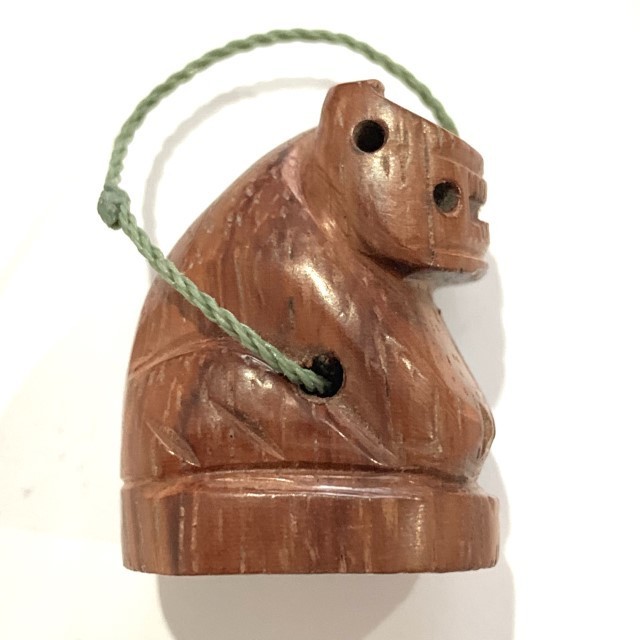
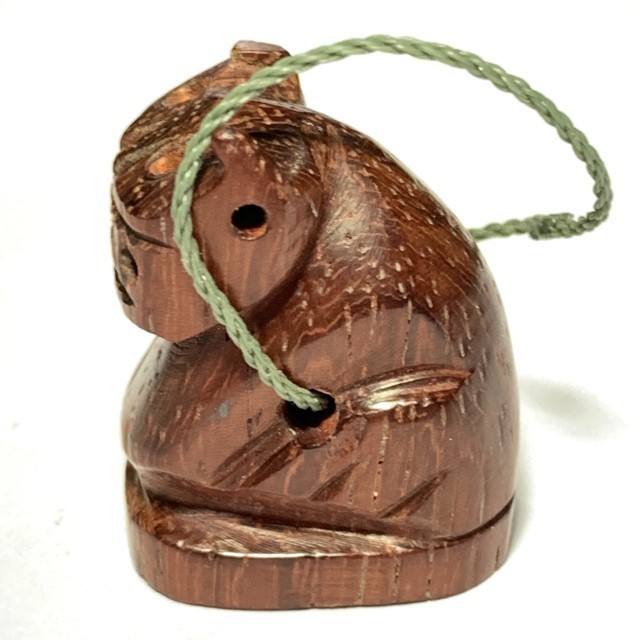
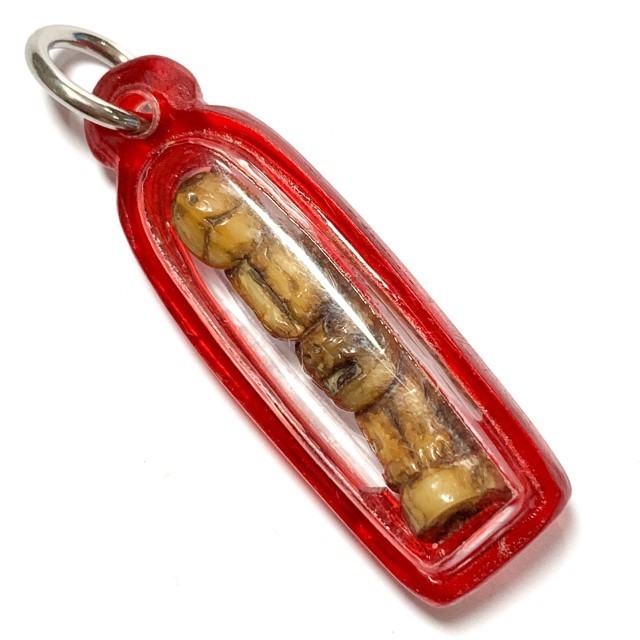
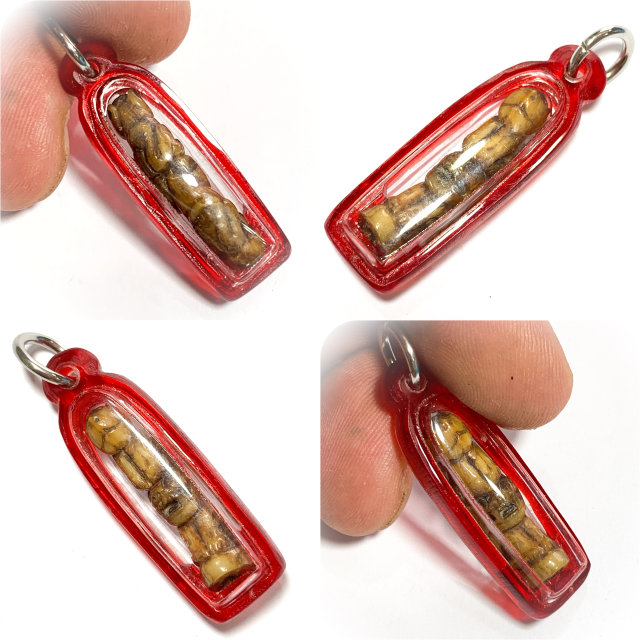
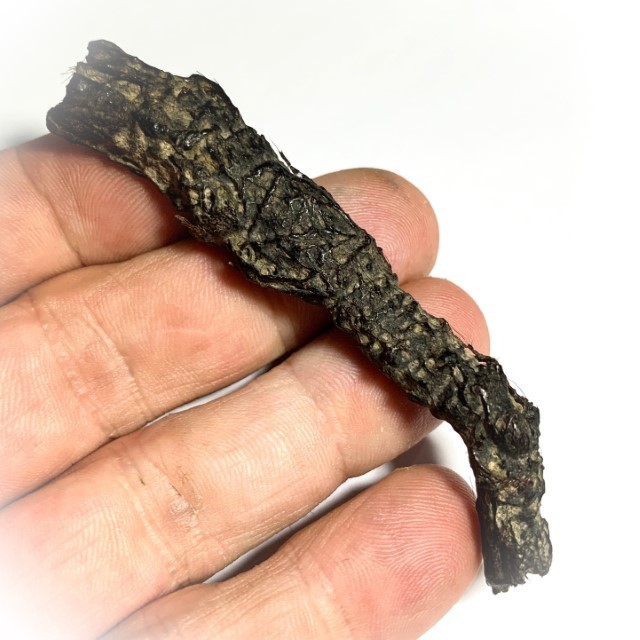
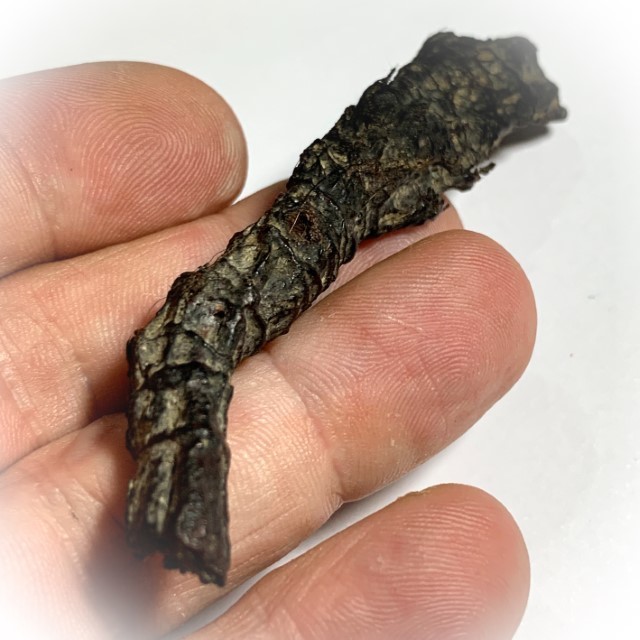
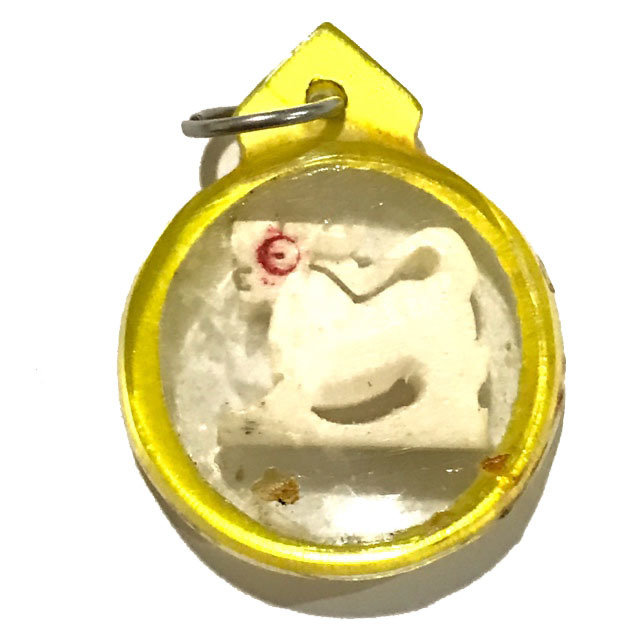
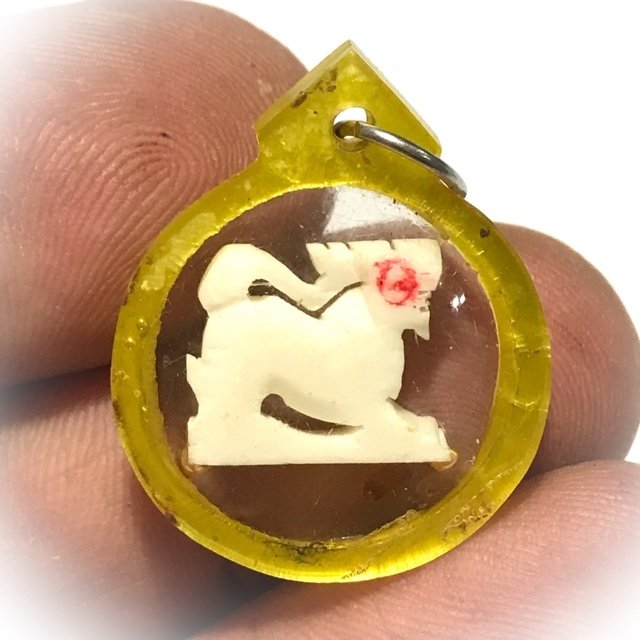
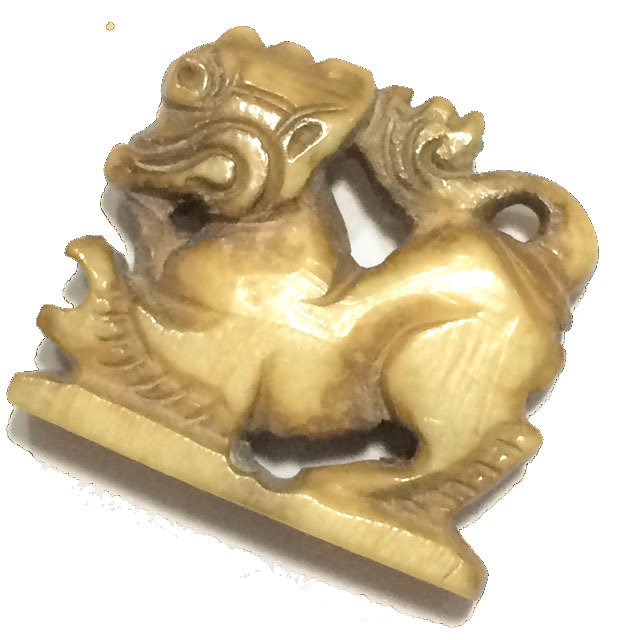
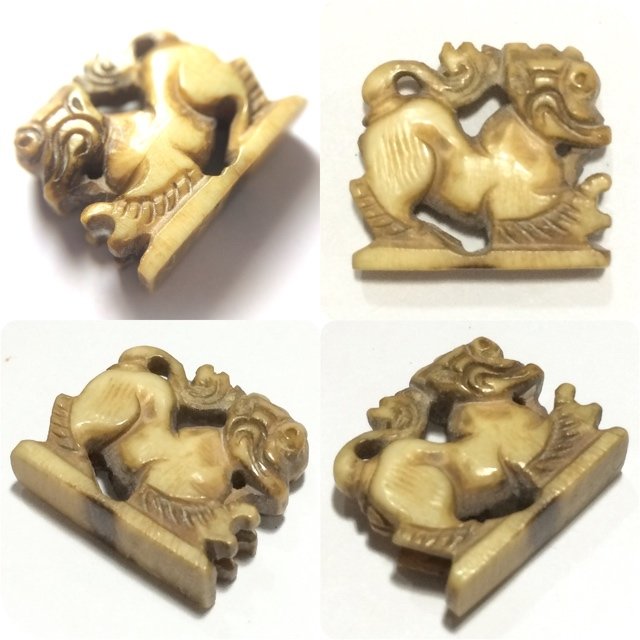
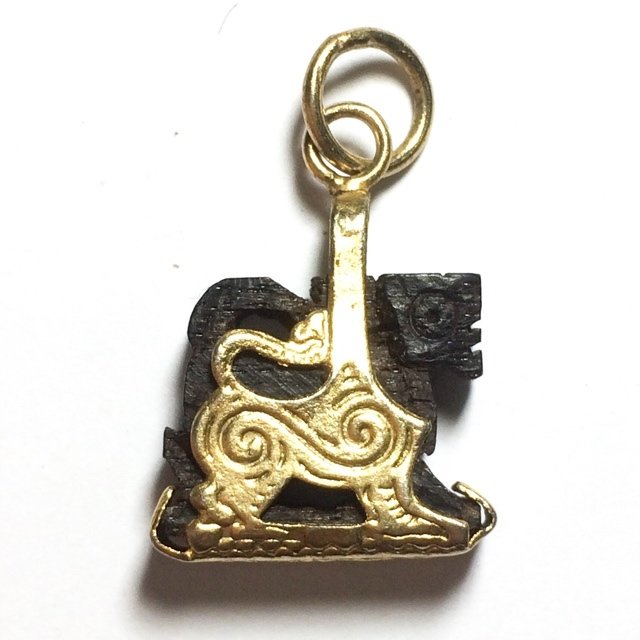
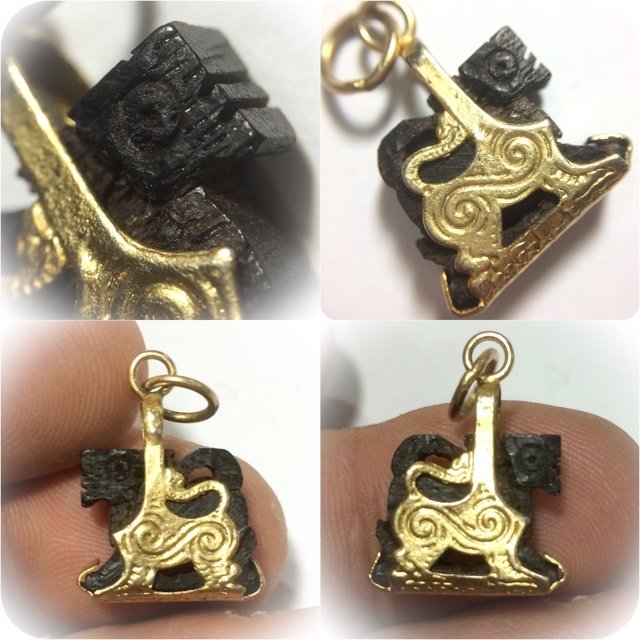
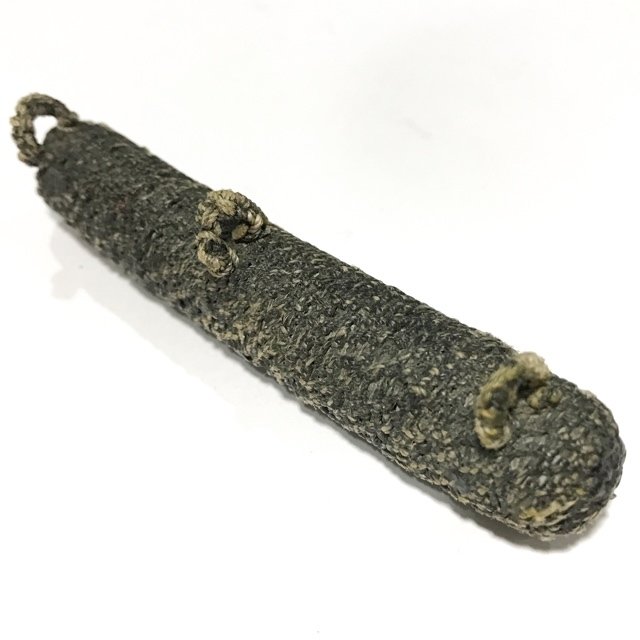
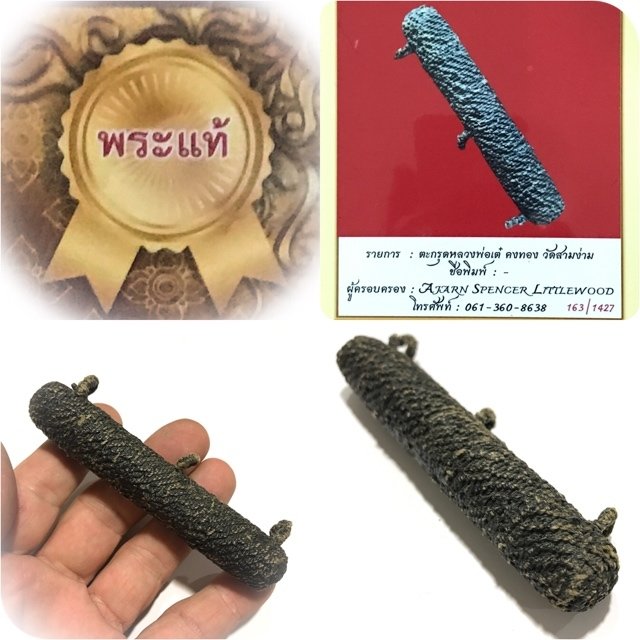
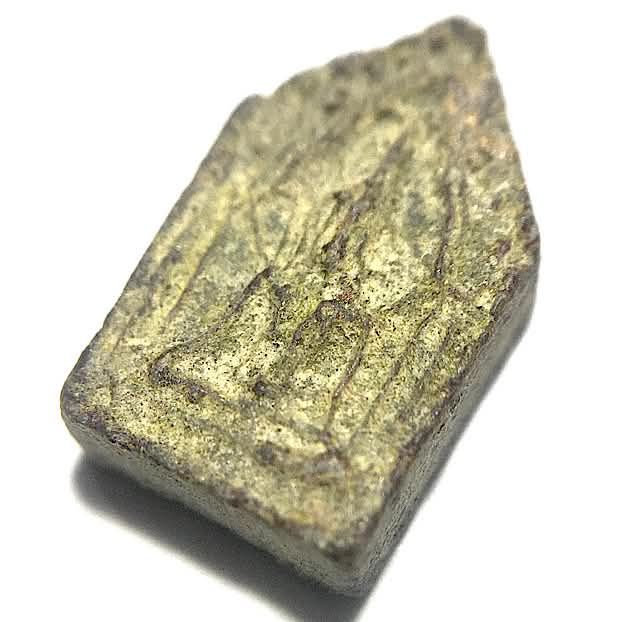
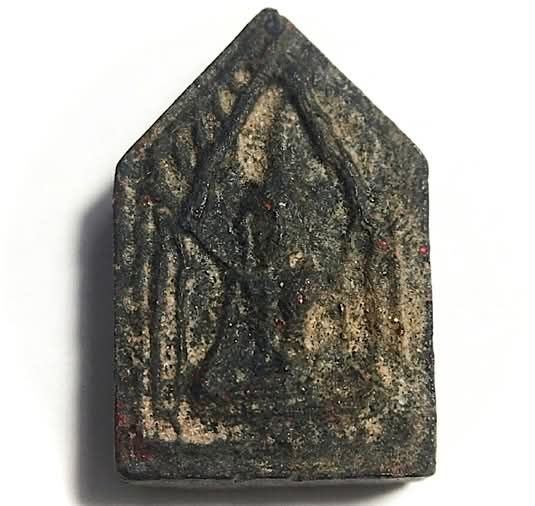
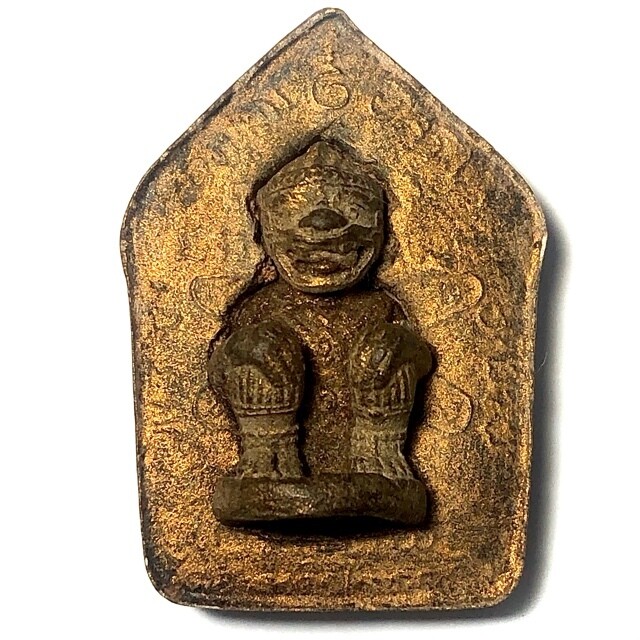
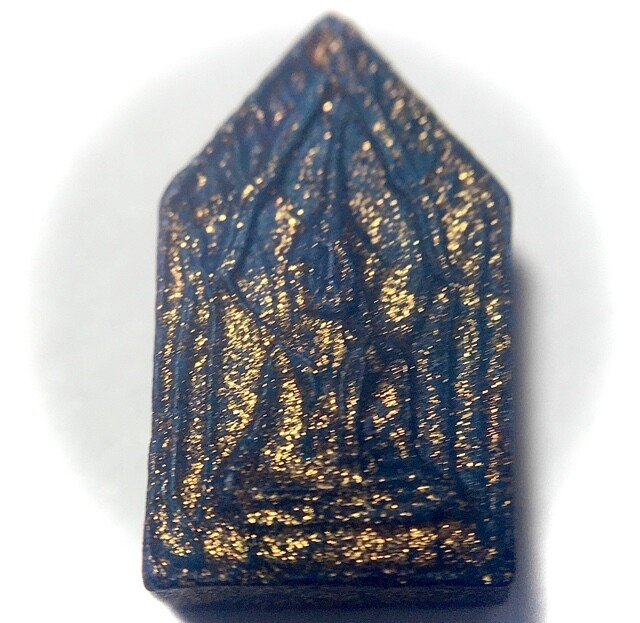
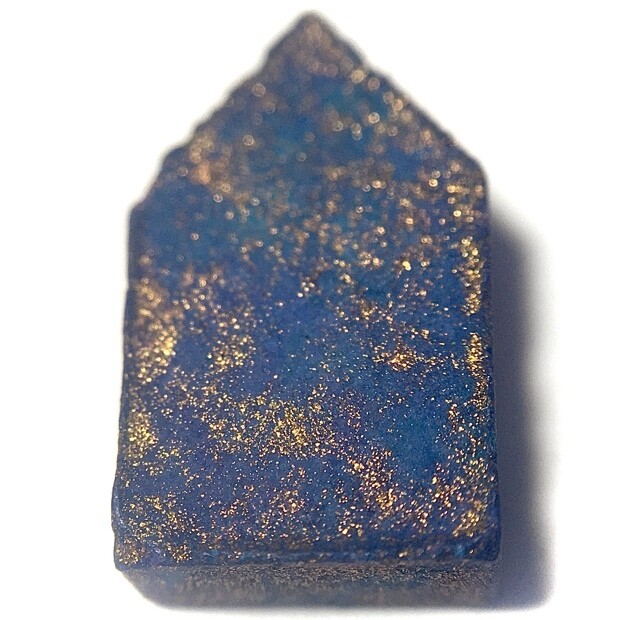
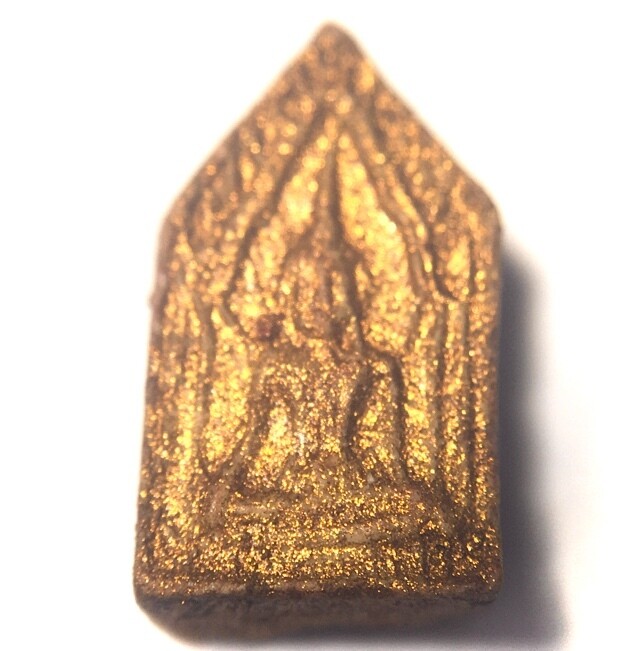
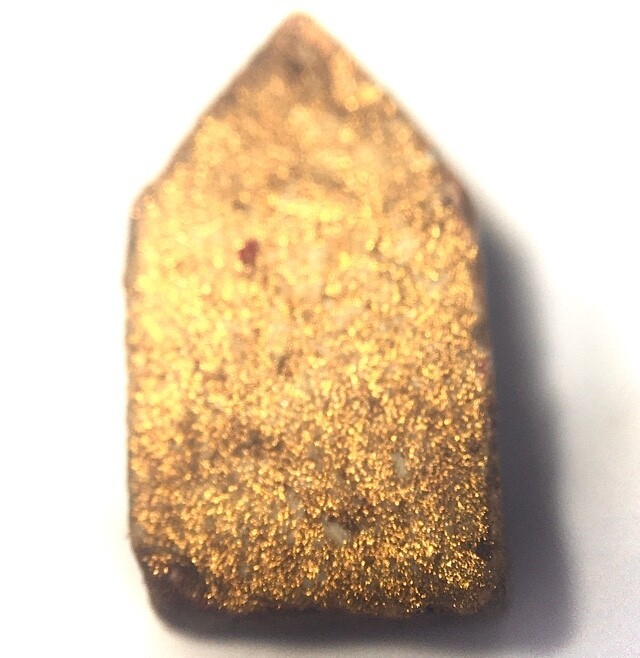
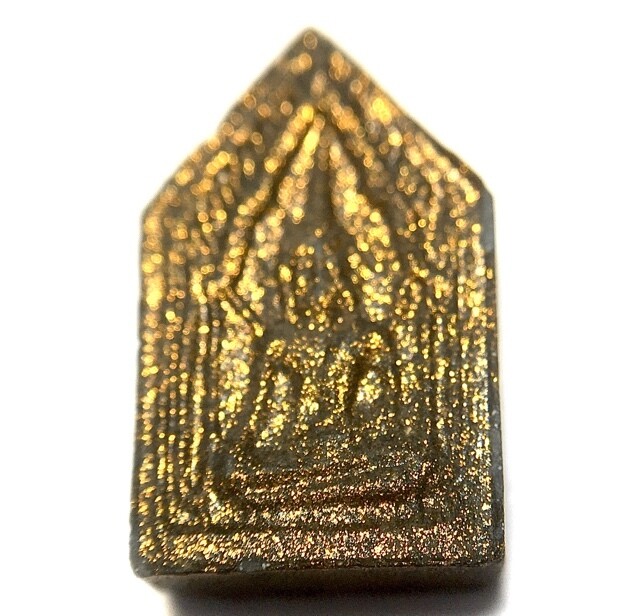
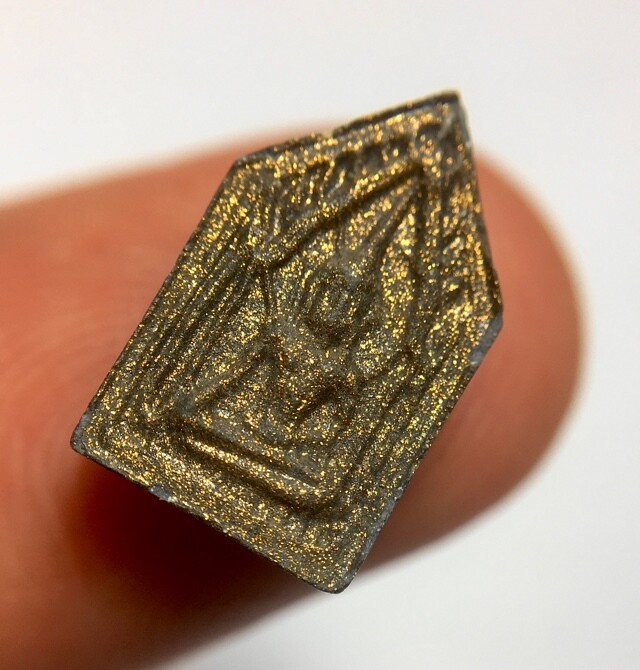
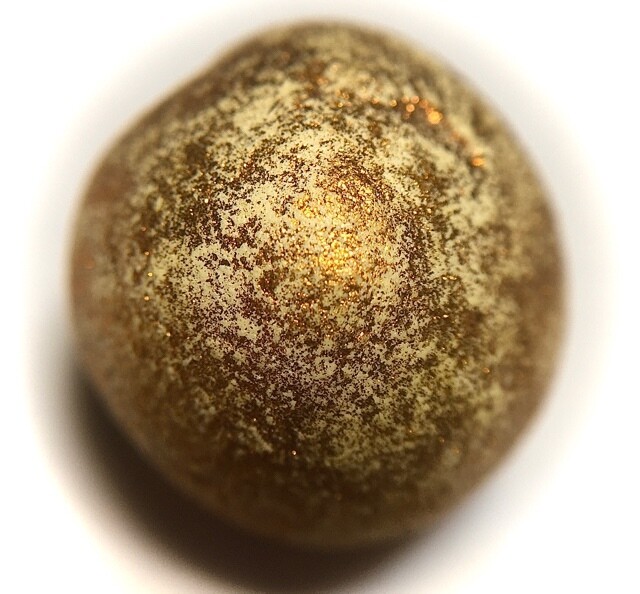
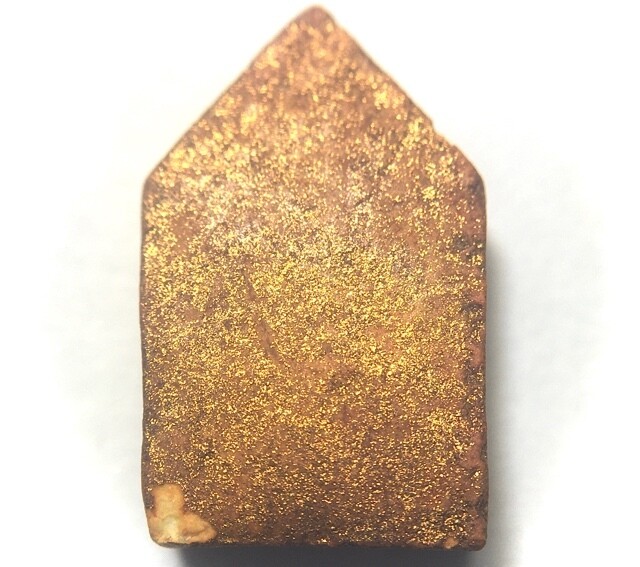
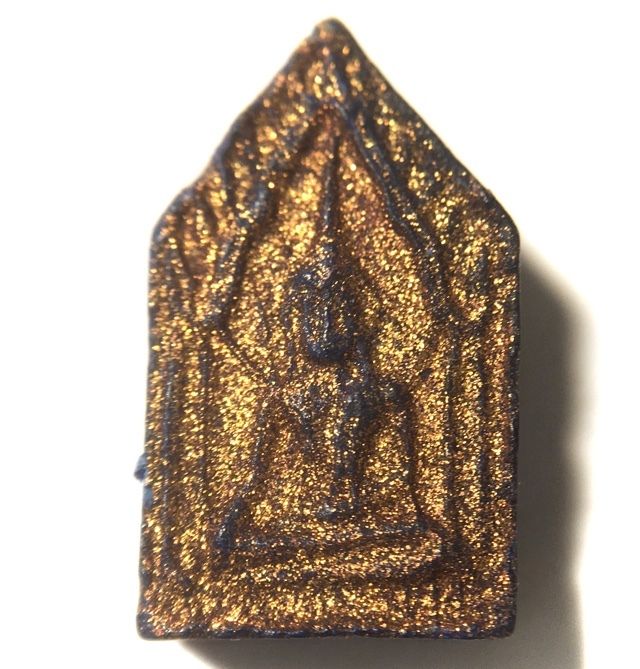
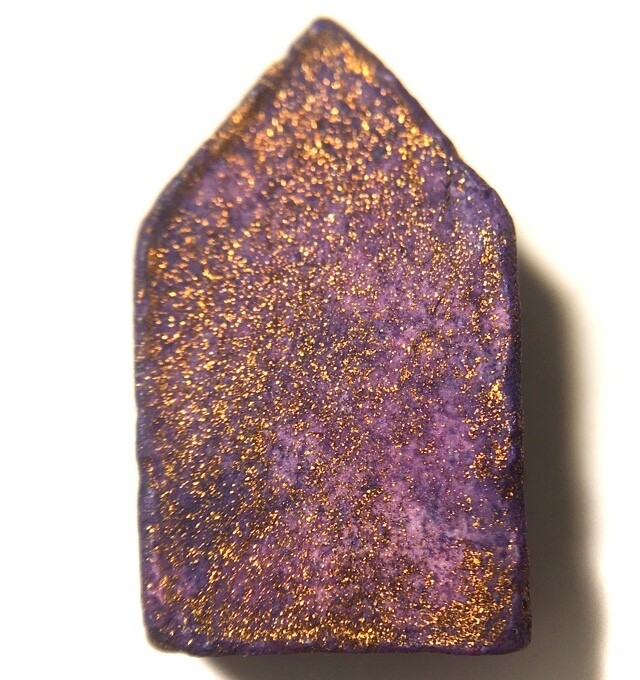
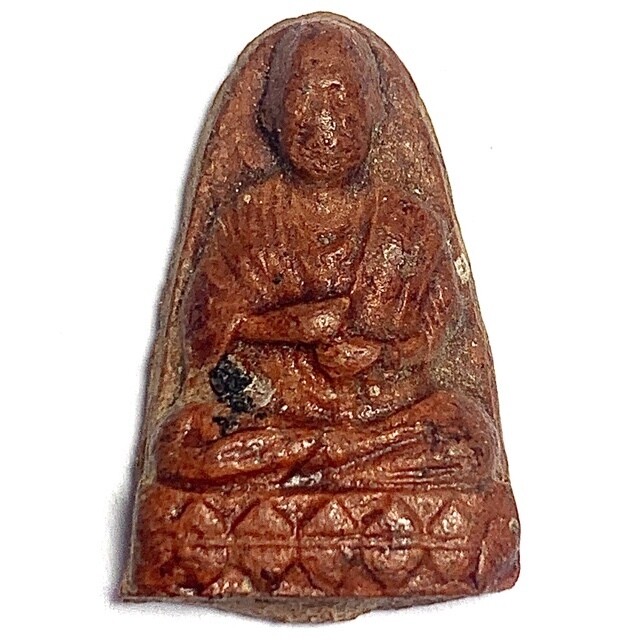
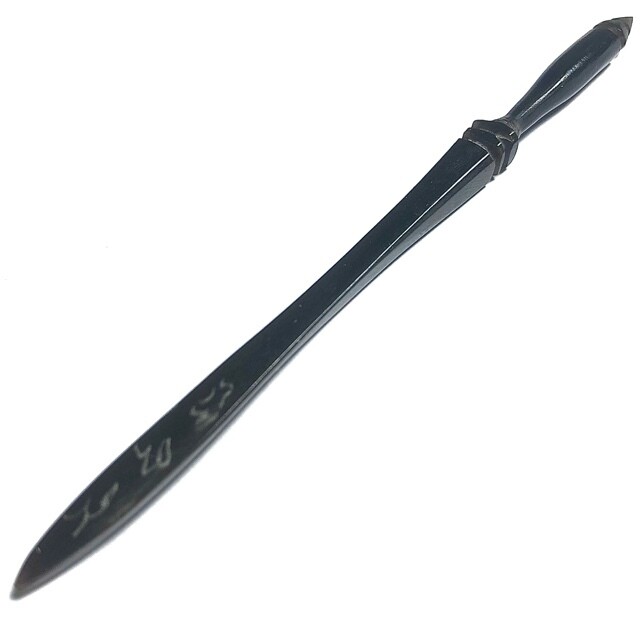
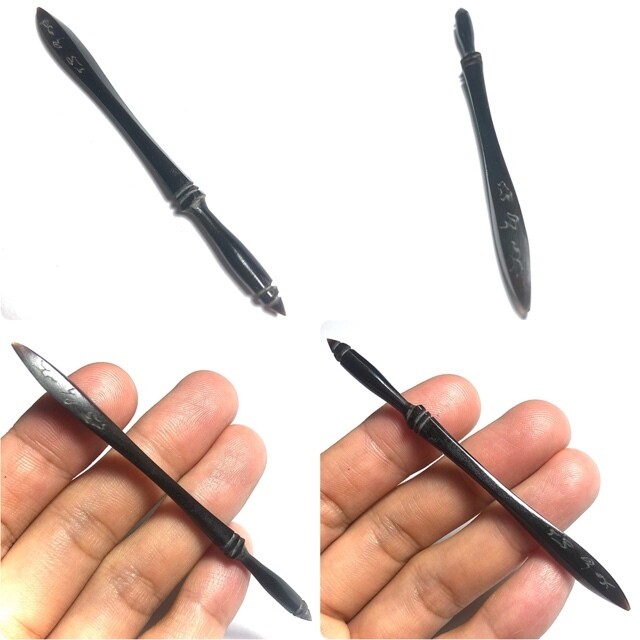
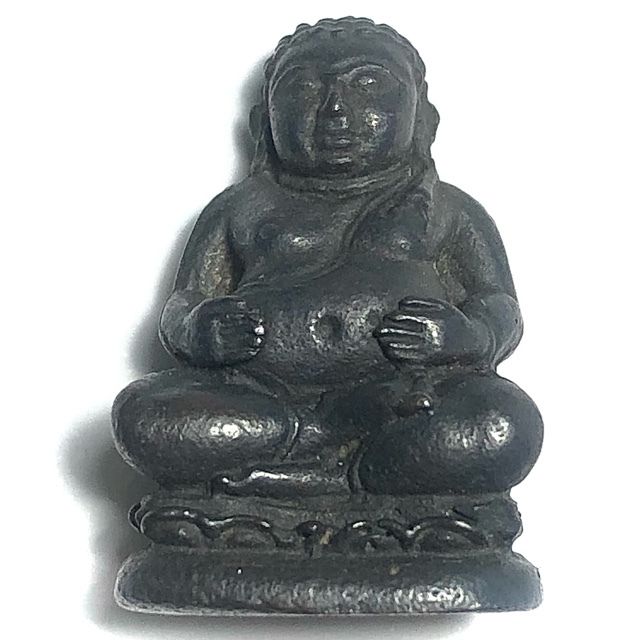
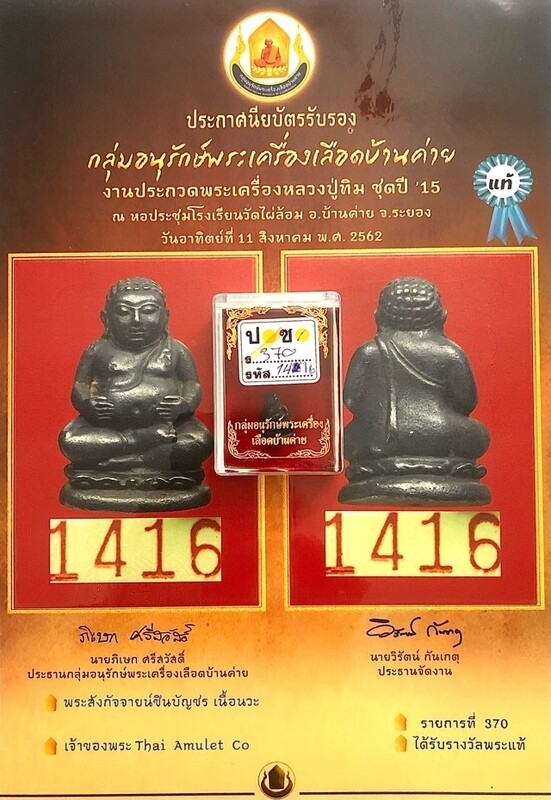
Palad Khik Nga Gae Ling Jab Hlak 2480 BE Carved Ivory Lingam with Hanuman - Luang Por Ding Wat Bang Wua

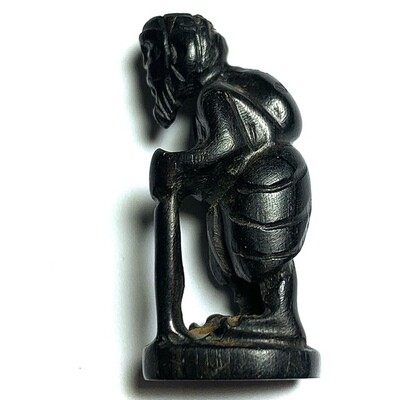
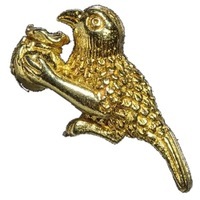
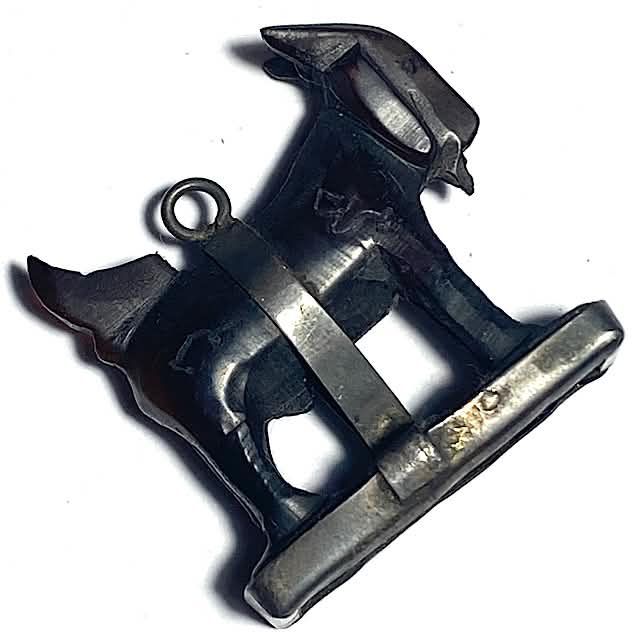
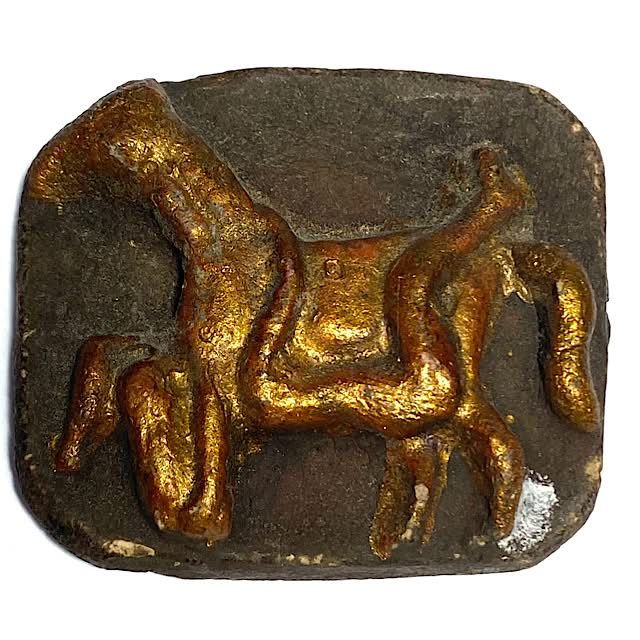
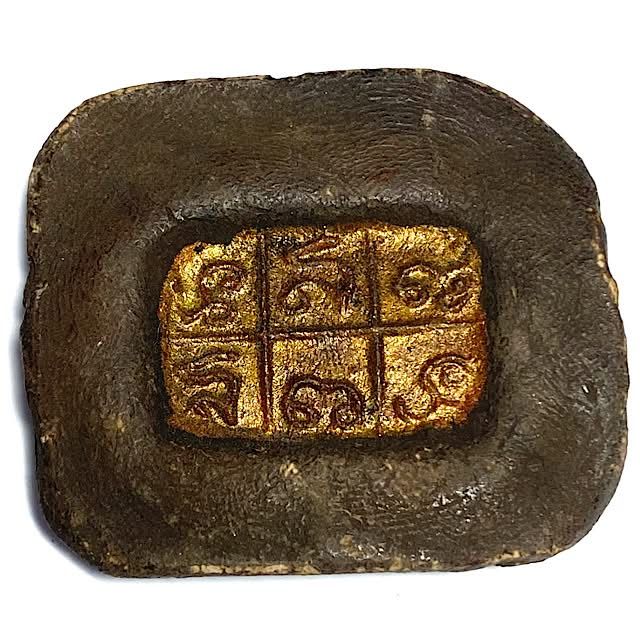
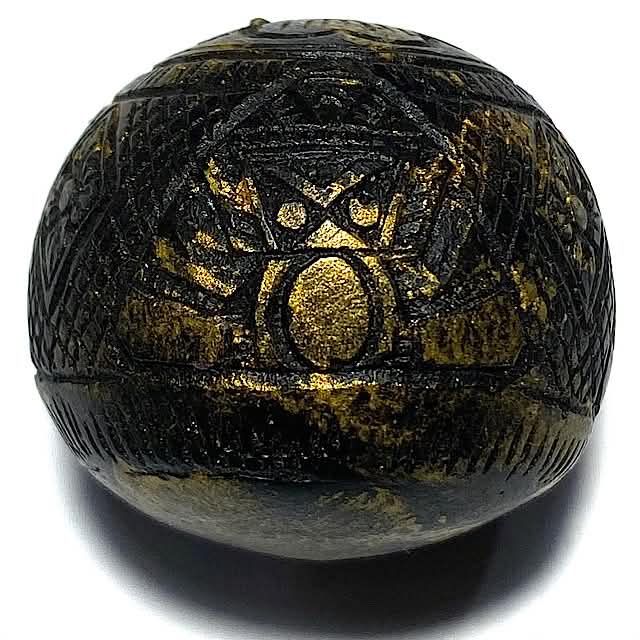
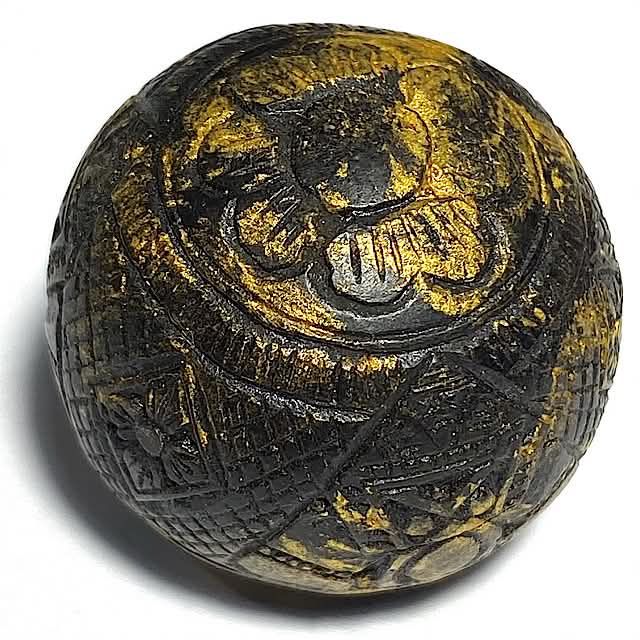
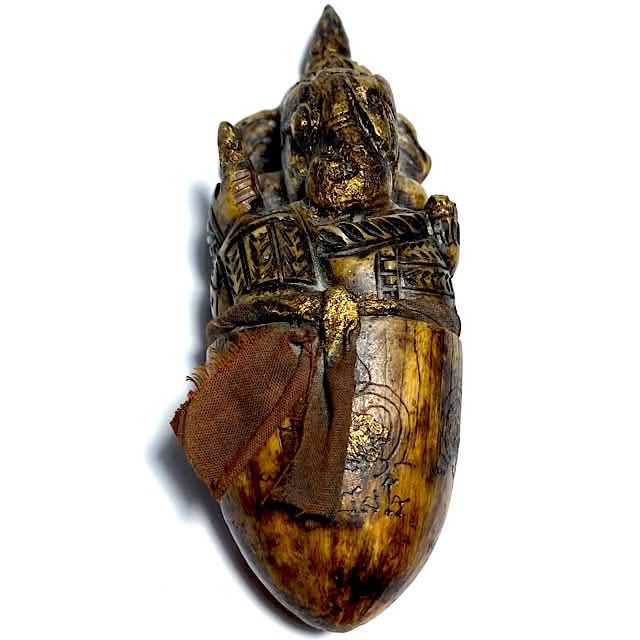
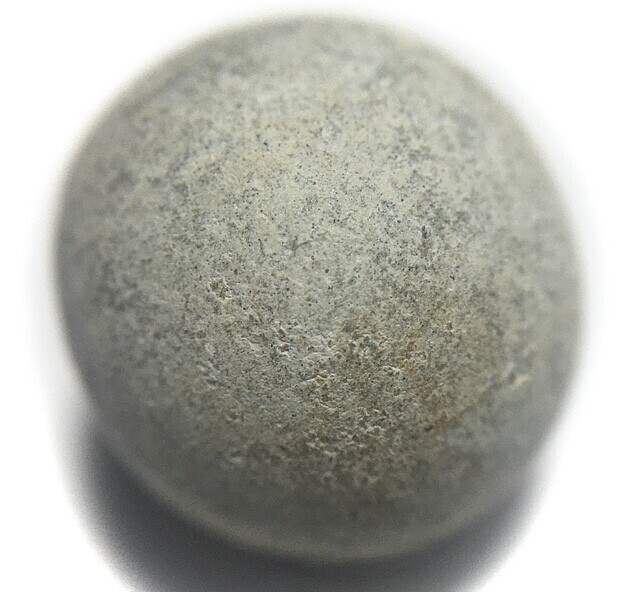
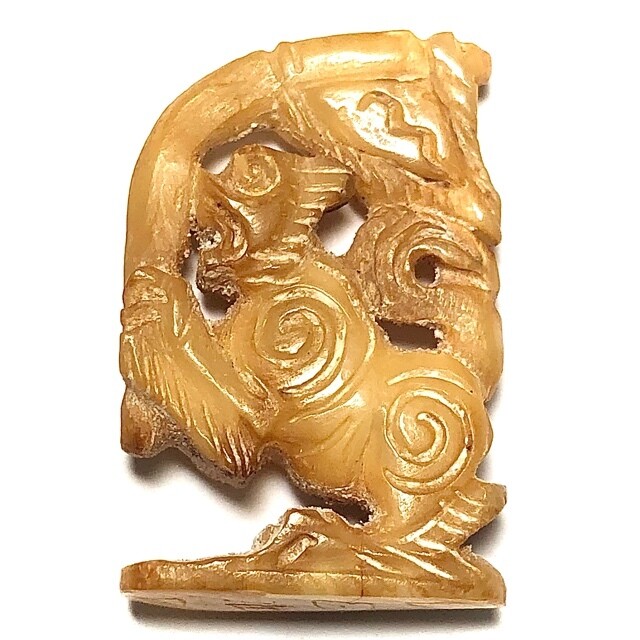
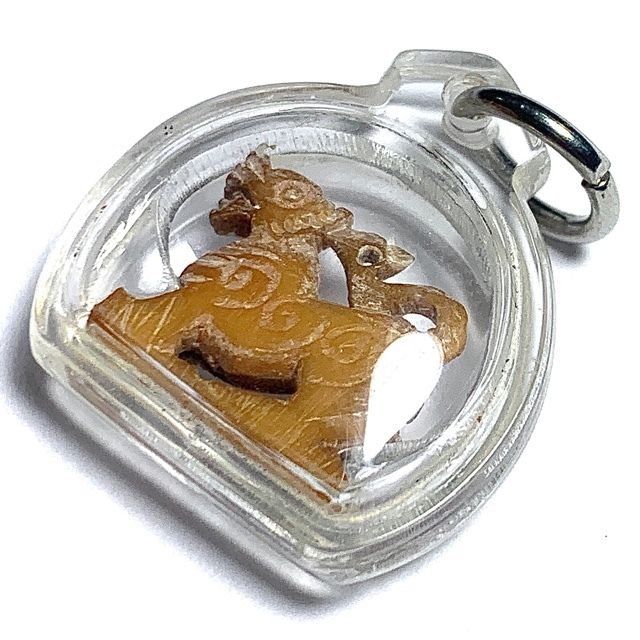
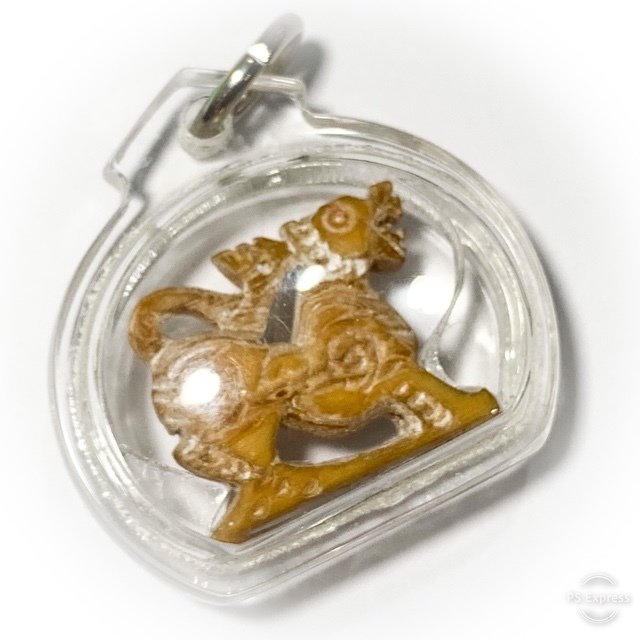
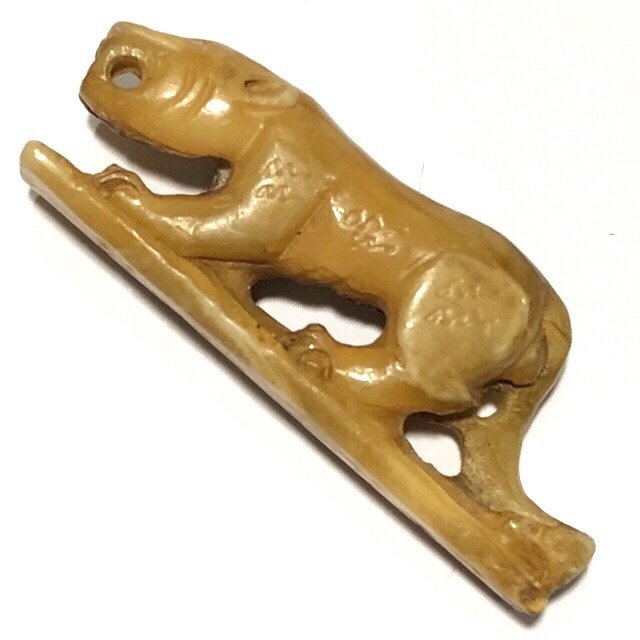
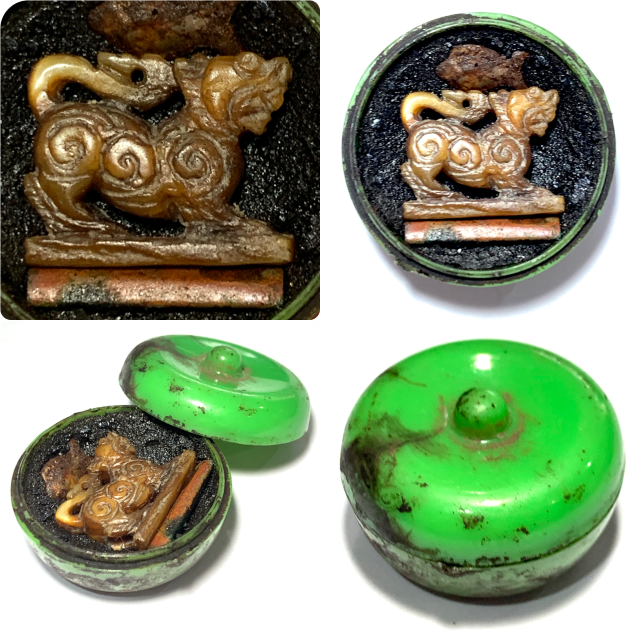
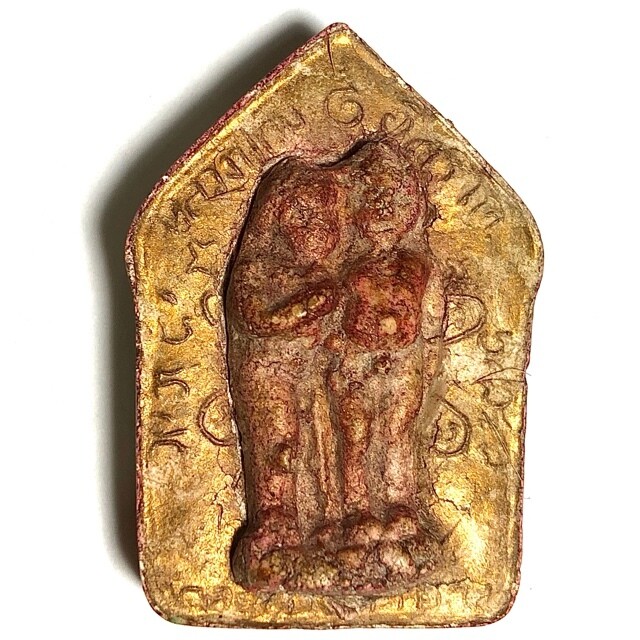
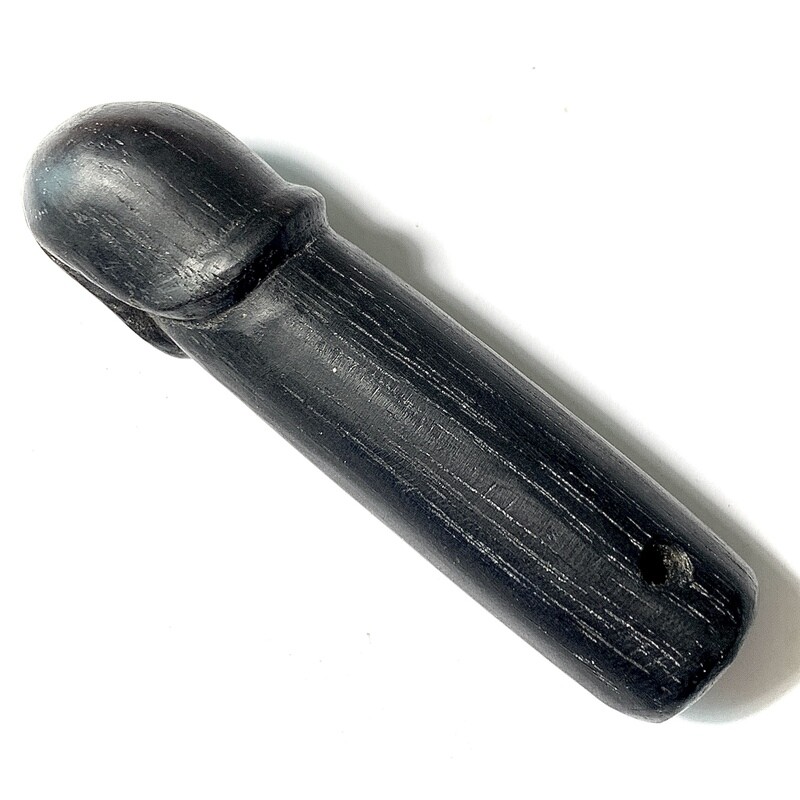
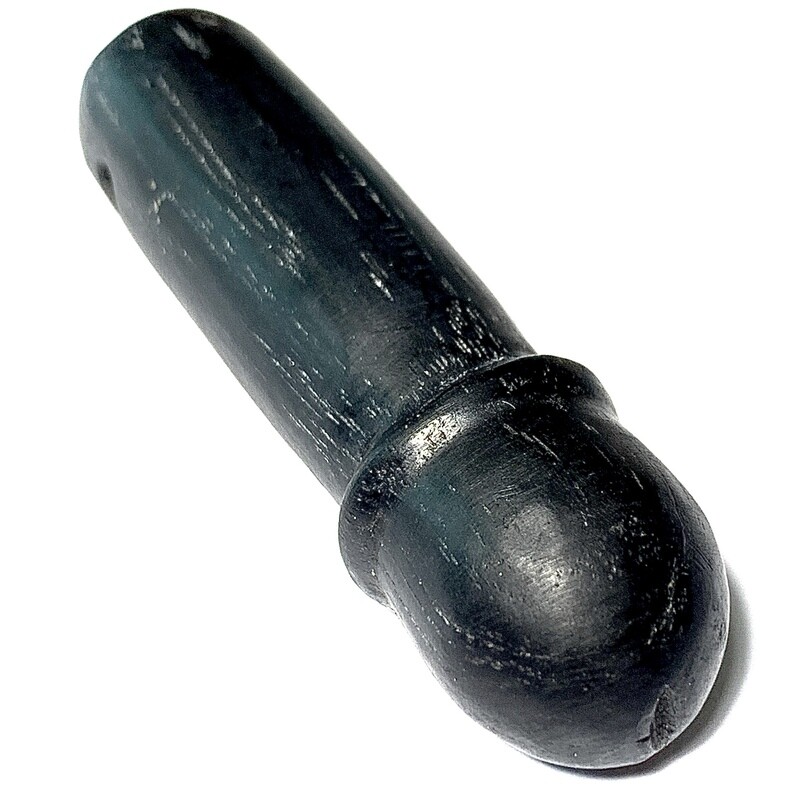
With immense luck and diligent searching, we present the second, and last of two exhibits we found, of the Immortal Ling Jab Hlak Hanuman of Luang Por Ding, carved into the shape of a Vanora Monkey holding onto a Lingam (‘Ling Wanorn’ in Thai one of the the Humanoid Simian Denizens of the Himapant Celestial realm, and minions of the God Hanuman). An immensely rare and ancient amulet from the Olden Days Abbot of of Wat Bang Wua. Luang Por Ding was highly renowned in his day, for his Palad Khik Ling Jab Hlak Vanora Monkey animist charms, considered to be among the most powerful Vanora amulets of all time. Luang Por Ding was also extremely revered, for his Sacred Powder Look Om wishing balls, made from his legendary Pong Ya Jet Paya Chang Sarn substance.

Palad Khik Ling Jab Hlak Hanuman Luang Por Ding Detail 1

Free Registered Air Parcel Worldwide Shipping

Free Registered Airmail Shipping Worldwide is Included. NOTE; At time of posting, despite the recent removal pf Paypal, until mid February 2022, you can still pay per paypal if you prefer it to Western Union, on https://www.paypal.me/amulets (we know it is easier and apologize that we are losing this payment method due to new Thailand rules), you can use this link to pay with (after ordering, and state so in order comments so we can check paypal and send your order).

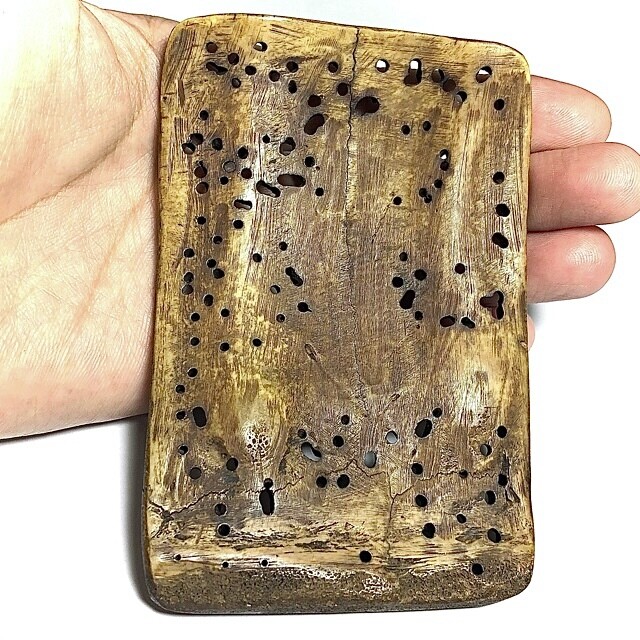
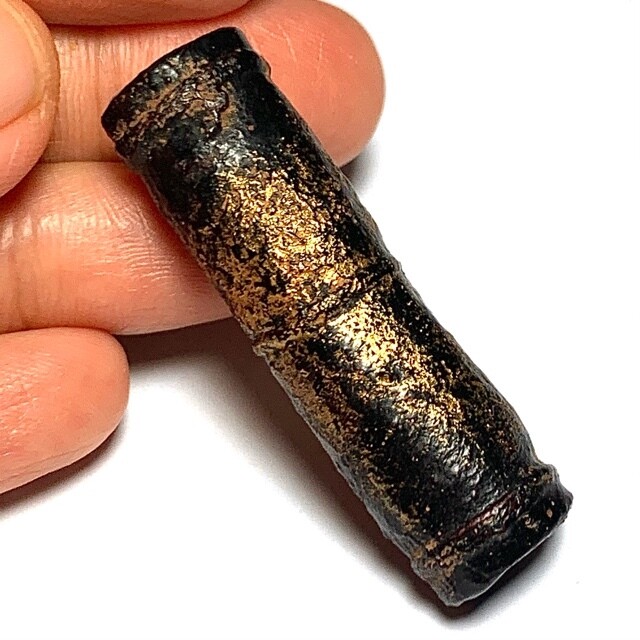
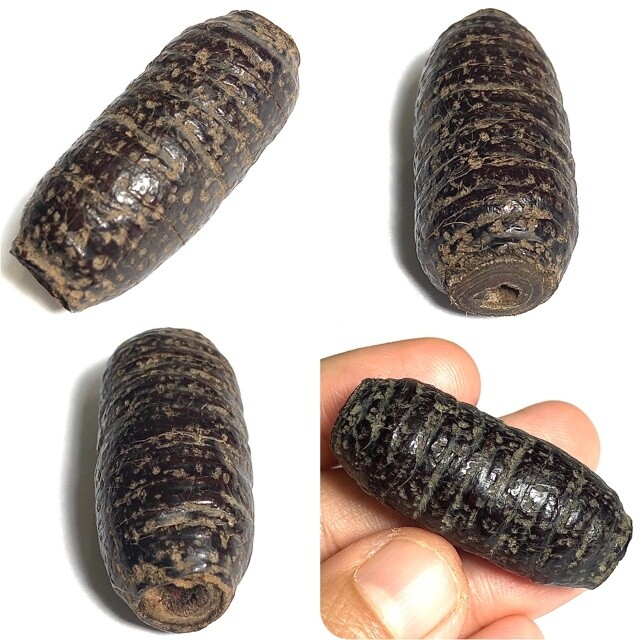
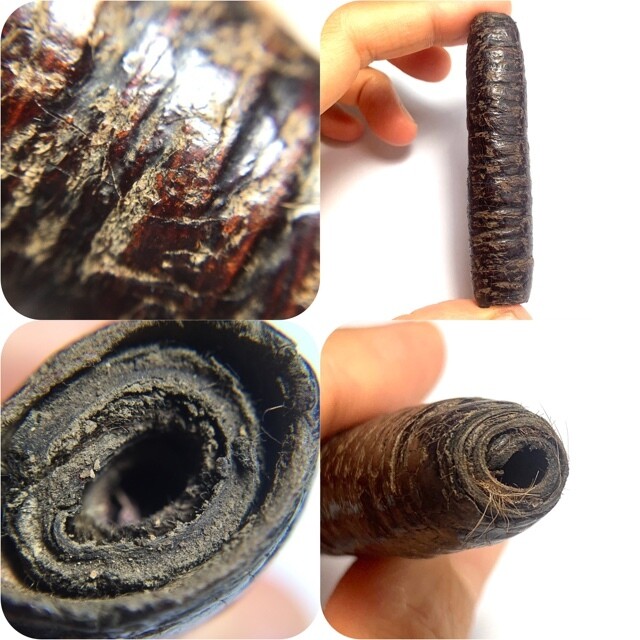
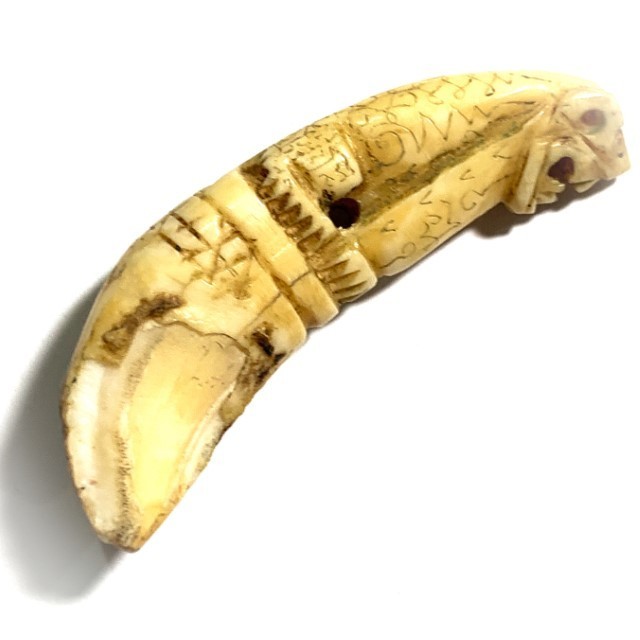
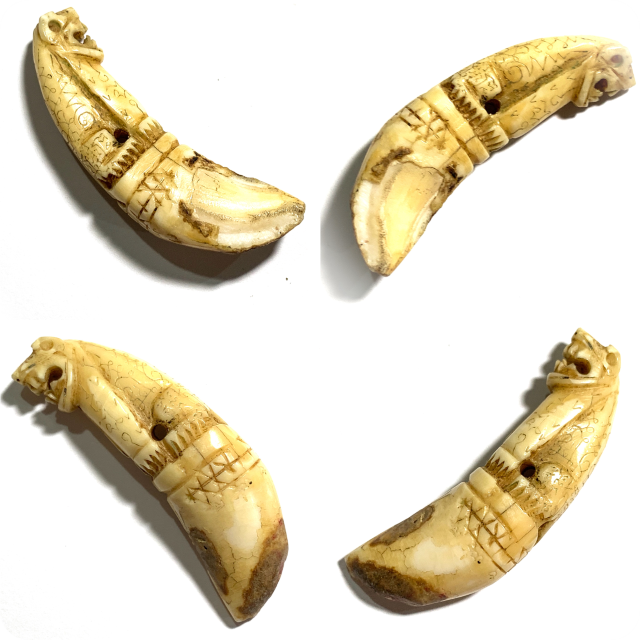
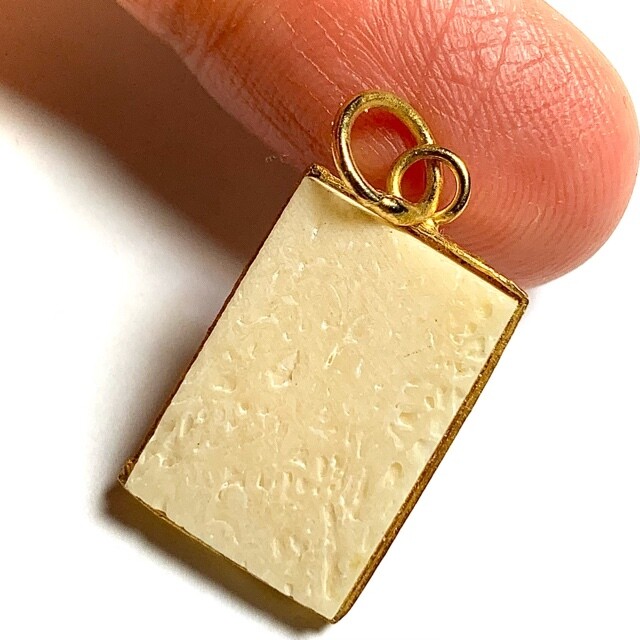
The Palad Khik is carved from extremely ancient ivory, and is instantly recognizable as authentic ancient ivory, even with the naked eye, for the parallel rifts and crevices which travel along the shaft of the Palad Khik. The Palad Khik is most beautifully carved by one of Luang Por Ding’s Master Artisans, and is a very rare item to find in ivory from this master, who would usually make them from mostly from sacred wood, due to the rarity of ivory. Luang Por Ding, was a Master of the Wicha Wanorn Hanuman Vanora Monkey God Invocation, and his Hanuman amulets are among the most highly sought after of all Hanuman amulets, along with those of the Great Luang Por Sun, of Wat Sala Gun.

Palad Khik Ling Jab Hlak Hanuman Luang Por Ding Detail 2

The Thai Palad Khik an Animistic Phallic amulet, carved in the form of a Male sexual organ. Palad Khik are made in all sizes, ranging from miniature ones the size of your little finger, right up to ones which are higher than a human. Palad Khik are extremely popular with Thai people, worn as amulets tied to a cord around their waist.

The belief in the Shiva Lingam, or ‘Leungk’ (Thai pronunciation) phallic energy of the Palad Khik, is derived from the Brahman influence which has been inflected on Thai Theravada Buddhism, since both belief systems came to Siam more than one or two thousand years ago.

Palad Khik Ling Jab Hlak Hanuman Luang Por Ding Detail 3

It is believed that the Palad Khik Lingam energy is the source of all life forms in the Universe. This is the root of the act of reverence (Bucha/Poojah) to the Palad Khik as a Shiva Lingam, which honors Shiva as the Lord of the World.
In India, not only is the Shiva Lingam worshiped, bit there exists also a cult which reveres the female sex organ, which is called the ‘Yoni’ (Vulva, female counterpart). The same thought is applied as that used too revere the Palad Khik Shiva Lingam, that is to say, that all created things must spring out of the Yoni instead of the Lingam.

Palad Khik Ling Jab Hlak Hanuman Luang Por Ding Detail 4

Below : Over 20 Minutes of Narrative explanation from Ajarn Spencer Littlewood about the Thai Palad Khik Amulet, and how to Pray to them

How to Bucha Palad Khik Amulets

The practice of making Palad Khik as a portable amulet, for ‘Bucha Siwalingk’ (praying to Shiva Lingam phallic Deity), entered Siam with the influence of the Khom race, whose language and alphabet the Thais absorbed and adapted into their own personalised fashion. Some have said that the integration of Pre-Buddhist beliefs and traditions, into the Thai Theravada Buddhist practice of the common Folk, such as worshiping amulets like the Palad Khik, is not in contradiction to the practice of Buddhism and presents no obstacles.

Palad Khik Ling Jab Hlak Hanuman Luang Por Ding Detail 5

In fact, it is believed, that since Buddhism sprang out of the roots of Brahman Cosmology, and that the people of Siam adopted Pre-Buddhist Brahman traditions and incorporated them, that this is even a benefit to the preservation of ancient knowledge, and of Thai history and tradition. Most of these ceremonies do not come into any kind of dispute with Buddhist thought. In fact, Buddhist Thought bases itself on many concepts found in Hinduism, and in Thailand, the two Belief Systems can hardly be separated.

Palad Khik Ling Jab Hlak Hanuman Luang Por Ding Detail 6

The word ‘Palad’, means ‘vice’ (as in ‘vice President, vice Mayor, etc). This has caused the Palad Khik to make some people t exclaim jokingly “why don’t you call it ‘Vice Mayor Khig’?. In fact, the word ‘Palad’ is derived from the Sanskrit ‘Bprasawa’, which translates as “he who stands by the side of’. This was adapted into the Thai language as Sanskrit and Buddhism entered and flourished in Siam. This is why in Thailand, an assistant to the Mayor (Nay Ampher), is called ‘Palad Ampher’.

Palad Khik Ling Jab Hlak Hanuman Luang Por Ding Detail 7

But the real reason this word (Palad) is used for the Shiva Lingam amulet, is that it is worn as a companion to remain by the side of the wearer (‘he who stands by the side of’). Devotees of the Palad Khik tend to wear it outside of their clothes, around the neck, waist or sometimes hanging inside the trousers, against their loins. The word Palad Khik (“ปลัดขิก” -low sound) was originally pronounced ‘Palad Kik’ (“ปลัดคิก” – rising sound) in ancient times. Many ancient Thai masters and amulet makers were inclined to making Palad Khik amulets, which were extremely popular with the Folk.

Palad Khik Ling Jab Hlak Hanuman Luang Por Ding Detail 8

Some had Khom Agkhara lettering, such as ‘U A Ma’ or ‘Om’, which are psalms to Brahma, Shiva and Vishnu. Some Ajarn would inscribe Sanskrit Agkhara instead, in Brahman tradition. Even though today’s age of technology has brought many things to distract us from magic, the Palad Khik is still an extremely widespread belief and is worn by Thai people in all provinces. Hang around any Samnak sak or Samnak Ruesi for a while and you will most definitely see someone wearing a Palad Khik amulet.

Palad Khik Ling Jab Hlak Hanuman Luang Por Ding Detail 9

In the Isan country, Palad Khik is sometimes also called ‘Bak Ben’, or ‘Khun Phet’. Palad Khik has been used by Isan people to ward off dark magic, for example in a case about 2548, the Folk of Roi Et were afraid of ‘Phii Mae Hmaay’ ( a female ghost who hunts men), so they erected a massive totem pole in the shape of a penis, with the initials (S and Y) of the man they believed to be the target of the ghost. They placed the giant Palad Khik in front of the mans house.

Kata Bucha Palad Khik

Over the years, many rumours and legends of Palad Khik of LP Ding performing miracles of Kong Grapan Klaew Klaad magic and other protective spells, caused the popularity and demand for such talismanic charms to increase, to the point where locals would flock to Luang Por Ding from around the country, to receive an amulet from him. The Palad Khik began to be used as a portable amulet through being carved from wood which was from the Cassiafistula Linn variety of tree, which has medicinal or healing properties.

Palad Khik Ling Jab Hlak Hanuman Luang Por Ding Detail 10

Ancient Folk would then use this when traveling cross country; If they had to drink water from a stream, or other natural source which may have bacteria or dangerous amoebas, they would take the Palad Khik and use it to stir the water before drinking it, to remove any danger of illness.

Kata Chants for Praying to Hanuman

Palad Khik is not only applied for preventing dangers and illness, but is seen to possess all other kinds of magical properties, such as Metta Mahaniyom (preference and popularity, friendliness and love, compassion,receiving generosity and mercy), Choke Laap (luck and fortune), good salesmanship, Love charm, and the like.

Palad Khik Ling Jab Hlak Hanuman Luang Por Ding Detail 11

Luang Por Ding would release amulets to his devotees during temple ceremonies, and on his birthday celebrations. Luang Por Ding was extremely famopus for his Look Om Jet Paya Chang Sarn wishing ball amulets. The Look Om Jet Paya Chang Sarn is spoken of in the Legend of the Great ‘Suea Khaw’ Invincible Gangster, who was a Looksit of Luang Por Ding.

Suea Khaw maintained that he survived throughout the years of his gunmanship because of the Look Om Paya Jet Chang Sarn, which stopped many bullets from piercing his skin and killing him over the years. It is said to have given Suea Khaw the strength and imposing aura of invincibility, to overcome all his enemies.

Palad Khik Ling Jab Hlak Hanuman Luang Por Ding Detail 12

The Look Om gained the name of ‘Jet Paya Chang Sarn’, because of its legendary power to increase the stamina and strength of the devotee over his or her adversaries. It is said that the wearer of the Look Om Jet Paya Chang Sarn is endowed with the strength of the Paya Chang Sarn Battle Elephant. The Look Om was said to both Protect against all Dangers, and Endow the wearer with Commanding Power and Strength. Suea Khaw was a Gangster who was reputed to have defeated and killed over 100 of his competitors, and who had a reputation for his bravery and strength.

Palad Khik Ling Jab Hlak Hanuman Luang Por Ding Detail 13

Because his sole chosen amulet of protection and power was the Look Om Jet Paya Chang sarn, and the fact that nobody cold defeat him or kill him, was the reason for Luang Por Ding’s Look Om Jet Paya Chang Sarn becoming so Legendary.

Palad Khik Ling Jab Hlak Hanuman Luang Por Ding Detail 14

But one day, Luang Por Ding told Suea Khaw that he was too violent and that if he did not give up being a gangster, then he would surely encounter a violent and premature death. Suea Khaw had become very overconfident because no knives were able to penetrate his skin, and guns would not fire when aimed at him. Because of the invincibility which Suea Khaw had been enjoying, Suea Khaw did not listen to Luang Por Ding’s warnings.

Palad Khik Ling Jab Hlak Hanuman Luang Por Ding Detail 15

One day the Police Force special missions unit came to Wat Bang Wua to ask Luang Por Ding if it was true that Suea Khaw possessed ‘Hnang Hniaw (‘sticky skin’. a term meaning a person with Kong Grapan Chadtri Magic). Luang Por Ding admitted that it was true that Suea Khaw possessed Protective Magic, and that he was not able to be killed with knives or guns. But Luang Por Ding added that Suea Khaw would fall prey to his own Karma without need of guns or knives, because he refused to listen and change his ways. Luang Por Ding added “I cannot tell you though, by which way the gangster Suea Khaw can be killed, for it would break my Precepts”

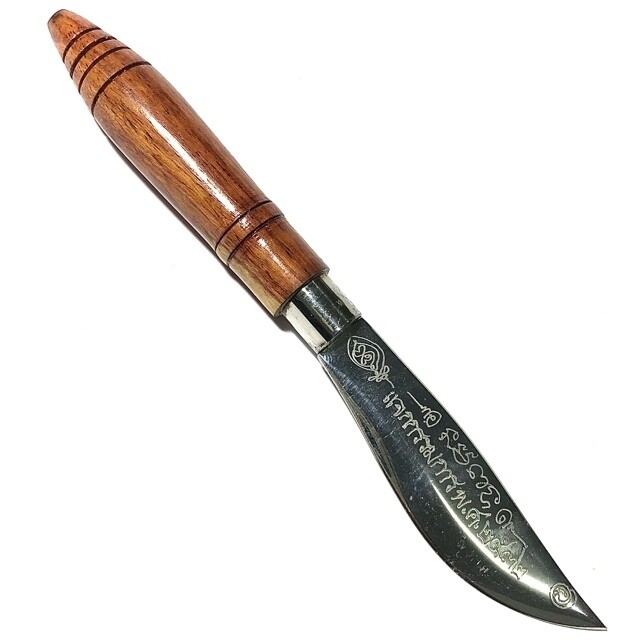
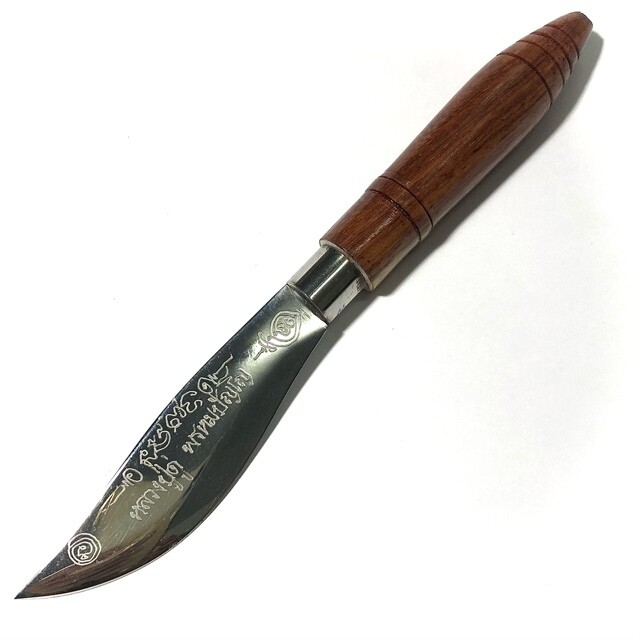
But at this moment, one of the Samanera Novice Monks was listening and butted in to say to the Police “If you want to kill Suea Khaw, you have to use a bullet that has the head of the bullet cast from metal taken from the blade of a Mitmor spirit knife from Luang Por Soke (Wat Pak Klong)”.

Palad Khik Ling Jab Hlak Hanuman Luang Por Ding Detail 16

Luang Por Soke was a colleague of Luang Por Ding and holder of the same Lineage Wicha, and would inscribe the Wicha of Luang Por Ding onto the Blades of his Mitmor. Some time later the Police caught Suea Khaw and he was sentenced to death, and was executed by Government Executioner, using Bullets cast from the blade of a Mitmor of Luang Por Soke (who was also a great master of Palad Khik).

Palad Khik Ling Jab Hlak Hanuman Luang Por Ding Detail 17

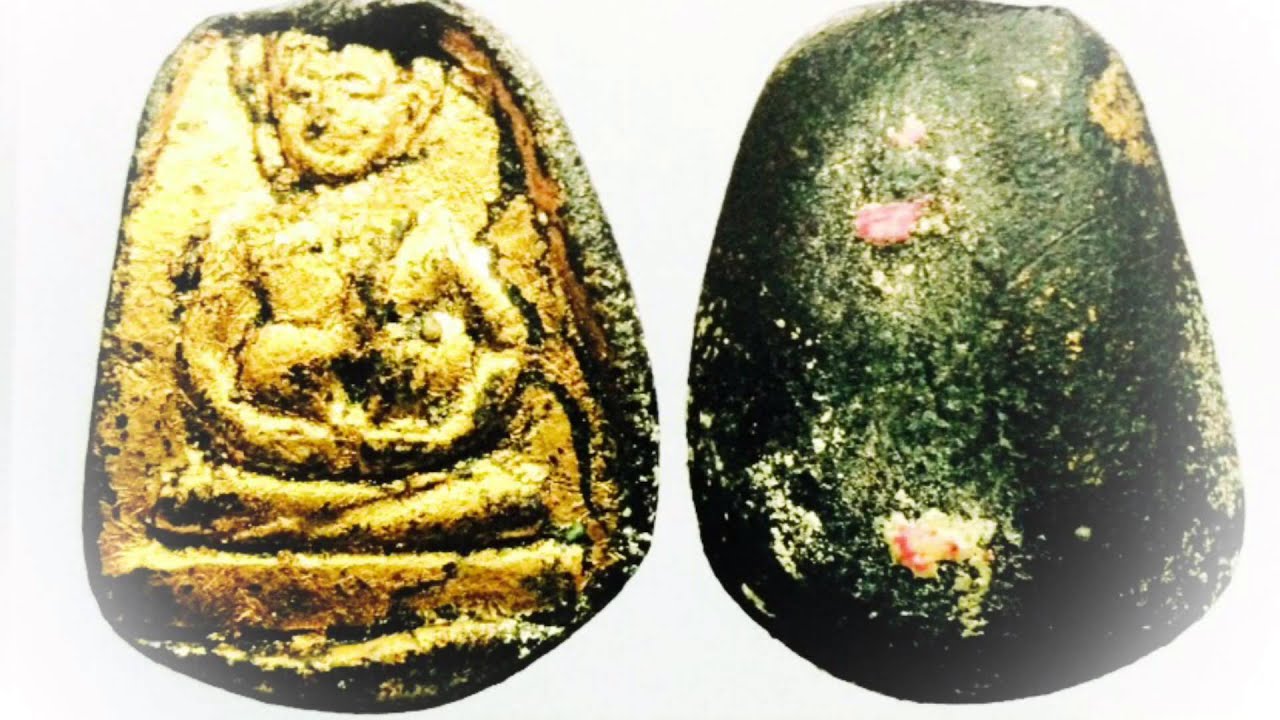
Luang Por Ding, was a Great Master of the Wicha Hanuman, and all Vanora Monkey Deities, for which he was extremely famous. He blessed many inimitable hand carved talismanic amulets (Krueang Rang), made from artisans of varied levels of skill, with of course the most masterfully carved attaining the highest level of preference. He is also associated with the symbol of the Cow (Wua), which comes from the name of the Temple (Wat Bang Wua). His Look Om Jet Paya Chang Sarn is one of the top Look Om of all Time and is also a high ranking amulet in the annals for Kong Grapan Chadtri Maha Ud Klaew Klaad Power.

Palad Khik Ling Jab Hlak Hanuman Luang Por Ding Detail 18

Charms & Talismans

Thai Buddhist, Animist, and Occult Charms and Talismans, authentically blessed by the great Monks and Lay Masters of Old, and Present Day
Filters

Filters
1 - 60 of 804 items

Ajarn Spencer Littlewood & Agent Gemini Unleashed for ancientamulet.com
All rights reserved.


Singh Sam Khwan Nga Gae Pim Lek Carved Ivory Lion 2460 BE 2nd Prize Winner & Certificate Luang Por Derm

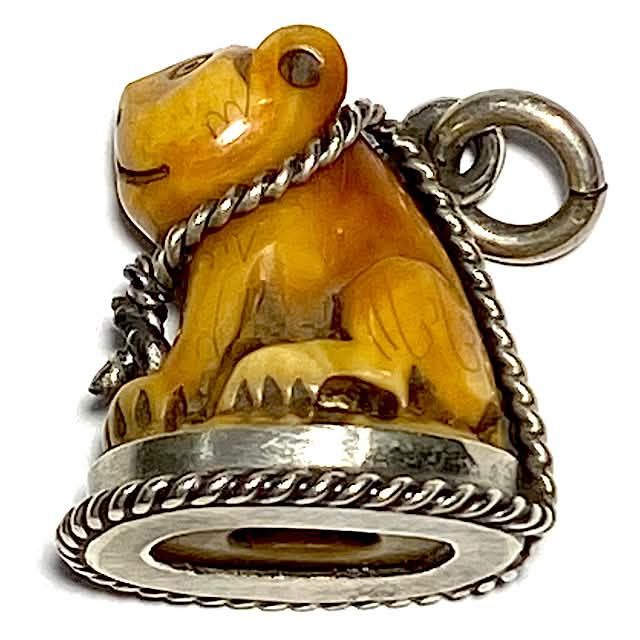
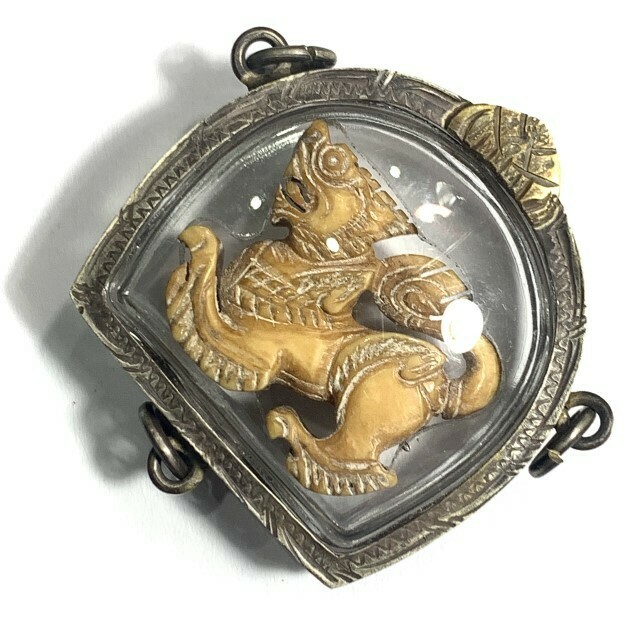
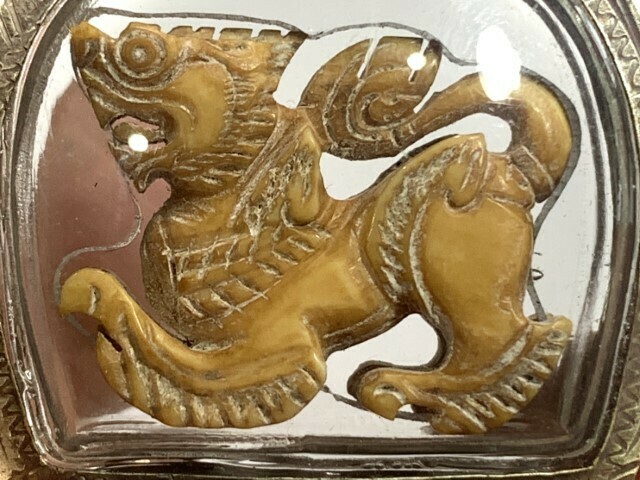
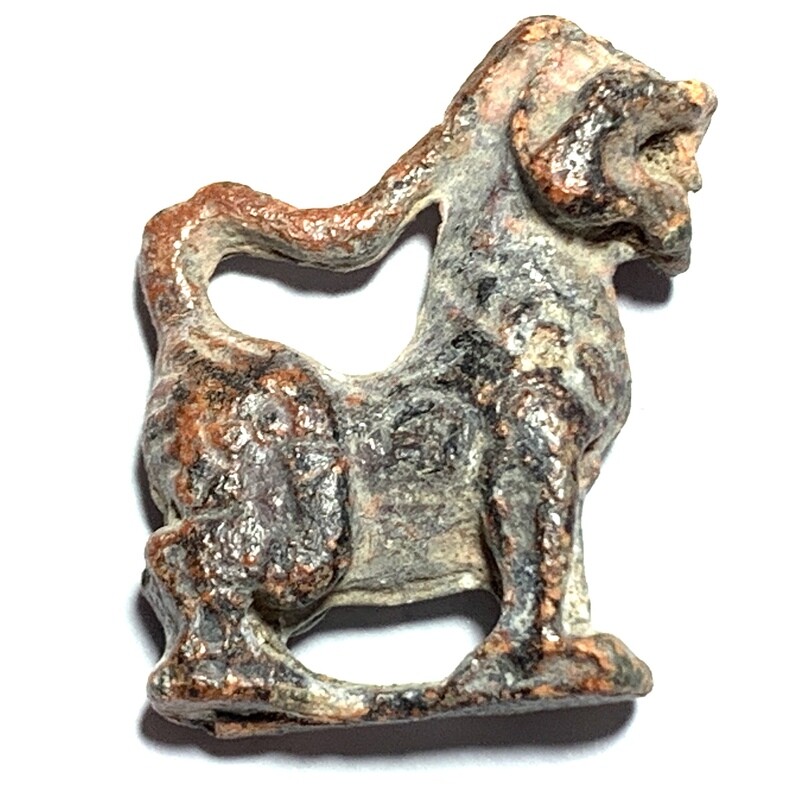
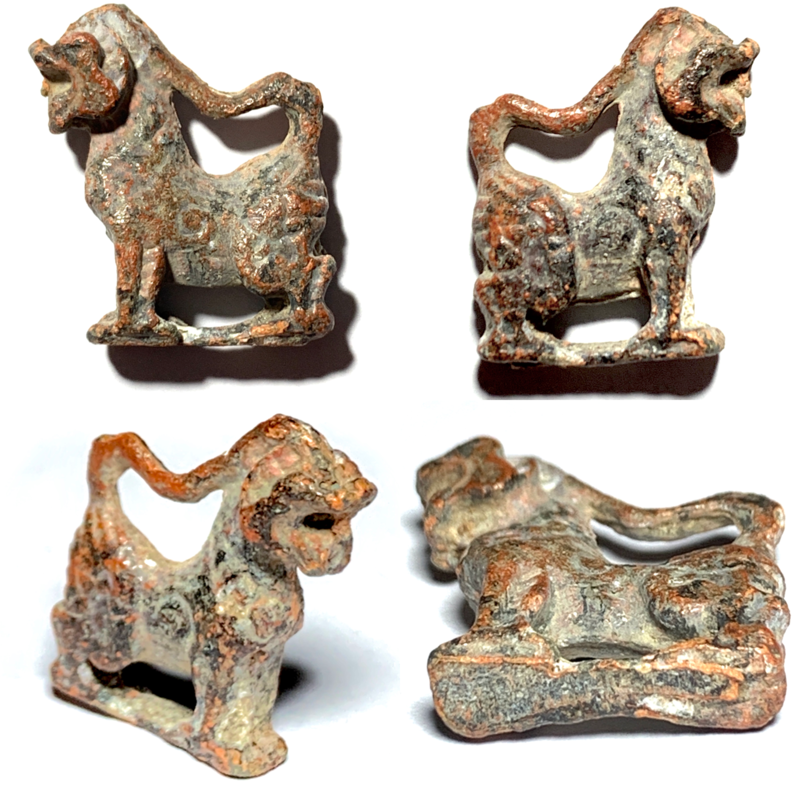
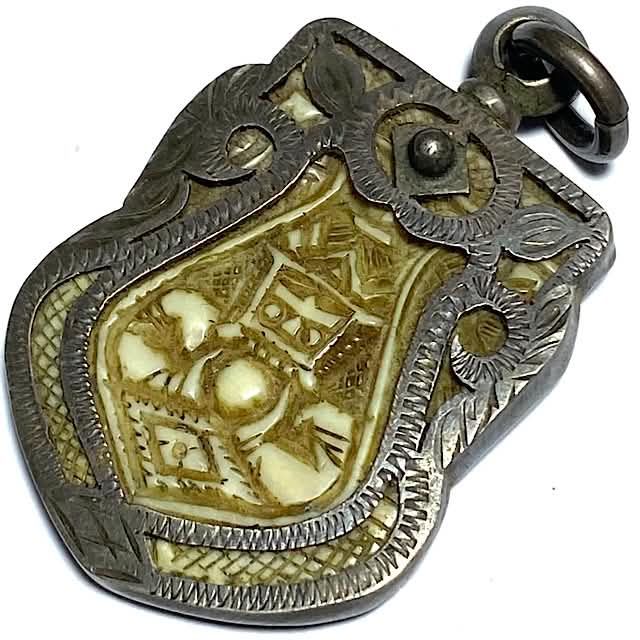
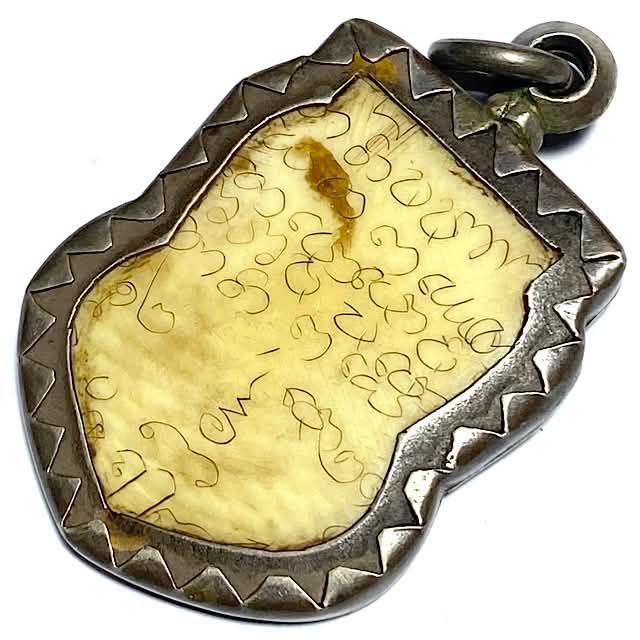
A Certificated Authentic 2nd Prize Winner amulet, in Competition of  The Amulet Society of Siam Thailand 2018 Competition Meeting, and a Pristinely well kept exhibit of an Ancient Classic of the Great LP Derm, the ‘Singh Sam Khwan Pim Lek’ (small size) Hand Carved Ivory Amulet with Singha Himapant Lion . This exhibit was most clearly carved for triple gift blessings empowerment by one of LP Derm’s artisans, in early era, for blessing by the Great Olden Days Master of World Class Legendary Status; Luang Por Derm Puttasaro, of Wat Nong Po.

Singh Sam Khwan Nga Gae Pim Detail 1

Estimated made around 2460 BE, this immensely detailed and decoratively carved amulet, is both imbued with the natural Power of Maha Amnaj instilled by mother nature believed to dwell within all Teeth and Tusks, of Tigers and Wild Boars and Jungle Predators, as well as within all the bones of such creatures, as well as being empowered with the Wicha Singh and Wicha Rachasri of Luang Por Derm. Considered a very powerful protection and power amulet.

Singh Sam Khwan Nga Gae Pim Detail 2

Singh Sam Khwan Nga Gae Pim Detail 3

Comes with free Express Air shipping included. The classic Singh Sam Khwan of Luang Por Derm is an immensely rare amulet to find, especially in such pristine condition as this exhibit, preserved within waterproof casing which we have already provided included in the price with this item, as it compliments and increases the beauty, and is of course the relevant kind of casing for an amulet of this calibre, price range and beauty. The amulet should never be worn below the waist line.

This item is a Master Class amulet that is not only revered and sought after for its Magical powers, but also for its immense beauty and status as a work of Minature Buddhist Antique Arts. This exhibit is a well known accepted preferred ‘Niyom’ class model, and stands out from others for its incredibly beautiful artisanry and design, and detail in the carved relief, as well as for its character and ease of recognition through the visibly natural aging process which has given the amulet its beautiful Patina.

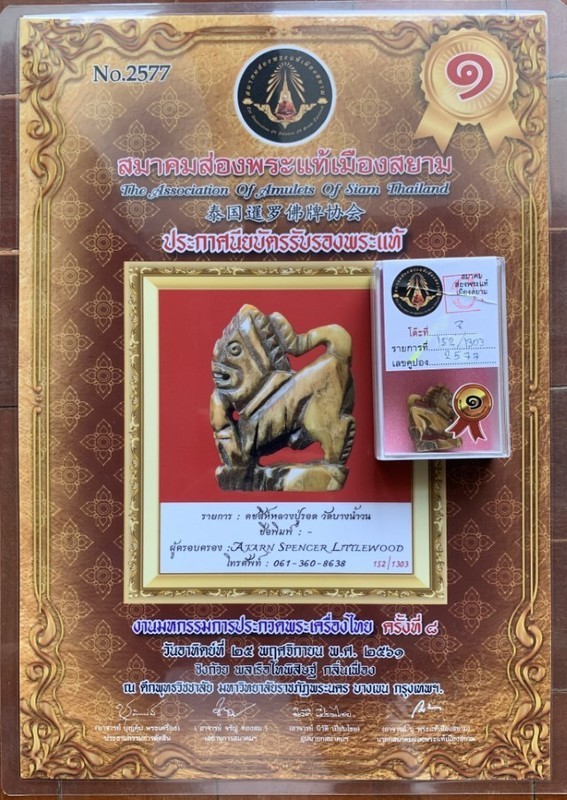
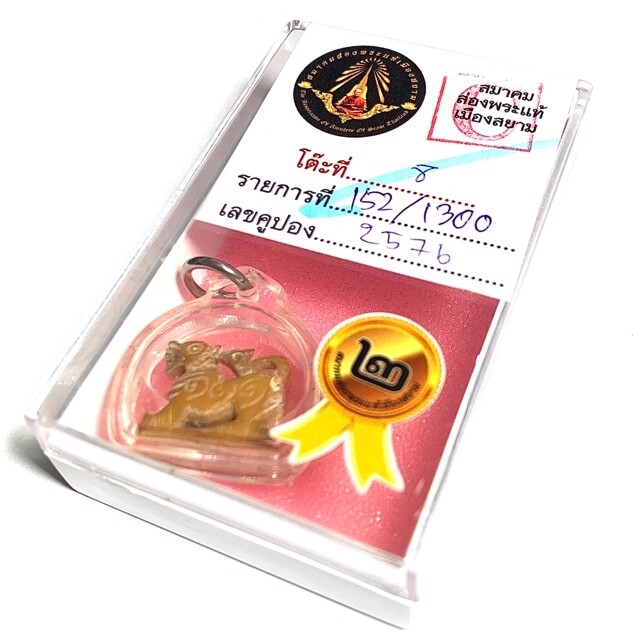
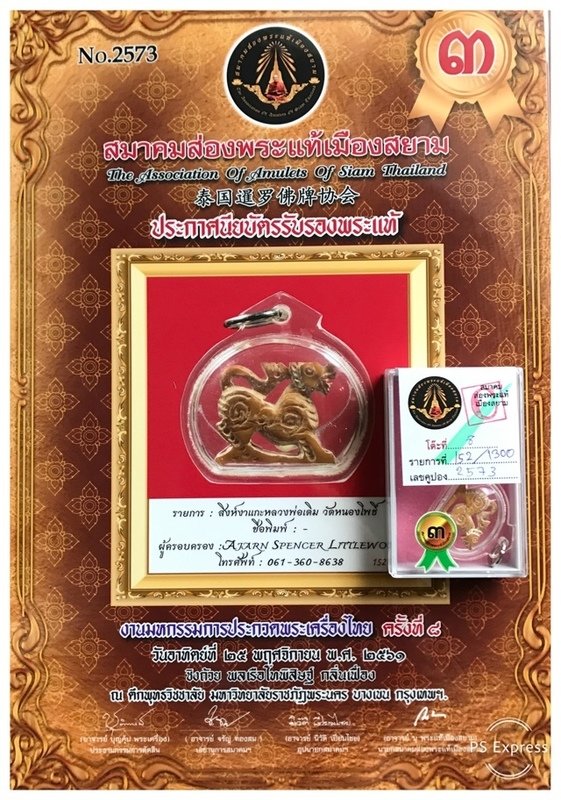
Below; TSecond Prize Winning A4 Certificate, and complimentary box with series number and third prize ribbon sticker from the Association of Amulets of Siam Thailand, which comes with 2nd Prize Status and amulet Certificate No. 2576.

Singh Sam Khwan Nga Gae Pim Detail 4

Luang Por Derm was famous for many amulets, but the Singh, and Rachasri Lion amulets, along with his Nang Kwak, Roop Lor statuettes, and Mitmor knives, has become synonimous with his name. Luang Por made carved Singha Lions in various forms, and many other kinds of carved amulets, as well as a host of other types of blessed items be they Pha Yant, Hand carved Loi Ongk mini statuettes, Photographs, Takrut, and sacred powder amulets.

Singh Sam Khwan Nga Gae Pim Detail 5

A most original miniature hand carved ivory amulet of the finest artisanry, with truly exquisitely fashioned decorative embellishments, that is an immense Rarity to come across, from the early times where Devotees would flock to the temple of Wat Nong Po, to beseech Luang Por Derm to bless amulets.

Singh Sam Khwan Nga Gae Pim Detail 6

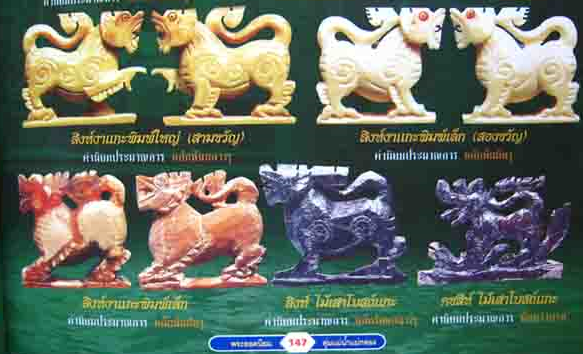
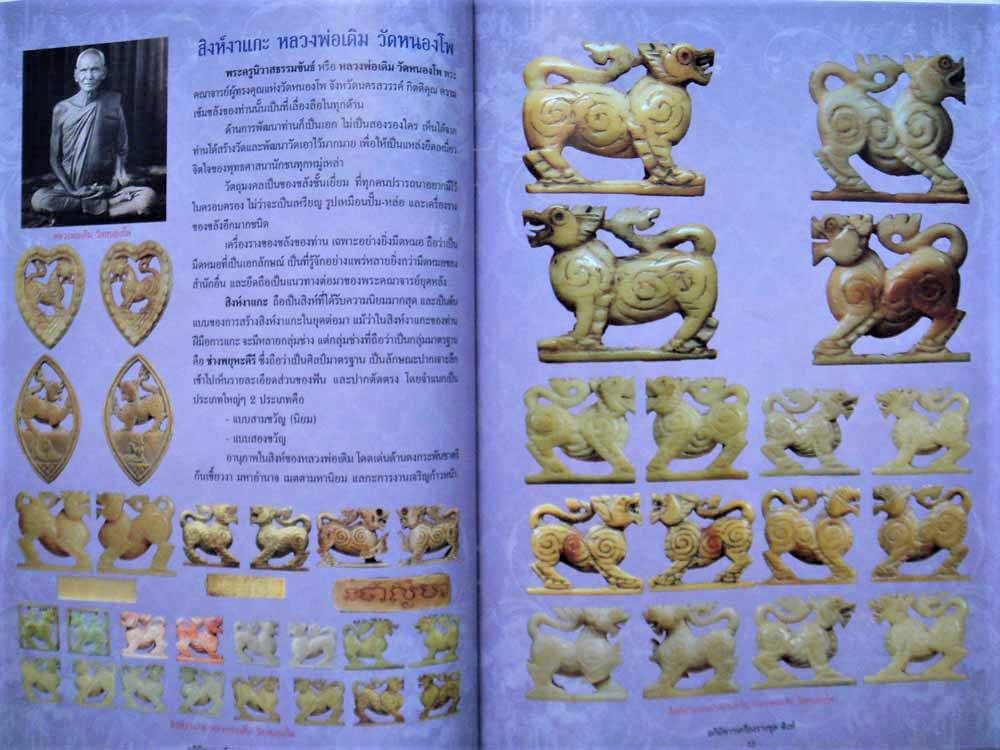
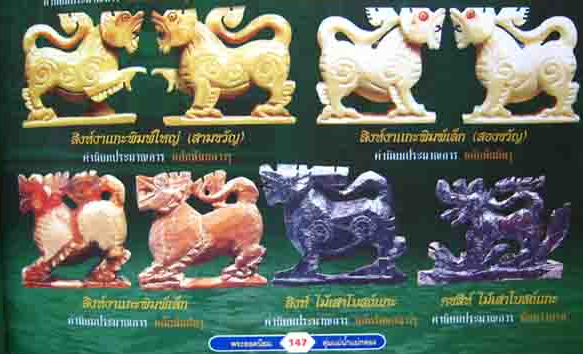
Below; some examples of the various carved Singha amulets found within the official pantheon of LP Derm, which makes this a definite preferred item for devotees and collectors of the carved ivory and other amulets of LP Derm.

Singh Sam Khwan Nga Gae Pim Detail 7

The Pantheon of amulets of Luang Por Derm can be placed into two main categories, namely those which were made as official edition at the temple, and those which were made by artisan devotees, who brought them to Luang Por Derm to bless. For this reason, we see so many hand carved pieces of fine miniature Buddhist imagery within the grand pantheon of amulets of Luang Por Derm, made from various sacred substances, ranging from Ivory, Metal, Bone, and Carved Sacred Wood.

Singh Sam Khwan Nga Gae Pim Detail 8

Luang Por Derm was Born on Wednesday 6 February 2403 BE and Died on Tuesday 22 June 2494 BE. He was one of the Greatest Masters of Thai Buddhist History, whose amulets, and famous ‘Mitmor’ ritual spirit knives are legendary around the whole wide world, for their authentic power, and Master Class Status.
Singh Sam Khwan Nga Gae Pim Detail 9

Luang Por Derm’s Carved Ivory, Boar Tusk and TigerTeeth amulets are amongst the most highly desired and collected items. The Wicha of Luang Por Derm is continued to this day through his Looksit of the various Master Lineages. His carved ivory, and wooden amulets are vary rare items, and highly individual in appearance, for they were made by individual Artisans who were Initiated and had received the Wicha, and ‘Korb Kroo’ Ritual Empowerment as permission from Luang Por Derm himself.

Only such Lineage Master Initiates were allowed to perform carving or knife forging for Luang Por Derm, and even to this day after his passing, all the Posthumous Editions of amulets which derive from Masters who are Initiates of Luang Por Derm, must use only amulets and Artisanry which has been made by an Initiated Artisan.

Singh Sam Khwan Nga Gae Pim Detail 10

This great Master and Abbot of Wat Nong Po, is believed to have been chosen to be born on Earth in the village of Nong Po, to lighten the sufferings of Buddhist People, and to bestow them with Blessings to lead them on their way towards Happiness, and Alleviate their Sufferings, and Poverty. Legend tells that Luang Por Derm is believed to have been born once before with the same parents in Nong Po Village, but he died at an early age. The mother and father were so sad, and at the burial, it is said that they took a ritual knife, and made some marks on the feet of the corpse of the child.

They prayed for the child to be reborn with them, and that if this miracle would truly happen, that the newborn return of the child, would be marked on the feet with these marks. It is said that when Luang Por Derm was born, that he had the very same lines marking his feet, exactly where his parents had made marks on the feet of their deceased son. It is hence believed that this was the first Miracle of Luang Por Derm.

Singh Sam Khwan Nga Gae Pim Detail 11

Luang Por Derm did not study much at school during his childhood, but after he ordained into the Sangha as a Buddhist Monk, he gave intense efforts and great interest to learn Bariyatti Dhamma (Theoretical Dhamma) with Luang Por Chom the then Abbot of Wat Nong Po at that time. He never stopped practicing and studying the various aspects of Dhamma Practice, Vinaya, Wicha Akom (Sorcery) and Lekh Yant Agkhara Khom, which He studied with Nai Pan Choo Pan, who was an Adept Sorceror who was resident within the enclave of Wat Nong Po Temple.

Nai Pan was a direct looksit of Luang Por Tao of Wat Nong Po who was an ancient Master Sorceror and Abbot of Wat Nong Po. He studied for seven years with this Master Sorceror, until his passing, and recorded the facts for posterity.

Singh Sam Khwan Nga Gae Pim Detail 12

When his teacher Nai Pan passed away, Luang Por Derm then continued to practice and study Wicha with Luang Por Mee, at Wat Bang Bon, another temple of the district in Nakorn Sawan, where he remained for a period of 2 Years. He also learned Tripitaka with Luang Por Num of Wat Khao Tong.

He also learned with Ajarn Yaem (a Lay Master who was Genius at both Dhamma Sermon Giving, and Wicha Akom). Luang Por Derm learned how to Preach Dharma, until he became an expert Preacher of Dhamma, and became recognised for his Immense Ability to interpret the difficult Dhamma Lessons and simplify them to explain to the Local Folk. Devotees would beseech him from all around the Province to come and Preach Dhamma to them.

Singh Sam Khwan Nga Gae Pim Detail 13

Luang Por spent many years performing Preachings. until one day he stopped, and said that every time he wold go to tell others how to practice, and they wold give donations, that he thought it would be better to stop, and focus on teaching himself. he would send his apprentices who had learned well from him in his stead, and retired from this practice sometime around his eleventh year of ordination.

Singh Sam Khwan Nga Gae Pim Detail 14

He then focused on developing Vipassana Kammathana methods of self transformation, and dedicated himself extrememly diligently to develop the causes of enlightenment (Arahantship). He became famous for his ability to sit erect for many many hours, beyond the ability of other Masters. It was here that Luang Por’s ability in Wicha Akom began to ascend to a very high level, and his magical abilities began to take form and become extremely powerful.The fruits of his practice and studies which began with Nai Pan, and the many Kroo Ba Ajarn who had passed Wicha on to him flourished.

Luang Por still continued throughout this time to study with many other Masters, most of whose names are not known, for Luang Por Derm never really told others about his secret Masters, nor did he brag about the things he had learned and the places he went too learn them. It is however known that Luang Por did learn intensive Wicha Akom Saiyawaet with Luang Por Saban and Luang Por Taes of Wat Sap Tale, and Luang Por Wat Khao Nor.

Singh Sam Khwan Nga Gae Pim Detail 15

The amulets of Luang Por Derm are far and few between to be found. For indeed the many devotees of Luang Por Derm, are never prone to part with their amulets, which are highly revered as Buddhanussati Remembrance of the Great Master, and considered irreplaceable for their Great Magical Power to Protect from Danger, Evade Hardships, and Nurture Success in Life’s Undertakings. An item such as this is something that is not seen very often in the present era. It is the hope and dream of all true devotees of LP Derm, to possess a carved Ivory Singha such as this, of the Great Master LP Derm, for its immense fame and popularity for Maha Amnaj Kong Grapan, Klaew Klaad and Serm Yos Power.

Singh Sam Khwan Nga Gae Pim Detail 16

Singh Sam Khwan Nga Gae Pim Detail 17

Kata Pluk Suea

Kata Suea - Invocation of Tiger Spirit

Kata Suea & Kata Rachasri – Invocation of Tiger/Lion Spirit (Chanting Tutorials) is included as an mp4 for download after purchase of this amulet.

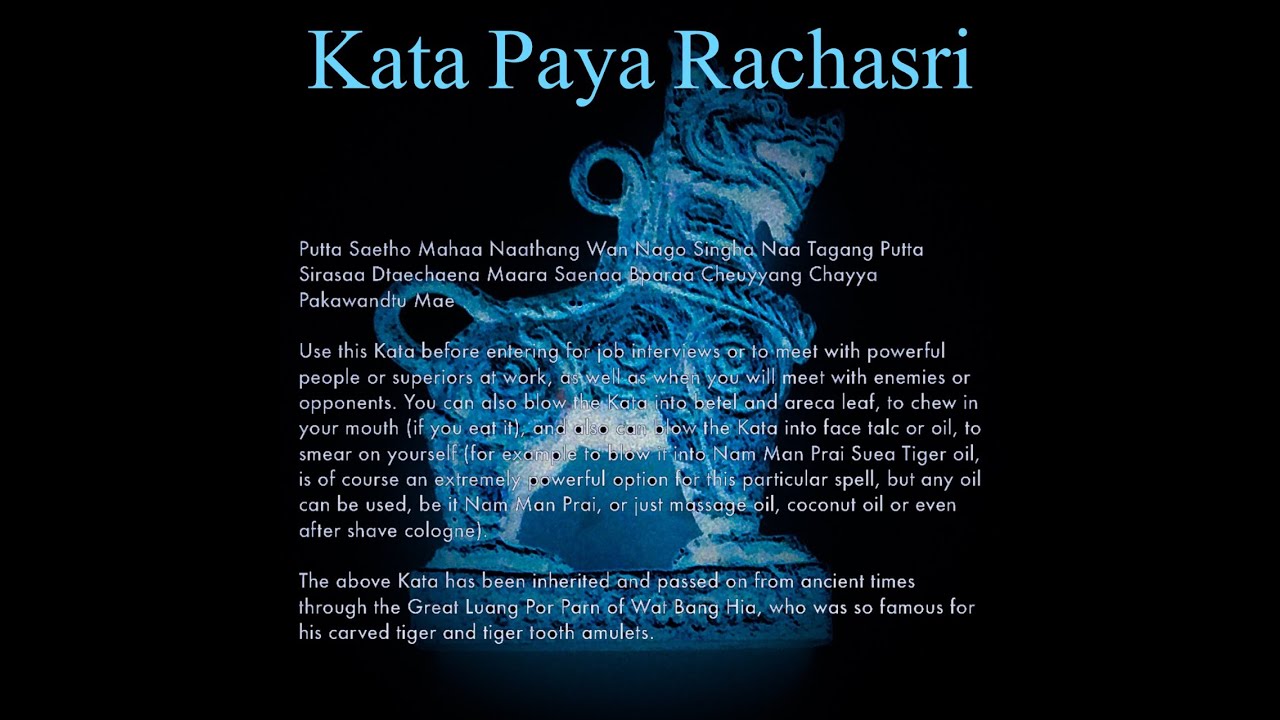
Kata Paya Rachasri (Use for all kinds of Himapant Lion Deities)

Kata Paya Rachasri Chanting Tutorial

Singh Sam Khwan Nga Gae Pim Detail 18

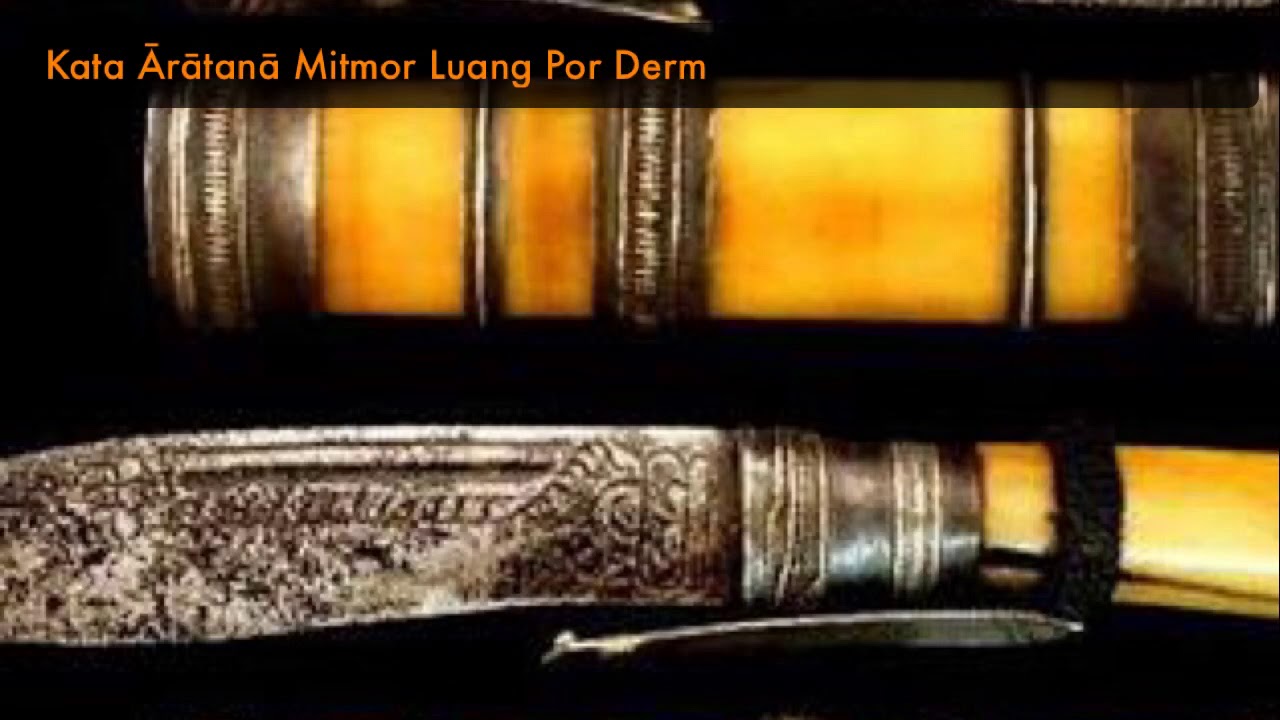
Kata Ārātanā Mitmor Luang Por Derm Wat Nong Po

Singh Sam Khwan Nga Gae Pim Detail 19


All Tiger Image or Tiger Related Amulets - Khiaw Suea, Takrut Hnang Suea, Nam Man Suea, Tiger Face Lersi...

Filters

Filters
1 - 60 of 90 items


See Pheung Fang Singh Sam Khwan Carved Ivory Singha Himapant Lion 1 Takrut & Pla Tapian Luang Por Derm

A Rare talismanic See Pheung Potion, composed of See Pheung Nam Man Prai, with a ‘Singh Sam Khwan’ (triple gift blessings) Hand Carved Ivory Amulet with Singha Himapant Lion one Takrut Tong Daeng, and a Pla Tapian Lucky Barbfish inserted into the See Pheung Potion. A Pristinely well kept exhibit of an Ancient Classic of the Great LP Derm, this see pheung was found to be made from various Masters of the time, and various examples can be found with carved ivory Himapant Lions, such as from LP Heng, LP Derm, and other Great Masters such as Luang Por Parn (Wat Bang Hia).

See Pheung Fang Singh Sam Detail 1

The carved ivory Singh Sam Khwan within this See Pheung, is so well carved, that it was most clearly created for empowerment by one of LP Derm’s most preferred top artisans, for blessing by the Great Olden Days Master of World Class Legendary Status, Luang Por Derm Puttasaro, of Wat Nong Po. Estimated made around 2460 B.E.

When speaking of the Singha Lion immersed within the see pheung, one can say that this particular exhibit is a very finely detailed, and decoratively carved amulet. The Singha within the See Pheung, is both imbued with the natural Power of Maha Amnaj instilled by mother nature believed to dwell within all Teeth and Tusks, of Tigers and Wild Boars and Jungle Predators, as well as within all the bones of such creatures, as well as being empowered with the Wicha Singh and Wicha Rachasri of Luang Por Derm.

The Singh Sam Khwan is Considered a very powerful protection amulet, but in this form immersed in See Phueng, with Pla Tapian barbfish, and Takrut, contains a Vast compendium of Magical Qualities to improve life in all areas, and a power of attraction that brings success and status increase in business, love and social affairs.

See Pheung Fang Singh Sam Detail 2

The see pheung itself is a highly powerful admixture, composed from Muan Sarn of many Great Masters of the time for the making of see pheung with inserted Singha Lions, which was given to a number of the top Masters of Wicha Singh and Wicha Suea carved ivory amulets. The Takrut and Pla Tapian provide Metta Maha Lap, the See Pheung brings Maha Sanaeh, and the Singh Sam Khwan brings its famous triple blessings of Maha Amnaj, Serm Yos, and Klaew Klaad/Kong Grapan.

See Pheung Fang Singh Sam Detail 3

Comes with free EMS shipping included. The See Pheung Singh Sam Khwan of Luang Por Derm is an immensely rare amulet to find, especially in such pristine condition as this exhibit, preserved within solid gold waterproof casing which we have already provided included in the price with this item, as it compliments and increases the beauty, and is of course the relevant kind of casing for an amulet of this calibre, price range and beauty. The amulet should never be worn below the waist line.

See Pheung Fang Singh Sam Detail 4

The Singh Sam Khwan Himapant Lion, is a Master Class Talismanic amulet that is not only revered and sought after for its Magical powers, but also for its immense beauty and status as a work of Miniature Buddhist Antique Arts. This exhibit is easily recognizable for its character and ease of viewing through the visibly natural aging process which has given the amulet its beautiful Patina.

Luang Por Derm was famous for many amulets, but the Singh, and Rachasri Lion amulets, along with his Nang Kwak, Roop Lor statuettes, and Mitmor knives, has become synonymous with his name. Luang Por made carved Singha Lions in various forms, and many other kinds of carved amulets, as well as a host of other types of blessed items be they Pha Yant, Hand carved Loi Ongk mini statuettes, Photographs, Takrut, and sacred powder amulets.

See Pheung Fang Singh Sam Detail 5

A most rare compendium of Takrut, Pla Tapian and the miniature hand carved ivory Singh Sam Khwan amulet, of the finest artisanry with truly exquisitely fashioned decorative embellishments, that is an immense Rarity to come across, from the early times where Devotees would flock to the temple of Wat Nong Po, to beseech Luang Por Derm to bless amulets. Below; some examples of the various carved Singha amulets found within the official pantheon of LP Derm, which makes this a definite preferred item for devotees and collectors of the carved ivory and other amulets of LP Derm.

See Pheung Fang Singh Sam Detail 6

The Pantheon of amulets of Luang Por Derm can be placed into two main categories, namely those which were made as official edition at the temple, and those which were made by artisan devotees, who brought them to Luang Por Derm to bless. For this reason, we see so many hand carved pieces of fine miniature Buddhist imagery within the grand pantheon of amulets of Luang Por Derm, made from various sacred substances, ranging from Ivory, Metal, Bone, and Carved Sacred Wood.

Luang Por Derm was Born on Wednesday 6 February 2403 BE and Died on Tuesday 22 June 2494 BE. He was one of the Greatest Masters of Thai Buddhist History, whose amulets, and famous ‘Mitmor’ ritual spirit knives are legendary around the whole wide world, for their authentic power, and Master Class Status.

See Pheung Fang Singh Sam Detail 7

Luang Por Derm’s Carved Ivory, Boar Tusk and TigerTeeth amulets are among the most highly desired and collected items. The Wicha of Luang Por Derm is continued to this day through his Looksit of the various Master Lineages. His carved ivory, and wooden amulets are vary rare items, and highly individual in appearance, for they were made by individual Artisans who were Initiated and had received the Wicha, and ‘Korb Kroo’ Ritual Empowerment as permission from Luang Por Derm himself.

See Pheung Fang Singh Sam Detail 8

Only such Lineage Master Initiates were allowed to perform carving or knife forging for Luang Por Derm, and even to this day after his passing, all the Posthumous Editions of amulets which derive from Masters who are Initiates of Luang Por Derm, must use only amulets and Artisanry which has been made by an Initiated Artisan.


This great Master and Abbot of Wat Nong Po, is believed to have been chosen to be born on Earth in the village of Nong Po, to lighten the sufferings of Buddhist People, and to bestow them with Blessings to lead them on their way towards Happiness, and Alleviate their Sufferings, and Poverty. Legend tells that Luang Por Derm is believed to have been born once before with the same parents in Nong Po Village, but he died at an early age. The mother and father were so sad, and at the burial, it is said that they took a ritual knife, and made some marks on the feet of the corpse of the child.

See Pheung Fang Singh Sam Detail 9

They prayed for the child to be reborn with them, and that if this miracle would truly happen, that the newborn return of the child, would be marked on the feet with these marks. It is said that when Luang Por Derm was born, that he had the very same lines marking his feet, exactly where his parents had made marks on the feet of their deceased son. It is hence believed that this was the first Miracle of Luang Por Derm. Luang Por Derm did not study much at school during his childhood, but after he ordained into the Sangha as a Buddhist Monk, he gave intense efforts and great interest to learn Bariyatti Dhamma (Theoretical Dhamma) with Luang Por Chom the then Abbot of Wat Nong Po at that time.

He never stopped practicing and studying the various aspects of Dhamma Practice, Vinaya, Wicha Akom (Sorcery) and Lekh Yant Agkhara Khom, which He studied with Nai Pan Choo Pan, who was an Adept Sorceror who was resident within the enclave of Wat Nong Po Temple.

See Pheung Fang Singh Sam Detail 10

Nai Pan was a direct looksit of Luang Por Tao of Wat Nong Po who was an ancient Master Sorceror and Abbot of Wat Nong Po. He studied for seven years with this Master Sorceror, until his passing, and recorded the facts for posterity.

See Pheung Fang Singh Sam Detail 11

When his teacher Nai Pan passed away, Luang Por Derm then continued to practice and study Wicha with Luang Por Mee, at Wat Bang Bon, another temple of the district in Nakorn Sawan, where he remained for a period of 2 Years. He also learned Tripitaka with Luang Por Num of Wat Khao Tong.

He also learned with Ajarn Yaem (a Lay Master who was Genius at both Dhamma Sermon Giving, and Wicha Akom). Luang Por Derm learned how to Preach Dharma, until he became an expert Preacher of Dhamma, and became recognised for his Immense Ability to interpret the difficult Dhamma Lessons and simplify them to explain to the Local Folk. Devotees would beseech him from all around the Province to come and Preach Dhamma to them.

Luang Por spent many years performing Preachings. until one day he stopped, and said that every time he wold go to tell others how to practice, and they wold give donations, that he thought it would be better to stop, and focus on teaching himself. he would send his apprentices who had learned well from him in his stead, and retired from this practice sometime around his eleventh year of ordination.

See Pheung Fang Singh Sam Detail 12

He then focused on developing Vipassana Kammathana methods of self transformation, and dedicated himself extrememly diligently to develop the causes of enlightenment (Arahantship). He became famous for his ability to sit erect for many many hours, beyond the ability of other Masters.

It was here that Luang Por’s ability in Wicha Akom began to ascend to a very high level, and his magical abilities began to take form and become extremely powerful.The fruits of his practice and studies which began with Nai Pan, and the many Kroo Ba Ajarn who had passed Wicha on to him flourished.


Luang Por still continued throughout this time to study with many other Masters, most of whose names are not known, for Luang Por Derm never really told others about his secret Masters, nor did he brag about the things he had learned and the places he went too learn them.

See Pheung Fang Singh Sam Detail 13

It is however known that Luang Por did learn intensive Wicha Akom Saiyawaet with Luang Por Saban and Luang Por Taes of Wat Sap Tale, and Luang Por Wat Khao Nor
The amulets of Luang Por Derm are far and few between to be found.


For indeed the many devotees of Luang Por Derm, are never prone to part with their amulets, which are highly revered as Buddhanussati Remembrance of the Great Master, and considered irreplaceable for their Great Magical Power to Protect from Danger, Evade Hardships, and Nurture Success in Life’s Undertakings. An item such as this is something that is not seen very often in the present era. It is the hope and dream of all true devotees of LP Derm, to possess a carved Ivory Singha such as this, of the Great Master LP Derm, for its immense fame and popularity for Maha Amnaj Kong Grapan, Klaew Klaad and Serm Yos Power.

See Pheung Fang Singh Sam Detail 14

Kata Paya Rachasri (Use for all kinds of Himapant Lion Deities)

Kata Paya Rachasri Chanting Tutorial
Kata Ārātanā Mitmor Luang Por Derm Wat Nong Po

See Pheung Fang Singh Sam Detail 15


All Tiger Image or Tiger Related Amulets - Khiaw Suea, Takrut Hnang Suea, Nam Man Suea, Tiger Face Lersi...

Filters

Filters
1 - 60 of 90 items


Roop Lor Nga Gae Jarn Mer Early Era Hand Carved Ivory Inscriptions & Authenticity Certificate Luang Phu Tim Wat Laharn Rai

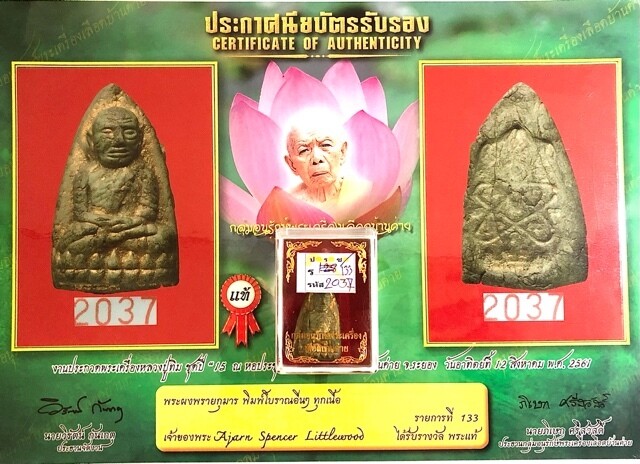
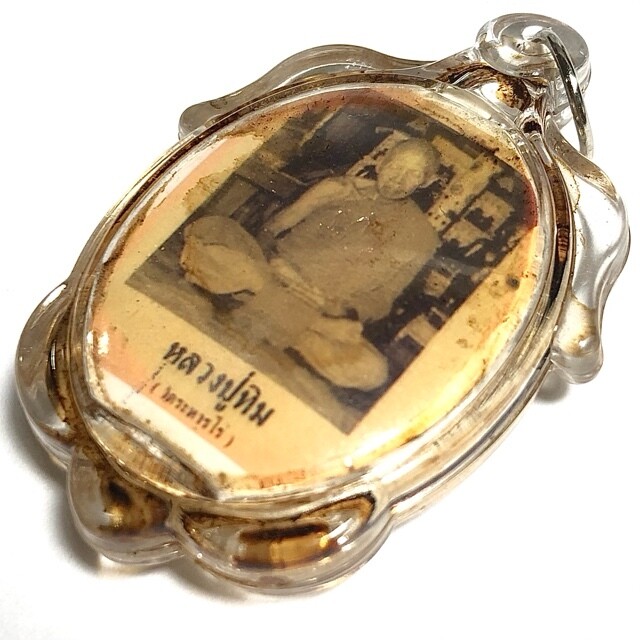
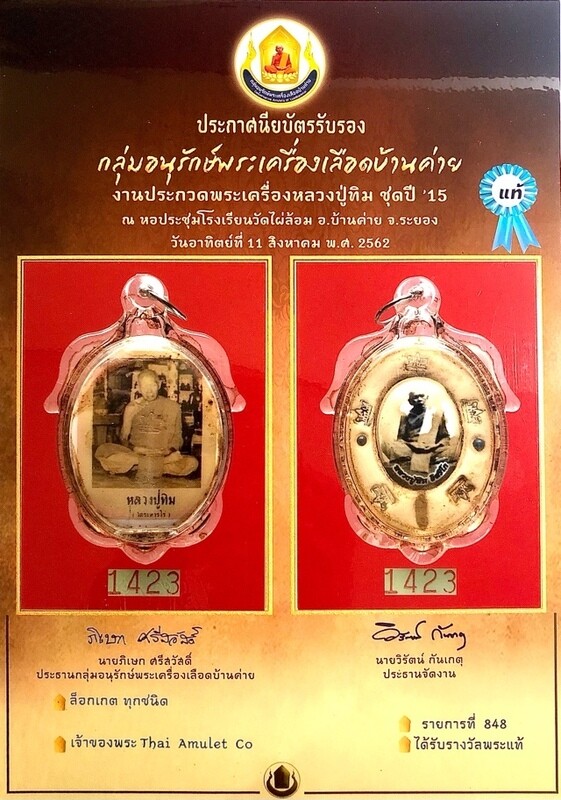
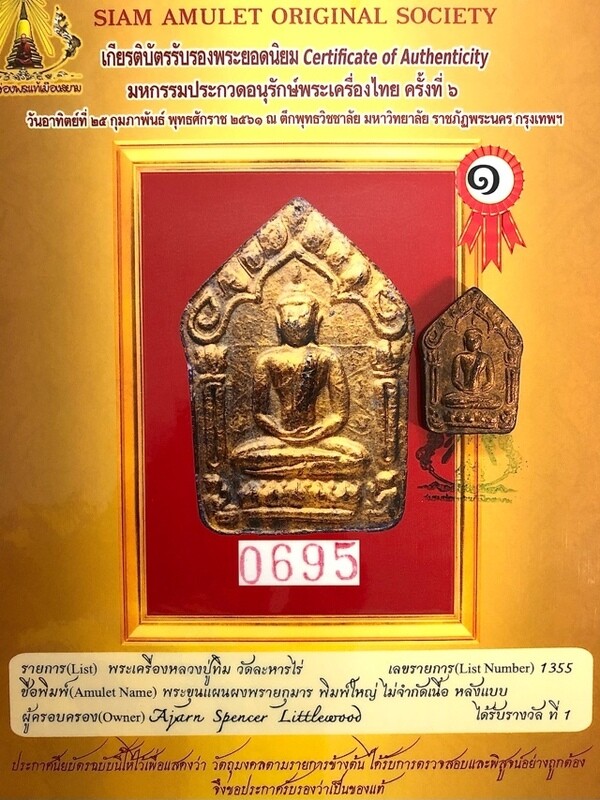
Sacred Carved statuette with hand made inscriptions, from the early era (Pre 2515 BE), in carved ancient ivory from the great Luang Phu Tim Issarigo of Wat Laharn Rai, with certificate of authenticity included, issued from the Samakom Luead Ban Kaay LP Tim amulet association. This exhibit is a full standing model, measuring 7.5 Cm high x 3 Cm wide, with a depth of circa 2 Cm. The hand inscriptions of Luang Phu Tim are highly visible on the survace of the ivory image.

Roop Lor Nga Gae Jarn Mer Detail 1

The Roop Lor Nga Gae of Luang Phu Tim Issarigo, of Wat Laharn Rai is one of the rare handmade special amulets of the pantheon, highly revered by devotees of this Great Deceased Guru Monk of the Chonburi Province, and of course by collectors of talismanic carved amulets made from ivory, wood, tooth and other such sacred materials. The amulet was released to devotees during the time around the 2510 BE – 2515 BE period, from the Great Luang Phu Tim Issarigo, of Wat Laharn Rai, with certificate of Authenticity from the Luead Ban Kaay Luang Phu Tim amulet association, signed by its President Dr. Ajarn Pisek.

Roop Lor Nga Gae Jarn Mer Detail 2

This amulet is a wonderful opportunity for devotees who seek the true power of a world class amulet from a world class edition, and also a wonderful Ongk Kroo reference study exhibit to peruse under the eye loupe. The amulet is a perfect and authentic study material, to train the eyes as to the appearance of the Ivory and Surface textures of this Classic amulet of Luang Phu Tim Hence, the amulet is also a perfect ‘Ongk Kroo’ reference study material for students of the Pantheon, and will increase your chances of spotting an essential rarity, without danger of risking a fakery.

Below; Encyclopaedic Work of Luang Phu Tim Issarigo and his Amulets

Roop Lor Nga Gae Jarn Mer Detail 3

It is Said that he who has faith in and prays to Luang Phu Tim, is bound to experience success and advancement in wealth, professional status and increase happiness in life. This legend has come from the vast number of devotees, who almost all say that since they owned an amulet of Luang Phu Tim, their lives changed for the better in rapid fashion, and then continued to improve on a constant basis.This has been the case since the days of Luang Phu Tim to the present day, that owners of his amulets tend to experience noticeable improvements in all areas of life, almost without exception.

Roop Lor Nga Gae Jarn Mer Detail 4

Roop Lor Nga Gae Jarn Mer Detail 5

The amulet comes with Free Express Shipping included, & with A4 plastified photograph certificate of authenticity. Luang Phu Tim Issarigo, was of course not only one of the most highly acclaimed and sought after Guru Monks for his amulets, he holds a title of the highest esteem in Thai Buddhist amulet history for his Pong Prai Kumarn powders, whose legendary power has become a worldwide phenomenon with devotees around the planet, who have experienced miraculous effects with the amulets of Luang Phu.

Roop Lor Nga Gae Jarn Mer Detail 6

Luang Phu Tim, was and remains posthumously Internationally Acclaimed, for his famous Pra Kring Chinabanchorn, his Pra Khun Phaen Pong Prai Kumarn, and Look Om powder balls. As to the classic ‘Rian’ Monk coin Image amulets which have become all time favourites, and eternally, world famous classic amulets of the high end variety. His Rian Jaroen Porn, and Rian Nakprok Paed Rorp, Rian Huang Chueam, Rian Mae Nam Koo, and Rian Sema are amongst the most highly sought after coin amulets of all.

Roop Lor Nga Gae Jarn Mer Detail 7

His Choo Chok Carved amulets and Pae Maha Lap Lucky Goats, and other animist Charms such as the Hanuman statuette and Sacred Powder Hanuman, various kinds of Takrut, Prakhan Sceptre Knives, Mitmor Knives, Pra Somdej in a variety of forms, Pra Pid Ta in many forms, Pra Nakprok Bai Makham Miniature Naga Buddhas,, Pra Sivali, Bucha Statues, Blessed Photos, Pha Yant, Palad Khik and Luang Phu’s Pong Roop Muean Sacred Powder Monk Image in Loi Ongk statuette form.

Roop Lor Nga Gae Jarn Mer Detail 8

Roop Lor Nga Gae Jarn Mer Detail 9

Other lesser known Sacred powder and hand carved amulets of LP Tim, include Ruesi (lersi), Suea (tigers), made from Walrus Tusk and Bone, Wood or Ivory, or Tooth, and Ling Gae carved Vanora Monkeys. The Pra Kring Chinabanchorn amulet of Luang Phu Tim is one of his most expensive of all amulets, and extremely rare to find.

Roop Lor Nga Gae Jarn Mer Detail 10

He has various direct lineage apprentices, Who are continuing to progress and spread his most powerful and world-famous Wicha. Of all of these masters, perhaps the most famous, preferred, is Luang Por Sakorn, of Wat Nong Grub (also now deceased).

Roop Lor Nga Gae Jarn Mer Detail 11

Ancient Classic Amulets of Luang Phu Tim (Part One)

(chant to the Triple Gem first (Namo Tassa Pakawadto Arahadto Sammaa Samputtassa) 3 times), then chant;

Idti Sukadto Arahang Putto Namo Puttaaya — Ma A U Tugkhang Anijjang Anadtaa Putto Putto

Luang Phu Tim is perhaps most famous for his Khun Phaen Prai Kumarn Amulets, which are currently experiencing a massive resurgence in popularity worldwide after recent news and discoveries, uncovering new truths which were previously hidden from the public, and are revealed in the below video wigh english subtitles..

Khun Phaen 15 Ajarn Piarn Wit Interview Part 1 Krit Confirms

Roop Lor Nga Gae Jarn Mer Detail 13


How to Pray to Thai Amulets (Chanting Kata);

How to Pray to Thai Amulets

Filters

Filters
1 - 60 of 238 items


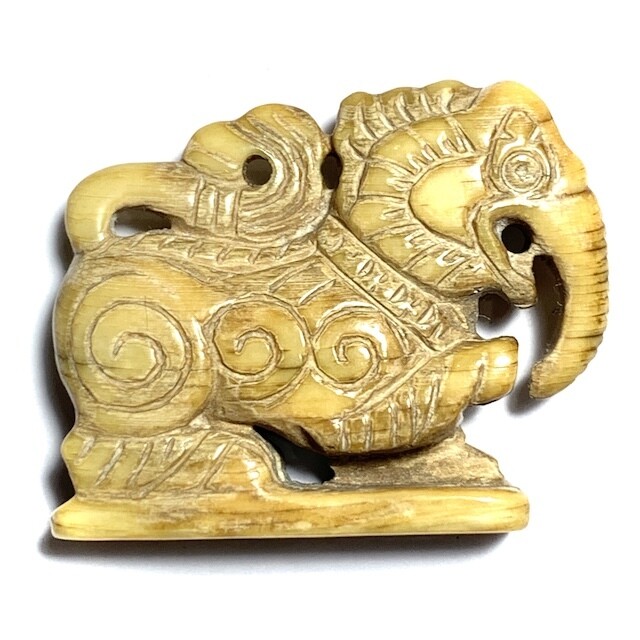
Paya Kochasri Carved Ivory Elephant Lion Amulet

The Paya Kochasri of Luang Por Heng Wat Khao Din

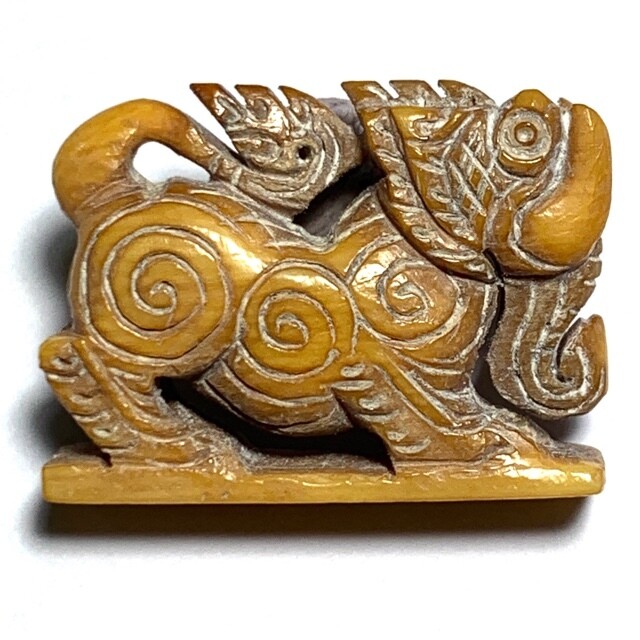
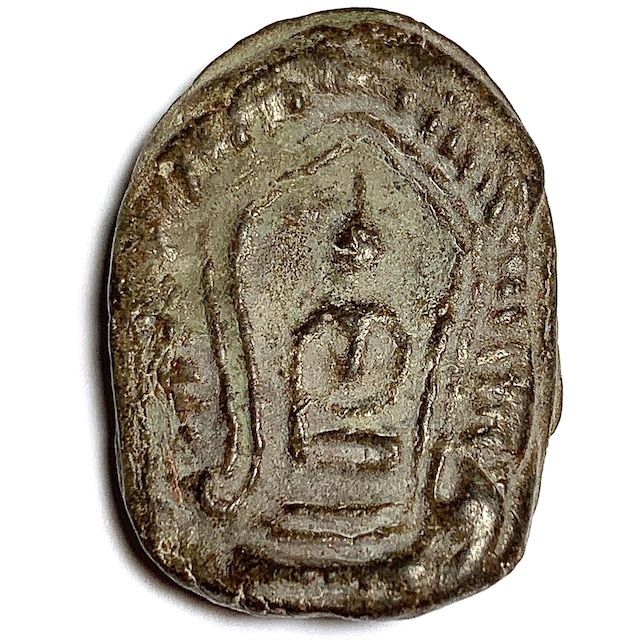
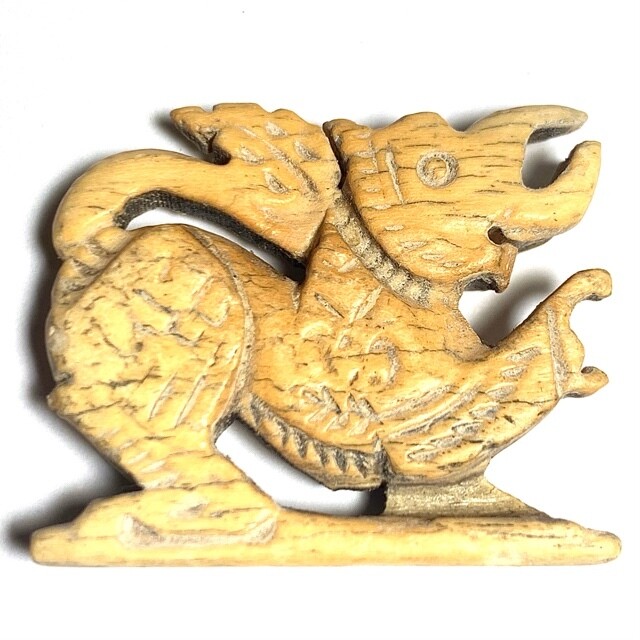
Among the legendary non-Buddha amulets known as Krueang Rang in the Thai amulet scene, the hand-carved ivory talismans of Luang Por Heng of Wat Khao Din in Nakhon Sawan Province are recognized as masterclass creations. Of these, the Paya Kochasri, a mythological Himapant beast featuring the head of an elephant and the body of a lion, is highly sought after by serious collectors. Carved from naturally shed sacred ivory, these amulets represent a combination of commanding authority, known as Maha Amnaj, and protective and prosperity-bringing powers.

Paya Kochasri Carved Ivory Amulet Luang Por Heng Wat Khao Din

The Historical Context of Luang Por Heng and Wat Khao Din

Luang Por Heng was born in 2402 BE in Ban Maha Po, Nakhon Sawan, as the son of Mr. Sangkh and Mrs. Biam. He was given the auspicious name Heng, meaning good luck or good fortune in Chinese and Thai colloquial usage. From a young age, Heng demonstrated compassion for animals, often allowing birds to feed freely on his family’s farm fields, viewing it as a practice of generosity. He began his studies under Luang Por Tap at Wat Maha Po, mastering traditional medicine, known as Wicha Paet Boran, incantations, known as Wicha Akom, and the ancient elephant magic known as Wicha Kochasart.

Heng was ordained as a novice monk at Wat Maha Po at the age of twelve. After four years, he disrobed to assist his family on the farm. Upon reaching adulthood in 2423 BE, he reordained as a bhikkhu at Wat Maha Po with Pra Kroo Gim as his Upachaya. He studied the Dhamma Vinaya, astrology, and occult sciences under Luang Por Gim. Wat Maha Po possessed a significant repository of ancient grimoires, providing an ideal environment for his studies. The sacred, three-hundred-year-old Uposatha shrineroom, built with Maha Ud protective properties, was highly suited for empowering talismans.

Side View of Paya Kochasri Amulet

Situated on the Mae Ping River, Wat Maha Po received many visiting Tudong forest monks. Luang Por Heng learned various specialized Wicha from these traveling practitioners before embarking on his own Tudong wanderings. He traveled through the forests and caves of Thailand, Burma, Laos, and Cambodia over many years, practicing solitary meditation in dilapidated cemeteries and wilderness settings to strengthen his mental concentration. This intense practice allowed him to master animist magic, enabling him to invoke spiritual energies to inhabit his carved ivory talismans.

Luang Por Heng became the abbot of Wat Maha Po Dtai in 2434 BE. In 2449 BE, he was appointed abbot of Wat Khao Din. During his northern river tour that same year, King Chulalongkorn, Rama V, stopped at Wat Khao Din to pay respects to Luang Por Heng. Deeply impressed by the monk’s practice and scholarship, the King appointed him as a special prelate with the title Pra Kroo Pisish Somatokun. Luang Por Heng served the Buddhist Sangha for sixty-three years until his passing in 2485 BE at the age of eighty-three.

Luang Por Heng Wat Khao Din

Naturally Sacred Materials: Nga Gam Jad and Nga Gam Jaay

Luang Por Heng was highly selective about the materials used for his carvings, completely avoiding ivory from slaughtered animals. During his Tudong travels, he collected naturally shed ivory from two specific occult sources:

Nga Gam Jad is the ivory broken off by a male elephant in mating season when charging a tree in a state of high energy, leaving the tip embedded in the trunk. Nga Gam Jaay is ivory broken off during a battle between two herd leaders fighting for dominance deep in the jungle. In the Thai occult scene, these materials are classified as Tonsit, meaning naturally sacred substances that possess built-in spiritual force and protective properties even before formal consecration. Luang Por Heng used his mental concentration to purify these substances, inviting benevolent spiritual entities to inhabit the carved forms.

Pristine Carving Details of Luang Por Heng Kochasri

Paya Kochasri Amulet Luang Por Heng Front View

The Ancient Vedic Science of Wicha Kochasart

Wicha Kochasart is an ancient elephant magic system originating in the Vedic treatises of the Hindu Dtrai Taep. It is split into two major grimoires. The Dtamra Kochalaks deals with the spiritual and physical attributes of the elephant, identifying beneficial and destructive traits. The Dtamra Kocha Gam contains the mantras and incantations used for protection, healing, and control of elephants and forest spirits.

According to this lore, the sacred elephant, known as Chang Mongkol, arose from a lotus that emerged from the navel of Vishnu. It was split into four major families, each created by a deity to bring specific blessings:

The Brahma family elephant brings success, prosperity, and achievements to the nation and its inhabitants. The Shiva family elephant brings powerful status, command, and wealth. The Vishnu family elephant secures victory over adversaries, ensuring balanced rains and successful harvests. The Agni family elephant brings resources and protects the land from disasters.

Wicha Kochasart Elephant Lore details

Traditional Carving Art and Khom Agkhara Spells

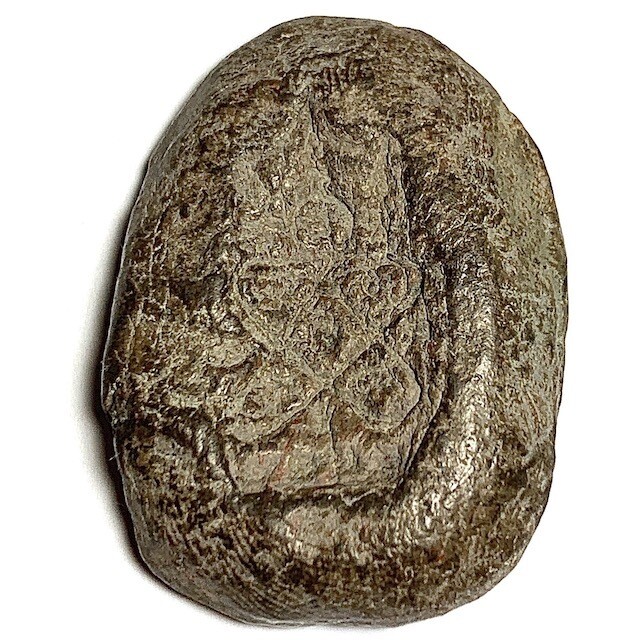
This specific Kochasri is a Pim Yai, or large size, presenting the defined and crisp hand-carved lines characteristic of old Nakhon Sawan temple craft. Over decades, the ivory has aged naturally, acquiring a rich, honey-colored patina. On the base of the piece, hand-written Khom Agkhara spells are inscribed. These characters were personally written and empowered by Luang Por Heng to secure the amulet’s protective and wealth-bringing energies.

Khom Agkhara Spells Inscribed on Base of Amulet

The Paya Kochasri combines the spiritual qualities of the elephant and the King Lion, or Rachasri. The elephant represents intelligence, endurance, and royal status. The lion represents fearless bravery and Maha Amnaj, commanding power and influence. Carved from sacred ivory, the beast is endowed with powers of status increase, known as Serm Yos, aiding in career promotion and command, alongside Metta Mahaniyom mercy charm and Maha Pokasap wealth accumulation.

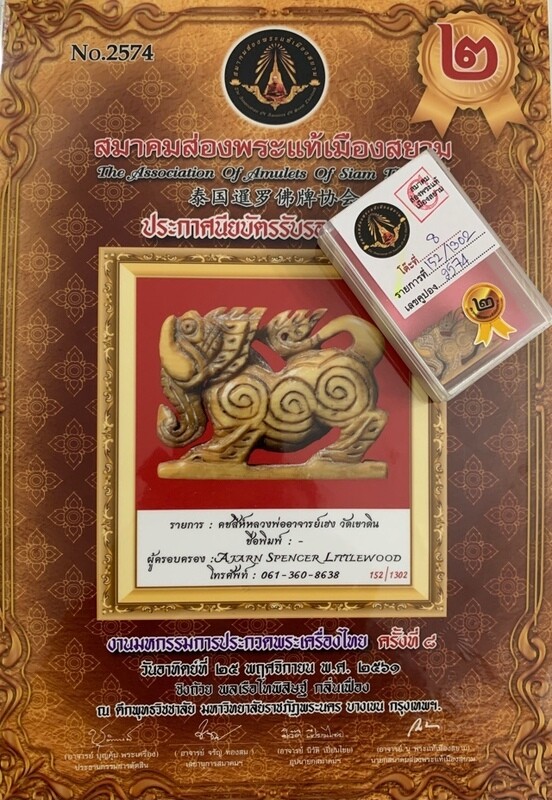
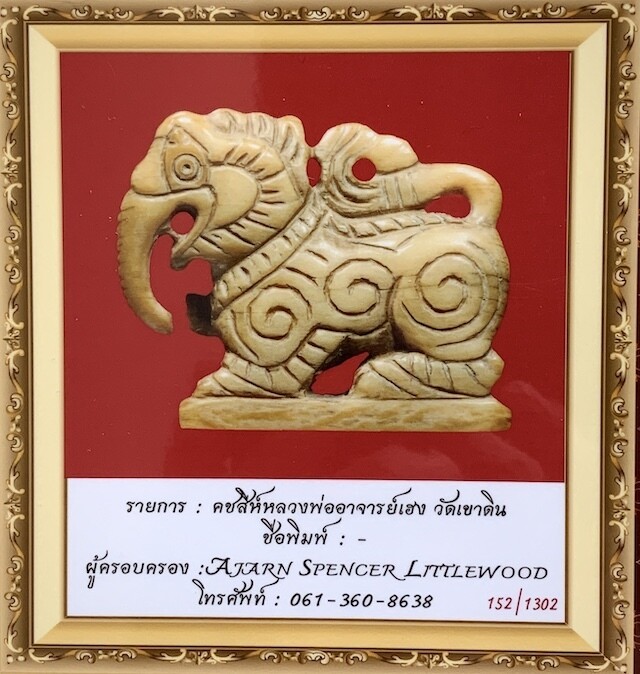
This pristine piece has been validated by specialists and was awarded the Second Prize Certificate of Authenticity at the official competition meeting of the Association of Amulets of Siam Thailand, held on November 25, 2561 BE. This certificate confirms its authenticity and masterclass status in the Pra Niyom category.

2nd Prize Certificate of Authenticity Association of Amulets of Siam Thailand

Luang Por Heng’s Standing in the Krueang Rang Pantheon

In the study of historic Thai ivory carvings, Luang Por Heng is considered a peak figure of the genre, standing alongside other masters such as Luang Por Parn of Wat Bang Hia, Luang Por Derm of Wat Nong Pho, Luang Por Say, and Luang Por Nok. His talismans are highly prized for their strong protective properties, particularly Kong Grapan Chadtri and Klaew Klaad, combined with Metta and Maha Amnaj.

Detailed View of Carved Ivory Amulet

Devotees can use the Kata Paya Rachasri for Kochasri and other Singha type Himapant lion deities. An instructional video is provided below for reference:


Ajarn Spencer Littlewood & Agent Gemini Unleashed for ancientamulet.com
All rights reserved.

All Tiger Image or Tiger Related Amulets - Khiaw Suea, Takrut Hnang Suea, Nam Man Suea, Tiger Face Lersi...
Filters

Filters
1 - 60 of 90 items