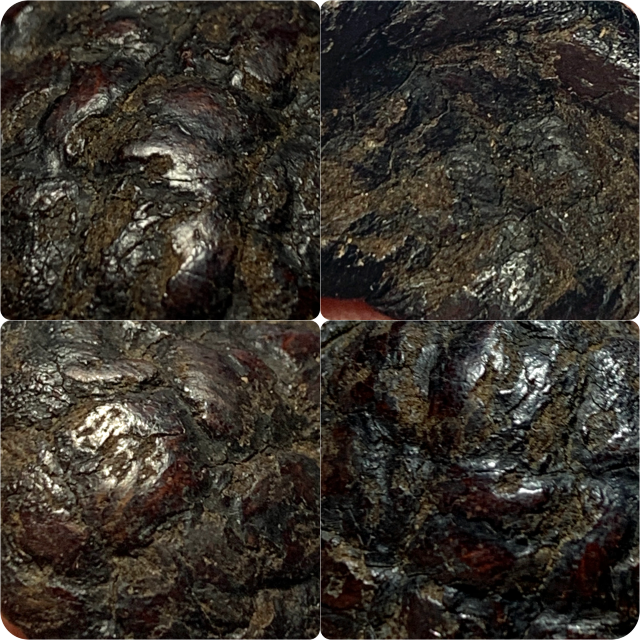
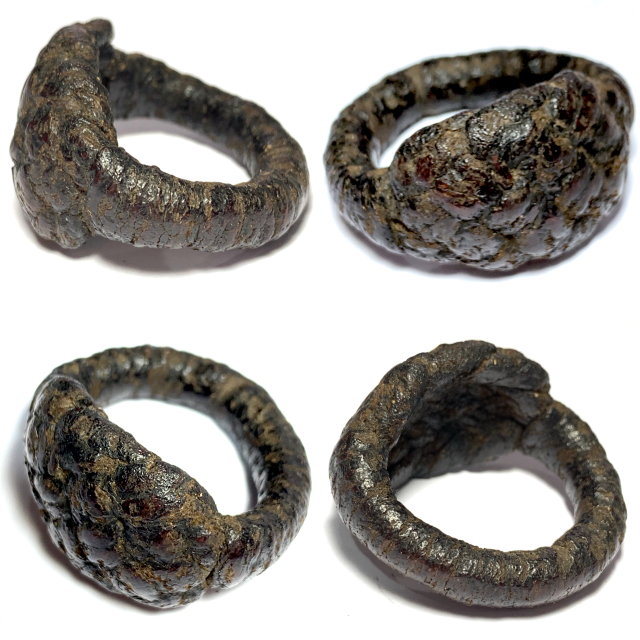
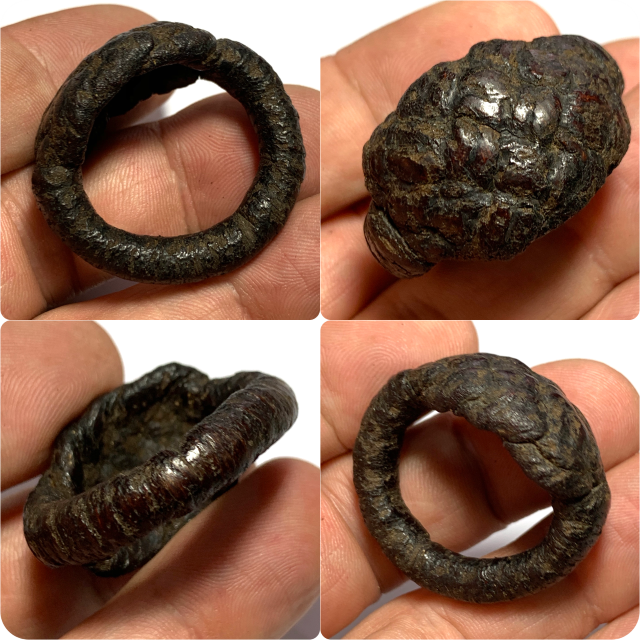
Hwaen Arahang Nuea Tong Daeng Long Ya Tong Chart 2495 BE by Luang Por Jong Puttasaro of Wat Na Tang Nork
The study of sacred amulets within Theravada Buddhism, particularly in Thailand, constitutes a complex intersection of art history, religious practice, folk belief, and the occult sciences. These artifacts, far from being mere decorative items, serve as tangible conduits of spiritual power, imbued with blessings and protective energies by revered monastic masters. This monograph presents a detailed examination of a particularly significant artifact: the Hwaen Arahang Nuea Tong Daeng Long Ya Tong Chart, consecrated in 2495 BE by the esteemed Luang Por Jong Puttasaro of Wat Na Tang Nork. This small, alchemical copper alloy ring, distinguished by its Ra Rachawadee Trairongs tricolored enamels and the inscribed Khom Letter ‘A’, epitomizes the profound craftsmanship and spiritual potency characteristic of amulets from the pre-commercial era. Its creation reflects a period when master monks meticulously crafted each piece, imbuing it with layers of protective and auspicious wicha, making it a rarity highly sought after by devotees seeking authentic protective magick.

1. Introduction and Theological Importance
The Hwaen Arahang, or ‘Arahang Ring,’ derives its theological significance directly from the Sanskrit term ‘Arahant’ (Pāli: Arahang), which denotes one who is worthy of veneration and has attained enlightenment by eradicating all defilements. In Theravada Buddhist cosmology, the ‘Arahang’ epithet is primarily reserved for the Buddha himself, signifying the highest state of spiritual purity and liberation. The inscription of the Khom Letter ‘A’ on this amulet, therefore, is not a mere symbolic gesture but a direct invocation of the Buddha’s supreme qualities. This letter, drawn from the ancient Khom (Khmer) script historically used for sacred texts and yantra designs in Thailand, represents the primal sound and essence of the ‘Arahang’ quality, serving as a mnemonic for the practitioner to recall the Buddha’s perfect virtues.
The theological importance of such an amulet rests on the Theravada principle of ‘Buddhanussati,’ or recollection of the Buddha. By wearing an object imbued with the essence of the Buddha’s enlightenment, devotees seek to internalize these qualities, drawing upon the protective and auspicious energies generated by such profound spiritual association. The amulet is understood to radiate a field of metta (loving-kindness) and karuna (compassion), while simultaneously providing strong defensive attributes against malevolent forces and physical dangers. This ring is thus not merely a charm but a spiritual implement intended to foster a continuous connection with the Dhamma and Sangha, thereby fortifying the practitioner’s spiritual journey. The integration of traditional Buddhist epithets with master-blessed amulets illustrates a practical application of Buddhist philosophy within daily life, emphasizing protection and well-being as foundational elements for spiritual cultivation.
Furthermore, the protective efficacy of the Hwaen Arahang is rooted in its association with ancient Thai Buddhist occultism, specifically the tradition of Kong Grapan Chadtri and Klaew Klaad magic. Kong Grapan Chadtri refers to invulnerability against weapons and physical harm, while Klaew Klaad denotes evasion of danger and accidents. These protective wicha are not merely superstitious beliefs but are understood within the framework of traditional Thai Buddhist practice as extensions of the spiritual power accumulated by enlightened masters through rigorous meditation and adherence to the Vinaya. The ‘Arahang’ inscription, acting as a powerful mantra, is believed to align the wearer with the unshakeable nature of the Buddha’s enlightenment, thereby manifesting these protective qualities. The choice of a ring format further symbolizes a perpetual circle of protection, encompassing the wearer in a continuous aura of safety and spiritual well-being.
The Master and Lineage
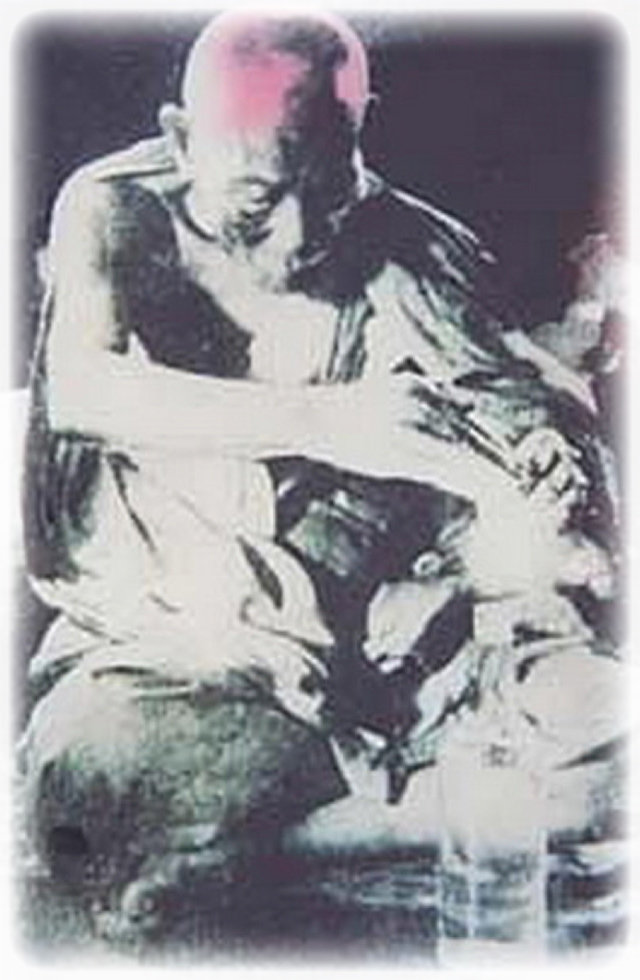
Luang Por Jong Puttasaro (2415 BE – 2508 BE) stands as a monumental figure in the pantheon of Thai monastic masters, particularly revered for his contributions to the spiritual and protective well-being of the Thai people during a tumultuous period. Born ‘Jong’ into a farming family in Na Mai, Bang Sai Municipality, Ayuttaya Province, his early life, though lacking precise birth documentation, is calculated to have commenced on the 6th of March 2415 BE, a Thursday in the year of the monkey, during the reign of King Rama 5. His parents were named Mr. Yord and Mrs. Khlip, and he had two younger siblings, Nil and Bplik. From an early age, Luang Por Jong exhibited a distinct predisposition for solitude, often distancing himself from crowds, even at communal events such as local Lige theatre shows. This early inclination towards quiet introspection foreshadowed his later profound spiritual journey and mastery.
Luang Por Jong’s monastic life began with his ordination in 2435 BE at Wat Na Tang Nork temple in Ayuttaya. Upon ordination, he received the monastic name Jong Puttasaro. His Pra Anusawanajarn, the venerable Abbot of Wat Na Tang Nork, Luang Por Po, quickly recognized Luang Por Jong’s extraordinary intellectual and spiritual faculties. Despite a physical constitution described as weak and prone to illness, Luang Por Jong displayed an exceptional mental acuity, mastering the intricate Khom Agkhara Sanskrit script with remarkable speed. This rapid acquisition of an ancient and complex script, crucial for traditional Thai Buddhist esotericism (Wicha Akom Sorcery), indicated a spiritual aptitude far beyond his chronological age. Luang Por Po, discerning Luang Por Jong’s innate wisdom and potential, diligently imparted every facet of his personal Wicha to his prodigious student.

Luang Por Jong’s trajectory following this tutelage was one of continuous spiritual advancement. He evolved into a Master Sorceror in his own right, simultaneously becoming a revered Dhamma Practitioner and a compassionate teacher to the local populace. His fame extended across Thailand and beyond, solidifying his reputation as one of the greatest Sorceror Monks of his era until his passing in 2508 BE. His profound wisdom and potent spiritual abilities placed him in the esteemed lineage of great Ayuttaya Province gurus, alongside figures like Luang Por Parn of Wat Bang Nom Kho. This association underscores his standing within a tradition of highly attained masters renowned for their mastery of sacred sciences and compassionate service.
A significant aspect of Luang Por Jong’s legacy is his pivotal role during the Indochina Wars. He actively assisted the Thai Military by consecrating and distributing powerful amulets, specifically designed to confer Kong Grapan Chadtri (invulnerability) and Klaew Klaad (evasion of danger) upon soldiers facing combat. His Takrut (scroll amulets) and Suea Yant (Yantra shirts) became legendary for their efficacy in protecting combatants, cementing his status as a national protector. Beyond these protective charms, Luang Por Jong was also widely celebrated for his Pla Tapian Maha Lap Kaa Khaay amulets, crafted in the form of gold-silver fish. These artifacts were renowned globally for their ability to instigate good commerce, prolific sales quotas, and general prosperity (Maha Pokasap). His comprehensive mastery encompassed not only defensive magic but also Metta Maha Niyom (loving-kindness and charm) and Maha Lap (great fortune), making his amulets versatile tools for well-being in all aspects of life.
Luang Por Jong’s attainments spanned both worldly deeds of goodness and self-renunciation, alongside deep understanding and practice of the Dhamma Path. His fame and honorable status have endured for more than half a century, remembering him as one of the greatest masters of his time and a paramount figure in the Ayuttaya lineage. His dedication to crafting each amulet by hand, a practice from an era before the commercialization of Buddhist artifacts, underscores his profound commitment to quality and spiritual integrity. His amulets, including the Hwaen Arahang, Pra Somdej, other Sacred Powder Votive Tablets, and Powerful Takrut, remain rare and highly valued treasures for devotees seeking genuine protective and auspicious blessings from an olden-days master.
The Hwaen Arahang Nuea Tong Daeng Long Ya Tong Chart is characterized by its material composition: a sacred alchemical copper alloy, known in Thai as ‘Nuea Tong Daeng.’ The term ‘alchemical’ is crucial, as it signifies more than mere metallurgy. In traditional Thai amulet creation, the base metals are often combined with various potent substances—known collectively as ‘muan sarn’—and consecrated through specific alchemical processes, which are themselves forms of Wicha Akom. While the raw description specifically mentions ‘Sacred Alchemical Copper alloy,’ implying a refined and spiritually charged metal, the practice of combining metals with powders and other sacred elements is deeply embedded in the tradition.
Copper (ทองแดง, *tong daeng*) holds significant symbolic and energetic value within Thai occult traditions. It is often associated with the planet Mars and is believed to possess inherent properties conducive to protection, strength, and vitality. When transmuted through alchemical processes (*len rae pleng yaa*), which may involve ritual heating, cooling, and the incorporation of various mineral or botanical additives, the copper alloy is thought to acquire enhanced spiritual properties, making it a more potent vessel for the master’s blessings. The exact composition of Luang Por Jong’s alchemical copper alloy for the Hwaen Arahang would have been a closely guarded secret, passed down through his lineage, potentially involving specific metal ratios, lead-tin alloys, or even fragments of older, consecrated amulets to imbue the new material with residual power.
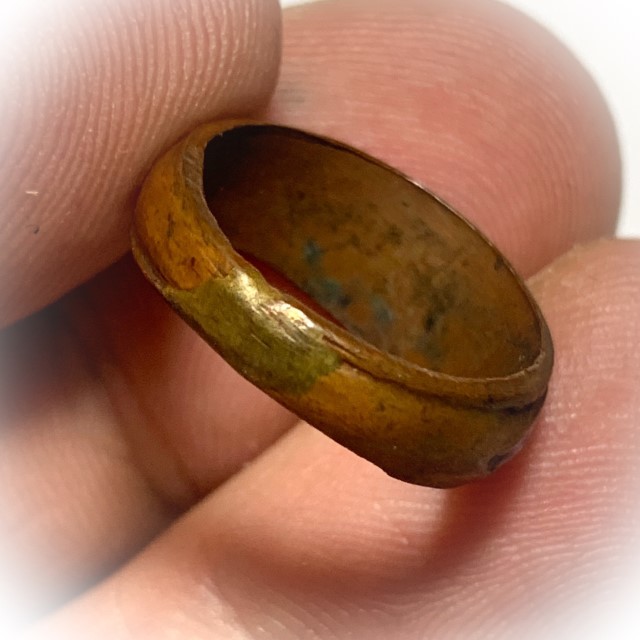
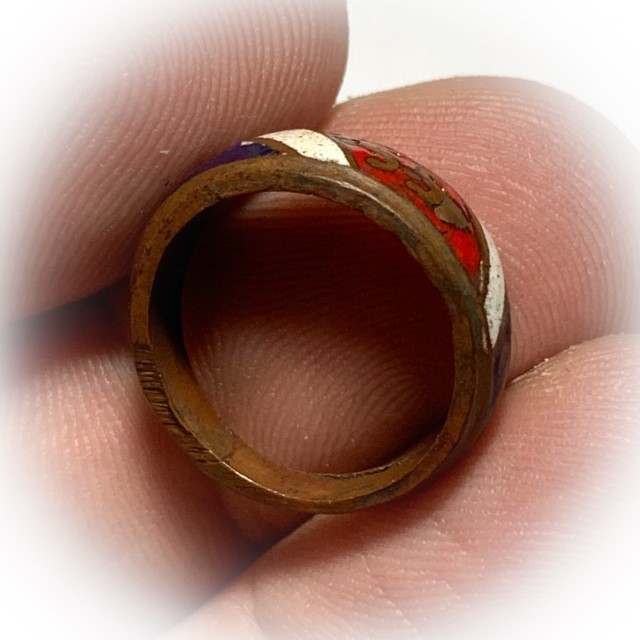
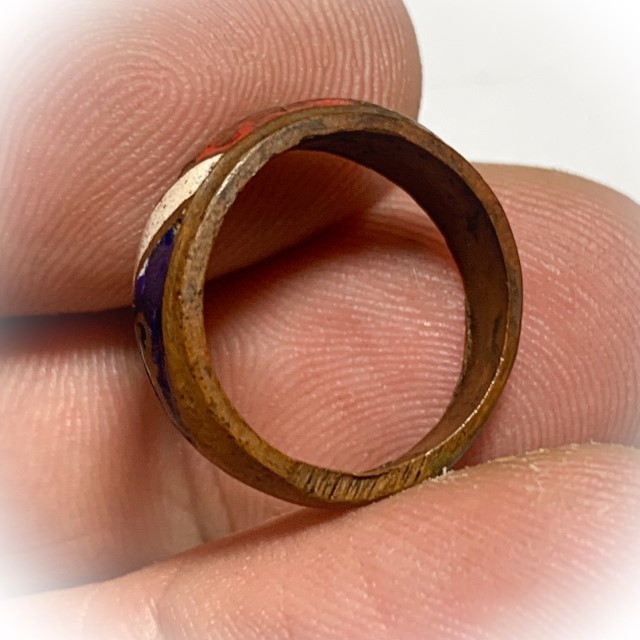
The decorative aspect of the ring, the ‘Long Ya Tong Chart,’ refers to the Ra Rachawadee Trairongs Tricolored enamels. ‘Long Ya’ (ลงยา) is the traditional Thai term for enamel work. ‘Tong Chart’ (ธงชาติ) directly translates to ‘national flag,’ referencing the patriotic red, white, and blue colors of the Thai flag. These colors are not arbitrary; they symbolize Nation (red), Religion (white), and Monarchy (blue) – the three pillars of Thai identity. The application of these specific colors onto the amulet, particularly during an era that encompassed the Indochina Wars, implicitly links the spiritual protection of the amulet to the safeguarding of the nation and its core institutions. This aesthetic choice transforms the amulet from a personal protective charm into a miniature emblem of national and religious unity, resonating with collective cultural and spiritual values.
While specific sacred powders (*muan sarn*) are not explicitly detailed for this particular ring, it is important to understand the general context of such materials in amulets by masters like Luang Por Jong. Typically, amulet rings and votive tablets of this period would incorporate sacred earths from auspicious sites, powdered incense from venerated Buddha images, herbal remedies, and even residual ash from burnt sacred scriptures. These components are painstakingly collected, consecrated, and often ground with specific invocations (Kata) to infuse them with spiritual energy. Although the Hwaen Arahang is a metal ring, the concept of ‘sacred alchemical copper alloy’ suggests that the metal itself underwent a transformation akin to the preparation of muan sarn, absorbing spiritual potency through ritualistic manipulation. The inherent hardness and durability of metal also contribute to the symbolic permanence of its protective power, making it a robust vessel for spiritual blessings.
Sacred Empowerment and Wicha
The empowerment of the Hwaen Arahang ring by Luang Por Jong Puttasaro in 2495 BE stems from his profound mastery of ‘Wicha Akom Sorcery,’ a complex system of sacred knowledge, magical formulas, and meditative practices integral to traditional Thai Buddhist esotericism. Luang Por Jong inherited this comprehensive Wicha from his guru, Luang Por Po of Wat Na Tang Nork, demonstrating exceptional aptitude in a discipline that demands rigorous mental discipline, spiritual purity, and extensive scriptural knowledge, particularly of the Khom Agkhara Sanskrit script.
The core of the Hwaen Arahang’s empowerment lies in the Khom Letter ‘A’ (อ), representing ‘Arahang.’ This single letter functions as a powerful *mantra* (Kata) and *buddha-nidana* (a foundational principle or essence of the Buddha). Reciting or meditating upon ‘Arahang’ invokes the ultimate purity and liberation of the Buddha, creating a resonant field of spiritual energy. Luang Por Jong, through his meditative attainments, would have imbued each ring with this profound spiritual vibration, linking the physical object to the metaphysical essence of Buddhahood. This process, often involving deep jhanic states, concentrates spiritual power into the amulet, activating its latent protective and auspicious properties.

The Wicha employed by Luang Por Jong encompassed a range of magical formulas, primarily focused on Kong Grapan Chadtri (invulnerability and steadfastness) and Klaew Klaad (evasion of danger). These wicha are not merely chants but involve complex visualizations, breath control techniques, and specific consecration rituals performed over extended periods. For the Hwaen Arahang, the intention would have been to create a portable shield of spiritual protection. The master would have meticulously etched or inscribed sacred Yantra (geometric designs and scriptural verses) onto the base metal, possibly on the interior or exterior surfaces before enameling, further reinforcing the amulet’s protective matrix. Each stroke of the inscription and each chant during the blessing ceremony would have contributed to building this energetic shield.
Beyond defensive magic, Luang Por Jong was also highly proficient in Maha Lap (great fortune), Kaa Khaay (good business), and Metta Maha Niyom (loving-kindness and charm) magic. While the Hwaen Arahang is primarily a protective ring, the comprehensive nature of Luang Por Jong’s Wicha suggests that elements of these auspicious blessings would also be present. A master of his caliber would typically empower his creations with a holistic array of positive energies, ensuring not only safety but also general well-being and prosperity for the wearer. The use of specific Kata, tailored for different magical effects, would have been integrated into the final blessing ceremonies, ensuring the ring’s multifaceted efficacy. The continuous presence of the master’s meditative energy and purity of intention throughout the creation and blessing process is considered paramount in generating the amulet’s potency, distinguishing genuinely powerful amulets from mere commercial productions.
The ‘Olden days Masters’ distinction highlights a critical aspect of this amulet’s spiritual integrity. In Luang Por Jong’s era, the creation of amulets was a direct extension of a monk’s ascetic practice and spiritual attainments. Each piece was often handmade, imbued with individual blessings through prolonged meditation and ritual, contrasting sharply with later, more industrialized production methods. This dedication ensures that the Hwaen Arahang is not merely a product, but a sacred artifact carrying the direct spiritual imprint of a highly attained master, making its power genuinely potent and enduring.
Iconographical and Aesthetic Appreciation
The Hwaen Arahang Nuea Tong Daeng Long Ya Tong Chart, consecrated by Luang Por Jong in 2495 BE, presents a nuanced blend of functional design, symbolic iconography, and traditional aesthetic values. Its physical attributes reflect the practical needs of its intended wearers, primarily children or individuals with small fingers, indicated by its diminutive size, measuring approximately 1.7 Cm (or reportedly 2 Cm) in inner diameter. This small scale does not diminish its spiritual significance but rather highlights its role as a personal, unobtrusive protective talisman, designed for continuous wear.
The primary iconographical feature of the ring is the Khom Letter ‘A’ (อ) inscribed upon its surface. This script, deeply rooted in Southeast Asian Buddhist and Hindu traditions, serves as a powerful yantra. The ‘A’ represents ‘Arahang,’ symbolizing the Buddha’s supreme state of enlightenment and purity. The simplicity of this single letter belies its profound spiritual weight, acting as a concise visual mantra that encapsulates the essence of the Buddha’s virtues. Its clear depiction on the copper alloy, possibly engraved or stamped before the enamel application, ensures its legibility and central focus within the ring’s design. The use of Khom script further links the amulet to ancient esoteric traditions, suggesting a lineage of knowledge and power that predates modern influences.

Aesthetically, the ring is distinguished by its ‘Ra Rachawadee Trairongs Tricolored enamels.’ ‘Rachawadee’ refers to a royal or exquisite style of ornamentation, often associated with fine craftsmanship. The ‘Trairongs’ (three colors) are specifically red, white, and blue, corresponding to the colors of the Thai national flag. This tri-colored enamel provides a vibrant contrast to the underlying copper alloy, enhancing the visual appeal of the ring while subtly embedding nationalistic symbolism. The deliberate choice of these colors for an amulet created during the Indochina Wars reinforces the notion of protective blessings extended not only to the individual but also to the nation, its religion, and its monarchy. The application of enamel, a technique requiring considerable skill, indicates a dedication to aesthetic quality alongside spiritual potency. The enameling process protects the underlying metal and inscription, ensuring the longevity and continued legibility of the sacred Khom ‘A’.
The alchemical copper alloy (Nuea Tong Daeng) itself contributes to the ring’s aesthetic. Copper, when exposed to the elements over time, develops a distinctive patination, ranging from deep reddish-brown to greenish hues. This natural aging process adds a layer of character and authenticity to the amulet, signaling its antiquity and long-term spiritual use. The texture and weight of the copper alloy, combined with the smooth, glossy surface of the enamel, create a tactile and visual experience that is both substantial and refined. The rings of this era, being largely handmade, often exhibit minor variations in form and finish, which are prized by collectors as marks of individual craftsmanship rather than imperfections. These slight irregularities speak to the artisanal nature of their creation, further distinguishing them from mass-produced items.

Ritual Practice and Worship
The ritual practice and worship associated with the Hwaen Arahang Nuea Tong Daeng Long Ya Tong Chart are deeply rooted in Theravada Buddhist traditions, yet they also incorporate elements of folk belief and specific instructions often provided by the consecrating master. For an amulet such as this, imbued with the protective and auspicious Wicha of Luang Por Jong, a devotee’s interaction typically begins with a posture of respect and reverence, known as ‘Bucha’ (บูชา). This involves acknowledging the spiritual power residing within the amulet and expressing gratitude to the Triple Gem (Buddha, Dhamma, Sangha) and to the master who consecrated it.
Standard Bucha practices for amulets often involve placing the ring on a higher altar or shrine when not worn, ensuring it is treated with utmost respect. It should never be placed in low or impure locations. When wearing the ring, devotees traditionally ensure it is worn on the finger in a manner that faces outward, symbolically projecting its protective energy. The small size of the Hwaen Arahang, suitable for children or a lady’s small finger, implies its role as a continuous, personal talisman, intended to be worn daily rather than intermittently.
Chanting Kata, or sacred incantations, is a fundamental aspect of activating and maintaining the amulet’s power. While specific Kata for the Hwaen Arahang itself might be transmitted orally or through written instructions by Luang Por Jong’s lineage, general protective Kata are commonly employed. The most direct invocation for this amulet would involve the repetition of ‘Arahang’ or the full ‘Namo Tassa Bhagavato Arahato Sammā Sambuddhassa’ (Homage to the Exalted One, the Worthy One, the Perfectly Self-Enlightened One). Regular chanting reinforces the spiritual connection between the devotee, the amulet, and the Buddha’s virtues, thereby strengthening the protective field. Devotees may also recite the ‘Phra Kata Chinabanchorn,’ a powerful all-purpose protective mantra widely used in Thailand, or specific Kata for Kong Grapan Chadtri and Klaew Klaad, to align with the ring’s primary protective attributes.
Rules of conduct for devotees owning such an amulet emphasize ethical living and adherence to Buddhist precepts. This includes maintaining the Five Precepts (Pancha Sila) – abstaining from killing, stealing, sexual misconduct, false speech, and intoxicants – as these moral foundations are believed to preserve and enhance the amulet’s spiritual efficacy. The purity of the wearer’s mind and actions is considered crucial, as incongruence between behavior and the amulet’s sacred nature can diminish its power. Devotees are also typically advised to avoid wearing amulets during acts considered impure or disrespectful, although practical considerations for daily wear often mean such rings are worn continuously, with the understanding that reverence is primarily a state of mind and intention.
Ultimately, the Hwaen Arahang functions as a constant reminder of the Dhamma and the virtues of the Buddha, fostering a mindful approach to life. It serves not only as a source of external protection but also as an internal catalyst for developing positive qualities. The belief is that true protection originates from one’s own virtuous actions and merits, with the amulet serving as a supportive aid and a beacon of spiritual presence. The ongoing veneration of Luang Por Jong and the enduring power of his amulets attest to the deep cultural and spiritual value placed on such artifacts within Thai society, preserving a tangible link to a rich tradition of monastic mastery and sacred art.

Ancient Amulet - Thai Buddhist Pra Niyom Category Amulets
Ancient Amulet. Thai Buddhist Pra Niyom ('Pra Niyom'; meaning 'High End Preferred Class Antique amulets'). Fine Authentic Amulets from the Great Thai Buddhist Sorcerer Monks, Lersi Ascetics, and Lay Masters of Olden Days
SIGN IN OR CREATE ACCOUNT
Featured Products
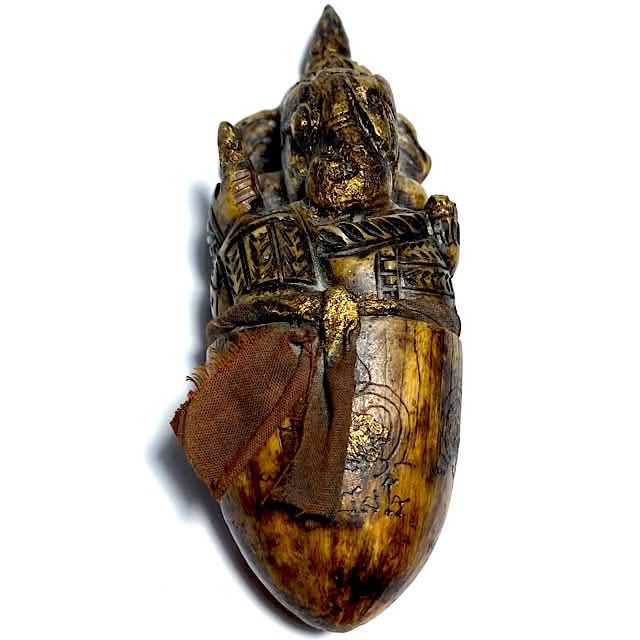
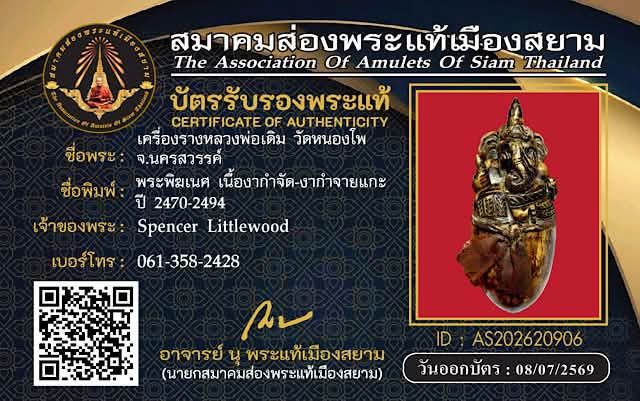
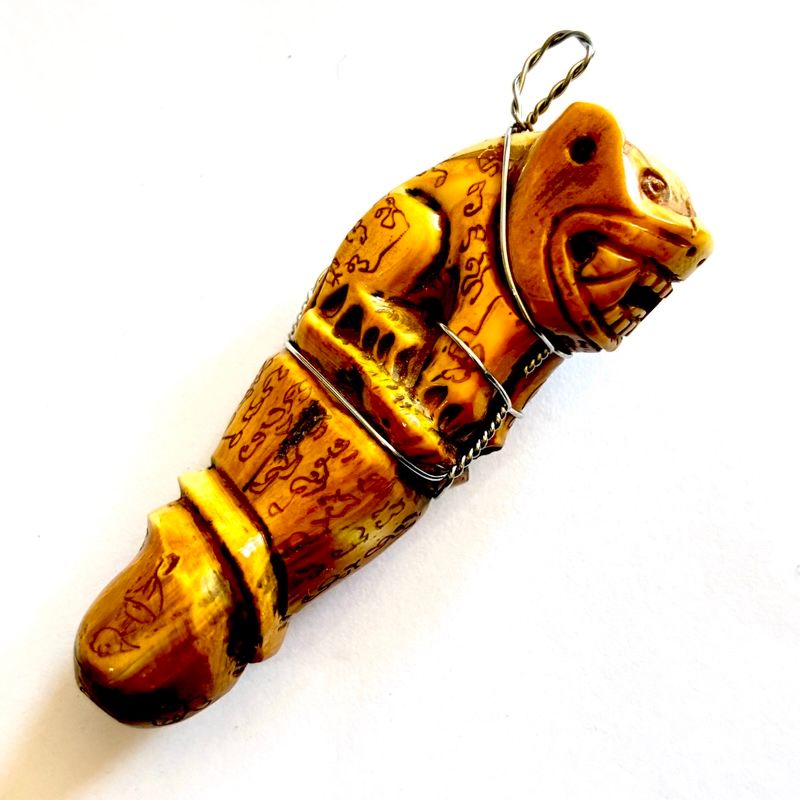
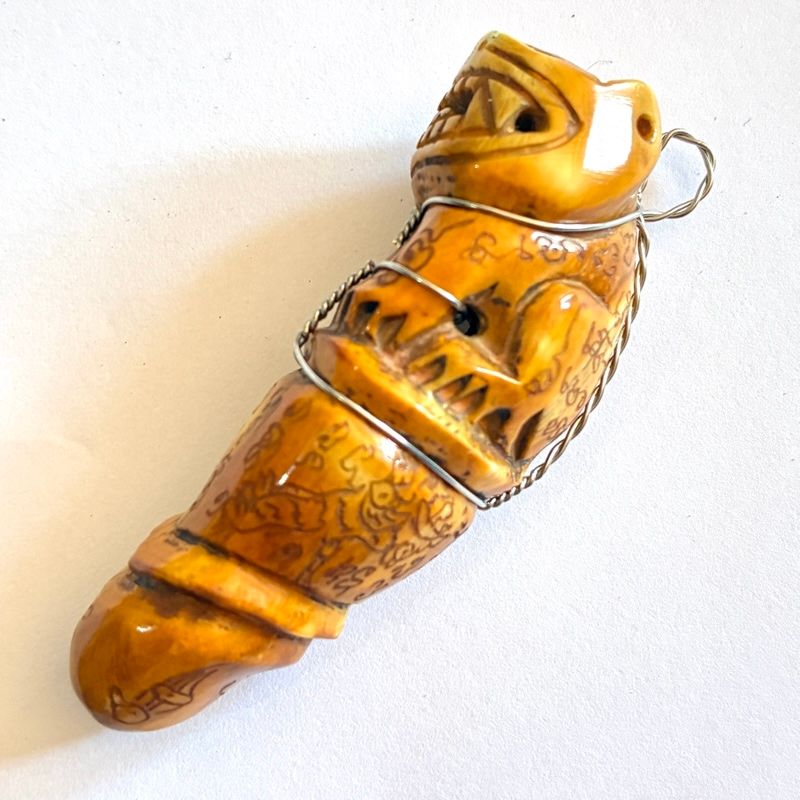
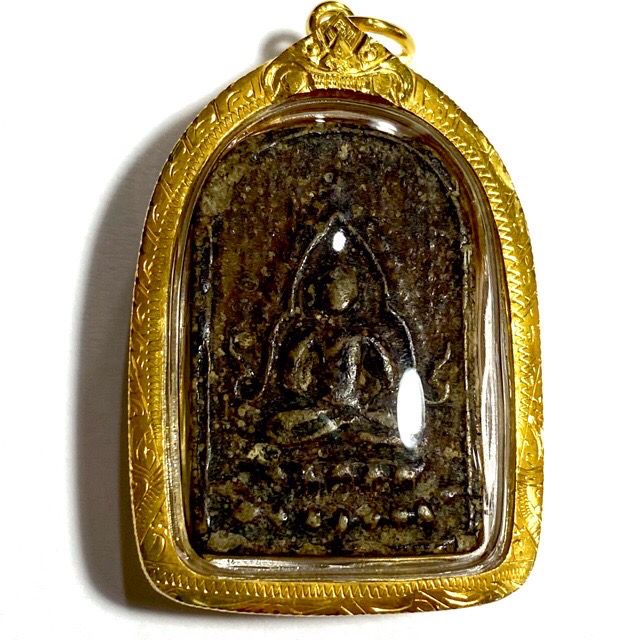
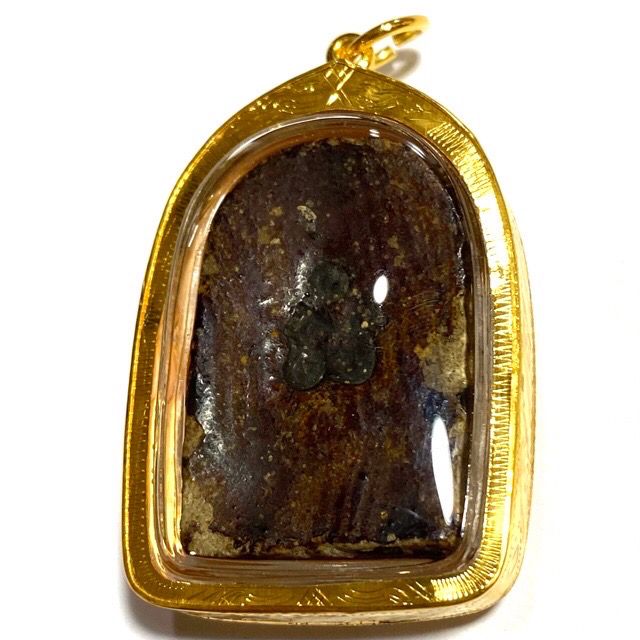
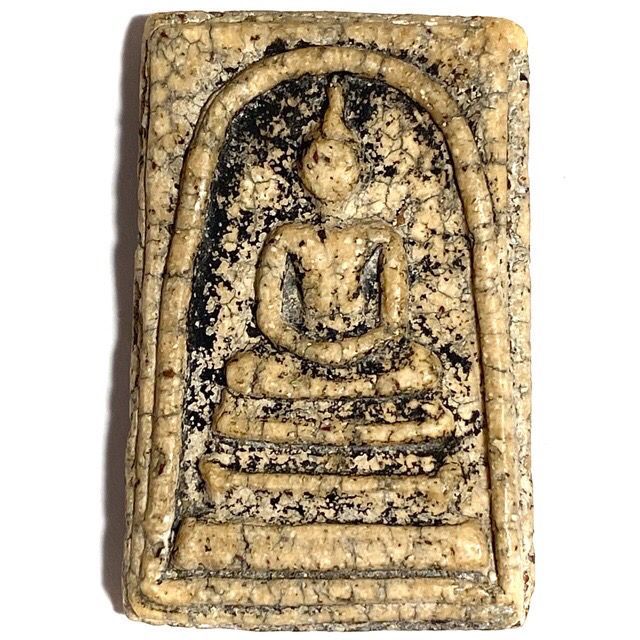

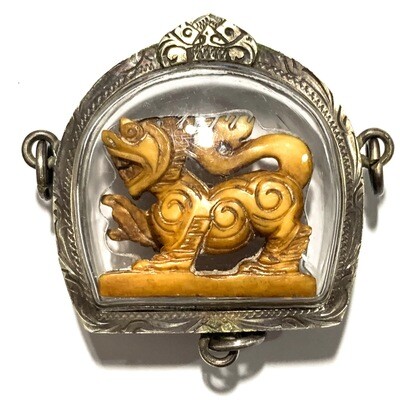
 Free EMS Registered Airmail Worldwide is included with this amulet. Estimated Circa 2450 BE or earlier. Luang Por Muang Jantasaro of Wat Ban Tuan, Amper Ban Tuan, Kanjanaburi Province, is an Old Gaeji Ajarn Guru Monk of Great Fame who was in his Heyday during the First World War. He was around in the same era as the Great Luang Por Ngern of Wat Bang Klan, and was a very famous and revered Master during those days.