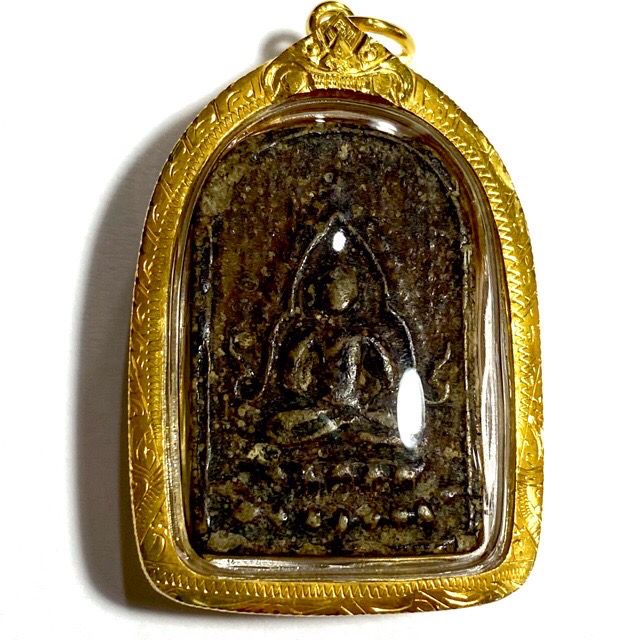
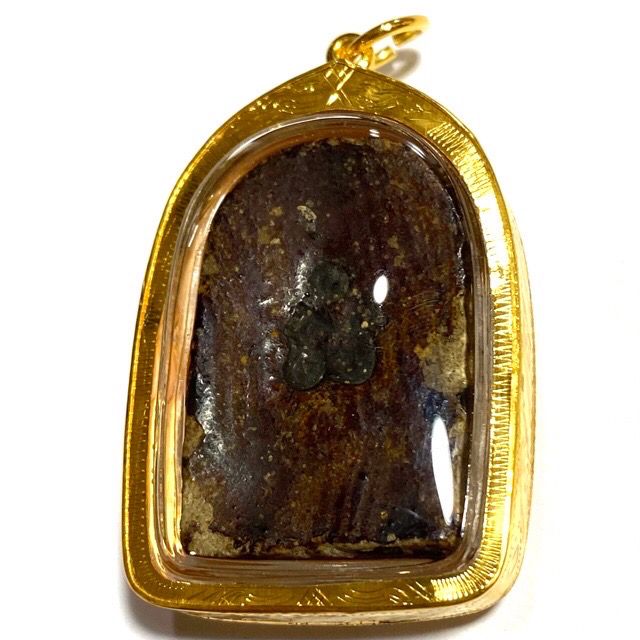
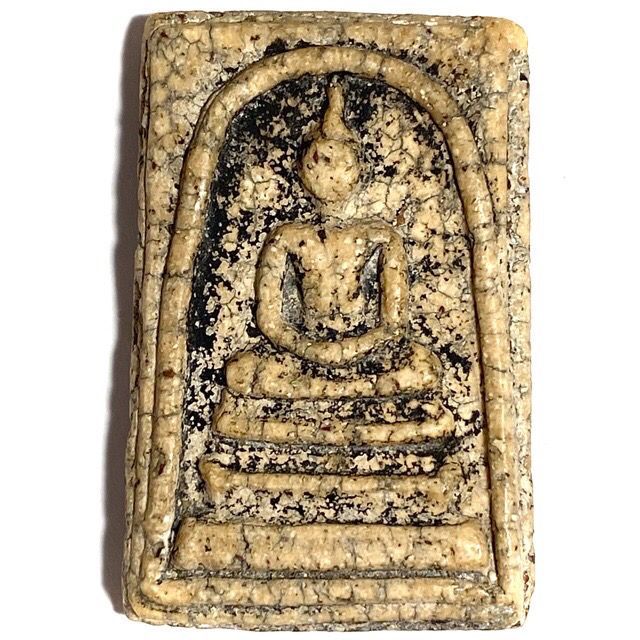
Pra Pid Ta Pim Chalud Nuea Pong Thak Chueak Jum Rak Jeen Boran Luang Phu Iam Wat Sapan Sung

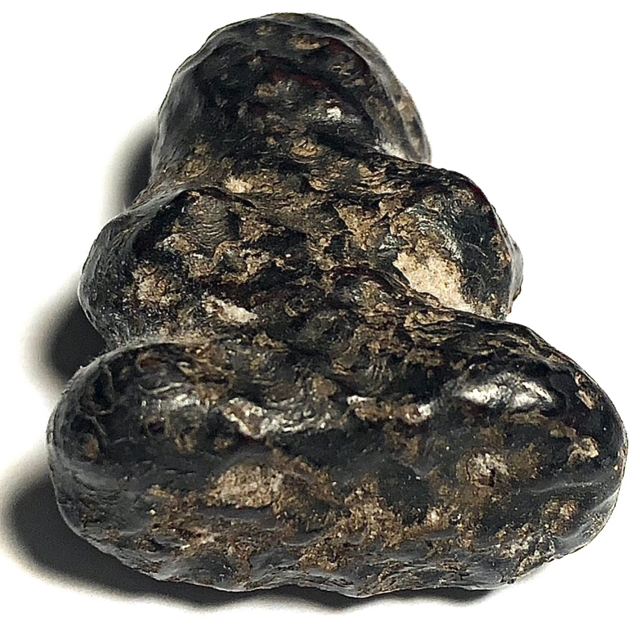
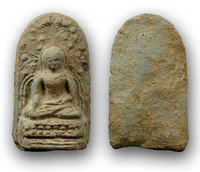
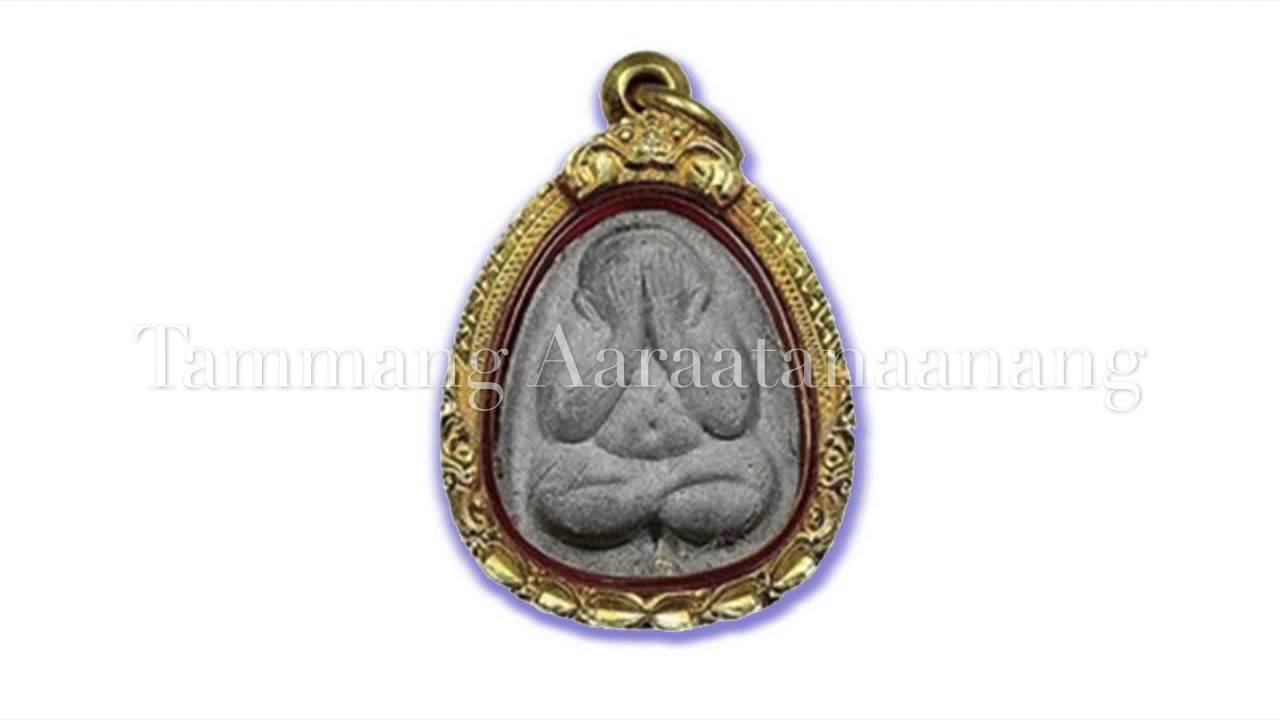
A most ancient, rare, and preferred version of the Immortal Classic, an Ultra Rare Pra Pid Ta Thak Chueak Long Rak Jeen Boran cord-bound lacquered amulet, of the Great Kroo Ba Ajarn of Wat Sapan Sung of Ancient Times, Luang Phu Iam. Luang Phu Iam was the Originator of the Dtamra Pra Pid Ta of Wat Sapan Sung, which was continued forward after him, by Ajarn Chuea, Luang Phu Glin, Luang Por Tong Sukh, and Luang Por Waas.

Pra Pid Ta Pim Chalud Nuea Detail 1

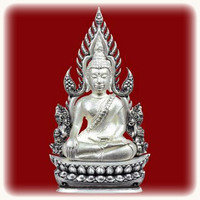
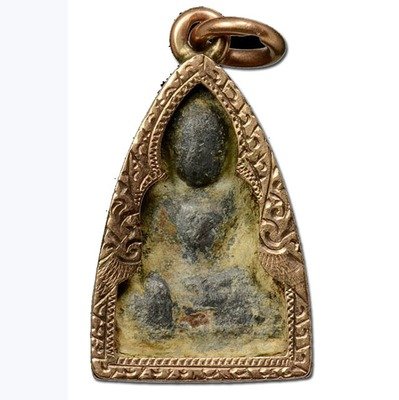
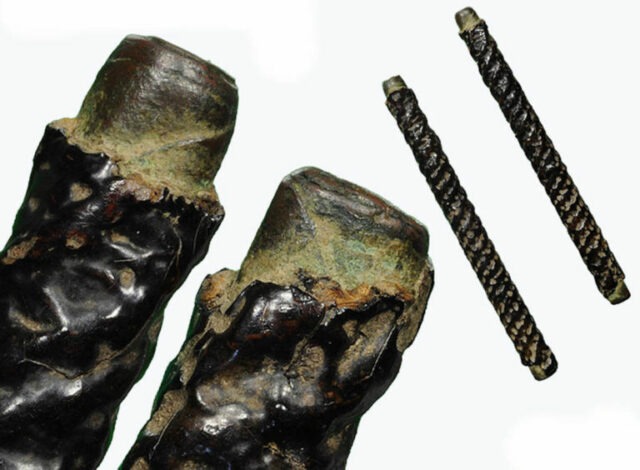
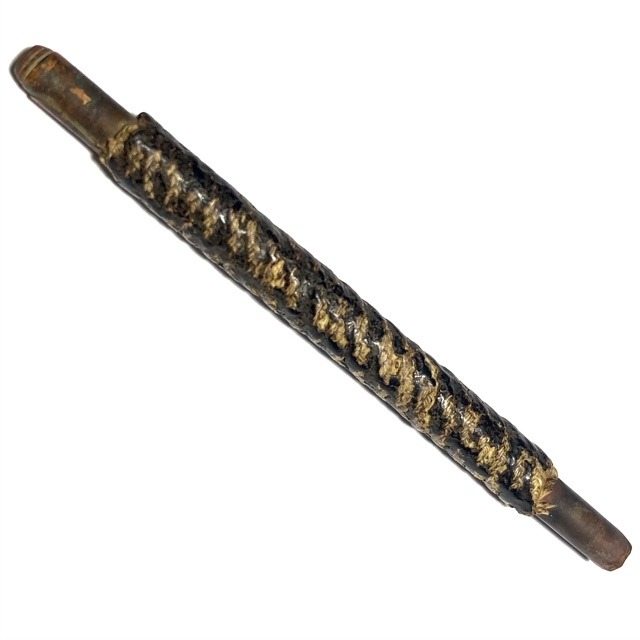
This Pra Pid Ta of Luang Phu Iam, is a cord wrapped large size seated Buddha, with hands covering the eyes, and has the perfect features and aspects of the Pim Chalud Niyom Class Model amulet. The amulet is made from Sacred Powders with Sinjana cord wrap, and Rak Chart Jeen Ancient Red Chinese Lacquer dip coating. The cord wrap is in the style known as ‘Ta Khai Paeth’ meaning ‘diamond net’ which refers to the God Indra, and his Diamond Net (Indra’s Net), which is of course, a cosmological reference to the god spreading the stars out into space, in Vedic Legend.

Pra Pid Ta Pim Chalud Nuea Detail 2

The Pra Pid Ta Wat of Sapan Sung Temple, is a Dtamra (legendary series) that spans over various generations of abbots, all of whom have managed to gain equal fame and high repute, for their Pra Pid Ta amulets, all of which preserve the style and methods of the original Wicha made so famous by Luang Phu Iam. All editions of Pra Pid Ta Wat Sapan Sung are highly sought after. and seen as preferred Master Class category amulets (Pra Niyom), regardless from which Master they came from.

Pra Pid Ta Pim Chalud Nuea Detail 3

The Pra Pid Ta of Wat Sapan Sung is known in two major Pim (models), namely the Pim Chalud (Blind Man model), and the Pim Dtapap (Terrapin model). Mostly the amulets would be covered in Lacquer, with some very few exhibits in pure powders, and a very few pim Yai large models wgich were bound with sinjana cords, and most often lacquered.

Pra Pid Ta Pim Chalud Nuea Detail 4

Others can be found to have had the lacquer cleaned off them by devotees in later years. It is known that Luang Phu Glin, one of the Great Apprentices of LP Iam, and Masters of the Wicha Pra Pid Ta Wat Sapan Sung, was allergic to Lacquer, and so his versions never had lacqer on them and were pure powders. Luang Por Tong Sukh and Luang Phu Iam however, would more often than not dip the Pra Pid Ta in lacquer as a protective layer.

Pra Pid Ta Pim Chalud Nuea Detail 5

All masters have followed the same design and method of lacquering, resulting in the amulets of each master being very similar in design, and mostly can only be differentiated by estimation of the age of the lacquer and Muan Sarn Sacred Powders in order to determine which Generation of Master the amulet came from.

Pra Pid Ta Pim Chalud Nuea Detail 6

The design is inimitably recognizable as a Pim Chalud (sloping curved legs) model, with plump belly, and details that are seductive to the eye, and have become to be known as the style of Pid Ta Wat Sapan Sung, which has been continued by those Masters who followed him, & for which all Pra Pid Ta of Wat Sapan Sung have come to be recognized for

Luang Phu Iam Pathomanam, was born in 2359 BE, and ordained at age 22 in 2381 BE, and passed away in 2439 BE after 59 Years of Ordained Life. He is considered the greatest Kroo Ba Ajarn of the Magical Lineage of Wat Sapan Sung Temple, who created the world famous Pra Pid Ta of Immortal Legend we know to this very day. The Pra Pid Ta Luang Phu Iam is one of the Eminent Members of the Benjapakee of Pra Pid Ta (Top Five Pra Pid Ta Amulets) of all time. The Pra Pid Ta Luang Phu Iam Wat Sapan Sung is considered to be a ‘diamond in the world of Pra Pid Ta’, and is the fervently sought after amulet of the serious devotee and collector.

Pra Pid Ta Pim Chalud Nuea Detail 7

Luang Phu Iam, was the original root Guru (Kroo Ba Ajarn Yai) of the great Luang Phu Glin of Wat Sapan Sung, and of the Highly revered Luang Por Tong Sukh (Wat Sapan Sung), who learned, mastered, inherited, and continued his lineage Wicha. Luang Phu Glin and Luang Por Tong Sukh carried the Wicha Pra Pid Ta Wat Sapan Sung further, taking it beyond the lifetime of one single Master, and maintaining the Power and Popularity which Luang Phu Iam had brought to the Pra Pid Ta Wat Sapan Sung. The Dtamra has now been continued by Luang Phu Waas, who inherited the Wicha further into the present day.

Pra Pid Ta Pim Chalud Nuea Detail 8

The Temple of Wat Sapan Sung in Nontaburi, is a temple with 4 generations of famous master monks of Pra Pid Ta amulets (written in 2018), all of whom have become extremely revered each in their own time, for the continuance of the Wicha of Pra Pid Ta, Takrut, Rian, and other amulets of this Magical Temple Lineage.

Wat Sapan Sung, and the Pid Ta amulets for which the temple is world famous for, began its rise to fame with the appearance of the great Luang Phu Iam, and was passed down to Luang Por Glin, who passed it to Luang Por Tong Sukh, and now onwards to the current abbot Luang Phu Waas.

Pra Pid Ta Pim Chalud Nuea Detail 9

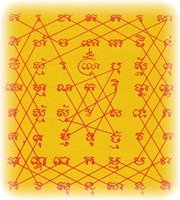
The Muan Sarn Sacred Powders of the Pra Pid Ta were made from Sacred Powders collected by Luang Phu Iam during his time traveling on Tudong in the forests, of the rarests and most magical herbs, flowers, pollens roots and vines. The most important ingredient which makes the Pra Pid Ta Wat Sapan Sung so powerful is of course his addition of the Pong Yant Maha Solos Mongkol Yantra Powders, and the Pong Yant Trai Saranakom Triple Gem Yantra Powders. This Yantra was a special spell which Luang Phu iam would embed within the powders and within his Takrut, and is said to have incomparably powerful powers of protection and of lucky fortunes attraction.

Pra Pid Ta Pim Chalud Nuea Detail 10

The Pra Pid Ta Wat of Sapan Sung Temple, is a Dtamra (legendary series) that spans over various generations of abbots, all of whom have managed to gain equal fame and high repute for their Pra Pid Ta amulets, all of which preserve the style and methods of the original Wicha made so famous by Luang Phu Iam. All editions of Pra Pid Ta Wat Sapan Sung are highly sought after. and seen as preferred Master Class category amulets (Pra Niyom), regardless from which Master they came from.

Luang Phu Iam’s amulets are many-fold, ranging from his famous Pra Pid Ta, Rian Kanajarn Monk Coins, and many talismanic charms such as Takrut, Look Om, Hmak Tuy. Amongst his most preferred amulets are of course the Pra Pid Ta, and the Roop Lor Luang Phu Iam. Other preferred amulets are the Rian Sema Block Ueam, and Rian Khaw Hlam Dtad, as well as various other Rian Sema type coins. Some of his amulets can fetch thousands and even tens of thousands of dollars for rare preferred block presses.

Pra Pid Ta Pim Chalud Nuea Detail 11

It is said that the Pra Pid Ta of of all 5 Wat Sapan Sung Masters (Iam, Chern, Glin, Sukh, Waas) are collected with equal fervency and preference by devotees, the only difference between the amulets of these three masters being the age and the price. All of the Masters who followed Luang Phu Iam, would use old powders which were passed down from Luang Phu Iam through one generation to the next.

His guidance to the younger Samanera novice monks was excellent, which led to the temple having only well practiced Monks residing, which brought even more reverence from the local community of devotees, for the temple was seen as a true place of practice, with only pure monks residing.

Pra Pid Ta Pim Chalud Nuea Detail 12


It is said that Luang Phu Iam made amulets in the Pim Chalud (small and large sizes), and the Pim Tapap models are very highly revered and sought after, with his most preferred and rarest models being the Pim Sader Jun, Sader Bum, Sader Jun, and the Pim Sorng Sader (2 belly buttons), and the Pim Tapap (Terrapin Model). The Pra Pid Ta Wat Sapan Sung are highly renowned for their powers of Maha Pokasap Metta Maha Niyom Klaew Klaad Kong Grapan Chadtri, to bring great wealth and protection to the wearer.

Pra Pid Ta Pim Chalud Nuea Detail 13

Below : close up Macro image of the aged Rak Chart Jeen Boran acient Chinese Lacquer, revealing the natural ageing characteristics of a true Pid Ta Luang Por Iam

Pra Pid Ta Pim Chalud Nuea Detail 14

Pra Pid Ta Pim Chalud Nuea Detail 15


The Pra Pid Ta of Wat Sapan Sung is a very preferred and popular amulet, for its undisputed powers, which have been repeatedly confirmed over the years with so many stories in the newspapers about miraculous events happening to devotees who wore the Pra Pid Ta Wat Sapan Sung of LP Iam.

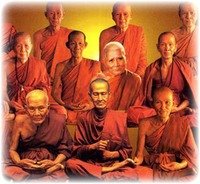
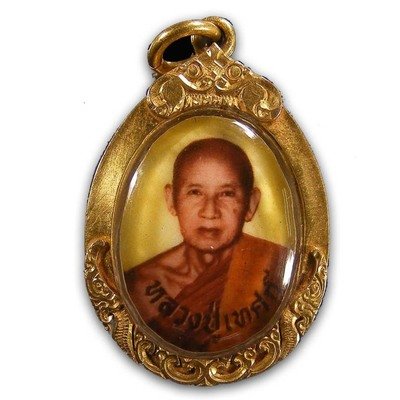
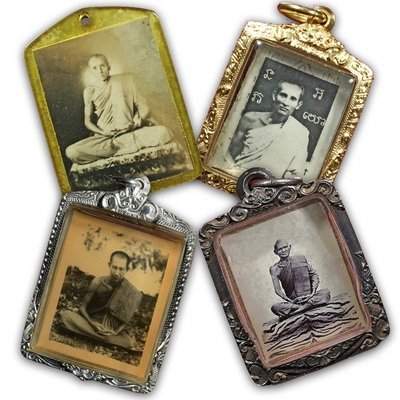
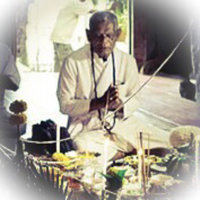
Below: Luang Phu Iam, of Wat Sapan Sung

Pra Pid Ta Pim Chalud Nuea Detail 16


Below: Luang Phu Glin, of Wat Sapan Sung

Pra Pid Ta Pim Chalud Nuea Detail 17

Pra Pid Ta Pim Chalud Nuea Detail 18

It is said that the Pra Pid Ta of all Msters, Luang Por Tong Sukh, Chern, Glin, and Waas, are just as powerful as each other, and can be used instead of Pra Pid Ta Luang Phu Iam, which are of course, coming from the originator, much more highly priced, and in the domain of the wealthier devotee. The amulets of all three Masters are collected with great fervency and preference, by devotees, the only difference between the amulets of all these masters being the age and the price, ant prestige. Luang Por Tong Sukh would for example, use old powders which were passed down from Luang Phu Gling, which Luang Phu Glin in turn had received from Luang Phu Iam.

Below LP Tong Sukh

Pra Pid Ta Pim Chalud Nuea Detail 19

It is said that Luang Phu Iam made amulets both the Pim Chalud and the Pim Tapap models are very highly revered and sought after, with his most preferred and rarest models being the Pim Sader Jun, Sader Bum,, and the Pim Sorng Sader (2 belly buttons), and the Pim Tapap (Terrapin Model).

Pra Pid Ta Pim Chalud Nuea Detail 20

Pra Pid Ta Pim Chalud Nuea Detail 21


The Pra Pid Ta Wat Sapan Sung are highly renowned for their powers of Maha Pokasap Metta Maha Niyom Klaew Klaad Kong Grapan Chadtri, to bring great wealth and protection to the wearer.

How to Chant Kata Pra Pid Ta

Kata Pra Kawambadee

(This kata is for increasing ones wealth and belongings and good fortune);

Namo Puttassa Kawambadtissa

Namo Tammassa Kawambadtissa

Namo Sangkassa Kawambadtissa

Sukha Sukha Warang Na Mo Puttaaya Ma A U

Tugkhang Anijjang Anatta Jewa Segkhaa Tammaa Yataa Put Mo Na
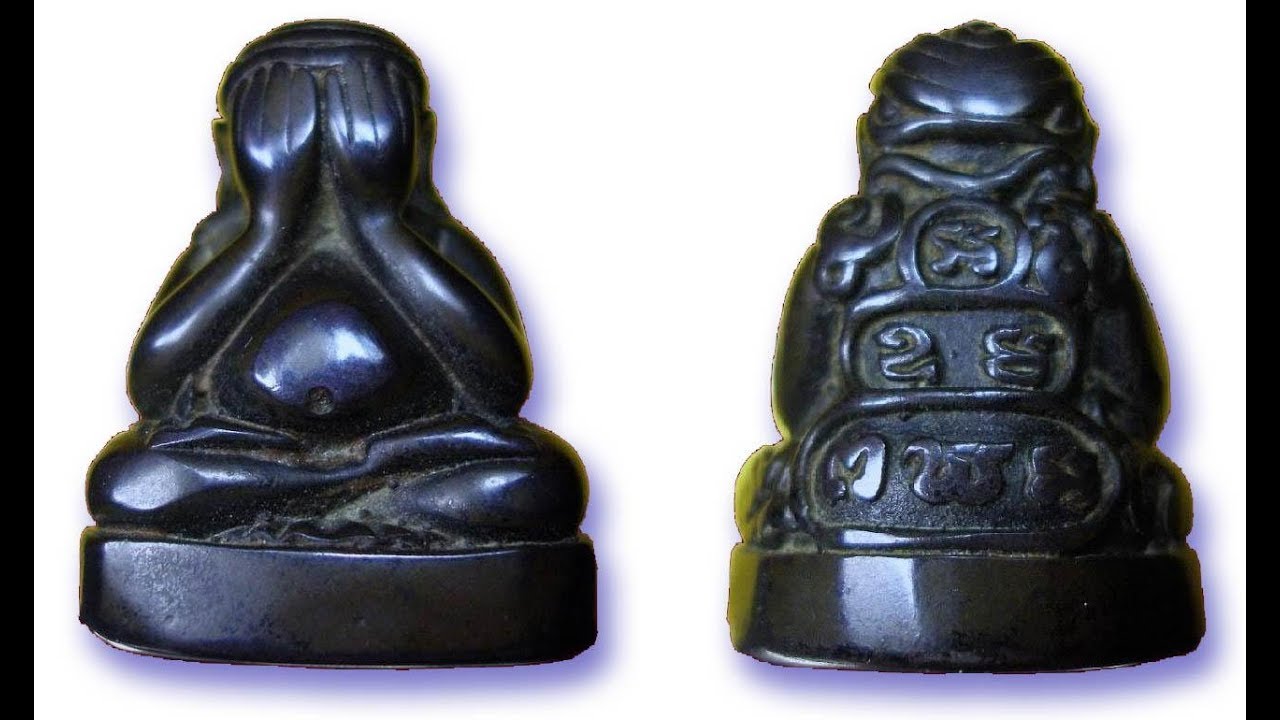

Kata Bucha Pra Pakawambodee Pid Ta Sangkajjai

Pra Pid Ta Pim Chalud Nuea Detail 22


How to Pray to Thai Amulets (Chanting Kata);
How to Pray to Thai Amulets

The Pra Pid Ta is one of the Great All Time Classics of Thai Amulets. Signifying the Buddha Entering Nirodha, this douses out all Sufferings. Some Pidta are for Maha Lap (Riches and Luck) and some are to remove debt (Plod Nee) and some are for Protection (Kong Grapan/Klaew Klaad, Maha Ud). Some people believe the Pid ta to be e bringer of 'Blind Luck' and Gambling Fortunes.

Filters

Filters
1 - 60 of 92 items


Hmak Tui Mad Chueak Sacred Areca Nut Cord Bound Lacquer Coated 2450 BE Luang Phu Iam Wat Hnang Featured

Sacred Hmak Tui Mad Chueak, cord bound lacquered Blessed Areca Nut, from the Great Luang Phu Iam, of Wat Hnang. The Hmak Tui Sacred Areca Nut amulet is one of the top World Famous Classic Pra Niyom Master Class Ancient Amulets from the Great Luang Phu Iam Suwannasarō (2375 – 2469 BE), of Wat Hnang (and Wat Ko Non). Estimated Mid Era Circa 2450 BE

Free Registered Air Parcel Shipping Worldwide is Included with this Amulet. The Hmak Tui is further eghanced in traditional fashion, with magical spellbound ritual cord wrap, with herbal laquer coating. This Hmak Tui is a very rare, but well documented model, which stands out for its classic and easy to recognize ageing characteristics, style of cord wrap, appearance of the lacquer, and of course, the emanation of the magical vibratyory energies imbued within the sacred areca nut amulet, by Luang Phu Iam.

Released in the Era that Luang Phu Iam was already abbot of Wat Hnang, in the decade between 2445 and 2450 BE. The amulet has been coated in Rak Dam Black Herbal lacquer, which was a common practice in Olden days, to preserve amulets and give them a long life. The Sacred Rak Boran ancient lacquer has gathered immense character in its surface appearance over the years, showing the natural aging characteristics, as is expected in that of an authentic Pra Niyom Class Ancient Amulet.

The Hmak Tui is estimated to have been made around 2440 – 2450 BE. Luang Phu Iam made amulets from an early stage, ever since the times he was still following his Mentor Luang Phu Rod, at Wat Ko Non. He began to make amulets long before his famous first edition Pra Pid Ta Yant Yung and Pra Pid Ta Pid Tawarn, which were released at Wat Hnang around 2440 – 2443 BE.

His famous and incredibly expensive Pra Pid Ta Yant Yung/Pid Tawarn were made from metallic alchemical metals, after Luang Phu Iam had moved there as abbot, and were made one by one, in the same method as Pra Pid Ta Wat Tong of Luang Por Tap (No.1 Pra Pid Ta Amulet of all Time).

Luang Phu Iam was a World Famous Master Monk of the previous Century, and maker of the Number 2 Amulet of the Top 5 ‘Benjapakee’ of Pra Pid Ta of all Thai Buddhist History, the Pra Pid Ta. His most famed of all were the Pra Pid Ta Yant Yung and Pra Pid Tawarn amulet.

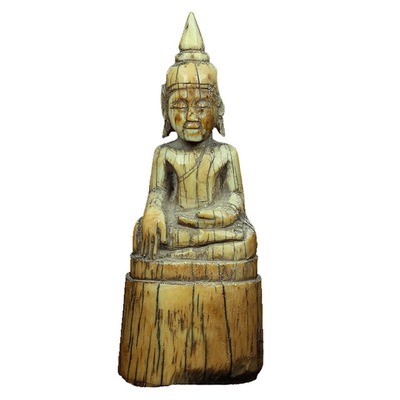
Luang Phu Iam also made a large variety of other amulets, such as his famous hand carved Pra Pid Ta, many of them being originals from different artisans who hand carved them from various sacred woods, ivory, and other materials.

Luang Phu Iam is the No.2 Master of all History, renowned for Pra Pid Ta Amulets, and his Rare and Powerful First Edition 2467 BE Monk Coin, which fetches extremely high prices in auctions (Circa 100 Thousand Dollars).

Pra Pāwanā Gosol Thēra (Luang Phu Iam Suwannasārõ)

Luang Phu Iam was a born on Friday the 7th October 2375 BE. Luang Phu Iam was born a Citizen of Bang Khun Tian, whose household lived on the banks of the Klong Bang Hwa Canal, behind the temple of Wat Hnang. Luang Phu Iam was born during the reign of His Majesty Prabat Somdej Pra Nang Glao Jao Yuu Hua King Rama 3.

Luang Phu Iam was given the birthname of ‘Iam’ and his surname was ‘Tong U’. The devotees of Wat Hnang temple did not call him Luang Phu Iam, rather, preferred to call him ‘Luang Por Phu Tao’. People in General, and the collectors of the amulet appreciation societies like to refer to Luang Phu Iam as ‘Luang Por Wat Hnang’. His father and mother’s names were Mr. Tong, and Mrs. U, with the surname ‘Tong U’.

Luang Phu Iam’s family were market gardners, and were relatively prosperous. At the age of 9 years old, Luang Phu Iam was taken to the temple of Wat Hnang, to learn to read and write, and practice Khom Agkhara, under the tutelage of his first mentor, Luang Phu Rod, then Vice Abbot of Wat Hnang.

In the year 2387 BE, Luang Phu Rod then began to teach him Wicha Akom Buddha Magic and also to teach him in the Pali Sanskrit scripts, and the Khom Agkhara used for Magical Inscriptions. At the age of 11, in the year 2386 BE, Luang Phu Iam also went to study Pali Sanskrit with Pra Maha Yim at Wat Bovornives Voraviharn.

After he finished his studies with Pra Maha Yim, Luang Phu Rod then went to practice under the tutelage of Pra Pidok Gosol (Luang Por Chim), at Wat Liab. Thereafter, he returned to Wat Hnang, and ordained as a Samanera Novice Monk, and studied the Dhamma in his original place of learning at Wat Hnang. Luang Phu spent many years focused on study and practice, for about one decade, until the year 2394 BE.

Luang Phu was now coming of age where he should ordain from Samanera to become full status of an adult Bhikkhu, and had to go to the Royal Sanam Luang to take his Pali Sanskrit exams, which were at that time, done orally, answering in front of the teacher without any written questions to answer. Luang Phu did not pass the test. Because of failing his Pali exam, Luang Phu decided to disrobe and go to help his parents and relatives at home.

But Luang Phu only managed to remain a layman for three years, and his true calling became evident, and Luang Phu returned in the year 2397 BE to Re-Ordain as a Bhikkhu in the Buddha Sasanā at Wat Jom Tong, at the age of 22 years old.

Luang Por Gerd was his Upachaya Ordaining Officer, and gave Luang Phu Iam the Ordained Name of ‘Suwannasaro’. His Pra Gammawājājārn was Pra Tamma Chedi (Luang Por Jeen), with Pra Pawanā Gosol Thēra (Luang Phu Rod) as his Prompting Officer.

Once he had Re-Ordained again, Luang Phu Tao (Luang Phu Iam) went to stay at Wat Nang Nong, which was across the other side of the path to Wat Nang Nong. Here he continued his written studies of the Dhamma and Sorcery Grimoires, and Mastery of various Wicha, in the Samnak of Luang Por Jeen, with supplementary tuition from Pra Sangworn Wimol (Luang Por Hmen).

This time Luang Phu Iam went to finish his exams once more at Sanam Luang, and passed with flying colours. The ordained professor of Pali who was examining him, then said he had given very good translations, and invited Luang Phu Iam to come and practice at the same Samnak.

Luang Phu Iam however, refused, and continued with his usual trajectory. He then focused deeper on his practice of Vipassana Mindfulness Practice, and Puttakom (Buddha Magic) with Luang Phu Rod (who was now abbot of Wat Nang Nong).

Some time after the passing of his Mentor Luang Phu Rod, in the year 2441 BE, Luang Phu Iam was called upon by his Majesty King Prabat Somdej Pra Julajom Glao Jao Yu Hua (Rama 5), to become the abbot of Wat Hnang, and perform the duty of its maintenance and further development.

Luang Phu Iam proved to be a Great Abbot, and diligently restored and developed the temple and its facilities. Luang Phu Iam was a highly favoured Monk of His Majesty King Rama 5, and was more often than not always requested to attend the most important Blessing Ceremonies, and Buddhist Rituals of the Royal Palace. His name ‘Pra Pawana Gosol’ was bestowed upon him by his Majesty the King, at the time he was given the charge of Wat Hnang temple.

Luang Phu Iam then spent 27 Years working selflessly for the temple and devotees of Wat Hnang, for another 27 years, until his passing on the 26th April 2469 BE, at the age of 94.

LP Iam’s Pra Pid Ta Yant Yung metallic amulet, is equally highly regarded as top five, and revered for its Klaew Klaad Kong Grapan Chadtri Maha Ud power, and seen as the equal to the famous Pra Pid Ta Rae Bang Phai, and the Pra Pid Ta Wat Tong, and the Pra Pid Ta Pim Tapap of Wat Sapan Sung.

It can be seen from historical documentation, that Luang Phu Iam followed the footsteps of of Luang Phu Rod, in the same way that Somdej Pra Puttajarn (Dto) Prohmrangsri of Wat Rakang Kositaram had followed in the footsteps of his Mentor Pra Sangkarach (Sukh Gai Thuean). Luang Phu Iam hense masters the various Wicha with his diligence and unquestioning service to Luang Phu Rod as his Mentor.

This comparison is also extendible to the amulets of both Masters, just as Somdej Pra Puttajarn (Dto) Prohmrangsri learned the Wicha Pra Somdej from Somdej Pra Sangkarach Sukh (maker of the Pra Somdej Arahang Benjapakee Amulet), so, in turn, did Luang Phu Iam make powerful Pra Pid Ta and Pra Pid Tawarn amulets, in the same Dtamra (formula) of his Mentor Luang Phu Rod.

The third Comparison between the two Monks, reveals that both Somdej Pra Puttajarn (Dto) Prohmrangsri and Luang Phu Iam managed to attain the same fame and reverence as their Mentors, and their amulets became equally reputed for their magical power.

Luang Phu Iam created the same style of imagery as Luang Phu Rod for both kinds of Pid Ta amulets, his Bia Gae, Look Om, and Hmak Tui, and his Wicha is so equal in power to that of Luang Phu Rod, that one will often seen devotees collecting the amulets of both masters with equal fervency. It is not uncommon to see a high-end collector wearing a Luang Phu Iam amulet alongside one from Luang Phu Rod on the same necklace.

Filters

Filters
Bia Gae Thak Chueak Huang Diaw Luang Phu Rod Wat Nai RongBia Gae Thak Chueak Huang Diaw Luang Phu Rod Wat Nai Rong
Bia Gae Thak Chueak Huang Diaw Luang Phu Rod Wat Nai Rong
Free Fed-Ex/DHL Shipping & Option of Free Solid Silver Waterproof Casing Included
SKU 04368
$500


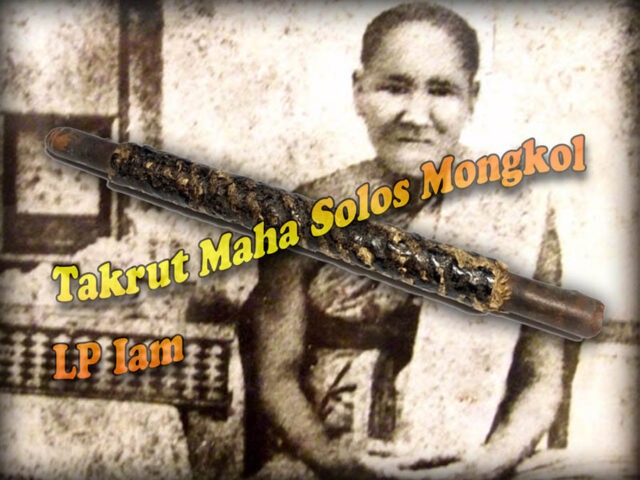
Takrut Maha Solos Mongkol Luang Phu Iam

The Sacred Takrut Maha Solos Mongkol: A Divine Amulet of Power and Fortune

An eternal classic and highly powerful amulet; the Takrut Maha Solos Mongkol Thak Chueak Long Long Rak Chart Jeen Boran (Dtamrab Luang Phu Iam), cord bound Yantra Scroll amulet of Luang Phu Iam, of  Wat Saphan Soong, with ancient red Chinese herbal lacquer (Rak Chart Jeen Boran).

Welcome, dear readers, to an enchanting journey into the realm of sacred amulets. Today, we delve into the mystical realm of the Takrut Maha Solos Mongkol, an amulet that exudes power, wealth, and divine protection. Crafted by the revered Luang Phu Iam of Wat Saphan Soong, this amulet is a timeless treasure sought after by devotees worldwide.

Takrut Tone Thak Chueak Long-Rak Luang Phu Iam

A Rare and Powerful Amulet

The Takrut Maha Solos Mongkol is a true gem among amulets, rivaling the renowned Takrut of the Great Luang Phu Sukh in rarity, price, and potency. Considered equally powerful, this amulet is particularly suited for those seeking status increase, wealth, good fortunes, and protection.

A Lifetime Companion

The Takrut Solos Mongkol of Wat Saphan Soong holds the title of a “Takrut Koo Cheewit,” meaning it is a “Lifetime Companion” amulet. Its remarkable property lies in its ability to bring constant improvements throughout one’s life, ensuring that its power never wanes. Wrapped in ancient Daay Dtra Sangkh Sinjana Cord and embellished with a ‘Cockroach Thorax‘ shape tips, this amulet possesses unique features that reflect its age and authenticity.

Takrut Maha Solos Mongkol Luang Phu Iam Wat Saphan Soong

An Ancient Yantra Spell

The Takrut Maha Solos Mongkol is not only an amulet but also an ancient and potent Sacred Yantra Spell. It holds a special place in the hearts of devotees, cherished by both Luang Phu Iam and his esteemed apprentices, including Luang Por Tong Sukh. These revered masters have spread the influence of this amulet around the globe, making it an eternal favorite among practitioners of sacred arts.

A Legacy Carried Forward

Luang Phu Iam, the originator of the Dtamra Pra Pid Ta and the Wicha Takrut Maha Solos Mongkol of Wat Saphan Soong, passed on his exceptional knowledge and skills to subsequent generations of esteemed masters. Ajarn Chuea, Luang Phu Glin, and Luang Por Tong Sukh, and now Luang Phu Waas, the current abbot, have all contributed to the legacy of this powerful amulet. Their mastery and dedication have ensured the continuity of this sacred tradition.

A Treasure for Devotees and Collectors

The Takrut Maha Solos Mongkol is a treasured alternative for those seeking the blessings of Luang Phu Iam’s amulets at a more affordable price. Crafted with invocations from all generations of the great master, empowered with the mastery of the Wicha Maha Solos Mongkol, these amulets carry immense value and authenticity. Their presence on the collector scene is unparalleled, making them highly sought after and revered.

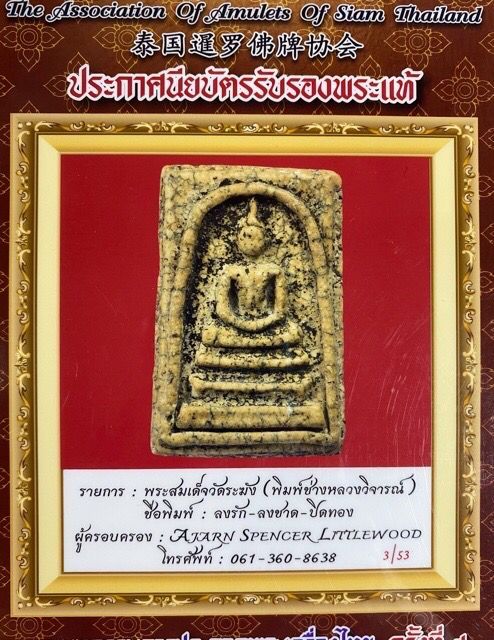
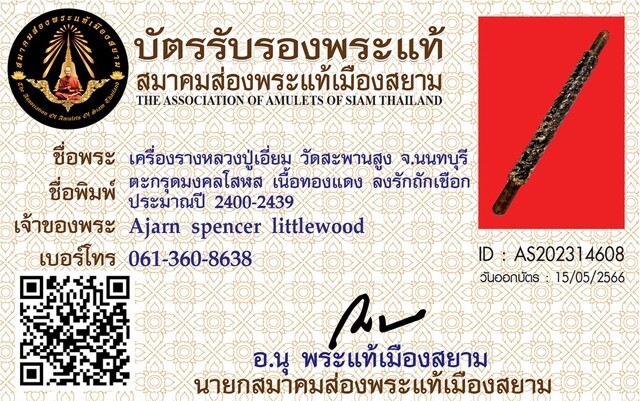
Certificated Takrut Tone Thak Chueak Long-Rak Luang Phu Iam