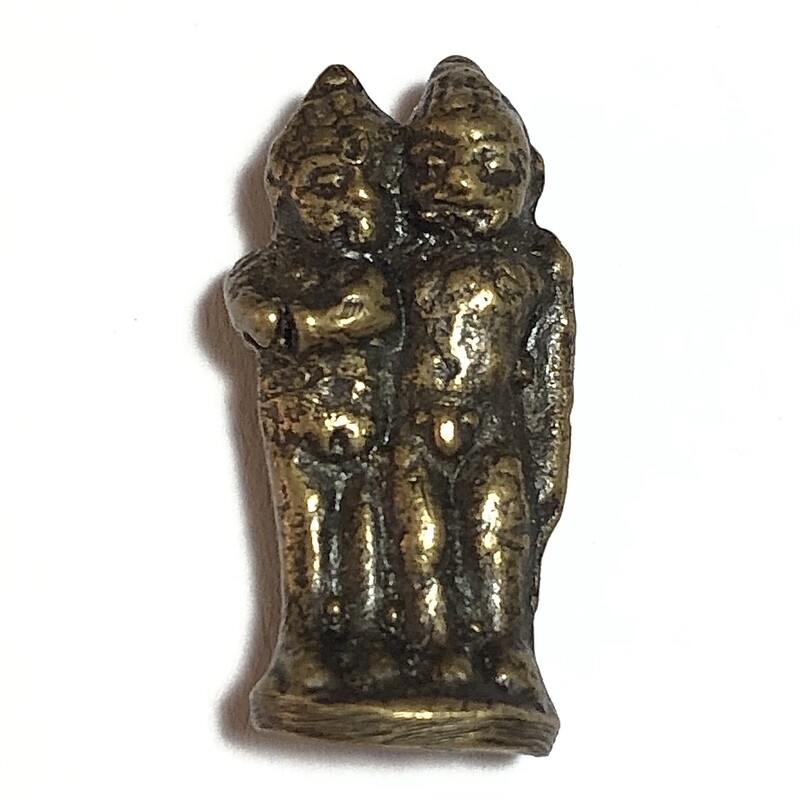
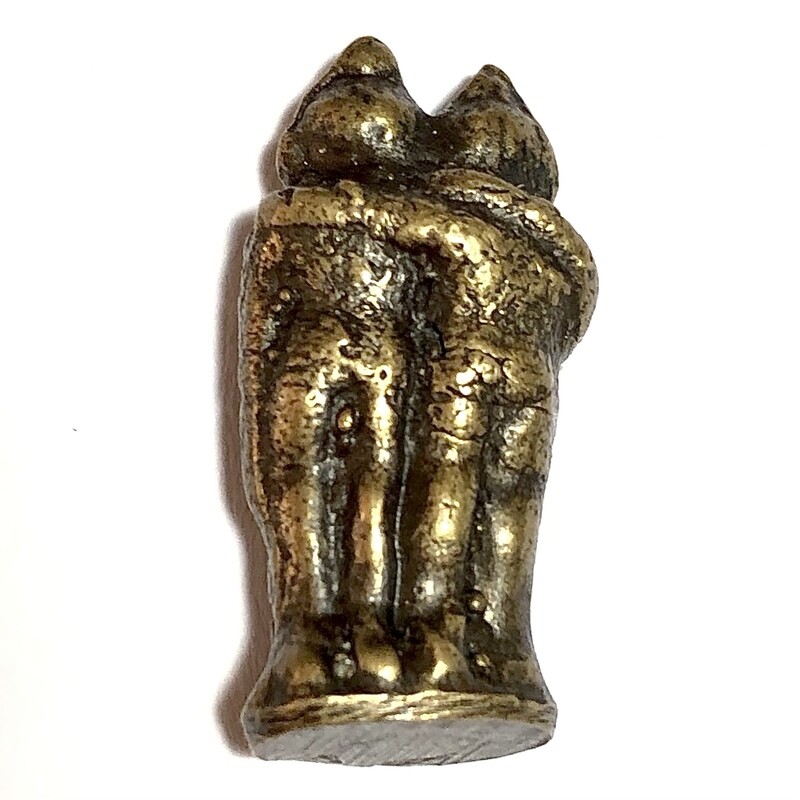
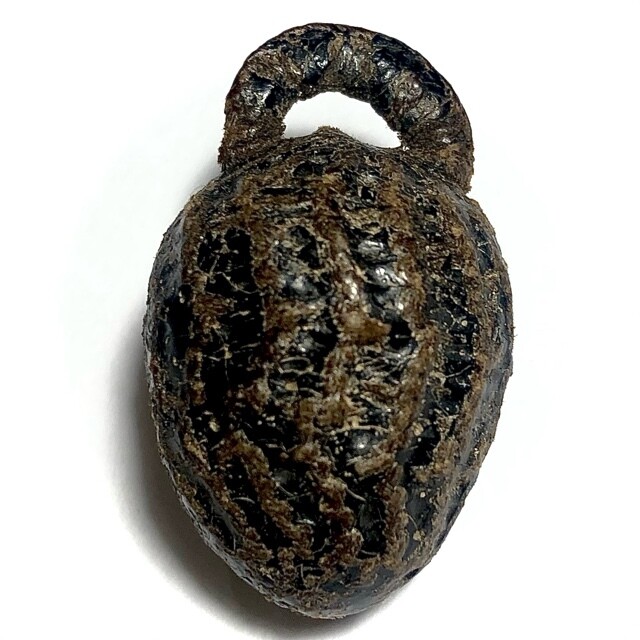
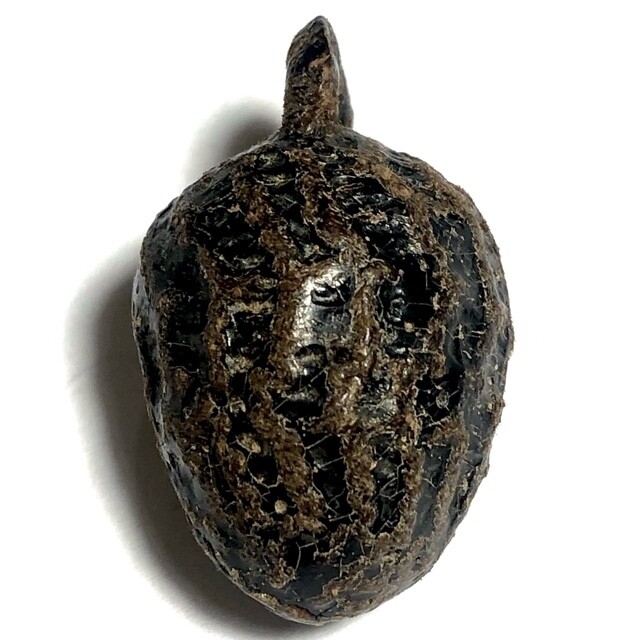
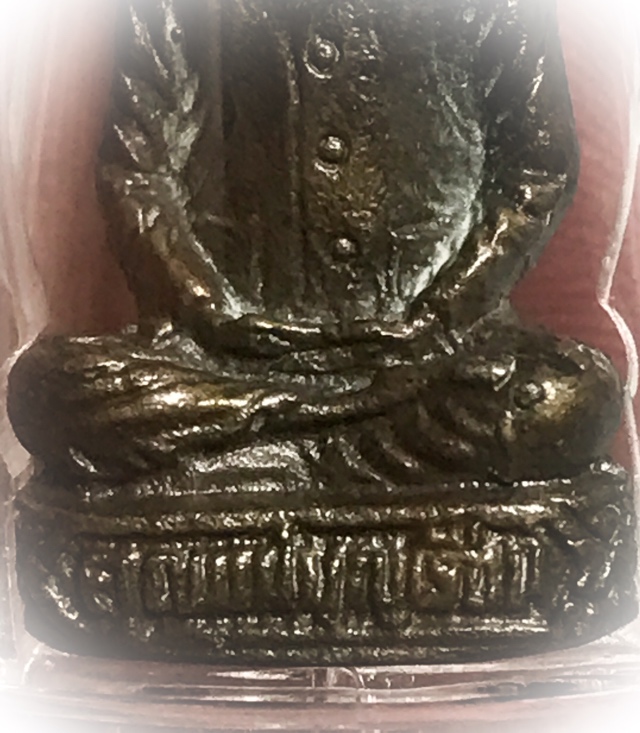
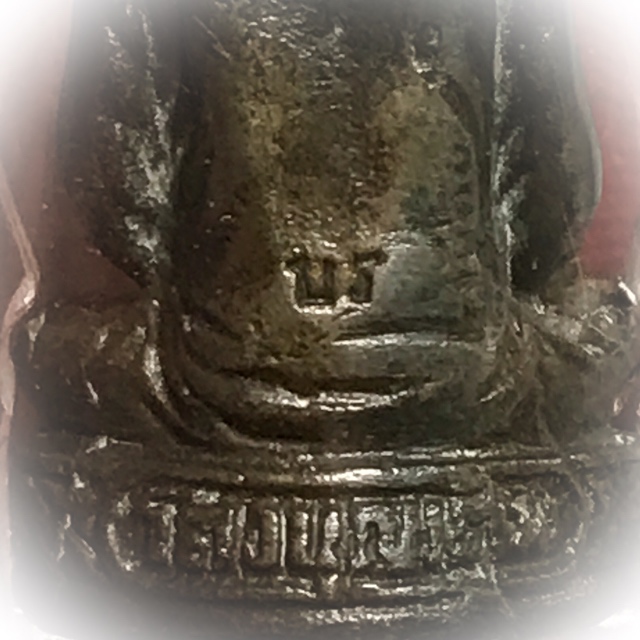
Rian Kring Solos Tat Nuea Solos 16 - 66th Birthday 1st Edition Amulet 2518 BE Ajarn Chum Chai Kiree

A Scholarly Monograph on the Rian Kring Solos Tat Nuea Solos 16 – 66th Birthday 1st Edition Amulet 2518 BE by Ajarn Chum Chai Kiree

The Rian Kring Solos Tat Nuea Solos 16 amulet, released in 2518 BE to commemorate Ajarn Chum Chai Kiree’s 66th birthday, represents a significant artifact within the extensive pantheon of Thai Buddhist occultism and Theravada devotional practice. This specific edition, designated as the ‘1st Edition Amulet 2518 BE’, holds particular distinction due to its intricate alchemical composition, rigorous consecration rituals, and the profound spiritual legacy of its creator, Ajarn Chum Chai Kiree, a preeminent lay master from the Dtamnak Dtak Sila Khao Or Southern Academy of Sorcery. The nomenclature ‘Rian Kring’ refers to its coin-like form and the internal ‘kring’ bead, a rattling element integral to its esoteric function, while ‘Solos Tat’ signifies its composition from sixteen sacred elemental substances, a number steeped in cosmological and alchemical significance within various Indic traditions adapted into Thai magical arts.

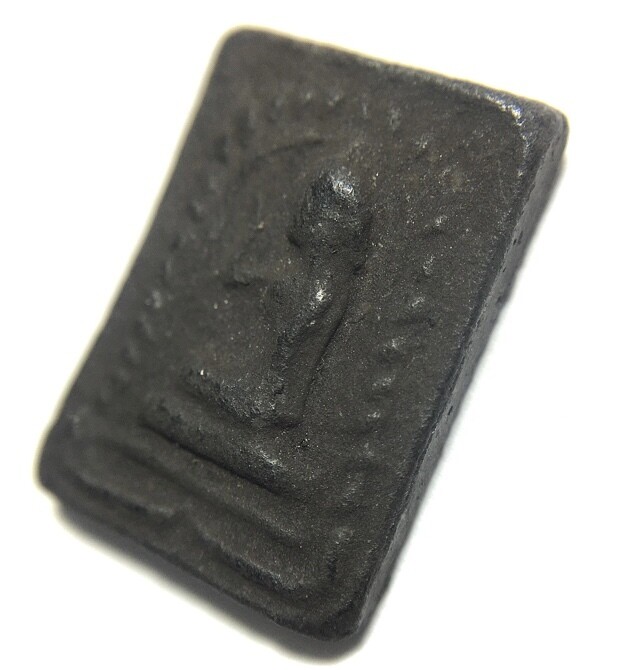
The theological importance of the Rian Kring Solos Tat extends beyond its physical attributes, encapsulating core tenets of Theravada Buddhism blended with indigenous animistic and Brahmanical beliefs that characterize Thai popular religiosity. Amulets, in the Thai context, are not mere objects of superstition but tangible receptacles of blessings, merit (Bucha), and protective energies derived from the spiritual attainments of their creators and the efficacy of the consecration rites. The presence of Pra Pakawambodee, often depicted as Pra Pid Ta Nirodha Buddha, on the reverse face, imbued with a Kring bead containing Solos Tat Elemental relics, further amplifies its spiritual potency. Pra Pid Ta, the ‘closed eyes’ Buddha, symbolizes profound meditative absorption, freedom from worldly distractions, and often confers invulnerability (Kong Grapan Chadtri) and protection against harm (Klaew Klaad), aligning with the broader objectives of Ajarn Chum’s magical practice. The integration of this ancient iconography with Ajarn Chum’s own effigy signifies a synergistic convergence of venerated Buddhist ideals and the living spiritual authority of the master.

The ‘Solos Tat’ (Sixteen Sacred Elements) composition is not merely a material attribute but a theological statement. In many esoteric traditions, the number sixteen is associated with completeness, perfection, or a full cycle of manifestation. The meticulous selection and amalgamation of these specific minerals and artifacts, as detailed in Chapter 3, transforms the amulet from a mere metallic object into a charged repository of diverse elemental energies, harmonized and activated through specialized Wicha. This alchemical synthesis, known as ‘Nuea Solasa Loha Galai Tong’ (Gold Galvanized over 16 kinds of Sacred Artifact Alloy), is a testament to the sophisticated understanding of material science and spiritual metallurgy practiced within the Khao Or tradition. The inimitable surface sheen mentioned as a primary authentication criterion underscores the intrinsic spiritual and material integrity of the original creation, rendering it inimitable by lesser forgers.

As an ‘Ongk Kroo’ (master piece or reference model), this amulet serves a didactic purpose, allowing devotees and connoisseurs to study the authentic characteristics of Ajarn Chum’s work. Its theological importance is thus dual: it functions as a potent devotional object for personal protection and fortune, and simultaneously as an educational artifact for understanding the complex interplay of art, alchemy, and esoteric Buddhism in Thailand. The narratives surrounding Ajarn Chum’s miraculous abilities, from childhood feats of Kong Grapan to demonstrations of Metta Mahaniyom, imbue this amulet with a perceived efficacy directly linked to his undisputed spiritual authority. The Rian Kring Solos Tat 2518 BE is not merely a commemorative coin; it is a profound expression of faith, a medium for spiritual protection, and a tangible link to a powerful tradition of Thai Buddhist magic.
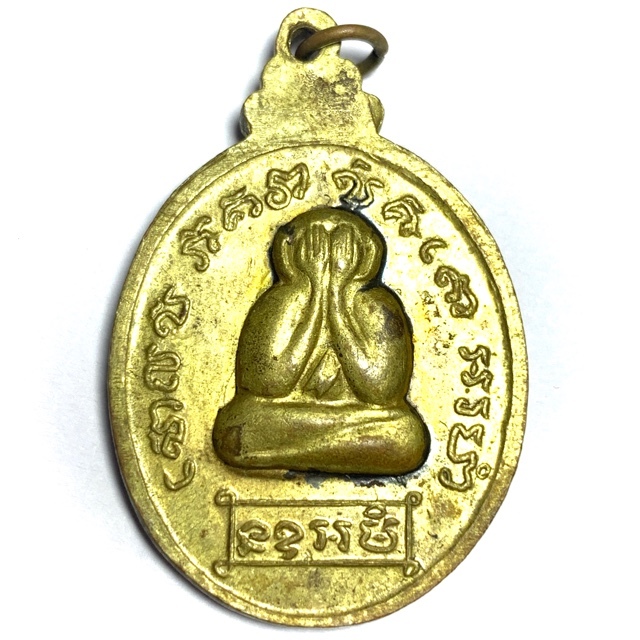
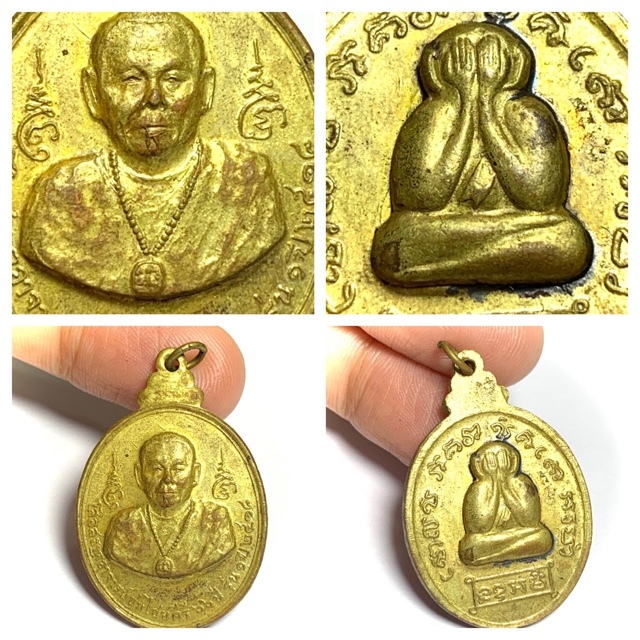
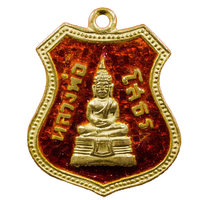
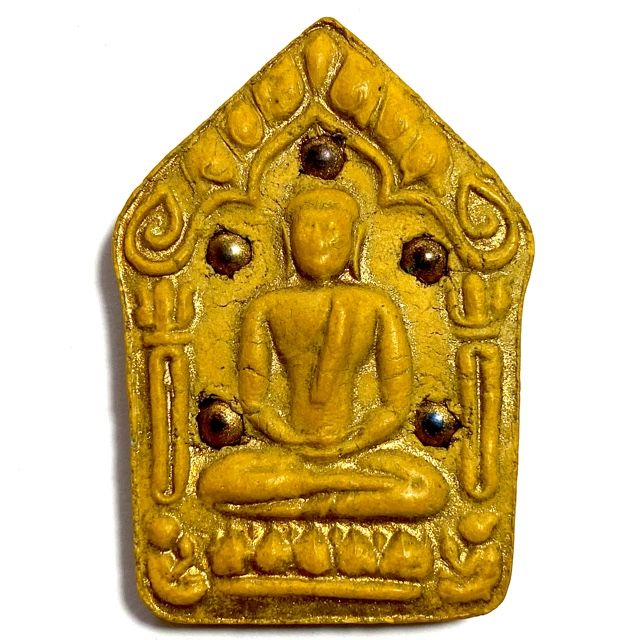
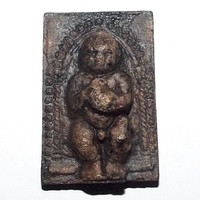
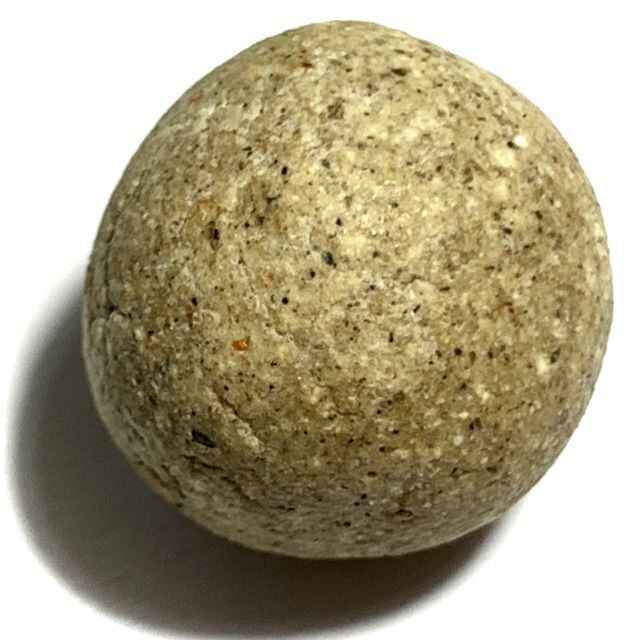
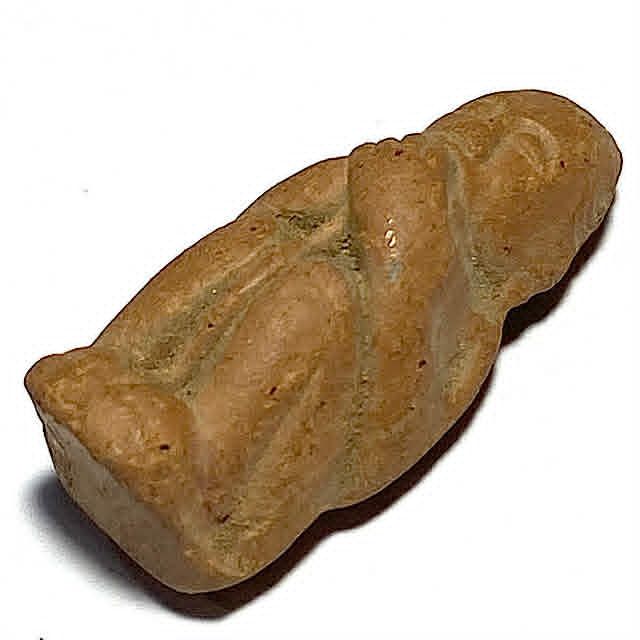
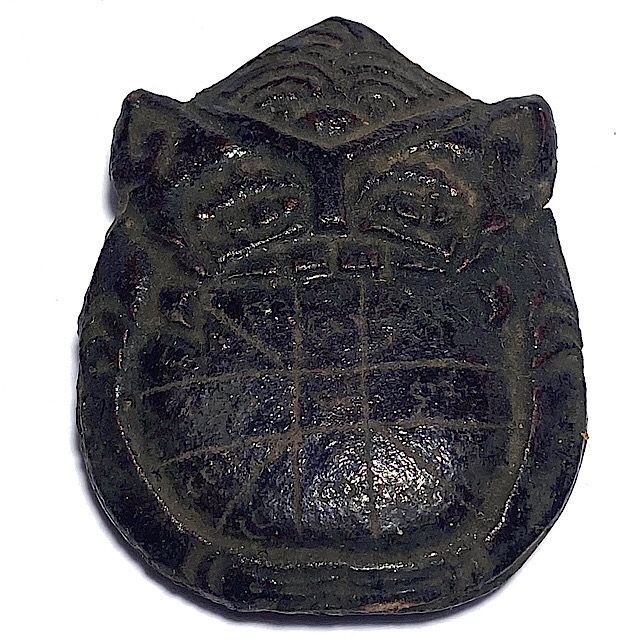
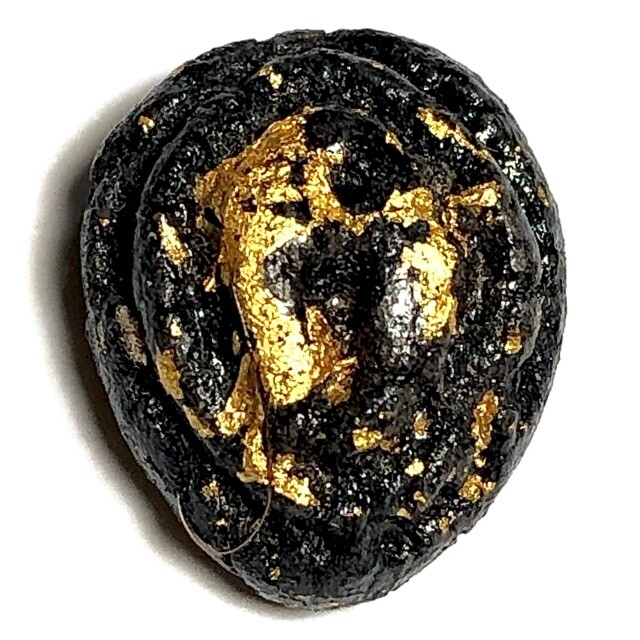
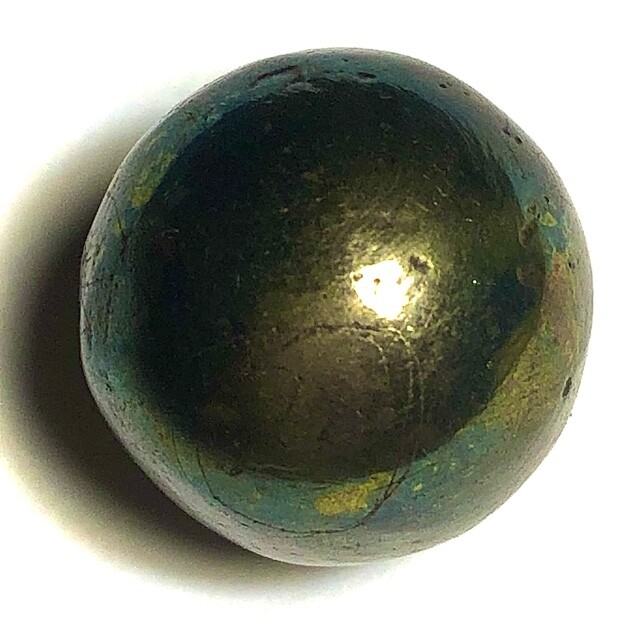
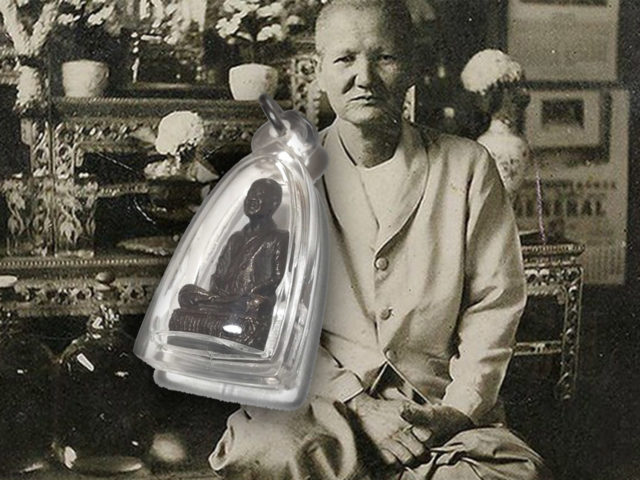
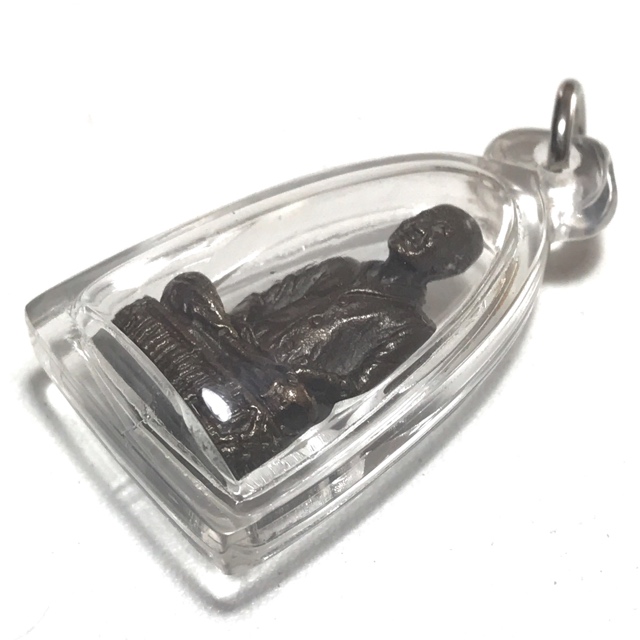
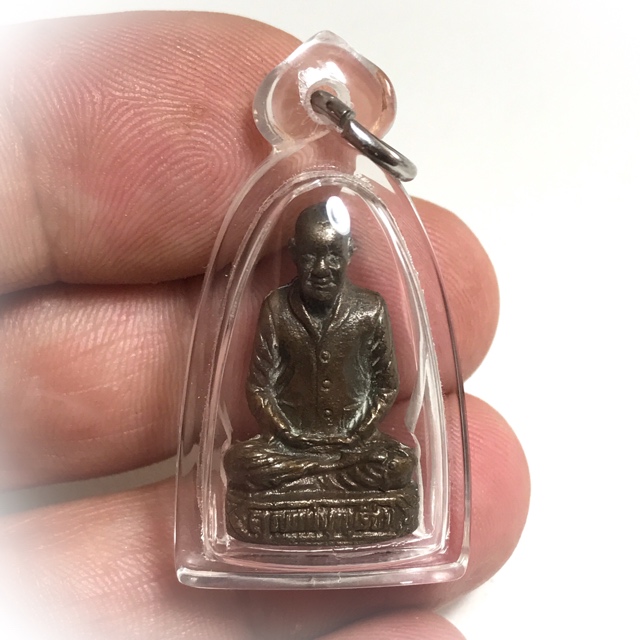
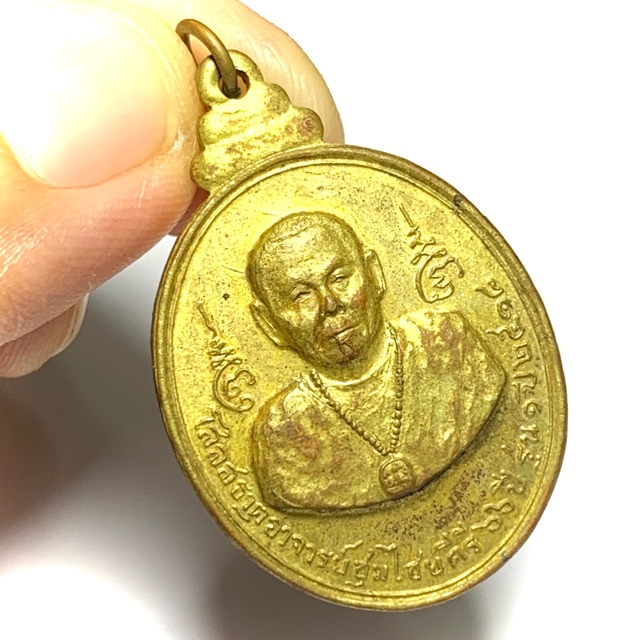
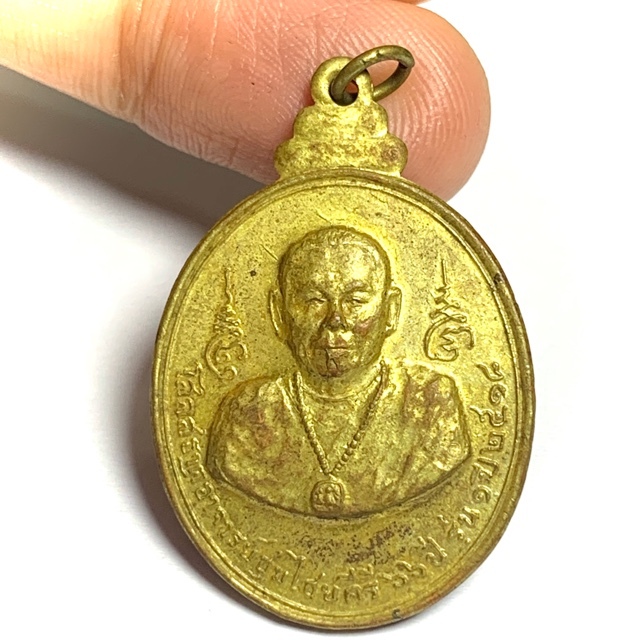
Front View of Rian Kring Solos Tat Ajarn Chum Amulet

The Master and Lineage

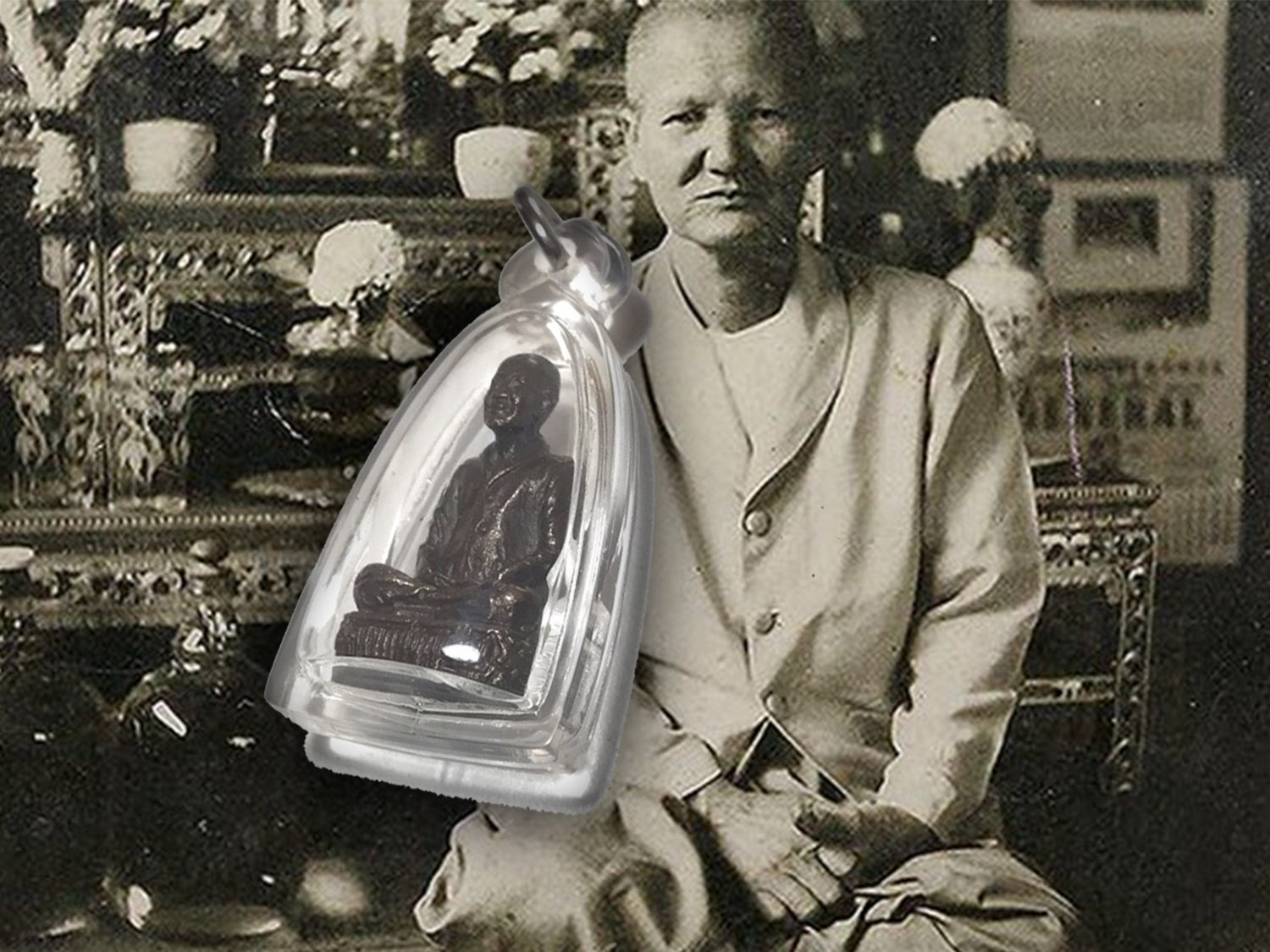
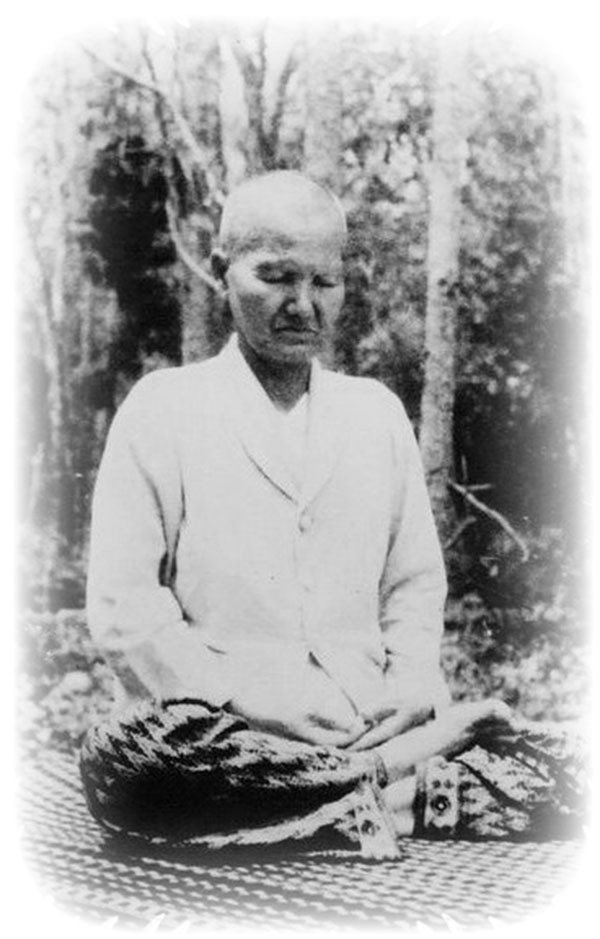
Ajarn Chum Chai Kiree (พ.ศ. 2450-2525 BE) stands as an unparalleled figure in the annals of Thai Buddhist occultism, widely acknowledged as the greatest lay master in the living history of Thai Buddha Magic. Born in Pattalung, a province renowned as a cradle of esoteric knowledge and the home of the Khao Or tradition, Ajarn Chum’s life unfolded as a continuous testament to profound spiritual attainment and extraordinary magical prowess. His lineage traces directly to the esteemed Dtamnak Dtak Sila Khao Or Southern Academy of Sorcery, an ancient and highly revered institution that has preserved and transmitted specialized Wicha (magical sciences) for centuries. His mentors included some of the most respected masters of his era, notably Ajarn Iad of Wat Don Sala, who served as his guide in the intricate pathways of magical sorcery after his disrobing from the Sangha.

Ajarn Chum’s innate abilities manifested from a remarkably young age. At just seven years old, he exhibited signs of preternatural power, as evidenced by a widely recounted incident where he disarmed a rifle merely by chanting an eleven-syllable Kata. This act resulted in the weapon exploding and breaking upon its subsequent discharge, profoundly impressing and instilling faith in his budding powers among the local villagers. Such miraculous events, documented and passed down through oral tradition and biographical accounts, laid the foundation for his lifelong reputation as a formidable practitioner of Kong Grapan (invulnerability) and other protective Wicha.

His formal spiritual training commenced with ordination as a Bhikkhu, under the tutelage of Pra Ajarn Kong, at Wat Chai Mongkol. This period of fifteen years within the Sangha provided Ajarn Chum with an intensive foundation in Buddhist scripture (Dhamma), meditation (Bhavana), and monastic discipline (Vinaya). This comprehensive monastic education, combined with his inherent spiritual gifts, equipped him with a deep understanding of the underlying principles that govern the creation and empowerment of sacred objects. During his time as a monk at Wat Chai Mongkol, he was notably present and actively participated in the extensive 16-day and 16-night empowerment ceremony for the world-famous Pra Pid Ta Hlaem Sai 2481 BE first edition amulet. This experience proved pivotal, as he judiciously retained a quantity of the sacred Chanuan Alchemical metals from that seminal smelting ceremony, metals that would later become crucial components of the 2518 BE Rian Kring Solos Tat coins.

Upon disrobing, Ajarn Chum transitioned from an ordained monk to a dedicated lay practitioner, further intensifying his study of the Buddha-Dhamma and advancing his mastery of occult sciences. He relocated to Pattalung, immersing himself fully in the Dtamnak Dtak Sila Khao Or tradition under the direct mentorship of Ajarn Iad. This phase of his life solidified his status as a legendary master of Khao Or Sorcery. His ability to decipher complex magical methods and his attunement to mysterious forces were exceptional, allowing him to innovate and perfect various Wicha, earning him widespread veneration.

Ajarn Chum’s legacy is replete with public demonstrations of miraculous magic, which captivated a generation of devotees and cemented his position as a Grand Master. One of his most iconic displays involved the “Noo Kin Nom Maew Metta Oil” (Mice Drinking Cat’s Milk Metta Oil). This demonstration, where baby mice and a lactating cat, smeared with the oil, peacefully coexisted and the cat nursed the mice, unequivocally showcased his mastery of Metta Mahaniyom (loving-kindness and popular charm) Wicha. He was also known for his “Nam Man Solos Mongkol” oil, which he applied to devotees’ heads before performing Kong Grapan Magic, further attesting to his systematic and ritualistic approach to magical practice. The consistent and undeniable real effects experienced by those who revered his amulets and sought his blessings have ensured that Ajarn Chum Chai Kiree’s reputation for potent magical power remains unrivaled, securing his permanent place as an occult legend within Thai history.
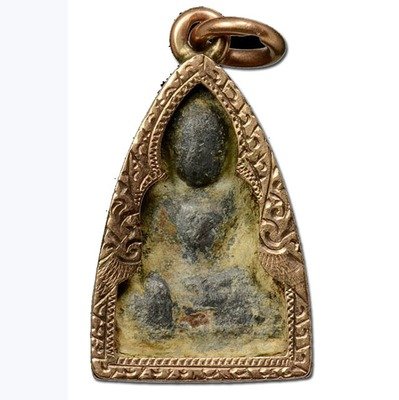
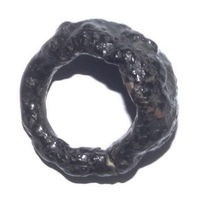
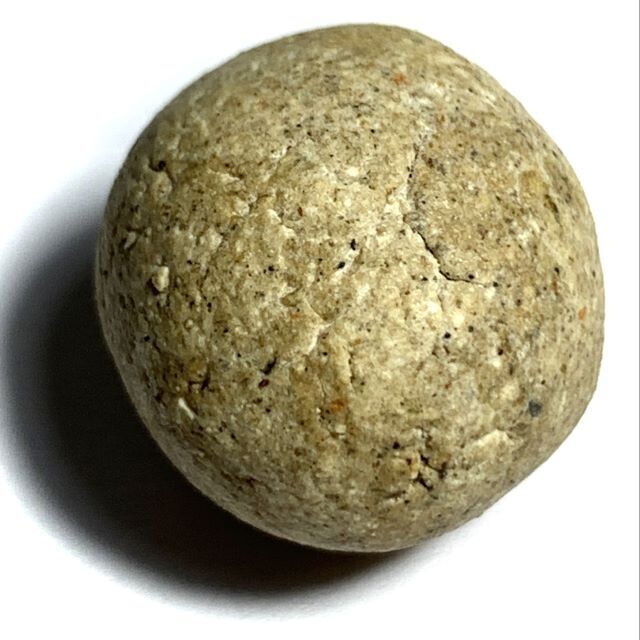
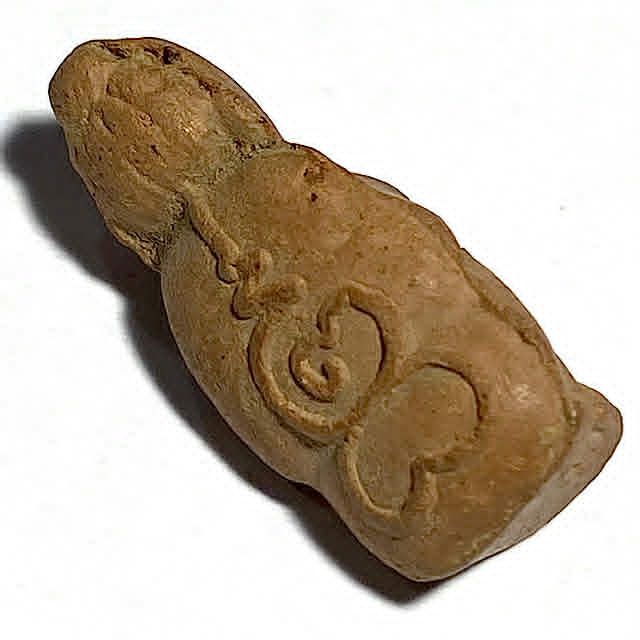
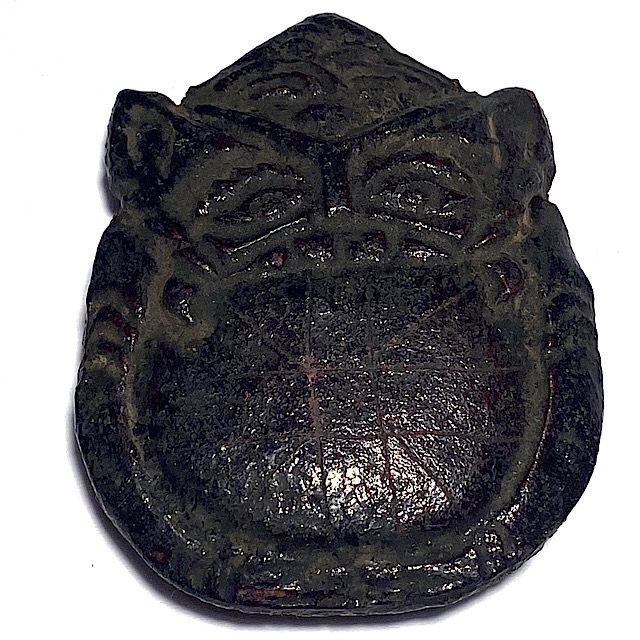
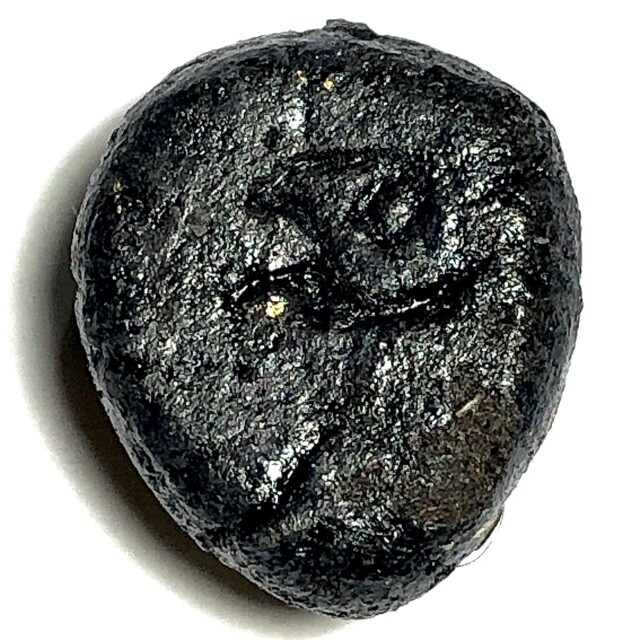
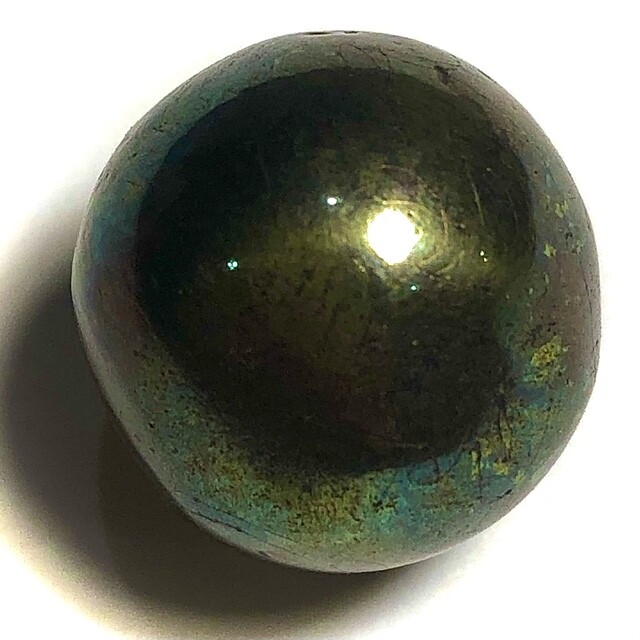
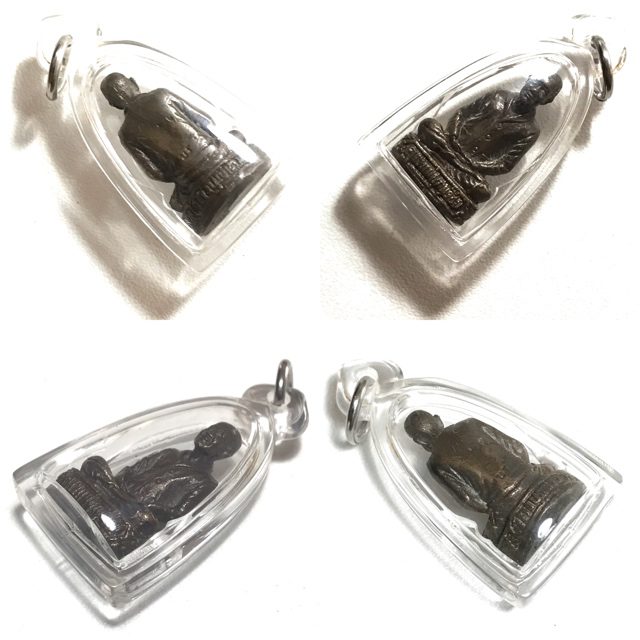
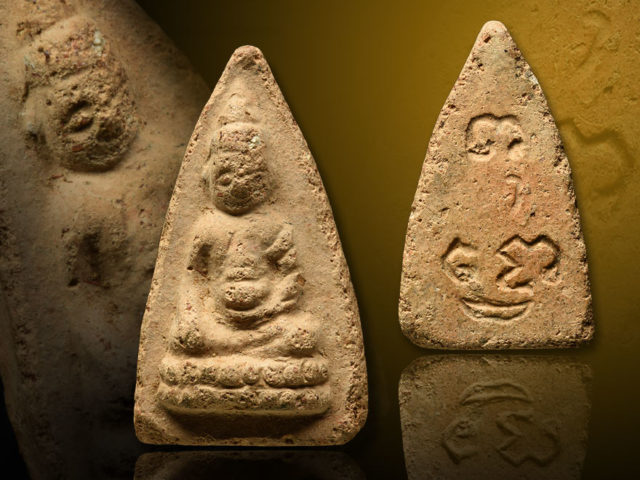
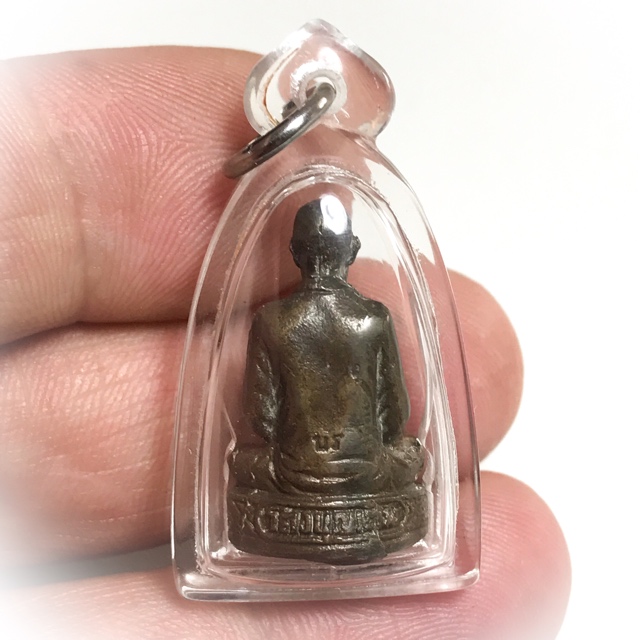
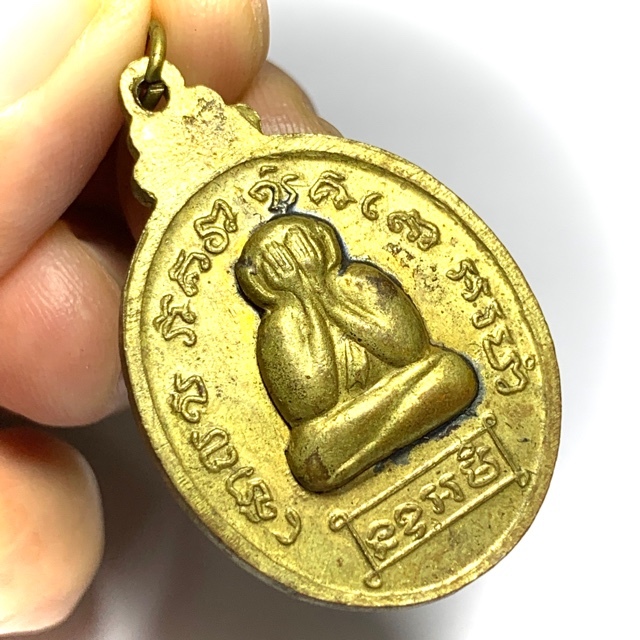
Reverse View of Rian Kring Solos Tat with Pra Pid Ta

Alchemical Composition and Sacred Powders

The Rian Kring Solos Tat amulet of 2518 BE is distinguished by its exceptionally complex and esoteric alchemical composition, known as ‘Nuea Solasa Loha Galai Tong’. This term denotes an alloy formed from sixteen distinct kinds of sacred artifacts and elemental metals, subsequently finished with a gold galvanization. The concept of ‘Solos Tat’ (Sixteen Elements) is central to its magical efficacy, representing a synthesis of diverse cosmic energies and protective properties believed to be inherent within these rare materials. The meticulous selection and blending of these elements reflect an advanced understanding of traditional Thai metallurgy, geomancy, and occult science, characteristic of the Dtamnak Dtak Sila Khao Or tradition.

The sixteen sacred elements comprising the Chanuan metal for this amulet are enumerated as follows, each possessing unique spiritual attributes:

  1. Lek Lai: A revered ‘flowing metal’ or ‘adamantine substance’ believed to possess its own Deva, granting immense protective powers, often associated with invulnerability and warding off evil.
  2. Jao Nam Ngern: A blue-hued mineral, often found in sacred caves, valued for its protective and auspicious qualities.
  3. Gold: Symbolizing purity, wealth, and spiritual illumination, it is a universal element of auspiciousness.
  4. Silver: Represents lunar energy, purity, and spiritual refinement, offering protection and enhancing spiritual insight.
  5. Bronze: An alloy historically used for Buddha statues, signifying spiritual longevity, strength, and merit.
  6. Copper: Associated with healing, energy conduction, and protective properties, widely used in sacred metallurgy.
  7. Brass: Valued for its durability and acoustic properties, often imbued with general protective blessings.
  8. Leaden Mineral (Takua Nam Nom, etc.): Different types of lead possess varying esoteric properties, often used for Kong Grapan (invulnerability) and Maha Ud (bullet-proofing).
  9. Wolfram Mineral: A rare and hard metallic element, likely chosen for its inherent strength and perceived ability to withstand negative forces.
  10. Rae Jakr Narai (Vishnu’s Chakra Mineral): Minerals associated with Vishnu’s divine discus, symbolizing supreme protection, power, and the ability to overcome obstacles.
  11. Rae Sangkwanorn (Ayuttaya temple roof leaden nails): Historic leaden nails from ancient temple roofs, imbued with centuries of prayers and blessings from the Sangha and devotees, carrying potent protective energies.
  12. Rae Chin (Ancient Silvery Leaden Artifacts): Ancient lead artifacts, possibly from old Buddha images or sacred implements, holding historical and spiritual accumulation of blessings.
  13. Rae Dtakua Dam (Black Lead Mineral): A specific type of lead known for its dense protective qualities, especially against black magic and physical harm.
  14. Rae Dtakua Thuean (Wild Leaden Mineral): Raw, unrefined leaden minerals, believed to retain potent, untamed natural protective energies.
  15. Rae Lek Nam Pi: Iron ore from Nam Pi, a legendary source in Uttaradit province, famous for yielding steel of exceptional strength and spiritual power, used historically for royal swords and potent amulets.
  16. Rae Yord Pra Prang (metal from the top of the old temple Chedi Stupa): Metal fragments from the apex of ancient stupas, symbolizing enlightenment, connection to the divine, and imbued with profound sacredness from countless venerations.

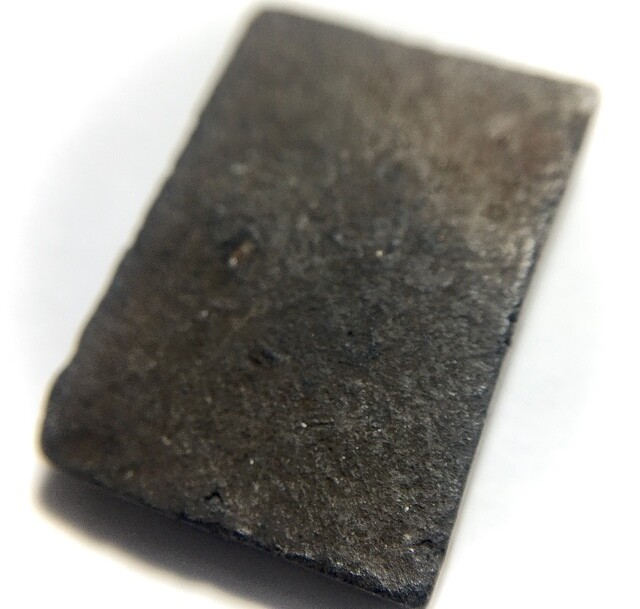
The amalgamation of these materials created a ‘Chanuan Metal’ of unparalleled potency. This base alloy was then treated with ‘Galai Tong’, a gold galvanization process, which not only conferred a distinct and recognizable aesthetic sheen but also enhanced its spiritual properties, linking it to the auspiciousness of gold. The inimitable quality of this surface sheen is a critical authentication criterion, a feature that counterfeit editions have notoriously failed to replicate accurately.

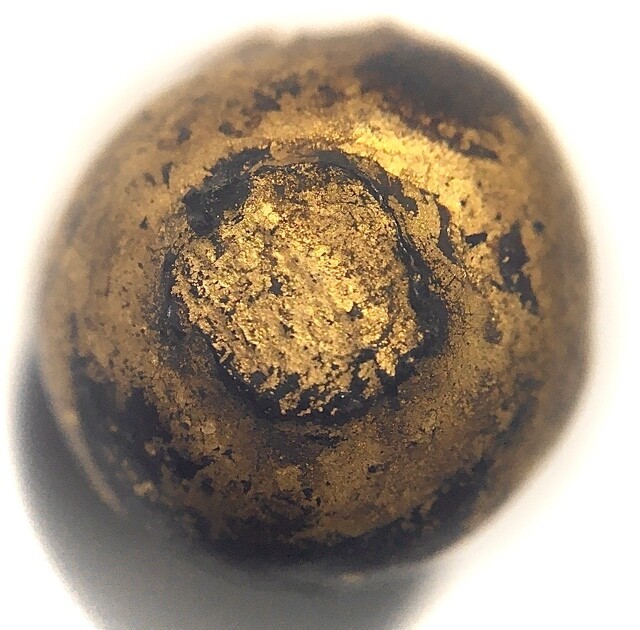
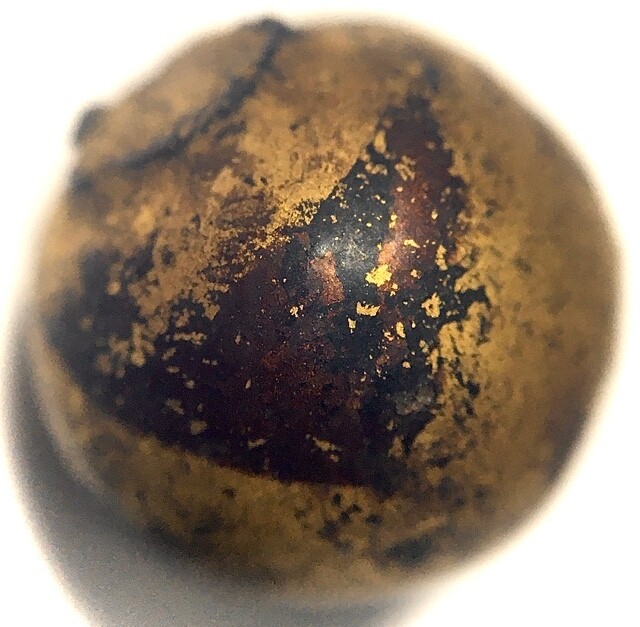
Within the reverse face, specifically within the Pra Pakawambodee (Pra Pid Ta) effigy, a ‘Kring bead’ is embedded. This bead contains ‘Solos Tat Elemental relics’, which are pieces of the sacred Chanuan metal. The ‘kring’ (rattling) sound it produces when shaken is not merely an auditory feature; it is considered to be the voice of the Buddha or Devas, announcing their presence and spreading blessings. The material for this internal kring bead is particularly significant, as it was directly sourced from the sacred Chanuan Alchemical metals conserved by Ajarn Chum from the seminal Pra Pid Ta Hlaem Sai 2481 BE ceremony at Wat Chai Mongkol in Songkhla. This direct material link to an earlier, highly revered empowerment ceremony imbues the 2518 BE Rian Kring Solos Tat with a historical and spiritual continuity, amplifying its perceived power and lineage.

The intricate composition of these sacred materials, guided by the principles of Wicha Solos and the expertise of Ajarn Chum, signifies a profound alchemical act. It transforms inert matter into a living repository of potent magical energy, designed not only for physical protection but also for spiritual elevation and auspicious fortune, solidifying the amulet’s status as a pinnacle of Thai sacred metallurgy.
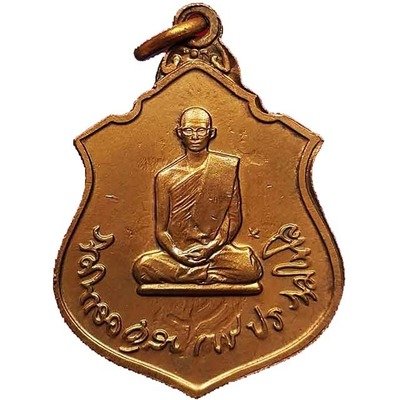
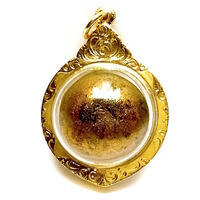
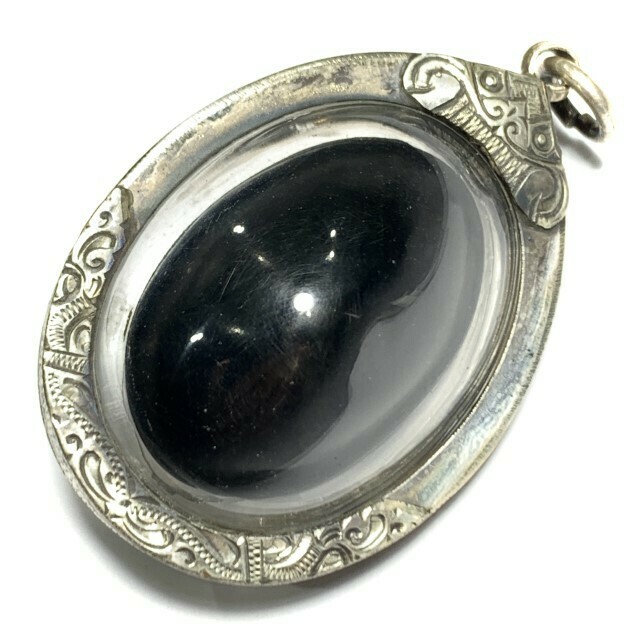
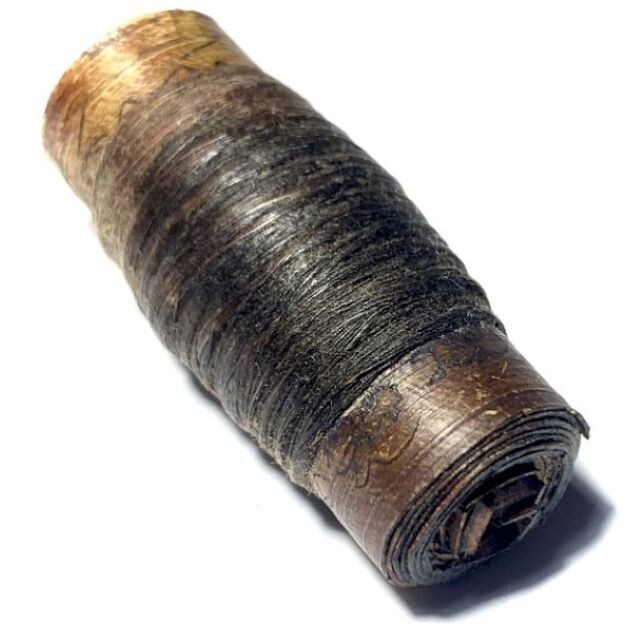
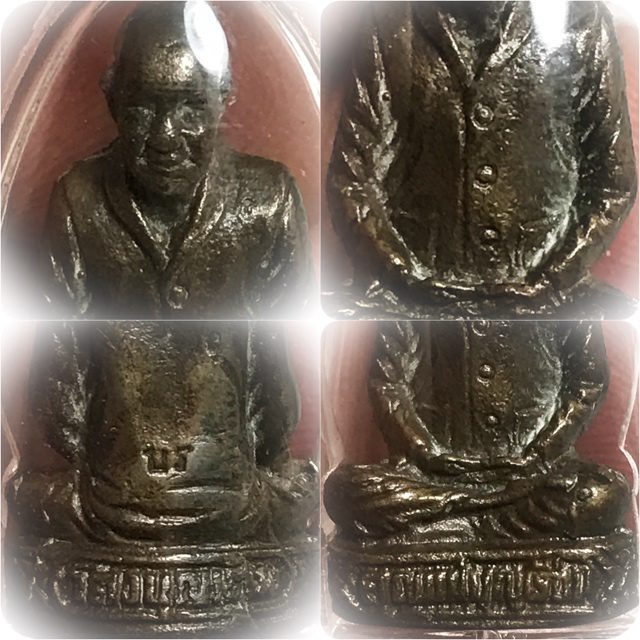
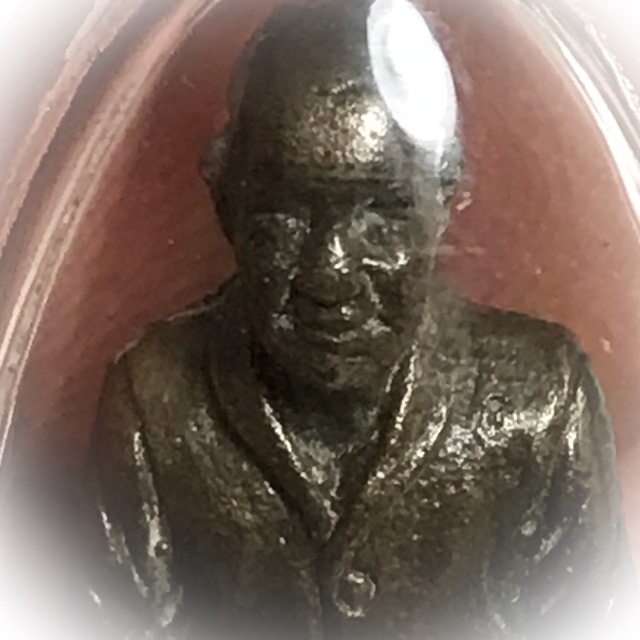
Close-up of Ajarn Chum's Effigy on Rian Kring Solos Tat

Sacred Empowerment and Wicha

The consecration of the Rian Kring Solos Tat Nuea Solos 16 amulet was an extraordinarily rigorous and protracted process, deeply rooted in the ancient Wicha Solos tradition and overseen by Ajarn Chum Chai Kiree. This elaborate empowerment ritual is a cornerstone of the amulet’s perceived potency, reflecting a meticulous adherence to esoteric protocols designed to imbue the sacred objects with profound spiritual energy and protective powers. The blessing ceremony for these amulets was conducted in a manner consistent with the revered Pid Ta Hlaem Sai of 2481 BE ceremony, a testament to the continuity and authenticity of the Wicha employed.

The initial phase of empowerment commenced at the Samnak of Ajarn Chum, a site imbued with the master’s spiritual presence. Here, Ajarn Chum engaged in the arduous practice of ‘single individual empowerment’ for each coin, one by one. This labor-intensive method, characteristic of the Wicha Solos, required immense concentration and spiritual fortitude. The empowerment proceeded continuously for a full sixteen days and sixteen nights. During this marathon period, Ajarn Chum invoked and beseeched various powerful Devas and venerated masters to manifest and assist in the consecration. Among those summoned were Luang Por Tuad, a legendary and highly revered monk known for his miraculous powers; Luang Por Kong, Ajarn Chum’s own venerable monastic mentor; Khun Phaen, the legendary warrior hero renowned for his charisma and protective magic; and Pra Pikanes (Ganesha), the Hindu deity of wisdom, remover of obstacles, and patron of arts and sciences, whose inclusion highlights the syncretic nature of Thai occultism.

Following this extensive period of personal empowerment at his Samnak, the amulets were then transported to the venerable Wat Traimit Voraram in Bangkok. Here, the consecration process continued within the Uposadha (ordination hall) Shrineroom of the temple for an additional seven days and seven nights. The Uposadha, as the most sacred space within a Buddhist temple, is traditionally utilized for high-level blessings, benefiting from the accumulated spiritual energy and merit of countless generations of monastic practice and Dhamma recitation. This dual-location empowerment, combining the intimate power of the lay master’s Samnak with the institutional spiritual authority of a major temple, signifies a comprehensive and multifaceted approach to consecration.

The final phase of empowerment culminated on Thursday, 8th May 2518 BE, a date coinciding with the annual Wai Kroo (Homage to Teachers) ceremony of Ajarn Chum. This auspicious day, dedicated to honoring one’s gurus and continuing their lineage, served as the perfect occasion for the amulets to receive their ultimate blessing before being distributed to devotees. The coordination of the release with his 66th Birthday Edition further imbued the amulets with his personal spiritual milestone and accumulated merit. This elaborate ritual regimen, incorporating prolonged meditative absorption, invocation of powerful spiritual entities, and blessings within highly sacred spaces, underscores the profound Wicha and unwavering dedication invested by Ajarn Chum in the creation of these Rian Kring Solos Tat amulets.

It is a little-known fact that an initial edition of the Rian Kring Solos Tat was actually produced in 2517 BE, with the year embossed accordingly. However, Ajarn Chum deemed the image on these amulets to too closely resemble an ordained monk, a representation he considered disrespectful to the Sangha. Consequently, he forbade their release. In response to the earnest beseeching of his devotees, a revised edition was commissioned and subsequently released in 2518 BE, featuring a newly designed image and the updated date. This detail highlights Ajarn Chum’s profound respect for monastic protocols and his commitment to producing amulets that were both spiritually potent and aesthetically appropriate, further solidifying the 2518 BE edition’s status as the definitive and intended release.
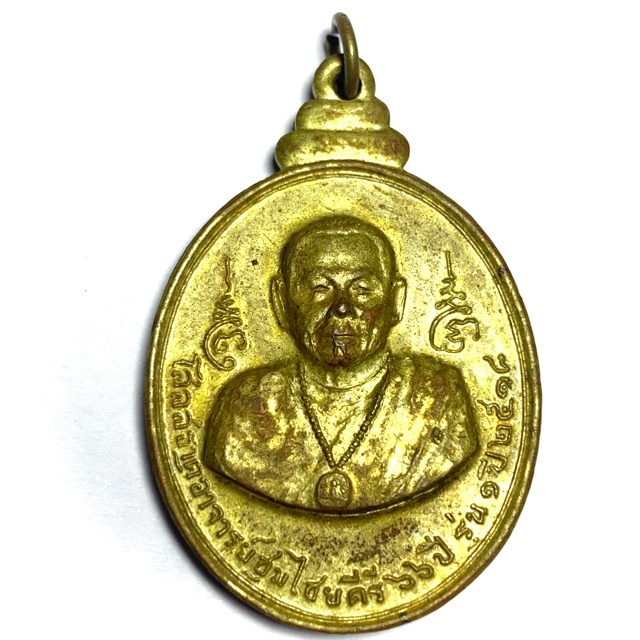
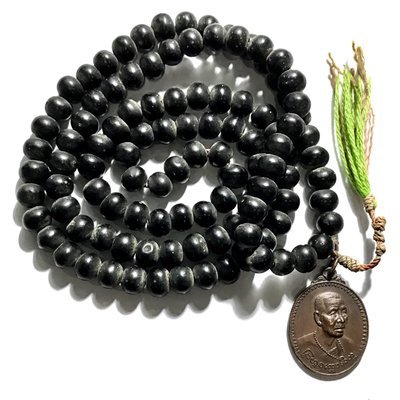
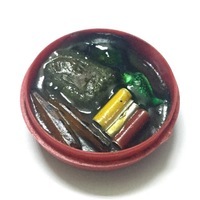
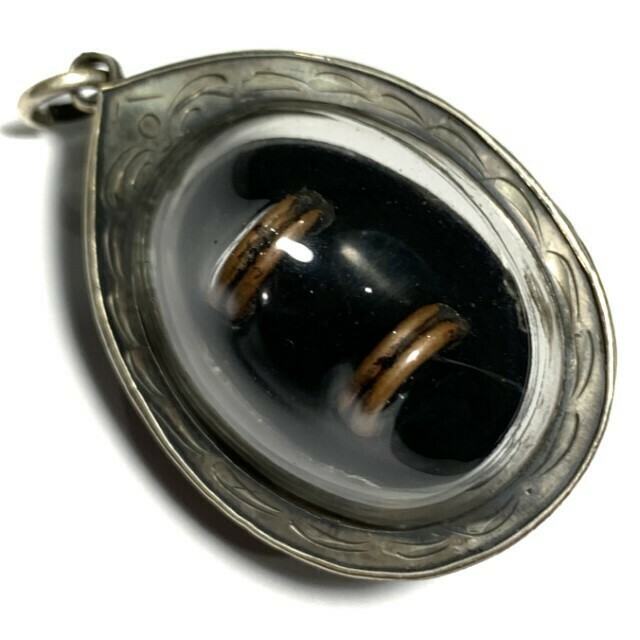
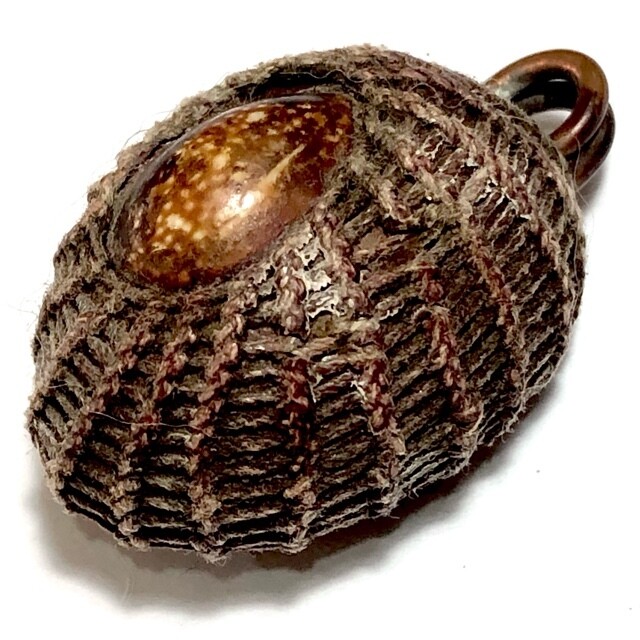
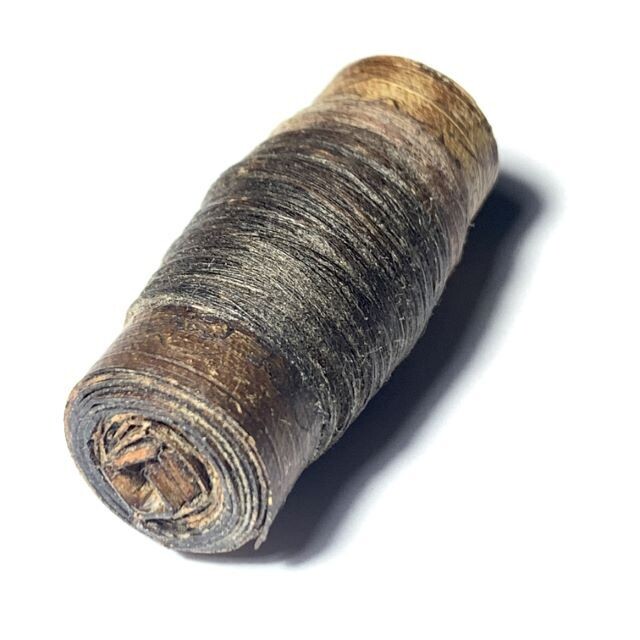
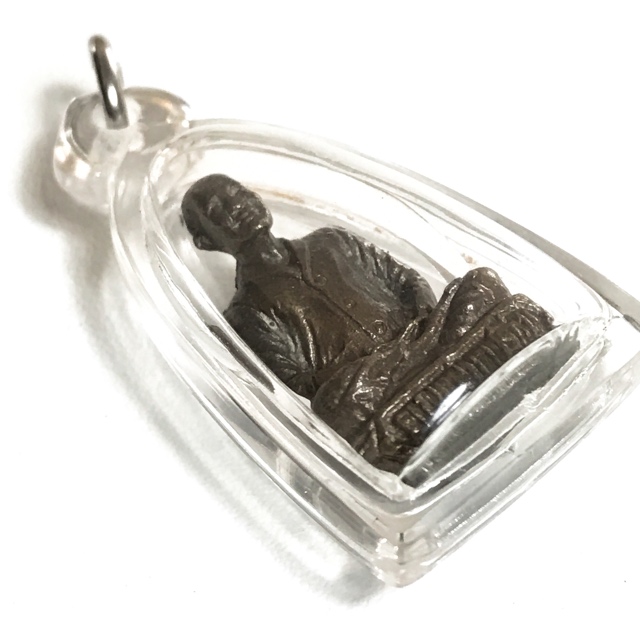
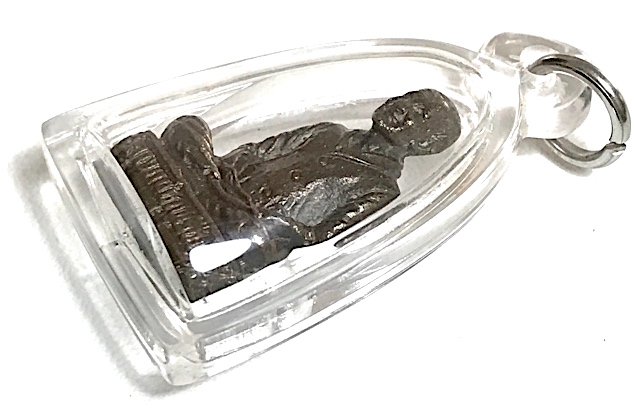
Angled View of Rian Kring Solos Tat with Kring Bead Rattle

Iconographical and Aesthetic Appreciation

The Rian Kring Solos Tat Nuea Solos 16 of 2518 BE presents a sophisticated iconographical program and distinctive aesthetic qualities that are crucial for its appreciation and authentication. As a ‘Rian’ (coin amulet), its design integrates portraiture, sacred geometry, and symbolic Buddhist figures within a metallic medium. The dual-sided nature of this amulet provides a rich narrative, depicting the revered master Ajarn Chum Chai Kiree on the obverse and the potent Pra Pakawambodee (Pra Pid Ta) on the reverse, each contributing to its overall spiritual efficacy and artistic merit.

The front face of the amulet features a ‘Kreung Ongk’ (Half Torso Cameo Bust) image of Ajarn Chum Chai Kiree. This depiction captures the likeness of the master, rendered with a respectful formality that conveys his spiritual authority and wisdom. Surrounding his effigy, the words ‘Solos Tat Ajarn Chum Chai Kiree 66 Pi Run 1 2518’ are embossed along the edge. This inscription explicitly states the amulet’s identity, its creator, the occasion of its release (Ajarn Chum’s 66th Birthday), its designation as the ‘Run 1’ (First Edition) for that year, and the Buddhist Era date of 2518. Flanking Ajarn Chum’s head are the Khom Agkhara (ancient Khmer script) characters ‘Put’ and ‘To’. These two syllables are profoundly significant in Thai Buddhism, representing parts of the Buddha’s name and often used in meditative recitations (Buddhānussati) for protection and concentration. Their placement signifies the master’s adherence to Buddhist principles and his capacity to channel the Buddha’s blessings through his Wicha.

The reverse face is particularly noteworthy, featuring a Pra Pakawambodee (Pra Pid Ta) amulet ‘heat fixed’ onto the surface of the coin. Pra Pid Ta, or the ‘concealed eyes’ Buddha, is an iconic figure in Thai Buddhist art, symbolizing deep meditative absorption, non-attachment to worldly phenomena, and protection from all harms and evils. This particular Pra Pid Ta image is not merely a relief carving; it is a distinct, smaller amulet that has been integrated onto the main coin. Crucially, this Pra Pid Ta amulet contains a Kring bead of Sacred Elemental Substance (Tat) inserted within. The material for this Kring bead is historically significant, having been sourced from the renowned Pra Pid Ta Hlaem Sai 2481 BE first edition amulet ceremony at Wat Chai Mongkol in Songkhla. This direct material link to an earlier, celebrated amulet bestows additional layers of authenticity and spiritual potency upon the 2518 BE Rian Kring Solos Tat. The Kring bead, emitting a subtle rattle when shaken, is believed to signify the awakening of blessings and the presence of divine protection.

Aesthetically, the Rian Kring Solos Tat is characterized by its ‘Nuea Solasa Loha Galai Tong’ composition. The gold-galvanized surface over the sixteen kinds of sacred artifact alloy imparts an inimitable sheen and color, which serves as a primary criterion for authentication by experts. The consistent failure of counterfeit editions to replicate this unique surface quality underscores the complexity of its original fabrication process and the authenticity of the master’s technique. The precision of the casting, the clarity of the embossed text, and the distinct features of both Ajarn Chum and the Pra Pid Ta iconography are all critical points of aesthetic and metallurgical scrutiny. The overall presentation reflects a blend of traditional artistic conventions and esoteric symbolism, resulting in an amulet that is both visually striking and replete with spiritual meaning.
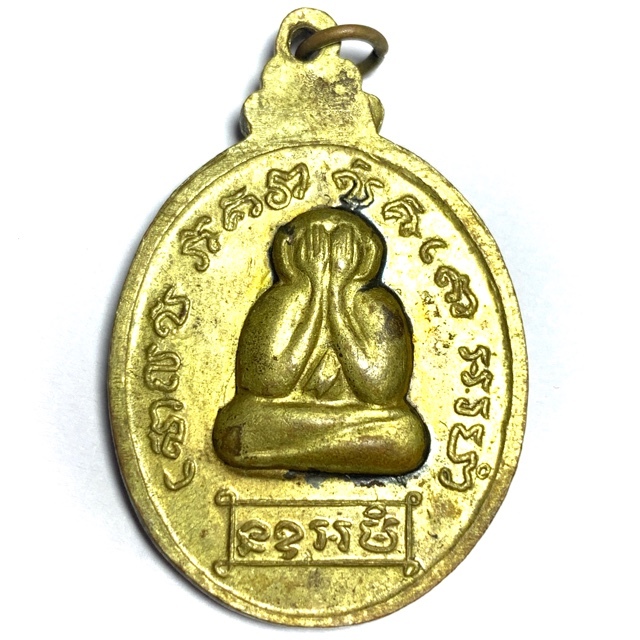
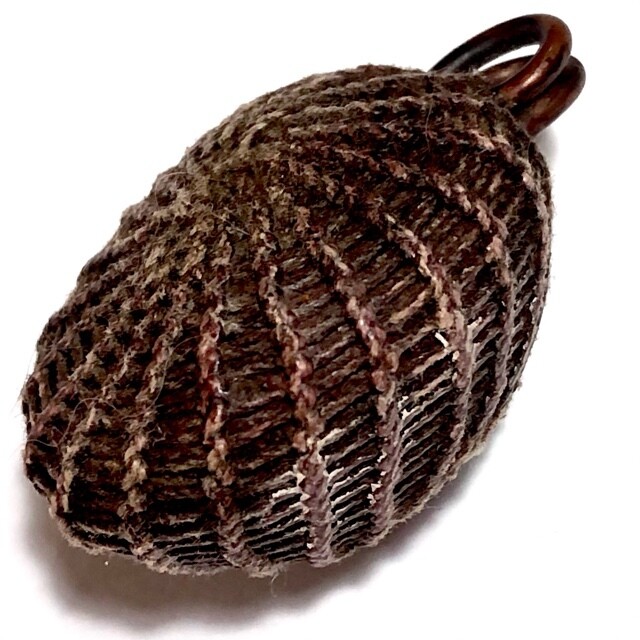
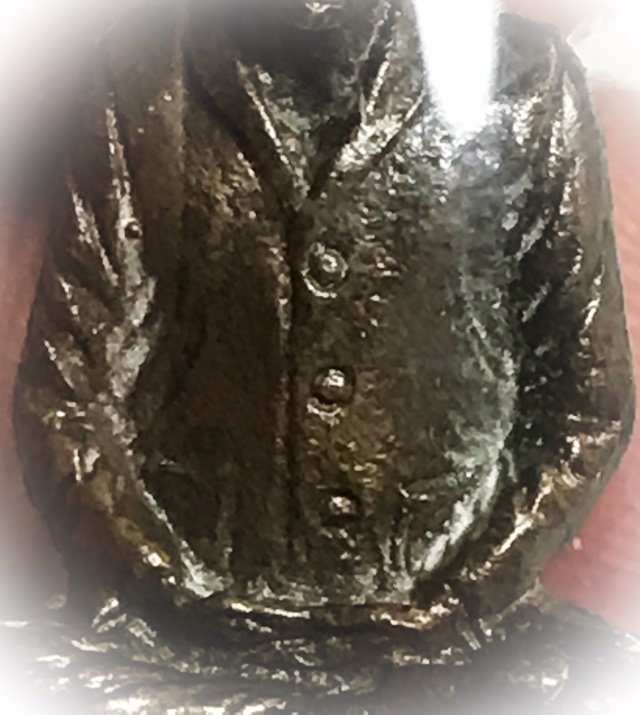
Detailed Front View of Rian Kring Solos Tat Ajarn Chum Coin

Ritual Practice and Worship

The veneration and ritual practice associated with the Rian Kring Solos Tat Nuea Solos 16 amulet extend beyond mere possession; they involve specific protocols and devotional acts designed to activate and maintain the amulet’s spiritual efficacy. These practices, known as Bucha, are integral to Thai Buddhist and occult traditions, forming a reciprocal relationship between the devotee and the sacred object and its creator. The proper engagement with such an amulet involves specific Kata (sacred incantations) and adherence to certain rules of conduct, which are understood to align the devotee’s intentions with the protective and benevolent forces embodied within the amulet.

The recommended Kata Bucha for Pra Krueang of Ajarn Chum Chai Kiree begins with an initial invocation, followed by a standard Buddhist reverence. The specific Kata provided for this amulet is:

Na Rong Hai – Na Maa Khao Haa – Na Jidtang Maa Ni Maa Maa – Jidtang Maa Ni Maa Maa (Recite 3 Times)

This initial Kata is typically chanted with focused intention, often related to attracting Metta Mahaniyom (loving-kindness, popular charm) and financial prosperity, drawing others towards the devotee. It is a formula intended to create an aura of appeal and positive influence.

Following this, the devotee proceeds with the traditional Buddhist homage:

Na Mo Tassa Pakawadto Arahadto Sammaa Samputtassa (Recite 3 Times)

This chant, venerating the Blessed, Noble, and Perfectly Enlightened Buddha, is a foundational practice in Theravada Buddhism, establishing a connection to the Triple Gem (Buddha, Dhamma, Sangha) and purifying the mind before further spiritual engagement.

The final specific Kata for empowerment is:

I Sawaasu Susawaa I – A Sang Wi Su Lo Bu Sa Pu Pa (Recite 3 Times)

This sequence of Khom Agkhara syllables constitutes a potent Wicha Kata, likely carrying layers of meaning related to protective spells, invulnerability, and auspicious blessings. Such Kata are often condensed forms of longer incantations, where each syllable represents a specific mantra or cosmic principle, activated through focused recitation. The repetition of these Kata is intended to awaken the latent powers within the amulet, resonating with the energies imbued by Ajarn Chum during its consecration.

Beyond these specific chants, devotees are expected to uphold general Buddhist ethical precepts, such as the Five Precepts (Panca Sila), to maintain a pure mind and body, which is believed to enhance the efficacy of any sacred object. Respectful handling of the amulet, placing it in a high and clean location when not worn, and avoiding morally reprehensible actions are considered essential. Regular offerings of flowers, incense, and candles (Bucha Phra) may also accompany the chanting, symbolizing devotion and respect for the Buddha, Dhamma, Sangha, and the lineage of masters like Ajarn Chum.

The rattling of the Kring bead within the amulet is not just a sound; it is interpreted as a manifestation of divine presence or the awakening of spiritual energy. Some practitioners may gently shake the amulet before chanting or making wishes, believing the sound clarifies intentions and signals the Devas. The act of wearing the amulet is itself a form of continuous Bucha, keeping the blessings in close proximity to the devotee. The Rian Kring Solos Tat amulet, therefore, functions as a powerful tool within a holistic spiritual practice, where the devotee’s faith, ethical conduct, and ritual engagement synergistically amplify the inherent protective and auspicious powers consecrated by Ajarn Chum Chai Kiree.
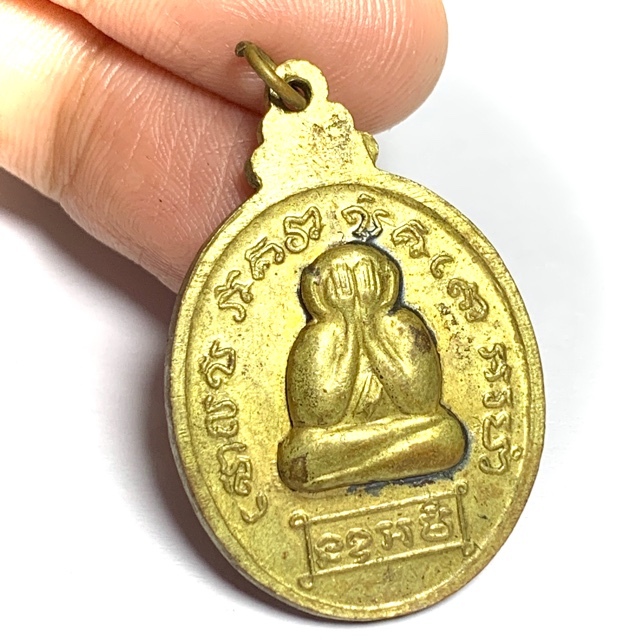
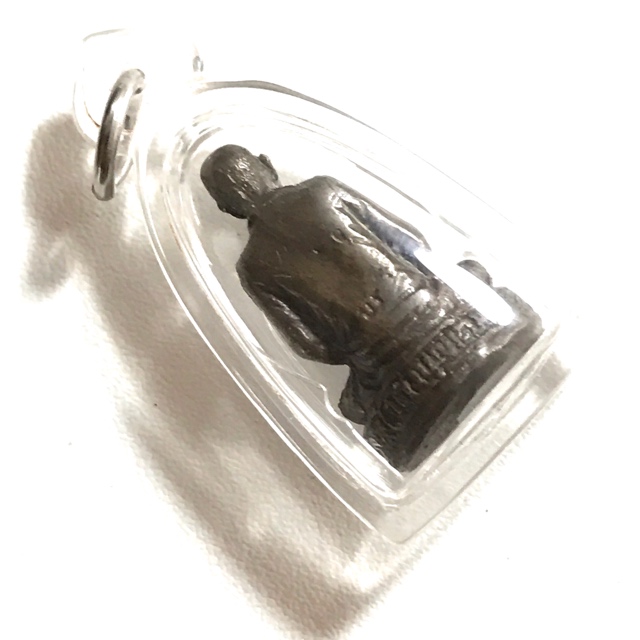
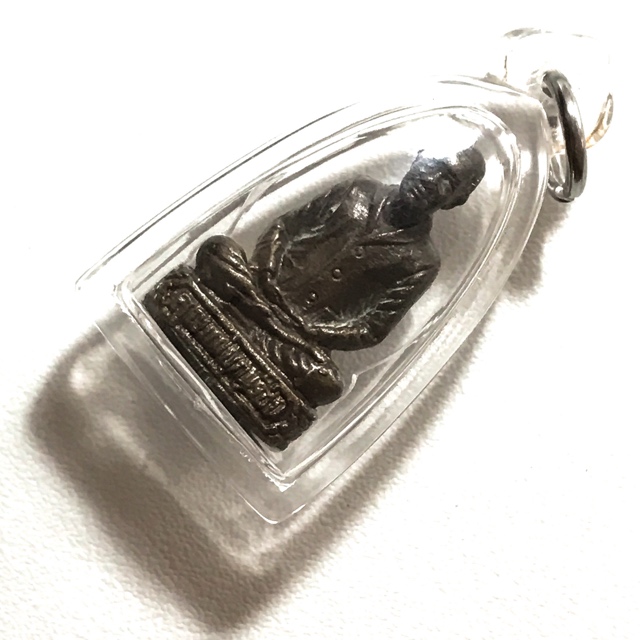
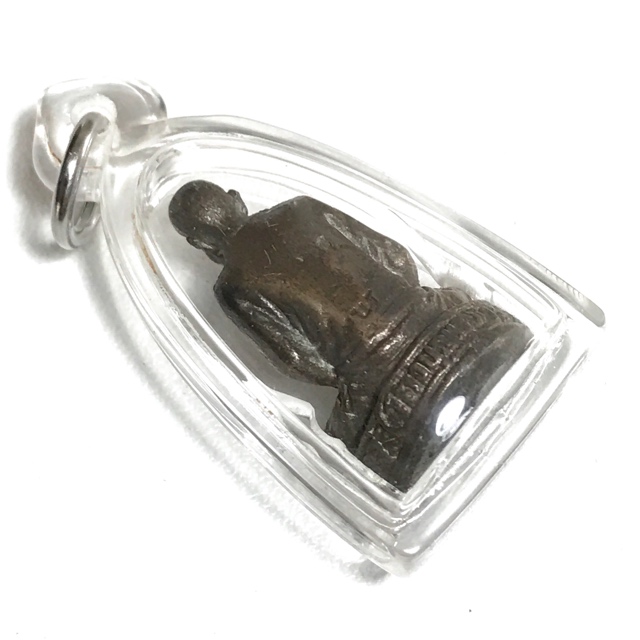
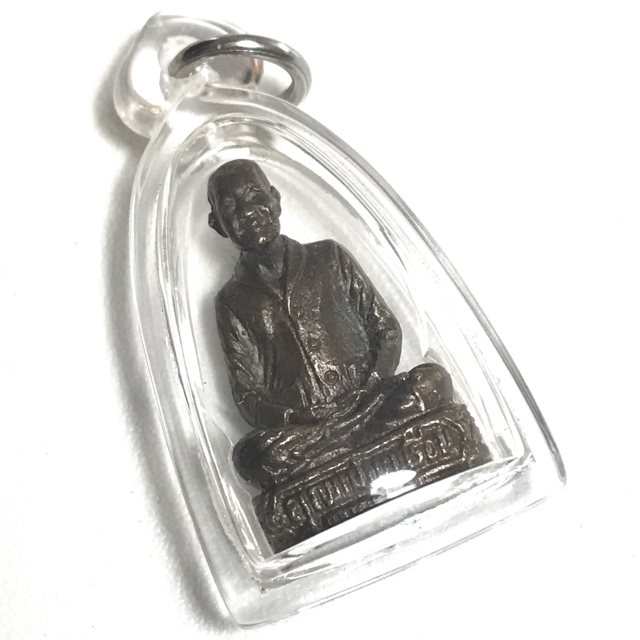
Another View of Rian Kring Solos Tat with Pra Pid Ta on Rear
Angled View of Rian Kring Solos Tat Showing Both Faces
Rian Kring Solos Tat Amulet Displayed

How to Pray to Thai Amulets

Ancient Amulet - Thai Buddhist Pra Niyom Category Amulets

Ancient Amulet. Thai Buddhist Pra Niyom ('Pra Niyom'; meaning 'High End Preferred Class Antique amulets'). Fine Authentic Amulets from the Great Thai Buddhist Sorcerer Monks, Lersi Ascetics, and Lay Masters of Olden Days

SIGN IN OR CREATE ACCOUNT

Filters

Filters
Pra Somdej Pim Gaes Jarot Sum Pim Gaes Iang Niyom Long Rak Chart Somodej Dto Wat Rakang KositaramPra Somdej Pim Gaes Jarot Sum Pim Gaes Iang Niyom Long Rak Chart Somodej Dto Wat Rakang Kositaram
Pra Somdej Pim Gaes Jarot Sum Pim Gaes Iang Niyom Long Rak Chart Somodej Dto Wat Rakang Kositaram
Free Shipping Worldwide (we do not state or declare true price to counter tarrifs tax on customers), & Offer of Free Solid Silver Casing Included
SKU 04783
$1,699


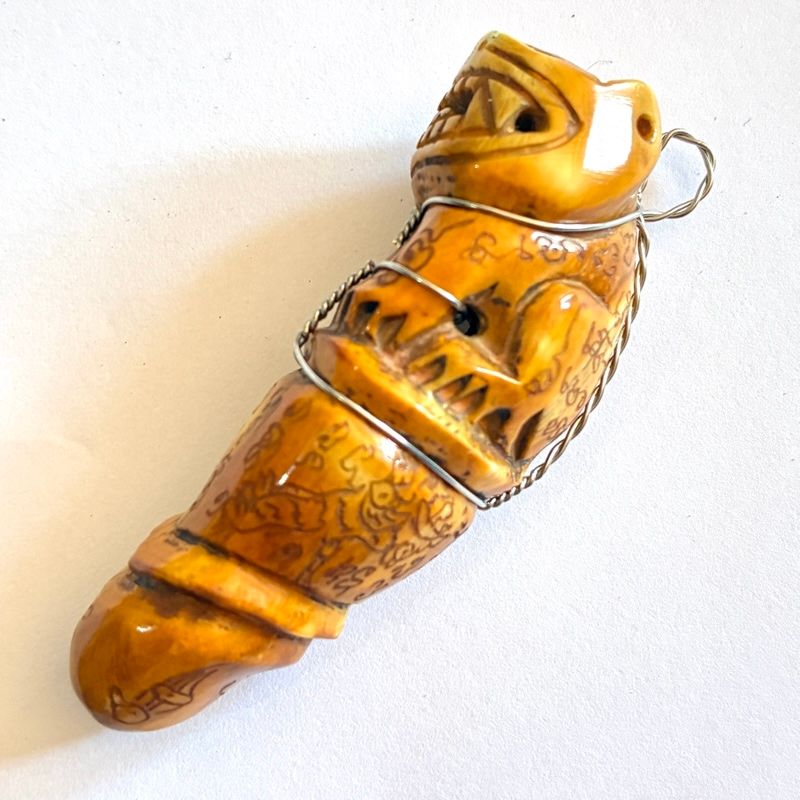
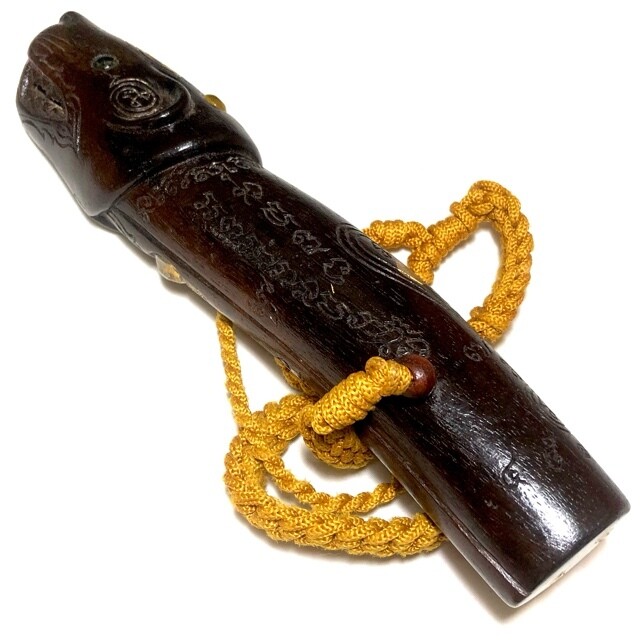
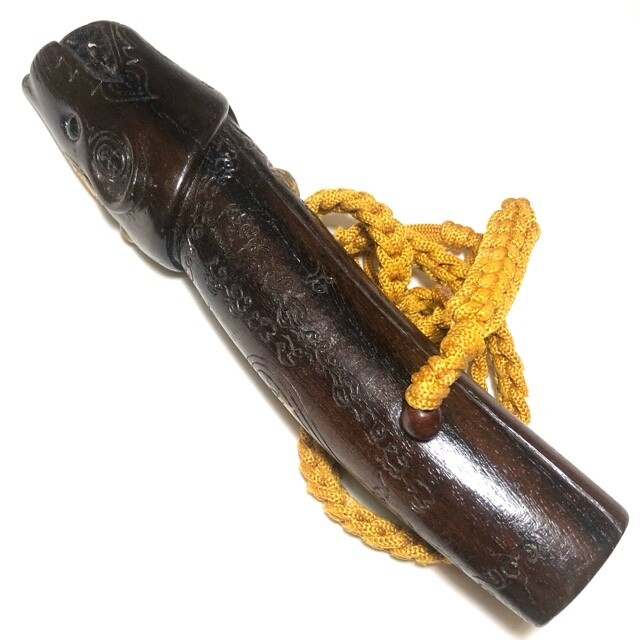
Ban Neng Ruesi Nang Suea Necromantic Skullbone Lersi with Tiger Hand Spell Inscriptions Ajarn Heng Praiwan

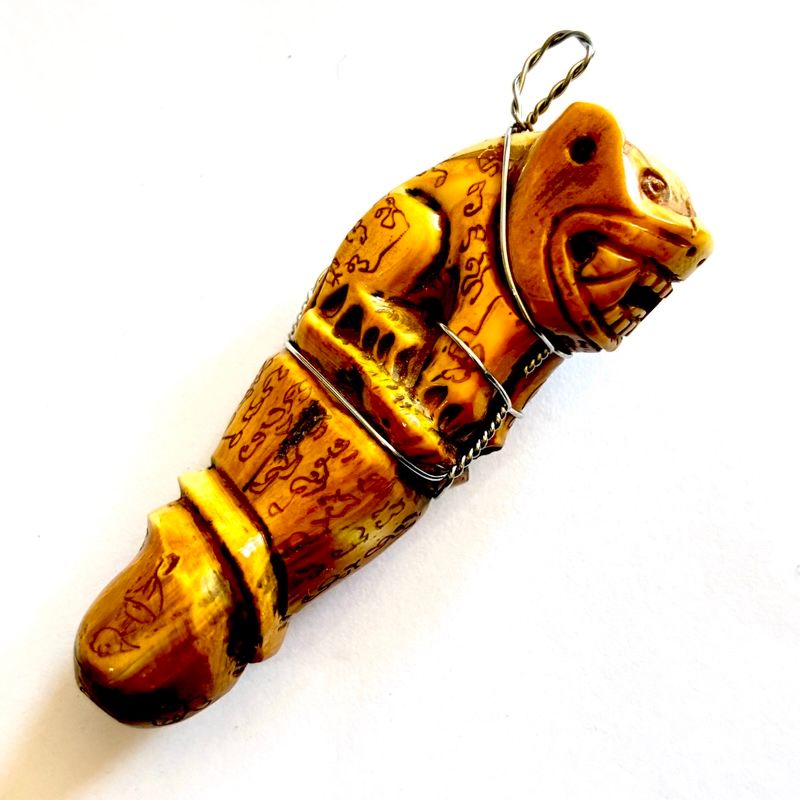
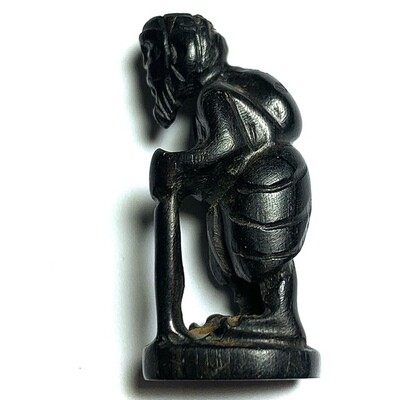
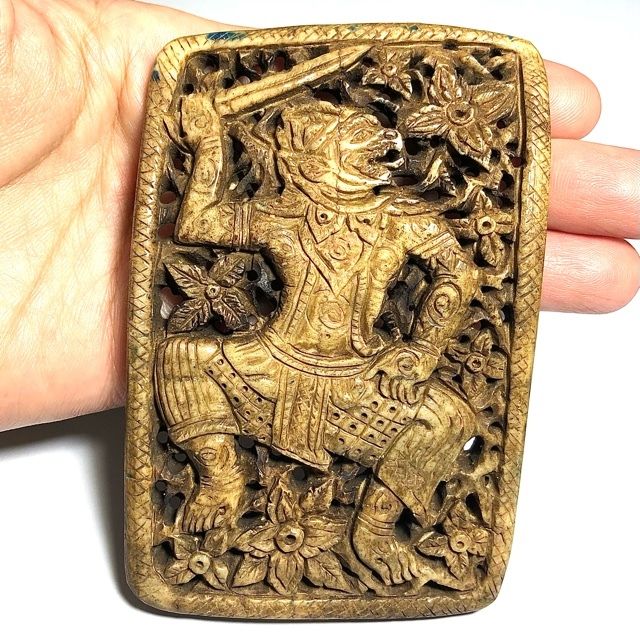
Ban Neng Lersi Nang Suea; A one off original necromantic skullbone carving, in the image of a Lersi Hermit God, seated in meditative posture with a tiger head on lap, in Jumbo Size. An immensely protagonistic amulet, that stands out from the crowd with its powerful dark arts power. This large and highly detailed Lersi Bone Carving, is a most imposing amulet for wear, or ritual bucha object for the altar, and an immensely rare world class hand made ancient amulet estimated by Ajarn Spencer to be the work of the Great Ayuttaya Lay Master Ajarn Heng Praiwan,. Ban Neng Ruesi Nang Suea Necromantic Skullbone Lersi with Tiger Hand Spell Inscriptions Ajarn Heng Praiwan Detail 1

This skull bone carving, is in quadratic shape, and is an immensely filigrain, and finely detailed master class carving from a top artisan, with an ancient and exquisitely filigrain carved details of the images of Por Gae Lersi Hermit God, with tiger head on lap for Maha Amnaj Kong Grapan, and decorative Lai Thai embellishments. This carving is so visibly, finely carved with immense details, that it can only have been made by a Master Artisan, with the highest level of prowess. specializing in the Lai Thai traditonal Buddhist Line-Art.

Ban Neng Ruesi Nang Suea Necromantic Skullbone Lersi with Tiger Hand Spell Inscriptions Ajarn Heng Praiwan Detail 2

Free Registered Air Parcel Worldwide Shipping

Free EMS / DHL / FedEx Express Shipping and the option of free solid silver Waterproof Casing is included with this item. An extremely rare, and exquisitely beautiful carving that is among the finest one could encounter by Olden days Lay Master Ajarn Heng Praiwan. Carvings of this level of fine detail, adherent to the ancient rules of Lai Thai fine line art traditional design, are in them-self, even when not powerfully blessed by great Monks, a piece of historical and cultural religious art that is of the museum curation level.

Ban Neng Ruesi Nang Suea Necromantic Skullbone Lersi with Tiger Hand Spell Inscriptions Ajarn Heng Praiwan Detail 3

This particular Ban Neng in fact, is beyond any kind of true price estimation (Hence ‘Priceless’), for its beauty, spiritual and cultural value, and the level of artistic prowess of the design carving, makes it a piece of fine art in itself, in a collector niche of ‘The Man who has everything’, that would not even blink to pay ten times what we would ask for this item. But we do not like the concept of traders offering different prices for the same item, depending on how wealthy the buyer is – we consider that fraudulent behavior, and unethical trader-attitude, same price for all with us. The price of an item such as this is not low in any case, so we see no reason why dishonest traders and those who sell to millionaires should ‘bump up the price’. That is not necessary to succeed as an honest trustworthy trader. This is the philosophy of curator Ajarn Spencer Littlewood.

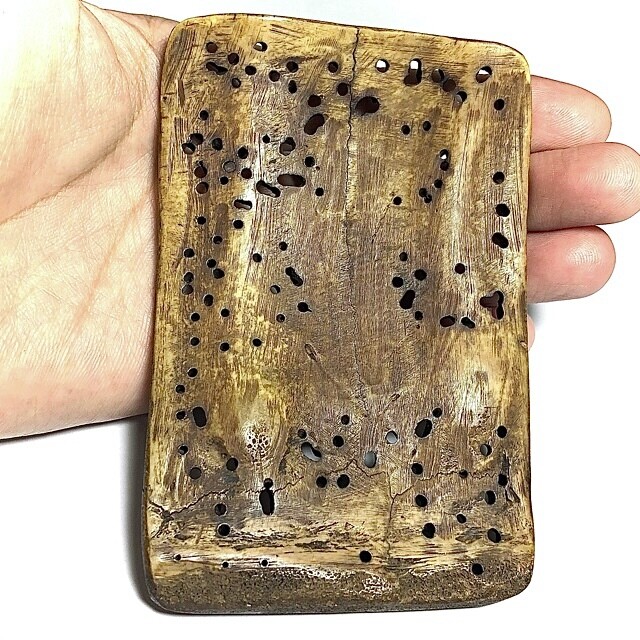
Below; Hand made spell inscriptions in Khom Agkhara (Khmer Sanskrit), are visible on the rear face (inner side of skullbone), of the Ban Neng Carving.

Ban Neng Ruesi Nang Suea Necromantic Skullbone Lersi with Tiger Hand Spell Inscriptions Ajarn Heng Praiwan Detail 4

The Ruesi/Lersi represent the ancient Hermit God Deities of Vedicv Lore, who first took the psalms of heaven and wrote them down into grimoires, and created the multitude of Wicha (arts crafts magical arts, instruments, trades and sciences) to communicate to humans on earth. The Lersi on earth are practitioners who aspire to become lower human form emanations of these Devas, who are found on multiple dimensions/levels of the celestial realms, and the HImapant Forest.

Ban Neng Ruesi Nang Suea Necromantic Skullbone Lersi with Tiger Hand Spell Inscriptions Ajarn Heng Praiwan Detail 5

Kata Bucha Ruesi;

Om Imasaming Pra Bprakone Tap Pra Muneetewaa Hidtaa Dtumhe Bparipunchandtu
Tudtiyambpi – Imasaming Pra Bprakone Tap Pra Muneetewaa Hidtaa Dtumhe Bparipunchandtu
Dtadtiyambpi – Imasaming Pra Bprakone Tap Pra Muneetewaa Hidtaa Dtumhe Bparipunchandtu

Kata Khor Porn Por Kroo Ruesi 108

Ban Neng Ruesi Nang Suea Necromantic Skullbone Lersi with Tiger Hand Spell Inscriptions Ajarn Heng Praiwan Detail 6

Kata to ask for the blessings of the Ruesi;

Om dtwa mewamaadtaa ja bpidtaa dtwa mewa dtwa mewa pantusaja sakhaa dtwa mewa dtwa mewa witayaa tarawinam dtwa mewa dtwa mewa sarawam ma ma tewa tewa

Three Kata Chants for Praying to Lersi Narot Hermit God

Kata for Bucha Ruesi Narot

Ugaasa Wantami Bhante Sappatang Abparaatang Kha Ma Dta Mae Bhante Mayaa Gadtang Bpunyang Saaminaa Anumotittappang Saaminaa Gadtang Mayhang Naadtappang Saatu Saatu Anumotaami

Wantaami Narata Burapaajaariyang Sappa Maetosang Khamadta Mae Bhante

It should be noted that to correctly Bucha Ruesi Deities, one should also have Korb Kroo ceremony performed on you in order to receive protection and lineage of the Ruesi Masters.

Ban Neng Ruesi Nang Suea Necromantic Skullbone Lersi with Tiger Hand Spell Inscriptions Ajarn Heng Praiwan Detail 7

Kata Bucha Por Gae Ruesi Dta Fai

Ugaasa imang akkee paahoo buppang Ahang wantaa aajaariyang sappasayang winaassandti
sittigaariya abparabpachaa imasaming pawandtume
tudtiyambi – imang akkee paahoo buppang Ahang wantaa aajaariyang sappasayang winaassandti
sittigaariya abparabpachaa imasaming pawandtume
Dtadtiyambpi – imang akkee paahoo buppang Ahang wantaa aajaariyang sappasayang winaassandti
sittigaariya abparabpachaa imasaming pawandtume

Ban Neng Ruesi Nang Suea Necromantic Skullbone Lersi with Tiger Hand Spell Inscriptions Ajarn Heng Praiwan Detail 8

Katas for Revering the Ruesi

Various Kata (general and specialized) for praying to the Ruesi, and empowering your Ruesi amulets, Por Gae Masks and Statues

General Kata (Good for all Ruesi)

Namasa Dtisadtawaa Isisitti Lokanaatathang

Anudt Dtarang Isee Ja Pantanang

Saadtraa Ahang Wantaami Dtang Isisittiwesa

Ban Neng Ruesi Nang Suea Necromantic Skullbone Lersi with Tiger Hand Spell Inscriptions Ajarn Heng Praiwan Detail 9

How to Pray to Ruesi Narot (Naradha)

Offer Hmak Plu (Betel nut and Areca leaf), tobacco and grapefruit. Also offer flower garlands which have jasmine flowers in them.

Wai Kroo Lersi Kobutra ไหว้ครูฤาษีโคบึตร

Kata Bucha Phu Ruesi Nakarach

Om Mahaa Swaahome Na Leu ler Asisidti Tanuu Jaewa Sappae Aawutaanija Pakka Pakadtaa Wijuninaani Lomang Maamae Na Pussandti

โอมมะหา สวาโหม นะ ฦา ฤา อสิสิติ ธะนูเจวะ สัพเพ อาวุธทานิจะ ภัคคะภัคตา วิจุนินานิ โลมังมาเม นะผุสสันติ

Paya Puchong Nakarach Naga King Lersi God

Kata Por Phu Ruesi Narai

Om Namo Por Phu Ruesi Narai Na Ma (chant three times)

then chant;

Sahassa Naedt-Dto, Por Phu Ruesi Narai, Tippa Jagkhung Wisotaaya
Om Imasming Saggaara Wantanang Por Phu Ruesi Narai
Buchidt Dtawaa Mahaa Laapo Sukhang Palang Pawandtume

Ban Neng Ruesi Nang Suea Necromantic Skullbone Lersi with Tiger Hand Spell Inscriptions Ajarn Heng Praiwan Detail 10

Kata Ruesi Hnaa Suea Tiger Face Lersi

How to Chant Kata Bucha Pra Ruesi Narai

The Kata (mantra) for Ruesi Hnaa Suea (tiger head ruesi) is as follows;

Oem Rue Reur (Leu Leur if you like), Mahaa Rue Raa Payakkae Payakkoe

Ittirittae Ittirittoe Sirae Sirae Kuroe Kuroe Yaadoe Bpen Man Naa Ham

Guu Diar Bang Giar Doer Doer

Ban Neng Ruesi Nang Suea Necromantic Skullbone Lersi with Tiger Hand Spell Inscriptions Ajarn Heng Praiwan Detail 11

Alternatively, or in Addition to the previous Kata;

Ugaasa Imang Akkee Paahu Bpub-Phang Ahang Wantaa Aajariyang Sappa Sayyang Winaasandti Sitti Giriya Abpa Rabpa Chaa Imasming Pawandtume

Tudtiyambpi – Ugaasa Imang Akkee Paahu Bpub-Phang Ahang Wantaa Aajariyang Sappa Sayyang Winaasandti Sitti Giriya Abpa Rabpa Chaa Imasming Pawandtume

Dtadtiyambpi – Ugaasa Imang Akkee Paahu Bpub-Phang Ahang Wantaa Aajariyang Sappa Sayyang Winaasandti Sitti Giriya Abpa Rabpa Chaa Imasming Pawandtume

Ban Neng Ruesi Nang Suea Necromantic Skullbone Lersi with Tiger Hand Spell Inscriptions Ajarn Heng Praiwan Detail 12

Kata Bucha Ruesi Galai Gote (Deer Head Ruesi)

Namo Galai Godti Mahaa Munii No Suradtaba Chaanatarassa
Sujaridta Chanaanang Sappa Sitti Taaya Gassa Manussaa Taewaanang
Warakunatara Mahaa Muninodti Bpaadtagassa

Ahang Dtang Wantaami Dtumhae No Gaaya Palanja Jidt-Dta Palanja Sappa Sittinja Taetha

Ban Neng Ruesi Nang Suea Necromantic Skullbone Lersi with Tiger Hand Spell Inscriptions Ajarn Heng Praiwan Detail 13

Ajarn Heng Praiwan, was a great Lay Master, and Adept Necromancer of olden days, of the Ayuttaya Province, whose Takrut, and hand carved ivory, bone, tooth, and other talismanic objects are legendary with high end collectors and curators, and devotees of this Master, whose magic is said to have been so very powerful. Ajarn Heng was born in the year 2428 BE, and was ordained as a Buddhist Monk when he came of age, at Wat Suwan in Ayuttaya. During his ordained years, je studied many ancient magical Wicha of the grimoires of Wat Pradoo Rong Tam, which was a great library of ancient magical grimoires, perhaps the largest in the country. He became extremely able in the inscription of Khom Agkhara Sanskrit Spells, Kata Incantations, and Sacred Yant, and became very well known as a great Master of Sak Yant Thai Temple Tattoos.

Ajarn Heng Praiwan, studied the Wicha Grimoire of the Dtamra Radtana Mala until attaining full Adept Mastery, after which he disrobed for a time to help his parents, after which, he ordained again once more, at Wat Prayatigaram in Ayuttaya, with the Great LP Glan Tammachodti, Abbot of Wat Prayat, as his Upachaya Ordaining Monk. He spent a long period of time learning and mastering the full Dtamra of the Wicha of Luang Por Glan, after which he disrobed again, and became a lay-sorcerer until the end of his days, when he passed away at the age of 75, in the year 2502 BE.

It is said that Ajarn Heng’s father, was either a police officer, or a prison officer, and sent Ajarn Heng to Penang, and Singapoer to be educated.But Ajarn Heng did not finish his schooling, and left, because of his immense fascination and interest in the study of Saiyasart, & the Dtamra Saiyawaet Grimoires, of Thai Buddhist, Animist, and Necromantic Occult Practices. He even traveled to the South of Thailand to learn the most ancient Magical Practices of the Southern Khao or Sorcery Lineages.

After his time practicing and mastering the Southern Lineage Magical Practices, Ajarn Heng returned to his home Province of Ayuttaya, in Central Thailand. Ajarn Heng was now a Master of the Wicha of Luang Por Glan, and the Southern Wicha of Sorcery which dates back to the Sri Vichai Era of Siam. The Wicha Mastered in Entirety of Wat Pradoo, whgich Ajarn heng has undertook, came from the time when King Naresuan Maharach, ordered the Wicha Saiyasart Grimoire texts to be inscribed and stored at Wat Pradoo Roeng Tam.

Kata Wai Kroo Yant 108 (Ruesi 108)

The inscriptions were begin and finished between the years 2133 – 2148 BE. It was King Pra Mahesuan Maharach, who united the city Kingdoms of Siam and Unified the country into one Land, namely ‘Siam’, or ‘Thailand’, and made the city of Ayuttaya the first capital of the Kingdom (Later to be moved to Bangkok, for logistical and geo-political reasons).

Ajarn Heng began to serve the public and accept devotees, at first by only performing Sak Yant Tattoos, and became known as one of the Top Sak yant Masters in the Country of his Time. Another later Kroo Ba Ajarn and Friend in Dhamma, Luang Phu Si, of Wat Sakae in Ayuttaya (Temple of LP Doo), once told that during the time of King Rama the 3rd, during a time of military dispute, around the year 2475 BE, many regiments of Thai soldiers, of both high and lower standing went to Ajarn Heng for his protective Yant, due to the miraculous powers attributed to them, all one the same day. On this occasion, Ajarn Heng constructed the ritual place at Wat Hantra Temple. Ajarn Heng invited a host of powerful Monks with Psychic Powers to assist in the ceremony of Blessings.

In this occasion (around 2476 BE),Ajarn Heng had to work very hard to gather a large number of Master Monks to come and perform the Suad Nam Puttamont Chanting Ritual, and this was a very had task in those days in Ayuttaya, to travel around and fine enough top masters who knew the chanting of the Nam Pra Puttamont and the Putta Pisek (Buddha Abhiseka) ceremonie. He was assisted in this task, by the great Luang Phu See of Wat Sakae.

Ban Neng Ruesi Nang Suea Necromantic Skullbone Lersi with Tiger Hand Spell Inscriptions Ajarn Heng Praiwan Detail 14

Ban Neng Ruesi Nang Suea Necromantic Skullbone Lersi with Tiger Hand Spell Inscriptions Ajarn Heng Praiwan Detail 15

But on this occasion, Luang Phu Si could not attend as well, because he was busy with Dhamma Duties at Wat Liab. But, after this Ceremony, Ajarn Heng would always invite Luang Phu Si to attend all of his subsequent Blessing Ceremonies, and assist with empowerment.

Ban Neng Ruesi Nang Suea Necromantic Skullbone Lersi with Tiger Hand Spell Inscriptions Ajarn Heng Praiwan Detail 16

Ajarn Heng was a relatively wealth person with two houses and land stakes, one in the countryside in Tung Hantra, and one in Bangkok. And so, he would have devotees seek him out in Bangkok and in Hantra, for Sak Yant Tattoos, and his powerful amulets. It became popular to get high class artisans to carve his amulets, as well as village people would carve animist charms from ivory, wood, and sometimes, necromantic Ban Neng skullbones, which are of course, along with his famous metallic, and inimitably designed Takrut Maha Jakkapat Metallic Scroll Spells, the most highly valued, rare, and sought after by devotees of the great anbcient Ayuttaya Lay Sorcerer. Finally, Ajarn Heng moved to stay in Suan Malee, until the Wars in Asia Broke Out, whereupon he left the Capital, and returned to his home Province of Ayuttaya.

During this time, there were many Gangsters and Highwaymen, and a lot of need for Sak Yant Tattoos for Kong Grapan Chadtri and Klaew Klaad protective Magic, and Ajarn Heng became a highly acclaimed master, renowned for his Yant Gao Yord (A Wicha Obtained from the Great LP Hrun). Ajarn Heng was able to receive additional Wicha from the famous temple of study of Sorcery, Wat Sam Jeen, as well as receiving Wicha from the great Luang Phu Tong, of Wat Rat Ayotaya, and Luang Phu Kam Wibun.

Ban Neng Ruesi Nang Suea Necromantic Skullbone Lersi with Tiger Hand Spell Inscriptions Ajarn Heng Praiwan Detail 17

Ajarn Heng’s Kong Grapan magic was so famous, that it became popular for police and military to get his tattoos, but also that they did not like the fact that so many Gangsters had them too, anbd were impossible to shoot dead. There was once a time when Ajarn Heng was parked in a boat on the banks of the river at Wat Cherng Lane Temple, where the Police came, and had to forbid Ajarn Heng from tattooing more, because the area was overflowing with Gangs of Highwaymen, and his tattoos were making it impossible for the police to catch them.

Ajarn Heng was known to have been highly able himself with Buddhist Arts, and Carvings, in wood, ivory, bone, and skull Ban Neng, as well as being highly famed perhaps most of al, for his famous Takrut, and Carved Ban Neng. It is even said, that the Great Artist Kroo Hem Waechakorn said of Ajarn Heng that “If there is anyone who can draw the four faced Brahma Image better than anyone, it is Ajarn Heng Praiwan”. Ajarn Heng was extrremely adept in Wicha Hanuman for Invicnibility, Kong Grapan, Victory, and Loyalty, which were very popular of course with all devotees, be they Police, Civil Servants, Ganster Mafias, Triads, or Military. Ajarn Heng made so many different forms of carved amulets and animist charms, that it is very hard to catalogue all of them, but if one is to say ‘which amulets are the most well known?’ One would say perhaps his famous Rian See Hnaa 4 faced Brahma coin.

Ban Neng Ruesi Nang Suea Necromantic Skullbone Lersi with Tiger Hand Spell Inscriptions Ajarn Heng Praiwan Detail 18

Charms & Talismans

Thai Buddhist, Animist, and Occult Charms and Talismans, authentically blessed by the great Monks and Lay Masters of Old, and Present Day

Filters

Filters
1 - 60 of 801 items

Ajarn Spencer Littlewood for ancientamulet.com
All rights reserved.


Gradong Paya Tao Ruean Gae Hanuman Carved Shell Hand Khom Spell Inscriptions - Unknown Sorcerer

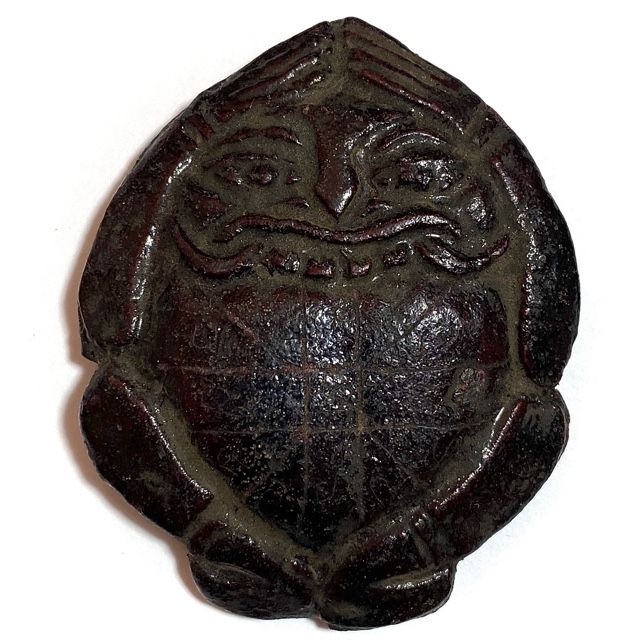
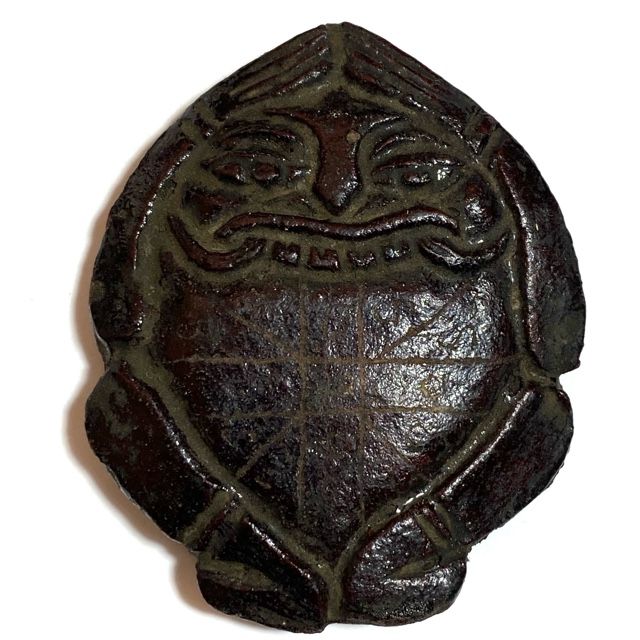
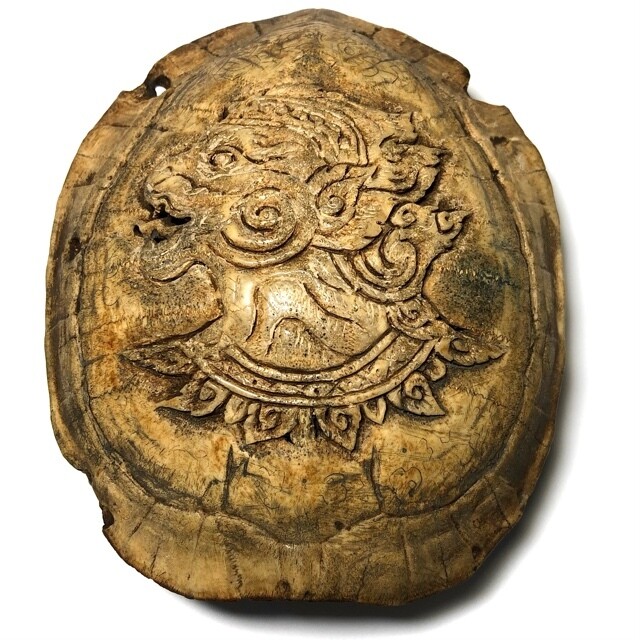
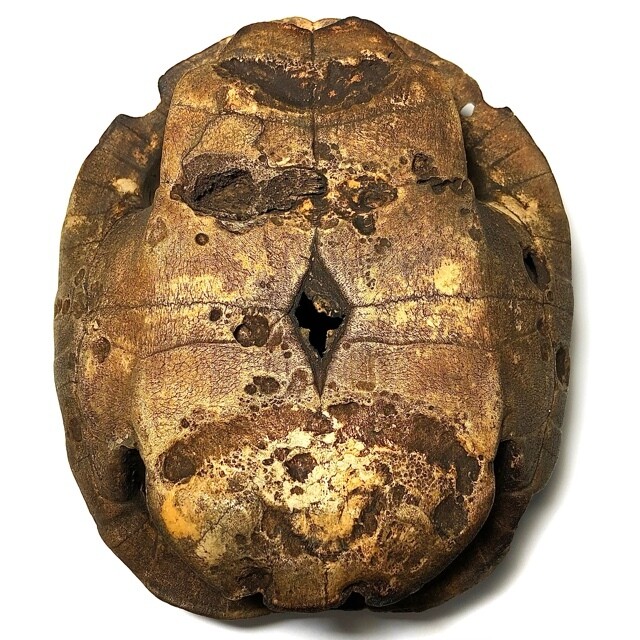
A Sacred Blessed Paya Tao Ruean Tortoise Shell with Hand Carved Lai Thai style Hanuman, Vanora Deity in the Thai Ramakien (Ramayana) and general of the Simian soldiers of Prince Rama, the Vishnu Avatar Deity of Ramayana. This hand carved and empowered Tao Ruean shell is embellished with Ancient Khmer Sanskrit Khom Agkara hand made spell inscriptons etched into the surface, and the Head of Hanuman, carved with immensely filigrain fine details, Most certainly a highly powerful and inimitable Master-Class Occult Magical Item of the ‘Krueang Rang’ Talismanic Variety, and is a master class carving from a top artisan. The exquisitely filigrain carved details of the images of Hanuman the Albino Vanora Monkey God, has outstanding decorative Lai Thai embellishments. This carving is so visibly, finely carved, that it can only have been made by a very accomplished Master Artisan, with the highest level of prowess. I the author (Ajarn Spencer), estimate this item to be about 60-80 Years Old (written in 2022). This fits with the late Era of the Great Ajarn Heng Praiwan, which is a highly probable origin of this exhibit, although unprovable.

Gradong Paya Tao Ruean Gae Hanuman Carved Shell Hand Khom Spell Inscriptions Unknown Sorcerer Detail 1

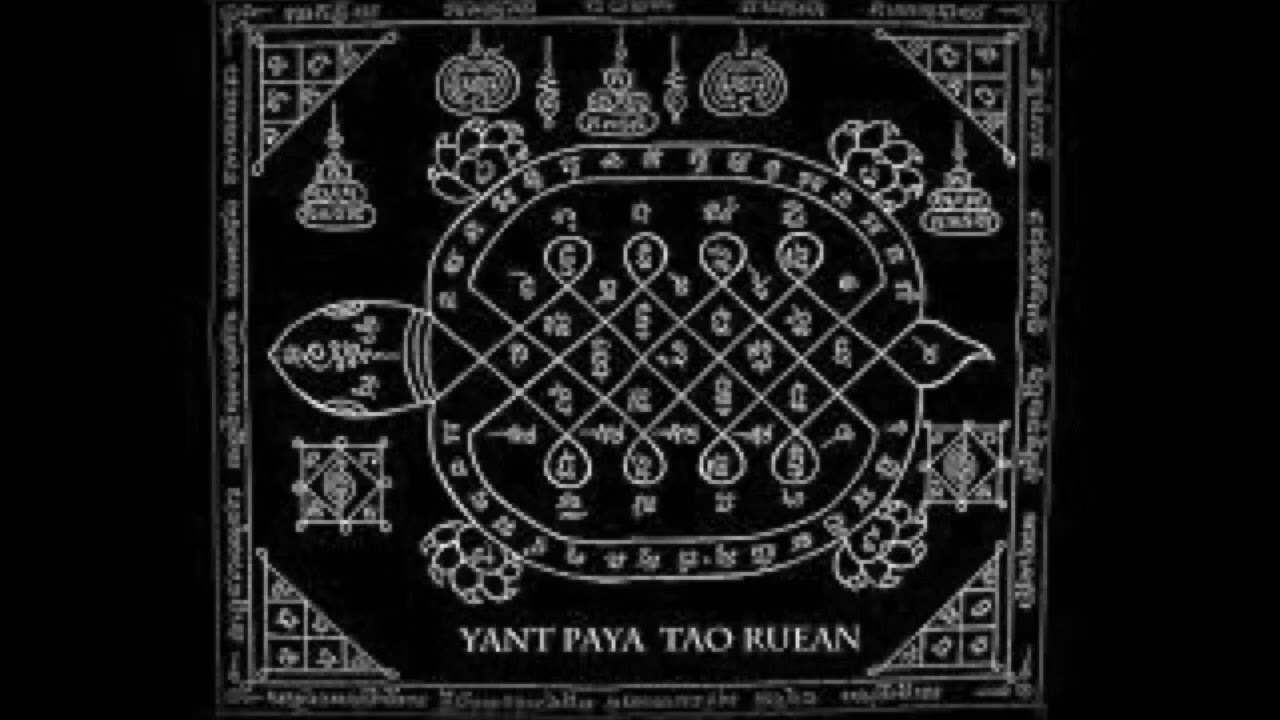
The Tao Ruean Maha Pokasap is in itself considered to be imbued with Natural magical Power for Long Life, and Prosperity. But when such a Magical object is further empowered with the Wicha Yant Paya Tao Ruean, then the power of Maha Lap Maha Pokasap becomes immensely amplified, through the invocations which call upon the Great World Turtle, with its great compassion.

A Turtle/Toroise Yant would give long life, protection as well as riches, because tortoises and turtles live very long, have a hard shell for protection, and are considered lucky emblems. The Astrological meanings within both the Shell, and the Yant Paya Tao Ruean Spell, are also immensely powerful; It is well known that the number of lunar months are embodied in the number of plates of a turtle shell: “13 moons on Turtle’s back.” Turtle amulets have of course the special magical quality of generating long life. All achievements will come steadily, if perhaps not rapidly but surely and secure growth will be certain.

Gradong Paya Tao Ruean Gae Hanuman Carved Shell Hand Khom Spell Inscriptions Unknown Sorcerer Detail 2

The Tao Ruean, is a very special animal, for it represents the Lord Buddha in one of his past lifetimes, as he was born as a Turtle. It is recounted in the ‘Ha Roi Chati’ (500 Lives of Buddha) story. The Buddha was alive as a turtle, who lived on a desert island on top of a mountain, practicing purity and morality. The turtle grew so large to be as big as the size of a house over the years. One day some sailors were shipwrecked on his island, and began to starve. They tried to eat the Areca nuts, which are of course inedible, and then when one of them died, they trussed the dead man up and roasted him to eat his flesh for survival. But this did not feed them for long, and they began to starve again.

Gradong Paya Tao Ruean Gae Hanuman Carved Shell Hand Khom Spell Inscriptions Unknown Sorcerer Detail 3

As time passed and they got desperate and looked like they were going to begin killing each other and turn cannibal, the turtle looked down from the mountain and was filled with mercy. He thought ‘I do not have anything to give these poop humans to eat, except for my own body. May i donate my large body and its meat for these humans to survive, and may i attain Nibbana one day for this deed. The turtle then threw itself off the cliff, and fell bouncing down hitting the walls of the cliff, breaking its shell open, to land dead at the foot of the mountain on the beach in front of the sailors. The sailors then celebrated and paid respects to the great Paya Tao Ruean Turtle for his Mercy and Self Sacrifice, and survived until they were rescued by a passing ship.
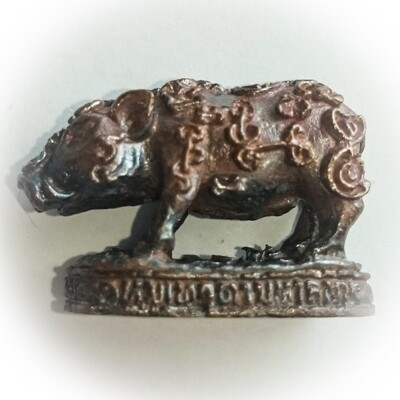
Gradong Paya Tao Ruean Gae Hanuman Carved Shell Hand Khom Spell Inscriptions Unknown Sorcerer Detail 4

When the people got safely back to port and came home, they began to fashion turtles from clay or metal or carved from wood and place as an object of reverence in their homes, to pay respect and as a memorial of the Paya Tao Ruean who saved their lives, and to remind them to practice compassion, and to keep them protected from Danger, and bring them Long Life.

Gradong Paya Tao Ruean Gae Hanuman Carved Shell Hand Khom Spell Inscriptions Unknown Sorcerer Detail 5

Kata Bucha

Think of the Buddha, and all the Enlightened Buddhas of all the Three Times, in the Three Worlds, and their Great Attainments, and call upon their merits to Protect and bring you Prosperity, Health, Happiness, Wealth and Long Life. Then Chant the Maha Namasakara 3 times before the Kata for the amulet, to Revere and Invoke the Buddha first. This is necessary to perform before chanting any Kata to any Buddhist amulets.
Namo Dtassa Pakawadto Arahadto Sammaa Samputtassa

Namo Dtassa Pakawadto Arahadto Sammaa Samputtassa

Namo Dtassa Pakawadto Arahadto Sammaa Samputtassa

Kata Bucha Paya Tao Ruean

Na Ma Pa Ta Naa Sang Si Mo – Sang Si Mo Naa – Si Mo Naa Sang – Mo Naa Sang Si – Na U Ta Ga Mae Ma A U – A

Gradong Paya Tao Ruean Gae Hanuman Carved Shell Hand Khom Spell Inscriptions Unknown Sorcerer Detail 6

The turtle is also a very meaningful Spiritual Symbol in many other Cultures of the World, such as the American Indian Belief system; Many Eastern North American aboriginal peoples tell how Sky Woman, Atanaesic, fell from heaven to land on the back of Turtle. Water-divers like Otter, Beaver and Muskrat tried to bring up mud to form the earth. Traditions vary as to which one was successful. Sky Woman dies there, giving birth to her twins who embody the principles of Good and Evil. The Buddha used a sea turtle to illustrate the precious rarity of opportunity afforded by our human birth. The turtle example appears in the scripture called in Pali, the Chiggala Sutta that is classified as LVI.48 of the Samyutta Nikaya. It is a metaphor known in English as The Hole:

  • “Monks, suppose that this great earth were totally covered with water, and a man were to toss a yoke with a single hole there. A wind from the east would push it west, a wind from the west would push it east. A wind from the north would push it south, a wind from the south would push it north. And suppose a blind turtle were there. It would come to the surface once every one hundred years. Now what do you think – Would that blind turtle, coming to the surface once every one hundred years, stick his neck into the yoke with a single hole?”
  • “It would be a sheer coincidence, Lord, that the blind turtle, coming to the surface once every one hundred years, would stick his neck into the yoke with a single hole.”
  • “It’s likewise a sheer coincidence that one obtains the human state.
  • It’s likewise a sheer coincidence that a Tathagata, worthy and rightly self-awakened, arises in the world.
  • It’s likewise a sheer coincidence that doctrine and discipline expounded by a Tathagata appears in the world.
  • Now, this human state has been obtained. A Tathagata, worthy and rightly self-awakened, has arisen in the world. A doctrine and discipline expounded by a Tathagata appears in the world.
  • “Therefore your duty is the contemplation: `This is stress (Suffering) . . . . This is the origination of stress . . . . This is the cessation of stress . . . . This is the path of practice leading to the cessation of stress (Suffering).”

Gradong Paya Tao Ruean Gae Hanuman Carved Shell Hand Khom Spell Inscriptions Unknown Sorcerer Detail 7

Wicha Yant Paya Tao Ruean (Dtao Luean)

The Yant Paya Tao Ruean spell has so many different applications; you can inscribe it on a cake of Talc face powder/foundation, and use to powder your face with; People will feel pleased to see you, and you will be protected from people becoming unfriendly to you; even if your Boss at work is extremely angry with you, his anger will disappear immediately.

Gradong Paya Tao Ruean Gae Hanuman Carved Shell Hand Khom Spell Inscriptions Unknown Sorcerer Detail 8

  • Use it to powder your face before entering a Court Case, and Your opponent will be silenced. Inscribe the name of the Person desired to be affected by the yant in the place where the letter “Pu” is (The centre square) write the person’s name first, then the letter “PU” on top of it.
  • If you wish to use this Yant to help you in an Exhibition/competition, inscribe the Yant on a sugar palm leaf along with the name of the targeted person. Place the yant under running water (such as a stream, fountain etc).Our opponent will be useless against us.
  • Another application is as a love charm; Inscribe the Yant on a sugar palm leaf along with the name of targeted person. Use the leaf to roll a cigarette with, blow the smoke towards the person we wish to lure, and they will fall in love with us.
  • If there is a matter to be solved inscribe Yant Paya Tao Ruean on candle paper (sai tien) and write the name of the other person/people involved, plus the name of the matter to be solved (write all over the Yant). Use the paper to wrap a candle with and light it:- Chant the kata until the candle goes out, take the ash residue from the candle and mix it together with some cooked rice (using your hand) – make 3 cakes out of it.
  • Give the rice to dogs to eat and chant the following:-

Ta Hmaa Pood Dai; Hai Man Wa Kwam Chana Gae Rao – Ta Hmaa Pood Midai Ya Hai Man Wa Kwam Chana Rao Dai Ley

The Kata means; “If the dog can speak – let him speak out against us and win – if the dog can’t speak – forbid him to speak out against us and win”. Then take your foot and tap the dog’s mouth 3 times, whilst saying; “A” (3 times = “A, A, A”).

Kata Paya Tao Ruean
  • Chant the “A” Syllable three times whilst sewing.
  • Pierce the catfish with a skewer and roast it on a grill fire whilst chanting the following;

Pla Nan Pen Yang Rai, Khor Hai Man Pen Yang Nan Terd.

Gradong Paya Tao Ruean Gae Hanuman Carved Shell Hand Khom Spell Inscriptions Unknown Sorcerer Detail 9

  • Once the fish is roasted, give it to a dog to eat.You can give the dog one fish a day for three days and your problem will disappear. If your employer is angry with you; Inscribe the Yant on candle wrapping (thin paper) along with your employer’s name. Soak it in perfumed oil and light the candle in the same manner as one does when praying to Buddha. The person targeted will be unable to be angry with us.
  • If someone is making accusations (legal for example), take the yant on paper and a “Khong” seashell (a kind of clam). close the lid of the clam again, and for Paya Dtao Luean/Ruean. Your accuser will be powerless to speak out against us. If you are competing in an exhibition or test or competition of some kind, inscribe Yant Paya Dtao Ruean on a sugar palm leaf.
  • If it is a very serious matter to be dealt with; inscribe the Yant on paper along with the name of the other person involved. Roll the Yant up and stuff it in the mouth of a “Pla Duk” (Catfish), take the hair of a corpse who died a violent death or drowning and use it to sew up the mouth of the catfish (use exactly three stitches to sew it up).

Gradong Paya Tao Ruean Gae Hanuman Carved Shell Hand Khom Spell Inscriptions Unknown Sorcerer Detail 10

  • Inscribe the name of Your competitor in the middle and the letter Pu in Khom on top of it. Place the Yant under running water (a brook, stream or waterfall for example). As the water flows offer the Leaf, our competitor will become weak and powerless. Can also be inscribed on a Banana leaf, rolled up into a cigarette using “Yaa Sen” (a thai tobacco alternative). Light the cigarette and blow the smoke towards the person we wish to charm; they will fall in love with us increasingly.
  • Please take heed that if you use a love charm on somebody and it works, there is a very strict rule you have to follow; namely that if the spell works you must never break up with him/her! If you make them love you they will be unable to live without you. Throwing that person away may lead to them killing themselves, or at least undergoing pain and sadness, more than the normal level that humans can usually withstand! So please be very considerate towards your newly gained lover if you use this kind of spell. abuse of a love spell on a person will bring you extremely bad Karma.


Kata Chants for Praying to Hanuman

The Hanuman Deity brings not only Invincibility and Protection, Charm and Victory, but also induces Lucky Fortunes for Serm Yos (Promotion of Status), and Increase in Intelligence and Fast-Wittedness. Hanuman will protect against evil, and prevent wealth loss, as well as attracting prosperity, and bring peacefulness to the household. Empowered with the powers and qualities of the great Vanora God Hanuman, to bring success in one’s endeavors, and with the protective Klaew Klaad and Wealth attracting Ud Sap Magic. Imbued with mercy charm, the Hanuman amulet is also reputed to subdue enemies, and increase popularity.

Gradong Paya Tao Ruean Gae Hanuman Carved Shell Hand Khom Spell Inscriptions Unknown Sorcerer Detail 11

The Hanuman Vanora Monkey General God was a Denizen of the HImapant Forest, the son of the God Vayu (God of the Wind), and Nang Lady Swaaha, and has appeared in a multitude of Thai Buddhist and vedic Myths and Legends, including the Ramayana, The story of Ruesi Kotama (Lersi Kodom) and how his uncles Paya Pali and Chompoopan were turned into monkeys, and the Thai Ramakien Epic. His great Metta as well as his Loyalty and Bravery is always revealed in the legends, as well as the fact that he was immortal, as whenever he was killed, and the wind blew upon him, he would be brought back to Life, by the Breath of his Father Vayu the God of the Wind, Vayu. The Hanuman Vanora God is featured both in ancient Vedic literature, as well as in the Cosmological Pantheonon of Gods, as an Animist Deity from Vedic Lore that has been an integral part of Thai Buddhist People’s belief since the advent of Buddhism.

Gradong Paya Tao Ruean Gae Hanuman Carved Shell Hand Khom Spell Inscriptions Unknown Sorcerer Detail 12

Kata Pluk Hanuman

Na Mang Pae Ling Mo Mang Bpaag Grabork Ya Mi Hai Ork Udtang To Ud Tang Ad Asang Wisulo Busapupa Ma A U Om Ya Puttaa Tayo Sadtrii Nisangho

Kata Sri Hanuman (Brahman)

Maruta Nandana Namo Namaha Kashta Bhanjana Namo Namaha Asura Nikandana Namo Namaha Shri Rama Dhuutang Namo Namaha

Gradong Paya Tao Ruean Gae Hanuman Carved Shell Hand Khom Spell Inscriptions Unknown Sorcerer Detail 13

Kata Hanuman

Na Ma Pa Ta Hanumaana Waa To No A Ma Ma Wa

Kata Hua Jai Hanuman (Heart Mantra)

Ha Nu Maa Na (3 times)

There are a multitude of different specialized Kata for chanting to the Hanuman Deity in Thai Buddha Magic. Each Kata can be used for your different needs or time available.The Hanuman Deity brings not only Invincibility, Charm and Victory, but also induces Lucky Fortunes for Serm Yos (Promotion of Status), and Increase in Intelligence and Fast-Wittedness. Hanuman is the symbol of Loyalty, for his unwavering dedication and selfless service to Prince Rama as told in the Ramayana. He is charming, super strong, invincible, cannot die, wily and clever, and is the commander of all the Vanora Devas as their General.

Kata Hanuman Kluk Fun Kicking Up Dust Spell for Muay Thai Warriors

Hanuman can not only protect from dangers, black magic and ill fate, he can also bring winners luck to gambling tables, is an able seducer of maidens and nymphs, and is more or less a winner in every walk of life. His strength is immense and second to no God, for which reason he is the mascot and revered Deithy of Muay Thai Warriors, who call upon the power of Hanuman to defeat their contestants and opponents in battle in the ring. The Winning Power of Hanuman, will clear the way of difficulties, whilst making all ventures successful.

Gradong Paya Tao Ruean Gae Hanuman Carved Shell Hand Khom Spell Inscriptions Unknown Sorcerer Detail 14

This item can only be stated as ‘Unknown Master’ because such Talismanic Bucha Occult Items are very individualistic, one-off, or if more than one made, each individual exhibit is always so different, that is is truly difficult to prove the origins. However, if i were to make an educated guess, i would recognize this Artisan’s work as probably having been carved by one of the Artisans of the Bangkok Ministry of Buddhist Arts, and most probably an Artisan of the Ayuttaya Region, judging from previous acquired items of similar style, which i know the origins of, being Ayuttaya. The similarity with this exhibit is so alike, that i wold assume this Paya Tao Ruean Bucha to be most probably from the Ancient Ayuttaya Lay Master, Ajarn Heng Praiwan. However, this is hard to prove, except that the inscriptions seem identical to those of Ajarn Heng. However, many of Ajarn Heng’s carved amulets were not of such fine quality Artisanry, except for a few of his most impressive exhibits. This leaves hence an element of uncertainty in my mind.

Gradong Paya Tao Ruean Gae Hanuman Carved Shell Hand Khom Spell Inscriptions Unknown Sorcerer Detail 15

What I am most certain of however, is the fact that to obtain the shell, create the carving, inscribe and empower the Tao Ruen, is such a tedious procedure, and tiring in the performing of the Paya Ta Ruean Magic Spell and Ritual Empowerment, that it can only have been made by an Adept Sorcerer of the Highest Level. An extremely rare, and exquisitely beautiful carving, that is among the finest one could encounter. Carvings of this level of fine detail, adherent to the ancient rules of Lai Thai Ramakien Thai fine line art traditional design, are in themself, even when not powerfully blessed by great Masters (which this exhibit most definitely has been), also a piece of historical and cultural religious art, that is of the museum curation level.

Gradong Paya Tao Ruean Gae Hanuman Carved Shell Hand Khom Spell Inscriptions Unknown Sorcerer Detail 16

Gradong Paya Tao Ruean Gae Hanuman Carved Shell Hand Khom Spell Inscriptions Unknown Sorcerer Detail 17


Filters

Filters


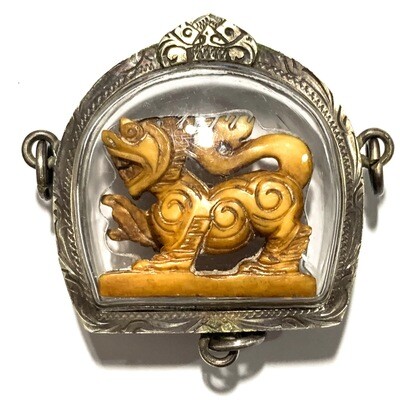
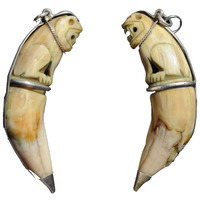
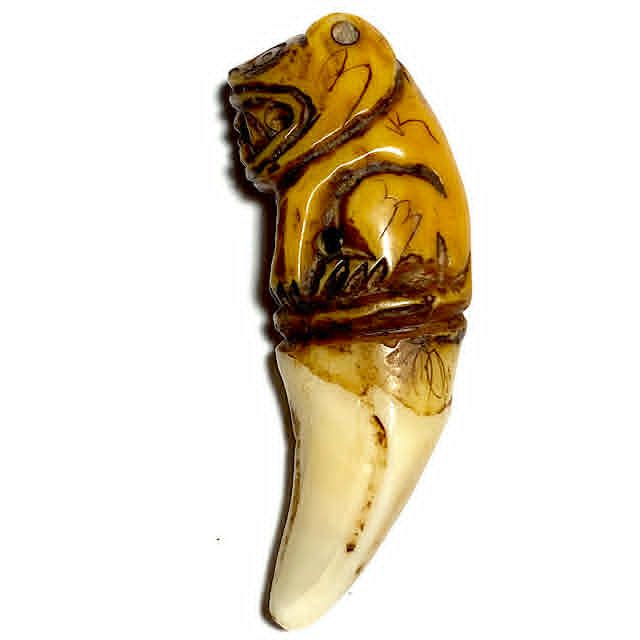
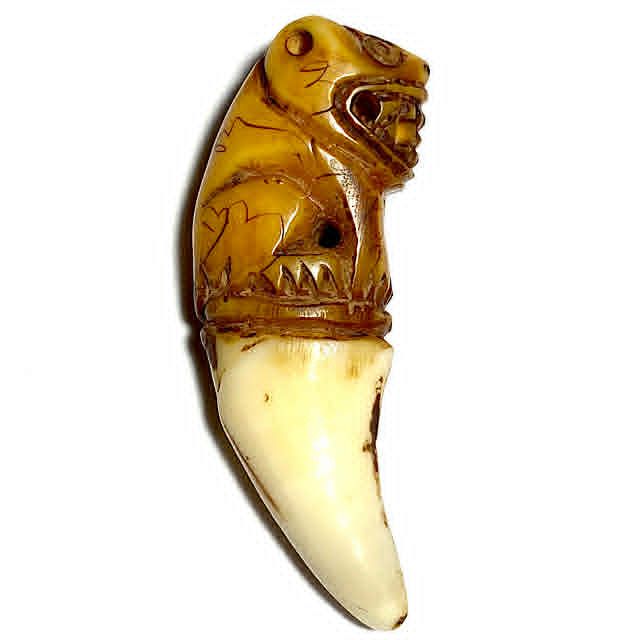
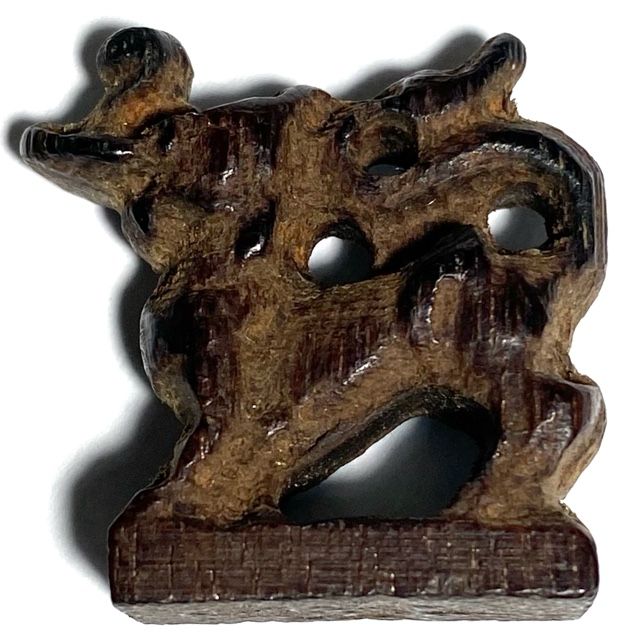
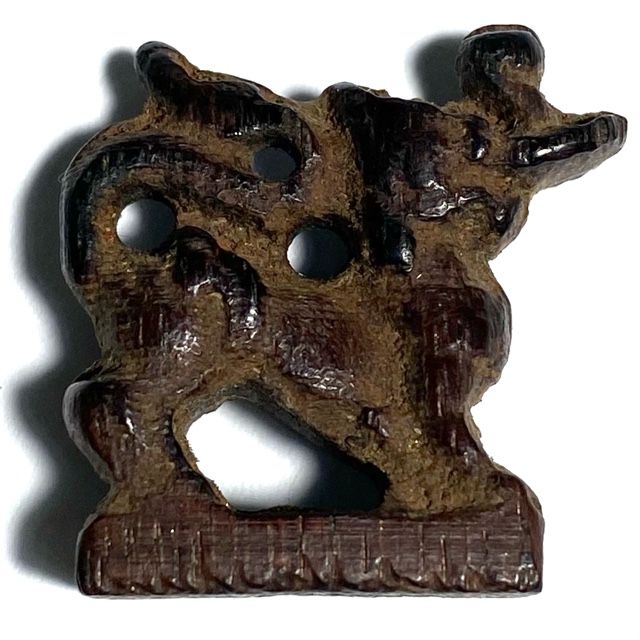
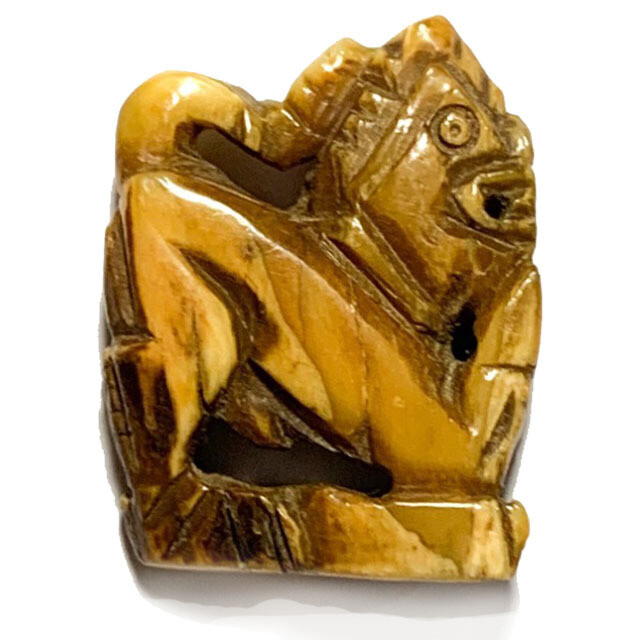
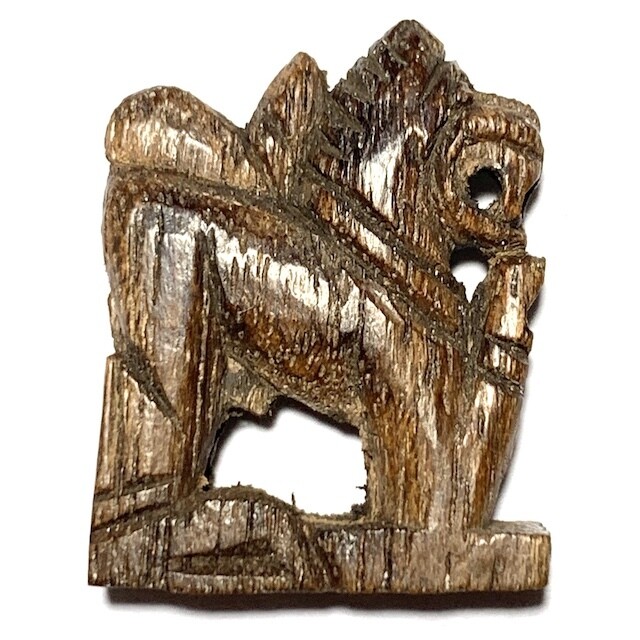
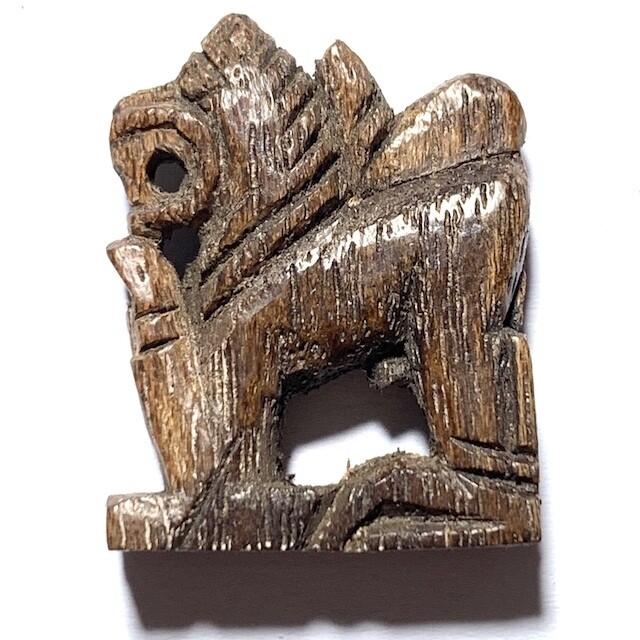
Suea Morb Nga Gae Crouching Tiger for Mercy Charm Protection Power and Invincibility Ajarn Heng Praiwan Featured

A very ancient and beautifully carved Animist Charm in Sacred Ivory (highly Aged), of the Suea Morb Elephant-Lion, from the great ex Monk and Lay Master-Sorcerer, Ajarn Heng Praiwan

The Sacred Ivory shows its age through the crevices formed over time, and the agéd yellow patina which has evolved through many decades of contact with the skin. The Suea Morb is known for its power of Mercy Charm (attraction), and to evade Bad Karma and Deadly Accidents, as well as to be in constant readiness to pounce when opportunity for success knocks.

The Suea Morb in ancient ivory is an animist charm believed to be extremely powerful in its effect to attract the auspicious, and deflect the inauspicious. The Tiger is one of the most powerful creatures, and adept hunters on earth, and do not really have any predators above them in the food chain (except Humans!). Hence, the Lion and Tiger are seen as Kings of the Forest, and enjoy a life without having to fear too many dangers.

Free EMS / DHL / FedEx Express Shipping and the option of free solid silver Waterproof Casing is included with this item. An extremely rare to see, and exquisitely beautiful Ancient Ivory Carving, that is among the very rare amulets to encounter by Olden days Lay Master Ajarn Heng Praiwan. A Powerful and Highly Sought After amulet by high-end talismanic amulet, as well as an important historical and cultural religious artifact.

The Suea Morb, as all amulets of Ajarn Heng (due to his empowerment method), can not only protect from dangers, black magic and ill fate, but is also known to be a Wicha for invoking Great Mercy Charm (Metta Maha Niyom), to bring Great Preference to You above Others. The amulet is designed to Attract Helpfulness, Popularity and Success, Imbue power and influence (Serm Yos), Command over Others (Maha Amnaj) & clear the way of difficulties, whilst making all ventures successful.

An excellent choice for those increased ‘Dtaba Decha’ (Recieve Honors, Glory, Respect and Promotion, Dominion and influence), The Sacred Ivory shows its age through the crevices formed over time, and the agéd yellow patina which has evolved through many decades of contact with the skin. The Suea Morb differs from other Wicha Suea, in that, apart from increased Maha Amnaj, and Imposing Influence, protection and Invincibility, it is also known for immense power of Metta Mahaniyom.

If asking for assistance from the amulet, please do not be too greedy each time you pray to the amulet for things, rather set yourself reasonable goals. If you find the right balance, you will experience safe evasion from dangers and immunity to Black Magic, a constant rise in success and status, and standard of living. The Suea Morb can also use its Metta to assist in bringing Victory in Legal Battles, if you are in defense, or pleading of a Court Hearing, in order to receive merciful treatment.

This Hand carved amulet of Ajarn Heng Praiwan, was one of only two we could find over a long period of searching (4 years), and can be considered to be an eternal rarity, which is always sadly more in demand than available. We try to find them as fervently as possible, but even we end up losing the battle often. This is of course, due to the massive imbalance of availability, against demand, and the immense rarity, and small quantity of amulets made by this master.

Tigers, Lions, and other Big Cat type Himapant Animal Deities (such as the Suea Maha Amnaj, Paya Kochasri, Kilen, and Singha), especially when carved from Ivory, are naturally imbued with the Sorcerous Powers of Maha Amnaj (commanding power and influence), Serm Yos Status Increase for positions of command, Gae Aathan Anti Black Magic, and opportunities of promotion, and Metta Mahaniyom Mercy Charm, to lull your Subjects and Charm them into Obedience. Maha Pokasap treasure Accumulation and Cornucopia of Requisites is also Imbued. These powers are said to be present within the ivory itself, even without empowerment, and that people wore ivory in ancient times for this purpose, and over time, developed artistic designs to shape them into animals and other objects of reverence, Deities and the like, to add spiritual significance.

Below: an example of one of the various Roop Tai Kroo Ba Ajarn Ajarn Heng which were released during his Era


Ajarn Heng Praiwan was a great Lay Master and Adept Necromancer of olden days, of the Ayuttaya Province. Ajarn Heng was born in the year 2428 BE, and was ordained as a Buddhist Monk when he came of age, at Wat Suwan in Ayuttaya. During his ordained years, he studied many ancient magical Wicha of the grimoires of Wat Pradoo Rong Tam, which was a great library of ancient magical grimoires, perhaps the largest in the country. He became extremely able in the inscription of Khom Agkhara Sanskrit Spells, Kata Incantations, and Sacred Yant, and became very well known as a great Master of Sak Yant Thai Temple Tattoos.

Ajarn Heng Praiwan, studied the Wicha Grimoire of the Dtamra Radtana Mala, until attaining full Adept Mastery, after which he disrobed for a time, to help his parents. After which, he ordained again once more, at Wat Prayatigaram in Ayuttaya, with the Great LP Glan Tammachodti, Abbot of Wat Prayat, as his Upachaya Ordaining Monk. He spent a long period of time learning and mastering the full Dtamra of the Wicha of Luang Por Glan, after which he disrobed again, and became a lay-sorcerer until the end of his days, when he passed away at the age of 75, in the year 2502 BE.

It is said that Ajarn Heng’s father, was either a police officer, or a prison officer, and sent Ajarn Heng to Penang, and Singapore, to be educated. But Ajarn Heng did not finish his schooling, and left, because of his immense fascination and interest in the study of Saiyasart, & the Dtamra Saiyawaet Grimoires, of Thai Buddhist, Animist, and Necromantic Occult Practices. He even traveled to the South of Thailand to learn the most ancient Magical Practices of the Southern Khao or Sorcery Lineages.

After his time practicing and mastering the Southern Lineage Magical Practices, Ajarn Heng returned to his home Province of Ayuttaya, in Central Thailand. Ajarn Heng was now a Master of the Wicha of Luang Por Glan, and the Southern Wicha of Sorcery which dates back to the Sri Vichai Era of Siam. The Wicha Mastered in Entirety of Wat Pradoo, whgich Ajarn heng has undertook, came from the time when King Naresuan Maharach, ordered the Wicha Saiyasart Grimoire texts to be inscribed and stored at Wat Pradoo Roeng Tam.

The inscriptions were begin and finished between the years 2133 – 2148 BE. It was King Pra Mahesuan Maharach, who united the city Kingdoms of Siam and Unified the country into one Land, namely ‘Siam’, or ‘Thailand’, and made the city of Ayuttaya the first capital of the Kingdom (Later to be moved to Bangkok, for logistical and geo-political reasons).

Ajarn Heng began to serve the public and accept devotees, at first by only performing Sak Yant Tattoos, and became known as one of the Top Sak yant Masters in the Country of his Time. Another later Kroo Ba Ajarn and Friend in Dhamma, Luang Phu Si, of Wat Sakae in Ayuttaya (Temple of LP Doo), once told that during the time of King Rama the 3rd, during a time of military dispute, around the year 2475 BE, many regiments of Thai soldiers, of both high and lower standing went to Ajarn Heng for his protective Yant, due to the miraculous powers attributed to them, all one the same day. On this occasion, Ajarn Heng constructed the ritual place at Wat Hantra Temple. Ajarn Heng invited a host of powerful Monks with Psychic Powers to assist in the ceremony of Blessings.

In this occasion (around 2476 BE),Ajarn Heng had to work very hard to gather a large number of Master Monks to come and perform the Suad Nam Puttamont Chanting Ritual, and this was a very had task in those days in Ayuttaya, to travel around and fine enough top masters who knew the chanting of the Nam Pra Puttamont and the Putta Pisek (Buddha Abhiseka) ceremonie. He was assisted in this task, by the great Luang Phu See of Wat Sakae.

Ajarn Heng Praiwan and amulets

But on this occasion, Luang Phu Si could not attend as well, because he was busy with Dhamma Duties at Wat Liab. But, after this Ceremony, Ajarn Heng would always invite Luang Phu Si to attend all of his subsequent Blessing Ceremonies, and assist with empowerment.

Ajarn Heng was a relatively wealth person with two houses and land stakes, one in the countryside in Tung Hantra, and one in Bangkok. And so, he would have devotees seek him out in Bangkok and in Hantra, for Sak Yant Tattoos, and his powerful Takrut amulets. It became popular to get high class artisans to carve his amulets, as well as village people would carve animist charms from ivory, wood, and sometimes, necromantic Ban Neng skullbones, which are of course, along with his famous metallic, and inimitably designed Takrut Maha Jakkapat Metallic Scroll Spells, the most highly valued, rare, and sought after by devotees of the great anbcient Ayuttaya Lay Sorcerer. Finally, Ajarn Heng moved to stay in Suan Malee, until the Wars in Asia Broke Out, whereupon he left the Capital, and returned to his home Province of Ayuttaya.


During this time, there were many Gangsters and Highwaymen, and a lot of need for Sak Yant Tattoos for Kong Grapan Chadtri and Klaew Klaad protective Magic, and Ajarn Heng became a highly acclaimed master, renowned for his Yant Gao Yord (A Wicha Obtained from the Great LP Hrun). Ajarn Heng was able to receive additional Wicha from the famous temple of study of Sorcery, Wat Sam Jeen, as well as receiving Wicha from the great Luang Phu Tong, of Wat Rat Ayotaya, and Luang Phu Kam Wibun.

Ajarn Heng’s Kong Grapan magic was so famous, that it became popular for police and military to get his tattoos, but also that they did not like the fact that so many Gangsters had them too, and were impossible to shoot dead. His Takrut Jappapattirach was also both infamous, and those who wore one were feared to be invincible. There was once a time when Ajarn Heng was parked in a boat on the banks of the river at Wat Cherng Lane Temple, where the Police came, and had to forbid Ajarn Heng from tattooing more, because the area was overflowing with Gangs of Highwaymen, and his tattoos were making it impossible for the police to catch them.

Ajarn Heng was known to have been highly able himself with Buddhist Arts, and Carvings, in wood, ivory, bone, and skull Ban Neng, as well as being highly famed perhaps most of al, for his famous Takrut, and Carved Ban Neng. It is even said, that the Great Artist Kroo Hem Waechakorn said of Ajarn Heng that “If there is anyone who can draw the four faced Brahma Image better than anyone, it is Ajarn Heng Praiwan”. Ajarn Heng was extremely adept in Wicha Hanuman for Invincibility, Kong Grapan, Victory, and Loyalty, which were very popular of course with all devotees, be they Police, Civil Servants, Ganster Mafias, Triads, or Military. Ajarn Heng made so many different forms of carved amulets and animist charms, that it is very hard to catalogue all of them, but if one is to say ‘which amulets are the most well known?’ One would say perhaps his carved Ivory amulets and Necromantic Ban Neng, and his famous Rian See Hnaa 4 faced Brahma coin.


Charms & Talismans

Thai Buddhist, Animist, and Occult Charms and Talismans, authentically blessed by the great Monks and Lay Masters of Old, and Present Day

Filters

Filters
1 - 60 of 801 items


Roop Lor Mae Chee Bun Ruean 2521 BE Dtok Code Niyom With Casing Blessed by Luang Phu To at Wat Awut

An extremely rare limited edition Pim Niyom amulet that is seldomly seen, the Sacred Roop Lor Loi Ongk Statuette in Nuea Rae Maekasit alchemical meta alloy, with the image of the Great Thai Buddhist Nun, Mae Chee Bun Ruean, of Wat Awut and Wat Sarnath.

Mae Chee Bun Ruean was famous for her ‘Pra Putto Noi’ amulet, Thung Khiaw Hniaw Sap treasure pouches, and Khaw Dtok Pra Ruang Sacred Elements. Her amulets and those in her image enjoy immense reverence with Buddhist Folk of every Province in Thailand, for her great healing powers and her Merits made for Buddism, and her meditative prowess and teachings.

Mae Chee Bun Ruean Amulet Loi Ongk Statuette Wat Awut

Mae Chee Bun Ruean Amulet Loi Ongk Statuette Wat Awut

The Roop Lor is made from Nuea Maekasit, a special magical alloy forged using metallurgy and alchemy, and was blessed in 2521 BE at Wat Awut, with the Great Luang Phu To of Wat Pradoo Chimplee presiding over the Blessing ceremony and empowerment.

It is worthy for students of amulets to note, than a later edition of the Roop Lor Mae Chee Bun Ruean was also famously released in the year 2532 BE with Luang Phu Buddha Thanawaro performing blessings. the 2521 BE and 2532 BE editions asre noticeably different by the fact that the later 2532 BE edition had Muan Sarn Sacred Powders filling in the base of the Loi Ongk Statuette.

Close Ups of the Mae Chee Bun Ruean Loi Ongk Statuette

Close Ups of the Mae Chee Bun Ruean Loi Ongk Statuette

Nuea Maekasit is obtained by Alchemically smelting Iron Artifacts, with Mercury as the main base Magical ingredient, and performing Elemental Invocations until the structure of the metal changes, and becomes a sacred Metal of Alchemical Nature. Alchemy and Metallurgy are combined here as one facet of the various aspects of empowerment of the amulet. The Maekasit and Maekapat Sacred Alchemical Metals are not only especially apt for channelling Magical Forces.

This is only possible with metals which will usually not smelt, by the use of Incantation and Meditative Prowess, as well as Metallurgical expertise and experience in this Wicha, because the turning point must be held at a precise temperature, along with the proper incantations, which must be performed simultaneously as the separate substances melt and are forged into one substance. The resulting alchemical alloy may take on any of a number of colour tones, depending on the formula of Kaya Siddhi substances used, and the nature of the Magic. Colours can range from matt black, silvered, rusty red, to bluebottle blue and greenbottle green, silver, and even golden and purple, much like Lek Lai Kaya Siddhi Adamantine Substance.

Mae Chee Bun Ruean is perhaps the most famous of Thai Buddhist Nuns, which is underlined by the fact that a Buddhist Nun made such great impression and influence in the Thai Buddhist religion is a statement in itself of her great merits to propagate and preserve the Buddha’s teachings, and to lead her devotees towards the true path of practice.

The Roop lor is made from cast alchemical iron alloy with blackened finish, with series edition code stamp on the rear side of the image, and is hence a preferred pim, which devotees prefer above those versions with no code stamp.


Who was Mae Chee Bun Ruean?


Kun Mae Chee Bun Ruean was a Buddhist Nun whose purity of practice was so exemplary that she became a Buddhist master in her own right in Thailands Theravada tradition, which is highly unusual and a difficult task to acheive, in a Tradition where women are not permitted to ordain as a Bhikkhuni, and must remain in white as a Karavasa Holder of Precepts.

Mae Chee Bun Ruean Thai Buddhist Nun

Despite these disadvantages, her great practice, Metta (Compassion) and her teachings, and Charitable Works for Buddhism, brought her to become the most highly beloved Buddhist Nun in the History of Thai Buddhism. She was known to practice and listen to the Dhamma mostly at Wat Sampant Wongs in Bangkok.

Her most famous amulet is of course the ‘Pra Putto Noi’ amulet, which was made in various kinds of sacred powder clay. The most popular model being the ‘Pim Jumbo’ large size model, in its white powder version.

Pra Putto Noi Mae Chee Bun Ruean

Pra Putto Noi Mae Chee Bun Ruean

The Pra Putto Noi was created in the year 2494 BE, with the Mae Chee Bun Ruean as the Organiser of the raising of the funds for their making and the Charitable Acts which were planned from the funds. The Pra Putto Noi amulet in its Pim Niyom model, if in pristine state, can fetch tens of thousands of dollars in the high end auction rooms of the Sian Pra Niyom.

Luckily there were many models, and some are still affordable in this time, but they are very far and few to discover for collection. The devotees who wear her amulets walk confidently in faith of the Metta Maha Niyom and Serm Duang Klaew Klaad Powers, and healing effects of the amulets of Kun mae Chee Bun Ruean. Devotees would rub the powders ointment onto giant centipede and snake bites and infected wounds, to heal them.

Her amulets are said to heal illnesses and to improve Karma. They are believed to be full of Puttakun Power to bring auspicious blessings and prosperity, because of Mae Chee Bun Ruean’s life of charitable acts, and her practice of great generosity. They are full of Metta Maha Niyom from Mae Chee Bun Ruean’s Equal treatment and Loving Compassion for all of her devotees regardless of their social or financial status. All were treated with the same Metta.

Her purity is believed to have made the amulets she created to be so powerful, and caused her Pra Putto Noi and other amulets to be extremely sought after amulets. She blessed the amulets in 2494 BE, with a ceremonial prayer for the Welfare of the Temple of Wat Awut, in Thonburi. The aim of the funds raised from the edition was to construct the Pra Putto Paas Chinarat Jom Muni, as the ‘Pra Pratan’ Main presiding Buddha Image of the Uposatha Shrineroom at Wat Sarnath Dhammaram temple, in Rayong.

She bestowed permission to Pra Ajarn Sanguan Kosago, the Abbot of Wat Awut Wikasitaram, who had already collaborated in the making of the Pra Putto Noi Amulets which were previously distributed during the Tord Pha Pha robe donation ceremony. Ma Chee Bun ruean also made extra batches to donate to the Monks at Wat Sampant Wongs, for them to give to their devotees who came to make merits.

Apart from the Pra Putto Noi amulet, Kun Mae Chee Bun Ruean made various other amulets which are also in extremely high regard for their Sacredness, such as the Pra Chaiyawat Putto Brass Votive Tablet of 2499 BE, and the Rian Pra Putto Jom Muni coin of the Pra Putto Yai Statue Installation Ceremony of 2499 BE.

Mae Chee Bun Ruean

Another very popular ‘Krueang Rang’ Talismanic Charm of Mae Chee Bun Ruean was the ‘Thung Hniaw Sap” treasure glue purse (lucky purse to attract treasures and money like glue sticks to paper), made in 2497 BE. The treasure purse was made in various colours; white, blue, yellow, pink, red, black, and with various styles and designs. Som were made from sack cloth, others from fine cloths, some were large others small purses. The closures of the purses were also varied, ranging from zip to string closures.


Mae Chee Bun Ruean empowered the Thung Khiaw Hniaw Sap treasure attractor purses at the temple of the Buddha Footprint at Wat Pra Puttabat, in Sra Buri, where they were blessed in a large Buddha Abhiseka ceremony and released in early 2488 BE. Some purses actually had something inside of them, and others didn’t. The purses are reputed for their Maha Pokasap power to increase wealth and professional success, but have also gained a reputation for powerful healing and protection powers too.


Kata Bucha

Na Chā Lī Dti Chimpalī Ja Mahā Thērō Suwana Mā Mā Pō Chana Mā Mā Pōka Mā Mā Mahā Lāpō Mā Mā Sappē Chanā Pahū Chanā Pawandtumē

The Kata is said to have been transmitted to Mae Chee Bun Ruean in Meditation from the God Indra, to pay reverence to the Chimplee Arahant (Pra Sivali), in order to bring Maha Lap Lucky Fortunes, Maha Choke, Lucky Windfalls, and Maha Pokasap Treasures.

For Auspicious Blessings, the Kata should be chanted on any Sunday that falls on the 6th day of the month, any Monday falling on the 15th of any Month, Tuesdays which fall on the 8th day of any Month, Wednesdays which fall on the 17th of any Month, Thursdays which fall on the 19th of any Month, Fridays which fall on the 12th day of any Month , and Saturdays which fall on the 10th day of any Month.