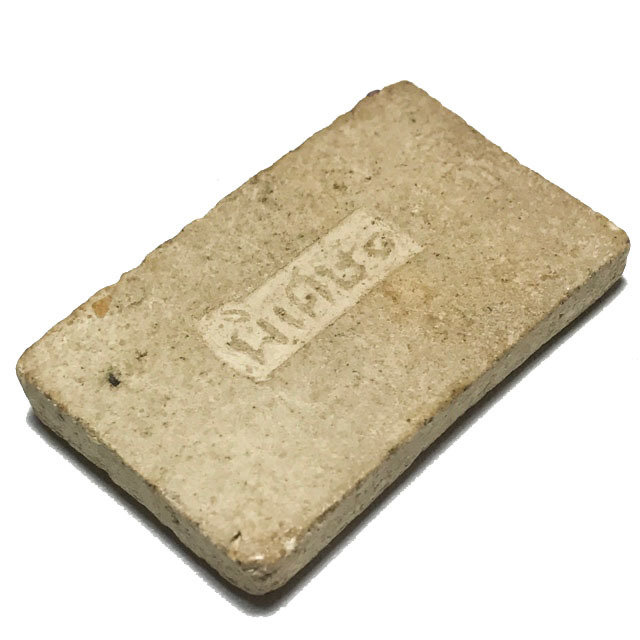
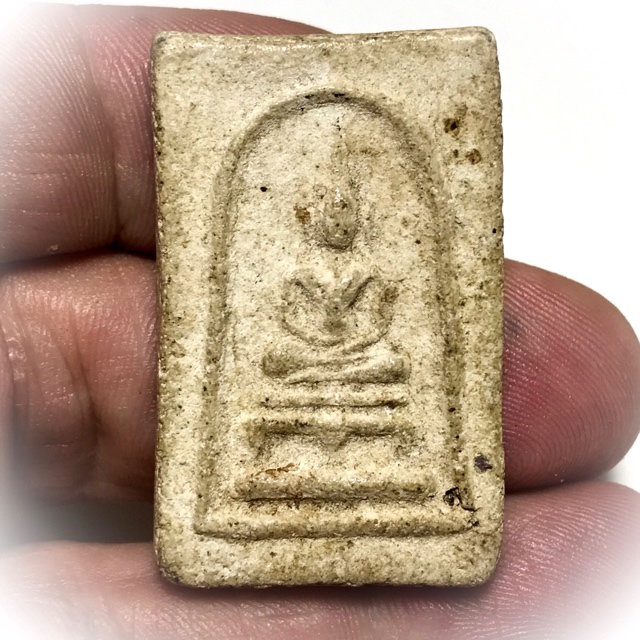
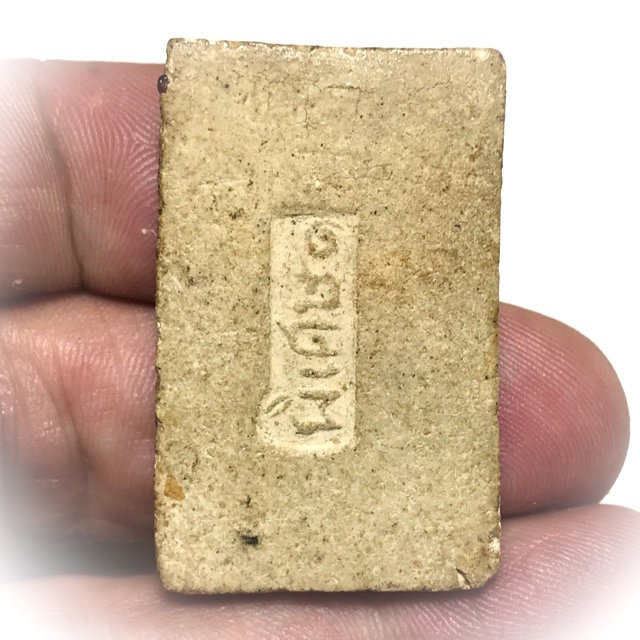
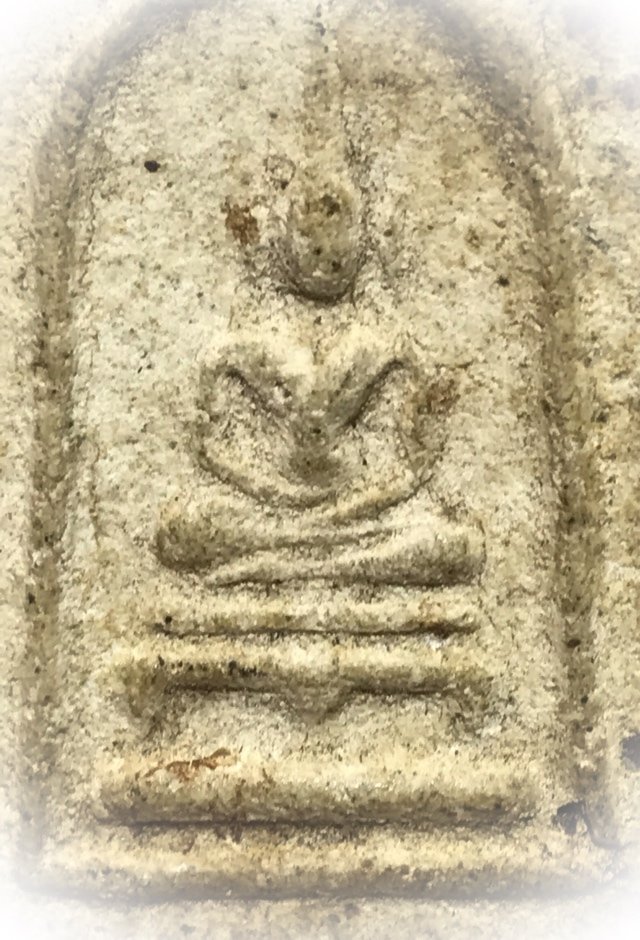
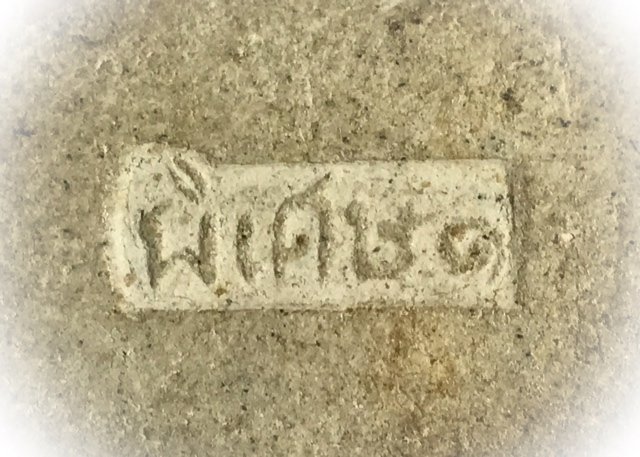
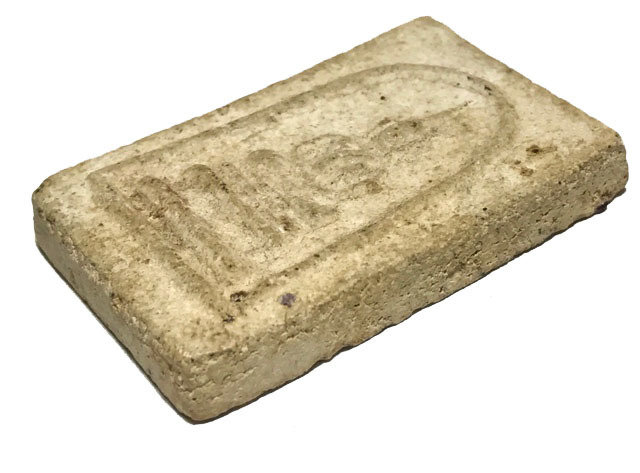
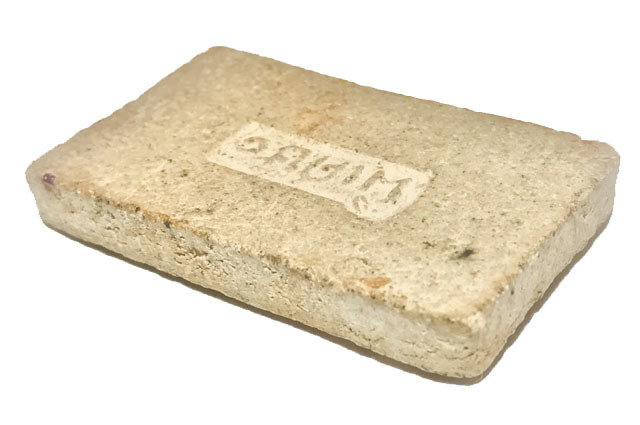
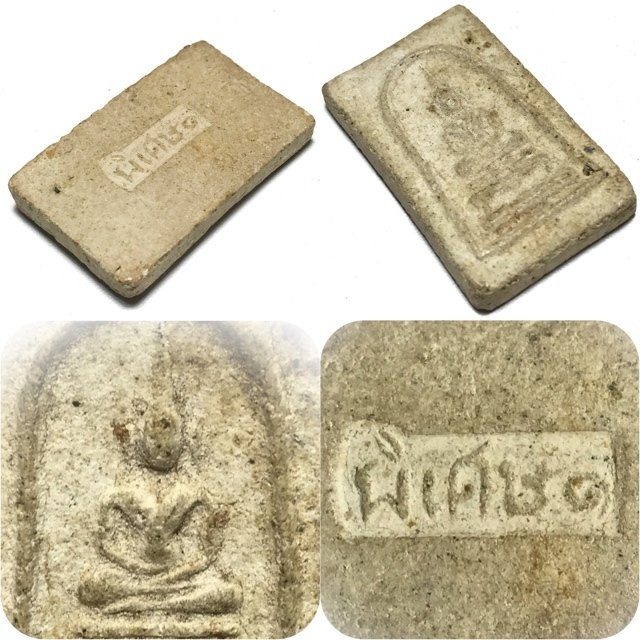
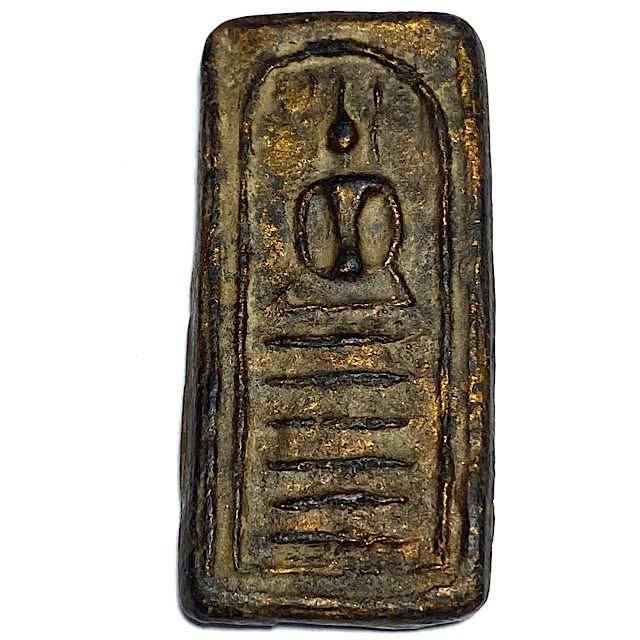
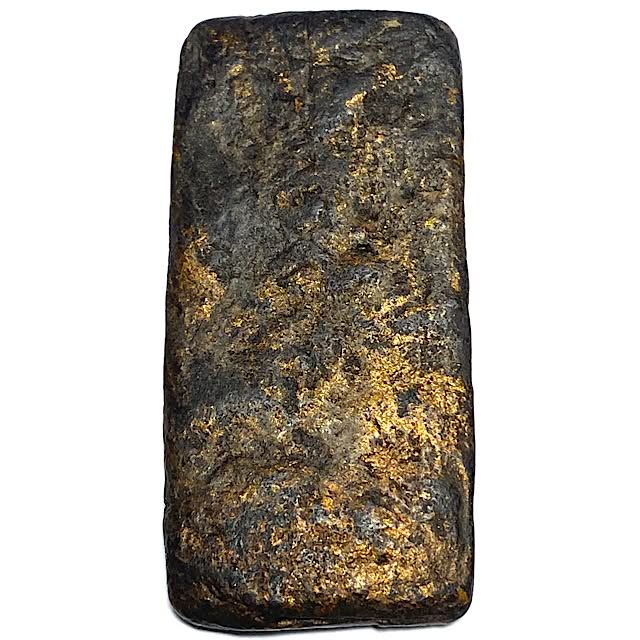
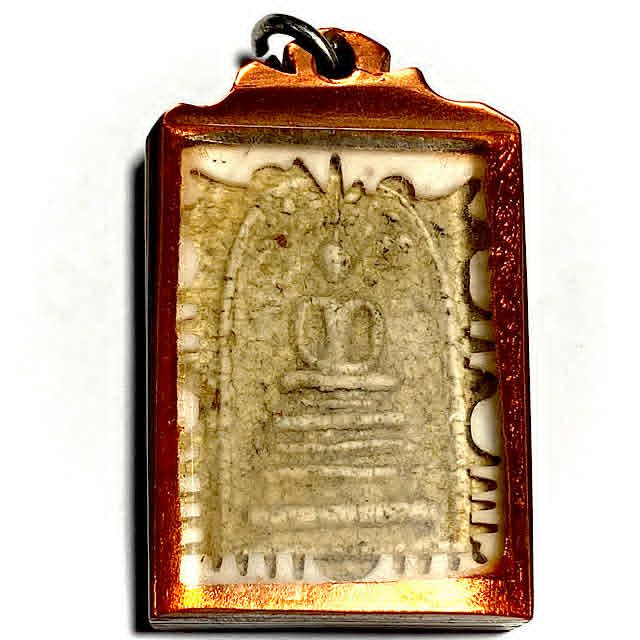
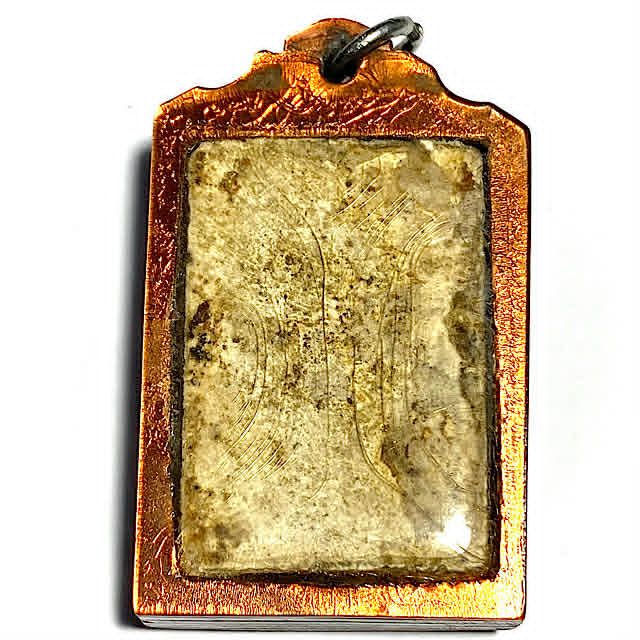
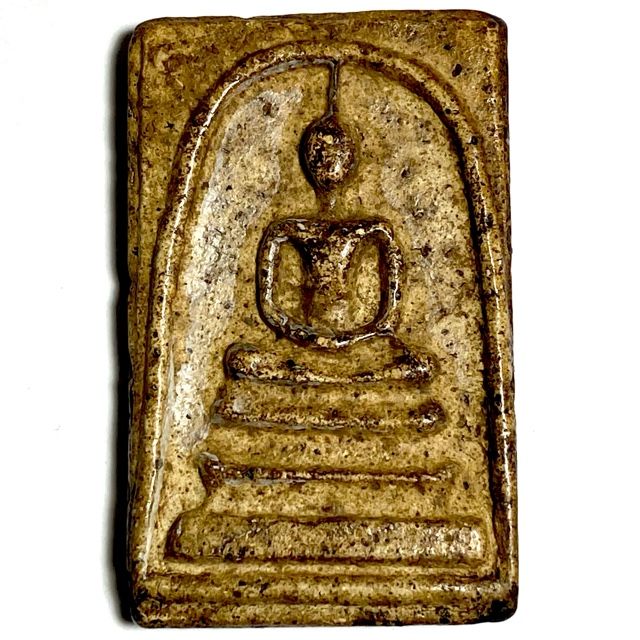
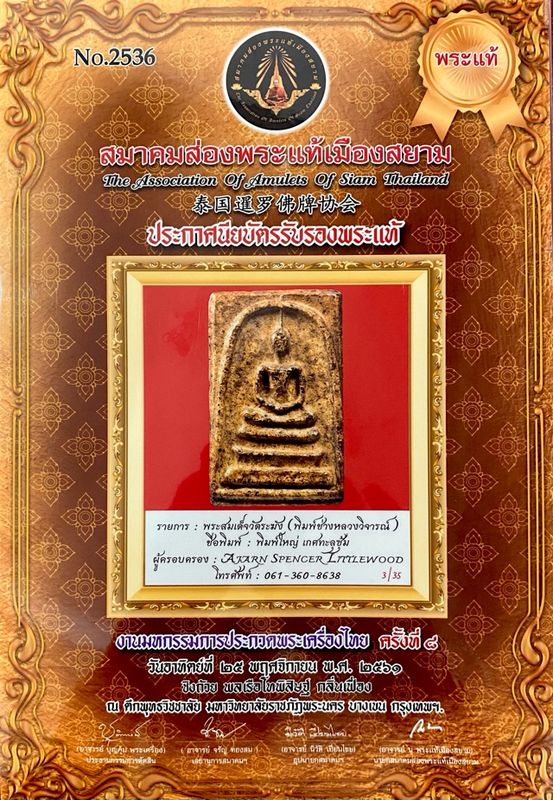
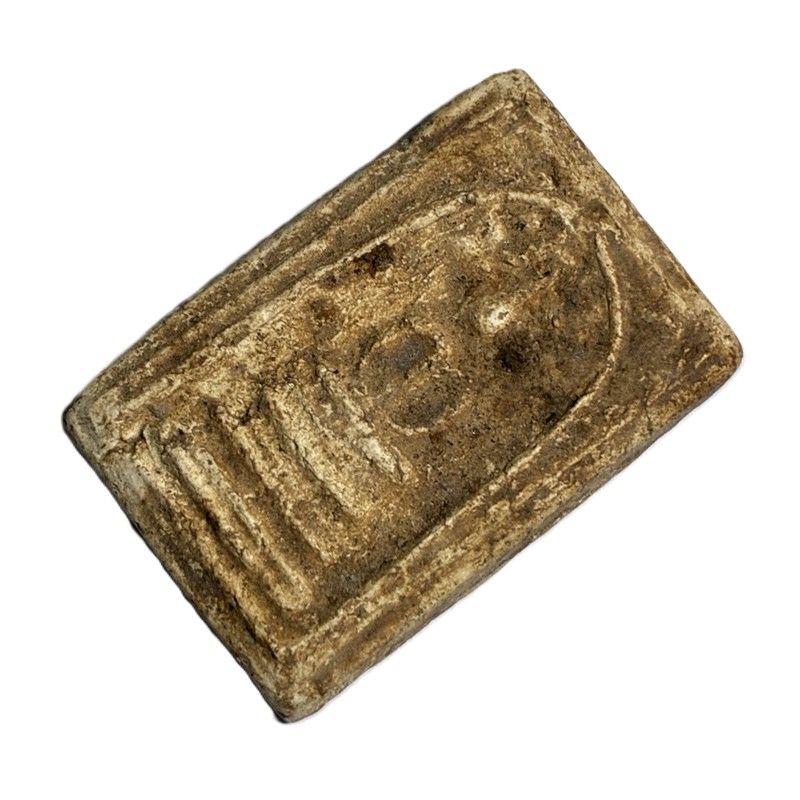
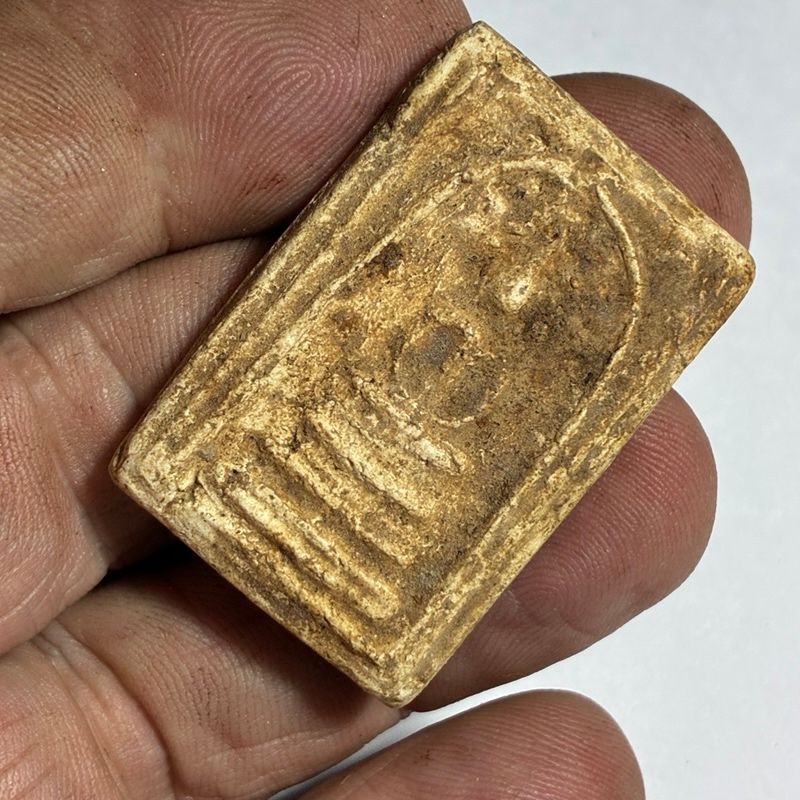
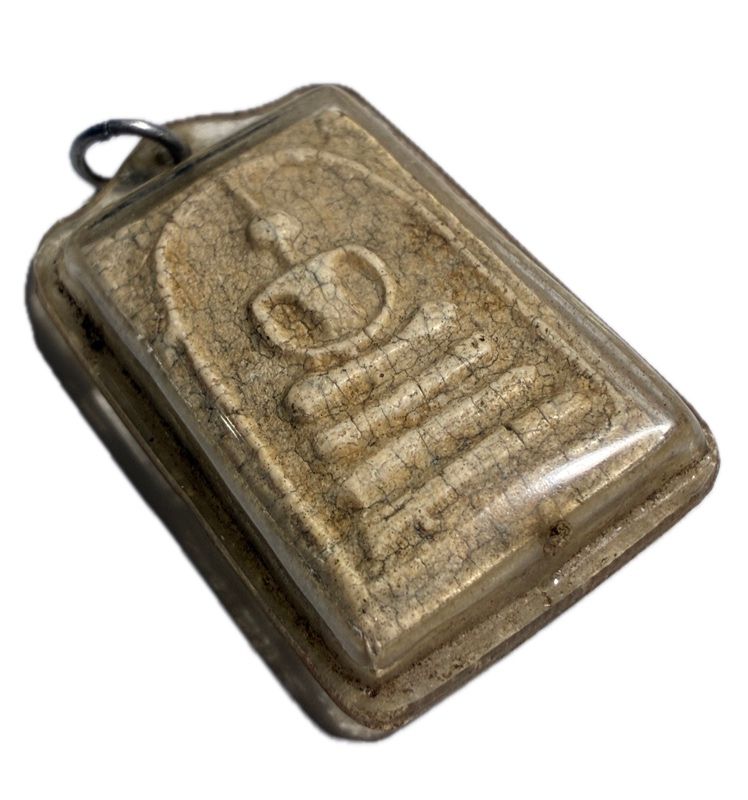
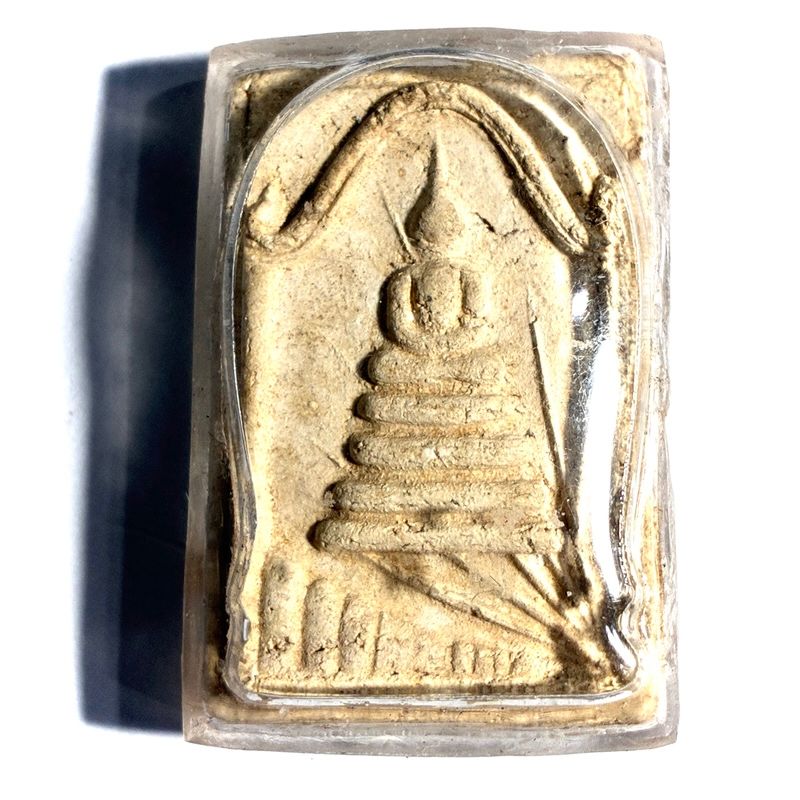
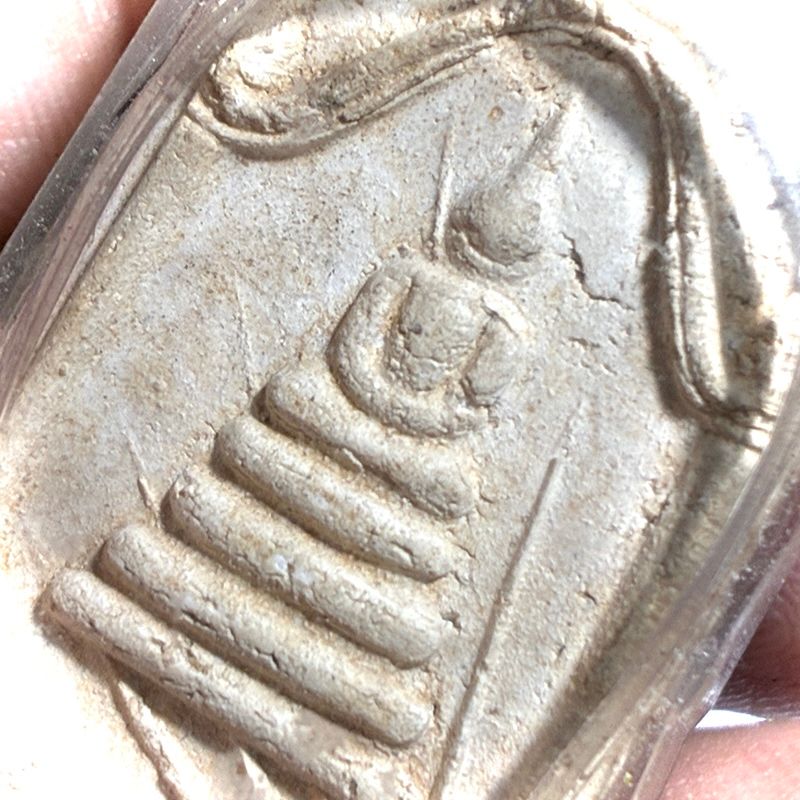
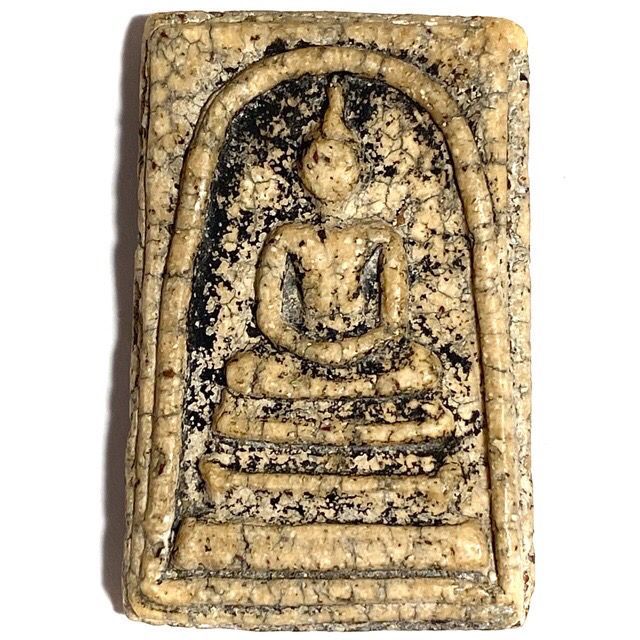
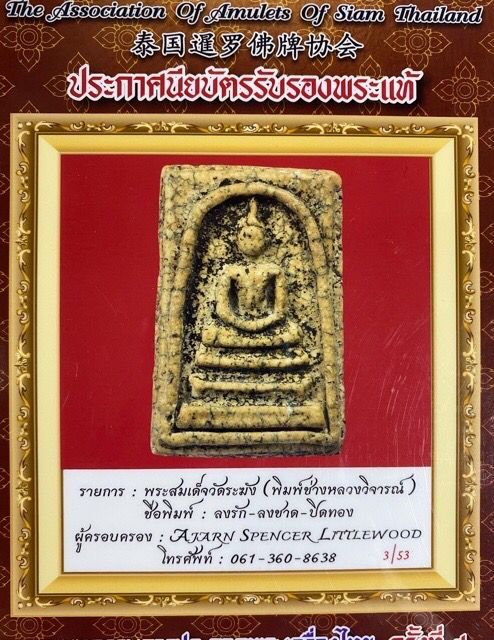
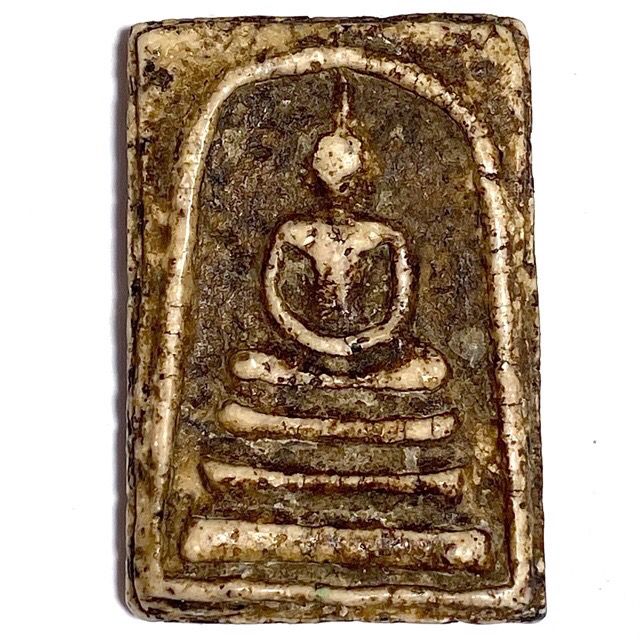
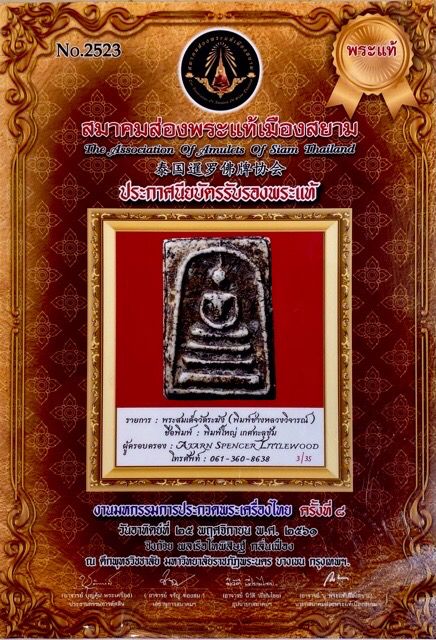
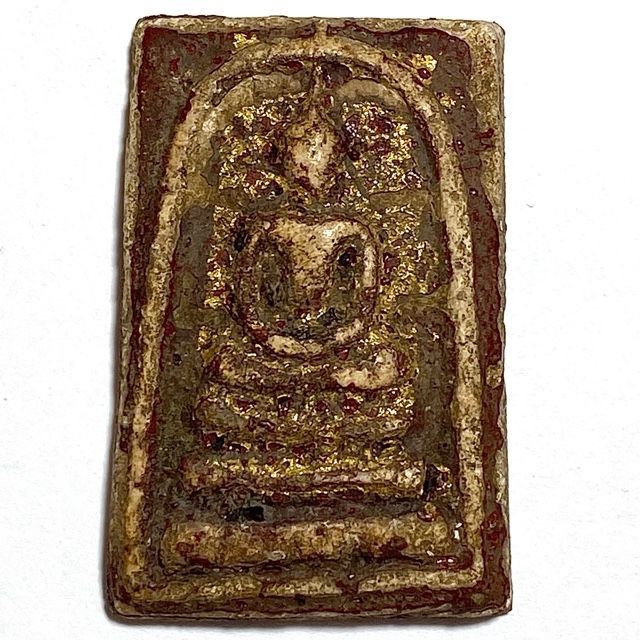
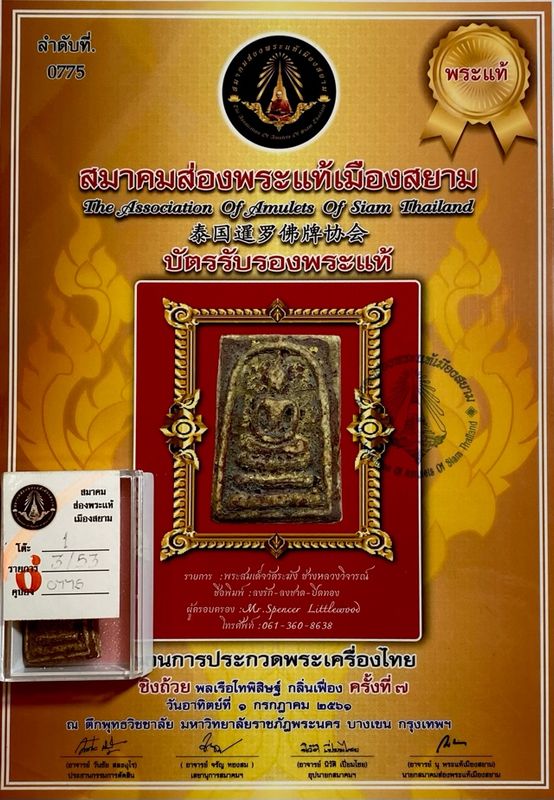
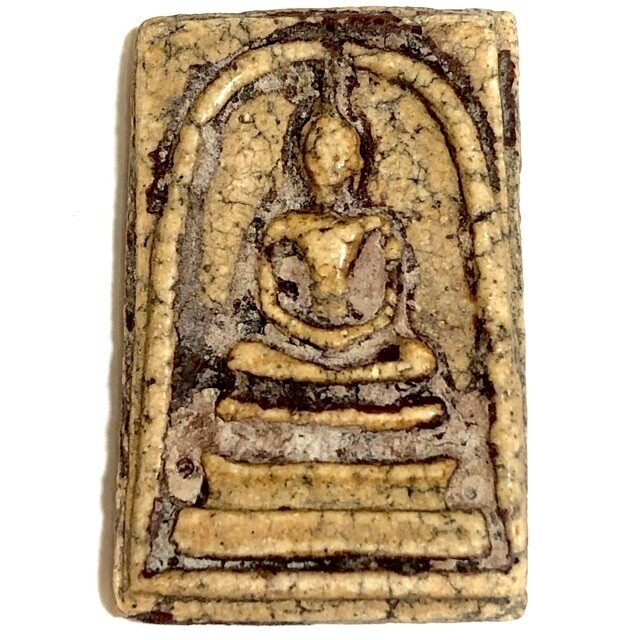
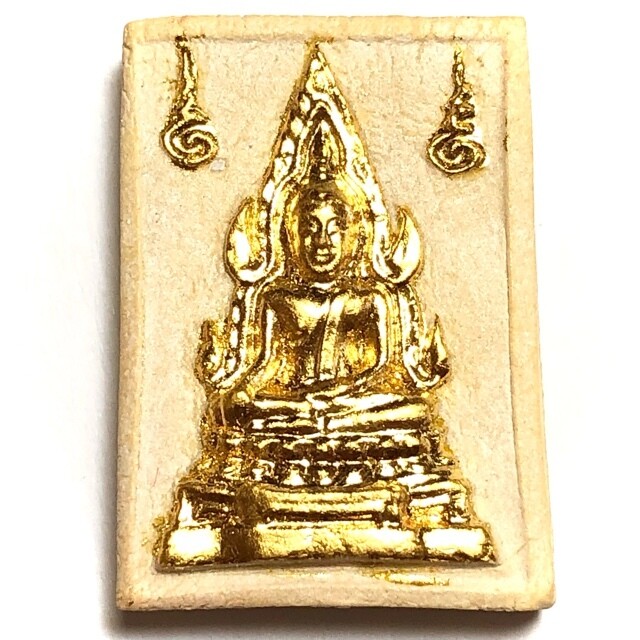
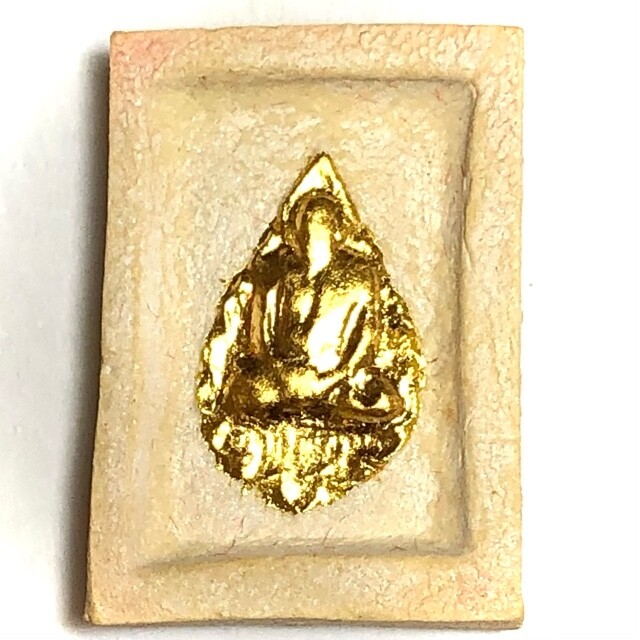
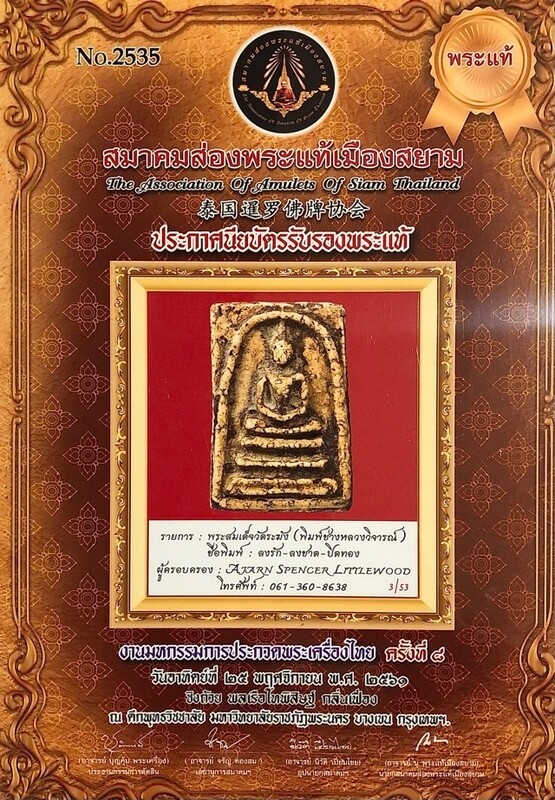
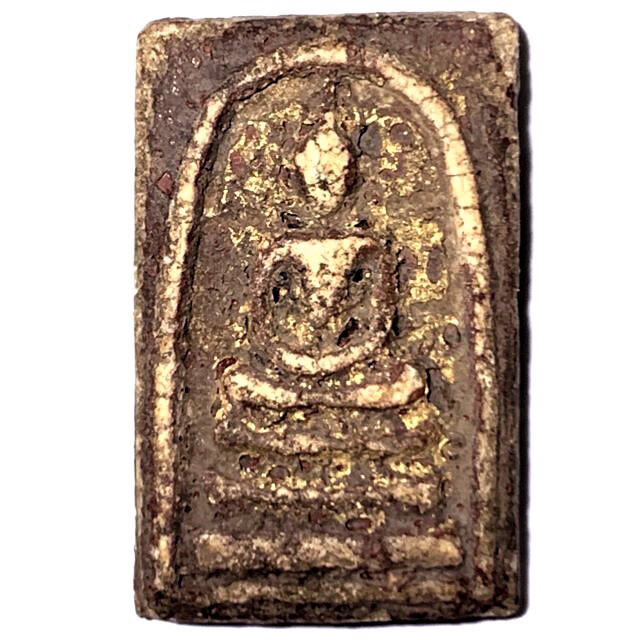
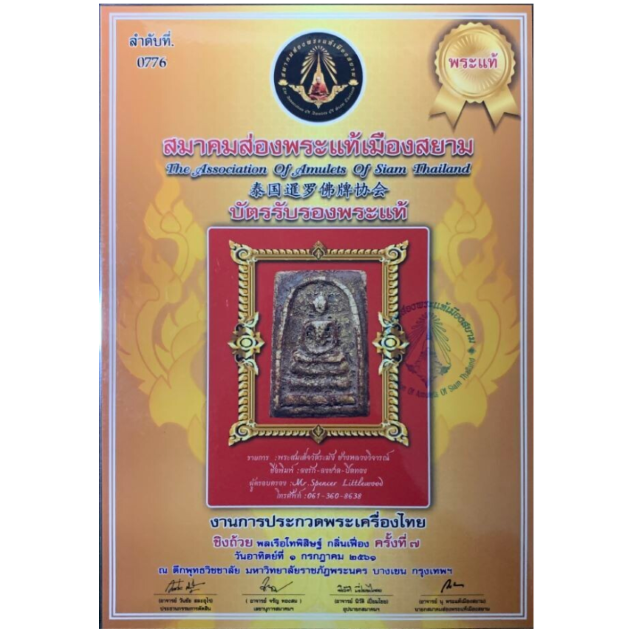
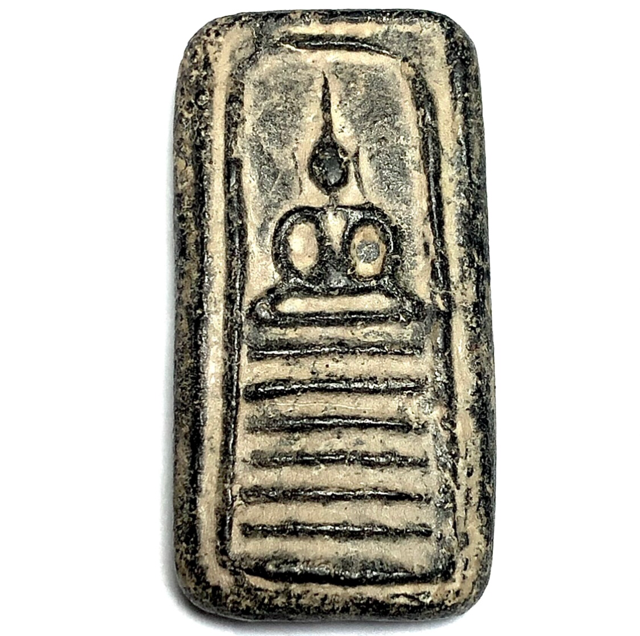
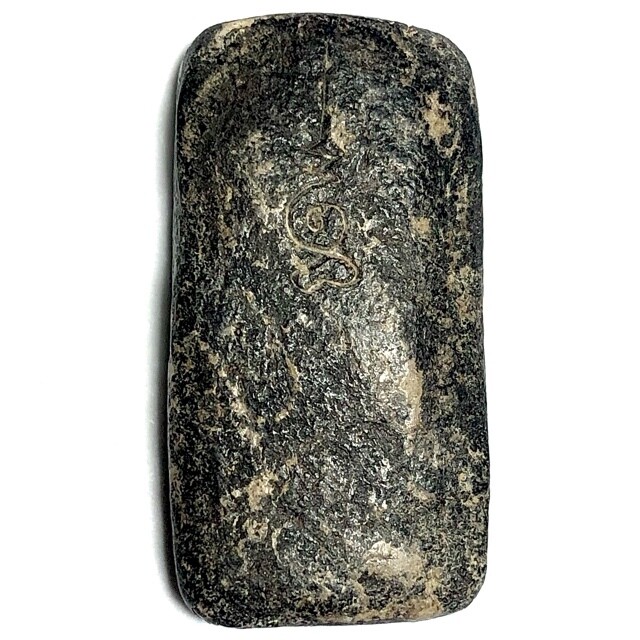
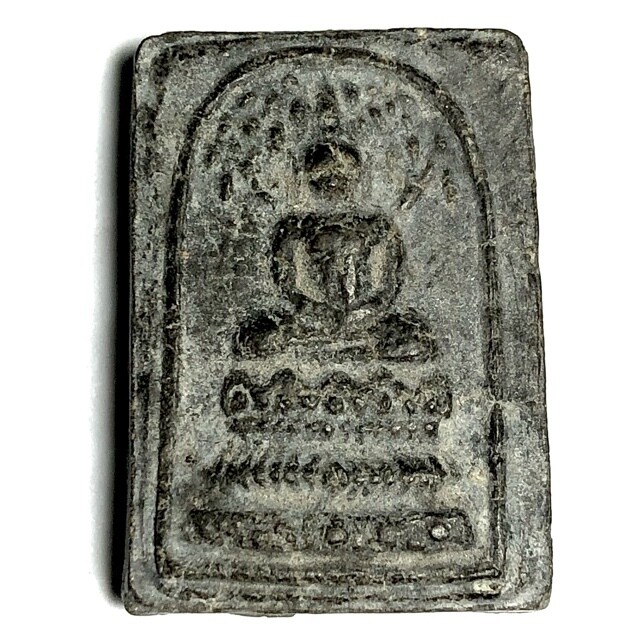
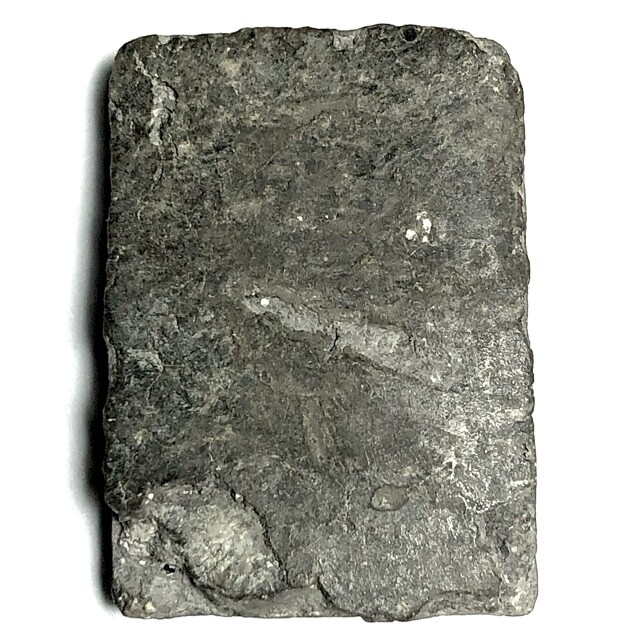
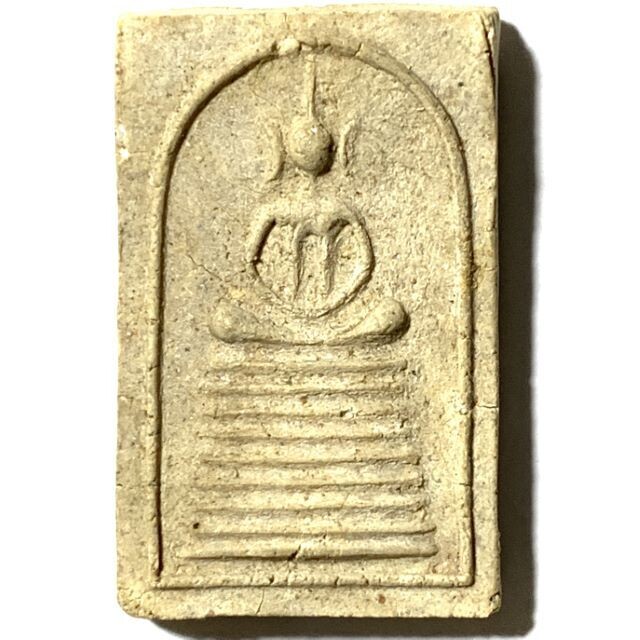
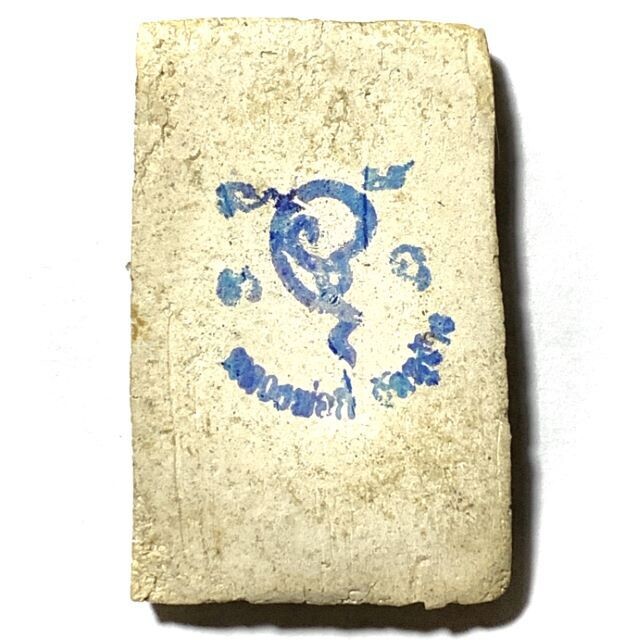
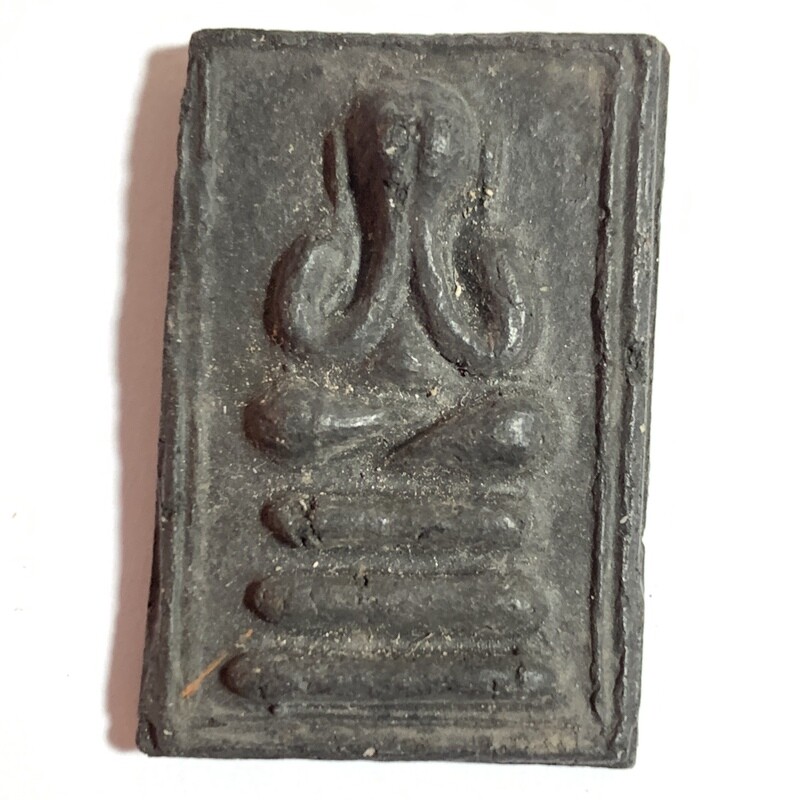
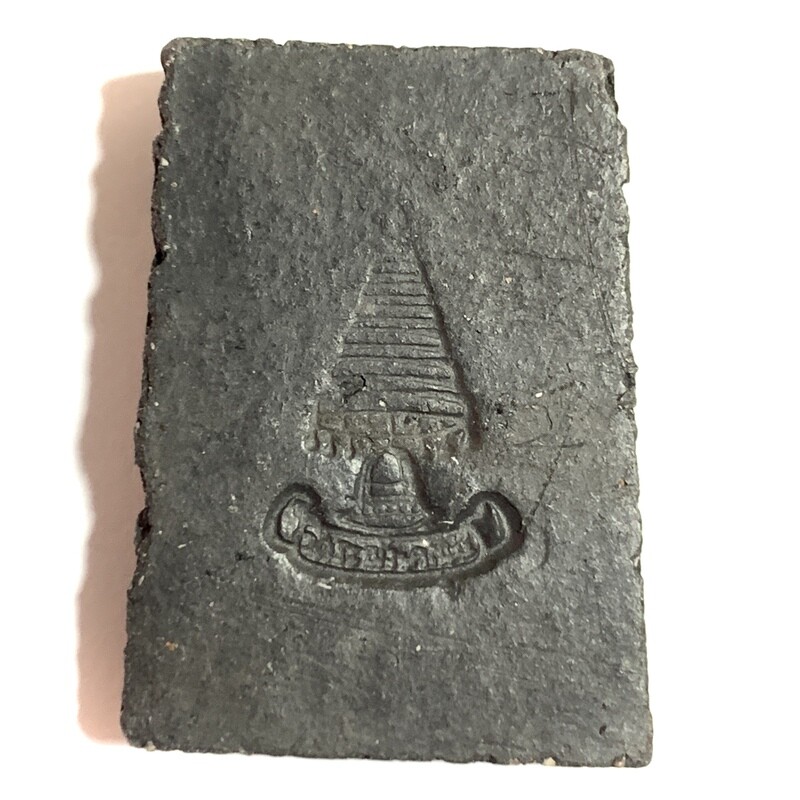
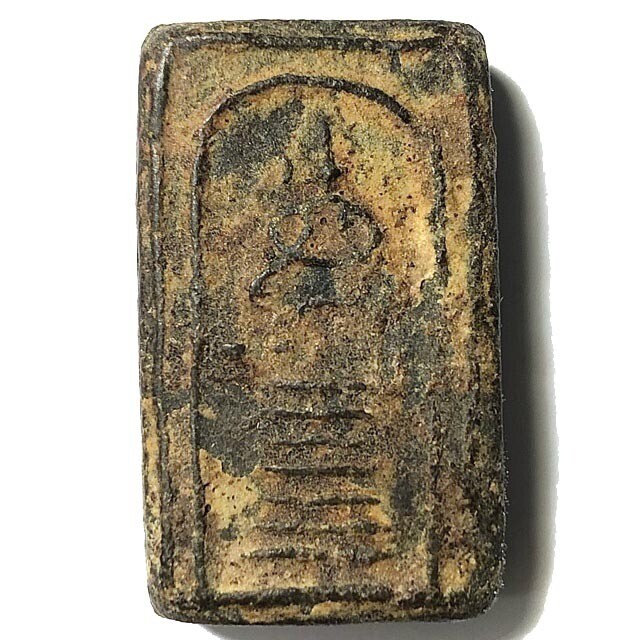
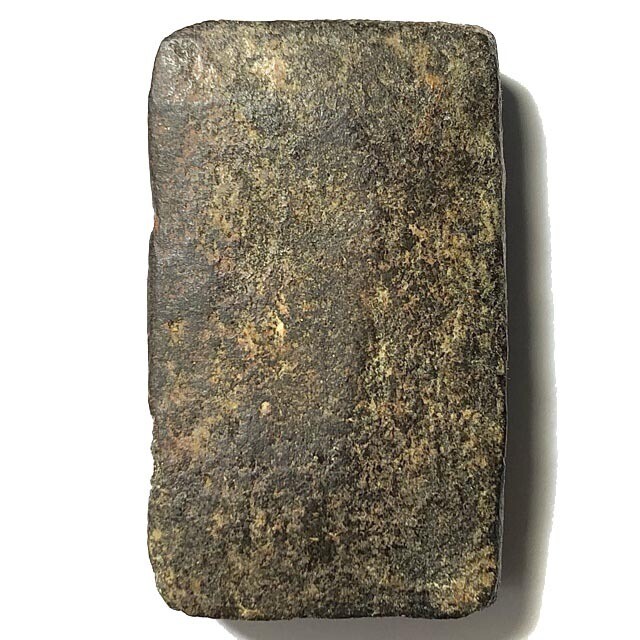
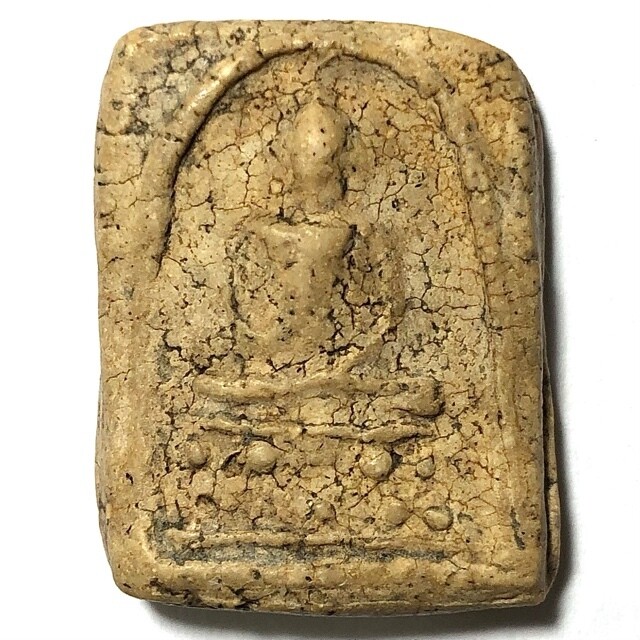
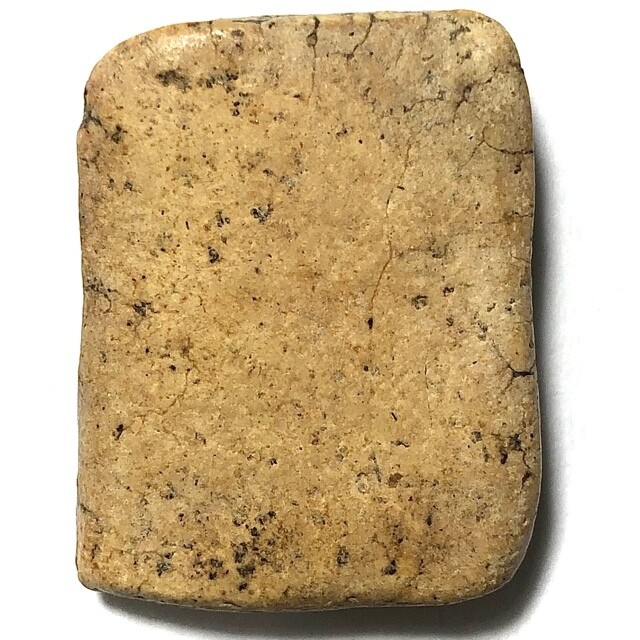
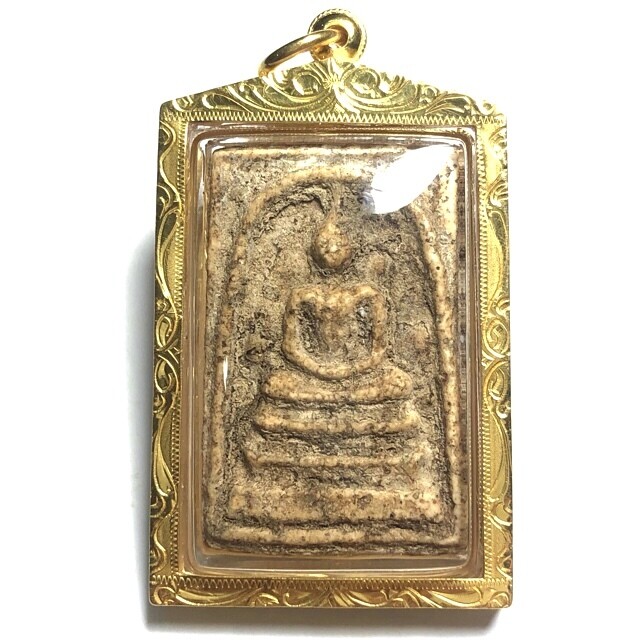
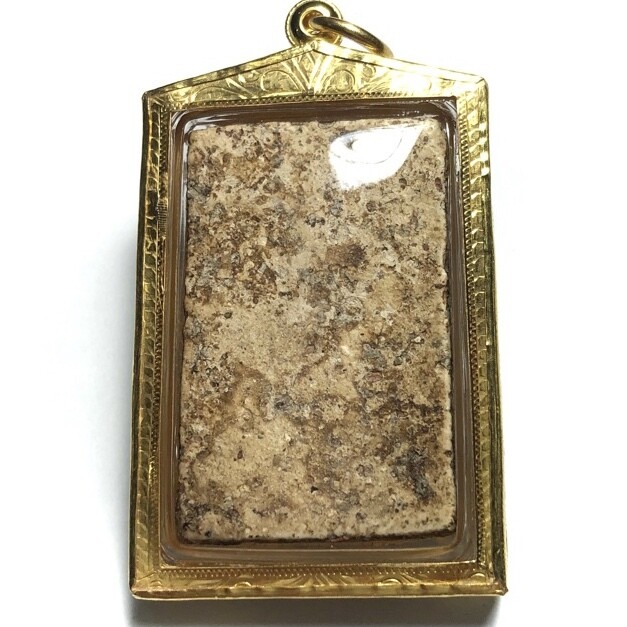
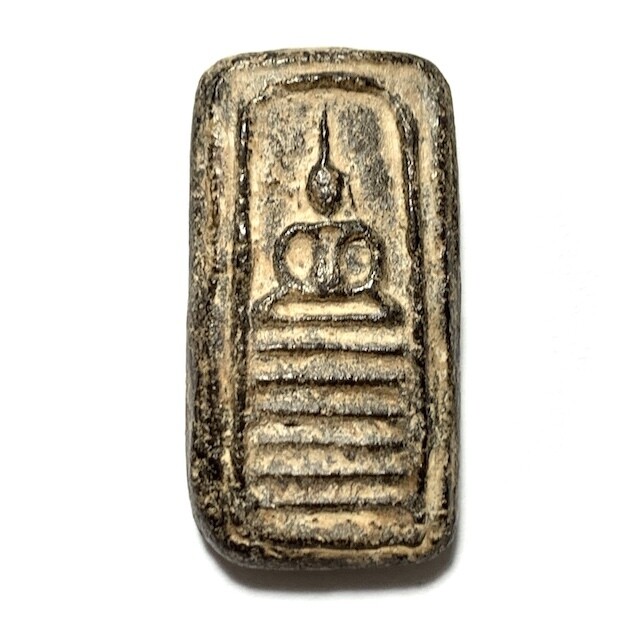
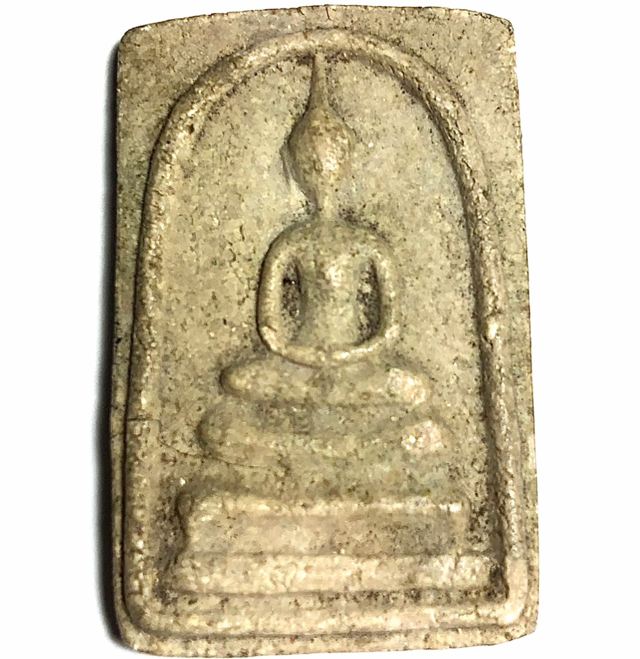
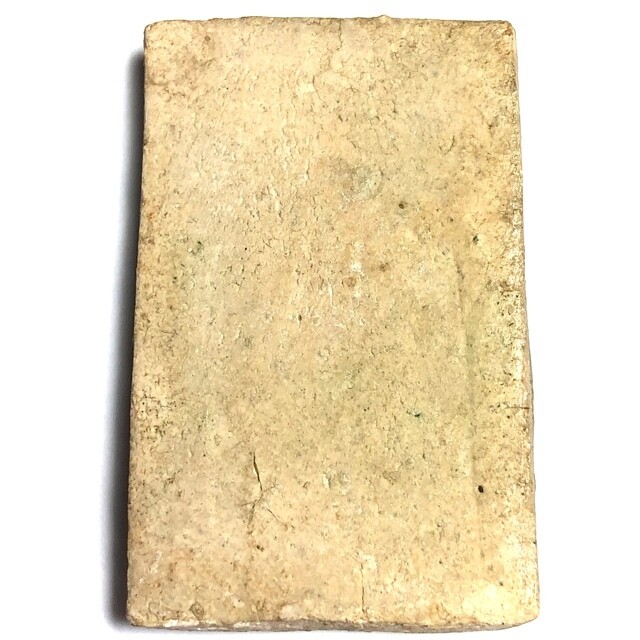
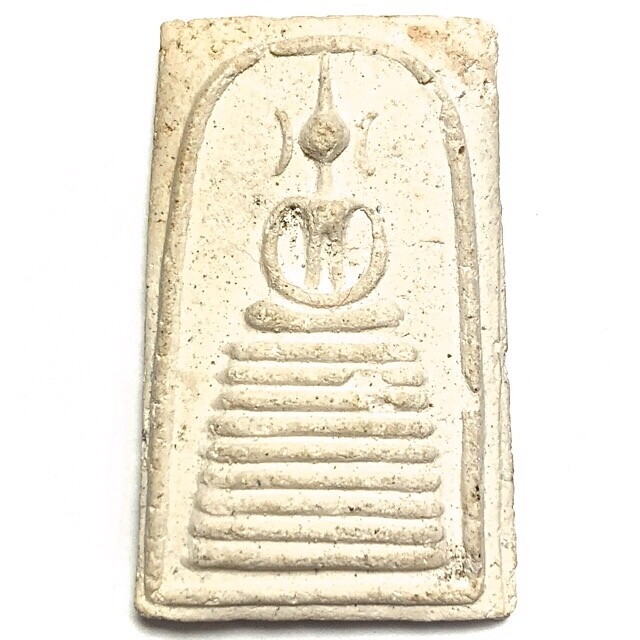
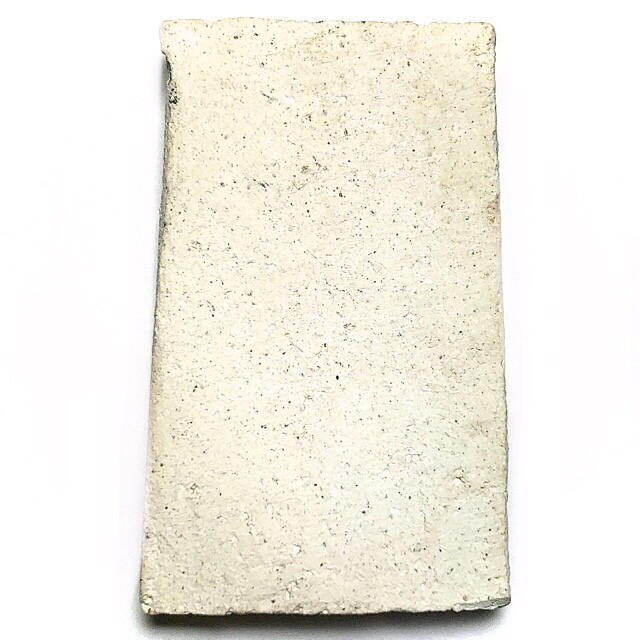
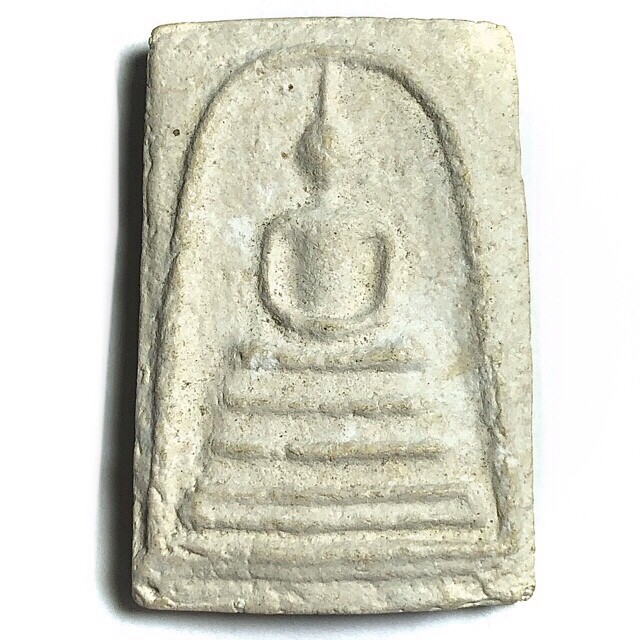
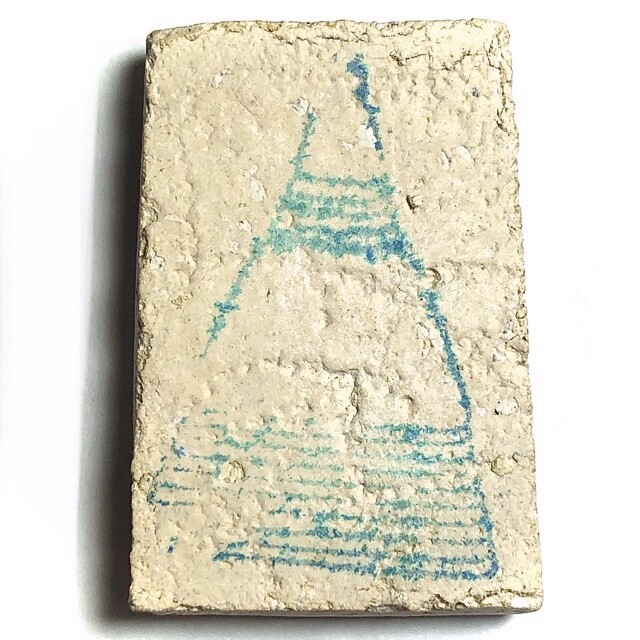
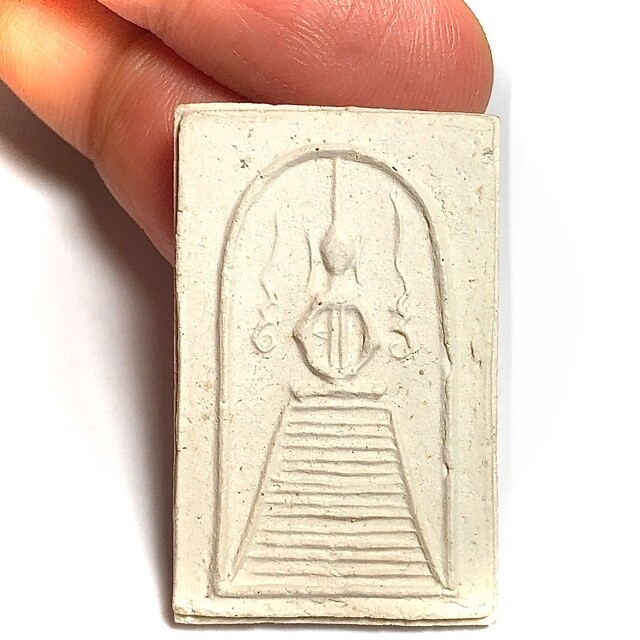
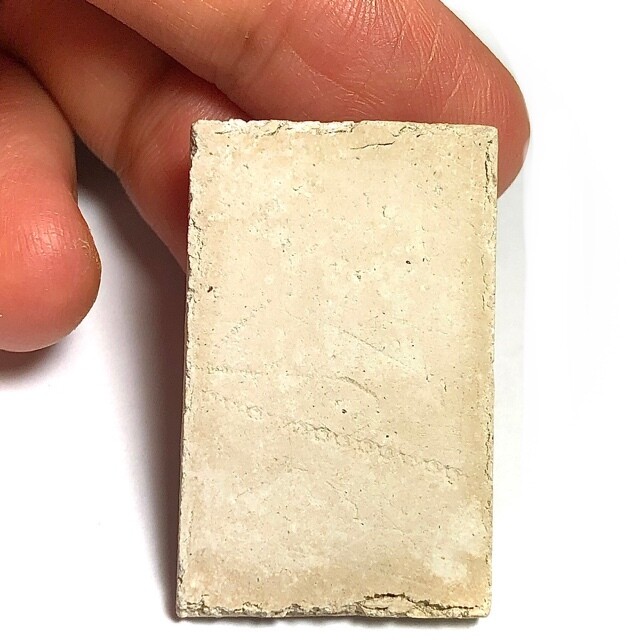
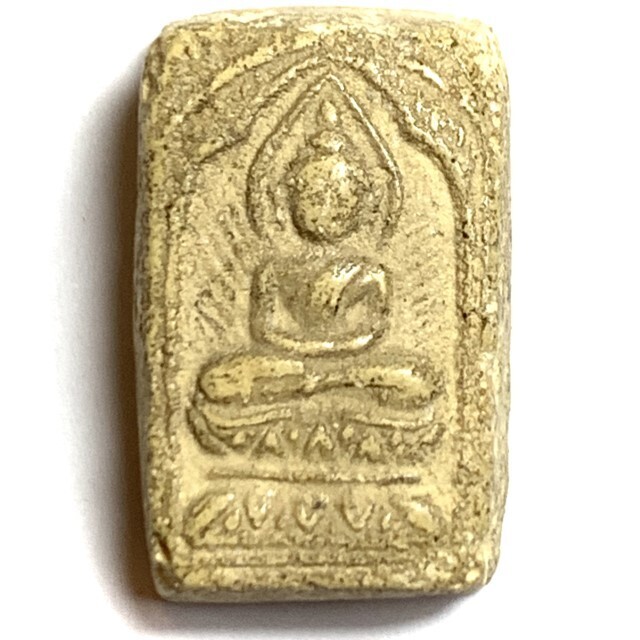
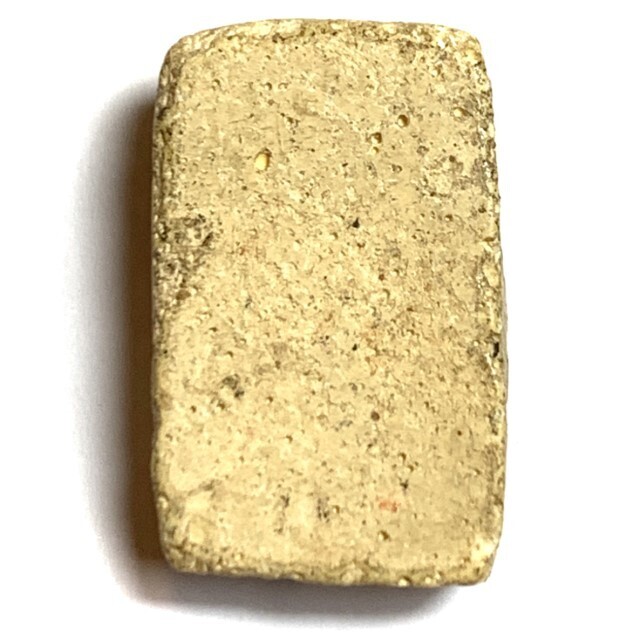
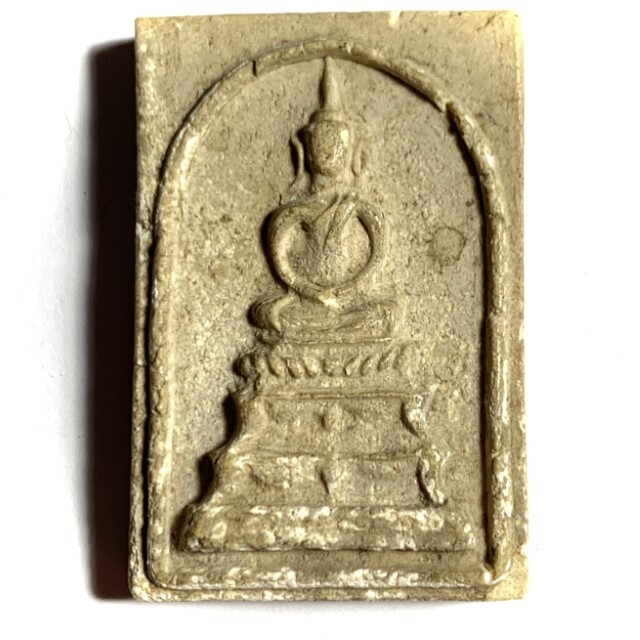
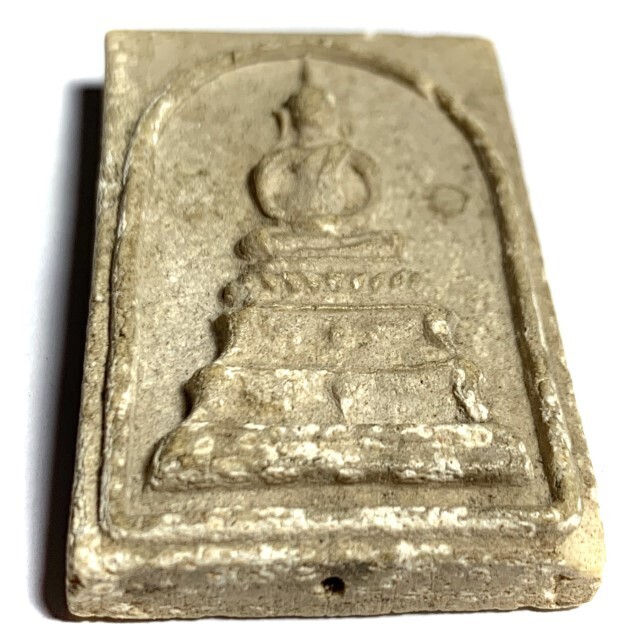
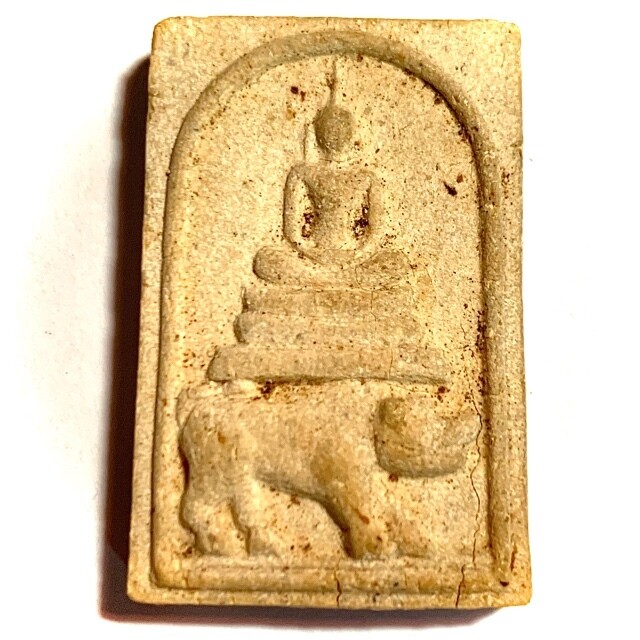
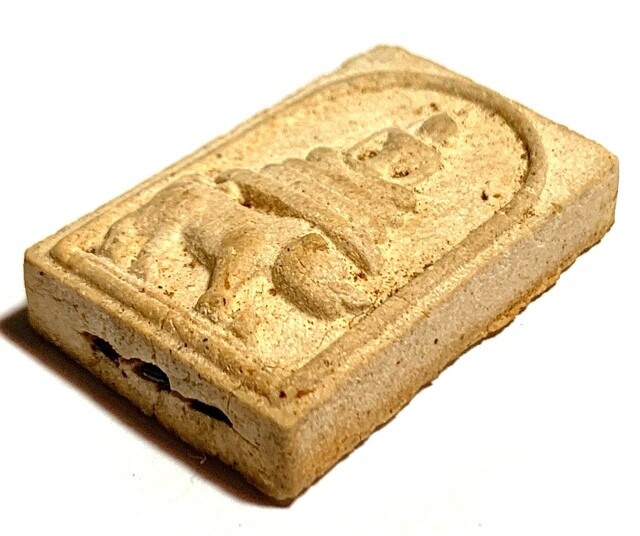
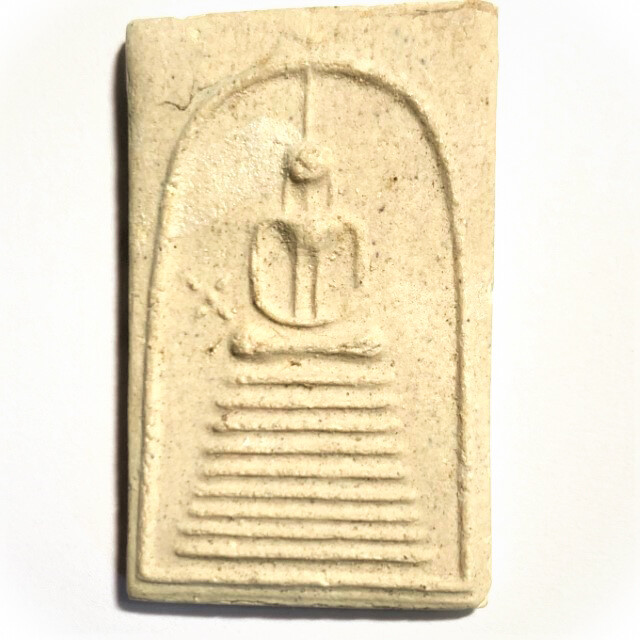
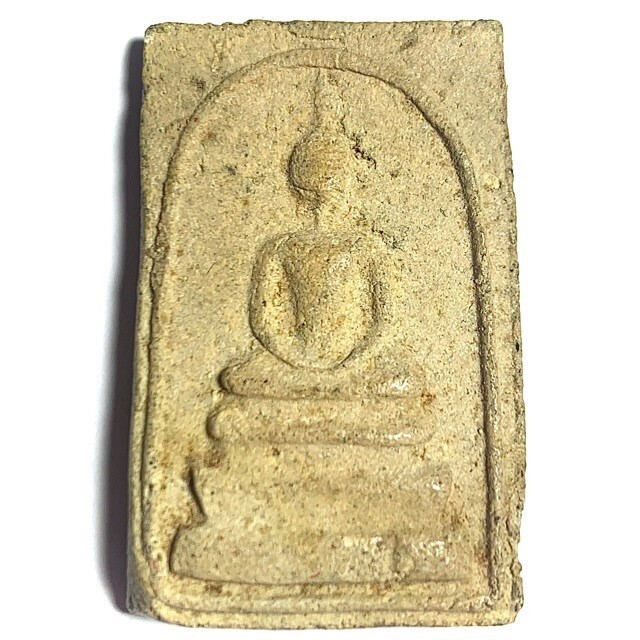
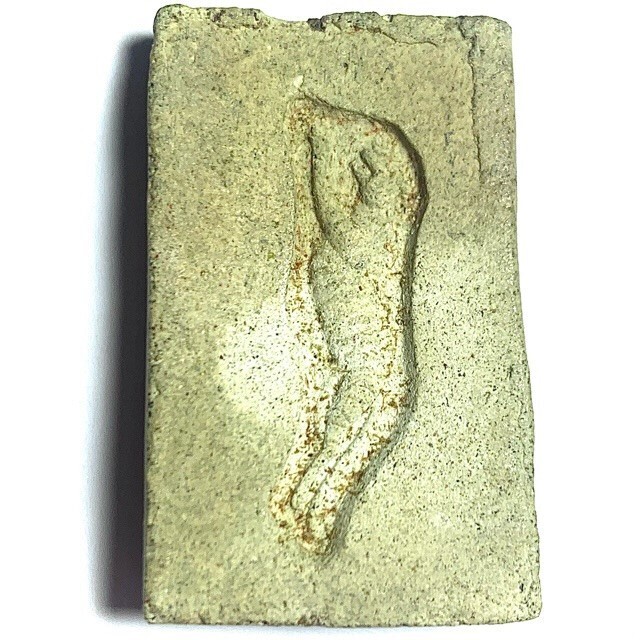
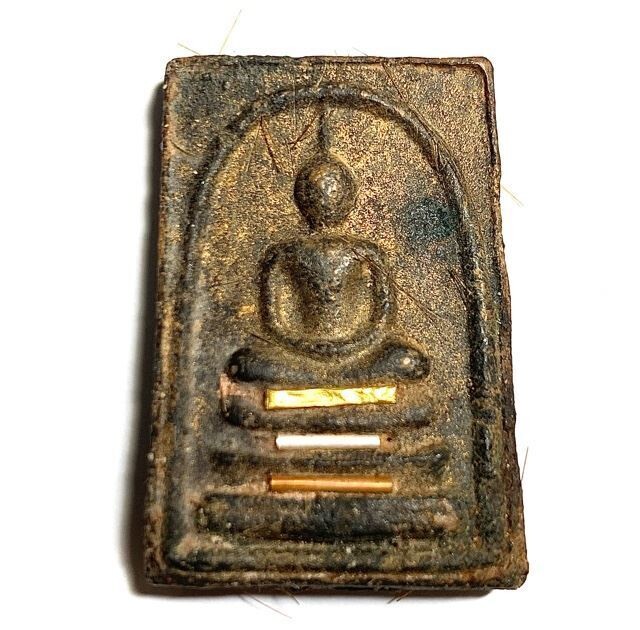
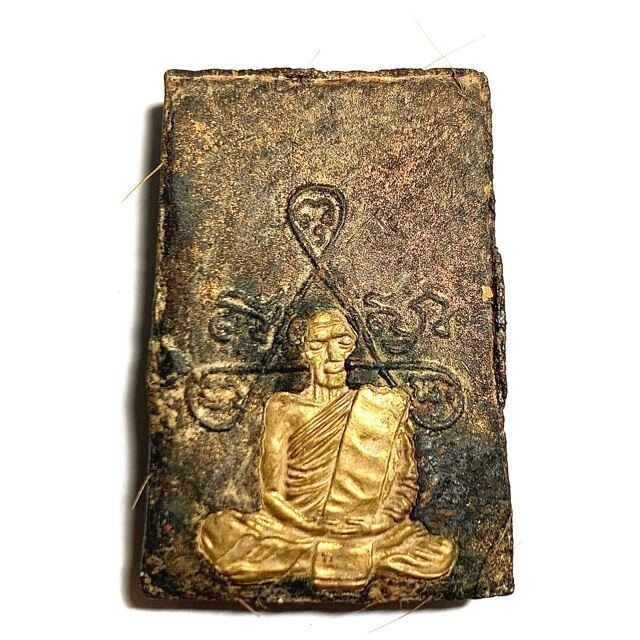
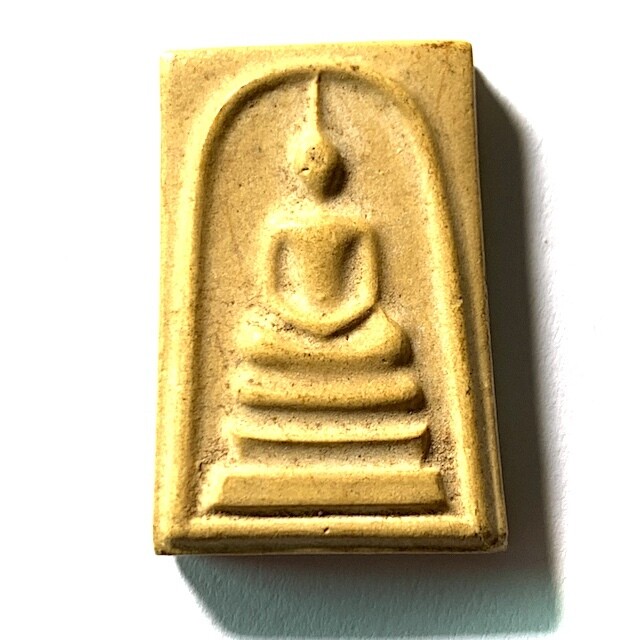
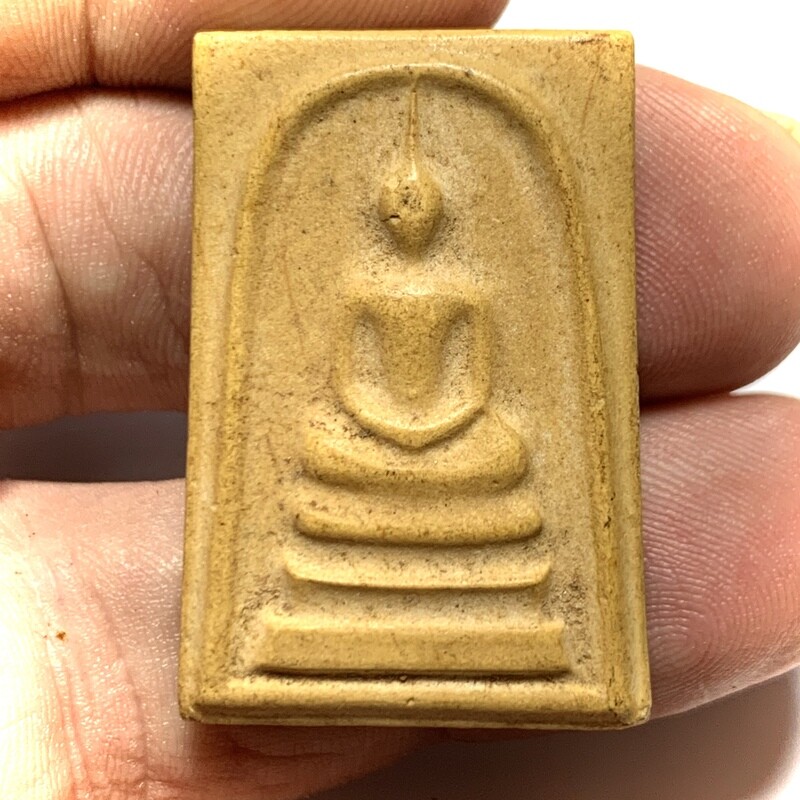
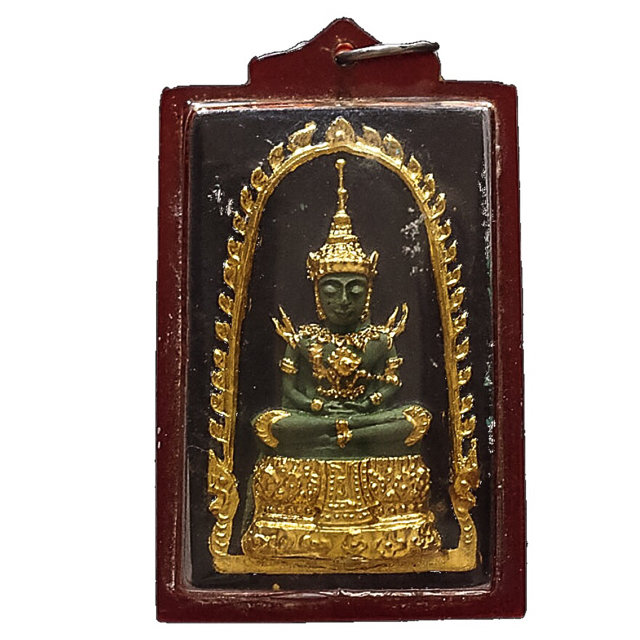
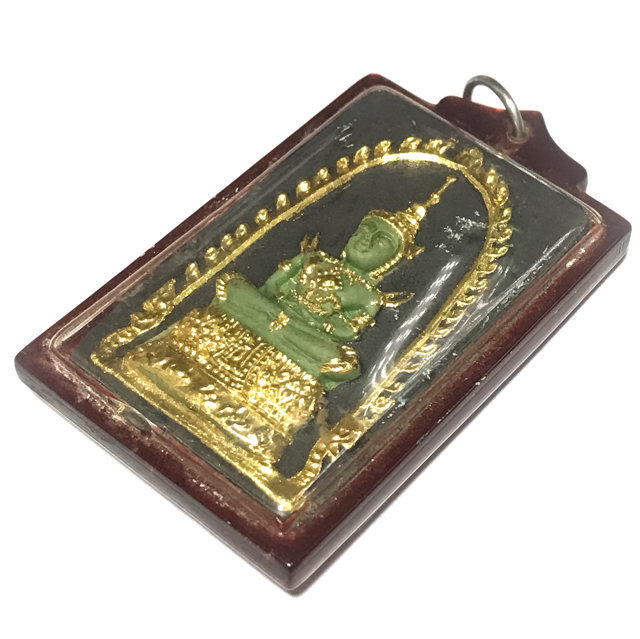
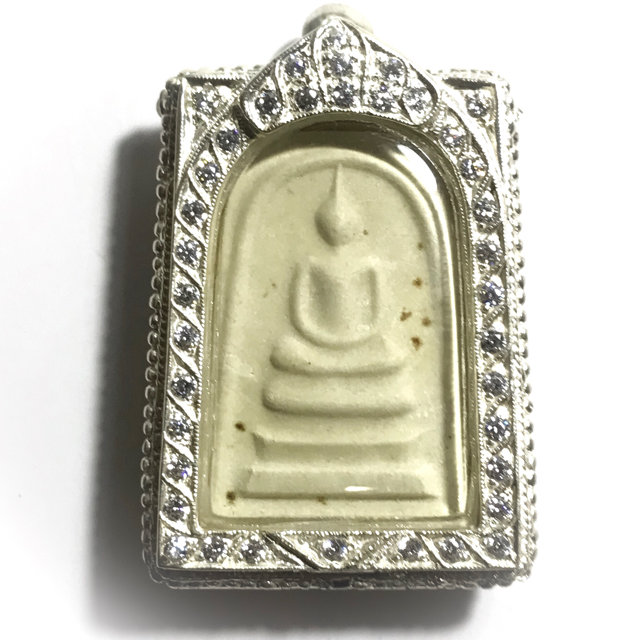
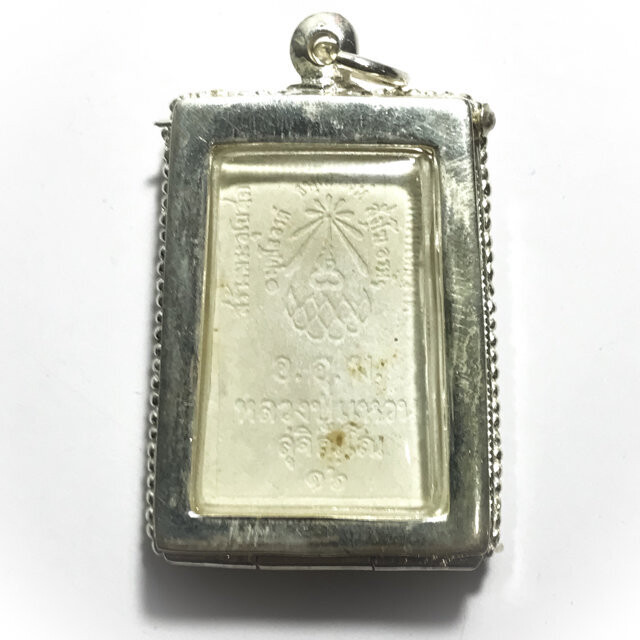
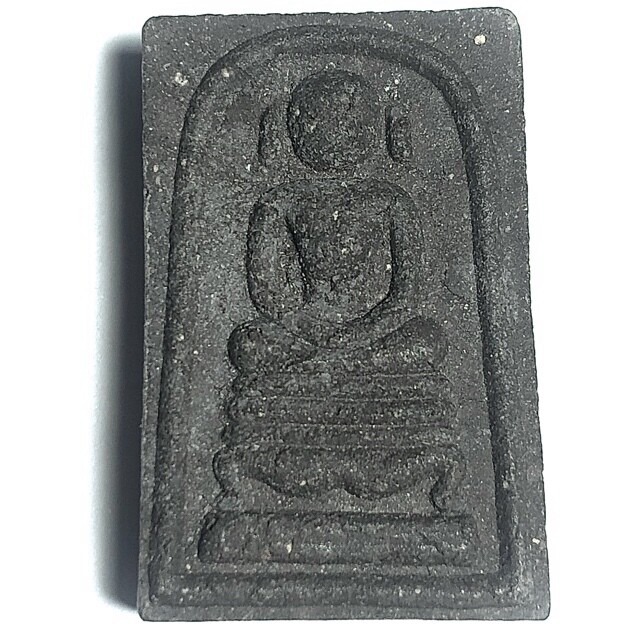
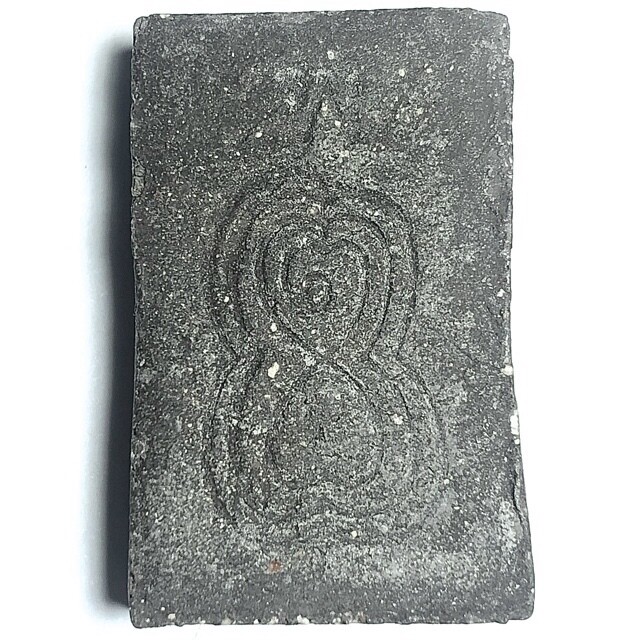
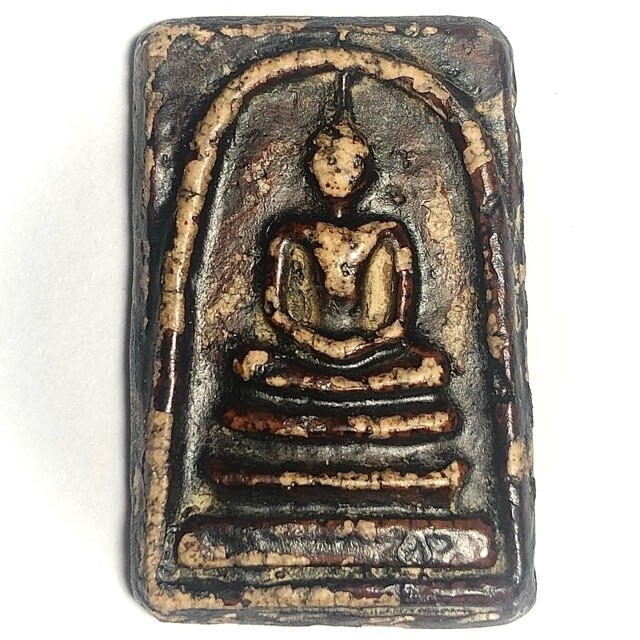
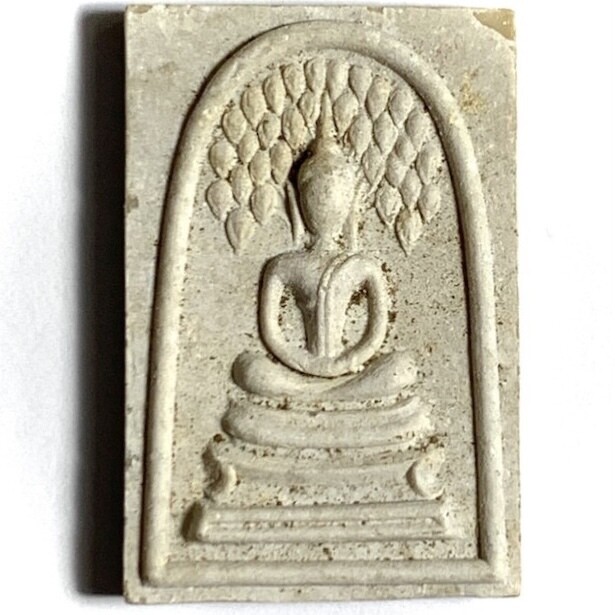
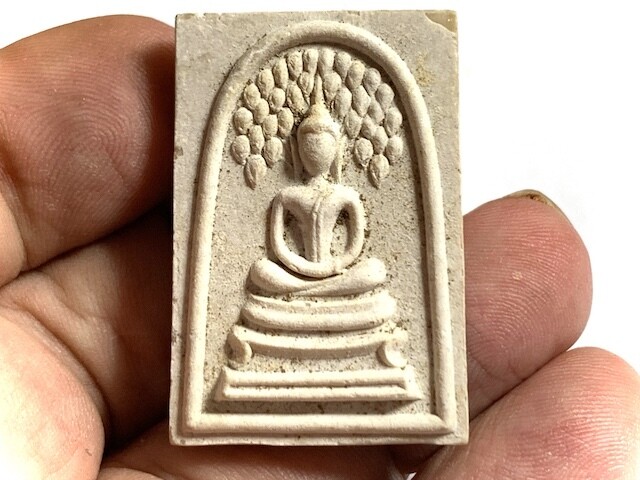
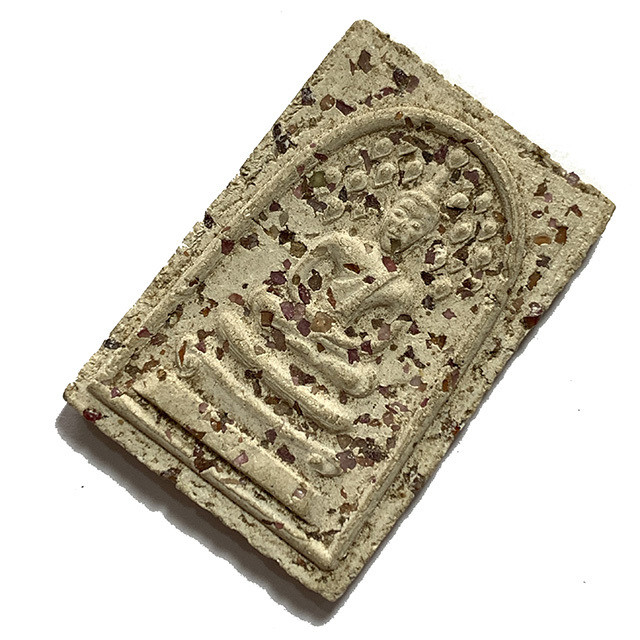
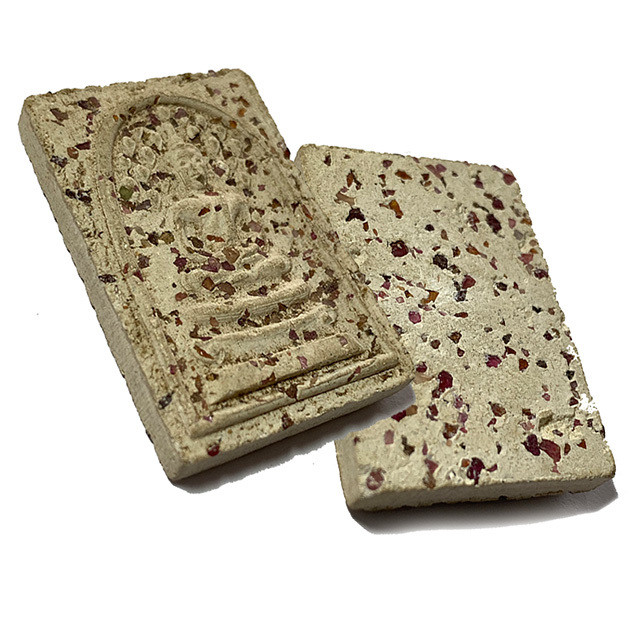
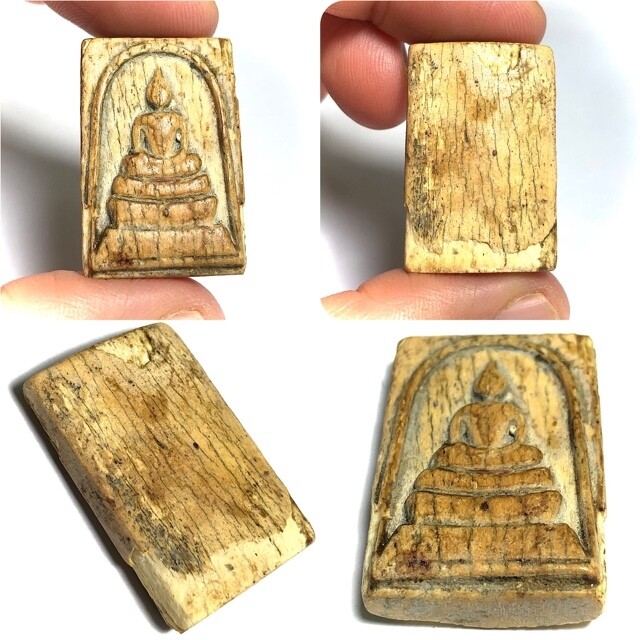
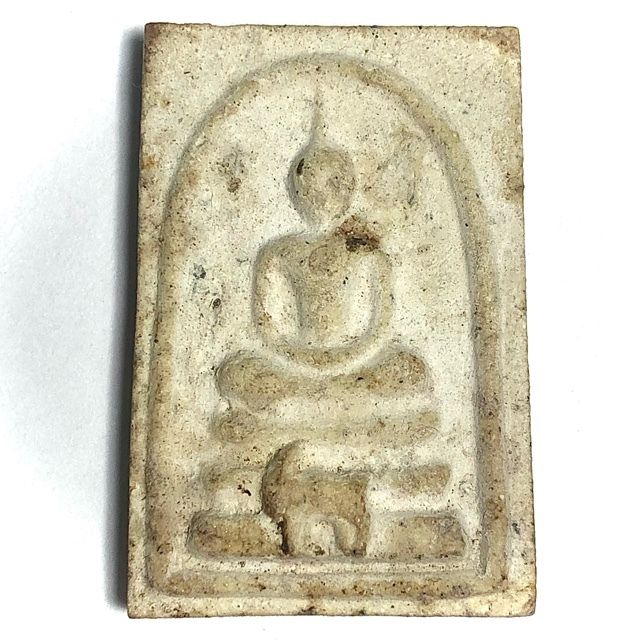
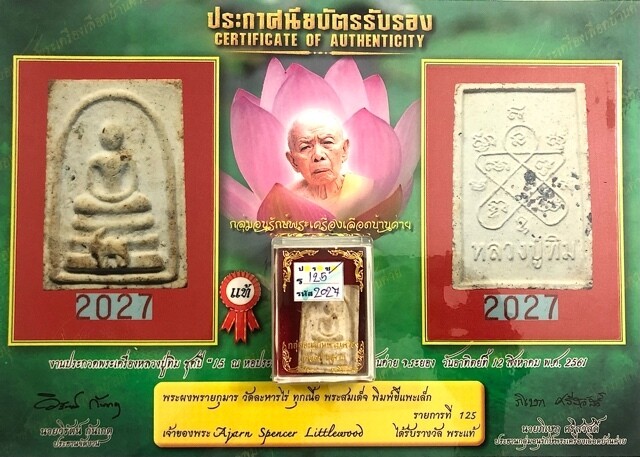
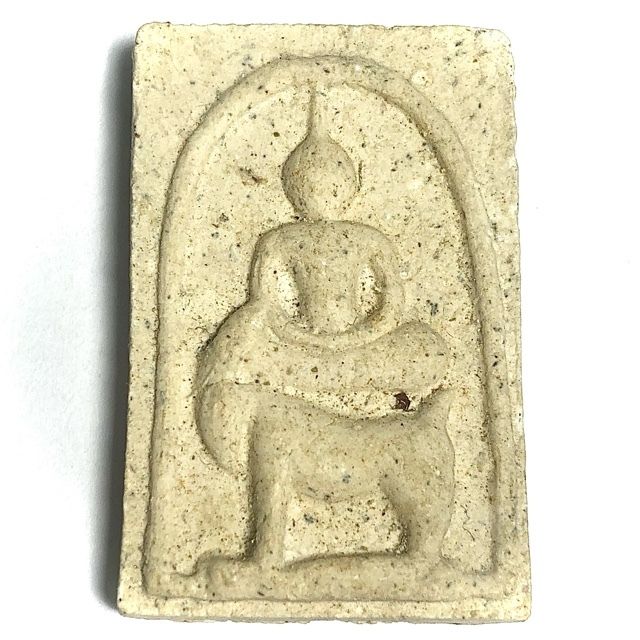
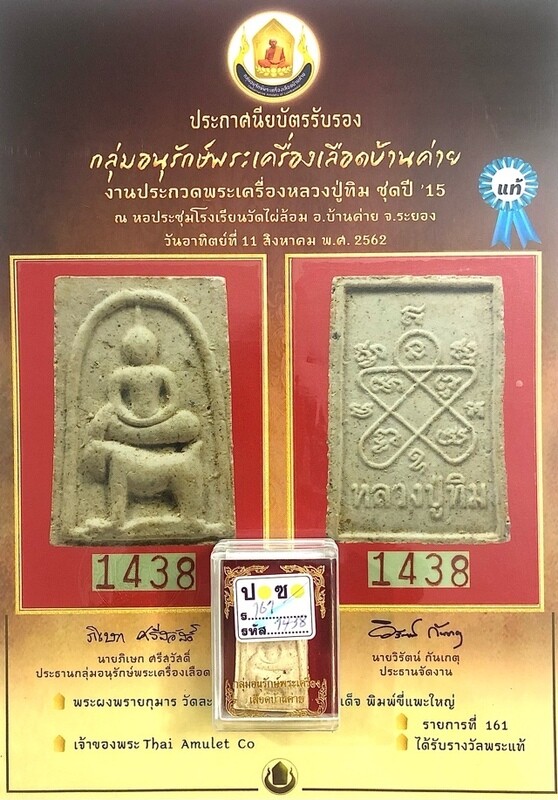
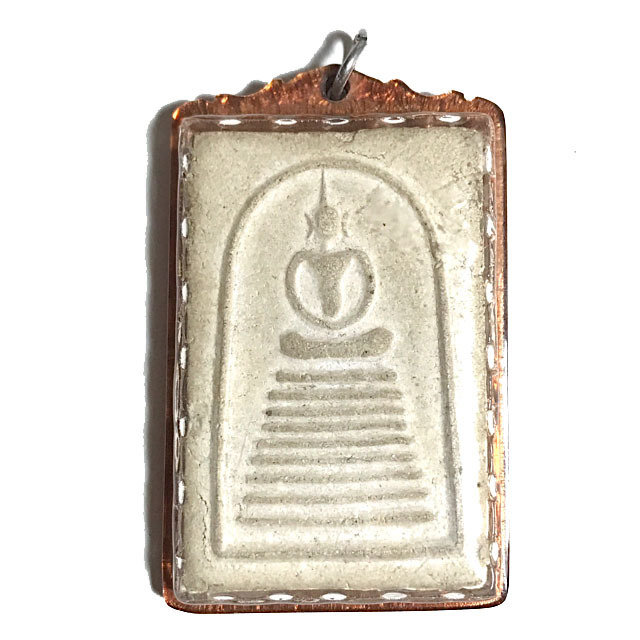
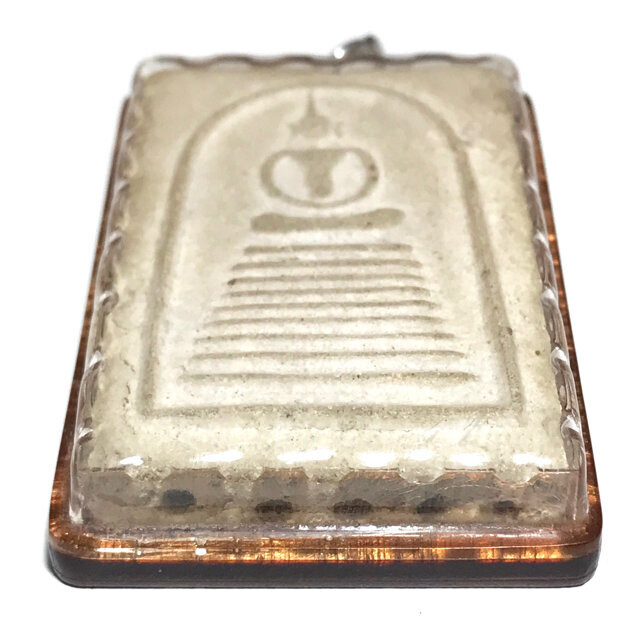
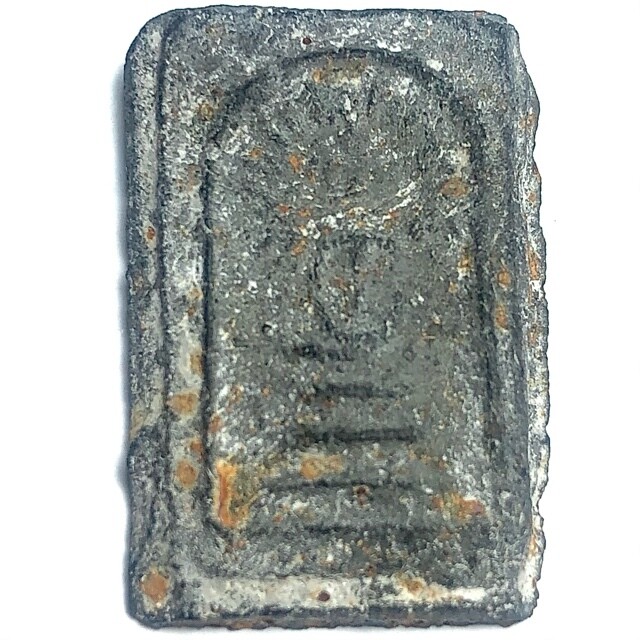
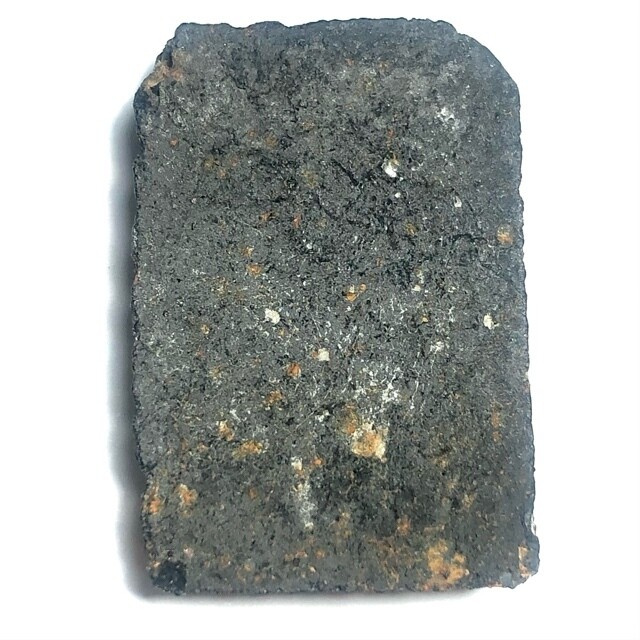
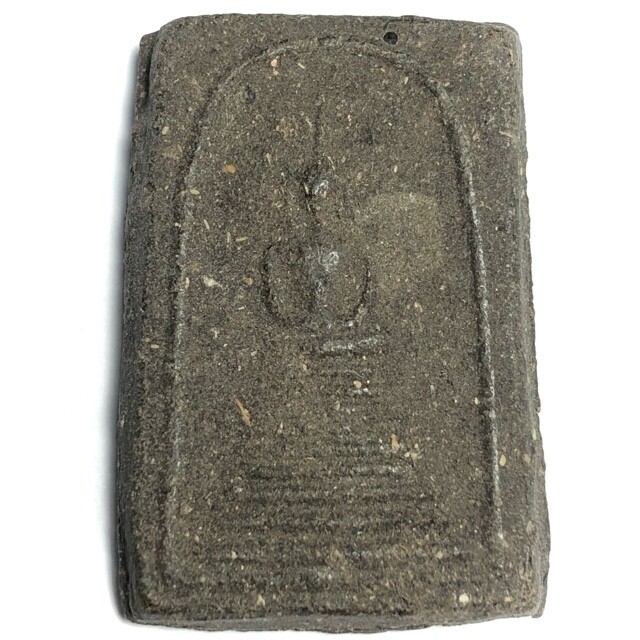
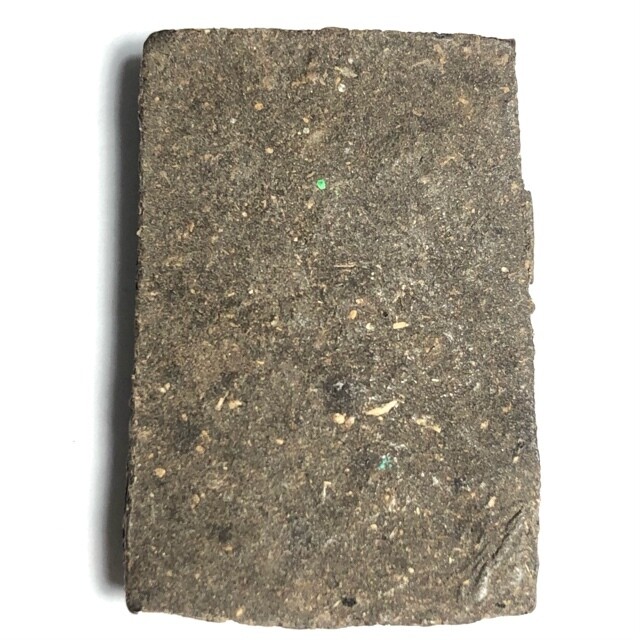
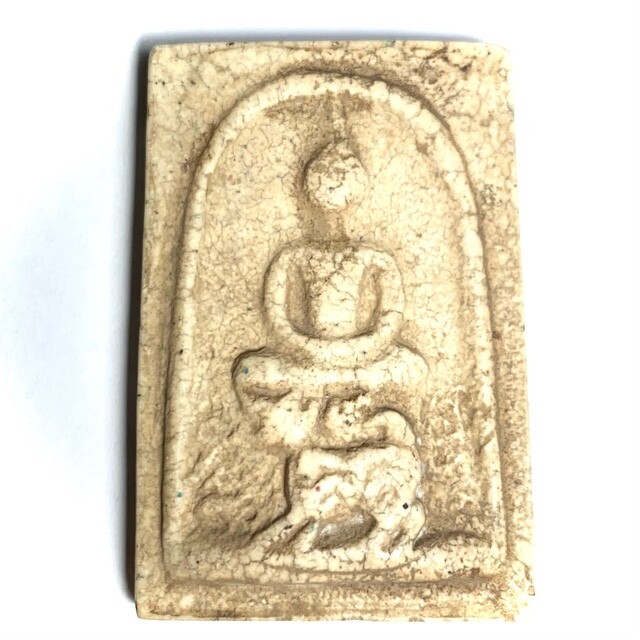
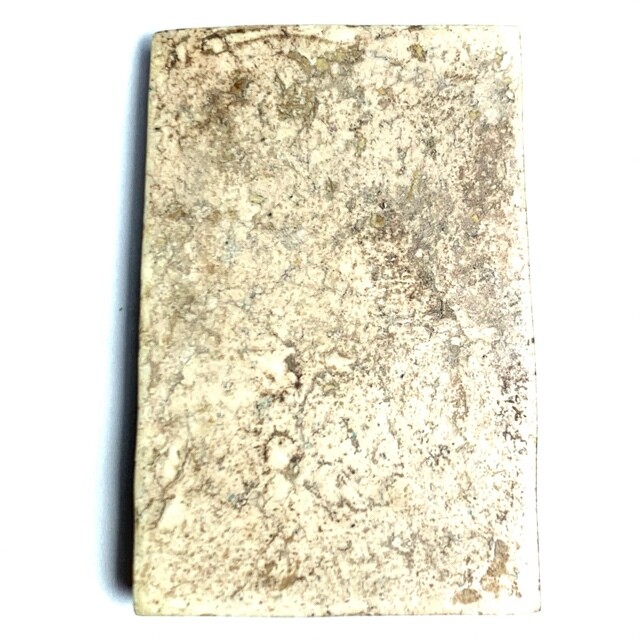
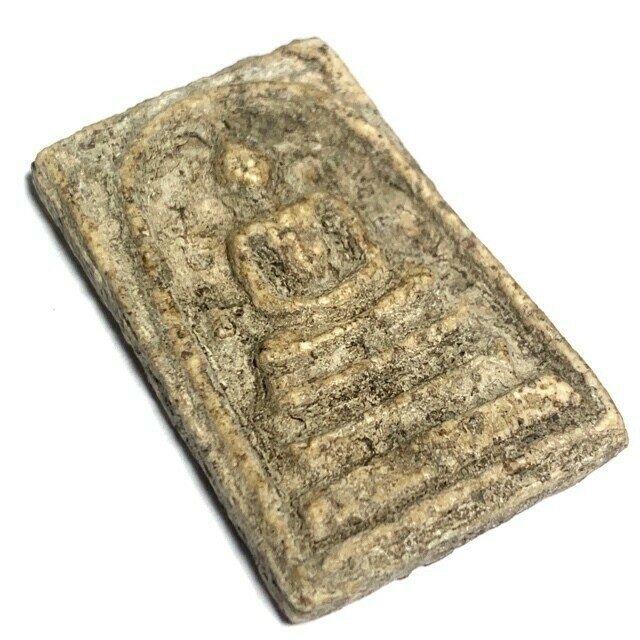
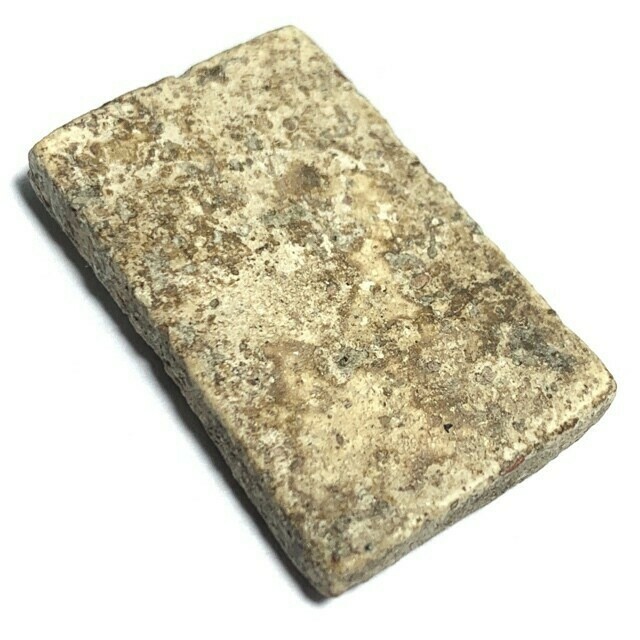
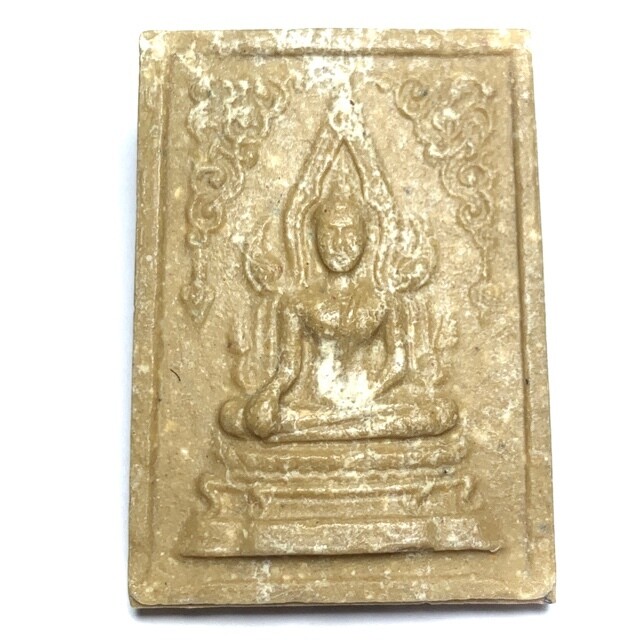
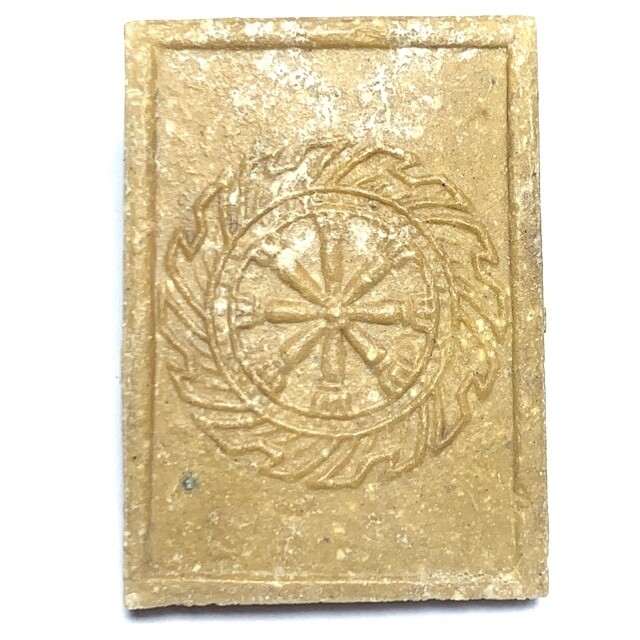
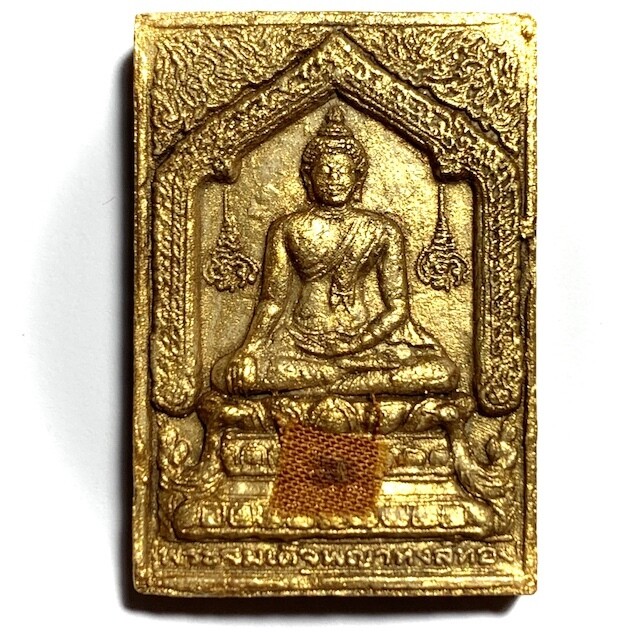
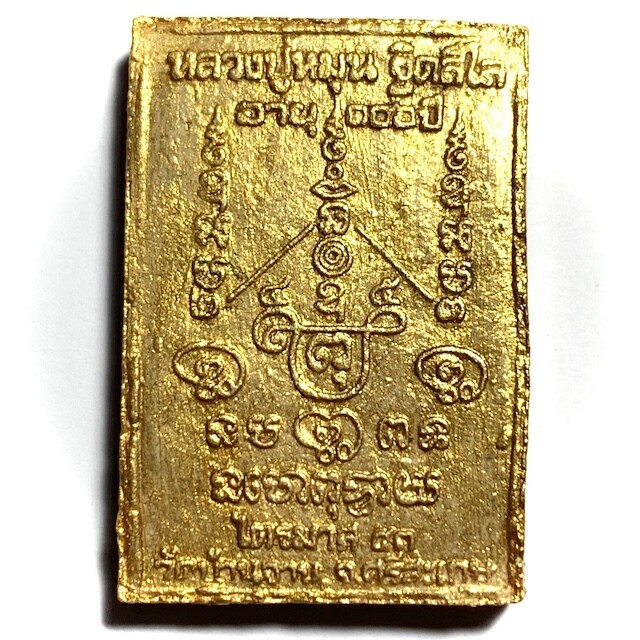
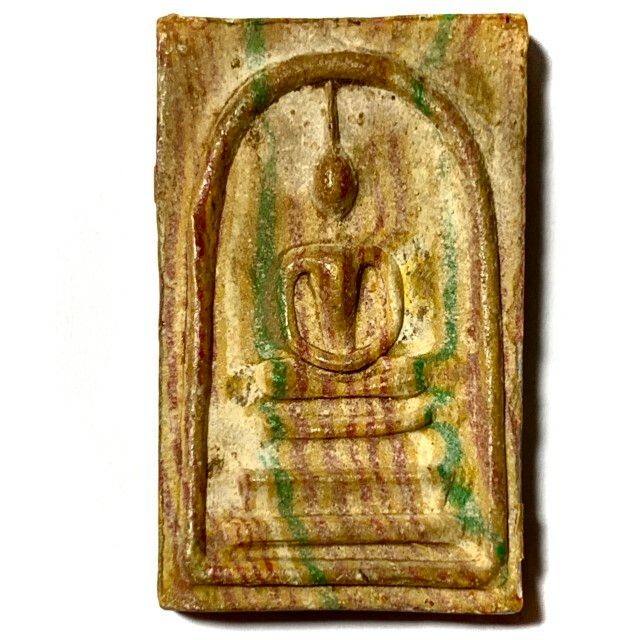
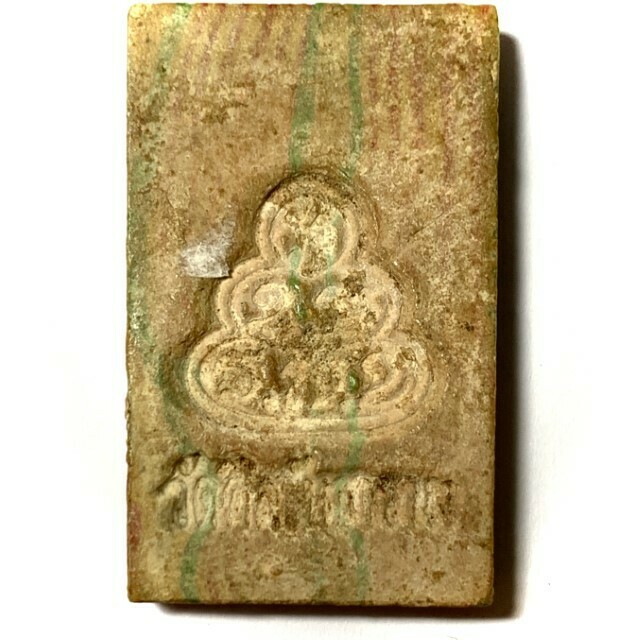
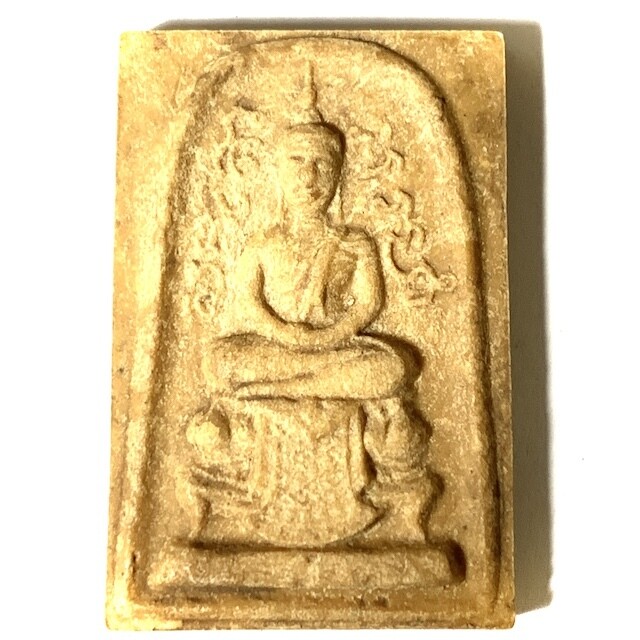
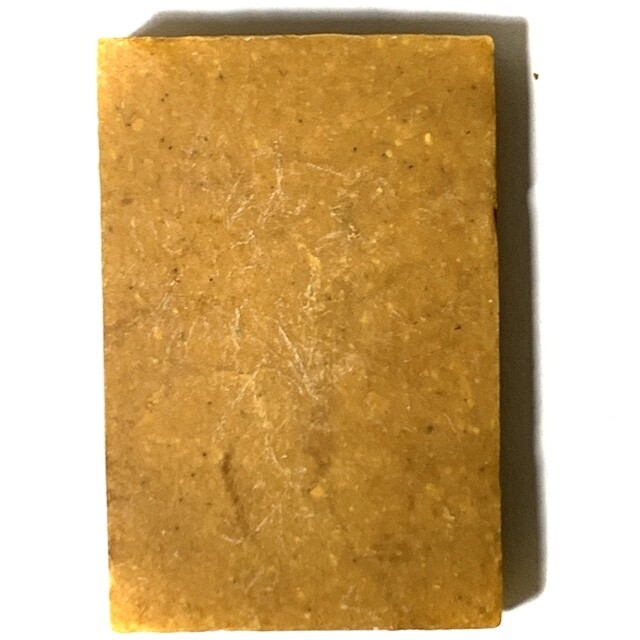
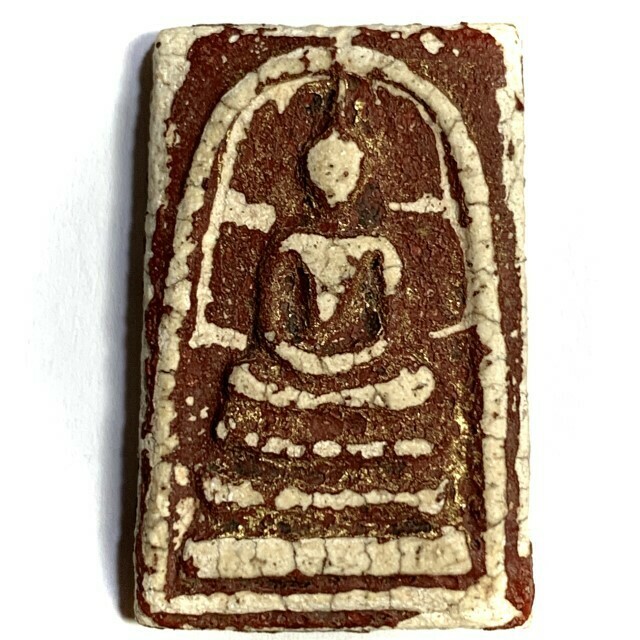
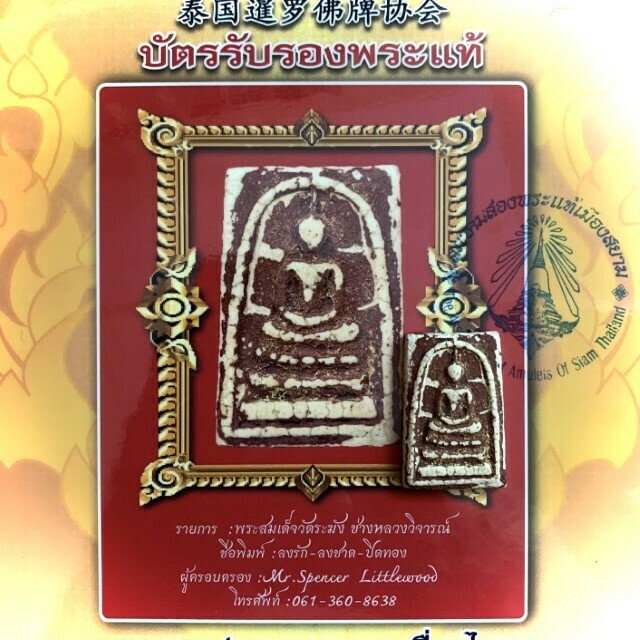
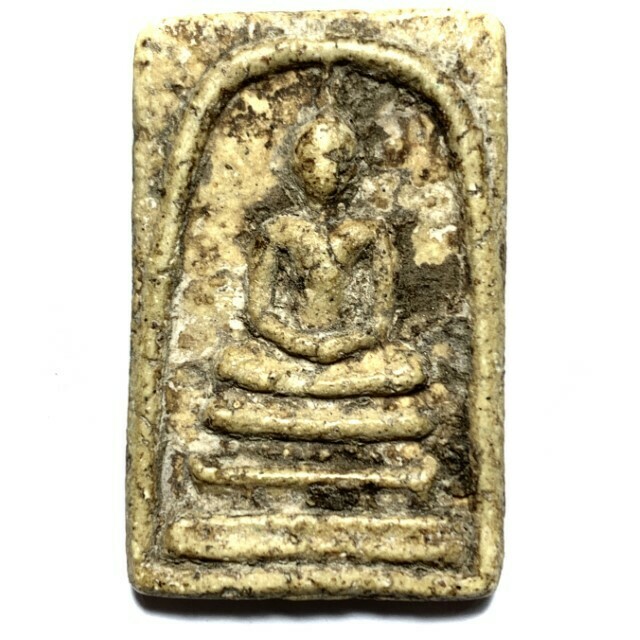
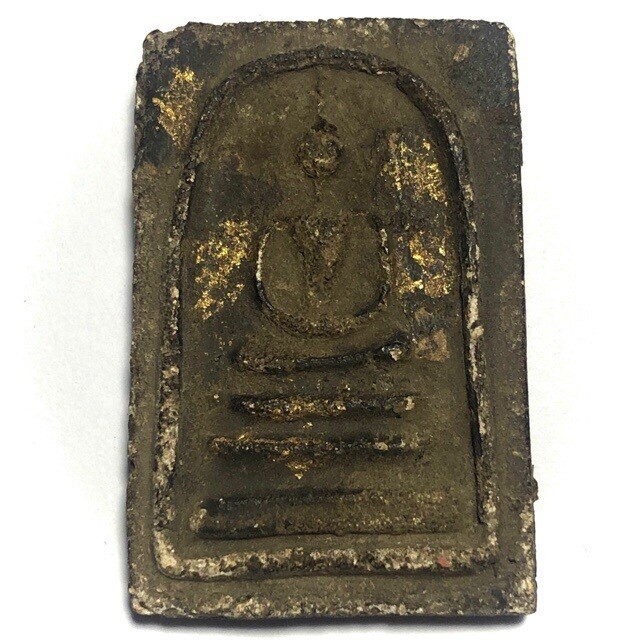
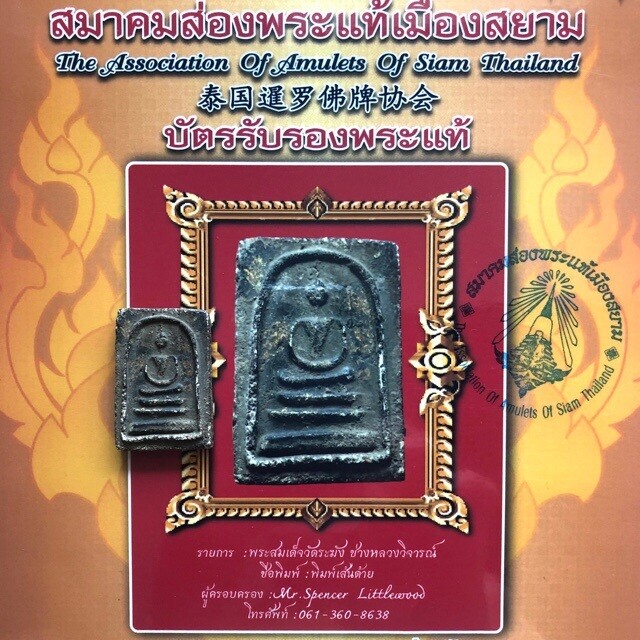
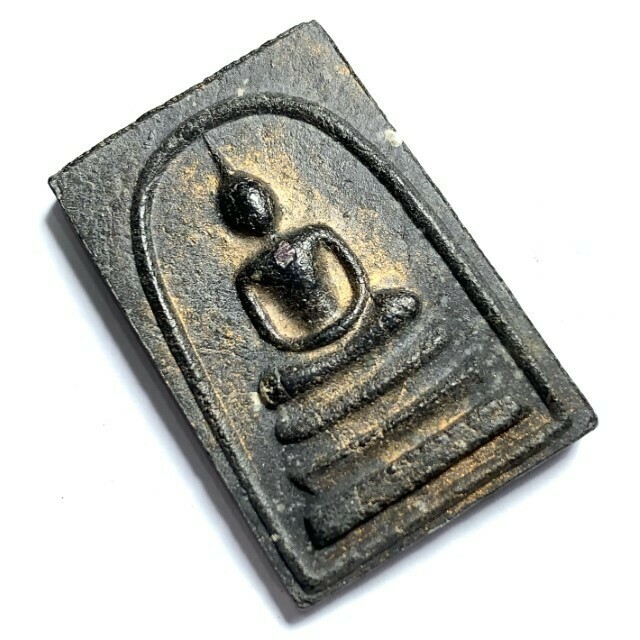
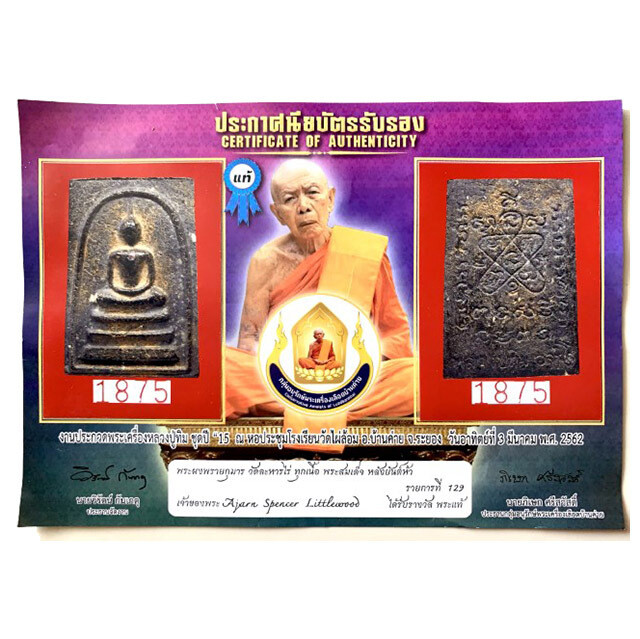
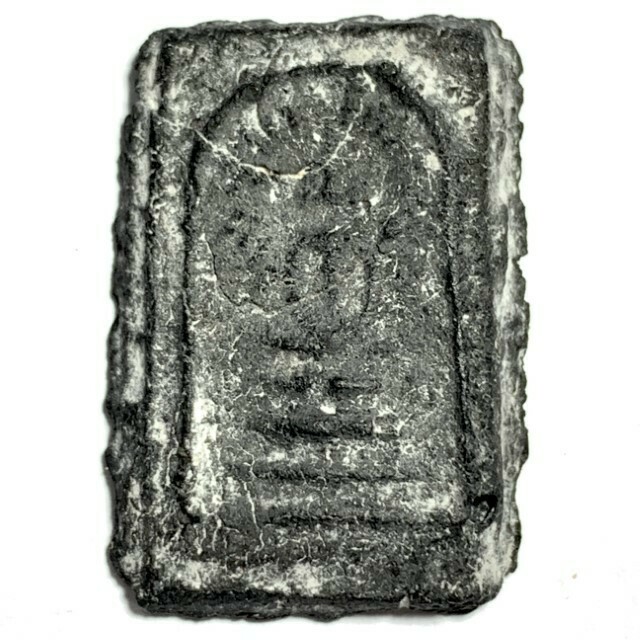
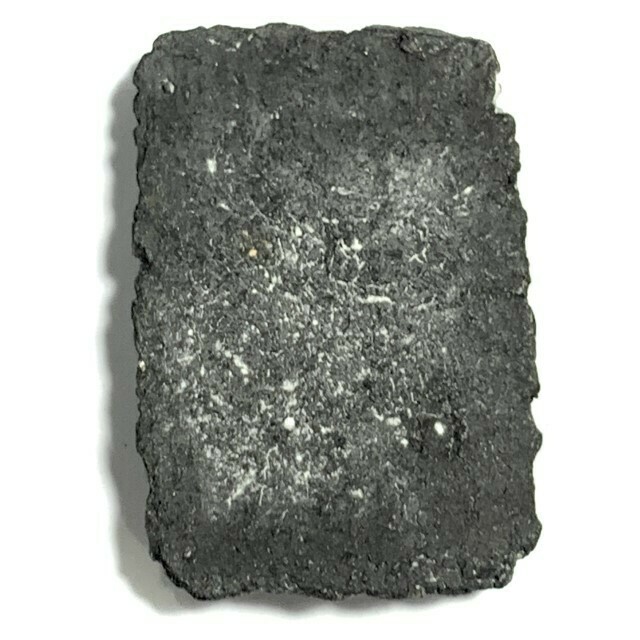
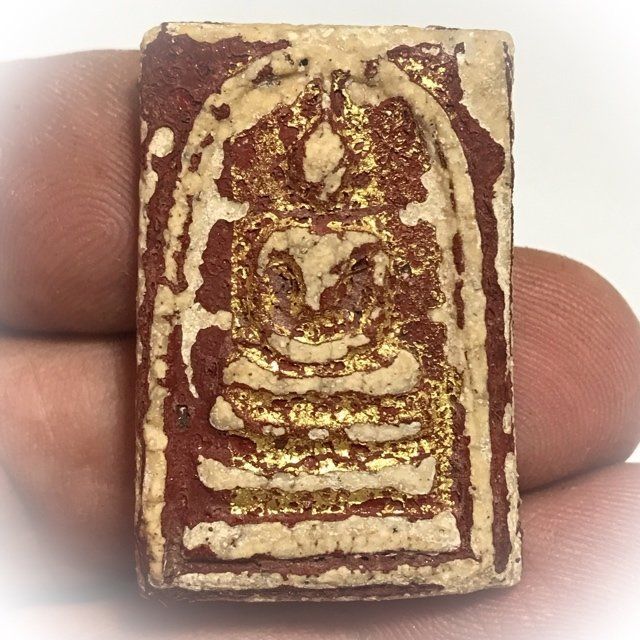
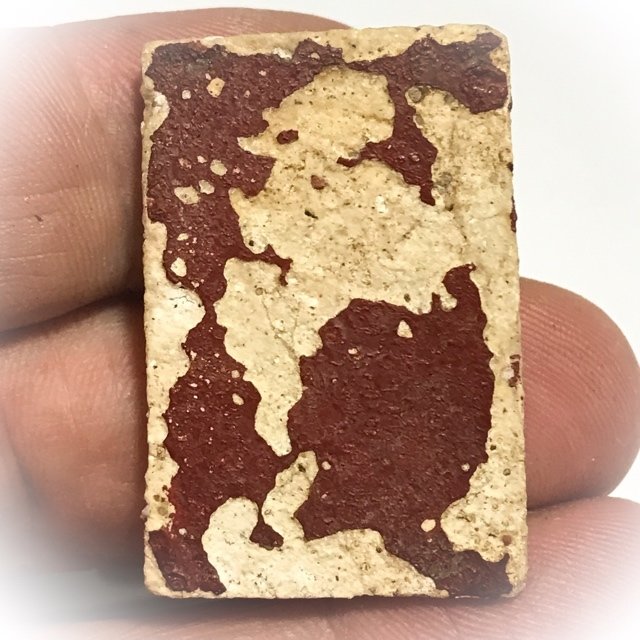
Pra Somdej Pim Yai Pised (large special version) in Nuea Pong Wised concentrated Puttakun Powders, from the ex Abbot of Wat Sutat Jao Khun Sangiam, released in the Year 2516, with extra special blessing and empowerment from the great Luang Phu To of Wat Pradoo Chimplee.
It is said that the amulets were made from Muan Sarn Sacred Powders collected by Pra Ajarn Sangiam, Somdej Pra Sangkarach (Pae), Tan Jao Khun Tip Gosa, and Jao Khun Sonti (Wat Sutat). The powders were blessed in multiple cer
emonies, including the presence of Luang Phu To, and Luang Por Nueang, of Wat Jula Mani, as well as many other Great Master Monks of that Era.
Pra Ajarn Sangiam then took these Muan Sarn Sacred Powders to make this edition of amulets, and mixed them with Old broken Pra Somdej Wat Bang Khun Prohm, and broken powders of Pra Kru Wat Sam Plerm.
The amulets were pressed with the block press molds at Wat Sutat, and Pra Ajarn Jao Khun Sangiam then blessed the amulets in solo nightly empowerment for a long time until the year 2516 BE, when he invited 49 Monks to come and assist in the Buddha Abhiseka Blessing Ceremony at Wat Sutat.
Amongst the many Masters present were; Luang Phu To (Wat Pradoo Chimplee), Luang Por Pae (Wat Pikul Tong (Singhburi), Luang Por Nueang (Wat Jula Mani) Luang Por Tiam (Wat Kasatrirach), Luang Por Horm (Wat Sak Hmak), Luang Por Thin (Wat Pha Lelai), and Luang Por Tong Yoo (Wat Nong Mai Pa-Ong.
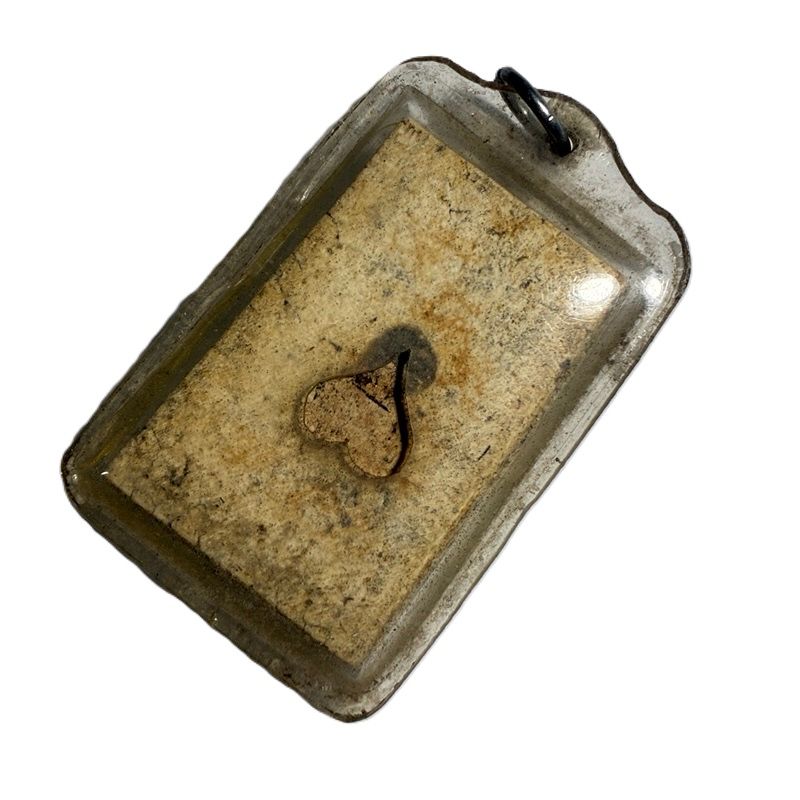
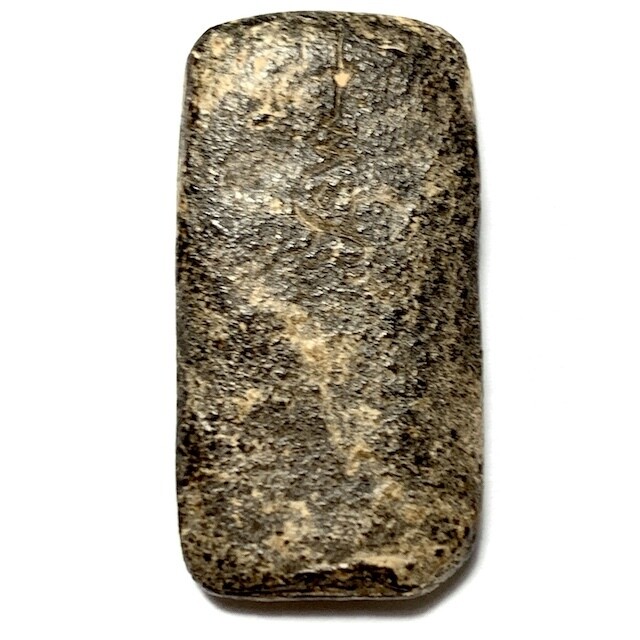
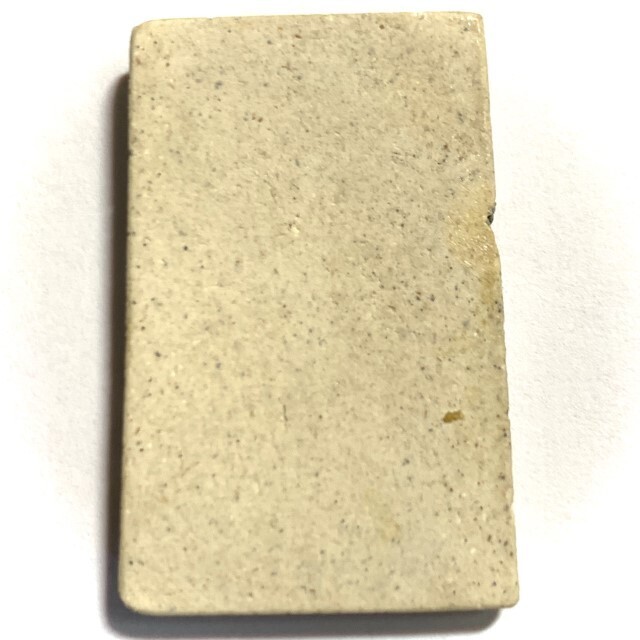
The rear face of the amulet has the Khom letters ‘Sa’ and ‘Ta’ (for ‘Wat Sutat) embossed, which is a standard feature seen on the rear face of many amulets from Wat Sutat (but not all).
Use the Traditional Thai Buddhist Method for Bucha;
1. Chant Maha Namasakara (3 Times)
2. Chant the Trai Soranakom (3 Times)
3. Chant Kata Aaraatanaa Pra Krueang (3 Times)
Kata Maha Namasakara
Namo Dtat-Sa Pakawa-Dto Araha-Dto Sam-Maa Sam-Put-Dtat-Sa
Namo Dtat-Sa Pakawa-Dto Araha-Dto Sam-Maa Sam-Put-Dtat-Sa
Namo Dtat-Sa Pakawa-Dto Araha-Dto Sam-Maa Sam-Put-Dtat-Sa
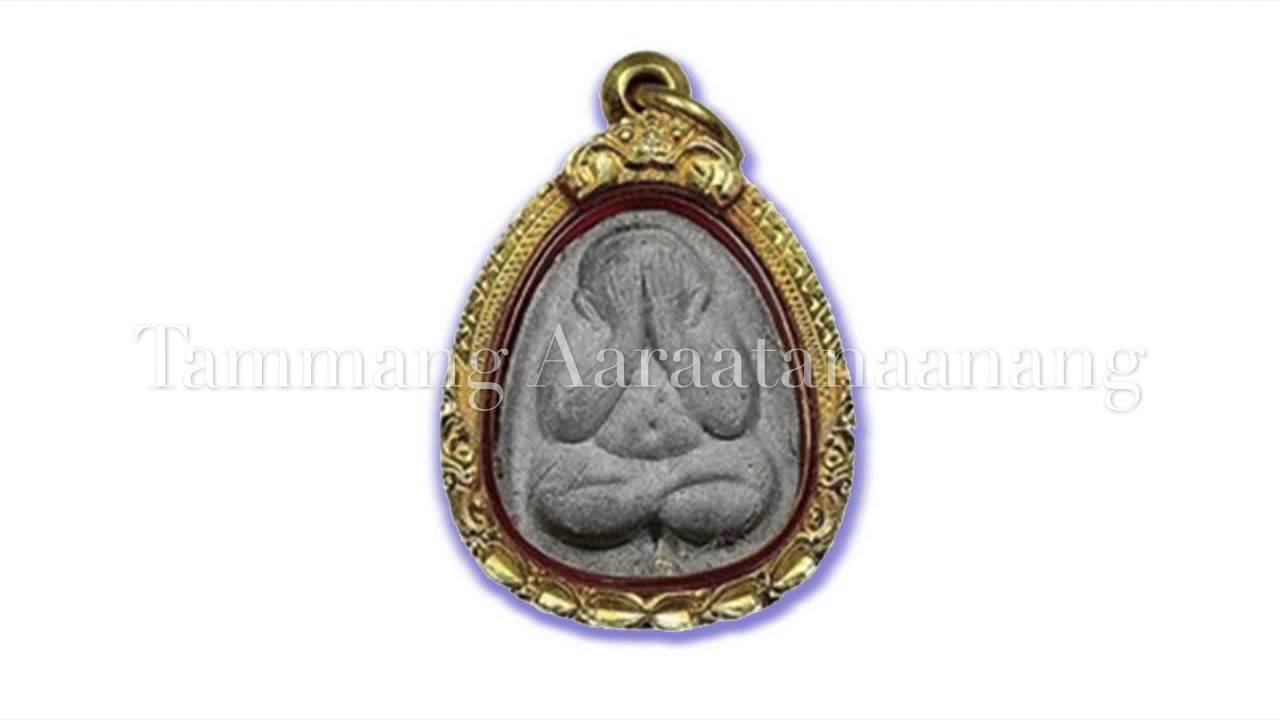
Kata Aaraatana Pra Krueang
Puttang Aaraatanaanang
Tammang Aaraatanaanang
Sangkang Aaraatanaanang
Puttang Prasittimae
Tammang Prasittimae
Sangkang Prasittimae
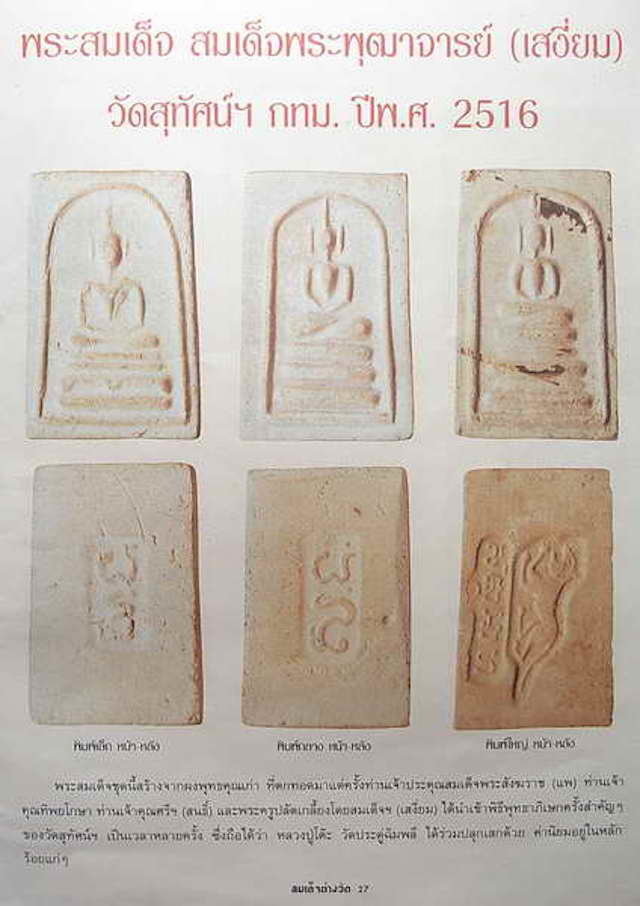
Below; Amulet Publication showing three different models of Pra Somdej released by Kao Khun Sangiam in the 2516 BE Ceremony.
Somdej Kha Dto Fang Takrut Ngern Ongk Kroo Jumbo size model early era amulet, by Luang Por Seng Jantasaro – Wat Bang Na (Pathum Thani), with triple Takrut magic spells inserted into the base. One of various models of Luang Por Seng’s amulets made, in this rare early edition series amulet. This model is the Pra Somdej Pim Kha Dto Hlang Yant Glom Votive Tablet, with sacred Yantra spell on rear face. Released in different design models (Pim, such as the Pim Kha Dto, and Pim Pra Pratan) and sizes, such as Pim Yai, Lek, and Jumbo. The amulets were released after Buddha Abhiseka Empowerment Ceremony, in the year 2512 BE. A very rare early era amulet, and attractive model, for devotees of the amulets of the Great Luang Por Seng.
Pra Somdej Kha Dto LP Seng Wat Bang Na Detail 1
This exhibit is ‘Nuea Graeng’ (hardened dry surface clay), and possesses great beauty within the features of the Muan Sarn Sacred Powder Clay Admixture, revealing immense character, and detailed relief in the details of the design of the Buddha and Dais. The ageing characteristics of this incredibly beautiful amulet, are easily recognizable, as is the authenticity of the drying and contraction of the Sacred clay over the many decades of time. The rear face has the Sacrted Yant Glom of LP Seng, with the Khom Agkhara Letters
Pra Somdej Kha Dto LP Seng Wat Bang Na Detail 2
Free Registered Air Parcel Worldwide Shipping is Included with this Amulet
Below; A Solid Silver Takrut Nok Sariga is inserted into the base of the Pra Somdej), increasing Metta Maha Niyom great preference mercy charm, Maha Sanaeh power of attraction, Kaa Khaay selling power, and Maha Lap lucky fortunes. This model being Pim Jumbo is hence, an ‘Ongk Kroo’ Masterpiece model, with solid silver Takrut with the Sariga Mercy Charm Invocation inserted into the base. The Nok Sariga ‘Celestial Magpie’ spell, is perhaps one of the most famous and preferred animist deity spells of the Metta Maha Niyom Mercy Charm Wicha, within the Thai Buddhist amulet pantheon.
Pra Somdej Kha Dto LP Seng Wat Bang Na Detail 4
About the Sarika/Salika spell;
The Nok Sariga (or, ‘Salika’) is a Golden Tongued Heavenly Bird which is attributed with immense Metta Mahaniyom and Maha Sanaeh qualities, and is along with the Hongsa Bird, one of the Best Devas to seek assistance in ‘Jerajaa’ magic. Jerajaa means ‘Discussion’. The Golden Tongued Sariga bird enchants and charms the listeners of he who possesses the Wicha, bringing a hypnotic and charming effect, to influence and convince, making people see things your way.
Pra Somdej Kha Dto LP Seng Wat Bang Na Detail 5
The amulet is made from Nuea Pong Puttakun, with Pong Ittijae, and Pong Wan magical herbal powders. Blessed in special ceremony by the Great Luang Por Seng, at Wat Bang Na, the amulet features a Buddha Image seated upon a 3 tiered dais, above a decorative dais, with ‘Kha Dto’ (table legs) style, also sometimes called ‘Thaan Singh’, and ‘Thaan Kha Dto’, depending on the devotee. The rear face has a round Sacred Yantra embossed upon the surface, with four Sacred Khom Agkhara letters. Luang Phu Seng Jantarangsri, or lovingly known as ‘Taep Jao Chaw Raman’ (The Raman Mong Tribe Angel and Lord), of Wat Bang Na, in Amper Sam Koke in Patum Thani, was one of the Great Thai Buddhist Master Monks of the the late 24th and early 25th Century BE.
Pra Somdej Kha Dto LP Seng Wat Bang Na Detail 6
The temple of Wat Bang Na, was always a large and popular temple in Patum Thani, for there were many people whose children ordained there, and the families would visit to pay reverence and offerings almost every day. Many monks would school there, and the temple was popular for local folk from near and far to come and make merits there. But it was only when the Great Luang Por Seng arrived, that amulets were made at Wat Bang Na.
Wat Bang Na Temple Pathum Thani
Before Luang Por Seng, no monk had previously made an edition of amulets. This means then, that Luang Por Seng was the Master responsible for the act of ‘Berk Dtamra’; the Opening and Beginning of a Temple Master Lineage in amulet creation and empowerment. So began the Dtamra Pra Krueang (Amulet Legend/History) of Wat Bang Na, and became immortally embedded into Thai amulet history forever.
Pra Somdej Kha Dto LP Seng Wat Bang Na Detail 8
Luang Phu Seng was also the first ever Monk of Wat Bang Na to receive Honorary status awarded from the Royal State Sangha Commission, Luang Por Seng was born in 2444 BE in the nearby vicinity of the temple of Wat Bang Na, and grew up near the temple. He never really told anybody more details than his year of birth, so this is about all that is recorded of his birth. It is also known that he was the only surviving child of a total of 7 siblings, who all died early age.
Pra Somdej Kha Dto LP Seng Wat Bang Na Detail 9
In those days, most people of the area of Wat Bang Na were farmers, many of the Raman Mong people who had come down the Mekhong from the Border Mountains. Many would farm the fields or make bricks, or would farm sugar beets. As to Luang Por Seng’s father, who was also a Raman (Mong Hilltribe) named Ju, who had come down the Mekhong in a boat, he was the owner of a small groceries and sundries shop. His Mother was also a Raman who went by the name of Khem.
Luang Por Seng was ordained in the year 2465 BE with Por Kroo Nantamunii of Wat Bang Luang, as his Upachaya Ordaining Officer. Luang Phu Tian, of Wat Bote, was his Pra Gamma Waajaajaarn, and Luang Phu Tat Sahulo, who was also Luang Por Seng’s Uncle, and the Abbot of Wat Bang Na, as his Pra Anusawanaajaarn witness.
Pra Somdej Kha Dto LP Seng Wat Bang Na Detail 11
Luang Por Seng mastered both the Raman language, and the Khom Pali Sanskrit Agkhara texts, and Wicha Akom (Sorcery). Luang Por would absorb as many Wicha from as many Masters as possible, and became extremely well versed in Sorcery and Khom Pali over the years, until, in the year 2486 BE, the Abbot of Wat Bang Na passed away (Marana Bhava), and Luang Por Seng was elected to become the new Abbot. He was Inaugurated as Abbot in 2487 BE by the Temple Comittee. Luang Phu Seng then conducted his duties extremely well and gave very many great Dhamma Sermons and performed great works.
Then in the year 2489, the State Sangha Comission of Thailand elected him unofficially to the status of Abbot with all full regalia and honors. Luang Por Seng was then empowered to perform the great work of finishing the Uposadha Shrine Room building begun by his predecessor Luang Phu Tat, and developed the temple in many ways. Each year, Luang Phu Seng would adhere to the practice of spending some time performing Boriwasagam (Tudong Forest Wandering). In these times and when he was not busy with the worldly facets of temple administration, he would practice kata Akom and Sorcery Spells using his Prakam rosary to count out formulas and memorize them. He became extremely proficient over the decades with repertoire of Magical incantations.
Pra Somdej Kha Dto LP Seng Wat Bang Na Detail 13
Luang Por Seng was a meek and humble monk who did not speak much at all, and would remain in stillness and silence most of the time. He performed diligent work for the temple and practiced his own Magic during Tudong forest wandering, until at the age of 65, Luang Por Seng produced the first ever edition of amulets at Wat Bang Na. The first edition was released in 2510 BE, and was the Pra Somdej Sam Chan Buddha on a 3 tiered dais in sacred powders. Later the very same year, his first edition Monk Coin amulet, the Rian Sema Kwam’ was also released, which is now a highly sought after edition, and is very rare to find.
Pra Somdej Kha Dto LP Seng Wat Bang Na Detail 14
After the first edition in 2510 BE, Luang Phu Seng would release amulets every year without fail, right up to his passing in the year 2530 BE
The first edition Pra Somdej featured a Buddha on a 3 tiered dais, with the words ‘Pra Kroo Seng’. There were 2 versions; some models had ‘Pra Kroo Seng Jantarangsri’ embossed too. The words are embossed below the dais of the Buddha. Some of the amulets had the words embossed by the block press of the amulets, some were inscribed by the hand of Luang Por Seng by hand (Very Rare).
Pra Somdej Kha Dto LP Seng Wat Bang Na Detail 15
Luang Phu made the first edition Somdej amulets in five different colored powders; Black, Red, Green, Yellow, and White. It is said that many of the 1st edition Pra Somdej he made, have a secret Takrut Nok Sariga inside them, inserted within the amulet, as seen more visibly in subsequent editions, such as this 2512 BE series Ongk Kroo Model.
Pra Somdej Kha Dto LP Seng Wat Bang Na Detail 16
Once he had pressed the amulets and all were ready, he would then perform empowerments, and hand the amulets out distributing them to the local devotees. Many devotees wore his amulets and survived deadly accidents, and so his amulets became the talk of the folk, and they began to appear ever more rarely, as Devotees began to hunt and collect them for their own use and protection.
Pra Somdej Kha Dto LP Seng Wat Bang Na Detail 17
This began after the popularity of his first edition Pra Somdej due to the miraculous stories of survival, Luang Phu had to quickly make the second ever release of amulets, this time his first edition coin, the Rian Sema Kwam. The coin was made in three different sacred metals; Galai Tong, Galai Ngern, and Nuea Tong Daeng. The coin has a bust image of Luang Phu Seng, and the words ‘Ajarn Seng’ underneath the image on the lower part of the front face of the coin. The rear face had a Sacred Yant emblazoned on it, below which are the words ‘Wat Bang Na’, and the year of issue ‘2510’.
Pra Somdej Kha Dto LP Seng Wat Bang Na Detail 18
Up to the year 2512 BE, Luang Phu Seng performed empowerments of the amulets in solo in the Uposadha Shrine, except for the first edition coins he made, where he invited a number of monks from surrounding temples, to come and perform full Buddha Abhiseka blessing. As of 2512 BE, Luang Phu always performed full Putta Pisek (Buddha Abhiseka) ceremonies on all editions, with a full cast of Monks to perform the chanting of the Opening of the Eyes of the Buddha, making this edition the first to have multiple Master Monks empowering the amulets.
Pra Somdej Kha Dto LP Seng Wat Bang Na Detail 19
One of Luang Phu Seng’s most famous and preferred amulets, is the world famous Palad Khik Ling Jab Hlak, Vanora Monkey grabbing a phallus animist charm, and the Pra Somdej Khee Moo Buddha riding Wild Boar amulet, which was released in various years and editions/versions. The Khee Moo Pra Somdej amulets were always made with the assistance by the Devotees of Luang Phu Seng and given to him for empowerment, and is one of the most sought after of all his amulets by his extreme devotees. The Pra Somdej Khee Moo is also a preferred amulet of his Pantheon, with serious speculative amulet collectors and appreciation societies.
Devotees pay reverence to luang Phu Seng at Wat Bang Na
Another famous and highly sought after amulet of Luang Por Seng, is the Moo Tong Daeng Khiaw Dtan ‘Copper Pig with Solid Tusks’ Animist Charm Loi Ongk Statuette, made in 2521 BE, and released in 2522 BE. The legend of the Moo Tong Daeng Copper Pig with solid Tusks (not hollow – considered a Magical aspect of Kong Grapan Chadtri Magic), states that bullets shot from a gun cannot pierce the skin of a Moo Tong Daeng Khiaw Dtan. Luang Phu Seng then used this Dtamra Legend to inflect Kong Grapan Chadtri and Klaew Klaad into the amulets, and instill faith and peace of mind in their users.
picture of the Moo Tong Daeng Copper Pig amulet of Luang Phu Seng
Pra Somdej Kha Dto LP Seng Wat Bang Na Detail 22
As the Buddha Abhiseka for the Moo Tong Daeng Khiaw Dtan amulets was being performed, the Uposadha Shrine room was sealed off to the public as the monks performed their blessings and meditative empowerments. However, some devotees witnessed a sight; a Mirage of a load of boars and pigs, were seen running into the Uposadha during the ceremony. After the ceremony was over, one of the devotees entered the shrine room, and informed Luang Phu Seng of what had been witnessed. Luang Por Seng laughed, gave a smile but said nothing else.
Pra Somdej Kha Dto LP Seng Wat Bang Na Detail 24
After the release of the Moo Tong Daeng Khiaw Dtan amulets, they attained great popularity due to effective results with the Devotees. The amulets were made in Nuea Loha (sacred iron alloy), and was made in small and large sizes.
The left side of the body of the Boar has the words ‘Wat Bang Na Patum Thani 2521’ embossed, and the right side of the body of the boar has Khom Agkhara lettering embossed. The legs of the Boar have the four elements inscribed in Khom Sanskrit ‘Na Ma Pa Ta’.
Pra Somdej Kha Dto LP Seng Wat Bang Na Detail 26
In 2524, Luang Por Seng made for the first time the ‘Moo Tong Daeng Jet Hua’ – 7 Headed Boar – this was actually a Wicha Palad Khik, with 7 Palad extending out from the boars extremities; head, tail, feet (X4), sex organ. The end result was a Moo Tong Daeng Khiaw Dtan Solid Tusked Boar metallic statuette with penises on the ends of the legs, tail, head and sex organ (7 Palad Khik). Made from Nuea Tong Daeng Pasom Loha (Copper and Iron Alloy), the left side of the torso has the Year embossed (2524). Apart from this, Luang Phu Seng also released a Jumbo Size Bucha version (rare!)
Pra Somdej Kha Dto LP Seng Wat Bang Na Detail 28
The first edition of Moo Tong Daeng was made in a number of 2500 amulets only, making them very rare to find in the present day. They are known for powerful Klaew Klaad and Kaa Khaay Power. Lastly, one cannot speak of Luang Phu Seng without mentioning his famous Paya Krut Tong Daeng Garuda amulet. Perhaps the other most commonly seen amulet of Luang Phu Seng seen in High End Collector Club Magazines, is almost certainly the Paya Krut Garuda amulet.
Garuda amulet of LP Seng Wat Bang Na
The Paya Krut Garuda amulet of Luang Phu Seng, was blessed in Buddha Abhiseka with a further 10 Master Monks who Luang Phu Seng invited to assist in the empowerment. The Garudas were made in Nuea Tong Daeng sacred Copper Alchemical Alloy.
rear face Garuda amulet of LP Seng Wat Bang Na
The amulets were first released in 2522 BE. The rear face of Luang Phu Seng’s Paya Krut amulet has the words ‘Luang Phu Seng Wat Bang Na Patum Thani 2522’ engraved into the metal face, with Agkhara Khom Khmer Inscriptions interspersed. The amulet is now one of the most expensive and highly prized of all his pantheon of amulets.
The Paya Krut Tong Daeng had various miraculous news stories which made it popular as a Klaew Klaad and Kong Grapan Chadtri protective amulet, which has saved lives both on roads and on the ocean. The amulet is often seen in High End Collector Championships competing, and often winning not only in the Luang Phu Seng category, but also the Paya Krut category, and Loi Ongk category.
Pra Somdej Kha Dto LP Seng Wat Bang Na Detail 32
Apart from the above mentioned amulets, Luang Phu made a host of other forms of amulets including the Hanuman (In Galai Ngern and Galai Tong Daeng), then the Dtao Ruean turtle,, after which he created one set of silver and golden Hongsa Bird amulets, to remind people that Wat Bang Na, was built upon the sweat of the Raman People.
The Mong Raman (Ramen) people, are a hilltribe whose territory stretches from the Kanjanaburi district up to the borders of the Karen (Gariang Kor Ma) Horseneck tribe territory. Teir main population is within the borders of Myanmar, with a total population of 8 million, 114,000 of which are inside the borders of Thailand. Their Ethnic Origins come from Southern India.
Image: Devotees tend to the mummified mortal remains of Luang Phu Seng
Luang Por Seng’s corpse remains miraculously undeteriorated without mummification, on show at the temple of Wat Bang Na in a glass coffin, and is prayed to by masses of devotees who visit each day, to beseech his blessings.
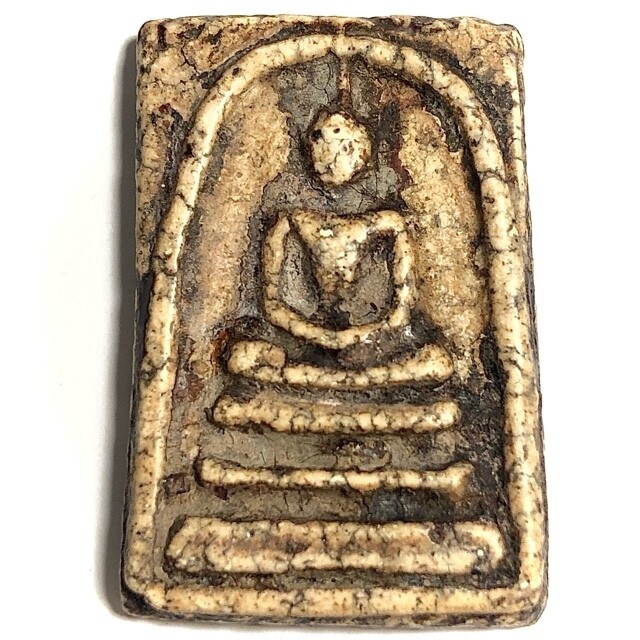
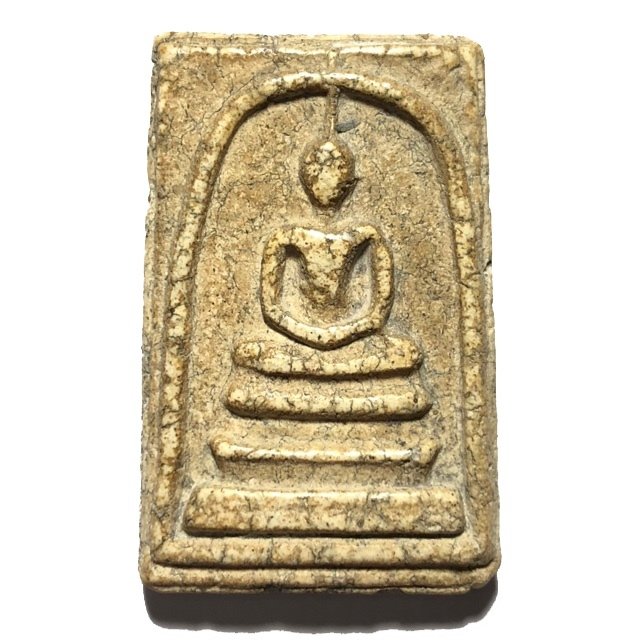
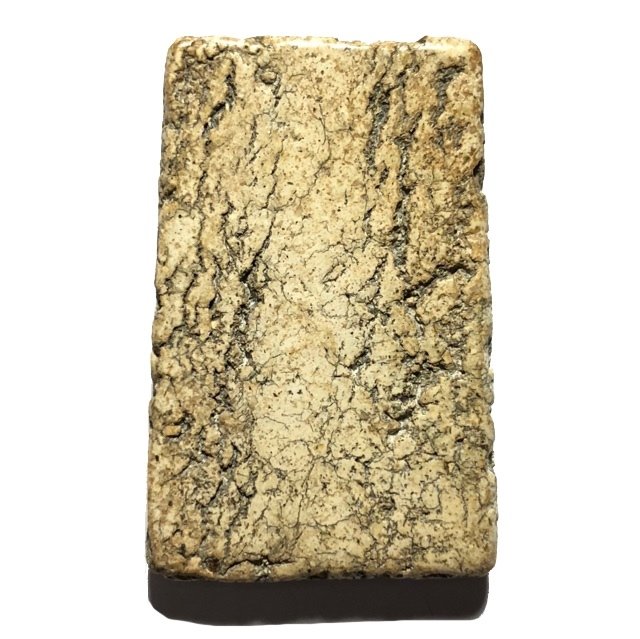
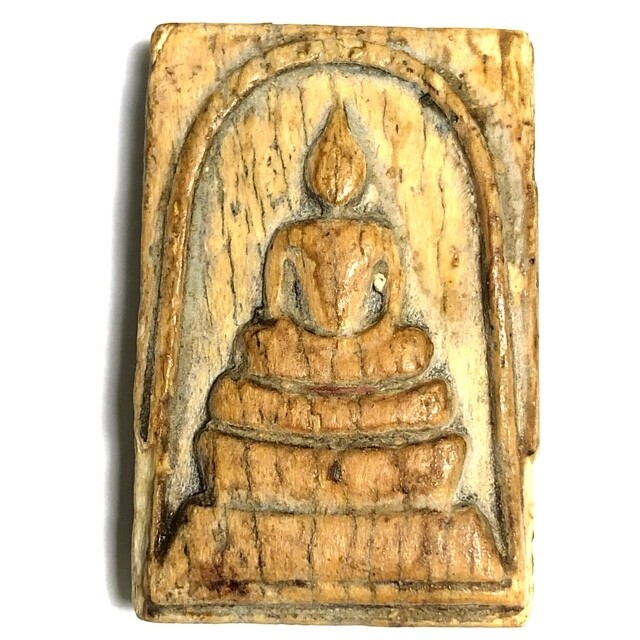
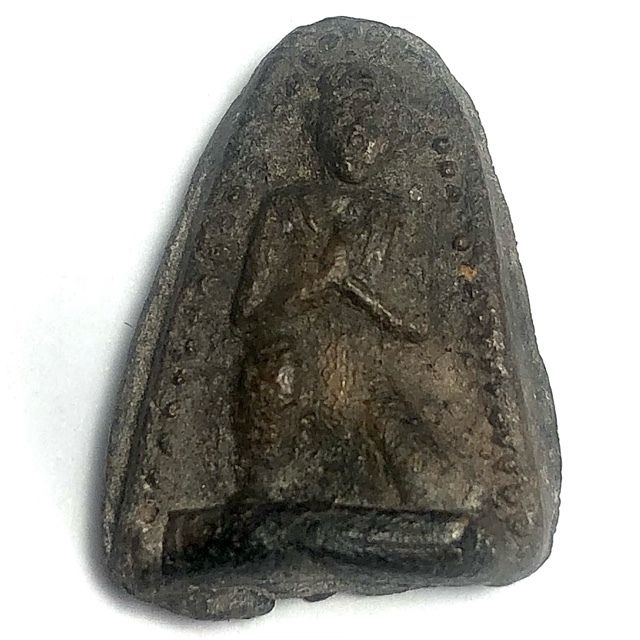
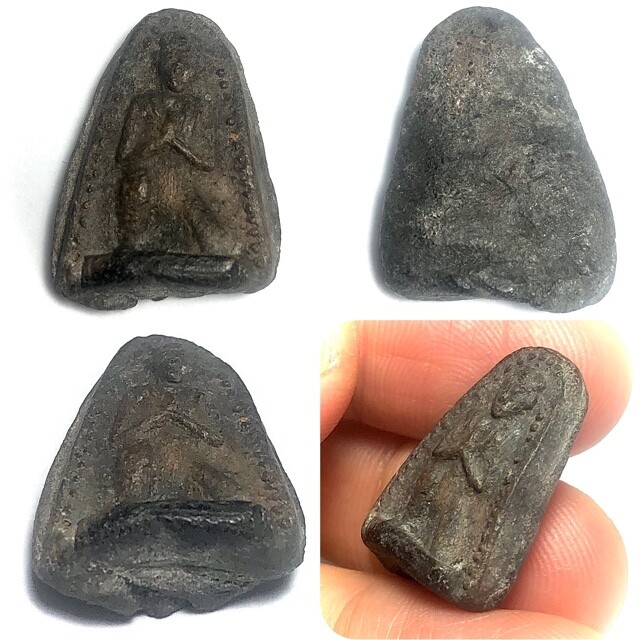
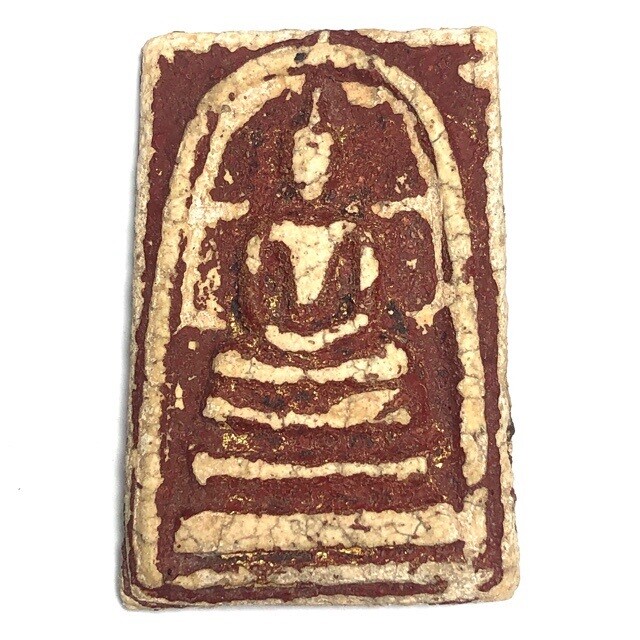
An incredibly rare amulet to find in the present day, this Pra Somdej Thaan Saem Pim Hoo Jud comes from a Block Niyom preferred block press mold, and belongs to one of the most Historic and Preferred editions to have ever been released by the temple of Wat Bang Khun Prohm, namely the world famous 2509 BE classic series of immortal fame.
The Somdej Thaan Saem Pim Hoo Jud is one of a Major Pantheon of 12 different Pim Song models in this series, including a miniature ‘Pim Kanaen’ Pra Somdej. The series also included a Pim Jantr Loi circular votive tablet, a Sayasana reclining Buddha, a Pra Pong Pim Somdej Dto, and a Pra Pong Pim Pra Sivali, as well as some Bucha statues.
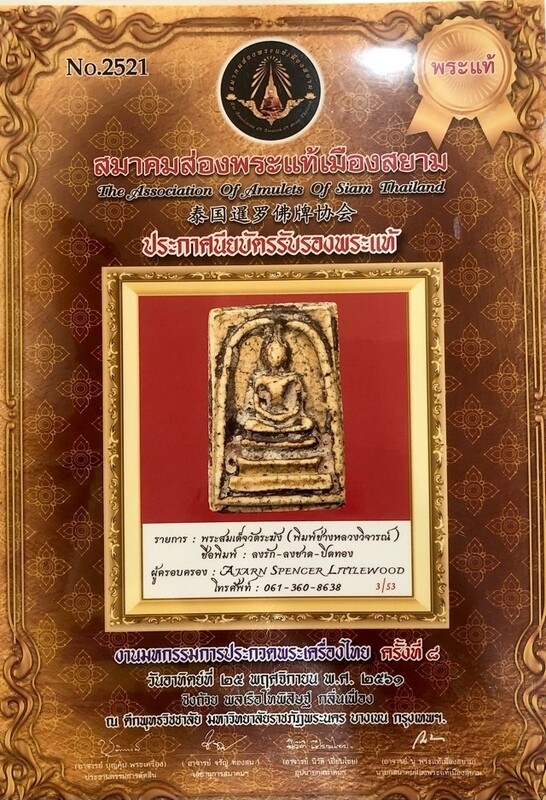
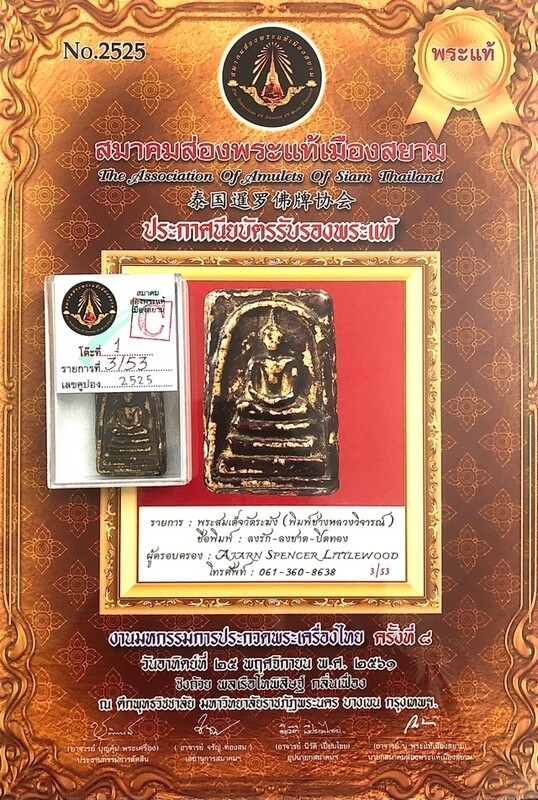
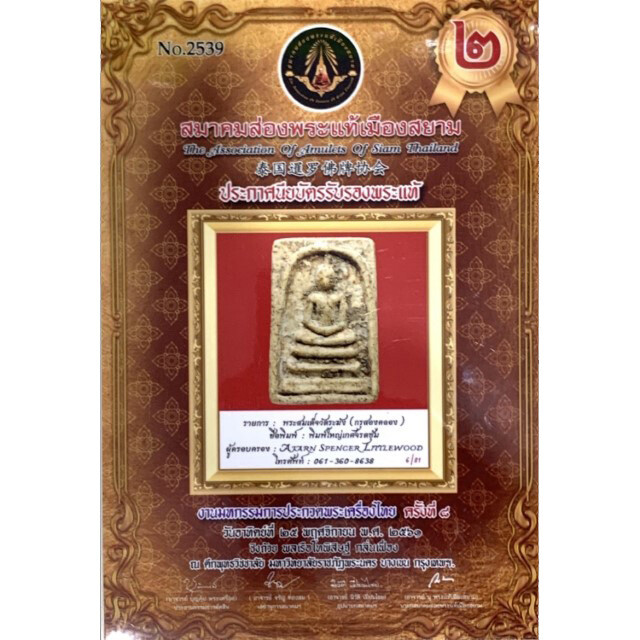
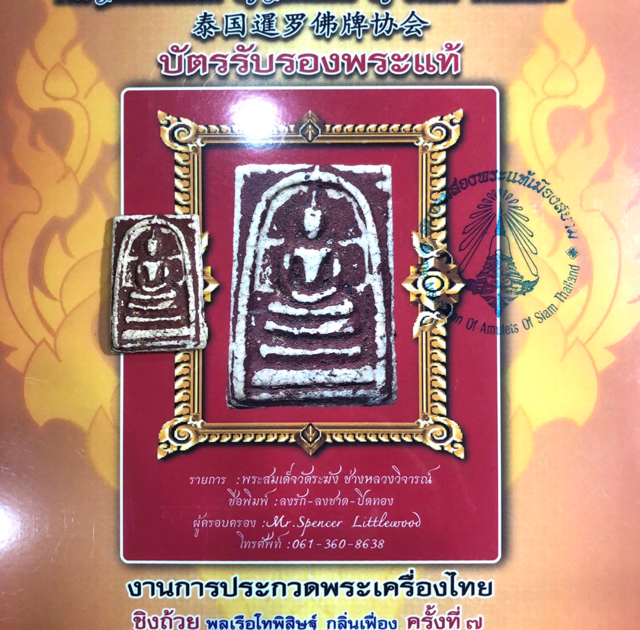
This exhibit comes with official digital chipped rfid tag card authenticity certificate of the Siam Amulet Association as an authentic Pra Somdej Wat Bang Khun Prohm Pim Hoo Mee Jud Thaan Saem. The amulet was submitted by VIP member of the association and proprietor of ancient amulet store, Mr Ajarn Spencer Littlewood, on his own time and expenses, for the pride and confidence of you who will become the owner of this rare classic.
This exhibit is exquisitely finely detailed, with visible chunks of old Muan Sarn from broken pieces of the original Pra Somdej Wat Bang Khun Prohm amulets of Somdej Pra Puttajarn Dto Prohmrangsri, which were taken from the Chedi Stupa to mix with the sacred clay of the 2509 BE Edition.
The Pra Somdej Wat Bang Khun Prohm 2509 BE Edition amulets were blessed by the following Masters; 1. Tan Prakun Pra Taep Sittinayok (Luang Phu Nak) of Wat Rakang Kositaram, in Bangkok 2. Luang Por Te Kong Tong, the master of Wicha Kumarn Tong and abbot of Wat Sam Ngam temple, in Nakorn Pathom 3. Tan Jao Prakun Pra Rachatammaporn (Luang Por Ngern) of Wat Don Yai Horm, in Nakorn Pathom 4. Tan Pra Kroo Prasat Wityakom (Luang Por Nor) of Wat Klang Ta Ruea 5. Tan Jao Kun Wimon Gijjaraks (abbot of Wat Chana Songkram) 6. Tan Pra Kroo Wisai Sope (Ajarn Tim), of Wat Chang Hai in Pattani 7. Tan Ajarn Ampon abbot of Wat Prasat Bunyawas, in Bangkok 8. Tan Ajarn Satid of Wat Vachira Tamma Sathit in Bangkok 9. Tan Ajarn Dtaem , of Wat Pra Loi, in Supanburi 10 a large group of monks from Wat Sutat to assist in the chanting of the Buddha Abhiseka, with Pra Kroo palad Wisuttiwat presiding over the chanting.
Each Pim of the 12 Major models had various block press molds with each mold possessing slightly different designs. This means that despite only nine Major Pim being made, each Pim has multiple block press molds, and hence the pantheon extends down to the various sub-designs of each of the many block presses. Some block presses are much more highly preferred by collectors to others.
Four different artisans were commissioned for the design and creation of the various block press molds;
1. Lung Chaem Bua Plien Si – the block press mold designs made by this artisan replicated the classic design opf Wat Bang Khun Prohm amulets, with the slight difference that the images were slimmer than previous designs, and a few Special Pim block press molds were made by this artisan.
2. Kun Manit Bpathapi – this artisan made block press molds according to classic models which were removed from the Kru Chamber in the Chedi Stupa, from original Pra Somdej Wat Bang Khun Prohm of Somdej Pra Puttajarn (Dto) Prohmrangsri (Wat Rakang Kositaram), and also made some special design block press molds
3. Chang Kasem Mongkol Jaroen – this artisan stepped in during the latter part of the creation, to help finish the remaining block press molds on time for the ceremony. This artisan was a highly skilled artisan, and the amulets made from the block press molds of his making are considered exquisite, and highly sought after
4. The Block Gammagarn mold makers; This means the people who possessed original Wat Bang Khun Prohm Pra Somdej amulets of Somdej Pra Puttajarn (Dto) in their possession, and used them to create new block presses. The amulets of these block presses resemble the ancient Pra Somdej Kru Wat Bang Khun Prohm originals most of all, with the only real visible difference being that they are slightly smaller in size.
Police Commisioner Prapas Jarusathiarn, the vice minister of the Thai Parliament, in collaboration with Lady Sawai Jarusathiarn sponsored the building of all the installations built between 2501 and 2509 BE, and commissioned the amulets to be made for release in celebration of the success of these projects.
On the 4th of January 2509 BE Comissioner Prapas Jarusathiarn lit Incense and Candles in the Shrined to Bucha the Triple Gem, and Police Captain Krit Siwara read out the list of sponsors of the edition comittee. He then addressed the Sangha (Monks), to begin chanting the Buddha Abhiseka. The Victory candle to inaugurate the Buddha Abhiseka Ceremony was lit, and the ceremony began.
Four of the Monks took their positions for ‘Nang Prok’ meditative empowerment on their respective daises, and held the Sinjana cords which led to the amulets, coming down from the ceiling of the Uposatha Shrineroom, and began to empower the amulets.
On Wednesday 4th January 2509 BE at 15:55 pm, Police Commisioner Prapas Jarusathiarn began to hand out the amulets to devotees who came to make merits and pay reverence at the temple, and also stored a large number of amulets in a batch within the Kru hiding place of the Chedi Stupa for posterity.
On Thursday the 6th, Friday the 7th, and Saturday the 8th of January 2509 BE, theLook Nimit Arahant Balls were retrieved from beneath the Uposatha, and a gold pasting ceremony was performed as is Traditional in Thai Buddhism, and the amulets were distributed once more during this ceremony, to devotees who came to make merits.
On Sunday the 9th January 2509 BE, the Sila Reuks main cornerstone of the Uposatha Shrineroom was laid by His Majesty the King Bhumipol Adulyadej, and initiated the Pitī Te Tong Gold Pouring Ceremony to add Gold to the Casting Mold of the Buddha-Rupa statue for the Uposatha, which was cast in Sukhothai Era in the Mara Wichai conquering Mara posture, with a 16 Inch wide base.
In addition a statue of Somdej Pra Puttajarn (Dto) Prohmrangsri of Wat Rakang Kositaram was also cast with a 29 Inch wide base for installation in the shrine at Wat Bang Khun Prohm, with a further 109 smaller 5 inch wide base statues made for distribution to the public.
On Monday the 10th of January 2509 BE at 19:30 pm, 84 Ordained Members of the Sangha performed the chanting of Jaroen Pra Putta Mont within the Uposatha. At 21:01 Somdej Pra Wanarat of Wat Chetupon performed the Pitī Phuug Putta Sima Ceremony to officially inaugurate the Panta Sima Dais for the placement of the 29 inch wide statue of Somdej Pra Puttajarn (Dto) Prohmrangsri.
The statue was placed on the Putta Sima under and arched edifice next to the large Chedi Stupa of Wat Bang Khun Prohm (the one where the famous Kru Bang Khun Prohm hiding place amulets of Soomdej Dto were found). A carved stone table with the insignia of His Majesty the King was placed into the shrine to mark the occasion of His Majesty’s presence.
The Pra Somdej Wat Bang Khun Prohm 2509 BE series amulets hence were made over a period of many years before they were all completed, beginning in 2501 BE and completing the series in 2508 BE, when the final batches of the total 84,000 amulets of the edition were mixed into clay and pressed with the block presses.
The amulets were pressed inside the Uposatha Shrineroom which had been built and completed, with Luang Por Chom being the monk who pressed the first amulets in the Pathoma Reuks initiation ritual. Then the Gammagarn Sponsor Committee members, and many devotees who came to assist in the pressing, all took turns in helping to press the amulets, until they were all done.
There were two kinds of amulet presses made during this ceremony
1. Pra Banju Kru – these amulets were rented to devotees at 1 Baht each, for the devotee to make merits by placing the amulet inside the Kru Chamber of the Chedi Stupa for posterity. These amulets had the word ‘Banju’ (meaning to put inside the Chedi), embossed on the rear face. 84,000 Pra Somdej amulets were made for this purpose with the word ‘Banju’ on rear face
2. Bucha – these amulets were made for Bucha reverence and for Devotees to wear and take home with them.
These amulets were distributed to the Public for Bucha at 10 Baht each, except for the Sayasana reclining Buddha model, which was ‘rented’ for Bucha at 25 Baht each. Some sets of 11 Pim Song Models were also distributed to devotees who wished to donate more funds (all models except the Sayasana), at 100 Baht a set. These amulets had the rubber ink stamp with the Chedi of Wat Bang Khun Prohm stamped on the rear face, with 84,000 amulets pressed in this type. However, after removing any broken or defective amulets from the batch, only 72,518 amulets were actually intact and distributed.
The Pra Somdej Wat Bang Khun Prohm were made using the broken Pra Somdej taken from the 2500 BE Chedi Stupa Hiding Place opening, mixed with Puttakun Yantra Powders from great Master Monks around the country, from the past and present, with Poon Khaw, Poon Plueak Hoi (powdered sea shell), Pollens from Bua Luang Lotus and Dork Pikul Flowers, and Nam Man Tan Iw (Tang Oil).
There were numerous Block Mae Pim block presses for the amulets, with some block presses to spare in case any of them broke during the pressing. Some were made from plaster of paris, others made from cement, and others from dential cement. As the amulets were being pressed over a period of time, the block presses would break, and a new one would be taken and used in its stead, one after the other.
This process continued until all the amulets were finished,. because each block press had slight differences in the way they were carved by each artisan, there are a large number of differences to be found in various examples of the same Pim Song model, with each block press defining slight differences in details of design.
This is why one cannot look at an example of a Pim in a magazine, and compare it with another of the same Edition and Model, because even if the amulets are both the same Pim (e.g. a Pim Sen Daay), they will still have differences in features if they were pressed by two different block presses.
To compare, one has to find an amulet for comparison which came from exactly the same block press, of which there were many. this is where one’s studies of the historic facts, and ability to recognise which Block press Mold an amulet comes from, is essential study for students and aficionados of the Wat Bang Khun Prohm 09 series (and any series for that matter).
To give an idea as to how many different block presses there were, we can take a look at the fact that merely the Pim Yai (Pim Pra Pratan) model, had a total of 27 Block Presses made and used to finish pressing the whole series. The Pim Gaes Talu Sum model, was orginally pressed as a Pim Yai Block Press, but the Block Press broke where the tip of the Buddha’s topknot touched the arch.
The artisans reworked the block press and it became a design with the tip of the topknot piercing the arch, to cover up the broken part of the Block Press. And this brought the Pim Gaes Talu Sum model to be added into the series.
The 12 Pim Song Models of the Wat Bang Khun Prohm 2509 BE Series edition are as follows;
1. Pim Yai (Pim Pra Pratan)
2. Pim Sen Daay
3. Pim Song Chedi
4. Pim Gaes Bua Dtum
5. Pim Sangkati
6. Pim Prok Po
7. Pim Thaan Koo (Thaan Saem)
8. Pim Thaan Saem
9. Pim Ok Krut
10. Pim Sayasana
11. Pim Kanaen
12. Pim Jantr Loi
In addition to the Pra Somdej models, there were the Pra Pong Pim Pra Sivali and Pim Roop Muean Somdej Pra Puttajarn (Dto) Prohmrangsri also released in this edition.
All the amulets which were not distributed to the public at the time were placed in the large Chedi Stupa Kru Chamber at Wat Mai Amataros (Wat Bang Khun Prohm). For the series, a water tank sized chamber was constructed within the Chedi for the storage of the amulets, with ten ventilation holes in it, with sand in the base to absorb any water which may enter from flooding.
The amulets were then filled into the chamber, with six silver foils in layers between each pile of amulets, with the words ‘Banju Pi 09’ on them, so people who may discover them in the far future will know which year they were buried in, and from which edition they came from. It is because of how the amulets were well stored and protected against the weather and elements, that the Pra Somdej Kru Wat Bang Khun Prohm 09 edition is more attractive that the 2500 BE Kru Chamber opening edition.
The earlier editions removed from the Chedi always suffered floods and climatic changes, and all have much more Kraap Kru growth on the surface of the amulets. Whereas the 2509 BE Pra Somdej Wat Bang Khun Prohm series amulets are pristinely preserved and kept, without any damage from floods or other weather related disasters or climate influenced events.
For this reasons, the Wat Bang Khun Prohm 2509 BE series is one of the most preferred editions of Pra Somdej, and perhaps the most highly p[referred edition from Wat Bang Khun Prohm after the original amulets from Somdej Pra Puttajarn (Dto) Prohmrangsri found in the Chedi years before.