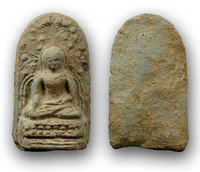
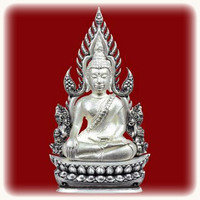
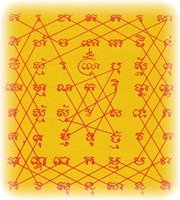
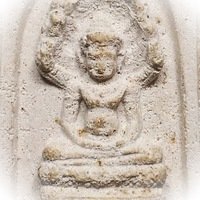
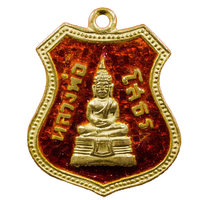
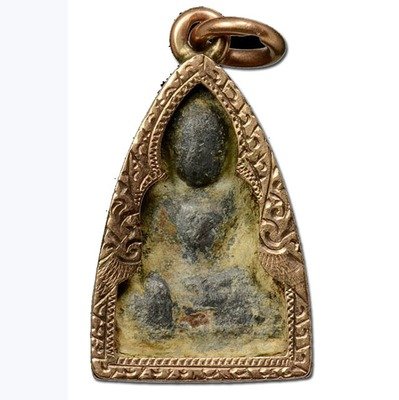
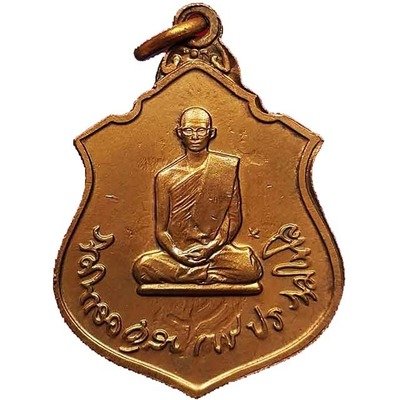
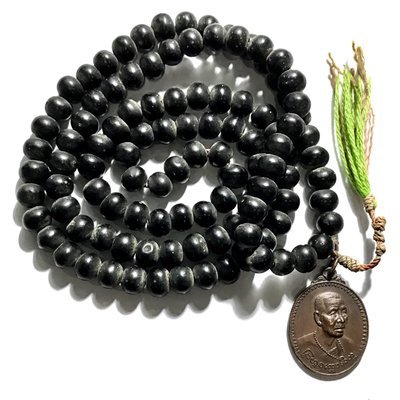
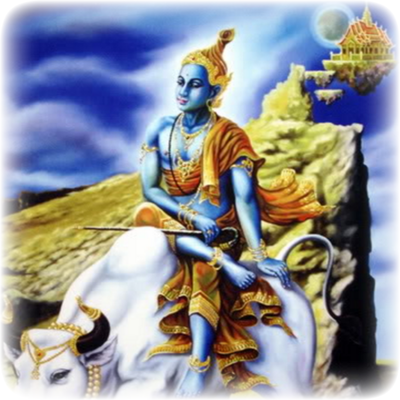
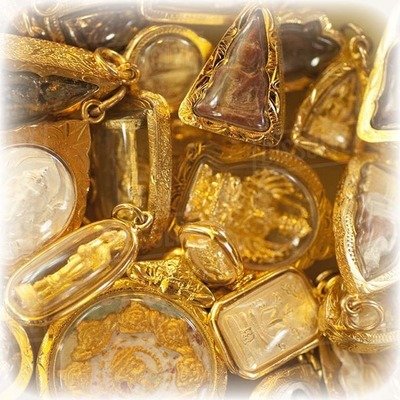
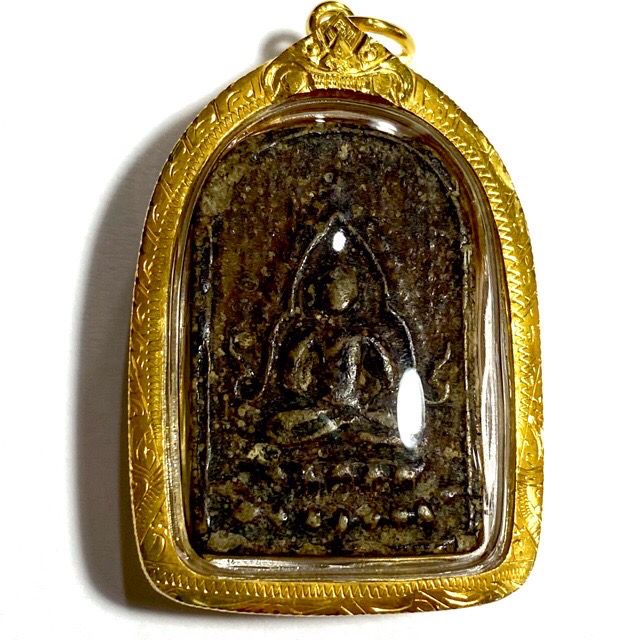
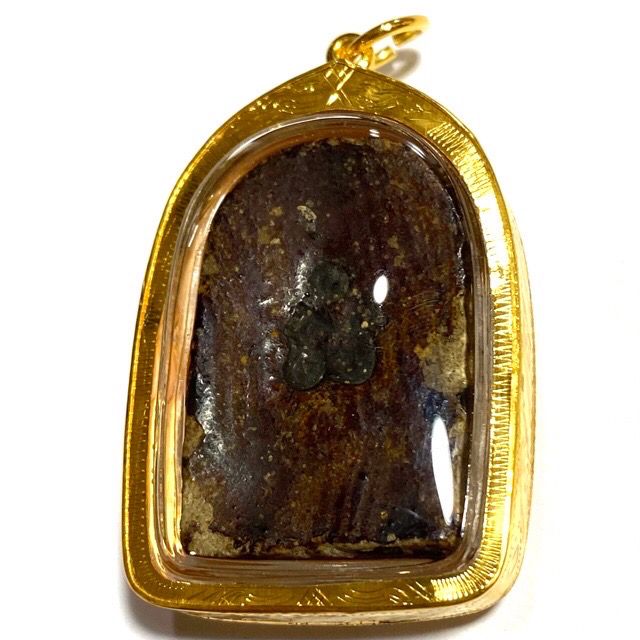
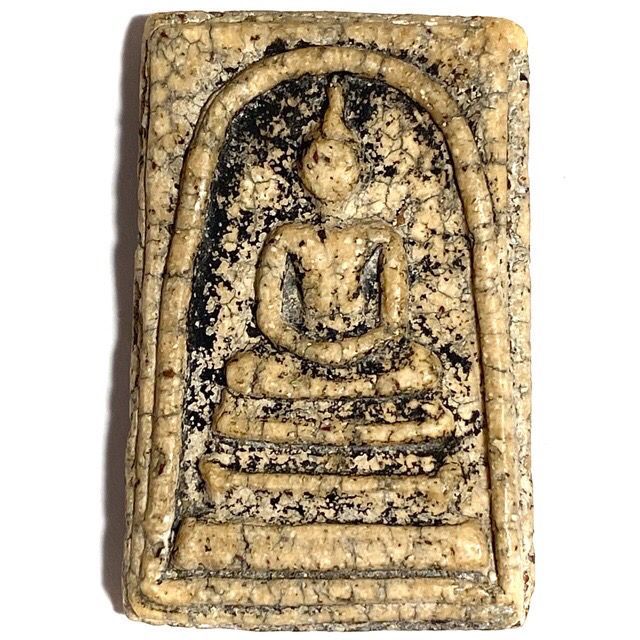
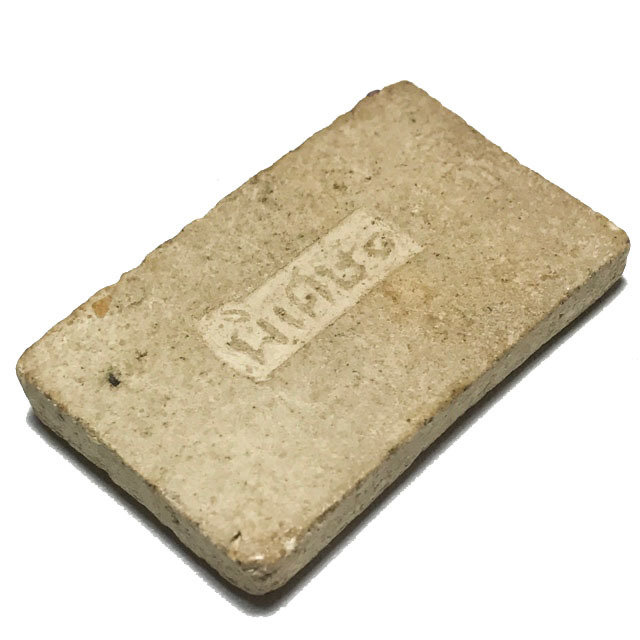
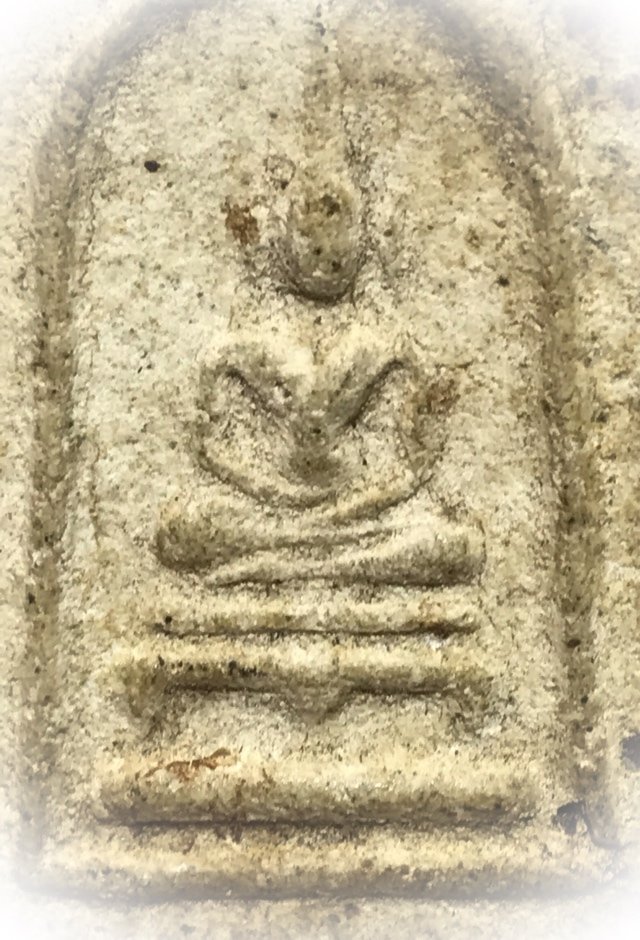
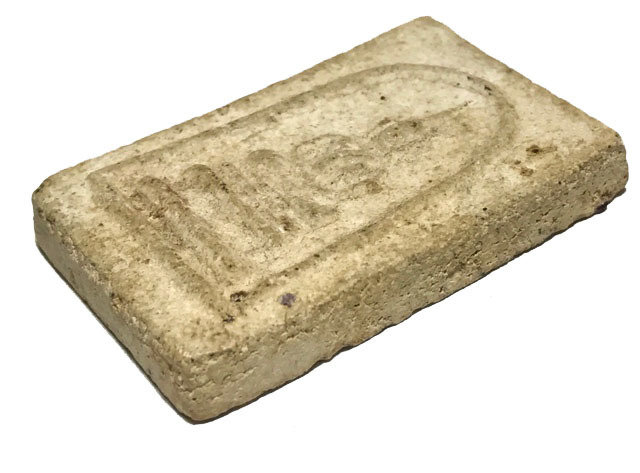
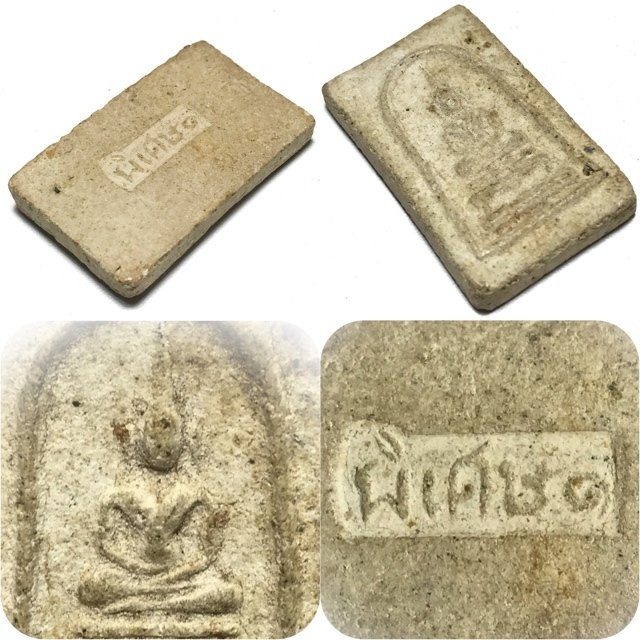
Pra Somdej Pim Yai Pised (large special version) in Nuea Pong Wised concentrated Puttakun Powders, from the ex Abbot of Wat Sutat Jao Khun Sangiam, released in the Year 2516, with extra special blessing and empowerment from the great Luang Phu To of Wat Pradoo Chimplee.

It is said that the amulets were made from Muan Sarn Sacred Powders collected by Pra Ajarn Sangiam, Somdej Pra Sangkarach (Pae), Tan Jao Khun Tip Gosa, and Jao Khun Sonti (Wat Sutat). The powders were blessed in multiple cer
emonies, including the presence of Luang Phu To, and Luang Por Nueang, of Wat Jula Mani, as well as many other Great Master Monks of that Era.

Pra Ajarn Sangiam then took these Muan Sarn Sacred Powders to make this edition of amulets, and mixed them with Old broken Pra Somdej Wat Bang Khun Prohm, and broken powders of Pra Kru Wat Sam Plerm.

The amulets were pressed with the block press molds at Wat Sutat, and Pra Ajarn Jao Khun Sangiam then blessed the amulets in solo nightly empowerment for a long time until the year 2516 BE, when he invited 49 Monks to come and assist in the Buddha Abhiseka Blessing Ceremony at Wat Sutat.
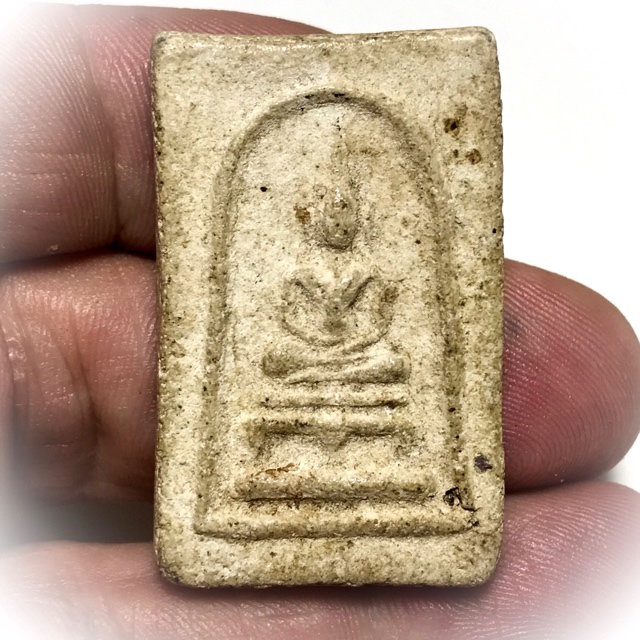
Amongst the many Masters present were; Luang Phu To (Wat Pradoo Chimplee), Luang Por Pae (Wat Pikul Tong (Singhburi), Luang Por Nueang (Wat Jula Mani) Luang Por Tiam (Wat Kasatrirach), Luang Por Horm (Wat Sak Hmak), Luang Por Thin (Wat Pha Lelai), and Luang Por Tong Yoo (Wat Nong Mai Pa-Ong.
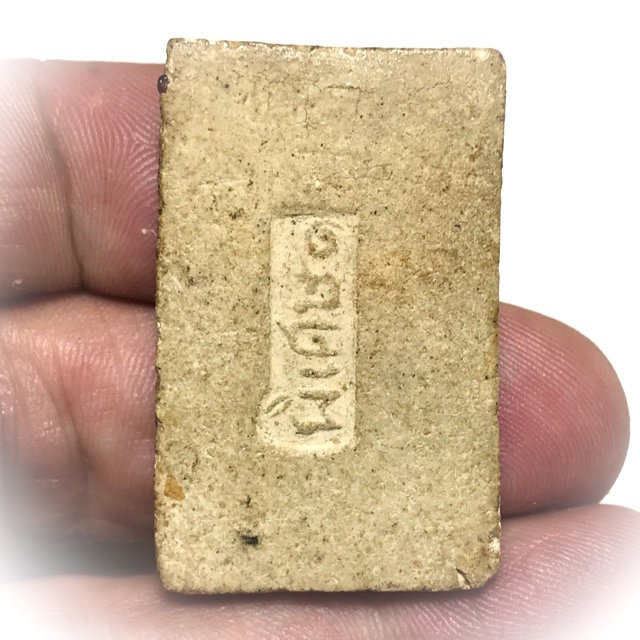
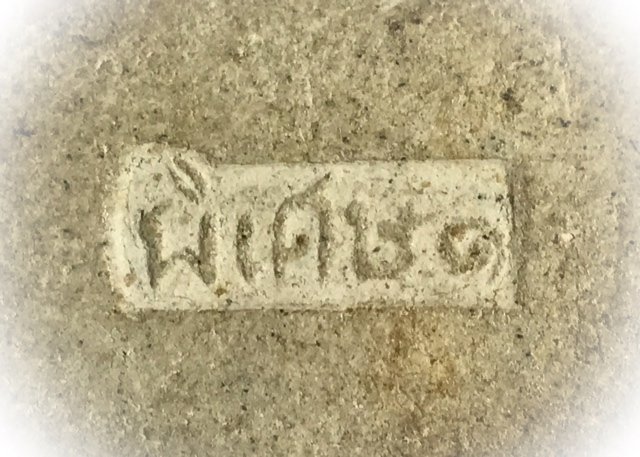
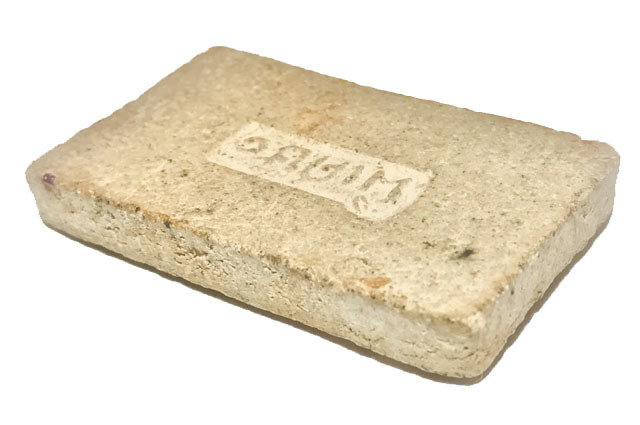
The rear face of the amulet has the Khom letters ‘Sa’ and ‘Ta’ (for ‘Wat Sutat) embossed, which is a standard feature seen on the rear face of many amulets from Wat Sutat (but not all).
Use the Traditional Thai Buddhist Method for Bucha;

1. Chant Maha Namasakara (3 Times)

2. Chant the Trai Soranakom (3 Times)

3. Chant Kata Aaraatanaa Pra Krueang (3 Times)
Kata Maha Namasakara

Namo Dtat-Sa Pakawa-Dto Araha-Dto Sam-Maa Sam-Put-Dtat-Sa

Namo Dtat-Sa Pakawa-Dto Araha-Dto Sam-Maa Sam-Put-Dtat-Sa
Namo Dtat-Sa Pakawa-Dto Araha-Dto Sam-Maa Sam-Put-Dtat-Sa

Kata Aaraatana Pra Krueang

Puttang Aaraatanaanang

Tammang Aaraatanaanang

Sangkang Aaraatanaanang

Puttang Prasittimae

Tammang Prasittimae

Sangkang Prasittimae
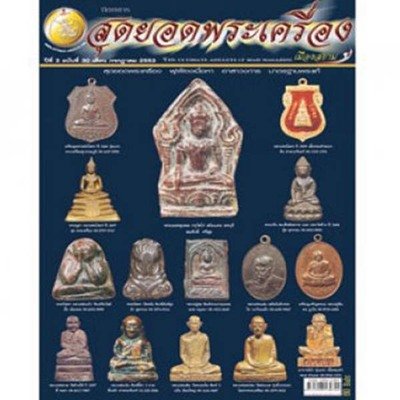
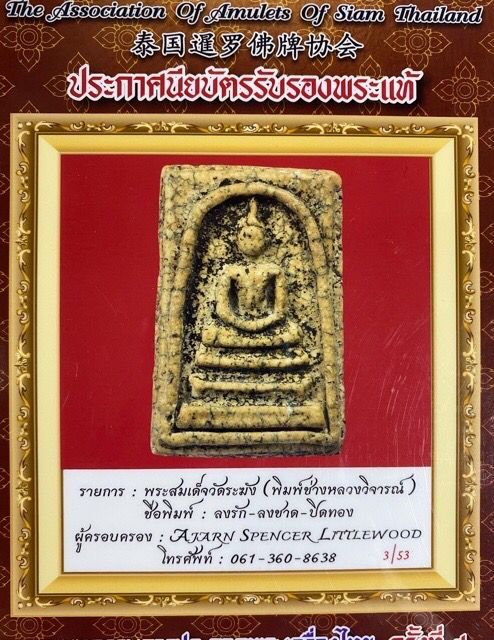
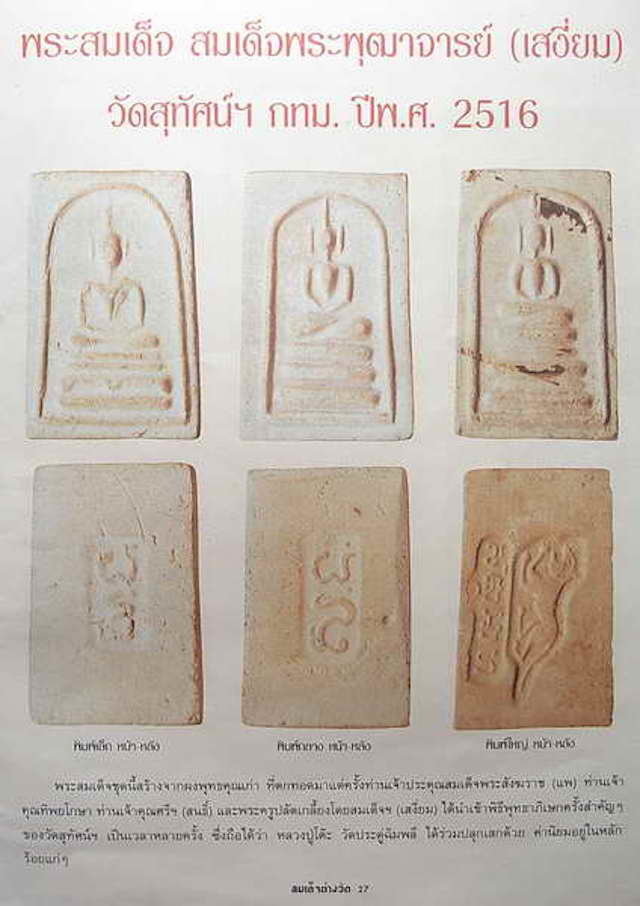
Below; Amulet Publication showing three different models of Pra Somdej released by Kao Khun Sangiam in the 2516 BE Ceremony.
Filters

Filters
Pra Somdej Pim Gaes Jarot Sum Pim Gaes Iang Niyom Long Rak Chart Somodej Dto Wat Rakang KositaramPra Somdej Pim Gaes Jarot Sum Pim Gaes Iang Niyom Long Rak Chart Somodej Dto Wat Rakang Kositaram
Pra Somdej Pim Gaes Jarot Sum Pim Gaes Iang Niyom Long Rak Chart Somodej Dto Wat Rakang Kositaram
Free Shipping Worldwide (we do not state or declare true price to counter tarrifs tax on customers), & Offer of Free Solid Silver Casing Included
SKU 04783
$1,699
1 - 60 of 218 items
How to Pray to Thai Amulets

Ajarn Spencer Littlewood & Agent Gemini Unleashed for ancientamulet.com
All rights reserved.
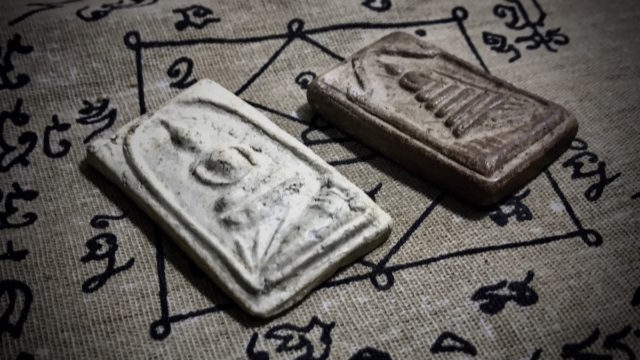
 

Pra Somdej Pim Chedi Norn Wat Lakorn Tam by Luang Phu Nak of Wat Rakang, and Luang Por Supoj, of Wat Sutat

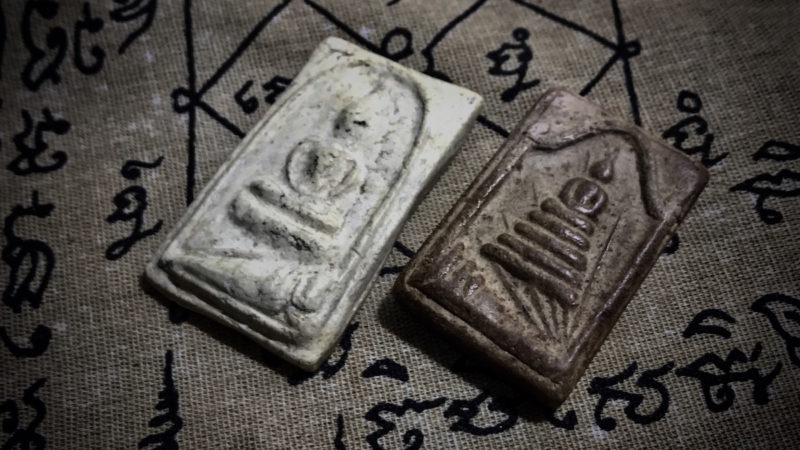
Presenting a new video with narrative by Ajarn Spencer Littlewood in our new series of videos ‘Amulet Talk’ which present you with the first of many insightful videos with narratives, to increase your awareness, and to bring interesting aspects of the topic of Thai Buddhist Amulets to you for your enjoyment. We hope this new series of videos provides you with useful study material. This episode of Amulet Talk provides a look at two Pra Somdej Pim Chedi Norn Wat Lakorn Tham, from two great master monks, which feature Buddha images seated over one of the horizontal ‘sleeping’ chedi stupas of Wat Lakorn Tam. We invite you to enjoy the HD Video and Narrative by Ajarn Spencer Littlewood, which gives a basic look at these two amulets which have a semi tenuous relationship to each other, but which are also completely distinct from each other. The Pra Somdej Chedi Norn Wat Lakorn Tham amulets of Luang Phu Nak (Wat Rakang Kositaram) and The Pra Somdej Hwaek Man Pim Chedi Norn of Luang Por Supoj (Wat Sutat).

The amulets represent the two chedi stupas at Wat Lakorn Tam temple, which were built and installed by the great Somdej Pra Puttajarn (Dto) Prohmrangsri of Wat Rakang Kositaram. The two amulets are made by Luang Phu Nak of Wat Rakang Kositaram in the year 2495 BE (left side in white Puttakun Powders), and from Jao Khun Sri Sonti (Luang Por Supoj) of Wat Sutat, for the Indojin Indo-China Wartime Blessing ceremony, made in Nuea Wan Pasom Pong Gao. There were actually three different masters who made Pra Somdej Pim Chedi Norn, the third being Luang Phu Hin of Wat Rakang Kositaram, whose amulet is not shown in this vide, but which we will show when we obtain an example, in a future video.

Pra Somdej Pim Chedi Norn amulets by Luang Phu Nak of Wat Rakang, and Luang Por Supoj, of Wat Sutat

Both amulets from both masters (who were colleagues of each other), were made using broken pieces of ancient Pra Somdej Wat Rakang Kositaram amulets from the time of Somdej Pra Puttajarn (Dto) Prohmrangsri. The amlets are however distinct, and made at different times, with different designs, the only things in common truly being the Muan Sarn Sacred Powder content using ancient Pra Somdej Wat Rakang Kositaram, and the imagery of the sleeping Chedi Stupas of Wat Sutat. otherwise, the Buddha images and their outer arches, and daises, are distinct and apart from each other. For example, the Buddha on the Pra Somdej Chedi Norn Luang Phu Nak has a single tiered dais, whereas the Buddha on the Pra Somdej Chedi Norn Luang Por Supoj, has four tiered dais.


xProductBrowser(“categoriesPerRow=3″,”views=grid(20,3) list(60) table(60)”,”categoryView=grid”,”searchView=list”,”id=my-store-1447232″, “defaultCategoryId=23986151”);