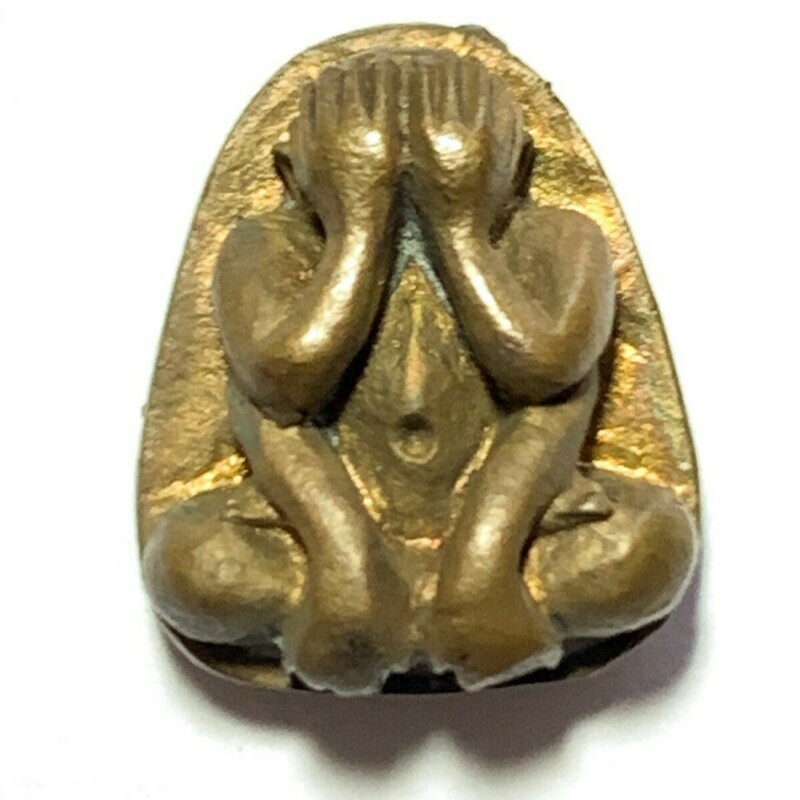
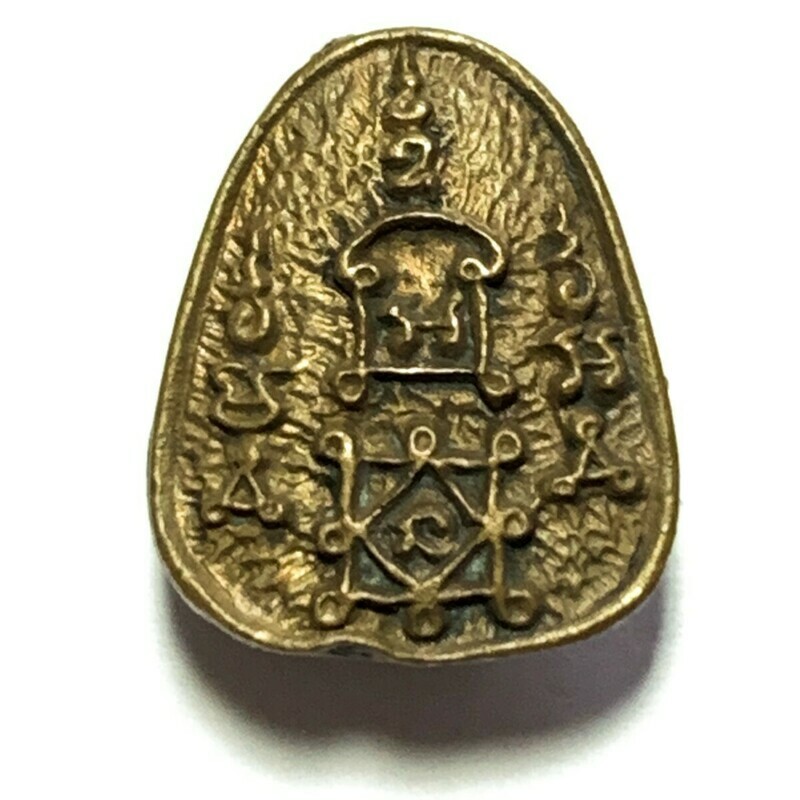
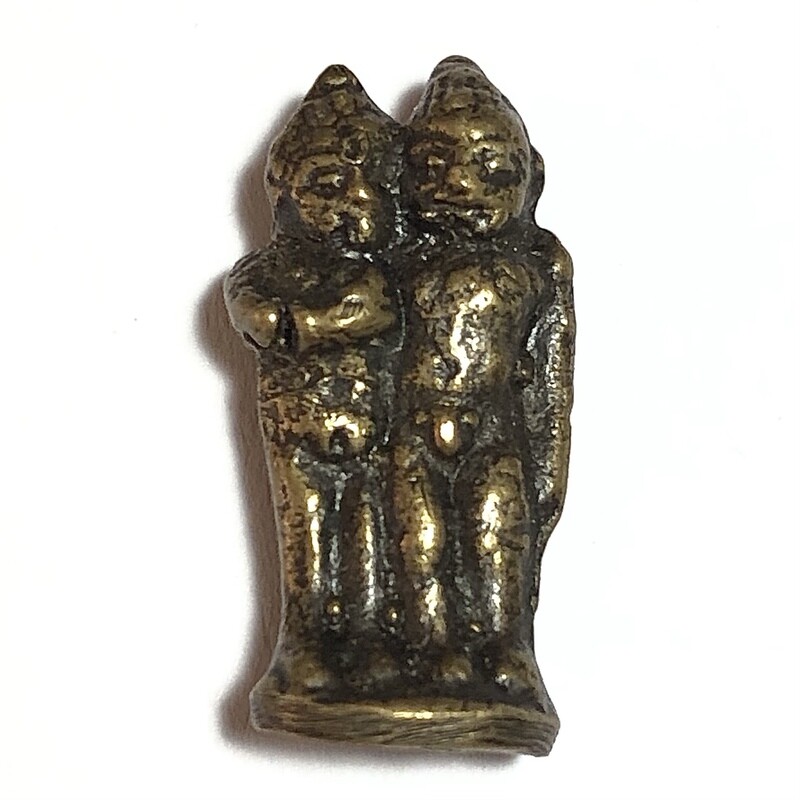
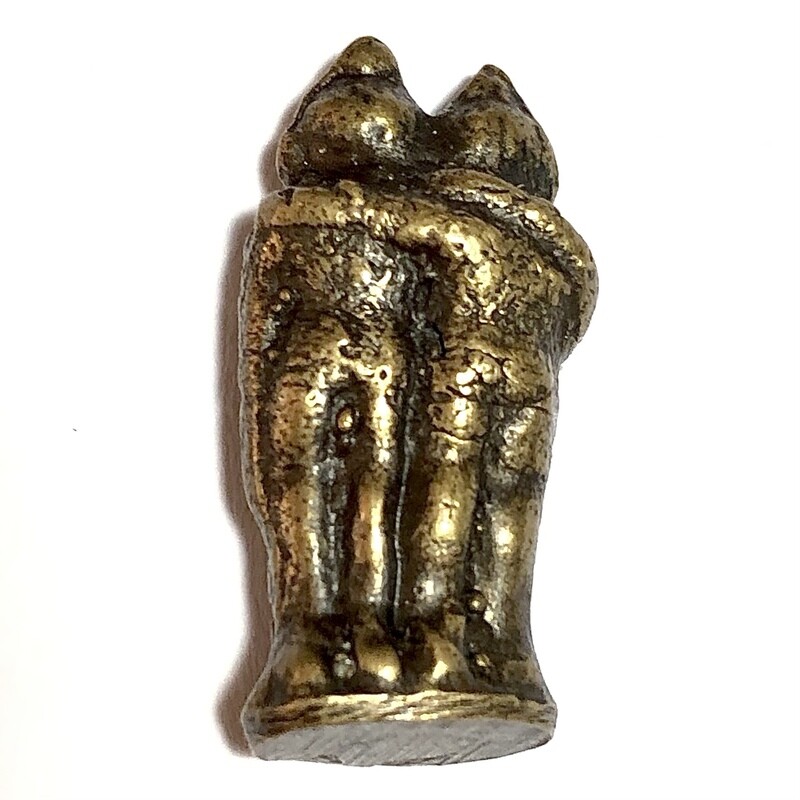
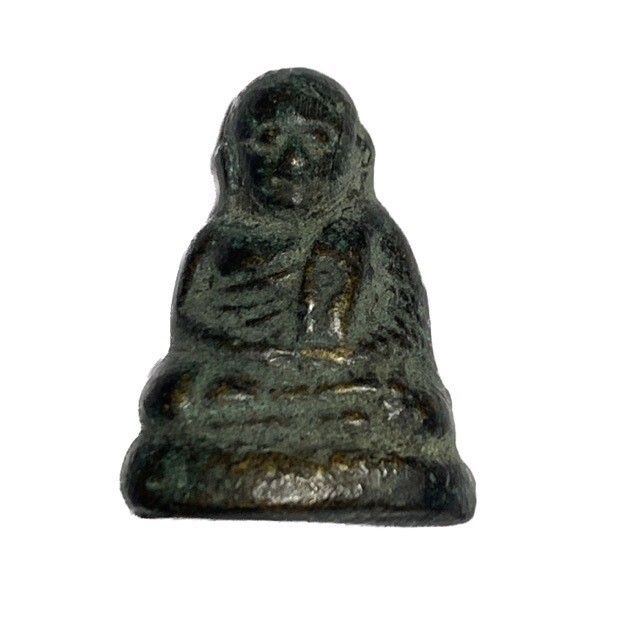
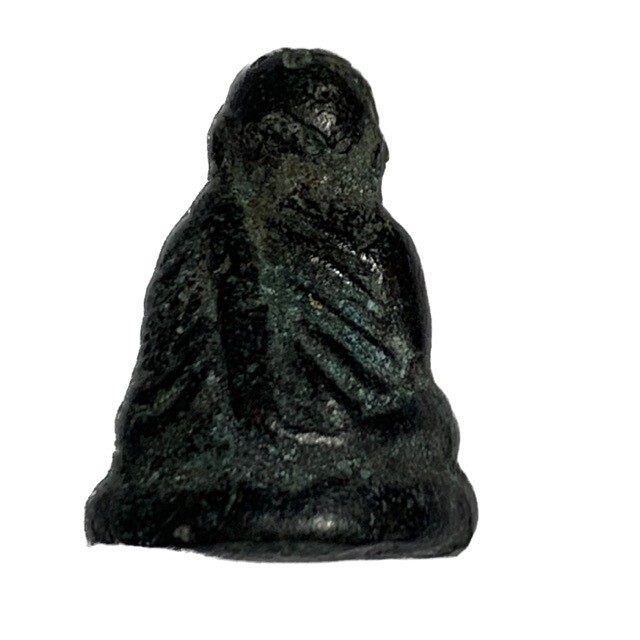
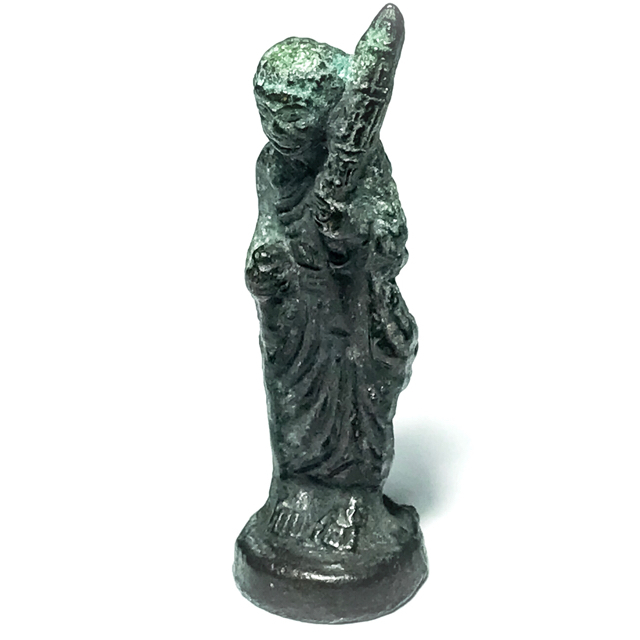
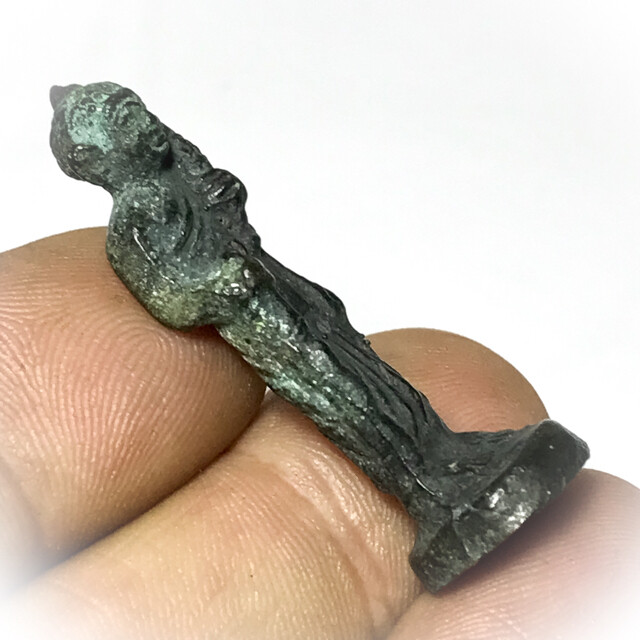
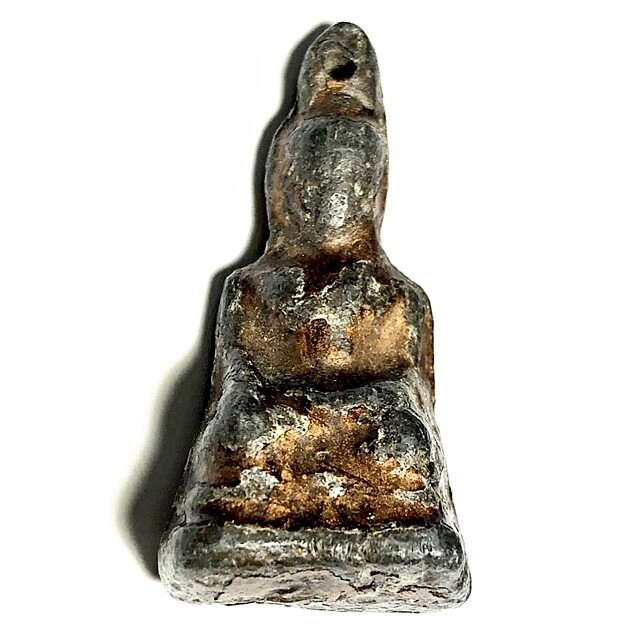
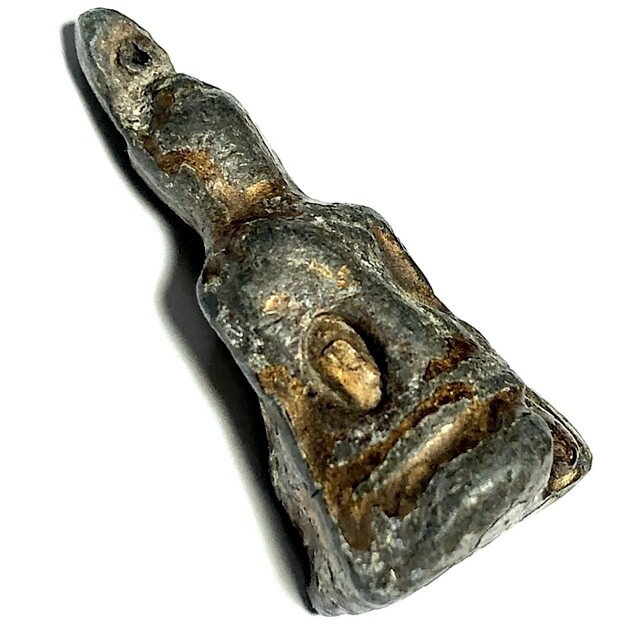
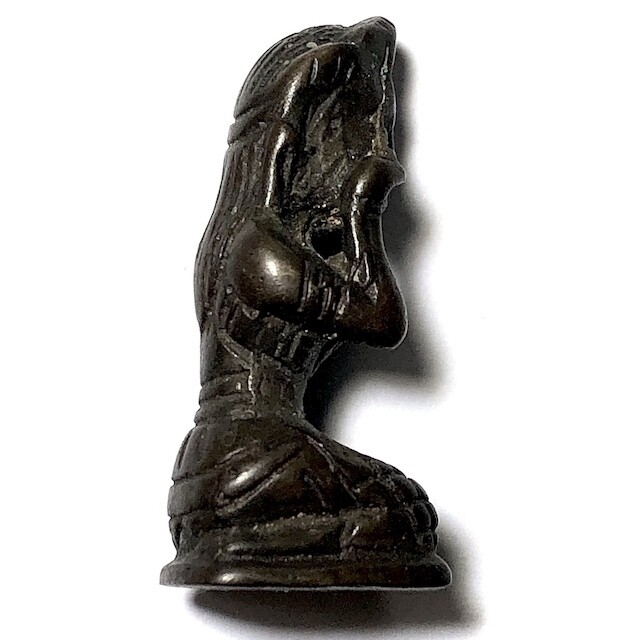
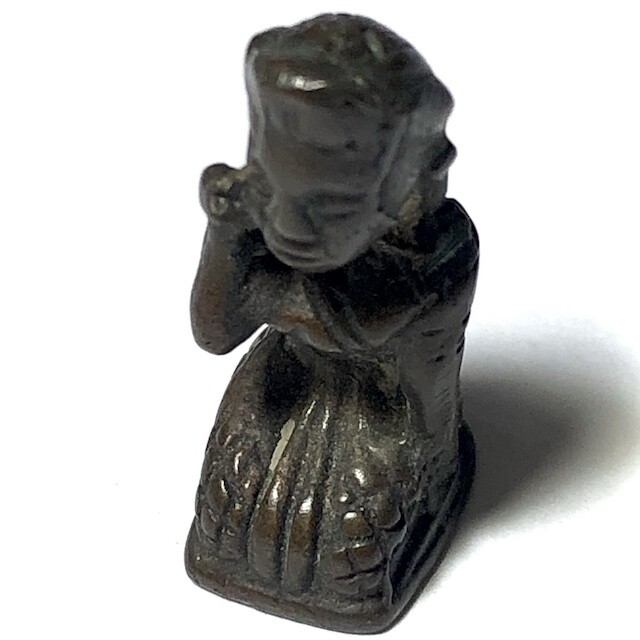
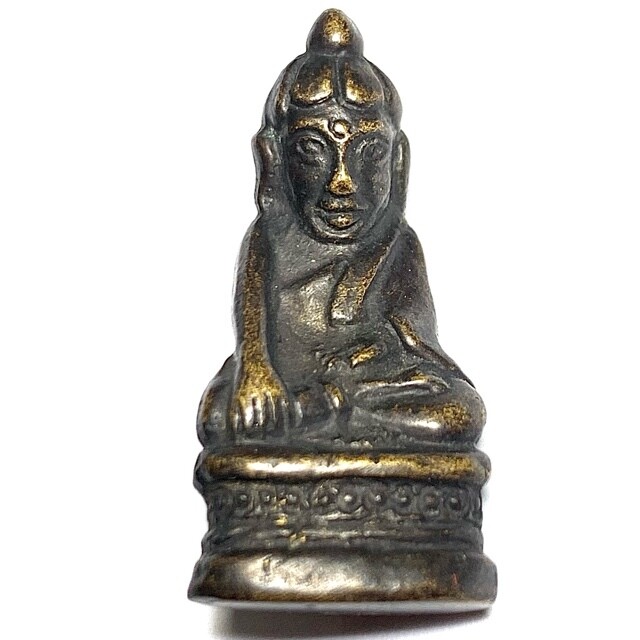
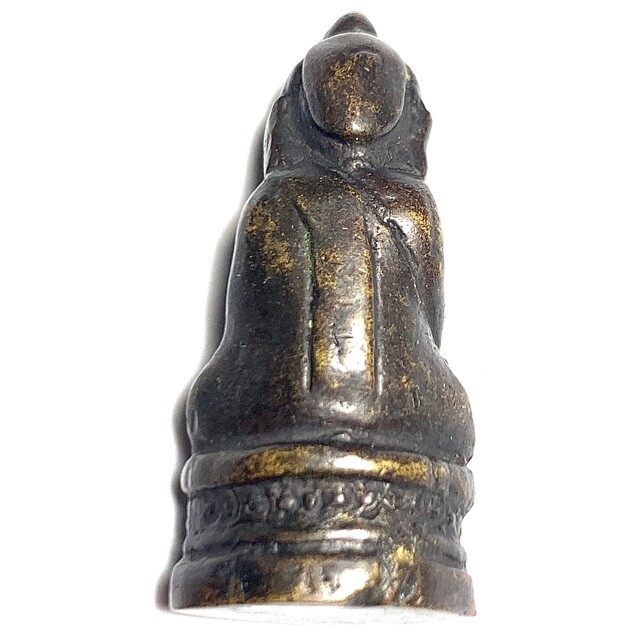
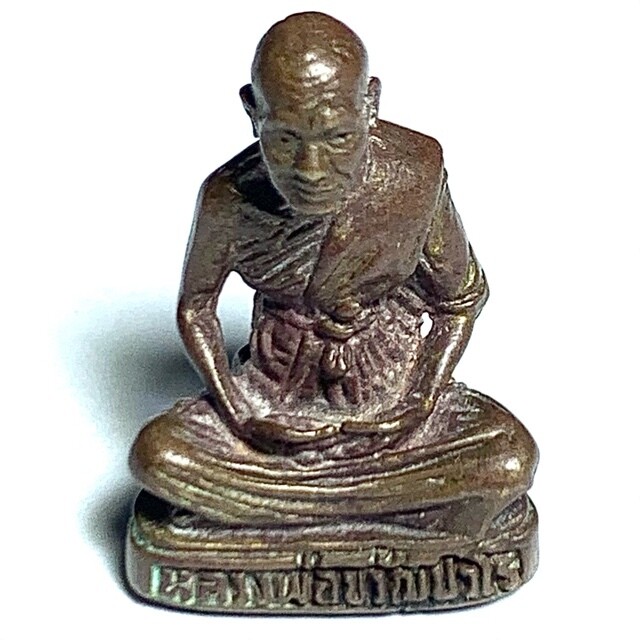
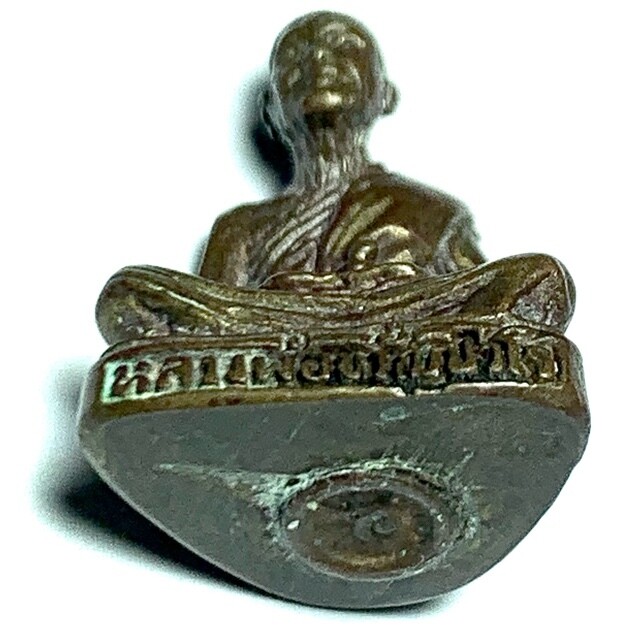
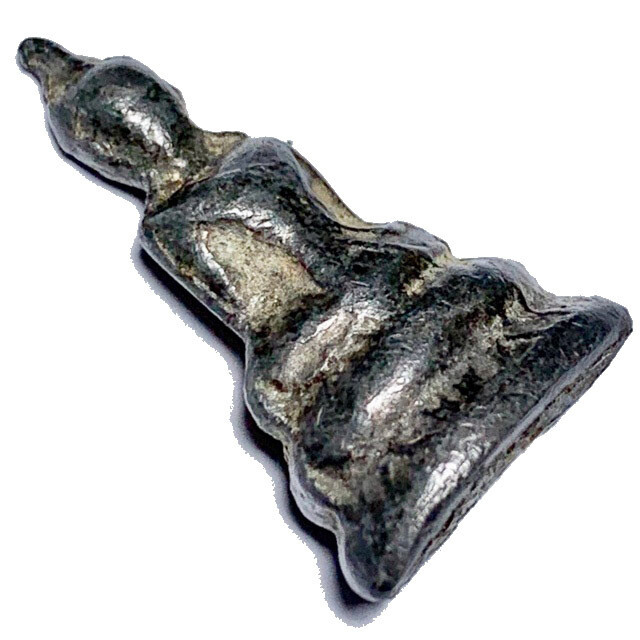
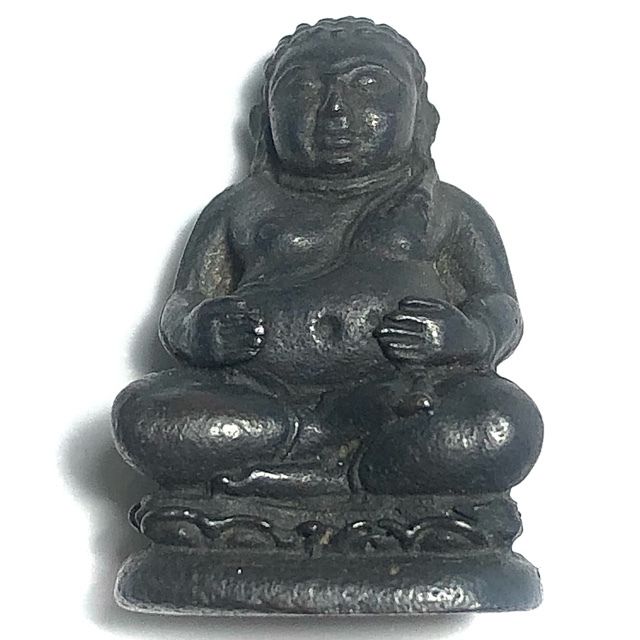
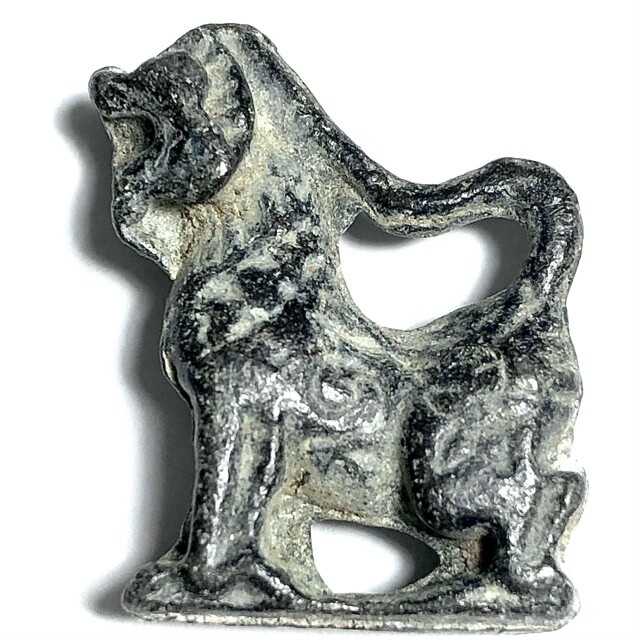
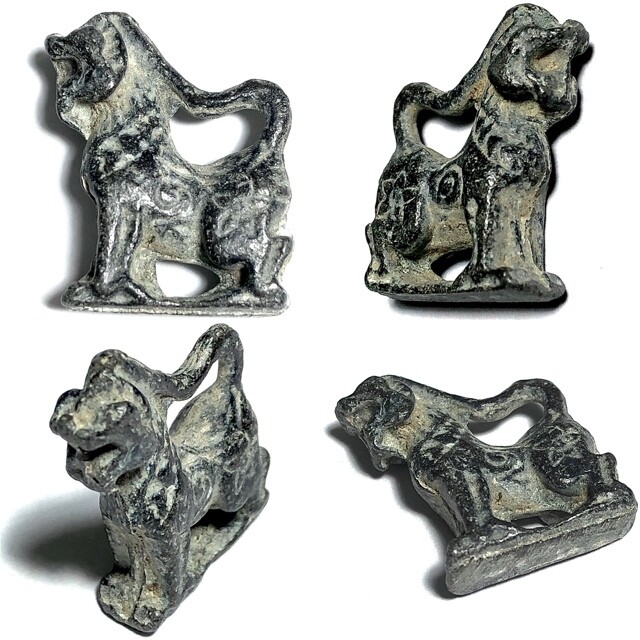
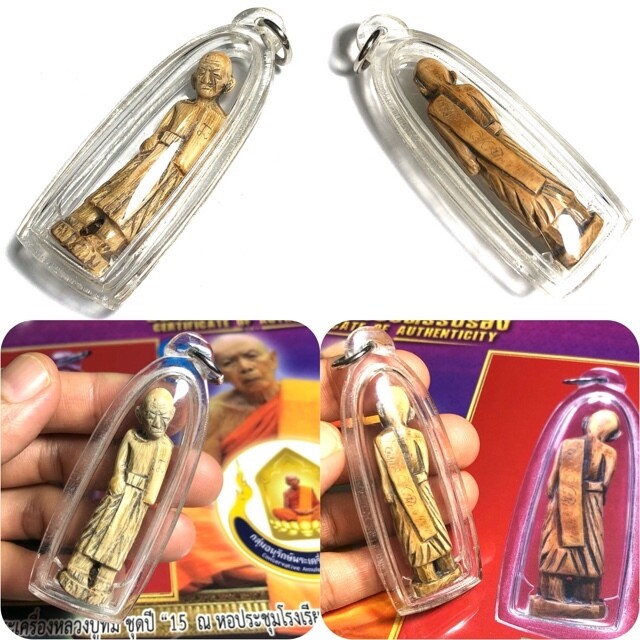
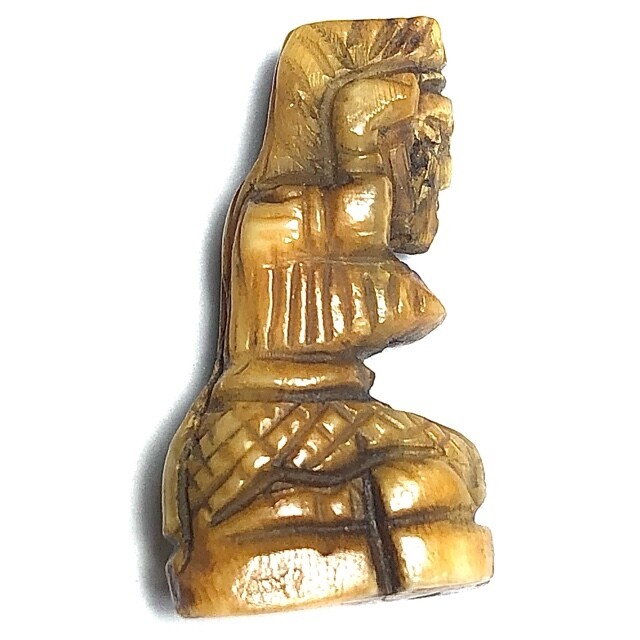
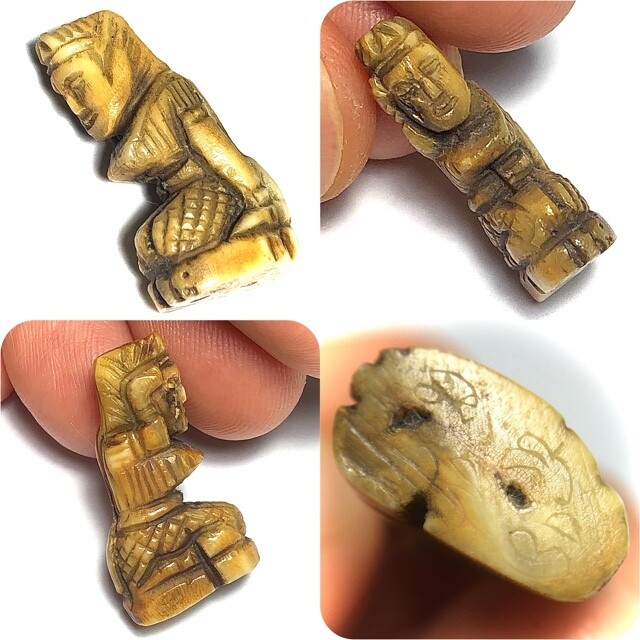
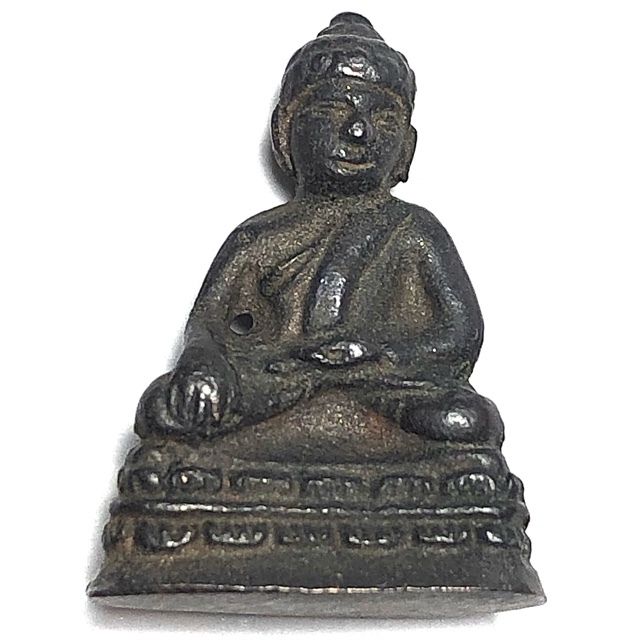
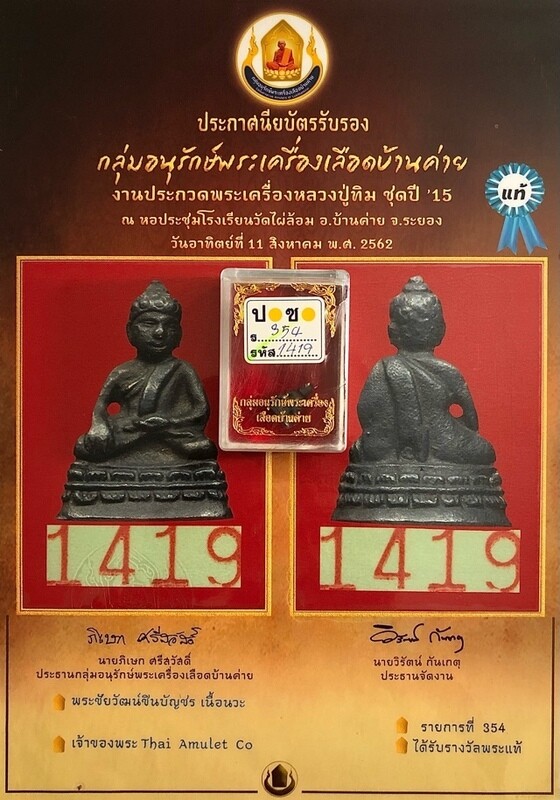
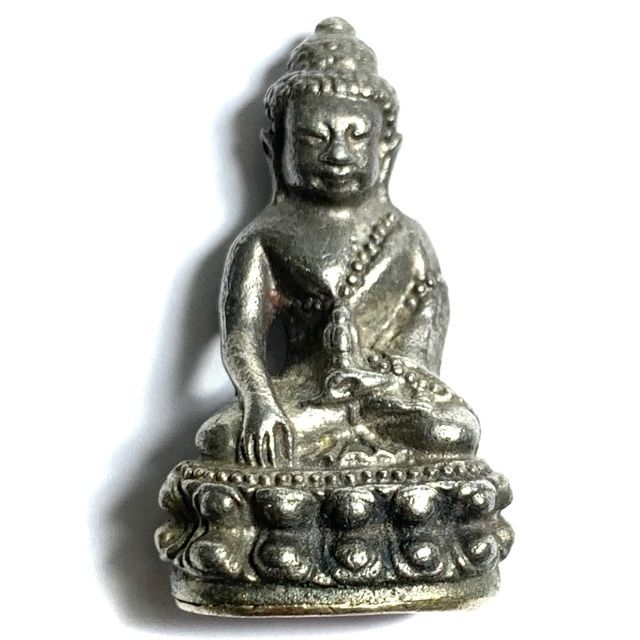
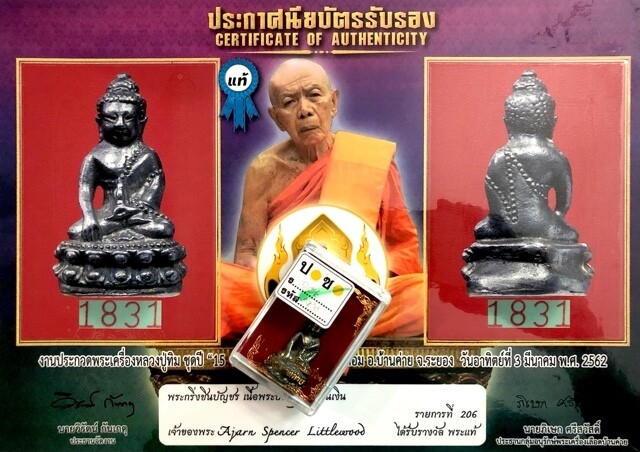
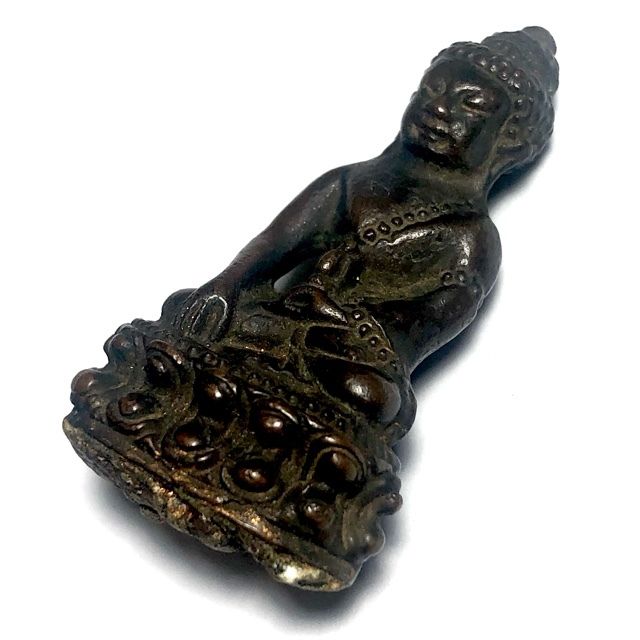
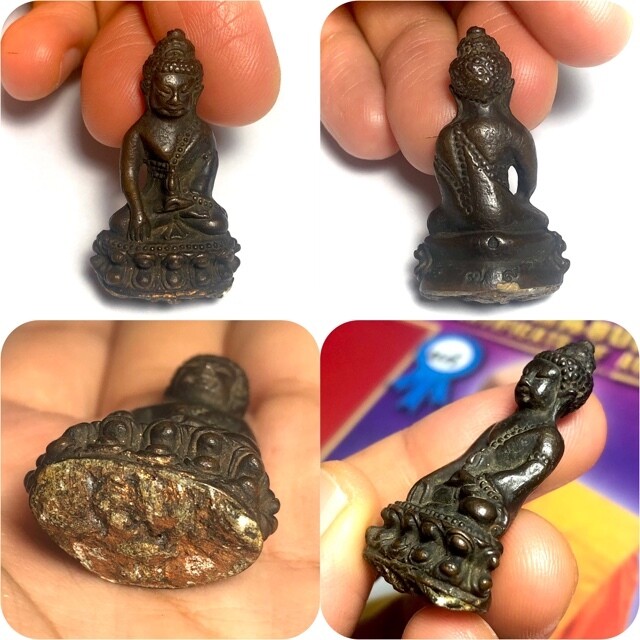
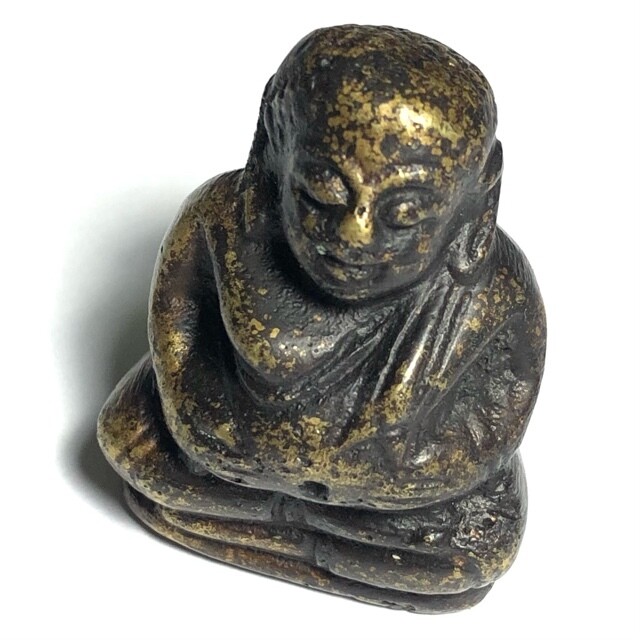
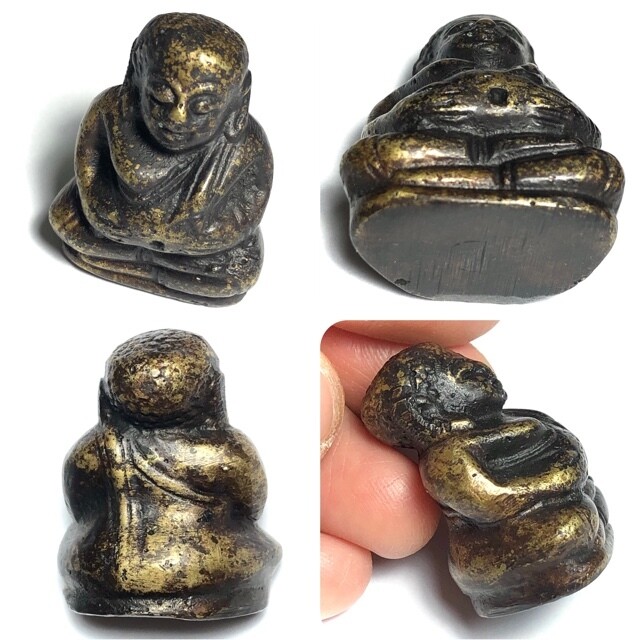
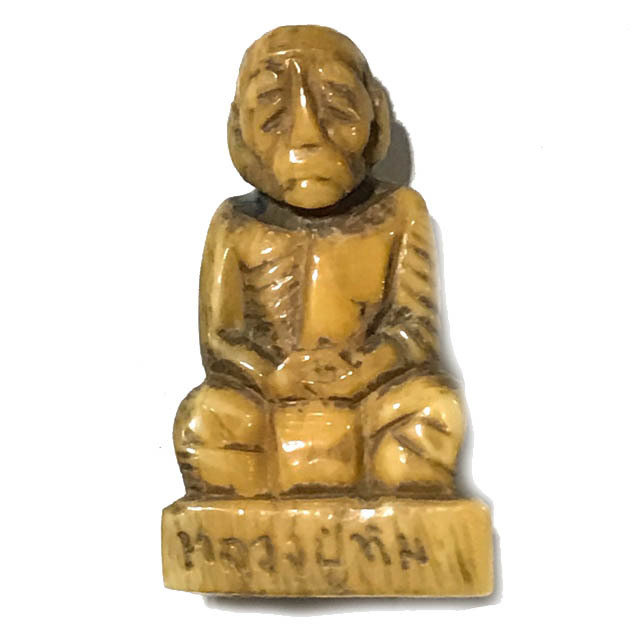
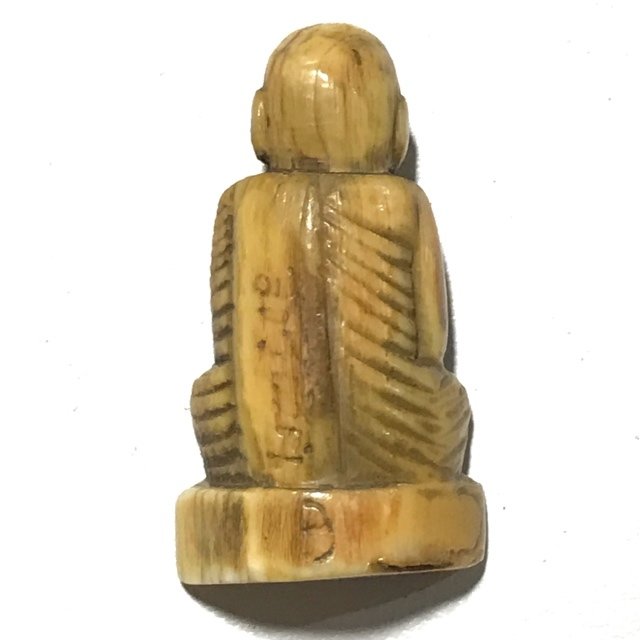
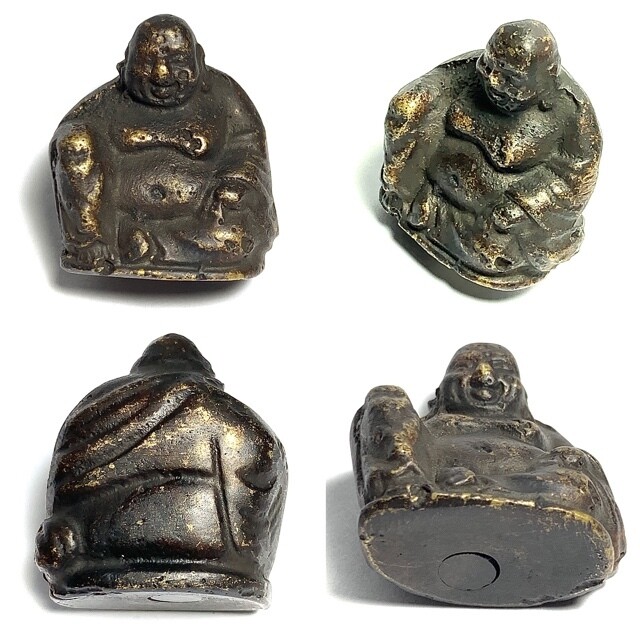
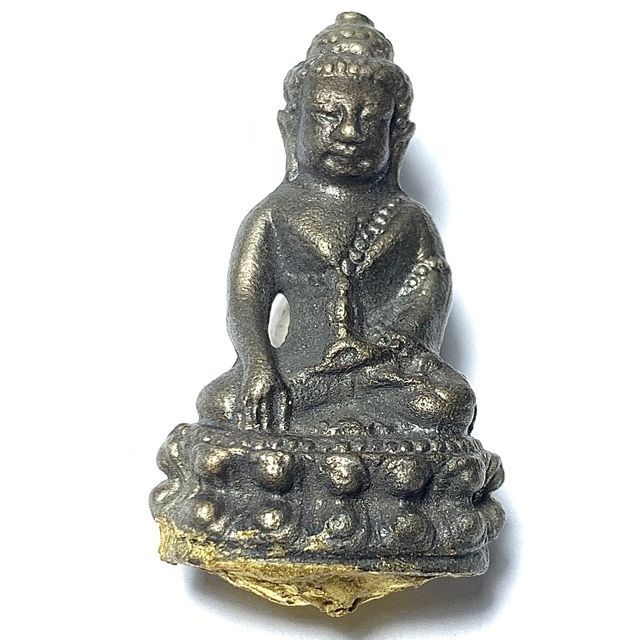
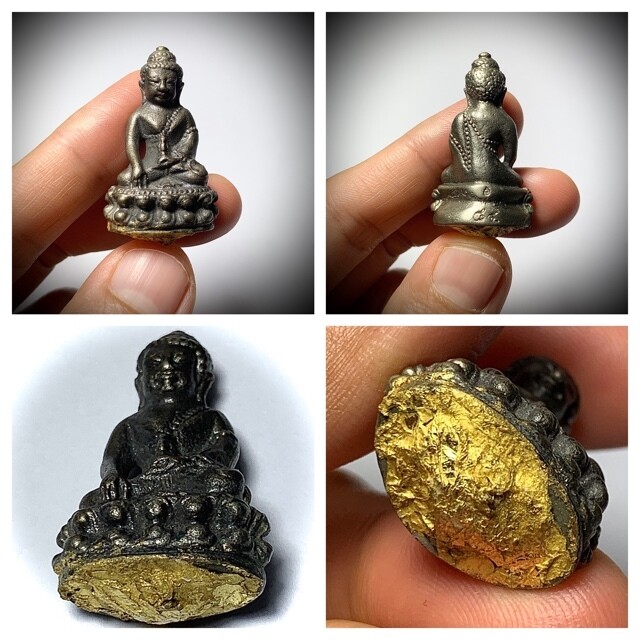
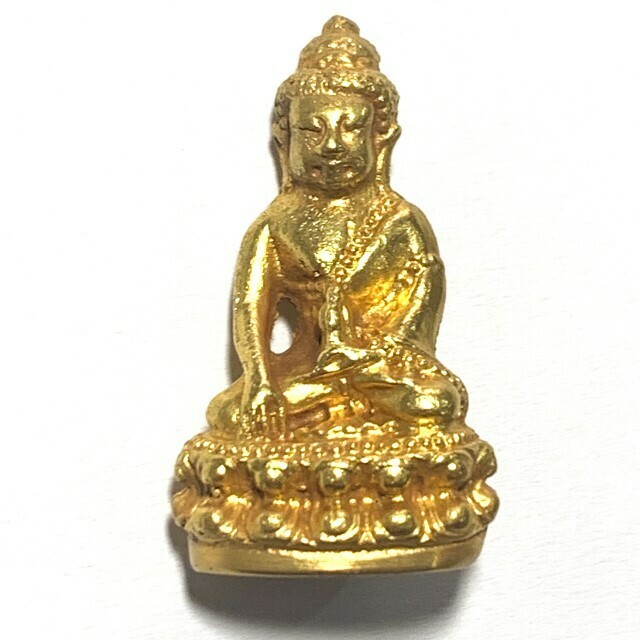
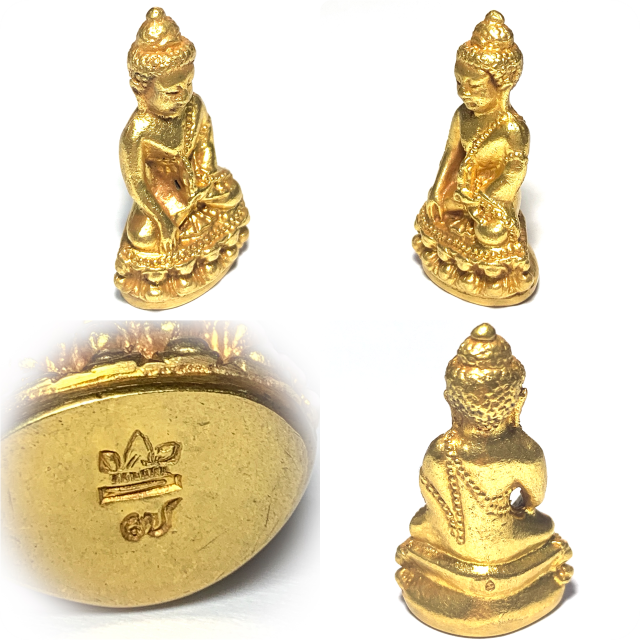
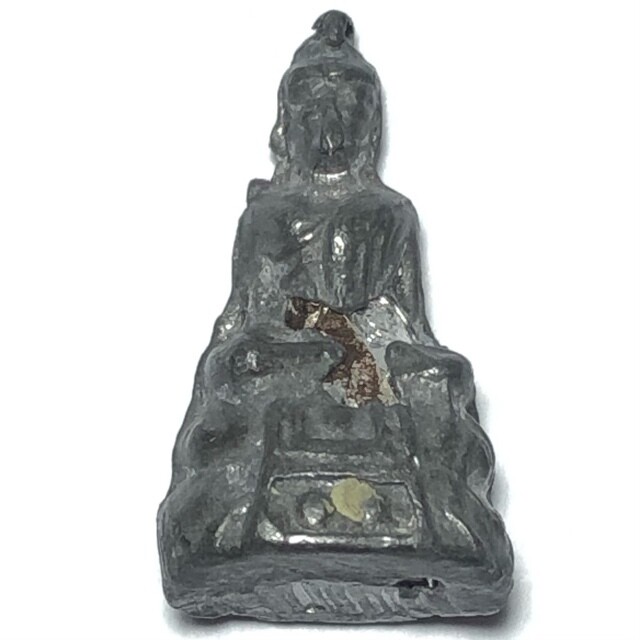
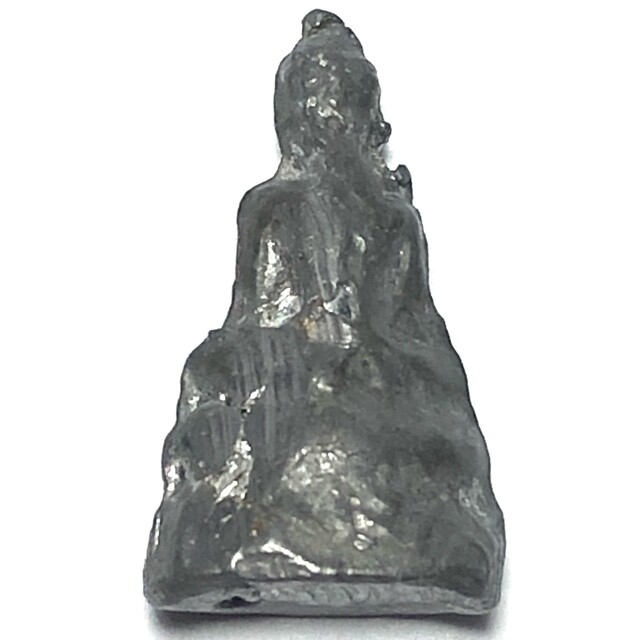
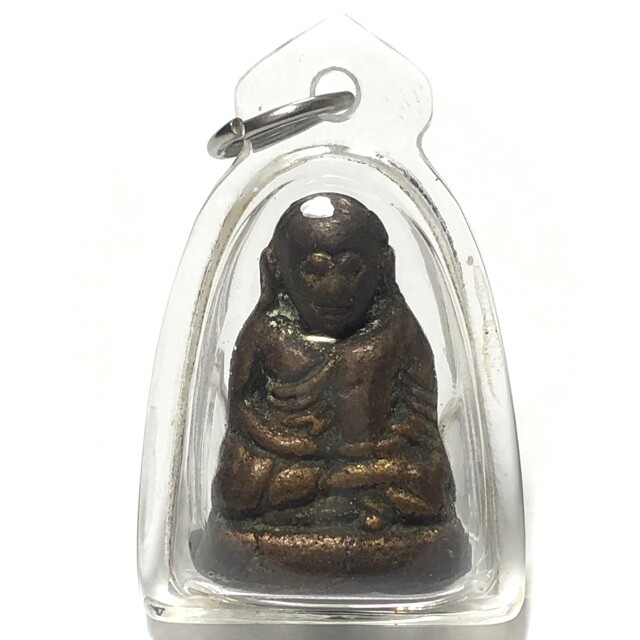
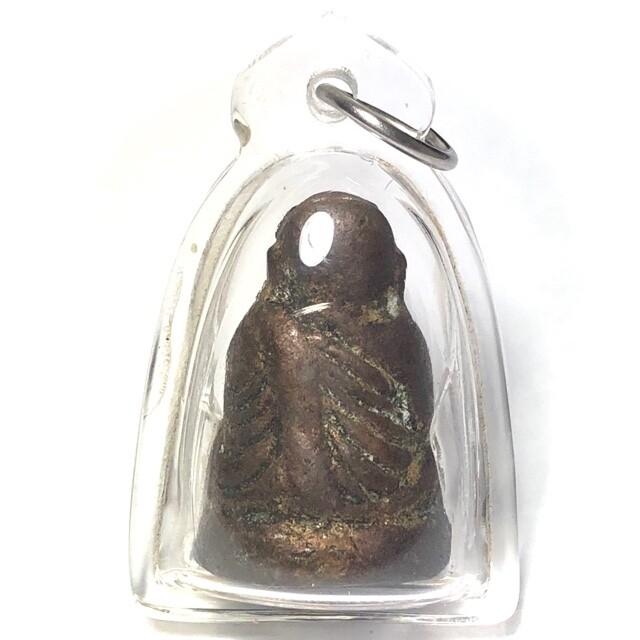
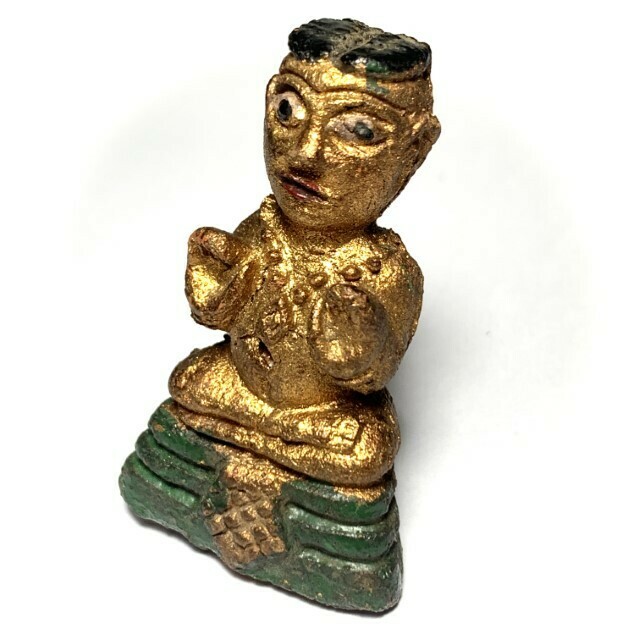
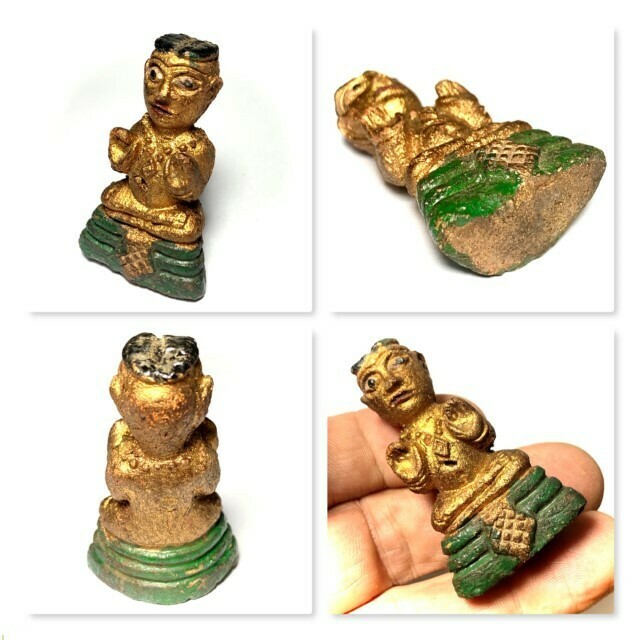
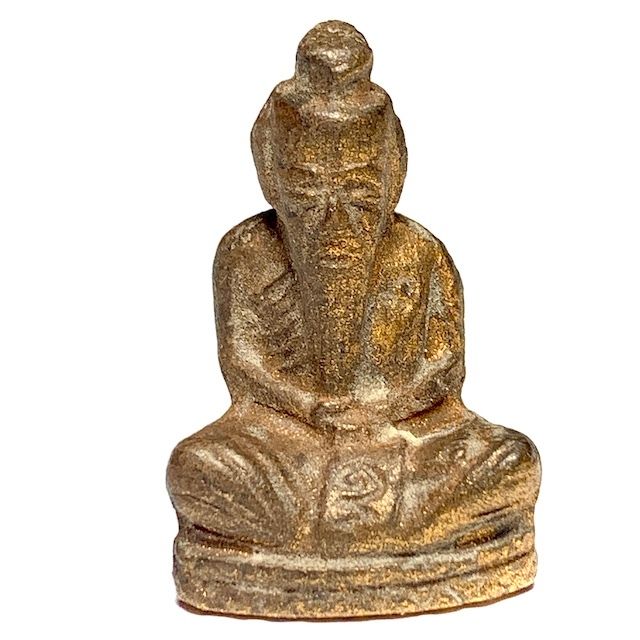
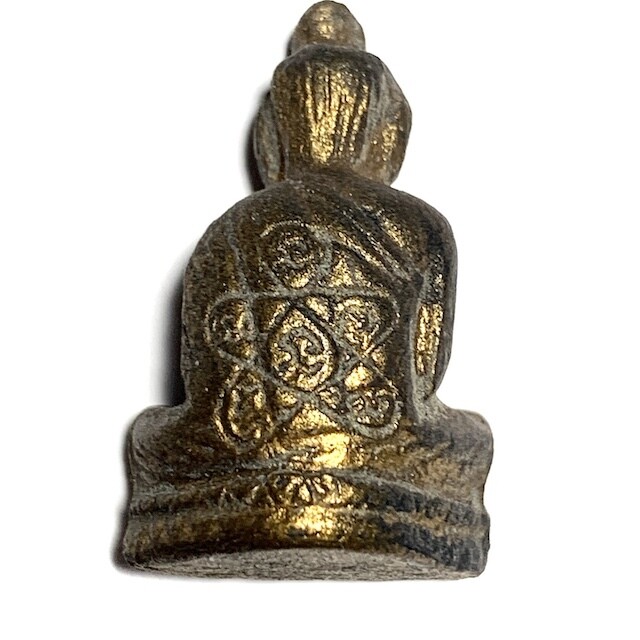
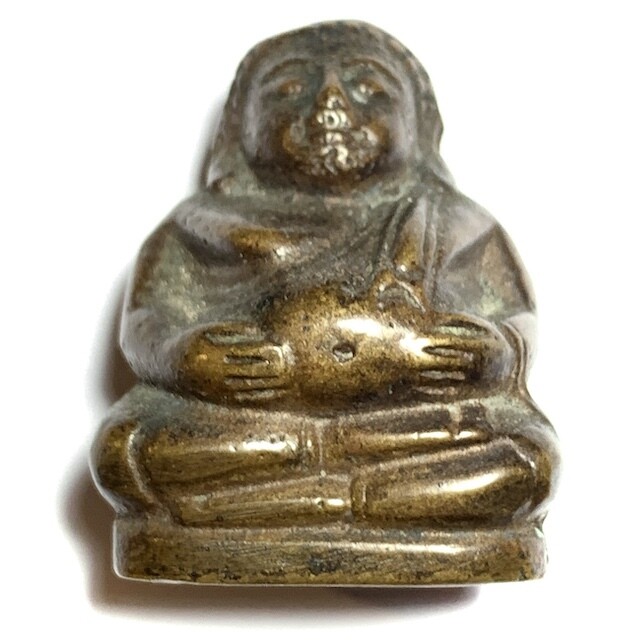
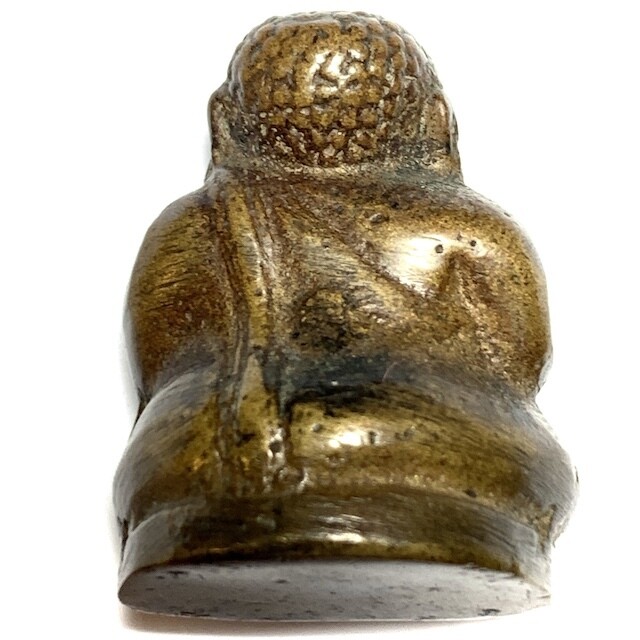
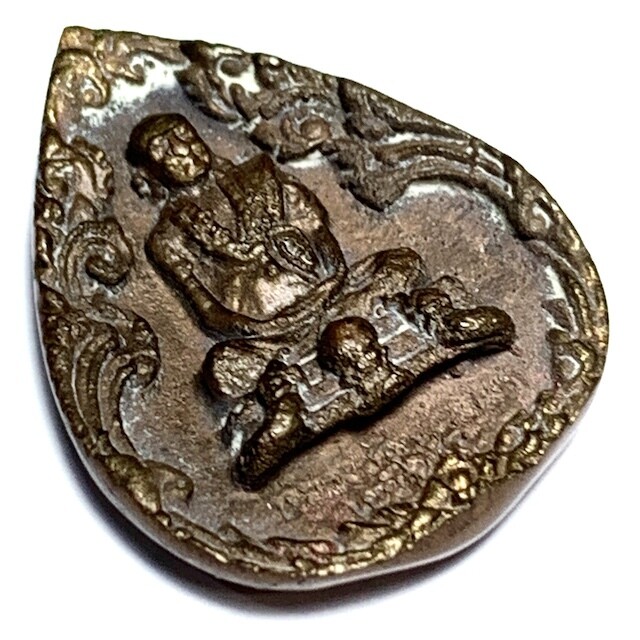
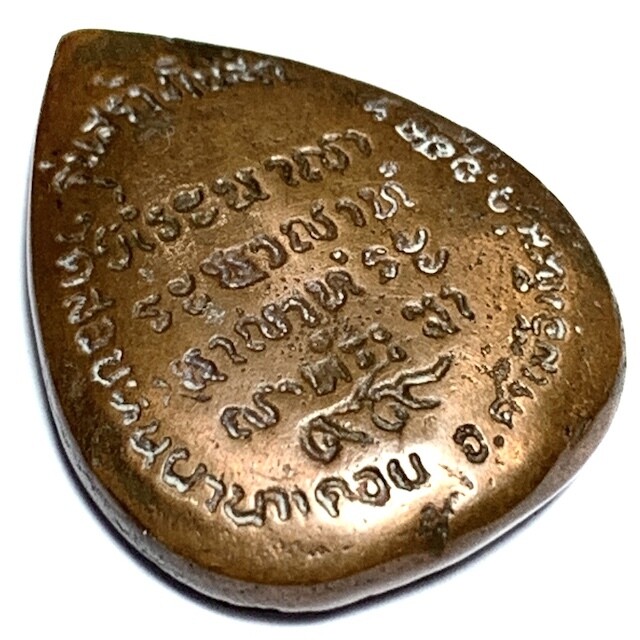
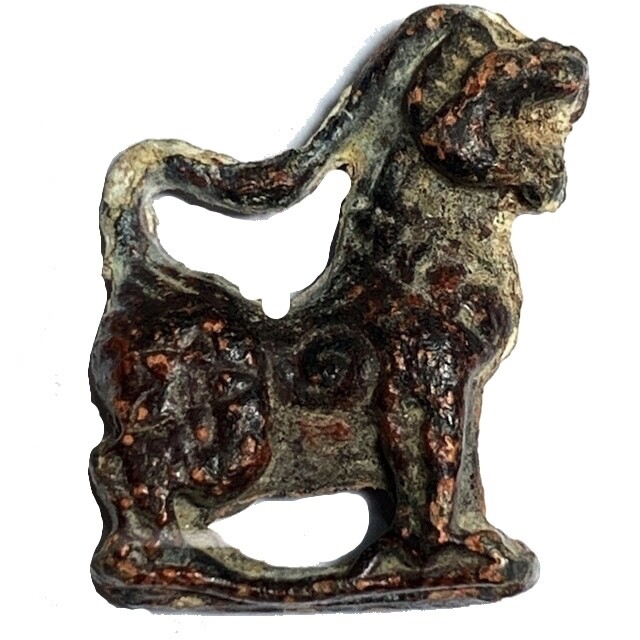
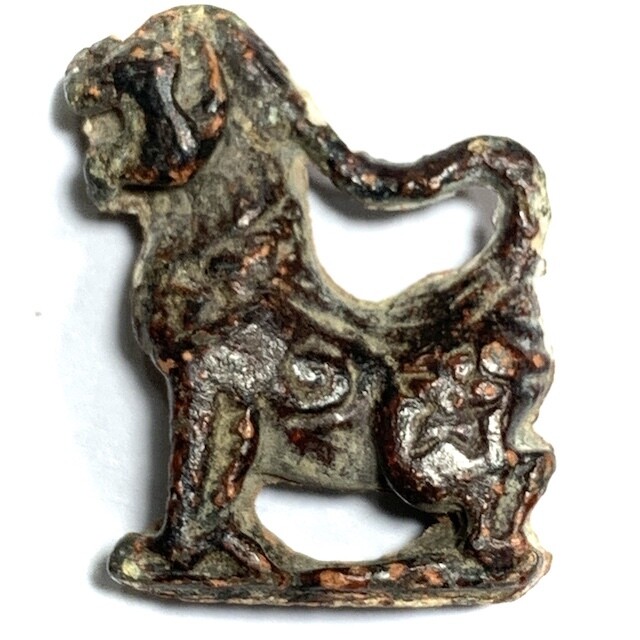
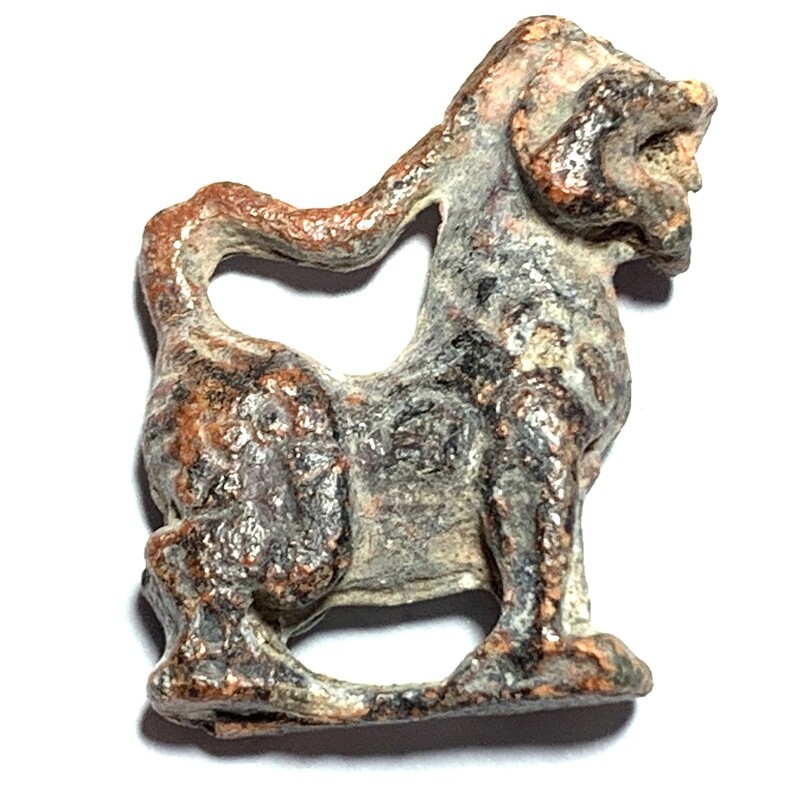
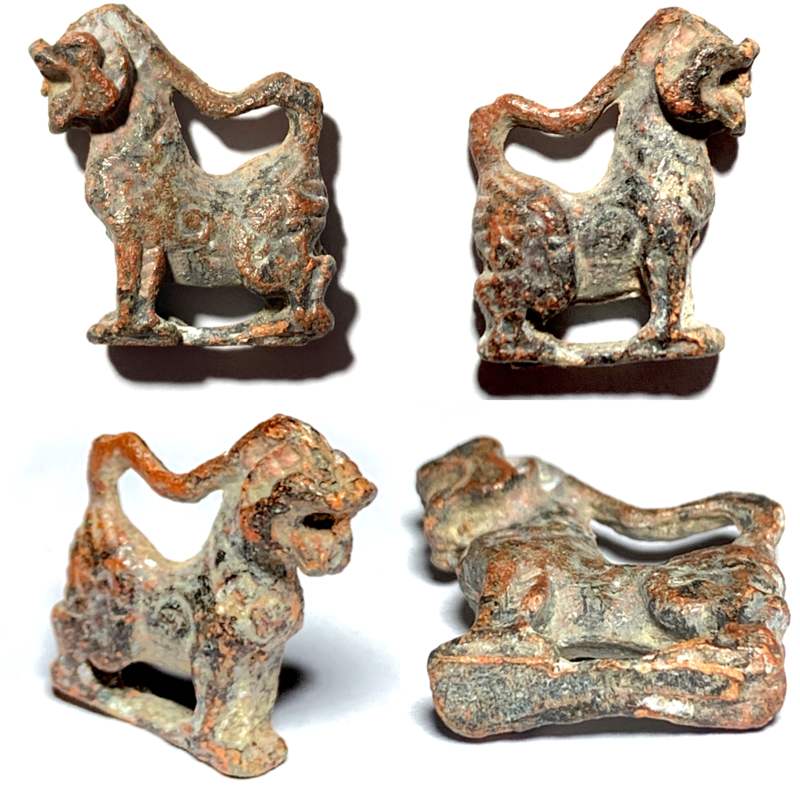
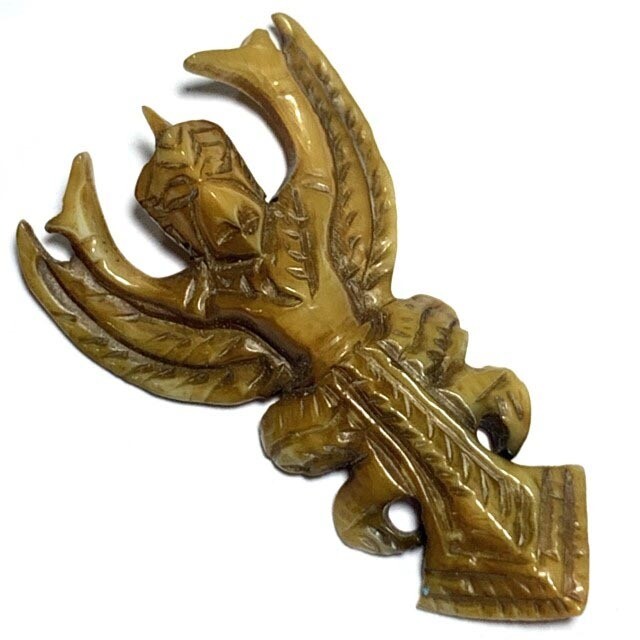
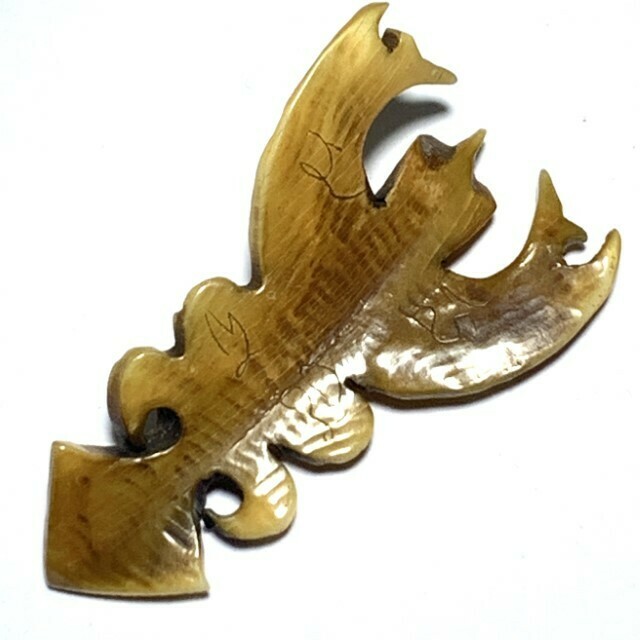
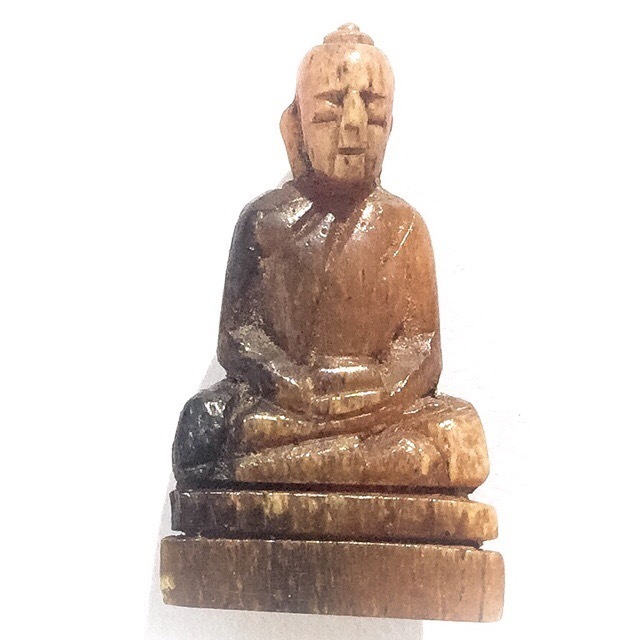
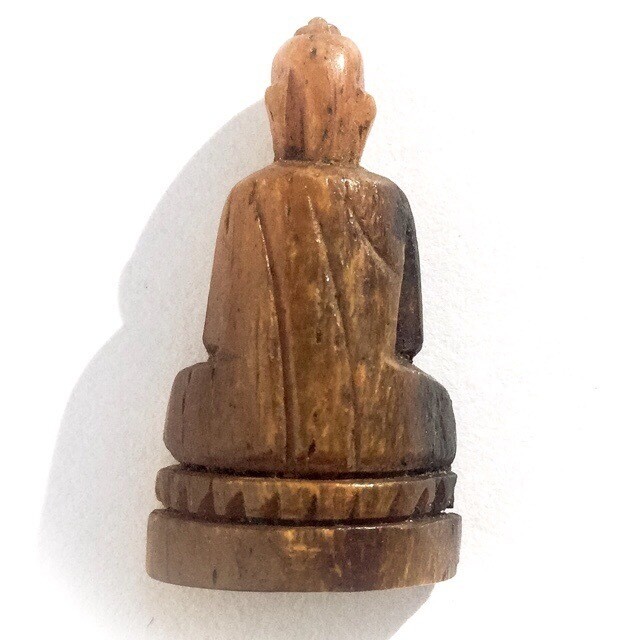
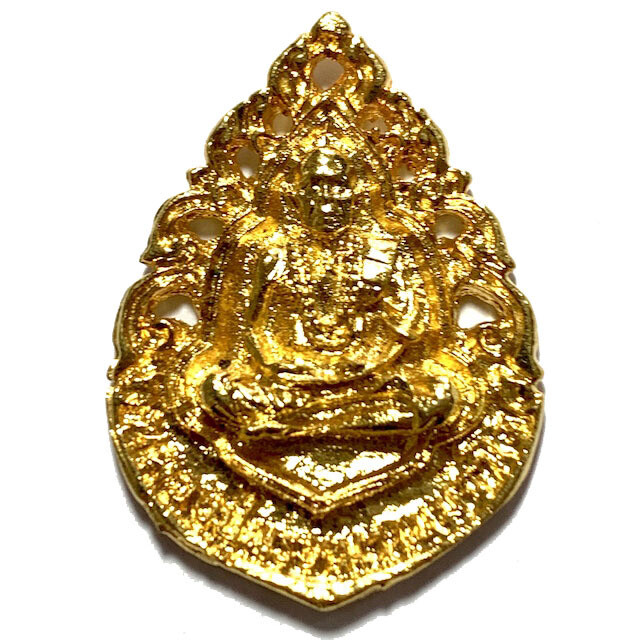
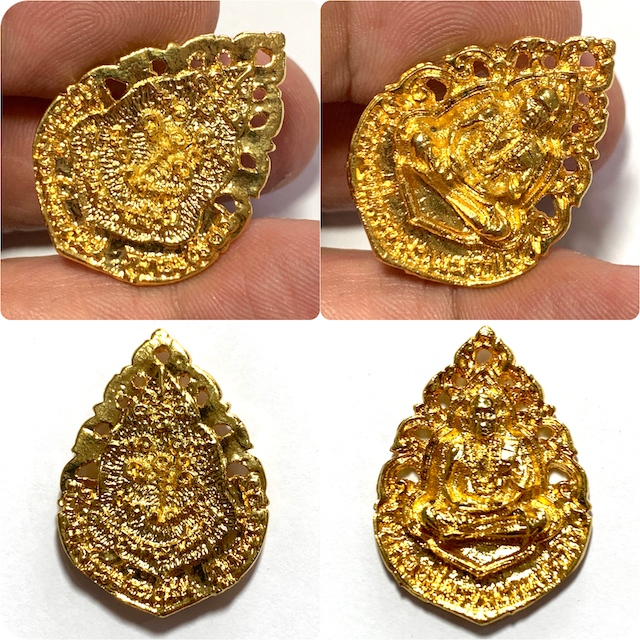
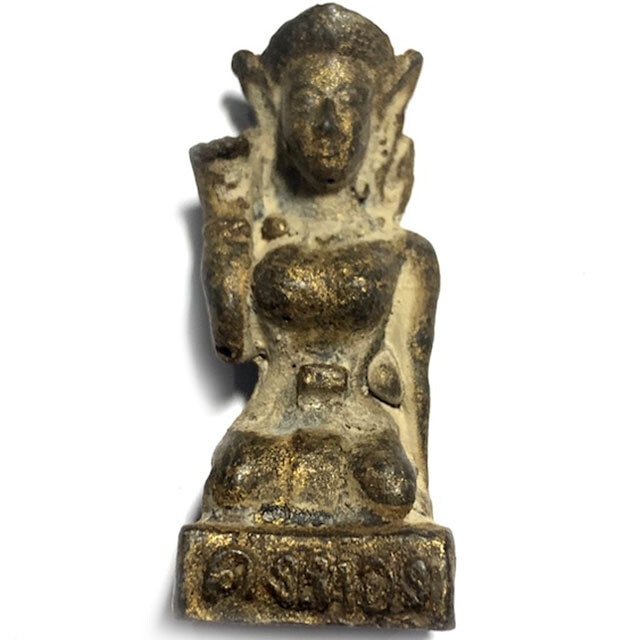
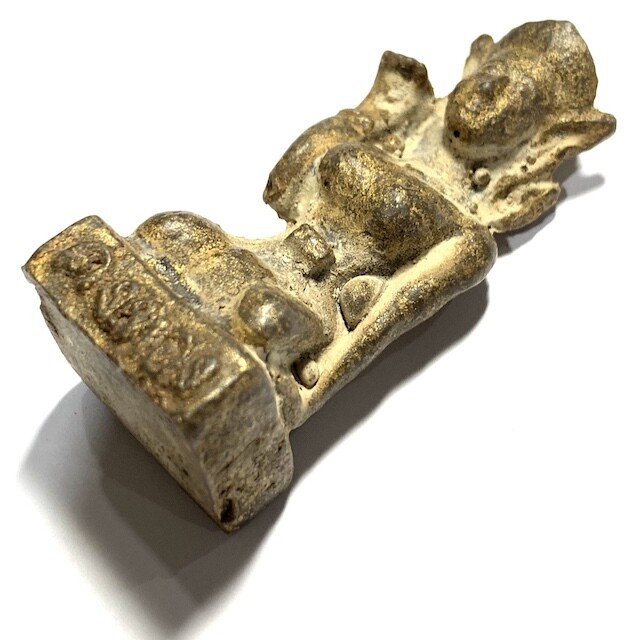
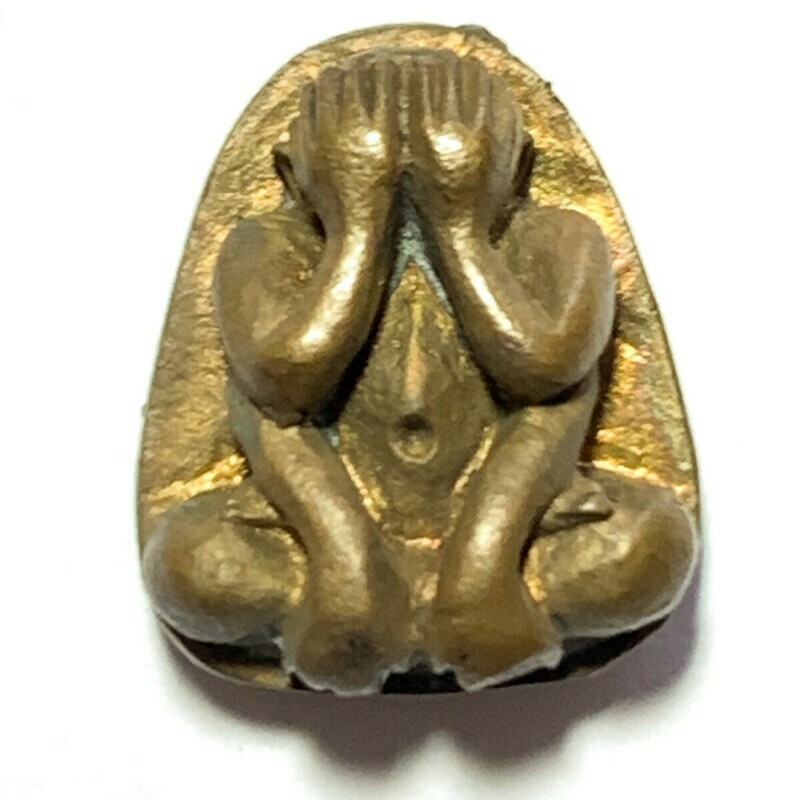
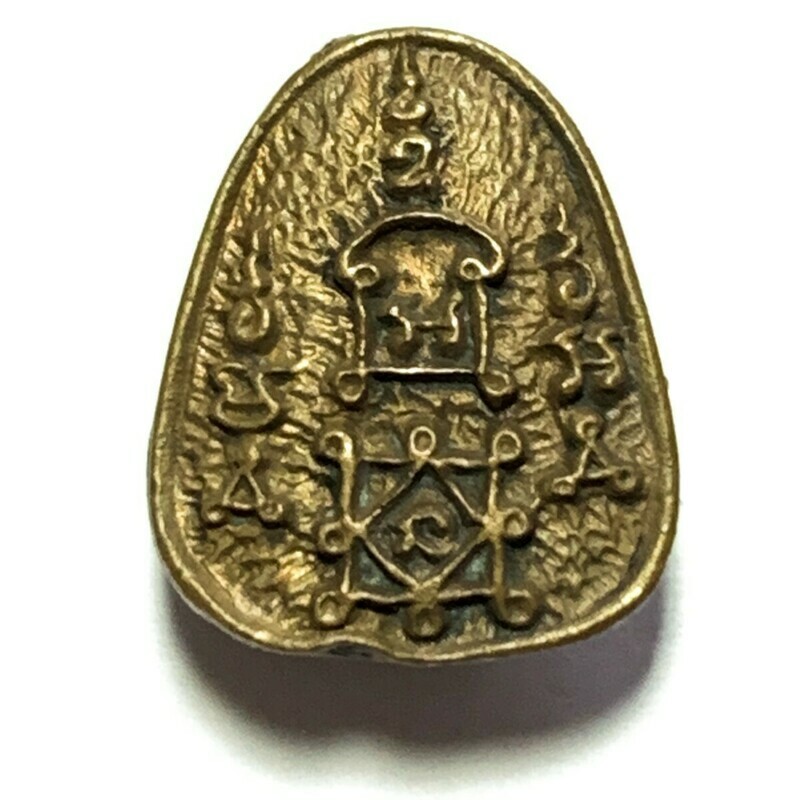
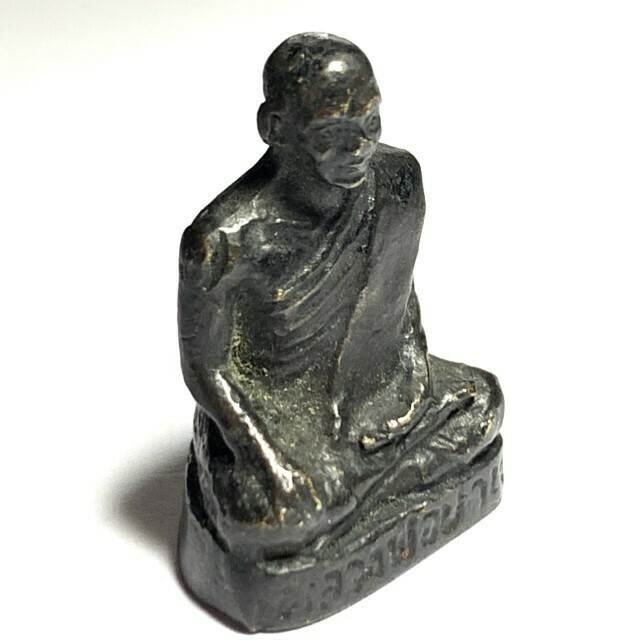
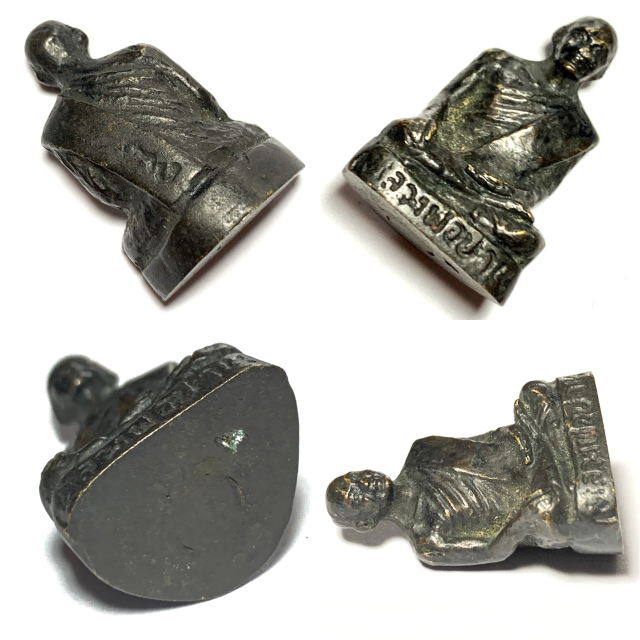
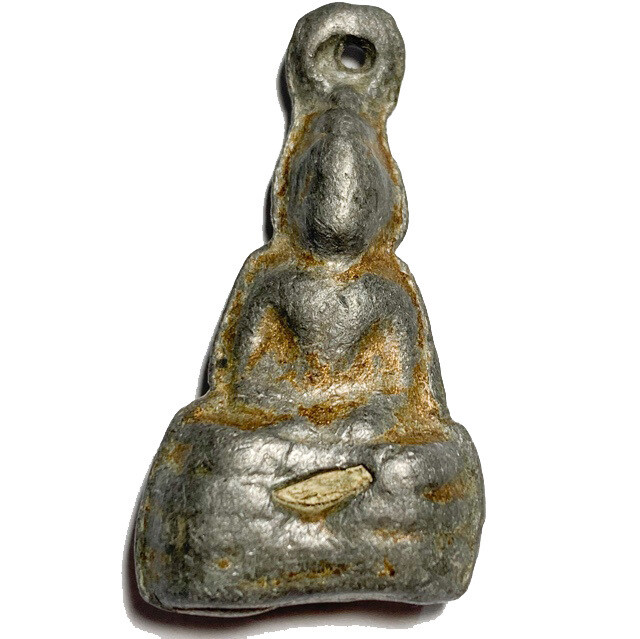
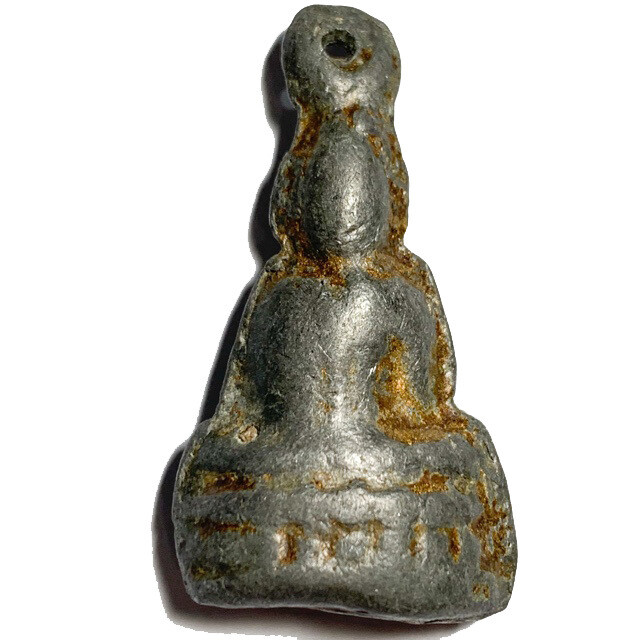
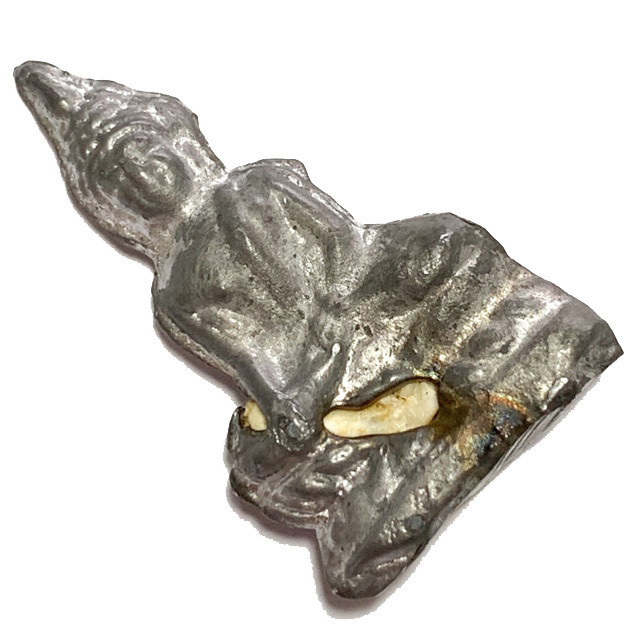
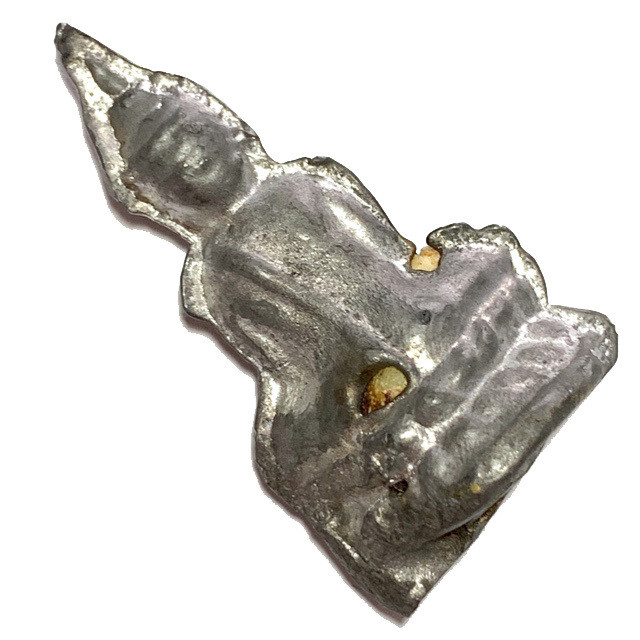
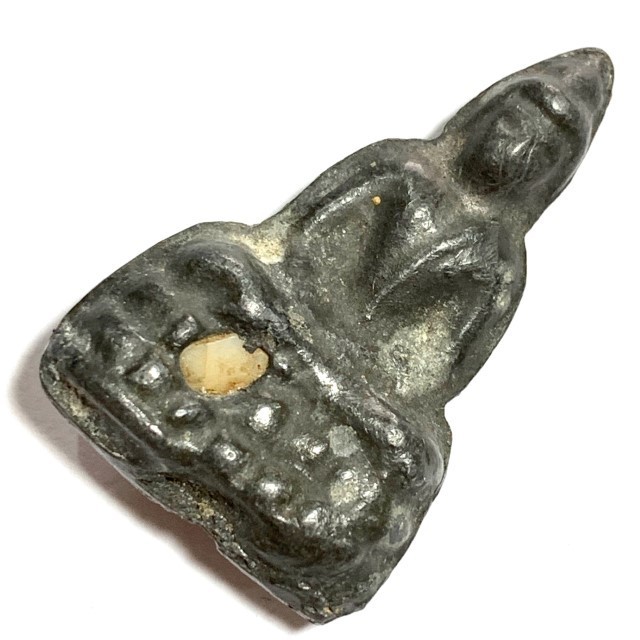
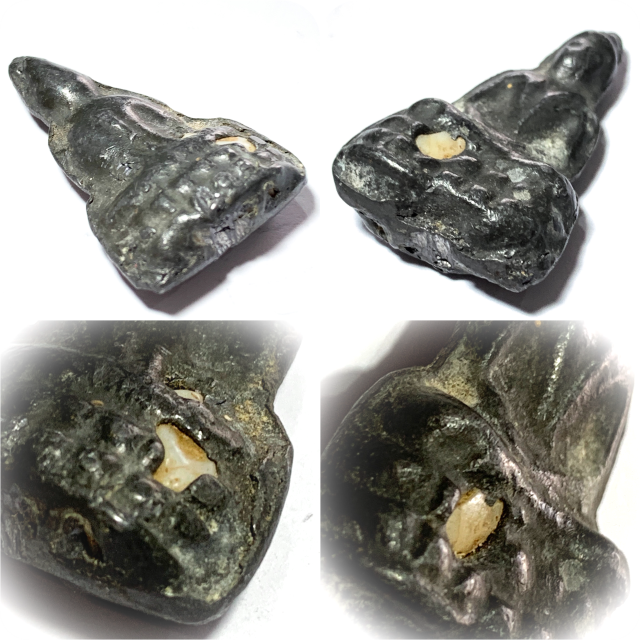
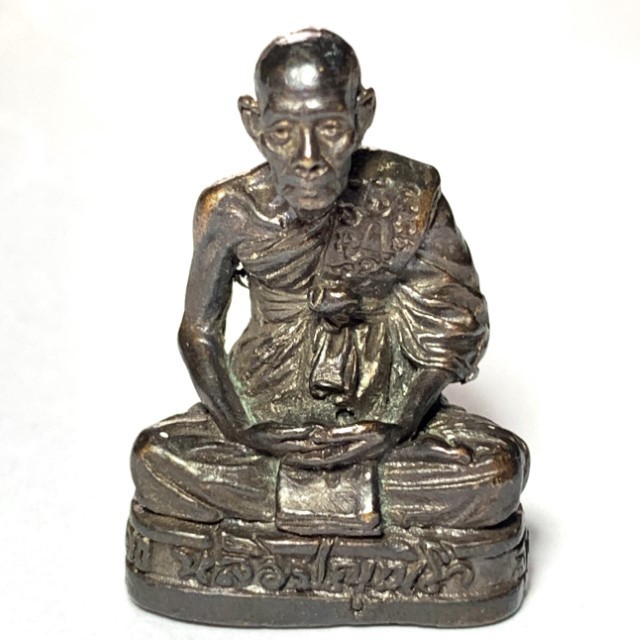
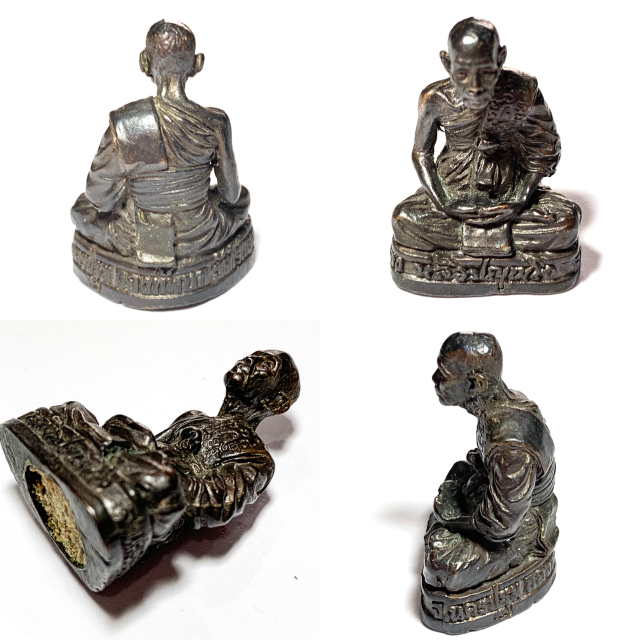
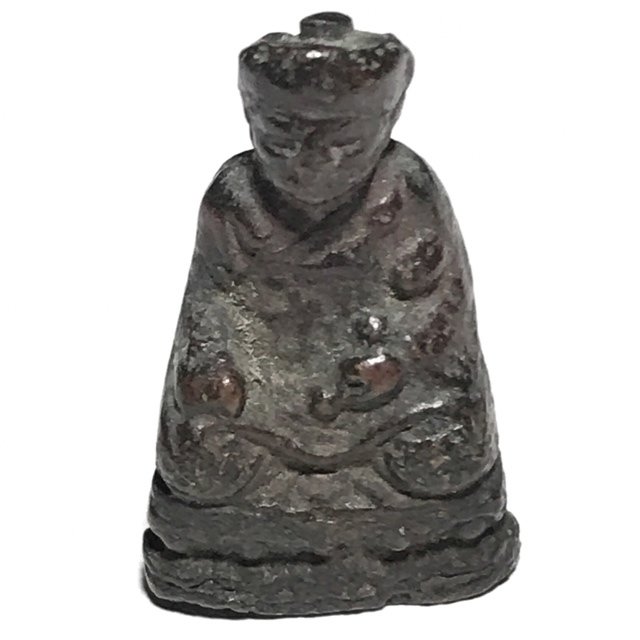
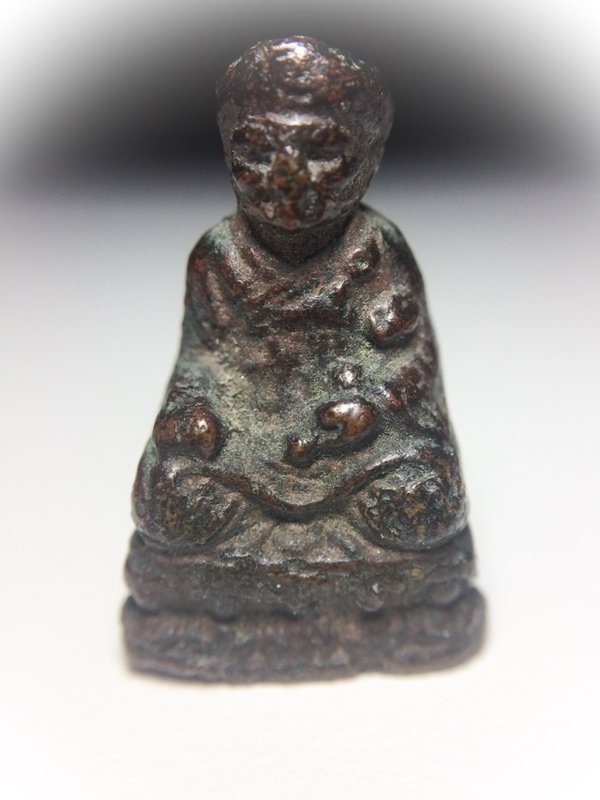
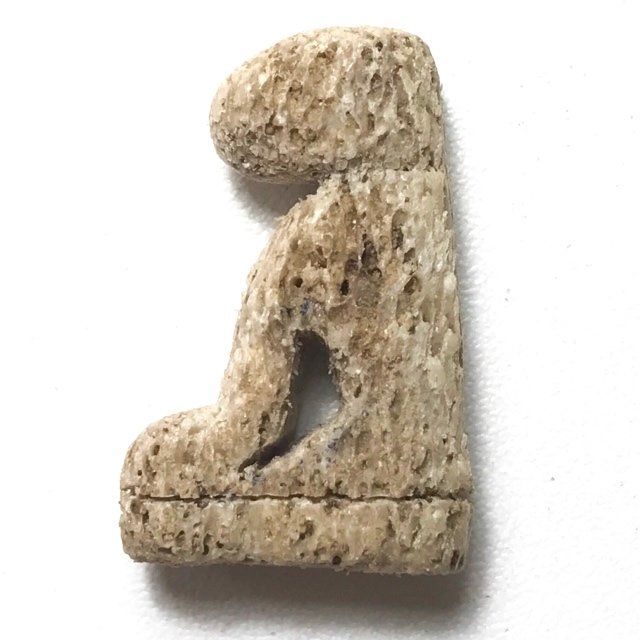
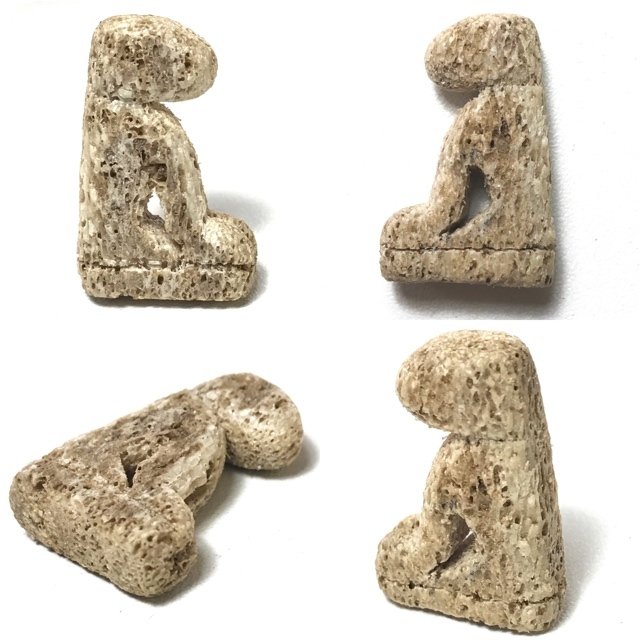
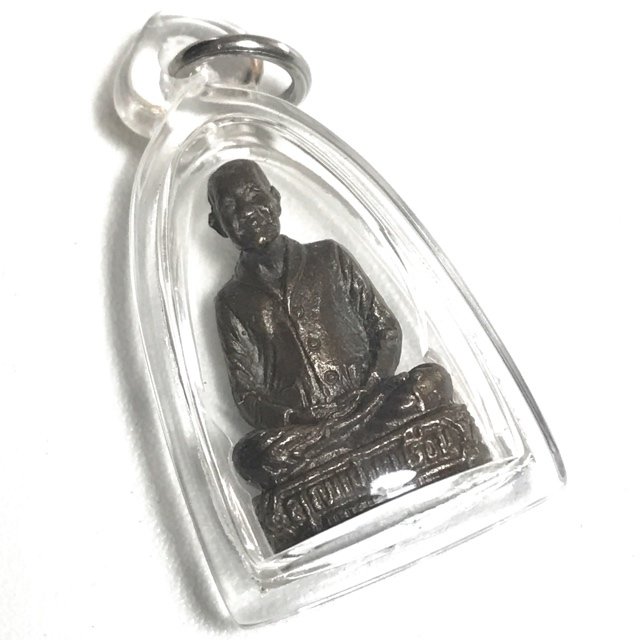
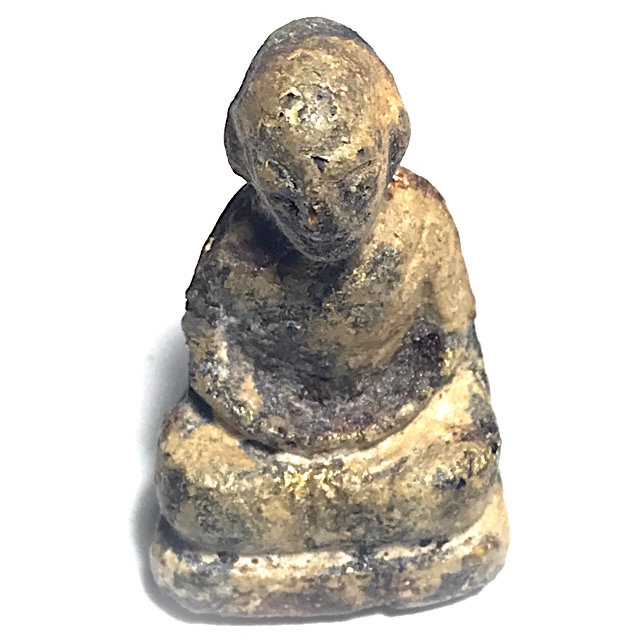
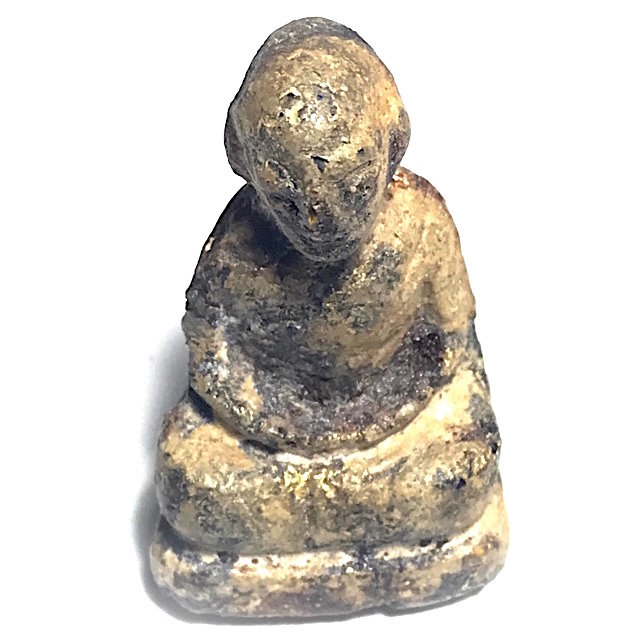
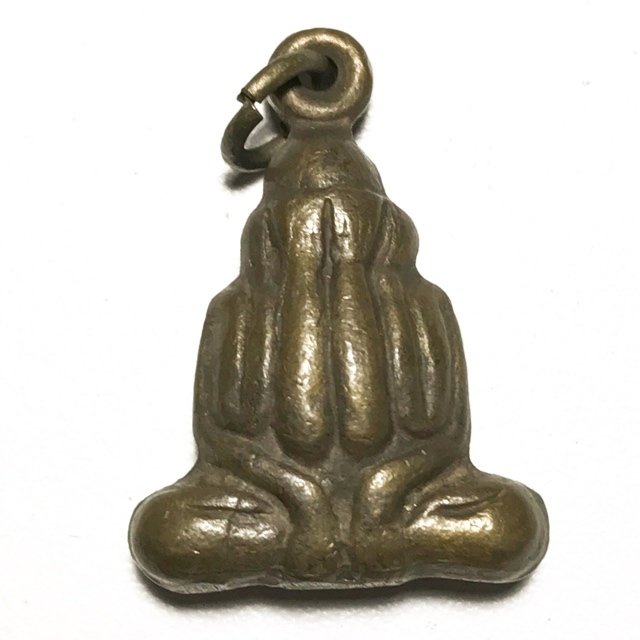
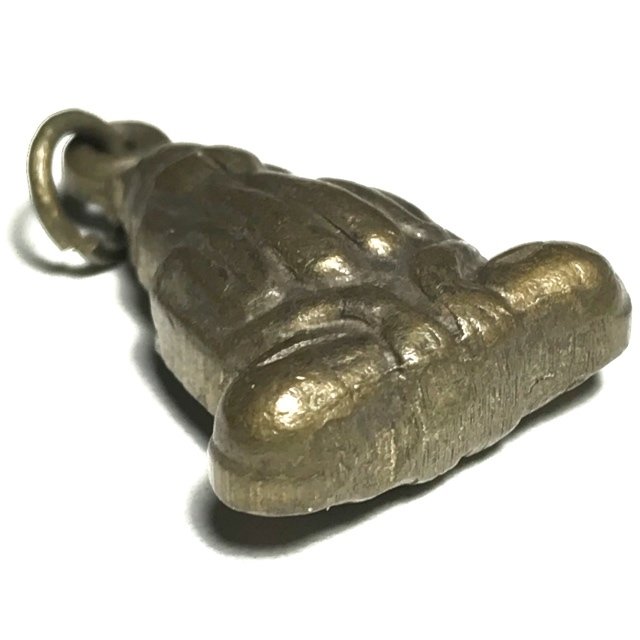
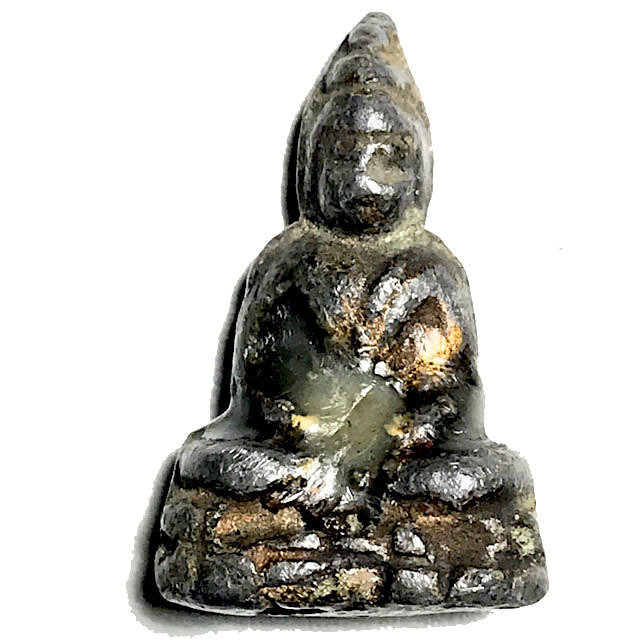
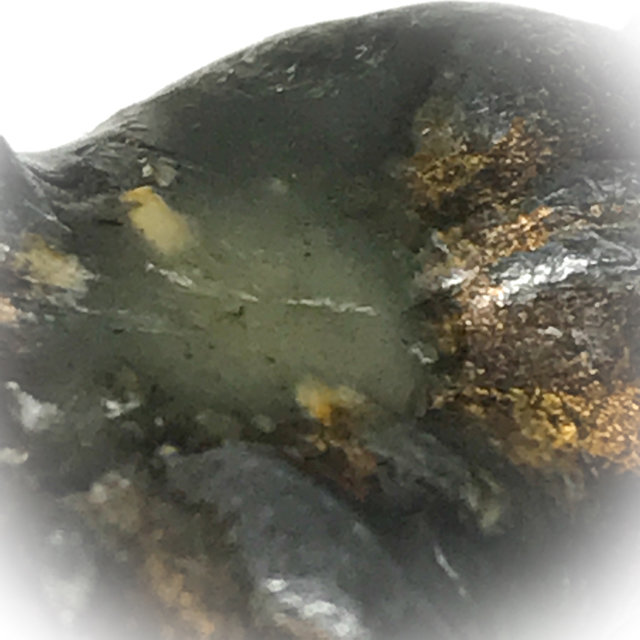
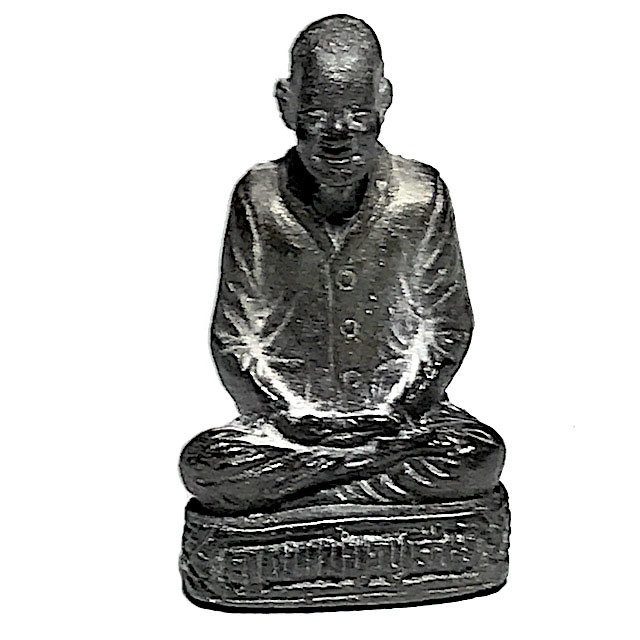
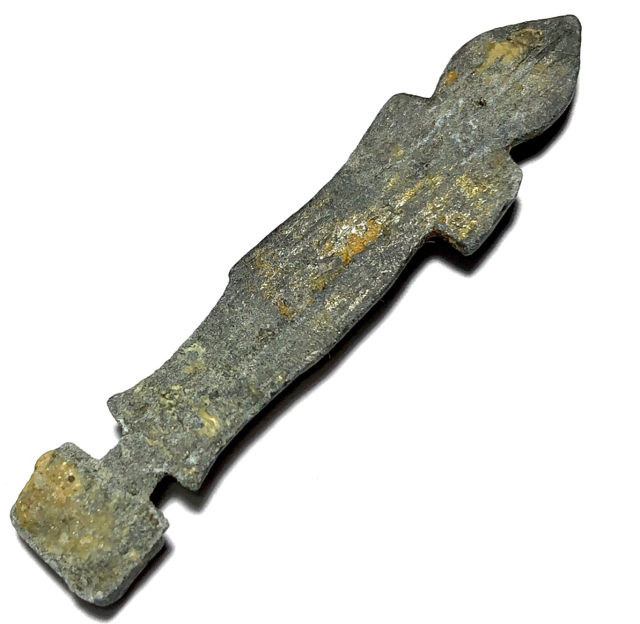
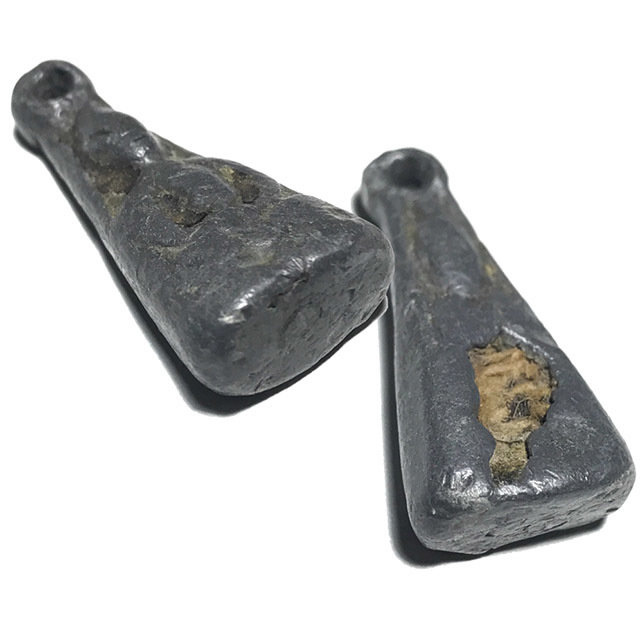
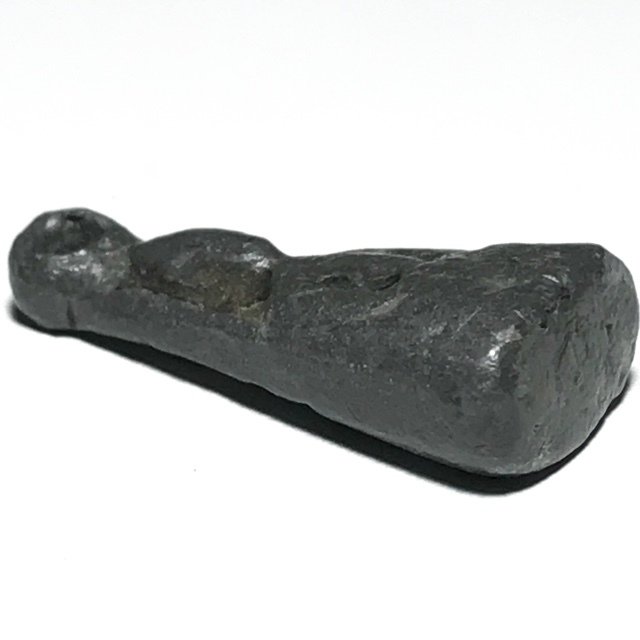
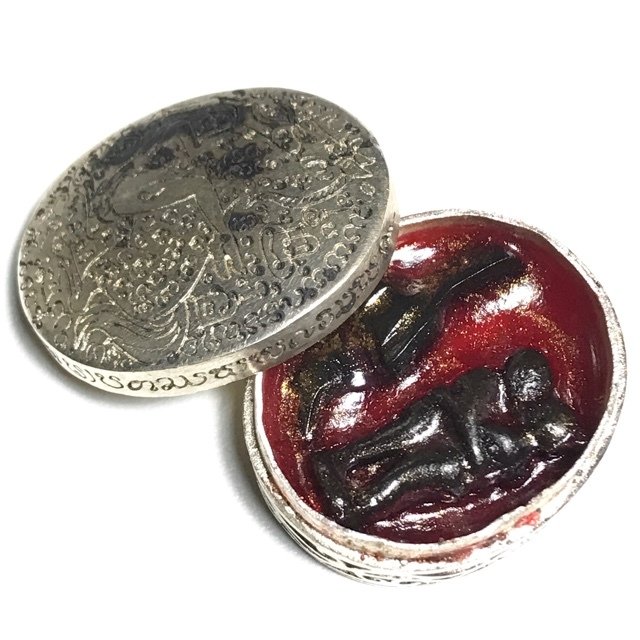
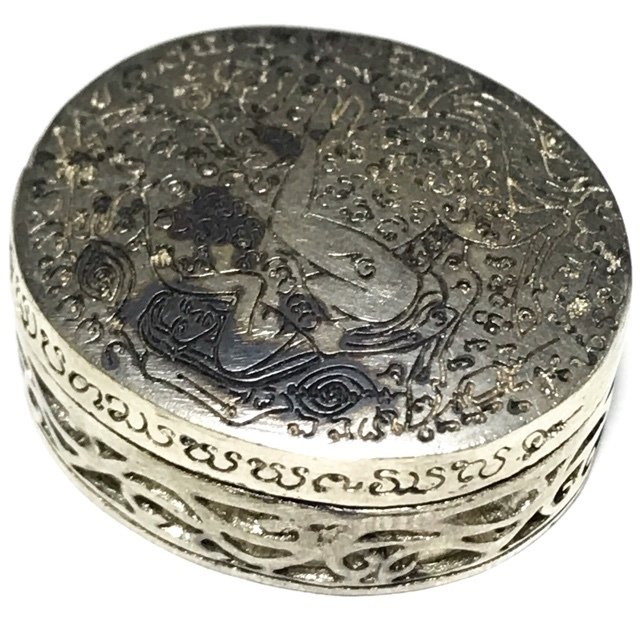
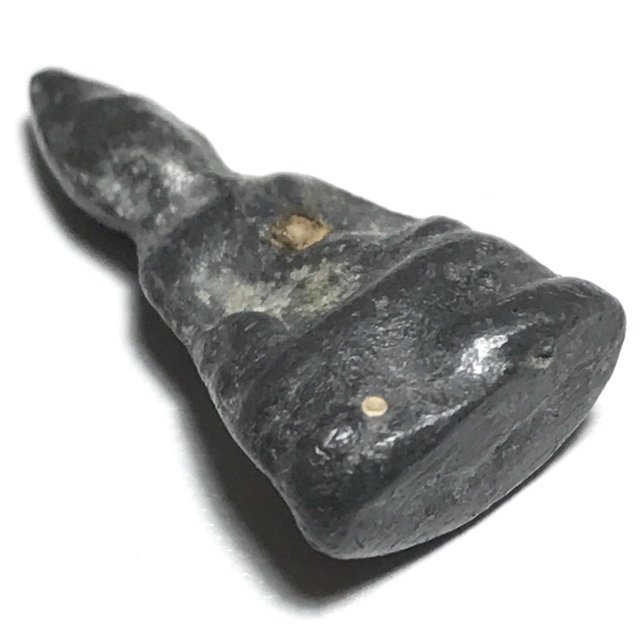
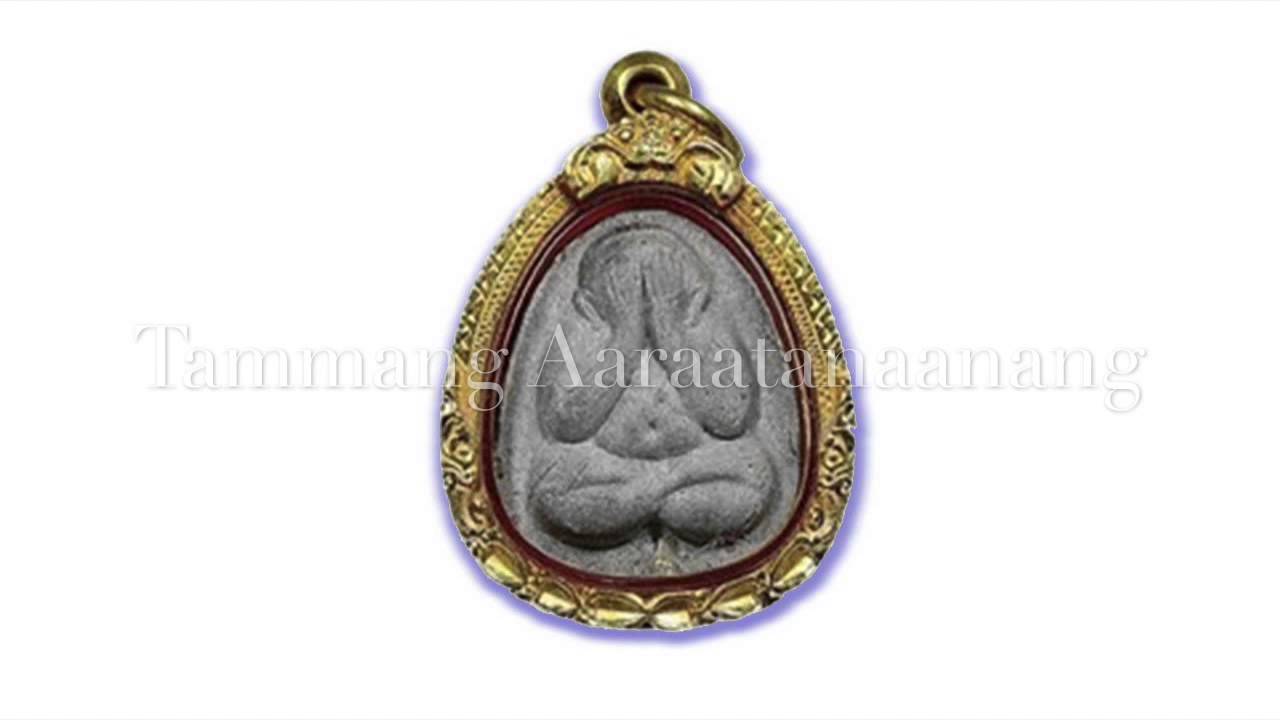
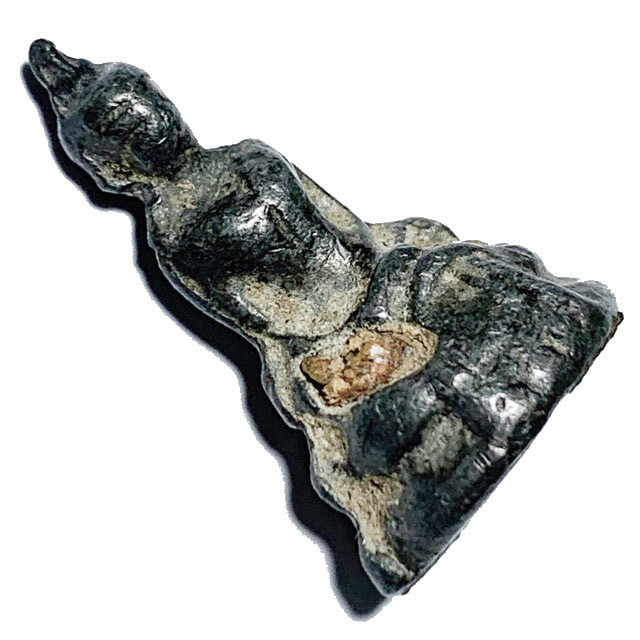
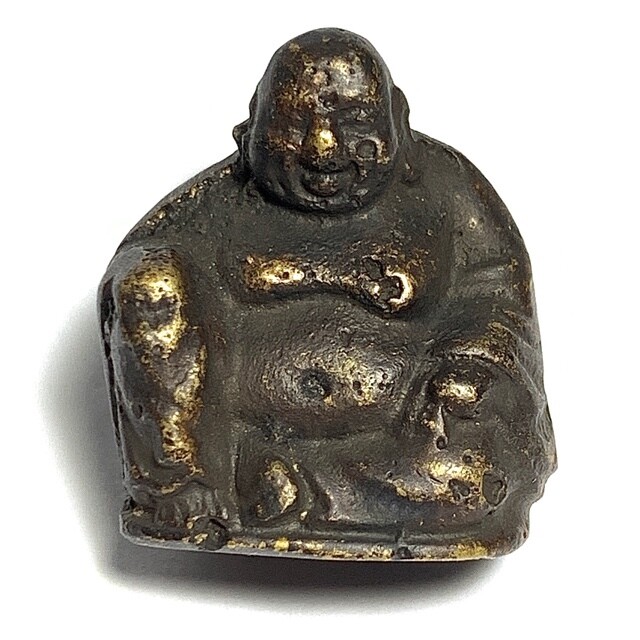
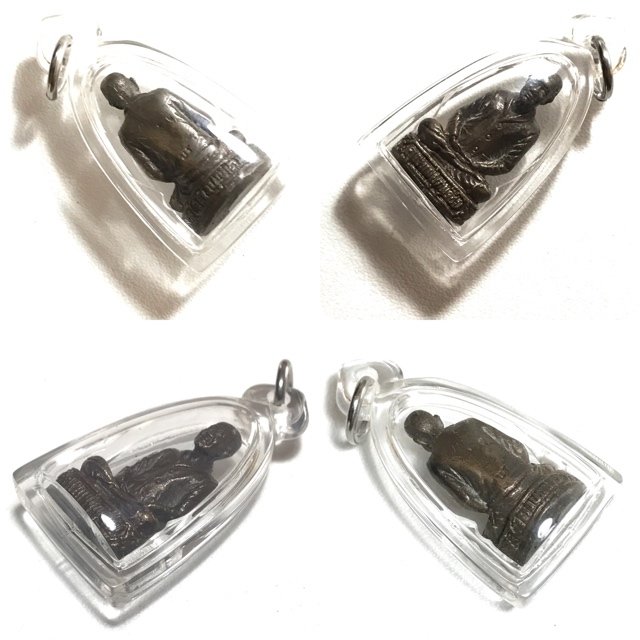
Pra Sanglajjai Mini Bucha statuette in Nuea Samrit Chanuan Muan Sarn with Kring Bead insert sealed into the base, from the Wat Prasat Bunyawas 2506 BE Uposadha Rebuilding Edition. This amulet was one of a plethora of amulets made with block presses donated from a multitude of temples and great Gaeji Ajarn Master Monks, to assist in the rebuilding of the Burned Uposadha Shrine Room at Wat Prasat.

The amulets were given a very Large Buddha Abhiseka Blessing Ceremony, and were made in many different types and models, many amulets being made in Sacred Powders and Metallic amulets. The Edition received 3 days and 3 nights of Chanting, from the 6th to 9th of March 2506. The second Ceremony was performed for 4 days and 4 nights, from the 13th to 15th of November 2506.

Roop Lor Pra Sangkajjai Pim Yai Ud Kring Nuea Samrit 2506 BE Wat Prasat Bunyawas 2 Blessings 234 Guru Monks

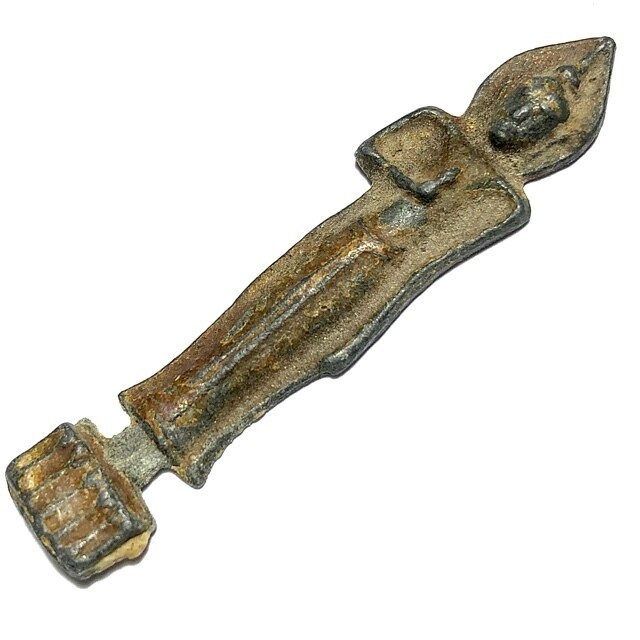
These were handed out to the congregation who came to paste to gold leaf on the Buddha image which was being installed and blessed with the Buddha Abhiseka (opening of the eyes of the Buddha ceremony). The very same ceremony also installed and consecrated a Buddha footprint image which was also installed in the temple on the same day and covered with gold leaf by the congregation.

Roop Lor Pra Sangkajjai Pim Yai Ud Kring Nuea Samrit 2506 BE Wat Prasat Bunyawas 2 Blessings 234 Guru Monks

This is one of the rarer models of the Great 2506 BE Wat Prasat Bunyawas Amulet Blessing Ceremony, known as the third largest and most historically important ceremonies in the history of Thai Buddhist Amulet making. A highly revered, and rare Sacred amulet, which was graced with the presence, and empowerment of 234 Master Monks, over two consecutive Buddha Abhiseka ceremonies.

Roop Lor Pra Sangkajjai Pim Yai Ud Kring Nuea Samrit 2506 BE Wat Prasat Bunyawas 2 Blessings 234 Guru Monks

This edition is given great notability with devotees of the 2506 BE Wat Prasat series for the high quantity of Muan Sarn Powders andf Chanuan Sacred Metals used in the series. The amulets of this edition became rare already in the first couple of years after their release, and became very rare already, and were hard to encounter as early as 2510 BE.

A Highly favored amulet, for its famously Powerful Maha Lap, Metta Maha Niyom, Maha Pokasap and Maha Sanaeh Power of the Sangkajjayana Buddha. Pra Sangkajjai represents one of the Pra Sidtisawok Aedtakka (One of the Buddha’s the most admired and praised practitioners). The Buddha praised him for his ability to put long complex teachings into short understandable formulas.

Roop Lor Pra Sangkajjai Pim Yai Ud Kring Nuea Samrit 2506 BE Wat Prasat Bunyawas 2 Blessings 234 Guru Monks


Free registered air parcel shipping worldwide is included. Pra Sangkasjjai, has a golden tinted skin complexion, and was originally so similar in appearance and stature to the Lord Buddha, that sometimes people would mistake him for the Buddha if seen from a distance. For this reason, he used his mind powers to force his body to grow fatter, and not so handsome as before, in order to not confuse others if he was the Buddha or not.

The ancient masters would often use the visual symbolism of Pra Sangkajjai’s features to create statues in this image, which has served as an important preserver of the Faith over the Centuries. Pra Sangkajjai is hence a very old form of Buddha image dating back to the early times of Buddhism. Pra Maha Sangkajjai was originally called ‘Ganjana’, which means ‘Gold’ in Pali

Roop Lor Pra Sangkajjai Pim Yai Ud Kring Nuea Samrit 2506 BE Wat Prasat Bunyawas 2 Blessings 234 Guru Monks


He was the son of a Brahman called Bpurohidtgajjayana Kodtra in the City of Usenni. He studied and completed the Traiwaet (Tri Veda). After his father passed away, he inherited the title of Bpurohidt (advisor to the King). This happened in the time of the King Jantabajjodti. Pra Sangkajjai had 7 close companions who came with himn to attend the Buddhas teachings at Wat Weluwanaram, and after listening to the Dhamma, becamse Arahants instantly and asked to ordain. In the Turasutra it is mentioned that Pra Sangkajjai lived to the age of 120 years old. Pra Sangkajjai Amulets.

Roop Lor Pra Sangkajjai Pim Yai Ud Kring Nuea Samrit 2506 BE Wat Prasat Bunyawas 2 Blessings 234 Guru Monks

The making of amulets in the image of Pra Sangkajjai have been made since ancient times by many different Temples and Samnak. The Sangkajjai amulet has always been a very preferred amulet and believed ot have great power, for the insertion of the ‘Puttakun’ qualities of the Sangkajjai Buddha of Metta Mahaniyom and Maha Sanaeh. The Wicha invokes these powers to become a Sacred Na spell within the image of the amulet.

Roop Lor Pra Sangkajjai Pim Yai Ud Kring Nuea Samrit 2506 BE Wat Prasat Bunyawas 2 Blessings 234 Guru Monks

This is a Classic Buddhist Family Heirloom type amulet, that can only increase in Sacred Value (and of course monetary value), as Time passes. The perfect collection for devotees of the Pantheon of amulets of Wat Prasat, and a perfect Set of Heirloom amulets


Roop Lor Pra Sangkajjai Pim Yai Ud Kring Nuea Samrit 2506 BE Wat Prasat Bunyawas 2 Blessings 234 Guru Monks

What are Family Heirloom Amulets?

Family Heirloom, or simply ‘Heirloom’ amulets, is a phrase coined by Ajarn Spencer Littlewood to translate the inherent meaning within the Thai words ‘Pra Koo Baan Koo Mueang’ (พระคู่บ้านคู่เมือง – Buddhist Images that are if National Buddhist Importance), and ‘Pra Khong Moradok’ (พระของมรดก – Historically Valuable Inheritance). By this, Ajarn Spencer means, that amulets of this kind are highly valued as items to collect and keep to pass down through all generations of one’s family lineage (descendants), for them to remember the Buddha, and their own Ancestors, and carry the Merits of their Ancestors with them, as well as giving Merits back to their dead Ancestors who they inherited the amulets from.

Roop Lor Pra Sangkajjai Pim Yai Ud Kring Nuea Samrit 2506 BE Wat Prasat Bunyawas 2 Blessings 234 Guru Monks

Kata Bucha Pra Sangkajjai

Kata Bucha Pra Sangkajjai

Kata Hua Jai Bucha Pra Sangkajjai

Arahandti Gajjaayana Thaero Mahaa Poko Pawandtumae.

This Kata calls luck and fortune and brings wealth, and other great treasures.

Roop Lor Pra Sangkajjai Pim Yai Ud Kring Nuea Samrit 2506 BE Wat Prasat Bunyawas 2 Blessings 234 Guru Monks

Full Version Kata Bucha Pra Sangkajjai

Gajjaiyana Ja Mahaa Thaero Putto Puttaanang Puttadtang Puttanja Putta Sapaa Sidtang Puttadtang Samanubpadt-dto Puttachodtang Namaa Mihang Bpiyo Taewa Manussaanang Bpiyo Prahma Namudtamo Bpiyo Naaka Subannaanang Bpiyinsiyang Namaa Mihang Sappae Chanaa Pahuu Chanaa Bpuriso Chanaa Idthii Chanaa Raachaa Paakinii Jidt-dtang Aakajchaahi Bpiyang Ma Ma

Chanting this Kata is Good for increasing popularity, business sales and promoted status. In addition, Sangkajjai amulets have the special abstract magical quality of increasing your common sense, mindfulness and wisdom is also present within this amulet. This particular aspect of the Sangkajjai magic is what is called a ‘Prisnatam’ (mysterious phenomenon).

Roop Lor Pra Sangkajjai Pim Yai Ud Kring Nuea Samrit 2506 BE Wat Prasat Bunyawas 2 Blessings 234 Guru Monks

The 2505-2506 BE (1961) Wat Prasat Bunyawas Edition Amulets, is a universally accepted and officially recognized edition of classic Buddhist Amulets, of extremely high esteem. One reason it is so highly respected as the sacred edition of Amulets, is the fact that the creation of the sacred Muan Sarn Powders for this edition were given extreme attention to detail, and were gathered together over a long period of time, and donated from many great masters.The blessing ceremony for these Amulets is also a historically famous blessing ceremony, for its immensity, and the presence of great powerful guru monks.


The temple of Wat Prasat Bunyawas was built in 2376 BE, and was first given an official boundary and a name in 2379 BE, being first named ‘Wat Klong Sam Sen’, because it was located over the Sam Sen tributary canal. Its name was later changed to ‘Wat Khwid’, because of the 2 Sacred Giant Khwid Trees, which stood beside the Uposadha Shrine Room.Later, in the year 2498 Buddhist Era, the temple was burned in a terrible fire.

Many of the temple buildings were destroyed, including the Uposada shrine room. Pra Kroo Samuh Ampol Palawatano, the Abbot at the time, decided to build a new shrine room instead of repairing the ruins of the old one.

Roop Lor Pra Sangkajjai Pim Yai Ud Kring Nuea Samrit 2506 BE Wat Prasat Bunyawas 2 Blessings 234 Guru Monks

This was because of a seemingly miraculous event; Luang Phu Tim, the Great Guru Master Monk and Abbot of Luang Phu Tuad’s Legendary Wat Chang Hai temple, had had a vision of the great Bodhisattva Luang Phu Tuad, Who appeared to him in a dream, and told him to go to Bangkok and help to repair a temple which had been burned to the ground. Luang Phu then traveled up from the south to Bangkok, and started asking around at Way Iam Woranuch, to find out if that had been a fire in any temples lately. When he heard about the great fire burning the temple down, he went to speak with the Abbot Pra Kroo Samuh Ampol. After having spoken, Luang Phu Tim presented the Abbot with some original 2505 BE Luang Phu Tuad amulets (now one of the two most famous classic top editions of millionaire Amulets of Luang Phu Tuad).

Roop Lor Pra Sangkajjai Pim Yai Ud Kring Nuea Samrit 2506 BE Wat Prasat Bunyawas 2 Blessings 234 Guru Monks

He said they should be used to press a block mold for the making of a new series of Amulets to fund the rebuilding of the shrine room and the rest of the temple. He also donated an amount of the Famously Powerful and Rare ‘Din Kakyayaks’ Magickal Peat Earth to use as Muan Sarn for the amulets, and some other Muan Sarn remaining from the 2497 BE first ever edition of Luang Phu Tuad amulets. These ingredients were the added to a large array of other Historically Famous Sacred Muan Sarn, including broken sacred amulets from many great Masters, and many very famous miraculous editions of classic Amulets.

Roop Lor Pra Sangkajjai Pim Yai Ud Kring Nuea Samrit 2506 BE Wat Prasat Bunyawas 2 Blessings 234 Guru Monks

Some of the more well known amulets used to break up and mix in with the sacred powders included; Pra Somdej Wat Bang Khun Prohm 2500 BE, and Pra Somdej Wat Bang Khun Prohm 2509 BE (The two most famous classic and expensive editions of Wat Bang Khun Prohm amulets). As far as the famous Luang Phu Tuad models of this edition, they were made to place 84,000 of them within the Chedi Stupa, at Wat Bunyawas (this is known as ‘Kru’ hiding place chamber, used to place amulets for safekeeping and folate to distribution to extend the period of the preservation of the existence of the Buddhist religion).

Roop Lor Pra Sangkajjai Pim Yai Ud Kring Nuea Samrit 2506 BE Wat Prasat Bunyawas 2 Blessings 234 Guru Monks

A Large number of extra Amulets were also made in addition to the 84,000 placed within the Chedi, to hand out to Devotees at the temple, during the blessing ceremony. The Luang Phu Tuad series was completed first and released in the year 2505 Buddhist era. As to the many other different models (such as this Pra Sangkajjai statuete) which were made, they received a second blessing and were released in the year 2506 Buddhist era.

Roop Lor Pra Sangkajjai Pim Yai Ud Kring Nuea Samrit 2506 BE Wat Prasat Bunyawas 2 Blessings 234 Guru Monks


Four full days and nights of chanting were performed over these amulets by the 234 monks. The ceremony was so massive that it was considered to be the largest and most important sacred blessing ceremony of Amulets, since the great 25 centuries of Buddhism ritual, in the year 2500 Buddhist era.

Roop Lor Pra Sangkajjai Pim Yai Ud Kring Nuea Samrit 2506 BE Wat Prasat Bunyawas 2 Blessings 234 Guru Monks

Roop Lor (Loi Ongk)
Filters

Filters
1 - 60 of 83 items
How to Pray to Thai Amulets

Ajarn Spencer Littlewood & Agent Gemini Unleashed for ancientamulet.com
All rights reserved.


Rian Sema Glab Kala Ta Diaw Luang Por Noi Pantheon of Amulets

Pra Rahu Om Jantr Nuea Kala Ta Diaw – Pim Sema Kwam world famous preferred master-class amulet, from Luang Por Noi Kantachodto – Wat Srisa Tong (Nakorn Chaisri)
The Pra Rahu Kala Ta Diaw of Luang Por Noi, of Wat Srisa Tong, in Huay Tago, Nakorn Chaysri, is most certainly the most famous of all one eyed coconut carved Rahu Amulets in Thai Amulet History. The only other Master who has come close to equalling his fame and mastery of the Pra Rahu Kala Ta Diaw amulet, is the great Kroo Ba Nanta, of Wat Tung Man Dtai, in Lampang, whose Pra Rahu are also extremely favored and sought after.

Phra Rahu Luang Por Noi

Phra Rahu Pim Sema Glab Ongk Kroo Luang Por Noi – a Perfect Showcase exhibit of this world famous and extremely rare and valuable Thai Buddhist Amulet of Luang Por Noi, of Wat Sri Sa Tong

xProduct()
The Pra Rahu Kala Ta Diaw of Luang Phu Noi, are the most prestigious of all in the eyes of the Pra Niyom Collector Community. This model is considered to be from the earlier time of Luang Por Noi’s Era due to its slightly larger size and curvature, because his later models were flatter and slightly smaller. The amulets themselves were made by Artisans who were devoted Looksit of Luang Por Noi, who were mostly immigrants from Vientiane, in Laos, who moved to Thailand during the early Ratanakosin Period of Thai History.

As the earthen foundations of the temple of Wat Srisa Tong were being dug for the building of the temple, a golden Buddha Head was discovered, and because of this, the Temple was first given the name ‘Wat Hua Tong’ which means ‘Temple of the Golden Head’.

The word ‘Hua’ means ‘head’ in colloquial Thai, but for referring to a Sacred Image of a Deity or a Buddha (or a Monk), the word ‘Srisa’, which also means ‘Head’, in high speech, is preferred. So the name was then changed later to ‘Wat Srisa Tong’

Below; the ancient natural aging features of the surface of the rear face of the 1 eyed coconut shell carving is highly evident and visible, even to the naked eye, along with the inimitable, and instantly recognizable hand made Lanna spell Inscriptions of this Great Laoatian Magical Lineage Master Monk.

Pra Rahu Kala Ta Diaw Pim Sema Glab Luang Por Noi Rear Face

Pra Rahu Kala Ta Diaw Pim Sema Glab Luang Por Noi. The Rear Face Shows Hand Made Spell Inscriptions in Agkhara Lanna Magical Script, from Luang Por Noi’s own hand. This exhibit is a perfect Ongk Kroo for reference, study, and is highly eligible for competition entry, and likely to win a prize if so.

The first Abbot of the temple was Luang Por Dto, who was one of the Laoatian people who had immigrated from Vientiane. Luang Por Dtrai developed the temple continually. The Lao people who built the temple had many artisan who knew that Luang Por Dtrai had powerful Wicha Akom and the sectrets of the Laoatian Wicha Pra Rahu Om Jantr, and so they carved Rahu Amulets from one eyed coconut shells using the traditional Lao Artistic style, to give to Luang Por Dtrai for empowerment.

Pra Rahu Pim Sema Glab Luang Por Noi display of classic flat edge, evealing the origins and maker

The classic flat edge of the coconut shell carving, reveals the origins and maker, for it was only Luang Por Noi, who applied the Wicha of long term soaking in sacred oils and coconut oil, to soften the highly rounded shell of the Kala Ta Diaw 1 eyed coconut, so that it could be hammered flat, in order to allow his Master Artisans to perform the finest level of carving possible, and to differentiate his Pra Rahu Kala Ta Diaw from those of other masters. Not all his Pra Rahu are found to be so thin and flat as this one, nor do all have such fine carvings, which makes this exhibit a 100% certainty, and an Ongk Kroo Reference Exhibit of Master-Class Status

Luang Por would then would distribute them back to the devotees for protection and Serm Duang (improve fate and destiny).As the Lao artisans began to develop their skills and experience repeatedly carving the coconut shells, the design became ever more finely tuned and increasing in beauty, but due to the fact that there were a large number of artisans all making these carvings, the designs would be varied both in appearance of features, and in the quality and amount of detail.

Kata Chanting to Bucha Pra Rahu Thai amulets and Bucha statues (4 different Versions)

Suad Pra Kata Bucha Pra Rahu
12 repetitons of the Kata Bucha Pra Rahu are to be Chanted;

Idtipiso Pakawaa Pra Rahuu Sataewaa Samaa Winyaana Idtipiso Pakawaa Putta Sangmi

Over the years, Wat Srisa Tong grew constantly throughout the lineage of Abbots, from a small temple into a large impressive temple over the years. After his passing, he was succeeded by the new Abbot, Luang Por Dtan, who was succeeded by Luang Por Lee, who was then succeeded by Luang Por Tong, after which came Luang Por Choi, and then cam the fifth Abbot, Luang Por Noi Kantachodto. It was the second Abbot, Luang Por Lee, who inherited and continued the Wicha Pra Rahu Om Jantr in the Lao tradition from Luang Por Dtrai.

Edge of Pra Rahu amulet Luang Por Noi (rear view0

The Edge of Pra Rahu Kala Ta Diaw Pim Sema Glab amulet of Luang Por Noi (rear shows the extreme diligent effort to flattedn the ubiquitously curved coconut shell into such a fine flat piece of shell, to enable the highest level of artisanry and detail possible in the carvings of the details of the Pra Rahu Asura Deva, and the Hand Made Spell Inscriptions of Luang Por Noi

Luang Por Noi was also one of the Lao People of Srisa Tong municipality in Nakorn Chaysri, who during his time as a Buddhist Monk before becoming Abbot, was practicing at Wat Srisa Tong, and learned the Wicha of Luang Por Dtrai from Luang Por Lee, and ascended later to become the next Master Adept, which was supported by a strong foundation in the Wicha Pra Rahu Om Jantr from Luang Por Noi’s Father, who was also a Laymaster of Lao Sorcery too, and who made carved Rahu amulets and empowered them. So Luang Por Noi got to learn this Wicha from his Father from a very early age, and this made him the perfect apprentice for Luang Por Lee to pass on his Wicha of the Pra Rahu Om Jantr Kala Ta Diaw.

Phra Rahu Kala Ta Diaw Pim Sema Glab lower edge view – Luang Por Noi Wat Srisa Tong

Luang Por Noi was born with the Laity Name of Navarat, meaning ‘nine jewels’, and brought the Wicha Pra Rahu Om Jantr Gae Kala Ta Diaw begun by Luang Por Dtrai,passed to him through Luang Por Lee, to World Fame, through his higher development of the artistic features of the artisanry and design of the carved coconut shell images. Luang Por Noi did this by raising a more stringent rule for the magical requirements in allowing only coconuts with one single eye to be used for the carving of the Rahu image.

Luang Por Noi constantly refined his instructions to the Lao Artisans of Srisa Tong to increase the level of fine detail and subtlety of their carved Rahu images, up to the point where the amulet finally possessed a standard recognisable appearance that could be easily recognisable as being from Luang Por Noi of Wat Srisa Tong. However, this took many years, for which the earlier models are much more varied in appearance than the later models, as they were still very varied in early times due to the different handiwork of each artisan, until they were taught to adhere to a rigid formula.

Phra Rahu Kala Ta Diaw Pim Sema Glab lower edge view - Luang Por Noi Wat Srisa Tong

Luang Por Noi continued to develop and improve the temple of Wat Srisa Tong and the township around the temple to a great extent, and became extremely revered for his meritorious attainments. The Pra Rahu Kala Ta Diaw of all Thai temples are derived from the Original Laoatian Wicha, which entered into practice in Thailand through the Lao Immigrants, and which was developed to a much more advanced and higher level of artistic impression through the lineage of Abbots of Wat Srisa Tong more than any other temple in Thailand, most of which derived their Wicha from Wat Srisa Tong. The Thai tradition of Pra Rahu Om Jantr Coconut Shell Amulets has not only inherited just the design and creation methods used by Wat Srisa Tong, but also the Ceremonial Empowerments and Ritual Methods involved with their creation have also been inherited.

The development of the carved artisanry at the beginning in the times of Luang Por Dtrai and Luang Por Lee, and the early time of Luang Por Noi, first developed in multiple directions because some images would be square, triangular, or circular, and even in the shape of a lotus petal were seen in rare occasions.

Rear Face Phra Rahu Kala Ta Diaw Pim Sema Glab - Nuea Kala Ta Diaw - Luang Por Noi, Wat Srisa Tong Master-Class Amulet

This depended on each artisan and the piece of coconut shell he had to work with. The Lao artisans would then bring the finished work to Luang Por Noi for empowerment. It was here that Luang Por Noi began to apply the next development in the refinement of his most classic and highly recognisable Pra Rahu amulets, by enforcing his master-stroke. The master-stroke, was to teach the Artisans to use oil absorption to soften the coconut shells, and be able to flatten the piece being worked with.

Luang Por Noi Wat Srisa Tong

They would then to cut a standard shape frame. The flatness achieved from the now malleable coconut shell, with the added softness achieved through the oil soaking, allowing the Artisan to engrave the details in a much more refined fashion with a higher level of detail.

It was here that Luang Por Noi introduced a single universal design which has become the classic reference standard of Pra Rahu Amulets by Luang Por Noi; the ‘Sema Kwam’ shape. The word ‘Sema’, means the Lotus Petal.Teardrop shaped Temple Monastic Border Monument Image, and the word ‘Kwam’ means ‘upside down’. This is hence similar in shape to the standard ‘Pim Sema’ shaped coin amulets seen in Thai Amulets, but is reversed to point downwards.

pra Rahu Om Jantr Kala Ta Diaw Luang Por Noi

This then became the only model to be carved from then onwards, and despite many other shapes and sizes of authentic Pra Rahu Luang Por Noi amulets being made previously, the Sema Kwam model became the standard accepted model recognised for its inimitable appearance and ease of recognition.

Rian Sema Glab Kala Ta Diaw Luang Por Noi Pantheon of Amulets 2

And so it came to be, that Luang Por Noi’s most collected preferred Pra Rahu amulet is the Pra Rahu Kala Ta Diaw Pim Sema Kwam.

Pra Rahu Luang Por Noi Amulet

It was only rarely that Luang Por would be able to make and empower Pra Rahu Om Jantr Kala Ta Diaw amulets, because he would only empower them exclusively during the Lunar or Solar Eclipses, depending if the Rahu amulet in question would be empowered for the Yant Suriya Bprapa Solar Eclipse spell, or the Jantra Bprapa Lunar Eclipse spell. Some years there would be no release of Rahu kala Ta diaw if there were no eclipses occurring in the sky.

Rian Sema Glab Kala Ta Diaw Luang Por Noi Pantheon of Amulets 4

Biography of Luang Por Noi

Luang Por Noi was born on the 14th of February 2435, is father was called Nai Ma Nawa Radt, his mother was called Nang Mee Nawa Radt. Luang Por Noi was the youngest of five children. HIs father was a doctor of traditional medicine, and was also an adept lay sorceror. The locals called his father ‘Por Hmor’ which is a colloquial name for a witch doctor or shaman sorceror. Luang Por Noi’s father was famed in the area for having had run-ins with dangerous gangsters from other districts, whose guns and weaponry were rendered useless when trying to kill him, because of his Sorcery Wicha.

Rian Sema Glab Kala Ta Diaw Luang Por Noi Pantheon of Amulets 1
Pra Rahu Luang Por Noi Amulet Rear Face

Luang Por Noi was ordained as a Buddhist Monk (Bhikkhu) at the age of 21 at Wat Kae with Pra Ajarn Yiw (Abbot of Wat Kae) as his Upachaya Ordaining Officer, and Pra Piksu Mun of Wat Klang Koo Wiang as his Anusawanajarn.

Rian Sema Glab Kala Ta Diaw Luang Por Noi Pantheon of Amulets 3

Luang Por Noi recieved the Ordained Dhamma name of ‘Kantachodto’. Luang Por Noi stayed for a little while at Wat Kae, whereafter he moved to stay at Wat Srisa Tong. At the time, Luang Por Lee was the Abbot of Wat Srisa Tong, and Luang Por Noi got the chance to study Saiyasart (Sorcery) with Luang Por Lee, in particular, the Mastery of the Wicha Pra Rahu Om Jantr, and the Wicha Wua Tanu.


xProductBrowser(“categoriesPerRow=5″,”views=grid(6,5) list(20) table(20)”,”categoryView=grid”,”searchView=grid”,”defaultCategoryId=16370115″,”id=my-store-1447232″);