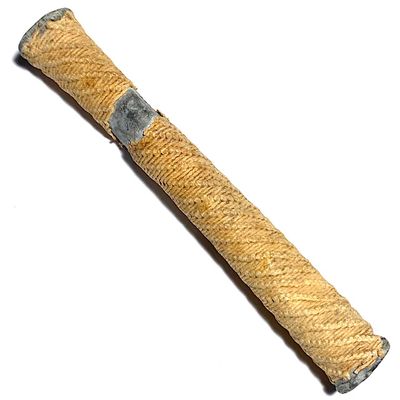
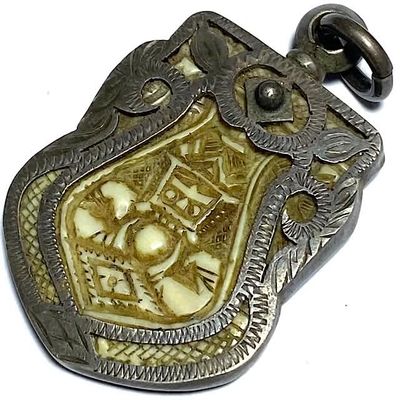
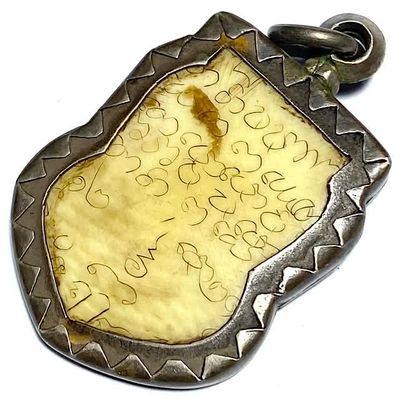
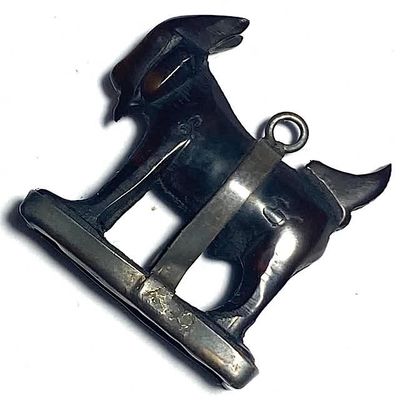
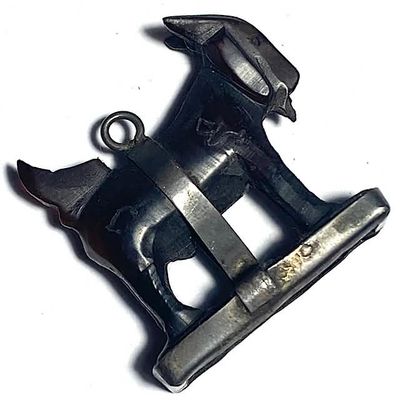
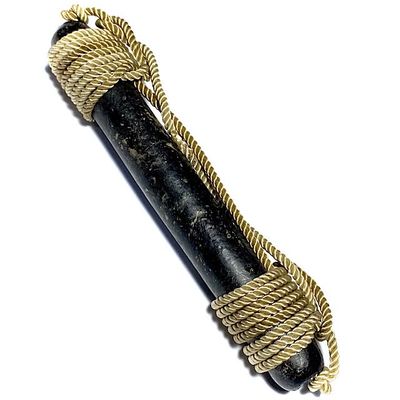
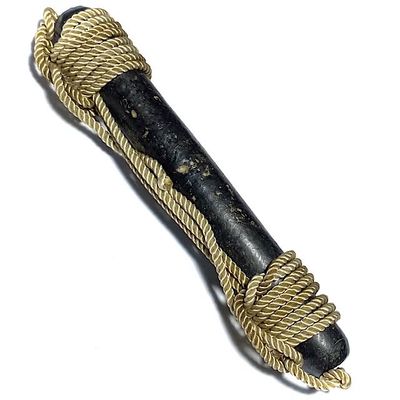
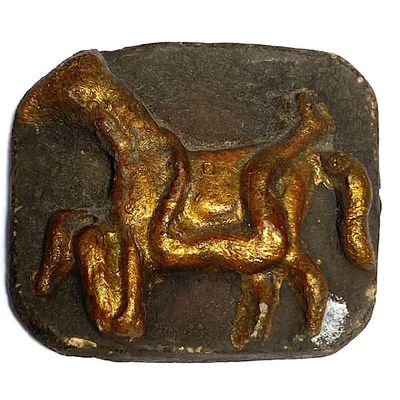
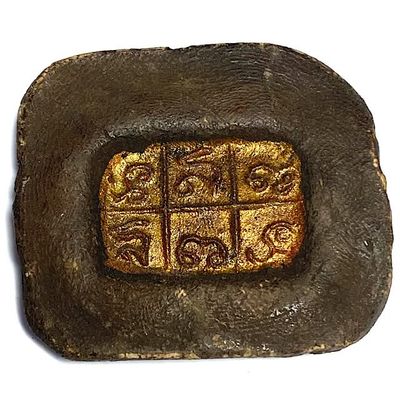
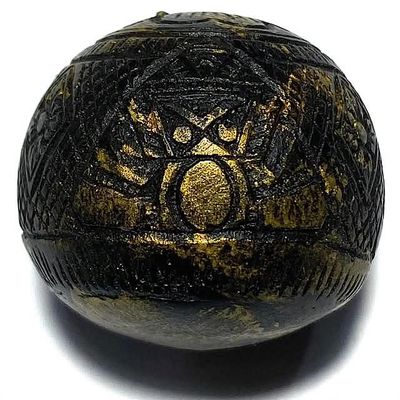
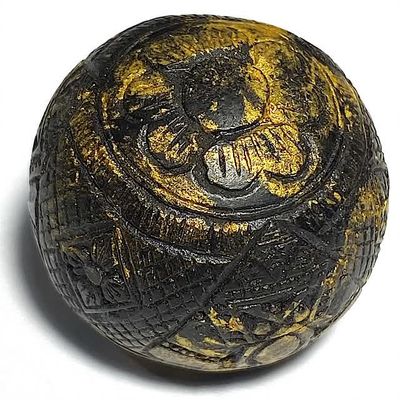
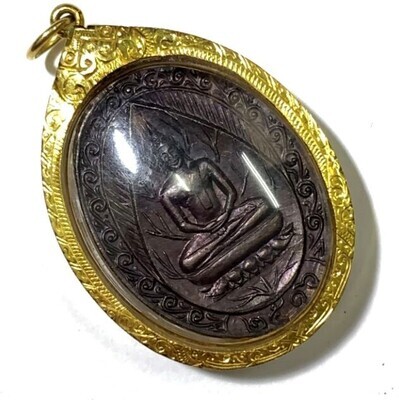
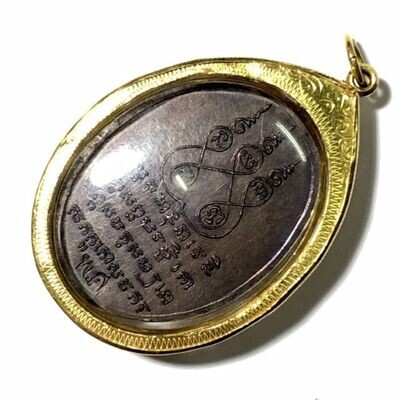
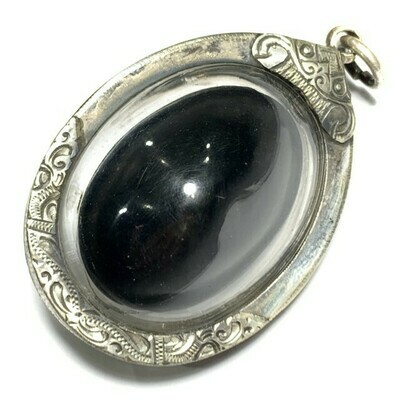
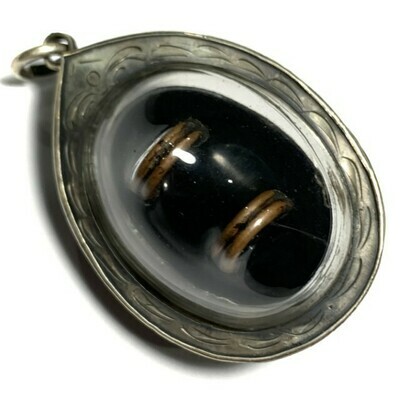
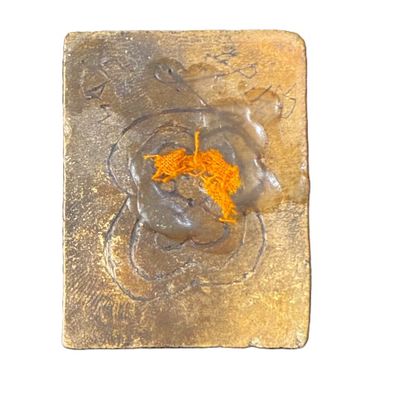
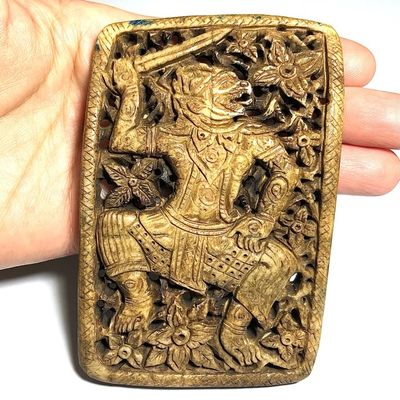
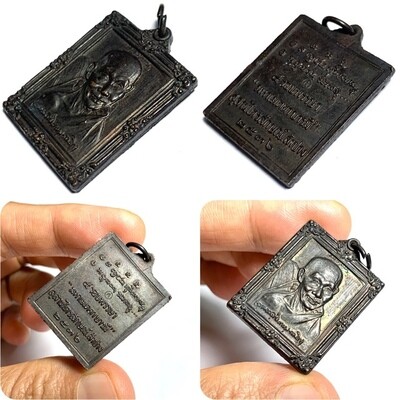
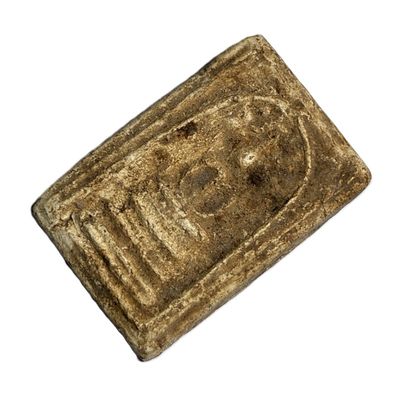
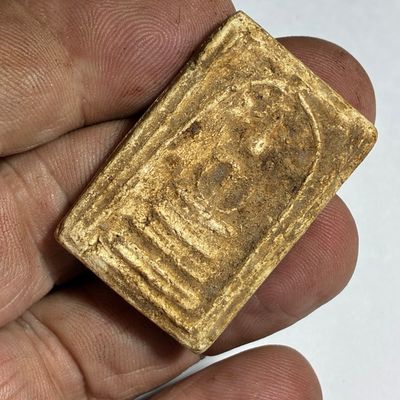
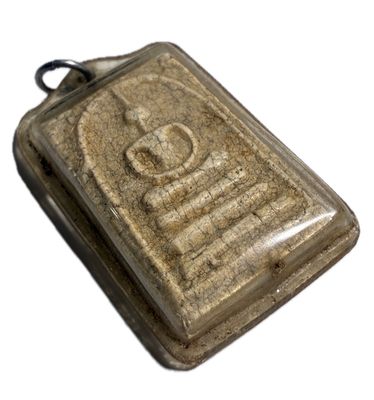
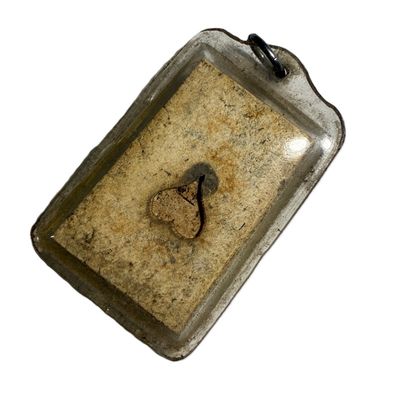
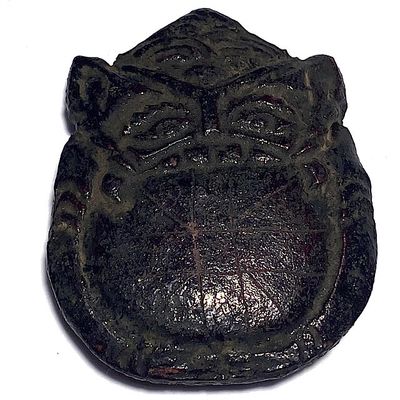
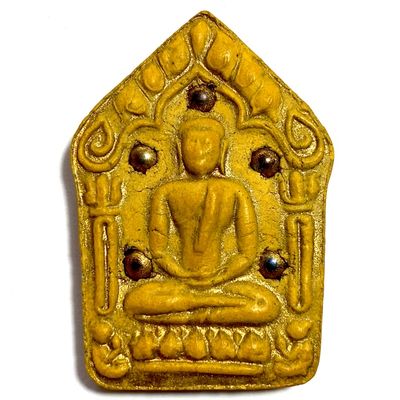
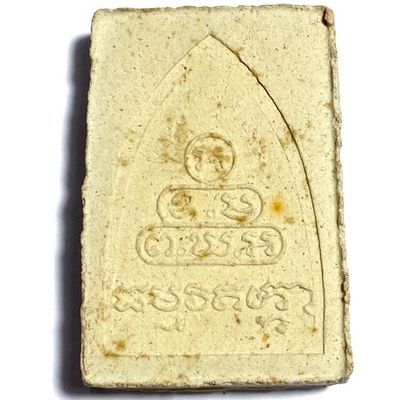
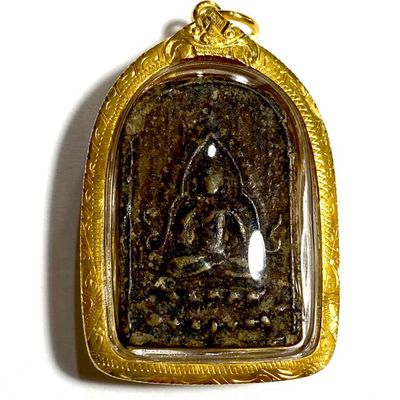
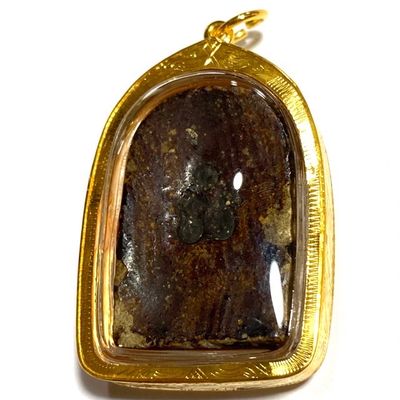
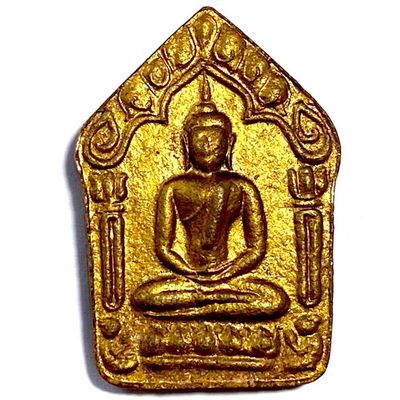
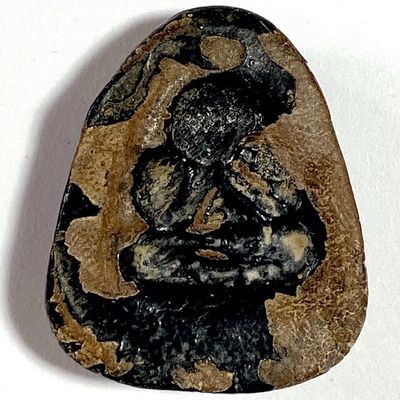
An early-mid era example of Luang Por Pina’s most Sacred and Powerful Daw Nai Pan Nai Pon Star Amulet – Sacred Karma Improving Lucky Star for Protection, Wealthy Fortunes, Status Increase, Promotion, and Auspicious Fate. This exhibit is a Pim Lek (small size) measuring 2.5 x 2 Cm. The five sided star face is painted red, and the eight sided star side is painted silver. This exhibit is especially desirable to collectors for the fact that this exhibit has almost a full set of Ploi Sek Gemstones on both sides, which is rare to see in this early-mid era model, for most examples of this Pim, are found without gemstones.
This is the two sided 5 and 8 Pointed Pentacle version, in red/silver painted Muan Sarn Sacred Powders wth Ploi Sek Maha Pokasap Gem inserts. This particular example has special Necromantic Powders stuffed into the edge of the amulet, and, as a Pim lek model, is not only suitable for men, but also a very recommendable model for lady devotees due to the smaller size.

It is very hard to find Daw Nai Pan Nai Pon amulets in a suitable size for ladies to wear.. It is in any case extremely difficult to find one of these amulets in any circumstances, but to find one with an almost complete set of gemstones is doubly lucky.
This exhibit is a Pim Lek (small size) measuring 2.5 x 2 Cm, and is a very early era model in pure muan sarn, made from a very highly concentrated admixture of sacred Necromantic and Magical powders.
The Daw Aathan Hnun Duang has different stars on each side, one as a 5 pointed star similar to the Military Star, and one in 8 pointed Pentacle similar to the Police Force star. Despite their importance for the meaning which is attributed for the Military and Police force, which was of course intentional, there are deep spiritual meanings imbued within the symbolism of each star design.

This amulet is commonly know for its Wealth Increasing Maha Lap Magick, but in truth, the amulet possesses an massive repository of attributed Buddhist Blessings of very sacred and Auspicious Influences on the Forces of Karma.

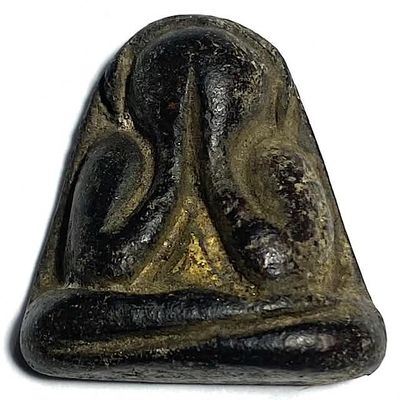
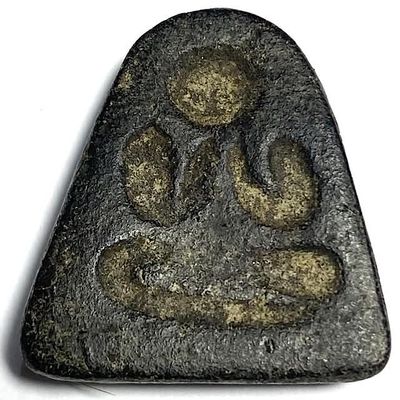
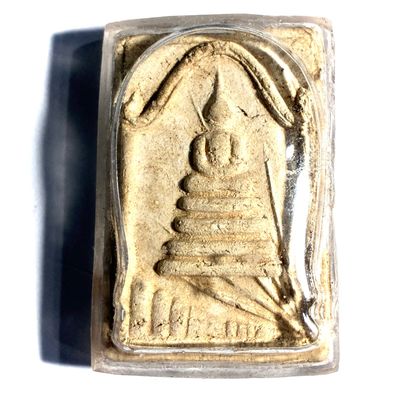
The amulet is recommended to be encased with,with the pendant ring at an angle, which is a tradition with the Dao Nai Pan Nai Pon, as was originally decreed with the first edition Mae Nuea Horm (Perfumed Mother) Lucky Star (‘Mae Nuea Horm’ 1st edition, was differentiated being somewhat Larger with a crescent moon below the star).

The base of the amulet has a special code stamp embossed into it by Luang Por Pina. The powers of the Daw Nai Pan Nai Pon are manyfold, but has a special ability given by Luang Por Pina which Luang Por Pina would say goes like this; ‘whoever is not straight with you and cannot be trusted, will be spotted and exposed by the Dao Nai Pan or the Mae Nuea Horm, if you wear it at an angle like this’

When understood, the meanings within the sacred Lucky Star Pentacle amulets of Luang Por Pina, are very extensive and comprehensive, and aligned to the focal points of Advanced Buddhist Vipassana Kammathana Practices, with the accompanyiing Miraculous Power of transformation that comes with the 40 Kammathanas.

Luang Por Pina is the deceased Abbot of Wat Sanom Lao in Sra Buri and was said to have possessed Abhinya Powers, and to have Mastered the 10 Kasina Powers of Elemental Magical Dominion.

It is said that he was able to read the minds and intentions of other Humans, and bring amulets to life with is Empowerment Methods, and that his amulets were able to give signs and also can be beseeched and prayed to for wish fulfilment (Sarapat Neuk). There are many stories of Miraculous Events occurring through his amulets.

The Daw Nai Pan Lucky Star is made from a mixture of Highly Sorcerous Ingredients, Herbal and Prai Necromantic Powders, which are both incredibly difficult to find and obtain, and also very easy to recognise their presence within the sacred Muan Sarn Powder mixture.

Those who have had an authentic Daw Aathan before their eyes, will be able to see instantly that this amulet is a very recognisable and distinguished exhibit with the clear to see presence of Luang Por Pina’s Sorcerous Muan Sarn Sarn Powders.

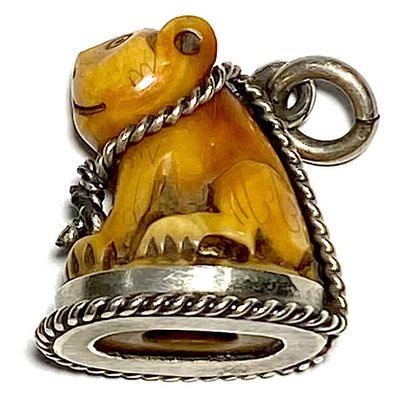
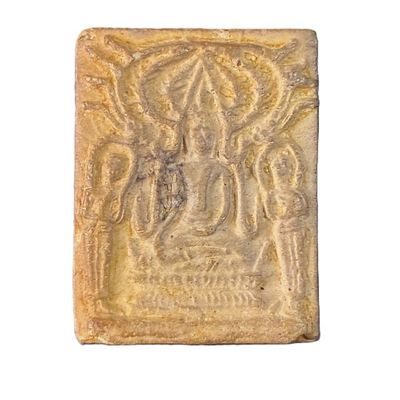
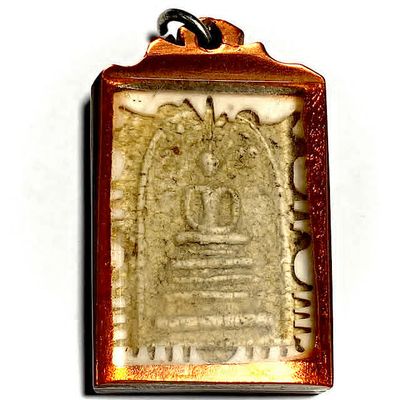
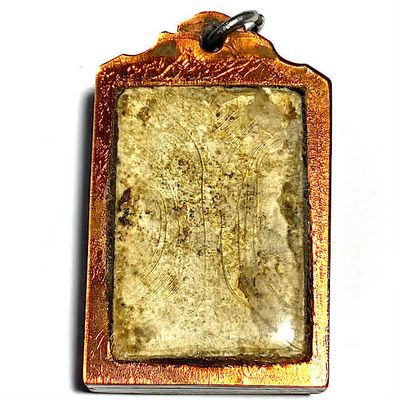
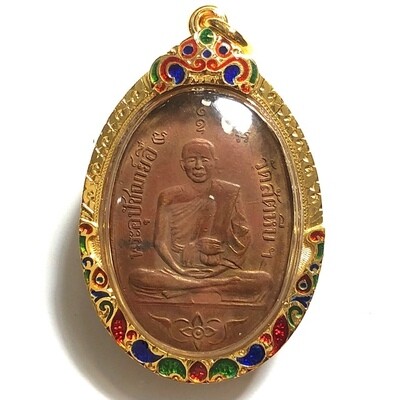
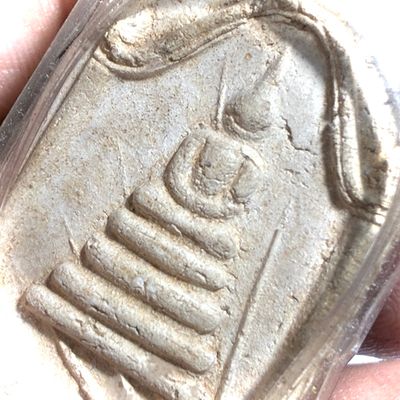
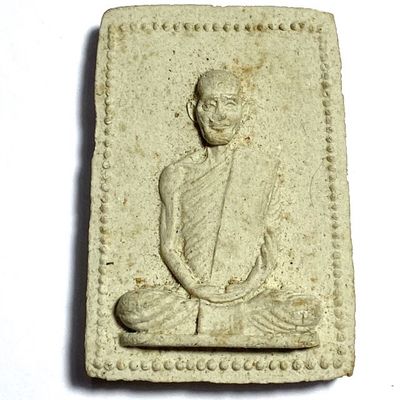
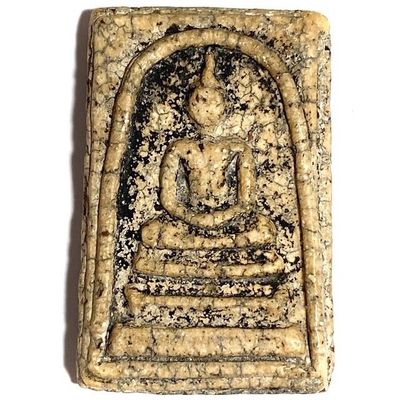
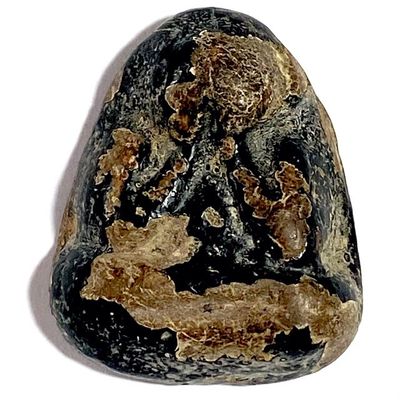
Below is a different model (Namely the Mae Nuea Horm First Edition Amulet), for you to enjoy looking at and for study.
The holes in the amulet also have meaning, some of the daw Nai Pan Nai Pon can be found to have gemstones (Ploi Sek) embedded within the indentations, which are even rarer to find.
This particular exhibit is a Classic Pim from the Early period of Making (Circa 2500), and also one of the highly Preferred ‘Pim Niyom’ Master Models and can be considered ‘Ongk Kroo’ (Teacher Reference Model) for a perfect reference comparison of authenticating other less recognisable Star amulets of lesser preference.

‘Ud Mai Gon Fa Pa’ (Wood from a tree that was truck by Lightning), and many Sacred Relics within its Sacred Powder Muan Sarn. Luang Por Pina’s Daw Nai Pan, exspecially this model above others, is now extremely rare and sought after.
Its price is constantly rising, because only a few hundred Daw Nai Pan are assumed to have been made in the early Era, and they are mostly all already in the possession of the Devotees, many of whom are high ranking Policemen, Army Officers and Top Doctors and Medics.
This model is an early edition which is evidend by its extreme dryness and the texture of the Muan Sarn Sacred Powders which reveal its age, and the authenticity of the amulet
The title of ‘Ongk kroo’ is fitting for this amulet, is for its easily recognisable features and Muan Sarn Powders allow one to easily distinguish the authenticity of any other exhibit when held side by side for comparison, making it a Master Key for teaching the eyes to recognise Luang Por’s famous Sacred Powders, as well as the effects of aging over the years, as to how discoloration and surface mildews should appear in a true authentic example of the Daw Nai Pan. Despite being a painted model, the edges of the amulet are highly visible to reveal the Muan Sarn Sacred Powders content and aging characteristics, and the true appearance of the Muan Sarn used by Luang Por Pina for these inimitable and famously powerful amulets

Luang Por Pina is known to have performed strange Magical feats in front of the eyes of his disciples many times, especially when devotees would ask him for an amulet. He would ask the devotee to lay down and open their eyes, and would take a handful of sand and pour it over their face, as they would hold the amulet in the hand.
But the sand would bounce back before it hit their eyes, and no matter how much was poured on the face, not a single grain of sand would be able to enter the eyes of the devotee, becoming repelled as if by a force field before it touched the eyes.

Kata Luang Por Pina
Light 5 sticks of Incense, and chant the Maha Namasakara 3 times before chanting the special Kata for Luang Por Pina Bpiyataro
Namo Dtassa Pakawadto Arahadto Sammaa Samputtassa
Namo Dtassa Pakawadto Arahadto Sammaa Samputtassa
Namo Dtassa Pakawadto Arahadto Sammaa Samputtassa
Then chant the Kata for Luang Por Pina (3 times);
Ahang Sukhadto Pina Bpiyataro Naamadtae Aajaariyo Ma Pandtae Hohi
Kata Pluk Khong (Call the power within the amulet)
Puttang Gandtang Saranang Haa
Puttang Gandtang Saranang Hae
Puttaaa Namo Ya

Kata Pra Som Hwang (Fulfilment of Wishes)
Chant the following for as many repetitions as your age (for example, if you are 35 years old, then chant the Kata, repeatedly for 35 times)
Nadtae Sudtae
The last repetition, change the words to
Mahaa Sudtae Nachaa
As an example, let us pretend a four year old were to recite the mantra, which would result in four lines like this;
Nadtae Sudtae, Nadtae Sudtae, Nadtae Sudtae, Mahaa Sudtae Nachaa

We invite you to listen to the podcast below, and be amazed at the depth of meanings within the Star Amulet.
Below; The remains of Luang Por Pina in the Sussaan Pina, as he requested to be unpreserved Unmummified, and left to rot naturally according to the laws of Nature, without a grand funeral ceremony or chanting, and forbidden to be cremated.


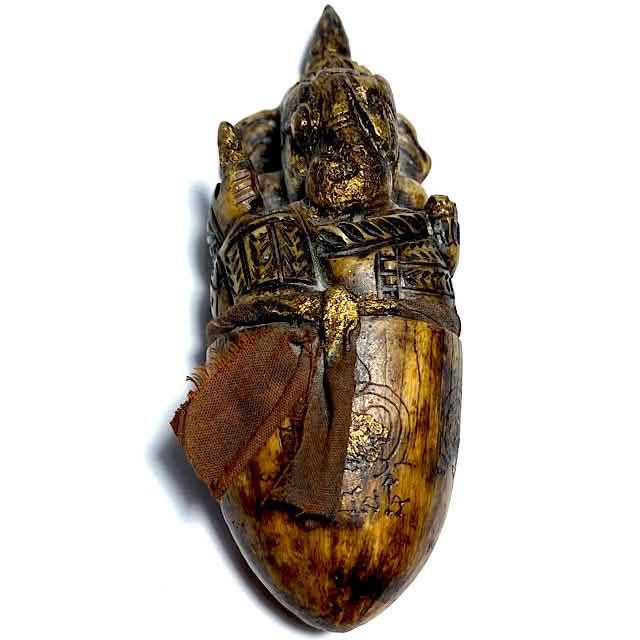
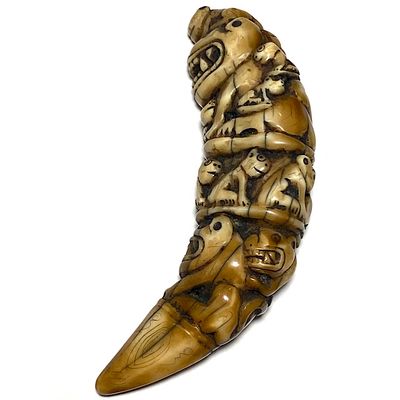
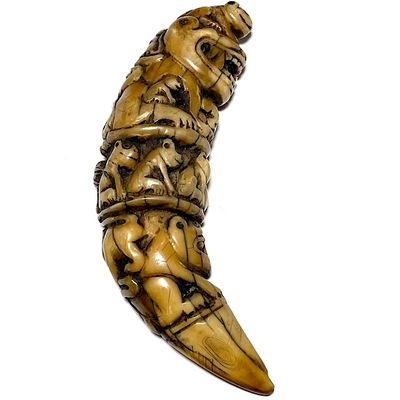
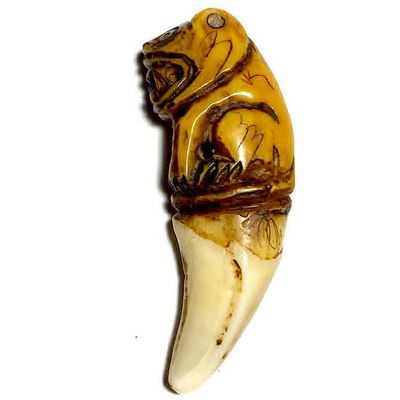
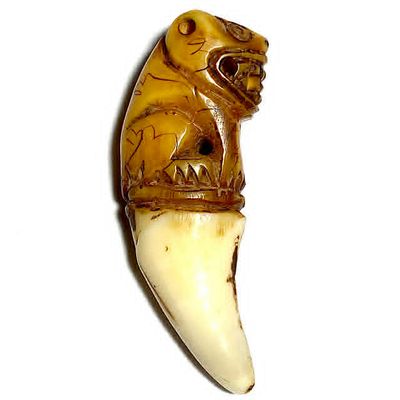
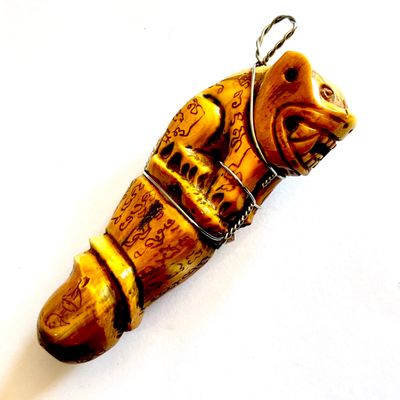
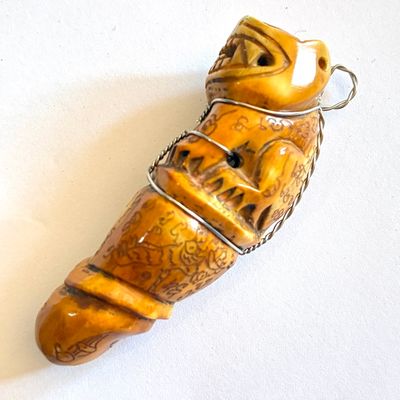
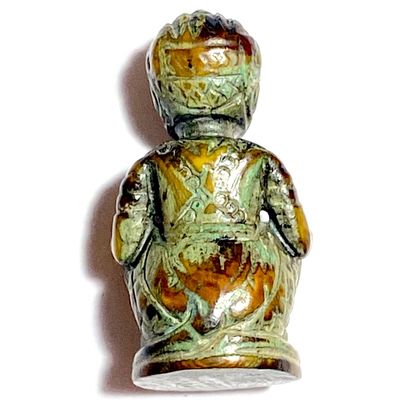
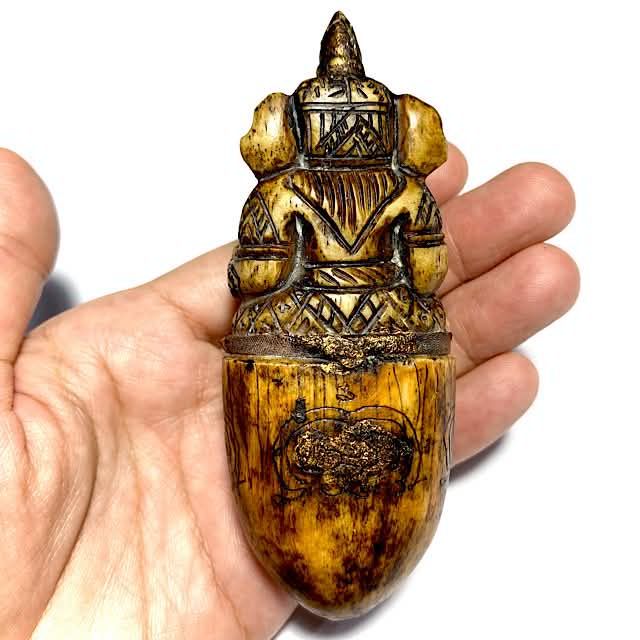
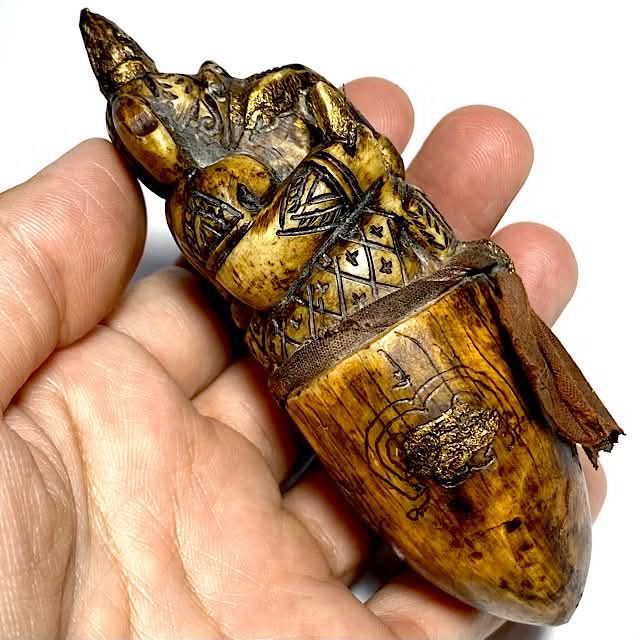
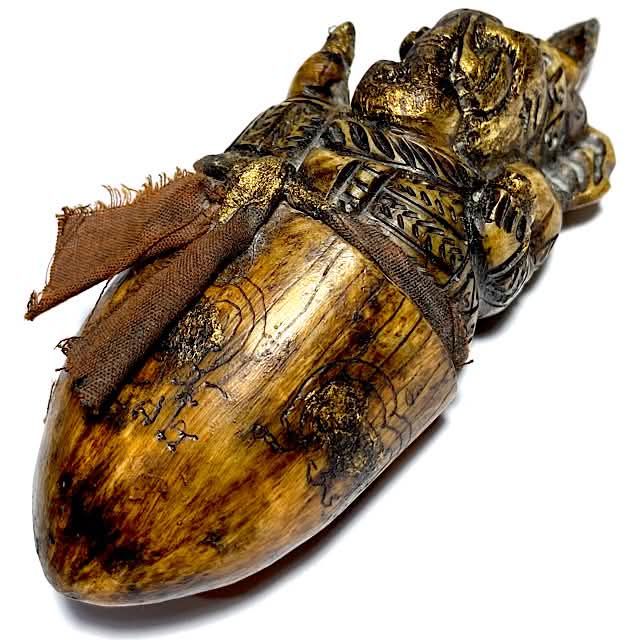
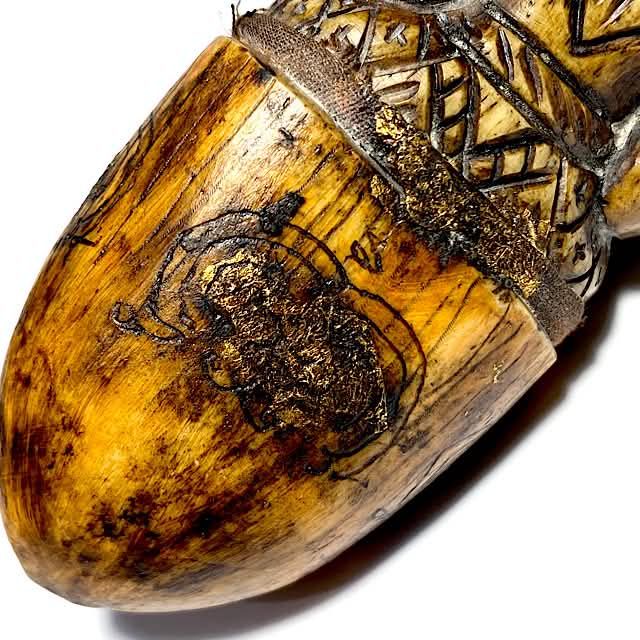
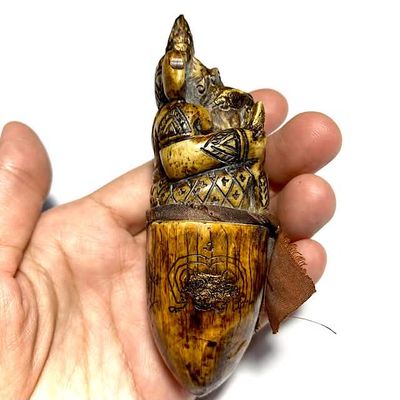
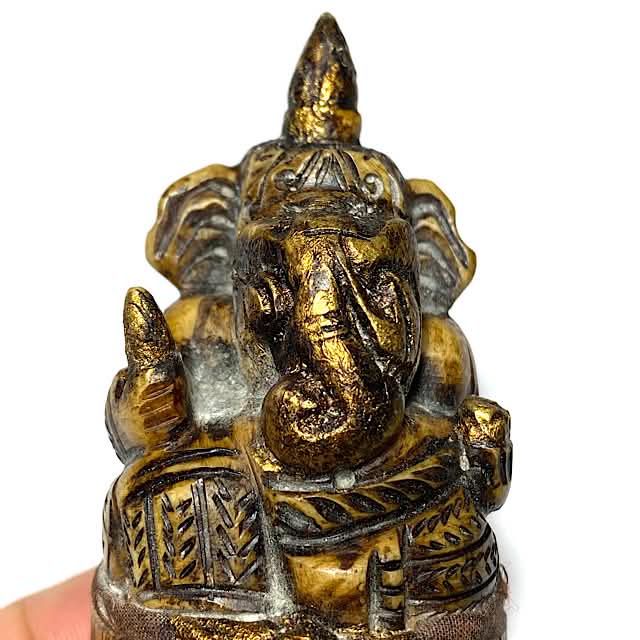
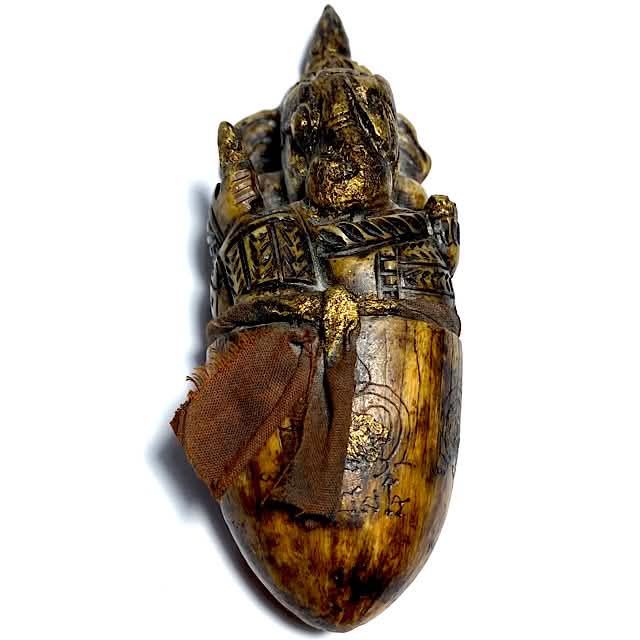
An amazing and immensely beautiful and pristine exhibit of that Can only be called an extreme rarity and Collector's item for curation not only for Bucha; The Nga Chang Gae Pra Pikanes Carved Tusk with Hand Inscriptions and Ganesha God - blessed by the great Luang Por Derm.
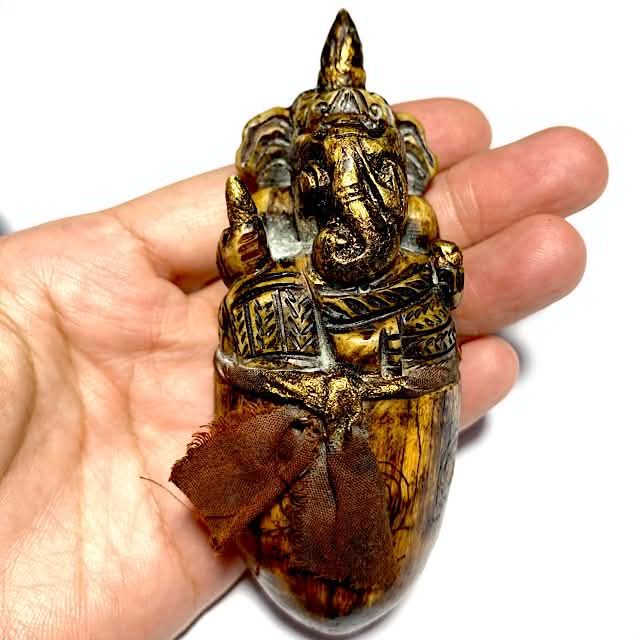
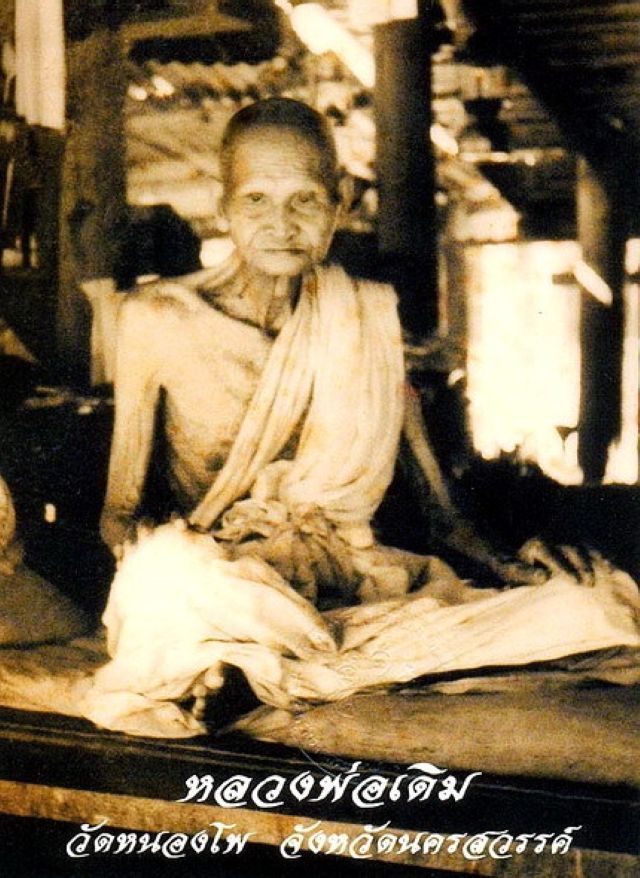
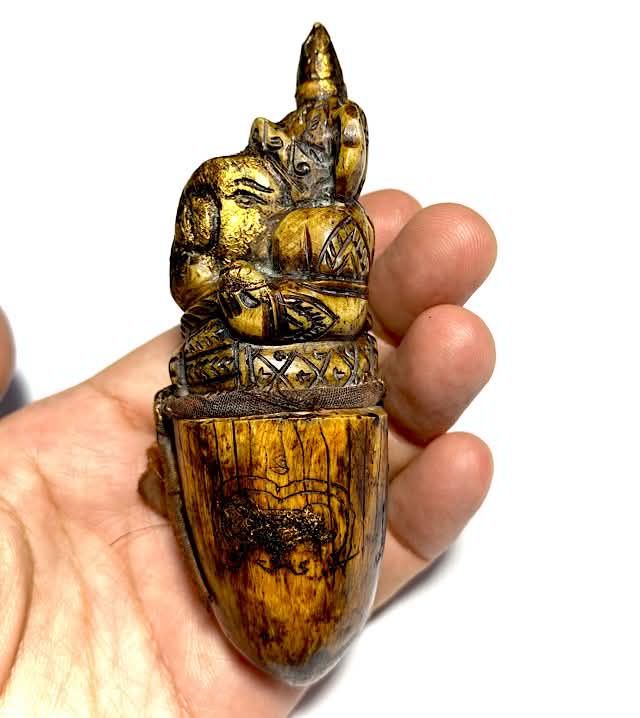
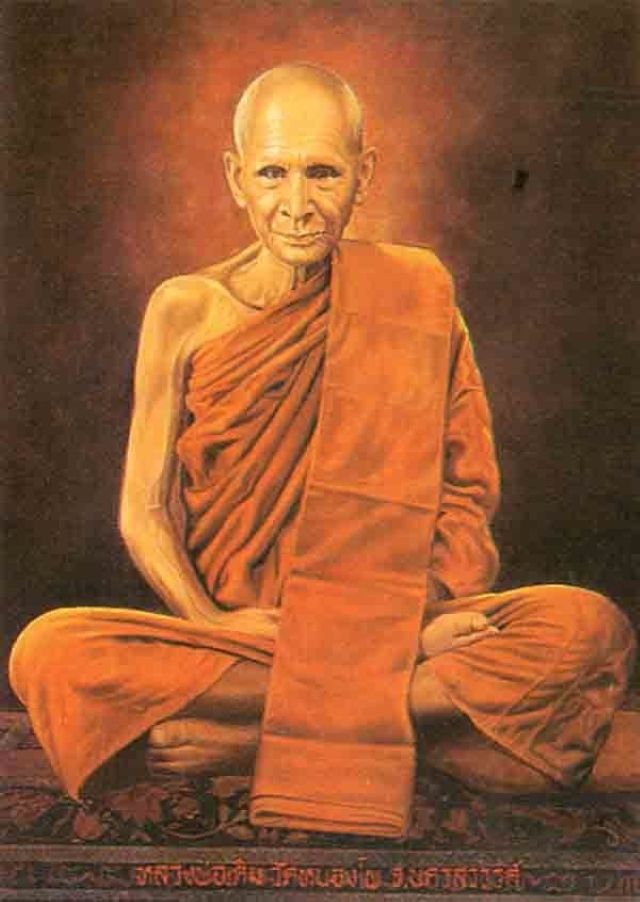
It is an immensely rare occasion to see one of these very rare, and limited items, which were distributed to only a very few famous master monks of the time and era for blessing empowerment and inscription, this one being derived from the great LP Derm, of Wat Nong Po in Pichit. We proudly present a master-class 'Krueang Rang' talismanic type Deity Amulet made from carved tusk with bone Gamesha bound to the Ganesha-tusk, which has a patina that coincides with the age of the era of Luang Por Derm.
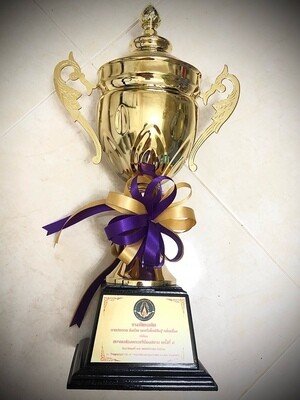
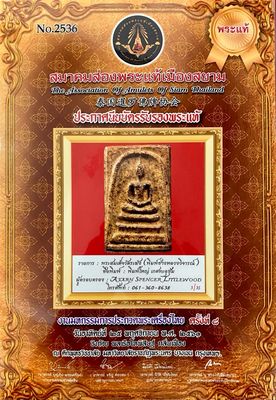
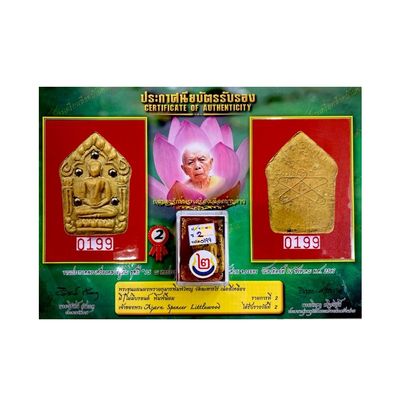
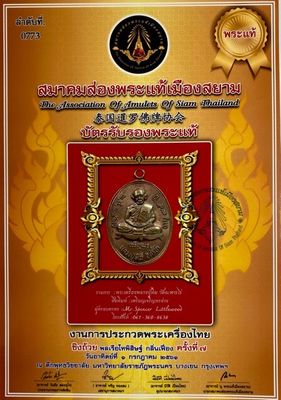
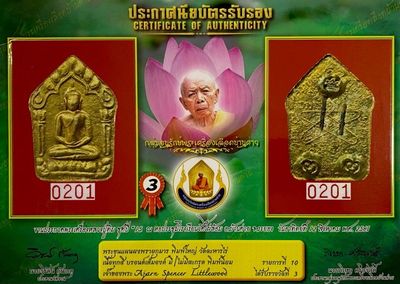
Below; Certificate of Authenticity from the Association of Amulets of Siam Thailand
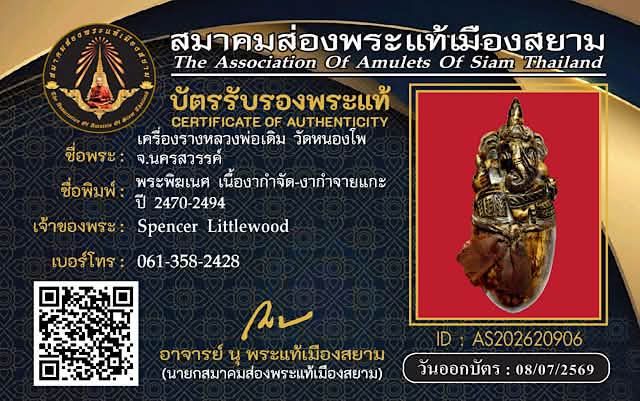
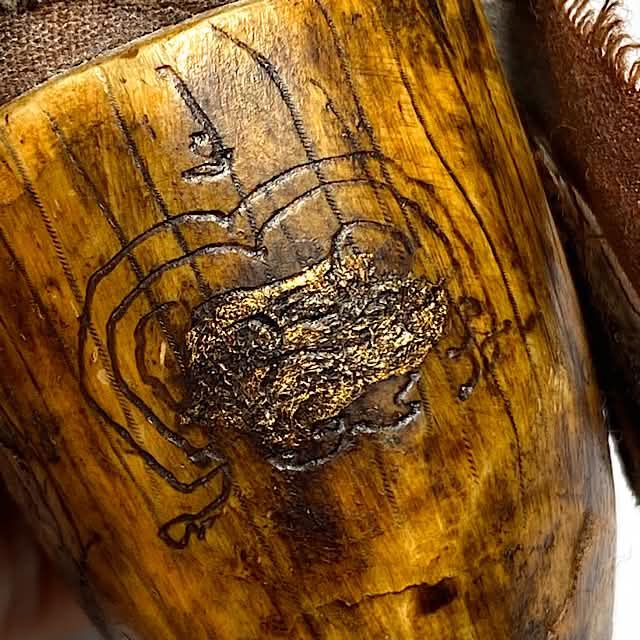
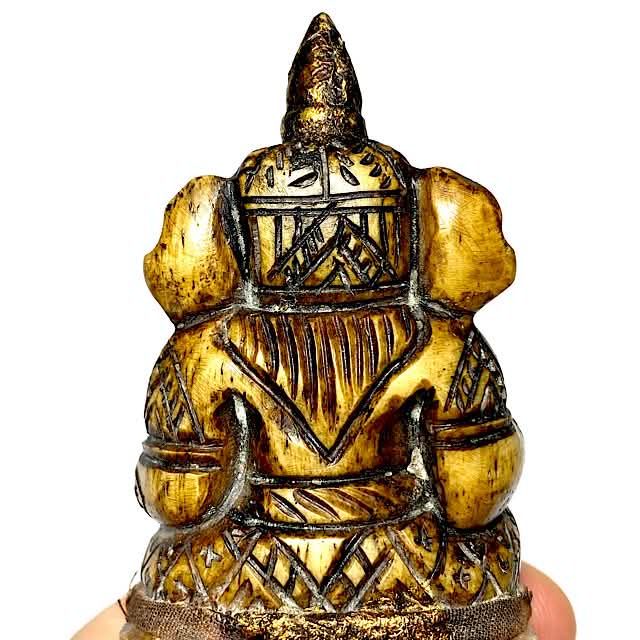
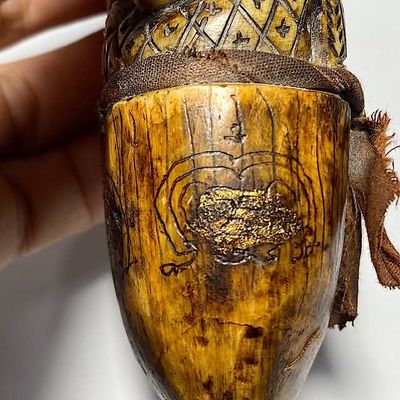
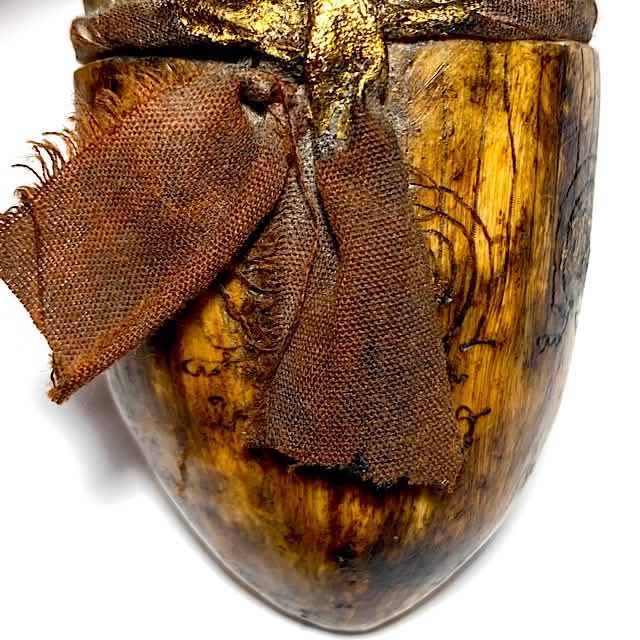
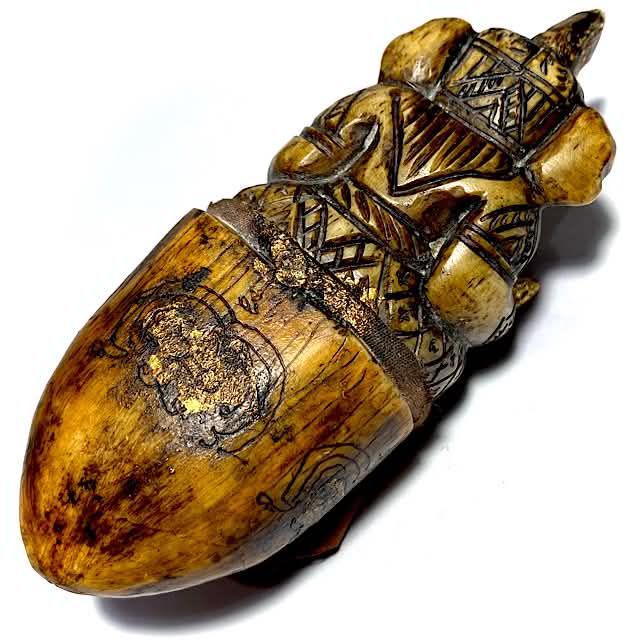
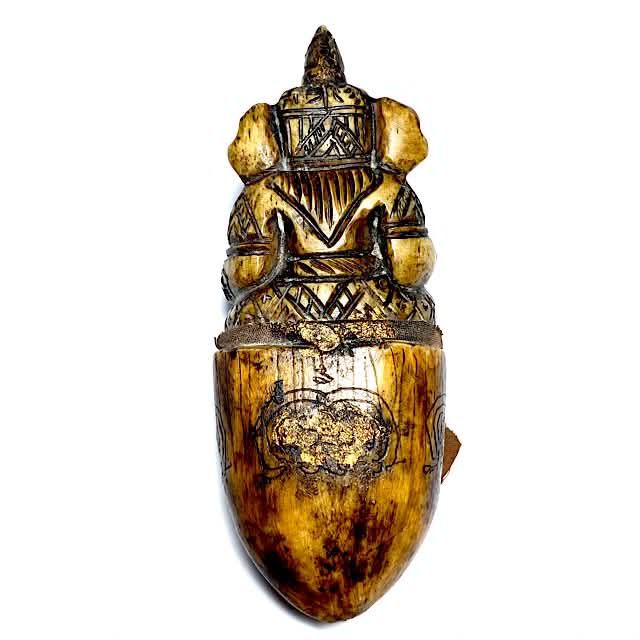
This Master-Class Item is certificated by the Amulet Society of Siam Thailand. Its fine Artisanry, and rarity as a Talismanic object makes this exhibit something that will soon be seen only in public museums and in the private collections of wealthy curators. This Bucha Size Plai Nga Chang Gae Pikanesworn Ivory Tusk Tip, with exquisitely hand carved Ganesha Elephant Headed God, and hand inscriptions of Sacred Yant Putsoorn 5 Dhyani Buddha Yantra on both sides of the tusk, with the 'Chaya' (Monk's name) of 'Puttasaro' inscribed below the front face Yant, which is the Chaya of Luang Por Derm Puttasaro of Wat Nong Po temple, in Pijit.The exhibit measures roughly 4.5 Inches in length/height.
We at Ancient Amulet, have only once ever before encountered such an item once in our 30 years of collection, which we distributed some years ago. It was one of the exhibits which was inscribed and blessed by a different master, namely the great Luang Phu Tim, of Wat Laharn Rai, in Rayong. These items were seen to have been blessed by various masters around the country in that era, which shows that the find was distributed to a number of different masters who all inscribed them with their own special inimitable spell craft.
These tusks will have been like many items like this that sometimes turn up in the hands of the faithful often get taken to different masters around the country in very small numbers by the devotees of each Master.
This is why we sometimes amulet or talismanic objects from the same sources but blessed by different masters. this is common in the case where rare substances or objects are acquired and get distributed between different temples, and was a common practice in all fairness when encountering such rare substances with inherent magical powers.
The tusk is of course the perfect magical Muan Sarn substance for The great God Ganesha who is in himself possessed with the head of an elephant which comes from a story of the Puranas; The Origin Narrative
- Creation: Parvati created Ganesha from the turmeric paste (or unguents) of her own body while preparing for a bath, breathing life into the boy and commanding him to guard the entrance to her chambers at Mount Kailash.
- The Confrontation: Shiva returned to find an unfamiliar guard refusing him entry. Because Ganesha remained steadfast in his duty to his mother and did not recognize Shiva, a confrontation ensued between Ganesha and the Ganas, leading Shiva to sever the boy's head with his trident (Trishula).
- The Restoration: Upon discovering what occurred, Parvati went into immense grief and threatened cosmic dissolution unless two conditions were met: her son was revived, and he was honored foremost among the gods. Shiva instructed the Ganas (or Brahma/Vishnu in variations) to head north and bring back the head of the first living being found facing that direction or sleeping with its back to its mother. They encountered an elephant—traditionally identified in many texts as Airavata or an elephant devotee—whose head was attached to the boy's body, bringing him back to life as Gajanana (the elephant-headed) and Ganapati (Lord of the Ganas).
(Note; While popular modern discourse often attributes Hindu mythological narratives broadly to the "Vedas," the specific legend of Shiva severing Ganesha's head originates within the Puranas, as the Rigveda references "Ganapati" primarily as an epithet for deities like Brihaspati or Indra rather than the elephant-headed son of Parvati.)
An amazing and immensely beautiful and pristine exhibit of that Can only be called an extreme rarity and Collector's item for curation not only for Bucha; The Nga Chang Gae Pra Pikanes Carved Tusk with Hand Inscriptions and Ganesha God - blessed by the great Luang Por Derm.
It is an immensely rare occasion to see one of these very rare, and limited items, which were distributed to only a very few famous master monks of the time and era for blessing empowerment and inscription, this one being derived from the great LP Derm, of Wat Nong Po in Pichit. We proudly present a master-class 'Krueang Rang' talismanic type Deity Amulet made from carved tusk with bone Gamesha bound to the Ganesha-tusk, which has a patina that coincides with the age of the era of Luang Por Derm.
Below; Certificate of Authenticity from the Association of Amulets of Siam Thailand
This Master-Class Item is certificated by the Amulet Society of Siam Thailand. Its fine Artisanry, and rarity as a Talismanic object makes this exhibit something that will soon be seen only in public museums and in the private collections of wealthy curators. This Bucha Size Plai Nga Chang Gae Pikanesworn Ivory Tusk Tip, with exquisitely hand carved Ganesha Elephant Headed God, and hand inscriptions of Sacred Yant Putsoorn 5 Dhyani Buddha Yantra on both sides of the tusk, with the 'Chaya' (Monk's name) of 'Puttasaro' inscribed below the front face Yant, which is the Chaya of Luang Por Derm Puttasaro of Wat Nong Po temple, in Pijit.The exhibit measures roughly 4.5 Inches in length/height.
We at Ancient Amulet, have only once ever before encountered such an item once in our 30 years of collection, which we distributed some years ago. It was one of the exhibits which was inscribed and blessed by a different master, namely the great Luang Phu Tim, of Wat Laharn Rai, in Rayong. These items were seen to have been blessed by various masters around the country in that era, which shows that the find was distributed to a number of different masters who all inscribed them with their own special inimitable spell craft.
These tusks will have been like many items like this that sometimes turn up in the hands of the faithful often get taken to different masters around the country in very small numbers by the devotees of each Master.
This is why we sometimes amulet or talismanic objects from the same sources but blessed by different masters. this is common in the case where rare substances or objects are acquired and get distributed between different temples, and was a common practice in all fairness when encountering such rare substances with inherent magical powers.
The tusk is of course the perfect magical Muan Sarn substance for The great God Ganesha who is in himself possessed with the head of an elephant which comes from a story of the Puranas; The Origin Narrative
- Creation: Parvati created Ganesha from the turmeric paste (or unguents) of her own body while preparing for a bath, breathing life into the boy and commanding him to guard the entrance to her chambers at Mount Kailash.
- The Confrontation: Shiva returned to find an unfamiliar guard refusing him entry. Because Ganesha remained steadfast in his duty to his mother and did not recognize Shiva, a confrontation ensued between Ganesha and the Ganas, leading Shiva to sever the boy's head with his trident (Trishula).
- The Restoration: Upon discovering what occurred, Parvati went into immense grief and threatened cosmic dissolution unless two conditions were met: her son was revived, and he was honored foremost among the gods. Shiva instructed the Ganas (or Brahma/Vishnu in variations) to head north and bring back the head of the first living being found facing that direction or sleeping with its back to its mother. They encountered an elephant—traditionally identified in many texts as Airavata or an elephant devotee—whose head was attached to the boy's body, bringing him back to life as Gajanana (the elephant-headed) and Ganapati (Lord of the Ganas).
(Note; While popular modern discourse often attributes Hindu mythological narratives broadly to the "Vedas," the specific legend of Shiva severing Ganesha's head originates within the Puranas, as the Rigveda references "Ganapati" primarily as an epithet for deities like Brihaspati or Indra rather than the elephant-headed son of Parvati.)
Magical Effects of Pra Pikanes Amulets (Wicha Saiyasart)
- Khad Khwang / Plod Proek (Obstacle Removal): Dispels spiritual, physical, and karmic obstructions, smoothing difficulties in business ventures, career progressions, and personal endeavors.
- Maha Pokasap & Maha Lap (Wealth and Fortune): Attracts financial flow, unexpected windfalls, and commercial success, especially for traders, merchants, and entrepreneurs.
- Serm Duang & Serm Baramee (Auspicious Fate & Authority): Elevates destiny, prevents astrological downfalls during bad years, and builds personal charisma, commanding respect from subordinates and peers.
- Klaew Klaad & Kong Grapan Chadtri (Evasion and Protection): Provides a shield against physical harm, accidents, malevolent sorcery, curses, and evil spirits.
Benefits of Paying Bucha / Poojah to Pra Pikanes
- Mastery in the Arts and Intellect: Bestows creative inspiration, acute intellect, sharp wit, and mastery in learning, making devotion essential for artisans, students, writers, and performers.
- Success Before New Beginnings: Guarantees auspicious starts for major undertakings, including inaugurating a business, laying building foundations, or commencing complex ritual work.
- Harmonizing Elemental Energies: Acts as a stabilizing spiritual presence within a household or shrine room, dispelling negative indoor vastu or discordant domestic energy.
- Spiritual Clarity and Steadfastness: Cultivates mental endurance, filial duty, and clear moral focus to overcome internal defilements and external crises.
.”
In Thai mythological traditions, ritual grimoires, and Wai Kru lineage lore for artisans and performing arts, the story of how Pra Pikanes (Ganesha) broke his tusk diverges notably from the classical Indian Purāṇic account of Parashurama's axe, attributing the deed instead to Pra Ruesi Petchalugan (Vishnukarman / the Master Artisan Rishi).
The Legend of the Broken Tusk by the Axe of Pra Ruesi Petchalugan
- Guardianship at Mount Kailash: Pra Pikanes was tasked by Shiva (Pra Isuan) and Parvati (Pra Uma) with guarding the inner sanctum of Mount Kailash, bearing strict orders to bar unauthorized entry to anyone seeking an audience.
- The Arrival of the Grand Artisan: Pra Ruesi Petchalugan, the primordial master of occult crafts, sacred engineering, and classical arts, arrived seeking an audience with Shiva. True to his duty, Pra Pikanes intercepted the Rishi and refused him passage.
- The Clash of Will and the Diamond Axe: With both figures steadfast in their honor and duty, a contest of mystical prowess erupted. During the duel, Pra Ruesi Petchalugan hurled his magical weapon—the diamond stone-cleaving axe—directly at Pra Pikanes.
- Filial Piety and the Broken Tusk: Pra Pikanes immediately recognized the axe as a divine celestial weapon bestowed upon the Rishi by his own father, Shiva. Out of filial reverence for his father and deference to the sacred blade, Pra Pikanes refused to deflect or counter the strike with magical force. Instead, he tilted his head to receive the blow squarely on his tusk, severing it on impact.
Beyond providing an indigenous cultural rationale for the deity's title Ekadanta ("Single-Tusked"), this narrative serves as a central allegory within Thai artisanal and esoteric lineages (Saiyasart), symbolizing selfless duty, strict adherence to one's vows, and deep reverence toward ancestral masters and teachers.
Luang Por Derm's Amulets
|
Item |
Details (Thai source) |
|
Birth name |
“Phu Manee” (father Niam, mother Poo) |
|
Date of birth |
6 Feb 2403 (Buddhist‑calendar Wak‑a, Friday, Wan 11 Kham 3) |
|
Ordination |
Entered Wat Khao Kaeo (Pattasima) at age 20; full upasampada on 31 Oct 2423 under senior monks Luang Por Kaeo, Luang Por Ngern, Luang Por Thet |
|
Secular study |
Learned “Wit‑thaya‑khom” (traditional physics/medicine) from Nai Phan Chuphan – a village scholar |
|
Abbot of Wat Nong Pho |
2435 – 2494 (91 years old, Pra sri 71 years) |
|
Death |
22 May 2494, age 92 years (71 years of Pra sri) |
|
Honorific title |
“เทพเจ้าแห่งเมืองสี่แคว” (the “Deity of the Four Quadrants”) – a title used by the amulet community |
Wat Nong Pho
- Original name – “Wat Samo Pho Phothi Krachai” (Ayutthaya‑era, > 400 years old)
- Revival – After abandonment villagers rebuilt the temple and installed Luang Por Derm as abbot
- Royal grant – In 2458 (1915 CE) the king bestowed the “Visung‑Kham Sima” flag, renaming the site Wat Nong Pho
- Monument‑scale casting – A life‑size bronze statue of Luang Por Derm was erected in the ubosot in 2482 (1939 CE)
- Major renovations – 2458 (8 000 Baht), 2535 (1 500 000 Baht), 2551 (221 000 Baht)
The temple today hosts an Institute of Sacred Objects (ISM) and a “Akara‑Kem” school where the craftspeople who work on the Knife‑Doctor (Mued Mhao) and other amulets are trained (artisans “Jim, Khi, Son”).
Core belief – The “9‑times‑chant” (Kata Gao)
Luang Por Derm taught that every amulet must be charged with the nine‑fold mantra (often described as “the power‑spell of the Muan Pong‑Ittihe” in the community). The chant is inscribed on the tiny “tad‑krud” plates (gold, silver, or lead) that are later sealed into the object.
When the object is completed it is blessed three‑to‑four nights (usually 3 nights) while the nine‑fold chant is repeated, thereby embedding the protective “katha” into the metal, the cloth or the bone.
How the amulets were made
|
Process |
What the source says |
|
Khmer‑reverse script (อักษรขอมกลับด้าน) |
Engraved with a sharp iron stylus so the lines are ≥ 0.15 mm deep; visible even after decades under UV light |
|
Yantra under the base |
A deep‑etched protective yantra is mandatory; if the engraving is shallow the master will remove and re‑etch it |
|
Lost‑wax (ขี้ผึ้งหาย) casting |
Traditional hand‑made moulds (no CNC); the same artisans who work on the Mued Mhao handle the wax model, the mould and the pouring |
|
Metal alloy for the Knife‑Doctor (Mitmor) |
Fe ≈ 70 %, Pb ≈ 28 %, Sn ≈ 2 % – a blend of “tapu sang‑khwan‑r” (old‑style nails), “tapu so‑ng‑phi” (charred nails), broken alms‑bowls and “nok nam‑phi” (river‑water iron) |
|
Handle construction |
Large Mued Mhao → haft of ivory/elephant horn + hilt of wood & ivory; small, pocket‑size version → both haft and hilt of horn |
|
Inserting the “tad‑krud” plates |
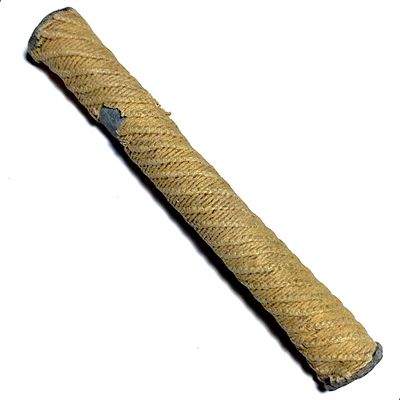
Tiny gold, silver or lead plates bearing Khmer script and the nine‑fold chant are set into the handle, then clamped with a “krang” (copper/iron reinforcement) |
|
Final “blessing” |
On the 15th waning‑moon (day 15) the Muan Pong‑Ittihe powder is mixed with Luang Por Derm’s semen and poured onto the plates before the final chant is performed |
Catalogue of some Luang Por Derm’s amulets (Documented by reliable sources)
|
Type |
Typical name / model |
Material / technique |
Approx. casting year* |
Distinctive feature (what collectors look for) |
|
Sheep‑horn amulet (งาแกะ) |
“Singha / Nang Kwak” – two styles (closed‑eye of the Buddha & open‑eye of an Arahant) |
Actual ram’s horn, white tusk, Singh‑Rach carving |
1960‑70 (no exact year) |
If the Khmer‑reverse characters “นะ มะ พะ ทะ” appear on the base, the piece is almost certainly hand‑etched by Luang Por Derm |
|
Powder amulet (พระผง) |
“Pra Pong Jit Drop” – model 9 (mass‑solid) |
Fine powder (starch‑water‑binding) – mantra “9 times” embedded |
2540 CE (model 9) |
The “drop‑of‑water” design is a visual cue of the nine‑fold chant. |
|
Clay‑tablet (พระพิมพ์ดิน) |
Various – no single model recorded |
Clay mixed with natural pigments, dry‑finished then incised with Khmer script using a bone‑point stylus |
– |
The tablet surface shows a faint “Khmer‑stroke” that can be examined under magnification. |
|
Lead Buddha (พระตะกั่ว) |
“Closed‑eye – double‑face” (two sides) |
Lead (≈ 90 % Pb) alloyed with tin and iron; deep‑etched khmer yantra under the base |
2493 CE |
Weight ≈ 10 g; a deep‑etched “nah mud tha kan na” yantra on the inner side. |
|
Coins (เหรียญ) |
“Pra Kray‑Nok”, “Pra Prak‑Dua” – gold, silver, lead versions |
Various metal coins; often tad‑krud plates are embedded in the reverse side |
2482‑2536 CE |
|
|
Cloth yantra (ผ้ายันต์) |
“Hand‑drawn Chinese ink” – foot‑print yantra, or “tat‑foot” (รอยเท้า) |
Cotton/mulberry silk, hand‑embroidered, ink‑stamped with Chinese characters (often a footprint) |
|
|
|
Knife‑Doctor (มีดหมอ) |
Large “Elephant‑rider knife”, later “pocket‑knife” |
Alloy as above; handle/haft of horn; tad‑krud plates (gold, silver, lead) with Khmer script and a 9‑times chant |
|
|
|
Floating (หล่อลอย) statue |
“Floating Buddha” – shrine‑size, uses lost‑wax with a buoyancy‑coating |
Cast in 2482 CE (same year as the bronze statue) |
|
|
|
Horn‑tip (ปลายงา) |
“Brahma‑killing horn” – the tip of a ram’s horn attached to a Buddha figure |
Same material as the horn amulet, but the tip is meant to “cut karmic knots” |
|
|
|
Ganesha coin (พระพิฆเนศ) |
“Ganesha‑after‑Maa” – front‑side of the mother‑goddess, metal ring |
No record that Luang Por Derm made these, but they appear in the same “mixed‑religion” market |
|
|
|
Five‑Buddha‑god yantra (ยันต์ 5 พระเจ้า) |
Inscribed on metal or cloth, the mantra “นะ โม พุท ธะ ยะ” |
No exact year, used for “total protection” (fire, insects, evil spirits) |
|
|
|
Benjapakee‑set (พระเบญจภาคี) |
“Floating five‑Buddha group” – a special 9‑times‑chant edition of the famous “Benjapakee” set |
Cast by a separate workshop (not directly by Luang Por Derm) but employing the same floating‑wax technique |
|
|
The Knife‑Doctor (มีดหมอ)
1. Metal composition
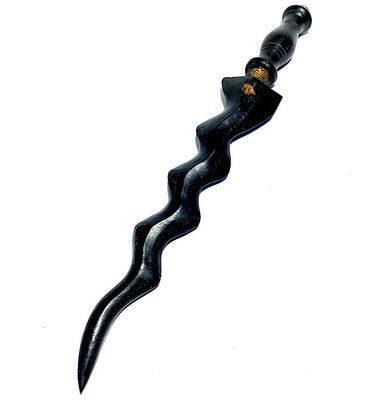
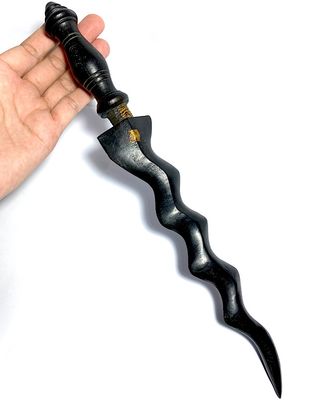
- Primary alloy – 70 % iron, 28 % lead, 2 % tin – a recipe obtained from old‑temple nails (tapu sang‑khwan‑r), charred “spirit‑nails” (tapu so‑ng‑phi), broken alms‑bowls and river‑water iron.
2. Forging & shaping
- Artisans – “Jim, Khi, Son” each have a personal engraving style (the “knife‑edge‑pattern”). Their work creates a ≈ 2 mm thick blade and a 1‑cubit (≈ 1 elbow) horn haft.
- Large version – “Elephant‑rider knife” (½ cubit haft + hilt of wood/ivory) used for temple‑wide protection.
- Pocket version – both haft and hilt are horn, allowing it to be carried in a shirt pocket.
3. The takrut scroll spells (tiny metal inserts)
|
Plate |
Material |
Inscription (Khmer‑reverse) |
|
Gold plate |
Gold (Au) |
“นะ อุด ทะ กัน นะ” on one side; “อุด ทัง อัด โท อุด ทะ” on the reverse |
|
Lead plate |
Lead (Pb) |
“อุด ทัง อะ กัน อิ” / “อัด โท กัน อิ พุทโธ” |
|
Outer shell |
Lead (tad‑krud) |
“นุปิดตุ อุด ทะวารัง” |
|
Inner side – Five‑Buddha chant |
Lead |
“นะ โม พุท ธะ ยะ” (the Five‑Buddha mantra) |
The plates are clamped with a copper/iron “krang” and the whole handle is finished with additional “krang” reinforcement.
4. Blessing & the nine‑fold chant
- Ritual date – the 15th waning (the 15th day of the waning moon) is when the Muan Pong‑Ittihe powder is mixed with Luang Por Derm’s semen and poured onto the plates
- Recitation – the nine‑fold chant is spoken three nights in a row (the “3‑night sealing”).
5. Claimed powers (as described by the community)
|
Power |
Source description |
|
Protection from black magic |
“ป้องกันคุณไสย มานต์ ดำ” |
|
Exorcism – “press the blade onto the head of a possessed person” without removing it (otherwise danger to both) |
|
|
Anti‑venom – “wash the blade, then apply the oil to neutralize snake‑bite venom” |
|
|
General safety – “prevent fire, theft, accidents” when the knife is kept at home |
|
|
Super‑strength – “immense, unstoppable – even 108 shots cannot hit” (popular press hyperbole) |
|
|
Spiritual “armor” – “greatly fortified, “อุด‑อาน‑อุด‑อาน‑อูด‑อาน‑อูด‑อาน” (the repeated chant in the krang forging) |
|
Khmer reverse script and “Yantra under the base” – the signature of Luang Por Derm
- Depth – Lines are ≥ 0.15 mm; visible under UV light; forged with a sharp iron stylus.
- Rule – If the yantra is shallow or smudged the master will erase and re‑etch it; thus a shallow yantra is a strong indicator of a copy.
- Typical yantra Prasing – “อะสังวิสุโล ปุสะพุภะ” (forward) and its mirror “ภะพุสะปุ โลสุวิสังอะ” (reverse).
- Five‑Buddha mantra – “นะ โม พุท ธะ ยะ” is placed on the inner side of the tad‑krud (the classic “Benjapakee” signature).
Collectively these features are the primary authentication criteria used by senior collectors (e.g., Ajarn Arun Somsan, Ajarn Charoen).
The Prayer‑Ritual for the Knife‑Doctor – “Kata Aratana Mitmor”
“When you travel, keep the Mitmor/Meed Mor with you, recall the Triple Gem and Luang Por Derm” – the opening instruction.
The full nine‑fold Kata chant (the “A-rath‑na” chant) is this (Romanized);
Sakkassa vajirāvudhaṃ, Vessavaṇṇassa gadāvudhaṃ, Āḷavakassa dussāvudhaṃ, Yamassa nayanāvudhaṃ, Nārāyaṇassa cakkāvudhaṃ. Pañca āvudhānaṃ etesaṃ ānubhāvena, pañca āvudhānaṃ bhaggabhagghā vicuṇṇaṃ vicuṇṇā lomamā me na phusanti, gacchatha amumhi okāse tiṭṭhatha.
Sakkassa vajirāvudhaṃ, Vessavaṇṇassa gadāvudhaṃ, Āḷavakassa dussāvudhaṃ, Yamassa nayanāvudhaṃ, Nārāyaṇassa cakkāvudhaṃ. Pañca āvudhānaṃ etesaṃ ānubhāvena, pañca āvudhānaṃ bhaggabhagghā vicuṇṇaṃ vicuṇṇā lomamā me na phusanti, gacchatha amumhi okāse tiṭṭhatha.
Thai;
สักกัสสะ วชิราวุทธัง เวสสุวัณณะคะธาวุทธัง อาฬาวะกะธุสาวุทธัง ยะมะนัยนาวุทธัง ณารายยะนะะจักกะราวุทธัง ปัญจะอาวุทธานัง เอเตสัง อานุภาเวนะ ปัญจะอาวุทธานัง ภัคคะภัคขา วิจุณนัง วิจุณนาโลมังมาเมนะ พุทธะสันติ คัจฉะอะมุทหิ
สักกัสสะ วชิราวุทธัง เวสสุวัณณะคะธาวุทธัง อาฬาวะกะธุสาวุทธัง ยะมะนัยนาวุทธัง ณารายยะนะะจักกะราวุทธัง ปัญจะอาวุทธานัง เอเตสัง อานุภาเวนะ ปัญจะอาวุทธานัง ภัคคะภัคขา วิจุณนัง วิจุณนาโลมังมาเมนะ พุทธะสันติ คัจฉะอะมุทหิ
How the community uses the knife
|
Situation |
Recommended practice |
|
Travel |
Carry the knife; mentally recite the Triple Gem and the nine‑fold chant before stepping out. |
|
Exorcism |
Place the blade on the head of a person possessed; do not remove it while the spirit is present, otherwise risk injury. |
|
Snake‑bite/venom |
Rinse the blade, then apply the oil from the knife to the bite site – the knife is believed to neutralise the toxin. |
|
General protection |
Keep the knife in a home altar to guard against fire, theft, bad luck, and evil spirits. |
|
Rain‑summoning |
The haft (made of horn) can be used in rain‑calling rituals with a clay pot (water‑sacrifice). |
|
Handling of dangerous beasts |
The krang ring (metal clasp) can be cast with a rain‑chant to protect against poisonous animals. |
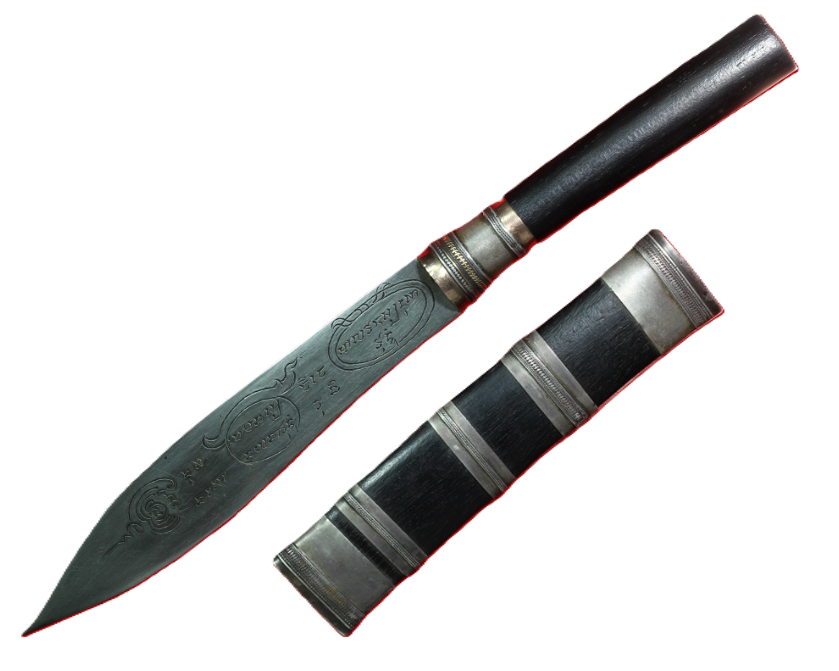
Authentication checklist (collector‑grade)
|
Feature |
What to test |
Typical result for a genuine Luang Por Derm piece |
|
Khmer‑reverse depth |
Magnify under UV or a 20× microscope; verify line depth ≥ 0.15 mm |
Deep, clean, no smearing |
|
Yantra completeness |
Look for both forward and reverse inscriptions (e.g., “อะสังวิสุโล ปุสะพุภะ”) |
Both sides present, perfectly mirrored |
|
Metal weight |
Weigh with a precise scale (± 0.01 g) |
Lead Buddha ≈ 10 g; powder ≈ 2 g; knife ≈ 300 g (depends on size) |
|
Casting style |
Visual inspection of surface – no modern silicone/metal‑stamp; look for “hand‑drag” lines |
Hand‑drag lines, no uniform machine marks |
|
Colour & patina |
Observe for natural oxidation (green‑ish pLu Luaatina on lead, warm bronze on copper) |
Natural green patina on old lead pieces; no synthetic coating |
|
Inscribed chant |
Verify the presence of “นะ โม พุท ธะ ยะ” (Five‑Buddha mantra) on the inner side of the tad‑krud |
|
|
Tad‑krud placement |
Ensure gold/silver/lead plates are separately visible under the handle (not just a single stamped metal) |
|
|
Proven provenance |
Check the seller’s documentation (photos of the yantra, certificate of authenticity, original box) |
Authentic pieces are usually sold with the original temple box and a certificate from the ISM (see Web‑Pra listings) |
If any of the above fails, the object is very likely a modern reproduction (often made with plastic moulds and laser‑etched khmer).
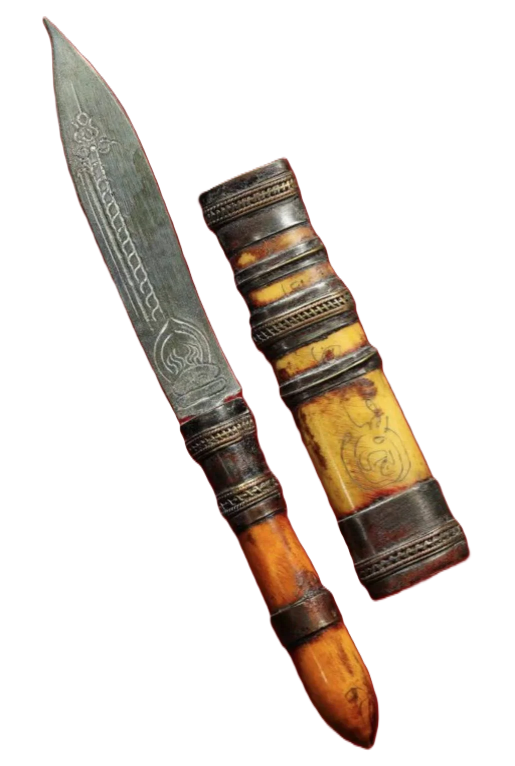
What remains undocumented (gaps in the record)
|
Topic |
Missing evidence |
|
Full nine‑fold chant text |
Only the excerpt in the Prakumkrong article is available; a complete, original manuscript has never been published. |
|
“พระพิฆเนศวร” production |
The ENNXO listing shows a Ganesha coin, but no source links it directly to Luang Por Derm’s workshop. |
|
Benjapakee floating set (พระเบญจภาคี) by Luang Por Derm |
The set is known to use the same floating‑wax technique, yet the creator is recorded as an unknown local artist, not Luang Por Derm. |
|
Exact numbers of each amulet type |
The temple and ISM keep no public inventory of how many Mued Mhao or Sheep‑horn amulets were cast each year. |
Why Luang Por Derm’s Magic is still as powerful and believed in to this day;
- Integrated esoteric craft – He fused lost‑wax casting, Khmer‑reverse engraving and the nine‑fold mantra into a single, repeatable production line.
- Teaching lineage – Hundreds of disciples (e.g., Ajarn Arun Somsan, Ajarn Charoen Thaitong) continue to make and bless his designs, keeping the “school” alive across central‑, northern‑ and northeastern Thailand.
- Wat Nong Pho as a hub – The temple houses an Amulet Museum, a blessing hall, and an ISM where all stages (design → casting → chanting → sealing) are performed under ritual supervision.
- Authentication standards – The community has converged on Khmer‑reverse depth, yantra completeness, metal weight and patina as the core criteria for distinguishing authentic from replica pieces.
- Continuing market demand – The Knife‑Doctor, Sheep‑horn, Floating Buddha and Powder amulets still fetch hundreds to thousands of baht on online marketplaces (ENNXO, Web‑Pra, Talad‑Pra) and are prized by collectors worldwide.
In short, Luang Por Derm’s amulet system represents a self‑contained tradition of sacred metal‑working that has survived more than a century, remains technically distinctive, and continues to influence Thai amulet culture today.
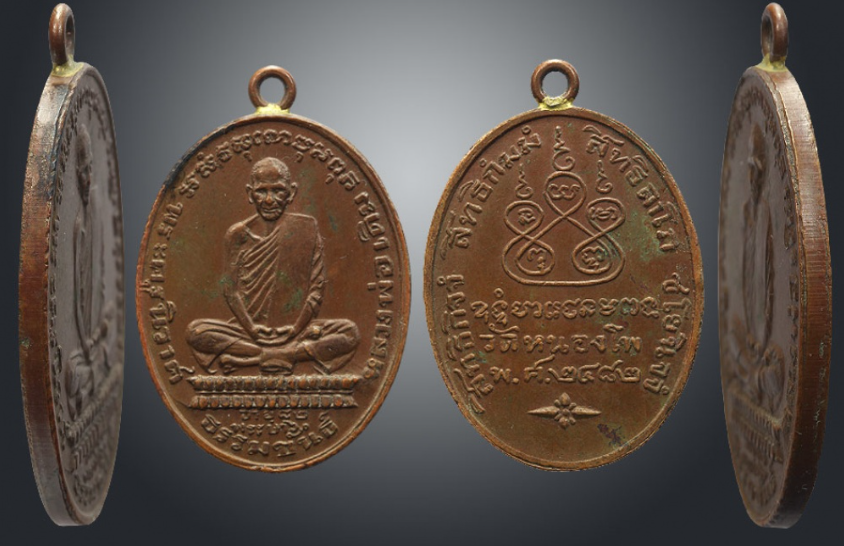
Magical Effects of Pra Pikanes Amulets (Wicha Saiyasart)
- Khad Khwang / Plod Proek (Obstacle Removal): Dispels spiritual, physical, and karmic obstructions, smoothing difficulties in business ventures, career progressions, and personal endeavors.
- Maha Pokasap & Maha Lap (Wealth and Fortune): Attracts financial flow, unexpected windfalls, and commercial success, especially for traders, merchants, and entrepreneurs.
- Serm Duang & Serm Baramee (Auspicious Fate & Authority): Elevates destiny, prevents astrological downfalls during bad years, and builds personal charisma, commanding respect from subordinates and peers.
- Klaew Klaad & Kong Grapan Chadtri (Evasion and Protection): Provides a shield against physical harm, accidents, malevolent sorcery, curses, and evil spirits.
- Maha Saneh & Metta Mahaniyom (Mercy Charm): Inspires goodwill, favor, and kindness from customers, superiors, and business associates
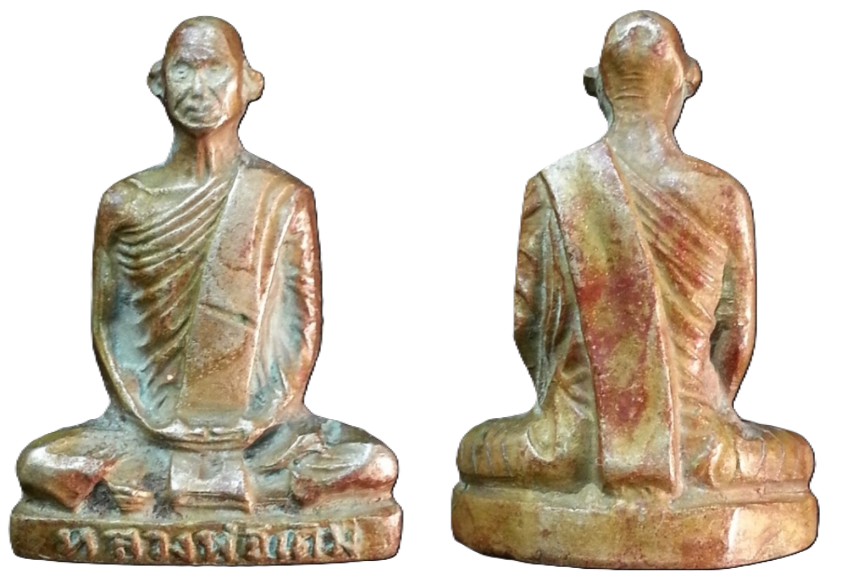
Benefits of Paying Bucha / Poojah to Pra Pikanes
- Mastery in the Arts and Intellect: Bestows creative inspiration, acute intellect, sharp wit, and mastery in learning, making devotion essential for artisans, students, writers, and performers.
- Success Before New Beginnings: Guarantees auspicious starts for major undertakings, including inaugurating a business, laying building foundations, or commencing complex ritual work.
- Harmonizing Elemental Energies: Acts as a stabilizing spiritual presence within a household or shrine room, dispelling negative indoor vastu or discordant domestic energy.
- Spiritual Clarity and Steadfastness: Cultivates mental endurance, filial duty, and clear moral focus to overcome internal defilements and external crises.
In Thai mythological traditions, ritual grimoires, and Wai Kru lineage lore for artisans and performing arts, the story of how Pra Pikanes (Ganesha) broke his tusk diverges notably from the classical Indian Purāṇic account of Parashurama's axe, attributing the deed instead to Pra Ruesi Petchalugan (Vishnukarman / the Master Artisan Rishi).
The Legend of the Broken Tusk by the Axe of Pra Ruesi Petchalugan
- Guardianship at Mount Kailash: Pra Pikanes was tasked by Shiva (Pra Isuan) and Parvati (Pra Uma) with guarding the inner sanctum of Mount Kailash, bearing strict orders to bar unauthorized entry to anyone seeking an audience.
- The Arrival of the Grand Artisan: Pra Ruesi Petchalugan, the primordial master of occult crafts, sacred engineering, and classical arts, arrived seeking an audience with Shiva. True to his duty, Pra Pikanes intercepted the Rishi and refused him passage.
- The Clash of Will and the Diamond Axe: With both figures steadfast in their honor and duty, a contest of mystical prowess erupted. During the duel, Pra Ruesi Petchalugan hurled his magical weapon—the diamond stone-cleaving axe—directly at Pra Pikanes.
- Filial Piety and the Broken Tusk: Pra Pikanes immediately recognized the axe as a divine celestial weapon bestowed upon the Rishi by his own father, Shiva. Out of filial reverence for his father and deference to the sacred blade, Pra Pikanes refused to deflect or counter the strike with magical force. Instead, he tilted his head to receive the blow squarely on his tusk, severing it on impact.
Beyond providing an indigenous cultural rationale for the deity's title Ekadanta ("Single-Tusked"), this narrative serves as a central allegory within Thai artisanal and esoteric lineages (Saiyasart), symbolizing selfless duty, strict adherence to one's vows, and deep reverence toward ancestral masters and teachers.
Luang Por Derm's Amulets
|
Item |
Details (Thai source) |
|
Birth name |
“Phu Manee” (father Niam, mother Poo) |
|
Date of birth |
6 Feb 2403 (Buddhist‑calendar Wak‑a, Friday, Wan 11 Kham 3) |
|
Ordination |
Entered Wat Khao Kaeo (Pattasima) at age 20; full upasampada on 31 Oct 2423 under senior monks Luang Por Kaeo, Luang Por Ngern, Luang Por Thet |
|
Secular study |
Learned “Wit‑thaya‑khom” (traditional physics/medicine) from Nai Phan Chuphan – a village scholar |
|
Abbot of Wat Nong Pho |
2435 – 2494 (91 years old, Pra sri 71 years) |
|
Death |
22 May 2494, age 92 years (71 years of Pra sri) |
|
Honorific title |
“เทพเจ้าแห่งเมืองสี่แคว” (the “Deity of the Four Quadrants”) – a title used by the amulet community |
Wat Nong Pho
- Original name – “Wat Samo Pho Phothi Krachai” (Ayutthaya‑era, > 400 years old)
- Revival – After abandonment villagers rebuilt the temple and installed Luang Por Derm as abbot
- Royal grant – In 2458 (1915 CE) the king bestowed the “Visung‑Kham Sima” flag, renaming the site Wat Nong Pho
- Monument‑scale casting – A life‑size bronze statue of Luang Por Derm was erected in the ubosot in 2482 (1939 CE)
- Major renovations – 2458 (8 000 Baht), 2535 (1 500 000 Baht), 2551 (221 000 Baht)
The temple today hosts an Institute of Sacred Objects (ISM) and a “Akara‑Kem” school where the craftspeople who work on the Knife‑Doctor (Mued Mhao) and other amulets are trained (artisans “Jim, Khi, Son”).
Core belief – The “9‑times‑chant” (Kata Gao)
Luang Por Derm taught that every amulet must be charged with the nine‑fold mantra (often described as “the power‑spell of the Muan Pong‑Ittihe” in the community). The chant is inscribed on the tiny “tad‑krud” plates (gold, silver, or lead) that are later sealed into the object.
When the object is completed it is blessed three‑to‑four nights (usually 3 nights) while the nine‑fold chant is repeated, thereby embedding the protective “katha” into the metal, the cloth or the bone.
How the amulets were made
|
Process |
What the source says |
|
Khmer‑reverse script (อักษรขอมกลับด้าน) |
Engraved with a sharp iron stylus so the lines are ≥ 0.15 mm deep; visible even after decades under UV light |
|
Yantra under the base |
A deep‑etched protective yantra is mandatory; if the engraving is shallow the master will remove and re‑etch it |
|
Lost‑wax (ขี้ผึ้งหาย) casting |
Traditional hand‑made moulds (no CNC); the same artisans who work on the Mued Mhao handle the wax model, the mould and the pouring |
|
Metal alloy for the Knife‑Doctor (Mitmor) |
Fe ≈ 70 %, Pb ≈ 28 %, Sn ≈ 2 % – a blend of “tapu sang‑khwan‑r” (old‑style nails), “tapu so‑ng‑phi” (charred nails), broken alms‑bowls and “nok nam‑phi” (river‑water iron) |
|
Handle construction |
Large Mued Mhao → haft of ivory/elephant horn + hilt of wood & ivory; small, pocket‑size version → both haft and hilt of horn |
|
Inserting the “tad‑krud” plates |
Tiny gold, silver or lead plates bearing Khmer script and the nine‑fold chant are set into the handle, then clamped with a “krang” (copper/iron reinforcement) |
|
Final “blessing” |
On the 15th waning‑moon (day 15) the Muan Pong‑Ittihe powder is mixed with Luang Por Derm’s semen and poured onto the plates before the final chant is performed |
Catalogue of some Luang Por Derm’s amulets (Documented by reliable sources)
|
Type |
Typical name / model |
Material / technique |
Approx. casting year* |
Distinctive feature (what collectors look for) |
|
Sheep‑horn amulet (งาแกะ) |
“Singha / Nang Kwak” – two styles (closed‑eye of the Buddha & open‑eye of an Arahant) |
Actual ram’s horn, white tusk, Singh‑Rach carving |
1960‑70 (no exact year) |
If the Khmer‑reverse characters “นะ มะ พะ ทะ” appear on the base, the piece is almost certainly hand‑etched by Luang Por Derm |
|
Powder amulet (พระผง) |
“Pra Pong Jit Drop” – model 9 (mass‑solid) |
Fine powder (starch‑water‑binding) – mantra “9 times” embedded |
2540 CE (model 9) |
The “drop‑of‑water” design is a visual cue of the nine‑fold chant. |
|
Clay‑tablet (พระพิมพ์ดิน) |
Various – no single model recorded |
Clay mixed with natural pigments, dry‑finished then incised with Khmer script using a bone‑point stylus |
– |
The tablet surface shows a faint “Khmer‑stroke” that can be examined under magnification. |
|
Lead Buddha (พระตะกั่ว) |
“Closed‑eye – double‑face” (two sides) |
Lead (≈ 90 % Pb) alloyed with tin and iron; deep‑etched khmer yantra under the base |
2493 CE |
Weight ≈ 10 g; a deep‑etched “nah mud tha kan na” yantra on the inner side. |
|
Coins (เหรียญ) |
“Pra Kray‑Nok”, “Pra Prak‑Dua” – gold, silver, lead versions |
Various metal coins; often tad‑krud plates are embedded in the reverse side |
2482‑2536 CE |
|
|
Cloth yantra (ผ้ายันต์) |
“Hand‑drawn Chinese ink” – foot‑print yantra, or “tat‑foot” (รอยเท้า) |
Cotton/mulberry silk, hand‑embroidered, ink‑stamped with Chinese characters (often a footprint) |
|
|
|
Knife‑Doctor (มีดหมอ) |
Large “Elephant‑rider knife”, later “pocket‑knife” |
Alloy as above; handle/haft of horn; tad‑krud plates (gold, silver, lead) with Khmer script and a 9‑times chant |
|
|
|
Floating (หล่อลอย) statue |
“Floating Buddha” – shrine‑size, uses lost‑wax with a buoyancy‑coating |
Cast in 2482 CE (same year as the bronze statue) |
|
|
|
Horn‑tip (ปลายงา) |
“Brahma‑killing horn” – the tip of a ram’s horn attached to a Buddha figure |
Same material as the horn amulet, but the tip is meant to “cut karmic knots” |
|
|
|
Ganesha coin (พระพิฆเนศ) |
“Ganesha‑after‑Maa” – front‑side of the mother‑goddess, metal ring |
No record that Luang Por Derm made these, but they appear in the same “mixed‑religion” market |
|
|
|
Five‑Buddha‑god yantra (ยันต์ 5 พระเจ้า) |
Inscribed on metal or cloth, the mantra “นะ โม พุท ธะ ยะ” |
No exact year, used for “total protection” (fire, insects, evil spirits) |
|
|
|
Benjapakee‑set (พระเบญจภาคี) |
“Floating five‑Buddha group” – a special 9‑times‑chant edition of the famous “Benjapakee” set |
Cast by a separate workshop (not directly by Luang Por Derm) but employing the same floating‑wax technique |
|
|
* When a production year is not listed in any source, the entry shows “–”.
The Knife‑Doctor (Mitmor)
Metal composition
- Primary alloy – 70 % iron, 28 % lead, 2 % tin – a recipe obtained from old‑temple nails (tapu sang‑khwan‑r), charred “spirit‑nails” (tapu so‑ng‑phi), broken alms‑bowls and river‑water iron.
Forging & shaping
- Artisans – “Jim, Khi, Son” each have a personal engraving style (the “knife‑edge‑pattern”). Their work creates a ≈ 2 mm thick blade and a 1‑cubit (≈ 1 elbow) horn haft.
- Large version – “Elephant‑rider knife” (½ cubit haft + hilt of wood/ivory) used for temple‑wide protection.
- Pocket version – both haft and hilt are horn, allowing it to be carried in a shirt pocket.
The takrut scroll spells (tiny metal inserts)
|
Plate |
Material |
Inscription (Khmer‑reverse) |
|
Gold plate |
Gold (Au) |
“นะ อุด ทะ กัน นะ” on one side; “อุด ทัง อัด โท อุด ทะ” on the reverse |
|
Lead plate |
Lead (Pb) |
“อุด ทัง อะ กัน อิ” / “อัด โท กัน อิ พุทโธ” |
|
Outer shell |
Lead (tad‑krud) |
“นุปิดตุ อุด ทะวารัง” |
|
Inner side – Five‑Buddha chant |
Lead |
“นะ โม พุท ธะ ยะ” (the Five‑Buddha mantra) |
The plates are clamped with a copper/iron “krang” and the whole handle is finished with additional “krang” reinforcement.
Blessing & the nine‑fold chant
- Ritual date – the 15th waning (the 15th day of the waning moon) is when the Muan Pong‑Ittihe powder is mixed with Luang Por Derm’s semen and poured onto the plates
- Recitation – the nine‑fold chant is spoken three nights in a row (the “3‑night sealing”).
Claimed powers (as described by the community)
|
Power |
Source description |
|
Protection from black magic |
“ป้องกันคุณไสย มานต์ ดำ” |
|
Exorcism – “press the blade onto the head of a possessed person” without removing it (otherwise danger to both) |
|
|
Anti‑venom – “wash the blade, then apply the oil to neutralize snake‑bite venom” |
|
|
General safety – “prevent fire, theft, accidents” when the knife is kept at home |
|
|
Super‑strength – “immense, unstoppable – even 108 shots cannot hit” (popular press hyperbole) |
|
|
Spiritual “armor” – “greatly fortified, “อุด‑อาน‑อุด‑อาน‑อูด‑อาน‑อูด‑อาน” (the repeated chant in the krang forging) |
|
Khmer reverse script and “Yant Tai Thaan” – the signature of Luang Por Derm
- Depth – Lines are ≥ 0.15 mm; visible under UV light; forged with a sharp iron stylus.
- Rule – If the yantra is shallow or smudged the master will erase and re‑etch it; thus a shallow yantra is a strong indicator of a copy.
- Typical yantra Prasing – “อะสังวิสุโล ปุสะพุภะ” (forward) and its mirror “ภะพุสะปุ โลสุวิสังอะ” (reverse).
- Five‑Buddha mantra – “นะ โม พุท ธะ ยะ” is placed on the inner side of the tad‑krud (the classic “Benjapakee” signature).
Collectively these features are the primary authentication criteria used by senior collectors (e.g., Ajarn Arun Somsan, Ajarn Charoen).
The Prayer‑Ritual for the Knife‑Doctor – “Kata Aratana Mitmor”
“When you travel, keep the Mitmor/Meed Mor with you, recall the Triple Gem and Luang Por Derm” – the opening instruction.
The full nine‑fold Kata chant (the “A-rath‑na” chant) is this (Romanized);
Sakkassa vajirāvudhaṃ, Vessavaṇṇassa gadāvudhaṃ, Āḷavakassa dussāvudhaṃ, Yamassa nayanāvudhaṃ, Nārāyaṇassa cakkāvudhaṃ. Pañca āvudhānaṃ etesaṃ ānubhāvena, pañca āvudhānaṃ bhaggabhagghā vicuṇṇaṃ vicuṇṇā lomamā me na phusanti, gacchatha amumhi okāse tiṭṭhatha.
Sakkassa vajirāvudhaṃ, Vessavaṇṇassa gadāvudhaṃ, Āḷavakassa dussāvudhaṃ, Yamassa nayanāvudhaṃ, Nārāyaṇassa cakkāvudhaṃ. Pañca āvudhānaṃ etesaṃ ānubhāvena, pañca āvudhānaṃ bhaggabhagghā vicuṇṇaṃ vicuṇṇā lomamā me na phusanti, gacchatha amumhi okāse tiṭṭhatha.
Thai;
สักกัสสะ วชิราวุทธัง เวสสุวัณณะคะธาวุทธัง อาฬาวะกะธุสาวุทธัง ยะมะนัยนาวุทธัง ณารายยะนะะจักกะราวุทธัง ปัญจะอาวุทธานัง เอเตสัง อานุภาเวนะ ปัญจะอาวุทธานัง ภัคคะภัคขา วิจุณนัง วิจุณนาโลมังมาเมนะ พุทธะสันติ คัจฉะอะมุทหิ
สักกัสสะ วชิราวุทธัง เวสสุวัณณะคะธาวุทธัง อาฬาวะกะธุสาวุทธัง ยะมะนัยนาวุทธัง ณารายยะนะะจักกะราวุทธัง ปัญจะอาวุทธานัง เอเตสัง อานุภาเวนะ ปัญจะอาวุทธานัง ภัคคะภัคขา วิจุณนัง วิจุณนาโลมังมาเมนะ พุทธะสันติ คัจฉะอะมุทหิ
How the community uses the knife
|
Situation |
Recommended practice |
|
Travel |
Carry the knife; mentally recite the Triple Gem and the nine‑fold chant before stepping out. |
|
Exorcism |
Place the blade on the head of a person possessed; do not remove it while the spirit is present, otherwise risk injury. |
|
Snake‑bite/venom |
Rinse the blade, then apply the oil from the knife to the bite site – the knife is believed to neutralise the toxin. |
|
General protection |
Keep the knife in a home altar to guard against fire, theft, bad luck, and evil spirits. |
|
Rain‑summoning |
The haft (made of horn) can be used in rain‑calling rituals with a clay pot (water‑sacrifice). |
|
Handling of dangerous beasts |
The krang ring (metal clasp) can be cast with a rain‑chant to protect against poisonous animals. |
These instructions are common knowledge among Thai amulet collectors and are reproduced verbatim in the community’s “how‑to” guides.
Authentication checklist (collector‑grade)
|
Feature |
What to test |
Typical result for a genuine Luang Por Derm piece |
|
Khmer‑reverse depth |
Magnify under UV or a 20× microscope; verify line depth ≥ 0.15 mm |
Deep, clean, no smearing |
|
Yantra completeness |
Look for both forward and reverse inscriptions (e.g., “อะสังวิสุโล ปุสะพุภะ”) |
Both sides present, perfectly mirrored |
|
Metal weight |
Weigh with a precise scale (± 0.01 g) |
Lead Buddha ≈ 10 g; powder ≈ 2 g; knife ≈ 300 g (depends on size) |
|
Casting style |
Visual inspection of surface – no modern silicone/metal‑stamp; look for “hand‑drag” lines |
Hand‑drag lines, no uniform machine marks |
|
Colour & patina |
Observe for natural oxidation (green‑ish pLu Luaatina on lead, warm bronze on copper) |
Natural green patina on old lead pieces; no synthetic coating |
|
Inscribed chant |
Verify the presence of “นะ โม พุท ธะ ยะ” (Five‑Buddha mantra) on the inner side of the tad‑krud |
|
|
Tad‑krud placement |
Ensure gold/silver/lead plates are separately visible under the handle (not just a single stamped metal) |
|
|
Proven provenance |
Check the seller’s documentation (photos of the yantra, certificate of authenticity, original box) |
Authentic pieces are usually sold with the original temple box and a certificate from the ISM (see Web‑Pra listings) |
If any of the above fails, the object is very likely a modern reproduction (often made with plastic moulds and laser‑etched khmer).
What remains undocumented (gaps in the record)
|
Topic |
Missing evidence |
|
Full nine‑fold chant text |
Only the excerpt in the Prakumkrong article is available; a complete, original manuscript has never been published. |
|
“พระพิฆเนศวร” production |
The ENNXO listing shows a Ganesha coin, but no source links it directly to Luang Por Derm’s workshop. |
|
Benjapakee floating set (พระเบญจภาคี) by Luang Por Derm |
The set is known to use the same floating‑wax technique, yet the creator is recorded as an unknown local artist, not Luang Por Derm. |
|
Exact numbers of each amulet type |
The temple and ISM keep no public inventory of how many Mued Mhao or Sheep‑horn amulets were cast each year. |
Why Luang Por Derm’s Magic is still as powerful and believed in to this day;
- Integrated esoteric craft – He fused lost‑wax casting, Khmer‑reverse engraving and the nine‑fold mantra into a single, repeatable production line.
- Teaching lineage – Hundreds of disciples (e.g., Ajarn Arun Somsan, Ajarn Charoen Thaitong) continue to make and bless his designs, keeping the “school” alive across central‑, northern‑ and northeastern Thailand.
- Wat Nong Pho as a hub – The temple houses an Amulet Museum, a blessing hall, and an ISM where all stages (design → casting → chanting → sealing) are performed under ritual supervision.
- Authentication standards – The community has converged on Khmer‑reverse depth, yantra completeness, metal weight and patina as the core criteria for distinguishing authentic from replica pieces.
- Continuing market demand – The Knife‑Doctor, Sheep‑horn, Floating Buddha and Powder amulets still fetch hundreds to thousands of baht on online marketplaces (ENNXO, Web‑Pra, Talad‑Pra) and are prized by collectors worldwide.
In short, Luang Por Derm’s amulet system represents a self‑contained tradition of sacred metal‑working that has survived more than a century, remains technically distinctive, and continues to influence Thai amulet culture today.