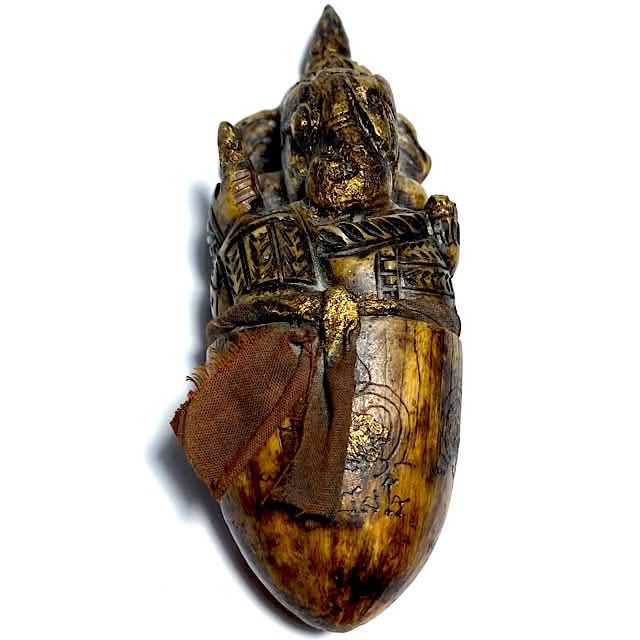
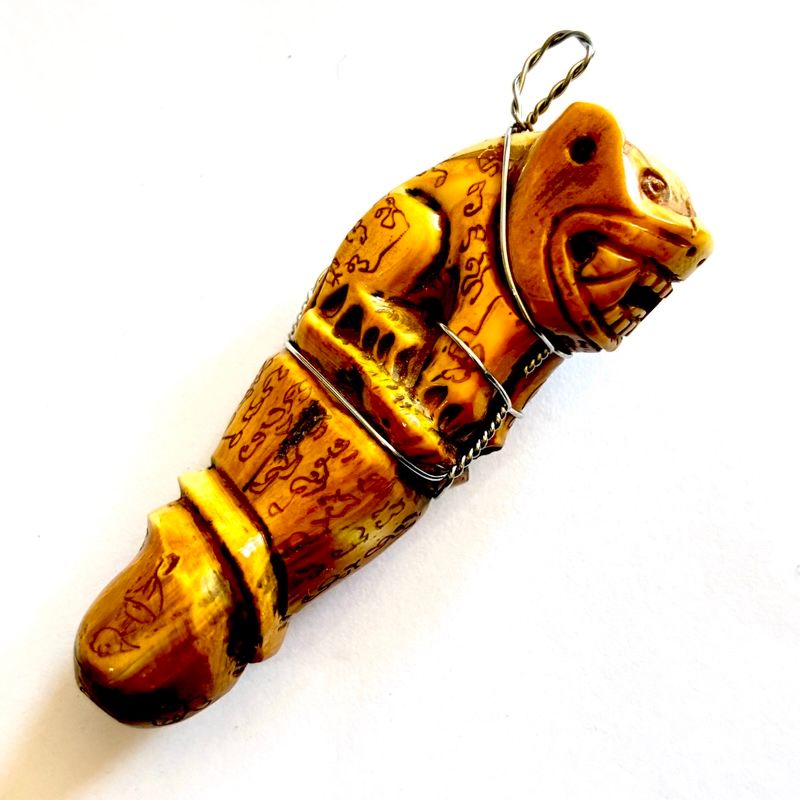
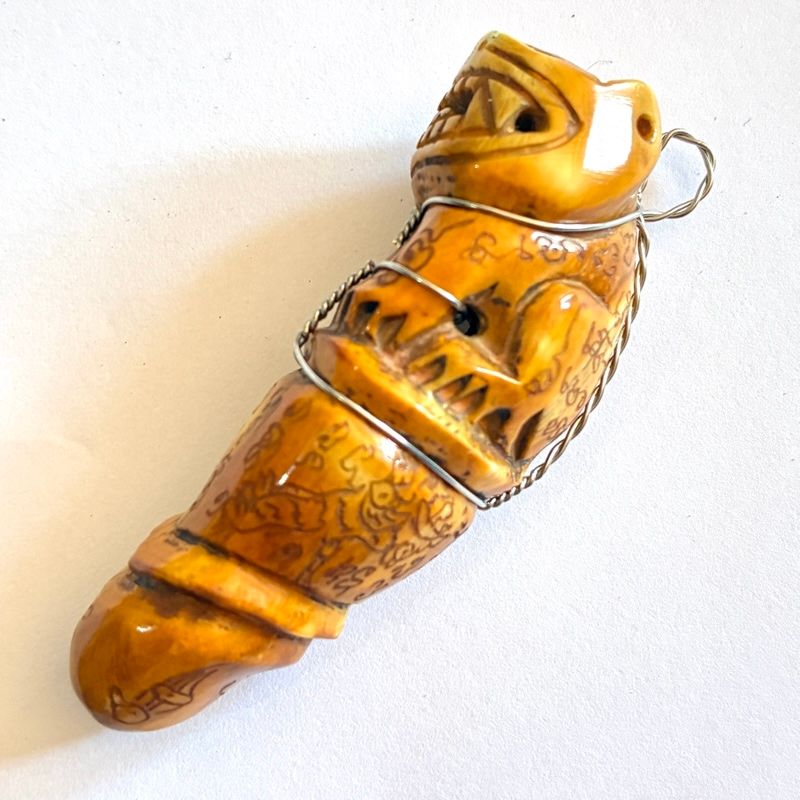
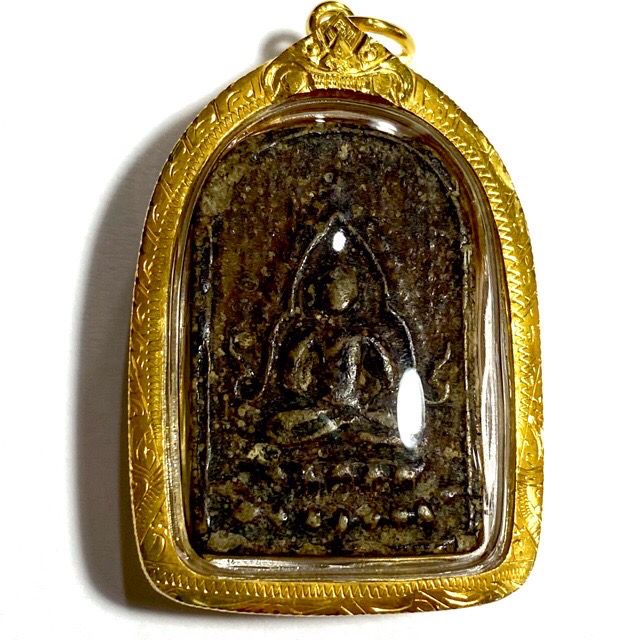
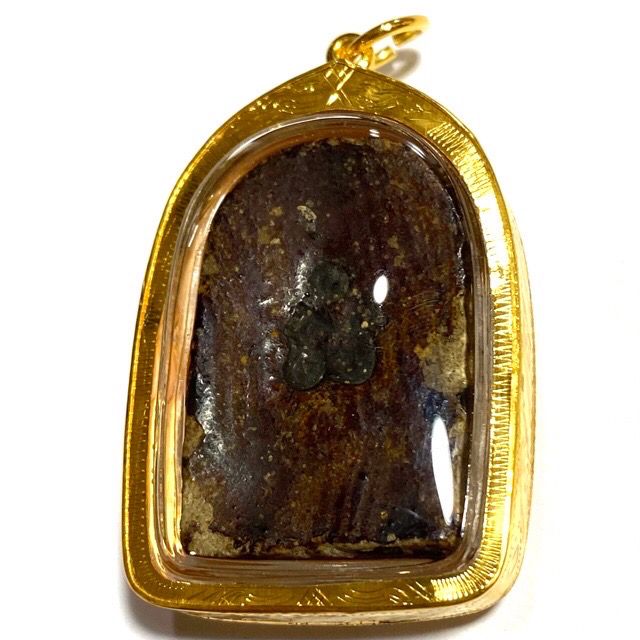
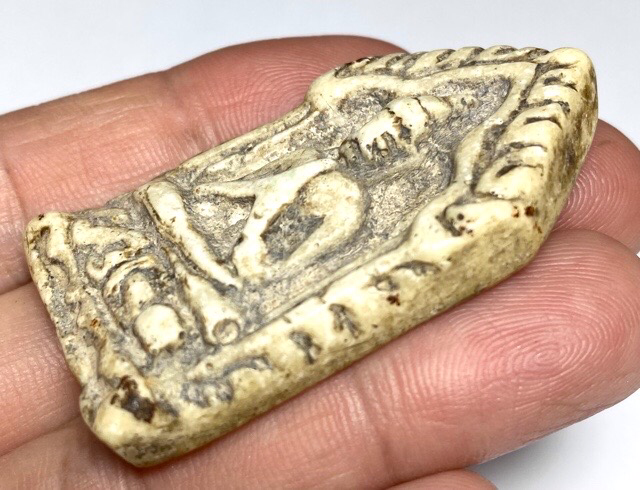
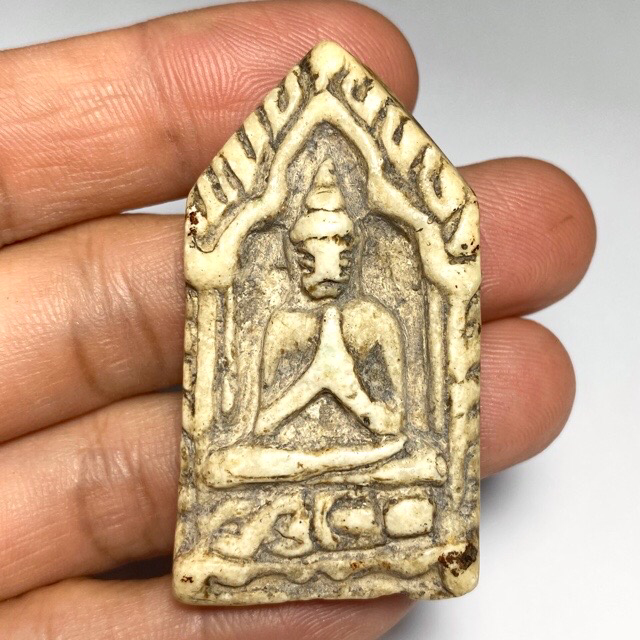
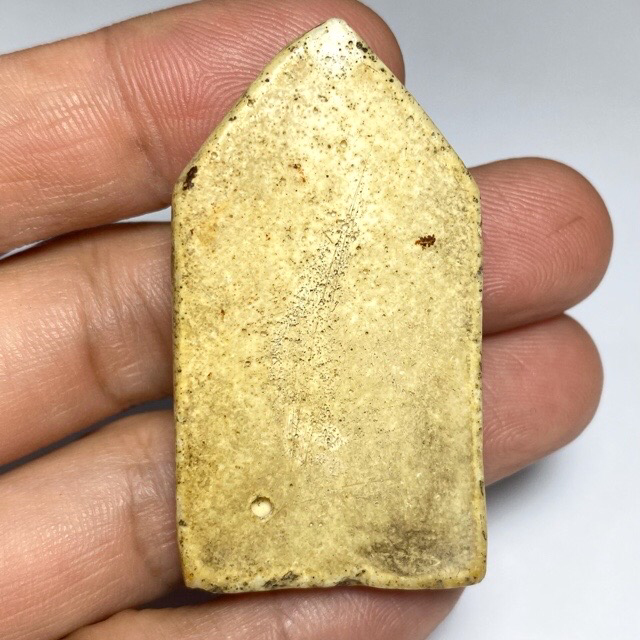
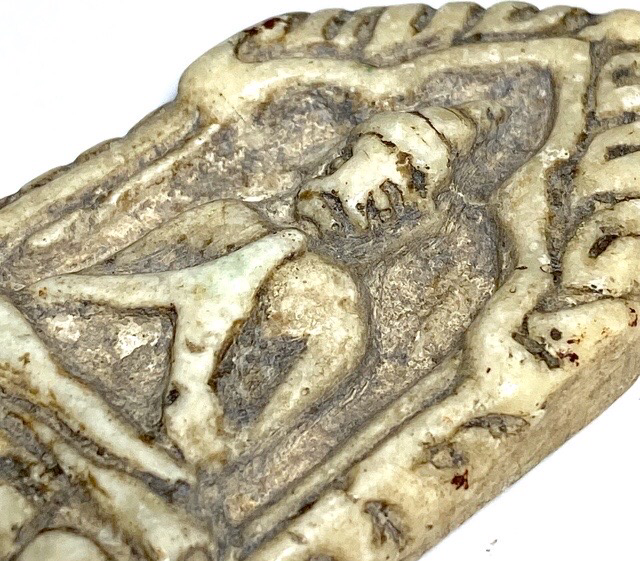
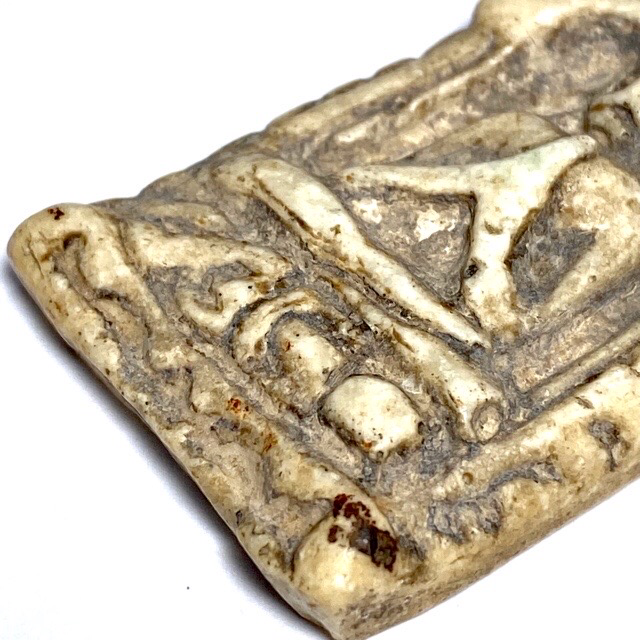
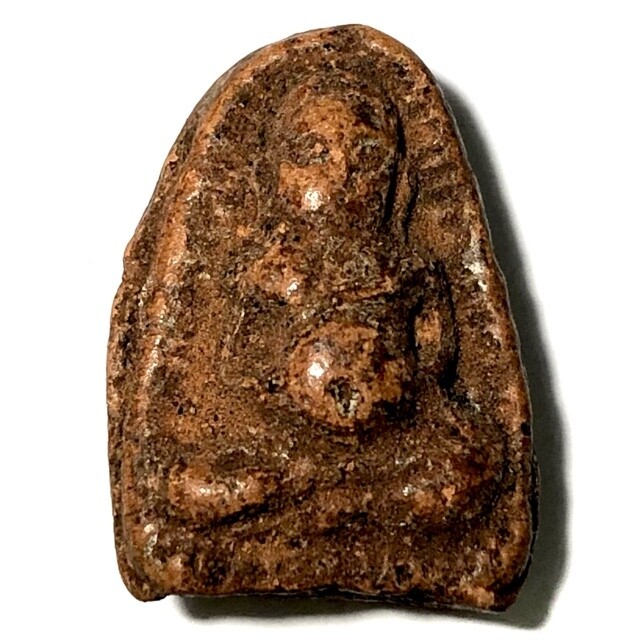
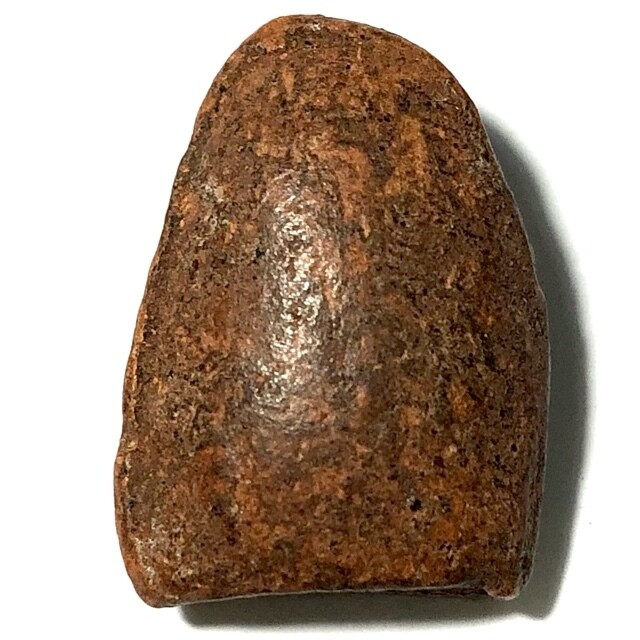
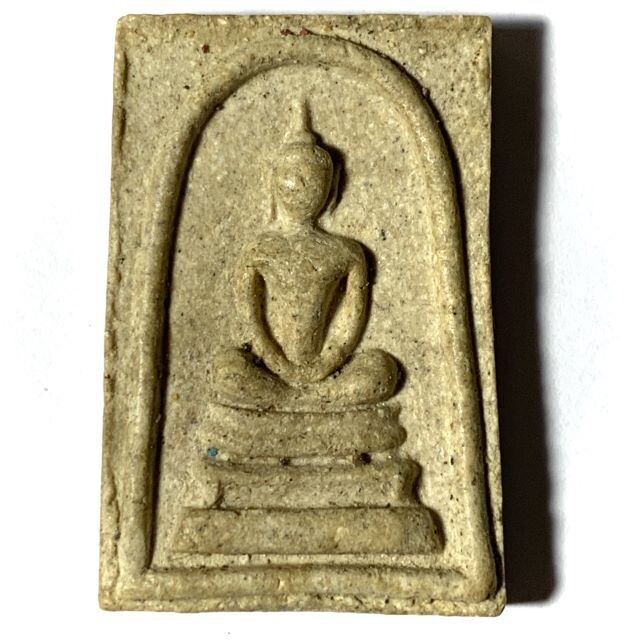
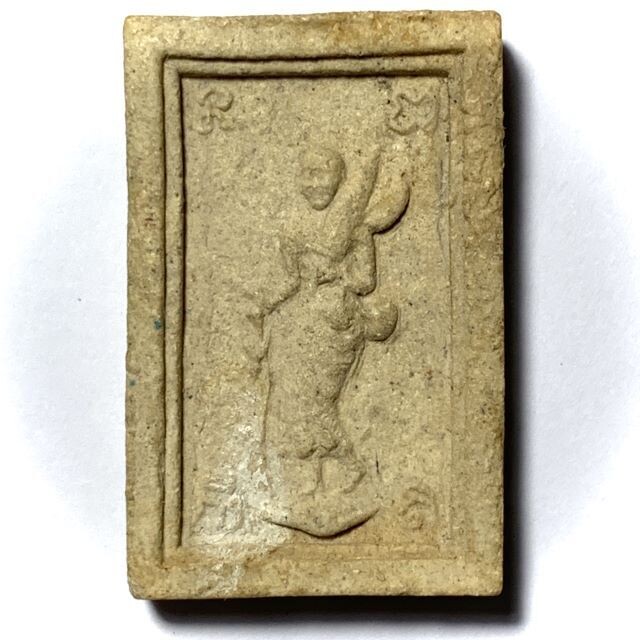
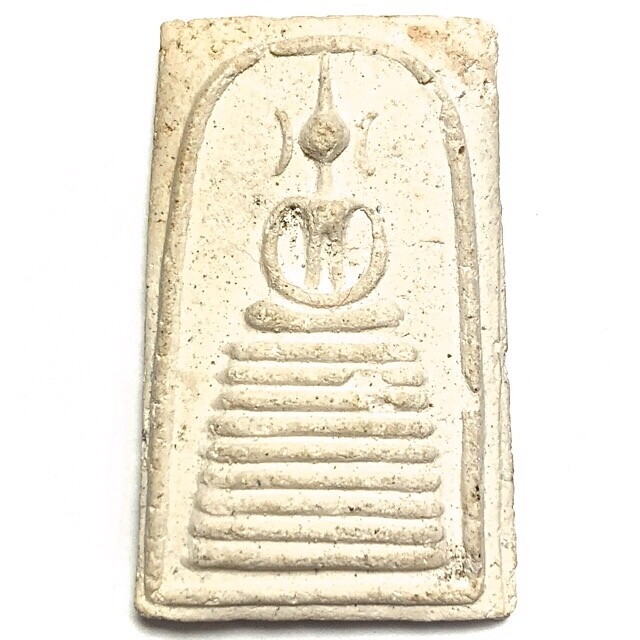
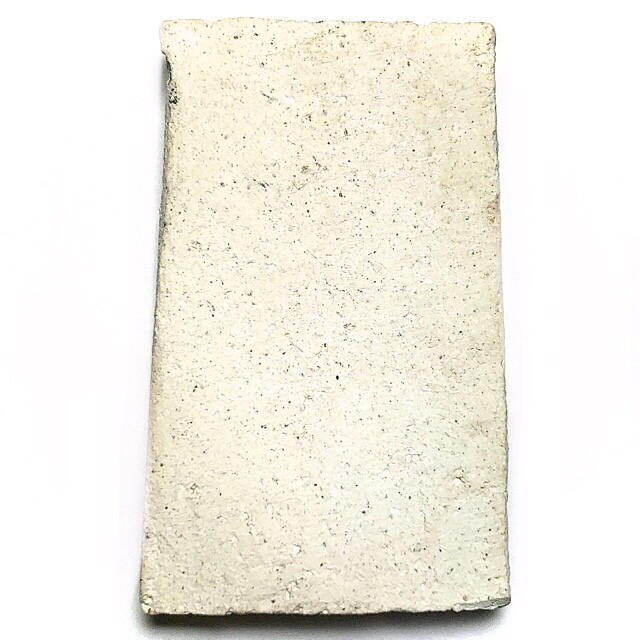
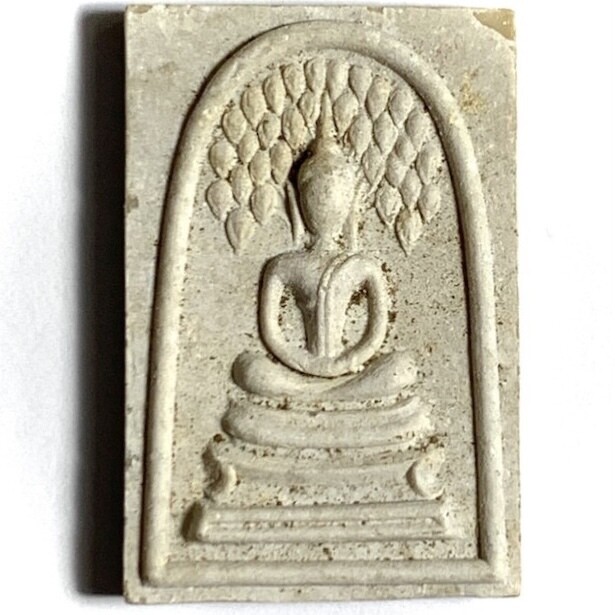
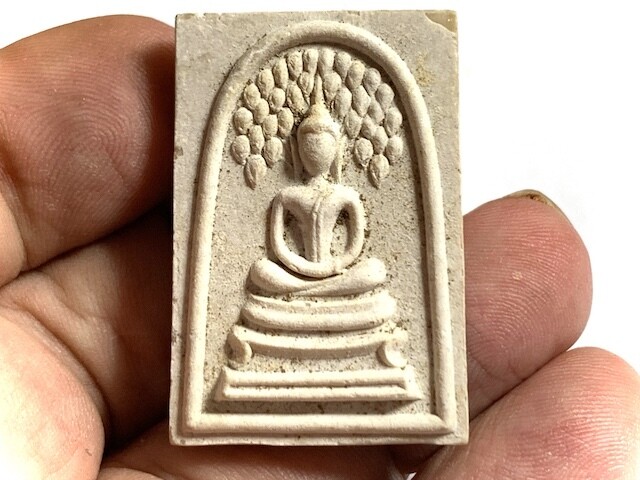
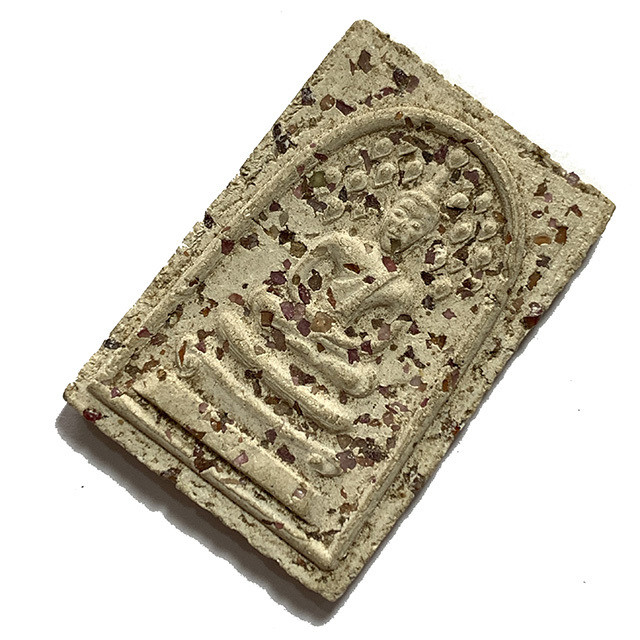
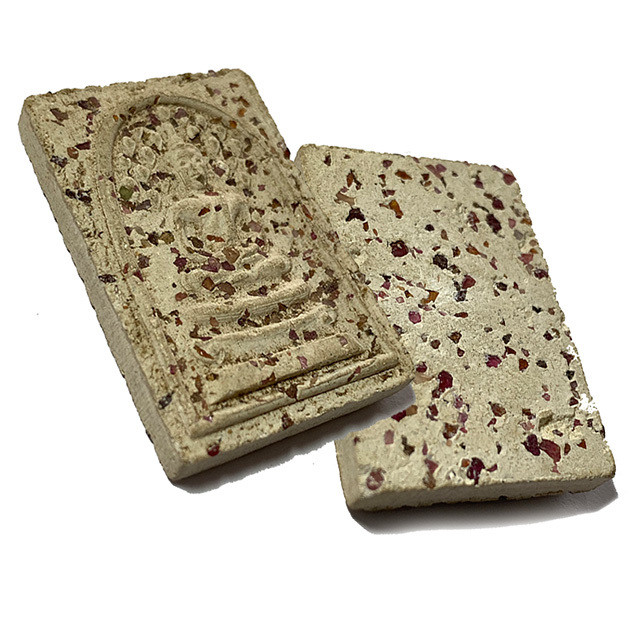
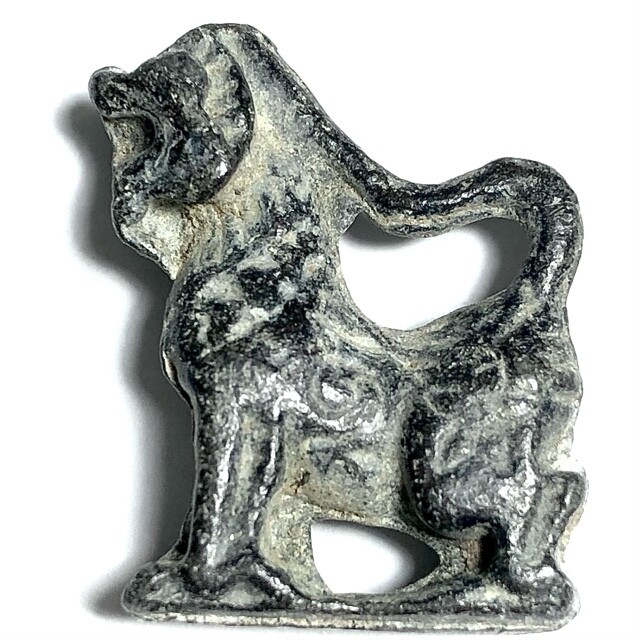
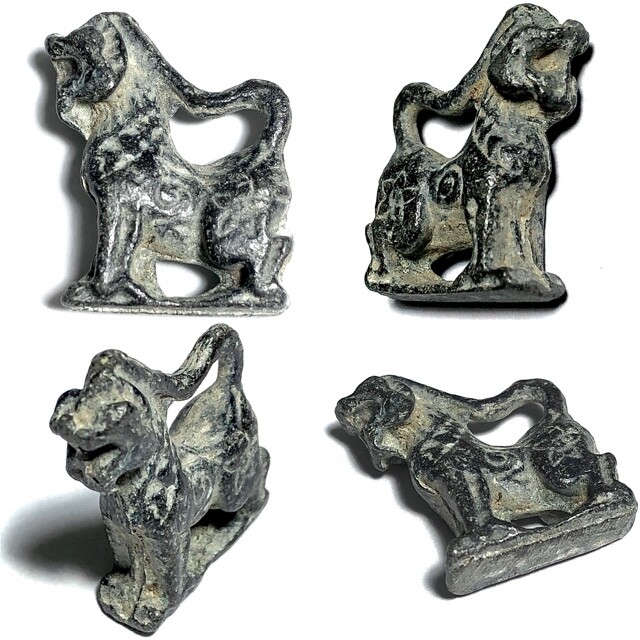
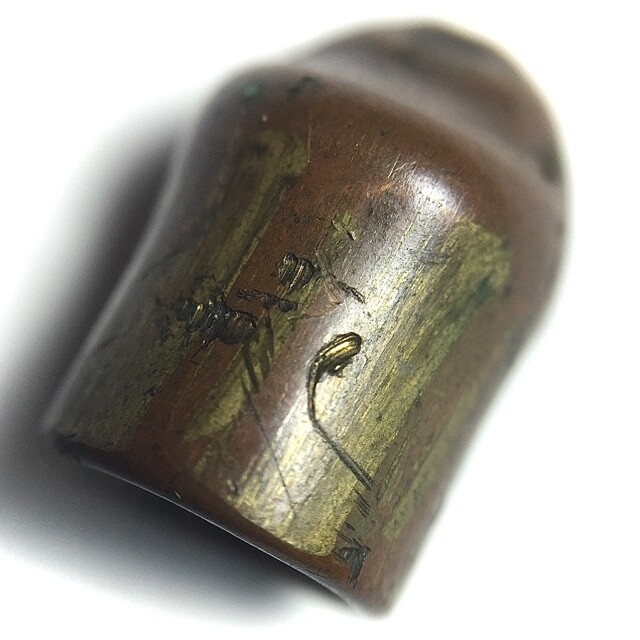
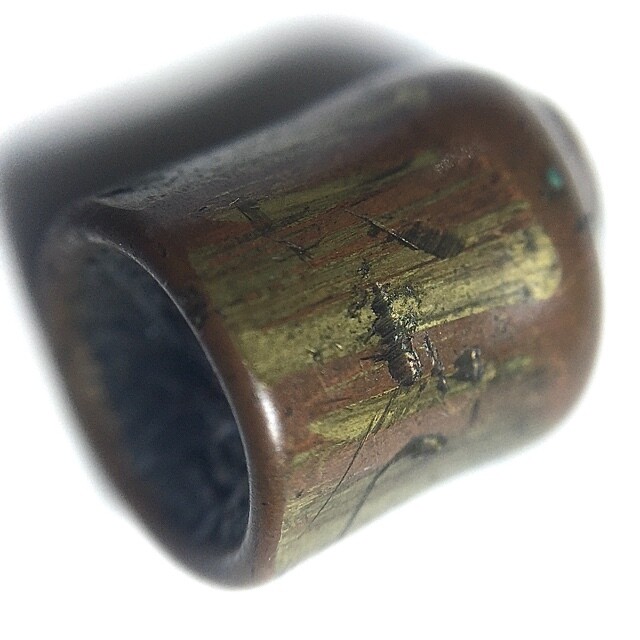
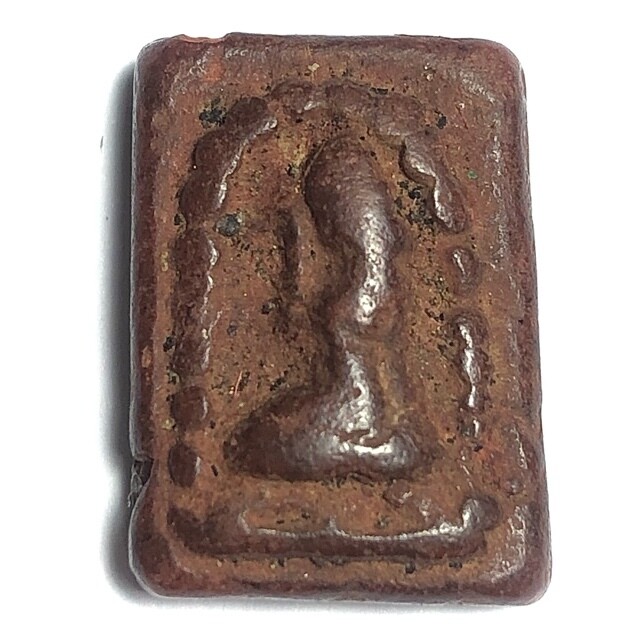
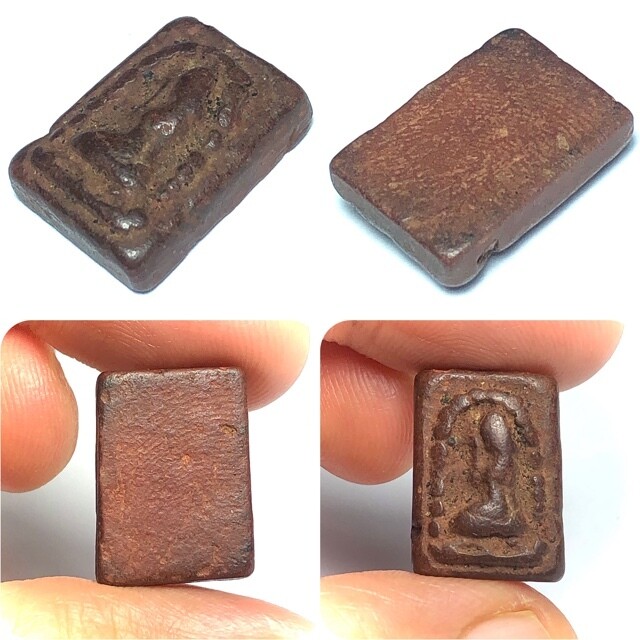
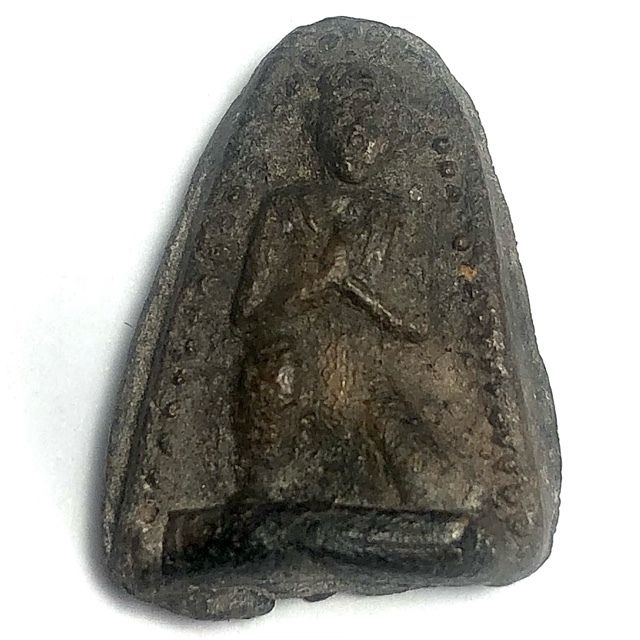
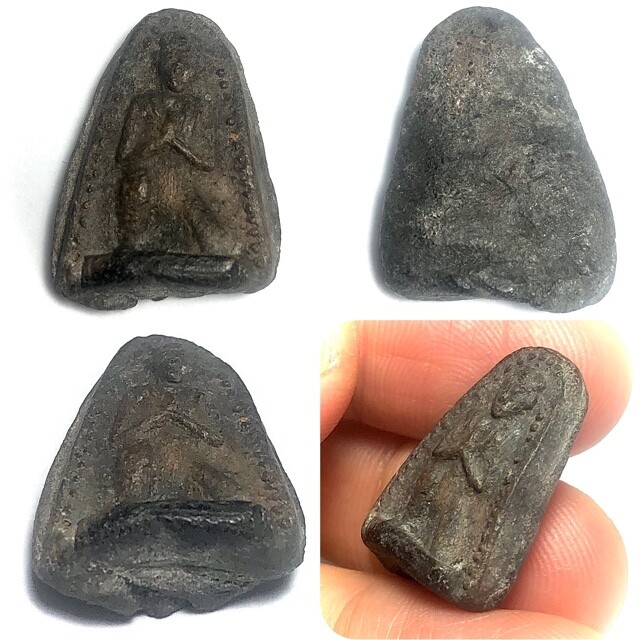
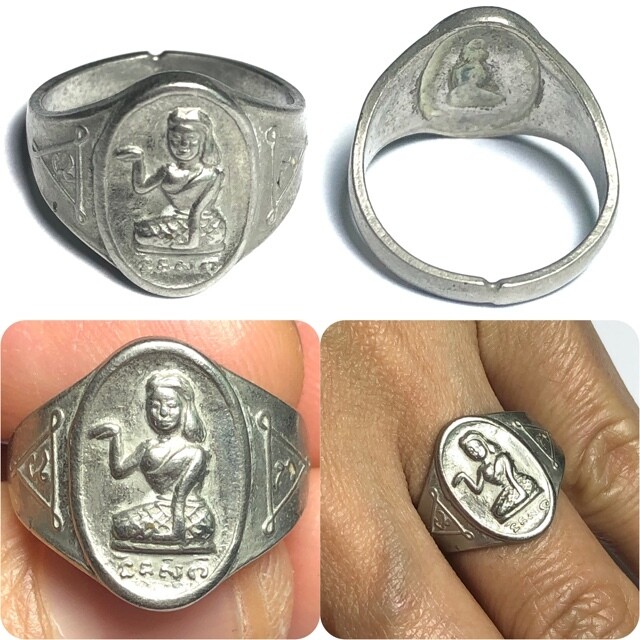
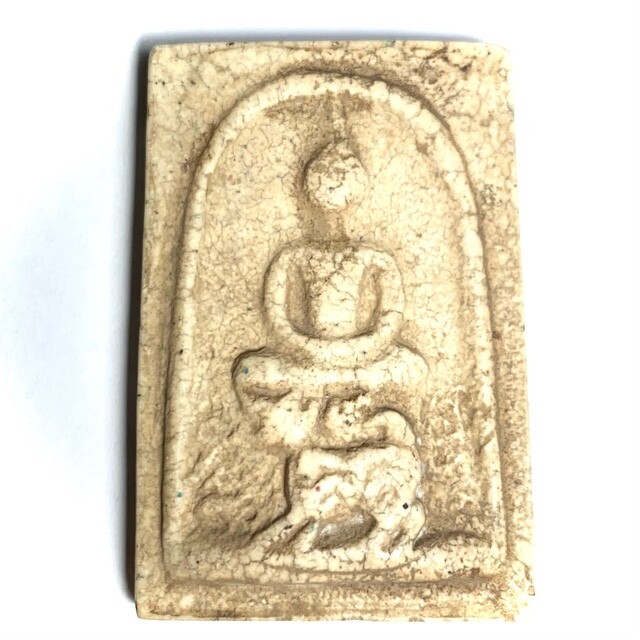
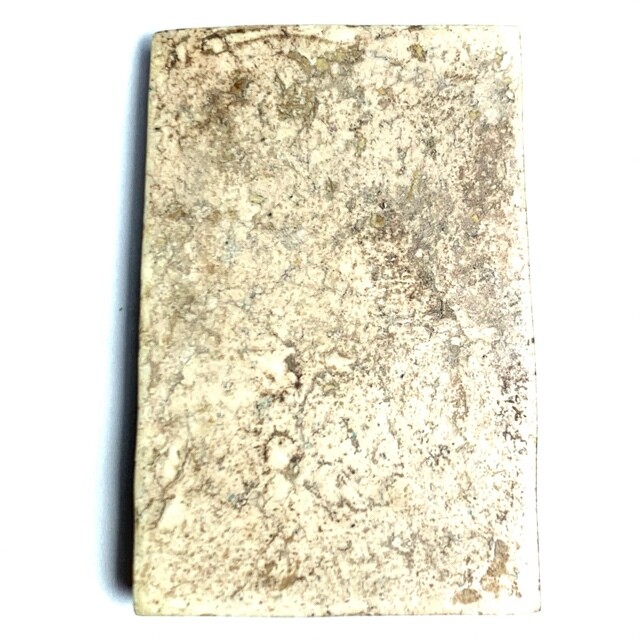
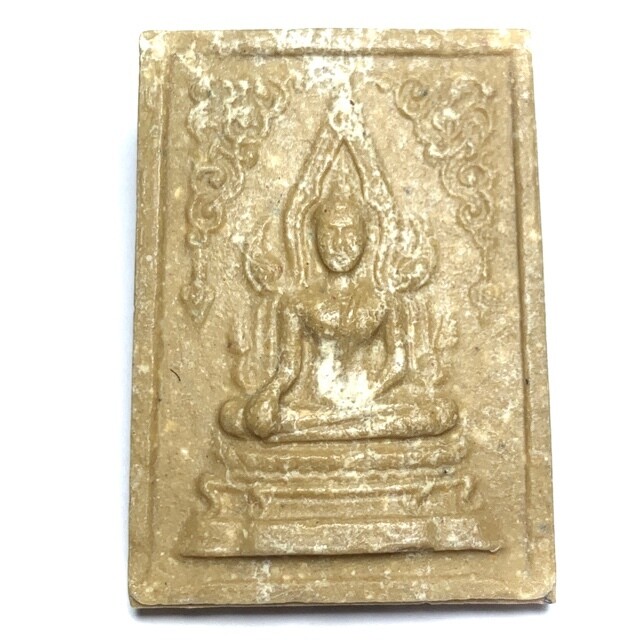
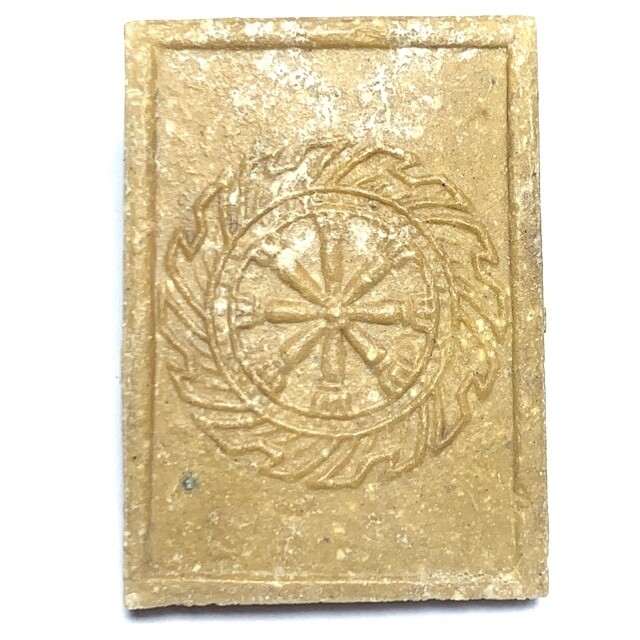
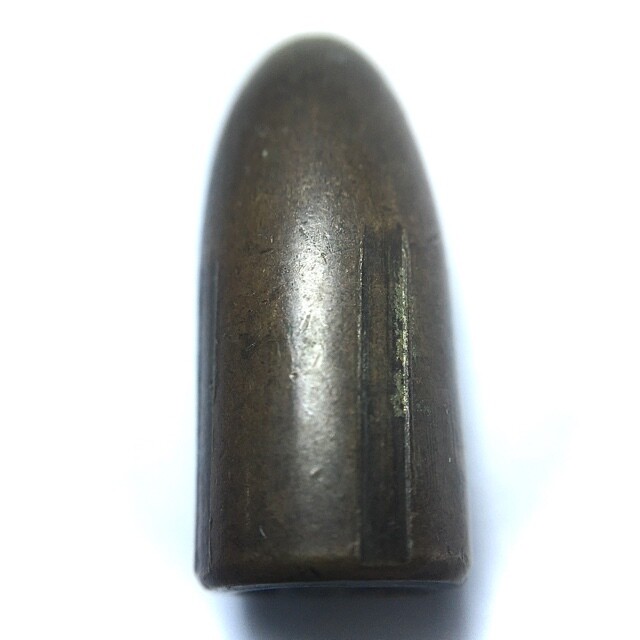
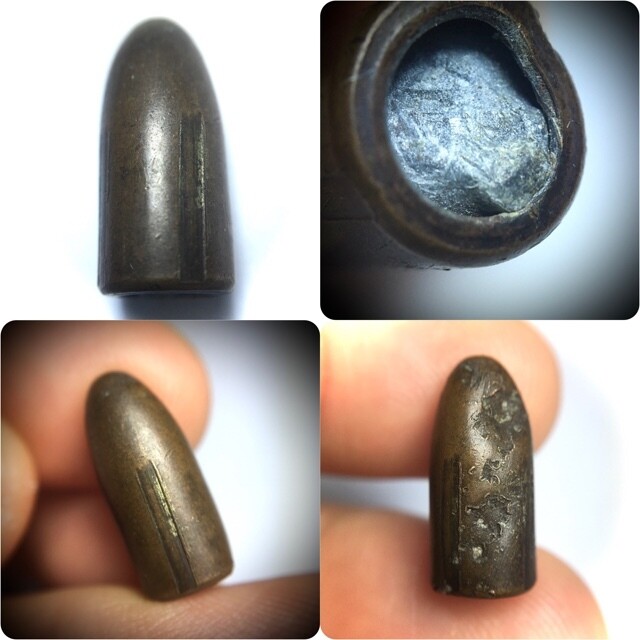
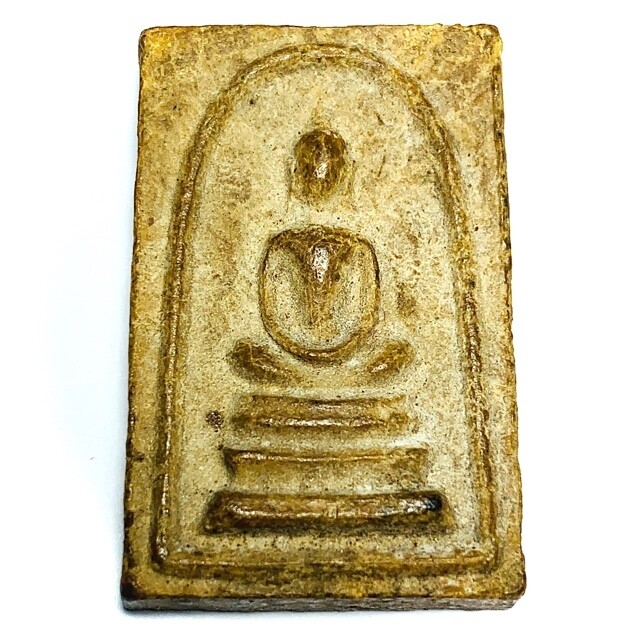
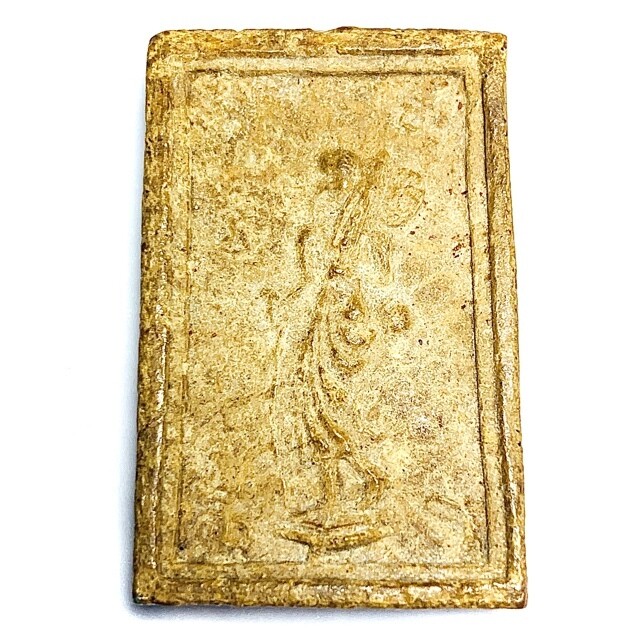
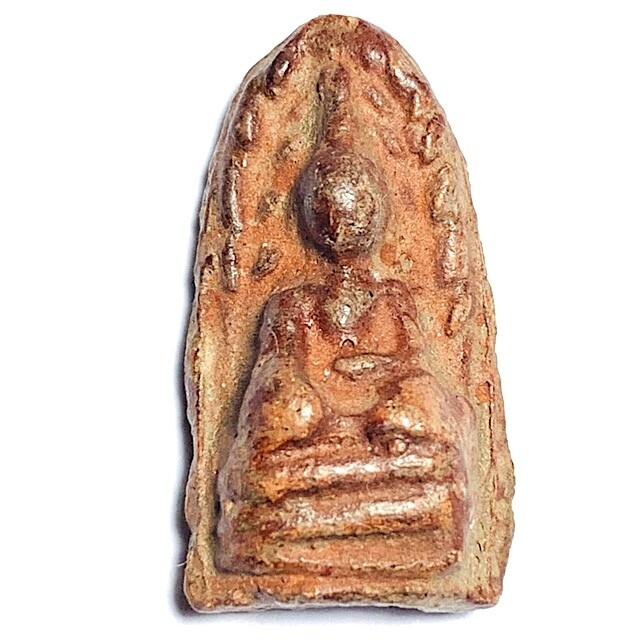
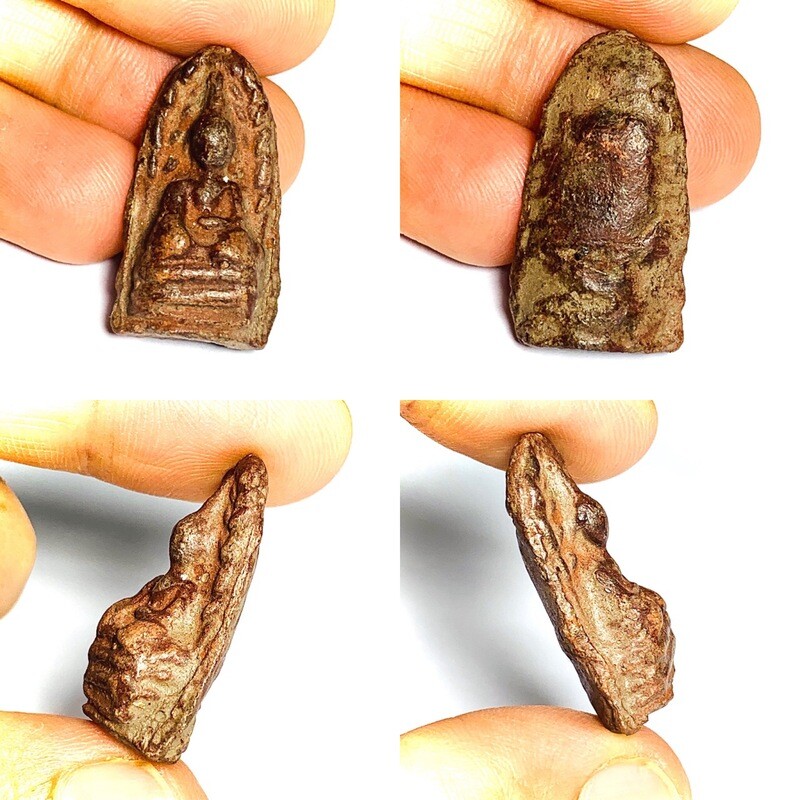
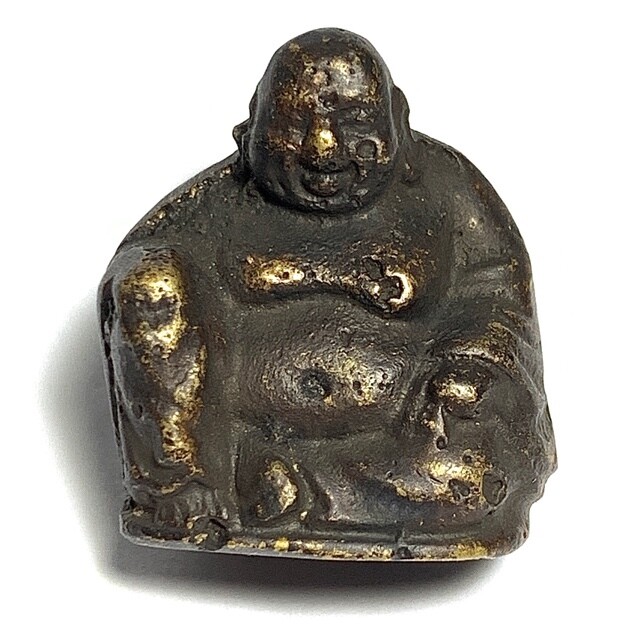
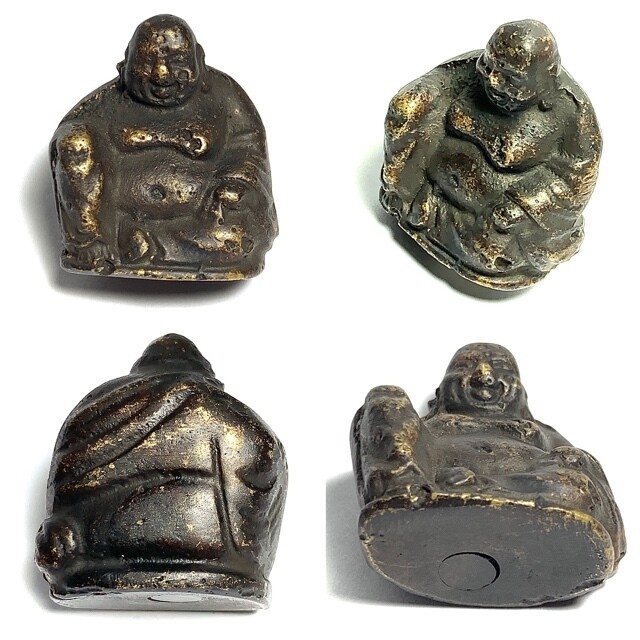
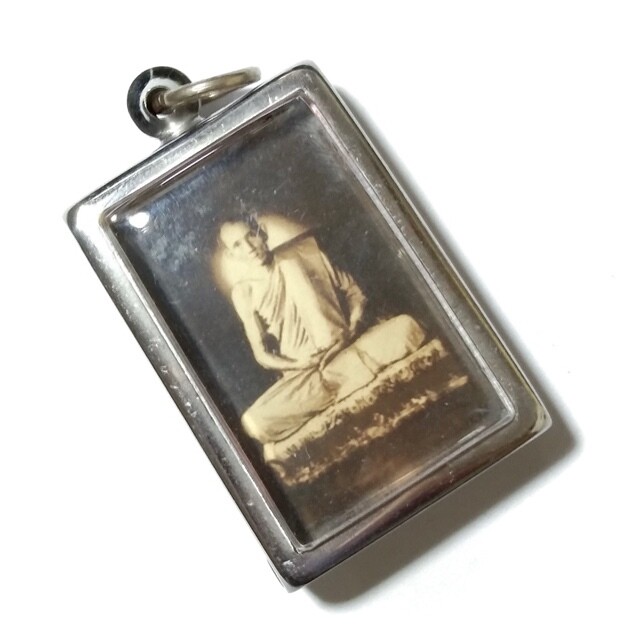
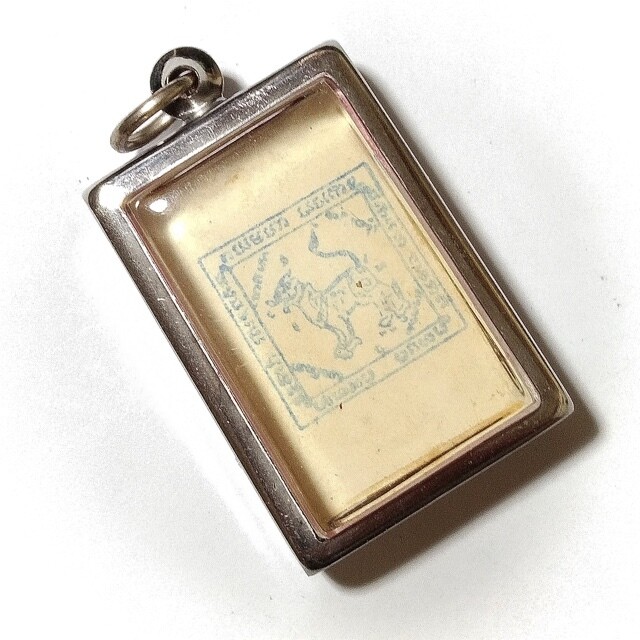
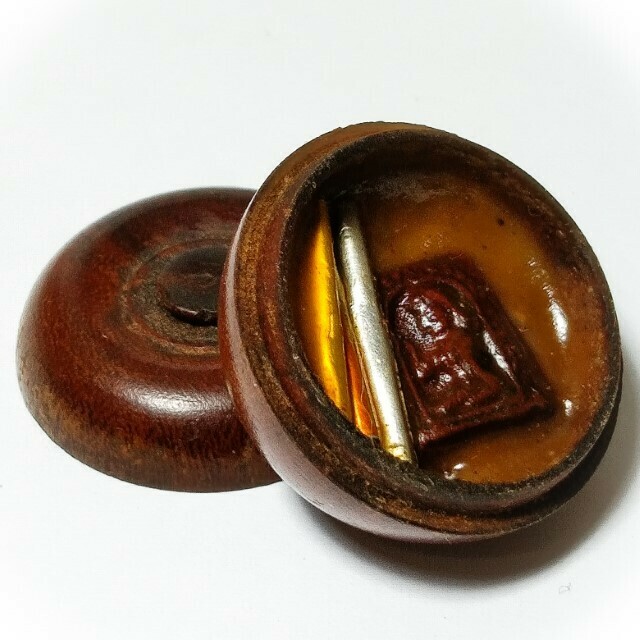
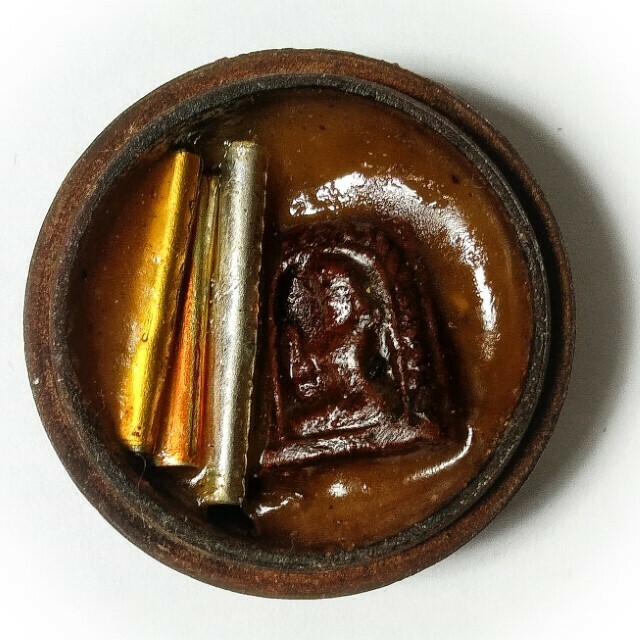
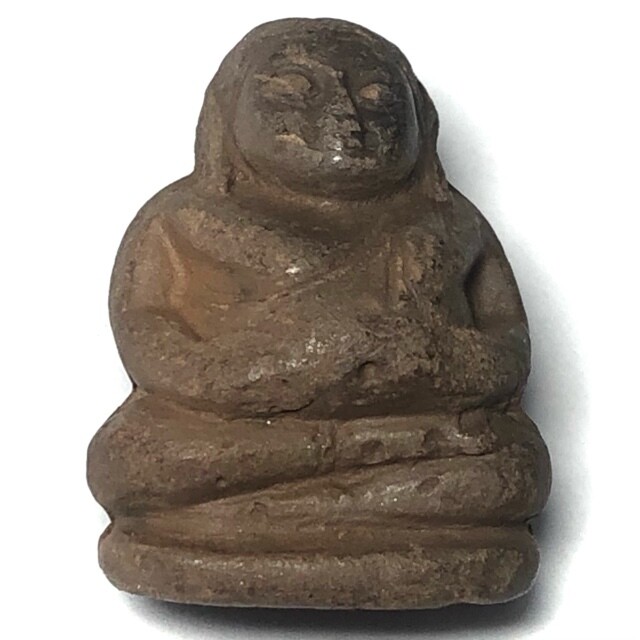
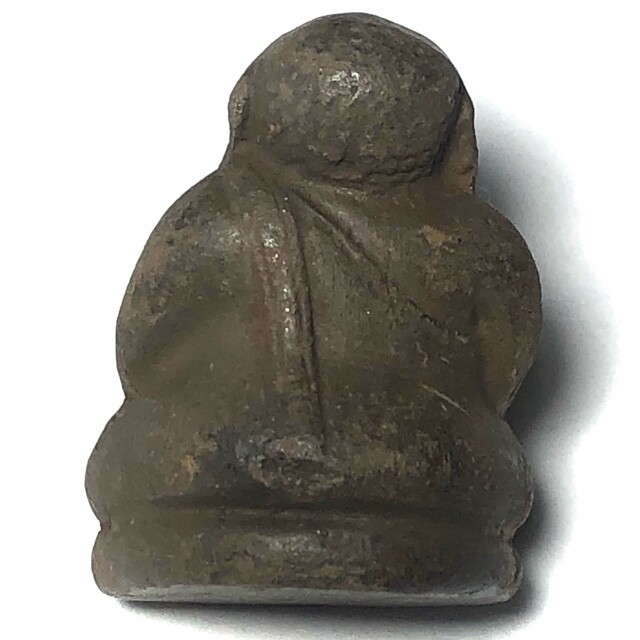
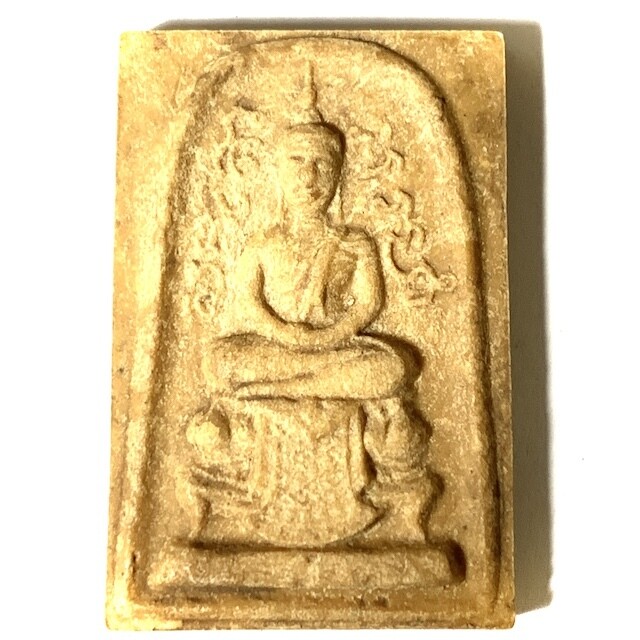
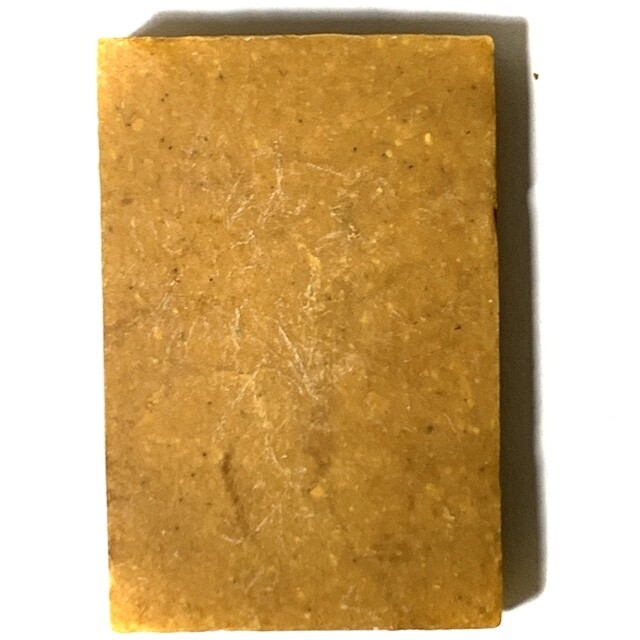
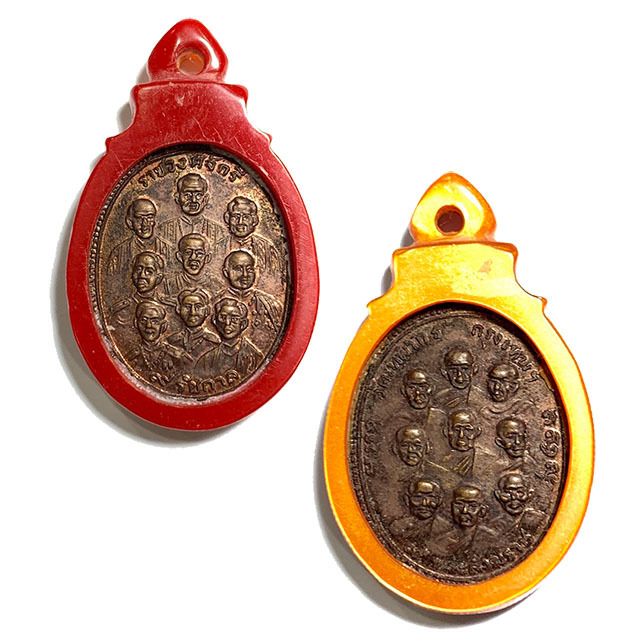
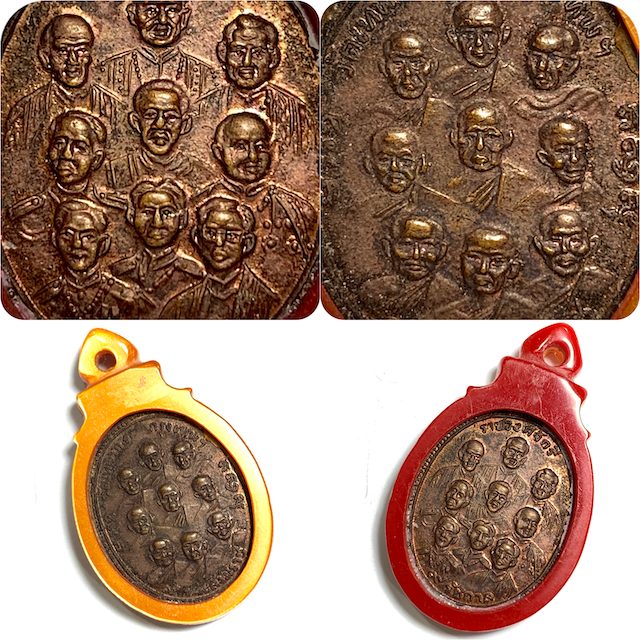
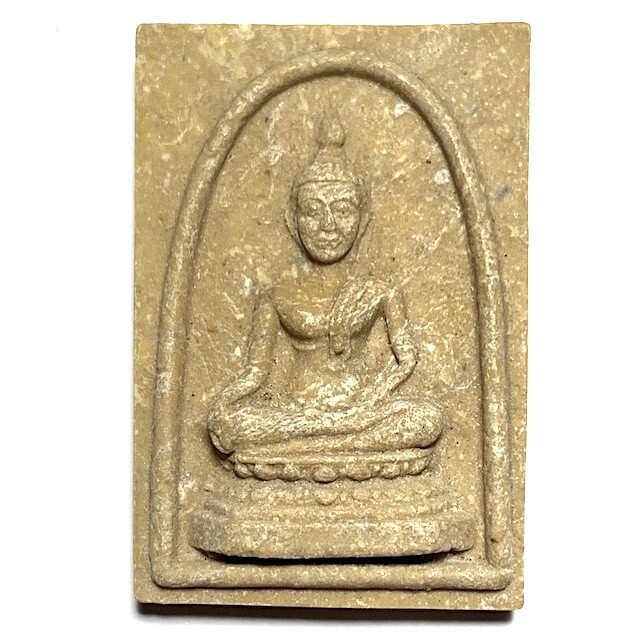
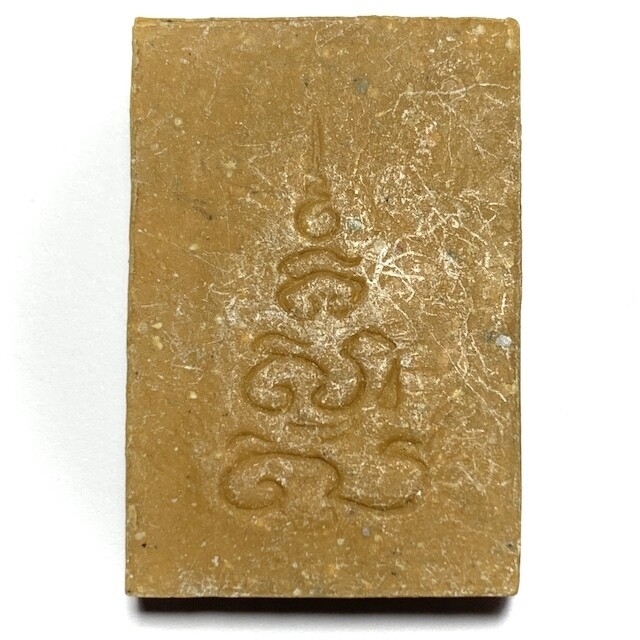
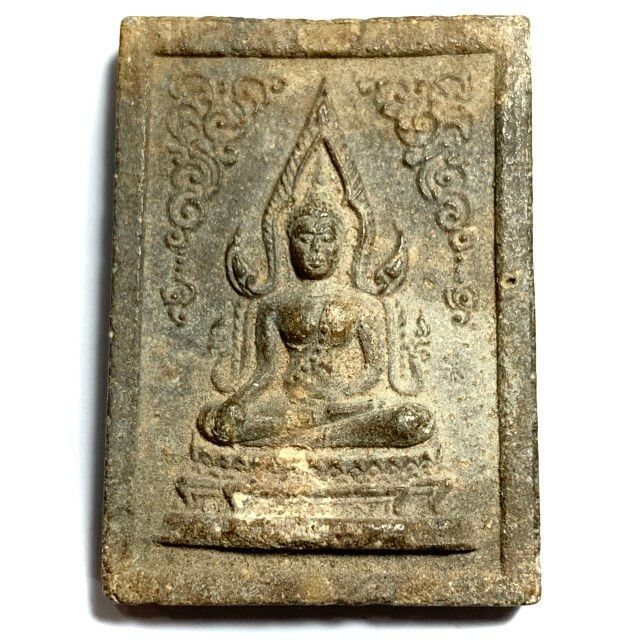
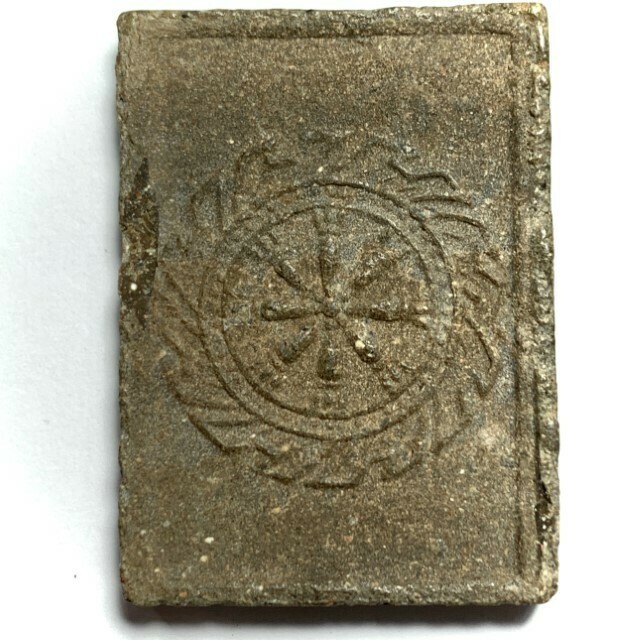
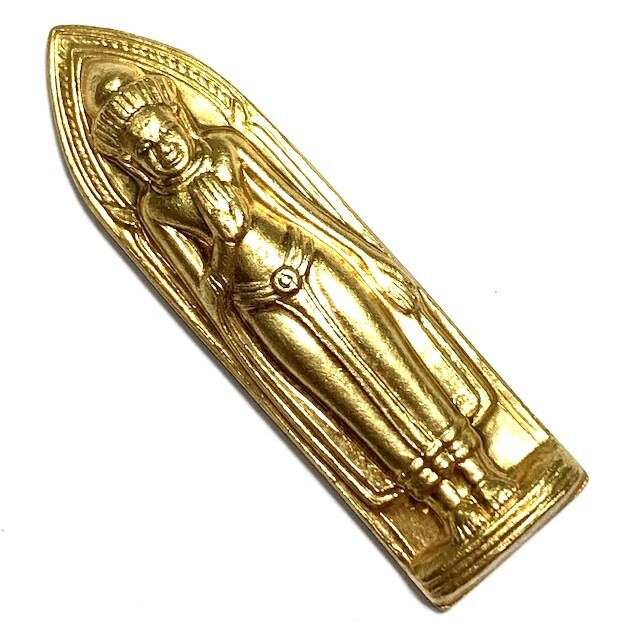
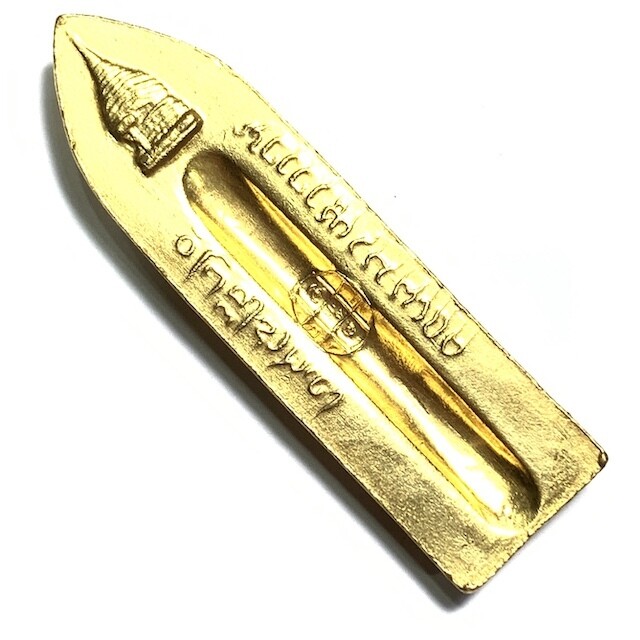
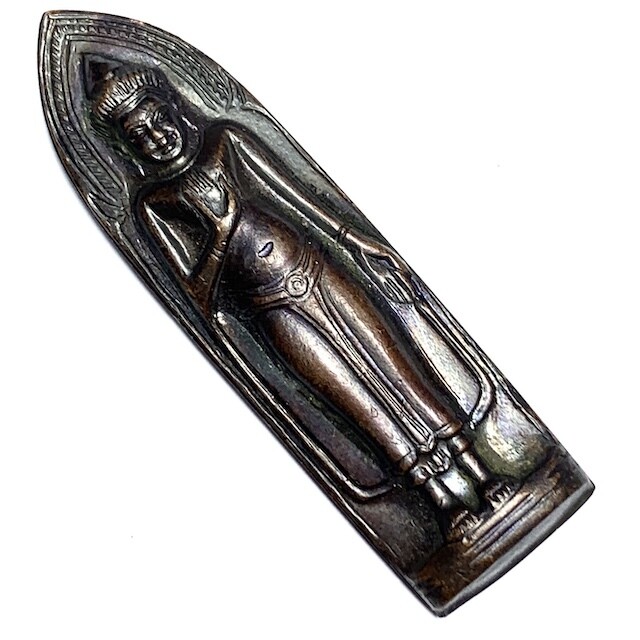
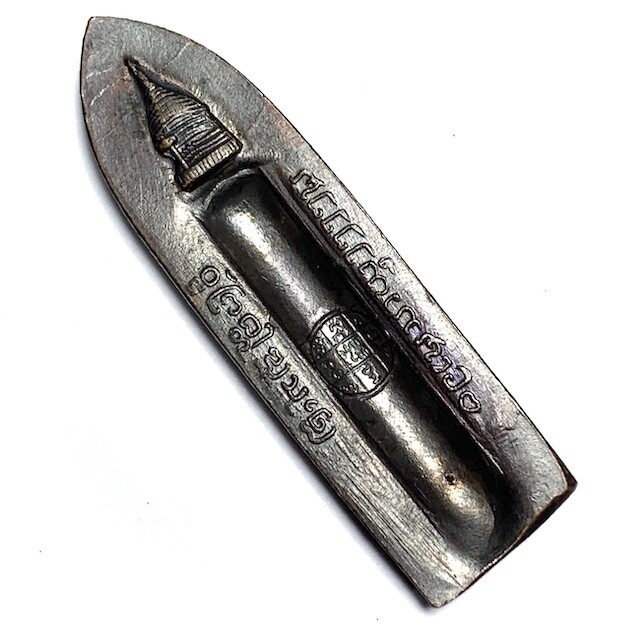
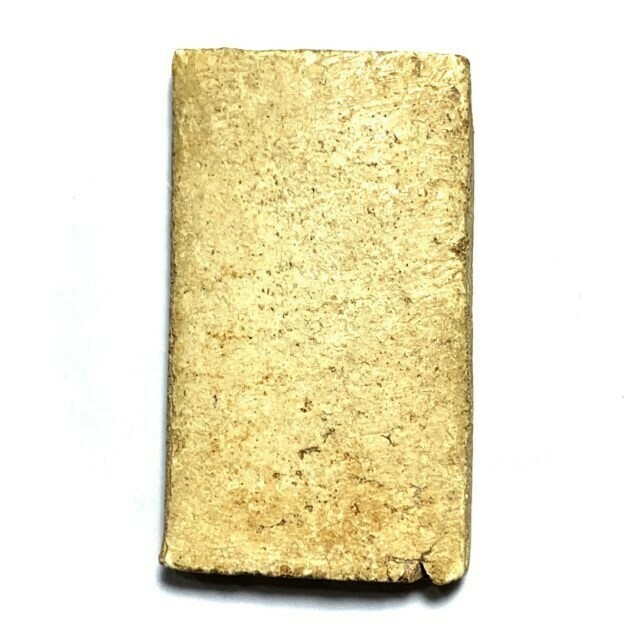
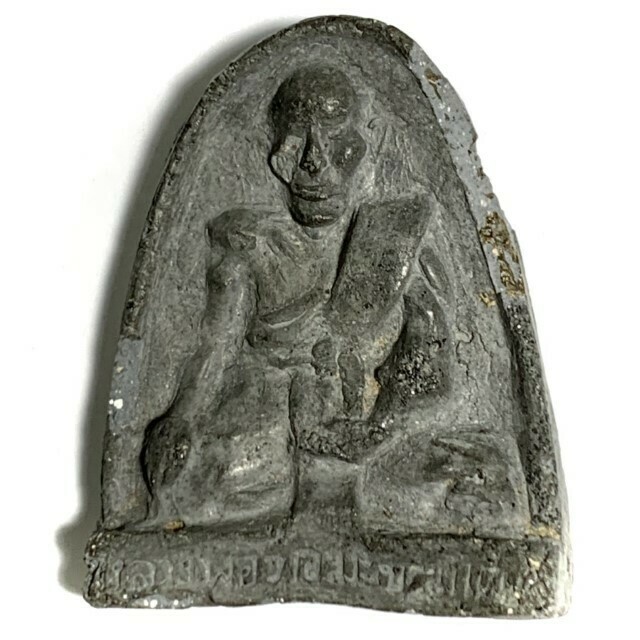
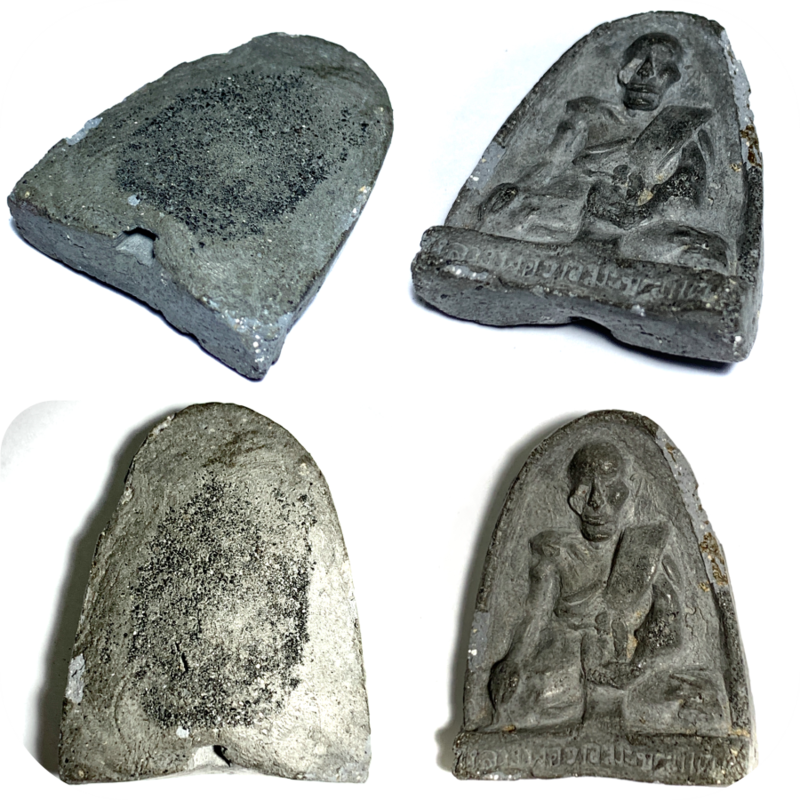
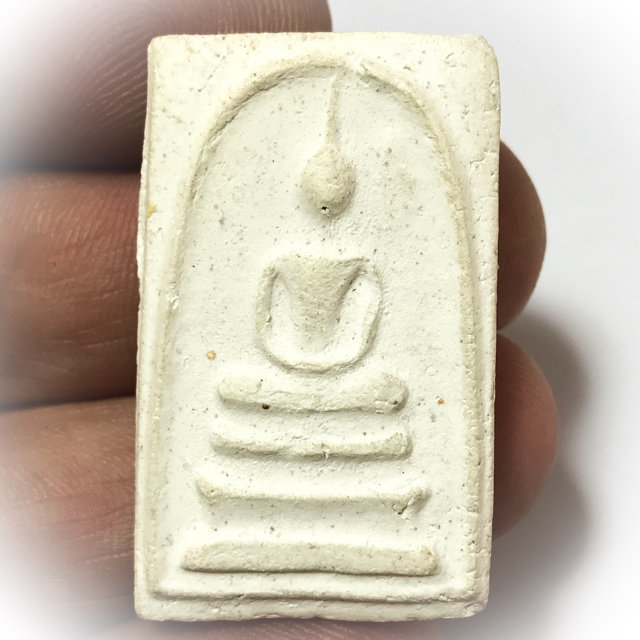
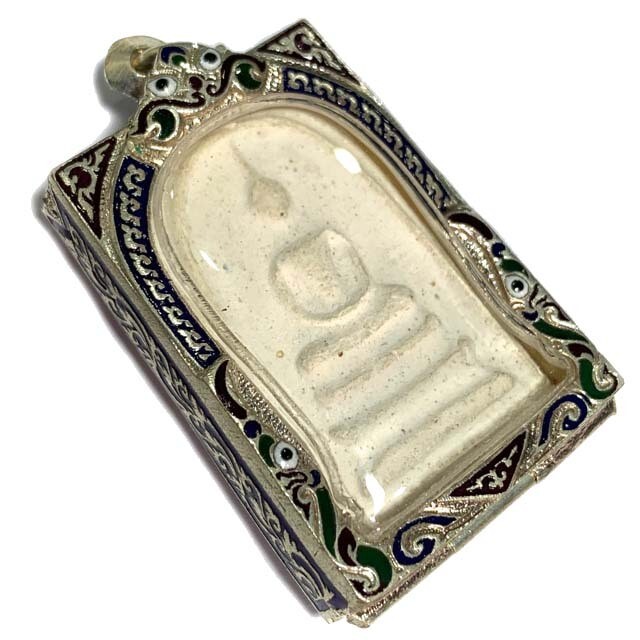
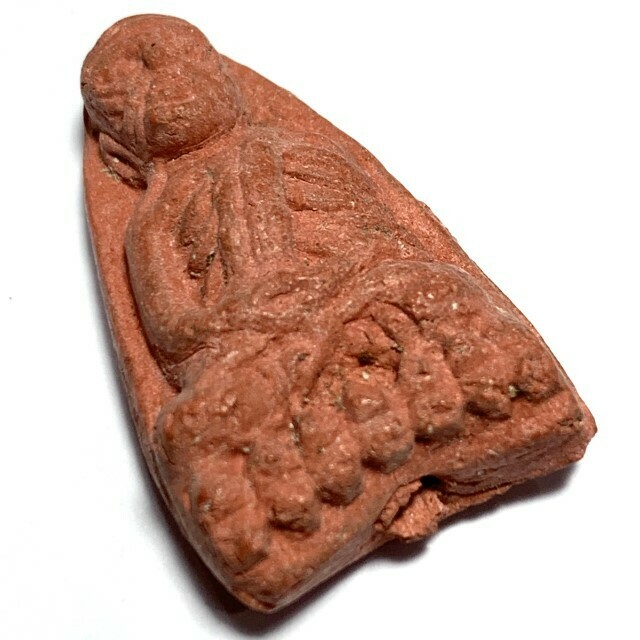
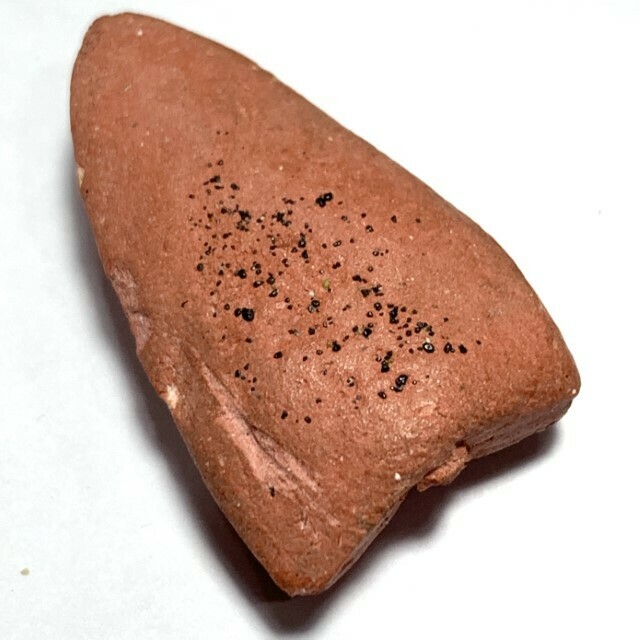
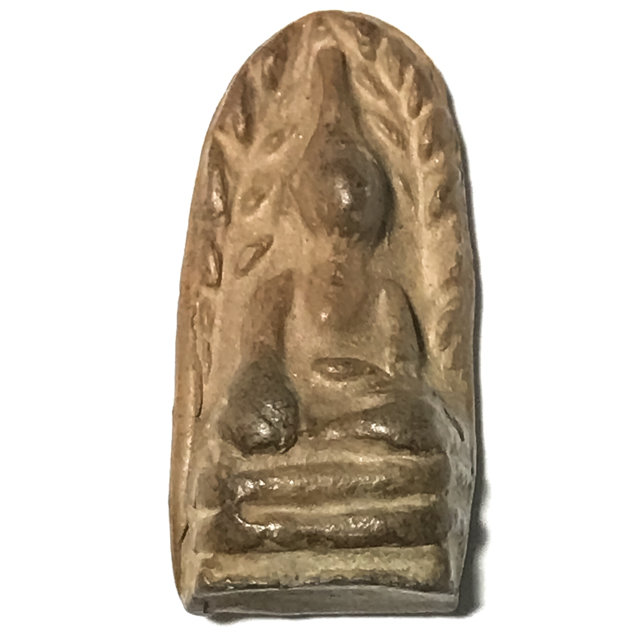
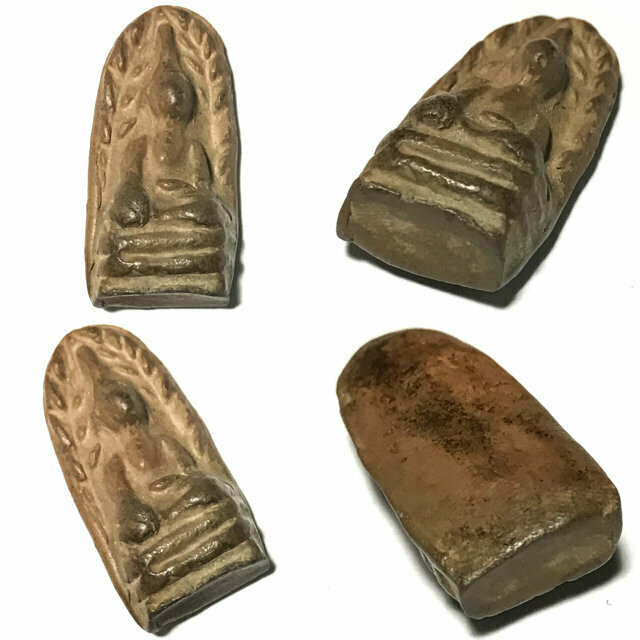
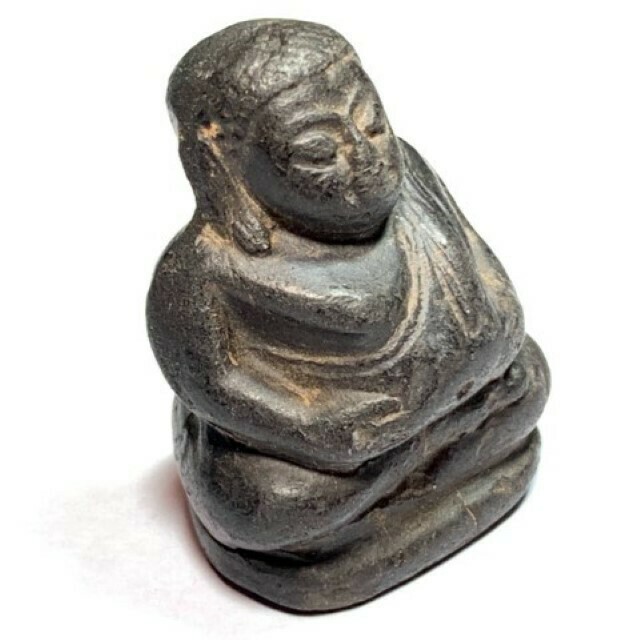
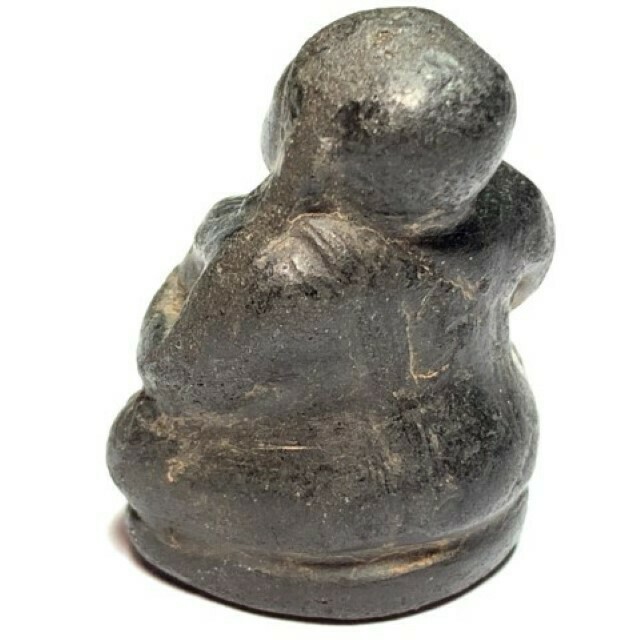
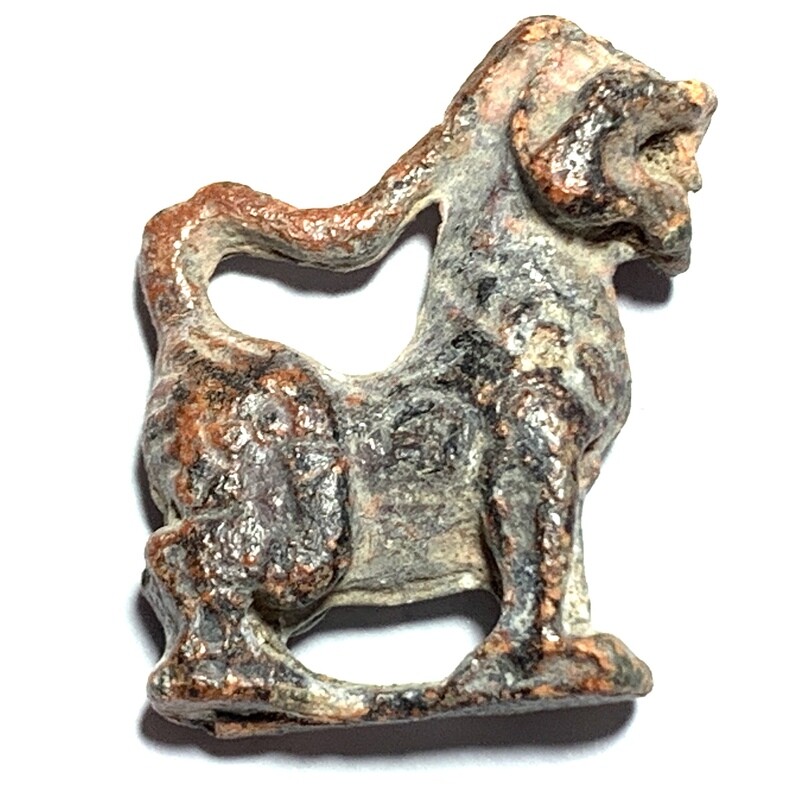
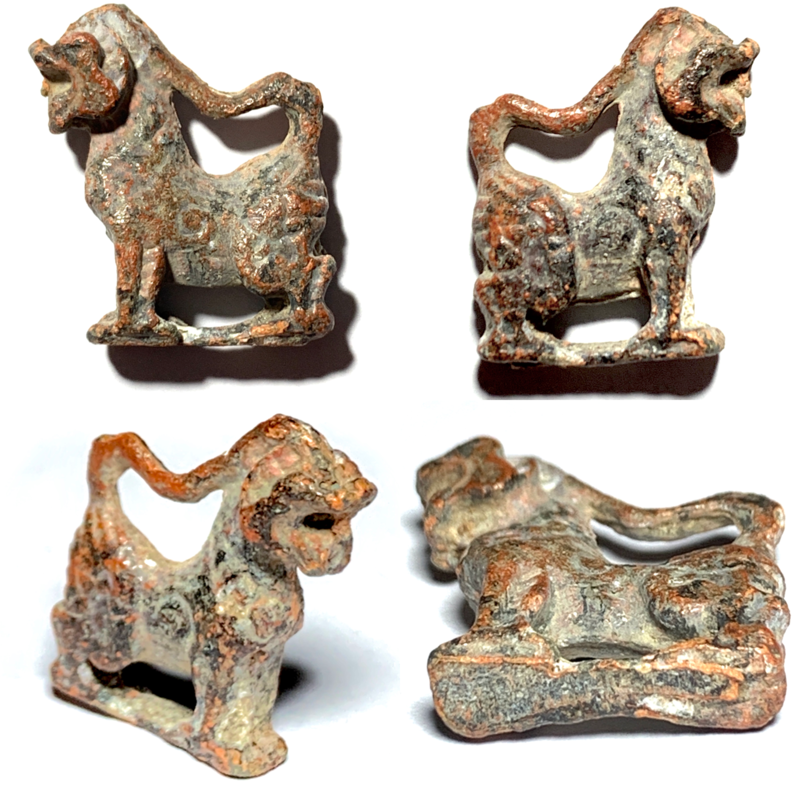
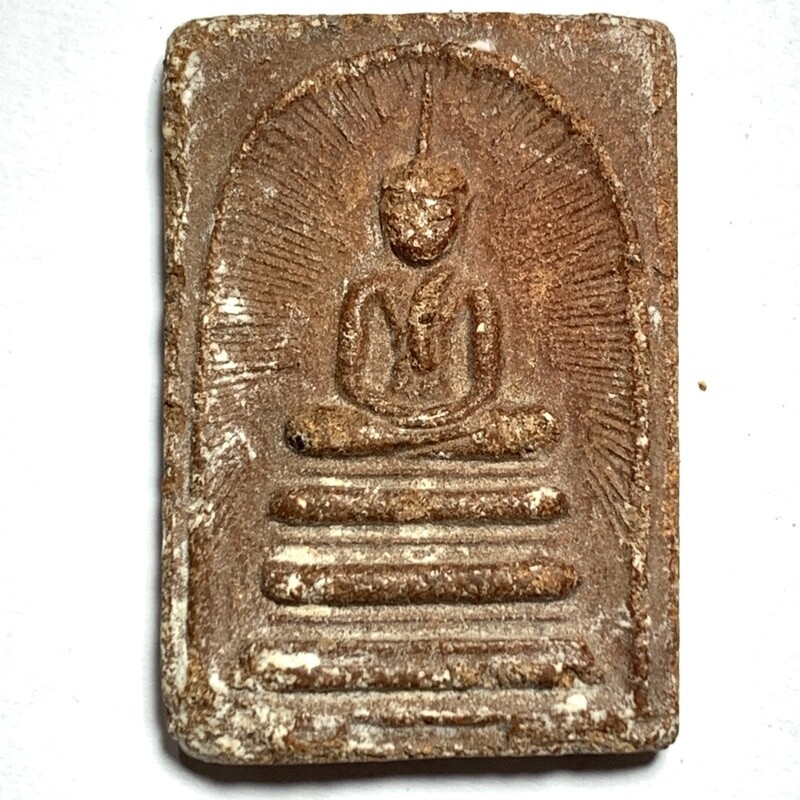
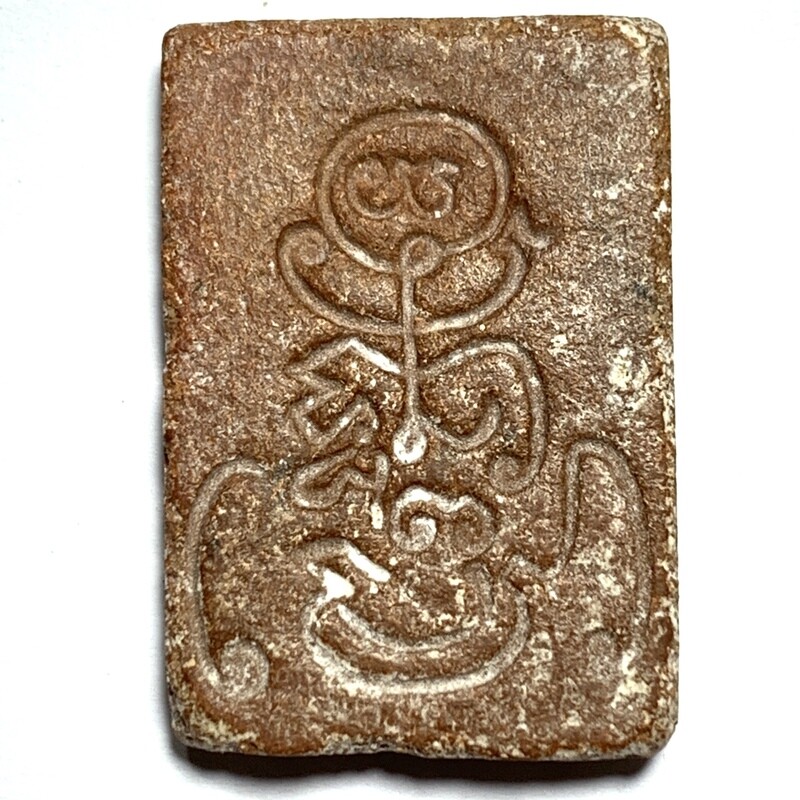
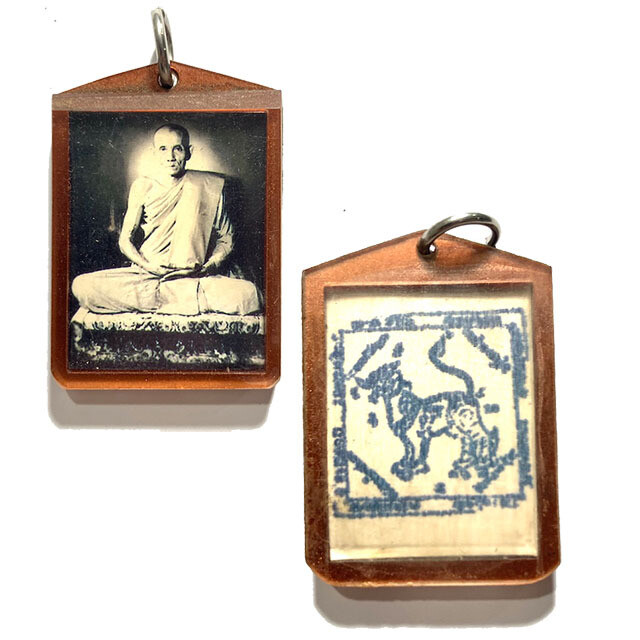
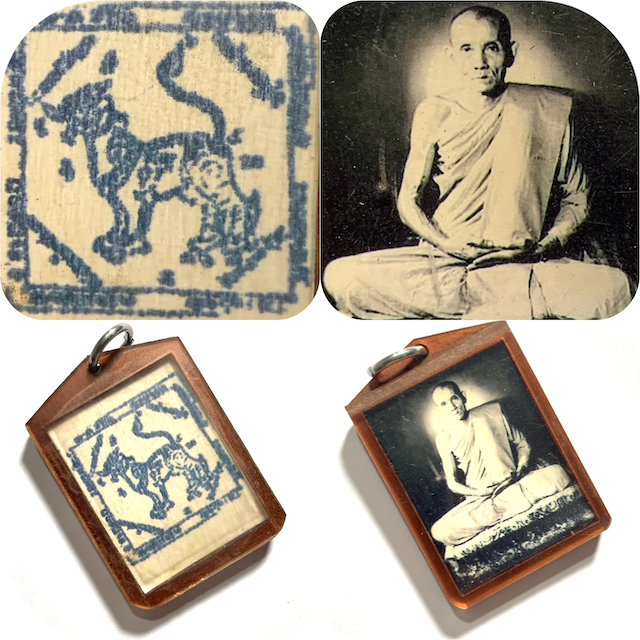
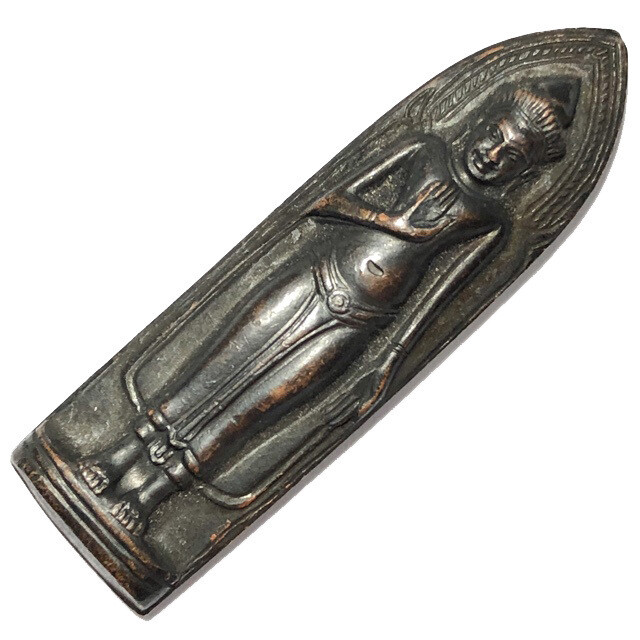
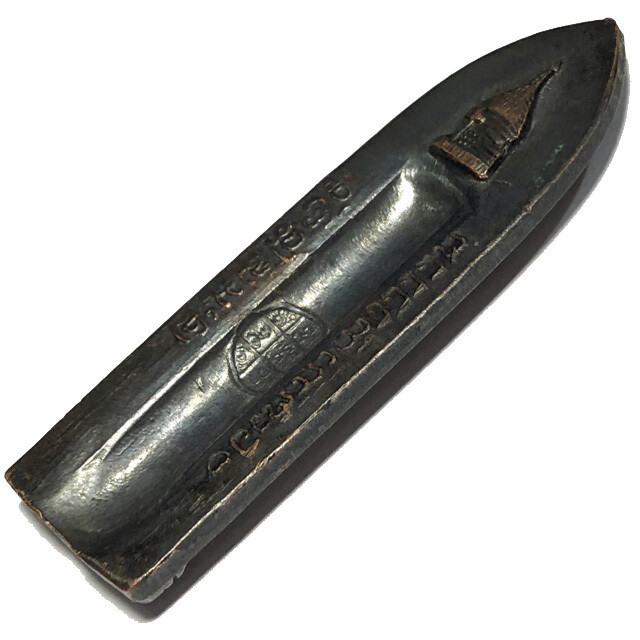
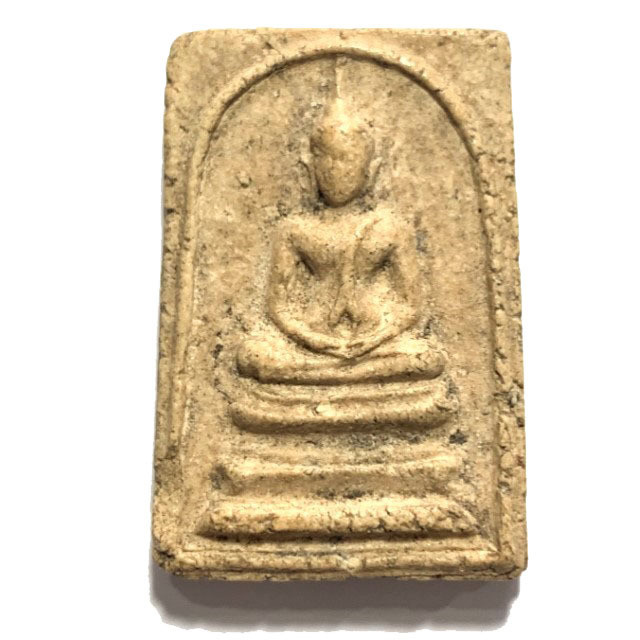
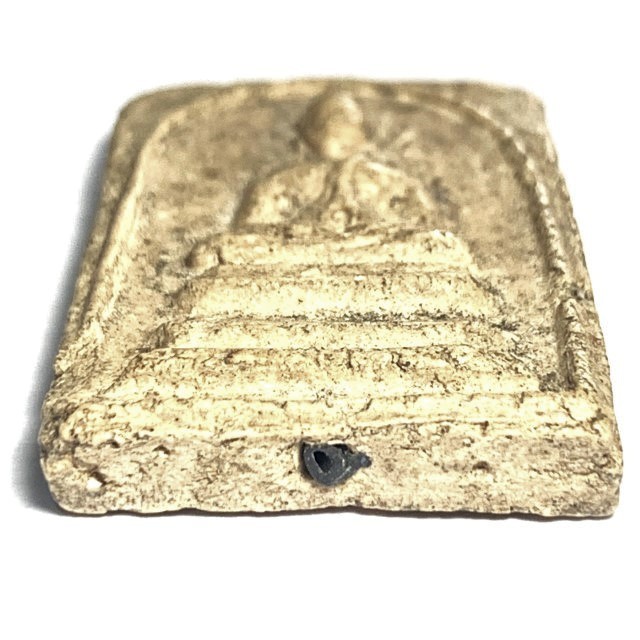
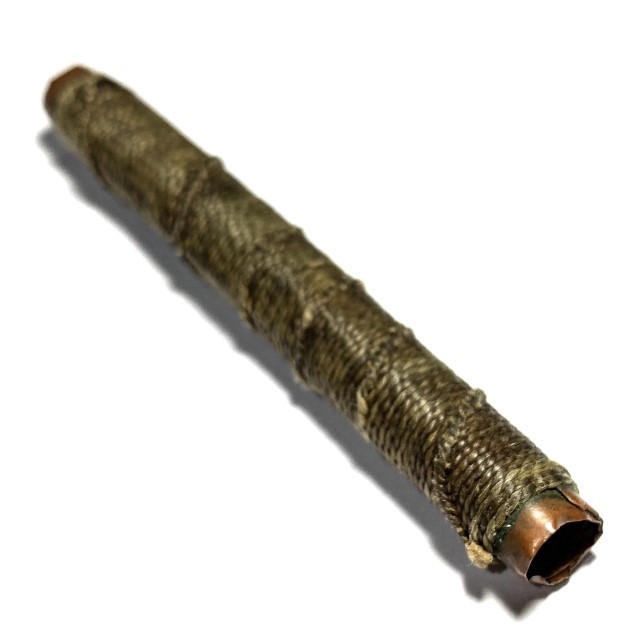
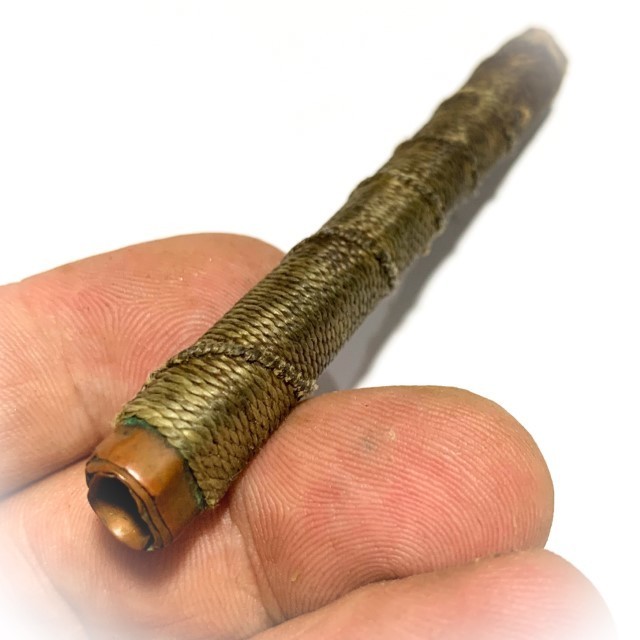
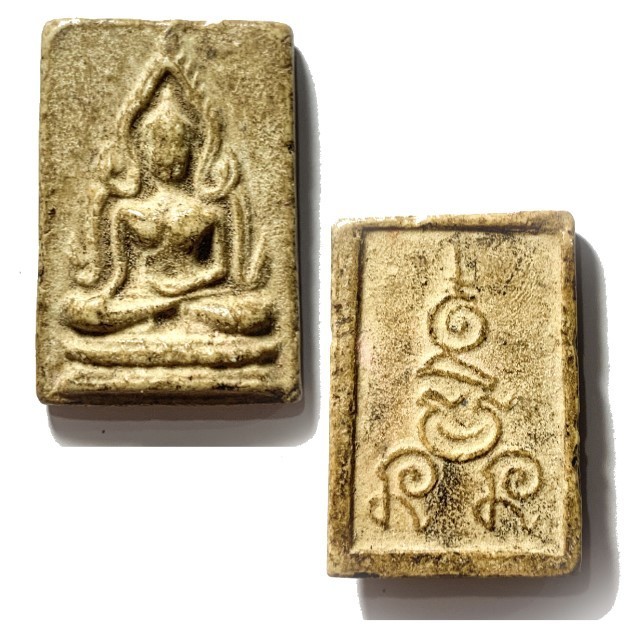
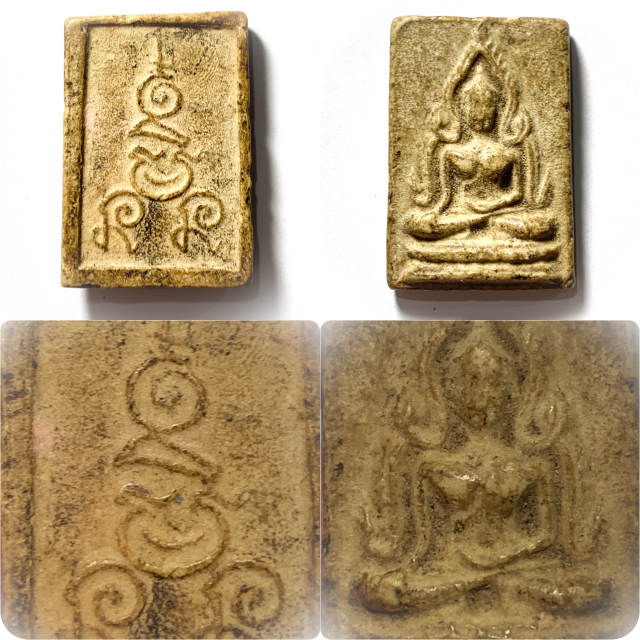
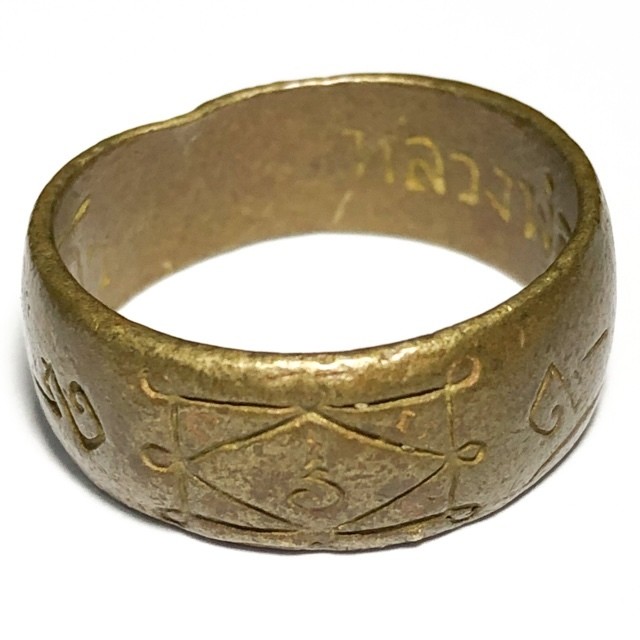
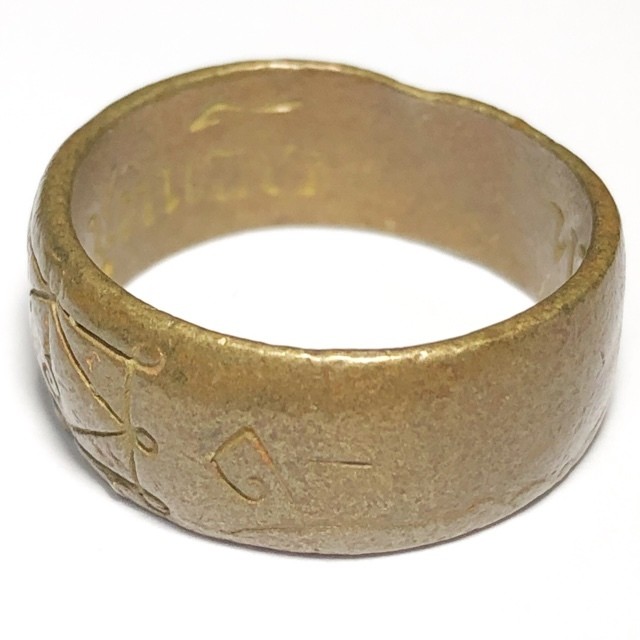
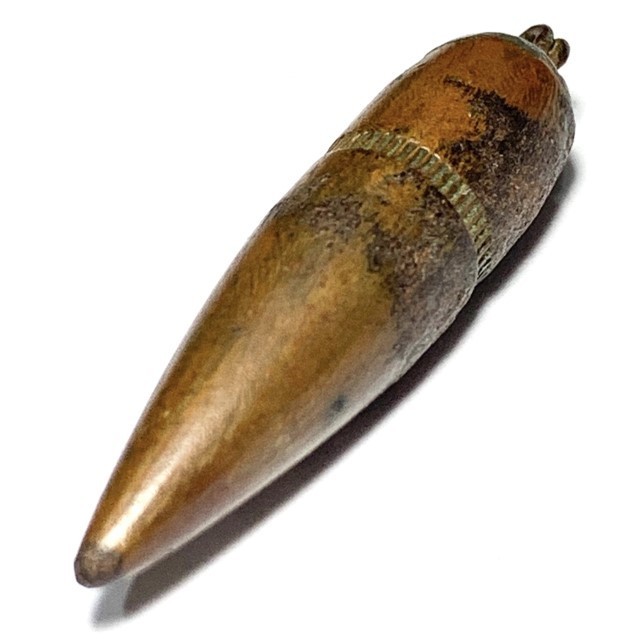
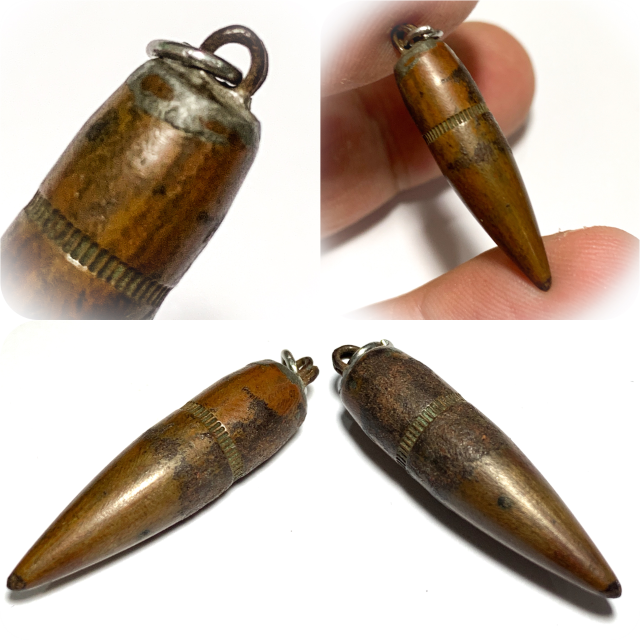
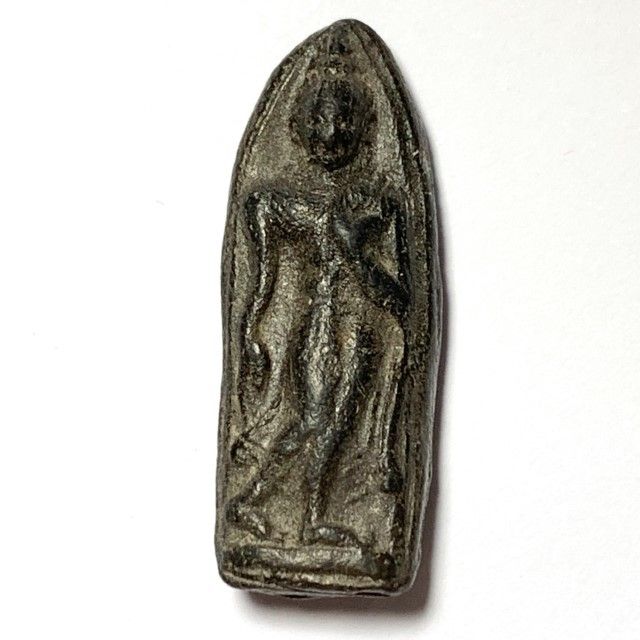
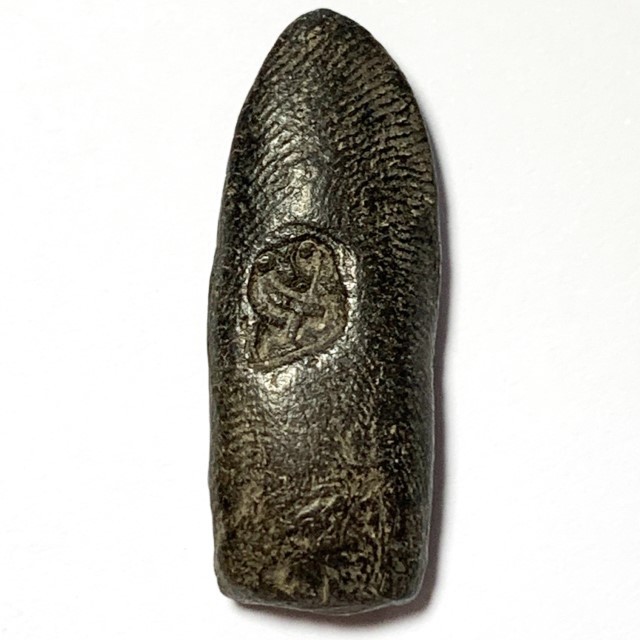
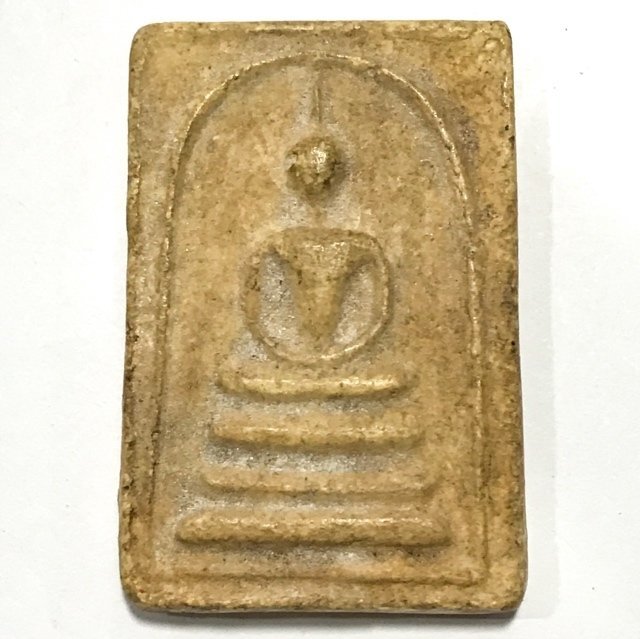
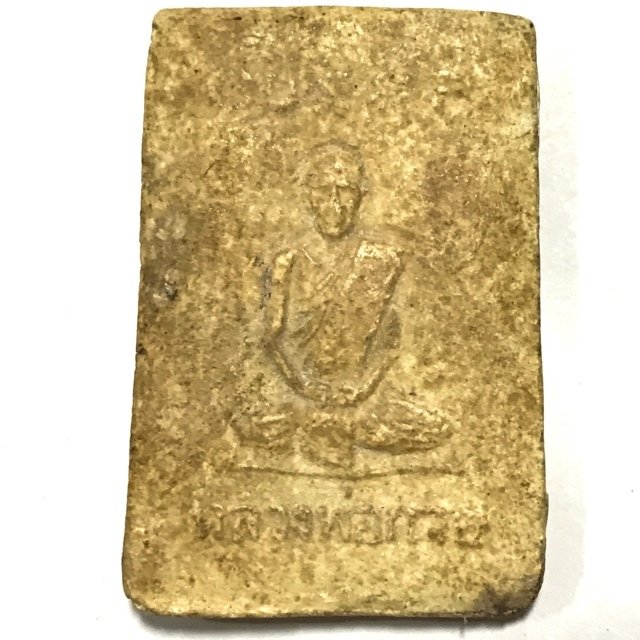
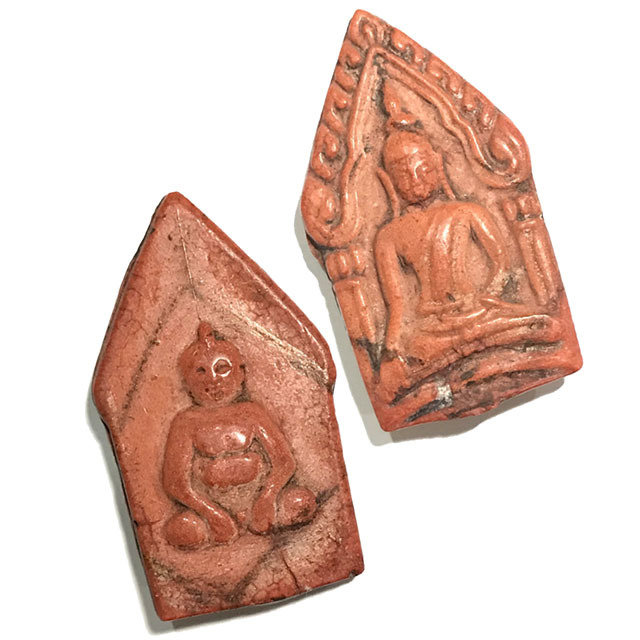
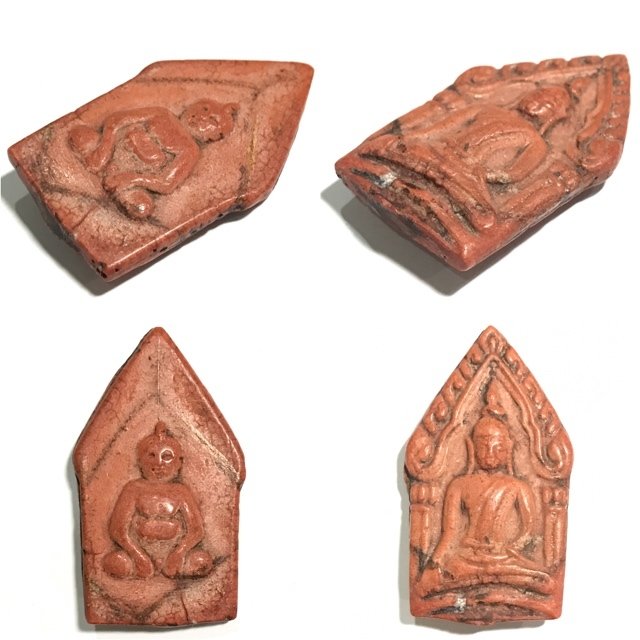
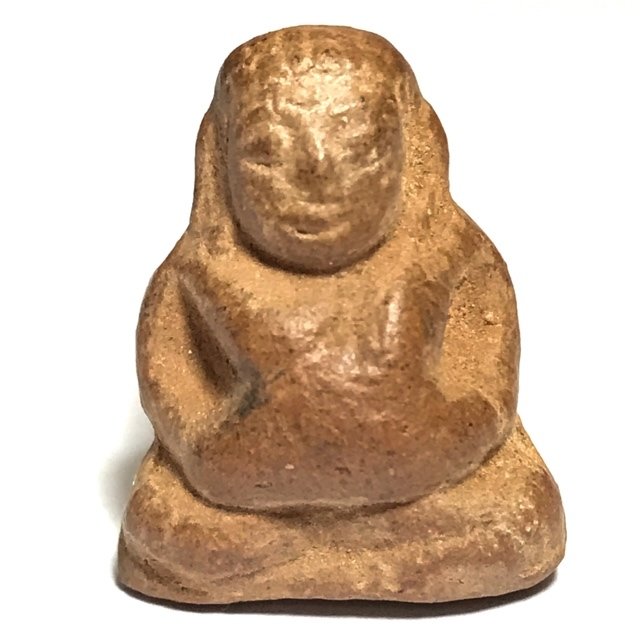
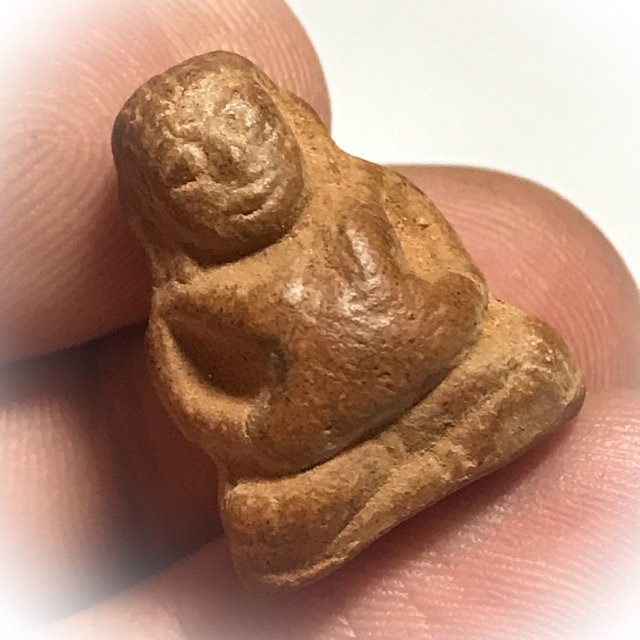
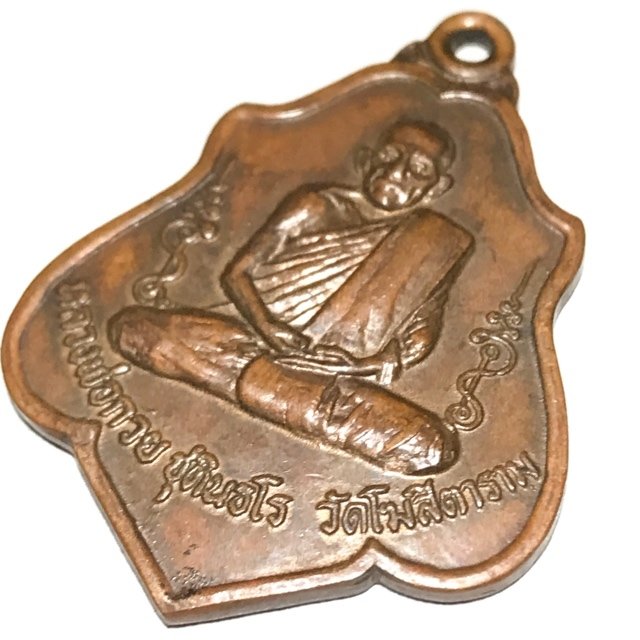
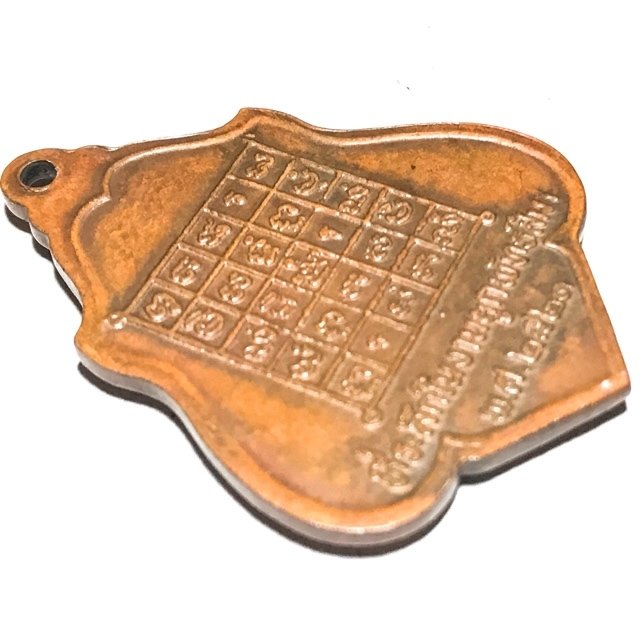
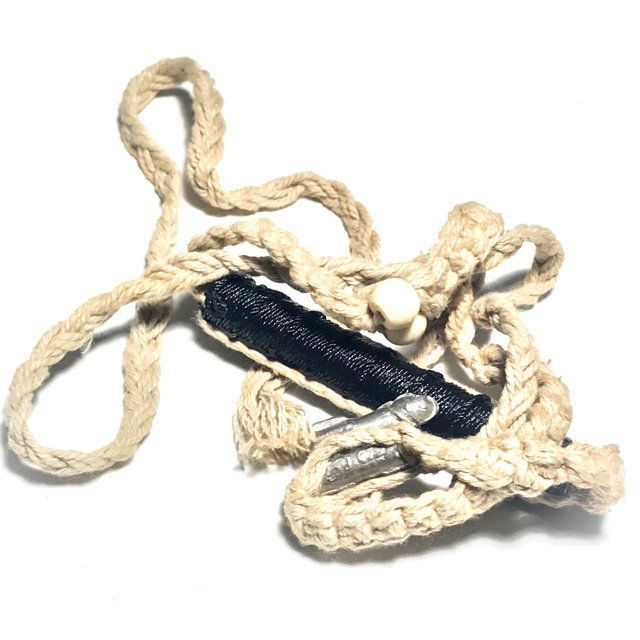
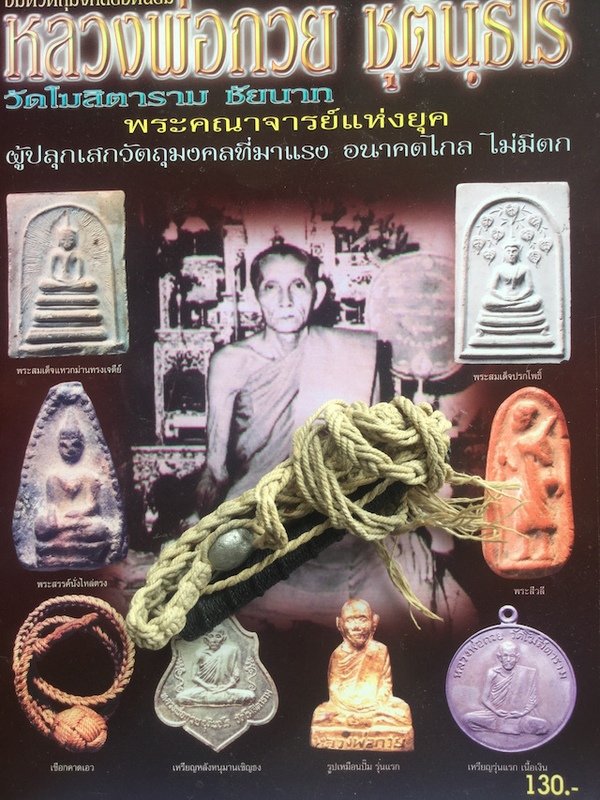
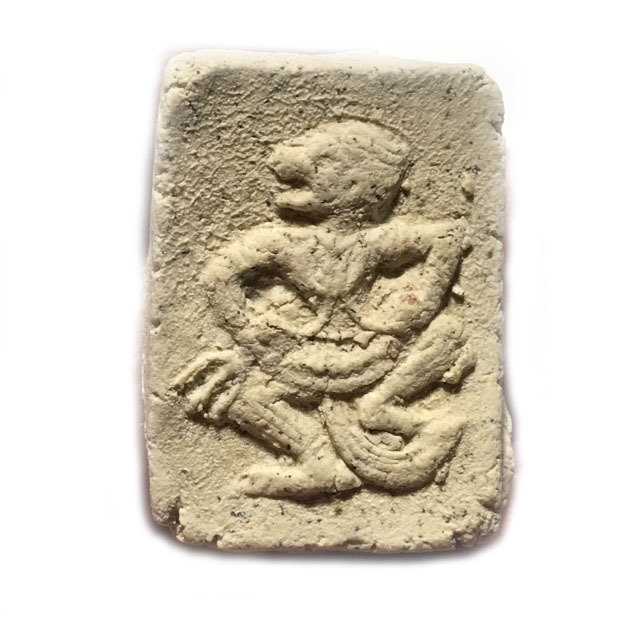
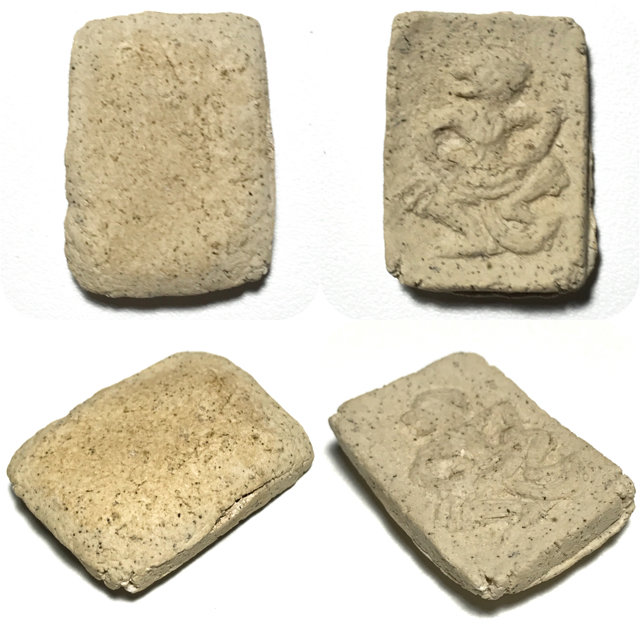
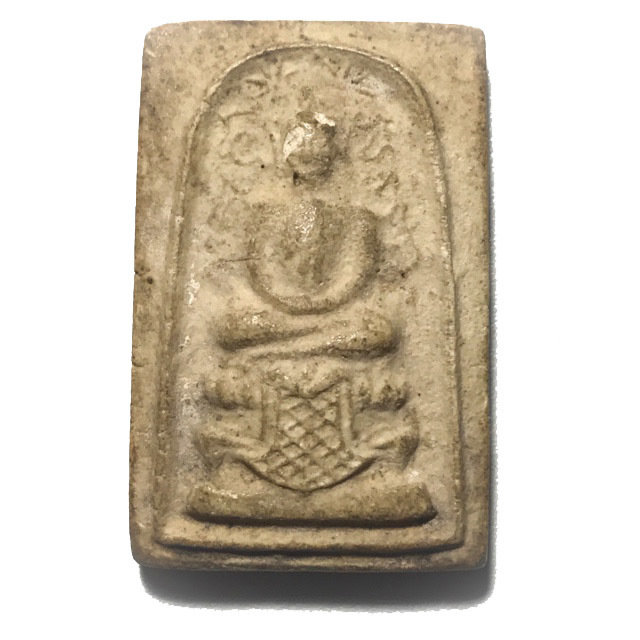
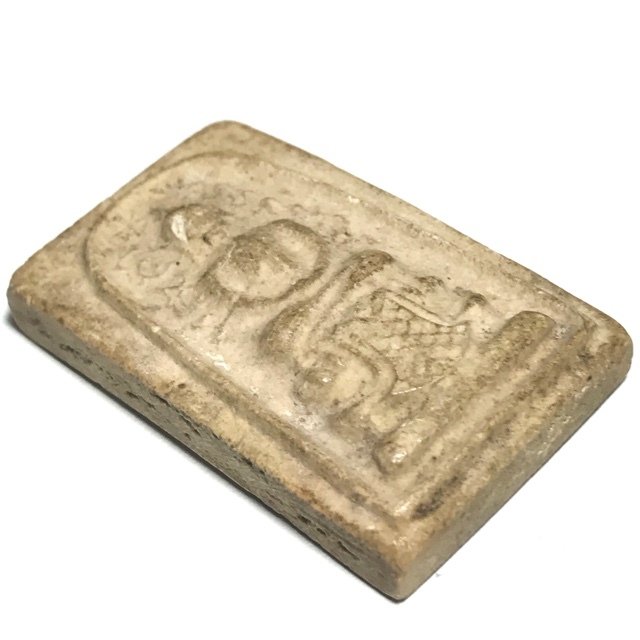
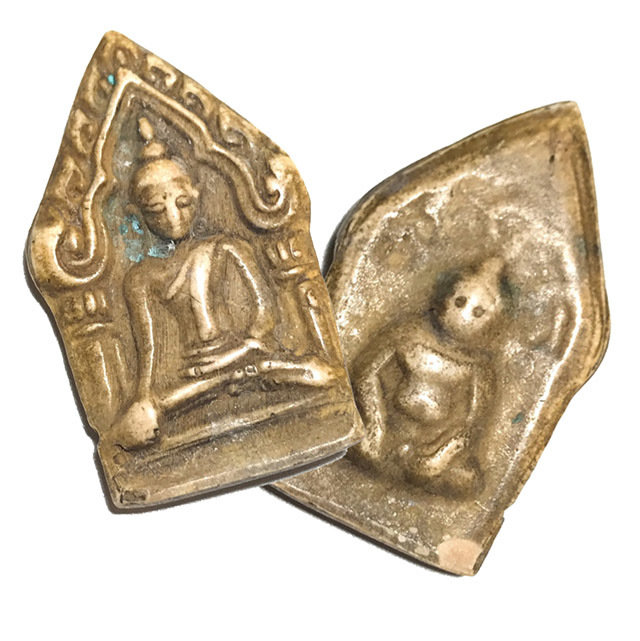
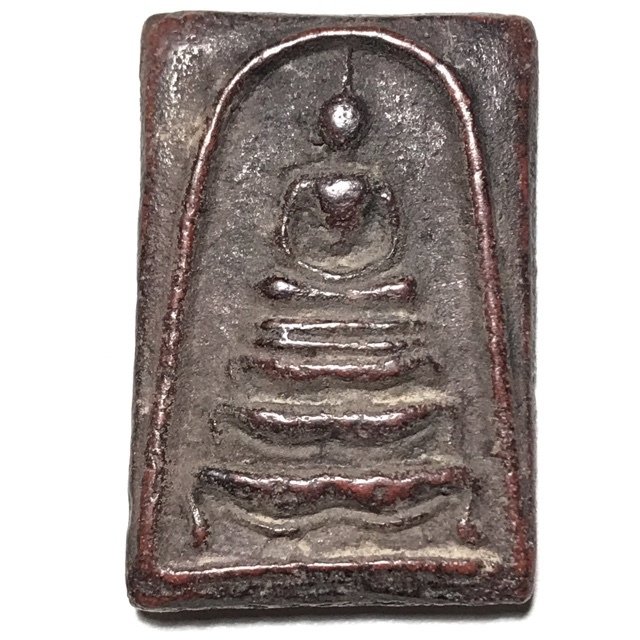
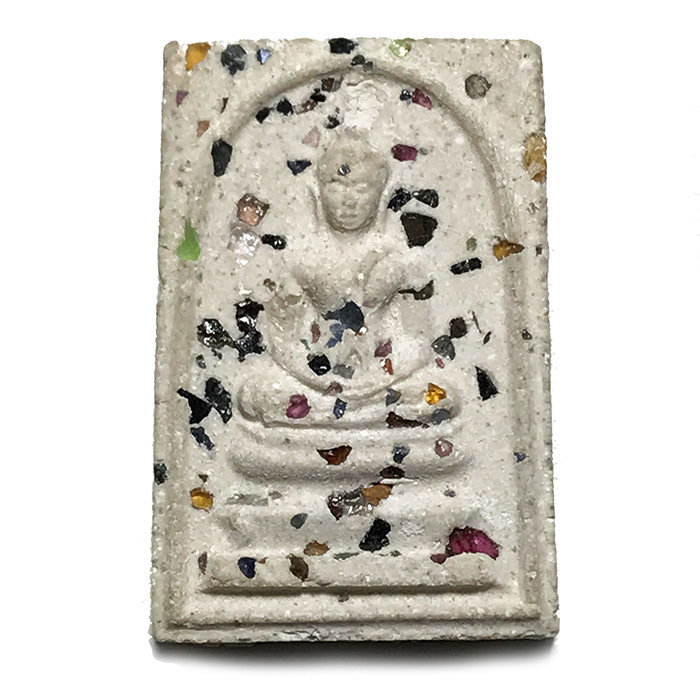
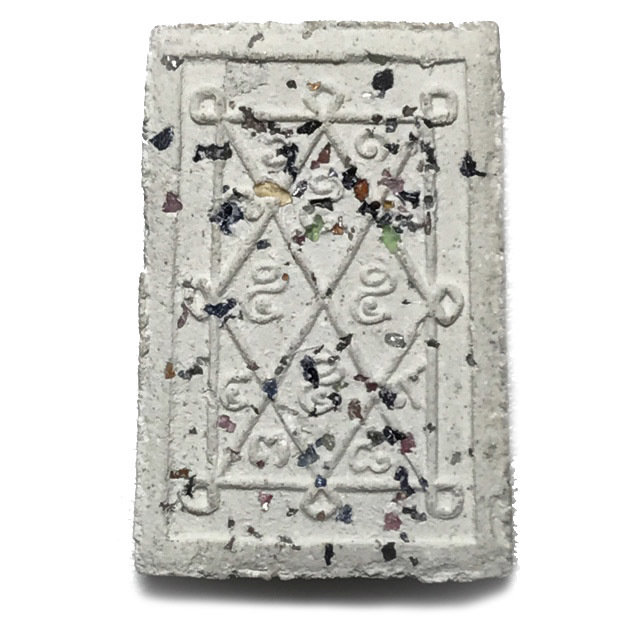
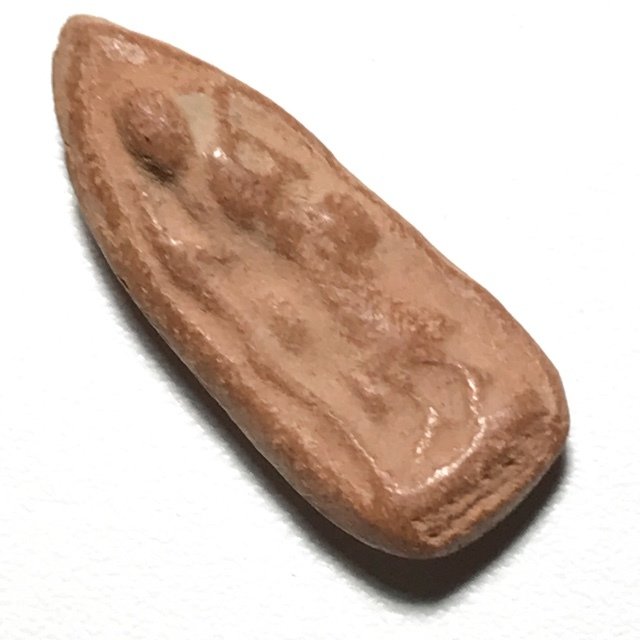
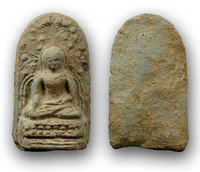
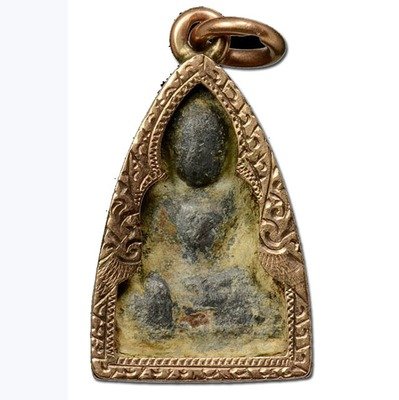
A very rare occult amulet and variation of Khun Phaen model from the pantheon of Luang Por Guay, of Wat Kositaram, the Khun Phaen Nang Kumarn Tong Votive Tablet with Necromantic Hoeng Prai Child-Ghost below the throne of Khun Phaen, with this rare model being the ‘Hlang Riab’ smooth backed model, in Nuea Aathan Powerful Sacred Earths, Funereal Ashes, Ground Bones, with Pong Wosed Yantra Powders.
This exhibit is from the 2513 ‘Run Prasopgarn’ edition from the great Master Luang Por Guay, and is along with all his amulets, highly reputed for its very powerful magic. The Khun Phaen Hlang Kumarn Tong edition came to be known as the ‘Run Prasopgarn’ (Proved Powerful by Experience Edition), as it was given to many devotees who came to get Sak Yant Tattoos from Luang Por Guay. They would come to get four Hanuman tattoos (one on the back, chest, and each arm).
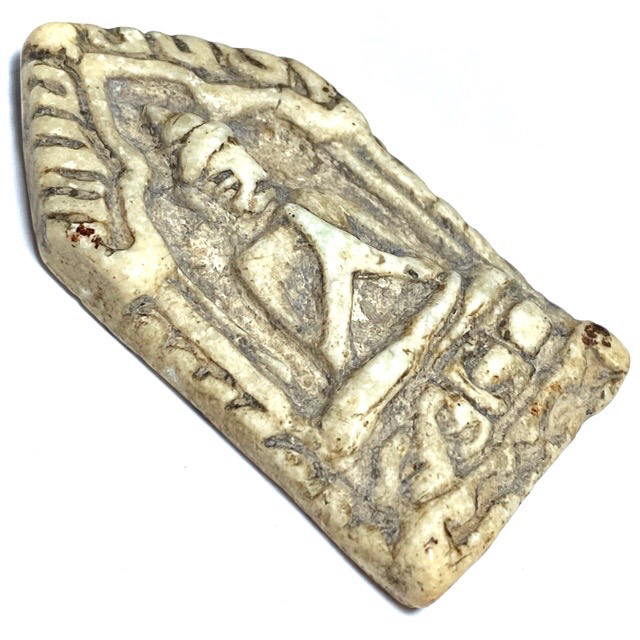
Most of Luang Por Guay’s Looksit were Nak Leng (Gangsters) and Suea (Mafia Bosses and Villains), and would be entering into deadly situations on a daily basis. And so the amulets of LP Guay had more than their share of chances to test their power, and it was this extremely high quota of lifesaviing miracles experienced by his devotees who wore his amulets, that brought the Khun Phaen Hlang Kumarn Tong Run Prasobgarn, and other amulets to such great favor.The front face features the image of a Buddha in the Mara Vichai Subduing Mara posture, with one hand touching the earth, calling the Dharani earth Goddess as Witness to his Merits.

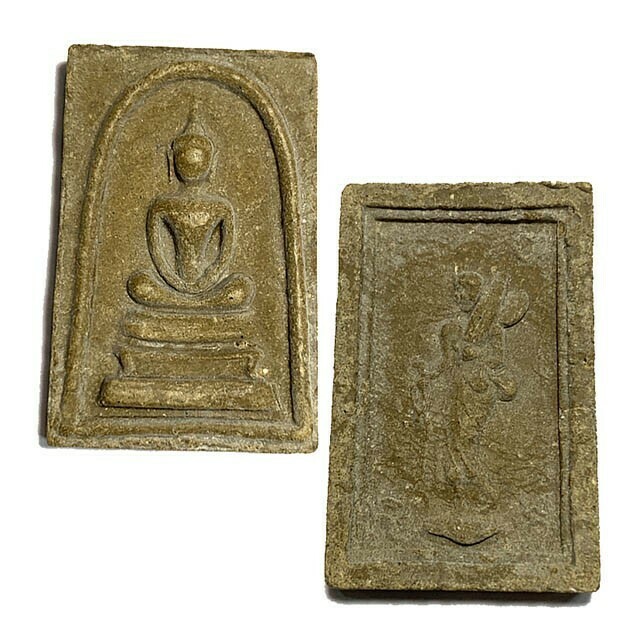
The Buddha has elongated ears, and is seated within a crystalline arch. Below the Buddha is a Kumarn Tong Golden Child Ghost Deva. The rear face of the amulet isflat surface (Hpang Riab) one of two versions, the other having the image of a Kumarn Tong, seated with hands on his legs, with a plump well-fed stomach, and a happy mood of prosperous living.
Kata Hua Jai Khun Phaen
Su Na Mo Ro Mo Ro Su Na Na Ma Pa Ta Ja Pa Ga Sa Na Maa Mi Hang

Kata to call the Kumarn Tong (Kata Riak Gumarn Tong)
Aehi Kumaaro Aehi Kumaaree Aehi Rak Yom Aehi Prai Tong Bpiyang Ma Ma Bpudt-Dtang Wasaayadti Aaragkhaana Bpajjayo Rao Rak Yom Kumarn Tong Jong Maa Aehi Ma Ma
Alternative Version;
Om Pani jijeruni Pantang Aehi Ma Ma
When you go places or enter and leave buildings you should speak to the Kumarn in your heart to accompany you. When you eat, you should speak in your heart that the Kumarn should come to eat with you. Make a separate offering do not give from your own plate.


Kata for giving the Name to the Kuman (chant when giving him his name).
“Naamaanang Samaa So Yudt Dta Tho Yudt Dta Tha” “In the Name of the Kroo Ba Ajarn – I name you (Name which you wish to give your Kuman Tong”.
Say this 3 times, and the next day chant only once. You must always remember his name and must introduce him to all people in the house, and ask him to also protect and lend prosperity to them all.
KATA FOR EMPOWERMENT OF KUMARN TONG
Aehi Gumaarang Udti Uni Na Ang Idti Putto

KATA FOR CALLING THE KUMARN TO EAT.
Jadturapuudtaanang Ahang Waayang Ammahaara Kumaarang Kumarn Tong Maa Rap Pochanaa Aakajchaahi Dtiwadtabpo Aakajchaaya Maa Look Maa
Kata Pluk Kumarn Tong
Na Ma Pa Ta Gumaara Phuudti Bpadti Ruu Bpang Naama Dtae Laapo Namo Hoemi (Chant 3 Times to Awaken the Kumarn)
Kata Perm Rit Kumarn Tong (Charge Up Power)
Dtaadta Paya Bpudt-Dta Aehi Jidt-Dtang Bpiyang Ma Ma

Kata Atithaan Kumarn Tong (Ask For Wishes To Be Granted)
(Maha Namasakara x 3 first)
Ja Pa Ga Sa Jid-Dta Mahaa Jidt-Dtang Bpiyang Ma Ma
Kata Gamgab Kumarn Tong (To Command the Kumarn on a Mission)
Gumaarang Bpadt Sandtang Plaay Yanaa Mahaa Su Wi Sae Tha Itti Rit Mutu Dtaanang Sud Suu Sang Mahaa Chanaa Dti
Kata Adtithaan Khor Lap
(Use to make wishes and ask for Lucky Blessings, or to win the Hearts of Others).
Aehi Jidt-Dtang Jidt-Dta Pantang Pakinimae Jidt-Dtang Pantang Bpiyang Ma Ma

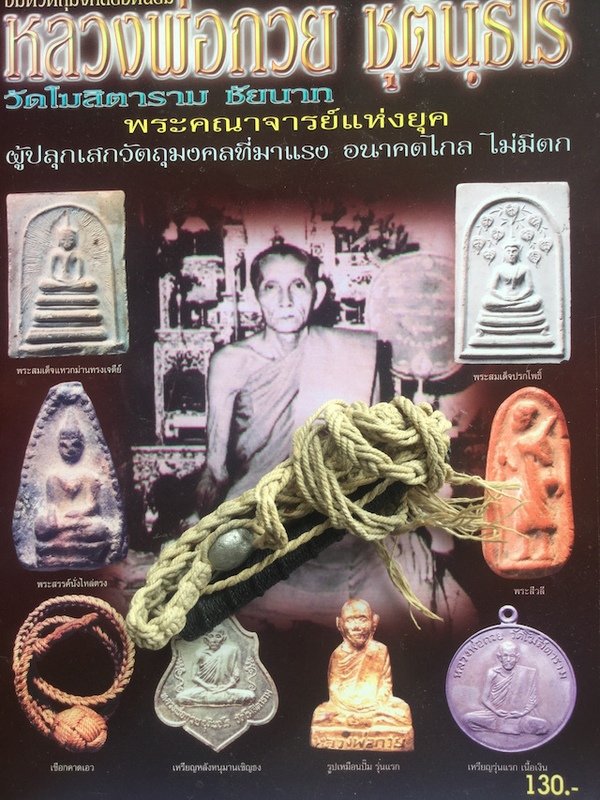
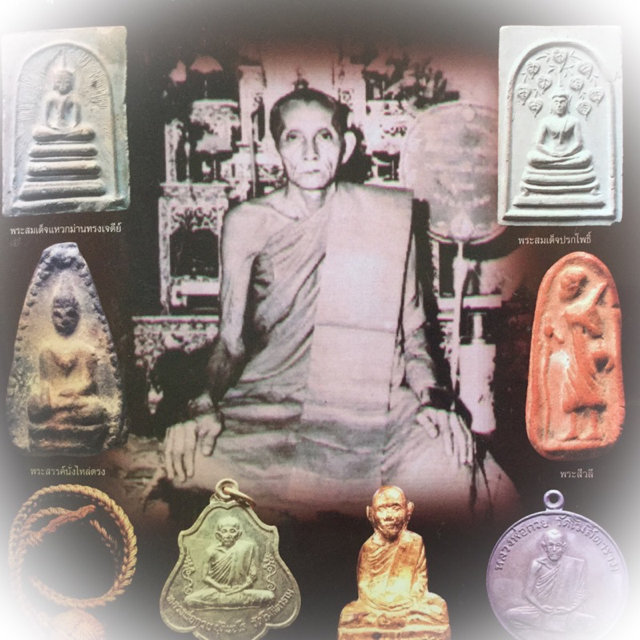
Luang Por Guay Chudtintaro
Luang Por Guay’s amulets have reached the highest level of respect and collectorship in their history now, and are considered to have noticeable effects that are felt be everybody who owns and wears one of his amulets. The stories of confirmation of their power are more than can be counted, and his Great Patipata (practice), and Exceedingly Powerful applied methods of Sorcery, are a large part of what attributes to their power.

His amulets are now extremely rare to find because those who already own any will never wish to part with them again, and they are hence becoming one of the rarest kind of amulets to find these days. Usuallly this happens because of speculation by the collector scene, but in the case of Luang Por Guay’s amulets, it has happened primarily for their Sacred Value, much much more than for their collectorship and artistic value, which is of course also extremely high.
Luang Por Guay is famous for his immensely diligent and complex manner of empowering (Pluk Sek) amulets, which involved daily empowerments at various times of day namely at dawn, morning, midday, afternoon, evening and midnight. In addition, he would perform empowerments during the various ‘Reuks’ (Astrological Influential moments), to bring total coverage of protection and fortuitous blessings to all who might wear and Bucha his amulets.

This ritual involved the Adept knowledge of the ‘Reuks Mongkol’ Buddhist Auspicious alignments, the ‘Reuks Jone’ (Gangster Alignments), Inauspicious Alignments, and the ‘Reuks Bun Paya Marn’ Demonic Influential Alignments. This means that it did not matter who wore his amulets, Good people would wear them, Gangsters would wear them, anybody could wear them without loss of magical effect. Luang Por Guay was born on 2nd of November 2448 in the year of the snake. Luang Por Guay was already was already able to read the Dhammapada and Pali Prayers long before he ordained at the age of seven, having learned from Luang Por Khuad. Luang Por Guay was Ordained on the 5th of June 2467 at 15:17 pm.

He was aged 20 years old. Luang Por Guay was famous for his Mastery of many different Wicha, including the Wicha of Tattooing Sak Yant. Every single edition of amulets he ever made are now rare classics and highly revered for their Magical Power. On the 1st September 2491, Luang Por Guay was elected Abbot of Wat Ban Kae which was celebrated with delight by the local devotees.
Luang Por Guay saw that the folk of Ban Kae were very poor and many people did not have enough to eat, and thus took up the practice of only eating one meal a day instead of the two before midday which are normally allowed for a Maha Nikaya Buddhist monk, in support of the people and to consume less. He would help the poor and needy and heal the sick, give Buddha amulets to those who needed some confidence and something to help them fight on in life, and try his best to improve the life of local Folk in general. He was very loved for this by the local Folk. Luang Por was not a monk who liked to build things or develop, he liked simplicity and stillness.

Even his Kuti was old ‘Song Thai’ (Thai style wooden house), that he had given the temple lay committee and some Looksit the task of building it to save money, and only hired special craftsmen for the most difficult pieces of the building. The temple thus only had old rickety Kuti huts and no fancy buildings except for the Uposadha shrine room, the Kuti Chudtintaro (memorial Kuti hut for LP Guay), and the Sala Tam Bun building. Luang Por Guay passed away, on the 12 April 2522 at the age of 75 years old. He passed on in peaceful recline.
The year before he died, he fell ill, and was carried to Paya Tai hospital for examination. The examining Doctor concluded that Luang Por Guay was suffering from food deficiency since over 30 years, and gave him some protein supplements for a period of a whole month, which turned out to still not be enough for his physical needs.

But when Luang Por returned to the temple, he continued his habit of eating only one meal a day without paying attention to the warnings. It seemed that since his return from hospital though, that his casting of magic spells and empowerment of amulets had become even more effervescent and intense. He seemed very strong physically as far as outside appearances went. In the year 2522, Luang Por wrote down two notes in his calendar; Pra Luang Por Guay marked the day he would become ill with blue pen, and the day he died was marked in red pen.
The days were the 11th March, and the 11th April 2522 BE. Luang Por had written the Pra Kata Namo Dta Bord, and the words “I Pra Guay Na Dtandto Namo Dtandti Dtandti Dtandto Namo Dtan Dtan – will die on the 11th April at 7:55”. As the 11th came nearer, Luang Por Guay fell ill, but it was not possible to detect any fever or recognizable illness – he could not eat, and would even spit his rice out and refuse any more, instead grabbing a piece of Tkgrut Foil, and inscribing spells.

In the night he would hold the Sai Sincana cord and empower amulets. He would inscribe lottery numbers on the palm of his hand, and sometimes show to Looksit with Choke Lap who came to pay last respects. In the night he would hold the Sai Sincana cord and empower amulets. He would inscribe lottery numbers on the palm of his hand, and sometimes show to Looksit with Choke Lap who came to pay last respects. As the tenth arrived, everybody came to await his passing, but on the 11th he was still alive. Some of the temple committee suggested that his Kuti was full of magic and even images of the Kroo, perhaps no Deities could enter to take him.

So they moved Luang Por Guay to the chanting room, where he opened his eyes in farewell for the last time, placed his hands together, and then, something amazing happened; The temple bell fell down from where it was hanging, and crashed to the floor ringing out loud with a resounding echo. The Looksit then realised that Luang Por Guay had passed on in this moment, and tuned to look at the time. It was exactly 7:55 am on the 12th April. The 12th of April every year is the date for paying reverence to Luang Por Guay at Wat Kositaram, where Looksit gather each year to pray to Luang Por Guay and ask for his blessings to continue to protect them and improve their lives.
Luang Por Guay (2448–2522 B.E.)
Biographical Timeline
| Event | Date |
|---|---|
| Birth | 2 Nov 2448 (Chainat) |
| Ordination | 5 Jun 2467 (age 20) |
| Abbotship (Wat Ban Kae) | 1 Sep 2491 |
| Death | 12 Apr 2522 (07:55) |
Key Practices
- Asceticism: Ate once daily to align with community poverty
- Empowerment Rigor: Six daily Pluk Sek rituals synchronized to astrological phases
- Terminal Vigor: Magical output intensified during final illness despite clinical malnutrition
Posthumous Veneration
Annual ceremonies at Wat Kositaram on April 12 commemorate:
- His precise death prediction (noted in red ink)
- The temple bell’s self-ringing at his passing
Legacy Significance
Luang Por Guay’s amulets remain scarce because:
- Functional Efficacy: Wearers retain them for verified protective benefits
- Ritual Investment: Multi-temporal enchantment protocols exceed standard consecration practices
- Biospheric Resonance: The monk’s life-death continuum reflects localized Buddhist engagement with materiality and transcendence

Ancient Amulet - Thai Buddhist Pra Niyom Category Amulets
Ancient Amulet. Thai Buddhist Pra Niyom ('Pra Niyom'; meaning 'High End Preferred Class Antique amulets'). Fine Authentic Amulets from the Great Thai Buddhist Sorcerer Monks, Lersi Ascetics, and Lay Masters of Olden Days
SIGN IN OR CREATE ACCOUNT
Featured Products