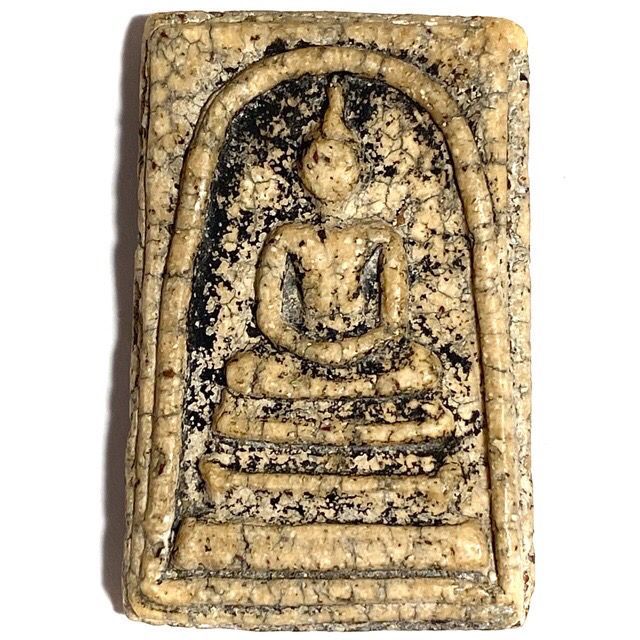
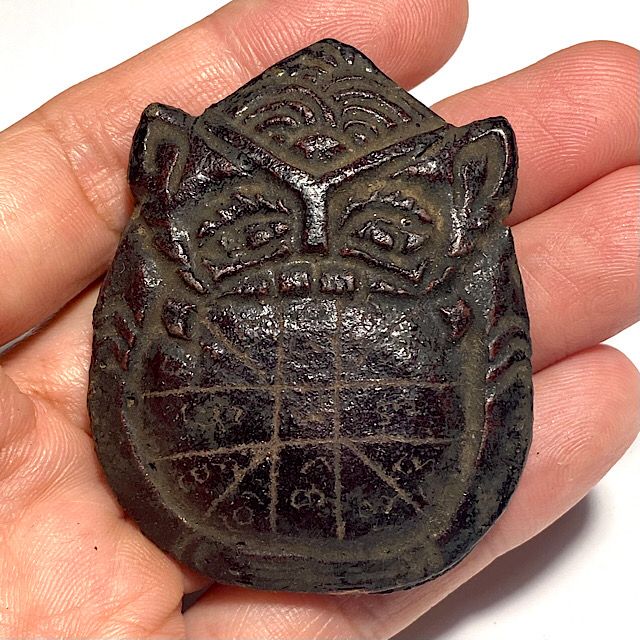
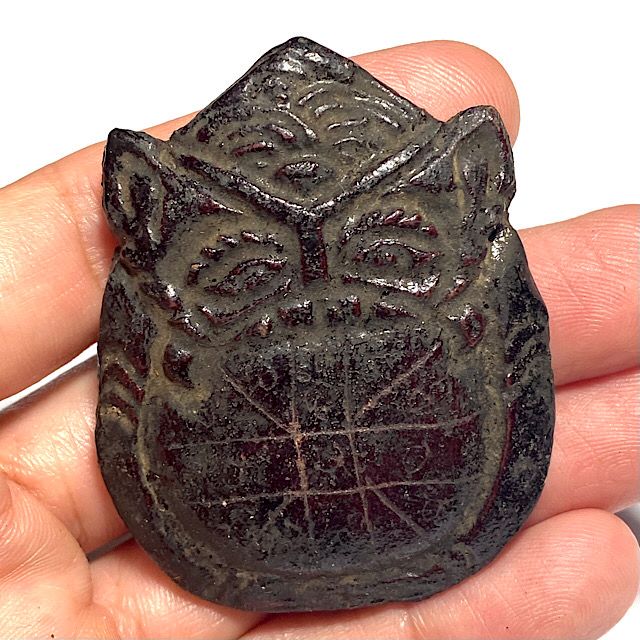
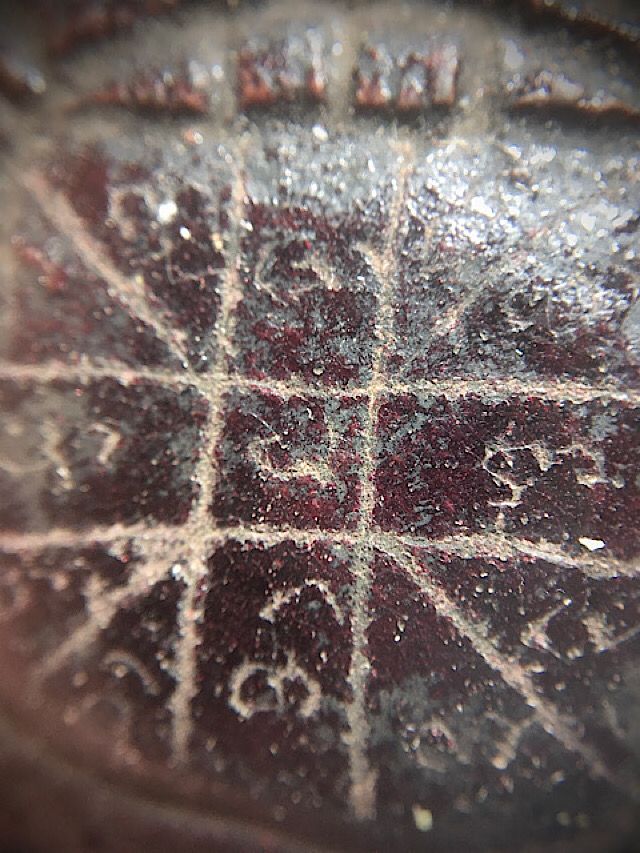
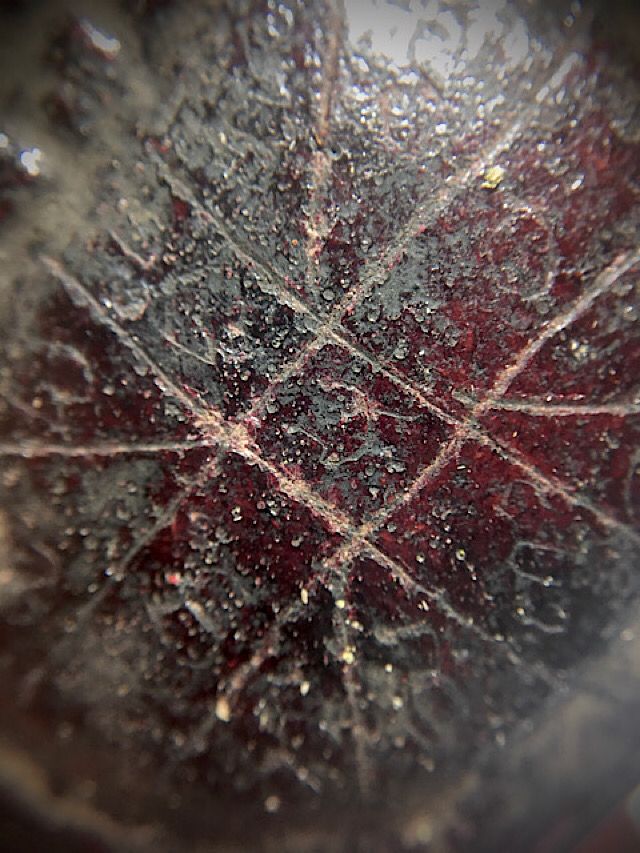
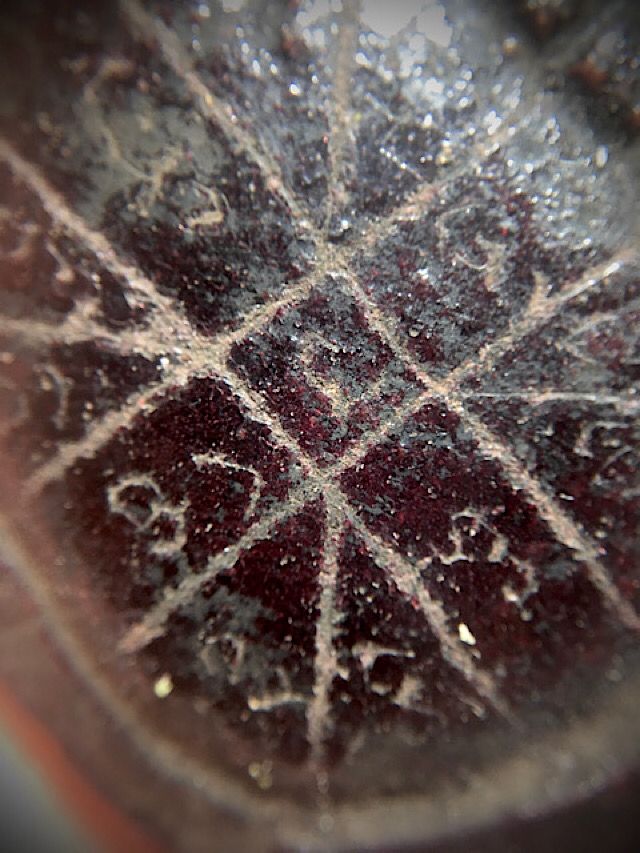
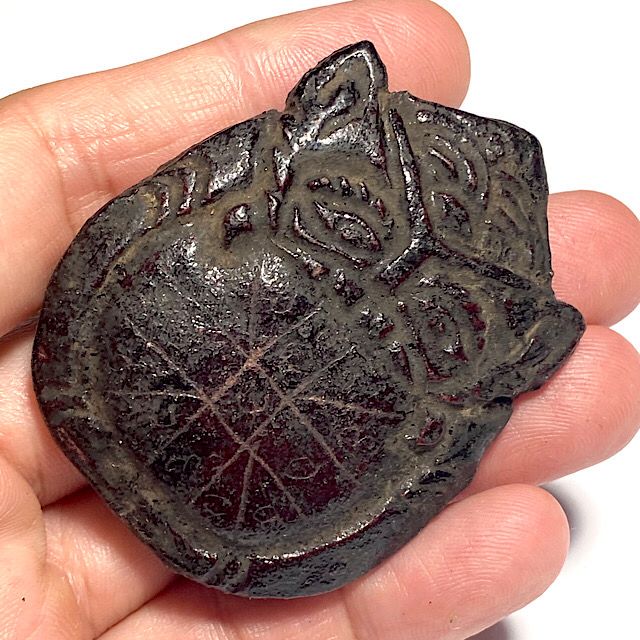
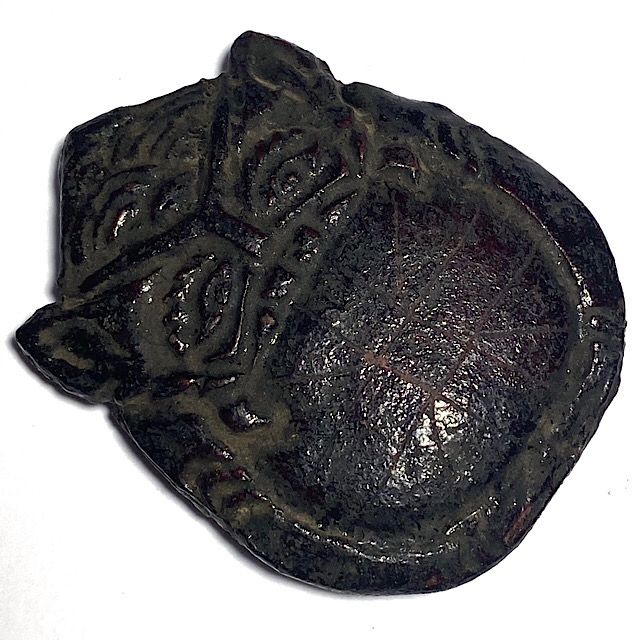
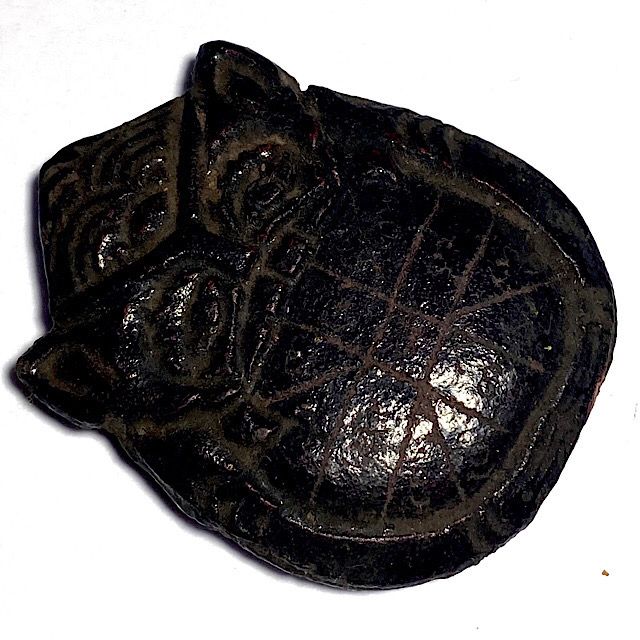
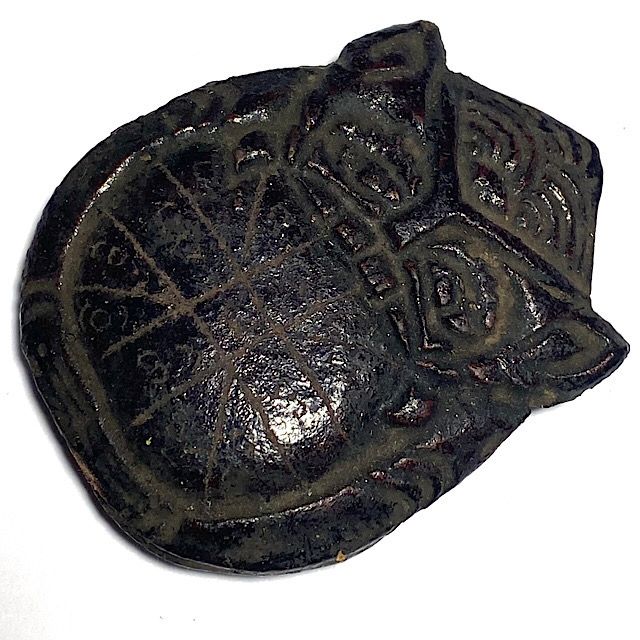
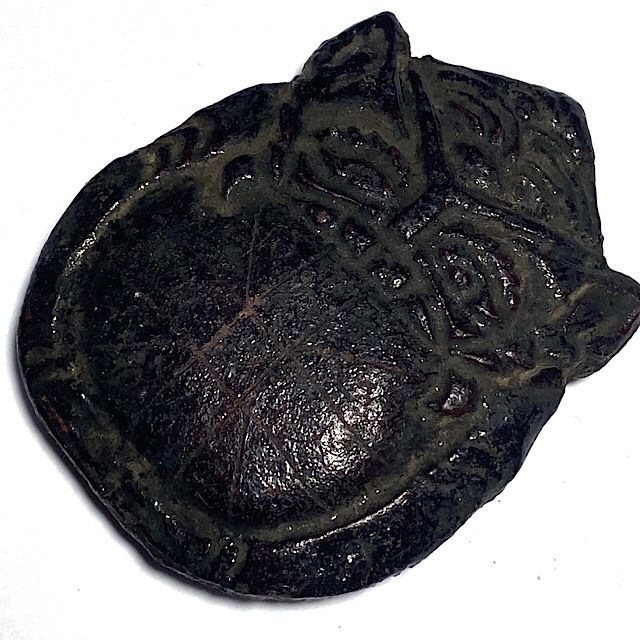
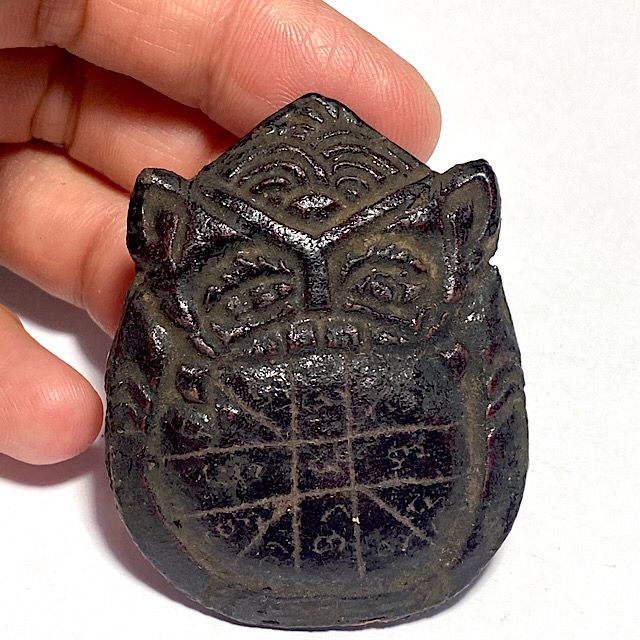
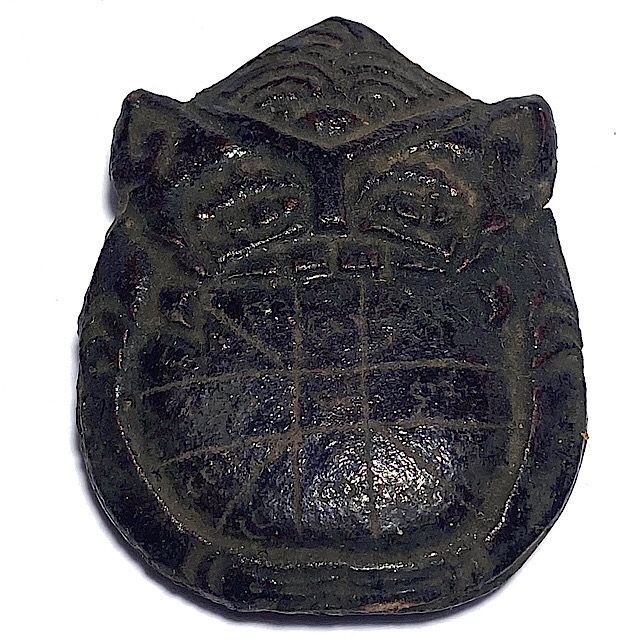
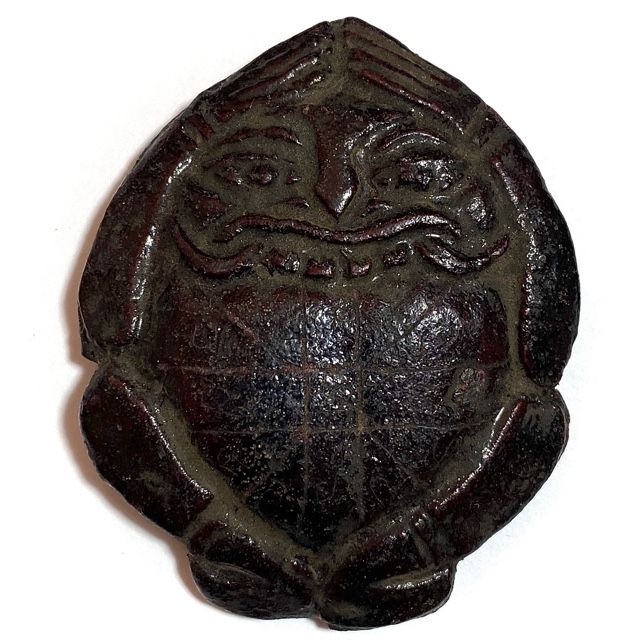
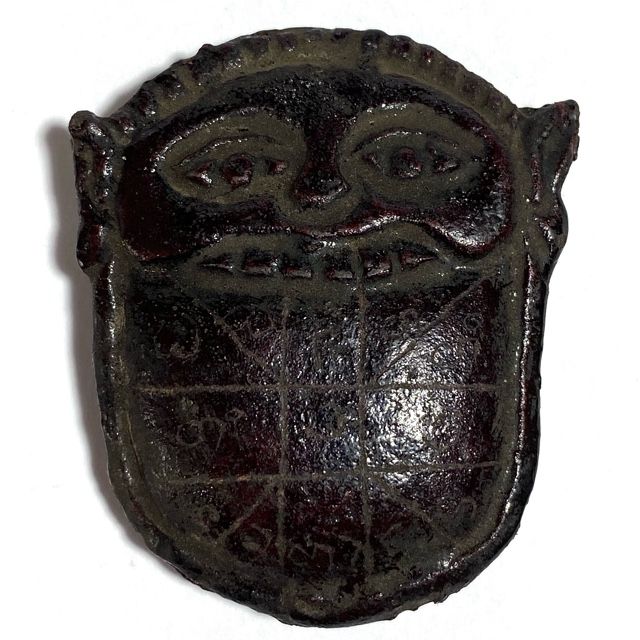
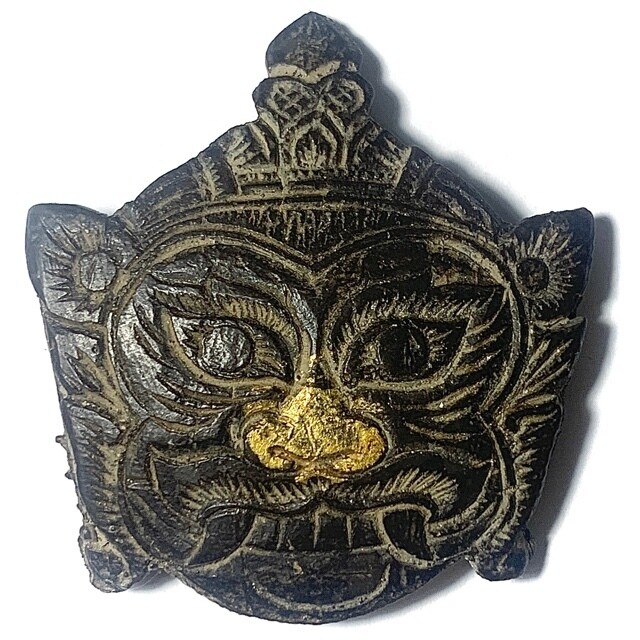
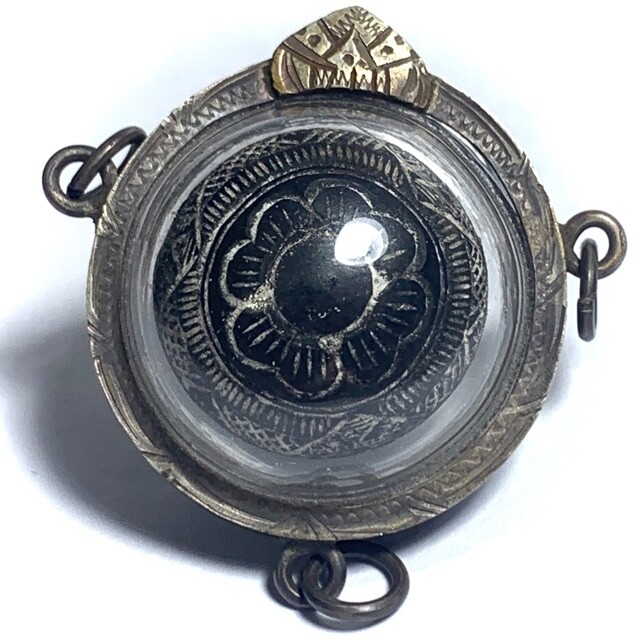
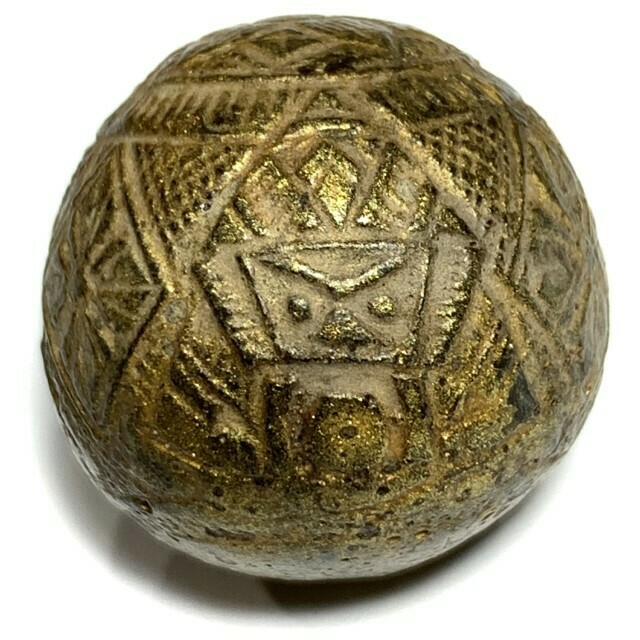
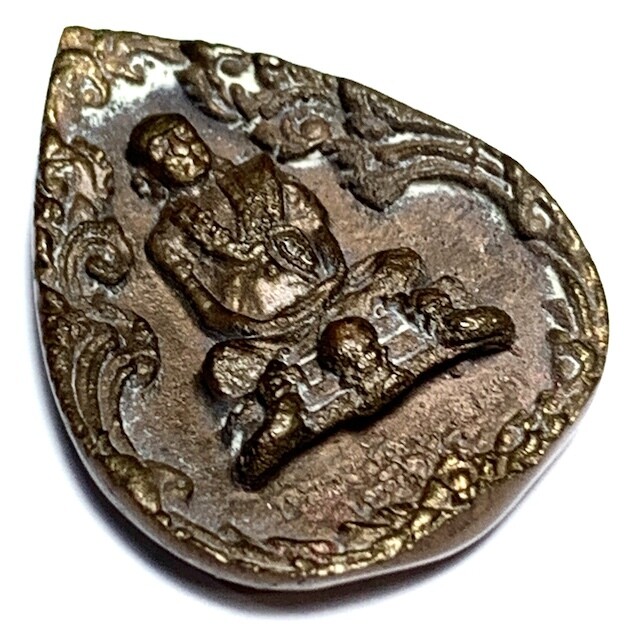
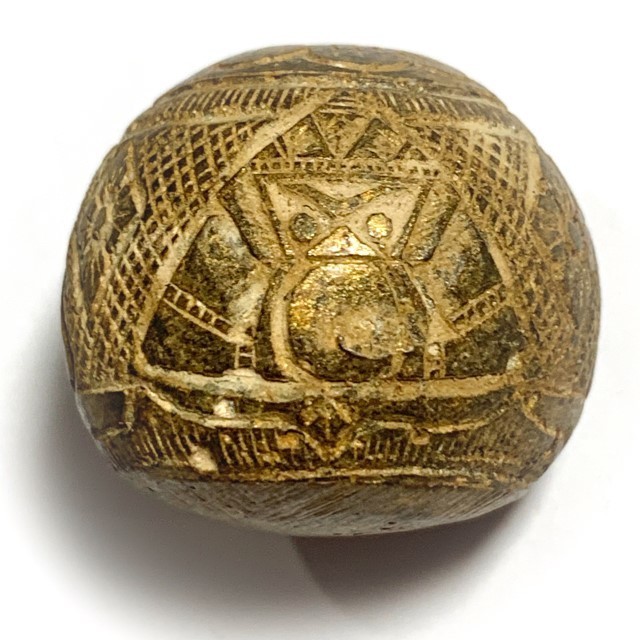
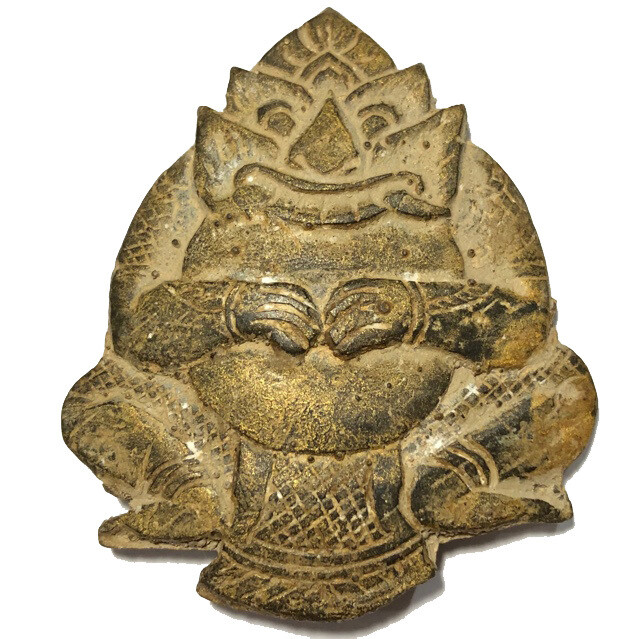
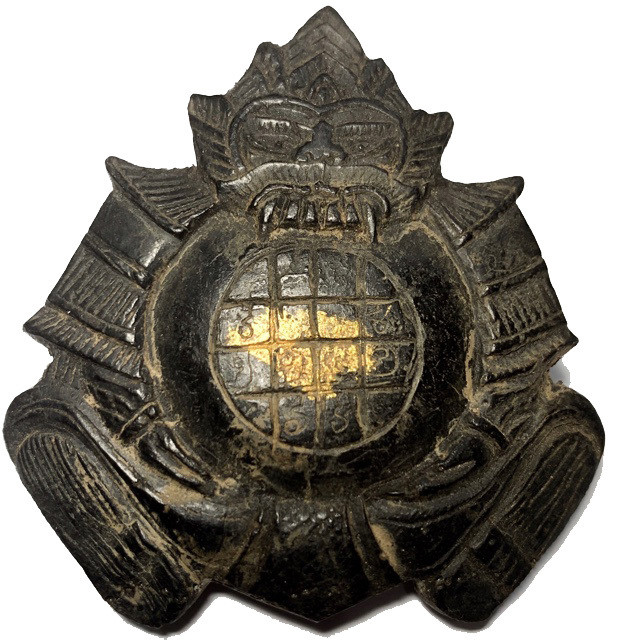
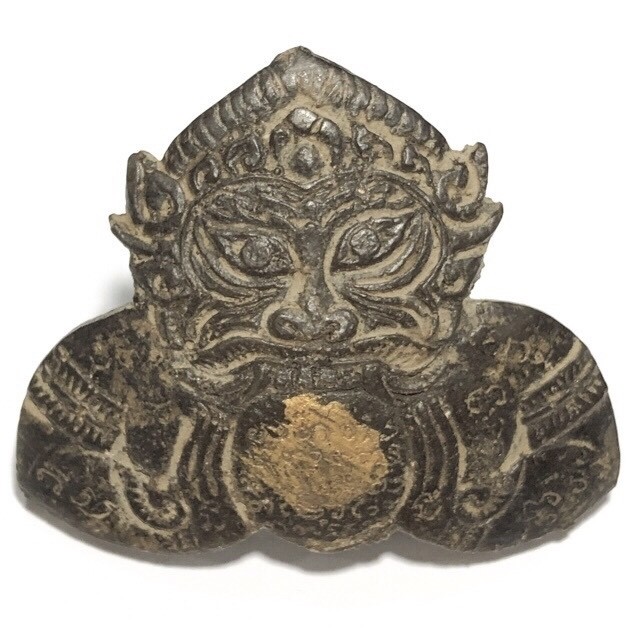
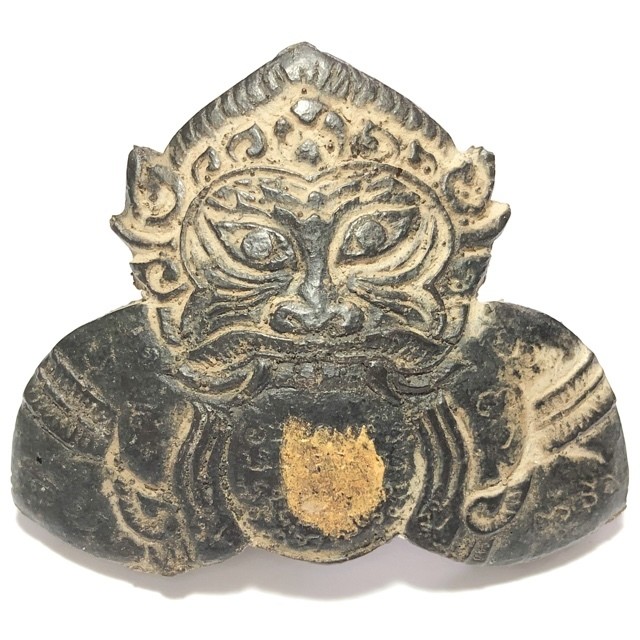
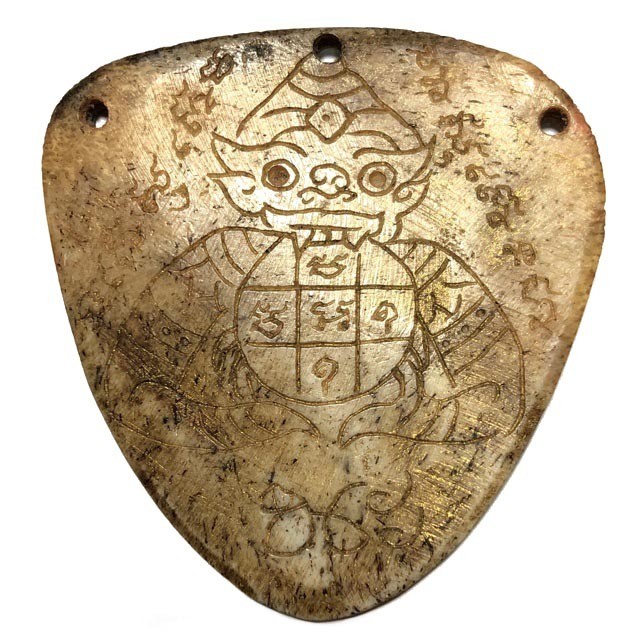
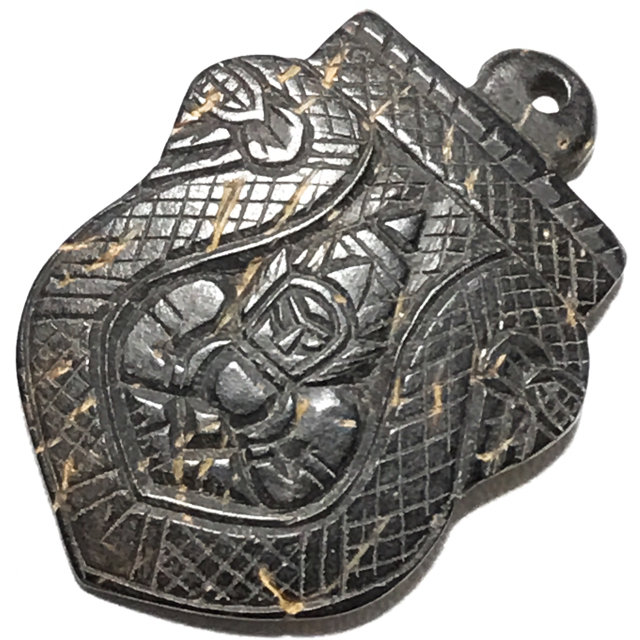
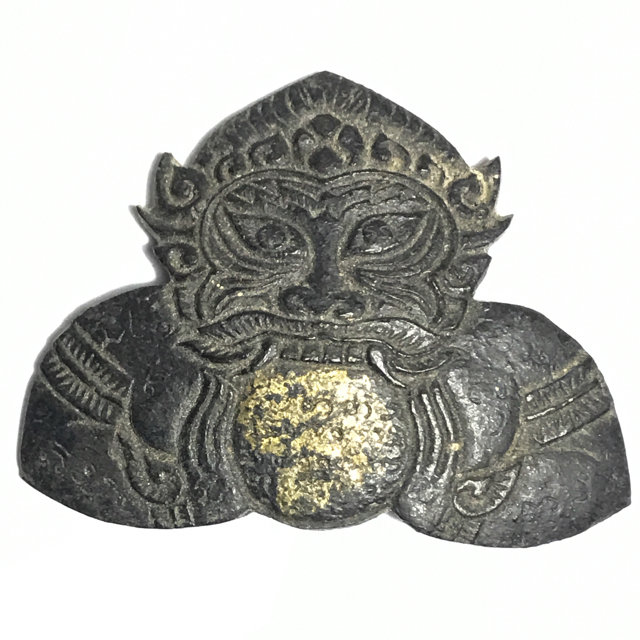
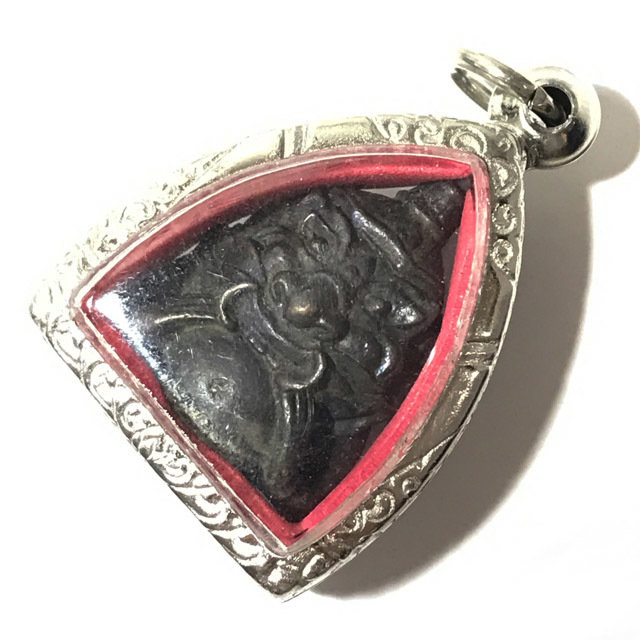
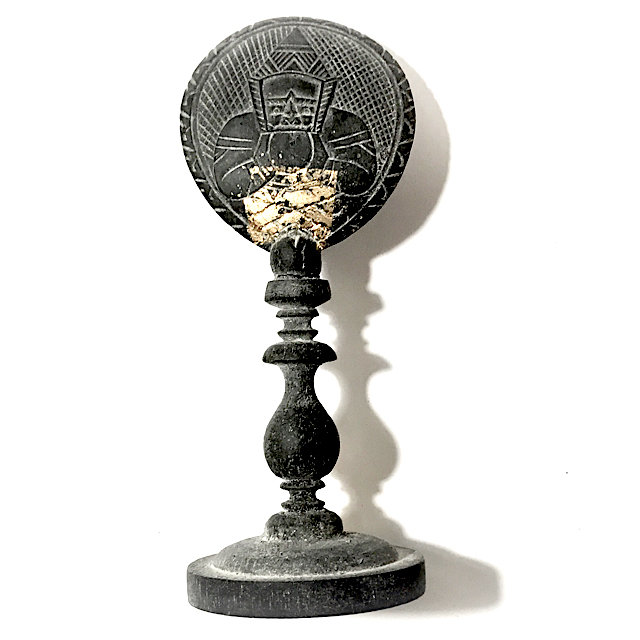
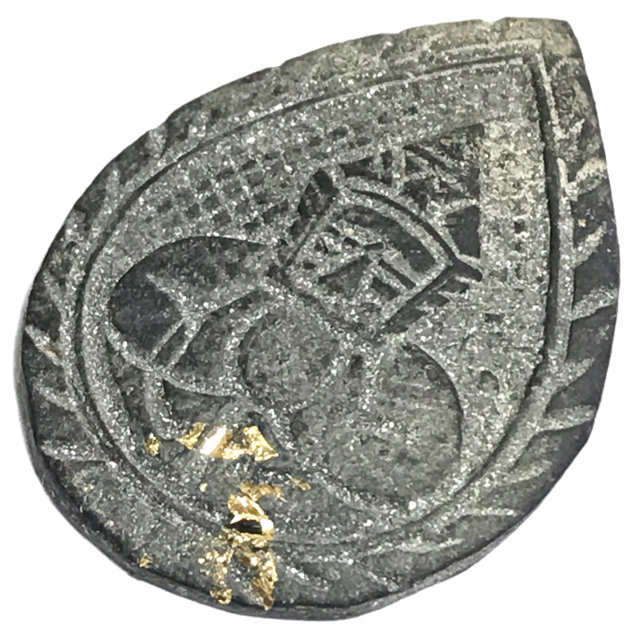
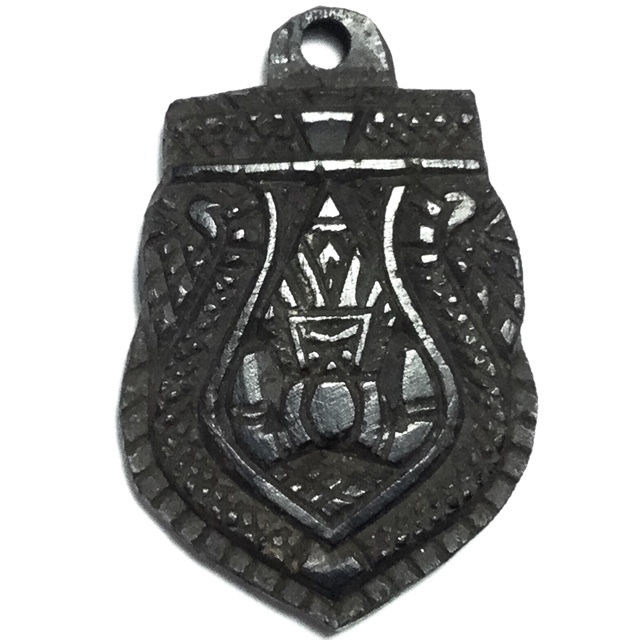
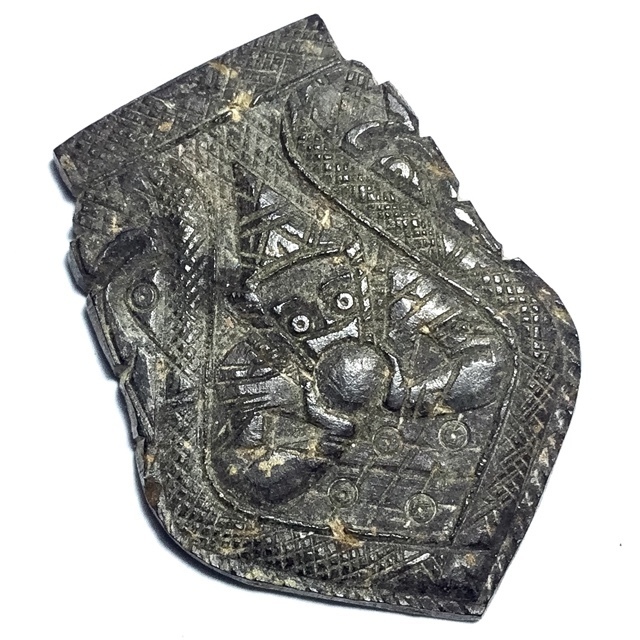
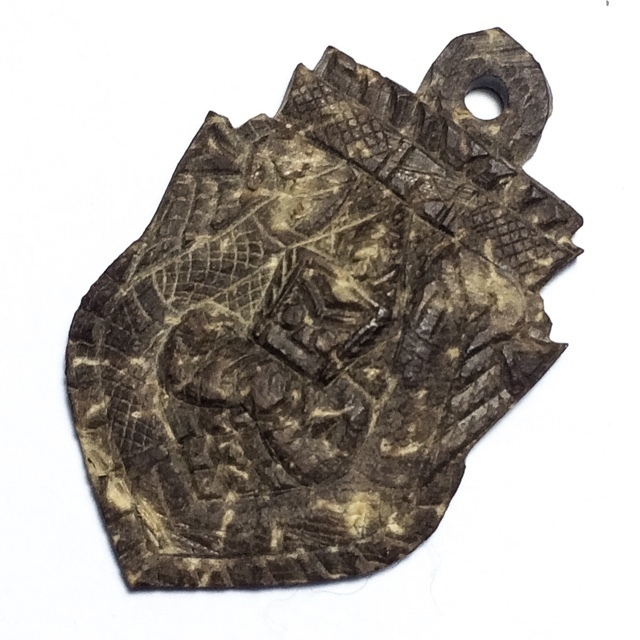
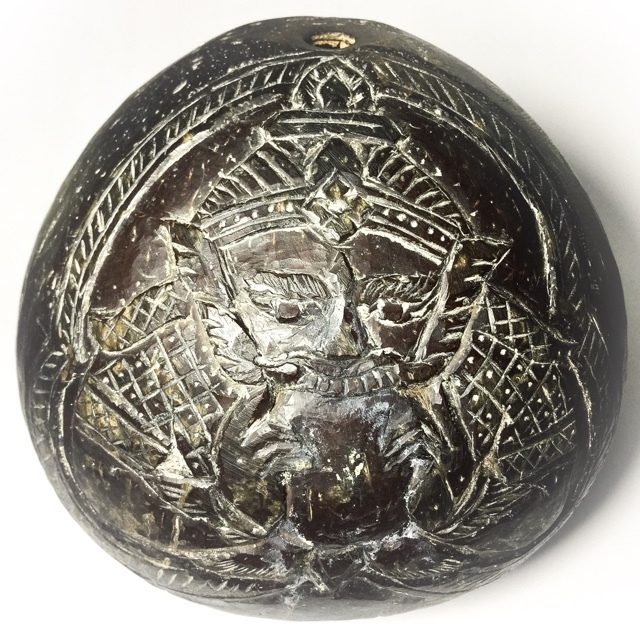
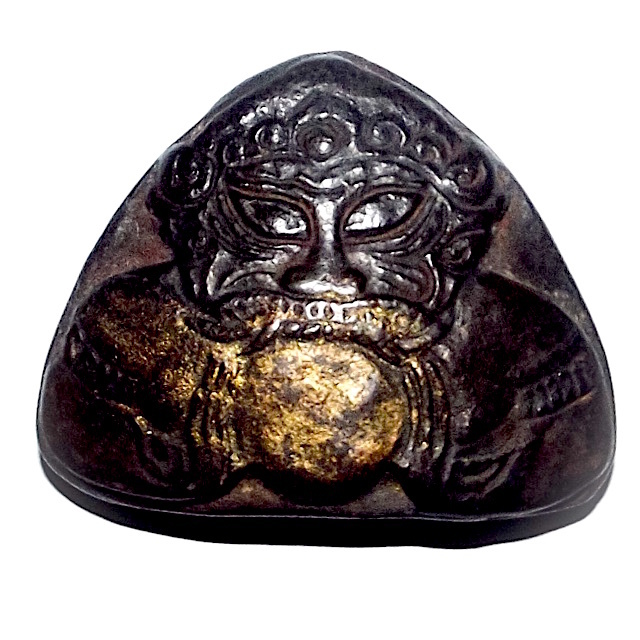
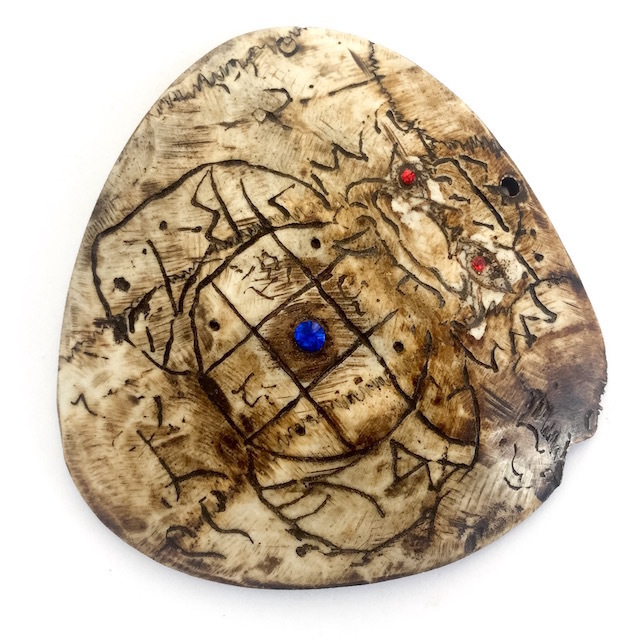
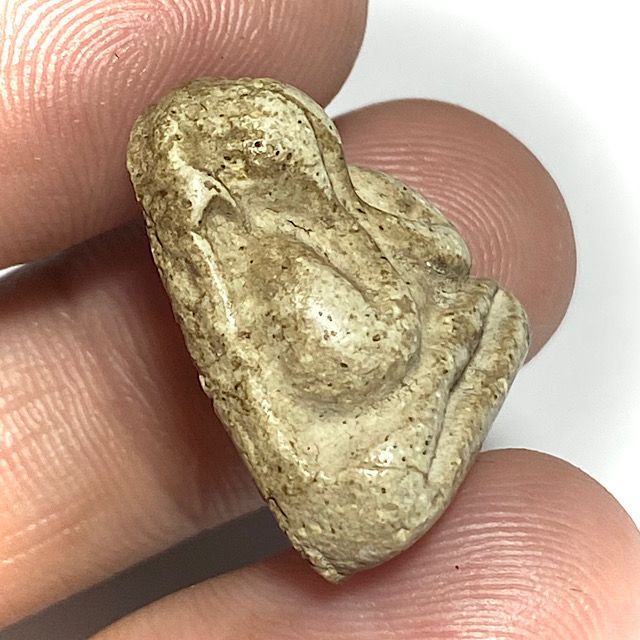
The Pra Pid Ta Hlang Baeb of LP Kaew, Wat Kruea Wan temple, in white powders, is a very rare model, and a truly remarkable and classic exhibit, widely regarded as the number one amulet of the esteemed monk, Luang Por Kaew, of Wat Kruea Wan (formerly of Wat Pak Tale). This ancient amulet, created and empowered by the Great Ancient Sorceror-Monk of Olden Days, Luang Por Kaew, is a a legendary amulet that has attested to his exceptional skills and mastery in the art of amulet-making. The Pra Pid Ta is made from a unique blend of sacred powders, known as Nuea Pong Wised, composed of 5 special magical Yantra Powders (Bpathamang, Puttakun, Trinisinghae, Ittijae, Maharach).
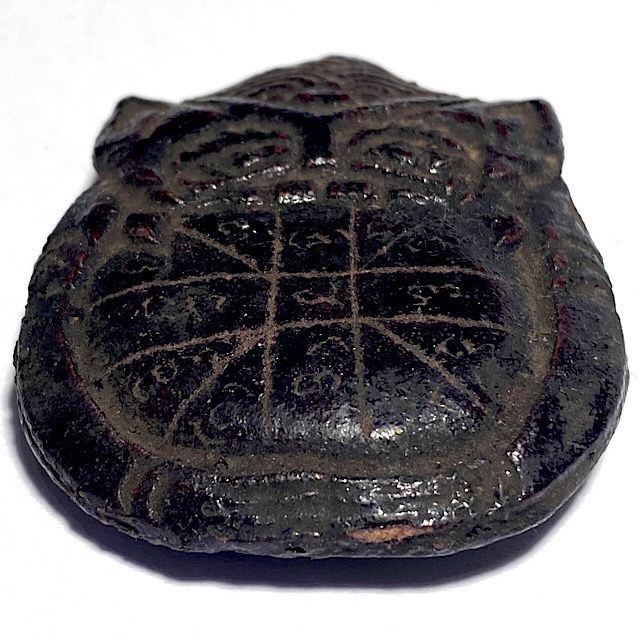
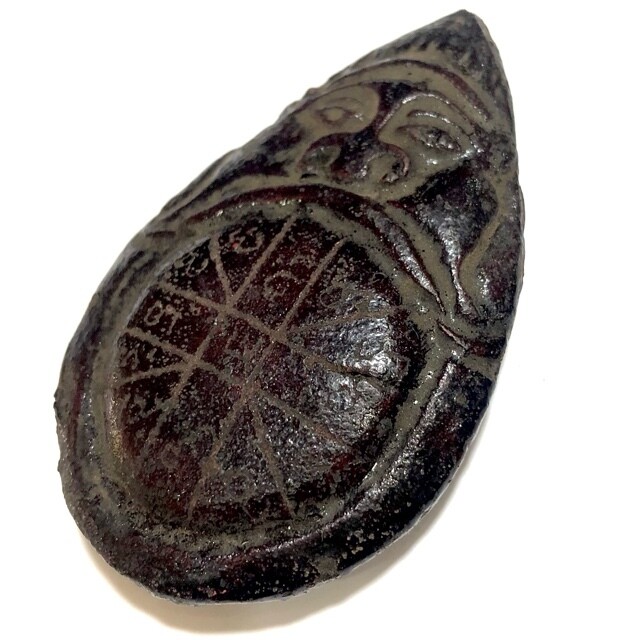
.One particularly striking feature of this amulet is the concave indented Pid Ta on its rear face, which is a hallmark of Luang Por Kaew’s work. This intricate detail, along with the slender arms and perfectly detailed relief of the Buddha image, creates a sense of depth and character that is truly captivating. Luang Por Kaew created this masterpiece during his time as a monk in Chonburi Province, around the year 2365 BE. This was a significant period in Thai history, as Pra Jao Thaksin Maharaj was leading the effort to restore Siam to freedom from invaders. The Pra Pid Ta Hlang Baeb Wat Kruea Wan is not only a beautiful and well-preserved example of Luang Por Kaew’s work, but also a tangible piece of Thai history that speaks to the enduring power and significance of Buddhist amulets
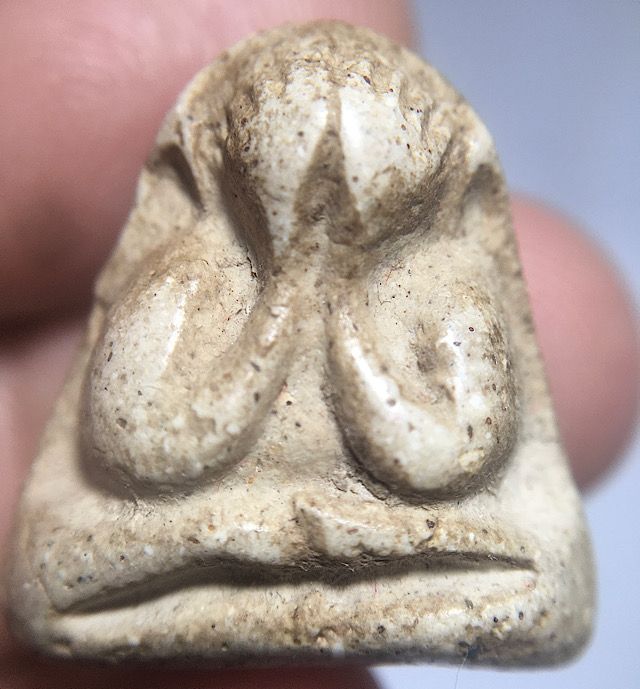
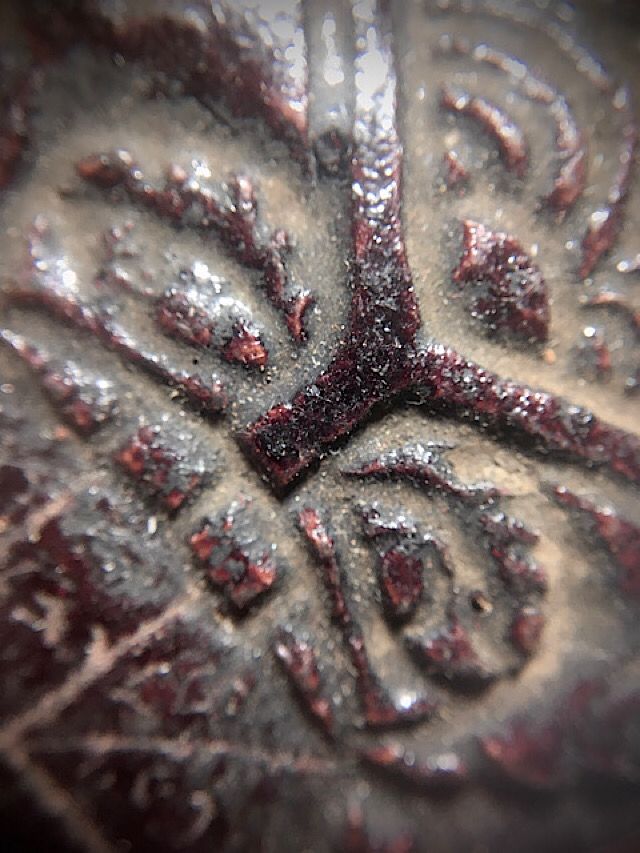
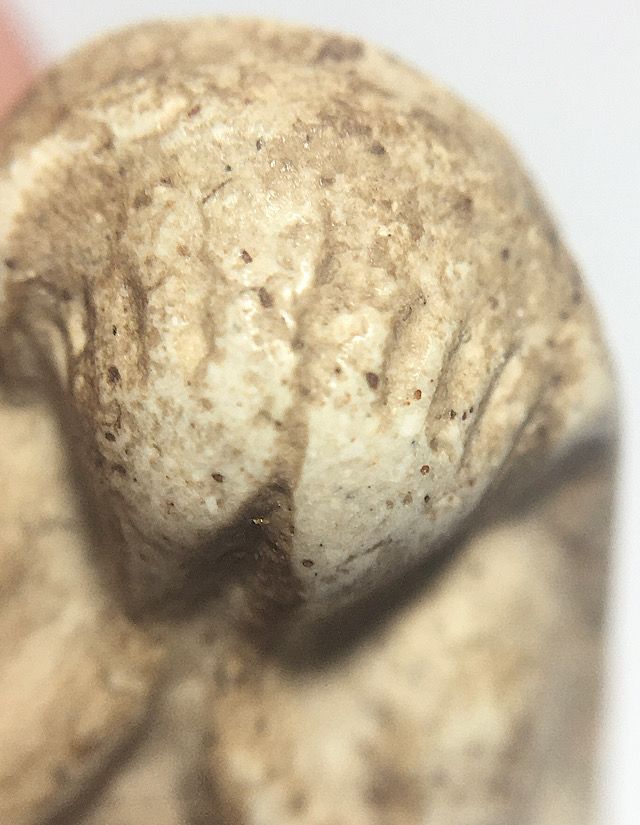
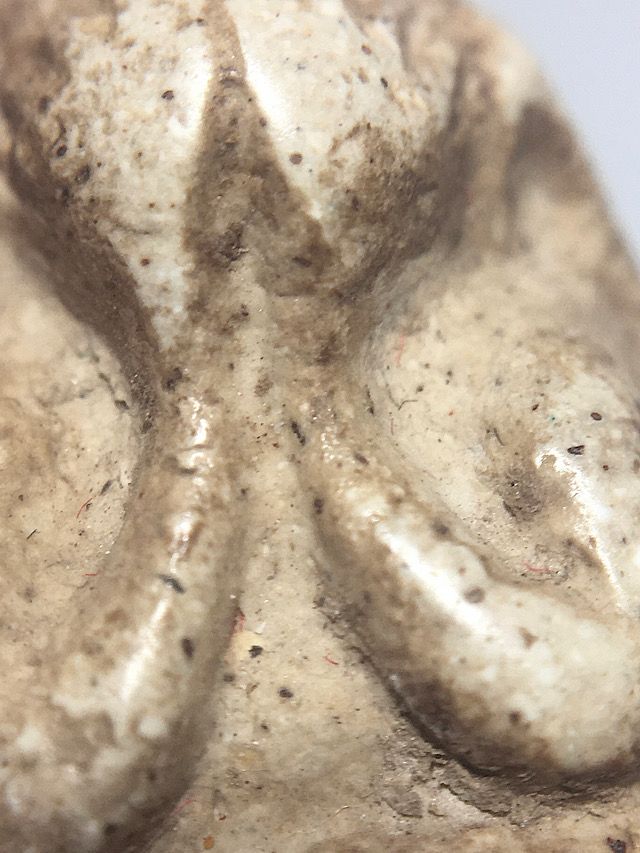
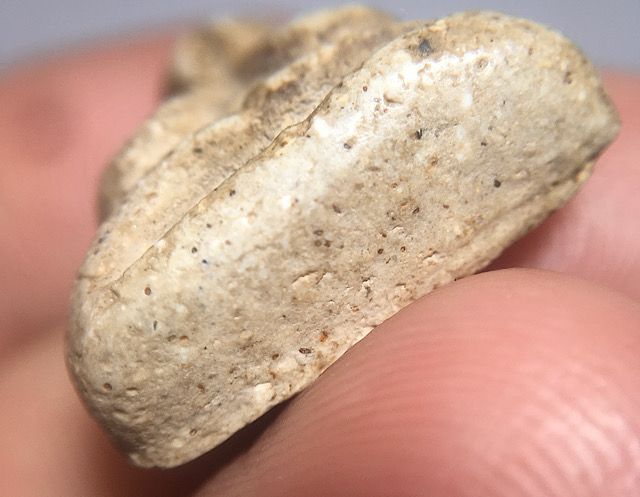
The amulet radiates a captivating glow, enhanced by the unique ‘Nuea Graeng’ marbling effect. This is a result of the sacred Muan Sarn powders, which contract and dry over time, creating distinctive surface cracks. This particular Buddha image showcases intricate details, a slender build, and a high level of craftsmanship, making it a fine specimen of the Pra Pid Ta Luang Phu Kaew. The amulet’s powerful sacred clay composition is known for its Kong Grapan, Klaew Klaad, Metta Mahaniyom, and Maha Lap properties, attributed to the esteemed monk known for his world-class mastery.
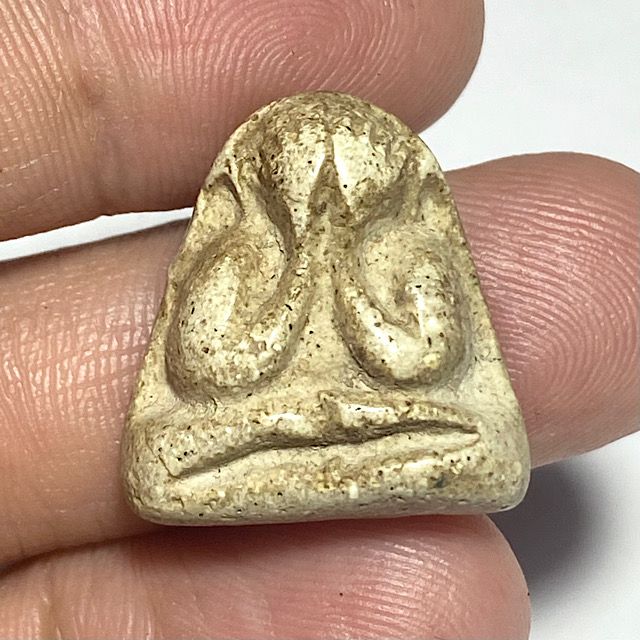
An all time Pra Niyom High End Classic Ancient Amulet, renowned for its power and status from Luang Phu Gaew, who first began his legendary of Wat Pak Tale in Petchburi (Later moved to Wat Kruea Wan in Chonburi). The Pra Pid Ta of Luang Phu Gaew of ancient fame comes with free express shipping. The Pra Pid Ta of Luang Phu Gaew is widely regarded as the number one Pidta amulet of all time by devotees of the Chonburi Lineage Master Amulet Collector Scene, as well as by those who are devoted to the Petchburi Masters. This amulet is a true Master Class piece, and its rarity is such that it is incredibly difficult to encounter in the present era.
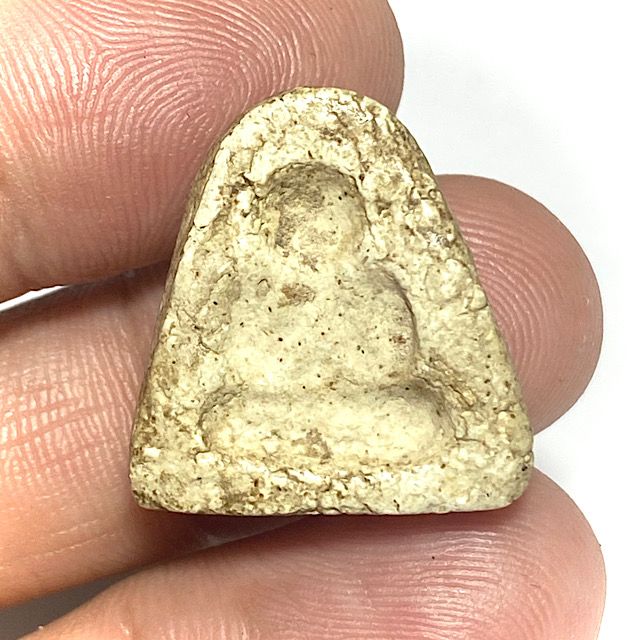

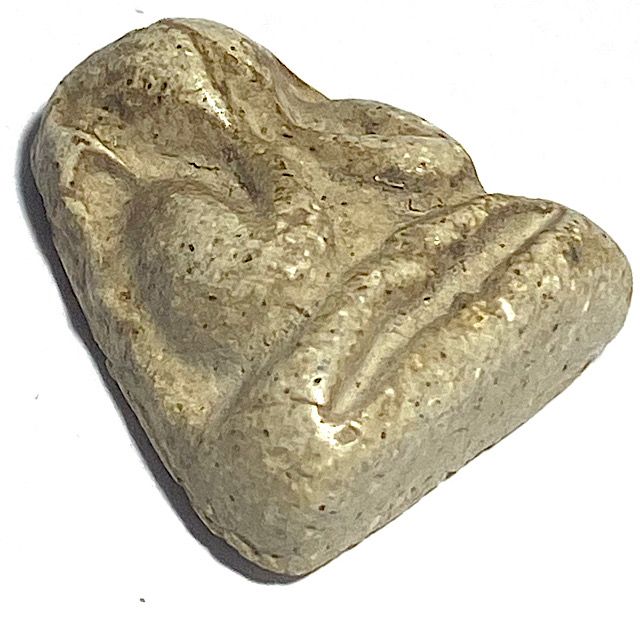
The Pra Pid Ta Luang Phu Gaew is a truly exceptional amulet, one that is held in the highest regard by collectors and devotees of Thai amulets. Its reputation is such that when it changes ownership, it is often considered “news” within the amulet community. This is true whether the amulet was crafted during Luang Phu’s time at Wat Pak Tale, or after he moved to Wat Kruea Wan.
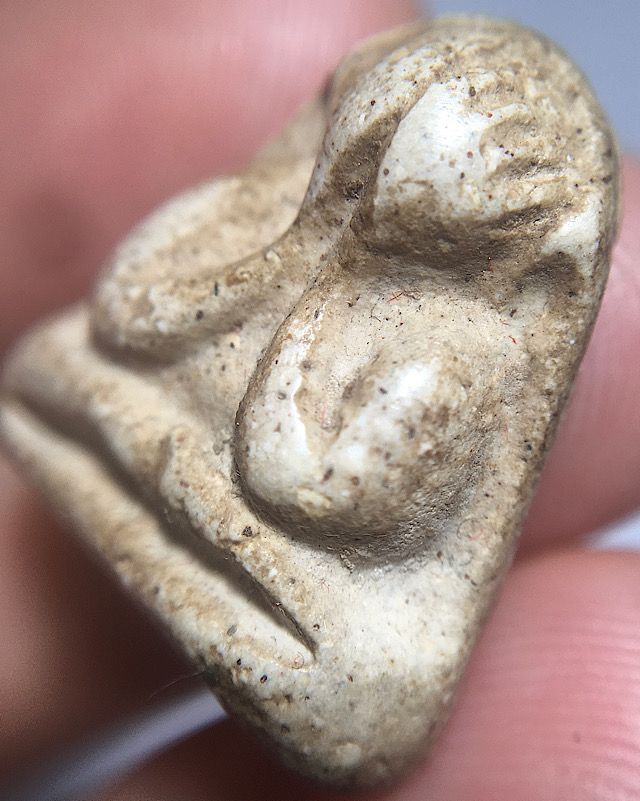
This truly ancient amulet is one of the extremely rare amulets of the Pra Niyom Master Class category of Both Petchburi and Chonburi Masters, and has a cult collectorship following in the Wongarn Pra Niyom Sai Chonburi and Sai Petchburi (Chonburi and Petchburi Province High End Collector Scene). The exclusivity factor of this amulet is indescribably high, and coming from the both Chonburi and Petchburi Provincial Collector scene only serves to evidentiate it as a High Class and Ultra rare Pra Niyom Master Class Amulet of ancient times. One of the reasons for the Pra Pid Ta’s enduring popularity is the powerful and protective qualities it is believed to possess. The amulet is said to offer Kong Grapan (protection against sharp objects), Klaew Klaad (protection against deadly accidents), Metta Mahaniyom (charm and popularity), and Maha Lap (luck and prosperity) to the wearer. These qualities, combined with the amulet’s undeniable rarity and historical significance, make it a true collector’s item.
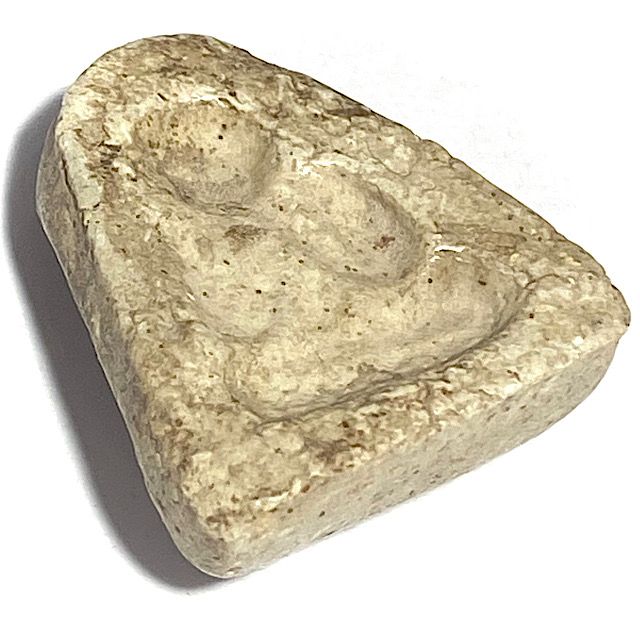
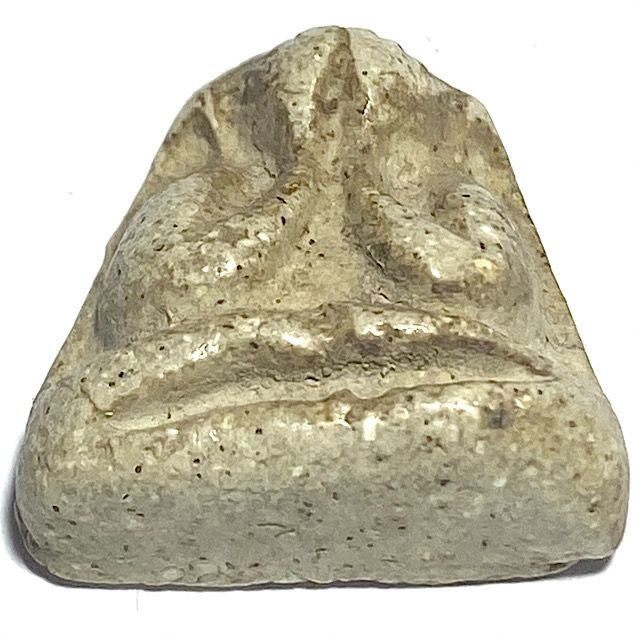
The Pra Pid ta Luang Phu Kaew, is known for its power being made from Luang Phu Kaew’s ancient and powerful sacred Muan Sarn. There is a famous tale of the Billionaire Chawapon Rerm Wanich, buying a number of Pra Pid Ta Pim Lek Hlang Riab (plain rear face small model) amulets of Luang Phu Kaew, for a sum of 10 million Baht each (about 350,000$US)!
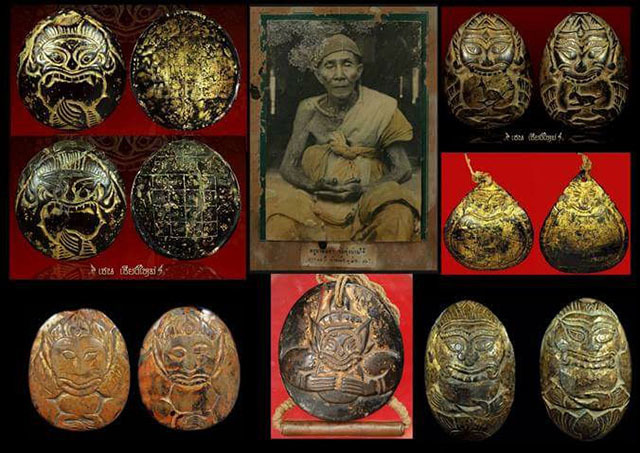
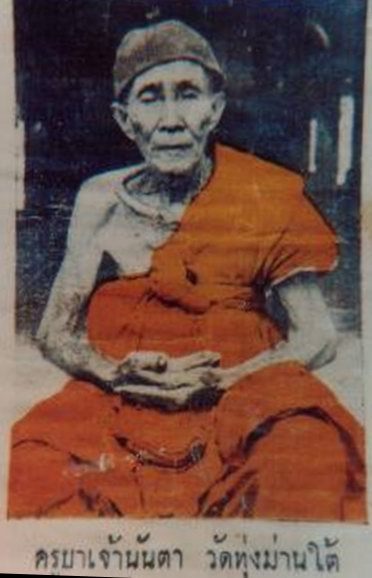
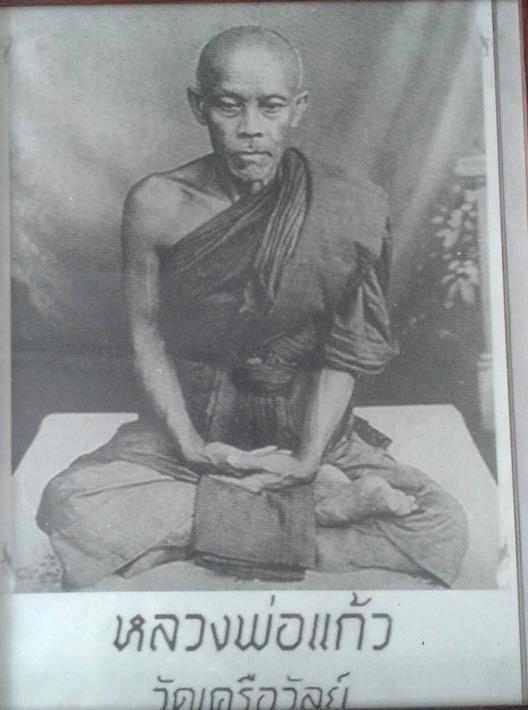
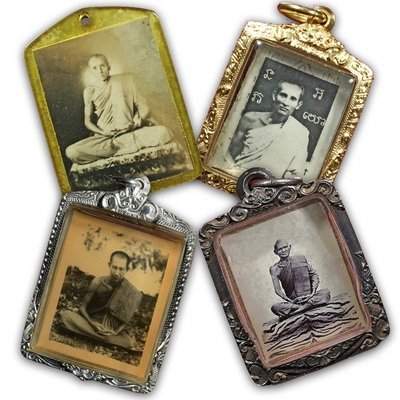
It is said that the only thing harder to find than the Pid Ta of Luang Phu Kaew, is the Photo of Luang Phu Gaew himself. However, despite these true stories, that some millionaires pay immensely high prices for such amulets, the standard price which true collectors and aficionados consider to be universal ranges between the 1000$ for a less well kept or lesser preferred model with or without certificate, to 11000$ for a top class prizewinner.
Luang Phu Gaew was one of a group of Master Monks who all possessed and practiced the Wicha of making Pra Pid Ta, all of whom are famous names, such as Luang Phu Jeen of Wat Ta Lad, Luang Phu Pu (2351 -2361 BE), Luang Porn Daeng of Wat Ang Sila, and the great Luang Por Plord of Wat Pak Tale, who was the premiere apprentice to Luang Phu Gaew, and famous in his own right for his famous Look Om amulets which he made with the remaining powders inherited from Luang Phu Kaew, as well as adding powders of his other Kroo Ba Ajarn such as Luang Por Tong Sukh’s powders of Luang Phu Iam (Wat Sapan Sung).
Luang Phu Gaew was born sometime between 2337. This is known by devotees who met and worshiped Luang Phu Gaew as he appeared on Tudong wandering in Khao Bandai it district of Petchburi, to escape being asked to become abbot of Wat Pak Tale, as the current abbot had just passed away, and he preferred the forest wandering and meditation, to administration of the worldly aspects of running a temple. Luang Phu Gaew wandered onwards until he came to rest at Khao Luang Temple, and saw it was in total disarray.
He thus rounded up devotees to help and slowly restored the temple to original condition, and the local devotees begged him to be the abbot of Wat Khao Luang. But in the eyes of Luang Phu Kaew, this was tantamount to chasing him away, as he was not inclined to accept limitations on the practices and austerities of Tudong. So Luang Phu Gaew wandered off again and disappeared into the forests on Tudong.
Later after some years of disappearance and no documentation of his life during those years, he later appeared in Chonburi and built the temple at Wat Kruea Wan, where he stayed till the end of his life, and became the great Master of Wicha Pra Pid Ta of the Chonburi Province who is considered the top number one master of all, despite the absence of a full biography and a lack of knowledge about the full details of his life. His Wicha was passed to great Masters who he was associated with all of whom became Top Masters of Historical Fame in their own Right, with some of the greatest names being his apprentices.
Below : one of the only photos we have in existence to date of Luang Phu Gaew, which has the date R.S. (Ratanakosin Year) 124 (2449 BE), and his age being 55 years old in this picture.

Even the world famous Payak Kampant, Sian pra Maestro of the Thai Amulet Society, who released a book with 108 biographies and pictures of Great Master Monks, was not able to include the Biography and Picture of Luang Phu Kaew, due to the rarity. The Muan Sarn of the amulet, with all the aspects of an ‘Ongk Kroo’ (teacher model to accustom the eyes to the true authentic sacred powder content).
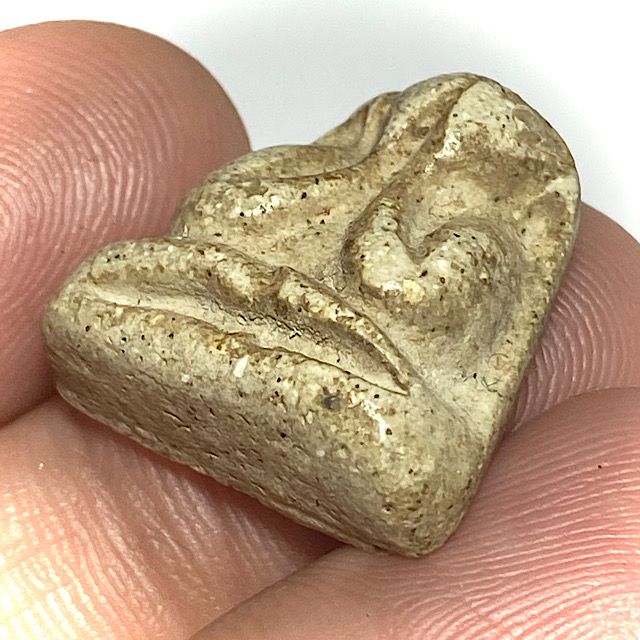
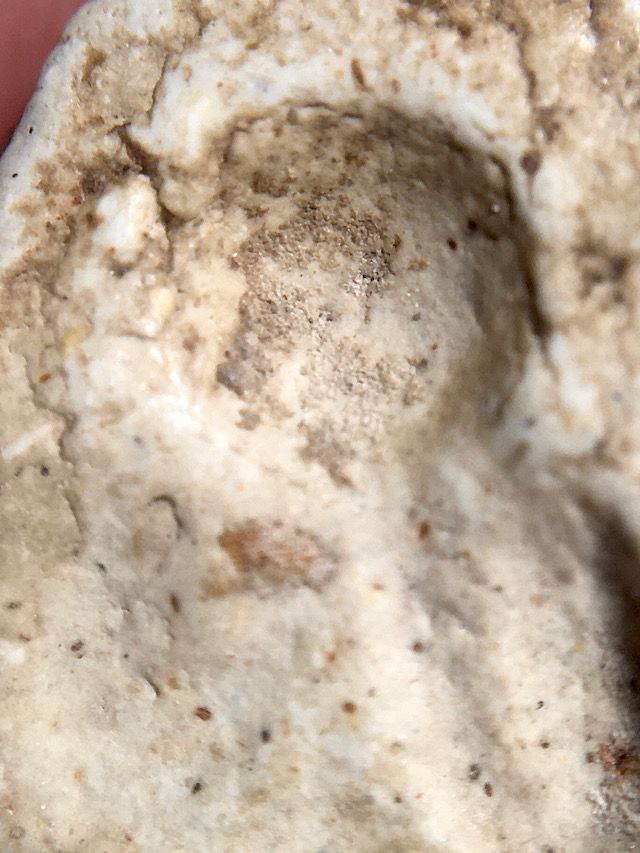
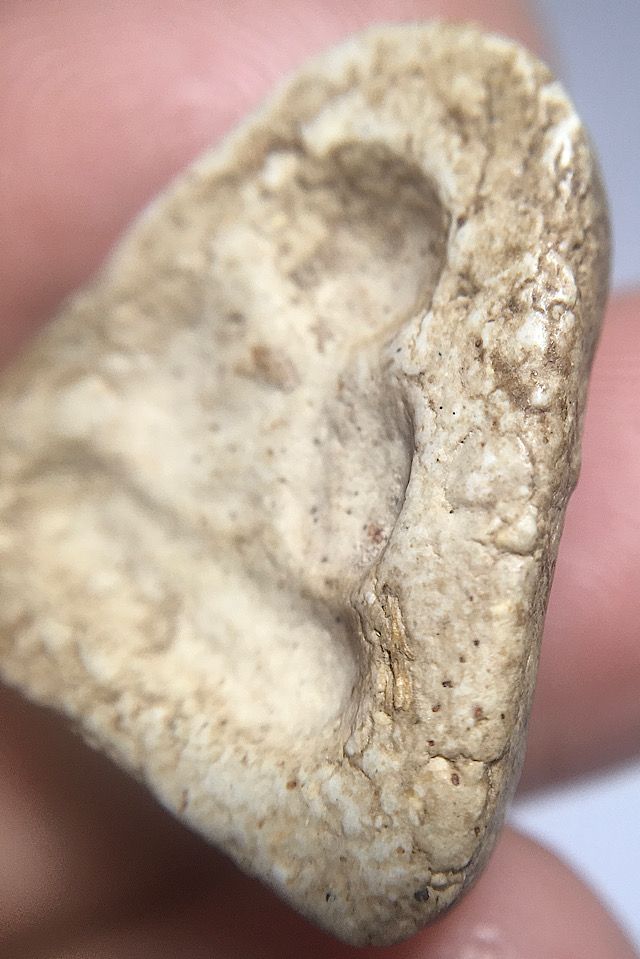
The rear face features the image of the Pra Pid Ta Ongk Pra Buddha embossed in concave. The Muan Sarn of the amulet is clear and easy to appreciate with the eye with no need of an eye loupe or magnifying glass to authenticate. This level of pristine clarity in an amulet of this age and status is so very rare to encounter indeed, making this exhibit a definite ‘Ongk Kroo Masterpiece Version’
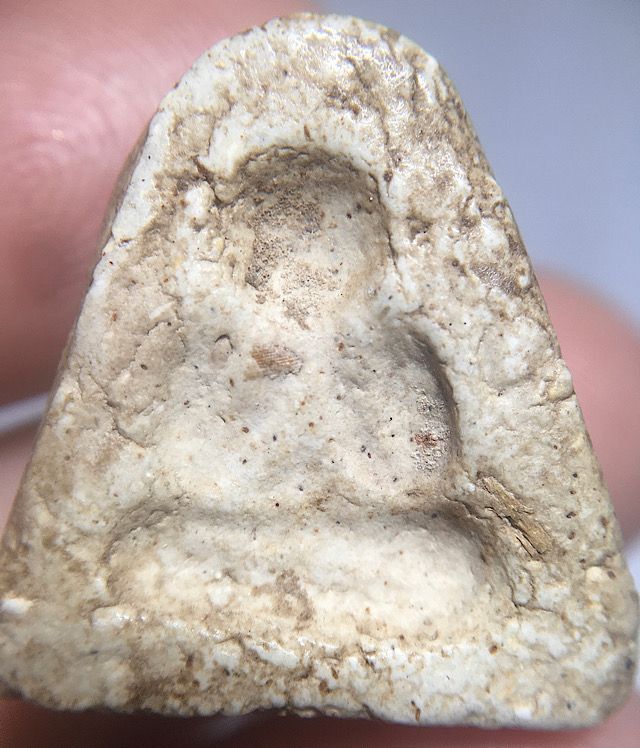
This particular exhibit displays all the features necessary for prize winning competition entry, and already possesses a certificate of authenticity from the Samakom Song Pra Tae Mueang Siam.
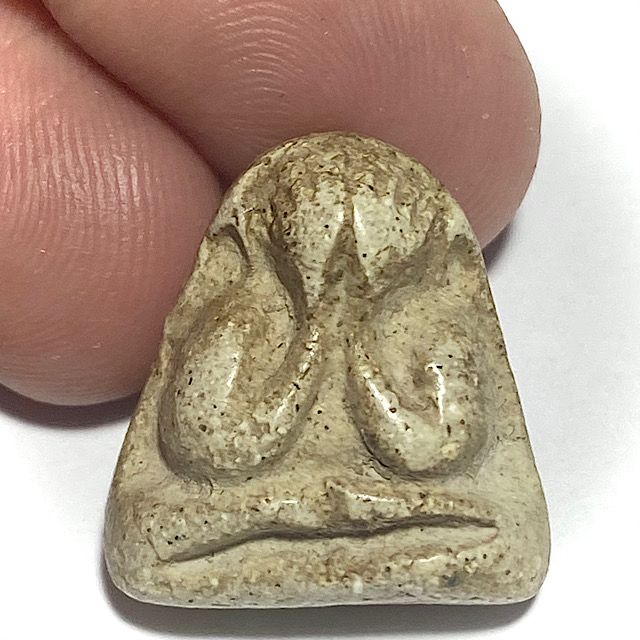
The front face of the amulet glows with a truly seductive aura of beauty and its surface texture of ;Nuea Graeng’ marbled effect of the Muan Sarn sacred powders, which are the result of the contraction of the different particles within the sacred clay mixture of the amulet, as time passes and the amulets dries, and shrinkage causes small surface cracks to appear. This renders a truly beautiful example of the Pra Pid Ta Luang Phu Kaew. The features of the Buddha Image with its slender arms and its perfectly detailed relief, full of depth and character, leave the eyes unstrained when authenticating and appreciating its subtle features, and evident age. True beauty in subtlety, with a sacred muan sarn powder content that assures the wearer of high Puttakun Power and effective Kong Grapan, Klaew Klaad, Metta Mahaniyom, and Maha Lap effect. We behold before us a Master Class authenticated amulet from one of the greatest olden days master sorceror monk, of world class status.
Ancient Amulet - Thai Buddhist Pra Niyom Category Amulets
Ancient Amulet - Thai Buddhist Pra Niyom ('Pra Niyom'; meaning 'High End Preferred Class Antique amulets') Fine Authentic Amulets from the Great Thai Buddhist Sorcerer Monks, Lersi Ascetics, and Lay Masters of Olden Days
SIGN IN OR CREATE ACCOUNT
Featured Products