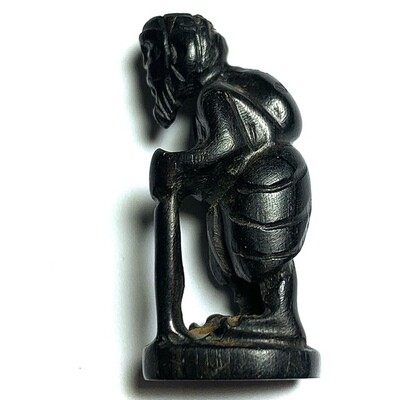
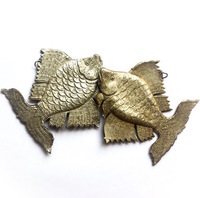
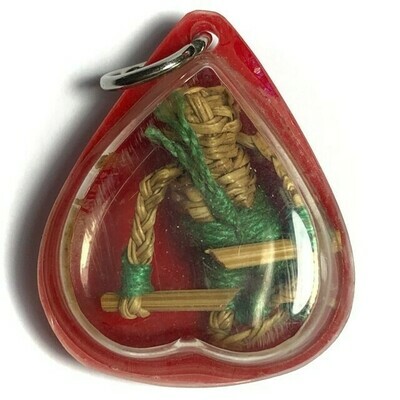
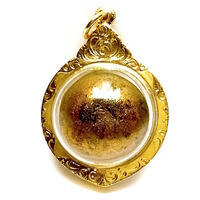
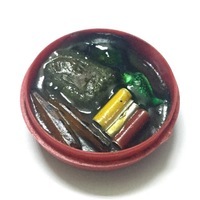
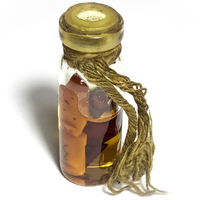
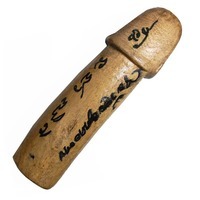
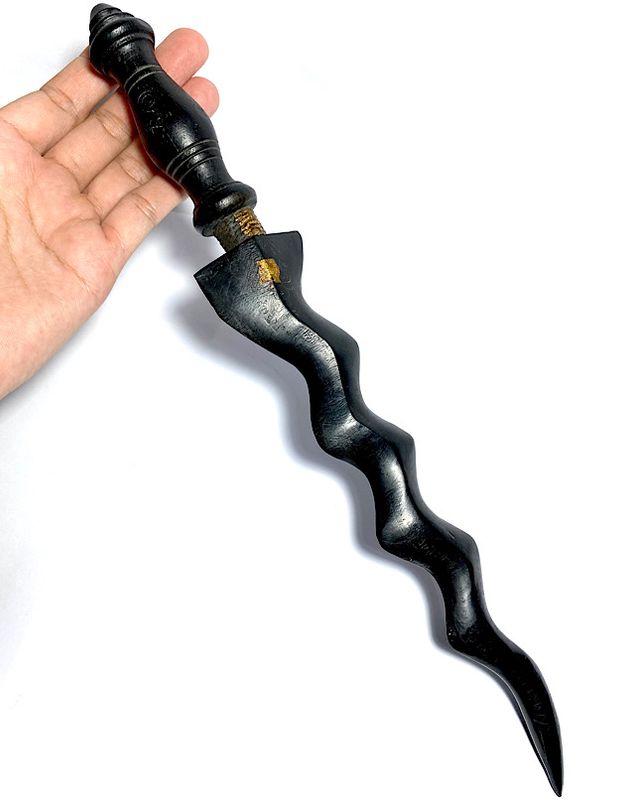
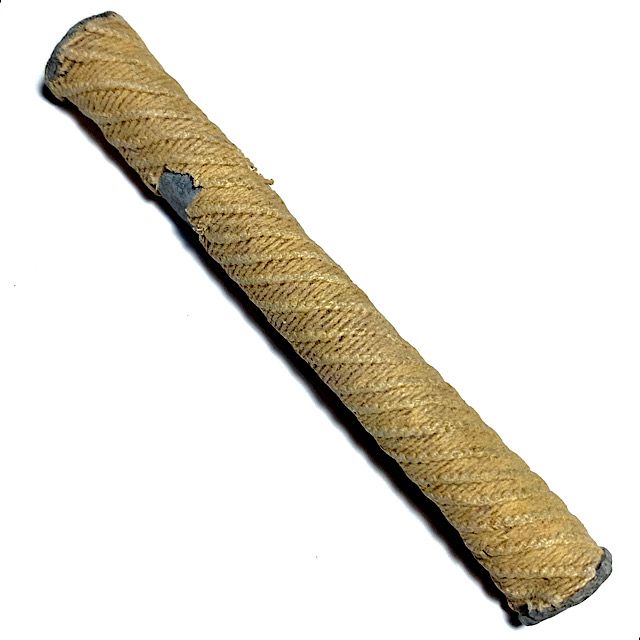
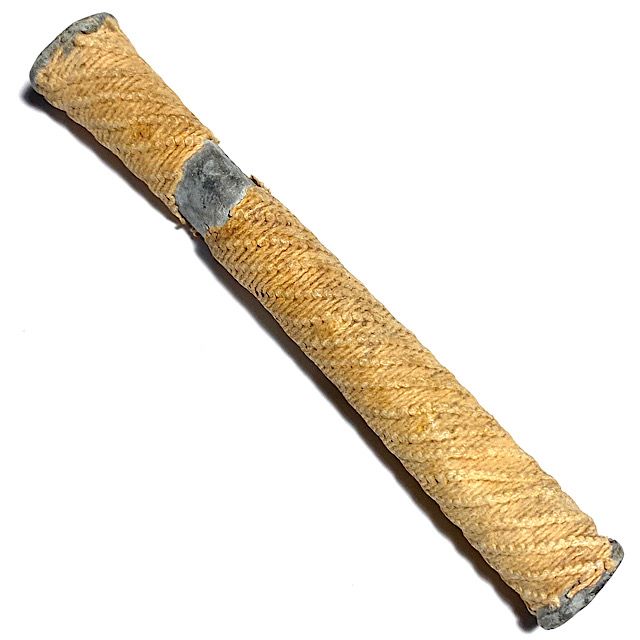
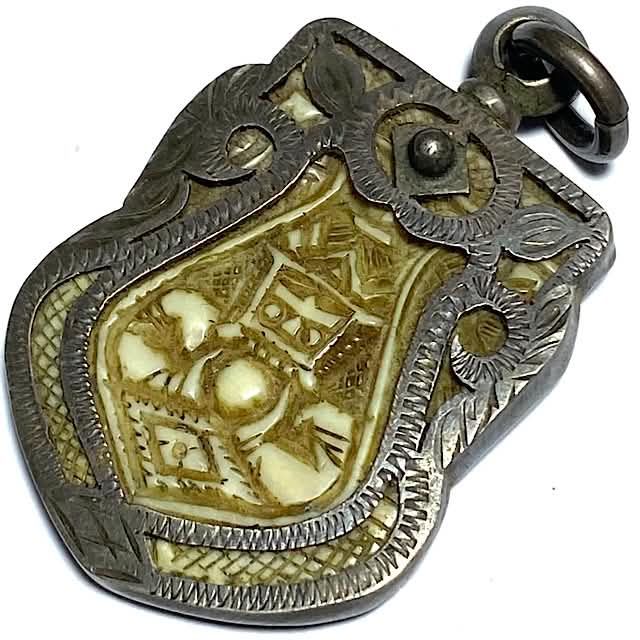
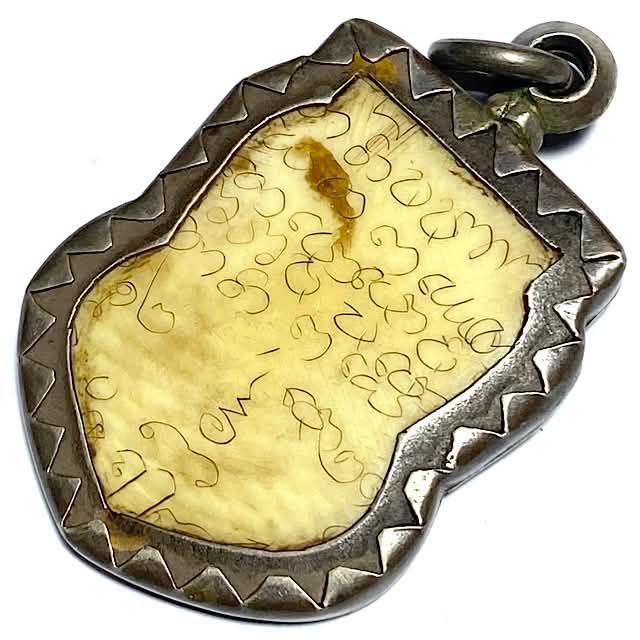
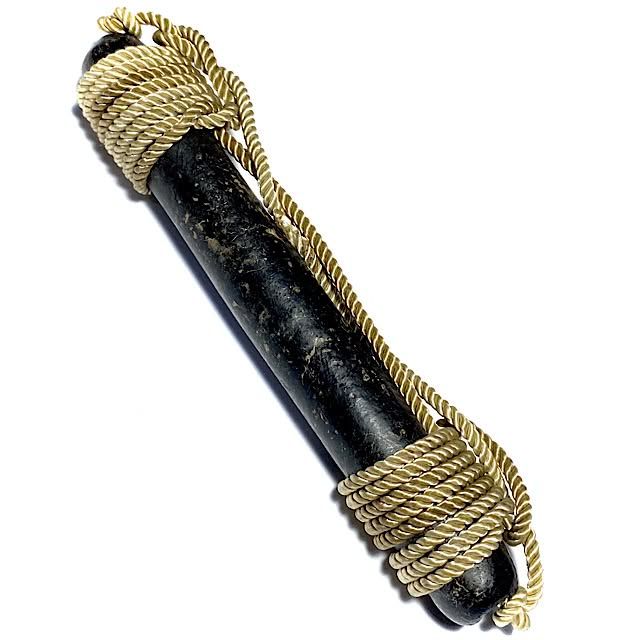
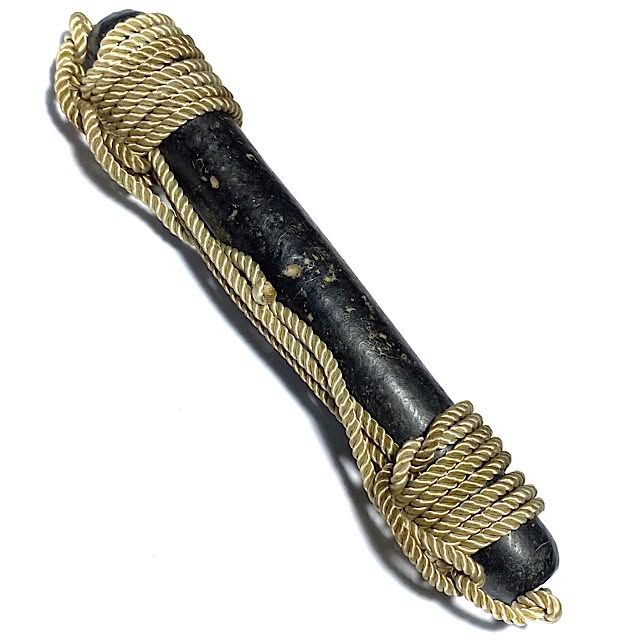
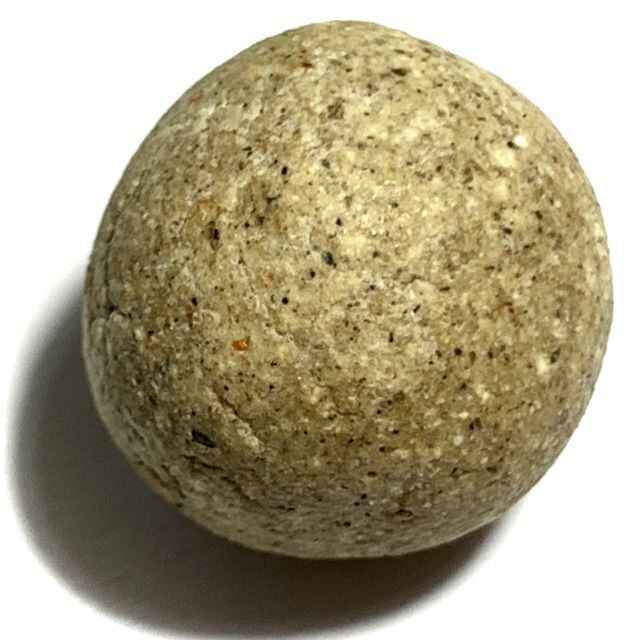
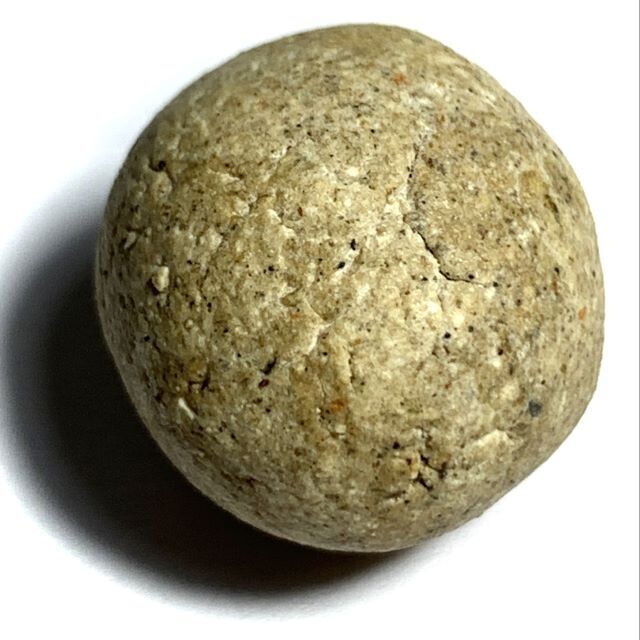
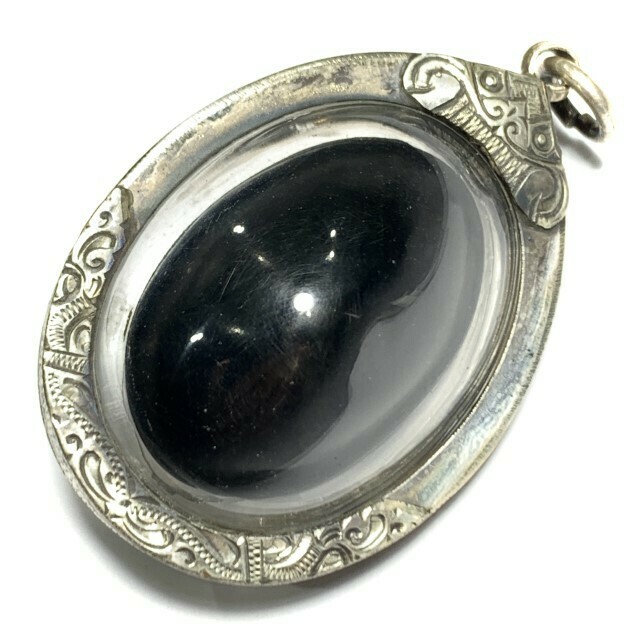
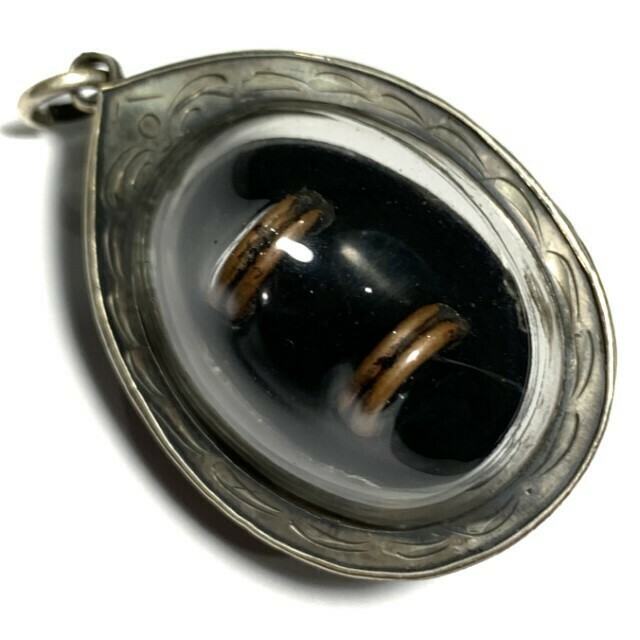
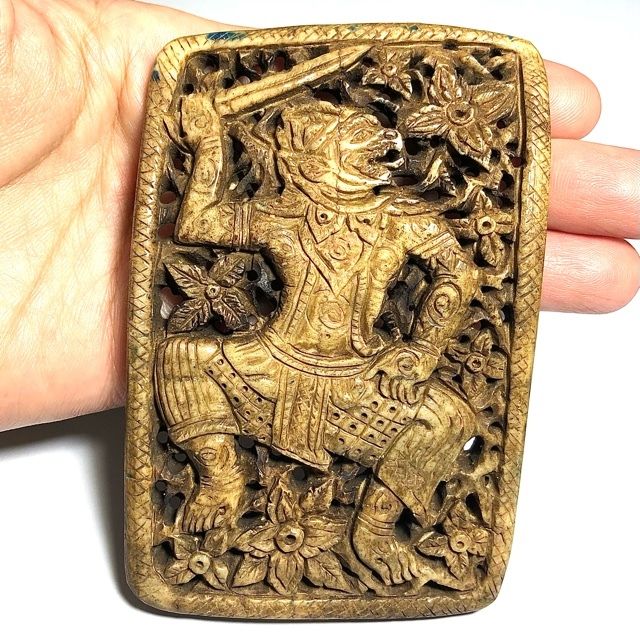
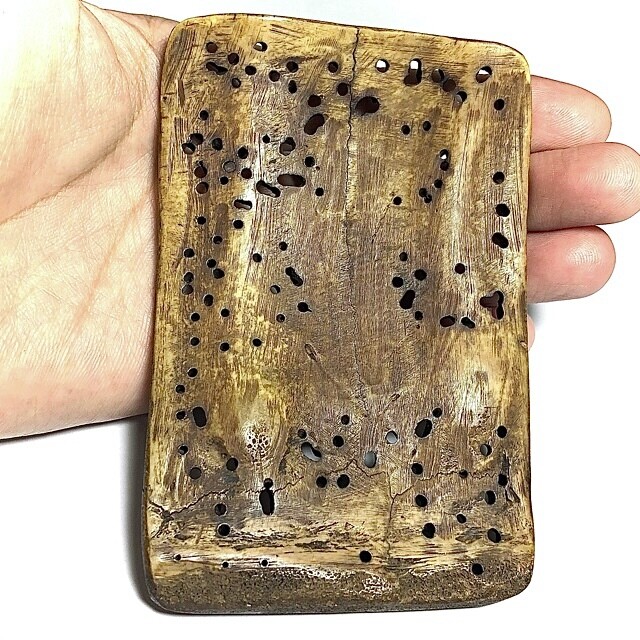
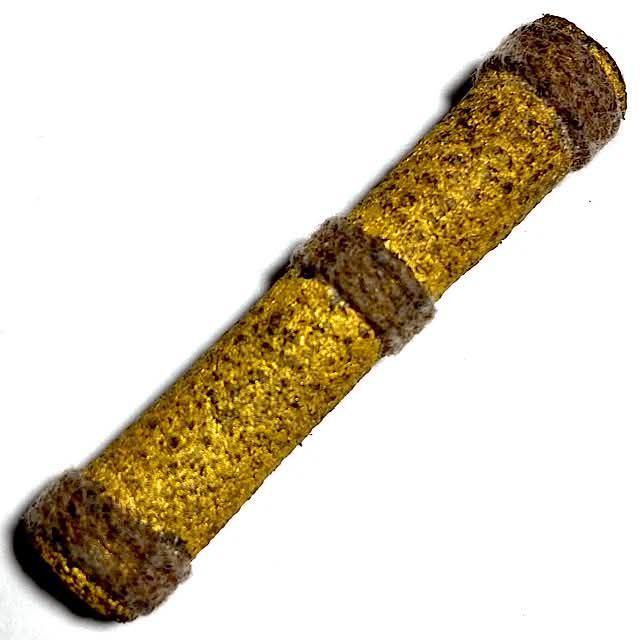
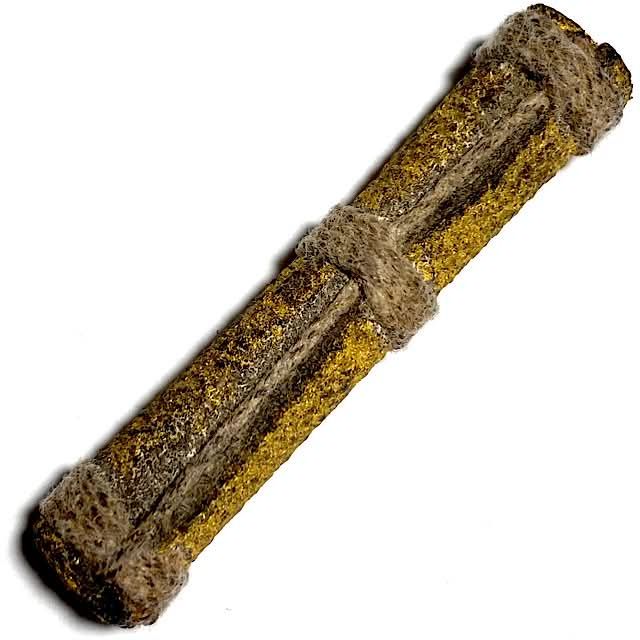
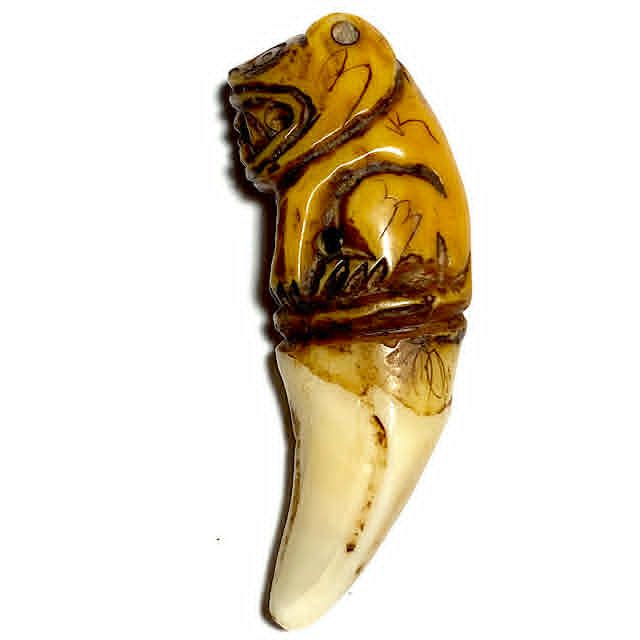
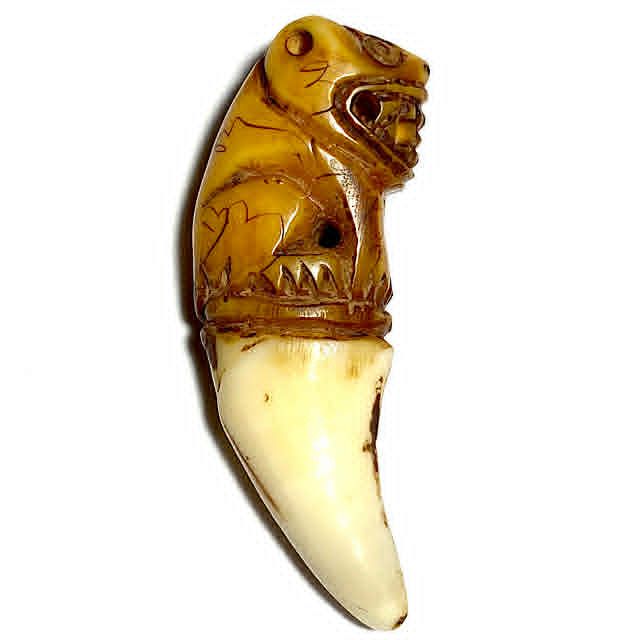
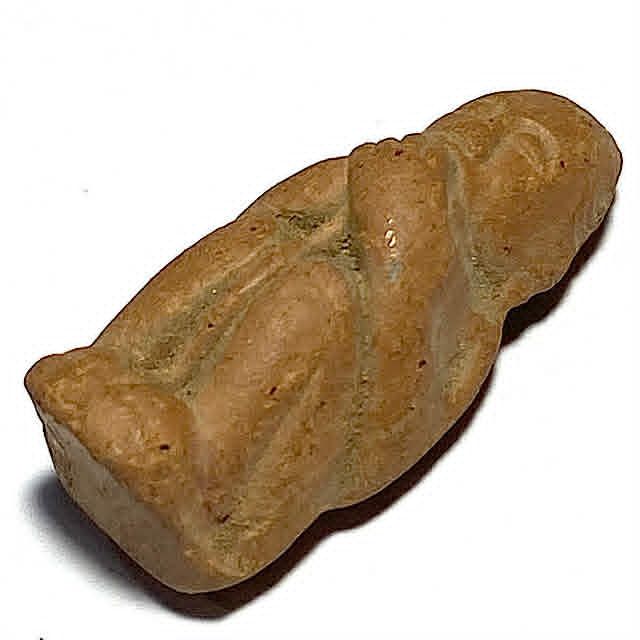
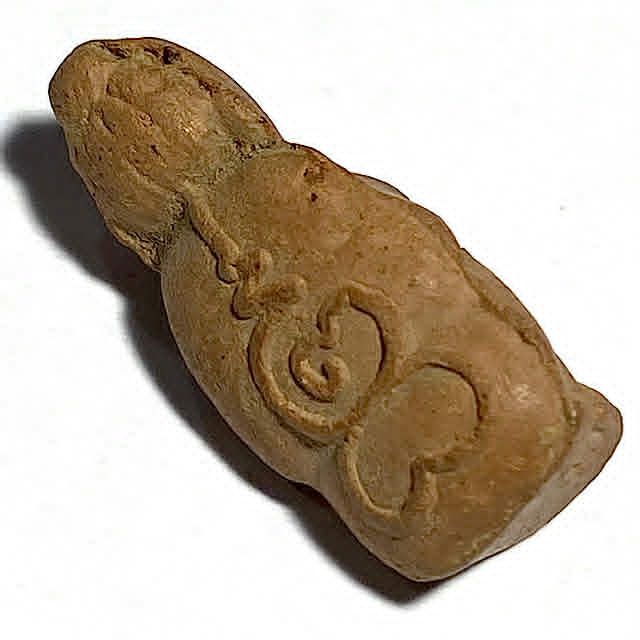
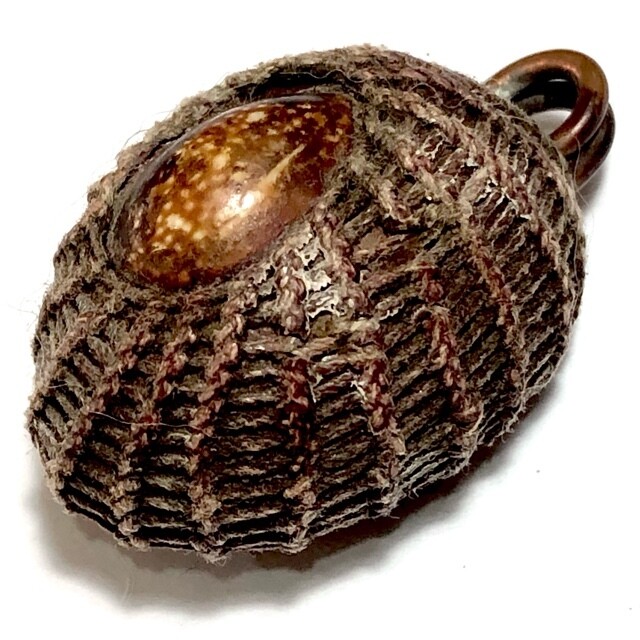
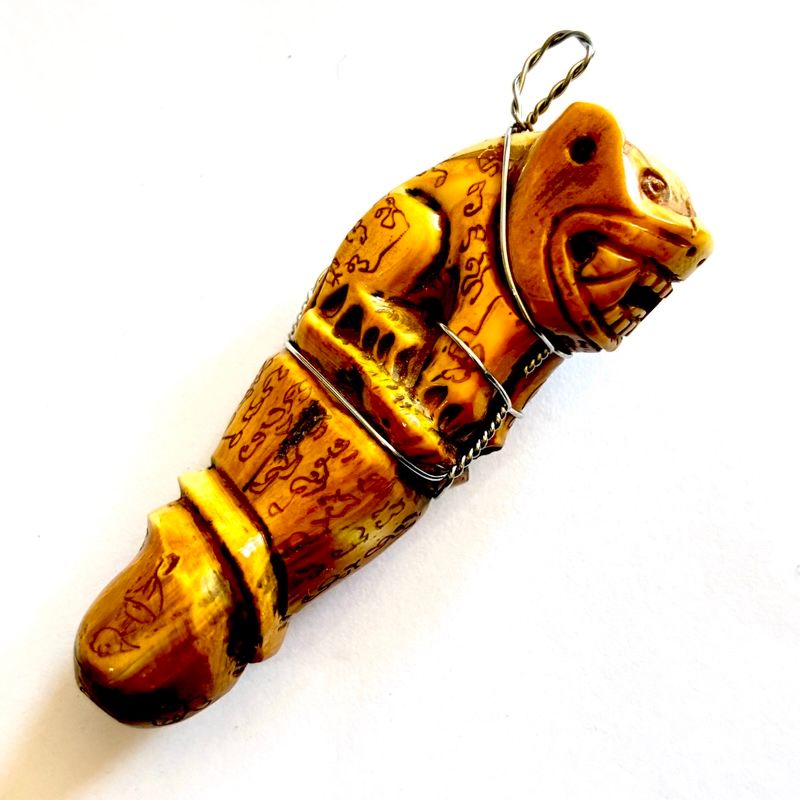
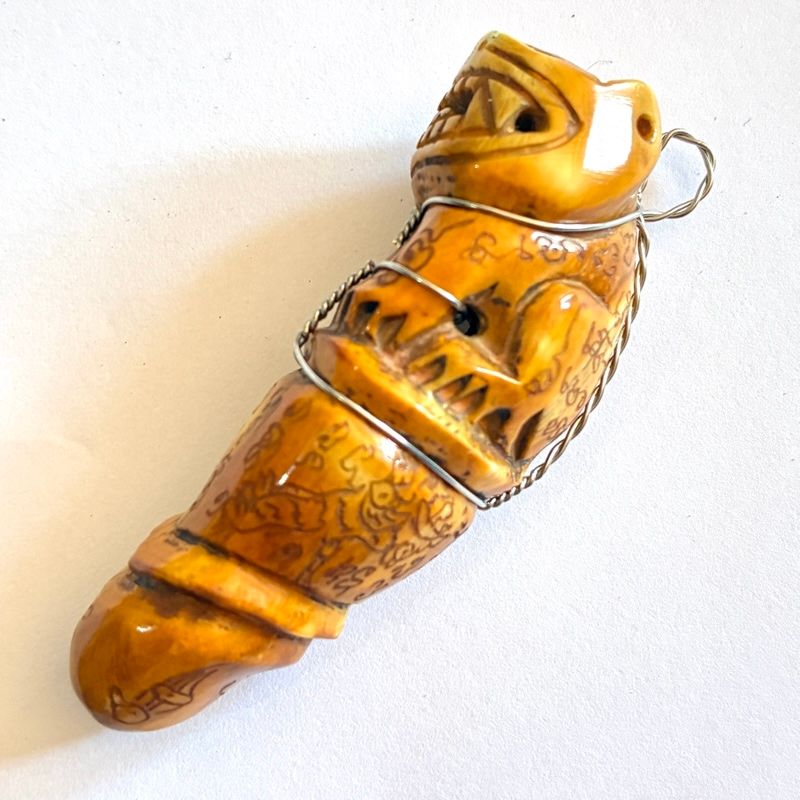
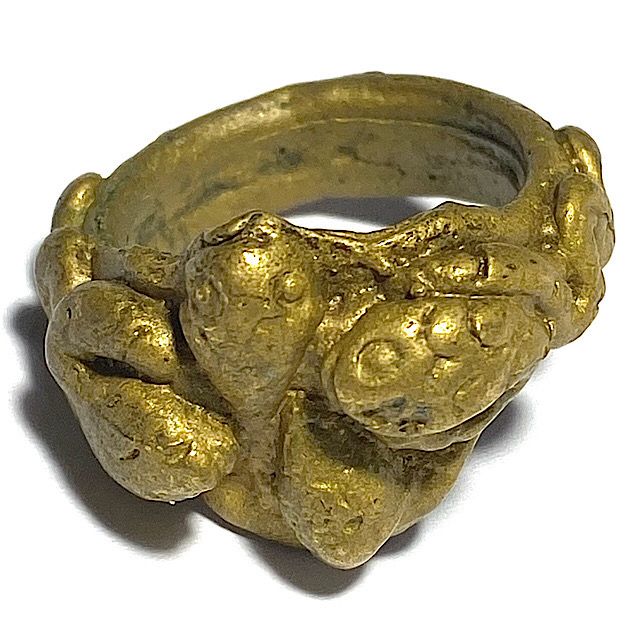
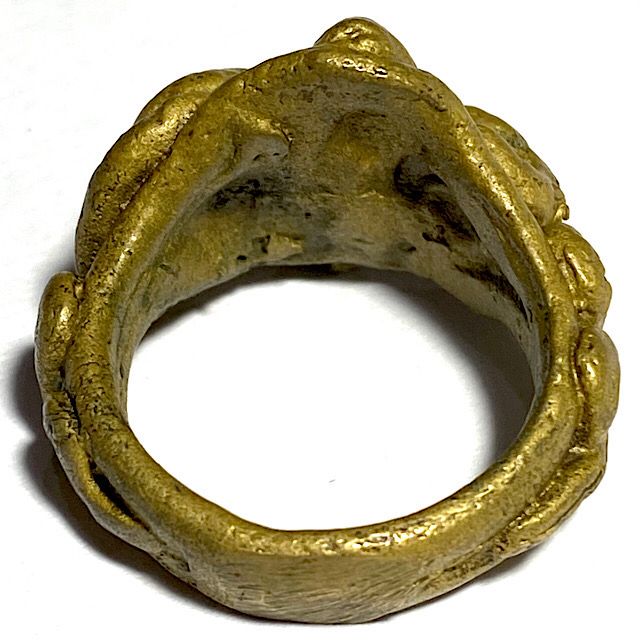
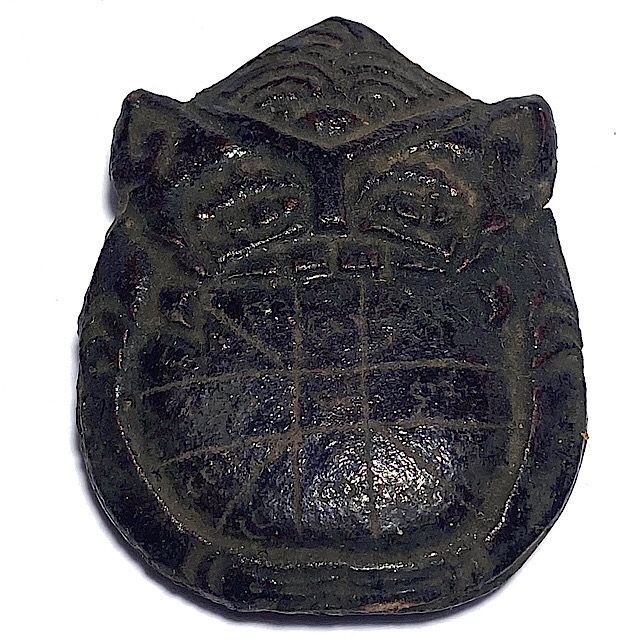
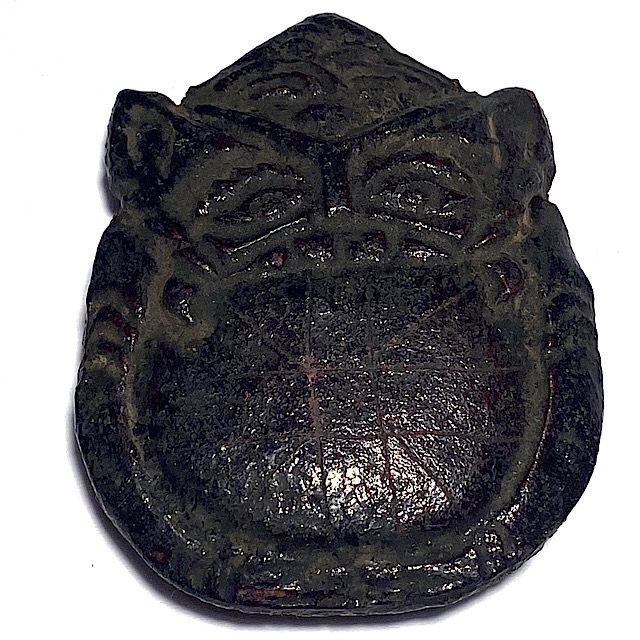
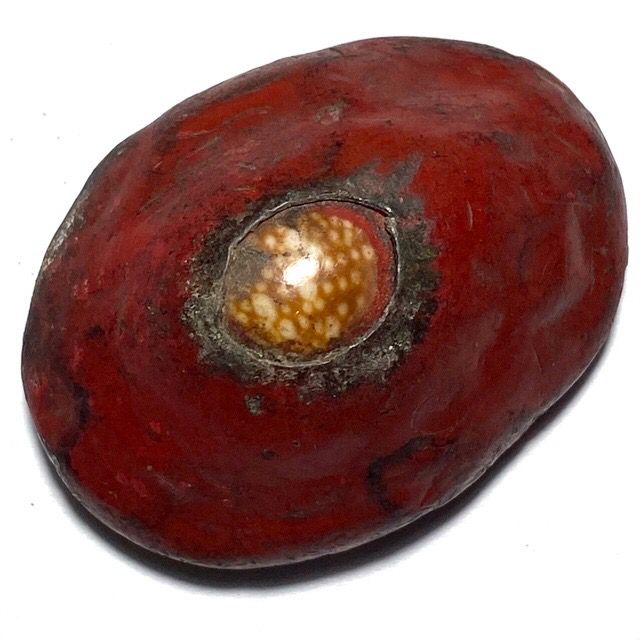
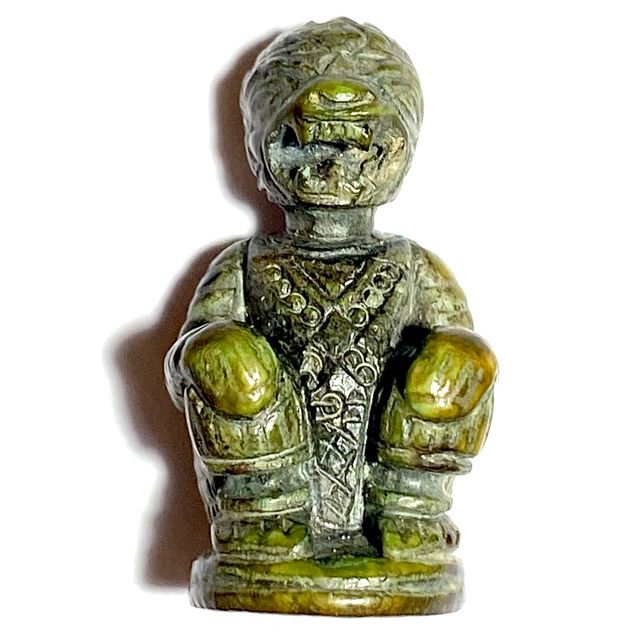
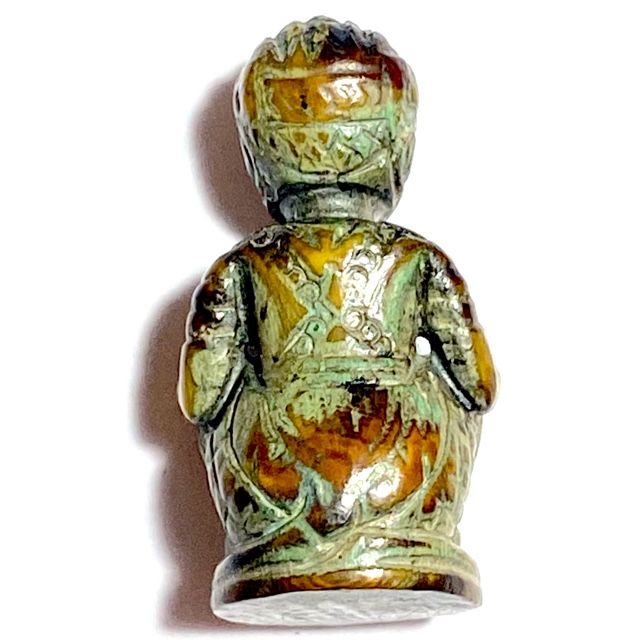
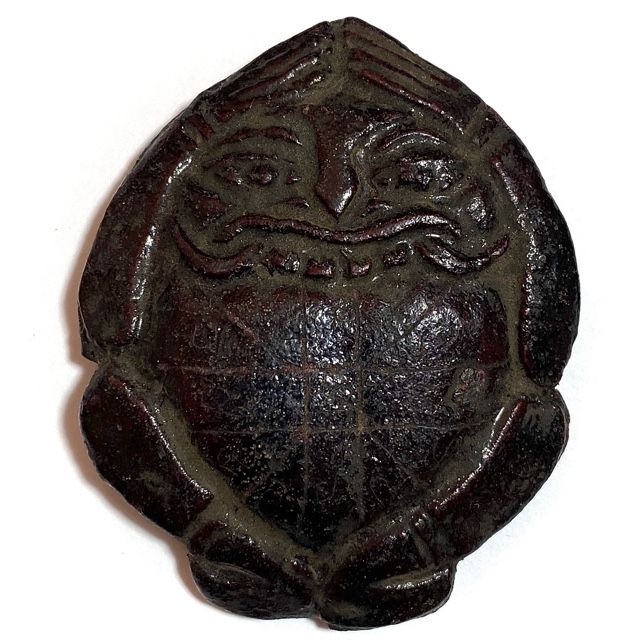
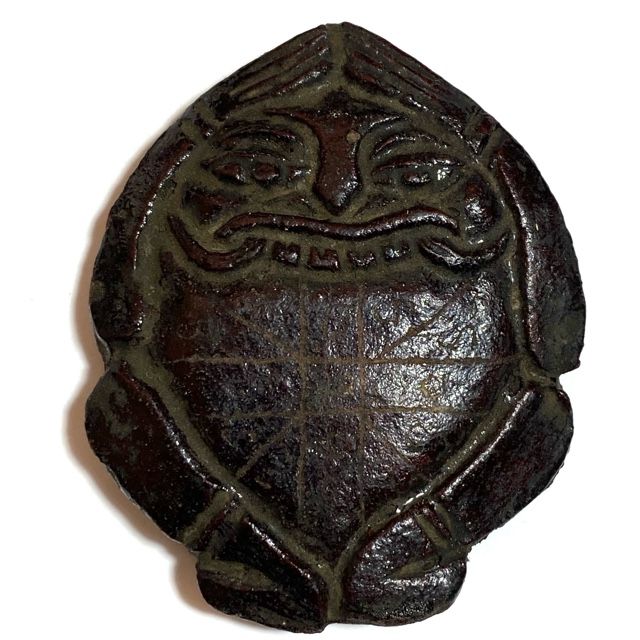
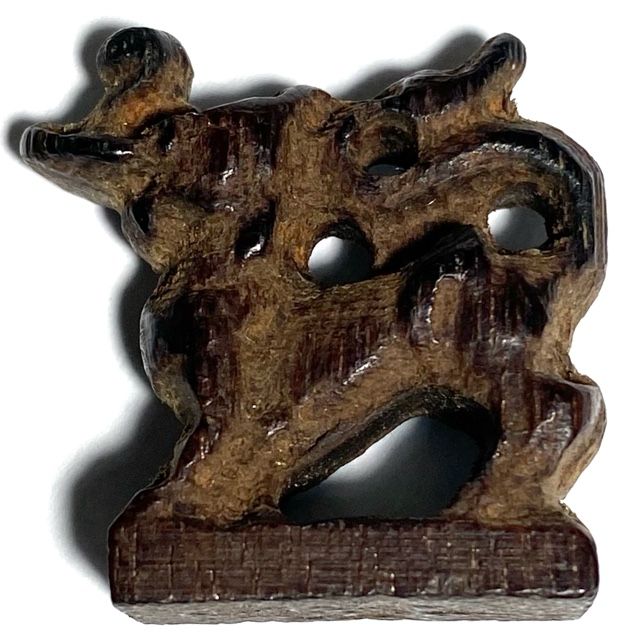
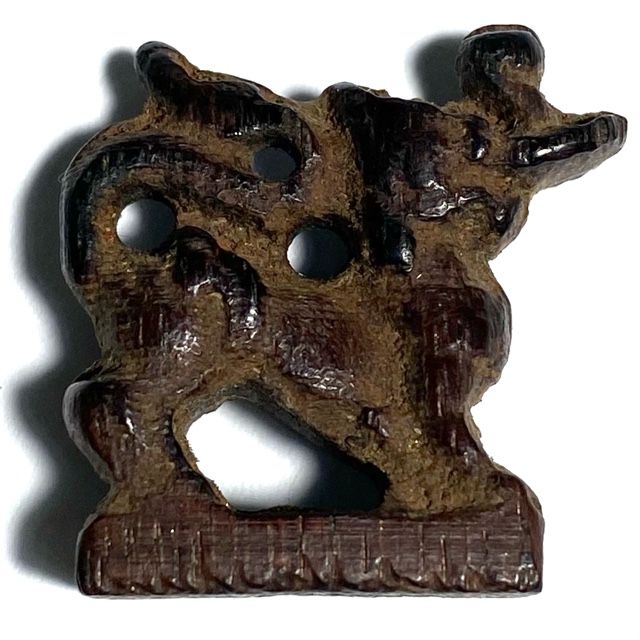
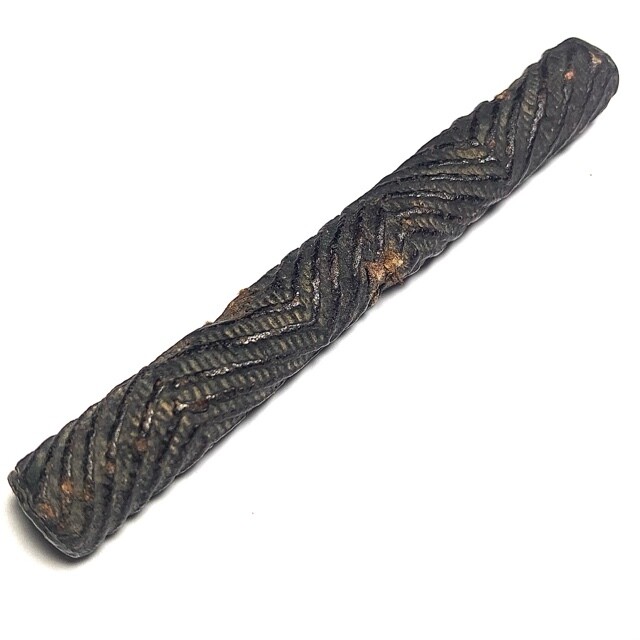
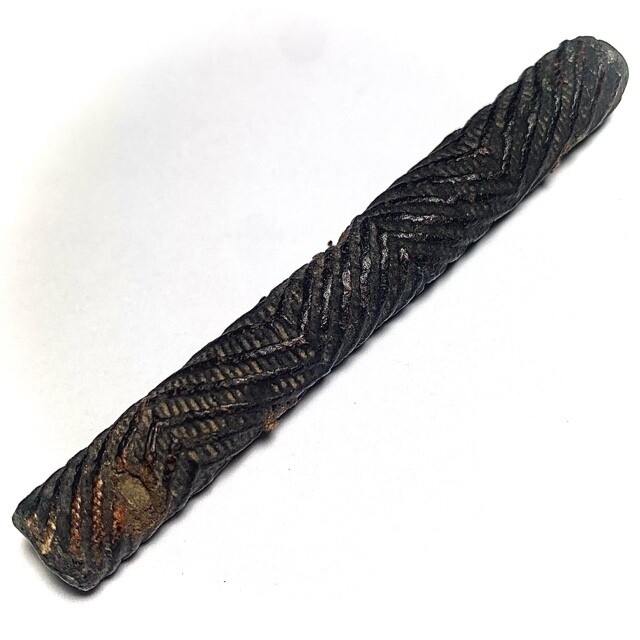
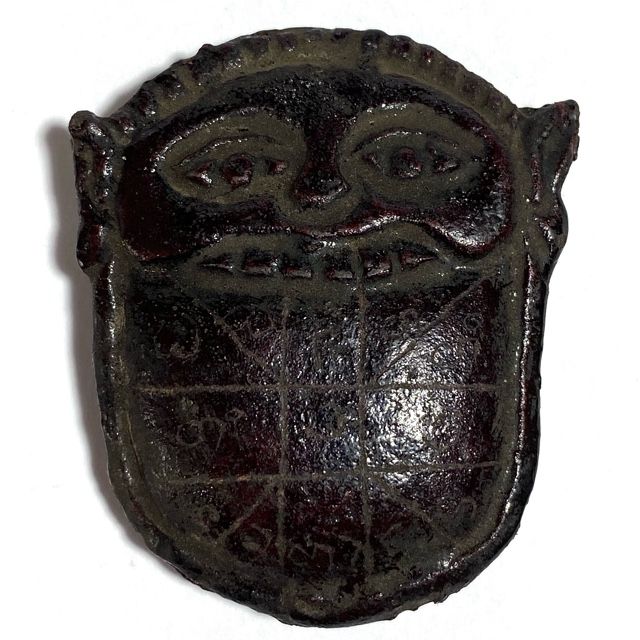
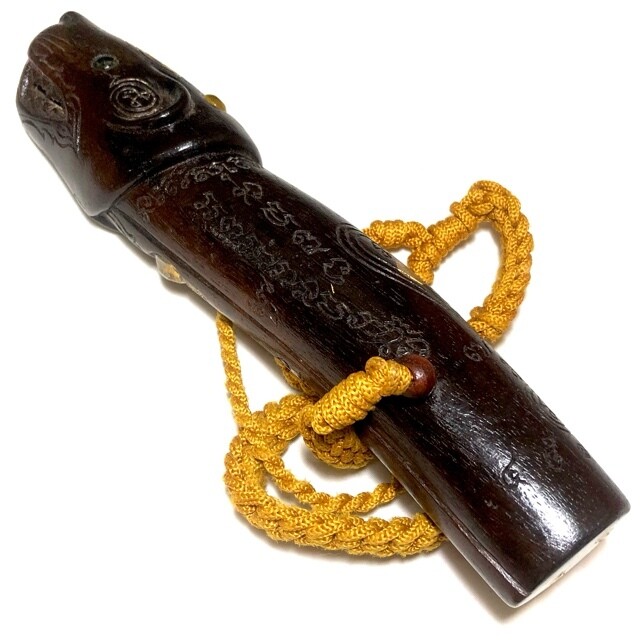
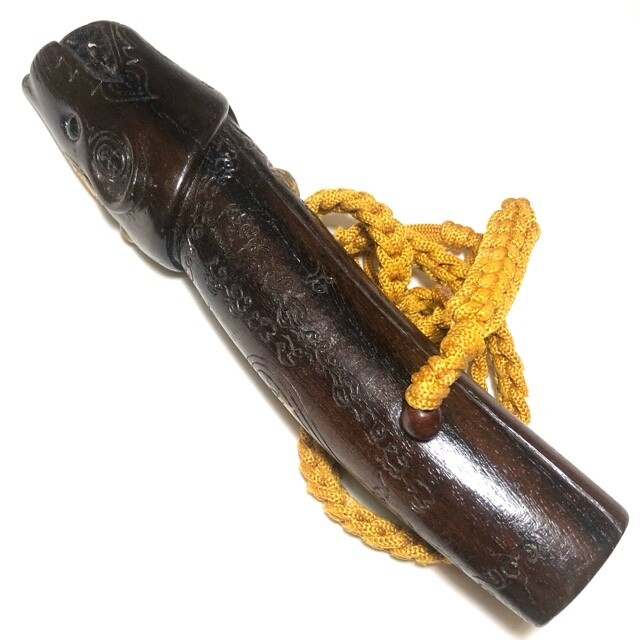
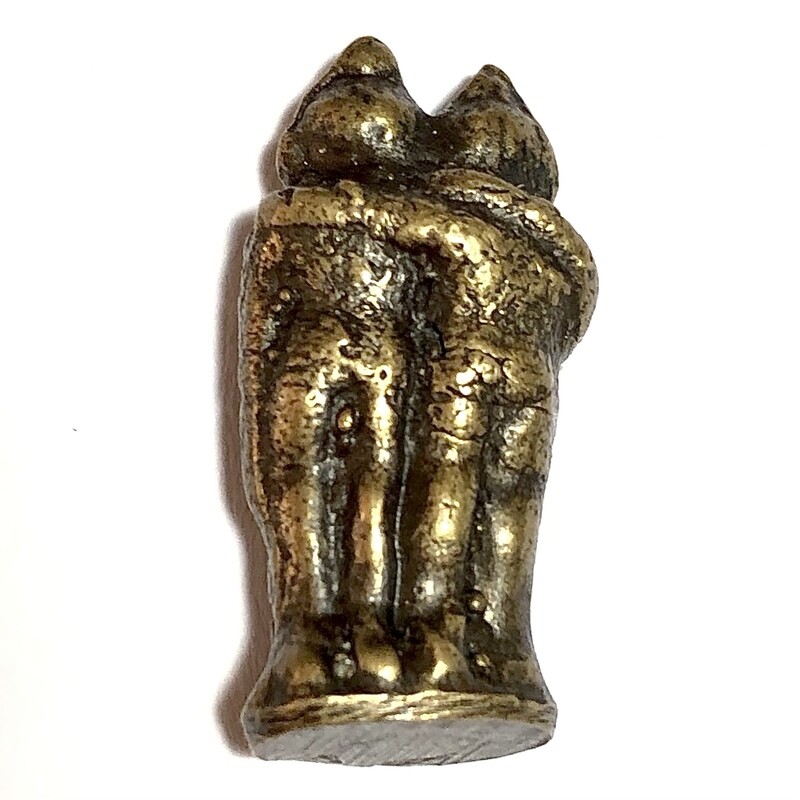
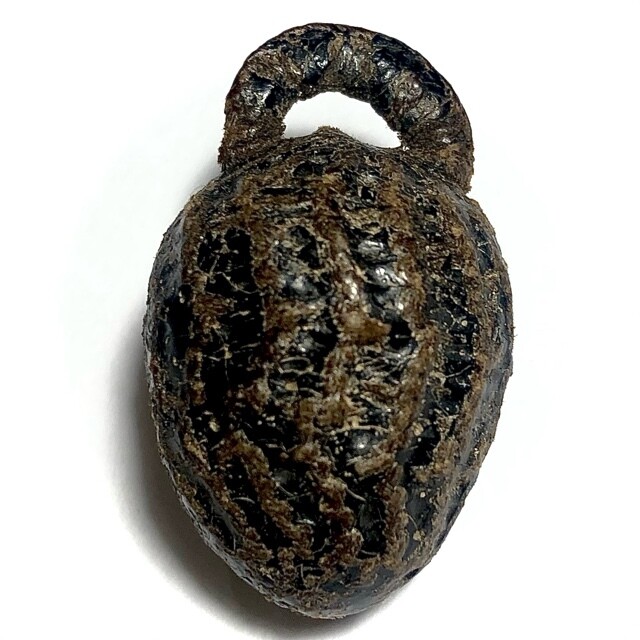
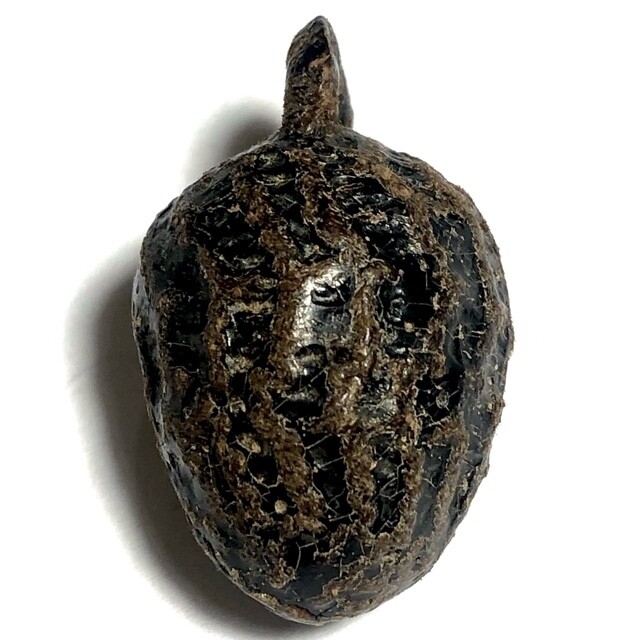
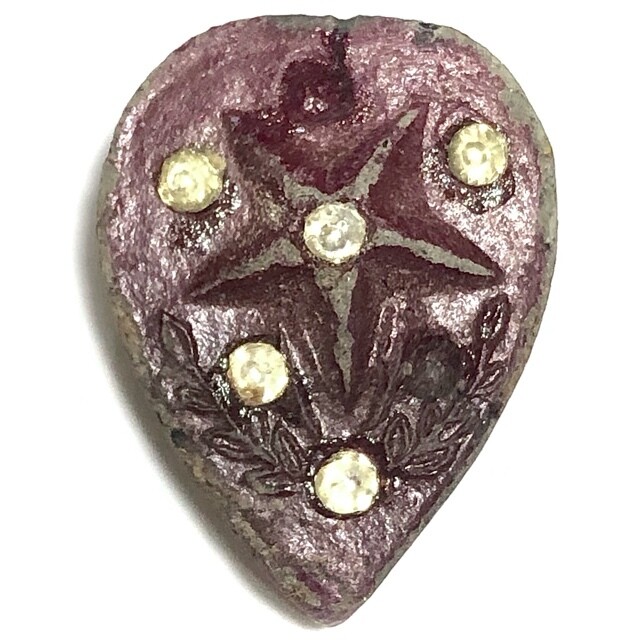
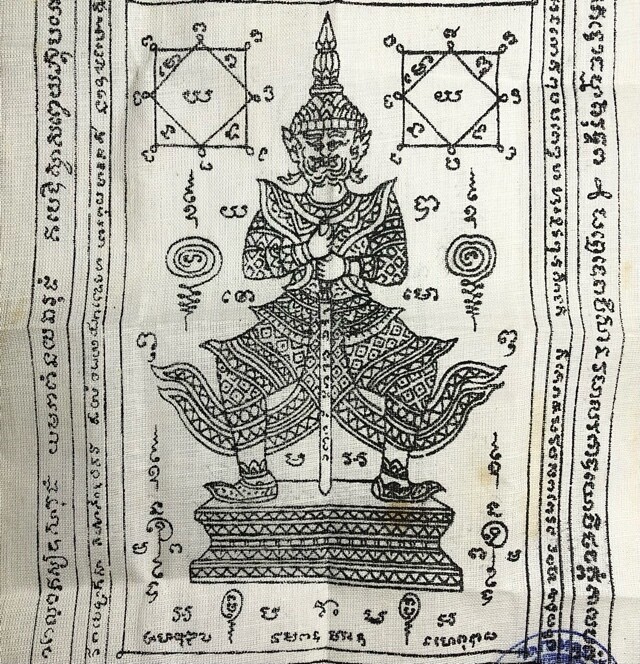
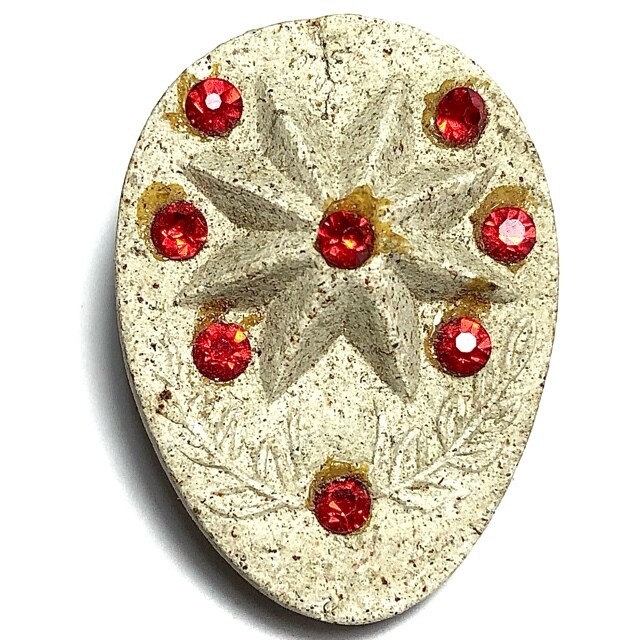
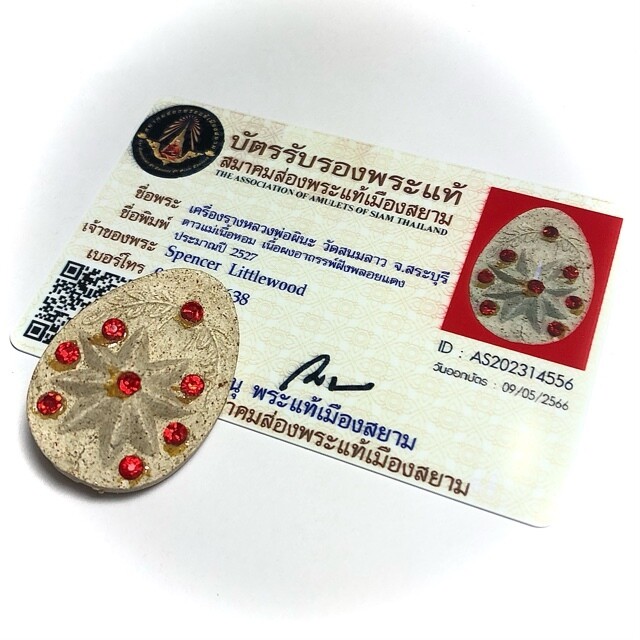
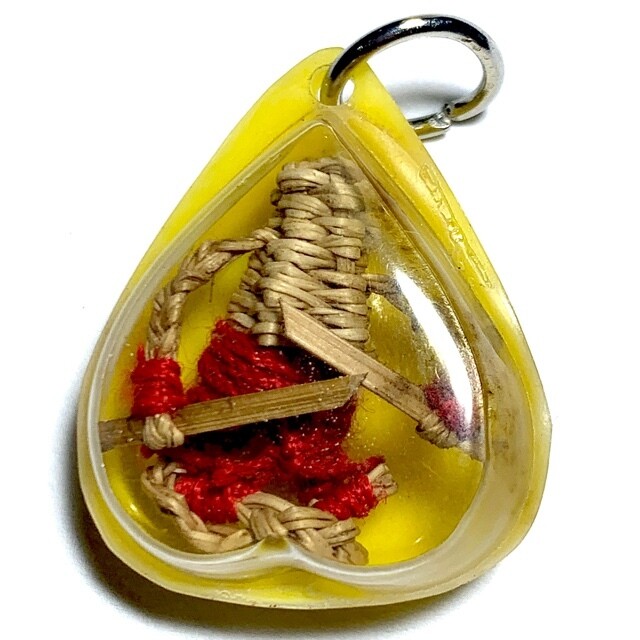
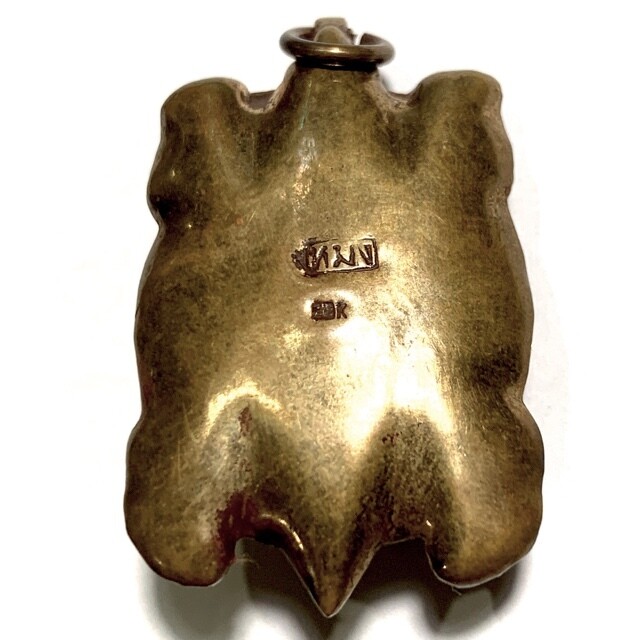
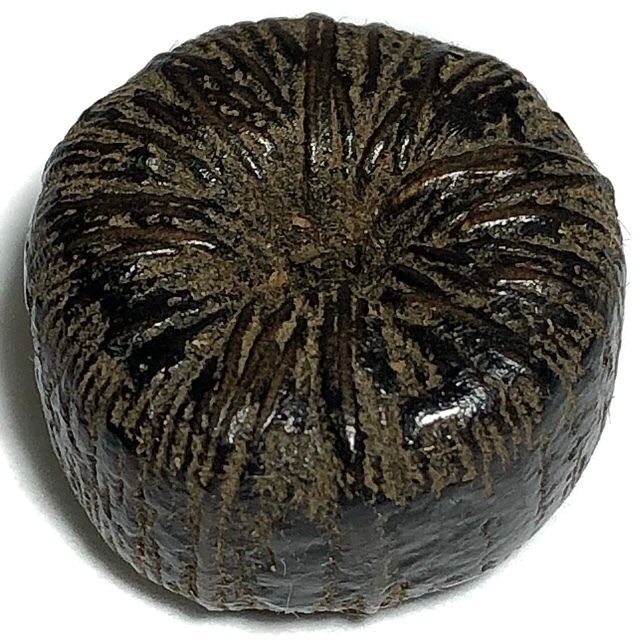
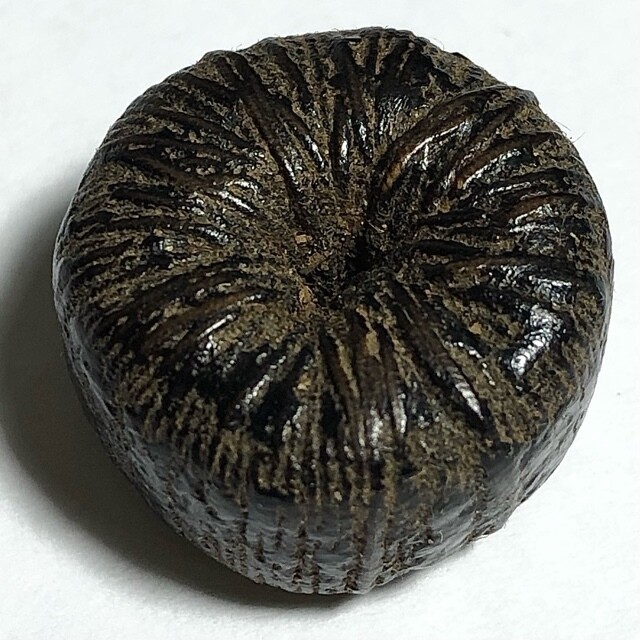
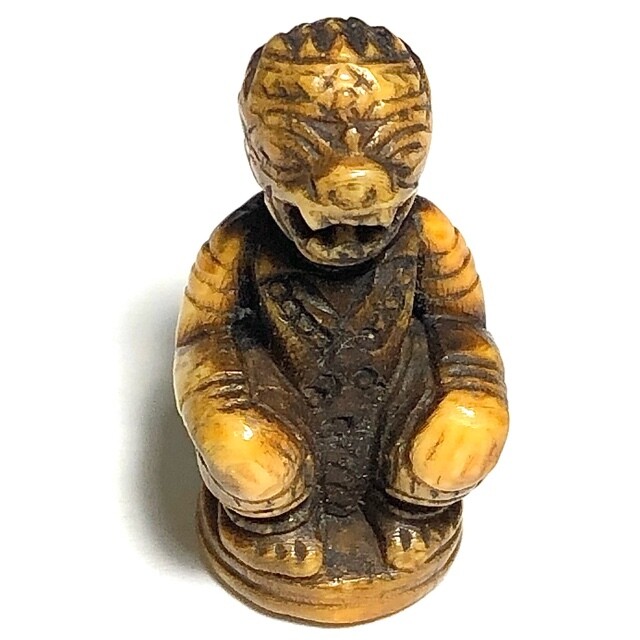
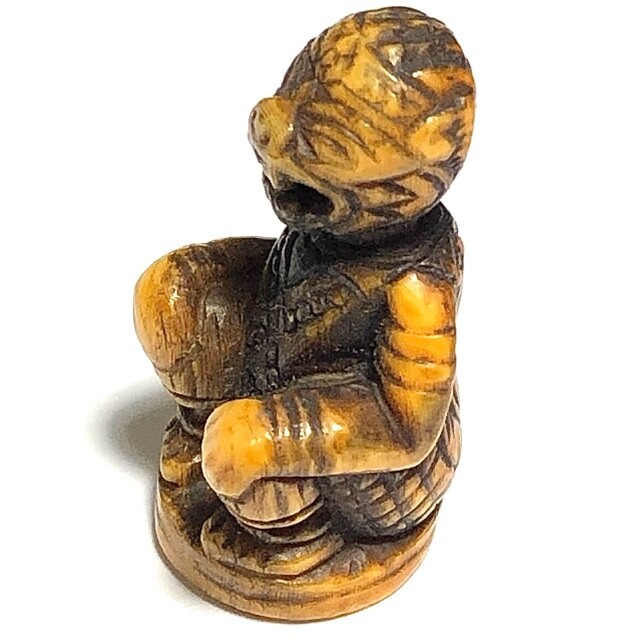
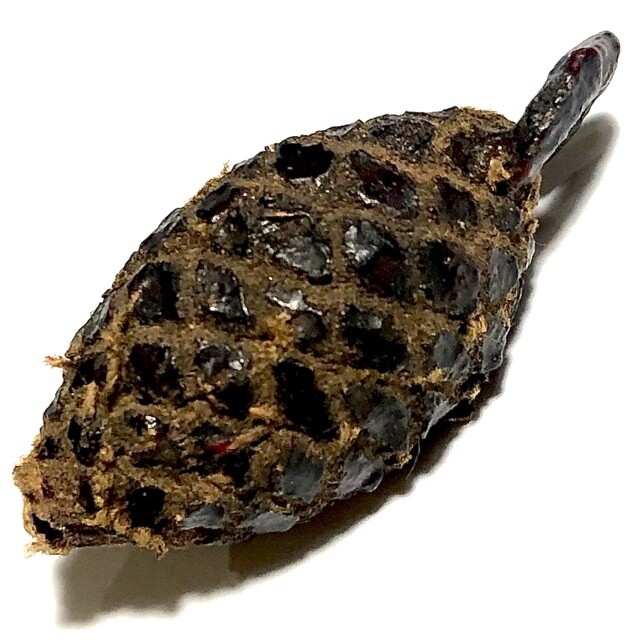
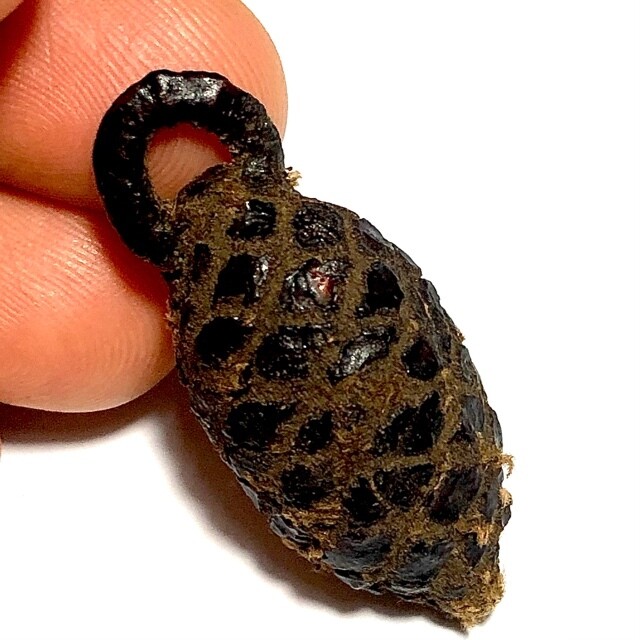
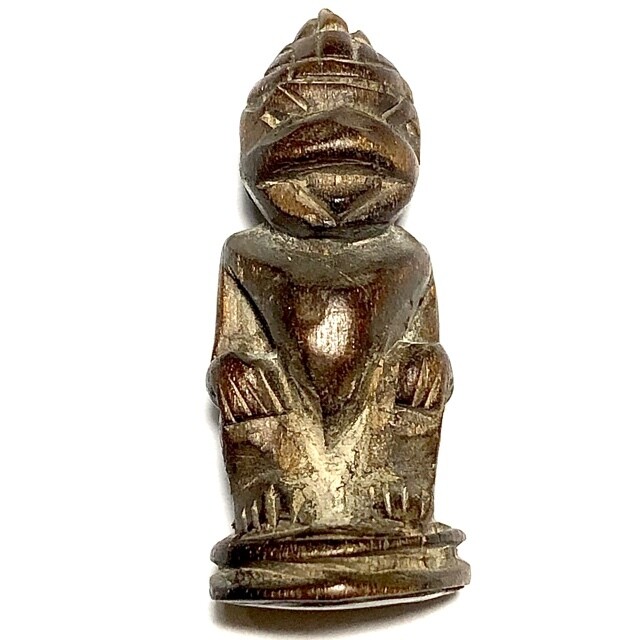
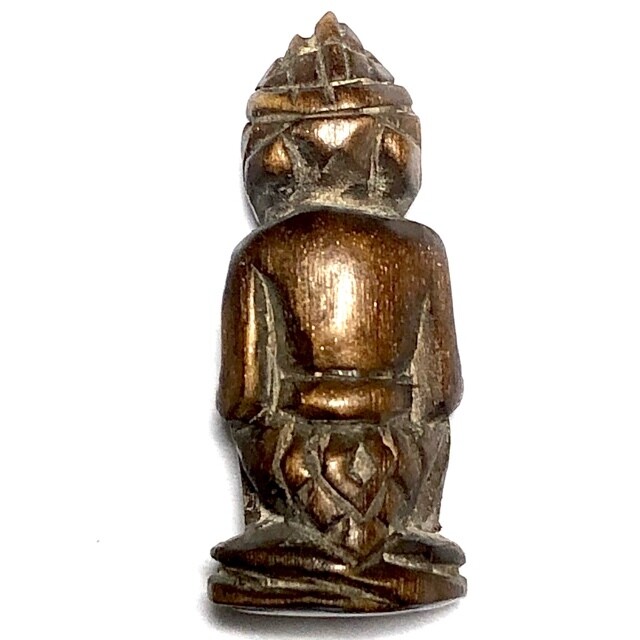
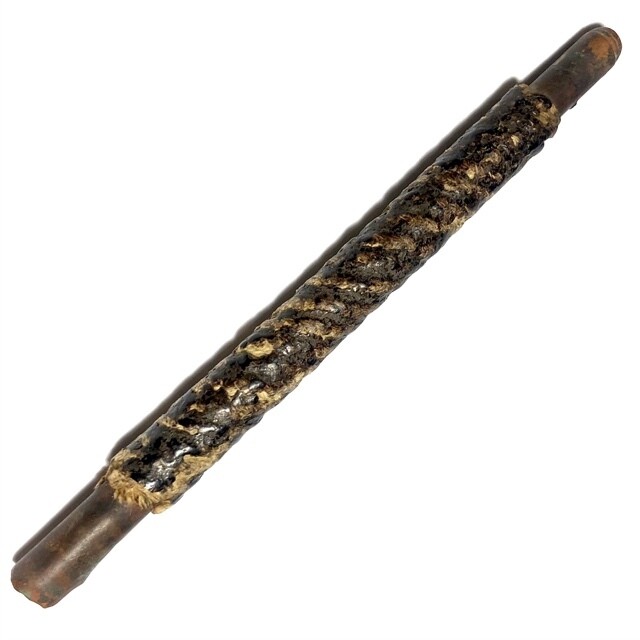
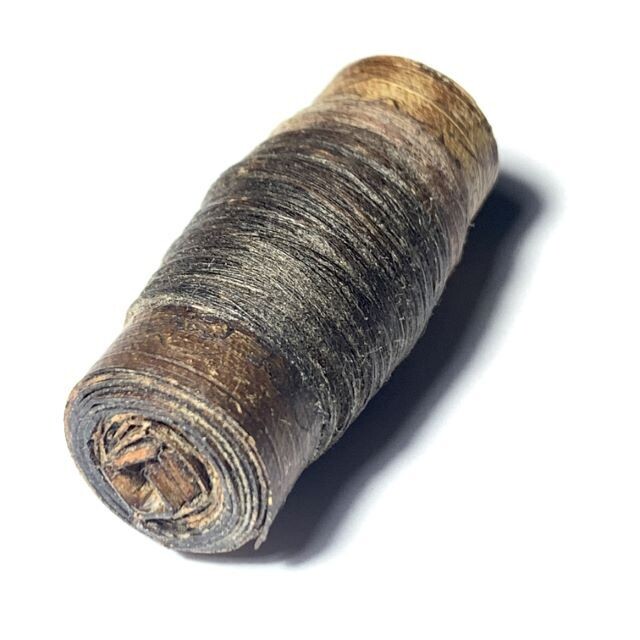
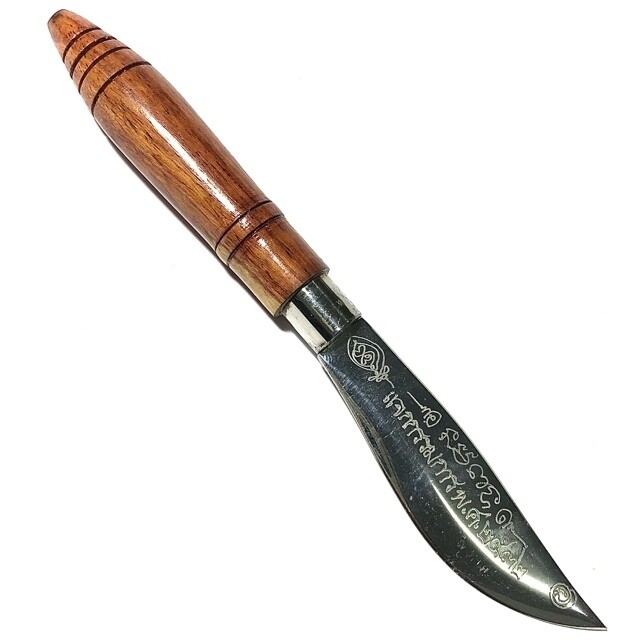
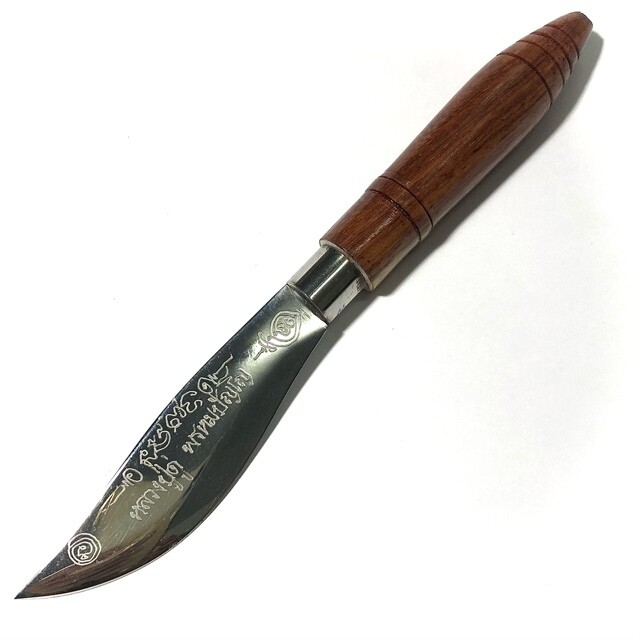
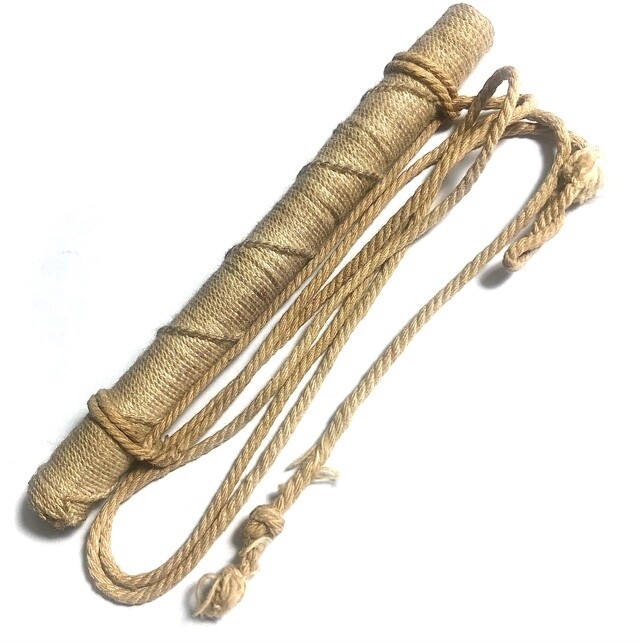
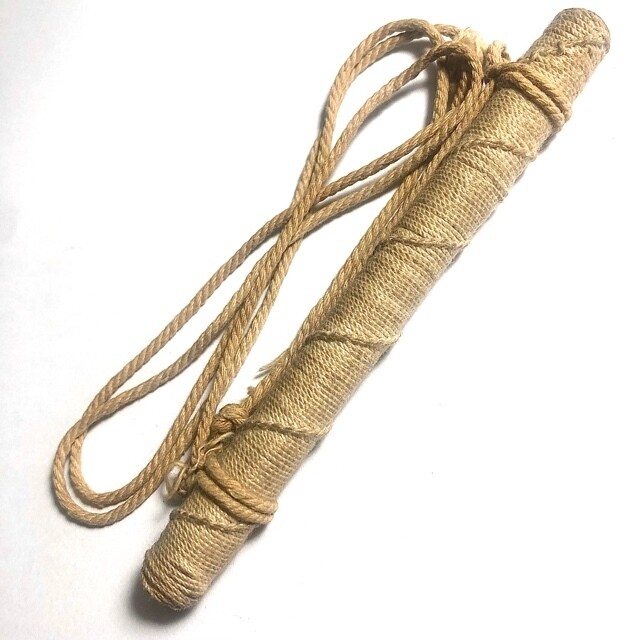
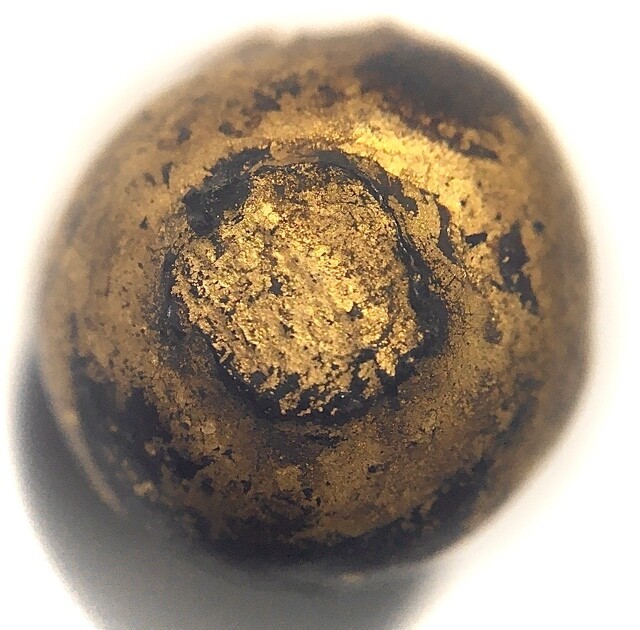
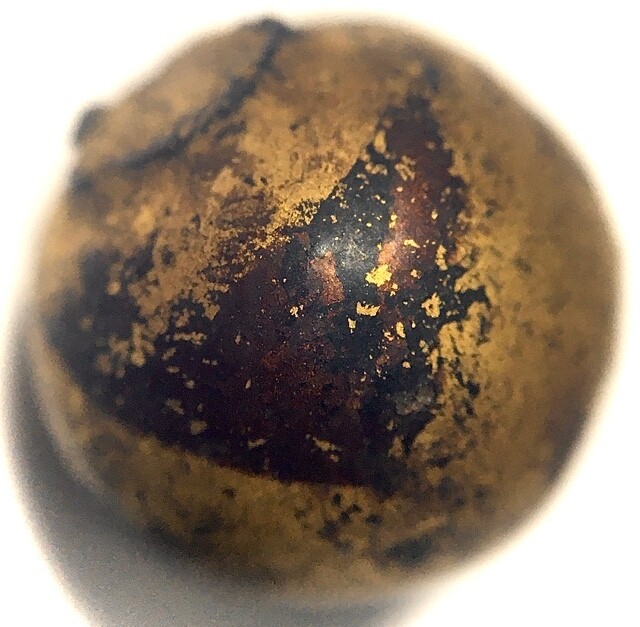
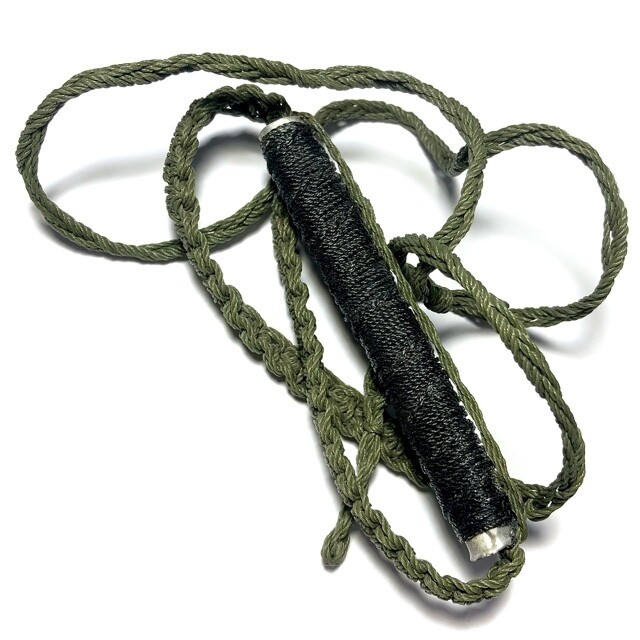
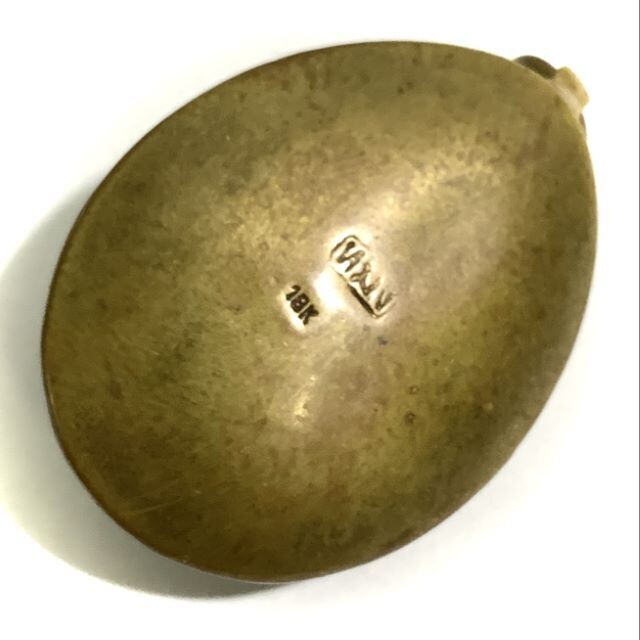
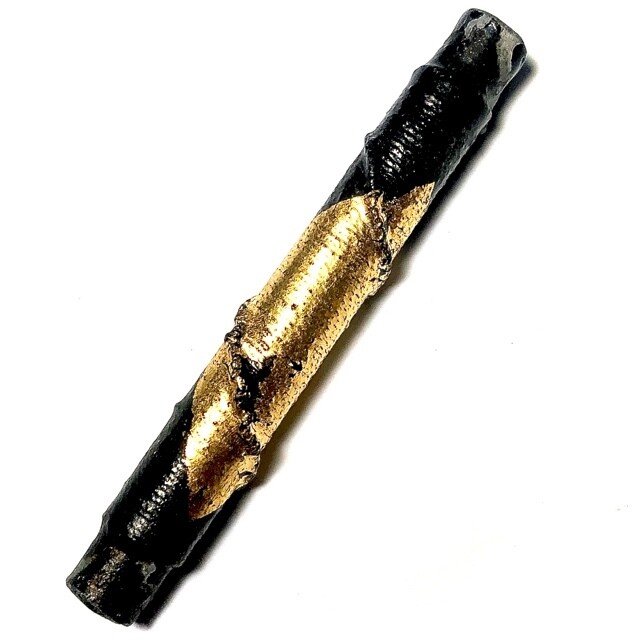
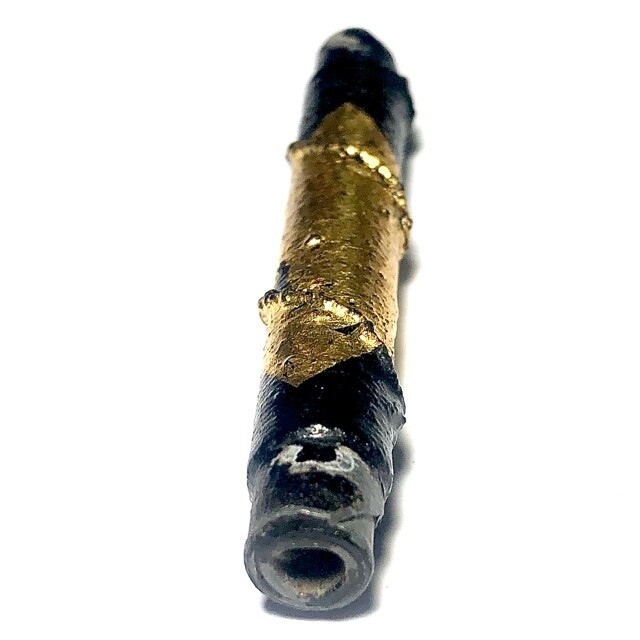
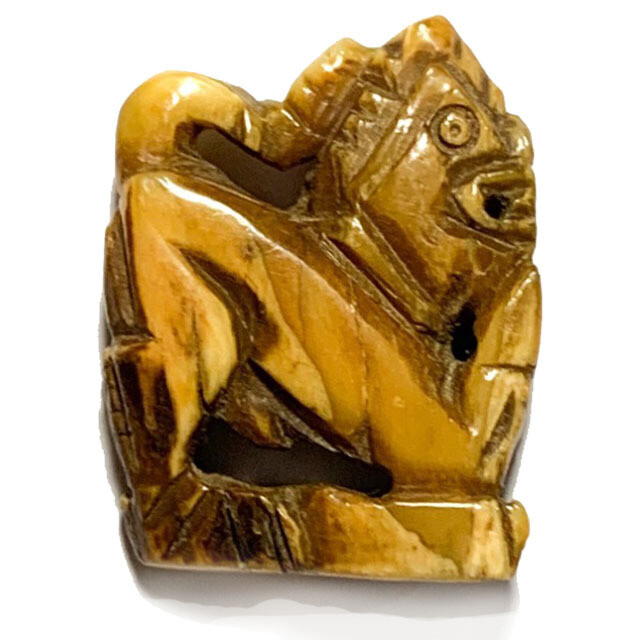
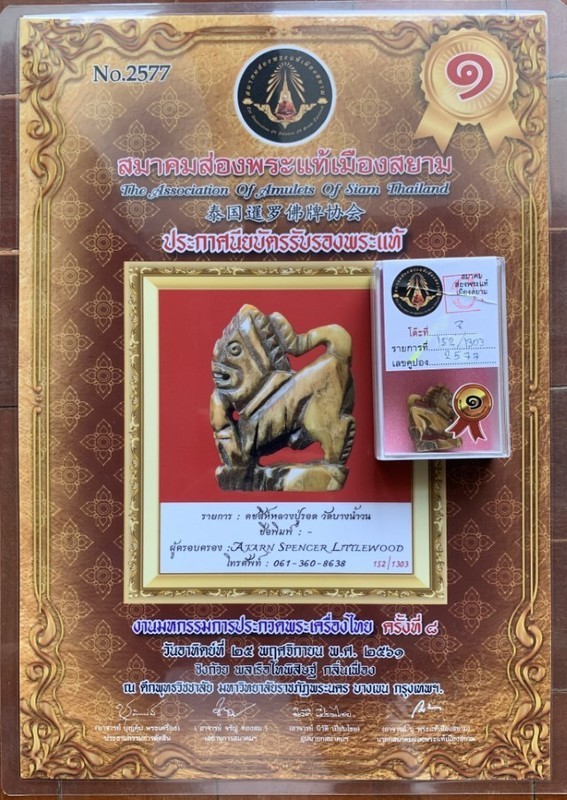
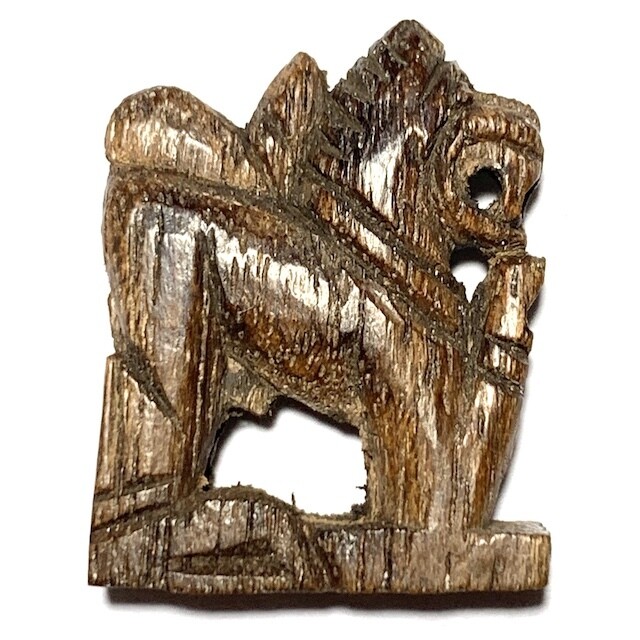
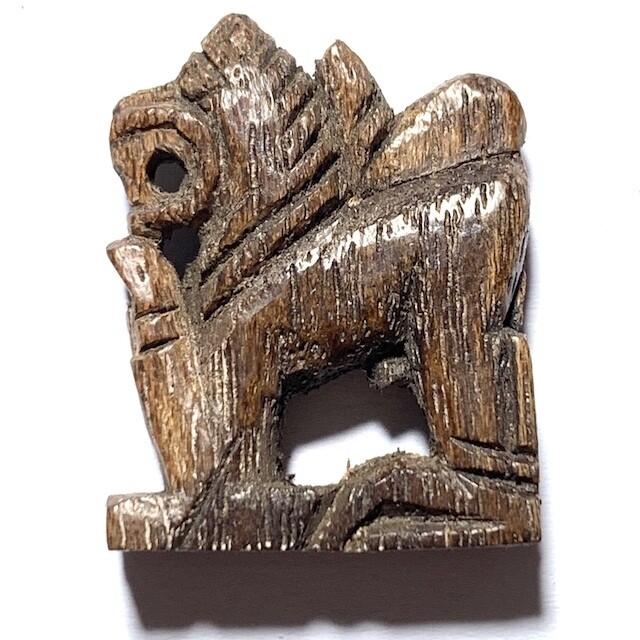
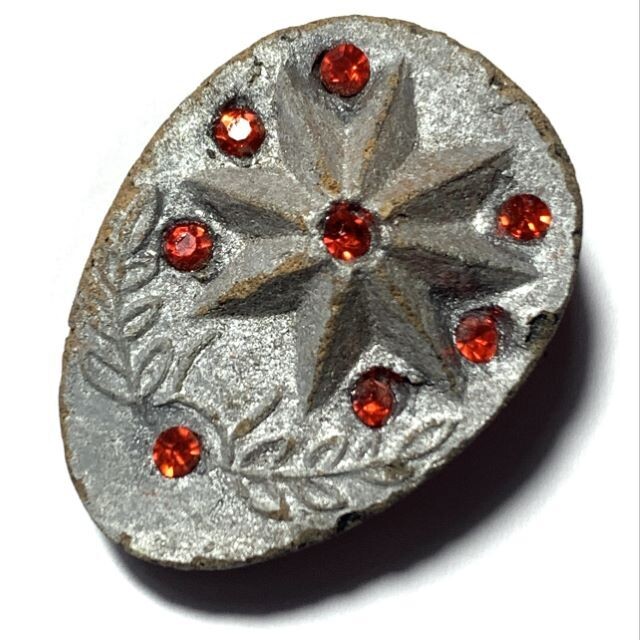
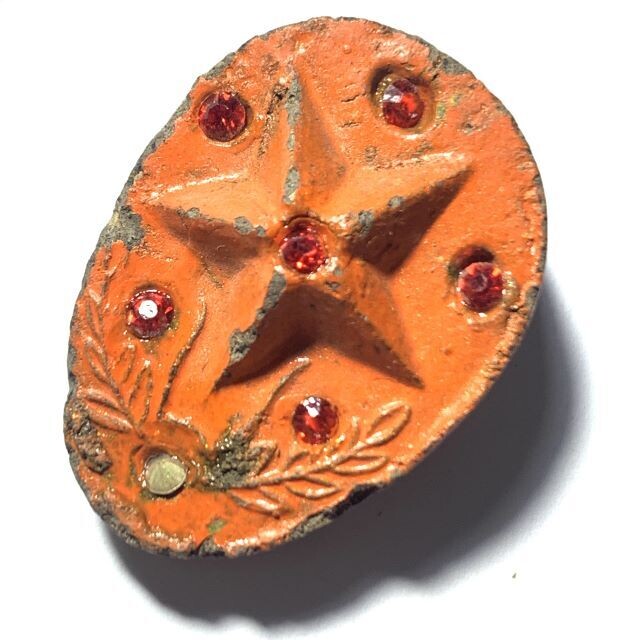
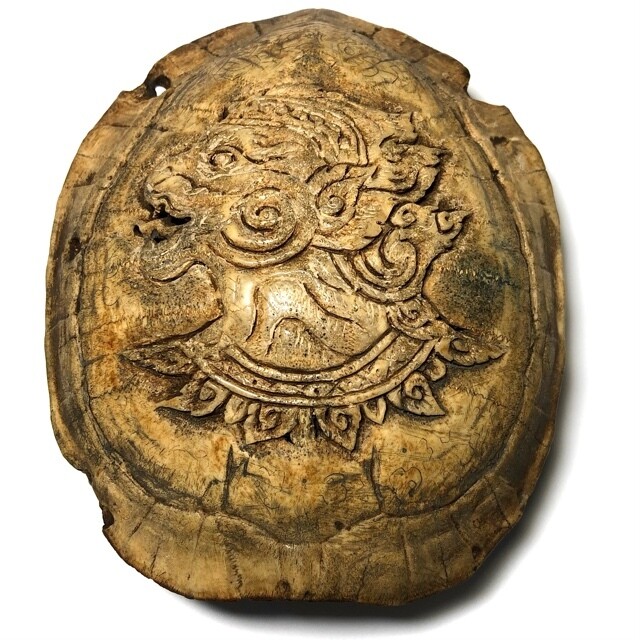
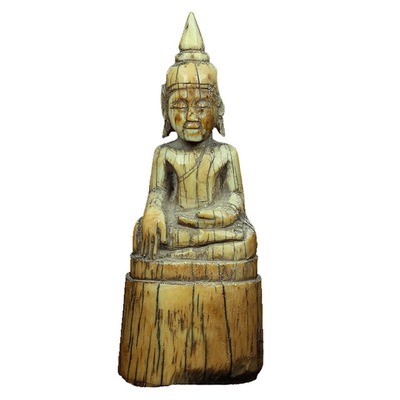
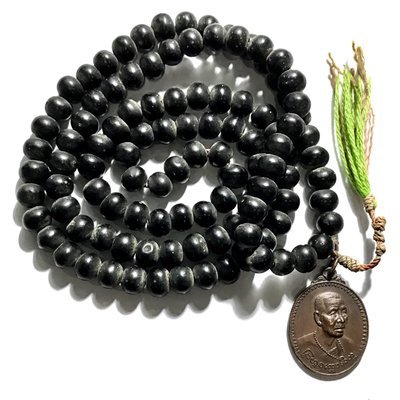
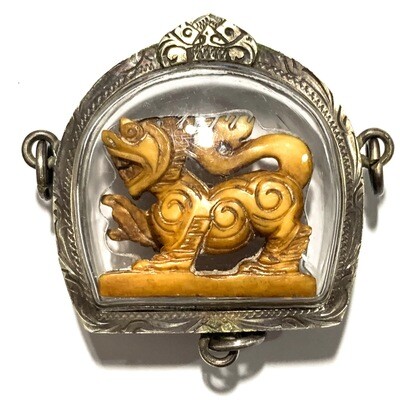
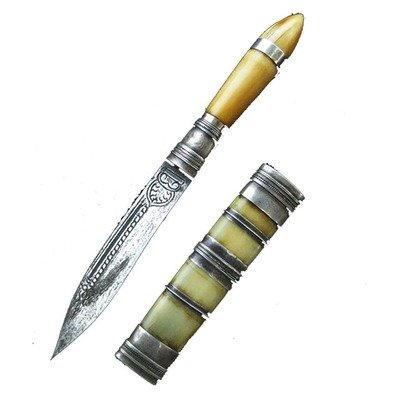
A large size 5 Inch Long 1 Inch Thick pristinely well carved design model, of one of the Most Famous Palad Khik amulets of all time, and in one of the rarest and most sought after materials; The Palad Khik Hua Chamot Mai Gae carved Palad Khik of Luang Por Pina (Wat Sanom Lao), in Nuea Nga (Ivory/Elephant Bone), with gemstone eyes, Muan Sarn inserted within the interior, and a most expertly and exquisitely carved design from a Master Artisan of Luang Por Pina. The Palad Khik is completely covered with hand inscriptions of the Sacred Yant Na Ok Dtaek, and the invocation of the four elements, and other Buddhist Prayers and Formulas of Sacred Geometry, such as the special Na Metta of LP Pina.

Palad Khik Hua Chamot Dtua Kroo Ud Muan Sarn Nuea Gna Chang Gae Fang Ploi Luang Por Pina

These amulets are highly regarded for their power to invoke the power to attract others, treasured possessions, and ward off black magick. They are also full of Metta Mahaniyom, Maha Lap Klaew Klaad and Maha Pokasap Powers as well as the obvious Power of Serm Duang ability to improve fate and destiny.

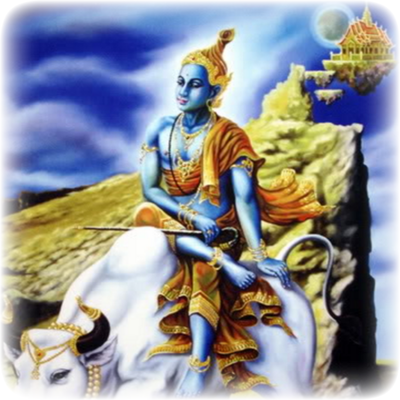
The Palad Khik is in truth symbolic of the Shiva Lingam; The belief in the Shiva Lingam, or ‘Leungk’ (Thai pronunciation) phallic energy of the Palad Khik, is derived from the Brahman influence which has been inflected on Thai Theravada Buddhism, since both belief systems came to Siam more than one or two thousand years ago. It is believed that the Palad Khik Lingam energy is the source of all life forms in the Universe. This is the root of the act of reverence (Bucha/Poojah) to the Palad Khik as a Shiva Lingam, which honors Shiva as the Lord of the World.

Palad Khik Hua Chamot Dtua Kroo Ud Muan Sarn Nuea Gna Chang Gae Fang Ploi Luang Por Pina

In India, not only is the Shiva Lingam worshiped, bit there exists also a

cult which reveres the female sex organ, which is called the ‘Yoni’(Vulva, female counterpart). The same thought is applied as that used to revere the Palad Khik Shiva Lingam, that is to say, that all created things must spring out of the Yoni instead of the Lingam.

Palad Khik Hua Chamot Dtua Kroo Ud Muan Sarn Nuea Gna Chang Gae Fang Ploi Luang Por Pina


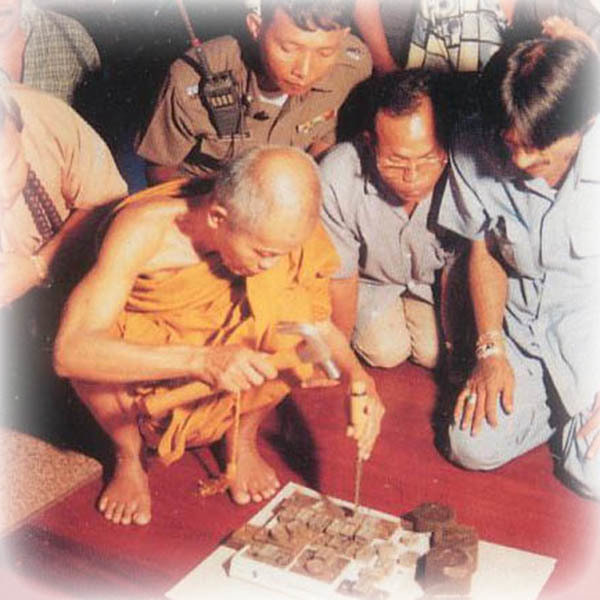
Below; hand scratched etchings of Luang PorPina’s Famous Sacred Na Ok Dtaek Heart-Breaker Spell Yantra Inscription on the side of the Palad Khik, which is an essential part of Wicha Palad Khik

Palad Khik Hua Chamot Dtua Kroo Ud Muan Sarn Nuea Gna Chang Gae Fang Ploi Luang Por Pina

The practice of making Palad Khik as a portable amulet, for ‘Bucha Siwalingk’ (praying to Shiva Lingam phallic Deity), entered Siam with the influence of the Khom race, whose language and alphabet the Thais absorbed and adapted into their own personalized fashion.

Palad Khik Hua Chamot Dtua Kroo Ud Muan Sarn Nuea Gna Chang Gae Fang Ploi Luang Por Pina

Some have said that the integration of Pre-Buddhist beliefs and traditions, into the Thai Theravada Buddhist practice of the common Folk, such as worshiping amulets like the Palad Khik, is not in contradiction to the practice of Buddhism and presents no obstacles. In fact it is believed that since Buddhism sprang out of the roots of

Brahman Cosmology, and that the people of Siam adopted Pre-Buddhist

Brahman traditions and incorporated them, that this is even a benefit to

the preservation of ancient knowledge, and of Thai history and

tradition. Most of these ceremonies do not come into any kind of dispute

with Buddhist thought. In fact, Buddhist Thought bases itself on many

concepts found in Hinduism, and in Thailand, the two Belief Systems can

hardly be separated.

Palad Khik Hua Chamot Dtua Kroo Ud Muan Sarn Nuea Gna Chang Gae Fang Ploi Luang Por Pina

This amulet is ‘Doo Ngaay’ (easy to see it is real), for its clearly recognisable from its inscriptions and appearance. It is hence considered Ongk Kroo (usable as a teacher), as a reference model for further study to increase the powers of recognition of authenticity of the top preferred Palad Khik amulets of Luang Por Pina. However, the Pantheon of amulets of LP Pina is one of the more difficult genres to study, for many were hand made, each individual, and only a small percentage of all the amulets he made has been officially documented to date.

Palad Khik Hua Chamot Dtua Kroo Ud Muan Sarn Nuea Gna Chang Gae Fang Ploi Luang Por Pina

This is for its easily recognisable features, which allow one to easily distinguish the authenticity of any other exhibit when held side by side for comparison, making it a Master Key for teaching the eyes to recognize Luang Por’s famous amulets, as well as the effects of aging over the years (especially important with Sacred Powder amulets)

Palad Khik Hua Chamot Dtua Kroo Ud Muan Sarn Nuea Gna Chang Gae Fang Ploi Luang Por Pina

Palad Khik Hua Chamot Dtua Kroo Ud Muan Sarn Nuea Gna Chang Gae Fang Ploi Luang Por Pina

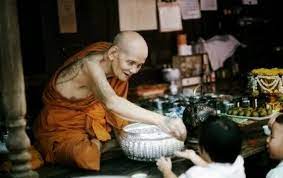
Luang Por Pina is the deceased Abbot of Wat Sanom Lao in Sra Buri and was said to have possessed Abhinya Powers, and to have Mastered the 10 Kasina Powers of Elemental Magical Dominion. Below you can see another Sacred Amulet from this Master, the Famous Pra Pim Tao Wua Luang Por Pina.

Pra Pim Tao-Wua Buddha Amulet Luang Por Pina

It is said that Luang Por Pina was able to read the minds and intentions of other Humans, and bring amulets to life with is Empowerment Methods, and that his amulets were able to give signs, and also can be beseeched and prayed to, for wish fulfillment (Sarapat Neuk). There are many stories of Miraculous Events occurring through his amulets, which have been recounted around the country over the years, which have also brought his name to the ears of people around the world.

Palad Khik Hua Chamot Dtua Kroo Ud Muan Sarn Nuea Gna Chang Gae Fang Ploi Luang Por Pina

Luang Por Pina is known to have performed strange Magical feats in front of the eyes of his disciples many times, especially when devotees would ask him for an amulet. He would ask the devotee to lay down and open their eyes, and would take a handful of sand and pour it over their face, as they would hold the amulet in the hand.

Palad Khik Hua Chamot Dtua Kroo Ud Muan Sarn Nuea Gna Chang Gae Fang Ploi Luang Por Pina

But the sand would bounce back before it hit their eyes, and no matter how much was poured on the face, not a single grain of sand would be able to enter the eyes of the devotee, becoming repelled as if by a force field before it touched the eyes.
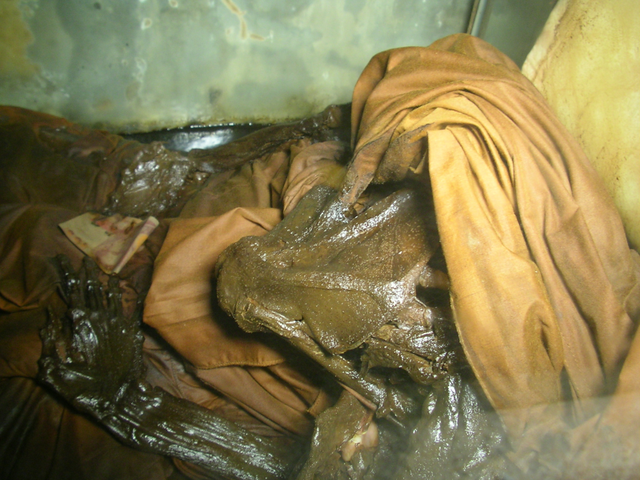
Palad Khik Hua Chamot Dtua Kroo Ud Muan Sarn Nuea Gna Chang Gae Fang Ploi Luang Por Pina

Above Pic; The corpse of Luang Por Pina which was found in meditation posture, dead since over 12 Hours, but was still warm, and not stiff, to the immense surprise of those who found him. The surprise was because a corpse that is dead for over 12 hours, should be stiff as a board and cold.. his body was not mummified or given any special treatment according to his wishes and placed in his mausoleum.

Palad Khik Hua Chamot Dtua Kroo Ud Muan Sarn Nuea Gna Chang Gae Fang Ploi Luang Por Pina

How to Bucha Palad Khik

Below; Silver Takrut spell as tongue of the Chamot Civet Cat, and reat teeth tips are visibly inserted into the mouth of the Palad Khik Hua Chamot of Luang Por Pina, revealing an attention to detail and adherence to the Ancient Wicha of Empowerment of the Palad Khik Hua Chamot, that is both impressive, and faith instilling in its certain magical power.

Palad Khik Hua Chamot Dtua Kroo Ud Muan Sarn Nuea Gna Chang Gae Fang Ploi Luang Por Pina

How to Pray to Thai Amulets

Kata Luang Por Pina

Light 5 sticks of Incense, and chant the Maha Namasakara 3 times before chanting the special Kata for Luang Por Pina Bpiyataro

Namo Dtassa Pakawadto Arahadto Sammaa Samputtassa

Namo Dtassa Pakawadto Arahadto Sammaa Samputtassa

Namo Dtassa Pakawadto Arahadto Sammaa Samputtassa

Below; the Sacred Yant Na Metta spell inscribed on the Palad Khik, which is an essential aspect of the true Wicha Palad Khik of the Dtamra Saiyasart Thai Grimoires of Sorcery

Palad Khik Hua Chamot Dtua Kroo Ud Muan Sarn Nuea Gna Chang Gae Fang Ploi Luang Por Pina

Then chant the Kata for Luang Por Pina (3 times);

Ahang Sukhadto Pina Bpiyataro Naamadtae Aajaariyo Ma Pandtae Hohi

Kata Pluk Khong (Call the power within the amulet)

Puttang Gandtang Saranang Haa

Puttang Gandtang Saranang Hae

Puttaaa Namo Ya

Palad Khik Hua Chamot Dtua Kroo Ud Muan Sarn Nuea Gna Chang Gae Fang Ploi Luang Por Pina

Kata Pra Som Hwang (Fulfilment of Wishes)

Chant the following for as many repetitions as your age (for example, if you are 35 years old, then chant the Kata, repeatedly for 35 times)

Nadtae Sudtae

The last repetition, change the words to

Mahaa Sudtae Nachaa

As an example, let us pretend a four year old were to recite the mantra, which would result in four lines like this;

Nadtae Sudtae, Nadtae Sudtae, Nadtae Sudtae, Mahaa Sudtae Nachaa

Palad Khik Hua Chamot Dtua Kroo Ud Muan Sarn Nuea Gna Chang Gae Fang Ploi Luang Por Pina

If you wish to know more about another famous amulet of Luang Por Pina, then you can listen to the three quarter of an hour talk and explanation of the Sacred Daw Aathan along with a short Biography of Luang Por Pina, recounted and narrated by Amulet Expert Ajarn Spencer Littlewood in the below Podcast. In the podcast, You will be amazed to learn about the very deep meanings contained within the Daw Aathan Hnun Duang Lucky Star amulets of Luang Por Pina.

Please Enjoy the Biography, and Explanation of another very famous Amulet of Luang Por Pina, revealed; Perd Dtamnan Daw Athan Hnun Duang, and increase your knowledge of the amulets of Luang Por Pina.

Buddha Magic - Secrets of Luang Por Pina's Lucky Star Amulets

Palad Khik Hua Chamot Dtua Kroo Ud Muan Sarn Nuea Gna Chang Gae Fang Ploi Luang Por Pina

Charms & Talismans

Thai Buddhist, Animist, and Occult Charms and Talismans, authentically blessed by the great Monks and Lay Masters of Old, and Present Day
Filters

Filters
1 - 60 of 804 items

Ajarn Spencer Littlewood & Agent Gemini Unleashed for ancientamulet.com
All rights reserved.


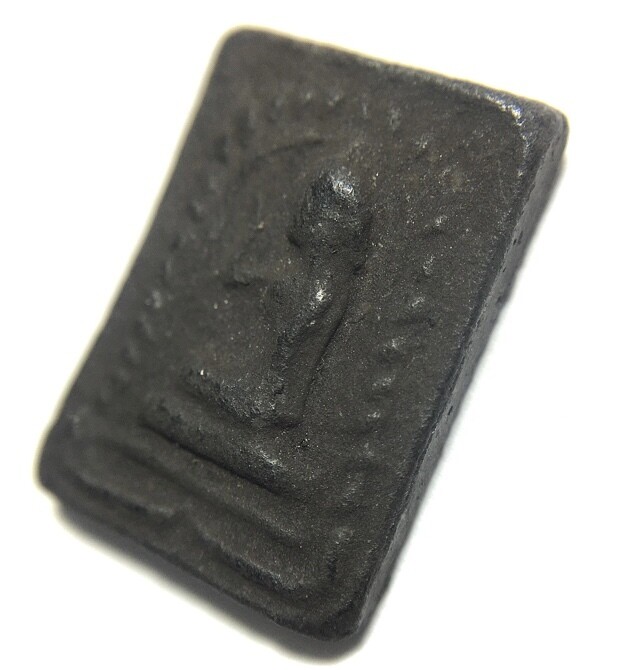
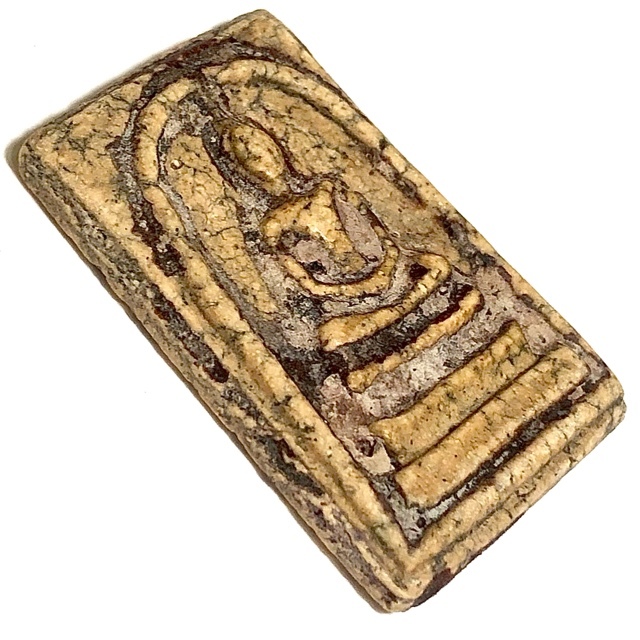
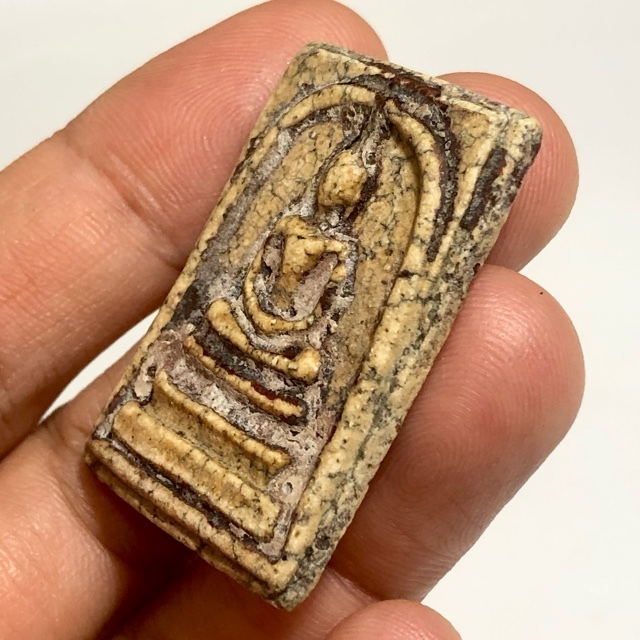
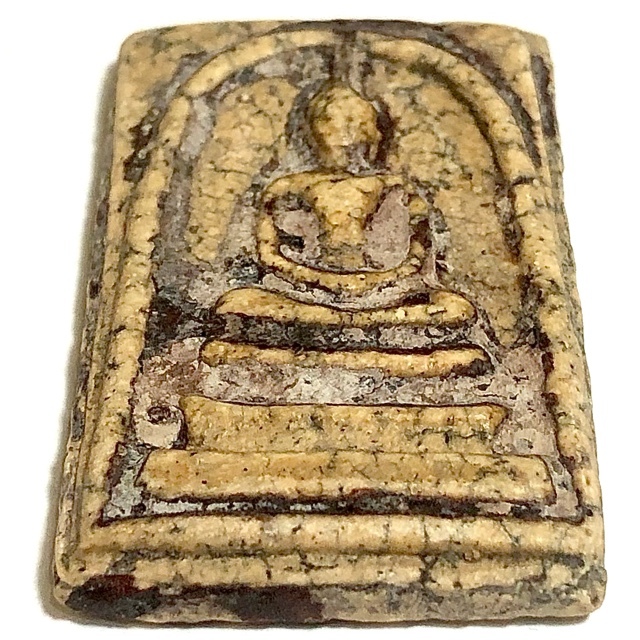
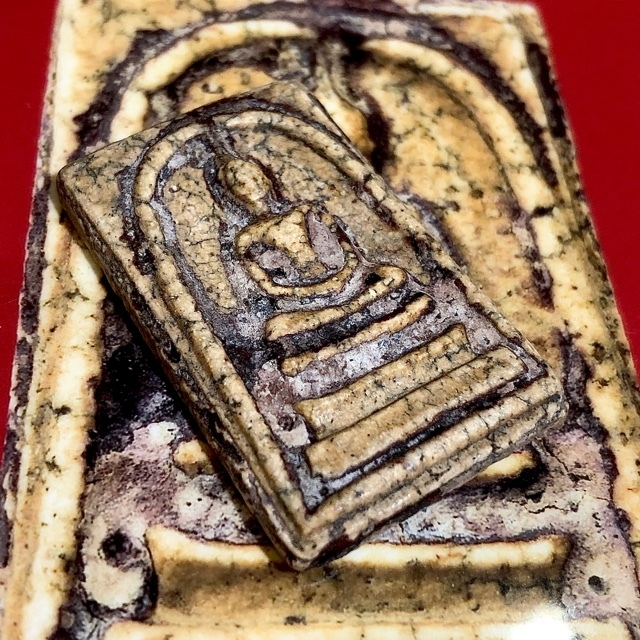
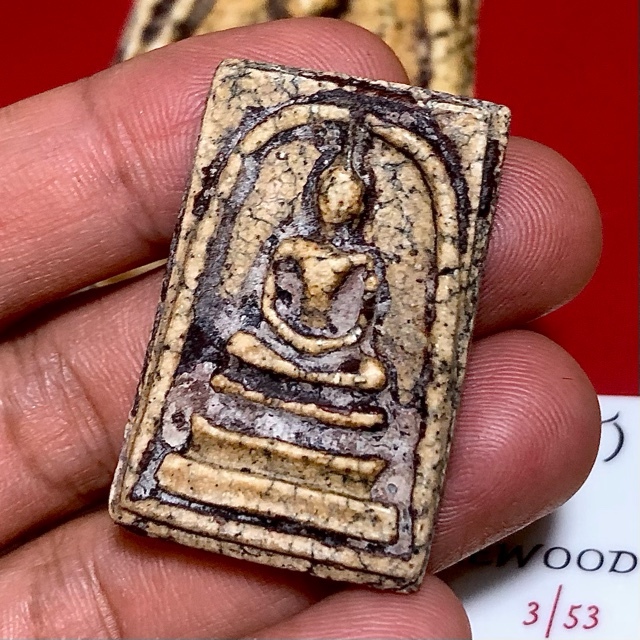
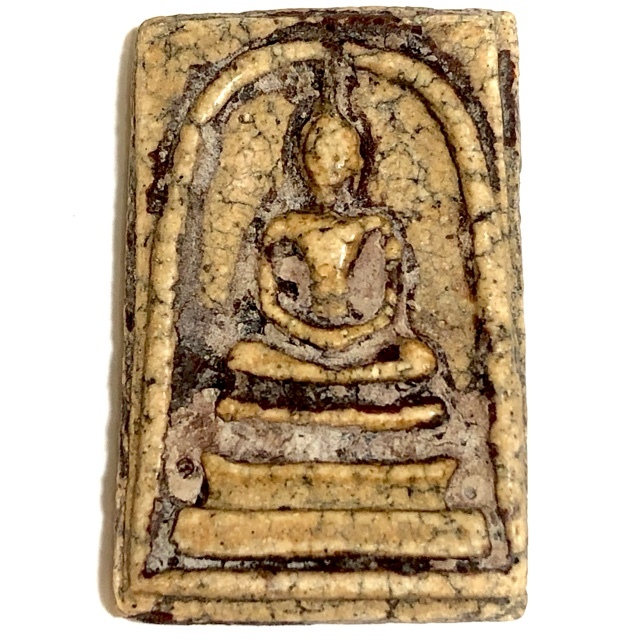
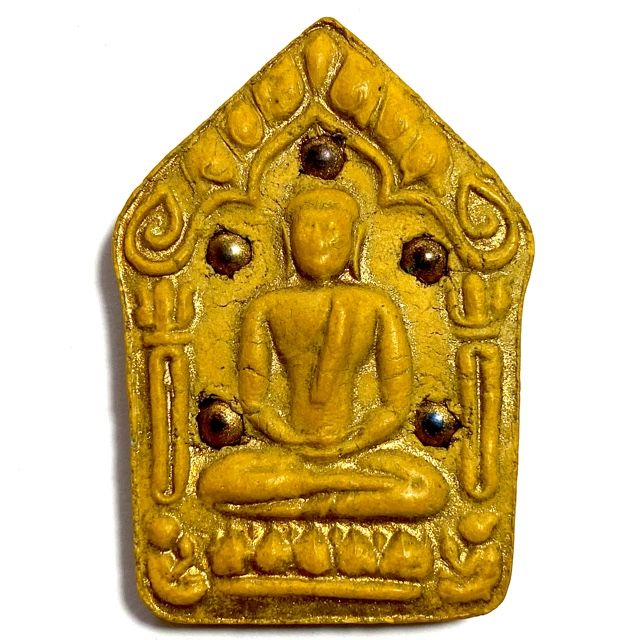
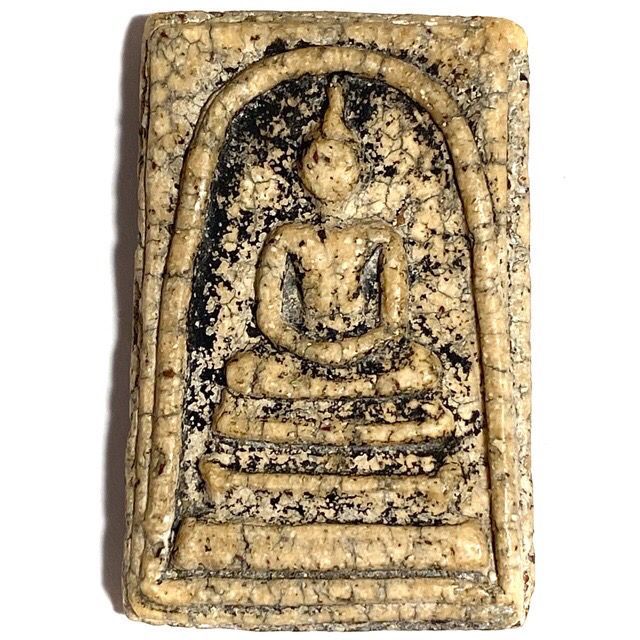
A most Exquisite and Officially Certificated Authentic Pra Somdej Wat Rakang Pim Gae Talu Sum Block Chang Luang Wijarn of Somdej Pra Puttajarn (Khrua Dto) Prohmrangsri, the Great Master of Wat Rakang, with Red Lacquered Surface, and all the classic features of an Ongk Kroo Model of this All Time. This particular exhibit is Extremely attractive to the eye, with its perfect balance of lacquer and open surface. The Pra Somdej Wat Rakang Kositaram of Somdej Pra Puttajarn (Dto) Prohmrangsri is the No. 1 Pra Somdej amulet of all time, and the most eminent member of the five regional top amulets within the Benjapakee Pantheon of Classic Thai Buddhist Amulets. On can also say it is perhaps the most famous of all Thai Amulets.
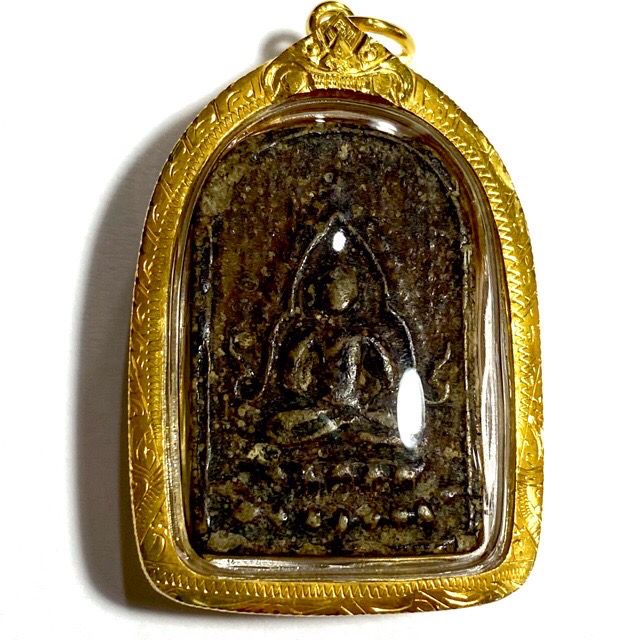
A Master Class ancient amulet of the Benjapakee Immortal Classic Family, the Pra Somdej Wat Rakang Pim Chang Luang Wijarn, with Rak Chart (ancient red lacquer), of the great Somdej Pra Puttajarn (Dto) Prohmrangsri of Wat Rakang Kositaram, this model is an extremely attractive Pim Niyom model of the ‘Chang Sip Moo’ Artisan Chang Luang Wijarn. This amulet comes with free solid silver casing if desired and selected in the encasement options (Please note; the custom casing can take from 3 – 10 days to custom encase). The Silver Frame is enhanced with waterproof acrylic sealed windows to protect the amulet from the weather). You can order solid gold casing at extra price if desired too and we wil invoice you according to current spot prices.
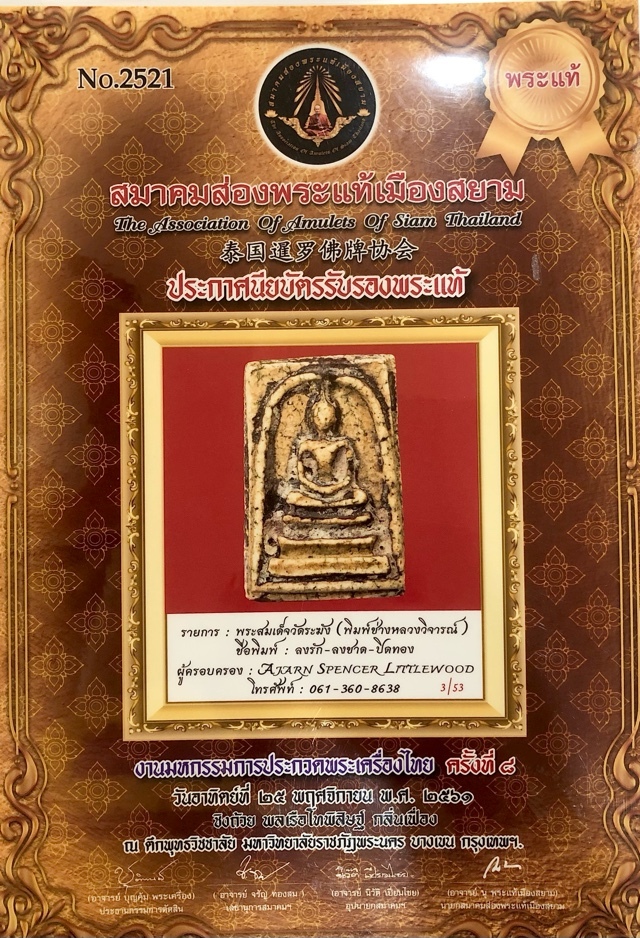
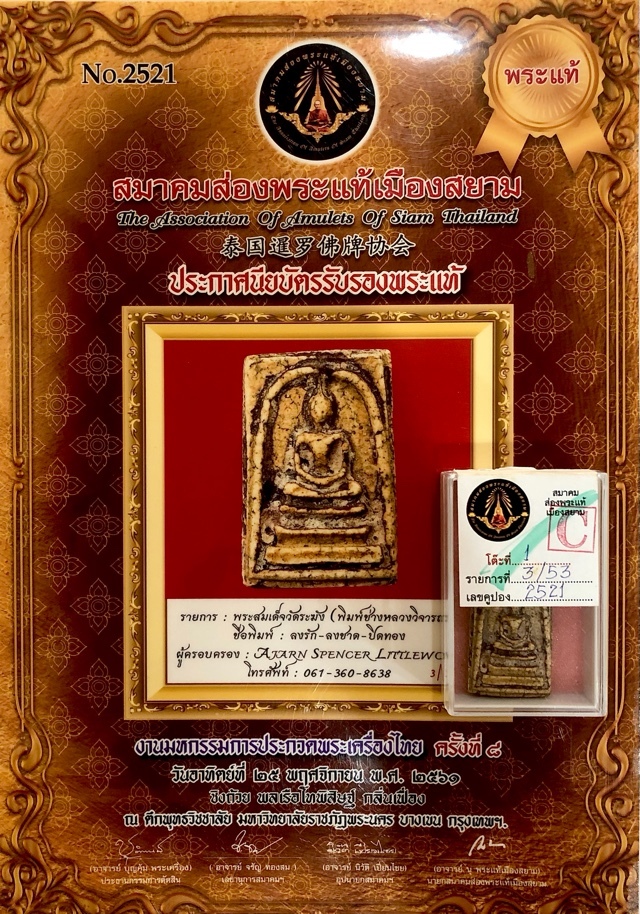
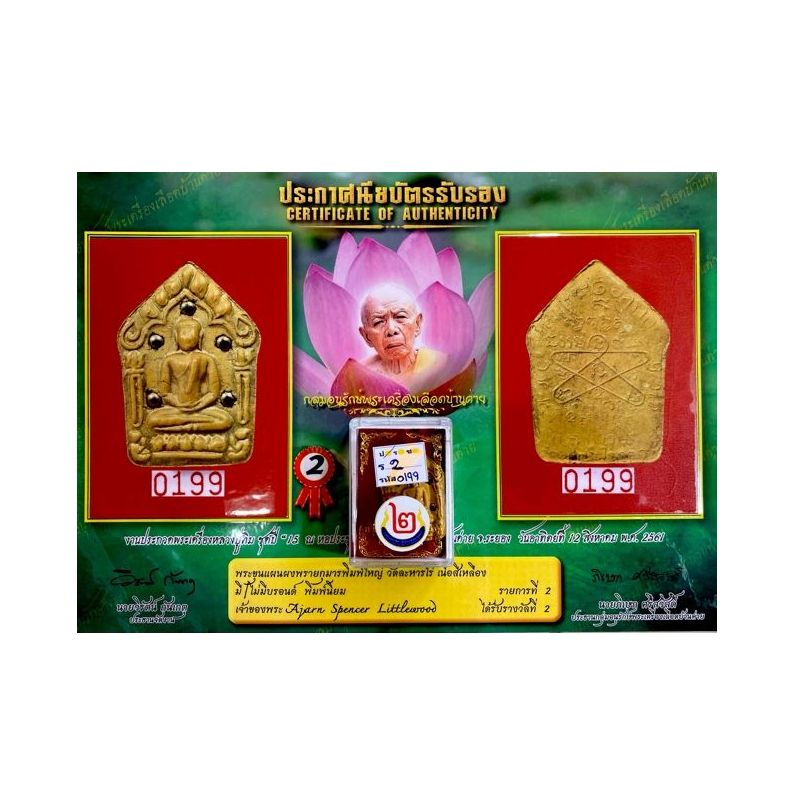
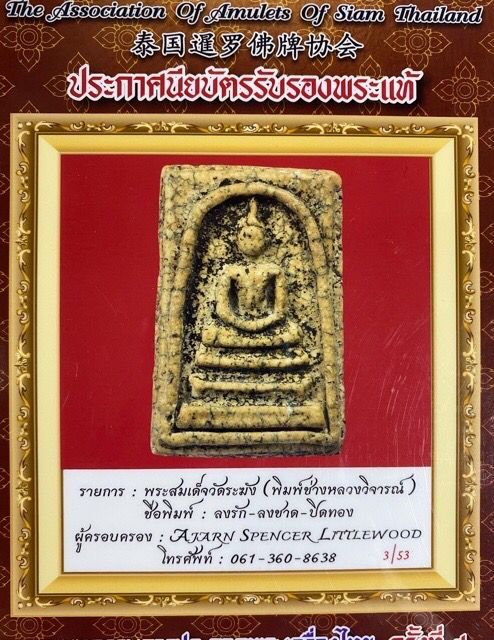
The Pra Somdej Wat rakang Comes with A4 Size Plasticized Authenticity Certificate issued by the Association of Amulets of Siam Thailand, and comes with Free Express shipping, and Free Solid Silver Casing Included in the price. Please choose the free silver casing option to take advantage of this free offer. Free express registered shipping is worldwide and included automatically.

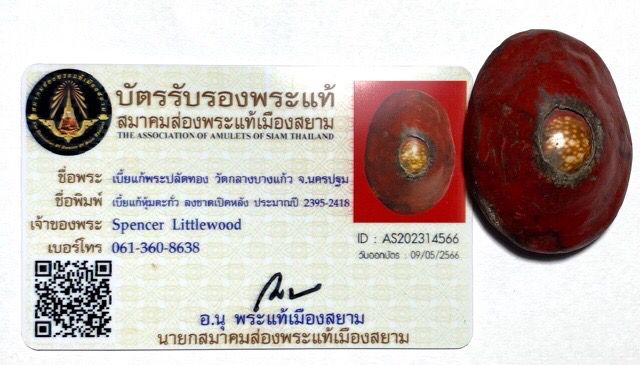
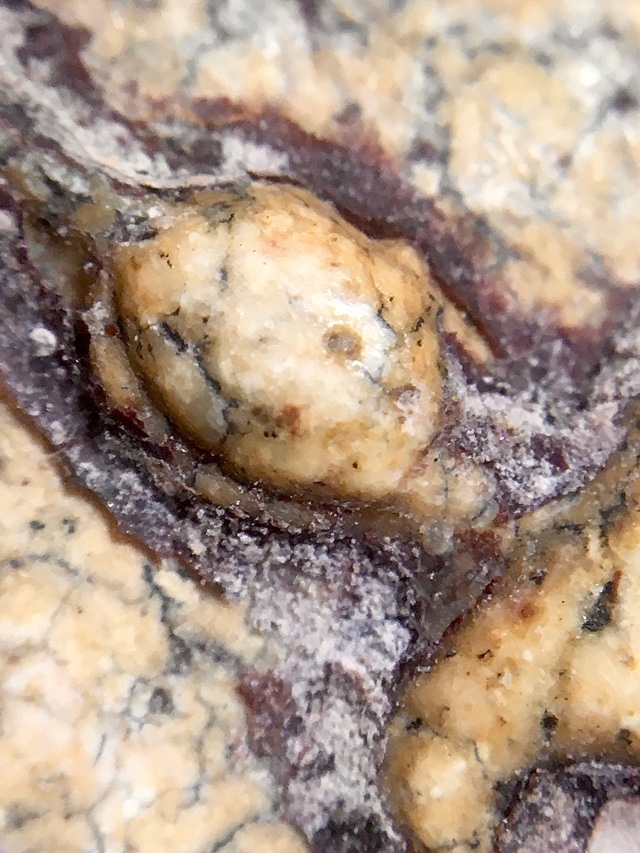
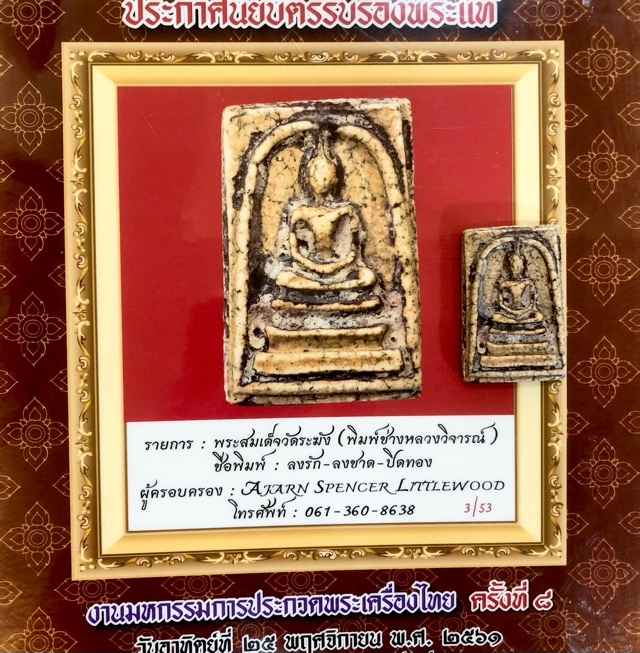
Below, A4 sized certificate of authenticity of this Pra Somdej Wat Rakang Long Rak Chart Pim Gaes Talu Sum Block Chang Luang Wijarn, The Artisan Chang Luang Wijarn was the Kroo Ba Ajarn (teacher) of all the other artisans of the Chang Sip Moo artisans, including the great Chang Luang Sittigarn and Chang Luang Wijit.

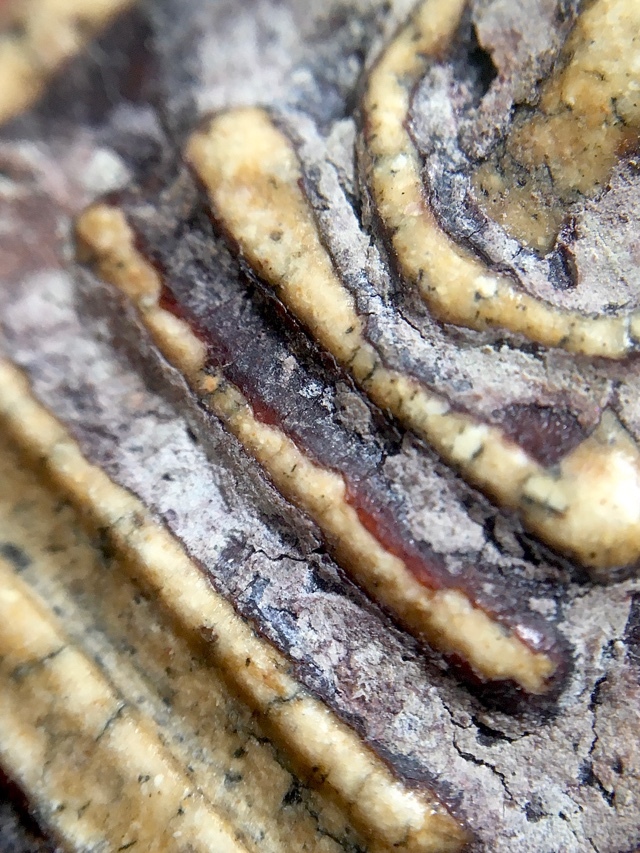
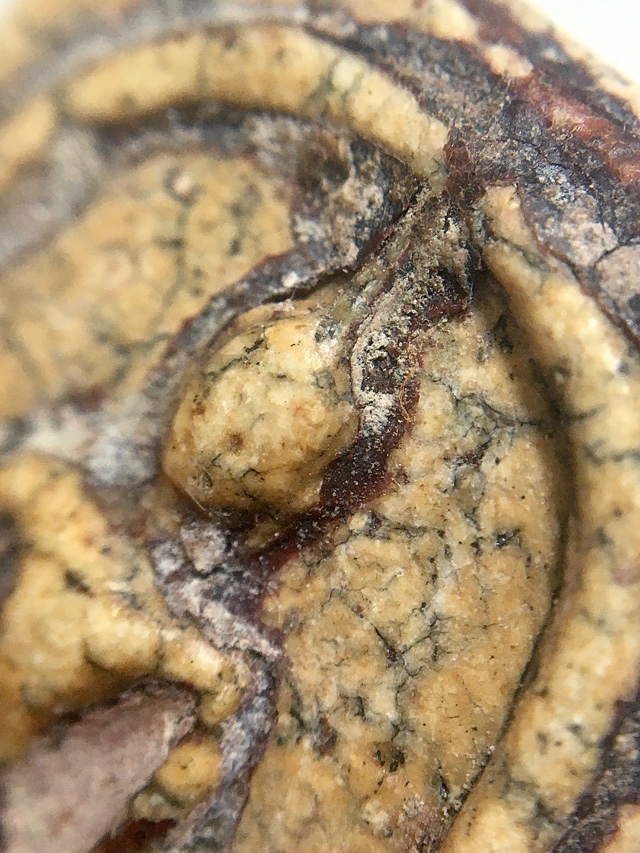
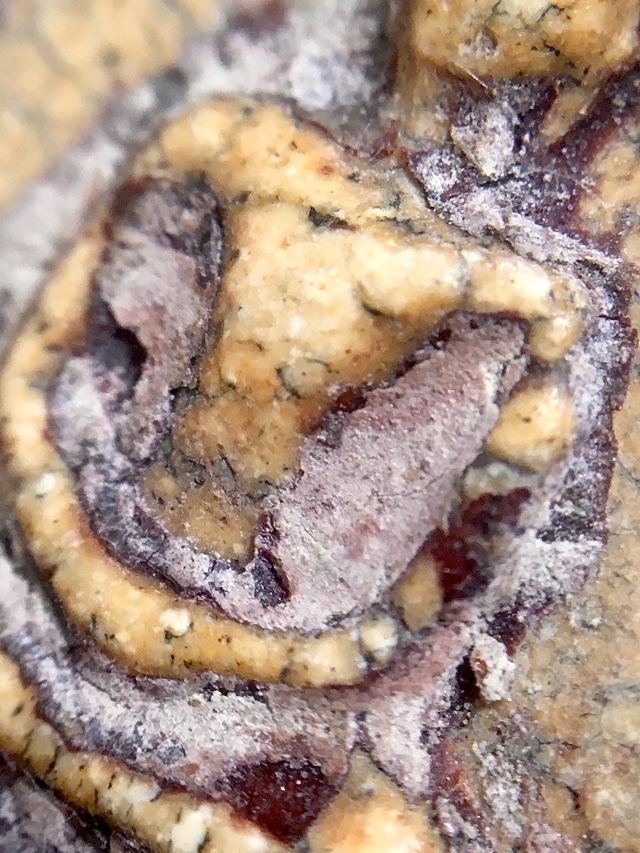
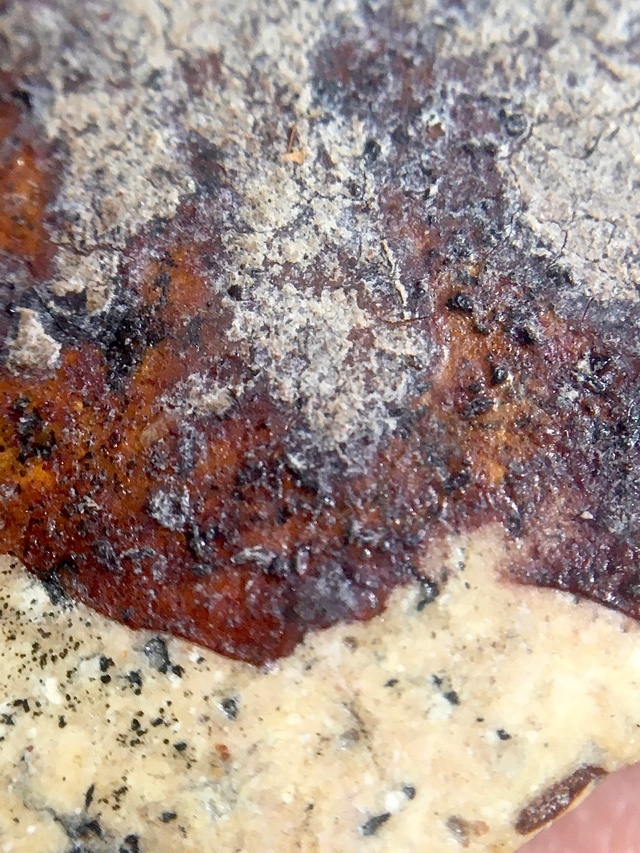
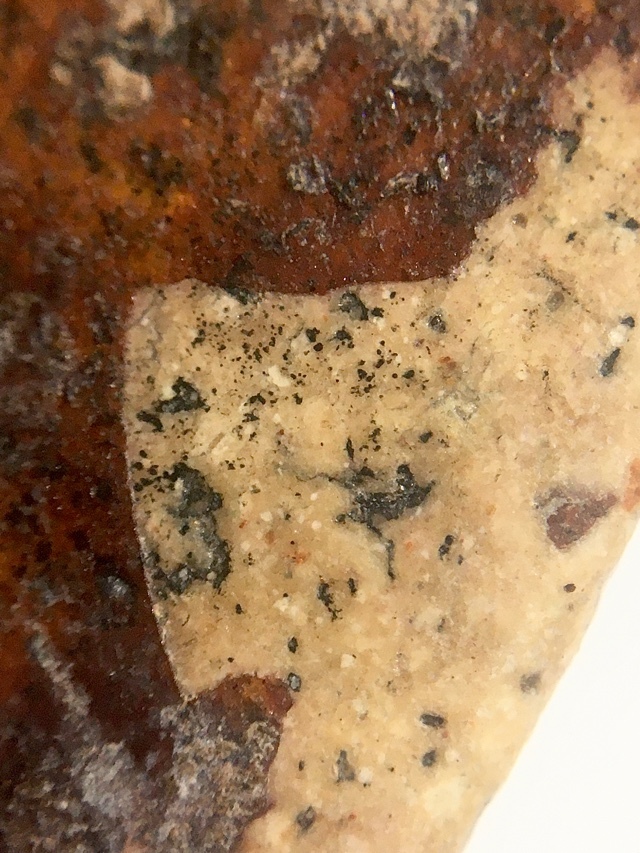
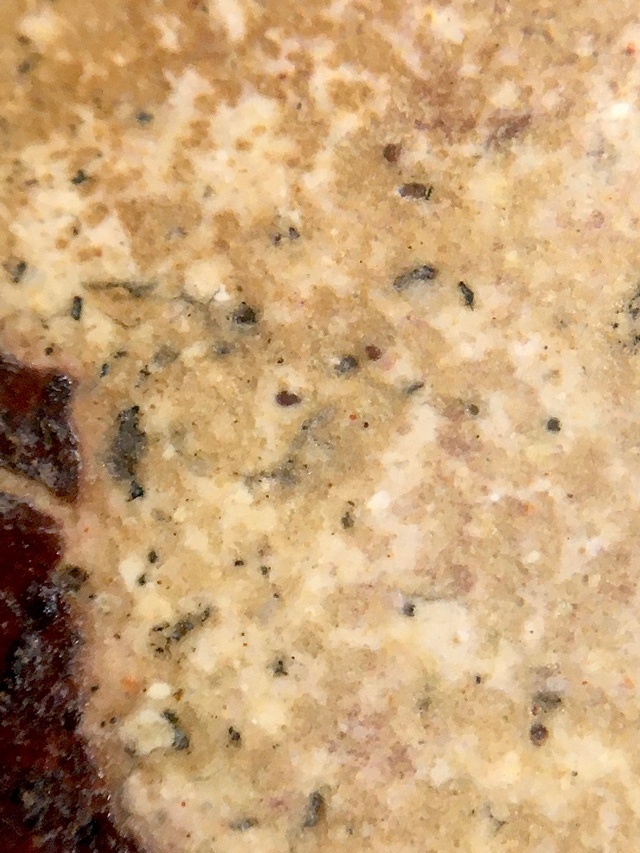
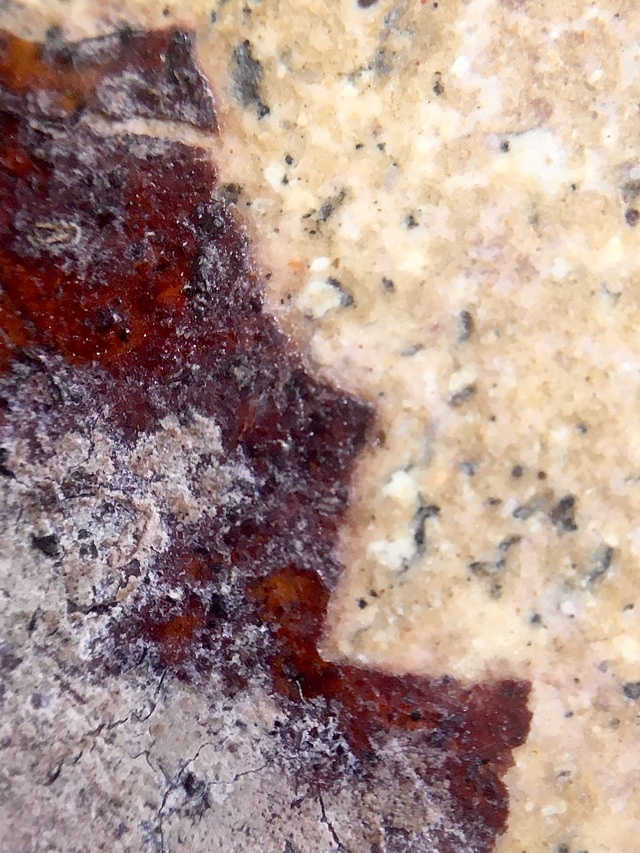
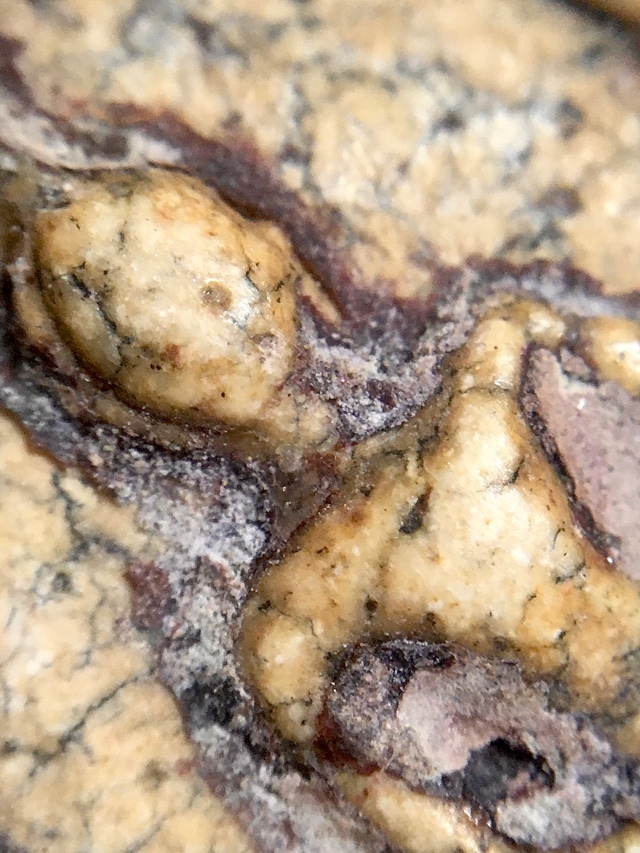
Below, is an 11 minute long video with full views and 12 x Macro closeups of the Muan Sarn Powders, wth Narrative from Ajarn Spencer Littlewood to enlighten the student on the various aspects of authenticity of a different exhibit which was also a lacquered version, and displays similar characteristics to this exhibit, with highly informative narrative by Ajarn Spencer, explaining various aspects of the studt, perusal and inspection of this tyupe of amulet, and some revelatory information about the amulet itself and the history of its making, and the Sacred Muan Sarn Content. This helps the student to understand and increase their expertise in recognising authentic Pra Somdej Wat Rakang Kositaram amulets of this model and type.

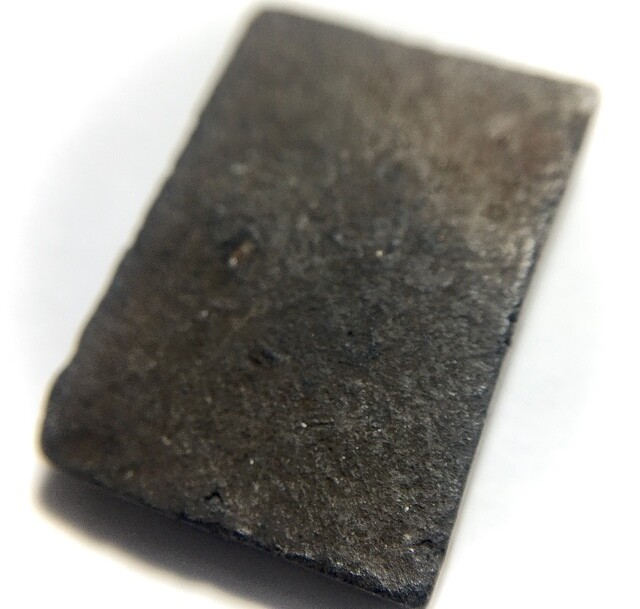
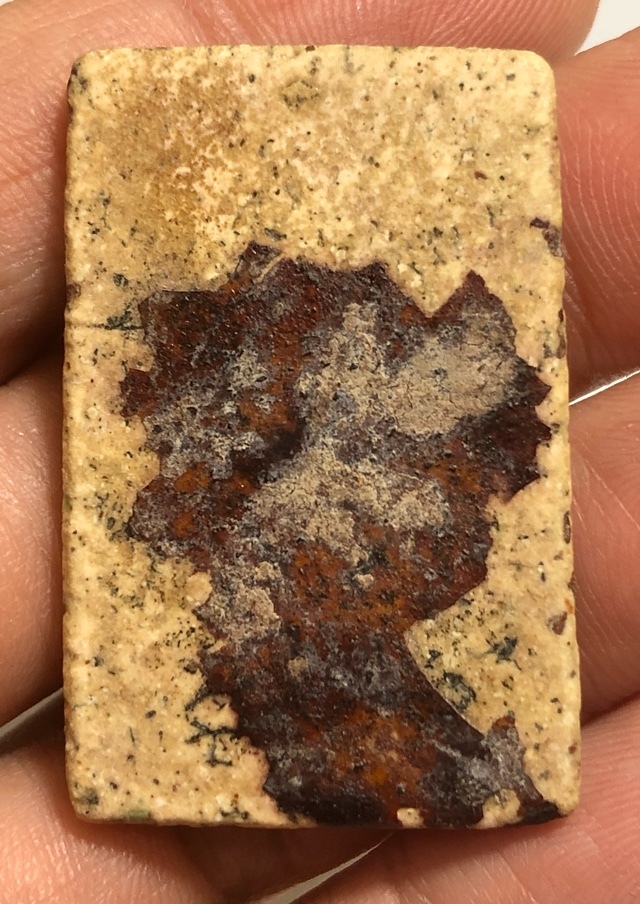
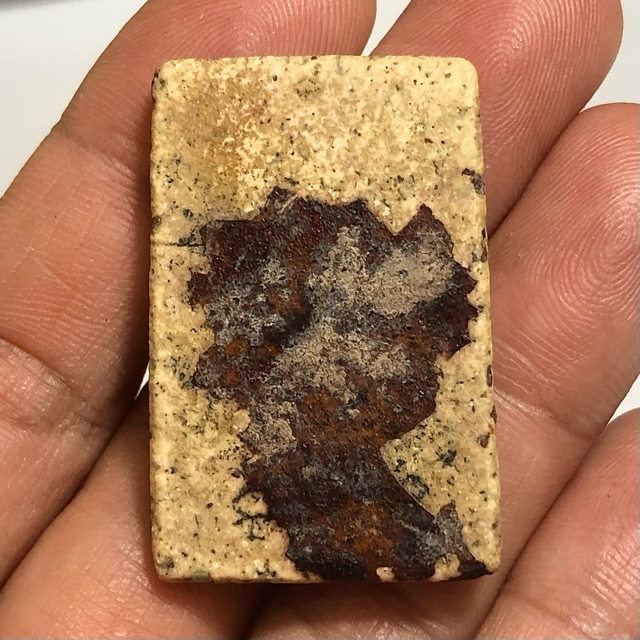
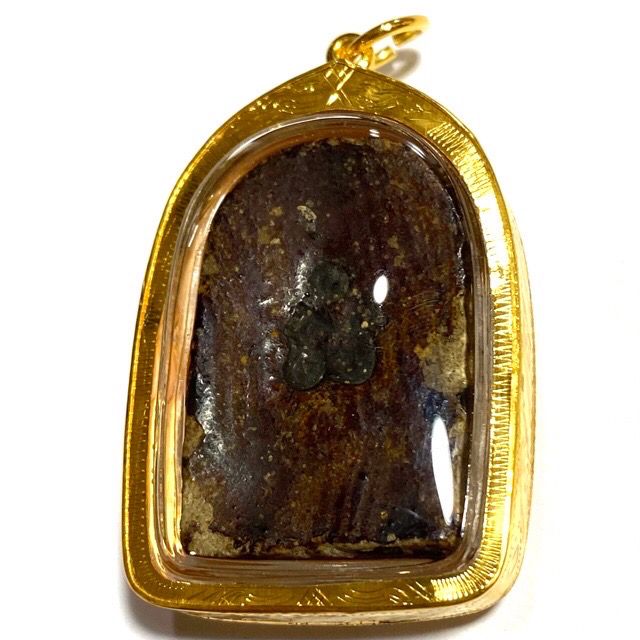
A truly ancient amulet made Circa 2390 – 2396 BE. The rear face of this exhibit is inimitable and has immensely beautiful markings, of a classic Pra Somdej Wat Rakang. Various exhibits display different textrures on the rear faces, for they were laid on various surfaces to sun dry, ranging from marble stone, wood, metal, and other surfaces, resulting in textures ranging from stone-like fossilized effect, granular, crackled, to the fine scratches on the rear face of some, which come from laying them to dry on mai gradan wooden boards.
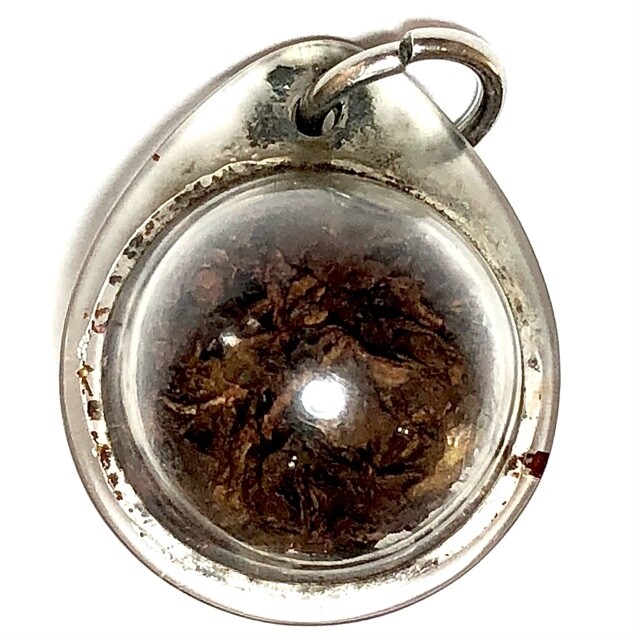
In truth, no two Pra Somdej Wat Rakang are the same, and each amulet has its own individual character, which is of course one of the many aspects which form part of what makes the Pra Somdej Wat Rakang the title holder of the ‘King of Thai Amulets‘.

The amulet comes with the A4 size certificate of authenticity as a Pra Somdej Wat Rakang Long Rak Pid Tong of Somdej Pra Puttajarn (Dto) Prohmrangsri, with definition of the preferred artisan as authentic issued from the Pra Tae Mueang Siam Amulet Association.

An Immortal Classic and one of the most famous Thai Buddhist Amulets of all time, as well as being amongst the top preferred amulets of the serious devotee and wealthy collector of the accepted amulets of Somdej Pra Puttajarn (Dto) Prohmrangsri, of Wat Rakang Kositaram, whose Pra Somdej are the number one amulets of all time, be they from Wat Rakang, Wat Bang Khun Prohm,or Wat Gaes Chaiyo.

Made almost 2 centuries ago, the Pra Somdej Wat Rakang can be considered the number one amulet of all time in Thailand for its historical fame and legendary, and thae reputation of its maker to be the number 1 in all Thai History for Pra Somdej Amulets.

The Pra Somdej Amulets of Somdej Dto, are officially recognized as coming from one (or all) of four Royal temples Classed as three, because Wat Bang Khun Prohm Nai and Wat Intra Wiharn Bang Khun Prohm, are both located within the same temple boundary). Namely; Wat Intra Wiharn (Bang Khun Prohm Nai), Wat Gaes Chaiyo, Wat Mai Bang Khun Prom, and of course last but not least, Wat Rakang Kositaram. Most of these amulets are given a Puttapisek blessing ceremony in the temple where they were made, but then travel to at least two or three of the other temples to be laid under the ‘Pra Pratan’ (main Buddha statue in the shrine), and absorb the prayers of the Sangha (Monks), for further sacredness and power.

The Pra Somdej amulet, is one of the ‘Benja Pakee’ official set of five national amulets of Thailand seen as the most sacred, desirable and representative of every region of Thailand. In recent decades various Kru hiding place finds have been discovered in temples where Somdej Dto built statues and traveled, such as the Kru Wat Kanlayanamit, and Kru Wat Sadter finds.

This amulet comes with its certificate of authenticity in form of a A4 sized plastified certificate photo of the Chomrom Pra Tae Mueang Siam Amulet Appreciation society of Siam Thailand, and complimentary box with authenticity confirmation sticker. We offer free Solid Silver, Stainless Steel, or Waterproof Casing with this amulet (or gold at extra price), whichever you prefer. Free Express Shipping is also included in the price


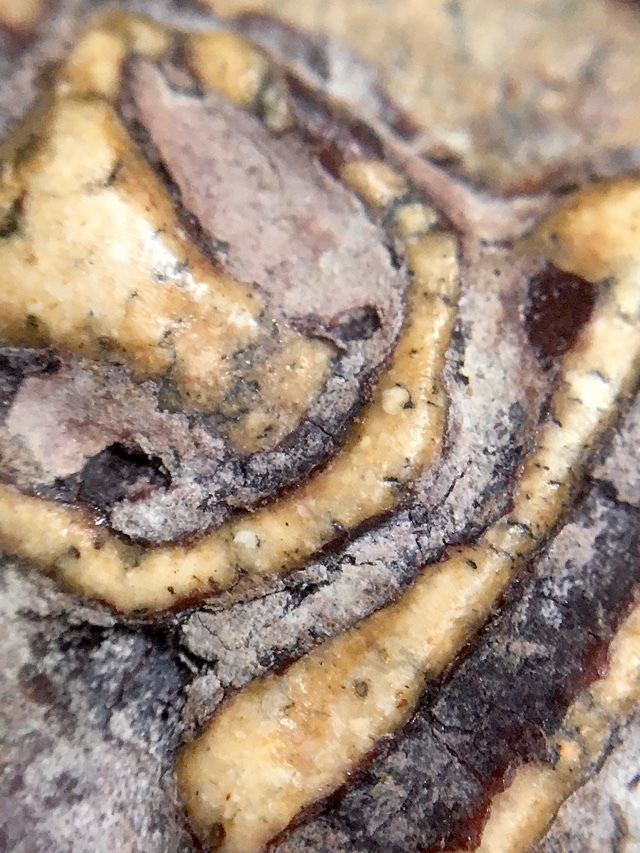
The rear face shows the presence of all the classic features and muan sarn ingredients of a true Pra Somdej Wat Rakang of Somdej Dto, with a beautiful lined pattern resulting from shrinkage and drying over almost two centuries of ageing, and which has added to the character and increases the ease of authentication. This kind of rear face pattern is highly preferred amongst aficionados and serious devotee-collectors, for its classic aged appearance.

The contents of the Muan Sarn Sacred Clay reveal the necessary aspects and content expected from an authentic Pra Somdej Wat Rakang. The design of the front face is exquisite, as were all the block presses carved for Somdej Dto by the artisan Luang Wijarn, one of the royal artisans of the Chang Sip Moo group of artisans.

Pra Somdej Wat Rakang is one of the classic Pra Somdej amulets of Somdej Dto available, along with Pra Somdej Wat Gaes Chaiyo, and the Pra Somdej Wat Bang Khun Prohm amulet as far as popularity, beauty, sacredness of Puttapisek ceremony and price range.

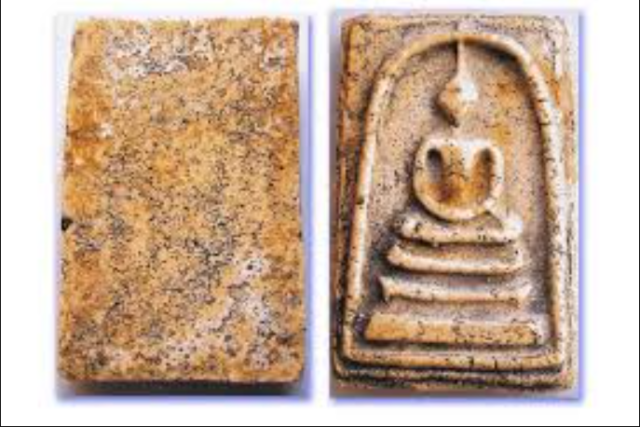
The Pra Somdej Wat Rakang amulet is the Keystone and Master amulet (Ongk Kroo) for all other Pra Somdej amulets. It is an image in the likeness of the Buddha sitting on a Dais, which was essentially created by Somdej Pra Puttajarn (Dto) Prohmrangsri, of Wat Rakang Kositaram. There are various different ‘Pim’ (models) with varying design features.

The Pra Somdej Wat Rakang, are considered to have extremely powerful Buddha magic in them due to the richness of sacred powders and powerful blessings contained within from great master Somdej Dto. Its general appearance is that of an oblong about 2.4 cm wide up to 4 cm high (varies between these sizes), made from white sacred powders mixed together.

The Pra Somdej Wat Rakang Kositaram Pim Gaes Talu Sum is Similar to the Pra Somdej Pim Pra Pratan, but has the ‘Pra Gaes’ Topknot piercing the arch at the top of the amulet. The Pim Jarod Sum touches the arch or approaches it.

The main Ingredients of the amulets (Muan Sarn Samkan) were made from a base of sea shells, dried rice left from alms round, the five sacred magic powders of Somdej Dto, and ‘Nam Man Dtang Iw’ (special oil for mixing). Nam Man Dtang Iw, or Tung Oil in English, is a preferred oil for mixing and curing amulets with, for it is superior to any other oil as far as water resistance is concerned (one reason why Pra Somdej amulets can be soaked in water without going soft). The oil is much more resistant to mold than its derivatives, such as linseed oil.

The Dtamra must be made by creating exactly 84,000 amulets, equal to the number of Suttas of the Tripitaka. There are different Pim Song (shapes and sizes) of Pra Somdej Wat Rakang, but those which are officially recognized and listed by the ‘wongarn Pra Krueang’ as far as Somdej Wat Rakang amulets are concerned, basically consist of the following officially recognised Pim of Pra Somdej amulets; Pim Pra Pratan, Pim Yai Niyom, Pim Chedi, Pim Prok Po, Pim Gaes Bua Dtum, Pim Gaes Talu Sum, and Pim Thaan Saem.

Somdej Wat Rakang amulets have various surface textures, categorized as ‘Nuea Laiad’ (fine texture cement mixture), ‘Nuea Hyaab” (rough textured cement mixture), ‘Nuea Gae Nam Man Dtang Iw’ (old looking textured cement mixture), otherwise known as ‘Nuea Sangkhayaa’, and ‘Nuea Gae Bpoon’ (old cement mixture).The basic structure of the design of the classic Somdej, (and almost all Somdej amulets from other temples too), is that of the Lord Buddha sitting inside a Bell (the word ‘Rakang’ means ‘Bell’ – ‘Wat Rakang’ means ‘Temple of the Bell’).

This is the primary importance of the Somdej amulet in the sense that Somdej from most temples depict the Buddha sitting within a bell which is represented by the arch. The arched structure in amulets is called a ‘Sum’. Although these rules do not necessarily always apply (there are a lot of Somdej which are in circulation which are most certainly authentic, but which are not preferred in the collector scene)

There are many less preferred editions which do not fulfill these standard rules of recognition, which is of course one of the reasons why some Somdej Wat Rakang amulets are able to sell for high prices and enter competition, get certificated etc, and why some are not, despite their most probable authenticity.

The difference in the various mixtures made for each ‘Pim’ have led to differing textures and appearances in the Pra Somdej collections, which provides for a varied and fascinating niche interest, which one can verily spend a whole lifetime studying and accumulating experience and knowledge about this, the King of all amulets.

Ancient Amulet - Thai Buddhist Pra Niyom Category Amulets

Ancient Amulet. Thai Buddhist Pra Niyom ('Pra Niyom'; meaning 'High End Preferred Class Antique amulets'). Fine Authentic Amulets from the Great Thai Buddhist Sorcerer Monks, Lersi Ascetics, and Lay Masters of Olden Days

SIGN IN OR CREATE ACCOUNT


Filters

Filters
Pra Somdej Pim Gaes Jarot Sum Pim Gaes Iang Niyom Long Rak Chart Somodej Dto Wat Rakang KositaramPra Somdej Pim Gaes Jarot Sum Pim Gaes Iang Niyom Long Rak Chart Somodej Dto Wat Rakang Kositaram
Pra Somdej Pim Gaes Jarot Sum Pim Gaes Iang Niyom Long Rak Chart Somodej Dto Wat Rakang Kositaram
Free Shipping Worldwide (we do not state or declare true price to counter tarrifs tax on customers), & Offer of Free Solid Silver Casing Included
SKU 04783
$1,699
How to Pray to Thai Amulets

Ajarn Spencer Littlewood & Agent Gemini Unleashed for ancientamulet.com
All rights reserved.


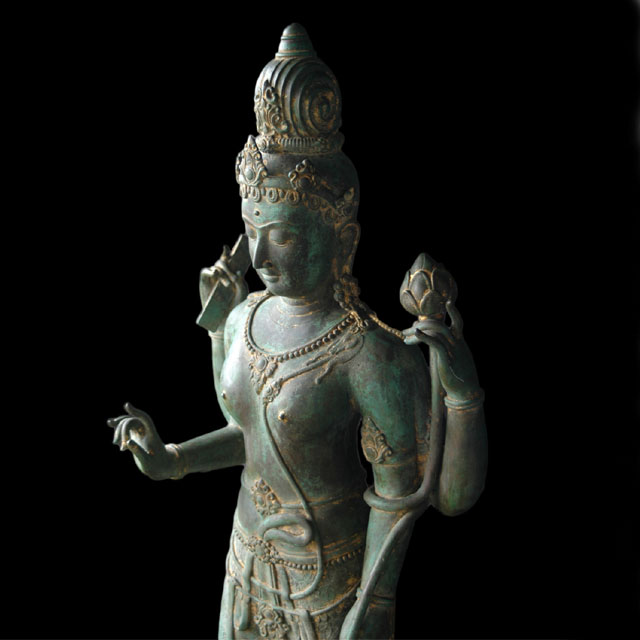
srivicha-sculpture_Jatukam_Ramathep

History of the Srivijaya Empire

Origins and Historical Context

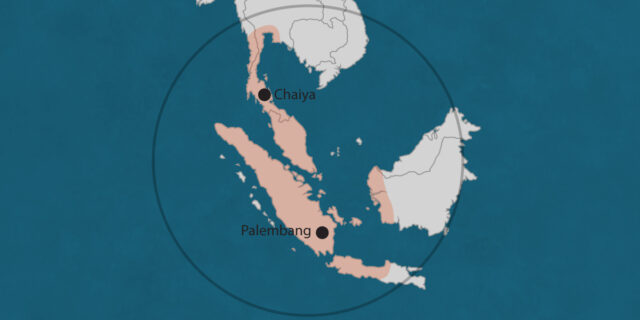
The Srivijaya Empire (ศรีวิชัย in Thai, also known as อาณาจักรศรีโพธิ์) emerged as a powerful maritime kingdom during the 7th century CE, following the decline of the Funan Empire. Founded by the Sailendra dynasty around 650 CE (approximately Buddhist era 1200), Srivijaya rapidly developed into the first significant maritime power in Southeast Asia, controlling critical sea routes between China, India, and the Middle East.

The earliest historical records of Srivijaya come from Chinese chronicles, where it was referred to as “Shih-li-fo-shih” or “Sanfoqi.” The empire’s existence was conclusively established in modern scholarship when French historian George Cœdès published his groundbreaking article on the “Kingdom of Srivijaya” in 1918, bringing this forgotten empire to global attention.

Geographical Extent and Strategic Position

At its height, Srivijaya controlled a vast maritime domain encompassing:

  • The Malay Peninsula
  • Eastern Sumatra (with its capital likely at Palembang)
  • Western Java
  • Parts of Borneo
  • The Straits of Malacca and Sunda

This strategic position allowed Srivijaya to dominate the maritime trade routes connecting China, India, and the Middle East. Control of these straits was particularly crucial as they formed the primary conduit for international commerce between East and West during this period.

Economic Power and Trade Networks

Srivijaya’s prosperity was built upon its mastery of maritime trade. The empire:

  • Established a sophisticated trading network spanning from China to India and the Middle East
  • Controlled the flow of valuable commodities including spices, aromatics, forest products, gold, and ivory
  • Collected duties from ships passing through the Straits of Malacca
  • Maintained diplomatic and commercial relations with the Tang Dynasty of China and the Pala Empire of Bengal
  • Developed a complex system of vassalage with smaller port cities throughout the archipelago

The empire’s economic model was based on thalassocracy—control of the seas rather than extensive territorial holdings. This approach allowed Srivijaya to exercise influence far beyond its core territories.

Buddhist Center of Excellence

One of Srivijaya’s most significant contributions to Southeast Asian history was its role as a center of Buddhist learning and practice. The empire embraced Mahayana Buddhism and:

  • Established major Buddhist educational institutions that attracted scholars from across Asia
  • Served as a crucial stopover point for Chinese Buddhist pilgrims traveling to India
  • Maintained close religious ties with the Buddhist Pala Empire in Bengal
  • Sponsored the construction of numerous Buddhist temples and monasteries
  • Supported the translation and copying of Buddhist texts

The famous Chinese Buddhist monk Yijing (I-Ching) visited Srivijaya in the late 7th century and spent several years studying Sanskrit there before continuing to India. His accounts provide valuable insights into the empire’s religious and cultural significance.

Cultural and Artistic Achievements

Srivijaya developed a distinctive cultural identity that blended indigenous elements with influences from India and China:

  • Architecture featured impressive Buddhist temples and monuments
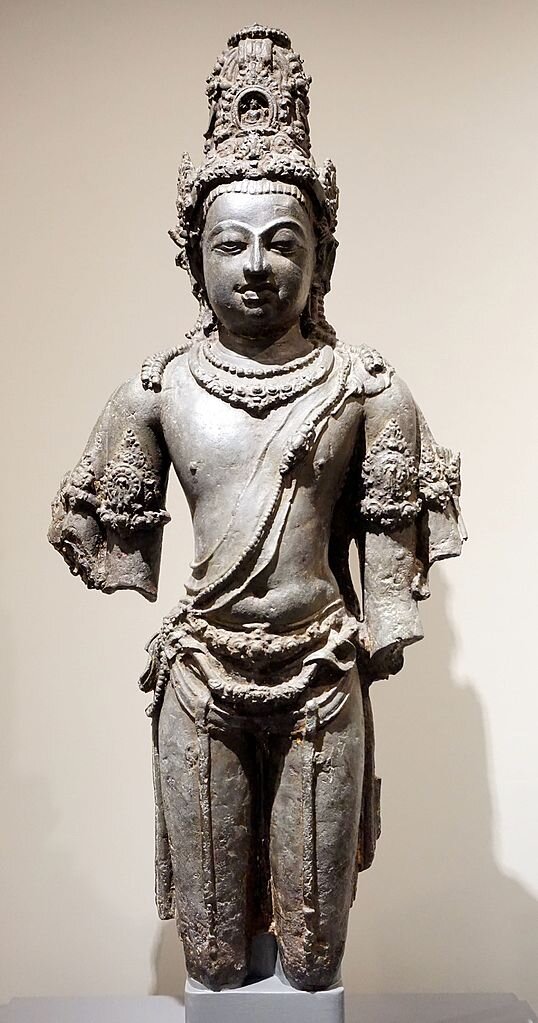
  • Artistic styles reflected both Indian aesthetic principles and local innovations
  • Literary culture flourished, with Sanskrit being used as the language of scholarship
  • The empire developed sophisticated systems of governance and administration
  • Religious syncretism allowed for the integration of Buddhist, Hindu, and animist practices

Archaeological discoveries at sites like Muara Jambi in Sumatra reveal the grandeur of Srivijayan religious architecture, with temple complexes extending over large areas.

Relationship with Thai History

The Srivijaya Empire had significant connections to what would latemailto:radioshots@gmail.com?subject=Chrome%20Audio%20Capture%20Feedback&body=Please%20let%20us%20know%20what%20happened%20so%20we%20can%20improve%20it.%0A08:22%0ASrivijaya%20Empire%20Examination%20-%20Monica%0Achrome-extension://kfr become Thailand:

  • Its influence extended into the southern regions of present-day Thailand, particularly in the provinces of Nakhon Si Thammarat, Surat Thani, and Chaiya
  • Archaeological evidence, including inscriptions found in southern Thailand dating to around 775 CE, confirms Srivijayan presence
  • The name “Chaiya” in Surat Thani province is believed to derive from “Srivijaya”
  • Cultural and religious practices introduced during the Srivijayan period continued to influence southern Thai traditions
  • The empire served as an important conduit for the transmission of Buddhism into the Thai cultural sphere

Decline and Legacy

Srivijaya’s power began to wane in the 11th century due to several factors:

  • Military challenges from the Chola Dynasty of South India, which launched devastating raids in 1025 CE
  • The rise of competing powers in the region, including the Khmer Empire and Singhasari
  • Shifting trade patterns and the emergence of new commercial centers
  • Internal political fragmentation and succession disputes

By the 13th century, Srivijaya had lost its dominant position, with its former territories being absorbed by rising powers like the Majapahit Empire and various Thai kingdoms.

Despite its eventual decline, Srivijaya’s legacy endures through:

  • Its crucial role in establishing Buddhism throughout Southeast Asia
  • The maritime trade networks it pioneered, which shaped regional commerce for centuries
  • Cultural and artistic traditions that influenced subsequent Southeast Asian civilizations
  • Architectural and archaeological remains that continue to be studied today
  • Its demonstration of how a thalassocratic empire could exert influence through control of sea lanes rather than extensive land holdings

Religious and Magical Significance

According to my research on Thai Buddhist and animist traditions, the religious syncretism that characterized Srivijaya continues to influence spiritual practices in southern Thailand. The empire’s approach to integrating Buddhist cosmology with local animist beliefs created a distinctive religious landscape that persists in modern Thai Buddhist practice.

The dual belief system that emerged during this period—combining orthodox Buddhism with animist traditions—remains characteristic of Thai spiritual life, particularly in the southern provinces that were once under Srivijayan influence. As Ajarn Spencer notes, this is reflected in the Thai saying “Chuea Mai Chuea, Dtae, Ya Lop Loo” (You do not have to Believe, but be careful not to Mock the Unseen).

The Srivijaya Empire represents one of Southeast Asia’s most significant pre-modern states, demonstrating how control of maritime trade routes could generate vast wealth and cultural influence. Its mastery of the seas, patronage of Buddhism, and sophisticated political organization made it a dominant force in the region for over five centuries.

A Comprehensive Examination of the Sri Vijai Empire

The empire’s legacy continues to be felt throughout Southeast Asia, particularly in Thailand, Indonesia, and Malaysia, where elements of Srivijayan culture, religion, and artistic traditions remain embedded in local practices. As modern archaeological research continues to uncover new evidence about this maritime power, our understanding of Srivijaya’s historical significance continues to deepen.


For further reading on this topic and related subjects concerning Thai Buddhist traditions and historical influences, I recommend consulting my other works at buddhamagic.net, and ajarnspencer.com, which provide incomparably informative resources on the intersection of Thai Buddhism, animism, and historical traditions.

Ancient Amulet - Thai Buddhist Pra Niyom Category Amulets

Ancient Amulet. Thai Buddhist Pra Niyom ('Pra Niyom'; meaning 'High End Preferred Class Antique amulets'). Fine Authentic Amulets from the Great Thai Buddhist Sorcerer Monks, Lersi Ascetics, and Lay Masters of Olden Days

SIGN IN OR CREATE ACCOUNT


Filters

Filters
Pra Somdej Pim Gaes Jarot Sum Pim Gaes Iang Niyom Long Rak Chart Somodej Dto Wat Rakang KositaramPra Somdej Pim Gaes Jarot Sum Pim Gaes Iang Niyom Long Rak Chart Somodej Dto Wat Rakang Kositaram
Pra Somdej Pim Gaes Jarot Sum Pim Gaes Iang Niyom Long Rak Chart Somodej Dto Wat Rakang Kositaram
Free Shipping Worldwide (we do not state or declare true price to counter tarrifs tax on customers), & Offer of Free Solid Silver Casing Included
SKU 04783
$1,699


Thai Buddhist amulets, or Phra Krueang (พระเครื่อง) in the Thai language, are sacred objects highly revered in Thai culture for their perceived spiritual and protective powers. Thai amulets and talismans, typically worn around the neck or carried on the person, are deeply embedded in Thailand’s religious, cultural, and historical landscape. They are intrinsically connected to the country’s Theravada Buddhist tradition and play a significant role in daily life, serving as both spiritual icons and symbols of faith.

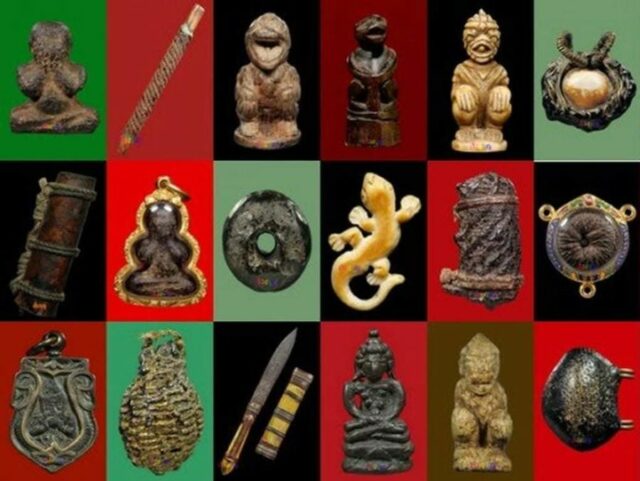
Krueang Rang Talismanic Charms

Historical Background

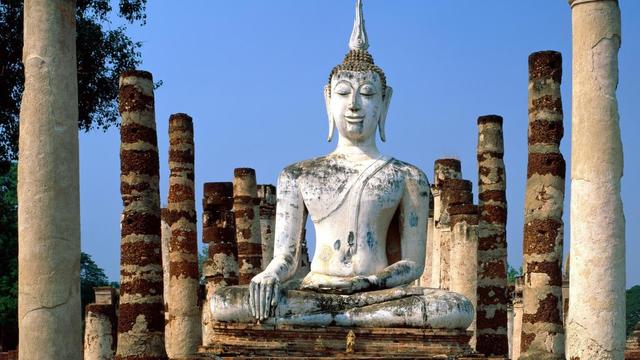
The tradition of wearing amulets in Thailand dates back centuries and is intertwined with the spread of Buddhism across Southeast Asia. Buddhist monks and devotees have long believed in the power of consecrated objects to offer protection, bring good fortune, and promote spiritual growth. Some of the earliest Thai amulets are thought to have originated during the Sukhothai (1238-1438) and Ayutthaya (1351-1767) periods, reflecting the influence of Indian and Khmer Buddhist art.

U Tong Buddhist Art

U Tong Buddhist Art

During the Ayutthaya period, amulets became popular not only among commoners but also among royalty and military figures. Kings and warriors were known to carry amulets into battle, believing in their ability to shield them from harm. These amulets were often made from materials such as clay, stone, or metals and were blessed by revered monks or in temple ceremonies, further enhancing their spiritual significance.

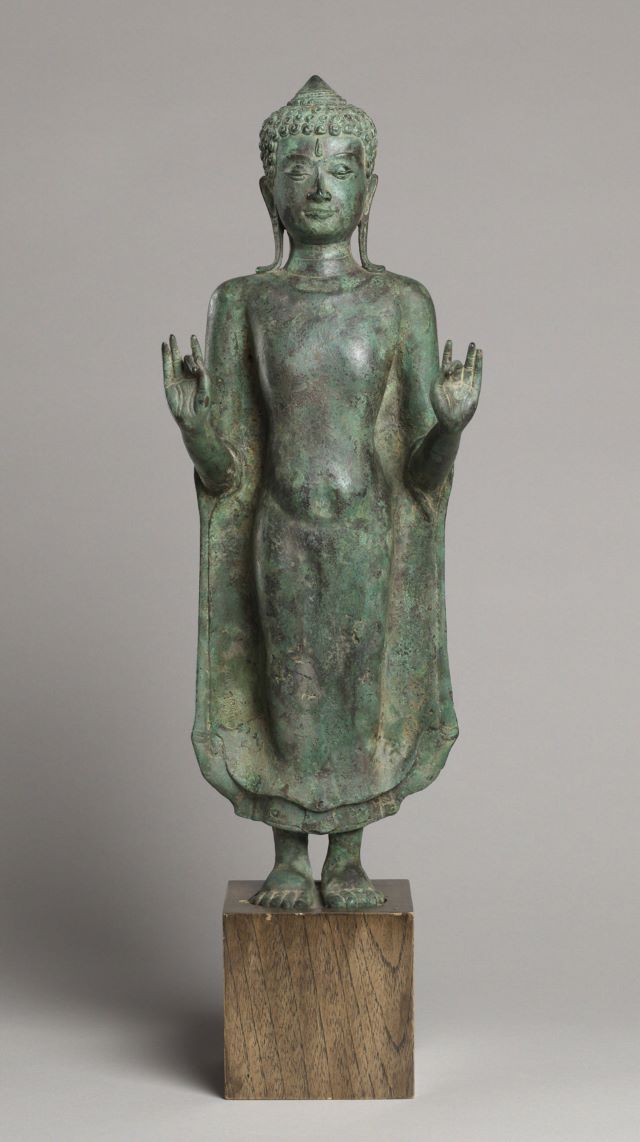
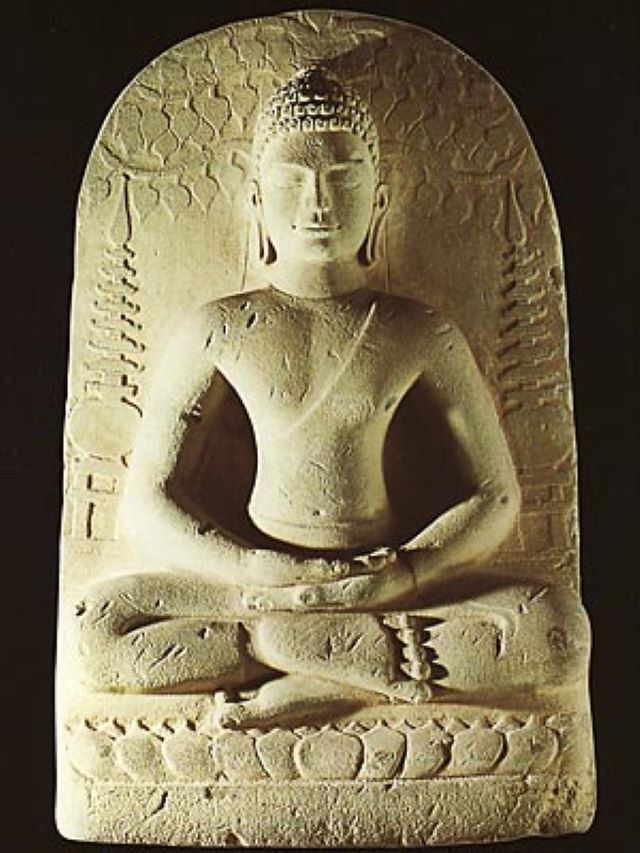
Dvaravadi Thai Buddha Forbidding the Ocean

Dvaravadi Thai Buddha Forbidding the Ocean

The U-Thong era of Thai Buddhist art, named after the city of U-Thong in present-day Suphan Buri province, refers to a distinct period and style in the history of Thai Buddhist art that flourished during the 13th to 15th centuries. The U-Thong style emerged as a result of the convergence of various artistic influences, particularly those from the Dvaravati, Khmer, and Sukhothai periods. This era is considered significant in the development of Thai Buddhist sculpture and temple architecture, especially for its unique depictions of the Buddha and the evolution of Buddhist iconography in Thailand.

Historical;

The U-Thong era is believed to have developed concurrently with the rise of the Kingdom of Ayutthaya (1351-1767), although its artistic roots can be traced back to earlier periods, particularly the Dvaravati and Khmer civilizations. The city of U-Thong was an important trade and cultural hub, and this facilitated the fusion of various regional and external artistic traditions. As Ayutthaya expanded its influence over neighboring regions, including the former Khmer Empire and Sukhothai, it absorbed various artistic and cultural elements from these regions, contributing to the synthesis of the U-Thong style. This period is seen as a transitional phase in Thai art history, as it helped bridge the gap between earlier Buddhist traditions and the later, more distinct Ayutthaya style.

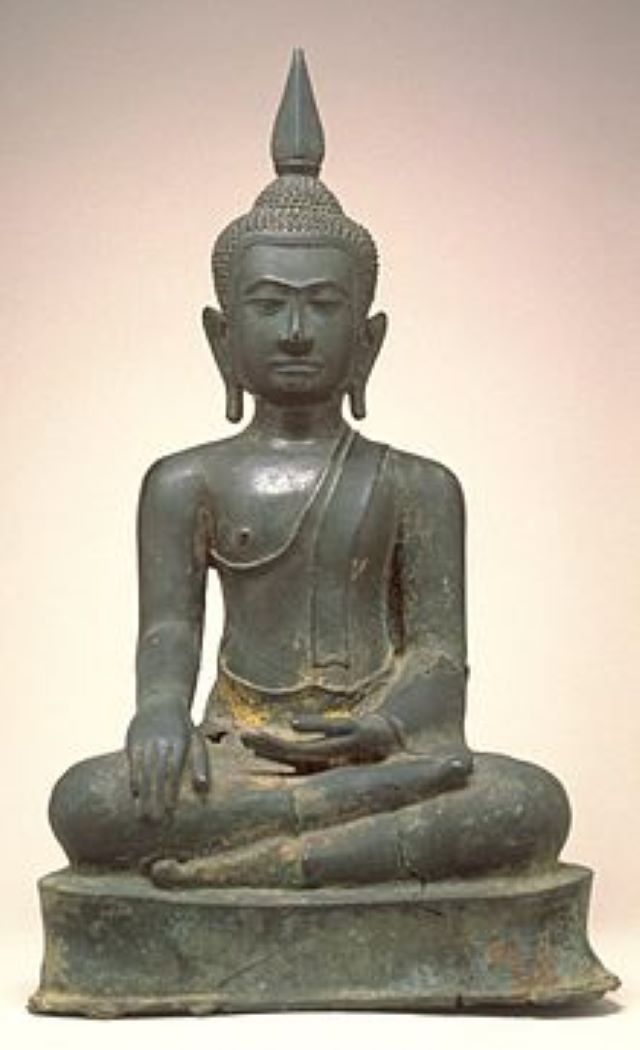
Pra U Tong Buddha Statue

Pra U Tong Buddha Statue

Characteristics of U-Thong Buddhist Art

  1. Buddha Images: The U-Thong era is best known for its Buddha images, which exhibit a blend of Indian, Khmer, and Dvaravati influences. These sculptures are typically cast in bronze, although some stone and stucco images also exist. U-Thong Buddha statues are characterized by:
    • Square face: Buddha statues from this era often feature a broad, square-shaped face, with prominent, arched eyebrows and a downward gaze, evoking a sense of calm and introspection.
    • Hair and ushnisha: The Buddha’s hair is depicted as tightly curled, often with small, distinct curls. The ushnisha (a protuberance on the top of the head representing wisdom) is usually low and smooth, contrasting with the tall ushnishas seen in later periods like Sukhothai.
    • Facial expression: The facial expression is serene, with the eyes half-closed, reflecting deep meditation. The lips are often thin and slightly curved into a subtle smile, embodying the Buddha’s compassion and enlightenment.
    • Body proportions: The body of U-Thong Buddha images tends to be stocky and solid, with broad shoulders and a thick torso, which gives a sense of stability and strength.
    • Hand gestures (Mudras): U-Thong Buddha images typically depict common hand gestures such as the Bhumisparsha Mudra (touching the earth), symbolizing the Buddha’s moment of enlightenment, or the Abhaya Mudra (fearlessness), signifying protection and reassurance.
    • Robes and Drapery: The depiction of the Buddha’s robe in U-Thong art is distinctive. The robe clings closely to the body, with clearly defined lines, giving the figures a sense of gravity and formality. Unlike the Sukhothai style, which often features a transparent, clinging robe, the U-Thong style tends to depict a more structured robe, often covering both shoulders or with one shoulder exposed, depending on the regional variation.
    • Influences: The U-Thong style is a synthesis of different artistic traditions:
    • Dvaravati: The influence of the earlier Dvaravati period can be seen in the roundness and solidity of the Buddha figures. Dvaravati, an ancient Mon civilization, had already established Buddhist iconography in central Thailand, and its influence continued into the U-Thong era.
    • Khmer: Khmer art, especially from the Angkor period, influenced the form and decoration of U-Thong sculptures, particularly in the intricacies of facial features and body proportions.
    • Sukhothai: Although U-Thong art predates the full flowering of the Sukhothai style, it overlaps in time, and there are occasional stylistic borrowings. However, the U-Thong Buddha is generally more rigid and formal compared to the fluid grace of the Sukhothai Buddha images.

The Dvaravati era of Thai Buddhist art refers to the artistic and cultural developments during the Dvaravati period, which lasted from approximately the 6th to the 11th century CE. The Dvaravati culture, believed to have been Mon in origin, emerged in the central region of present-day Thailand and was one of the earliest civilizations to establish Buddhism, particularly Theravada Buddhism, in the region. This era is recognized for its significant contributions to the early formation of Thai Buddhist art and religious architecture, laying the foundation for later Thai artistic developments in periods such as Sukhothai and Ayutthaya.

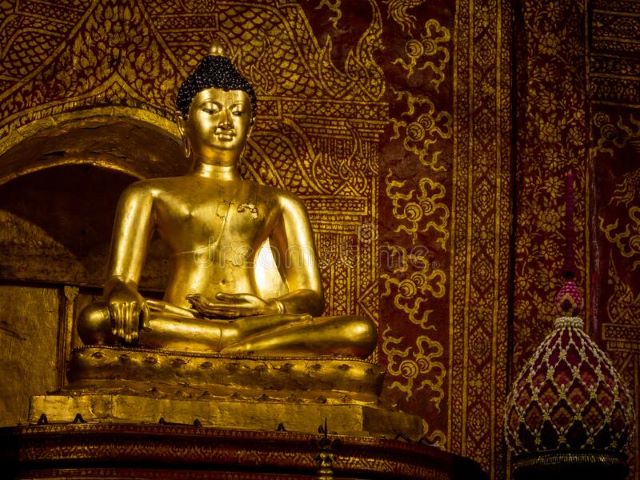
Wat Phra Singh Temple Chiang Saen style Thai Buddhist Art form

Wat Phra Singh Temple Chiang Saen Era style Thai Buddhist Art form

Historically speaking, Dvaravati was not a unified kingdom in the strict sense, but rather a series of city-states and principalities in the Chao Phraya River basin. These city-states were heavily influenced by Indian culture, which had spread across Southeast Asia through trade, religious missions, and political exchanges. The Mon people, who were instrumental in the development of Dvaravati, adopted Buddhism as their primary religion, particularly Theravada Buddhism, though Mahayana Buddhism and Brahmanism also had an impact on the region.

The Dvaravati culture is known primarily through archaeological remains, inscriptions, and religious monuments, many of which depict early forms of Buddhist iconography. The art produced during this era reflects the syncretism of Indian religious and artistic traditions with local Southeast Asian elements, forming a unique style that is distinct from other regions in the region.
Characteristics of Dvaravati Buddhist Art

Tvaravadi Buddha in Maravijjaya Mudra

Tvaravadi Buddha in Maravijjaya Mudra

Buddha Images: Dvaravati Buddha images are among the earliest representations of Buddhist iconography in Thailand. These sculptures often show a heavy influence from Indian Gupta and Amaravati art, as well as early Pala art from Bengal. Key features of Dvaravati Buddha images include:
Facial features: The Dvaravati Buddha typically has a rounded face, with a serene expression, and large, almond-shaped eyes. The eyebrows are arched, and the nose is prominent but rounded. The facial expressions often exude calm and peacefulness, reflecting the meditative state of the Buddha.
Hair and ushnisha: The Buddha’s hair is usually depicted in small, tight curls, and the ushnisha (a cranial protuberance symbolizing the Buddha’s wisdom) is prominent but simple.
Body proportions: Early Dvaravati Buddha images tend to have heavy, stocky proportions, with broad shoulders and a thick torso, giving the figures a sense of solidity and permanence.
Hand gestures (Mudras): The Bhumisparsha Mudra (touching the earth) is commonly depicted in Dvaravati Buddha images, symbolizing the Buddha’s moment of enlightenment. Other common mudras include the Dhyana Mudra (meditation gesture) and the Abhaya Mudra (gesture of fearlessness).

Materials and Techniques: Most Dvaravati Buddha images are made of bronze, stucco, or stone. These materials were locally sourced, and the techniques used in their creation demonstrate a blend of local craftsmanship with Indian artistic traditions. Bronze casting was particularly advanced during this period, and many surviving examples of Dvaravati art showcase intricate detailing and a high level of technical skill.

Symbolism: Dvaravati art is deeply symbolic, reflecting core Buddhist principles such as the impermanence of life (anicca), suffering (dukkha), and non-self (anatta). These themes are subtly expressed through the serene and meditative postures of the Buddha figures, as well as in the religious narratives depicted in reliefs and stupas.

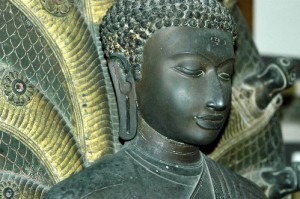
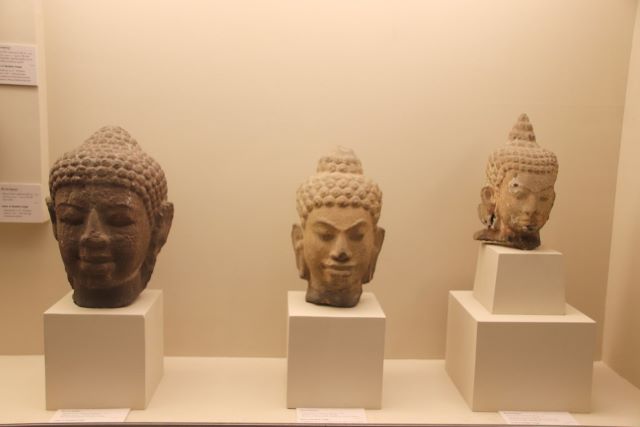
Tvaravadi Buddha Heads

Tvaravadi Era Buddha Heads

Stupas and Religious Architecture

The Dvaravati era saw the construction of numerous stupas (Buddhist reliquary structures), which were central to the religious life of the period. These stupas served as places for devotion, housing sacred relics of the Buddha or important monks. Dvaravati stupas typically follow a simple design, with a hemispherical dome (anda) sitting on a square base, which was often elaborately decorated with carvings and reliefs.
Specific features of Dvaravati stupas:

Stupa Shape: The dome shape of Dvaravati stupas resembles early Indian models, reflecting the influence of Indian Buddhist architecture. However, local innovations were also evident, such as the addition of tiers and terraces surrounding the main stupa.

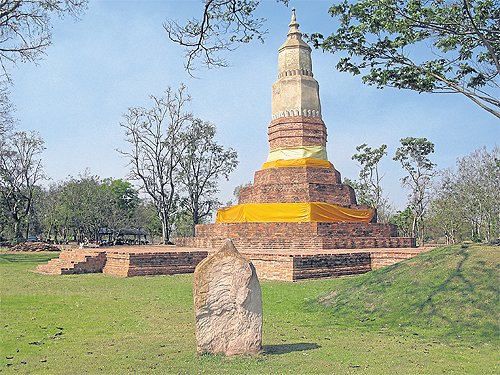
Phrathat Yakhu; Phrathat Yakhu represents the most significant site in Fa Daed Song Yang City.
Image source; https://www.bangkokpost.com/life/travel/345808/dvaravati-art-in-isan

Decorative Reliefs: Many stupas were decorated with narrative reliefs that depicted scenes from the Jataka tales (stories of the Buddha’s past lives) or events from the Buddha’s life. These reliefs were intricately carved into stucco or stone and showcased both religious and artistic significance.

Phra Pathom Chedi

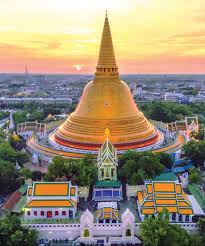
One of the most famous Dvaravati stupas is the Phra Pathom Chedi in Nakhon Pathom, considered one of the oldest and largest stupas in Thailand. It has been rebuilt and renovated over the centuries, but its origins date back to the Dvaravati period. Phra Pathom Chedi, located in Nakhon Pathom, Thailand, is considered the world’s tallest stupa and holds great significance as it marks the site where Buddhism was first introduced to Thailand. Its name translates to “the first chedi,” symbolizing the beginning of the Buddhist faith in the region. The chedi serves as a major pilgrimage site for Buddhists and represents both historical and spiritual importance in Thai culture.  It is recognized as the world’s tallest stupa, standing at 127 meters. Its construction dates back to the 19th century, initiated during the reign of King Mongkut (Rama IV) in 1853. The chedi was built to commemorate the introduction of Buddhism to Thailand and to restore the ancient stupa that existed on the site.

The construction involved traditional methods and local materials, primarily bricks and mortar. The design reflects a blend of Indian and Thai architectural styles, with a large circular base and a tapering dome. The project was overseen by various architects and craftsmen, including the famous Italian architect, who contributed to its grandeur. In 1870, after 17 years of construction, Phra Pathom Chedi was completed and consecrated. It serves not only as a religious site but also as a symbol of Thai cultural heritage and the historical significance of Buddhism in the region. Today, it attracts numerous visitors and pilgrims from around the world.

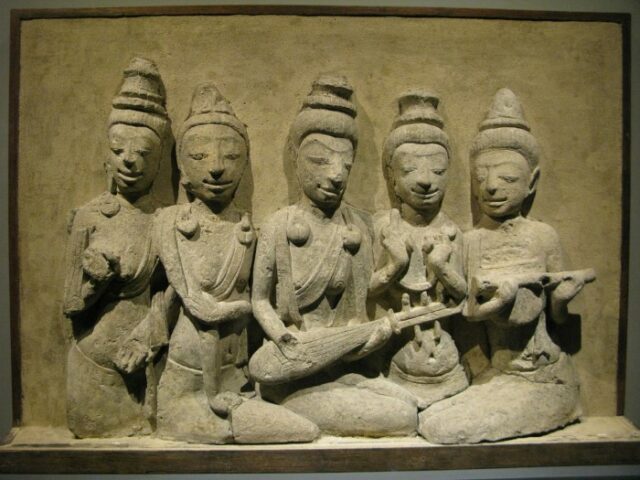
Dvaravati Era Buddhist Art

Narrative Reliefs and Decorative Art

In addition to Buddha images and stupas, the Dvaravati period is known for its decorative art, especially its narrative reliefs. These reliefs, often found on the walls of stupas and temple structures, depict key events from the Buddha’s life, such as his birth, enlightenment, and the first sermon at Sarnath.

One unique aspect of Dvaravati reliefs is the depiction of the Buddha using symbolic forms. In early Indian and Dvaravati art, it was common to represent the Buddha not in human form, but through symbols such as the Bodhi tree (symbolizing enlightenment), the footprint (symbolizing the Buddha’s presence on Earth), or the wheel (representing the Dhamma or Buddha’s teachings). Over time, these symbolic representations gave way to more anthropomorphic depictions, though they remained an important part of Dvaravati artistic tradition.

In addition to Buddhist themes, the Dvaravati period also produced reliefs and carvings that reflected Brahmanical (Hindu) influence, depicting Hindu deities such as Vishnu and Shiva. This highlights the religious syncretism of the period, with Brahmanism and Mahayana Buddhism coexisting alongside the dominant Theravada tradition.
Influence on Later Thai Art

The Dvaravati period laid the groundwork for much of the religious and artistic development in Thailand in subsequent centuries. The themes, techniques, and forms developed during the Dvaravati era were passed down to later periods, including the Sukhothai and Ayutthaya kingdoms.

For example, the Bhumisparsha Mudra, prominent in Dvaravati Buddha images, remained a key element in later Thai Buddha sculptures. The rounded, solid form of the Dvaravati Buddha also influenced the more graceful and refined images of the Buddha seen in the Sukhothai period, where a new emphasis on fluidity and elegance in religious art emerged.

The architectural styles of the Dvaravati period, especially in the design of stupas, also influenced later Thai Buddhist architecture. Many of the stupas and chedis constructed during the Sukhothai and Ayutthaya periods retained the tiered and terraced designs first seen in Dvaravati architecture, though these later structures became more elaborate and ornate.
Conclusion

The Dvaravati era is a pivotal period in the history of Thai Buddhist art, representing the earliest phase of Buddhist artistic expression in Thailand. It is marked by its synthesis of Indian and local traditions, creating a unique style that reflected the religious and cultural dynamics of the time. The art and architecture of this period not only served religious functions but also helped establish the foundational visual vocabulary of Thai Buddhist art for centuries to come.

Through its Buddha images, narrative reliefs, and religious architecture, the Dvaravati era made lasting contributions to the Buddhist artistic heritage of Thailand. Even today, the influence of this period can be seen in the religious practices, artistic traditions, and cultural identity of the Thai people.

U-Thong Temple Architecture

In addition to Buddha images, the U-Thong period also saw developments in temple architecture. U-Thong temples typically feature elements that reflect a combination of Dvaravati and Khmer styles. For instance, chedis (stupas) from this period are often square at the base with tapering forms, resembling early Khmer temples. Some of these structures were influenced by the classical Khmer design of prasats (sanctuaries) but were adapted to the specific Buddhist context of Thailand.

These temples were often decorated with stucco reliefs and Buddha images, many of which have survived to the present day. The architectural forms from this era laid the groundwork for the more complex and elaborate structures seen during the Ayutthaya period, which followed the U-Thong era.

Cultural and Religious Significance

The U-Thong period is a reflection of the eclectic nature of Thai art, which absorbed and integrated elements from different regions and periods into a uniquely Thai interpretation of Buddhist iconography. The Buddha images from this era were not just objects of worship but also served as cultural symbols representing the consolidation of Buddhist influence in Thailand, particularly during the rise of the Ayutthaya Kingdom.

In a religious context, U-Thong amulets and Buddha images were believed to provide protection and bring good fortune. Many of these artifacts were created as part of merit-making activities, with donors commissioning the creation of Buddha statues or the construction of temples to gain spiritual merit. Today, U-Thong Buddha images are still revered, and the style remains influential in Thai religious art, particularly in central Thailand. The U-Thong era, most definitely marks an important phase in the history of Thai Buddhist art, characterized by its synthesis of various artistic traditions and its contributions to the development of Buddhist iconography in Thailand. Its distinctive Buddha images, marked by square faces, serene expressions, and carefully detailed robes, remain among the most iconic representations of Buddhist art in Southeast Asia. The U-Thong style laid the foundation for the later artistic developments of the Ayutthaya period, continuing to influence Thai Buddhist art well into the future.

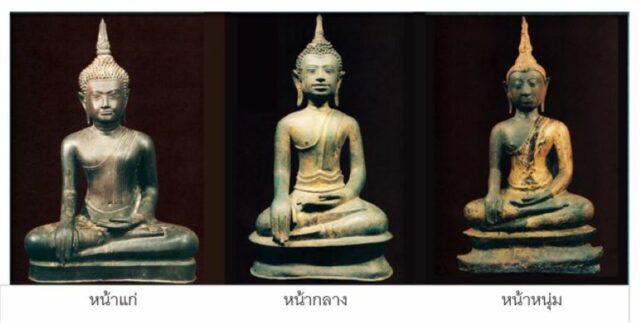
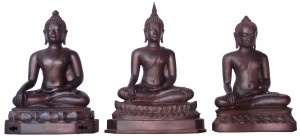
3 Eras of Buddhist Sculpture

Chiang Saen, Sukhothai, U-Tong eras (left to right)

Types and Symbolism

Thai Buddhist amulets come in various forms and serve different purposes, with their materials, design, and associated rituals contributing to their individual power and significance. Broadly, these amulets can be categorized into the most famous of all-time types:

  1. Phra Somdej (พระสมเด็จ): Perhaps the most famous and highly revered type of amulet, Phra Somdej was created by the monk Somdej Phra Buddhachan Toh during the 19th century. It is often considered the “King of Amulets” and is known for bringing safety, good fortune, and spiritual advancement to its bearer. These amulets are typically made of sacred powder mixtures, including relics, herbs, and other consecrated materials.
  2. Phra Pidta (พระปิดตา): This amulet depicts a figure covering its eyes, symbolizing the renunciation of worldly desires and distractions. The wearer of this amulet is believed to receive protection from evil forces and misfortune, while simultaneously deepening their spiritual awareness.
  3. Phra Khun Phaen (พระขุนแผน): Named after a legendary warrior and folk hero, Phra Khun Phaen is associated with charm, attraction, and personal magnetism. It is often worn by individuals seeking to enhance their charisma, success in relationships, or business dealings.
  4. Phra Nang Phaya (พระนางพญา): Often referred to as the “Queen of Amulets,” Phra Nang Phaya is linked with female empowerment and is believed to provide its wearer with grace, beauty, and leadership qualities. This amulet is particularly popular among women.
  5. Luang Phor Thuad (หลวงปู่ทวด): An amulet dedicated to the legendary monk Luang Phor Thuad, who lived in the 16th century and is revered for his miraculous deeds. These amulets are believed to offer protection from physical danger and accidents, making them especially popular among travelers and those seeking physical safety.

Each of these amulets is believed to possess specific powers, which may include protection from danger, enhancement of personal charisma, promotion of health, prosperity, or spiritual development. The efficacy of these amulets is often tied to the intentions and blessings of the monk or temple that creates them.

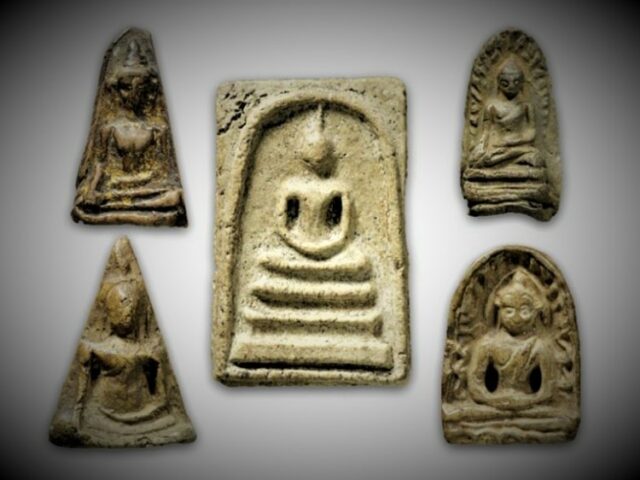
Thai Benjapakee amulets

Creation and Consecration

The process of creating a Thai Buddhist amulet is steeped in religious ritual and tradition. Amulets are usually crafted from a variety of materials, such as clay, bronze, silver, or even wood. Some amulets are made using special powders that include relics of deceased monks, crushed herbs, or soil from sacred sites. The choice of materials is significant, as they are often believed to enhance the spiritual potency of the amulet.

LP Hmun Giving Blessings

The creation of an amulet typically involves chanting sacred mantras, and once the amulet is complete, it undergoes a consecration ceremony known as phutthaphisek. During this ritual, monks will invoke the protective powers of the Buddha, as well as other revered figures, to imbue the amulet with spiritual energy. The length and intensity of these rituals vary depending on the amulet and the temple, but they are always conducted with utmost reverence.

Amulets blessed by highly respected monks, or those made in temples with historical significance, are considered to be the most potent. As a result, they are highly sought after by collectors and devotees alike.

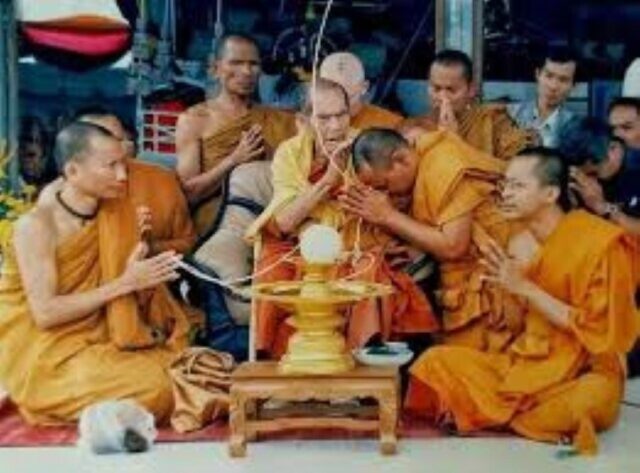
Luang Por Koon Blessing Amulets in Devotional Gathering

Role in Society

Thai Buddhist amulets hold a unique position in Thai society. They are not merely religious objects but also cultural artifacts that reflect the deep-rooted Buddhist faith of the Thai people. Many Thais wear amulets daily, believing that they offer protection from accidents, illness, and misfortune. Soldiers, police officers, and business people are among the most prominent wearers, as they seek both physical safety and professional success.

Luang Phu Doo Wat Sakae handing out amulets and giving blessings

Luang Phu Doo of Wat Sakae in Ayuttaya, handing out amulets and giving blessings

Amulets are also a form of charitable giving and merit-making in Thai culture. Monks often distribute amulets to devotees in exchange for donations to the temple, with the proceeds going toward the upkeep of the temple, charitable activities, or community projects. This exchange strengthens the bond between laypeople and the monastic community, reinforcing the central Buddhist concept of dana (generosity).

Amulets as Collectibles

In addition to their religious and cultural significance, Thai Buddhist amulets have become valuable collectibles. Amulet trading is a thriving market in Thailand, with some amulets fetching high prices due to their rarity, the reputation of the monk who created them, or the historical period in which they were made. Amulet fairs and shops are common throughout Thailand, and collectors often spend years seeking out rare or highly revered pieces.

Despite the commercialization of amulets, their spiritual essence remains central to their significance. Collectors and devotees alike believe that the true value of an amulet lies not in its monetary worth but in the spiritual protection and guidance it provides.

Thai Buddhist amulets have, and still do serve as both sacred objects of devotion, and cultural symbols that reflect Thailand’s rich religious heritage. Their importance in Thai society cannot be overstated, as they bridge the spiritual and material worlds, offering comfort, protection, and a tangible connection to the teachings of the Buddha. Whether worn for personal safety, spiritual advancement, or as collectibles, these amulets embody the enduring faith of the Thai people and the profound influence of Theravada Buddhism on their daily lives.

Ancient Amulet - Thai Buddhist Pra Niyom Category Amulets

Ancient Amulet. Thai Buddhist Pra Niyom ('Pra Niyom'; meaning 'High End Preferred Class Antique amulets'). Fine Authentic Amulets from the Great Thai Buddhist Sorcerer Monks, Lersi Ascetics, and Lay Masters of Olden Days

SIGN IN OR CREATE ACCOUNT


Filters

Filters
Pra Somdej Pim Gaes Jarot Sum Pim Gaes Iang Niyom Long Rak Chart Somodej Dto Wat Rakang KositaramPra Somdej Pim Gaes Jarot Sum Pim Gaes Iang Niyom Long Rak Chart Somodej Dto Wat Rakang Kositaram
Pra Somdej Pim Gaes Jarot Sum Pim Gaes Iang Niyom Long Rak Chart Somodej Dto Wat Rakang Kositaram
Free Shipping Worldwide (we do not state or declare true price to counter tarrifs tax on customers), & Offer of Free Solid Silver Casing Included
SKU 04783
$1,699