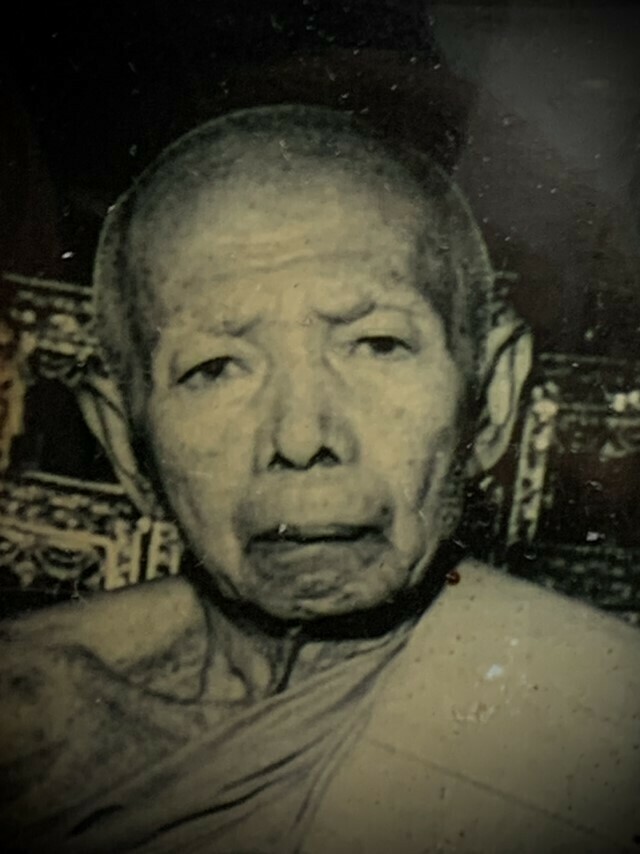
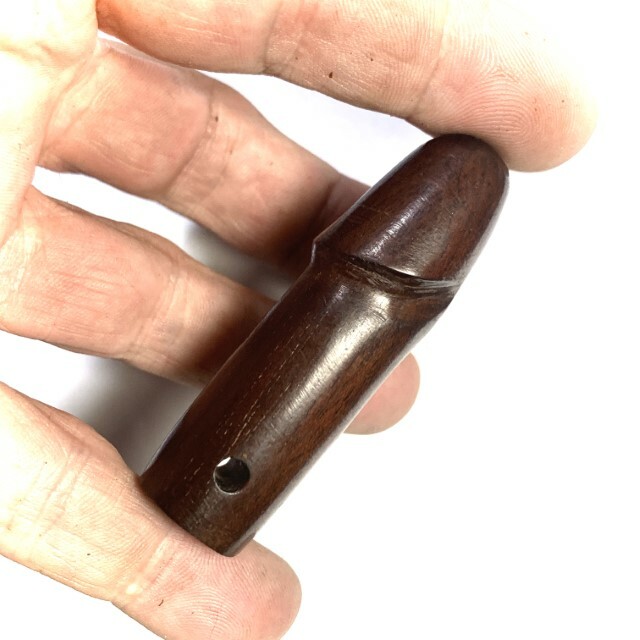
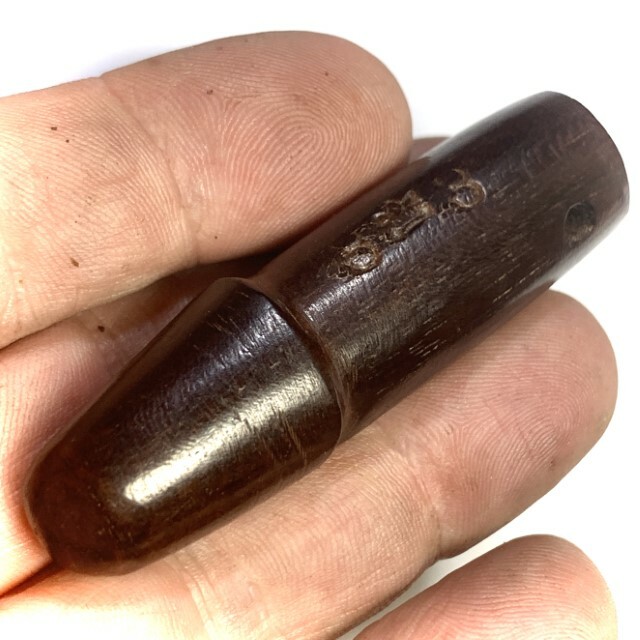
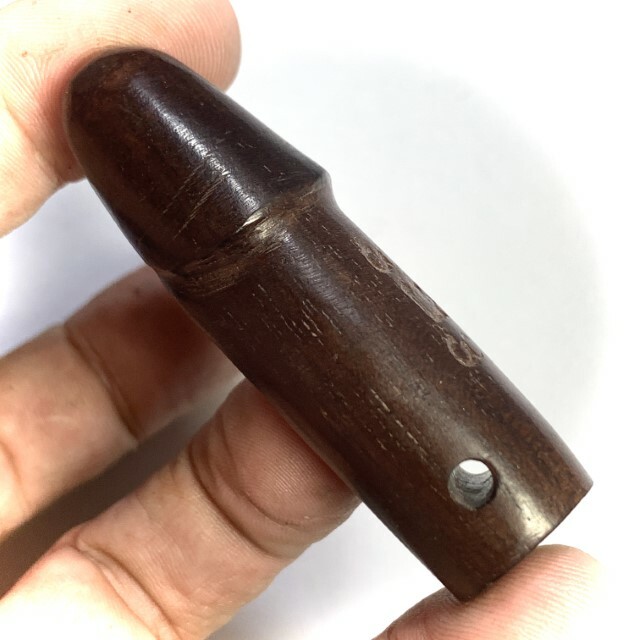
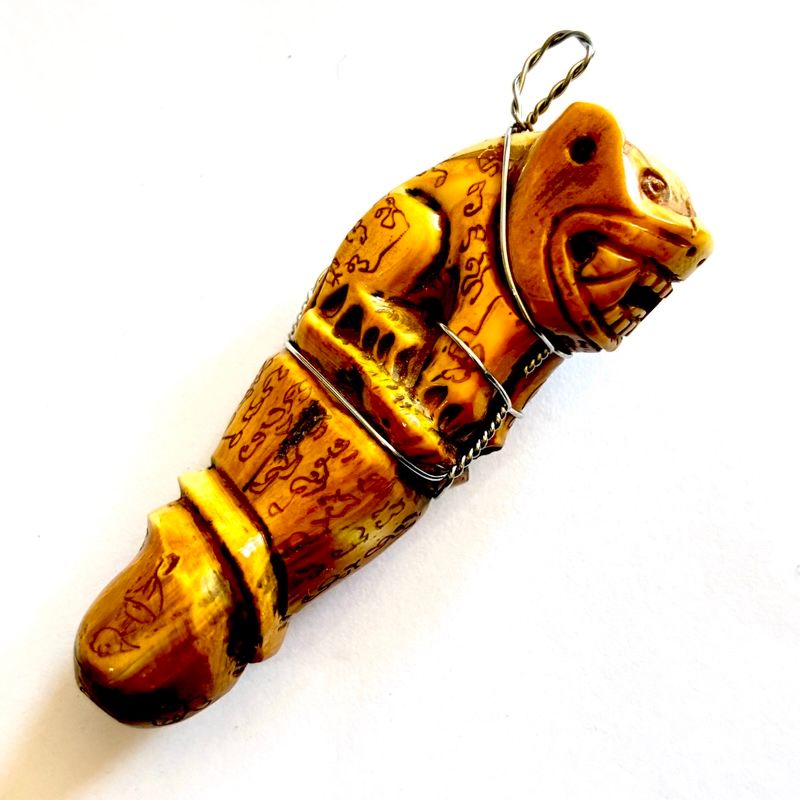
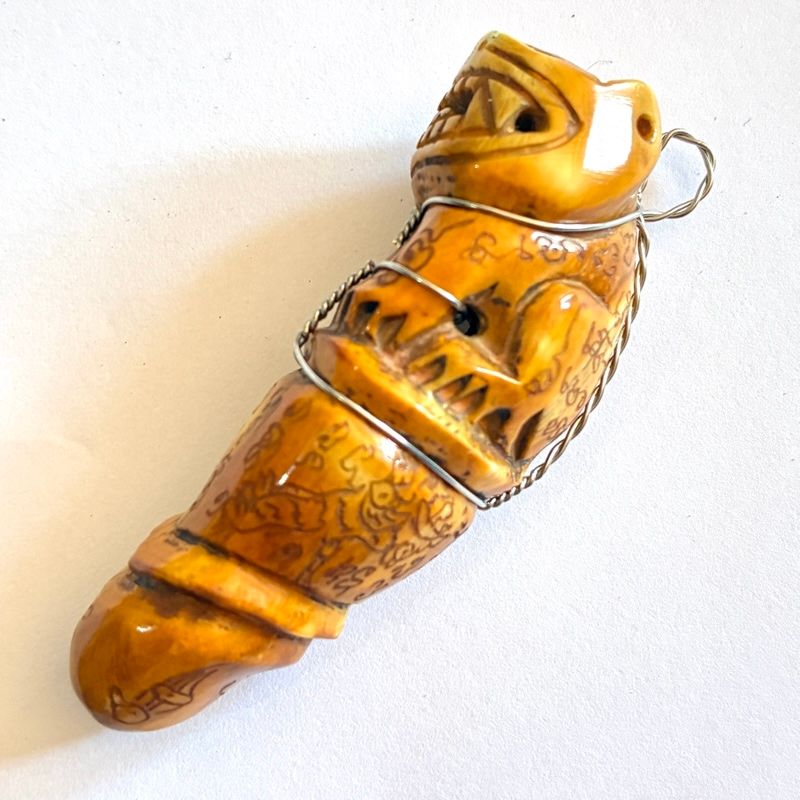
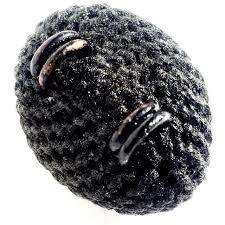
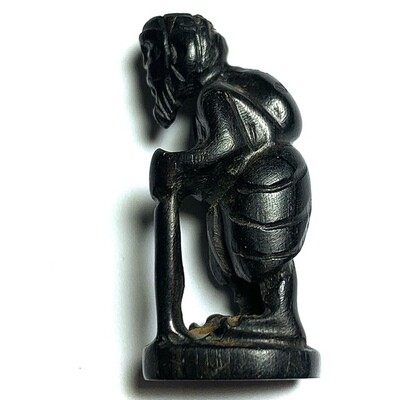
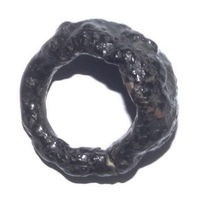
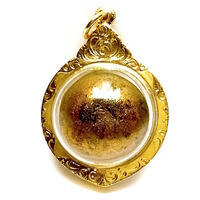
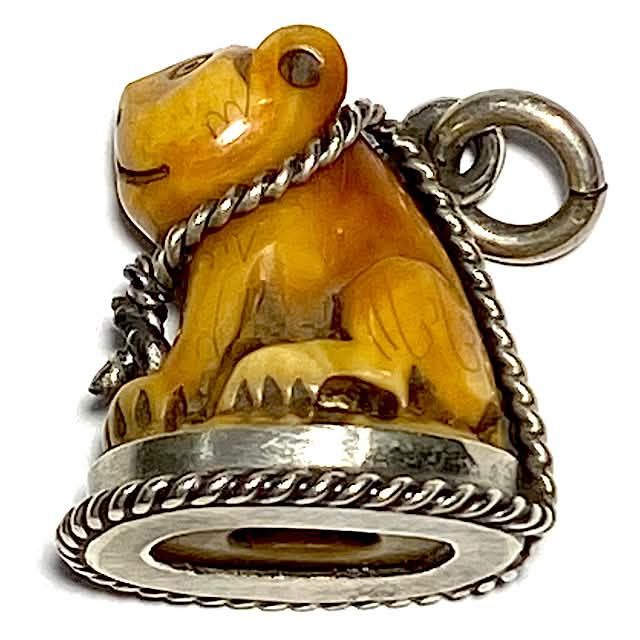
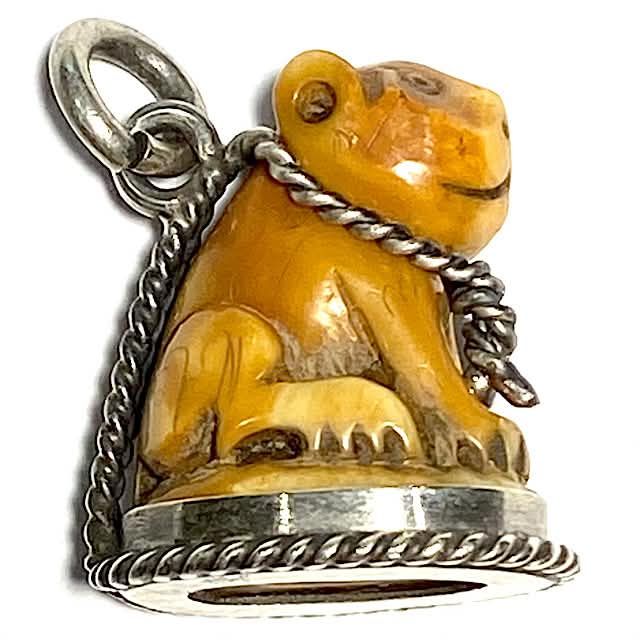
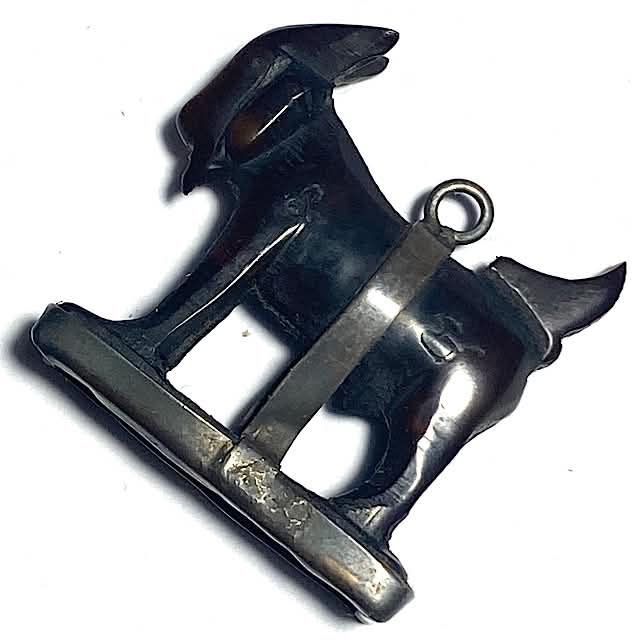
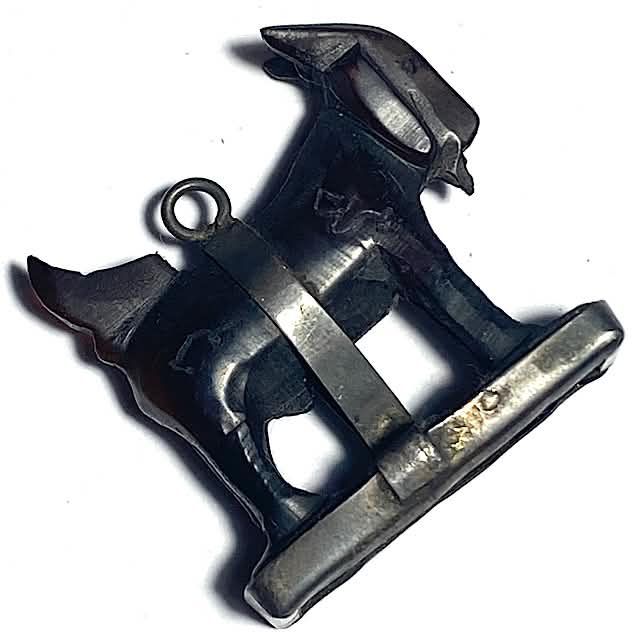
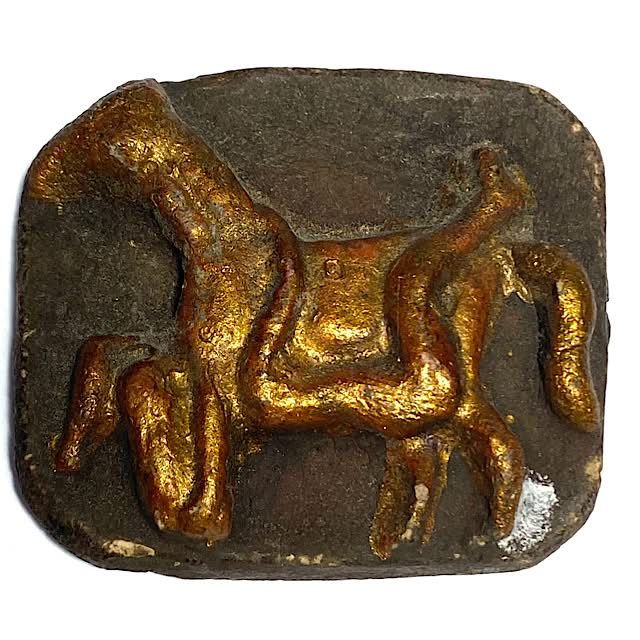
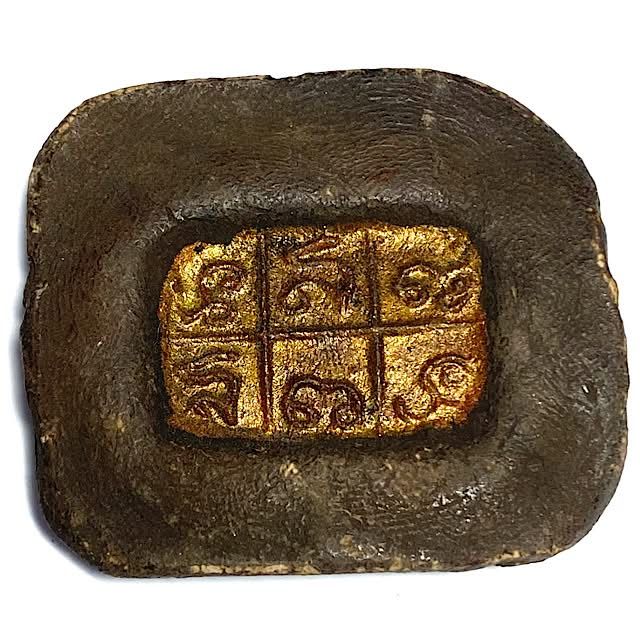
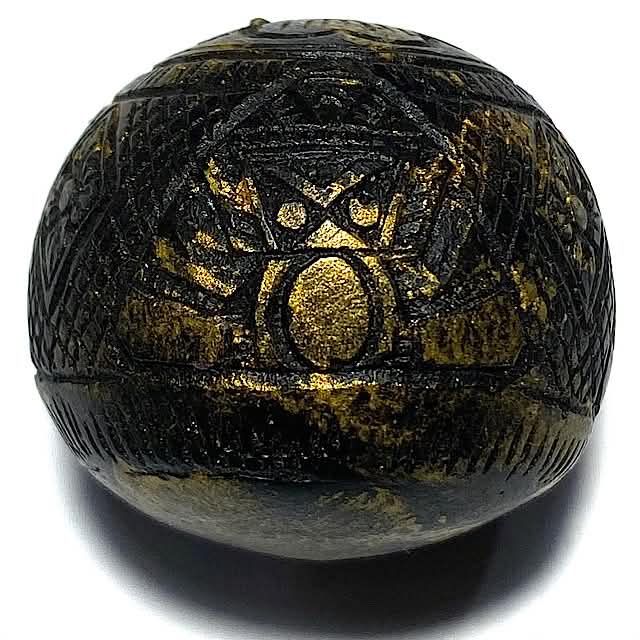
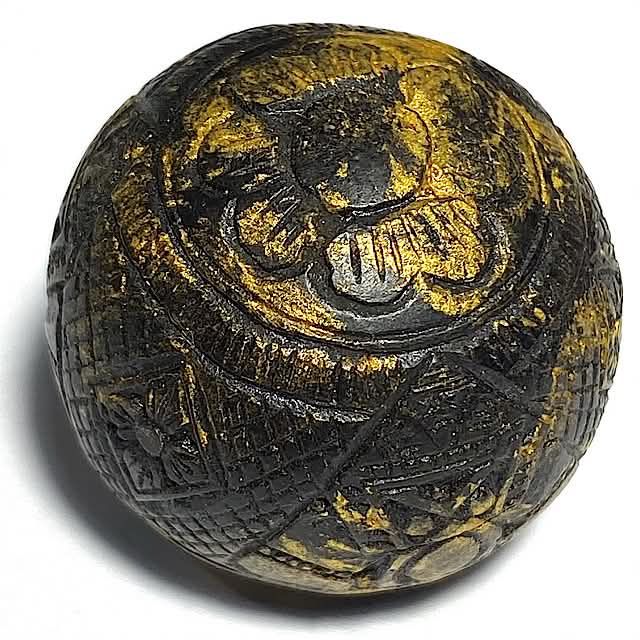
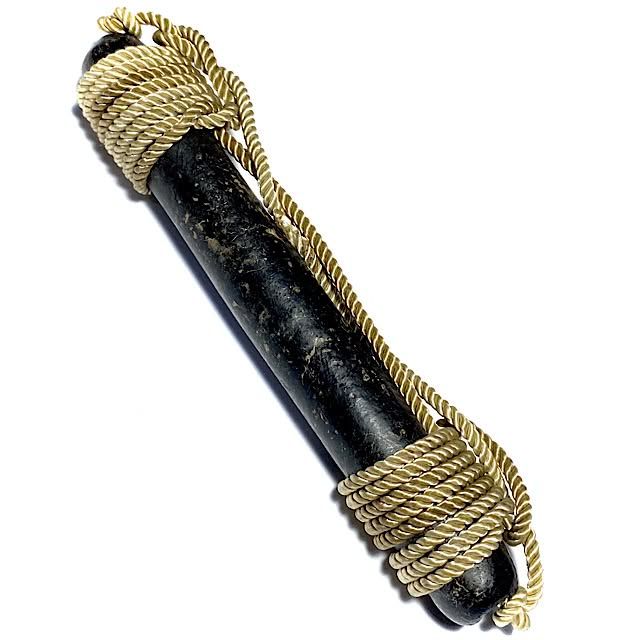
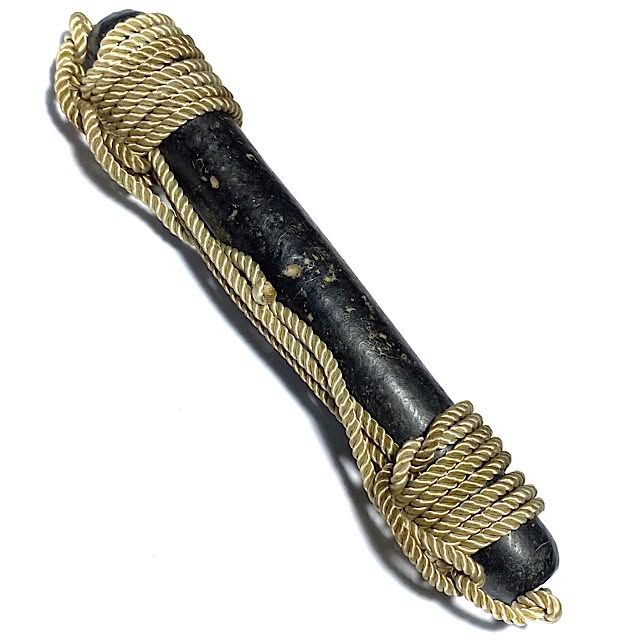
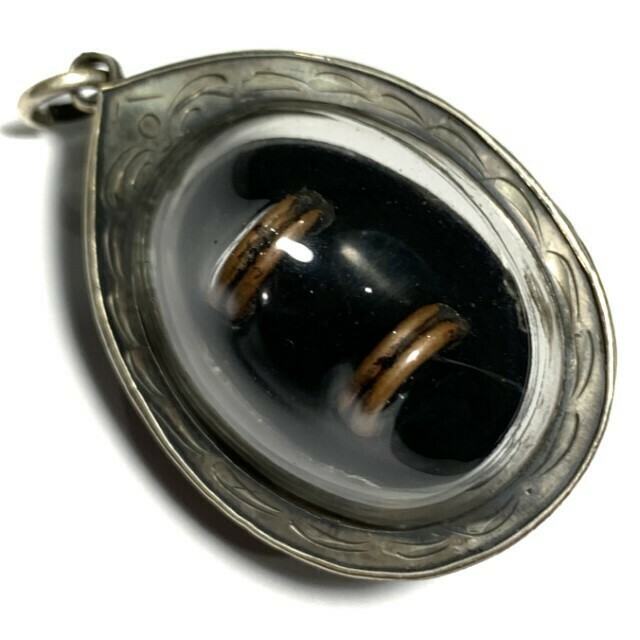
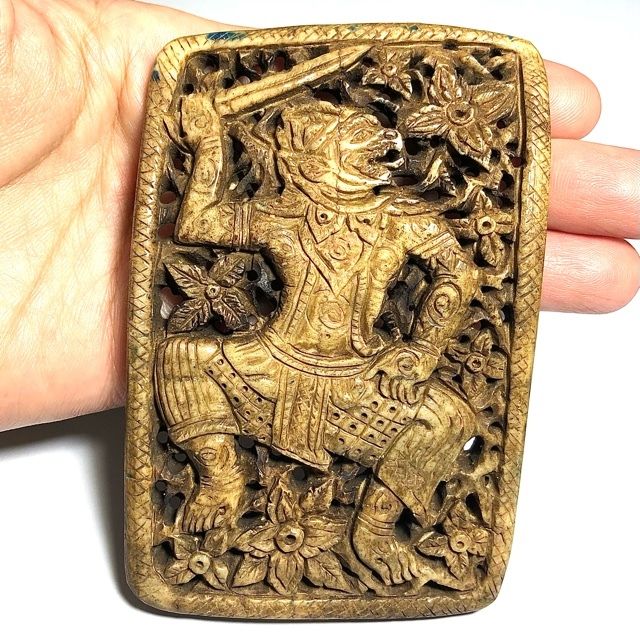
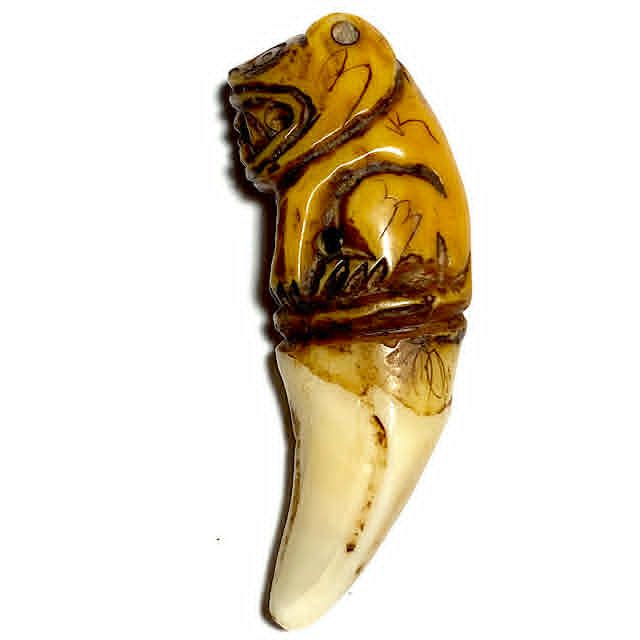
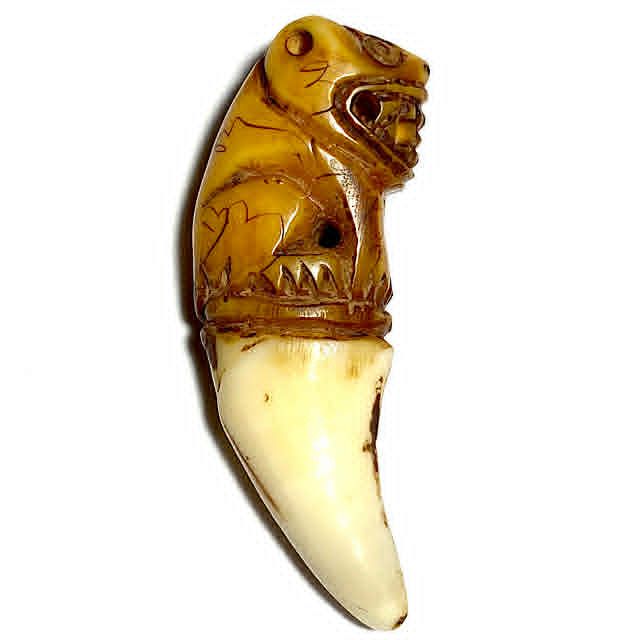
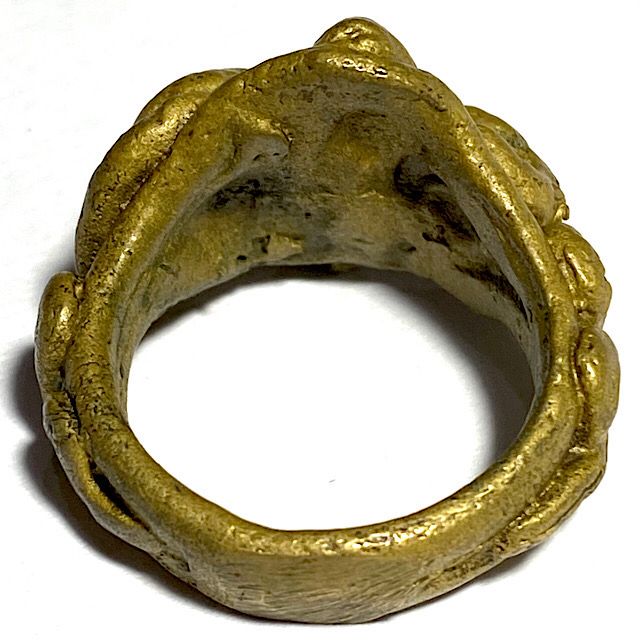
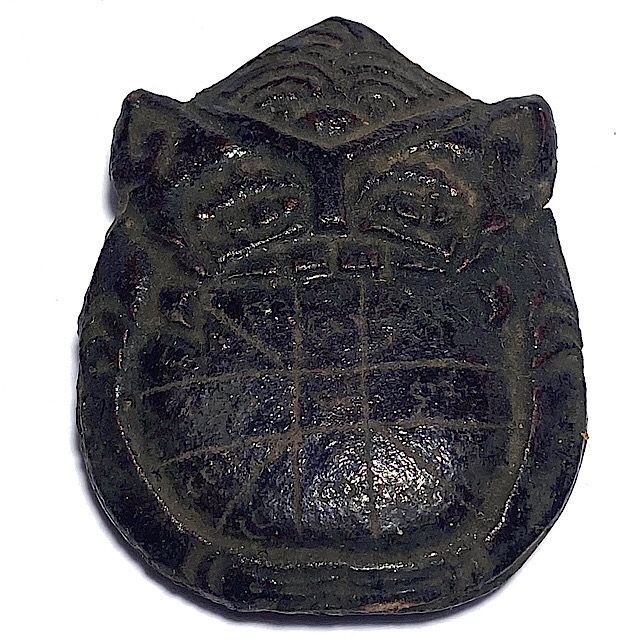
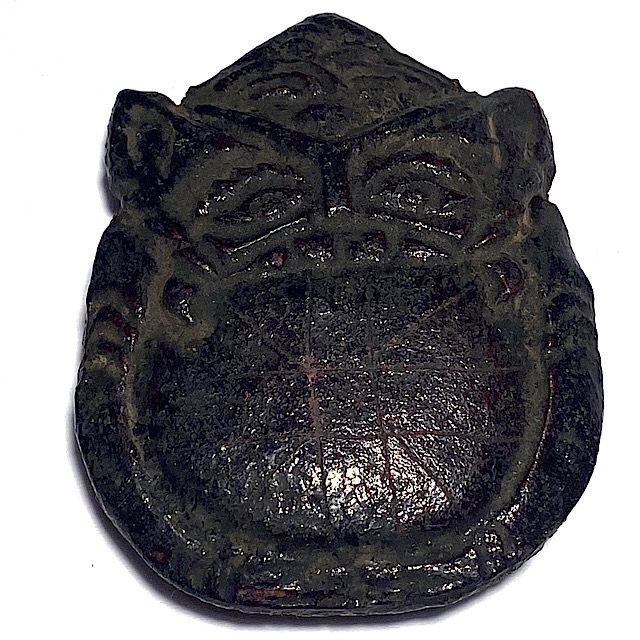
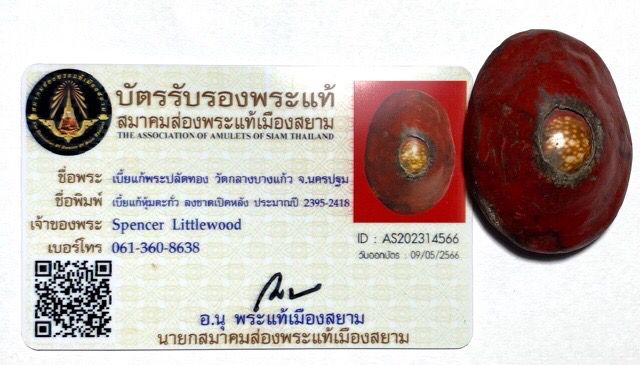
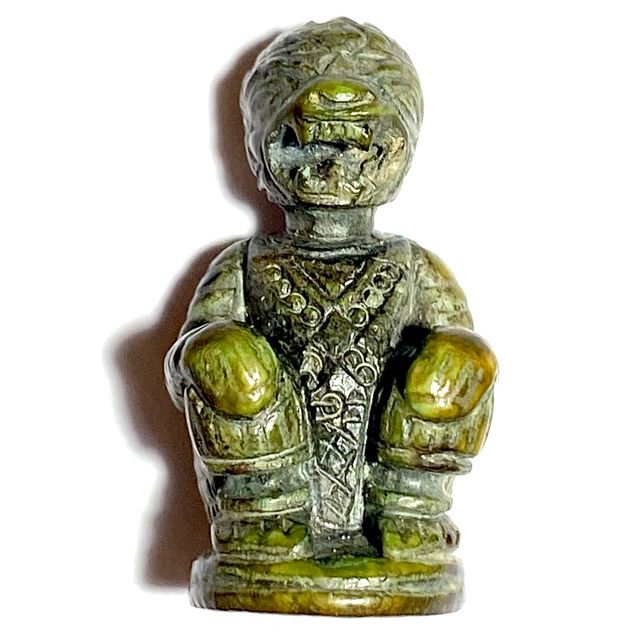
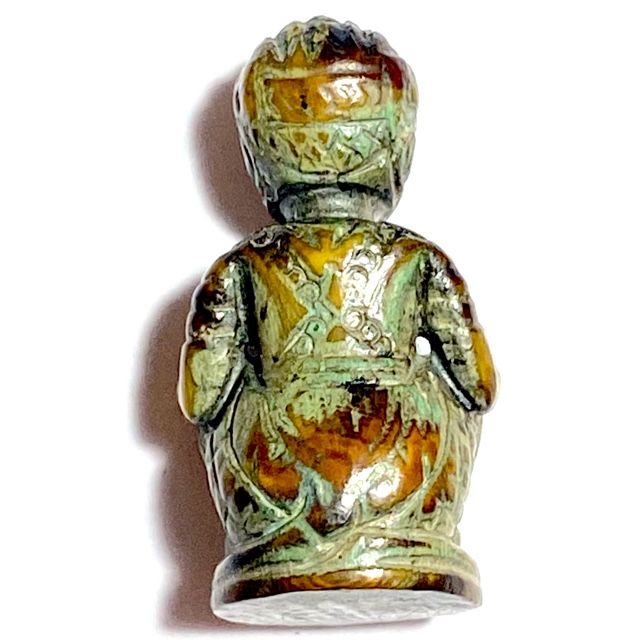
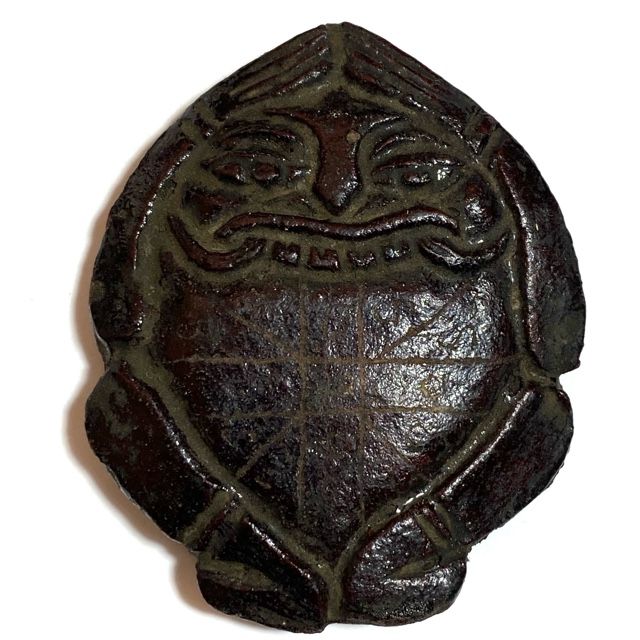
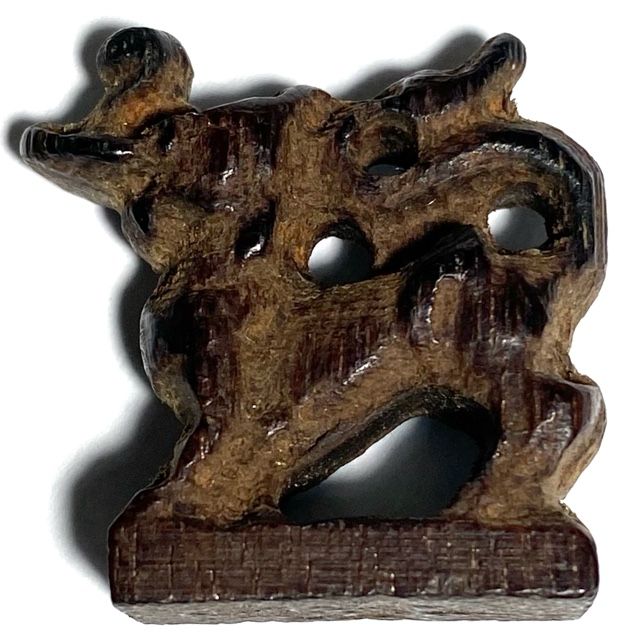
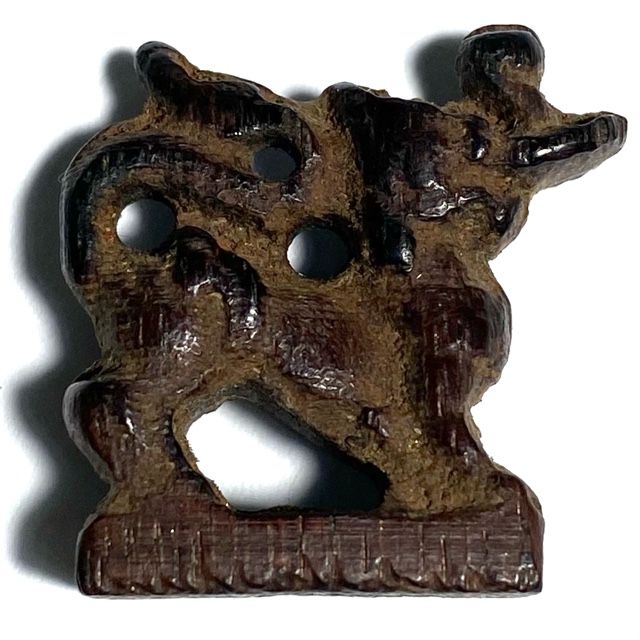
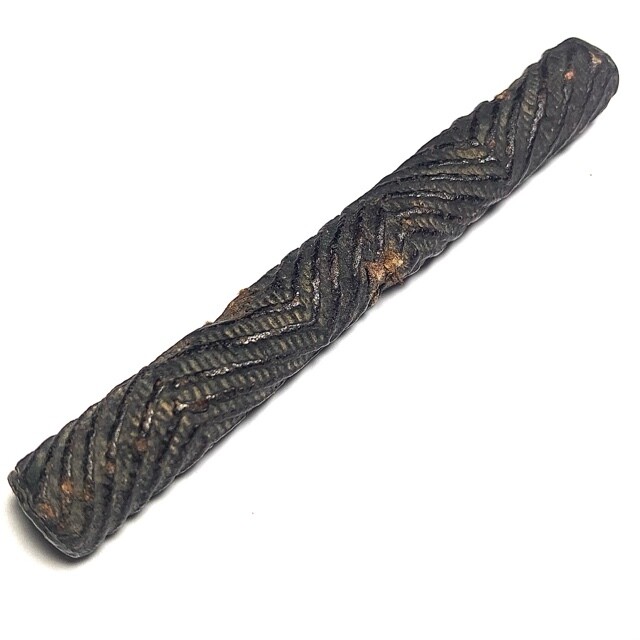
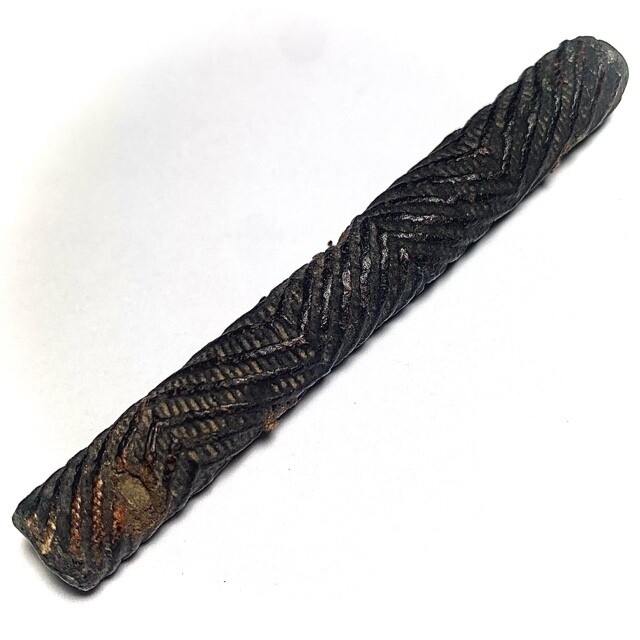
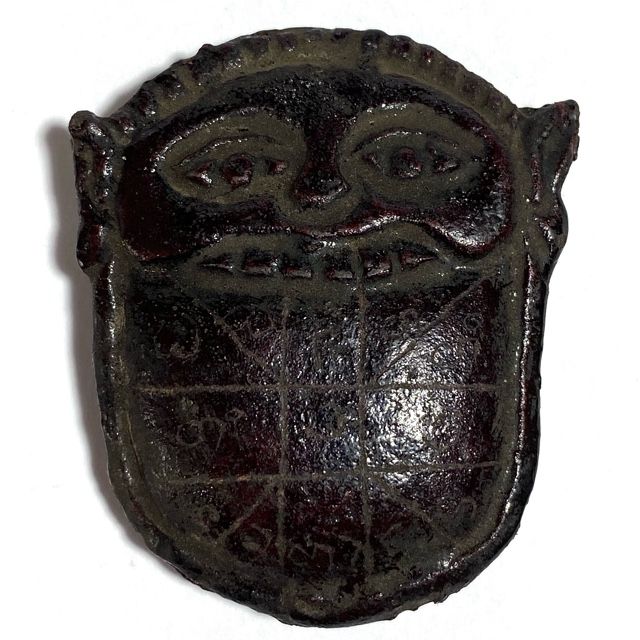
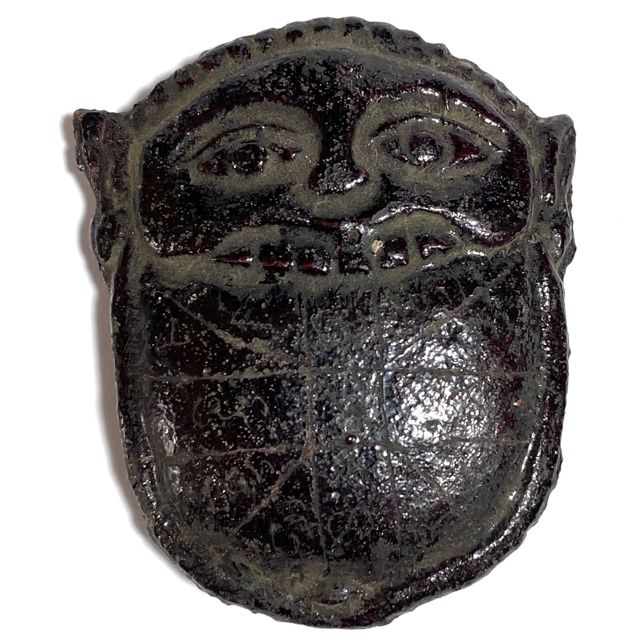
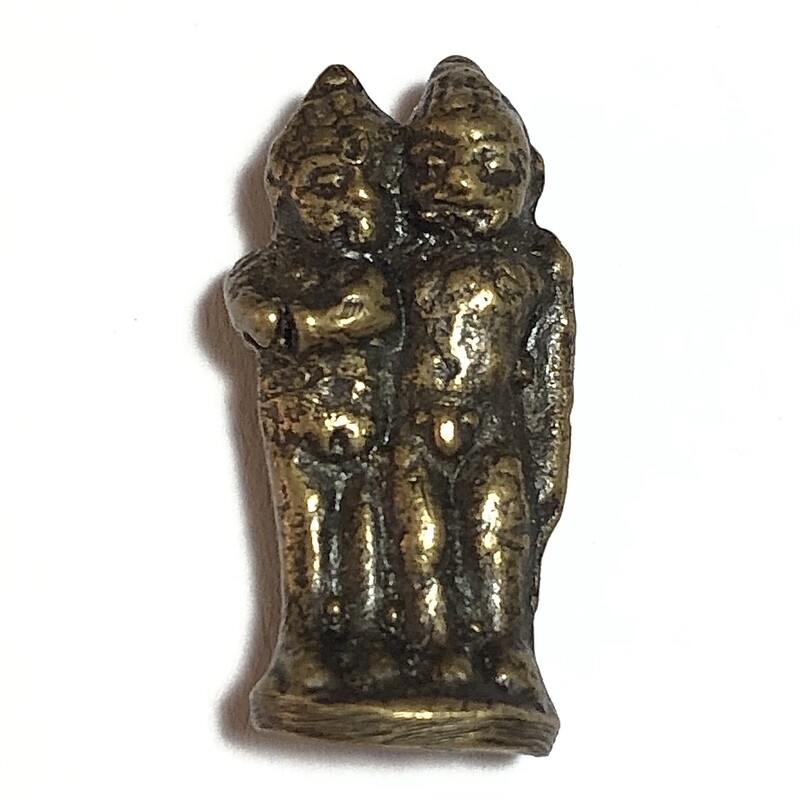
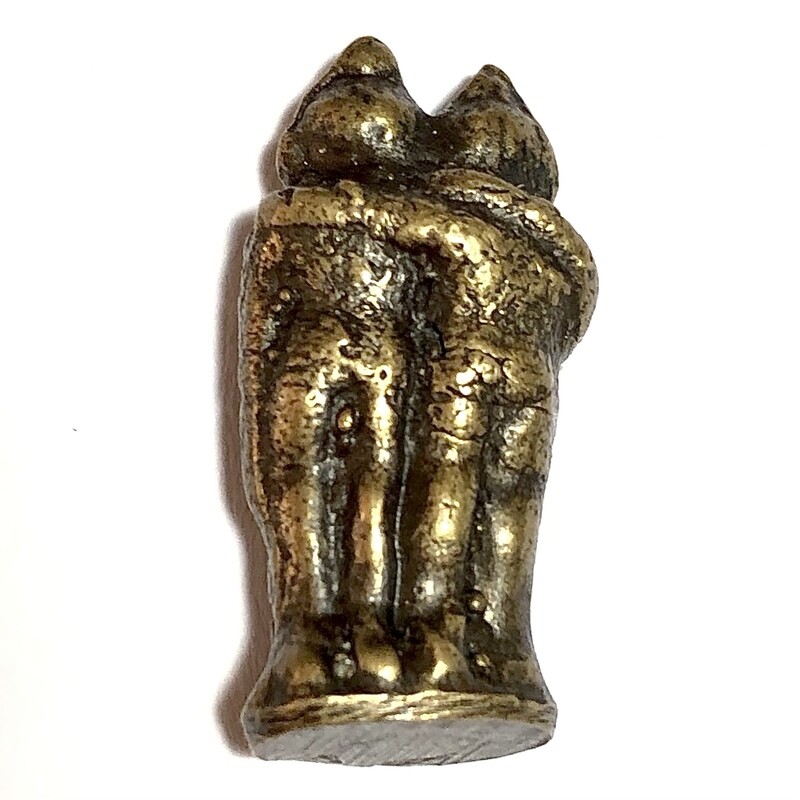
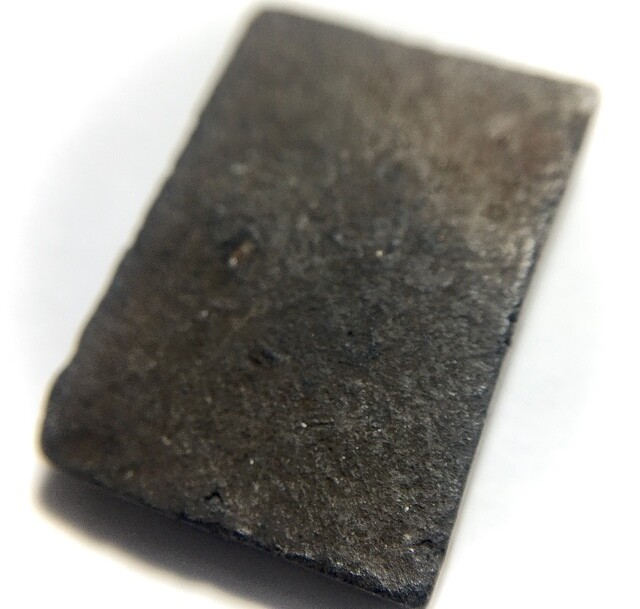
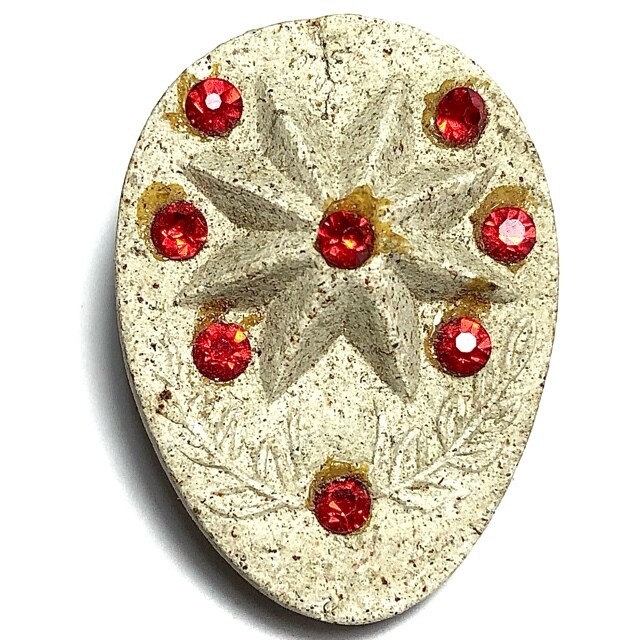
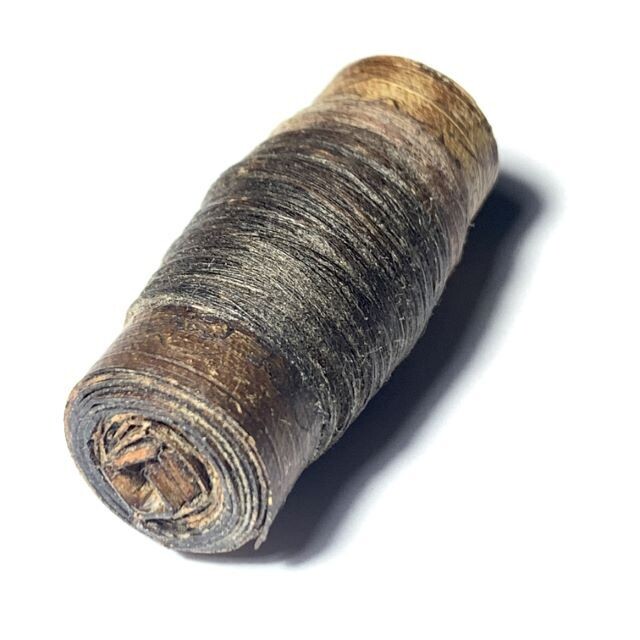
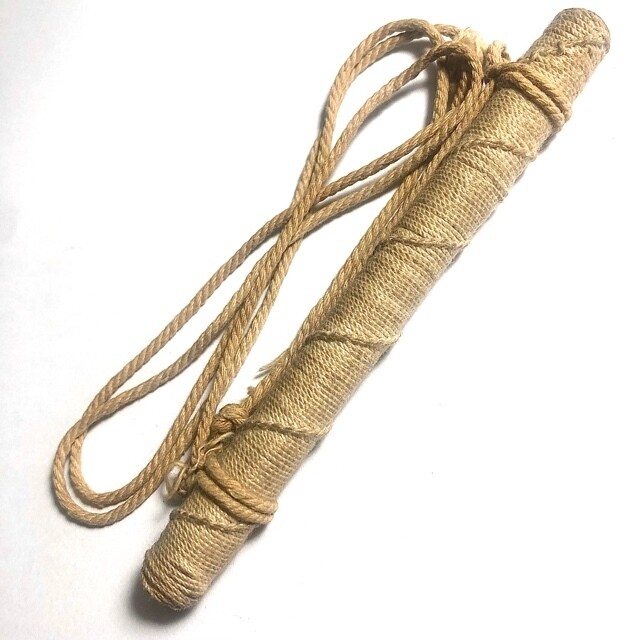
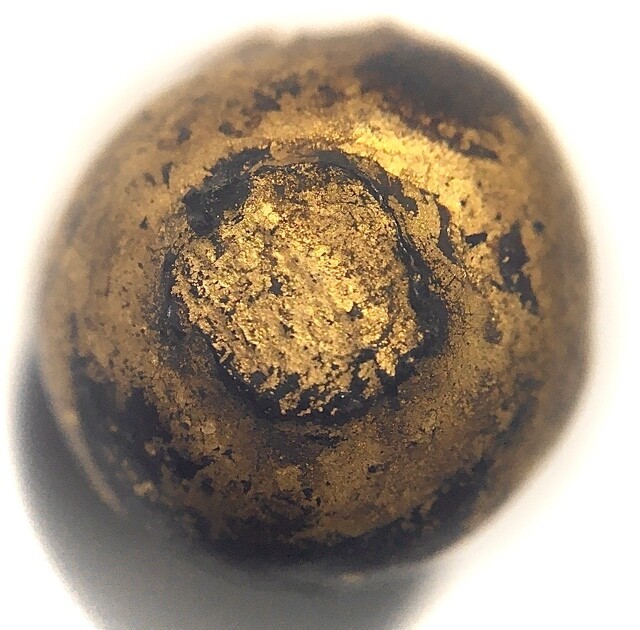
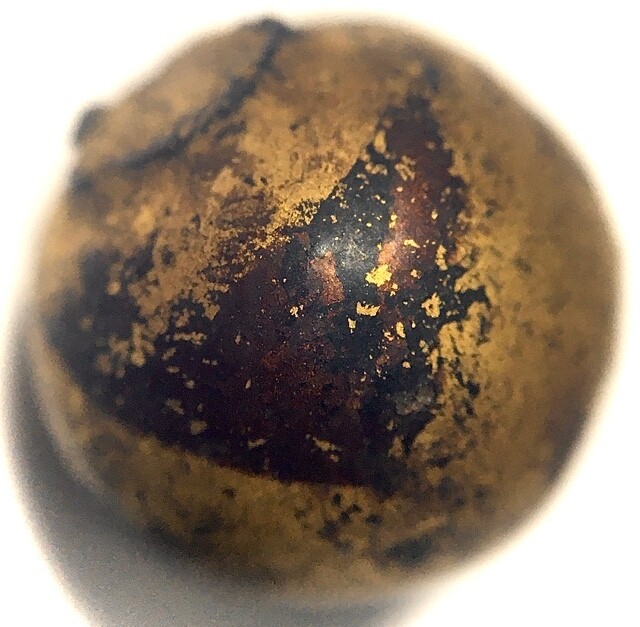
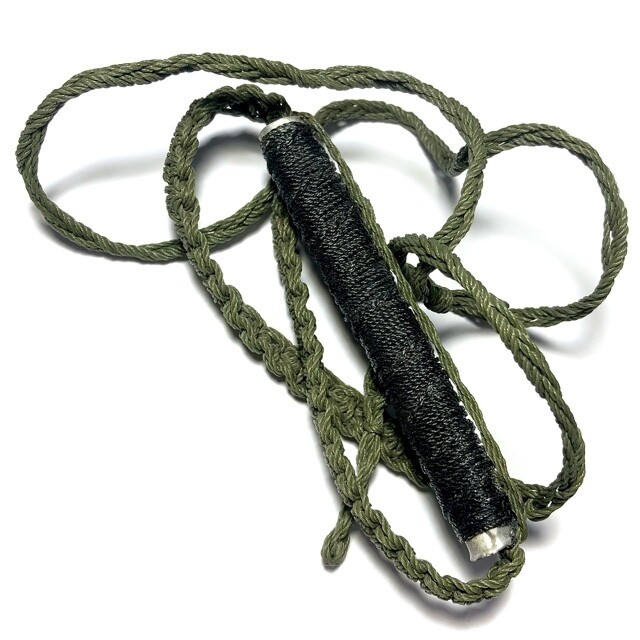
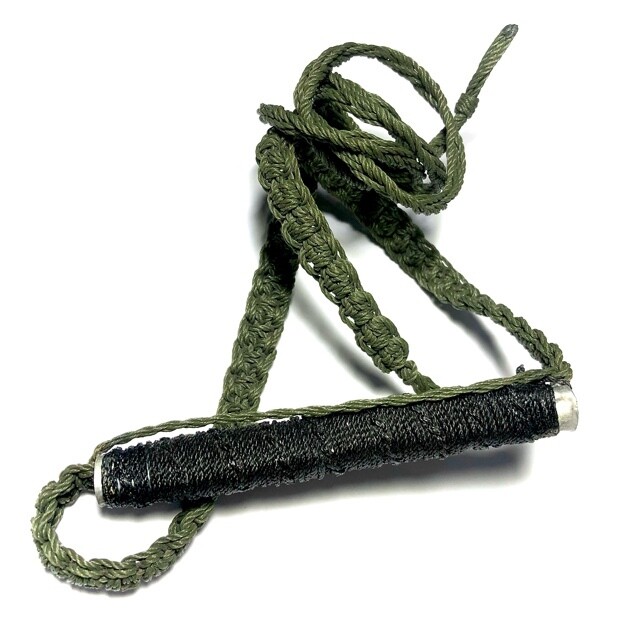
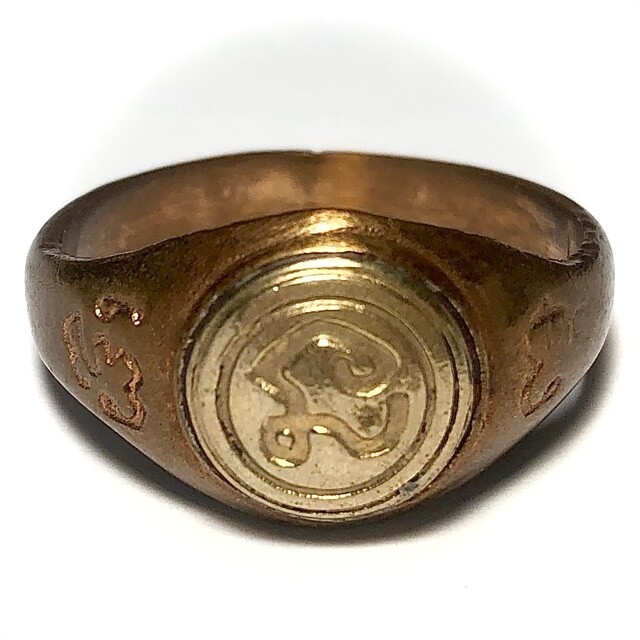
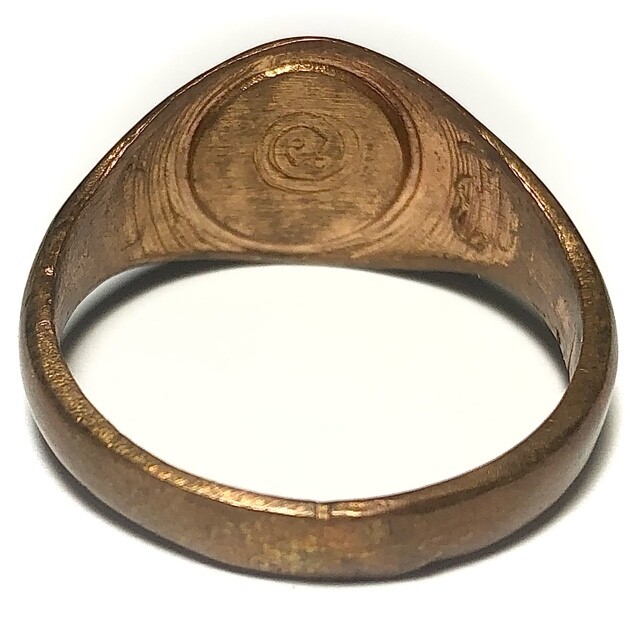
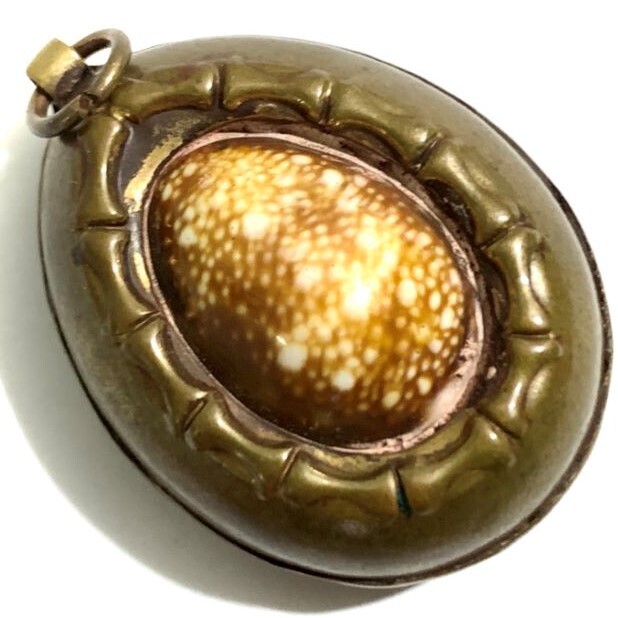
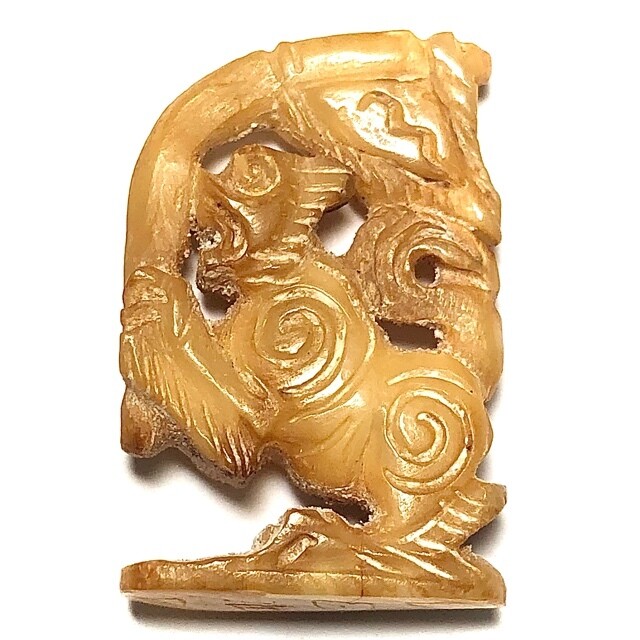
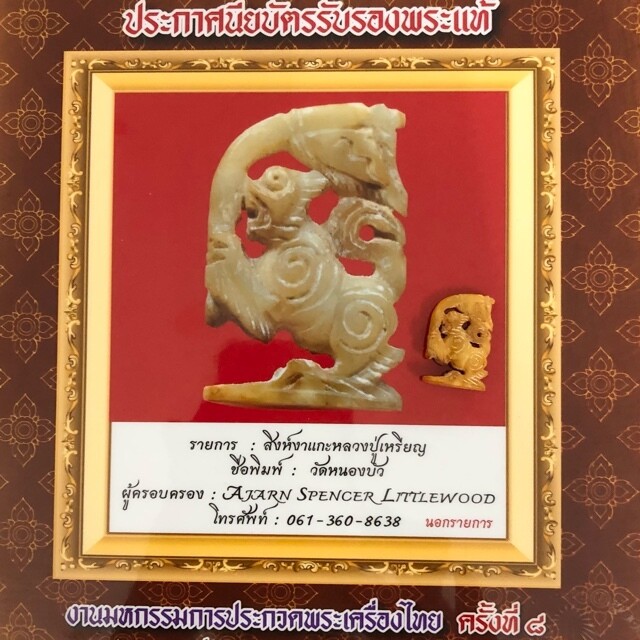
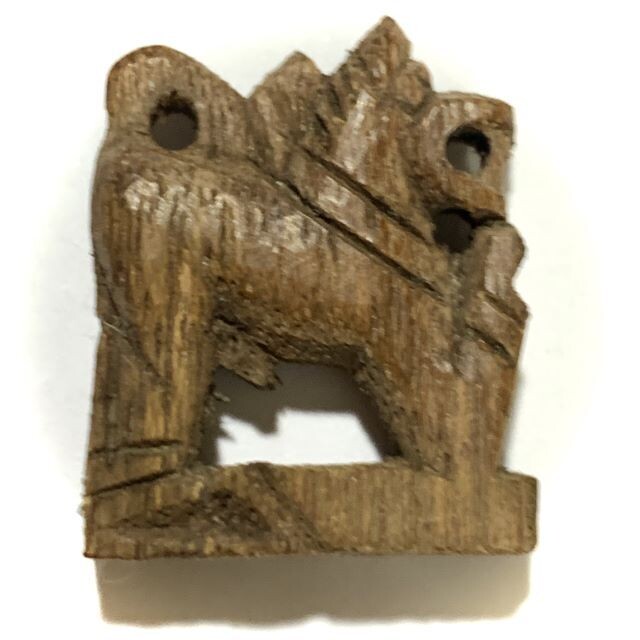
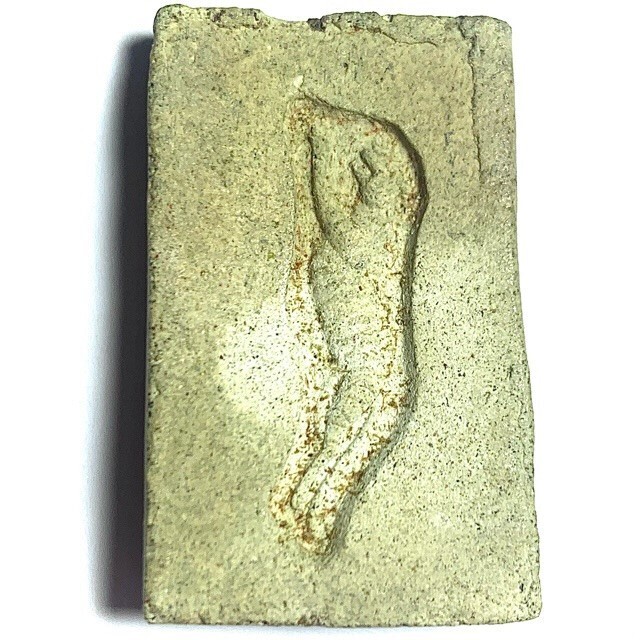
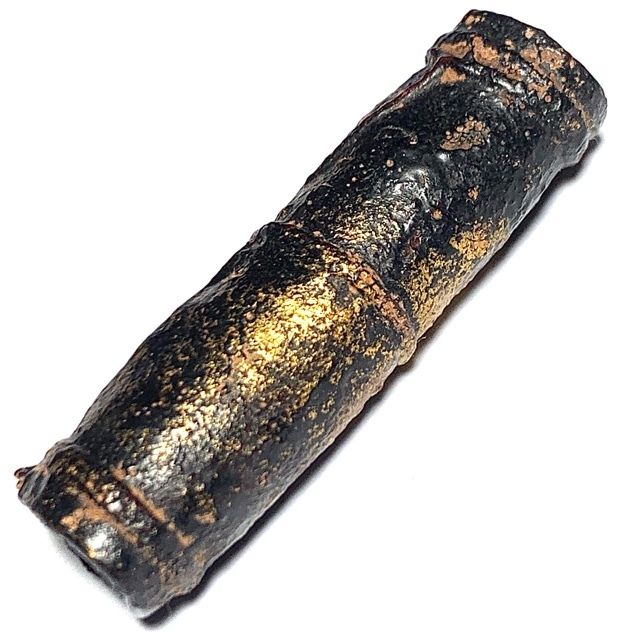
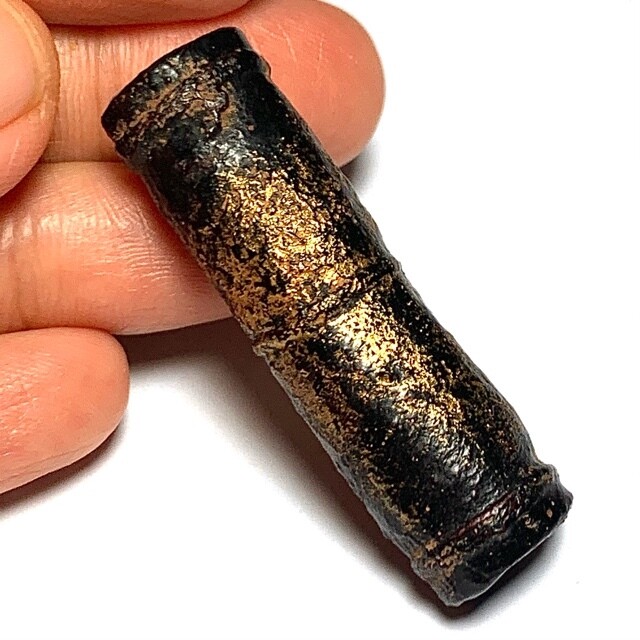
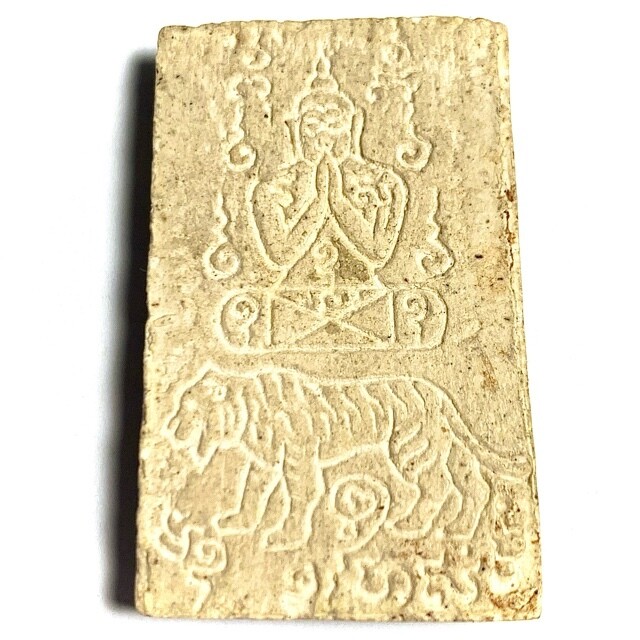
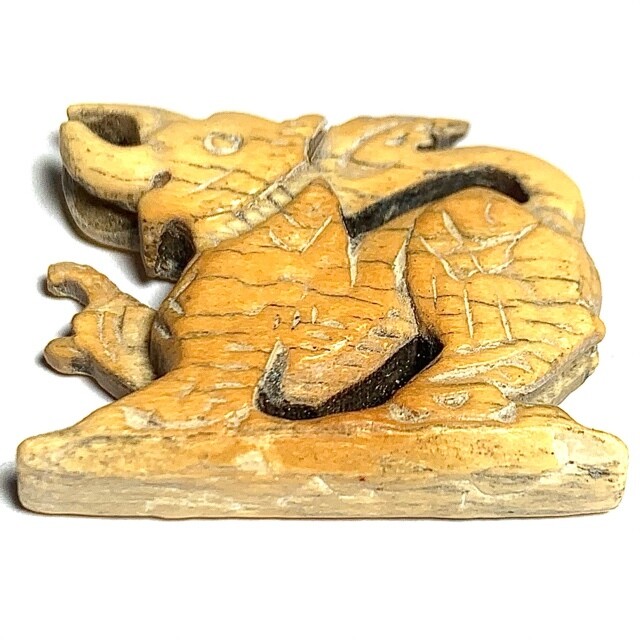
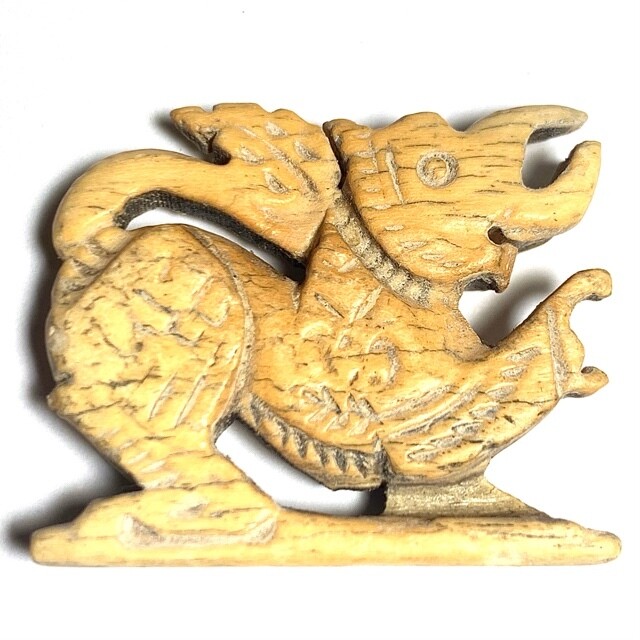
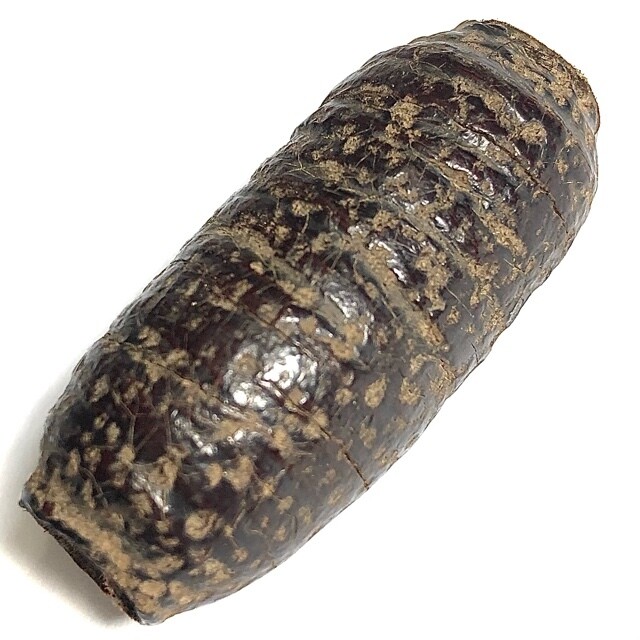
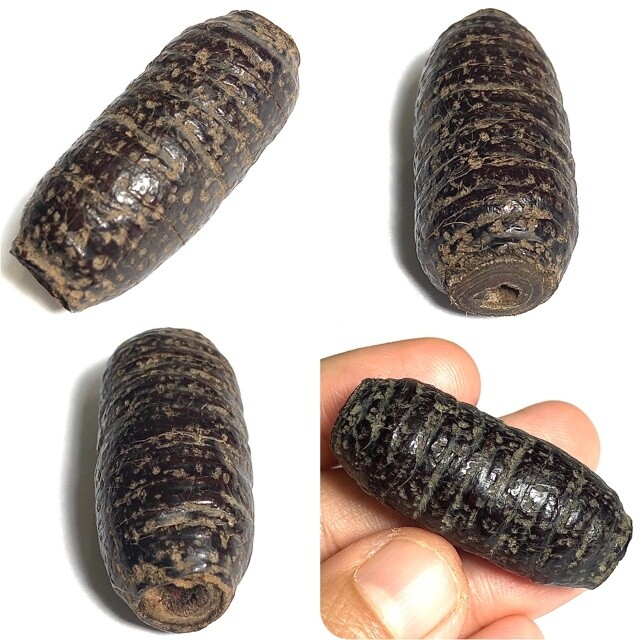
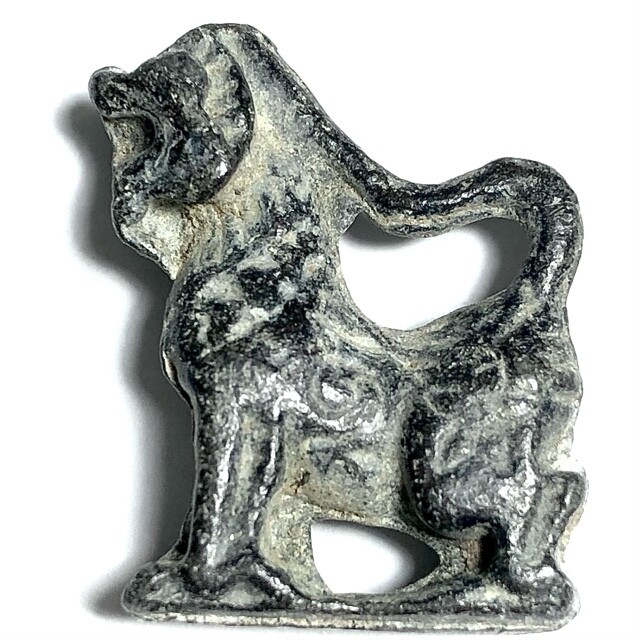
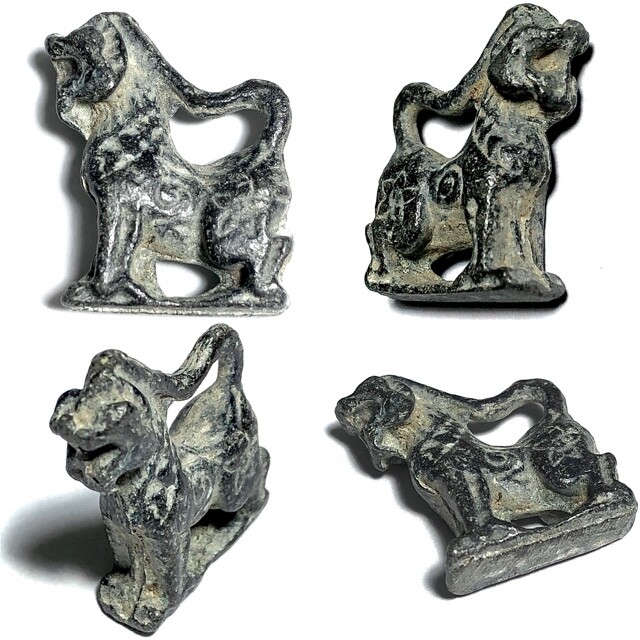
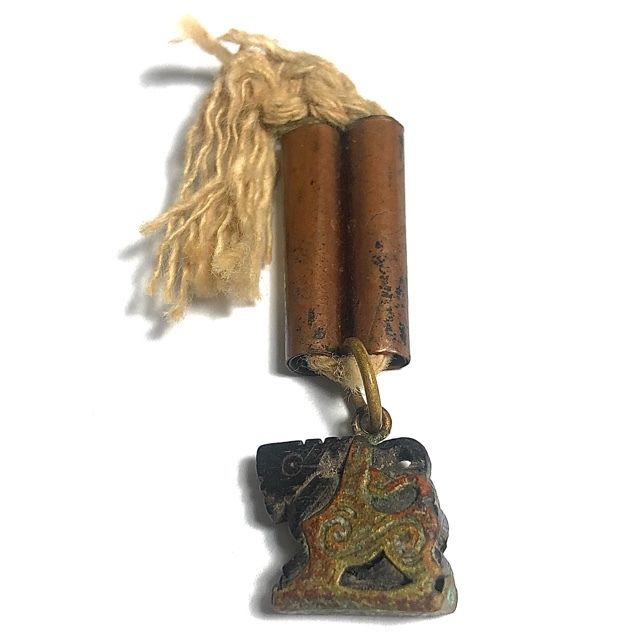
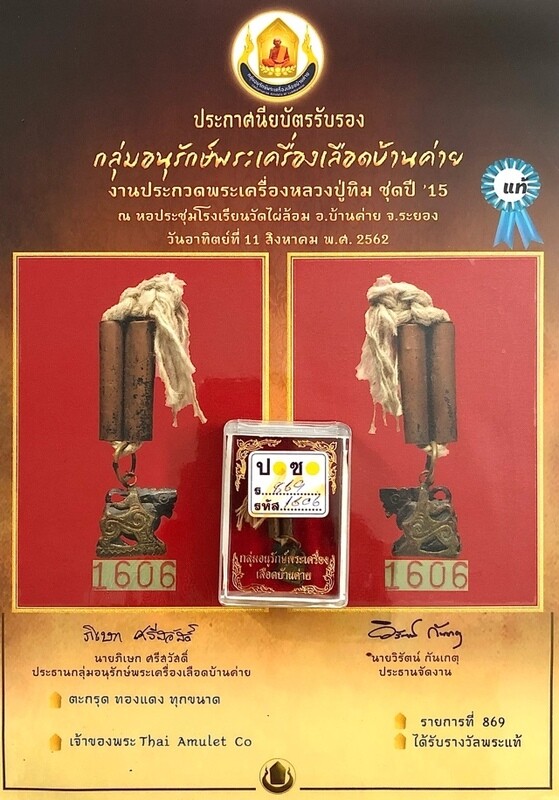
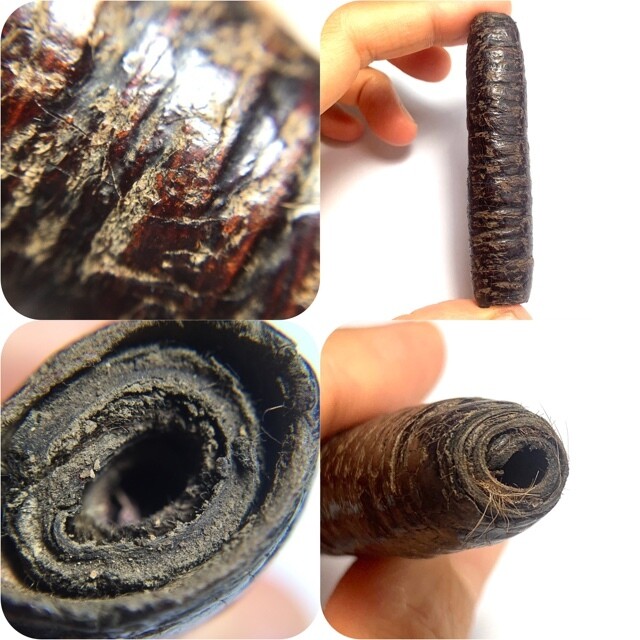
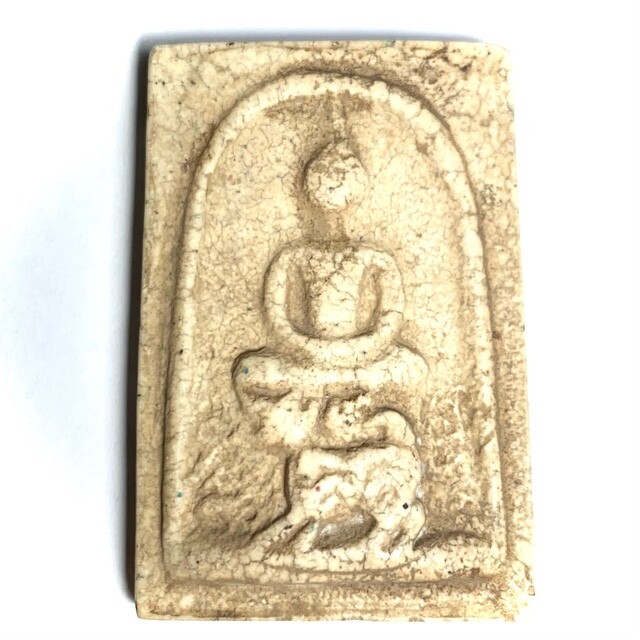
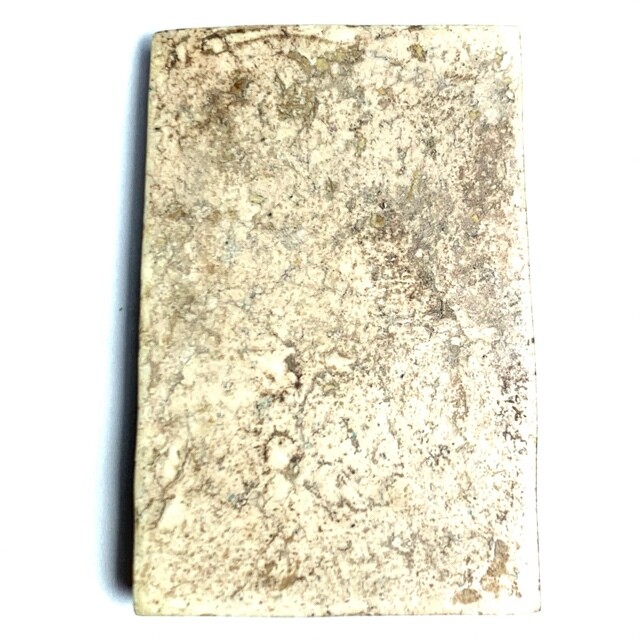
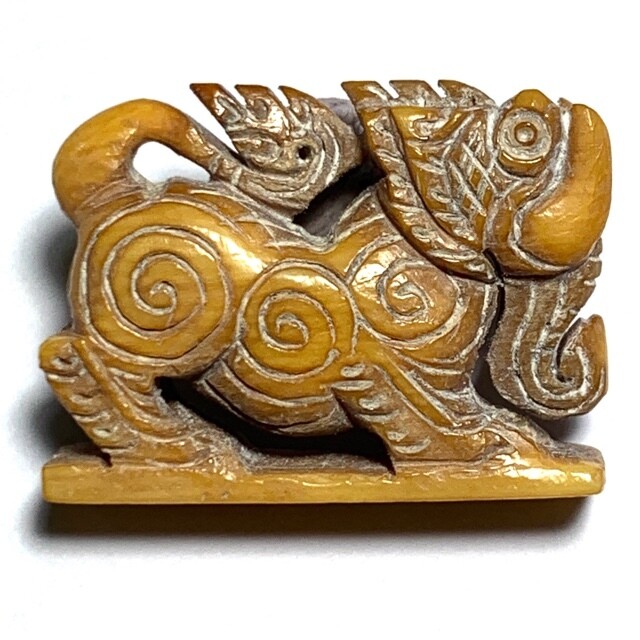
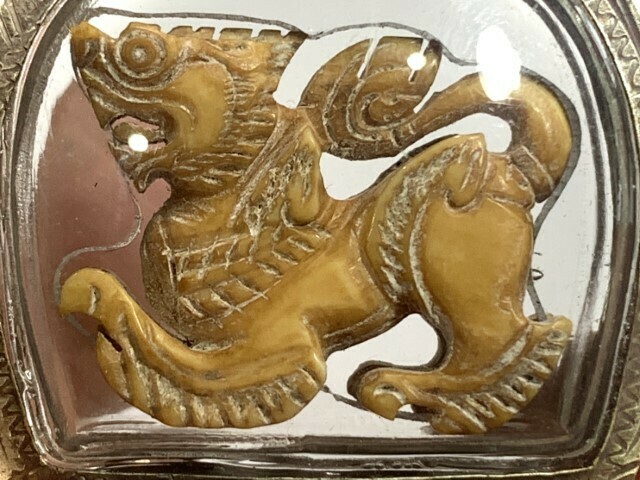
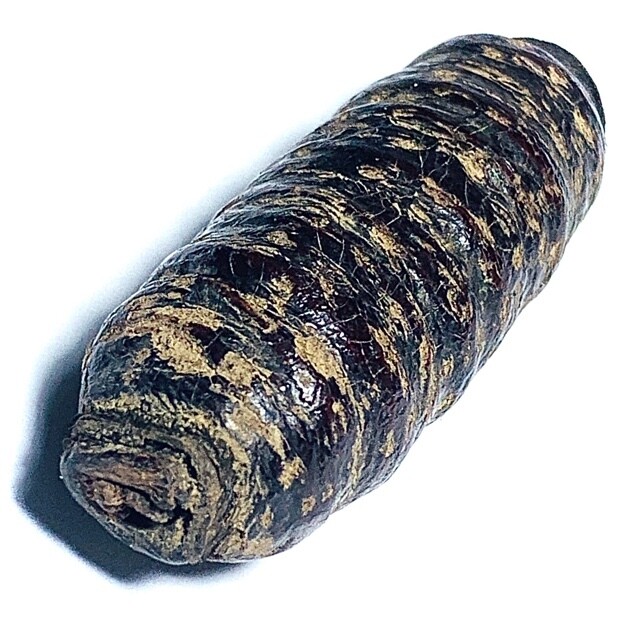
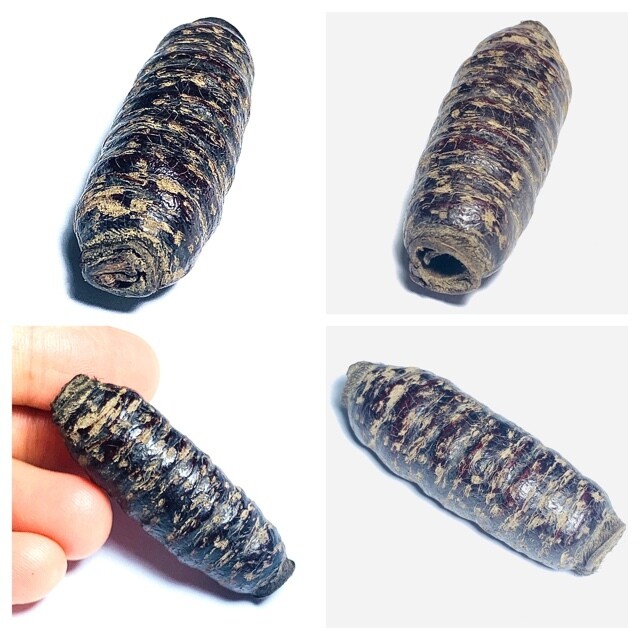
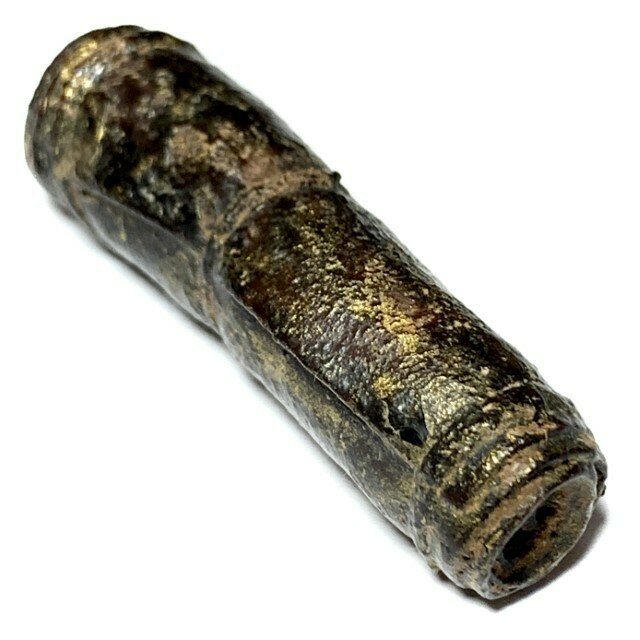
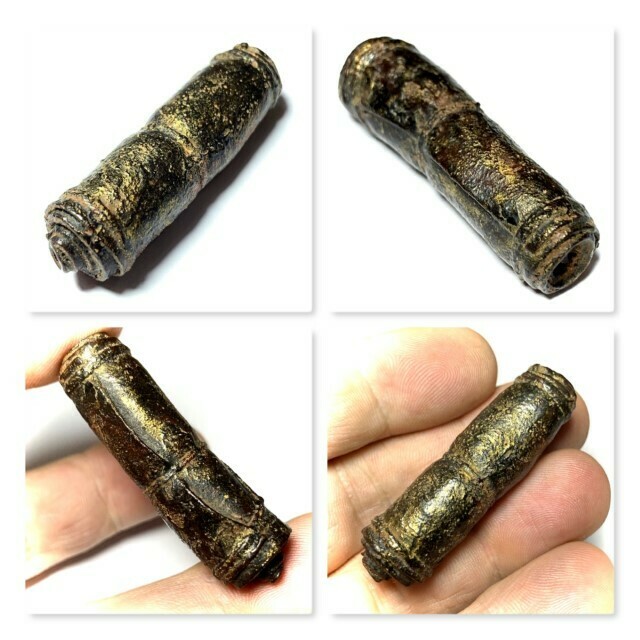
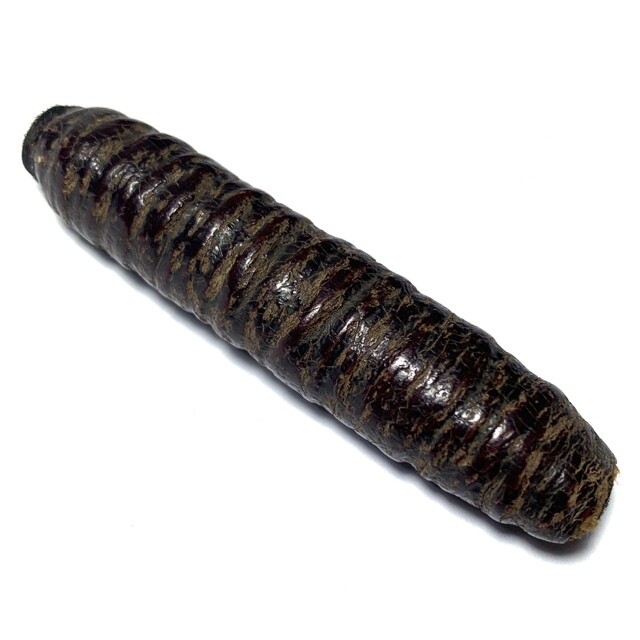
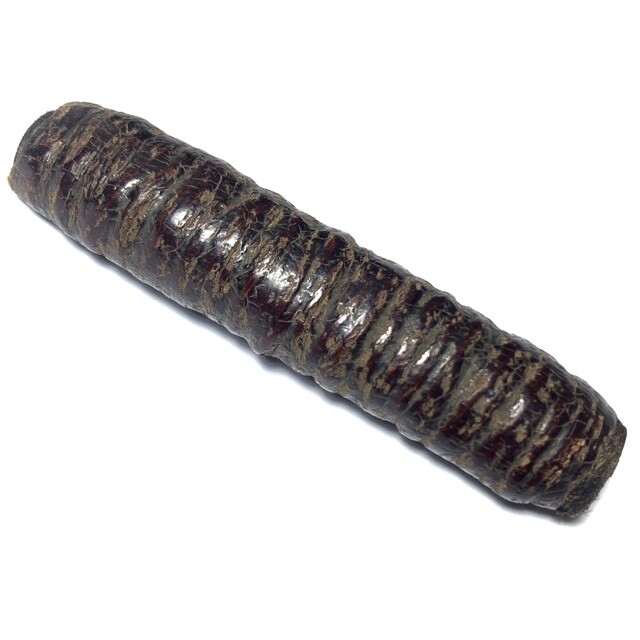
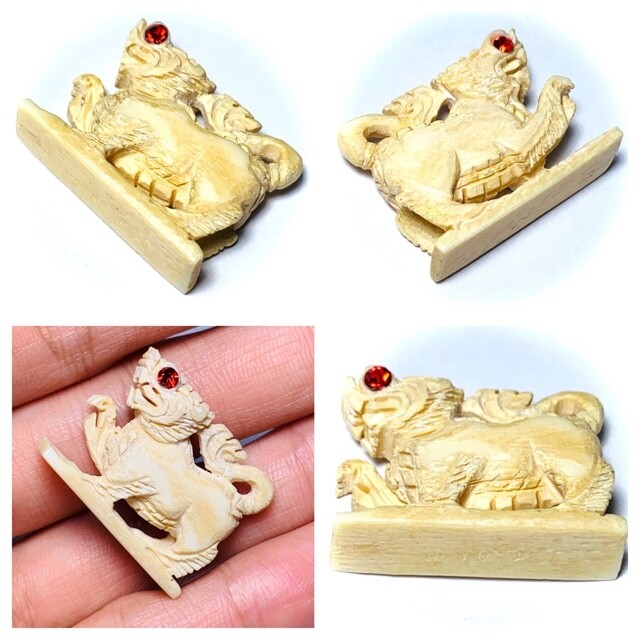
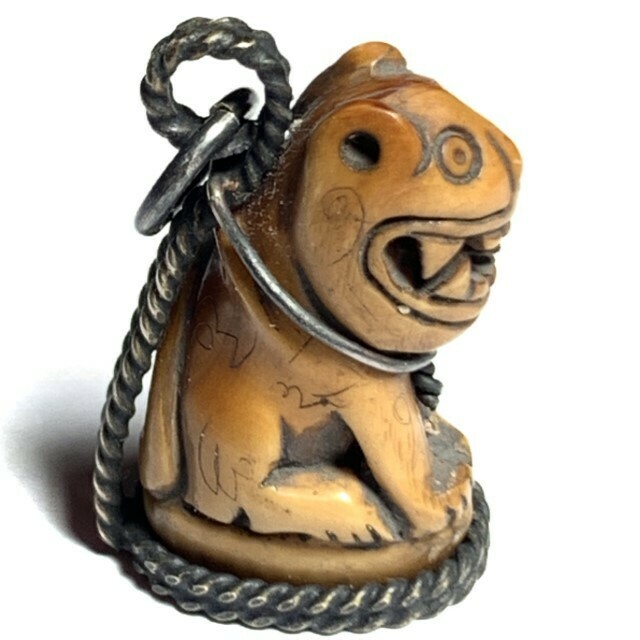
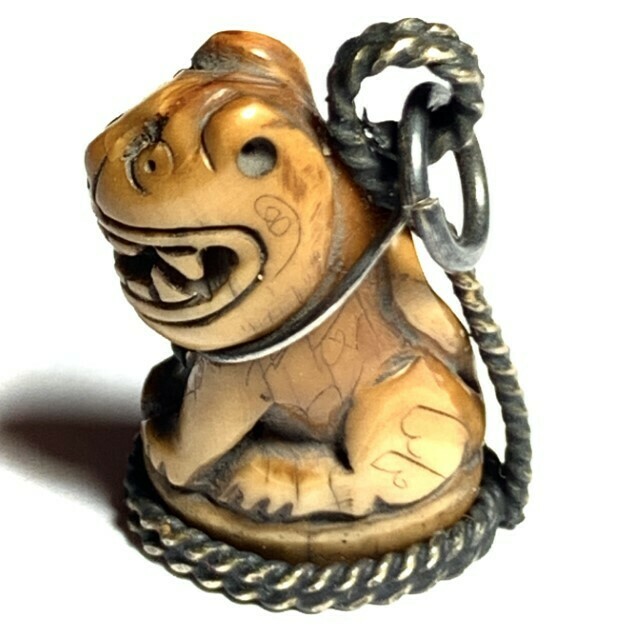
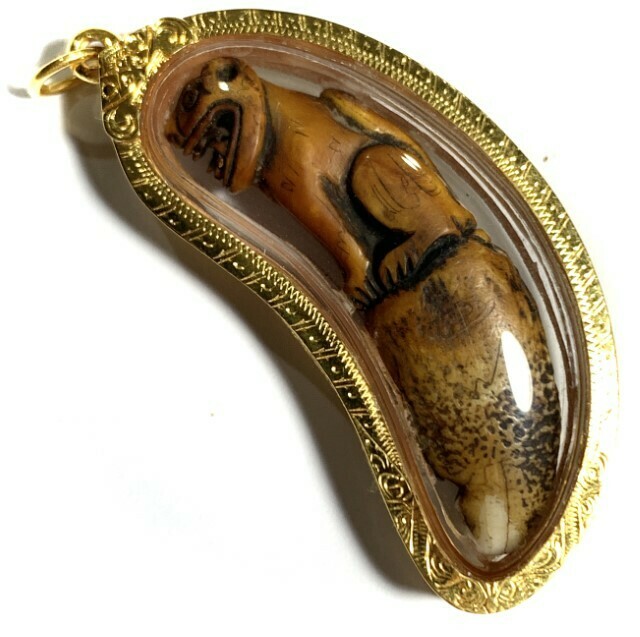
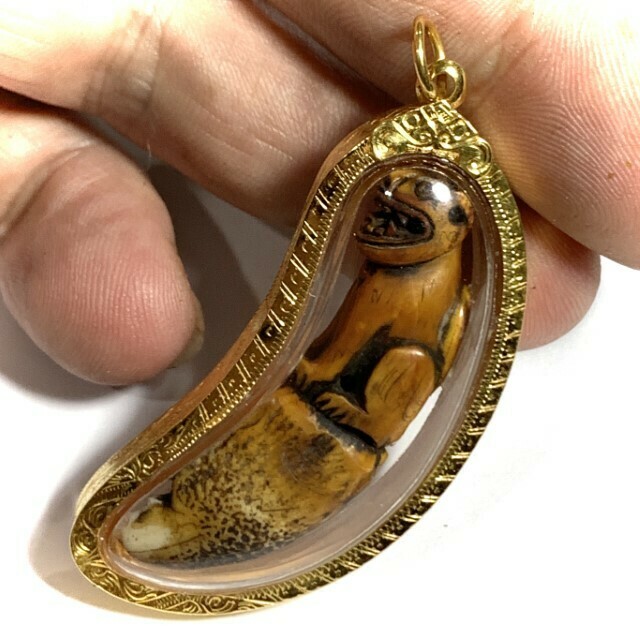
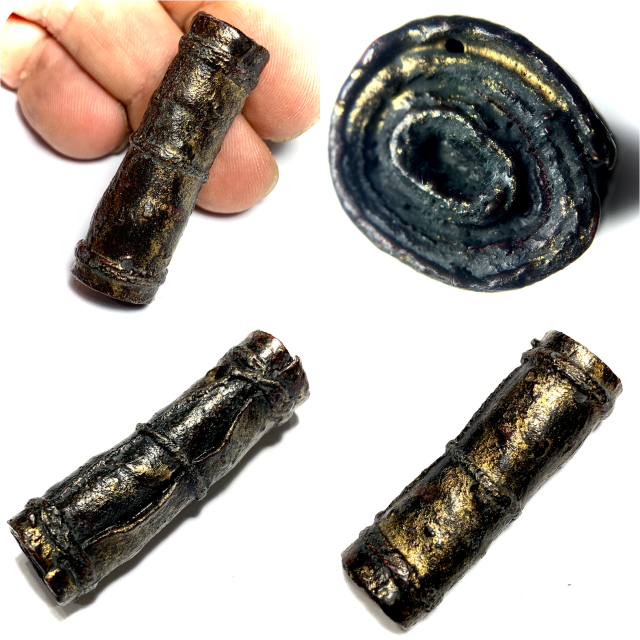
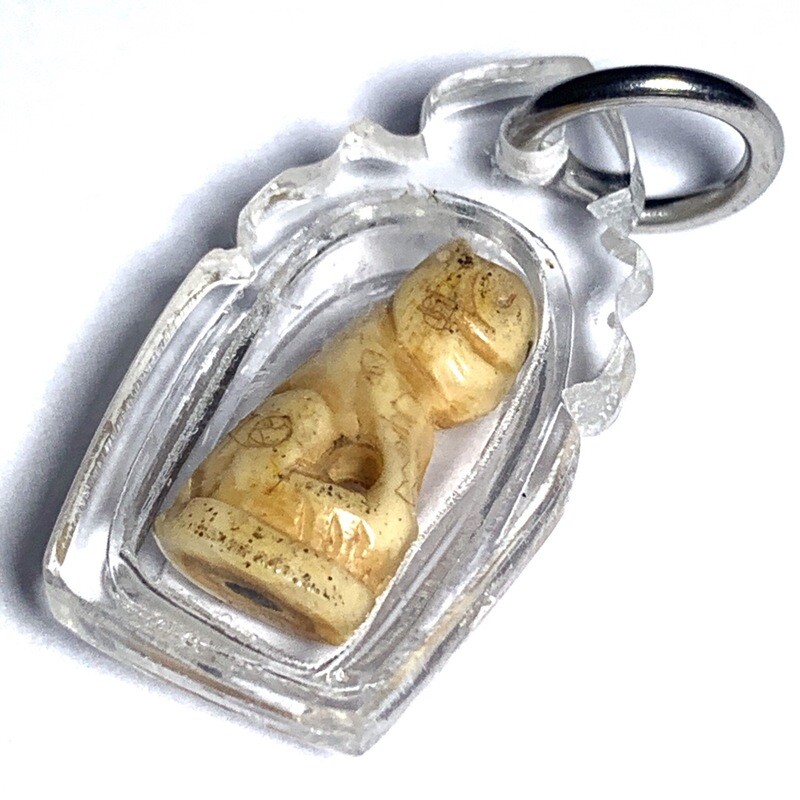
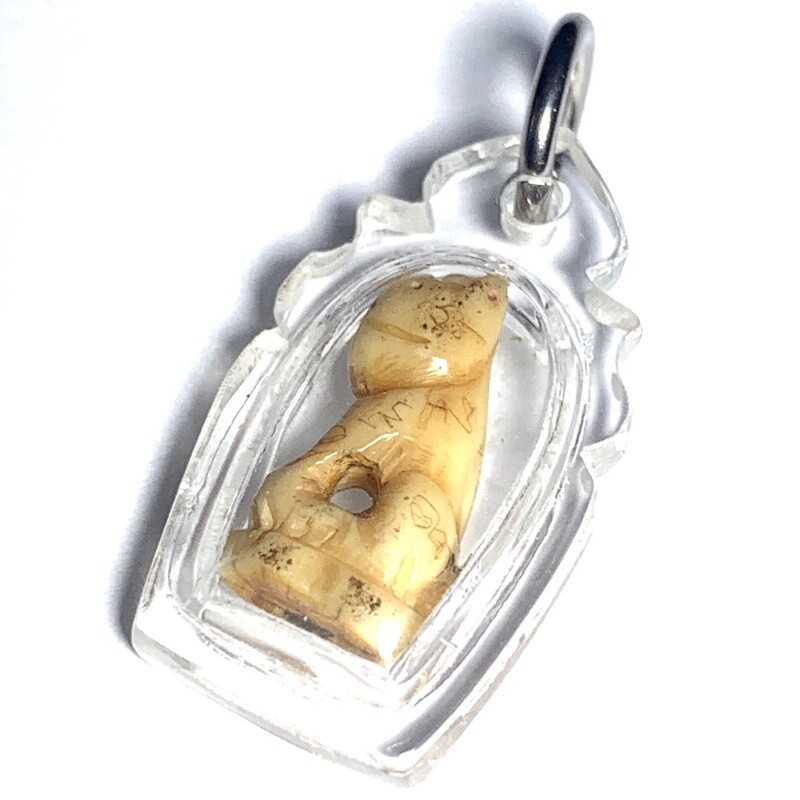
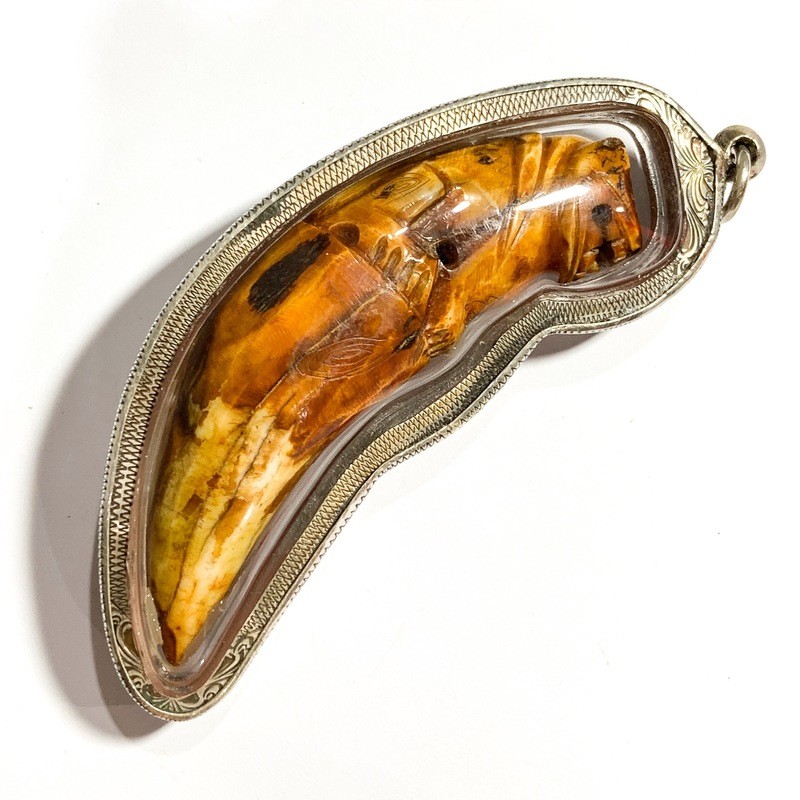
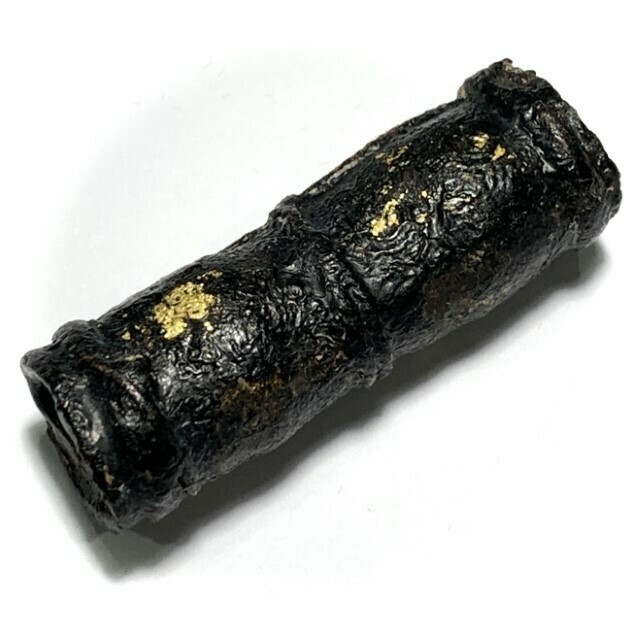
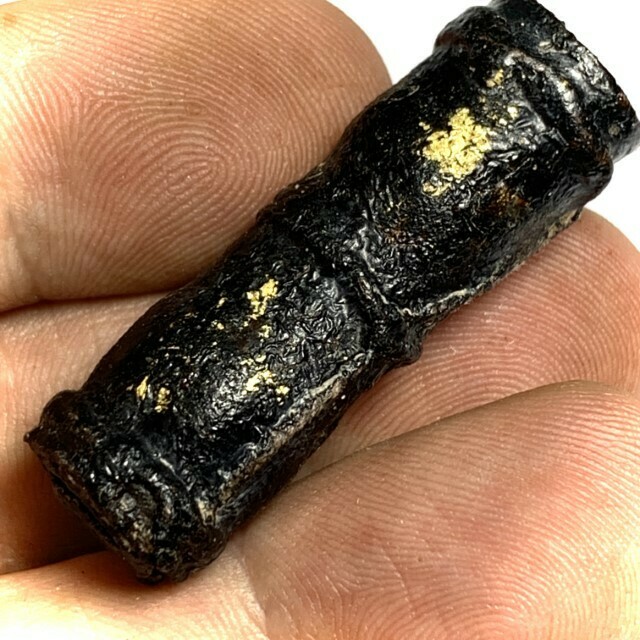
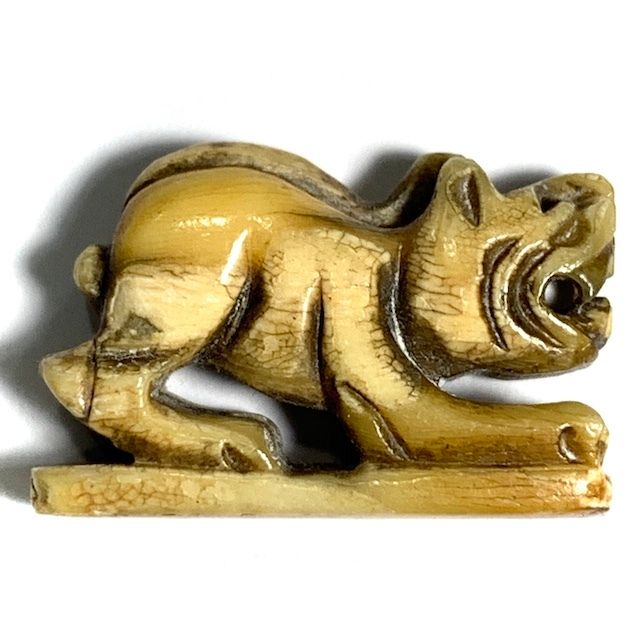
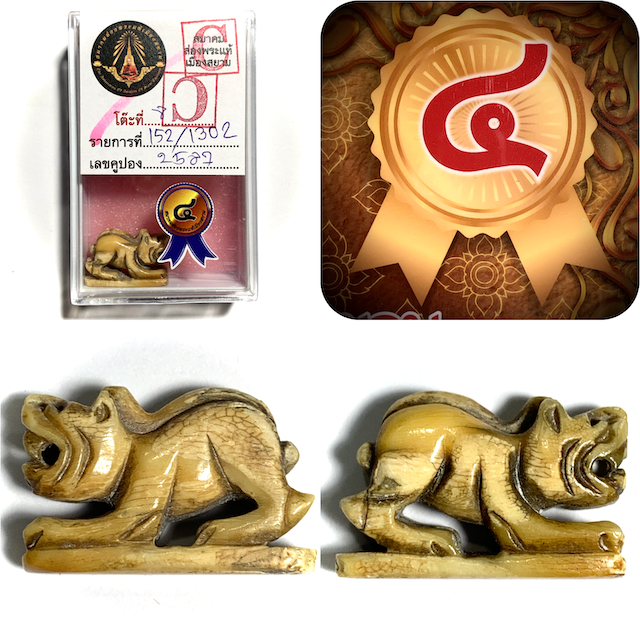
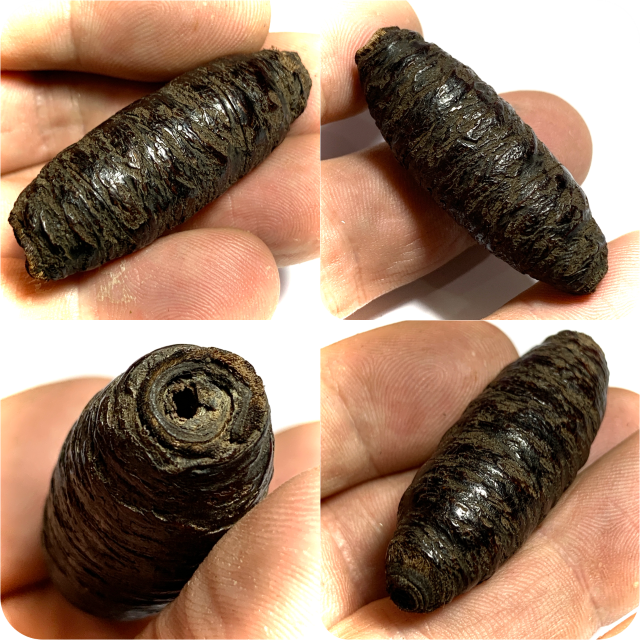
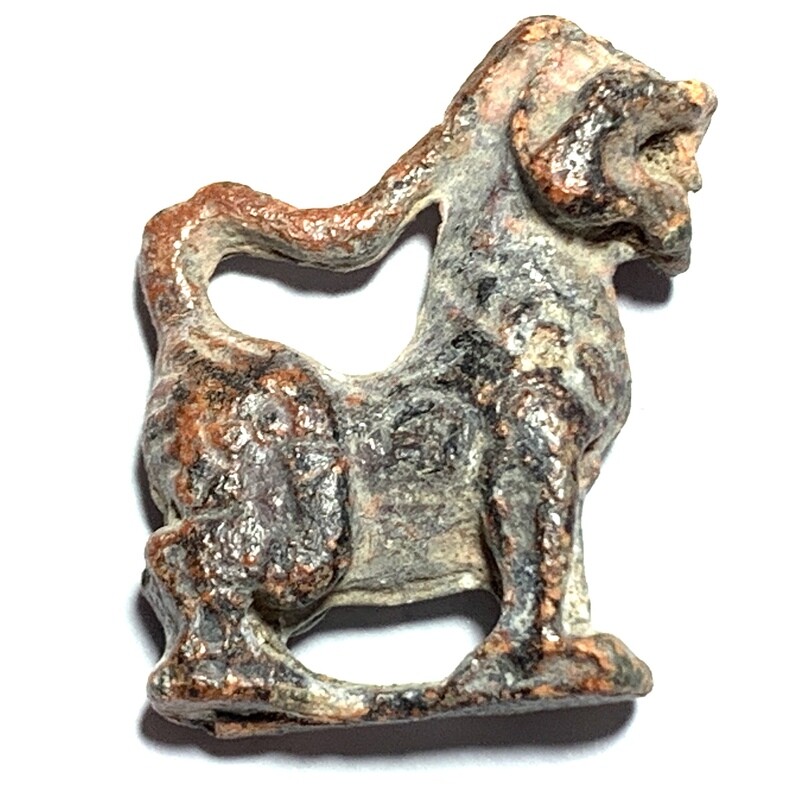
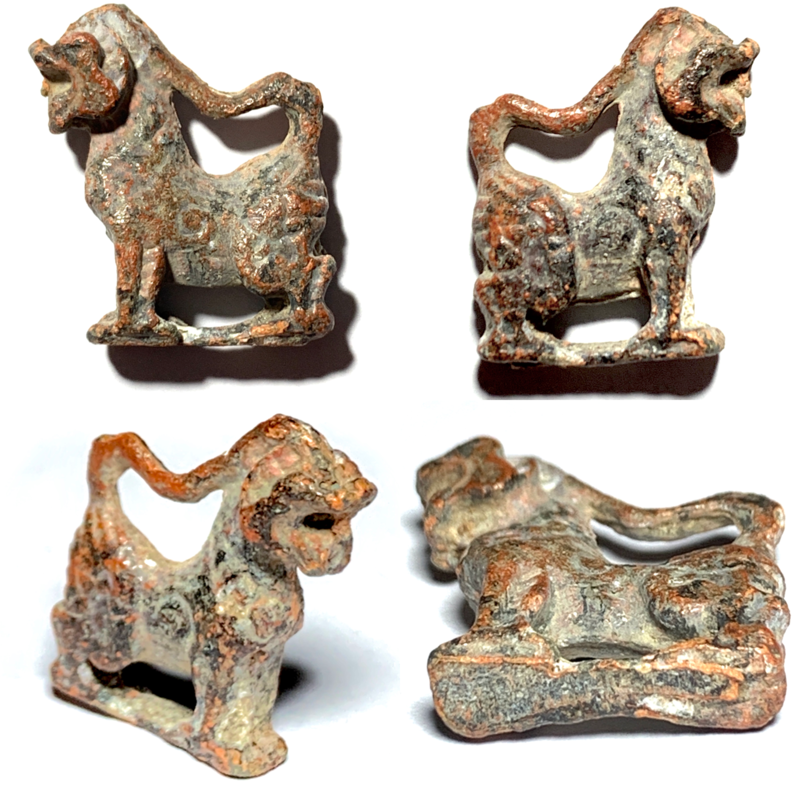
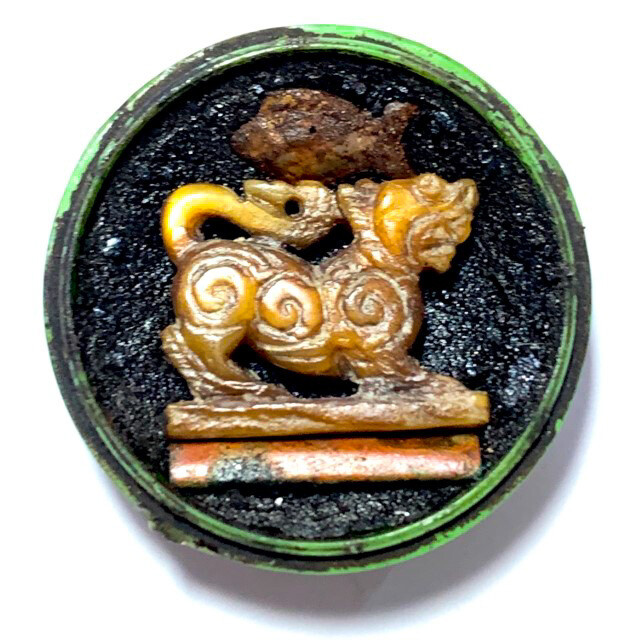
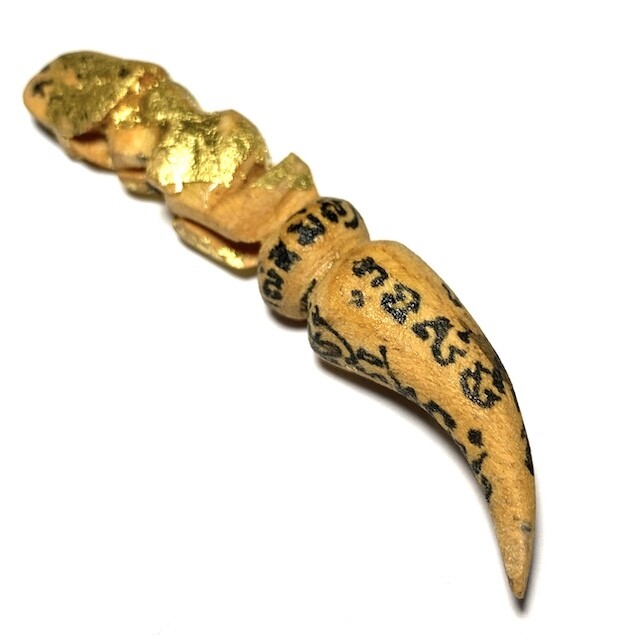
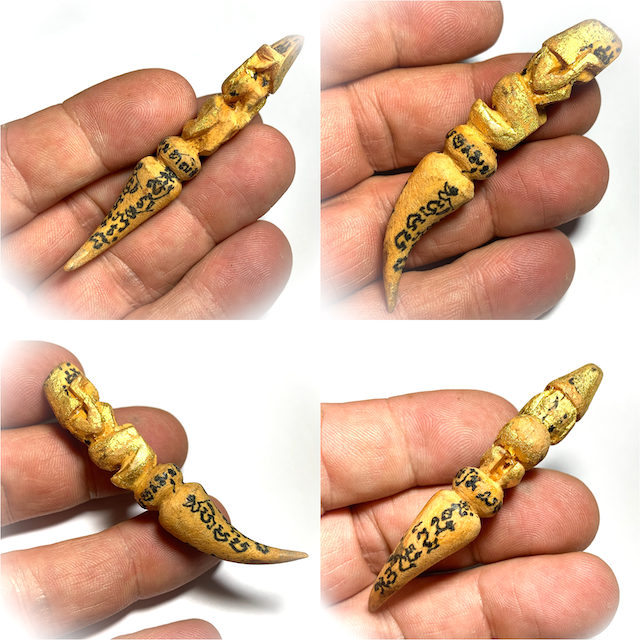
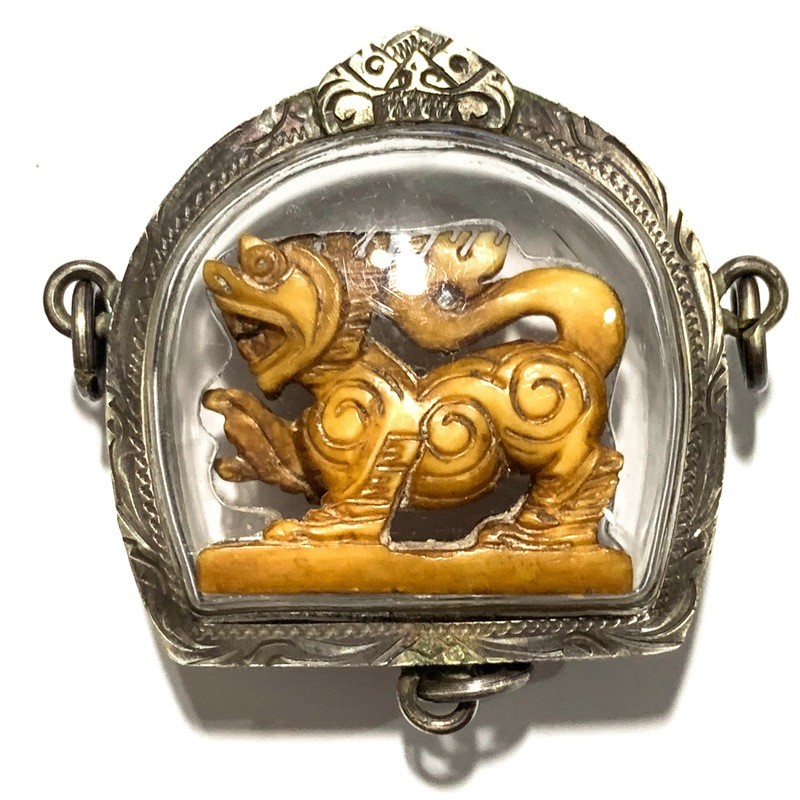
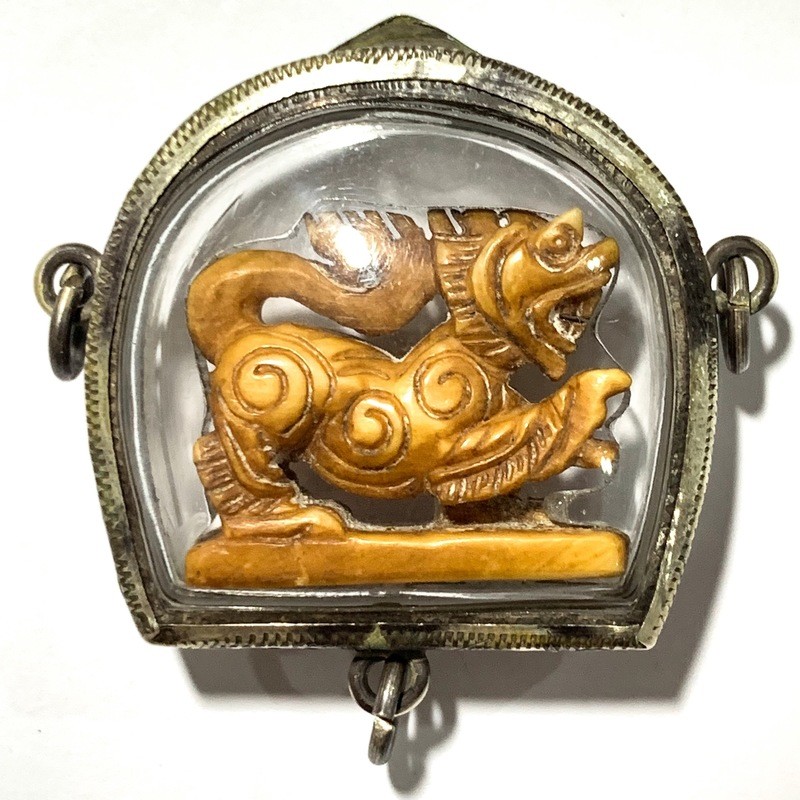
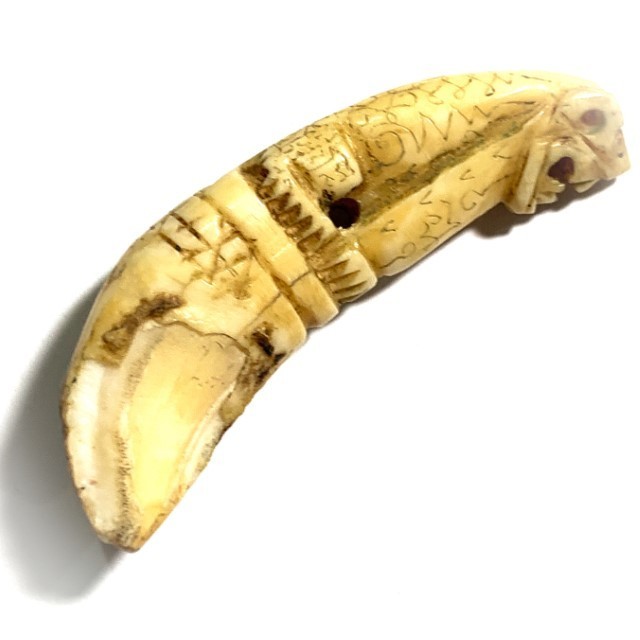
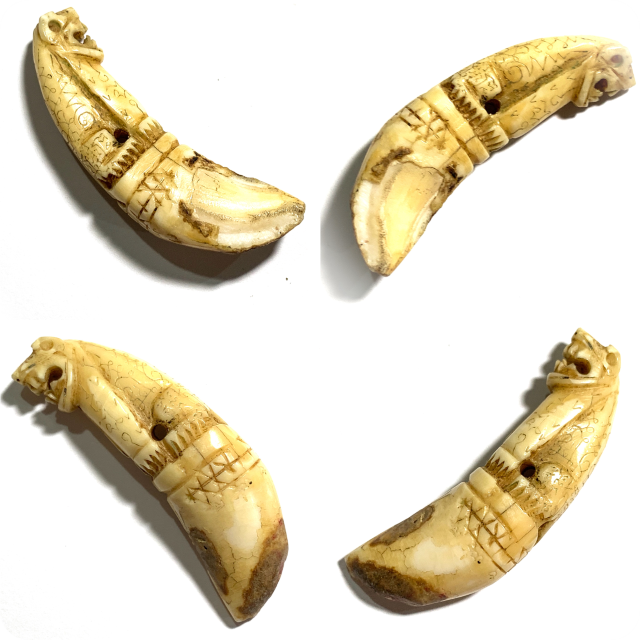
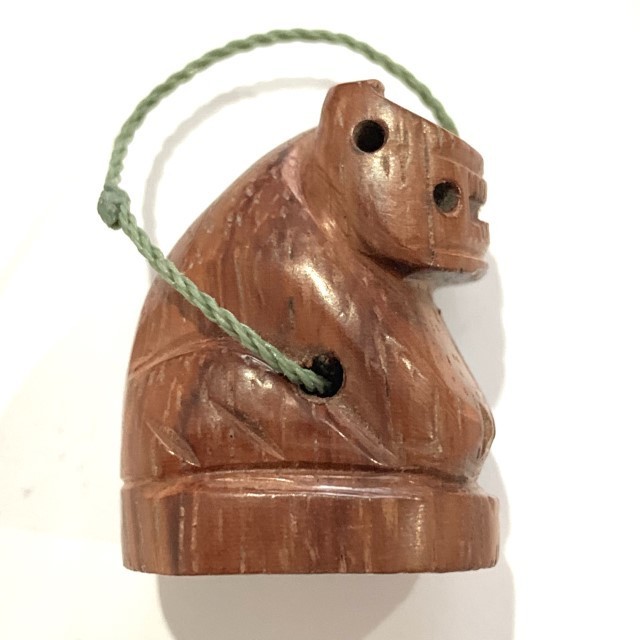
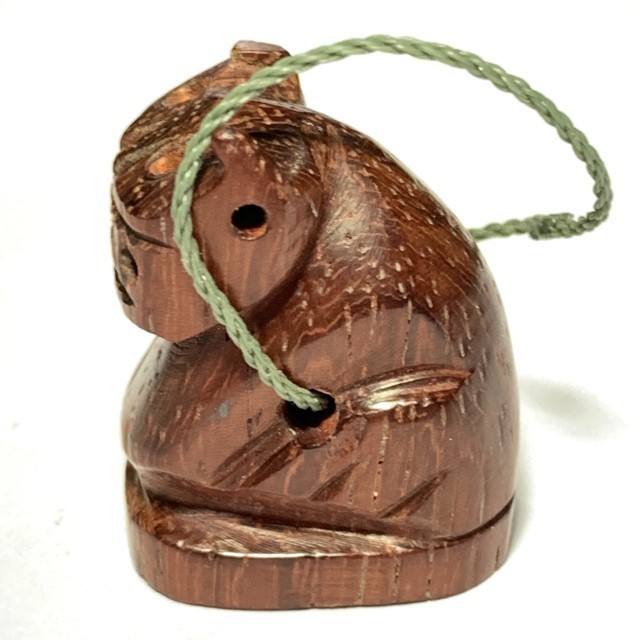
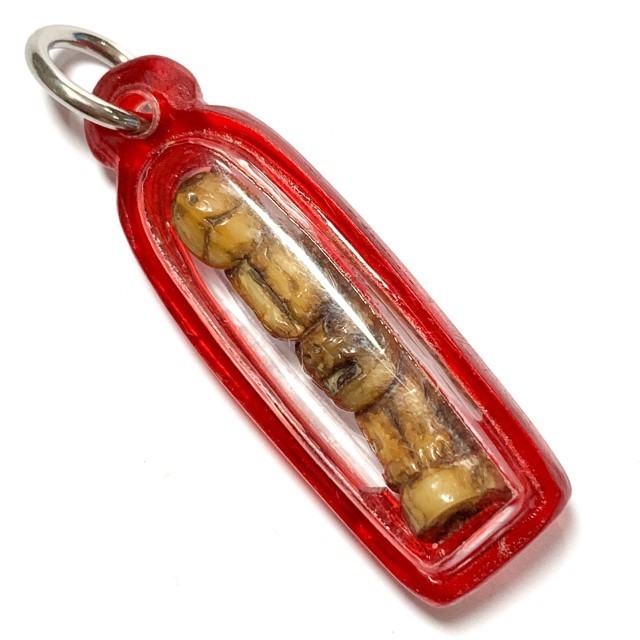
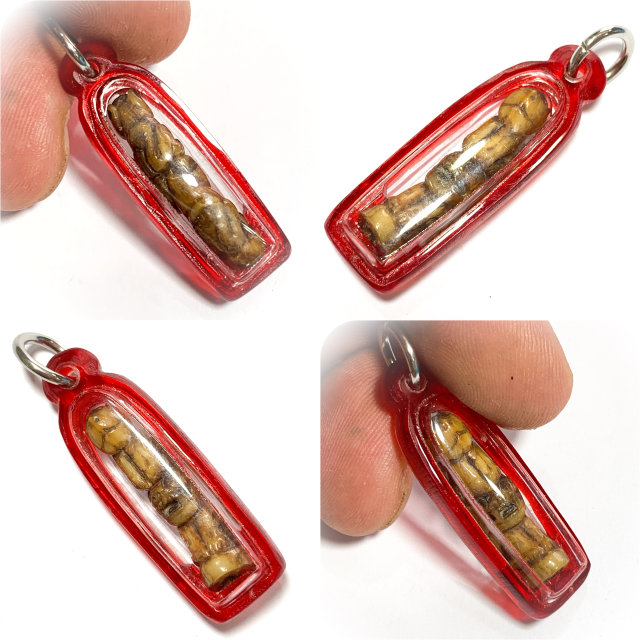
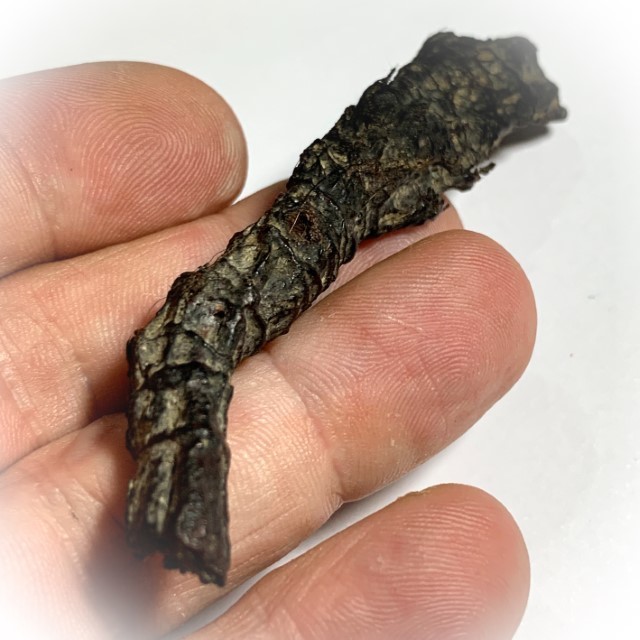
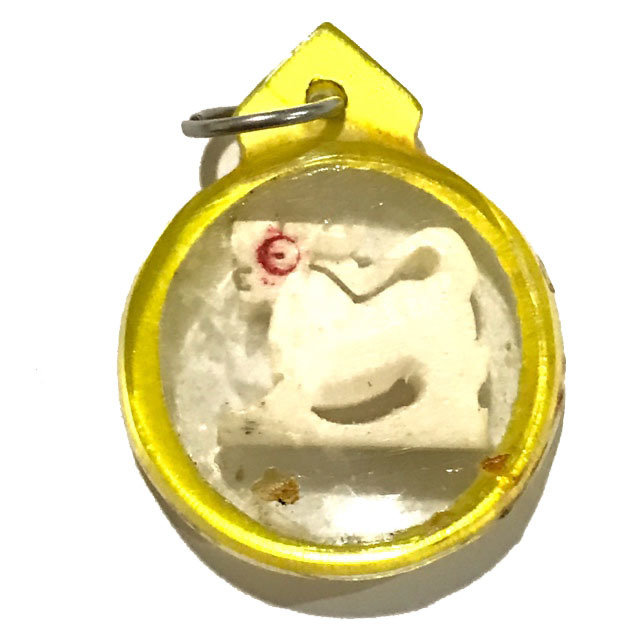
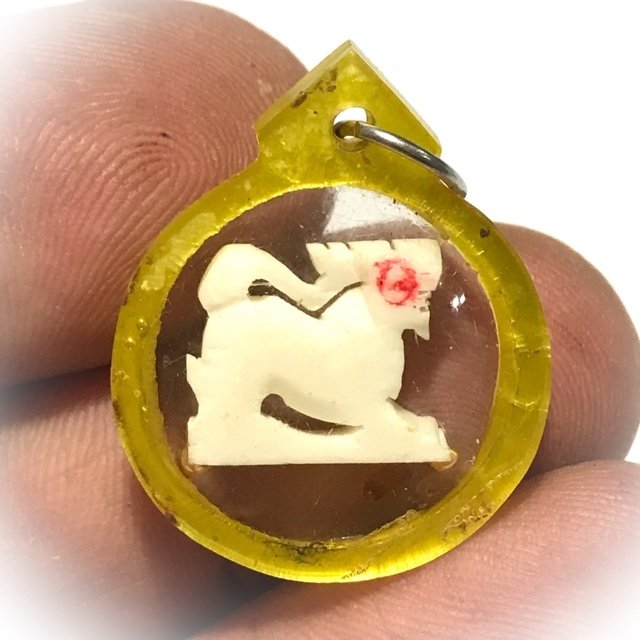
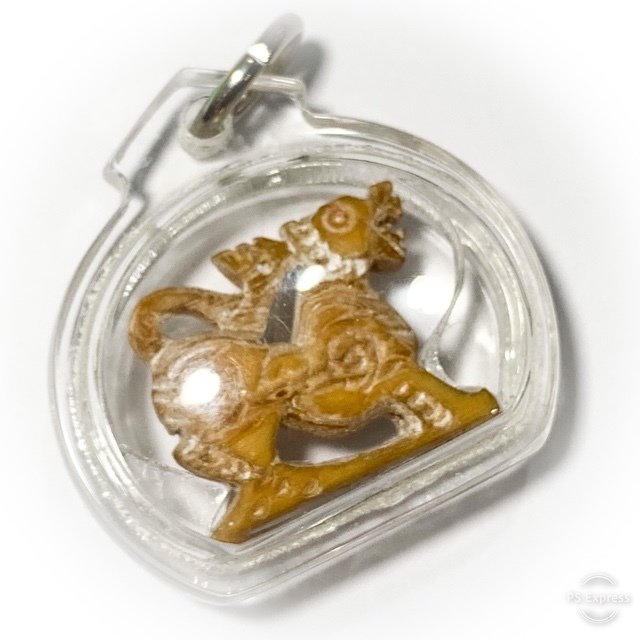
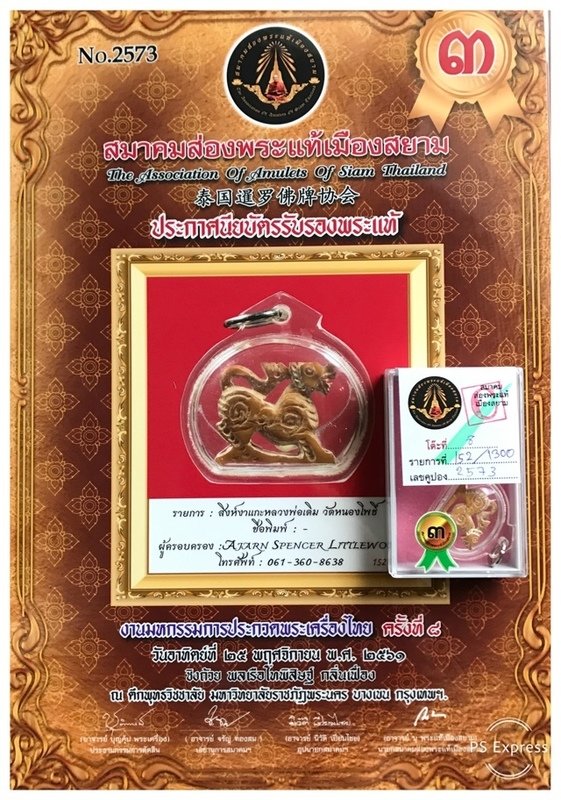
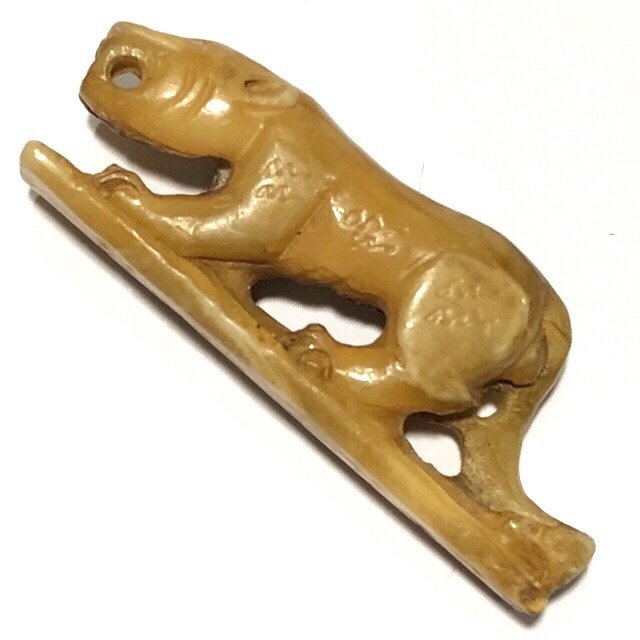
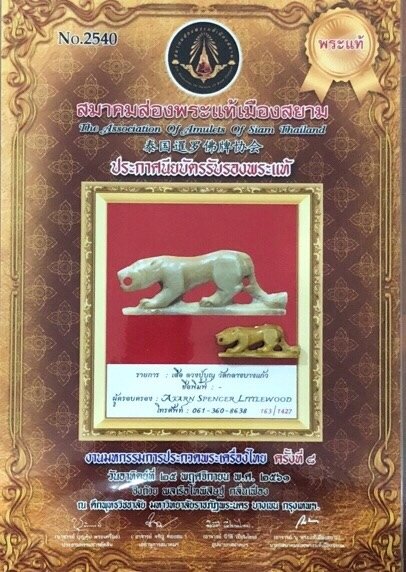
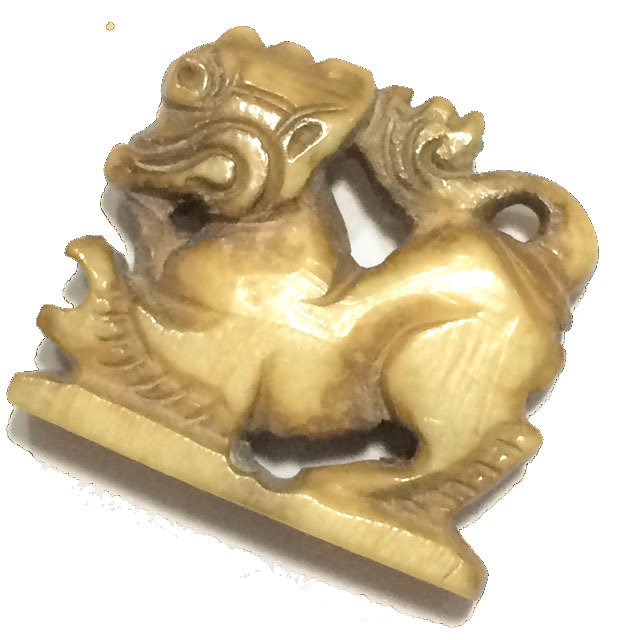
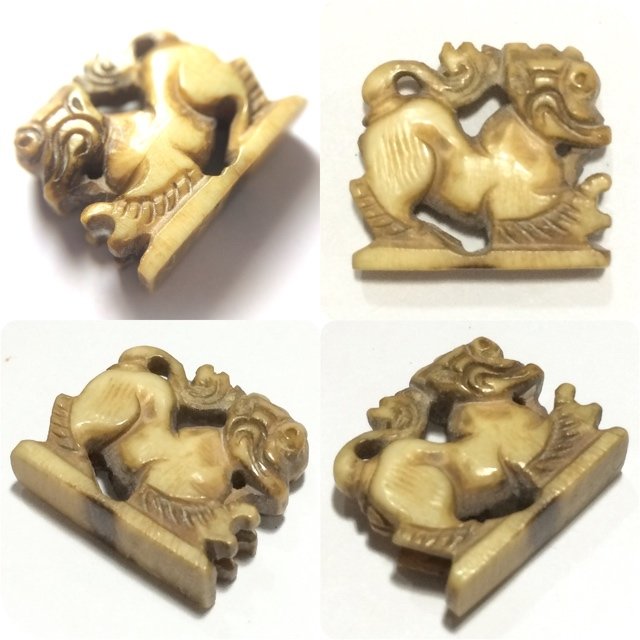
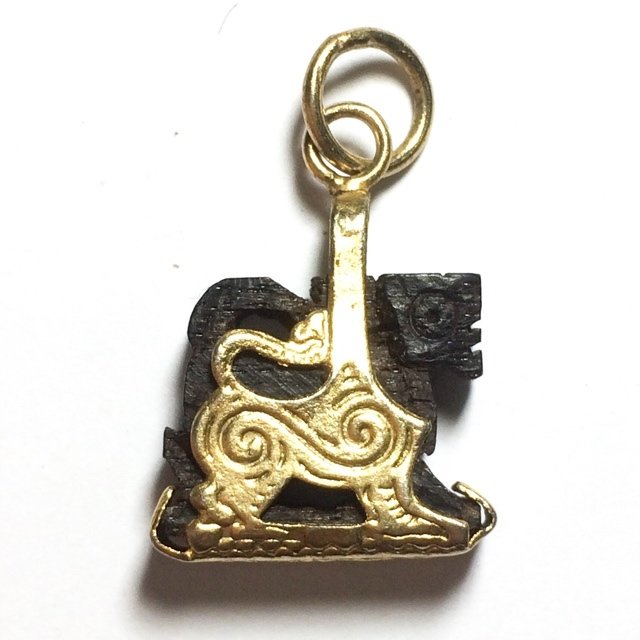
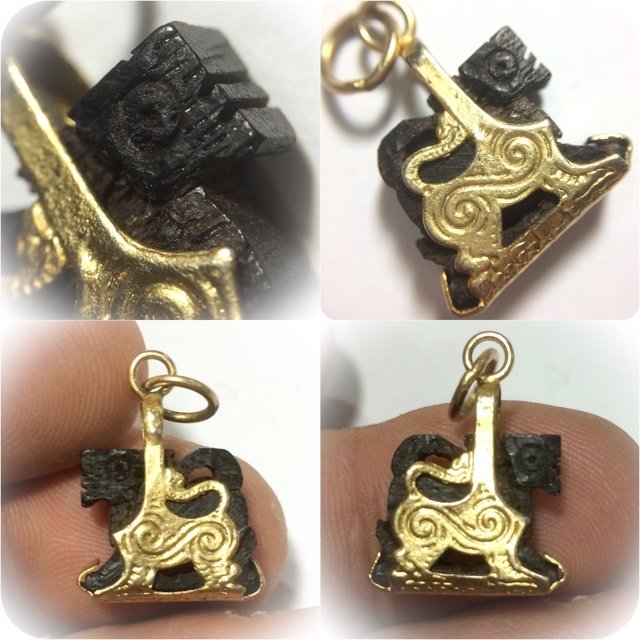
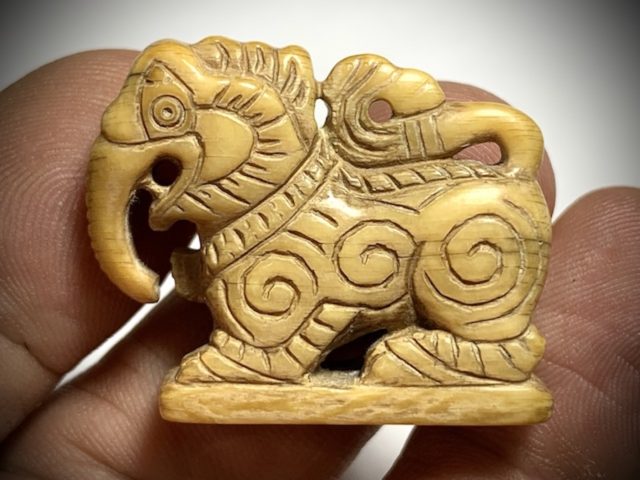
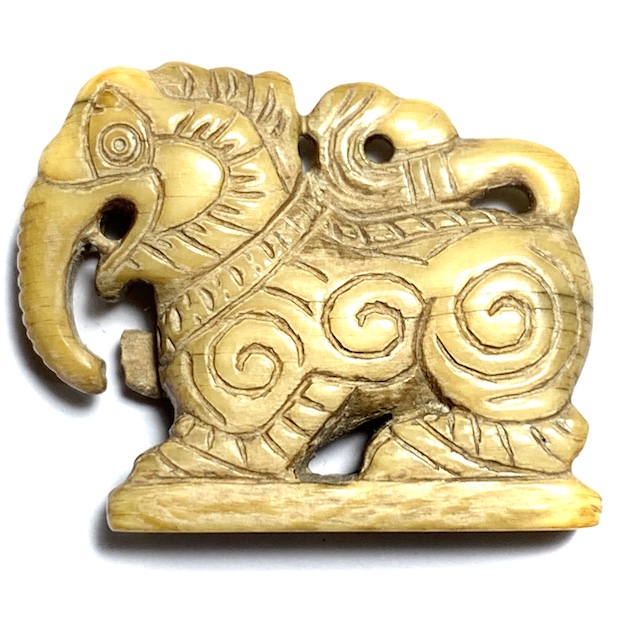
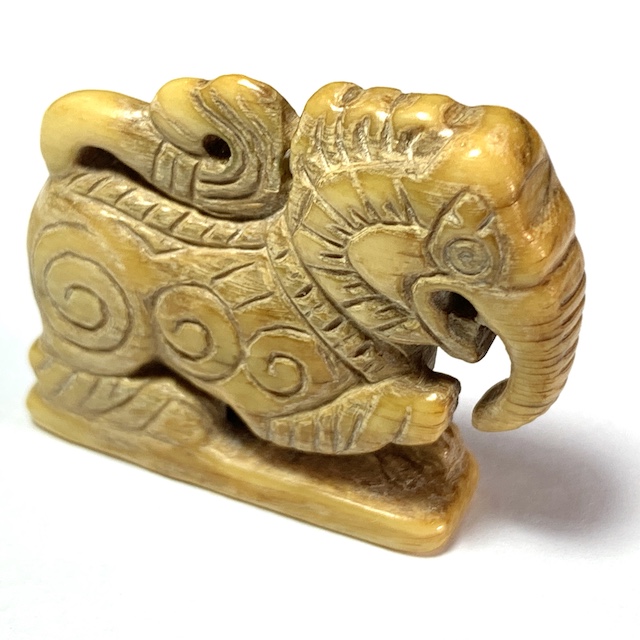
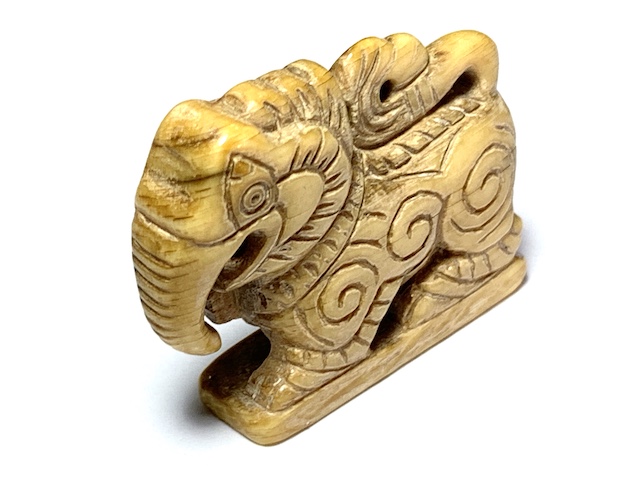
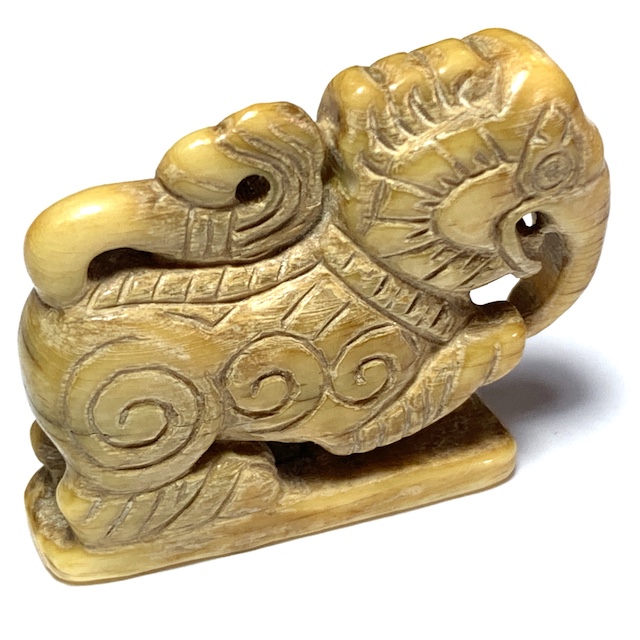
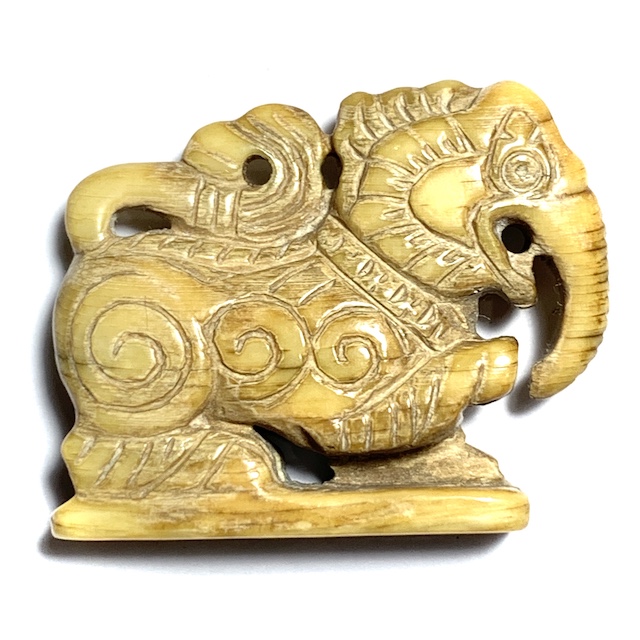
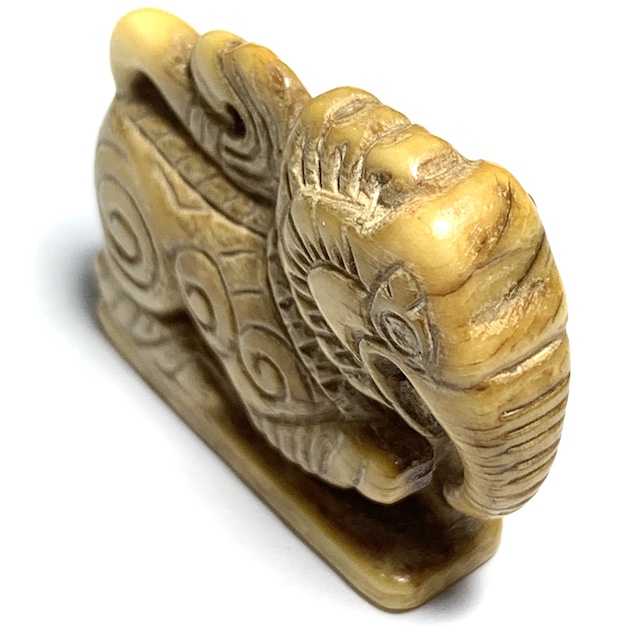
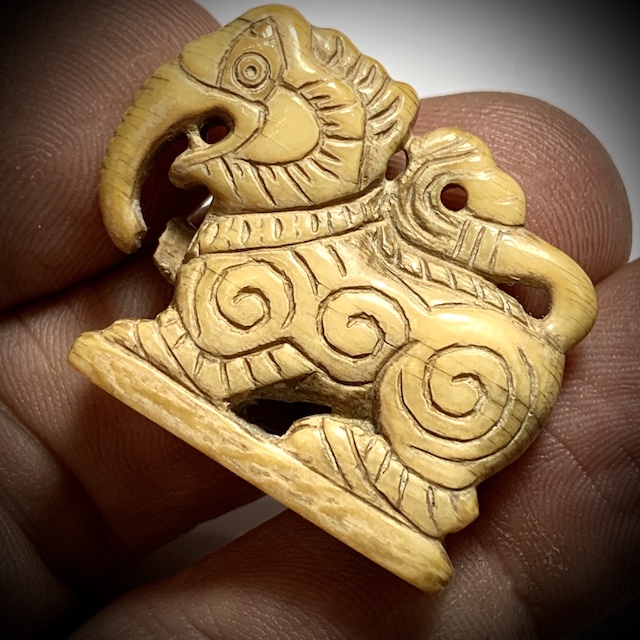
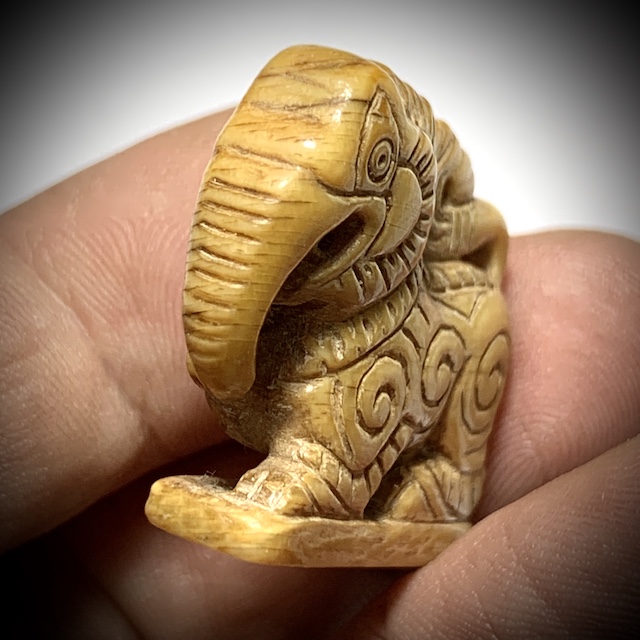
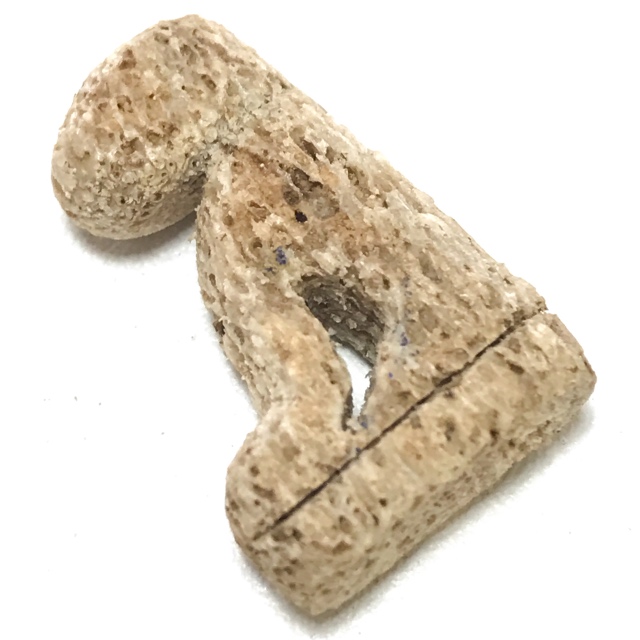
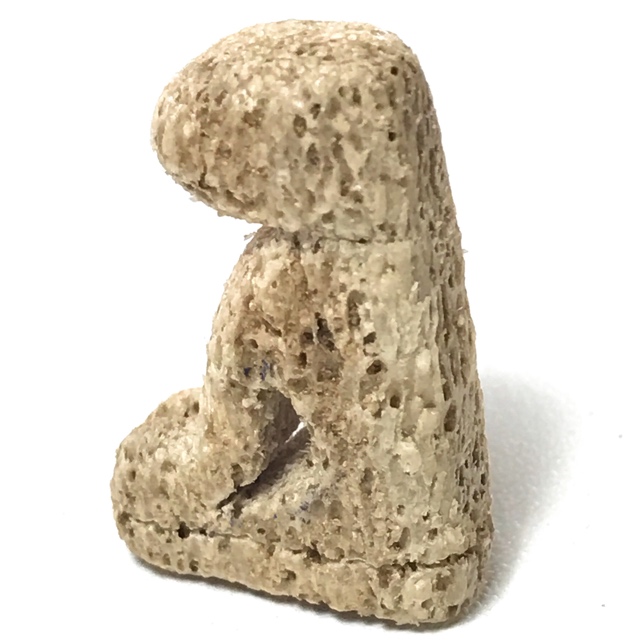
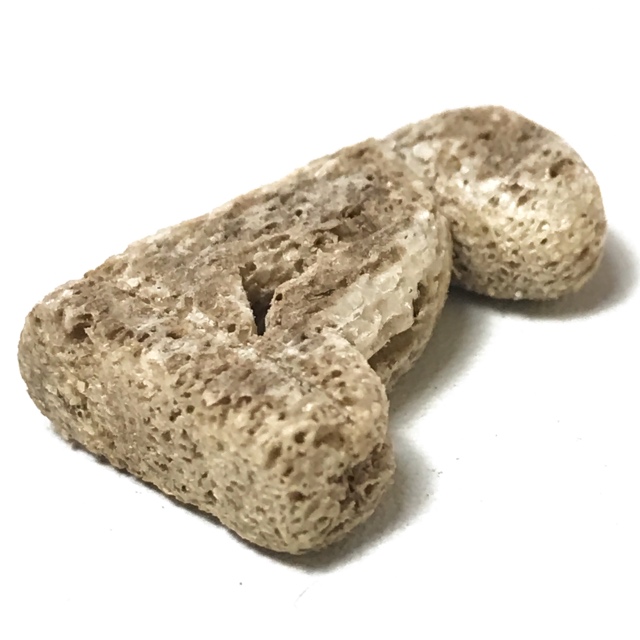
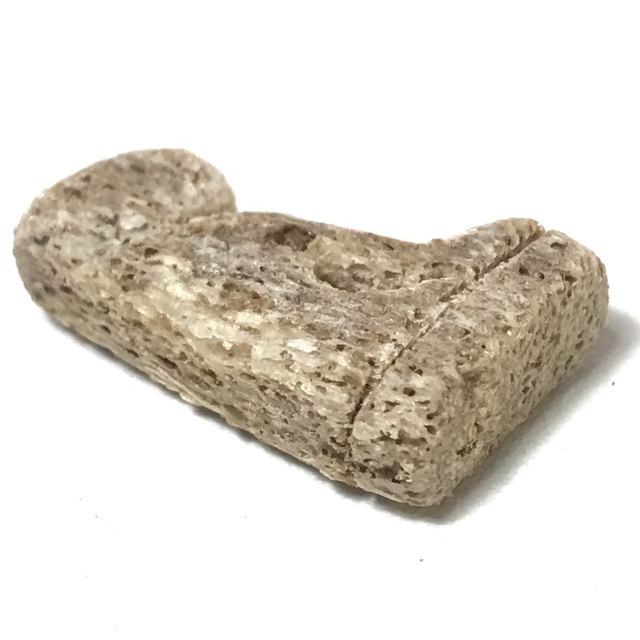
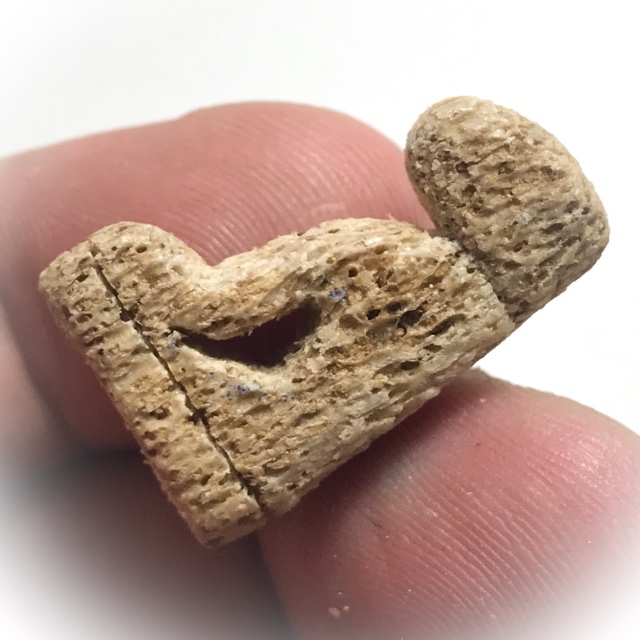
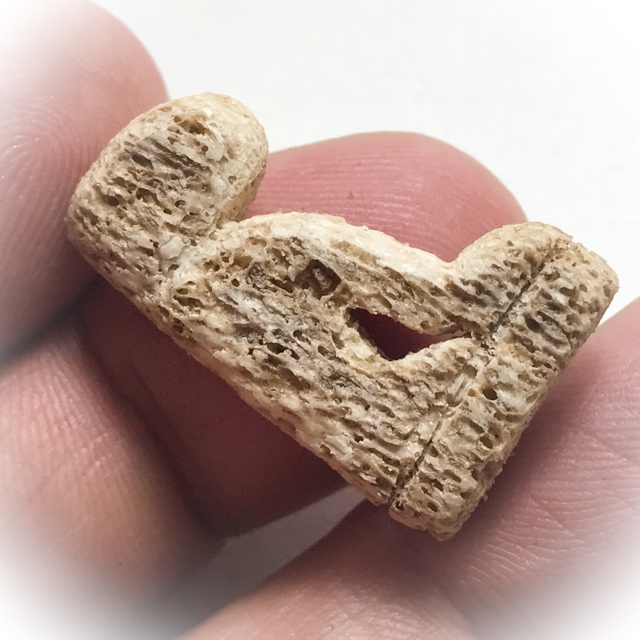
Suea Morb Nga Gae Crouching Tiger for Mercy Charm Protection Power and Invincibility Ajarn Heng Praiwan Featured

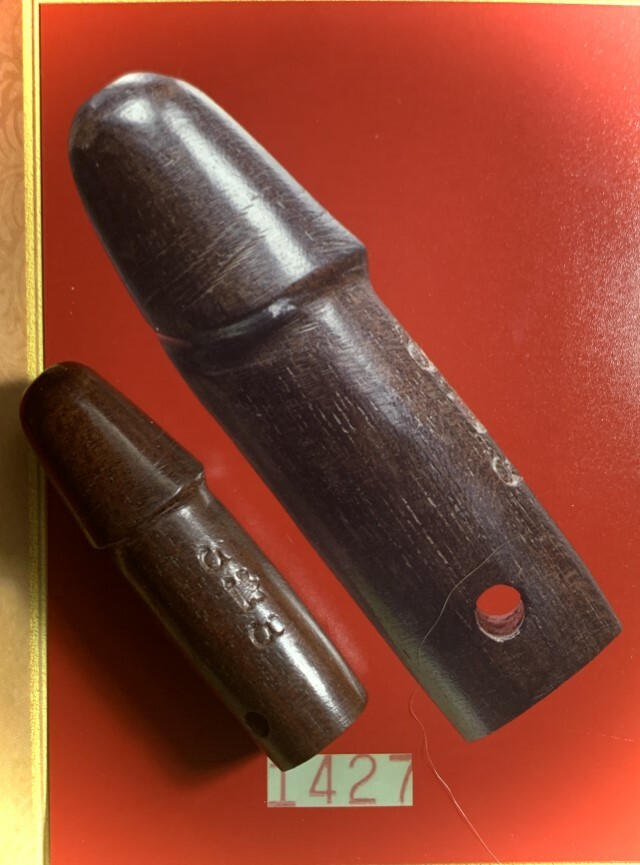
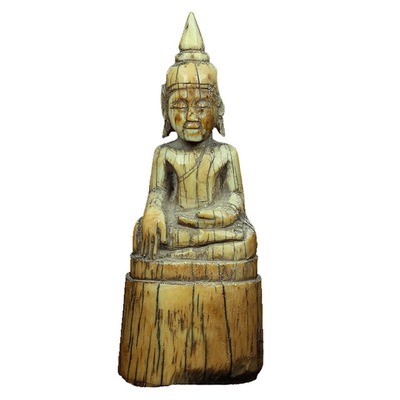
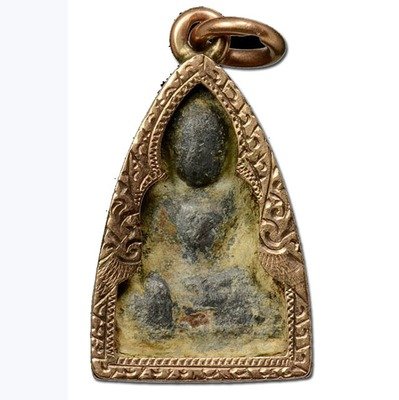
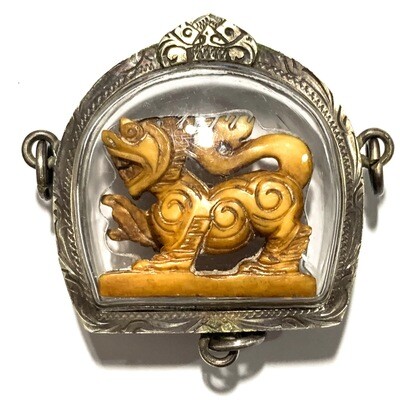
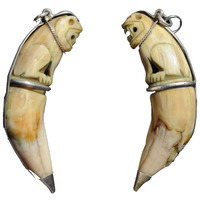
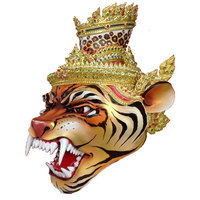
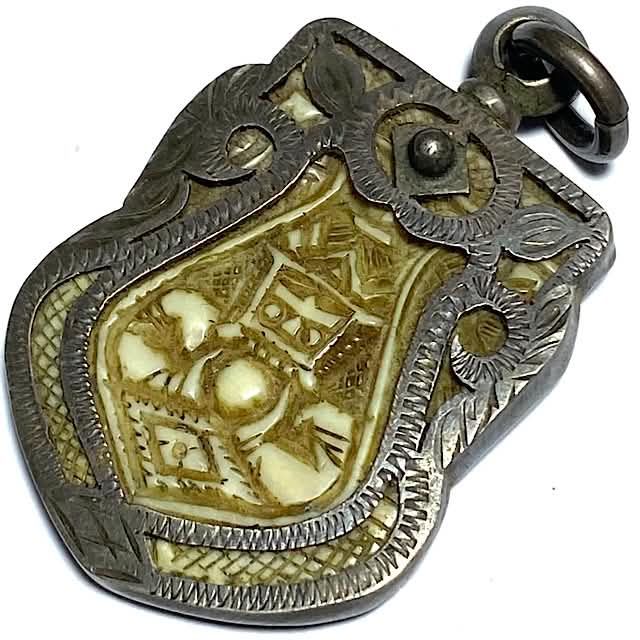
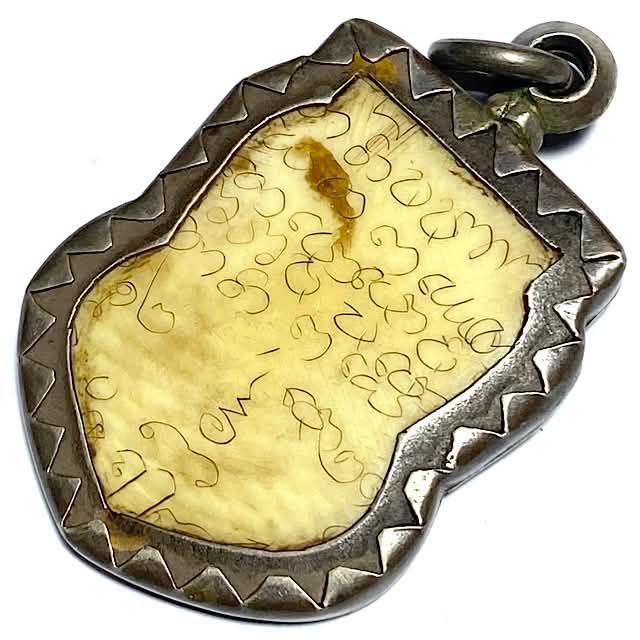
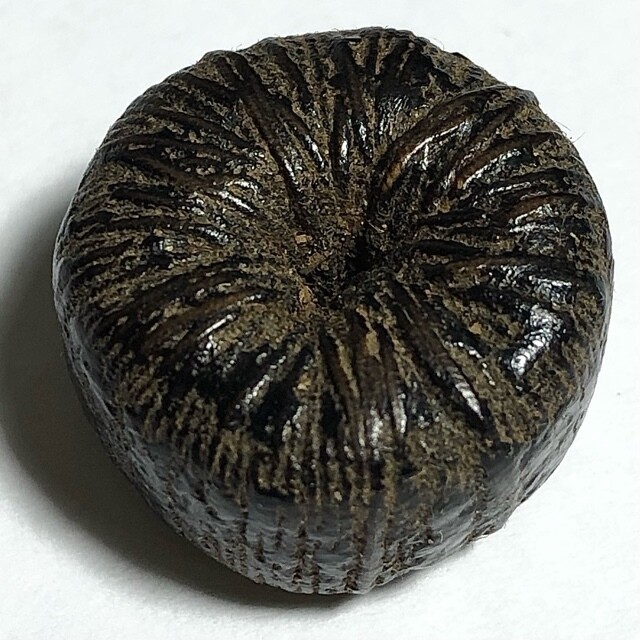
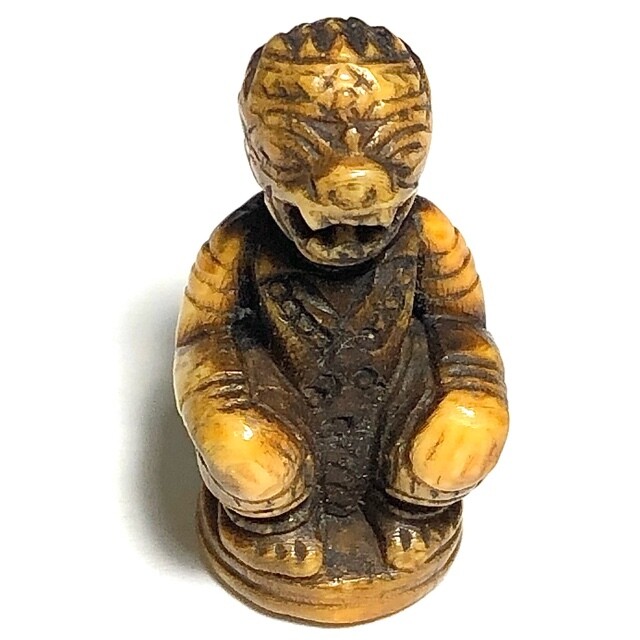
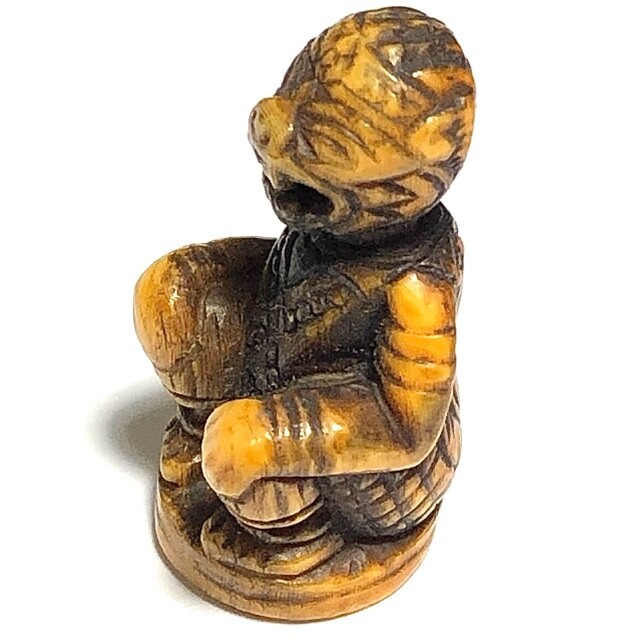
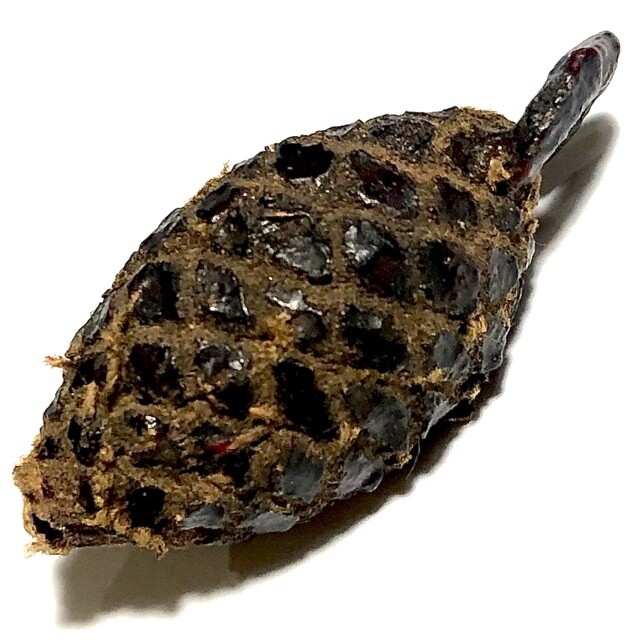
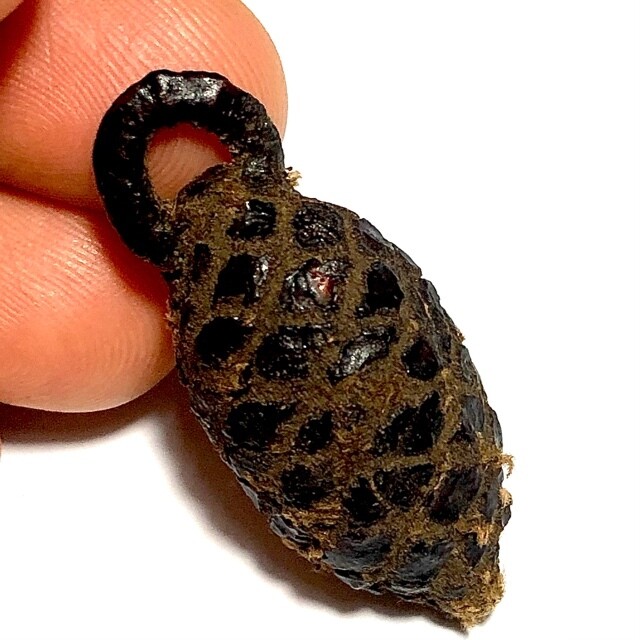
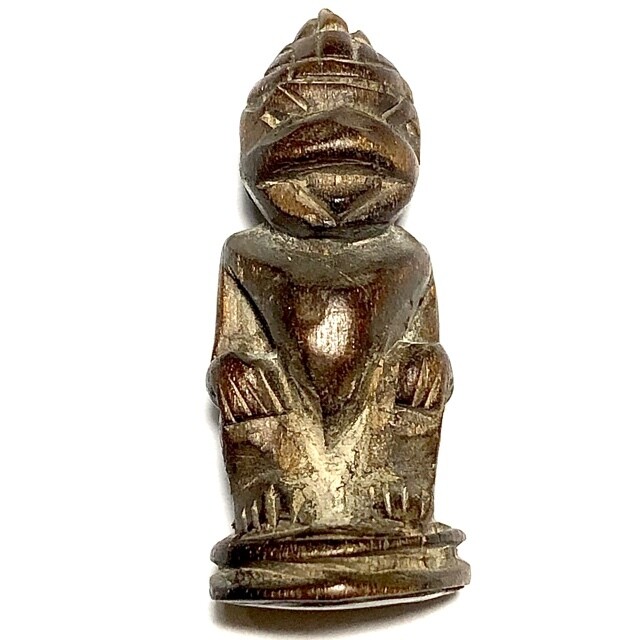
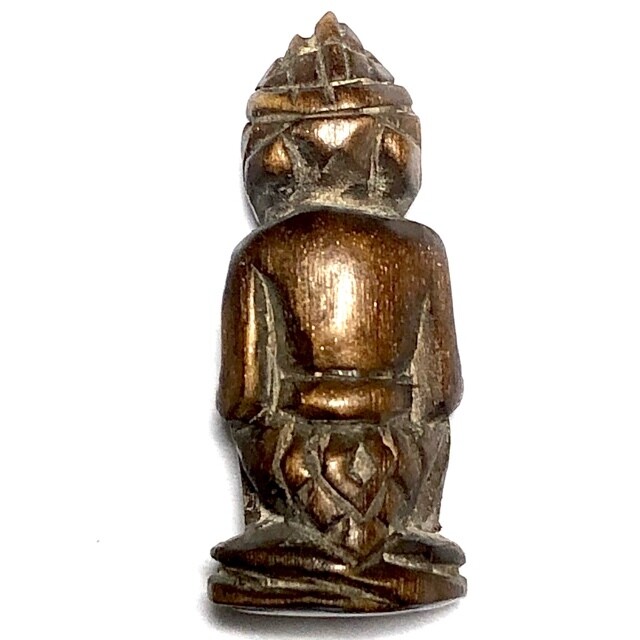
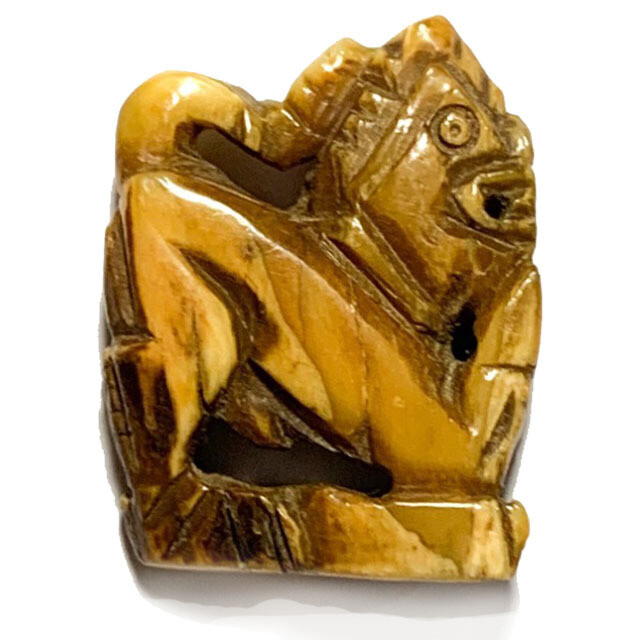
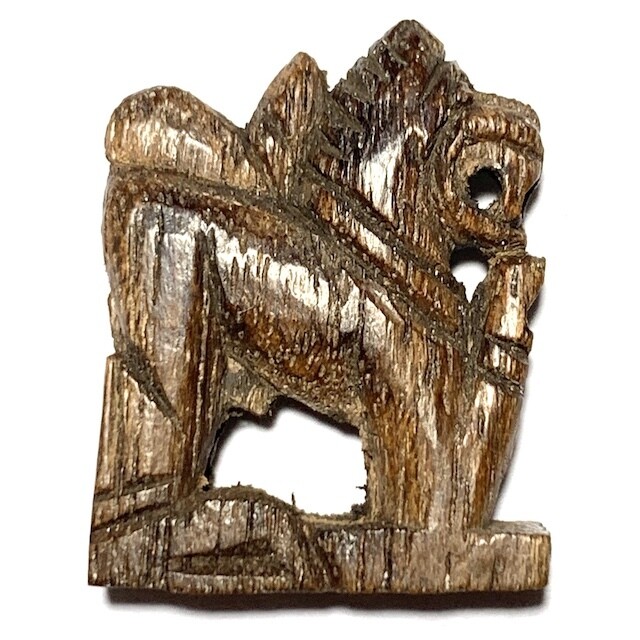
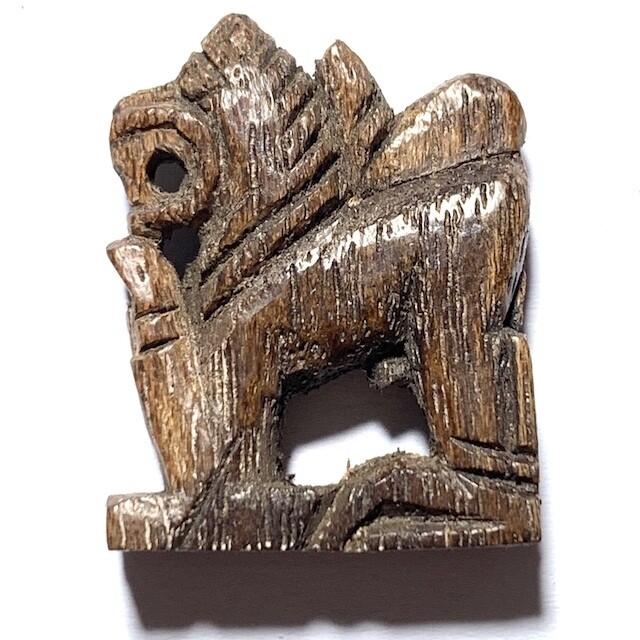
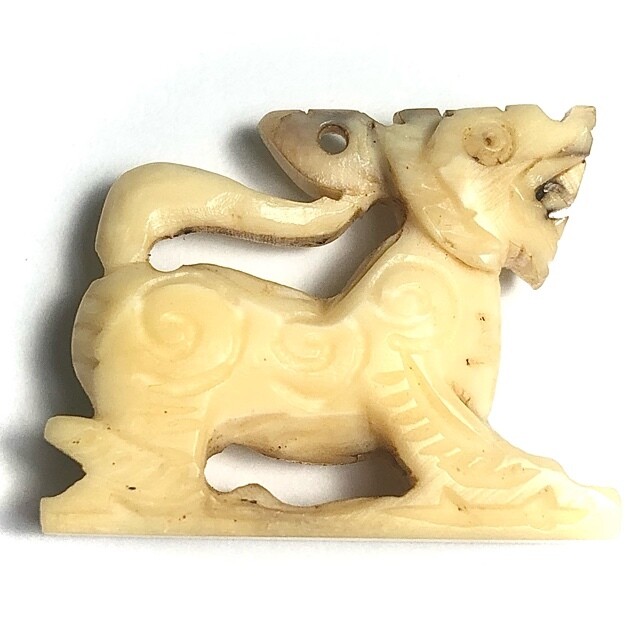
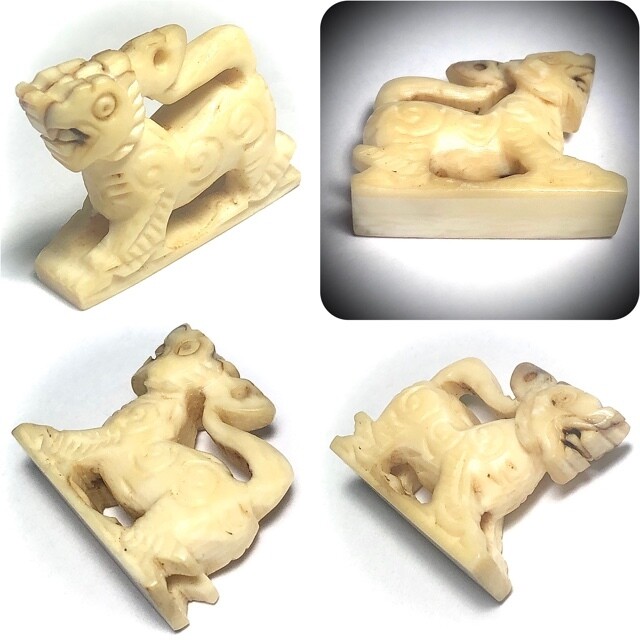
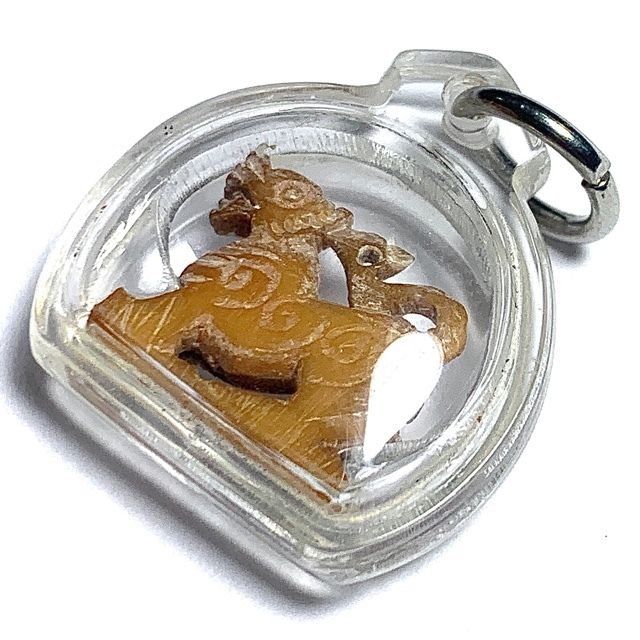
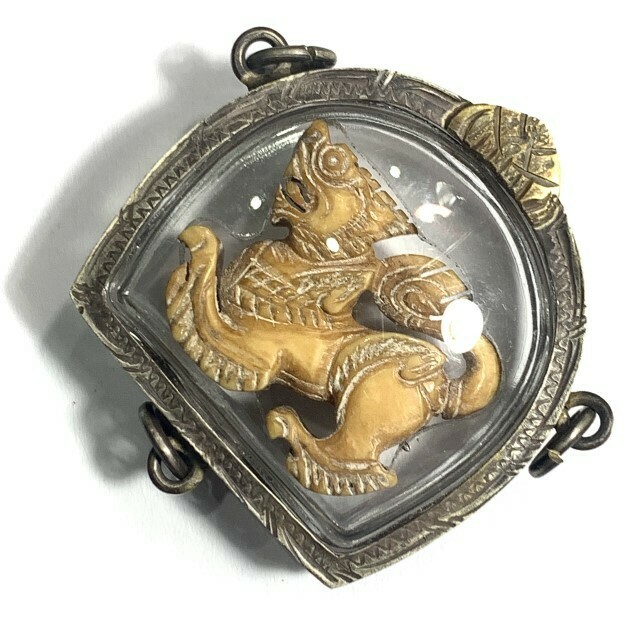
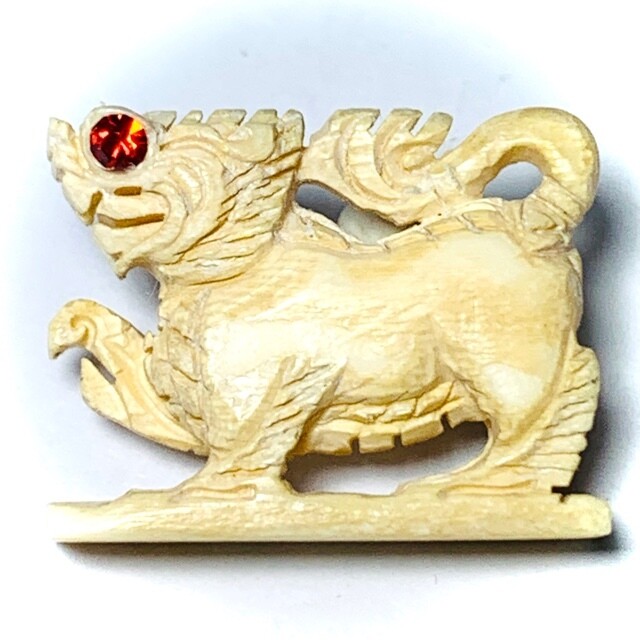
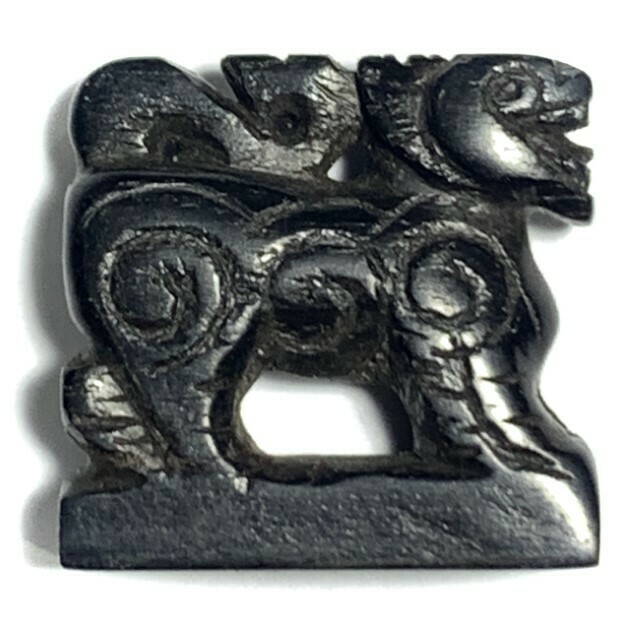
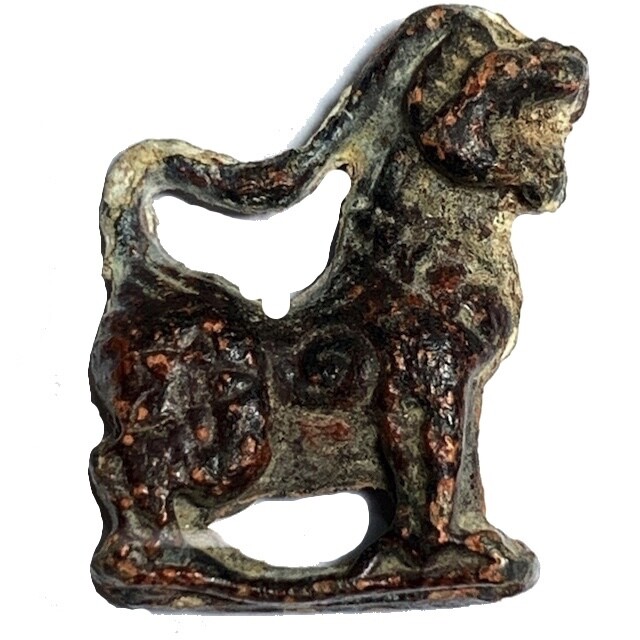
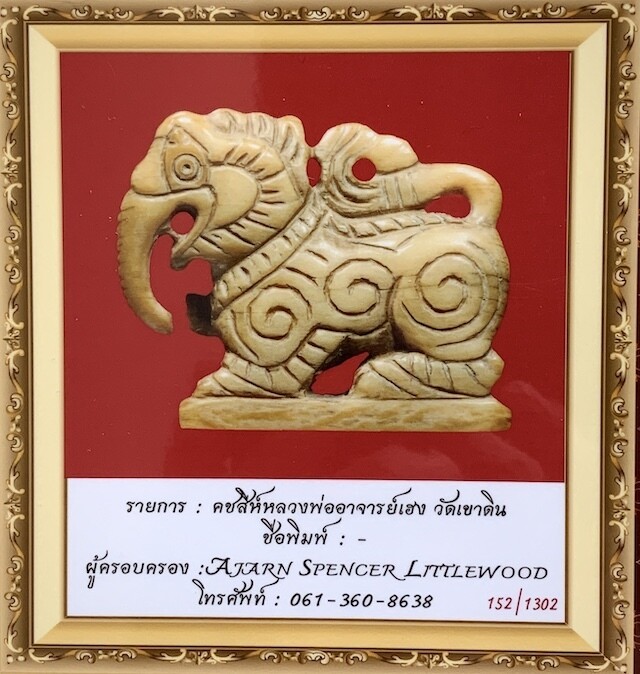
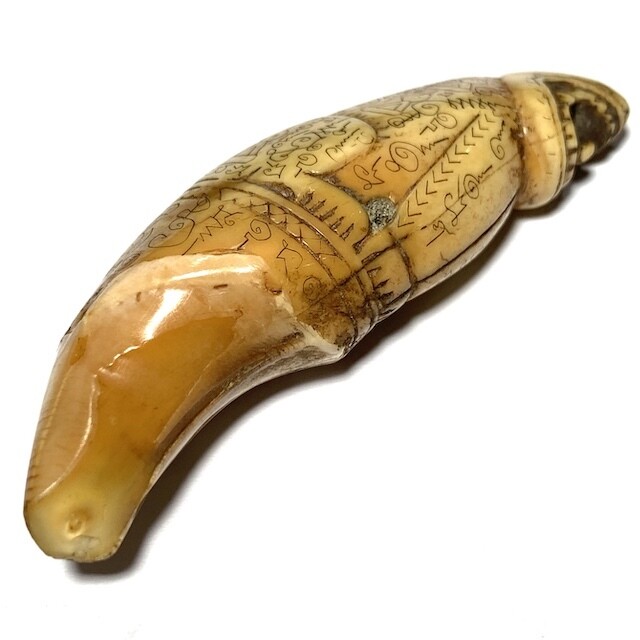
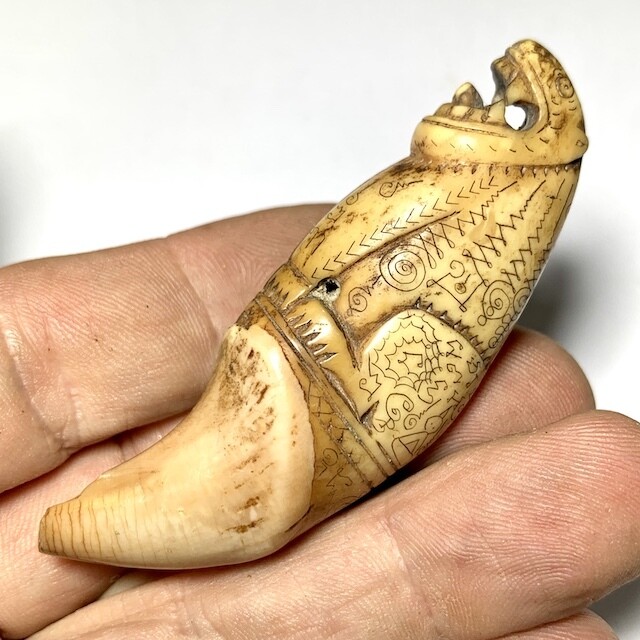
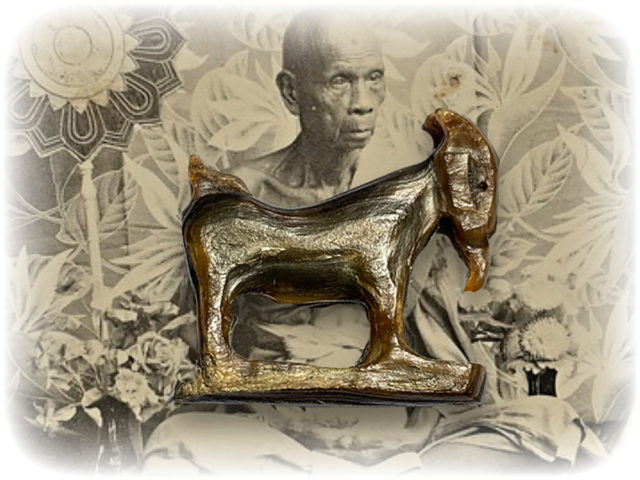
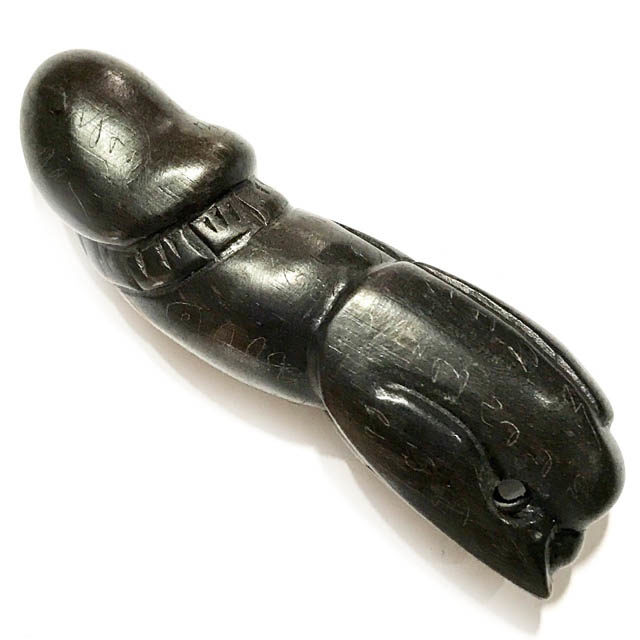
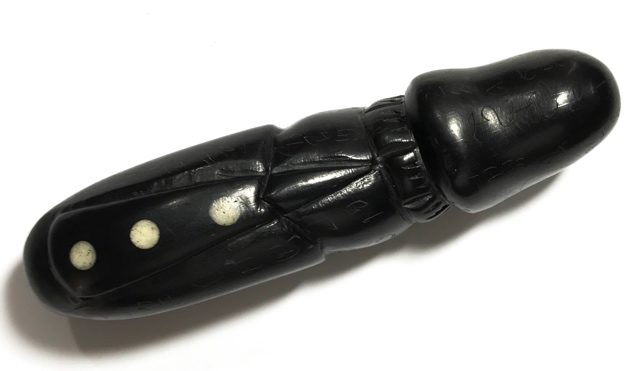
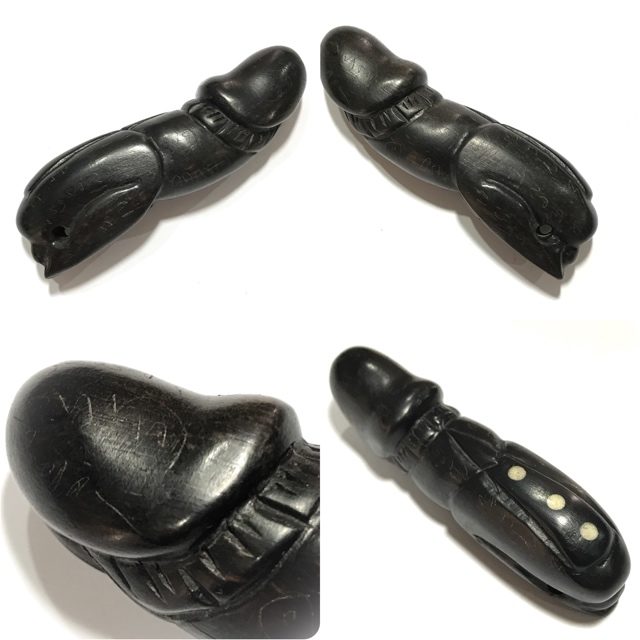
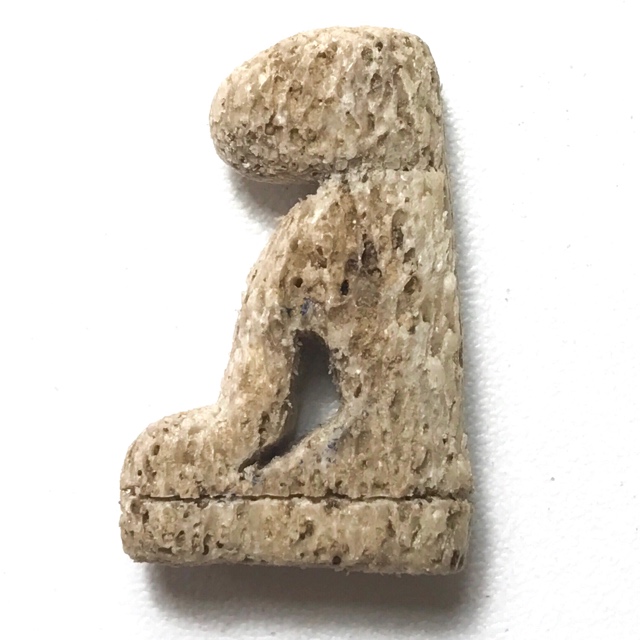
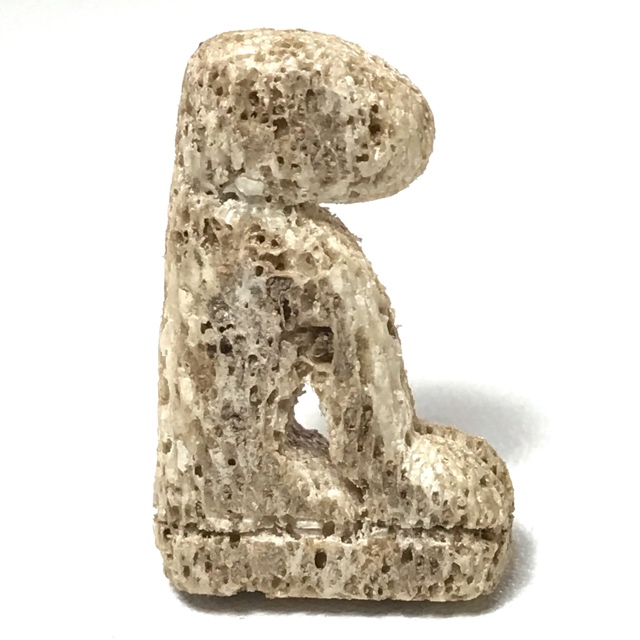
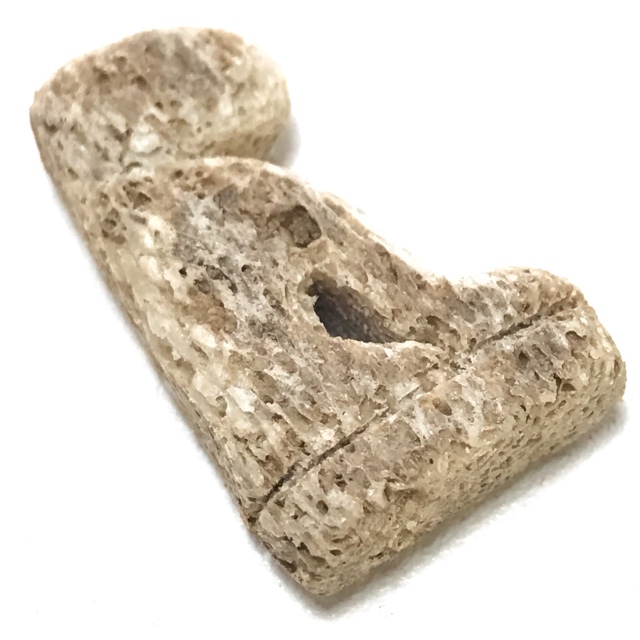
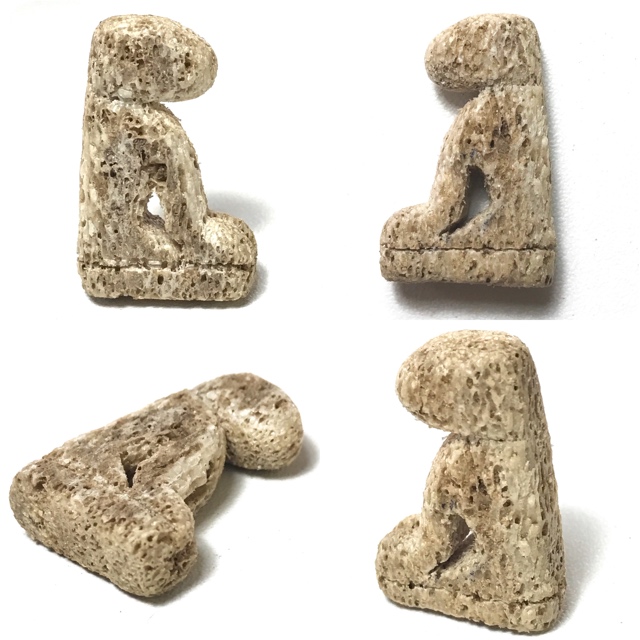
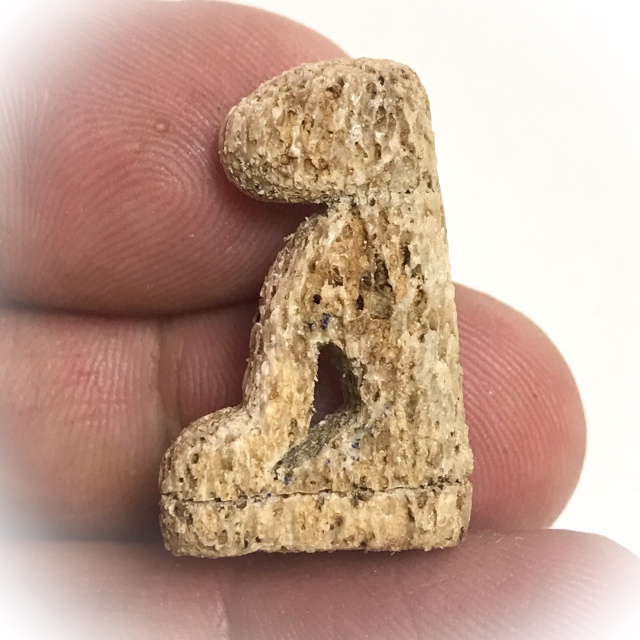
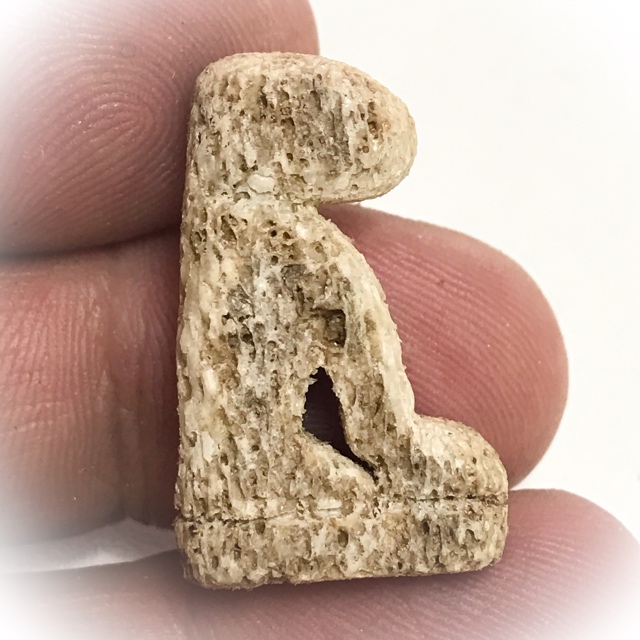
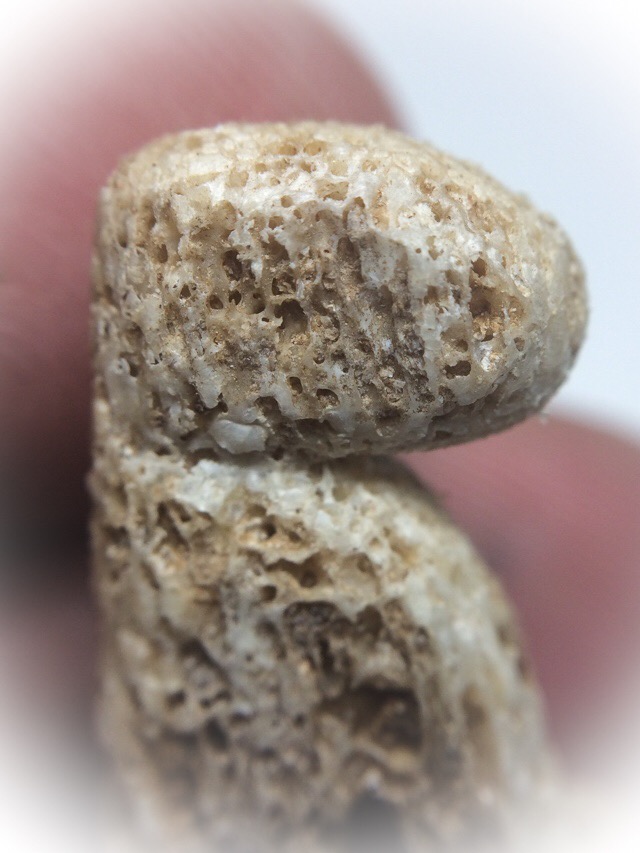
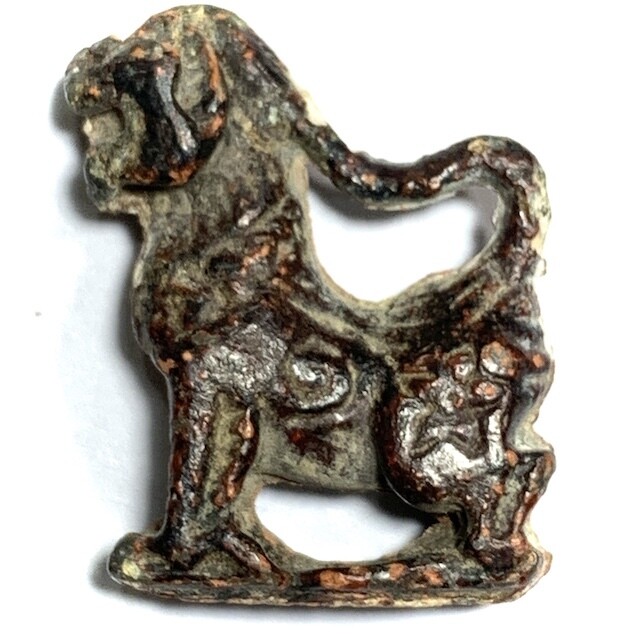
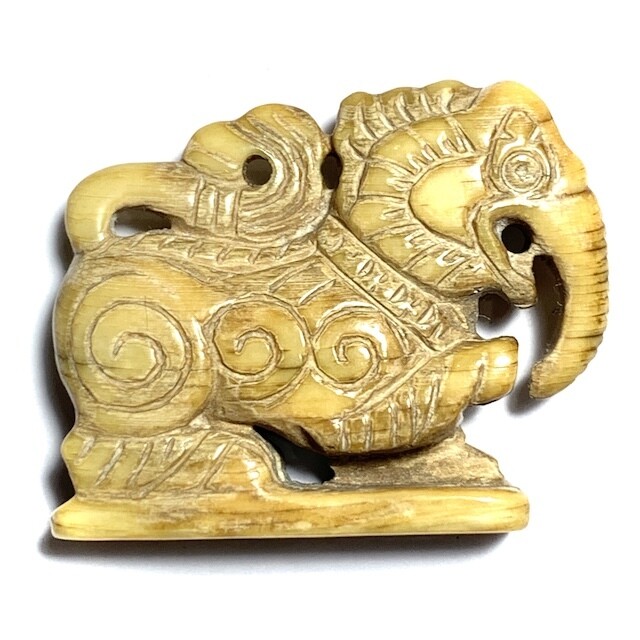
A very ancient and beautifully carved Animist Charm in Sacred Ivory (highly Aged), of the Suea Morb Elephant-Lion, from the great ex Monk and Lay Master-Sorcerer, Ajarn Heng Praiwan

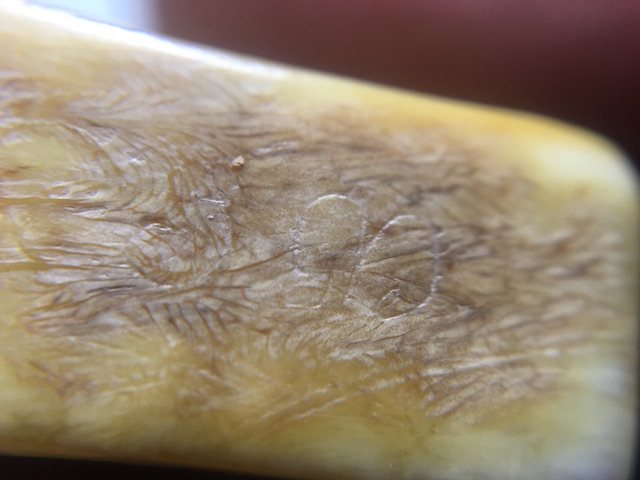
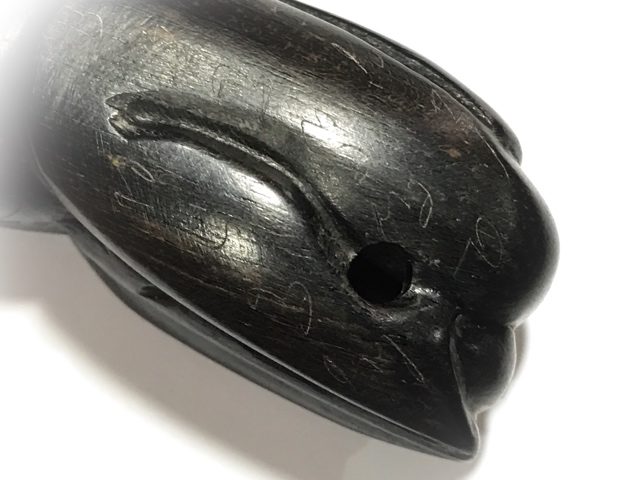
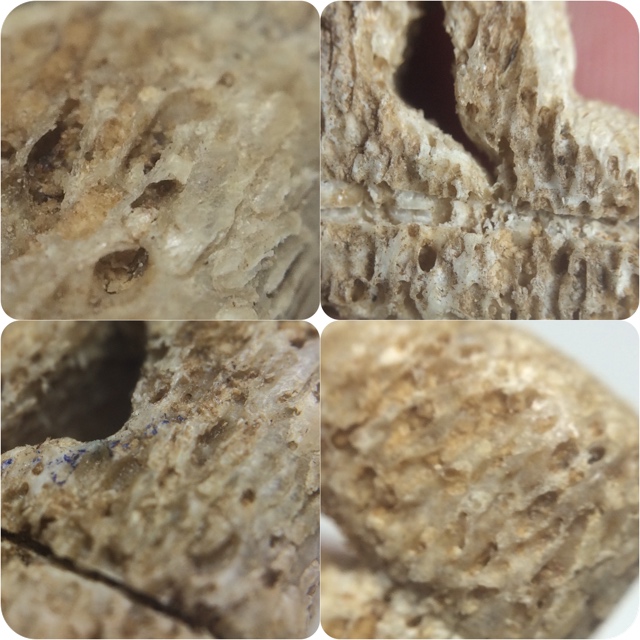
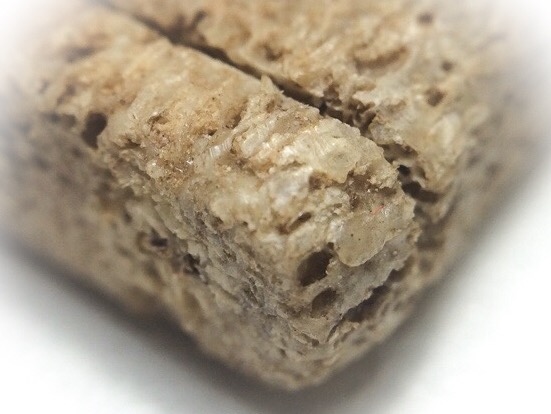
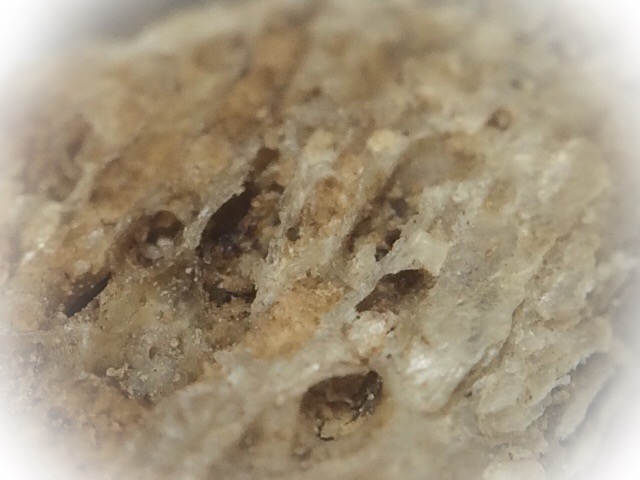
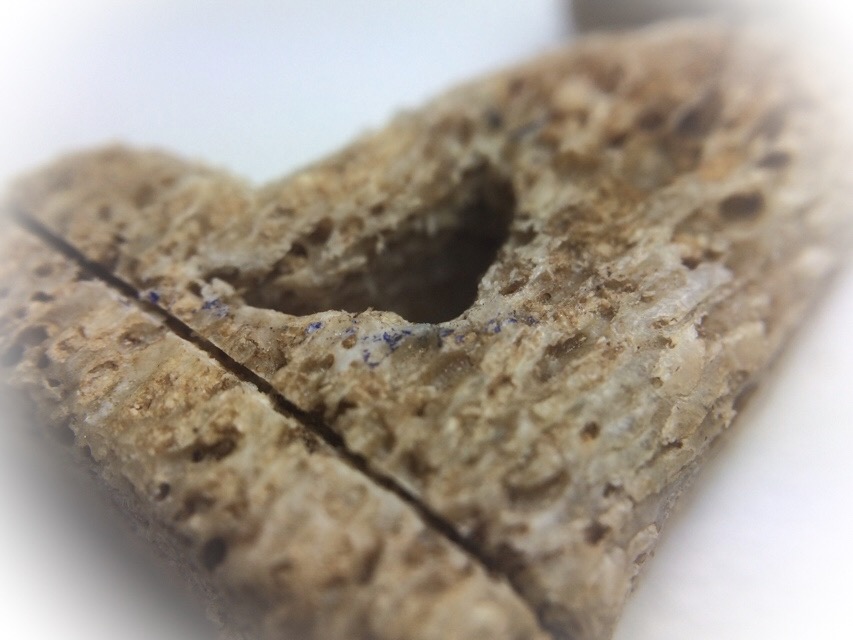
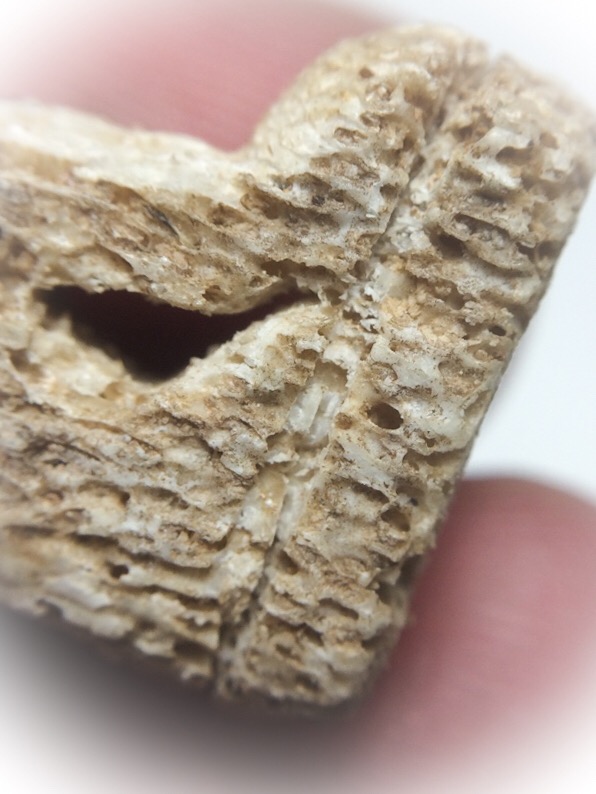
The Sacred Ivory shows its age through the crevices formed over time, and the agéd yellow patina which has evolved through many decades of contact with the skin. The Suea Morb is known for its power of Mercy Charm (attraction), and to evade Bad Karma and Deadly Accidents, as well as to be in constant readiness to pounce when opportunity for success knocks.

The Suea Morb in ancient ivory is an animist charm believed to be extremely powerful in its effect to attract the auspicious, and deflect the inauspicious. The Tiger is one of the most powerful creatures, and adept hunters on earth, and do not really have any predators above them in the food chain (except Humans!). Hence, the Lion and Tiger are seen as Kings of the Forest, and enjoy a life without having to fear too many dangers.

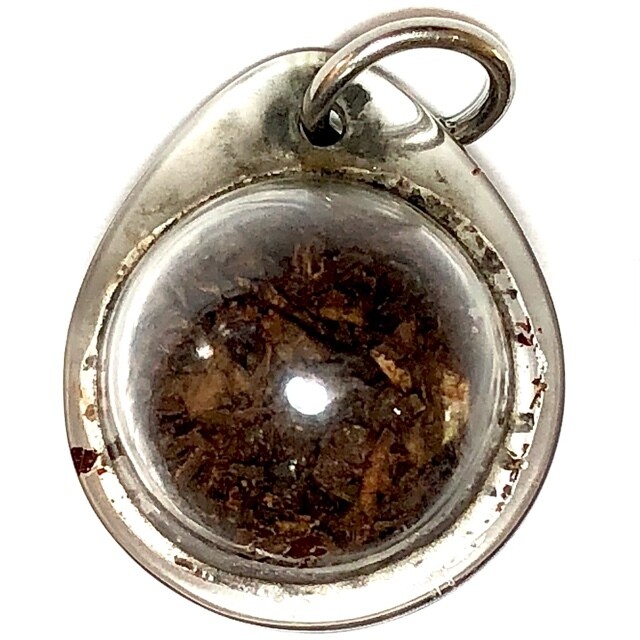
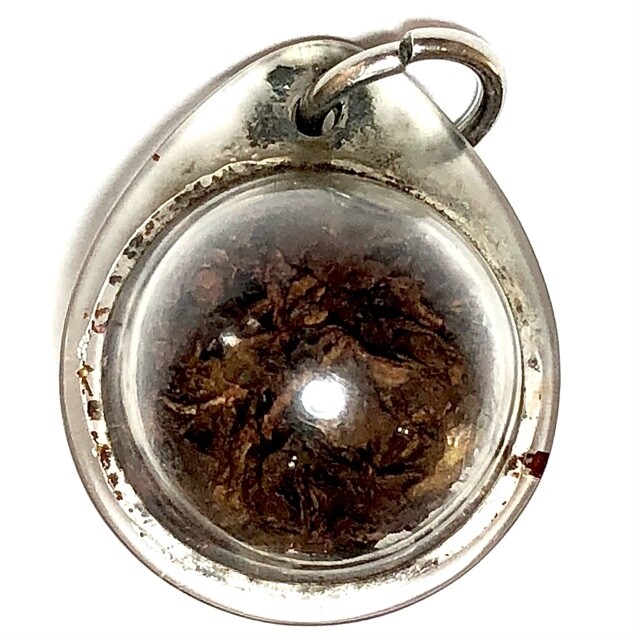
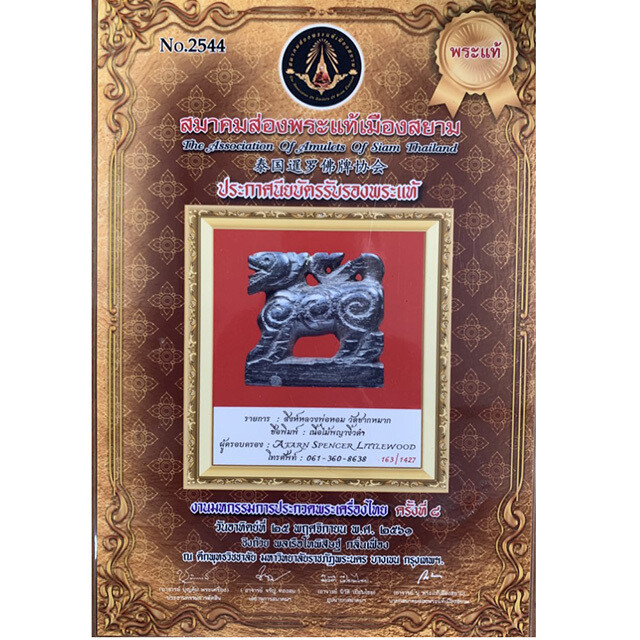
Free EMS / DHL / FedEx Express Shipping and the option of free solid silver Waterproof Casing is included with this item. An extremely rare to see, and exquisitely beautiful Ancient Ivory Carving, that is among the very rare amulets to encounter by Olden days Lay Master Ajarn Heng Praiwan. A Powerful and Highly Sought After amulet by high-end talismanic amulet, as well as an important historical and cultural religious artifact.

The Suea Morb, as all amulets of Ajarn Heng (due to his empowerment method), can not only protect from dangers, black magic and ill fate, but is also known to be a Wicha for invoking Great Mercy Charm (Metta Maha Niyom), to bring Great Preference to You above Others. The amulet is designed to Attract Helpfulness, Popularity and Success, Imbue power and influence (Serm Yos), Command over Others (Maha Amnaj) & clear the way of difficulties, whilst making all ventures successful.

An excellent choice for those increased ‘Dtaba Decha’ (Recieve Honors, Glory, Respect and Promotion, Dominion and influence), The Sacred Ivory shows its age through the crevices formed over time, and the agéd yellow patina which has evolved through many decades of contact with the skin. The Suea Morb differs from other Wicha Suea, in that, apart from increased Maha Amnaj, and Imposing Influence, protection and Invincibility, it is also known for immense power of Metta Mahaniyom.

If asking for assistance from the amulet, please do not be too greedy each time you pray to the amulet for things, rather set yourself reasonable goals. If you find the right balance, you will experience safe evasion from dangers and immunity to Black Magic, a constant rise in success and status, and standard of living. The Suea Morb can also use its Metta to assist in bringing Victory in Legal Battles, if you are in defense, or pleading of a Court Hearing, in order to receive merciful treatment.

This Hand carved amulet of Ajarn Heng Praiwan, was one of only two we could find over a long period of searching (4 years), and can be considered to be an eternal rarity, which is always sadly more in demand than available. We try to find them as fervently as possible, but even we end up losing the battle often. This is of course, due to the massive imbalance of availability, against demand, and the immense rarity, and small quantity of amulets made by this master.

Tigers, Lions, and other Big Cat type Himapant Animal Deities (such as the Suea Maha Amnaj, Paya Kochasri, Kilen, and Singha), especially when carved from Ivory, are naturally imbued with the Sorcerous Powers of Maha Amnaj (commanding power and influence), Serm Yos Status Increase for positions of command, Gae Aathan Anti Black Magic, and opportunities of promotion, and Metta Mahaniyom Mercy Charm, to lull your Subjects and Charm them into Obedience. Maha Pokasap treasure Accumulation and Cornucopia of Requisites is also Imbued. These powers are said to be present within the ivory itself, even without empowerment, and that people wore ivory in ancient times for this purpose, and over time, developed artistic designs to shape them into animals and other objects of reverence, Deities and the like, to add spiritual significance.

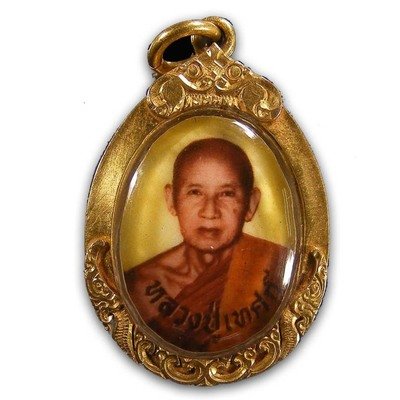
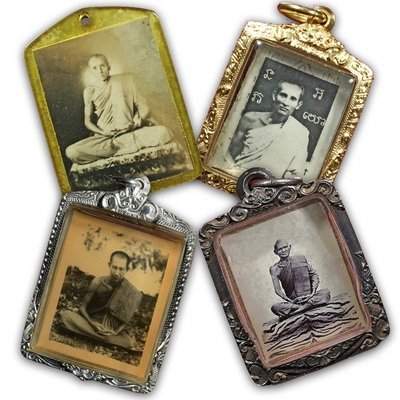
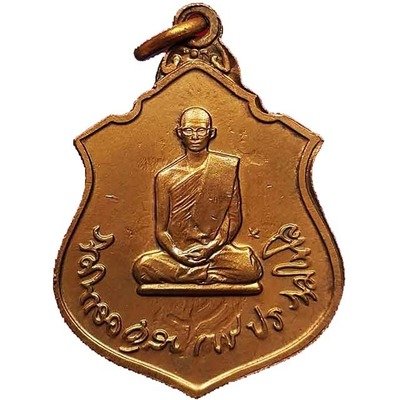
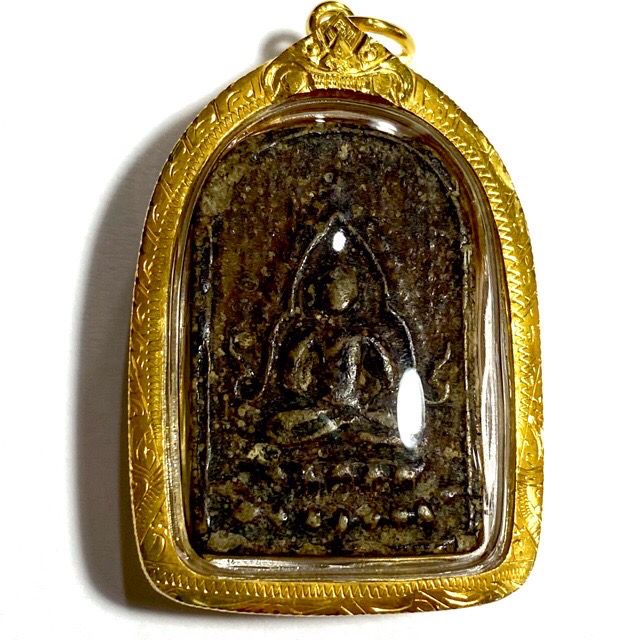
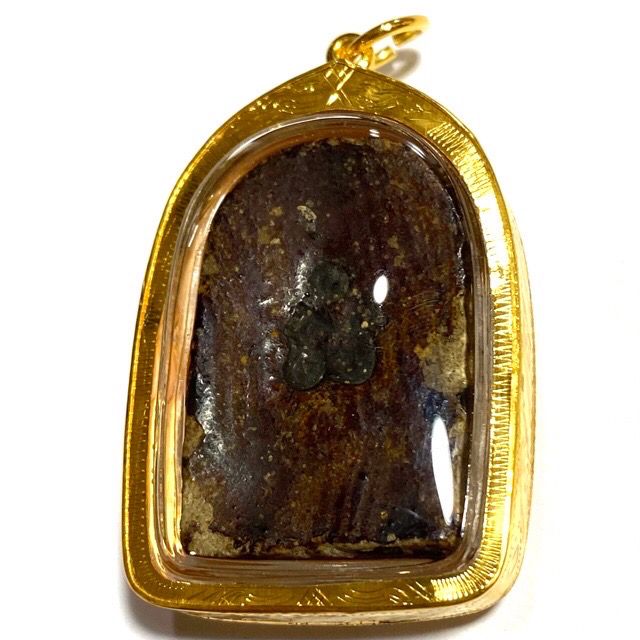
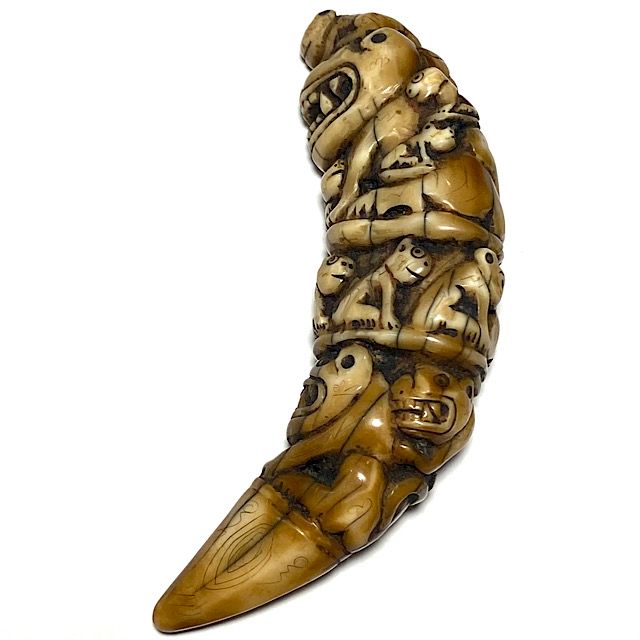
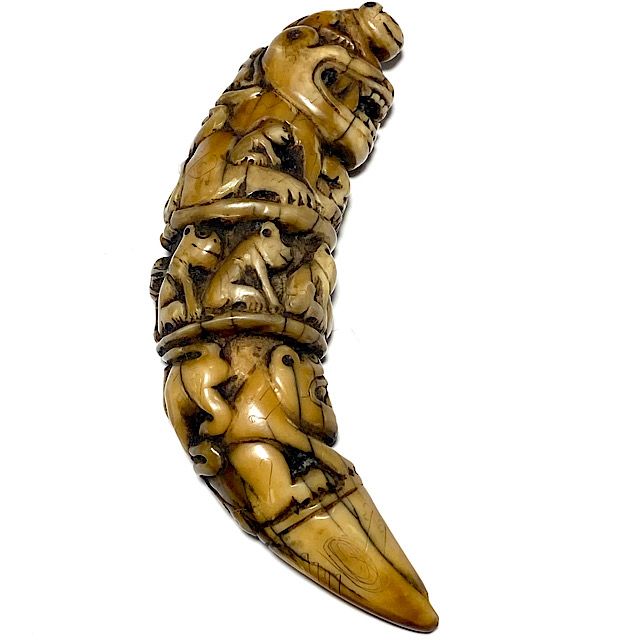
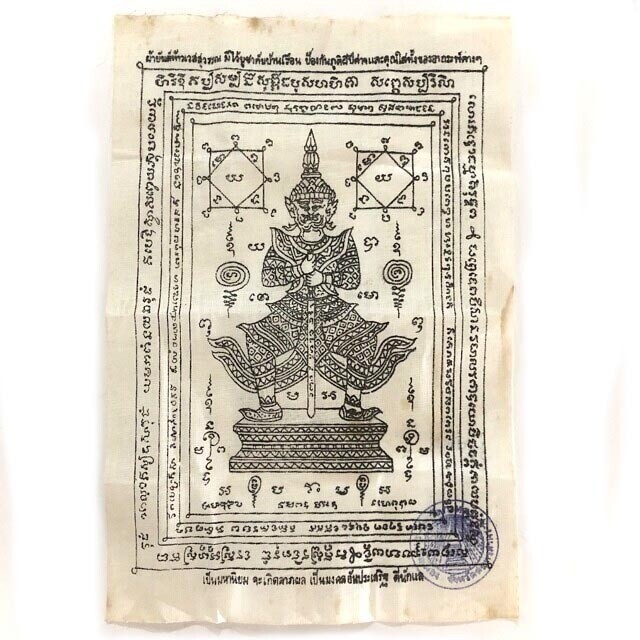
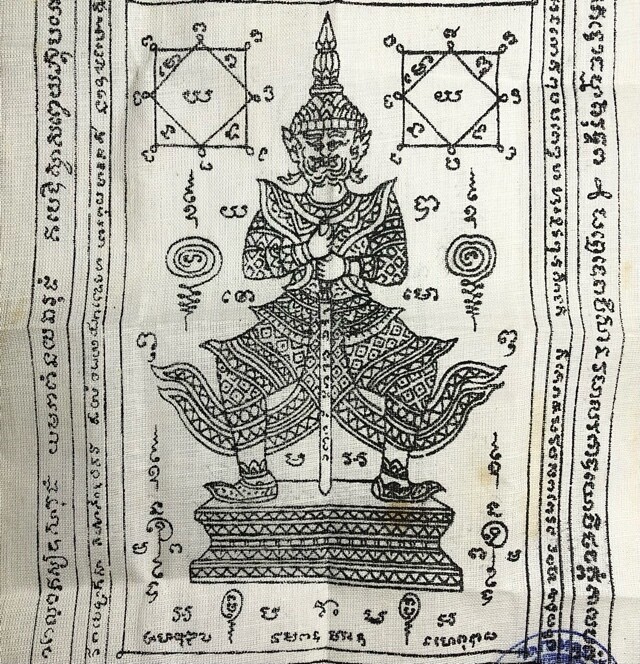
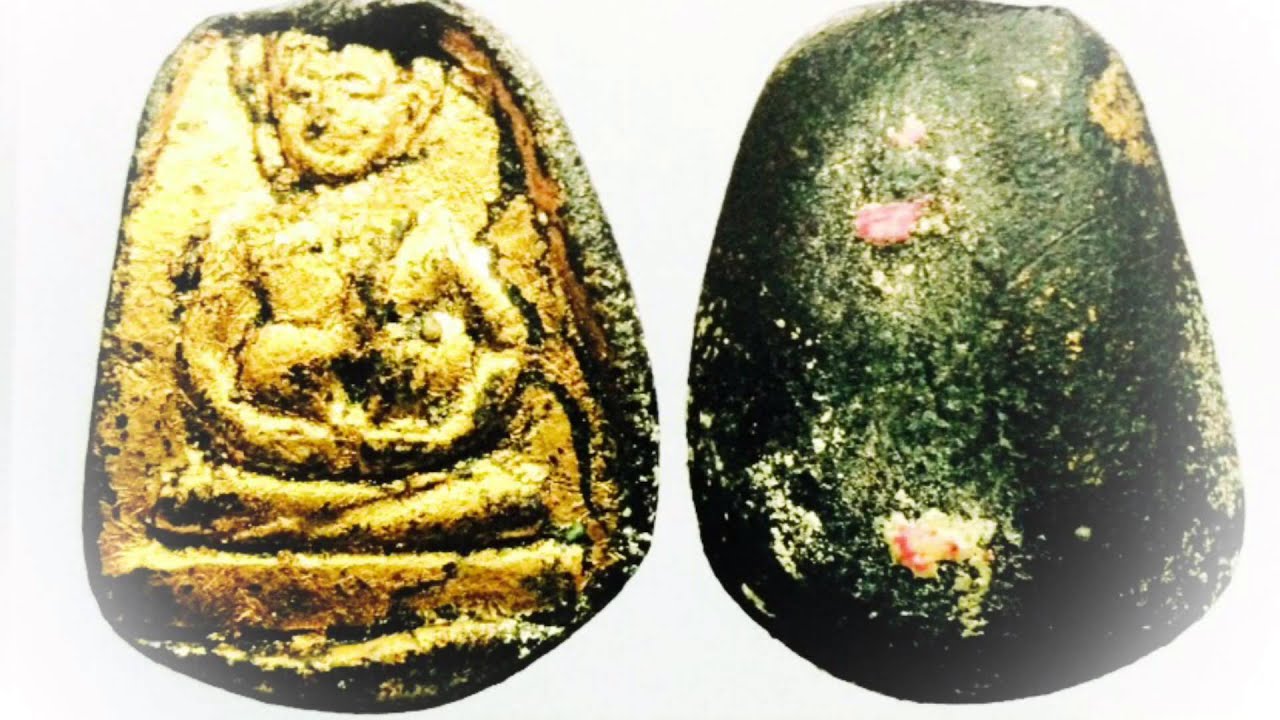
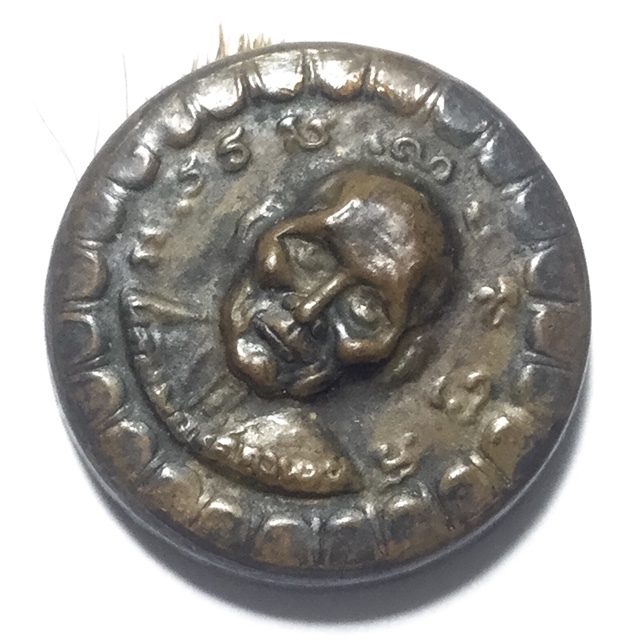
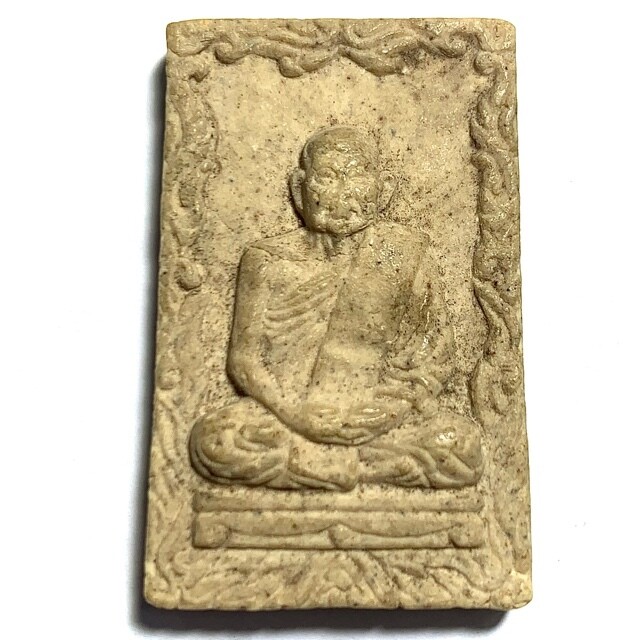
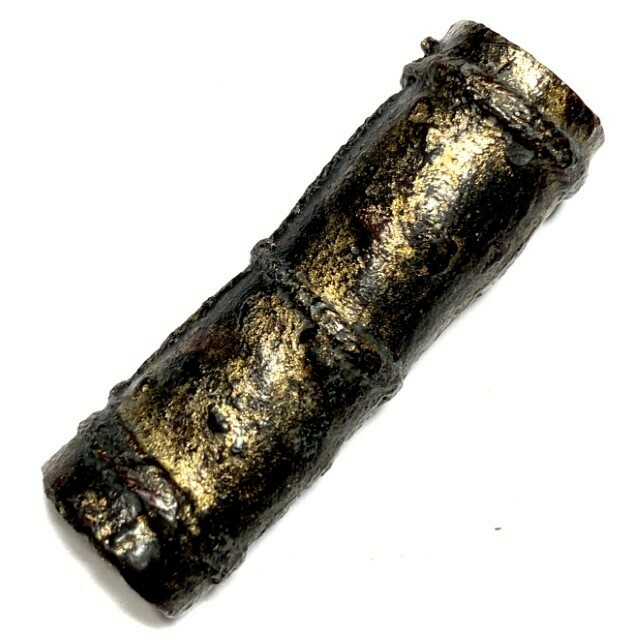
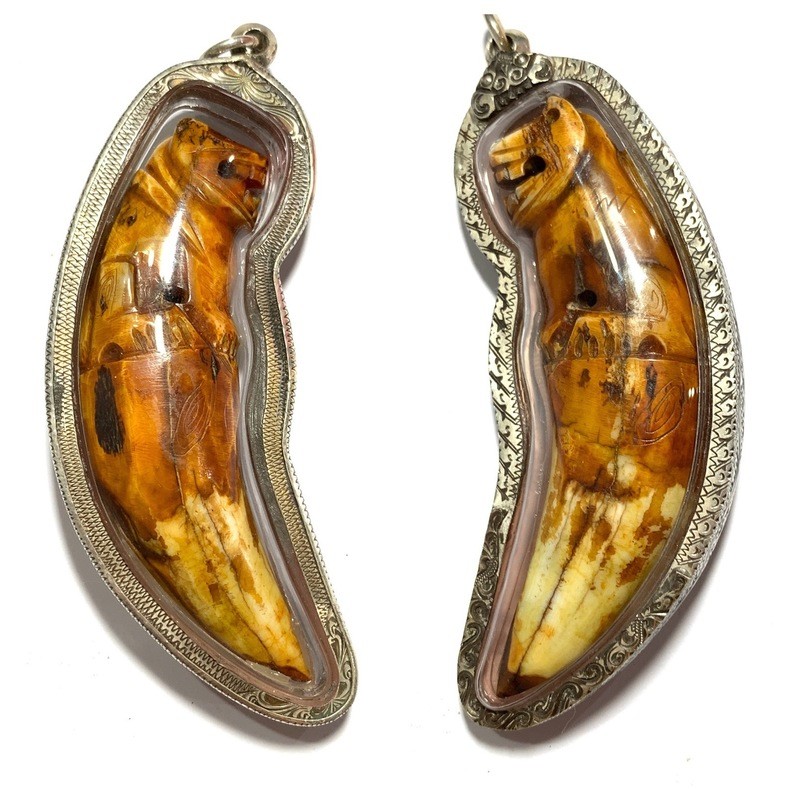
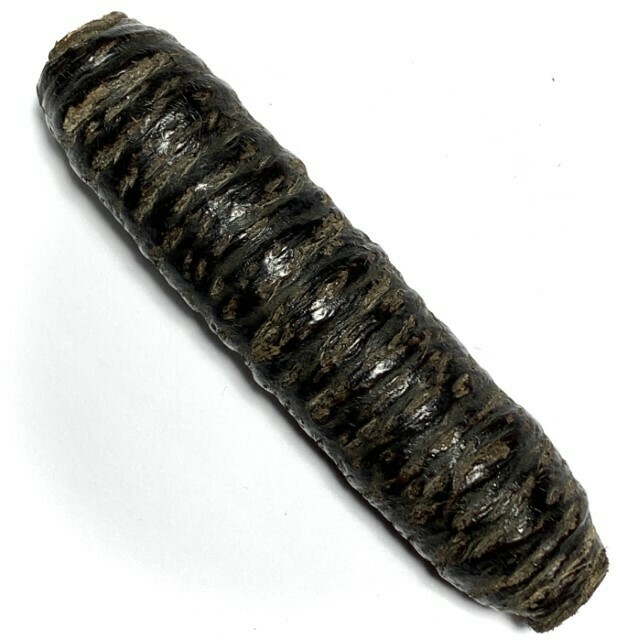
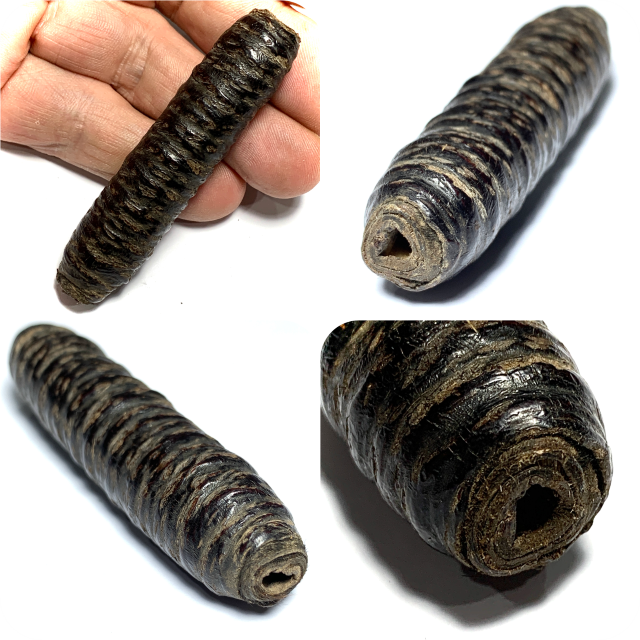
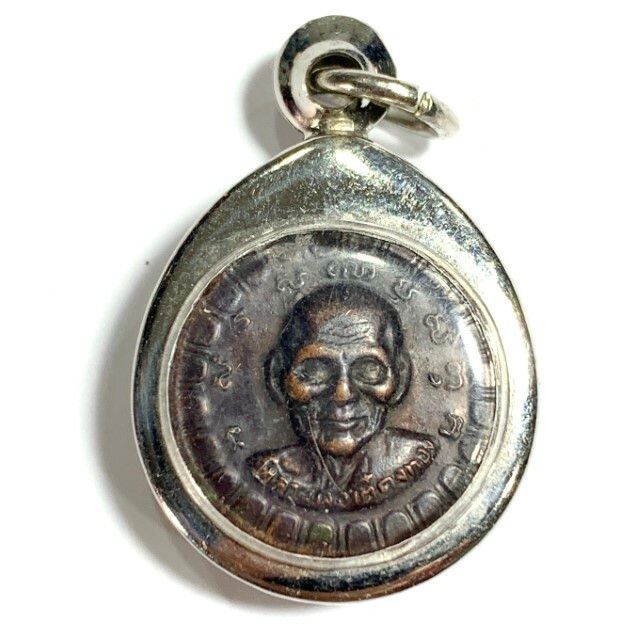
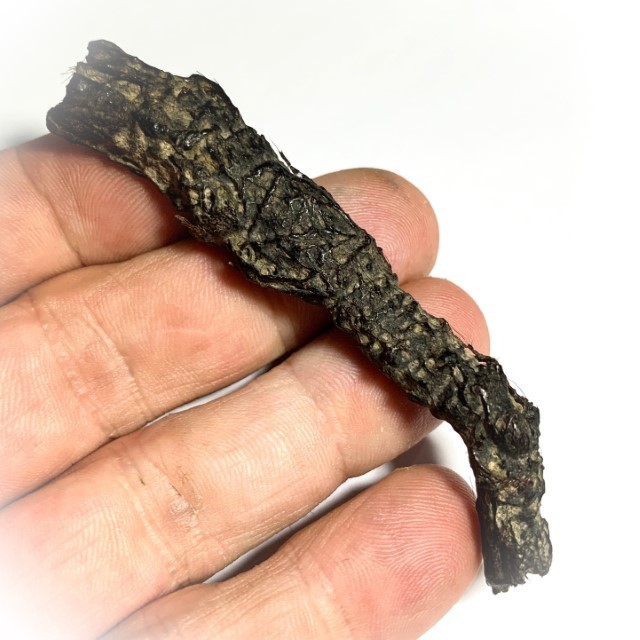
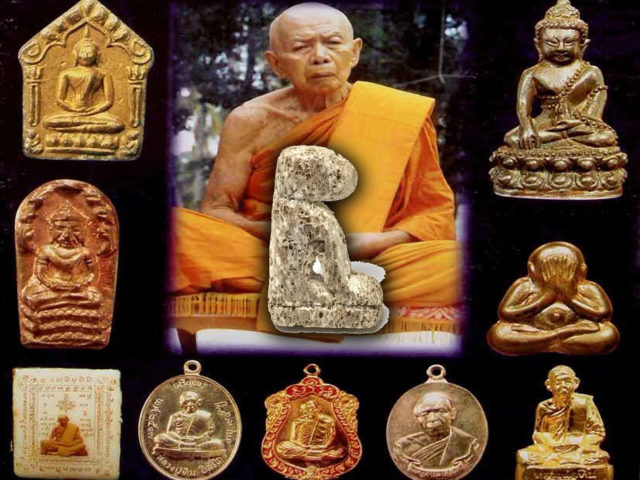
Below: an example of one of the various Roop Tai Kroo Ba Ajarn Ajarn Heng which were released during his Era


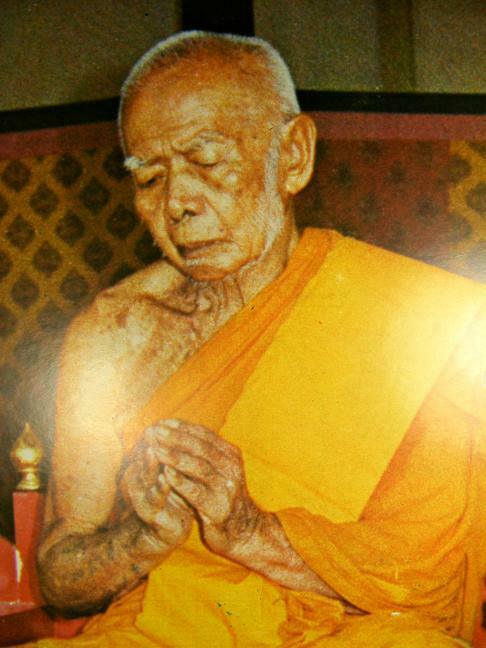
Ajarn Heng Praiwan was a great Lay Master and Adept Necromancer of olden days, of the Ayuttaya Province. Ajarn Heng was born in the year 2428 BE, and was ordained as a Buddhist Monk when he came of age, at Wat Suwan in Ayuttaya. During his ordained years, he studied many ancient magical Wicha of the grimoires of Wat Pradoo Rong Tam, which was a great library of ancient magical grimoires, perhaps the largest in the country. He became extremely able in the inscription of Khom Agkhara Sanskrit Spells, Kata Incantations, and Sacred Yant, and became very well known as a great Master of Sak Yant Thai Temple Tattoos.

Ajarn Heng Praiwan, studied the Wicha Grimoire of the Dtamra Radtana Mala, until attaining full Adept Mastery, after which he disrobed for a time, to help his parents. After which, he ordained again once more, at Wat Prayatigaram in Ayuttaya, with the Great LP Glan Tammachodti, Abbot of Wat Prayat, as his Upachaya Ordaining Monk. He spent a long period of time learning and mastering the full Dtamra of the Wicha of Luang Por Glan, after which he disrobed again, and became a lay-sorcerer until the end of his days, when he passed away at the age of 75, in the year 2502 BE.

It is said that Ajarn Heng’s father, was either a police officer, or a prison officer, and sent Ajarn Heng to Penang, and Singapore, to be educated. But Ajarn Heng did not finish his schooling, and left, because of his immense fascination and interest in the study of Saiyasart, & the Dtamra Saiyawaet Grimoires, of Thai Buddhist, Animist, and Necromantic Occult Practices. He even traveled to the South of Thailand to learn the most ancient Magical Practices of the Southern Khao or Sorcery Lineages.

After his time practicing and mastering the Southern Lineage Magical Practices, Ajarn Heng returned to his home Province of Ayuttaya, in Central Thailand. Ajarn Heng was now a Master of the Wicha of Luang Por Glan, and the Southern Wicha of Sorcery which dates back to the Sri Vichai Era of Siam. The Wicha Mastered in Entirety of Wat Pradoo, whgich Ajarn heng has undertook, came from the time when King Naresuan Maharach, ordered the Wicha Saiyasart Grimoire texts to be inscribed and stored at Wat Pradoo Roeng Tam.

The inscriptions were begin and finished between the years 2133 – 2148 BE. It was King Pra Mahesuan Maharach, who united the city Kingdoms of Siam and Unified the country into one Land, namely ‘Siam’, or ‘Thailand’, and made the city of Ayuttaya the first capital of the Kingdom (Later to be moved to Bangkok, for logistical and geo-political reasons).

Ajarn Heng began to serve the public and accept devotees, at first by only performing Sak Yant Tattoos, and became known as one of the Top Sak yant Masters in the Country of his Time. Another later Kroo Ba Ajarn and Friend in Dhamma, Luang Phu Si, of Wat Sakae in Ayuttaya (Temple of LP Doo), once told that during the time of King Rama the 3rd, during a time of military dispute, around the year 2475 BE, many regiments of Thai soldiers, of both high and lower standing went to Ajarn Heng for his protective Yant, due to the miraculous powers attributed to them, all one the same day. On this occasion, Ajarn Heng constructed the ritual place at Wat Hantra Temple. Ajarn Heng invited a host of powerful Monks with Psychic Powers to assist in the ceremony of Blessings.

In this occasion (around 2476 BE),Ajarn Heng had to work very hard to gather a large number of Master Monks to come and perform the Suad Nam Puttamont Chanting Ritual, and this was a very had task in those days in Ayuttaya, to travel around and fine enough top masters who knew the chanting of the Nam Pra Puttamont and the Putta Pisek (Buddha Abhiseka) ceremonie. He was assisted in this task, by the great Luang Phu See of Wat Sakae.

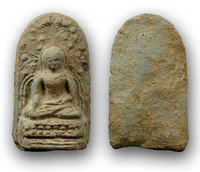
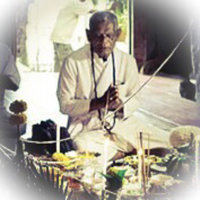
Ajarn Heng Praiwan and amulets

But on this occasion, Luang Phu Si could not attend as well, because he was busy with Dhamma Duties at Wat Liab. But, after this Ceremony, Ajarn Heng would always invite Luang Phu Si to attend all of his subsequent Blessing Ceremonies, and assist with empowerment.

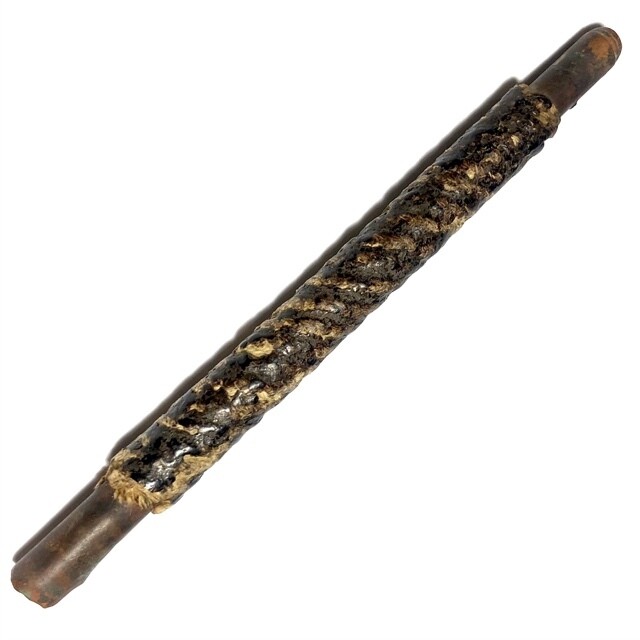
Ajarn Heng was a relatively wealth person with two houses and land stakes, one in the countryside in Tung Hantra, and one in Bangkok. And so, he would have devotees seek him out in Bangkok and in Hantra, for Sak Yant Tattoos, and his powerful Takrut amulets. It became popular to get high class artisans to carve his amulets, as well as village people would carve animist charms from ivory, wood, and sometimes, necromantic Ban Neng skullbones, which are of course, along with his famous metallic, and inimitably designed Takrut Maha Jakkapat Metallic Scroll Spells, the most highly valued, rare, and sought after by devotees of the great anbcient Ayuttaya Lay Sorcerer. Finally, Ajarn Heng moved to stay in Suan Malee, until the Wars in Asia Broke Out, whereupon he left the Capital, and returned to his home Province of Ayuttaya.


During this time, there were many Gangsters and Highwaymen, and a lot of need for Sak Yant Tattoos for Kong Grapan Chadtri and Klaew Klaad protective Magic, and Ajarn Heng became a highly acclaimed master, renowned for his Yant Gao Yord (A Wicha Obtained from the Great LP Hrun). Ajarn Heng was able to receive additional Wicha from the famous temple of study of Sorcery, Wat Sam Jeen, as well as receiving Wicha from the great Luang Phu Tong, of Wat Rat Ayotaya, and Luang Phu Kam Wibun.

Ajarn Heng’s Kong Grapan magic was so famous, that it became popular for police and military to get his tattoos, but also that they did not like the fact that so many Gangsters had them too, and were impossible to shoot dead. His Takrut Jappapattirach was also both infamous, and those who wore one were feared to be invincible. There was once a time when Ajarn Heng was parked in a boat on the banks of the river at Wat Cherng Lane Temple, where the Police came, and had to forbid Ajarn Heng from tattooing more, because the area was overflowing with Gangs of Highwaymen, and his tattoos were making it impossible for the police to catch them.

Ajarn Heng was known to have been highly able himself with Buddhist Arts, and Carvings, in wood, ivory, bone, and skull Ban Neng, as well as being highly famed perhaps most of al, for his famous Takrut, and Carved Ban Neng. It is even said, that the Great Artist Kroo Hem Waechakorn said of Ajarn Heng that “If there is anyone who can draw the four faced Brahma Image better than anyone, it is Ajarn Heng Praiwan”. Ajarn Heng was extremely adept in Wicha Hanuman for Invincibility, Kong Grapan, Victory, and Loyalty, which were very popular of course with all devotees, be they Police, Civil Servants, Ganster Mafias, Triads, or Military. Ajarn Heng made so many different forms of carved amulets and animist charms, that it is very hard to catalogue all of them, but if one is to say ‘which amulets are the most well known?’ One would say perhaps his carved Ivory amulets and Necromantic Ban Neng, and his famous Rian See Hnaa 4 faced Brahma coin.


Ancient Amulet - Thai Buddhist Pra Niyom Category Amulets

Ancient Amulet - Thai Buddhist Pra Niyom ('Pra Niyom'; meaning 'High End Preferred Class Antique amulets') Fine Authentic Amulets from the Great Thai Buddhist Sorcerer Monks, Lersi Ascetics, and Lay Masters of Olden Days

SIGN IN OR CREATE ACCOUNT

Filters

Filters
Pra Somdej Pim Gaes Jarot Sum Pim Gaes Iang Niyom Long Rak Chart Somodej Dto Wat Rakang Kositaram
Free Shipping Worldwide (we do not state or declare true price to counter tarrifs tax on customers), & Offer of Free Solid Silver Casing Included
SKU 04783
$1,699


Palad Khik Hua Chamot Dtua Kroo Jumbo 10 Inches Ud Kring Fang Mukh Ploi Sek Lin Takrut Luang Por Pina Wat Sanom Lao Featured

Palad Khik Hua Chamot Dtua Kroo 10 Inch Jumbo Size Luang Por Pina

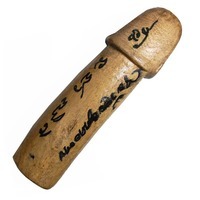
Special Jumbo‑size, 10‑inch‑long Dtua Kroo version of the all‑time classic *Civet‑Head Palad Khik* from LP Pina, this remarkable piece boasts a striking green gemstone emerald for its eyes, adding a vivid, almost hypnotic depth to its gaze. The intricate design features a Kring Met Gan Fa Pha bead rattle embedded within the body, while a delicate sea‑pearl is carefully set into the belly, creating a subtle play of light and texture. Hand‑inscribed gold‑leaf blessings adorn the surface, each stroke conveying reverence and craftsmanship.

Surrounding the Palad Khik are a horde of Khom Agkhara spell inscriptions—Sacred Na, Yant Hua Jai Na, and Ok Dtaek—each etched with meticulous detail, suggesting ancient protective charms. Weighing in at 360 grams, the heavy wood construction gives the piece a substantial, grounded presence, while a Chueak Kart Aew cord belt, once attached, hints at its ceremonial use or display. The overall effect is a richly layered artifact that blends artistry, symbolism, and tactile allure into a single, commanding object.

When speaking internationally, we behold here a very large and pristine example of one of the Most Famous Palad Khik amulets of all time, and one of the rarest and most sought after; The Palad Khik Hua Chamot Mai Gae carved wooden Palad Khik of Luang Por Pina (Wat Sanom Lao), with gemstone eyes, Met Gan Fa Pha rattle inserted within the body, pearl insert, and golden Takrut spell as the tongue

The Yant Hua Jao Na Ok Dtaek is inscribed on the shaft, with gold leaf blessing.. The Palad Khik is as is Ubiquitous with Luang Por PIna, empowered with hand inscriptions of the Sacred Yant Na Ok Dtaek, and the invocation of the four elements.

These amulets are highly regarded for their power to invoke the power to attract others, treasured possessions, and ward off black magick. They are also full of Metta Mahaniyom, Maha Lap Klaew Klaad and Maha Pokasap Powers as well as the obvious Power of Serm Duang ability to improve fate and destiny.

Free EMS Registered Airmail Worldwide is included with this amulet The Palad Khik is in truth symbolic of the Shiva Lingam; The belief in the Shiva Lingam, or ‘Leungk’ (Thai pronunciation) phallic energy of the Palad Khik, is derived from the Brahman influence which has been inflected on Thai Theravada Buddhism, since both belief systems came to Siam more than one or two thousand years ago. It is believed that the Palad Khik Lingam energy is the source of all life forms in the Universe. This is the root of the act of reverence (Bucha/Poojah) to the Palad Khik as a Shiva Lingam, which honors Shiva as the Lord of the World.

In India, not only is the Shiva Lingam worshiped, bit there exists also a
cult which reveres the female sex organ, which is called the ‘Yoni’(Vulva, female counterpart). The same thought is applied as that used to revere the Palad Khik Shiva Lingam, that is to say, that all created things must spring out of the Yoni instead of the Lingam.

Below; hand scratched etchings of Luang PorPina’s Famous Sacred Na Inscription on the shaft of the Palad Khik, conceal a Kring Bead inserted within the interior of the Palad Khik

The practice of making Palad Khik as a portable amulet, for ‘Bucha Siwalingk’ (praying to Shiva Lingam phallic Deity), entered Siam with the influence of the Khom race, whose language and alphabet the Thais absorbed and adapted into their own personalized fashion.

Some have said that the integration of Pre-Buddhist beliefs and traditions, into the Thai Theravada Buddhist practice of the common Folk, such as worshiping amulets like the Palad Khik, is not in contradiction to the practice of Buddhism and presents no obstacles. In fact it is believed that since Buddhism sprang out of the roots of
Brahman Cosmology, and that the people of Siam adopted Pre-Buddhist
Brahman traditions and incorporated them, that this is even a benefit to
the preservation of ancient knowledge, and of Thai history and
tradition. Most of these ceremonies do not come into any kind of dispute
with Buddhist thought. In fact, Buddhist Thought bases itself on many
concepts found in Hinduism, and in Thailand, the two Belief Systems can
hardly be separated.

This amulet is ‘Doo Ngaay’ (easy to see it is real), for its clearly recognisable from its inscriptions and appearance. It is hence considered Ongk Kroo (usable as a teacher), as a reference model for further study to increase the powers of recognition of authenticity of the top preferred Palad Khik amulets of Luang Por Pina. However, the Pantheon of amulets of LP Pina is one of the more difficult genres to study, for many were hand made, each individual, and only a small percentage of all the amulets he made has been officially documented to date.

This is for its easily recognisable features, which allow one to easily distinguish the authenticity of any other exhibit when held side by side for comparison, making it a Master Key for teaching the eyes to recognize Luang Por’s famous amulets, as well as the effects of aging over the years (especially important with Sacred Powder amulets)

Luang Por Pina is the deceased Abbot of Wat Sanom Lao in Sra Buri and was said to have possessed Abhinya Powers, and to have Mastered the 10 Kasina Powers of Elemental Magical Dominion. Below you can see another Sacred Amulet from this Master, the Famous Pra Pim Tao Wua Luang Por Pina.

It is said that Luang Por Pina was able to read the minds and intentions of other Humans, and bring amulets to life with is Empowerment Methods, and that his amulets were able to give signs, and also can be beseeched and prayed to, for wish fulfillment (Sarapat Neuk). There are many stories of Miraculous Events occurring through his amulets, which have been recounted around the country over the years, which have also brought his name to the ears of people around the world.

Luang Por Pina is known to have performed strange Magical feats in front of the eyes of his disciples many times, especially when devotees would ask him for an amulet. He would ask the devotee to lay down and open their eyes, and would take a handful of sand and pour it over their face, as they would hold the amulet in the hand.

But the sand would bounce back before it hit their eyes, and no matter how much was poured on the face, not a single grain of sand would be able to enter the eyes of the devotee, becoming repelled as if by a force field before it touched the eyes.

The remains of Luang Por Pina in meditation posture

Above Pic; The corpse of Luang Por Pina which was found in meditation posture, dead since over 12 Hours, but was still warm, and not stiff, to the immense surprise of those who found him. The surprise was because a corpse that is dead for over 12 hours, should be stiff as a board and cold.. his body was not mummified or given any special treatment according to his wishes and placed in his mausoleum.

How to Bucha Palad Khik

Below; Golden Brass Takrut spell as tongue of the Chamot Civet Cat, is visibly inserted into the mouth of the Palad Khik Hua Chamot of Luang Por Pina, revealing an attention to detail and adherence to the Ancient Wicha of Empowerment of the Palad Khik Hua Chamot, that is both impressive, and faith instilling in its certain magical power.

Kata Luang Por Pina

Light 5 sticks of Incense, and chant the Maha Namasakara 3 times before chanting the special Kata for Luang Por Pina Bpiyataro

Namo Dtassa Pakawadto Arahadto Sammaa Samputtassa

Namo Dtassa Pakawadto Arahadto Sammaa Samputtassa

Namo Dtassa Pakawadto Arahadto Sammaa Samputtassa


Then chant the Kata for Luang Por Pina (3 times);

Ahang Sukhadto Pina Bpiyataro Naamadtae Aajaariyo Ma Pandtae Hohi

Kata Pluk Khong (Call the power within the amulet)

Puttang Gandtang Saranang Haa

Puttang Gandtang Saranang Hae

Puttaaa Namo Ya


Kata Pra Som Hwang (Fulfilment of Wishes)

Chant the following for as many repetitions as your age (for example, if you are 35 years old, then chant the Kata, repeatedly for 35 times)

Nadtae Sudtae

The last repetition, change the words to

Mahaa Sudtae Nachaa

As an example, let us pretend a four year old were to recite the mantra, which would result in four lines like this;

Nadtae Sudtae, Nadtae Sudtae, Nadtae Sudtae, Mahaa Sudtae Nachaa


If you wish to know more about another famous amulet of Luang Por Pina, then you can listen to the three quarter of an hour talk and explanation of the Sacred Daw Aathan along with a short Biography of Luang Por Pina, recounted and narrated by Amulet Expert Ajarn Spencer Littlewood in the below Podcast. In the podcast, You will be amazed to learn about the very deep meanings contained within the Daw Aathan Hnun Duang Lucky Star amulets of Luang Por Pina.

Please Enjoy the Biography, and Explanation of another very famous Amulet of Luang Por Pina, revealed; Perd Dtamnan Daw Athan Hnun Duang, and increase your knowledge of the amulets of Luang Por Pina.

Charms & Talismans

Thai Buddhist, Animist, and Occult Charms and Talismans, authentically blessed by the great Monks and Lay Masters of Old, and Present Day

Filters

Filters
1 - 60 of 904 items


Khiaw Hmoo Dtan Suea Palad Carved Boars Tusk Tiger Amulet Spell Inscriptions by Luang Por Sawai Wat Bridaram Featured

Sacred solid Wild Boar’s Tooth carved Palad Khik with Tiger and Sariga Yantra spell Inscriptions, and Carved Tiger on the hilt from Luang Por Sawai, of Wat Bridaram. The Carved Talismanic Animist Charms with their famous and instantly recognisable Hand Inscriptions of Luang Por Sawai, are amongst the most highly sought after and preferred amulets of Luang Por’s Pantheon, and are very rare to encounter.

This exhibit is carved from a Wild Boars Tusk into the shape of a Palad Khik Lingam with a Tiger seated on the hilt of the Lingam. The tusk is not just any old Boars Tusk, rather, ‘Khiaw’ Dtan’. Khiaw Dtan is a tusk that has no hollow inner, which is very rare anomaly, and seen to be powerful magic especially for Kong Grapan Chadtri and Maha Amnaj.


Luang Por Sawai was known for strict observance of sila, sustained Vipassana practice, and a calm, grounded presence. Accounts from Thai-language sources describe him as a monk who learned from a large number of teachers across both meditation and wicha lineages. He is often described as having studied under more than twenty teachers over the course of his life, reflecting the traditional Thai pattern of direct transmission rather than a single linear lineage. This breadth of instruction is frequently cited by devotees as the reason his consecrated objects were regarded as especially complete in both metta and protective qualities.

Periods of Tudong practice form part of his remembered life. These forest-wandering years are described as times when he practiced meditation in remote areas, traveling through undeveloped land, forests, and rural regions, enduring physical hardship and isolation as part of ascetic training. Such practice is traditionally associated with confronting fear, cultivating endurance, and refining mental stability. In local recollection, these years shaped his character and reinforced his reputation for inner strength and quiet authority.

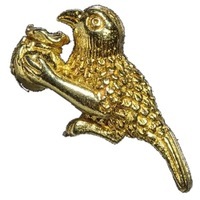
This talismanic charm amulet is imbued with a multitude of different types of Magic which complete the powers needed for almost all walks of life, with the Wicha Suea Tiger Magic, fyued with the Wicha Sariga Celestial Magpie and the Wicha Palad Khik.

Thai amulet circles consistently list LP Sawai as a monk whose amulets emphasize metta, protection, and authority. Among the most discussed are carved talismans made from wild boar tusk, particularly the Khiaw Gae carved with tiger imagery. These objects are traditionally associated with Kong Grapan and Maha Amnaj qualities and are valued for their material, hand carving, and the presence of sacred inscriptions attributed to his hand.

He is also associated with metal Buddha-image amulets, including Pra Kring types and Pra Pidta forms, as well as commemorative medallions issued by Wat Bridaram during different periods. Later in his life, Takrut scroll amulets are recorded, described as emphasizing metta and social harmony. Palad khik and other traditional charms, carved from bone, ivory, or wood, also circulate under his name and are regarded as part of the temple’s ritual output rather than mass production

Kata Bucha Nok Sariga

Kata Bucha Nok Sariga (Golden Tongued Celestial Magpie) is chanted to invoke immense Metta Mahaniyom (loving-kindness) and Maha Sanaeh (seductive charm), primarily for improving business, speech, and persuasion. The most common short mantra is:

“Wanna Wannaa Saligaayo Puttang Siro Waa Ha”.

The shaft of the Palad Khik has inscriptions of the Yant Suea Tiger Wicha, for Maha Pokasap Maha Amnaj Maha Ud Kong Grapan Chadtri Klaew Klaad, and the Head of the Palad Khik has the Inscription of the Yant Sariga Celestial Magpie spell, for Metta Maha Niyom Maha Sanaeh Jerajaa Kaa Khaay Magic.

Kroo Sathidt Chodtikun (Luang Por Sawai Thidtawanno), was an elder monk of the pre 2500 BE generation of Guru Masters, who was born in 2464 BE in Ayuttaya, and became the abot of Wat Bridaram in Nakorn Pathom. His father’s name was ‘Suea’ (meaning ‘Tiger’) and his Mother’s name was ‘Yim’ (meaning ‘Smile’). Luang Por Sawai became known as one of the Great masters of Nakorn Pathom Province, but indeed is highly revered by Devotees in Ayuttaya too, for he was born there.

Luang Por Sawai passed away during Loi Kratong period, on the 11th November, in the year 2543 BE. He was known for his powerful Kong Grapan Chadtri Klaew Klaad Maha Amnaj (Commanding Power & Dominion) carved hand inscribed talismans. Luang Por Sawai’ possesses great fame for this kind of ‘Krueang Rang’ Talisman is legendary.

Below; another classic example of Palad Khik Luang Por sawai with his inimitable inscriptions, including the Sariga Birds on the head of the Palad Khik, for your comparison, and to reveal the signature details of the hand inscriptions which Luang Por Sawai used for his Carved Talismanic Charms.

All of his carved talismans are equally popular, be it the carved Khiaw Moo Dtan solid Boar Tooth, Palad Khik carved from tooth, ivory, bone, wood and coral, or his other animist charms. His Muan Sarn Sacred Powders amulets are manyfold and also highly revered, and well documented in encyclopaedic works.


Above; The tip of the tusk has Luang Por Sawai’s highly recognisable Sariga Birds engraved into the head of the Palad Khik

Luang Por Sawai’s Patipatā (practice and diligence), was highly regarded by devotees all around Thailand, for his great Purity and Meritorious Behaviour and Charitable Acts became heard of far and wide. The power of his amulets and the stories of success, is of course an additional factor involved in the cause of Luang Por Sawai becoming such a popular and famous Master for his Talismanic Charms.


Luang Por Sawai is highly renowned for his Mastery of the Yant Maha Gamnerd Narai ‘Birth of Vishnu’ Spell, which is said to be amongst the most powerful and Universally Effective Magic Spells in the Dtamra Saiyawaet of Vedic and Khmer Sorcery

Kata Bucha Luang Por Sawai of Wat Bridaram.

Use for Bucha to Luang Por Sawai, and his amulets, and especially those with the image of tiger will have great benefits from this Kata also. Those who are familiar with Tiger Wicha amulets will notice the presence of certain phrases which are invovations or praises to the Payakka Tiger. This is part of Luang Por Sawai’s Wicha, and even his own father was named ‘Tiger’, and the Tiger Wicha is one of the various Animist Talismanic Spells he mastered during his lifetime. The Kata works for any amulet of Luang Por Sawai or for paying Reverence to Luang Por Sawai himself (Bucha).

Luang Por Sawai was a Gaeji Ajarn Master of the Nakorn Pathom Province, which is the land where the Dhavaradi Period of Buddhism arose, and is known as the ‘Daen Sri Dhavaradi’. Nakorn Pathom is the location of the Great Pathom Chedi first Stupa which is said to commemorate the Buddha’s first place of resting when his alleged journey to Siam took place. Thai Buddhist legend states that the Buddha did visit what was then still Suvarnabhumi before the Chakri Kingdom of Siam arose, and that he stopped to rest where the Great Chedi Stupa of Nakorn Pathom now stands. This Chedi is the oldest Chedi well over 1000 years old, and was built to commemorate the Buddha’s first resting place in Siam.


His famous Palad Khik, Khiaw Moo, and of course his final edition Takrut Bailan 100 Pi are amongst the many world famously powerful (and beautiful!) amulets of his pantheon to be accepted and highly regarded by the amulet appreciation societies of Thailand. The amulets of Luang Por Sawai are seen to grace the pages of encyclopaedic volumes of amulet aficionado societies, and has enjoyed a place of high status in national amulet magazines over the last few decades.


This Palad Khik is carved from a piece of natural Tusk, and has been inscribed with a mass of sacred Khom agkhara spell inscriptions, and Yant. The true ancient formula of inscriptions of the Dtamra Palad Khik are most impressively inscribed on the surface of the most difficult to fashion tusk. The Yant Suea Phaen ‘Leaping Tiger Yantra” is inscribed with immense detail, and a host of Khom Agkhara Inscriptions embellishing its power, with Invocations of Tiger Magic.


The invocations and awakening and turning of the four elements were performed, the heart Mantra to awaken the Palad Khik (Kata Hua Jai Jone – Heart of the Gangster Kata), and the Akarn 32 Incantation to reanimate it and bring it to life, with the spirit of the Magic of the Suea (tiger), Sariga (Celestial Magpie), and the Lingam of Shiva Wicha Palad Khik.


The Palad Khik is an Ancient Wicha, whose development can be traced right back to the Vedic Brahman Occult practices of Thousands of Years ago. Palad Khik amulets must be empowered by the repetition of incantations, which Thais call ‘Kata Bucha’. Kata Bucha are derived from the Devanagari word ‘ghata poojah’.

Luang Por Sawai

The incantations for Palad Khik depend on the creator’s lineage in each school of traditional Animist magic, but in truth, one can use any or all of the many different Kata given for Palad Khik..

Kata Bucha Palad Khik

Ganha Nē Ha – Na Ma Pa Ta

or

Ja Pa Ga Sa – Na Mo Put Taa Ya – Gan Ha Nē Ha Na – Ma Pa Ta – Om Siwaling – Sabbha Metta – Sabbha Pokaa – Sabbha Laapo – Sabbha Tanaa – Sabbha Yasa – Sabbha Pranee – Sabbha Mangalaani Bhavantume – Om Laluay Mahaa Laluay Samsip Sorng Hee Hae Hom Lorm Dtorm Kuay Khor Hai Guu Ram Ruay Pro Hua Kuay An Nii Da Daa Di Dii Duu Dii Hee Maa Kuay Maa Burut Maa Dii Sadtrii Mii Maa Swaa Home


Ancient Amulet - Thai Buddhist Pra Niyom Category Amulets

Ancient Amulet - Thai Buddhist Pra Niyom ('Pra Niyom'; meaning 'High End Preferred Class Antique amulets') Fine Authentic Amulets from the Great Thai Buddhist Sorcerer Monks, Lersi Ascetics, and Lay Masters of Olden Days

SIGN IN OR CREATE ACCOUNT

Filters

Filters
Pra Somdej Pim Gaes Jarot Sum Pim Gaes Iang Niyom Long Rak Chart Somodej Dto Wat Rakang Kositaram
Free Shipping Worldwide (we do not state or declare true price to counter tarrifs tax on customers), & Offer of Free Solid Silver Casing Included
SKU 04783
$1,699


Rahu Om Jantr Wicha Lanna Nuea Kala Ta Diaw Long Rak Chart Jeen Boran Circa 2465 BE Kroo Ba Nanta Wat Tung Man Dtai Featured

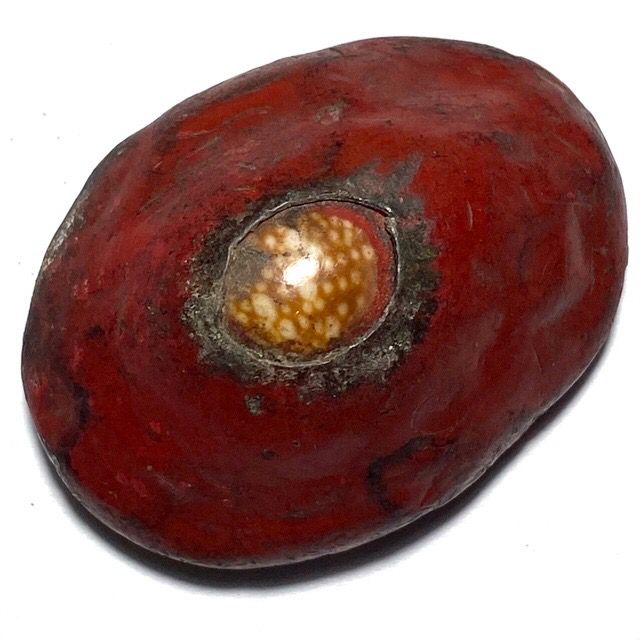
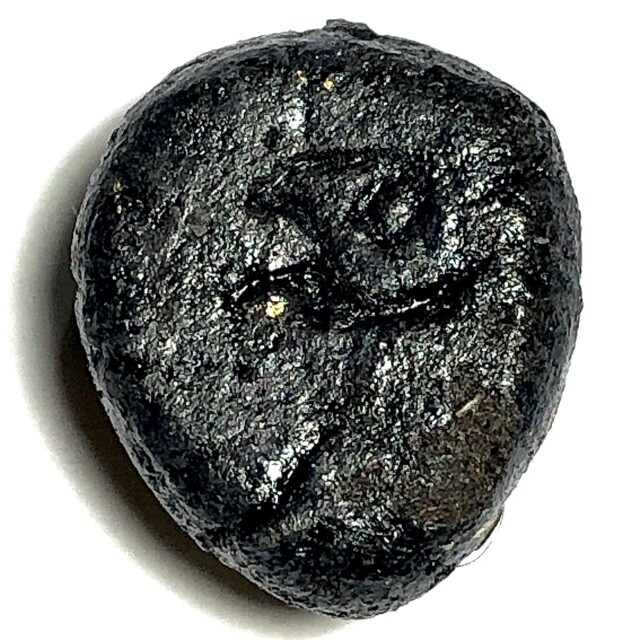
One of a the very rare ancient amulets of this Great Lanna Master, the Pra Rahu Kala Ta Diaw one eyed coconut shell carving, in classical ‘swallowing the moon/sun’ eclipse shape (Pim Rahu Om Jantr/Suriya), in ‘Nok Hook’ (Owl face) style, with an ancient and exquisitely filigrain inscriptions of Lanna Agkhara spell inscriptions, In rare One Eyed Coconut Shell, coated with ‘Rak Chart Jeen Boran’ ancient Chinese herbal Lacquer.

Hand carved by one of the preferred Master Looksit Artisans of the Guru, and hand inscribed with the Wicha Pra Rahu by Olden days Lanna Master Guru Monk Kroo Ba Nanta Nanto Bhikku, of Wat Tung Man Dtai, in Lampang. Kroo Ba Nanta was the Kroo Ba Ajarn of Kroo Ba Lerd, of Wat Tung Man Dtai. This amulet comes with a coput of the ebook “The First Book of Thai Lanna Sorcery”, written by myself (Ajarn Spencer Littlewood), as a gift, for it contains the Biography and amulets of Kroo Ba Nanta covered within its pages. 🙂


KATA PRA RAHU KAM DUANG

The rear surface texture reveals true ageing of a centenarian+ amulet, and the age of the inscriptions of Kroo Ba on the Yant Duang Sacred Geometry Spells inscribed within the central section of the amulet, shout out the word ‘ancient’


free shipping worldwide

Free Registered Air Parcel shipping Worldwide is included with this amulet. The Pra Rahu of Kroo Ba Nanta is a very rare thing to come by, and is highly revered by Business Owners and those who are in High Administrative Positions, as well as those who seek to turn their fate around. Kroo Ba Nanta was one of the Greatest Lanna Masters in Living memory, before whose time, little is known of the names of the Masters who lived, so long ago was his Era.

Because of this, and his constant absence on forest Tudong wandering,, it is not known when Kroo Ba Nanta began making Rahu Amulets, nor how many he made, except that old people who lived during his time, say that he had made them as long as they could remember. Many different shapes and forms can be found, but the trained eye can recognize his inscriptions, and the natural ageing process of the coconut shell, ivory, wood or sacred powders used to make the amulet.

The earliest actual evidence of his making the Rahu amulets was found inscribed on a Kala ta Diaw Rahu Image from Kroo ba Nanta with the year 2456 BE, which is considered to be one of his earlier one eyed coconut shell carvings.The amulet measures 5 x 4 Cm, and is made from one eyed albino coconut shell. Kroo Ba Nanta Nanto Bhikkhu was considered the older of the 2 Greatest Masters of the Wicha Pra Rahu of that particular Era, the other most famous Master being of course Luang Por Noi, of Wat Srisa Tong.

Kroo Ba Nanta was born in 2415 BE, and was indeed the older of these two Great Guru masters of Wicha, both of whom were famous for the Pra Rahu, and also the Wua Tanu Sacred Arrow Bull animist charm.Many people believe that Kroo Ba Nanta was the Kroo Ba Ajarn of Luang Por Noi, but this is in fact a myth. Each of these Masters had their own personal Trajectories and their amulets differ in style and empowerment methods.


It would be more accurate to not compare the two, and to see that Kroo Ba Nanta and Luang Por Noi are equally Meritorious in their Mastery, and were perhaps the greatest Adepts of Wicha Pra Rahu in living memory.

Kroo Ba Nanta was an Upachaya Monk (entitled to ordain people as monks, which is one of the highest statuses), and was responsible for having built many important Buddhist Edifices in Lampang, Chiang Rai, Payao, and surrounding provinces, including Uposatha Shrine Rooms for temples, Chedi Stupas (22 in all), Kuti Huts, and 26 Vihara Shrines.


It is said that during the times of great difficulty of the Monk Kroo ba Srivichai, as Kroo ba Srivichai was placed under house arrest, that Kroo Ba Nanta made a Pra Rahu Kala Ta Diaw Amulet to pray to for the release of Kroo Ba Srivichai, and that he was released shortly after this.


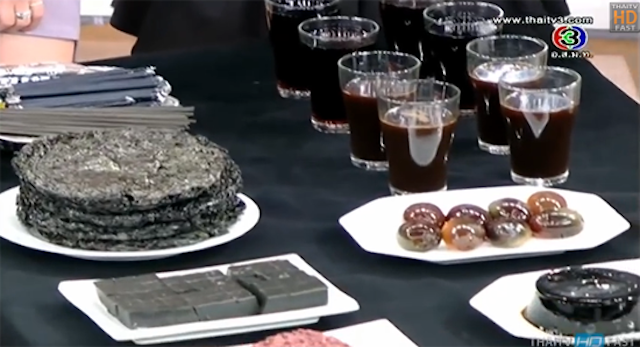
If you feel that your Fate and Horoscope is not Auspicious, then it could be that Pra Rahu is interfering. You can solve this problem by making Bucha offerings to Pra Rahu every Wednesday; Light 10 black incense sticks (‘Toop’ in Thai), and five types of black offerings (e.g. black sticky rice, black jelly grass drink, black semolina or sago pudding and the like).


12 repetitons of the Kata Bucha Pra Rahu are to be Chanted;

Idtipiso Pakawaa Pra Rahuu Sataewaa Samaa Winyaana Idtipiso Pakawaa Putta Sangmi

<span id=”selection-marker-1″ class=”redactor-selection-marker”></span>

Kata Surya Buppaa (to be chanted in the daylight)

Gusaedto Ma Ma Gusaedto-dto Laalaa Ma Ma Dtolaamo Tolaamo Ma Ma Tolaamo Ma Ma Tolaamodtang Haegudti Ma Ma Haegudti


Kata Jantra Bupaa (to be chanted in the night time)

Yadt-thadtang Ma Ma Dtangthaya Dtawadtang Mamadtang Wadtidtang Saegaa Ma Ma Gaasaegang Gaadtiyang Ma Ma Gaadtiyang Ma Ma Yadtigaa

When you begin to Bucha Rahu Deity, you should make the first ever session in the evening of a Wednesday (any time from 7 pm onwards). After you have done this once, you can make Bucha in the daytime if you wish, but the first time you must include the food offerings of black foods as well as the black incense. The second time onwards, only the incense is necessary in the daytime, if it is a lot of trouble to get the food offerings.


Ancient Amulet - Thai Buddhist Pra Niyom Category Amulets

Ancient Amulet - Thai Buddhist Pra Niyom ('Pra Niyom'; meaning 'High End Preferred Class Antique amulets') Fine Authentic Amulets from the Great Thai Buddhist Sorcerer Monks, Lersi Ascetics, and Lay Masters of Olden Days

SIGN IN OR CREATE ACCOUNT

Filters

Filters
Pra Somdej Pim Gaes Jarot Sum Pim Gaes Iang Niyom Long Rak Chart Somodej Dto Wat Rakang Kositaram
Free Shipping Worldwide (we do not state or declare true price to counter tarrifs tax on customers), & Offer of Free Solid Silver Casing Included
SKU 04783
$1,699


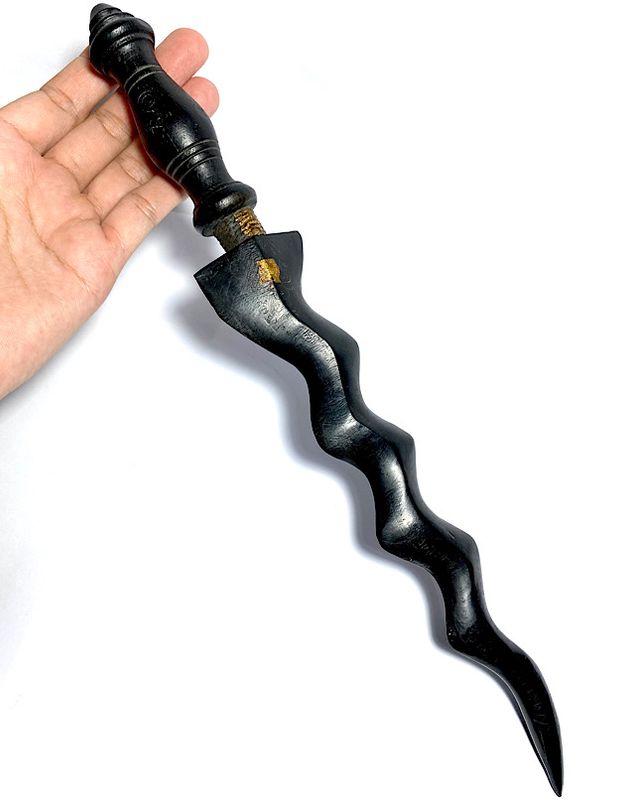
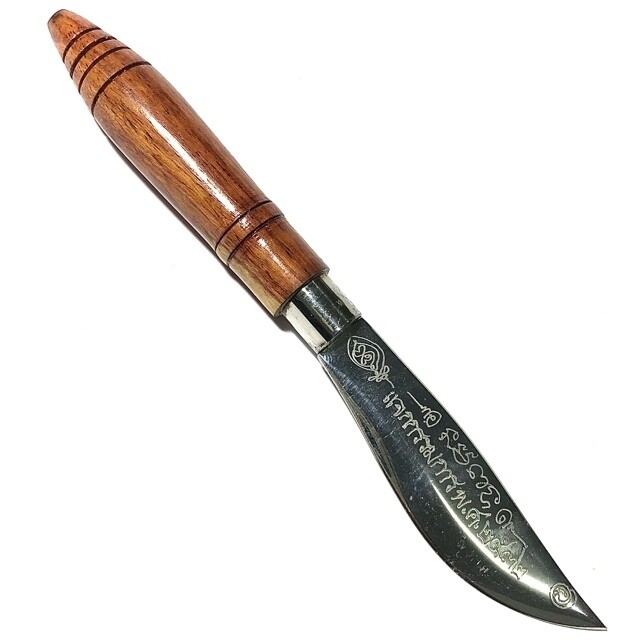
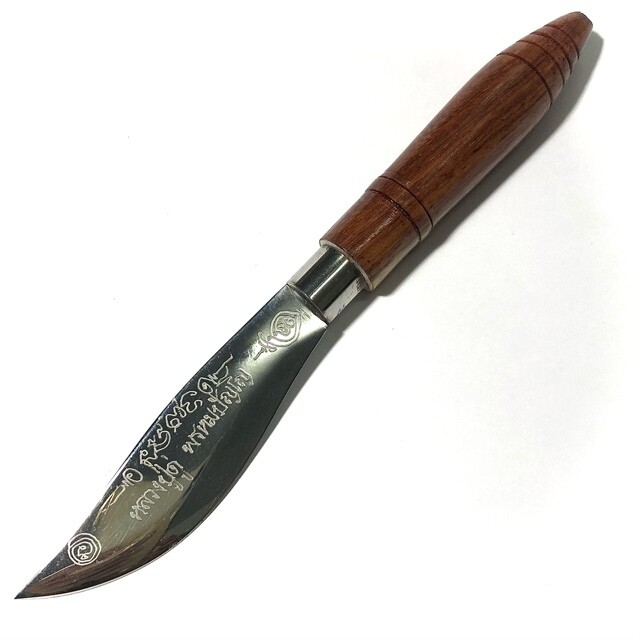
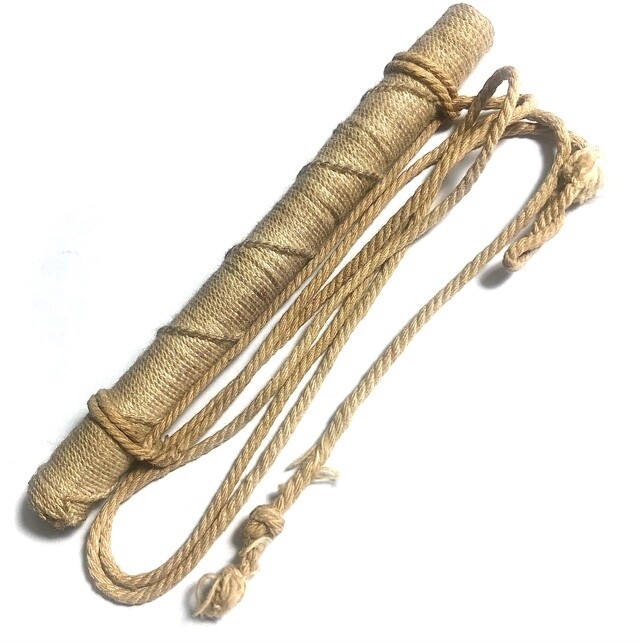
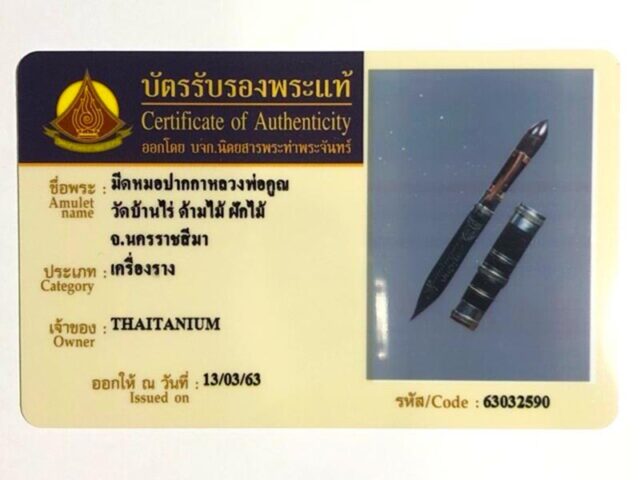
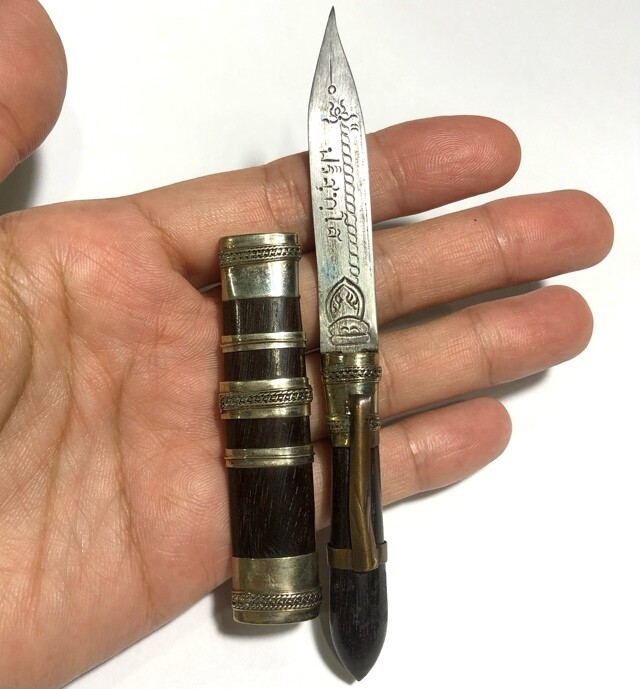
Luang Por Koon's Mitmor Dagger - Spiritual Protection

An exceptionally rare and certified genuine amulet hailing from the ‘Krueang Rang’ Talismanic category created by the revered Luang Por Koon during the mid-era of his leadership at Wat Ban Rai Temple. Its estimated origin is around 2535 BE, although the exact date remains unknown.

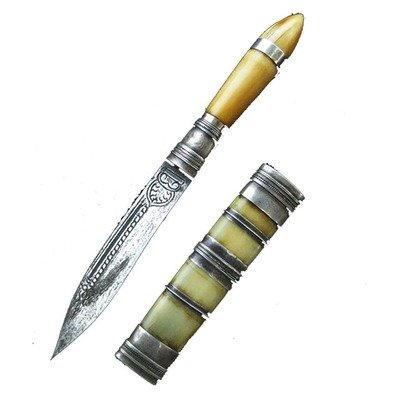
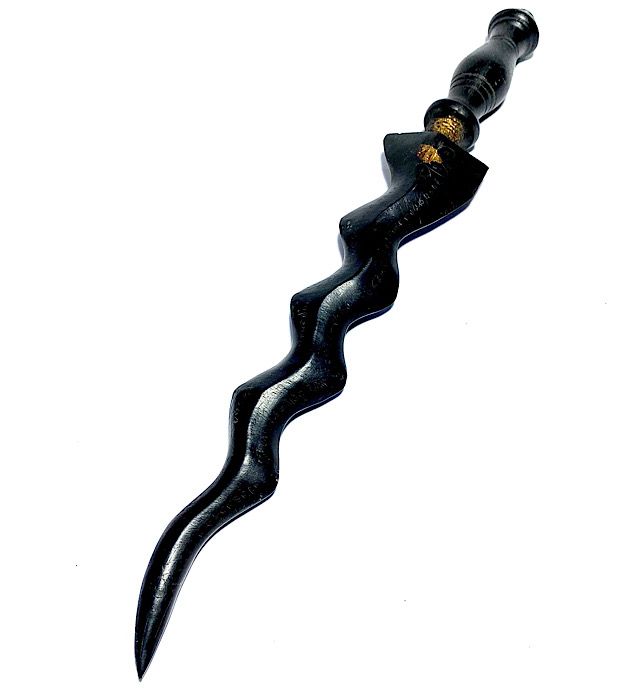
Mitmor Pocket Knife Luang Por Koon

Mitmor Pocket Knife Luang Por Koon

This well-established and tested talisman is renowned for its abilities to ward off malevolent spirits, counteract dark enchantments, consecrate holy water, facilitate curative ceremonies, bear mystical inscriptions, and act as a personal safeguard for overall well-being. Furthermore, it serves as a conduit for the auspicious blessings and benevolence of Luang Por Koon Parisutto from Wat Ban Rai.

Free Registered Air Parcel Worldwide is included with this amulet.

Amulets produced between 2537 BE and 2555 BE are less sought-after compared to those crafted before 2537. This is attributed to the overproduction of many editions after 2537, which diminished their collectibility and rarity. Consequently, editions predating 2537 BE are highly esteemed and increasingly rare to find on the amulet collector market.

In recent times, there has been a notable resurgence of interest in the miraculous amulets of Luang Por Koon. These amulets continue to generate headlines with their extraordinary effects in Thailand. This ongoing phenomenon ensures that faith in his amulets remains resilient, impervious to forgers and unscrupulous traders.

Luang Por Koon, who is now deceased, will forever hold a special place in the hearts of his devotees. He ranks among the top Guru Monks of all time and is arguably the most beloved and renowned monk in Thai history, especially in modern times. His humility is said to be matched only by his miraculous ability to bestow blessings, particularly those for protection and prosperity. His head-knocking blessings, in particular, have been credited with bringing about life-changing miracles for many.

Free Registered Air Parcel Worldwide is included with this amulet. While amulets crafted between 2537 BE and 2555 BE may be less favored due to overproduction, those created before 2537 BE are highly coveted and increasingly rare in the amulet collector market. It is certain that his amulets will continue to be revered as some of the greatest and most collectible amulets of all time.

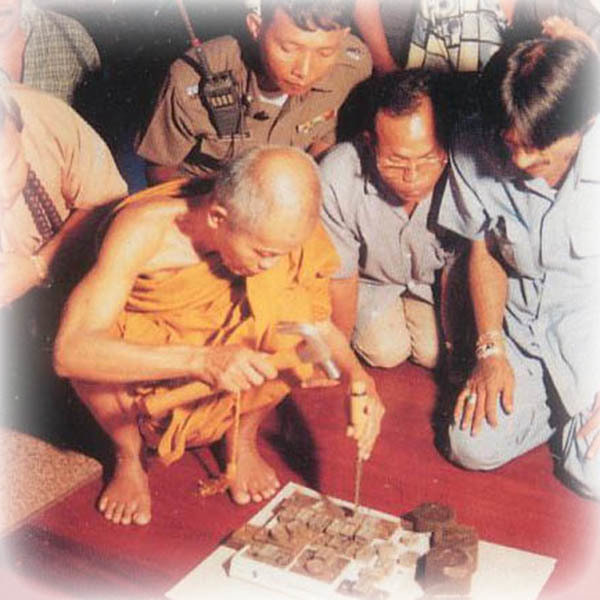
Luang Por Koon Blessing Amulets in Devotional Gathering

Luang Por Koon Blessing Amulets Amid Devoted Followers

Their reputation and acclaim will persist well into the future. After his passing, there was a brief period of increased falsification of his amulets and a decline in interest. However, in the years following his passing, this phenomenon has subsided as collectors have returned to earnestly collecting the amulets of the Great Luang Por Koon, free from the earlier risks posed by counterfeit versions.

In recent times, a grand resurgence of interest in the miraculous amulets of LP Koon has arisen, as his amulets continue to produce breaking news miracles in Thailand. This is one of the reasons why faith in his amulets will always be revived and can never be destroyed, despite the attempts of forgers and dishonest traders.

This rare item, is exceedingly scarce to find nowadays, whether on the internet, in temples, or markets. They are only to be found residing with truly devoted individuals, a fitting tribute to the prestige and quality of this amulet.

One must also consider that despite the immense popularity of his amulets and his passing a few years ago, many of his amulets do not (yet) carry a millionaire price tag. They remain within reach for most people who desire a truly sacred amulet, and are willing to invest a little more in acquiring an amulet that will remain extraordinary not only today but also for generations to come. This kind of enduring classic talismanic ritual item is what we refer to as a heritage heirloom amulet, one that will never lose its popularity. It is a tried and tested amulet for protection against ghosts, countering black magic, consecrating holy water, aiding in healing rituals, bearing magical inscriptions, and simply carrying on one’s person for protection and prosperity. It also carries the good karma and blessings of Luang Por Koon Parisutto from Wat Ban Rai. It is perfect for the devoted followers of this great, humble, and compassionate monk who always remained close to the less fortunate, regardless of their social status.

Kochasri carved ivory Himapant Elephanmt-Lion Luang Por Heng

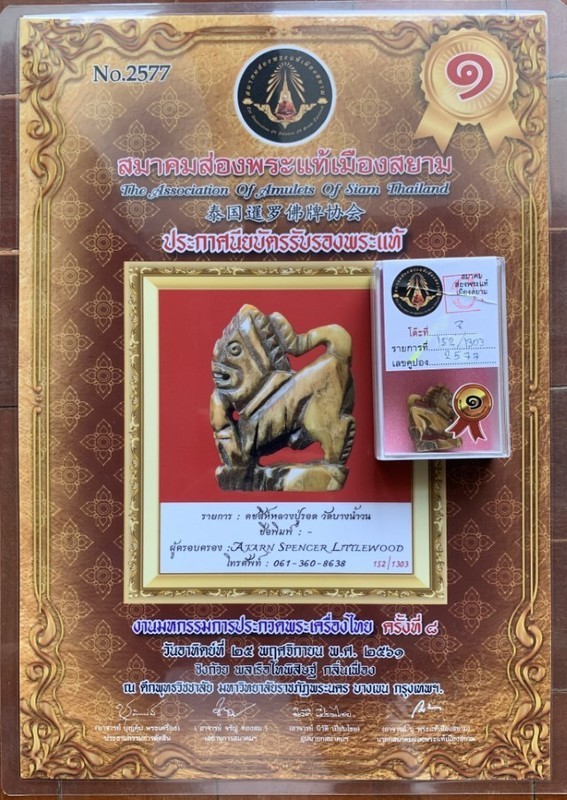
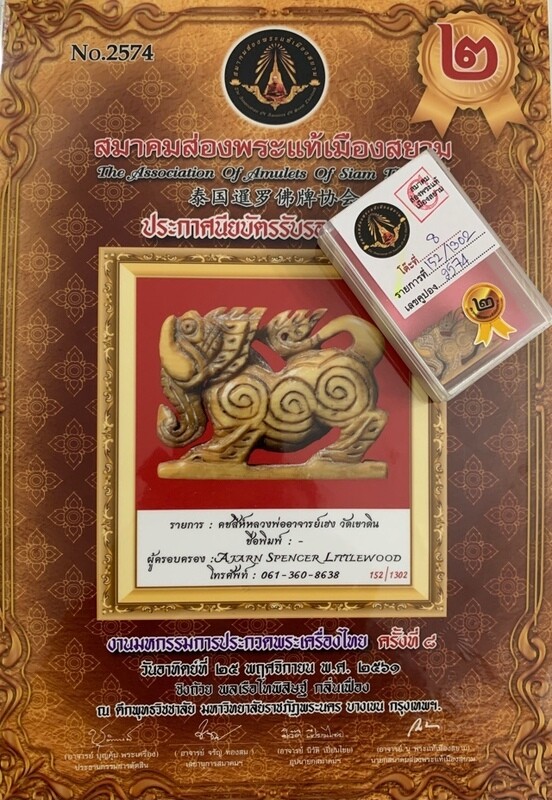
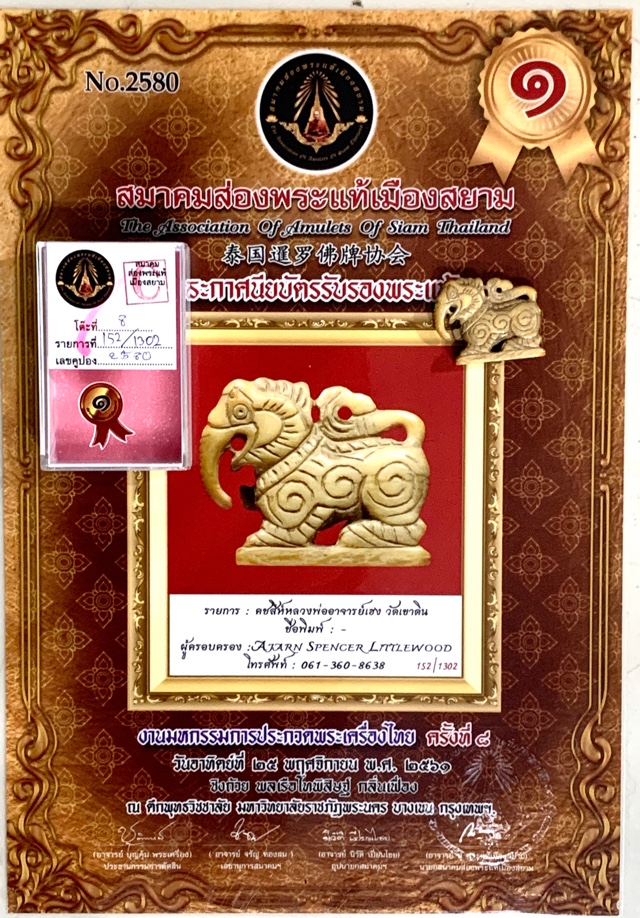
Large size Pim Yai Kochasri carved ivory elephant headed himapant lion LP Heng FIRST prize winning competition Master Class carved ivory amulet with certification, a most pristine well honed piece of Sacred Artisanry, and Master-Class Pra Niyom Classic of authenticity, great beauty, and true power, the Paya Kochasri hand carved Old Ivory Ancient Amulet from the Great Olden Days Guru master of Nakorn Sawan Province, Luang Por Heng, of Wat Khao Din (2402 – 2485 BE). The amulet is made from carved Ivory, and is carved in the image of a Kochasri Himapant Lion with Elephant Head, which represents various aspects of Maha Amnaj, Metta, Klaew Klaad, and Maha Pokasap Cornucopia Magic.
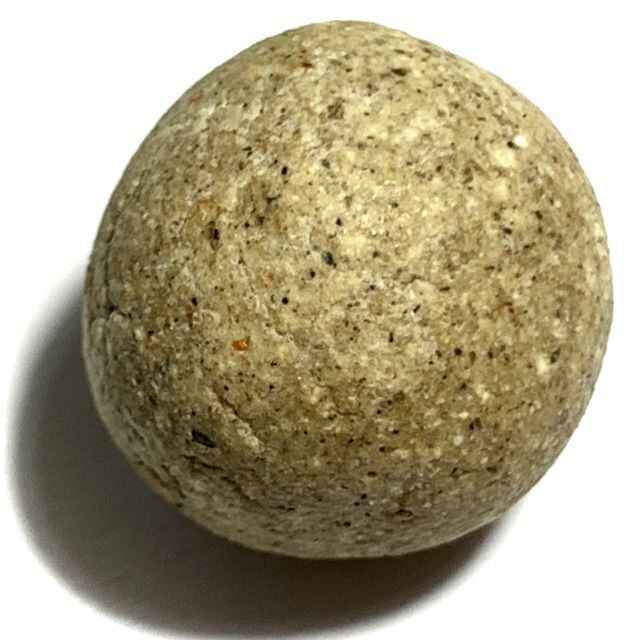
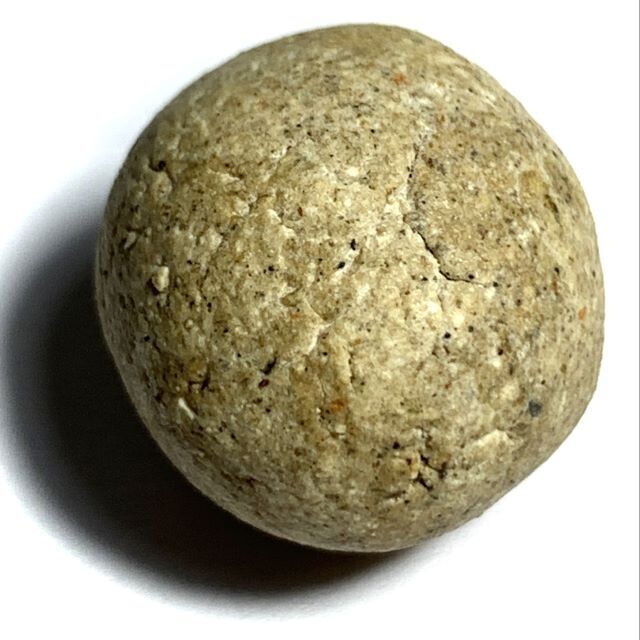
Free EMS Shipping is Included with this item. The Kochasri Lion itself, especially when carved from Ivory, is naturally imbued with the Sorcerous Powers of Maha Amnaj (commanding power and influence), Serm Yos Status Increase for positions of command, and opportunities of promotion, and Metta Mahaniyom Mercy Charm to lull your Subjects and Charm them into Obedience. Maha Pokasap treasure Accumulation and Cornucopia of Requisites is also Imbued.
Kochasri carved ivory elephant headed himapant lion LP Heng

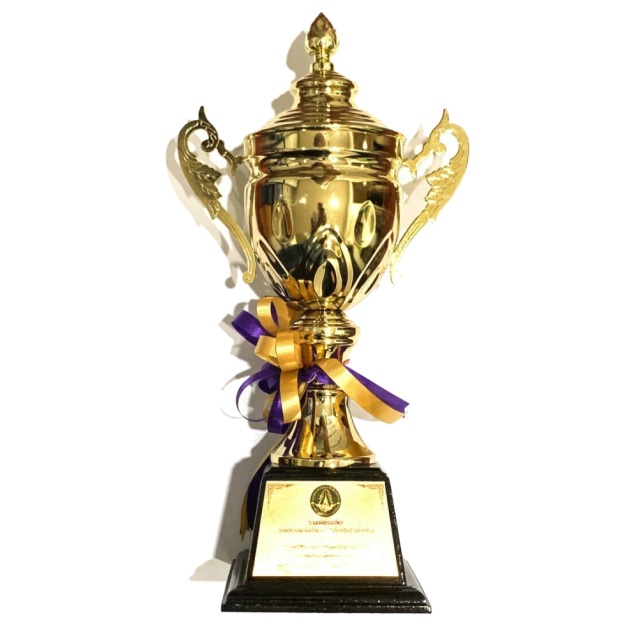
This amulet comes with First Prize Trophy and Plasticized A4 size Certificate from the Amulets Association of Siam


1st prize trophy

Luang Por Heng

Luang Por Heng, of Wat Khao Din, was born in Ban Maha Po, Nakorn Sawan, as the son of Mr Sangkh, and Mrs. Biam. he was given the name ‘Heng’ which is an auspicious word, because of the meaning in Chinese (and Thai Colloquial), being ‘Good Luck’, or ‘Good Fortune’.

Luang Por Heng Wat Khao Din

Even as a child, he was always showing Mercy and Compassion to animals, and liked to do good deeds to alleviate their suffering. It was sometimes even a problem, when his Father sent him to watch over the farm fields. The birds would come to steal the rice, but the young Heng would not chase them away or shoot at them, because he considered it an act of Generosity to the Birds, to let them eat. The young boy Heng loved to educate himself, and would often travel to see Luang Por Tap at Wat Maha Po temple, to learn various Wicha with him, including the Wicha Paet Boran Traditional Medicine, Wicha Akom, and the Wicha Kochasart.

The Kocha Sastra (Kochasart), is an ancient Wicha found in the Wicha Dtrai Taep of the Brahman Hindu Faith. The Wicha Kochasart is related to Elephant Magic, and is Used for Protecting the Kingdom. The Dtamra is found to be split into two major Kampira Grimoires, as separate categories;

1. Dtamra Kochalaks – which deals with Invocation of the Tendencies and Character Powers of the Elephant, both the good and the bad parts, the merciful and the destructive.

2. Dtamra Kocha Gam – this Dtamra deals with Kata Waetmont Incantations to invoke various powers or magical effects, for various purposes, such as catching elephant, controlling an elephant, healing of ailments, or banishing evil curses and forest spirits, in order to protect elephants.


The Wicha of the Dtamra Kochasart tells of the Chang Mongkol which was created from the lotus which rose from the navel of Pra Narai Vishnu Avatar, when he gave birth to the Golden Kumarn, which he gave to Shiva at the beginning of Time. The elephant was split into four families of Magical Elephants, each with its own special qualities.

  1. The first elephant was made by the God Brahma, and was endowed with the power to bring success and prosperity and Glorious Achievements to the Nation and its People.
  2. The second elephant family was made by the God Shiva, and was endowed with the power to bring great Achievements of Powerful Status and Influence to the Kingdom or Nation, and fill its Coffers with Wealth.
  3. The third elephant was made by the God Vishnu himself, and was endowed with the power to bring Victory against all Enemies and Opponents, and will cause the Rains to fall at the proper time and season, without drought or flooding, and the harvest to be plentiful and ripe.
  4. The fourth elephant was made by the God of Fire, Agni, which was endowed with the Power to bring Plentiful Resources to the Nation, and Protect the Land and its Ruler from all forms of danger and disasters.

This was just one of the many powerful Wicha which Luang Por Heng learned to Master from a young age under his first Kroo Ba Ajarn long before he Ordained. Once the young boy Heng reached the age of 12 years old, his parents took him to be ordained as a Samanera Novice Monk at Wat Maha Po, where he remained and intensified his study and practice as an Ordained member of the Buddhist Sangha. After 4 years, he disrobed again, to help his parents on the farm. When he came of age, he reordained as a fully fledged Bhikkhu in the year 2423, once more at the temple of Wat Maha Po. Pra Kroo Gim, the abbot, was his Upachaya Ordaining Officer.


After his ordination, he studied the Dhamma Vinaya Buddhist Canon, Horasart (Astrology), and Wityakom (Occult Sciences), with ever increasing fervency, under the supervision of Luang Por Gim as Kroo Ba Ajarn. Wat Maha Po (Dtai) had one of the largest Bibliotheques of Kampira (Grimoires of Sorcery), and was an excellent place for Luang Por Heng to expand and develop his knowledge in Wityakom Occult Sciences. In addition, the Uposatha Shrineroom was imbued with Maha Ud, perfect for empowerment of amulets and talismans, and was very sacred, over 300 years Old. Luang Por Heng found himself in the perfect environment for developing his now Adept Skills.


Wat Maha Po Dtai lay on the banks of the rive Mae Ping, which meant that many Tudong Forest monks would pass by on their travels, to stay and practice (and teach their secrets). And so Luang Por Heng was able to access and receive Wicha from a large number of great Tudong Monks over the years, until one day, he decided to go on Tudong himself.


Luang Por Heng wandered in solitary through the wilderness, forests and caves of Thailand, Burma, Laos and Cambodia many times repeatedly over many years. He slept in the forest, the caves, the delapidated cemeteries, and meditated to develop his resilience of mind, and the powers which accompany such resilience developed their strength and intensity.


His mastery of the many Animist Wicha such as the Kochasart, allowed him to understand and intuit the true nature of animals, and he became able to call the spirits of dead animals to enter into carved or molded effigies, and inhabit them with their powers.

Below; Hand Written Spells in Khom Agkhara are visibly inscribed on the base of the Paya Kochasri Amulet


During his years of diligent Tudong Practice in the deep Jungles, he learned about the Magical foces within ivory, imbued with the four Magical Properties of the Dtamra Kochasart, and the Chang Mongkol of the Gods Brahma, Shiva, Vishnu and Agni. he mastered the knowledge through intuition and meditation, that this Elephant Magic within the Ivory has two branches of influence;

  1. Nga Gam Jad is the Ivory from a Bull Elephant who was in Mating Season Anger and attacked a tree breaking his tusk on the tree
  2. Nga Gam Jaay is ivory from an elephant who fought with another Bull for the leadership of the troupe, and broke his Tusk in the fight, in the depths of the Jungle.

Luang Por Heng would always collect and gather all the Magical ivory he found in the forests and Jungles during his years of Tudong, which had fallen from the two scenarios of Elephants in Rage, to use their powerful substance later, to shape into animist charms and talismans. Mostly his amulets are carved into the form of Suea (Tigers) Kochasri (elephant Head Lion Himapant Animal), Hmuu Pha (Wild Boar), and his own image. A few other forms are also found on rare occasions.

Luang Por Heng passed away in 2485 at the age of 83, after 63 years in the Ordained Sangha, leaving his pantheon of Krueang Rang for us, the Devotees and Aficionados, to appreciate, and be protected and prosper through their blessings.

Luang Por Heng possessed a special ability for Wicha using his magical ivory, and bone collected in the forests, and his immensely advanced and long trajectory in Buddhist Sorcery, making his amulets and talismans amongst the most highly sort after in this Genre. It is not possible to speak of ivory tiger amulets without mention of Luang Por Heng, who stands at the pinnacle of the Genre, along with the Great Luang Por Parn, Luang Por Derm, Luang Por Say and Luang Por Nok. His carved Ivory amulets are the most highly sought after, and considered to be powerful Kong Grapan Chadtri Klaew Klaad Protective amulets, with added Metta Mahaniyom, Maha Pokasap, and Maha Amnaj (commanding power and influence).

You can use the Kata Paya Rachasri for Kochasri and other Singha Type Himapant Lion Deities.


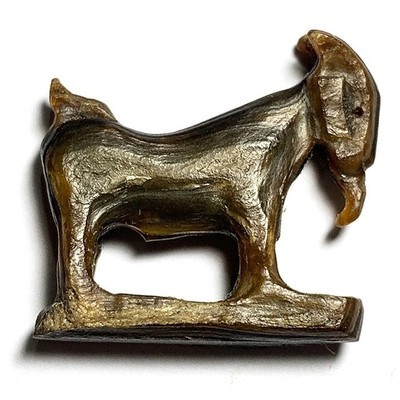
Lucky Goat Pae Maha Lap Luang Por Am

When speaking of the Pae Maha Lap lucky goat amulet, there is one name which stands above all others, and that is the name of Luang Por Am, of Wat Nong Grabork, in Ban Kaay Rayong. Luang Por Am was, along with Masters like Luang Por Horm of Wat Sak Hmak, Luang Por Rerm of Wat Juk Gacher, and Luang Por Chaem, considered among the top Masters of the Province, long before even the Great Luang Phu Tim of Wat Laharn Rai acheived his fame. Luang Por Am was the Kroo Ba Ajarn of the Great Luang Por Lat (Wat Nong Grabork), who is famed in his own right for his powerful Pae Maha Lap Hand Carved Goat Amuletsม which he of course mastered under the tutelage of Luang Por Am.

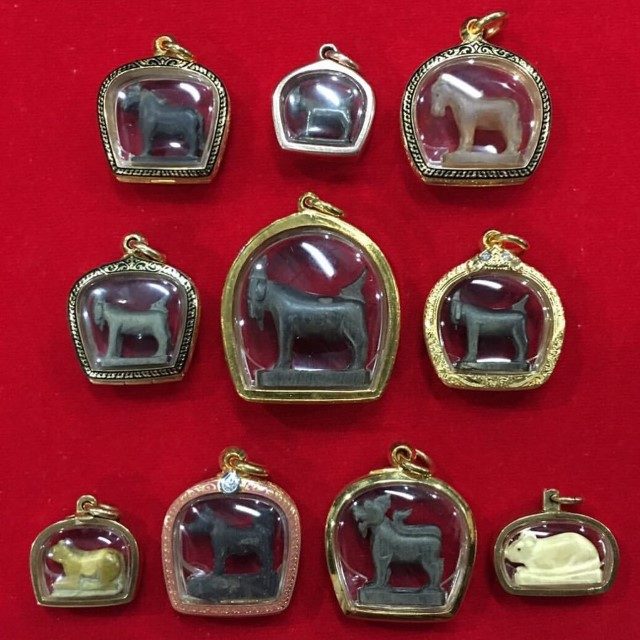
Pae Maha Lap Lucky Goat amulets of LP Am

Pae Maha Lap Lucky Goat and other carved amulets of LP Am

The male Goat is known for the fact that it is able to keep a whole herd of dozens of females under his ownership, through merciful and protective influence. It is thus believed that who wears the Pae Maha Lap Khao Kwai Gae Sacred buffalo horn Goat amulets of Luang Por Am, will be an owner and controller of great possessions and wealth, with grand entourage.

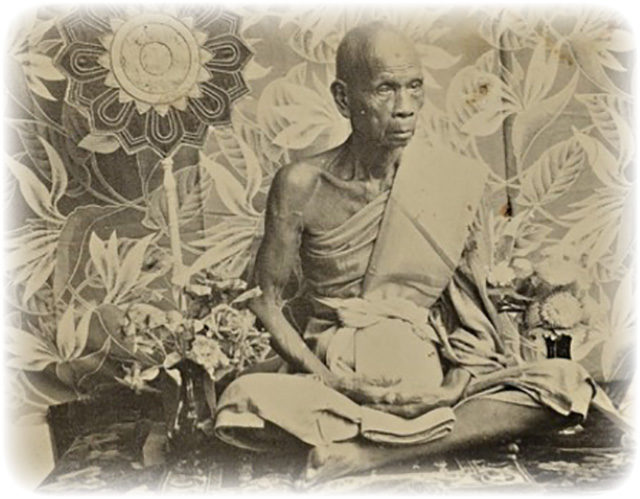
Below; Luang Por Am, of  Wat Nong Grabork

Luang Por Am

Luang Por Am, or ‘Pra Kroo Taep Sittaa, was one of the Great Masters of the Central-Eastern Provinces during His Era, and the ex abbot of Wat Nong Grabork from 2431 – 2490 BE. He was rrespected and revered all around the Province, and had Great fame around the Nation for his Powerful Wicha. During his lifetime he became known as the top Master for carved Lucky Goat amulets. What is less known, and is of immense interest to investigate the lineage Wicha of the Pae Maha Lap, is the fact that Luang Por Am himself received this Wicha from Luang Por Dtaeng of Wat Ang Sila.

Luang Por Am was abbot of Wat Nong Grabork between the years 2431 to 2490 BE, being a Gaeji Ajarn of around 150 years ago, and was the Kroo Ba Ajarn teacher of many other great names of the time, such as Luang Por Rerm of Wat Juk Gacher, and Luang Por Lat of Wat Nong Grabork (his successor and apprentice in magick). The Pae Maha Lap Nuea Khao Kwai Gae of Luang Por Am, is believed to possess the power to absorb Black Magick and protect the wearer/devotee from being affected.

It can be said that the Pae Maha Lap of Luang Por Am, Luang Por Lat, and now Pra Atigarn Surasit Akkawaro, the current abbot (written 2562 BE), are considered the ‘cream of the crop’, by serious devotees of the Pae Maha Lap, along with those other Great Chonburi Masters whose names carry fame for this Wicha such as Luang Phu Tim, uang Por Sakorn, Luang Phu Sin.

The Pae Maha Lap of Luang Por Am, was almost always made by carving a goat from ‘Khao Kwai Fa Pha Dtaay’, which is the horn of a buffalo which died struck by lightning in a field. It is an ancient magical belief that the horn of a lightning-struck bull or buffalo has the power of angelic beings in it, for indeed, the angelic beings of the elemental realms who control the weather, are who control these divine forces of Nature.
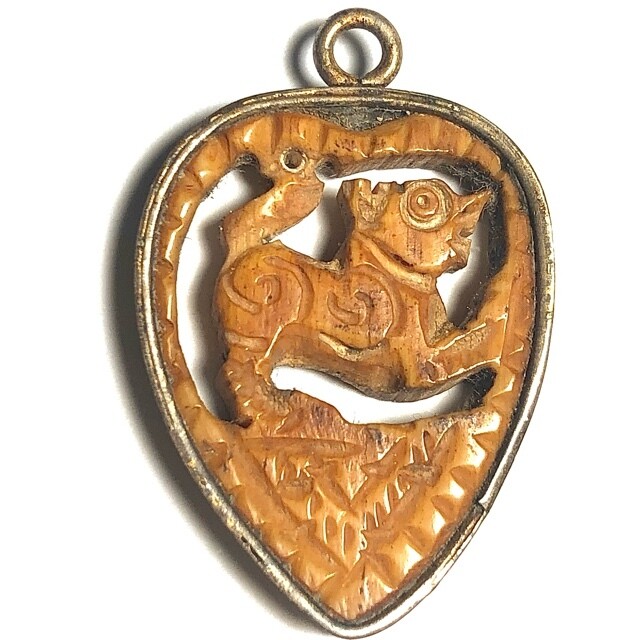
After the carving of the shape of the goat, Luang Por Am would then empower the Goats with incantations, and invocations of elemental powers and angelic beings, with Buddhist Blessings on top. Sometimes he would immerse them in aromatic sacred oils to consecrate them, mixed with herbal oils made from herbs and vines and flowers of the forest, with magical, healing, protective, and attraction powers. He would rebless them again and again until he felt the amulets were completely stuffed as full with magic as possible, and unable to insert any more. The magic within the amulets was hence always filled to the brim before distribution.

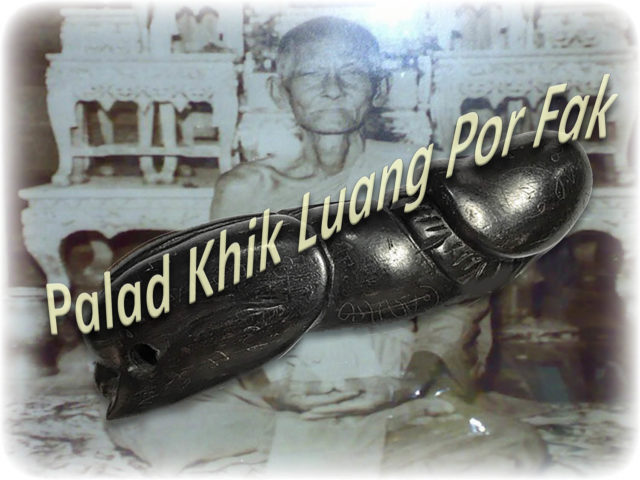
One of the rarest and most highly revered and sought after Palad Khik of all Time, the Palad Khik Gae Nuea Mai Paya Ngiw Dam Dong Jarn Mer, of Luang Por Fak, of Wat Nikom Prachasan. Hand carved from sacred Deva inhabited black Ngiw treewood. The Palad Khik of Luang Por Fak is considered amongst the top five Palad Khik of all time, and carries Supreme Eminence in the Thai Collector Scene of the Krueang Rang Category, and for all Devotees of Palad Khik amulets.
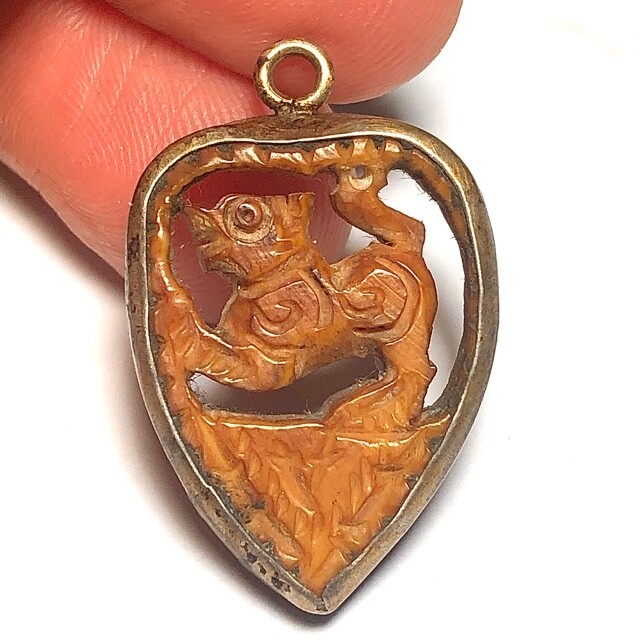
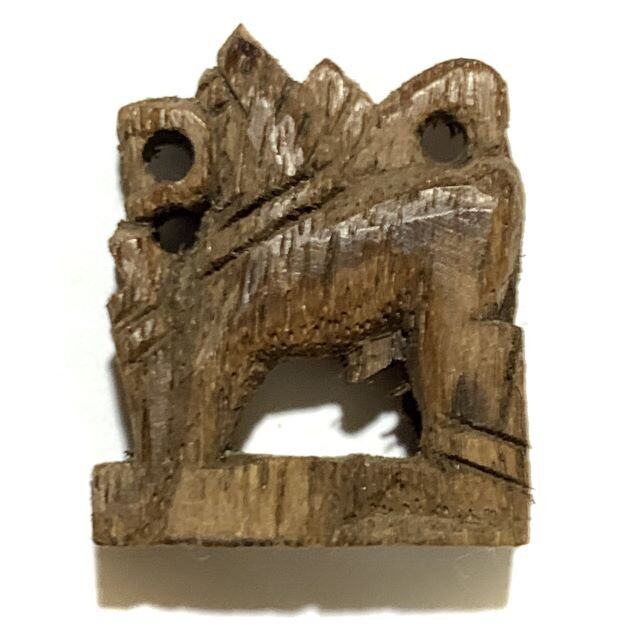
Palad Khik Mai Ngiw Dam Dong LP Fak with Hand Spell Inscriptions

Palad Khik Mai Ngiw Dam Dong LP Fak with Hand Spell Inscriptions

Little is known of his Biography or Life before ordination, but it is known that he was the apprentice in Wicha to the great Luang Por Soke (also top 5 Palad Khik Master), and was the4 Kroo Ba Ajarn who taught the Wicha Palad Khik to the Great Luang Por Yid, of Wat Nong Jork. This Palad Khik from Luang Por Fak is in Pristine condition and exquisitely carved in the classic uniquitious curved shape which has come to be a trademark with the Palad Khik of Luang Por Fak.

A hole is drilled through the base of the Palad Khick for threading a cord through and attaching to a waistcord belt, or can alternatively be encased in waterproof casing with pendant hoop for wearing on a neckchain or belt as preferred.
Hole drilled in base of Palad Khik Mai Ngiw Dam Dong LP Fak

Hole drilled in base of Palad Khik Mai Ngiw Dam Dong LP Fak, for threading a cord for attachment to a belt or neckchain  – Hand spell inscriptions can be seen on the surface of the sacred black Paya Ngiw Dam Dong Treewood.
The back of the Palad Khik has three holes where special Muan Sarn is inserted. The body of the the Palad Khik is formed in the clasic curved shape which has become known to be ubiquitous with the Palad Khik of this Master. This exhibit is extremely rare for the hand inscription of the Yant Dan Dta (Yant Dto) on the head of the Palad Khik, which is said to be found on only very rarely.
The Palad Khik of Luang Por Fak are highly renowned for Kong Grapan Chadtri (Invincibility), Klaew Klaad (Evasion of Deadly Accidents), Metta Maha Niyom n(Mercy Charm), Kaa Khaay (Selling Power), and Lai Phuudt Phii Pisaj (Chase Demons and Ghosts Away).

3 Muan Sarn Inserts in the Palad Khik Mai Ngiw Dam Dong LP Fak

3 Muan Sarn Inserts in the Palad Khik Mai Ngiw Dam Dong LP Fak

The Palad Khik is empowered with the Kata; NA HI HA HU JA CHA DAN DTA
And the Kata Hua Jai Taw Waes Suwan “WAE SA PU SA”, and the Kata Hua Jai Ittijae for Metta Maha Sanaeh “I TA KA MA”, as well as the Kata Hua Jai Metta Karaniya Sutta “AE DTANG SA DTING”, topped off with the Hua Jai Maha Ud “UT TANG AD TO”.


11 Kinds of Blessings are included within the Magic of the Palad Khik’s Wicha; 1. Sleep peacefully, 2. Awaken with Happiness, 3. Protection against all Deadly Weaponry, 4. Immunity to Poisons, 5. Mercy Charm, 6. Good Business and Wealth Increase, 7. Convincing Speech, 8. Ward off Evil Spirits and Ghosts, 9. Improve Karma, 10. Protect Household and Property, 11. Increase Popularity & Chances of Promotion.

Palad Khik Mai Ngiw Dam Dong LP Fak

Palad Khik Mai Ngiw Dam Dong LP Fak

The Palad Khik is an Ancient Wicha, whose development can be traced right back to the Vedic Brahman Occult practices of Thousands of Years ago. Palad Khik amulets must be empowered by the repetition of incantations, which Thais call ‘Kata Bucha’, derived from the Devanagari ‘ghata poojah’. The incantations depend on the creator’s lineage in each school of traditional non-Buddhist animist magic.

Kata Bucha Palad Khik

Ganha Neha Na Ma Pa Ta

or

Ja Pa Ga Sa Na Mo Put Taa Ya Gan Ha Nae Ha Na Ma Pa Ta

or

Om Siwaling Sabbha Metta Sabbha Pokaa Sabbha Laapo Sabbha Tanaa, Sabbha Yasa, Sabbha Pranee Sabbha Mangalaani Bhavantume.


or

Om Laluay Mahaa Laluay Samsip Sorng Hee Hae Hom Lorm Dtorm Kuay Khor Hai Guu Ram Ruay Pro Hua Kuay An Nii Da Daa Di Dii Duu Dii Hee Maa Kuay Maa Burut Maa Dii Sadtrii Mii Maa Swaa Home


chant any one, or all of the Kata 3 times holding the Palad Khik before wearing


Filters

Filters

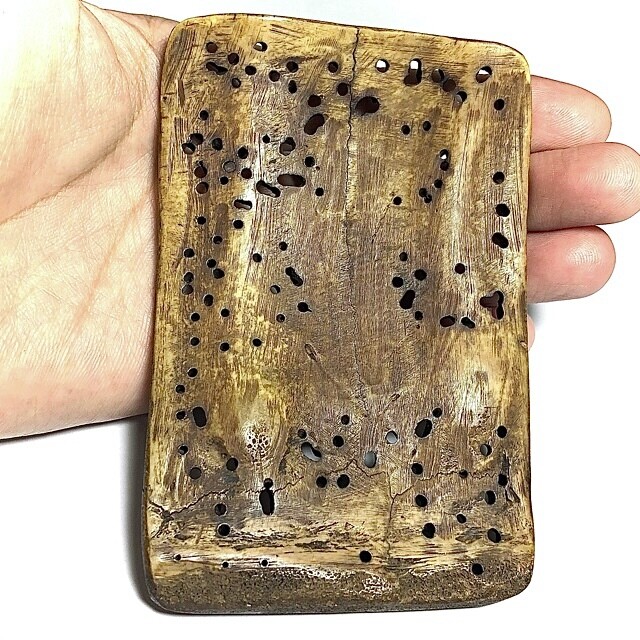
Pure Animist Kong Grapan Chadtri Maha Amnaj Magic inimitably carved into the shape of a tiger  and empowered with the Wicha Suea Maha Amnaj – Carved from powerful Graam Chang Nam Walrus Bone. An extremely rare and powerful Maha Amnaj Kong Grapan Chadtri Maha Pokasap ‘Krueang Rang’ Talismanic Animist Charm Amulet from the great Luang Phu Tim of Wat Laharn Rai in Rayong. The Suea Gae is hand carved from the jawbone of a ‘Chang Name’ (Water Elephant) Walrus. The amulet is intended for Kong Grapan Chadtri Invincibility, Metta Maha Niyom Mercy Charm, Klaew Klaad Evasion of Enemies, Maha Amnaj Commanding Power, and Serm Yos Status Increase.

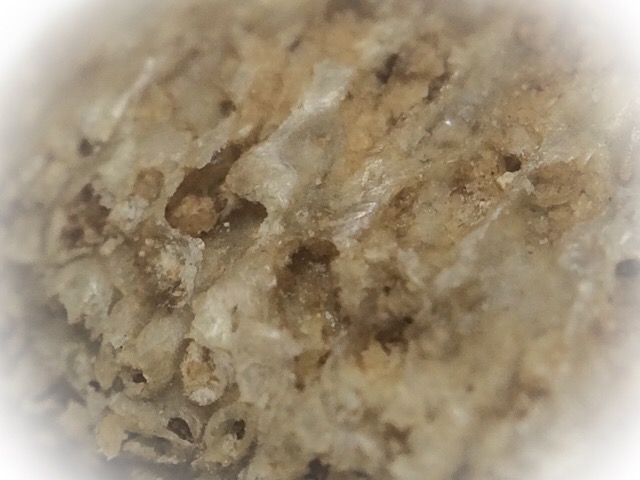
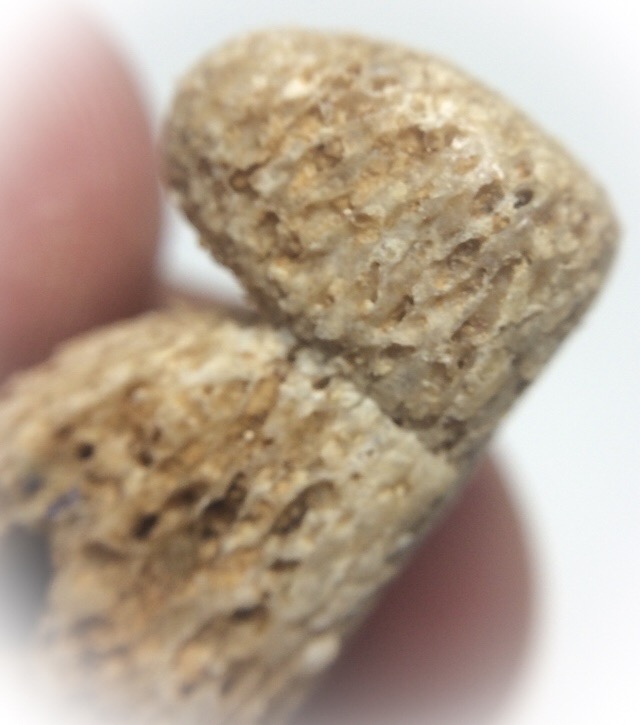
Graam Chang (elephant jawbones) and Graam Chang Nam (walrus jawbones) are seen to be powerful magic according to the ancient Dtamra Saiyawaet of Animist Sorcery, and the Grimoires of Formulas of Powerful Magical Ingredients. The Graam Chang Nam Walrus Jawbone is carved into the shape of a tiger seated in regal poise looking out over his Kingdom, and keeping watch. The Graam Chang Nam can be seen to be ancient and have the typical porosity to its substance as is expected in authentic carvings of Graam Chang Nam amulets.

Graam Chang Nam is mnuch rarer to encounter than Graam Chang elephant jawbone, and it is said that Luang Phu Tim received the piece of Graam Chang in only small quantity, so not many of these amulets were carved in total. Luang Phu Tim was and remains one of the Greatest and most highly famed Guru Masters, right up to the present day, many decades after his passing. His amuletd are eminent members of the top master-class category amulet pantheons of all history, including his famous Rian Guru Monk Coins in many editions, and of course his Pra Khun Phaen and Look Om and other Pra Pong Prai Kumarn amulets, which are the stuff of legend.
Luang Phu Tim Issarigo, is of course not only one of the most highly acclaimed and sought after Guru Monks for his amulets, he is the holder of the highest esteem in Thai Buddhist amulet history for Pong Prai Kumarn powders. Luang Phu Tim, is Internationally Acclaimed, for his famous Pra Kring Chinabanchorn, his Pra Khun Phaen Pong Prai Kumarn, and Look Om powder balls.
Encyclopaedic work of the amulets of the Great Luang Phu Tim Issarigo of Wat Laharn Rai

As to the classic ‘Rian’ Monk coin Image amulets which have become all time favourites, and eternally, world famous classic amulets of the high end variety.As to the classic ‘Rian’ type coin image amulets which have become all time favourites, and eternally, world famous classic amulets of the high end variety. His Rian Jaroen Porn, and Rian Nakprok Paed Rorp, Rian Huang Chueam, Rian Mae Nam Koo, and Rian Sema are amongst the most highly sought after coin amulets of all. The Pra Kring Chinabanchorn amulet of Luang Phu Tim is one of his most expensive of all amulets, and extremely rare to find.

He has various direct lineage apprentices, Who are continuing to progress and spread his most powerful and world-famous Wicha. Of all of these masters, perhaps the most famous, preferred, is Luang Por Sakorn, of Wat Nong Grub (also now deceased). In second place one could possibly estimate the great Luang Phu Sin, of Wat Laharn Yai, and in third place, possibly, Pra Ajarn Somkid, of Wat Beung Tata (Rayong).