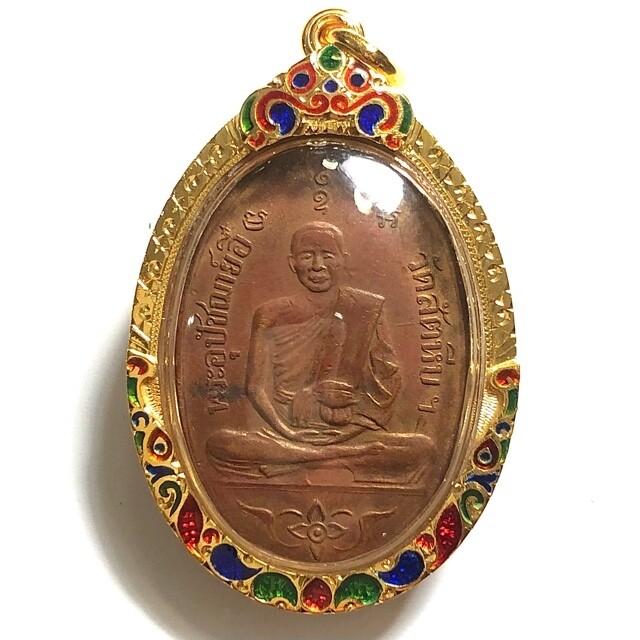
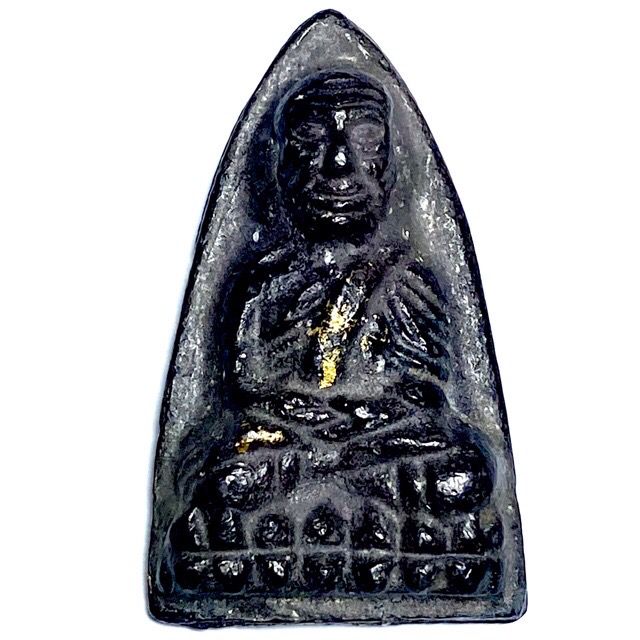
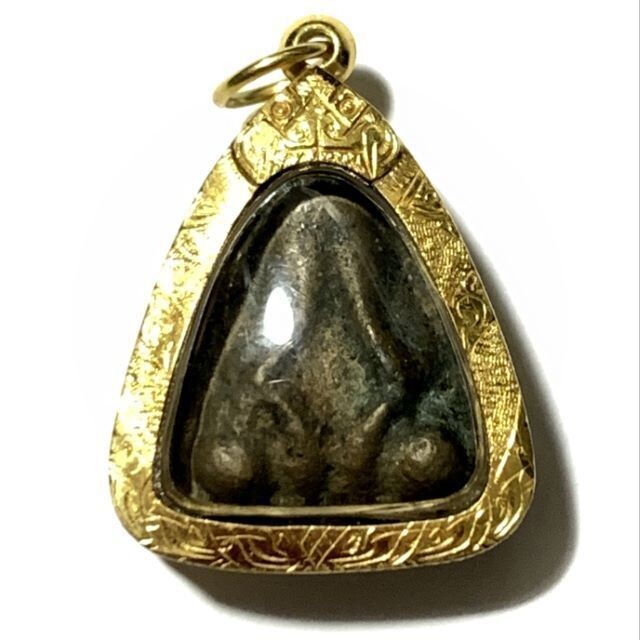
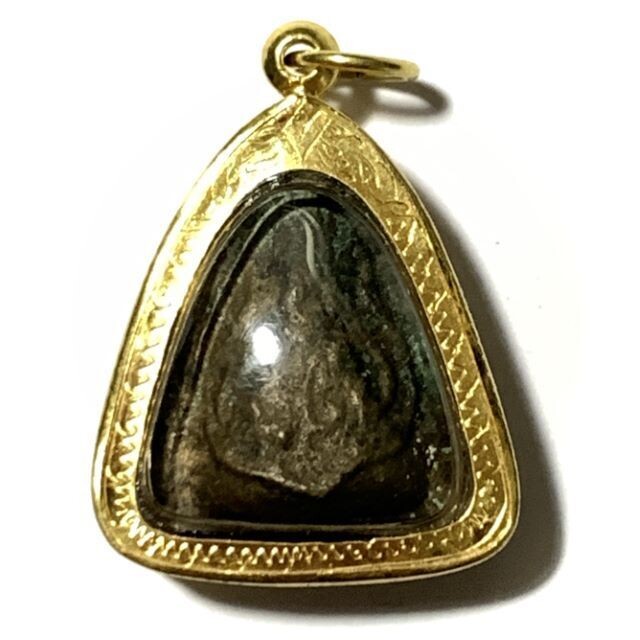
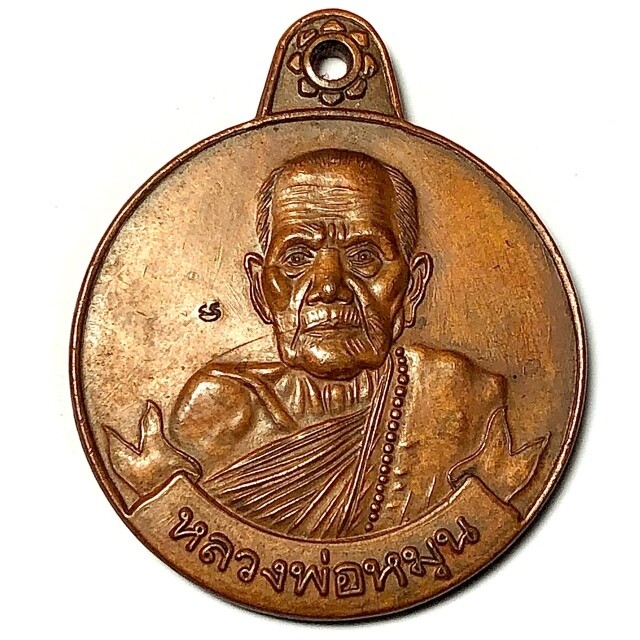
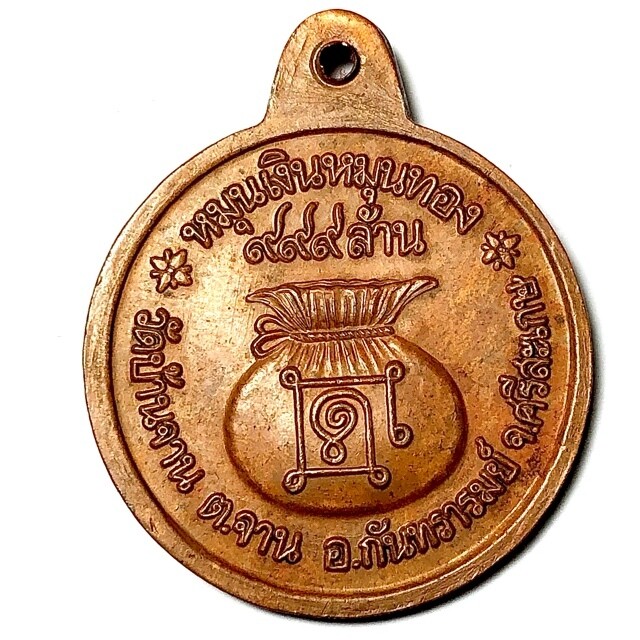
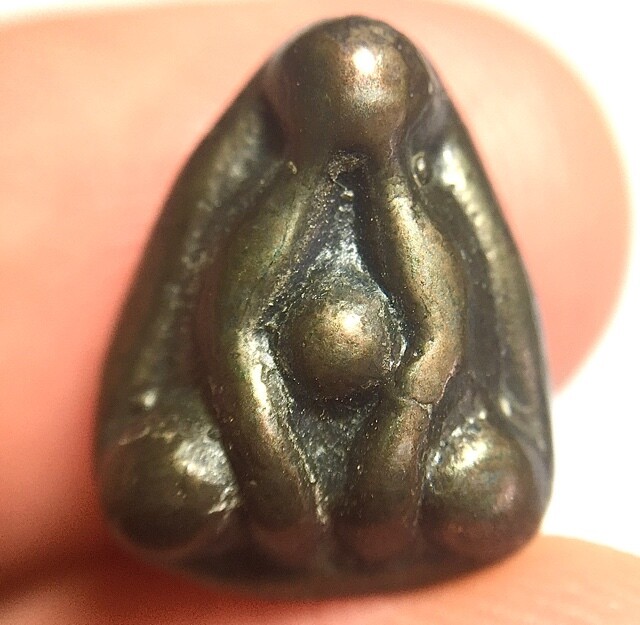
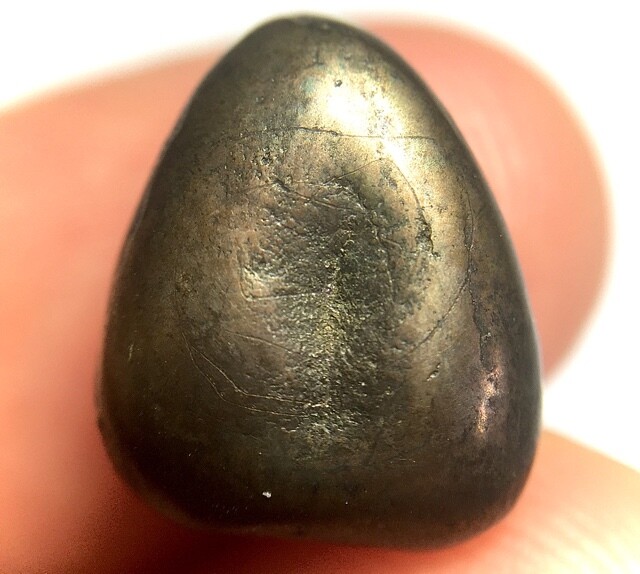
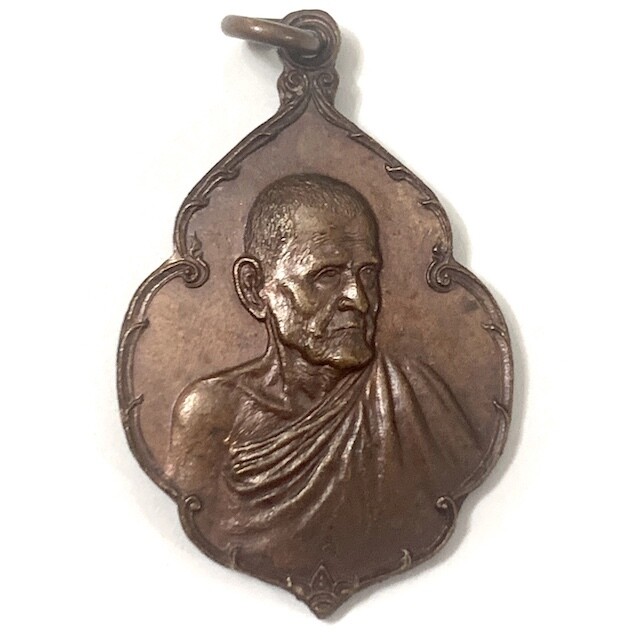
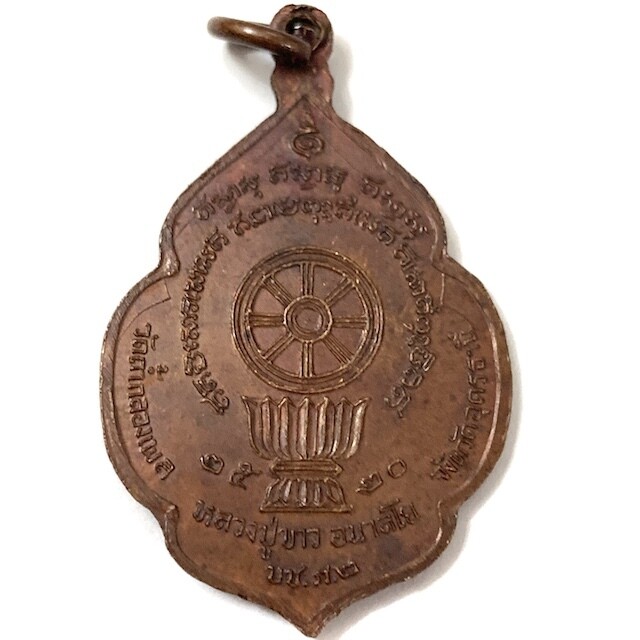
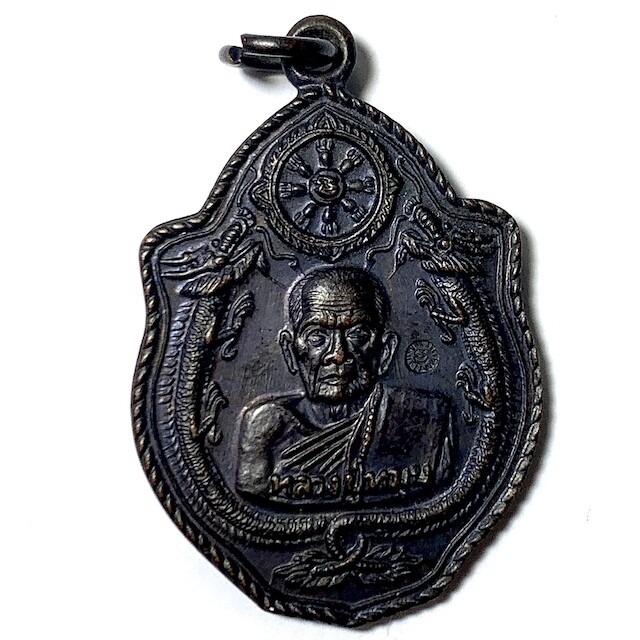
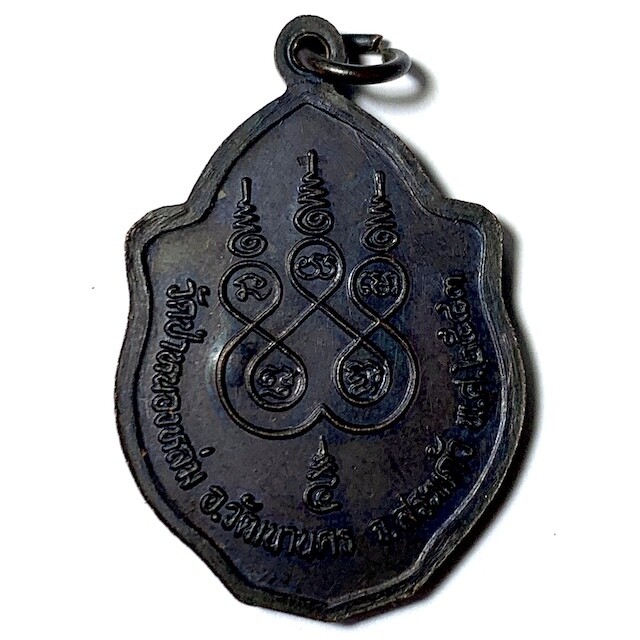
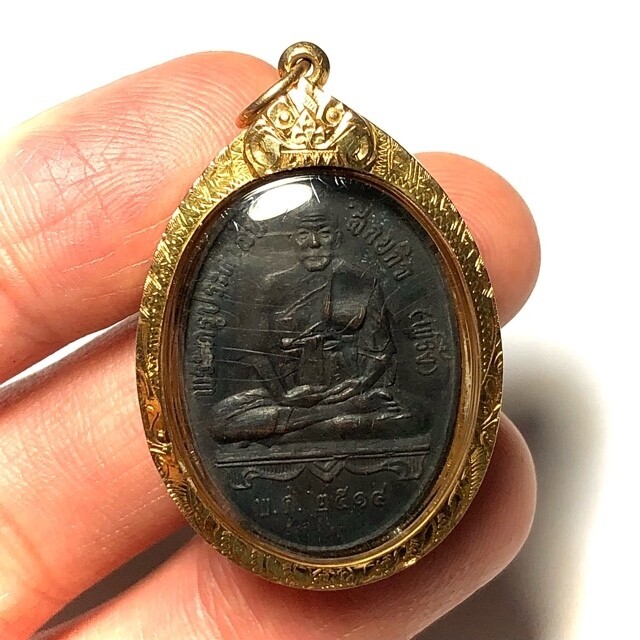
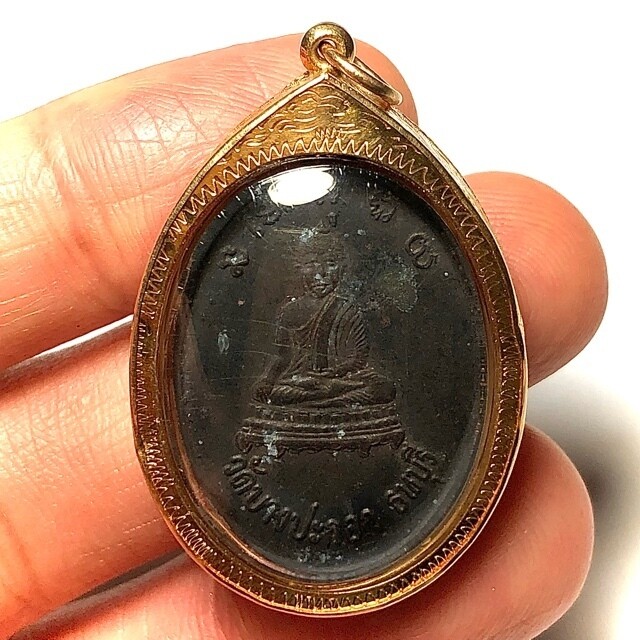
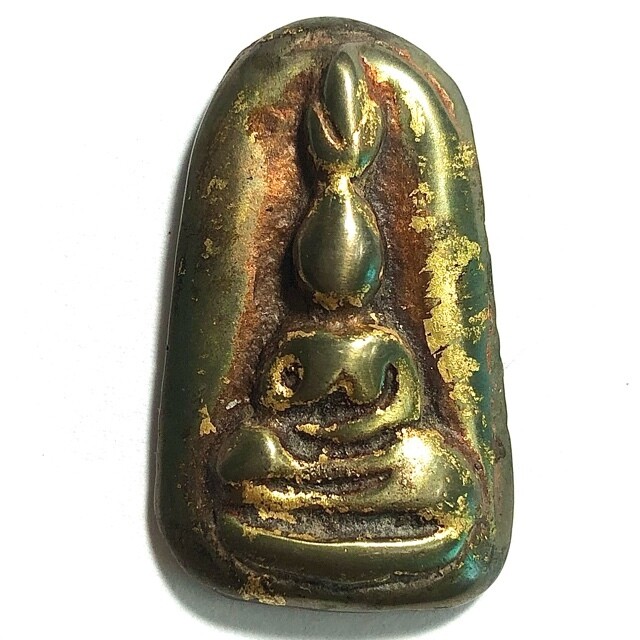
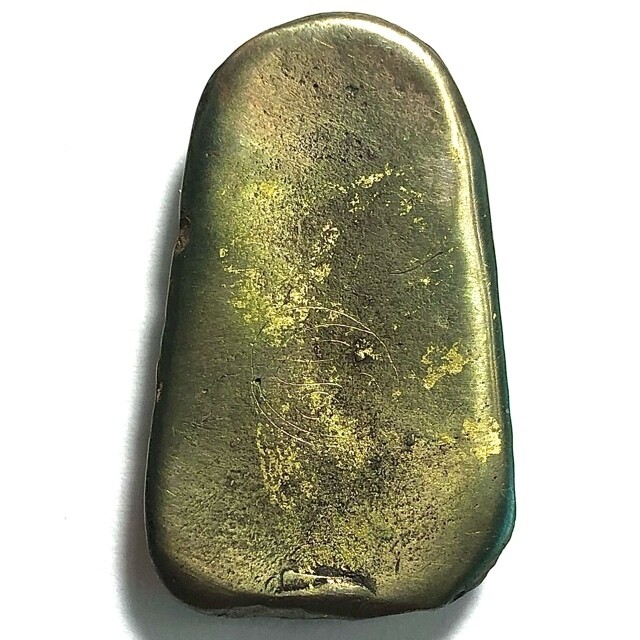
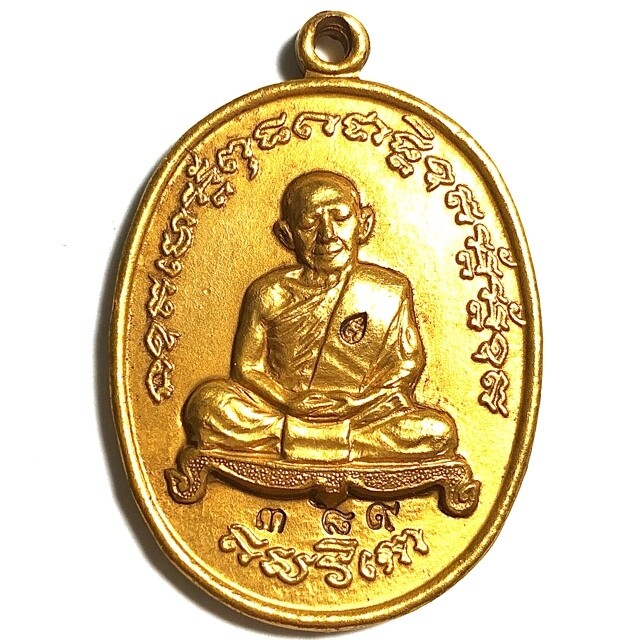
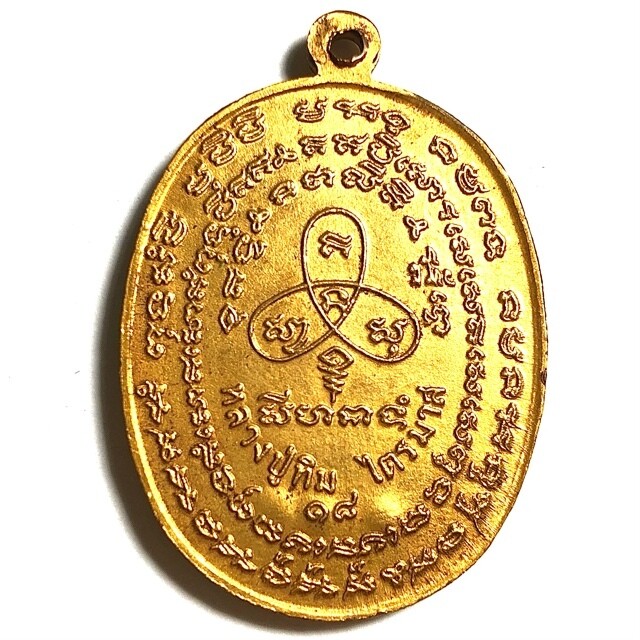
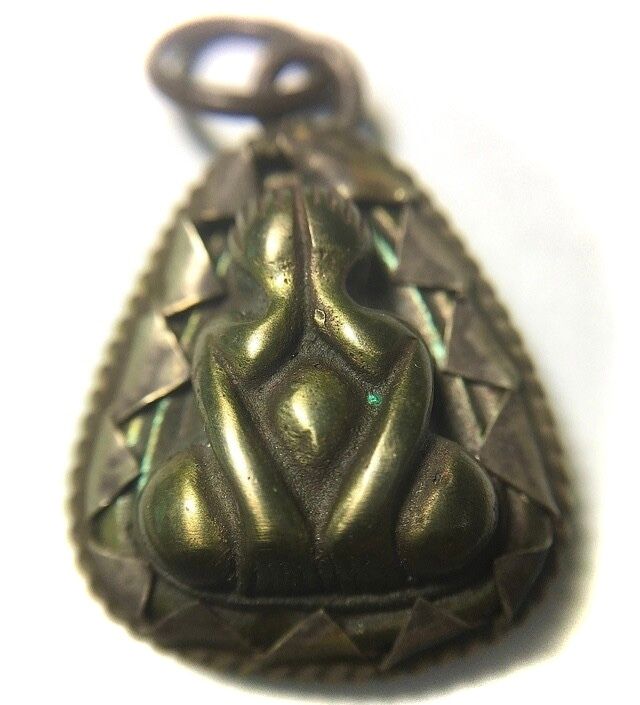
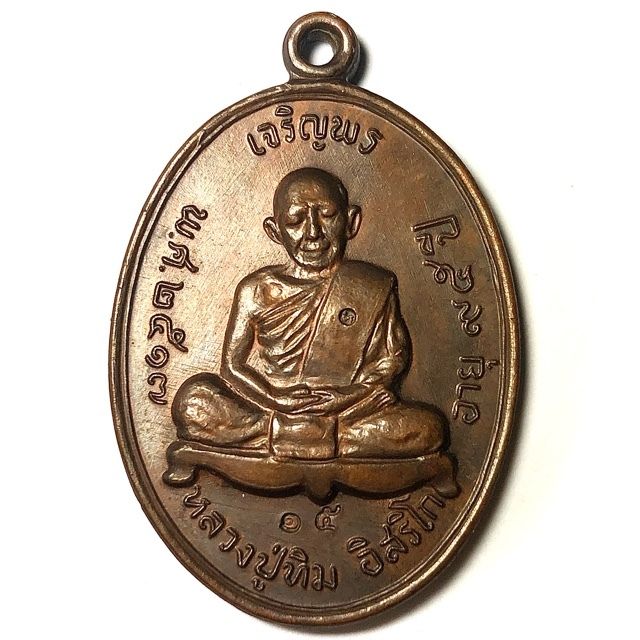
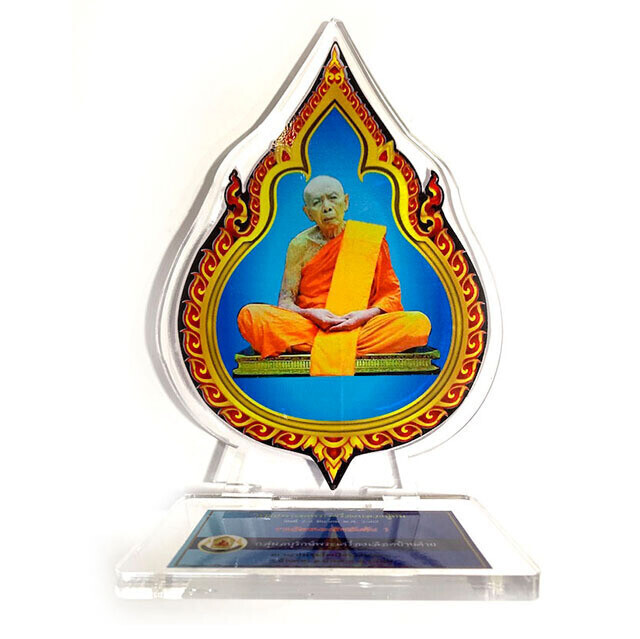
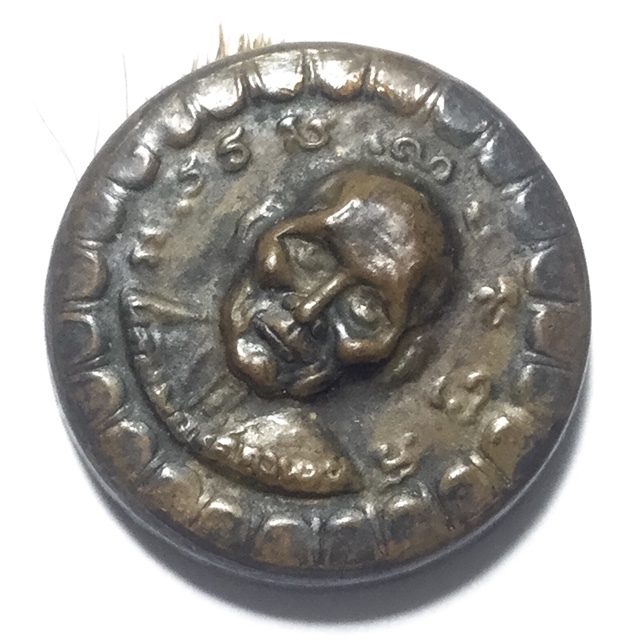
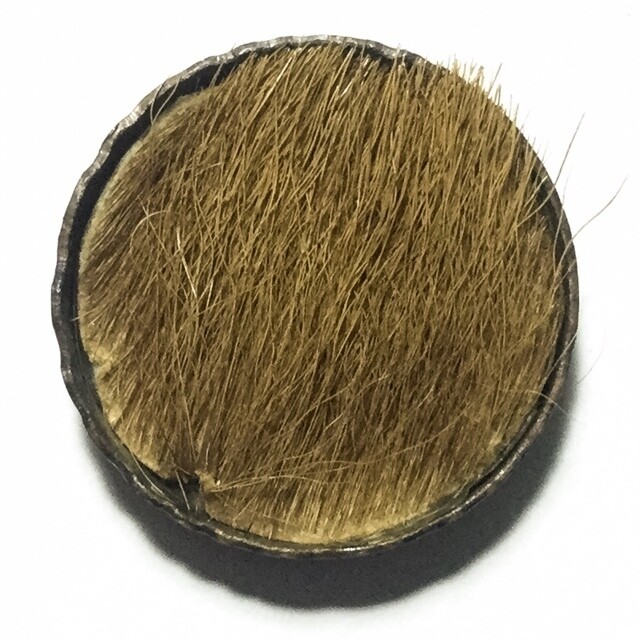
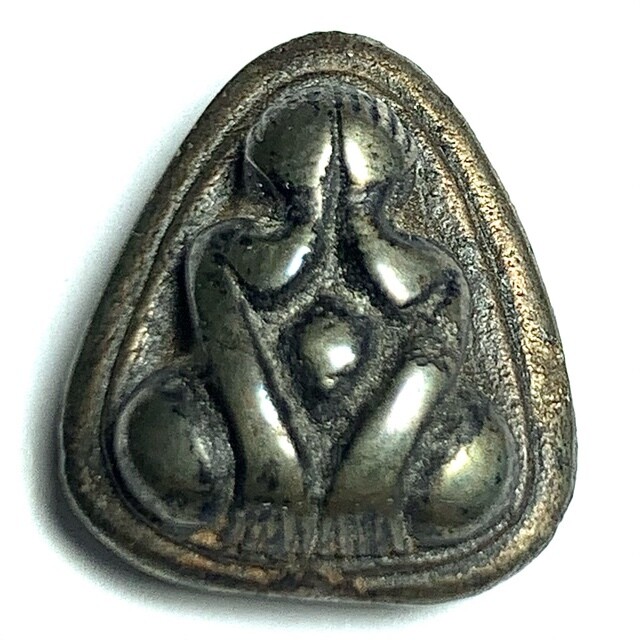
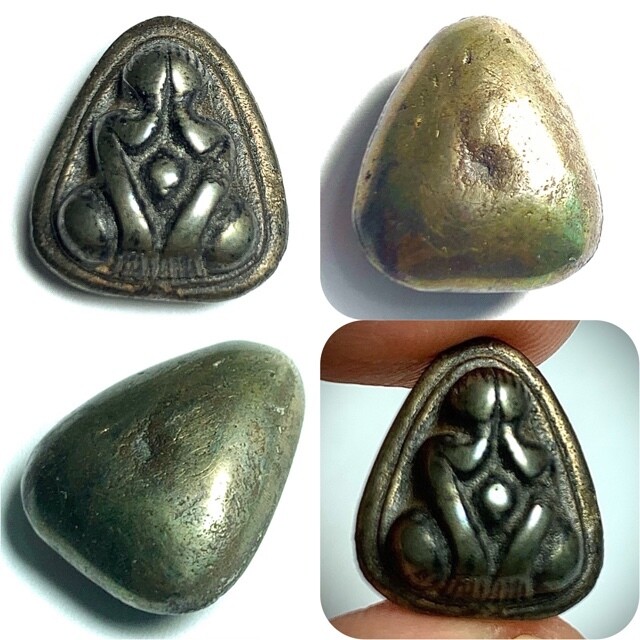
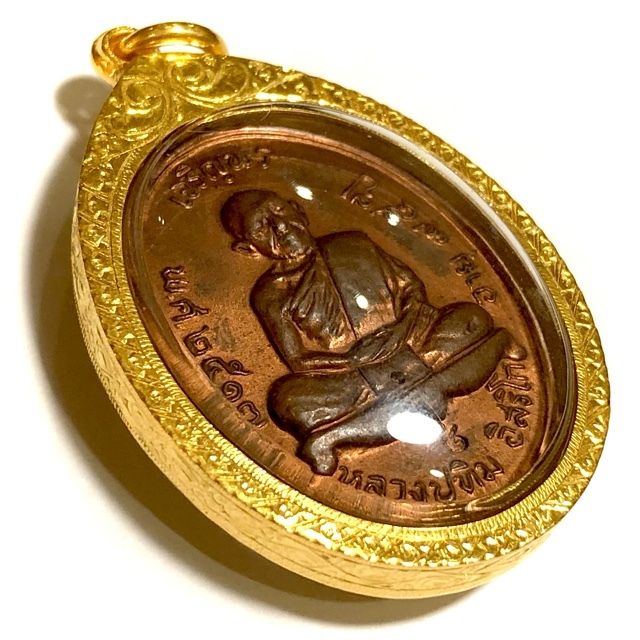
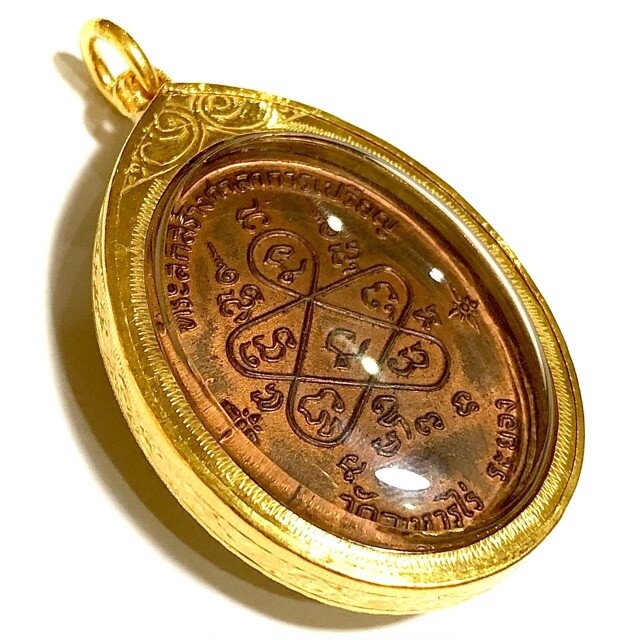
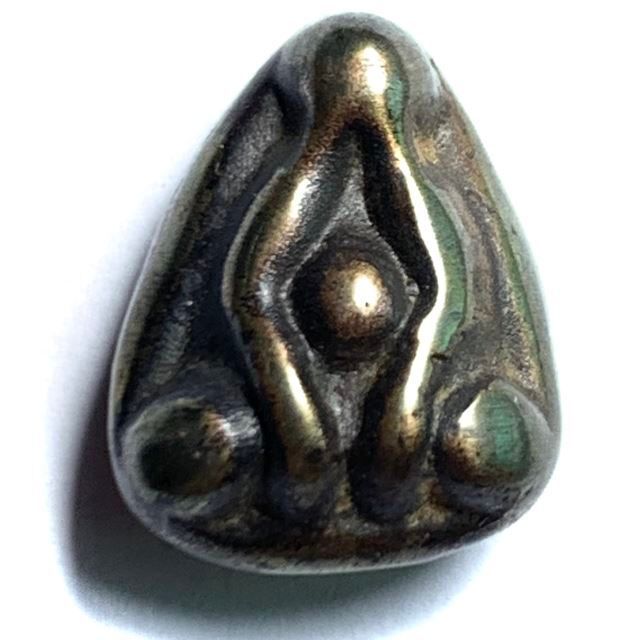
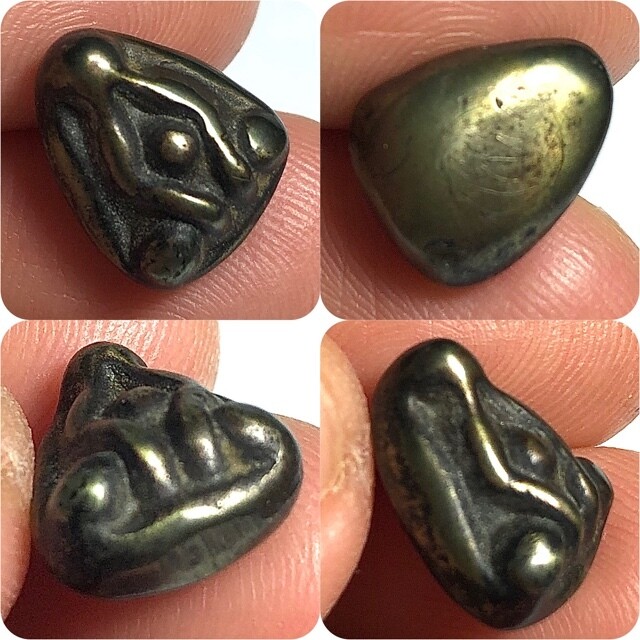
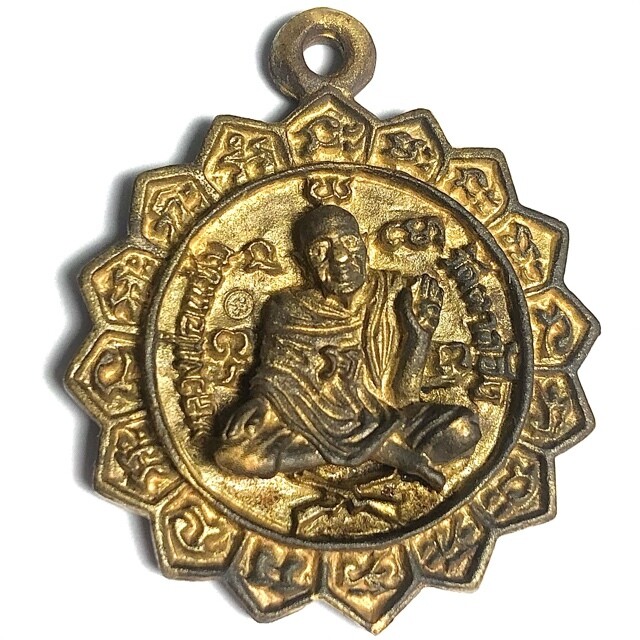
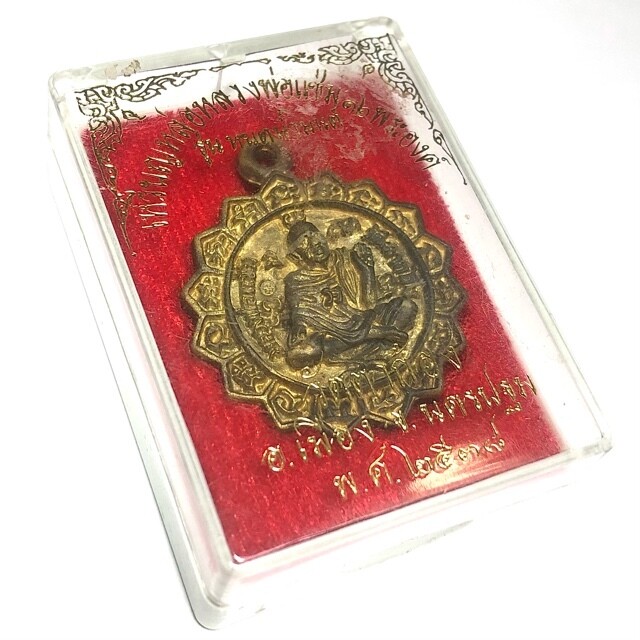
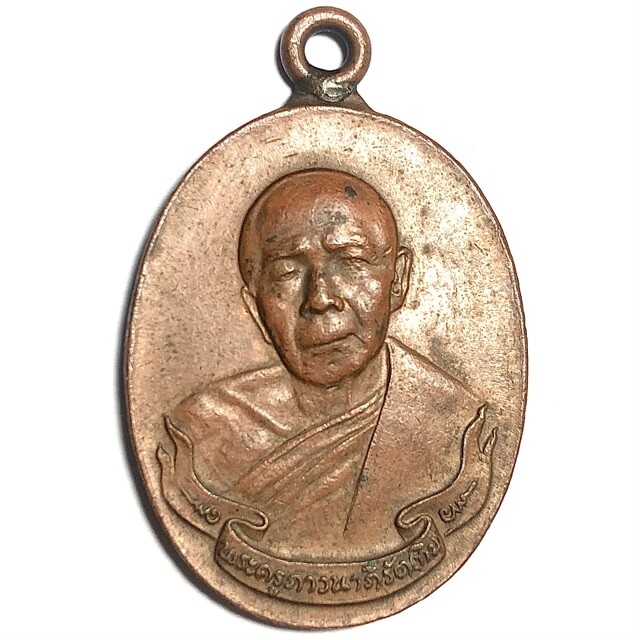
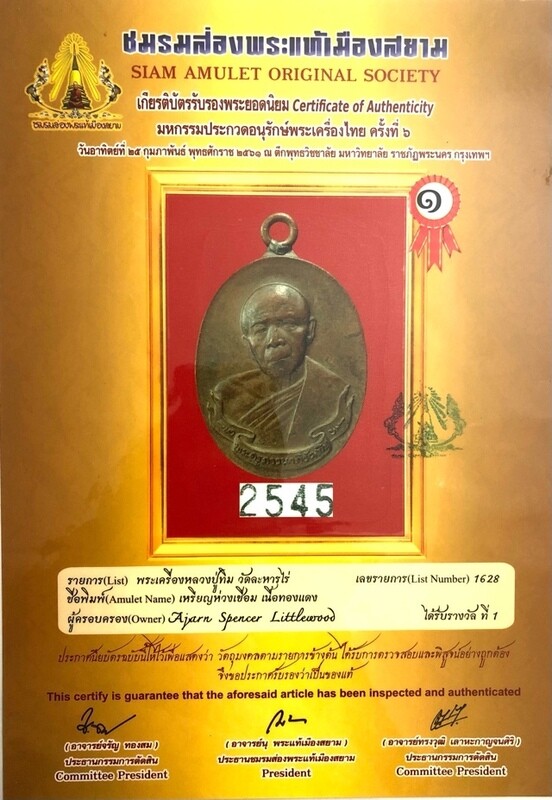
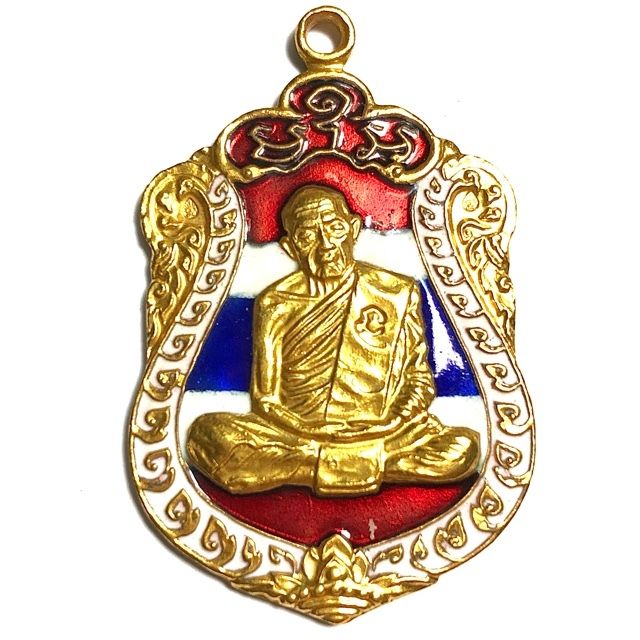
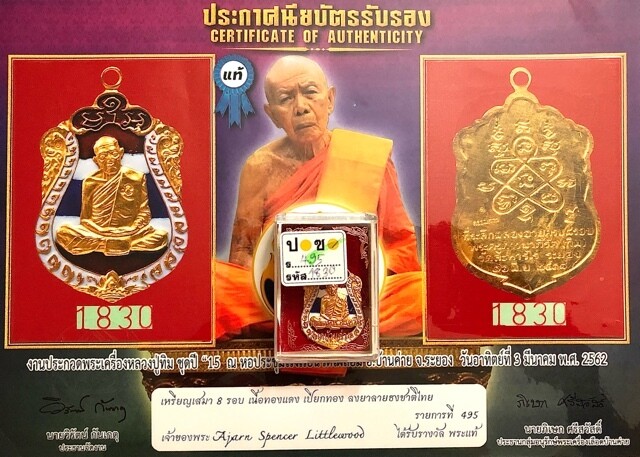
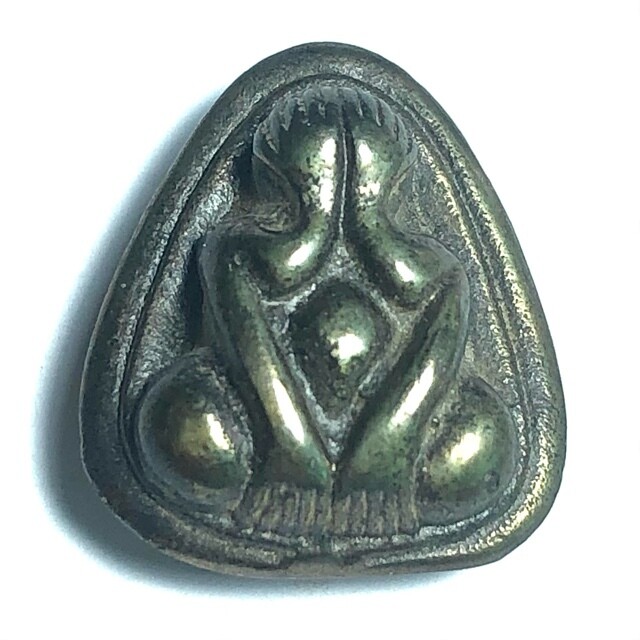
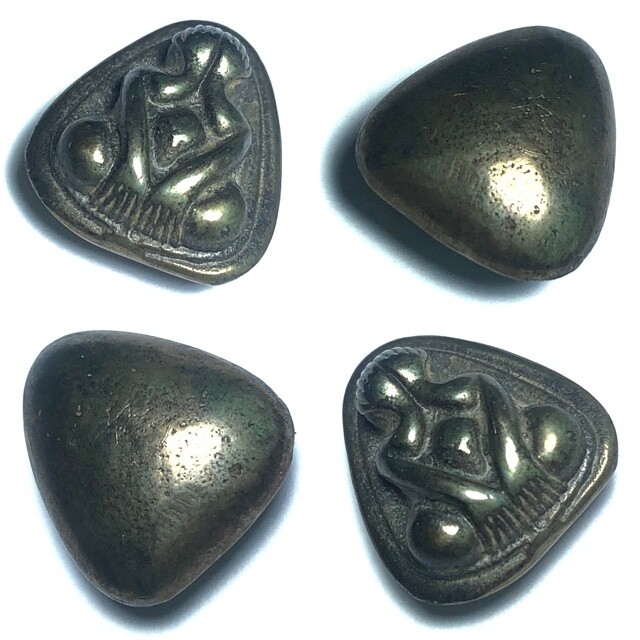
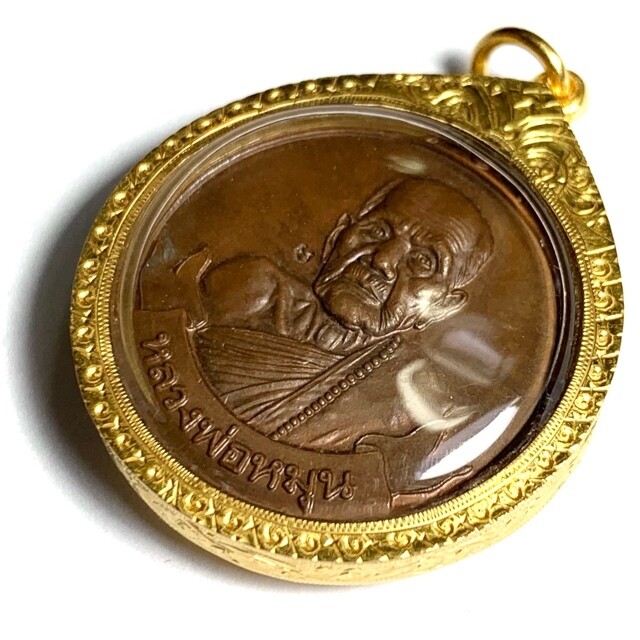
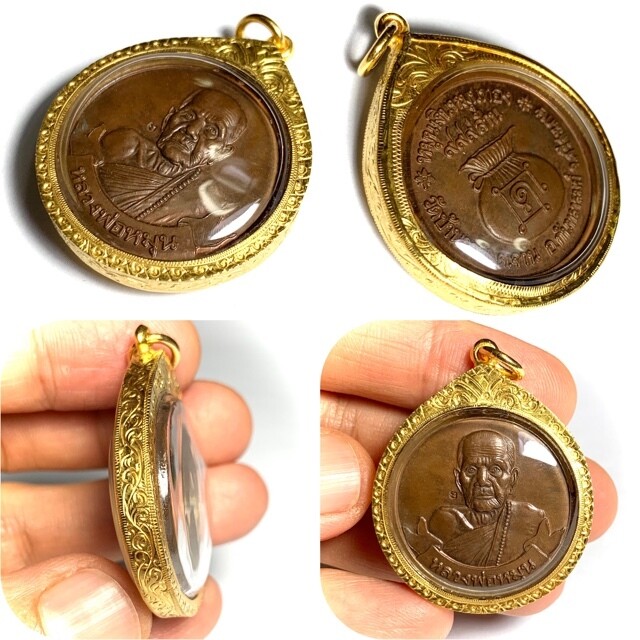
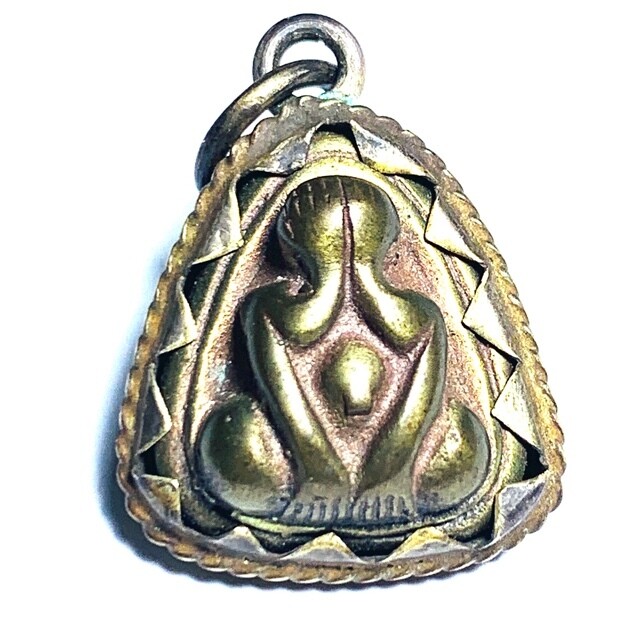
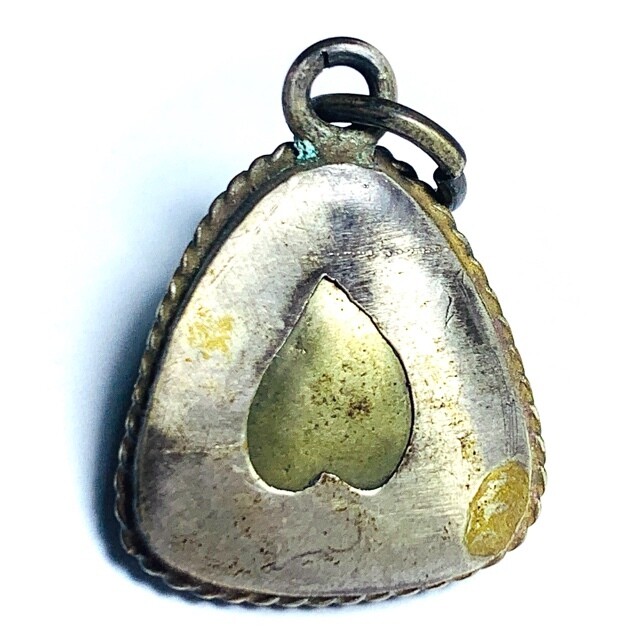
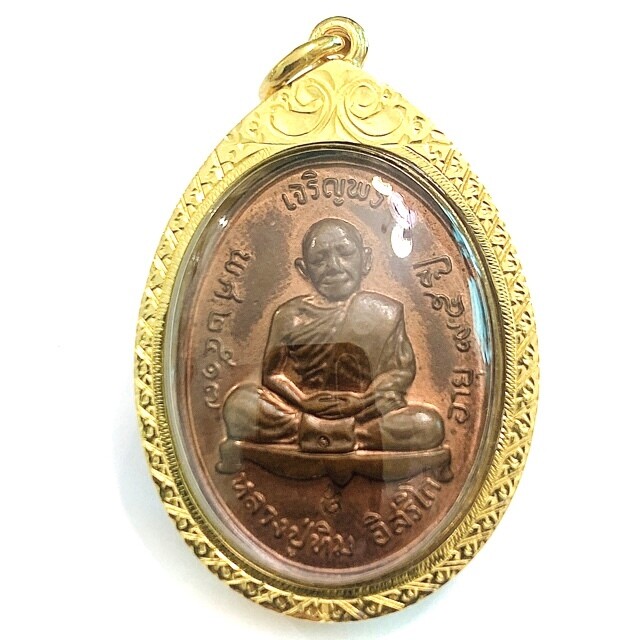
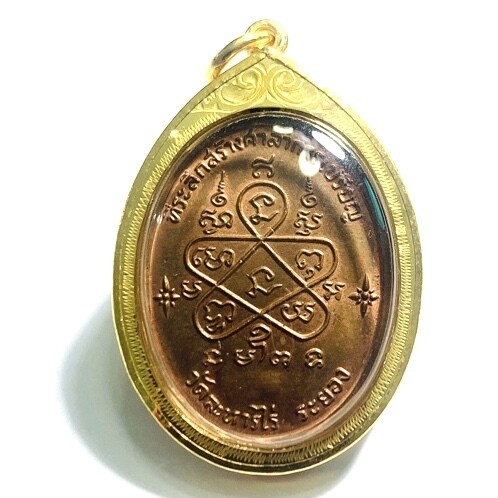
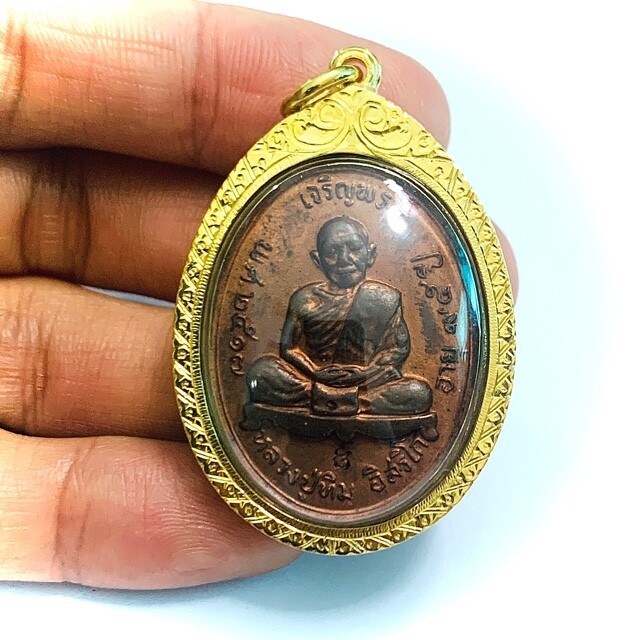
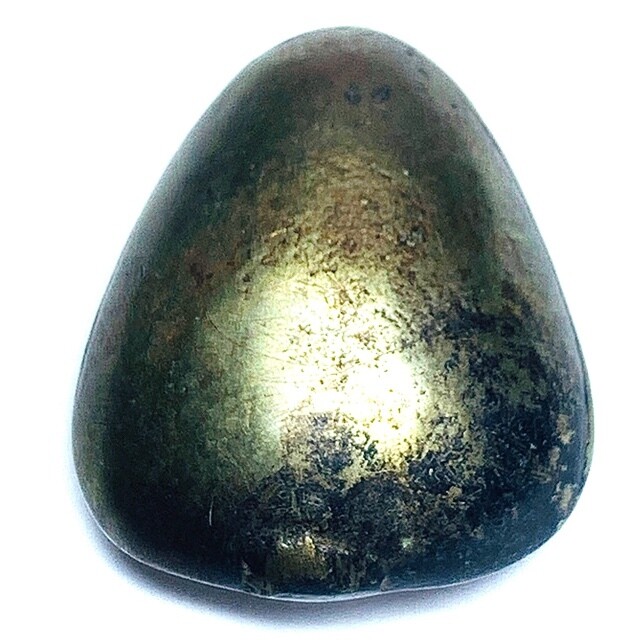
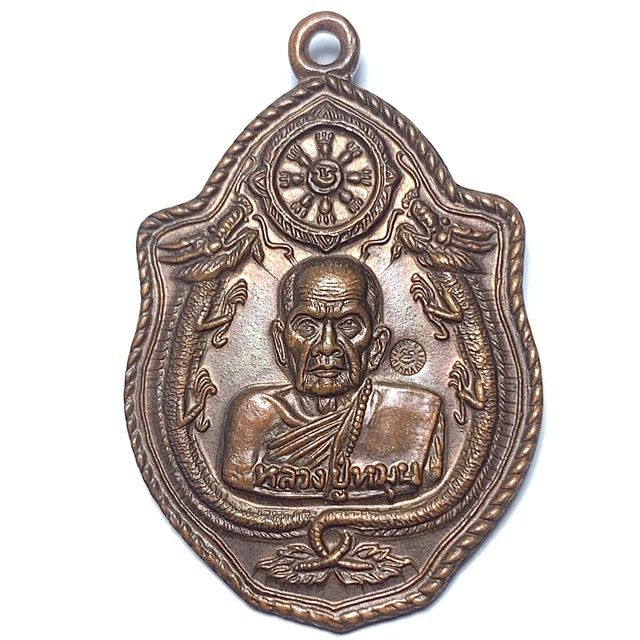
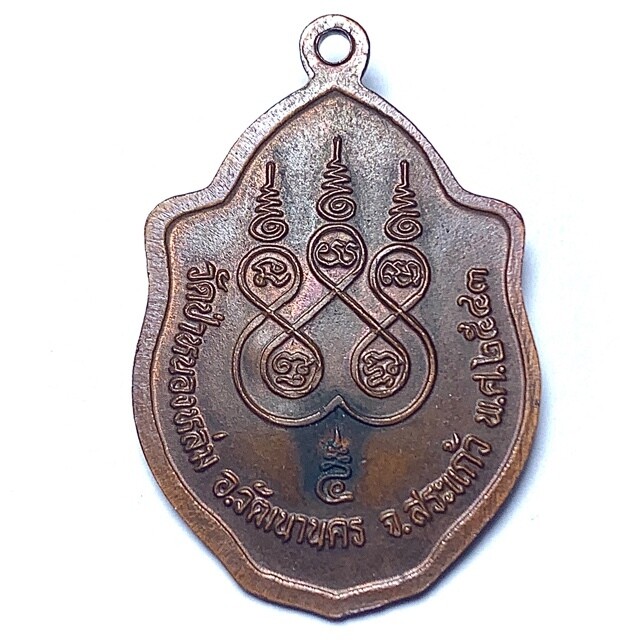
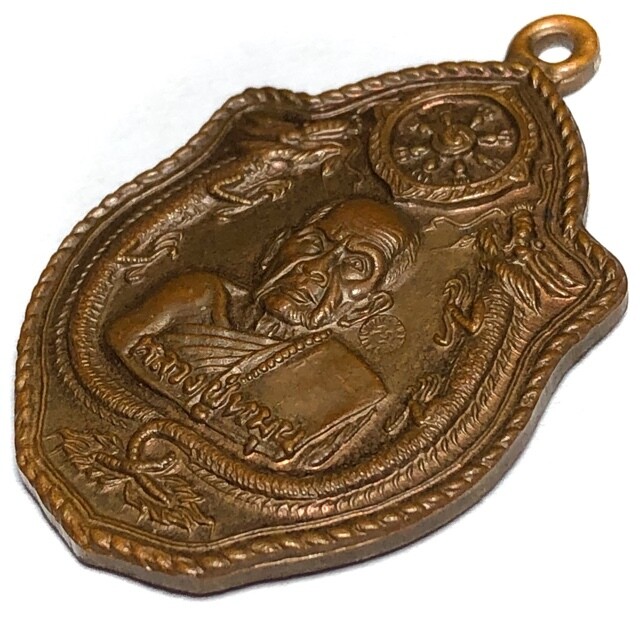
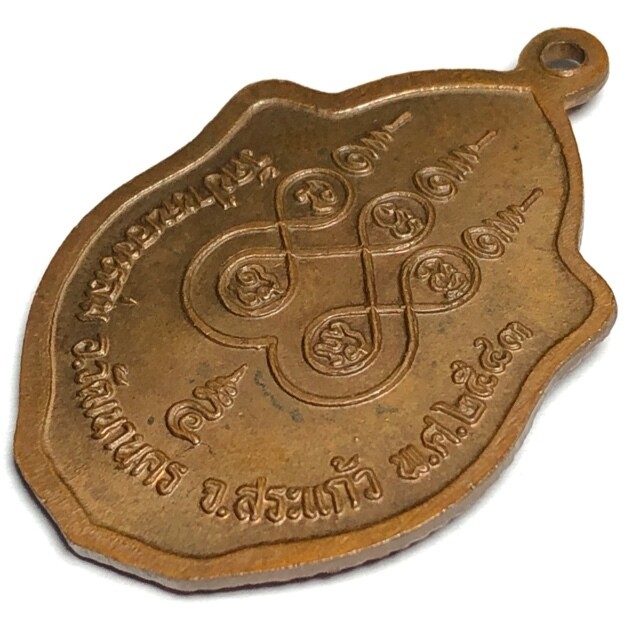
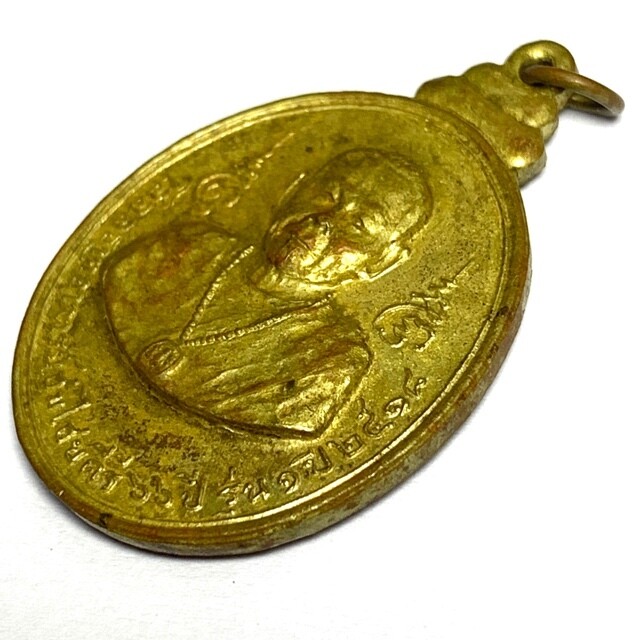
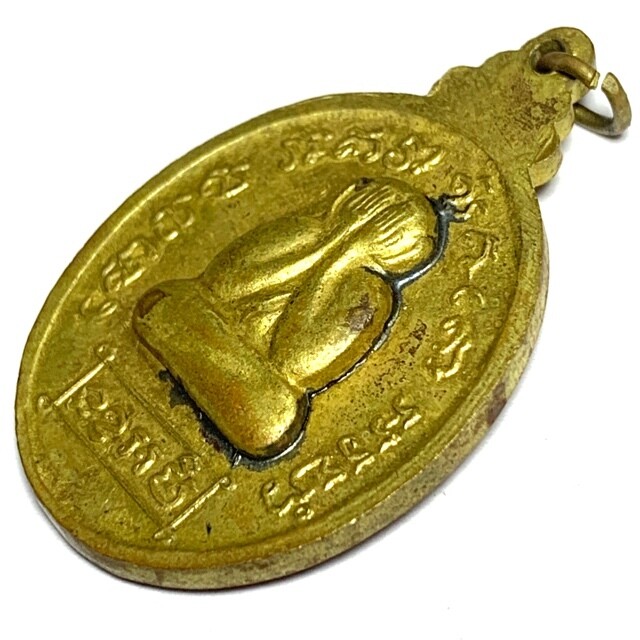
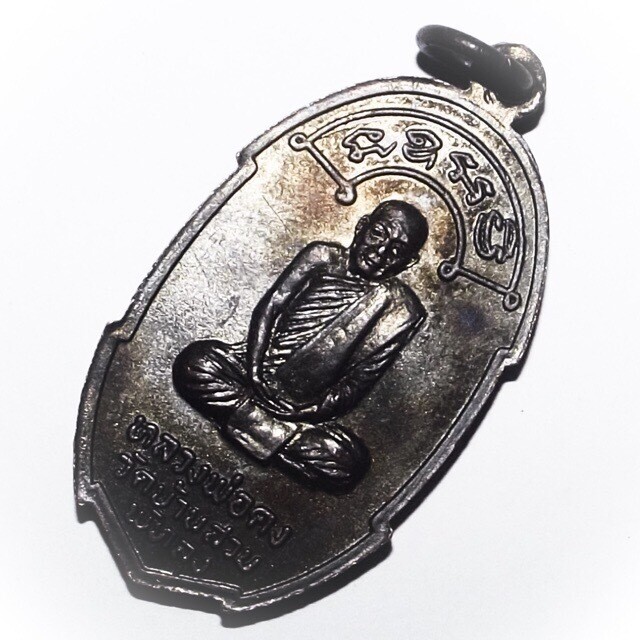
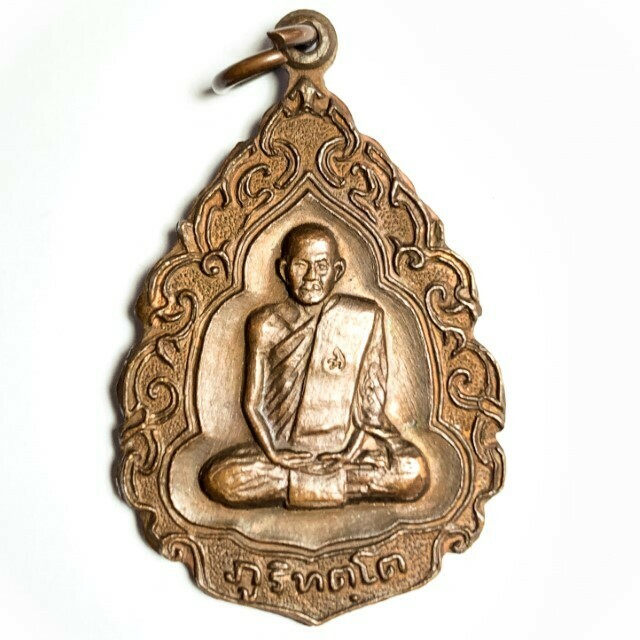
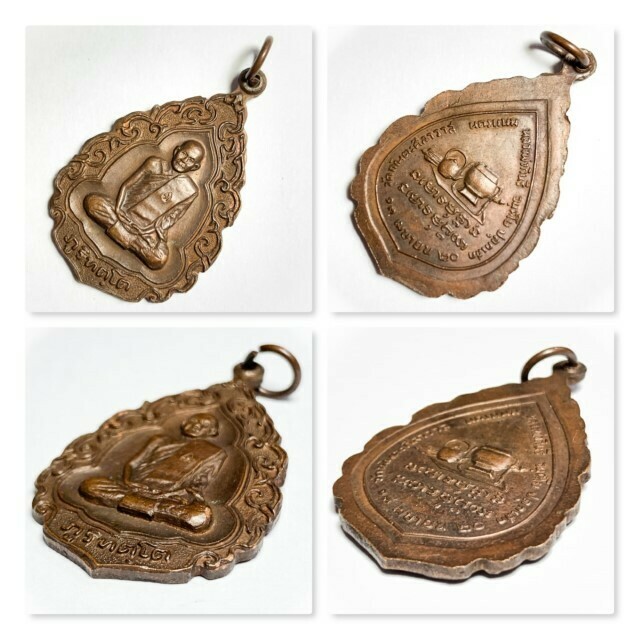
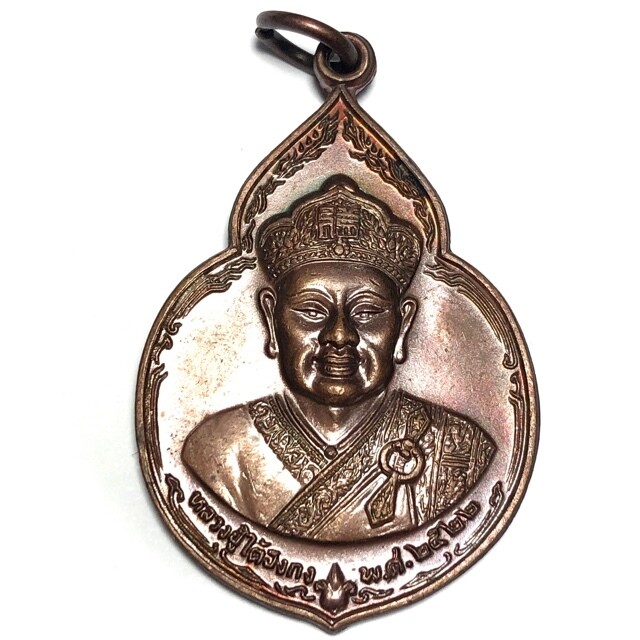
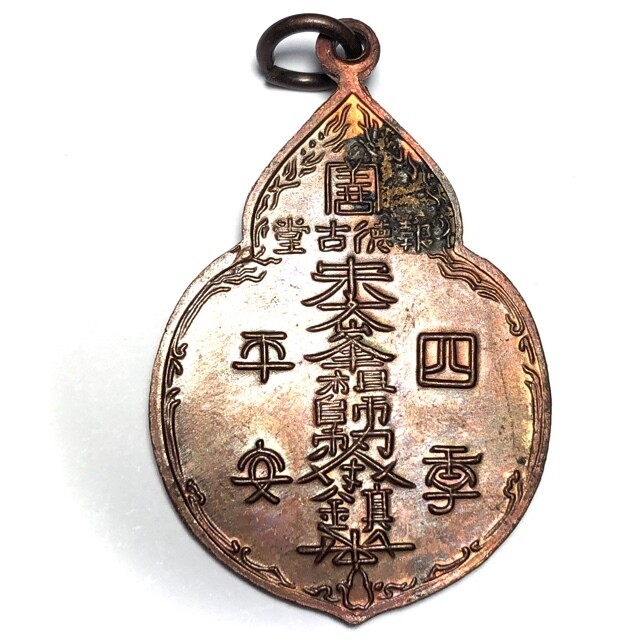
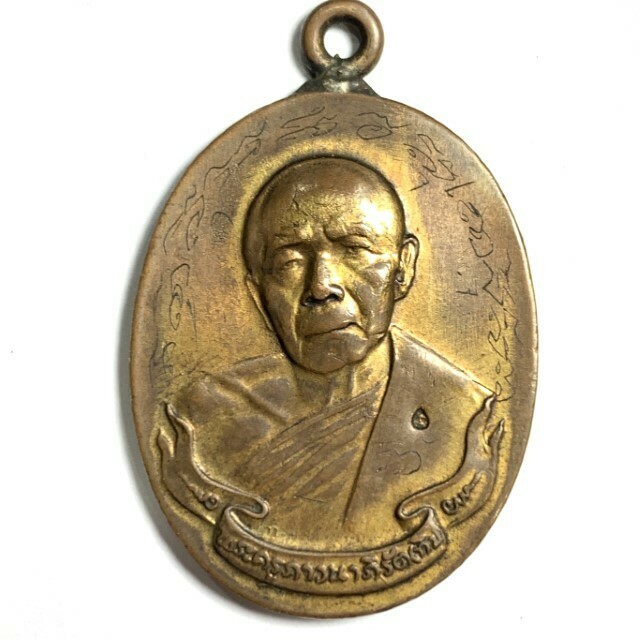
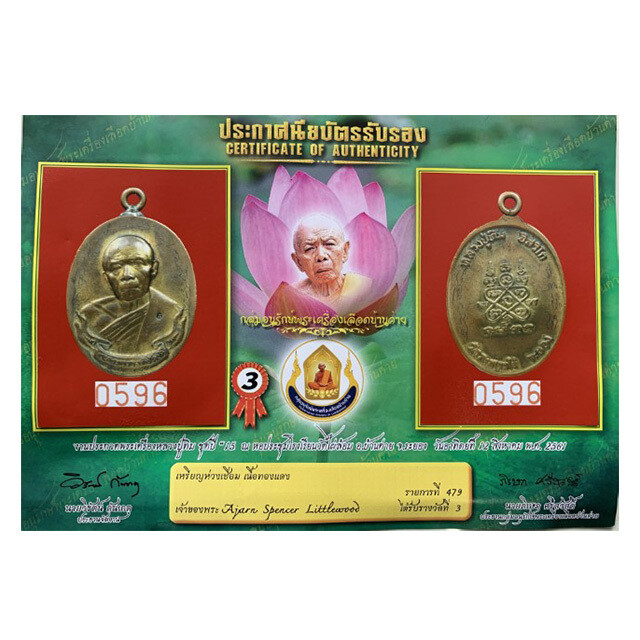
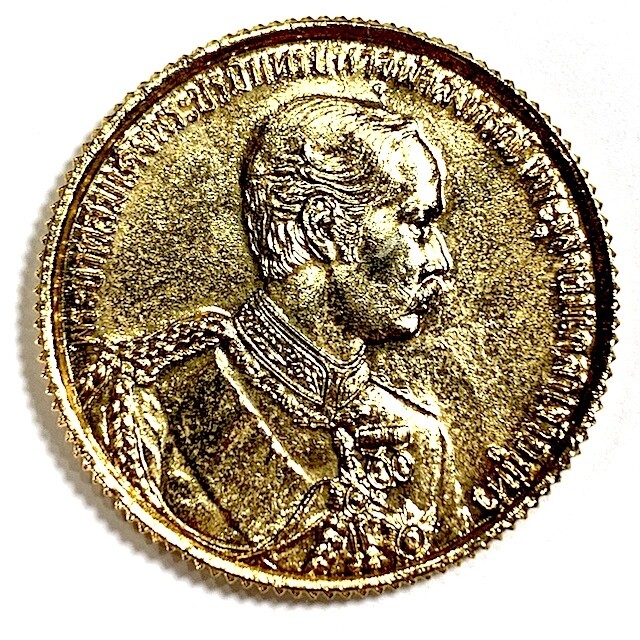
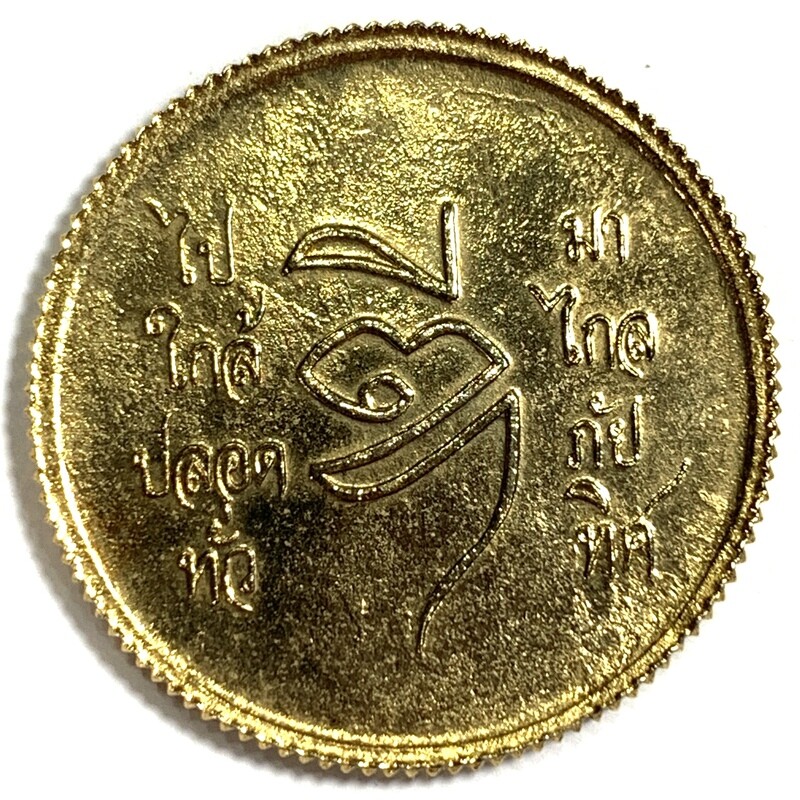
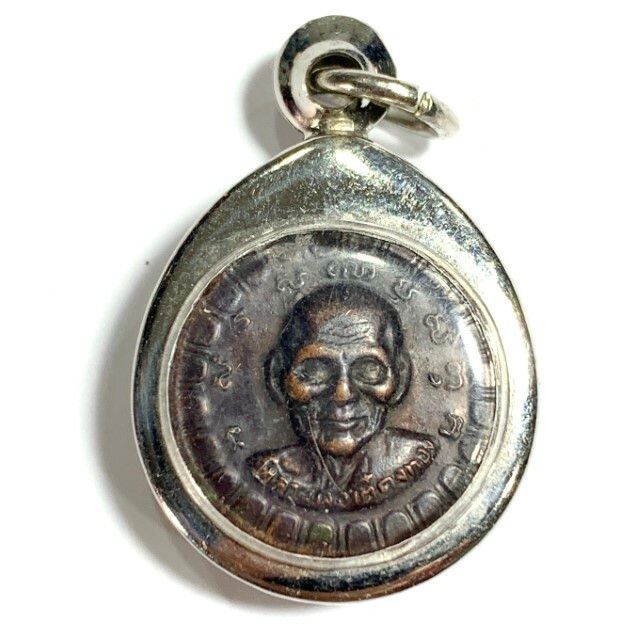
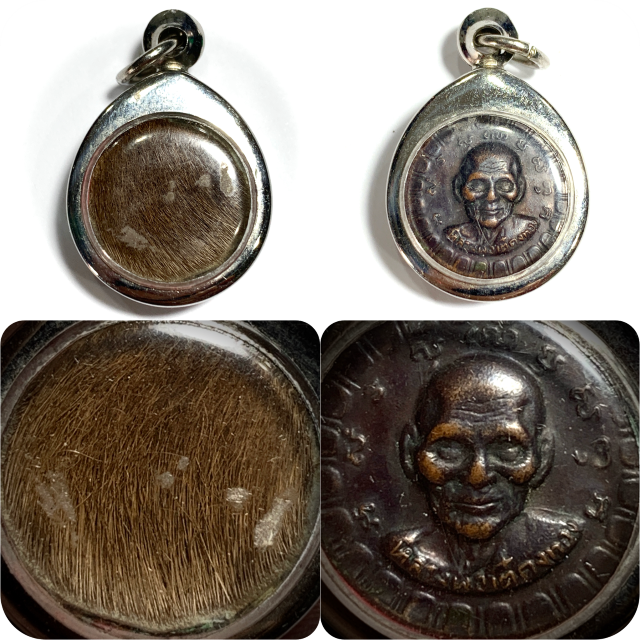
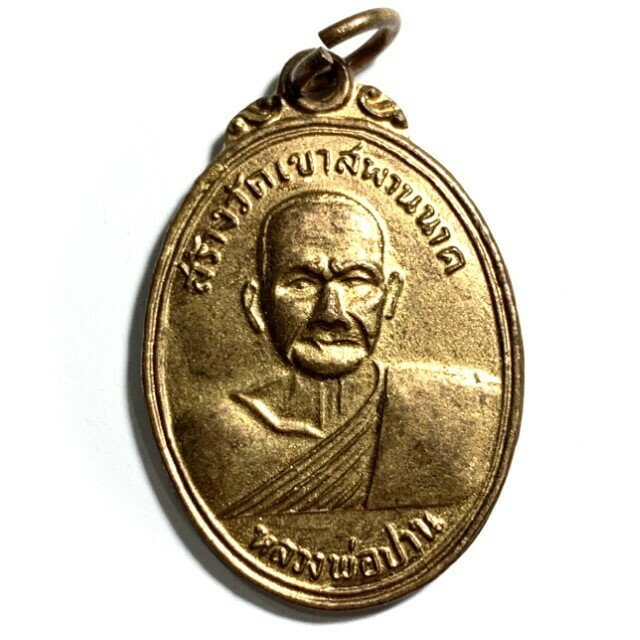
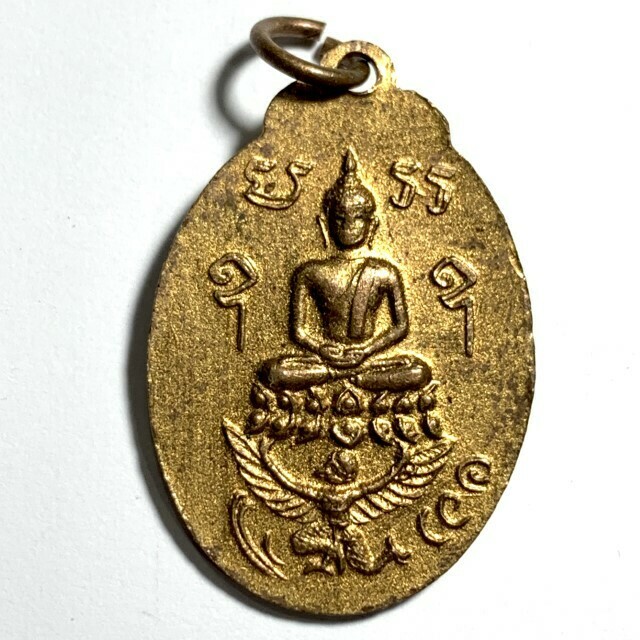
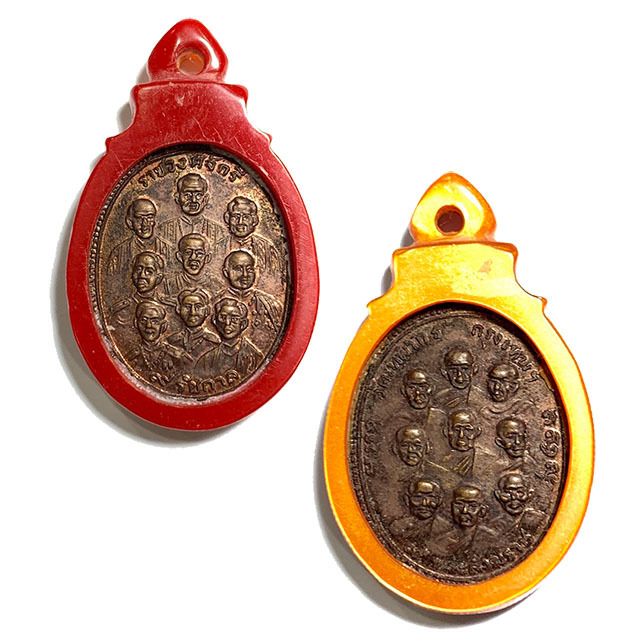
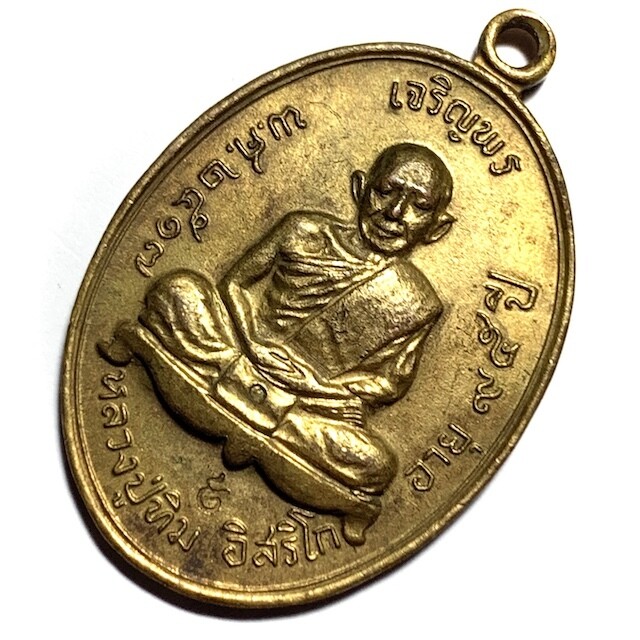
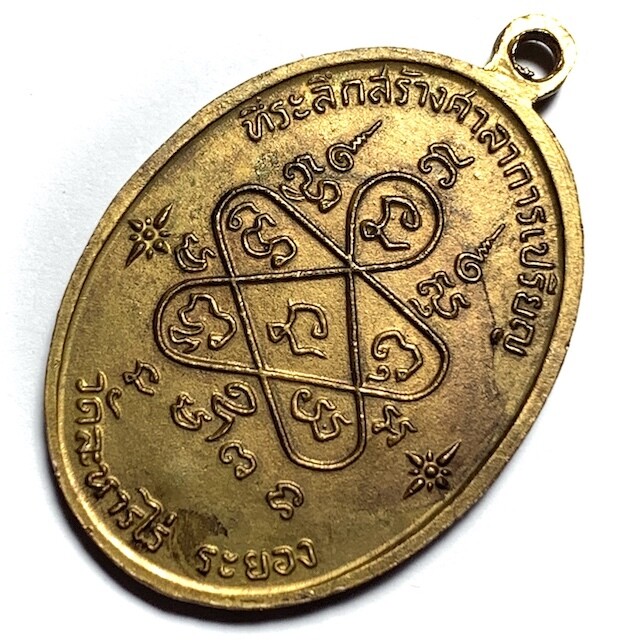
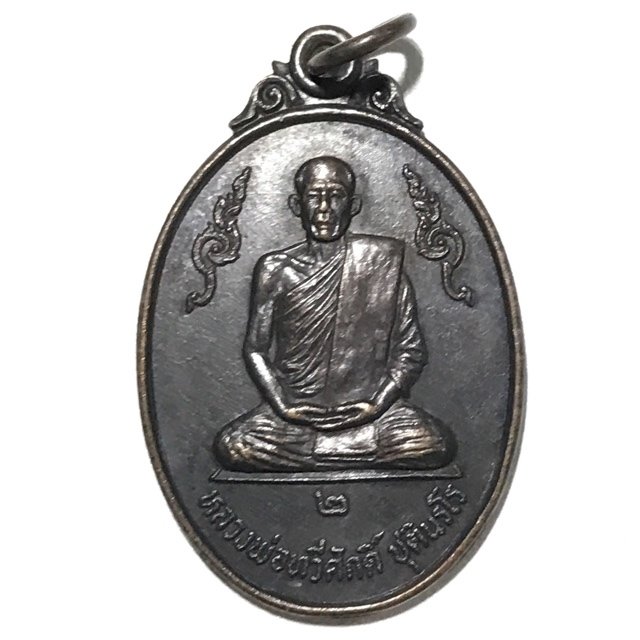
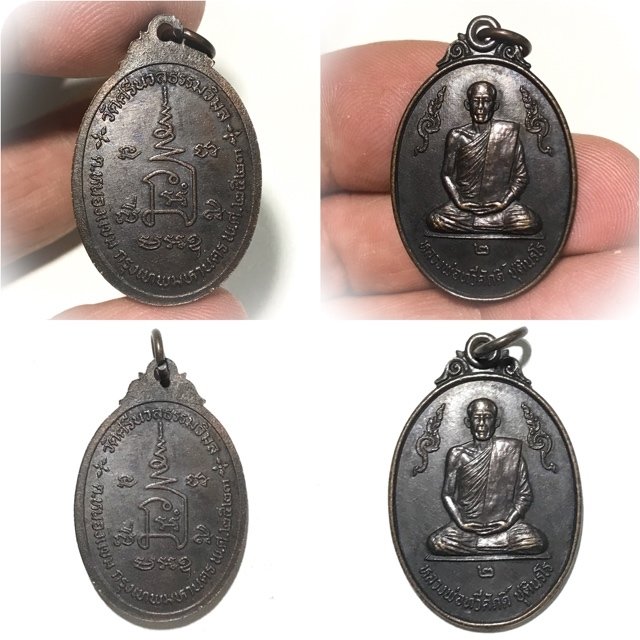
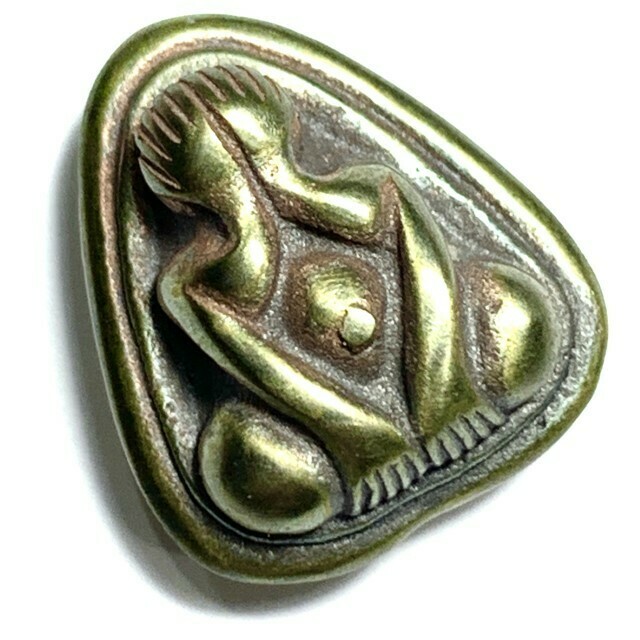
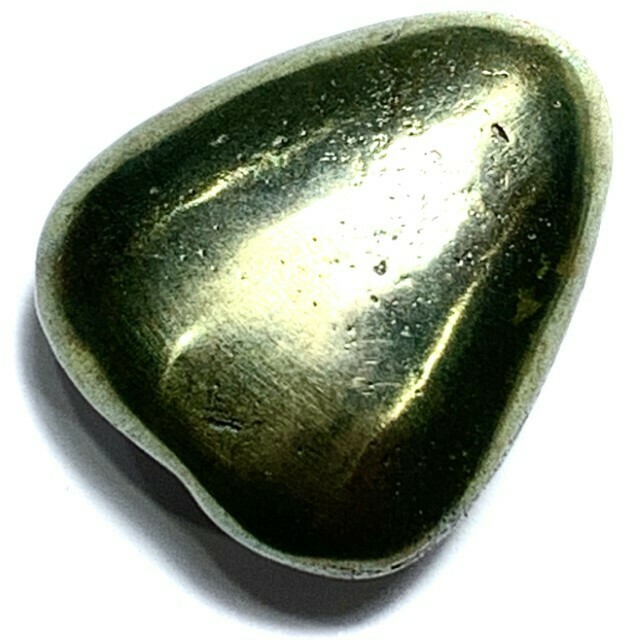
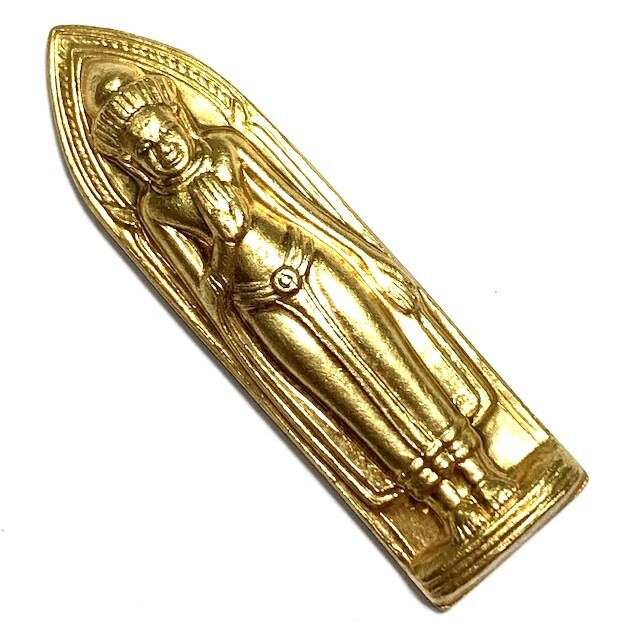
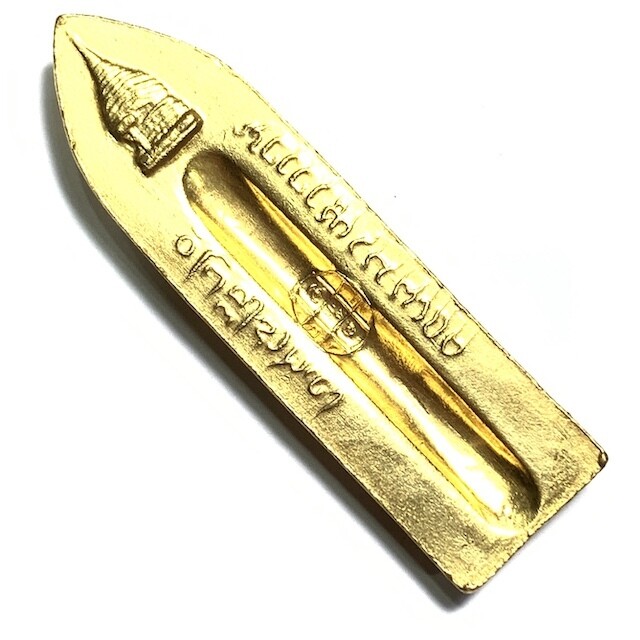
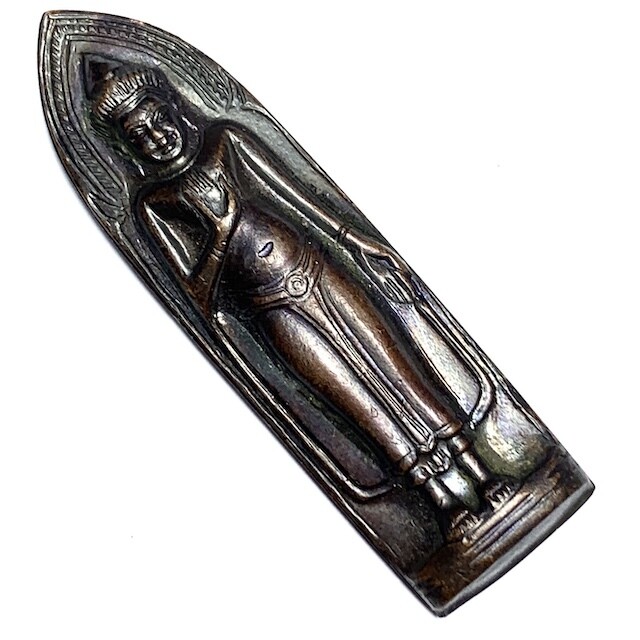
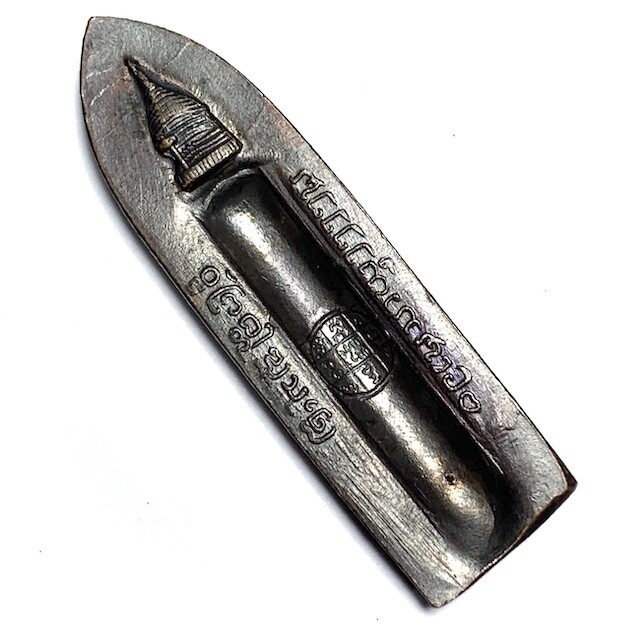
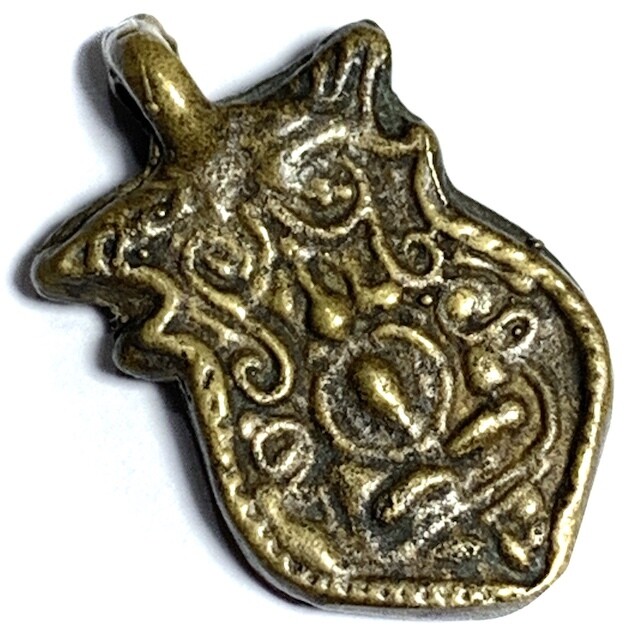
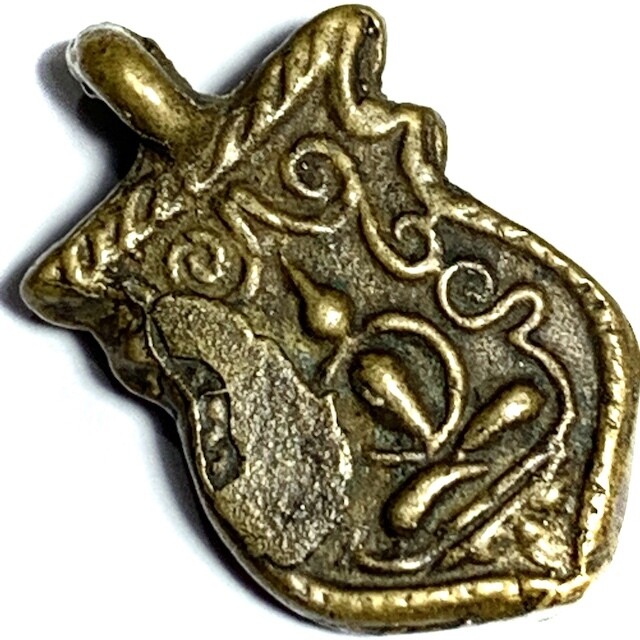
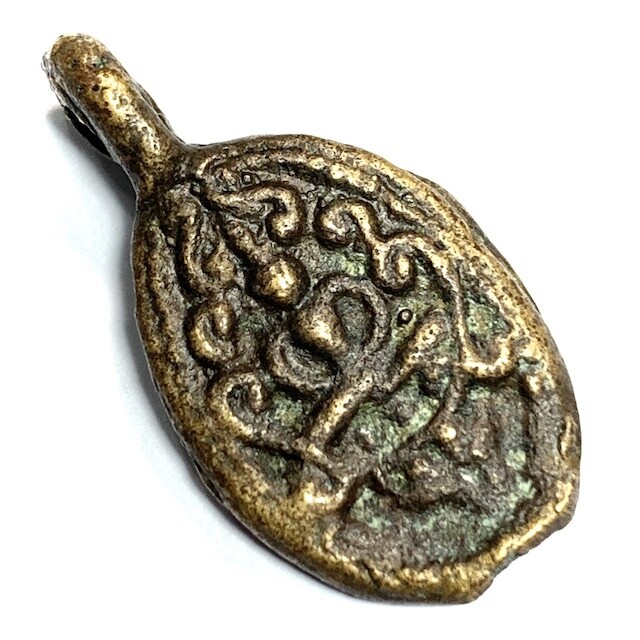
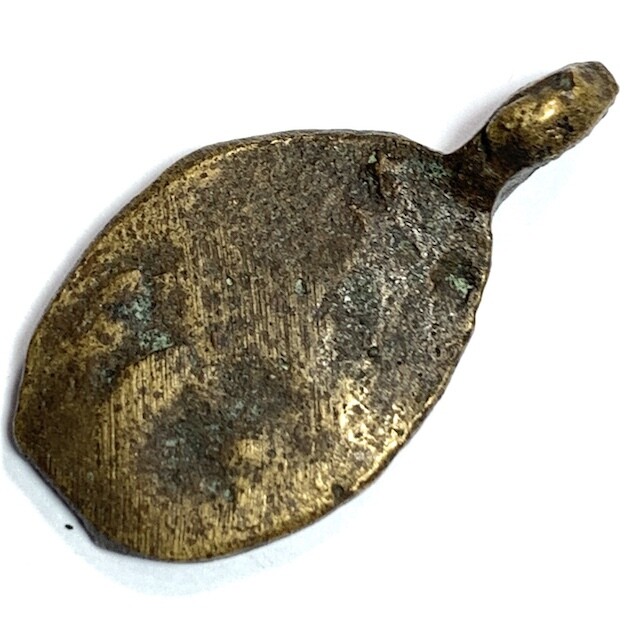
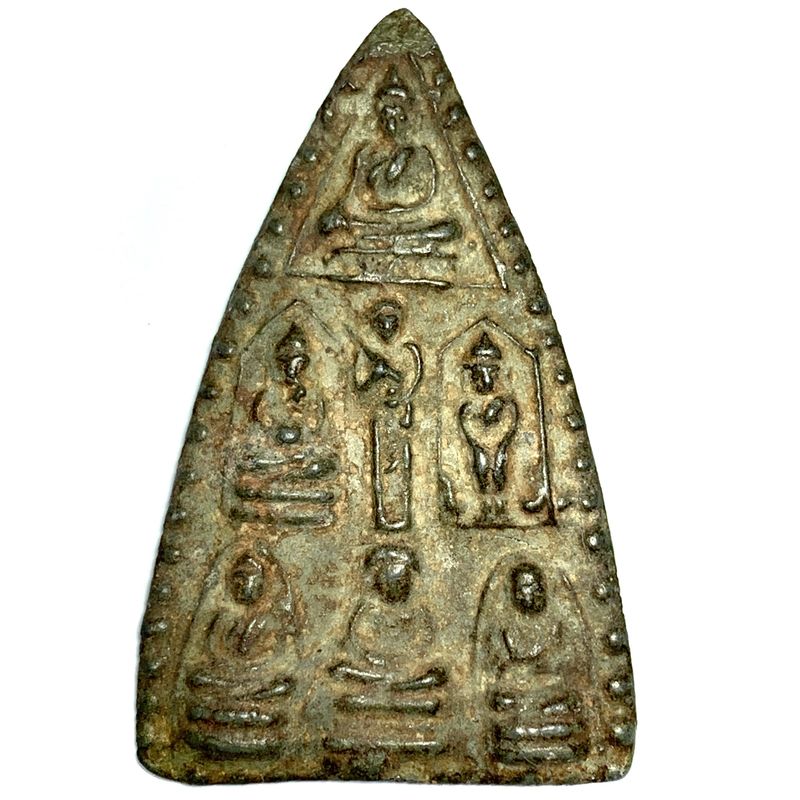
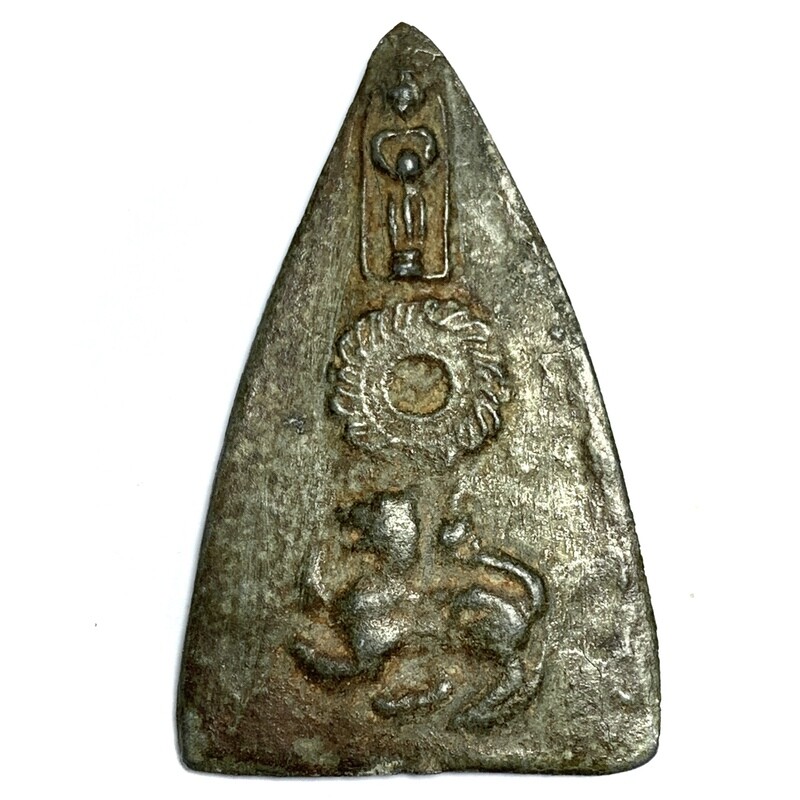
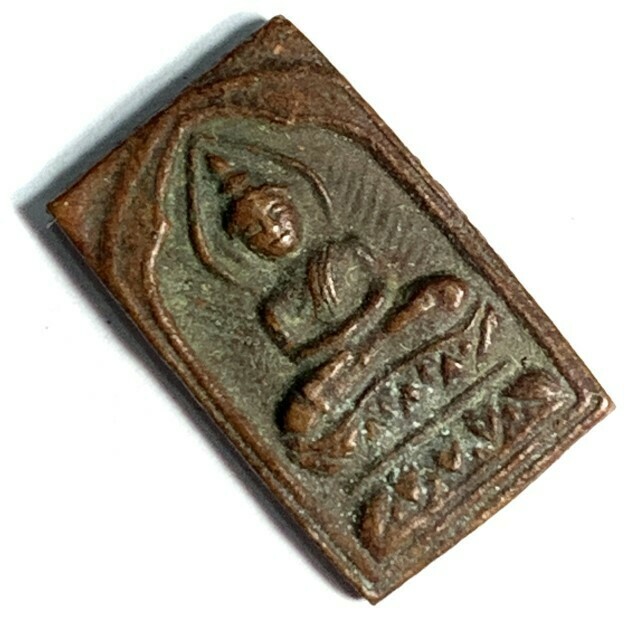
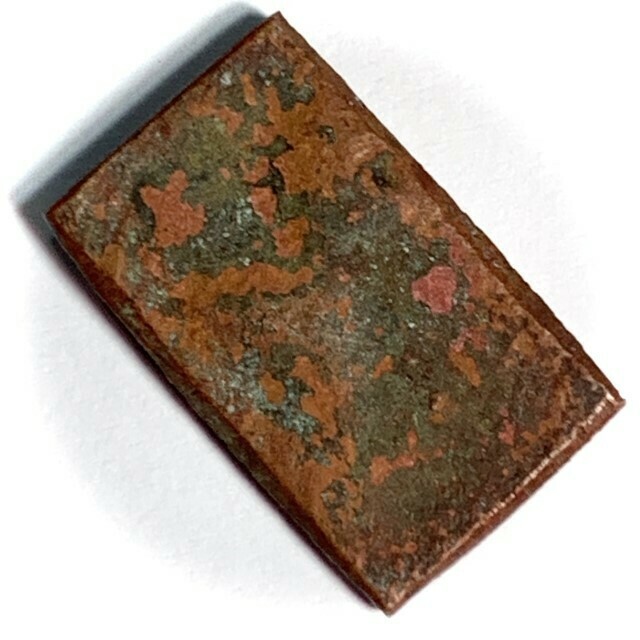
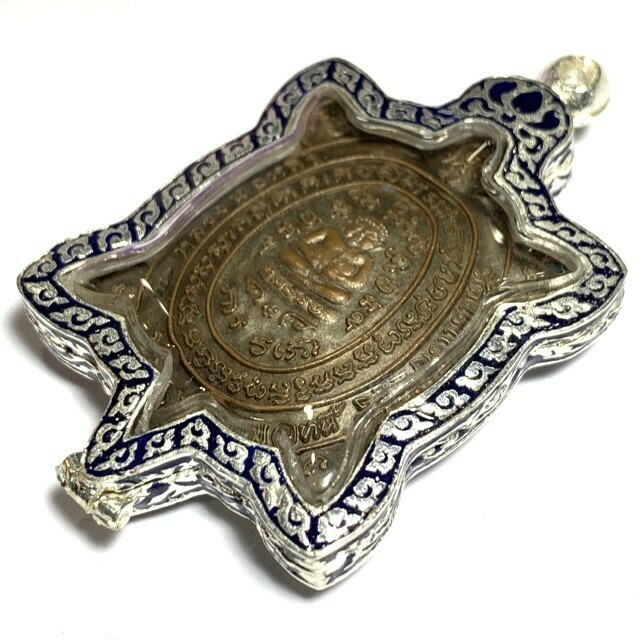
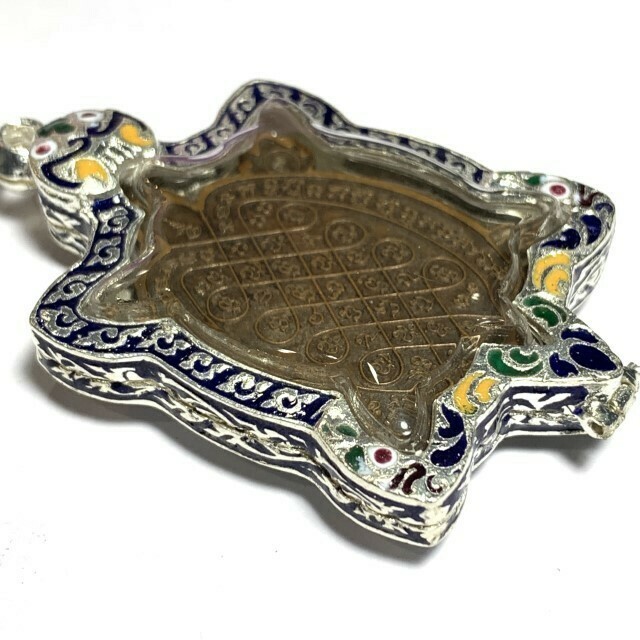
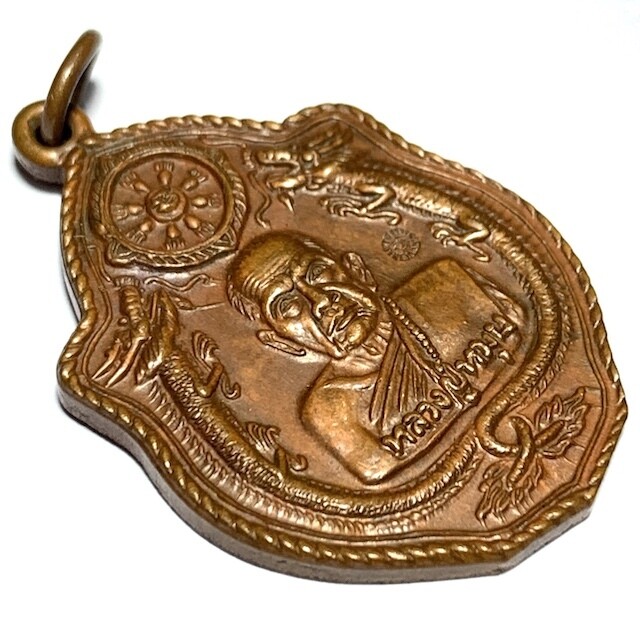
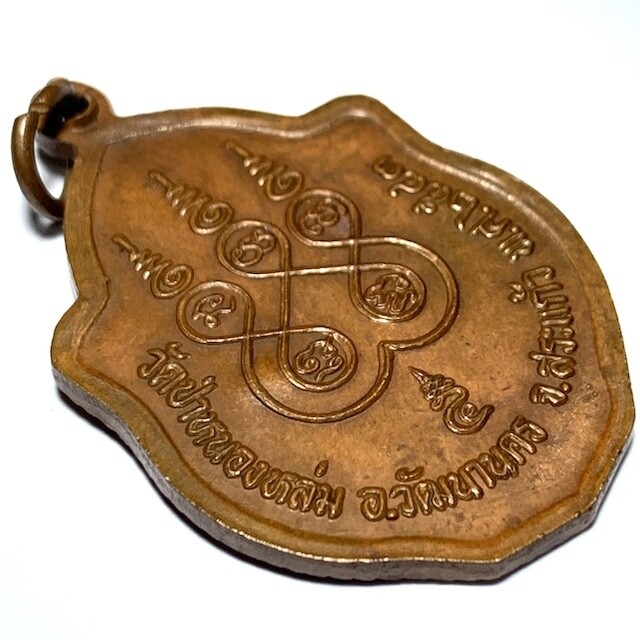
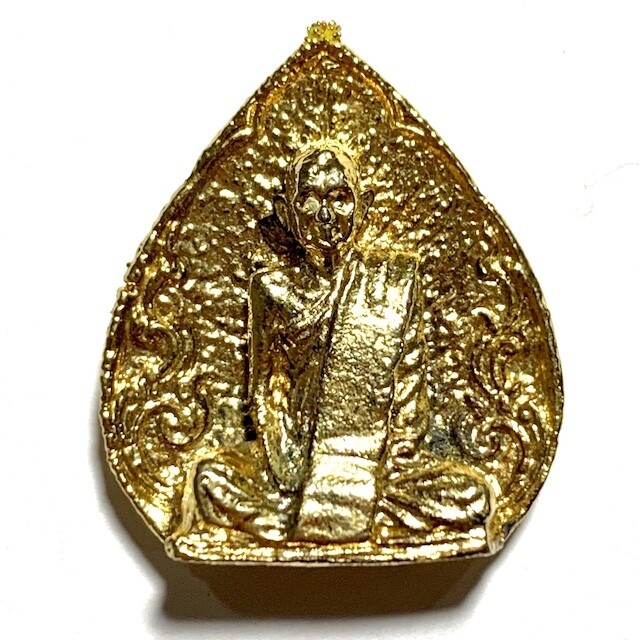
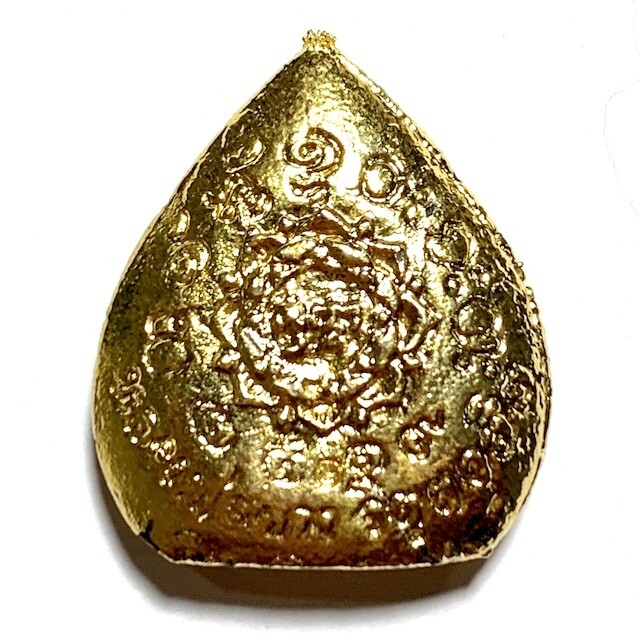
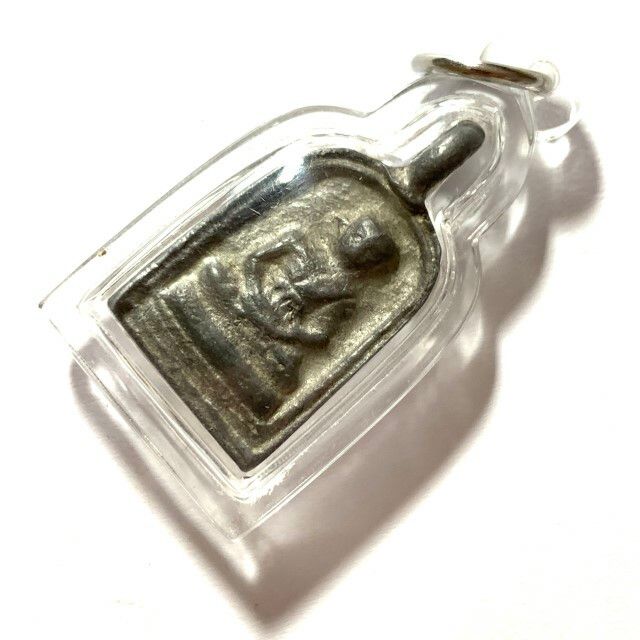
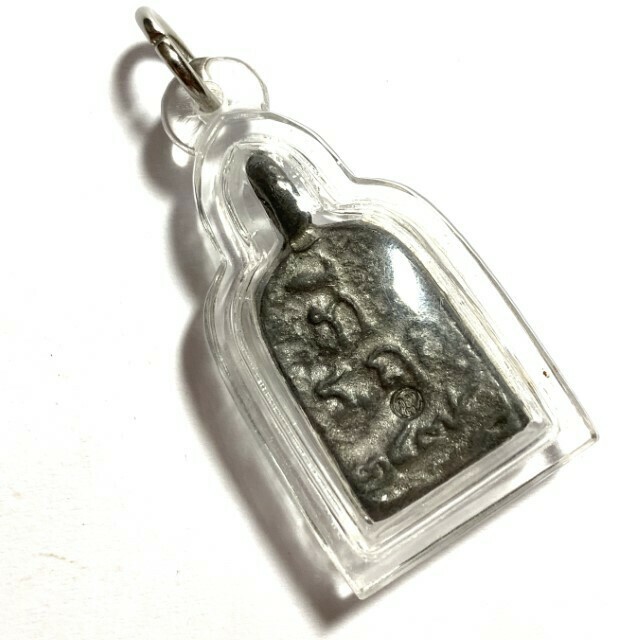
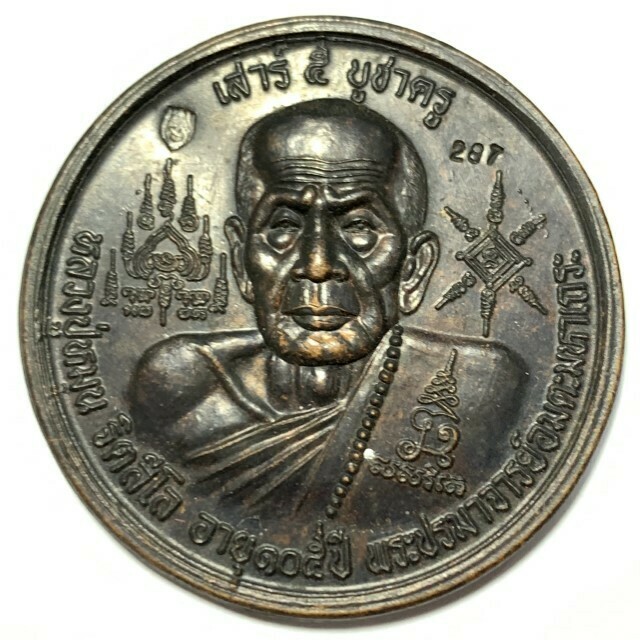
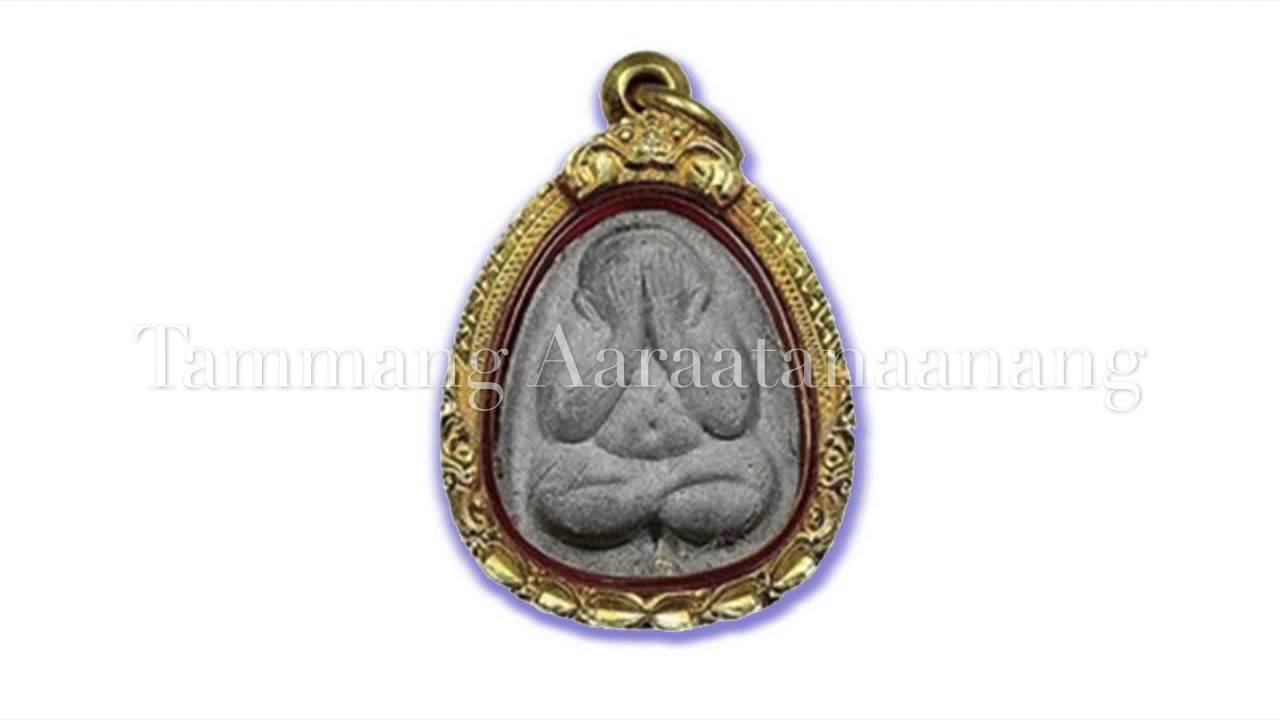
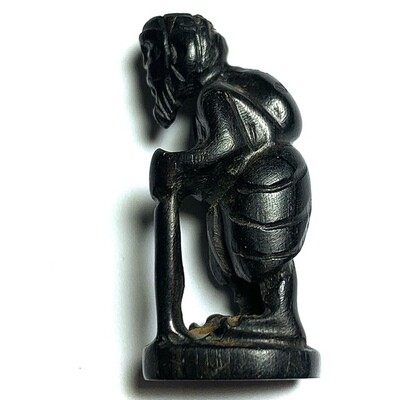
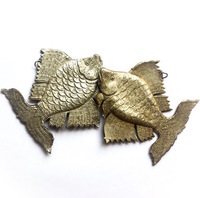
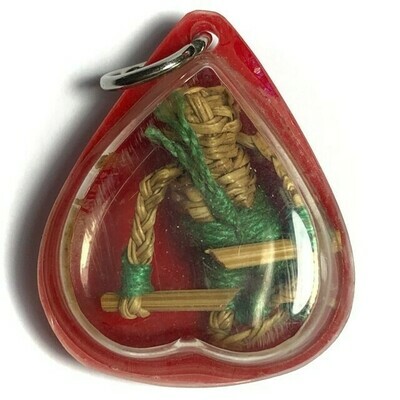
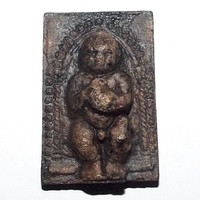
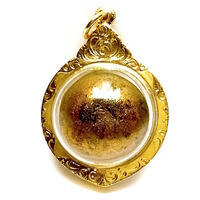
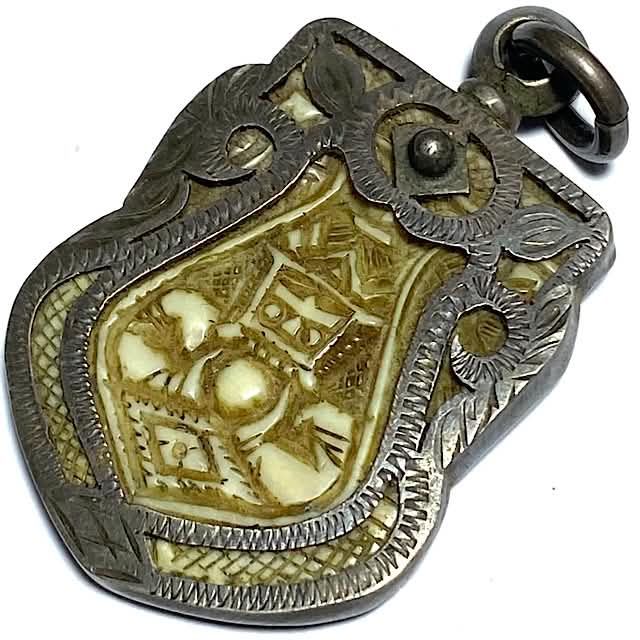
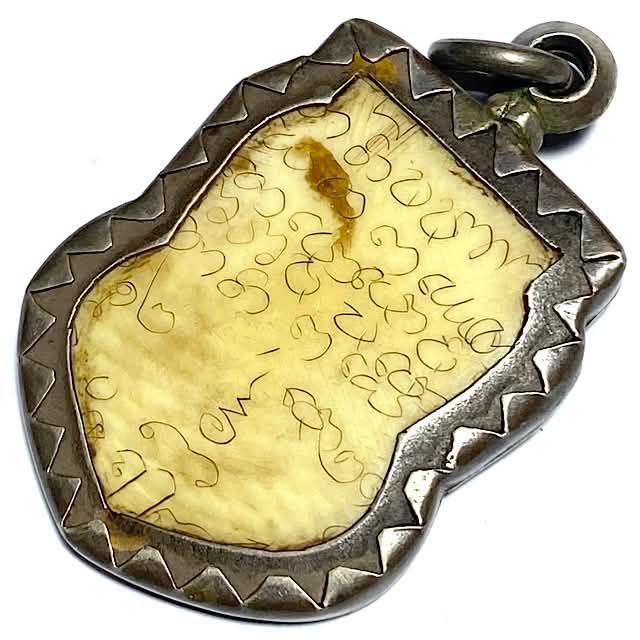
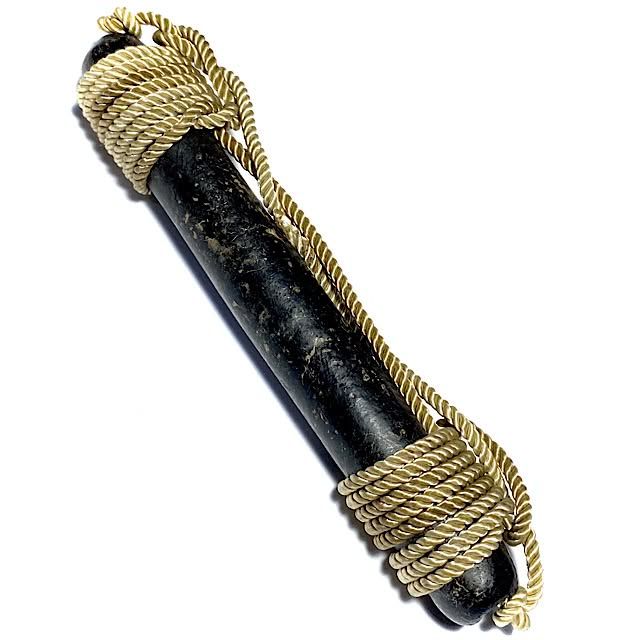
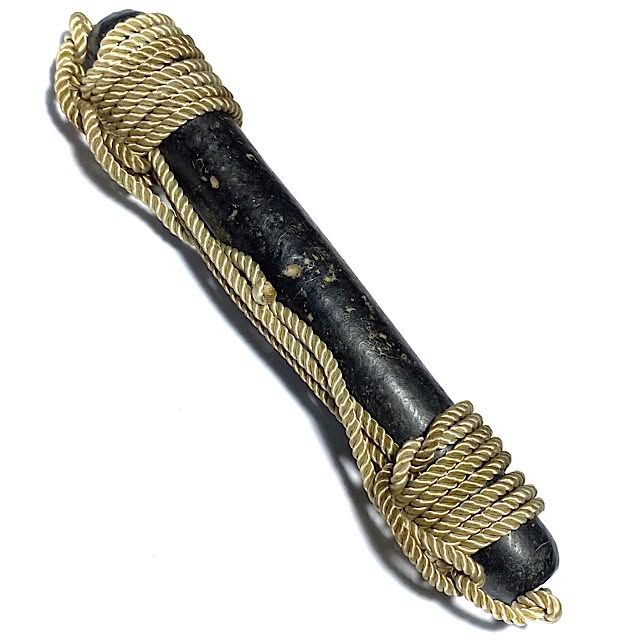
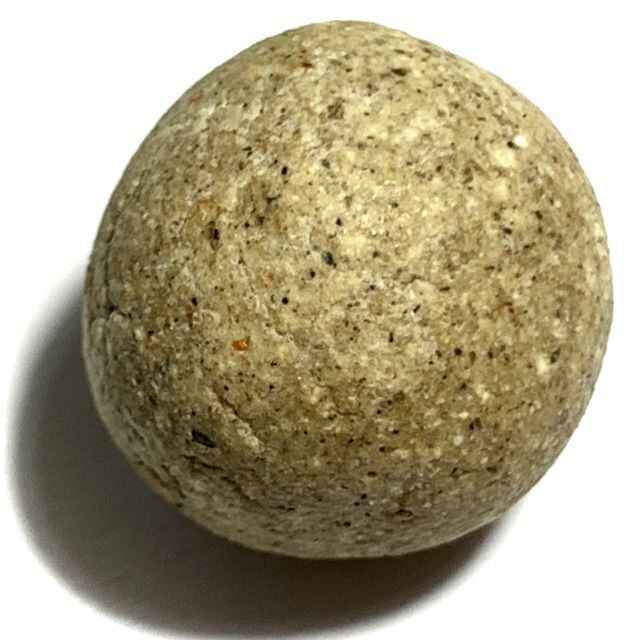
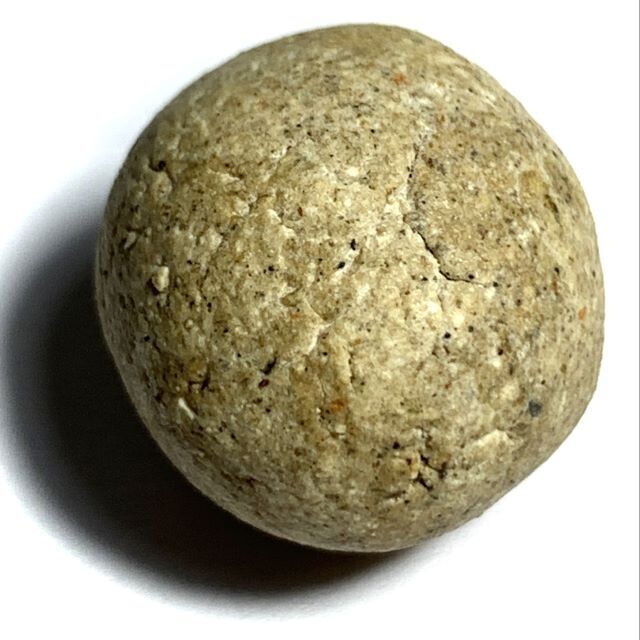
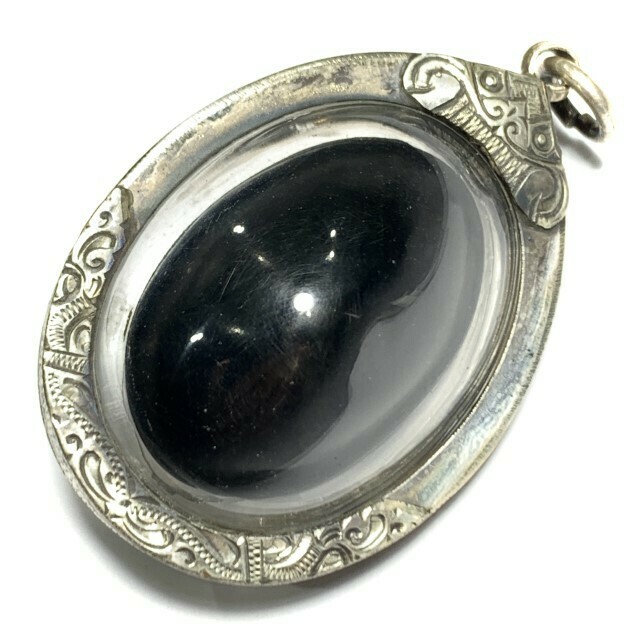
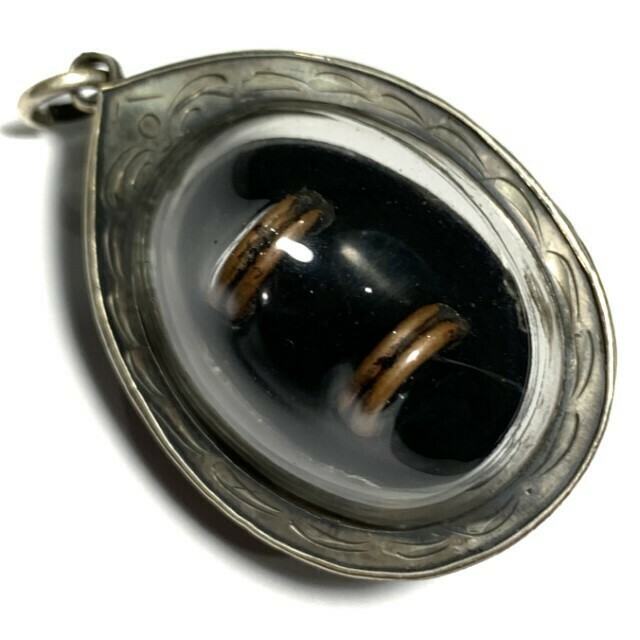
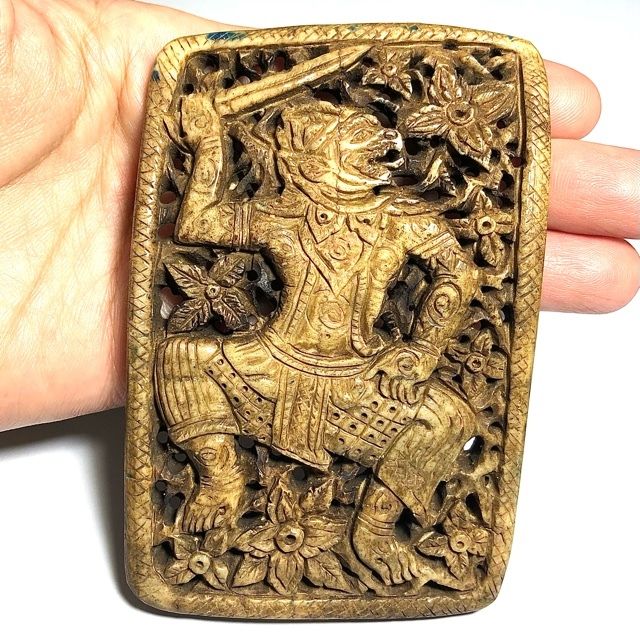
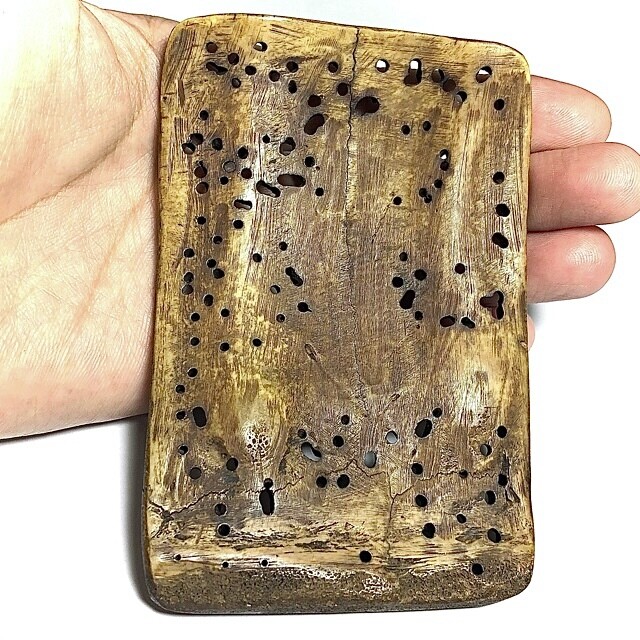
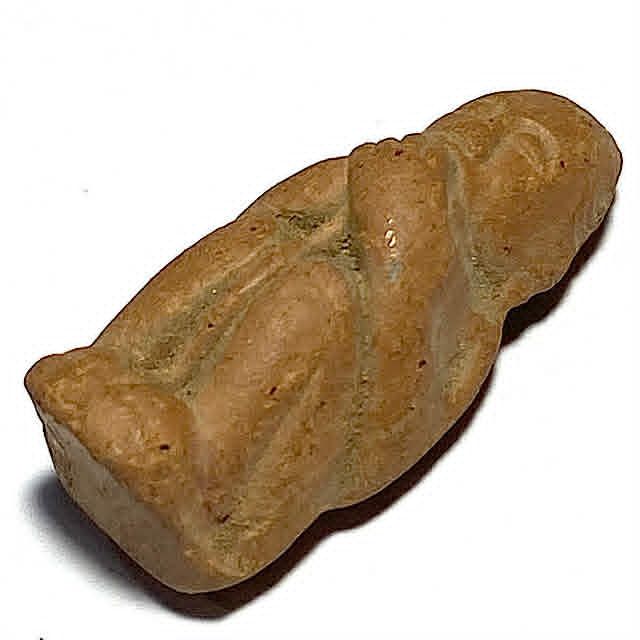
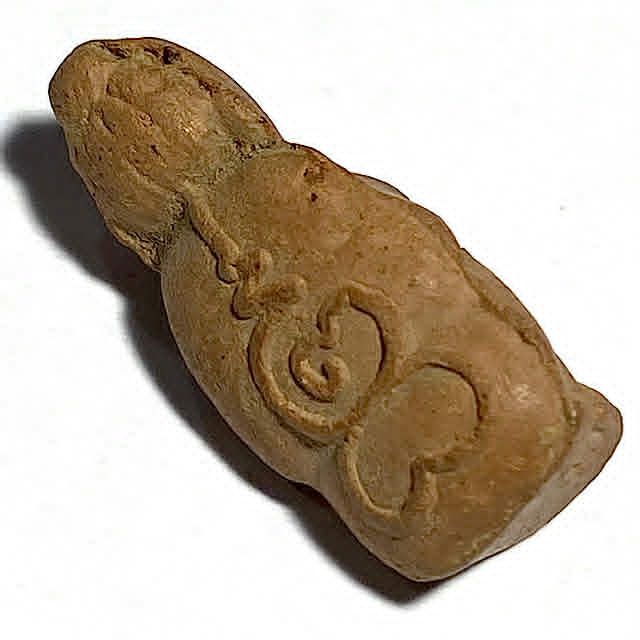
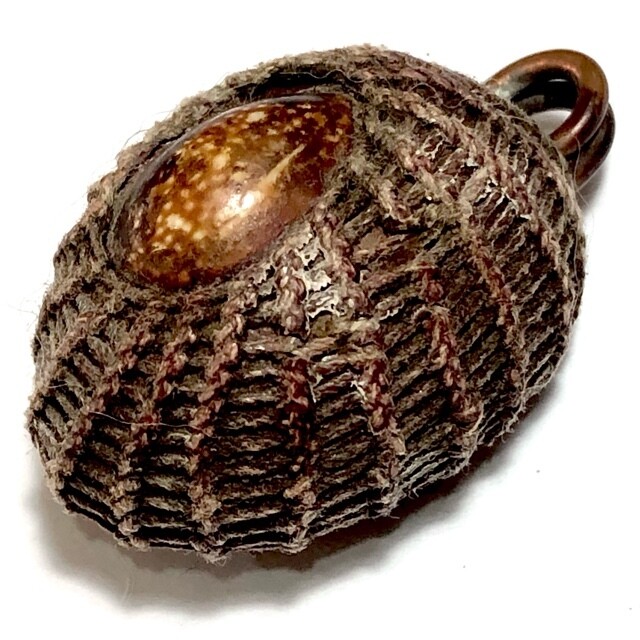
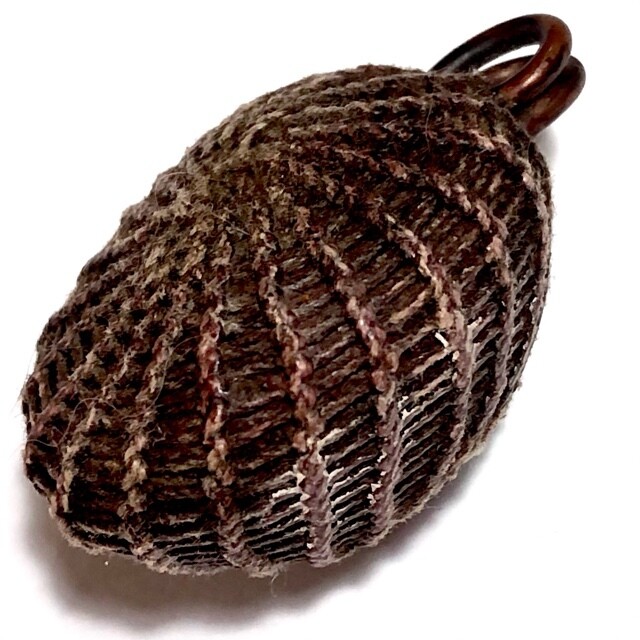
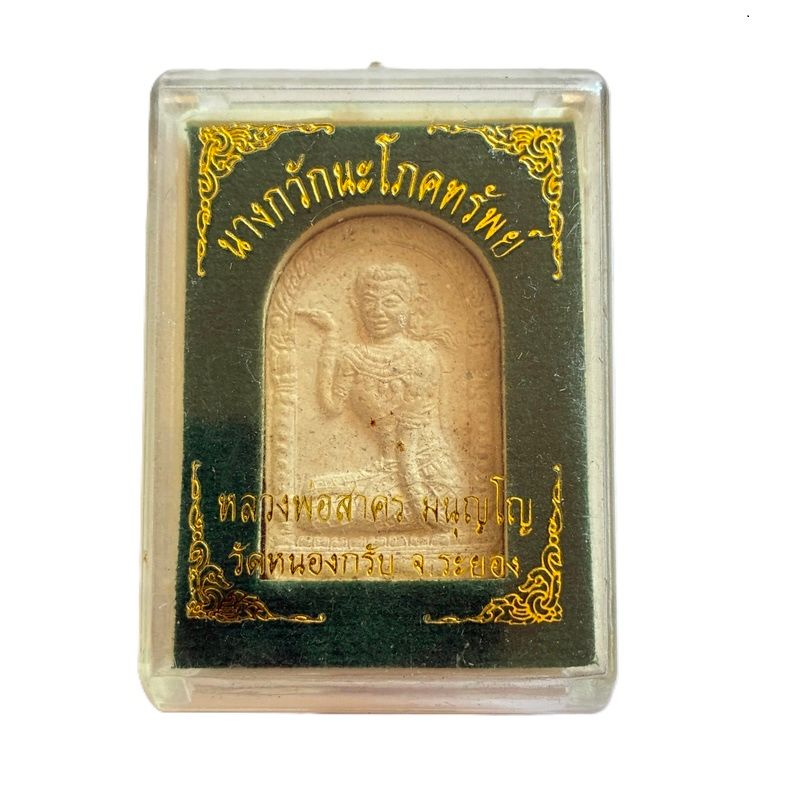
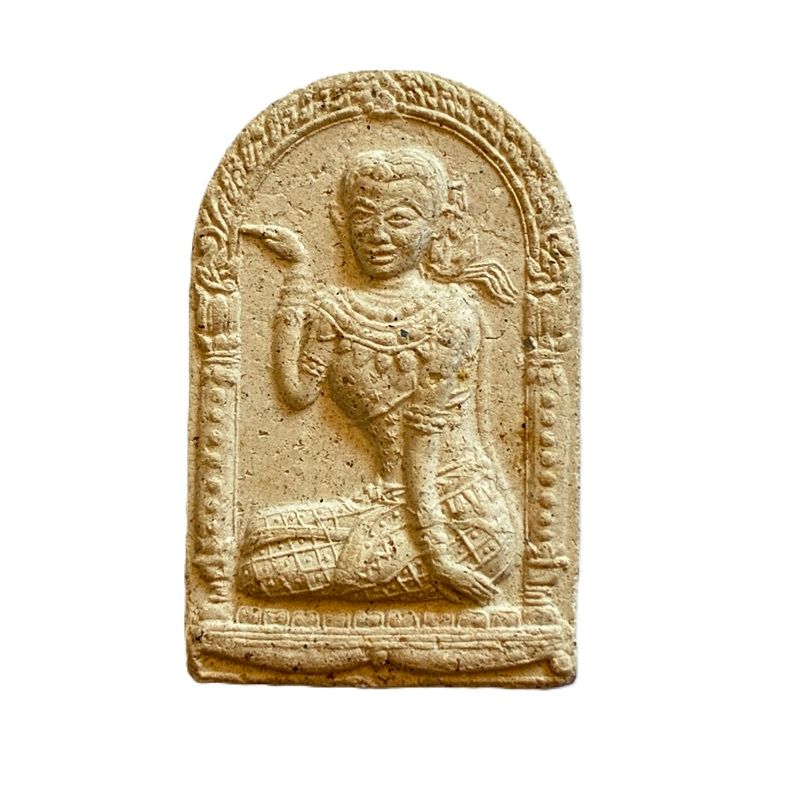
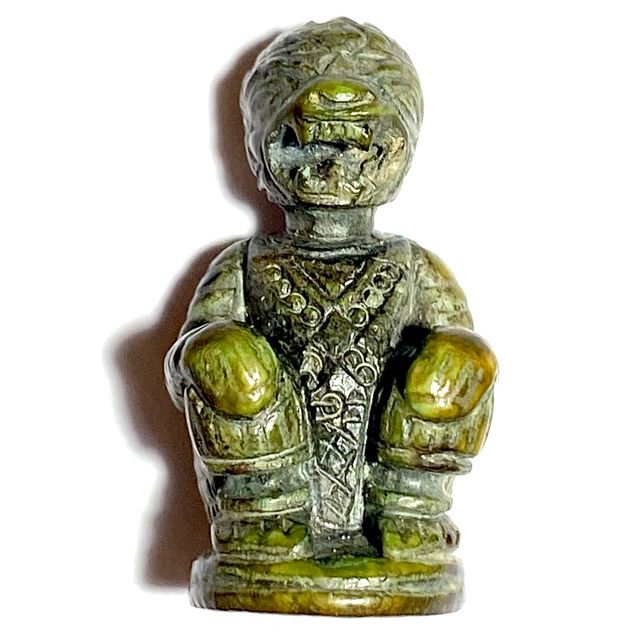
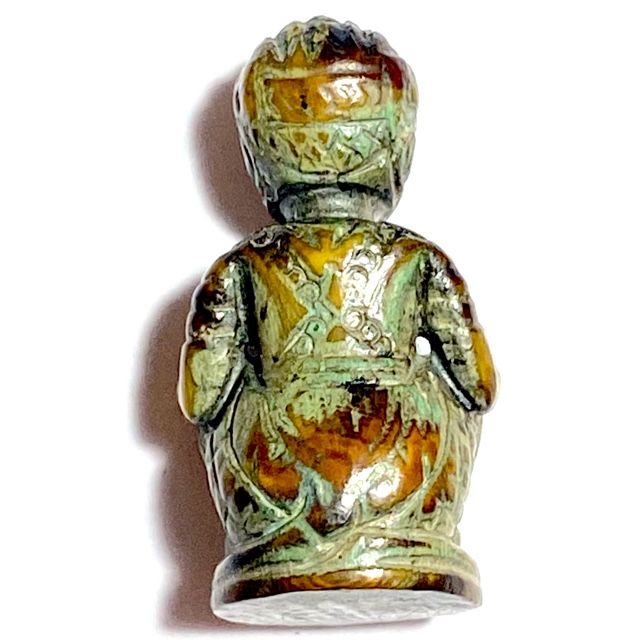
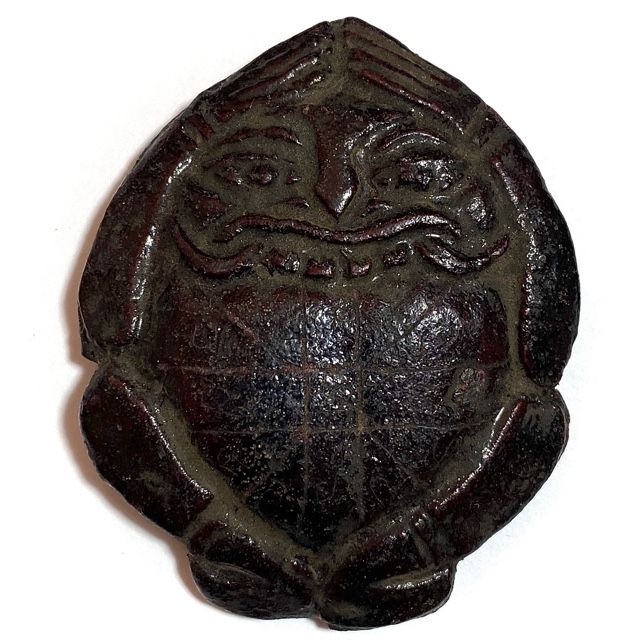
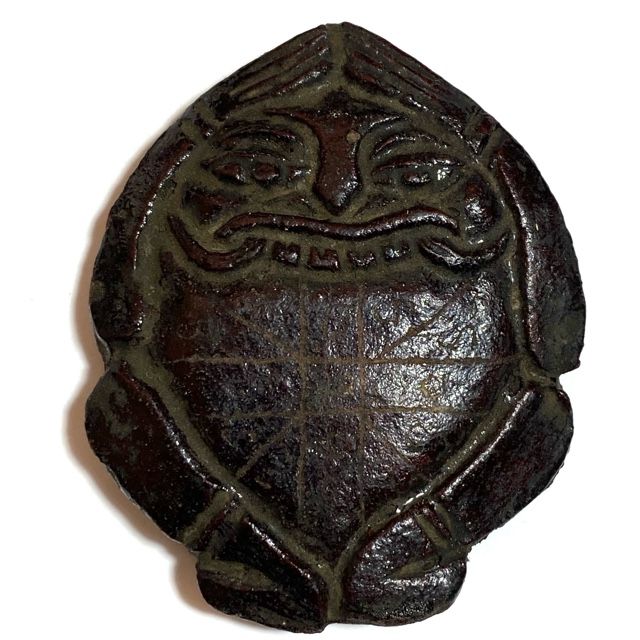
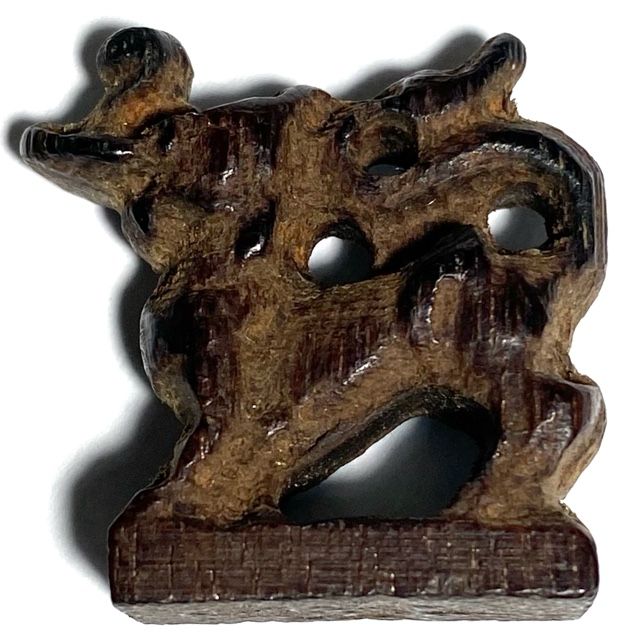
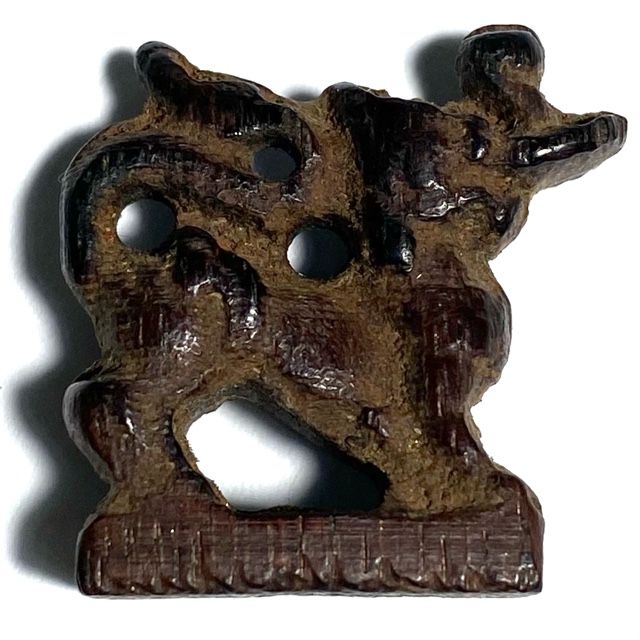
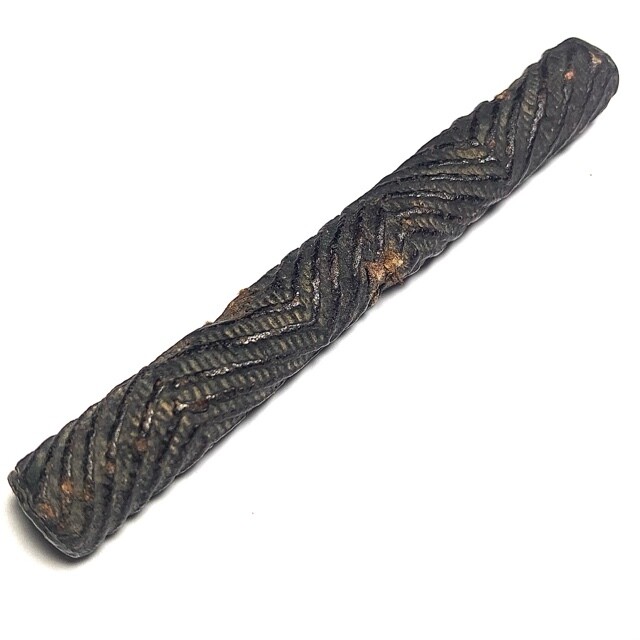
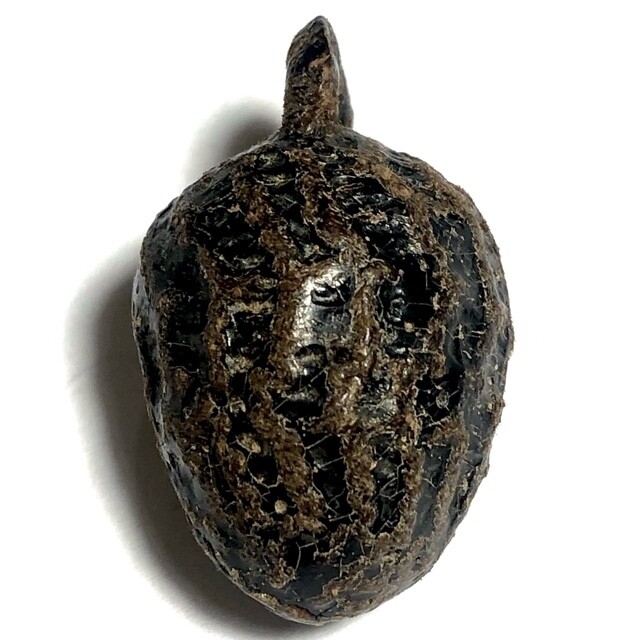
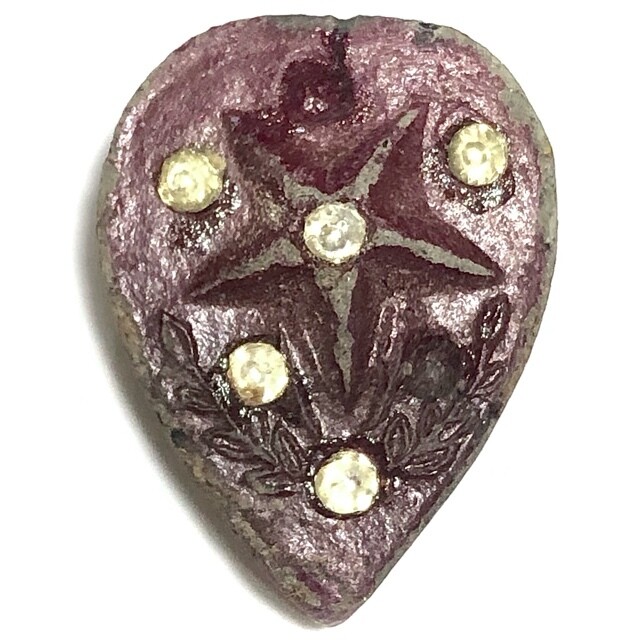
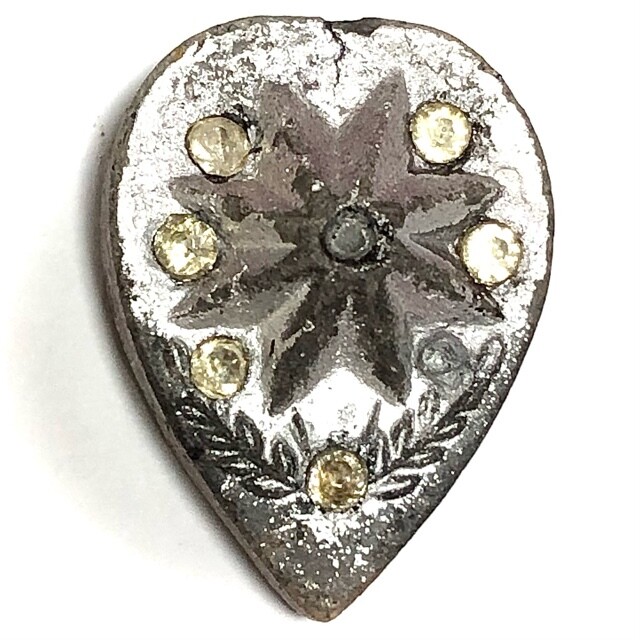
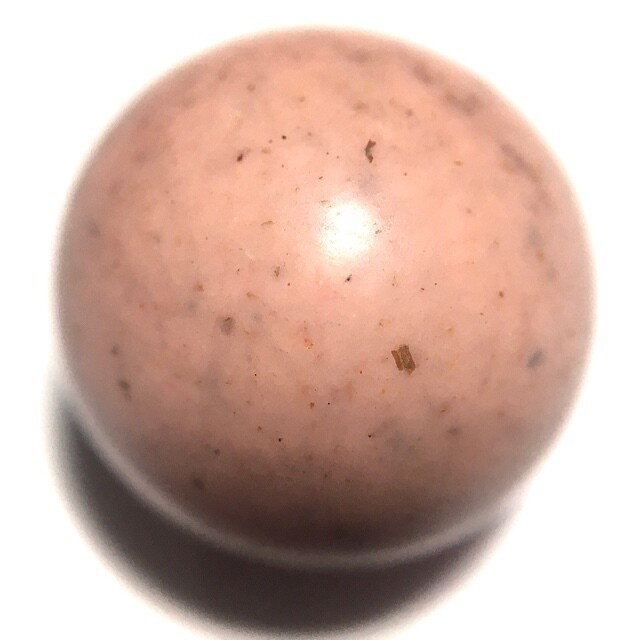
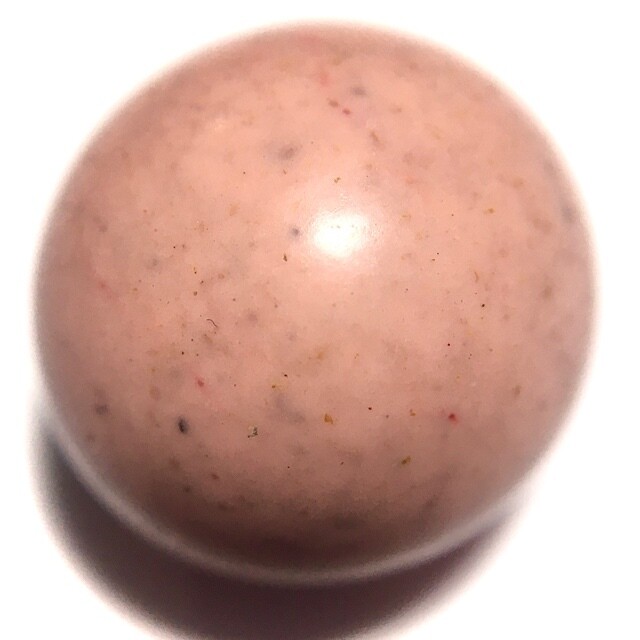
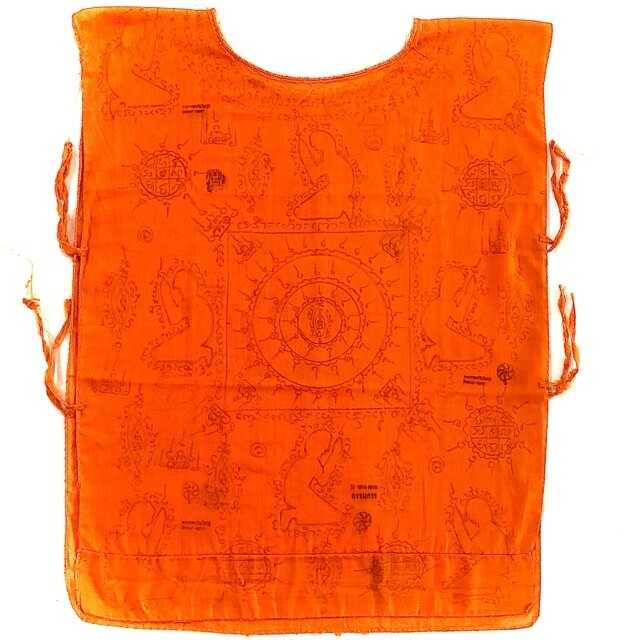
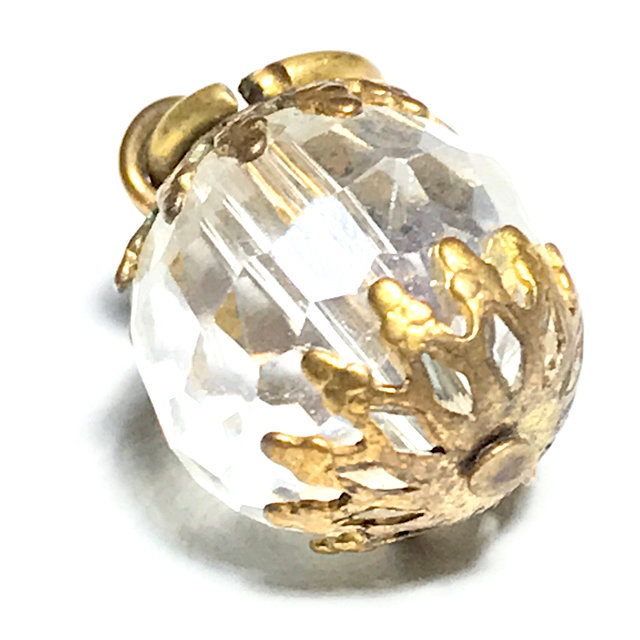
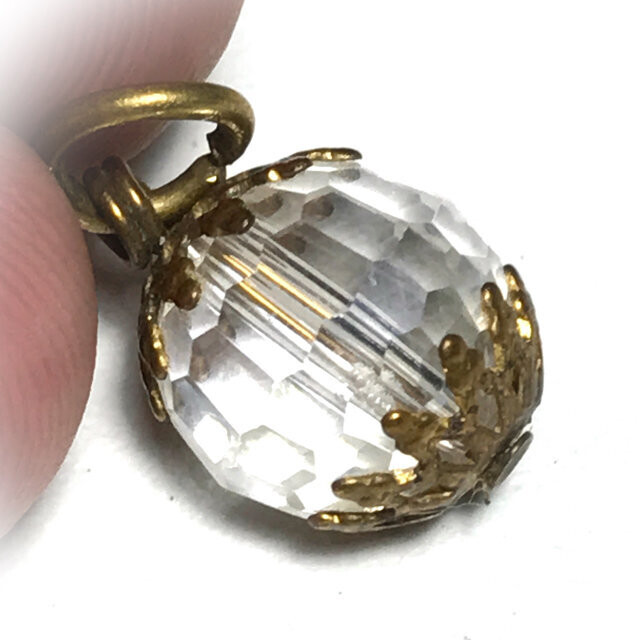
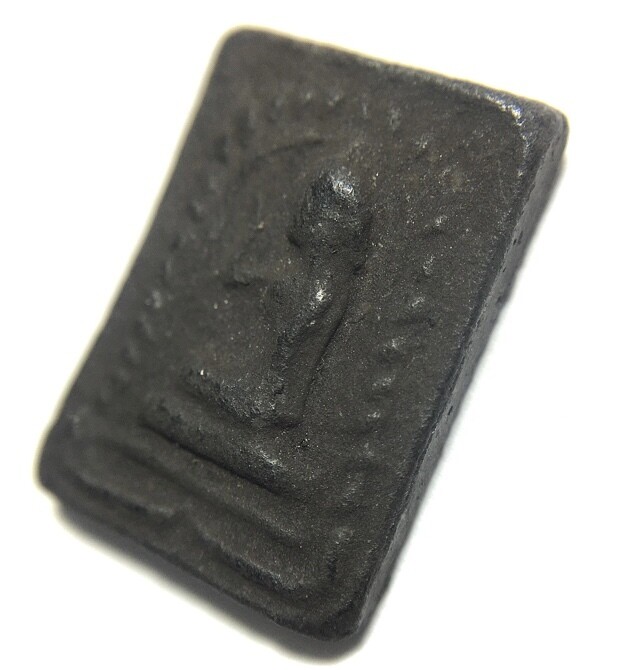
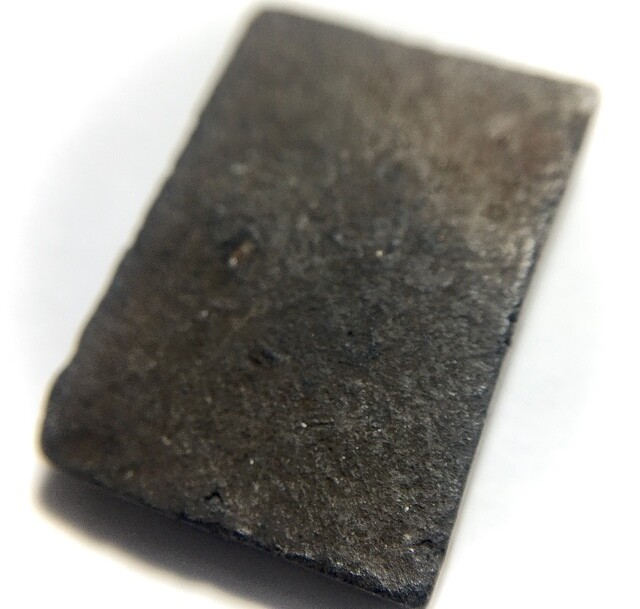
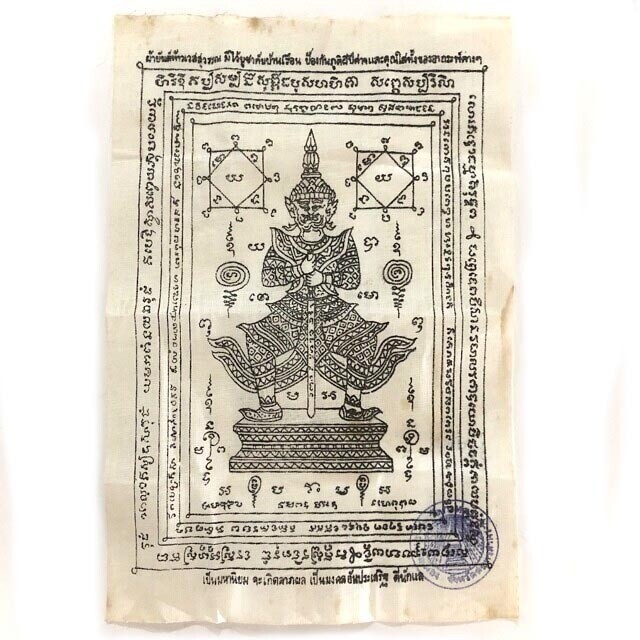
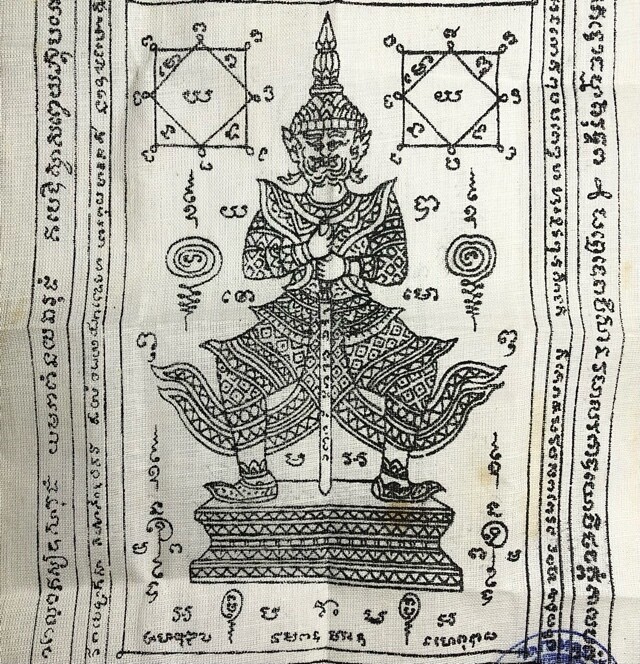
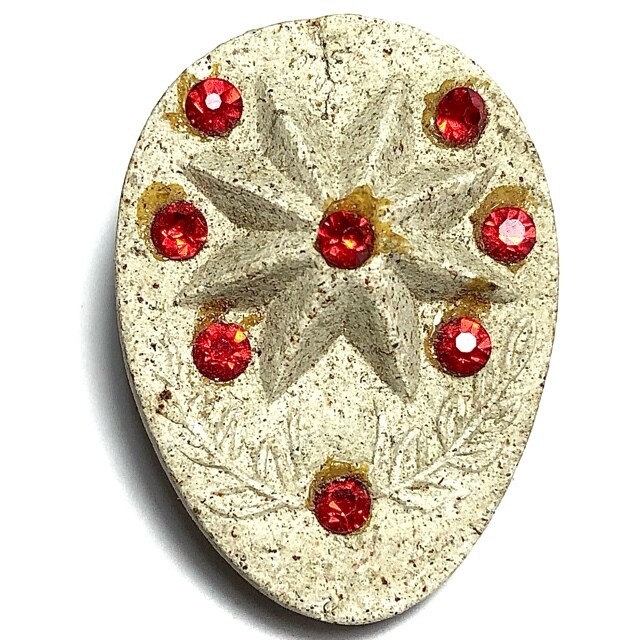
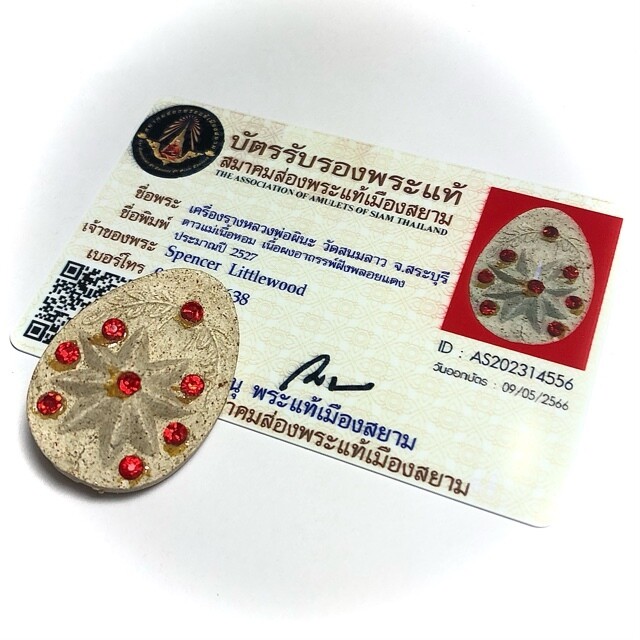
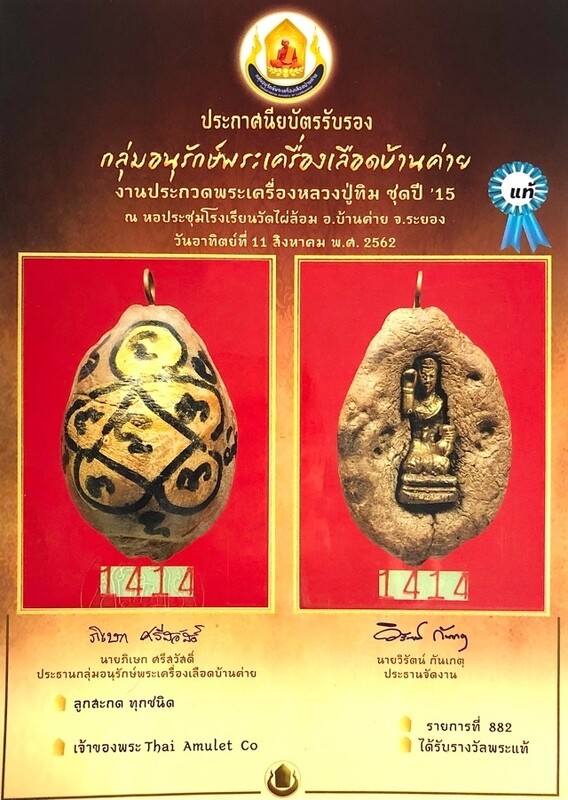
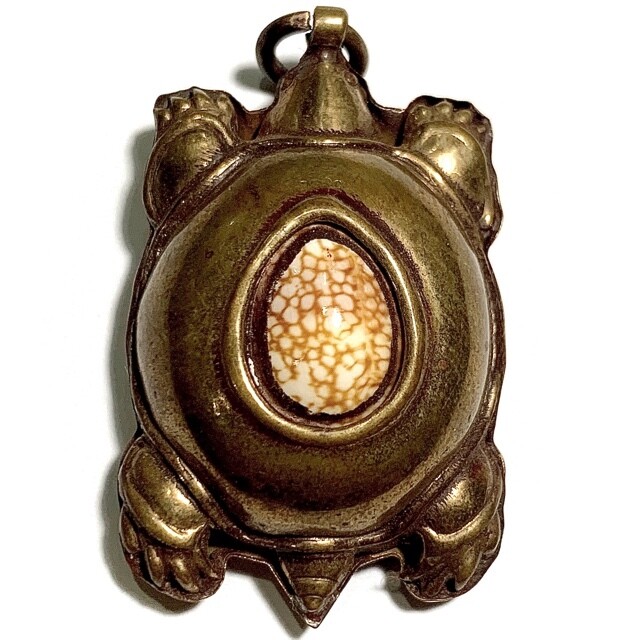
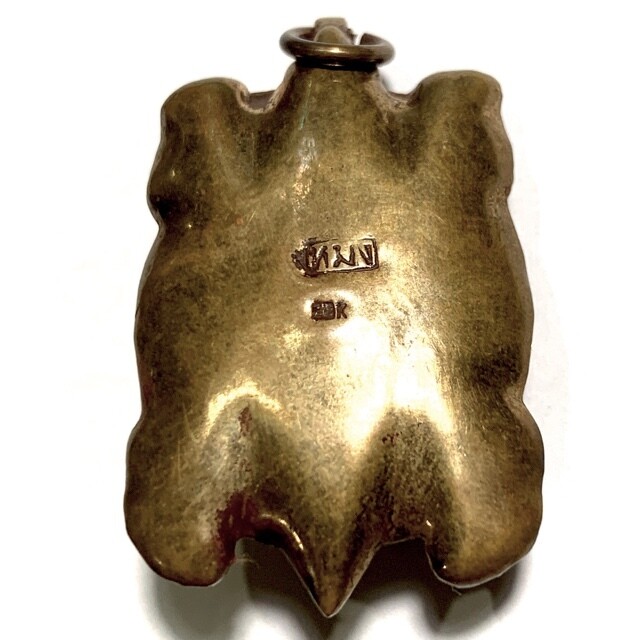
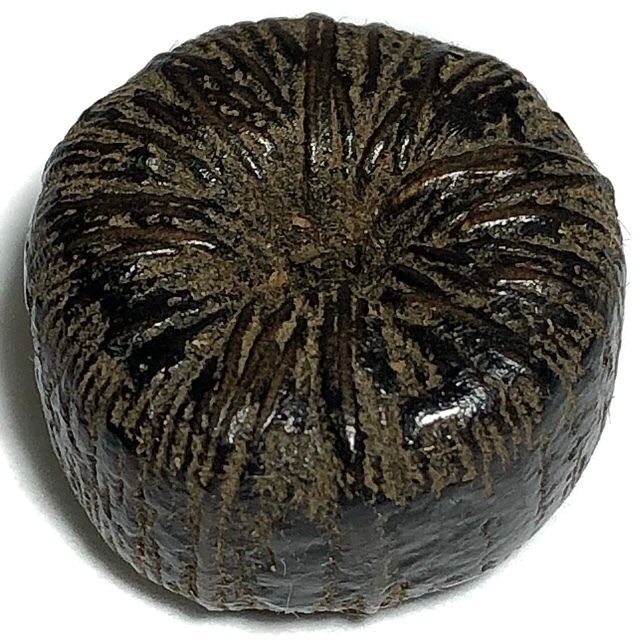
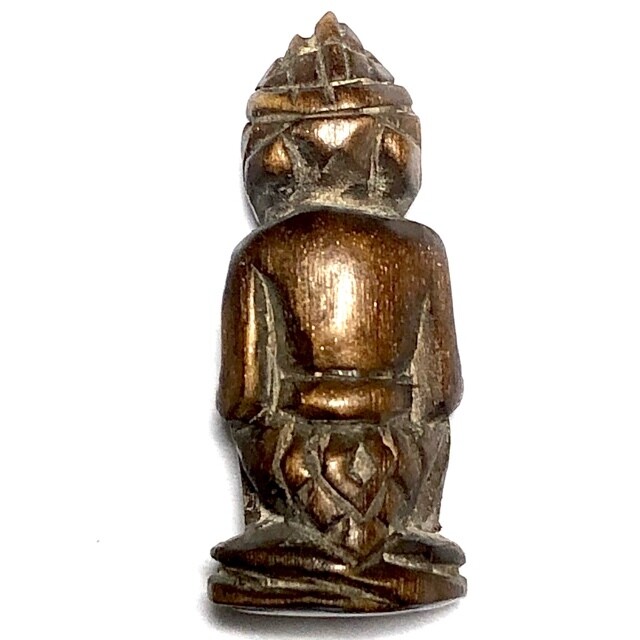
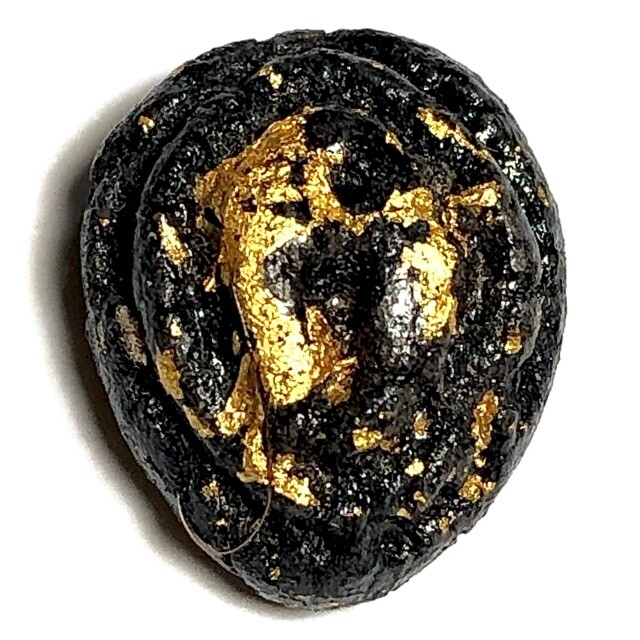
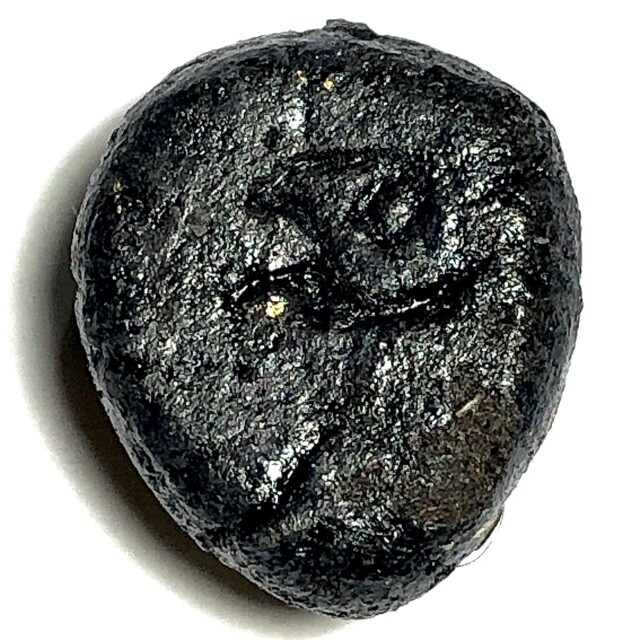
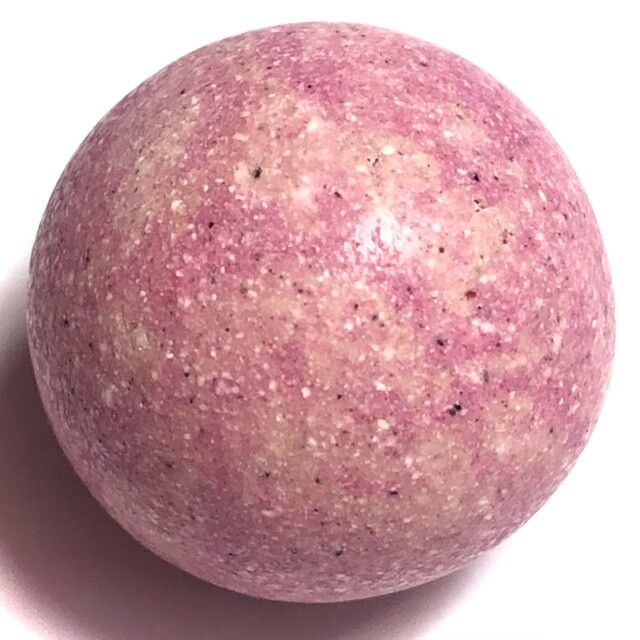
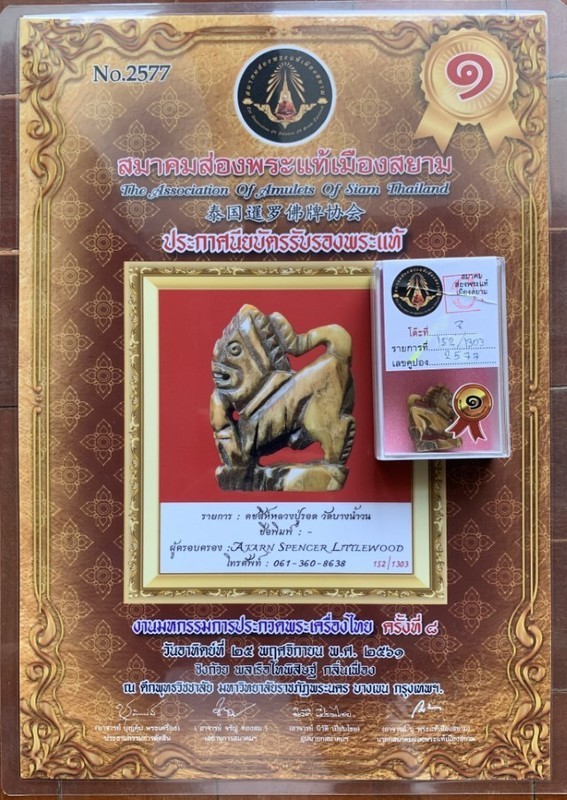
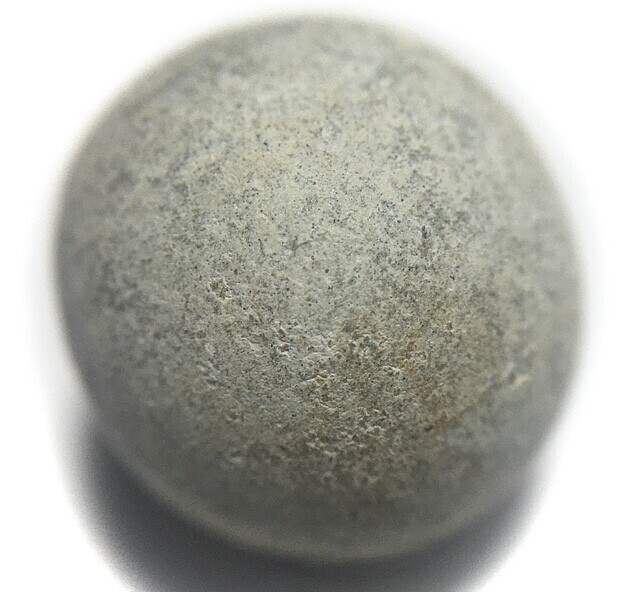
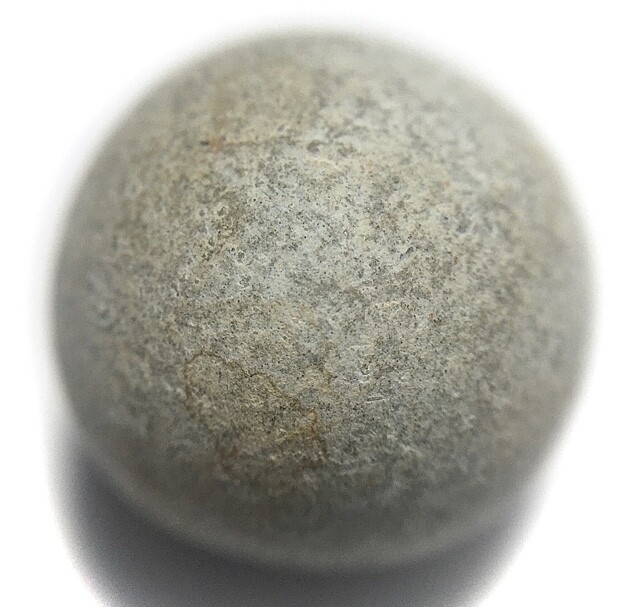
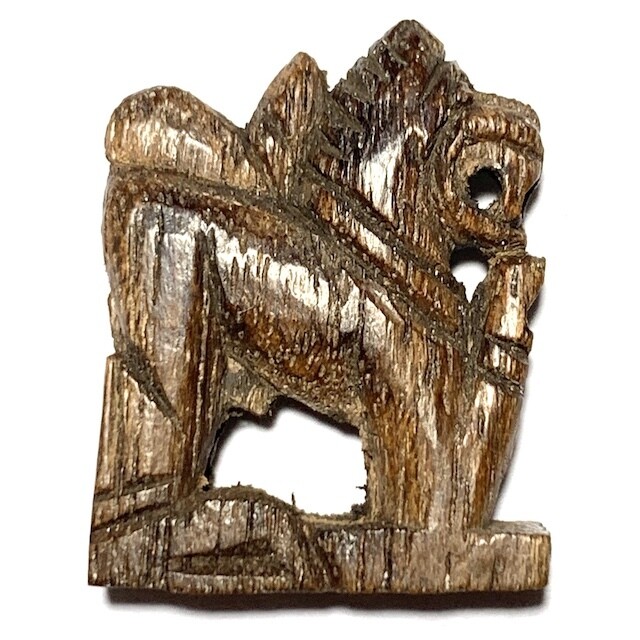
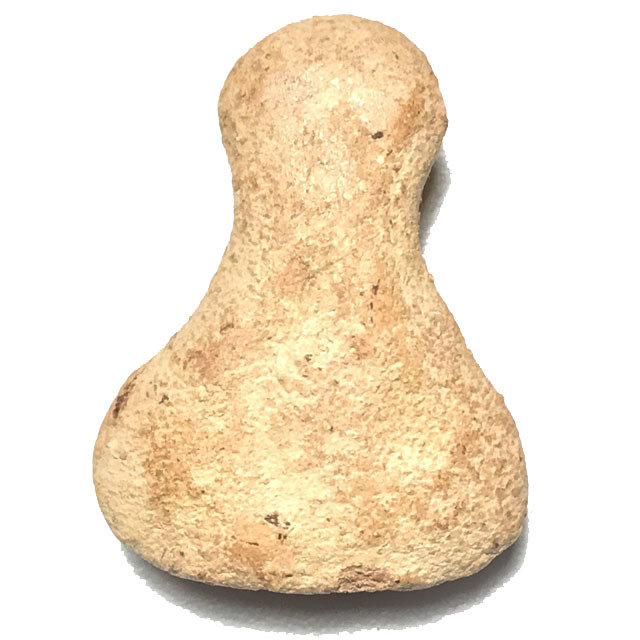
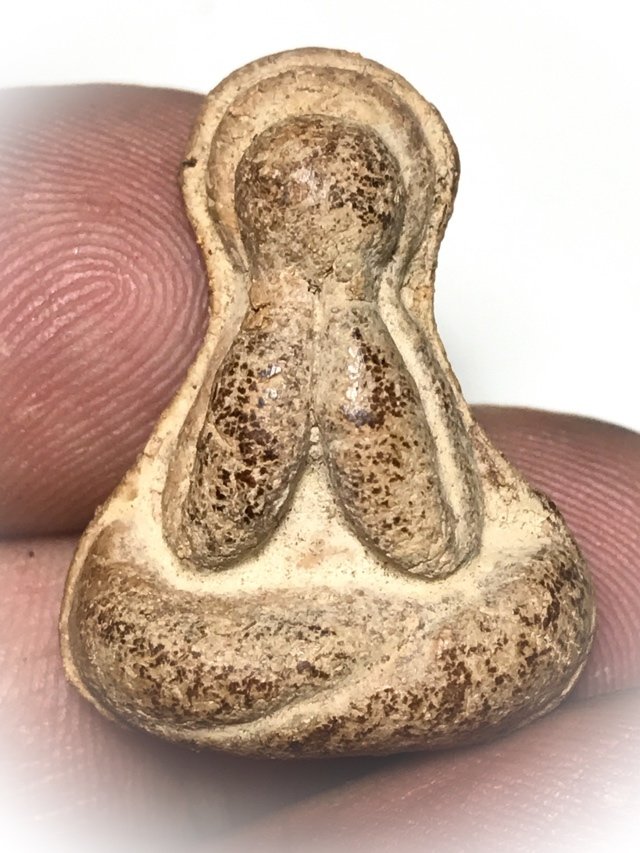
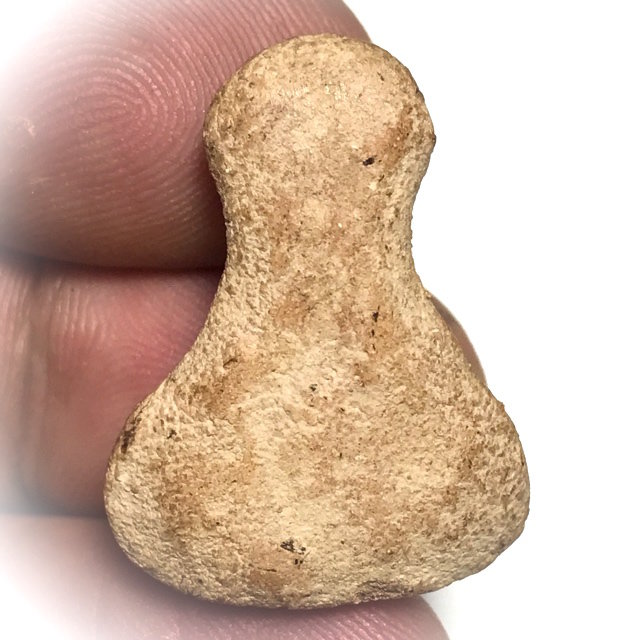
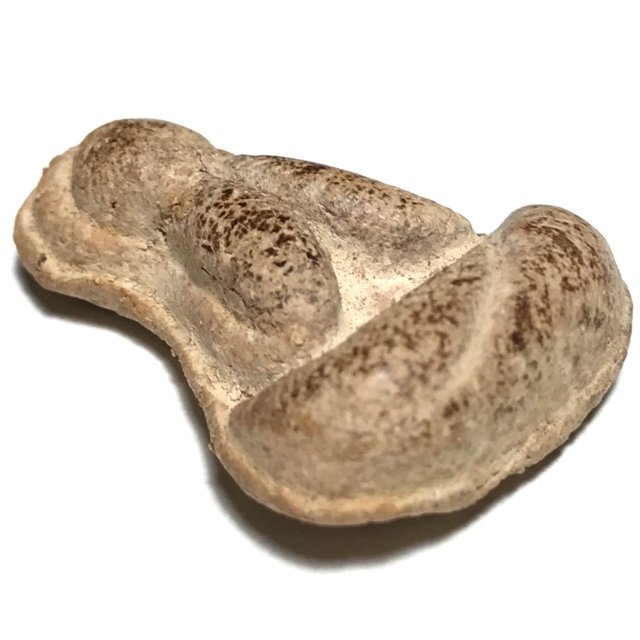
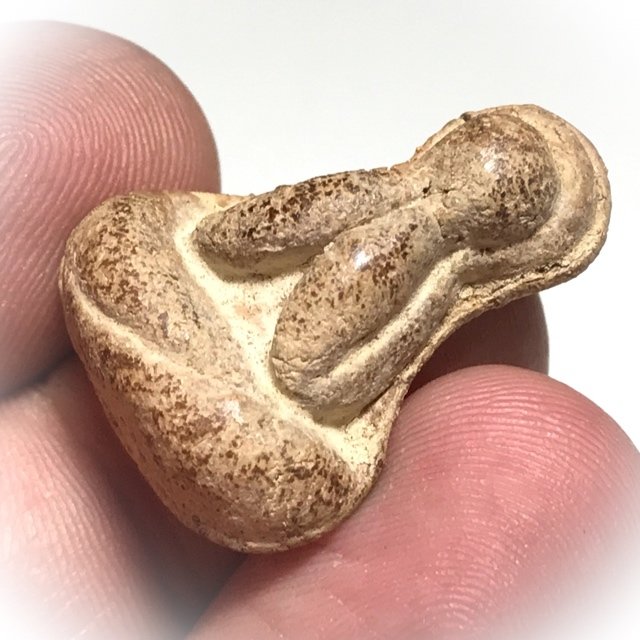
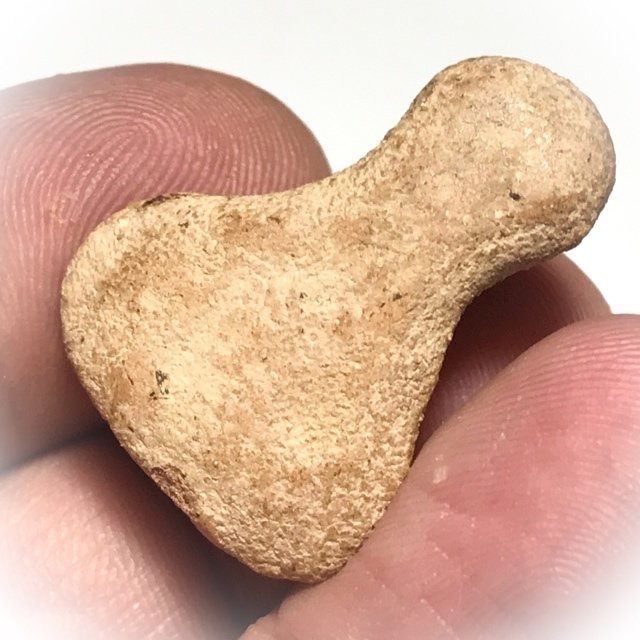
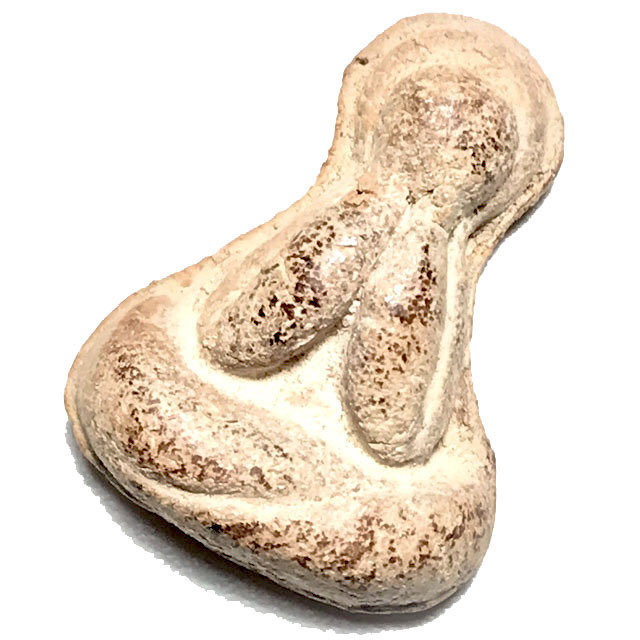
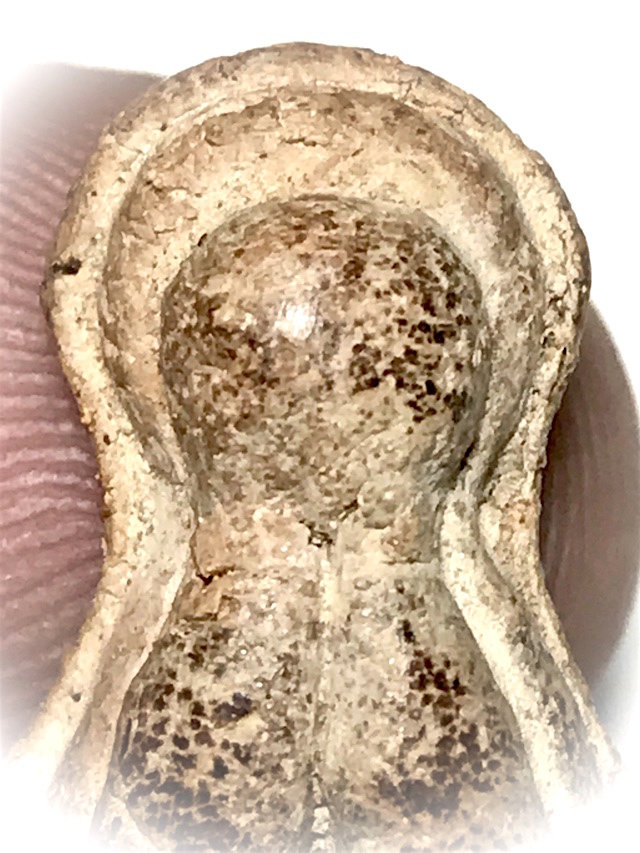
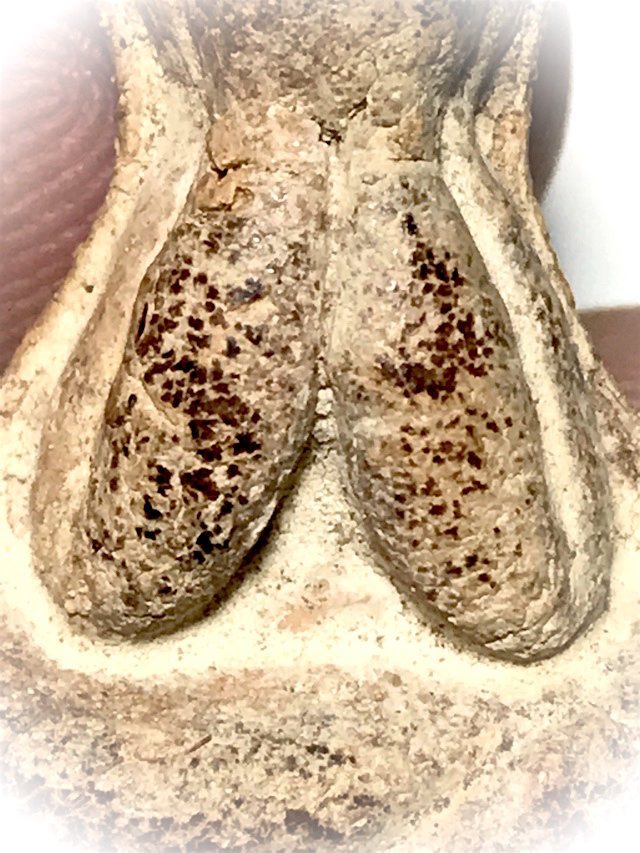
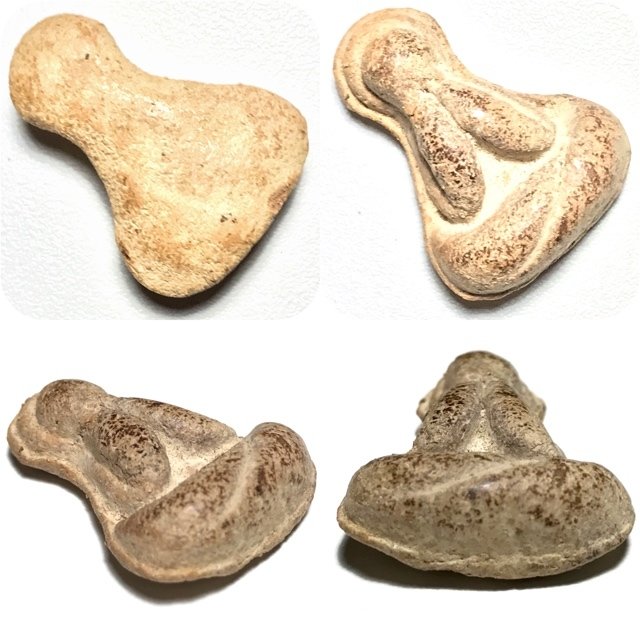
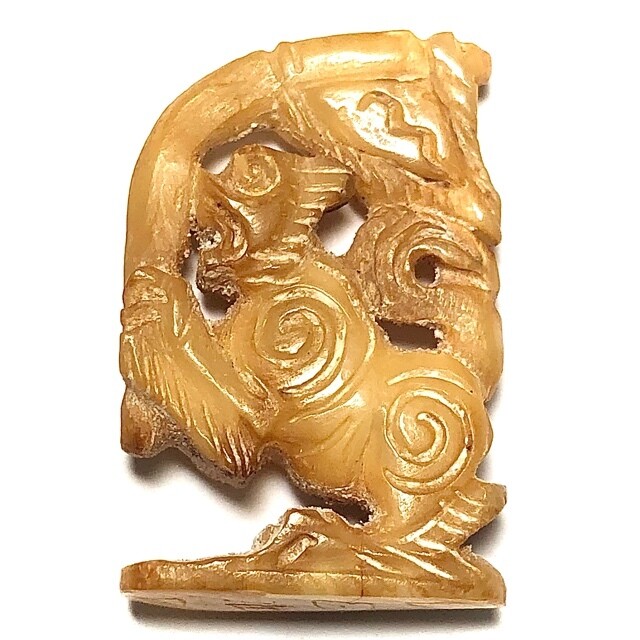
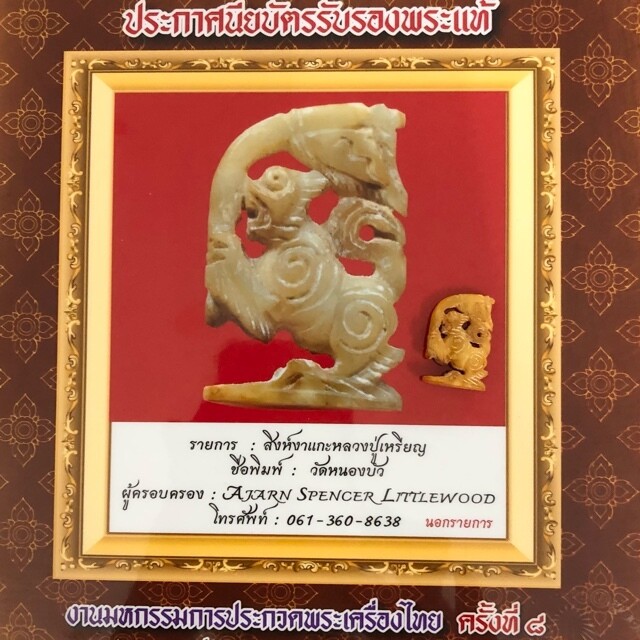
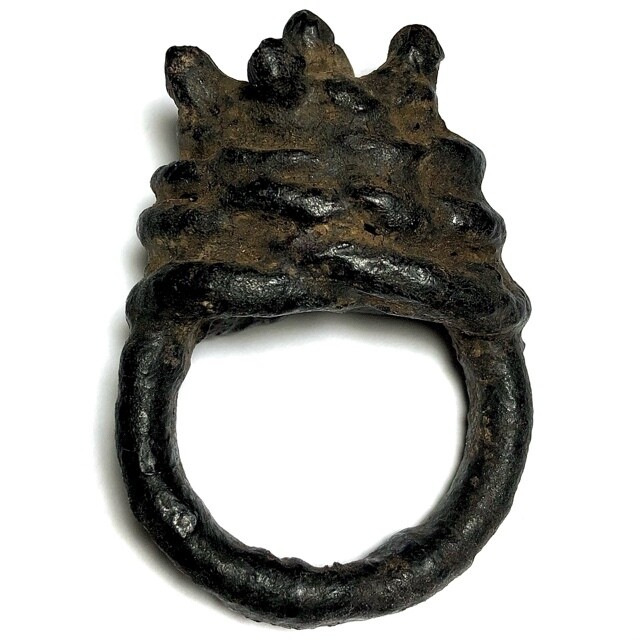
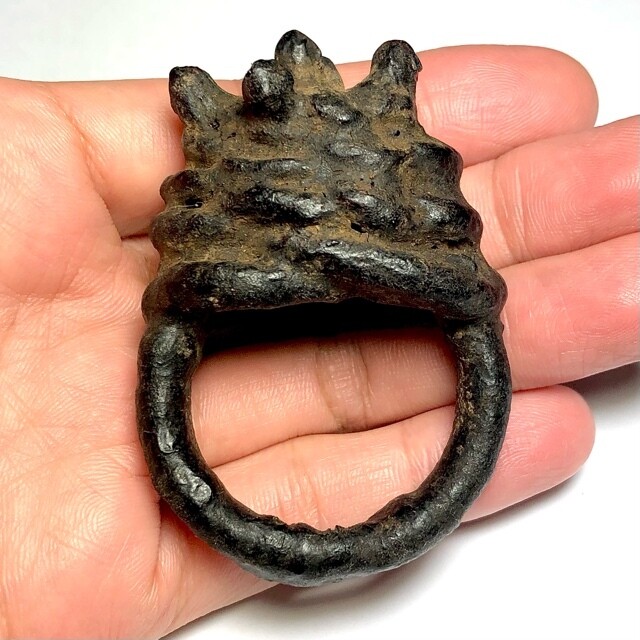
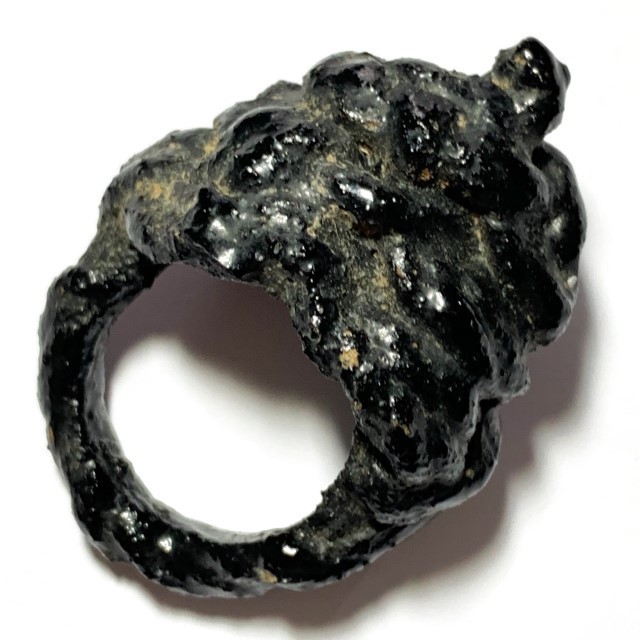
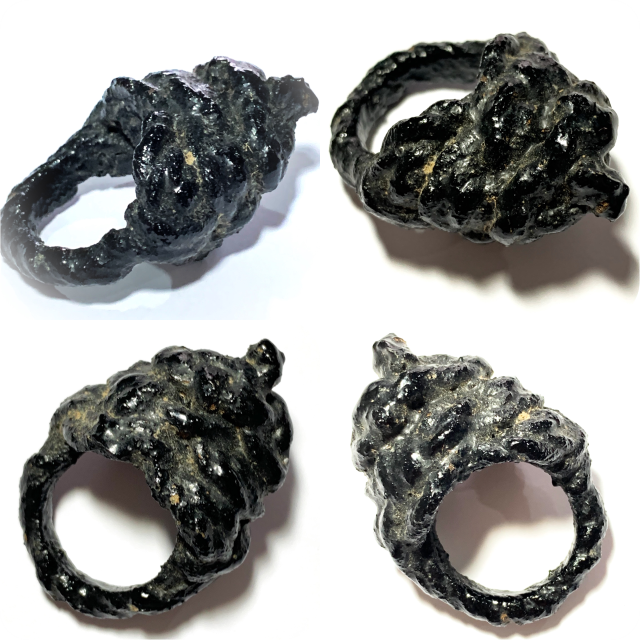
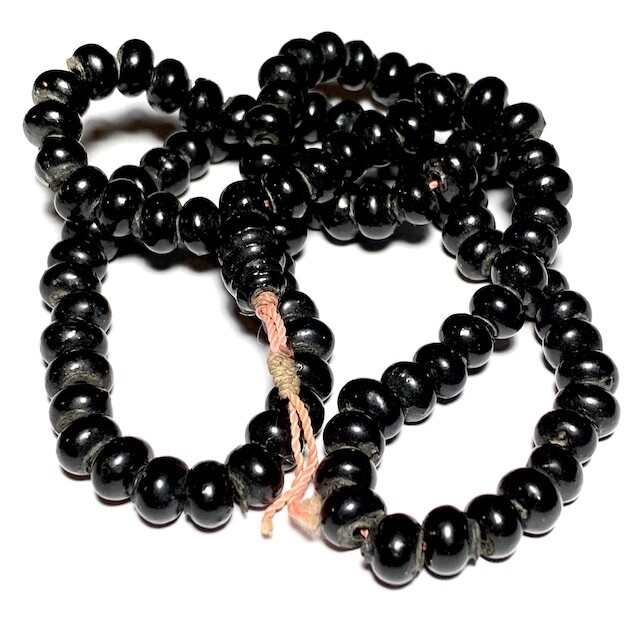
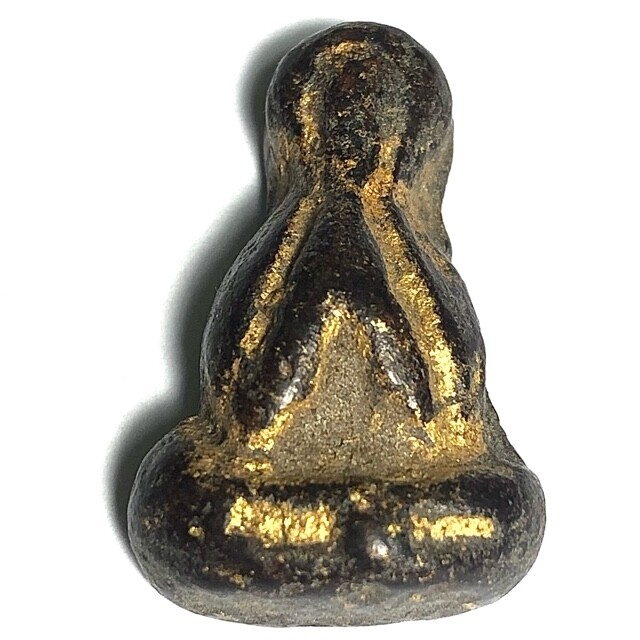
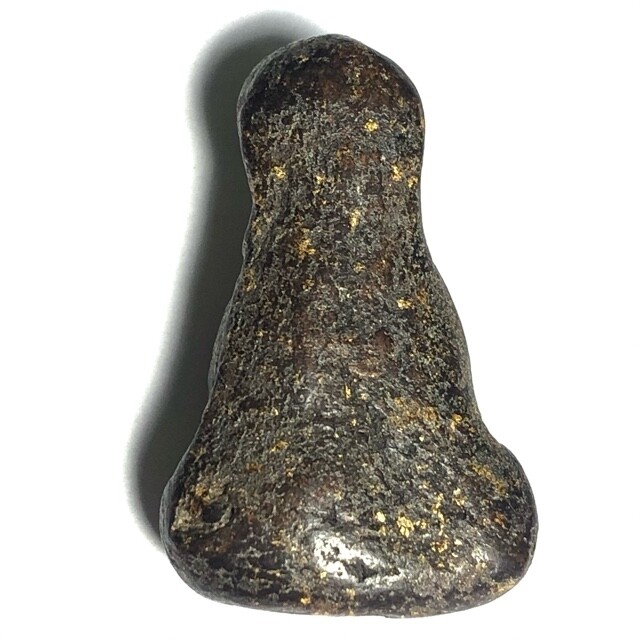
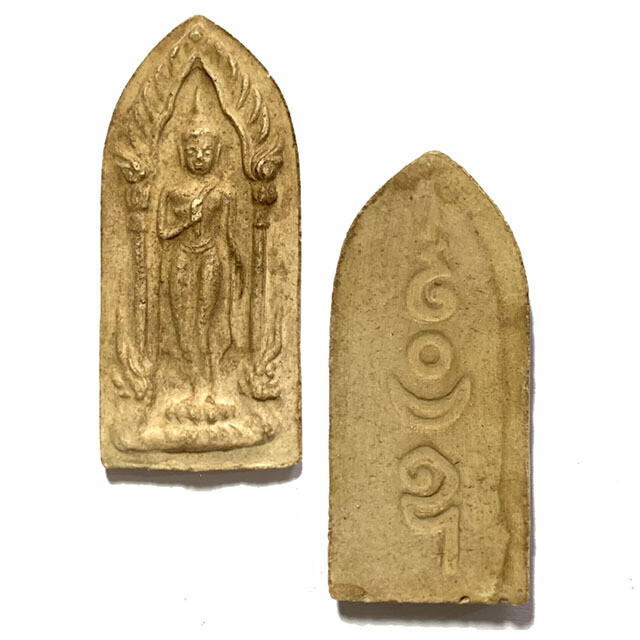
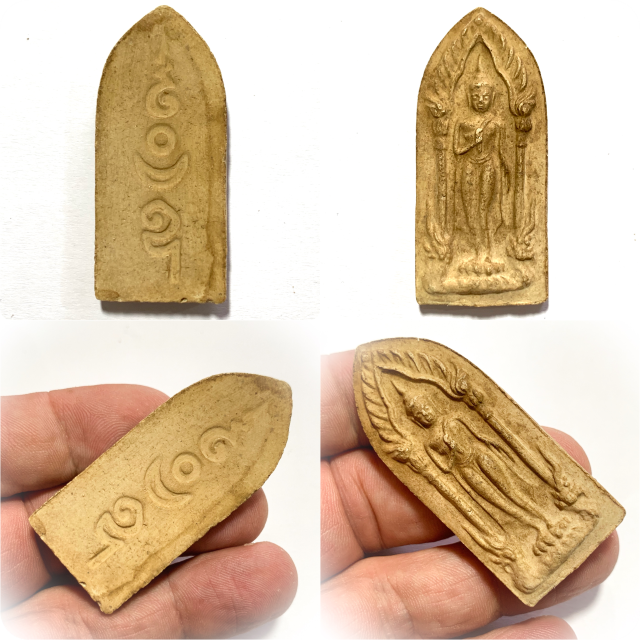
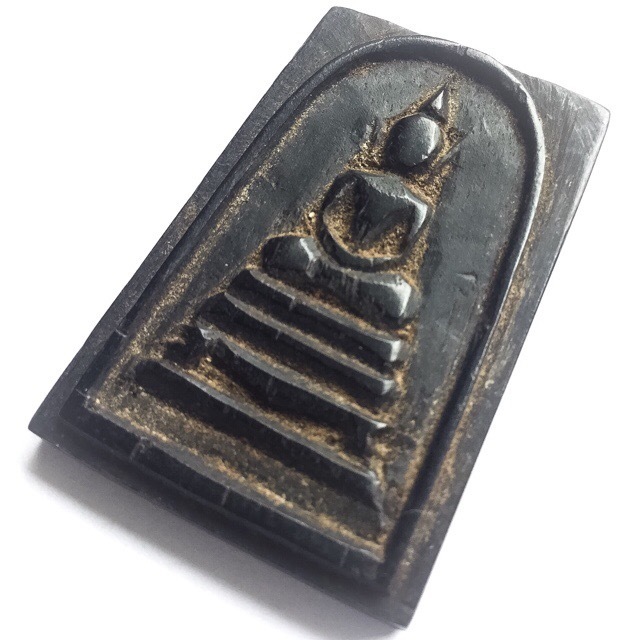
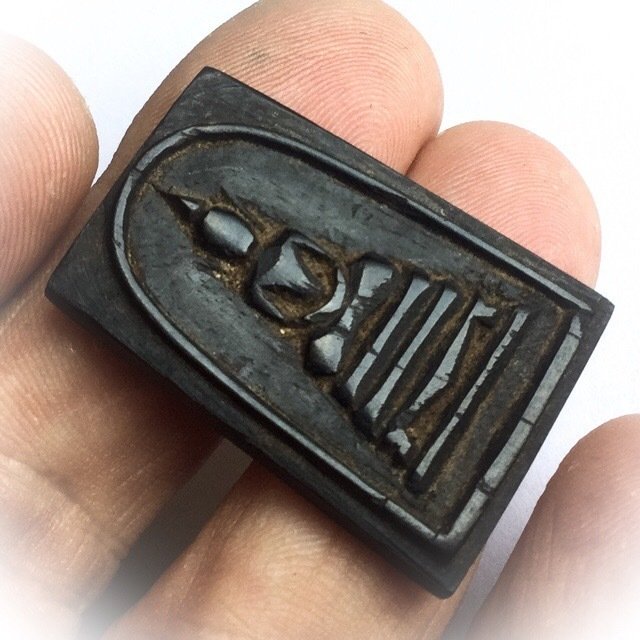
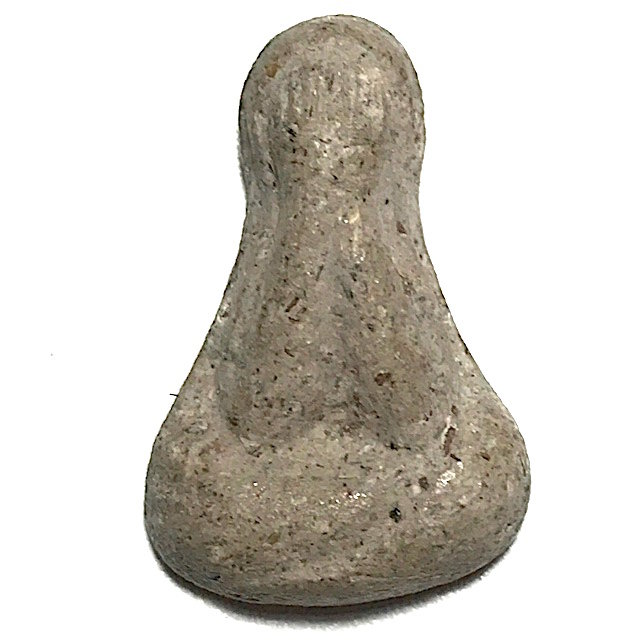
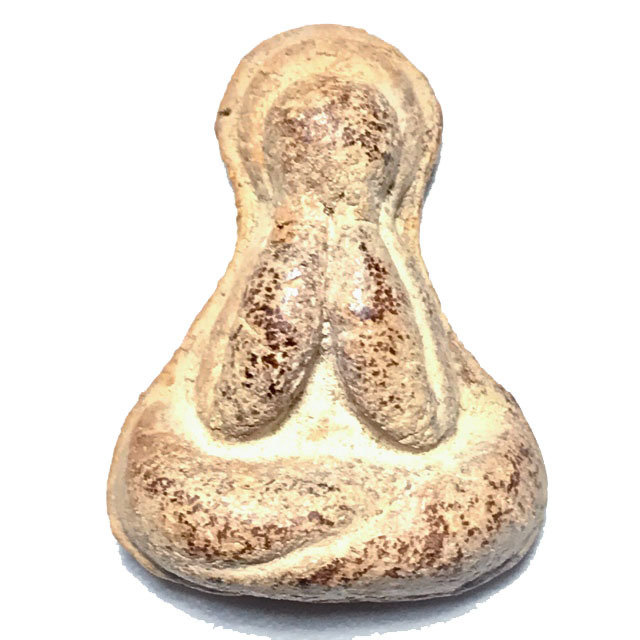
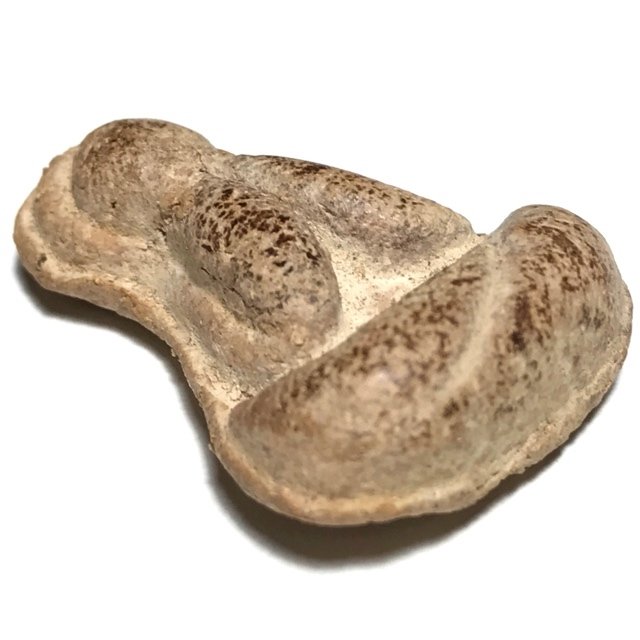
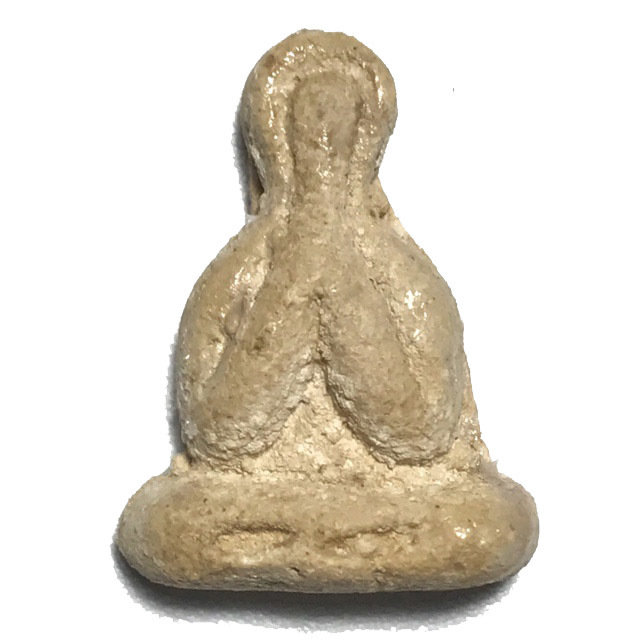
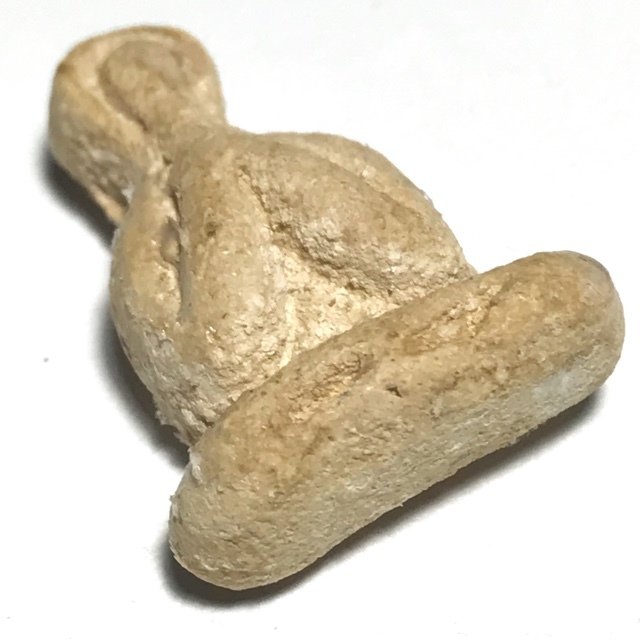
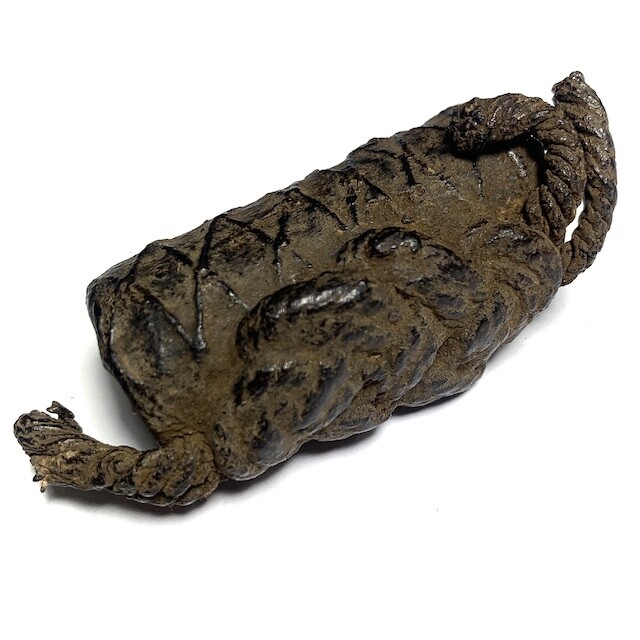
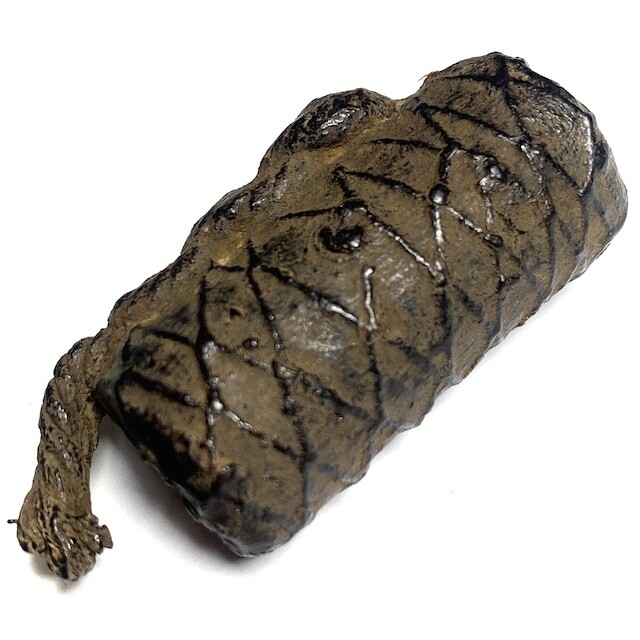
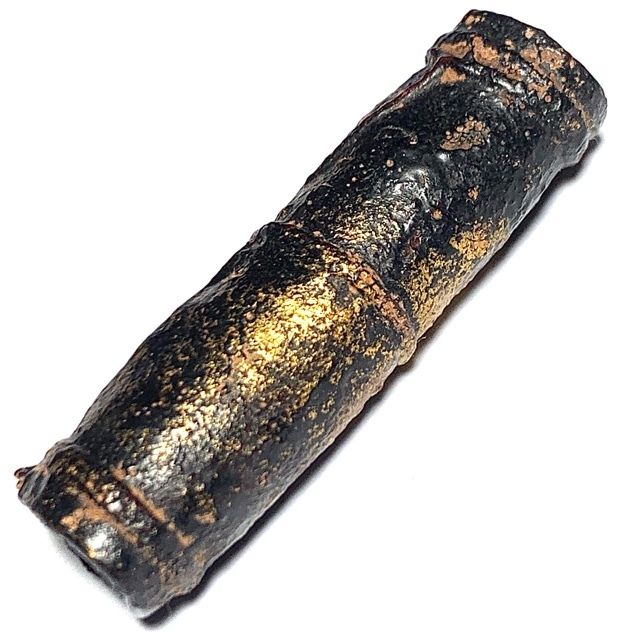
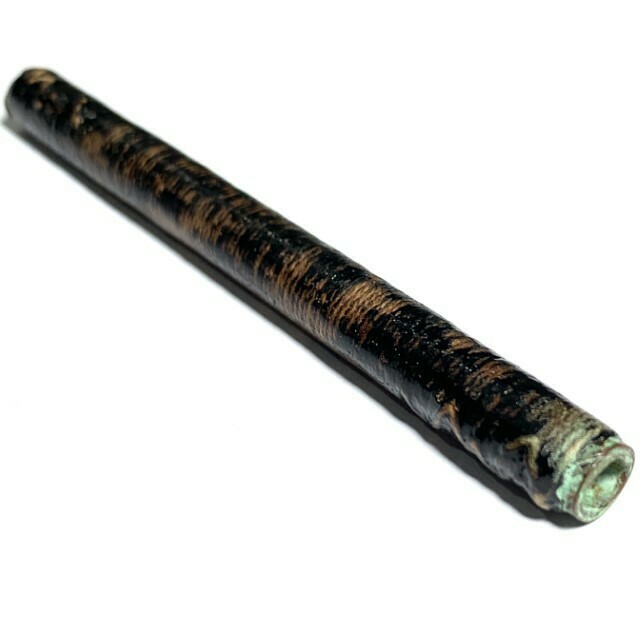
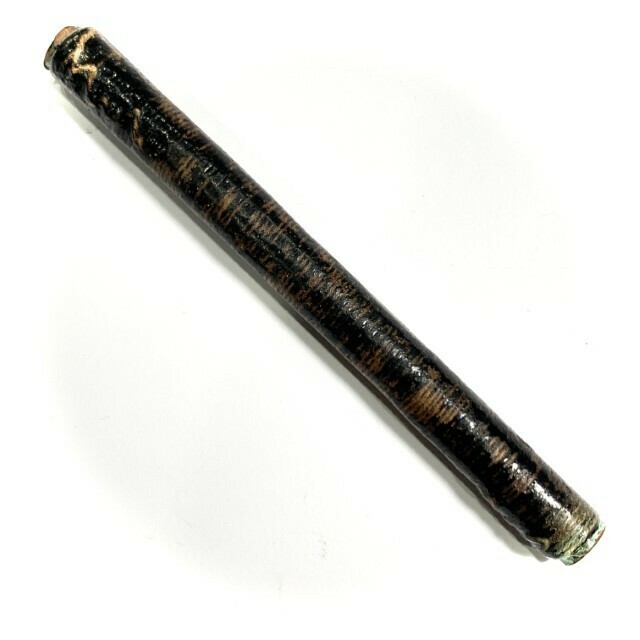
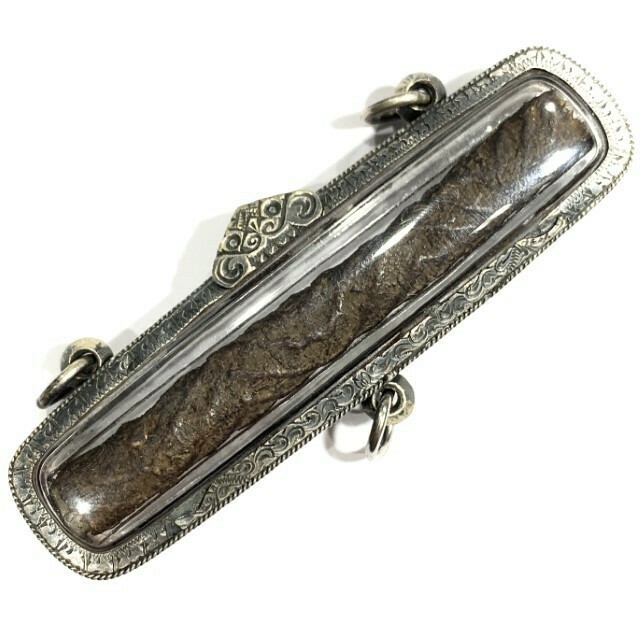
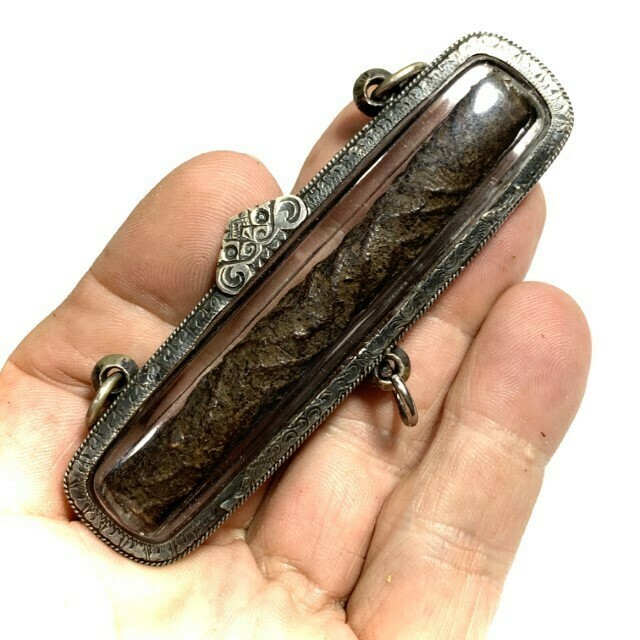
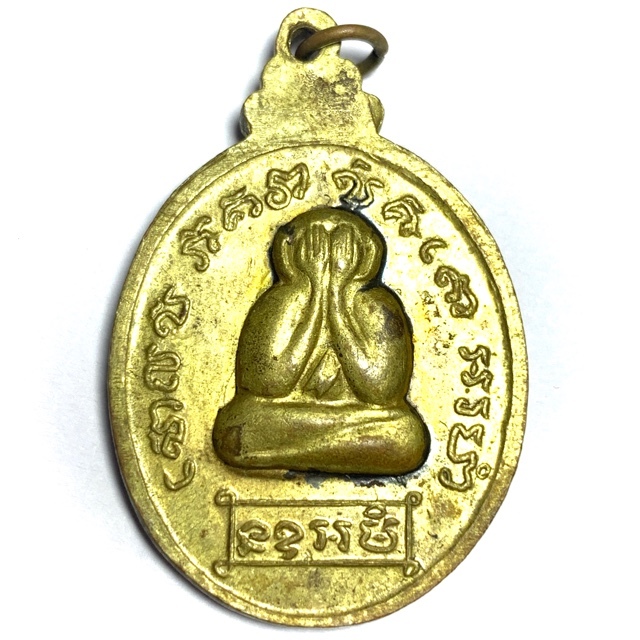
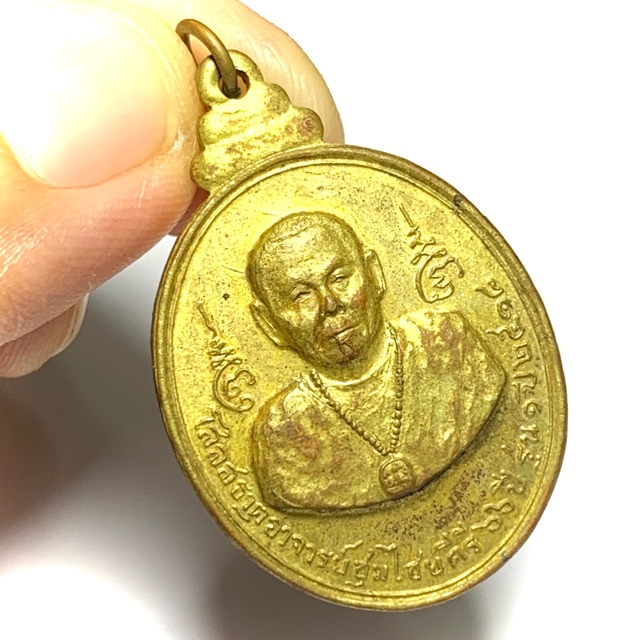
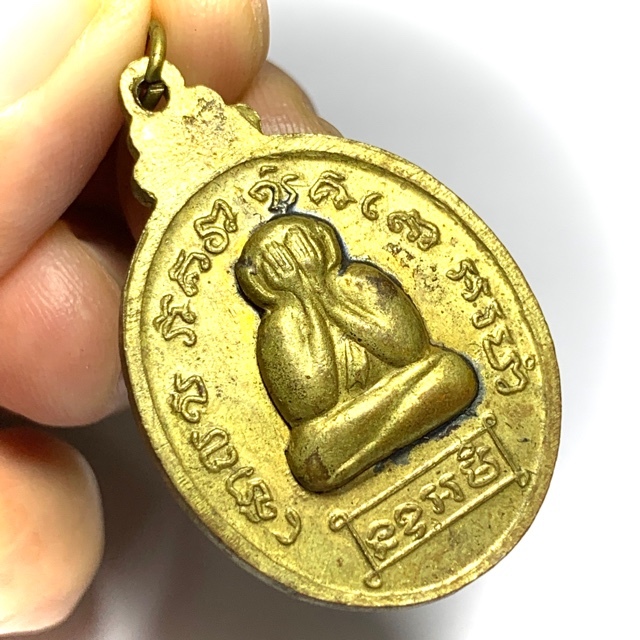
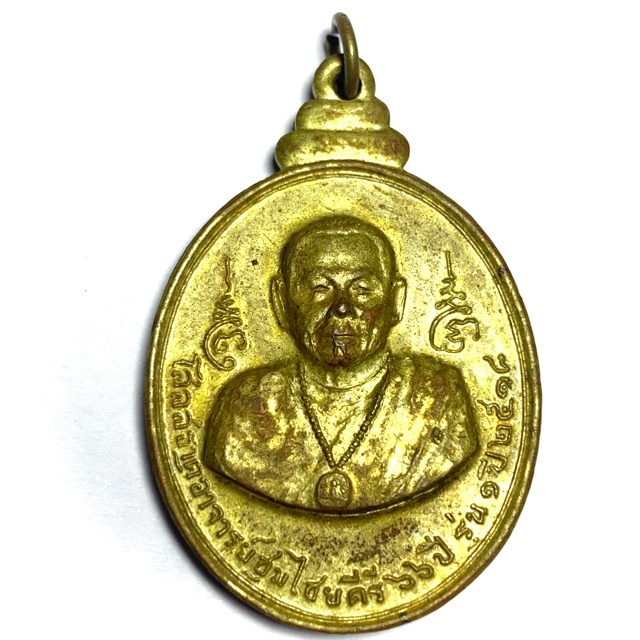
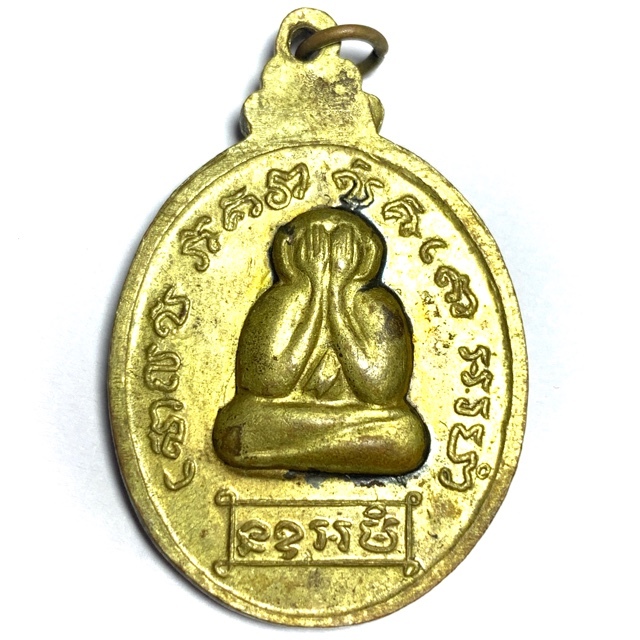
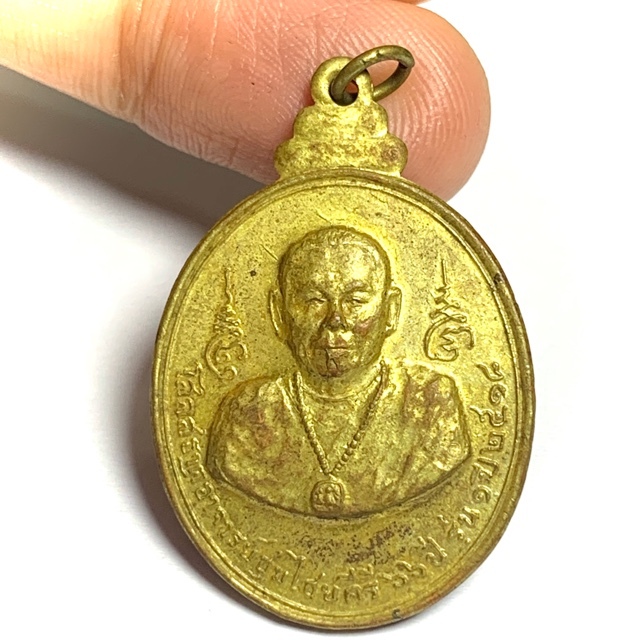
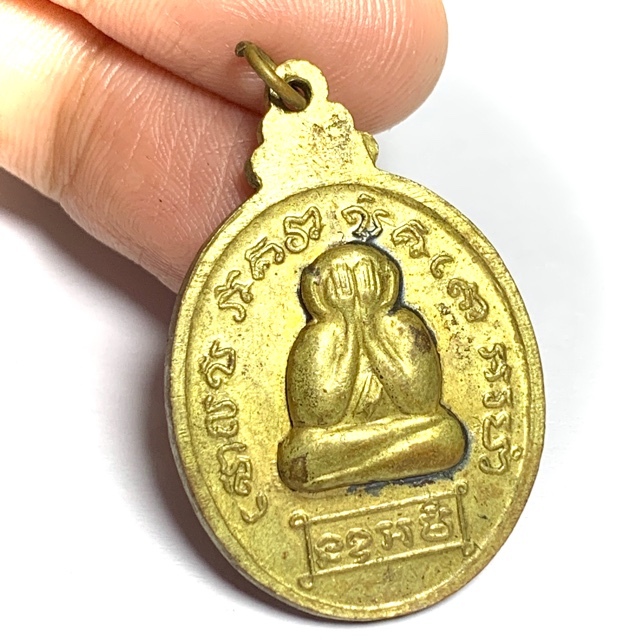
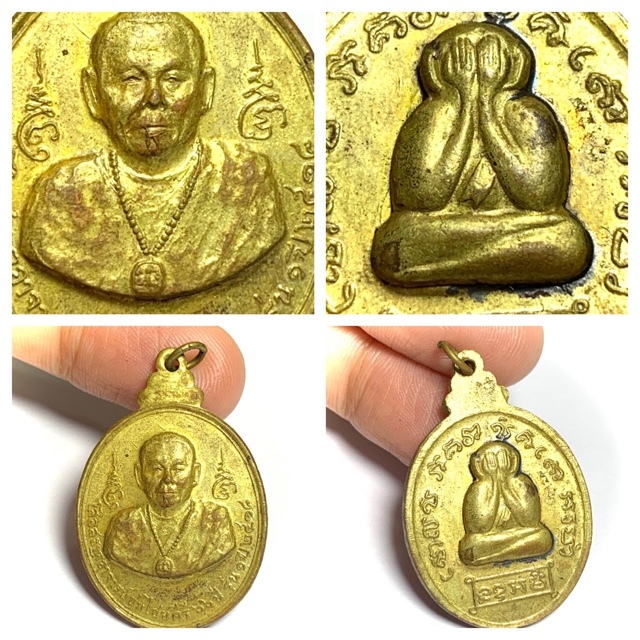
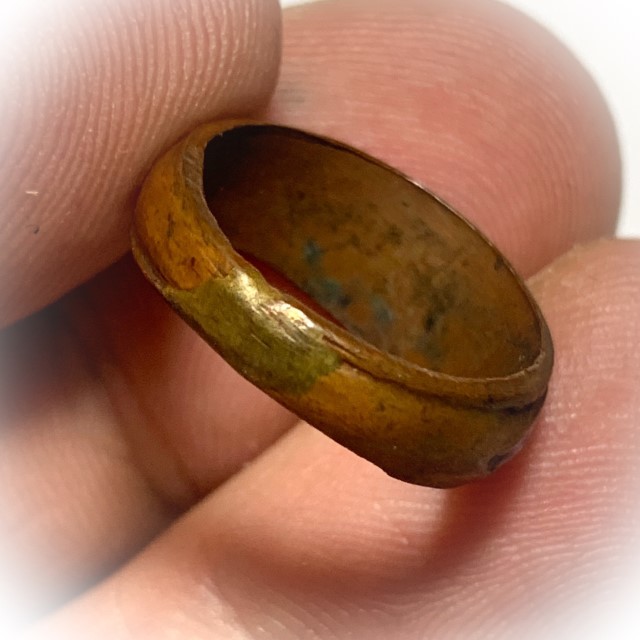
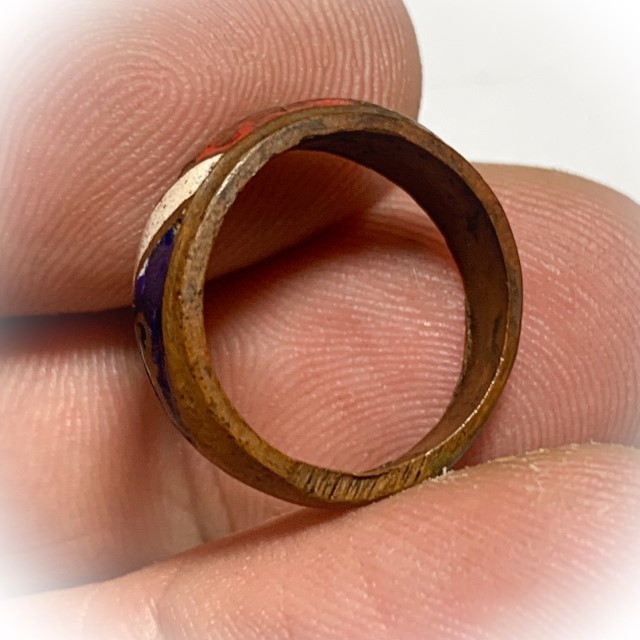
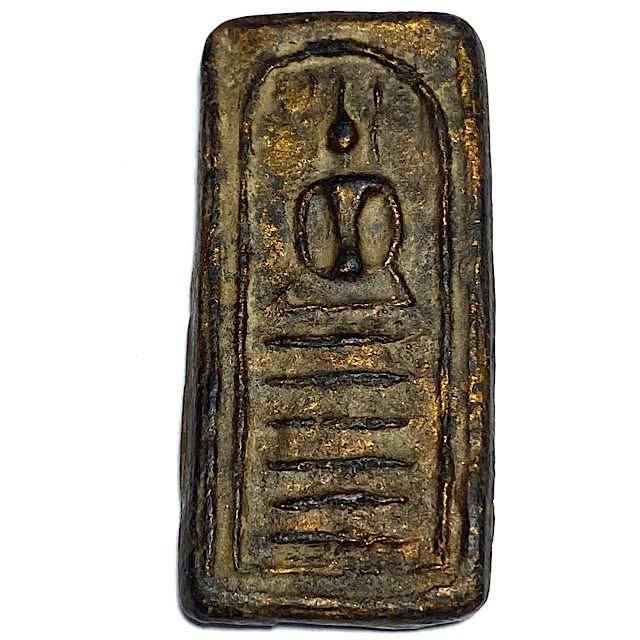
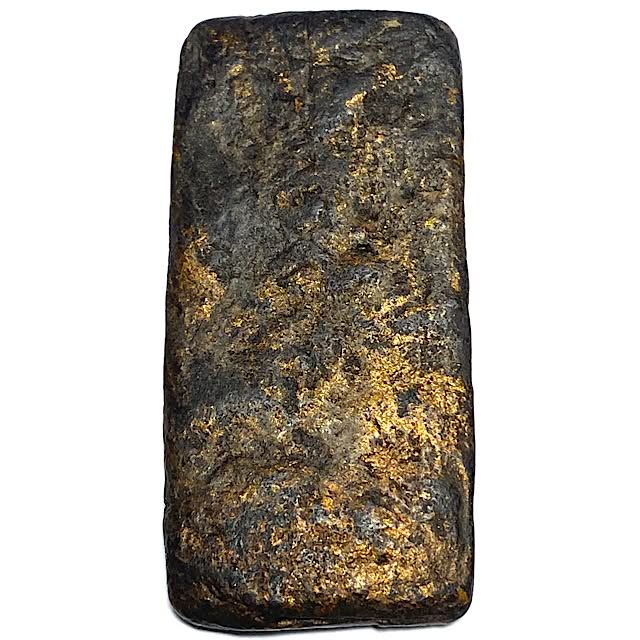
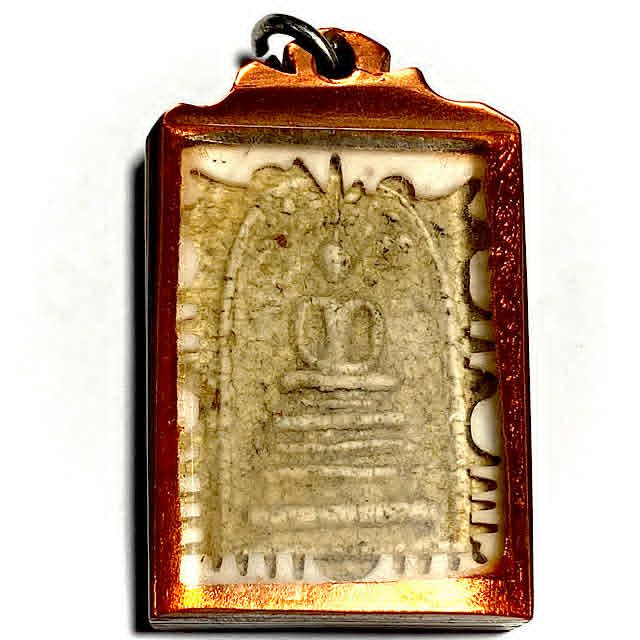
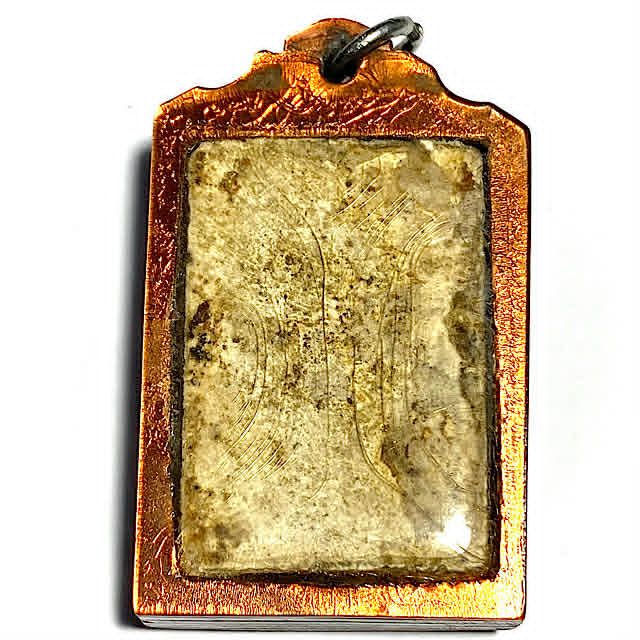
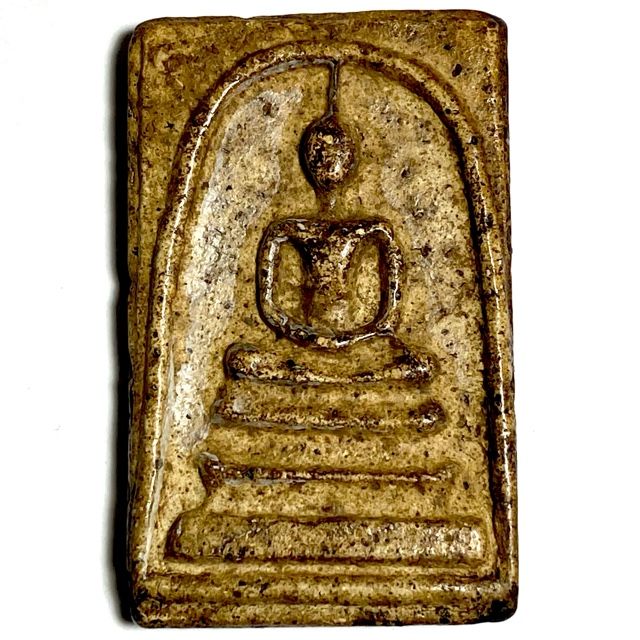
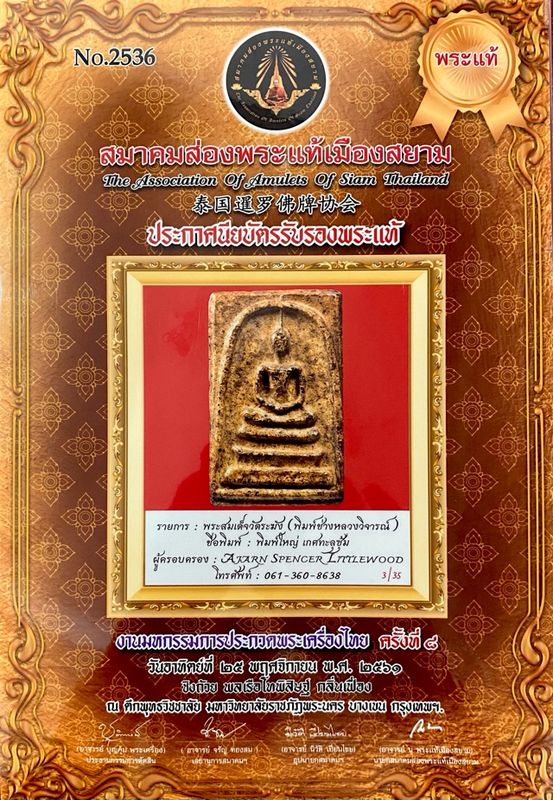
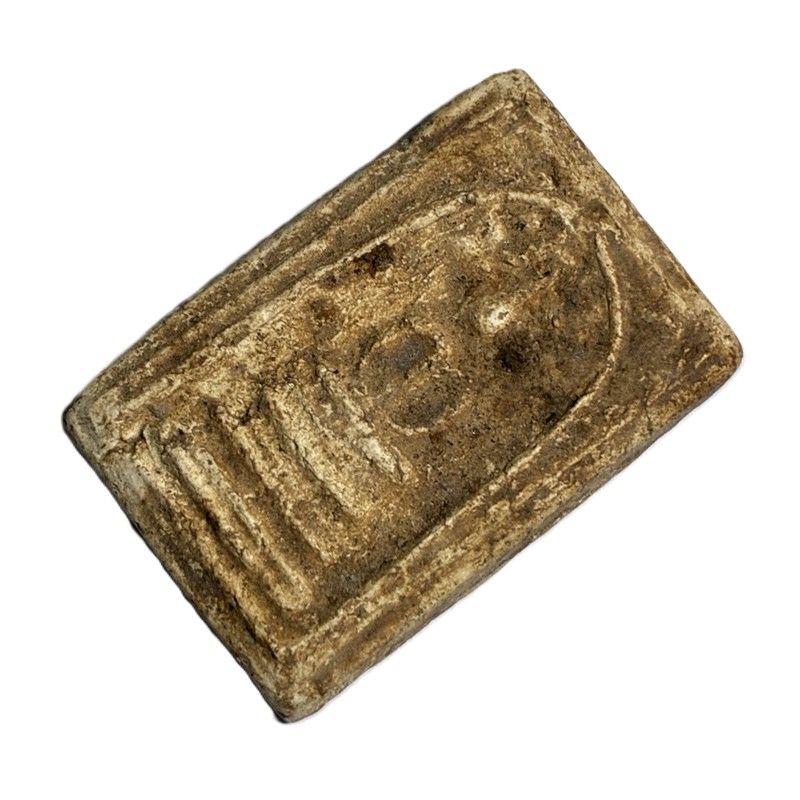
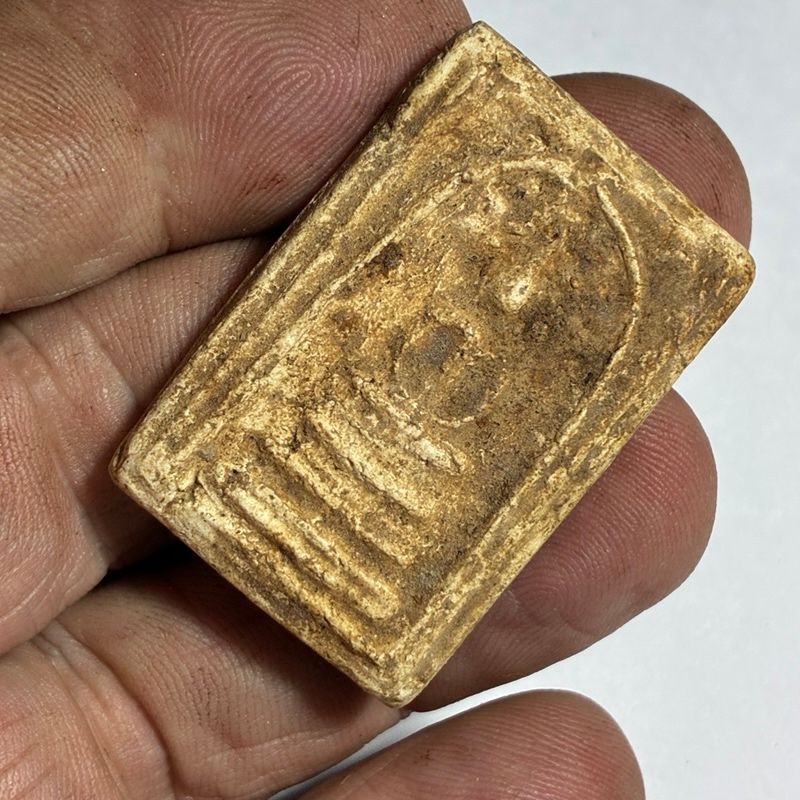
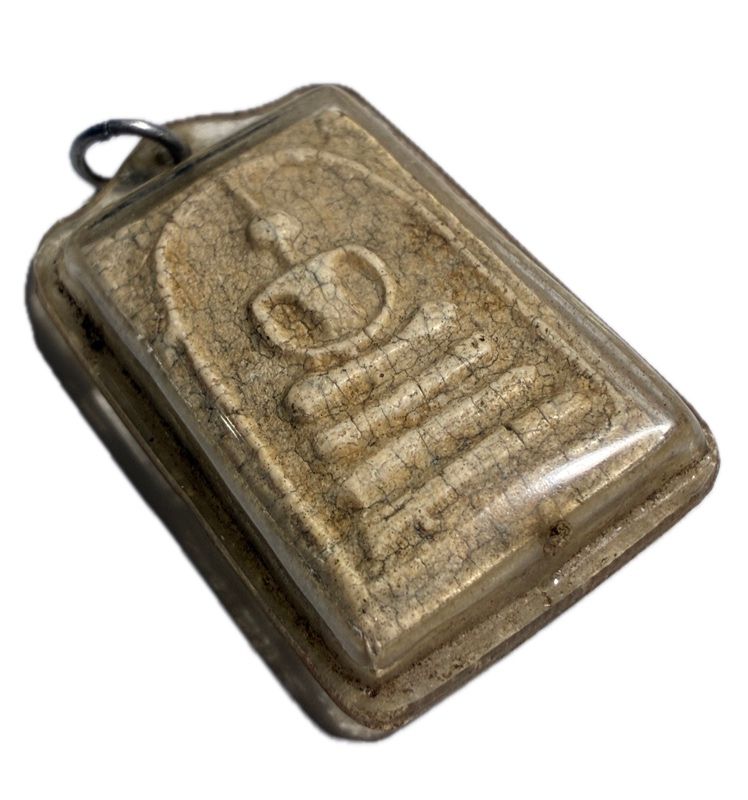
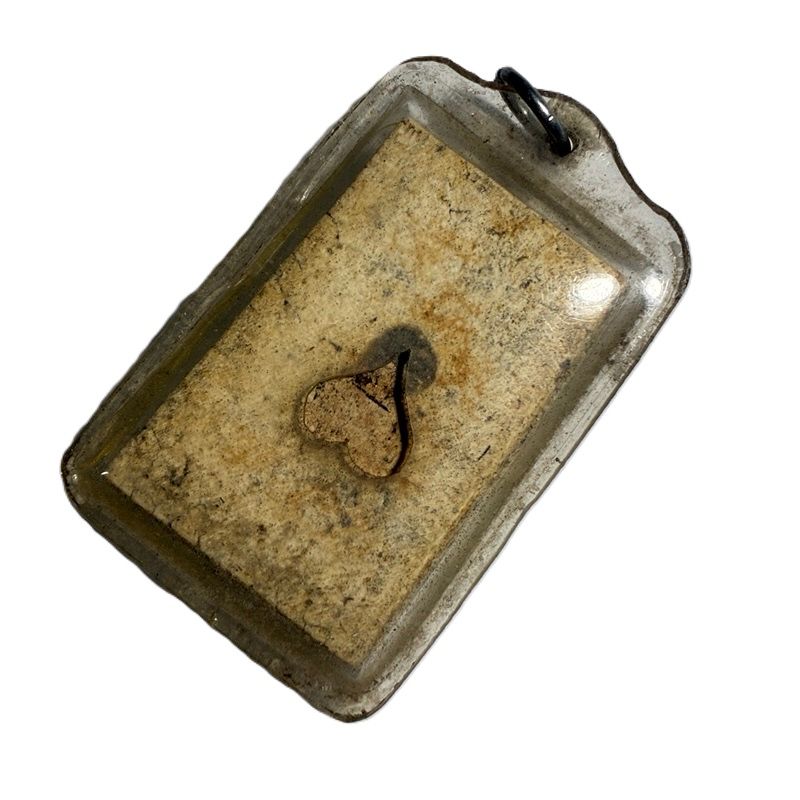
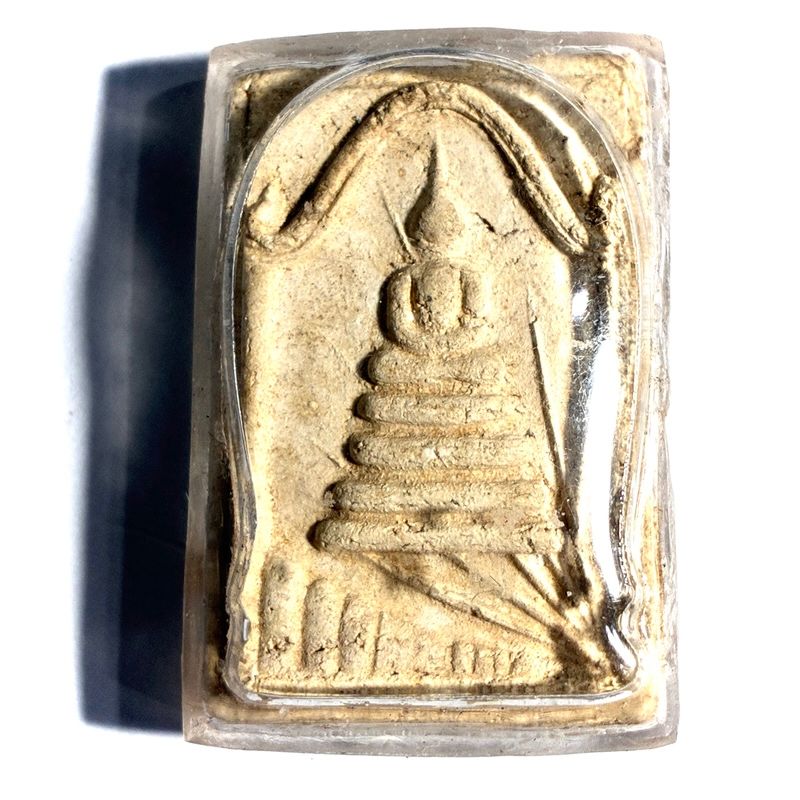
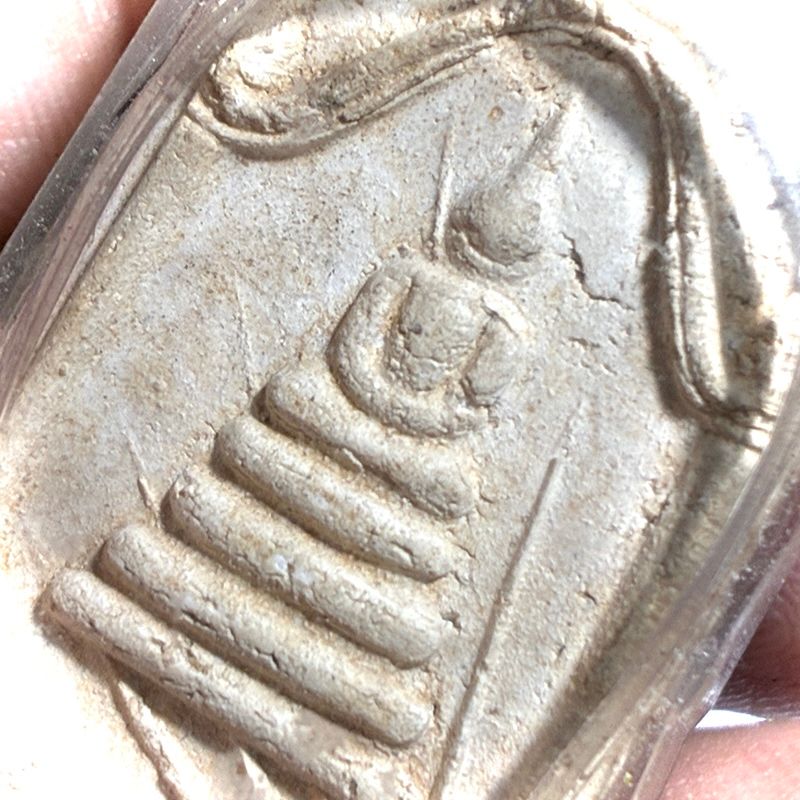
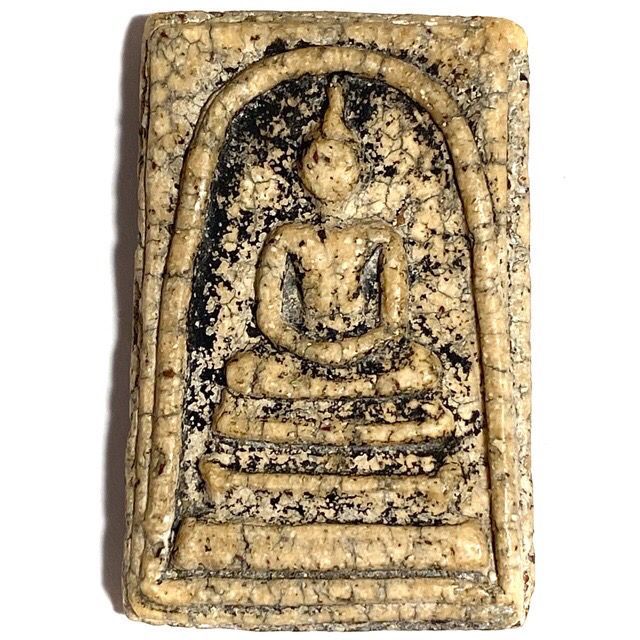
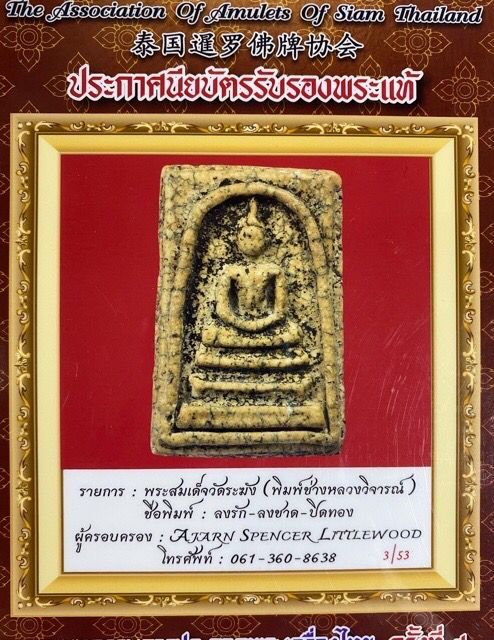
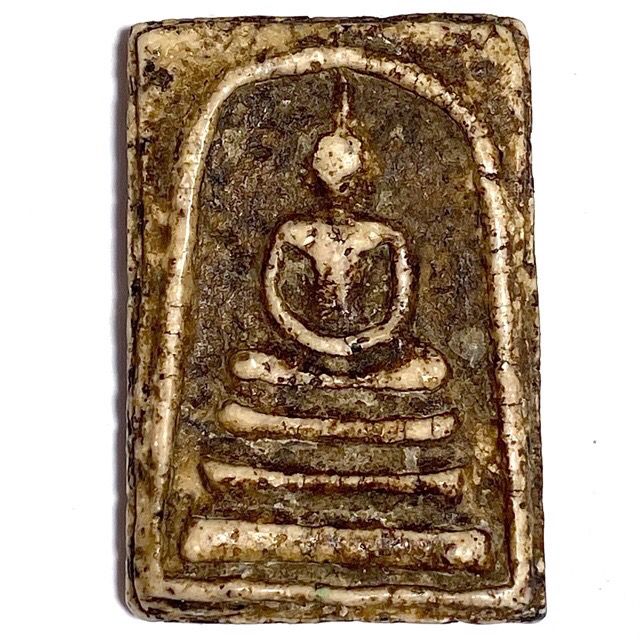
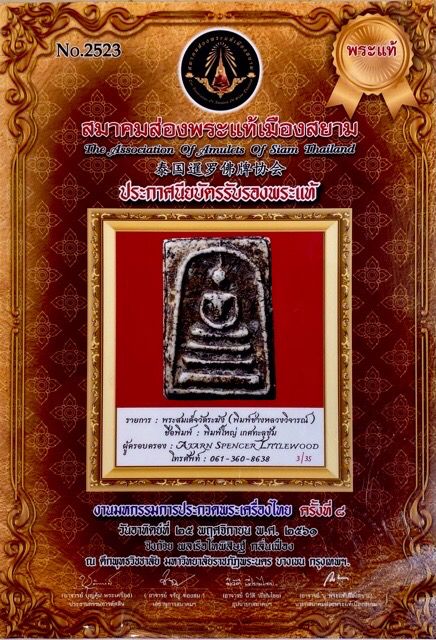
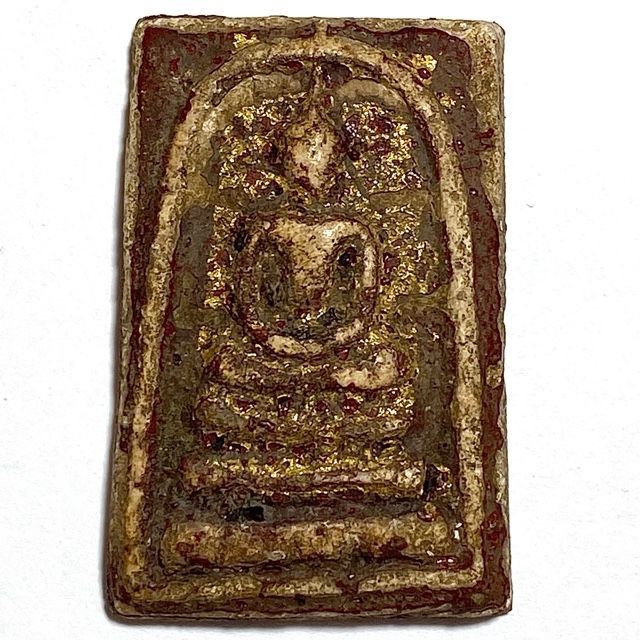
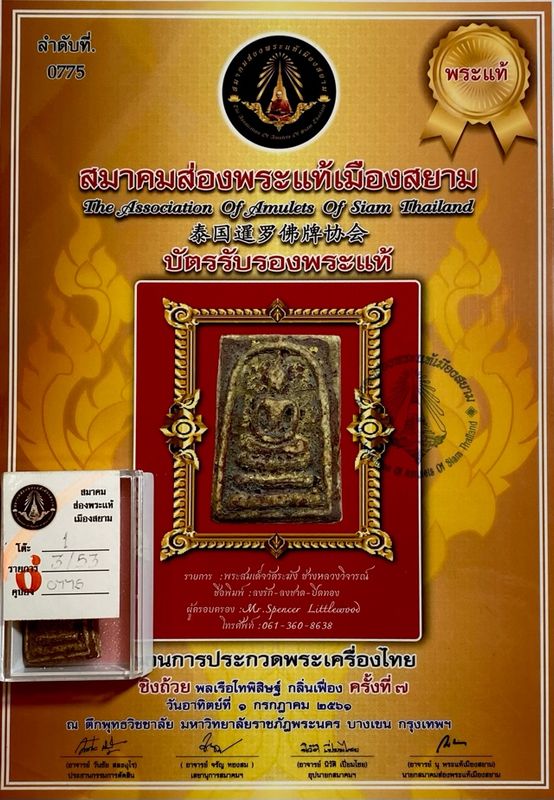
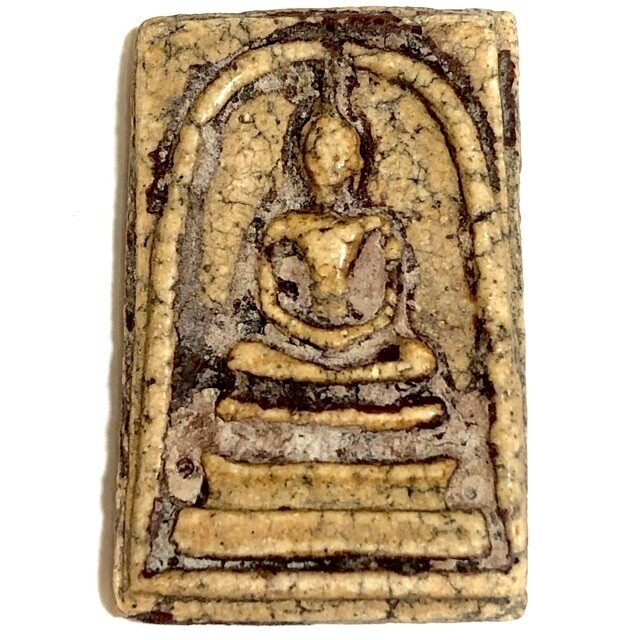
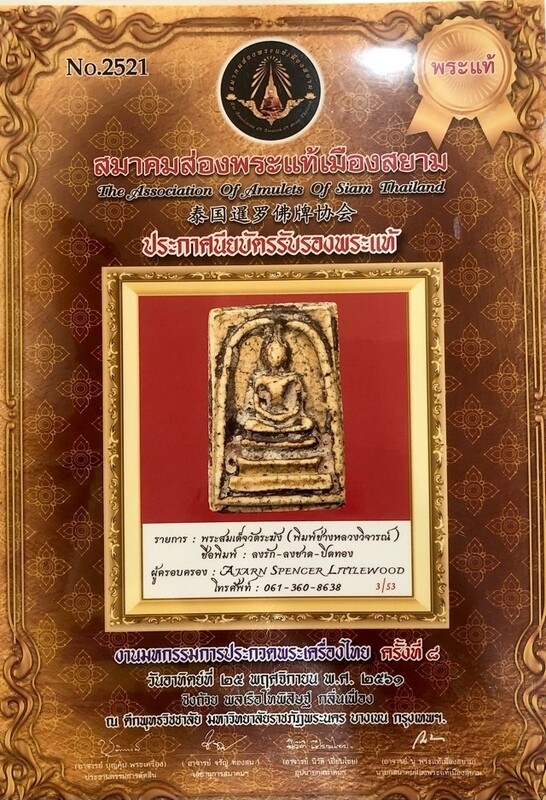
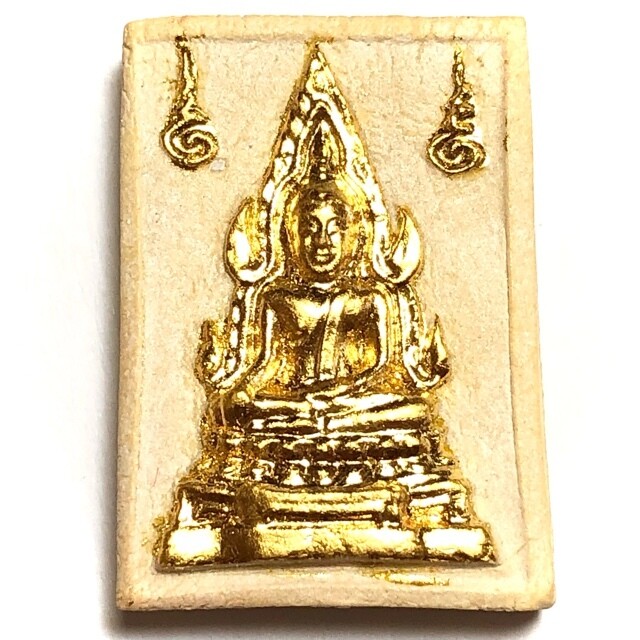
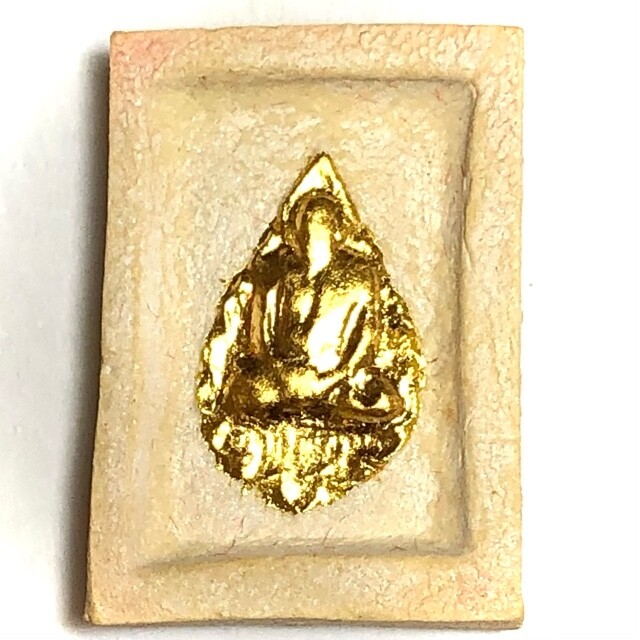
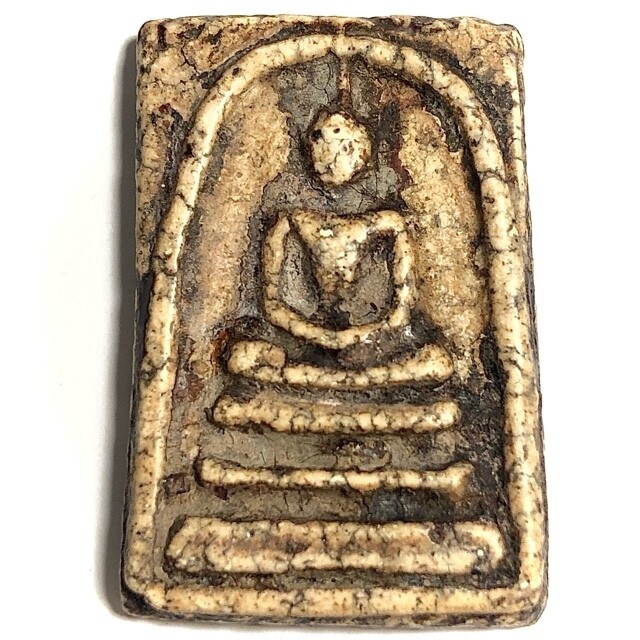
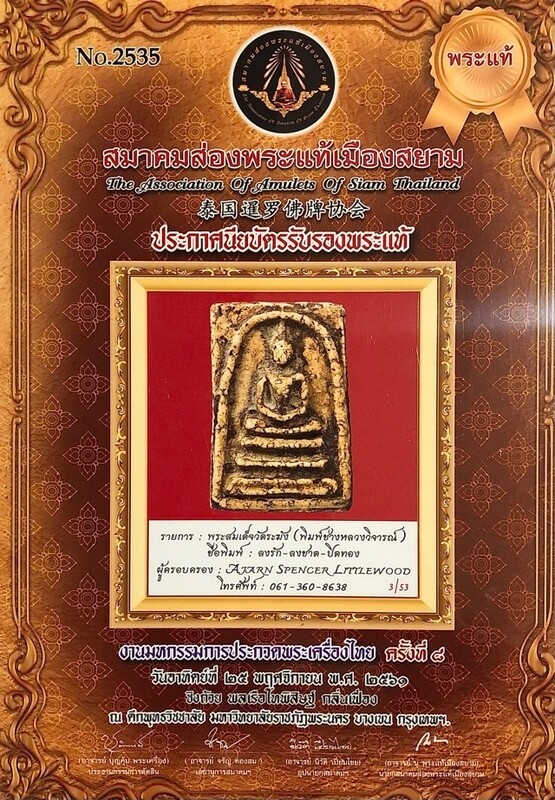
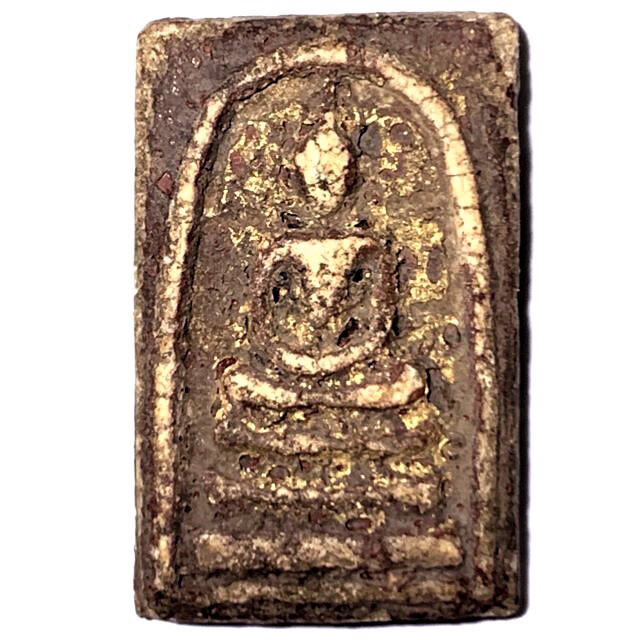
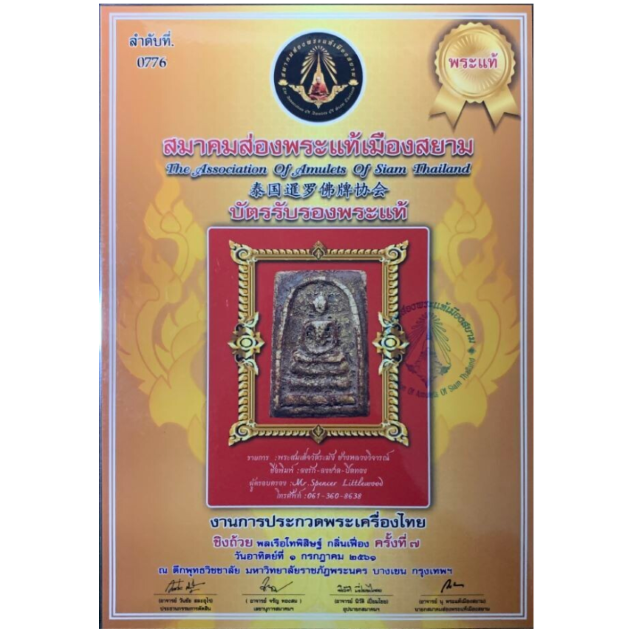
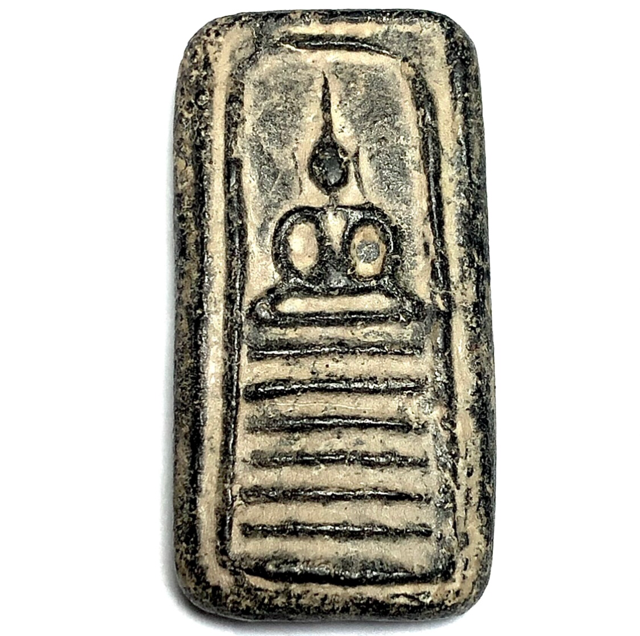
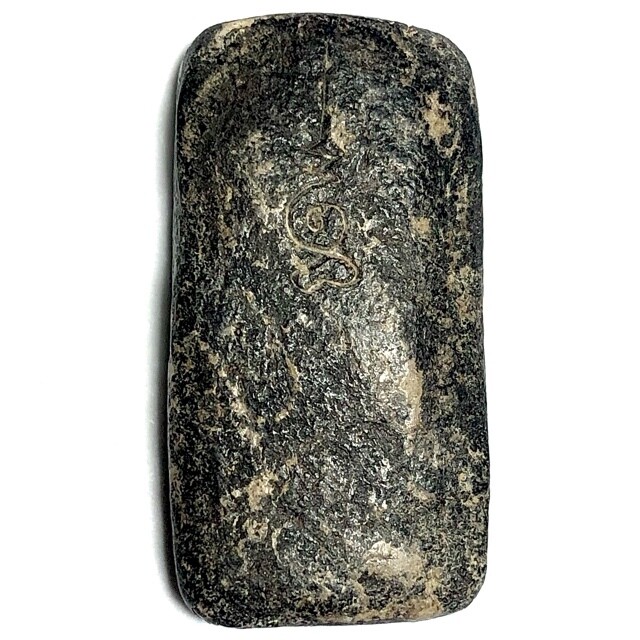
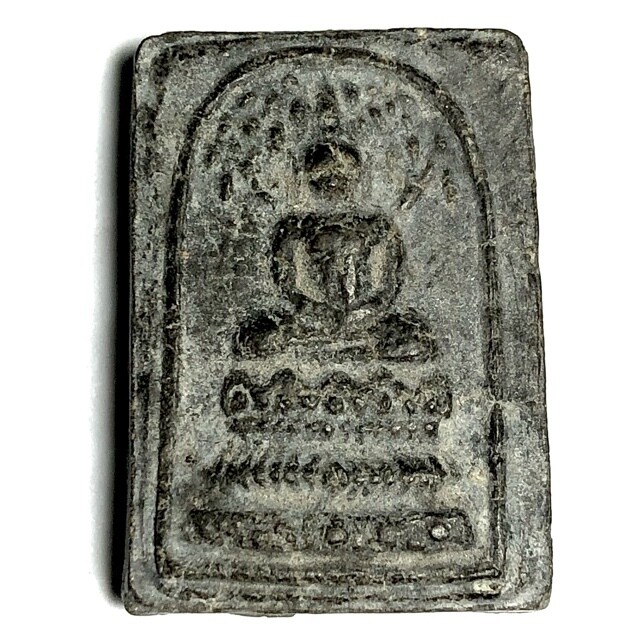
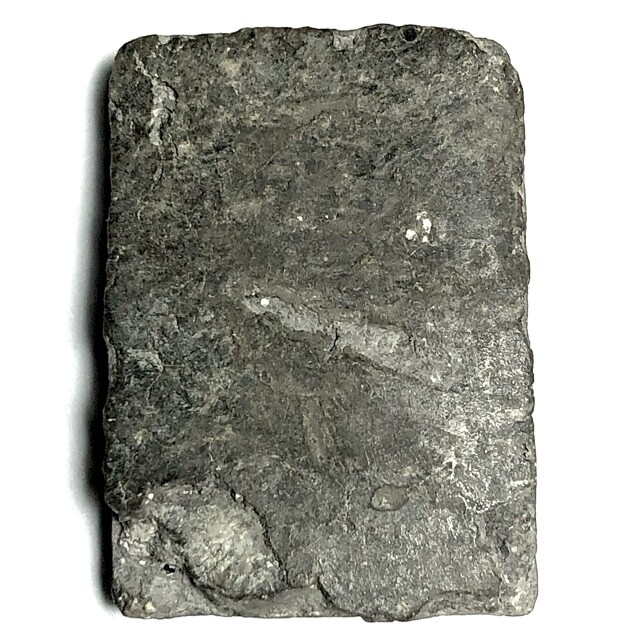
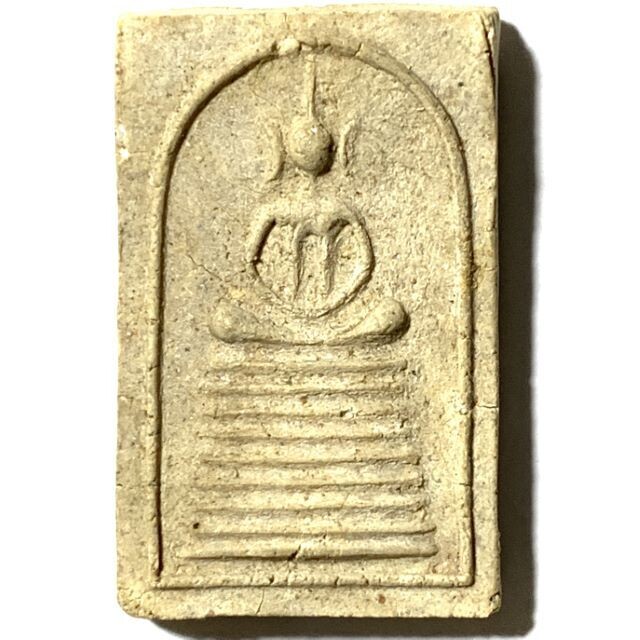
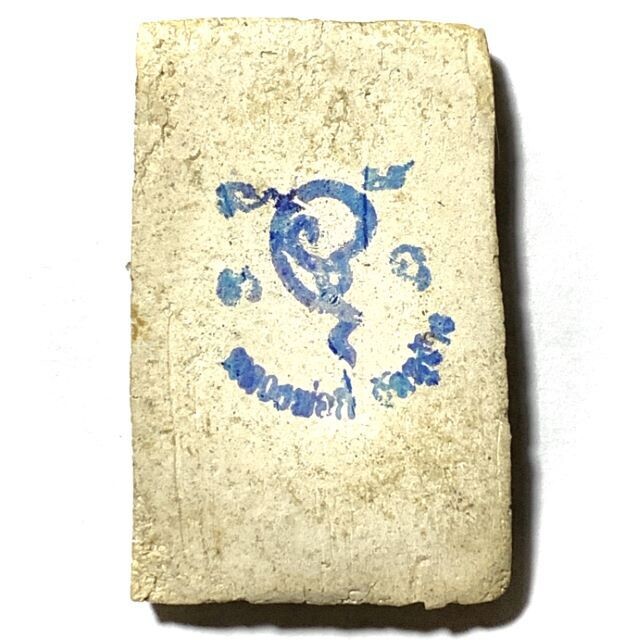
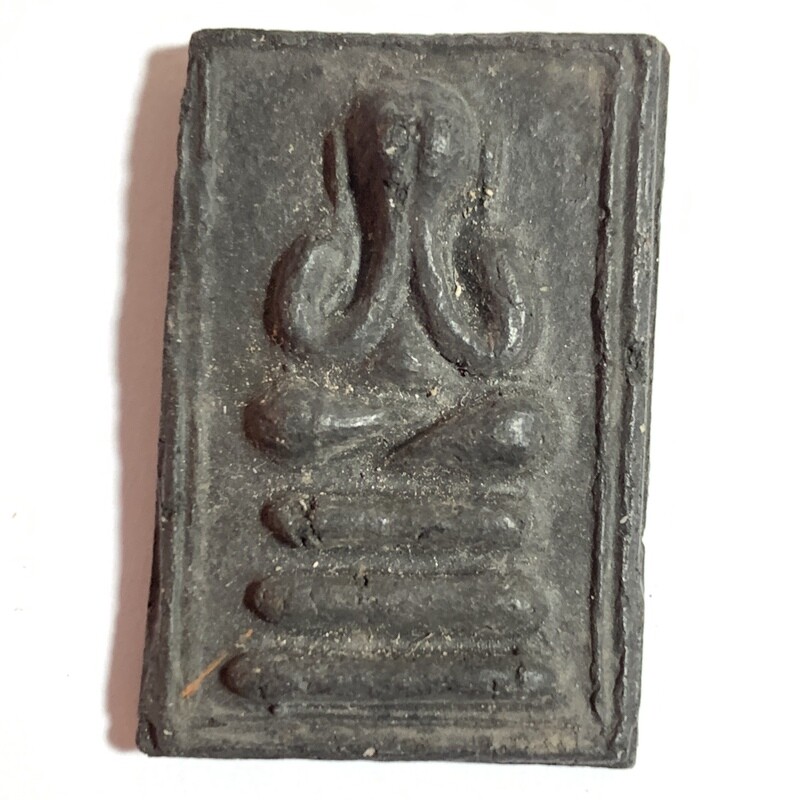
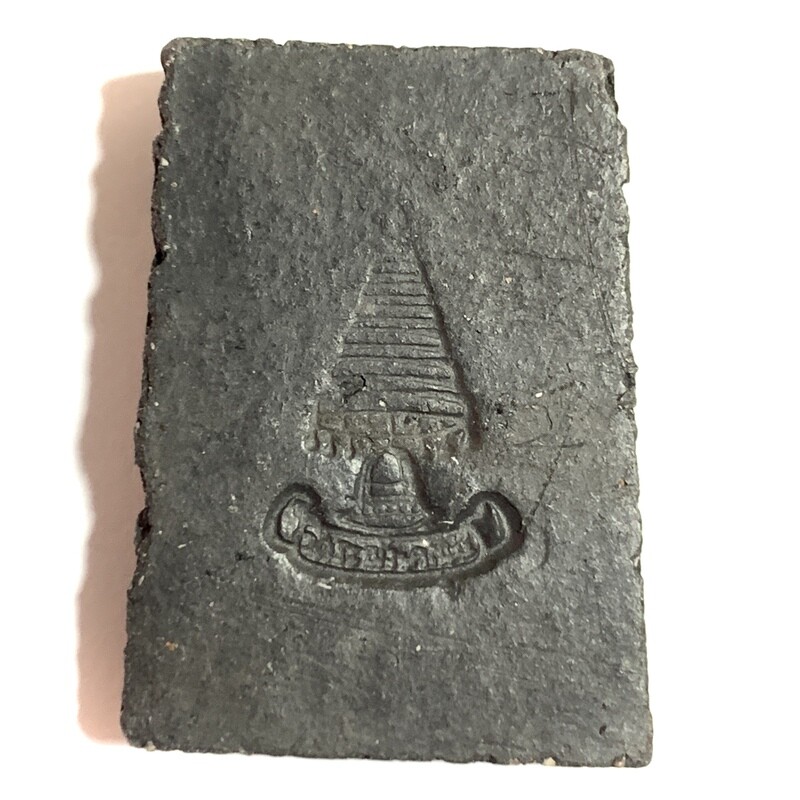
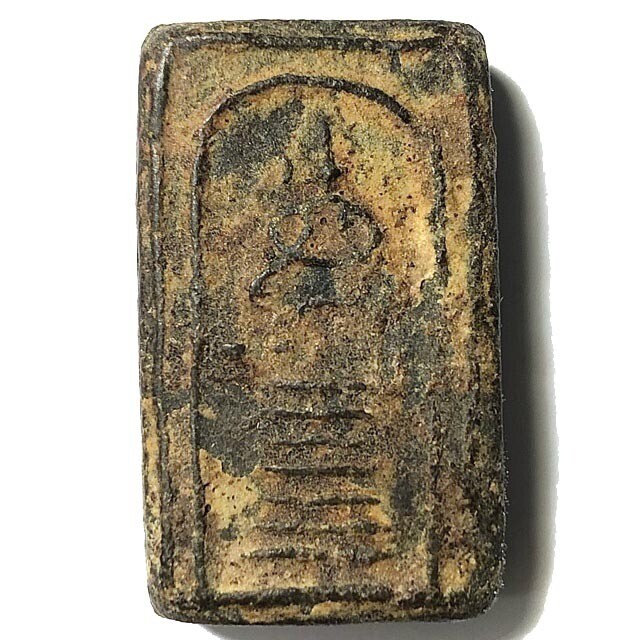
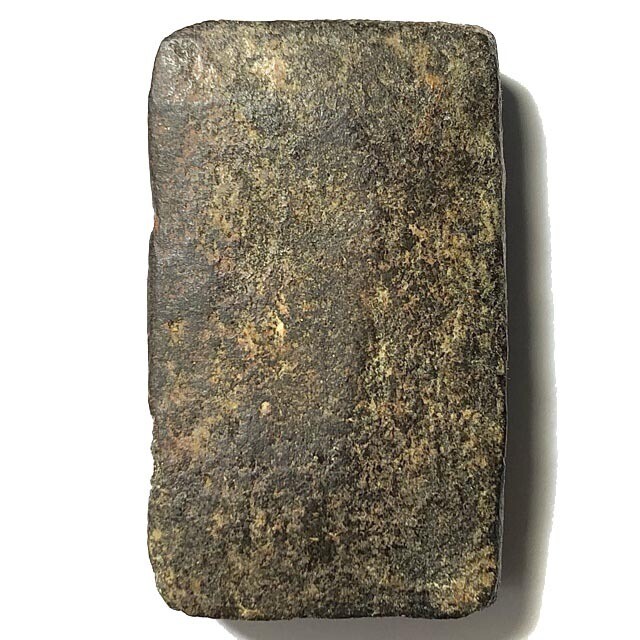
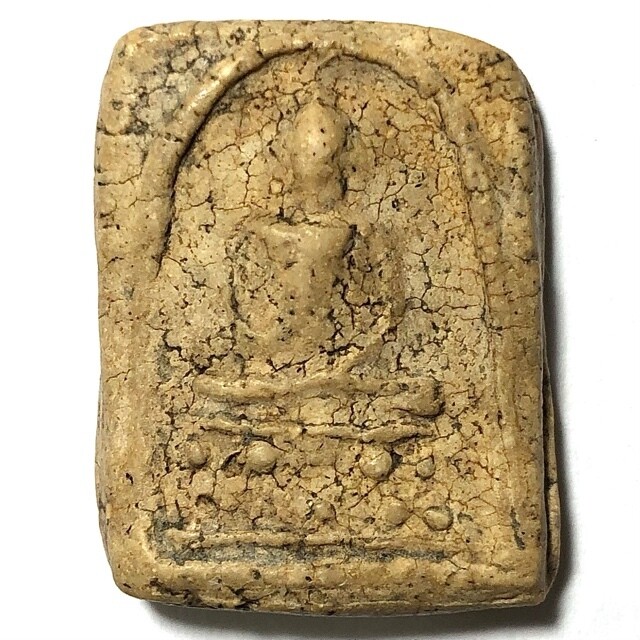
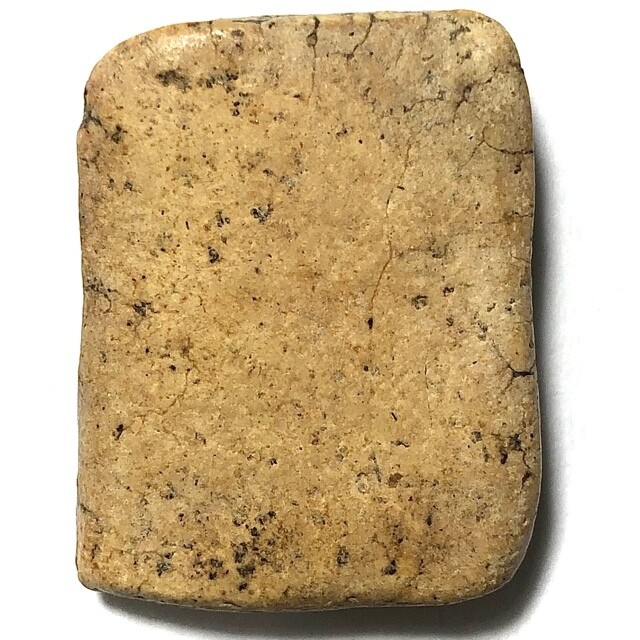
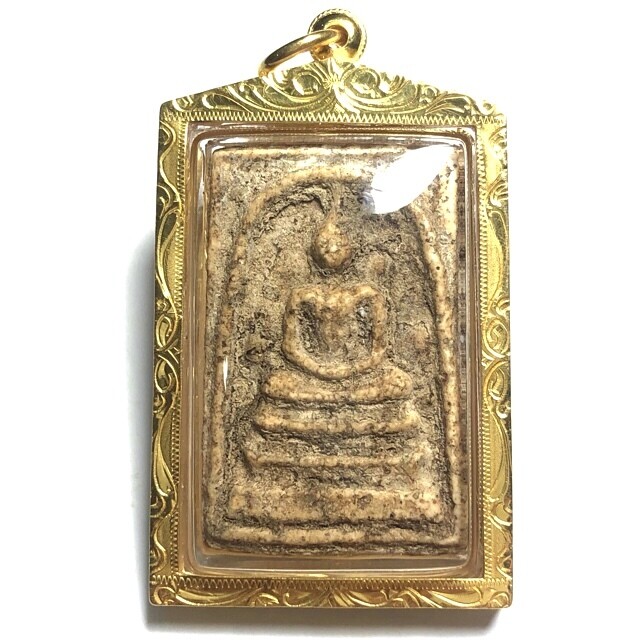
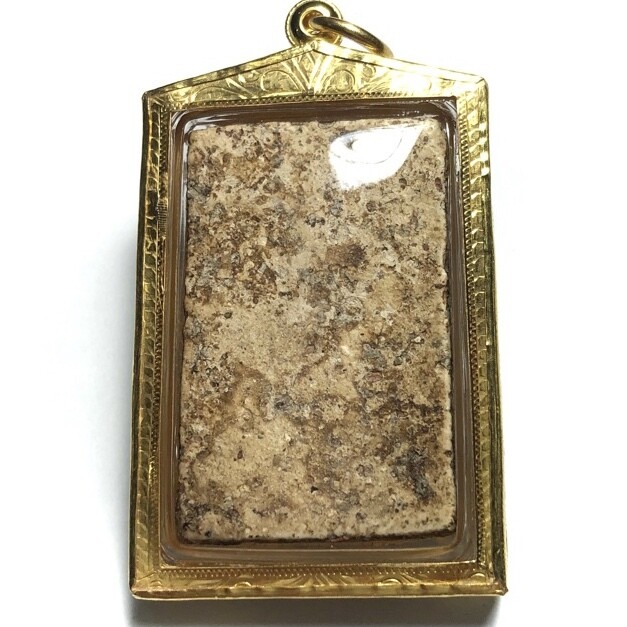
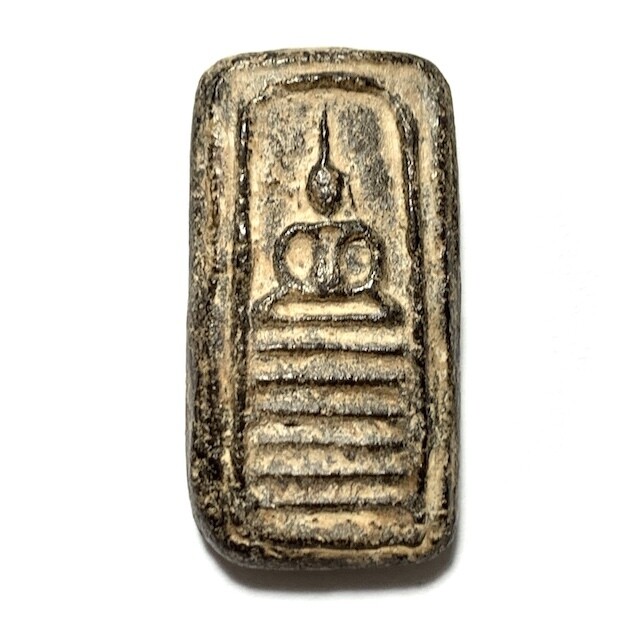
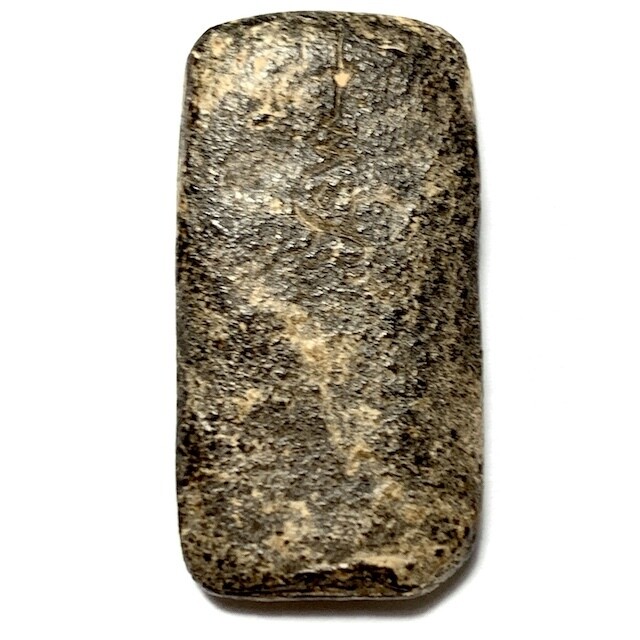
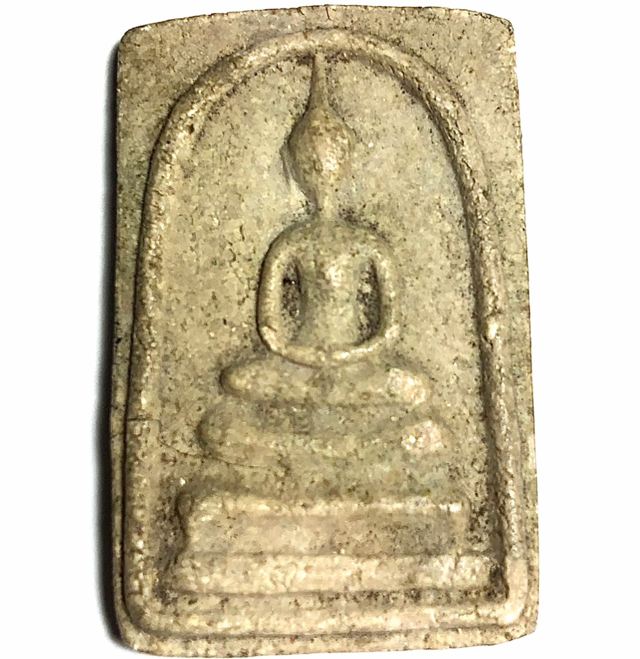
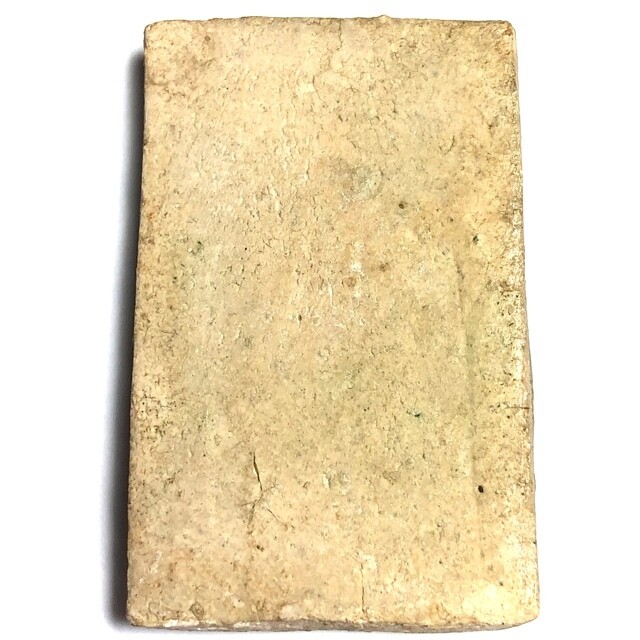
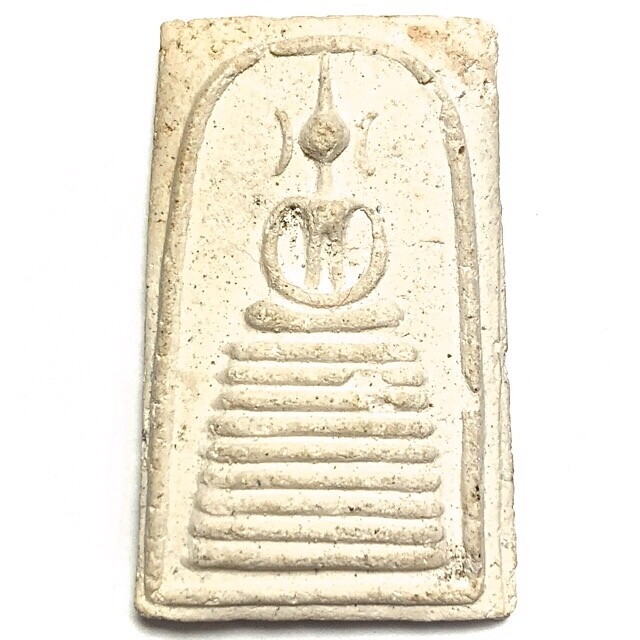
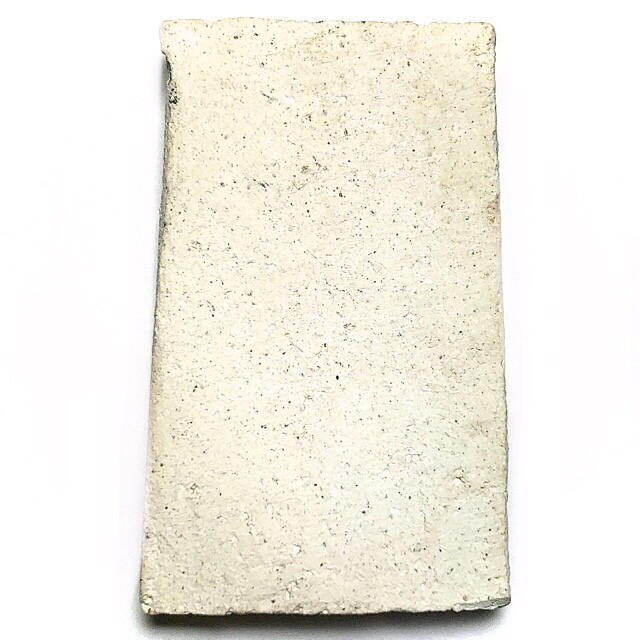
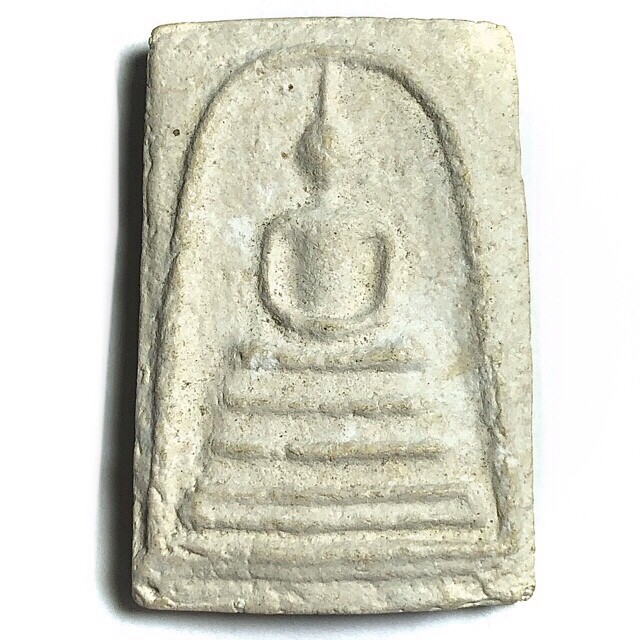
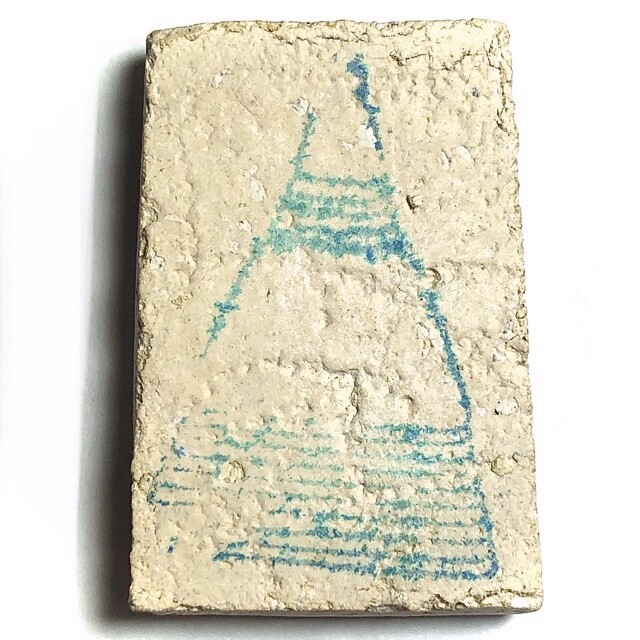
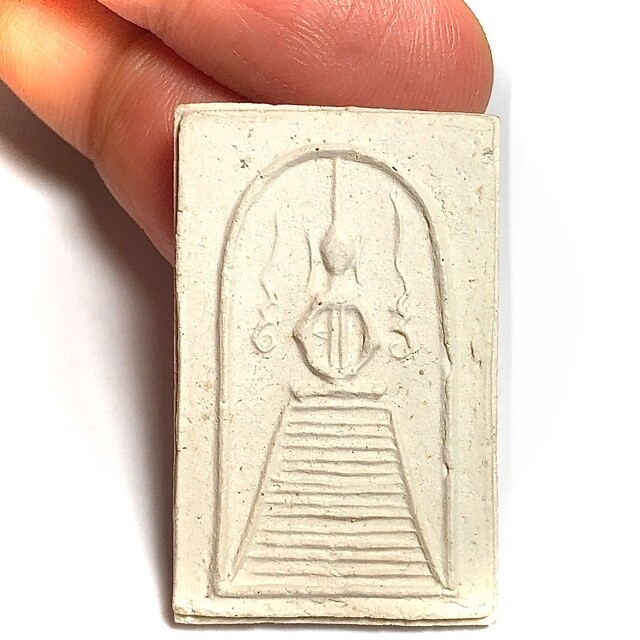
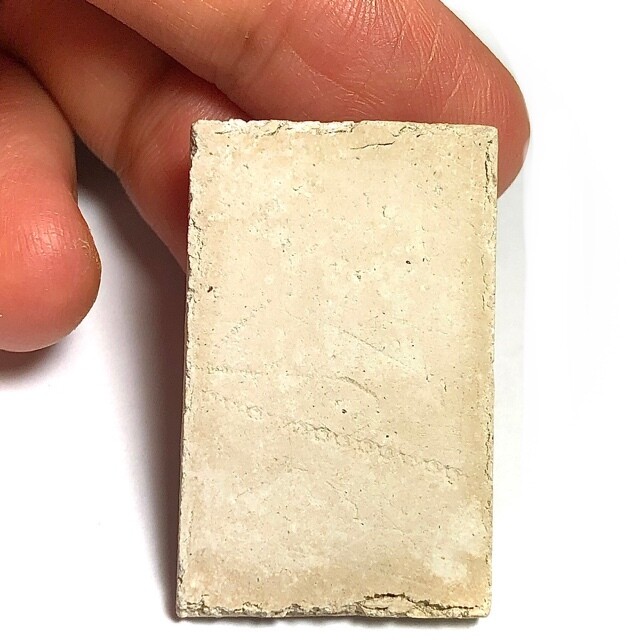
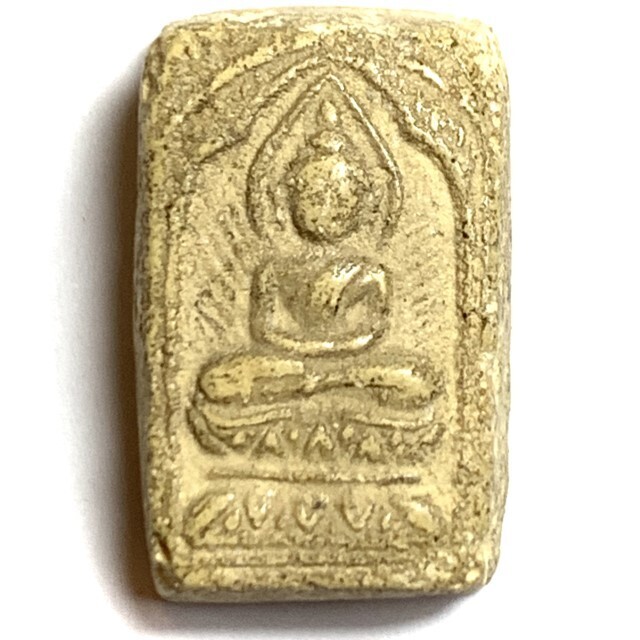
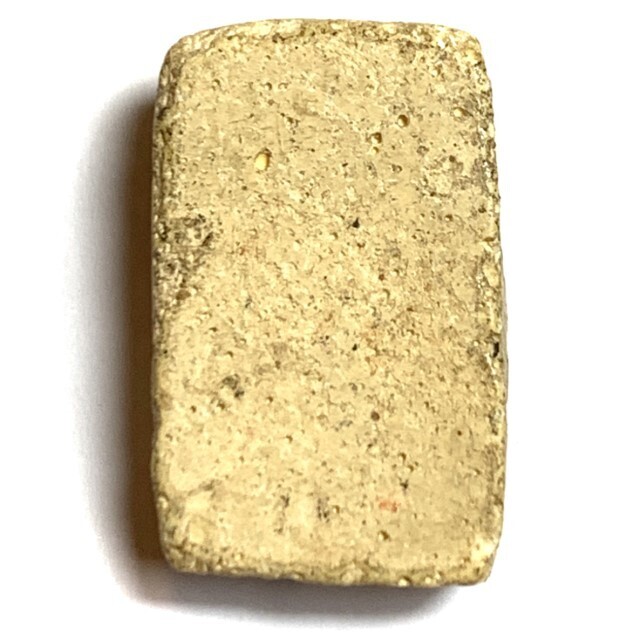
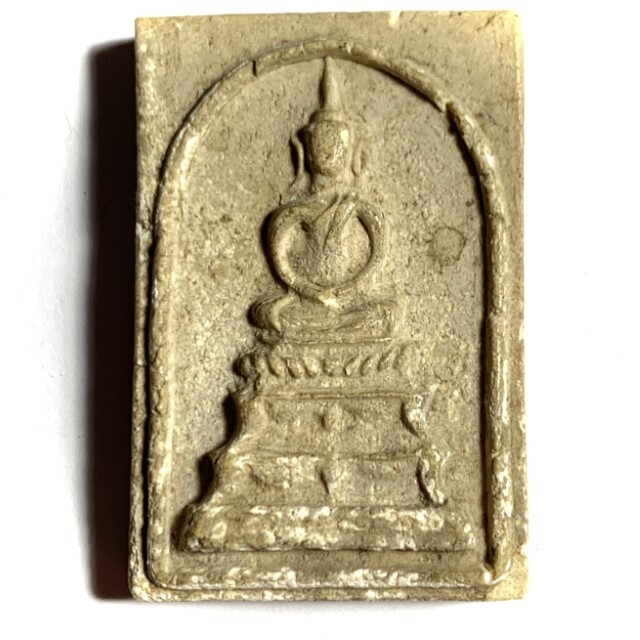
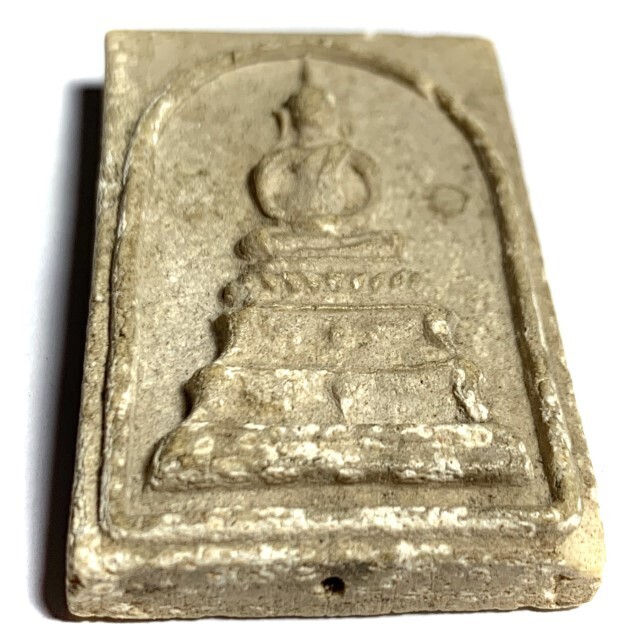
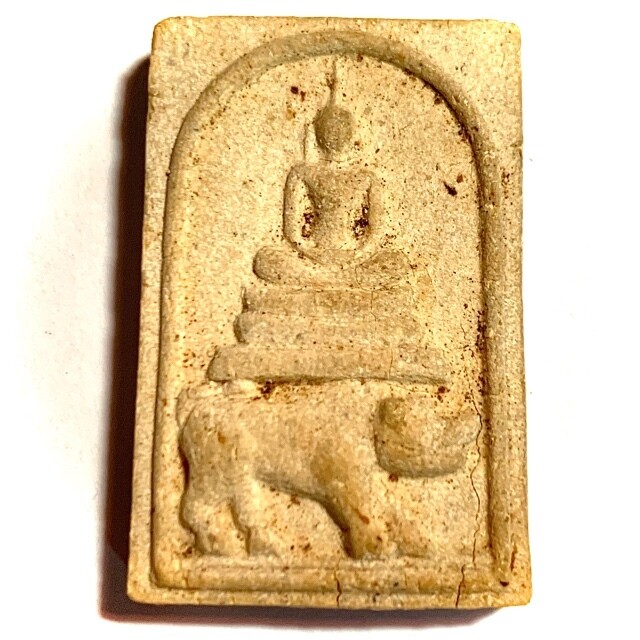
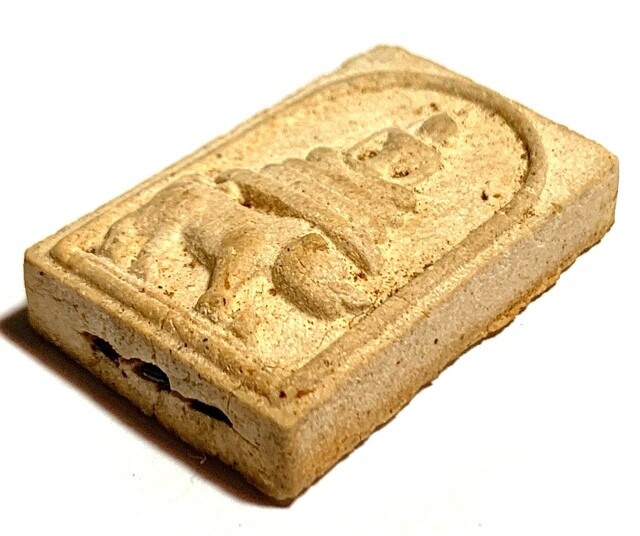
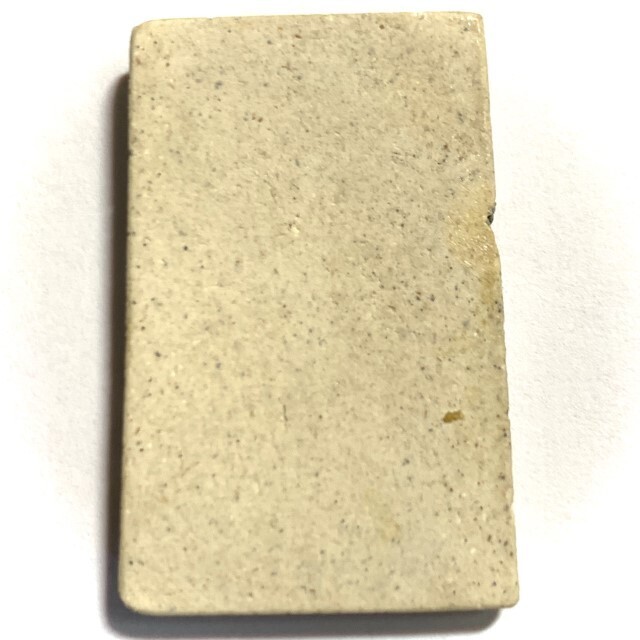
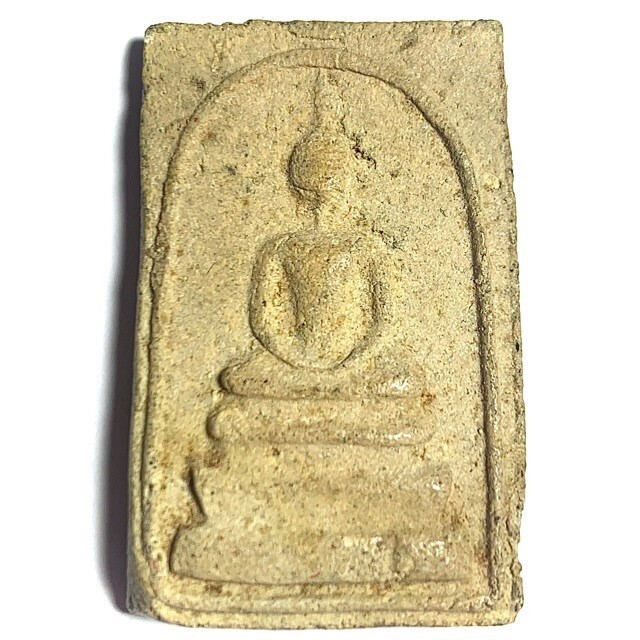
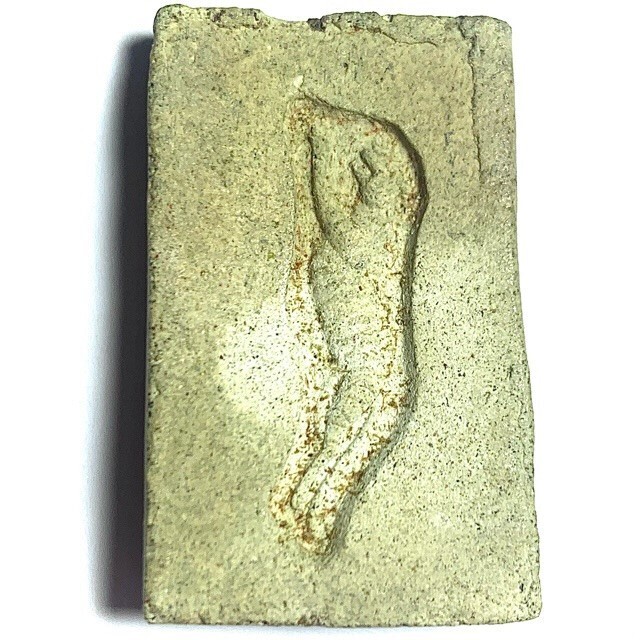
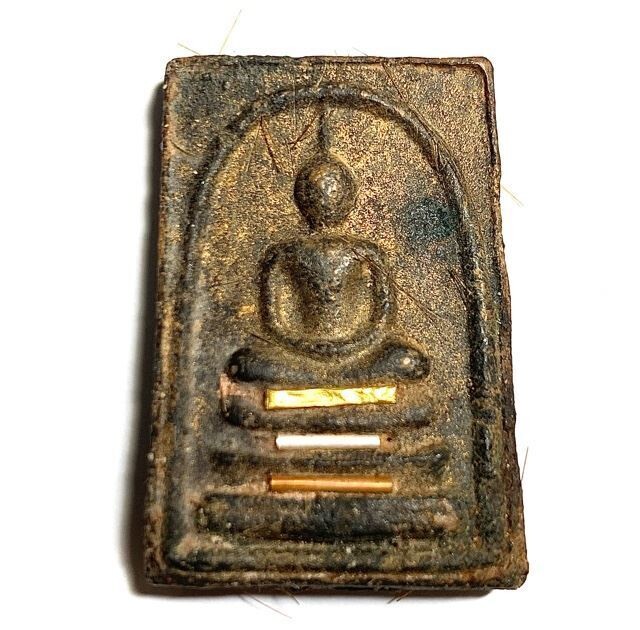
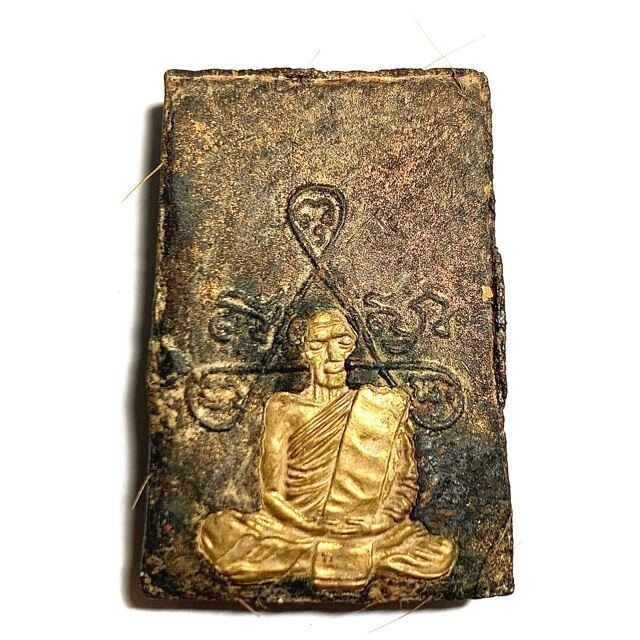
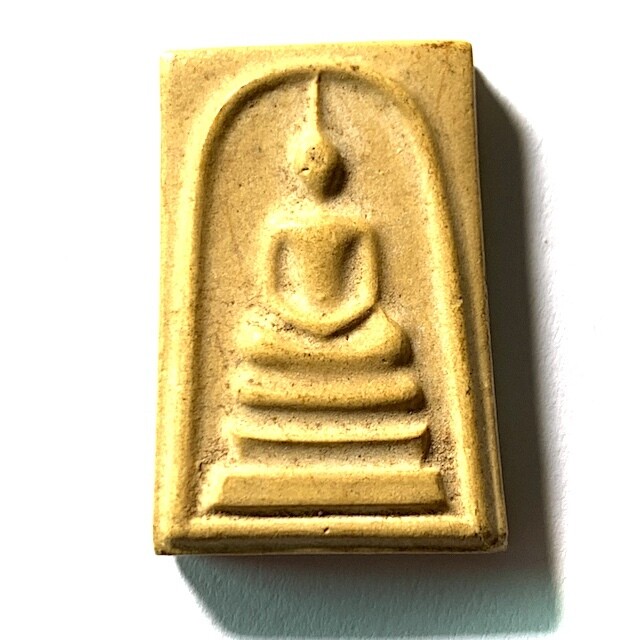
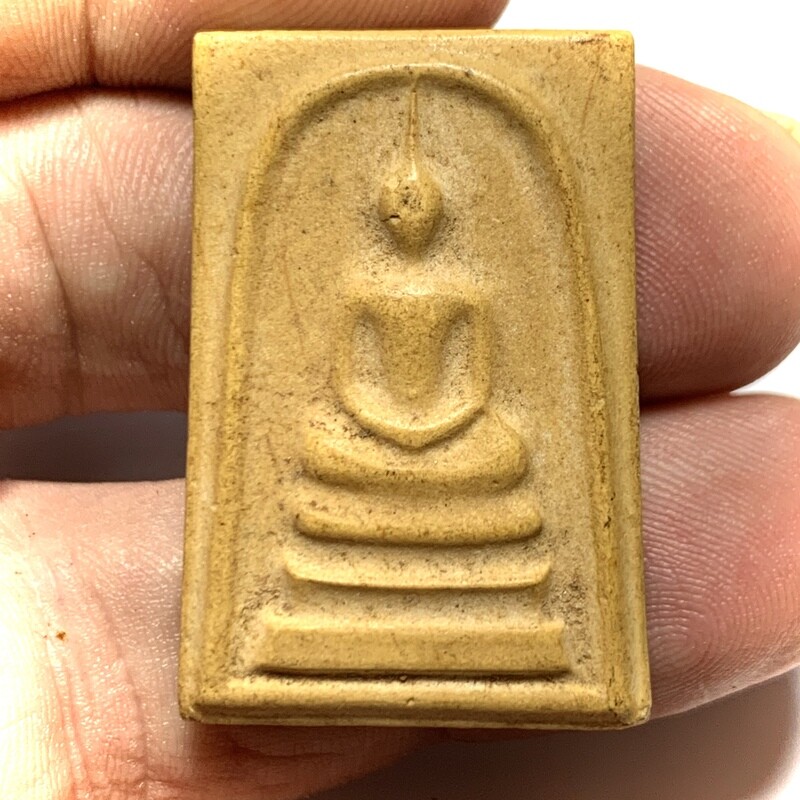
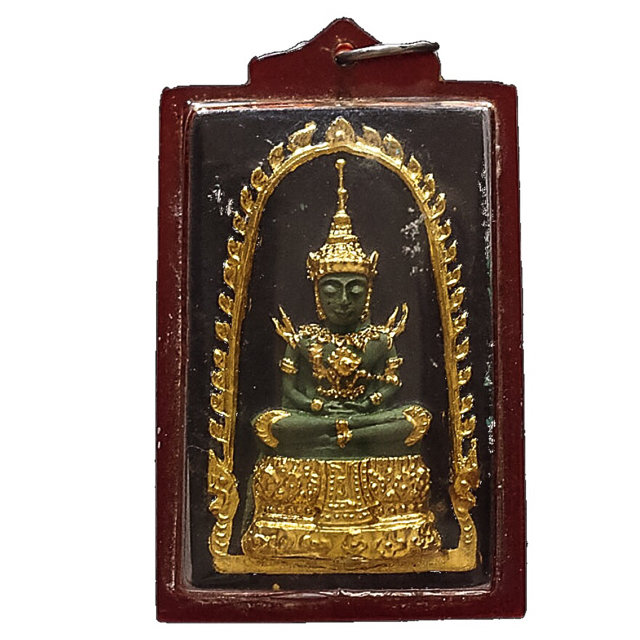
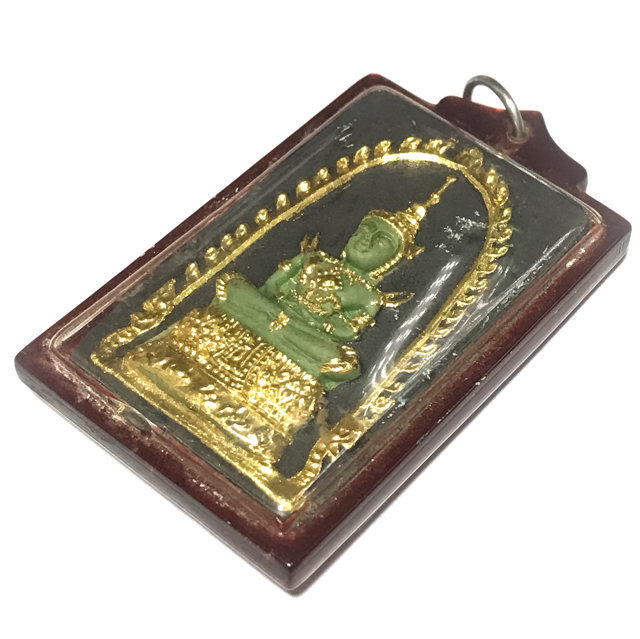
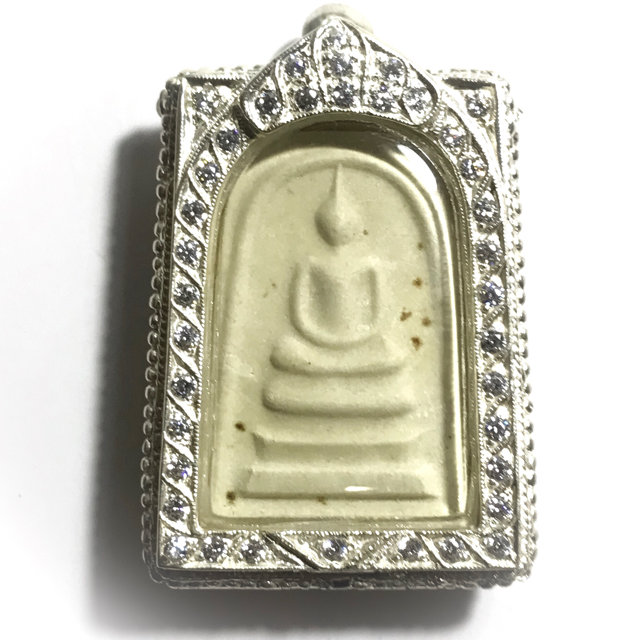
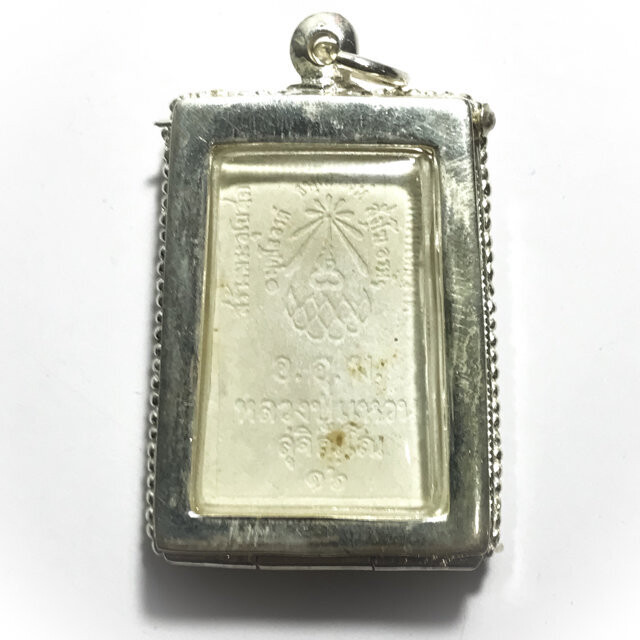
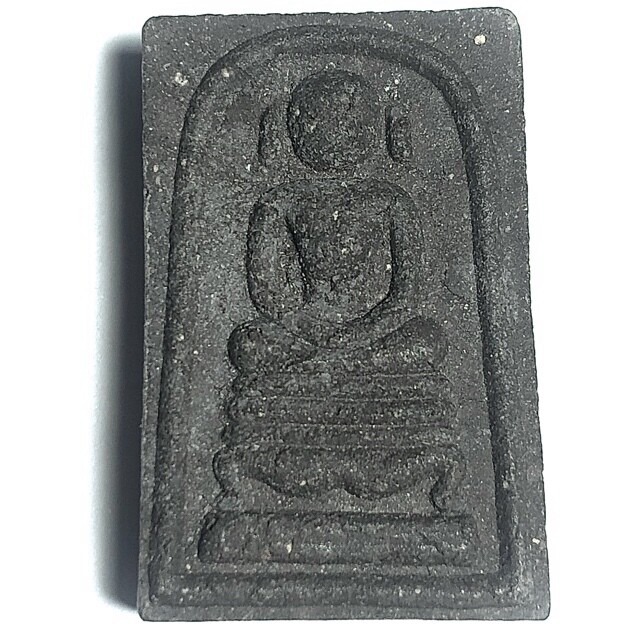
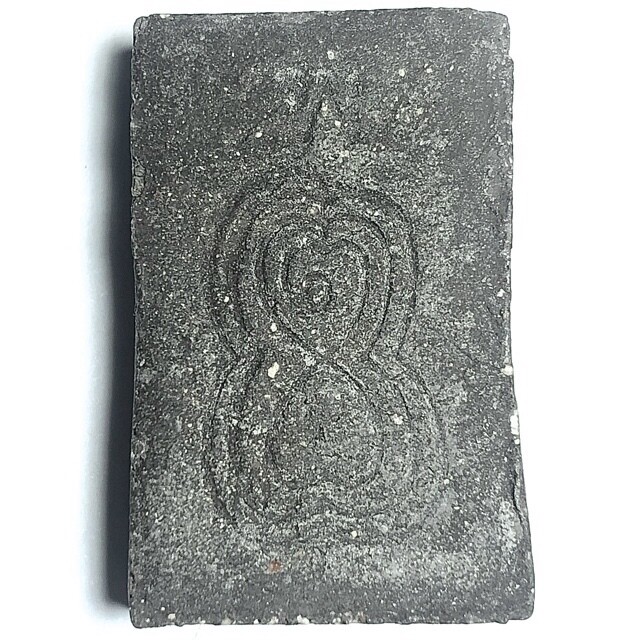
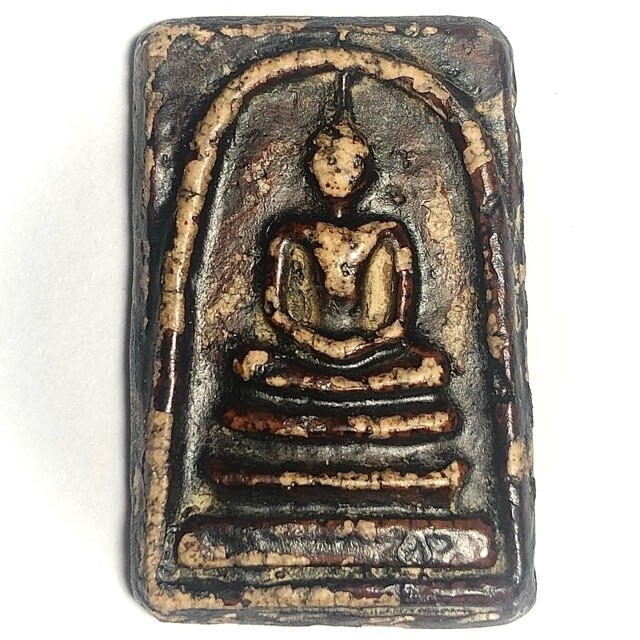
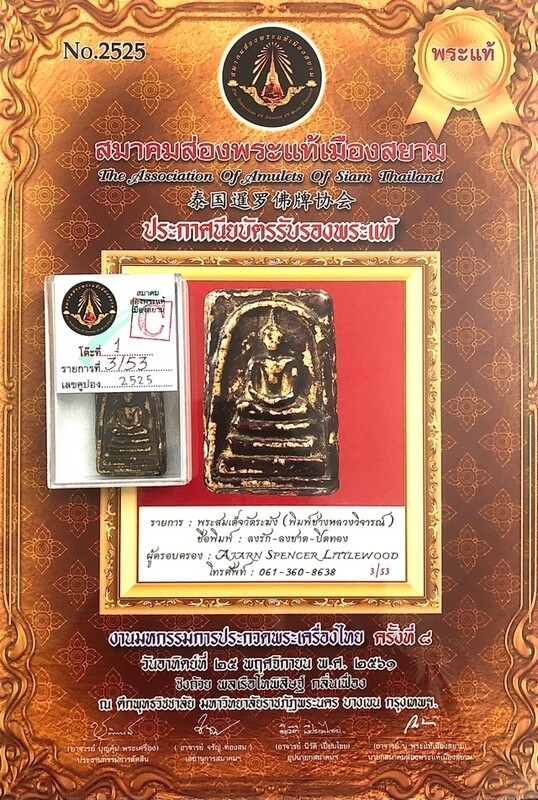
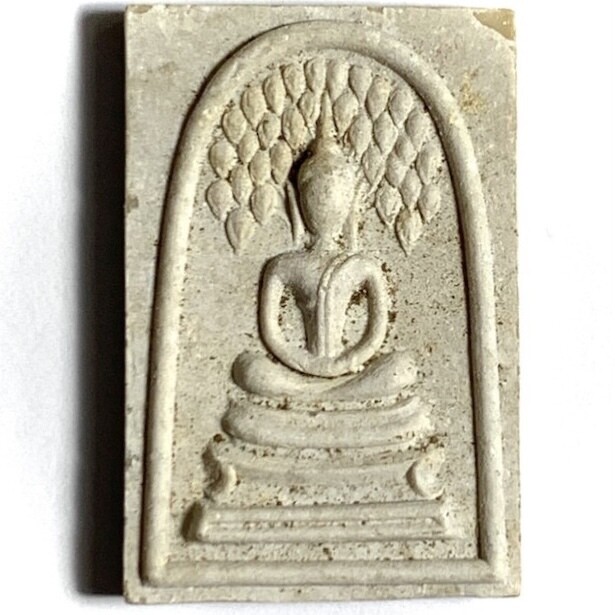
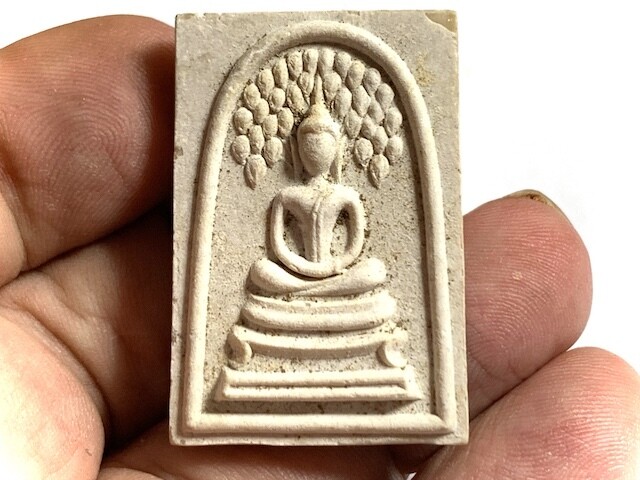
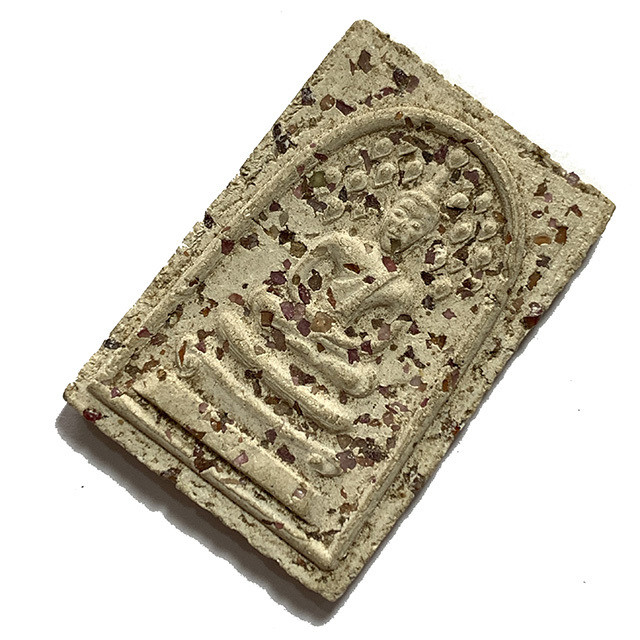
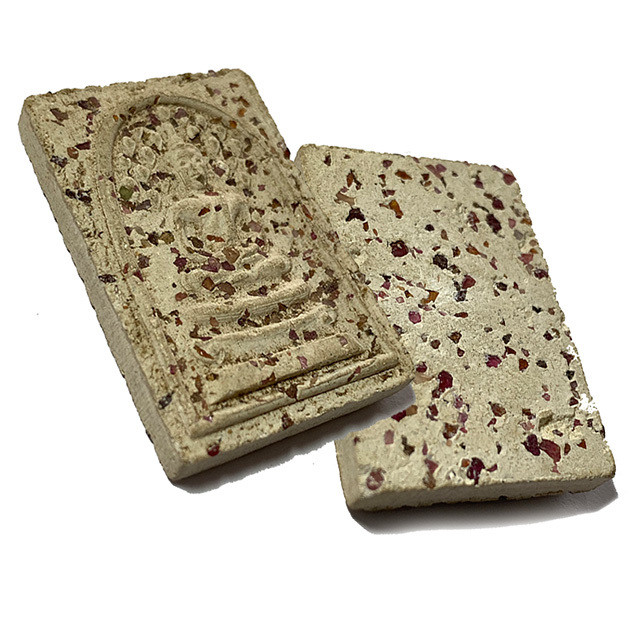
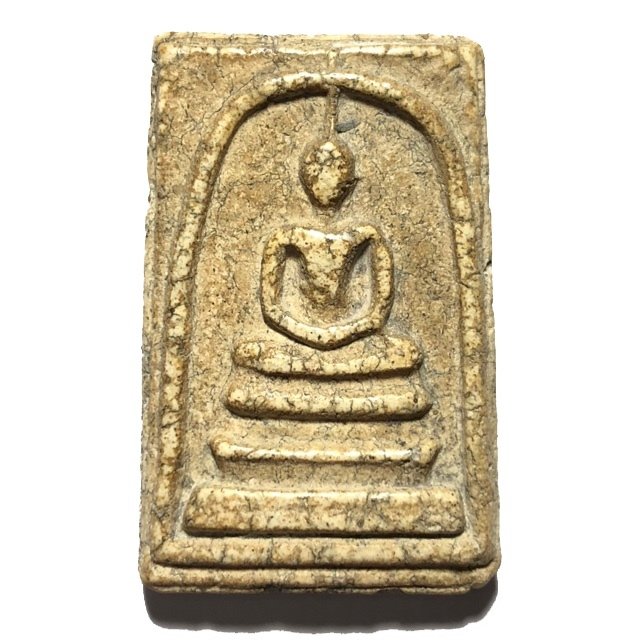
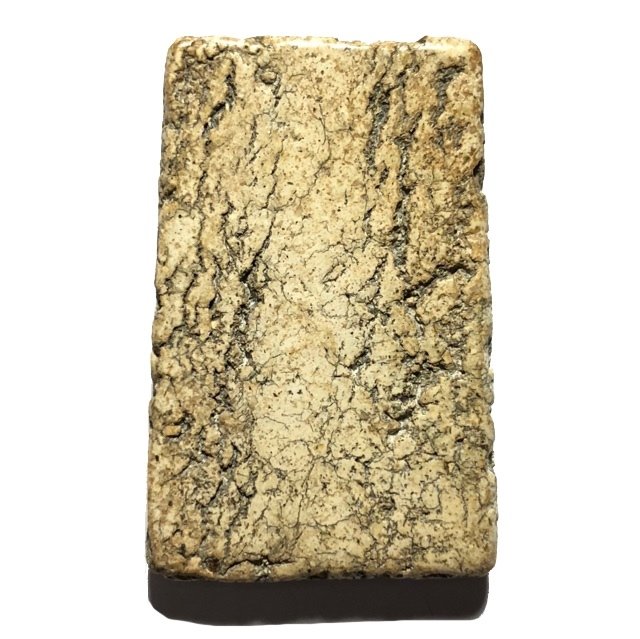
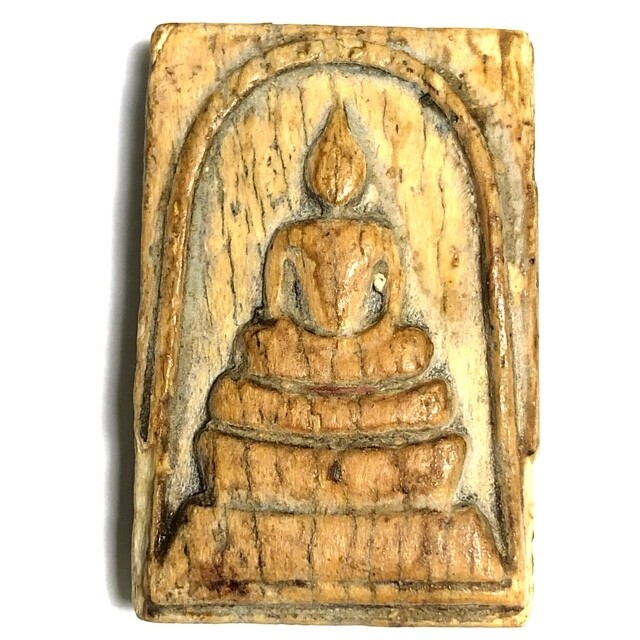
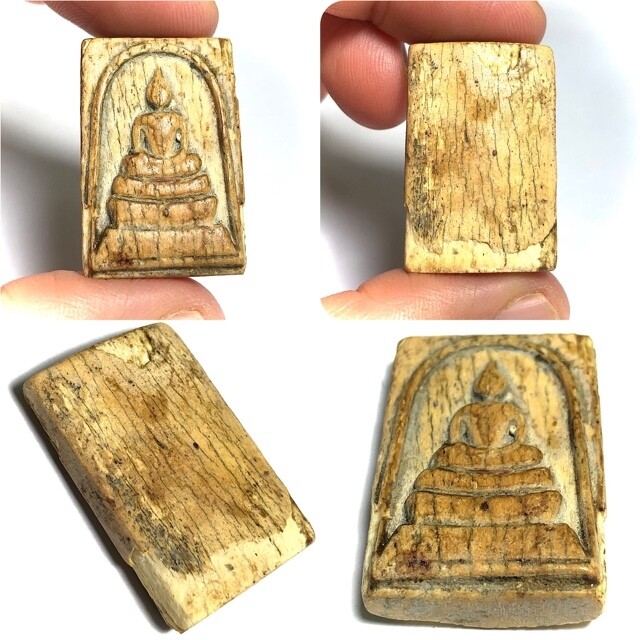
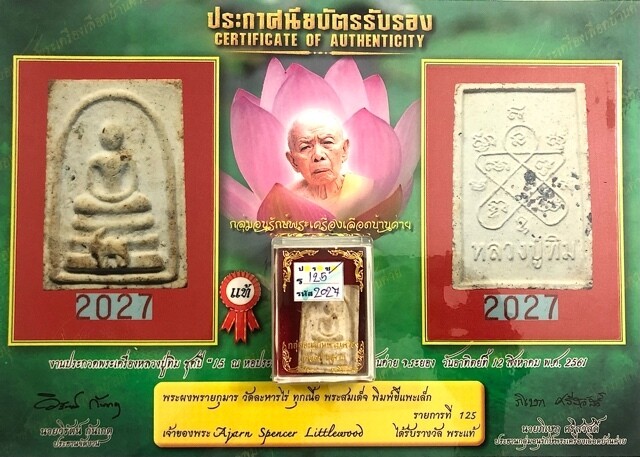
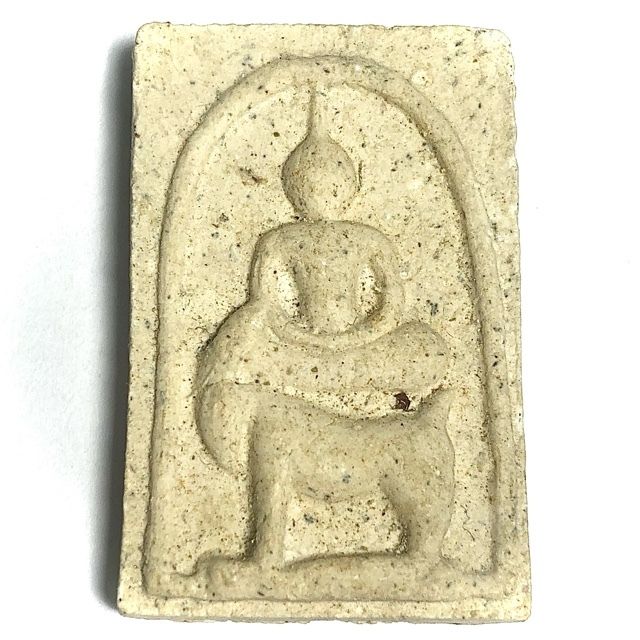
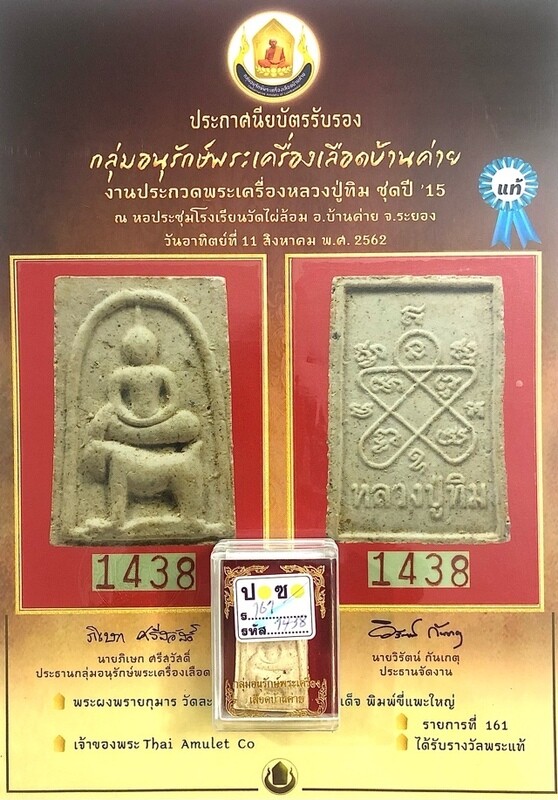
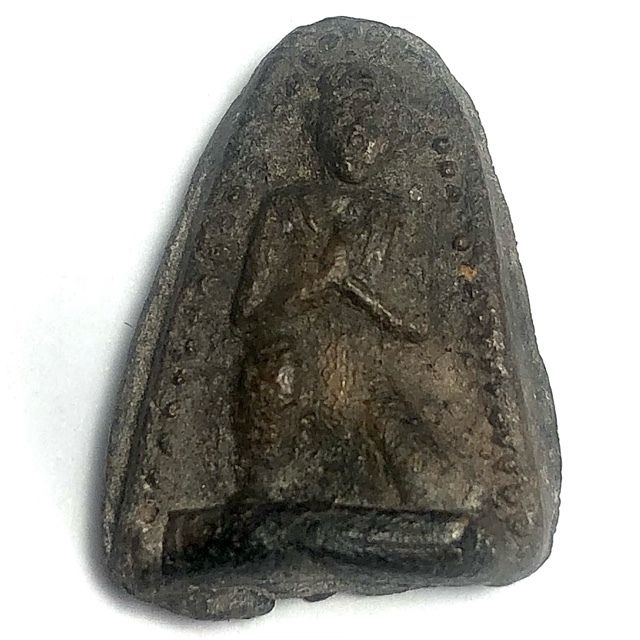
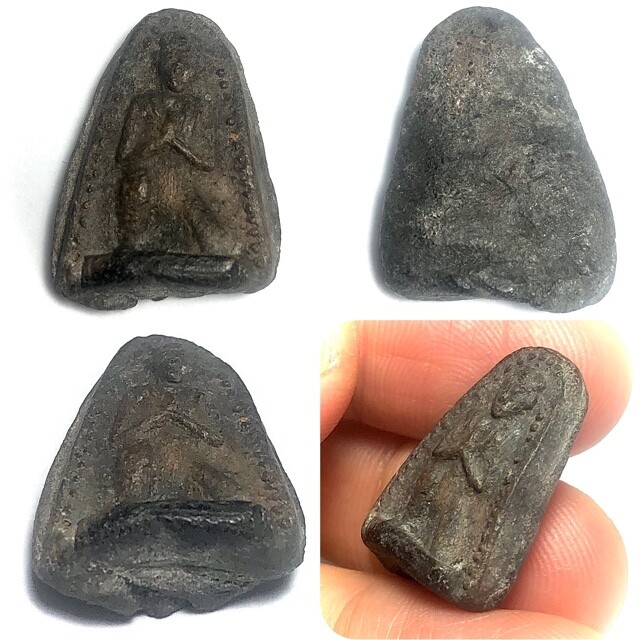
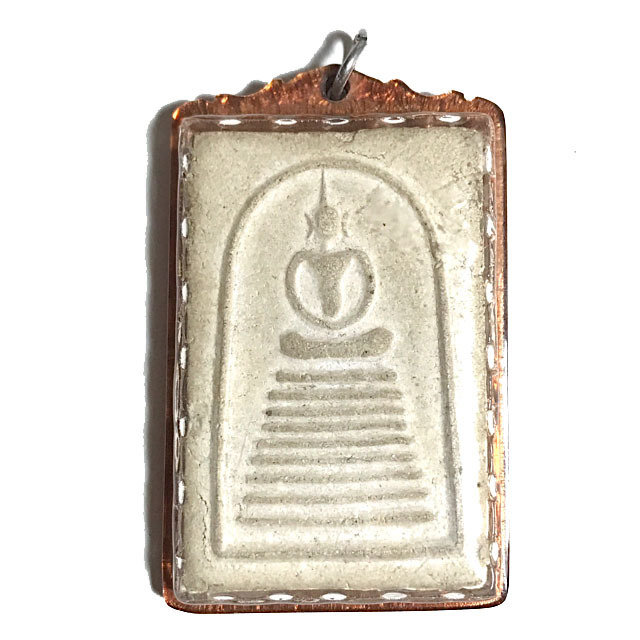
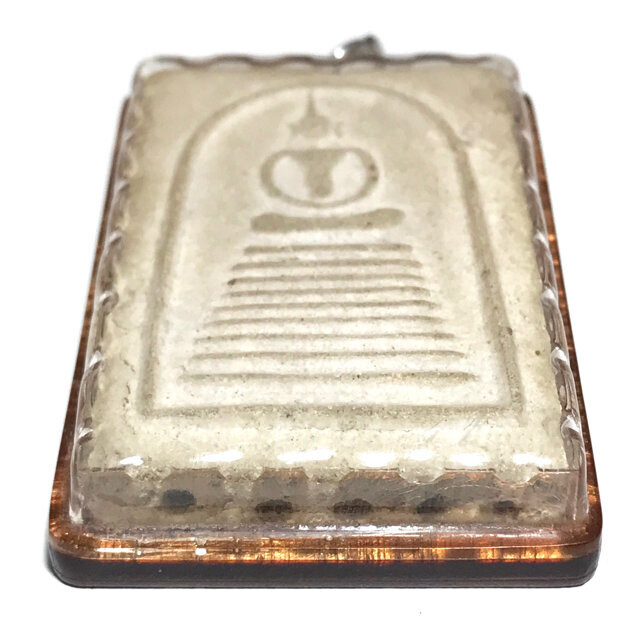
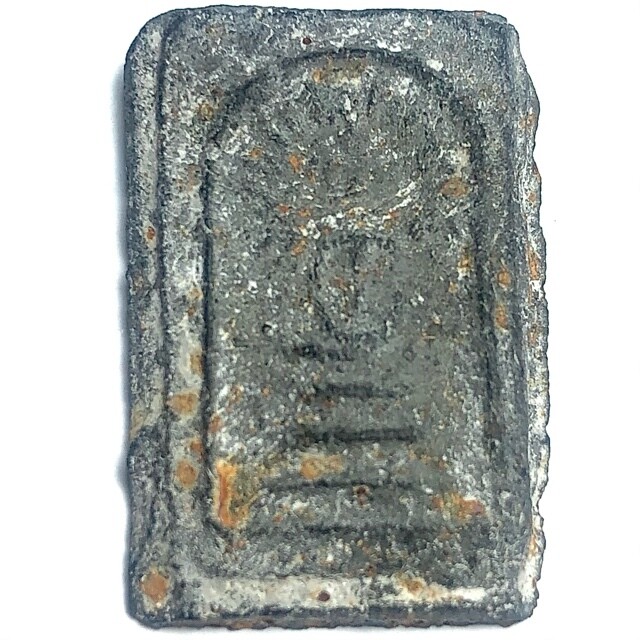
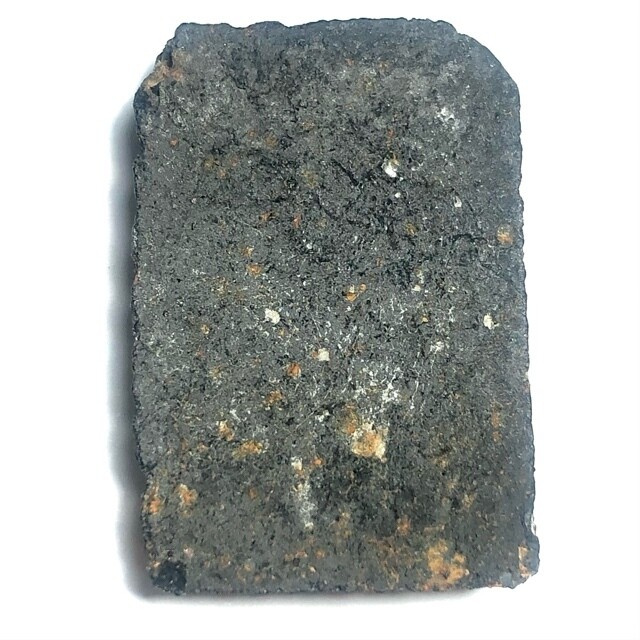
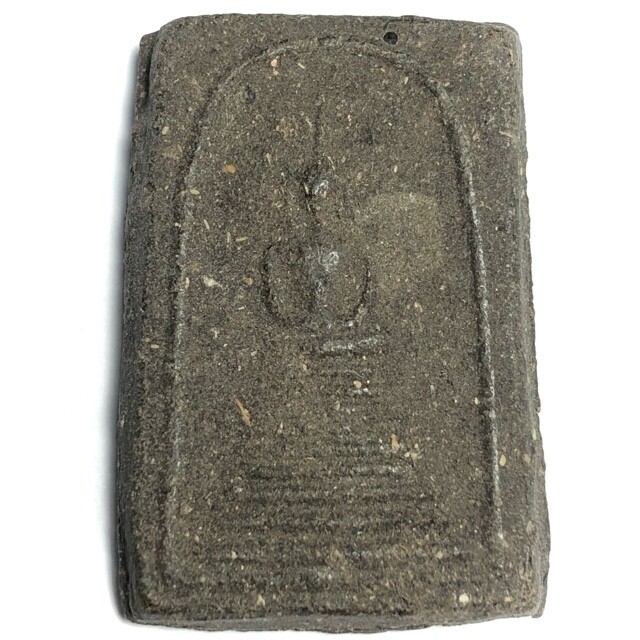
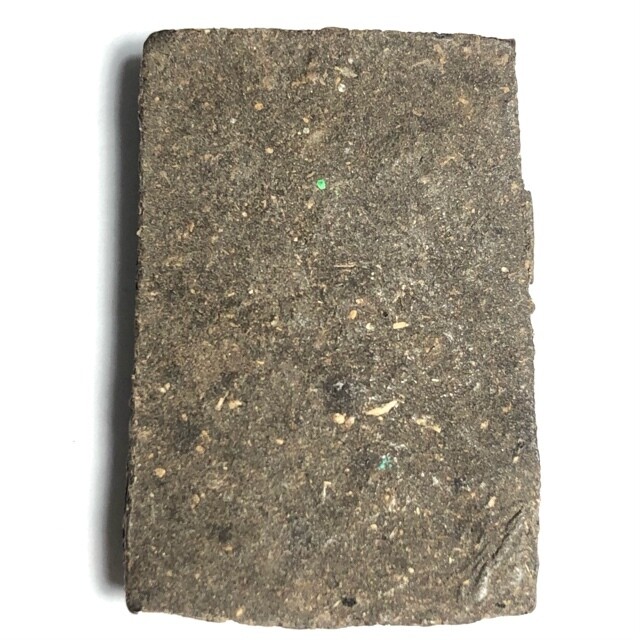
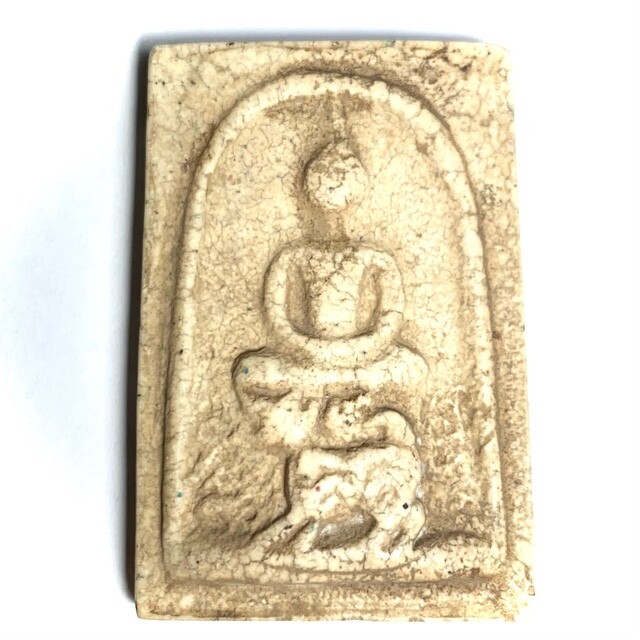
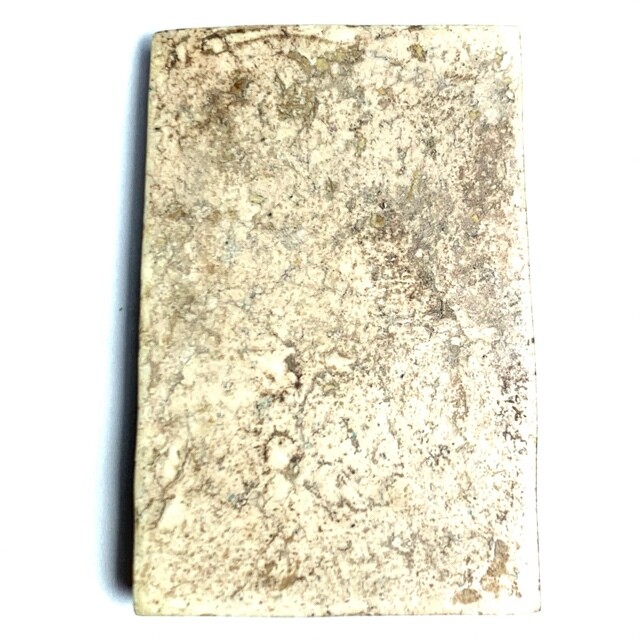
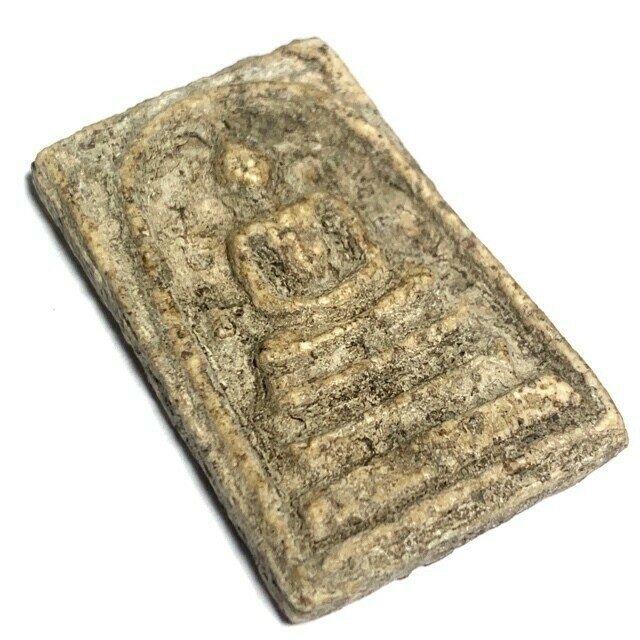
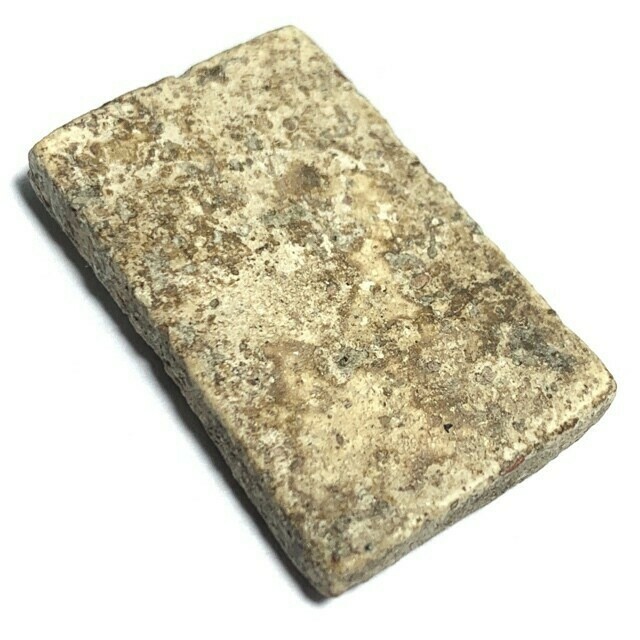
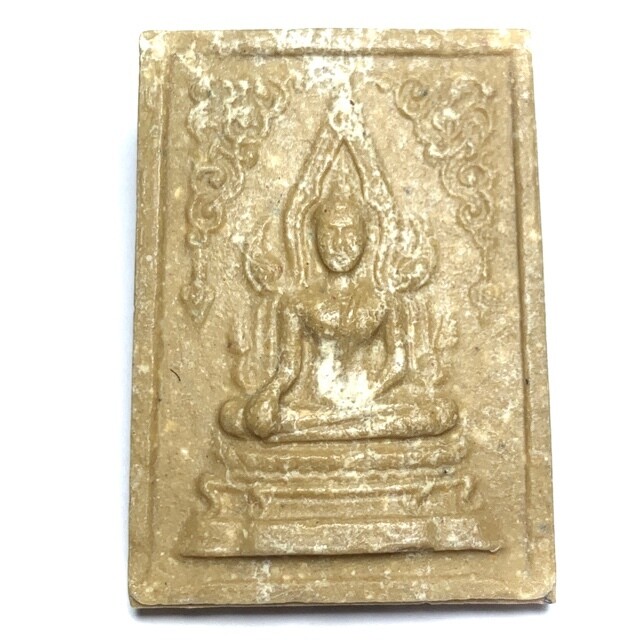
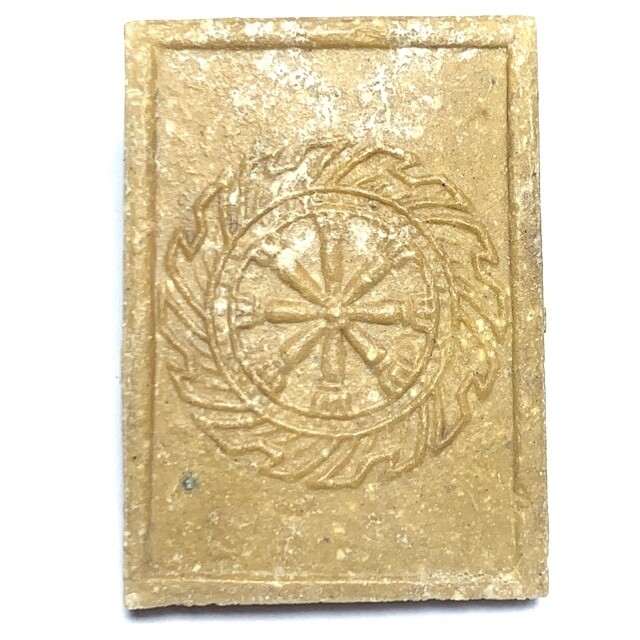
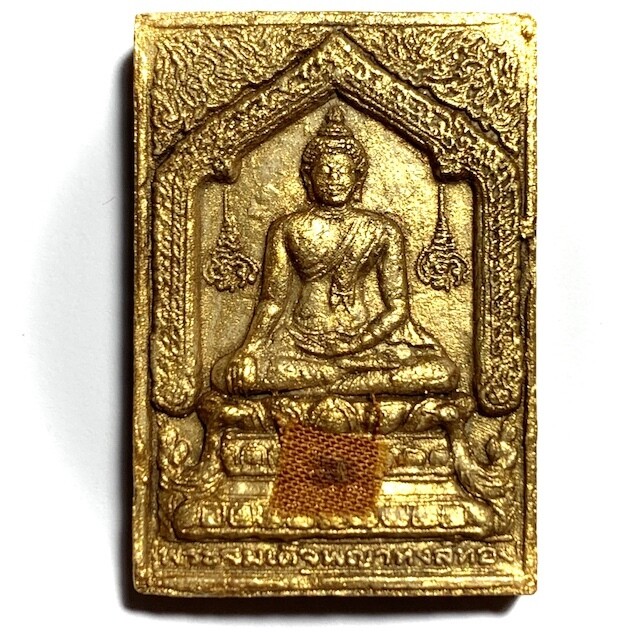
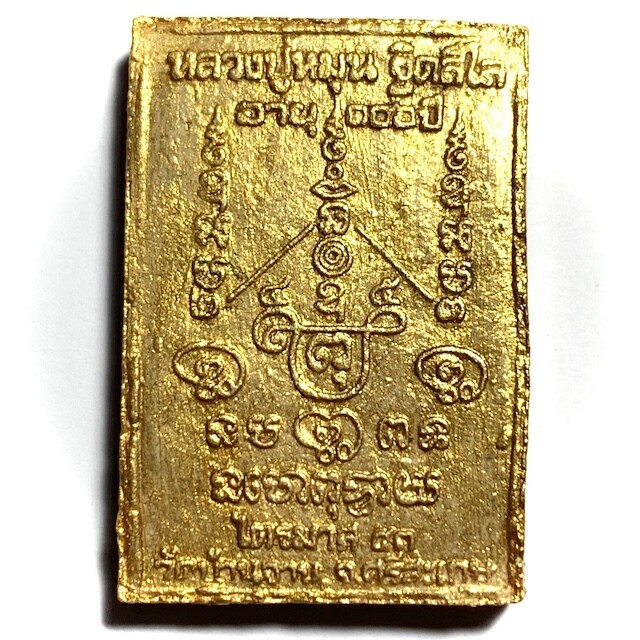
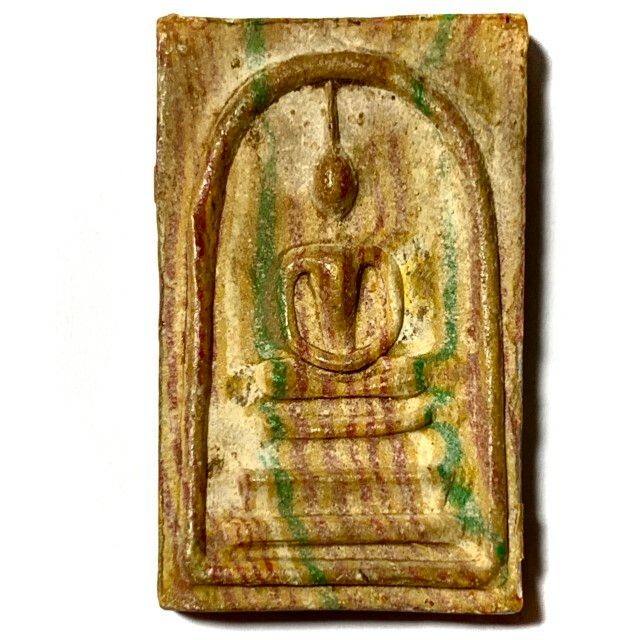
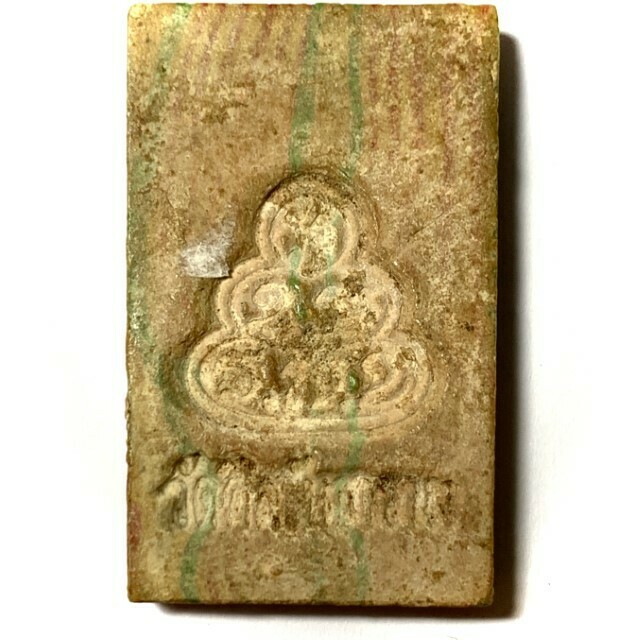
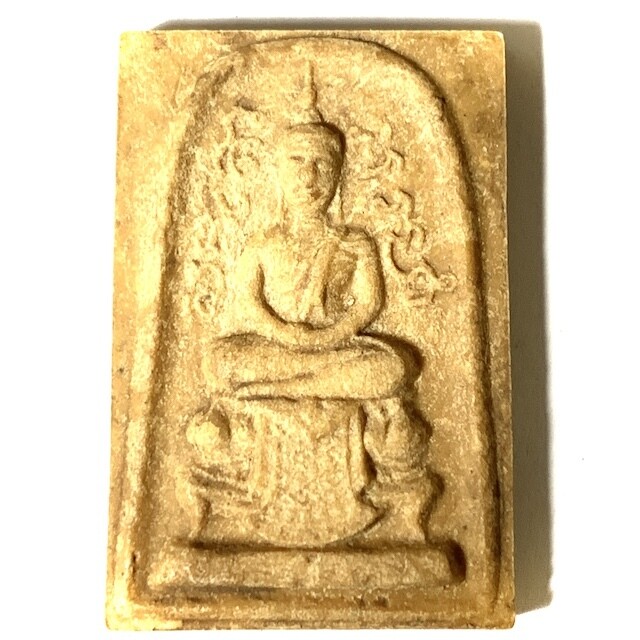
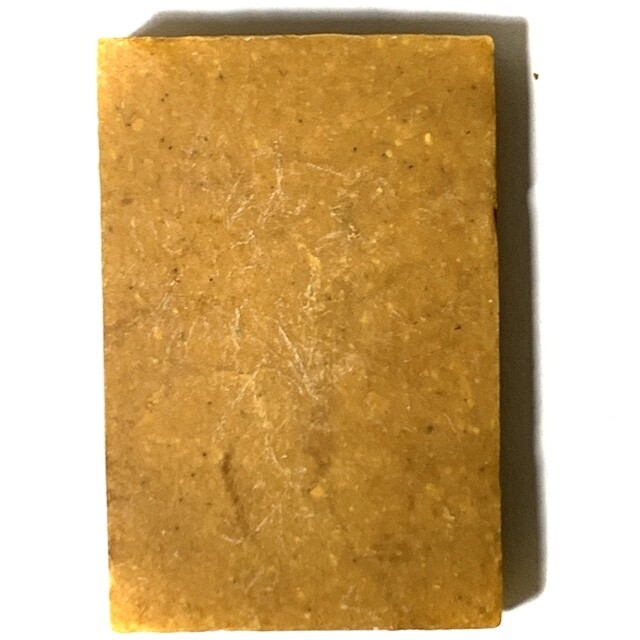
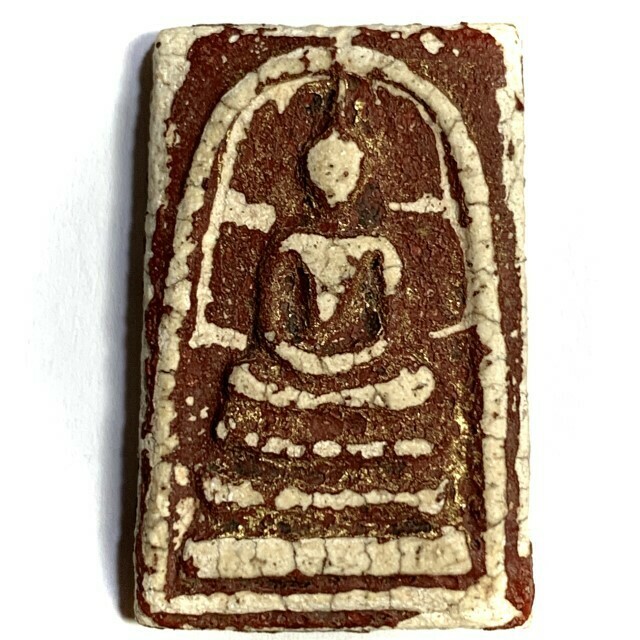
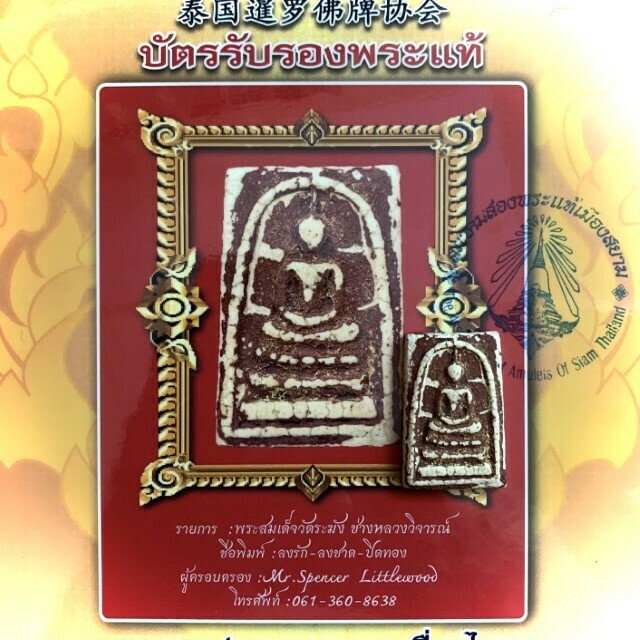
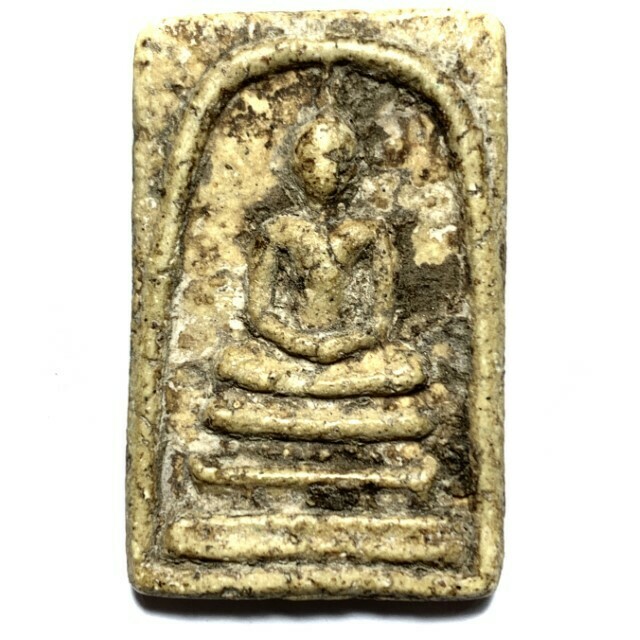
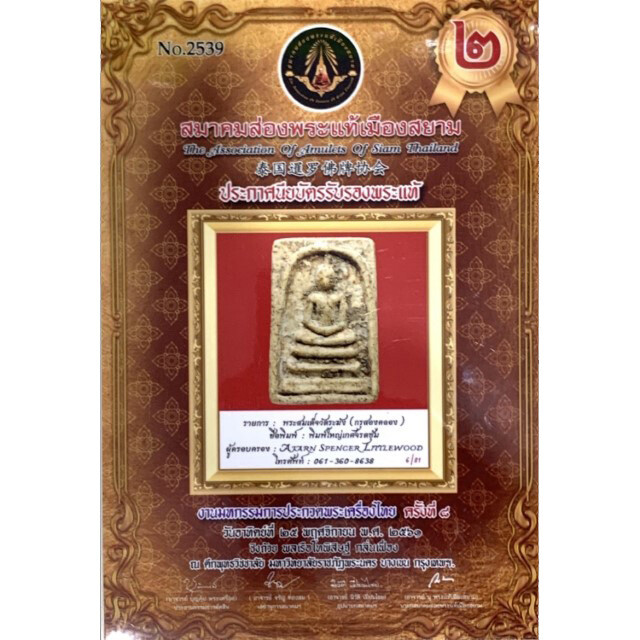
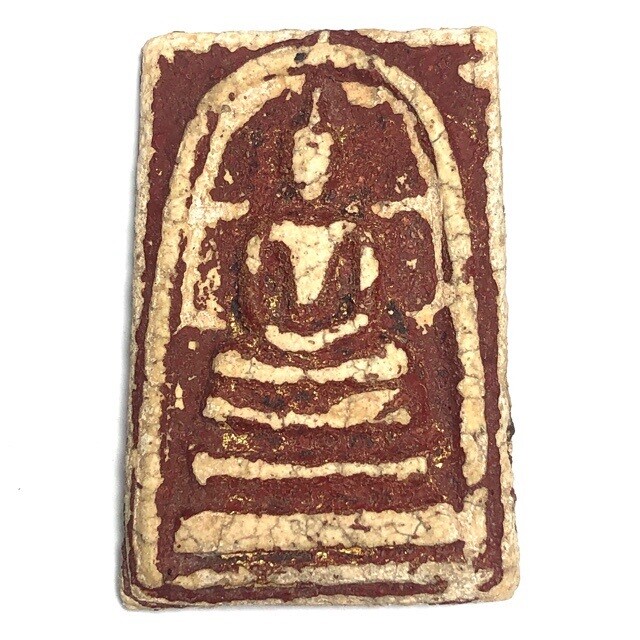
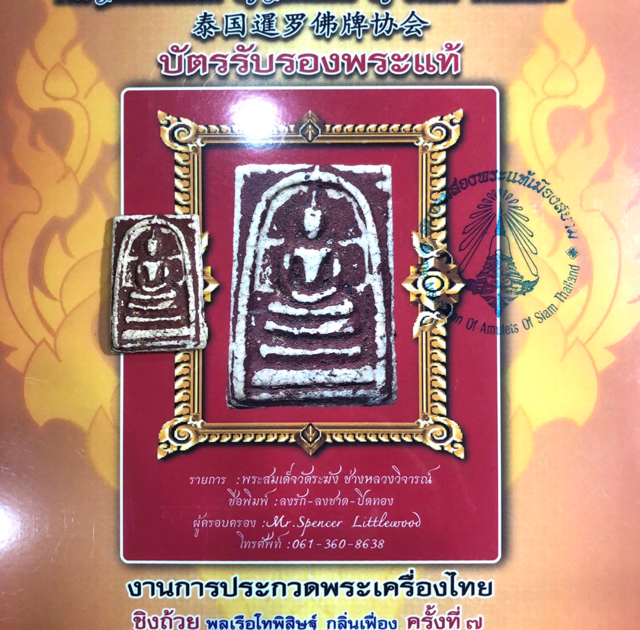
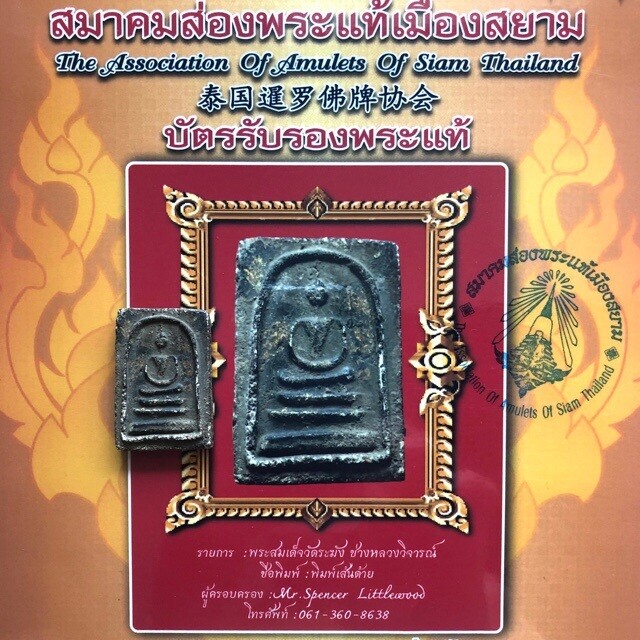
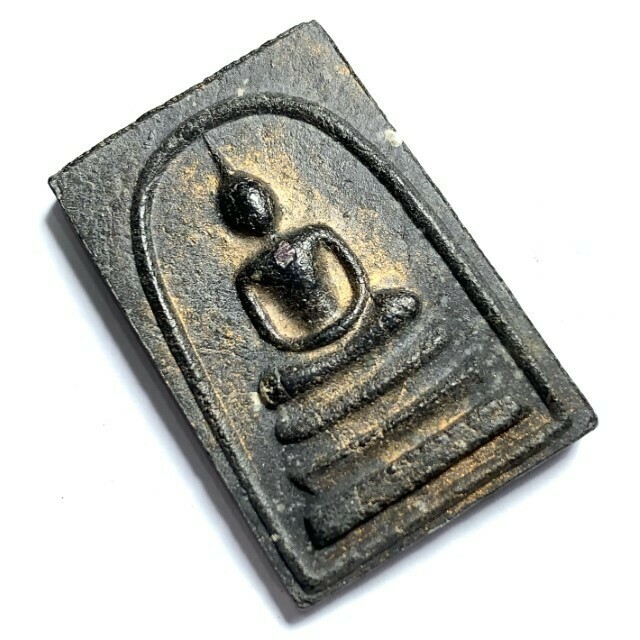
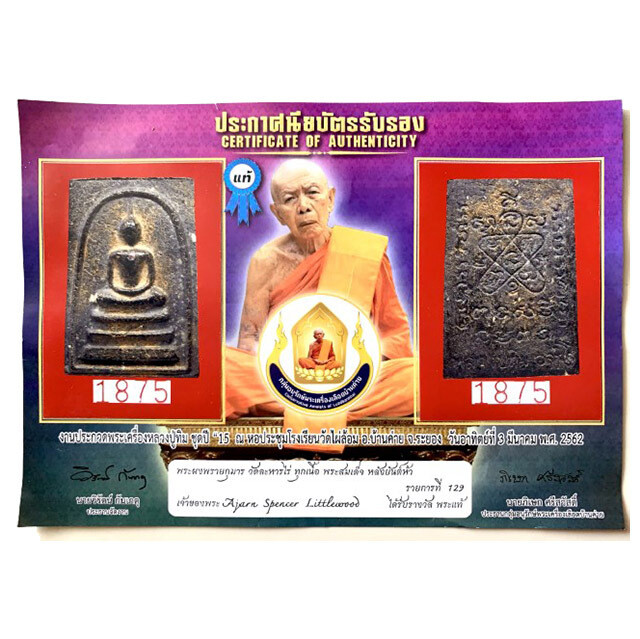
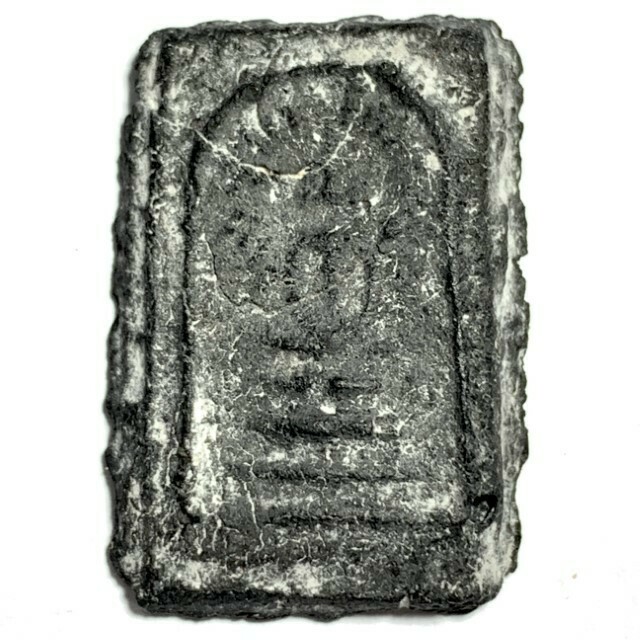
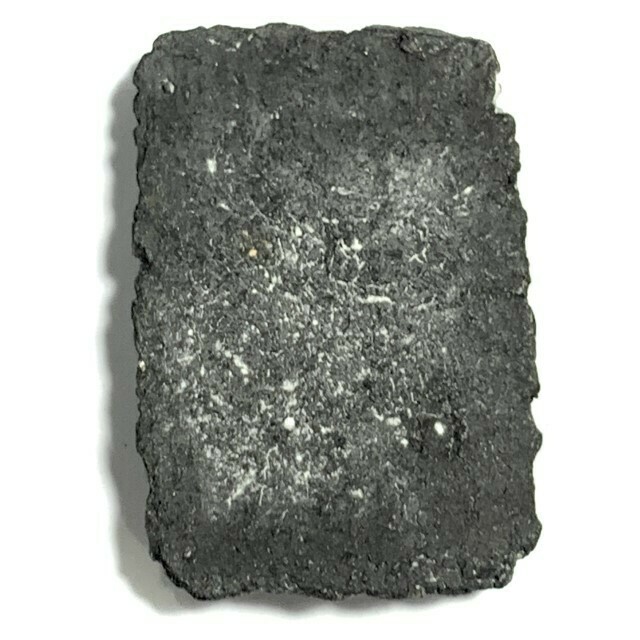
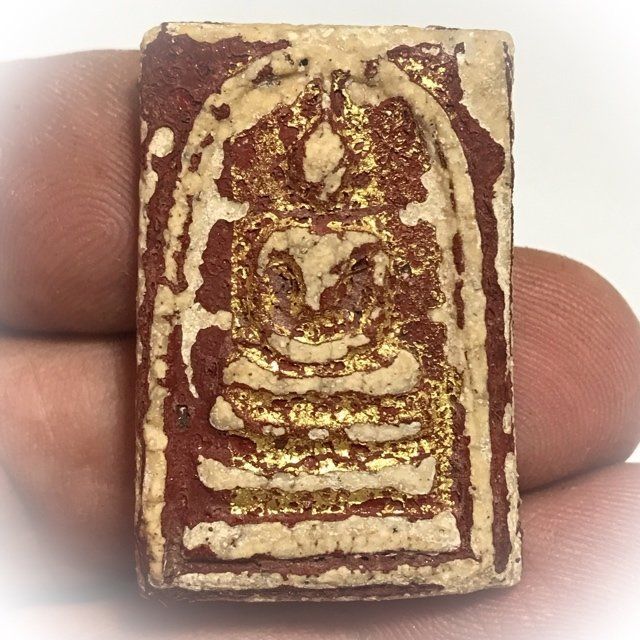
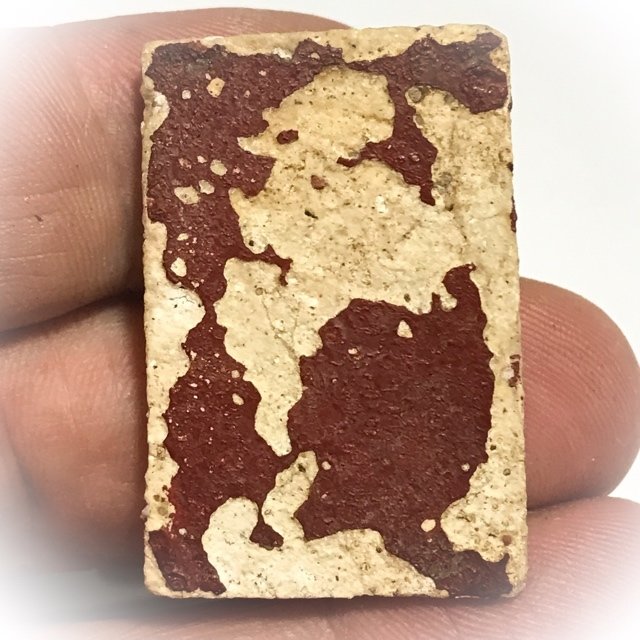
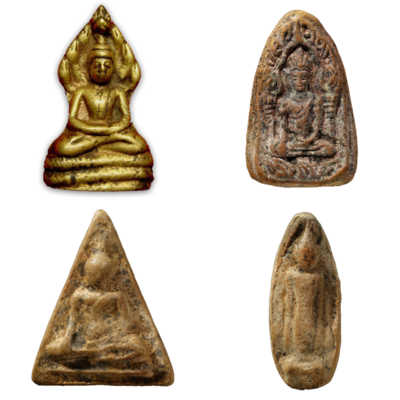
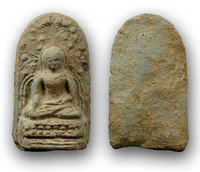
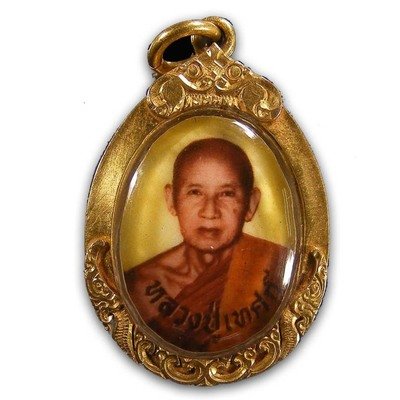
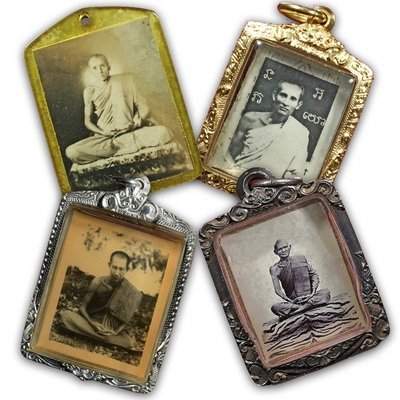
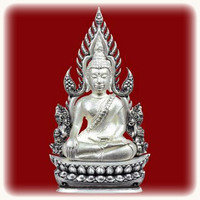
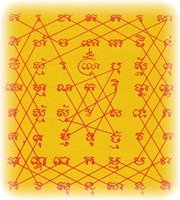
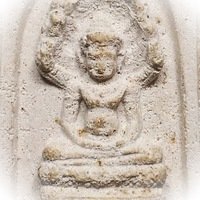
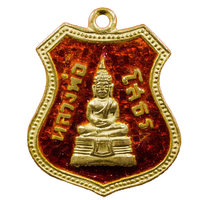
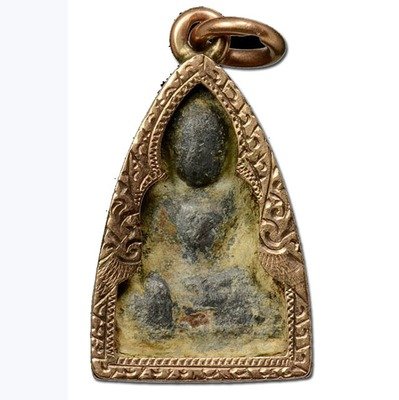
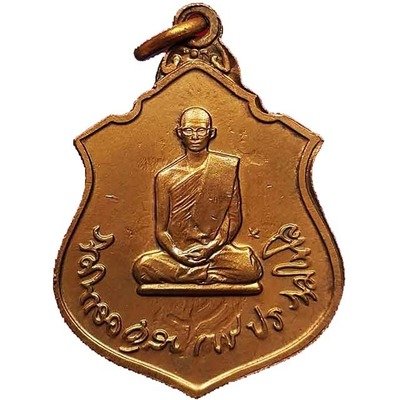
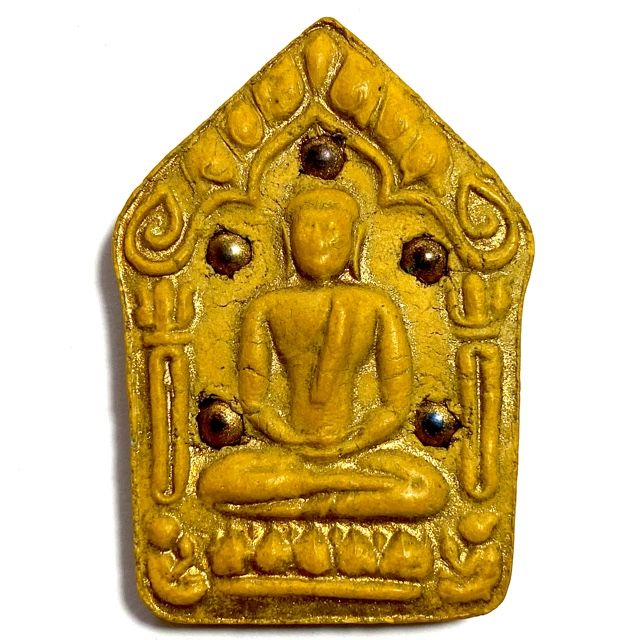
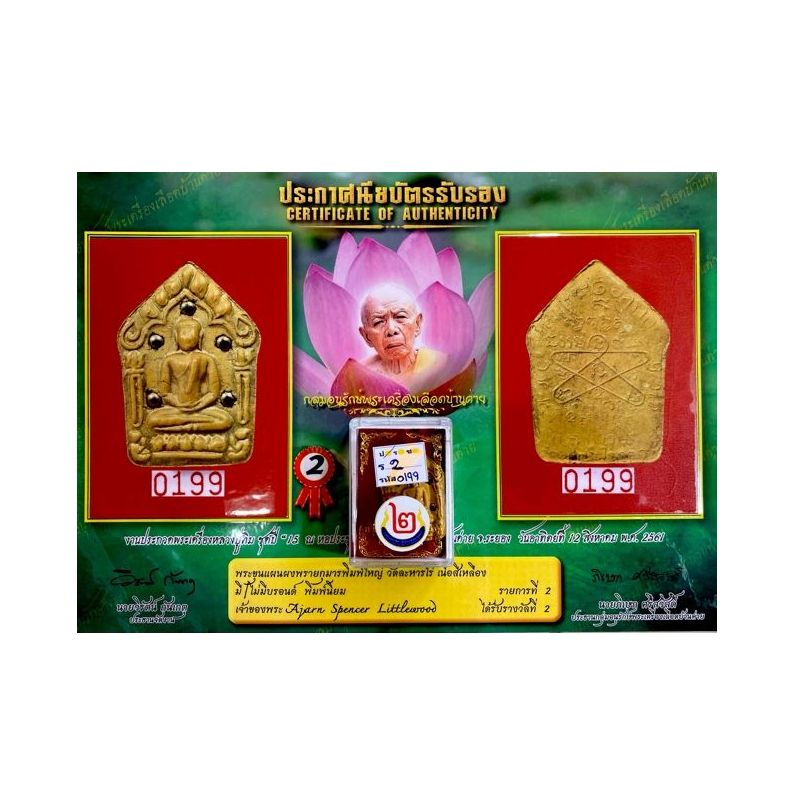
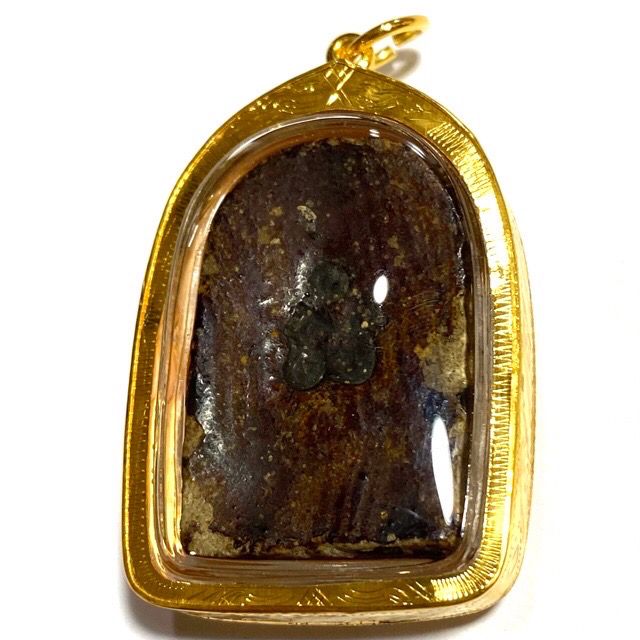
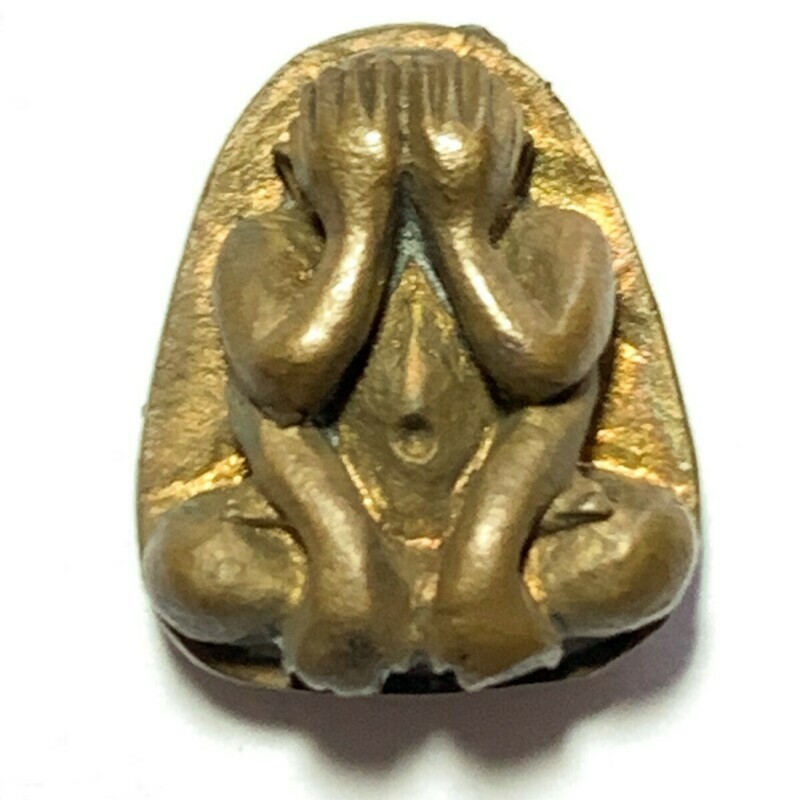
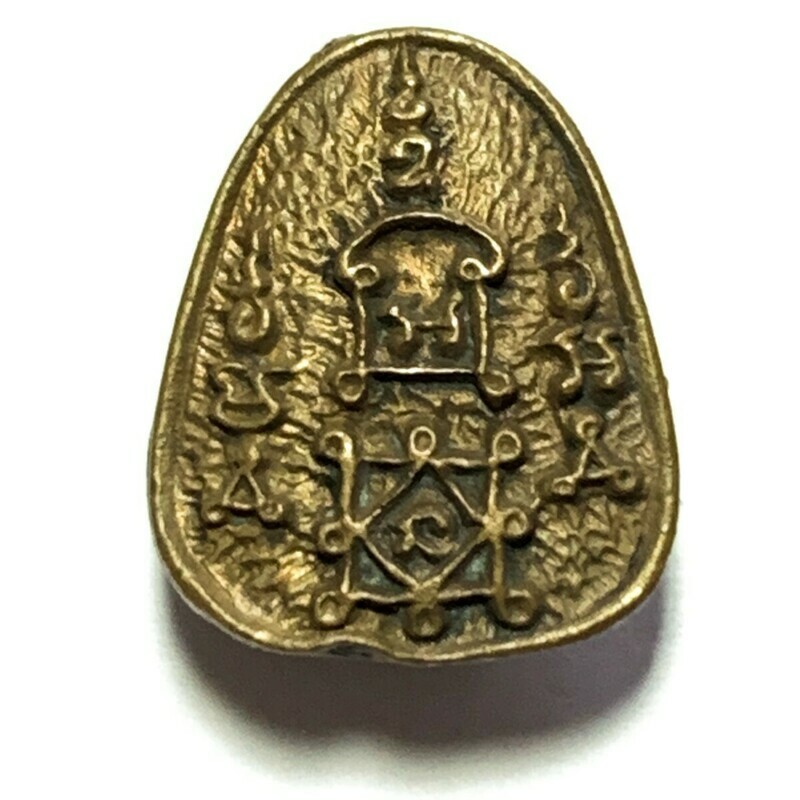
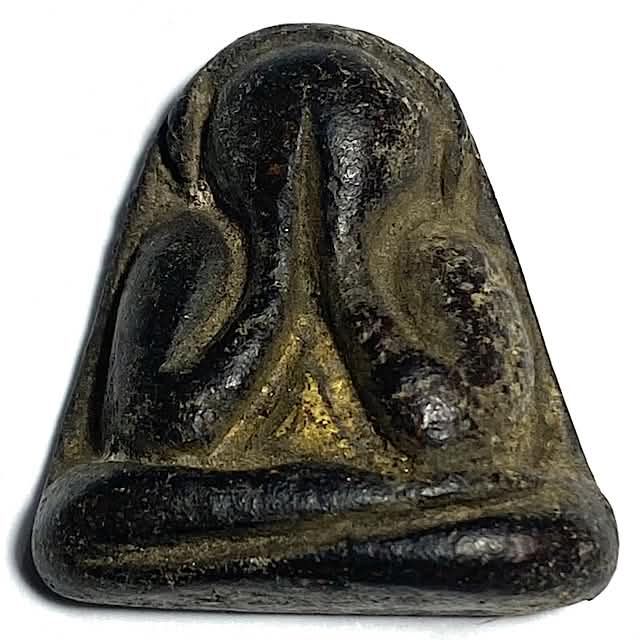
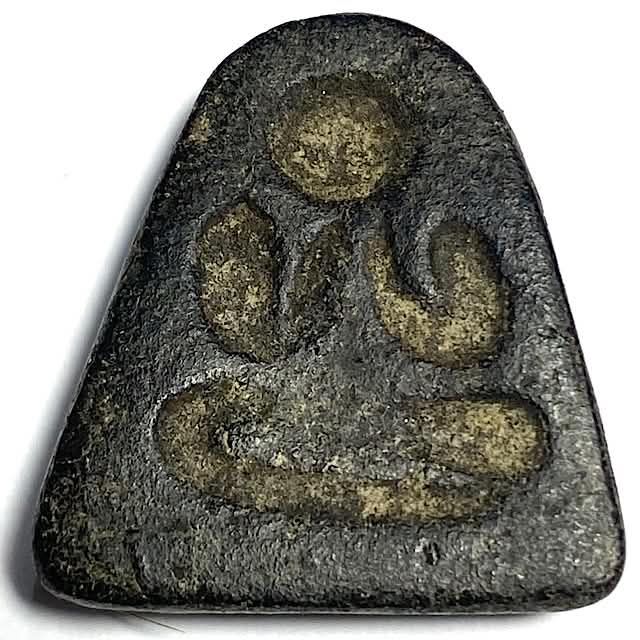
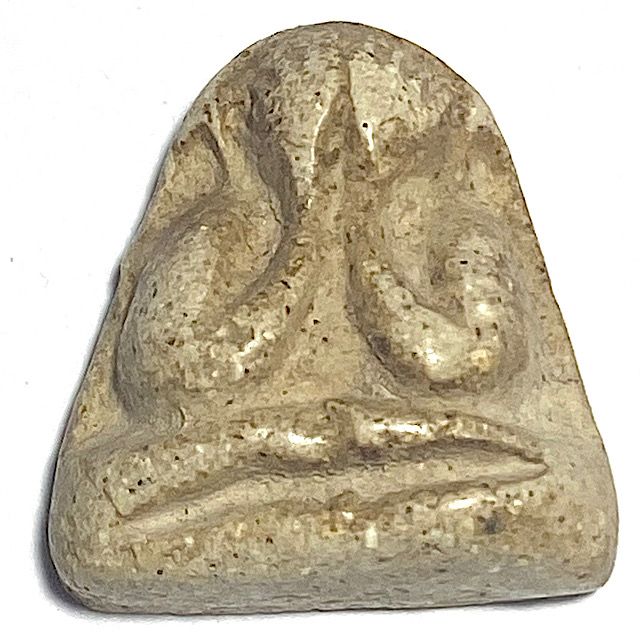
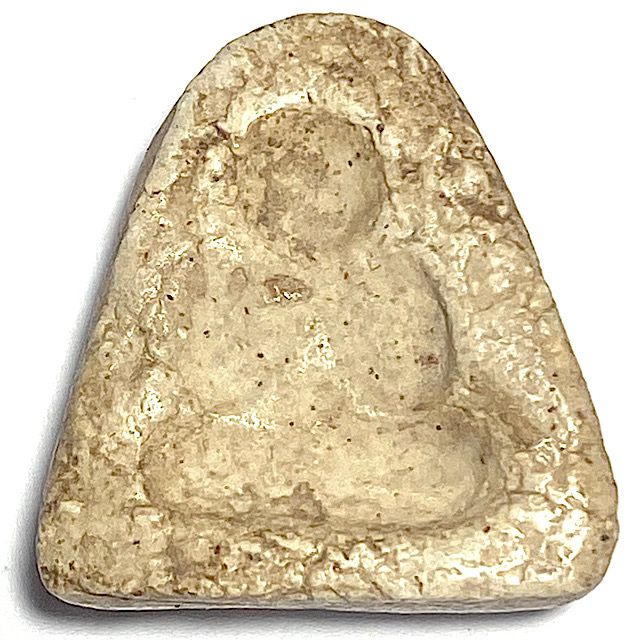
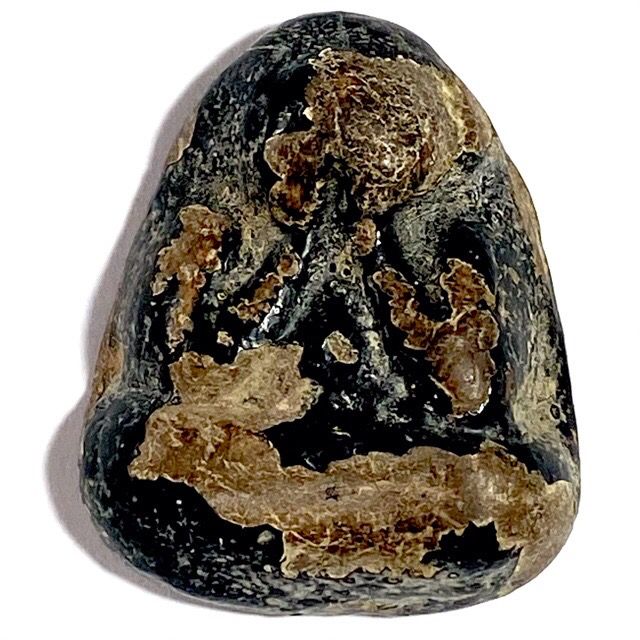
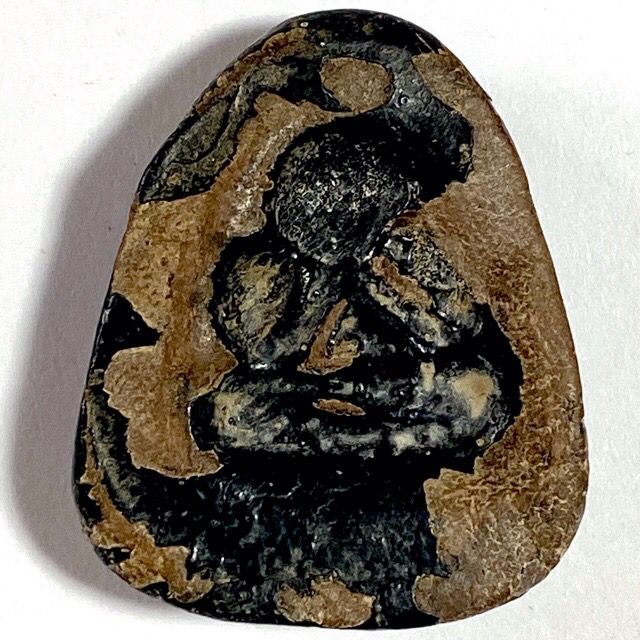
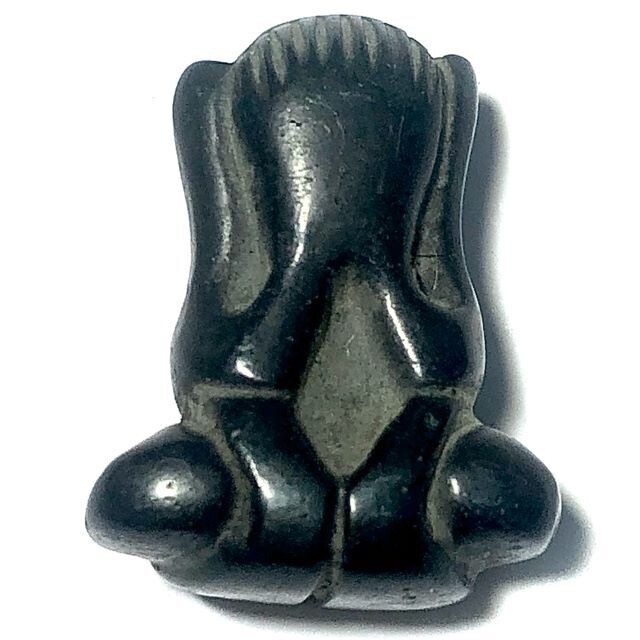
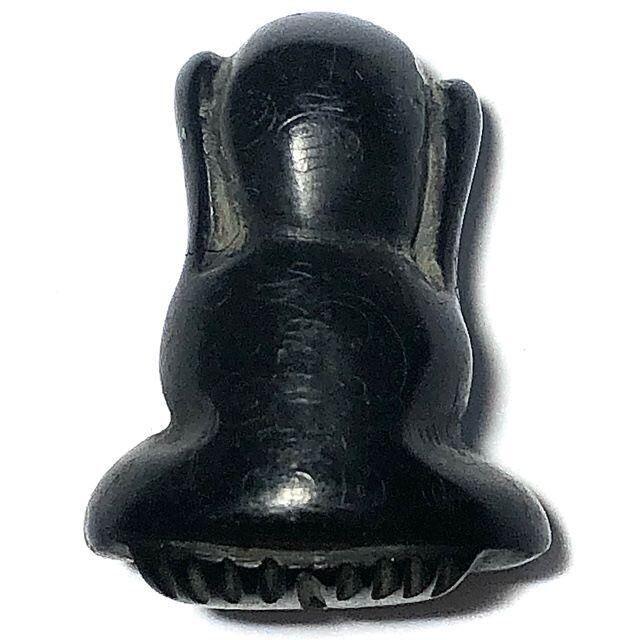
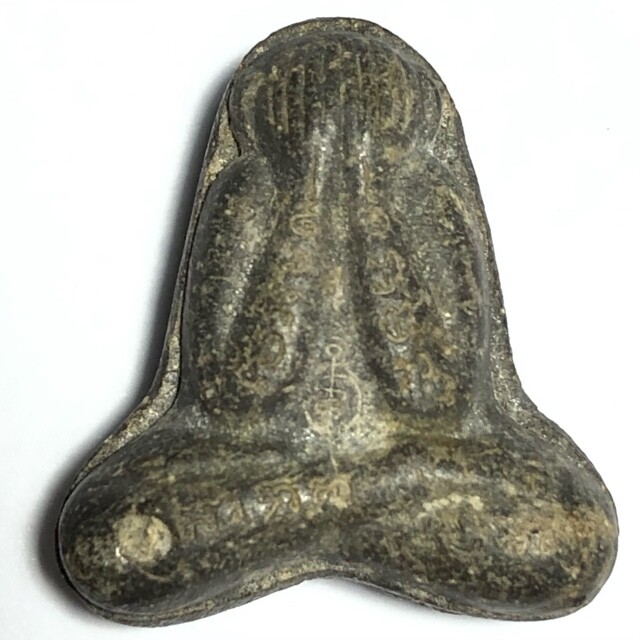
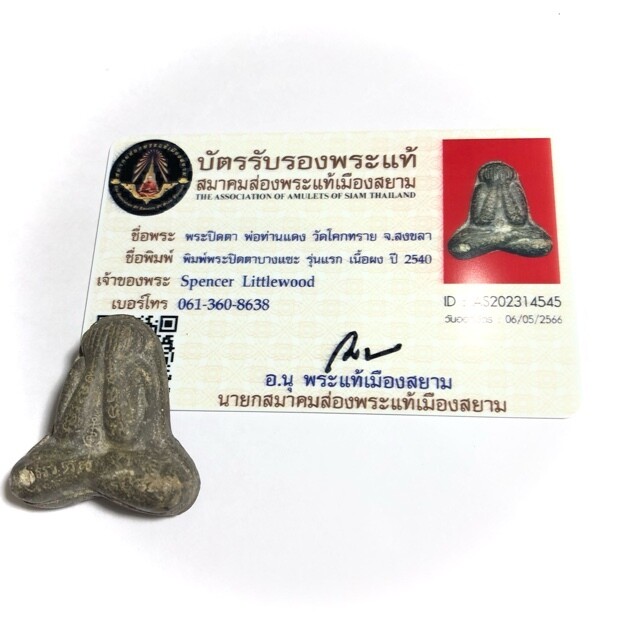
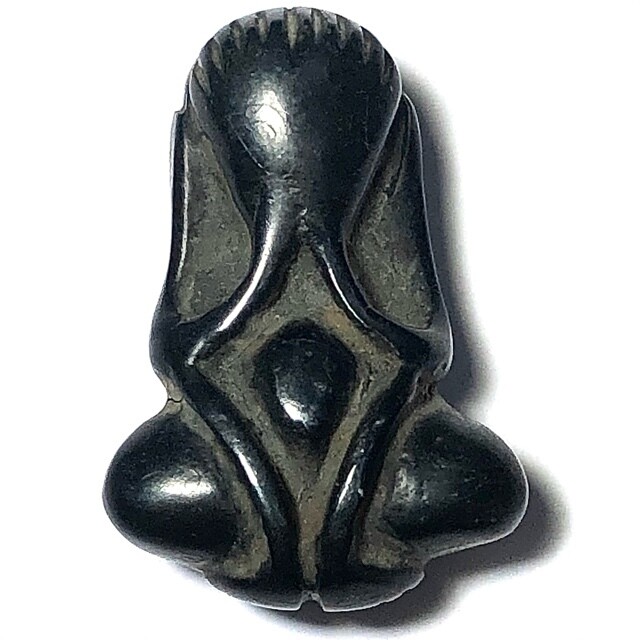
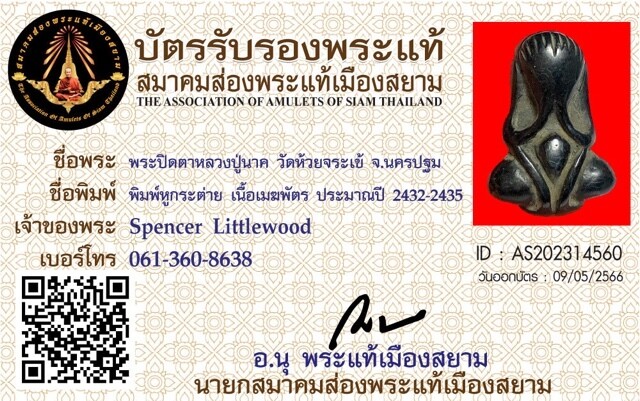
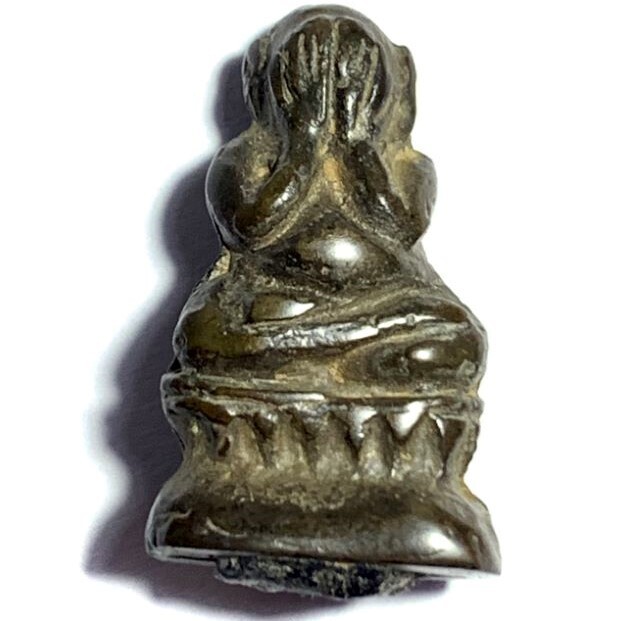
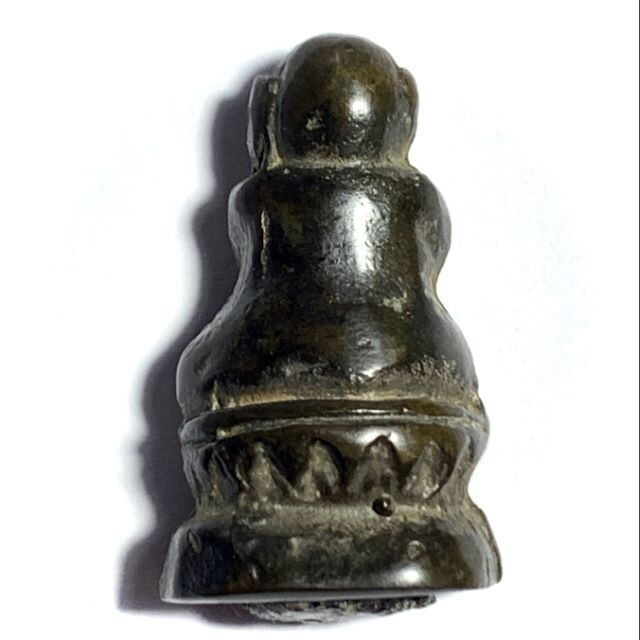
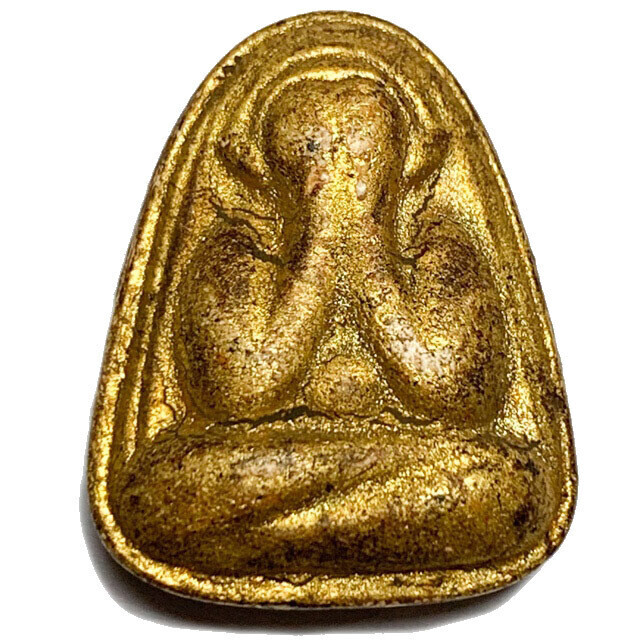
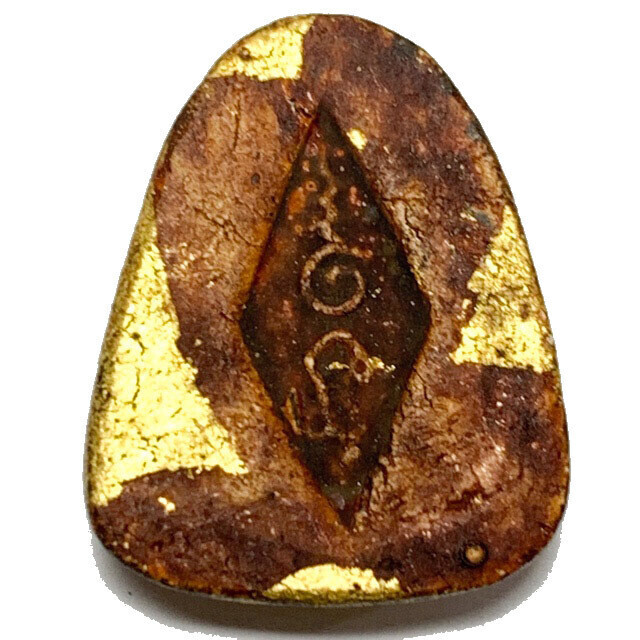
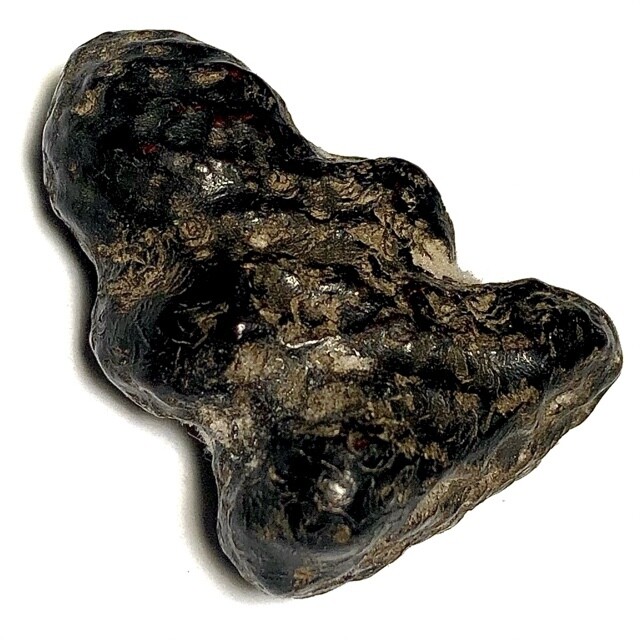
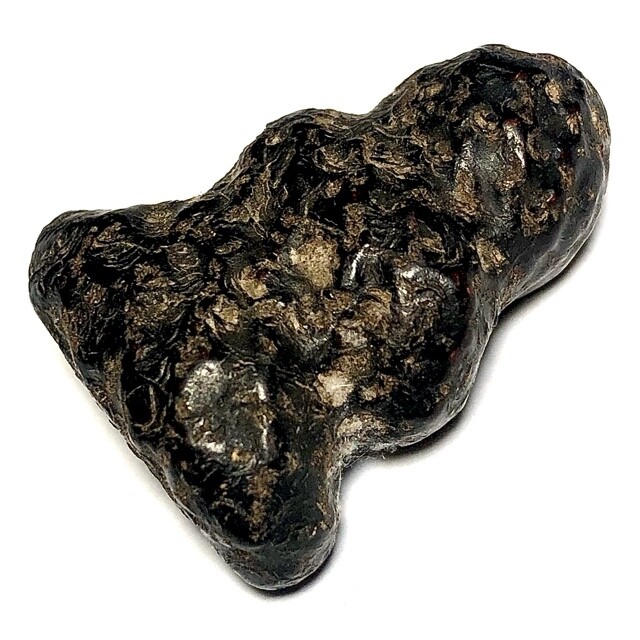
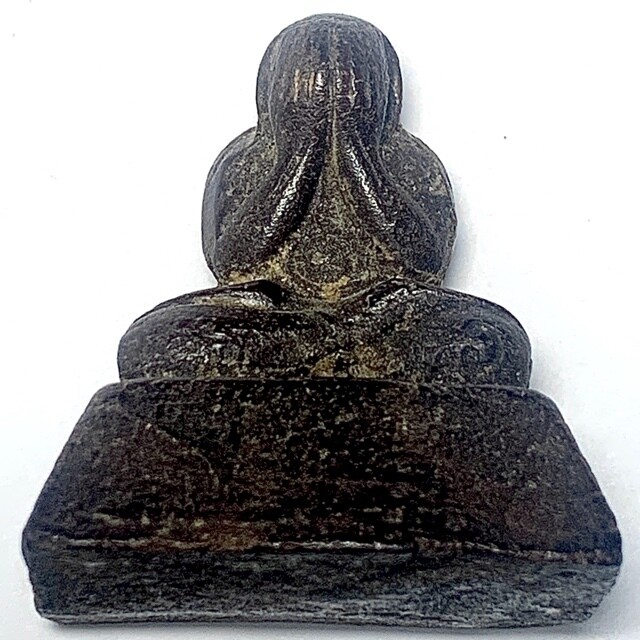
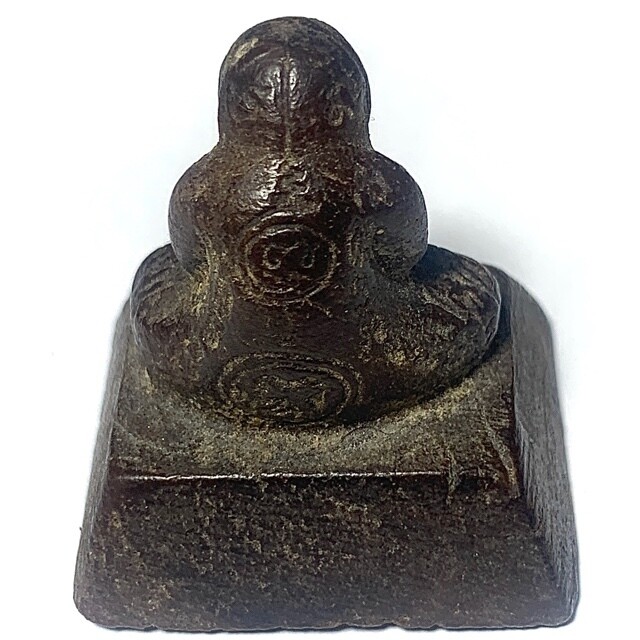
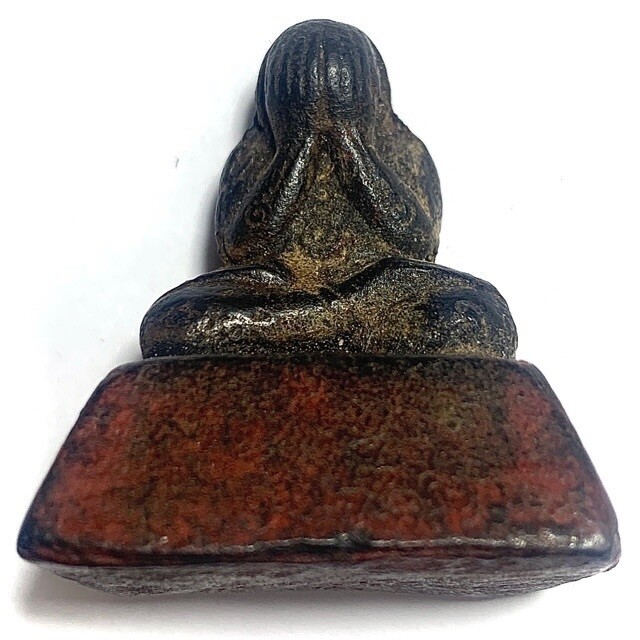
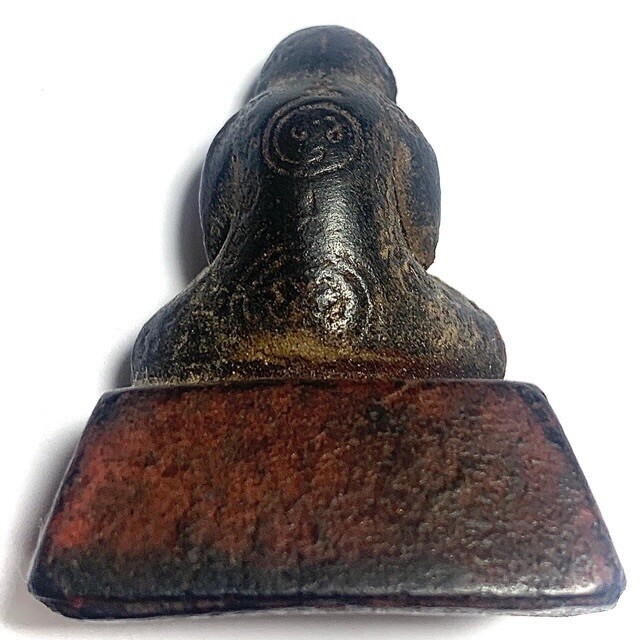
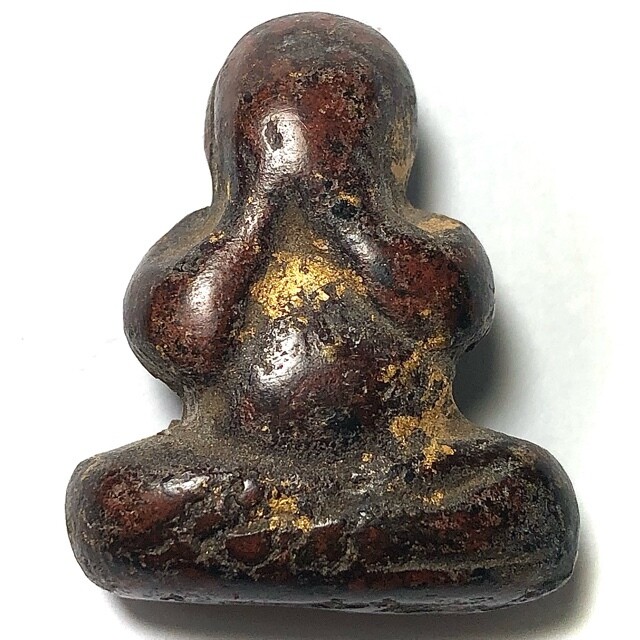
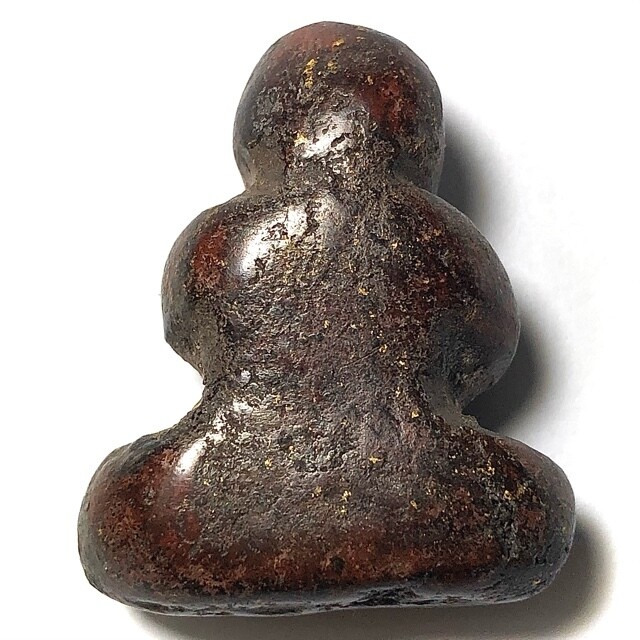
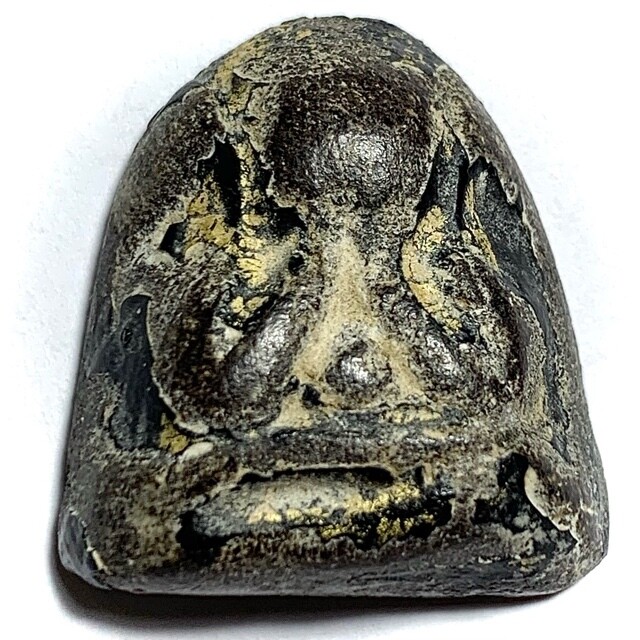
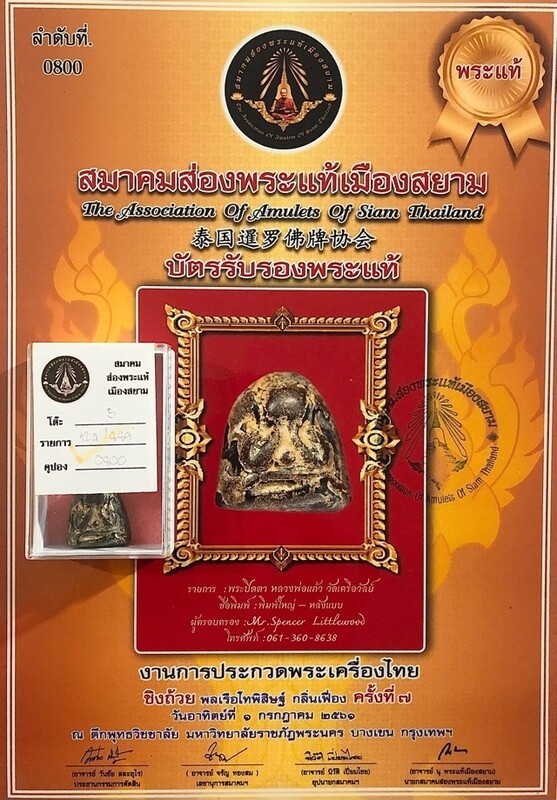
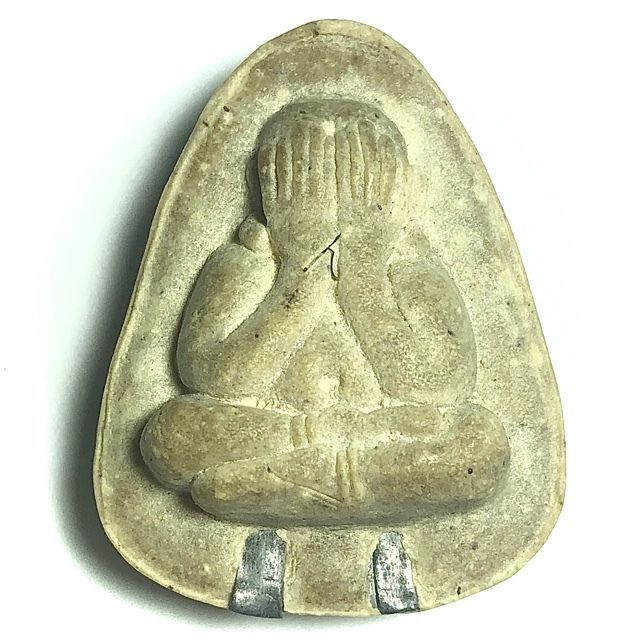
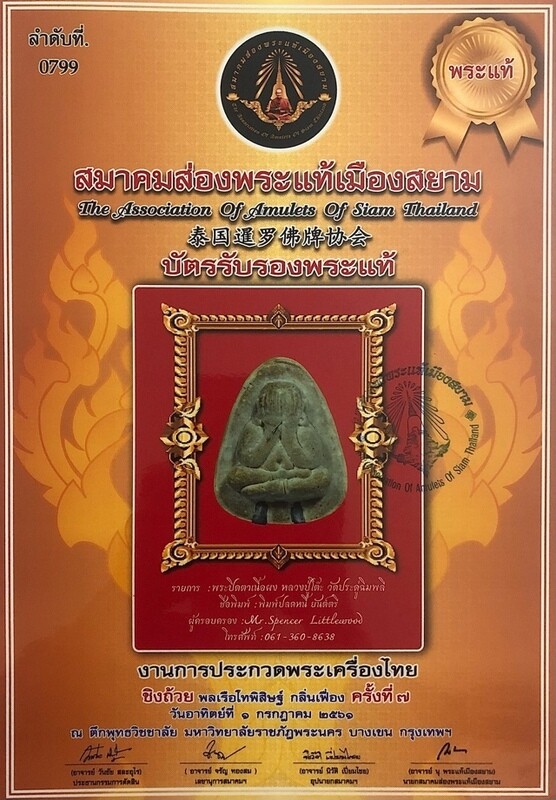
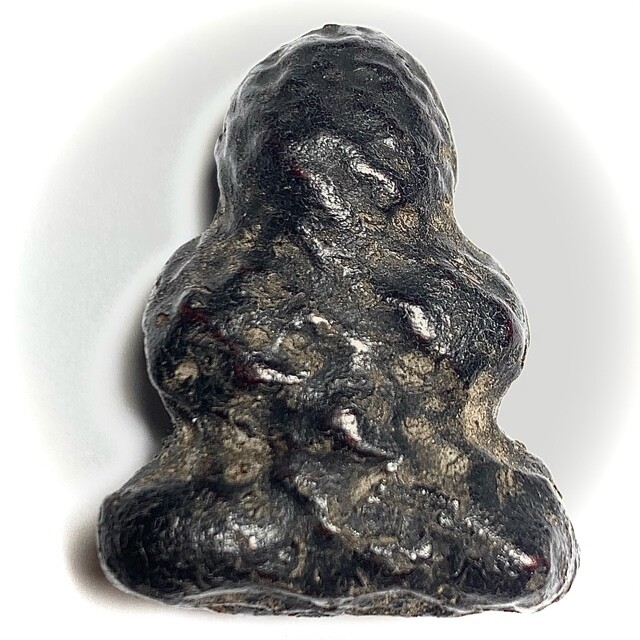
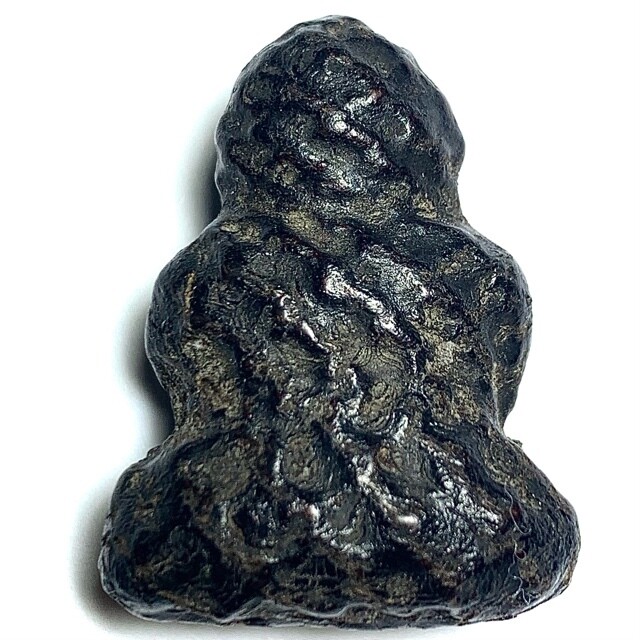
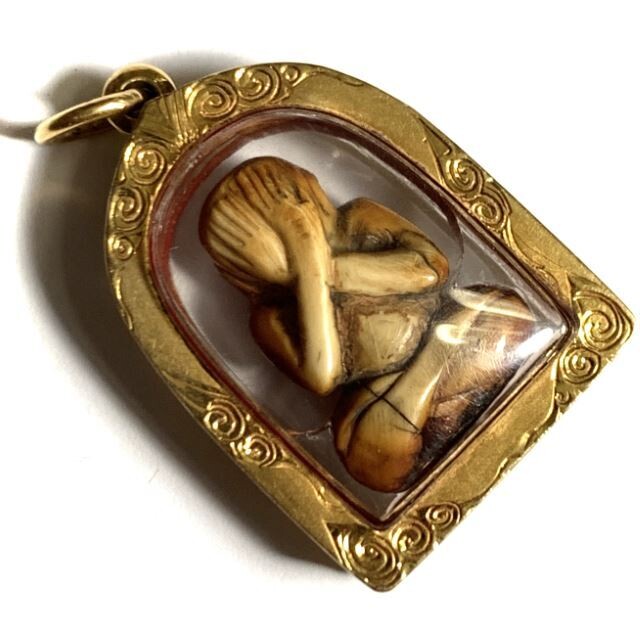
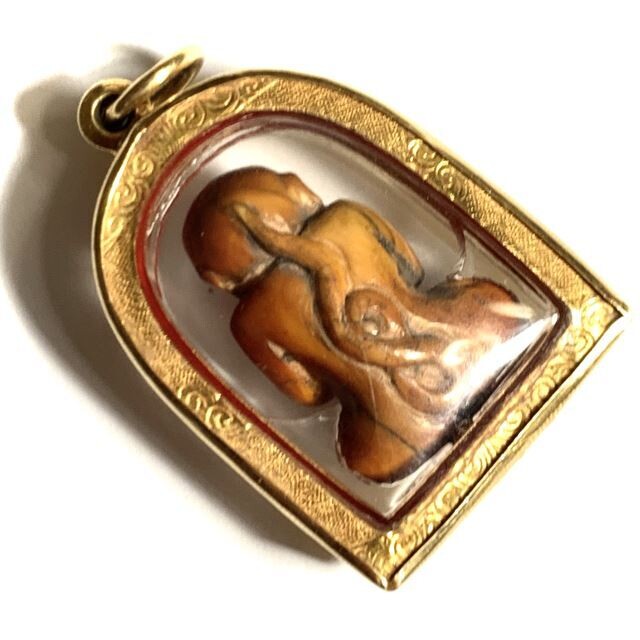
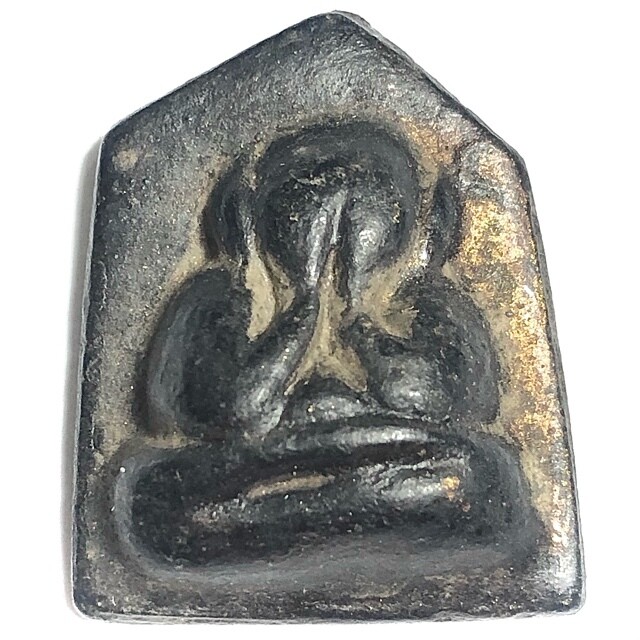
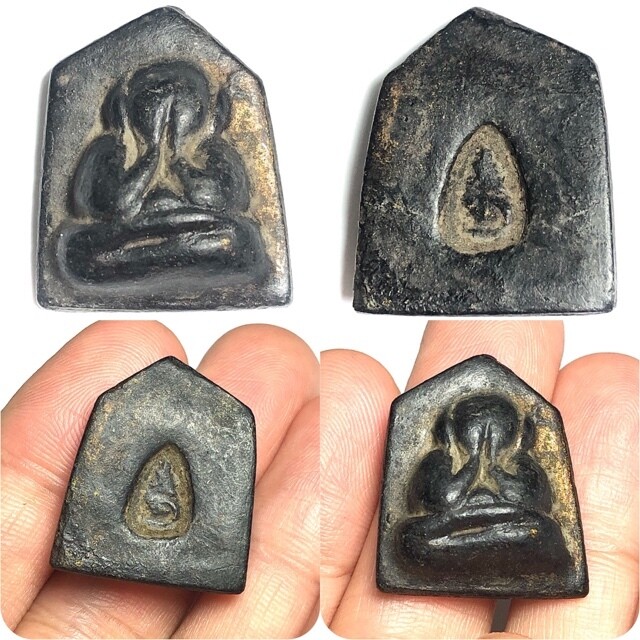
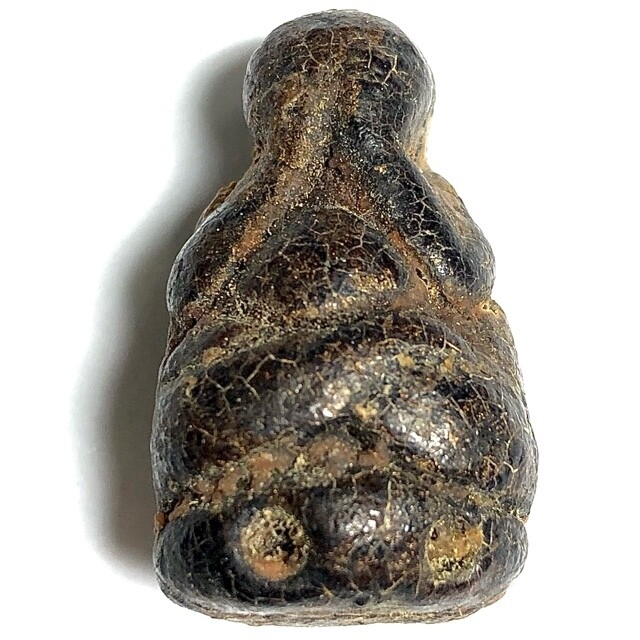
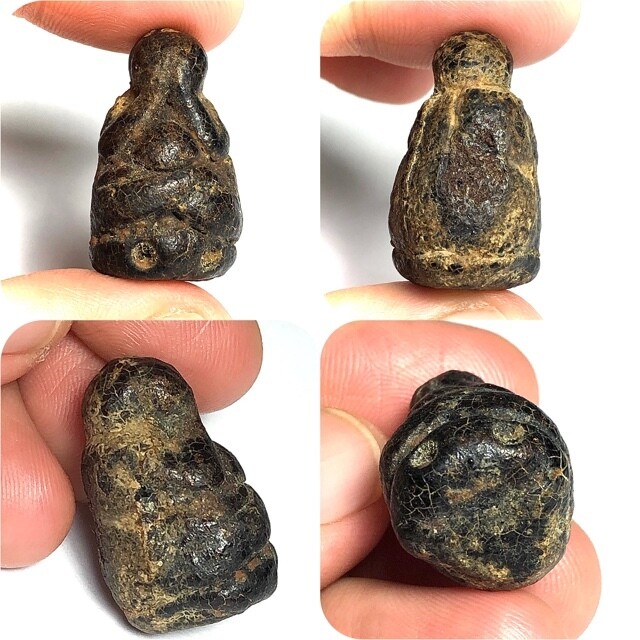
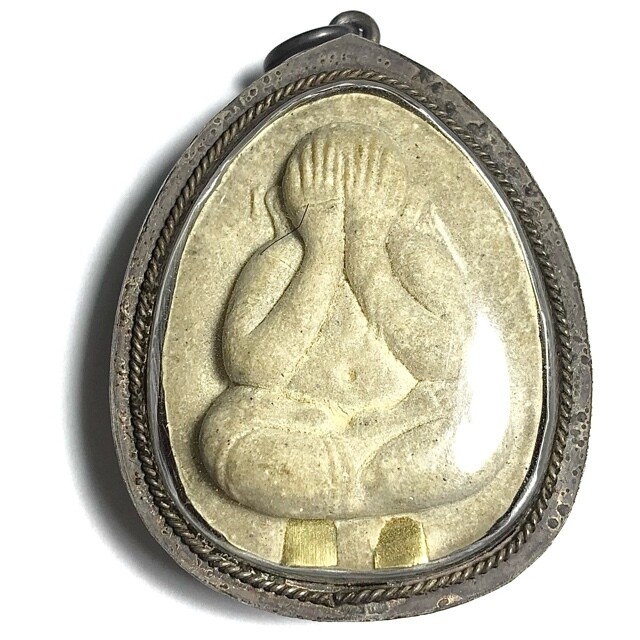
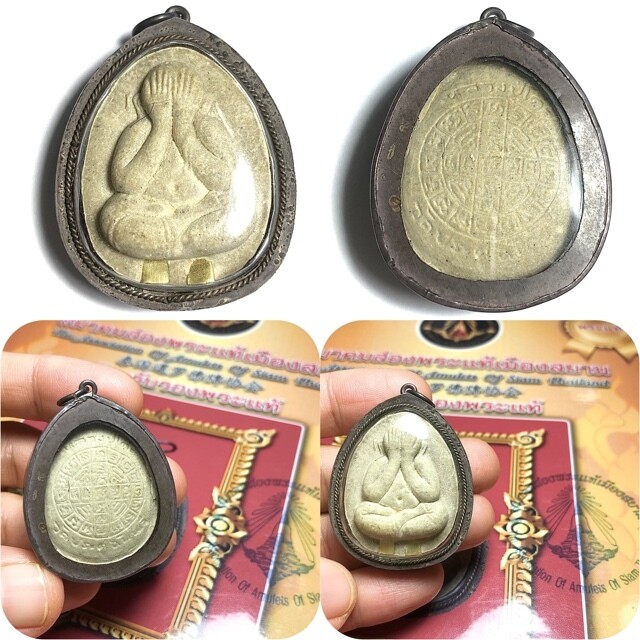
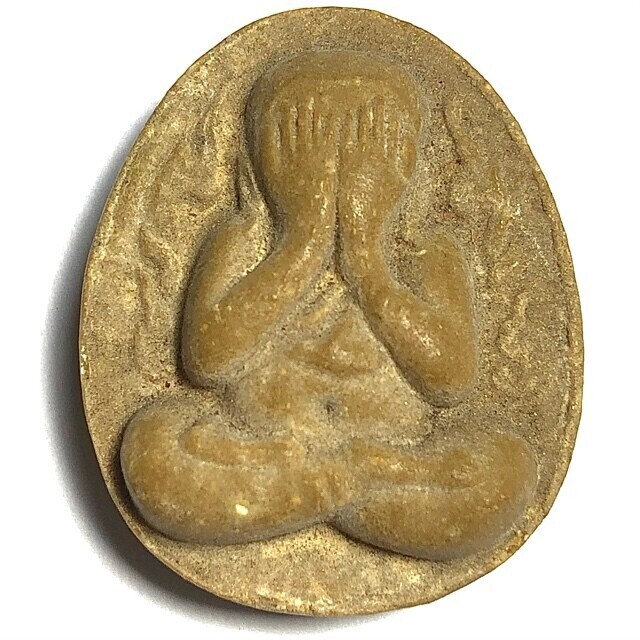
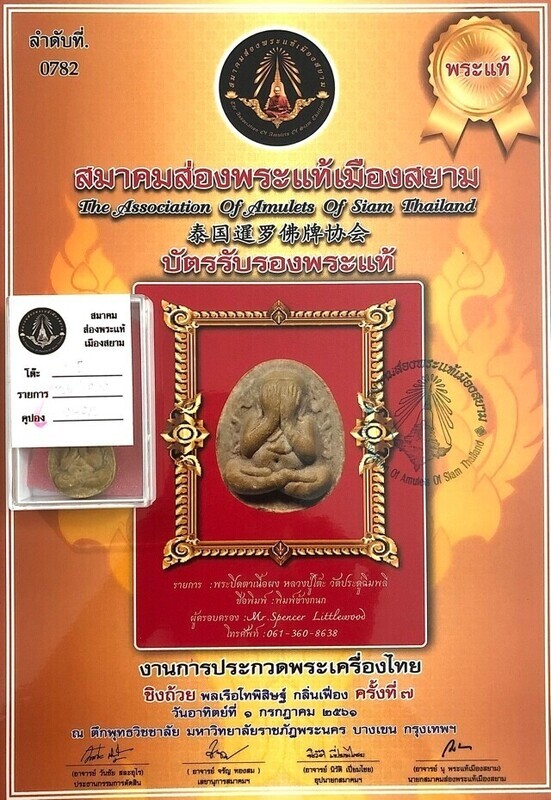
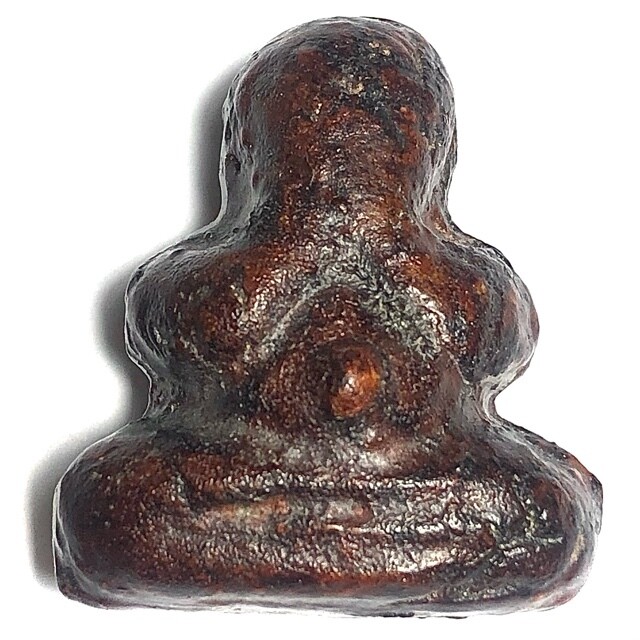
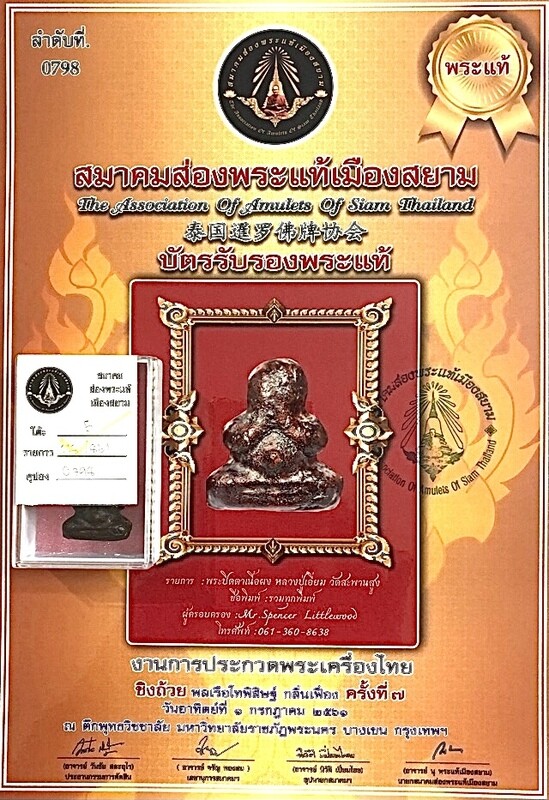
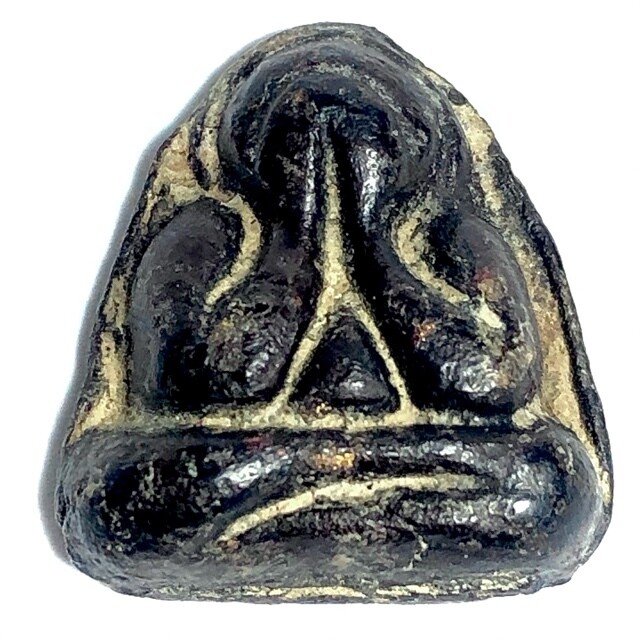
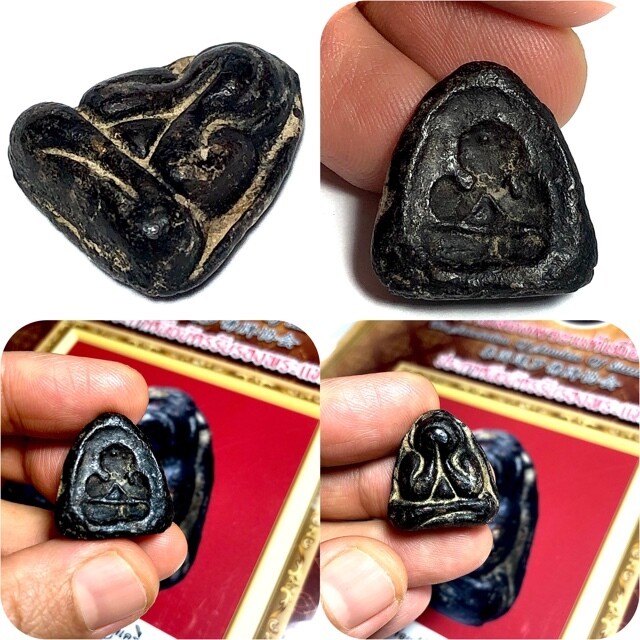
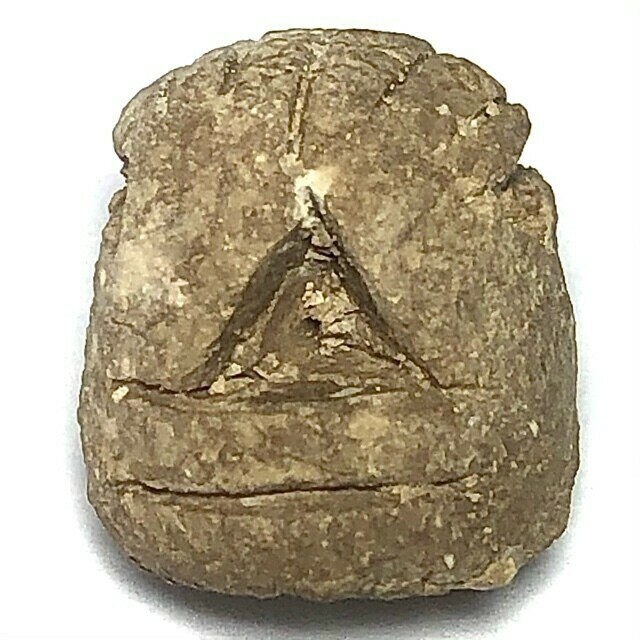
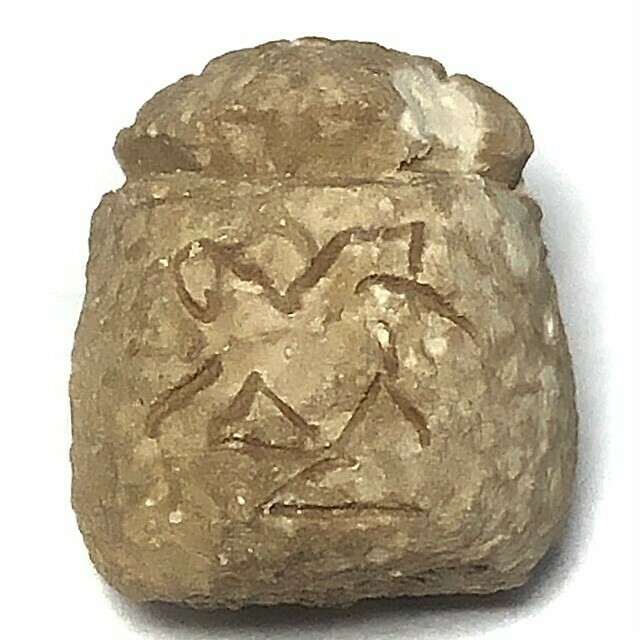
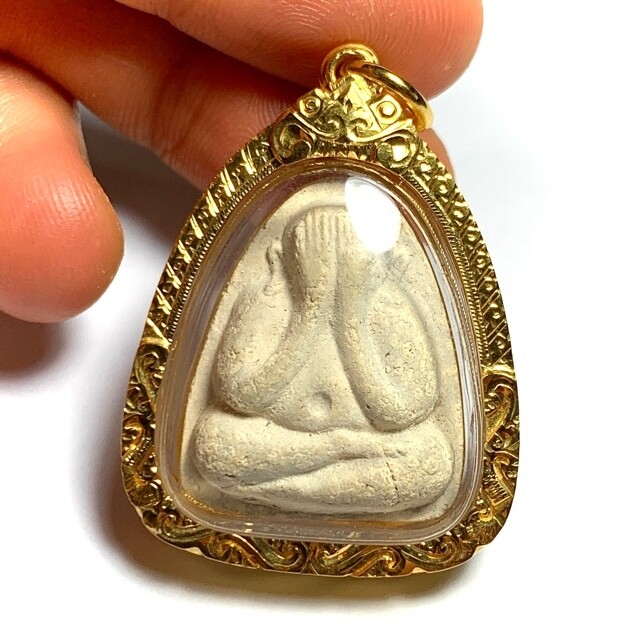
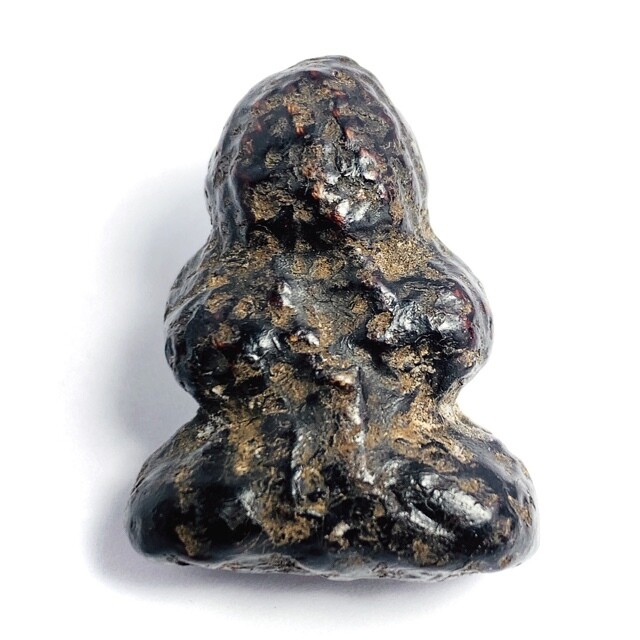
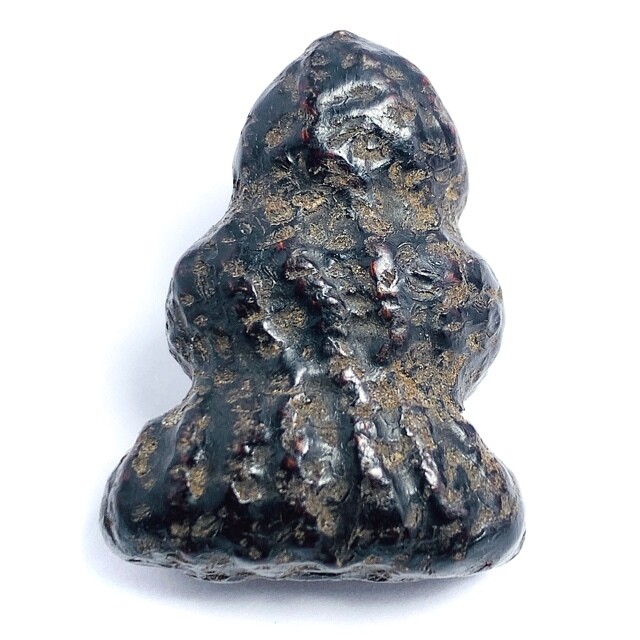
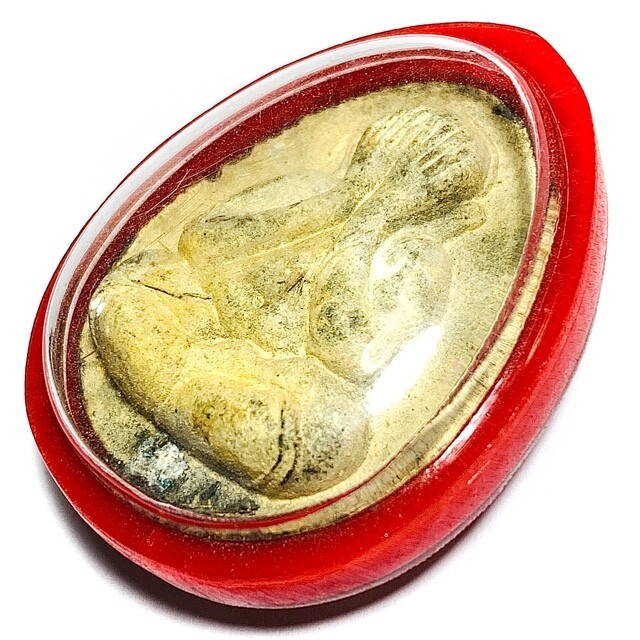
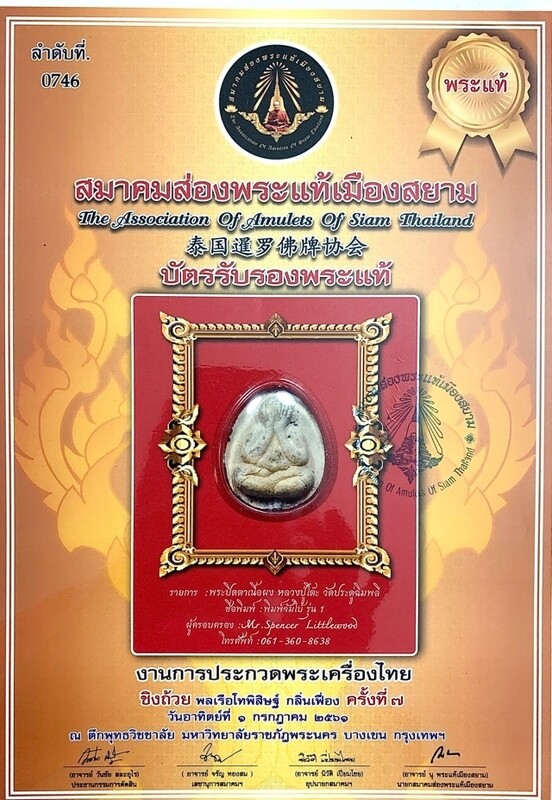
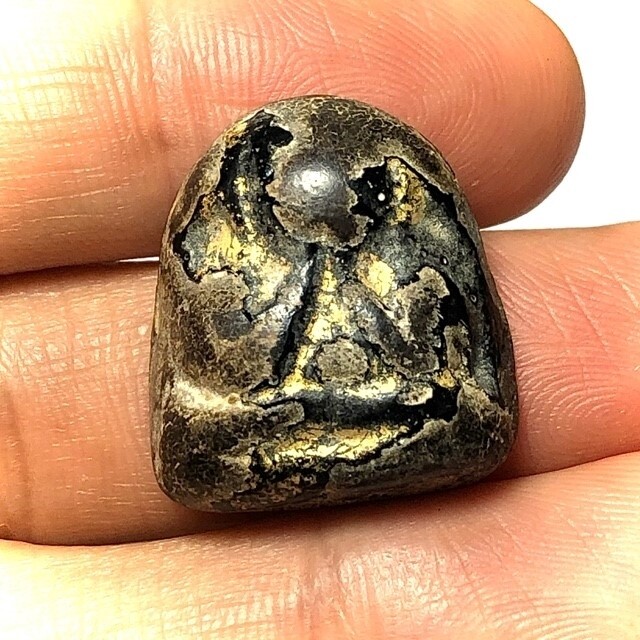
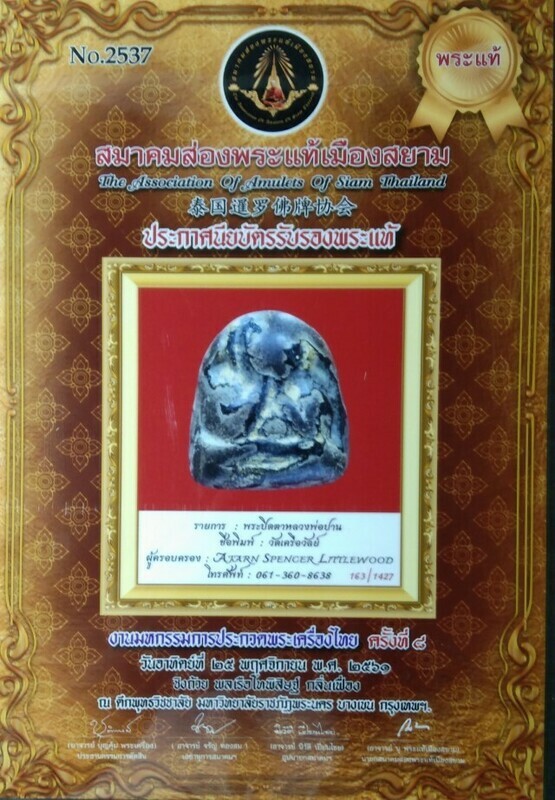
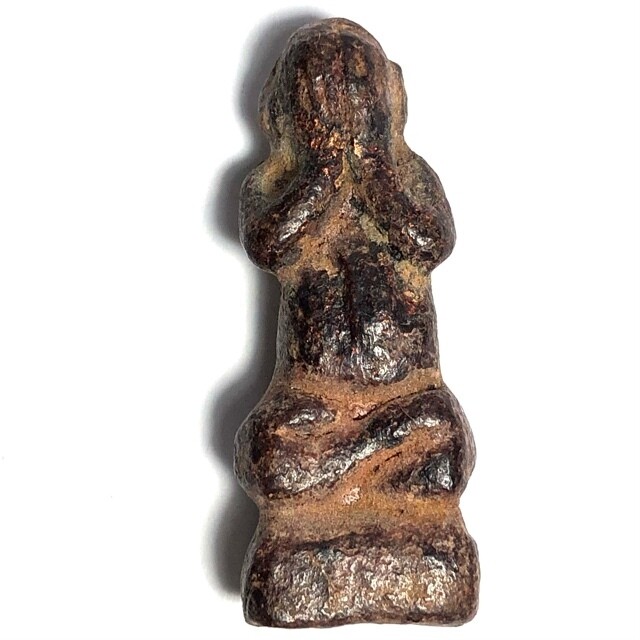
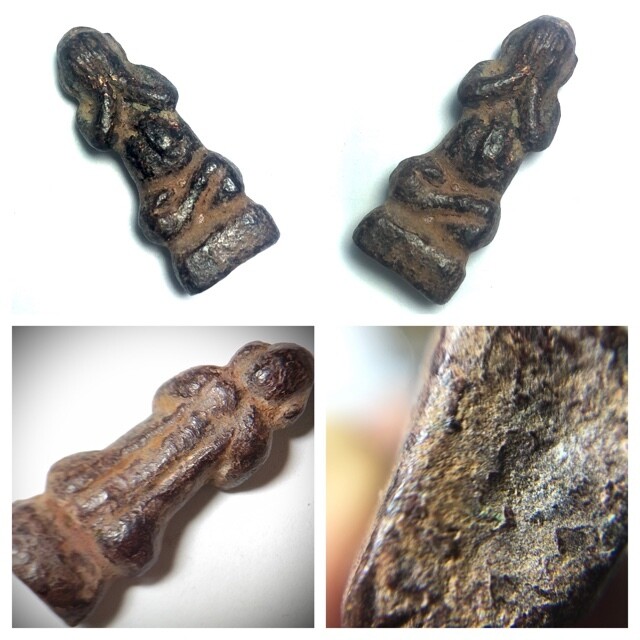
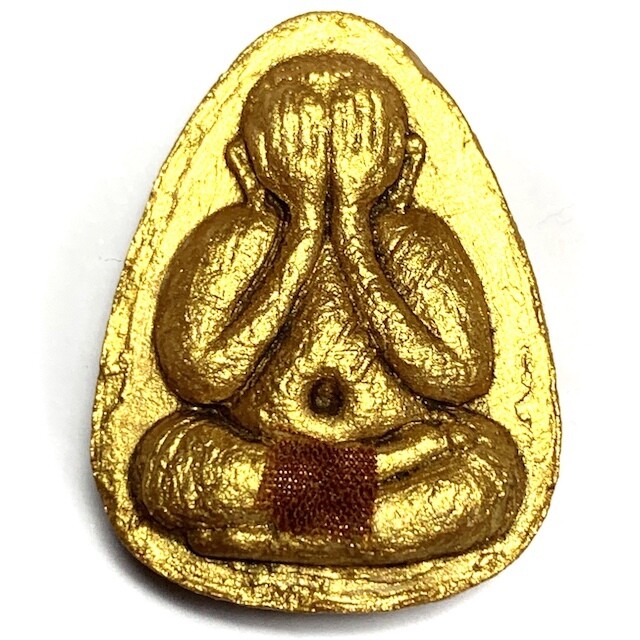
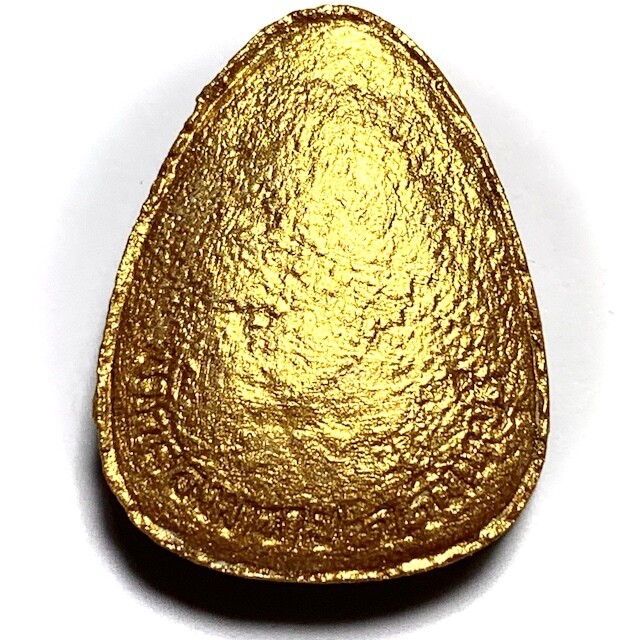
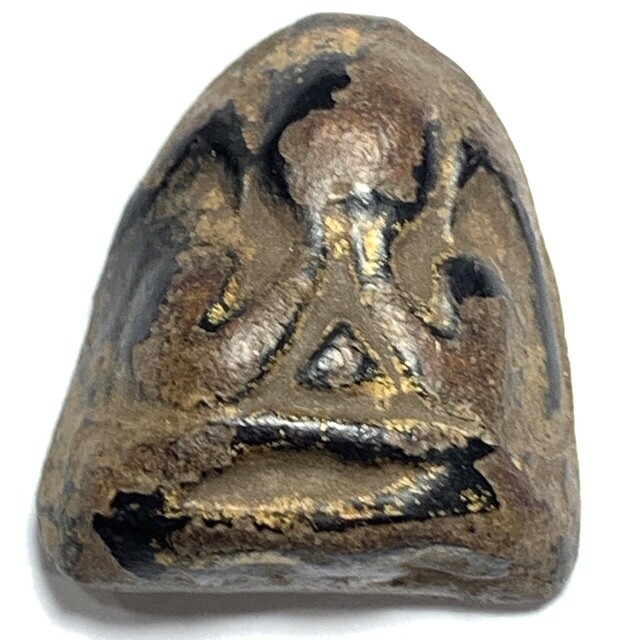
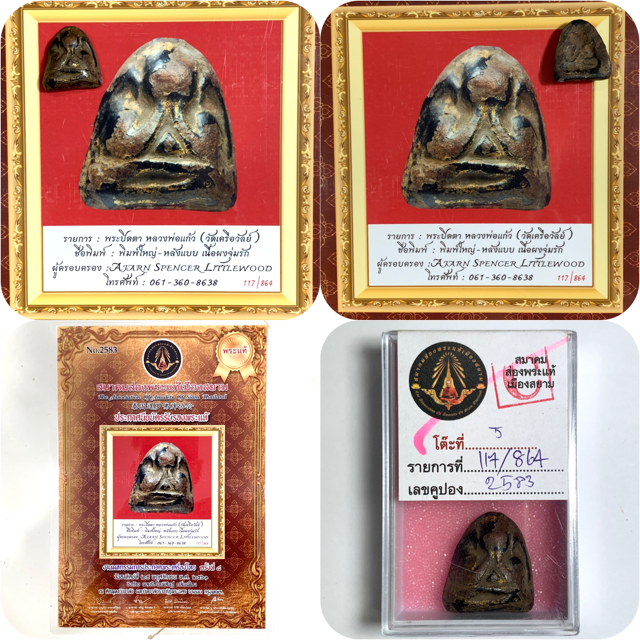
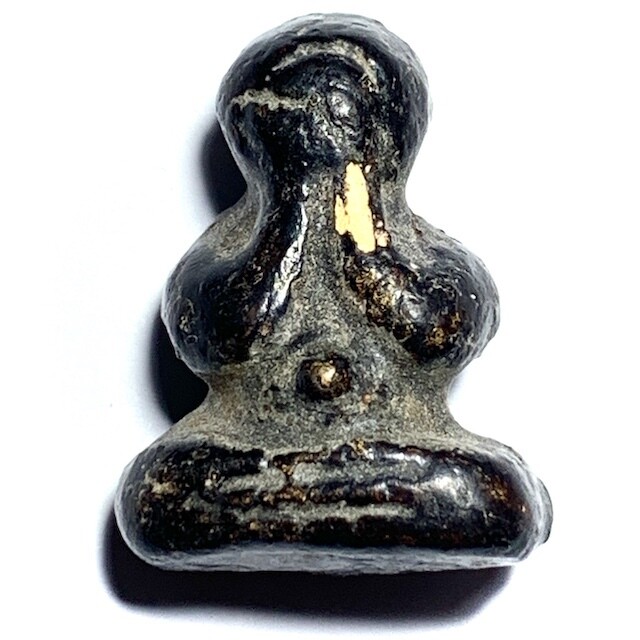
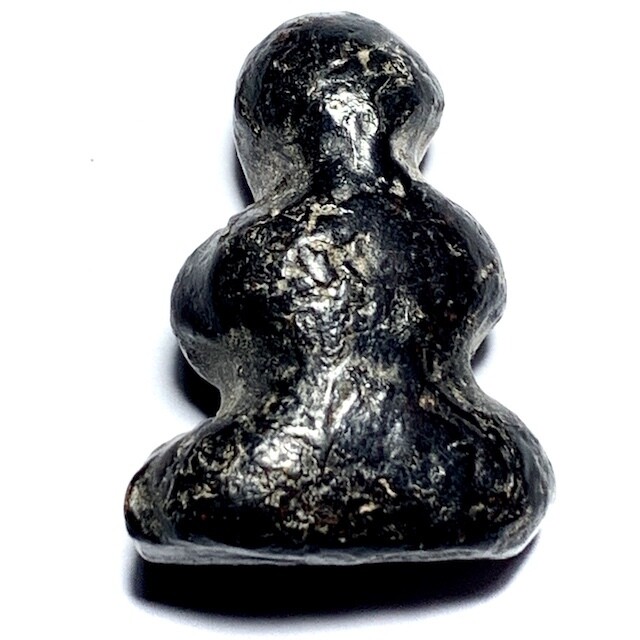
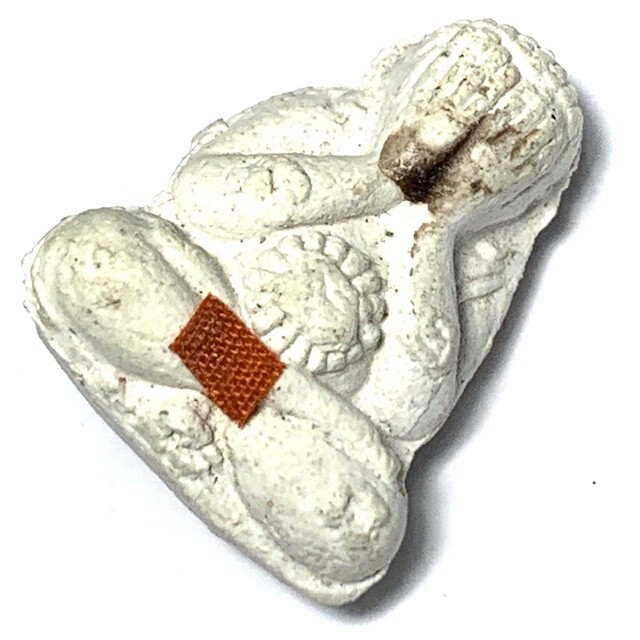
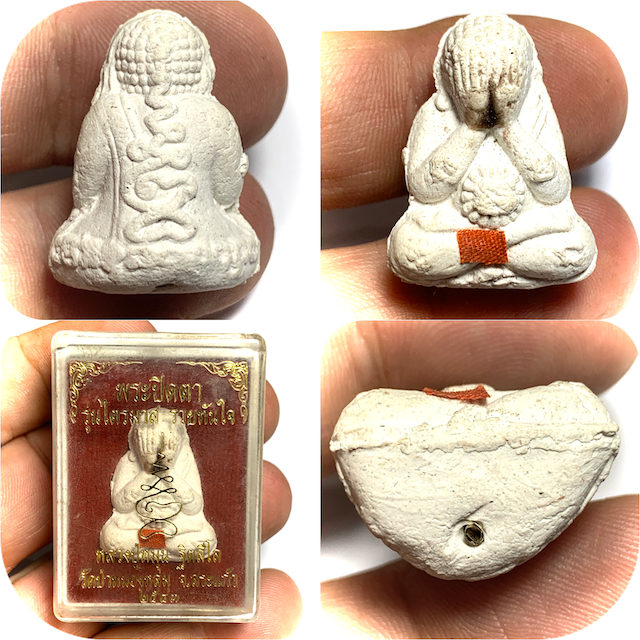
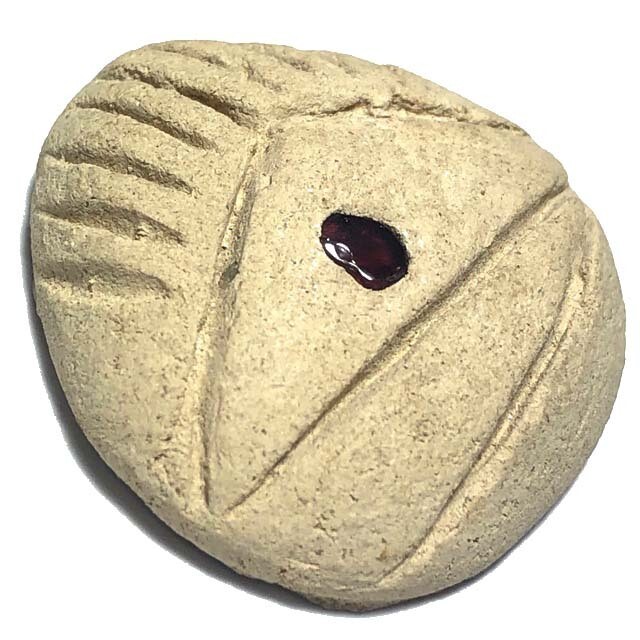
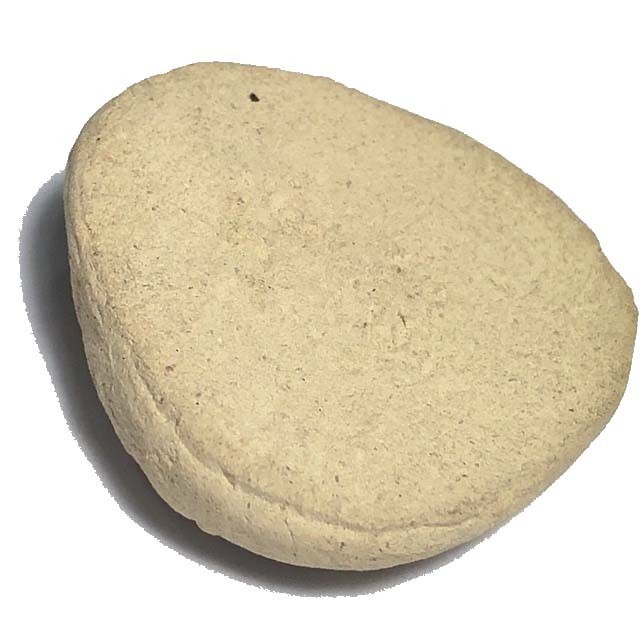
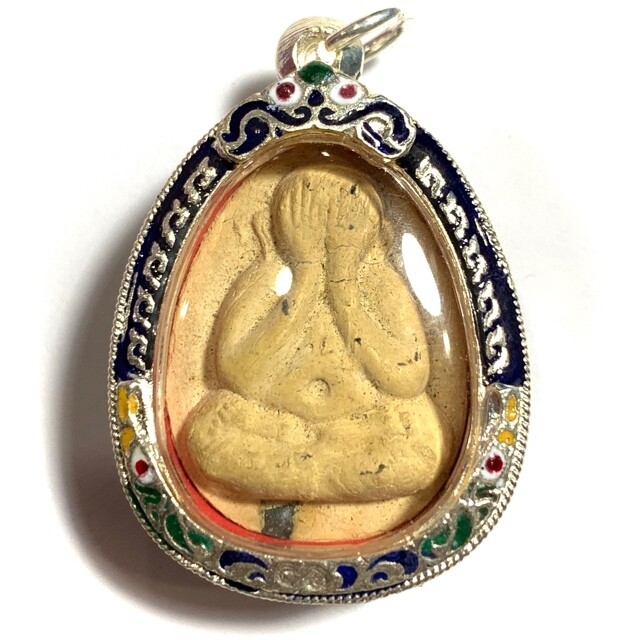
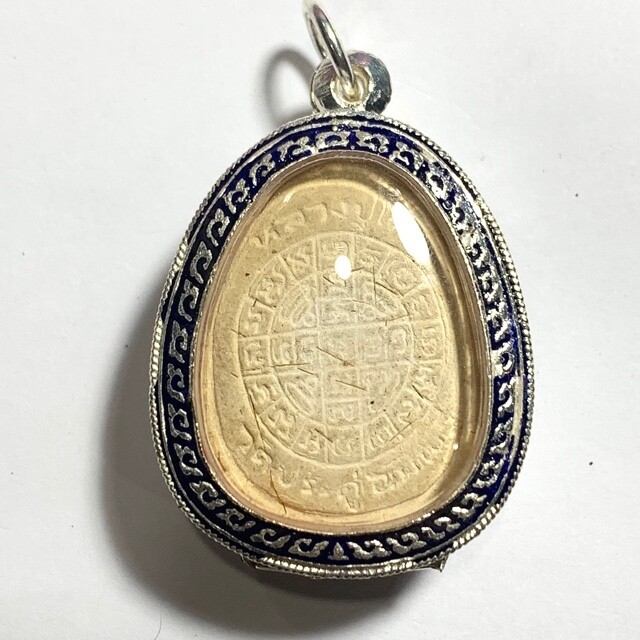
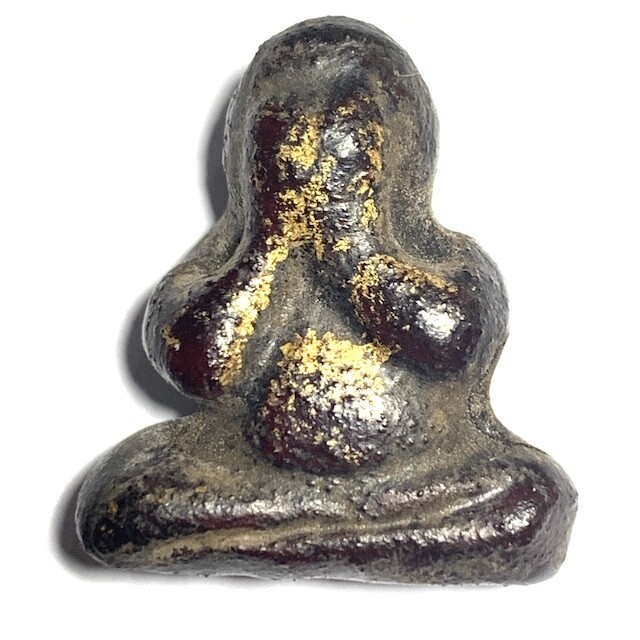
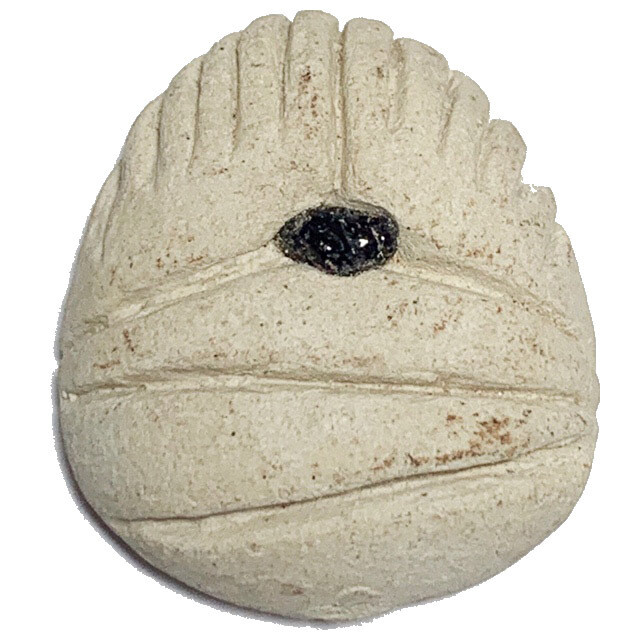
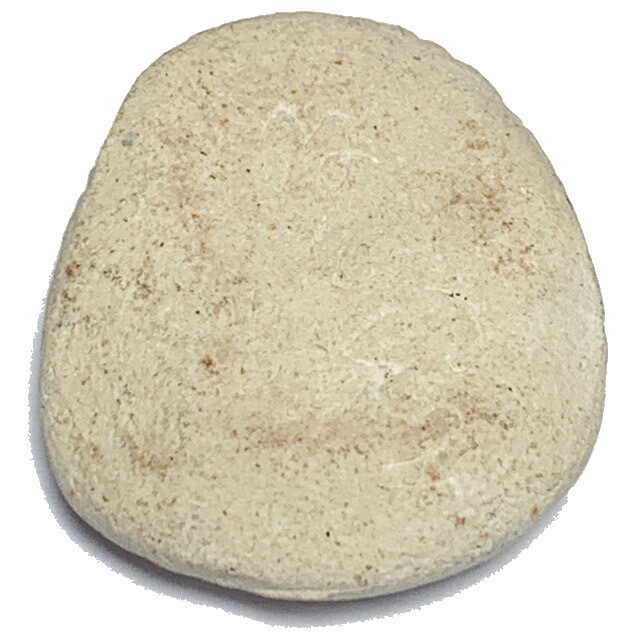
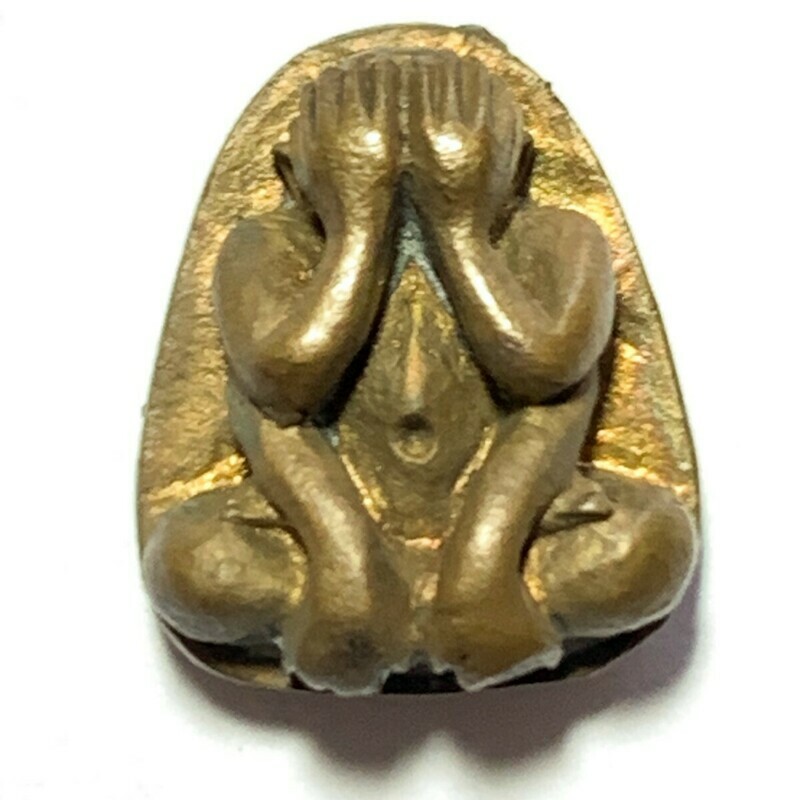
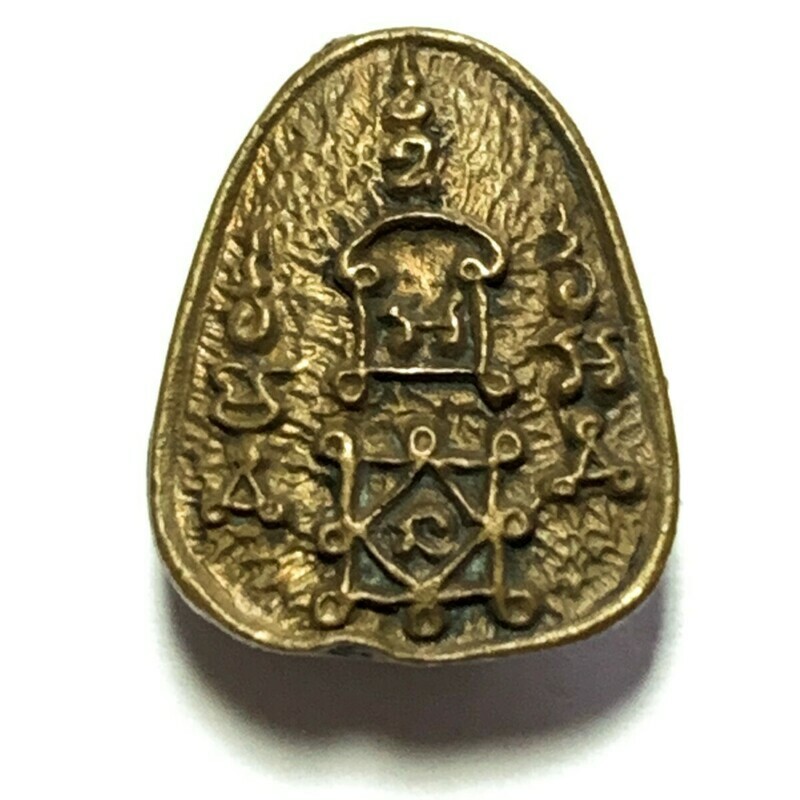
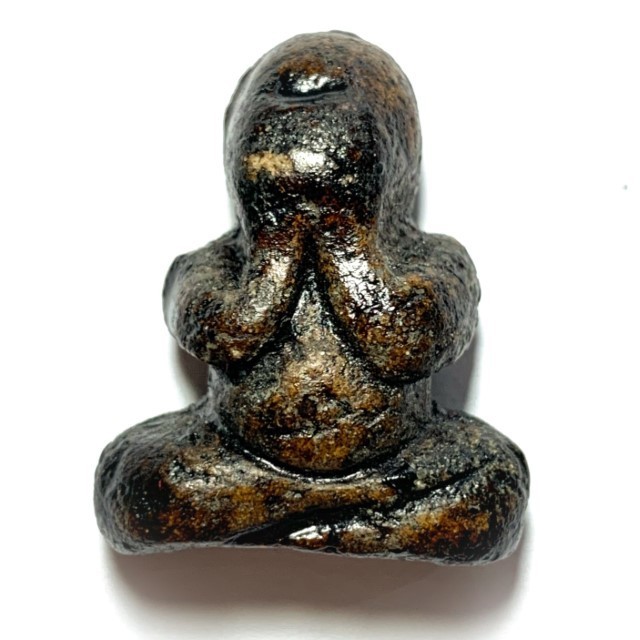
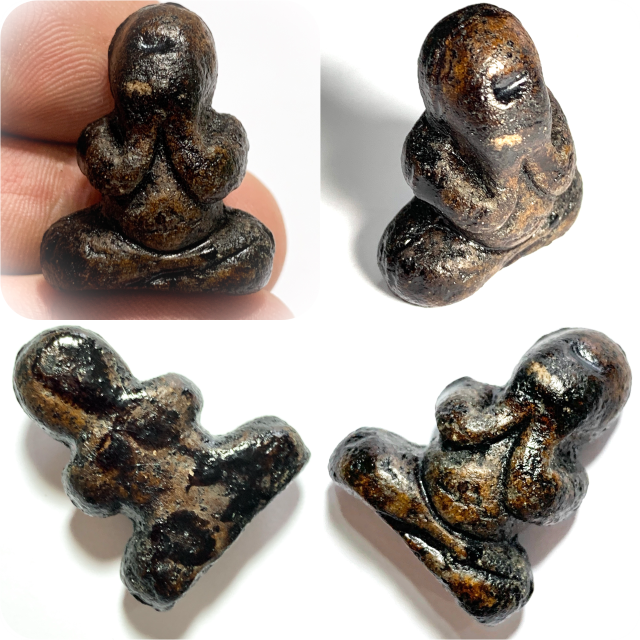
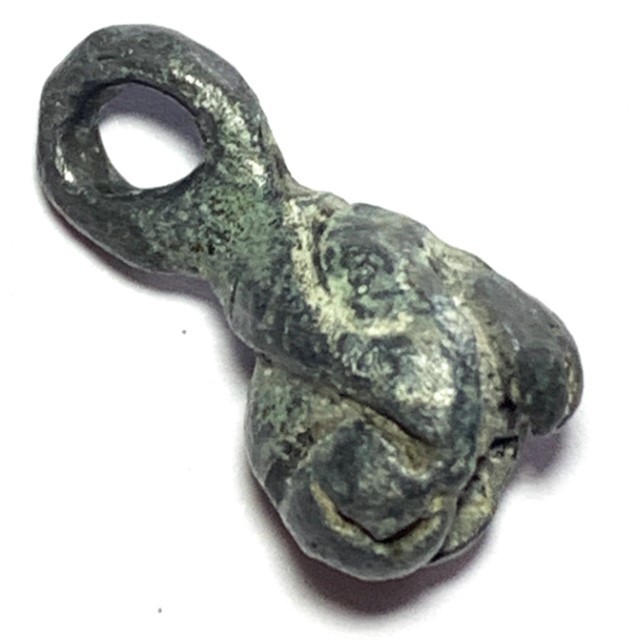
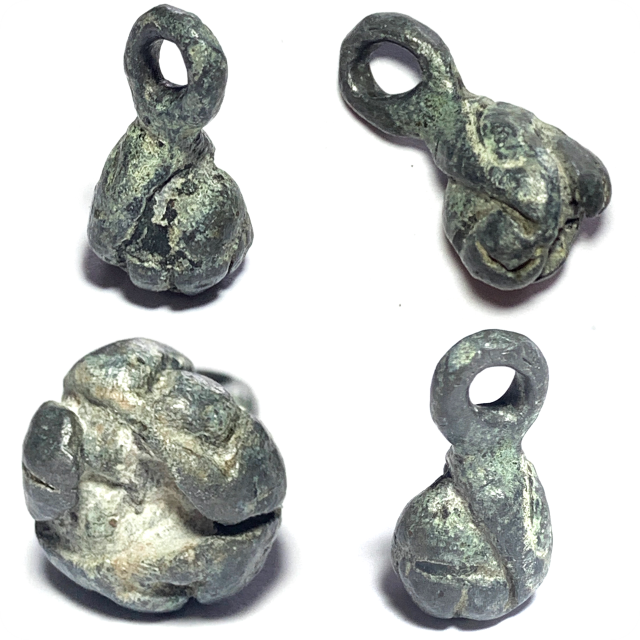
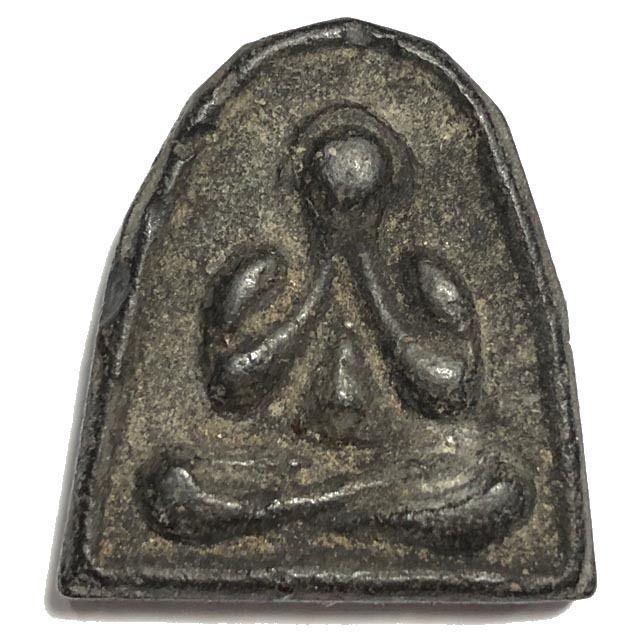
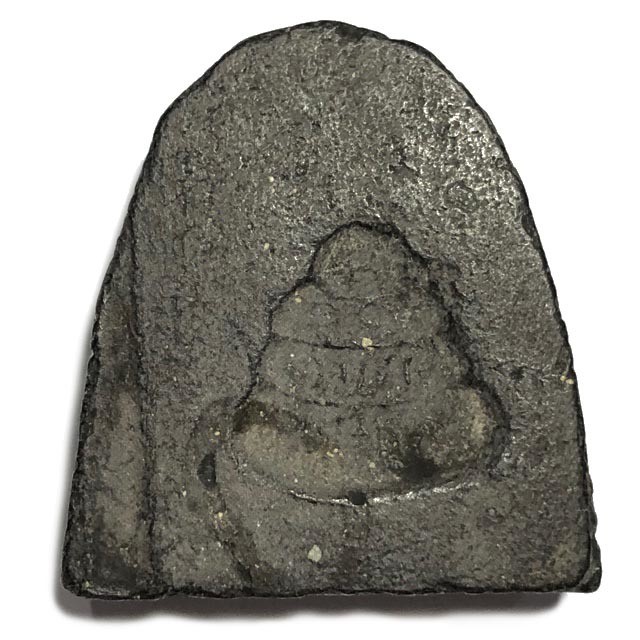
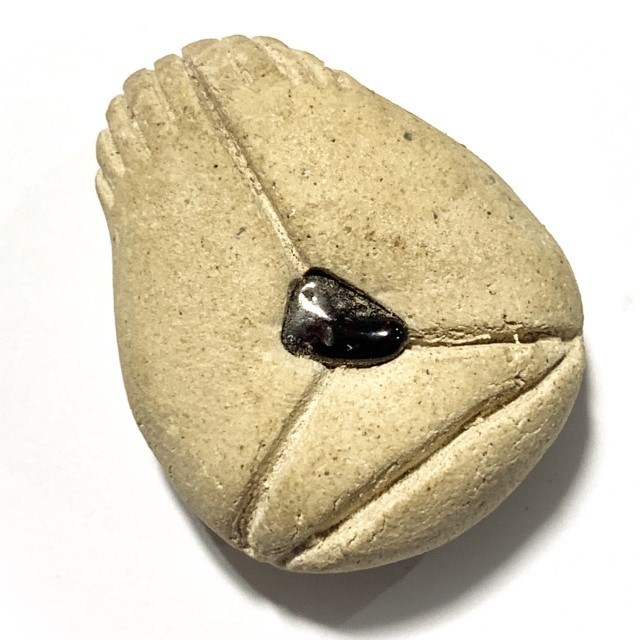
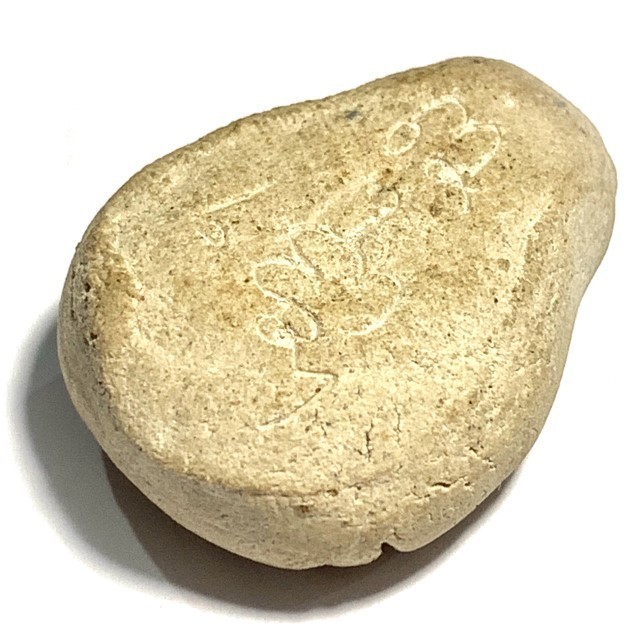
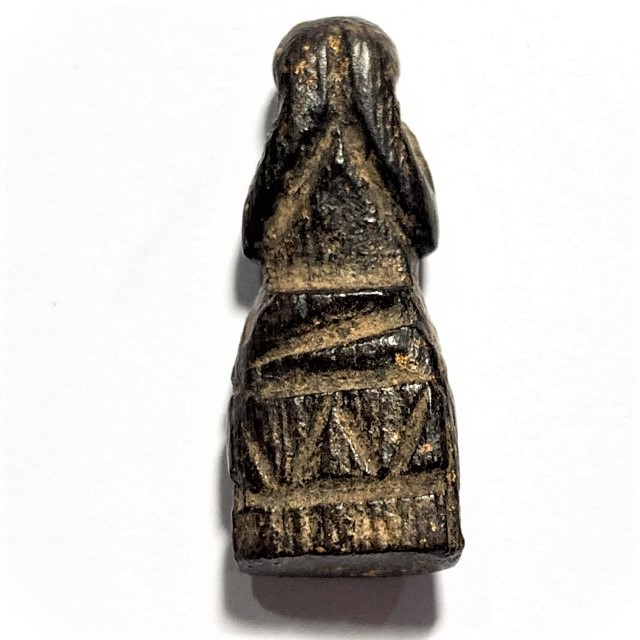
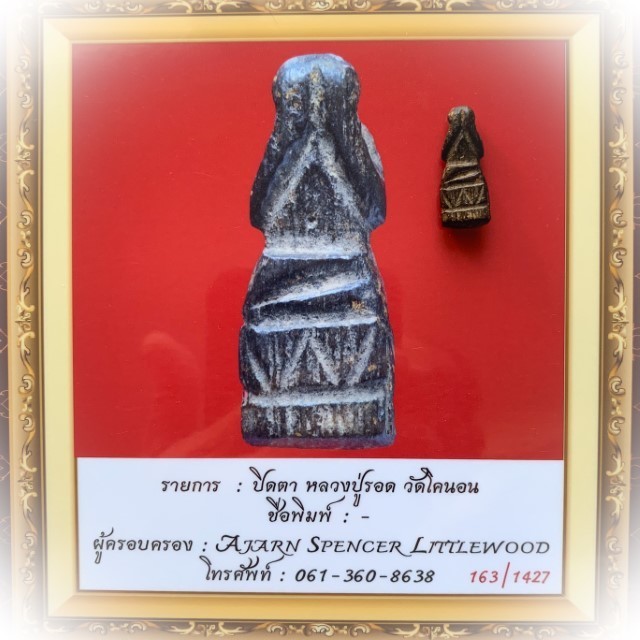
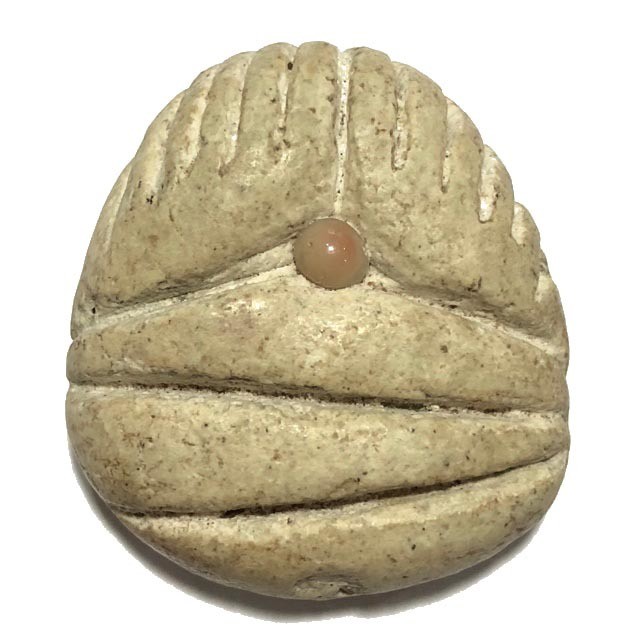
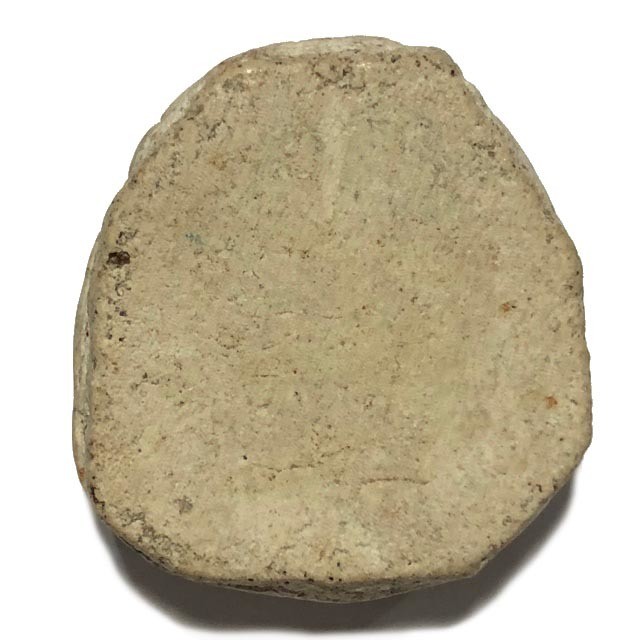
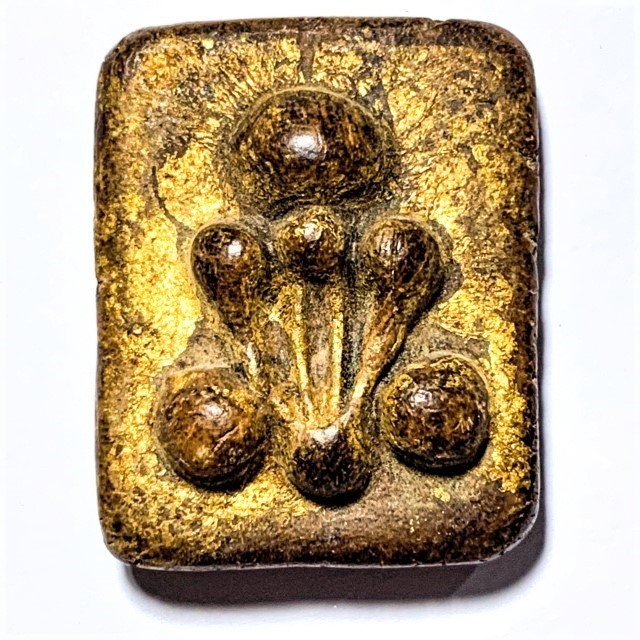
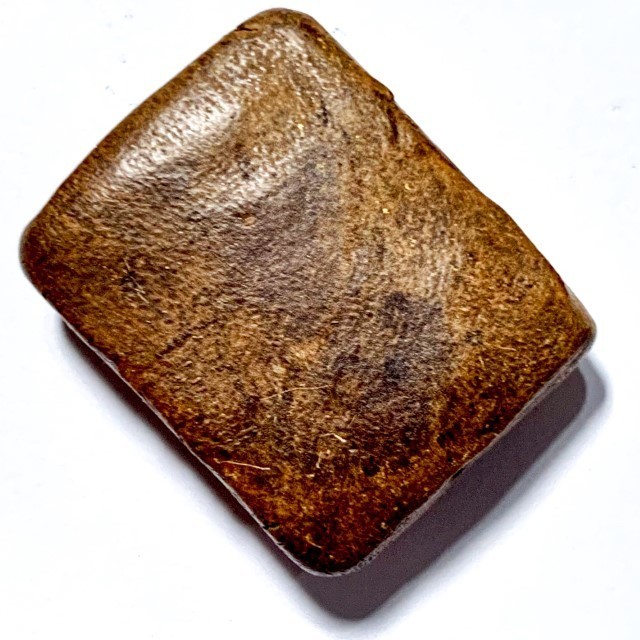
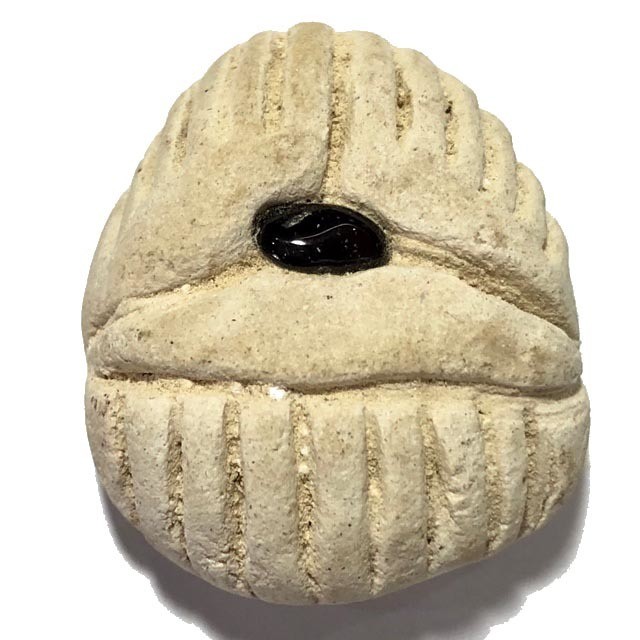
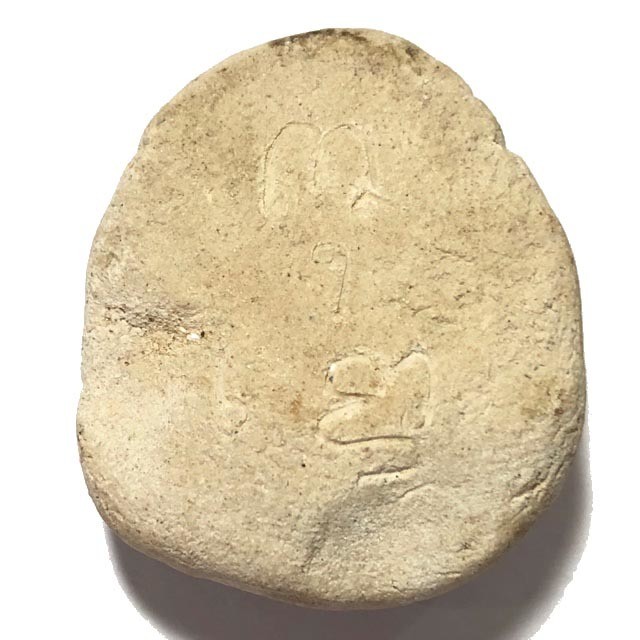
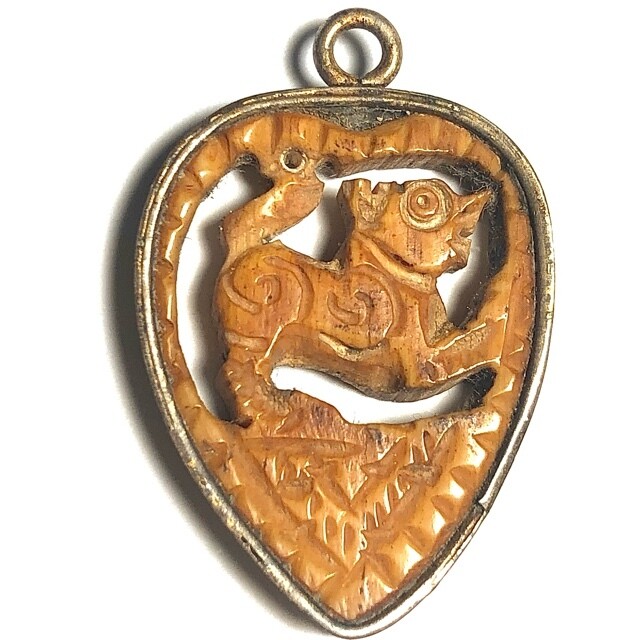
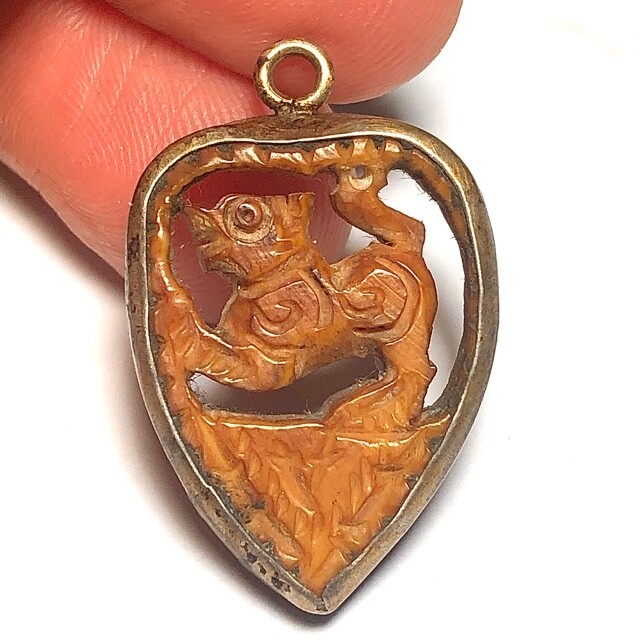
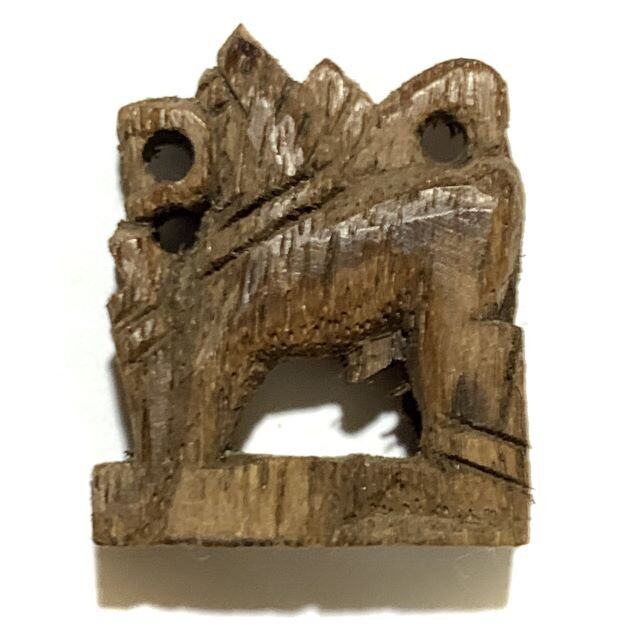
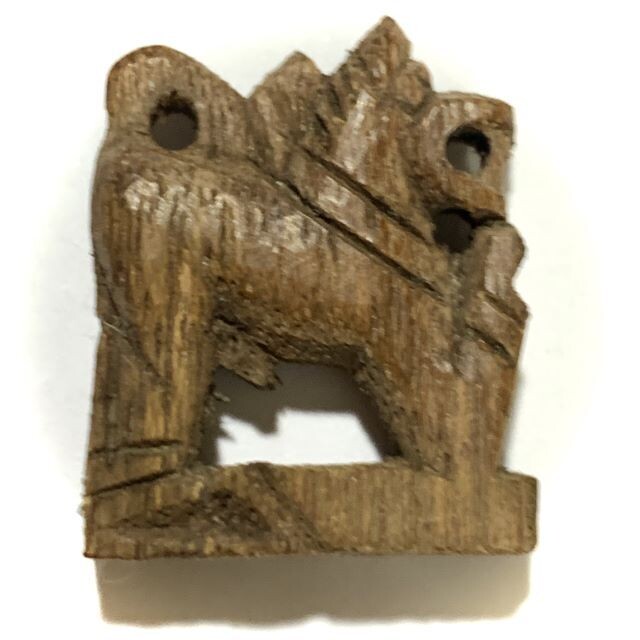
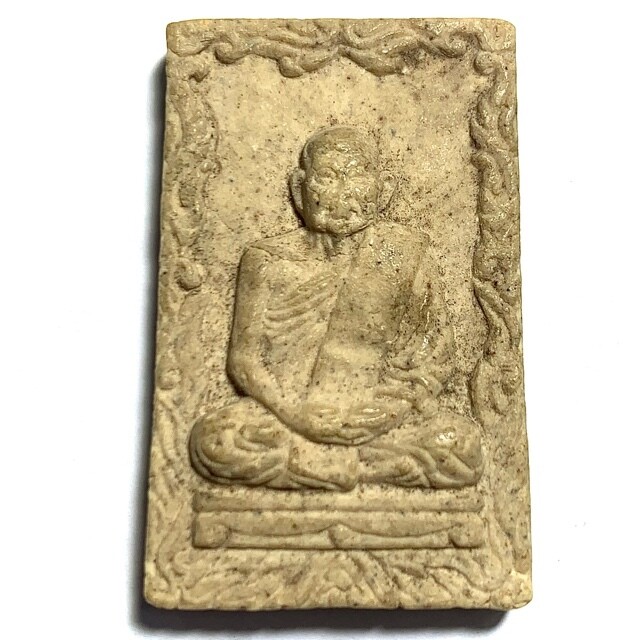
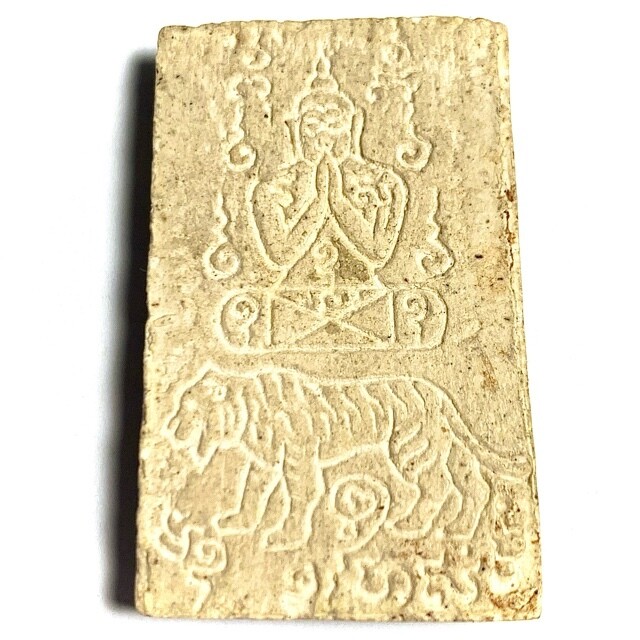
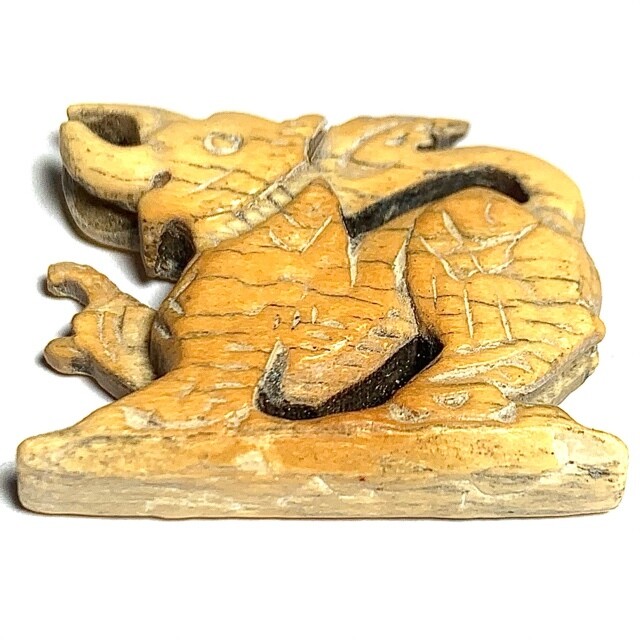
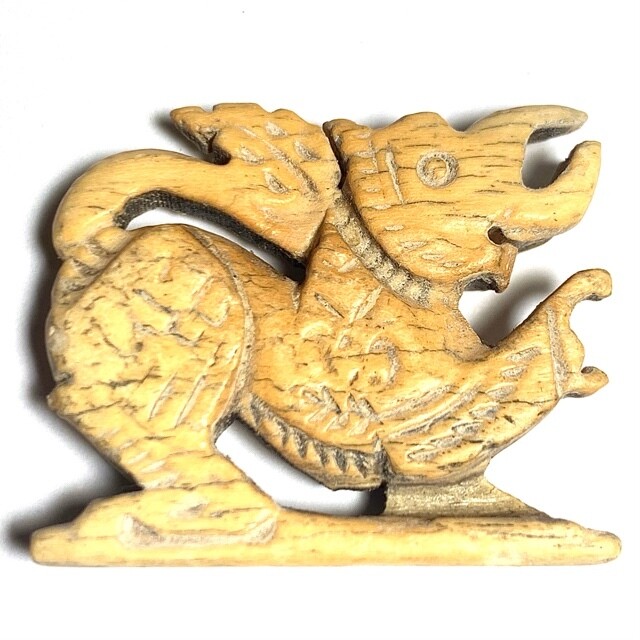
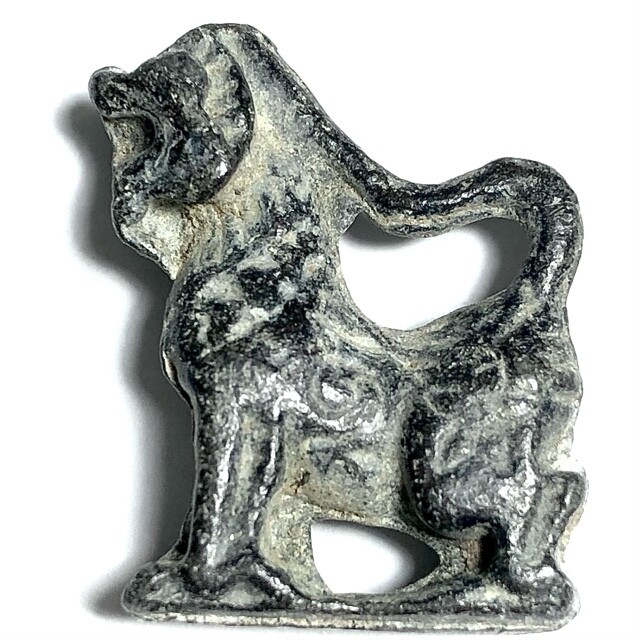
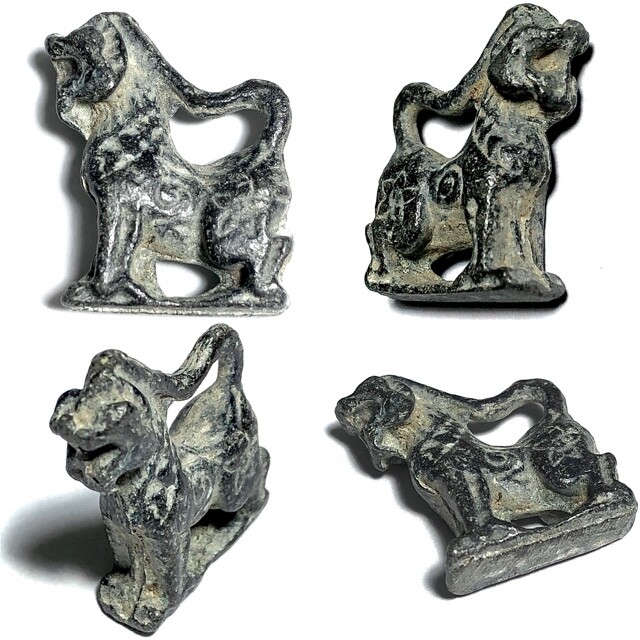
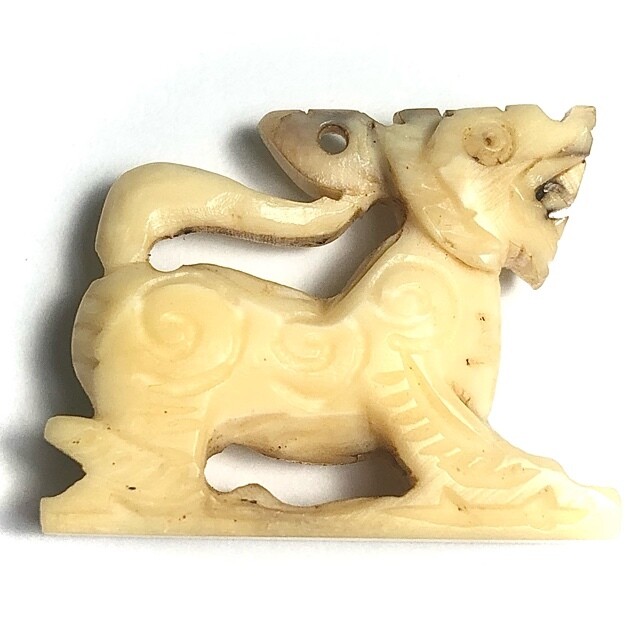
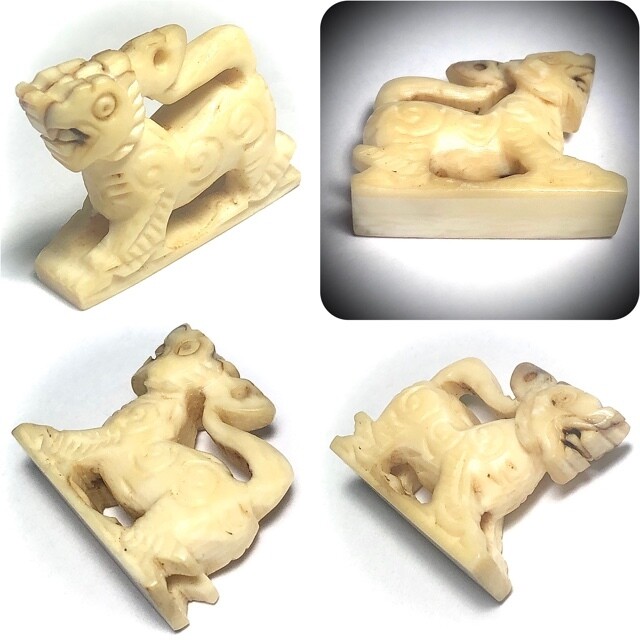
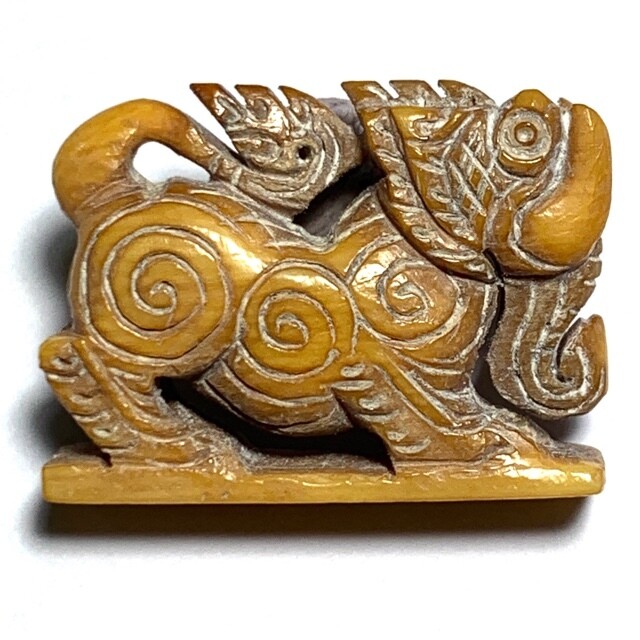
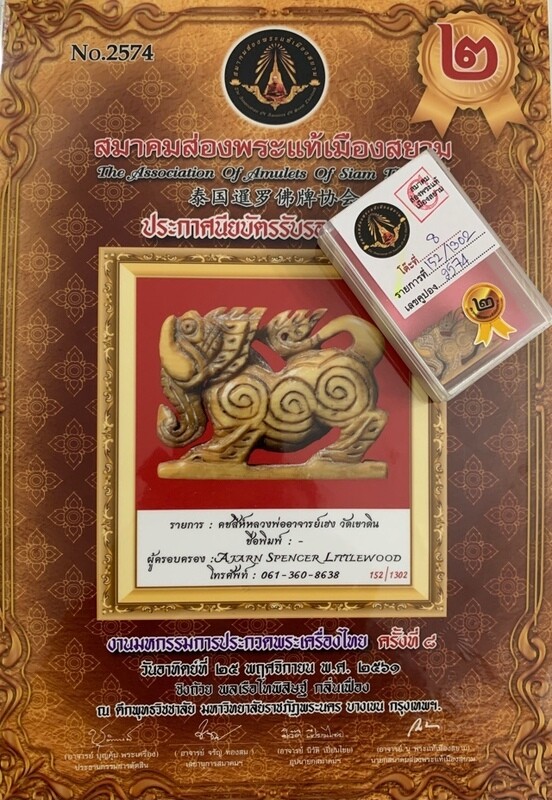
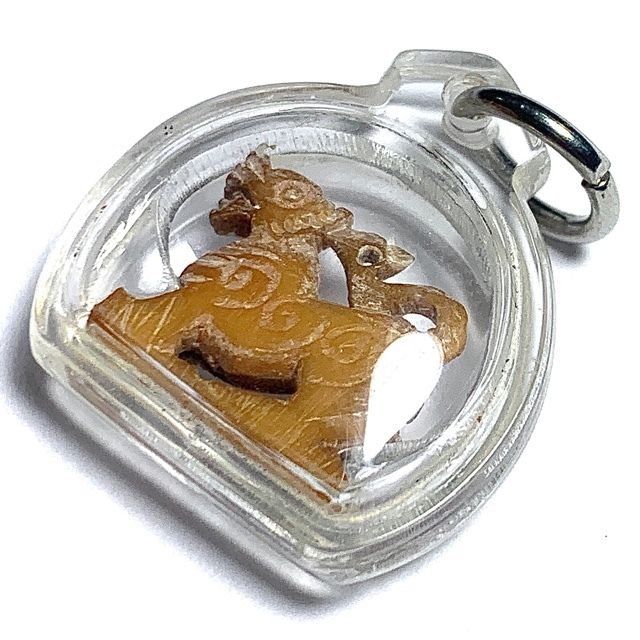
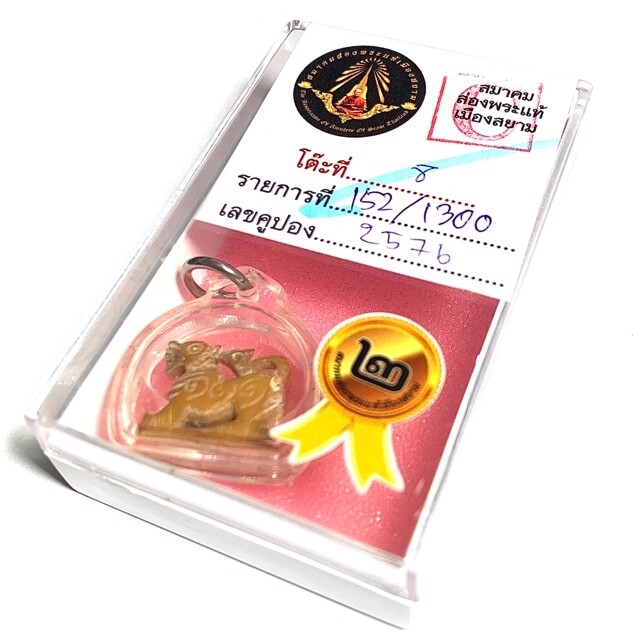
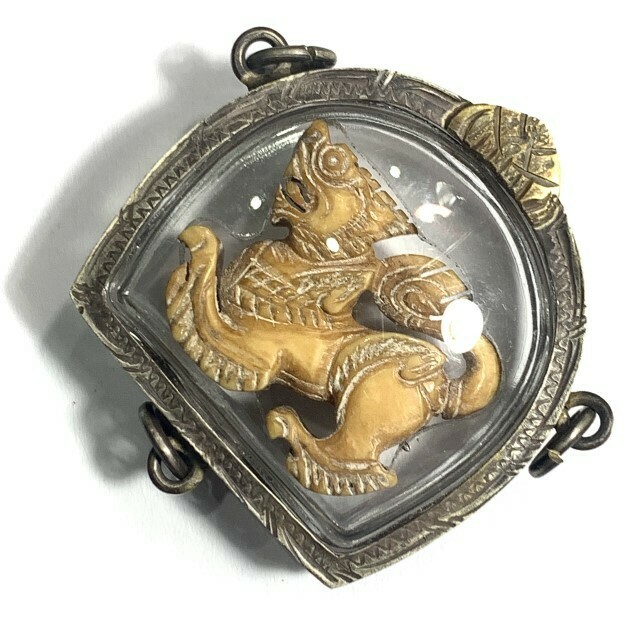
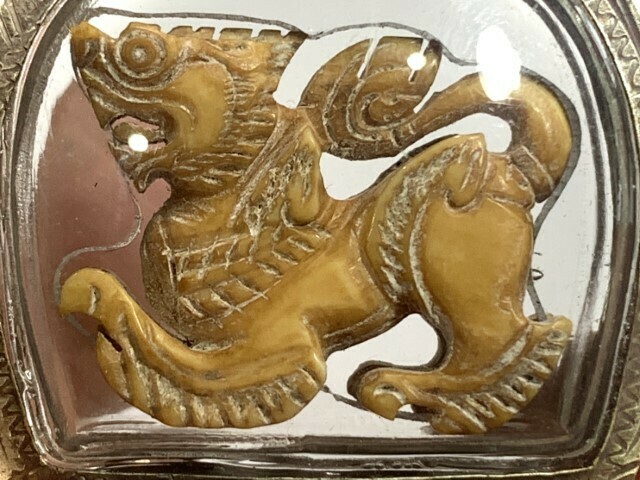
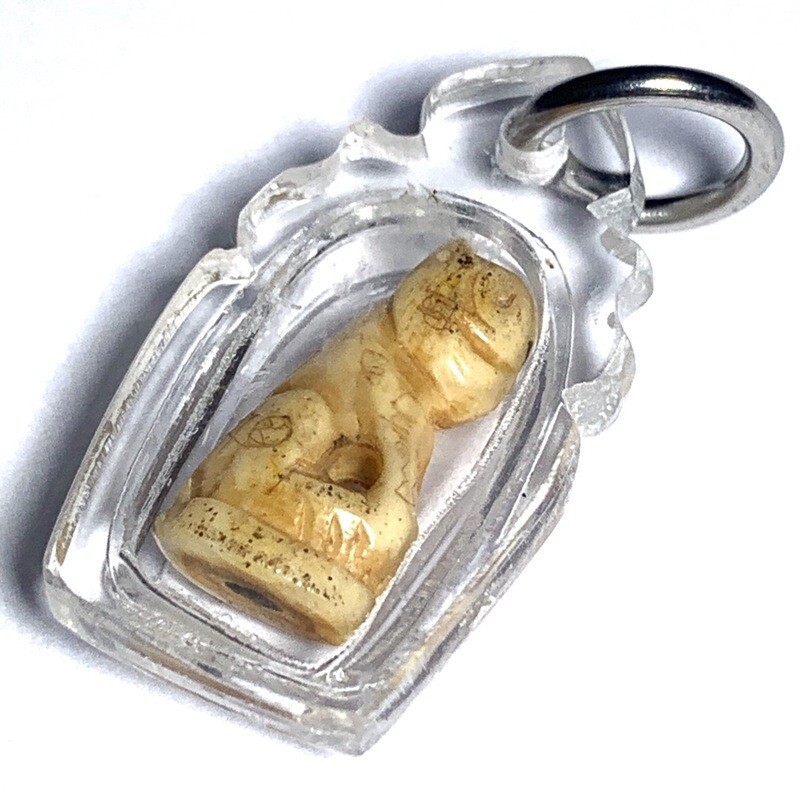
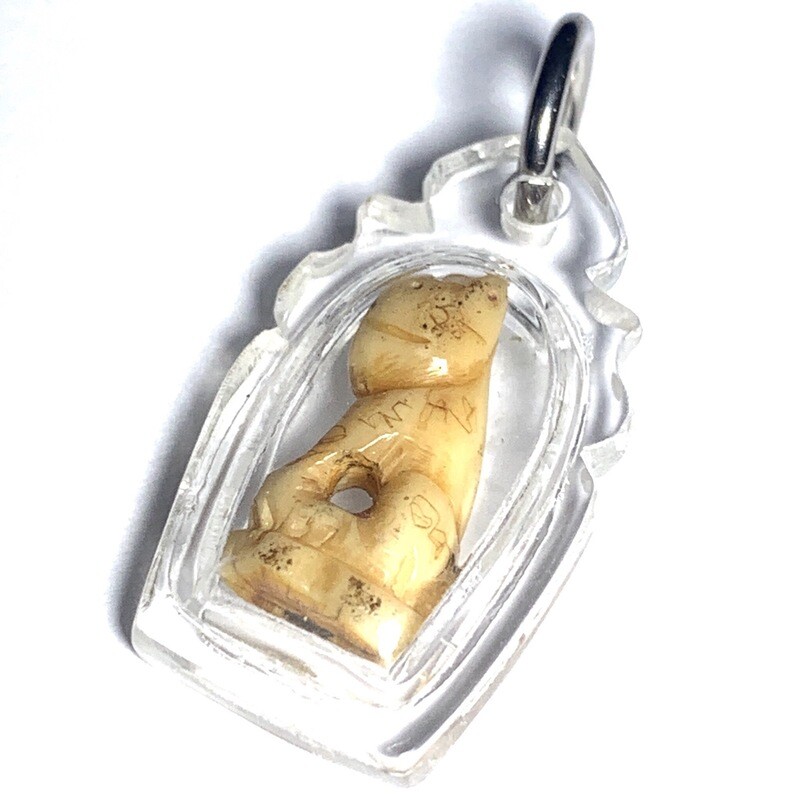
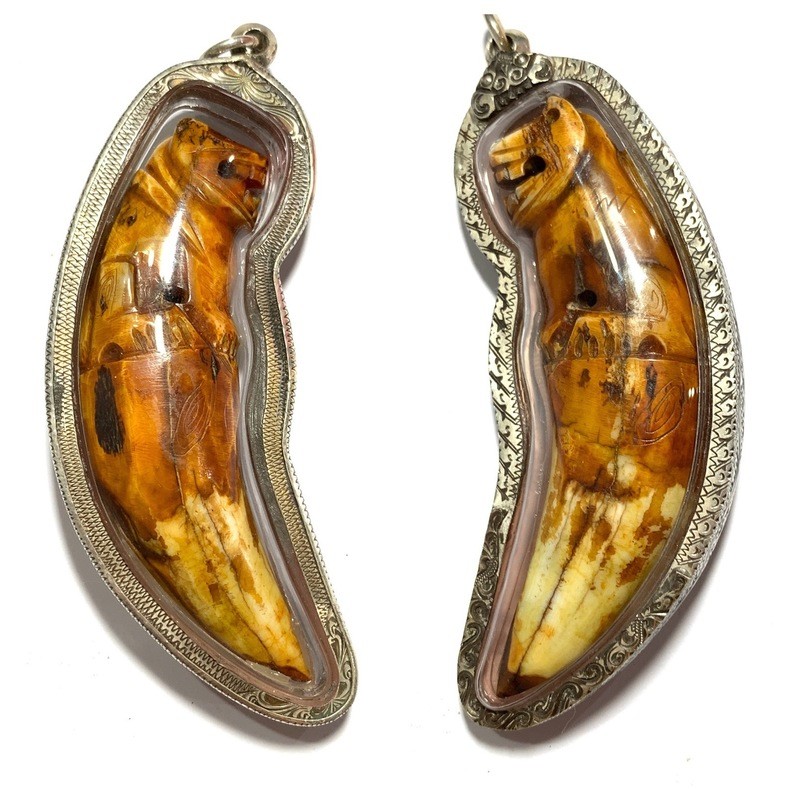
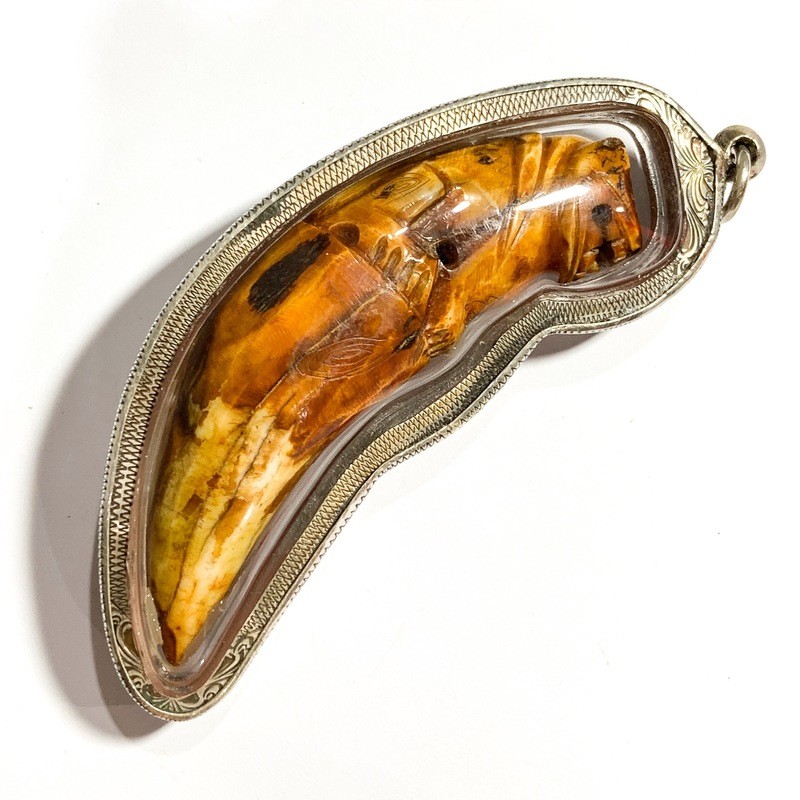
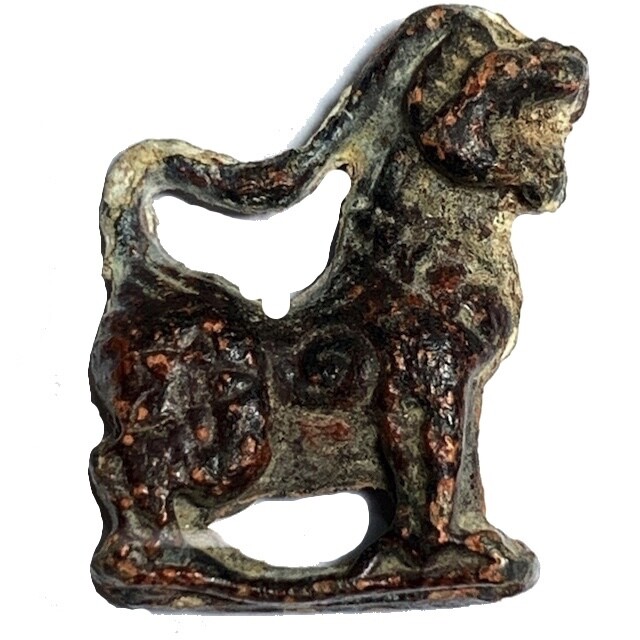
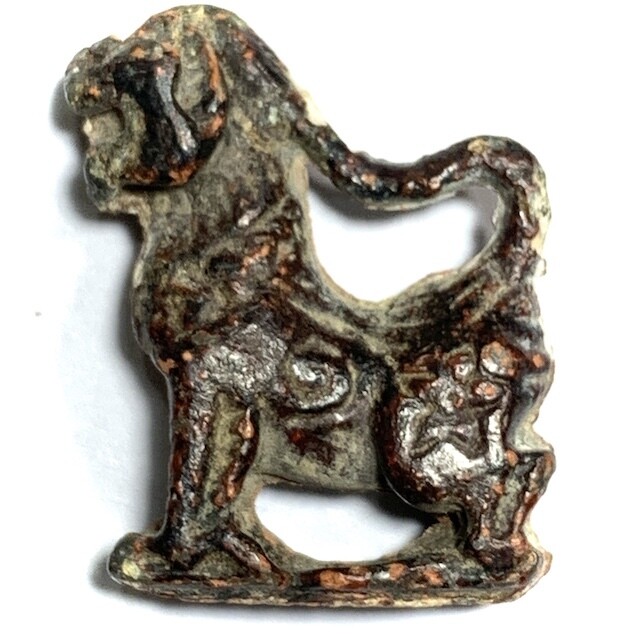
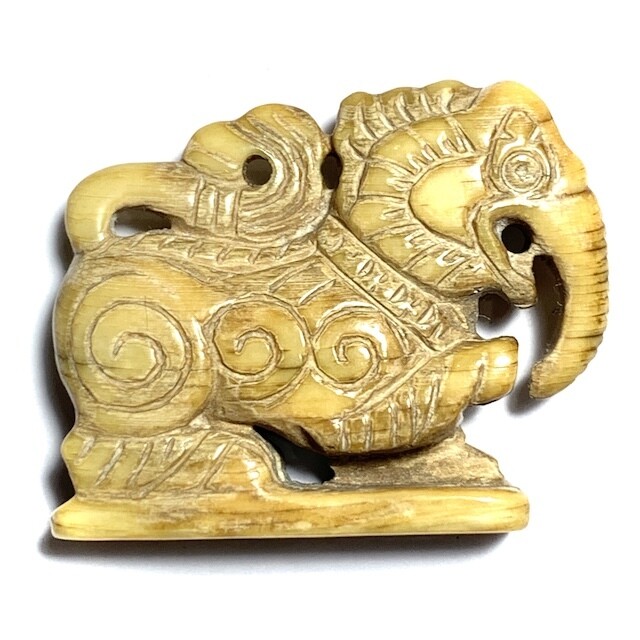
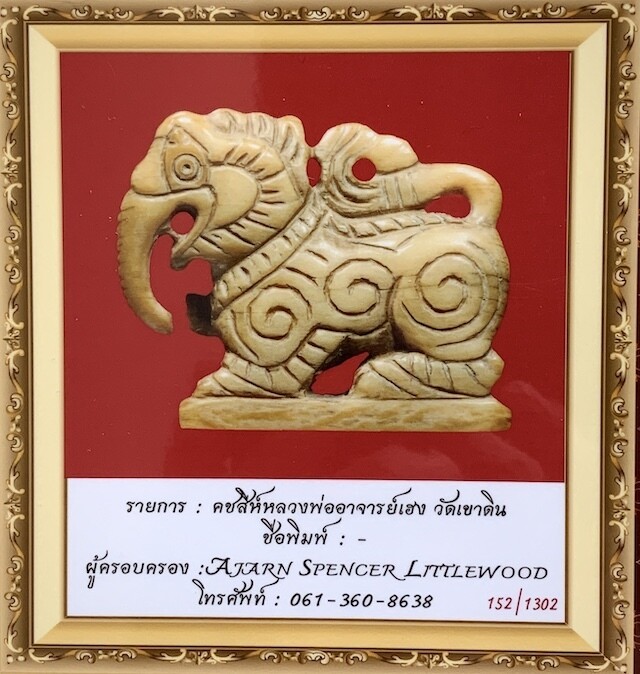
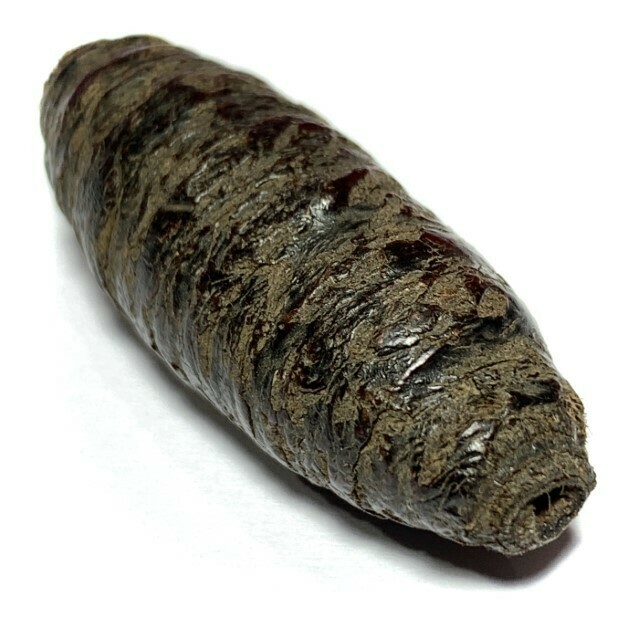
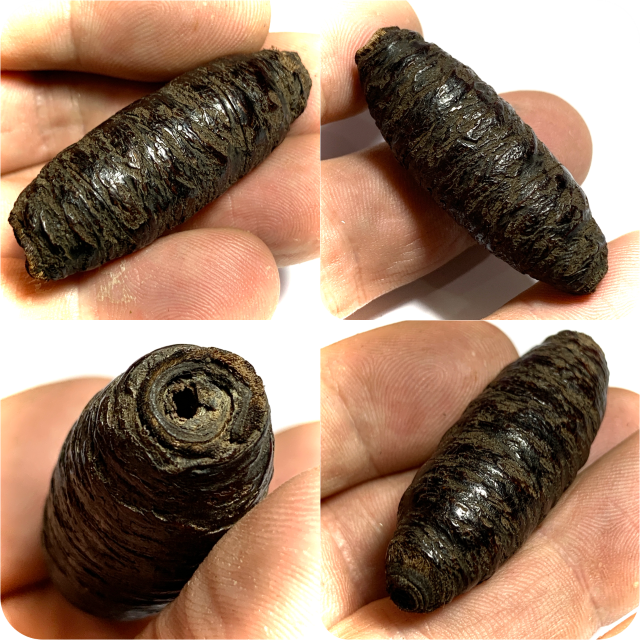
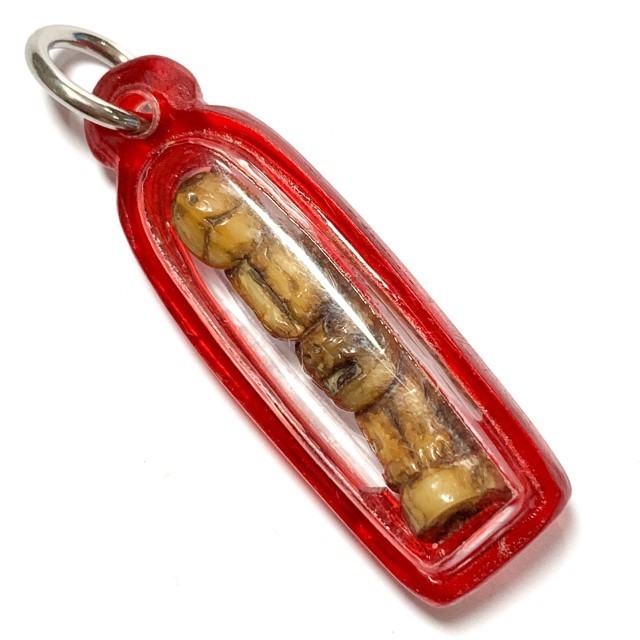
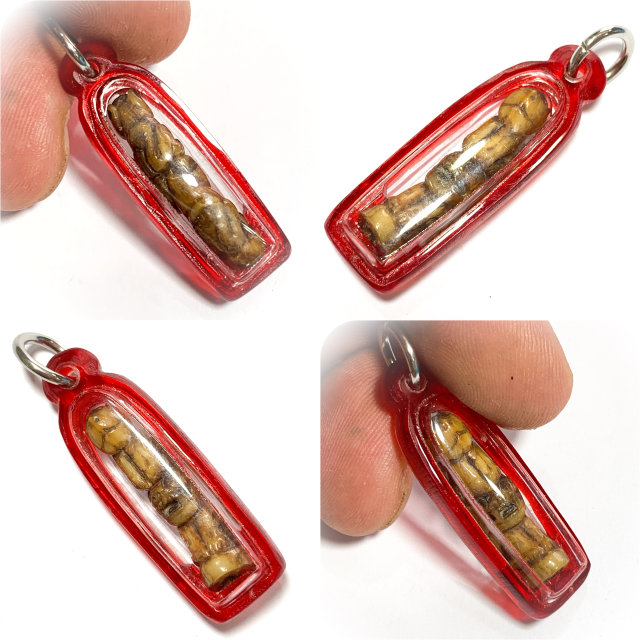
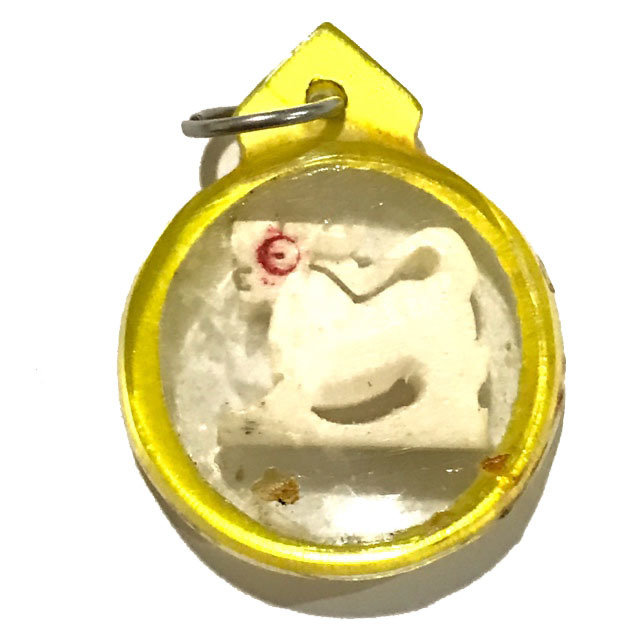
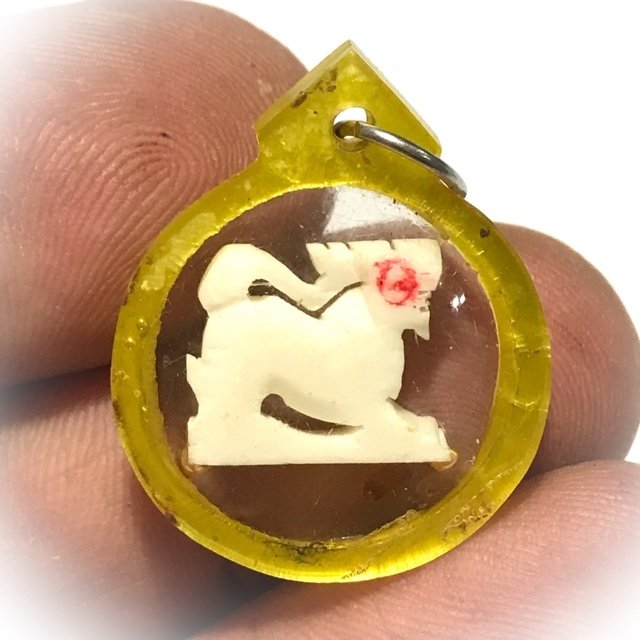
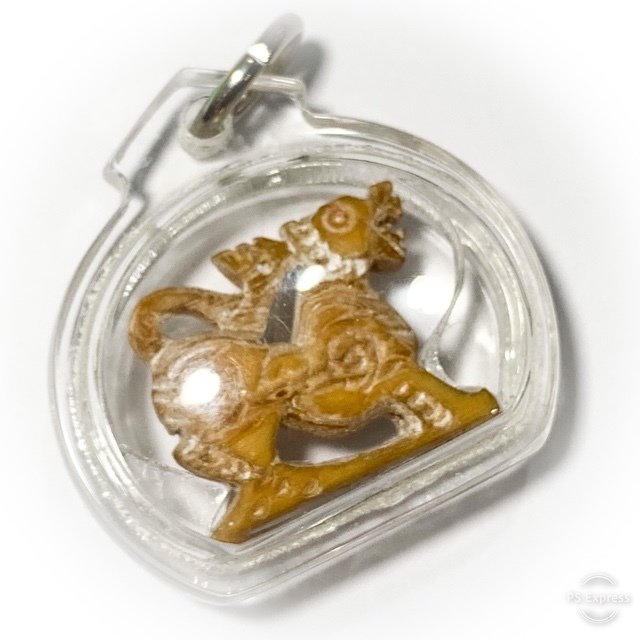
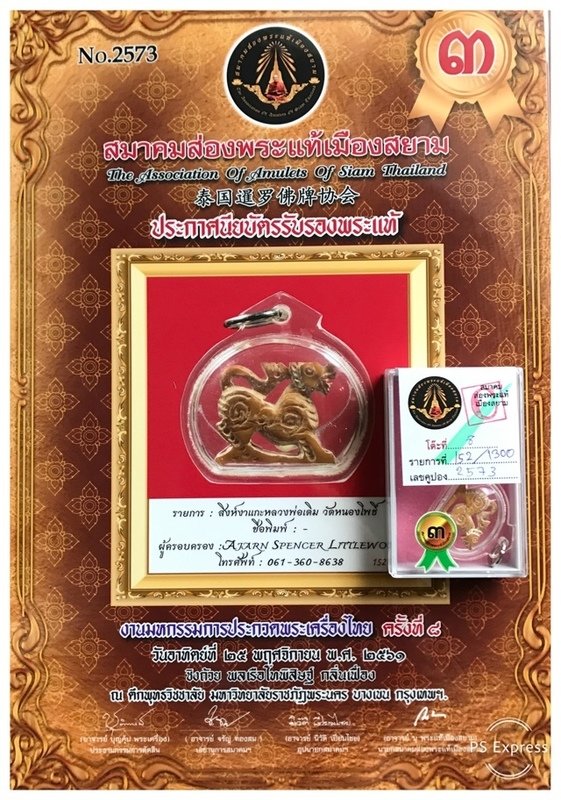
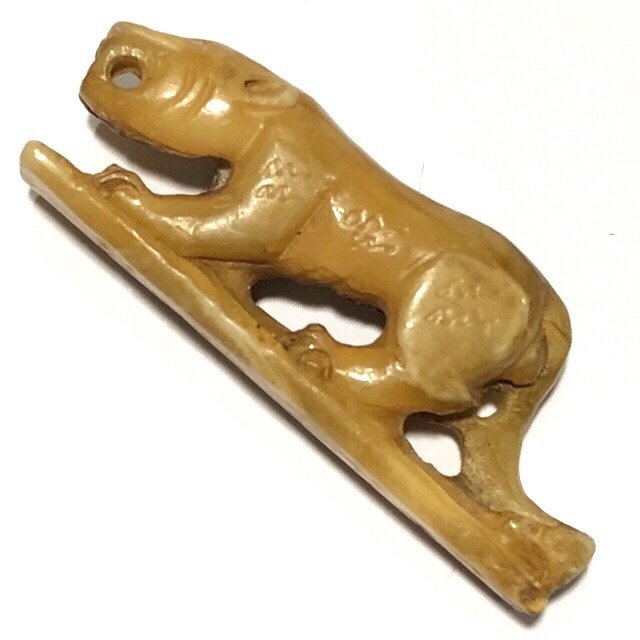
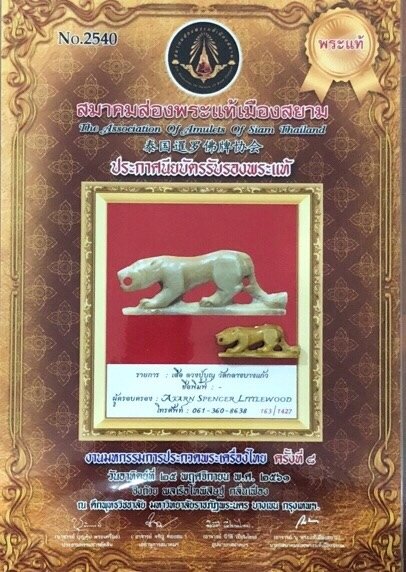
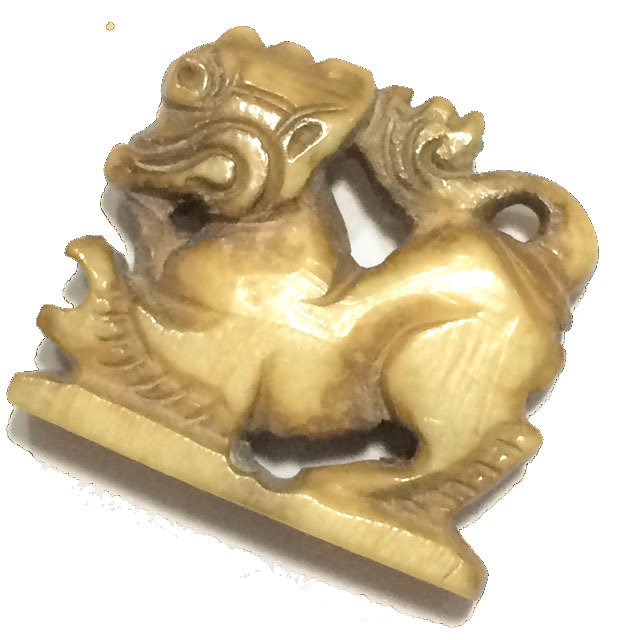
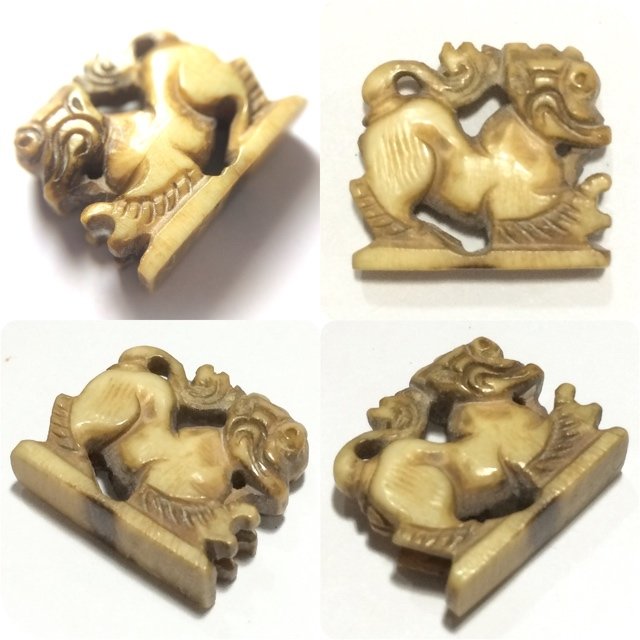
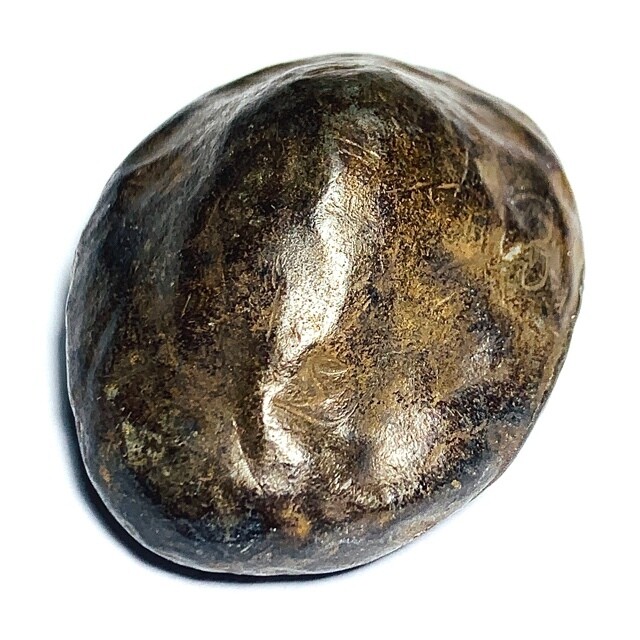
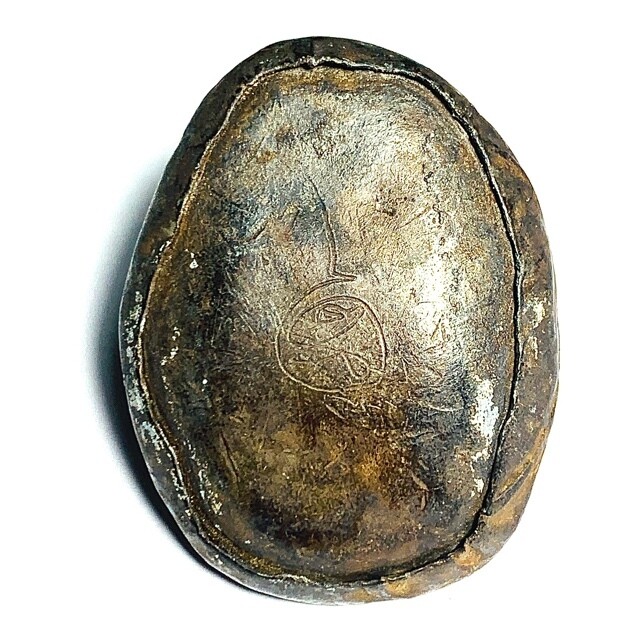
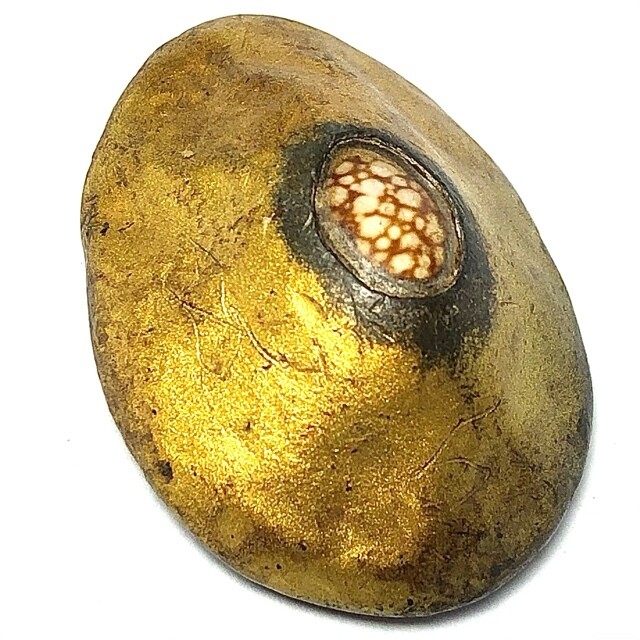
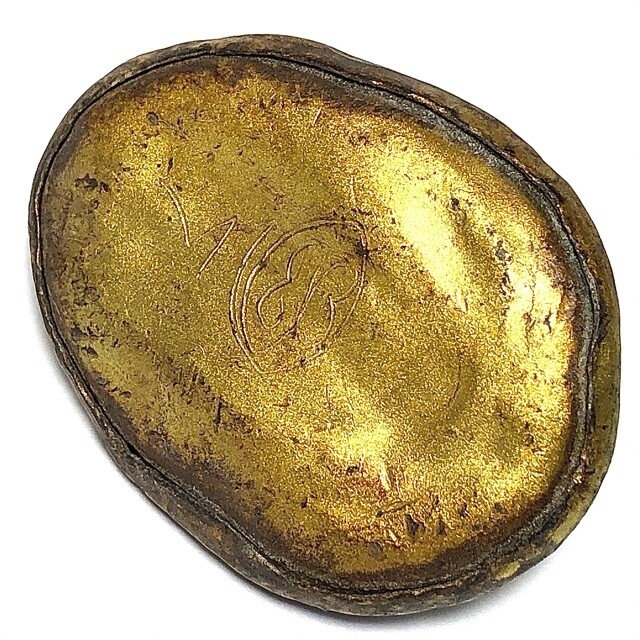
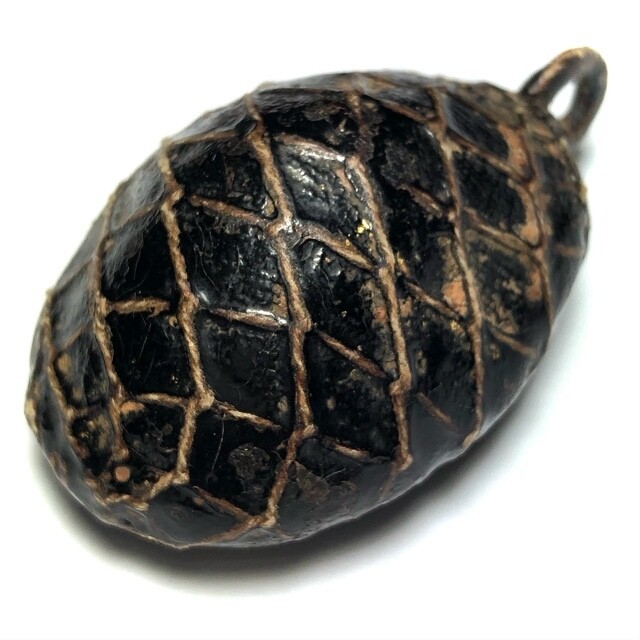
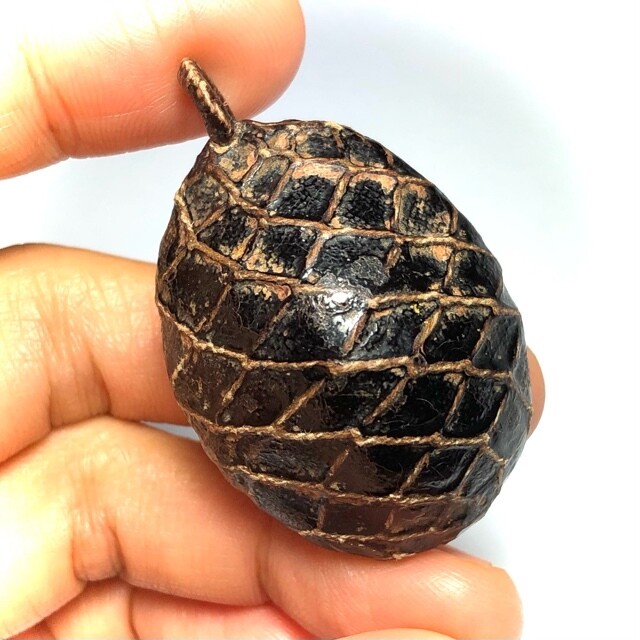
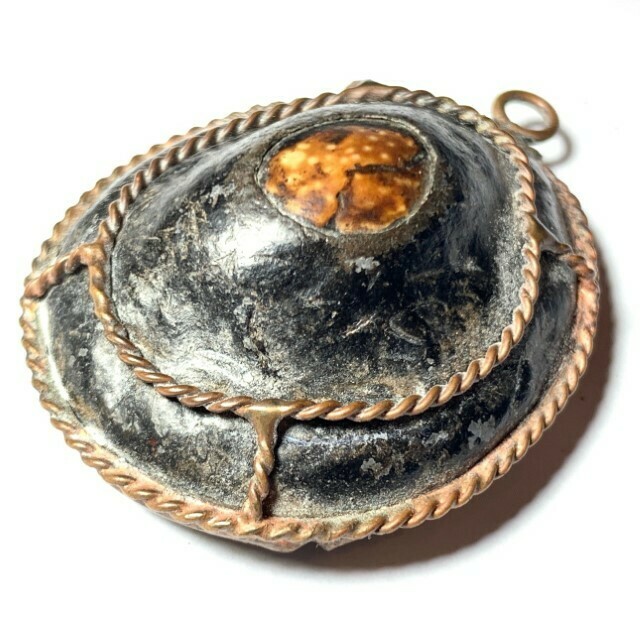
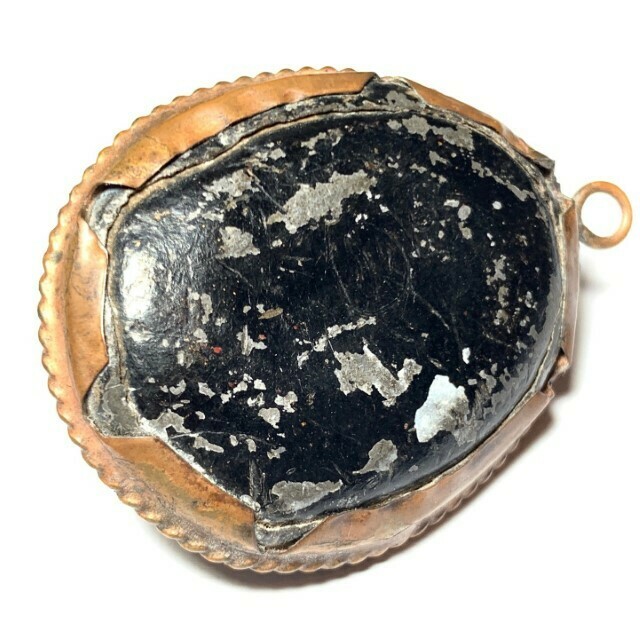
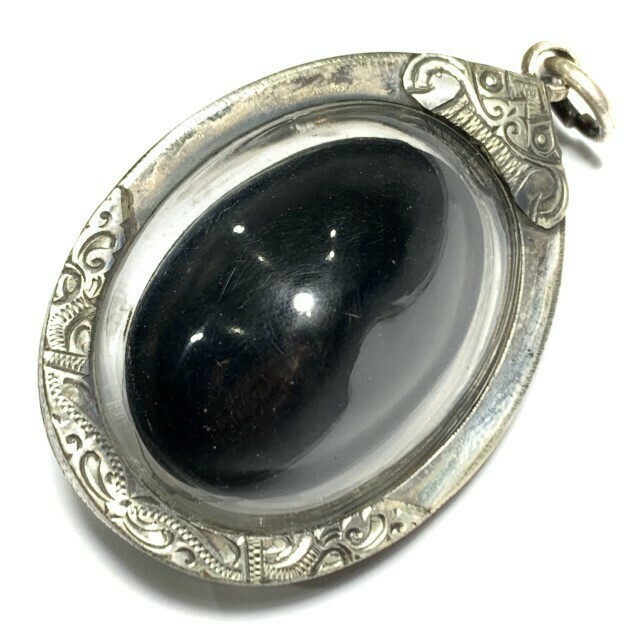
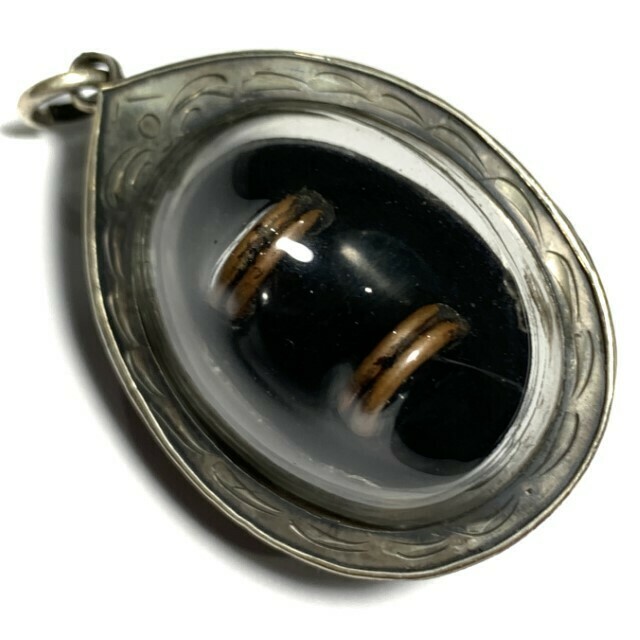
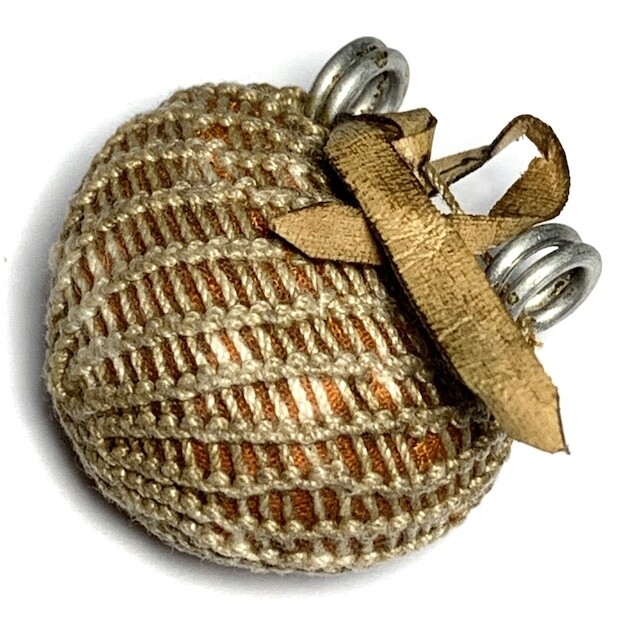
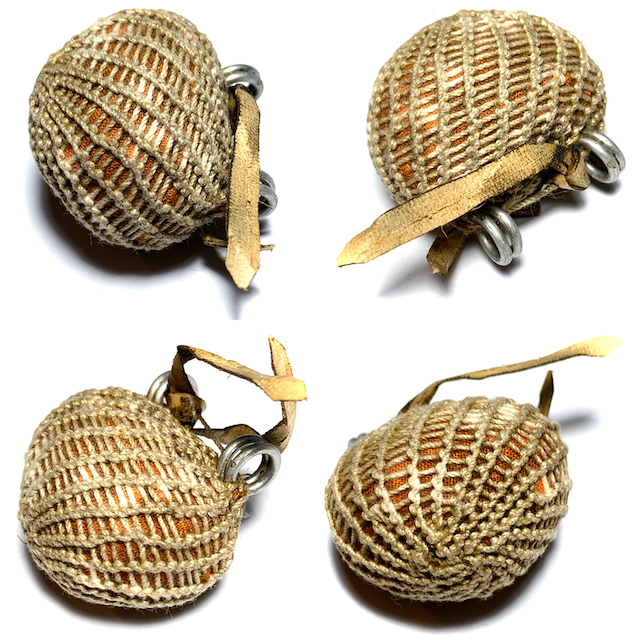
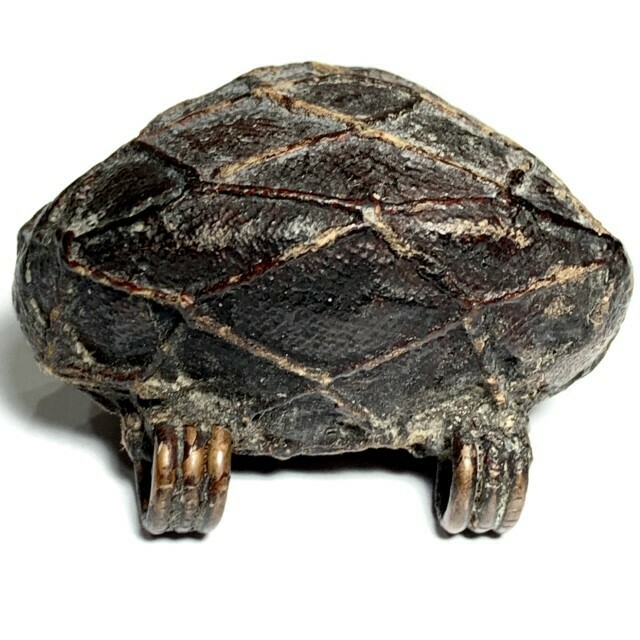
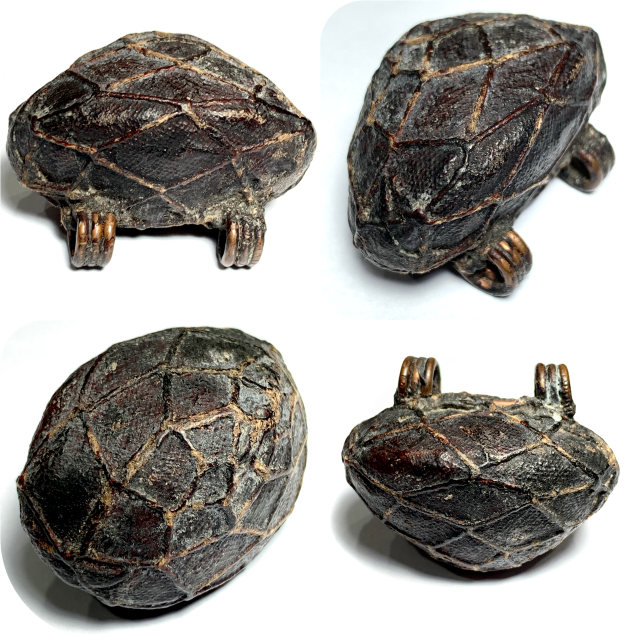
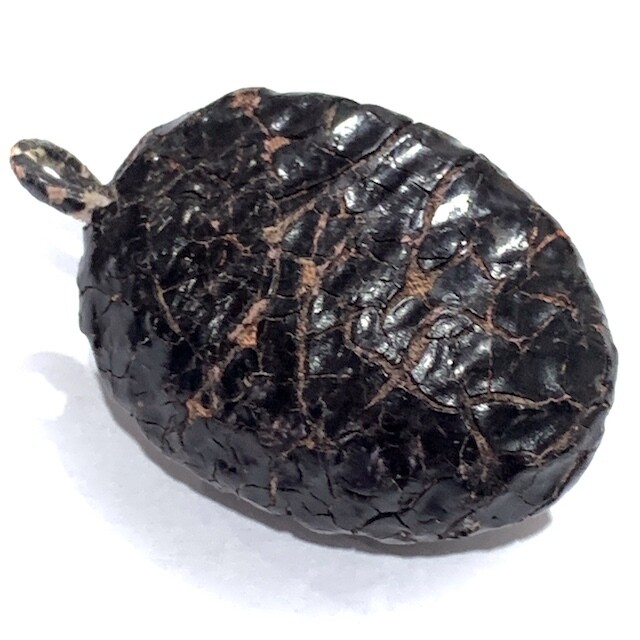
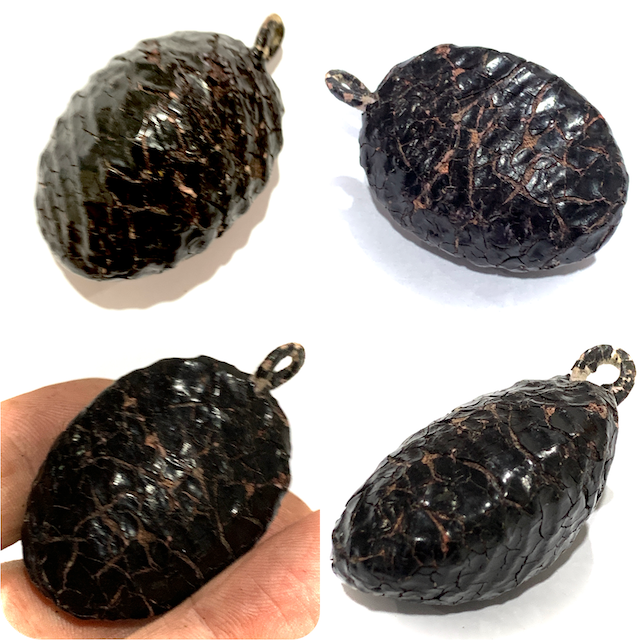
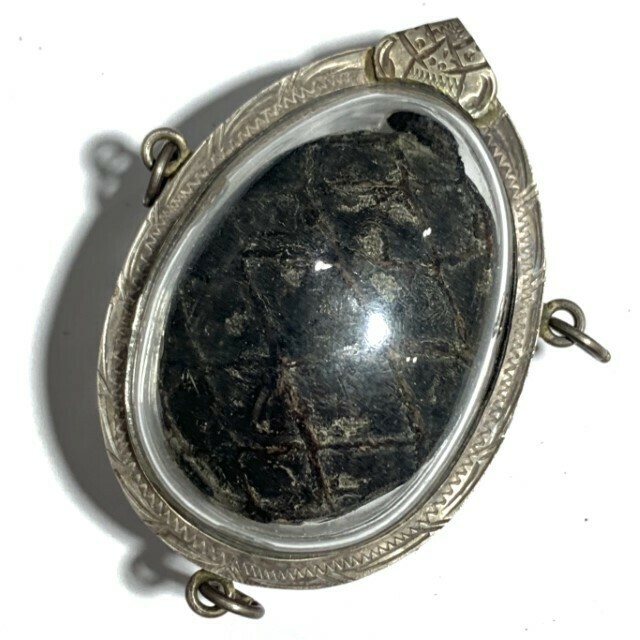
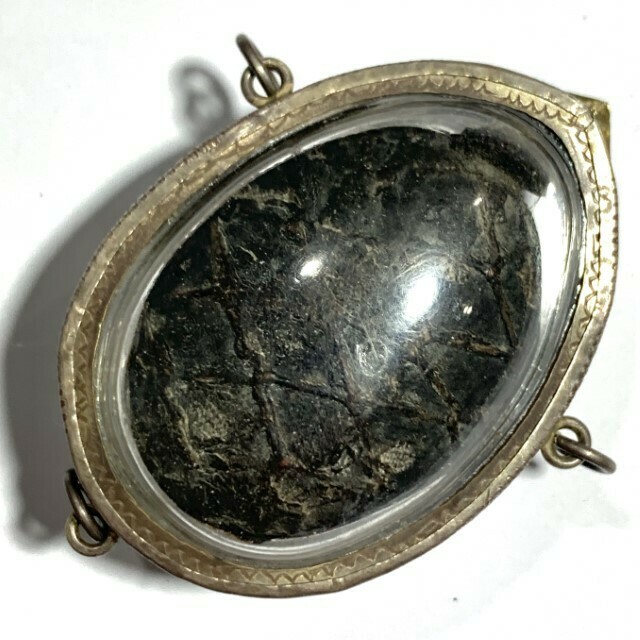
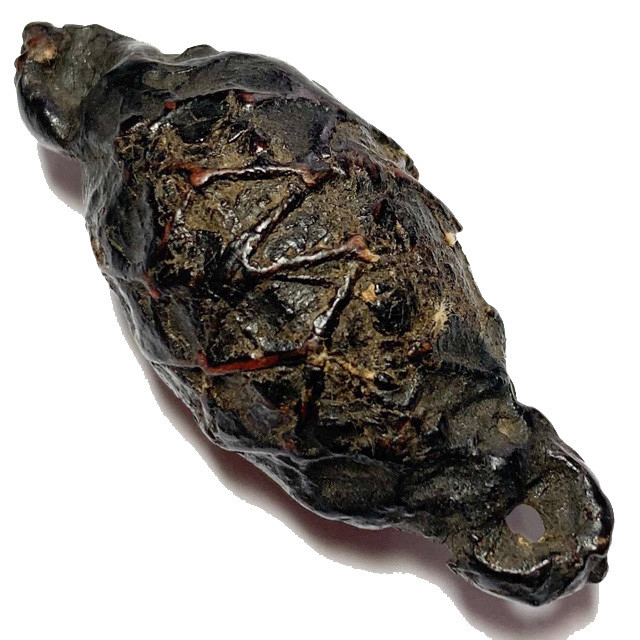
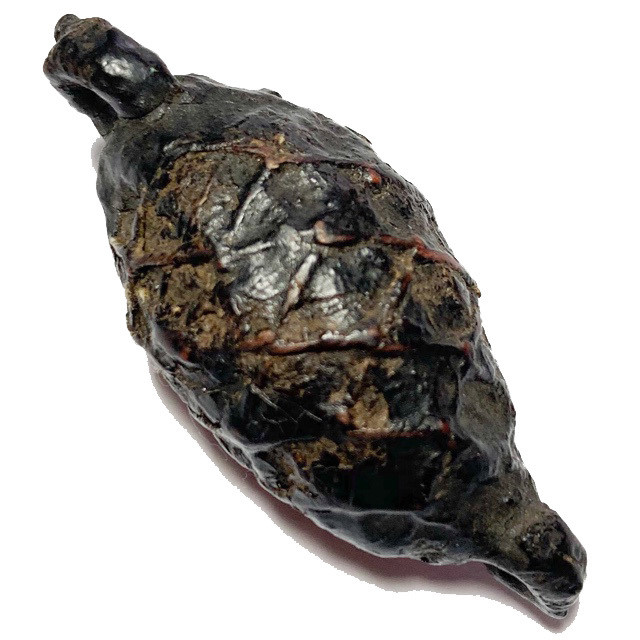
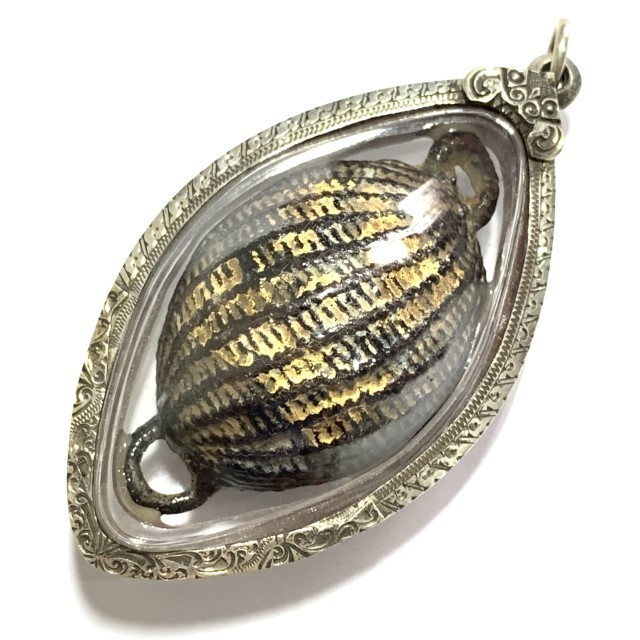
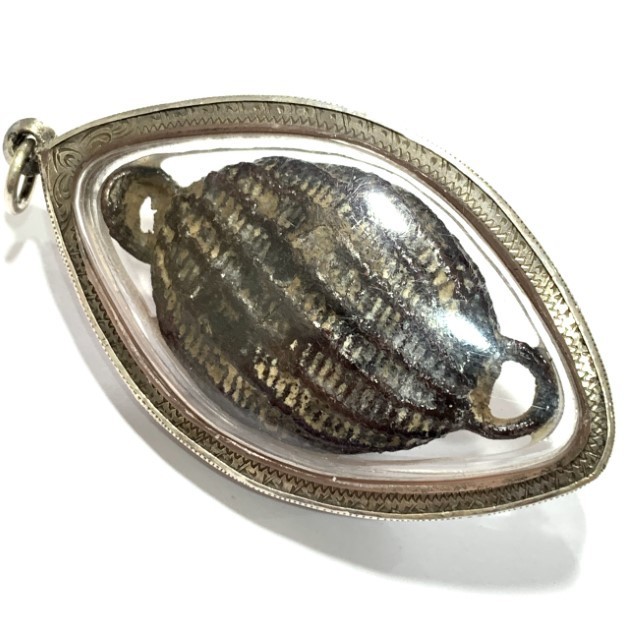
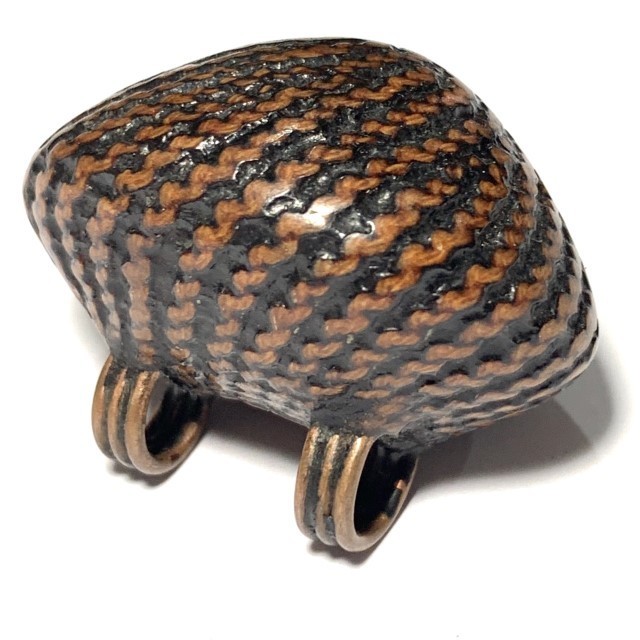
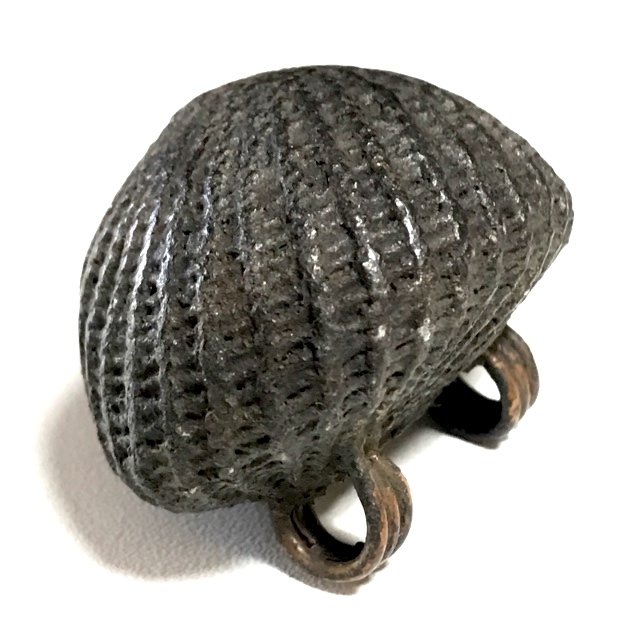
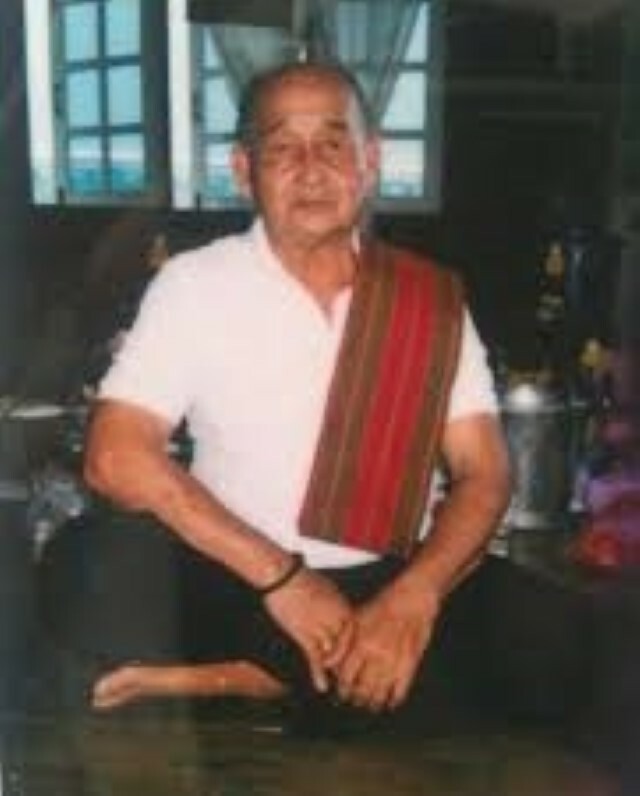
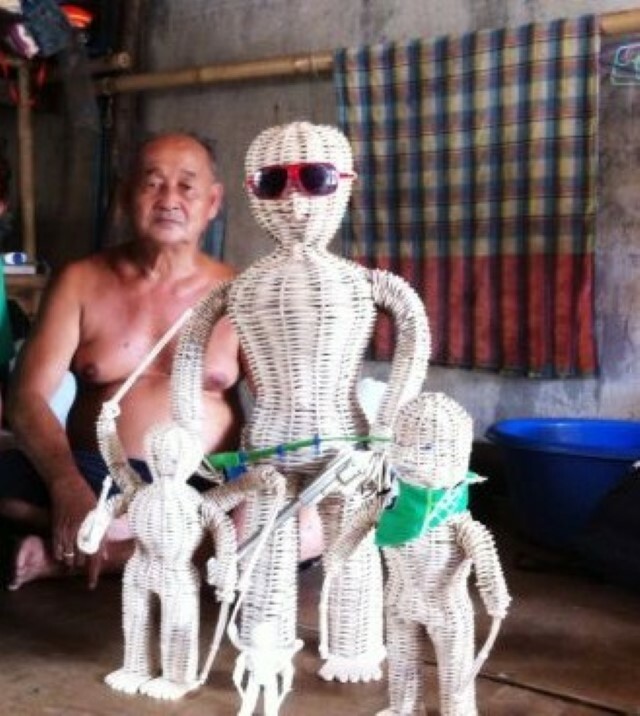
Pra Somdej Pim Yai, in ‘Nuea Dtaek Lai Nga’ (marbled stone hard clay with Crackled Ivory surface effect ) released in 2495 BE, made from ‘Nuea Pra Somdej Wat Rakang Gao’ (broken pieces of ancient Pra Somdej Wat Rakang Kositaram amulets of Somdej Pra Puttajarn (Dto) Prohmrangsri).
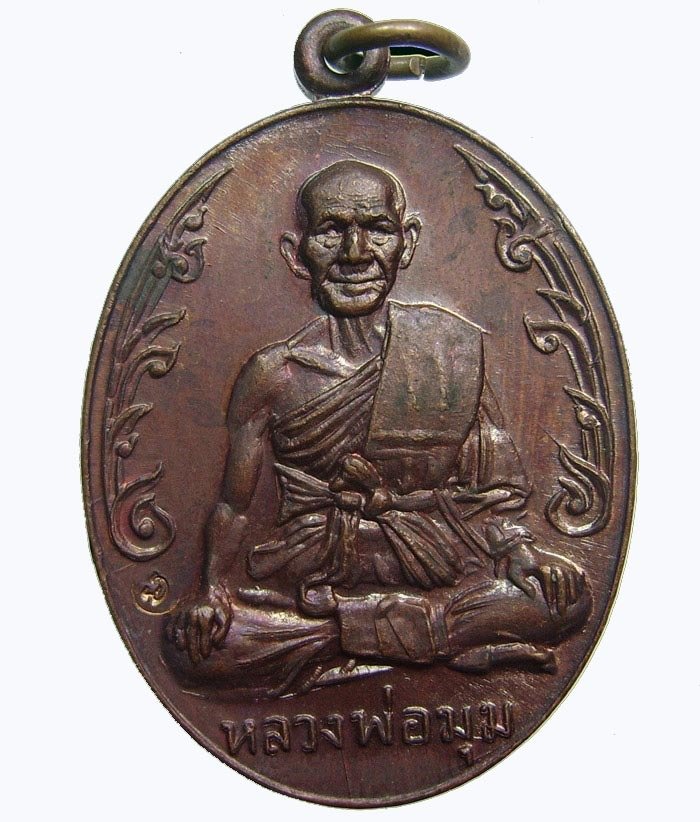
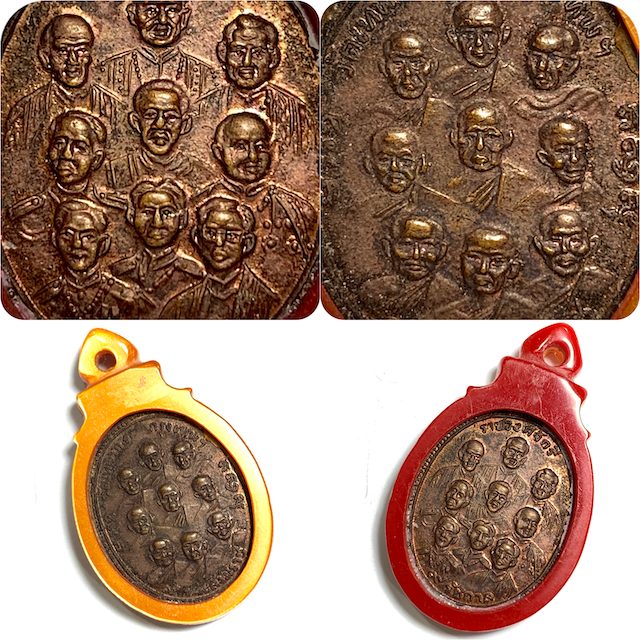
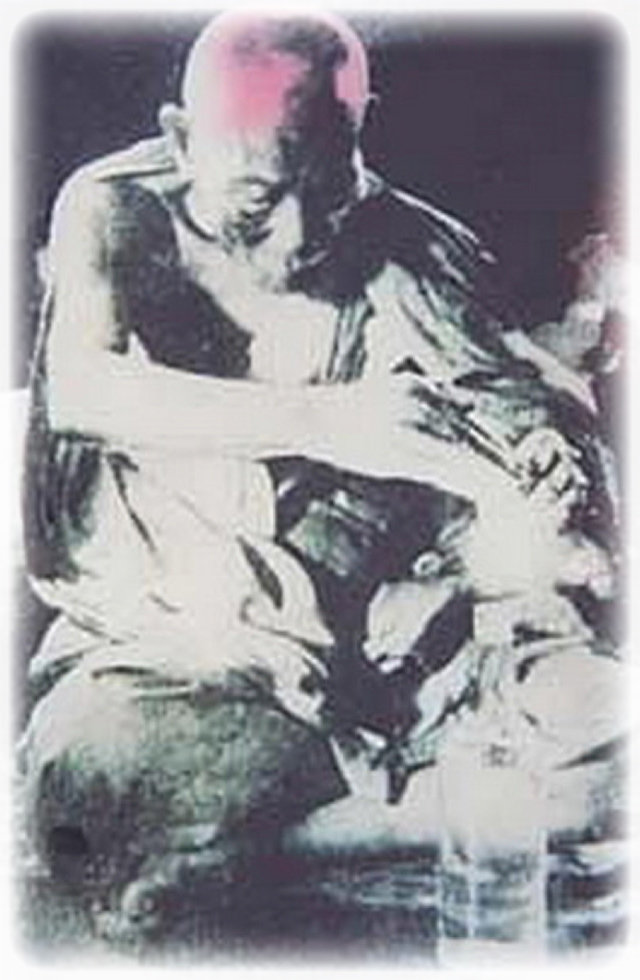
Luang Pu Nak was a highly respected and virtuous monk. He used many broken pieces of Phra Somdej Wat Rakhang amulets from that era as ingredients in creating dozens of different Phra Somdej amulets. The amulet’s composition included a high proportion of lime and oil. For the consecration ceremonies, Luang Pu Nak invited many renowned monks of the time to participate. Older amulet collectors said that Luang Pu Nak’s Phra Somdej amulets could be used as substitutes for the old Phra Somdej Wat Rakhang amulets. In the past, he always gave amulets to people who came to make merit or pay respects at the temple. He didn’t create these amulets for commercial purposes; he made them to give away, as Wat Rakhang was a large temple with many people visiting daily. Therefore, he needed enough amulets to distribute to everyone.
Luang Pu Nak’s Phra Somdej amulets from Wat Rakhang are made with a significant amount of fragments of broken Phra Somdej amulets from Wat Rakhang. These fragments were collected from people who left them at the temple and from the discovery of many broken amulets on the roof of the temple’s main hall. Luang Pu Nak combined these fragments with his own sacred powder, following the formula of Somdej Toh, resulting in his Phra Somdej amulets, especially those from the early period (1942-1952), having a rich and potent composition, making them highly desirable.
They are considered to contain the highest proportion of Wat Rakhang fragments in Phra Somdej amulets, rivaled only by the Phra Somdej of Phra Kru Moon of Wat Suthat, the 1942 Chedi-shaped amulet. Furthermore, their spiritual power is exceptionally high, particularly in attracting compassion and popularity. Therefore, they are highly sought after. However, because he created many different styles of Phra Somdej amulets, collectors tend to focus on only certain popular styles with distinctive characteristics, such as the Three-Tiered Angel with Bayasri Ears style. The most sought-after types are the Phra Somdej amulets with Bodhi leaf design, pumpkin-shaped design, Somdej Toh image design, and bell-shaped design.
Other types are less popular. Phra Somdej amulets with a rich, concentrated Somdej powder composition, or those with embedded takrut (1, 2, or 3 takrut), are extremely rare and highly sought after, commanding prices many times higher than normal. Surprisingly, Luang Pu Nak’s Phra Somdej amulets from Wat Rakhang have become incredibly famous in Malaysia and Singapore. Many tourists from these countries are buying them in large quantities, significantly reducing the current supply. In the future, this series of amulets is likely to become as popular and valuable as the Phra Somdej Bang Khun Phrom 1966.
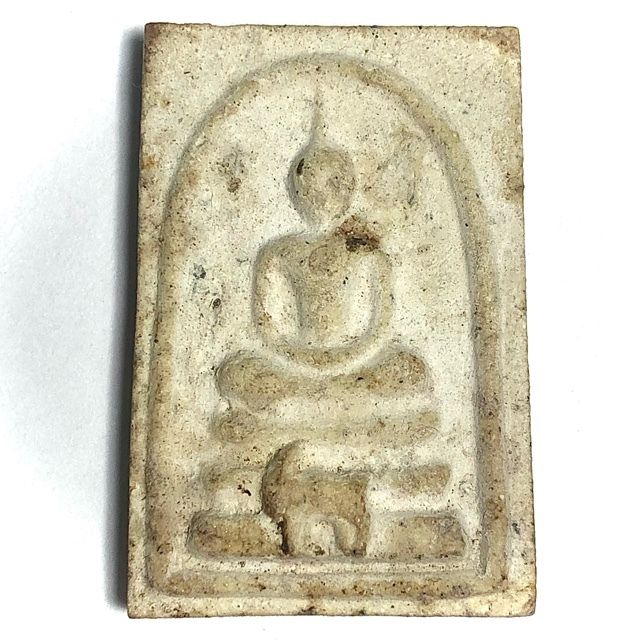
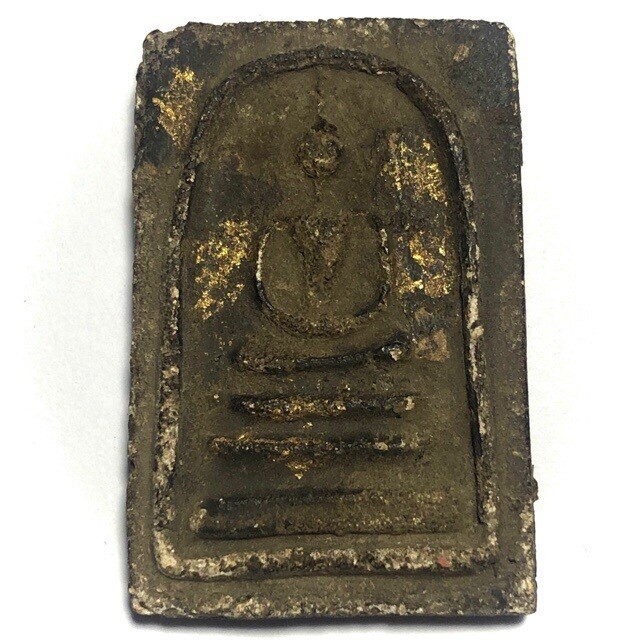
A very attractive votive tablet with Buddha in the ‘Khat Samati’ posture seated on a single tiered dais, within an arch. The Dais is shaped like a cushion, which is what gives the name to this model. Three different Masters of the Somdej Pra Puttajarn (Dto) Prohmrangsri lineage and makers of the Pra Somdej within the Dtamra of Somdej Pra Puttajarn (Dto) Prohmrangsri, have made this model of amulet, namely Luang Phu Nak, Luang Phu Hin, and Luang Por Supoj. Each Master pressed and blessed his own versions. LP HIn and LP Supoj would reputedly be present with LP Nak for the blessings of his amulets too.
The clay of this exhibit can be classified as Nuea Graeng Dtaek Lai Nga (Crackled Ivory surface effect and Stonelike Hardened Muan Sarn Clay) and has visibly similar characteristics to the clay of Pra Somdej Wat Rakang Kositaram of Somdej Pra Puttajarn (Dto) Prohmrangsri, except the fact that the clay is visibly somewhat younger.
The study of the ageing characteristics of the clay is in itself, is part of the study of the Muan Sarn Sacred Powders of Pra Somdej Wat Rakang Kositaram, to see how authentic Pong Gao Wat Rakang Kositaram amulets made in different time periods develop their appearance and surface textures, and how to learn to recognise authentic Pra Somdej Wat Rakang Kositaram, by being able to estimate how old the clay is of a particular amulet. This exhibit is a perfect study model, as well as being a very rare and sacred votive tablet for Bucha.
This pim is one of a pantheon of Pra Somdej amulets released around 2495 BE, by the great Luang Phu Nak of Wat Rakang Kositaram, and is a rare Pim that has its own special Niche group of devotees who collect and revere them especially.
A very rare authentic Ancient and Sacred amulet from Luang Phu Nak, one of the Great Abbots of Wat Rakang Kositaram temple. The Pra Somdej of Luang Phu Nak are extremely sought after by both Thai Buddhists and Foreign Devotees alike, for the fact that Luang Phu Nak used more old Pra Somdej amulets from LP Dto Prohmrangsri than any other masters of Wat Rakang History.
This exhibit has a smooth dense marble-like creamy clay, that is well hardened with age (Nuea Graeng), and is an extremely attractive exhibit for these features.
The 2495 BE edition is a highly recommendable amulet for devotees who seek a top class amulet at a still affordable price. that is prestigious, sacred, and of high Pedigree. Luang Phu Nak is known to have released editions in the years 2485 – 2495, 2499, 2500, 2504, 2507 and 2509 BE and his final edition Sae Yid 7 Rorb of 2511 BE, as well as releasing editions at other temples.
These amulets are the perfect and best second choice to the Pra Somdej Wat Rakang amulets made by Somdej Dto Prohmrangsri which have now become either unavailable, or too expensive to even consider renting.
The amulets of Luang Phu Nak are also a perfect reference material for the study of Muan Sarn Sacred Powders of the Wat Rakang Kositaram amulet of Somdej Pra Puttajarn (Dto) Prohmrangsri, due to the presence of large quantity of original Pra Somdej Somdej Pra Puttajarn (Dto) Prohmrangsri within the sacred clay of Luang Phu Nak’s amulets.
Luang Phu Nak’s first edition of amulets was made in 2485 BE along with the Pra Somdej Song Taewada Ok Dtan, the Pra Somdej Sam Liam (triangle shape), and the Pra Somdej Dto Nang Borigam models.
The Pra Somdej amulets made by Luang Phu Nak contained a massive quantity of crushed up Pra Somdej amulets made by Somdej Dto Prohmrangsri of Wat Rakang.
The amulets were from a repository which Luang Phu Nak had collected over the years, from Looksit who brought their broken amulets to return to the Temple, as well as a sackful he found in the roof of the Prayer Room (‘Bote’ in Thai). They are thus the second choice of those wishing to posess the magic of Pra Somdej Wat Rakang LP Dto Prohmrangsri.
Luang Phu Nak believed that the Pra Somdej amulets made by Somdej Dto had inimitable magical qualities and special power within the Muan Sarn (sacred powder used to make the amulets), and because of the meditative power of Somdej Dto who blessed them.
Therefore apart from being made by one of Thailands great gaeji Ajarn, and being an authentic ancient Wat Rakang Amulet, it is also Sacred for the fact that it contaiins original Somdej Dto Wat Rakang Amulets in the Sacred Powder mixture, rendering them powerful through the incantations and Yantra Inscriptions of Somdej Pra Puttajarn (Dto) Prohmrangsri himself, through transmission of Muan Sarn Sacred Powders.
In our opinion, the only main difference between this amulet and an original Somdej Dto is the price, and the face that the Somdej Dto amulets are perhaps more of something to brag about, which is not really the intended reason for owning an amulet. Sacred Thai Amulets are intended primarily as Puttanussadti (remembrance and respect to the Buddha), especially Pra Somdej.
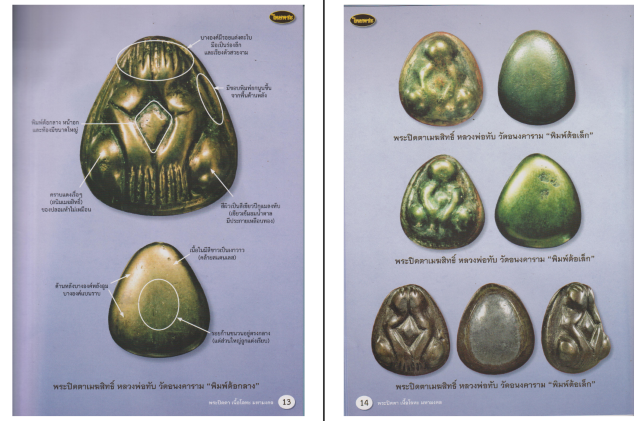
The surface of the amulet is smooth to touch, and shows authenticity through its dryness and the signs of aging when examined using the criteria used by experts for authentication of sacred ancient amulets. This exhibit has a very crisp and clear relief and is highly defined, which is referred to in the special vocabulary of the amulet community as ‘Nuea Graeng’, which is a more marble-like domino-dense admixture which despite dryness, tends to have a shiny ‘wet-look’ to it. The other main type of texture used in amulet communities is ‘Nuea Jad’ meaning something like ‘very crisp detailed relief’
This Pra Somdej, apart from being made by one of Thailands great Gaeji Ajarn, and being an authentic ancient Wat Rakang Amulet, it is also Sacred for the fact that it contaiins original Somdej Dto Wat Rakang Amulets in the Sacred Powder mixture too. This also makes complete sense, with Luang Phu Nak being a subsequent Gaeji Ajarn of Wat Rakang Kositaram, and a Looksit of Somdej Pra Puttajarn (Dto) Prohmrangsri.
Luang Phu Nak’s amulets are of great popularity because they are a great alternative to the original and extremely expensive Somdej Dto amulets, and are considered to be powerful and sacred through their use of the broken amulets and powders of Somdej Pra Puttajarn (Dto) Prohmrangsri, and the blessings of Luang Phu Nak.
The chances of owning an amulet like this are becoming less and less in recent years, and soon it will be practically impossible to obtain authentic old Wat Rakang amulets. There are ever more collectors and ever less amulets on the market, and there is no higher esteemed amulet than the Pra Somdej Wat Rakang Kositaram family. The amulets were made using the following ingredients
Powder from the chalk sticks used in the making of Pong Saksit (sacred powder for amulet making), Rice fragments kept by Luang Por Dto, the 5 Sacred Powders of; 1. Pong Putta Kun, 2. Pong Bpatamang, 3. Pong Trinisinghae, 4. Pong Maha Rach, 5. Pong Itti Jae Powder
The chalks used in the making of the Bpatamang, Trinisinghe Maharach and Itijae powders were mixed with sacred water that squeezed from the leaves of seven kinds of Thai plant including Bai Tamlueng , Yord Sawad, Yod Ga Hlong, Yod Raksorn,Chaiyapruek, Rachapreuk and Dork Mali (jasmine).
All of the ingredients of the Wat Rakang amulets were mixed with;
Nuea Pong (powder substances), Klee Saema (broken pieces of temple wall stones, Gaesorn Sut Bongot (pollen from the Bongot lotus flower), Kluay Nam Tai (a kind of Thai banana) mixed with sap from the rubber tree (Yang Madtum), Plueak Hoy (white clam shells), Nam Man Jantr (jasmine oil), Nam Man Dtang Iw (aromatic resinous oil used to congeal and cement the amulet mix with).
One hundred and eight kinds of flowers collected by LP Dto Prohmrangsri, Sacred powders and pollens (Pong Saksit), Pong Bpatamang – Klaew Klaad Kong Grapan, (protection from injury and accidents), Pong Puttakun – for great charm and avoid danger (Maha Sanaeh and Klaew Klaad magic), Pong Tri Ni Singhe – attractiveness…., Pong Maha Rach – power and respect.
Pong Itijae Powder – Metta Mahaniyom – this increases the likability of the wearer of this magic, Sacred Flowers and magical plants, Dork Sawad – Metta Mahaniyom, Sanaeh, Dork Gahlong – love charm., Dork Raksorn – love and metta, Dork Ga Fag Rak – love and attraction charm…., Dork Chayapruek – power and protection from danger, Dork Rachapruek – Amnaj and Klaew Klaad (commanding power and avoid accidents), Dork Waanangkurm -Kong Grapan Klaew Klaad, Dork Waan – Klaew Klaad, Dork Waan Sanah Junkhao – charm and protection from danger.
Dork Wan Sanah Jundum – charm and protection from danger, Dork Wan Sanah Jundang – charm and protection from danger, Dork Wannangkuak – charm, Waan Pra Buddha Jaoluang – charm and protection from danger, Bai Plu Ruam Jai – charm, Bai Plu Song Tang – charm and protection from danger, Pong Gaesorn Ha Bua – five lotus pollens, Kesorn 108 – charm and protection from danger.
Ancient Amulet - Thai Buddhist Pra Niyom Category Amulets
Ancient Amulet - Thai Buddhist Pra Niyom ('Pra Niyom'; meaning 'High End Preferred Class Antique amulets') Fine Authentic Amulets from the Great Thai Buddhist Sorcerer Monks, Lersi Ascetics, and Lay Masters of Olden Days
Luang Por Tong Sukh Intachoto, who was later bestowed the ecclesiastical title Pra Kroo Pinit Suttakun, was an immensely revered monk of Phetchaburi Province, and abbot of Wat Tanode Luang. He has long been revered by local communities and devotees in nearby regions, particularly among those who place faith in amulets connected with Maha Ud, Klaew Klaad (Pronounced ‘Klew Klaart’), Kong Grapan Chadtri (Pronounced ‘Kong-Grapan-Char-Tree) protection, invulnerability, and danger avoidance.
According to historical accounts consistently found across Thai-language sources, Luang Por Tong Sukh was a monk strict in monastic discipline and deeply accomplished in protective esoteric knowledge (wicha). His mastery belonged to a traditional central-Thai lineage emphasizing kong grapan, klaew klaat, and maha ud. He played a significant role in the administration, restoration, and support of Wat Tanode Luang during a period when social conditions were unstable and personal security was a major concern for the local population.
His reputation became especially prominent during the mid-20th century. At that time, his amulets were widely sought by individuals in high-risk professions such as local toughs, gunmen, police officers, and soldiers. This reflects the social realities of the era rather than an endorsement of such lifestyles, and provides historical context for the strong belief in the protective and invulnerable qualities attributed to his sacred objects.
The sacred amulets attributed to Luang Por Tong Sukh, that are consistently recognized in Thai sources can be categorized as follows.
First, coin amulets of Luang Por Tong Sukh. The most important and widely accepted is the second generation coin, created in Buddhist Era 2498 (1955). This coin is regarded as the principal amulet of the Wat Tanode Luang lineage. It was produced in several metals, including copper, silver, and gold. Copper examples are the most commonly encountered and are the most popular in the collector market.
A key point of classification is the die detail of the vowel “I” above Luang Por Tong Sukh’s name. These are divided into the “I touching the rim” type and the “I floating” type. The “I touching the rim” variety is regarded as the popular block and commands higher demand. The attributed powers repeatedly cited are maha udom, kong krapan, klaew klaat, and good fortune, with many experiential accounts traditionally associated with these coins, especially within Phetchaburi and surrounding provinces.
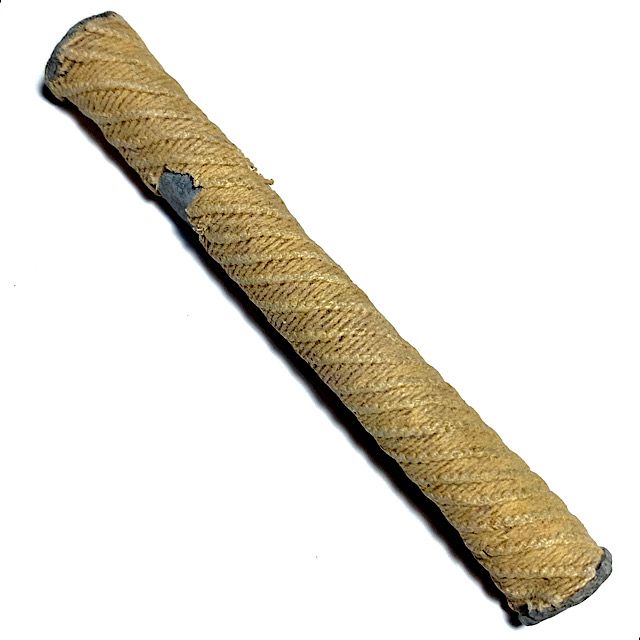
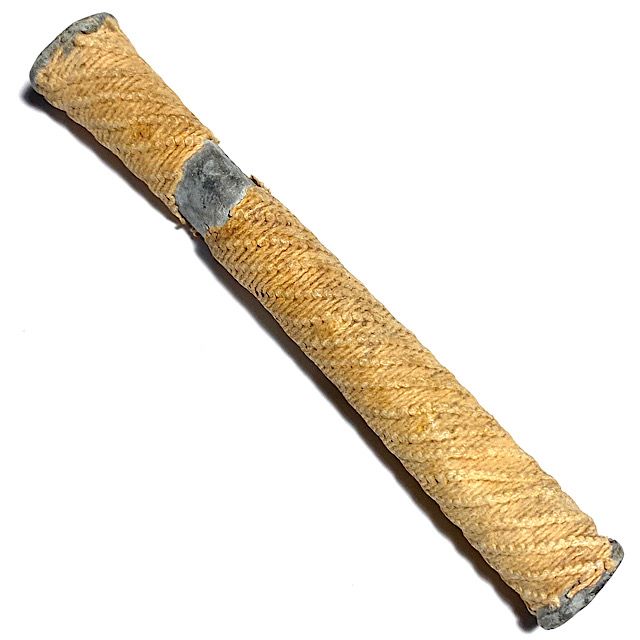
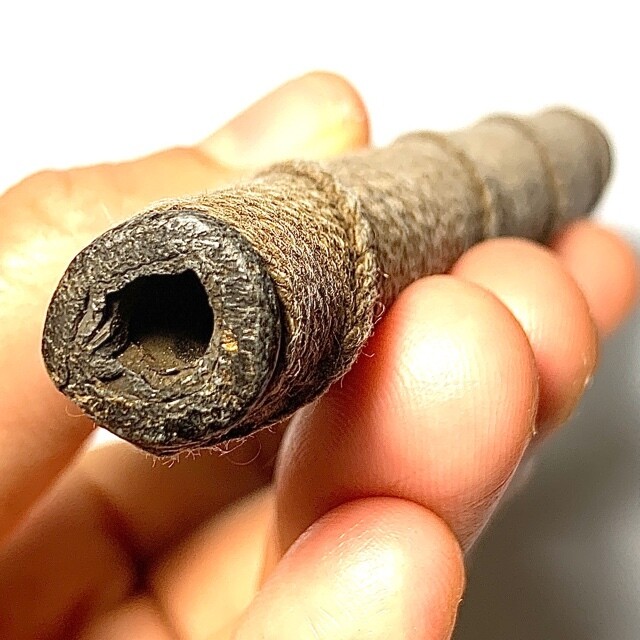
Second, takrud amulets. These include lacquer-coated takrud and takrud associated with protective and Sariga (celestial magpie pronounced ‘Saa-ri-gar) bird Wicha related traditions. They are typically metal sheets inscribed with sacred formulas, rolled into tubes, and coated with lacquer or ritual substances according to established formulas. Their primary attributed qualities are protection, danger avoidance, and charm. Sizes and forms vary depending on the period of creation.
Third, look om and look sakot krang. These are small bead-like charms made from lacquer or herbal mixtures prepared according to traditional methods. They are intended for personal carrying and are believed to provide general protection and safety. These items are usually handmade and do not follow standardized molds.
Fourth, krang-based powder amulets. These are folk-style molded amulets made from powder or lacquer-based materials. Thai sources describe them as having been distributed on specific occasions within the temple or to close disciples, rather than produced in large commercial quantities.
After the passing of Luang Por Tong Sukh, the lineage of his wicha at Wat Tanode Luang continued through his principal disciple, Luang Por Phaeo. Luang Por Phaeo was the prime apprentice (looksīt) of Luang Por Tong Sukh and later became abbot of Wat Tanode Luang. He is widely recognized as the direct inheritor of Luang Por Tong Sukh’s ritual knowledge, protective formulas, and consecration methods, ensuring continuity of the temple’s spiritual lineage rather than a break or reinvention.
Luang Por Phaeo’s role was not merely administrative. Thai sources consistently describe him as actively practicing and transmitting the same core wicha of protection and invulnerability learned directly from his master. This continuity is an important factor in how collectors and devotees understand the posthumous legacy of Luang Por Tong Sukh.
The sacred objects of Luang Por Phaeo of Wat Tanode Luang, as recognized in Thai collector circles, include coin amulets issued during his abbacy, takrud prepared according to the Wat Tanode Luang lineage, and other consecrated objects created for temple construction, merit-making, or specific ceremonial occasions. These items are generally regarded as lineage extensions rather than substitutes for the original-era amulets of Luang Por Tong Sukh and their value and status are assessed accordingly.
Within the Thai amulet market, Luang Por Tong Sukh’s amulets—especially the second generation coin—are firmly established as core items of the Phetchaburi lineage. They are often sought as companion pieces to the first generation coin of Luang Por Daeng of Wat Khao Bandai-It, a contemporary monk from the same regional and temporal sphere of belief.
Market value varies greatly depending on condition, metal, and die type. Coins in original, well-preserved condition and of popular dies command significantly higher value. Price figures commonly cited in Thai sources function as general market references rather than fixed or guaranteed valuations.
Luang Por Tong Sukh (official name: Pra Kroo Pinit Suttakun) of Wat Tanode Luang, was a historically famous and incredibly highly revered holy sorcerer-monk, whose amulets possess a distinct lineage identity, focused and centered on his famous protective wicha. That lineage continued directly through his prime disciple Luang Por Phaeo, ensuring continuity of ritual mastery and consecration practice at Wat Tanode Luang. The information presented here represents the core body of knowledge consistently shared across Thai language sources and reflects the generally accepted framework within the Thai amulet community.
Ancient Amulet - Thai Buddhist Pra Niyom Category Amulets
Ancient Amulet - Thai Buddhist Pra Niyom ('Pra Niyom'; meaning 'High End Preferred Class Antique amulets') Fine Authentic Amulets from the Great Thai Buddhist Sorcerer Monks, Lersi Ascetics, and Lay Masters of Olden Days
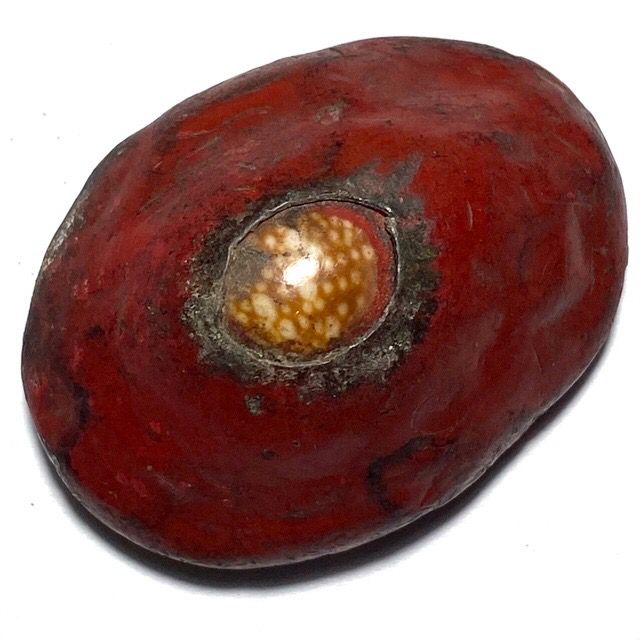
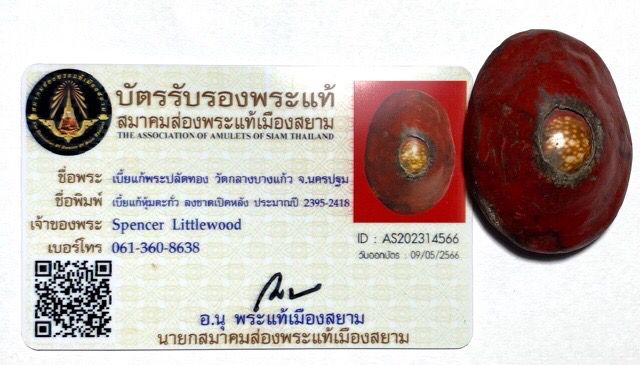
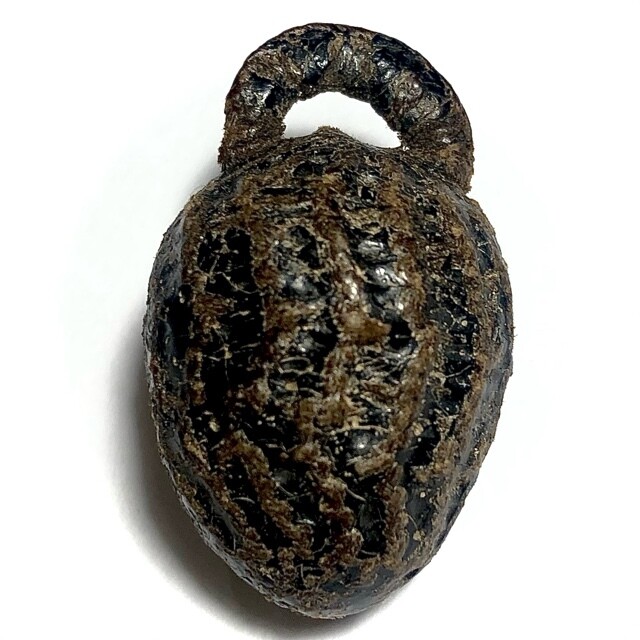
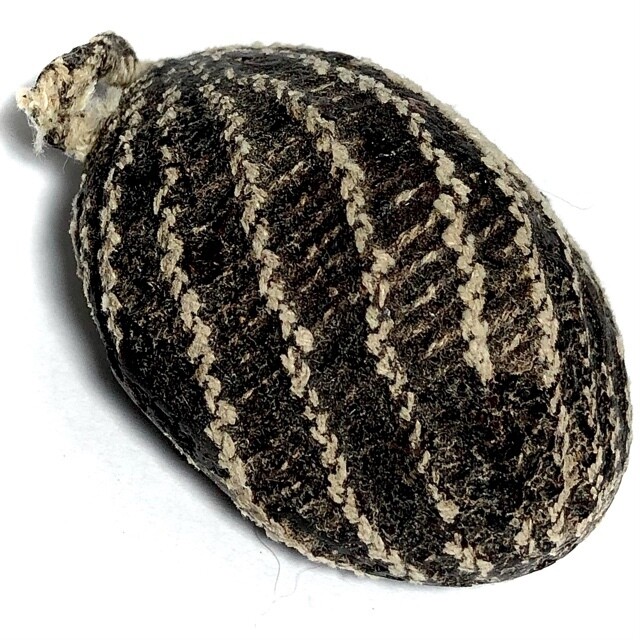
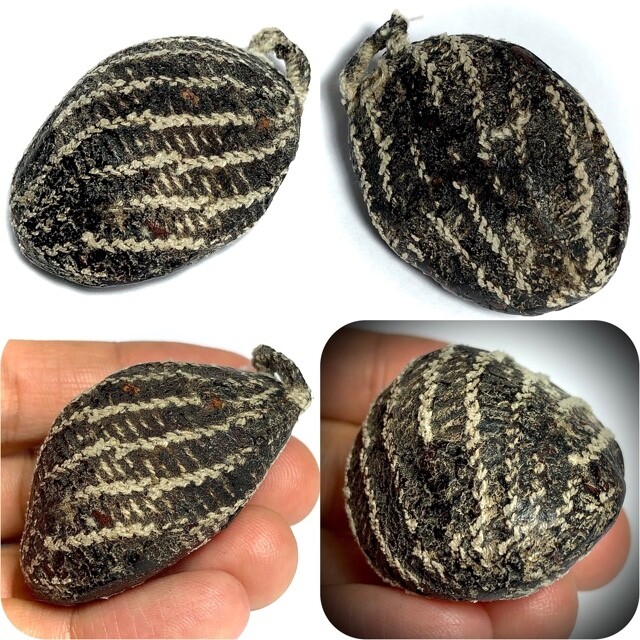
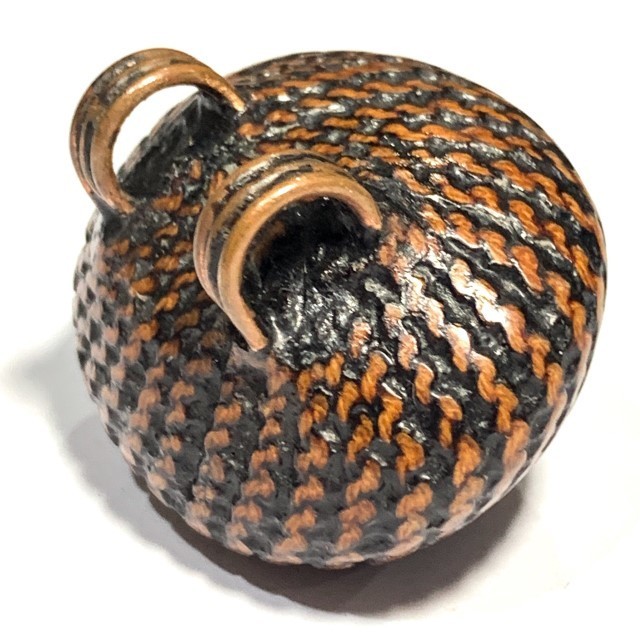
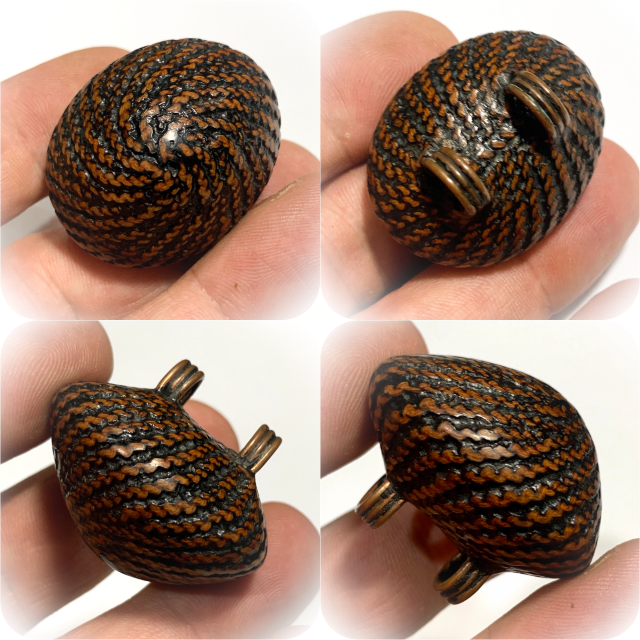
The Bia Gae from the Luang Pu Bun lineage of Wat Klang Bang Gaew is regarded as one of the most eminent protective talismans in the Thai amulet tradition, with a long-standing history and deeply rooted faith extending from the past to the present. Its associated virtues are said to encompass the neutralization of misfortune, avoidance of danger, invulnerability, metta maha niyom (benevolent attraction), and protection against black magic, spirits, and malevolent entities.
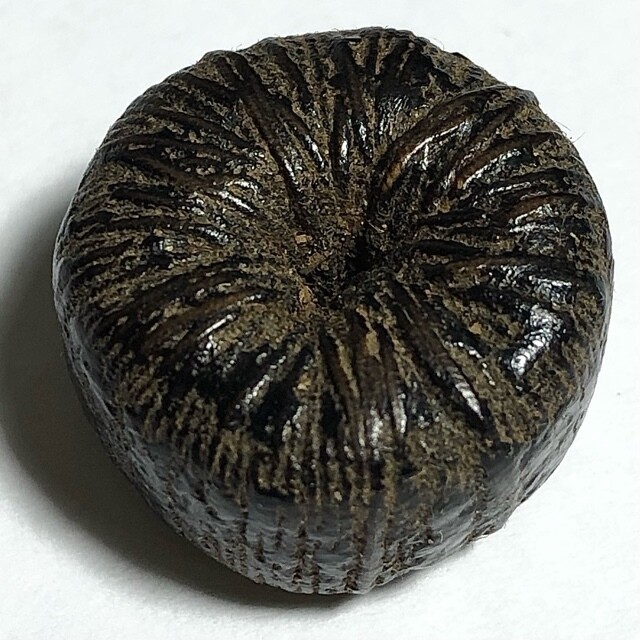
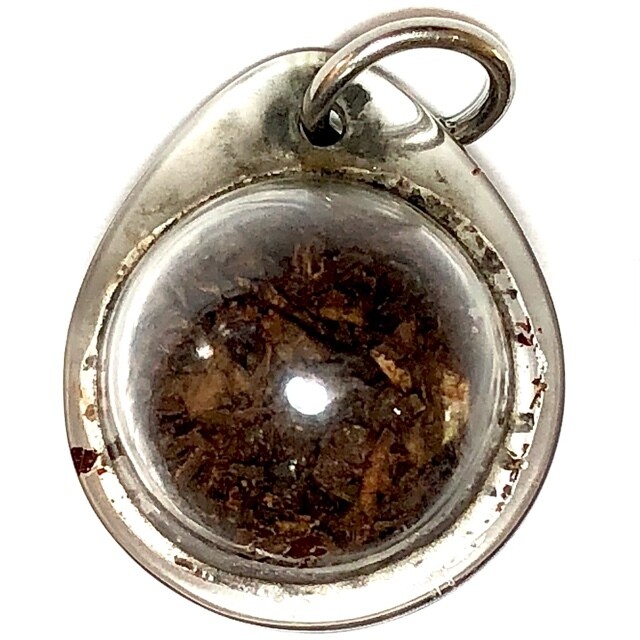
For generations, devotees have carried Bia Gae as a personal protective charm. Among all variations, those coated with herbal sacred powders and the essence known as phaya mai phu (rotting sacred wood) are considered the rarest and most distinctive, and are especially revered by collectors nationwide. This example is a significant piece directly originating from the era in which Luang Pu Bun himself created and consecrated such amulets.
Lineage and Transmission of the Knowledge
Luang Pu Bun Kandhajoti (Pra Phuttha Withi Nayok), former abbot of Wat Klang Bang Gaew in Nakhon Pathom Province, was the pioneer who established and transmitted the complete knowledge of crafting Bia Gae until it became renowned throughout the Thai amulet world. His period of activity is generally placed between approximately 1897 and 1935. He learned the core method from Pra Ajarn Thong, and subsequently refined it into the distinctive Wat Klang Bang Gaew tradition. This lineage was later passed on to Luang Pu Perm, Luang Pu Juea, and other senior monks of later generations, continuing uninterrupted to the present day.
Physical Characteristics and Method of Construction
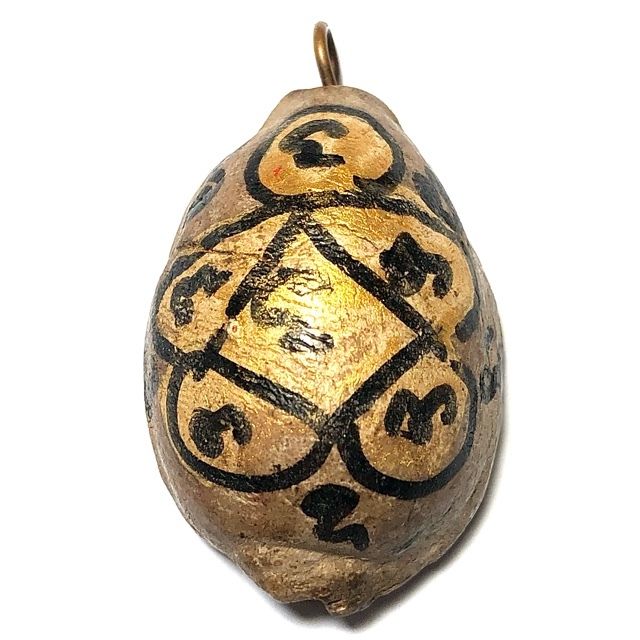
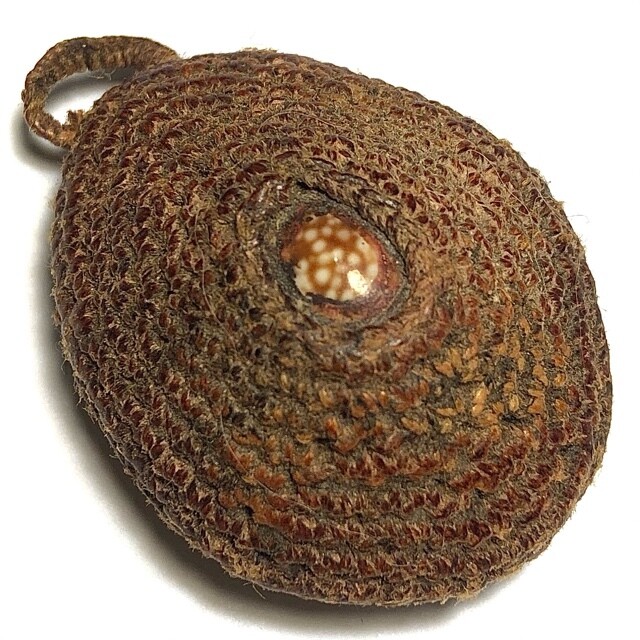
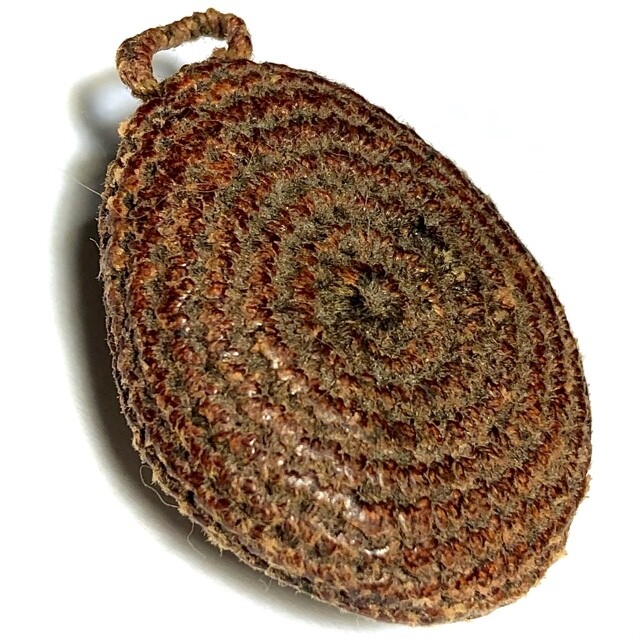
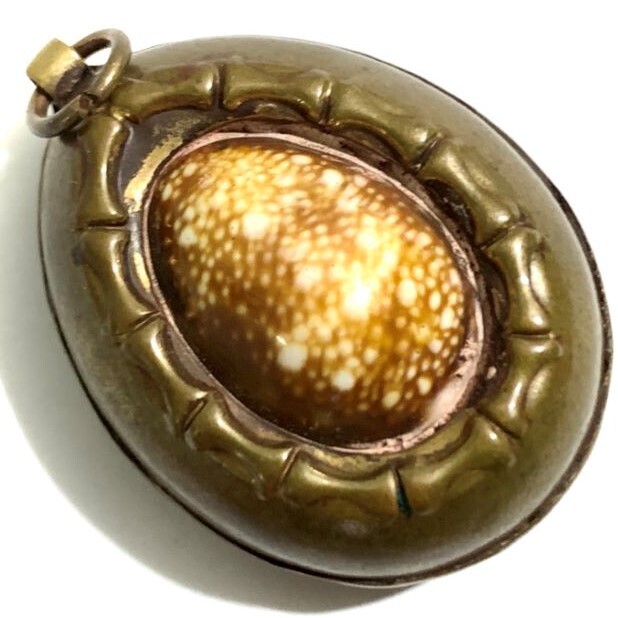
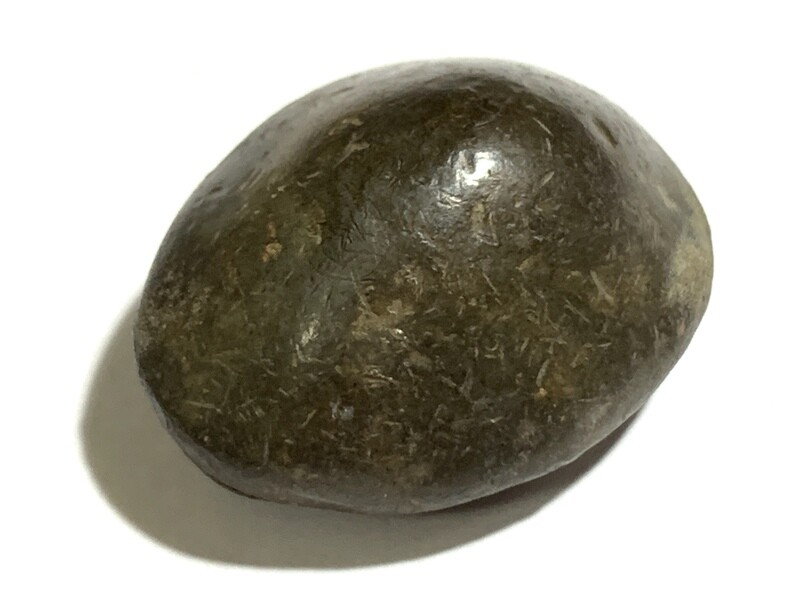
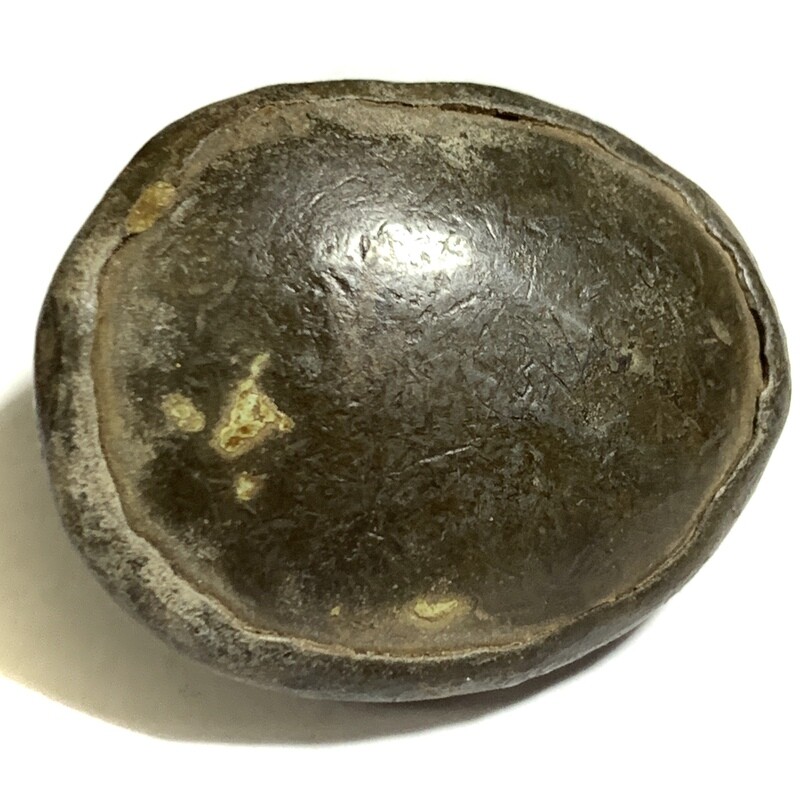
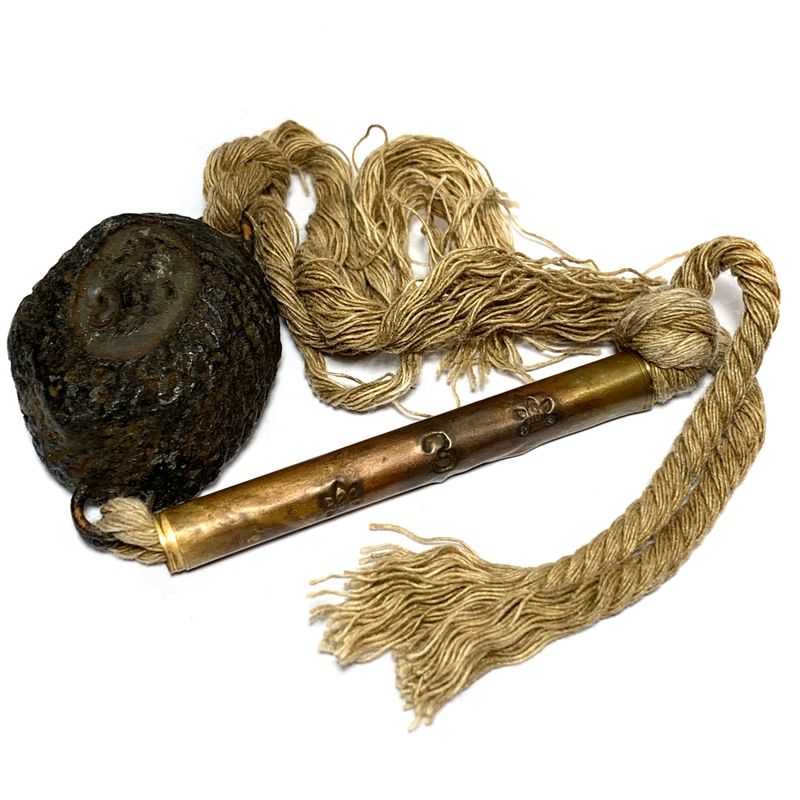
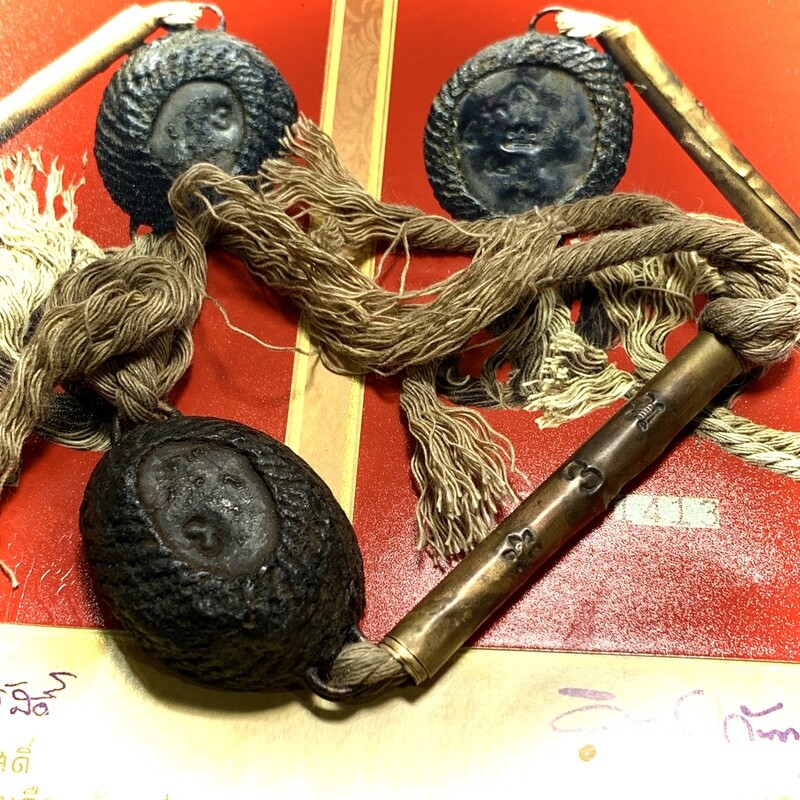
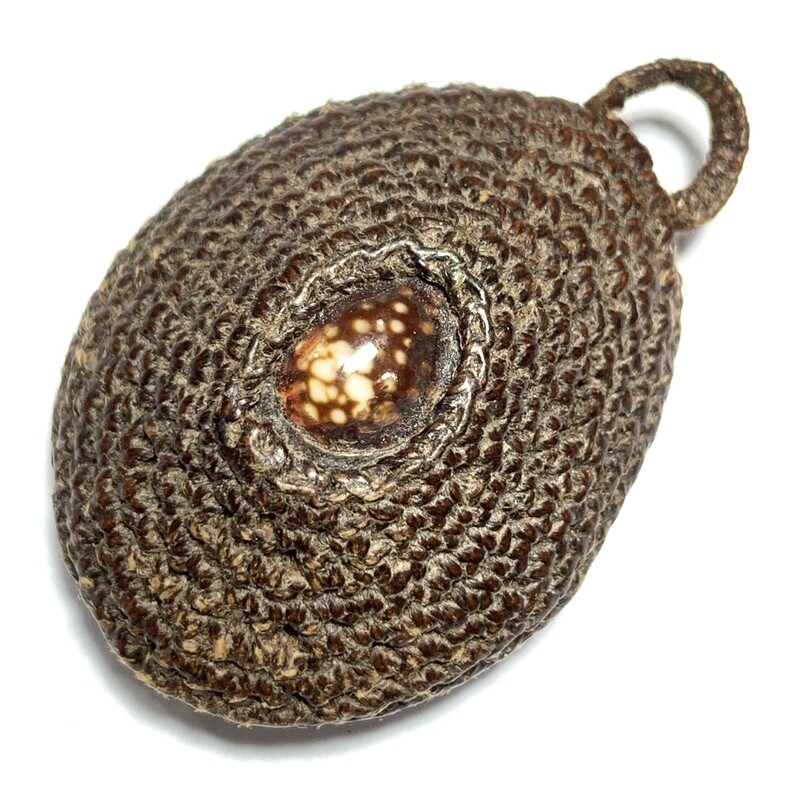
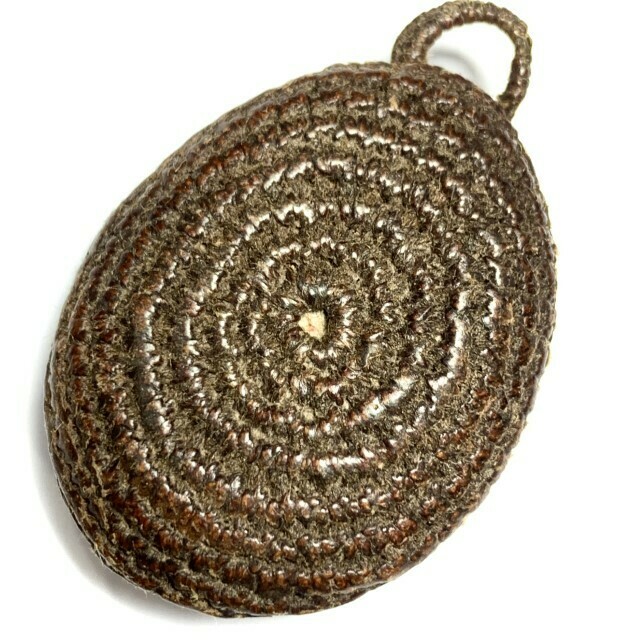
A Bia Gae coated with phaya mai phu powder is distinguished by several defining features. A natural cowrie shell is selected according to strict traditional criteria and used as the sacred vessel for containing consecrated substances. Inside, mercury is placed together with powdered phaya mai phu and carefully selected herbal powders, intended to enhance qualities of protection, metta maha niyom, danger avoidance, and defense against harmful forces. The exterior is sealed using traditional techniques involving the application of sacred powders and black lacquer, which both preserve the materials and reinforce the spiritual potency. Some examples bear yantra inscriptions or contain small takrut amulets to further augment their power, depending on the period and the individual hand of the master. The finished Bia Gae is typically bound with cord or encased using authentic materials, making it durable and suitable for being worn or carried on the person.
The ritual process for creating this group of Bia Gae strictly follows the traditional Wat Klang Bang Gaew formula. It begins with the careful selection of the shell, the ritual veneration and preparation of mercury, the inscription of yantra, and the coating with herbal and phaya mai phu powders. The amulets are then consecrated with sacred incantations to imbue them with both moral-spiritual power and esoteric force, in accordance with the ancient teachings handed down by generations of masters.
Attributed Virtues and Devotional Belief
Bia Gae from the era of Luang Pu Bun are considered among the highest forms of protective talismans for neutralizing misfortune and guarding against harm. Their attributed qualities include the removal of bad luck, the dispelling of black magic and inauspicious influences, and the transformation of adverse conditions into favorable ones. They are believed to confer invulnerability, protection from physical danger, spirits, and dark sorcery, while also promoting metta maha niyom and stabilizing one’s destiny. Devotees may carry the amulet on their person or enshrine it for ritual use, seeking protection, safety, and the enhancement of fortune.
Luang Phu Bun of Wat Klang Bang Gaew
Due to the continuity of faith across generations, examples created directly by Luang Pu Bun are regarded as possessing exceptional historical significance and very high collector value.
Importance and Collectible Value
The Bia Gae coated with phaya mai phu powder attributed to Luang Pu Bun holds importance in both devotional practice and the Thai amulet market. It is among the oldest known Bia Gae of the Wat Klang Bang Gaew lineage, produced during an early and now-rare period with substantial historical value. Many experienced and specialized collectors recognize this type as a legendary-class Bia Gae within the Thai amulet tradition.
Wat Klang Bang Gaew famous mainly with the Public for its great Master Luang Phu Bun, is an Ancient Temple in Nakorn Pathom. It is home to a Lineage History of 4 great Ordained Masters, 3 who have Passed On (Luang Phu Bun, Luang Por Perm & Luang Phu Juea), and the Current Master, Luang Por Kong (Sanya). Luang Por Sanya is proving to continue in the same Trajectory as his Predecessors, and has created a long History of Deeds and released a large Pantheon of Amulets in the Lineage tradition of his Mentors, Luang Phu Bun, Luang Por Perm and Luang Phu Juea.
The Wat Klang Bang Gaew Master Lineage is a fantastic choice for Hunters & Collectors of Fine Master Class Amulets. This is because the Amulets of this Temple, and its Masters, range from the present Day master Luang Por Kong (Sanya), back through Luang Phu Juea, Luang Por Perm, and on, to the Great Luang Phu Bun.
A powerful continued Lineage of Masters have brought Wat Klang Bang Gaew to the Forefront of both the Ancient and the Modern Amulet Scenes, stretching back to the times of Luang Phu Bun, through the Era of Luang Por Perm, and the Great Luang Phu Juea Bpiyasilo, to its present Abbot, Luang Phu Sanya (Kong).
The Revered Legend of Phra Somdej Wat Rakhang: A Scholarly Examination of its Origins, Significance, and Enduring Legacy
Phra Somdej Wat Rakhang, often hailed as the “King of Amulets” within Thailand, stands as an icon of profound cultural and religious significance. Its very name evokes a sense of history, spirituality, and the revered figure of Somdej Phra Phutthachan (To) Phrommarangsi, the esteemed monk credited with its creation. This amulet is not merely an object of veneration but represents a deep-seated cultural narrative interwoven with faith, artistry, and the legacy of one of Thailand’s most respected Buddhist figures. This report aims to provide a comprehensive and scholarly examination of the legend surrounding Phra Somdej Wat Rakhang, delving into the life of its creator, the history of its sacred origins, the intricate details of its making, the diverse forms it takes, and the myriad stories of its perceived miraculous power. The enduring reverence for this amulet across all levels of Thai society underscores its unique position as a unifying symbol within Thai Buddhism.
The narrative of Phra Somdej Wat Rakhang is inextricably linked to the life and times of Somdej Phra Phutthachan (To) Phrommarangsi, a monk whose influence permeated Thai society during the early to mid-Rattanakosin period. Born in Ayutthaya on April 17, 1788 (B.E. 2331) during the reign of King Rama I, his early life is shrouded in some mystery, with varying accounts suggesting a possible connection to the royal lineage, either as an unacknowledged son of King Rama I or King Rama II 4. At the age of 13, he embarked on his monastic journey, taking his novice vows in Phichit before moving to study Buddhist scriptures in the centers of learning at Chainat and Bangkok. His exceptional piety and intellectual prowess garnered royal attention, leading to his royal ordination as a monk at the esteemed Wat Phra Si Rattana Satsadaram (Temple of the Emerald Buddha) at the age of 20, where he received the monastic name “Phrommarangsi”. The differing accounts surrounding his parentage, particularly the potential for royal blood, likely contributed to the elevated regard in which he was held throughout his life 6. This element of ambiguity in his early history only adds to the mystique surrounding this revered figure.
Somdej Pra Puttajarn (Dto) Prohmrangsri Wat Sadter Amulets
Somdej Toh’s dedication to his monastic studies was evident in his rapid acquisition of knowledge and the high praise he received from his teachers, including the venerable Sangkharat Suk. He embraced ascetic practices, adhering strictly to the traditional dhutanga, which included eating only from his alms bowl, possessing a mere three robes, and engaging in meditative practices in secluded and often challenging environments such as cemeteries. Despite his profound understanding of Buddhist scriptures, he initially displayed a notable disinterest in pursuing high monastic ranks during the reign of King Rama III, preferring the simple designation of “Phra Maha To”.
This reluctance to seek worldly recognition for his spiritual achievements underscores his focus on inner development. However, the reign of King Rama IV marked a turning point. The King held Somdej Toh in great esteem, and in 1852 (B.E. 2395), at the age of 65, bestowed upon him his first official monastic title, “Phra Thammakiti,” concurrently appointing him as the abbot of the historically significant Wat Rakhang. His ascent within the Sangha continued, with promotions to “Phra Thep Krawee” in 1854 (B.E. 2397) and ultimately to the highest monastic rank of “Somdej Phra Phutthachan” in 1864 (B.E. 2407). Somdej Toh’s initial resistance to formal titles, followed by his eventual acceptance and rapid progression under King Rama IV, reveals a nuanced relationship with authority. It suggests a leader who prioritized spiritual practice yet recognized the potential to serve the Buddhist community more effectively from a position of influence, particularly under the patronage of a supportive monarch.
Somdej Dto with the famous Pra Somdej Gang Pla amulet of the Kru Tap Khaw Hiding Place Find
Somdej Toh’s contributions to Buddhism extended far beyond his administrative roles. He was widely celebrated as an exceptional preacher and teacher of the Dharma, considered unparalleled in the Siam of his time, and known for his distinctive and engaging teaching methods. A significant aspect of his legacy is his rediscovery and popularization of the Chinabanchorn Katha, a powerful Buddhist prayer. Recognizing the ancient text’s profound spiritual efficacy, he adapted and simplified it, making it more accessible for contemporary recitation by the laity. Furthermore, Somdej Toh was a driving force behind the construction and restoration of numerous temples and Buddha images across Thailand. His patronage extended to significant projects such as the massive Buddha image at Wat Intharawihan (Wat Bangkhunprom Nai) in Bangkok, the revered reclining Buddha at Wat Satoe in Ayutthaya, and the large Buddha image at Wat Chaiyo in Ang Thong. His life, dedicated to the propagation and preservation of Buddhist teachings and sacred sites, came to a close in 1872 (B.E. 2415) during the reign of King Rama V, at the venerable age of 84. Somdej Toh’s multifaceted contributions as a teacher, builder, and spiritual leader underscore his profound dedication to the flourishing of Buddhism in Thailand, placing the creation of Phra Somdej within the broader context of his remarkable life and work.
Somdej Pra Puttajarn (Dto) Prohmrangsri Wat Rakang Kositaram
The origins of Phra Somdej Wat Rakhang are deeply rooted in the history and sanctity of Wat Rakhang Khositaram Woramahawihan itself. The temple’s history traces back to the Ayutthaya period, where it was originally known as Wat Bang Wa Yai, situated in proximity to Wat Bang Wa Noi (later known as Wat Amarinthraram). Its status was elevated during the Thonburi period under King Taksin, who established his royal palace near the temple, recognizing its importance and bestowing upon it the status of a royal temple. A significant event in the temple’s history occurred during the reign of King Rama I in the early Rattanakosin period. An ancient bell with a particularly melodious sound was discovered within the temple grounds. This discovery led to the temple being renamed Wat Rakhang, meaning “Temple of the Bell”. King Rama I, recognizing the bell’s unique quality, had it moved to Wat Phra Si Rattana Satsadaram but compensated Wat Rakhang by commissioning five new bells for the temple. Wat Rakhang also enjoyed the patronage of King Rama I’s sister, Princess Thepsudawadi, who, along with the King, oversaw significant restoration efforts at the temple. Further highlighting its religious significance, Wat Rakhang served as a primary residence for the Supreme Patriarch during the early Rattanakosin period, with Somdej Sangkharat Si holding the distinction of being the first Supreme Patriarch of Bangkok to reside there. The temple’s deep historical roots and its close association with the early Rattanakosin dynasty underscore its pivotal role in the religious and political landscape of the time, establishing it as a sacred and historically significant location.
The connection between Somdej Phra Phutthachan (To) and Wat Rakhang solidified when he was appointed as the sixth abbot of the temple in 1852 (B.E. 2395) during the reign of King Rama IV. His tenure as abbot is widely regarded as a golden era for Wat Rakhang, a period marked by his profound spiritual influence and, most notably, the creation of the Phra Somdej amulet. Even before Somdej Toh’s abbacy, Wat Rakhang housed significant structures with royal connections, such as the Ho Phra Trai Pidok (Tripitaka Hall). This hall, a beautiful example of Thai architecture, was originally King Rama I’s residence during the Thonburi period before being moved to Wat Rakhang and renovated at his command to serve as the temple’s scripture hall. The murals adorning the interior of this hall are particularly noteworthy for their artistic and historical value. The strong and enduring association between Somdej Toh and Wat Rakhang is perhaps best exemplified by his popular appellation, “Somdej Wat Rakhang”. This almost synonymous relationship underscores the temple as the central stage for his most significant contributions, with his long period as abbot firmly cementing this connection in the collective memory and highlighting Wat Rakhang as the birthplace of the revered Phra Somdej legend.
The genesis of the Phra Somdej Wat Rakhang legend is attributed to Somdej Toh’s inspiration drawn from the ancient traditions of Buddhist monks who created amulets as a means to preserve and propagate the teachings of the Buddha. These venerable practices often involved embedding sacred objects within the structures of pagodas and other religious monuments. It is also believed that Somdej Toh’s inspiration may have been kindled by his discovery of ancient amulets during a visit to his relatives in Kamphaeng Phet around 1849 (B.E. 2392), a city renowned for its rich history of producing sacred amulets. His primary motivation in creating the Phra Somdej was to provide a tangible spiritual anchor for people, guiding them towards virtuous actions and away from harmful ones, while also encouraging the practices of prayer and adherence to the principles of the Eightfold Path. The very form of the Phra Somdej, a rectangular tablet featuring an image of the Buddha, is seen by many as a symbolic representation of Buddhist cosmology, with the earth as the foundation and the Buddha figure embodying enlightenment. Additionally, historical accounts suggest that some Phra Somdej amulets were created to commemorate specific auspicious occasions or as tokens of gratitude for donors who provided financial support for various temple projects. The diverse motivations behind the creation of Phra Somdej reveal a multifaceted intention, encompassing the preservation of Buddhist heritage, the provision of moral and spiritual guidance, and the practical needs of the temple community.
Wat Rakang Kositaram Woramahaviharn Temple, in Bangkok.
The creation of Phra Somdej Wat Rakhang was not a singular event but rather a process that unfolded over several distinct periods, generally categorized as the early, middle, and late eras. These periods roughly correspond to the reigns of Kings Rama III, IV, and V, although some historical accounts suggest an even earlier commencement of amulet production during the reign of King Rama II, around 1812 (B.E. 2355). The early period, likely during the reign of King Rama III, saw the creation of Phra Somdej using simpler molds, possibly crafted by local artisans or even by Somdej Toh himself. These early amulets often exhibit a less refined appearance compared to later examples, lacking the sharp definition and intricate details that would become characteristic of subsequent molds. The middle period, coinciding with the reign of King Rama IV, witnessed the development of more refined molds and a greater variety of designs. It was during this time that the iconic Phim Prok Pho (Bodhi Leaf Covered Mold) is believed to have been introduced. The late period, occurring during the reign of King Rama V, is notable for the involvement of Luang Vicharn Chearanai, a royal goldsmith, who crafted more elaborate and standardized molds. This is particularly significant around 1866 (B.E. 2409), with the ambitious intention of producing 84,000 Phra Somdej amulets. The extended timeline of Phra Somdej’s creation and the evolution of the molds employed reflect a gradual refinement in both the amulet’s form and its perceived significance. The engagement of a royal artisan in the later period underscores the increasing prestige and importance of the amulet, aligning with Somdej Toh’s own growing stature within the religious and royal spheres. The intended large-scale production in the later years suggests a burgeoning demand and widespread recognition of the amulet’s spiritual power and cultural value.
Phra Somdej Wat Rakhang Kes Talu Sum
The creation of Phra Somdej Wat Rakhang involved a meticulous selection and combination of sacred materials, each imbued with its own spiritual significance and often sourced from revered locations. The primary binding agent and a key component of the amulet’s substance was white lime, derived from the burning of seashells. Various types of lime, including limestone and “poon phet” (diamond lime), were also incorporated into the mixture. Central to the spiritual potency of Phra Somdej are the five sacred powders, collectively known as Pong Wised Ha Praphet. These include Pong Pathamang, believed to confer invulnerability; Pong Itthije, associated with popularity and kindness; Pong Maharach, thought to bestow authority and power; Pong Phutthakhun, representing general merit and the virtues of the Buddha; and Pong Trinisinghe, known for its power to attract and charm. The creation of these powders was a ritualistic process, involving the inscription and erasure of sacred formulas on slate boards, often performed within the consecrated space of the temple’s main prayer hall. In addition to these core ingredients, other sacred materials were commonly included, such as burnt rice collected from the bottom of Somdej Toh’s alms bowl, various types of sacred soils gathered from seven forests, seven salt licks, and the pillars of important cities, pollen from 108 different types of flowers, and fragments of old, broken amulets, including those from the historically significant amulet-producing region of Kamphaeng Phet. The careful and deliberate selection of these diverse materials, each carrying its own symbolic weight and perceived spiritual power, underscores the profound intention behind the creation of Phra Somdej Wat Rakhang. The inclusion of substances from revered sites and fragments of previous sacred objects suggests a desire to amplify the amulet’s spiritual efficacy and connect it to a broader lineage of sacred power.
To bind these diverse materials together, Somdej Toh employed natural binding agents such as tang oil (tung oil), honey, and mashed banana 33. Sugar cane juice was also occasionally used as a binding agent. Furthermore, the amulets often contained other significant items that held personal and spiritual meaning, such as remnants of saffron robes worn by monks, fragrant incense ash collected from temple altars, and even food offered to monks, particularly leftover rice and ripe bananas that Somdej Toh himself would dry and grind into the mixture. Less common but still notable ingredients included paper pulp, derived from soaking straw or mulberry paper, betel nut residue from Somdej Toh’s own chewing, and various types of auspicious woods and medicinal herbs believed to possess protective and beneficial properties. The inclusion of these everyday items, particularly those directly associated with Somdej Toh’s personal practices and the temple’s rituals, suggests a deep and intimate connection between the creator and the creation of the amulets. It reinforces the notion that the sacredness of Phra Somdej originates not solely from rare or exotic materials but also from the blessings, intentions, and personal touch of Somdej Toh, imbuing even seemingly mundane substances with spiritual significance through his dedication and prayers.
The traditional process of crafting Phra Somdej Wat Rakhang was a hands-on and deliberate undertaking, reflecting the personal involvement of Somdej Toh in the creation of these sacred objects. The various sacred materials and binding agents were meticulously mixed and pounded together in a mortar until they formed a cohesive, clay-like substance. This mixture was then carefully shaped into rectangular tablets, often referred to as “chin fak,” a term that likens their form to pieces of winter melon. These tablets were subsequently pressed firmly into molds, which were typically made of slate, stone, or occasionally wood. After pressing, the edges of the amulets were meticulously trimmed into a neat rectangular shape using a thin, sharp bamboo tool traditionally employed for the delicate art of weaving flowers. To ensure the clay filled the mold completely and to eliminate any air pockets, a flat wooden board was often placed behind the mold, and gentle tapping with another piece of wood or a hard object was applied to the back. This relatively simple yet careful creation process underscores the personal dedication and intention that Somdej Toh invested in each Phra Somdej amulet. The direct connection between the revered monk and the crafting of these sacred objects likely contributed significantly to their subsequent revered status and the strong belief in their inherent sacredness.
Beyond the physical creation, the spiritual efficacy of Phra Somdej Wat Rakhang is deeply attributed to the rituals and blessings bestowed upon them by Somdej Toh himself. It is widely believed that Somdej Toh personally blessed each amulet through his extensive meditative practices and the recitation of powerful sacred incantations. A particularly significant aspect of these blessings was the prominent use of the Chinabanchorn Katha, the powerful Buddhist prayer that Somdej Toh had popularized. This Katha is believed to imbue the amulets with profound protective qualities, safeguarding the wearer from harm and misfortune. Historical accounts also describe Somdej Toh placing the newly created amulets in bowls or baskets within the temple’s main prayer hall, positioning them in front of sacred Buddha images, and connecting them with a sacred thread known as “sai sin.” This thread was believed to channel the blessings and sacred vibrations emanating from the Buddha images to the amulets during monastic chanting sessions. Notably, Phra Somdej amulets were primarily created for distribution directly to devotees as acts of merit and spiritual guidance, rather than being stored or buried within temple crypts. It is estimated that Somdej Toh created a vast number of these amulets, potentially as many as 84,000, a figure that aligns with the traditional number of teachings within the Buddhist canon. The direct involvement of Somdej Toh in both the creation and the blessing of Phra Somdej, particularly through the powerful Chinabanchorn Katha, is central to their perceived efficacy and sacredness. The act of personally distributing them to devotees further emphasizes their intended purpose as objects of faith, protection, and spiritual benefit for the wider community.
Phra Somdej Wat Rakhang is not a monolithic entity but rather exists in several distinct forms, known as Phim (molds), each possessing its own unique characteristics and often associated with different periods of creation. The five widely recognized standard molds, revered by collectors and devotees alike, are Phim Yai (พิมพ์ใหญ่), Phim Song Chedi (พิมพ์ทรงเจดีย์), Phim Ket Bua Toom (พิมพ์เกศบัวตูม), Phim Than Saem (พิมพ์ฐานแซม), and Phim Prok Pho (พิมพ์ปรกโพธิ์) 31. These different molds not only represent variations in artistic style but also potentially reflect the evolution of the amulet’s design and production over time. The existence of these distinct forms underscores a deliberate artistic and possibly symbolic progression in the creation of Phra Somdej, providing a rich tapestry of visual diversity for those who study and collect these sacred objects.
The Phim Yai (พิมพ์ใหญ่), translating to “Grand Mold” or “Principal Mold,” holds the distinction of being the most popular and highly regarded among the five main Phim. It is often referred to as the “Phim Pra Prathan,” signifying its representation of the Principal Buddha Image. The general characteristics of Phim Yai include a depiction of the Buddha seated in a cross-legged meditative posture atop a three-tiered base. Early examples of this mold often lack intricate facial details 54. However, later iterations, particularly those attributed to the royal goldsmith Luang Vicharn Chearanai, tend to exhibit more defined features. Within the Phim Yai category, several variations exist, most notably differences in the style of the Buddha’s chest, classified as Ok Wi (อกวี – V-chest) and Ok Krabok (อกกระบอก – cylindrical chest), as well as the presence or absence of a subtle horizontal line beneath the Buddha’s lap, known as Sen Saem Tai Na Tap (เส้นแซมใต้หน้าตัก). Experts in the field have further identified up to four distinct sub-variations within the Phim Yai mold, based on minute differences in the lines, curves, and overall proportions of the Buddha figure and the surrounding arch. The existence of these numerous variations within the Phim Yai mold suggests a continuous process of refinement and evolution of this most popular design. These subtle distinctions are highly valued by collectors and serve as crucial identifiers for determining the authenticity and approximate age of individual Phim Yai amulets, reflecting the deep level of scrutiny and nuanced understanding applied to this primary mold by amulet enthusiasts.
The Phim Song Chedi (พิมพ์ทรงเจดีย์), translating to “Chedi Shaped Mold” or “Stupa Shaped Mold,” is characterized by the depiction of a stupa-like structure (chedi) situated above the image of the Buddha. This chedi symbolizes the relics and the teachings of the Buddha, adding a distinct symbolic layer to this particular mold. Notably, the size of Phim Song Chedi amulets can vary; some examples are larger than certain variations of the Phim Yai, while others are smaller and referred to as Phim Yom (พิมพ์ย่อม – smaller version). Specific identifying features of this mold include a smaller and more slender arch (Sen Sum Krop Kaew – เส้นซุ้มครอบแก้ว) compared to the Phim Yai, and a pointed tip on the second tier of the base, often referred to as “Hua Rua Iam Chun,” a term that evocatively describes its resemblance to the prow of a small traditional boat. The distinctive chedi shape clearly distinguishes this mold, while the variations in size and the specific details of the arch and base provide further characteristics for identification and appreciation by collectors.
The Phim Ket Bua Toom (พิมพ์เกศบัวตูม), translating to “Lotus Bud Topknot Mold,” is readily identifiable by the distinctive lotus bud-shaped topknot (Yot Ket Muean Bua Toom – ยอดเกศเหมือนบัวตูม) that adorns the Buddha’s head. This lotus bud shape is a powerful symbol of purity and the potential for spiritual enlightenment within Buddhism. Amulets of this mold often feature a thicker and more rounded arch (Sen Sum Krop Kaew) surrounding the Buddha figure, and the earlobes (Phra Kan – พระกรรณ) sometimes exhibit an outward curve, resembling the graceful shape of “Bai Sri,” traditional ceremonial decorations, adding an element of elegance to the overall design. Within the Phim Ket Bua Toom category, variations exist, most notably the “Than Singh Kwang” (ฐานสิงห์กว้าง – wide lion base) and “Than Singh Khaep” (ฐานสิงห์แคบ – narrow lion base). These terms refer to the shape and width of the second tier of the base, which is designed to resemble the paws of a lion, a symbol of strength and majesty. The unique lotus bud topknot and the variations in the base design, along with the distinctive arch and earlobes, contribute to the aesthetic diversity and symbolic richness of the Phim Ket Bua Toom mold, making it a cherished form among collectors and devotees.
The Phim Than Saem (พิมพ์ฐานแซม), translating to “Layered Base Mold,” is characterized by the presence of additional, smaller tiers (Than Saem – ฐานแซม) that are inserted between or below the main three-tiered base of the Buddha image. These “saem” tiers often appear as subtle protrusions or additions to the standard base structure. Compared to the more robust figures found in other Phim, the Buddha figure in the Phim Than Saem generally exhibits a more slender and elegant artistic style. Variations within this mold include differences in the number and prominence of the “saem” tiers, with some amulets displaying more pronounced additions than others 63. The layered base is believed by many to carry symbolic meaning related to the different levels of Buddhist teachings or stages of spiritual attainment, representing a more complex and nuanced understanding of Buddhist philosophy. The variations observed in the “saem” tiers may reflect differences in the mold’s origin or intended symbolism, possibly representing specific interpretations of Buddhist principles or the artistic preferences of the mold maker.
The Phim Prok Pho (พิมพ์ปรกโพธิ์), translating to “Bodhi Leaf Covered Mold,” is distinguished by the depiction of Bodhi leaves (Bai Pho – ใบโพธิ์) that surround the image of the Buddha 29. These leaves directly reference the pivotal moment of the Buddha’s enlightenment under the Bodhi tree, making this mold particularly symbolic of spiritual awakening. Variations exist in the number of leaves depicted, with common arrangements including six, seven, eight, or nine leaves on each side of the Buddha figure. Some interpretations associate the number of leaves with the age of Somdej Toh during the time the amulet was created. Notably, this mold sometimes appears in combination with other characteristic features, such as a layered base (Phim Than Saem) or a lotus bud topknot (Phim Ket Bua Toom), blending symbolic elements from different mold types. The inclusion of the Bodhi leaves directly links the amulet to the foundational narrative of Buddhism, while the variations in leaf number and the combination with other mold features add layers of symbolic meaning and artistic diversity to this revered form.
The legend of Phra Somdej Wat Rakhang is further enriched by a multitude of stories, legends, and perceived miracles associated with the amulet, illustrating its profound impact on the lives and faith of devotees. Numerous accounts exist of individuals who have miraculously survived accidents, recovered from severe illnesses such as cholera, and escaped other life-threatening dangers, all attributed to the protective power and sacred blessings of Phra Somdej. One particularly well-known tale recounts the story of a woman named Thup who, during a major cholera epidemic in Bangkok in 1873 (B.E. 2416), made a remarkable recovery after consuming water that had been blessed by a Phra Somdej amulet. The amulet is also widely believed to offer potent protection against black magic, malevolent spirits, and various forms of negative energies and curses. These narratives of miraculous protection and recovery are central to the amulet’s enduring legendary status, fueling the unwavering faith of those who venerate it. They transform the Phra Somdej from a mere religious artifact into a tangible source of spiritual intervention and a powerful symbol of hope and resilience in the face of life’s challenges.
Beyond protection, Phra Somdej Wat Rakhang is strongly associated with the power of Metta, or loving-kindness. It is a widespread belief that possessing and venerating the amulet fosters loving-kindness within the wearer, attracting kindness, assistance, and popularity from those around them. Furthermore, the amulet is believed to bring good fortune, facilitate career advancement, promote financial success, and contribute to overall prosperity in life. Many devotees believe that Phra Somdej helps to attract positive opportunities and material wealth into their lives. The attribution of both protective qualities and the ability to attract Metta and prosperity highlights the multifaceted benefits associated with the amulet, extending its influence beyond safeguarding from harm into the realm of everyday well-being and aspirations for success and happiness. This dual appeal makes Phra Somdej Wat Rakhang a highly sought-after amulet for those seeking both spiritual and worldly blessings.
Adding to the rich tapestry of the Phra Somdej legend are the numerous personal experiences reported by devotees. Many individuals recount feeling a distinct sense of coolness, profound peace, or a tangible spiritual energy emanating from the amulet when they hold or wear it. These personal sensations are often interpreted as direct evidence of the amulet’s sacred power and its connection to Somdej Toh’s spiritual presence. Ultimately, the perceived power and efficacy of Phra Somdej Wat Rakhang are deeply personal and intrinsically linked to the individual’s faith, devotion, and adherence to Buddhist principles. These subjective experiences serve to strengthen the devotee’s connection to the amulet and its creator, solidifying their belief in its power and fostering a deeper sense of spiritual reassurance and connection to the sacred.
In conclusion, the legend of Phra Somdej Wat Rakhang stands as a testament to the enduring power of faith, the artistry of sacred objects, and the lasting legacy of a truly remarkable spiritual figure. Revered as the “King of Amulets,” Phra Somdej embodies not only the spiritual prowess of Somdej Phra Phutthachan (To) Phrommarangsi but also the rich history and deep-seated religious beliefs of Thailand. From the enigmatic details of Somdej Toh’s early life and his eventual rise to the highest echelons of the Sangha, to the sacred history of Wat Rakhang and the meticulous process of the amulet’s creation using a unique blend of sacred materials and blessed through potent rituals, the story of Phra Somdej is a captivating narrative. The diverse forms of the amulet, each with its distinct characteristics and symbolic nuances, and the countless stories of its perceived miracles, all contribute to its unparalleled status and enduring appeal. Phra Somdej Wat Rakhang remains more than just a religious artifact; it is a powerful symbol of faith, protection, artistry, and the enduring spiritual heritage of Thailand.
Table: Chronology of Somdej Phra Phutthachan (To) Phrommarangsi’s Life and Key Events
Year (B.E.)
Year (C.E.)
Age
Key Event
Source Snippet(s)
2331
1788
0
Birth in Ayutthaya
4
2343
1800
12
Ordination as a novice in Phichit
4
2350
1807
19
Royal patronage for ordination
6
2351
1808
20
Royal ordination as a monk at Wat Phra Si Rattana Satsadaram
4
2395
1852
65
Appointed Abbot of Wat Rakhang and given the title Phra Thammakiti
4
2397
1854
67
Promoted to Phra Thep Krawee
4
2407
1864
76
Elevated to Somdej Phra Phutthachan
4
2415
1872
84
Passing
6
Table: The Five Main Phim (Molds) of Phra Somdej Wat Rakhang and Their Key Characteristics
Phim Name (Thai)
Phim Name (English Translation)
Defining Characteristics
Associated Symbolism
Source Snippet(s)
พิมพ์ใหญ่
Grand/Principal Mold
Buddha seated in meditation, three-tiered base, variations in chest style and base details
Represents the Principal Buddha Image
33
พิมพ์ทรงเจดีย์
Chedi/Stupa Shaped Mold
Stupa depicted above the Buddha, smaller arch, pointed tip on the second base tier
Symbolizes Buddhist monuments and the preservation of Dharma
29
พิมพ์เกศบัวตูม
Lotus Bud Topknot Mold
Lotus bud-shaped topknot, often thicker arch, earlobes resembling Bai Sri, variations in base (wide/narrow lion base)
Lotus bud symbolizes purity and enlightenment
29
พิมพ์ฐานแซม
Layered Base Mold
Additional smaller tiers inserted in or below the main base, more slender Buddha figure
Layered base may symbolize different levels of Buddhist teachings
29
พิมพ์ปรกโพธิ์
Bodhi Leaf Covered Mold
Bodhi leaves surrounding the Buddha image, variations in the number of leaves, sometimes combined with other Phim features
Bodhi leaves symbolize the Buddha’s enlightenment
29
Ancient Amulet - Thai Buddhist Pra Niyom Category Amulets
Ancient Amulet - Thai Buddhist Pra Niyom ('Pra Niyom'; meaning 'High End Preferred Class Antique amulets') Fine Authentic Amulets from the Great Thai Buddhist Sorcerer Monks, Lersi Ascetics, and Lay Masters of Olden Days
The Pra Somdej Sai Rung (Rainbow Powders) Pae 9000 Edition 2536 BE Gammagarn Takrut 3K and the Pra Somdej Pae 2000 Edition BE Ongk Kroo Takrut Ngern Koo
The Pra Somdej amulets created by the renowned Thai Buddhist monk Luang Por Pae are among the most revered and sought-after sacred objects in Thailand. Two particularly iconic examples are the Pra Somdej Sai Rung (Rainbow Powders) Pae 9000 Edition 2536 BE Gammagarn Takrut 3K and the Pra Somdej Pae 2000 Edition BE Ongk Kroo Takrut Ngern Koo. These amulets are highly prized by both devotees and collectors for their spiritual significance, historical value, and exquisite craftsmanship.
The Pra Somdej Sai Rung (Rainbow Powders) Pae 9000 Edition 2536 BE Gammagarn Takrut 3K is an exceptionally rare and valuable amulet within the Pra Somdej master class category. This amulet is distinguished by its unique “Pim Gammagarn” design, featuring an arched image on the reverse side and the inclusion of three Takrut (sacred scrolls) made of bronze, silver, and gold. The use of the sacred “Sai Rung” (Rainbow Powders) in its creation further enhances its spiritual potency and desirability.
Luang Por Pae’s Pra Somdej amulets are renowned for the “Pong Puttakun” (Buddha Powders) that rise to the surface, leaving a fine layer of white mildew that reveals the empowerment and purity of the monk’s practice. This Pra Somdej Sai Rung 9000 Edition amulet is no exception, with its distinctive appearance and the spiritual energy it is believed to possess.
The Pra Somdej Pae 2000 Edition BE Ongk Kroo Takrut Ngern Koo is another highly prized amulet in the Luang Por Pae collection. This amulet features the classic Pra Somdej design, with the seated Buddha image on the obverse and the inclusion of three Takrut (one each in bronze, silver, and gold) on the reverse. The “Ongk Kroo” or “Master Class” designation further enhances the amulet’s spiritual significance and value.
The Pra Somdej Pae 2000 Edition is considered one of the rarest and most sought-after among Luang Por Pae’s creations, along with the 1000 and 4000 Editions. These limited-edition amulets were produced with great care and attention, using the sacred “Pong Puttakun” (Buddha Powders) and other rare and powerful materials.
Luang Por Pae’s dedication to his craft extended beyond the creation of the amulets themselves. He is said to have spent three years blessing the final set of Pra Somdej amulets before his passing in 2523 BE, imbuing them with even greater spiritual power and significance. This final edition of amulets has become particularly rare and highly valued by devotees and collectors alike.
The Pra Somdej Sai Rung 9000 Edition and the Pra Somdej Pae 2000 Edition are not only revered for their spiritual efficacy but also for their historical and artistic value. These amulets are considered part of the “Benja Pakee,” a set of five national amulets representing different regions of Thailand, further highlighting their cultural significance.
The Pra Somdej Sai Rung (Rainbow Powders) Pae 9000 Edition 2536 BE Gammagarn Takrut 3K and the Pra Somdej Pae 2000 Edition BE Ongk Kroo Takrut Ngern Koo are two exceptional examples of the revered Pra Somdej amulets created by the legendary Thai Buddhist monk, Luang Por Pae. These amulets are highly prized for their spiritual power, historical importance, and artistic craftsmanship, making them treasured possessions among devotees, collectors, and those seeking to connect with the rich Buddhist heritage of Thailand.
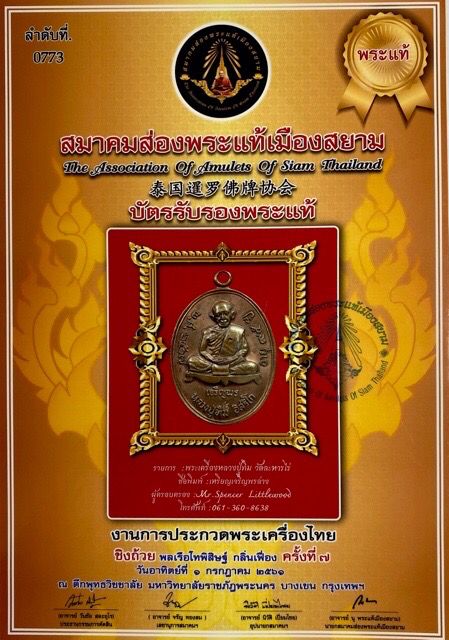
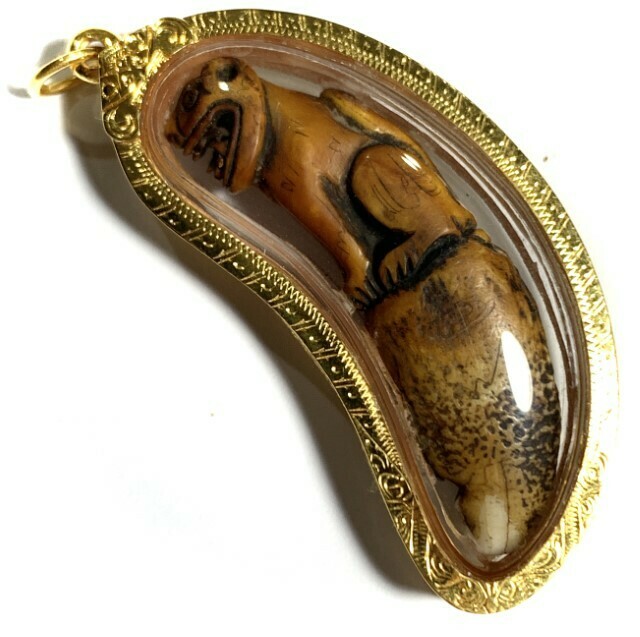
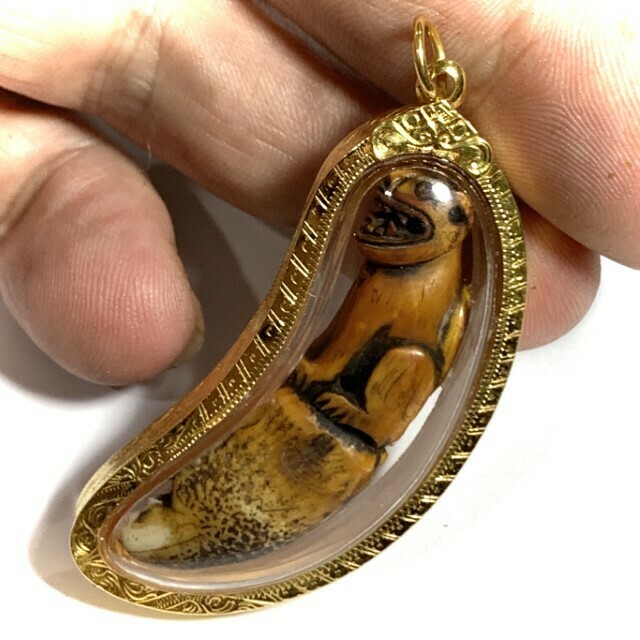
One of the Top Ten of all Tiger Amulets; The Legendary Takrut Hnaa Bpaag Suea of Luang Phu Nak, Wat Arun
In the world of Talismanic Thai amulets, few talismans are as revered and sought after as the Takrut Hnaa Bpaag Suea of Luang Phu Nak, a renowned monk from Wat Arun, also known as the Temple of the Dawn. This iconic amulet is a testament to the monk’s exceptional spiritual powers and his mastery of the ancient arts of Thai Buddhism and magic.
The Life of Luang Phu Nak
Luang Phu Nak was born on January 3, 2415 BE, in Ban Bang Poon, Pathum Thani province. His father, Mr. Nuan, and mother, Mrs. Luean, raised him with strong Buddhist values, which would later shape his destiny as a monk. At the age of 12, Luang Phu Nak was ordained as a Samanera novice monk at Wat Sarapat Chang, under the guidance of Pra Atigarn Hwang Tamma Chodti. He spent his early years studying the Dhamma Vinaya, the teachings of the Buddha, and honing his meditative skills.
As he grew in wisdom and spiritual prowess, Luang Phu Nak was reordained as a fully fledged Bhikkhu at Wat Sutat in Bangkok, a royal decree temple, in the year of the Dragon, 2435 BE. His Upachaya ordaining officer was Somdej Pra Wanaratana (Luang Por Daeng), a highly respected monk of the time. Luang Phu Nak’s monk name, “Sumananaakoe,” translates to “Companion of the Nagas,” reflecting his deep connection with Wicha Saiyasart, and the Nether-Worlds.
Takrut amulets of LP Nak
The Making of the Takrut Hnaa Bpaag Suea
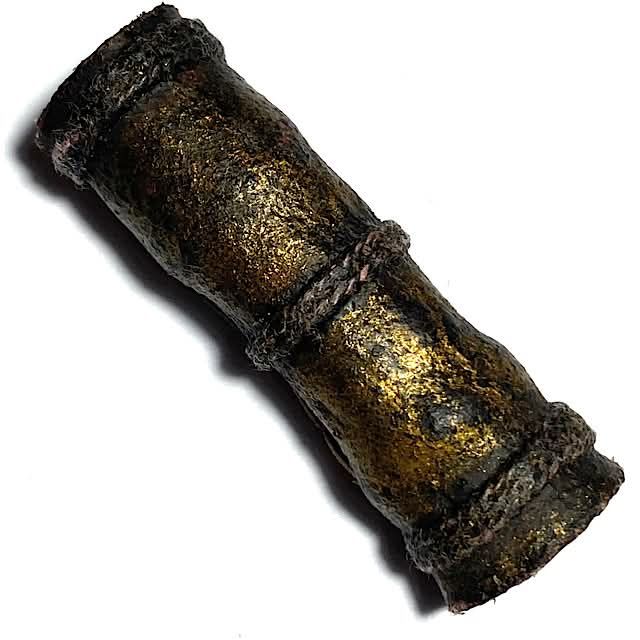
The Takrut Hnaa Bpaag Suea, a tiger forehead skin scroll talisman, is Luang Phu Nak’s most famous creation. According to Ajarn Spencer Littlewood, a renowned expert on Thai amulets and Buddha magic, this amulet is considered one of the most powerful and sought-after talismans in the world of Thai amulets.
The Takrut Hnaa Bpaag Suea is said to possess the power of the tiger, with its forehead skin serving as a conduit for the animal’s strength, courage, and protection.
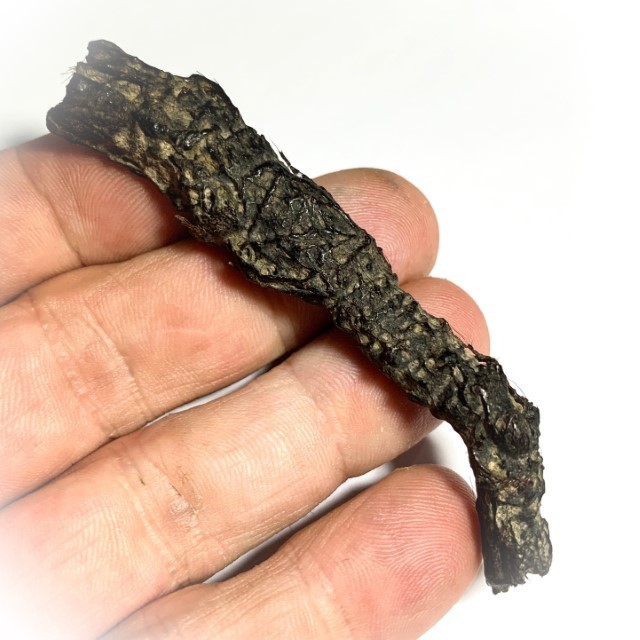
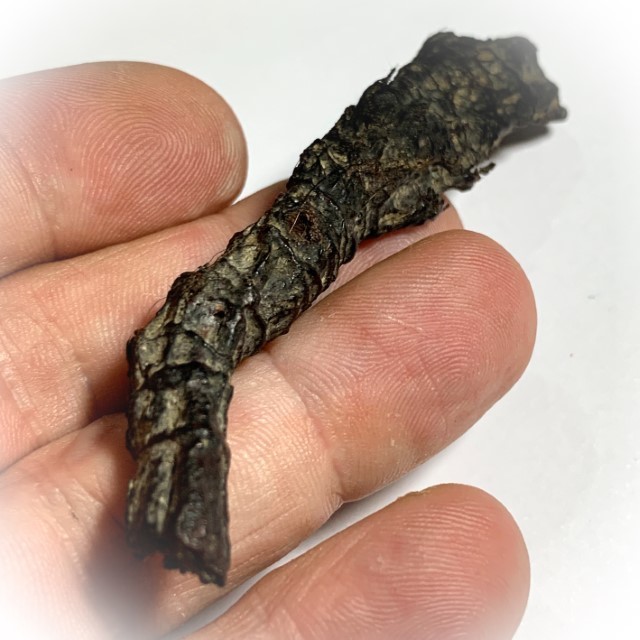
The creation of the Takrut Hnaa Bpaag Suea was a labor-intensive process, requiring great skill and attention to detail. Luang Phu Nak would first immerse the forehead skin in holy water to soften it, then scrape off the fur, leaving bare skin.
He would then inscribe the skin with sacred symbols and prayers, using the Wicha Maha Ud, a powerful magical script. The skin was then wrapped into a scroll, tied with holy Sinjana cords, and lacquered with gold leaf.
Magical Properties and Benefits
This powerful amulet is crafted from the rolled-up forehead hide of a tiger, imbued with the sacred spells of Wicha Suea Tiger Magick. The tiger’s innate energies are believed to possess a range of potent magical properties.
The tiger’s forehead hide is said to be naturally endowed with these sorcerous powers, making the Takrut Hnaa Bpaag Suea an exceptionally potent and desirable amulet. Its magical properties are believed to bring the wearer great opportunities for advancement, success, and recognition, while also inspiring the loyalty and devotion of others.
The Wicha Suea Tiger Magick within the amulet is thought to amplify these natural energies, creating a powerful and irresistible force that can help the wearer achieve their goals and ambitions. Whether seeking to enhance their career, attract wealth and prosperity, or simply to inspire the admiration and respect of others, the Takrut Hnaa Bpaag Suea is believed to be an invaluable tool for achieving success and realizing one’s desires.
The Takrut Hnaa Bpaag Suea is believed to possess a range of properties and benefits, including:
Maha Ud Kong Grapan Chadtri: Invincibility magic, protecting the wearer from harm and danger
Chai Chana: Victory-bringing magic, attracting success and triumph in all endeavors
Klaew Klaad: Evasive magic, allowing the wearer to avoid accidents and misfortune
Maha Amnaj: Commanding power and superiority magic, granting the wearer authority and respect
Metta Maha Niyom: Mercy charm, attracting positive energies and improving loving relationships
Anti-Black Magic: Protection from malevolent spirits and negative energies, curses and spells.
The Legend of Luang Phu Nak’s Takrut
The legend of Luang Phu Nak’s Takrut Hnaa Bpaag Suea has been passed down through generations, with stories of its incredible powers and benefits. Devotees would often report experiencing strange and wonderful occurrences while wearing the amulet, such as increased confidence, improved relationships, and protection from harm.
One famous story tells of how Luang Phu Nak’s devotees would notice that even buffaloes would cower in fear when they passed by, sensing the powerful magic of the Takrut Hnaa Bpaag Suea. This anecdote has become a testament to the amulet’s potency and Luang Phu Nak’s exceptional spiritual powers.
Rarity and Authenticity
The Takrut Hnaa Bpaag Suea is an extremely rare amulet, with only a limited number created by Luang Phu Nak during his lifetime. The amulet’s rarity is due in part to the difficulty of obtaining tiger forehead skin, as well as the strict conditions under which the Takrut could be created. Luang Phu Nak would only make the Takrut on 5th Lunar Saturdays, which are rare and occur only a few times a year.
Authenticity is a major concern when it comes to the Takrut Hnaa Bpaag Suea, as many counterfeit versions have been created over the years. To ensure authenticity, collectors and enthusiasts should look for documentation and certification from reputable sources, such as the temple where the amulet was created, or from recognized experts in the field of Thai amulets.
The Takrut Hnaa Bpaag Suea of Luang Phu Nak, Wat Arun, is a legendary amulet that has captured the hearts and imaginations of collectors and enthusiasts around the world. Its exceptional powers and benefits, combined with its rarity and historical significance, make it a truly unique and valuable talisman. This also reminds us of the importance of preserving the cultural heritage and spiritual traditions of Thailand, and the enduring legacy of Luang Phu Nak, a true master of the ancient Wicha, and grimoires of mystical arts.
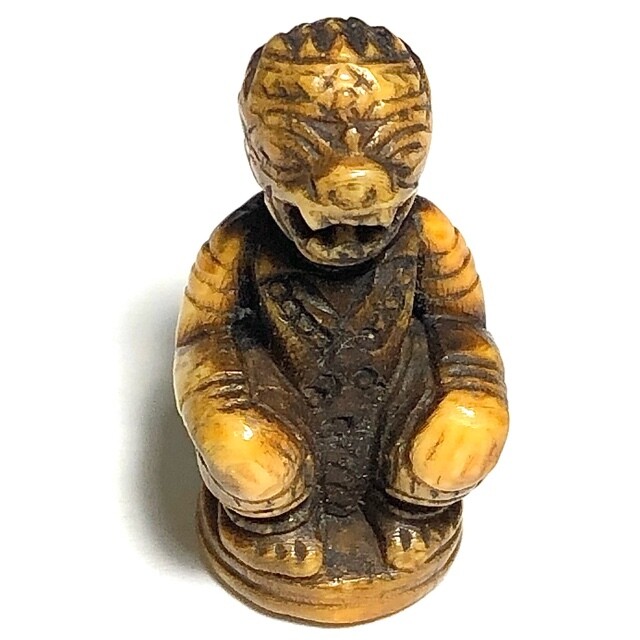
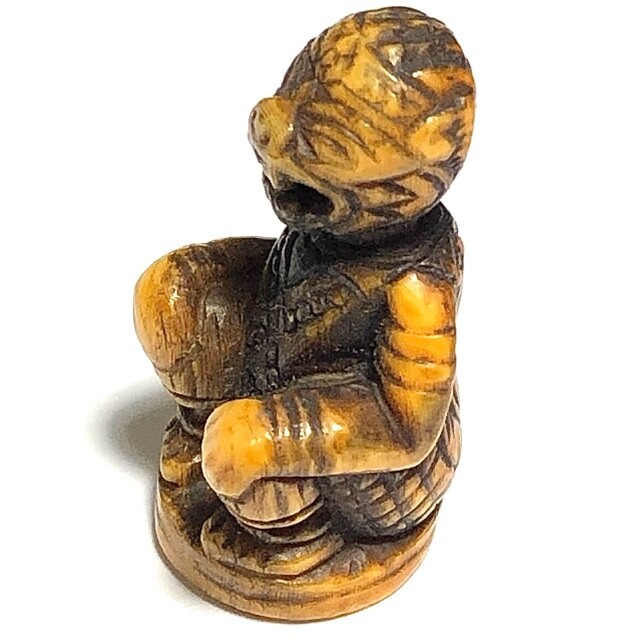
One of the top Look Om of all Time; the Immortal Look Om Jet Paya Chang Sarn, of Luang Por Ding (Wat Bang Wua, Chachoengsao), in Nuea Dam Black Prai Powders and Gold Leaf coating, from the ancient times Abbot of of Wat Bang Wua: Luang Por Ding. LP Ding was highly renowned in his day, for his Palad Khik Ling Jab Hlak Vanora Monkey animist charms, and for his Sacred Powder Look Om wishing balls, made from his legendary Pong Ya Jet Paya Chang Sarn substance.
The Sacred Jet Paya Chang Sarn Muan Sarn Sacred Powders were made from the Klai Pra Chedi (pieces of the ancient Chedi Stupas of 7 Temples), Klai Sema (ground up pieces of temple boundary stone) of 7 Temples, Pieces of stone from 7 Uposatha Shrinerooms, mixed with Pong Ittijae, & Pong Maharaj Yantra Powders.These substances were ground up in a mortar with incantations and molded into Look Om Sacred Powder Balls, of small size
The Look Om Jet Paya Chang Sarn of Luang Por Ding is noticeably dense and hard, for Luang Por Ding would let them harden first, and would mix the powders with Rak Herbal Lacquer resins. Some Look Om would be covered in gold leaf, and some would be left bare black colour.Luang Por Ding would keep the Muan Sarn Sacred Powders and the Look Om he had made for a long time in his Kuti Hut to empower them, and would only release them when he was completely certain of their power.
Luang Por Ding would release the Look Om to his devotees during temple ceremonies, and on his birthday celebrations.The Look Om Jet Paya Chang Sarn is spoken of in the Legend of the Great ‘Suea Khaw’ Invincible Gangster, who was a Looksit of Luang Por Ding. Suea Khaw maintained that he survived throughout the years of his gunmanship because of the Look Om Paya Jet Chang Sarn, which stopped many bullets from piercing his skin and killing him over the years. It is said to have given Suea Khaw the strength and imposing aura of invincibility, to overcome all his enemies.
The Look Om gained the name of ‘Jet Paya Chang Sarn’ because of its legendary power to increase the stamina and strength of the devotee over his or her adversaries. It is said that the wearer of the Look Om Jet Paya Chang Sarn is endowed with the strength of the Paya Chang Sarn Battle Elephant. The Look Om is said to both Protect against all Dangers, and Endow the wearer with Commanding Power and Strength. Suea Khaw was a Gangster who was reputed to have defeated and killed over 100 of his competitors, and who had a reputation for his bravery and strength. Because his sole chosen amulet of protection and power was the Look Om Jet Paya Chang sarn, and the fact that nobody cold defeat him or kill him, was the reason for Luang Por Ding’s Look Om Jet Paya Chang Sarn becoming so Legendary.
But one day, Luang Por Ding told Suea Khaw that he was too violent and that if he did not give up being a gangster, then he would surely encounter a violent and premature death. Suea Khaw had become very overconfident because no knives were able to penetrate his skin, and guns would not fire when aimed at him. Because of the invincibility which Suea Khaw had been enjoying, Suea Khaw did not listen to Luang Por Ding’s warnings.
One day the Police Force special missions unit came to Wat Bang Wua to ask Luang Por Ding if it was true that Suea Khaw possessed ‘Hnang Hniaw (‘sticky skin’. a term meaning a person with Kong Grapan Chadtri Magic). Luang Por Ding admitted that it was true that Suea Khaw possessed Protective Magic, and that he was not able to be killed with knives or guns. But Luang Por Ding added that Suea Khaw would fall prey to his own Karma without need of guns or knives, because he refused to listen and change his ways. Luang Por Ding added “I cannot tell you though, by which way the gangster Suea Khaw can be killed, for it would break my Precepts”.
But at this moment, one of the Samanera Novice Monks was listening and butted in to say to the Police “If you want to kill Suea Khaw, you have to use a bullet that has the head of the bullet cast from metal taken from the blade of a Mitmor spirit knife from Luang Por Soke (Wat Pak Klong)”.
Luang Por Soke was a colleague of Luang Por Ding and holder of the same Lineage Wicha, and would inscribe the Wicha of Luang Por Ding onto the Blades of his Mitmor. Some time later the Police caught Suea Khaw and he was sentenced to death, and was executed by Government Executioner, using Bullets cast from the blade of a Mitmor of Luang Por Soke.
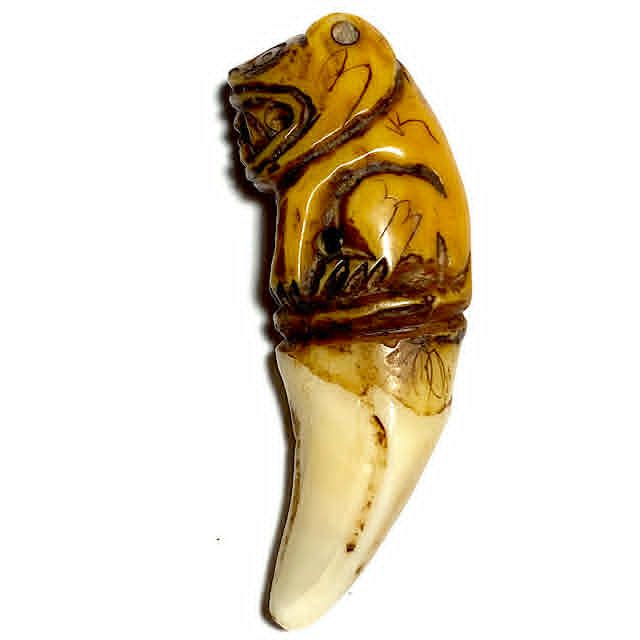
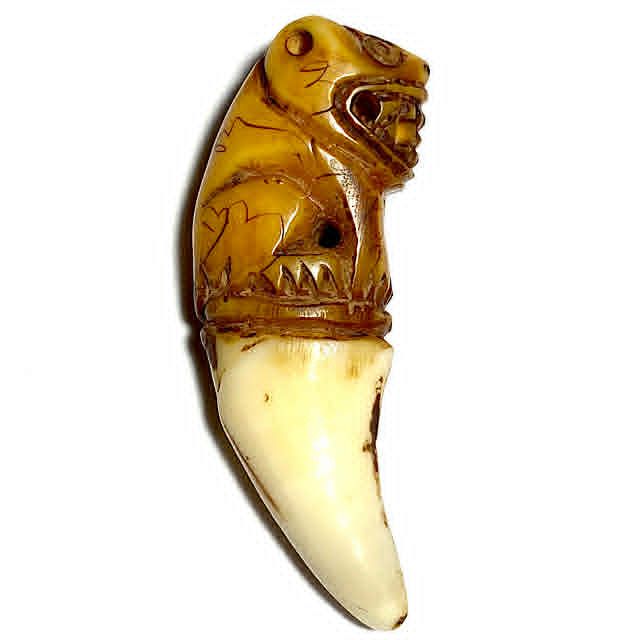
Luang Por Ding was renowned for his expertise in the Wicha Hanuman and other Vanora Monkey Deities. He personally blessed numerous hand-carved talismans, with the most skillfully crafted ones being the most sought after. Luang Por Ding is also connected to the Cow symbol, stemming from the name of his temple, Wat Bang Wua. His Look Om Jet Paya Chang Sarn is highly regarded and is considered a powerful amulet for Kong Grapan Chadtri Maha Ud Klaew Klaad.
Luang Por Ding, was a Great Master of the Wicha Hanuman, and all Vanora Monkey Deities, for which he was extremely famous. He blessed many inimitable hand carved talismanic amulets (Krueang Rang), made from artisans of varied levels of skill, with of course the most masterfully carved attaining the highest level of preference. His Look Om Jet Paya Chang Sarn, by general consensus, to be one of the top Look Om of all Time and is also a high ranking amulet in the annals for Kong Grapan Chadtri Maha Ud Klaew Klaad Power.
The Look Om Jet Paya Chang Sarn amulet of Luang Por Ding, released in the Thai Buddhist Era of 2480 BE, was made using a traditional method of infusing sacred powder, which is believed to possess spiritual and protective properties.
The powder was collected from rare and magical forest herbs, earths, and sacred materials over decades of Tudong forest wandering, along with the ubiquitous pieces of the ancient Chedi Stupas of 7 Temples, Klai Sema,stone from 7 Uposatha Shrinerooms, mixed with Pong Ittijae, & Pong Maharaj Yantra Powders and meticulously prepared over time, performing incantations constantly throughout, often through a long and intensive process, and is infused with prayers and blessings. The resulting amulet, known as a Luang Por Ding Thai Sacred Powder Wishing Ball, is a powerful and meaningful symbol of faith and spirituality for many Buddhists around the world.
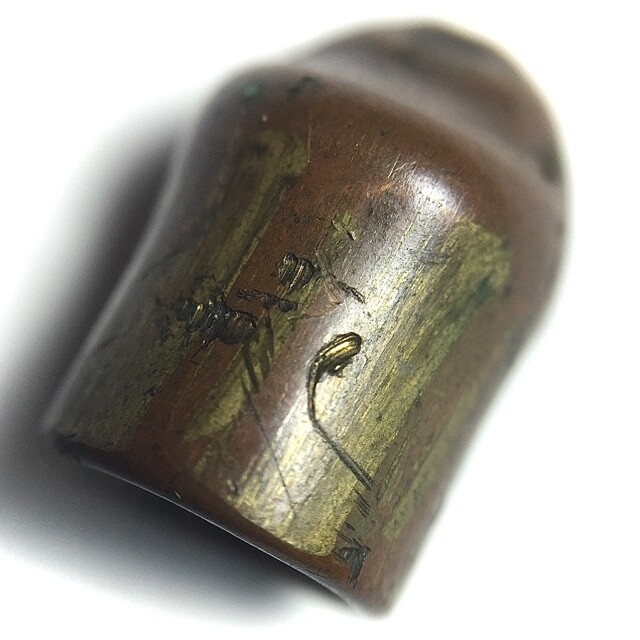
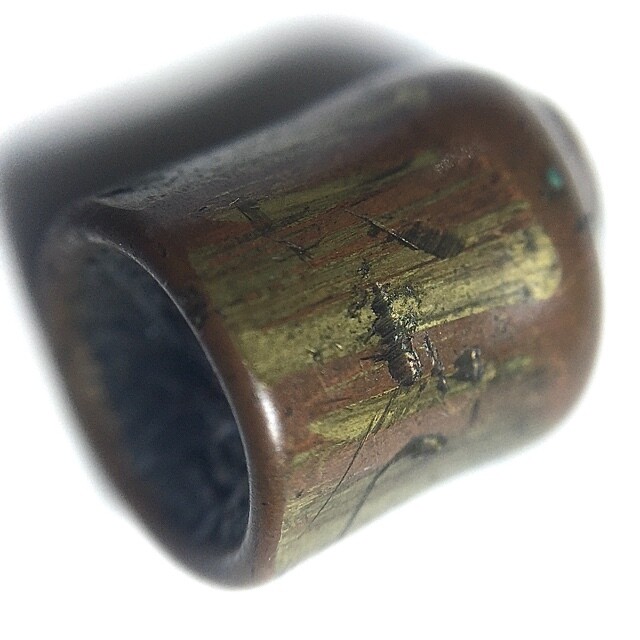
An exceptionally rare and certified genuine amulet hailing from the ‘Krueang Rang’ Talismanic category created by the revered Luang Por Koon during the mid-era of his leadership at Wat Ban Rai Temple. Its estimated origin is around 2535 BE, although the exact date remains unknown.
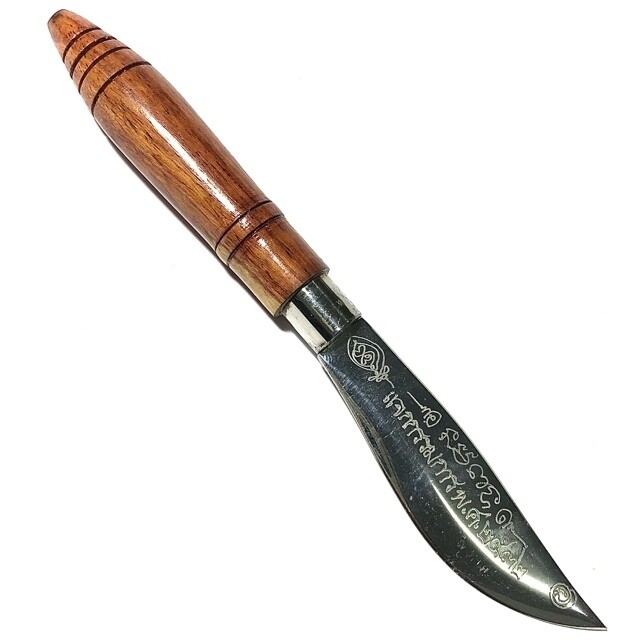
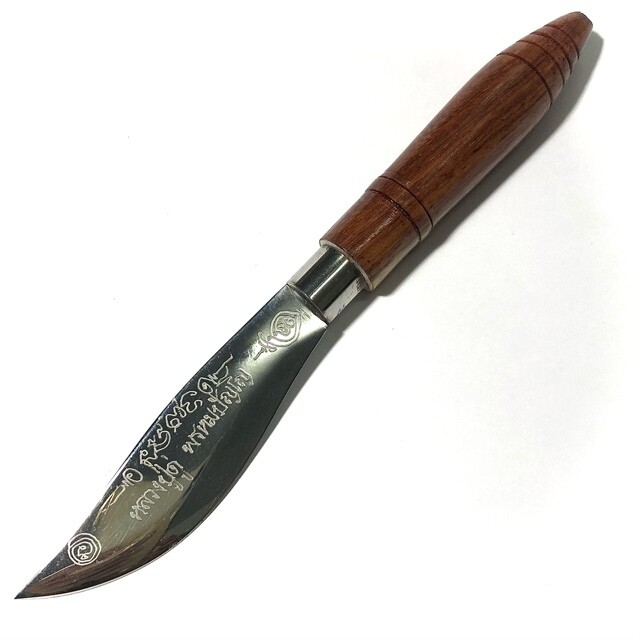
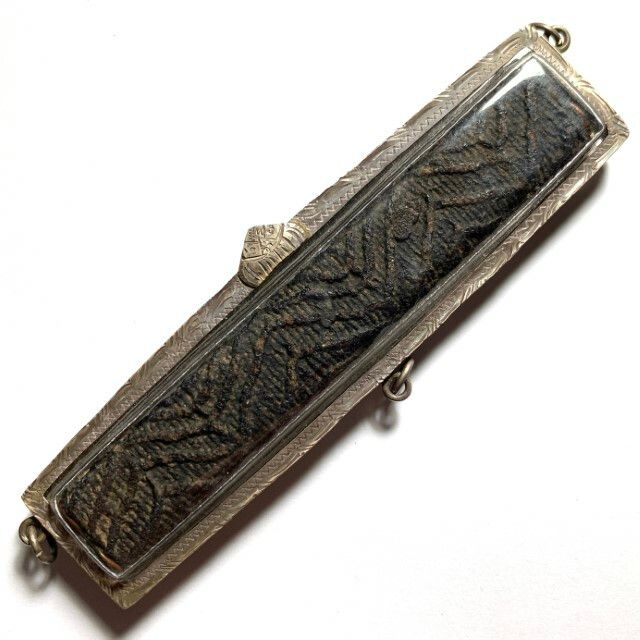
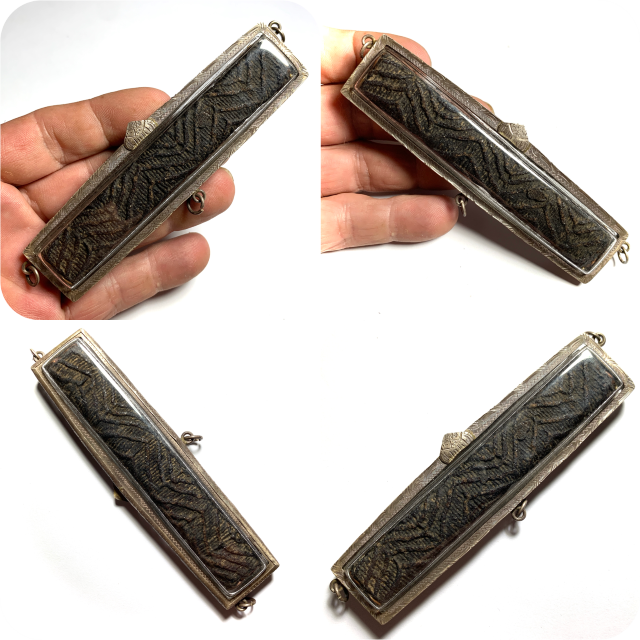
Mitmor Pocket Knife Luang Por Koon
This well-established and tested talisman is renowned for its abilities to ward off malevolent spirits, counteract dark enchantments, consecrate holy water, facilitate curative ceremonies, bear mystical inscriptions, and act as a personal safeguard for overall well-being. Furthermore, it serves as a conduit for the auspicious blessings and benevolence of Luang Por Koon Parisutto from Wat Ban Rai.
Free Registered Air Parcel Worldwide is included with this amulet.
Amulets produced between 2537 BE and 2555 BE are less sought-after compared to those crafted before 2537. This is attributed to the overproduction of many editions after 2537, which diminished their collectibility and rarity. Consequently, editions predating 2537 BE are highly esteemed and increasingly rare to find on the amulet collector market.
In recent times, there has been a notable resurgence of interest in the miraculous amulets of Luang Por Koon. These amulets continue to generate headlines with their extraordinary effects in Thailand. This ongoing phenomenon ensures that faith in his amulets remains resilient, impervious to forgers and unscrupulous traders.
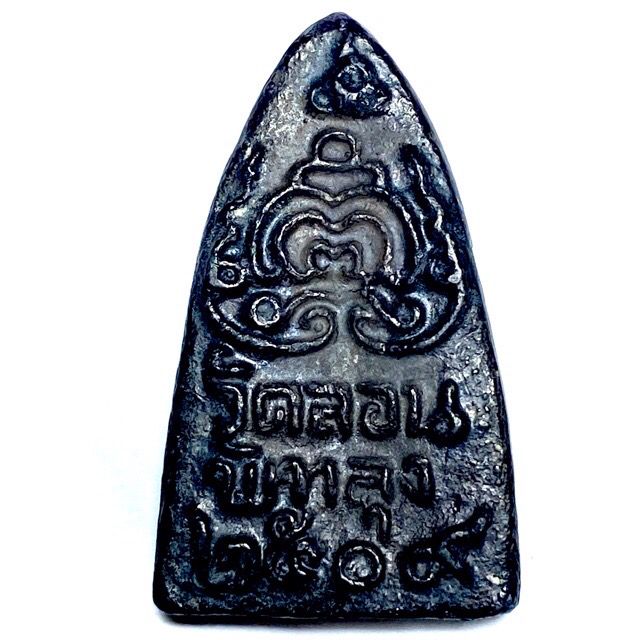
Luang Por Koon, who is now deceased, will forever hold a special place in the hearts of his devotees. He ranks among the top Guru Monks of all time and is arguably the most beloved and renowned monk in Thai history, especially in modern times. His humility is said to be matched only by his miraculous ability to bestow blessings, particularly those for protection and prosperity. His head-knocking blessings, in particular, have been credited with bringing about life-changing miracles for many.
Free Registered Air Parcel Worldwide is included with this amulet. While amulets crafted between 2537 BE and 2555 BE may be less favored due to overproduction, those created before 2537 BE are highly coveted and increasingly rare in the amulet collector market. It is certain that his amulets will continue to be revered as some of the greatest and most collectible amulets of all time.
Luang Por Koon Blessing Amulets Amid Devoted Followers
Their reputation and acclaim will persist well into the future. After his passing, there was a brief period of increased falsification of his amulets and a decline in interest. However, in the years following his passing, this phenomenon has subsided as collectors have returned to earnestly collecting the amulets of the Great Luang Por Koon, free from the earlier risks posed by counterfeit versions.
In recent times, a grand resurgence of interest in the miraculous amulets of LP Koon has arisen, as his amulets continue to produce breaking news miracles in Thailand. This is one of the reasons why faith in his amulets will always be revived and can never be destroyed, despite the attempts of forgers and dishonest traders.
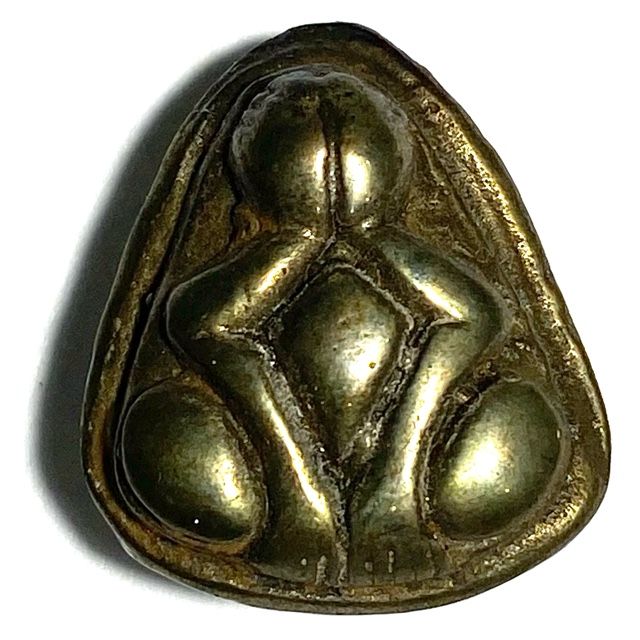
This rare item, is exceedingly scarce to find nowadays, whether on the internet, in temples, or markets. They are only to be found residing with truly devoted individuals, a fitting tribute to the prestige and quality of this amulet.
One must also consider that despite the immense popularity of his amulets and his passing a few years ago, many of his amulets do not (yet) carry a millionaire price tag. They remain within reach for most people who desire a truly sacred amulet, and are willing to invest a little more in acquiring an amulet that will remain extraordinary not only today but also for generations to come. This kind of enduring classic talismanic ritual item is what we refer to as a heritage heirloom amulet, one that will never lose its popularity. It is a tried and tested amulet for protection against ghosts, countering black magic, consecrating holy water, aiding in healing rituals, bearing magical inscriptions, and simply carrying on one’s person for protection and prosperity. It also carries the good karma and blessings of Luang Por Koon Parisutto from Wat Ban Rai. It is perfect for the devoted followers of this great, humble, and compassionate monk who always remained close to the less fortunate, regardless of their social status.
The Sacred Takrut Maha Solos Mongkol: A Divine Amulet of Power and Fortune
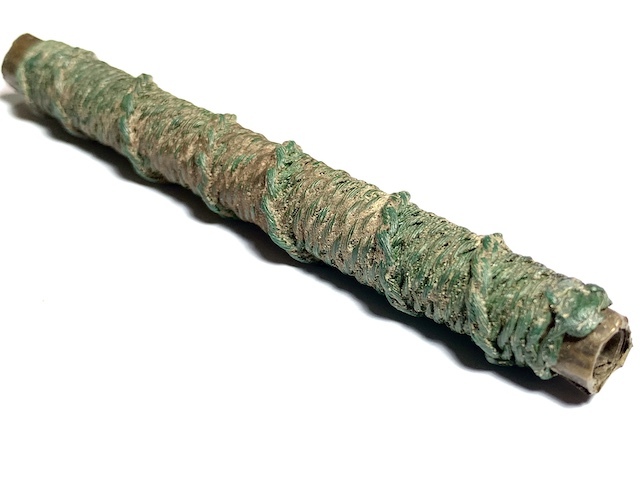
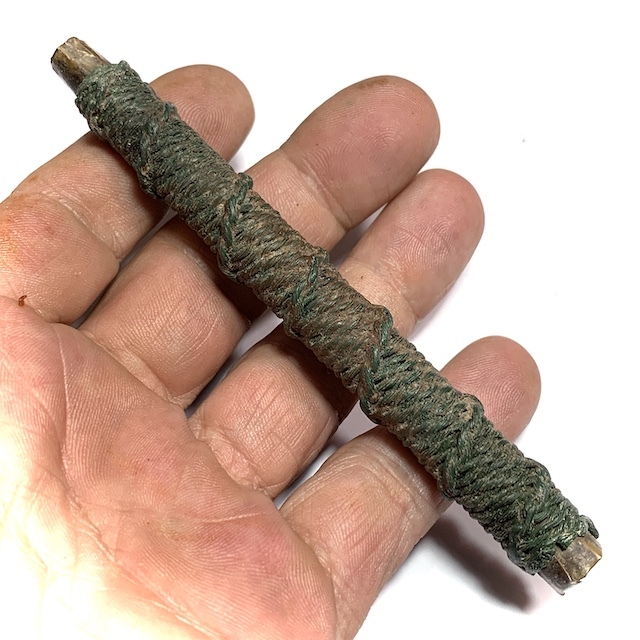
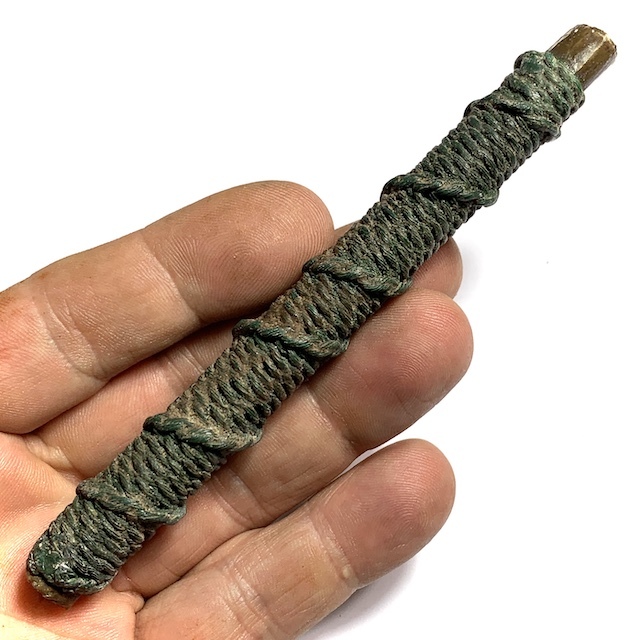
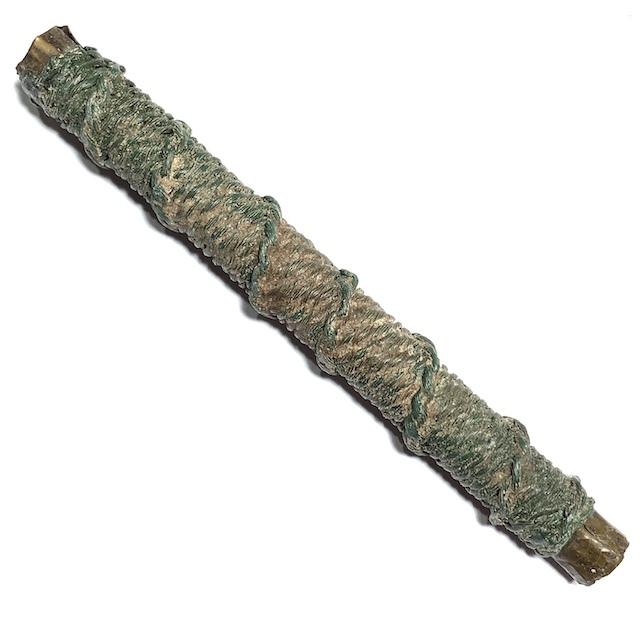
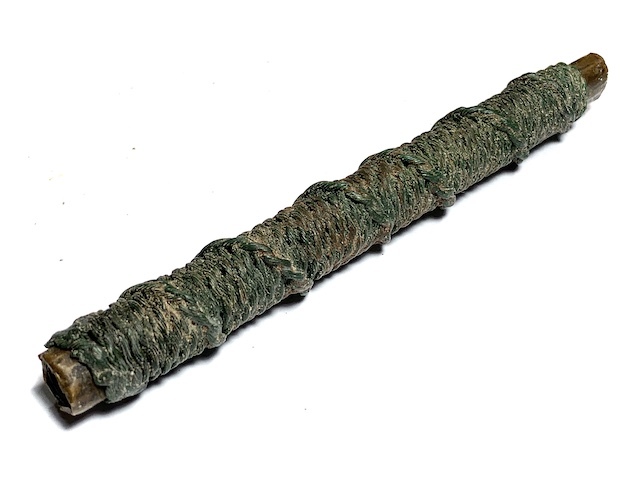
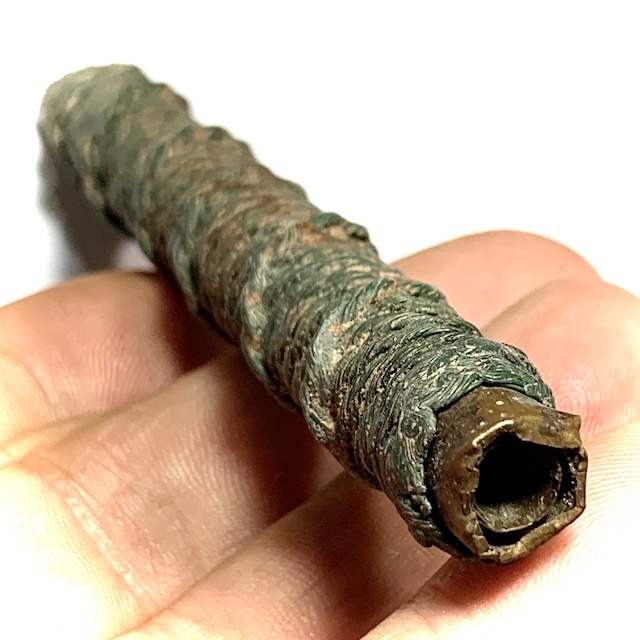
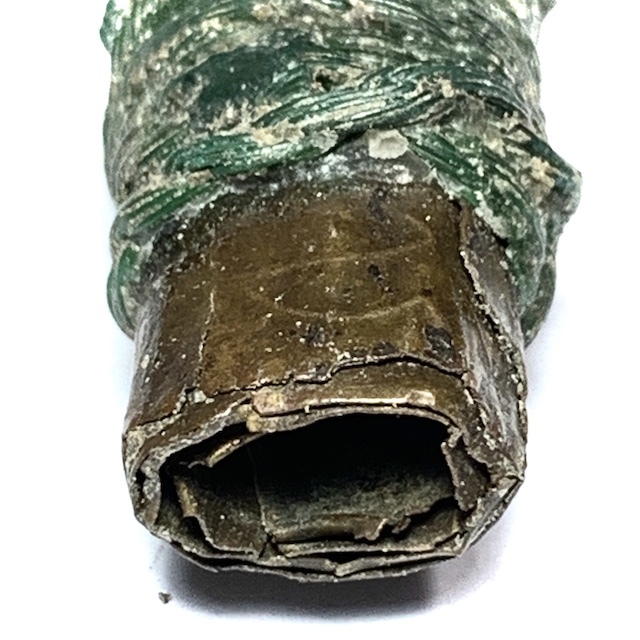
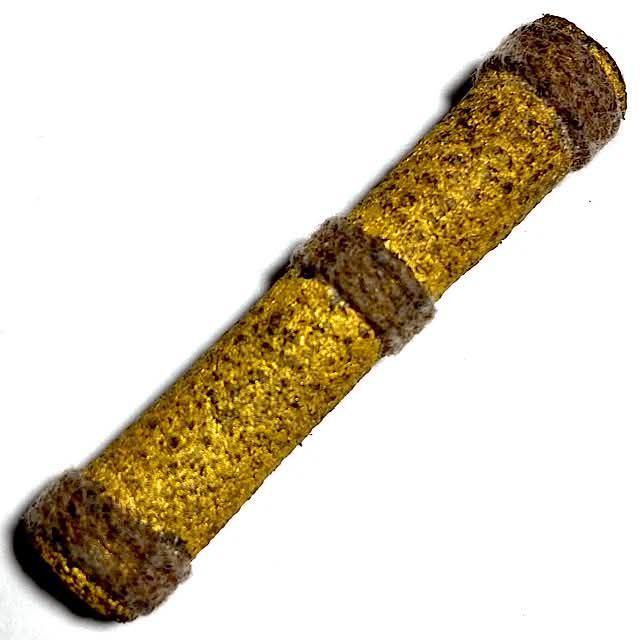
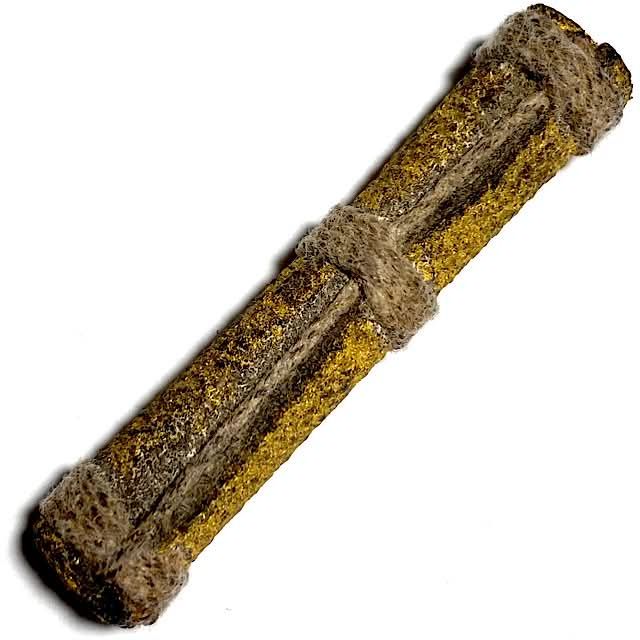
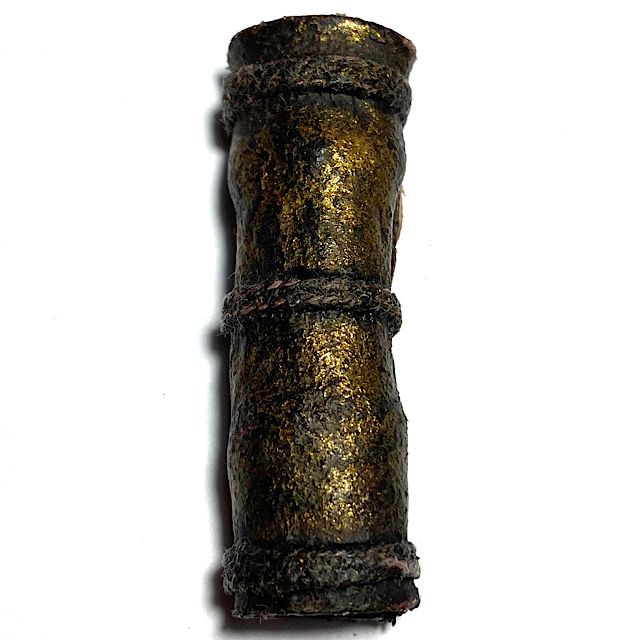
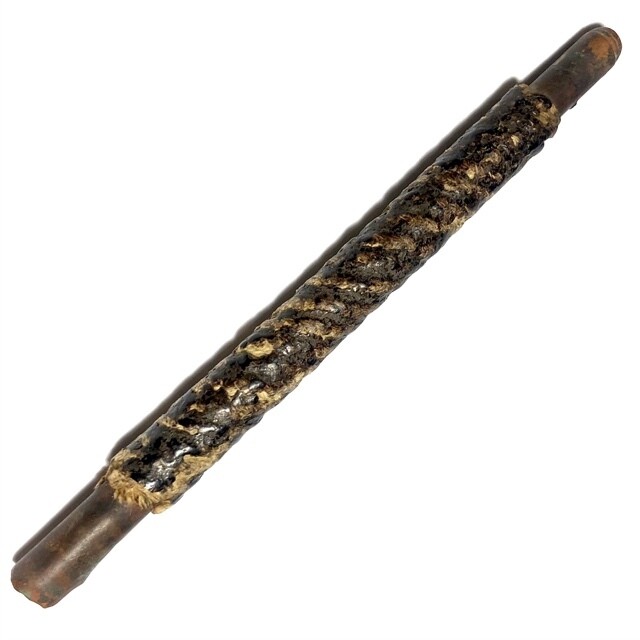
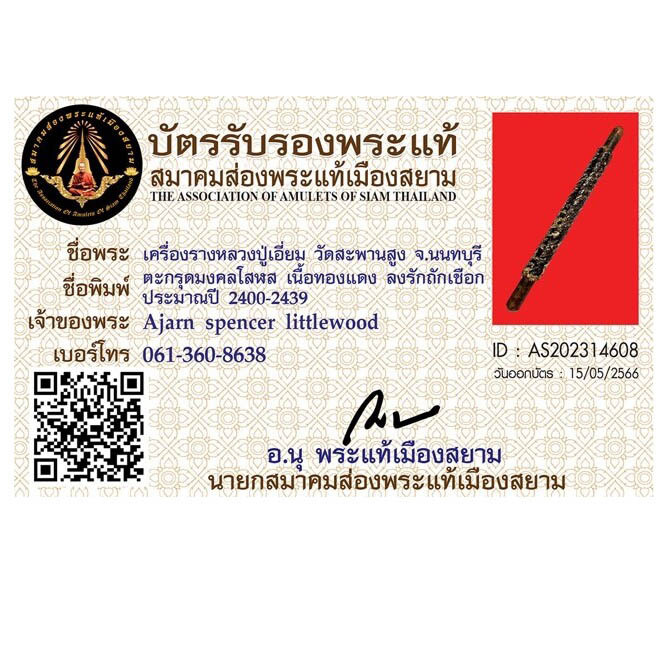
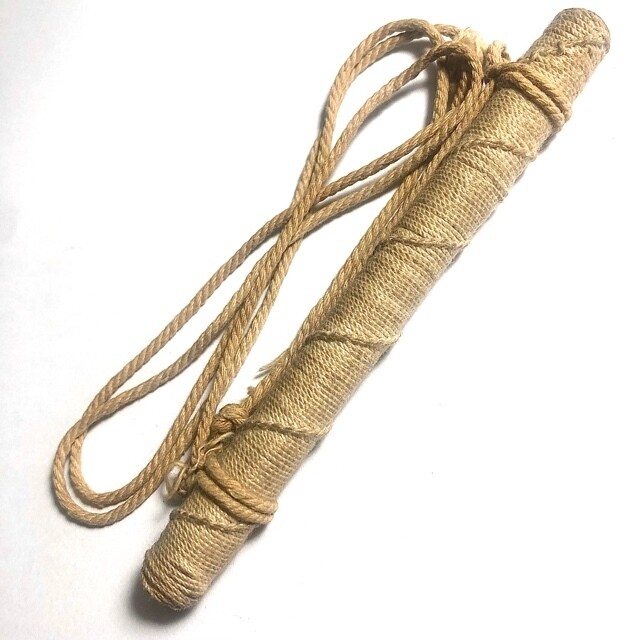
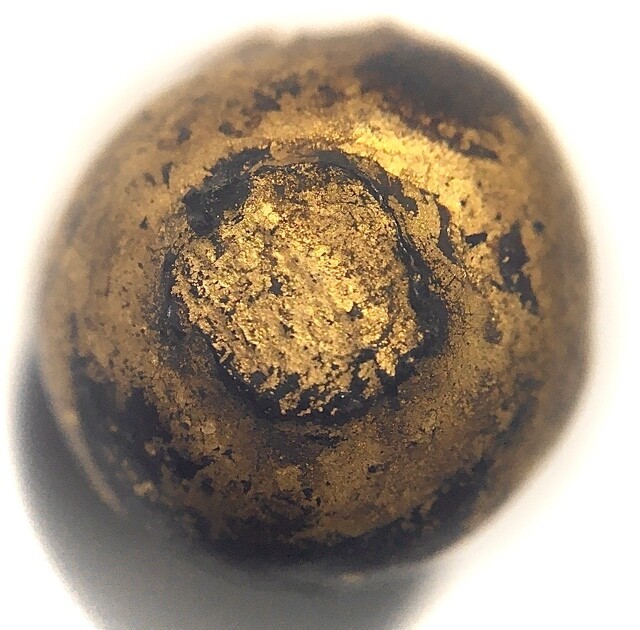
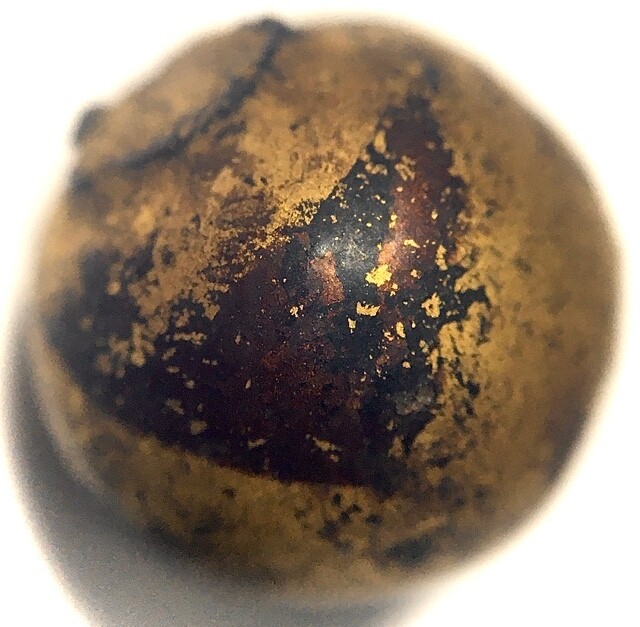
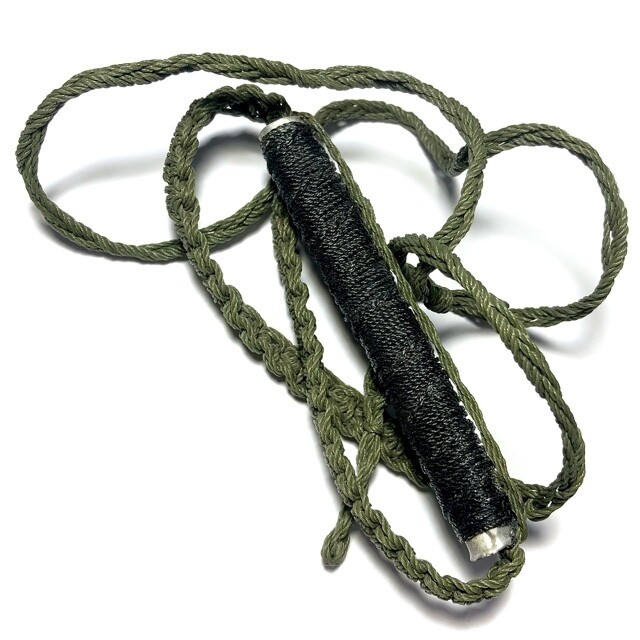
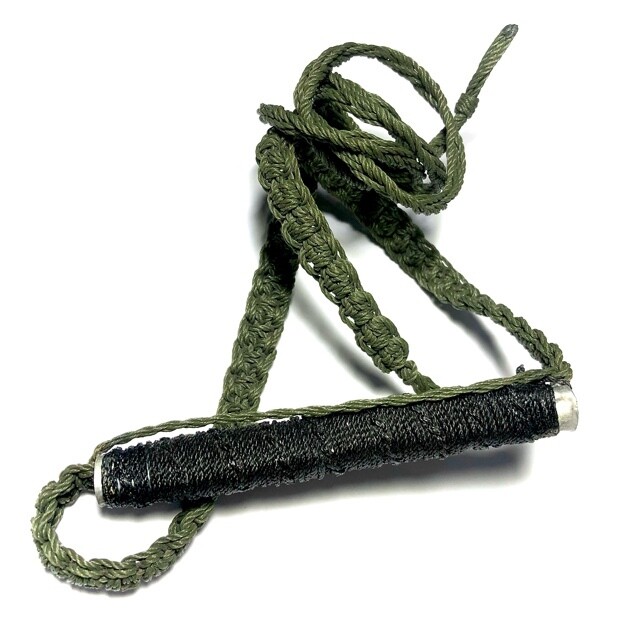
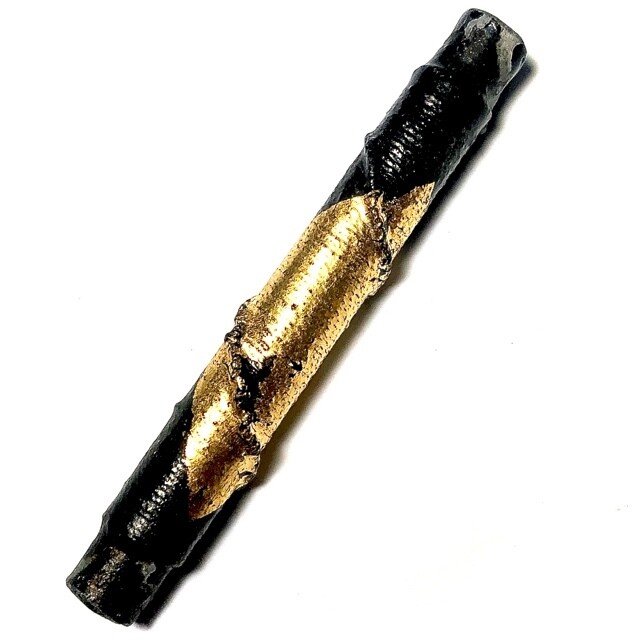
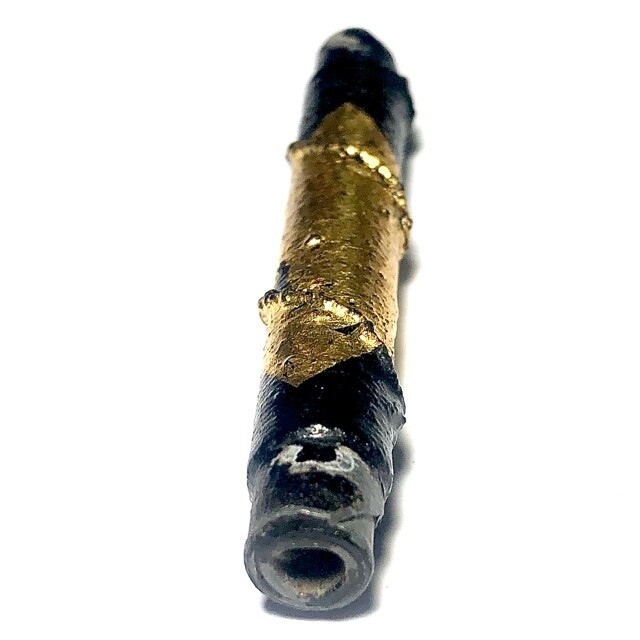
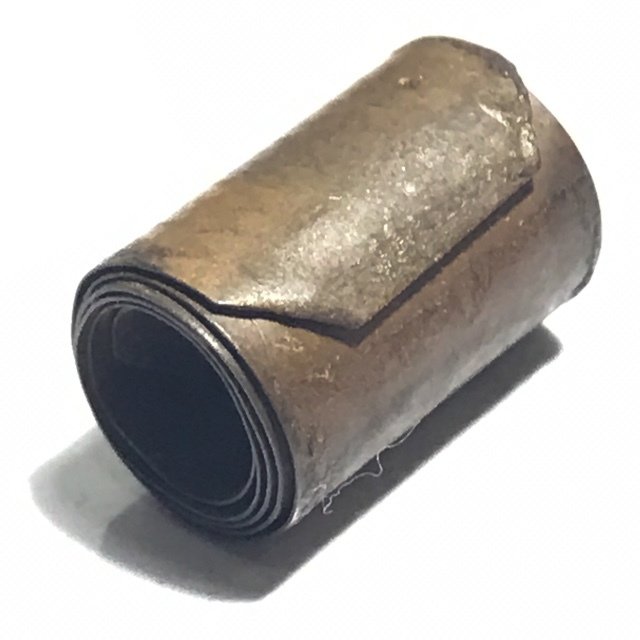
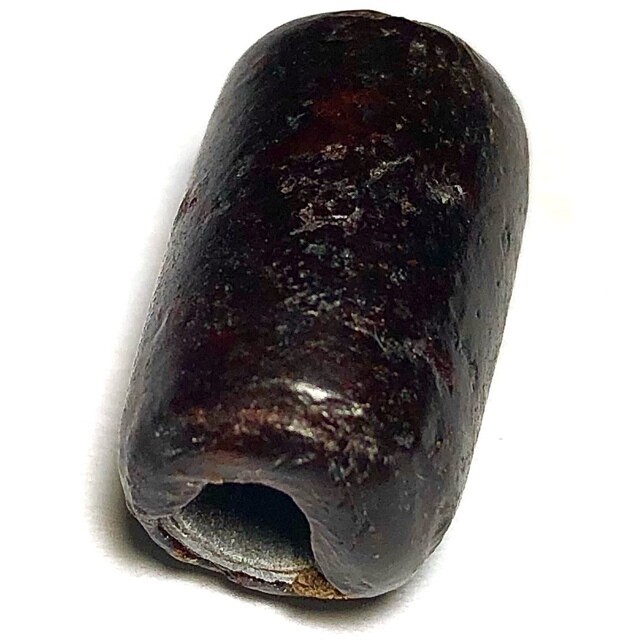
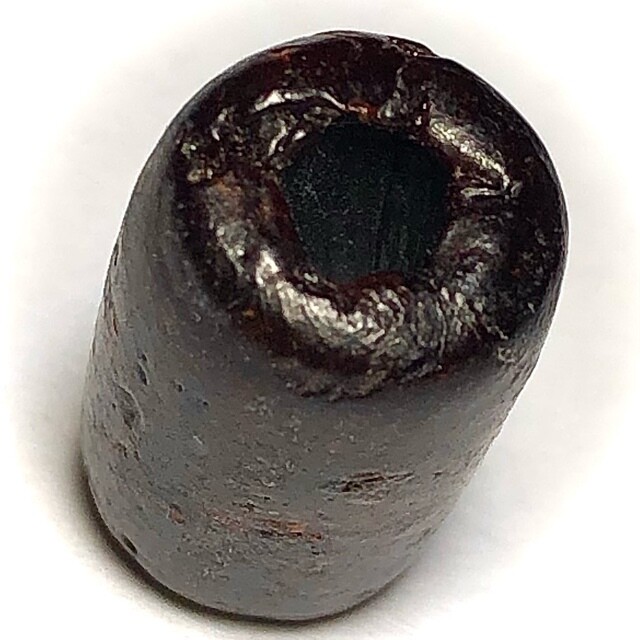
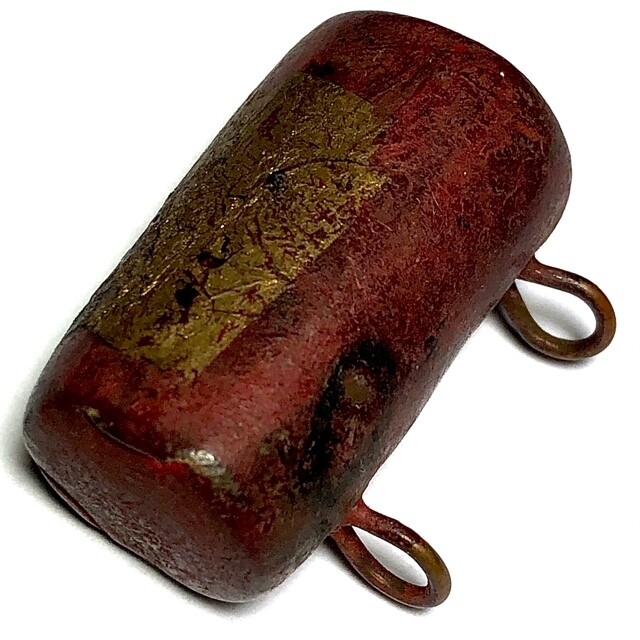
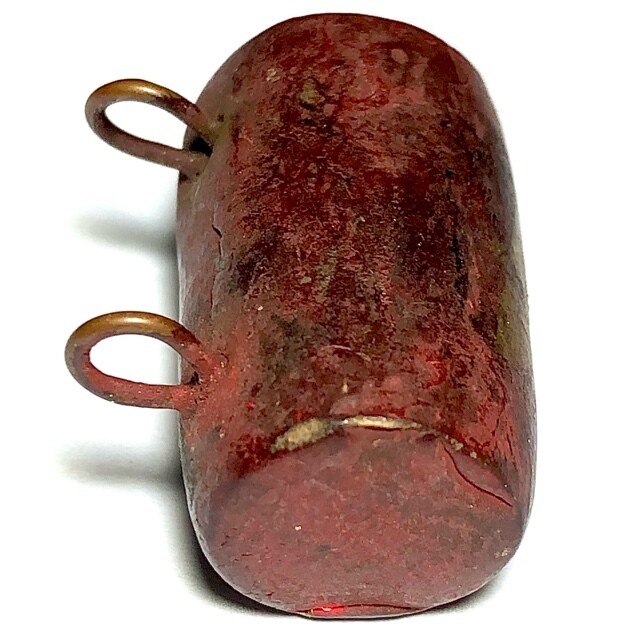
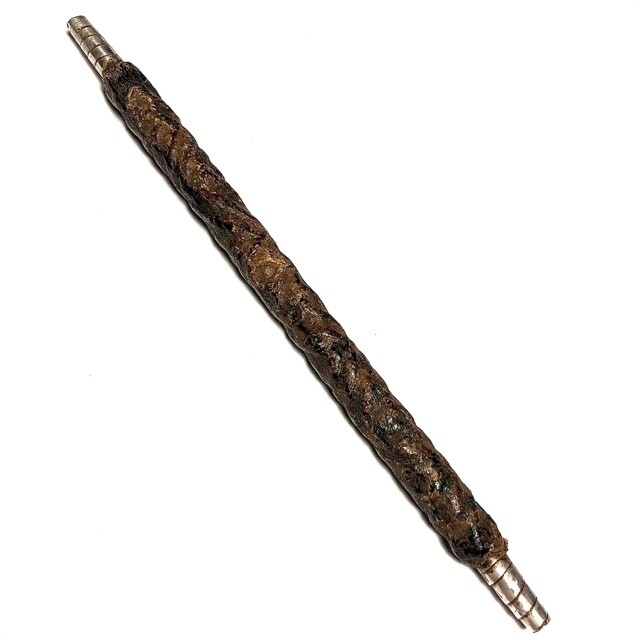
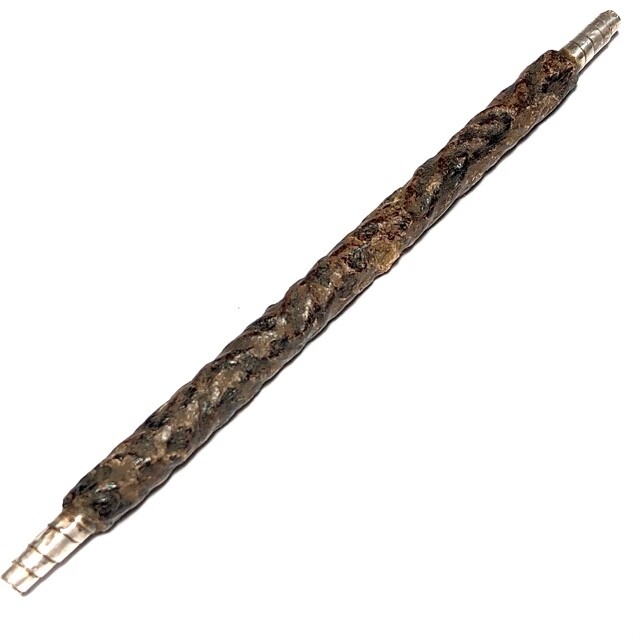
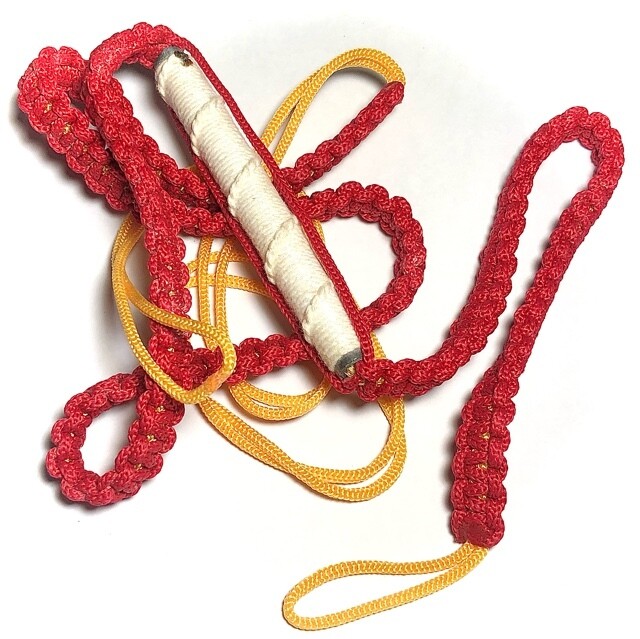
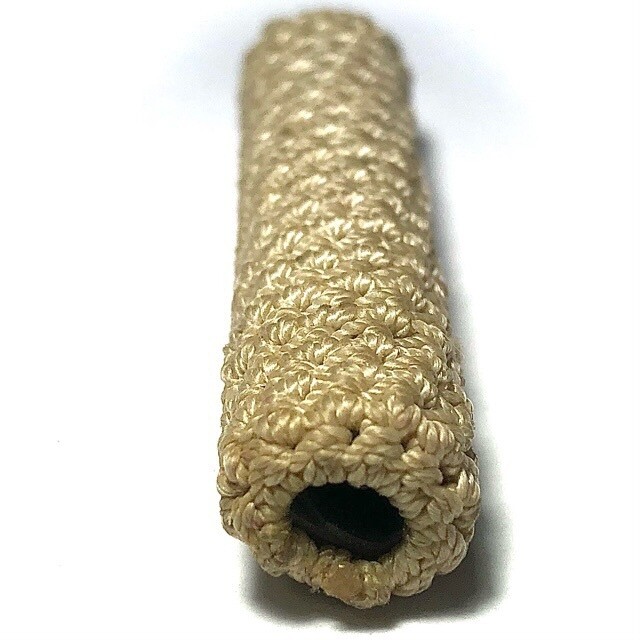
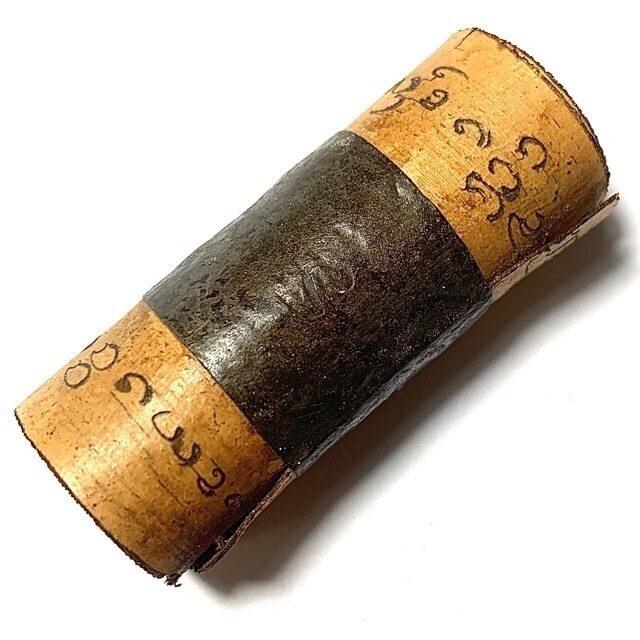
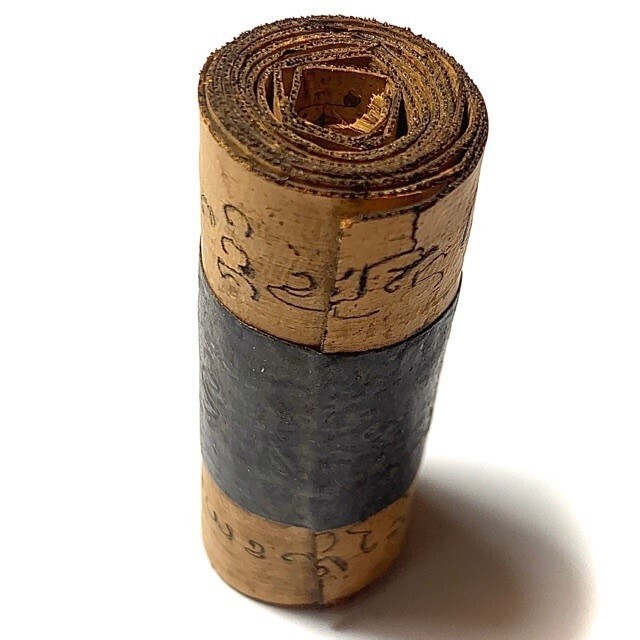
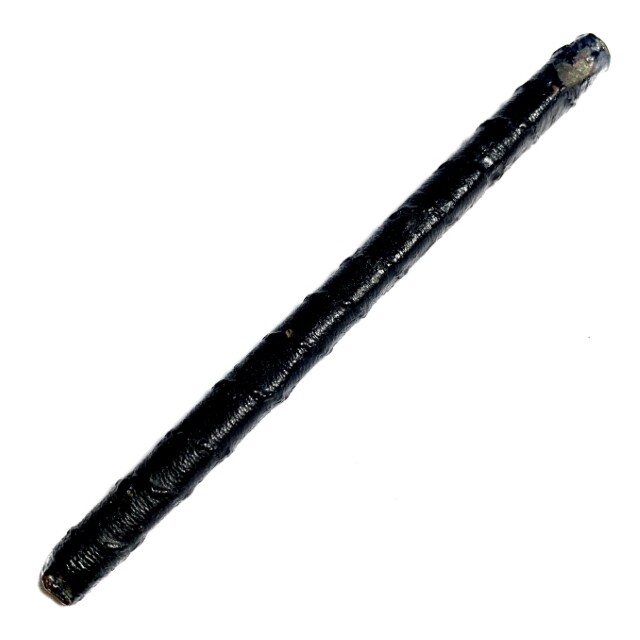
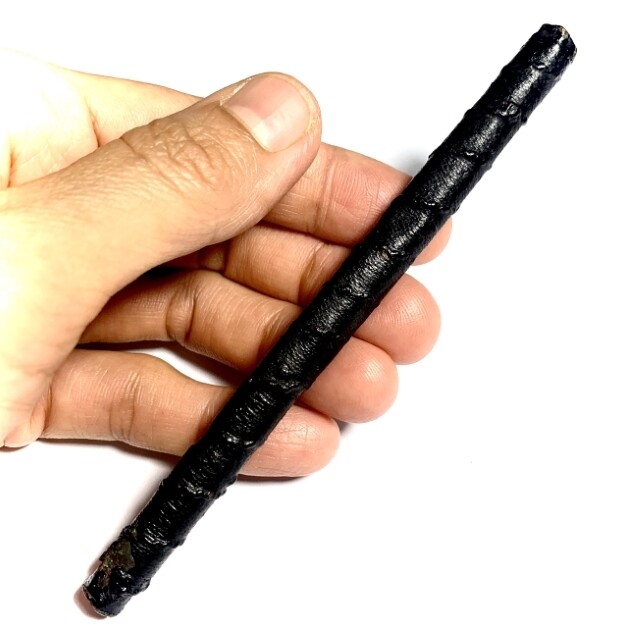
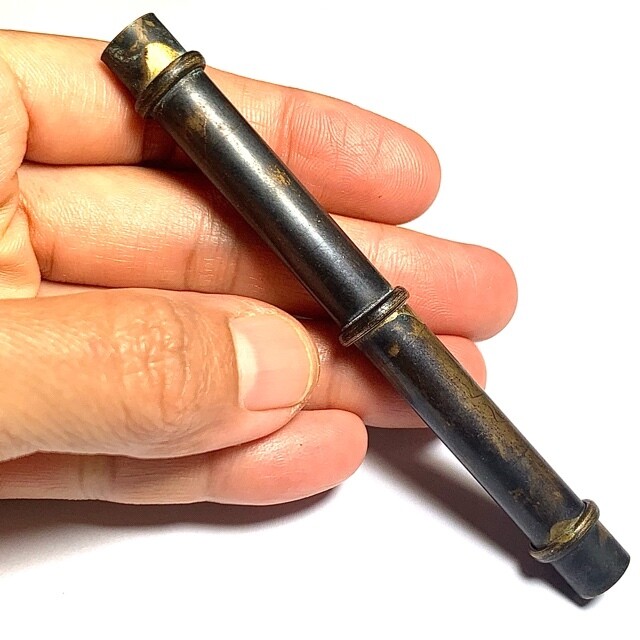
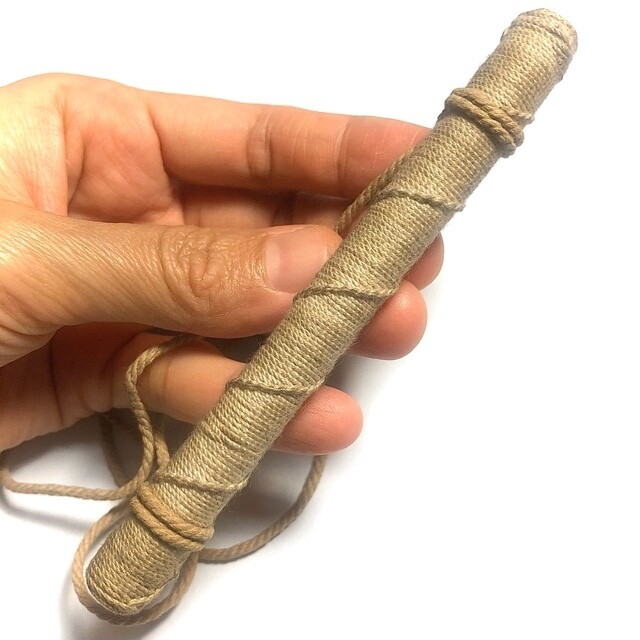
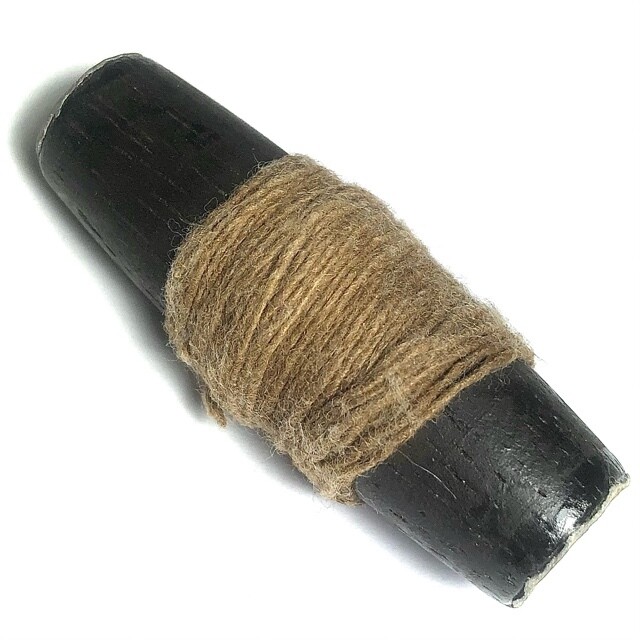
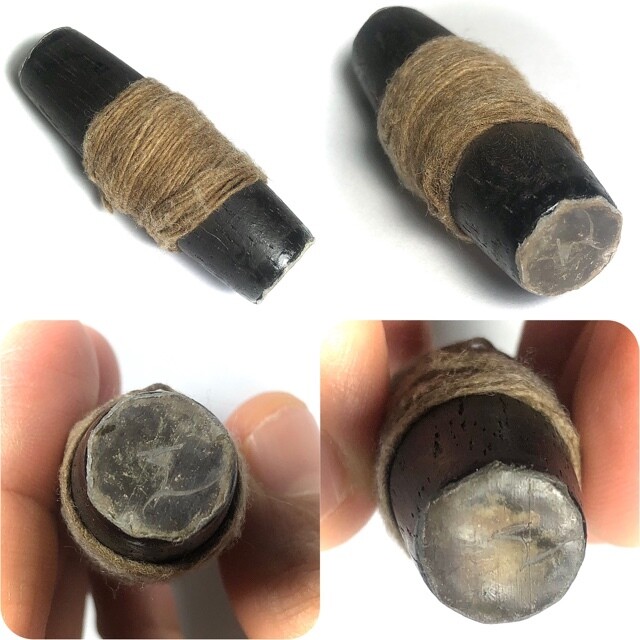
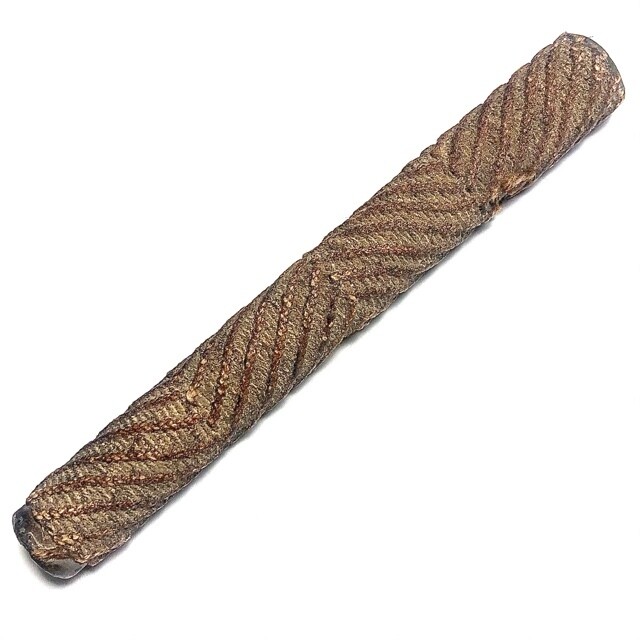
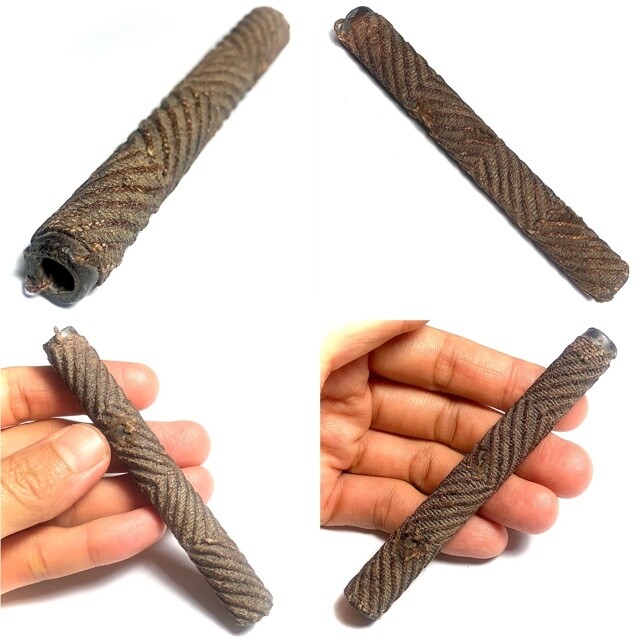
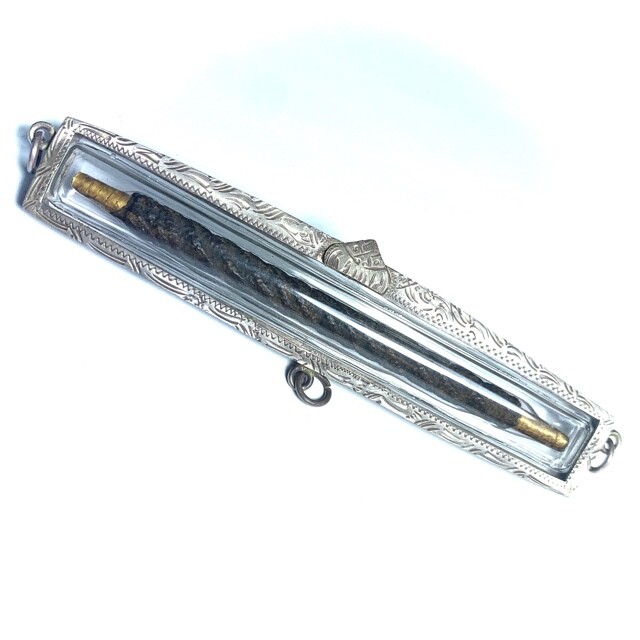
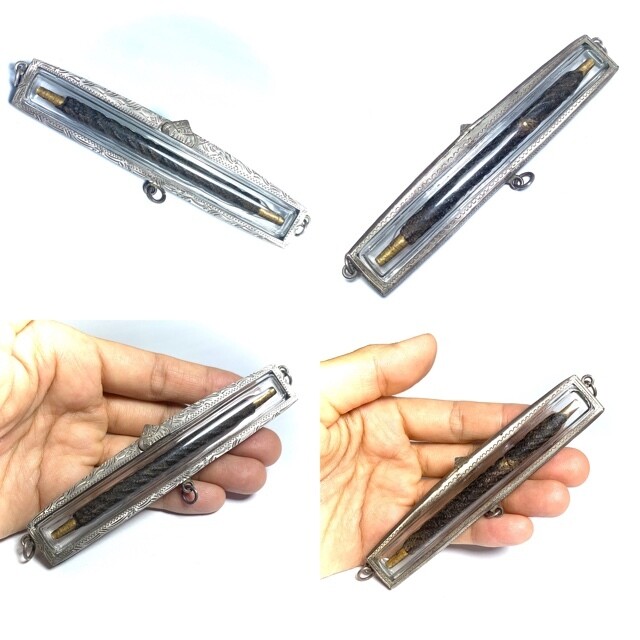
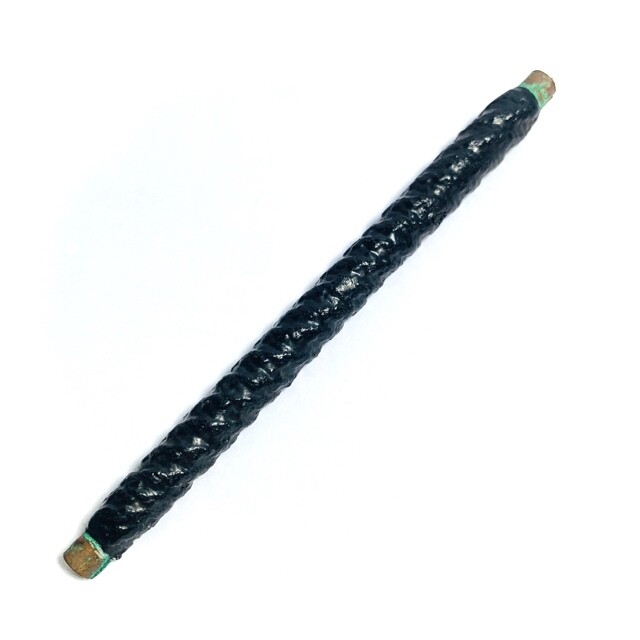
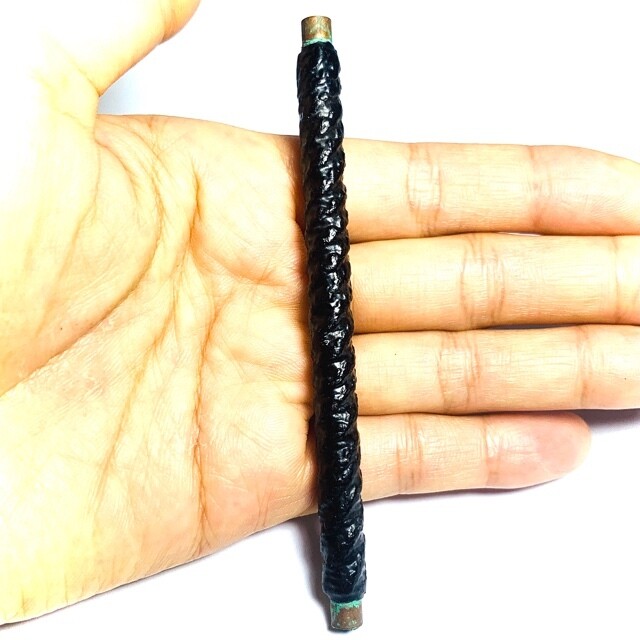
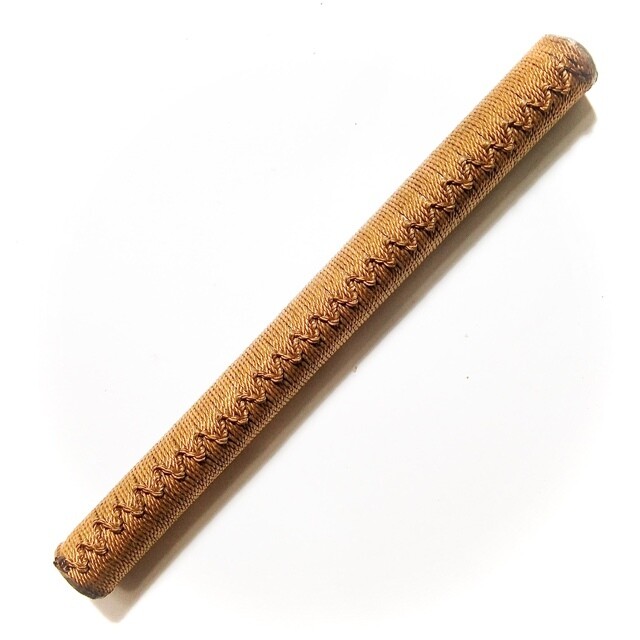
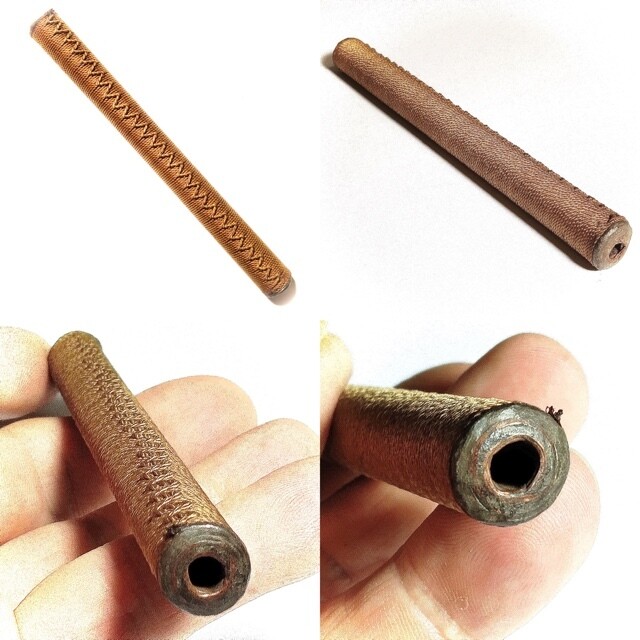
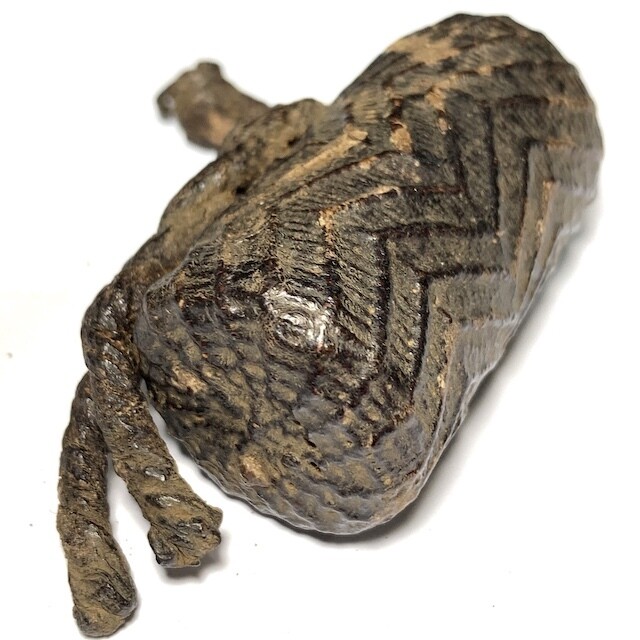
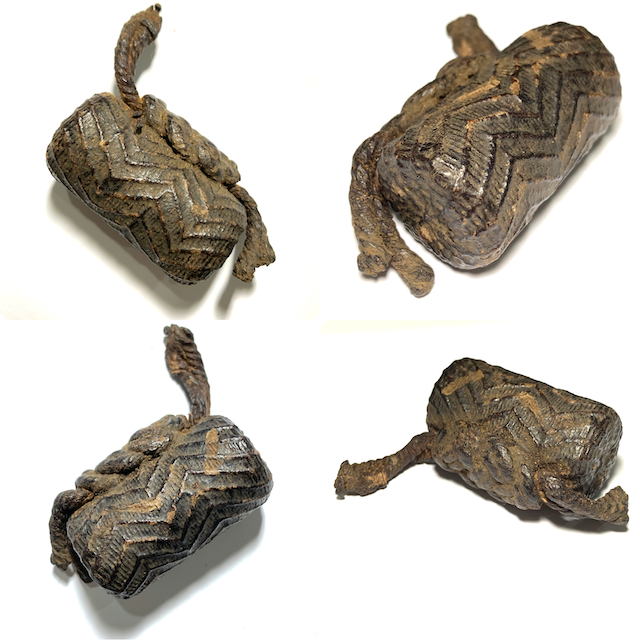
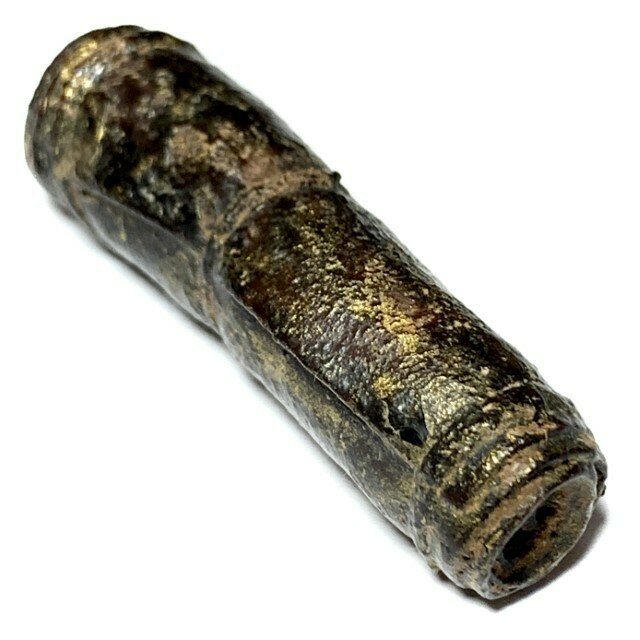
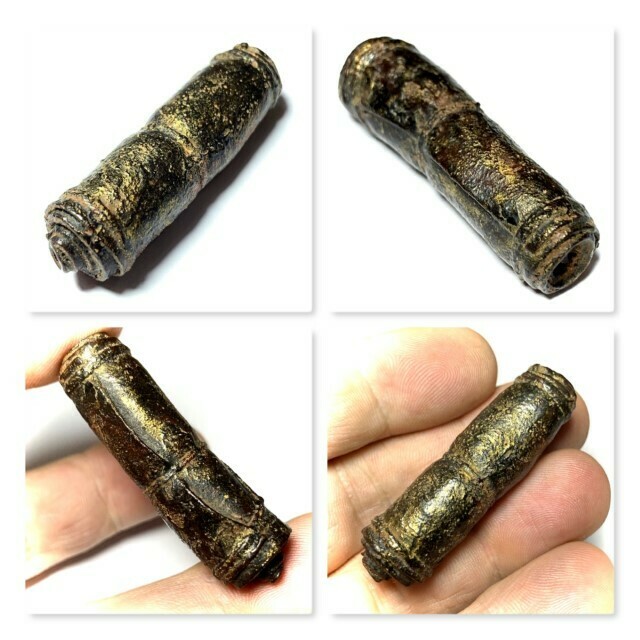
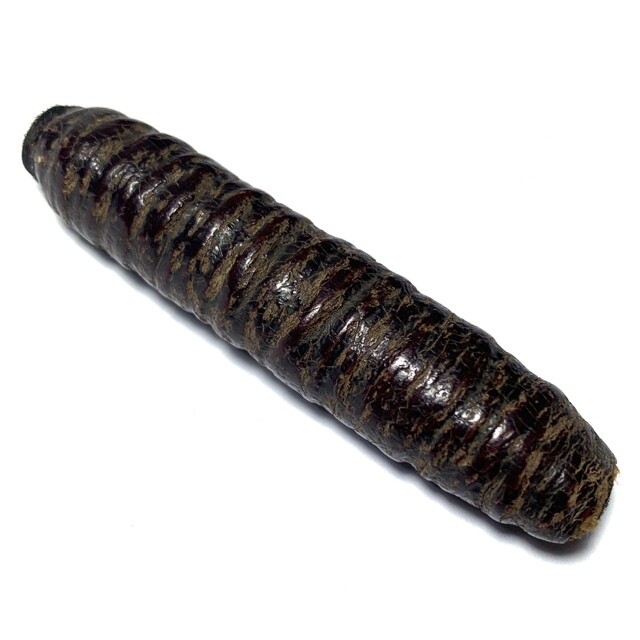
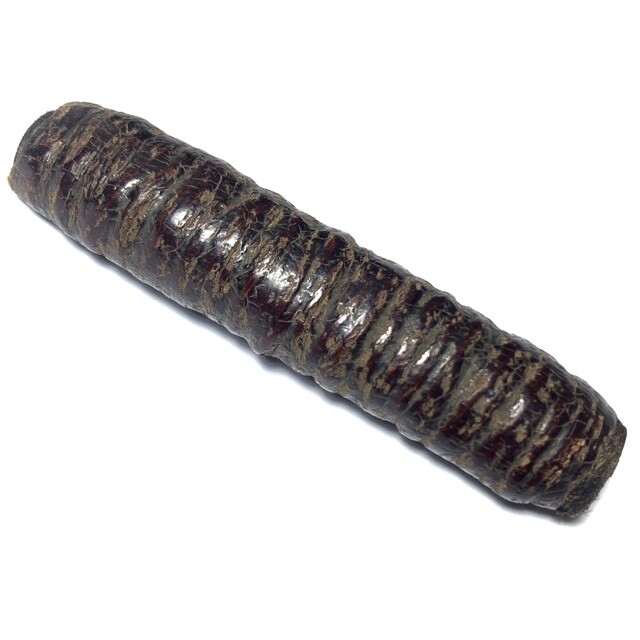
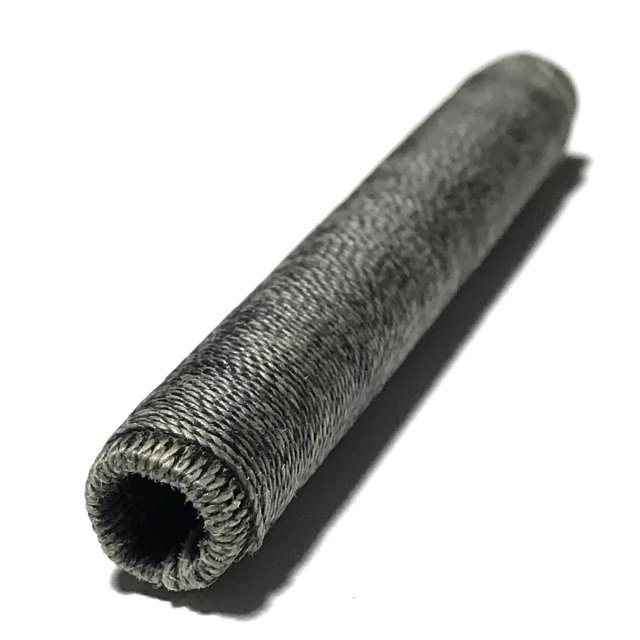
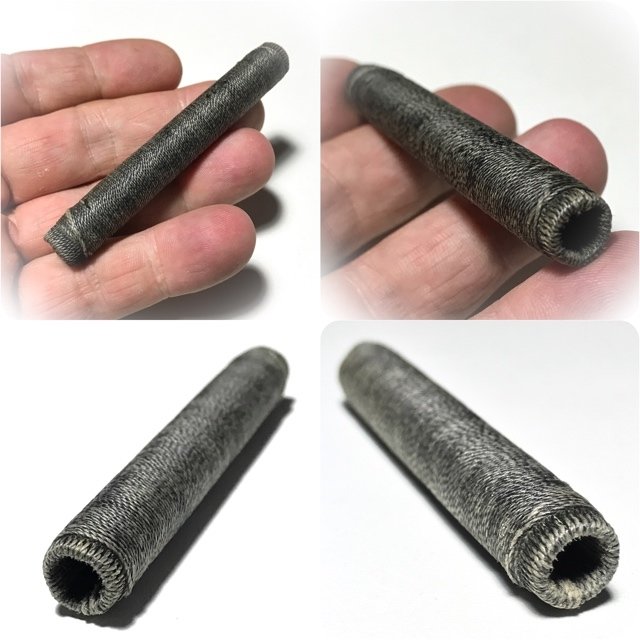
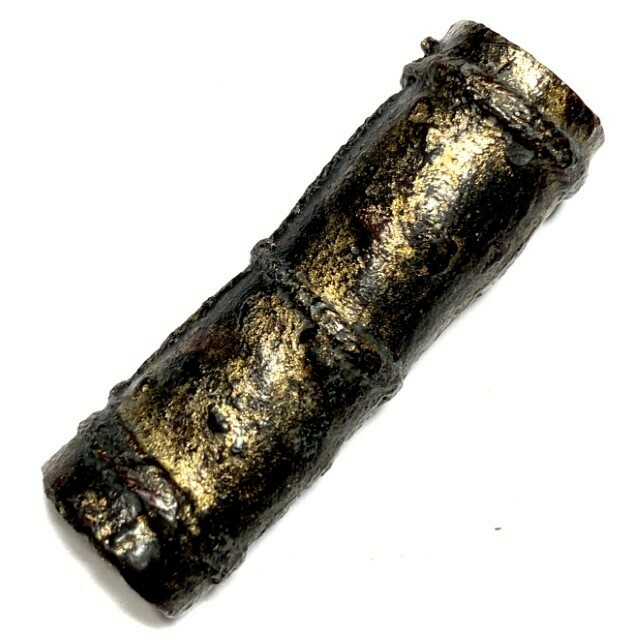
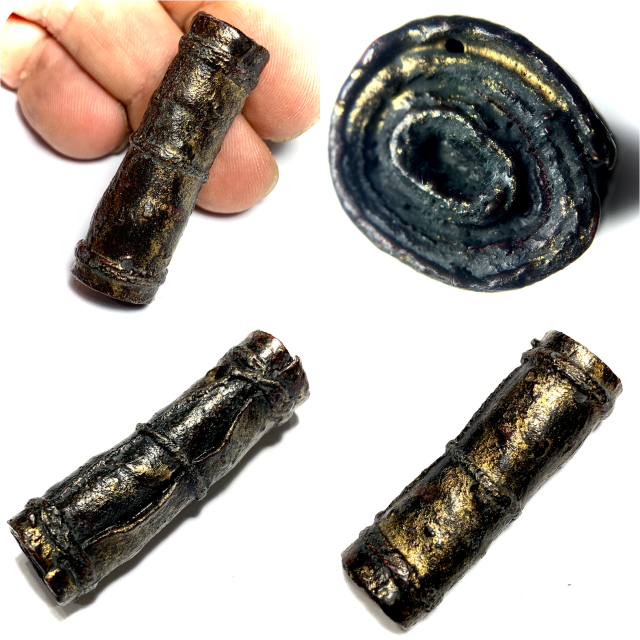
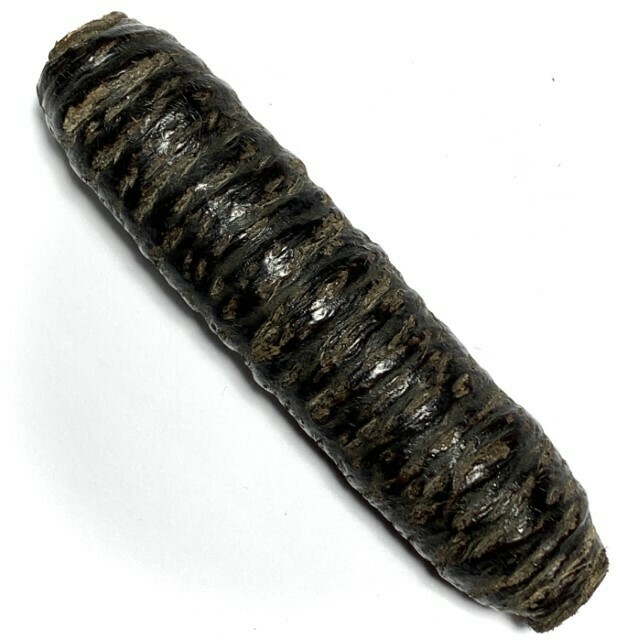
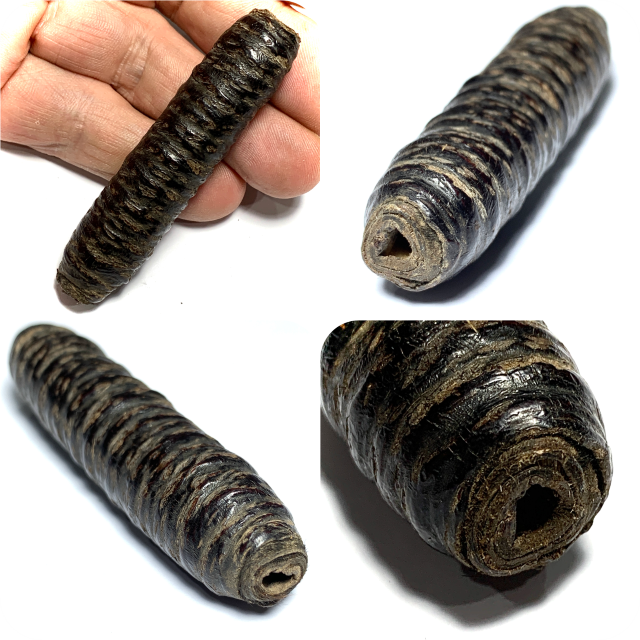
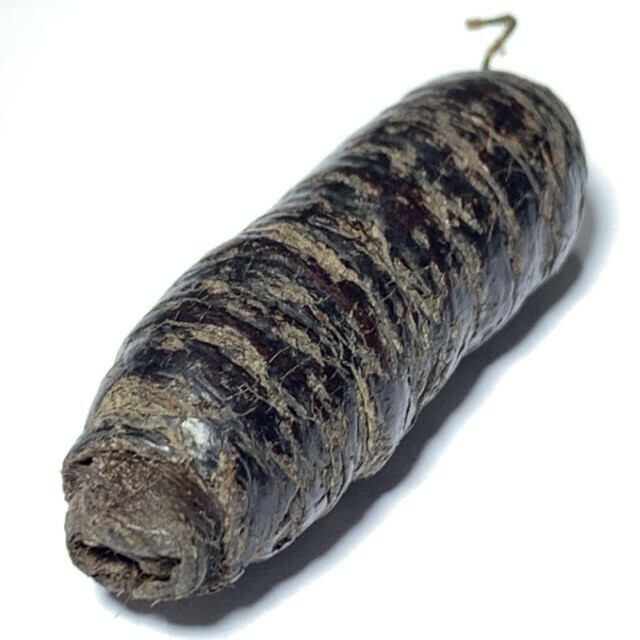
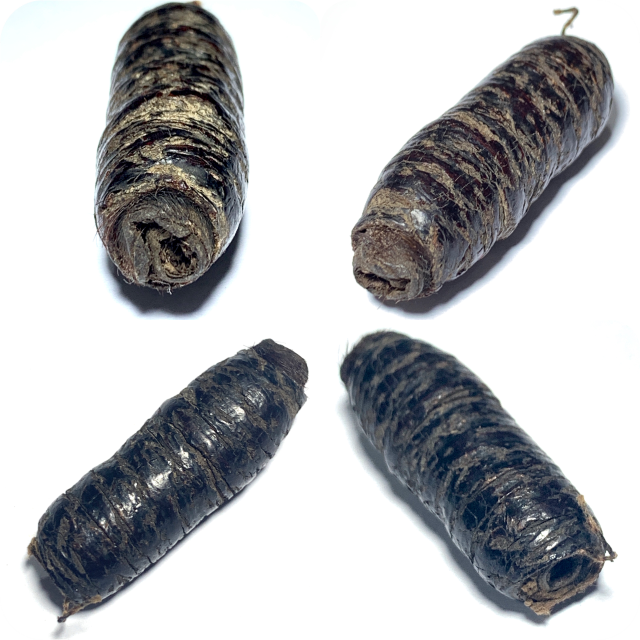
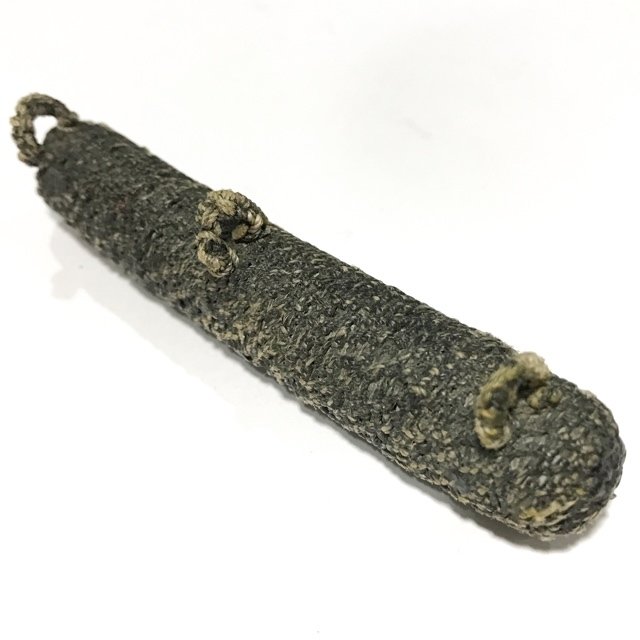
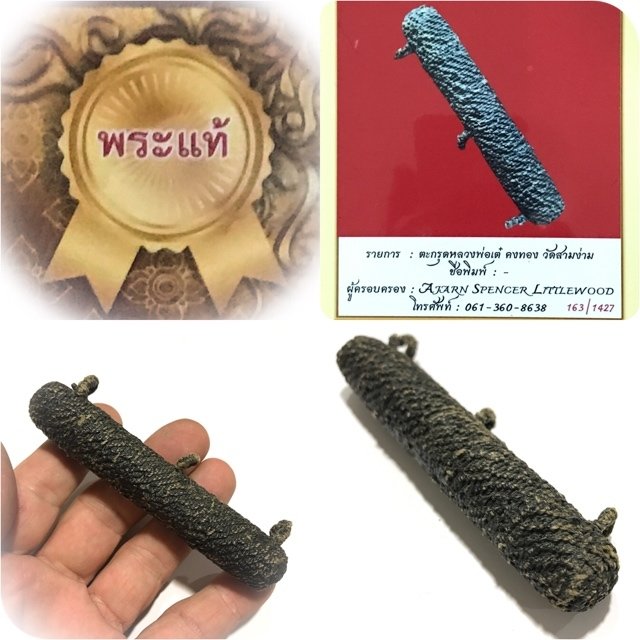
An eternal classic and highly powerful amulet; the Takrut Maha Solos Mongkol Thak Chueak Long Long Rak Chart Jeen Boran (Dtamrab Luang Phu Iam), cord bound Yantra Scroll amulet of Luang Phu Iam, of Wat Saphan Soong, with ancient red Chinese herbal lacquer (Rak Chart Jeen Boran).
Welcome, dear readers, to an enchanting journey into the realm of sacred amulets. Today, we delve into the mystical realm of the Takrut Maha Solos Mongkol, an amulet that exudes power, wealth, and divine protection. Crafted by the revered Luang Phu Iam of Wat Saphan Soong, this amulet is a timeless treasure sought after by devotees worldwide.
A Rare and Powerful Amulet
The Takrut Maha Solos Mongkol is a true gem among amulets, rivaling the renowned Takrut of the Great Luang Phu Sukh in rarity, price, and potency. Considered equally powerful, this amulet is particularly suited for those seeking status increase, wealth, good fortunes, and protection.
A Lifetime Companion
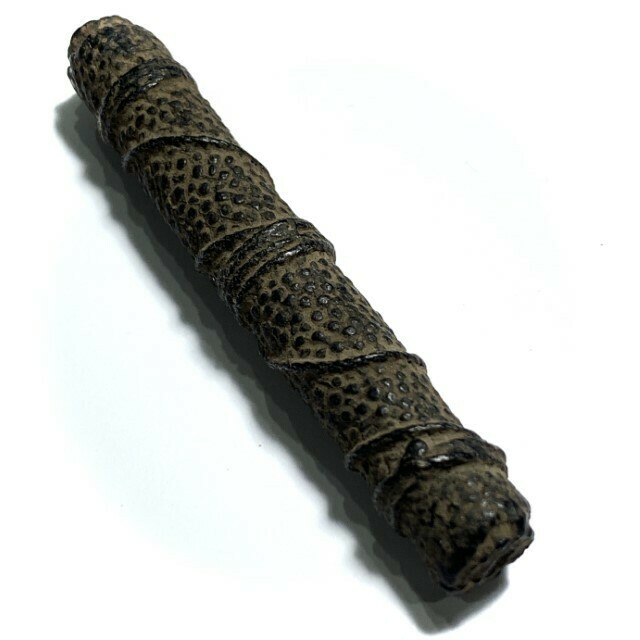
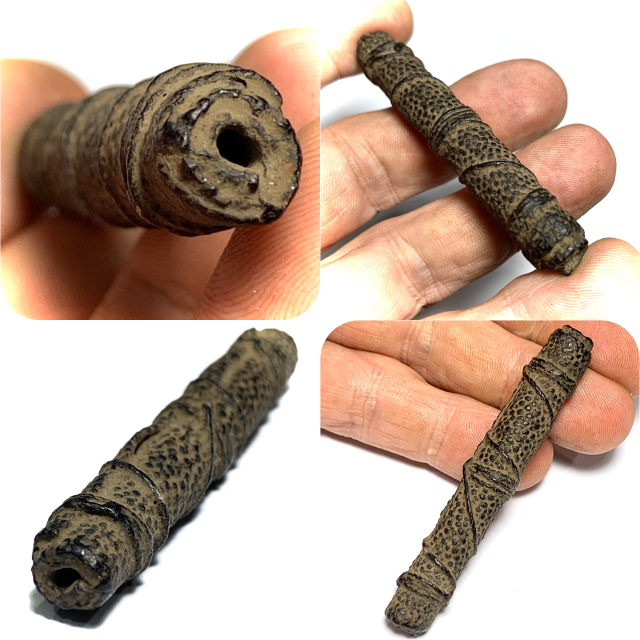
The Takrut Solos Mongkol of Wat Saphan Soong holds the title of a “Takrut Koo Cheewit,” meaning it is a “Lifetime Companion” amulet. Its remarkable property lies in its ability to bring constant improvements throughout one’s life, ensuring that its power never wanes. Wrapped in ancient Daay Dtra Sangkh Sinjana Cord and embellished with a ‘Cockroach Thorax‘ shape tips, this amulet possesses unique features that reflect its age and authenticity.
An Ancient Yantra Spell
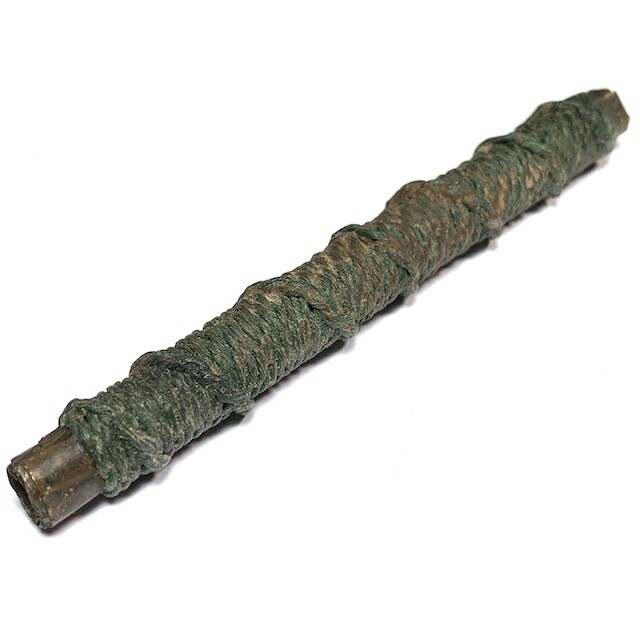
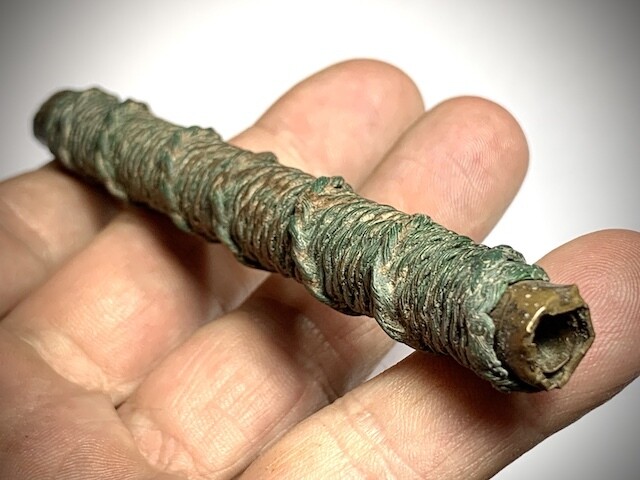
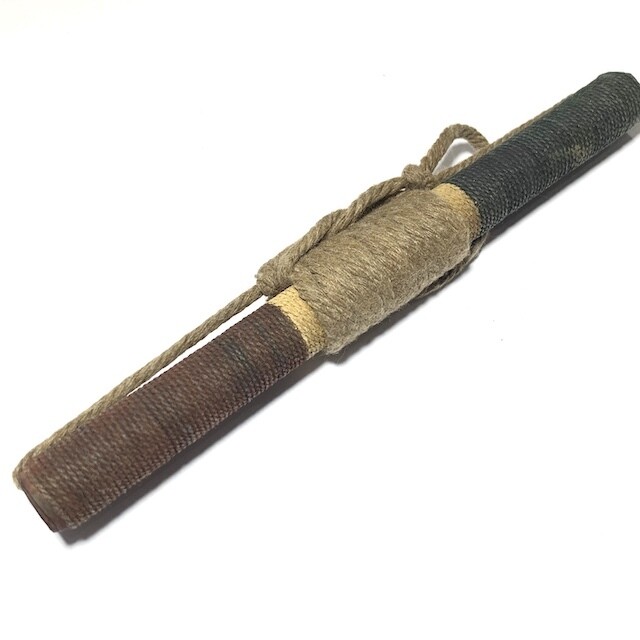
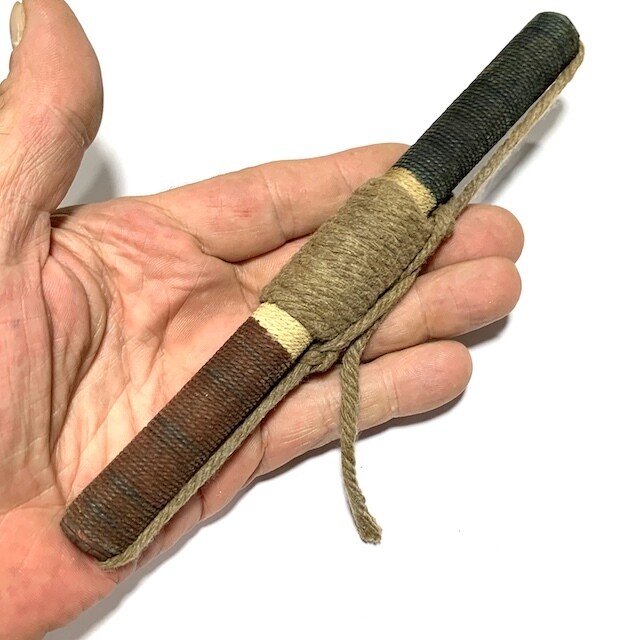
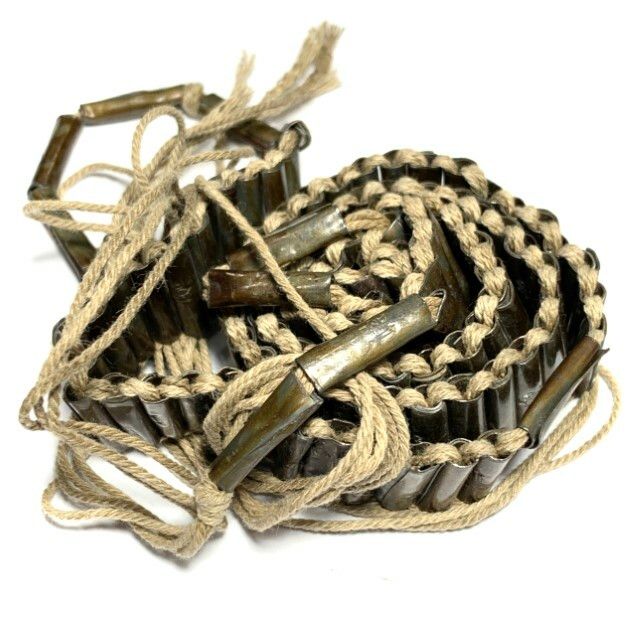
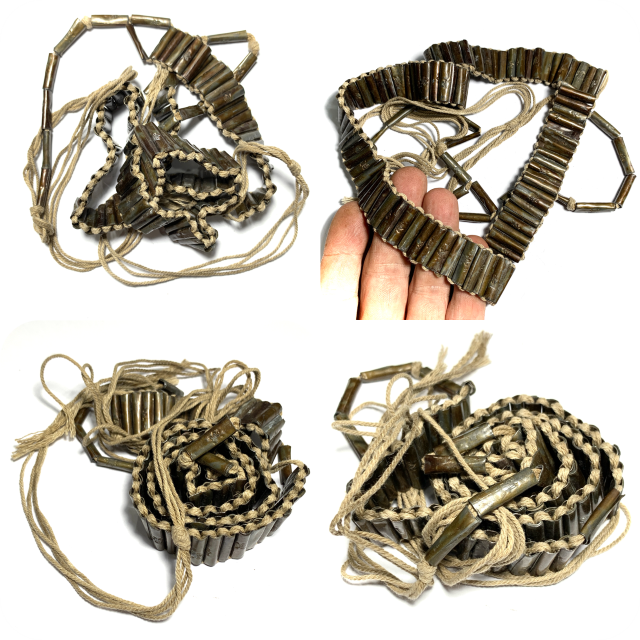
The Takrut Maha Solos Mongkol is not only an amulet but also an ancient and potent Sacred Yantra Spell. It holds a special place in the hearts of devotees, cherished by both Luang Phu Iam and his esteemed apprentices, including Luang Por Tong Sukh. These revered masters have spread the influence of this amulet around the globe, making it an eternal favorite among practitioners of sacred arts.
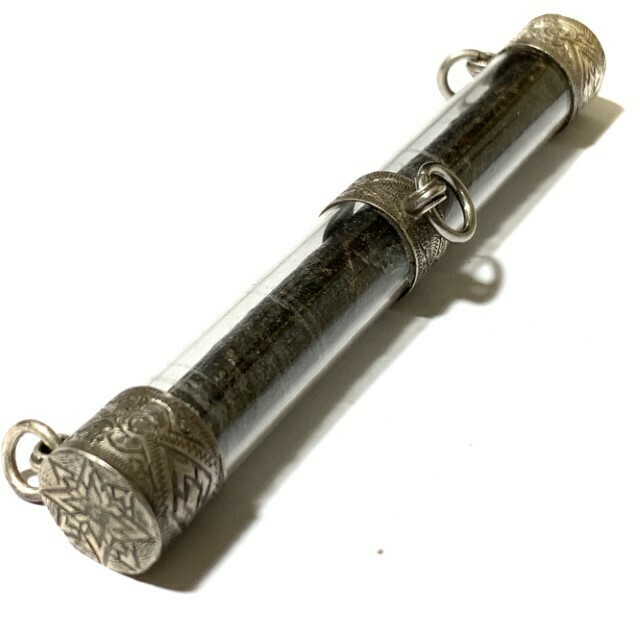
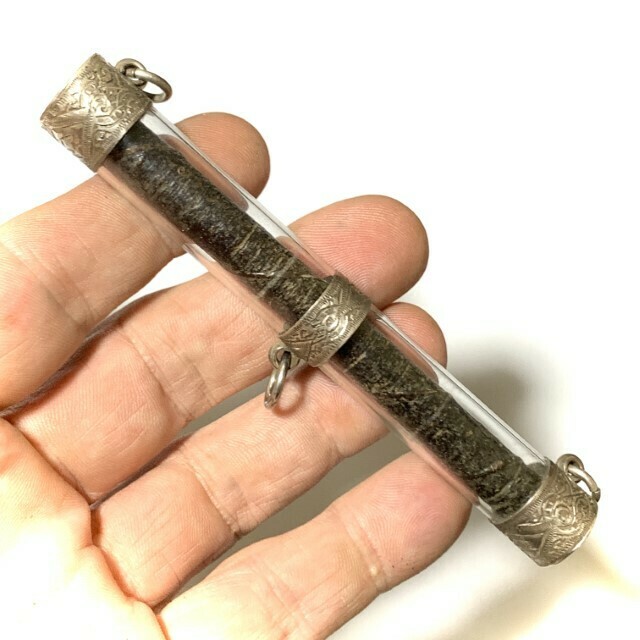
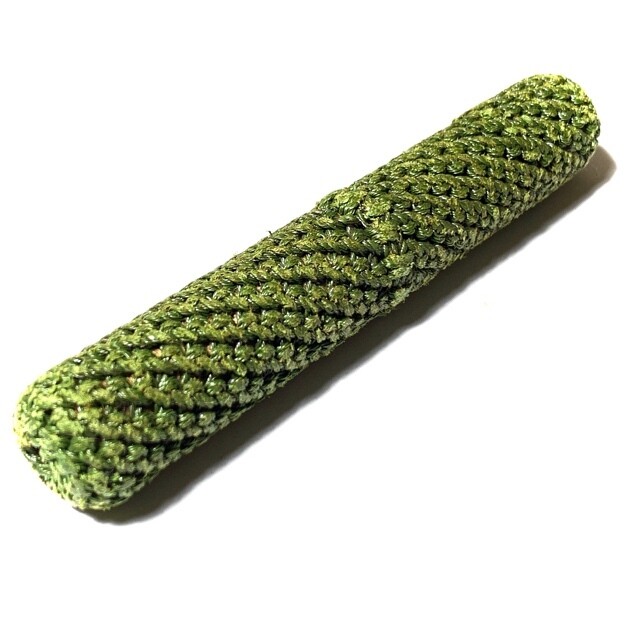
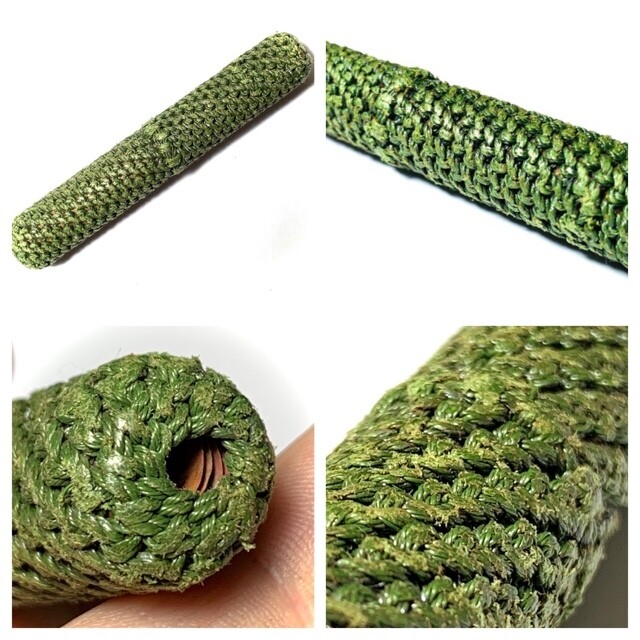
A Legacy Carried Forward
Luang Phu Iam, the originator of the Dtamra Pra Pid Ta and the Wicha Takrut Maha Solos Mongkol of Wat Saphan Soong, passed on his exceptional knowledge and skills to subsequent generations of esteemed masters. Ajarn Chuea, Luang Phu Glin, and Luang Por Tong Sukh, and now Luang Phu Waas, the current abbot, have all contributed to the legacy of this powerful amulet. Their mastery and dedication have ensured the continuity of this sacred tradition.
A Treasure for Devotees and Collectors
The Takrut Maha Solos Mongkol is a treasured alternative for those seeking the blessings of Luang Phu Iam’s amulets at a more affordable price. Crafted with invocations from all generations of the great master, empowered with the mastery of the Wicha Maha Solos Mongkol, these amulets carry immense value and authenticity. Their presence on the collector scene is unparalleled, making them highly sought after and revered.
The Illegalization of Phra Pidta Amulets in Singapore in the 1970s: An Affront to Religious Freedom
Singapore is world famous for its Human Rights impingements, but this Thai Amulet story puts the icing on the cake, to make the leaders of Singapore look like a bunch of total nincompoops, as well as revealing them as committing crimes against Religious Beliefs. In the 1970s, Singapore passed a law that made it illegal to wear or own Thai Phra Pidta amulets. This move was seen as an impingement on religious freedom and was met with worldwide criticism. The Phra Pidta amulet is a symbol of the Buddhist faith and is believed to offer protection to the wearer.
The Thai Pidta amulet features a monk sitting in a half-lotus position with his hands covering his eyes. The literal translation of “Pidta” means closed eyes, signifying the closure of the six senses where ultimate focus and peace can be attained. I do ponder perhaps if the Singapore Government were more afraid that criminals might perhaps truly have powerful magic that can beat their systems, more than being afraid of having to catch criminals wearing an amulet that they believe does not work! It seems to me, that the Singapore Government is afraid of the power of Thai amulets, for it empowers its people tto overcome the difficulties their own government set on them, and rise above the working class breadline level, to find true wealth and success.
The amulet is popular both in Thailand and around the world, with many top Thai monks producing their own versions. The value of Phra Pidta amulets fluctuates due to a handful of factors such as the materials used, the monk who produced them, and the rarity of the piece, with some fetching upwards of two million Thai baht (64,000 USD).
Despite the amulet’s popularity, the Singaporean government felt that it was inspiring youth to commit crimes without fear of getting caught. According to them, followers also believed they could get into fights without feeling pain, thus inspiring criminal acts and violence. However, this view is not shared by many, and the law was seen as an impingement on religious freedom and an affront to human rights.
It is not the object that is at fault but rather the wrong views of the criminal-minded wearer. In fact, one of the rules of wearing a Phra Pidta amulet is to keep the five Buddhist precepts, otherwise, the amulet is said to not work for evildoers. Moreover, in the case of criminals, most would commit a crime with or without such a Phra Pidta amulet.
The move by the Singaporean government to illegalize the wearing of the Phra Pidta amulet was seen as absurd by many. After all, there are endless objects that people may consider ‘invincibility’ inducing. Should we illegalize all of them? This law was a clear affront to religious freedom and the human right to wear an object of religious faith.
The Phra Pidta amulet is a symbol of Thai Buddhist culture and miniature Buddhist arts. It is a sacred object that holds deep meaning to the Buddhist faith. To illegalize its wearing is to deny the religious rights of individuals who hold this amulet dear to their hearts. The Singaporean government, in this case, failed to understand the significance of the amulet to its followers.
In conclusion, the illegalization of Phra Pidta amulets in Singapore in the 1970s was a clear affront to religious freedom and human rights. The move was seen as absurd by many, and it is not the object that is at fault but rather the wrong views of the criminal-minded wearer. The Phra Pidta amulet is a symbol of Thai Buddhist culture and miniature Buddhist arts, and to illegalize its wearing is to deny the religious rights of individuals who hold this amulet dear to their hearts. We must ensure that such a move is not repeated anywhere in the world and that religious freedom is respected at all times.
Unveiling the Mystical Powers of Phra Pidta Thai Amulets
The Immortal Phra Pidta Thai Nirodha Buddha Amulet; Thai Buddhist culture is rich in miniature Buddhist arts, particularly Thai Buddhist amulets, which are considered to possess magical powers. Among these amulets, Phra Pidta amulet stands out as one of the most revered and potent talismans. This article delves deep into the mystical powers of Phra Pidta Thai amulets and sheds light on their origins, symbolism, and significance.
Pra Pid Ta Pong Graduk Phii Pra Ajarn Hnoo
Origins of Phra Pidta Thai Amulets
Phra Pidta is a revered Buddhist amulet that is said to represent the state of “Nirodha,” which refers to the cessation of craving and desire, the third of the Four Noble Truths in Buddhism. The attainment of Nirodha leads to the realization of Nibbana (also known as Nirvana), a state of perfect peace and freedom from suffering.
Symbolism of Phra Pidta Thai Amulets
The Phra Pidta amulet is depicted as a sitting or standing Buddha with his hands covering his eyes, which symbolizes the act of meditation and the attainment of inner peace. The amulet’s eyes are closed to represent the cessation of craving and desire, and its mouth is closed to signify the importance of right speech. In addition, the amulet’s name, “Pidta,” means “closed eyes” in the Thai language, which further emphasizes its symbolism. The amulet’s design and symbolism make it a powerful talisman for meditation, spiritual protection, and personal development.
Significance of Phra Pidta Thai Amulets
The Phra Pidta amulet is considered to possess various magical powers, such as protection from harm, enhancement of one’s intuition, and the ability to attract good luck and prosperity. It is believed to have the power to dispel negative energy and prevent accidents or misfortunes. Moreover, the amulet is often worn by Buddhist monks and practitioners to enhance their meditation practice and deepen their spiritual connection with the divine. It is also believed to have the power to dispel evil spirits and protect against black magic and sorcery.
Types of Phra Pidta Amulets
There are many different types of Phra Pidta amulets, with hundreds of thousands of designs, many of which have been lost to history. Additionally, new designs are constantly being released each year. The design, magical empowerment, and materials used to make the amulet vary greatly. Here are just five of the most well-known types of Phra Pidta amulets:
Phra Pidta Nang Yong – This amulet features a squatting Buddha and is believed to provide strong protection against evil and physical danger, as well as promote success in one’s profession and personal life. It is also said to possess a Metta Maha NIyom Mercy charm.
Phra Pidta Tawarn – This amulet is often depicted with four to nine arms and is believed to bring peace, stillness, and protection against evil and bad luck. It is frequently used by meditators and those who practice Dhyāna meditation to reach the meditative state of Nirōdha.
Phra Pidta Yant Yung – This amulet is covered in Yantra Sacred Geometry spells and is believed to provide strong protection against evil and danger. There are even legends of its gunstopper and bulletproof magic.
Phra Pidta Maha Lap – This amulet is believed to bring great luck, happiness, and financial success to the wearer.
Phra Pidta Plod Nee – This amulet has a unique tapered curved triangle shape and is believed to provide help in escaping poverty or increasing wealth.
How to Use Phra Pidta Thai Amulets
To harness the mystical powers of Phra Pidta Thai amulets, it is essential to use them correctly. Here are some tips on how to use Phra Pidta amulets effectively:
Wear the amulet close to your body, such as around your neck or wrist, to enhance its protective powers.
Chant Buddhist mantras or prayers while holding the amulet to deepen your spiritual connection with the divine.
Keep the amulet in a clean and respectful place, such as a shrine or altar, to maintain its purity and effectiveness.
Avoid touching the amulet with dirty or impure hands (such as after having sexual relations, or broken the precepts by stealing) as it may reduce its potency.
The Phra Pidta Thai amulet is a potent talisman for Buddhists of all schools of thought, that symbolizes the state of “Nirodha” and the attainment of inner peace and enlightenment. Its powerful symbolism and mystical powers make it a valuable asset for spiritual practitioners and those seeking spiritual protection and personal development. By understanding the origins, symbolism, and significance of Phra Pidta amulets, we can harness their power by wearing them close to our body, as a constant reminder of our spiritual goals and as a source of protection from negative energies.
How to Choose and Care for Your Phra Pidta Amulet
If you’re interested in acquiring a Phra Pidta amulet, there are a few things to keep in mind. First, make sure to buy from a reputable seller, as there are unfortunately many counterfeit amulets on the market. Look for a seller with good reviews and a clear history of selling authentic amulets. When choosing an amulet, consider which material and design resonates with you. Phra Pidta amulets come in a variety of materials, including gold, silver, bronze, and clay. They also come in various sizes, so consider how you plan to wear or display your amulet.
Once you have your amulet, it’s important to care for it properly to maintain its energy and effectiveness. Keep it in a clean and safe place, away from other metal objects that could damage it. You should encase it, or at least be gentle with it to avoid scratching or damaging the surface.
In Buddhism, the state of Nirodha, or “cessation,” is the ultimate goal of spiritual practice. This state is achieved through the renunciation of craving and desire, leading to the cessation of suffering and the realization of Nibbana, a state of perfect peace and freedom from suffering. Phra Pidta amulets are believed to embody this state of Nirodha, representing the meditator who has achieved enlightenment and renounced desire.
Mahayana Buddhism goes even further, asserting that Nirvana is just the other side of Samsara. One who has realized this truth can achieve liberation from any form and transcend all duality, including the concept of liberation itself. In this sense, Phra Pidta amulets are not just symbols of protection, but of ultimate liberation.
Thai Pra Pid Ta amulets are fascinating votive tablets, and spiritual objets d’art, that hold great spiritual significance in Thai Buddhist culture. They are believed to offer protection and connect the wearer with the divine, embodying the state of Nirodha and ultimate liberation from suffering. Whether you are a collector, a spiritual seeker, or simply curious about this fascinating aspect of Thai culture, Phra Pidta amulets are well worth exploring. By choosing an authentic amulet and caring for it properly, you can tap into the power and mystery of these miniature Buddhist arts.
Roop Lor Luang Phor Ngern Fa Kamron Edition Amulet – Wat Bang Klan
Luang Phor Ngern Wat Ban Klan, Pim Fa Kamron, sacred metal Guru Monk amulet cast with chanuan sacred metal alloy made from old temple bell brass, and previous editions of ancient amulets, of various periods unearthed under the base of the principal Buddha image. in the old church Luang Phor Ngern era which remains from pouring the cast of the broken gun model in 1985, pouring gold before the Buddhist Lent day at the Sema Wat temple boundary. The amulets were principally consecrated individually by Luang Phor Chua, a famous monk of the times, throughout the rainy season (quarter 3 months), after which it was brought into the Maha Phuttha Phisek ceremony on November 17, 1991, which had monks The following Kroo Ba Ajarn Mentors present : Luang Por Chuea, Bang Khlan Dtai Temple, Luang Phor Prueang Wat Bang Khlan Nuea (the creator of Luang Phor Ngern 2515 BE amulet), Luang Por Juan of Nong Sum Temple, Luang Por Phon of Dakkan Temple, Luang Phor Nhon of Wat Phutthabat Khao Ruak, etc.
The Power of the Roop Lor Fa Kamron Edition Amulet
The Roop Lor Fa Kamron edition amulet is highly sought after for its reputed magical power. It is believed to provide protection against harm and danger, as well as to bring good luck and prosperity. The amulet is often worn by those who seek spiritual guidance and protection, as well as by those who believe in the miraculous power of Luang Por Ngern.
Both large and small prints on the front Sangkati cloth are inscribed with “U” as a symbol. But some of them are not stuck. Because of the ancient method Underneath the base of the Buddha image, is the word ‘Ngern’ on the base. The surface effect of the chanuan muan sarn is evidently cast using precious editions of Luang Por Ngern amulets, including of course the Pern Dtaek broken gun edition. There is a stain of the socket that sticks so tightly that it turns black. The texture is the same as the broken gun model. famous throughout the amulet world Because it’s the same formula. The Buddha’s outstanding virtue It has been famous for a long time.
A Miracle event
While Wat Bang Klan Tai performed the ceremony of pouring gold to Phra Luang Por Ngern There was a loud noise. Clear sky without rain clouds It was terrifyingly dark and gloomy, and then the lightning struck the middle of the ceremony canopy. Thunder roared throughout the area. like the soul of Luang Por Ngern in the heavens and as though he had attended the consecration ceremony that event tens of thousands of people They criticized each other in various ways at the thunder and the sky in the midst of the ceremonial canopy. even though there is not even a slight rain cloud The people of Bang Khlan therefore dubbed the sacred object In this ceremony, Dua said that the Fa Kamron generation
But there are villagers who call this Luang Por Ngern Fa Kamron model, another name is ‘Fan Pla’ fish tooth model because there are villagers who took the Fa Kamron amulet, and inserted into the mouth of the fish, then used a knife to stab it. The first time didn’t go in. The second time, increasing the strength again, it didn’t go in. The third time, he increased his strength and did not enter again. until the Roop Lor Luang Por Ngern monk amulet was thrown out of the mouth of the fish So the villagers call this version of the amulet, ‘Pim Fan Pla’, meaning; ‘the fish tooth version’.
Pra Luang Por Ngern Fa Kamron Edition Amulet
The Pra Luang Por Ngern Fa Kamron edition amulet is a rare and highly revered amulet from the legendary Thai Buddhist master-monk, Luang Por Ngern of Wat Bang Klan. This edition of amulet is particularly special because it was created using the sacred metal admixture of Pern Dtaek broken gun edition amulet.
The Sacred Metal Admixture
Pern Dtaek broken gun is a sacred metal admixture that is created by melting down old and broken guns that have been used in battles. The metal from these guns is said to have powerful protective properties that can shield the wearer from harm and danger. Luang Por Ngern was a master of creating amulets using this sacred metal admixture, and the Pra Luang Por Ngern Fa Kamron edition is one of the most famous.
The Roop Lor Fa Kamron Edition Amulet
The Pra Luang Por Ngern Fa Kamron edition amulet is a Roop Lor amulet, which means it is a small image or statue of Luang Por Ngern that is meant to be worn as a protective talisman. The amulet features the image of Luang Por Ngern seated on a lotus throne, with one hand raised in a blessing gesture and the other hand holding a magical sword. The amulet is cast from the sacred metal admixture of Pern Dtaek broken gun, and is said to have powerful protective properties.
The Roop Lor Fa Kamron edition amulet is highly sought after by collectors and devotees alike. It is considered one of the most powerful amulets created by Luang Por Ngern, and is said to have the ability to protect the wearer from harm, ward off evil spirits, and bring good luck and fortune.
Luang Por Ngern and Wat Bang Klan
Luang Por Ngern was a highly respected and revered Thai Buddhist monk who lived from 2431 BE to 2462 BE. He is known for his exceptional magical abilities and psychic mind powers, which have earned him a worldwide following of devoted followers to this day. One of his most famous creations is the Roop Lor Fa Kamron edition amulet, which is highly sought after by collectors and enthusiasts.
The Magical Wicha of Luang Por Ngern
Luang Por Ngern was famous for his magical Wicha, which included the creation of powerful amulets and talismans. His amulets are known for their ability to provide protection, bring good luck and fortune, and ward off evil spirits. Luang Por Ngern’s Wicha was so powerful that he was known to have psychic mind powers, including the ability to read people’s thoughts and predict the future.
Kata Bucha Incantations for Luang Por Ngern
Devotees of Luang Por Ngern often recite Kata Bucha incantations to pay homage and seek blessings from the master-monk.
The Phra Pidta of LP Nak is a highly revered amulet created by the late great Thai monk Luang Phor Nak of Wat Huay Jorake temple in Nakhon Pathom, Thailand. The Phra Pidta, also known as “the closed-eye Buddha,” is a representation of the Lord Buddha in deep meditation, entering the state of Nirodha, and is believed to bring blessings of protection, good luck, and wealth to the wearer.
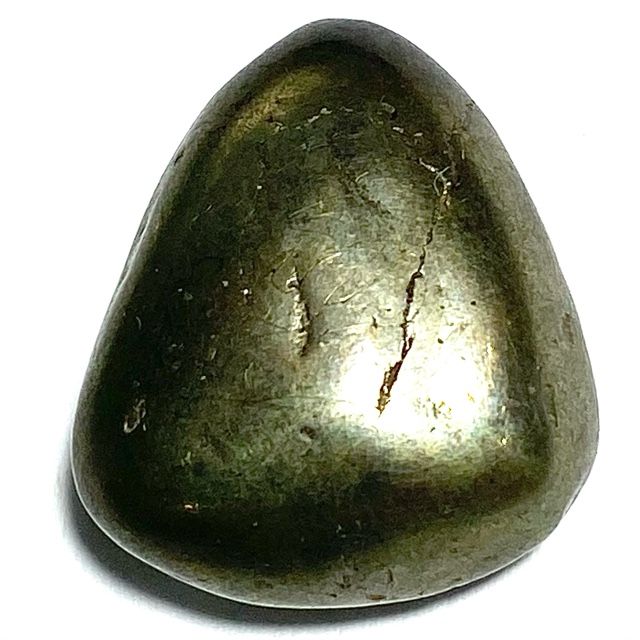
The Phra Pidta amulet created by LP Nak was made usually in Nuea Mekasit alcemical metal, but also in sacred loha chanuan bronze and other brazen metal mixtures (less often seen). I is said that LP Nak himself was an adept master of alchemical metallurgy, and the Wicha Pra Pidta. It found in medium and small sizes (Pim Lek & Pim Yai) and has various models sch as the Pra Pid Ta Hoo Gradtay ‘Rabbit Ears’ model. It is believed that the Phra Pidta amulet of LP Nak has the power to protect its wearer from harm, bring good luck, and attract wealth and prosperity. Some of the Pra Pid Ta of Luang Pu Nak possess hand inscriptions scratched onto the surface of the metal, with Khom Agkhara and Sacred Yant.
Phra Pidta amulet represents a meditating Buddha entering into the state of Nirodha. Nirodha is the third of the Buddha’s Four Noble Truths and refers to the attainment of the cessation of suffering. The image of a meditating Buddha is representative of the amulet’s ability to bring peace and block out all forms of inauspicious events and bad luck, protect against all dangers and black magic. The amulet is believed to have the power to block out negative energy and to protect the wearer from harm due to the reputation of the creator and his spiritual energy.
Luang Pu Nak was a well-known Thai Buddhist monk and the abbot of Wat Huay Jorake temple in Nakhon Pathom, Thailand. He was well-known for his spiritual teachings and wisdom, as well as his ability to craft powerful amulets. His reputation as a powerful spiritual leader, combined with his ability to craft powerful amulets, ensures that his legacy lives on, and his amulets are highly sought after. He died in 1959, but his teachings and amulets are still revered and respected by many Thais and people all over the world.
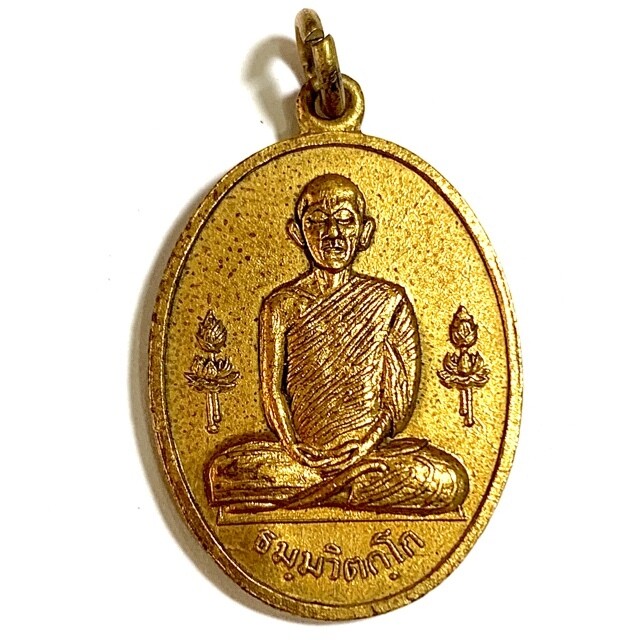
Many people in Thailand and around the world believe that the Phra Pidta amulet of LP Nak is particularly powerful for Kong Grapan/Klaew Klaad Protection Magic, due to the reputation his Pidta developed over the years as many stories of lifesaving miracles were recounted by devotees who wore the Pidta of LP Nak. LP Nak was known for his deeply spiritual teachings, and his ability to create very powerful amulets, and many people believe that his amulets possess his spiritual mind energy even after his passing. The Phra Pidta amulet of LP Nak is also highly sought after by collectors and those interested in Thai Buddhism and culture. Many people consider it a valuable possession and it is often passed down from generation to generation as a family heirloom amulet.
The Phra Pidta amulet of LP Nak is a highly revered and powerful amulet created by the late Thai monk Luang Phor Nak of Wat Huay Jorake temple in Nakhon Pathom, Thailand. It is believed to bring blessings of protection, good luck, and wealth to the wearer, and is highly sought after by collectors and those interested in Thai Buddhism and culture. The reputation of LP Nak as a powerful spiritual leader, and his ability to create powerful amulets, makes this amulet particularly valuable and powerful.
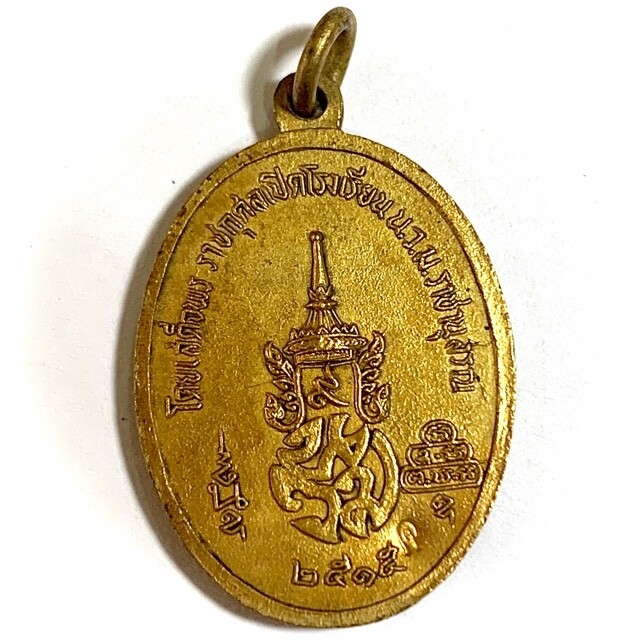
Luang Pu Nak, was a Thai Buddhist monk who lived in the 19th- 20th century. He was the abbot of Wat Huay Jorake temple in Nakhon Pathom, Thailand. He was born in 2358 BE (1884) and passed away in 2452 BE (1972). Luang Pu Nak was known for his great compassion and spiritual wisdom, and was a great giver of spiritual teachings, as well as his skill in creating powerful amulets. He was highly respected by the local community and by other monks in Thailand. He was also known for his generosity and mercy, and his dedication to helping others.
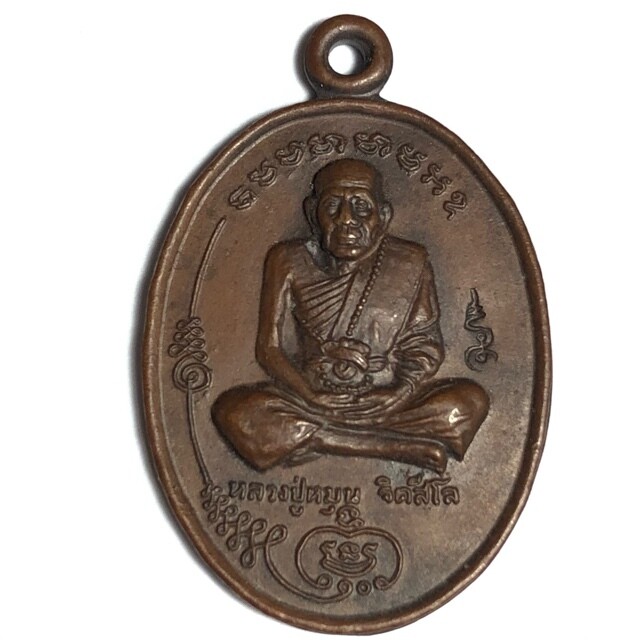
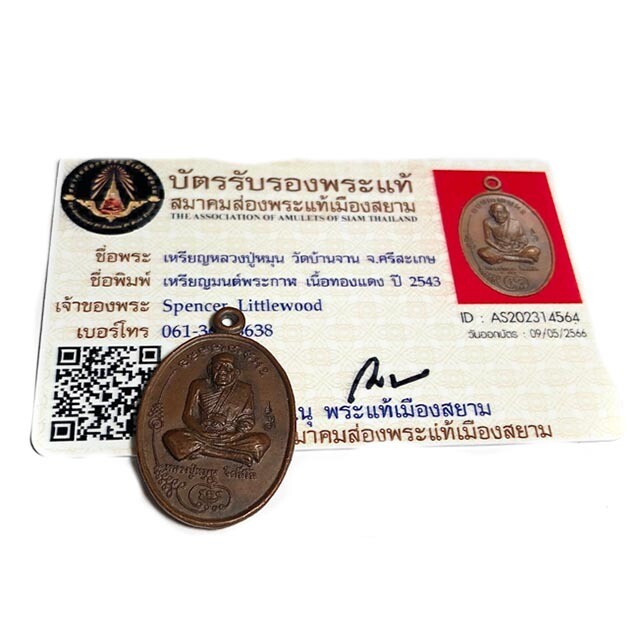
During his tenure as abbot, he worked to strengthen the spiritual community at Wat Huay Jorake and to provide guidance and support to the local population. In addition to his work as an abbot, Luang Pu Nak was known for his skill in creating powerful amulets. He was able to create amulets using various materials, including clay, metal, and even human bone. His amulets were believed to possess spiritual power and provide protection to the wearer. They were often inscribed with sacred texts or mantras, and were highly sought after by the local population and by collectors. Luang Pu Nak’s amulets are very highly valued in the present day, and many people in Thailand and around the world believe that they possess spiritual power. His amulets are often passed down from generation to generation as a family heirloom, and are considered a valuable possession.
Luang Pu Nak may have passed away long ago, but his legacy continues to be felt in Thailand and around the world. He is remembered as a wise and compassionate spiritual leader, and his amulets are still highly sought after by aficionados, faithful devotees, collectors, and those interested in Thai Buddhism and Thai culture. To this very day, the lineage of abbots of Wat Huay Jorake still make and release Phra Pidta amulets of the Wicha passed down to them through a constant succession in the magical lineage of Luang Pu Nak. The Phra Pidta amulet of LP Nak, is believed to be particularly powerful because it is believed to possess the magical energy of the monk who created it. As Luang Pu Nak is considered a highly respected and powerful spiritual leader, it is believed that his Pidta amulets will always possess his spiritual energy even after his passing, without ever fading. Thew Pidta Mekasit amulet, is considered the most famous and powerful amulet created by Luang Pu Nak.
Background Info on Phra Pidta
Since very early times in Thailand, Pra Pid Ta amulets, as well as Pra Pid Ta in the shape of Pha Yant and Bucha sculptures, have been made as objects of adoration and protection. Using the Buddhist sculpture and art that was accessible at the time, the artisans of that era developed a variety of styles and interpretations. Various Buddhas, Bodhisattvas, or Deities are fashioned into the posture of Pra Pid ta, or Pid Tawarn (meaning “closing the orifices”), to create the Pid ta posture (‘Pid Ta’ means “covering the eyes”). Pid Tawarn can seal 7, or 9 orifices (the number 7 is referred to as Pra Pid Sadtatawarn, while the number 9 is known as Pra Pid Navatawarn). The Phra Pidta amulet, also known as “the closed-eye Buddha,” is believed to bring blessings of protection, good luck, and wealth to the wearer.
The Phra Pidta amulet, represents a meditating monk entering into the state of Nirodha. Nirodha is the third of the Buddha’s Four Noble Truths and it refers to the attainment of the cessation of suffering. In Buddhist teachings, Nirodha is understood as the state of being where all mental defilements, such as ignorance, greed, and hatred, have been completely eliminated. This state is reached through the practice of meditation and the cultivation of wisdom, and it is considered the ultimate goal of Buddhism.
The third of the four noble truths according to Buddhist tradition is defined as Nirodha Sacca (also spelt Nirodha Sacca in Pali; Nirodha Satya in Sanskrit). Sacca denotes “truth” or “reality,” whereas Nirodha means cessation or extinction. Therefore, the translation of nirodha sacca is generally “truth of cessation” or “truth of the cessation of suffering.” It explicitly refers to the cessation of Dukkha (suffering) and its causes; the resultant experience is defined as nirvana. Nirodha can indicate a variety of things, such as release, cessation, extinction, the end of dukkha, and “control or restraint.” The cessation of all unsatisfactory experiences and their causes in a way that prevents them from occurring again is what Nirodha Sacca means. It is their elimination, complete absence, cessation, and ceasing from existing.
The image of a meditating Buddha entering Nirodha, is representative of the amulet’s ability to bring peace and block out all forms of inauspicious events and bad luck. It is believed that by wearing the Phra Pidta amulet, the wearer will be protected against all dangers and black magic. The amulet is believed to have the power to block out negative energy and to protect the wearer from harm. Famouls for their Kong Grapan, Metta, Klaew Klaad, and Maha Lap Magic.
Kata Pra Pid Ta
Namo Puttassa Kawambadtissa Namo Tammassa Kawambadtissa Namo Sangkassa Kawambadtissa Sukha Sukha Warang Na Mo Puttaaya Ma A U Tugkhang Anijjang Anatta Jewa
A Rare Loi Ongk Pra Pid Ta Thaan Sung (high Dais) Buddha Image Statuette amulet, in Nuea Pong Kluk Rak, with hand inscribed Yant Putto, and Khom Inscriptions, from the Great Luang Por Dam, of Wat Mai Nopparam, in Naratiwat Province, in the deep South of Thailand on the Malay border. Luang Por Dam was the first apprentice in the Wicha of Pra Pid Ta Magic, to the Great Luang Por Kron, of Wat Bang Sae. This exhibit differs from many, in the fact that it has had red Rak Chart Jeen Boran coated on the base.
The Pid Ta is made using the very same Muan Sarn Sacred Powders admixture, empowerment, and inscriptions, as those of the Great Luang Por Kron, and the Pra Pid Ta of Luang Por Dam himself, have now become legendary in their own right, and stand alone on their own merits as Pra Niyom master Class Category amulets.
Highly revered and collected by Looksit (Devotees) of his Mentor Luang Por Kron, a Buddhist Master Monk from Malaysia. Luang Por Kron was Abbot of Wat Bang Sae in the province of Kalantan.
He made many Pid Ta amulets which were so very preferred (‘Niyom’). It is said in Thai Amulet circles that, in the same way that we prefer the Pra Somdej Wat Rakang as a Niyom amulet, so, in Malaysia and even Singapore, the Pra Pid Ta of Luang Por Dam, and his Mentor Luang Por Kron, became just as sought after and beloved. Malaysians know Luang Por Dam very well, for his temple is very close to the Malaysian border in Naratiwat, which is one of the reasons LP Dam was able to be a close accomplice of LP Kron, and receive and continue his Wicha.
The Pra Pid Ta amulets of Luang Por Dam of Wat Mai Nopparam, have become ever more comparable and popular to those of his Mentor and Wicha Inheritance Kroo Ba Ajarn Luang Por Kron, for the fact that Luang Por Kron’s amulets are almost impossible to find anymore these days, and the Pra Pid Ta of Luang Por Dam have hence become the favored alternative, for they are considered to possess the magic of both Masters.
Below; Luang Por Kron – Wat Uttamaram (Kalimantan Malaysia)
As to Luang Por Dam’s Mentor, LP Kron, Malaysian Buddhists do not often call him Luang Por Kron as Thai people do, rather ‘Tok Racha‘, which means something similar to Thailand’s top Royal Monk always being called ‘Pra Sangkaracha’.
It is said that despite the fact that most of the surrounding households in the vicinity of Luang Por Krons temple were Muslim, that he earned their respect, and was an honored person. He was not called Luang Por Kronby Malays, as we call him in Thailand, rather, was named ‘Tok Raja’, which means ‘ as equal to the Sangha Raja’ .
The reason for this comes from a legend that the daughter of a powerful Sultan of Kalantan was cursed with a black magic spell, which caused his mind to become strangely affected, and even doctors and psychologists could not help to cure him, and even the Muslim witch doctors could not break the spell with their magic.
But Luang Por Kron was able to heal her, and return her to sanity. This caused LP Kron to recieve great respect from the Sultan who then gave him the honorary name of Tok Raja. His most preferred amulets are the Pra Pid Ta, which were mostly hand made molds, in Muan Sarn Sacred Powders with Lacquer (Nuea Pong Kluk Rak), some very few in carved wood, and a very few are sometimes seen in carved ivory.
Luang Por Kron began making Pra Pid Ta amulets sometime around the year 2480 BE onwards, mostly making hand molded clay models, resulting in each one having a very original appearance, some with very wide legs, others less so. Most were made in Nuea Pong Kluk Rak herbal powders with lacquer mixed into the clay, and hand molded, to form an inimitable effect that has made his Pra Pid Ta amulets so original in design.
Many of his hand molded Pid Ta do not have a dais and have very wide legs, whereas others have a more standard form with inscription, and less wide legs, and usually with inscriptions of Unalome and Yant on the surface of the image. His other highly preferred amulets among devotees, are the Rian Roop Dork Jik 1st edition coin of 2500 BE, and the second edition coin, the Rian Roop Khai of 2505 BE.
A Top Master-Class amulet, from LP Dam, first apprentice of Malaysia’s Greatest Master of the Wicha Pra Pid Ta
The Pid Ta can be used as a Loi Ongk Statuette on the altar for Bucha, or be worn as an amulet encased. This exhibit is highly recommended to use for altar worship, as it has a wide sturdy base, and is fitting for placement on flat surfaces.
Pra Rahu Om Jantr Nuea Kala Ta Diaw – Pim Sema Kwam world famous preferred master-class amulet, from Luang Por Noi Kantachodto – Wat Srisa Tong (Nakorn Chaisri)
The Pra Rahu Kala Ta Diaw of Luang Por Noi, of Wat Srisa Tong, in Huay Tago, Nakorn Chaysri, is most certainly the most famous of all one eyed coconut carved Rahu Amulets in Thai Amulet History. The only other Master who has come close to equalling his fame and mastery of the Pra Rahu Kala Ta Diaw amulet, is the great Kroo Ba Nanta, of Wat Tung Man Dtai, in Lampang, whose Pra Rahu are also extremely favored and sought after.
Phra Rahu Pim Sema Glab Ongk Kroo Luang Por Noi – a Perfect Showcase exhibit of this world famous and extremely rare and valuable Thai Buddhist Amulet of Luang Por Noi, of Wat Sri Sa Tong
The Pra Rahu Kala Ta Diaw of Luang Phu Noi, are the most prestigious of all in the eyes of the Pra Niyom Collector Community. This model is considered to be from the earlier time of Luang Por Noi’s Era due to its slightly larger size and curvature, because his later models were flatter and slightly smaller. The amulets themselves were made by Artisans who were devoted Looksit of Luang Por Noi, who were mostly immigrants from Vientiane, in Laos, who moved to Thailand during the early Ratanakosin Period of Thai History.
As the earthen foundations of the temple of Wat Srisa Tong were being dug for the building of the temple, a golden Buddha Head was discovered, and because of this, the Temple was first given the name ‘Wat Hua Tong’ which means ‘Temple of the Golden Head’.
The word ‘Hua’ means ‘head’ in colloquial Thai, but for referring to a Sacred Image of a Deity or a Buddha (or a Monk), the word ‘Srisa’, which also means ‘Head’, in high speech, is preferred. So the name was then changed later to ‘Wat Srisa Tong’
Below;the ancient natural aging features of the surface of the rear face of the 1 eyed coconut shell carving is highly evident and visible, even to the naked eye, along with the inimitable, and instantly recognizable hand made Lanna spell Inscriptions of this Great Laoatian Magical Lineage Master Monk.
Pra Rahu Kala Ta Diaw Pim Sema Glab Luang Por Noi. The Rear Face Shows Hand Made Spell Inscriptions in Agkhara Lanna Magical Script, from Luang Por Noi’s own hand. This exhibit is a perfect Ongk Kroo for reference, study, and is highly eligible for competition entry, and likely to win a prize if so.
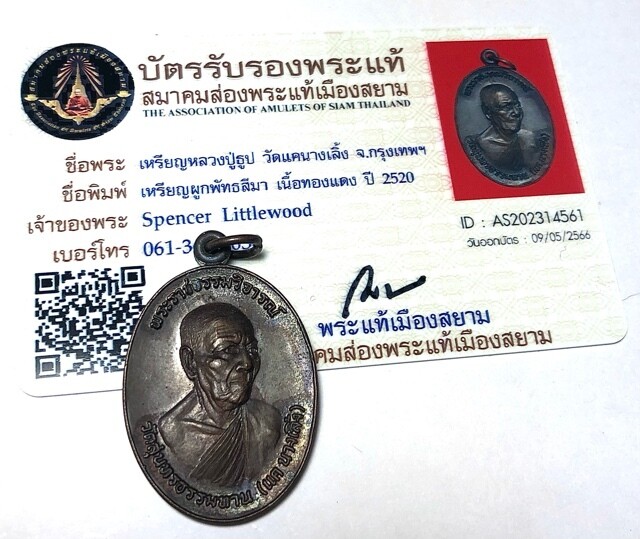
The first Abbot of the temple was Luang Por Dto, who was one of the Laoatian people who had immigrated from Vientiane. Luang Por Dtrai developed the temple continually. The Lao people who built the temple had many artisan who knew that Luang Por Dtrai had powerful Wicha Akom and the sectrets of the Laoatian Wicha Pra Rahu Om Jantr, and so they carved Rahu Amulets from one eyed coconut shells using the traditional Lao Artistic style, to give to Luang Por Dtrai for empowerment.
The classic flat edge of the coconut shell carving, reveals the origins and maker, for it was only Luang Por Noi, who applied the Wicha of long term soaking in sacred oils and coconut oil, to soften the highly rounded shell of the Kala Ta Diaw 1 eyed coconut, so that it could be hammered flat, in order to allow his Master Artisans to perform the finest level of carving possible, and to differentiate his Pra Rahu Kala Ta Diaw from those of other masters. Not all his Pra Rahu are found to be so thin and flat as this one, nor do all have such fine carvings, which makes this exhibit a 100% certainty, and an Ongk Kroo Reference Exhibit of Master-Class Status
Luang Por would then would distribute them back to the devotees for protection and Serm Duang (improve fate and destiny).As the Lao artisans began to develop their skills and experience repeatedly carving the coconut shells, the design became ever more finely tuned and increasing in beauty, but due to the fact that there were a large number of artisans all making these carvings, the designs would be varied both in appearance of features, and in the quality and amount of detail.
Suad Pra Kata Bucha Pra Rahu
12 repetitons of the Kata Bucha Pra Rahu are to be Chanted;
Idtipiso Pakawaa Pra Rahuu Sataewaa Samaa Winyaana Idtipiso Pakawaa Putta Sangmi
Over the years, Wat Srisa Tong grew constantly throughout the lineage of Abbots, from a small temple into a large impressive temple over the years. After his passing, he was succeeded by the new Abbot, Luang Por Dtan, who was succeeded by Luang Por Lee, who was then succeeded by Luang Por Tong, after which came Luang Por Choi, and then cam the fifth Abbot, Luang Por Noi Kantachodto. It was the second Abbot, Luang Por Lee, who inherited and continued the Wicha Pra Rahu Om Jantr in the Lao tradition from Luang Por Dtrai.
The Edge of Pra Rahu Kala Ta Diaw Pim Sema Glab amulet of Luang Por Noi (rear shows the extreme diligent effort to flattedn the ubiquitously curved coconut shell into such a fine flat piece of shell, to enable the highest level of artisanry and detail possible in the carvings of the details of the Pra Rahu Asura Deva, and the Hand Made Spell Inscriptions of Luang Por Noi
Luang Por Noi was also one of the Lao People of Srisa Tong municipality in Nakorn Chaysri, who during his time as a Buddhist Monk before becoming Abbot, was practicing at Wat Srisa Tong, and learned the Wicha of Luang Por Dtrai from Luang Por Lee, and ascended later to become the next Master Adept, which was supported by a strong foundation in the Wicha Pra Rahu Om Jantr from Luang Por Noi’s Father, who was also a Laymaster of Lao Sorcery too, and who made carved Rahu amulets and empowered them. So Luang Por Noi got to learn this Wicha from his Father from a very early age, and this made him the perfect apprentice for Luang Por Lee to pass on his Wicha of the Pra Rahu Om Jantr Kala Ta Diaw.
Phra Rahu Kala Ta Diaw Pim Sema Glab lower edge view – Luang Por Noi Wat Srisa Tong
Luang Por Noi was born with the Laity Name of Navarat, meaning ‘nine jewels’, and brought the Wicha Pra Rahu Om Jantr Gae Kala Ta Diaw begun by Luang Por Dtrai,passed to him through Luang Por Lee, to World Fame, through his higher development of the artistic features of the artisanry and design of the carved coconut shell images. Luang Por Noi did this by raising a more stringent rule for the magical requirements in allowing only coconuts with one single eye to be used for the carving of the Rahu image.
Luang Por Noi constantly refined his instructions to the Lao Artisans of Srisa Tong to increase the level of fine detail and subtlety of their carved Rahu images, up to the point where the amulet finally possessed a standard recognisable appearance that could be easily recognisable as being from Luang Por Noi of Wat Srisa Tong. However, this took many years, for which the earlier models are much more varied in appearance than the later models, as they were still very varied in early times due to the different handiwork of each artisan, until they were taught to adhere to a rigid formula.
Luang Por Noi continued to develop and improve the temple of Wat Srisa Tong and the township around the temple to a great extent, and became extremely revered for his meritorious attainments. The Pra Rahu Kala Ta Diaw of all Thai temples are derived from the Original Laoatian Wicha, which entered into practice in Thailand through the Lao Immigrants, and which was developed to a much more advanced and higher level of artistic impression through the lineage of Abbots of Wat Srisa Tong more than any other temple in Thailand, most of which derived their Wicha from Wat Srisa Tong. The Thai tradition of Pra Rahu Om Jantr Coconut Shell Amulets has not only inherited just the design and creation methods used by Wat Srisa Tong, but also the Ceremonial Empowerments and Ritual Methods involved with their creation have also been inherited.
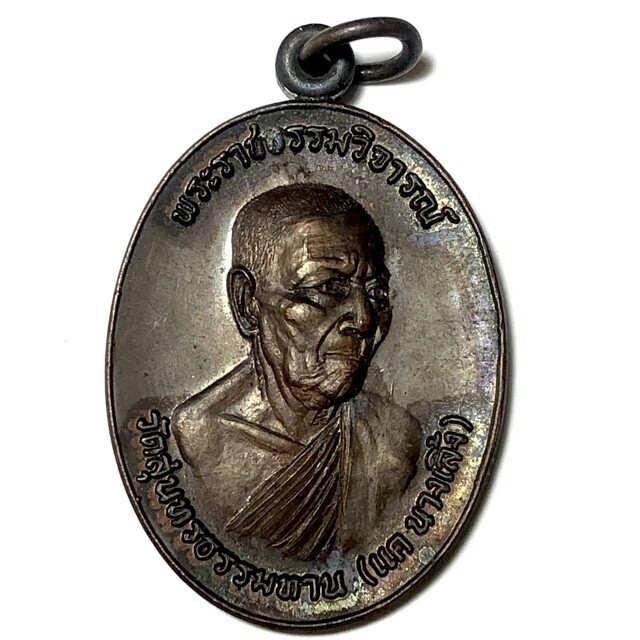
The development of the carved artisanry at the beginning in the times of Luang Por Dtrai and Luang Por Lee, and the early time of Luang Por Noi, first developed in multiple directions because some images would be square, triangular, or circular, and even in the shape of a lotus petal were seen in rare occasions.
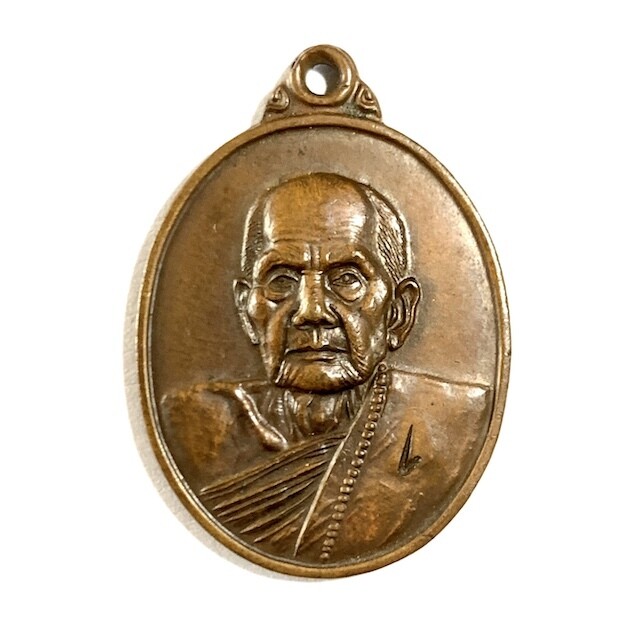
This depended on each artisan and the piece of coconut shell he had to work with. The Lao artisans would then bring the finished work to Luang Por Noi for empowerment. It was here that Luang Por Noi began to apply the next development in the refinement of his most classic and highly recognisable Pra Rahu amulets, by enforcing his master-stroke. The master-stroke, was to teach the Artisans to use oil absorption to soften the coconut shells, and be able to flatten the piece being worked with.
They would then to cut a standard shape frame. The flatness achieved from the now malleable coconut shell, with the added softness achieved through the oil soaking, allowing the Artisan to engrave the details in a much more refined fashion with a higher level of detail.
It was here that Luang Por Noi introduced a single universal design which has become the classic reference standard of Pra Rahu Amulets by Luang Por Noi; the ‘Sema Kwam’ shape. The word ‘Sema’, means the Lotus Petal.Teardrop shaped Temple Monastic Border Monument Image, and the word ‘Kwam’ means ‘upside down’. This is hence similar in shape to the standard ‘Pim Sema’ shaped coin amulets seen in Thai Amulets, but is reversed to point downwards.
This then became the only model to be carved from then onwards, and despite many other shapes and sizes of authentic Pra Rahu Luang Por Noi amulets being made previously, the Sema Kwam model became the standard accepted model recognised for its inimitable appearance and ease of recognition.
And so it came to be, that Luang Por Noi’s most collected preferred Pra Rahu amulet is the Pra Rahu Kala Ta Diaw Pim Sema Kwam.
It was only rarely that Luang Por would be able to make and empower Pra Rahu Om Jantr Kala Ta Diaw amulets, because he would only empower them exclusively during the Lunar or Solar Eclipses, depending if the Rahu amulet in question would be empowered for the Yant Suriya Bprapa Solar Eclipse spell, or the Jantra Bprapa Lunar Eclipse spell. Some years there would be no release of Rahu kala Ta diaw if there were no eclipses occurring in the sky.
Biography of Luang Por Noi
Luang Por Noi was born on the 14th of February 2435, is father was called Nai Ma Nawa Radt, his mother was called Nang Mee Nawa Radt. Luang Por Noi was the youngest of five children. HIs father was a doctor of traditional medicine, and was also an adept lay sorceror. The locals called his father ‘Por Hmor’ which is a colloquial name for a witch doctor or shaman sorceror. Luang Por Noi’s father was famed in the area for having had run-ins with dangerous gangsters from other districts, whose guns and weaponry were rendered useless when trying to kill him, because of his Sorcery Wicha.
Luang Por Noi was ordained as a Buddhist Monk (Bhikkhu) at the age of 21 at Wat Kae with Pra Ajarn Yiw (Abbot of Wat Kae) as his Upachaya Ordaining Officer, and Pra Piksu Mun of Wat Klang Koo Wiang as his Anusawanajarn.
Luang Por Noi recieved the Ordained Dhamma name of ‘Kantachodto’. Luang Por Noi stayed for a little while at Wat Kae, whereafter he moved to stay at Wat Srisa Tong. At the time, Luang Por Lee was the Abbot of Wat Srisa Tong, and Luang Por Noi got the chance to study Saiyasart (Sorcery) with Luang Por Lee, in particular, the Mastery of the Wicha Pra Rahu Om Jantr, and the Wicha Wua Tanu.
The Pra Kring Upakut Muang Ngay Loi Ongk Statuette Buddha was released in the year 2512 BE, at Wat Pra Singh, in Chiang Mai, North Thailand. The Pra Kring Upakut was cast and forged in Sacred Chanuan Alloy, along with the equally famed and sought-after Pra Ruang Rang Pern, Rian Somdej Pra Naresuan Maharaj Royal King Coin, and Pra Chayawat Naresuan amulets. At that time, the blessing ceremony for these amulets became the largest mass blessing ceremony of Northern Thai Lanna Amulet History, funded and organised by Commanding Police officer, and Mayor of Chiang Mai Province, Pan Tamruaj Aek Nirand Chaynam. In addition, His Majest King Bhumipol Adulyadej Rama 9 attended the ceremony to perform the ‘Te Tong’ gold pouring ceremony part of the forging ritual of the amulets.
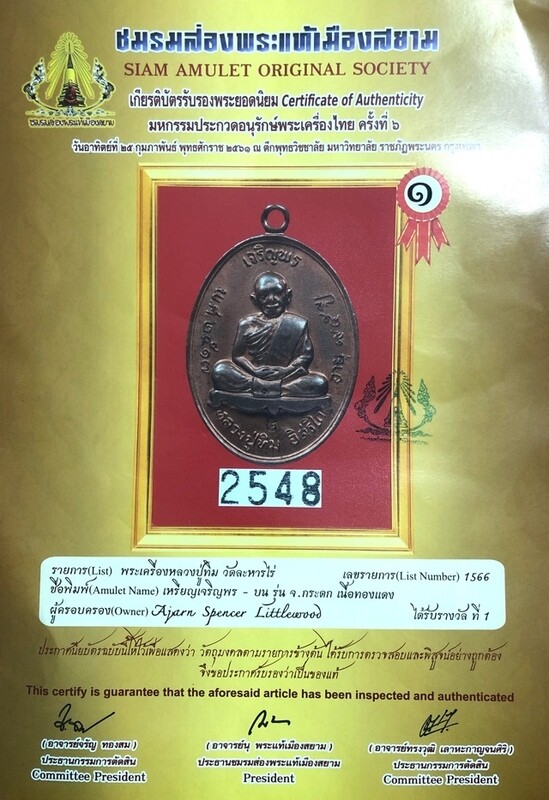
Many Great Master Monks from around Thailand were invited to come and assist in the empowerment and blessing of the amulets, which were made in order to raise funds to build the Pra Naresuan Stupa Chedi Reliquary as a Memorial Monument to the first King of Thailand, who united the Kingdoms of the various city states to defeat the Burmese, and unite the nation. Once the funds were raised after release of the amulets, a Chedi Stup was built dedicated to King Naresuan Maharaj, at Mueang Ngay In Chiang Daw, as a monument of the city. The statuettes were made from Nava Loha (9 Sacred Metals), in numbers of 2512 amulets only, making these amulets extremely rare to find in the present day. The Grand Putta Pisek (Buddha Abhiseka), was performed on the 15th January 2512 BE at the Worawiharn Pra Singh Wora Maha Wiharn shrine-room in Chiang Mai.
Among the great number of 40 Powerful Master-Monks present to empower the amulets in the Putta Pisek ceremony, were; Oor Tan Klai of Wat Suan Khan, Luang Por Nam of Wat Don Sala, Luang Phu To of Wat Pradoo Chimplee, Luang Por Nor, of Wat Ta Ruea, Luang Por Tiam, of Wat Gasatrirat, Luang Por Tong Yoo, of Wat Mai Nong Pra Ongk, Luang Por Tiang, of Wat Khao Roop Chang, Luang Por Pring, of Wat Bote Goeng Tanu, Kroo Ba Wang, of Wat Ban Den, Luang Por Chaem, of Wat Wang Daeng Nuea, Luang Por Chern, of Wat Dtamnak Nuea, Luang Por Mueang of Wat Ta Haen, and the great Luang Por Tim, of Wat Chang Hai.
For this reason, this edition of mulets is seen as highly sacred and powerful, for the blessings of these Great Masters and many others, with a powerful and Grand Ritual Ceremony. The Pra Kring Naresuan, Upakut, are seen as the number one Pra Kring amulets of the Lanna Region of this Era. The Pra Kring Naresuan is known around the Nation for its power and sacred blessings, and rarity, and is revered, and soigh-after by many Thai Buddhist People. Although for most, this is a mere hope and dream, for the chances of encountering one, are far and few between, due to the small numbers made of each amulet.
Pra Ajarn Sawai (Abbot of Wat Racha Nadda in Bangkok), was the Monk presiding over the Putta Pisk Ceremony. Before the Forging of the Sacred Chanuan Metallic Alloys, and Casting of the amulets, a host of Gold, Silver and Bronze Yantra Foils were inscribed with Magical Spells in both KHom and Agkhara Lanna script, within ancient Sacred Geometry designs, which were distributed to the most powerful monks around the Nation, and blessed during a whole year, before returning them to Wat Pra Singh, for the forging ceremony, to empower the Sacred Chanuan Metals. T.ese Yantra Foild were smelted together with many other kinds of Sacred Metallic Artifacts,
Amulet Pantheon released in this edition;
1. Pra Kring Naresuan Mueang Ngay Nuea Nava Loha (2512 Made). 2 different models were made, the Pim Dto, and the Pim Yom
2. Pra Kring Naresuan Mueang Ngay Pim Pised special model (9 made)
3. Pra Chayawat Naresuan Mueang Ngay Nuea Nava Loha (2512 made)
4. Pra Ruang Rang Pern Nuea Tong Daeng Rom Dam (95,000 made)
5. Pra Ruang Rang Rang Pern Pimp Hlang Baeb (2 sided version), which were made in numbers of only 2000 amulets.
Rian Somdej Naresuan Maharat Nuea Tong Daeng Rom Dam, and Nuea Tong Daeng Phiw Fai (100,000 made, with much less being made in Nuea Tong Daeng Rom Dam, making these versions rarer).
There were also the following models released for donation to the 33rd Regimental Army Legion;
1. Pra Putta Sihingk 5, 7, 9, and 12 inch wide lap Bucha Statues. These Bucha statues were made in 2 different Sacred Chanuan substances 1. Nuea Sam Gasat (Gold, Silver and Bronze), and in Nuea Samrit (Bronze Alchemical Alloy)(, which were only made in limited numbers, according to how many pre orders were made.
2. Pra Put Chiang Saen Singh Bucha Statue 5 inches wide lap in Nuea Sam Kasat.
3. Badtr Nam Pra Putta Mont in Nuea Tong Daem Rom Dam Blackened Copper Alloy, composed of a Holy Water Bowl, Embellished Lid, with a Pra Kring Upakut Buddha amulet embeded within the Holy Water Bowl. There were two different kinds of lids made for the Badtr Nam Mont; 1. With Pra Kring inserted 2. With Lotus Flower Embossed. Only 100 of these Sacred Holy Water-Making bowls were made in total.
4. Pra Kring Upakut, in Nuea Tong Lueang Rom Dam Sacred Brass Alchemicl Blackened Alloy.
5. Pra Sivali 2 Inch High Statuettes, in Nuea Tong Lueang Sacred Brass.
6. Rian Pra Jao Kawila in Nuea Tong Daeng Rom Dam.
This model is one of the rarer models to find, as they belonged to the special set set apart for donation to Thai Official Officers of the Regimental Army, and so very few ever fell out of the possession of the people who received one from the temple, allowing serious devotees and collectors to be able to obtain one.
The World Famous Hun Payont amulet, of Ajarn Loi Po Ngern, Great Ayuttaya Master and direct lineage continuance of the Wicha of Luang Por Glan of Wat Prayatigaram. The Hun Payont of Ajarn Loi, are said to be the number one Hun Payont amulets of all time, and are the most sought after and desired items by devotees of this kind of amulet. Unfortunately, the amulets of this great olden days Master. Perhaps the number one Hun Payont in Historical Documentation, ancient and highly reputed for its power, the Hun Payont of the Great Ajarn Loi Po Ngern, Great Olden Days Lay Master of the Ayuttaya Province.
Ajarn Loi was born in the month of February 2454 in Nakorn Sawan, but later moved to live in Bang Prahan in Ayuttaya. He became the apprentice of Luang Por Glan of Wat Prayat. After the passing of LP Glan, Ajarn Loi continued his practice of Magic with Luang Por Bpaen of Wat Sao Tong Mai in Ayuttaya.
Ajarn Loi learned many Wicha with Luang Por Bpaen of Wat Sao Tong Mai, who was well versed in Wicha Saiyasart, but Ajarn Loi himself was also Adept in Artisanry of the Chang Sip Moo Fine Arts level of prowess. He thus taught Ajarn Loi all of his Wicha, and methods of weaving the spellbound Hun Payont, Takrut and other amulets, and Ajarn Loi would make them in the finest fashion. Ajarn Loi was a fine artisan of the Chang Sip Moo group, and received Wicha from Luang Por Bpaen, Luang Por Glan, and other masters, but was the most Adept of all at weaving the Hun Payont Golems with his Artistic ability to make the effigies in all sorts of postures, and dress them with all kinds of regalia.
The Hun Payont comes from the word ‘Payont’ which means an effigy that has been brought to life by Sorcerous Magick. Hun Payont may be made in various forms, such as the form of a Human, or some other Magickal creature, or animal, depending on the needs of the user and intended uses of the Adept who makes them. Hun Payont are made from various substances, such as the Hun Hyaa Saan (Hay/Straw), Hun Gan Bai Mai San (leaves), Hun Thao Wan (magical vines), Hun Dtakua (mercurial lead), Hun Khee Pheung (wax), Bai Mai Ta (leaves), Hun Gae Salak (carved wood), Hun Daay (cord wrap), Hun Pha (cloth bound), Hun Din (molded claay), Hun Din Phao (baked clay), Hun Hin (carved stone), Hun Krabueang (ceramic), Hun Poon (cement), Hun Ngern/Tong (silver or gold), Hun Loha (Iron)
The Hun Payont, is an amulet that is found to date back to the times of the Kassapa Buddha. The Kassapa Buddha, is said to have made a Payont effigy, to protect his Relics, before he himself passed into Nibbana.
200 Years Later, King Asoka opened a shrine, to remove and preserve the relics, but the shrine was inhabited by a Hun Payont. King Asoka was forced to invoke and summon the God Indra, who manifested as a Brahman, and performed Incantations, enabling King Asoka to enter and remove the Saririkadhatu Relics.
In the world of Sorcery, all lineages believe in the existence of different kinds of spirits, which can be imbued within effigies or controlled, or beseeched to perform a multitude of tasks.
There are many Animist and Necromantic amulets which use different types of spirits which are Hoeng Prai Ghosts, Devas, Bhuta, Kumarn Tong, Rak Yom, In Jantr, Phu Some, In Gaew, Mae Takian, Ma Hoeng Prai, and many others such asYaksa Monsters, to inhabit an effigy.
Great Adepts are the only ones able to create Hun Payont Golem Effigies, which are then brought to life with Necromancy and imbued with any of a number of kinds of spirits. All Hun Payont must be empowered by a Master who has Mastered the Wicha Akarn Sam Sip Sorng 32 invocationss of the 32 elements within a living being, to make the effigy able to displace itself (move around), and to emit magickal Miracles to protect wealth and possessions within its enclave. If intruders enter, the Hun Payont will create illusions that drive the thieves away, and will also scare away all kinds of demons and ghosts that enter the household to cause any havoc. Hun Payont are very protective of the belonging within the home and for this reason excellent guards.
Hun Payont differ from Kumarn Tong, in the sense that the Kroo Ba Ajarn would give life to the Hun Payont himself without necessity to call upon an existing spirit, whereas a Kumarn Tong is reanimated by calling a Bhuta, a Deva or Child Ghost to inhabit the effigy, to help humans, in exchange for an auspicious rebirth in the heavens after its lifetime within the Kumarn.
The Hun Payont is also renowned to be able to bring wealth and attract good business, and is open to being asked for favors and to perform missions, such as chasing away your enemies. It is also believed to possess Metta Mahaniyom ‘Great Preference’ Magick, which we know in English, as ‘Mercy Charm’, as it is reputed to attract the compassion and favor, of those who approach and interact with you.
According to the ancient tradition, a Hun Payont should be rewarded and appeased through the Gruad Nam water pouring ceremony when performing prayers and Bucha.
A very rare exhibit of the Pra Kru Wat Suwan amulet find blessing ceremony, an ancient burial place amulet, classed as an official model of the pantheon of amulets attributed to the great Luang Por Niam of Wat Noi. This exhibit is the Pra Pim Nakprok Klong Takian Nuea Chin Takua Sanim Daeng, A very valuable addition for collectors of the Pra Kru Wat Suwan Hiding Place Find amulet, and Luang Por Niam. The amulets were blessed at Wat Suwan along with the series he made at Wat Noi (which are in truth, one and the same and of equal value, and only differ academically, but otherwise, are equal to each other).
Luang Por Niam was the number one Kroo Ba Ajarn and Ordaining Officer of the great Master Monk Luang Por Parn of Wat Bang Nom Kho, who was witnessed to have died in complete happiness and relaxation, in meditative bliss, as an attained ascended Master. For this reason, Luang Por Noi has many faithfull devotees around the world, who worship him and his teachings, and revere his attainments, and wish to wear one of his blessed amulet.
Luang Por Parn is worshiped as one of the Top 10 Greatest Guru Monks of present-day in Thailand & many worshippers all around the world. He was the closest disciple of Luang Por Niam
KATA PRA NAKPROK
Kata Pra Nakprok, and the chanting it to Pra Nakprok amulets and Buddha statues, is the Thai Buddhist Method for Praying to the Pra Nakprok Naga Canopy Buddha. Pray to on Saturdays or for those Born on Saturday.This Bpaang is of the Buddha sitting in Samamadhi (concentrative meditation), on top of a Naga, the Naga’s head is raised over Buddha’s to form a canopy. It is known as “Bpaang Nakprok”
The Buddha remained in blissful rapture under the Acabhalanikaroda for seven days, whereupon he moved to the Mucalinda tree to the Southeast side of the Bodhi tree. A terrible rainstorm began, pouring down on the forest for a whole seven days without stopping. Payanaga Mucalinda, who was King of the Nagas, came up from the naga Realm in the underworld and coiled himself underneath the Buddha, making a cushion seven stories high, to keep him dry.
He rose up and leaned his head over the Lord opening his neck canopy to shade the Buddha from the rain, as well as keeping watch to protect him from all sorts of parasitic, poisonous and preying animals and creatures. As the rains ceased to fall, the Naga King uncoiled and changed into a Human form and raised his hands in reverence to Buddha.
In this moment, the Buddha uttered the following Kata (words); Sukhoewiwego Dtudtassa Sudtadhammassa Bpassadtoe Abhayaabpach-chang Sukhang Loke Bpaanapuudtesuu Sanyamosukhaa Wiraakadtaa Loke Gaamaanang Smadtiggamo Asmimaanassa Winayo Edtang We Bparamang Sukhang.
“Tranquility is the pleasure of he who has listened to and understood the Dharma intently, who sees conditioned things for what they really are, and does not seek to harm others. Of he who has abolished his passions and cravings, lust and desires, he who has stepped beyond all craving for sensual pleasures and endured in his efforts to do away with self conceited attitudes, has the greatest pleasure”.
The statue of Buddha sitting on seven coils of the Naga King snake was created to remember this occasion of the Naga paying reverence to Lord Buddha, and the representation of him sitting on top of the coils as if seated upon a royal throne is used for two reasons; 1. Aesthetics, 2. Brahmin influence.
A more authentic and historical version of this Buddha image is sometimes seen in the form of the Nagas coils wrapped around and covering the Buddha’s body with four or five coils around him. The only part of the body visible being Lord Buddha’s shoulders, neck and head, which is also semi enclosed by the head and canopy of the Naga leaning over him.
Luang por Niam, was responsible for blessing the many amulets found in the Kru Wat Suwan in Ang Tong, and added his own amulets from Wat Noi,, which are despite being the same amulets, received a second blessing (making their slightly cheaper price hard to understand). The two different releases are easily and visibly different, due to the surface effects from being hidden within a Kru Chamber.. This exhibit of the Pra Sangkajjai is evidently a direct release from Wat Noi, due to the slightly greenish-black tone, with white Kraap mildew, whereas the exhibit which he buried at Wat Suwan.
The Pra Gru Wat Suwan Series
The Pra Kru Wat Suwan Pantheon of amulets were discovered, around the Year 2500 Buddhist Era, and were found at Wat Suwan, located in the Province of Ang Tong, above Ayuttaya, and adjacent to Lopburi and Singhburi Provinces in North Central Thailand. The amulets were then also reblessed in celebration of the find, and the great Luang Por Niam of Wat Noi in Supannburi was invited to preside over, and empower the amulets during the 2506 Kru Discovery amulet find Celebration Ceremony.
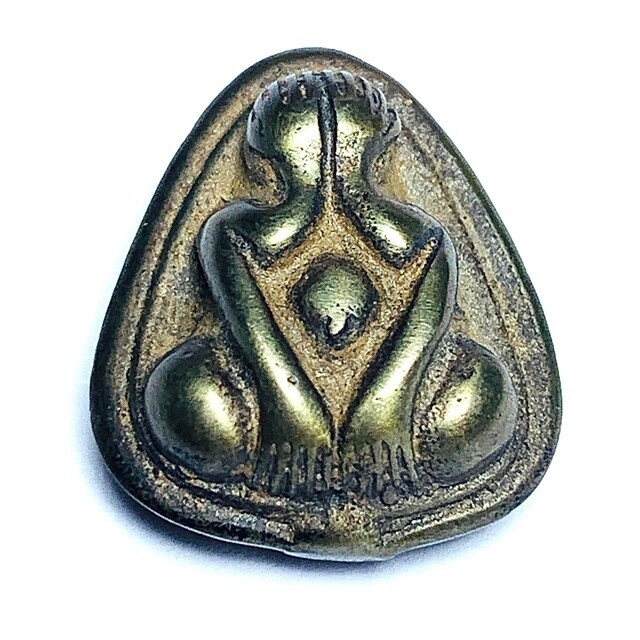
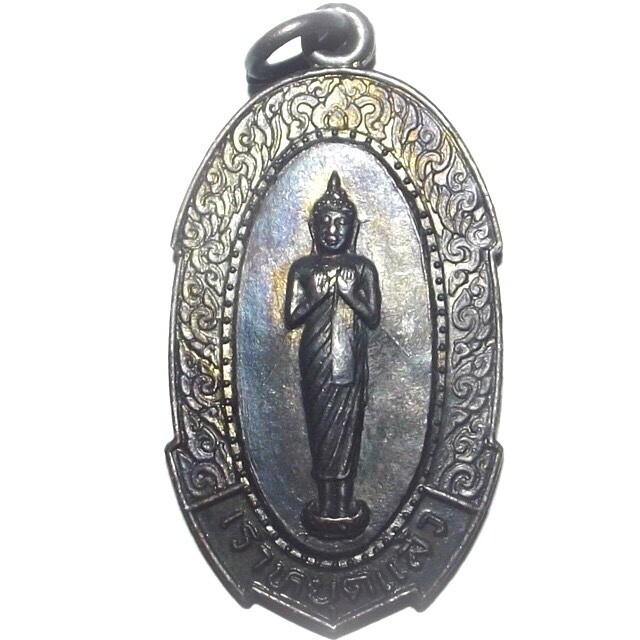
The natural appearance of an authentic Pra Kru Wat Suwan leaden amulets, is that they have a fine layer of Kraap Kru arising on portios ofthe surface, showing red rust from oxidisation. It is also important to note that the Pra Kru Wat Suwan amulets did not have their edges filed off into perfect frames, and have rough unfiled edges because of this factor. This is one of the first things to look for when collecting authentic Pra Kru Wat Suwan artifacts.
According to historical records, the great master Monk of Wat Noi in Supannburi, Luang Por Niam, was invited to assist in the making, casting, and empowerment of the additional amulets which were being made. This makes the Pra Kru Wat Suwan enter into the Pantheon of aficionados of this Monk and his Amulets, and their popularity has become ever more legendary, to the point where the Pra Kru Wat Suwan is now a piece of National Historical Heritage.
The age of the ancient burial find models ranges up to 700 years to 1000 years old, and the edition added by Luang Por Noi is dated around the Mid-Ratanakkosin Era, making them past the Multi-Centenarian level (more than a few Centuries Old).
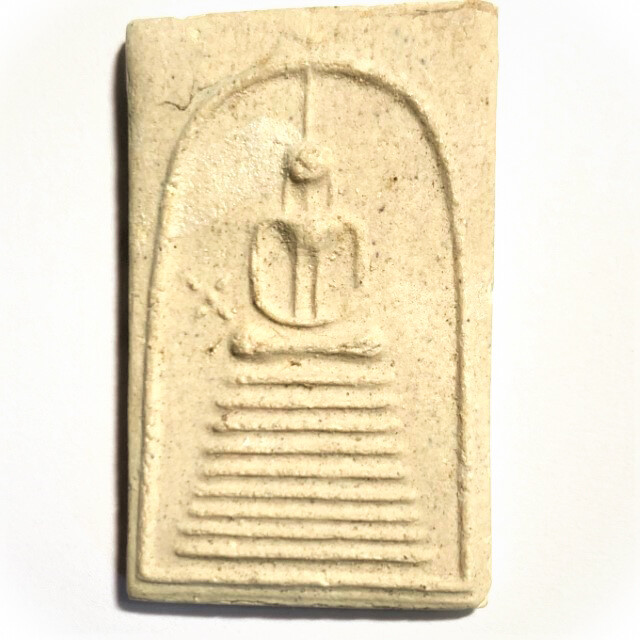
Many different Pim (models) of amulets were found in lesser and greater numbers, all differing slightly, due to the ancient casting methods used during olden days, making it impossible to make thousands of identical amulets as seen in the modern era, with modern block press engineering technology. The amulets were cast from ancient mercurial leaden sacred alloy, & also were found in reddish baked Eearthen sacred clay. The amulets exist in many forms;
Such as the Pra Upakut, Pra Sangkajjai, Pra Rod Lampun, Pra Ruang Rang Pern, Pra Lila Laweng, Pra Lila Kampaeng Gaew walking Buddha votive tablets, Pra Pratummaas, Pra Supann Hlang Pra,Pra Mahesworn Nuea Chin Ngern silver leaden amulets, Pra Pong Supan Benjapakee amulets, identical to those found at the Kru Wat Pra Sri Mahatat find, Pra Lor Pim Pra Pratan Buddha Immages (in small and large sizes), and Pra Paruhnang Loi Ongk Buddha statuette amulets, Pra Pim Mokkhala Saribut (Maugdalyayana and Saributra) Buddha amulet, the Pra Tham Suea Ruesi Amulet in both Pim Hnaa Gae and Pim Hnaa Ruesi, Pra Kum Nakorn Khosa, Pra Pim Wat Rachadesa, Pra Put Pim Siarn Hlaem pointed head Buddha votive tablet in leaden alloy, The Pra Kong Lampun Benjapakee amulet, all versions of the Khun Phaen Ban Krang earthen amulets in all models, such as the Pim Khaen Orn, Pim Bai Mayom, Pim Pra Pratan, Pim Lueay, Pim Song Pon Yai, Pim Plai Dtat Diaw, Pim Plai Koo, Khun Phaen Pim Pha Seek, and so on.
This amulet is highly recommended for those born on Saturdays, as their auspicious ‘Birthday Buddha’ to increase Good Karma (Serm Duang). The front face of the amulet features the Buddha sat in Meditation on a coiled 7 headed Naga Throne, depicting the moment a Naga rose over the buddha to make a canopy for him to shelter from the rain.
The rear face of the amulet has the typical Yant Dtp found on Ayutthaya Kru find era Klong Takian odel type amuets.
Extra Goodie for enjoyment! – Amulet school. Maybe you may find an amulet you own in this video!