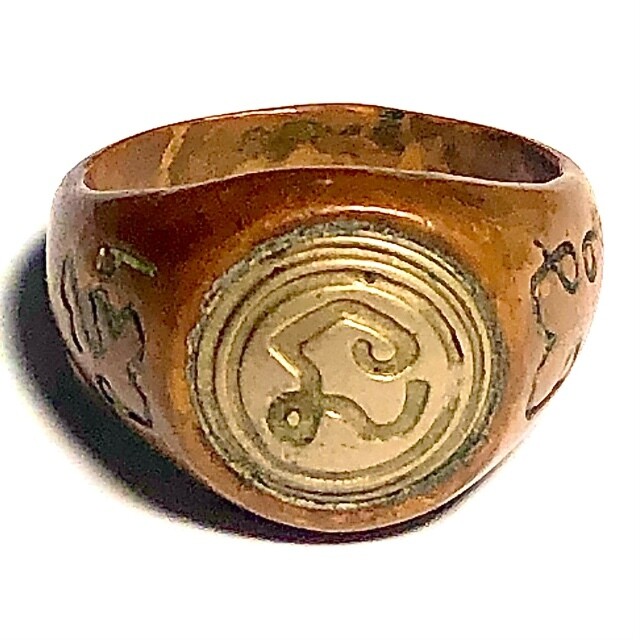
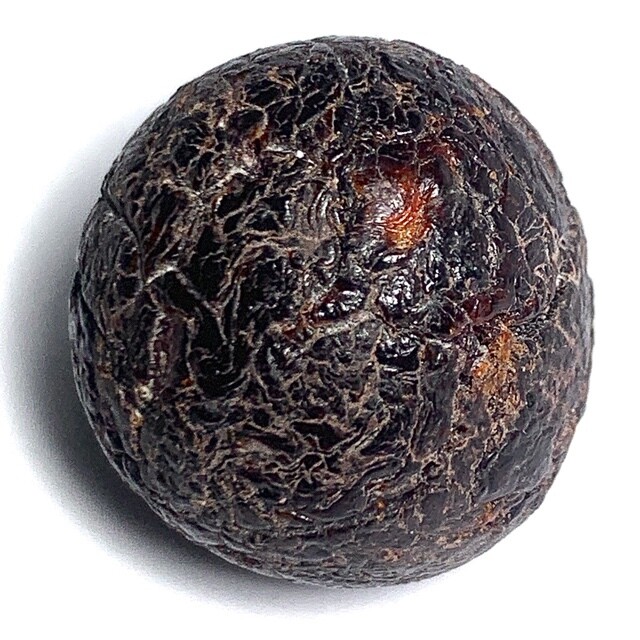
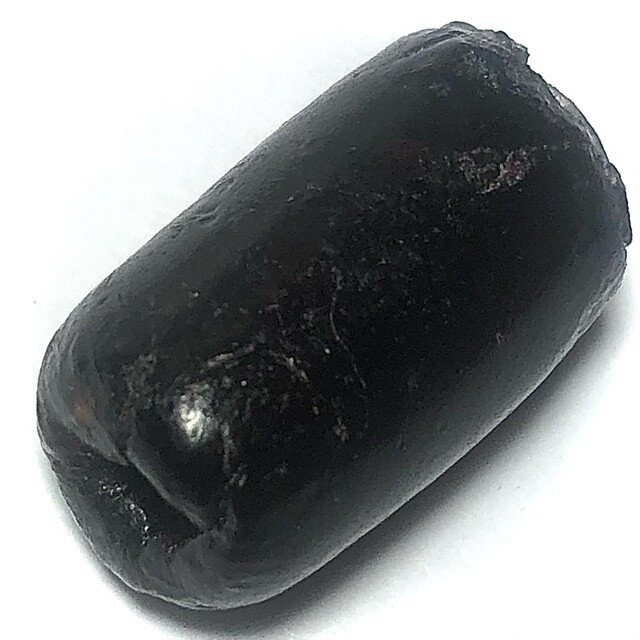
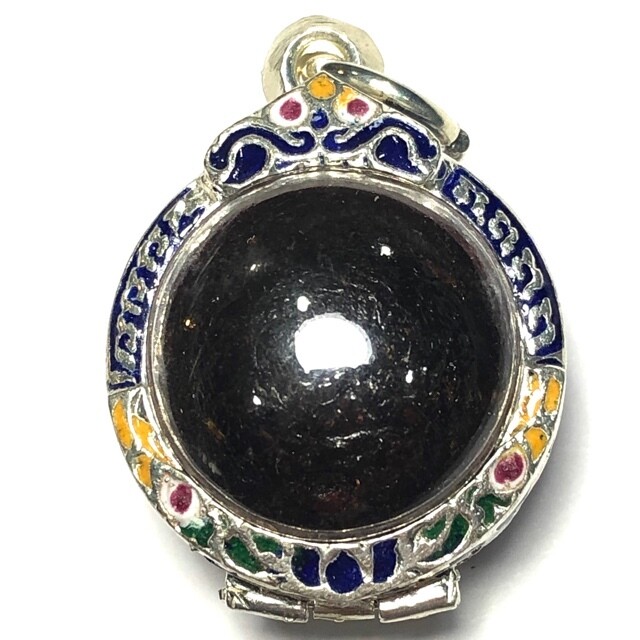
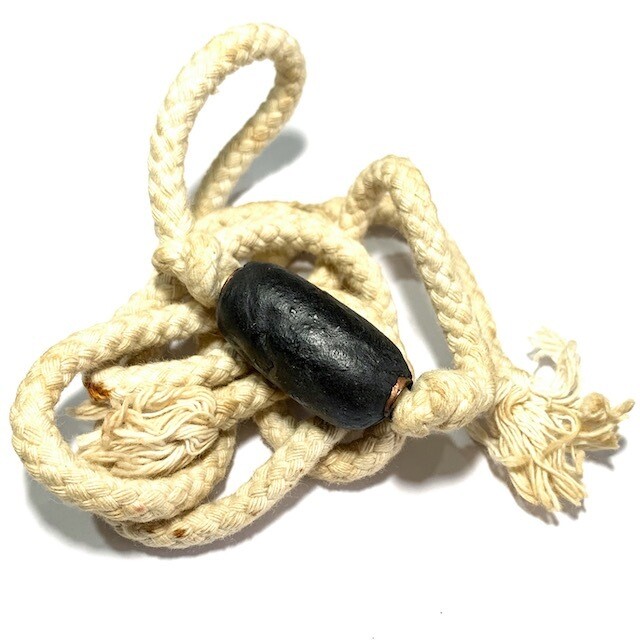
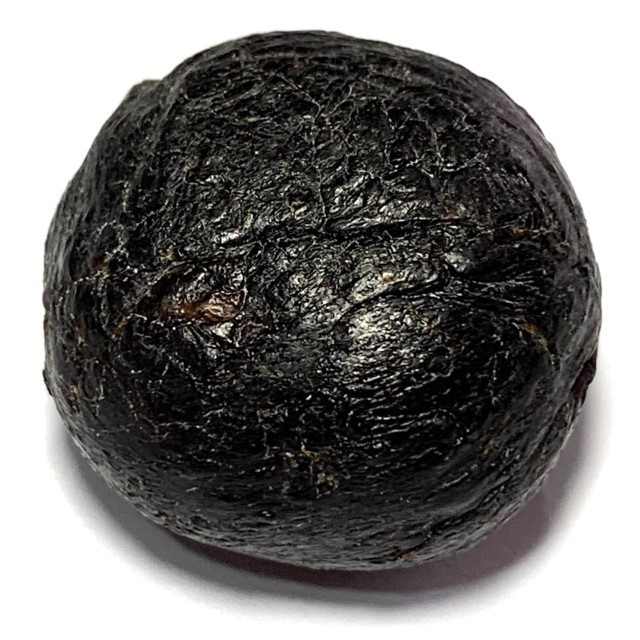
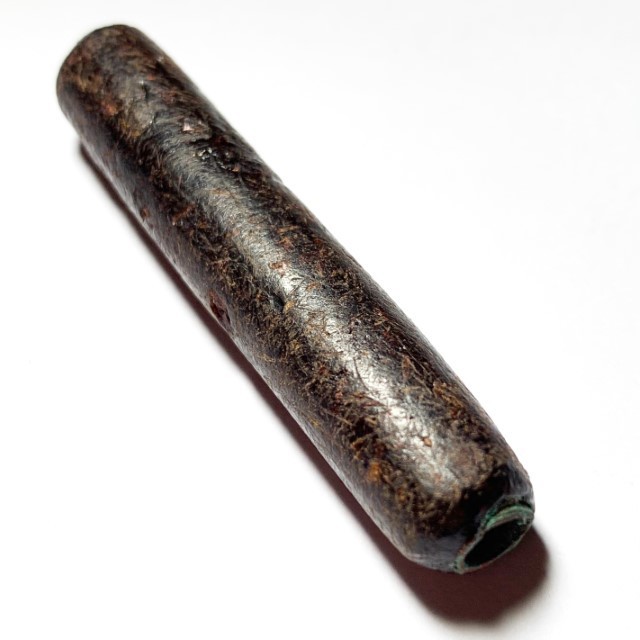
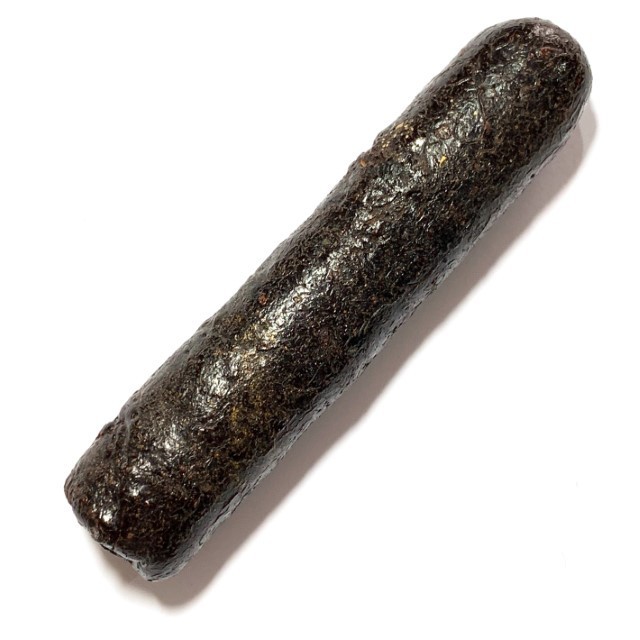
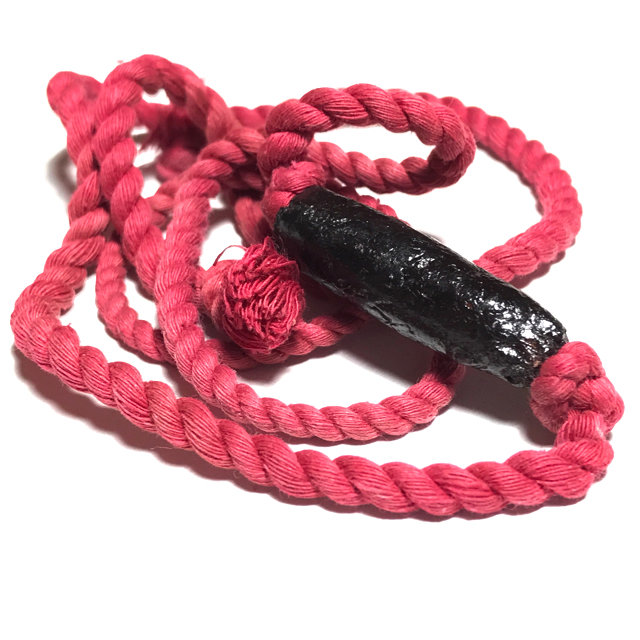
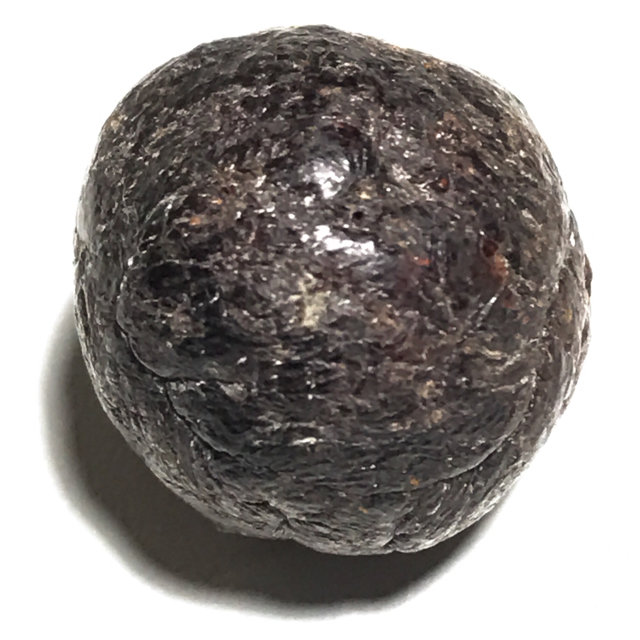
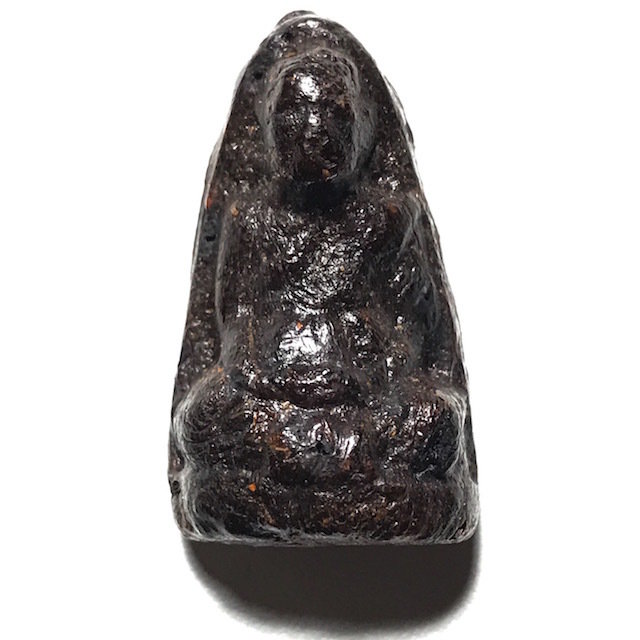
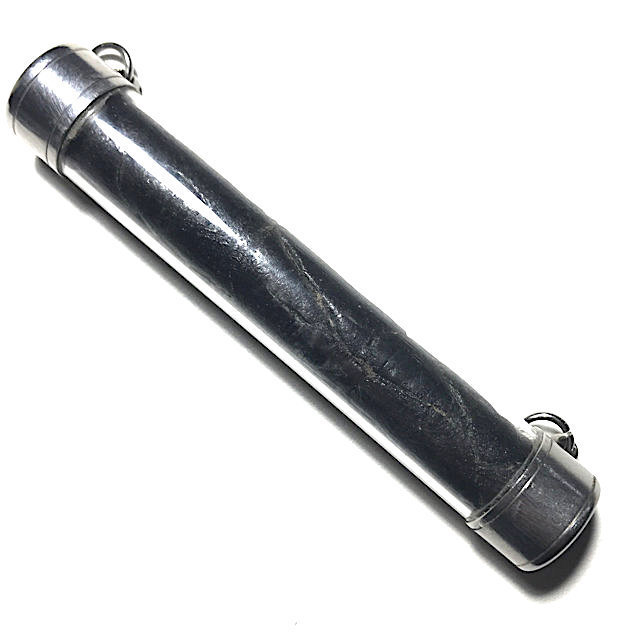
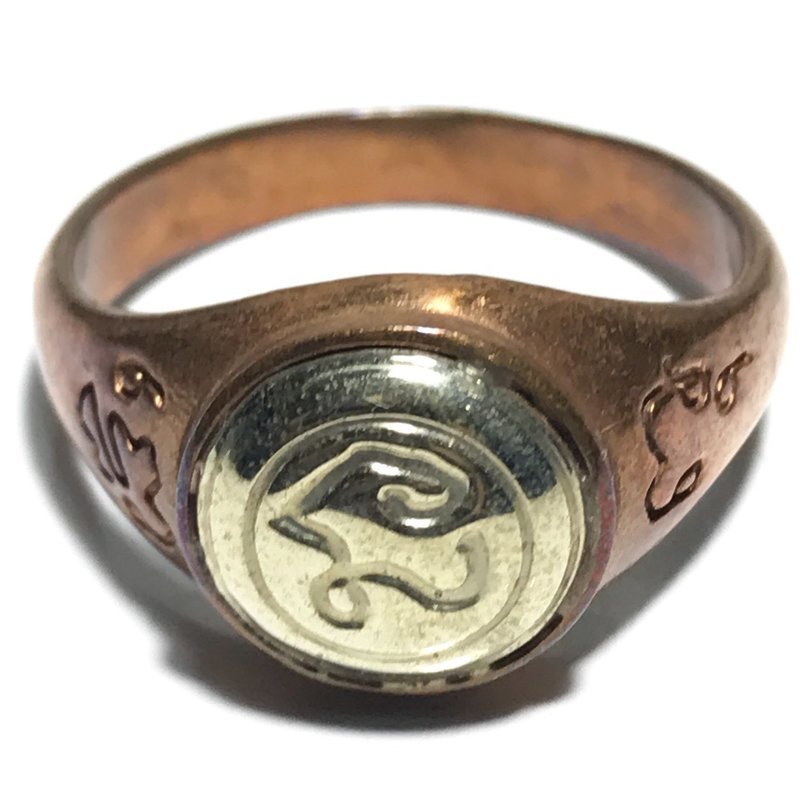
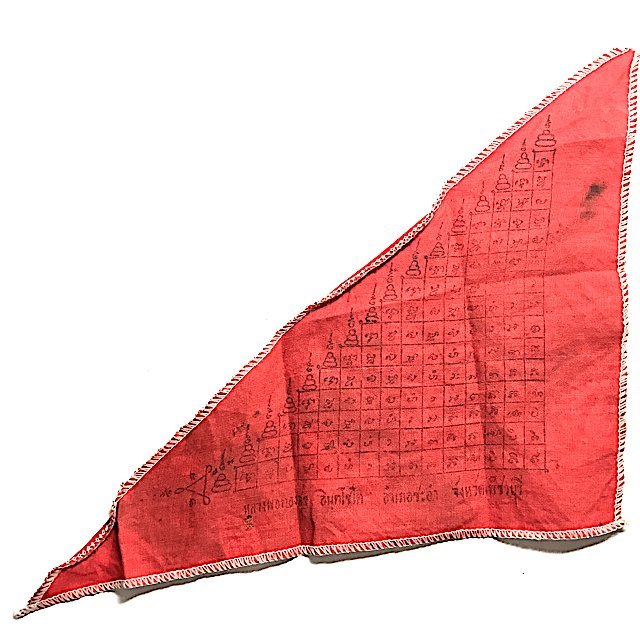
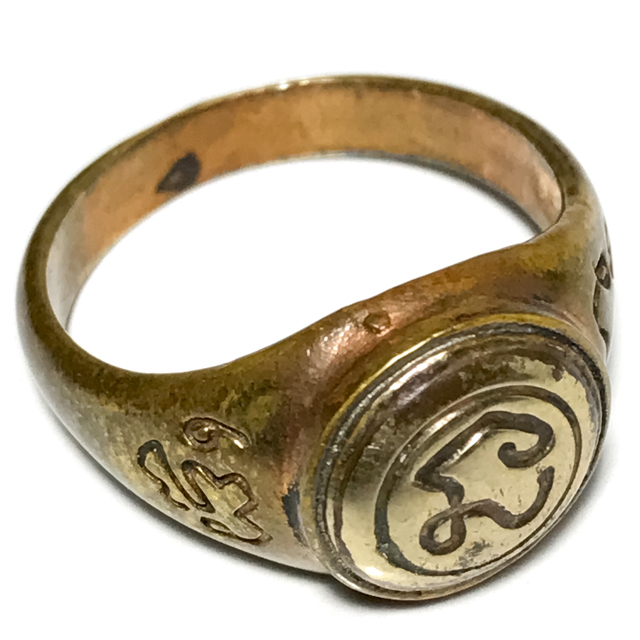
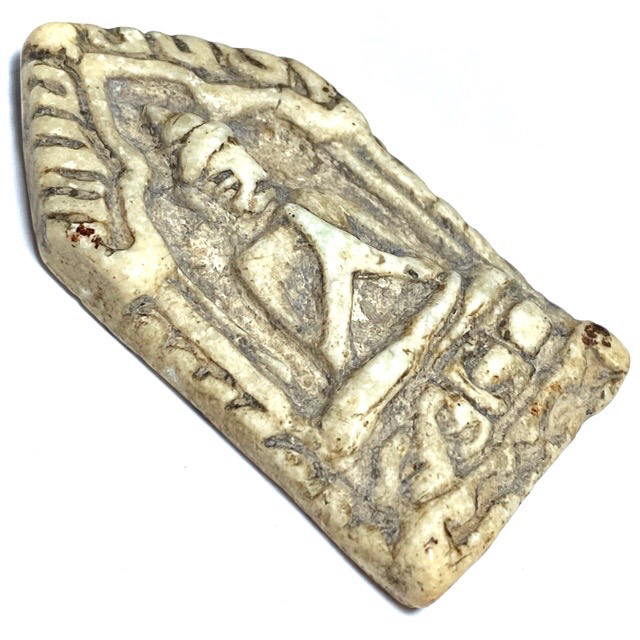
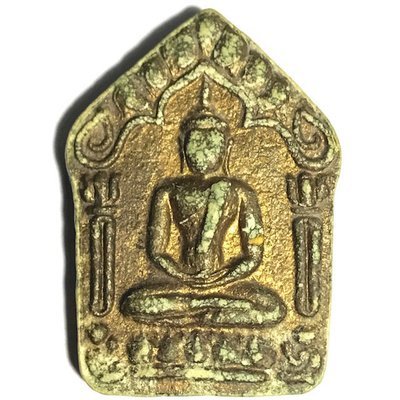
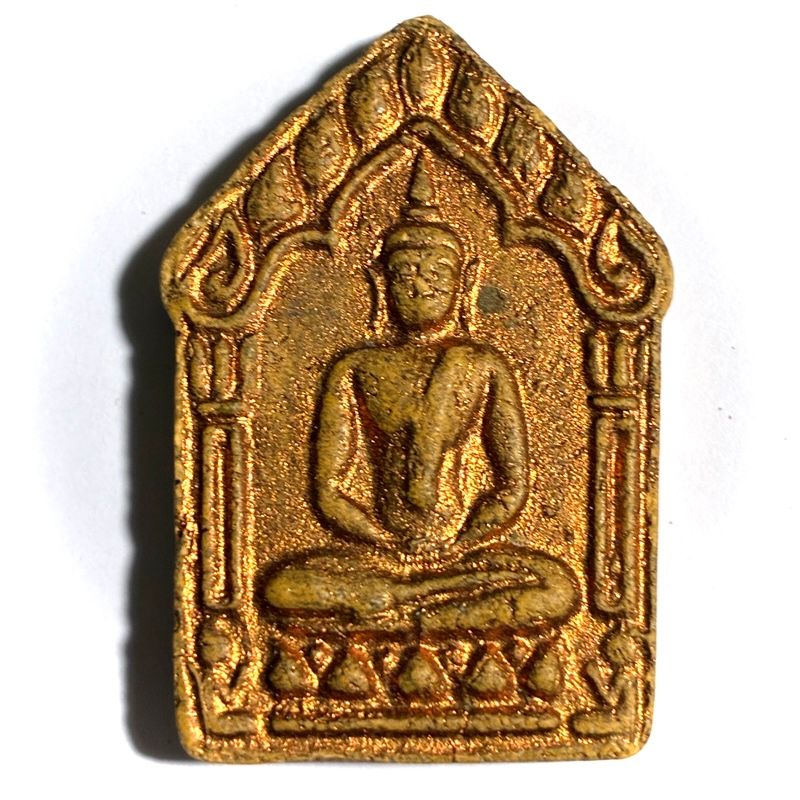
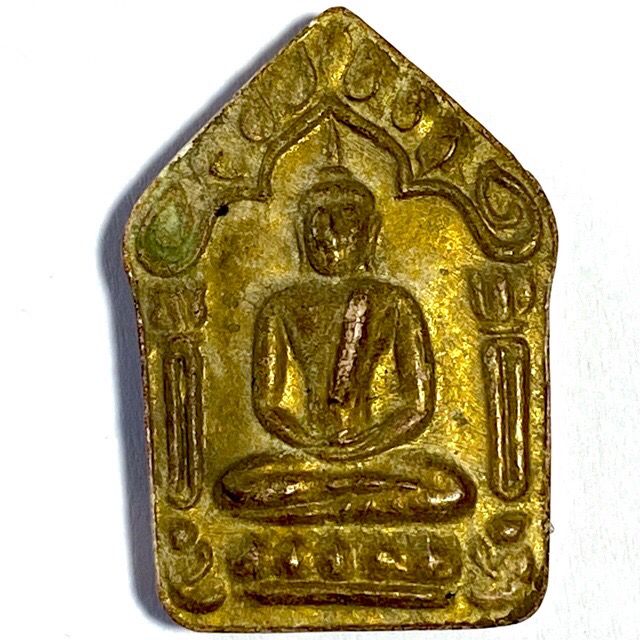
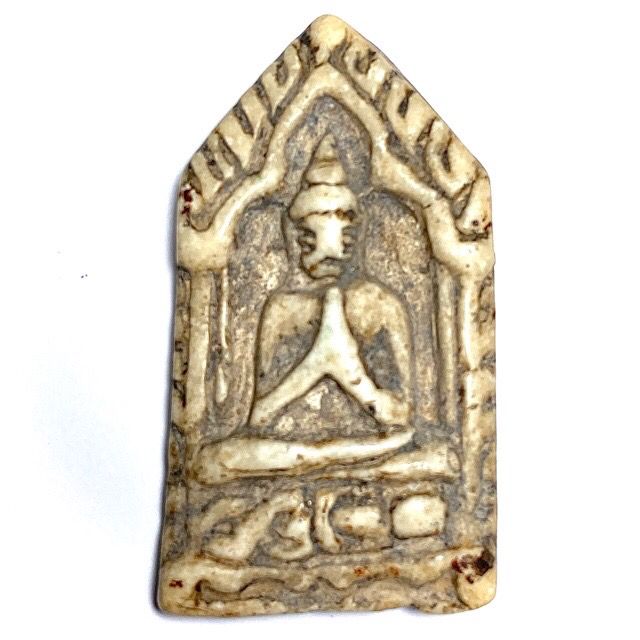
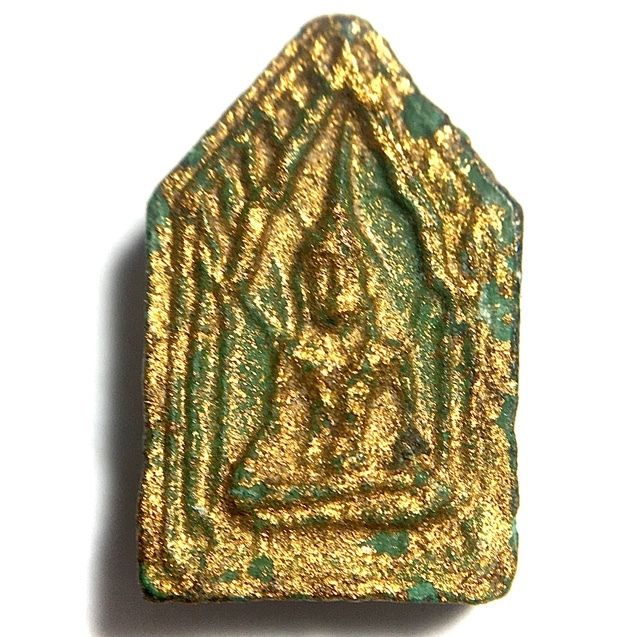
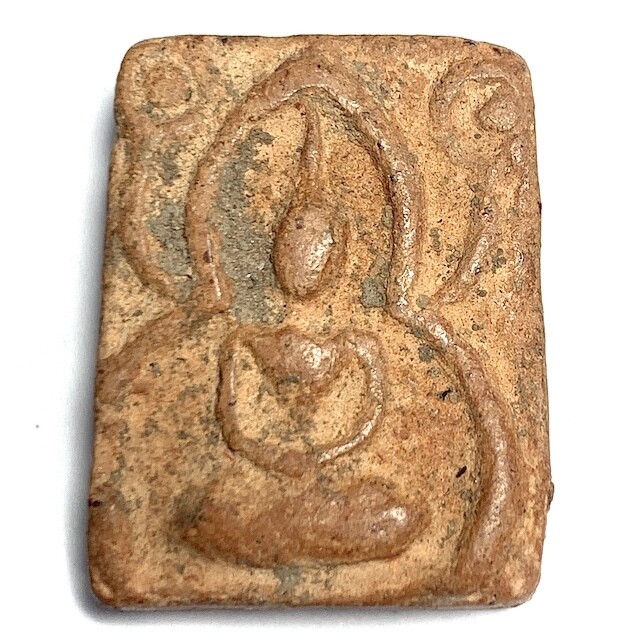
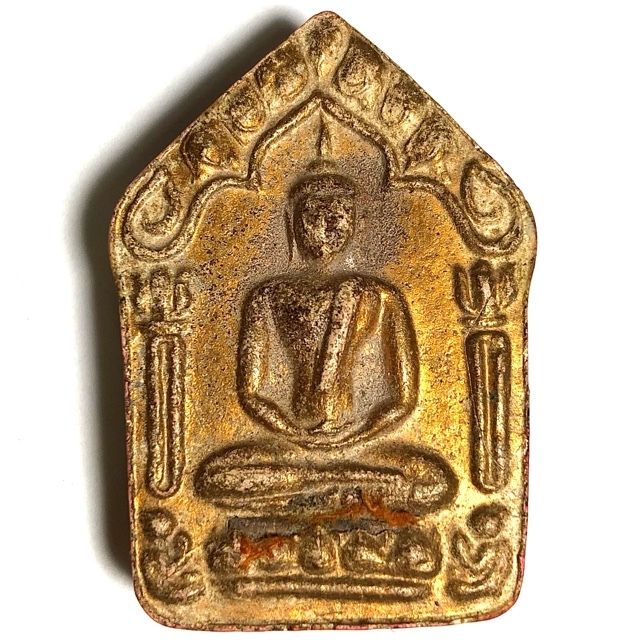
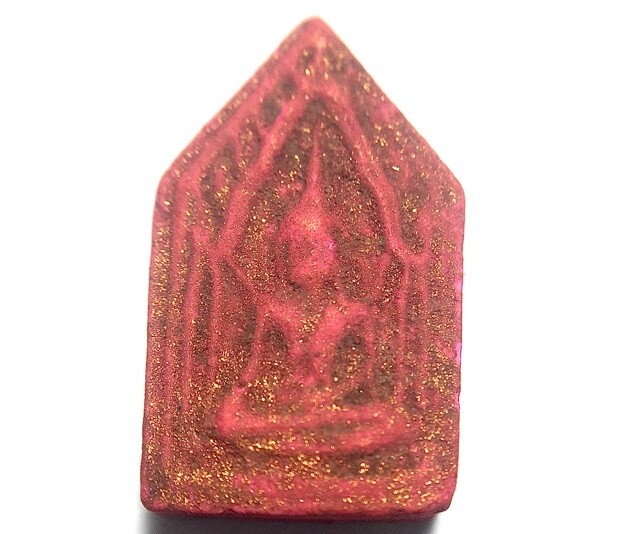
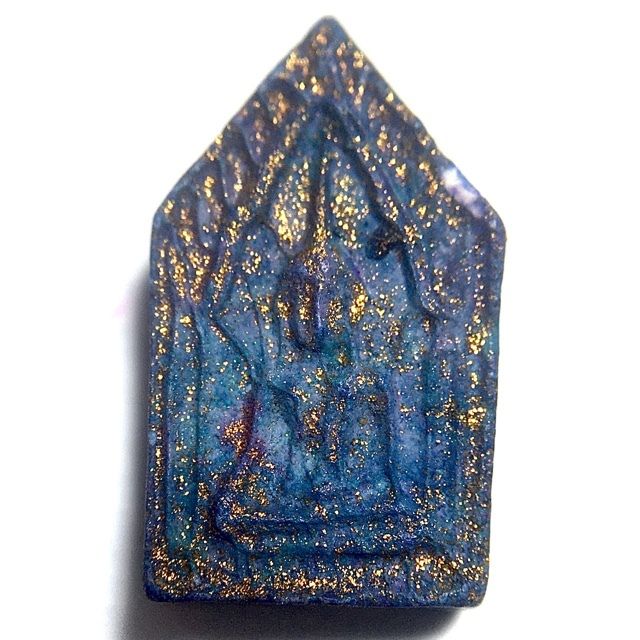
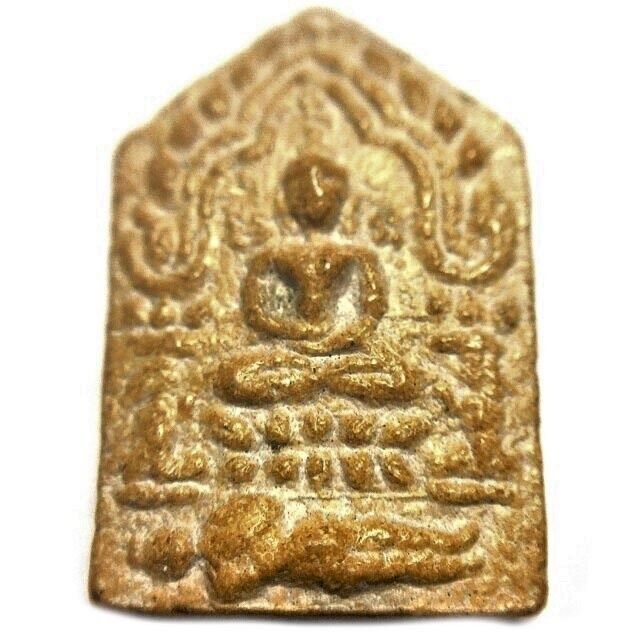
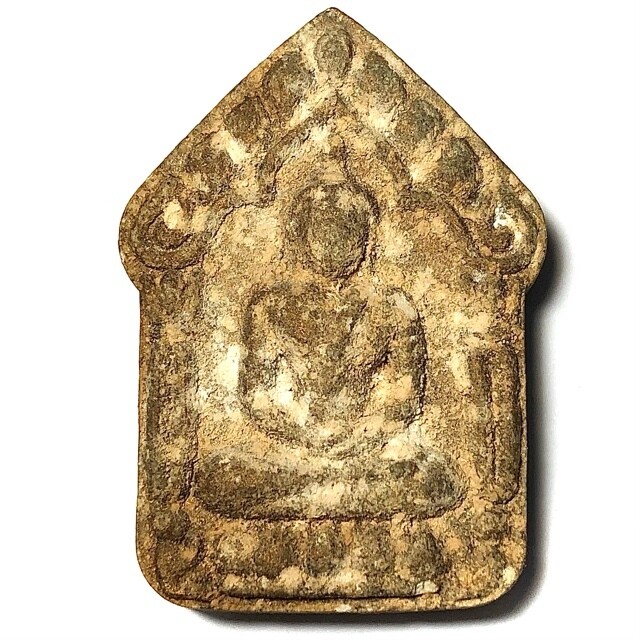
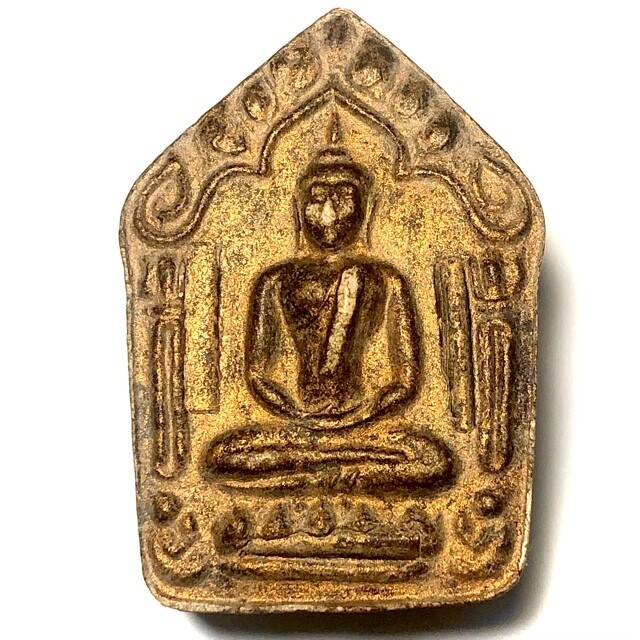
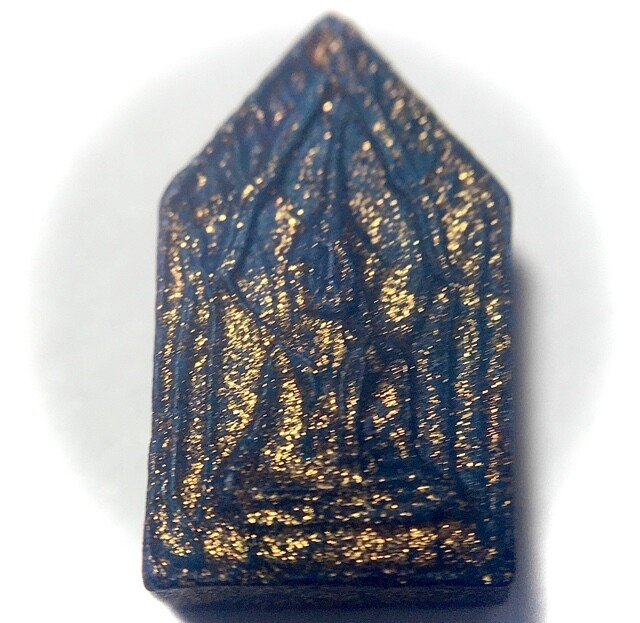
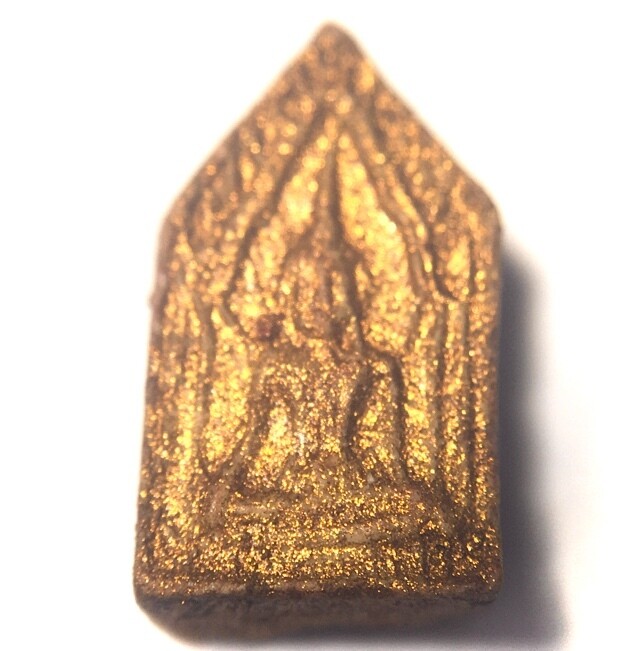
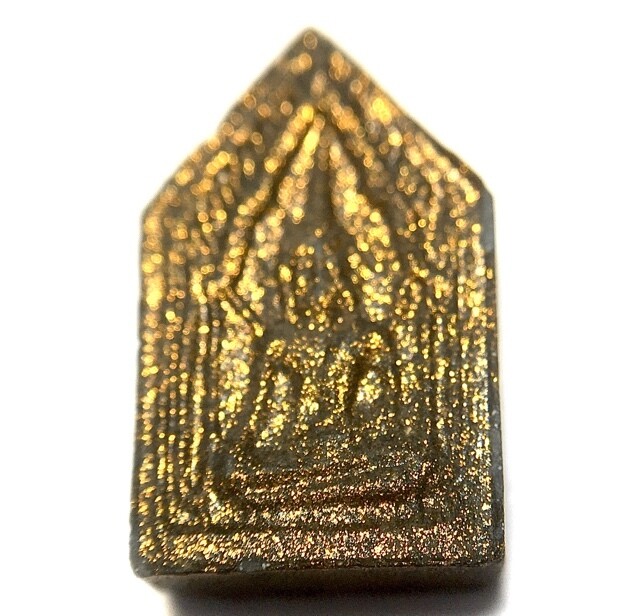
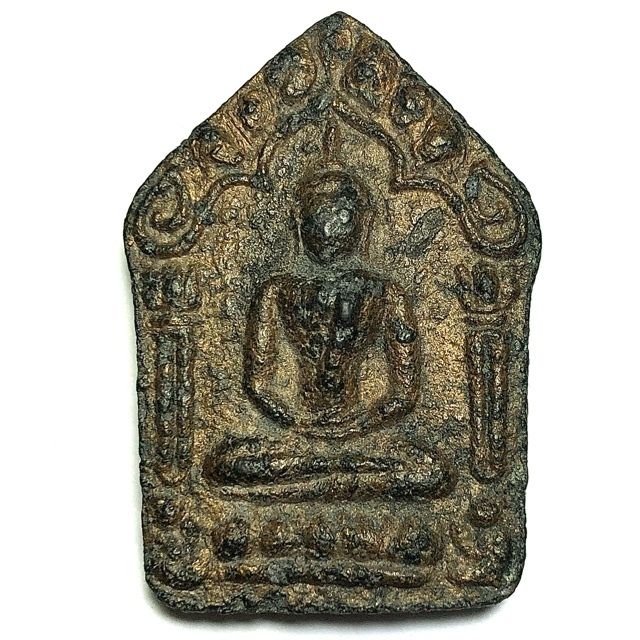
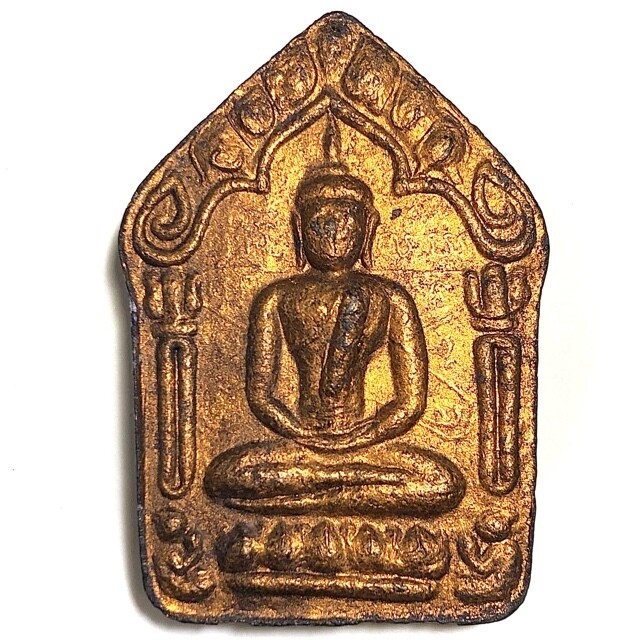
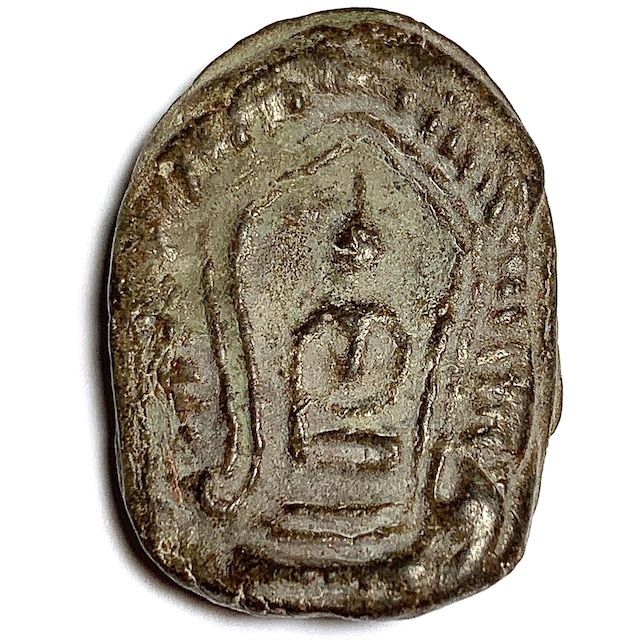
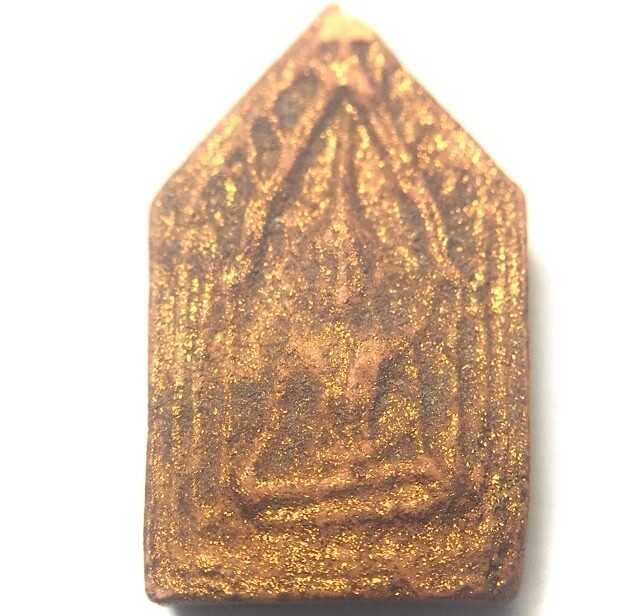
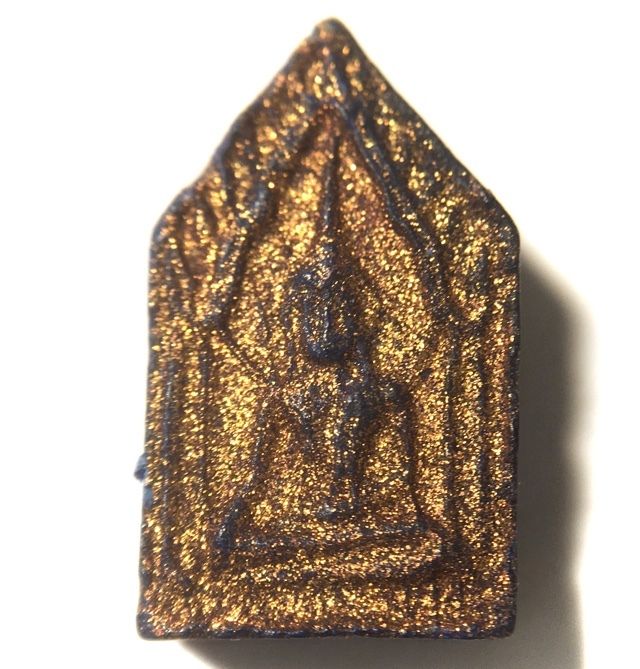
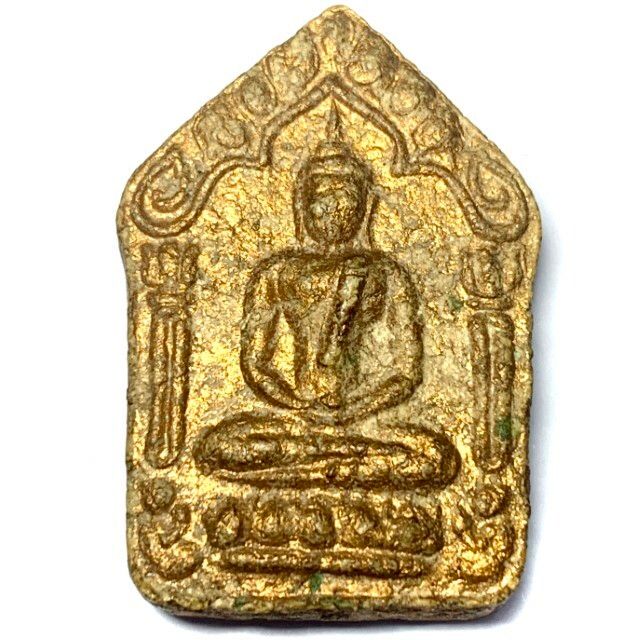
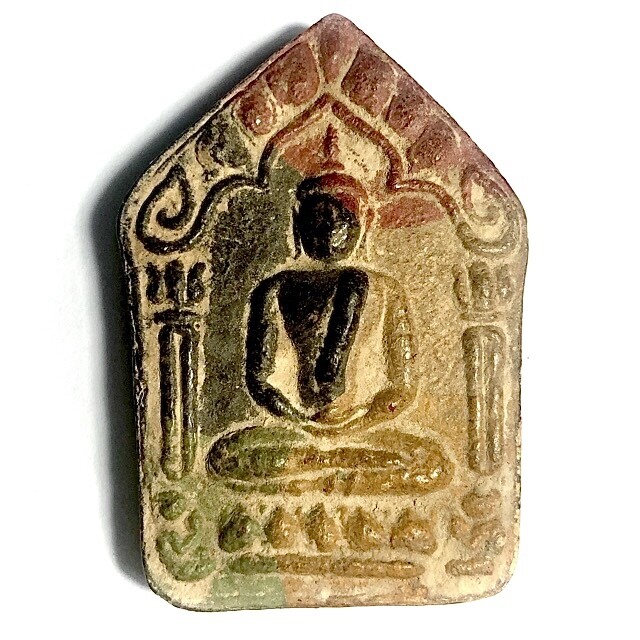
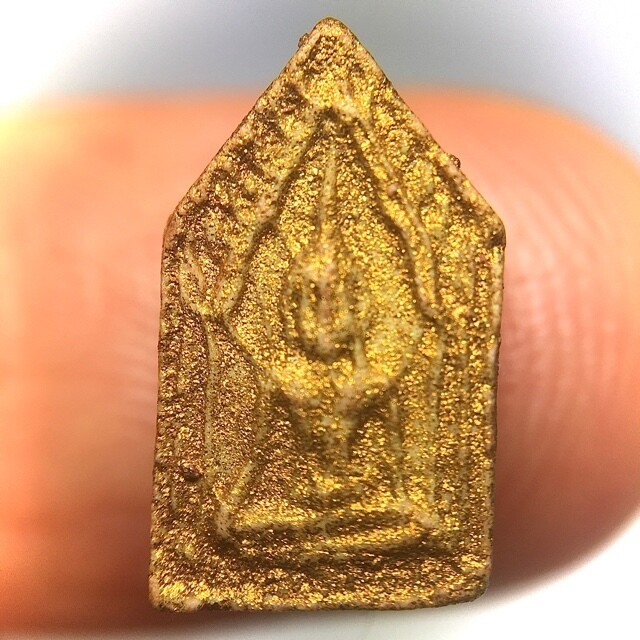
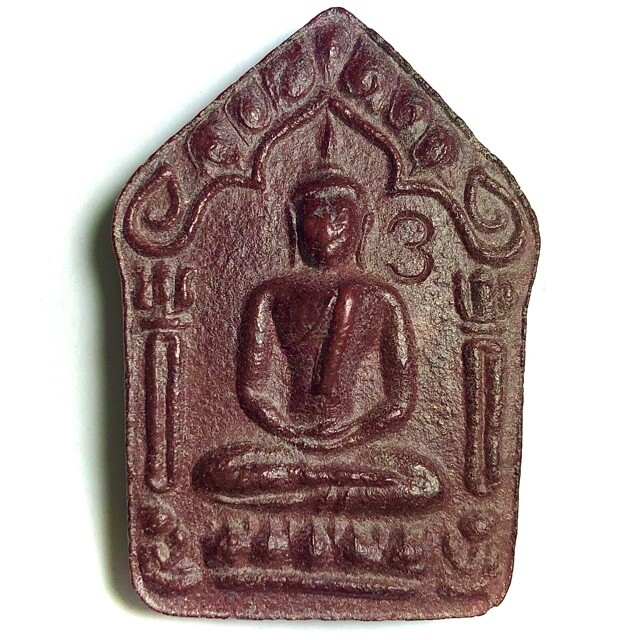
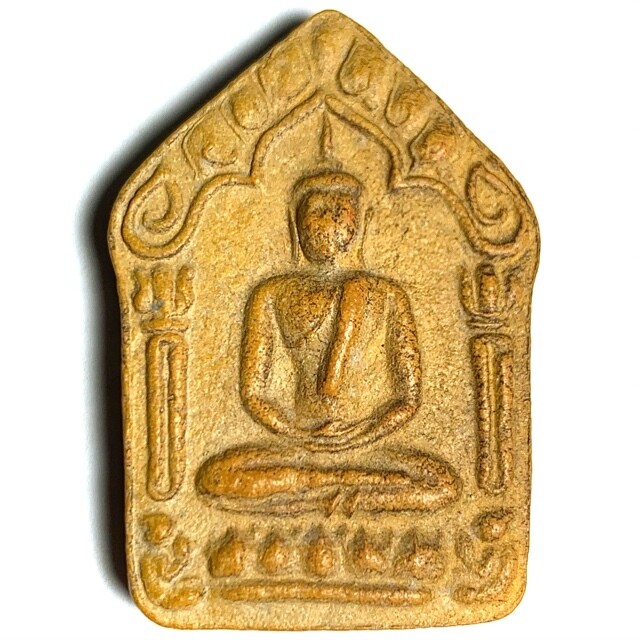
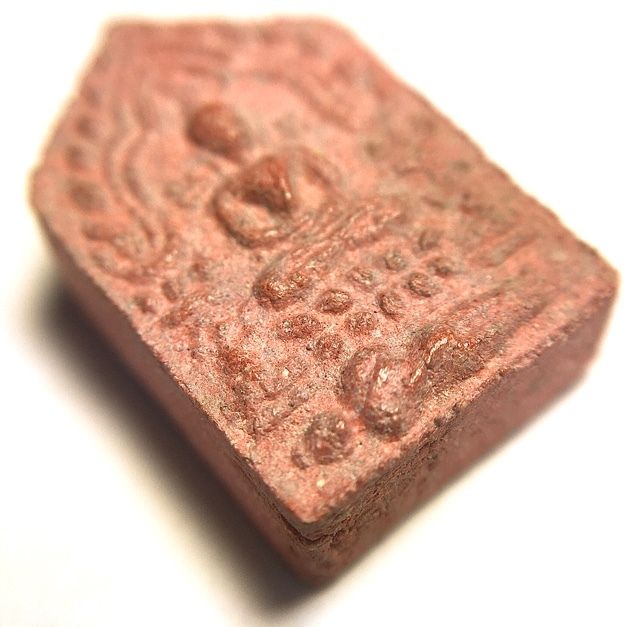
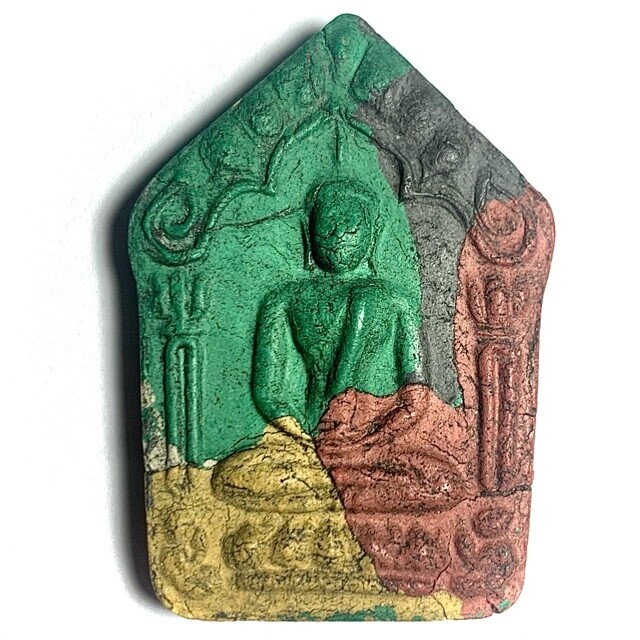
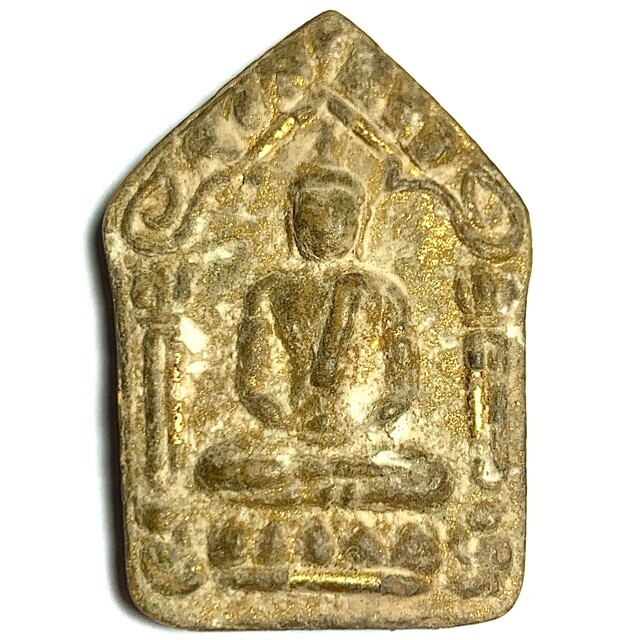
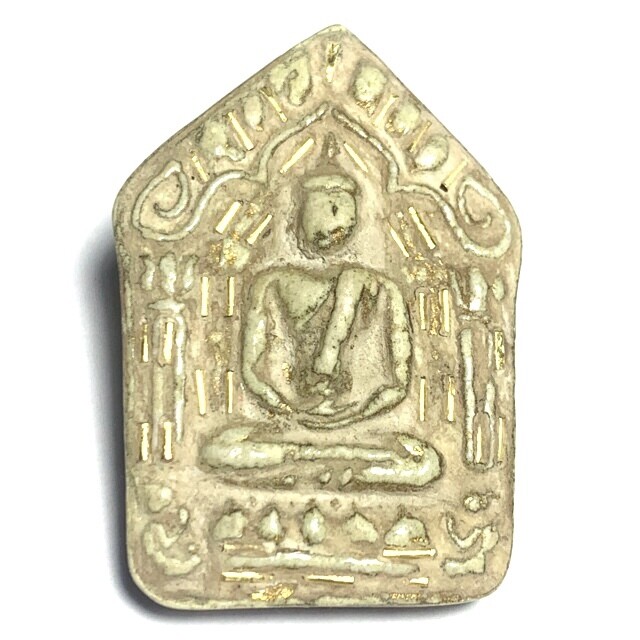
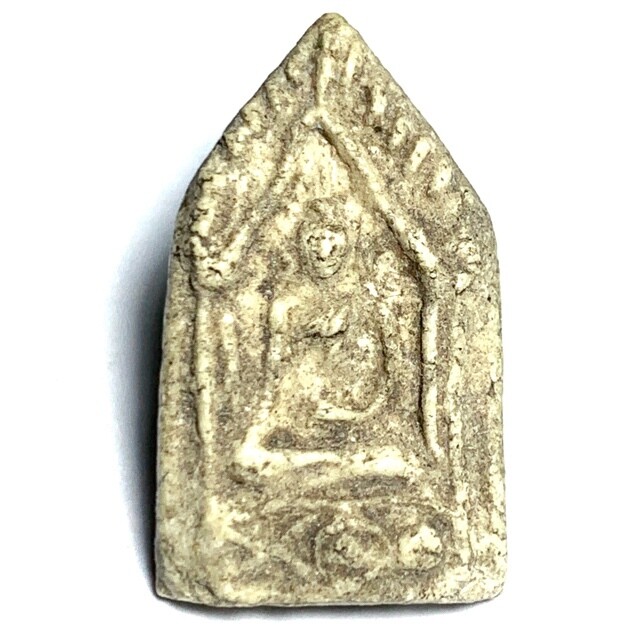
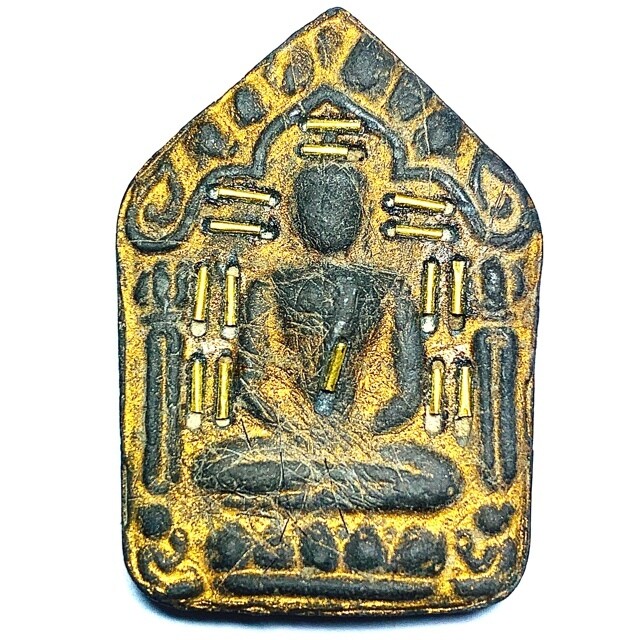
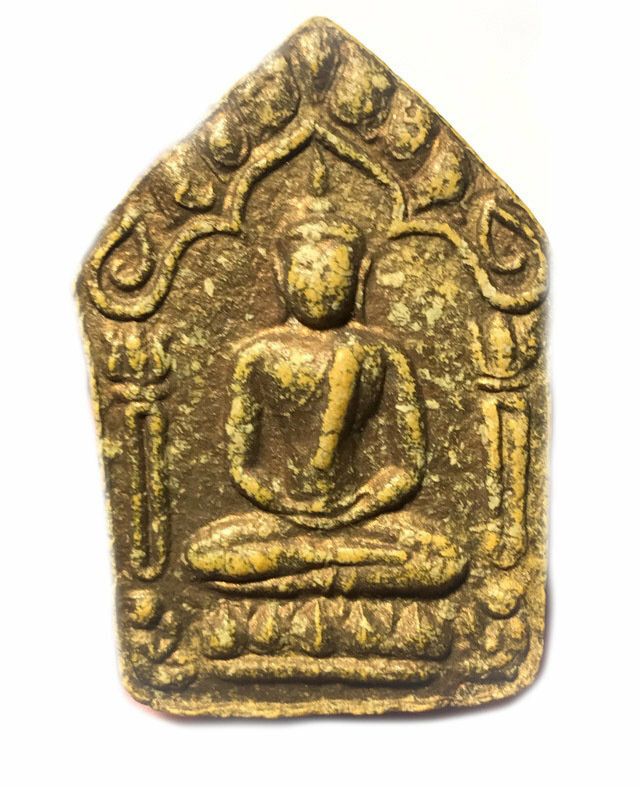
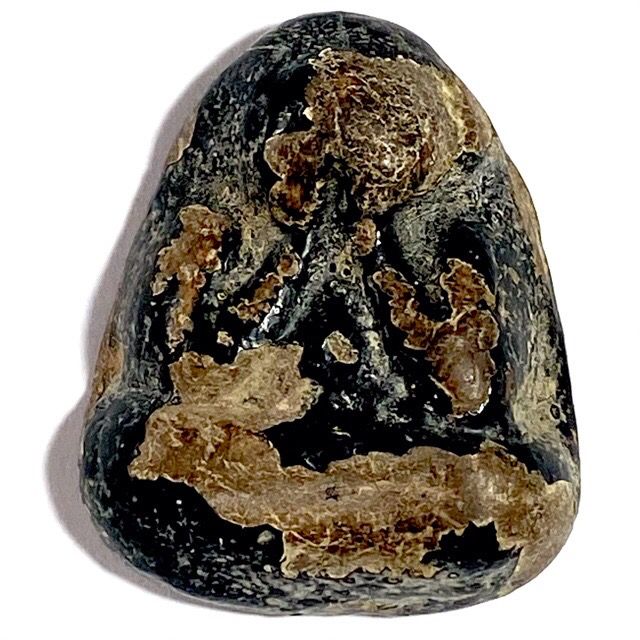
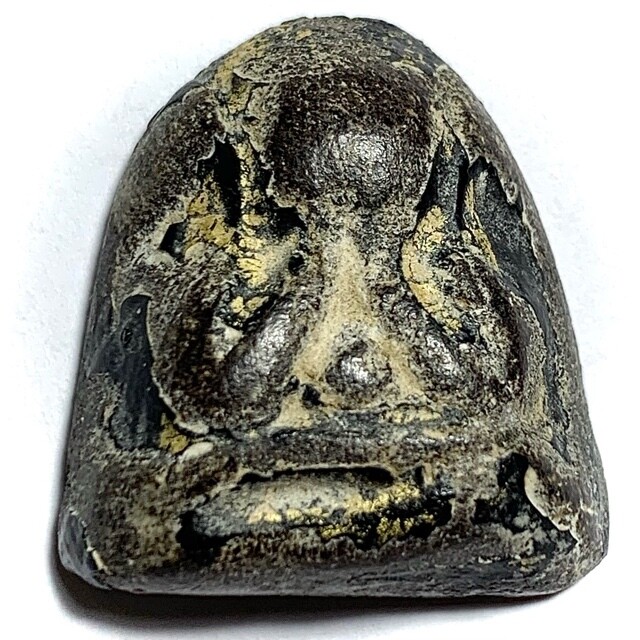
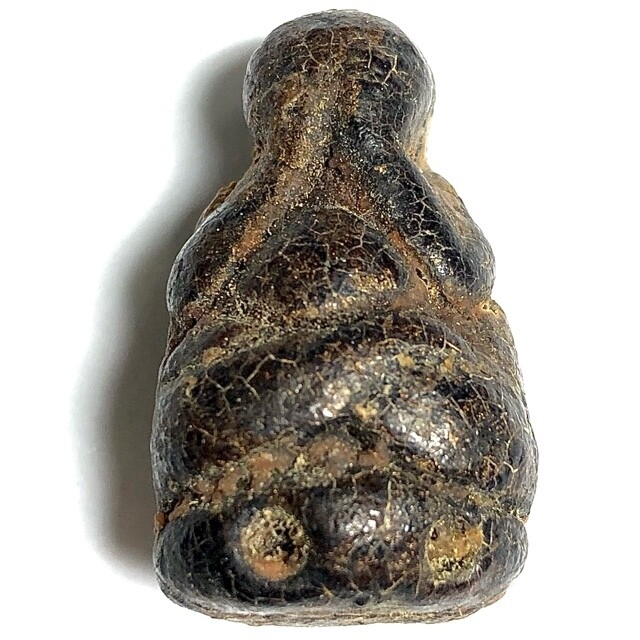
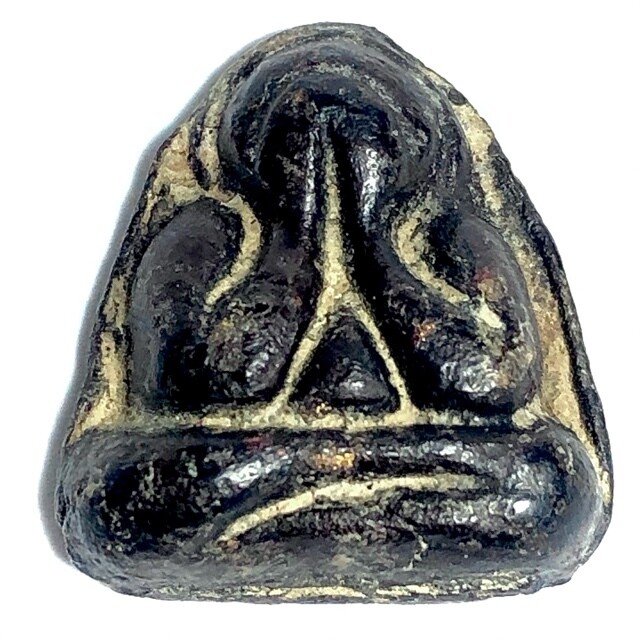
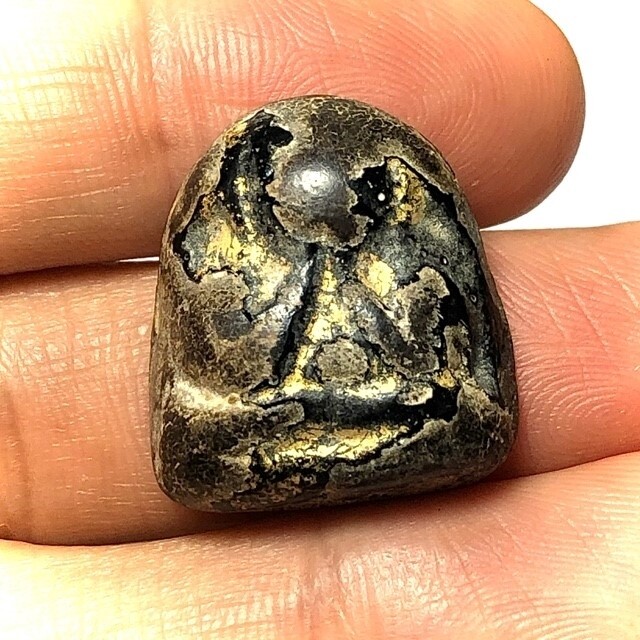
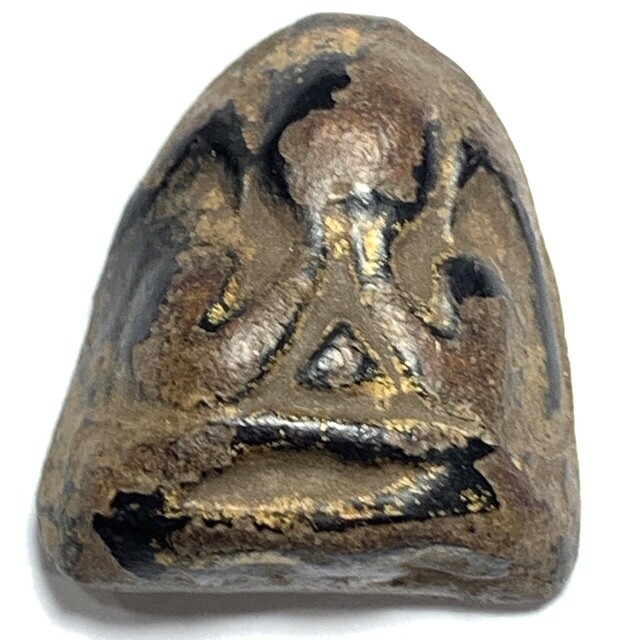
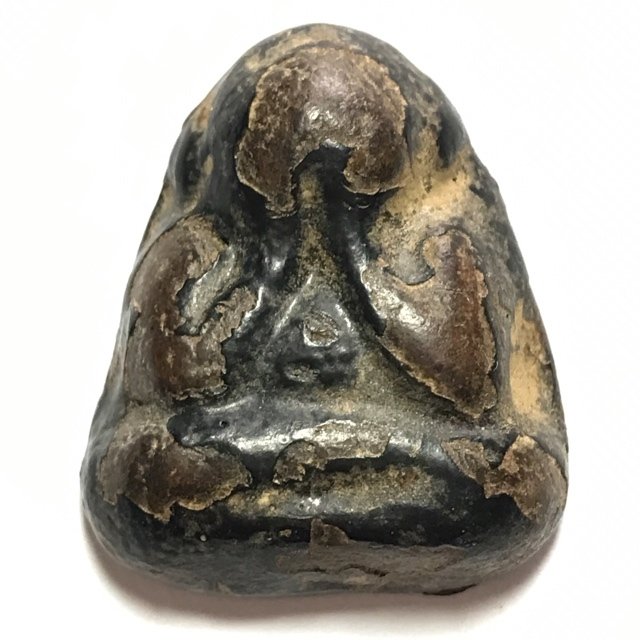
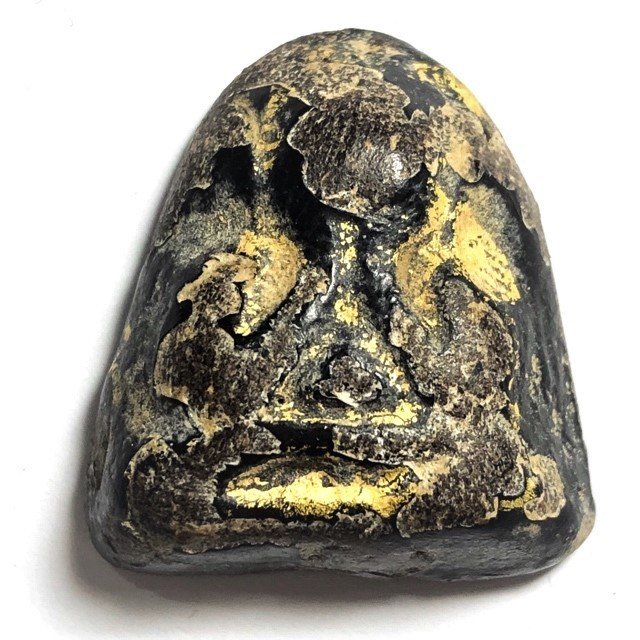
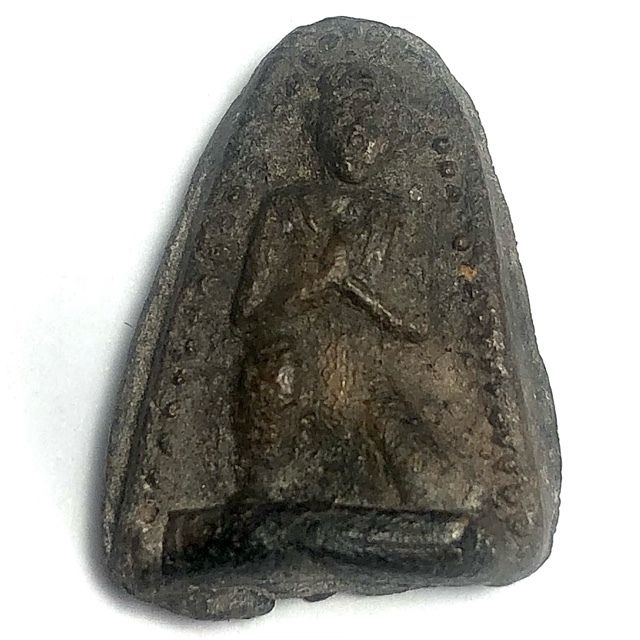
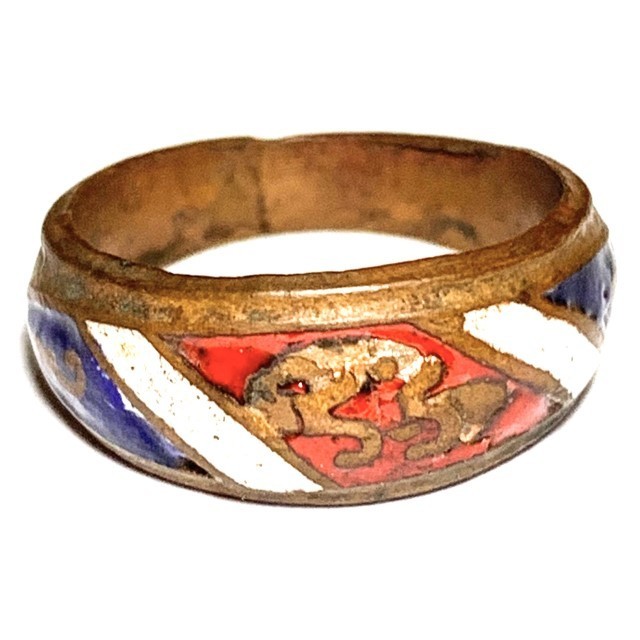
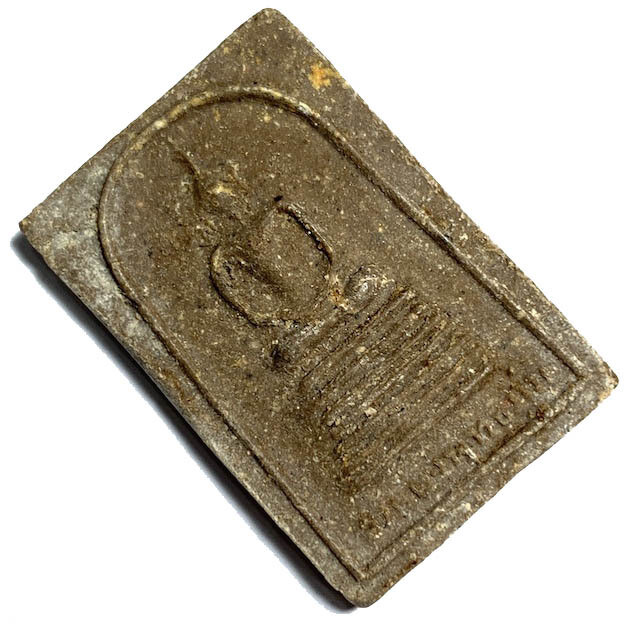
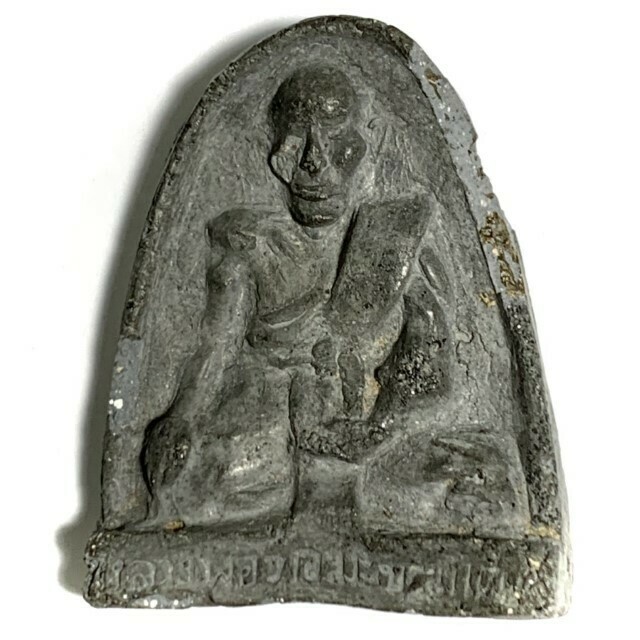
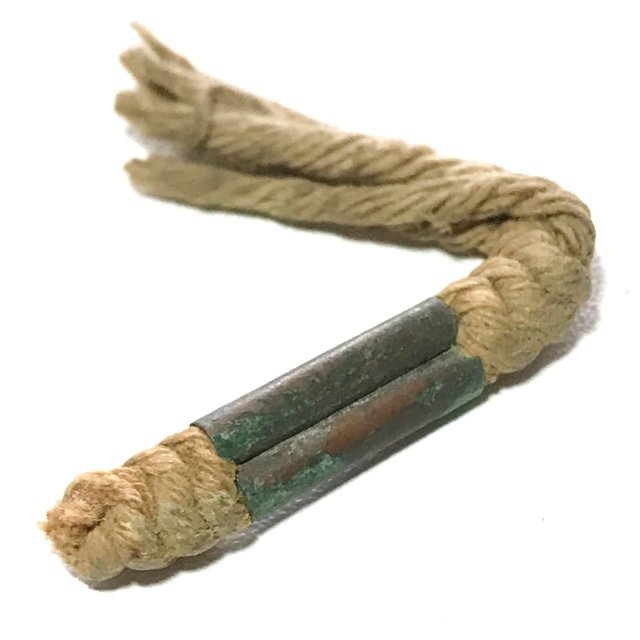
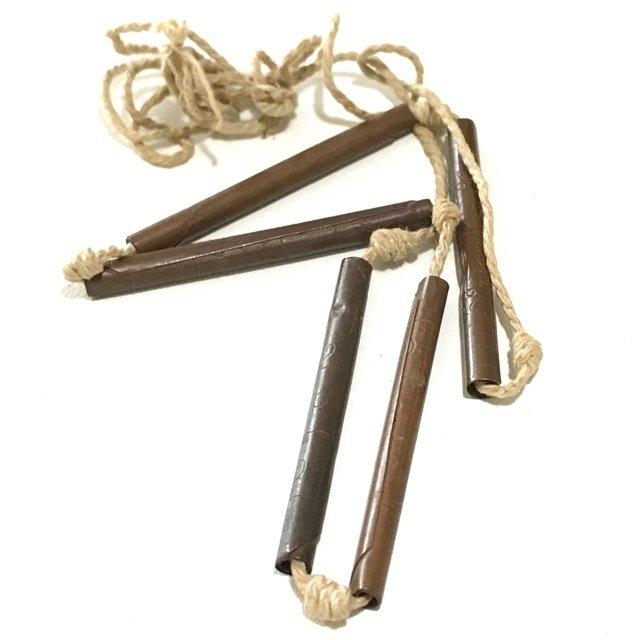
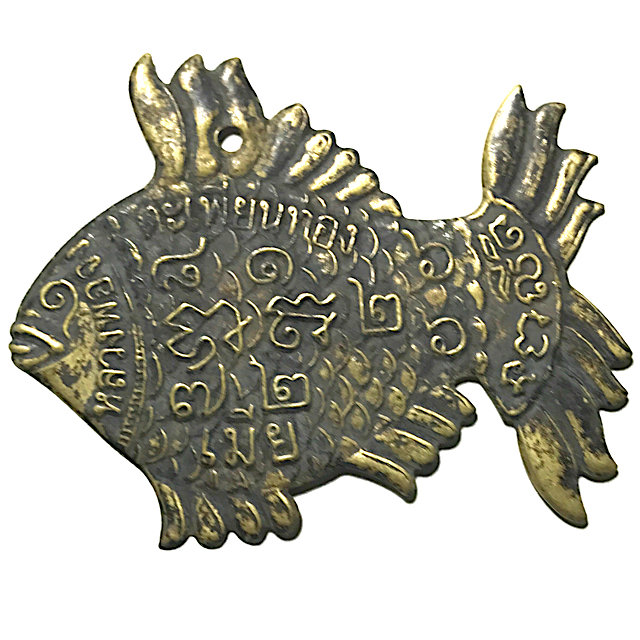
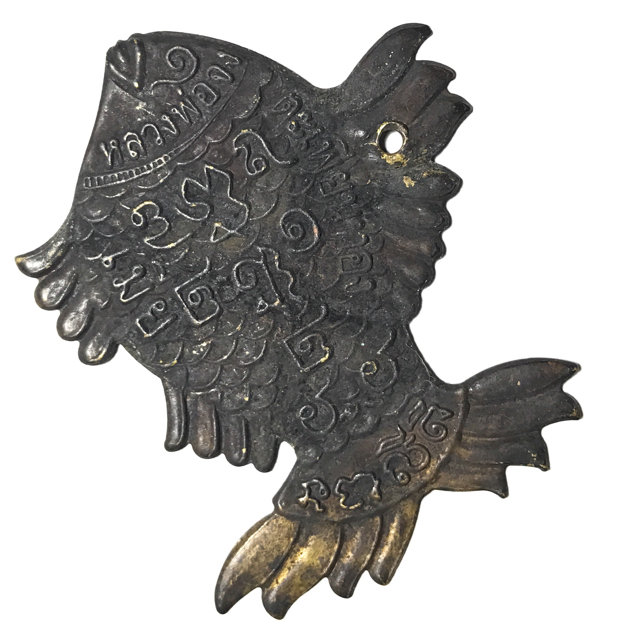
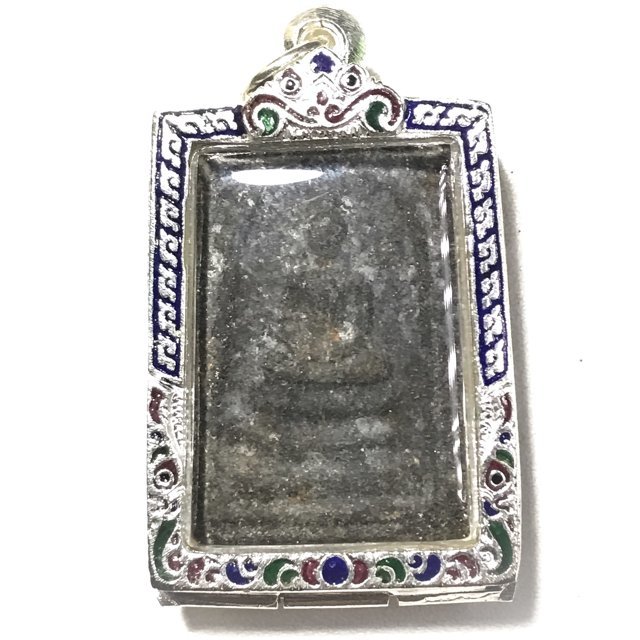
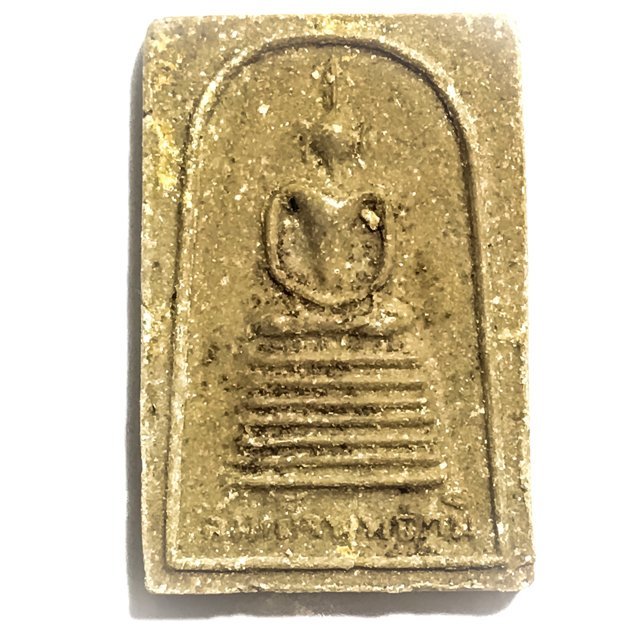
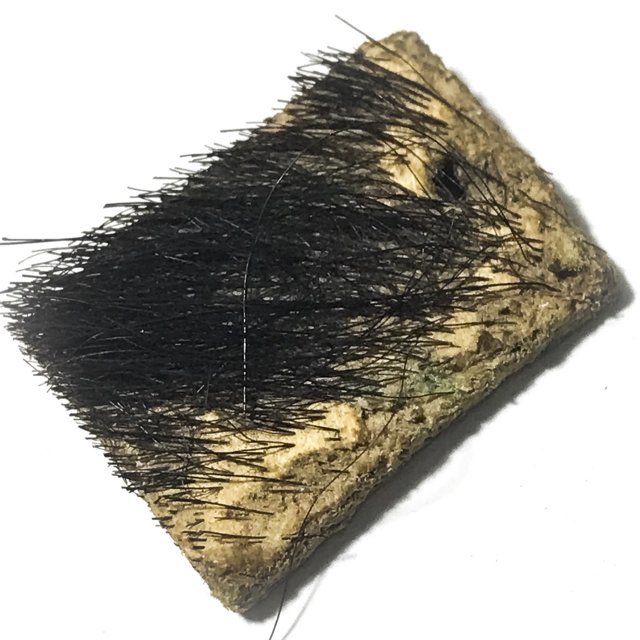
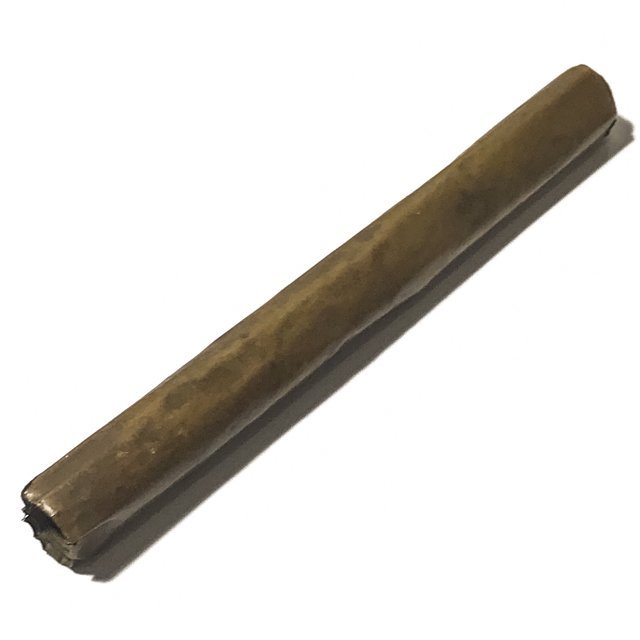
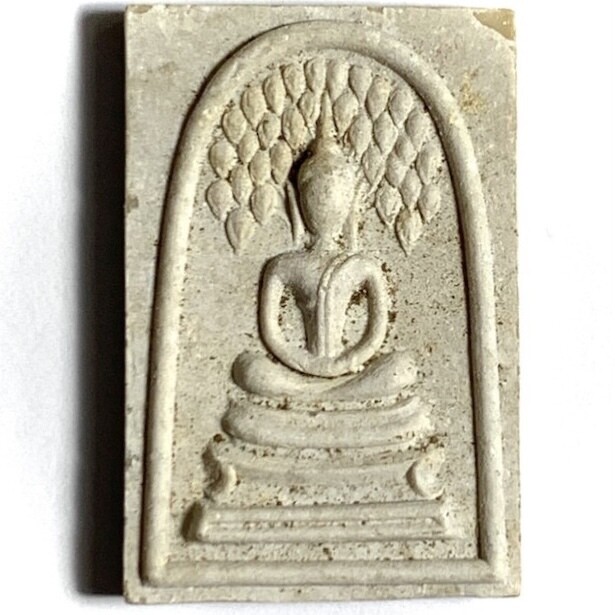
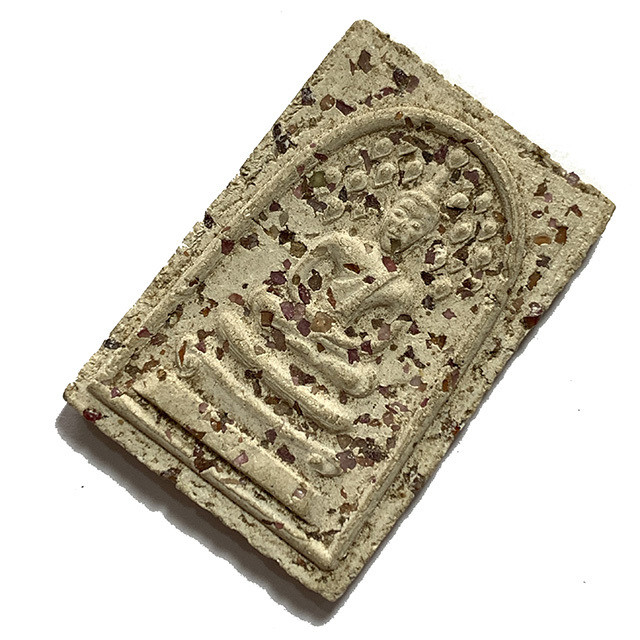
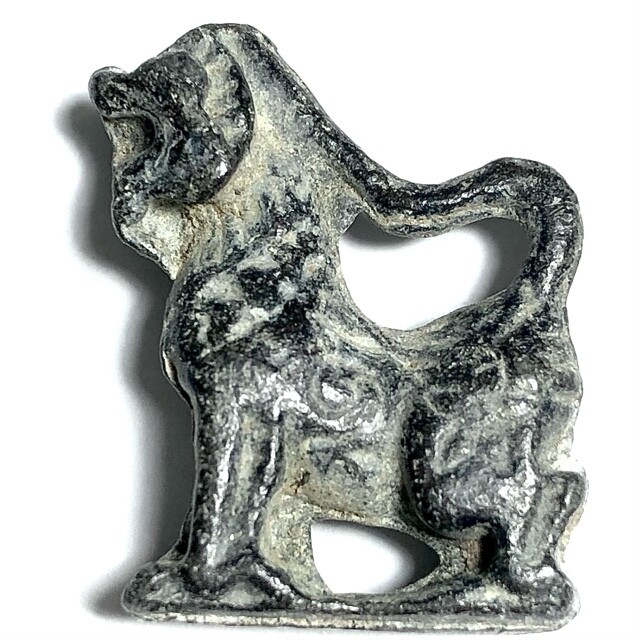
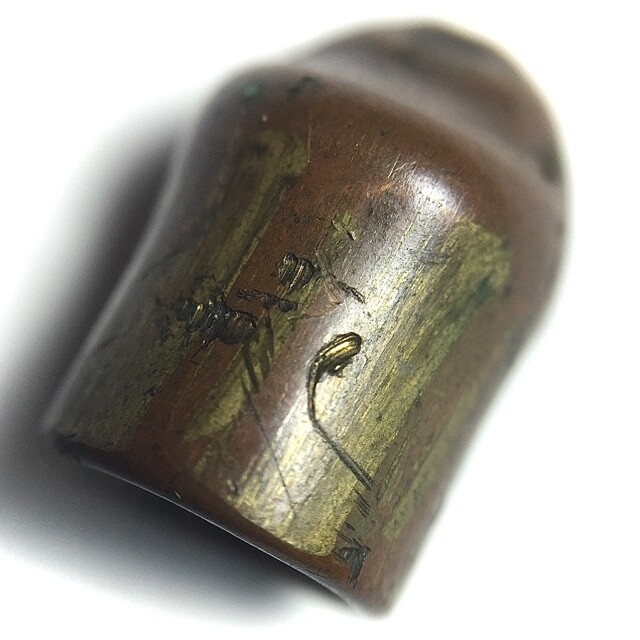
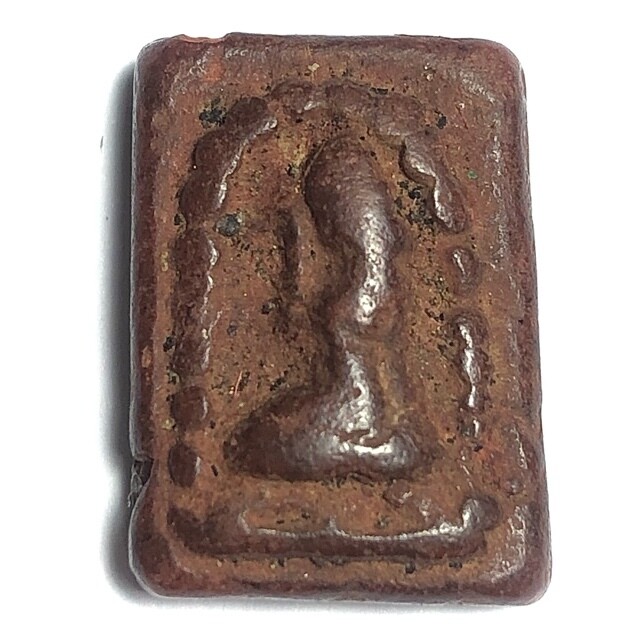
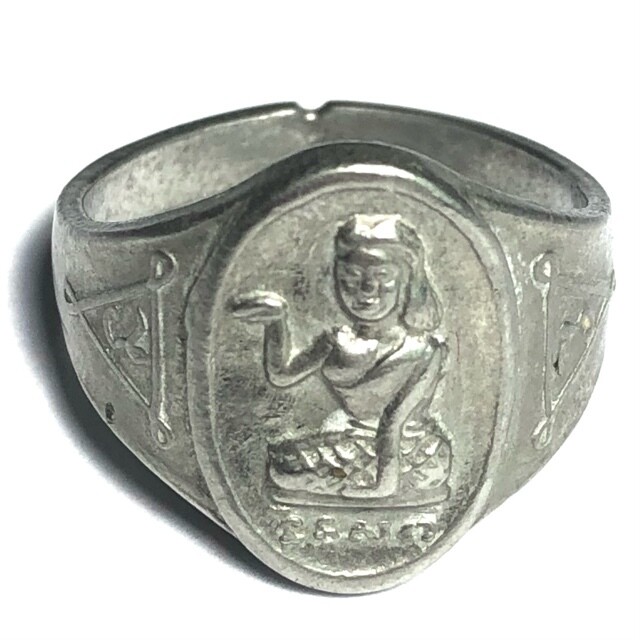
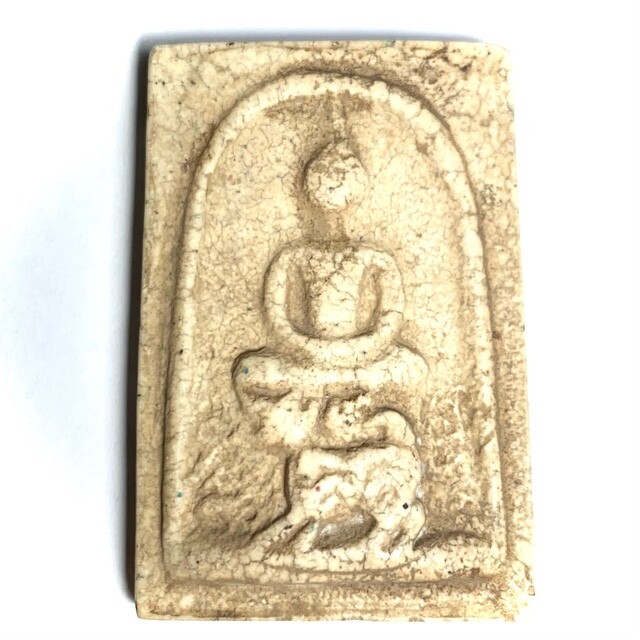
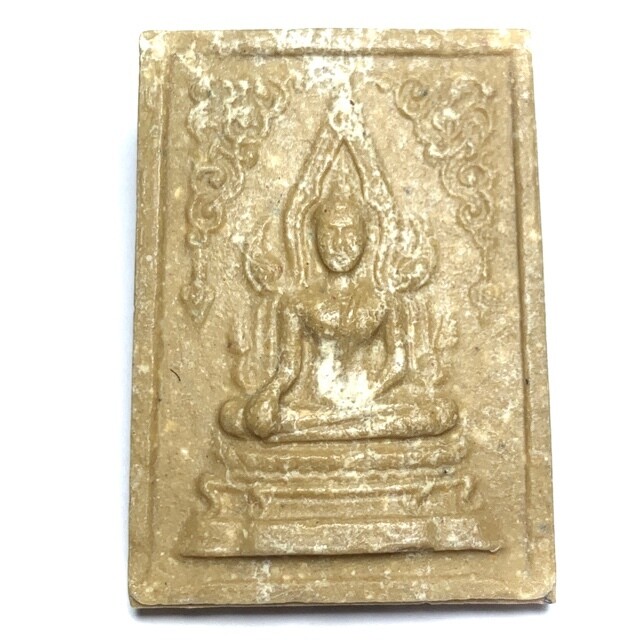
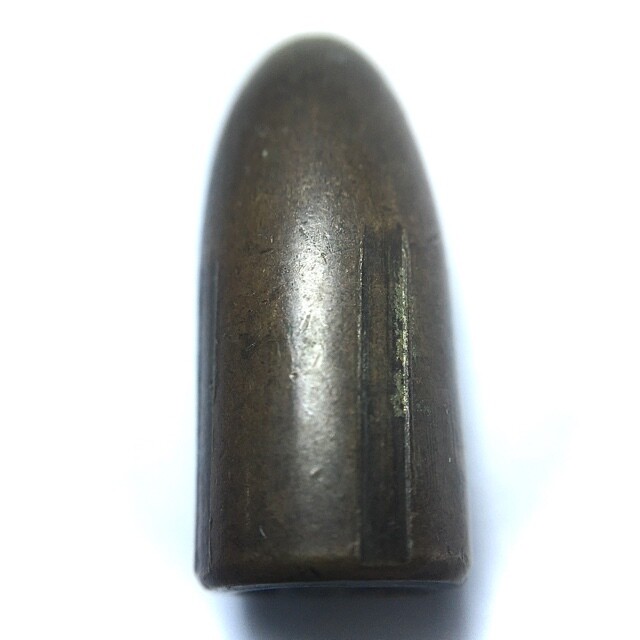
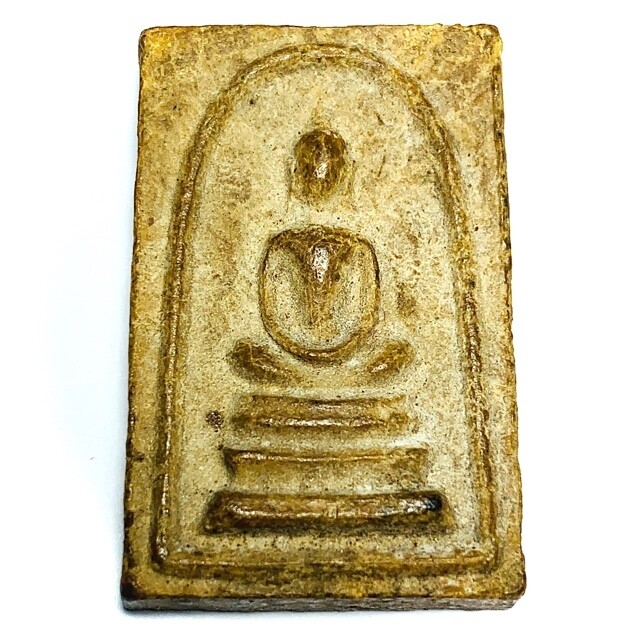
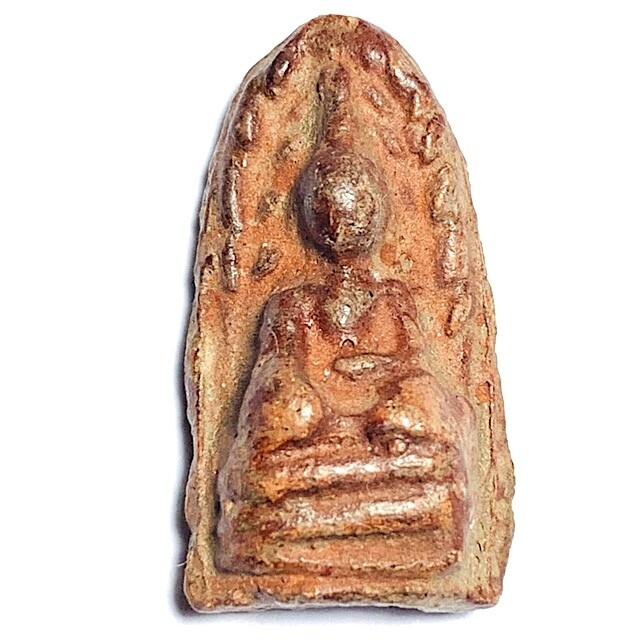
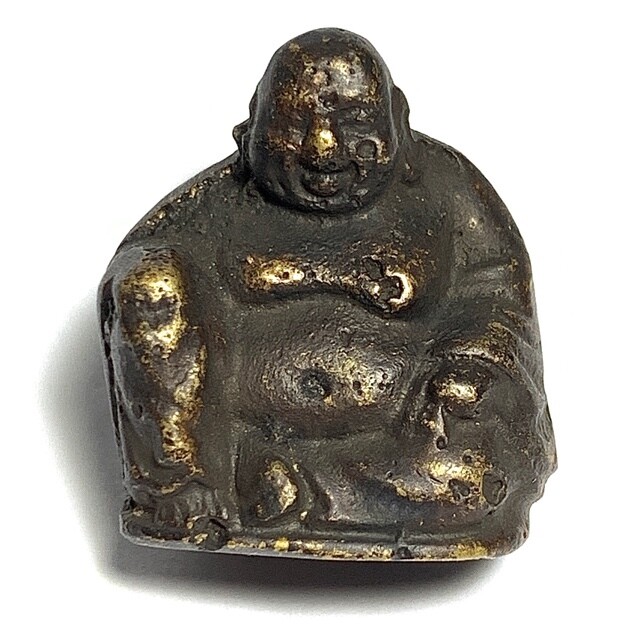
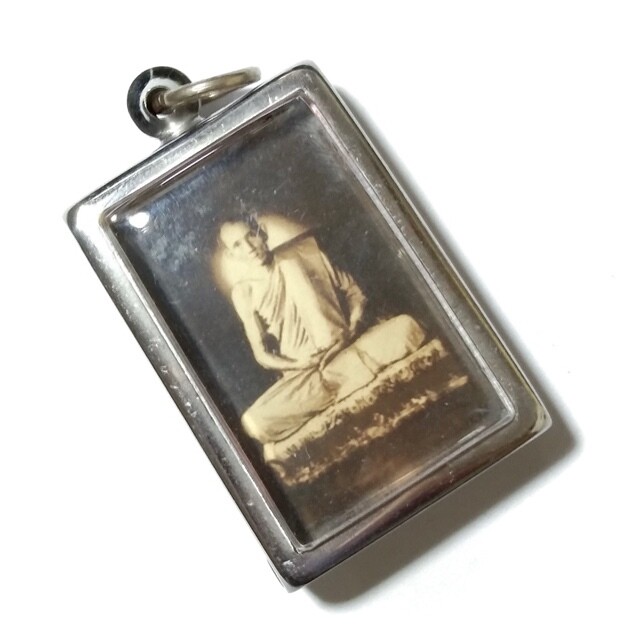
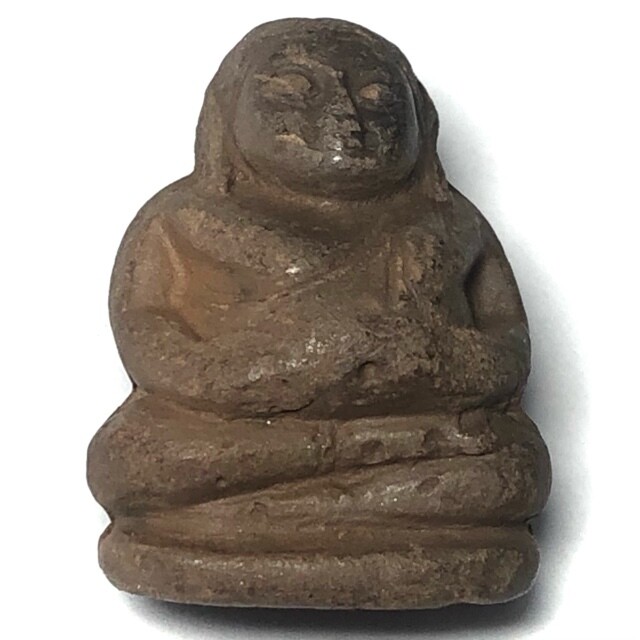
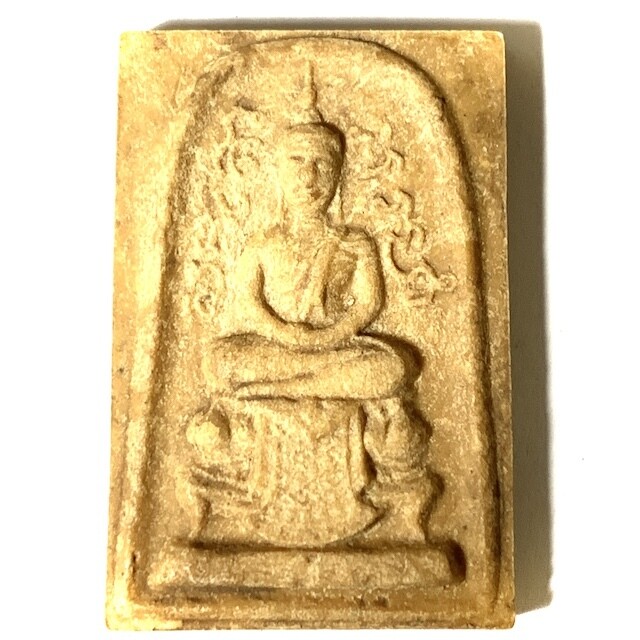
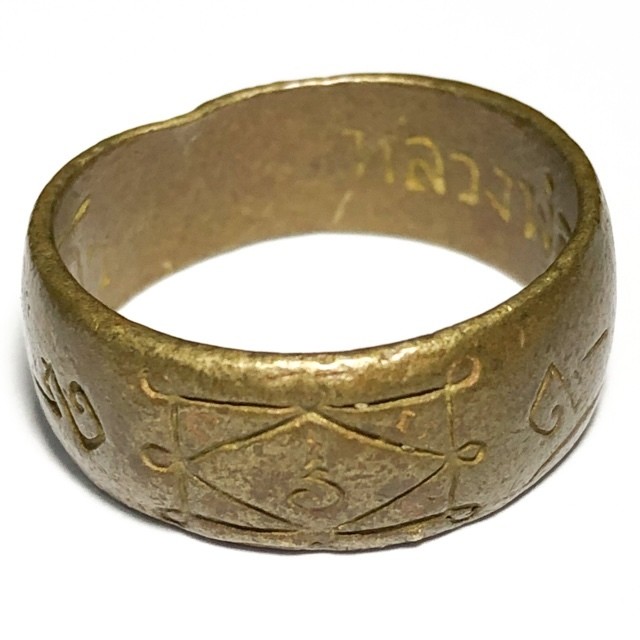
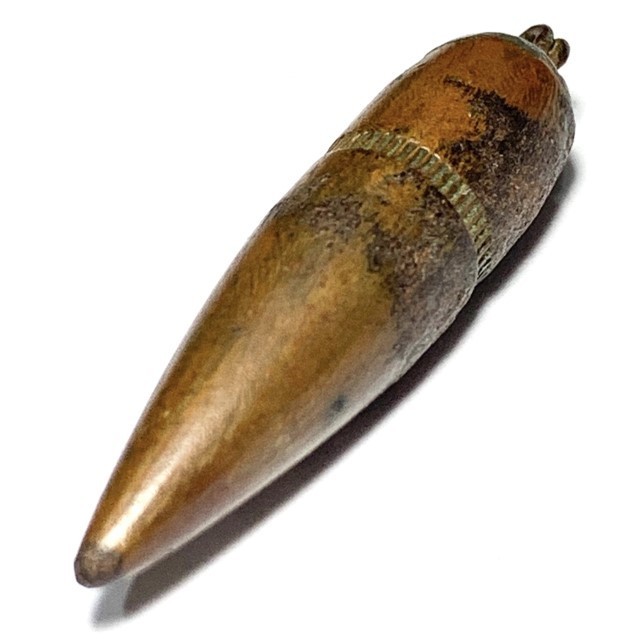
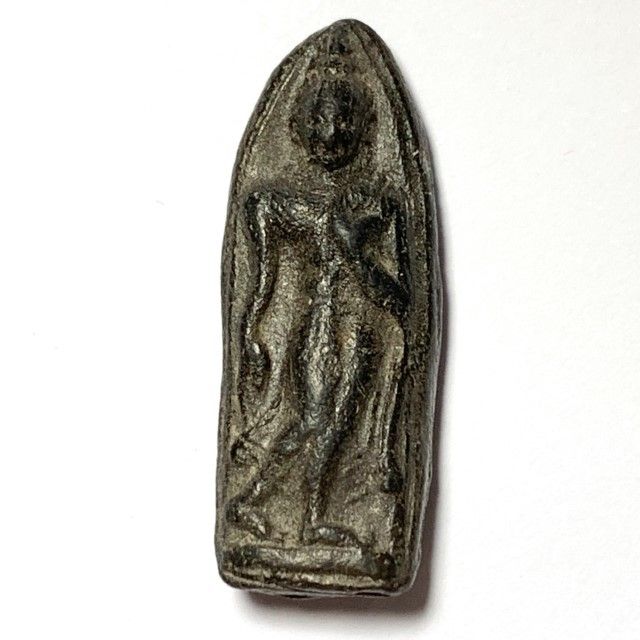
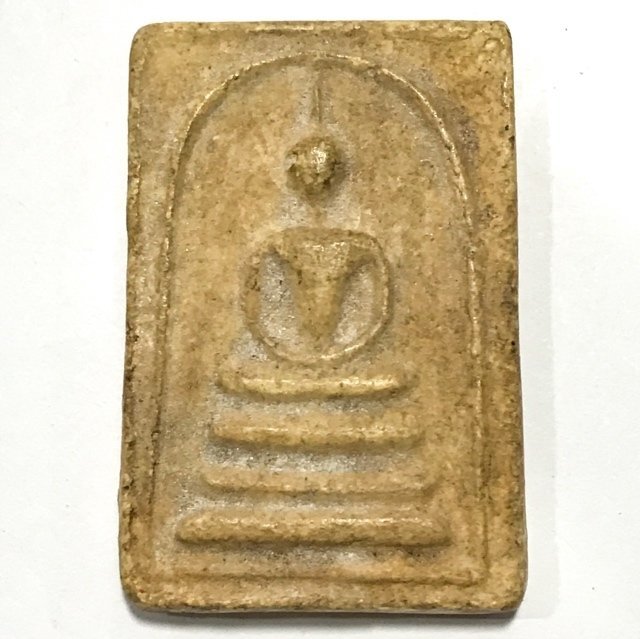
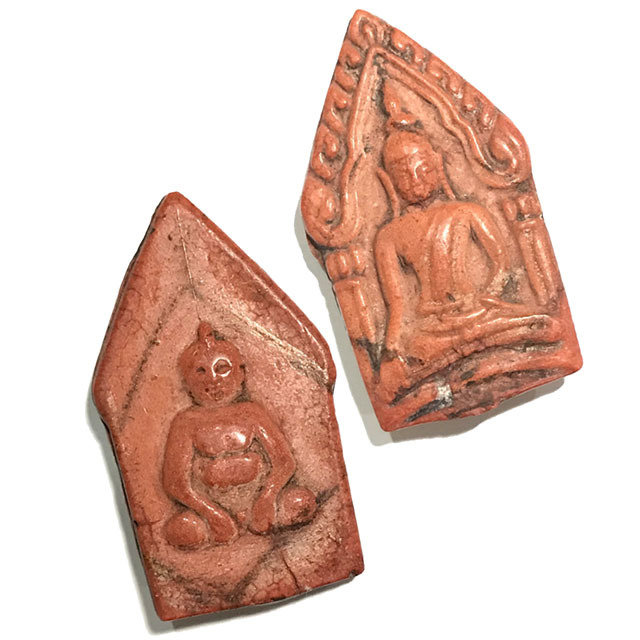
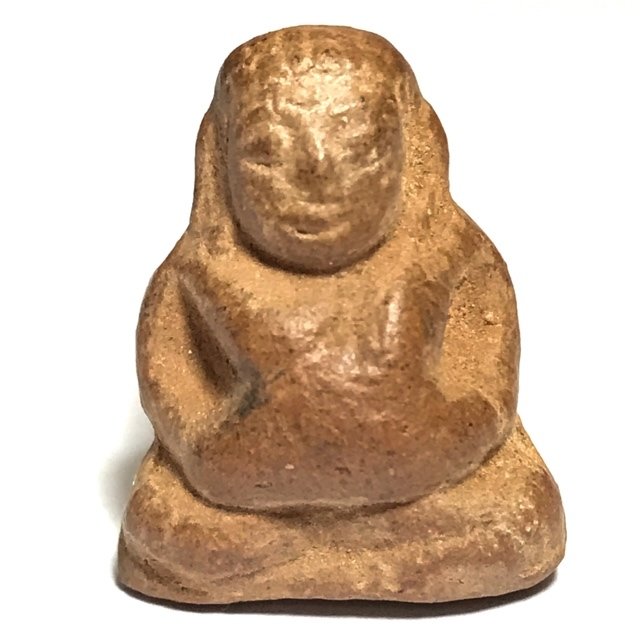
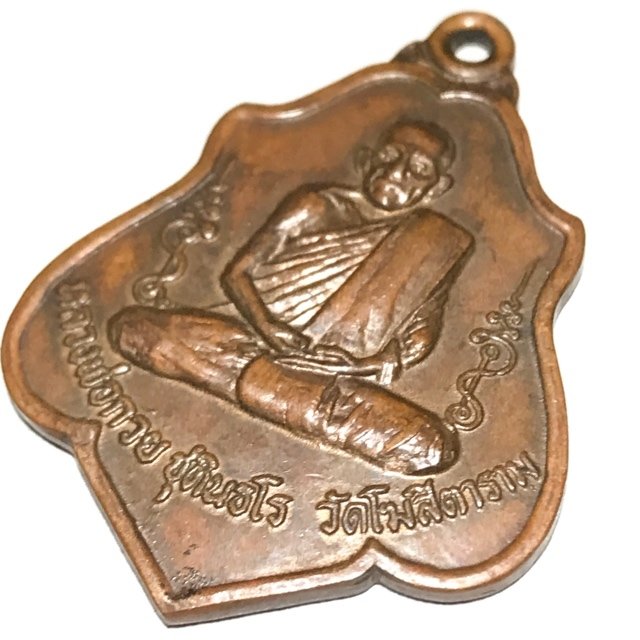
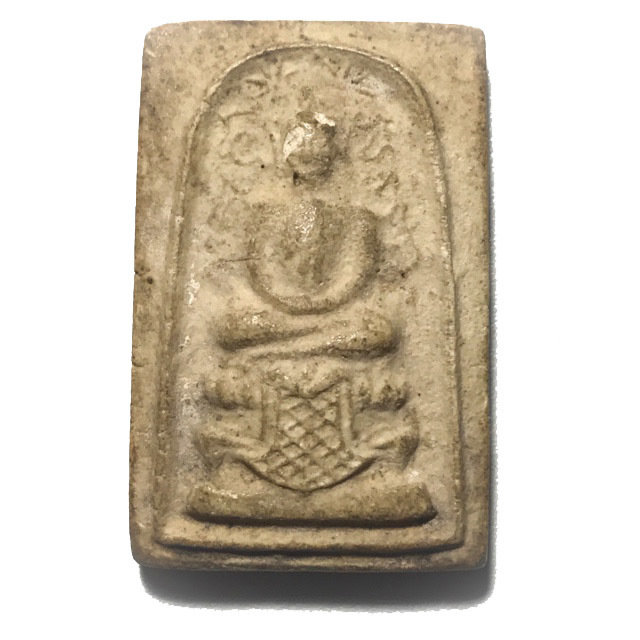
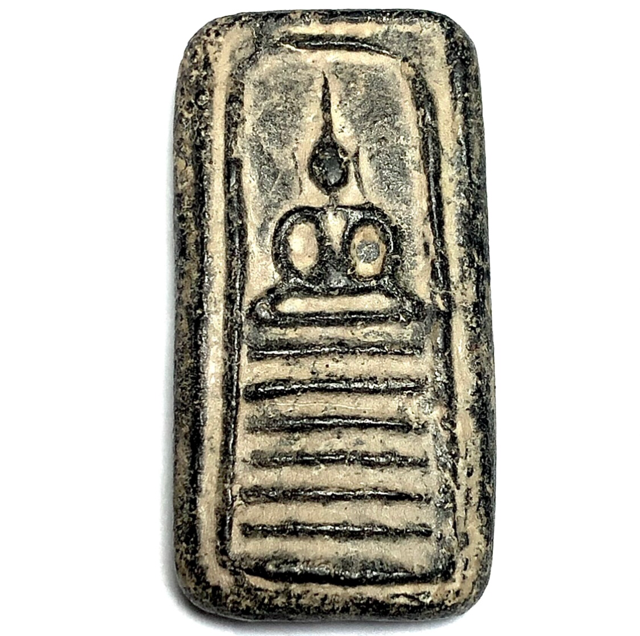
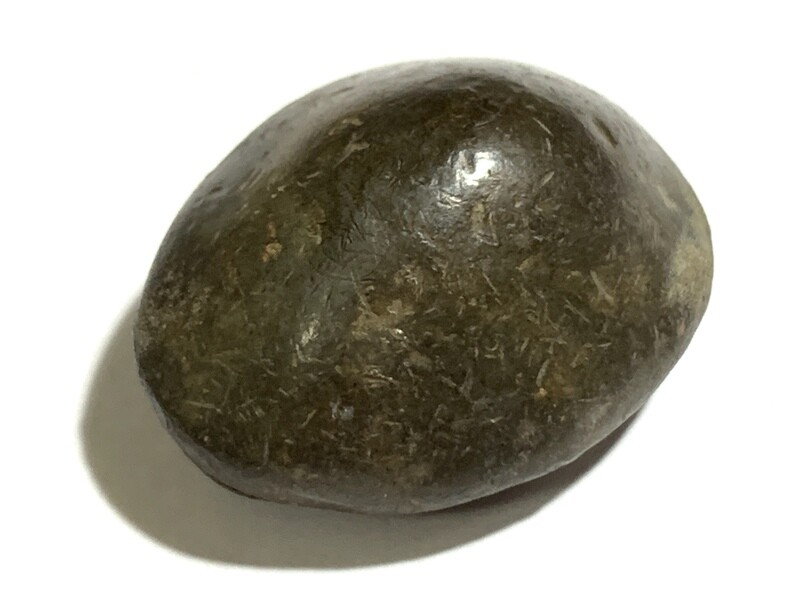
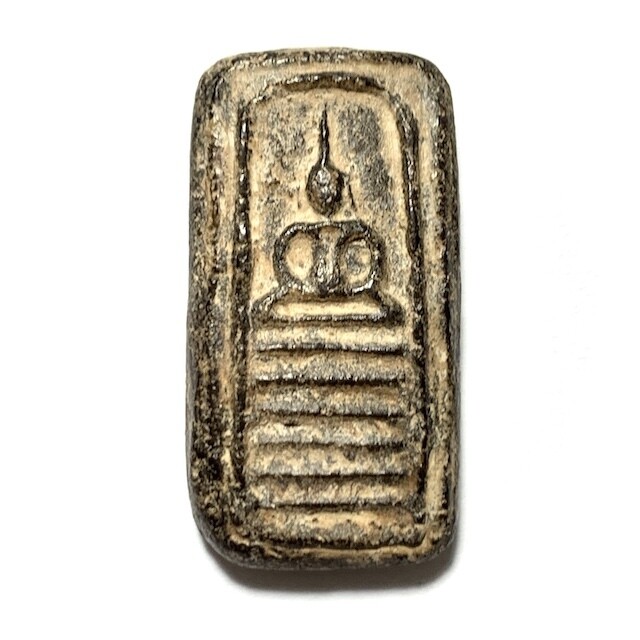
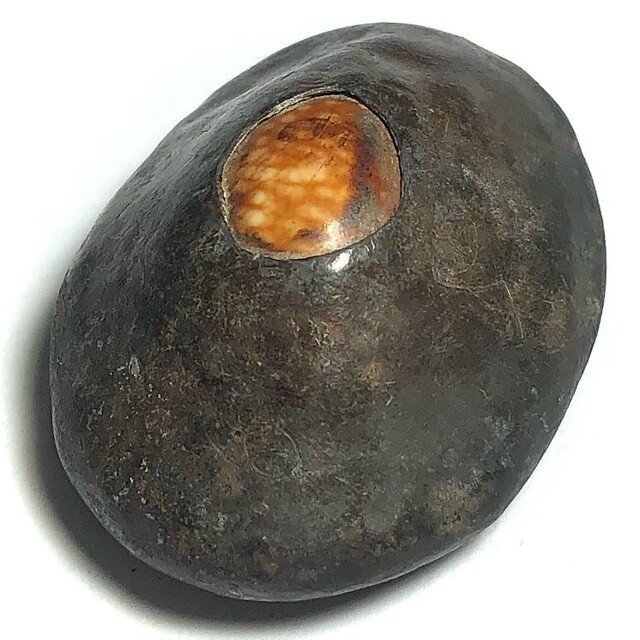
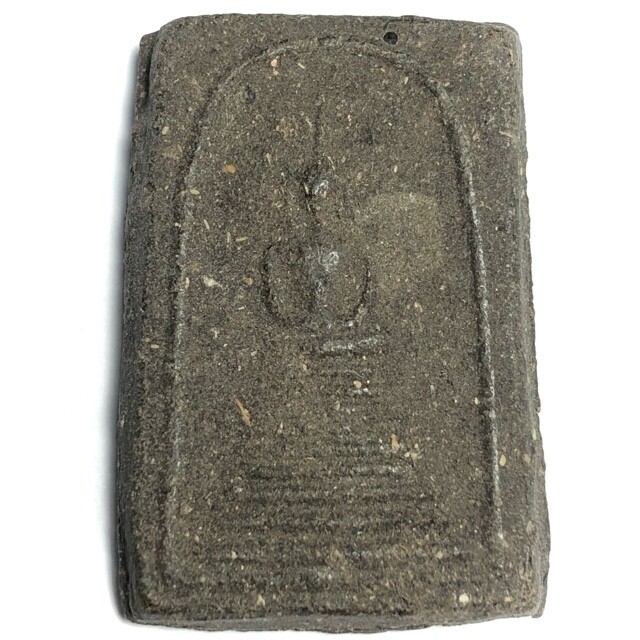
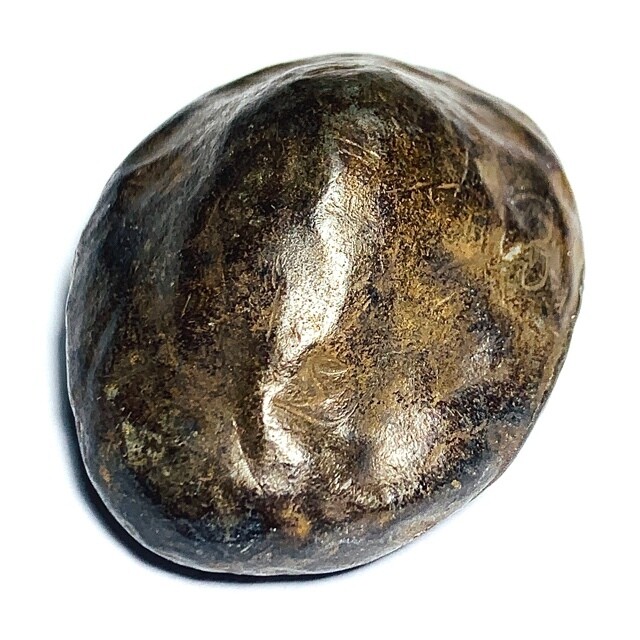
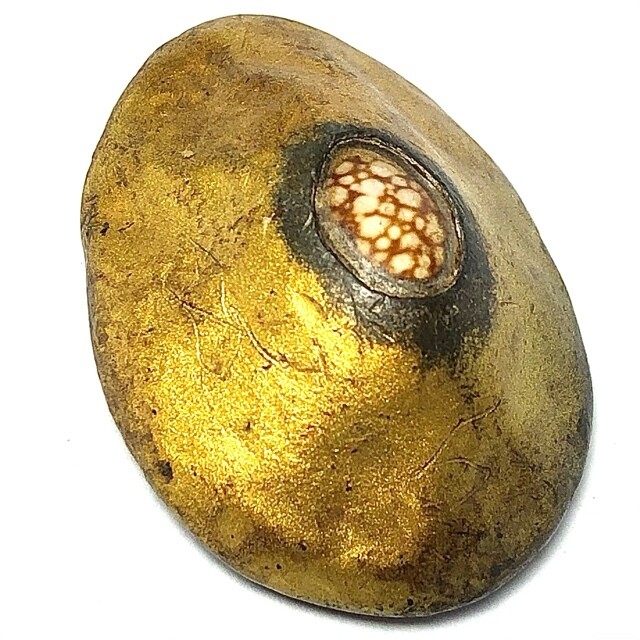
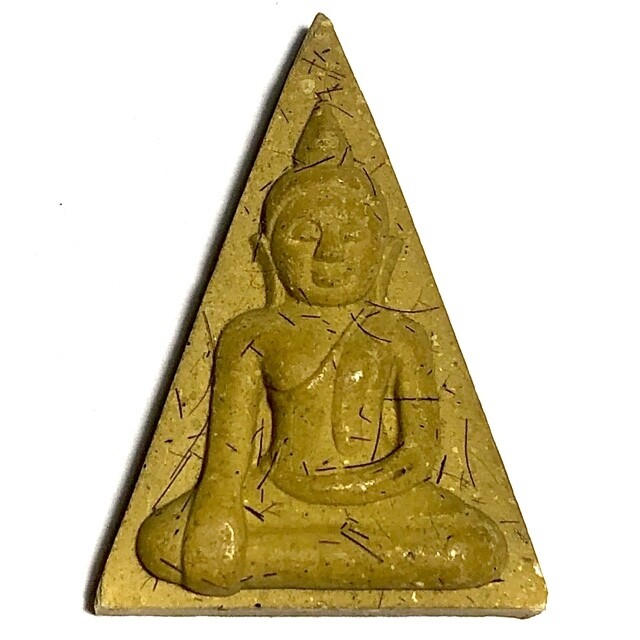
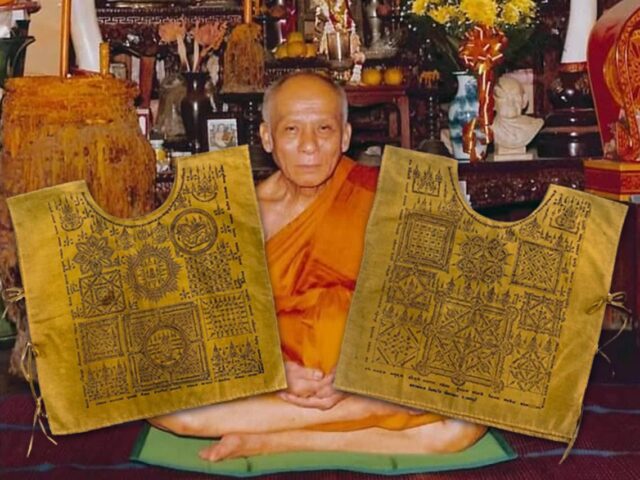
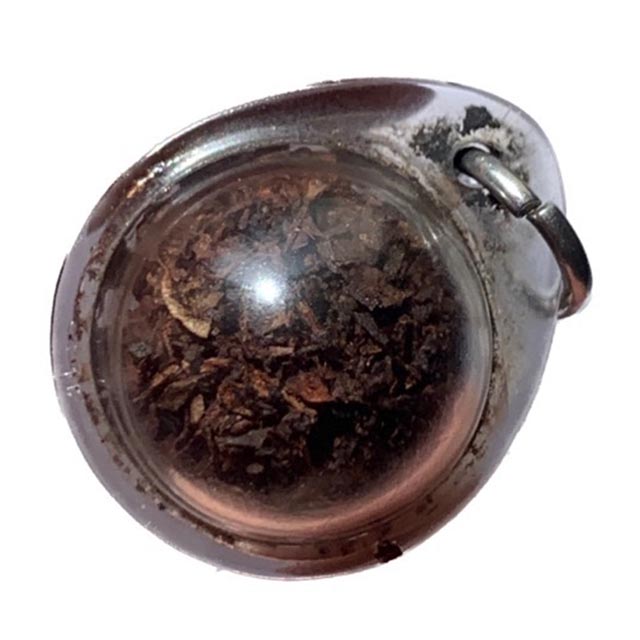
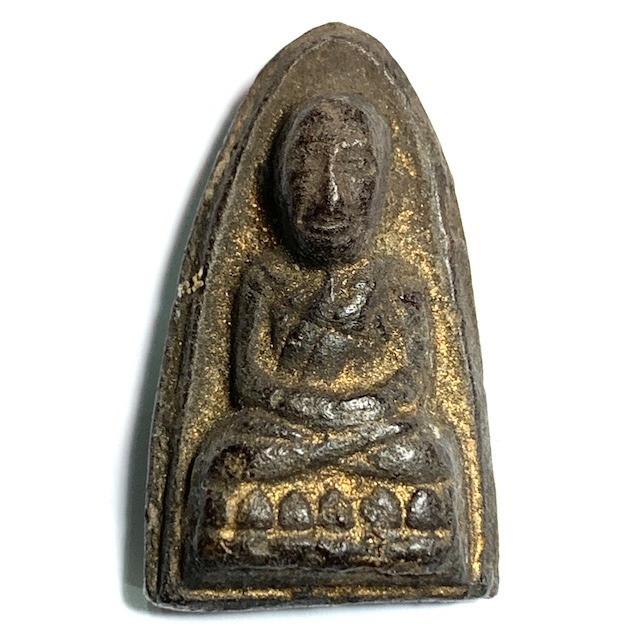
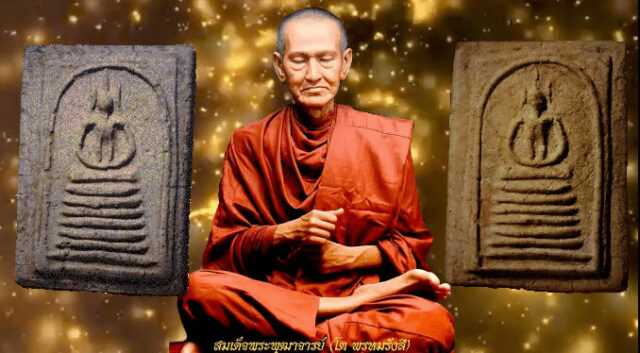
Bia Gae Aathan Mee Khorb Tao Ruean Hum Luang Phu Kam Wat Po Bplam Featured

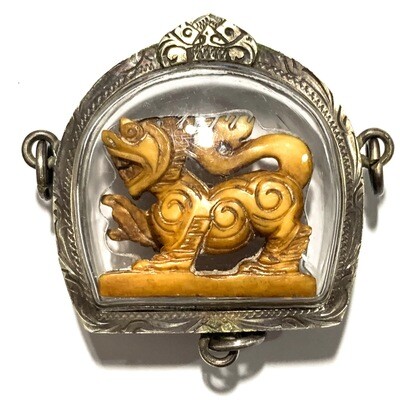
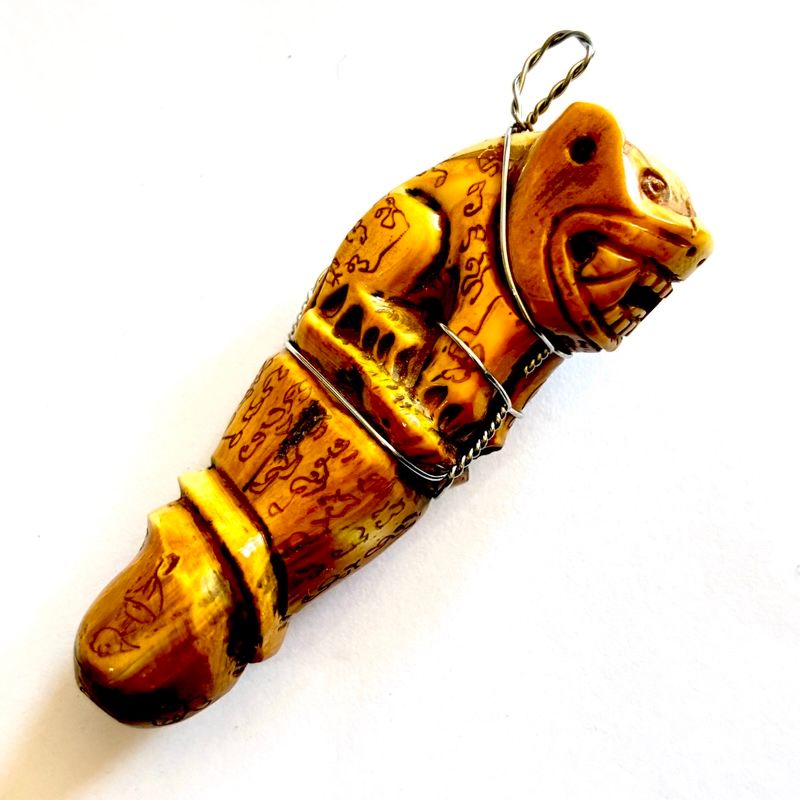
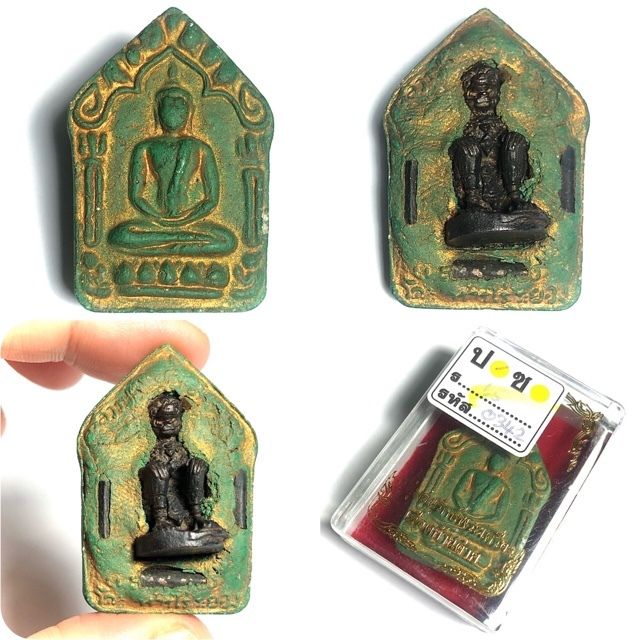
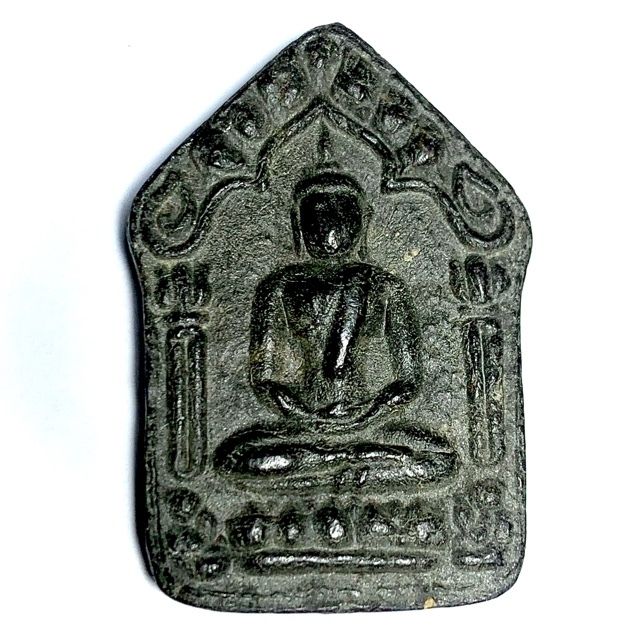
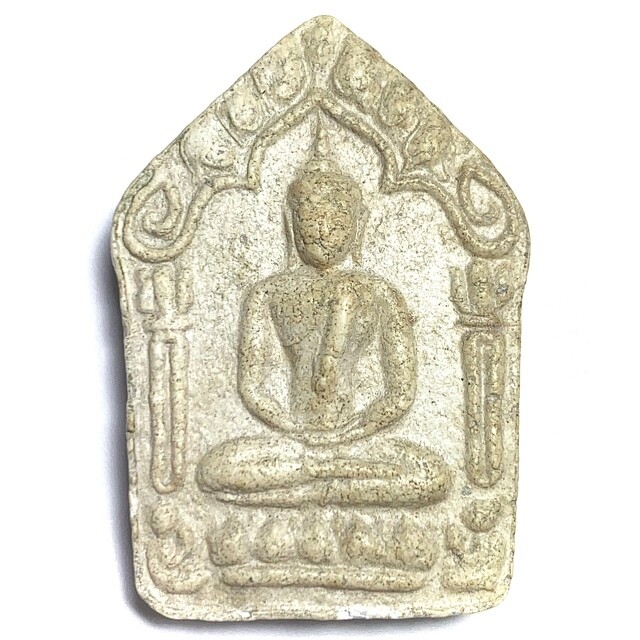
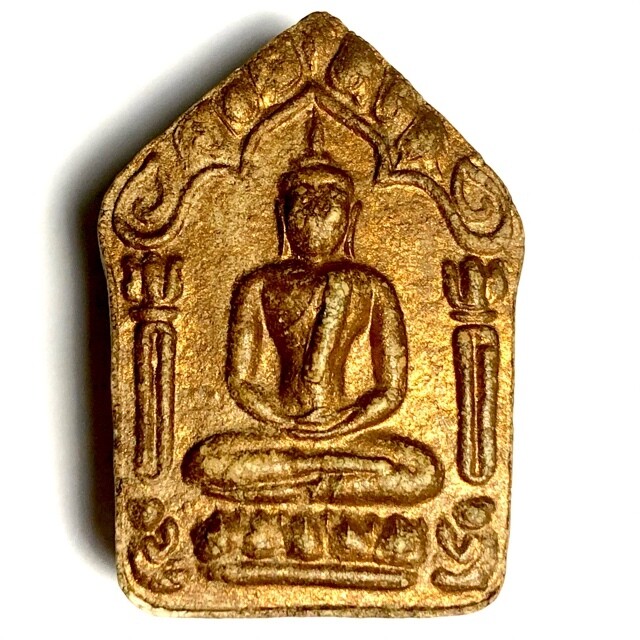
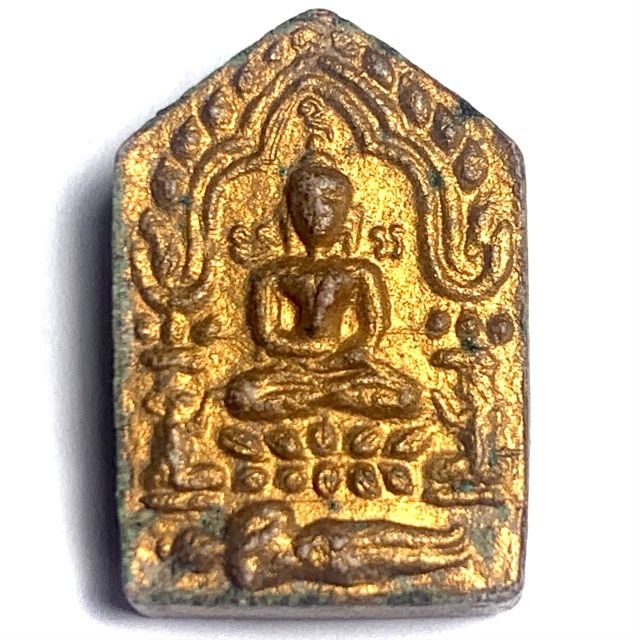
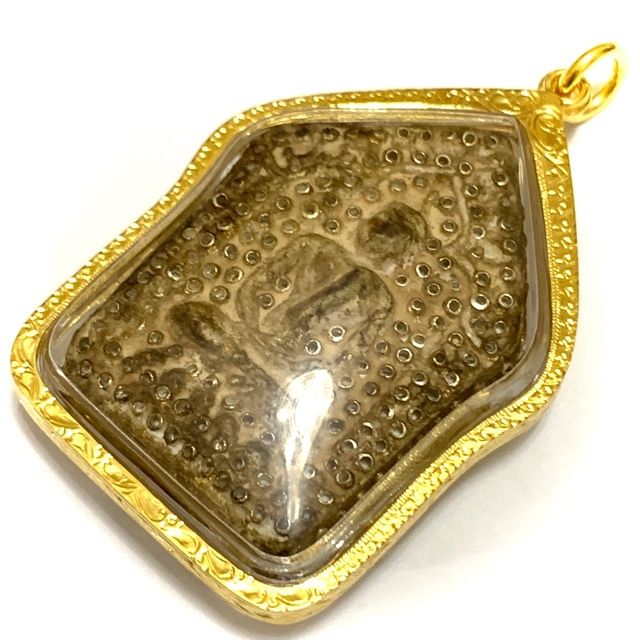
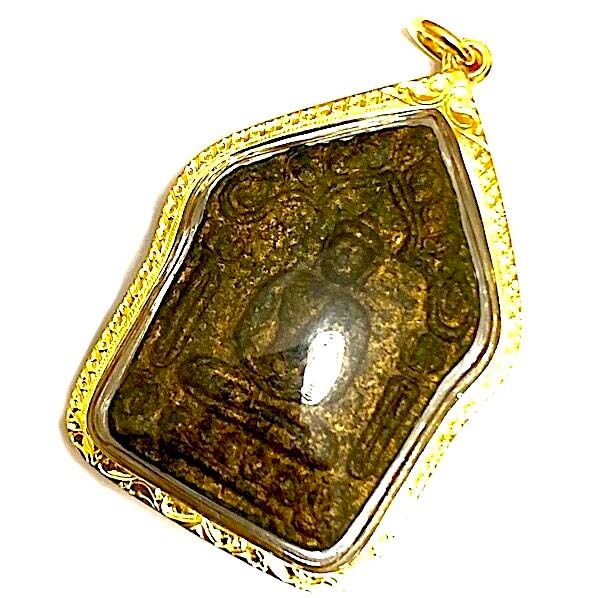
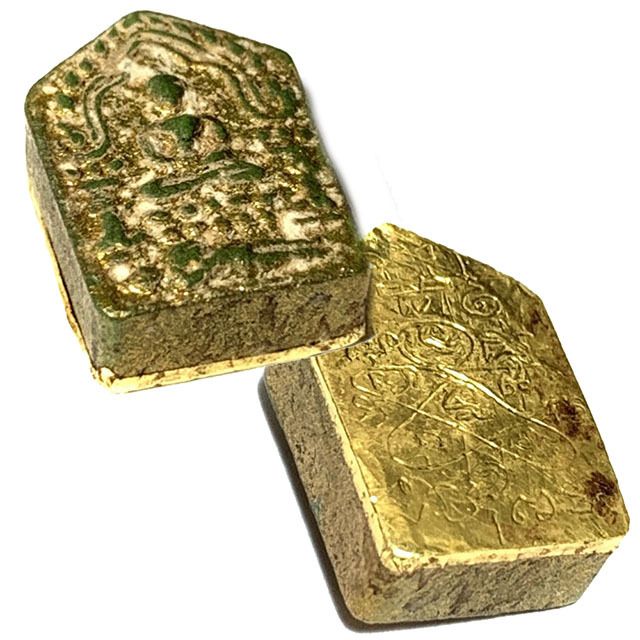
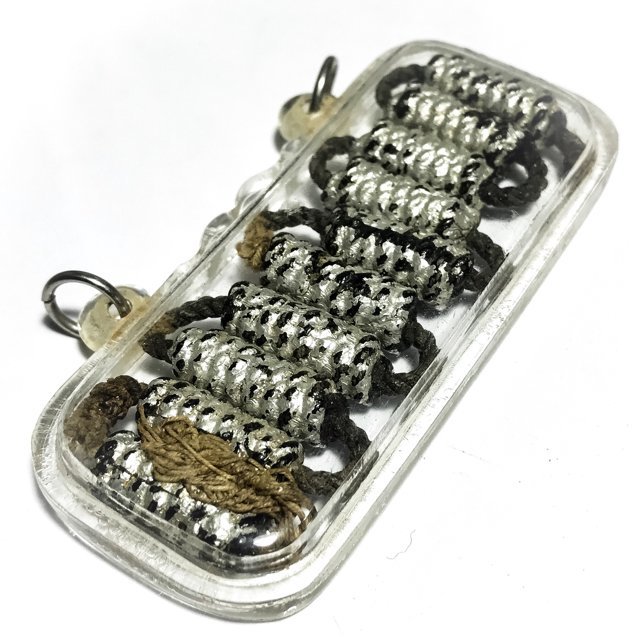
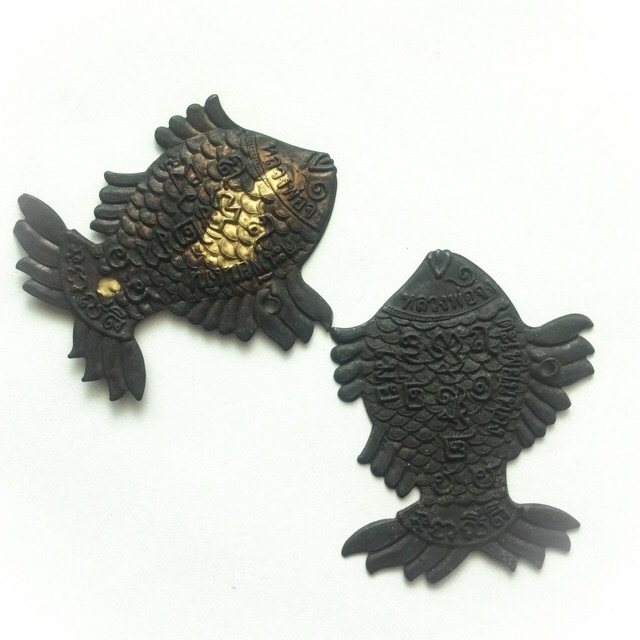
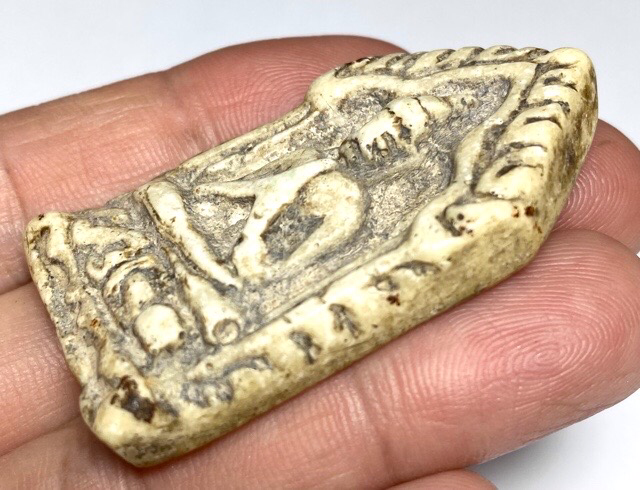
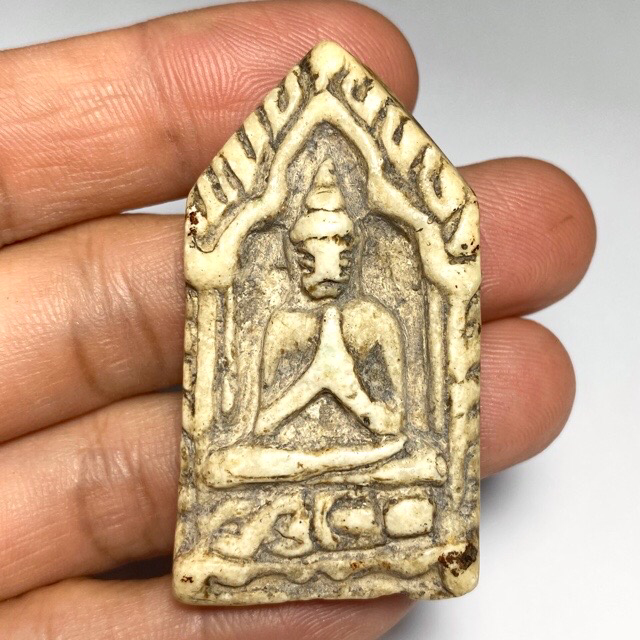
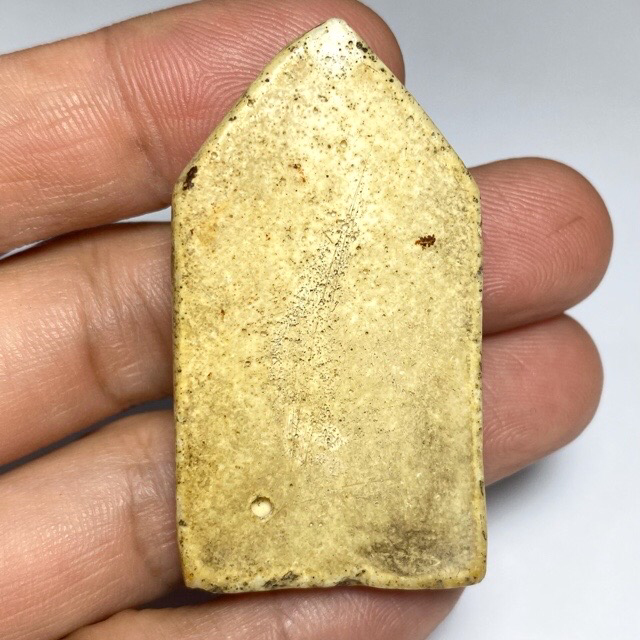
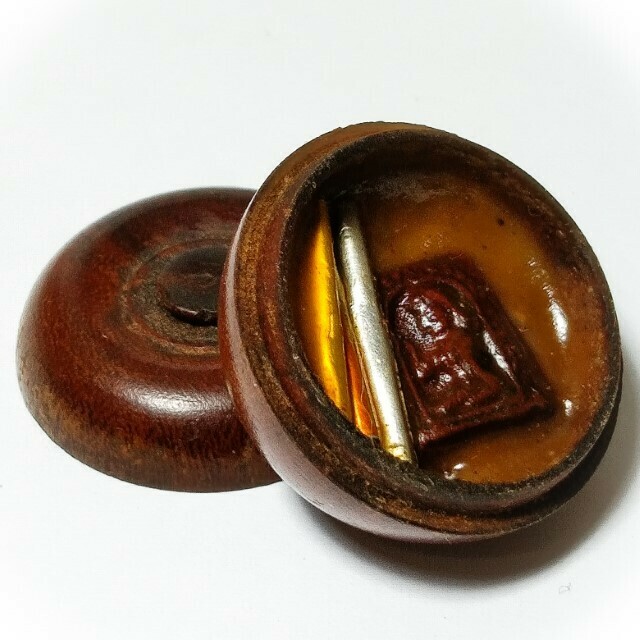
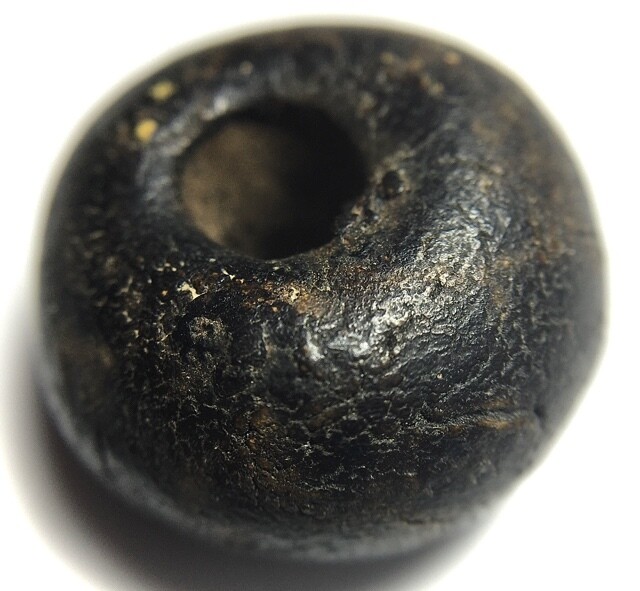
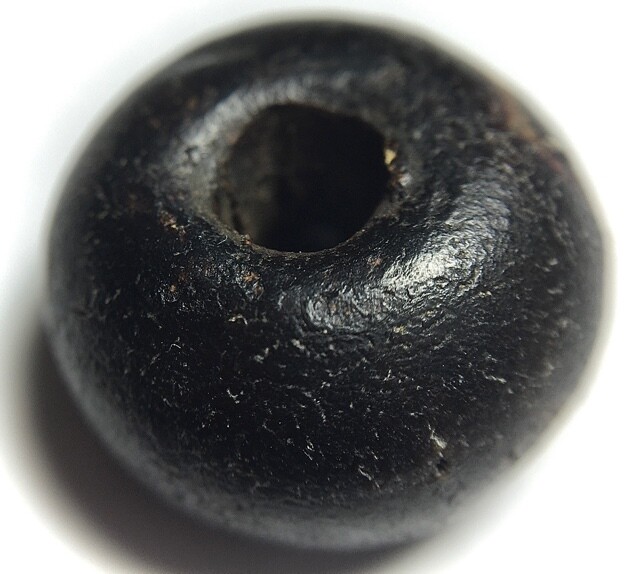
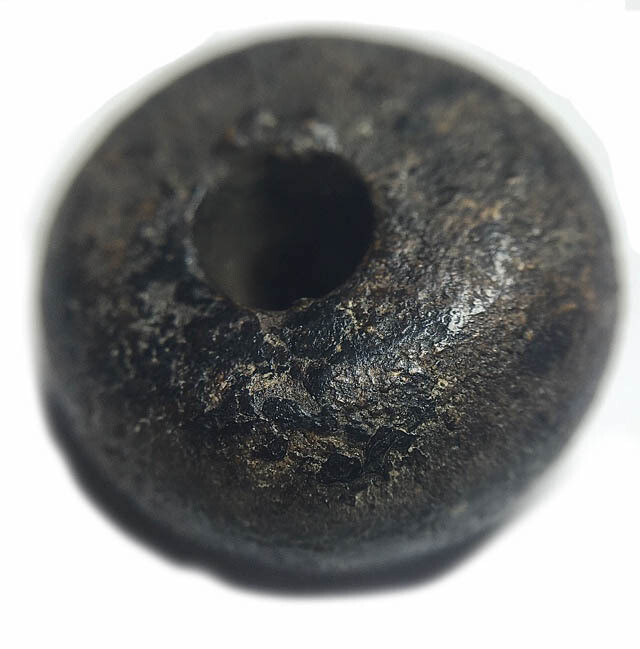
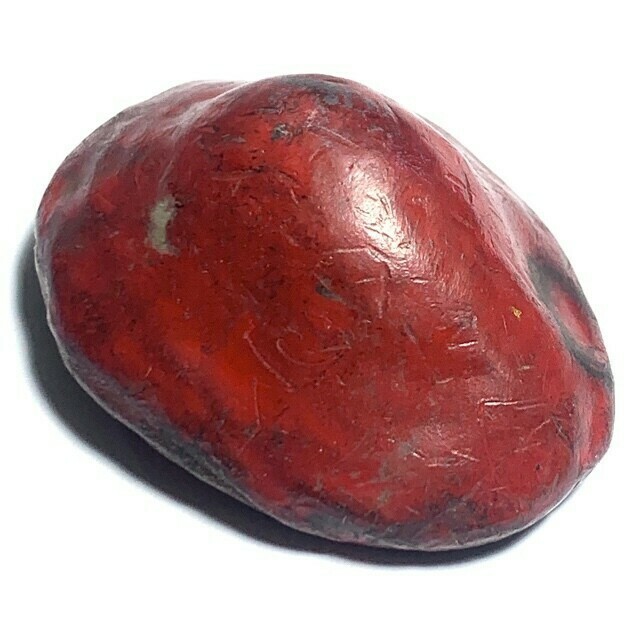
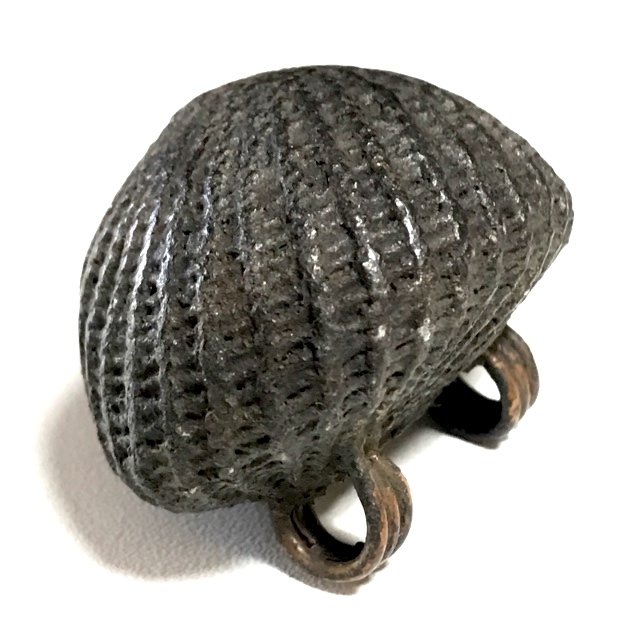
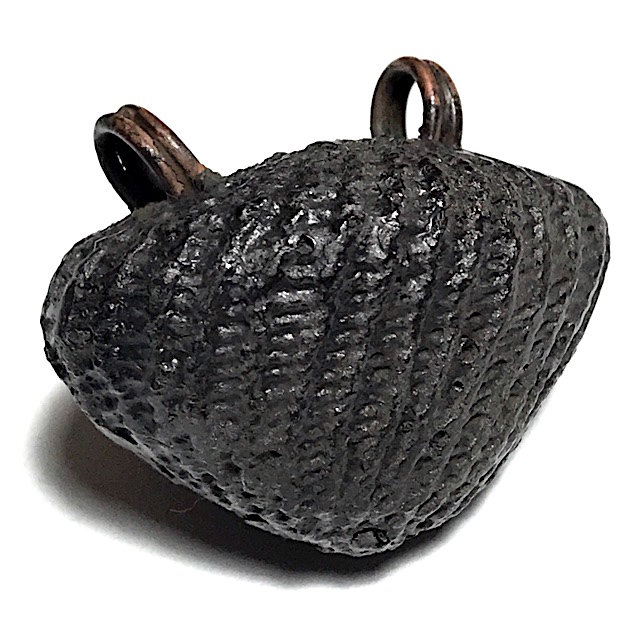
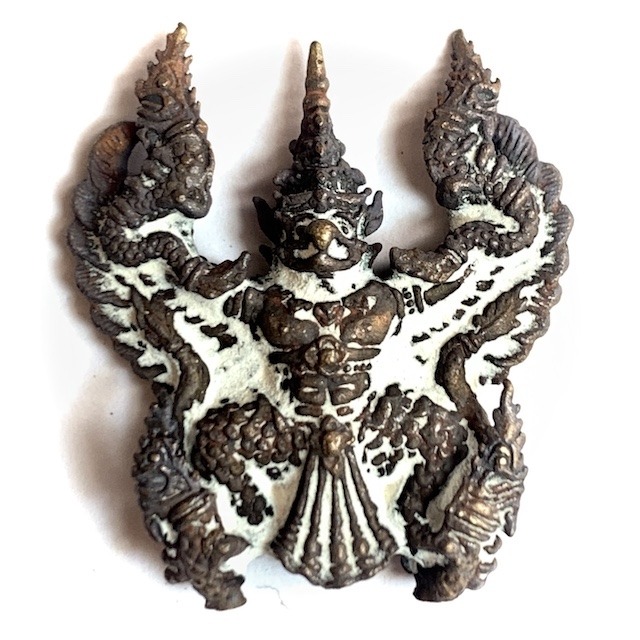
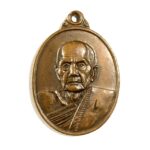
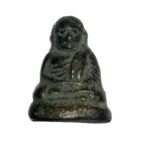
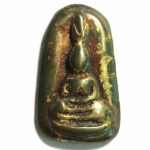
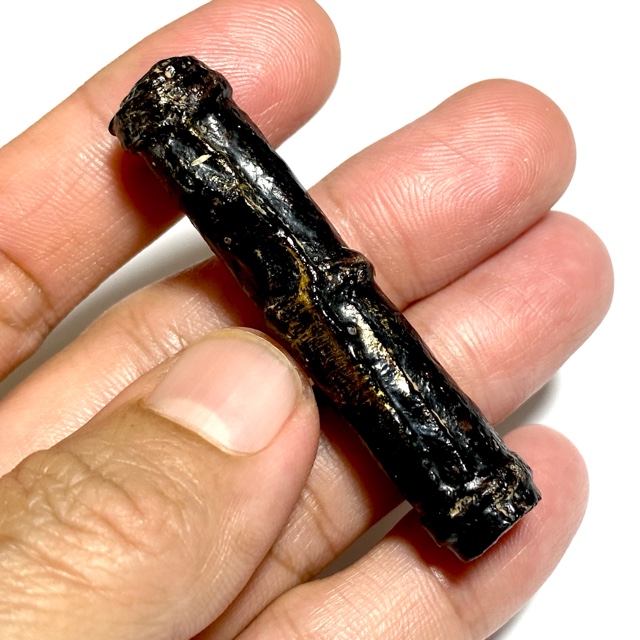
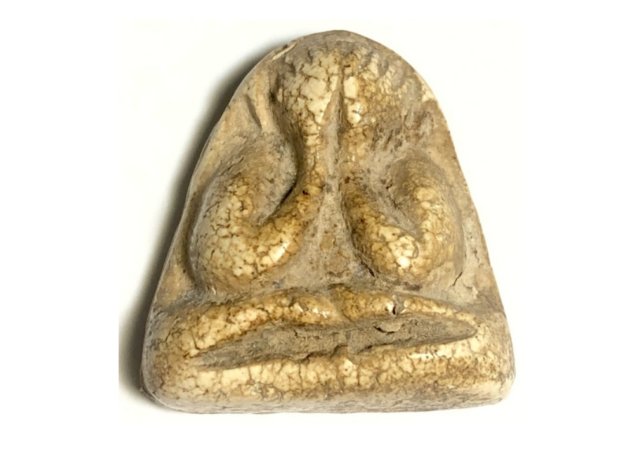
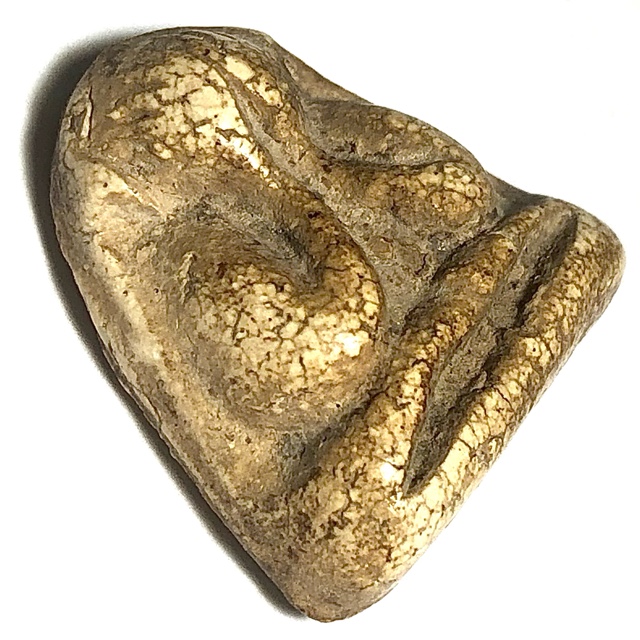
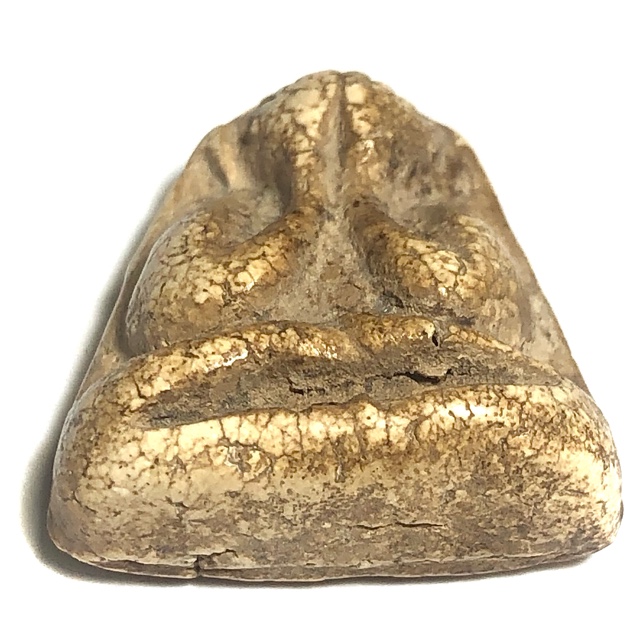
Bia Gae Cowry Shell Animist Charm with Turtle Casing from the Great Luang Phu Kam, of Wat Po Bplam

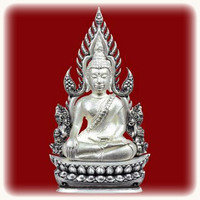
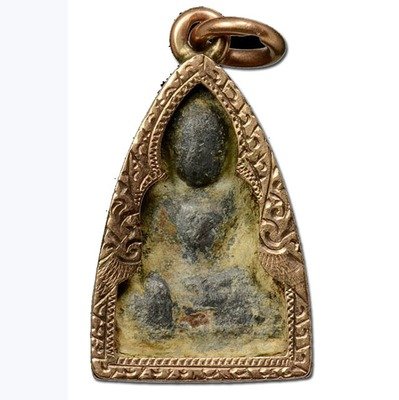
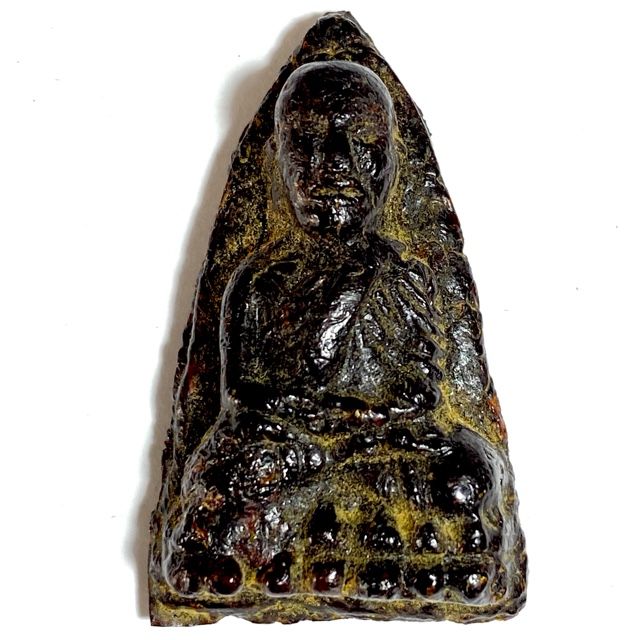
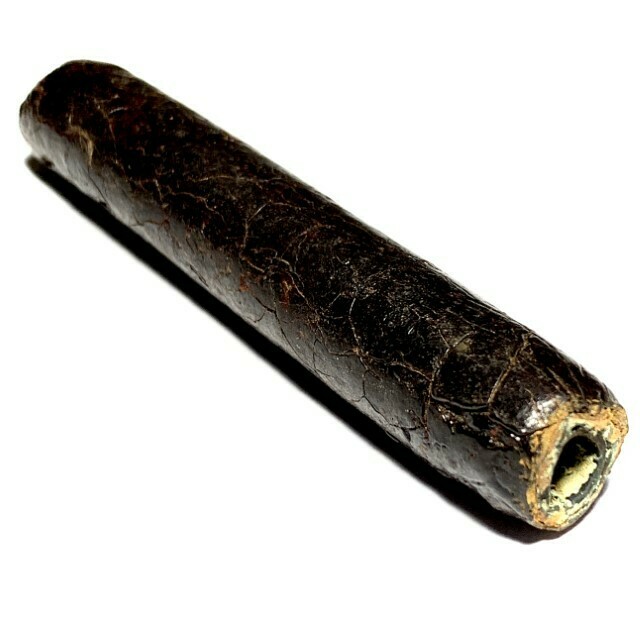
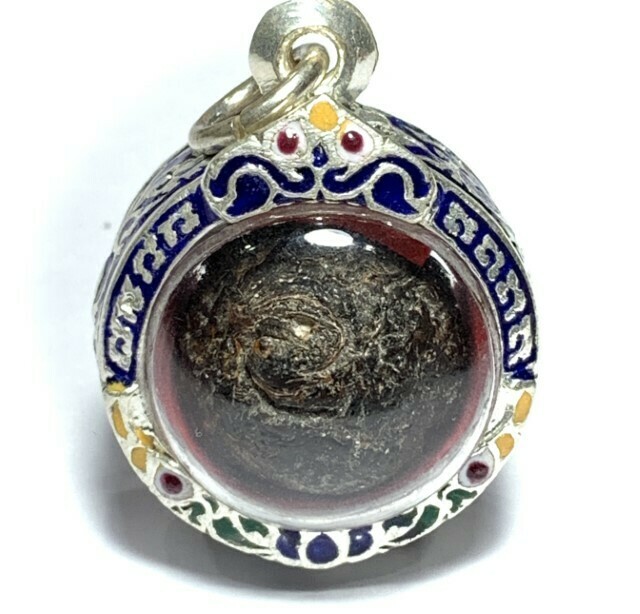
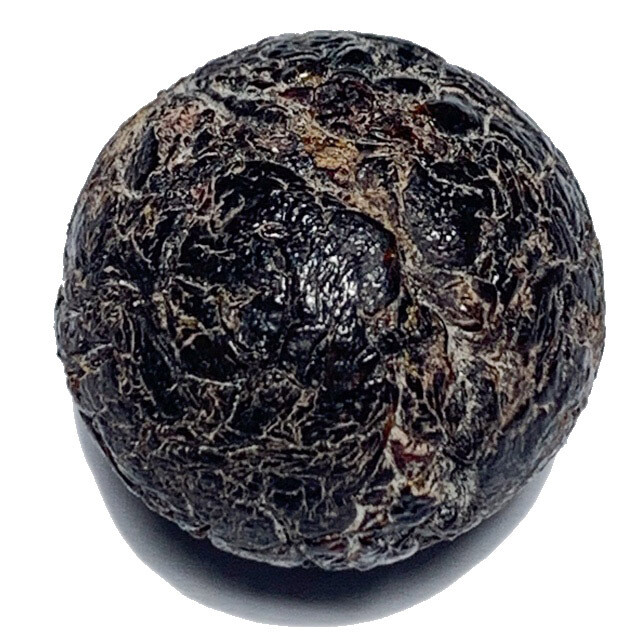
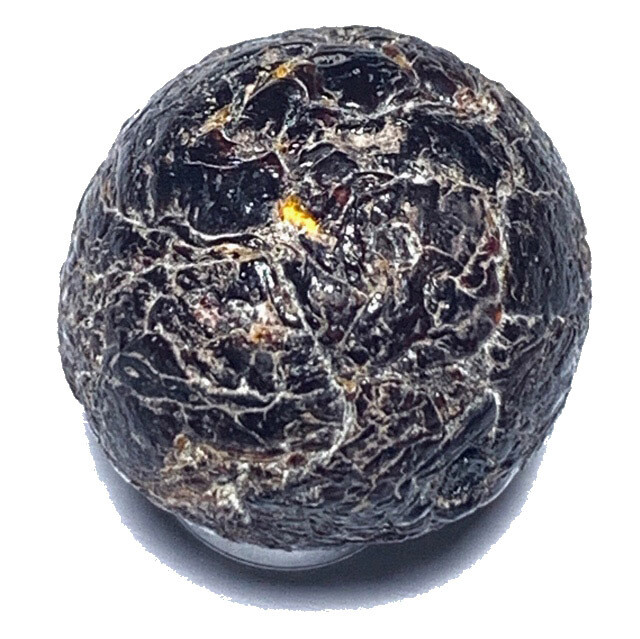
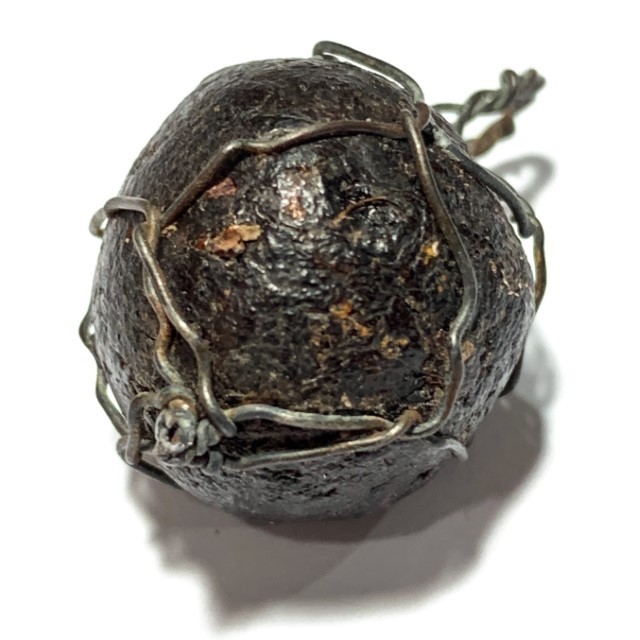
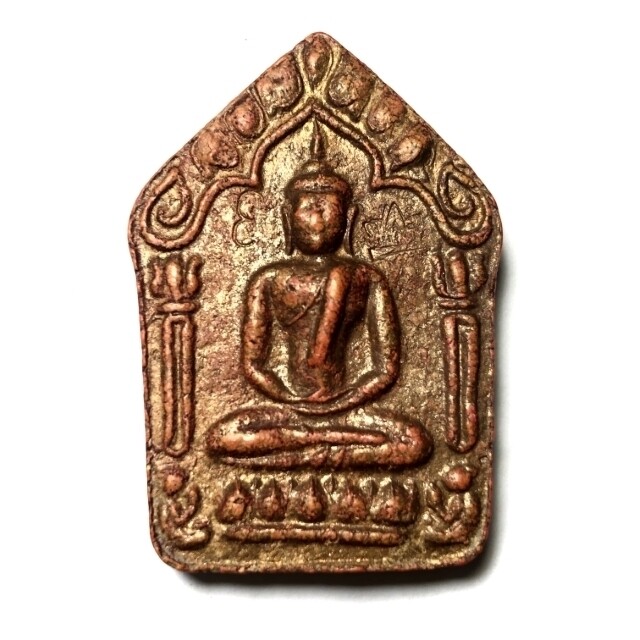
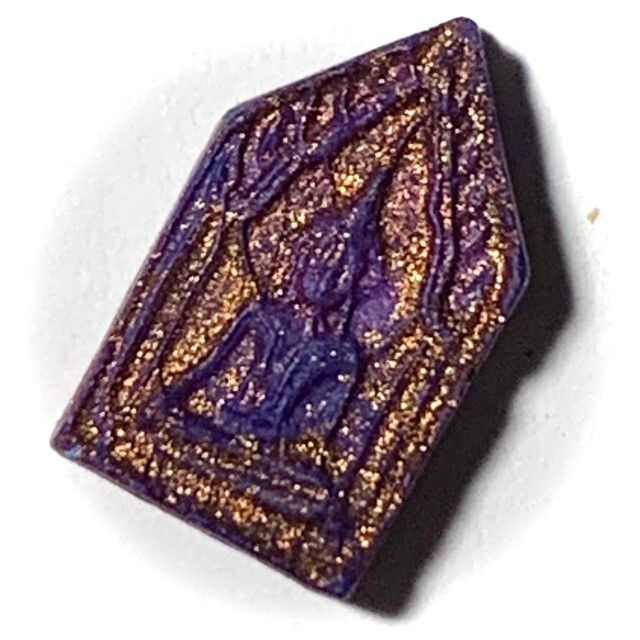
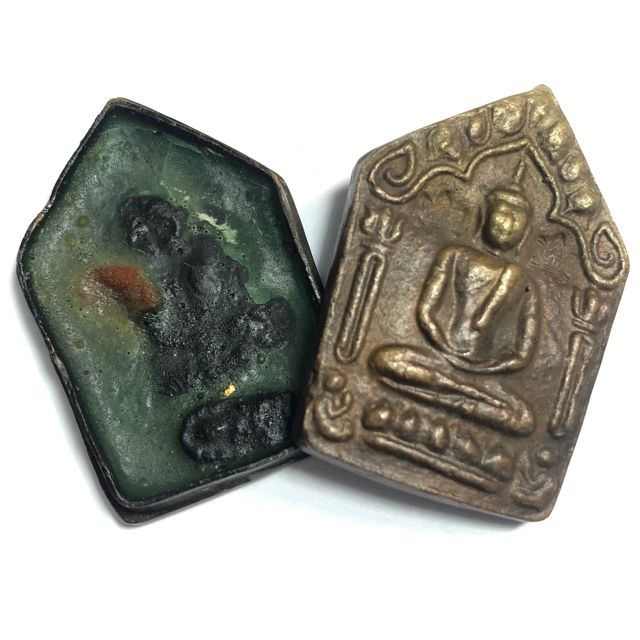
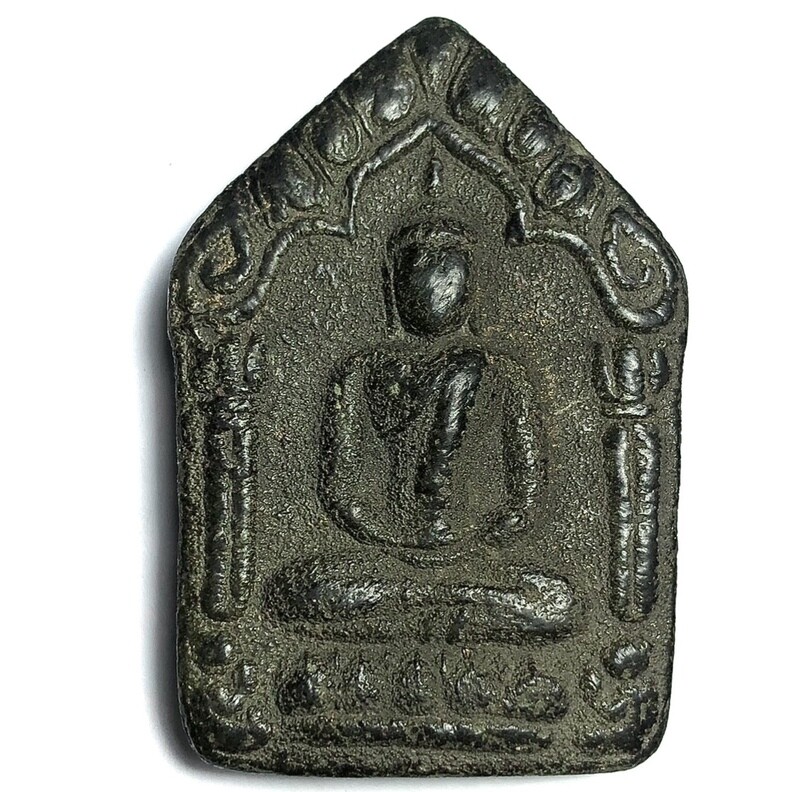
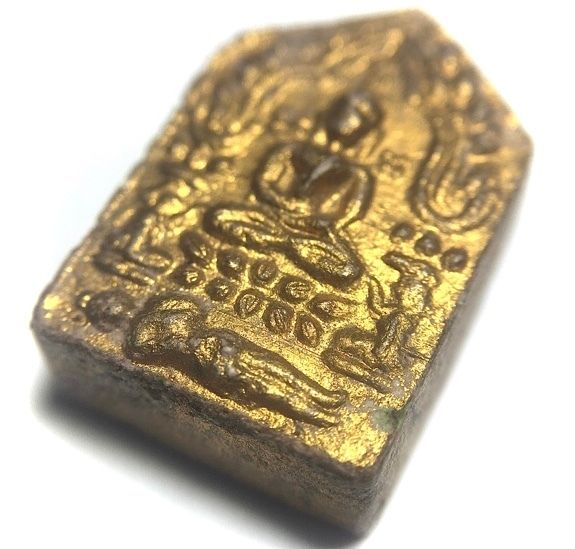
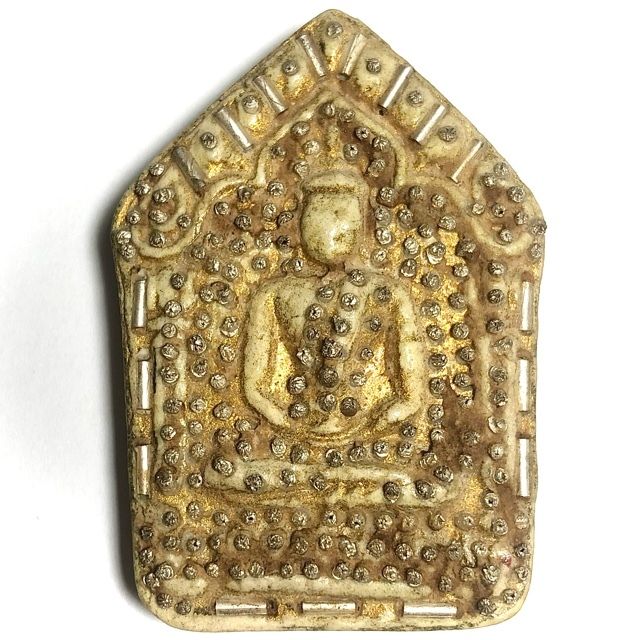
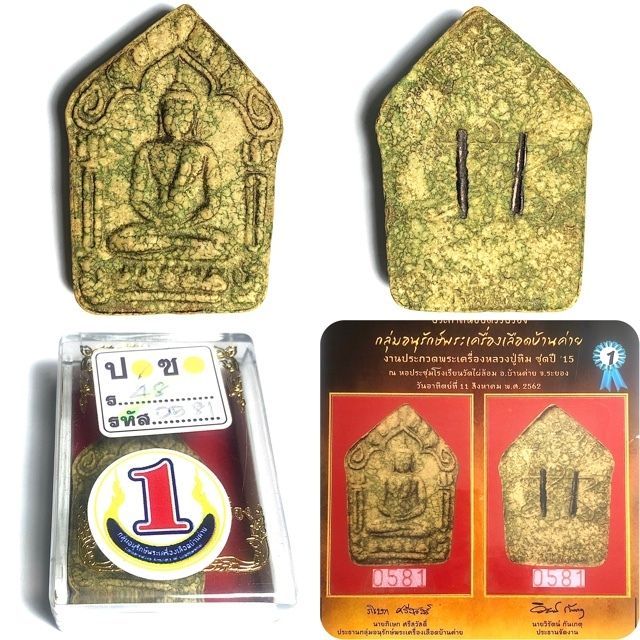
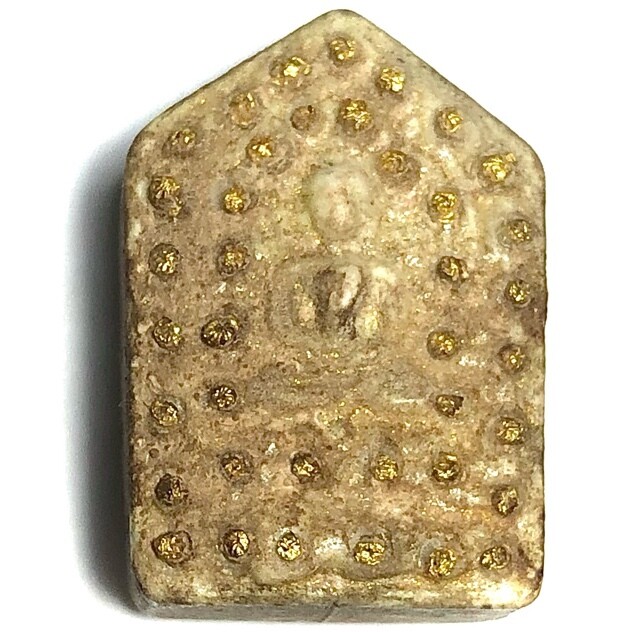
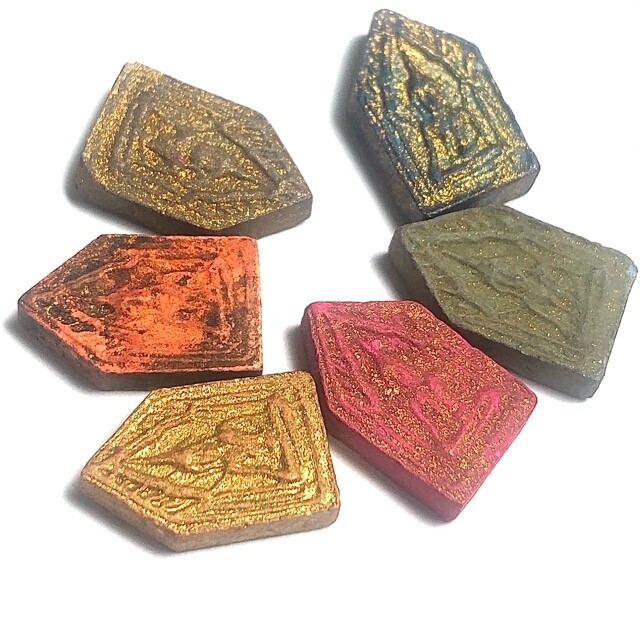
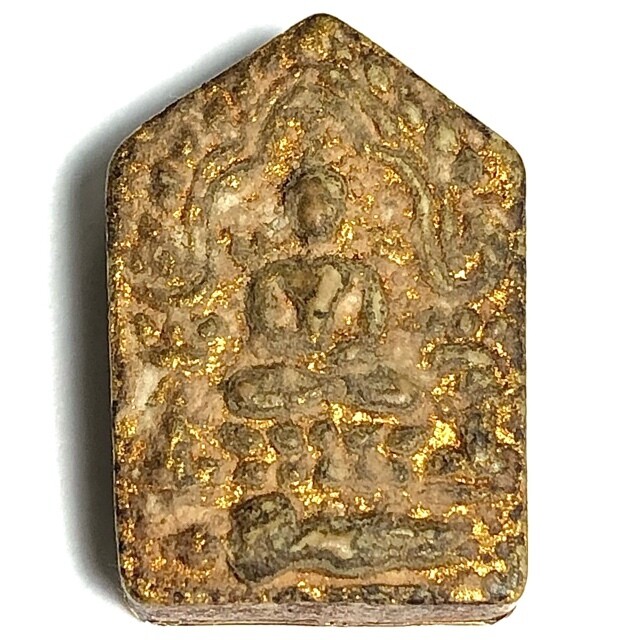
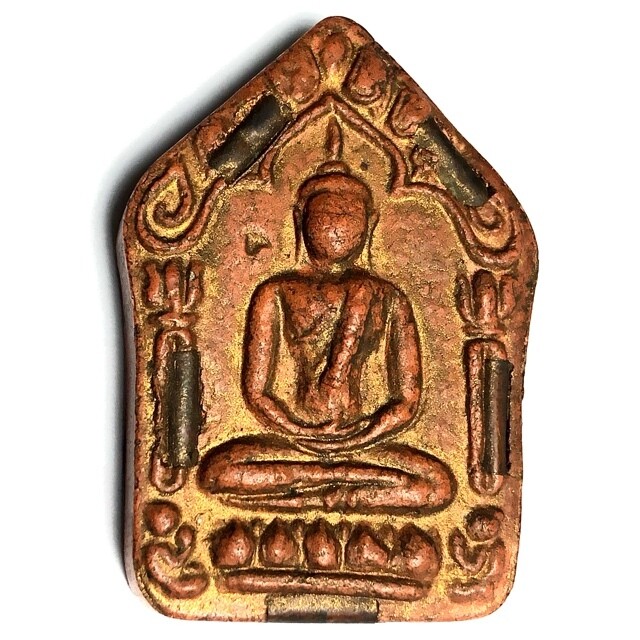
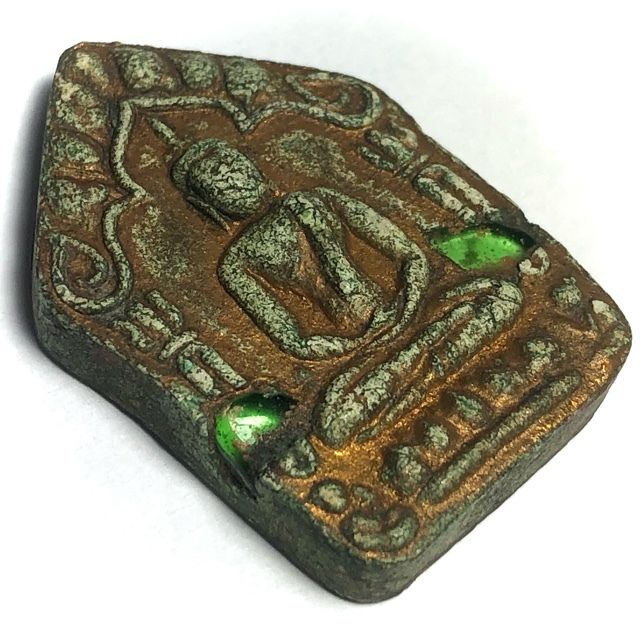
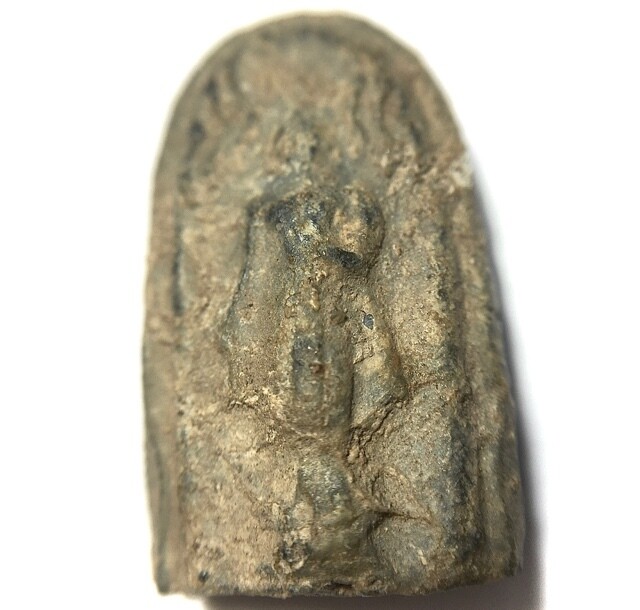
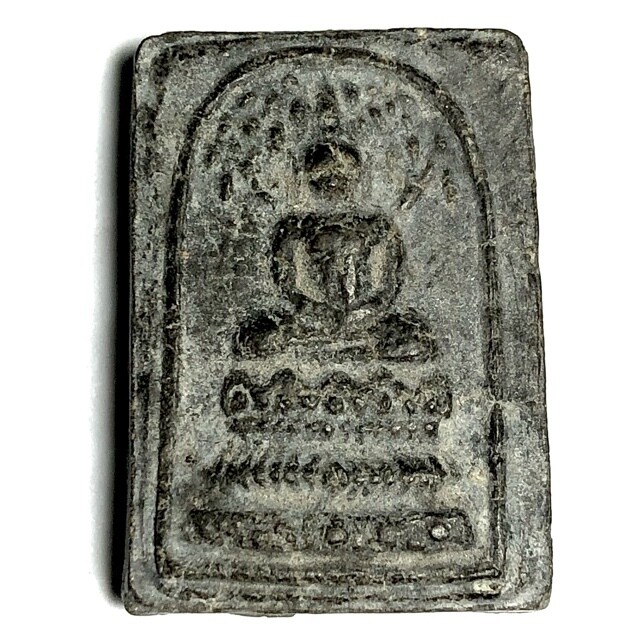
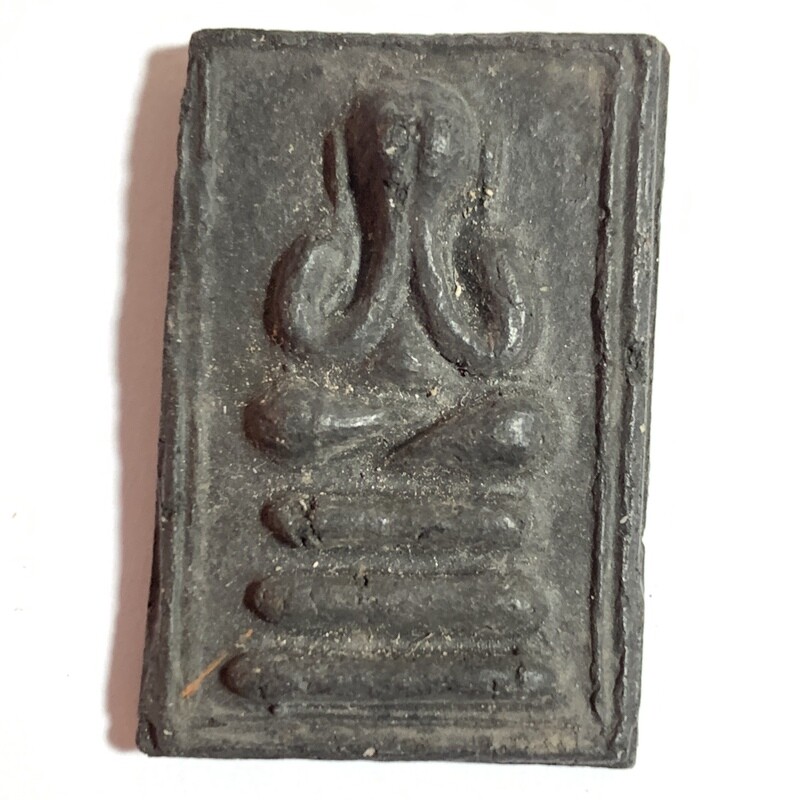
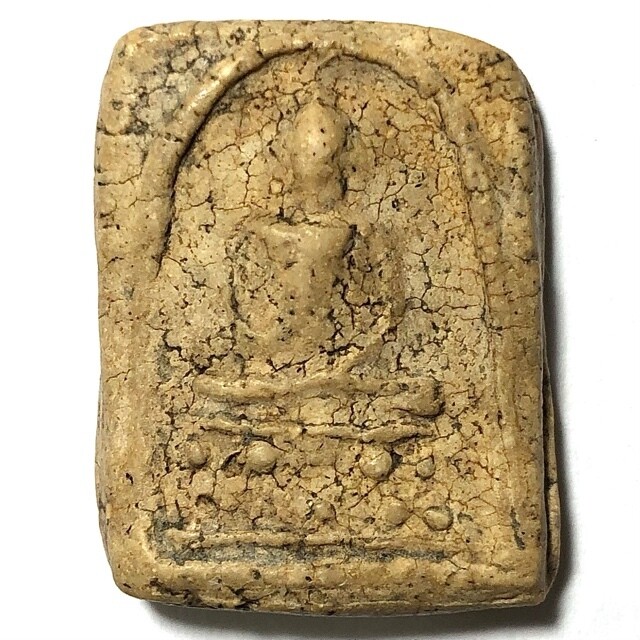
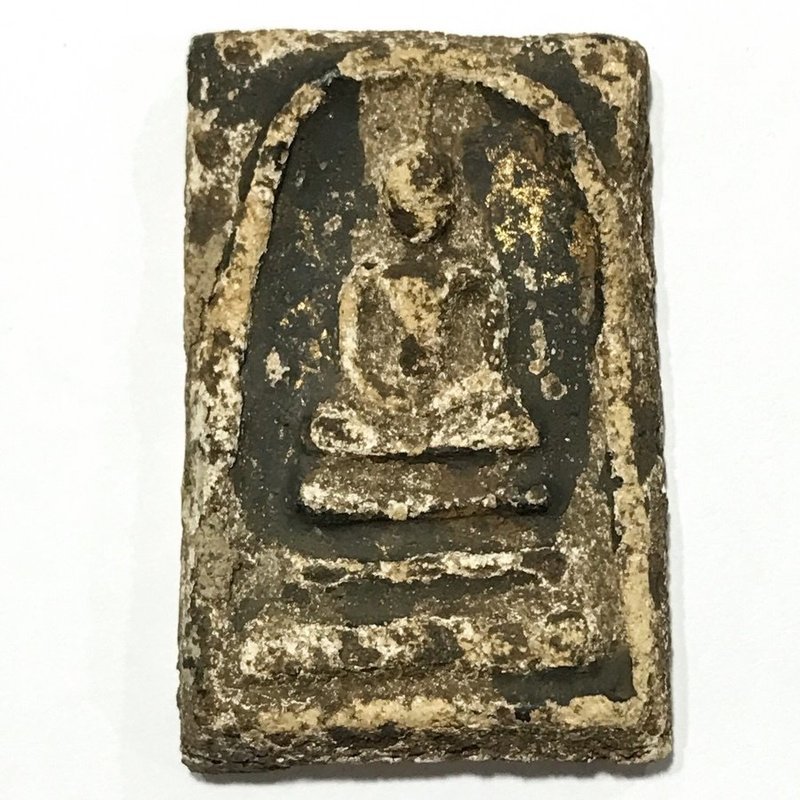
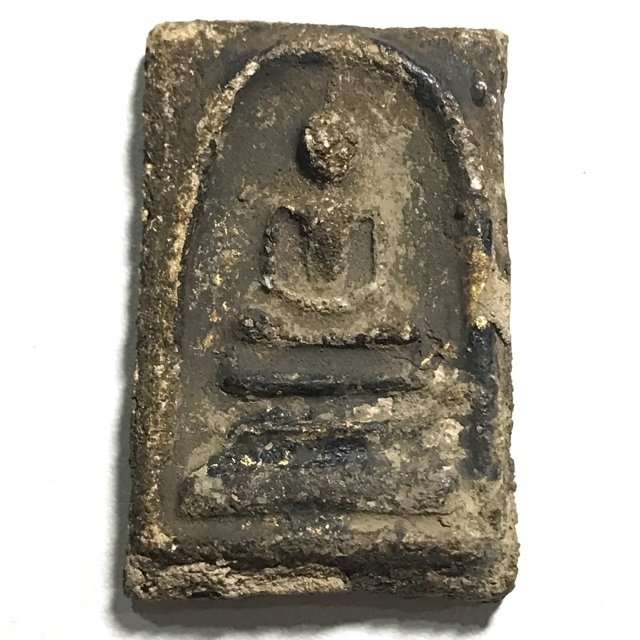
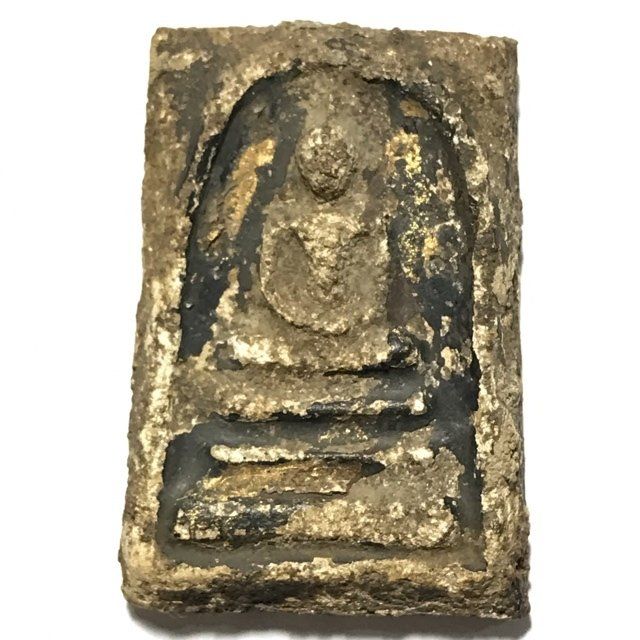
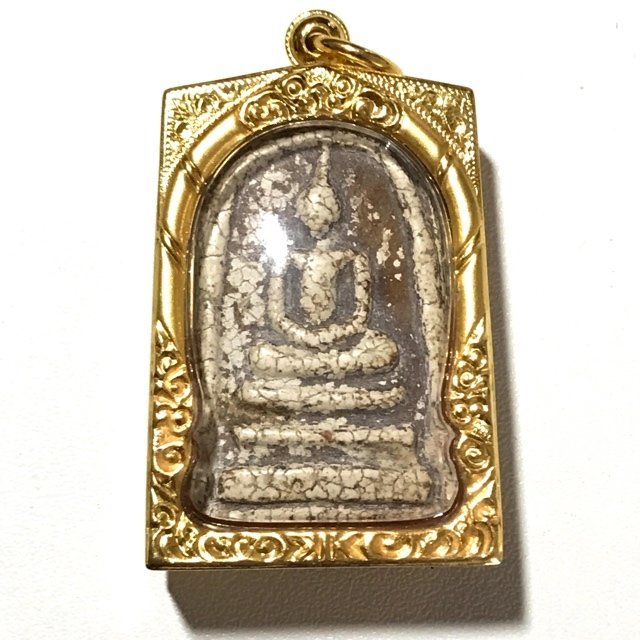
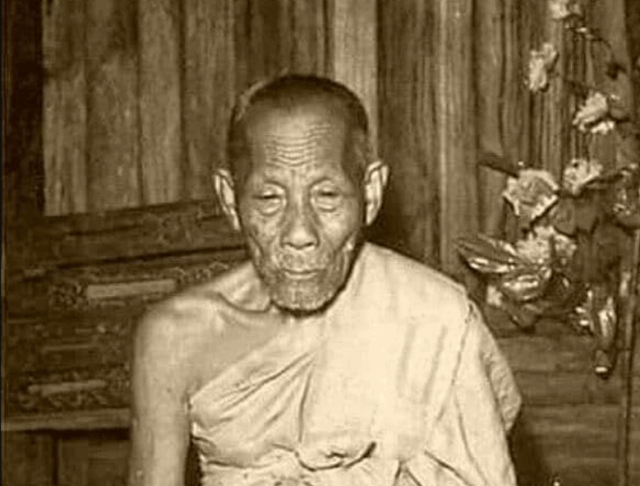
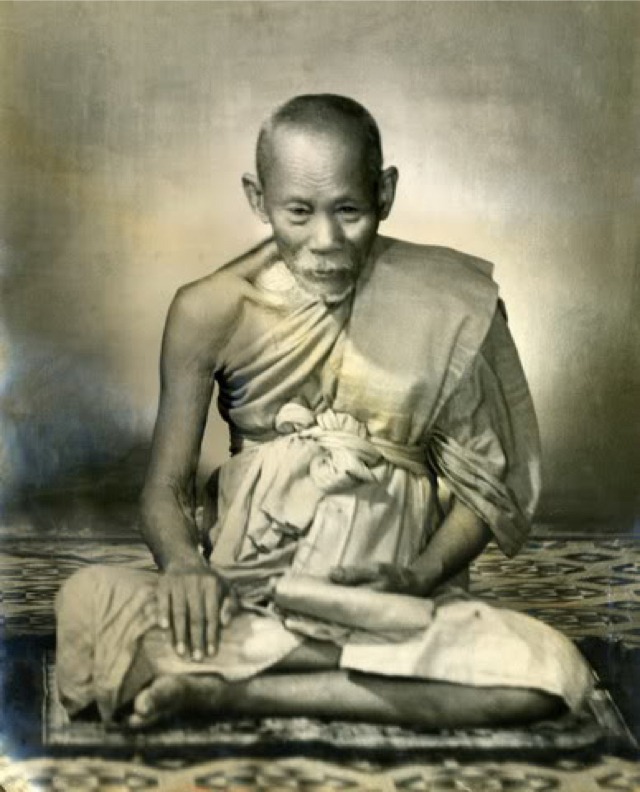
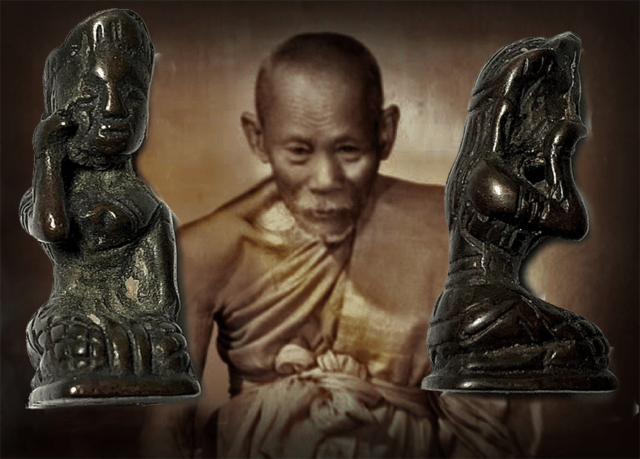
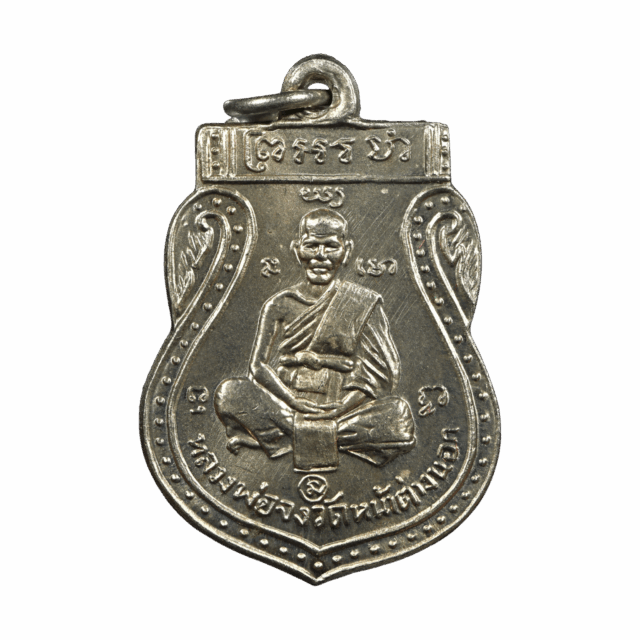
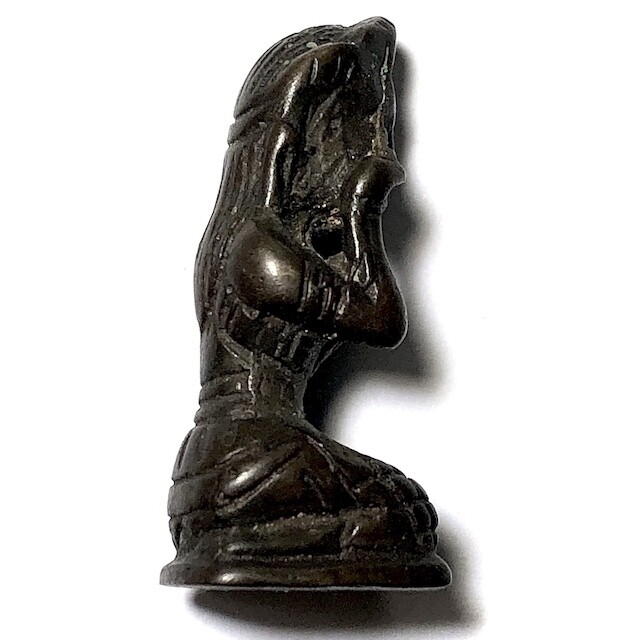
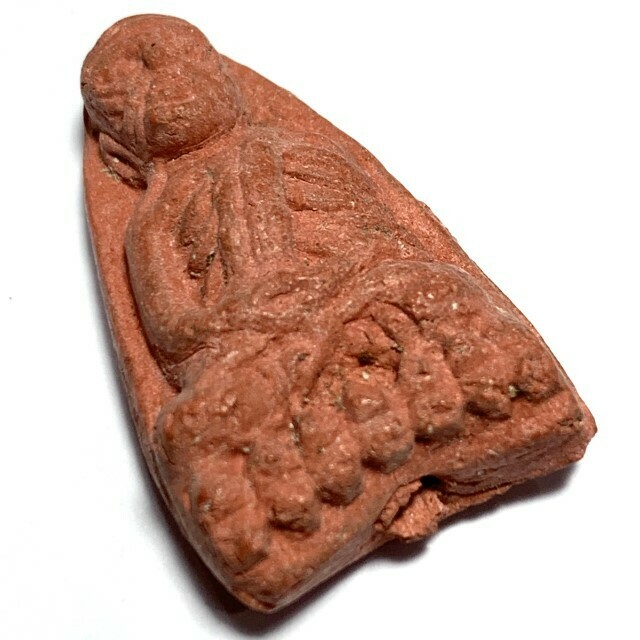
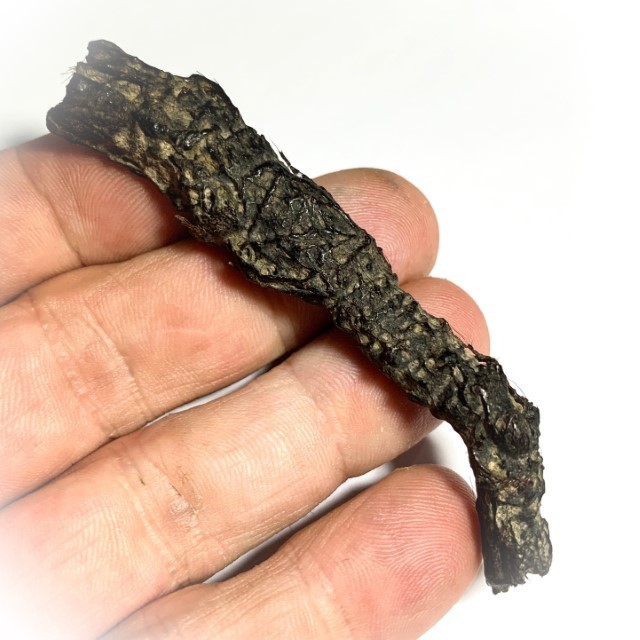
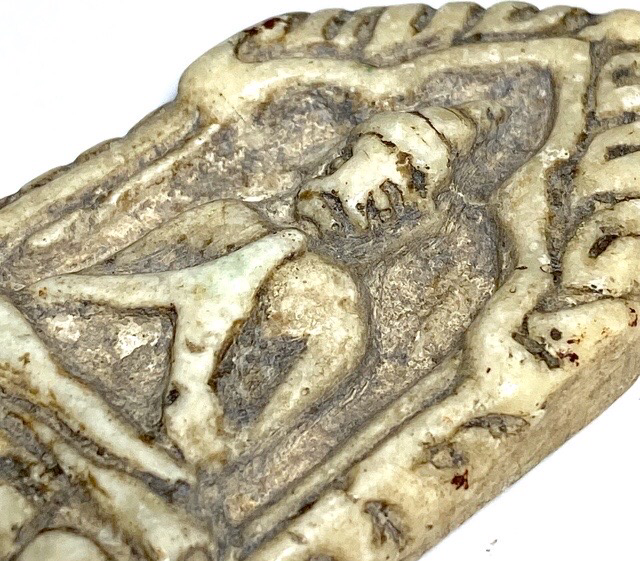
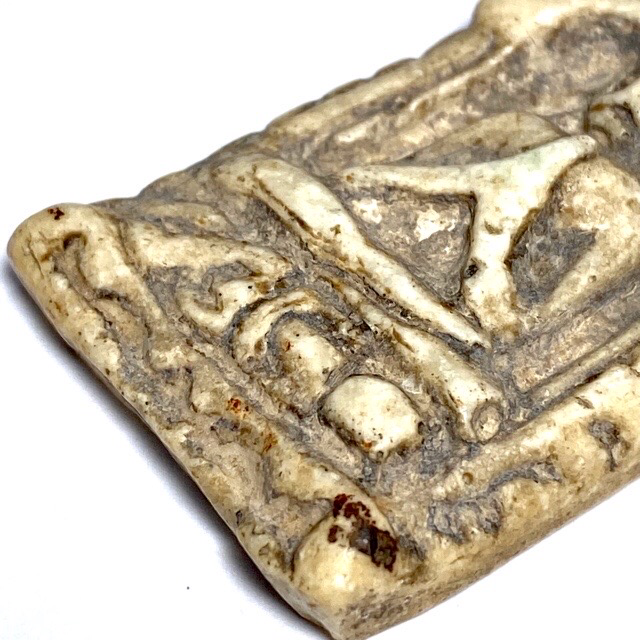
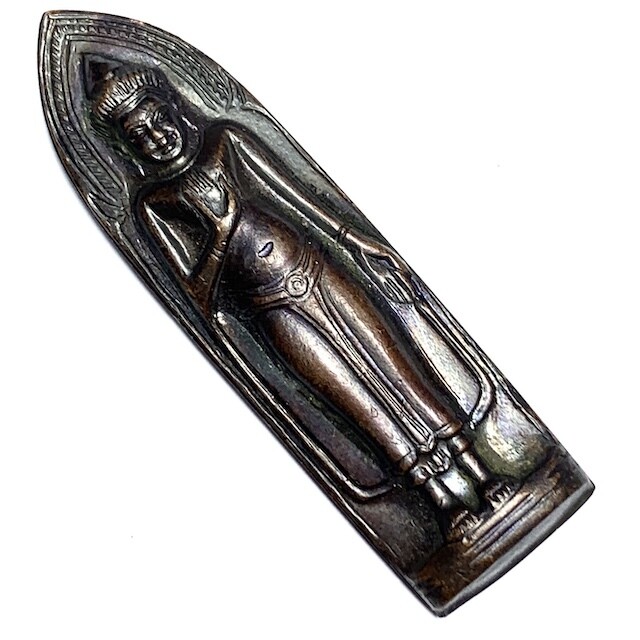
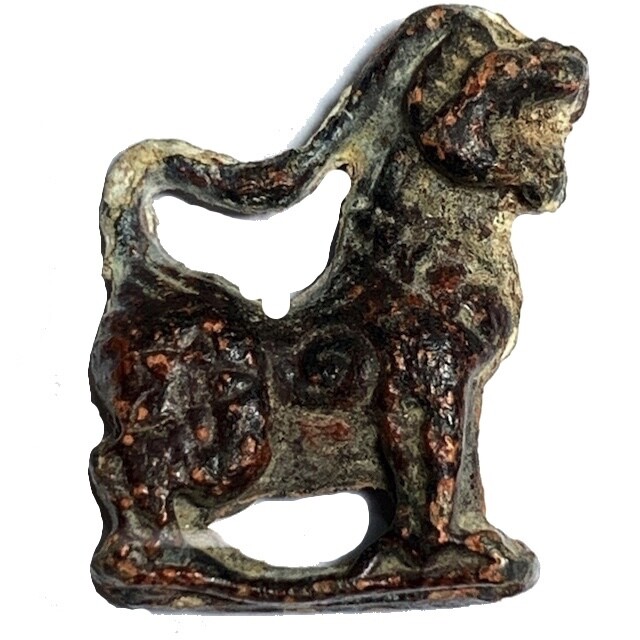
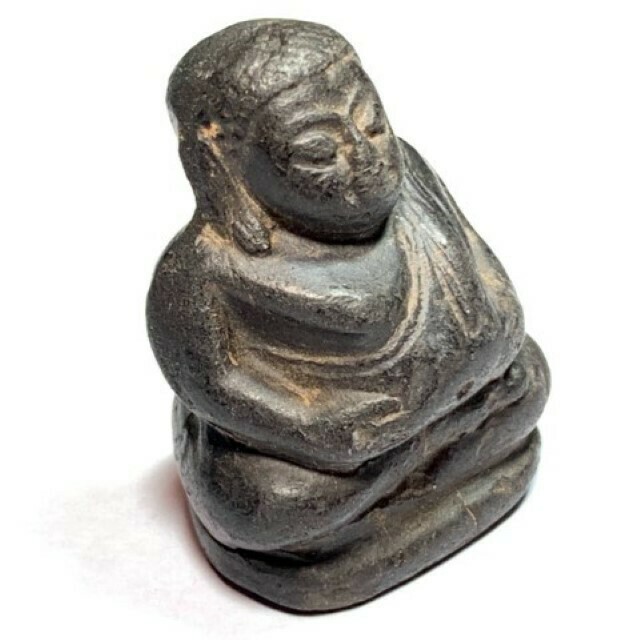
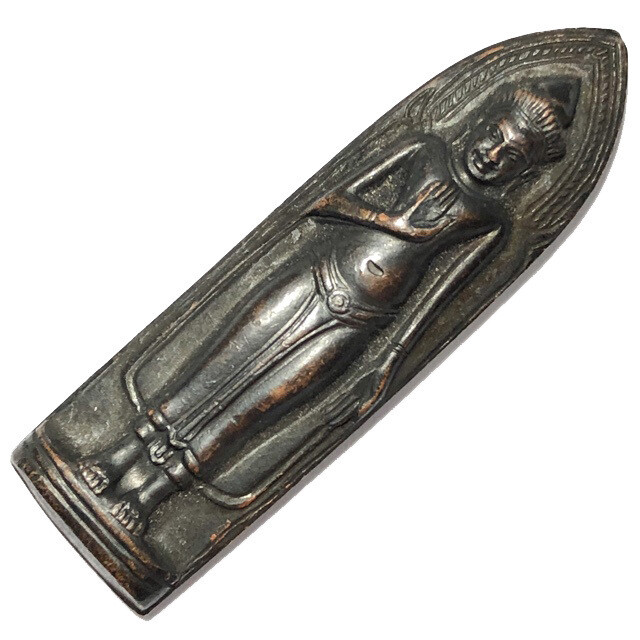
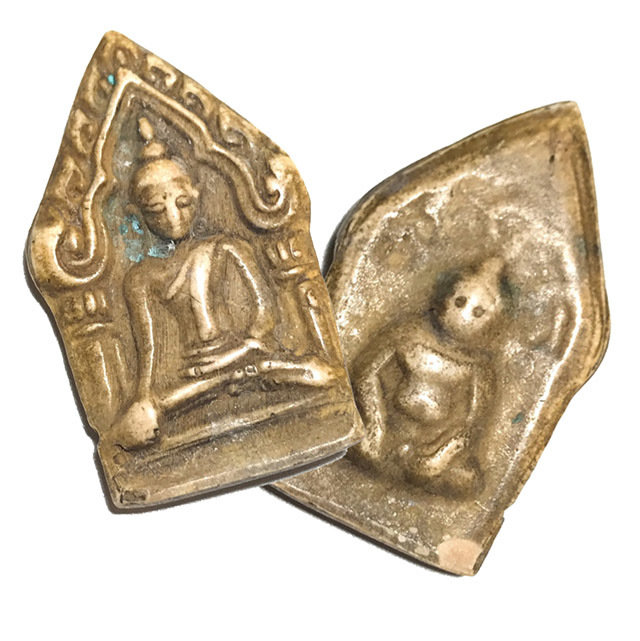
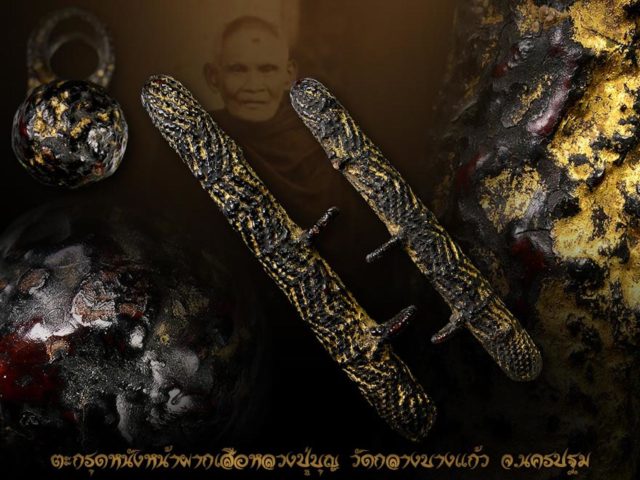
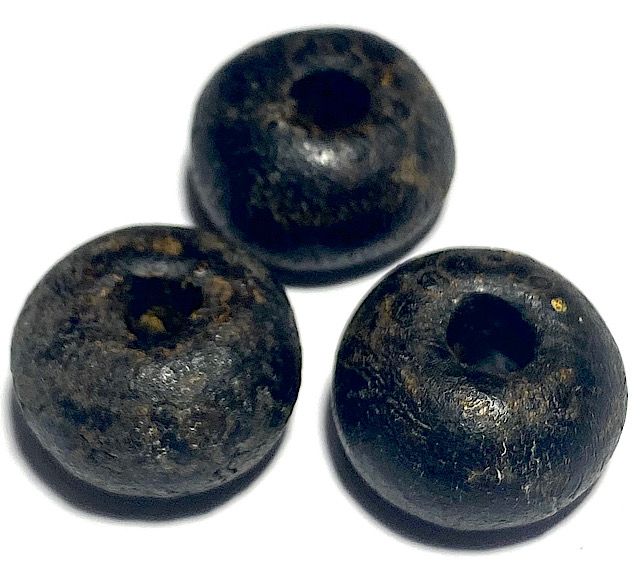
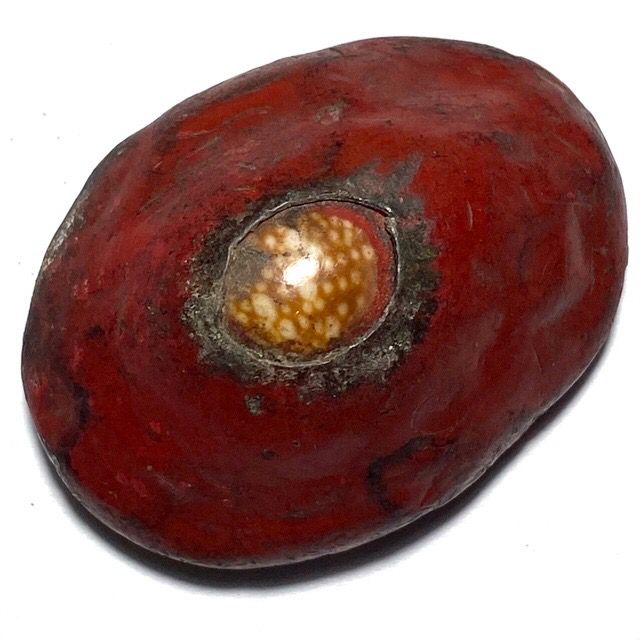
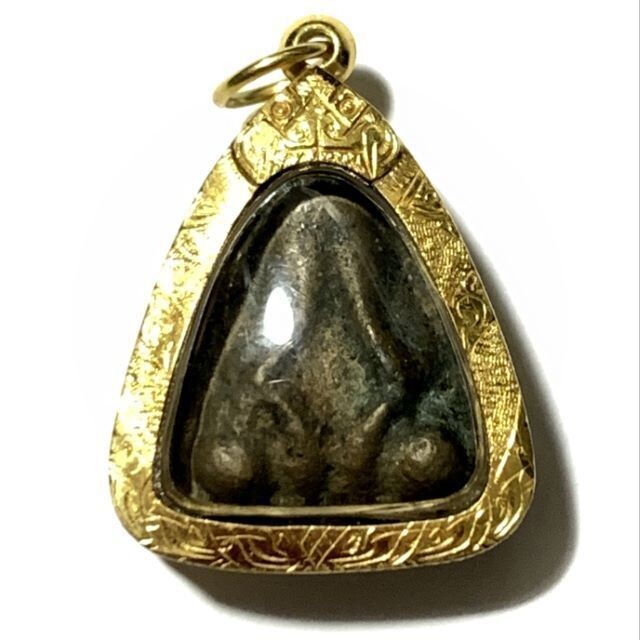
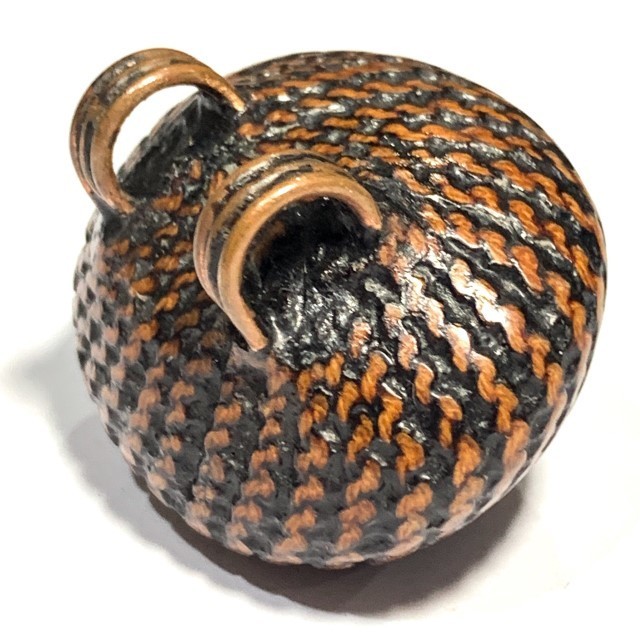
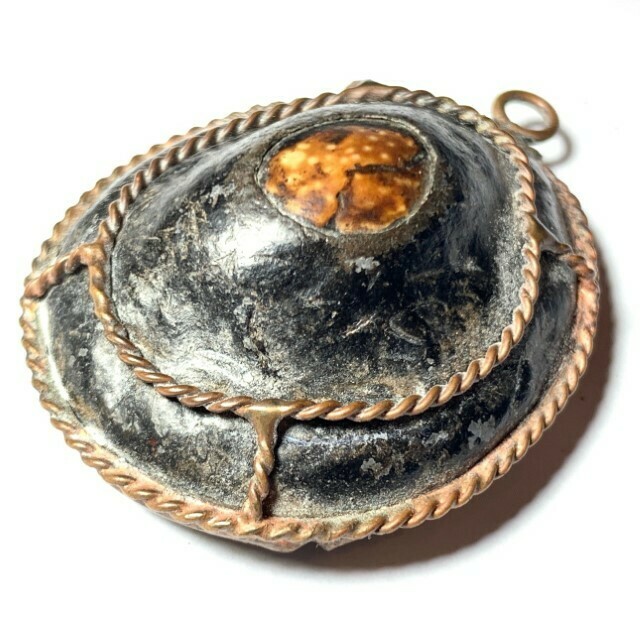
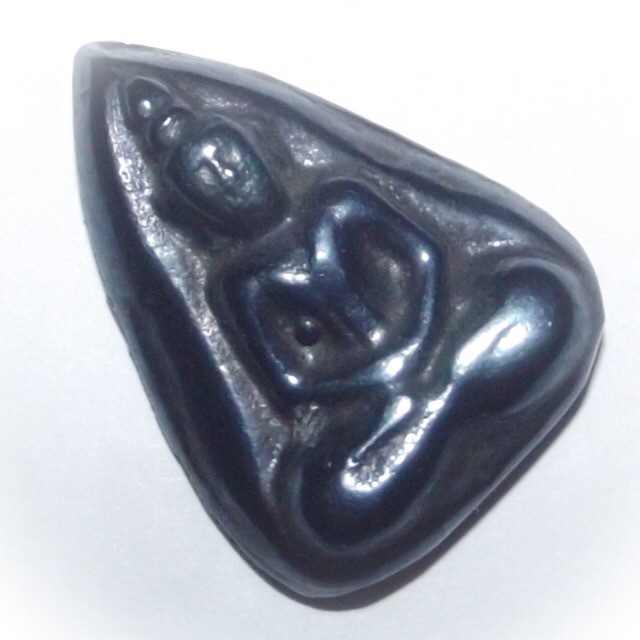
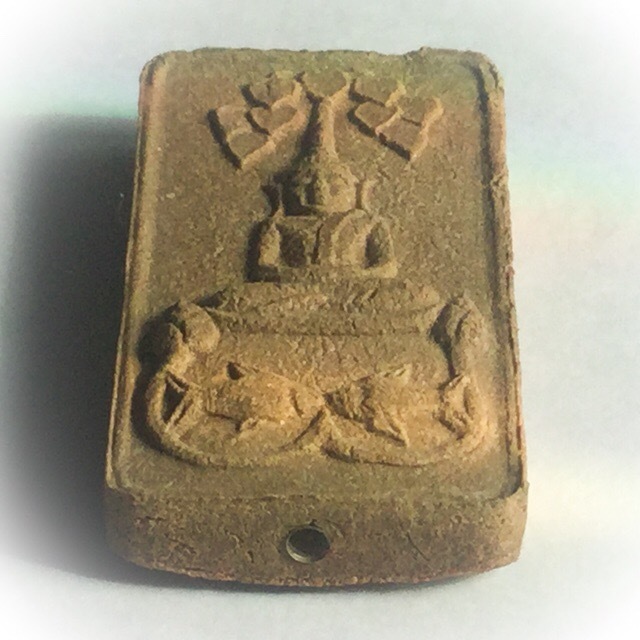
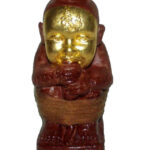
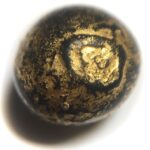
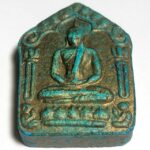
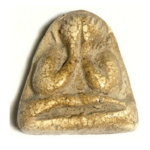
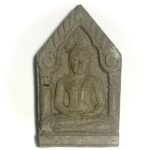
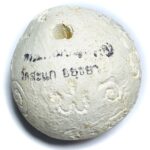
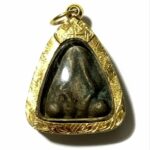
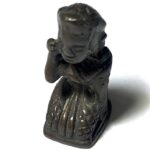
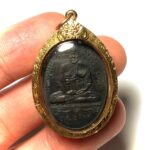
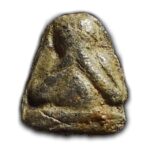
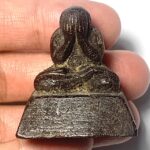
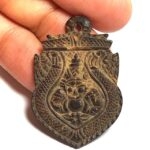
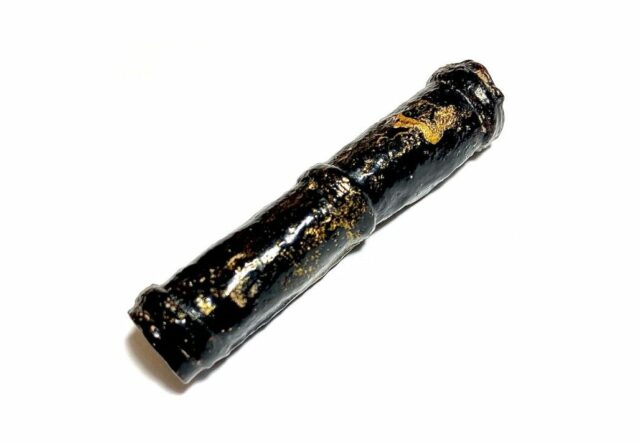
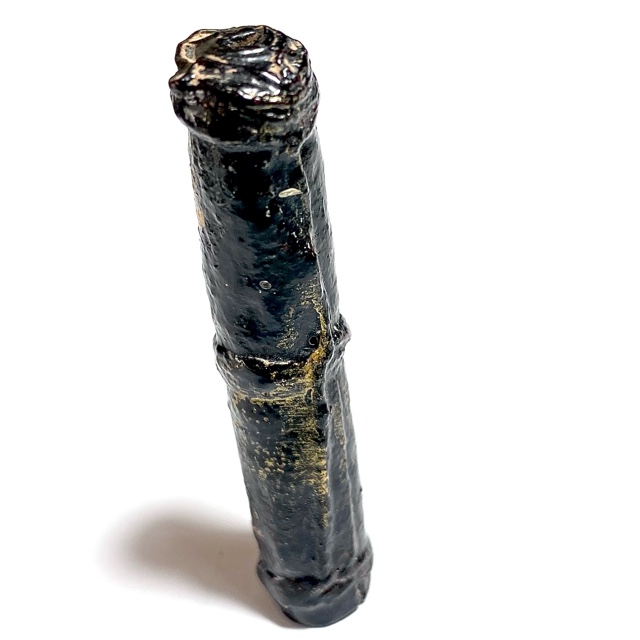
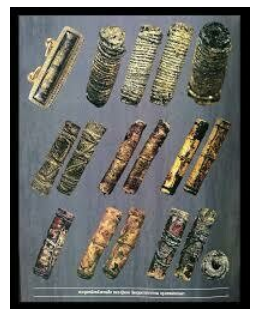
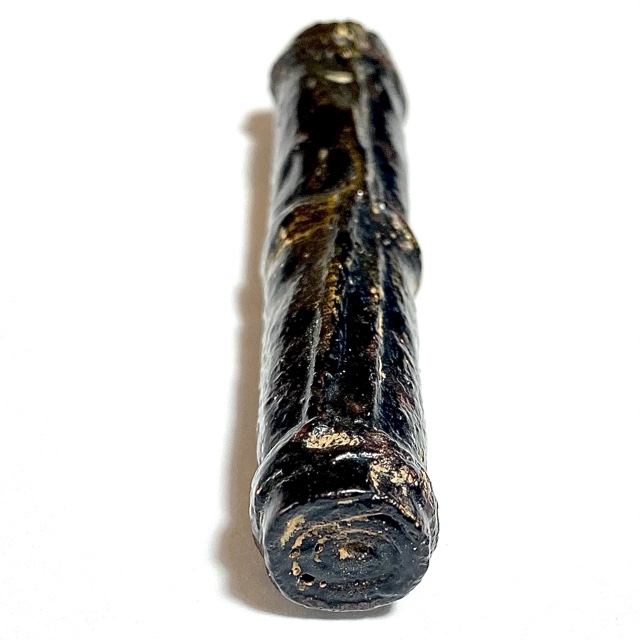
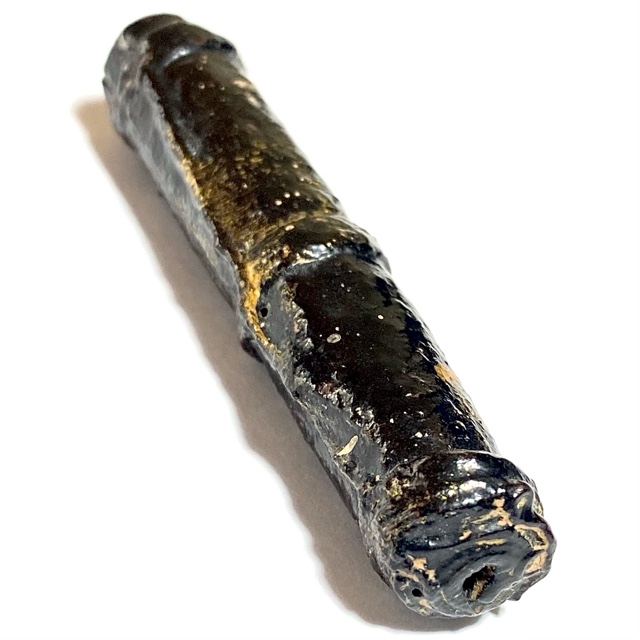
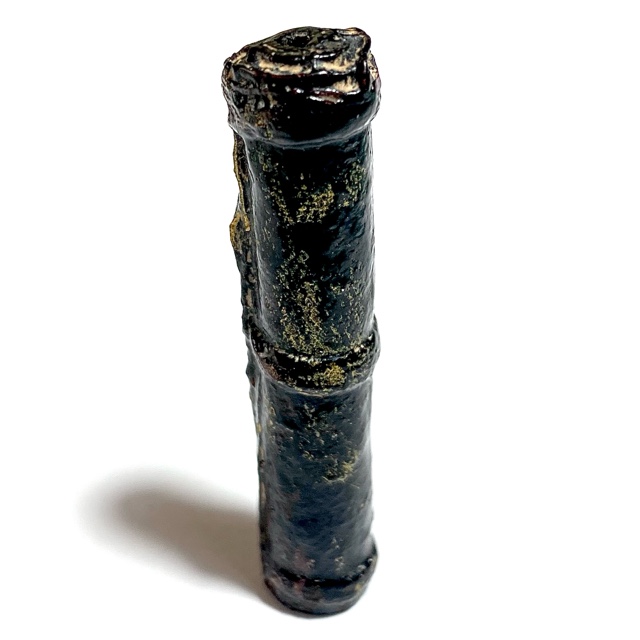
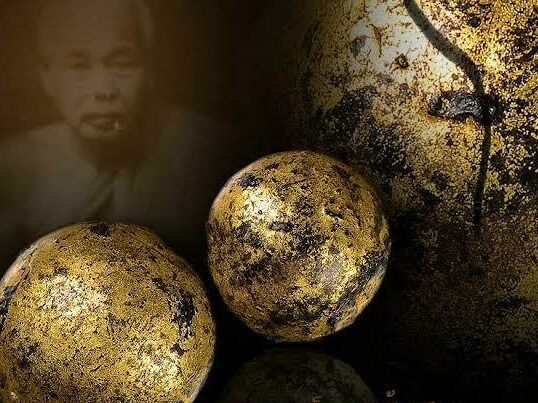
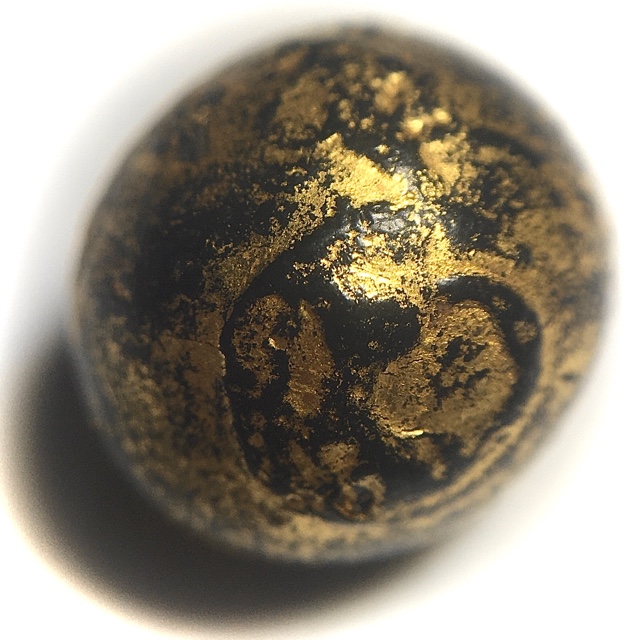
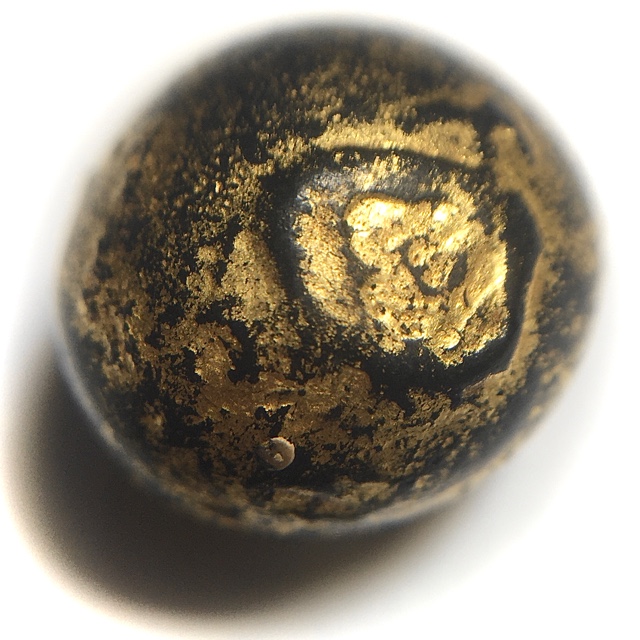
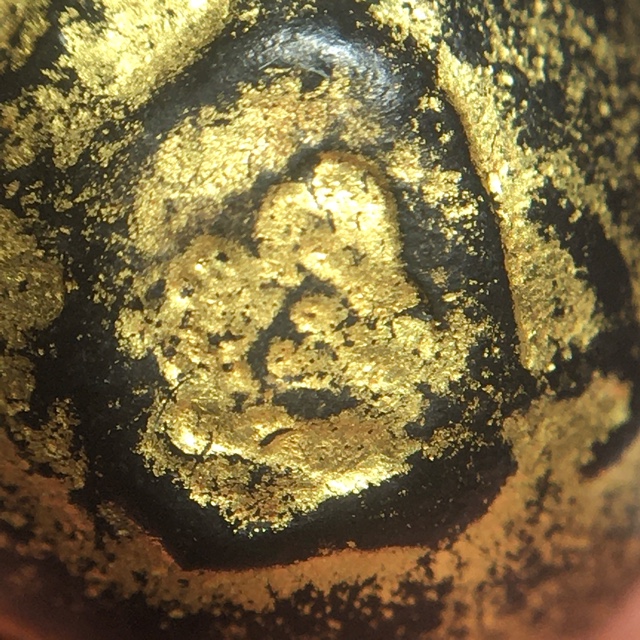
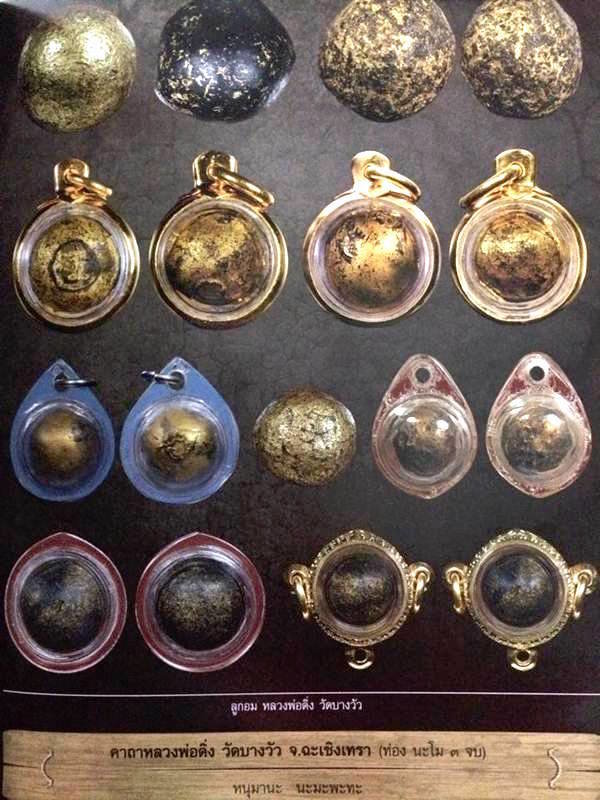
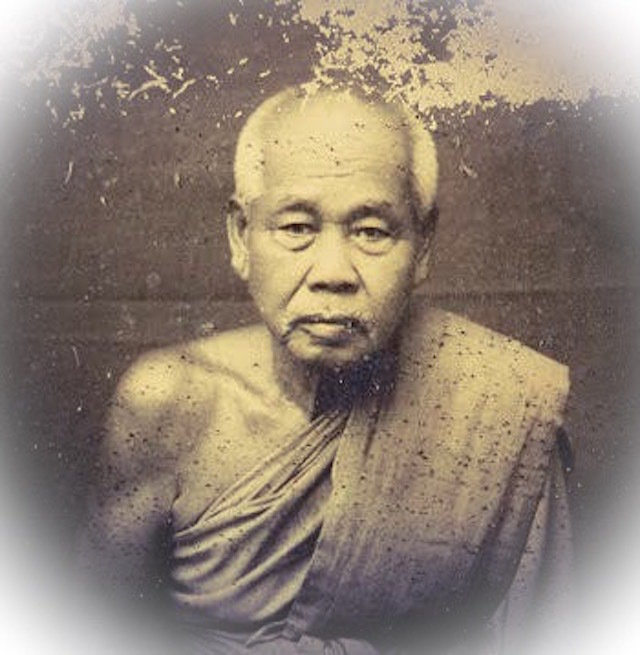
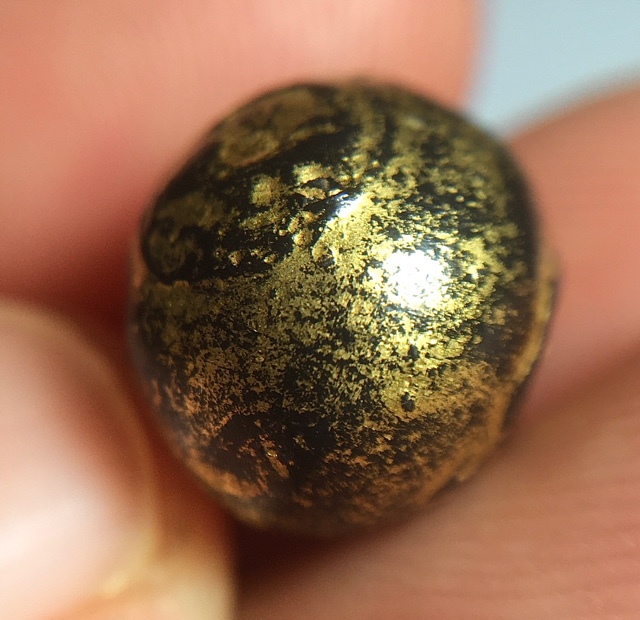
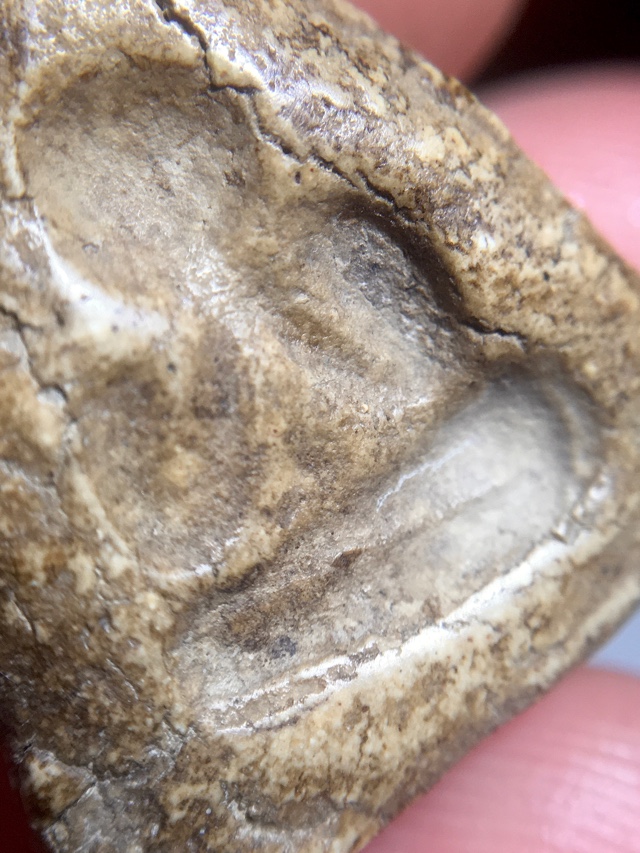
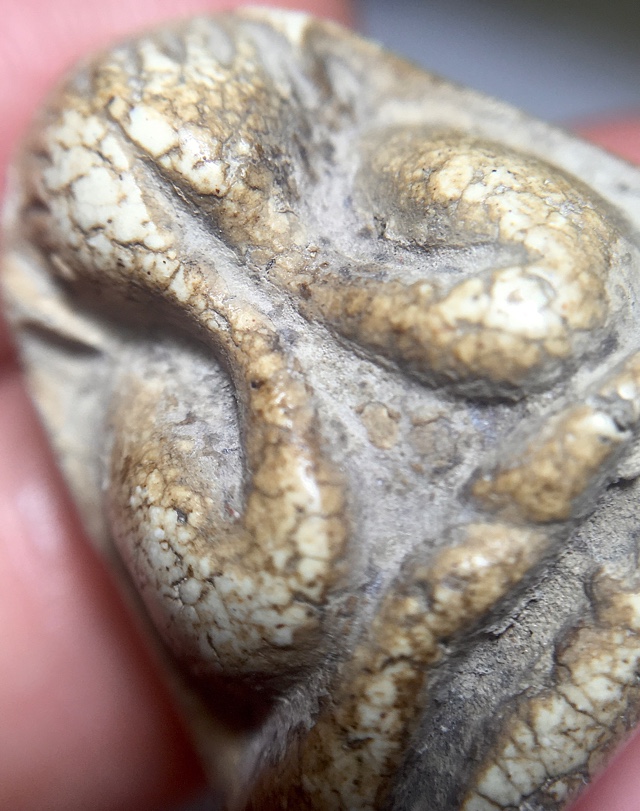
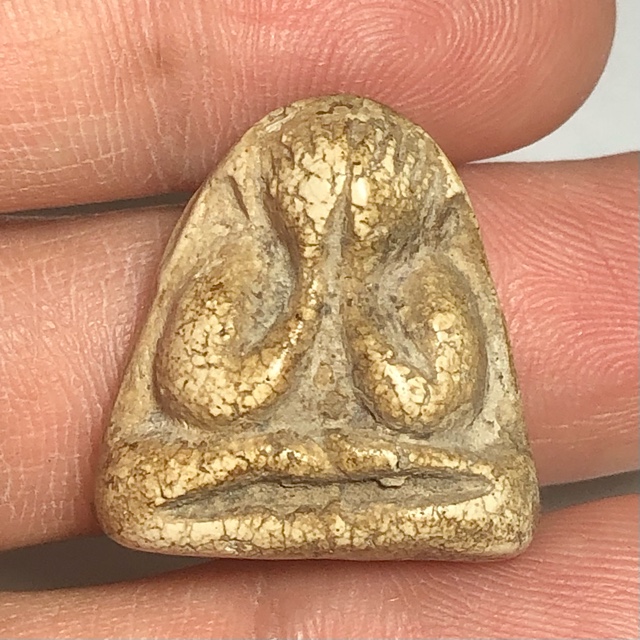
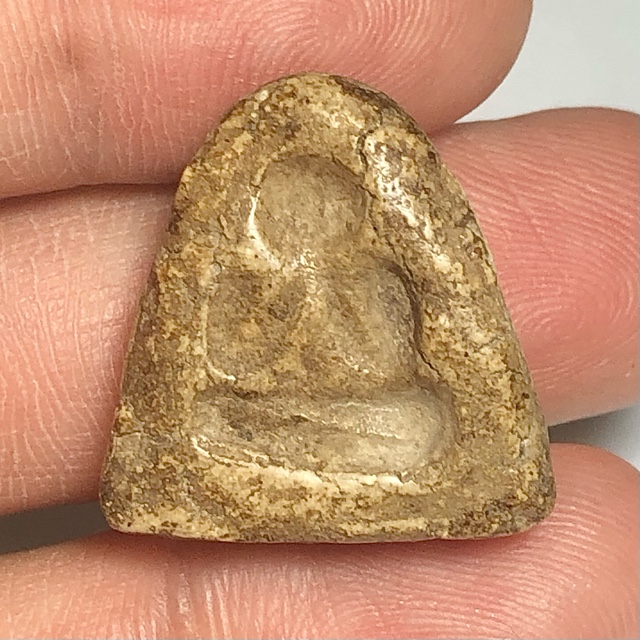
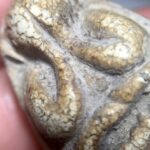
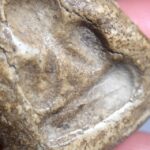
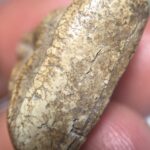
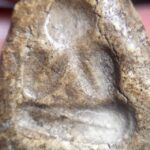
A very rare and beautiful example of the turtle shape encased version of the Bia Gae Aathan, of the Great Luang Phu Kam, of Wat Po Bplam. The Bia Gae of Luang Phu Kam of Wat Po Bplam, in Ang Tong Province, is counted as one of the five ‘Benjapakee’ Bia Gae of all time, along with the other 4 being the Bia Gae of LP Rod (Wat Nai Roeng), LP Bun (Wat Klang Bang Gaew), Luang Por Perm (Wat Klang Bang Kaew) and Luang Por Pak (Wat Bote). It is believed by devotees, that the Bia Gae of Luang Phu Kam, have immense power to ward off demons, ghosts and evil eye spells, as well as dissovle curses, and protect against poisonous beasts, and jungle fevers. They are said to also possess Maha Ud Gunstopper magic, and Metta Maha Niyom Mercy Charm, that recalls good luck into one’s life. This particular exhibit is encased within the form of the Paya Tao Ruean Turtle

In the early era of his Bia Gae making, Luang Phu Kam would be able to get his ‘Bia’ cowrie shells from the local area around the temple, but after the year 2493 BE, as his Bia Gae became increasingly famous and renowned for their power, it became necessary to send devotees to places by the ocean, in order to find enough cowrie shells to satisfy the needs of devotees. As to the Channaroeng and Krang Pastes used to seal the Bia Gae, it was taken from stingless beesnests found in the forest. or taken from Jom Pluak giant termite nests which were found in the vicinity around the temple.

As the needs of devotees rose, there was not enough Muan Sarn available from these sources of magical ingredients, and Luang Phu Kam was forced to have to seek farther afield for the sacred ingredients necessary to continue making Bia Gae amulets in the numbers needed for his devotees.

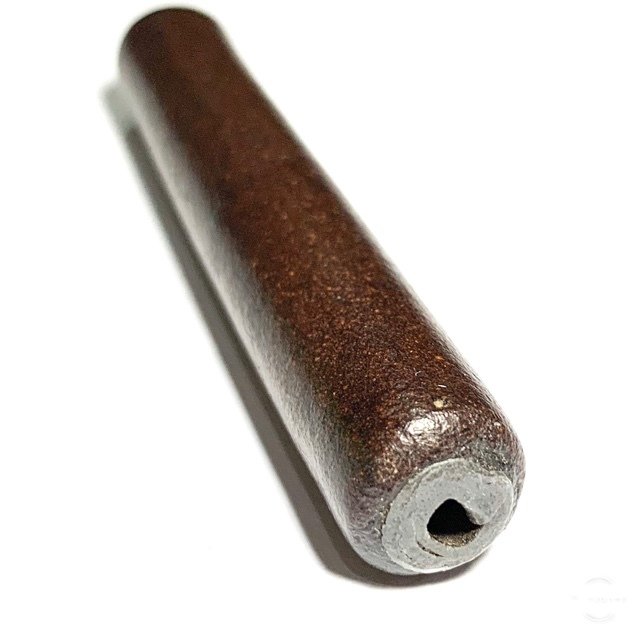
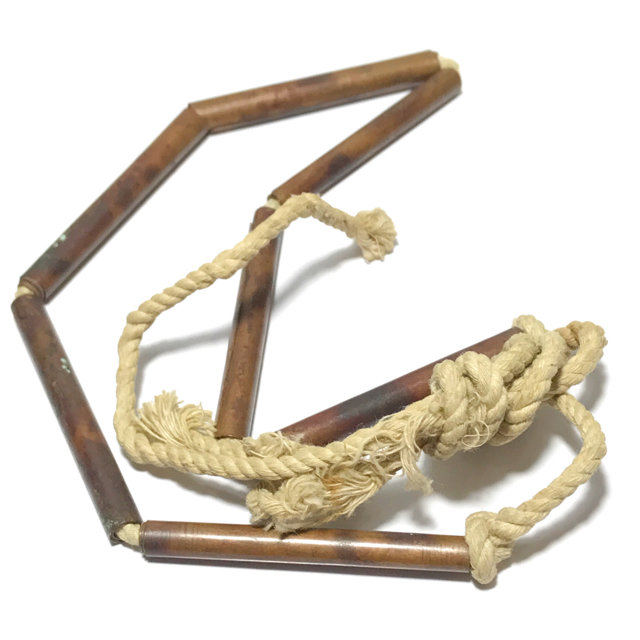
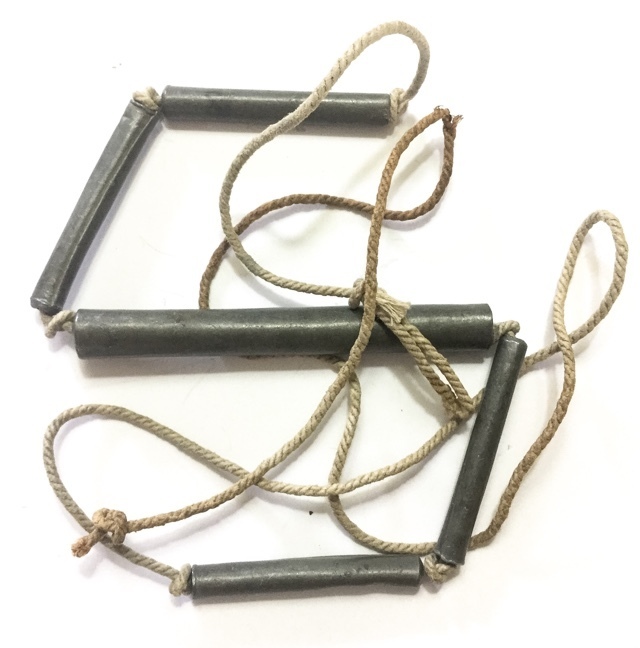
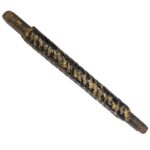
The Bia Gae of Luang Phu Kam differ from those of other masters in their making method; Luang Pu Kam would smelt sacred leaden alloy in a pot until it liquified, and then pour it into the interior of bamboo sticks about one foot in length. The bamboo was then sealed with simple cloth, and the bamboo was quicly shaken and agitated. This would cause the cooling leaden sacred alloy to form into small pellets. These leaden pellets were then used to ‘feed’ the Parort Mercurial Metal. This caused the Mercury to make a different sound when shaking the Bia Gae, more like a rattle than a soft ‘thud’ from the mercury sliding around within interior of the Bia shell.

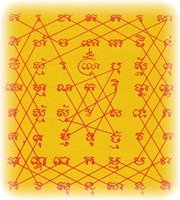
Luang Phu Kam would then take the Mercurial Alchemical substance and use Incantations to make the Parort Mercurial alloy flow into the Bia Gae shells. To do this, he would place the Bia Gae on a large tray, and use Ya Kaa grass to beat the tray whilst chanting Kata incantations, until the Parort Mercury would flow into the Bia shells of their own accord. Then they would be sealed with Chanaroeng, and a Takrut foil with Khom Agkhara inscriptions.

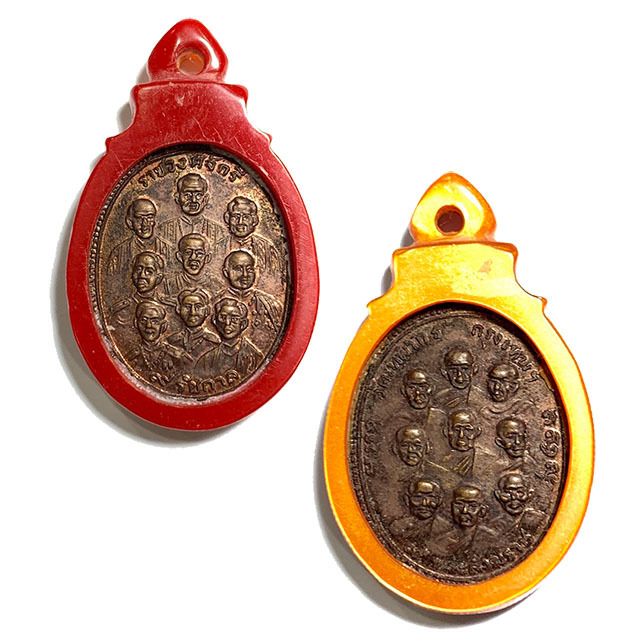
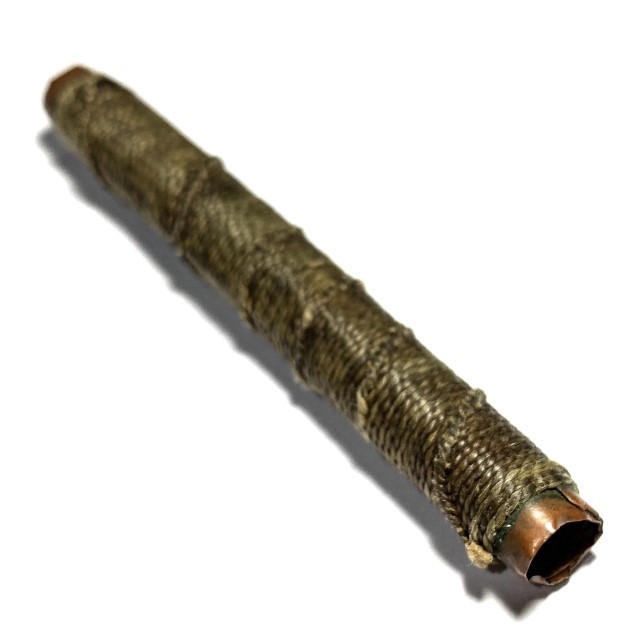
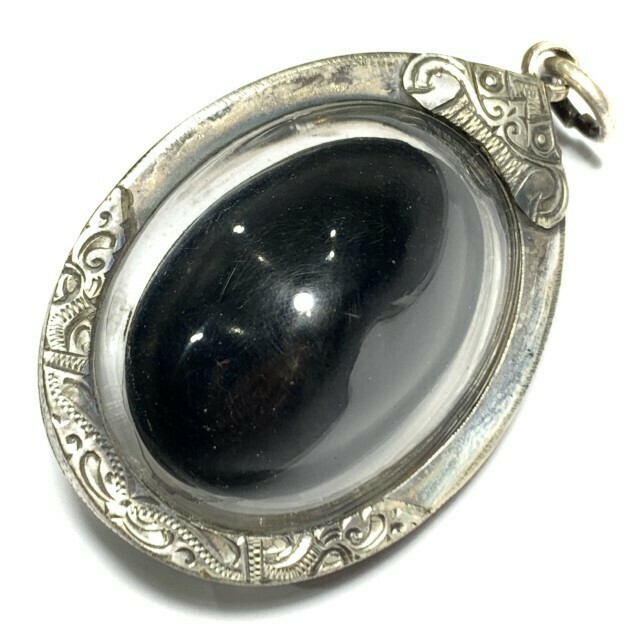
There are some special models, enclosed within a metallic casing, some oval with decorative borders, others shaped like a turtle. Very few special models (Dtua Kroo) were made, whereas most of them would be left bare, or cord wrapped with the shell poking out visibly. In the case of his Bia Gae that are not enclosed within metallic frames, the copper Takrut Tong Daeng is visibly affixed to the Channaroeng Paste which closes the mouth of the Bia shell. It is said that some devotees once removed the Parort Mercury, and that it was seen to glow with an aura, like neon light.

Once Luang Phu had finished the creation and primary empowerment process, he would take the Bia Gae into his Kuti hut and perform further solo empowerments in privacy.One can recognize the early, mid and later eras of Bia Gae, from the difference in Channaroeng paste found in the seal of the BIa.

Early era amulets will have Channaroeng paste from the stingless bee or the giant termite nests around the temple. Mid era ramulets have Channaroeng paste with Ya Ruea, a herbal paste often used by fishermen and sailors to seal their wooden boats against leakage with. The third and later era, is seen to be made from Ya Ruea mixed with Pong Ittijae Yantra powders.

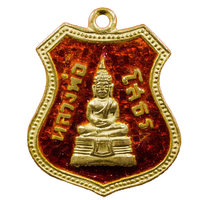
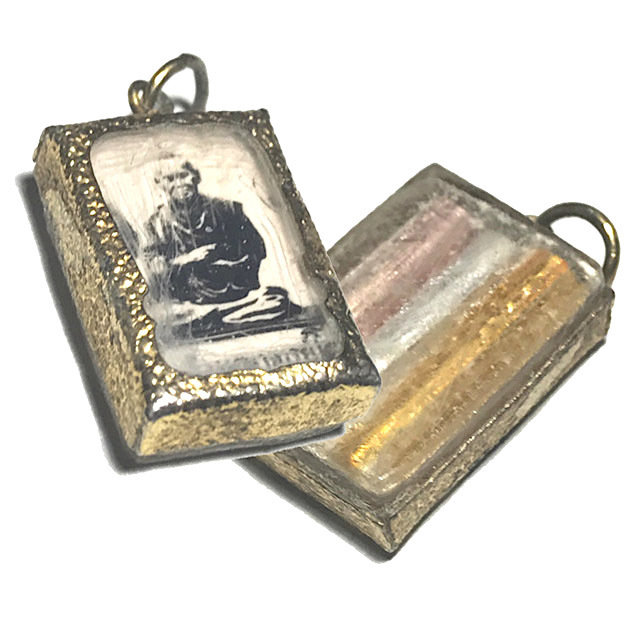
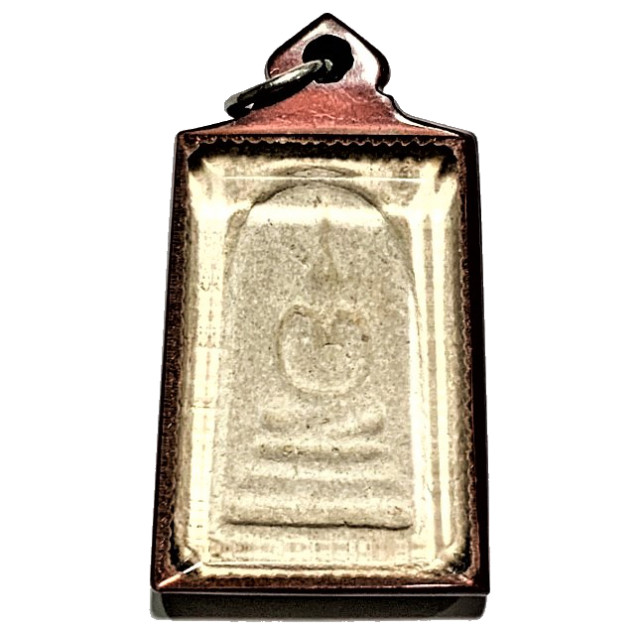
Devotees would often take the Bia Gae of Luang Phu Kam to be specially framed at an artisan, and framed with gold, silver or other brazen metal type frames. The Artisans would always stamp the enclosure of the Bia Gae frame with the Thai letters ‘Hor Mor Ngor’ (หมง), or sometimes the word ‘Kam’ (คำ), or ‘Heng’ (เฮง). In the case of exhibits which have the word ‘Heng’ stamped on the frame, this was the name of the Artisan. In the case of exhibits that have the letters ‘Hor Mor Ngor’ (หมง), this was and still is the code stamp of the firm of the Hor Mor Ngor Artisans, who to this day still use the same Hor Mor Ngor stamp to encase amulets with custom metal frames.

<span id=”selection-marker-1″ class=”redactor-selection-marker”></span>

ABOUT PAYA TAO RUEAN

The Paya Tao Ruean, as far as amulets are concerned, is associated with the powers of luck, long life, good health, good fortune , kong grapan and klaew klaad. Long life is insinuated due to the long lifespan of the Turtle. Metta, because of the Turtle’s pleasant and non-agressive disposition. The Tao Ruean Magic imbues the elemental qualities of both Water and Earth, due to the amphibian reptilian nature of this creature. The Paya Tao Ruean Turtle is indeed a significant part of Thai folklore and Buddhist beliefs. The turtle is considered sacred and holds a special place in Thai culture. While I cannot confirm every detail of the story you mentioned, I can provide information based on the general understanding of the Tao Ruean Turtle in Thai mythology and Buddhism. The Tao Ruean Turtle is believed to be an embodiment of Lord Buddha in one of his past lives. According to the story you mentioned from the ‘Ha Roi Chati’ (500 Lives of Buddha), the turtle lived on a desert island atop a mountain, where he dedicated his life to practicing purity and morality.

In the tale, when sailors were shipwrecked on the turtle’s island and faced starvation, they resorted to desperate measures, including attempting to eat inedible Areca nuts. Eventually, they turned to cannibalism, with one of them dying and the others contemplating killing each other for survival. Moved by compassion, the Tao Ruean Turtle decided to sacrifice himself by offering his own body as food to save the starving sailors. His act of selflessness and mercy is considered a profound demonstration of the Buddhist virtue of compassion. The turtle’s noble deed allowed the sailors to safely return to port and survive. As a gesture of gratitude and reverence, people began creating replicas of turtles, either made from clay, metal, or carved from wood, to serve as objects of worship and remembrance. These turtle representations are often placed in homes, temples, or sacred spaces as a way to pay respect to the Tao Ruean Turtle and to remind individuals to cultivate compassion and uphold moral values. They are also believed to provide protection from dangers and bring blessings such as long life.

The story of the Paya Tao Ruean Turtle exemplifies the Buddhist teachings of compassion, selflessness, and the potential for spiritual growth and enlightenment through virtuous actions. It has become an integral part of Thai cultural and religious traditions, inspiring people to emulate the turtle’s virtues in their own lives.

Ancient Amulet - Thai Buddhist Pra Niyom Category Amulets

Ancient Amulet - Thai Buddhist Pra Niyom ('Pra Niyom'; meaning 'High End Preferred Class Antique amulets') Fine Authentic Amulets from the Great Thai Buddhist Sorcerer Monks, Lersi Ascetics, and Lay Masters of Olden Days

SIGN IN OR CREATE ACCOUNT


Filters

Filters
Pra Somdej Pim Gaes Jarot Sum Pim Gaes Iang Niyom Long Rak Chart Somodej Dto Wat Rakang Kositaram
Free Shipping Worldwide (we do not state or declare true price to counter tarrifs tax on customers), & Offer of Free Solid Silver Casing Included
SKU 04783
$1,699


Bia Gae Thak Chueak Perd Hlang Mee Hoo Luang Por Tat Intachodto Wat Karuhabodee Circa 2480 BE Featured

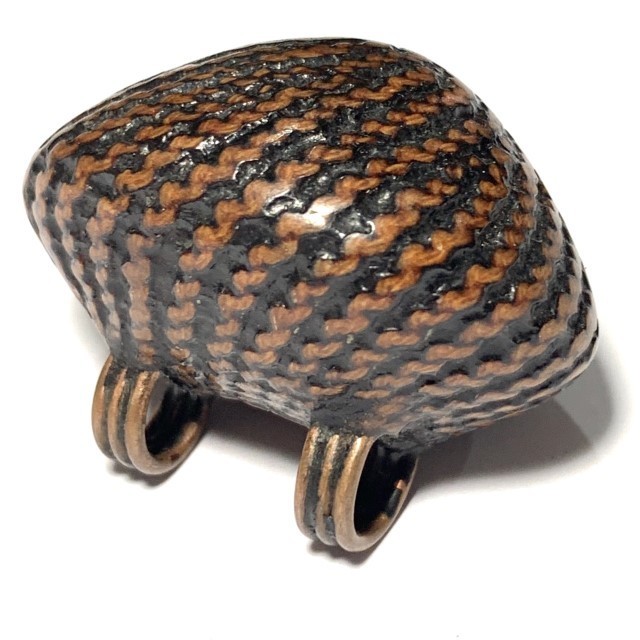
Bia Gae Thak Chueak Perd Hlang Mee Hoo Luang Por Tat Intachodto Wat Karuhabodee, Sacred Cowrie Shell with 32 teeth Mercury Filled, and wrapped with cord. This exhibit is a Pim Perd Hlang Mee Hoo (opened hole, with pendant hoop), which is one of the preferred versions made by Luang Por Tat.

Free EMS shipping worldwide

Free EMS Express Airmail Shipping Wiorldwide is Included. Ancient Bia Gae Cowrie Shell Cord Bound amulet, of the Great Luang Por Tat, of Wat Karuhabodee, (first apprentice of Luang Phu Rod of Wat Nai Rong). This exhibit is a perfect ‘Dtua Kroo’ example for examination, for it possesses all the necessary facets and aspects of authenticity for students to examine and train the eyes with, and is hence not only a powerful amulet of immense repute, but also, most certainly a Dtua Kroo (Teacher Exhibit for Reference Study).

Luang Por Tat Intachoto was the 7th Abbot of Wat Karuhabodee temple in Bang Yee Chan in Bang Plad (Now part of Bangkok, then still countryside). He was ordained by the Great Luang Phu Rod of Wat Nai Roeng.

Luang Por Tat became the first apprentice in Wicha Saiyawaet and Puttasart Occult Magic and Buddha Magic to Luang Phu Rod, especially the Wicha Bia Gae, which was his first and foremost Wicha. He developed his methods of sorcery so far as to equal those of his Kroo Ba Ajarn Luang Phu Rod, and became equally recognised for his powerful Bia Gae amulets.


Both Luang Phu Rod of Wat Nai Rong, and Luang Por Tat himself have little recorded history about their biographical details, apart from what has been retold by aged members of devotees in olden days. Both Luang Phu Rod the Mentor, and Luang Por Tat himself, were equally highly renowned for Wicha Bia Gae Cowrie Shell amulets, and Hmak Tui.

The Bia Gae of Luang Phu Rod and Luang Por Tat, are considered among the legendary Talismanic Charms of Historical fame, and classed among the members of the ‘Benjapakee’ Top 5 Bia Gae amulets of all time, along with LP Bun, LP Kam, LP Perm and LP Pak.

Kata Bucha Bia Gae

He distributed them to his devotees constantly throughout his trajhectory, which resulted in many tales of success, miraculous ending of indebtment, lucky windfalls, and wondrous tales of lifesaving miracles from those who wore them.

This caused Luang Por Tat’s Bia Gae to become renowned around the whole nation, and eventially his fame and popularity spread devotees in other South East Asian countries, especially with those who were seekers of powerful magic, and serious collectors of authentic magical amulets of authentic Masters of Old.

When Luang Por Tat passed away (exact Date Unknown), the Wicha had already been passed down to his own apprentice Luang Phu Ploi, who also made many Bia Gae during his trajectory onwards after LP Tat, until the year 2491, when Luang Por PLoi made his last edition, and decided to leave Wat Karuhabodee, and passed the secrets of the Wicha of LP Tat on, to reside within the Grimoires of the temple of Wat Karuhabodee.

Luang Phu Ploi left Wat Karuhabodee, to return to his birth-land of Nakorn Sri Tammarat, leaving the Wicha Bia Gae of Luang Phu Rod. passed through Luang Por Tat, to remain at the temple of Wat Karuhabodee.

The Bia Gae of Luang Por Tat (and his Looksit LP Ploi) are said to be highly powerful protectors against black magic and poisonous animals, and to evade debts, and attract wealth, as well as for their evasive and protective powers, and the power to heal.

Ancient Amulet - Thai Buddhist Pra Niyom Category Amulets

Ancient Amulet - Thai Buddhist Pra Niyom ('Pra Niyom'; meaning 'High End Preferred Class Antique amulets') Fine Authentic Amulets from the Great Thai Buddhist Sorcerer Monks, Lersi Ascetics, and Lay Masters of Olden Days

SIGN IN OR CREATE ACCOUNT


Filters

Filters
Pra Somdej Pim Gaes Jarot Sum Pim Gaes Iang Niyom Long Rak Chart Somodej Dto Wat Rakang Kositaram
Free Shipping Worldwide (we do not state or declare true price to counter tarrifs tax on customers), & Offer of Free Solid Silver Casing Included
SKU 04783
$1,699


Pra Pid Ta Maekasit Pim Hoo Gradtay with Certificate Hand Inscriptions - Luang Phu Nak Wat Huay Jorakhae Featured

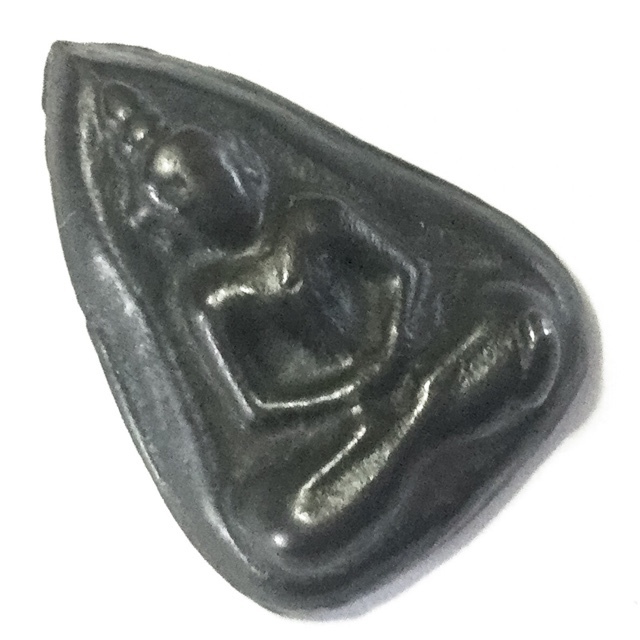
Officially Certificated Pra Pid Ta (Pid Tawarn) Hoo Gradtay (rabbit eared) model of the sacred Maekasit alchemical metal amulet of the great Luang Phu Nak, of Wat Huay Jorakhae. Th Pid Ta Maekasit is a highly revered amulet created by the late great Thai monk Luang Phor Nak of Wat Huay Jorakhae temple in Nakhon Pathom, Thailand. The Pra Pid Ta, also known as “the closed-eye Buddha,” is a representation of the Lord Buddha in deep meditation, entering the state of Nirodha, and is believed to bring blessings of protection, good luck, and wealth to the wearer.

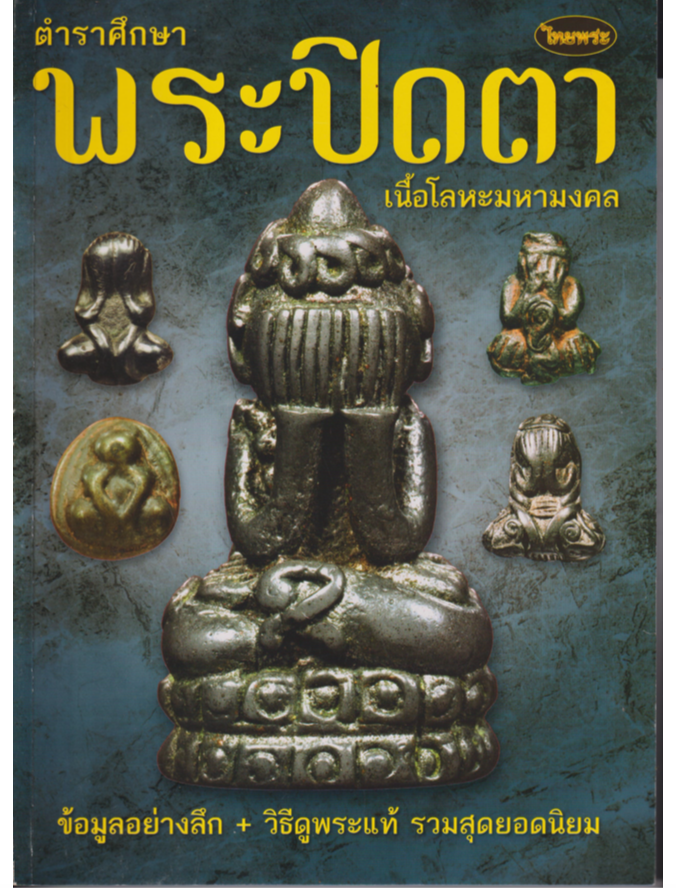
This item includes a free download of the Ebook “Pra Pid Ta Loha Ebook (printable version 212 MB)” and a 3 megabyte Light mobile version to carry on mobile phone for fast scrolling.

The Pra Pid Ta amulet created by Luang Phu Nak was made usually in Nuea Maekasit alcemical metal, but also in sacred loha chanuan bronze and other brazen metal mixtures (less often seen). I is said that Luang Phu Nak himself, was a great master of alchemical metallurgy, and the Wicha Pra Pid Ta. It found in medium and small sizes (Pim Lek & Pim Yai) and has various models sch as the Pra Pid Ta Hoo Gradtay ‘Rabbit Ears’ model.

It is believed that the Pra Pid Ta amulet of Luang Phu Nak has the power to protect its wearer from harm, bring good luck, and attract wealth and prosperity. Some of the Pra Pid Ta of LP Nak possess hand inscriptions scraped onto the surface of the metal, with Khom Agkhara and Sacred Yant.

Pra Pid Ta amulet represents a meditating Buddha entering into the state of Nirodha. Nirodha is the third of the Buddha’s Four Noble Truths and refers to the attainment of the cessation of suffering. The image of a meditating Buddha is representative of the amulet’s ability to bring peace and block out all forms of inauspicious events and bad luck, protect against all dangers and black magic. The amulet is believed to have the power to block out negative energy and to protect the wearer from harm due to the reputation of the creator and his spiritual energy.

LP Nak was a well-known Thai Buddhist monk and the abbot of Wat Huay Jorakhae temple in Nakhon Pathom, Thailand. He was well-known for his spiritual teachings and wisdom, as well as his ability to craft powerful amulets. His reputation as a powerful spiritual leader, combined with his ability to craft powerful amulets, ensures that his legacy lives on, and his amulets are highly sought after. He died in 1959, but his teachings and amulets are still revered and respected by many Thais and people all over the world.

Many people in Thailand and around the world believe that the Pra Pid Ta amulet of Luang Phu Nak is particularly powerful for Kong Grapan/Klaew Klaad Protection Magic, due to the reputation his Pid Ta developed over the years as many stories of lifesaving miracles were recounted by devotees who wore the Pid Ta of Luang Phu Nak. Luang Phu Nak was known for his deeply spiritual teachings, and his ability to create very powerful amulets, and many people believe that his amulets possess his spiritual mind energy even after his passing. The Pra Pid Ta amulet of Luang Phu Nak is also highly sought after by collectors and those interested in Thai Buddhism and culture. Many people consider it a valuable possession and it is often passed down from generation to generation as a family heirloom amulet.

The Pra Pid Ta amulet of Luang Phu Nak is a highly revered and powerful amulet created by the late Thai monk Luang Phor Nak of Wat Huay Jorakhae temple in Nakhon Pathom, Thailand. It is believed to bring blessings of protection, good luck, and wealth to the wearer, and is highly sought after by collectors and those interested in Thai Buddhism and culture. The reputation of Luang Phu Nak as a powerful spiritual leader, and his ability to create powerful amulets, makes this amulet particularly valuable and powerful.

LP Nak, was a Thai Buddhist monk who lived in the 19th- 20th century. He was the abbot of Wat Huay Jorakhae temple in Nakhon Pathom, Thailand. He was born in 2358 BE (1884) and passed away in 2452 BE (1972). LP Nak was known for his great compassion and spiritual wisdom, and was a great giver of spiritual teachings, as well as his skill in creating powerful amulets. He was highly respected by the local community and by other monks in Thailand. He was also known for his generosity and mercy, and his dedication to helping others.

During his tenure as abbot, he worked to strengthen the spiritual community at Wat Huay Jorakhae and to provide guidance and support to the local population. In addition to his work as an abbot, LP Nak was known for his skill in creating powerful amulets. He was able to create amulets using various materials, including clay, metal, and even human bone. His amulets were believed to possess spiritual power and provide protection to the wearer. They were often inscribed with sacred texts or mantras, and were highly sought after by the local population and by collectors. LP Nak’s amulets are very highly valued in the present day, and many people in Thailand and around the world believe that they possess spiritual power. His amulets are often passed down from generation to generation as a family heirloom, and are considered a valuable possession.

LP Nak may have passed away long ago, but his legacy continues to be felt in Thailand and around the world. He is remembered as a wise and compassionate spiritual leader, and his amulets are still highly sought after by aficionados, faithful devotees, collectors, and those interested in Thai Buddhism and Thai culture. To this very day, the lineage of abbots of Wat Huay Jorakhae still make and release Pra Pid Ta amulets of the Wicha passed down to them through a constant succession in the magical lineage of LP Nak.

The Pra Pid Ta amulet of Luang Phu Nak, is believed to be particularly powerful because it is believed to possess the magical energy of the monk who created it. As LP Nak is considered a highly respected and powerful spiritual leader, it is believed that his Pid Ta amulets will always possess his spiritual energy even after his passing, without ever fading. Thew Pid Ta Maekasit amulet, is considered the most famous and powerful amulet created by LP Nak.

Background Info on Pra Pid Ta

Since very early times in Thailand, Pra Pid Ta amulets, as well as Pra Pid Ta in the shape of Pha Yant and Bucha sculptures, have been made as objects of adoration and protection. Using the Buddhist sculpture and art that was accessible at the time, the artisans of that era developed a variety of styles and interpretations. Various Buddhas, Bodhisattvas, or Deities are fashioned into the posture of Pra Pid ta, or Pid Tawarn (meaning “closing the orifices”), to create the Pid ta posture (‘Pid Ta’ means “covering the eyes”). Pid Tawarn can seal 7, or 9 orifices (the number 7 is referred to as Pra Pid Sadtatawarn, while the number 9 is known as Pra Pid Navatawarn). The Pra Pid Ta amulet, also known as “the closed-eye Buddha,” is believed to bring blessings of protection, good luck, and wealth to the wearer.

The Pra Pid Ta amulet, represents a meditating monk entering into the state of Nirodha. Nirodha is the third of the Buddha’s Four Noble Truths and it refers to the attainment of the cessation of suffering. In Buddhist teachings, Nirodha is understood as the state of being where all mental defilements, such as ignorance, greed, and hatred, have been completely eliminated. This state is reached through the practice of meditation and the cultivation of wisdom, and it is considered the ultimate goal of Buddhism.

The third of the four noble truths, according to Buddhist tradition is defined as Nirodha Sacca (also spelt Nirodha Sacca in Pali; Nirodha Satya in Sanskrit). Sacca denotes “truth” or “reality,” whereas Nirodha means cessation or extinction. Therefore, the translation of nirodha sacca is generally “truth of cessation” or “truth of the cessation of suffering.” It explicitly refers to the cessation of Dukkha (suffering) and its causes; the resultant experience is defined as nirvana. Nirodha can indicate a variety of things, such as release, cessation, extinction, the end of dukkha, and “control or restraint.” The cessation of all unsatisfactory experiences and their causes in a way that prevents them from occurring again is what Nirodha Sacca means. It is their elimination, complete absence, cessation, and ceasing from existing.

The Pra Pid Ta image, is that of a meditating Buddha entering Nirodha, is representative of the amulet’s ability to bring peace, and block out all forms of inauspicious events and bad luck. It is believed that by wearing the Pra Pid Ta amulet, the wearer will be protected against all dangers and black magic. The amulet is believed to have the power to block out negative energy, and to protect the wearer from harm. The Pra Pid Ta Maekasit alchemical metal Norodha Buddha amulet, is a most famous amulet for self protection, with Kong Grapan Chadtri, Klaew Klaad, Metta, Maha Pokasap, and Maha Lap Magic.

<span id=”selection-marker-1″ class=”redactor-selection-marker”></span>

Kata Pra Pid Ta

Namo Puttassa Kawambadtissa Namo Tammassa Kawambadtissa Namo Sangkassa Kawambadtissa Sukha Sukha Warang Na Mo Puttaaya Ma A U Tugkhang Anijjang Anatta Jewa

Ancient Amulet - Thai Buddhist Pra Niyom Category Amulets

Ancient Amulet - Thai Buddhist Pra Niyom ('Pra Niyom'; meaning 'High End Preferred Class Antique amulets') Fine Authentic Amulets from the Great Thai Buddhist Sorcerer Monks, Lersi Ascetics, and Lay Masters of Olden Days

SIGN IN OR CREATE ACCOUNT


Filters

Filters
Pra Somdej Pim Gaes Jarot Sum Pim Gaes Iang Niyom Long Rak Chart Somodej Dto Wat Rakang Kositaram
Free Shipping Worldwide (we do not state or declare true price to counter tarrifs tax on customers), & Offer of Free Solid Silver Casing Included
SKU 04783
$1,699


Hmak Tui Mad Chueak Sacred Areca Nut Cord Bound Lacquer Coated 2450 BE Luang Phu Iam Wat Hnang Featured

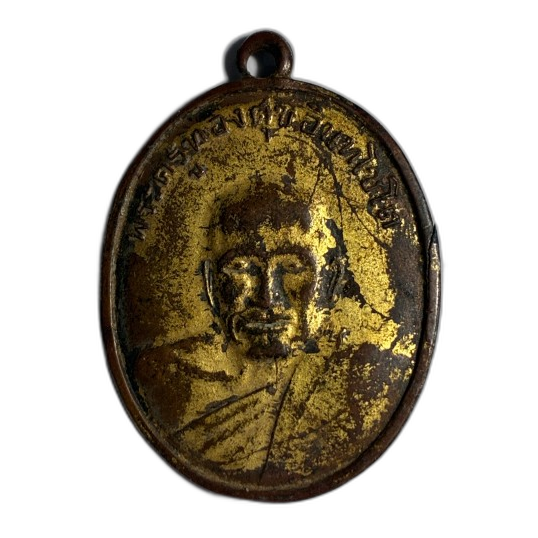
Sacred Hmak Tui Mad Chueak, cord bound lacquered Blessed Areca Nut, from the Great Luang Phu Iam, of Wat Hnang. The Hmak Tui Sacred Areca Nut amulet is one of the top World Famous Classic Pra Niyom Master Class Ancient Amulets from the Great Luang Phu Iam Suwannasarō (2375 – 2469 BE), of Wat Hnang (and Wat Ko Non). Estimated Mid Era Circa 2450 BE

Free Registered Air Parcel Shipping Worldwide is Included with this Amulet. The Hmak Tui is further eghanced in traditional fashion, with magical spellbound ritual cord wrap, with herbal laquer coating. This Hmak Tui is a very rare, but well documented model, which stands out for its classic and easy to recognize ageing characteristics, style of cord wrap, appearance of the lacquer, and of course, the emanation of the magical vibratyory energies imbued within the sacred areca nut amulet, by Luang Phu Iam.

Released in the Era that Luang Phu Iam was already abbot of Wat Hnang, in the decade between 2445 and 2450 BE. The amulet has been coated in Rak Dam Black Herbal lacquer, which was a common practice in Olden days, to preserve amulets and give them a long life. The Sacred Rak Boran ancient lacquer has gathered immense character in its surface appearance over the years, showing the natural aging characteristics, as is expected in that of an authentic Pra Niyom Class Ancient Amulet.

The Hmak Tui is estimated to have been made around 2440 – 2450 BE. Luang Phu Iam made amulets from an early stage, ever since the times he was still following his Mentor Luang Phu Rod, at Wat Ko Non. He began to make amulets long before his famous first edition Pra Pid Ta Yant Yung and Pra Pid Ta Pid Tawarn, which were released at Wat Hnang around 2440 – 2443 BE.

His famous and incredibly expensive Pra Pid Ta Yant Yung/Pid Tawarn were made from metallic alchemical metals, after Luang Phu Iam had moved there as abbot, and were made one by one, in the same method as Pra Pid Ta Wat Tong of Luang Por Tap (No.1 Pra Pid Ta Amulet of all Time).

Luang Phu Iam was a World Famous Master Monk of the previous Century, and maker of the Number 2 Amulet of the Top 5 ‘Benjapakee’ of Pra Pid Ta of all Thai Buddhist History, the Pra Pid Ta. His most famed of all were the Pra Pid Ta Yant Yung and Pra Pid Tawarn amulet.

Luang Phu Iam also made a large variety of other amulets, such as his famous hand carved Pra Pid Ta, many of them being originals from different artisans who hand carved them from various sacred woods, ivory, and other materials.

Luang Phu Iam is the No.2 Master of all History, renowned for Pra Pid Ta Amulets, and his Rare and Powerful First Edition 2467 BE Monk Coin, which fetches extremely high prices in auctions (Circa 100 Thousand Dollars).

Pra Pāwanā Gosol Thēra (Luang Phu Iam Suwannasārõ)

Luang Phu Iam was a born on Friday the 7th October 2375 BE. Luang Phu Iam was born a Citizen of Bang Khun Tian, whose household lived on the banks of the Klong Bang Hwa Canal, behind the temple of Wat Hnang. Luang Phu Iam was born during the reign of His Majesty Prabat Somdej Pra Nang Glao Jao Yuu Hua King Rama 3.

Luang Phu Iam was given the birthname of ‘Iam’ and his surname was ‘Tong U’. The devotees of Wat Hnang temple did not call him Luang Phu Iam, rather, preferred to call him ‘Luang Por Phu Tao’. People in General, and the collectors of the amulet appreciation societies like to refer to Luang Phu Iam as ‘Luang Por Wat Hnang’. His father and mother’s names were Mr. Tong, and Mrs. U, with the surname ‘Tong U’.

Luang Phu Iam’s family were market gardners, and were relatively prosperous. At the age of 9 years old, Luang Phu Iam was taken to the temple of Wat Hnang, to learn to read and write, and practice Khom Agkhara, under the tutelage of his first mentor, Luang Phu Rod, then Vice Abbot of Wat Hnang.

In the year 2387 BE, Luang Phu Rod then began to teach him Wicha Akom Buddha Magic and also to teach him in the Pali Sanskrit scripts, and the Khom Agkhara used for Magical Inscriptions. At the age of 11, in the year 2386 BE, Luang Phu Iam also went to study Pali Sanskrit with Pra Maha Yim at Wat Bovornives Voraviharn.

After he finished his studies with Pra Maha Yim, Luang Phu Rod then went to practice under the tutelage of Pra Pidok Gosol (Luang Por Chim), at Wat Liab. Thereafter, he returned to Wat Hnang, and ordained as a Samanera Novice Monk, and studied the Dhamma in his original place of learning at Wat Hnang. Luang Phu spent many years focused on study and practice, for about one decade, until the year 2394 BE.

Luang Phu was now coming of age where he should ordain from Samanera to become full status of an adult Bhikkhu, and had to go to the Royal Sanam Luang to take his Pali Sanskrit exams, which were at that time, done orally, answering in front of the teacher without any written questions to answer. Luang Phu did not pass the test. Because of failing his Pali exam, Luang Phu decided to disrobe and go to help his parents and relatives at home.

But Luang Phu only managed to remain a layman for three years, and his true calling became evident, and Luang Phu returned in the year 2397 BE to Re-Ordain as a Bhikkhu in the Buddha Sasanā at Wat Jom Tong, at the age of 22 years old.

Luang Por Gerd was his Upachaya Ordaining Officer, and gave Luang Phu Iam the Ordained Name of ‘Suwannasaro’. His Pra Gammawājājārn was Pra Tamma Chedi (Luang Por Jeen), with Pra Pawanā Gosol Thēra (Luang Phu Rod) as his Prompting Officer.

Once he had Re-Ordained again, Luang Phu Tao (Luang Phu Iam) went to stay at Wat Nang Nong, which was across the other side of the path to Wat Nang Nong. Here he continued his written studies of the Dhamma and Sorcery Grimoires, and Mastery of various Wicha, in the Samnak of Luang Por Jeen, with supplementary tuition from Pra Sangworn Wimol (Luang Por Hmen).

This time Luang Phu Iam went to finish his exams once more at Sanam Luang, and passed with flying colours. The ordained professor of Pali who was examining him, then said he had given very good translations, and invited Luang Phu Iam to come and practice at the same Samnak.

Luang Phu Iam however, refused, and continued with his usual trajectory. He then focused deeper on his practice of Vipassana Mindfulness Practice, and Puttakom (Buddha Magic) with Luang Phu Rod (who was now abbot of Wat Nang Nong).

Some time after the passing of his Mentor Luang Phu Rod, in the year 2441 BE, Luang Phu Iam was called upon by his Majesty King Prabat Somdej Pra Julajom Glao Jao Yu Hua (Rama 5), to become the abbot of Wat Hnang, and perform the duty of its maintenance and further development.

Luang Phu Iam proved to be a Great Abbot, and diligently restored and developed the temple and its facilities. Luang Phu Iam was a highly favoured Monk of His Majesty King Rama 5, and was more often than not always requested to attend the most important Blessing Ceremonies, and Buddhist Rituals of the Royal Palace. His name ‘Pra Pawana Gosol’ was bestowed upon him by his Majesty the King, at the time he was given the charge of Wat Hnang temple.

Luang Phu Iam then spent 27 Years working selflessly for the temple and devotees of Wat Hnang, for another 27 years, until his passing on the 26th April 2469 BE, at the age of 94.

LP Iam’s Pra Pid Ta Yant Yung metallic amulet, is equally highly regarded as top five, and revered for its Klaew Klaad Kong Grapan Chadtri Maha Ud power, and seen as the equal to the famous Pra Pid Ta Rae Bang Phai, and the Pra Pid Ta Wat Tong, and the Pra Pid Ta Pim Tapap of Wat Sapan Sung.

It can be seen from historical documentation, that Luang Phu Iam followed the footsteps of of Luang Phu Rod, in the same way that Somdej Pra Puttajarn (Dto) Prohmrangsri of Wat Rakang Kositaram had followed in the footsteps of his Mentor Pra Sangkarach (Sukh Gai Thuean). Luang Phu Iam hense masters the various Wicha with his diligence and unquestioning service to Luang Phu Rod as his Mentor.

This comparison is also extendible to the amulets of both Masters, just as Somdej Pra Puttajarn (Dto) Prohmrangsri learned the Wicha Pra Somdej from Somdej Pra Sangkarach Sukh (maker of the Pra Somdej Arahang Benjapakee Amulet), so, in turn, did Luang Phu Iam make powerful Pra Pid Ta and Pra Pid Tawarn amulets, in the same Dtamra (formula) of his Mentor Luang Phu Rod.

The third Comparison between the two Monks, reveals that both Somdej Pra Puttajarn (Dto) Prohmrangsri and Luang Phu Iam managed to attain the same fame and reverence as their Mentors, and their amulets became equally reputed for their magical power.

Luang Phu Iam created the same style of imagery as Luang Phu Rod for both kinds of Pid Ta amulets, his Bia Gae, Look Om, and Hmak Tui, and his Wicha is so equal in power to that of Luang Phu Rod, that one will often seen devotees collecting the amulets of both masters with equal fervency. It is not uncommon to see a high-end collector wearing a Luang Phu Iam amulet alongside one from Luang Phu Rod on the same necklace.

Ancient Amulet - Thai Buddhist Pra Niyom Category Amulets

Ancient Amulet - Thai Buddhist Pra Niyom ('Pra Niyom'; meaning 'High End Preferred Class Antique amulets') Fine Authentic Amulets from the Great Thai Buddhist Sorcerer Monks, Lersi Ascetics, and Lay Masters of Olden Days

SIGN IN OR CREATE ACCOUNT


Filters

Filters
Pra Somdej Pim Gaes Jarot Sum Pim Gaes Iang Niyom Long Rak Chart Somodej Dto Wat Rakang Kositaram
Free Shipping Worldwide (we do not state or declare true price to counter tarrifs tax on customers), & Offer of Free Solid Silver Casing Included
SKU 04783
$1,699


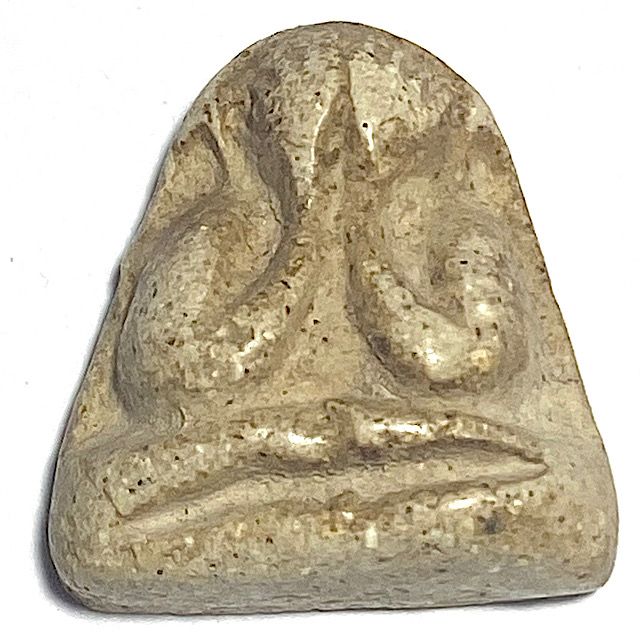
Pra Pong Supan Pim Hnaa Gae Kru Wat Pra Sri Ratana Mahatat 700+Year Old Ancient Benjapakee Amulet and Authenticity Certificate Featured

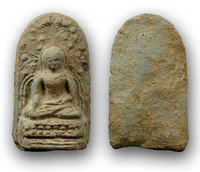
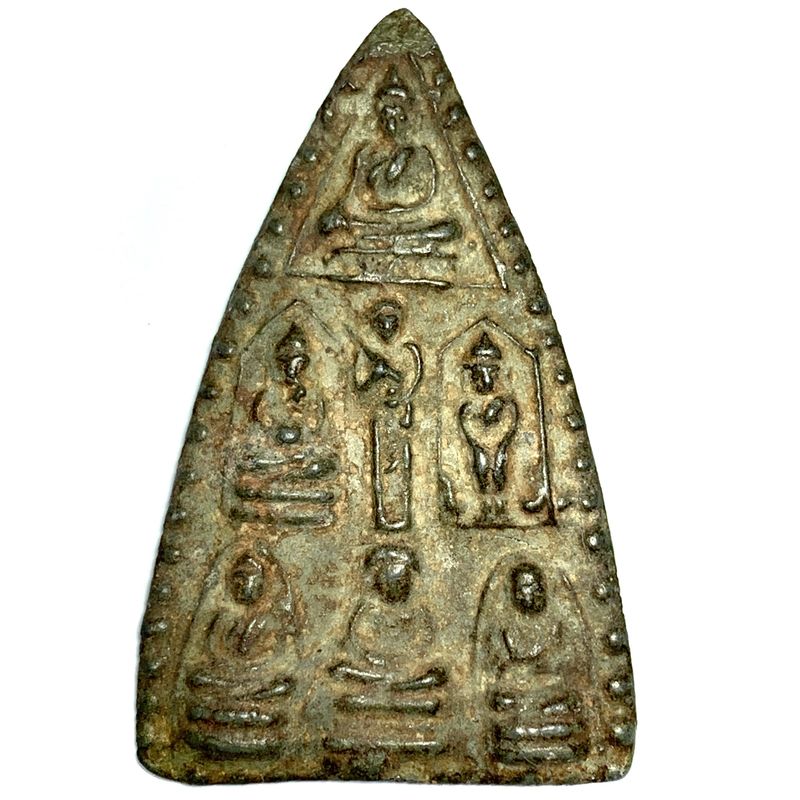
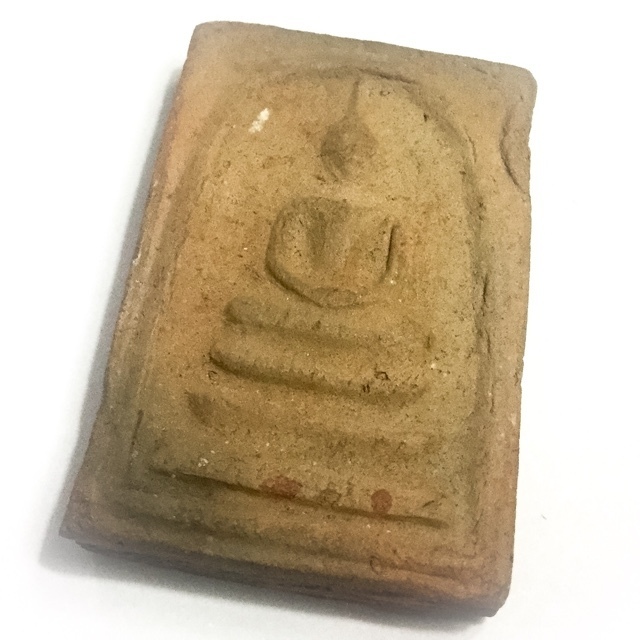
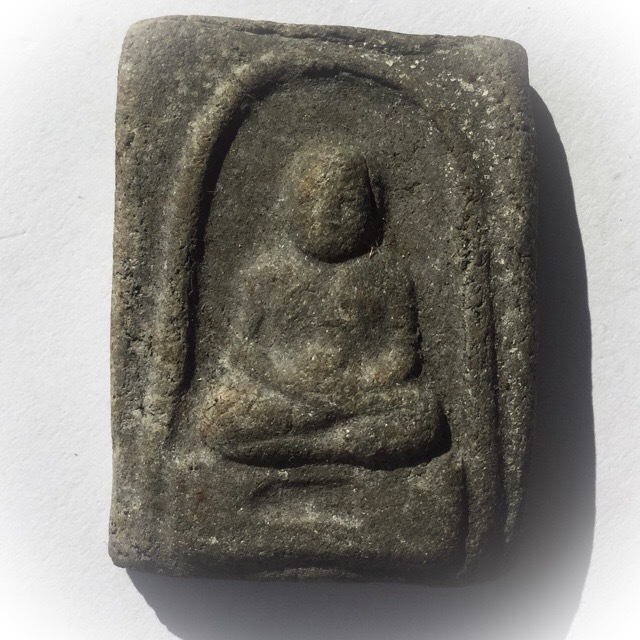
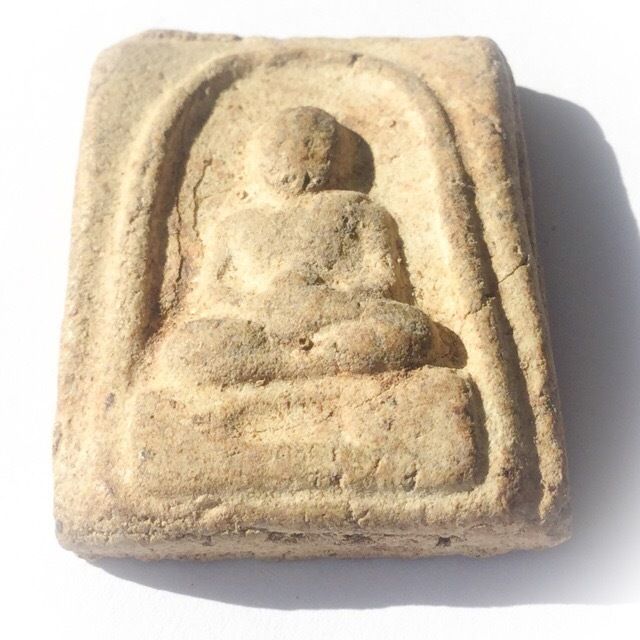
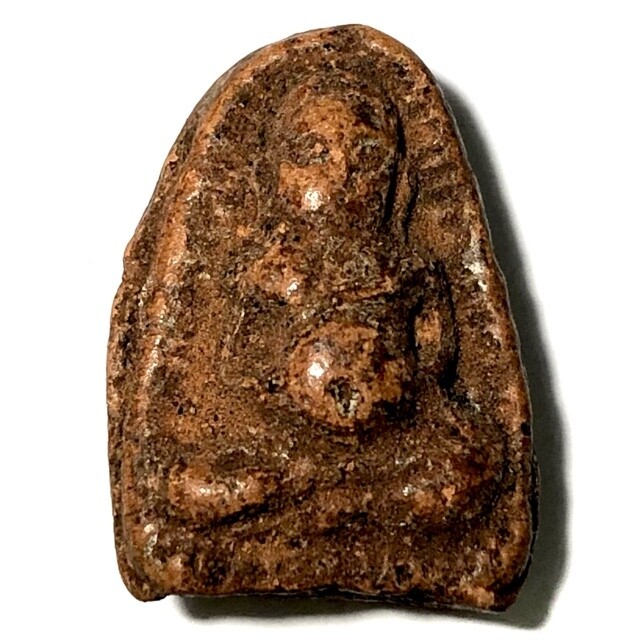
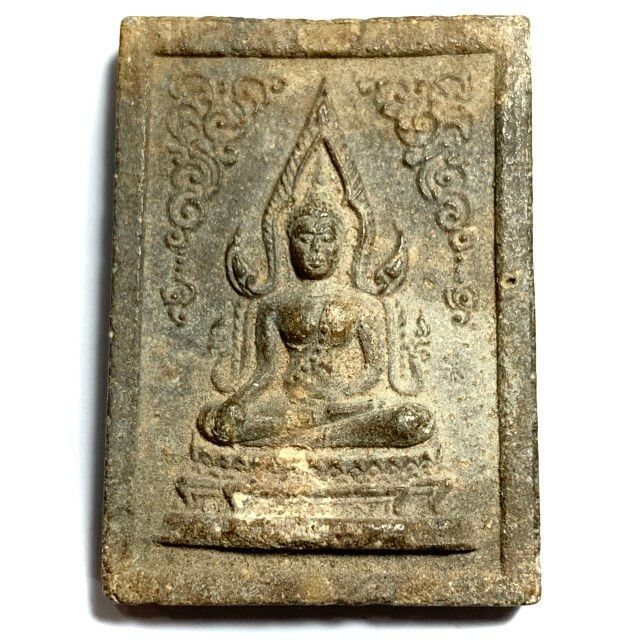
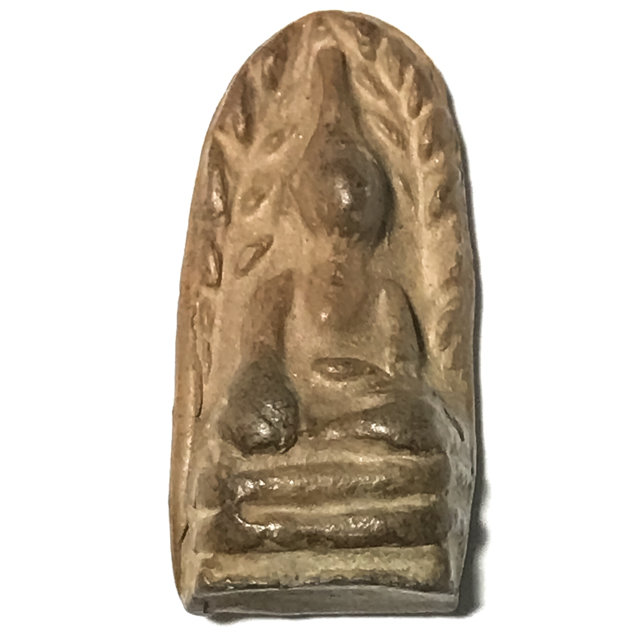
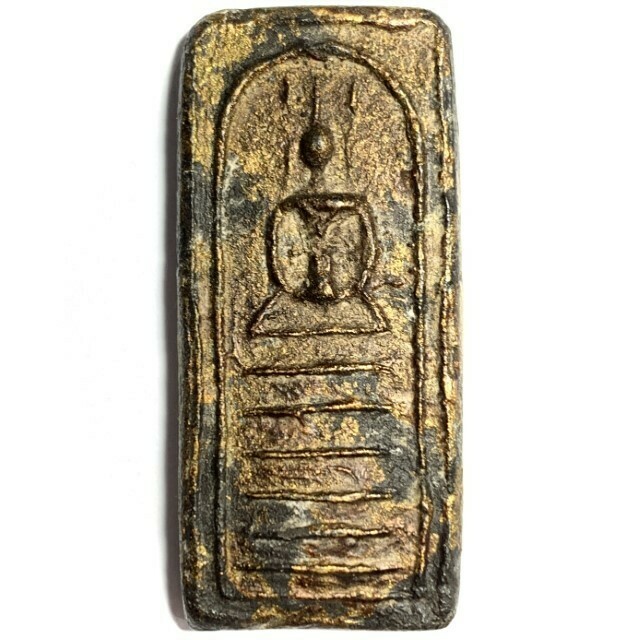
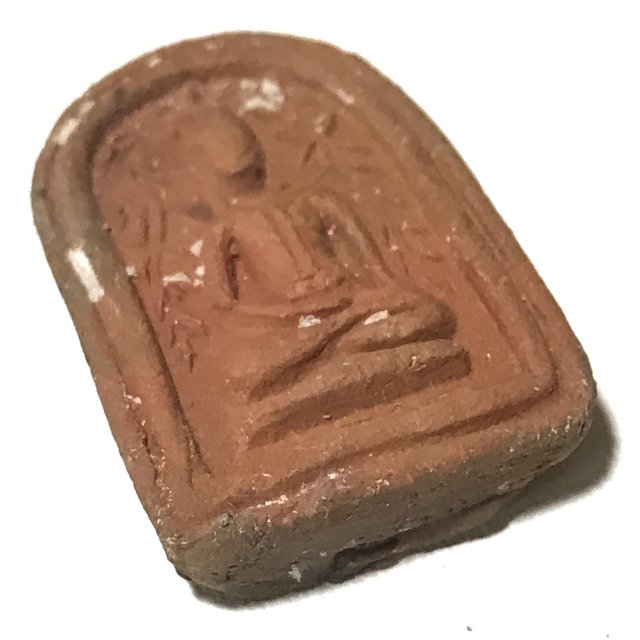
A Truly Ancient Septa-Centenarian Pra Kru Amulet (over 700 years old in origin), the Pra Pong Supan Pim Hnaa Gae, in Nuea Din, with certificate of authenticity, this exhibit is in a dark colored sacred baked earthen clay. An all time ‘top 5’ classic amulet of the Benjapakee Family. A Master-Class status amulet of the High End Category of Pra Kru Hiding Place Ancient Amulets. The Pra Pong Supan amulet is known for its powerful Puttakun Metta Maha Niyom Merciful Blessings and Kong Grapan Klaew Klaad Protective Power.

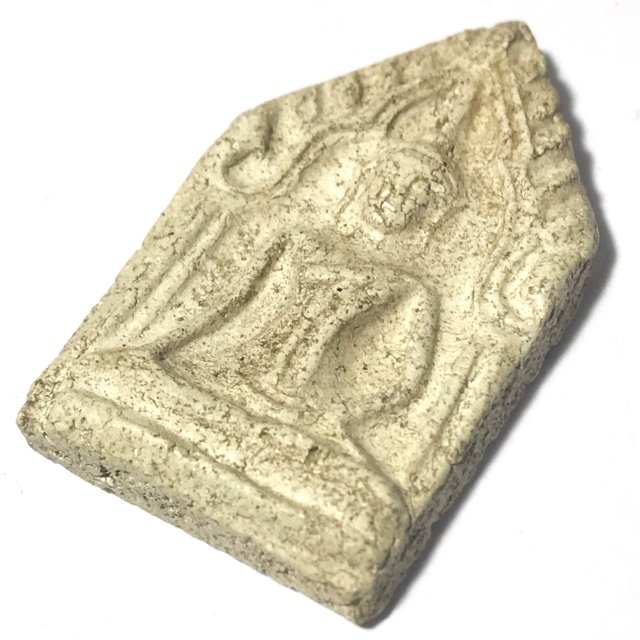
This amulet comes with A4 size certificate of authenticity included. The Pra Pong Supan Kru Wat Pra Sri Mahatat is the Number One Amulet of all Time for the Province of Supanburi, and an eminent member of the top 5 Benjapakee Amulets of Historical Fame and Legend. The Pra Pong Supan of the highest preference is the Pra Pong Supan Nuea Din Phao baked clay amulet, made from sacred earths of the Supanburi Province, which were mixed with sacred magical herbal powders and bound into clay with holy water.

The amulets are seen to have been baked for a long time slowly, until the clay became hard, but smooth and dense like marble, which is a texture that modern ‘Nak Niyom Pra’ amulet aficionados call ‘Nuea Neuk Num Seung Jad’, which means ‘soft and smooth to the touch with highly refined features’.

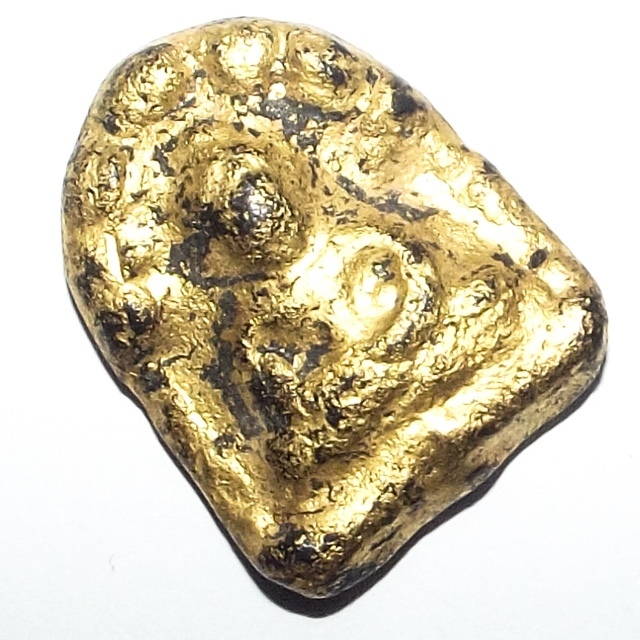
There were also a very small amount (one potful) of leaden Pong Supan amulets found, which were found residing on the upper section of one pot, and are known as the Pong Supan Yord Tho, and are the rarest and most sought after of all Pra Pong Supan of the Kru Wat Pra Sri Mahatat.

Below : The extremely rare leaden version Pra Pong Supan Yord Tho Amulet, of which only very few were ever found

We shall be covering the documentation of the Pim Yord Tho in a different article on the pages of our website.


The method of baking the amulets resulted in a very hard and resilient amulet that does not break easily, which has contributed to its preservation over many centuries. The features of the Pra bordered edges and outer frame of the various models (Pim) of the Pra Pong Supan Amulet are highly varied, and cannot be said to fit any rigid form.

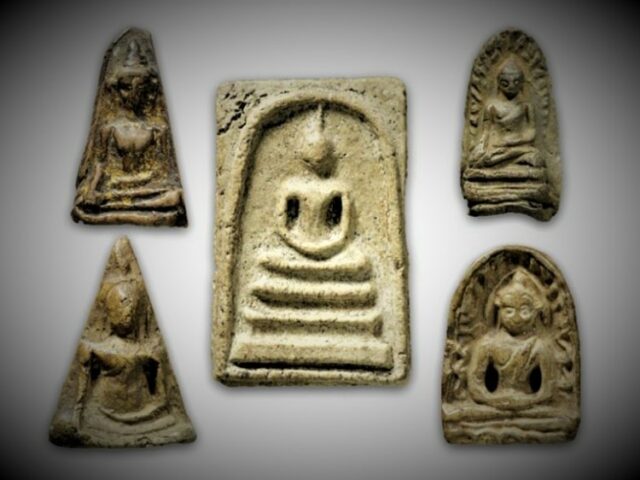
Some have four or five sided edges, some are completely cut to shape, some have wider edges, and others thinner edges, some are even others uneven. Some may be tapered, whereas others have the tapered top cut off flat.

The Pim is notable for its beautiful color tone to the surface of the Muan Sarn Sacred clay, accumulated over centuries,. This exhibit displays the presence of a very rich Muan Sarn admixture, and the surface sheen and detailed relief of the Buddha Image, combine to render an outstanding example of a Master-Class Pra Pong Supan amulet. The ears are elongated, with anomalous forms (‘Dtamni’), that reveal the authenticity of the amulet, through the inimitable idiosyncrasies of the block press, which are ever present despite the individuality of each amulet.


One thing most Pra Pong Supan have in common is that most often one finds the presence of thumb or fingerprint line markings, or thumb indents on the rear face. Another classic and essential feature of the Pra Pong Supan Wat Pra Sri Ratana Mahatat is that due to being buried under the earth for centuries, the Kraap Kru earth residues which are seen stuck to the surface of the amulets within the deeper recesses such as the armpits and ridges between finer detailed features.


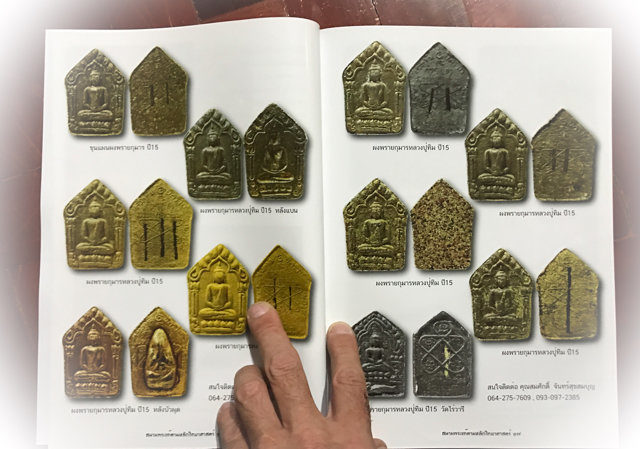
Below : Encyclopaedic work documenting the ancient find of the Kru Wat Pra Sri Ratana Mahatat amulets

These residues are completely affixed and one and the same with the clay, and cannot be removed by simply scratching it off with a fingernail.
The Pra Pong Supan is a perfect choice of Amulet for Ladies or Children, but is also a very preferred and popular amulet for Males to wear. We have before us a Sacred Amulet whose Religious Value is of course that of a True sacred Amulet from the Master Class Category.

The Pra Pong Supan amulet is an image of the Buddha seated in the Mara Wichai posture of conquering the Demon Mara in the style of the U-Tong Periodic Era. The Buddha Image is seated on a single tiered dais, with a large head, graceful arms and protruding chest. There are various Pim (Models) of Pra Pong Supan, ranging from the Pim Hnaa Gae, Hnaa Num, Hnaa Klang, and other lesser known forms. Some very rare versions in black Nuea Bailan Powders are also found, but only very rarely

The Pim Hnaa Gae (old face) has one single type of face model but still has many different appearances, because of the various stages of heat during the baking process, which caused some amulets to experience shrinkage or curvature, or other anomalous reshaping during the process. Some may even have similar triangular appearance to the Pra Nang Paya, another Benjapakee amulet of Immortal fame. Various other amulets were also found including the Pra Mahesworn, Pra Ta Maprang, Pra Patum Mas, Pra Pim Lila (many versions), Pra Nakprok (small and large), and the Pra Sum Rakang.

The Pra Pong Supan and Benjapakee Class Amulets are truly world class amulets that receives the esteem and faithful reverence of all Thai Buddhist People of all social strata, and which is considered part of the Cultural and Historical heritage of the History of Siam.


They are amongst the most difficult of all amulets to find at any price, and are mostly already worn since generations by the same family members as handed down family heirlooms of their ancestors. The rest lie in the hands of the lucky, and of course the high end collector showrooms of Thailand’s Amulet Societies and Non Profit heritage Associations, as well as the museums of the state and of major temples.

Above; Macro Closeup of the Sacred Clay and the Kraap Kru earthen substance affixed to the muan sarn from centuries of burial within the hiding chamber. It is said that in the year 1265 BE, the Ruesi Hermit Pilalai decided to make a series of powerful amulets with truly effective powers. At that time the ruler of the Kingdom Pra Sri Tanmasokea Racha was a faithful devotee to the four great Ruesi Sages, who brought a large collection of magical herbs, minerals and summoned the angelic beings of the celestial realms to assist with the empowerment ceremony on the immaterial planes.

The great Pra Maha Thera Bpiya Dtassasisri Saributra was present to preside over the blessing ceremony, and assist with empowerment and the hand molding and pressing of the Pra Pong Supan. The muan sarn sacred clay was given the name of ‘Nuea Rae Sangkwanorn’.

Below : An example of a Pra Pong Supan amulet that has been treated with red Chinese Lacquer by a devotee

The great Pra Maha Thera Bpiya Dtassasisri Saributra was present to assist with empowerment and the hand molding and pressing of the Pra Pong Supan. The amulets were blessed during three whole months of rainy retreat (Traimas Blessing) as was traditional in ancient times and is still the practice to this very day. Once the Traimas empowerment was completed, the amulets were buried within the Chedi Stupas of Supanburi

example of Pra Pong Supan that has been treated with red Chinese Lacquer

The rediscovery of the Kru

In the year 2456 BE, a Tudong Monk was passing through and asked for the whereabouts of the temple of Wat Pra Sri Radtana Maha Tat. He asked a young boy named Pin, who pointed him in the right direction. The boy Pin heard later that this Forest Wanderer monk had hired some Chiinese-Thai devotees to dig up some holes in the temple, and that a horde of treasures were found along with a large repository of hiding place amulets (Pra Kru).

The Monk himself found a solid golden bowl which he took for preservation, but left all the rest of the contents of the Kkru within the Chedi. However, many of the Chinese devotees who were working on the opening of the Kru did take a large number of amulets rainging from the Pra Pong Supan to the Pra Gampeng Sork.

Once the authorities and Sangha Office heard of this, they ordered the Chedi Stupa to be hermetically sealed to prevent further theft of National heritage treasures.

Later the same year Praya Suntorn Buri (Also knownn as ‘Ee Gan Suudt’), who was the Minister of the Province of Supanburi invited his Majesty Pra Mongkut Glao Jao Yuu Hua to come and open the Kru Chamber. Once the chamber was opened, many ingots of solid gold and silver with Khom Agkhara inscriptions were found, and a large repository of amulets. The King was given a large number of the Pra Pong Supan and other amulets to his Majesty.

In olden days when the Pra Pong Supan was still very common and easy to find, many of the bullfighting arena players would like to grind up broken Pong Supan amulets and mix the powders into the hay they would give their fighting bulls to eat. This was seen to make the bull who ate hay with Pra Pong Supan powders fight more fiercely, evade the horns of its opponent and be impenetrable when taking a hit.

A very hardly known but ancient traditional way to Bucha Pra Pong Supan Amulets, is to immerse the amulet in perfume and chant Puttakun Tammakun Sangkakun 108 Times, then chant the Kata Pahung 3 times. The perfume can then be used to smear on oneself for Mercy Charm and Protection. If one wishes to empower further, one can chant the following Kata;

Ka Dtae Lig Gae Garanang Mahaa Chayyang Mangkalang Na Ma Pa Ta Gi Ri Mi Dt Gu Ru Mu Tu Gae Rae Mae Tae Ga Ra Ma Ta

Ancient Amulet - Thai Buddhist Pra Niyom Category Amulets

Ancient Amulet - Thai Buddhist Pra Niyom ('Pra Niyom'; meaning 'High End Preferred Class Antique amulets') Fine Authentic Amulets from the Great Thai Buddhist Sorcerer Monks, Lersi Ascetics, and Lay Masters of Olden Days

SIGN IN OR CREATE ACCOUNT


Filters

Filters
Pra Somdej Pim Gaes Jarot Sum Pim Gaes Iang Niyom Long Rak Chart Somodej Dto Wat Rakang Kositaram
Free Shipping Worldwide (we do not state or declare true price to counter tarrifs tax on customers), & Offer of Free Solid Silver Casing Included
SKU 04783
$1,699


Pra Roop Muean Luang Por Thuat Nuea Krang LP Tong Sukh Wat Tanode Luang Featured

A very rare exhibit that is hardly ever encountered in the rpesent day, the Pra Pim Tao Rit Luang Por Thuat Wat Chang Hai, of Luang Por Tong Sukh. This amulet is renowned for its Extremely rich Nuea Krang Sacred Stingless Beepaste, and Putsa Paste Magical Muan Sarn, this amulet is most certainly a ‘Dtua Kroo’ (‘Teacher Model’ instantly recognizable and hence usable as reference of authenticity) This exhibit of the Pra Luang Por Tuad Pim Tao Rit in Nuea Krang, and a very beautiful early era amulet of Luang Por Tong Sukh,of Wat Tanode Luang. The amulet is in Nuea Pong Pasom Krang Kluk Rak, resinous sacred muan sarn, visibly aged, compliant with Krang or Lacquer from this Era. One of the most highly renowned and powerful amulets of the Great Master of Olden days, Luang Por Tong Sukh, of Wat Tanode Luang, in Petchburi.

Luang Por Tong Sukh was born in 2420 BE, and lived 80 years, until his passing in 2500 BE. He was, and remains in History, as one of the top masters of all time of the Petchburi region. whose powers of Kong Grapan Chadtri Klaew Klaad and Maha Amnaj were legendary. He made a number of different varieties of amulets, many of which are found in the high end Tamniab Wadthu Mongkol Pra Niyom (official catalogues of preferred amulets of the National Amulet Appreciation Societies).


Free Registered Air Parcel Shipping Worldwide

Free Registered Air Parcel Shipping Worldwide is Included with this Amulet, along with the offer of free Waterproof Casing if desired. Many of his amulets are eminent figureheads of the Pra Niyom Master Class category of amulets, and are extremely rare items to find.

Luang Por Tong Sukh was the Kroo Ba Ajarn of many other Great Monks of the following Generation, who are now famous names in their own right, beginning of course with the most obvious, Luang Por Phaew, Abbot of Wat Tanode Luang. It was Luang Por Phaew who inherited his Magical Wicha and also the Administration of the temple of Wat Tanode Luang as its Abbot. The Nuea Krang amulets of Luang Por Tong Sukh Wat Tanode Luang, are often found to be made from the famous Krang Putsa Magical Resinous Paste of the great Master Sorceror Monk of Wat Tanode Luang. Among the amulets with most preferred and holding renowned fame are the Takrut Pork Krang, the Look Om Nuea Krang, Pra Roop Muean LP Tong Sukh, and Pra Roop Muean Luang Por Tuad. Sometimes one may see a Sacred Guru Monk Coin of LP Tong Sukh with Krang paste on the rear face too (very rare indeed). Other amulets include of course Pra Rian Momk Coins, and his world-famous Hua Hwaen Na Bad Dtalord Magic Ring.

Luang Por Tong Sukh was also the Kroo Ba Ajarn of many of the Top Masters of the Era which followed him, including the Great Luang Por Jang, and of course of Luang Por Phaew, the abbot who succeeded him. The amulets of Luang Por Tong Sukh are incredibly rare, and carry a relatively high price-tag, enough to demand faith in his amulets, but still affordable to any serious collector who seeks an amulet of the calibre of Luang Por Tong Sukh.

The list of great masters who studied and practiced under Luang Por Tong Sukh were;

Luang Por Un (Wat Tan Gong – now Deceased), Luang Por Huan (Wat Nikom Wachiraram – now Deceased), Luang Por Yid (Wat Nong Jork – now Deceased), Luang Por Jantr (Wat Mareuka Tayawan – now Deceased), Luang Por Nim Mangkalo (Wat Khao Noi – now Deceased), Luang Por Yorn (Wat Tanode Luang – now Deceased), Luang Por Phaew (Wat Tanode Luang – now Deceased), Luang Por Thaem Silangwaro (Wat Chang Taeng Grajat), Luang Por Heng (Wat Huay Sai Dtai, and Pra Ajarn Ji, of Wat Nong Hwaa

Amulets :

The most famously powerful and highly sought after amulets of Luang Por Tong Sukh in his lifetime were;

1. His Sak Yant tattoos. His Look Om Nuea Krang Ying Mai Ork Gunstopper Sacred Powder Ball ‘Bonbon Amulet’. One of the rarest kinds of Look Om of all to be found in the Pra Niyom Category of amulets. Reputed to have saved the lives of many devotees through gunstopper magic.

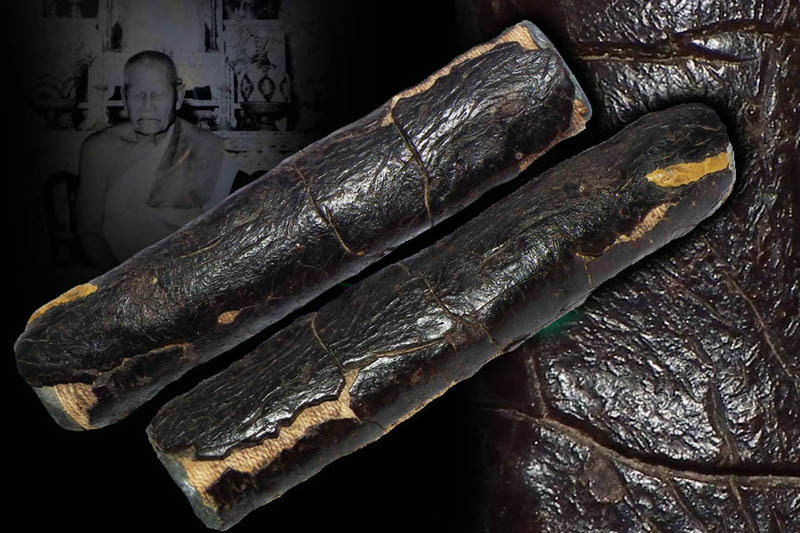
Below : Luang Por Tong Sukh and his famous Krang Putsa sacred resinous Substance

2. The first and second edition Rian Kanajarn Luang Por Tong Sukh Monk Coin, renowned for Kong Grapan Chadtri Maha Ud Klaew Klaad Protective Miracles, with extra power to protect against poisonous beasts in a spell written on the rear face.

Below : 1st edition monk coin Luang Por Tong Sukh


Below : 2nd edition monk coin Luang Por Tong Sukh

Rian Luang Por Tong Sukh

3. The Hwaen Hua Na Bad Talord Gan Asurapit Luang Por Tong Sukh Magic Ring of Protection, with special ability to defend against all Poisons, Venomous or Wild Animals. highkly renowned for its rare power to guard against wild beasts and poisonous plants and animals. Extremely rare to encounter. This Wicha continued to be famous with Luang Por Phaew, who inherited the Wicha from Luang Por Tong Sukh, and whose Hwaen Hua Na Bad Dtalord rings are almost equally famous, but much more affordable.

Below; Hwaen Hua Na Bad Dtalord Luang Por Tong Sukh

4. The Takrut amulets of Luang Por Tong Sukh are various, and serve different purposes, ranging from the Takrut Jet Dork (7 scrolls on a cord) for Multiple Blessings, the Takrut Sam Kasat (triple Takrut with bronze, silver and brass concentric scrolls) , for Kong Grapan Chadtri, the Takrut Klord Ngaay, for easy childbirth without pain, and the Takrut Sariga for Mercy Charm and Prosperous Business.

Below; Various types of Takrut from Luang Por Tong Sukh

Miracles

One of the more famous folk tales about the miraculous powers of Luang Por Tong Sukh, is the story of the ability to inscribe Sacvred Yantra Spells on the surface of material objects with his Psychic Powers; One time Luang Por was at Wat Ta Kham, and soime devotees came to beseech him for some ‘Ya Dtom’ Healing Potion from him. To make this potion, Luang Por required some Bai Magaa leaves, which needed to also be pre-inscribed with the Yant Pra Jao Ha Pra Ongk (Na-Mo-Put-Yaa-Ya). So Luang Por Tong Sukh sent his Samanera Novice apprentice monks out to collect some, and help him inscribe them all before boiling the potion.

Luang Pu Thuat amulet LP Tong Sukh

Luang Por asked the Samaneras to help him inscribe the Yant on each leaf of the Magaa tree. But the Samaneras were taking a long time to inscribe the yantra on each single bai magaa leaf, and so Luang Por exclaimed ‘This is going to take all day, bring all the leaves over to me in a pile on top of each other and i’ll finish the job’

Luang Por Tong Sukh Wat Tanode Luang

The Samanera carried the leaves to Luang Por and gave him a pile of about 20 leaves in his hand. Luang Por then inscribed the top leaf performing incantations, and lo and behold, as he gave the pile back to the Samanera, every single leaf was inscribed with the Yant Pra Jao Ha Pra Ongk!!


Important Ceremonies

Luang Por Tong Sukh was present to empower amulets in some of the most important and powerful blessing ceremonies in the History of Thai Buddhism, invited by a high ranking official of government to attend to bless with his powers, in the ceremonies of Wat Rachabopit for the 2495 BE Mongkol Gao edition and the Pra Kring Yord Hmud with 18 other Great Masters. Luang Por Tong Sukh also attended the Ceremony to bless the Military and distribute amulets in the Great Indo-China war ceremony. Luang Por Tong Sukh was also one of the many Masters present to empower the large series of amulets blessed in the celebration of 2500 years of Buddhism, the ‘Yee Sip Haa Satawat’ 25 Centuries Edition

Filters

Filters
Sold out
Takrut Tone Ying Mai Ork Pork Nuea Krang 2 x 1.2 Cm Luang Por Tong Sukh 2470 BE
Small Version of Luang Por Tong Sukh's Legendary Takrut Pork Krang Amulet, that is extremely rare to find in this size.
SKU 04228
$135
Out of stock


Khun Phaen Nang Kumarn Tong Hlang Riab Nuea Khaw - Luang Por Guay Wat Kositaram Featured

A very rare occult amulet and variation of Khun Phaen model from the pantheon of Luang Por Guay, of Wat Kositaram, the Khun Phaen Nang Kumarn Tong Votive Tablet with Necromantic Hoeng Prai Child-Ghost below the throne of Khun Phaen, with this rare model being the ‘Hlang Riab’ smooth backed model, in Nuea Aathan Powerful Sacred Earths, Funereal Ashes, Ground Bones, with Pong Wosed Yantra Powders.

This exhibit is from the 2513 ‘Run Prasopgarn’ edition from the great Master Luang Por Guay, and is along with all his amulets, highly reputed for its very powerful magic. The Khun Phaen Hlang Kumarn Tong edition came to be known as the ‘Run Prasopgarn’ (Proved Powerful by Experience Edition), as it was given to many devotees who came to get Sak Yant Tattoos from Luang Por Guay. They would come to get four Hanuman tattoos (one on the back, chest, and each arm).


Most of Luang Por Guay’s Looksit were Nak Leng (Gangsters) and Suea (Mafia Bosses and Villains), and would be entering into deadly situations on a daily basis. And so the amulets of LP Guay had more than their share of chances to test their power, and it was this extremely high quota of lifesaviing miracles experienced by his devotees who wore his amulets, that brought the Khun Phaen Hlang Kumarn Tong Run Prasobgarn, and other amulets to such great favor.The front face features the image of a Buddha in the Mara Vichai Subduing Mara posture, with one hand touching the earth, calling the Dharani earth Goddess as Witness to his Merits.


The Buddha has elongated ears, and is seated within a crystalline arch. Below the Buddha is a Kumarn Tong Golden Child Ghost Deva. The rear face of the amulet isflat surface (Hpang Riab) one of two versions, the other having the image of a Kumarn Tong, seated with hands on his legs, with a plump well-fed stomach, and a happy mood of prosperous living.


Kata Hua Jai Khun Phaen

Su Na Mo Ro Mo Ro Su Na Na Ma Pa Ta Ja Pa Ga Sa Na Maa Mi Hang


How to Worship Kumarn Tong

Kata to call the Kumarn Tong (Kata Riak Gumarn Tong)

Aehi Kumaaro Aehi Kumaaree Aehi Rak Yom Aehi Prai Tong Bpiyang Ma Ma Bpudt-Dtang Wasaayadti Aaragkhaana Bpajjayo Rao Rak Yom Kumarn Tong Jong Maa Aehi Ma Ma

Alternative Version;

Om Pani jijeruni Pantang Aehi Ma Ma

When you go places or enter and leave buildings you should speak to the Kumarn in your heart to accompany you. When you eat, you should speak in your heart that the Kumarn should come to eat with you. Make a separate offering do not give from your own plate.

The Kumarn will call friends. customers and riches to you, lovers and admirers, and will chase away enemies and protect you and your household and family. When bringing the Kumarn into the home for the first time, you should tell the Kumarn that the people in the house are friends and that the Kumarn should accept and look after them too.

Kata for giving the Name to the Kuman (chant when giving him his name).

Naamaanang Samaa So Yudt Dta Tho Yudt Dta Tha” “In the Name of the Kroo Ba Ajarn – I name you (Name which you wish to give your Kuman Tong”.

Say this 3 times, and the next day chant only once. You must always remember his name and must introduce him to all people in the house, and ask him to also protect and lend prosperity to them all.

KATA FOR EMPOWERMENT OF KUMARN TONG

Aehi Gumaarang Udti Uni Na Ang Idti Putto

KATA FOR CALLING THE KUMARN TO EAT.

Jadturapuudtaanang Ahang Waayang Ammahaara Kumaarang Kumarn Tong Maa Rap Pochanaa Aakajchaahi Dtiwadtabpo Aakajchaaya Maa Look Maa

Kata Pluk Kumarn Tong

Na Ma Pa Ta Gumaara Phuudti Bpadti Ruu Bpang Naama Dtae Laapo Namo Hoemi (Chant 3 Times to Awaken the Kumarn)

Kata Perm Rit Kumarn Tong (Charge Up Power)

Dtaadta Paya Bpudt-Dta Aehi Jidt-Dtang Bpiyang Ma Ma

Kata Atithaan Kumarn Tong (Ask For Wishes To Be Granted)

(Maha Namasakara x 3 first)

Ja Pa Ga Sa Jid-Dta Mahaa Jidt-Dtang Bpiyang Ma Ma


Kata Gamgab Kumarn Tong (To Command the Kumarn on a Mission)

Gumaarang Bpadt Sandtang Plaay Yanaa Mahaa Su Wi Sae Tha Itti Rit Mutu Dtaanang Sud Suu Sang Mahaa Chanaa Dti

Kata Adtithaan Khor Lap

(Use to make wishes and ask for Lucky Blessings, or to win the Hearts of Others).

Aehi Jidt-Dtang Jidt-Dta Pantang Pakinimae Jidt-Dtang Pantang Bpiyang Ma Ma

Luang Por Guay Chudtintaro

Luang Por Guay’s amulets have reached the highest level of respect and collectorship in their history now, and are considered to have noticeable effects that are felt be everybody who owns and wears one of his amulets. The stories of confirmation of their power are more than can be counted, and his Great Patipata (practice), and Exceedingly Powerful applied methods of Sorcery, are a large part of what attributes to their power.

His amulets are now extremely rare to find because those who already own any will never wish to part with them again, and they are hence becoming one of the rarest kind of amulets to find these days. Usuallly this happens because of speculation by the collector scene, but in the case of Luang Por Guay’s amulets, it has happened primarily for their Sacred Value, much much more than for their collectorship and artistic value, which is of course also extremely high.

Luang Por Guay is famous for his immensely diligent and complex manner of empowering (Pluk Sek) amulets, which involved daily empowerments at various times of day namely at dawn, morning, midday, afternoon, evening and midnight. In addition, he would perform empowerments during the various ‘Reuks’ (Astrological Influential moments), to bring total coverage of protection and fortuitous blessings to all who might wear and Bucha his amulets.

This ritual involved the Adept knowledge of the ‘Reuks Mongkol’ Buddhist Auspicious alignments, the ‘Reuks Jone’ (Gangster Alignments), Inauspicious Alignments, and the ‘Reuks Bun Paya Marn’ Demonic Influential Alignments. This means that it did not matter who wore his amulets, Good people would wear them, Gangsters would wear them, anybody could wear them without loss of magical effect. Luang Por Guay was born on 2nd of November 2448 in the year of the snake. Luang Por Guay was already was already able to read the Dhammapada and Pali Prayers long before he ordained at the age of seven, having learned from Luang Por Khuad. Luang Por Guay was Ordained on the 5th of June 2467 at 15:17 pm.

He was aged 20 years old. Luang Por Guay was famous for his Mastery of many different Wicha, including the Wicha of Tattooing Sak Yant. Every single edition of amulets he ever made are now rare classics and highly revered for their Magical Power. On the 1st September 2491, Luang Por Guay was elected Abbot of Wat Ban Kae which was celebrated with delight by the local devotees.

Luang Por Guay saw that the folk of Ban Kae were very poor and many people did not have enough to eat, and thus took up the practice of only eating one meal a day instead of the two before midday which are normally allowed for a Maha Nikaya Buddhist monk, in support of the people and to consume less. He would help the poor and needy and heal the sick, give Buddha amulets to those who needed some confidence and something to help them fight on in life, and try his best to improve the life of local Folk in general. He was very loved for this by the local Folk. Luang Por was not a monk who liked to build things or develop, he liked simplicity and stillness.

Even his Kuti was old ‘Song Thai’ (Thai style wooden house), that he had given the temple lay committee and some Looksit the task of building it to save money, and only hired special craftsmen for the most difficult pieces of the building. The temple thus only had old rickety Kuti huts and no fancy buildings except for the Uposadha shrine room, the Kuti Chudtintaro (memorial Kuti hut for LP Guay), and the Sala Tam Bun building. Luang Por Guay passed away, on the 12 April 2522 at the age of 75 years old. He passed on in peaceful recline.

The year before he died, he fell ill, and was carried to Paya Tai hospital for examination. The examining Doctor concluded that Luang Por Guay was suffering from food deficiency since over 30 years, and gave him some protein supplements for a period of a whole month, which turned out to still not be enough for his physical needs.

But when Luang Por returned to the temple, he continued his habit of eating only one meal a day without paying attention to the warnings. It seemed that since his return from hospital though, that his casting of magic spells and empowerment of amulets had become even more effervescent and intense. He seemed very strong physically as far as outside appearances went. In the year 2522, Luang Por wrote down two notes in his calendar; Pra Luang Por Guay marked the day he would become ill with blue pen, and the day he died was marked in red pen.

The days were the 11th March, and the 11th April 2522 BE. Luang Por had written the Pra Kata Namo Dta Bord, and the words “I Pra Guay Na Dtandto Namo Dtandti Dtandti Dtandto Namo Dtan Dtan – will die on the 11th April at 7:55”. As the 11th came nearer, Luang Por Guay fell ill, but it was not possible to detect any fever or recognizable illness – he could not eat, and would even spit his rice out and refuse any more, instead grabbing a piece of Tkgrut Foil, and inscribing spells.

In the night he would hold the Sai Sincana cord and empower amulets. He would inscribe lottery numbers on the palm of his hand, and sometimes show to Looksit with Choke Lap who came to pay last respects. In the night he would hold the Sai Sincana cord and empower amulets. He would inscribe lottery numbers on the palm of his hand, and sometimes show to Looksit with Choke Lap who came to pay last respects. As the tenth arrived, everybody came to await his passing, but on the 11th he was still alive. Some of the temple committee suggested that his Kuti was full of magic and even images of the Kroo, perhaps no Deities could enter to take him.

So they moved Luang Por Guay to the chanting room, where he opened his eyes in farewell for the last time, placed his hands together, and then, something amazing happened; The temple bell fell down from where it was hanging, and crashed to the floor ringing out loud with a resounding echo. The Looksit then realised that Luang Por Guay had passed on in this moment, and tuned to look at the time. It was exactly 7:55 am on the 12th April. The 12th of April every year is the date for paying reverence to Luang Por Guay at Wat Kositaram, where Looksit gather each year to pray to Luang Por Guay and ask for his blessings to continue to protect them and improve their lives.

Luang Por Guay (2448–2522 B.E.)

Biographical Timeline

Event Date
Birth 2 Nov 2448 (Chainat)
Ordination 5 Jun 2467 (age 20)
Abbotship (Wat Ban Kae) 1 Sep 2491
Death 12 Apr 2522 (07:55)

Key Practices

  • Asceticism: Ate once daily to align with community poverty
  • Empowerment Rigor: Six daily Pluk Sek rituals synchronized to astrological phases
  • Terminal Vigor: Magical output intensified during final illness despite clinical malnutrition

Posthumous Veneration
Annual ceremonies at Wat Kositaram on April 12 commemorate:

  • His precise death prediction (noted in red ink)
  • The temple bell’s self-ringing at his passing

Legacy Significance

Luang Por Guay’s amulets remain scarce because:

  1. Functional Efficacy: Wearers retain them for verified protective benefits
  2. Ritual Investment: Multi-temporal enchantment protocols exceed standard consecration practices
  3. Biospheric Resonance: The monk’s life-death continuum reflects localized Buddhist engagement with materiality and transcendence

Classic Masterpiece Pra Khun Phaen Amulets from Thailands Greatest Guru Masters of History.

Filters

Filters
Sold out
Khun Phaen Prai 59 Dton Nuea Pong Wan 108 Pasom Pong Prai Ajarn Pleng Bun Yern
Extremely Rare Necromantic Prai Khun Phaen amulet, highly preferred amongst the top Khun Phaen for their Magical Powers
SKU 04233
$329
Out of stock
1 - 60 of 160 items


Pid Ta Hlang Baeb Nuea Pong Puttakun Early Era Amulet Luang Phu Kaew Wat Kruea Wan Featured

The Pra Pid Ta Hlang Baeb of LP Kaew, Wat Kruea Wan temple, in white powders, is a very rare model, and a truly remarkable and classic exhibit, widely regarded as the number one amulet of the esteemed monk, Luang Por Kaew, of Wat Kruea Wan (formerly of Wat Pak Tale). This ancient amulet, created and empowered by the Great Ancient Sorceror-Monk of Olden Days, Luang Por Kaew, is a a legendary amulet that has attested to his exceptional skills and mastery in the art of amulet-making. The Pra Pid Ta is made from a unique blend of sacred powders, known as Nuea Pong Wised, composed of 5 special magical Yantra Powders (Bpathamang, Puttakun, Trinisinghae, Ittijae, Maharach).

.One particularly striking feature of this amulet is the concave indented Pid Ta on its rear face, which is a hallmark of Luang Por Kaew’s work. This intricate detail, along with the slender arms and perfectly detailed relief of the Buddha image, creates a sense of depth and character that is truly captivating. Luang Por Kaew created this masterpiece during his time as a monk in Chonburi Province, around the year 2365 BE. This was a significant period in Thai history, as Pra Jao Thaksin Maharaj was leading the effort to restore Siam to freedom from invaders. The Pra Pid Ta Hlang Baeb Wat Kruea Wan is not only a beautiful and well-preserved example of Luang Por Kaew’s work, but also a tangible piece of Thai history that speaks to the enduring power and significance of Buddhist amulets

The amulet radiates a captivating glow, enhanced by the unique ‘Nuea Graeng’ marbling effect. This is a result of the sacred Muan Sarn powders, which contract and dry over time, creating distinctive surface cracks. This particular Buddha image showcases intricate details, a slender build, and a high level of craftsmanship, making it a fine specimen of the Pra Pid Ta Luang Phu Kaew. The amulet’s powerful sacred clay composition is known for its Kong Grapan, Klaew Klaad, Metta Mahaniyom, and Maha Lap properties, attributed to the esteemed monk known for his world-class mastery.

An all time Pra Niyom High End Classic Ancient Amulet, renowned for its power and status from Luang Phu Gaew, who first began his legendary of Wat Pak Tale in Petchburi (Later moved to Wat Kruea Wan in Chonburi). The Pra Pid Ta of Luang Phu Gaew of ancient fame comes with free express shipping. The Pra Pid Ta of Luang Phu Gaew is widely regarded as the number one Pidta amulet of all time by devotees of the Chonburi Lineage Master Amulet Collector Scene, as well as by those who are devoted to the Petchburi Masters. This amulet is a true Master Class piece, and its rarity is such that it is incredibly difficult to encounter in the present era.

Free Express Shipping is included with this item. Apart from being so highly regarded for their powerful Metta Maha Niyom and Maha Lap, of the highest power of all Pid Ta, the Pid Ta of Luang Phu Gaew are considered to be the top Pra Pid Ta amulet in Thailand, which carries one of the highest prices within its Genre.

The Pra Pid Ta Luang Phu Gaew is a truly exceptional amulet, one that is held in the highest regard by collectors and devotees of Thai amulets. Its reputation is such that when it changes ownership, it is often considered “news” within the amulet community. This is true whether the amulet was crafted during Luang Phu’s time at Wat Pak Tale, or after he moved to Wat Kruea Wan.

This truly ancient amulet is one of the extremely rare amulets of the Pra Niyom Master Class category of Both Petchburi and Chonburi Masters, and has a cult collectorship following in the Wongarn Pra Niyom Sai Chonburi and Sai Petchburi (Chonburi and Petchburi Province High End Collector Scene). The exclusivity factor of this amulet is indescribably high, and coming from the both Chonburi and Petchburi Provincial Collector scene only serves to evidentiate it as a High Class and Ultra rare Pra Niyom Master Class Amulet of ancient times. One of the reasons for the Pra Pid Ta’s enduring popularity is the powerful and protective qualities it is believed to possess. The amulet is said to offer Kong Grapan (protection against sharp objects), Klaew Klaad (protection against deadly accidents), Metta Mahaniyom (charm and popularity), and Maha Lap (luck and prosperity) to the wearer. These qualities, combined with the amulet’s undeniable rarity and historical significance, make it a true collector’s item.


The Pra Pid ta Luang Phu Kaew, is known for its power being made from Luang Phu Kaew’s ancient and powerful sacred Muan Sarn. There is a famous tale of the Billionaire Chawapon Rerm Wanich, buying a number of Pra Pid Ta Pim Lek Hlang Riab (plain rear face small model) amulets of Luang Phu Kaew, for a sum of 10 million Baht each (about 350,000$US)!

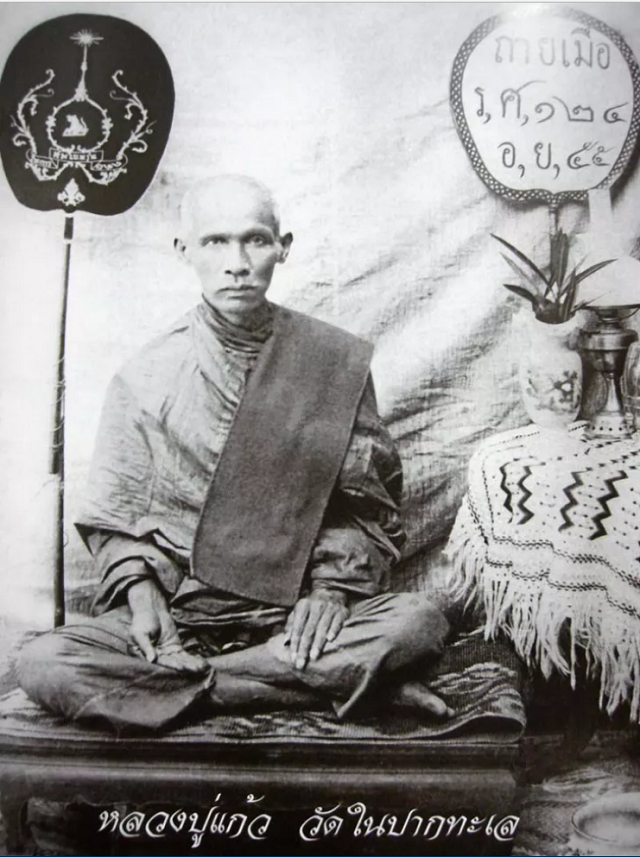
It is said that the only thing harder to find than the Pid Ta of Luang Phu Kaew, is the Photo of Luang Phu Gaew himself. However, despite these true stories, that some millionaires pay immensely high prices for such amulets, the standard price which true collectors and aficionados consider to be universal ranges between the 1000$ for a less well kept or lesser preferred model with or without certificate, to 11000$ for a top class prizewinner.


Luang Phu Gaew was one of a group of Master Monks who all possessed and practiced the Wicha of making Pra Pid Ta, all of whom are famous names, such as Luang Phu Jeen of Wat Ta Lad, Luang Phu Pu (2351 -2361 BE), Luang Porn Daeng of Wat Ang Sila, and the great Luang Por Plord of Wat Pak Tale, who was the premiere apprentice to Luang Phu Gaew, and famous in his own right for his famous Look Om amulets which he made with the remaining powders inherited from Luang Phu Kaew, as well as adding powders of his other Kroo Ba Ajarn such as Luang Por Tong Sukh’s powders of Luang Phu Iam (Wat Sapan Sung).


Luang Phu Gaew was born sometime between 2337. This is known by devotees who met and worshiped Luang Phu Gaew as he appeared on Tudong wandering in Khao Bandai it district of Petchburi, to escape being asked to become abbot of Wat Pak Tale, as the current abbot had just passed away, and he preferred the forest wandering and meditation, to administration of the worldly aspects of running a temple. Luang Phu Gaew wandered onwards until he came to rest at Khao Luang Temple, and saw it was in total disarray.

He thus rounded up devotees to help and slowly restored the temple to original condition, and the local devotees begged him to be the abbot of Wat Khao Luang. But in the eyes of Luang Phu Kaew, this was tantamount to chasing him away, as he was not inclined to accept limitations on the practices and austerities of Tudong. So Luang Phu Gaew wandered off again and disappeared into the forests on Tudong.

Later after some years of disappearance and no documentation of his life during those years, he later appeared in Chonburi and built the temple at Wat Kruea Wan, where he stayed till the end of his life, and became the great Master of Wicha Pra Pid Ta of the Chonburi Province who is considered the top number one master of all, despite the absence of a full biography and a lack of knowledge about the full details of his life. His Wicha was passed to great Masters who he was associated with all of whom became Top Masters of Historical Fame in their own Right, with some of the greatest names being his apprentices.


Below : one of the only photos we have in existence to date of Luang Phu Gaew, which has the date R.S. (Ratanakosin Year) 124 (2449 BE), and his age being 55 years old in this picture.

Luang Phu Gaew Wat Nai Pak Tale (Later Moved to Wat Kruea Wan)

Even the world famous Payak Kampant, Sian pra Maestro of the Thai Amulet Society, who released a book with 108 biographies and pictures of Great Master Monks, was not able to include the Biography and Picture of Luang Phu Kaew, due to the rarity. The Muan Sarn of the amulet, with all the aspects of an ‘Ongk Kroo’ (teacher model to accustom the eyes to the true authentic sacred powder content).


The rear face features the image of the Pra Pid Ta Ongk Pra Buddha embossed in concave. The Muan Sarn of the amulet is clear and easy to appreciate with the eye with no need of an eye loupe or magnifying glass to authenticate. This level of pristine clarity in an amulet of this age and status is so very rare to encounter indeed, making this exhibit a definite ‘Ongk Kroo Masterpiece Version’


This particular exhibit displays all the features necessary for prize winning competition entry, and already possesses a certificate of authenticity from the Samakom Song Pra Tae Mueang Siam.

The front face of the amulet glows with a truly seductive aura of beauty and its surface texture of ;Nuea Graeng’ marbled effect of the Muan Sarn sacred powders, which are the result of the contraction of the different particles within the sacred clay mixture of the amulet, as time passes and the amulets dries, and shrinkage causes small surface cracks to appear. This renders a truly beautiful example of the Pra Pid Ta Luang Phu Kaew. The features of the Buddha Image with its slender arms and its perfectly detailed relief, full of depth and character, leave the eyes unstrained when authenticating and appreciating its subtle features, and evident age. True beauty in subtlety, with a sacred muan sarn powder content that assures the wearer of high Puttakun Power and effective Kong Grapan, Klaew Klaad, Metta Mahaniyom, and Maha Lap effect. We behold before us a Master Class authenticated amulet from one of the greatest olden days master sorceror monk, of world class status.

Luang Phu Gaew (Wat Pak Tale/Wat Kruea Wan)

Filters

Filters


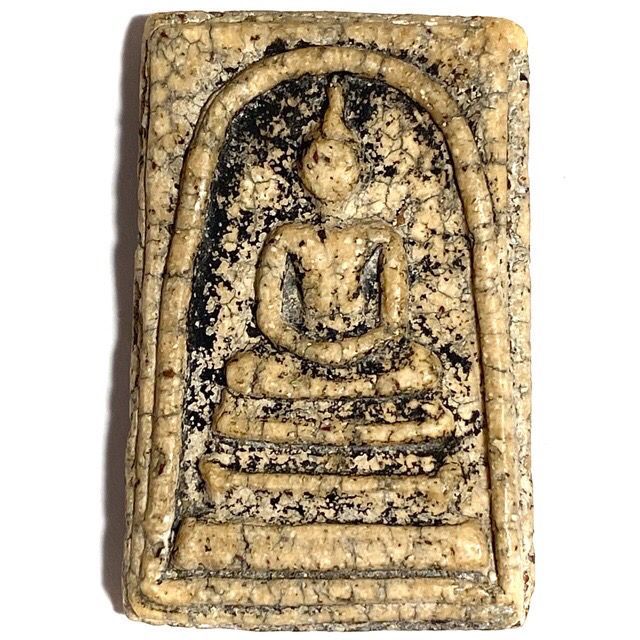
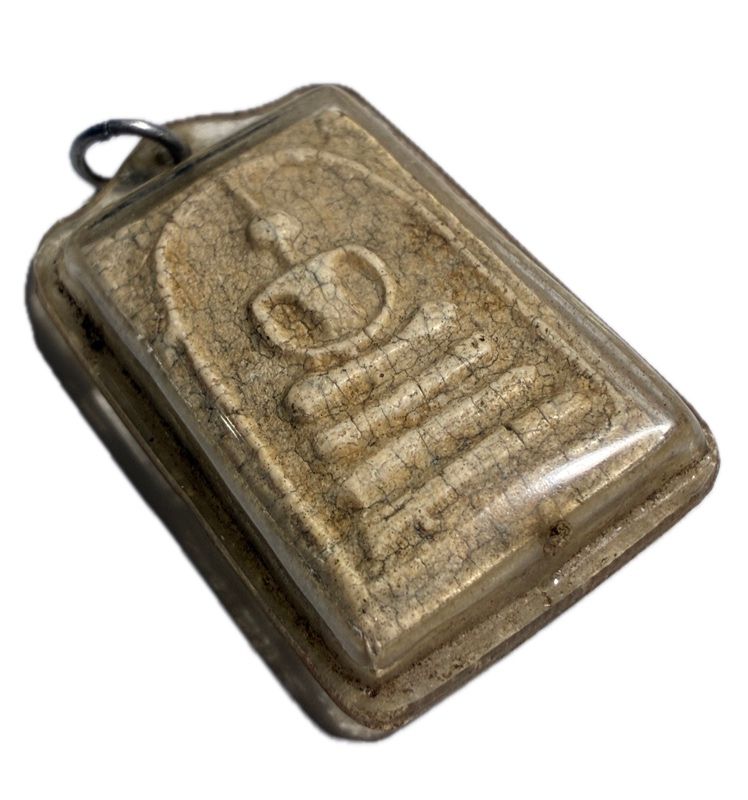
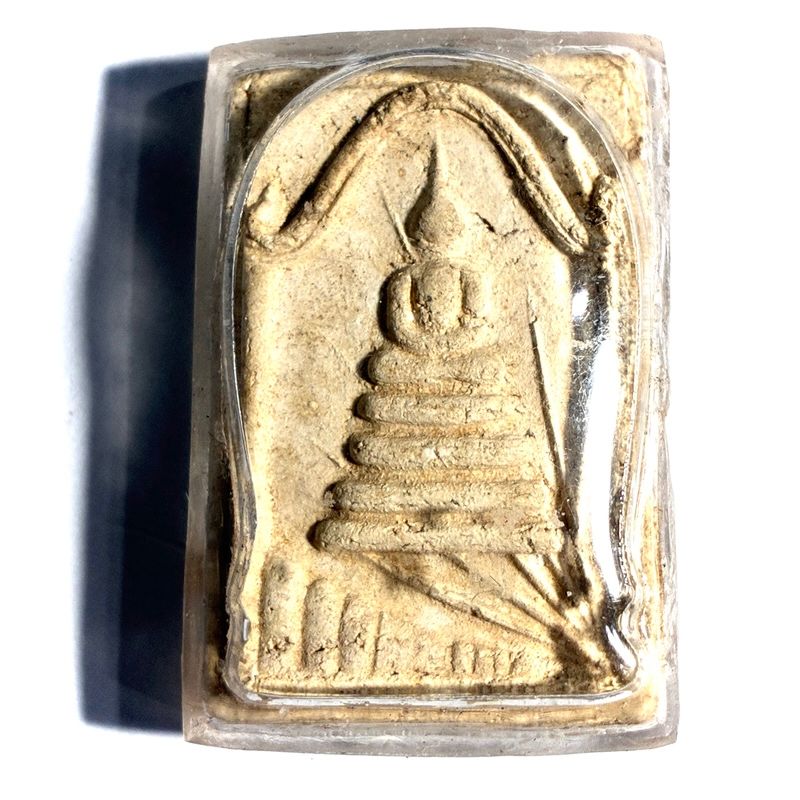
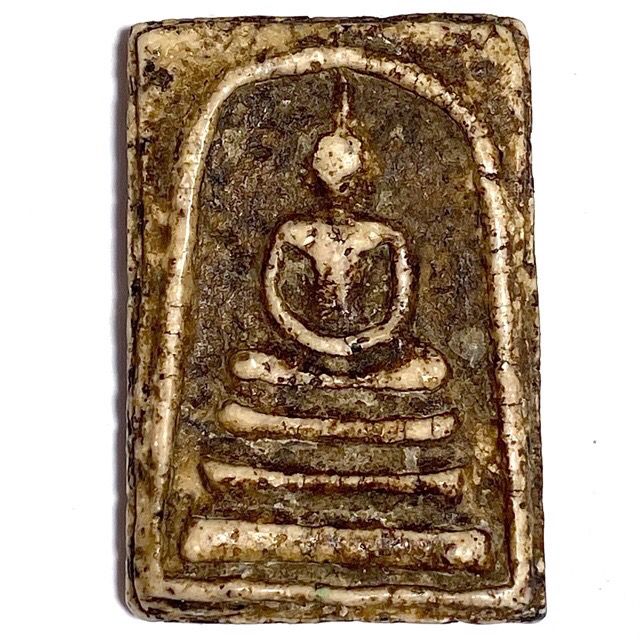
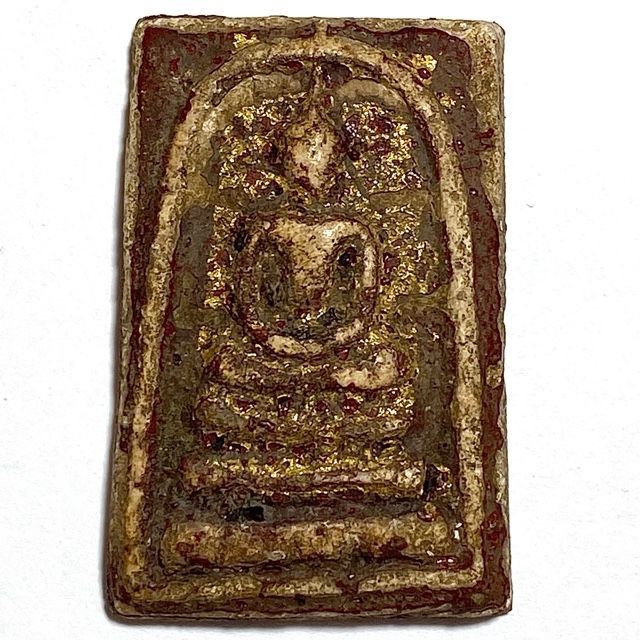
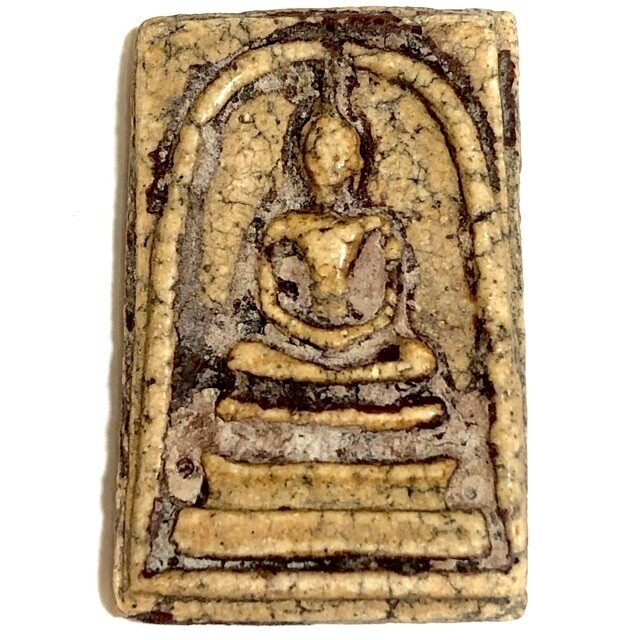
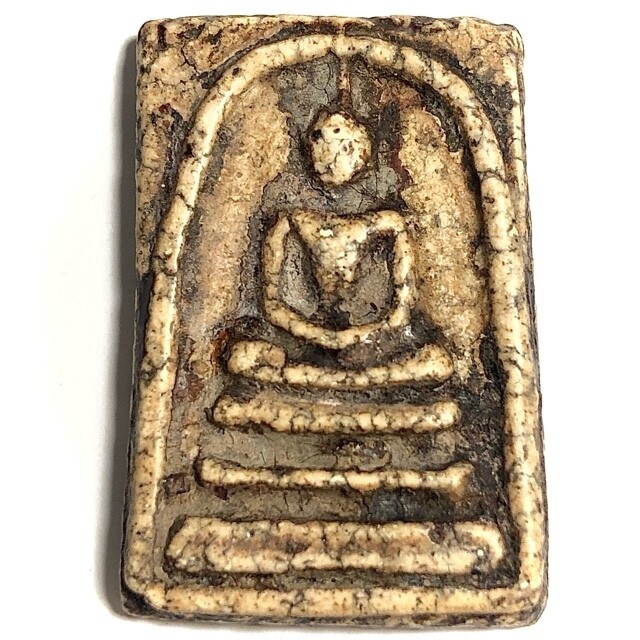
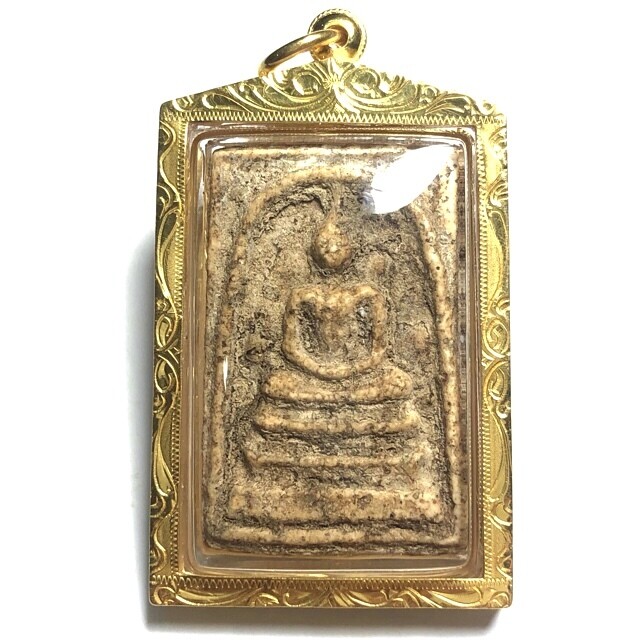
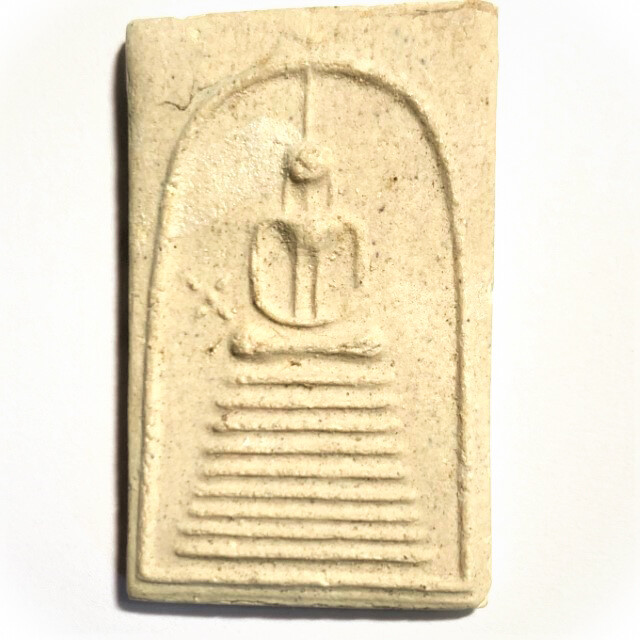
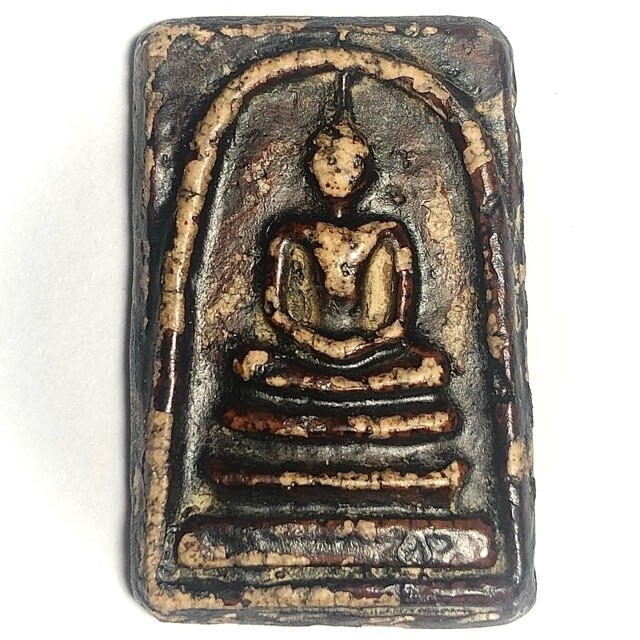
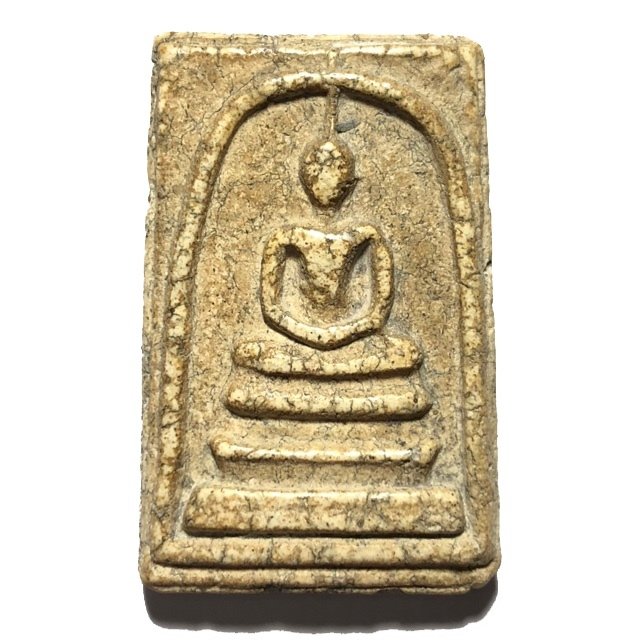
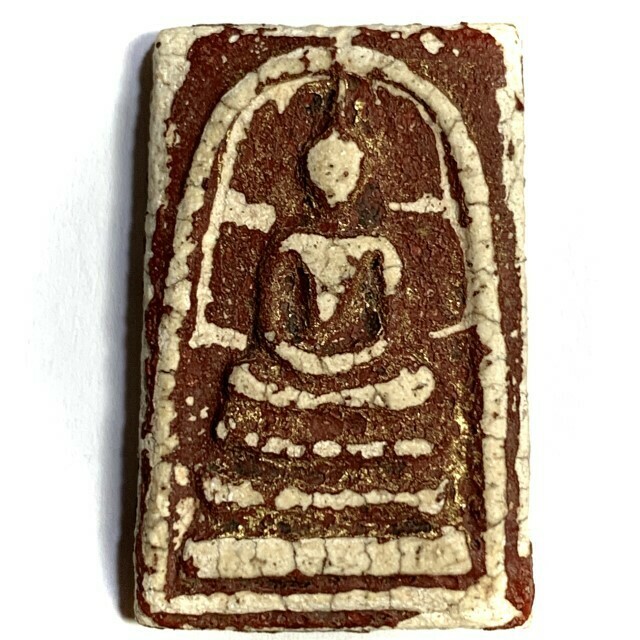
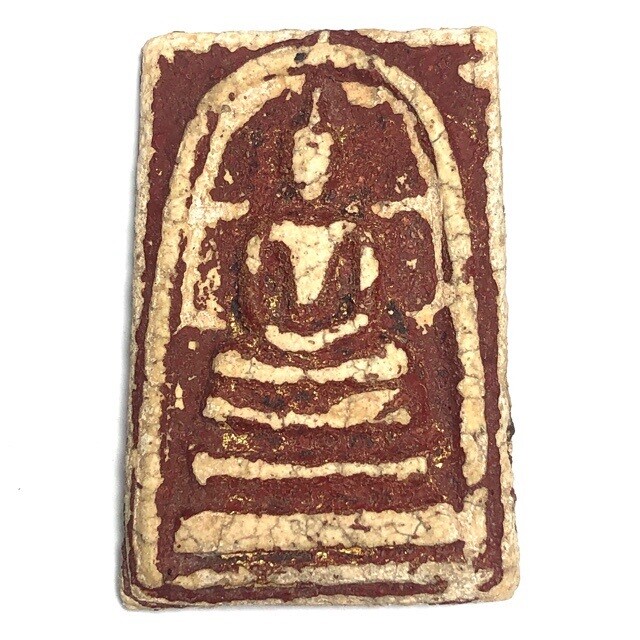
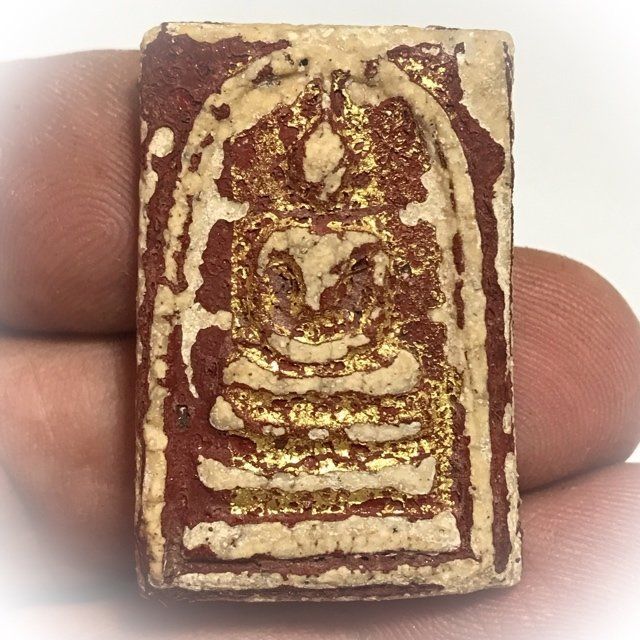
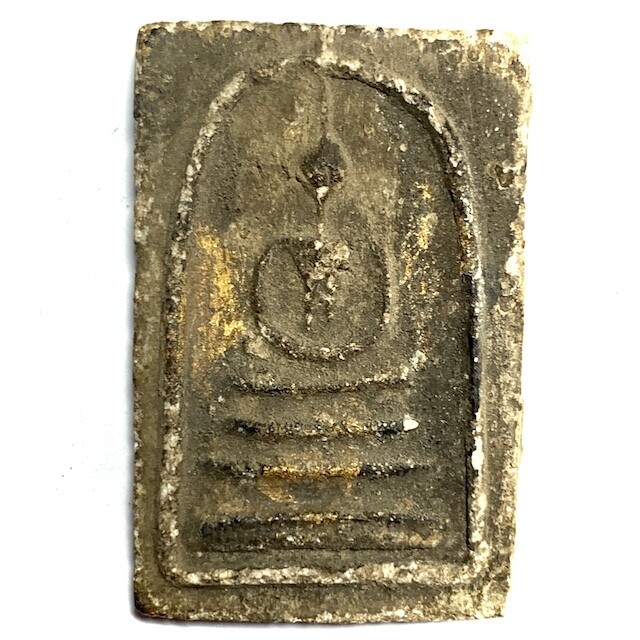
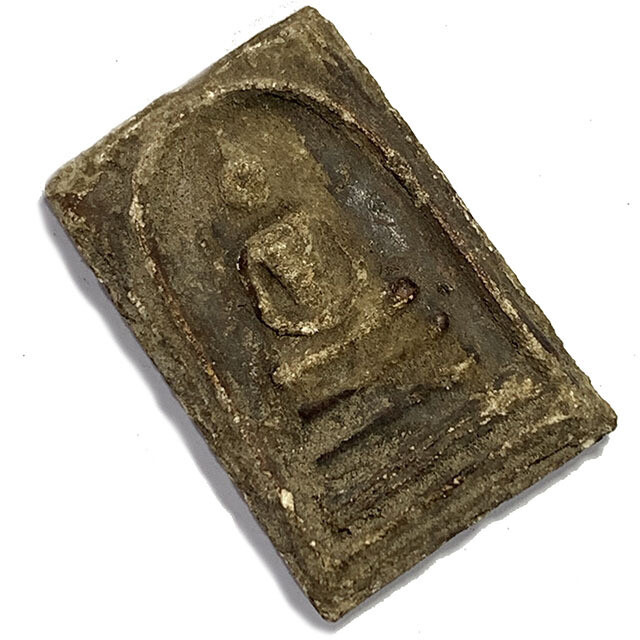
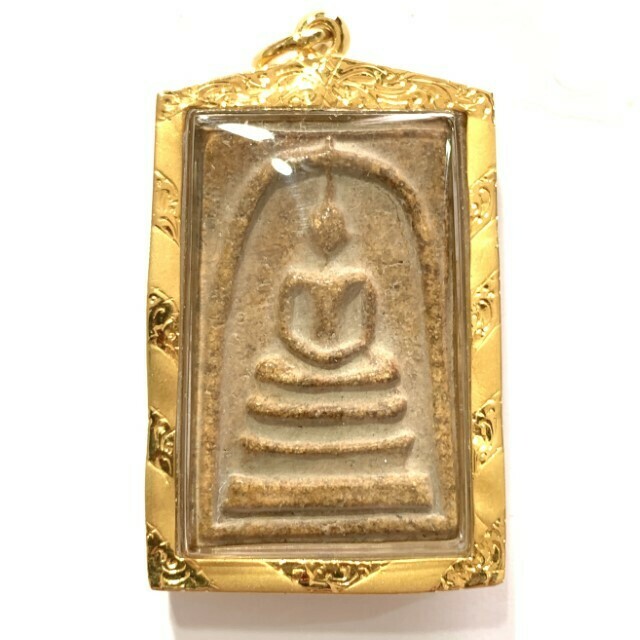
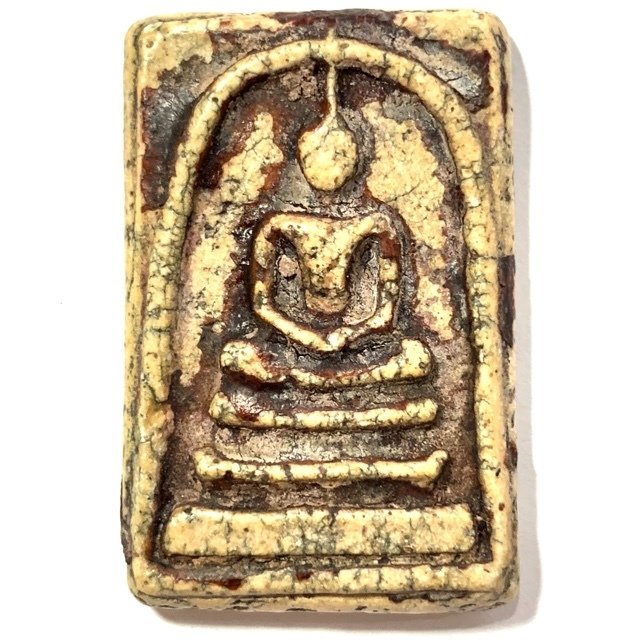
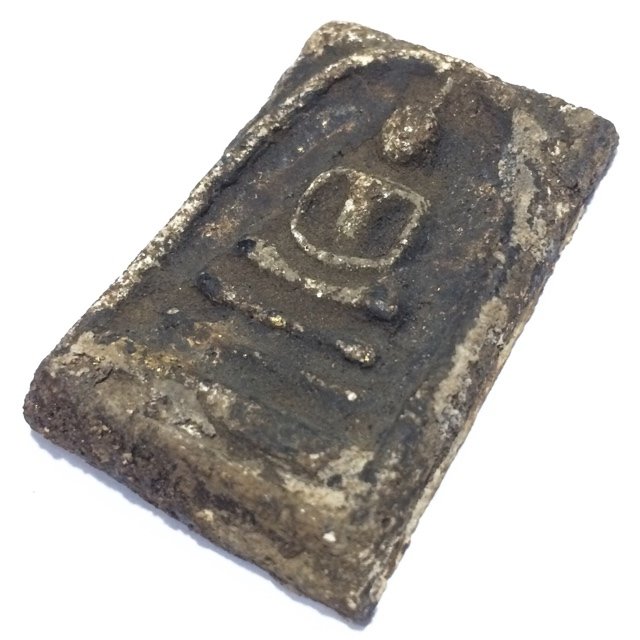
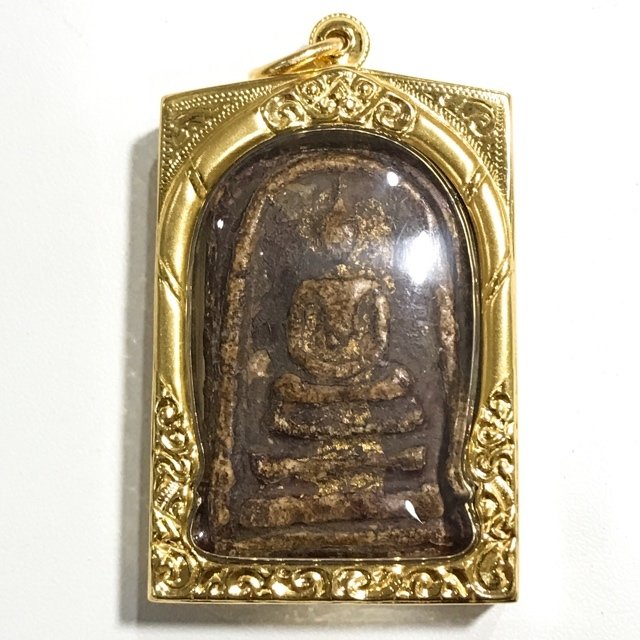
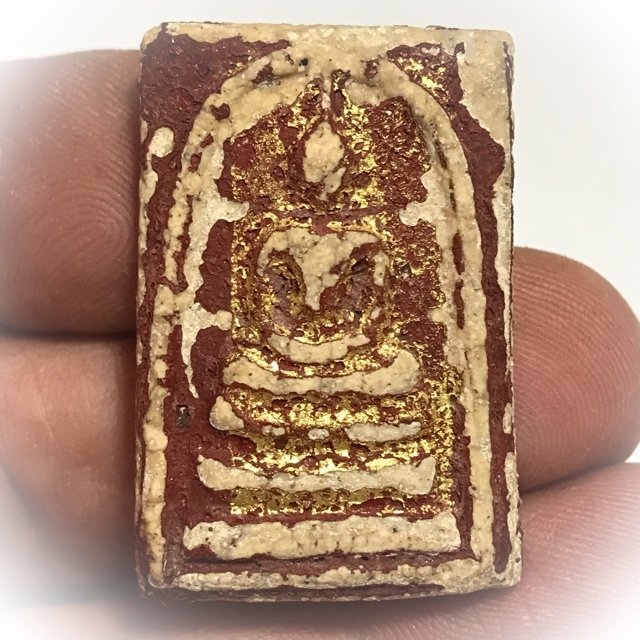
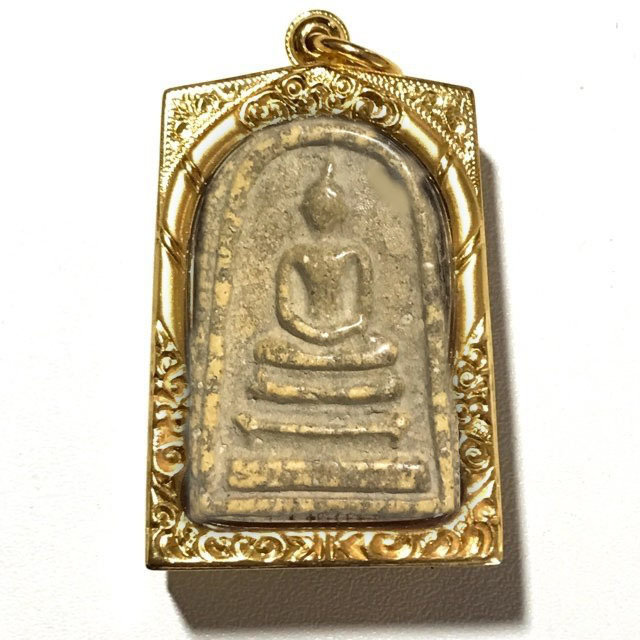
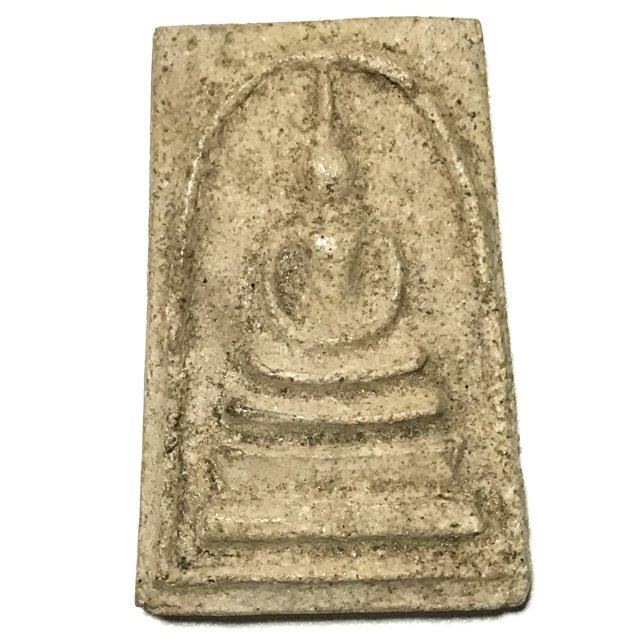
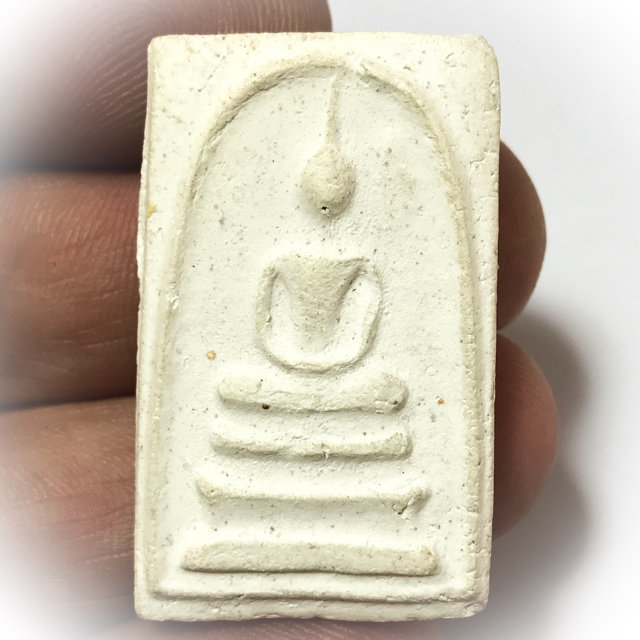
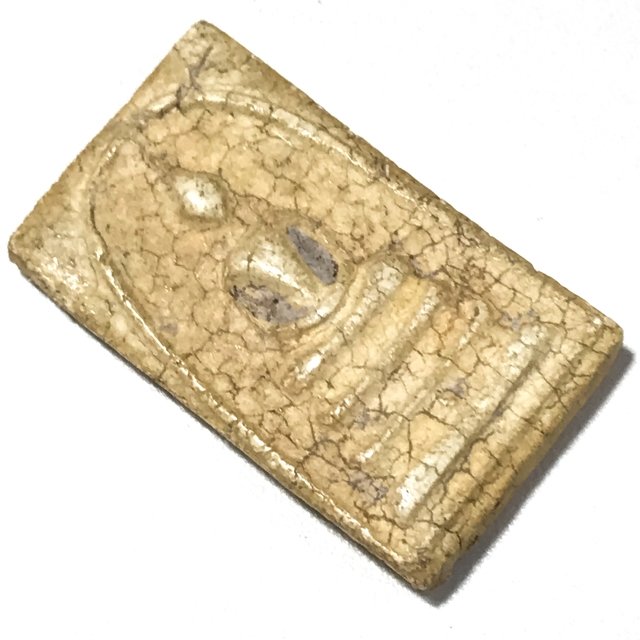
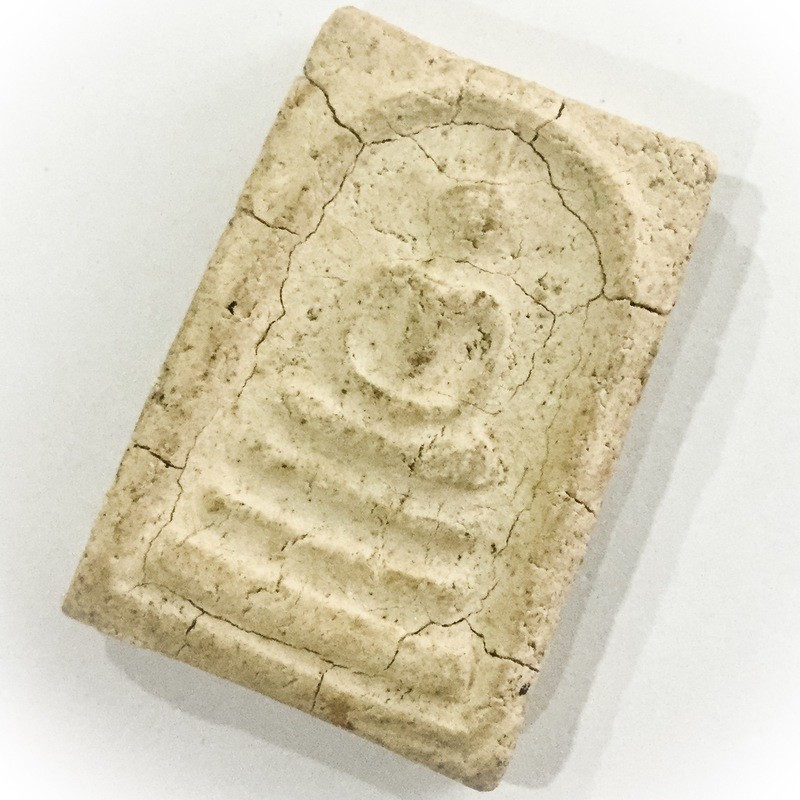
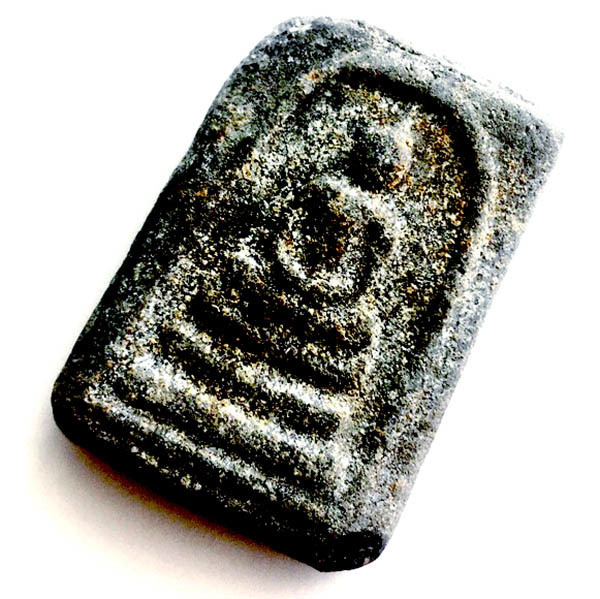
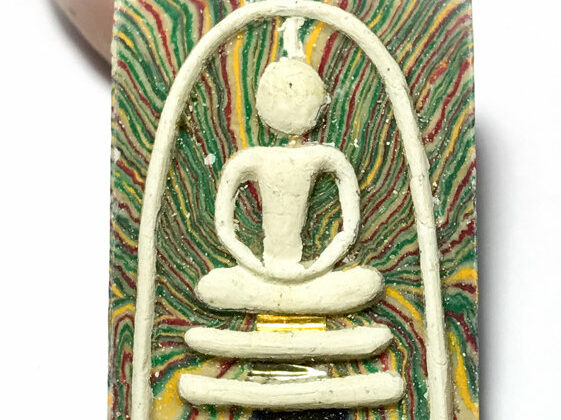
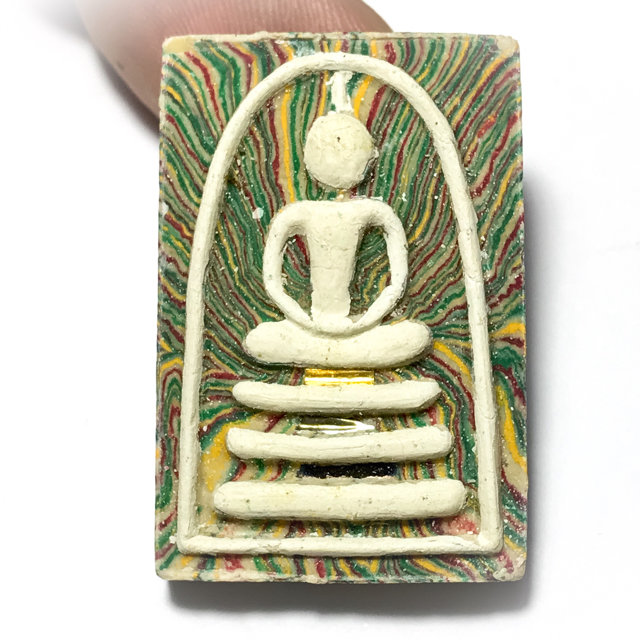
Pra Somdej Pim Yai, in ‘Nuea Dtaek Lai Nga’ (marbled stone hard clay with Crackled Ivory surface effect ​) released in 2495 BE, made from ‘Nuea Pra Somdej Wat Rakang Gao’ (broken pieces of ancient Pra Somdej Wat Rakang Kositaram amulets of Somdej Pra Puttajarn (Dto) Prohmrangsri).

Pra Somdej Wat Rakang Luang Phu Nak Nuea Dtaek Lai Nga 2495 BE

Luang Pu Nak was a highly respected and virtuous monk. He used many broken pieces of Phra Somdej Wat Rakhang amulets from that era as ingredients in creating dozens of different Phra Somdej amulets. The amulet’s composition included a high proportion of lime and oil. For the consecration ceremonies, Luang Pu Nak invited many renowned monks of the time to participate. Older amulet collectors said that Luang Pu Nak’s Phra Somdej amulets could be used as substitutes for the old Phra Somdej Wat Rakhang amulets. In the past, he always gave amulets to people who came to make merit or pay respects at the temple. He didn’t create these amulets for commercial purposes; he made them to give away, as Wat Rakhang was a large temple with many people visiting daily. Therefore, he needed enough amulets to distribute to everyone.

Pra Somdej Wat Rakang Luang Phu Nak Nuea Dtaek Lai Nga 2495 BE Ancient Amulet

Luang Pu Nak’s Phra Somdej amulets from Wat Rakhang are made with a significant amount of fragments of broken Phra Somdej amulets from Wat Rakhang. These fragments were collected from people who left them at the temple and from the discovery of many broken amulets on the roof of the temple’s main hall. Luang Pu Nak combined these fragments with his own sacred powder, following the formula of Somdej Toh, resulting in his Phra Somdej amulets, especially those from the early period (1942-1952), having a rich and potent composition, making them highly desirable.

They are considered to contain the highest proportion of Wat Rakhang fragments in Phra Somdej amulets, rivaled only by the Phra Somdej of Phra Kru Moon of Wat Suthat, the 1942 Chedi-shaped amulet. Furthermore, their spiritual power is exceptionally high, particularly in attracting compassion and popularity. Therefore, they are highly sought after. However, because he created many different styles of Phra Somdej amulets, collectors tend to focus on only certain popular styles with distinctive characteristics, such as the Three-Tiered Angel with Bayasri Ears style. The most sought-after types are the Phra Somdej amulets with Bodhi leaf design, pumpkin-shaped design, Somdej Toh image design, and bell-shaped design.

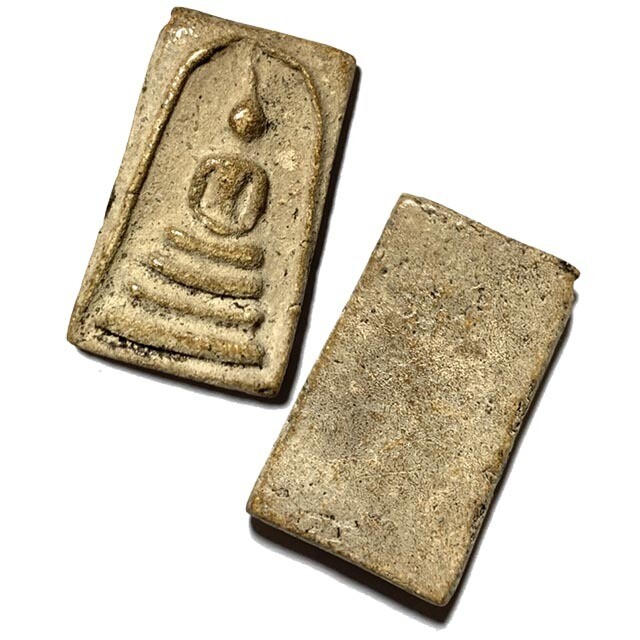
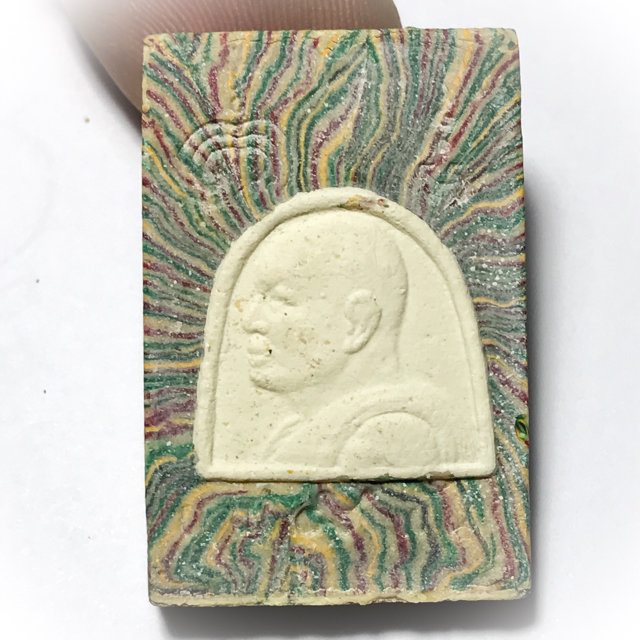
Rear Face of Pra Somdej Wat Rakang Luang Phu Nak Nuea Dtaek Lai Nga 2495 BE

Other types are less popular. Phra Somdej amulets with a rich, concentrated Somdej powder composition, or those with embedded takrut (1, 2, or 3 takrut), are extremely rare and highly sought after, commanding prices many times higher than normal. Surprisingly, Luang Pu Nak’s Phra Somdej amulets from Wat Rakhang have become incredibly famous in Malaysia and Singapore. Many tourists from these countries are buying them in large quantities, significantly reducing the current supply. In the future, this series of amulets is likely to become as popular and valuable as the Phra Somdej Bang Khun Phrom 1966.

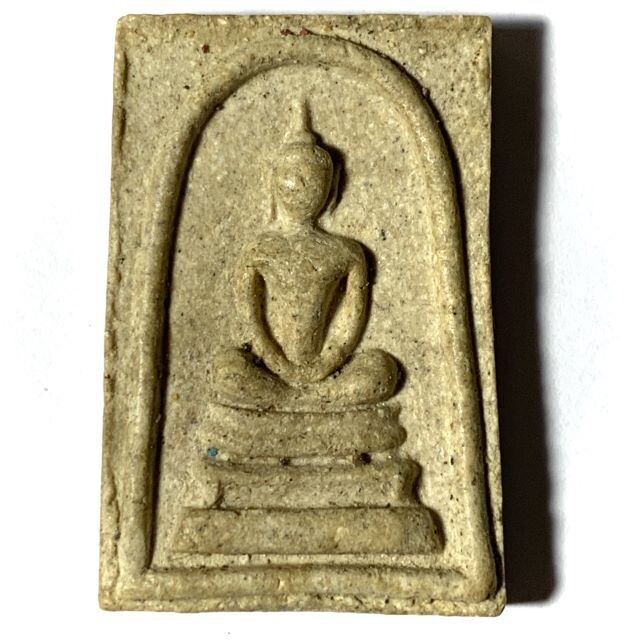
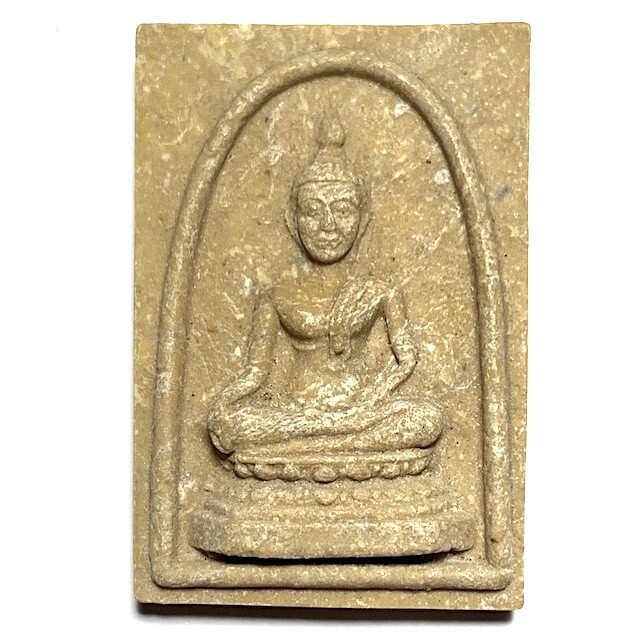
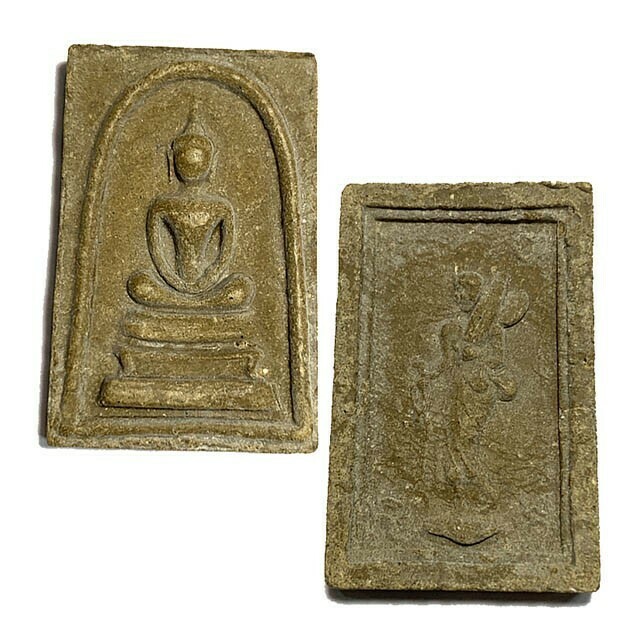
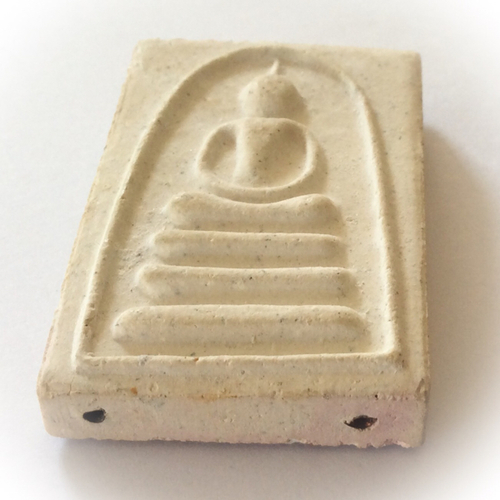
A very attractive votive tablet with Buddha in the ‘Khat Samati’ posture seated on a single tiered dais, within an arch. The Dais is shaped like a cushion, which is what gives the name to this model. Three different Masters of the Somdej Pra Puttajarn (Dto) Prohmrangsri lineage and makers of the Pra Somdej within the Dtamra of Somdej Pra Puttajarn (Dto) Prohmrangsri, have made this model of amulet, namely Luang Phu Nak, Luang Phu Hin, and Luang Por Supoj. Each Master pressed and blessed his own versions. LP HIn and LP Supoj would reputedly be present with LP Nak for the blessings of his amulets too.

Macro close up of Muan Sarn of Rear Face of Pra Somdej Wat Rakang Luang Phu Nak Nuea Dtaek Lai Nga 2495 BE

The clay of this exhibit can be classified as Nuea Graeng Dtaek Lai Nga (Crackled Ivory surface effect and Stonelike Hardened Muan Sarn Clay) and has visibly similar characteristics to the clay of Pra Somdej Wat Rakang Kositaram of Somdej Pra Puttajarn (Dto) Prohmrangsri, except the fact that the clay is visibly somewhat younger.

The study of the ageing characteristics of the clay is in itself, is part of the study of the Muan Sarn Sacred Powders of Pra Somdej Wat Rakang Kositaram, to see how authentic Pong Gao Wat Rakang Kositaram amulets made in different time periods develop their appearance and surface textures, and how to learn to recognise authentic Pra Somdej Wat Rakang Kositaram, by being able to estimate how old the clay is of a particular amulet. This exhibit is a perfect study model, as well as being a very rare and sacred votive tablet for Bucha.

Macro close up of Muan Sarn of Rear Face of Pra Somdej Wat Rakang Luang Phu Nak Nuea Dtaek Lai Nga 2495 BE 02

This pim is one of a pantheon of Pra Somdej amulets released around 2495 BE, by the great Luang Phu Nak of Wat Rakang Kositaram, and is a rare Pim that has its own special Niche group of devotees who collect and revere them especially.

A very rare authentic Ancient and Sacred amulet from Luang Phu Nak, one of the Great Abbots of Wat Rakang Kositaram temple. The Pra Somdej of Luang Phu Nak are extremely sought after by both Thai Buddhists and Foreign Devotees alike, for the fact that Luang Phu Nak used more old Pra Somdej amulets from LP Dto Prohmrangsri than any other masters of Wat Rakang History.

This exhibit has a smooth dense marble-like creamy clay, that is well hardened with age (Nuea Graeng), and is an extremely attractive exhibit for these features.

The 2495 BE edition is a highly recommendable amulet for devotees who seek a top class amulet at a still affordable price. that is prestigious, sacred, and of high Pedigree. Luang Phu Nak is known to have released editions in the years 2485 – 2495, 2499, 2500, 2504, 2507 and 2509 BE and his final edition Sae Yid 7 Rorb of 2511 BE, as well as releasing editions at other temples.

Close up of Muan Sarn through orifice in rear face of casing of Pra Somdej Wat Rakang Luang Phu Nak

These amulets are the perfect and best second choice to the Pra Somdej Wat Rakang amulets made by Somdej Dto Prohmrangsri which have now become either unavailable, or too expensive to even consider renting.

The amulets of Luang Phu Nak are also a perfect reference material for the study of Muan Sarn Sacred Powders of the Wat Rakang Kositaram amulet of Somdej Pra Puttajarn (Dto) Prohmrangsri, due to the presence of large quantity of original Pra Somdej Somdej Pra Puttajarn (Dto) Prohmrangsri within the sacred clay of Luang Phu Nak’s amulets.

Luang Phu Nak and the Pra Somdej Wat Rakang

Luang Phu Nak’s first edition of amulets was made in 2485 BE along with the Pra Somdej Song Taewada Ok Dtan, the Pra Somdej Sam Liam (triangle shape), and the Pra Somdej Dto Nang Borigam models.
The Pra Somdej amulets made by Luang Phu Nak contained a massive quantity of crushed up Pra Somdej amulets made by Somdej Dto Prohmrangsri of Wat Rakang.

The amulets were from a repository which Luang Phu Nak had collected over the years, from Looksit who brought their broken amulets to return to the Temple, as well as a sackful he found in the roof of the Prayer Room (‘Bote’ in Thai). They are thus the second choice of those wishing to posess the magic of Pra Somdej Wat Rakang LP Dto Prohmrangsri.

Pra Somdej Wat Rakang LP Nak

Luang Phu Nak believed that the Pra Somdej amulets made by Somdej Dto had inimitable magical qualities and special power within the Muan Sarn (sacred powder used to make the amulets), and because of the meditative power of Somdej Dto who blessed them.

Therefore apart from being made by one of Thailands great gaeji Ajarn, and being an authentic ancient Wat Rakang Amulet, it is also Sacred for the fact that it contaiins original Somdej Dto Wat Rakang Amulets in the Sacred Powder mixture, rendering them powerful through the incantations and Yantra Inscriptions of Somdej Pra Puttajarn (Dto) Prohmrangsri himself, through transmission of Muan Sarn Sacred Powders.

In our opinion, the only main difference between this amulet and an original Somdej Dto is the price, and the face that the Somdej Dto amulets are perhaps more of something to brag about, which is not really the intended reason for owning an amulet. Sacred Thai Amulets are intended primarily as Puttanussadti (remembrance and respect to the Buddha), especially Pra Somdej.

Pra Somdej Wat Rakang LP Nak 03

The surface of the amulet is smooth to touch, and shows authenticity through its dryness and the signs of aging when examined using the criteria used by experts for authentication of sacred ancient amulets. This exhibit has a very crisp and clear relief and is highly defined, which is referred to in the special vocabulary of the amulet community as ‘Nuea Graeng’, which is a more marble-like domino-dense admixture which despite dryness, tends to have a shiny ‘wet-look’ to it. The other main type of texture used in amulet communities is ‘Nuea Jad’ meaning something like ‘very crisp detailed relief’

This Pra Somdej, apart from being made by one of Thailands great Gaeji Ajarn, and being an authentic ancient Wat Rakang Amulet, it is also Sacred for the fact that it contaiins original Somdej Dto Wat Rakang Amulets in the Sacred Powder mixture too. This also makes complete sense, with Luang Phu Nak being a subsequent Gaeji Ajarn of Wat Rakang Kositaram, and a Looksit of Somdej Pra Puttajarn (Dto) Prohmrangsri.

Luang Phu Nak’s amulets are of great popularity because they are a great alternative to the original and extremely expensive Somdej Dto amulets, and are considered to be powerful and sacred through their use of the broken amulets and powders of Somdej Pra Puttajarn (Dto) Prohmrangsri, and the blessings of Luang Phu Nak.

The chances of owning an amulet like this are becoming less and less in recent years, and soon it will be practically impossible to obtain authentic old Wat Rakang amulets. There are ever more collectors and ever less amulets on the market, and there is no higher esteemed amulet than the Pra Somdej Wat Rakang Kositaram family. The amulets were made using the following ingredients

Powder from the chalk sticks used in the making of Pong Saksit (sacred powder for amulet making), Rice fragments kept by Luang Por Dto, the 5 Sacred Powders of; 1. Pong Putta Kun, 2. Pong Bpatamang, 3. Pong Trinisinghae, 4. Pong Maha Rach, 5. Pong Itti Jae Powder

The chalks used in the making of the Bpatamang, Trinisinghe Maharach and Itijae powders were mixed with sacred water that squeezed from the leaves of seven kinds of Thai plant including Bai Tamlueng , Yord Sawad, Yod Ga Hlong, Yod Raksorn,Chaiyapruek, Rachapreuk and Dork Mali (jasmine).

Pra Somdej Wat Rakang LP Nak 05

All of the ingredients of the Wat Rakang amulets were mixed with;

Nuea Pong (powder substances), Klee Saema (broken pieces of temple wall stones, Gaesorn Sut Bongot (pollen from the Bongot lotus flower), Kluay Nam Tai (a kind of Thai banana) mixed with sap from the rubber tree (Yang Madtum), Plueak Hoy (white clam shells), Nam Man Jantr (jasmine oil), Nam Man Dtang Iw (aromatic resinous oil used to congeal and cement the amulet mix with).

One hundred and eight kinds of flowers collected by LP Dto Prohmrangsri, Sacred powders and pollens (Pong Saksit), Pong Bpatamang – Klaew Klaad Kong Grapan, (protection from injury and accidents), Pong Puttakun – for great charm and avoid danger (Maha Sanaeh and Klaew Klaad magic), Pong Tri Ni Singhe – attractiveness…., Pong Maha Rach – power and respect.

Pra Somdej Wat Rakang - detail 6

Pong Itijae Powder – Metta Mahaniyom – this increases the likability of the wearer of this magic, Sacred Flowers and magical plants, Dork Sawad – Metta Mahaniyom, Sanaeh, Dork Gahlong – love charm., Dork Raksorn – love and metta, Dork Ga Fag Rak – love and attraction charm…., Dork Chayapruek – power and protection from danger, Dork Rachapruek – Amnaj and Klaew Klaad (commanding power and avoid accidents), Dork Waanangkurm -Kong Grapan Klaew Klaad, Dork Waan – Klaew Klaad, Dork Waan Sanah Junkhao – charm and protection from danger.

Pra Somdej Wat Rakang Luang Phu Nak - detail 7

​Dork Wan Sanah Jundum – charm and protection from danger, Dork Wan Sanah Jundang – charm and protection from danger, Dork Wannangkuak – charm, Waan Pra Buddha Jaoluang – charm and protection from danger, Bai Plu Ruam Jai – charm, Bai Plu Song Tang – charm and protection from danger, Pong Gaesorn Ha Bua – five lotus pollens, Kesorn 108 – charm and protection from danger.

Filters

Filters
Pra Somdej Pim Gaes Jarot Sum Pim Gaes Iang Niyom Long Rak Chart Somodej Dto Wat Rakang Kositaram
Free Shipping Worldwide (we do not state or declare true price to counter tarrifs tax on customers), & Offer of Free Solid Silver Casing Included
SKU 04783
$1,699


Luang Por Tong Sukh Intachoto, who was later bestowed the ecclesiastical title Pra Kroo Pinit Suttakun, was an immensely revered monk of Phetchaburi Province, and abbot of Wat Tanode Luang. He has long been revered by local communities and devotees in nearby regions, particularly among those who place faith in amulets connected with Maha Ud, Klaew Klaad (Pronounced ‘Klew Klaart’), Kong Grapan Chadtri (Pronounced ‘Kong-Grapan-Char-Tree) protection, invulnerability, and danger avoidance.

LP Tong Suk Intachoto

According to historical accounts consistently found across Thai-language sources, Luang Por Tong Sukh was a monk strict in monastic discipline and deeply accomplished in protective esoteric knowledge (wicha). His mastery belonged to a traditional central-Thai lineage emphasizing kong grapan, klaew klaat, and maha ud. He played a significant role in the administration, restoration, and support of Wat Tanode Luang during a period when social conditions were unstable and personal security was a major concern for the local population.

His reputation became especially prominent during the mid-20th century. At that time, his amulets were widely sought by individuals in high-risk professions such as local toughs, gunmen, police officers, and soldiers. This reflects the social realities of the era rather than an endorsement of such lifestyles, and provides historical context for the strong belief in the protective and invulnerable qualities attributed to his sacred objects.

The sacred amulets attributed to Luang Por Tong Sukh, that are consistently recognized in Thai sources can be categorized as follows.

First, coin amulets of Luang Por Tong Sukh. The most important and widely accepted is the second generation coin, created in Buddhist Era 2498 (1955). This coin is regarded as the principal amulet of the Wat Tanode Luang lineage. It was produced in several metals, including copper, silver, and gold. Copper examples are the most commonly encountered and are the most popular in the collector market.

Rian Luang Por Tong Sukh

A key point of classification is the die detail of the vowel “I” above Luang Por Tong Sukh’s name. These are divided into the “I touching the rim” type and the “I floating” type. The “I touching the rim” variety is regarded as the popular block and commands higher demand. The attributed powers repeatedly cited are maha udom, kong krapan, klaew klaat, and good fortune, with many experiential accounts traditionally associated with these coins, especially within Phetchaburi and surrounding provinces.

Takrut Luang Por Tong Sukh Pork Krang

Second, takrud amulets. These include lacquer-coated takrud and takrud associated with protective and Sariga (celestial magpie pronounced ‘Saa-ri-gar) bird Wicha related traditions. They are typically metal sheets inscribed with sacred formulas, rolled into tubes, and coated with lacquer or ritual substances according to established formulas. Their primary attributed qualities are protection, danger avoidance, and charm. Sizes and forms vary depending on the period of creation.

Third, look om and look sakot krang. These are small bead-like charms made from lacquer or herbal mixtures prepared according to traditional methods. They are intended for personal carrying and are believed to provide general protection and safety. These items are usually handmade and do not follow standardized molds.

Fourth, krang-based powder amulets. These are folk-style molded amulets made from powder or lacquer-based materials. Thai sources describe them as having been distributed on specific occasions within the temple or to close disciples, rather than produced in large commercial quantities.

After the passing of Luang Por Tong Sukh, the lineage of his wicha at Wat Tanode Luang continued through his principal disciple, Luang Por Phaeo. Luang Por Phaeo was the prime apprentice (looksīt) of Luang Por Tong Sukh and later became abbot of Wat Tanode Luang. He is widely recognized as the direct inheritor of Luang Por Tong Sukh’s ritual knowledge, protective formulas, and consecration methods, ensuring continuity of the temple’s spiritual lineage rather than a break or reinvention.

Luang Por Phaeo’s role was not merely administrative. Thai sources consistently describe him as actively practicing and transmitting the same core wicha of protection and invulnerability learned directly from his master. This continuity is an important factor in how collectors and devotees understand the posthumous legacy of Luang Por Tong Sukh.

The sacred objects of Luang Por Phaeo of Wat Tanode Luang, as recognized in Thai collector circles, include coin amulets issued during his abbacy, takrud prepared according to the Wat Tanode Luang lineage, and other consecrated objects created for temple construction, merit-making, or specific ceremonial occasions. These items are generally regarded as lineage extensions rather than substitutes for the original-era amulets of Luang Por Tong Sukh and their value and status are assessed accordingly.

Within the Thai amulet market, Luang Por Tong Sukh’s amulets—especially the second generation coin—are firmly established as core items of the Phetchaburi lineage. They are often sought as companion pieces to the first generation coin of Luang Por Daeng of Wat Khao Bandai-It, a contemporary monk from the same regional and temporal sphere of belief.

Market value varies greatly depending on condition, metal, and die type. Coins in original, well-preserved condition and of popular dies command significantly higher value. Price figures commonly cited in Thai sources function as general market references rather than fixed or guaranteed valuations.

Luang Por Tong Sukh (official name: Pra Kroo Pinit Suttakun) of Wat Tanode Luang, was a historically  famous and incredibly highly revered holy sorcerer-monk, whose amulets possess a distinct lineage identity, focused and centered on his famous protective wicha. That lineage continued directly through his prime disciple Luang Por Phaeo, ensuring continuity of ritual mastery and consecration practice at Wat Tanode Luang. The information presented here represents the core body of knowledge consistently shared across Thai language sources and reflects the generally accepted framework within the Thai amulet community.

Filters

Filters
Sold out
Takrut Tone Ying Mai Ork Pork Nuea Krang 2 x 1.2 Cm Luang Por Tong Sukh 2470 BE
Small Version of Luang Por Tong Sukh's Legendary Takrut Pork Krang Amulet, that is extremely rare to find in this size.
SKU 04228
$135
Out of stock


Life and Amulets of of Luang Por Jong, Wat Natang Nok

The Epitomy of Compassion and Protective Power  – An Immortal Legend That Never Fades

Luang Por Jong Wat Na Tang Nok

Within the circles of master amulet collectors, it is impossible to omit the name of Luang Por Jong Buddhāsaro of Wat Natang Nok when discussing the great monks of the Indochina War era. He was honored as one of the “Four Heavenly Masters” alongside Luang Por Jād, Luang Por Khong, and Luang Por Ī. Together, they were remembered under the legendary phrase “Jād – Jong – Khong – Ī.” Luang Por Jong’s reputation rested on both his mastery of invulnerability magic (khongkrapan chatri) and his extraordinary aura of loving-kindness, earning him the title “The God of Compassion.” This study therefore seeks to examine his life and influence in detail to deepen understanding of his legacy among experts.

Early Life and Background
Luang Por Jong, formally known as Phra Athikan Jong Buddhāsaro, was born on Thursday, March 6, 1872, in Ban Na Mai, Bang Sai District, Ayutthaya Province, during the early reign of King Rama V (King Chulalongkorn). He was the eldest child of Mr. Yot and Mrs. Klip, with two younger siblings: Mr. Nin and Ms. Plik. Later, Mr. Nin also became ordained and eventually became abbot of Wat Natang Nai.

Luang Por Jong, Ancient Master Monk of Wat Na Tang Nok

As a child, Luang Por Jong’s health was weak. He suffered from chronic parasites, poor eyesight, and partial hearing loss, and was thin and frail. However, unlike most children, he showed a natural inclination towards Buddhism, often visiting temples and engaging in merit-making. At the age of 11, his father arranged for him to be ordained as a novice monk at Wat Natang Nai. Remarkably, after ordination, all his illnesses disappeared. This was seen not only as a miraculous healing but also as evidence of accumulated merit from past lives, revealed through the act of ordination. The event greatly influenced local belief in his spiritual power, becoming the foundation of his later reputation as a miracle-working monk.

In 1892, at age 21, he was ordained as a monk at Wat Natang Nai. His preceptor was Luang Por Sun of Wat Bang Plamo, with Phra Ajahn In, abbot of Wat Natang Nok, serving as his kammawācācariya (reciter of the ordination formula). He also studied with other famous teachers, such as Luang Pu Pan of Wat Phikul Sokhan, who shaped him into a master of sacred Buddhist magic.

Miracles and Legendary Accounts: From Ghost Soldiers to Sacred Sand
Luang Por Jong’s powers became widely recognized during the Indochina War. Amulets blessed by him were distributed to Thai soldiers, leading to extraordinary battlefield experiences. The most famous tale was that of the “ghost soldiers.” Soldiers wearing his protective shirts or carrying his amulets reportedly survived gunfire unharmed; some who were shot down rose again to continue fighting, causing enemy troops to nickname them “ghost soldiers.”

Another well-known story was the legend of the “sacred sand.” During wartime, Luang Por Jong was invited to board an airplane and scatter consecrated sand to protect the land below. Pilots testified to this event, demonstrating the adaptation of traditional magic into modern contexts. These accounts cemented his reputation as a monk whose influence extended into the national history of Thailand.

Roop Tai LP Jong Sacred Blessed Photo

Roop Tai LP Jong Sacred Blessed Photo

Luang Por Jong passed away on February 17, 1965. His death was linked to a cryptic prophecy he once made: “When the lottery draws triple zero, that will be the day of my death.” On the very day of his passing, the winning number was indeed 000, confirming his words and strengthening faith in his supernatural insight.


Catalog of Sacred Objects – Forms, Materials, and Authenticating Marks

Introduction
For collectors, Luang Por Jong’s sacred objects are not merely charms but historical witnesses to miraculous experiences. Because they were directly connected to wartime survival stories, their value has soared; some coins now command prices from hundreds of thousands to millions of baht. With such demand came counterfeits, making knowledge of authentic features—shapes, materials, and flaws—an essential skill for any serious collector.

Rian Sema LP Jong 2485 BE Solid Gold

Rian Sema LP Jong 2485 BE Solid Gold

1. The Classic Coins

  • First-Era “Sema” Coin (1942)
    Created to commemorate a Buddha image casting and prayer hall construction. Two main versions exist: “large face” and “small face.” The most prized are those with the rear inscription “B.E. 2485” (1942) arched along the edge, known as “arched BE.” Made mostly in copper, the rarest pieces retain their original reddish “fire-skin” patina, fetching up to millions of baht. Silver- and gold-plated versions also exist. Authentication requires checking facial details, fine hairlines, overlapping edge lines, and the “pan depression” (a concave surface caused by traditional pressing). Genuine coins also show “protruding rim metal” and gear-like edge cuts from old presses.

  • Six-Cycle “Sema” Coin with Lion Reverse (1944)
    Struck to celebrate his 72nd birthday, often called the “novice face” coin due to its youthful portrait of the master. Thin copper and alpaca were used, and pieces typically display a “pan depression” and filing marks along the rim, proving authenticity.

  • Seven-Cycle Coin with Inscription Reverse (1956)
    Created to fund the construction of a new school building at Wat Natang Nai, initiated by his younger brother, Luang Por Nin. This marked a shift from wartime amulets to educational patronage. Exactly 500 silver and 5,000 copper coins were produced. The coin’s front bears protective mantras including the essence of Buddhist sutras, symbolizing the deep integration of doctrine into the consecration ritual.

2. Esteemed Talismans

  • Takrut (scroll charms): Made in different sets, such as single takrut ton, sets of 4, 12, or 16, and the special Maha Rud takrut. Believers used them differently: worn in front for invulnerability or at the back for escape and avoidance. Materials included copper, lead, and in rare cases tiger forehead skin.

  • Yantra Shirts and Cloths: Particularly popular during wartime, such as the Lion Power shirt and the 16-lotus Lion yantra cloth. They were believed to grant invulnerability, protection, and authority. Red and white versions existed, with long-sleeved examples being the rarest.

  • Other Charms: These included woven fish talismans in silver or gold, the “Rak-Yom” figures for attraction, the Chimphalee flag for prosperity, and consecrated waist cords made by villagers and blessed by him.


Lessons for Modern Collectors

Studying Amulets in the Digital Age: “Sharp Eyes Before Gentle Ears”
Today’s market is flooded with counterfeits, making it dangerous to rely only on hearsay. Collectors speak of fakes as “bullets” ready to strike careless buyers, leading them to be “cheated” or “burned.” To advance in the field, one must develop sharp visual discernment (ta thueng) rather than being easily swayed (hu mai bao). The surest path is to memorize the authentic features of genuine amulets, especially flaws that counterfeiters cannot reproduce, such as edge cuts, protruding rims, and pan depressions.

Rian Sema LP Jong

Summary Table: Popular Coins of Luang Por Jong, Wat Natang Nok

Model Year Features Materials Key Authenticators
First Sema 1942 Large/Small Face, “Arched BE” Copper, Silver, Gilt Sharp portrait, fine hairlines, pan depression, protruding rim
Six-Cycle 1944 Lion reverse, “Novice Face” Copper, Alpaca Youthful face, pan depression, filed rim
Seven-Cycle 1956 Inscription reverse 500 Silver, 5000 Copper Protective mantras on front, detailed script on back

The Beauty of Buddhist Art and the Power of Sacred Merit

The sacred objects of Luang Por Jong are significant not only for their legendary spiritual power, attested to in tales of ghost soldiers and sacred sand, but also for their historical value. They reflect the deep faith of people seeking spiritual refuge in wartime. Studying these amulets is not only about spotting authentic flaws but also about understanding the beliefs, way of life, and history of an era.

Ultimately, according to Buddhist tradition, any amulet—whether priceless or ordinary—becomes truly effective only if the devotee has sincere faith, practices virtue, and remembers the spiritual guidance of their master. Through this, the sacred objects of Luang Por Jong continue to serve as true sources of inspiration and refuge.

Luang Por Jong (Wat Na Tang Nork)

Luang Por Jong Puttasaro (Wat Na Tang Nork)Luang Por Jong of Wat Na Tang Nork was one of the great Guru Masters of the Ayuttaya Province, in line with the Great Luang Por Parn of Wat Bang Nom Kho, and is one of the Great Masters who assisted the Thai Military with powerful Kong Grapan Chadtri and Klaew Klaad amulets during the Indochina Wars. Luang Por Jong lived from 2415 BE to 2508 BE, and was one of the previous generation of attained Masters, of National and International Fame. Known for his Kong Grapan Chadtri Klaew Klaad protective amulets handed out to soldiers during the Indochina Wars, his Pla Tapian Maha Lap Kaa Khaay amulets are also renowned for their ability to instigate good commerce and prolific sales quotas with sales persons.

Filters

Filters


The Khun Phaen Nang Kumarn Tong Votive Tablet by Luang Por Guay

The Khun Phaen Nang Kumarn Tong tablet occupies a unique place among the votives created by Luang Por Guay of Wat Kositaram. Fashioned in 2513 B.E. as part of the Run Prasopgarn (“Proved Powerful by Experience”) series, it is composed of Nuea Aathan, a sacral blend of consecrated earth, funerary ashes, powdered bone and Pong Wosed yantra powders. This smooth-backed Hlang Riab variant incorporates the necromantic image of a Hoeng Prai, or child-ghost beneath Khun Phaen’s throne, lending the model an unusual ritual potency within Luang Por Guay’s pantheon.

in hand khun phaen nang kumarn luang por guay hlang riab

The tablet features the image the Buddha in the Mara Vichai posture, one with both hands placed together performing incantations. The figure is enclosed within a crystalline arch and bears elongated earlobes, a classical signifier of awakened wisdom. Beneath this scene rests the Kumarn Tong, the Golden Child Deva, depicted in youthful plenitude. The reverse may appear as an unadorned smooth surface or, in its alternate form, as a seated Kumarn Tong whose rounded belly and serene expression evoke prosperity and well-being.

These amulets were principally bestowed upon disciples who sought Sak Yant tattoos from Luang Por Guay, most famously receiving four Hanuman designs across the back, chest and each arm. Many recipients belonged to the Nak Leng and Suea circles, individuals engaged daily in perilous ventures. Their survival and the numerous accounts of life-saving interventions came to serve as empirical testimony to the amulets’ efficacy, thereby cementing their reputation among both lay practitioners and those immersed in the criminal underworld.

in hand rear face of amulet khun phaen nang kumarn luang por guay hlang riab

Rituals of Empowerment
Luang Por Guay’s methods of Pluk Sek (amulet empowerment) were remarkably intricate. He conducted daily ceremonies at dawn, morning, midday, afternoon, evening and midnight, aligning each rite with auspicious Reuks—including Mongkol (astrological), Jone (gangster) and Bun Paya Marn (demonic) influences—to envelop the wearer in comprehensive protection and blessing. Owners were encouraged to invoke the Kumarn Tong through dedicated kata, spoken silently in the heart when entering buildings, eating or naming the spirit. Offerings were to be made separately, rather than from one’s own plate, so that the Kumarn Tong might attract prosperity, companionship and protection, driving away adversaries and safeguarding household harmony.

macro close up top front face Khun Phaen Nang Kumarn Luang Por Guay Nuea Khaw Hlang Riab

Life of Luang Por Guay
Born on November 2, 2448 B.E. in the Year of the Snake, Luang Por Guay demonstrated precocious mastery of the Dhammapada and Pali incantations long before his ordination at age seven under Luang Por Khuad. Elevated to abbot of Wat Ban Kae on September 1, 2491 B.E., he adopted a life-style of simplicity and austerity, restricting himself to a single daily meal to empathize with the impoverished villagers he served. Renowned for his healing ministrations, daily empowerments of amulets and mastery of multiple wicha—including Sak Yant tattooing—he forged a legacy of both spiritual and material support for his community.

macro close up lower front face Khun Phaen Nang Kumarn Luang Por Guay Nuea Khaw Hlang Riab

Final Years and Posthumous Reverence
In April 2522 B.E., after a prolonged illness attributed to years of self-denial in sustenance, Luang Por Guay passed away in peaceful repose at age seventy-five. His final days were marked by continued magical labor, as he inscribed yantra on palm and foil, empowered amulets by midnight rituals and even foretold the moment of his own departure. When he breathed his last, the temple bell fell as though in salute, tolling exactly at 7:55 a.m. on April 12. Each year since, devotees assemble at Wat Kositaram to offer reverence on that date, calling upon his enduring blessings and celebrating the profound potency of his amulets.

Luang Por Guay (Wat Kositaram)

Luang Por Guay was born on 2nd of November 2448 in the year of the snake, in Soi 9, Ban Kae , Tambon Bang Khud, Sakburi, Chainat He passed away in 2522 BE Under Miraculous Circumstances; Click Here to Read Full Biography of Luang Por Guay Wat Kositaram

Filters

Filters
1 - 60 of 104 items

Takrut Hnaa Bpaag Suea Luang Phu Bun Wat Klang Bang Gaew

The Legend of Bia Gae, Pong Ya Wasana Jindamanee, & Other Amulets, & the Lineage of Wat Klang Bang Kaew Amulets
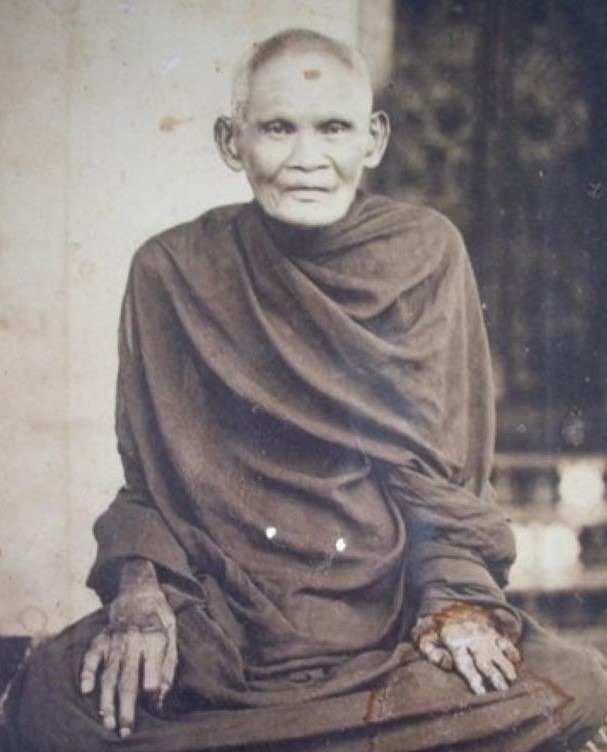
Luang Phu Bun of Wat Klang Bang Gaew

Luang Phu Bun of Wat Klang Bang Gaew

From Past to Present; Luang Pu Bun, Luang Por Perm, Pra Ajarn Bai, Luang Por Kong (Sanya)

Wat Klang Bang Kaew – A Legacy of Dhamma, and Powerful Sacred Amulets
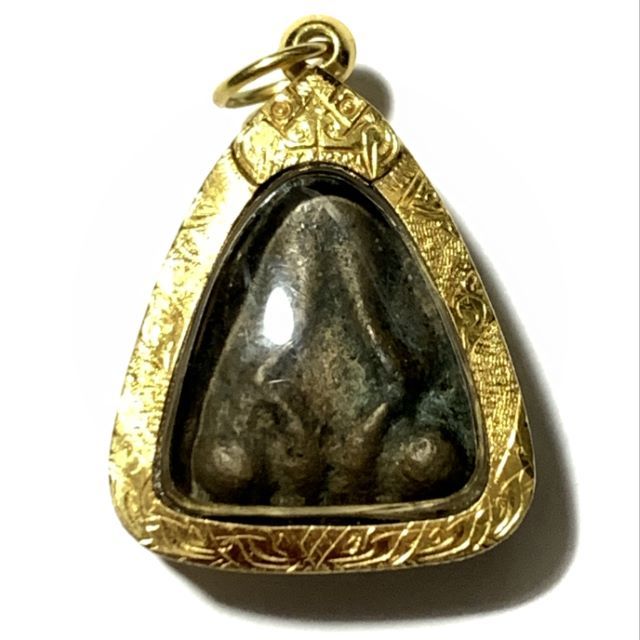
Pra Pid Ta Luang Phu Bun Wat Klang Bang Gaew in Gold CasingWat Klang Bang Kaew, located in Nakhon Chai Si District, Nakhon Pathom Province, is an ancient temple deeply rooted in Thai history, dating back to the Ayutthaya period. It is estimated to have been established in the late Uthong era. The temple’s antiquity is evident through the meticulously preserved and seemingly new renovations of its Vihara, Ubosot, and Sema stones, enduring through centuries. Currently, Wat Klang Bang Kaew is not merely a local Buddhist center but is widely recognized as the origin and repository of nationally renowned sacred amulets and charms, particularly “Bia Gae” and “Pong Ya Wasana Jindamanee” sacred powder amulets, which are extensively known and revered by collectors and devotees alike.
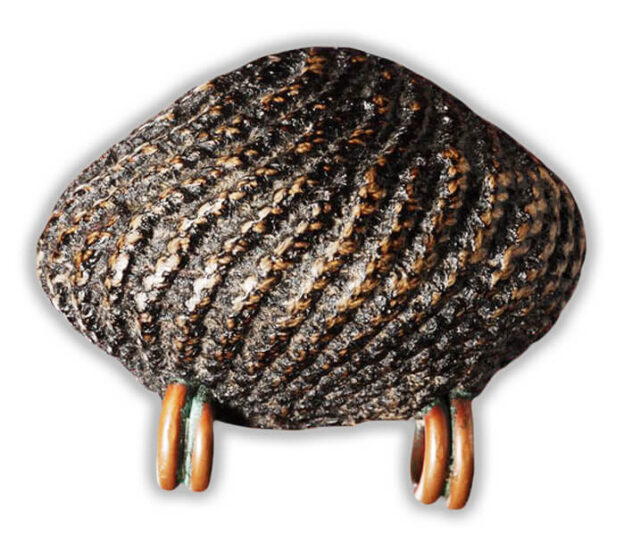
Wat Klang Bang Kaew functions akin to a university of sacred knowledge, where ancient texts and esoteric arts have been continuously passed down from masters to disciples over many generations. Each highly virtuous master (Gaeji Ajarn) has their own pantheon of mystical spiritually empowered and consecrated amulet,s imbued with tangible Buddhist virtues.
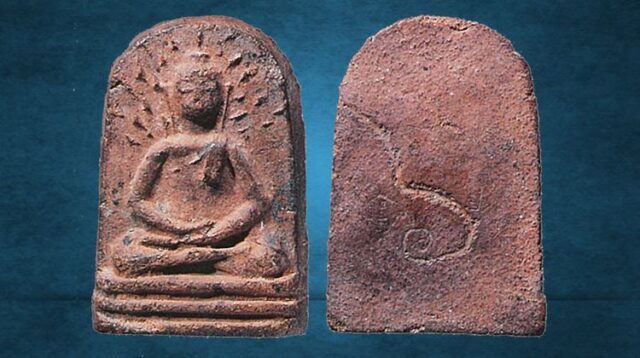
The primary amulets that have brought fame and uniqueness to this temple include Bia Gae, Phra Ya Wasana Jindamanee, and various Buddha images (Phra Phim) such as Rian Chao Sua and Phra Chaiwat, all of which have bestowed miraculous experiences upon countless devotees.


The fact that Wat Klang Bang Kaew boasts a history spanning centuries, traceable back to the Ayutthaya period, serves as a robust foundation for the continuous development and transmission of esoteric and Buddhist knowledge. The temple’s ancient lineage is not just a matter of time but a testament to the reliability and profound spiritual power of the inherited lineage of wisdom.
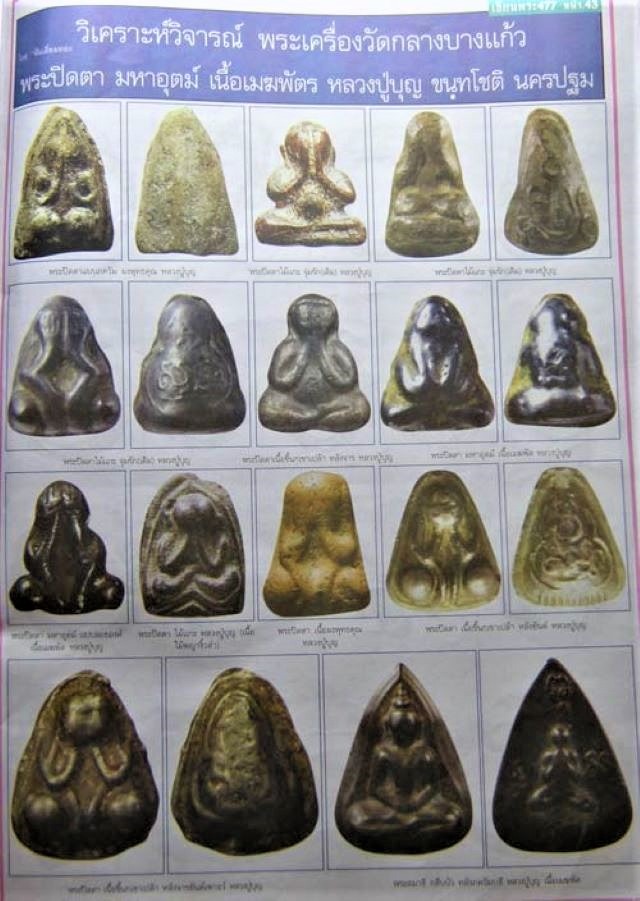
Pra Pid Ta Luang Phu Bun in Thai amulet publication

Such a long history indicates that the “Wicha” (sacred knowledge) passed down is not a mere modern invention but a wisdom that has been tested and refined over hundreds of years, a crucial factor in building faith among those who seek amulets imbued with pure and ancient power.

We shall now look deeply into the legend and the lineage of amulet creation at Wat Klang Bang Kaew, focusing primarily on “Bia Gae” and “Phra Ya Wasana Jindamanee,” as well as other related “Phra Phim” (Buddha images) and “Krueang Rang” (charms). This study will encompass the biographies and relationships of the Gaeji Ajarn within this lineage, starting from Phra Palad Pan of Wat Tukata, the progenitor, followed by Luang Pu Boon Khanthachoto, Luang Pu Perm Punyawasano, Luang Pu Juea Piyasiloe, and continuing to the present-day with Phra Ajarn Sanya (Kong) Kammasuttho. The narrative will strictly adhere to the authenticity of ancient texts and the established catalog of amulets recognized by national-level amulet connoisseurs.
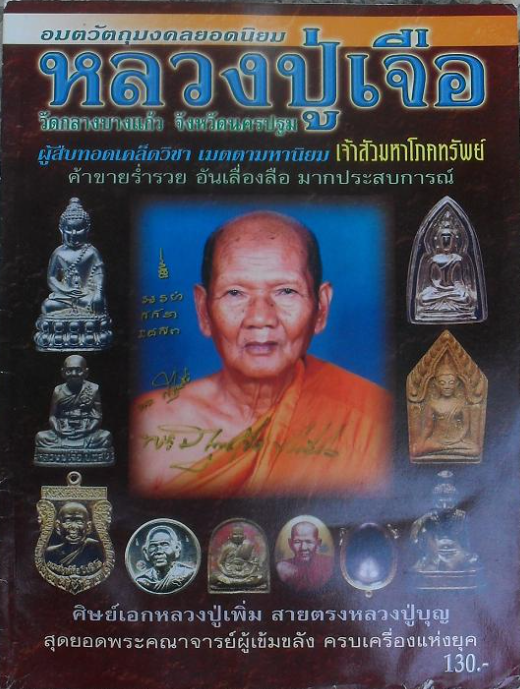
The Genesis of the Lineage: Phra Palad Pan of Wat Tukata, the Grand Master of Transmission

Phra Palad Pan of Wat Tukata, officially known as Wat Phithai Tharam, is revered as the “Grand Master” of Luang Pu Boon of Wat Klang Bang Kaew. He was one of the renowned “Jatu-Ajarn” (four great masters) and was celebrated for his immense metta mahaniyom (charm and popularity), believed to be infused through the chanting of the Phra Jindamanee spell.
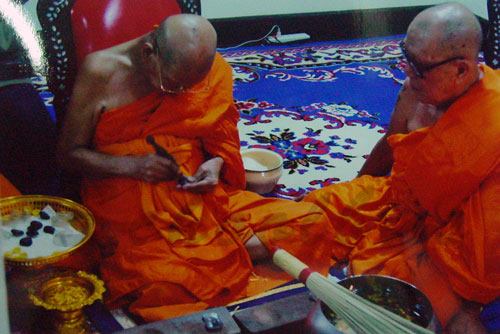
Phra Palad Pan’s most significant role was serving as the preceptor (Phra Upatcha) for Luang Pu Boon when the latter was ordained as a monk in B.E. 2412 (1869 CE). Although detailed biographical information about Phra Palad Pan is scarce in the available documents, his pivotal role in transmitting the sacred knowledge to Luang Pu Boon is widely acknowledged and respected.

Luang Pu Boon received his fundamental Dhamma teachings and various esoteric arts, especially the Wicha Bia Gae, directly from Phra Palad Pan, the abbot of Wat Tukata. This transmission formed a stable foundation, enabling Luang Pu Boon to continue, develop, and create the potent amulets of Wat Klang Bang Kaew, ensuring their continued prosperity.
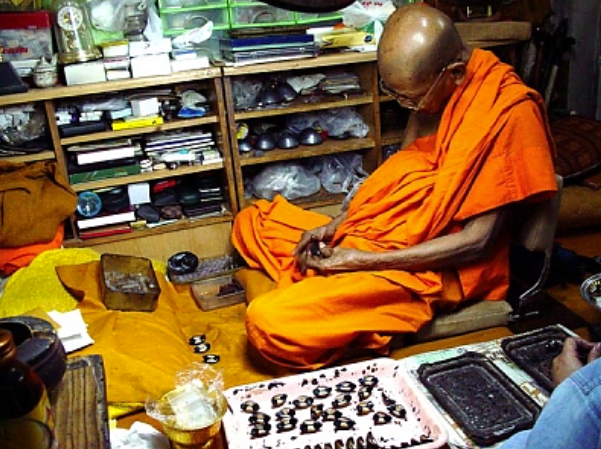
The distinctive Wicha Bia Gae of Wat Klang Bang Kaew, inherited by Luang Pu Boon, has deep origins linked to ancient lineages. It is hypothesized that the Wicha Bia Gae of Luang Pu Boon and Luang Pu Rod of Wat Nai Rong might share a common source: the Wicha Bia Gae lineage of Somdet Phra Wanrat of Wat Pa Kaew, which inherited its Buddhist esoteric knowledge from the Wat Pradu Nai Song Tham school dating back to the Ayutthaya period. Phra Palad Pan is also known as the “foremost master of Luk Om (sacred pills) in the amulet circle,” further solidifying his mastery of esoteric arts.
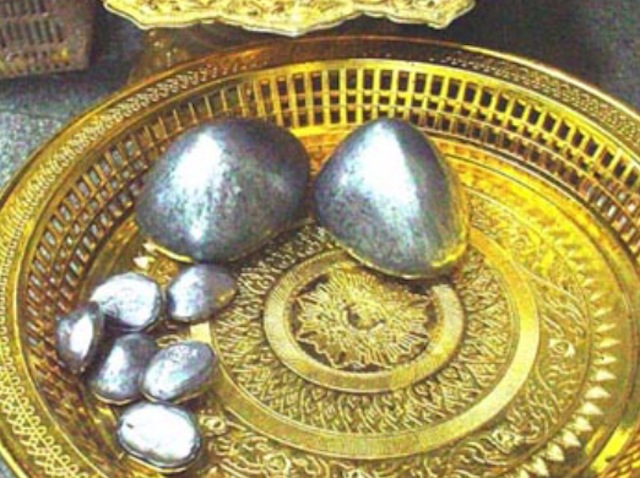
The fact that Phra Palad Pan is referred to as the “Grand Master” of Luang Pu Boon demonstrates his exalted status and profound expertise in esoteric arts. Luang Pu Boon’s direct reception of “Dhamma foundations and esoteric knowledge” from Phra Palad Pan was not merely a transfer of general knowledge but a crucial spiritual and esoteric foundational laying. Furthermore, the likelihood that the Wicha Bia Gae of Wat Klang Bang Kaew (via Luang Pu Boon) originated from the “Wicha Bia Gae lineage of Somdet Phra Wanrat of Wat Pa Kaew, which inherited its Buddhist esoteric knowledge from the Wat Pradu Nai Song Tham school during the Ayutthaya period,” expands the scope of this lineage far beyond initial perceptions.
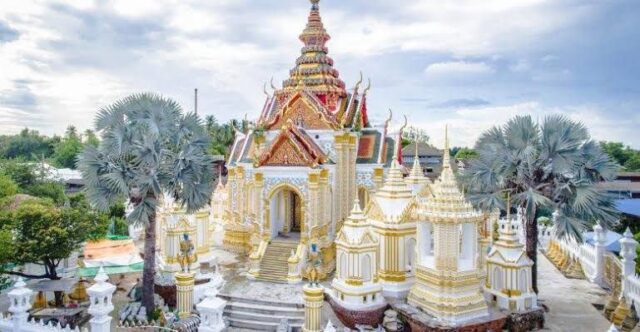
 

This connection reveals a profound truth about ancient Thai esoteric arts: these sciences did not arise in isolation but are part of a vast and interconnected spiritual network. Phra Palad Pan’s veneration as a “Grand Master” signifies not just an ordinary teacher but the source of sacred teachings held in the highest esteem. The clear links to “Wat Pa Kaew” and “Wat Pradu Nai Song Tham,” both significant academies since the Ayutthaya era, elevate the Wat Klang Bang Kaew lineage beyond the traditions of any single temple. Instead, it integrates with the ancient Buddhist esoteric heritage and wisdom of the nation, passed down through centuries. This deep historical and inter-temple connection enhances the authenticity, power, and sanctity of the amulets, making them highly sought after by collectors who value uninterrupted lineages and ancient foundations.

Luang Pu Boon Khanthachoto: The Great Master and Creator of Legends

Luang Pu Boon Khanthachoto, also known by his ecclesiastical title “Phra Phutthawithi Nayok,” was originally named Boon. He was born on July 3, B.E. 2391 (1848 CE), during the late reign of King Rama III, in Tha Mai sub-district, Krathum Baen District, Samut Sakhon Province. He was ordained as a novice (samanera) in B.E. 2406 (1863 CE) and as a monk (bhikkhu) on June 21, B.E. 2412 (1869 CE), with Phra Palad Pan of Wat Tukata, his grand master, serving as his preceptor.
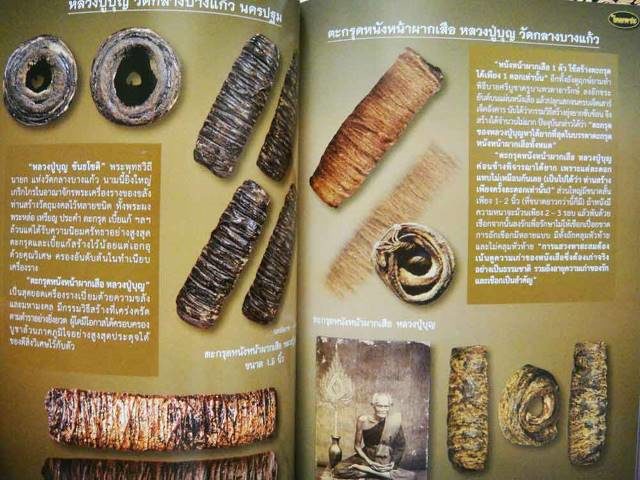
Tiger Takrut LP Bun

Luang Pu Boon became the abbot of Wat Klang Bang Kaew in B.E. 2429 (1886 CE) and began creating amulets thereafter. He passed away on April 4, B.E. 2478 (1935 CE), during the reign of King Rama VIII, at the age of 86 years and 275 days, having served 66 monastic years. Throughout his life, Luang Pu Boon selflessly helped those in distress with boundless compassion, offering auspicious timings, fortune-telling, performing ceremonies to ward off bad luck, blessing with holy water, and providing medicinal remedies. His profound compassion and high virtues were widely recognized, attracting countless disciples who sought his blessings daily.
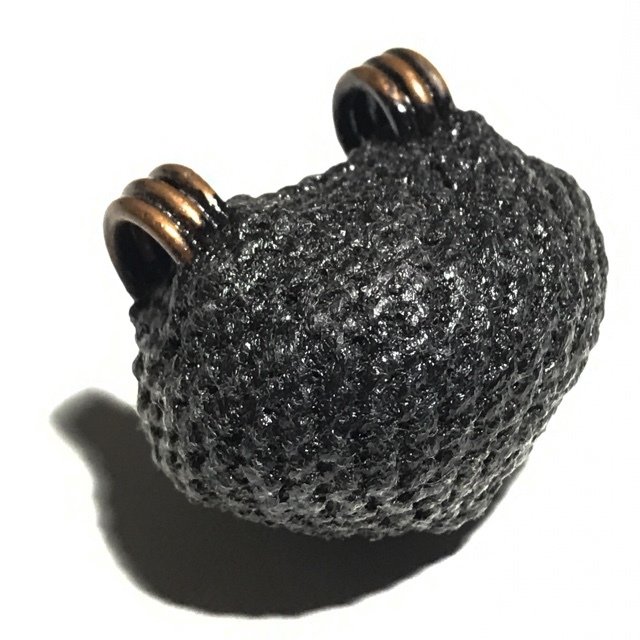
Luang Pu Boon’s Bia Gae

Bia Gae is considered Luang Pu Boon’s most renowned and iconic amulet. According to ancient texts, the creation of Bia Gae begins with selecting perfect “Bia Gae shells.” Mercury, weighing 1 baht, is then placed inside, believed to be a living substance with powers second only to Lek Lai (a mystical metallic substance). After filling with mercury, the shell’s opening is sealed with “Chan Rong Tai Din” (underground propolis), a naturally mystical substance known for its power to deflect weapons (maha ut), resist fire, and counter black magic.
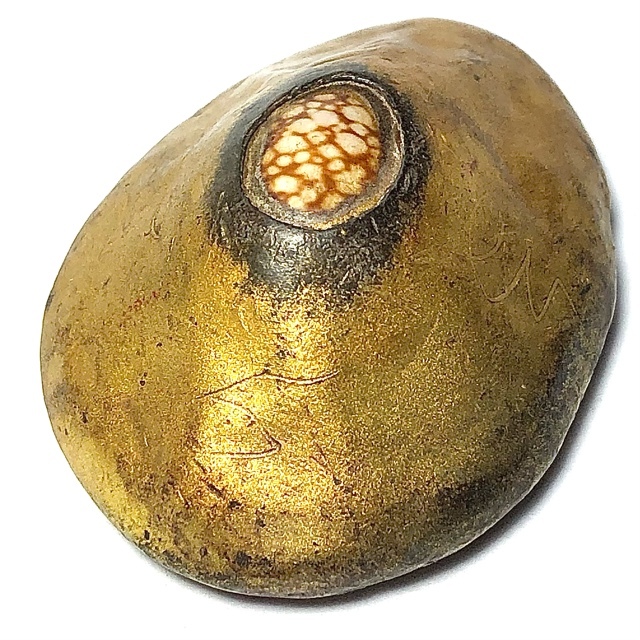
Next, the shell is encased in “lead sheets,” believed to be sacred and to provide invincibility. The masters would flatten the lead into a shell shape, carefully wrapping it tightly and inscribing sacred Yantra characters to enhance its power. The final step involves wrapping it with string and applying “Nam Rak Si Dam” (black lacquer) or ‘Yang Makhwit’ (a type of tree resin), playing on the Thai word “Rak” (love) to imbue it with charm and popularity. The entire process is a delicate ritual that must follow precise ancient steps, including consecration with sacred incantations.
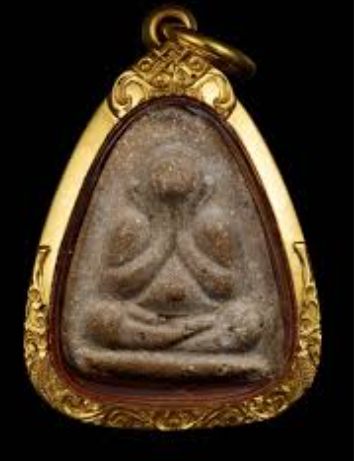
There are numerous accounts and records of Luang Pu Boon’s miraculous abilities, such as consecrating Bia Gae until they could “crawl” and chanting incantations that caused the mercury to move into the Bia Gae on its own, without manual intervention. When shaking his Bia Gae, a distinctive “khluk-khluk” sound of the mercury can be heard. The phenomenon of “mercury running” or the movement of mercury within the Bia Gae is not merely a physical property but a testament to the profound psychic power and Buddhist esoteric knowledge of the master.
In the intricate world of amulets, phenomena visible to the naked eye, or even perceptible through the meditative mind of the worshipper, elevate these amulets from ordinary objects to sacred items imbued with life. This “living” quality, where the mercury responds to the master’s incantations or even to the steadfast mind of the devotee, creates an unparalleled sense of connection and profoundly reinforces belief in the protective and miraculous power of Bia Gae. For serious collectors, this phenomenon is direct confirmation of unseen spiritual energy, making these Bia Gae highly desirable and valuable.
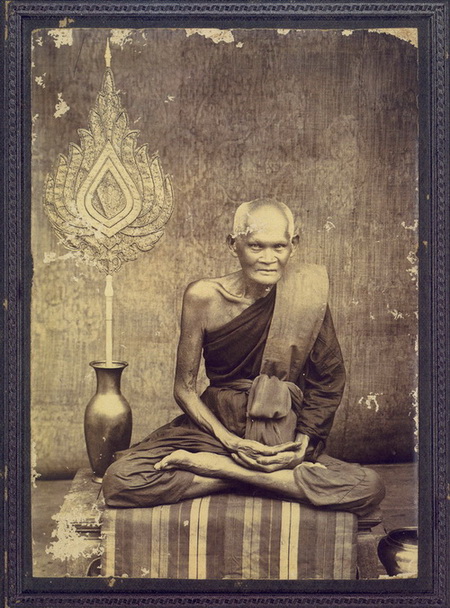
Luang Pu Boon’s Bia Gae possesses extraordinary, all-encompassing virtues, including healing various ailments, bestowing metta mahaniyom (charm and popularity), and transforming misfortune into good fortune. They are potent in preventing and counteracting black magic, evil spells, curses, and all forms of malevolent influences, including negative energies, poison, and venomous animal bites.

Furthermore, they bring auspiciousness to the wearer, provide invincibility, and enhance charm, popularity, and good fortune. His Bia Gae has no prohibitions regarding carrying; they are like gold, remaining gold no matter where they are. Luang Pu Boon’s Bia Gae are extremely popular within the Wat Klang Bang Kaew lineage and come in various forms, such as Bia Gae wrapped in string with embedded takrut and “running mercury.”

Ya Wasana Jindamanee Sacred Muan Sarn Powders

“Phra Ya Wasana Jindamanee” is another type of amulet that brought immense renown to Luang Pu Boon. It is an ancient herbal remedy described extensively in ancient texts as “Jindamanee Osot An Philat,” meaning a miraculous medicine composed of various herbs. The main ingredients, according to ancient scriptures, include “Dok Khlat,” “Dok Chan,” “Kaysorn Butsaban,” “Prao Horm,” “Kamyan,” “Kod Sor Kod Khema,” “Thong Nam Prasarn,” “Pleuak Kum Chonlatan,” and “Krung Khema,” all in equal proportions.
The process of creating Phra Ya Wasana Jindamanee powder is difficult and complex according to ancient texts. Luang Pu Boon created it only twice due to its arduous nature. The crucial step is to gather all the necessary herbs, some of which are extremely rare; if even one ingredient is missing, the process cannot proceed. Once all ingredients are collected, an auspicious “reuk yam” (auspicious time) is determined, usually performed on the full moon night of the twelfth lunar month.
Luang Pu Boon would conduct the ceremony in the Ubosot and personally oversee the grinding and mixing of the herbs. He would also inscribe sacred Yantra characters on both the grinding stone and the mortar. After grinding the various ingredients, Luang Pu Boon would personally mix the special herbal formula. Then, monks, novices, or lay practitioners observing the eight precepts would assist in shaping the medicine, chanting incantations continuously throughout the process. Once the medicine was properly dried, it would be presented to Luang Pu for consecration over “7 Saturdays and 7 Tuesdays” to complete the ancient ritual.
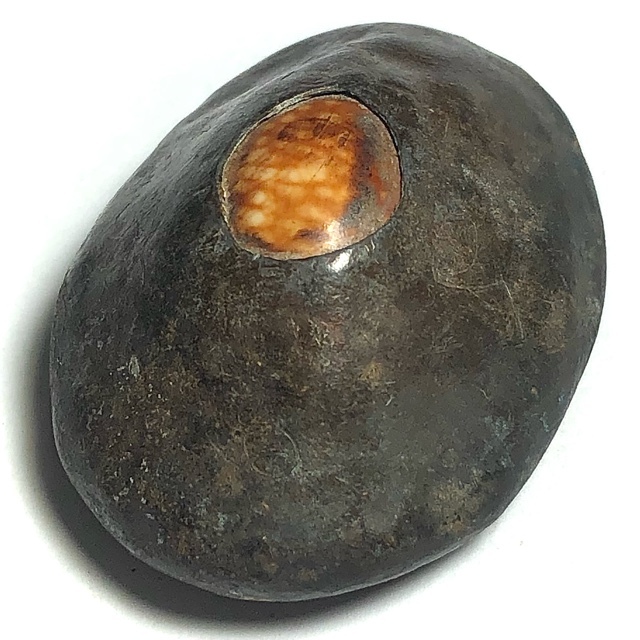
Phra Ya Wasana Jindamanee powder possesses supreme virtues. Anyone who consumes or applies it will experience prosperity and growth, fulfilling their desires, accumulating wealth, having a bright countenance, and a pure heart. It has the power to prevent and cure various illnesses, even severe or life-threatening ones, which can be alleviated or cured. It bestows high metta mahaniyom, making one beloved by all. If carried into the forest, it helps protect against black magic, wild animals, and malevolent spirits.
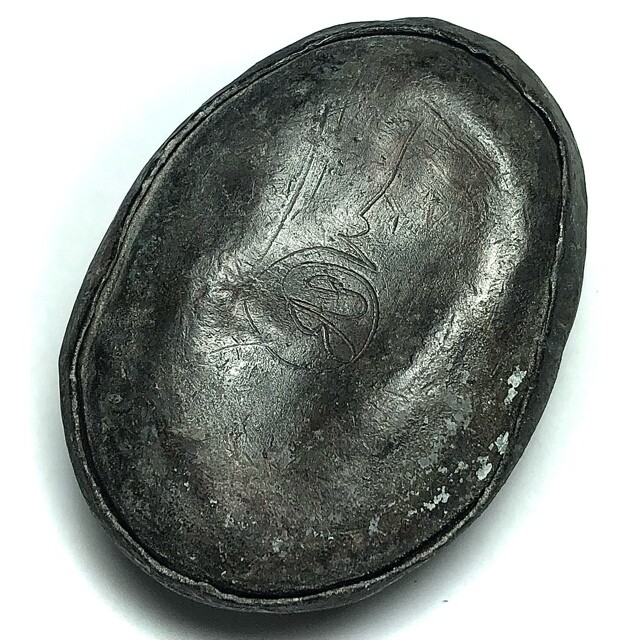
The consistent mention of “Phra Ya Wasana Jindamanee” as a “medicine” with properties to heal various ailments, including severe conditions, and simultaneously being crafted into “amulets” or “Buddha images” such as Phra Chao Sua and other Buddha images possessing protective, auspicious, and metta mahaniyom virtues, demonstrates the interconnected functionality of these items. This dual function highlights a profound and integrated perspective in ancient Thai healing, where physical health is inextricably linked to spiritual balance and protection from unseen forces.
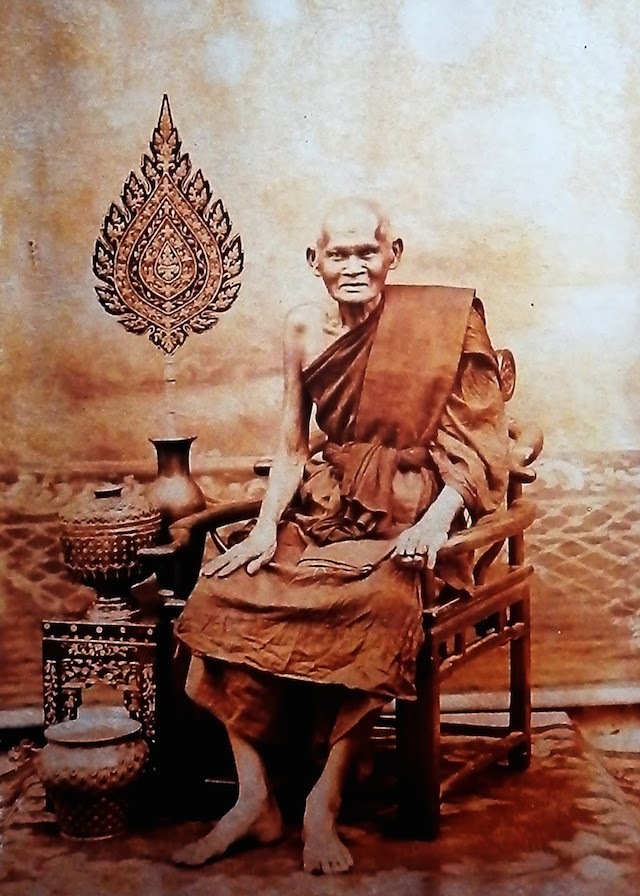
This concept suggests that illnesses may not stem solely from physical causes but could also originate from karma, black magic, or malevolent spirits. By creating both “medicine” and “amulets” simultaneously, Luang Pu Boon offered a holistic approach that addressed both tangible symptoms and the spiritual roots of suffering. This approach solidified his reputation as a compassionate and knowledgeable grand master, showcasing his deep expertise in both herbal medicine and esoteric incantations, thereby making his amulets uniquely powerful and revered.
Various Buddha Images (Phra Phim) and Other Amulets of Luang Pu Boon

Key amulets created from Luang Pu Boon’s Phra Ya Wasana Jindamanee powder include the Phra Phim Sian Lon Prok Pho Sadung Glub (bald-headed Buddha under Bodhi tree with reversal power) in Jindamanee powder, and the Phra Phim Ratsamee (radiant Buddha image) in Jindamanee powder. Additionally, there are the Phra Phim Samathi Sum Waew – Lang Phra Pidta (meditating Buddha with hollow arch and covered-face Buddha back) in Jindamanee powder, and the Phra Phong Ya Wasana Jindamanee Phim Leb Mue Sadung Glub (fingernail-shaped Buddha image with reversal power), believed to possess the virtue of “turning bad into good.”
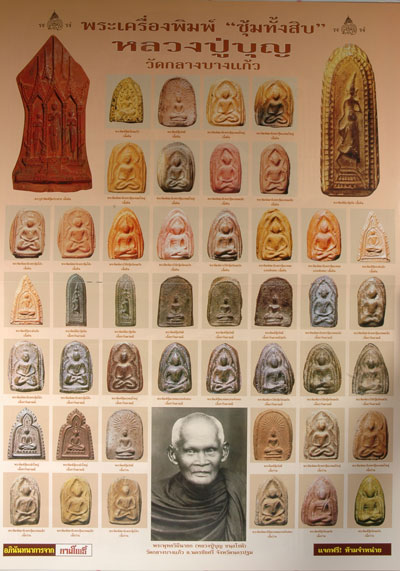
The Phra Chao Sua (Lord of Wealth) Amulet, Jindamanee Powder Edition (small print) from B.E. 2559 (2016 CE), created according to Luang Pu Boon’s tradition, is renowned for its virtues in wealth, trade, and protection from danger. Luang Pu Boon’s amulet catalog also includes Rian Pum Phra Phutthachinnarat (stamped Buddha Chinnarat coin), Rian Chao Sua (Lord of Wealth coin), and Jindamanee medicinal pellets.

Table 1: Key Amulets of Luang Pu Boon, Wat Klang Bang Kaew

Amulet Type Popular Mold/Series (Example) Unique Characteristics/Main Materials Primary Virtues
Bia Gae Bia Gae wrapped with string, embedded Takrut Shell, mercury (1 baht), underground propolis, lead, woven string, black lacquer Healing, metta mahaniyom, turning bad into good, protection from black magic, evil spells, curses, invincibility, good fortune
Phra Ya Wasana Jindamanee Jindamanee medicinal pellet (round) Ancient herbal formula (Dok Khlat, Dok Chan, Kaysorn Butsaban, Prao Horm, Kamyan, Kod Sor Kod Khema, Thong Nam Prasarn, Pleuak Kum Chonlatan, Krung Khema) Prosperity, fulfillment of desires, wealth, bright countenance, pure heart, healing, protection from black magic, wild animals, spirits
Phra Phim (Buddha Images) from Phra Ya Wasana Jindamanee Phim Sian Lon Prok Pho Sadung Glub, Phim Ratsamee, Phim Samathi Sum Waew – Lang Phra Pidta, Phim Leb Mue Sadung Glub, Phra Chao Sua (small print) Phra Ya Wasana Jindamanee powder, herbal Jindamanee powder Turning bad into good, good fortune, trade, protection from danger, metta mahaniyom, protection from harm
Rian (Coins) Rian Pum Phra Phutthachinnarat, Rian Chao Sua Various metals Good fortune, trade, protection from danger
Phra Chaiwat (Victory Buddha) Phra Chaiwat (freestanding) Various metals Outstanding Buddhist virtues
Phra Phim (Buddha Images) from Baked Clay (No specific mold mentioned) Baked clay Bestows experiences upon devotees

Other significant amulets by Luang Pu Boon include the Rian Chao Sua, an amulet that has long brought him fame. Phra Chaiwat is another prominent amulet, second to none. And baked clay Buddha images are highly sought after by collectors. Regarding “Takrut Na Phak Suea” (tiger forehead takrut), information indicates that an unknown number of pieces exist, but that they are very few in numbers. However, detailed information about the creation process or specific virtues of Takrut Na Phak Suea created by Luang Pu Boon is not clearly stated in the provided documents.
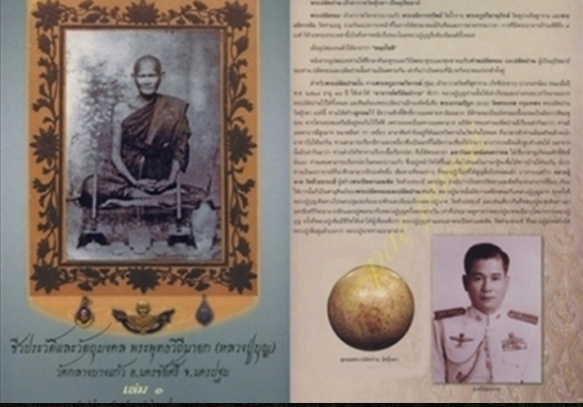
Luang Pu Perm Punyawasano: The Successor and Preserver of the Legend

Luang Pu Perm Punyawasano, also known as “Phra Phutthawithi Nayok,” was originally named Perm. He was born on January 28, B.E. 2430 (1887 CE), during the reign of King Chulalongkorn (Rama V). He was ordained as a novice in B.E. 2437 (1894 CE) at the age of 8 and as a monk on July 12, B.E. 2450 (1907 CE), at the ordination hall of Wat Klang Bang Kaew. Luang Pu Perm was a “senior disciple” of Luang Pu Boon of Wat Klang Bang Kaew and was appointed as the abbot of Wat Klang Bang Kaew on February 5, B.E. 2481 (1938 CE). He passed away on January 6, B.E. 2526 (1983 CE), at the age of 97 and 77 monastic years.
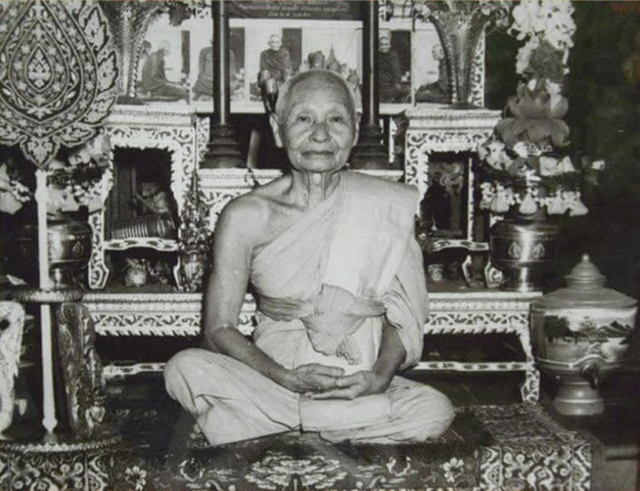
As a senior disciple, Luang Pu Perm directly inherited various esoteric knowledge and ancient texts from Luang Pu Boon. He created “Bia Gae” according to Luang Pu Boon’s tradition, which continued to possess extraordinary virtues, making them ultimate protective charms in all aspects, especially in warding off black magic.
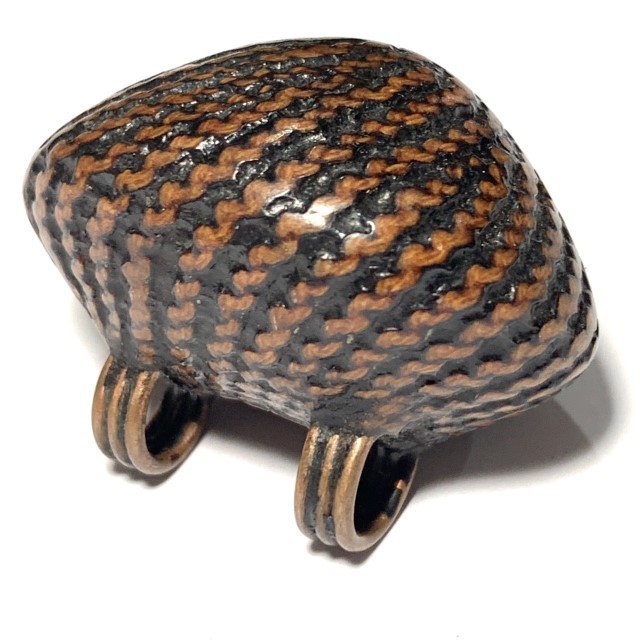
In his later years, Luang Pu Perm showed concern for the preservation of the sacred lineage. He summoned “Phra Ajarn Bai” (Phra Palad Bai Khun Weero) and “Luang Pu Juea,” who came with flowers, incense, and candles, to transmit the Wicha Bia Gae and certain other knowledge to both disciples. He clearly stated, “If I am no longer here, the Wicha Bia Gae must not vanish from Wat Klang Bang Kaew,” and emphasized, “Let Bai do it first,” indicating the order of succession he had designated. Phra Ajarn Bai (Phra Palad Bai Khun Weero) served as the acting abbot of Wat Klang Bang Kaew from B.E. 2526-2527 (1983-1984 CE) and was the preceptor for the ordination of Phra Khru Srirot Suwannarak at Wat Klang Bang Kaew.
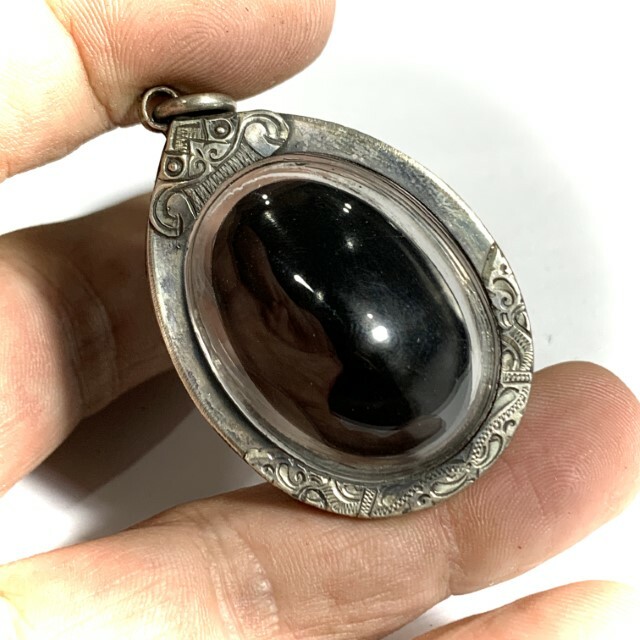
After Luang Pu Perm’s passing, Phra Ajarn Bai created Bia Gae for approximately one year before he also passed away. Then “Ajarn Seng” continued making Bia Gae for a short period before his passing. It was then Luang Pu Juea’s turn to take over the succession of the Wicha Bia Gae.
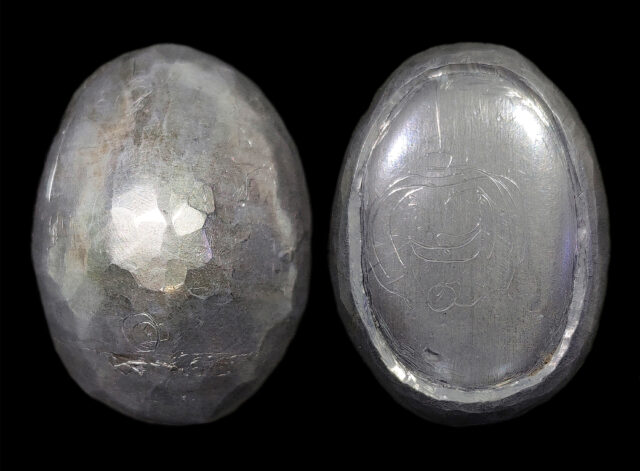
Luang Pu Perm’s act of specifically summoning two disciples, Phra Ajarn Bai and Luang Pu Juea, to transmit the Wicha Bia Gae was not merely a casual transfer of knowledge but a deliberate and formal act. He explicitly stated his intention that “If I am no longer here, the Wicha Bia Gae must not vanish from Wat Klang Bang Kaew,” which underscores his profound concern for the preservation of this sacred tradition. Furthermore, the specific instruction “Let Bai do it first,” and the historical progression of events (Phra Ajarn Bai creating Bia Gae, followed by Ajarn Seng, and finally Luang Pu Juea), indicate a systematically planned and perhaps even prescient management of the succession.

This operation reveals a deep and meticulous approach to safeguarding and maintaining sacred knowledge within the monastic tradition. It demonstrates that the transmission of “Wicha” is not a haphazard or purely spiritual process but a deliberate and systematic plan to ensure its continuity even after the passing of each grand master. The precise instruction “Let Bai do it first” and the disclosure of the succession order (Phra Ajarn Bai -> Ajarn Seng -> Luang Pu Juea) indicate a profound understanding of each disciple’s capabilities, spiritual readiness, and perhaps their destined roles. This meticulous planning and prescience of Luang Pu Perm are crucial factors that have allowed the Wat Klang Bang Kaew lineage to continue unbroken and to be highly esteemed by amulet collectors and scholars.

Luang Pu Juea Piyasiloe: The Propagator of Sacred Knowledge to the Public

Luang Pu Juea Piyasiloe, originally named Juea Netprapai, was born on May 14, B.E. 2468 (1925 CE – Year of the Ox) in Ban Tai Khung, Thai Yawad sub-district, Nakhon Chai Si District, Nakhon Pathom Province. He was ordained as a monk in B.E. 2494 (1951 CE) at the age of 26 at Wat Klang Bang Kaew, with Phra Phutthawithi Nayok (Luang Pu Perm Punyawasano) as his preceptor. Luang Pu Juea was a direct and close disciple of Luang Pu Perm. He passed the highest level of Dhamma studies (Nak Tham Ek) in B.E. 2499 (1956 CE) and received the appointment of Phra Samuh Juea, an ecclesiastical title under Luang Pu Perm, in B.E. 2504 (1961 CE).

Although he was invited to become the abbot in B.E. 2544 (2001 CE), he declined due to his advanced age, requesting instead to merely support the work of the Wat Klang Bang Kaew monastic community to the best of his ability. Luang Pu Juea passed away on May 14, B.E. 2552 (2009 CE), at the age of 84, having served 58 monastic years.
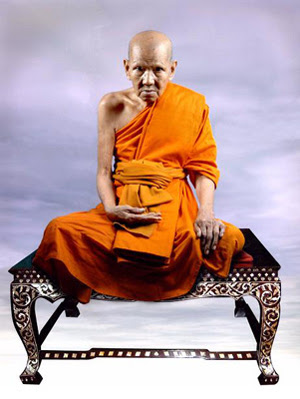
Luang Pu Juea inherited all the esoteric knowledge and ancient texts from Luang Pu Perm, including the creation of Phra Ya Wasana Jindamanee powder, Bia Gae, Takrut, and various other charms. He played a crucial role in creating Bia Gae according to Luang Pu Perm’s instructions, performing the rituals from filling with mercury, encasing the shell with lead, inscribing Yantra characters, and hand-weaving the string cover for the shells. After Phra Ajarn Bai and Ajarn Seng passed away, Luang Pu Juea continued the creation of Bia Gae in the order designated by Luang Pu Perm.

Catalog of Luang Pu Juea’s Amulets

  • Bia Gae: Luang Pu Juea created an immense number of Bia Gae, more than all other masters at Wat Klang Bang Kaew combined. He made at least 50 pieces per day, or over 18,000 per year, and continued this practice from B.E. 2532 (1989 CE) to B.E. 2550 (2007 CE), totaling no less than 300,000 pieces. The unique characteristic of Luang Pu Juea’s Bia Gae is their various forms of string wrapping and lacquer coating. During his 80th birthday merit-making celebration and throughout the following year, codes were stamped on both loops of the Bia Gae: “Na Khuen Yod” (Na ascending to the peak) and “Jor Jan Khuen Yod” (Jor Jan ascending to the peak) as specific identifiers.

His Bia Gae have widely recounted experiences across all directions, including protection from danger, metta mahaniyom, and warding off black magic. Many people sought Bia Gae from him, leading to the main raw material, Bia Gae shells, being sourced from the Andaman Sea region. Disciples would collectively purchase sacks of them, with some remarking that they “almost depleted the Andaman Sea.” Luang Pu Juea would sit making Bia Gae from dusk until nearly dawn before resting. Some days, people would chat with him until late, forcing him to make Bia Gae late into the night, often finishing only at sunrise, because in the morning, local disciples would be waiting to receive the Bia Gae he had filled for them to string-wrap, attach loops, and lacquer.

The labor cost for wrapping each Bia Gae was 50 baht, providing income for villagers, with some earning 500 baht a day by wrapping 10 pieces. The Bia Gae he offered for merit-making cost 400 baht, leaving almost no profit, as there were costs for mercury, shells, loops, and wrapping; sometimes, he even incurred losses. Yet, he gave them with compassion, never complaining or losing his temper. Many disciples thus called him “the Bodhisattva of Wat Klang Bang Kaew.”

  • Phra Ya Wasana Jindamanee: Luang Pu Juea created “Phra Ya Wasana Jindamanee” in the form of actual amulets for the first time when Her Royal Highness Princess Bajrakitiyabha Narendira Debyavati, the Princess Rajasarinisiribajra Maha Vajra Rajadhida, presided over the mixing and shaping ceremony on Sunday, November 26, B.E. 2549 (2006 CE).

This first edition of Phra Ya Wasana Jindamanee comprised 14 molds: Phim Chao Sua, Phim Nang Phaya Sadung Glub (Queen reversal), Phim Sian Lon Sadung Glub (bald-headed reversal), Phim Prok Pho Yai (large Bodhi tree), Phim Sum Laem Yai (large pointed arch), Phim Phra Chaiwat Phim Tor (small freestanding Victory Buddha), Phim Nang Phaya Kha Toe (Queen with table legs), Phim Leela Maha Setthi (Dancing Millionaire, miniature shadow puppet style), Phim Pai Tong Hu Kratai (miniature rabbit ear playing card), Phim Luang Por Tor, Phim Luang Pu Juea Krob Kaew (Luang Pu Juea with glass cover), Phra Pidta Phim Ngoen Lai Nong Thong (covered-face Buddha for flowing wealth), Phra Pidta Phim Metta Mahaniyom (covered-face Buddha for great charm), and Phim Pidta Metta Mahalarp (covered-face Buddha for great charm and fortune). Some batches of Luang Pu Juea’s Phra Ya Wasana Jindamanee amulets in B.E. 2550 (2007 CE) contained a mixture of Luang Pu Boon’s powder blended with plaster from the restoration of Luang Por Tor Buddha image, further enhancing their sacredness.

  • Other Amulets: Luang Pu Juea also created many other amulets, including Rian Sema Luang Pu Juea (sema-shaped coin) 1st Edition B.E. 2534 (1991 CE) (silver, gold-plated), freestanding Buddha images, worship statues, Phra Pikanet (Ganesha) worship statues (cast from mixed metals including remnants of Luang Pu Boon’s Phra Chaw Wat cluster), Phra Kring Naresuan Trueng Traiphop, Phra Phim Prok Pho (Bodhi tree Buddha image) in powder, Phra Nang Phaya Sadung Glub (Queen reversal) (consecrated turmeric powder, baked clay), Phra Phim Sian Lon (bald-headed Buddha image), Phra Phim Sum Laem (pointed arch Buddha image), Phra Khun Phaen Khleub (glazed Khun Phaen), and cast metal Rian Luang Pu Juea. Additionally, there are Takrut Phra Phutthaha Mahabarami (4 types: copper, Thong Thip, lead, silver), Phra Yan (sacred cloths, 4 main types), photographs, Thao Wessuwan (King of Ghosts), lockets, ritual knives (Meed Mor), and carved wooden Buddha images. Regarding “Takrut Na Phak Suea,” although there is information about their sale in online markets, there is no direct evidence linking Luang Pu Juea to the creation of Takrut Na Phak Suea specifically from Wat Klang Bang Kaew. Most available information attributes them to other masters, such as Luang Por Jong of Wat Na Tang Nok.

Luang Por Sanya (Kong) Kammasuttho: The Current Successor

In the lineage of Buddhist esoteric knowledge at Wat Klang Bang Kaew, besides Luang Pu Boon, Luang Pu Perm, and Luang Pu Juea, there is another revered monk who plays a crucial role in preserving the temple’s knowledge and amulets: Phra Khru Sangkharak Sanya Kammasuttho, also known as “Luang Por Sanya (Kong).” He is a direct disciple of Luang Pu Perm and is described as a virtuous and compassionate monk, humble and possessing a spirit no different from Luang Pu Perm and Luang Pu Juea.

Luang Por Sanya (Kong) continues to reside as one of the monks at Wat Klang Bang Kaew. He possesses profound expertise in compounding Phra Ya Wasana Jindamanee powder, having assisted Luang Pu Juea in creating amulets in the modern era. Furthermore, he is a direct inheritor of the Wicha Bia Gae from Luang Pu Perm.

His continued dedication to preserving the Wicha and assisting in amulet creation reflects his commitment to ensuring the legacy of Wat Klang Bang Kaew’s Dhamma endures. Although the current abbot of Wat Klang Bang Kaew is Phra Khru Pathom Wachirakom (Pira Apiwatthanu), Luang Por Sanya (Kong) remains a vital force in continuing and transmitting various branches of Wat Klang Bang Kaew’s Wicha to future generations, revered by his disciples and the general public alike.
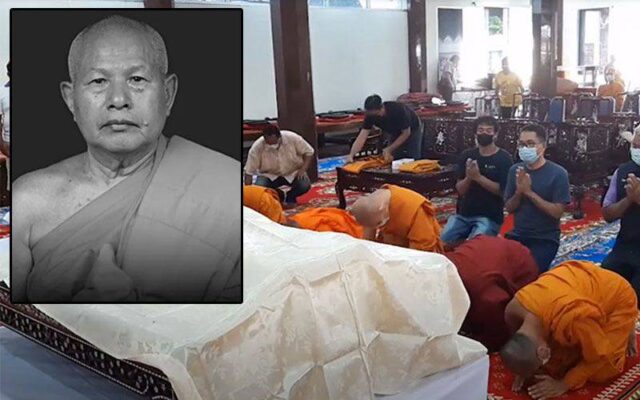
LP Juea Wat Klang Bang Gaew

The Legacy of Dhamma and Buddhist Esoteric Knowledge at Wat Klang Bang Kaew

Wat Klang Bang Kaew is a center of sacred Buddhist esoteric knowledge and sciences that has been continuously passed down for centuries. From the genesis of the Wicha Bia Gae transmitted by Phra Palad Pan of Wat Tukata to Luang Pu Boon Khanthachoto, the great master and creator of renowned amulets such as Bia Gae and Phra Ya Wasana Jindamanee, Luang Pu Boon laid a strong foundation and crafted amulets with all-encompassing Buddhist virtues, including metta mahaniyom, invincibility, protection from danger, and healing.
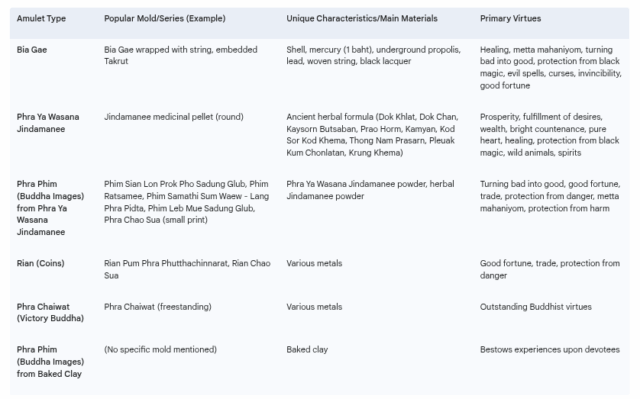
The transmission of this sacred knowledge has continued seamlessly through Luang Pu Perm Punyawasano, the senior disciple who preserved the legend and systematically planned the transmission of the Wicha. He passed it on to Phra Ajarn Bai, Ajarn Seng, and ultimately to Luang Pu Juea Piyasiloe. Luang Pu Juea dedicated his body and mind to creating a vast number of Bia Gae and Phra Ya Wasana Jindamanee amulets, disseminating their potent Buddhist virtues to the public with boundless compassion. To this day, the lineage and legend of Wat Klang Bang Kaew continue to be upheld and preserved by Phra Ajarn Sanya (Kong) Kammasuttho, a direct disciple of Luang Pu Perm.
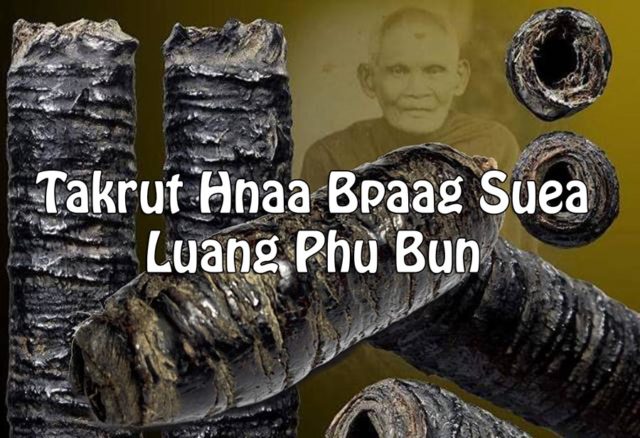
The Famous Tiger Takrut of Luang Phu Bun. of Wat Klang Bang Gaew, in Nakorn Pathom.

The legacy of Wat Klang Bang Kaew is therefore not merely tangible amulets but a continuous stream of wisdom, Buddhist esoteric knowledge, and compassion passed from masters to disciples across generations. Every amulet created at this temple is imbued with the power of faith and long-proven experiences, ensuring that Wat Klang Bang Kaew remains a spiritual sanctuary and a source of sacred amulets, nationally recognized and highly sought after by collectors and devotees alike.

Wat Klang Bang Gaew famous mainly with the Public for its great Master Luang Phu Bun, is an Ancient Temple in Nakorn Pathom. It is home to a Lineage History of 4 great Ordained Masters, 3 who have Passed On (Luang Phu Bun, Luang Por Perm & Luang Phu Juea), and the Current Master, Luang Por Kong (Sanya). Luang Por Sanya is proving to continue in the same Trajectory as his Predecessors, and has created a long History of Deeds and released a large Pantheon of Amulets in the Lineage tradition of his Mentors, Luang Phu Bun, Luang Por Perm and Luang Phu Juea.

The Wat Klang Bang Gaew Master Lineage is a fantastic choice for Hunters & Collectors of Fine Master Class Amulets. This is because the Amulets of this Temple, and its Masters, range from the present Day master Luang Por Kong (Sanya), back through Luang Phu Juea, Luang Por Perm, and on, to the Great Luang Phu Bun.

A powerful continued Lineage of Masters have brought Wat Klang Bang Gaew to the Forefront of both the Ancient and the Modern Amulet Scenes, stretching back to the times of Luang Phu Bun, through the Era of Luang Por Perm, and the Great Luang Phu Juea Bpiyasilo, to its present Abbot, Luang Phu Sanya (Kong).

Filters

Filters


amatasiam2

The Main Powers of Thai Amulets

The Main Powers of Thai Amulets are chiefly considered to be among the following;

Thai amulets and their powers, which are deeply intertwined with the country’s culture and Buddhist traditions, are believed to amulets which possess various powers that can help protect, heal, and improve the lives of those who wear them. These powers are derived from centuries of spiritual practices and teachings, and are often linked to the blessing of monks or spiritual leaders who imbue the amulets with sacred energy. While there are many different types of Thai amulets, the most common powers they embody are Maha Sanaeh, Metta Maha Niyom, Kong Grapan Chadtri, Maha Lap, Serm Duang, Serm Yos, Maha Amnaj, Gae Aathan, and Serm Baramee. Each of these powers addresses a specific need, offering protection, good fortune, love, and spiritual growth to the wearer.

Thai Benjapakee amulets

1. Maha Sanaeh (มหาสเน่ห์) – Power of Attraction and Personal Magnetism

The term Maha Sanaeh is a combination of two words: Maha, meaning “great” or “powerful,” and Sanaeh, meaning “affection” or “charm.” In the context of Thai amulets, it refers to the power of attraction and personal magnetism. Wearing a Maha Sanaeh amulet is believed to help the wearer attract affection, admiration, and attention from others. It can be particularly helpful in love and relationships, where it is believed to enhance one’s personal charm and increase their influence over others. Beyond romance, Maha Sanaeh can also be used to gain favor in professional or social situations, boosting one’s ability to create positive connections.

Pra Nang Paya Amulet Luang Por Dtat

2. Metta Maha Niyom (เมตตาหมายนิยม) – Power of Loving-Kindness and Favor

Metta means “loving-kindness” or “compassion” in Pali, while Maha means “great,” and Niyom refers to being favored or admired. When combined, Metta Maha Niyom signifies a great form of loving-kindness that draws favor, admiration, and affection from others. In the context of amulets, these are often used to help the wearer cultivate positive relationships and foster harmonious interactions. Metta Maha Niyom amulets are believed to create an aura of kindness and goodwill, making the wearer more likable and respected. These amulets attract not only love and affection but also help in situations where one needs support or goodwill from others.

Suea Yant Kong Grapan Chadtri Maha Ud Sacred Yantra Shirt - an Immensely rare item of the Great Luang Por Lae, of Wat Pra Song in petchburi

3. Kong Grapan Chadtri (คงกระพันชาตรี) – Power of Protection and Invincibility

Kong Grapan Chadtri is a term used for amulets that provide protection from harm. Kong means “to endure,” Grapan means “unbreakable,” and Chadtri refers to “warrior.” Together, this phrase translates to “invincible warrior” or “unbreakable protection.” These amulets are designed to provide physical and spiritual protection to the wearer, particularly from harm, weapons, or dangerous situations. Individuals such as soldiers, police officers, martial artists, and anyone whose work involves risk often carry Kong Grapan Chadtri amulets, as they are believed to provide strength and resistance to any form of physical danger.

Look Om Ya Soop Luang Phu Songk

4. Maha Lap (มหาลาภ) – Power of Wealth and Prosperity

Maha Lap translates to “great fortune” or “great wealth,” with Maha meaning “great” and Lap meaning “fortune” or “wealth.” Amulets imbued with the power of Maha Lap are believed to attract financial prosperity, success, and abundance into the wearer’s life. These amulets are highly prized by business owners, entrepreneurs, and anyone seeking financial success. Maha Lap is often linked to opportunities, investments, and the overall flow of wealth, helping the wearer to achieve financial stability and growth in various ventures.

Luang Por Tuad Pra Kroo Bai Diga Wat Chang Hai 2513 BE

5. Serm Duang (เสริมดวง) – Power of Enhancing Luck and Destiny

The term Serm Duang refers to the act of improving one’s luck or life path. Serm means “to enhance,” and Duang refers to “luck” or “fate.” Serm Duang amulets are used to improve various aspects of life, including health, career, relationships, and overall well-being. It is believed that these amulets can enhance a person’s fortune, bringing about a more favorable destiny and helping the wearer overcome obstacles or bad luck. People seeking to improve their life path or align with positive circumstances often turn to Serm Duang amulets for assistance.

Macro Close Up of the Pra Somdej Wat Gaes Chaiyo with Somdej Dto

6. Serm Yos (เสริมยศ) – Power of Status and Prestige

Serm Yos refers to the act of enhancing one’s social standing, rank, or prestige. Serm means “to enhance,” and Yos means “rank” or “title.” Individuals seeking professional success or social recognition often use Serm Yos amulets to gain favor in their careers or to elevate their status. This might include gaining promotions, receiving more respect from peers, or being recognized for one’s achievements. Serm Yos amulets help the wearer attract recognition and appreciation, which can lead to enhanced authority and influence.

7. Maha Amnaj (มหาอำนาจ) – Power of Authority and Control

Maha Amnaj represents great power and authority. Maha means “great,” and Amnaj means “power” or “authority.” Wearing an amulet with Maha Amnaj is believed to help the wearer gain control and command respect. These amulets are favored by individuals in leadership roles, including business owners, politicians, and those who need to exert influence over others. Maha Amnaj helps the wearer gain the ability to dominate situations, create opportunities, and wield power effectively.

Mitmor Pocket Knife Luang Por Koon

8. Gae Aathan (แก้อาภัพ) – Power of Remedying Bad Luck

Gae Aathan refers to the act of removing or fixing bad luck or misfortune. Gae means “to fix,” and Aathan means “misfortune.” People seeking to remove bad luck or negative forces in their lives often use Gae Aathan amulets. These amulets are believed to counteract misfortune, resolve obstacles, and bring good fortune back into the wearer’s life. Gae Aathan is commonly used by individuals experiencing a series of unfortunate events or those who wish to break negative cycles in their lives.

Pra Somdej Wat Gaes Chaiyo Pim Hok Chan Niyom 6 Tiered Dais Model amulet

9. Serm Baramee (เสริมบารมี) – Power of Merit and Spiritual Power

Serm Baramee refers to enhancing one’s merit, virtue, or spiritual power. Serm means “to enhance,” and Baramee refers to “merit” or “spiritual power.” In Buddhism, merit is accumulated through good deeds, acts of kindness, and devotion. Serm Baramee amulets help the wearer increase their spiritual power and accumulate positive karma, which can lead to blessings, protection, and overall well-being. These amulets are often worn by individuals who seek to improve their spiritual health and progress on their path toward enlightenment.

The Multiplicative Power of Thai Amulets

While each of these amulets focuses on a specific area of life—be it love, protection, wealth, or spiritual growth—it is important to note that many Thai amulets possess more than one of these powers. In fact, some amulets are imbued with multiple blessings or influences, offering the wearer a combination of benefits. For example, an amulet might provide both protection (through Kong Grapan Chadtri) and wealth (through Maha Lap), or combine the influence of attraction (Maha Sanaeh) with the power of enhancing luck (Serm Duang). This layered empowerment allows individuals to benefit from a broader spectrum of blessings, enhancing their ability to achieve success, maintain good health, and live a more prosperous life.
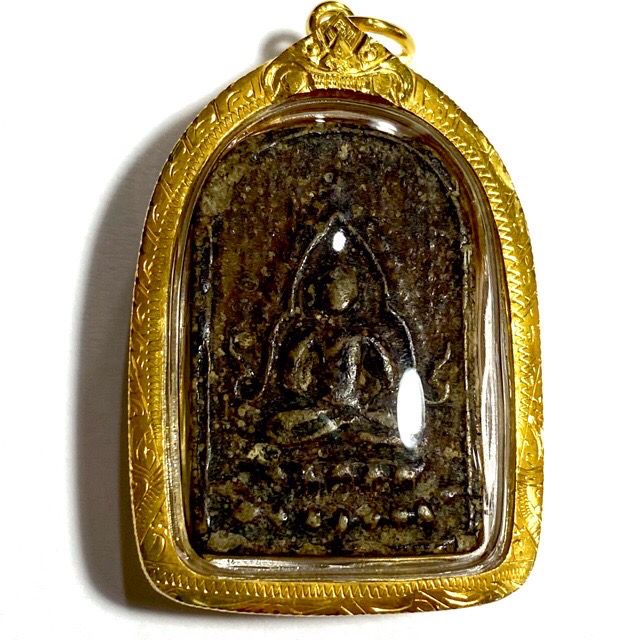
Through rituals and blessings by monks, many amulets receive empowerment from multiple spiritual powers, offering the wearer a harmonious blend of influence that can support them in various aspects of their lives. Whether the goal is attracting love, securing wealth, or achieving spiritual growth, Thai amulets offer a unique and powerful spiritual tool that reflects the deep cultural and religious traditions of Thailand.

Pra Somdej 9000 LP Pae

The Pra Somdej Sai Rung (Rainbow Powders) Pae 9000 Edition 2536 BE Gammagarn Takrut 3K and the Pra Somdej Pae 2000 Edition BE Ongk Kroo Takrut Ngern Koo

The Pra Somdej amulets created by the renowned Thai Buddhist monk Luang Por Pae are among the most revered and sought-after sacred objects in Thailand. Two particularly iconic examples are the Pra Somdej Sai Rung (Rainbow Powders) Pae 9000 Edition 2536 BE Gammagarn Takrut 3K and the Pra Somdej Pae 2000 Edition BE Ongk Kroo Takrut Ngern Koo. These amulets are highly prized by both devotees and collectors for their spiritual significance, historical value, and exquisite craftsmanship.

The Pra Somdej Sai Rung (Rainbow Powders) Pae 9000 Edition 2536 BE Gammagarn Takrut 3K is an exceptionally rare and valuable amulet within the Pra Somdej master class category. This amulet is distinguished by its unique “Pim Gammagarn” design, featuring an arched image on the reverse side and the inclusion of three Takrut (sacred scrolls) made of bronze, silver, and gold. The use of the sacred “Sai Rung” (Rainbow Powders) in its creation further enhances its spiritual potency and desirability.

Luang Por Pae’s Pra Somdej amulets are renowned for the “Pong Puttakun” (Buddha Powders) that rise to the surface, leaving a fine layer of white mildew that reveals the empowerment and purity of the monk’s practice. This Pra Somdej Sai Rung 9000 Edition amulet is no exception, with its distinctive appearance and the spiritual energy it is believed to possess.

The Pra Somdej Pae 2000 Edition BE Ongk Kroo Takrut Ngern Koo is another highly prized amulet in the Luang Por Pae collection. This amulet features the classic Pra Somdej design, with the seated Buddha image on the obverse and the inclusion of three Takrut (one each in bronze, silver, and gold) on the reverse. The “Ongk Kroo” or “Master Class” designation further enhances the amulet’s spiritual significance and value.

The Pra Somdej Pae 2000 Edition is considered one of the rarest and most sought-after among Luang Por Pae’s creations, along with the 1000 and 4000 Editions. These limited-edition amulets were produced with great care and attention, using the sacred “Pong Puttakun” (Buddha Powders) and other rare and powerful materials.

Luang Por Pae’s dedication to his craft extended beyond the creation of the amulets themselves. He is said to have spent three years blessing the final set of Pra Somdej amulets before his passing in 2523 BE, imbuing them with even greater spiritual power and significance. This final edition of amulets has become particularly rare and highly valued by devotees and collectors alike.

The Pra Somdej Sai Rung 9000 Edition and the Pra Somdej Pae 2000 Edition are not only revered for their spiritual efficacy but also for their historical and artistic value. These amulets are considered part of the “Benja Pakee,” a set of five national amulets representing different regions of Thailand, further highlighting their cultural significance.

The Pra Somdej Sai Rung (Rainbow Powders) Pae 9000 Edition 2536 BE Gammagarn Takrut 3K and the Pra Somdej Pae 2000 Edition BE Ongk Kroo Takrut Ngern Koo are two exceptional examples of the revered Pra Somdej amulets created by the legendary Thai Buddhist monk, Luang Por Pae. These amulets are highly prized for their spiritual power, historical importance, and artistic craftsmanship, making them treasured possessions among devotees, collectors, and those seeking to connect with the rich Buddhist heritage of Thailand.

Tiger Takrut of the Great LP Nak of Wat Arun

One of the Top Ten of all Tiger Amulets; The Legendary Takrut Hnaa Bpaag Suea of Luang Phu Nak, Wat Arun

In the world of Talismanic Thai amulets, few talismans are as revered and sought after as the Takrut Hnaa Bpaag Suea of Luang Phu Nak, a renowned monk from Wat Arun, also known as the Temple of the Dawn. This iconic amulet is a testament to the monk’s exceptional spiritual powers and his mastery of the ancient arts of Thai Buddhism and magic.

Takrut Hnaa Bpaag Suea Tiger Takrut of Luang Phu Nak

The Life of Luang Phu Nak

Luang Phu Nak was born on January 3, 2415 BE, in Ban Bang Poon, Pathum Thani province. His father, Mr. Nuan, and mother, Mrs. Luean, raised him with strong Buddhist values, which would later shape his destiny as a monk. At the age of 12, Luang Phu Nak was ordained as a Samanera novice monk at Wat Sarapat Chang, under the guidance of Pra Atigarn Hwang Tamma Chodti. He spent his early years studying the Dhamma Vinaya, the teachings of the Buddha, and honing his meditative skills.

LP Nak of Wat Arun

As he grew in wisdom and spiritual prowess, Luang Phu Nak was reordained as a fully fledged Bhikkhu at Wat Sutat in Bangkok, a royal decree temple, in the year of the Dragon, 2435 BE. His Upachaya ordaining officer was Somdej Pra Wanaratana (Luang Por Daeng), a highly respected monk of the time. Luang Phu Nak’s monk name, “Sumananaakoe,” translates to “Companion of the Nagas,” reflecting his deep connection with  Wicha Saiyasart, and the Nether-Worlds.

Takrut amulets of LP Nak

Takrut amulets of LP Nak

The Making of the Takrut Hnaa Bpaag Suea

The Takrut Hnaa Bpaag Suea, a tiger forehead skin scroll talisman, is Luang Phu Nak’s most famous creation. According to Ajarn Spencer Littlewood, a renowned expert on Thai amulets and Buddha magic, this amulet is considered one of the most powerful and sought-after talismans in the world of Thai amulets.

The Takrut Hnaa Bpaag Suea is said to possess the power of the tiger, with its forehead skin serving as a conduit for the animal’s strength, courage, and protection.

The creation of the Takrut Hnaa Bpaag Suea was a labor-intensive process, requiring great skill and attention to detail. Luang Phu Nak would first immerse the forehead skin in holy water to soften it, then scrape off the fur, leaving bare skin.

He would then inscribe the skin with sacred symbols and prayers, using the Wicha Maha Ud, a powerful magical script. The skin was then wrapped into a scroll, tied with holy Sinjana cords, and lacquered with gold leaf.


Magical Properties and Benefits

This powerful amulet is crafted from the rolled-up forehead hide of a tiger, imbued with the sacred spells of Wicha Suea Tiger Magick. The tiger’s innate energies are believed to possess a range of potent magical properties.

The tiger’s forehead hide is said to be naturally endowed with these sorcerous powers, making the Takrut Hnaa Bpaag Suea an exceptionally potent and desirable amulet. Its magical properties are believed to bring the wearer great opportunities for advancement, success, and recognition, while also inspiring the loyalty and devotion of others.

The Wicha Suea Tiger Magick within the amulet is thought to amplify these natural energies, creating a powerful and irresistible force that can help the wearer achieve their goals and ambitions. Whether seeking to enhance their career, attract wealth and prosperity, or simply to inspire the admiration and respect of others, the Takrut Hnaa Bpaag Suea is believed to be an invaluable tool for achieving success and realizing one’s desires.

The Takrut Hnaa Bpaag Suea is believed to possess a range of properties and benefits, including:

  • Maha Ud Kong Grapan Chadtri: Invincibility magic, protecting the wearer from harm and danger
  • Chai Chana: Victory-bringing magic, attracting success and triumph in all endeavors
  • Klaew Klaad: Evasive magic, allowing the wearer to avoid accidents and misfortune
  • Maha Amnaj: Commanding power and superiority magic, granting the wearer authority and respect
  • Metta Maha Niyom: Mercy charm, attracting positive energies and improving loving relationships
  • Anti-Black Magic: Protection from malevolent spirits and negative energies, curses and spells.

The Legend of Luang Phu Nak’s Takrut

The legend of Luang Phu Nak’s Takrut Hnaa Bpaag Suea has been passed down through generations, with stories of its incredible powers and benefits. Devotees would often report experiencing strange and wonderful occurrences while wearing the amulet, such as increased confidence, improved relationships, and protection from harm.

The Legendary Takrut Hnaa Bpaag Suea Tiger amulet of LP Nak, of Wat Arun.One famous story tells of how Luang Phu Nak’s devotees would notice that even buffaloes would cower in fear when they passed by, sensing the powerful magic of the Takrut Hnaa Bpaag Suea. This anecdote has become a testament to the amulet’s potency and Luang Phu Nak’s exceptional spiritual powers.

Rarity and Authenticity

The Takrut Hnaa Bpaag Suea is an extremely rare amulet, with only a limited number created by Luang Phu Nak during his lifetime. The amulet’s rarity is due in part to the difficulty of obtaining tiger forehead skin, as well as the strict conditions under which the Takrut could be created. Luang Phu Nak would only make the Takrut on 5th Lunar Saturdays, which are rare and occur only a few times a year.

Authenticity is a major concern when it comes to the Takrut Hnaa Bpaag Suea, as many counterfeit versions have been created over the years. To ensure authenticity, collectors and enthusiasts should look for documentation and certification from reputable sources, such as the temple where the amulet was created, or from recognized experts in the field of Thai amulets.

The Legendary Takrut Tiger amulet of LP Nak, of Wat Arun.The Takrut Hnaa Bpaag Suea of Luang Phu Nak, Wat Arun, is a legendary amulet that has captured the hearts and imaginations of collectors and enthusiasts around the world. Its exceptional powers and benefits, combined with its rarity and historical significance, make it a truly unique and valuable talisman. This also reminds us of the importance of preserving the cultural heritage and spiritual traditions of Thailand, and the enduring legacy of Luang Phu Nak, a true master of the ancient Wicha, and grimoires of mystical arts.

Tiger Takrut Hnaa Baag Suea LP Nak


Kata Suea - Invocation of Tiger Spirit

Sources:

Look Om Jet Paya Chang Sarn Luang Por Ding

One of the top Look Om of all Time; the Immortal Look Om Jet Paya Chang Sarn, of Luang Por Ding (Wat Bang Wua, Chachoengsao), in Nuea Dam Black Prai Powders and Gold Leaf coating, from the ancient times Abbot of of Wat Bang Wua: Luang Por Ding. LP Ding was highly renowned in his day, for his Palad Khik Ling Jab Hlak Vanora Monkey animist charms, and for his Sacred Powder Look Om wishing balls, made from his legendary Pong Ya Jet Paya Chang Sarn substance.
Look Om Luang Por Ding

The Sacred Jet Paya Chang Sarn Muan Sarn Sacred Powders were made from the Klai Pra Chedi (pieces of the ancient Chedi Stupas of 7 Temples), Klai Sema (ground up pieces of temple boundary stone) of 7 Temples, Pieces of stone from 7 Uposatha Shrinerooms, mixed with Pong Ittijae, & Pong Maharaj Yantra Powders.These substances were ground up in a mortar with incantations and molded into Look Om Sacred Powder Balls, of small size


The Look Om Jet Paya Chang Sarn of Luang Por Ding is noticeably dense and hard, for Luang Por Ding would let them harden first, and would mix the powders with Rak Herbal Lacquer resins. Some Look Om would be covered in gold leaf, and some would be left bare black colour.Luang Por Ding would keep the Muan Sarn Sacred Powders and the Look Om he had made for a long time in his Kuti Hut to empower them, and would only release them when he was completely certain of their power.

Luang Por Ding would release the Look Om to his devotees during temple ceremonies, and on his birthday celebrations.The Look Om Jet Paya Chang Sarn is spoken of in the Legend of the Great ‘Suea Khaw’ Invincible Gangster, who was a Looksit of Luang Por Ding. Suea Khaw maintained that he survived throughout the years of his gunmanship because of the Look Om Paya Jet Chang Sarn, which stopped many bullets from piercing his skin and killing him over the years. It is said to have given Suea Khaw the strength and imposing aura of invincibility, to overcome all his enemies.

The Look Om gained the name of ‘Jet Paya Chang Sarn’ because of its legendary power to increase the stamina and strength of the devotee over his or her adversaries. It is said that the wearer of the Look Om Jet Paya Chang Sarn is endowed with the strength of the Paya Chang Sarn Battle Elephant. The Look Om is said to both Protect against all Dangers, and Endow the wearer with Commanding Power and Strength. Suea Khaw was a Gangster who was reputed to have defeated and killed over 100 of his competitors, and who had a reputation for his bravery and strength. Because his sole chosen amulet of protection and power was the Look Om Jet Paya Chang sarn, and the fact that nobody cold defeat him or kill him, was the reason for Luang Por Ding’s Look Om Jet Paya Chang Sarn becoming so Legendary.

Look Om 7 Paya Chang Sarn exhibits in magazine

But one day, Luang Por Ding told Suea Khaw that he was too violent and that if he did not give up being a gangster, then he would surely encounter a violent and premature death. Suea Khaw had become very overconfident because no knives were able to penetrate his skin, and guns would not fire when aimed at him. Because of the invincibility which Suea Khaw had been enjoying, Suea Khaw did not listen to Luang Por Ding’s warnings.

Close Up Look Om Jet Paya Chang Sarn Luang Phor Ding

One day the Police Force special missions unit came to Wat Bang Wua to ask Luang Por Ding if it was true that Suea Khaw possessed ‘Hnang Hniaw (‘sticky skin’. a term meaning a person with Kong Grapan Chadtri Magic). Luang Por Ding admitted that it was true that Suea Khaw possessed Protective Magic, and that he was not able to be killed with knives or guns. But Luang Por Ding added that Suea Khaw would fall prey to his own Karma without need of guns or knives, because he refused to listen and change his ways. Luang Por Ding added “I cannot tell you though, by which way the gangster Suea Khaw can be killed, for it would break my Precepts”.

But at this moment, one of the Samanera Novice Monks was listening and butted in to say to the Police “If you want to kill Suea Khaw, you have to use a bullet that has the head of the bullet cast from metal taken from the blade of a Mitmor spirit knife from Luang Por Soke (Wat Pak Klong)”.

LP Ding Wat Bang Wua Thai Master Monk

Luang Por Soke was a colleague of Luang Por Ding and holder of the same Lineage Wicha, and would inscribe the Wicha of Luang Por Ding onto the Blades of his Mitmor. Some time later the Police caught Suea Khaw and he was sentenced to death, and was executed by Government Executioner, using Bullets cast from the blade of a Mitmor of Luang Por Soke.

Look Om LP Ding

Luang Por Ding was renowned for his expertise in the Wicha Hanuman and other Vanora Monkey Deities. He personally blessed numerous hand-carved talismans, with the most skillfully crafted ones being the most sought after. Luang Por Ding is also connected to the Cow symbol, stemming from the name of his temple, Wat Bang Wua. His Look Om Jet Paya Chang Sarn is highly regarded and is considered a powerful amulet for Kong Grapan Chadtri Maha Ud Klaew Klaad.

Luang Por Ding, was a Great Master of the Wicha Hanuman, and all Vanora Monkey Deities, for which he was extremely famous. He blessed many inimitable hand carved talismanic amulets (Krueang Rang), made from artisans of varied levels of skill, with of course the most masterfully carved attaining the highest level of preference. His Look Om Jet Paya Chang Sarn, by general consensus, to be one of the top Look Om of all Time and is also a high ranking amulet in the annals for Kong Grapan Chadtri Maha Ud Klaew Klaad Power.

Look Om Jet Paya Chang Sarn

The Look Om Jet Paya Chang Sarn amulet of Luang Por Ding, released in the Thai Buddhist Era of 2480 BE, was made using a traditional method of infusing sacred powder, which is believed to possess spiritual and protective properties.

The powder was collected from rare and magical forest herbs, earths, and sacred materials over decades of Tudong forest wandering, along with the ubiquitous pieces of the ancient Chedi Stupas of 7 Temples, Klai Sema,stone from 7 Uposatha Shrinerooms, mixed with Pong Ittijae, & Pong Maharaj Yantra Powders and meticulously prepared over time, performing incantations constantly throughout, often through a long and intensive process, and is infused with prayers and blessings. The resulting amulet, known as a Luang Por Ding Thai Sacred Powder Wishing Ball, is a powerful and meaningful symbol of faith and spirituality for many Buddhists around the world.

Pidta Hlang Baeb LP Gaew

Rare Pid Ta Hlang Baeb Nuea Pong Puttakun Amulet by Luang Phu Kaew Early Era Kruea Wan Wat Collectible

The Pra Pid Ta Hlang Baeb of LP Kaew, Wat Kruea Wan temple, is a rare and exceptional amulet that showcases the mastery of the esteemed monk, Luang Por Kaew. This ancient amulet is made from a unique blend of sacred powders, known as Nuea Pong Wised, which is composed of five special magical Yantra Powders (Bpathamang, Puttakun, Trinisinghae, Ittijae, Maharach). These powders are believed to possess powerful spiritual properties that can bring blessings, protection, and good fortune to the wearer.

Pidta Hlang Baeb LP Gaew angled view

The intriguing history of this amulet is deeply rooted in the time when Luang Por Kaew was a revered monk in the serene landscapes of Chonburi Province. This was during the remarkable era of 2365 BE, a period that holds immense significance in Thai history. It was a time when Pra Jao Thaksin Maharaj was courageously leading the movement to reclaim Siam’s freedom from invaders.
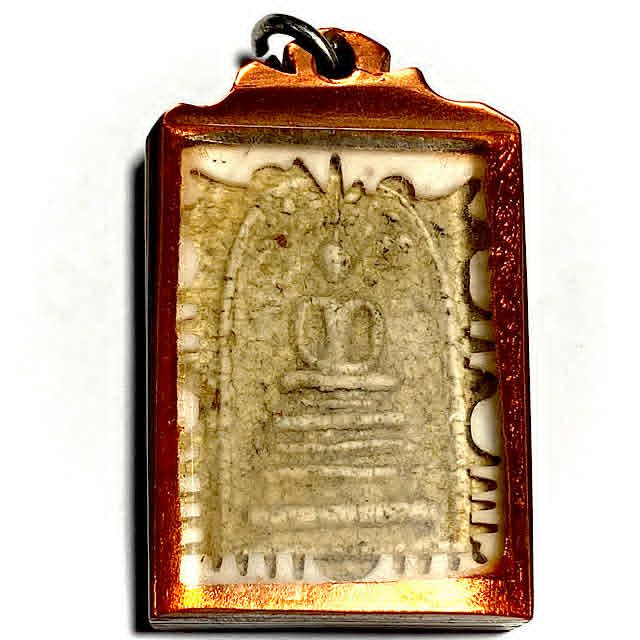
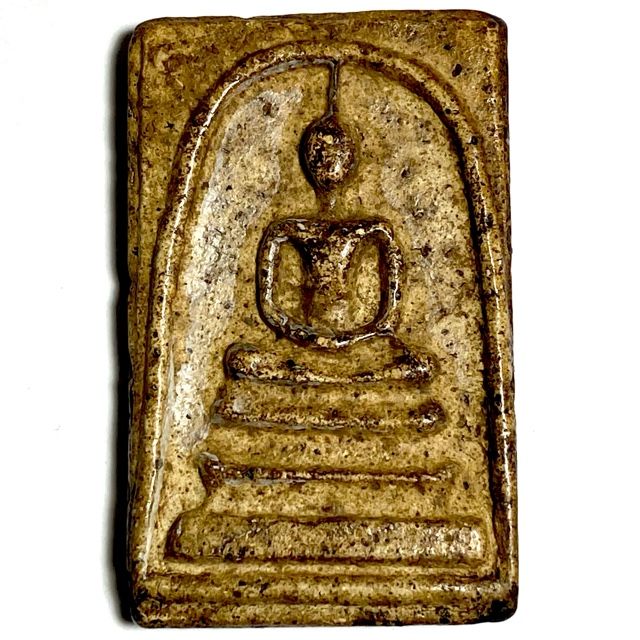
The amulet, a remarkable artifact, is believed to have been created and empowered by Luang Por Kaew himself. The creation process was not a simple one. It involved a meticulous ritual that called for the invocation of potent spiritual entities. The ritual was a complex one, requiring a deep understanding of the spiritual realm and a profound connection with the sacred. The amulet is said to have been infused with these sacred powers, making it a unique and spiritually charged artifact from a significant period in Thai history

The Pra Pid Ta Hlang Baeb Wat Kruea Wan is not only a beautiful and well-preserved example of Luang Por Kaew’s work, but also a tangible piece of Thai history that speaks to the enduring power and significance of Buddhist amulets. It is a testament to the skill and mastery of Luang Por Kaew, who is widely regarded as one of the greatest amulet makers in Thai history. This amulet is truly a rare and exceptional piece that is worthy of reverence and admiration.

Various Macro close ups of the Muan Sarn of the Pid Ta Hlang Baeb Nuea Pong Puttakun Early Era Amulet Luang Phu Kaew amulet. rear face

The Pra Pid Ta Luang Phu Gaew is a highly sought-after and highly regarded amulet among collectors and devotees of Thai amulets. Its reputation is so esteemed that when it changes ownership, it is considered noteworthy within the amulet community, regardless of when it was created, either during Luang Phu’s time at Wat Pak Tale or after he moved to Wat Kruea Wan.

Pidta Hlang Baeb LP Gaew base view

The exquisite Pra Pid Ta Luang Phu Kaew amulet radiates a captivating glow, enhanced by the unique ‘Nuea Graeng’ marbling effect. This distinctive feature is a result of the sacred Muan Sarn powders used in its creation, which contract and dry over time, creating intricate surface cracks that give the amulet a one-of-a-kind appearance. The amulet’s intricate details, slender build, and high level of craftsmanship make it a truly exceptional specimen of the Pra Pid Ta Luang Phu Kaew. The amulet’s powerful sacred clay composition is imbued with the Kong Grapan, Klaew Klaad, Metta Mahaniyom, and Maha Lap properties, which are attributed to the esteemed monk who created it.

</ div>

Various Macro close ups of the Muan Sarn of the Pid Ta Hlang Baeb Nuea Pong Puttakun Early Era Amulet Luang Phu Kaew amulet.
These properties are believed to bring blessings, protection, and good fortune to the wearer, making the amulet a highly sought-after object among devotees. The amulet’s sacred clay is said to have been mixed with the monk’s own tears and sweat, imbuing it with his spiritual energy and intentions. The Pra Pid Ta Luang Phu Kaew amulet is a rare and precious object, with only a limited number of them available. It is said that each amulet is imbued with the monk’s own unique energy and intentions, making it a truly personal and powerful object of spiritual significance. The amulet’s intricate details and unique marbling effect make it a truly exceptional piece of craftsmanship, and its sacred clay composition makes it a powerful tool for those seeking blessings, protection, and good fortune.
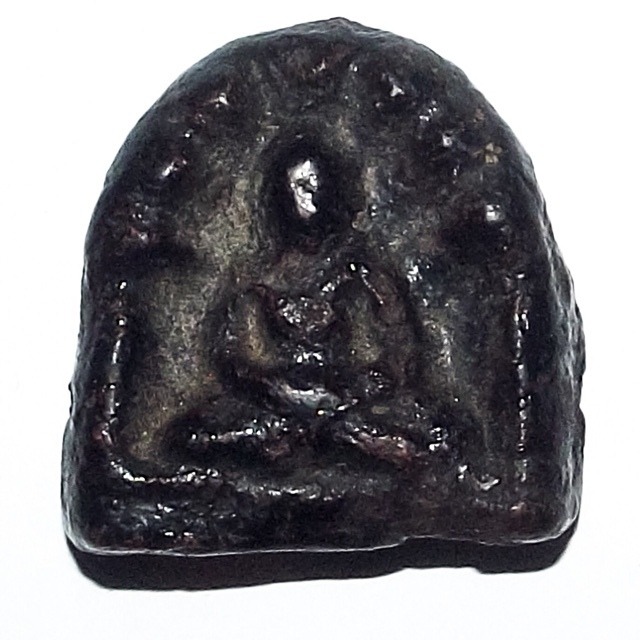
The Pra Pid Ta of Luang Phu Gaew is an all-time classic ancient amulet renowned for its power and status. This rare and highly sought-after amulet is from the legendary Wat Pak Tale in Petchburi, later moved to Wat Kruea Wan in Chonburi. It is considered the number one Pidta amulet of all time by devotees of the Chonburi Lineage Master Amulet Collector Scene and those devoted to the Petchburi Masters. This true Master Class piece is incredibly difficult to encounter in the present era, making it a true treasure for those who seek it.
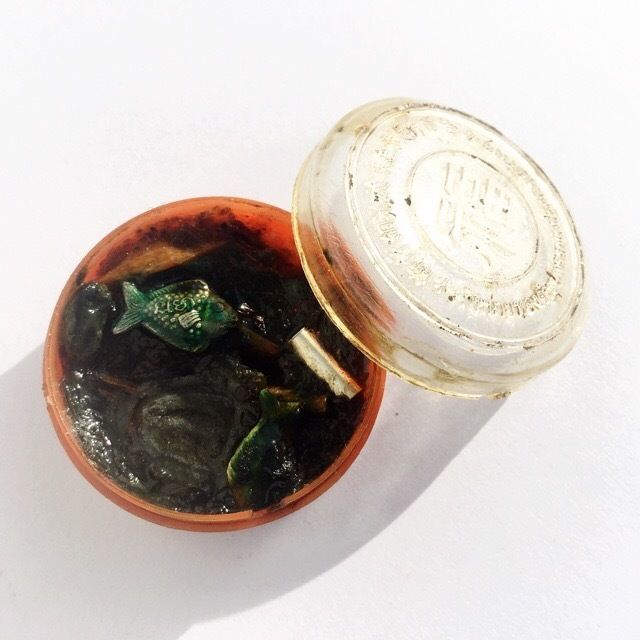
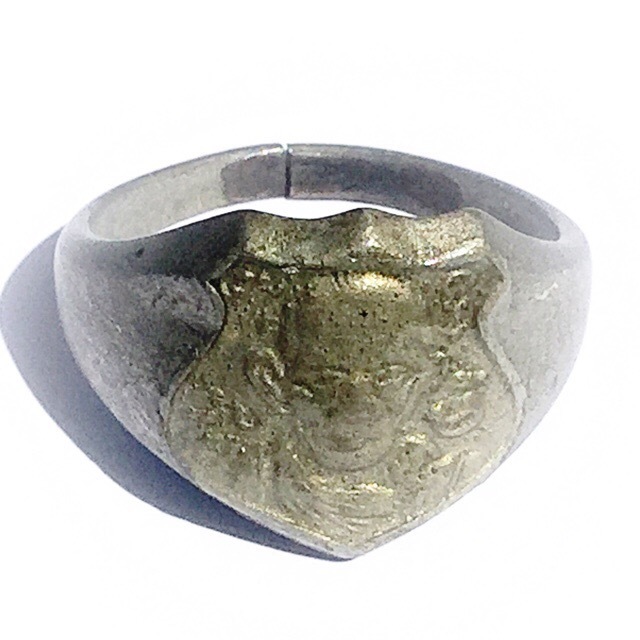
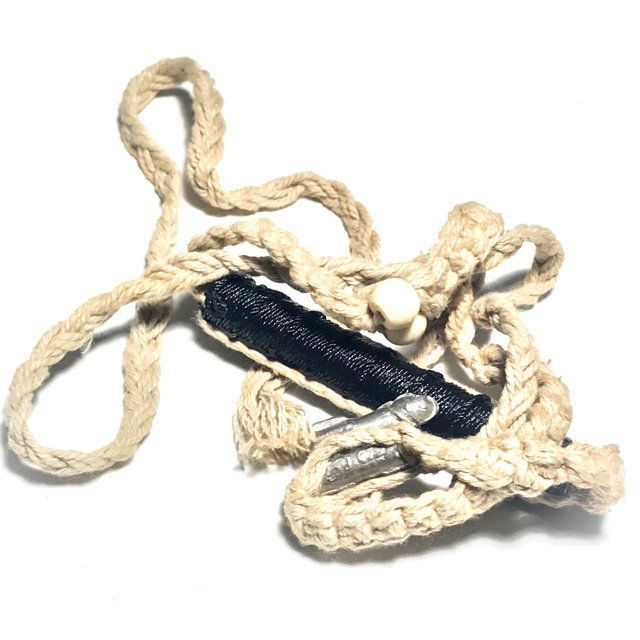
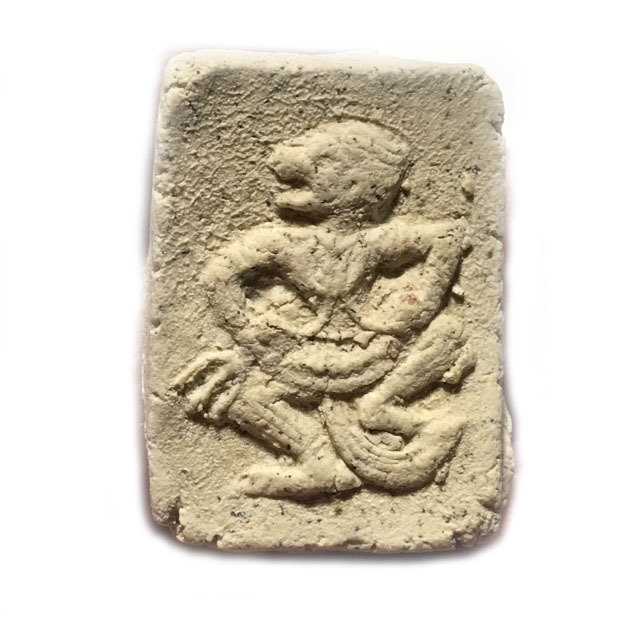
Pid Ta Hlang Baeb Nuea Pong Puttakun Early Era Amulet Luang Phu Kaew Wat Kruea Wan
Luang Phu Gaew is a highly revered and sought-after Thai Buddhist monk, and one of the rarest and most valuable amulets in existence. There is only one known photograph of him in existence, which dates back to Ratanakosin Year 124 (2449 BE), when he was 55 years old. This photograph is a rare and precious artifact, and it is considered a great honor to possess it. The world-renowned Payak Kampant, Sian pra Maestro of the Thai Amulet Society, has written a book featuring 108 biographies and pictures of great master monks, but he was unable to include the biography and picture of Luang Phu Gaew due to the rarity of these items.
Rear Face of Pid Ta Hlang Baeb Nuea Pong Puttakun Early Era Amulet Luang Phu Kaew
This reveals the extreme scarcity of any artifacts related to Luang Phu Gaew, and the high esteem in which he is held by Thai Buddhists. The photograph of Luang Phu Gaew is a black and white image that shows him sitting in a formal pose, wearing the traditional robes of a Thai Buddhist monk. His face is serene and peaceful, and his eyes are closed in deep contemplation.

The photograph is mounted on a red background, and it is surrounded by intricate gold filigree. The overall effect is one of great dignity and reverence, and it is clear that this photograph is a treasured possession of the owner. The rarity of this photograph is due in part to the fact that Luang Phu Gaew was a reclusive monk who shunned publicity and avoided being photographed. He was known to be a powerful and influential figure in Thai Buddhist circles, but he preferred to keep a low profile and focus on his spiritual pursuits.

Luang Phu Gaew Wat Pak_Tale

Luang Phu Gaew Wat of Pak_Tale (Later Wat Kruea Wan)

As a result, there are very few photographs or other artifacts that exist from his lifetime, making the one photograph that does exist all the more precious and valuable. Overall, the photograph of Luang Phu Gaew is a rare and valuable artifact that provides a glimpse into the life and teachings of this highly respected Thai Buddhist monk. It is a treasured possession of the owner, and it is a testament to the enduring legacy of Luang Phu Gaew and his teachings.